Meet Abraham Lincoln, Marathoner and Cyclist

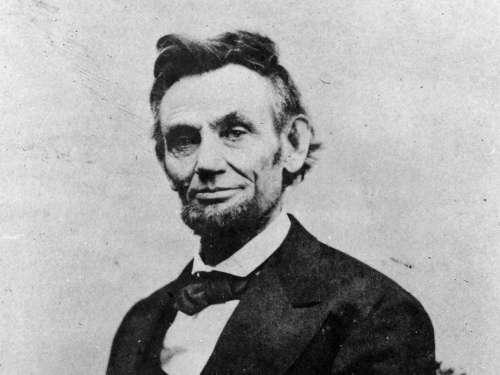
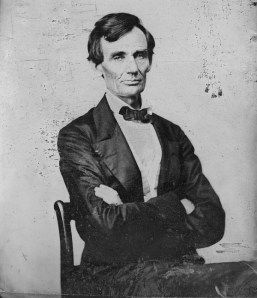
A young Abraham Lincoln is drawn to running for its intense call for thought and effort.

A young Abraham Lincoln is drawn to running for its intense call for thought and effort.

By Christopher Cudworth

Here in Illinois, the Land of Lincoln, there’s quite a bit of pride in the heritage and history that Abraham Lincoln lends to the state. Springfield, Illinois is one of the places Lincoln called home, and the history of his journey from the prairies of the Midwest to the White House has spawned much admiration and more than a few legends along the way.

Truth from fiction

In many ways it is hard to separate the truth from fiction about Lincoln. The current film Lincoln focuses on the 16th president’s work to pass the Emancipation Proclamation. The movie is ostensibly historical in tone, yet some critics find pause in the portrayal not just of Lincoln, but of the people around him, including Mary Todd Lincoln.

One of the fascinating aspects of the film is how Daniel Day Lewis portrays the gangly Lincoln. His walk seems an angular shuffle. Lincoln apparently did seem a little awkward in real life, if only because he was taller than most of his peers, who averaged much shorter in height than today’s American citizens, where 6’2″ and taller is not that uncommon. But in Lincoln’s day, he was akin to a basketball center.

If Lincoln were alive today

So let us imagine if Lincoln were alive today. Possessed of a naturally thin frame, he might have tried out for basketball at some point. But lacking the coordination to drive to the hoop, and strength to block out on the boards, he might have failed to make the basketball team. The basketball coach would have watched him walk out the door muttering, “There goes a waste of height.”

Yet Lincoln, being the intellectual type, might have hung out with some physics and engineering kids who were cross country runners. That tends to be the trend, you know. Both male and female runners often excel in academics. Whether that is due to basic intellect or a solid work ethic has yet to be determined. But suffice to say that across the country runners tend to do better on average with their grades than athletes in many other sports. Were Lincoln alive today, he might find plenty of company among runners who love the books, as Lincoln did.

Freshman runner

So imagine for a moment that Abraham Lincoln were dragged out for the sport of cross country as a freshman. Tall and gangly, he would not succeed at first. His long days running would result in fatigued legs and gaunt cheeks, yet something would resonate with him. Something deep and real.

The person of Abraham Lincoln who persevered in the face of national crisis and political opposition would be drawn to the emotional and physical challenge of distance running. His running style would be formed through miles of effort. He would gain strength across the length of that angled frame and begin to see thin lines of muscle gripping his bones. He would eat like a horse, drink tons of water and finish as 18th man on the cross country squad. Not a sophomore letter as yet, but with visions of the future.

Over the next summer he would join his friends on longer runs, and something would start to click. His calves would seem to gain snap. His carriage would even out. He even stand up straight at last. Even his parents and friends would take notice, complimenting him on his growing confidence as a person.

Young love

Then, in the present moment, a young woman with whom he works at the pool concession stand takes an interest in Abe even though his pigeon chest is nothing to brag about even in the summer sun. The two of them would start to hang out, and Abraham speaks with pride about his running, and she would sometimes touch his arm as they talked. At first he drew back. But then he grows to desire her touch, her attention. On a warm summer night under a full moon, they exchange their first kiss.

The next day, Abraham Lincoln feels so good about himself that he hovers near the front of the group of runners for the first time. One of his friends, a senior with a shock of red hair and a dirty mind would jest, “Look at you Abraham. You’re running great! Are you getting laid or something?”

The shy young Abraham in his high voice would respond, “No.” But the kidding would not stop the rest of the summer. Instead of holding him down, it seems to drive him on. He moves up in the running ranks over the summer months. By the end of summer he is knocking on the door of being a legitimate contender to make the sophomore Top 7.

Running success

And he does. And the team does well that fall.

‘That spring Abraham Lincoln gives track a try as well, working out with weights and even high jumping once in a while because it feels so good to jump. He clears his own height, 6’2″ in the final meet of the year. Yet he tells the track coach he is a runner, not a jumper. The coach just smiles. “You can be whatever you want to be, Abraham. Remember that.”

By his junior year young Abraham has grown his first whisp of a beard. The girl he met two summers before has stayed close, but they are now mostly just friends. She still comes to his meets but is dating another boy. Abraham is jealous of their relationship in a way, yet he is mostly happy knowing she is happy. The boy she is dating is a good person. He even comes to the cross country meets with her, and cheers the team on. A good guy. One can never argue when a girl likes a good guy. Even a girl you still like yourself.

Yet Abraham is now dating a senior girl who comes to meets to watch him run but doesn’t seem to “get” the sport. When Abraham runs by she does not even break conversation with her friend, who is gesturing animatedly and Abraham hears her friend say, “And I don’t even know why he dates her either…” which makes him think long and hard the rest of the race about his own choices in dating.

But for now he forgives her, because she really is a good kisser. But that’s about all he’s willing to say about that.

Moving up in the world

During his senior year the still gangly but now confident and fast Abraham Lincoln places in the  Top 10 in the conference cross country meet. He even helps lead his team downstate where the excitement of running against the best inspires Abraham to run faster than ever before, just missing All State in 29th place and finishing second man on the team, which places 5th overall. The congratulations and joy of such an accomplishment makes Abraham want to continue running for years. So he commits to a small liberal arts college and after 4 years, graduates with a pre-law degree. The closest he comes to winning a college cross country meet is 2nd place in a dual. Yet he’s proud of that, for it is a small measure of a lot of hard effort. And Abraham Lincoln always respects hard effort.

Law school and marathoning

During law school with long hours of study, Abraham Lincoln craves relief from study. So he gets back into running, often going out at 5:30 in the morning or 8:30 at night. Despite the heavy academic lifting of law school, Abraham sticks with his running and gets an idea in his head to run the Chicago Marathon that October.

Race day dawns cool and bright. Abraham knows he should have run more miles in preparation for the race, yet he feels confident and eager on the starting line. The cannon sounds and the crowd his off. The head of Abraham Lincoln still juts above the crowd, for he is tall as runners go. Always has been. Always will be. Yet his practiced stride carries him mile after mile. He passes the half-marathon at an aggressive 1:16 pace. There is a growing fatigue in his legs and he thinks he may have miscalculated. Pain sets in, yet the miles continue to roll, and at 20 miles––with 6.2 to go––he grinds past the point where The Wall might hit and struggles home, exhausted, barely able to lift his arms it seems, finishing in 2:36.22. 6:00 a mile. A great marathon PR, especially for a first timer. Abraham Lincoln is 5th among all runners from his native Illinois.

Recovery on a bike

Abraham is proud and exhausted after his marathon. Yet for days he can barely run, for his quads are toast and his calves feel like mush. So he borrows a friend’s road bike to ride some miles until he can run again. The bike barely fits his lanky frame but Abraham clips into the strange new shoes that attach to the bike pedals and…finds another new friend. Riding feels just as good as running. He likes the feel of the breeze in his beard, the sheen of sweat rolling down his pumping thighs and he thinks to himself, “Why, I could ride from here to Washington, D.C. if I tried.”

The feeling of riding that bike is absolutely emancipating. Something inside Abraham Lincoln resonates all over again. He decides he really likes to run and ride.

Sorry, no swimming

But Abraham does not like to swim. He still sinks like a long rock. That girl back in the summer of his freshman year used to tease him about how his legs seemed to drag toward the bottom whenever he got in deep water.

“You’ve got no natural buoyancy,” she’d tease. “You’re all skin and bones.”

Yet they’ve been seeing each other again, and her presence makes him feel, well, buoyant. Her eyes still have the same summery shine. There is something about her that never leaves his mind or his heart. He thinks he may be in love, because when she touches his arm, a tingle still runs all the way up to his neck. Her name is Mary. An old-fashioned sort of name. Abraham likes saying it.

“Mary.”

Perhaps they should get married. He starts to think seriously about the prospect. His prospects. What he is going to do with his life. And he wants her there.

Working things out

But for the moment, they talk in fierce sessions all through the night. She confesses to a certain rushed anxiety about the world. She goes on an occasional shopping binge. And she doesn’t know what to make of God, and how she was brought up in a Christian household, yet never seemed to find the answers she needed in her conservative brand of faith. So, Mary tells Abraham Lincoln that she is seeing a really great counselor, who prescribes a simple drug to help manage her anxiety. And Mary is feeling better. More able to think clearly, and make decisions. She even understands her personal faith a bit better, and is not so desperate to know all the answers, all the time. She turns some of that over to God in prayer. It gives her peace.

Mary’s impact on Abraham

It occurs to Abraham that he, too, might be depressed. Even when things are going well, it feels like he is swimming against the current of life, his emotional legs dragging behind him.*
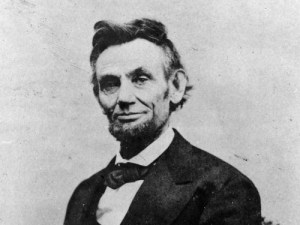
Lincoln actually had to cop e with depression all his life. Could running and riding have helped? Some suggest it is a natural way to manage some types of anxiety and depression.

Lincoln actually had to cop e with depression all his life. Could running and riding have helped? Some suggest it is a natural way to manage some types of anxiety and depression.

He realizes his running seems to keep the worst of his depression at bay, but sometimes even the running is not enough. So he decides to visit the same counselor as Mary, a psychiatrist who listens with great intent to Abraham’s stories about running through years of self doubt and anxiety. “You’ve done very well, actually,” the counselor tells him. “But it doesn’t have to be this hard. And it’s not your fault, you know. It’s all about brain chemistry. You’re obviously a bright young man. We just need to put some air in your tires.”

Abraham smiles. Air in your tires. Wings on your feet. It all works for him.

Mary and Abraham Lincoln

Mary and Abraham get married in a June wedding. She now works as a teacher and Abe has but a year left in his law school program. They learn to communicate their troubles together and Abraham actually gets Mary to join him on a bike. They take rides together along the river in their university town.

While riding and running, Abraham thinks he can see into the future sometimes, to a time when they have children and he works as a lawyer, or something more.

His proclamation to Mary is that he really never has been happier. The two know how to cope even when the hard times hit, as they inevitably do. For everyone who walks, runs or rides on God’s green earth must course their own path, and none are perfectly smooth.

So run on, Abraham and Mary, run on.

*”No element of his personality was so marked, obvious and ingrained as his mysterious melancholy.” This was stated by a close friend of Abraham Lincoln, Henry C. Whitney.

WeRunandRideLogo


Posted in Uncategorized | Tagged , , , , , , , , , , , , , , , , , , , , , , , , , , , , , , , | 1 Comment

Keep On Running says it all in song, almost

Gotta do what you can to keep your love alive, trying hard not to confuse it with what you do to survive.

Gotta do what you can to keep your love alive, trying hard not to confuse it with what you do to survive.

By Christopher Cudworth

One must always be wary of how you read–or do not understand–the lyrics of a song, lest you get the message altogether wrong.

Recent history (the last 40 years or so) offers up so many examples of politicians who, in hopes of winning favor or at least appearing modestly hip in some way, go grab a rock song as a theme for their campaign without having the slightest idea what the song actually means. Sometimes the song grab works. Sometimes it doesn’t.

Born In The USA

President Ronald Reagan’s campaign staff once claimed that he liked Bruce Springsteen’s “Born in the USA” because of its seemingly positive message about being born in America. That thought originated perhaps with conservative columnist George Will, who seemingly looked only at the surface of the song’s anthemic refrain and correspondingly lauded Springsteen’s concert audiences, who sometimes waved flags. The anthemic tone of the song and a bit of flag-waving was enough for conservatives to think that Springsteen represented their interests. They were wrong. Dead wrong.

The song Born In the USA is instead a musical protest against the many ways America chronically abuses its soldiers, especially through the death mills of Vietnam, and also Korea, Iraq and Afghanistan, if you get the metaphor. The song also criticizes the fact that America generally disavows the working class, and the overall theme of the song “Born In the USA” is a statement of bitter irony. Yet facts like those get entirely lost in the shuffle of propagandistic fervor. Born In the USA is in many ways the farthest thing possible from a conservative anthem. Yet somehow the song was nearly co-opted, and ignorantly so, for those very purposes. It makes you wonder how much else in life we are getting wrong.

Further on down the road

In the 2008 race against Barack Obama, GOP candidate John McCain tried to employ the Jackson Browne song “Running On Empty” in a campaign ad. Problem was, the McCain campaign did not have rights to use the song and Jackson Browne sued to stop McCain’s use of the song, and won his case.

The greater fact at work was that the message of the song and the purpose to which it was being used were in metaphorical opposition. The lyrics of Running On Empty are about survival in the face of difficulty, especially the emotional taxation wrought by keeping up with a world that attempts to commodify the very soul of human beings.

Granted, the idea behind “Running On Empty” is a political message of sorts, but not the vacuous sort to which McCain was imposing on it, using just the title and refrain as a slam on McCain’s opponent Barack Obama.

The lyrics of the song focus on self exploration and the search for a personal philosophy in the face of life’s pressures, and how empty that can leave you feeling. When someone is “Running On Empty” it means they are looking for emotional support. As runners and riders, we can all relate to that. Our pursuits are both a physical and an emotional challenge. It is how we both test and reward ourselves, refining character along with health. Of course life itself offers many such tests.

Here are some lyrics from the song:

Running On Empty (Jackson Browne)

Looking out at the road rushing under my wheels 
Looking back at the years gone by like so many summer fields 
In sixty-five I was seventeen and running up one-on-one 
I don’t know where I’m running now, I’m just running on

Gotta do what you can just to keep your love alive 
Trying not to confuse it with what you do to survive 
In sixty-nine I was twenty-one and I called the road my own 
I don’t know when that road turned into the road I’m on

You can see why on many levels Browne protested use of the song against the grain of its message. And of course Jackson Browne has communicated clear political purpose in his own life as one of the leading advocates for liberal causes throughout his career. All that is reflected in his music, and some say he actually paid the price in terms of popularity for being too preachy along the road of his career.

Yet his 1980s music has proven prophetic in so many ways. Here are lyrics from another song that seem so predictive of what was to come for America 20 years after they were written:

Lives in the Balance 

I’ve been waiting for something to happen 
For a week or a month or a year 
With the blood in the ink of the headlines 
And the sound of the crowd in my ear 
You might ask what it takes to remember 
When you know that you’ve seen it before 
Where a government lies to a people 
And a country is drifting to war 

And there’s a shadow on the faces 
Of the men who send the guns 
To the wars that are fought in places 
Where their business interest runs

On the radio talk shows and the t.v. 
You hear one thing again and again 
How the u.s.a. stands for freedom 
And we come to the aid of a friend 
But who are the ones that we call our friends– 
These governments killing their own? 
Or the people who finally can’t take any more 
And they pick up a gun or a brick or a stone 
There are lives in the balance 
There are people under fire 
There are children at the cannons 
And there is blood on the wire.

All these lyrics were written well before the advent of a news media polarized by its own need for courting partisanship to gain audience. But you read these lyrics and realize that Jackson Browne literally read the tea leaves. He saw it all coming down the road.

The lessons

We are only Running On Empty when we fail to grasp the meaning of the present in its true context, you see. That is true for us personally as well as politically. Being satisfied with the “surface” of things and turning everything profound into a cheap slogan is a dangerous habit of mind. It leads to shallow convictions that only appear deep because they are shouted loudly. We see that in the way that our religions have been reduced to political slogans. The way anti-intellectualism has been allowed to prosper across the face of a nation once proud of its intellectual resources. The way news has been compromised and commodified in favor of opinion and yes, even lies substituted for truth.

What runners and riders can, and should do

As people who seek meaning from hard effort, people who run and ride really should use their personal pursuits to consider the impact of their thoughts on the world. Many people do. Many people transform their efforts into fund raising for good causes. Others dedicate their running or riding to drive awareness for human need. Still others use their time on the road for creativity, problem solving and self actualization. All are worthy causes.

None of us is perfect in our pursuits, and all are subject to failure. But that is both the reality and the challenge of why we do what we do. One of the great paradoxes of our time is standing in our midst. Lance Armstrong used his athletic talents to conquer the world, then he did good with what he accomplished, forming the Livestrong Foundation and taking on politicians about the issues of cancer head on.

Yet he is also human, prodigiously so. He fell in love with the shallow aspects of fame over the consequences of how he got there. He is paying the price now, yet his painful journey and great accomplishments continue to divide the world over forgiveness and penance. His example is both glorious and repulsive. Just like all of us. God knows.

Avoiding the shallow 

It seems funny in a way, that our political “races” and partisan divides tend to be based on such shallow premises. Perhaps what the people of America and the world really need to do more often is go out and exhaust themselves in thoughtful physical effort. Of course the so-called “working man” has always done so, as has the “working woman” and those are social causations we do need to consider. The realities of class and economics and the so-called leisure to “work out” are factors we cannot take for granted, yet neither can we marry ourselves to guilt. Many a poor Kenyan runner has raced themselves to wealth and glory, and people all over the world ride bikes as a means of transportation, not just recreation. So there are unseen connections between what we might love to do and the things we need to do to survive. 

Keeping Your Love Alive–The Hudson Branch

The Hudson Branch

The Hudson Branch.

Matt Boll, Enoch Kim, Jacob Boll, Corey Bienart, and Cobey Bienart of The Hudson Branch. (Photo courtesy of Jacob Boll.)

Gotta do what you can just to keep your love alive.

And with that thought, we conclude this Sunday blog at We Run and Ride with a link to a brand new song by a band with whom I am friends, and whom I have written about at Yahoo! The band is called The Hudson Branch and their new song is titled “Keep On Running.” The lyrics deal with keeping your love alive, for sure. The band was recently featured on Chicago’s WXRT New Music and they have a new album titled Yesterday. The LP will be followed by albums titled Today and Tomorrow.

I’ve known one of the musicians in the group for 6 or 7 years now and played in a church Praise Band with him. His voice and talent have always amazed me. His name is Matthew Boll, and his dedication to his music is every bit as inspiring as watching an athlete in deep training. In fact his brother Jared Boll is a professional hockey player for the Columbus Blue Jackets. Another brother, Jake Boll, is a guitarist with Hudson Branch.

It goes to show whether you’re running your fingers up a fretboard, running your skates over the ice or running and riding the road on your own, it really does matter. What you do matters. Keep that love alive.

Closing humor

As we all know, President Bill Clinton recruited the Fleetwood Mac song “Don’t Stop Thinking About Tomorrow,” as part of his campaign theme. The band performed performed the song live with the Clintons present, but you really have to laugh that he and many others in the audience seemed unable to clap in time with the music. Perhaps that’s a liberal trait. Lack of good timing. We’ll discuss that on another day.

WeRunandRideLogo

Posted in We Run and Ride Every Day | Tagged , , , , , , , , , , , , , , , , , , , , , , , , , , , , , , , , | Leave a comment

Saturday artwork: “The Hill” where running began

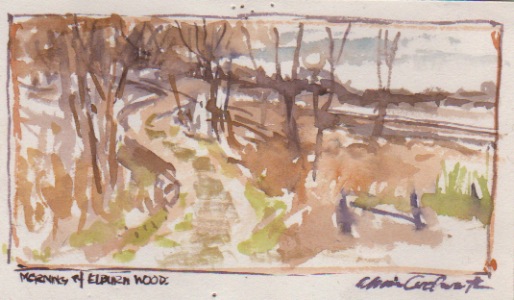
This watercolor sketch was produced as a study for a commissioned painting, but it happens to capture the forest preserve hill that still serves as the start of a cross country course where my running career began, and where thousands of HS cross country runners have run since.

This watercolor sketch was produced as a study for a commissioned painting, but it happens to capture the forest preserve hill that still serves as the start of a cross country course where my running career began, and where thousands of HS cross country runners have run since. Nowadays I also ride the mountain bike through the preserve.

Posted in We Run and Ride Every Day | Tagged , , , , , , , , , , | Leave a comment

Phoning it in ain’t what it used to be

The definition of today’s phrase of the day, to “Phone it in…” is provided by the Urban Dictionary, where you can find out what things really mean in modern terms. 

Phone it in: to perform an act in a perfunctory, uncommitted fashion, as if it didn’t matter. Literal – To present something, whether an idea, project, product, etc. by way of a phone call, rather than in person.

Changing perspectives

I got thinking about the meaning of the term “phone it in” as I stepped out the door with my newly acquired iPhone to set up a run on Strava Run. I’ve had an iPhone before for work and used a different run tracking software, but people rave about Strava and in 5 runs it has performed pretty impressively.

Let's see you try to phone it in from here.

Let’s see you try to phone it in from here.

It didn’t really like trying to find me in the hills of Decorah, Iowa. The signal flipped in and out, apparently, and the cloudy skies…do they affect the satellite’s ability to track you? I don’t know these things. I just hit the little button and run.

Dashboard

It is fun to look at the results. The interface of those running and riding apps make it look like you’re flying your own plane. The orange icons on Strava make me happy from the get-go. I just like the color orange.

Honesty

The honesty of these apps, like your pace per mile, for example, are what revolutionizes your workouts. It can be almost depressing if you dislike reality. But forgiving yourself for a moderate effort over 3-4 miles is much better than lying about your pace or the distance you ran. So there’s that.

We can’t call it “lying,” really. Ultimately all lies in running or riding are borne out in competition. You’re either as fast as you’ve been telling yourself or you are not. The clock, it seems, does not make a habit of lying.

Changing metaphors

Which brings us to the original slang meaning of the term, “to phone it in.” It used to mean not giving your best effort, going through the motions or, in business lexicon, not caring enough to be there in person. So you “phone it in.”

In pro sports the really great athletes once in a while appear to be phoning it in. The daily grind of competition in the NBA, for example, seems to wear on players in that sport more than any other. So once in a while a player or two, sometimes the whole team will just “phone it in” and win if they’re lucky, get beat if they’re not.

That lack of effort drives coaches crazy, of course. As well it should. Pro athletes get paid to perform, while athletes like you and I pay for the opportunity to perform. With entry fees topping $100 for many races, especially marathons, the idea of “phoning it in” on race day is absurd.

There’s no way to fake your pace in a marathon if you’re the least bit honest. You can try to claim that you ran a 2:50 marathon as VP Candidate and GOP wunderkind Paul Ryan once did, but people did some fact-checking and it turned out that his real time was much slower. So people catch you at those games. People are smarter than that, which is frankly why Paul Ryan and his running mate Mitt Romney did not get elected. They were “phoning it in” the whole way during their campaign. There’s a lesson in that for all of us.

Your phone is smarter than you too

Now you can’t even phone it in on training runs or rides. Not if you’re using a smartphone to track your distance and pace. Those numbers don’t lie. So we’re faced with a situation in which the previous meaning of an insider’s term for athletic performance has been turned on its head. Phoning it in suddenly means you’ve recorded your workout in no uncertain terms. You can even post it for public viewing if you like, or compete with other people on the same exact training or racing routes. Of course, you can also run somewhere great, break out your smartphone and make a video of the things you’ve seen or the places you’ve gone. That has nothing to do with measuring performance, but it does sometimes help you measure the quality of your experience, like this short video I made after running up the hills above Colorado Springs at 6:30 in the morning.

Phoning it in? Well, you’d better pick up the pace a little. If you’re riding a known route with a particular stretch of hill on which everyone measures their time, now you’ve got to dial it up a notch or risk looking like a slacker.

Technology is amazing, and we cannot deny that it is changing our lives. Now it’s even changing the entire meaning of a once popular term for slacking into a literal term for an accurate measure of your efforts.

Makes you wonder what a phrase like “tripping the light fantastic” might mean someday.

WeRunandRideLogo

Posted in We Run and Ride Every Day | Tagged , , , , , , , , , , , , , , , , , , , | Leave a comment

Having the courage to go slow is the fast track to running and riding success

By Christopher Cudworth

Go slow. In fact, go slow for much of your training.

Having the courage to go slow will give you the base, someday, to go fast.

Having the courage to go slow will give you the base, someday, to go fast.

Whether you run or ride, using slower runs and training rides is key to building baseline fitness. If you don’t go slow, but only go medium or fast all the time, your body will not build up the oxygen carrying capacity for the long haul. It’s that simple.

Warm up to slow pace

Here’s a simple analogy to help you understand why it is as important to go slow for significant portions of your training as it is to go fast.

When you head out for your daily run or ride, is it possible to head out the door running 6:00 pace? Not likely. Not if you haven’t done a whole routine of warmup and stretching before you go. Sensible people conduct a “warmup” session, and many athletes spend considerable time “warming up” with runs as long as 3 miles before they do anything hard.

And cyclists learn quickly that if you jump on your bike and begin tearing along at 25mph before warming up, you are more susceptible to “blowing up.” In fact, it’s almost guaranteed. Go race a criterium some day without doing any warmup. If you’re lucky the race will start slow and you’ll be able to ease into the pace of the day. But if you’re unlucky, and the race takes off with an early surge, your muscles will be begging for mercy at the pace, and despite the fact that you are fit and ready to go in other ways, you will get dropped.

Cutting off the oxygen

Going slow in training is essentially the same principle as warming up for a race or a hard run or ride. You are effectively “warming up” for the harder training or racing you need to do to get faster. But if you don’t do the slower stuff, your body does not oxygenize well and you are left with a weird kind of physical state that is transient, quick-burning and fatal to your objectives. It is literally true that your too-quickly taxed muscles can cut off oxygen that helps you sustain endurance.

Lessons in pace

While training with a group of very talented runners (most in the 29:30 range for 10k) near Philadelphia, it was clearly communicated at the start of long runs that the pace would be very gentle for 17 miles out of 20. The last 3 miles were run at 5:00 pace. That was their tool for learning how to run fast when fatigued. Yet the baseline training at 7:30-8:00 pace is what built that fatigue, and that was creeping along for those guys, I can assure you.

If you are a marathoner or half marathoner, you are insane not to incorporate some solid slow runs into your plan. There have been crazy exceptions at times to the rules of LSD training. Runners that do nothing but speed, and compete in marathons and half marathons up on their mid foot. But even the great African runners who float along for miles that way do not train at race pace all the time. They build base miles together, running smooth, even tempo to “warm up” for their hard training during the week.

Communicate your plans

In cycling it is much, much harder for some reason to get many riders to communicate such a plan. Most people show up for group rides, it seems, with little or no plan in mind. Those that do are often ridiculed or ostracized. Made fun of, really. “Oh, your coach runs your life, does he?” I’ve heard it said.

Yet when a world class cyclist showed up at our group ride by invitation, he rode 30 miles with the group at a mid-20s pace and finally asked, “Is this what you do all the time?”

The honest answer would have been “Yes. This is what we do all the time. We take each other out and beat the shit out of each other. Then we limp home the last 4 miles clinging to our bikes like frogs half dead from electroshock. Then we pat each other on the back and say, “Good ride.”

Because that’s what most group rides do.

Notable exceptions

Group rides are important base-building opportunities

Group rides are important base-building opportunities

The exception was a group ride that was organized 7-8 years back when I was first riding a real road bike. A group of 15-25 riders was led through a steady-state group ride by the owner of a bike shop and director of a racing team. The ride averaged 20 mph, which is a pace that constitutes and easy effort when you are in a group that size. If you wanted to do more work, you moved to the front and handled the pulls, especially in the wind. Then, toward the end of the ride with 3-4 miles to go, a group of riders would pull ahead and if you wanted to get in some faster finishing pace you could do so. Otherwise you stuck with the group and finished 35-40 miles with a 20mph average. And lived to see another day.

A well-built base

That baseline training prepared this humble rider for some of his best racing in the early phases of learning how to be a cyclist. Sadly, the group ride broke up when the Wednesday night ride was supplanted by Wednesday night crits. Those have great value as well. Learning to race in criteriums does take practice, and you absolutely must ride fast in order to learn to ride really fast. But the sacrifice of the Wednesday group ride for the Wednesday crits was an uneven tradeoff, in many ways. Performing a steady state 40 mile ride on your own with a 20mph average (or slower, of course) is not nearly as fun or constructive on your own.

Training too fast all the time is a tarsnake of sorts. You may enjoy some fast times and burn the legs off everyone in the group ride, but that hard training may not actually translate into fast racing. It’s like you’re erasing the gear you need to go really fast because you’re up against your threshold all the time, which gives you the impression of going “all out,” but you’re really not. In other words, you are deceiving yourself by going sorta fast all the time while the true 30mph racing pace eludes you on the bike, and your speedwork on the track suffers because you can’t muster the mental or physical energy to truly go all out.

There are life lessons for us in these training choices. In business we also need to map out a plan for success, and going too fast at the start can cause us to miss seeing opportunities for collaboration or other ways to build on the core of an idea. So the transfer of skills and courage to “go slow” has value not just in athletics, but in the real world of corporate and business success.

Trusting yourself to go slow

In all things, there is a certain amount of work you must do on your own if you plan to succeed.

For example, in running you must do long, slow runs on your own even if you don’t have a group to train with. That’s because you need the “warmup” phase to build toward harder efforts that long, slow runs and rides provide. Cut out that part of your training and you will probably “blow up” somewhere along the way.

Have the courage to go slow, in other words. You might get dropped on the Saturday group ride sometimes, or get left in the dust by the one-steppers at the weekly training run. But if your goal is to live to run and ride another day, you must resist the temptation to go fast all the time. Save your fast tempo runs and rides for quality days. Because if you’re too tired and washed out to do real quality speedwork, your muscles will not get the fast turnover they need to truly go faster on the day you choose.

Have courage. Go slow for some of your training. It’s the key to success.

WeRunandRideLogo

Posted in Tarsnakes, We Run and Ride Every Day | Tagged , , , , , , , , , , , , , , , , , , , , , , , , , | 1 Comment

Bonus Post: Just a hilarious video about Lance Armstrong from The Onion

http://www.theonion.com/video/lance-armstrong-debuts-evil-fantaunting-persona-ki,30963/

WeRunandRideLogoJust watch it. You’ll be glad you did. Wicks off some of the Langst.


Posted in Uncategorized | Leave a comment

Hanging out with a great bike

Everyone who rides has a bike history. It’s unavoidable.

The red Trek 400 that launched two riders' cycling habits.

The red Trek 400 that launched two riders’ cycling habits.

For example, my brother-in-law took up cycling in his early 20s. First he bought a steel frame Trek 400, a decent bike for its time. As he got into riding I suggested he get some toe clips. “I hear that’s better for you,” I told him.

So he did. He bought some toe clips. When he got a little faster he graduated to clipping in. Then he started riding with a group of guys and racing. Climbing categories, he soon evolved into a CAT 3 rider and bought a Trek 4300 carbon fiber frame bike, and also a team-issue Waterford criterium racing bike. That bike now hangs in my garage. But to talk about that would be getting ahead of things.

Dork phase

My own bike history goes too far back to matter. But I’m guessing the real transitional bike was the Raleigh Assault I rode around on in my early 30s. I was a young dad and still running quite a bit, so there wasn’t that much time to

I was dorky but committed in the early riding days.

I was dorky but committed in the early riding days.

really get into cycling, per se. But that Raleigh and I went a lot of places together, including to work a few times. It was a decent commuter bike, with tires just wide enough to ignore sidewalk cracks but not so wide you couldn’t buzz along.

The Raleigh went to college with my son eventually, where it was stolen.

Specialized Rockhopper Dreams 

So at some point along the way I bought a Specialized Rockhopper. A true

The Rockhopper astride our silver Matrix.

The Rockhopper astride our silver Matrix. That’s my wife’s Trek 700 snuggling up beside it.

mountain bike with fairly knobby tires. It was fun banging around the local woods and having something to ride with some frequency.

Then my brother-in-law decided to clear out his closet and gave me his red Trek 400 road bike. It already had clipless pedal so I bought some mountain biking shoes and stuck cleats on the bottom and rode both the Rockhopper and Trek that way.

The Trek 400 steel frame

Now that I sat upon a road bike I got invited to join my two best buddies who were longtime cyclists. They suggested I join them on a group ride. Well, despite the fact that I was riding the Trek like mad on my own, those first few group rides were terrible experiences. The Trek was pretty heavy, for one thing. And not that efficient of a bike overall. Don’t get me wrong. It was fun to ride. But not that fun trying to keep up with real riders on real road bikes. Modern bikes with lighter frames, better gearing (not on the front frame stem, like those racing bikes from the ’60s) and real road cycling shoes to boot.

So I got dropped a few times. Every time, actually. Turned around and headed my own way. My best friend rode back to collect me, begging me to try to keep up. “Get real!” I laughed. “Maybe some day. Not now.”

I was pissed, I tell you. I hate getting dropped at anything. Especially by two guys with whom I’ve been competing since high school.

The Red Rocket Felt 4C

A true road bike. The Felt 4C carbon frame with Dura Ace. Be careful, you'll shoot your eye out.

A true road bike. The Felt 4C carbon frame with Dura Ace. Be careful, you’ll shoot your eye out.

Then some mild fortune came along and I purchased the so-called Red Rocket, a Felt 4C that was named Bike of the Year or something in the Bicycling Magazine annual bike review.

The Felt was a revelation.  Suddenly I could actually ride reasonably fast. Yet the first time I joined the group ride, calamity arose to stop me cold. I hit a hole on a country road 5 miles into the ride and flatted. But my mechanical friend stripped the tire and threw in a new tube in a few minutes, and off we went again. I was still flushed with embarrassment as we rode off. But I hung in there. All 40 miles, though it hurt to do so. Especially on the hills. My runner’s legs were not yet built up for cycling.

Road history

I got crunched. But the Felt 4C emerged unscathed in my only bike accident. So far.

I got crunched. But the Felt 4C emerged unscathed in my only bike accident. So far.

The Felt and I have been together what, 6 or 7 years now. I’ve raced that bike in criteriums and crashed on that bike doing 40 mph due to bike wobble, a phenomena of which I’d never heard until it hit. But I guess we’re still friends, the Felt 4C and I. We’ve done 1500 since the crash.

The Waterford

Last year my brother-in-law was cleaning out his bike closet again because he doesn’t care to ride much anymore. He has his reasons. Mostly perhaps it is the silver Mustang V-8 he likes to drive. From cycling he went into skydiving for several years. He owned the suit, the chute, the whole kaboot. Now he’s sold that off too. When he’s done with a phase in life he moves on.

The Waterford awaits its resurrection.

The Waterford awaits its resurrection.

So he was donating his Waterford bike to my collection because he knows I like bikes. It hangs in the garage right now, awaiting conversion to my frame and height. It hasn’t been in the cards to spend the money on messing around with the bike, and the machine is a piece of art, not just a bike. Its steel frame is snappy to ride, I know that. I’ve tweaked and adjusted it to be ridable, but not quite.

The plan

With respect for what a beautiful classic it really is, I’ve consulted with a highly mechanical friend of mine who rides an absolutely stunning Waterford steel frame bike as well. To make the headset adjustable he made one concession and installed a carbon front fork that allows for an adapter to convert the now-wider diameter of modern cycling parts to the narrow gauge of the Waterford. When I’m ready to do that, he’s going to help. I’m thinking my birthday this summer is the ideal time to make the conversion.

Everyone likes a new bike for their birthday. Even if it’s an old new bike. But especially if its an awesome old new bike. The frame is a 56cm and I typically ride a 58 at 6’1″, and I am long in the torso. So there’s an art to fitting it. But we’ll make it happen, I hope.

Bike appreciation day

Down my block lives another rider, a CAT 3 former cycling mechanic named Howard. He is 6’3″ and possesses one of those seemingly fatless frames, and he is beautiful to behold on a bike. Howard also rides a 56cm frame and raves about the handling power of a smaller framed bike. He told me that fitting the Waterford to my size should be no problem.

But first he made me an offer, on the spot, when he saw the Waterford for the first time. “I’ll buy it,” he offered.

That made me smile. Howard knows his stuff. His cycling stuff. And while I did not take him up on his offer, it did mean a lot to me. Hanging out with a great bike is an honor, and one I intend to keep.

WeRunandRideLogo

Posted in Mechanical Genius, We Run and Ride Every Day | Tagged , , , , , , , , , , , , , , , , , , , , , , , , , , , , , , , , , | Leave a comment

Paying it forward as a runner, teacher and coach

Cathi Ganshirt Morlock and husband Paul are both avid runners. Now she's a coach too...

Cathi Ganshirt Morlock and husband Paul are both avid runners. Now she’s a coach too…

Cathy Ganshirt Morlock has long been a successful educator in the Marion, Virginia school system where when she teaches 5th grade students. In 2012 she was named the district’s Teacher of the Year for her leadership and best practices in the classroom.

Yes, but will you coach? 

Morlock was busy enough with her schedule, of course, that she was not expecting to take on any new assignments. Which meant she really did not expect to embark on an entirely new path of success as cross country coach for the women’s and men’s teams at the high school level this past fall.

It all started when the Athletic Director for the school district called to ask if she would consider taking the job because the longtime cross country coach, a legend in the state actually, had just stepped down. And the new coaching candidate did not want the job after all.

A runner says yes

Morlock did not come to the  coaching scene without prior experience. She had coached tennis at a high level for many years, and has long competed in that sport herself. Her own children Maggie, Michael and Jimmy have all been involved in athletics, especially swimming and soccer, sports that happen to have similar aspects to running in terms of training schedules and commitment.

But the athletic director was more succinct: “I know you know how to relate with kids,” he told her.

Household discussions

After Cathy Ganshirt Morlock got the call from the AD, she held a meeting with her husband Paul Morlock to discuss the idea. He works out of town as a hospital administrator during the week and returns on weekends, so there was room in the evening schedule for Cathy to take on the position. She also recruited the assistance of her daughter Maggie, a recent grad of Marquette University who was living back home while searching for a position in her field of Criminal law and justice.

Family history

Paul Morlock (at center) is a lifelong runner as well.

Paul Morlock (at center) is a lifelong runner as well.

Paul Morlock had competed in the sports of cross country and track in high school and track at Luther College in Decorah, Iowa. Knowing the time commitment involved, he was not immediate in encouraging his wife to take on the coaching job. Yet it wound up being something Cathy really wanted to do, for herself, and for others.

Setting goals

As a longtime runner  Cathi Ganshirt Morlock knew the general ins and outs of training. She understood the need for a training plan, risks of injury, fatigue and illness. Most of all she understood that success does not happen overnight.

“With the transition in the program I knew that a lot of our kids did not get in many summer base miles,” she explained. “So rather than go into the season making assumptions about what they could do, I asked them to write down their own goals about what they wanted to do. We decided to work on those goals together. Some kids just wanted to ‘letter.’ Others wanted to make it to regionals or districts.”

That goal-setting process turned out to be great way to get to know the kids up front. What she discovered as she went along was that coaching runners was not just about running, although she did plenty of that with her team.  “I ran with the kids every day,” she noted. “And I told them, ‘Hey, I’m twice your age so you better be able to beat me in practice every day.’ ”

Support systems emerge

Morlock served as coach of both the women's and men's teams in cross country at Marion High School in Virginia.

Morlock served as coach of both the women’s and men’s teams in cross country at Marion High School in Virginia.

From such humble motivations emerged a support system that saw her runners begin to encourage each other toward their goals rather than thinking only for themselves. But developing leaders within the team proved a bit more challenging.

“We had a senior girl’s captain who learned what it meant to become a real leader,” Morlock said. “She learned that being a captain wasn’t just about comparing girls to each other.”

When the inevitable peer pressure that builds between teenagers started to control the team dynamic in a less than positive way, Coach Morlock pulled her captain aside and told her, “I’m not kidding you. We are not going to treat each other like this.”

The message was simple: Be a leader. Yet the athlete initially responded: “I don’t know how to do that.”

“Then we’ll work on it together,” Coach Morlock told her. At that moment, like a scene from the movie “Mean Girls,” the commitment to team leadership started to show results. By the end of the season, the team captain threw her arms around her coach and said, “You know…I didn’t know I could do that. But it worked because somebody cared about what I said and how I said it.”

Improvement and success

The team dynamic of cross country does involve some basic "hanging out" together.

The team dynamic of cross country does involve some basic “hanging out” together.

Between all the team and leadership lessons, some real running improvement occurred. Coach Morlock used some classically progressive training methods. These included lots of short hill work, because the team races and trains in a mountainous region of the country. Cadence drills were used to teach pace based on military file running, a drill that requires teamwork while at the same time increasing fitness. The Marion team thus became known for working together and for passing competitors on the uphills.

Music to run by

She also experimented with speed work while blaring the music of the Beatles. Her runners protested at first. “This really isn’t our music,” they told her.

So she hit them with the Rolling Stones as well, also played at full volume. Pretty soon they were cruising the track to sounds of Mick and Keith, whose musical abandon took the runner’s minds off their self-imposed limits. It worked. The Marion team began to improve their speed.

Hugs for all

At meets Coach Morlock adopted a somewhat unorthodox reward system to honor the efforts of her runners. She waited at the finish line to hug each and every runner as they came through the chute. “A few of the guys were funny about the hugging at first,” she said. “But then it became part of our system of support for each other.”

That message of unconditional support really began to take hold throughout the team. Her runners fanned out on the course each meet, choosing strategic spots to cheer on their teammates. The enthusiasm bridged back to each practice session. A true team was forming around the concept of togetherness.

Pitching in

While her husband Paul Morlock was cautiously supportive of his wife’s efforts at first, it soon became clear that the coach in the family was doing some great things with her team. “I’ll admit there was a little bit of ‘I’ll show you’ in my motivation to do well,” Coach Cathy Morlock says. “But once Paul saw that I was doing some things right, his experience came into a play  and he offered suggestions, like, ‘Have you tried this…”

Cathy’s daughter Maggie, a recent college grad and accomplished competitive swimmer in her own right joined her mother’s team as an assistant coach.  “Maggie is a good role model for the athletes, especially the young women who were a little insecure about their efforts. Having Maggie there to help out with the team was really great.”

As it turned out, the swimming experience of her daughter Maggie proved a valuable attribute when two athletes experienced leg injuries and were prescribed to use pool training to maintain fitness. The pool was a familiar environment for Maggie Morlock who knew how to keep the kids engaged. Both runners were able to heal up and compete in the regional meet toward the end of the season.

Grudging respect

Toward season’s end when the team was making preparation for Regionals, Cathy Morlock attended a coach’s meeting to gain information about the meet schedule and rules. “I’ll admit, I didn’t really know all the rules,” Morlock she says. “So I had to ask a lot of questions.”

Sitting there among all those veteran cross country coaches, Morlock was surprised when one of the eldest and most experienced in the bunch turned to her and asked, “Are you the Marion coach?”

“Yes I am,” she responded.

“So, are you the one that hugs all your runners when they come through the chute? Because if you are, you’re making the rest of us look bad,” he grumped, but with a touch of humor.

Breaking rules can be a good thing

Some well-earned success game from setting early season goals.

Some well-earned success game from setting early season goals. Marion runners earned some medals!

The incident caught Morlock a little off guard. Yet she realized that perhaps “breaking a few rules” when it comes to cross country etiquette could be a good thing.

At season’s end many of her runners had indeed met the goals they’d written for themselves last year. A few advanced to the District meet as they hoped, and the entire team turned out to cheer them on.

As for her own training, the already svelte Coach Morlock realizes how much she now misses her daily runs with her kids. “I feel fat and slow,” she joked, although that is hardly the case as her steady state weight is just over 110 pounds.

The mother of three busy children and focused teacher never really slows down. She just shifts speeds and adapts to the pace of the day. Just like she tells her runners to do on the course, and in life.

WeRunandRideLogo


Posted in We Run and Ride Every Day | Tagged , , , , , , , , , , , , , , , , , , , , , , , , , , , , , , , , , , , , , | Leave a comment

Running with Martin Luther King, Jr.

Race relations remain an uncomfortable topic in America. Our first black President promised to make things easier, but in many ways that promise cannot be fulfilled by one man or one change in the political landscape. It takes all of us to make that change. One decision at a time.

Learning about race

Growing up in Lancaster, Pennsylvania was my first chance as a Caucasian to try to understand the meaning of race. There were no black children in our school, only Amish kids. And though different in cultural habits, they were still of the same skin color.

Lancaster was then and is now a diversified city. Yet its true integration, like so many American cities was still in question in the 1960s, as it likely is now, in 2013. Some things have changed in America. But not enough.

Schoolyard lessons

My older brother’s baseball team played on the field of a school in south Lancaster. The schoolyard was terraced in 3 levels, with the baseball field on the lowest level framed by a couple streets. Kids ran and played all over that neighborhood. But it was known as a rough part of town.

The baseball team on which my brother played was not integrated. I recall well the makeup of the team, because I wound up being bat boy for them, begging my way onto the field at the tender age of 7 or so, aching to be part of the action, the dirt and the bright lights of night games. Wearing a saggy uniform from which my arms jutted out like two sticks, I must have been a sorry sight. But it was all I aspired to do at that time.

The year before I became bat boy, however, I was free to roam the park while my brother played baseball and my parents watched. The light from the baseball field illuminated the next tier of the schoolyard so it was relatively safe for us kids to run and play.

Soon enough I made friends with two small black children who were 4 years old. The twins were marvelous playmates, wanting to run and chase and play tag like me. So we did. But one night I stopped too quickly and one of the twins smashed into my bony elbow. He collapsed to the ground in tears for a while. We helped him up and I walked him to the edge of the schoolyard where his brother took over the journey home. They disappeared into the night.

The next week I did not see my two friends on baseball night. I missed their joyful presence and asked other kids playing on the field if they had seen the twins. Everyone said, no, they had not. Nor did they even know where they lived.

A week later the twins showed up again. But when I ran to greet them they huddled together and told me they could not play with me.

“Why not?” I asked.

“Our mom told us to watch out for you,” they said together. Then I noticed one of the twins had a black eye.

“Why?” I still wanted to know.

“She said white people can hurt us.”

It was a stunning moment. Yet even in my youthful mind there was a realization of something profound, something changing in my world. It was impossible to avoid news of racial tensions in 1960s America. The year was 1964. The Civil Rights movement was going into full swing, and society was changing.

Country club pool

But again, not fast enough. Down at the country club pool where our family had an associate membership because we could not afford the full country club fees for golf and social activities, the pool was completely segregated. There were no black children to swim or play in the pool. One of our favorite games to play in the deep end was called Nigger Under the Woodpile. Yet the rules were weird. You dove from the pool wall or diving boards and tried to swim under the rope marking the deep end before the “Nigger” could catch you. As soon as someone got caught they became a nigger too.

We hardly gave thought to what the game was called. Who knows who invented the racist name for the game. The term nigger was used interchangeably with terms like “retard” and “queer” to ridicule other kids. We knew these terms were risky in some ways, yet we let loose with these as well as curse words because that’s what kids do.

White boys and sports

When I grew old enough to play baseball there were still no black kids in the league, which was sponsored in large part by labor unions like Local 285 and Local 929. The IBEW had a team, as did Pantry Pride. Never did I see one black player on all those teams.

It was not until middle school when we moved to Illinois in the early 1970s that black athletes first entered my little world. Our pasty white basketball team from the cornfields of Maple Park, Il. traveled to play teams from nearby Aurora, a city much like Lancaster, Pennsylvania with large populations of black and Latino students.

Waldo Middle School had a gym like a scene from a B movie. The basketball floor was sunken into the ground while a track above the court ran around the second floor where all the students of the school gathered to cheer on their team. It was an intimidating scene, and Waldo was a very good, well-coached basketball team. I do not recall whether we won or lost, but what really sunk in was the intensity of playing sports with black athletes. The feel of their bodies against your own was different. Their communications were sharp and emphatic. The pace of the game was daunting and exciting. And I loved it.  The challenge of playing someone superior to you was profound and real.

Still running

In high school we played a team from East Aurora that ran a run and gun offense. Our team was generally low on endurance but as a distance runner I was the last to keep up with their high pressure, rapid style of play. With the score nearing 100 on the East Aurora side, one of their players turned to me laughing, slapping me on the arm with a smile as he said, “Man, you’re the only one still runnin’!” I laughed back and said, “Yeah, looks like that is true.” Then I had to wait for a teammate to get back down on our end of the court to inbound the ball. And they stole the inbound pass for a layup.

Getting on track

That next summer I ran on a track club that competed in cities across the state. We traveled to the Quad Cities where the Moline Track Club featured a highly integrated team of black and white athletes managed by a kindly black coach who wandered the field patting his athletes on the back. Something in me  wanted to run for that person. Something in the way he coached made me really motivated to run. Yet I was too shy to approach him, or talk much with many of the athletes on the field.

High school track

In high school track the black athletes from Aurora and Elgin were the highlights of almost every meet. One skinny black sprinter from West Aurora seemed to defy the rules of speed with his rail thin calves. Yet his turnover rate with those legs was tremendous.

He also seemed to be friends with everyone on the field. His example of sportsmanship and gregarious nature was something that stuck in my mind for years. It taught me to seek out athletes from other teams even when our coaches sometimes told us they were the “enemy.” What BS.

What you learn in college

By the time college track rolled around it was the mid-1970s and even our little school in the hills of Iowa had an enrollment of black students, many of whom happened to be athletes thanks to recruiting efforts in the City of Chicago.

On one track and field road trip I was assigned a black roommate named Ron. He was a quiet young man who following college went on to run his own company. But Luther was an uneasy place for black students in the 1970s. Obviously most of the black students on campus came from urban backgrounds. The cornfields and wild hills of Decorah, Iowa were strange and distant territory.

Ron and I somehow connected however. His first race in indoor track for Luther was a 400 meters. He ran the entire race in Lane 6 and still came in second in his heat. That meant he ran way, way faster than anyone else in the race. Way faster. Following his run there were chuckles from some members of the team who were laughing about his lack of knowledge about indoor track, especially that he should have known to cut to the inside lane after one lap. But if you’ve never been near an indoor track, how would you know.

So I ran over to Ron, who admittedly looked a little confused. Yet the fire of competition was in his eyes. “Ron,” I told him. “You ran really great. But have you ever run on an indoor track before?”

“No,” he said quietly.

“Well, let me tell you about the rules…” and as I explained the fact that he’d run farther than anyone else, he started to grin, then shook his head. “I get it,” he muttered. “I get it.” He cut in on the opening leg of the 4 X 400 and led the team to victory.

He went on to run win indoor meets and ran a sub-49 second split on a relay in the outdoor 400. The team still kidded him once in a while about his “long 400” indoors, but he realized no one meant any harm by the teasing.

A Prince in Rhodesia

I also attended classes with a young man who was a prince of some sort back at his home in Rhodesia. Once when I was lamenting my lack of ability in getting dates, he turned to me and with broad gestures indicating big ideas he said, “You are too afraid. You do not say, “Please take me, woman!” You must say, “Come to me!  I am here!” Then he laughed and said, “Do you understand! All you lack is confidence.”

No one could have pegged me better. That was a lesson of great use in many areas of life, from athletics to school, social life to family relationships. Confidence counts. And when I tried his formula for success and showed a little confidence asking a girl out to a formal that year, it worked. I never got to thank him, for he returned home to Rhodesia after that term at Luther.

Hard lessons

By the time I was a senior that dating advice had kicked in and I was involved in an intense relationship with a steady girlfriend. She was a feisty girl, a bit domineering in some ways, and one day she told me she did not like how someone had looked at her in the lunch line. We were walking out of the Union when she saw the purported offender, a track teammate of mine. Before I knew what had happened, she tossed a glass of orange soda in his face and started shouting at him.

He was 6’4″ tall, 190 lbs and solid muscle. He was the top sprinter on our track team and an All Conference wide receiver. And he was a nice guy from everything I knew about him. Just intense. I’d played him in intramural basketball and watched as he tore around the track setting school and conference records. But as he stood there, deservedly angry at the insult my girlfiend had just delivered, I knew nothing but fear in the face of my friend.

His friends stood close by, actually holding both of his arms to keep him from lashing out somehow. I could see the traces of orange soda on his deep brown skin. His eyes were full of anger. Rightfully so. But I stepped forward and said to him, “I’m sorry. She’s upset about something. I’m sorry.”

Fortunately our athletic friendship as teammates on the track team overcame the moment. He somehow forgave the incident on the spot. We parted, but not without some angry glances from the friends who were in his company. Who could blame them? Certainly not I.

Yet my girlfriend immediately turned and began to chastise me for apologizing to him. “Why didn’t you defend me?” she wanted to know.

I was honest. “For one thing, he could have killed me if he’d wanted to,” I laughed nervously, glad that the situation had not escalated. Campus race relations were still a tense subject in those days. “And you need to get yourself under control. That was ridiculous.” To this day I do not know if she was satisfied with that answer. We broke up a year later.

MLK day

I hadn’t thought about that incident in a long time until it dawned on me that the day honoring Martin Luther King, Jr. had once again come around. And how have race relations progressed in our country since the great preacher and civil rights leader was slain? What anger does a nation still harbor toward a black President who has done so much to nudge the nation back to viability after it teetered on the brink of economic ruin? Are we still throwing soda because of some perceived slight or attitude? Is this really how we want to behave?

I think back to those twins with whom I played years ago, and how their mother, wanting to protect them from the world, had to inform them that the world can be a bitter, divisive place. It made me sad then that I could inflict some sort of harm without trying, and be so misunderstood. Yet one cannot blame a mother for wanting to protect her children, nor a race from protecting its good name in the face of so much ignorance and false pride. Call it racism or whatever you want, it is still important to run toward rather than run away from the issue. And try to forgive, and learn, and embrace those from whom we can learn to live and trust. Because peace and nonviolence is still the best tool of understanding.

That is what I’ve tried to learn from Martin Luther King, Jr. and from many others in this world who continue to promote equality and goodwill for all people. Run toward these problems, not away from them.

Posted in We Run and Ride Every Day | Tagged , , , , , , , , , , , , , , , , , , , , , , , , , , , , , , | Leave a comment

Can we ever really run or ride in someone’s else’s shoes?

The painting process, like getting ready for a run or a ride, requires some imagination and preconception of what you are trying to do. And we all have influences.

The painting process, like getting ready for a run or a ride, requires some imagination and preconception of what you are trying to do. And we all have influences.

During an Anniversary Event this past weekend at the Eckheart Gallery in Decorah, Iowa where I show my paintings, I grew tired from talking to people and retreated to the studio where my former teacher and now friend Douglas Eckheart does his work.

Before me sat a 36″ X 50″ unfinished oil painting of the Mississippi Valley. Paints tubes were neatly arranged to the right. A pallette and brushes were perched to the left. The painting sat bold and still wet from the work he’d done earlier in the day.

And I thought: “Here I am. In the driver’s seat. I could finish this painting for him.”

Of course the notion is absurd. No painter can step into the shoes of another and hope to continue the creative process with the same outcome.

Someone else’s shoes? 

It occurred to me the same thing holds true in running and riding. We cannot do the workout for someone else, or run their race for them. In instances where the person is faster or more talented, that is definitely true. But it is just as true if we were to propose standing in for someone much slower than us, or apparently ‘less talented.’

It’s all a matter of perspective. But the specifics of running or riding in someone’s else’s shoes are exactly why we’re fascinated with other people who do what we do.

The sad lesson of golf

Billions of articles have been written about how to become a better golfer, yet 9.5 out of 10 really, truly still suck at the game. And they will never get much better than they are right now. Golf technology is helping some golfers hit the ball straighter and farther.

Despite the equipment revolution, do we suddenly see scores of golfer across America shooting scratch (even par) golf? We do not. That’s because the mental process of playing the game is what really needs to be altered, not the equipment. A golfer with a bad swing and good clubs will always still be a bad golfer.

It has been said that an 18-handicap golfer is far away from a scratch golfer as a scratch golfer is away from becoming a pro. That is the scale of reality in golf. You’ve got to work pretty hard to be a pro. It’s not good enough to just be good.


In a nutshell that is why golf is such a huge spectator sport. Millions of (bad) golfers live vicariously by watching the pros, hoping to learn something about how to play like them. Golfers imagine themselves in the shoes of the pros, asking the question: What would we do differently, if anything?

Which makes it all the more painful when a pro actually folds or fails. You figure, if that guy (or gal) is that good, how hopeless would I be on the same course. We know the answer to that question, yet we live in a fantasy world of denial. So how can we be more constructive about learning from the pros?

Constructive advice

If you want to improve your running or riding, it really breaks down to 3 simple principles:

  1. Technique (form and application)
  2. Strategy (training and racing plans)
  3. Inspiration (motivation)

The trick to getting better at seeing these categories and applying them to ourselves is to step outside yourself and look back in. Pretend you’re someone else looking at your challenges. In other words–put yourself in your own shoes.

To do this: you might have to put yourself in the shoes of others, first.

That sounds funny to say or counterintuitive, but really it is not. Like the artist who draws influence in his or her painting or music, it helps sometimes to force go outside your own mind to explore other influence, then come back to your own game. You can do this by putting yourself in someone’s else’s shoes for a minute. Or go smoke some pot. Whatever works.

Be a child again and pretend you’re a hero

In my more impressionable days, I used to pretend I was a runner like Steve Prefontaine or Frank Shorter or Bill Rodgers. I put myself in their shoes in order to imagine what it must be like to have that kind of talent and speed. That hero objectification was an instrument to learning about my own psychology.

Epiphanies can occur by doing these mental exercises. You might realize that your speed training has been neglected when you try to sprint home at the end of your “imaginary marathon.” Or you jump up on the pedals of your bike to climb like Alberto Contador and you realize that unless you go do a bunch of hill training, the responsiveness just won’t be there like your hero, whoever that may be.

So allow yourself some imaginative liberties. Go ahead and put yourself in someone’s else’s shoes, figuratively at least. You may well find that your imaginings are the key to understand how those heroes do what they do.

You’ll be better for the mental exercise when you get back in your own shoes.\WeRunandRideLogo


Posted in We Run and Ride Every Day | Tagged , , , , , , , , , , , , , , , , | Leave a comment