On the risks of being actively lazy

Christopher Cudworth emerging from the swim section of an Olympic distance triathlon
Swim more. Go faster.

Pretty soon, the year’s summaries on Strava and Garmin will arrive, and with that assessment comes a bit of introspection about “doing more” in the coming year. I wasn’t a heavy-duty trainer this past year. I did do an Olympic-distance triathlon, but suffered on the run for two reasons. First, I hadn’t run enough miles to support a competitive 10K coming off the bike. And second, I forgot my nutrition at home and had to use a makeshift routine and lost two of the bottles in the first miles of the bike!

I know, that’s just stupidity, not laziness. But it’s also lazy in a way. Normally, I make a list of all the things I need for a race to check off on race eve, but I neglected to do that. I did make the bottles the night before, yet forgot them in the garage refrigerator, where I put them, so that I would not forget them. So it goes, with a mind run by ADHD.

Active laziness

But these are ancillary problems. The real problem I faced in 2025 was active laziness. I ran and rode and swam some, because those are the ‘easy’ things to do when you’re a triathlete. They’re the dopamine fixes we all get from “training.”

But I didn’t do any strength work last year.

That neglect has both a cause and an effect. The cause is that strength training is hard. It takes time to get to the gym and lifting weights takes patience and focus. I lack that sometimes. Or, it takes dedication to go downstairs, set up in our home gym, and do it.

Part of my reticence stems from insecurity about type of weight work helps. I know some quad and knee exercises that have good benefits, but got out of the habit of doing them, and then it feels like a ‘long way back’ to get going again. We develop mental gaps that are hard to bridge.

However, my left knee started hurting two months ago. That’s related to the torn meniscus repair a few years ago. The orthopedic surgeon nipped off an offending bit that protruded from the inside of my knee. That freaked me out. It felt like the knee was breaking down. We chopped it out.

Chiro gyro

That reduction has a cost. There’s aless cushion between my knee bones, and that specific area feels sore in the morning. I saw an ad for a local chiropractic clinic called Bodywerks Medical Center that was advertising help for knee pain offering a $39 special for x-rays and consultation. I took them up on the offer.

I’ve visited chiropractors before, and it always seems like they’re more interested in finding ways to maximize your payments and getting a long-term commitment out of you rather than curing whatever immediate problems you might have. They seemed different and caring over the phone, and the front desk people seemed authentic in their interactions.

But after the x-rays came back and they “talked about me in the morning meeting,” the company sat me down to review x-rays. They began by pointing out my straightened neck (car accident thirty years ago) upper back (some mild scoliosis) and lower back (one suspect vertebrae and mild lack of curvature.) After that list of bodily flaws they finally get around to discussing my left knee. You might recall that was the reason I scheduled the appointment in the first place. They put an x-ray up on the big TV screen and the chiropractic physician, who seemed a bit in the hurry to it all over with, told me, “It looks good. There’s still space between the bones, see?”

Bye and buy

The head chiropractor leading the consultation then left the room. I was left sitting there like someone who’d just heard a timeshare presentation, and it was time for the close. The office assistant shared some printouts documenting my long list of bodily problems next to the costs, insurance coverage, and a treatment schedule extending well into the year 2026. The total out-of-pocket expense I’d be expected to pay after insurance was nearly $6000. Down at the bottom of the page, I found a few bits about the knee treatment. It seemed like that last priority on the list.

I asked what the treatment options were, and they offered, “We can make some adjustments, give you exercises, and possibly an injection.”

“Do you have any questions?” she asked.

“I only came here for the knee treatment,” I responded. “This is a whole lot more than I was planning.”

“Well, we did figure out the costs for just the knee,” she told me, and slid a single piece of paper across the table. It showed a $1007 out-of-pocket expense for me. “That’s after insurance?” I inquired.

“Yes,” she told me. At that point, I was beginning to feel like they didn’t really want me as a client. Perhaps they don’t make as much money as they’d like when dealing with a Medicare client. Or, my insurance doesn’t really cover chiropractic treatments. In either case, it was way too expensive. Before leaving, I asked if I could have the estimate papers and she replied, “No, we can’t let these out of the office, but you can take photos of them with your phone if you like.”

I did that, but I probably deleted them since by accident. I take so many photos its my habit to touch and delete bunches of them at once. Such is the digital life.

Orthopedic sensibilities

Yesterday, I visited our regular ortho doctor, who moved my knee around first, then looked at the x-rays, and he told me, “It looks good. I thought it was going to be worse than it is. You’ve taken good care of your knees, it looks like. It’s likely we can help with the physical therapy and maybe an injection. Some people use a steroid injection if they’re in pain. Those are some options.”

I chose physical therapy, and in a week or so, an injection of collagens, or something like that to cushion the knee joint. But that’s just the start.

In Seb Coe’s footsteps

And thus I’ll use this ‘problem’ with my knee to begin what I’d already planned to do this winter. Get busy with some strength work and prioritize that over sometimes meaningless runs of 25-30 minutes. Some of the greatest runners in human history used the winter months for that purpose. The former 800, 1500, and mile world record holder Sebastian Coe did plyometrics and strength work all winter to prepare for spring training. He could leg press 700 lbs. That’s a fine example of not being actively lazy.

Look at Seb’s foot position in this photo. It is highly “supinated,” with the instep raised and the outside of the foot the first point to make ground contact.

Yet even Coe had flaws. I met him in 1983, the year before the ’84 Summer Olympics in Los Angeles. He consulted with Dr. John Durkin, a podiatrist I knew through my high school coach Trent Richards. Durkin became known as one of the nation’s foremost podiatric specialists for athletes at the time, treating runners such as Craig Virgin, Jim Spivey, and many others.

But Sebastian Coe had a problem. He had flat feet and kept having calf injuries due to the twisting effects of his flat feet radiating up his body. As strong as he was, Seb Coe had weaknesses that needed fixing with external devices. These included orthotics.

Thus, you and I have to consider our respective weaknesses when making plans for today and the future. We cannot afford to be actively lazy. It’s our job to find ways to strengthen our own efforts, correct and compensate for any flaws, and use that journey for motivation rather than ignoring reality in favor of the “easy route” that’s too easy to choose.

It’s fine to run, ride, and swim. But we all need to build strength for those pursuits, and other interests.

Posted in aging, aging is not for the weak of heart, Christopher Cudworth, coaching, competition, healthy aging, healthy senior, injury, running | Tagged , , , , , , , , , , , , , , , , , , , | Leave a comment

Baselines, heart rates, and heartfelt feelings

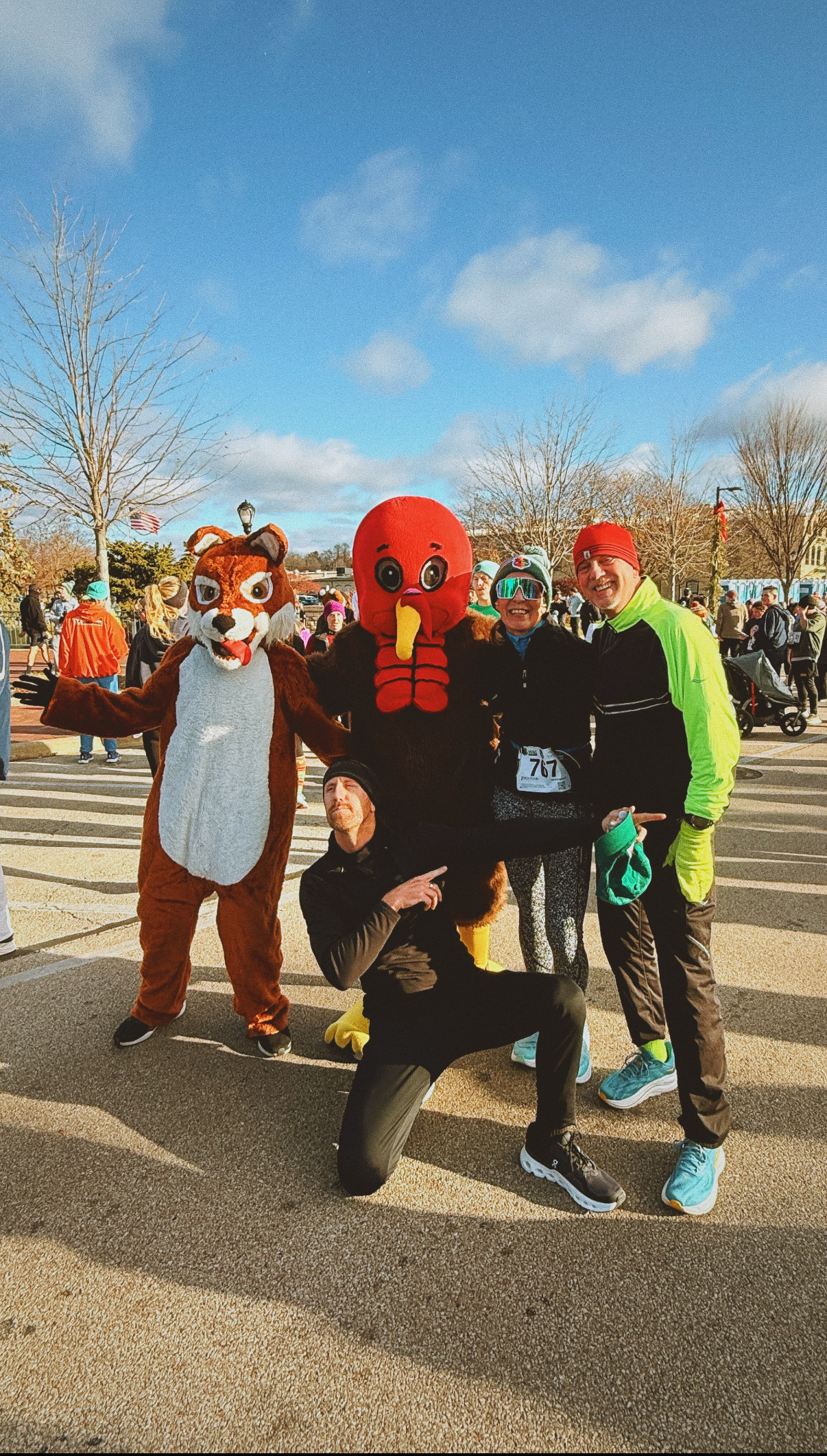
We ran our local Fox And Turkey Trot in Batavia, IL. The Fox River Trail Runners (FRTRs) put this race on every year, and it’s well done. As in managed, not cooked.

We reprised a photo from ten years ago with my wife, Sue, and son Evan posing with the mascots post-race. That’s the part of this story that stuns me. Ten years went by fast!

Ten years ago, Sue and I got married. We’ve gone to dozens of races and traveled to many cities since then. I’ve gotten deeper into triathlon, working my way up from Sprints to the Olympic and Half-Ironman distances. My swimming has come a long way, the cycling pace is still decent, but my running, unfortunately, has gotten slower.

The time I ran ten years ago in the same turkey trot averaged 7:09 per mile for about 29:00. This past Thanksgiving, I ran 8:40 pace accompanied by my son, who kept me entertained with stories along the say. I couldn’t reply in kind, as I was running near my limit, given how little running I did this year compared to others. I had neither the breath nor the brain space to talk much. I was concentrating hard to stay on pace. I didn’t go into the race with any expectations, but found myself eager to run as fast as I could once the race started.

There was a time when I ran this four-mile road race distance in 19:49, a result that would have won every edition of this race, as the record stands at 19:52.

Confessions

I’ll be honest: it’s tough for me standing in the middle of the pack wishing I was young again. But hearts and lungs have their limits, as do muscles, sinew, ligaments, and brains. I felt my heart rate surge just after two miles.

I’d run 1.5 miles at 8:40 pace by then, and we turned a corner into the wind. Perhaps that’s what set it off. After that, it stayed above 170 for the next two miles.

Easing into it

This is how it is for runner’s my age. Our bodies need far more time to warm up than they once did. For me, that means twenty minutes of easy jogging. Before that, I’m not efficient.

We typically warmed up for 20-30 minutes before workouts and races in my prime racing years during the late 1970s and early 80s. And thus, blaming myself these days for not going out the door at 8:00 pace is dumb.

Perhaps you’ve experienced similar deprecating self-talk, but it’s hard not to compare today’s runs to past efforts. But I’ll make a pledge here not to do that going forward. I’ll even leave my watch behind some days, and just run. It’s even more important in the pool, where I constantly push to swim at certain rates, even though what I need to do is turn off the pressure and enjoy being in the water. I’m pretty sure I’ll swim longer and more that way.

A few summers ago, I ditched the bike data and rode for fun. Sometimes I went fast. Sometimes not. My fitness turned out about the same.

These baselines and heart rates are important to understand, but they should not control us. There’s so much to be gained by living ‘in the moment.’ These photos show that.

Still, my wife ran a 4-mile PR and nearly beat me in this race. I’m proud of her, but more than that, I’m glad she chose to marry me. I’m also grateful that my son put up with my gasping silence for four miles. He did get to see my racing instincts early on as we plied our way through the crowds after cresting the Houston Street hill.

It was fun. Those are my heartfelt feelings.

Posted in aging, aging is not for the weak of heart, Christopher Cudworth, competition, healthy aging, healthy senior, love, race pace, racing peak, running, training, we run and ride, When the other man is an Ironman | Tagged , , , , , , , , , , , , , , , , , , , , , | Leave a comment

Chiro and Christopher

I never knew at 22 what my knees would go through.

I’ve always had an on-again-off-again relationship with chiropractic ‘medicine.’ That’s because I’m not sure that it’s medicine in any traditional sense. See, I’m not entirely convinced that pushing bones around in our bodies offers significant physical benefits. It certainly can’t cure disease. Chiropractic medicine is the tarsnake of the “fix me” world. Some people swear by it.

Yet, I did have a chiropractor use a scraper to break down scar tissue in my back long after a bike accident. That hurt like hell, but it worked.

I’m giving chiropractic treatment one more try. The practice near my home has good ratings on Google, and some enthusiastic reviews, and they specifically treat knee pain, which I’m experiencing due to the fact that I tore my meniscus many years back, then had surgery to clip off the portion sticking out at the joint, and now my knee aches in the morning and evening.

“Arthritis,” is what an orthopedic doctor friend told me. “Arthritis is a general term for over 100 conditions characterized by inflammation of one or more joints, leading to pain, stiffness, swelling, and decreased range of motion. It can affect joints, the tissues around them, and other connective tissues, and while there is no cure, various treatments can help manage symptoms and slow its progression.”

I prefer to call it ‘wear and tear,’ but more accurately, in my case, ‘tear and wear.’ My unaffected right knee still has its ACL, while my left knee lost it twice over. Once with the original ACL, which I tore playing indoor soccer, and then the ‘repaired’ ACL, a cadaver part stapled into place during surgery after the first tear. I called the cadaver part “Jake,” but Jake died all over again during an outdoor soccer game in which the field was wet and slippery, and I played forward for a half in a game in which we were getting creamed and then a guy rammed into the side of my leg and I felt the dead ACL go “click.”

That was ‘game over’ literally and figuratively.

Things went fine without an ACL until I hurdled a traffic cone in a fit of anachronistic love for the steeplechase, whereupon I hyperextended the knee and didn’t know it at that point, but tore the meniscus that day. It took a couple years, but the torn meniscus bit started sticking out the side of my knee so I had that surgically removed. And went for a walk that next morning. Life is all about rehabilitation.

But now, some five years later, the knee needs attention again. I’ve been teasing my wife that I need “knee cheese,” an injection of some sort to fill that space in the affected joint. I meet tomorrow afternoon for a review of the chiropractic clinic’s recommendations. We’ll see what they say. I kneed an opinion, so I’m getting one.

Thanks for reading.

Posted in aging, aging is not for the weak of heart, Christopher Cudworth, healthy aging, healthy senior, injury | Tagged , , , , , , , , , , , , , | Leave a comment

Wear and tear and ‘wouldn’t change a thing’

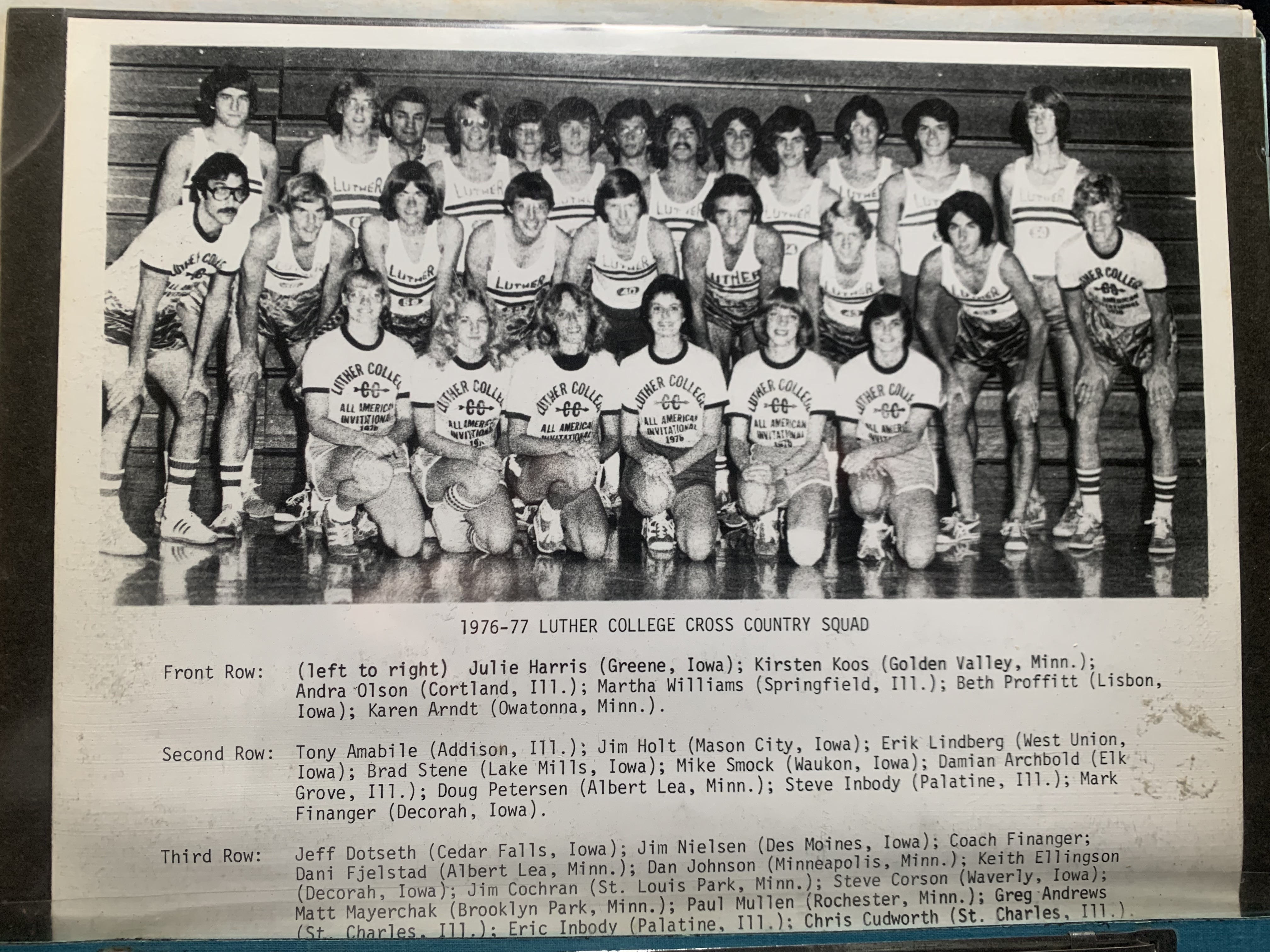
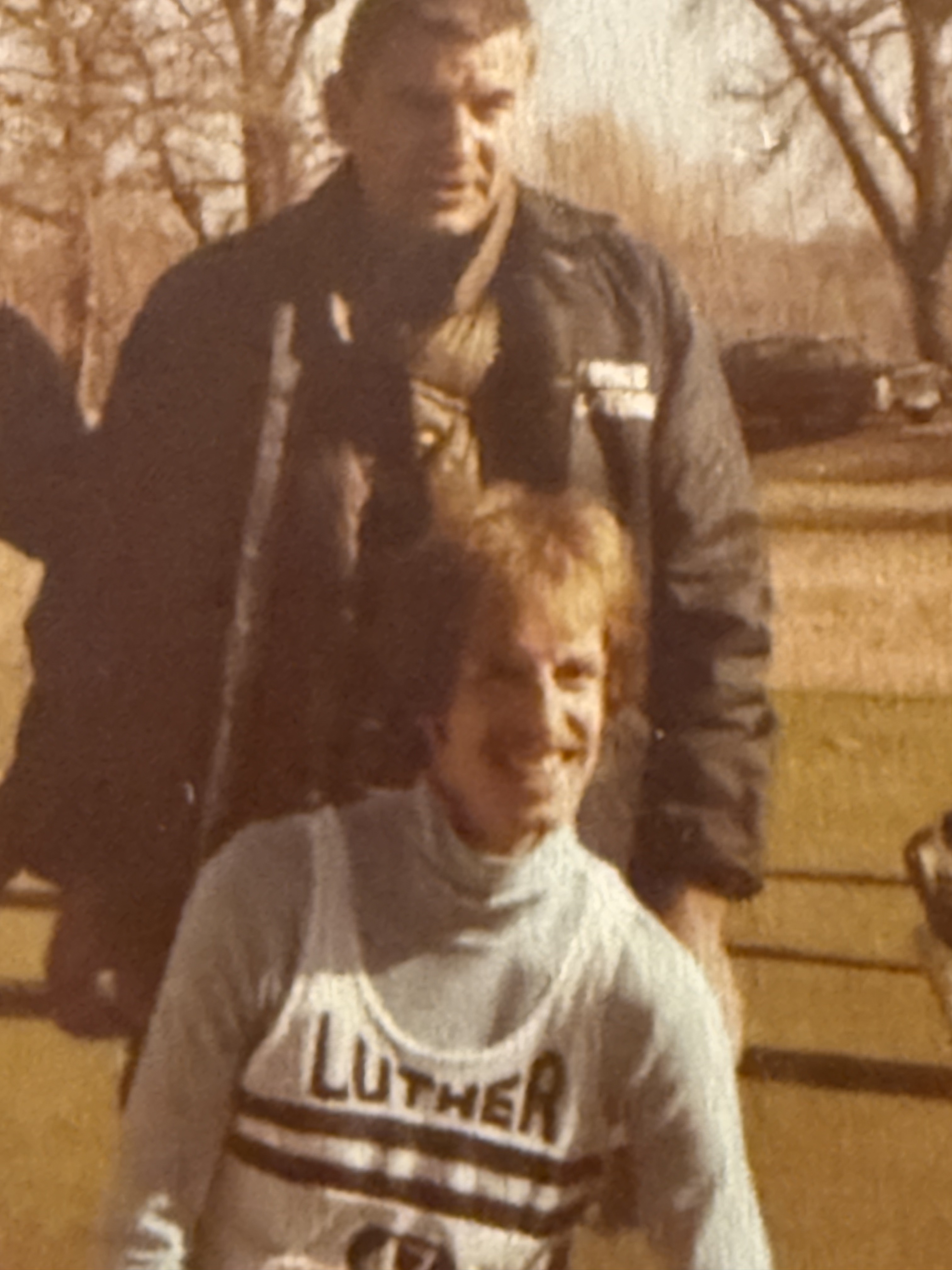
Posing in front of Kent in our team picture after placing second as a team in the national D3 meet.

While attending a Luther College reunion, I was walking next to my cross-country coach Kent Finanger, who was bent over and limping due to back issues likely related to his years of playing football and basketball during his college career. Kent was a “Little All-American” back in his day and was apparently one of the first Luther College students to dance with his girlfriend, when such activity was banned at the little Lutheran college in the hills of Decorah, Iowa. I turned to Kent as we walked together, and in what I felt was a sympathetic way, observed, “Well, Kent, I guess those years of sports have a cost to us, don’t they?”

He whipped his head around and replied, “Wouldn’t change a thing.”

Kent lived life to the fullest during his prodigious athletic and coaching career. His favorite phrase while goading us through the pain and exhaustion of training was…”Wow Fun Wow!” That shorthand inspiration was written on mimeographed race workout sheets, scrawled in chalk on blackboards, and uttered with intention during many pep talks. And brother, did he ever give us pep talks!

But more than that, the man gave us his time and dedication. Only once did I see that focus on our cross-country team falter when his attention turned to the upcoming basketball season, a late-fall period when he left us to do a workout on our own because his basketball team needed his attention. That was forgivable because for us, Kent devoted thousands of hours preparing, leading, guiding, and inspiring us to run our best. He loved coaching basketball as much as he loved coaching cross-country. There’s no fault in that.

Success and failure

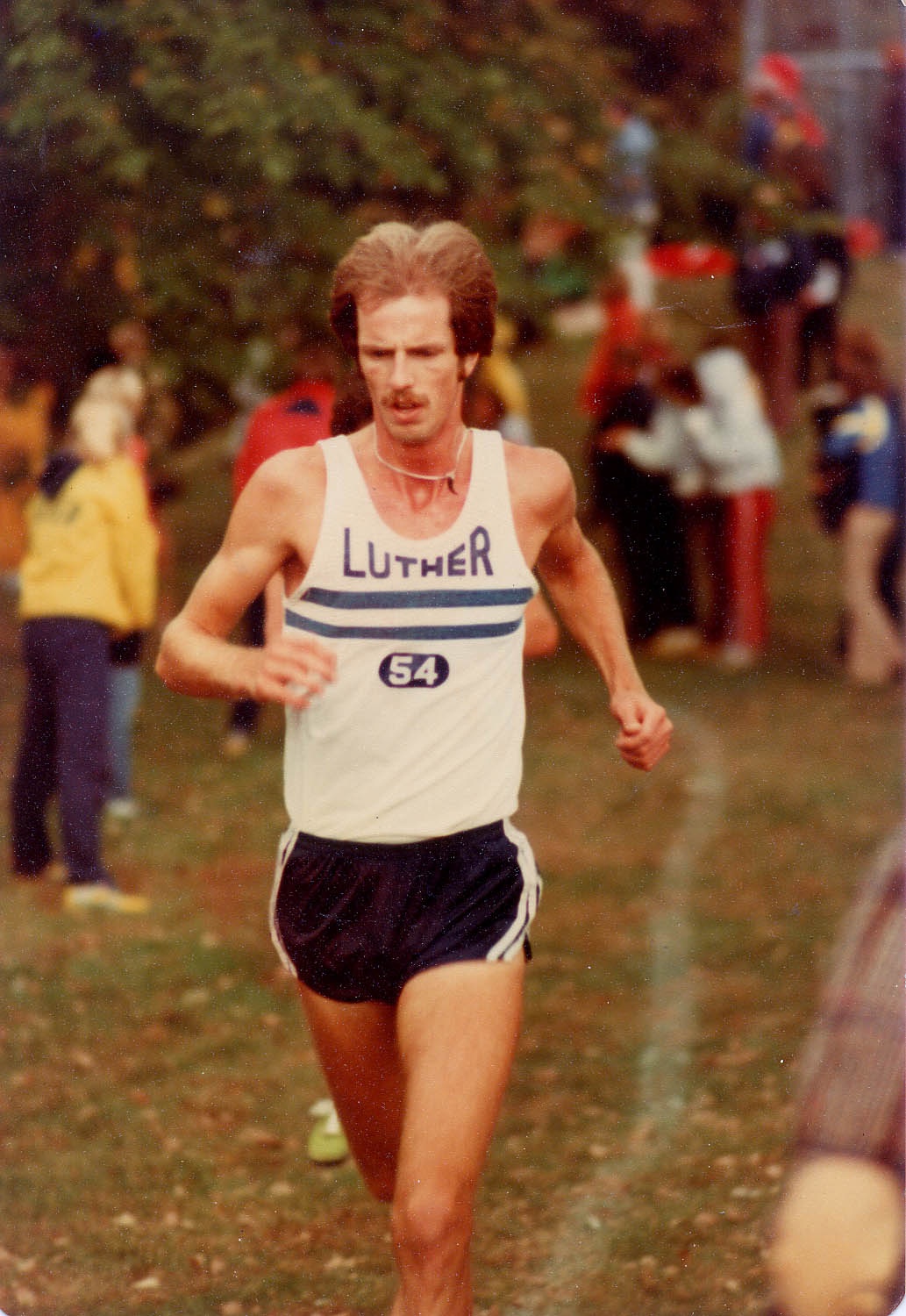
Running my hardest during freshman year at Luther.

As runners, we often responded with success, but also failed at listening in some ways. He’d give us a workout at a specific pace, and we’d blast away at too high a tempo or speed. We frequently drank too much on Saturday nights, and I once missed a Sunday morning workout because my college girlfriend and I went overnight camping.

I have a clear memory of being in that tend half-naked with her on a ridge above campus when I looked out the tent flap to see my teammates running past on the road below. They were on their way to a hard ten-mile workout. I dropped my head and muttered, “Oh no.”

To this day, I don’t know what came over me that I completely forgot about that workout. I think it was love, and I don’t believe that Kent objected to that one missed workout, given that during my senior season, I’d improved from a laggard 5-7th man in previous years to become a team leader, running second most weeks behind my roommate Dani Fjelstad. He needed me to step up, and I was Luther’s Most Improved that season.

That was an important move given that Keith Ellingson, my freshman-year roommate and our best runner the previous season, was out with a back injury in 1978. Kent likely knew that having a steady girlfriend was largely good for my previously frail and fractured self-esteem. She wasn’t necessarily stable in that support, and we broke up once or twice during the season, but got back together. That’s the thing about young love. You can’t count on it sometimes. To quote Jackson Browne’s song “That Girl Could Sing…”

She was a friend to me when I needed one
Wasn’t for her, I don’t know what I’d done
She gave me back something that was missing in me
She coulda turned out to be almost anyone
Almost anyone
With the possible exception
Of who I wanted her to be

Things in Common

A few years after college, I met the woman to whom I’d be married for twenty-eight years. We lost my Linda to ovarian cancer in 2013. In that sad regard, Kent, Keith, and I wound up having something dire in common. Kent’s wife, Lucia, died of cancer, as did Keith’s sweet wife, Kristi.

I recall Lucia as a classically devoted woman who put up with many impromptu visits from students past and present who dropped by to visit Kent at the small house down the hill from the Luther campus. Lucia was a ‘long-suffering’ wife in that regard, often putting up with unexpected visitors. But she also knew the ropes, and once, thinking I was a privileged part of the greater “family” of Luther athletes associated with Kent, I asked to borrow a lawn chair to use while exhibiting my art during the Nordic Fest weekend. Lucia was having none of that. “I’ll never get it back,” she said with firm kindness. “So, no.” That was a good lesson in respect versus presumption. There were limits, I came to understand, that everyone should preserve.

All Five Horses with Coach Kent Finanger at his home following our nationals success. Christopher Cudworht, Dani Fjelstad, Paul Mullen, Steve Corson, and the late Keith Ellingson, whom we lost to Lewy-Body dementia.

But when that four-year college cross-country journey was over, and we’d placed second in the nation thanks to the performance of two amazing freshmen filling in where our original “five horses” recruited by Kent were supposed to thrive, he and Lucia hosted us in their home with our parents attending. That was Kent’s way of saying “good job” to all because in the end, it was “all for one” that we ran together for thousands of miles with Kent riding ahead, beside, or behind us during runs. “Wow Fun Wow!” he’d called out the window while roaring past in a cloud of dust on those Decorah country roads.

Nothing’s perfect in this world, it seems, and while it would have been perfect for the Five Horses to compete together that season at our best, that wasn’t how it exactly worked out. But over that season and through all four years at Luther, we all performed our best in some ways through dual meets with our fiercest rival LaCrosse raised our game, to a conference victory my freshman year when we placed all seven runners in the top ten and scored a perfect 15 thanks to going 1-5.

Kent adding up scores after the Carthage Invitational where we placed second to Northwestern University in the team competition.

The message here is that every relationship is based on “give and take.” Kent gave us much, and we did our best to give it back. Personally, I made it through my first real depressive episode during my junior year, where I barely finished the conference meet due to a darkened mind, yet bounced back as our fifth man at nationals, where we placed 8th in the nation. Those are called “growth experiences” by any measure. That’s what Kent wanted to see from us, movement in terms of athletic and personal growth.

Visionary man

He started the women’s cross-country program in my freshman year because he believed in Fitness for Life and that it should include women runners. His vision spread across the nation with other like-minded coaches, and these days, women runners outnumber men in many places. That’s because the “Wow Fun Wow” factor of running has meaning to all. Perhaps that’s why Kent ignored the costs of time and effort and pain in assessing his life’s work.

His words, “Wouldn’t change a thing,” are not some conservative mantra or regressive philosophy in his case. He meant that challenging yourself in everything you do, even if it costs you, is the right thing to do. For that philosophy, so many of us in his sphere are forever grateful. I know Kent experiences fading memory these days, and his physical health has been difficult in later years. Such is the ‘wear and tear’ of forthright existence.

Can’t change a thing

But I’ll not forget walking beside him that day on the way to the Hall of Fame induction for his son, and hearing his response when I absently questioned the costs of competition. “Wouldn’t change a thing.” Which also made me laugh about another aspect of our relationship. During all four years at Luther, he referred to me as “Cudsworth,” not “Cudworth” as my name is actually spelled. Some of my teammates attempted to correct him on that during our final season, and he apologized, saying, “I’m sorry, Cuds.”

We all laughed at that. Some things don’t need changing. To Coach Kent, I’d always be “Cuds” and that nickname stayed and stuck between us. We should all be so grateful for such kind mistakes in life, love, and meeting its challenges. I don’t know how many years Kent will be with us in this world. Age catches up with us all. But his love of sport and life resonates through more than half a century. That’s a legacy worth recalling, as it should inspire us all.

Posted in aging, aging is not for the weak of heart, alcohol, coaching, college, competition, cross country, death, Depression, foregiveness, friendship, healthy aging, healthy senior, injury, life and death, love, mental health, mental illness, running, training | Tagged , , , , , , , , , , , , , , , , , , , , , , | Leave a comment

It keeps you running

I titled today’s post after a Doobie Brother’s song from their album Takin’ It to The Streets. Back when the album came out, I was so obsessed with running that any song mentioning the word “run” or “running” became a fave. But the song It Keeps You Running had nothing to do with actually running. It was an allegorical reference to “running” as a way to cope with life.

From here I can feel your heartbeat
Oh, you got me all wrong
You ain’t got no worry
You just been lonely too long
Oh, I know

I know what it means to hide your heart
From a long time ago
Oh, darlin’

It keeps you runnin’, yeah, it keeps you runnin’ (it keeps you runnin’)

However, in my case, there’s an obtuse reverse reference to life’s challenges as we age. As in, “From here, I can feel your heartbeat…” applies to my upcoming cardiology appointment. Two years ago, I had an isolated atrial fibrillation incident that lasted one night and resolved. I took blood thinners for a couple months and had a checkup with no further signs or problems. And kept on runnin’.

But in truth: “I know what it means to hide your heart from a long time ago…” took on new meaning. My father and close relatives all have A-fib. They’ve had ablations and other treatments. I’ve not had the need for that yet. From what I’ve read, keeping up with reasonable amounts of exercise has the potential to moderate A-fib. So I keep on runnin’, ridin’, and swimmin’. That’s one of the tarsnakes of exercise. We need it to stay healthy, but sometimes there are diminishing returns. The thing that saves us can also cause us troubles.

I do need to mention that I did have a bike crash during the Des Moines 70.3 triathlon while still on blood thinners. That led to copious amounts of blood ‘runnin’ down my arm. I wound up back in the hospital that night to have my right hand ring finger glued shut.

I could run and hide from the risks of exercise, but I’m not going to run away from that.

Are you gonna worry
For the rest of your life? Hey, yeah
Why you in such a hurry
To be lonely one more night? Hey, yeah

Age and determination

Here I’ll admit that I’m starting to genuinely feel the effects of age. My daily runnin’ pace slowed dramatically over the last two years. It also takes me a full twenty minutes to work up to speed at all. It tests my patience and confidence to continue working through these humbling stages and changes.

So I have to not “worry for the rest of my life.” That’s even more exhausting.

There’s one more thing. My left knee hurts. The meniscus I had clipped several years ago left the inside of the left inner knee exposed. So I’m heading to a knee clinic to look at options. I’m sure some of you can relate, just like the lyrics say…

Oh, I know how you feel
Yeah, you know I been there
But what you’re keepin’ to yourself
Oh, you know it just ain’t fair, hey, yeah
Oh, darlin’

It keeps you runnin’, yeah it keeps you runnin.’

Posted in aging, aging is not for the weak of heart, anxiety, bike crash, Christopher Cudworth, cycling threats, healthy aging, healthy senior, running, training, triathlete, triathlon, triathlons | Tagged , , , , , , , , , , , , , , , , , , , , , , | Leave a comment

A November 18 to remember

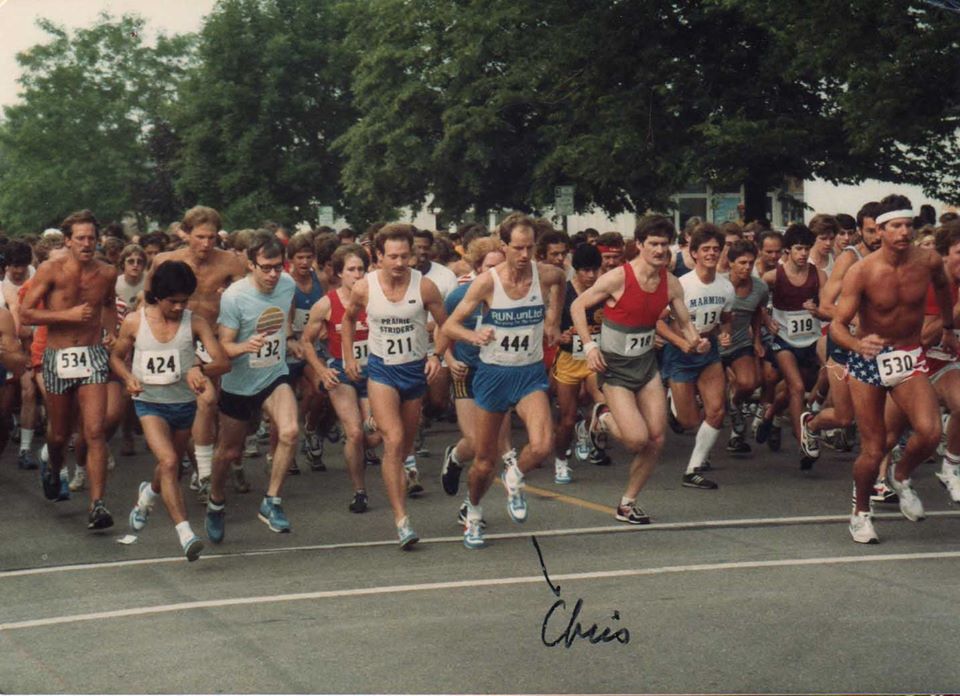
I make no attempt to hide my age, and it’s with pride that I share today, November 18, an accomplishment 47 years ago. I was a Luther College senior, captain of the cross-country team, and in my 8th season of that sport including both a high school and college career. All told, I ran over 8,000 miles in training during college, including track and field. But there was pressure to succeed that final CC season, as our previous best was 8th place in D3 Nationals.

It may seem like a simple task, but numerous hashtag#executivefunctions are involved in competition. Diet, sleep, and scheduling all play a part in race preparation. I kept journals of every workout, pace, and race result.

This was the last page of my training journal from the 1978 season.


During this season, I effectively replaced one of our top runners who was out due to an injury, performing as the second or third man until an Achilles injury slowed me slightly. With high-volume training of 80-100 miles per week, we all experienced injury at some point. Yet we all came together that November day, and I was our fifth scoring man as we took 2nd place in the nation by one point over third place. Fourth place was only four points behind.

I recall a clear sense of mission as I ran those last four hundred yards. Years of preparation culminated in a clarity surpassing my understanding. I wish everyone could experience that at least once in their lives.

As Olympic marathoner Kenny Moore once wrote, “Running is hard, clean, and severe.” It toughens us for many other events in life. When my high school coach learned of my late wife’s ovarian cancer and sensed what it would require of me in hashtag#caregiving, he told me, “All your life has been a preparation for this.” I knew what he meant. In some ways, the latter goal surpassed the former. I kept a journal of that too. Character. Caregiving. Community. https://lnkd.in/g4YkhK6

After three years of performing as 5-7th man, I stepped up to lead most of the season, and welcomed the rise of teammates as we peaked in time for the national championships. I was the fifth man, just sixteen seconds behind our top runner that day.
Posted in aging, aging is not for the weak of heart, Christopher Cudworth, college, competition, cross country, friendship, injury, running, steeplechase, track and field, training, TRAINING PEAKS | Tagged , , , , , , , , , , , , , | 2 Comments

Here’s the 411 on the 911 on 421

During my late high school career, or perhaps it was early in my college career, I often ran my favorite seven-mile loop from 1719 Patricia Lane in St. Charles, IL, along 7th Avenue north to Route 64, west across downtown past a set of windows where I could check my running form, across the Fox River to 3rd Street, south toward Geneva onto Anderson Boulevard, then east on Geneva’s State Street, over the Fox River again, climbing the hill just past Route 38 to East Side Drive, back to Division Street and home again. Usually counterclockwise. But not always.

We all need a “go-to” route when we want to run without thinking about the course, and that was my go-to. It had hills, interesting, wide streets, and a fair amount of shade on summer days. When I ran at night, that same route was largely illuminated by streetlights. On summer nights, I’d see dozens of moths circling those lamps, and hear nighthawks calling above the trees. There were plenty of those back in the day, because the factories in town all had gravel roofs, perfect breeding spots for camouflaging nighthawk eggs.

Occasionally, I’d run the route clockwise, and one summer afternoon, I wore a bright orange St. Charles Cross Country shirt as I ran through downtown Geneva heading into the sun. The Geneva Theater still operated in those days, and a pack of bored townies lined the window shelf as I ran past. One of them shoved their feet in front of me as I passed, but I jumped over them, gave a glance back and flipped a bird in response to the asshole move. Within seconds, I heard a large scuffle behind me, and was amused to turn find an overweight guy with a scruffy beard starting to run after me. I chuckled and picked up the pace, and he lasted about twenty yards.

I kept running west for three blocks, thinking the incident was over. Then a yellow Renault pulled in front of me at the entrance to the Jewel grocery store parking lot, and out hopped a pair of other guys, clearly looking to start a fight. I wasn’t afraid to fight back then. I’d been in quite a few fights during my middle school years, and once during a high school intramural basketball game I jumped up and punched a guy smack in the eye after he threw me down during a game.

But I wasn’t in a fighting mood at that particular moment, so I faked like I was running right to avoid them, at which point they both leaned that direction to catch me, and cut back between then and their car. That seemed to inflame their transplanted anger.

Knowing that I’d better lose them quickly, I ran down a curved set of abandoned railroad tracks behind the strip mall. The footing wasn’t great because the railroad ties were half-covered in sand and weeds, but I made headway going north and expected to be done with the thugs.

I reached the next east-west street and saw a friend of mine, Spencer King, coming my direction on his scooter. “Hey,” I waved to him. “Can you give me a ride?” I asked.

King of Himself

Now, Spencer’s interests in life were always first and foremost about Spencer. I knew him from high school, and that’s just how he was. “Where are you going?” he asked. At that point, I saw the yellow Renault racing toward us. They’d found me. I pointed and said, “Those guys are after me.”

Spencer turned around as the Renault skidded to a stop. A guy jumped out the passenger door, raised his arm back, and heaved a knife in our direction. It skidded past us on the street and disappeared in the weeds. Spencer looked at me, gunned his scooter motor, and took off without me.

I ran a few steps across the street and headed up the sidewalk. The Renault driver stood there looking at me with evil in his eyes. I kept running until I found an alley and turned north. I was approaching the next east-west street when I spotted a man in front of his open garage door. I ran inside, told him, “Someone’s trying to catch me. Can I hide in here?” To my surprise, he asked no questions, pulled the garage door down, and apparently drove away in the car he’d been idling outside the garage.

I was out of breath and my chest was heaving, but years of training in distance running taught me how to keep an even rate. A car drove past. I could hear the tires crunching on the gravel. Peeking out the window, I could see the yellow Renault with two guys inside looking into the yard. I dropped my head down and crouched low inside the garage. Pigeons cooed above me. I looked up and saw a coop with several birds in it.

After ten minutes of hiding there, the sweat on my body dried up even though it was warm outside. I didn’t want to make noise by opening the garage door, so I snuck out the side door, went out the chain link fence gate, and ran the backstreets all the way north to St. Charles.

Knife Fight

I’d never had a knife thrown at me before, but back in sixth grade, I’d gotten into a series of fights that led to a challenge by a local tough from a bad neighborhood on south Route 222 before Willow Street. I’d accepted the invite to fight the guy in the deep end of the empty Meadia Heights swimming pool as it was empty during the fall, and bragged about my date with destiny at our neighborhood pickup basketball game. Instantly, an older kid named Davie Arnold grabbed me by the shirt and said, “You’re not going. I’ll go in your place.”

Davie was the kind of crazy kid who played basketball in his socks, so I didn’t want to mess with him. He went and fought the tough kid at the pool, and came back with his shirt all covered in blood. “Oh my God!” we exclaimed. He walked over to me, grabbed me by the shirt again and said, “He pulled a knife on me. I knocked it away and beat his face in. This is his blood,” he told me. “And you’re done fighting.”

And pretty much, I quit fighting after that. I was eleven years old. So by seventeen years old, I’d avoided two possible knifing incidents in life.

But years later, in 1985, when I’d just gotten married, we moved into a house on Anderson Boulevard, right on the route where I most loved to run. About three days after we moved in, I was pulling our Subaru into the garage when a feeling of deja vu overcame me. Suddenly, I realized that our garage was the same one in which I’d hidden the day I’d been chased by the thugs in the yellow Renault ten years earlier.

We lived in that house for ten years before moving to Batavia in 1996. I ran my favorite loop many more times before leaving that home behind. There was one more odd and funny aspect to that location. I painted this self-portrait watercolor, featured in this article, which shows two manhole covers surrounded by tarsnakes, forming an illustration of two large female breasts. It symbolizes that a young man’s obsession with sex can be a knife to the heart for those weak with lust. We’ve all had to run past that now and then. I tried, not always with success.

Posted in aging, Christopher Cudworth, cross country, fear, friendship, life and death, running, sex, Tarsnakes, training | Tagged , , , , , , , | Leave a comment

The Rise of Women in Sports: Breaking Barriers in Running

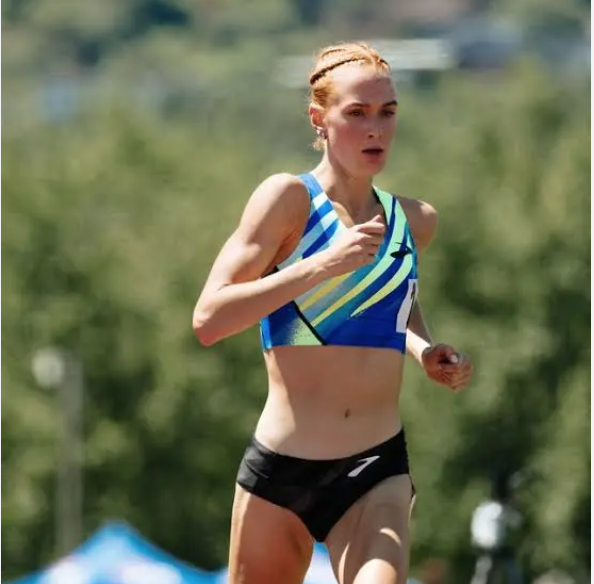
I tuned into Youtube to watch a young woman named Jane Hedengren from BYU run to victory in the Pac12 conference cross country meet. Listening to her stats as the announcers described her arrival on te college scene, I realized that her 4:23 high school mile time and 14:57 5K PR were far better than mine when I entered Luther College as a freshman. She could beat me, perhaps easily, I realized, at that same phase my running career. She will likely improve with experience, surpassing, as so many women have recently done, everything I proudly accomplished in my sub-elite running career. More power to her, and to all women out there .

Before going further into this post, I’ll share that I frequently express admiration for women athletes, and for women in general, to my wife. She’s a multiple Ironman finisher, has qualified and competed in World’s 70.3 several times, and is one of the most dedicated athletes I’ve ever encountered.

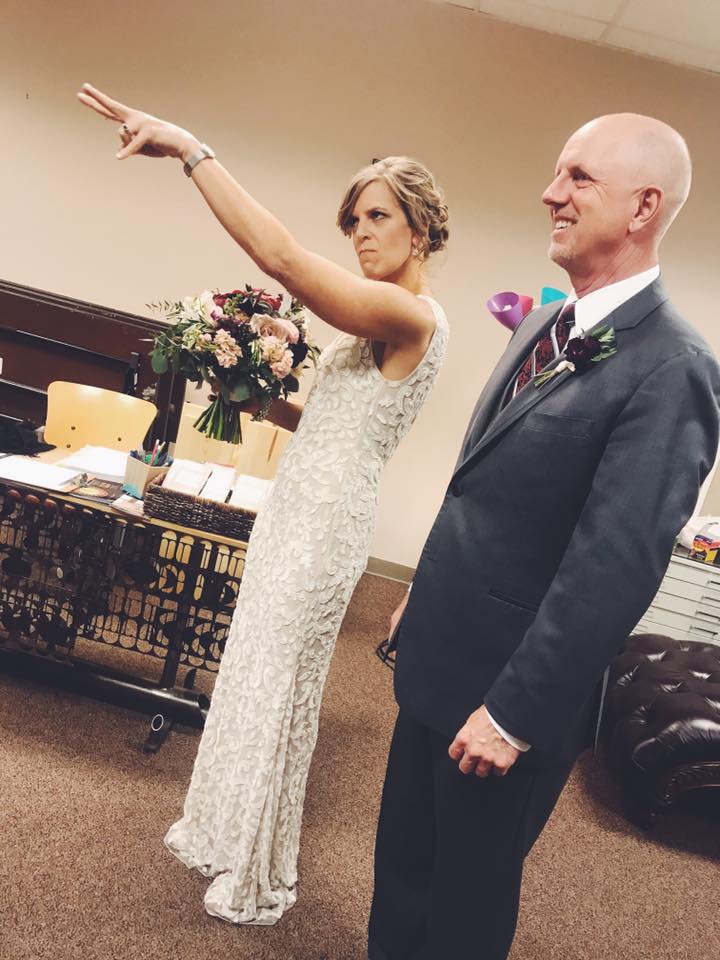
Giving instructions to her son during our wedding.

Moreover, I’ve shared that I also found it astounding that she had two of her three children at home rather than in the hospital. We’re both remarried, as I was widowed following 28 years of marriage to my late wife. She divorced before 2010, so we’ve been on a shared journey for the last thirteen years . Whenever I rave about women’s attributes and how many more ways women have to prepare themselves and endure feminine issues in life, she calmly replies, “Well, it’s what we do.”

She’s largely a “no drama” person, and I love that about her (and much more.) I preface this post with this disclaimer of sorts so that you know I’m not just ‘virtue signaling’ to win approval from women readers, whoever they might be. Sue doesn’t buy my whole “women are amazing” theme. She keeps me in line about all of this.

But let’s get back to Jane Hedengren for a moment.

The announcers called her a “once in a generation” athlete, and perhaps that’s true, at least in America. However, over the last five years, I’ve watched in appreciation as women from many countries have run astounding times at every distance, from the 800 meters to the marathon.

I’m especially intrigued by the women now approaching the longstanding world record at 800 meters held by a former East German athlete Jarmila Kratochilova, who ran 1:53:28 on July 26 (my birthday) in 1983. Keely Hodgkinson of Great Britain has run 1:54.61, set in London in 2024. Her teammate Georgia Hunter Bell, another British middle-distance runner and training partner, has also run 1:54 and beat Hodgkinson to the silver medal at the World Athletics Championships in Tokyo. 

The speed of these women is so impressive, and now that Femke Bol is moving into the 800 meters, we could finally see that world record––questionable due to its achievement during an Eastern European drug-cheating era, get bested. The women’s mile world record is now at 4:07 set by Faith Kipyegon. She attempted to break the 4:00 mile mark this past summer but that proved to be too big a leap even for her. But never mind. The fact that women now consistently run under 4:20, and that Jane Hedengren ran a 4:23 women’s mile in high school, is remarkable.

Yet that’s not even the reason I’m most impressed by women runners. They face many more challenges to run this fast than men. It all begins with the bodily changes of young womanhood. I recall my daughter’s journey into menstruation and how she hated the entire process. “I don’t even feel like me,” she groaned after a soccer game where cramps caused her discomfort and the pads she wore chafed her inner thighs.

Through it all

Using tampons, dealing with the monthly stress of cramps and pain all make it that much harder for many women to train and race. Women’s injury risks and medical challenges differ, too. Too much running ends menstruation (amenorrhea) and puts women at risk of bone density issues, iron deficiencies, and stress fractures. In my twenties, I dated a 36:00 10K woman runner who experienced all those symptoms and ran until her leg fractured. I warned her to take a break and let it heal. But she persisted. I was there. I heard her leg break.

Then there are the vagaries of body image, sexualized social media pressures, dietary concerns, and the risk of eating disorders. High-achieving women may tend toward perfectionism, and the mental stress of setting and maintaining high standards exacerbates the issue. I’ve known women runners at the national level who literally ran off the track during championships when their performance that day failed their expectations.

From the beginning

Then there are the pressures of time and age, and biological clocks, childbirthing, and recovery. Some women come back stronger than ever after having children. I cannot imagine that journey. Men who care abide as women endure pregnancy and childbirth, hoping that our support helps in some way. I was there for the birth of both of my children. But I cannot fully appreciate what it’s like to carry and create a child. No man can.

I’ve seen many women return to sport or start up once their children reach a certain age. There’s an entire “league” of women triathletes in their forties whose performances defy former notions of what’s possible not just for women of their age, but of any age. They own their bodies in all-new ways, fully fit and uncompromisingly honest. Nothing to hide. They are athletes.

As women age their bodies change all over again. Pre-menopause and menopause mess with women’s bodies and minds. It’s all unpredictable, and it’s finally being recognized that applying men’s medical standards to women’s health is insane. Some of that realization comes from women pushing themselves in ways that prior generations never dreamed. That is not to say that previous generations were flawed. That’s not the point at all. We’re just learning more about women’s bodies and health by pushing the limits. That’s a good thing.

The playground of life

There was a time when men were ashamed to get “beat by a girl.” I do recall trying to catch a girl named Cindy DeMora, a classmate at Willow Street Elementary school, during a game of tag. I was one of the fastest kids in our grade, but could not catch her. That was my first lesson in the playground of life.

Women are tough, too. Watching women go through menopause with night sweats and brain changes, chemistry shifts, and the endurance test of not knowing how long that’s going to continue and it becomes obvious that women are some of the toughest creatures on earth.

There are also big changes going on in women’s mental health awareness. Even top athletes are susceptible to conditions such as anxiety and depression. When gymnast Simone Biles developed a case of the “twisties” she courageously backed off despite world-class pressures to compete no matter what. She set an example for all women that it’s better to deal with life honestly than to buck it up and fake it. Yet it’s also a fact that women frequently have to “fake it” in the face of multiple obligations that some men don’t care to imagine. They’re happy to let women handle “the details” of daily life that make things work, and then find time to train on top of that. I try hard to support my wife’s triathlon life, and she regularly thanks me for that. But that doesn’t mean I hit every note correctly. Not by a mile.

It does matter that we all try to appreciate what John Lennon once called “the other half of the sky.”

Posted in 10K, 13.1, college, competition, cross country, mental health, triathlete, triathlon, triathlons, women | Tagged , , , , , , , , , , , , , | Leave a comment

Erections come with a cost

When my daughter was just into junior high, we sat watching together TV when a Viagra commercial appeared on the air, concluding with a warning that users should “seek help” for an erection lasting longer than four hours.

“Four hours!” she burst out laughing. “Oh my God!”

I knew that I didn’t need to explain things to her. Even in the early 90s, the information available to kids let them in on what sex and body parts were all about. So we had a laugh, and went on watching our movie. Yet, I’ve never forgotten her wonder at the idea that men might walk around with a stiffie for hours. Paying for erections does come with a cost.

A momentous occasion

Many of us men have naturally encountered an unexpected hard-on at some point in life. As a college distance runner, I purchased and tried out a pair of brand-new Sub-4 (pun unintentional here) running shorts marketed by miler Steve Scott. My girlfriend happened to be joining me for the run that day, a rare occasion by the way. During that first mile, those silky internal briefs rubbed against my eager appendage and caused a raging hard-on inside the shorts. As we trotted along, I didn’t know whether to mention the condition to my girlfriend. I mean, who knew what she might make of it. Frankly, she was always willing to please when the occasion called for it. I finally laughed and pointed the bulge out to her, and we both had a chuckle. “I can’t help it!” I admitted. “It’s these new shorts!”

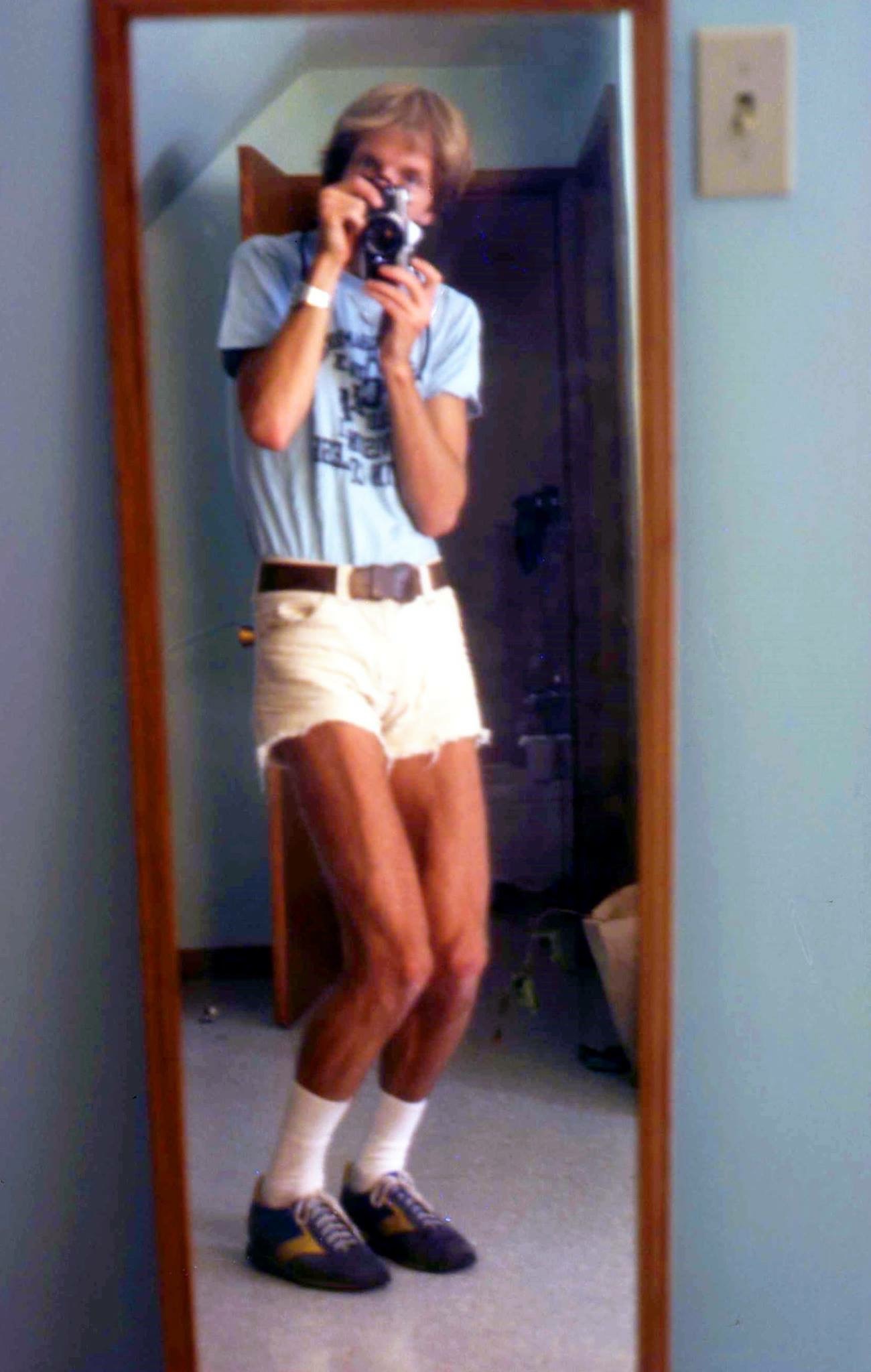
These are the shorts that initially led to a mid-run erection. Fortunately, not in this race or any other.

We didn’t stop by the side of the road to use that erection, but she did take care of business when we got back to the dorm. That’s something I appreciated about her. She saw sex as both a bond and a commitment. Once, while visiting her at her parents’ house during Christmas break, she sensed sexual tension in me and led me down into their basement for a hand job. I didn’t last long, and at that age, the force of that projectile landed feet away from us on the couch. She quickly cleaned that up, but I was chagrined. That stuff doesn’t come out of anything.

We broke up a year or so later, and she quickly married another man she’d met while we were forced into a long-distance relationship by work. A year after she’d been married, she asked to meet up at a festival in our college town. We drove to our favorite spot and sat down to talk. “I made a mistake,” she told me. “Sex does matter. If you say the word, I’ll divorce him and marry you.”

Her green eyes and shining black hair were still a temptation. But I had also grieved and gotten over her for the most part.

Learning the ropes

Erections are a big part of every young man’s life. I’d had them many times leading up to sixth grade, but didn’t know what they were for until a kid named Murray gathered us boys on the playground in sixth grade and told us, “I learned about this thing called beating off!” he informed us. “You gotta stroke yourself and boom! It’s like magic.” I went home that afternoon, and my life changed in an instant.

My best friend and I once competed to see who could come first, or maybe it was the other way around, who could hold out the longest without losing it. We never touched each other. That didn’t cross our minds, I guess. But after I moved away in 7th grade and returned for a visit that following summer, he asked me if I still masturbated. I admitted that I did.

“Well, I quit,” he told me. I don’t doubt him. I learned that he turned hyper-conservative during high school, and repression of such urges seems to be a big part of the conservative mindset. I’m guessing that if I’d stayed through high school Pennsylvania, we’d probably have parted ways as friends. Years later, I tried rekindling a friendship in adulthood and he wanted little to do with me. When I moved, he told me, “Why does everything I love leave me?” His parent were divorced, you see. As for me, our shared masturbatory adventure must have offended his conservative sensibilities. Erections come with a cost, you see.

Healthy habits

I later put erections to good use in producing two healthy children.

What we’ve learned about erections and health is that frequent ejaculation is a healthful thing in which to partake.

When I experienced a prostate infection during my early thirties, resulting from that enlarged gland, my doctor recommended quitting caffeine and having frequent sex.

“Can I get a prescription for that?” I asked. He laughed and wrote one out. I took it home and showed it to my wife.

“Sure,” she responded a bit cynically. She was not so much a fan of the whole sex thing as I.

However, we did it enough to create a couple of great kids. So there’s that.

Erectile circulation

As I’ve aged, and the urges mellow, I’m grateful to still be functional and “in the flow,” as you might say, as it relates to erectile function. Perhaps that comes from staying active and maintaining a healthy circulation system. There’s evidence that frequent ejaculation can reduce risks of prostate cancer.

You have to get rid of that stuff. Don’t let it sit around inside you for too long. And when people guilt you for jacking off from a religious perspective, throw this bit of practical theology right back at them.

“If Jesus said it’s better to pluck out your eye than lust for another woman, remember that he seldom spoke literally about spiritual matters. He also said he could tear down the temple and rebuild it in three days, and the religious authorities laughed at him saying, “We took years to build this temple, and you can rebuild it in three days?” They didn’t get his message, you see? The rhetorical act meant more than the literal act. So, if you shed off lust by masturbating, that’s equivalent to “cutting out the eye” that causes you to consider adultery or other forms of sin due to sexual urges. So whack it, fellas. It’s good for the body and the soul.”

Running on

I don’t get radical erections from my running shorts any longer. Those days are over. But if I ever were to take Viagra, and had a four hour erection*, it might be quite a practical problem to have. I mean, think of all the things you can do with a four-hour erection!

• You can push elevator buttons and even hold open an elevator door for others!

• You can swim backstroke in a triathlon and pretend you’re a shark!

• You can make a peanut butter and jelly sandwich and not have to wash a knife!

• You can put attach your GoPro and capture yourself running in a unique angle!

• You can give directions and point the way for lost strangers!

• You can push in drawers using the front of your drawers.

• You can be a dick in any circumstance and people won’t ever question your sincerity.

• You can finish .01 seconds faster in a marathon.

• You can fill up the split saddle of your bike seat.

• You can take a photo of your erection and insert is subliminally in a Tropicana ad like the one shown here, Look closely at the flow of juice at the lower right. There’s definitely the head and shaft of a dick in there. And what’s she doing with her hand? It’s true. Sex sells. Even if it’s subliminal. I clipped this ad out of Reader’s Digest years ago. Mystery Achievement, so unreallll.

• And oh yes. With a four-hour erection, you can also step up to the booth and using your dick to vote. If Trump will still let you. But then again, he’s a real dick in the nastiest sense, so he’d likely appreciate your efforts.

Yes, a four-hour erection is a pretty handy thing to have. And you don’t have to thank me for all this good advice.

*A persistent erection lasting for four hours or longer is known as priapism. It is a medical emergency that requires prompt medical attention. So, while I joke about it, don’t take it lightly.

Posted in aging, Christopher Cudworth, college, competition, cross country, friendship, healthy aging, healthy senior, mental health, mental illness, running, sex, track and field, triathlete, triathlon, triathlons, women | Tagged , , , , , , , , , , , , , , , , , | Leave a comment

Why is anyone anywhere?

I’m a substitute teacher for a variety of reasons. It’s a transitional occupation in many ways. My career in marketing and communications is over. No one hires people in their 60s to work in those fields. I feel that’s a shame as my accumulated experience in B2B writing is an asset. I’ve also learned how to use AI in a complementary fashion. But once you get outside that loop of regular hiring in the freelance market, the opportunities dry up.

I took to teaching during the COVID-19 pandemic and have taught in more than 800 classrooms with over 20,000 students. Middle school is a primary focus, but I have also worked with success from Pre-K through high school. I get calls from teachers seeking a ‘good sub’ for their classrooms, and completed several long-term sub assignments in science and art.

The funny thing about this occupation, which I now call it, is teaching in schools where you were once a student yourself. At first, it’s a funny thing to think “I was a student in this classroom.” It evokes both good and bad memories of how you think, feel, behave, and lived during those moments. My sophomore biology classroom is down the hall from where I sit now. Mr. Kaminski was the teacher. He indulged my interest in birds by asking questions about the species I’d seen. Few teachers appreciated that world. I liked Mr. Kaminski.

Sadly, Mr. Kaminski was hugely overweight. He often looked sweaty and uncomfortable in his daily life. Though I was just fifteen years old, I worried about his health. As it turned out, the burden of his physique proved too much to bear. He took his own life.

I also had an Earth Science class down the same hallway, taught by my Kaneland High School cross country coach, Richard Born. I found the grade sheets from that course in some folders that traveled with me through all the places I’ve been and moved in life. That’s sounds crazy in some ways. Who keeps something that obscure and ultimately meaningless in the scope of life? I didn’t keep them on purpose. They just followed me around.

Finding mementos like that makes me think about the past, remembered and forgotten. I remember cold winter days running laps around this campus in the cornfields. I’d typically go out for track the week after basketball ended. I’d be out of running shape and those first track practices tore up the lungs as the March winds ripped fierce and cold across the stripped Illinois farm fields. Half the time I’d be sick with a cold, wiping snot on the sleeves a gray sweatshirt. It was hard work, training for track without a track to train on. The cinder track at our school wouldn’t dry out until well into April.

Our running equipment consisted of crappy little gum rubber track shoes that were barely a half-inch thick, and just a hint of a heel. When I made the Varsity as a sophomore, I earned some suede leather adidas Gazelles with thicker soles, but those got stolen at our first outdoor track meet in Rochelle. It was back to crappy gum rubber shoes for me the rest of the season.

I well recall an incident the day I was giving a speech in English class here at Kaneland. As I slid along the table during the talk, a huge sliver that stuck out of the wood penetrated my thigh. It hurt like heck, but I managed to finish the presentation. The teacher let me go to the nurse’s office, but on the way the track coach and Athletic Director Bruce Peterson saw me limping down the hallway. “What’s going on, Cudworth?” he asked.

Pointing to my thigh, I showed him the chunk of wood sticking out of my pants in two places. “Come with me,” he churled. We entered the nurse’s office and he instructed me to pull down my pants. They got stuck on the wood sliver so he extricated them and took a look at the wood sticking out in two places. A trickle of blood ran down my leg. He grabbed some scissors and somehow found a pair of pliers. With a quick jerk, he ripped the spike of wood out of my leg. I winced but made no sound. “Good boy,” he blurted.

Then he grabbed the merthiolate and poured it over the wounds. That stung like hell. He wiped me up with some cloths and wrapped a bandage around me thigh. “There you go,” he instructed me. “You can go back to class. See you at practice tonight.”

That event is such a symbol for how we work through many kinds of pain in life. It penetrates us one way or another. If we’re lucky, someone comes along to yank it out of us or at least put an emotional or physical bandage over it, and we go on living.

During my sophomore year at Kaneland, we moved in March because my father had lost his job and then blown a bunch of money in a network marketing scheme. We could no longer afford the big house where we lived in Elburn, so we moved to a new town and the Kaneland coaches picked me up each morning for the ten-mile commute to finish out the school year at Kaneland without losing any eligibility. My father somehow managed to arrange all of that.

So while it could feel really weird being in the high school I attended long ago, I don’t torture myself about teaching in my transition to retirement. I work because I’m not rich, and I’m not rich because I’ve had some slivery setbacks in life that have affected me over the years. The kids I taught last year in a long-term Science substitute job at the middle school are here in class with me today. They’ve smiled and greeted me upon entering the room and I’ve smiled back. What could be better than making new connections in this world and giving back to an educational system in which I deeply believe?

In the end, the existential question is “Why is anyone anywhere?” The answer is simple: Because it’s our choice to be here. Or anywhere.

Note: I’ve also used my five years of teaching in public education to write and illustrate a STEAM-based curriculum guide titled In Their Nature. It draws on my lifetime of study in biology, English, and Art. I already have commitments from park districts and schools interested in using it for curriculum support and programming. This illustration is from the children’s story Harey and Scarey.

Posted in aging, aging is not for the weak of heart, Christopher Cudworth, coaching, cross country, healthy aging, running, running shoes | Tagged , , , , , , , , , , , , , , , , , , | Leave a comment