Who owns the road where you run or ride?

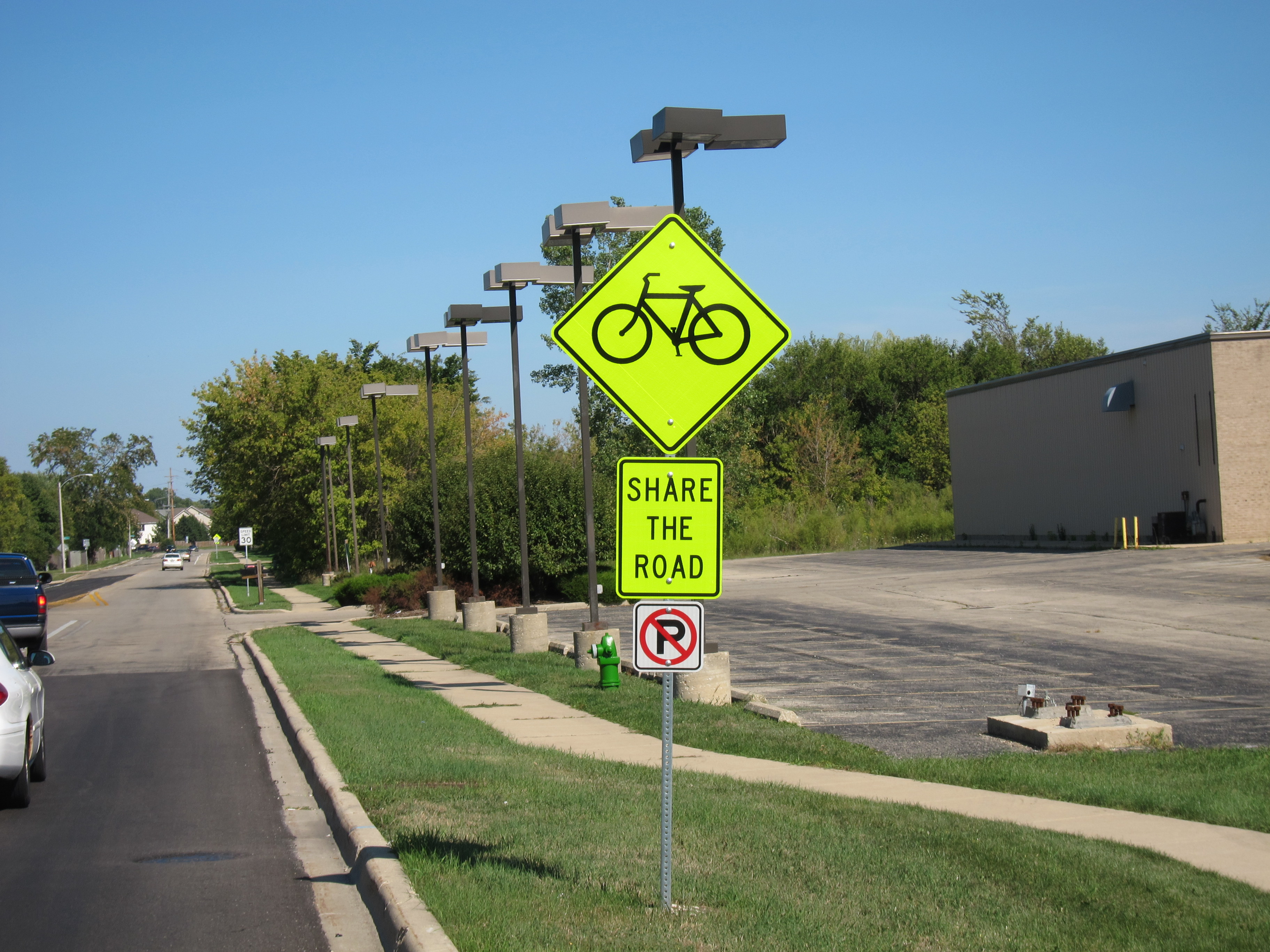
One can only hope drivers take the sign literally

One can only hope drivers take the sign literally

The motorist leaned out the window of his vehicle yelling, “Get the f*** off the road. I pay taxes to drive here.”

As if the rest of us don’t?

Of course, the reason people pay taxes to drive on public roads is to cover the costs of construction, upkeep and repair of those roads. And what really causes the need for all that repair and upkeep? You guessed it; cars, trucks and other vehicles. Vehicles wear out our roads.

Lightweights who ride and run

Bicycles? Not so much. You’d have to be a pretty heavy cyclist to cause a dent in the road. It’s unlikely you could even ride a bike if you were actually heavy enough to cause an indentation on asphalt with your bike. Your bike tires could not handle. You’d get a pinch flat just sitting on the seat.

For runners, it’s the same thing. Runners don’t wear out the roads. In most cases, roads wear out the runners. The camber on many roads can cause overuse injuries if you’re not careful. Our shoes wear down from  abrasion. Our minds wear out from those white lines stretching miles ahead…

Drivers who think they “own” the road

Yet there seems to be an attitude out there among some motorists that they literally “own” the road, and that cyclists and runners are an intrusion on that right. It’s as if many motorists think that runners and riders are actually trespassing on their property–their personal property.

We should repeat that for clarity and emphasis: Some motorists think they literally own the road, and behave like it too.

3 feet required

That’s why some motorists do not give people who run and ride the 3 feet of passage space required by law. It’s not much to ask, yet it seems impossible for some drivers to grasp. Just pull around a cyclist or a runner, or a group of cyclists or a group of runners.

But when you think you own the road, you assume that you should not have to pull around anyone, or separate hazards so that you avoid meeting a cyclist or runner at the same point as an approaching car. Those are basic driving skills, yet many people seem to have forgotten these skills, or are too lazy to care, or too stubborn to recognize  their obligation to obey the law. When traffic conditions occur in which drivers are required to separate hazards, they simply don’t. They barrel through the situation passing perilously close to those who run or ride. And sometimes laugh about it. We’ve all seen them do it. The tip of the head and the flip of the bird.

Who pays? 

Even if drivers did technically “own the road,” which is questionable considering that everyone in a county, state of nation pays some form of tax to build highways and streets, there is no conferred status rendered through such tax payments. It only means the roads exist for the purpose of public use. No one person “owns” the roads in any real aspect related to possession, other than you accept the role of citizenship with access to the commonwealth of a nation.

A moving proposition…

If people who think they “own” the road were correct, our laws would have to make some provision for a “traveling” form of ownership in which drivers were deemed to be driving in some sort of “ownership bubble” surrounding their vehicle, so that at any given time, that “right to the road” would move along with them.

The idea of ownership “moving down the highway” with a particularly designated vehicle would make laws impossible to enforce and insurance equally impossible to distribute. A motorist could otherwise argue that another driver somehow impinged on his or her personal property, their private space on the road, as it were, mobile though it may be.

Absurd logic

So the idea that some guy or gal in a car is driving down the road in their vehicle and getting angry at a cyclist or runner who is using “their part of the road” is absurd. By contrast, public law confers genuine rights on the runner or rider using those roads. The signs that say “Share the Road” along the highway stipulate that cars, cyclist and runners have shared rights and equal access to the roadways. Having a car or a driver’s license does not give anyone “special rights” to use public roads. In fact it rather limits those rights to be a licensed driver carrying insurance and paying attention to driving laws that include stopping at stoplights when they are red, obeying speed limits and giving right of way to certain forms of traffic in particular circumstance.

Farm machinery is a good example. Many farm implements depend on roads to navigate from field to field. Most tractors top out at 30-40 mph and combines go even slower. Cars must separate hazards to pass such vehicles.

In the city emergency vehicles such as street cleaners, postal trucks, garbage trucks and ambulances all require other motorists to slow in their presence or accommodate their pace.

Similarly, pedestrians legally deserve the right of way on public highways, and cyclists deserve the same respect. It is often debated that many bike riders do not obey the law when it comes to stop signs and other traffic situations. But bikes are generally not capable of exceeding the speed limit and causing damage to other motorists even at high speed. They can hurt a pedestrian if they are going fast enough, but the rate of those kind of accidents is nearly minimal.

So the idea of “owning” the roads is a question of ethical behavior, and relative power. A car can easily kill a bicyclist or runner, while a biker or runner are not likely to run into a car and knock them off the road. So the law says “Share the Road” with the idea that ownership of the road itself is always mutual, whiles use of that road is discretionary. The obligation among those most empowered, as in driving vehicles versus running or riding, is to err on the side of caution and safety.

Separate hazards. Share the Road. It’s the thought that counts.

Some people don’t like to think when they drive. They just want to barrel along like they own the road. Look out for them. Their manner of transportation is one of greedy self occupation. You need to understand that mindset if you are going to protect yourself from harm while running or riding. Understand that not everyone thinks like you do about the world, or the road you are using. They literally think they own the road, and you are on their property, and in their way.

Look out for them while you run or ride.

Posted in We Run and Ride Every Day | Tagged , , , , , , , , , , , , , , , , | 1 Comment

Running and riding through the light of your life

It happens so often that I walk outside and a certain light captures my attention. It happened just now, in fact, while letting the dog out for his mid-day pee. The light was flat and the air was inviting. Damp with melting snow. The temperature warming ever so slightly. Sun growing stronger with the progress of February.

This is when distance athletes, both runners and riders, begin to dial in their base training to prepare for early spring races. It is a subtle dance with light and temperature–available and acceptable.

Light triggers

Which is why walking out into the sun filtered through the mid-winter sky gave me a jump, of sorts. My brain is so trained to get ready to race each spring that even the light outside triggers an instinct deep within. That makes sense. Humans program so many of their activities by amount and type of available light. But it is something more as well. Our associative minds key in on certain clues to get us ready for seasonal activities.

We’re not very different from so-called “lower” forms of animals in the way we respond or react to light. Birds, for example, respond to growing sunlight with hormonal responses that trigger their breeding instincts as well as recognition that it is time to migrate.

Great horned owl. Acrylic painting by Christopher Cudworth.

Great horned owl. Acrylic painting by Christopher Cudworth.

Great example

My favorite symbol in the bird world for creatures that will themselves through the winter months is the great horned owl. These large North American birds nest in January and February. The adult birds trade turns sitting on the eggs. They carry out these duties through cold and wind and snow and sleet and rain and winds. Sounds like a few runners I know. And even a few cyclists.

Owls set up nesting activities during the deepest dark of winter. You can hear them hooting to each other, love calls as it were, on December and January nights. It suits them to nest in winter. They have the feathers to keep themselves warm, and there are less predators, especially crows, that can steal their eggs when the leaves aren’t shrouding their activities.

Eatin time

And by the time the young hatch in spring, usually mid to late March and into early April, wildlife is just emerging from winter hibernation and young mammals are just being born as well. It’s a cruel fact, but food is plentiful as a result. Owls often have 3-4 young to feed. That’s a lot of meet.

Natural resolve

This pattern of winter resolve; living a nocturnal existence with spring in mind down the road is a great metaphor for runners and riders who train through the cold, dark days and nights of December and January.

Then the first hint of spring light hits the central cortex of the mind and your brain goes “zingggg!” and wants to run and ride even faster. It’s positively primeval. Can you feel it?

Autumnal urges

Happens the same way each fall as well. The failing light of early September gives way to the crisp clear days of October and we want to finish off the season with a big effort. A PR. A marathon. A chance to show what we’ve got before the bright, happy leaves of our summer’s fitness grow brittle and fall to the ground.

Then it’s back to winter training. Dark, cold nights. Feet crunching in the snow and sweat dripping from your forehead as you pedal away the hours on your indoor trainer or burn off calories on the treadmill.

The intrepid still train outdoors, by moonlight, starlight or streetlight. Those are the brave souls. The night fliers. Who hear the owls calling from their perch on the neighbor’s chimney: “Whoo hoo, hooohh.”

Indeed, who? Who has the strength to see through lack of light to brighter days. If it wasn’t you this winter, there’s still time. Still weeks to go before spring racing season kicks off.

We’ll owl be waiting for you on the roads.

Posted in We Run and Ride Every Day | Tagged , , , , , , , , , | Leave a comment

Maybe I think too much about running and riding

By Christopher Cudworth

They say that the left side of the brain controls the right, say that the right side has to work hard all night, maybe I think too much for my own good, some people say so, other people say no no, the fact is you don’t think, as much as you could…hmmm    –Paul Simon

We're all in the driver's seat of our own brains. Where you gonna go?

We’re all in the driver’s seat of our own brains.

This must be the 165th or so post since this blog started, and every word has been fun to write. Some serious. Some not so. I think about these things a lot. How to run better. Ride better. What matters in life. Maybe I think too much.

Run and ride booms

When running was first becoming popular during the first of many running booms, people would ask, “Well, that’s all well and good. But what do you think about?”

“What don’t you think about?” was always my answer. Running was just that, a time to think. Don’t you need time to think? I do. We all need time to think. Cycling’s the same way. What, you’re going go out and run or ride to turn off your brain? Maybe. Maybe not.

Wiping out thought

Of course sometimes you are running or riding too hard to think about much. Then the only thing you can think to do is hang onto the wheel in front of you, or try to keep pace with the group.

Then you can start to think negative thoughts. Like, “I suck at this.” Well, guess what? Then you really are thinking too much.

Positive thinking

Photo from Dusty Musette. Cyclist Tyler Hamilton once rode the Tour de France with a broken collarbone, putting all negative thoughts and pain out of his mind.

Photo from Dusty Musette. Cyclist Tyler Hamilton once rode the Tour de France with a broken collarbone, putting all negative thoughts and pain out of his mind.

Instead we all need to develop constructive thinking about our training and racing. Think positive thoughts. Billions of dollars are spent learning how to do this. So it must matter a lot.

But then you’re out in the middle of a race and a beer commercial tune starts running through your head for no damn reason at all. You’ve been struck by an ear worm, the worst kind of thought pattern there is.

My personal unfavorite for a while was an Amstel Light commercial: “25 calories…never tasted so imported…till they…imported Amstel Light.” Over and over. Mile after mile the earworm of that jingle ate at my brain as I raced along at 5:00 pace, trying to win. And I did. So who’s to say that kind of thinking is/was bad?

Dissociative thinking

This is called dissociative thinking. Thinking the abstract. And that can be good. If you know how to do it. Right.

At one time there were a whole bunch of theories about whether dissociative thinking was good for you as a distance athlete. Dissociative thinking is thinking about anything but the effort you are putting in. I don’t know that the experts arrived at any consensus thinking on the subject. They got so distracted thinking about dissociative thinking they probably forgot what they were supposed to be thinking about. I know I did. Which show you what dissociative thinking can do. It can be responsible for multiple personality disorders. Thinks like that. Like there’s two of you inside that noggin’. And I say, “That’s all?” There’s room in here for 5 or 6. Take a seat. Let’s ride together…”

Associative thinking

Associative thinking in some respects is focusing on the effort and the feedback you are getting from your training or racing. Things like pace, heartbeat, form and the like. It has been generally proposed that most world class athletes excel at associative thinking. But associative thinking is not always a limiting factor. It can lead to great insight and inspiration.

At one point in his marathoning career the great runner Bill Rodgers was leading the New York City Marathon and told himself, “I want to do this right.” He was so focused and in the moment that he was paying attention to everything he was doing. Refining his carriage and even the way he carried his hands. It was like a dance performance. Now that’s both associative and dissociative thinking combined.

As a creative director and copywriter, there have been so many times that I’ve gone out for a run and the thought processes converge on a great idea. A new campaign. The right words for a headline. The solution to the problem. Awesome!

So it’s not always so cut and dried. Our thought processes can be at once dreamy and productive.

Time out of mind

Sometimes this is all you see or think about. The road ahead. And tarsnakes of course.

Sometimes this is all you see or think about. The road ahead. And tarsnakes of course.

Some of the best rides I’ve ever done have been completed only to realized I did not think about the riding at all. Didn’t even look up at the scenery around me, for that matter. Just barreled along at my chosen pace, hammering, as they call it.

When you get home from a ride like that it is tough to tell whether you’ve done the right thing or not. I mean, who’s going to go out for a ride and not look around them. I do. Lots of people do.

No room at the Inn

Sometimes you’re so absorbed in your own thoughts you don’t have the mental space to look around. Some work problem needs a solution, or a relationship challenge is riding along with you. You may be riding or running for miles and be so focused on those dissociative issues they actually become the run or ride. You are just a body carrying along a brain full of thoughts.

But maybe I think too much.

Have you ever experienced a period of grace, when you brain just takes a seat behind your face, and the world begins the Elephant Dance, everything’s funny, everyone’s sunny, you take our your money, (walk) down the road yeah…   –Paul Simon

Rhymes with…

I once took a psychological test of sorts with a genius named Dr. Paul Weilgart, an escapee from Nazi Germany who emigrated to America where his 231 IQ put him in the stratosphere when it came to thinking about his past and the future of mankind. He invented his own language, the Logos of Love, he called it, in which aggressive sounds were removed from the alphabet he created. That’s right, he wrote his own new alphabet.

Yet Dr. Weilgart was so smart it was hard for him to function. He was always thinking, you see. One time he reportedly drove his family to the mall in Rochester, a town 75 miles from Decorah, Iowa where he lived with his family. On the way into the mall he said to his family, “For Heavens Sake (he was always saying that) I have forgotten some’zing in ze car.” So he walked back to the vehicle, got in and drove home without his family. He’d forgotten them completely. Now that’s thinking too much.

Dr. Weilgart taught a course at Luther College about the language he’d invented. I never took that course, but I did enroll in a class he taught titled Psychology of Adjustment. One one point during the semester Dr. Weilgart administered rhyme tests to show us how our thought patterns worked. He would give you a sentence and ask you to finish it with a rhyming statement of some sort.

My sentence was, “The couple sat down to eat and drink….”

And I finished it this way, “It gave them time to talk and think.”

Dr. Weilgart looked me up and down and said, “For Heaven’s Sake, Mr. Cudworth. No wonder you are so skinny. You are talking and thinking when you should be eating!”

Running waif

Well, he was probably right. I weighed 140 lbs. on a 6’1″ frame. 3% body fat. 90 mile weeks. So skinny that a nurse measuring my BMI once told me, “Don’t get caught in the rain.”

Hmmm, I should think about that, I told myself at the time. Then went out with four other fellas to run 30 miles at 8:00 pace in 45 degree weather during a rainstorm.

So maybe I don’t think too much. We had a great time and I slept for six hours afterward.

I do not recall what I dreamt about during that sound daytime sleep. Exhausted and happy, my brain forgot all about thinking for a while. And maybe that’s why we run and ride, after all.

Shut it down.

WeRunandRideLogo

Posted in We Run and Ride Every Day | Tagged , , , , , , , , , , , , , , , , , , , , , , , , , , , , , , , , , , , , | Leave a comment

Multisport Madness Triathlon Team moves youth to new levels

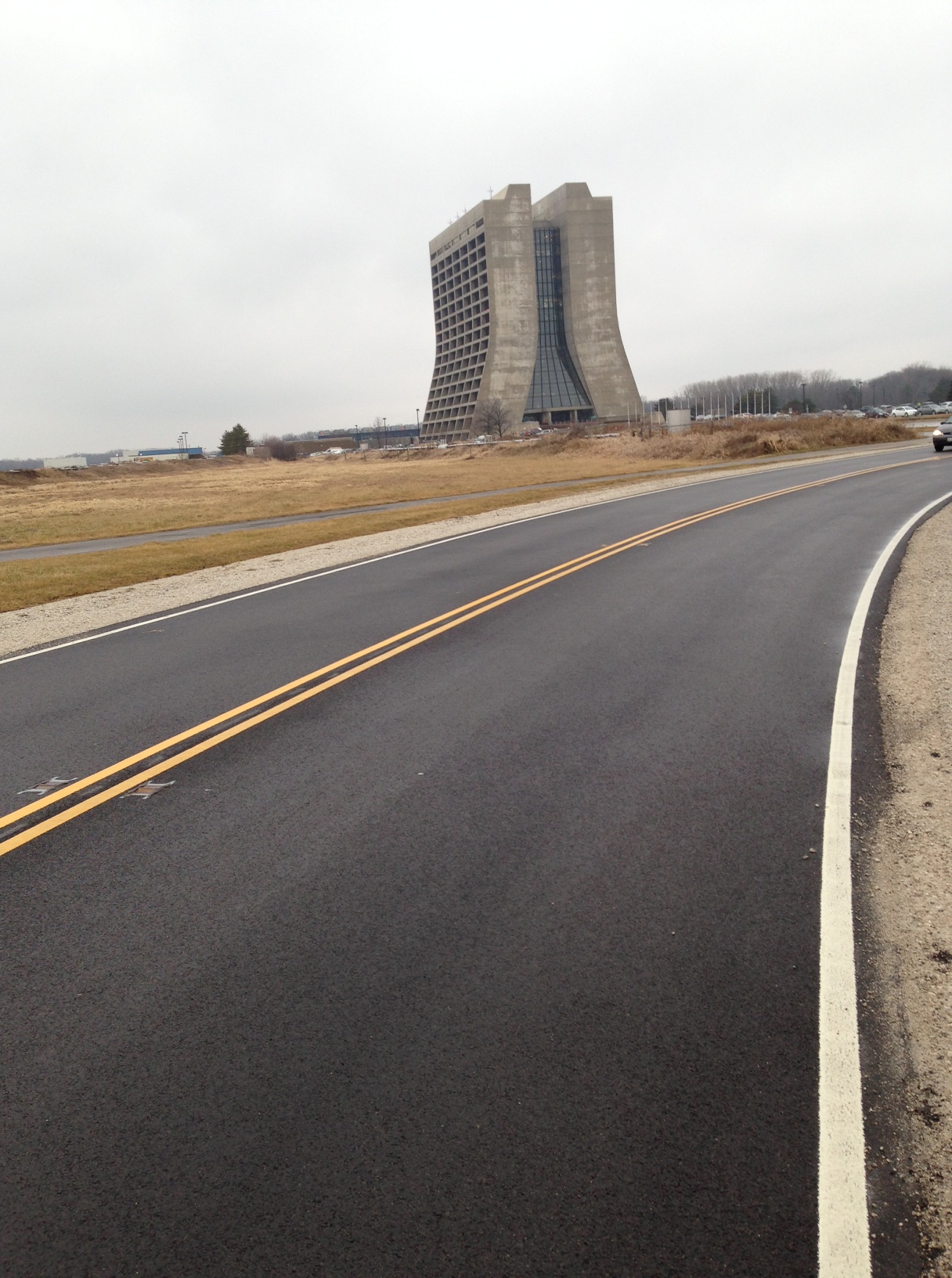
The roads around Fermi Lab are prized as training grounds for those who run and ride.

The roads around Fermi Lab are prized as training grounds for those who run and ride.

By Christopher Cudworth with contributions from John Lorenz

Runners and cyclists who like to train where there is less traffic have long favored the roads in Fermi National Accelerator Laboratory in Batavia, Illinois. There are long sections where bike and running lanes line the roads, perfect for training without interruption and distraction.

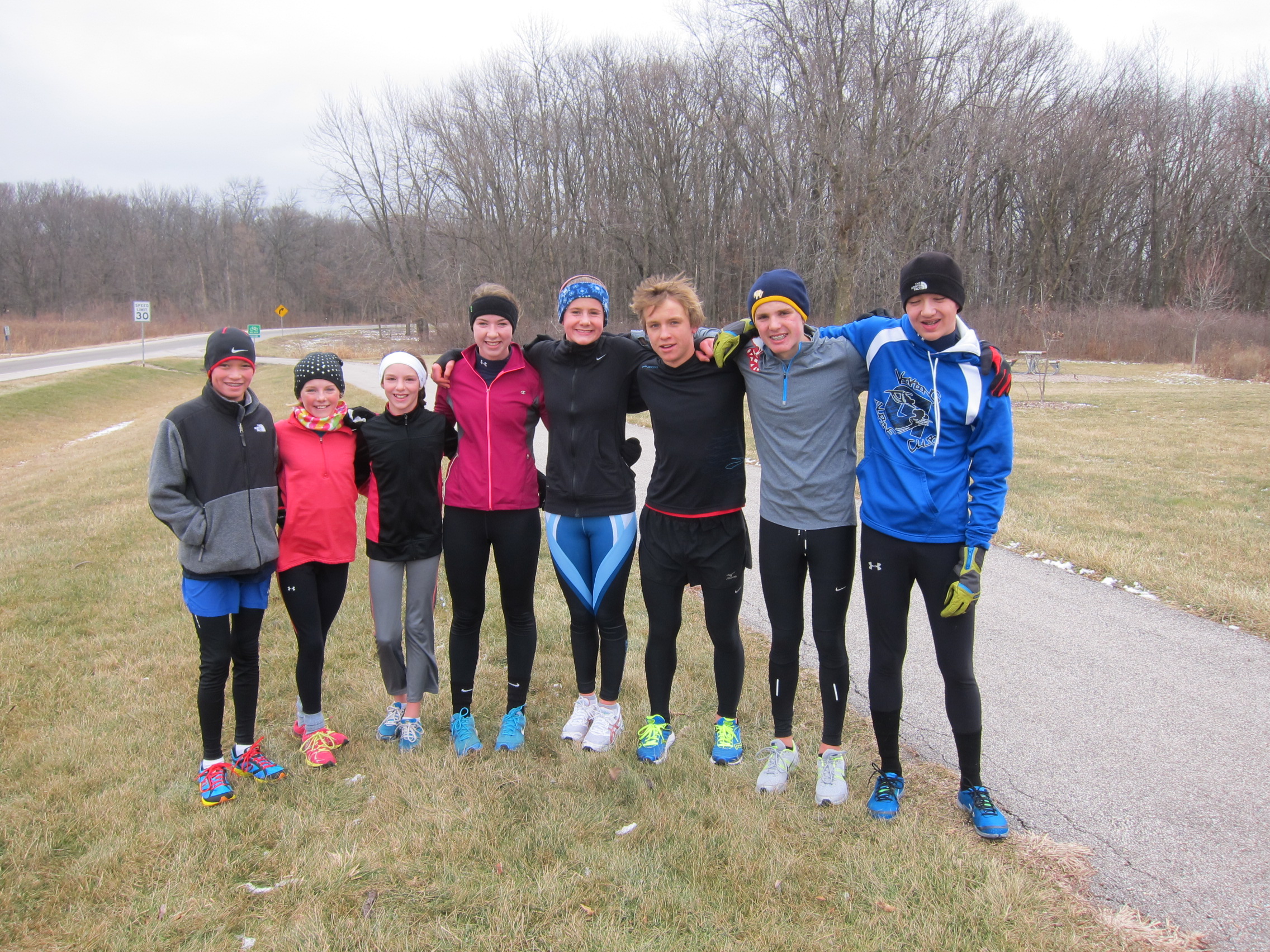
Near the tall main building at the center of campus, a group of athletes between the ages of 12 and 17 years old is running mile repeats on a cold December day. A wind from the west chills anyone standing still, but this group of kids barely seems to notice. In fact some are literally smiling as they round a sharp corner near the main campus building and head back the road to where their team director stands with a guest trainer, an expert on running form. The trainer watches each athlete, analyzing for flaws in biomechanics and form.

Athletes on the Multisport Madness Triathlon Team gather for a quick team photo between intervals.

Athletes on the Multisport Madness Triathlon Team gather for a quick team photo between intervals.

Team dynamic

The runners are all part of the Multisport Madness Triathlon Team (MMTT) Elite Triathlon program based in suburban Chicago Illinois. Team director, John Lorenz watches as each young runner turns the final corner, heading straight for the finish so the form coach can have a good look at how they plant their feet, carry their arms and maintain good mechanics as they tire in the last quarter mile.

Elite training

These are the lengths to which an athlete must go to excel at the elite levels of triathlon, where form and efficiency are keys to success in the swim/bike/run competition.

With kids ranging from age 12 to 17 involved in the day’s training session, there is some disparity in the pace of the group, but not in prospective talent. The younger runners show the same lightness in stride and eagerness to run as the older kids. They are all clipping along at a pace, yet none of them finishes heaving at the chest or looking fatigued in the least.

“Okay! Nice job!” Lorenz calls out as they finish and gather together as a group. Some swat gloved hands and smile at the feeling of a good effort.

“We won’t stop long,” Lorenz explains. “The wind is too cold.”

No one complains. Pink cheeks and watery eyes aside, these athletes gather back at the starting line eager to run again.

Multisport Madness Triathlon Team

These are athletes from the Elite division of the Multisport Madness Triathlon Team, one of the Midwest’s most prestigious triathlon development programs in the country. Its recent alumni include Lukas Verzbicas, Illinois state cross country champion and sub-4:00 miler, as well as Kevin McDowell, also an Illinois cross country and national triathlon standout from Geneva, Illinois.

Those two athletes are now training with the Elite Training Academy in Colorado Springs, but their example of success not only in high school sports but in national triathlon competitions provides inspiration for this new generation of tri-kids getting ready for the main competition season, which is late summer in the USA.

“Most of our kids run cross country with their high school because it doesn’t conflict with the triathlon season and prepares them for the rigors of the run portion of triathlon training,” Lorenz observes. At the same time, all of our triathletes spend the summer training for triathlon instead of participating in summer running with their high school program. “But we tell their coaches, ‘Look, we’re handing you an athlete in top flight condition come August. But they need about a 2-week break at the start of the cross country season in order to begin the rebuilding process towards the Illinois State Cross Country meet.”

Cross country flight

The truth of that statement was borne out in a Kaneland High School athlete, Victoria Clinton, who following a successful national scale triathlon season went on to win the Class 2A Illinois state title in girls cross country. Additionally, Joseph Suarez – Plainfield East sophmore, who joined the MMTT program after school ended last summer, just completed his cross country season as the second fastest sophomore in the state of Illinois (19th overall).  Joseph recants, “when I won my first big invitational over Labor Day weekend in a sprint to the finish, I crossed the finish line and told my mom, Look what triathlon training has done for me.”  There are few coaches at the high school level who would complain about that type of progress and performance. The only challenge comes in spring when many triathlon athletes elect to forgo the high school track season in favor of base building and cross-training, a key element of triathlon fitness.

Triathlon season

“Our triathlon racing season also begins in early March with competitions down in Florida, for example,” says Lorenz. “And by early May some of the important races on the triathlon schedule definitely conflict with the high school track schedule. But if you want to be competitive at the national level you have to compete in these races to be ranked and recognized at a national level.”

Multisport Madness has learned through experience that its athletes often get injured in track and field, whether for reasons of too much intensity, lack of cross training or the force of track running. So the coaches advise against it. That does not make them favorites among high school coaches seeking much-needed distance talent to fill out their squads.

Club success

The latitude to compete outside the world of high school sports is nothing new these days. Club volleyball and soccer teams are proving grounds for athletes seeking to go on and compete in college. The sport of triathlon is seeing some growth in the area of college competition, but there is also a national development program in which young athletes live together and train in a sort of “enclave” environment so that their growth as athletes is diversified to the 3 events in triathlon yet specific in the individualized training and transitions necessary to succeed in the sport.

This open-faced-sandwich of competitive opportunities immediately broadens the perspective of young athletes. It used to be that high school sports were the pinnacle of youth competitions. But triathlon is not currently run even as a club sport in some states, especially northern latitudes where swimming outdoors in winter is obviously nuts, and cycling can be tricky on slick roads.

Winter training=summer results

Still, north country triathletes head indoors for daily pool training, and Multisport Madness athletes gather at a health club facility between the borders of Naperville, Aurora and Warrenville. Their bike training is held at the Endure It facility in Naperville with Erik Walter, head coach of the Elite program.

“Our kids really do come from all over the suburbs,” John Lorenz marvels. “I admire their dedication sometimes, driving an hour to practice one way while doing homework in the car. But they will and do improve with us. Our history as a club is proof of that – with over 25 individual national champions and winning the team national championship 7 out of the last 8 years.”

A MMTT athlete rounds the corner in full stride. Developmental training includes stride and form analysis in swimming, biking and running.

A MMTT athlete rounds the corner in full stride. Developmental training includes stride and form analysis in swimming, biking and running.

“We offer two levels for youth ages 6-19,” Lorenz notes. “The development team (ages 6 – 15) meets 3 times a week from March through August each year. The Elite team (ages 12 – 19) meets 4 to 5 times a week during the school year and then train 6 days a week during the summer with some days containing multiple sessions.  And like I said, many of the kids compete in nationals in August and then recover and run high school cross country.”

Testimonials

When the athletes are asked what they like about being part of MMTT, the answers are quite similar. Heidi Stimac, the longest tenured MMTT athlete mentions, “The best part of being on MMTT is being able to train with such a talented group of athletes.  Additionally, when you spend 3+ hours a day training and suffering together, these athletes are not just friends, they are family.”  For Patrick Bieszke, second overall at the National Championships last year in the 13 – 15 age group, joining a triathlon team has been a new situation.  Patrick previously did his training on his own.  “Being part of MMTT has opened my eyes to how you can train for triathlon and have fun doing it. The bonding you experience with your teammates and how they propel you to push harder than you normally would are key benefits of being part of MMTT.”

Triathlon hierarchy

The program faced a rebuilding year in 2012 in some ways. Its founder, Keith Dickson, decided to dedicate his efforts at a National level.  Keith helped create the vision of the Elite Training Academy which allows elite level triathletes to go to school on scholarship while training full time as a triathlete. As MMTT enters 2013, the number of participants on the team has doubled from the prior year and the goal of rebuilding this powerhouse team is gaining steam.  While things have changed over the past couple years, the current leadership team has never wavered from Keith’s mission.  That includes training athletes together in a team atmosphere.  “We are different from other programs in the United States, Lorenz indicates. Our athletes swim, bike and run together in their training sessions.”

Smiles all around

Now one can understand why these young athletes were smiling while running their repeats on a cold blustery December day.  The team element of suffering with some of your best buddies creates a fun, motivating environment to succeed and strive to reach the success of the MMTT ancestry.

Grassroots youth programs are proving to be the supply line to building and sustaining world class athletes. That’s the original and simple goal of the Multisport Madness Triathlon Team.

WeRunandRideLogo

Posted in We Run and Ride Every Day | Tagged , , , , , , , , , , , , , , , , , , , , , , , , , , , , , , , , , , , , , , , , , , , | Leave a comment

On running and riding for a school, a team or a cause

Looking back at your career in athletics, it is interesting to consider how many labels one adopts and discards along the way.

Competing for the Kaneland Knights, a cornfield high school in Illinois.

Competing for the Kaneland Knights, a cornfield high school in Illinois.

Schools

For example, as an athlete competing for school teams, I have been–in order from middle school through college– a Pioneer, a Knight, a Saint and a Norseman. I have competed in the Blue and White, the Black and White, the Black and Orange and the Blue and White, again.

Clubs

Post-collegiately, the team and names kept coming. First there was the Wonder Left Racing team, named for a favorite training route in college. That was mostly a team in spirit only. We all lived so far apart that few of us actually got together and trained or raced as a team again. The thought of continuing our college camaraderie and success was inviting, but impractical. The colors were Orange and White, resplendent in Bill Rodgers brand running gear. It was a noble attempt at maintaining the cause, whatever it was.

Circuits

On moving to the Philadelphia area, I signed up to run for a shop called Runner’s Edge, who sponsored a racing team to promote the store. This was a fairly practical attempt at promoting post-collegiate racing because the team circuit in the Philly market was fairly dynamic. There were probably 15-20 clubs from all over the area. There were actually team competitions and trophies at the local road races. It was fun and gave you a little motivation out there on the course to beat the other teams. A little pride crept into the effort at the starting line. Competitive juices returned. The colors were Green and White. There was no mascot or name. Just a bunch of guys racing for the club.

Abbreviations

A year later another shop back in Chicago asked me to sign up and race for the store team. We received Nike uniforms in Blue and White, emblazoned with the store name, Running Unltd. I never like the abbreviation. Something about it bugged me. But man what a team that was for a local store! I fit in well but was not the top runner on the club. that spot was held by a pair of brothers, Jim and Jon Macnider. Both ran 10ks in the high 29:00s as I recall, and Jim competed in the Olympic Trials marathon at least once. Jon was small and fast and had a clipped stride that was deceiving. They had both run for North Central College (Red and White, the Cardinals) a college team that repeatedly won the Division III National cross country championship. In fact my senior year at Luther College we finished second to North Central College in the national meet.

That year running for Running Unltd. was a peak year in a competitive career that had begun at age 12 and lasted through age 27. I raced 24 times that season and won 8-10 of those races, mostly 5ks and 10ks, setting PRs of 14:47 and 31:10. I could check the math on the victories but it is inconsequential. Suffice to say that being a semi-sponsored runner really was a motivator. We received race uniforms and nylon Nike sweats. Our first couple pairs of shoes were free and we paid about 35% of the cost of everything else. It was a sweet deal, yet also a firm obligation. The contract called for regular competition and you basically had to stay somewhat sharp from March through November.

Marriage

Following that year of sponsored competition I got married and the team folded when the store was sold to another owner. New priorities surfaced and though I kept competing, even setting another PR at 10 miles that season, it was pretty much a Sponsor Yourself effort. With no team to comport with it was a Find Your Own Way year. There was a bit of relief, competing without obligation. It felt real not to be a Knight or a team cog. Which reminds me of the names of teams against which we competed over the years. The Rochelle Cogs. Dekalb Barbs. Sycamore Spartans. West Aurora Blackhawks. Naperville Redskins. Batavia Bulldogs. Geneva Vikings. On and on, the names roll on. All adopted and discarded, except for watery allegiances for Homecoming and such.

Allegiances

Of course there are plenty of people whose allegiances to teams and names and colors grow even more rabid with age. College football is most notable for its monikers and its school loyalties. Yet most of the people who root for those teams, and their professional counterparts, never advanced far in the respective sports for which they root. In fact 99.99% of those who root for college and professional teams have little real knowledge of what it means to compete at that level. So why do we do it?

Renewal

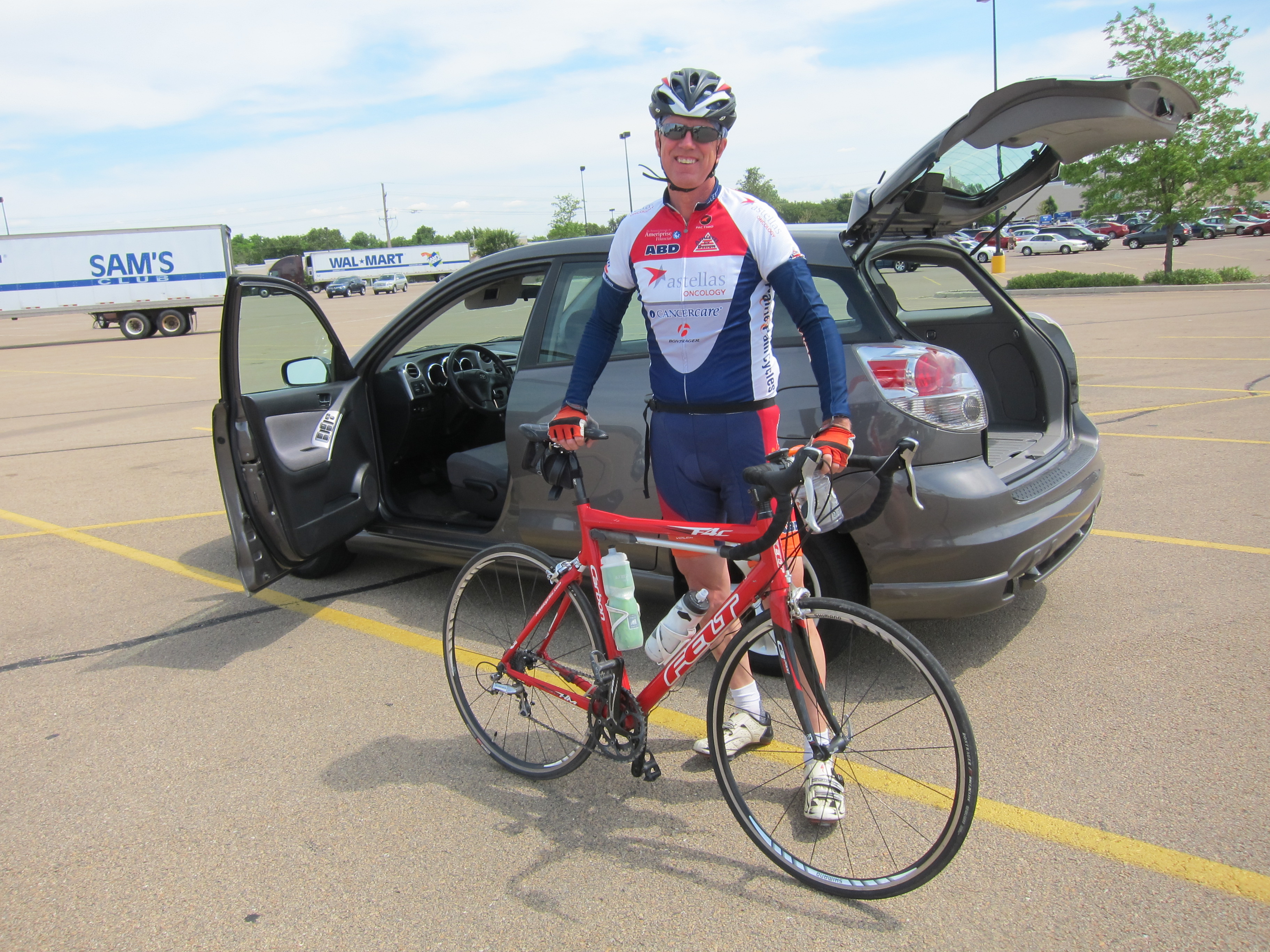
For the last 7 years I have cycled competitively for a club called Athletes By Design. The club springs from a small chain of stores called Prairie Path Cycles here in Illinois. The store owner Mike Farrell is a longtime cycling and club manager, having run a pro team “back in the day.”
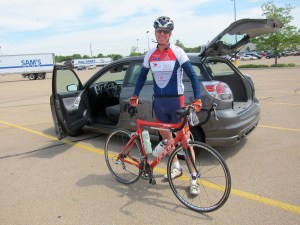
Admittedly acting like a kid again.

Admittedly acting like a kid again.

The club is well-run and organizes all kinds of local races, criteriums and even indoor cycling competitions.

The kits for the club are always interesting and colorful. Bright and bold, they sport nearly every color in the spectrum, Blue and Red and Orange and White. Some purple thrown in there too. For the first few years in the club I raced 6-10 times a year.

Evolution

The last couple years the racing has dropped off, but the club rides and weekly criterium practices put on by the club have held value. Last year the team was sponsored by the pharmacology company Astellas. That sponsor’s gone. Another will likely replace it. That’s how the whole team thing works. Especially in cycling. Sponsorship is almost a revolving door. A team builds up a reputation; T-Mobile, US Postal, 7-Eleven, Astana, etc. and then poof! Either the sponsors or the riders dissipate. It’s a hard sport to root for. The rosters and team names are always changing. Some, at least. That’s the way of professional sports.

Real pros (and cons)

Can any of us really imagine what it’s like to be paid millions to ride our bike, or win a marathon and take home a check for $100K? It really is difficult to know that type of talent, and pressure.

Causes

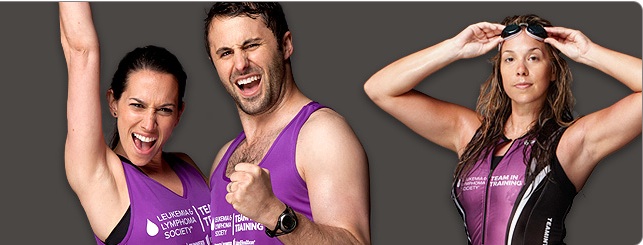
TNT. Or TIT? It's all so confusing.

TNT. Or TIT? It’s all so confusing.

Yet we all seem to want to run for a cause. Many millions of runners and riders sign up to run or ride to raise money for good causes. There is Team In Training. TNT? It should be TIT, but that’s another story for another day. It would not do well to say that you were training for the TITs. But just in case you were curious, here’s the pic they posted at the top of their website. Decide for yourself.

That successful organization has motivated thousands of runners and riders and triathletes to raise money for a good cause. And the good causes are manifold. Breast Cancer (well, now that really is doing

something good for the tits, but I digress…) and many other forms of cancer and other diseases get attention through fund raising and teams that support disease research and “finding a cure.” It all gets kind of exaggerated at some point, don’t you think?

Cure for what?

Although that never really seems to happen. Perhaps there’s too much money being made finding the cure and sponsoring the organization and wherever else the money goes to actually want to find a cure for anything. Sorry to be cynical, but it’s kind of like those high school teams and the homecomings we all sort of attend. So much of our effort seems to pour into the sentiment over the actual result. Then you hear of scandal and political motivations behind some of the organizations and somehow your motivations get undercut by the realities of the worlds. What we are seeking seems to be a cure for the futility we feel in the face of our frail human condition. Our mortality. We feel bad that others must suffer while we ride on. So we ride on with a purpose. To ease their suffering somehow?

Does that make us suckers for symbols, or pawns in the program? A cynic would say it does.

Needing a cause

Yet something in the human spirit seems to need a cause. I recall racing in a 10k one or two years past my racing prime. It was a local race and I signed up because the fitness level was not too bad and figured it would be fun to try to win one more race at least. The course was twisting and winding, hard to sustain any momentum and somewhere around 4 miles I began to lose motivation. It just didn’t matter that much at that point.

At that moment, however, a squat little runner in an I Run For Jesus shirt with a big cross on the back came skritching past. He glanced at me with that feverish look of a guy who does not win many races but suddenly feels victory is within his grasp. I let him go a few strides and glanced down at the ground, trying to muster some competitive strength. It only came in spurts. My training was not deep enough to cover his surge. Finally I edged back up to him but could feel it was not going to last. It just wasn’t there that day. Not in the tank. As he pulled away triumphantly it was weird to watch his shirt and that message splashed on the back. I Run For Jesus. 

“What does that even mean?” I thought to myself. Does it mean that he somehow loves Jesus more than me? That Jesus… favored him over me on the course that day? That somehow by winning the race he glorifies the Son of God? More than my shitty effort that morning?

It made no sense to me. It still doesn’t. For I’ve won many a race and too many for selfish reasons to think that somehow proclaiming you run for Jesus does not make it so.

I don’t believe in running for religion in that way. I don’t believe in Tim Tebow or any other public figure pointing toward the sky like they hold a string and a tin can to talk to God. I don’t believe that’s what the bible means when it says, “I have run the good race.”

That’s a completely different brand of victory. In fact, the bible says that in order to win, we really must lose everything for others. Funny thing about that philosophy.  It rings through most every other religion on earth. Lose the self, find the victory.

Losing yourself

Of course you can lose yourself in raising money for a good cause. That’s supposedly the point. You’re not running or riding or triathloning for selfish reasons alone. And that can be admirable, as can running for Jesus if you choose to do so. It is human nature to want to lose ourselves in these and other symbols, the mascots and colors and teams and causes. All await our attention. But we must be careful about the merit of our own proclamations of good faith and cause.

For to race for a cause is still just a tool of revelation, not the final product of awareness. Because when the race is over, there is still another day to face. And when the Big Game from the Super Bowl to the World Cup to the Chicago or New York or Disney Marathon is over, the inevitable letdown you feel at having won or lost on that occasion is sometimes all too real. It feels like the end product.

Triumph of humility

The triumph of humility may be a lesson learned all your life.

The triumph of humility may be a lesson learned all your life.

Ultimately, it is the triumph of humility that makes us all better people. The glory of teams and causes and attention received in the doing are all nice, but they are not the absolute when it comes to enlightenment.

Claiming victories

In fact that is the very problem with so much of what we like to call victory in this world. Even those trying to convert America into a “Christian Nation” forget that the kingdom of God is not so confined as that. Nor were the Founding Fathers thinking of such a thing when they drafted the Constitution.

Trying to slap that “label” of morality on America (and its so-called exceptionalism) means no more than calling yourself a Knight or a Pioneer or a Saint. All those are just labels. Because it matters what you do, not what you call yourself.

In fact calling yourself a Christian nation and trying to impose those strictures upon a society is exactly the opposite of what Jesus taught anyone to do. You cannot win lives by branding hearts with the hot steel of politics. In fact the idea of confusing religion with politics goes against the entire message of the bible. Even the so-called Chosen People of Israel were faced with a profound choice when the faith was expanded to include the “hated” Gentiles. We see the same with Islam, and Shariah Law, and trying to turn the world into a religious fiefdom of one kind or another. It’s sickening, actually. But it is an unfortunate habit of the human spirit, reflected in all sorts of other tribal allegiances.

Real revelation

Real revelation occurs in the moment, when you think about what matters, and the answer comes back clear and simple. What matters is not your pride, but your humility, and how it instructs you to treat others. As you would have them treat yourself. The universal rule. Not many exceptions, really.

Posted in We Run and Ride Every Day | Tagged , , , , , , , , , , , , , , , , , , , , , , , , , , , , , , | Leave a comment

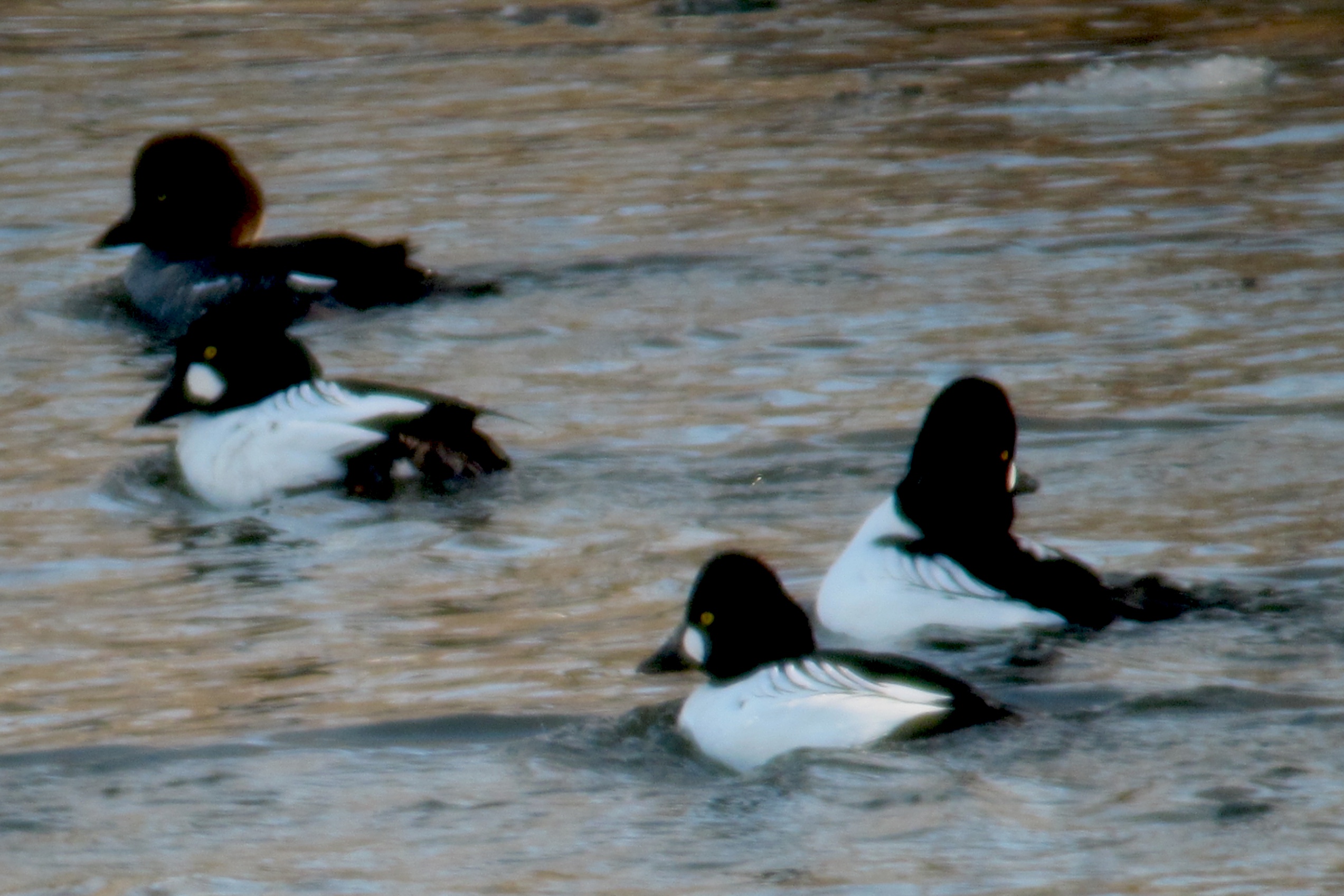
Saturday artwork: Goldeneyes are a sign of winter

Riding or running along the Fox River in winter one finds these goldeneye ducks in rafts, diving beneath the surface to grab crustaceans off the bottom. They are a sign of winter, but did not show up this year until well into January. Normal arrival time is December 8 each year. Climate change is having an effect here in the Midwest with all sorts of birds. And for cyclists and runners too. Our first real snow fell today. Photo by Christopher Cudworth

As both a birder and one who runs and rides, it is always fun to combine the two hobbies. Riding or running along the Fox River (IL) in winter one finds these goldeneye ducks in rafts, diving beneath the surface to grab crustaceans off the bottom. They are a sign of winter, but did not show up this year until well into January. Normal arrival time is December 8 each year. Climate change is having an effect here in the Midwest with all sorts of birds. And for cyclists and runners too, many of whom have “enjoyed” a basically snowless winter until today. Our first real snow fell today. Photo by Christopher Cudworth

Posted in Uncategorized | Tagged , , , , , , , , , , , , , , , , , , , , | Leave a comment

“People will die”

Allowing for changes in weather, conditions of the road or path and proper hydration are all key to a good ride, especially for inexperienced riders

Allowing for changes in weather, conditions of the road or path and proper hydration are all key to a good ride, especially for inexperienced riders

A few years back the church youth counselor called to tell me she was going to take the kids in the middle school and high school youth groups on a bike ride. “Would you like to come along?” she asked.

I told her, “Sure, what time are you leaving?”

“8:00 on Saturday,” she said.

So I rolled up on my mountain bike prepared for a leisurely ride with a bunch of kids. Then I asked the youth counselor. “Where are you taking them? What route?”

“To Sycamore. We’re going out the Great Western Trail.”

Standing there a few shocked seconds, I glanced around at the group of kids and their bikes. The assortment ran the gamut all the way from short little stunt bikes to big fat cruisers. A few had mountain bikes. Another few were holding onto oversized hybrids obviously borrowed from their parents.

I turned to the youth counselor and said. “That’s 34 miles out and back. People will die.”

It was a warm, overcast May morning. Muggy for early spring. A good day for a ride. But not 34 miles with a bunch of clear novices.

“We’ll be fine,” she insisted. “They all have water.”

People will die

“No, they won’t be fine,” I replied. “People will die.” And I laughed. The youth counselor and I go back a ways, you see. I could be honest with her.

It took some earnest discussion, but I convinced her to modify the route they would ride down a bike trail to the town of North Aurora and back. Round trip the ride would be 15 miles. Still I doubted half the kids would make it all the way down and back.

“That’s not very far,” my friend protested.

“That’s plenty far,” I assured her. “And we’re going to need two vans to follow us, to pick up the stragglers.”

The start of the ride looked like a scene out of Mad Max, with kids on weird machines weaving down the street toward the bike trail. I put an adult in front and one behind. Between the lead and trail riders was a scene of pure chaos. It looked like it had been years since some of those kids actually rode a bike, much less 15 miles down a river and back.

By the 2-mile mark a couple girls in short shorts were chafing badly at the crotch. Their blue jean shorts were cutting into their thighs, so they got sent back home. At 4 miles a group of boys tried pulling off the trail to go who knows where, probably for a smoke. So they had to be corralled and put back on course.

At the 7 mile mark, the halfway point of the ride, there were only 4 willing riders out of 25 who started. The rest had thrown their bikes into the van and thirstily gulped down a Gatorade or two.

The kids who finished fared pretty well overall. In fact they picked up the pace toward the end. The horse always smells the barn. I slapped them on the back for their two-hour effort and told them to drink plenty of water when they get home.

Valuable perspective

Circumstance is a funny thing, except when it gets serious.  Had this rider not been present to change the program of that ride, there might have been kids strewn along the bike path from St. Charles to Sycamore.

The right roads

The whole point of this story is that even well-meaning intentions can result in circumstances that are dangerous. There have been more than a few Saturday mornings on which I’ve seen local charity rides or church groups heading down roads that are not fit for cycling. The roads are heavily traveled and there is hardly any shoulder for riders to edge off during heavy traffic periods. All it takes is a rookie rider getting tangled up with one tarsnake and boom, that’s an accident waiting to happen.

Planning for emergencies

Even highly sophisticated rides (and runs) can fail to anticipate problems or take their emergency plans for granted. When my bike wobbled on a Wisconsin ride and I was scooped up by the ambulance and taken to the emergency room, the ride directors never received word that a rider was taken away. The friend who had been speeding ahead of me on the downhill never heard me go down. And the friend who was trailing behind did not see me in the ditch. Yet when they asked the ride officials at several stops if anyone had been taken off the course, there was no information.

The random universe

Riding is a great sport and generally safe and fun. Yet bad planning can put people at risk, as can assumptions about how a ride will transpire. The one rule of cycling is that you literally are part of a random universe, one fraught with bad odds against so much traffic, weird road conditions and equipment failure.

The lesson is to ask questions of yourself and your fellow riders whenever possible. Do not assume that anyone in the group really knows what’s going on. People tend to just roll with it. That’s not always the safest idea. The random universe simply does not care whether you live or die. Would God have protected all those kids on a church bike ride when the sun started beating down and the water ran out and heat stroke and dehydration kicked in?

Why find out. Do not needlessly put the Lord Your God needlessly to the test. if the Bible teaches us anything, God frowns on idiots just as he frowns on sinners. But those with prudence and good judgment can be blessed.

WeRunandRideLogo

Posted in Uncategorized | Tagged , , , , , , , , , , | 1 Comment

Damn you carbohydrates! Damn you to hell!

Was this gal a runner at some point? If so, she deserves admiration for her efforts.

Was this gal a runner at some point? If so, she deserves admiration for her efforts.

The winter weight is stubborn this year. For reasons far too complicated to elucidate here, the workout schedule has been steady, then fitful. Which means a few things do not fit so well. So I’m fit full. Like the fertility goddess next to this text, I need to shed a pound or two.

Square man

By some sort of measure, I’m a square man. 34” waist and 34” inseam. 6′ 1.5″ in height.

Been that way for years and years. A happy weight. Between 167 and 174 is where I like to stay year round.

 Carbo season 

But then carbohydrate season comes. Starting roughly around November 23 when Thanksgiving rolls around and extending through January 15, which is about when the Christmas cookies run out, there are carboyhdrates everywhere you look.

And I, like so other many runners and riders, have a weakness for carbohydrates.

Carbo loading

There is an excuse of sorts in my athletic history. At one point carbo loading was all the rage.There were spaghetti dinners held the night before marathons. “Carbo loading” consisted of depleting your reserves with a hard workout and then filling them back in with the supposed fuel of carbohydrates.

Dietitians don’t exactly laugh at the notion nowadays, but carbo-loading ain’t exactly what it used to be. Not for runners. Nor for riders. It isn’t that highly recommended any more. Go with a balanced diet, high in whole grains (?) if you must, and lots more green and orange vegetables. And lean meat if you like it. But overall, the recommendation is to eat less carbohydrates.

Carbo loaded

Nothing builds fat like excess carbohydrates. Turns out excess carbs turn quickly into fat. Beer bellies come from the excess carbohydrates in beer. Which makes sense, if you think about it. There’s no fat in beer. It’s not like bacon or meat. Beer is made from things that go “poof” like wheat and other grains. Mix them up and let them ferment with a little sugar or whatever and you get beer. The algorithm is clear, but the calories in a good beer never really go away. Do not even talk to me about light beer. It’s an abomination, as are most commercially produced, grandiose, over-advertised beers with slogans like “Tastes Great. Less filling!” that hope to convince you that you can drink a lot of the stuff and not get fat.

Fat damage 

But beer is not the main culprit in making most people fat. The carbohydrates in popular foods do far more fat damage. Bread is a big one. So are cookies and other flour-based sweets.

Sugar Cousins

In fact carbohydrates and their close cousins, the Sugar Family, are lurking around the corner in everyone’s diet. Carbohydrates stalk you like an obsessed former lover. They will not leave you alone. Not even when you are sleeping. If you wake up at 4:00 in the morning there is an entire kitchen cabinet just waiting to turn you into a fat blob. The aforementioned cookies are always a quick fix. Chocolate. Crackers and Merkts cheese. The list goes on and on. Those damned carbohydrates. They claim to love you when they really hate you.

 Jilted carb lovers

And like a jilted lover, they keep coming around even when you’ve quit them. It’s like the evil spirit of your former lover follows you around channeling their wickedness through the thoughts of others.

“Will you have fries with that.”

“Will you be having dessert today?”

“How about another round?”

Intervention

To win the battle against this jilted lover takes an intervention of sorts. One must almost objectify the problem in order to overcome your cravings for carbs. It’s an addiction, really. Carbs are really a form of food drug. The perfect comfort food. They fill you up and make your tummy really happy and then have nowhere to go if you don’t go run or ride them off within a day or two. So they hang around your system and make you fat. Your belly expands. Love handles. Cellulite. Whatever your fat problem, you can probably point back to carbs and find the problem.

Carb depression

It’s depressing in many respects. It’s hard to avoid carbohydrates even in church. The hosts served in the Christian faith may be unleavened bread at times, but not always. Even Jesus said  “I am the bread of life.” The Lord’s Prayer says “Give us this day, our daily bread.” You can’t escape carbs even heaven. That makes all of earth a kind of living hell. Turns out even God is trying to make you fat.

Cutting carbs

You can go the austerity route and cut carbs out of your diet. A few years back when the anti-carb rage first became the mantra, reaching even the mainstream press, which can be dull as a hammer when it comes to understanding real health trends, avoiding carbohydrates became a fad. That undercut the seriousness of the issue, and how important it really is to watch what you eat. Especially if it is a carbohydrate.

The Golden Ring of Carbohydrates

For someone schooled all their life to think that bread is good, the lesson can be hard to learn, and even harder to put into practice. With bread and carbs sticking out everywhere like the proverbial golden ring of dietary satisfaction, it is difficult if not impossible to avoid carbs altogether.

Burning carbs

Which puts us back where we started. The only real way to win the battle of the carbs is to work out enough to burn off those excess calories. It helps to weigh your dietary choices (pun intended) in order to make yourself aware how many helpings of carbs you are taking in a day.

Treating yourself. Too much. 

For me the weakness is treats. Rewarding myself for working or quelling a sudden hunger pang is the worst of the treat habit. But you have to look at yourself like a pet of some sort. Feeding your pets treats all day is going to make them fat and unhealthy? You think you’re so different? Dream on.

But my weight crept up to 178 and that’s a discomfort zone for me. I don’t look much fatter at that weight but it can definitely be felt around the middle. It cuts down my options on the best of my wardrobe. I know that to be true. So there’s motivation.

Summer dreams

2 summers ago I bottomed out in terms of recent low weight. That summer’s cycling and running brought me down to 163. It had been 15 years since I was that light. Having missed a few weeks of group rides due to scheduling, my new low weight drew stares and questions from the guys in the group. “Jeez you look fit,” one of the regulars said. “Have you lost weight?”

I had. Long rides and a few long runs were paring off the excess pounds. It felt great to be that fit. But I don’t want to go any lower. Not for any reason. Through college and beyond my racing weight as a distance runner was 140. I could eat all the carbs I wanted and not put on a pound. 90 mile running weeks will do that for you.

High mileage eating habits

But years go by and those high mileage eating habits don’t change and the carbohydrates keep doing their stuff. Cheap energy. Either burned or stored. Sooner or later it catches up to you.

“Hey,” it says. “I’m excess weight from eating too many carbohydrates in your current training schedule. Mind if I ride along?”

You say “Yes, I do mind.” But the carbs don’t hear you. They’re hiding in a layer of new fat, and that really can be annoying. It weighs you down literally and figuratively. The irony of weight gain is that it makes it harder to train… hard enough to lose the weight you need to lose. That’s a Catch-22 if ever there was.

Damn you, carbs! Damn you to hell!

But sometimes change only happens when you get mad and motivated enough to want to change. And like many a winter-weight runner and rider,  I’m pretty damn well mad at myself for adding those few extra pounds. The reason is comfort food and lazy eating habits. Not the diet of champions or even a happy weekend warrior.

Guess it’s time to determine whether I’m a champ or a chump. Onward we run and ride.

WeRunandRideLogo

Posted in We Run and Ride Every Day | Tagged , , , , , , , , , , , , , , , , , , , , , , | Leave a comment

Knowing your rivals in running and riding

By Christopher Cudworth

Rival. 

It’s probably not a word most of us think about all that much. So it helps to look at the definition of the world to know who your rivals are, and why they might be important to you.

Rival: definitions

1. A person who is competing for the same object or goal as another, or who tries to outdo another; competitor. 

2. A person or thing that is in a position to dispute another’s preeminence or superiority; a stadium without a rival. 

Creating rivals

The tortoise and the hare were rivals. The nature of their competition is a fable of note.

The tortoise and the hare were rivals. The nature of their competition is a fable of note.

If you participate in a competitive sport, rivals are potentially all around you. Every person who steps to the line in a running race is a rival. Every rider who rolls his bike in the first few moments is a rival. Rivalry is the core of competition. We don’t always choose our rivals, but sometimes we make them.

Rivalry grows through familiarity. It breeds contempt. If you compete week after week against another person, the pressure to beat them builds. You become “true” rivals rather than circumstantial rivals. Most athletes develop these sort of rivalries on their own. Sometimes we choose traits about our rivals that we do not like. It can be so simple and even childish. A rival may run with a gait we find ridiculous. Or a fellow rider might cut us off in a turn on a criterium. Suddenly we find that glimmer of opposition within us. It can even grow to a hatred of sorts. All it takes are a few words from our potential rival to flare the rivalry to full on competitive war. People are like that. We’re all like that in some way.

Motivations

Some rivalries are part of tradition with teams or programs. Your “biggest rival” in high school cross country or track might be a team that is consistently good enough to beat you. So coaches use that rivalry to motivate the team to success. Sometimes you win. Sometimes you lose. Otherwise the rivalry fades. It would seem you cannot be rivals with someone you defeat all the time.

Except that’s not exactly true. Glance again at that second definition for the word “rival.” A rival can be someone you simply perceive as a threat to your superiority. That kind of rivalry can fester and grow into something else entirely. It can even poison an entire society, leading to hatred and class or racial wars.

For example when slavery was still “legal” in America (morally one must question even that phrase) there were people whose greatest fears were that slaves would someday be free. Why? Because in some areas of the country they outnumbered even the whites. So the rivalry some whites felt against black people was one of fearful control. Deep down people recognized that injustice might have payback some day.

Fear is a leading motivator in rivalry. But it need not always be.

Fear is a leading motivator in rivalry. But it need not always be.

Those kinds of rivalries drive most of the world’s politics. Nationalism springs from such rivalries. Fear of communism. Fear of Muslim terrorism. Fear of Iran. Or North Korea. Or China. Or Russia. Or AIDS in Africa. We project our ignorance on those we fear.

Fear of homosexuals. Fear of women. Fear of liberals. Fear of conservatives. Fear, fear, fear. Our rivals almost always seem to come from the seat of fear.

We’re afraid of being defeated. Of getting beat in the race. Because it would reflect badly somehow on our own self image. That kind of rivalry is dysfunctional in the end, because it cannot proceed to any sort of permanent confidence.

There is another way to conceive of our rivalries, and conquer our fears. We can displace our fears, for example, replacing them with faith. 2 Timothy 4:7:  I have fought the good fight, I have finished the race, I have kept the faith.

Healthy competition

Oh deer. It's time for a race. Now what?

Oh deer. It’s time for a race. Now what?

The healthier kind of competition is when we regard our rivals with respect, even admiration. That’s a harder kind of rivalry to achieve, because the competitive strain we rely upon to motivate ourselves is not so easily grasped if we aren’t motivated ourselves to hatred, fear or dislike for our so-called enemies.

One might ask: If we respect our rivals too much, where is the motivation to beat them?

But that’s just the point. We can only make ourselves better people through healthy competition by respecting our rivals enough to want to beat them for the better reason that competition really can bring out the best in us, not just the worst.

To defeat your rival then results in a healthier response, that you know your rival may again defeat you someday. But that’s okay. You win some, you lose some. Even great champions get beat once in a while. The difference is they do not let it undermine their own competitive sanctity. They don’t let it eat away the part of themselves that respects the nature of competition. They let the game be the game, competing fiercely on the court, the playing field or the road. They might even obsess about beating their opponent when not in competition. All that is fair and good. But when the competition is over, great champions also realize that without their rivals, they really are nothing.

Heated rivalries

But that is not to say that rivalries never get heated, or that they shouldn’t. When great teams or great individuals clash, it excites the human mind. That is true of great civilizations too. Who does not like to read of world history when great armies meet? The Super Bowl is a giant competition in the minds of many people, but it is not always the result of a rivalry. We really like it when it is, of course. Old rivalries make things more interesting. There is history to the conflict.

Yet there is much to learn even from rivalries that seem one sided. Colonel Harry Summers once got into a conversation with a Vietnamese colonel name Tu. The American officer boldly stated, “You know, you never defeated us on the battlefield.”

To which Tu replied, “That may be so. But it is also irrelevant.”

Learning from our rivalries is often not something we can afford to do in the heat of battle. We engage “the enemy” on many fronts; our personal goals, the pace of the day, through pain and sacrifice and motivation in training. It may be years later that we grow to appreciate that our so-called enemy had similar motivations to us. That is one of the tarsnakes of competition. Like the saying goes, what doesn’t kill us makes us stronger.

Rivals as friends

You may even realize that your best friends are your biggest rivals. I always counseled my kids before they grew up that it was not your enemies in school that you had to watch, but your friends. “Even your friends like to think they have power over you,” I advised. “That doesn’t mean you can’t like or appreciate them. You simply need to remember that even your friends don’t always have your best interests in mind.”

You could call that a cynical take on life if you like. But like it or not, it is true. If your best friends are on the same team as you, they still want to beat you. Human nature is not always pure and clean. Friends are not above undermining your efforts in some way, or seeking competitive advantage for themselves. It happens on the playing field and in competition. That’s the nature of the game. We compete with everyone. Even our friends.

Which illustrates the reasons why our biggest rivals sometimes become loyal friends in the end. Often the purest kind of relationship is one forged in competition. You see your rival coming. You know what they want. They want to win. And having competed in that mode long enough, you begin to see that is enough to admire in another person.

Working it out

So when you set out on another training day, it is wise to think about the reasons why your life is full of rivalries. The forces of evolution are deeply wired within us, and competition is a large component of that evolutionary history. But a deep strain of altruism also runs in our biological makeup.

Which means the forces of faith and hope and love are interwoven with those strong strands of competition and rivalry. Our moral values and our desire for peace and social cooperation also stem from such DNA, and our religions too.

So here is the irony, of sorts, in all of this. We have developed the social tools to help us manage or social rivalries. Our religions and the practical solutions of secular humanism all grapple with how to get along. Yet rather than become a collaborative force for good, we find science and religion fixed in needlessly bitter rivalry. We find political conservatives blaming liberals for the ills of society. And liberals blaming conservatives for ruining the environment and allowing economic chaos through de-regulation. On and on we go.

We simply need to understand our so-called rivals so much better. We need to understand that, as Albert Einstein once said, “Science without religion is lame, religion without science is blind.” Needless rivalry. That’s what it’s all about.

Running and riding can be key to revelation

That means we should learn from our chosen fields of competition in order to grapple with the unchosen ones. Once we realize we can compete with our rivals without producing permanent hatred, there is hope in the world. Running and riding can be the proving grounds for that hope. It already has done much for the world. The fields of competition have shown that human equality is celebrated when people get together to compete. Jesse Owens showing Hitler a thing or two is just such an example.

So go run and ride. In rivalry. And in peace. You’re doing good for the world, even if you don’t always feel like it. Run on. Ride on. There goes inspiration to make the world a better place.

WeRunandRideLogo


Posted in Tarsnakes, We Run and Ride Every Day | Tagged , , , , , , , , , , , , , , , , , , , , , , , , , , , , , , , , , , , , , , , , , , , , , , , , , , , , , , , , , , , , , , , , , , , , , , , | Leave a comment

One honey of a runner and a rider

By Christopher Cudworth

Copy of gollumI love honey. Loves it loves it loves it! In fact, my relationship with honey is much like the obsession of Gollum in the Lord of the Rings. Honey is preciouuussssss to me.

That said, I don’t expect all that much from my honey other than it sweetens cereal and oatmeal for breakfast.

There are people, especially some honeymakers and beekeepers, who like to make claims that honey does all sorts of things for the body. One honey maker I’ve met even claims that it prevents or cures cancer. She sells organic honey out of her home on a backstreet in our hometown. When you drive up to her place the bees are buzzing all around the flowers out front of her home. She sells the honey she gathers in oversized jars for $15 a jar. On the jar she wraps a sheet detailing all the ways that honey can cure diseases if used correctly. I’ve read it, but don’t know what to think, exactly. I like honey because it tastes good.

Bold claims

The bold claims of health benefits from honey seem to stretch things a bit. The evidence of what honey can do to promote good health (WebMd article) seems to boil down to a few proven benefits.

Honey really can help with cough suppression, and a form of honey that is treated with ultraviolet light, called Medihoney, is also helpful in curing wounds. Never knew that. Perhaps cyclists should be rubbing honey into their road rash to heal up quicker? Why not give it a try? You’re already sticking to your clothes anyway…

The science of honey

My happy little honey jar.

My happy little honey jar.

I consume honey nearly every day. Some people claim it helps suppress allergies. Still others actually take bee pollen for similar reasons. Only the science doesn’t exactly line up. The type of pollens collected by bees when they’re wandering around sipping nectar to make honey do not align with the type of pollens blowing around on the wind, released by plants such as trees and ragweed.

We all know tons of people with allergies and how they suffer through the various types of pollen seasons. Many runners I’ve known over the years struggled through the early part of fall cross country season until the first frost when their allergies would finally clear up. In fact our team had to run back the course after one race to find one of our teammates that had collapsed from lack of oxygen while running. It gets that bad.

Begging for a cure

So one can hardly blame allergy sufferers for trying to find remedies, especially natural remedies, to combat the sneezing, itching, wheezing (sounds like a commercial I’ve heard…) of allergy season.

But honey isn’t that remedy, most likely. It does go well in hot tea, which I use to soothe a sore throat and to warm my up the sinuses if a cold catches me off guard. I much prefer the use of zinc to ward off colds, and have turned that process into something of a fine art. But if I start the zinc too late and the drainage signaling a cold starts making red marks on the back of my throat, hot tea is a good counter remedy and the honey somehow seems to help as well. Throw in some chicken soup and you’re good to go.

Overtrained, and honey didn’t help

Back when I was a chronically overtrained distance runner it was common to have 2 colds per season, spring and fall. The first cold would come on after too many speed workouts early in the season, and would not be too bad usually. The second cold would slam home late in the season if I got worn down. That’s how I learned so much about warding off colds and treating them once they hit. That’s how zinc, not honey, came to be the principle tool in warding off colds. I use it because it works almost every time.

Excuse me honey

But the transition to using honey in place of sugar or brown sugar on my cereal took place gradually. Refined sugar is an odd substance anyway. All pasty white and shit. That can’t be good for you, right? Yet we eat tons of the stuff hidden in all kinds of foods. Even crackers for God’s sake. Sugar is everywhere. We eat 95 to 100 lbs. of the stuff every year.

Diabetics know these facts. They monitor their sugar intake and blood levels and apply insulin to manage it all. Those of us free from such worries go merrily along our way chomping up sugar like it is the food of the gods. But it isn’t. It is the food of Satan, if you believe in such things, causing all sorts of health problems, especially obesity and contributes to heart disease, cancer and a host of other illnesses. Yikes. And despite the contentions of the Rolling Stones, brown sugar is not much better for you. Although I used to think it was. And the lyrics of that song make you want to at least visit New Orleans.

Against the granular

So rather than play the granular sugar game I gradually switched over to honey and somehow feel a little less guilt putting a tablespoon of sugar on my cereal each day, or a little on toast. An organic peanut butter and honey sandwich on wheat bread is a pretty sweet treat. You get some plant protein and a honey fix at the same time. Plus, something chemical happens between the honey and bread and peanut butter, making the honey crystallize somewhat into the bread. I think it’s magic, but I haven’t look that up yet. Try it, you’ll see.

All told, honey is just a liquid form of sugar with a whole lot of mysterious other mostly natural ingredients mixed in. But they say that feeding honey to infants in a no-no. Apparently there are small amounts of baddies like E.Coli and salmonella that creep into honey. Our grownup bodies can fight these with antibodies built up from years of eating crap that’s not good for us. But a baby’s system doesn’t have those antibodies, so it’s best to avoid giving honey to babies.

For all the gels and drinks and everything else on the market, I’ve come to believe that the best thing I could do before a long ride or run is gobble down some honey. It digests fairly easily, provides some natural go-juice and doesn’t make me barf along the way. And that’s a honey of a deal no matter how you look at it.

WeRunandRideLogo

Posted in We Run and Ride Every Day | Tagged , , , , , , , , , , , , , , , , , , , , , , , , , , , , , | Leave a comment