The 10 Principles of a Good Coach

By Christopher Cudworth

The most important trait of people who are successful in athletics, and in life, is that they believe in themselves.

The role of every good coach is to help people believe in their own abilities.

The role of every good coach is to help people believe in their own abilities.

Which means that the most important job of a coach at any level of sport, from kindergarten soccer up to Olympic champions, is to teach an athlete how to believe in their ability and improve upon it in ways that help them achieve goals and transfer that knowledge to other facets of existence.

Transfer of excellence

You heard that right. The most successful coaches in sport know that while athletic success is wonderful, and can bring fabulous experiences to light, it is not the end product of participation in any sport. Very few people achieve professional status in sport (or athletics, the two are interchangeable) and even those who do succeed are prone to the same human failures that plague the rest of the human race. Sports can do a lot of things to prepare you for life, and frankly, that might be their most important value.

Harsh realities

The facts about sports heroes that struggle outside of their chosen profession are startling. As outlined in an article titled “Why Athletes Go Broke: the Myth of the Dumb Jock” on CBSnews.com,  “78 percent of NFL players face bankruptcy or serious financial stress within just two years of leaving the game and 60 percent of NBA players face the same dire results in five years.”

As the article outlines, the real reasons why athletes go broke have more to do with knowing how to believe in themselves than anything else. They need to learn who to trust and how to resist the temptations of sudden wealth. It’s not about being a “dumb jock” at all. The most important aspect of achieving and managing success and the money that sometimes comes with it is understanding the psychology of the individual, and that’s where coaches comes in.

There has now emerged on the scene an entire industry of financial coaches helping athletes learn how to manage their money. So it shows you that coaching is more than a one-dimensional occupation

The 10 Principles of being a good coach

The connections between the lessons we learn in the realm of sport and the business world are real. But how do we reliably make those connections, and whose job is it to translate those lessons into practical value?

It really does start with our coaches. Here are the principles of what makes a good coach in sport, and in life:

1. Guidance. A good coach does not presume to know what is ultimately best for us, but puts us in positions to learn how our minds and bodies work together to find success.

2. Counselor. A good coach is also a good counselor. Again, not with the presumption that they know you better than you know yourself, but with the intent to help you find the “sweet spots” in your performance, your mindset and your goals. That’s true in business or in sports.

3. Trust. A good coach earns your trust through collaboration. You know you can count on them to support you when needed but also test you in ways that raise your game. That is foundation of sports psychology. Learning to trust yourself and what you’ve learned. So that when you compete, you don’t have to second-guess your abilities. 

4. Inspiration. A good coach knows how to look for opportunities to motivate an athlete. These moments occur in training and competition, and combined these form a foundation that not only motivates a person to succeed, but gives them confidence to try new things.  

5. In Loco Parentis. A good coach must sometimes assume the role of parent, and that is true at all ages. In fact it is the parental or mentor relationship of a good coach that is vital to the development of so many successful individuals.

6. Personal Growth. A good coach perceives the signs of personal growth in an individual, pointing them out as progress toward a goal. These critical facets of sport are also the most important to transfer to success in life. Knowing you can set goals and achieve them is the best way to manage personal growth.

7. Measurement. A good coach teaches you how to measure success. That may mean they do not always focus on victory so much as improvement. There are so few athletes that can win every time they take the court or compete in a race that a good coach must learn to recognize and communicate those other, just-as-important victories as progress toward the ultimate goal.

8. Correction. A good coach teaches by correction. Attempting to perfect technique or improve the quality of one’s effort takes practice, which is composed of repetition, rehearsal and correction. A good coach writes out workouts that provide opportunities to identify areas for improvement.

9. Encouragement. A good coach knows that while correction is important, and can even involve criticism at times, encouragement is a vital component of keeping an athlete motivated and on task toward goals.

10. Congratulations. A good coach congratulates a protege for success without feeling the need to take full credit for the effort. A successful athlete (or employee, or intern, or volunteer…) should also be prepared to also give coaches credit where credit is due. This is the relational balance of congratulations. It is founded on mutual gratitude.

It all comes down to simple principles: A good coach helps you learn to believe in yourself. So that you can go on to coach someone else.

WeRunandRideLogo

Posted in Christopher Cudworth, We Run and Ride Every Day | Tagged , , , , , , , , , , , , , , , , , , , , , , , , , , , , , , , , | Leave a comment

Has there ever been a better time in history to be a running shoe slut?

By Christopher Cudworth

If you are sensitive to R-Rated language, cover your eyes or stop reading right now. Because we are about to embark on a journey through the sexy, seedy world of Running Shoe Porn.

That’s right, pictures of running shoes should be rated R at least. The styles and textures of today’s Running Shoes are so sexy they now rival the wide expanse of R and X-Rated material found all over the Internet.

Closeups

These shoes will do your feet right.

These shoes will do your feet right.

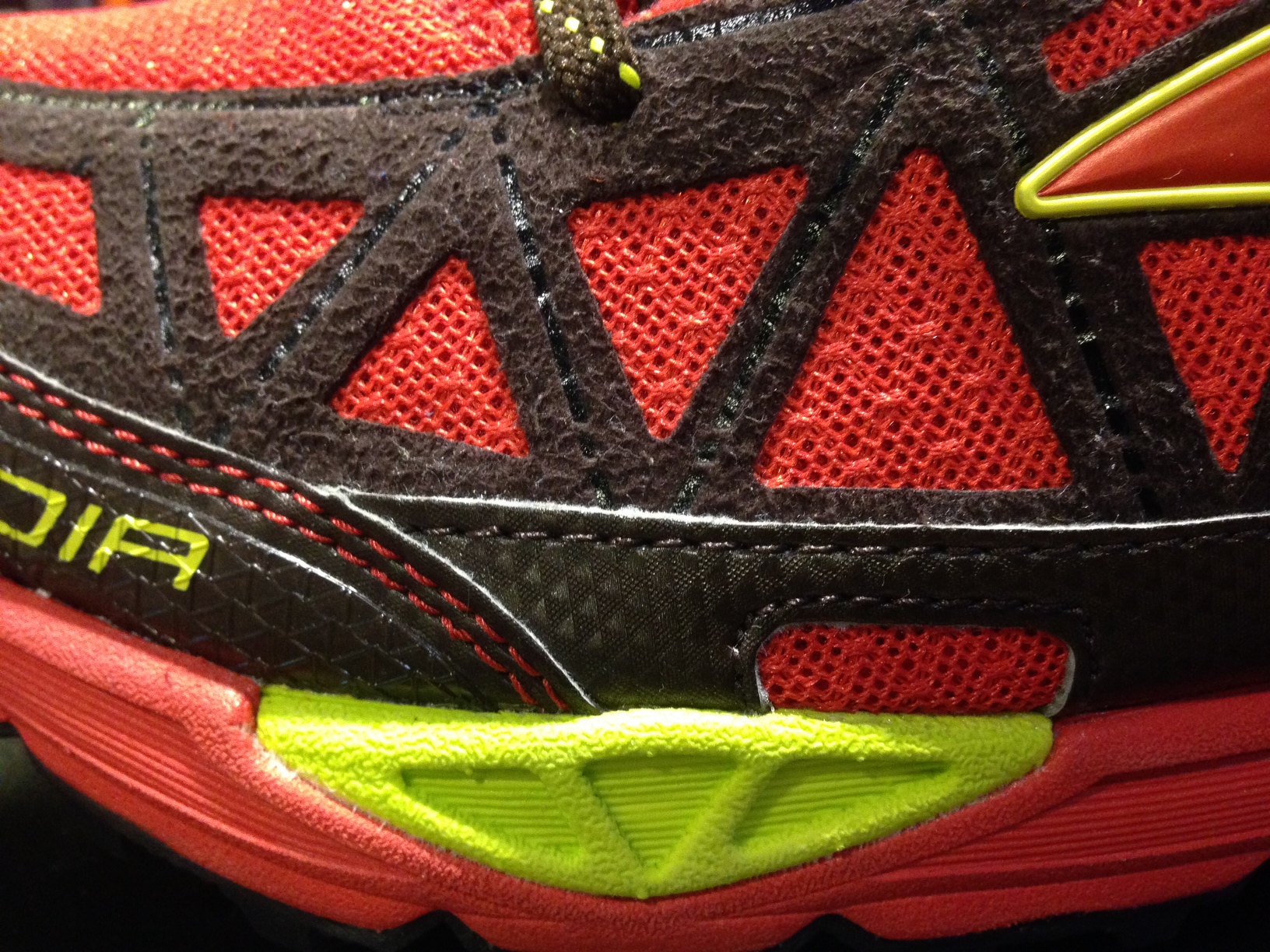
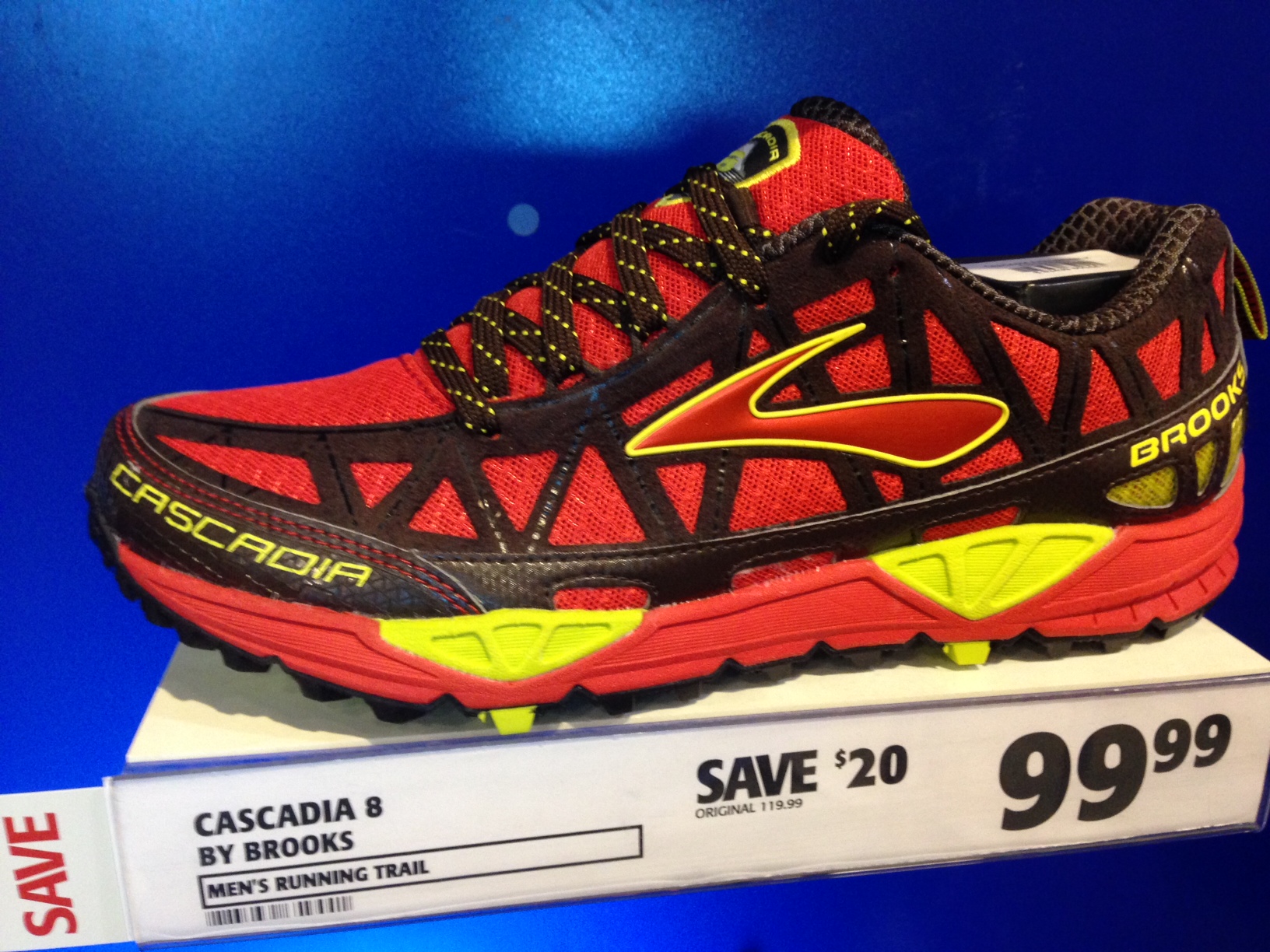
Take a close look at the texture on this Running Shoe. I dare you to try to tell me that you don’t want to run your fingers across its surface, caress it’s plastic ridges and rubber sole, and perhaps even lean close and sniff those exotic glues and thermal treatments used to fuse it all together. That’s right. I thought so. We’re all dirty little Running Sluts down deep.

Hooked On Shoe Porn

Of course with Running Shoe Porn you can’t stop with just one model or brand. You have to keep looking for the next colorful thrill. So lets move on to the next closeup. Because this is how it works. The Running Shoe companies pull you in

Those curves. Those details. Those textures. Running Shoes are seductive and irresistible.

Those curves. Those details. Those textures. Running Shoes are seductive and irresistible.

with all those textures and colors, and suddenly you’re spending $199.99 on a pair of running shoes that will last you about 400 miles but make you feel guilty and dirty about them the entire time you’re on the road.

Unless you’re so turned on by the thought of that bundle of podiatric sex wrapped around your foot that you just don’t care about your sense of propriety any more. Then you’ve got a problem. You’re a Running Shoe Slut with a habit on your hands.

How We Got Here

It’s been a rather insidious journey to the modern era of Running Shoe Porn from the days when running shoes cost $40 and runners were known to get 700 miles out of their shoes by actually adding copious gobs of goo to their heels.  Some Running Perverts even went so far as to replace the little rubber dots on the waffle soles of certain styles of Nikes. That’s right, some runners actually  replaced the nipples on the waffles. Now that is a little sick. You can blame Bill Bowerman.But it was a rather sensuous process. A friend once told me…

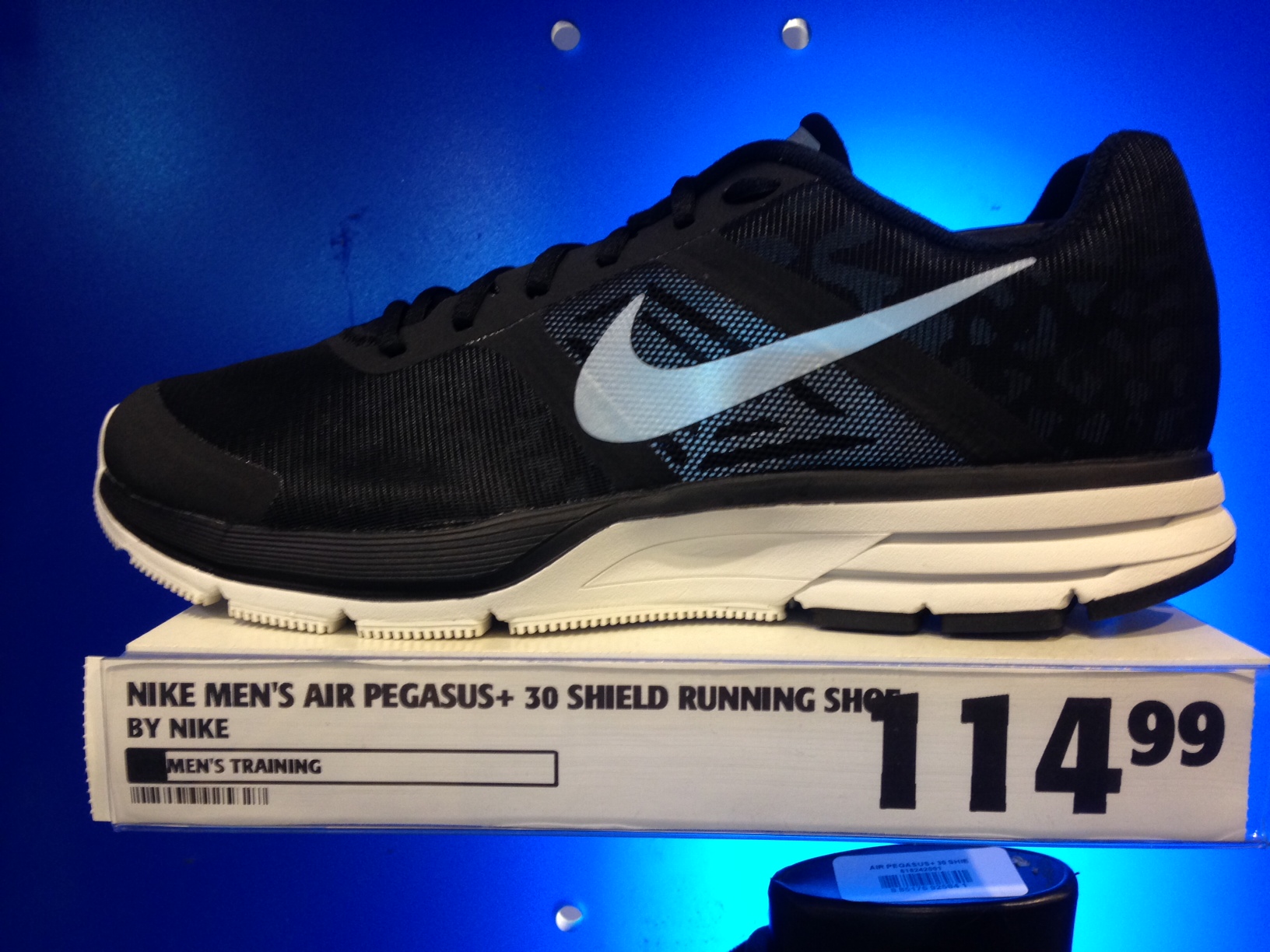
The Nike Pegasus is like one of those porn models who never grows old. They just get facelifts and keep on going. +30? The MILF of Training Shoes.

The Nike Pegasus is like one of those porn models who never grows old. They just get facelifts and keep on going. +30? The MILF of Training Shoes.

that it took a certain kind of perverted talent to touch each nipple with that phallic little glue dispenser. Of course it was a little obsessive, and only once removed from an actual foot fetish, but quite seductive to those with a lust for Virgin Waffle Soles.

The New Shoe Habit

You need to understand that’s how Shoe Sluts act once they’re hooked on their New Shoe Habit. True Shoe Pervs are always about the youth of their shoes. Always want the newest model. Yet even as you buy the newest model shoes, your mind is drifting to the next Hot Model on the market.

Sure, she's pretty on the shelf, or he makes you want to take him on the road with you. But just wait a few days. Shoe Sex isn't everything. But it's something, that's for sure.

Sure, she’s pretty on the shelf, or he makes you want to take him on the road with you. But just wait a few days. Shoe Sex isn’t everything. But it’s something, that’s for sure.

It never ends. It really doesn’t. That maiden pair of Brooks you bought that looked so good on the store shelf?

Well, wouldn’t you know it? After the first 100 miles your fidelity is already starting to drift. You’re like a cheating husband or wayward wife. Every run turns into a scene from a Country Music song and the title possibilities are endless, and sordid. And yes, the comparison between pornography and country music is intentional, because I’m sure you can imagine these songs actually being written and put to music, and they seem to be about love, but they’re really about the dangers of infidelity and illicit sex. Much of country music is emotional porn, in case you haven’t quite figured that out.

“How Do You Run From a Cheatin’ Heart?” 

“Will You Come Runnin’ Back To Me?”

“How Can You Say You Love Me When You Got No Sole?”

Fidelity

Now that we’ve trashed an important and major form of America music, let’s get back to ripping on the running shoe industry and its seamier side.

Which brings us to the notion of Sloppy Seconds.

Just like a guy or gal from a Country Music song, at first you think you’re married to your brand new shoes for life. You can’t imagine life without them.

But then you run through a puddle (proverbial or otherwise) and suddenly you feel like you’re wearing a pair of Sloppy Seconds. Then your heart wavers. You begin to think there might be something better out there for you. And you’re cheatin’ heart gets tempted by the Shoe Porn Industry.

So you go on the Internet and start surfing around looking at all those shoe styles, zooming in on the closeups. Sadly, those formerly new shoes don’t look so good any more.

That’s the danger of Shoe Porn. Social scientists of many sorts warn us against the dangers of porn, shoe or otherwise. But here’s the truth about Shoe Porn. Like most other forms of porn, it’s pretty much harmless if you keep it in perspective, or share the joys of patent(ed) thrills in the company of someone else with a fun little dirty habit like yours. Then you can actually increase the fun and fidelity of your relationships, and not show up in country music songs.

It might also help to view the movie Don Jon, which chronicles the journey of one young man who finds out that his understanding and appreciation of relationships is being obscured by his practice of using porn in place of true intimacy. We’re all susceptible to desensitization of one sort or another, which keeps us from appreciating life in the moment.

But then, there is such a thing as being too much in the moment as well. Which brings us to…

Sometimes the wildest shoes end up in the Sloppy Seconds bin like the Land of Misfit Toys, no pun intended.  Who knows if this model will be a Sloppy Second someday?

Sometimes the wildest shoes end up in the Sloppy Seconds bin like the Land of Misfit Toys, no pun intended. Who knows if this model will be a Sloppy Second someday?

The Lure of Hot Messes

Not everyone’s lucky enough to have a fellow Shoe Porn aficionado to share their happy fetish for pretty shoes and well-crafted objects made of rubber.

That means other temptations are waiting, specifically The Shoes Nobody Wants, otherwise known as Hot Messes.

If you’re an enlightened type or have lots of Street Experience, you can probably spot a Hot Mess when you see one. You pick them up from the Closeout bin and something tells you, “These look pretty, but I bet they go stale in a hundred miles.”

Uh oh. The two worlds of Shoe Porn and actual porn collide.

Uh oh. The two worlds of Shoe Porn and actual porn collide.

But you’re a Shoe Slut (male or female) who buys those Hot Messes anyway.  And you take them on the road with you, but there’s alway a part of you that doesn’t want to be seen in their company. Finally someone looks down at your Hot Messes and says something like, “Where’d you find those shoes? I hear they suck.”

293.mccon.running.dog.112106

A hot mess or a hunk on the run?

You admit they do suck a little. But deep down you’re thinking, “These are my Hot Messes and I’m sticking with them.” Because that’s the ironic loyalty of a true Shoe Slut. We sometimes love our mistakes even more than our glories.

After all, they only cost $34.99, and pretty soon they’ll look good walking around the Supermarket. So you forgive them even if you keep getting blisters on the knuckle of your Big Toe. In a pinch, they say, a Bad Rub Is Still Better Than No Rub at all. That is the Shoe Slut Philosophy.

Confessions

This little model makes runners horny for Energy Return with Springblades that promise to help you run faster. Really, they will.

This little model makes runners horny for Energy Return with Springblades that promise to help you run faster. Really, they will.

And come on, we’ve all done it, haven’t we?

Succumbed to temptation.

Bought that pair of expensive shoes or one too many pairs when all we wanted to do was stop by and browse the Big Sports Store or the Local Running Shop.

Then you come home with a  box of New Shoes and stare at the logo on the side with that unique sense of Buyer’s Remorse that comes from spending too much on your favorite hobby and finally admit to yourself, “Oh, My God. I Really Am A Shoe Slut.”

Getting Shoe Religion

If you’re Catholic, you go to Confession and ask forgiveness, and the priest utters some penance and tells you to stay away from Amazon or Dick Pond Athletics. 

And if you’re Lutheran or another Protestant faith, you eventually donate your Slutty New Shoes to Goodwill. But only after you’ve pounded them into the cement for making you feel so guilty, and you make sure you get a receipt so that you can write off what remains of the value of your formerly Slutty Shoes. And that is called Redemption. Or Salvation. Or something like that.

Best of all, if you’re a Unitarian, you can look around for other people wearing the same pair of shoes and approach them on the street with a smile and say, “Isn’t the World Great? I love Your Shoes! Let’s go Running Together!”

Shoe Porn at its finest, as seen at Dick's Sporting Goods. Seriously. At Dick's.

Shoe Porn at its finest, as seen at Dick’s Sporting Goods. Seriously. At Dick’s.

Interventions

In my Wild Youth, I was a full-on, no-holds-barred Shoe Slut. Then I got the opportunity actually work in The Shoe Industry.

Let me tell you that Working at a Running Shoe Store is very much like being the cameraman or the Key Grip in the making of a porn movie.

You see people come into the store all innocent and wild-eyed, yet with that unique brand of Running Shoe Saliva forming around their mouths as they approach the Running Wall and begin to touch and feel and even sniff the Running Shoes.

Bare Foot Running

With all this sexy shoe stuff going on, it’s no wonder Barefoot Running took off when it did. The only thing sexier than beautiful running shoes on your feet is no shoes at all. But some people can’t get into “running naked,” as it were. Too much flopping around down there. Your toes and such. But what a temptation. The idea that you can run without getting hooked on sexy running shoes is so novel it’s surprising no one had thought of it before. Perhaps the fact that the average person who goes out to run barefoot comes home with feet bloodied and battered by mean streets has something to do with it. Sometimes being naked in public is just not worth it.

Not discounting compassion

Somewhere deep inside, it makes you sad to see people lust for their next pair of shoes. Then you start to think to yourself, “I don’t want to be like them anymore. I need to control my Shoe Lust.” And after a a few months of handling every kind of shoe on the market, you begin to get kind of jaded to it all. Like the girl on the Apple computer using Photoshop to remove wrinkles and moles from the Porn Girls and Guys on the Internet, it all becomes part of the process. Not sexy anymore. It’s just shoes. And feet. And people wanting $10 off for repeat business.

The Ultimate Shoe Slut Temptation. The $200 Paid Escort of Distance Training. But in 300 miles, you'll want a new pair. That's how it works.

The Ultimate Shoe Slut Temptation. The $200 Paid Escort of Distance Training. But in 300 miles, you’ll want a new pair. That’s how it works.

The Shoe Porn Industry

Yet there are always Shoe Sluts that can’t seem to stay away from the store for more than a couple weeks. They come wandering in with That Look in their eye and before you know if, they’re rifling through the Sloppy Seconds bin or worse yet, actually staring at a pair of $200 Asics as if they were the Holy Grail.

Don’t worry, you’re not alone

We’re here to tell you, it’s okay to be a Shoe Slut. You’re far from alone, and it’s not your fault. The Shoe Porn Industry has actually broken free from the running community to sell their sexy, slutty shoes to people who don’t run a step all year. This phenomenon, known as Faux Running, is driving costs up in every sector of the Running Shoe Market. It is one of the tarsnakes of the running shoe industry that you would not buy so many shoes if they were not pretty, yet the people outside the business who glom up running shoes just to wear around like fancy slippers may be the very source of rising prices in the running industry.

Who Can Blame Them? 

All that Super Slick Technology and Shiny Rubber will make any normal human being weak in the knees.

But once you’ve had a few Shoegasms the effects of Shoe Porn do start to wear off a little. Take it from those of us who’ve seen the whole Shoe Porn game from the Inside Out. We know there really is such a thing as Self Control. It may cost you several thousand dollars to get there, but you can do it. You can manage your Shoe Slut Habit.

Enablers and Stabilizers

We’ll admit, it helps to actually work at a Running Shoe Store and get the Store Discount so you can afford that extra pair of New Balance Guilty Pleasures or that set of Racey Road Runners with Sure Grip Laces. You can get your kicks much cheaper and quicker when you work in the Shoe Business.

Shoe Porn can teach you a few things, such as the fact that even the prettiest shoes or the most studly of soles all look the same when you turn them upside down. The same truth holds for both men’s and woman’s running shoes.

Wink wink.

WeRunandRideLogo

Posted in Christopher Cudworth, Tarsnakes, We Run and Ride Every Day | Tagged , , , , , , , , , , , , , , , , , , , , , , , , , , , , | 2 Comments

Proof that you are part of an amazing, wonderful creation is under your wheels, and your feet, and in the water in which you swim

By Christopher Cudworth

It all starts with an appreciation for the forces that drive the world.

It all starts with an appreciation for the forces that drive the world.

As motorists, we tend to think of potholes as really bad things. They threaten our tires. Jolt our suspensions. Kick off hubcaps and throw water up on our windshields.

But actually, potholes are a keen reflection of the natural order of things.

Glacier National Park

One of my favorite places on earth is Glacier National Park. The topography of the park is formed by massive geological forces. First the mountains were pushed up by tectonic forces producing an overthrust that pushed the rocks up and over the landscape below.

Proof of that passage is found in the fossilized algal formations at the top of the mountains. These in many cases remain untouched by the persistent snows and melts that affect the region.

Going to the Sun Road traverses one of the most beautiful mountain passages on earth.

Going to the Sun Road traverses one of the most beautiful mountain passages on earth.

The glaciers that gave the park it’s name were once so massive they scraped away the faces of the mountains, which now stand in tall testimony to scopes of time that exceed human imagination.

The major glaciers have largely shrunk away over the millennia. Now even the remaining glaciers slumped between the mountains and clinging to their sides are melting away at a rate far exceeding that of natural processes. They are victims of global warming as are many glaciers and ice packs around the world.

We make our mark

The human imprint on Glacier National Park is also profound. A wonderful road traverses one of the prime passageways in the park. Going to the Sun Road winds its way up and across the face of glacially carved mountains. In winter the snow covers the road. Come spring the snow removal crews carve away the passage and by summer the biggest haunches of snow still drip and sweat water onto the roadways.

Cyclists climbing Going to the Sun Road, as my brother-in-law once did, must be prepared for a constant uphill grade and tight switchbacks. Then the

Going to the Sun Road is paralleled by the Highline Trail, each cutting across the face of massive mountains carved out by glaciers.

Going to the Sun Road is paralleled by the Highline Trail, each cutting across the face of massive mountains carved out by glaciers.

descent on either side can be harrowing, for the road edge is uncontrolled at some points, and shunted by short walls of rock in others. Built during the years when people in need of work performed public works, Going to the Sun Road is evidence that there are many kinds of creative forces in the universe.

Running into reality

I ran 4 miles up and back on Going to the Sun Road last time I was there in 2003. It was a slow slog up, compounded by a little bit of altitude. Between the pine trees were glimpses of St. Mary’s lake. The water from the ice melt fills the lake, which runs several hundred feet deep, and cold as ice. Giant trout lurk there, and local fisherman spray WD-40 oil on pork bits and drag them through the clean, clear water to leave a trail of oily scent for the fish to follow.

Cold truths

I learned these things hanging out on the shores of St. Mary’s Lake after runs. A very few fisherman worked the lake. I tried and caught nothing, but did land a couple salmon using bass lures in the river exiting the east end of the lake. But that’s cheating, and I quit right away. Salmon have tender mouths and should only be landed with fly fishing gear and small hooks.

Instead I engaged the lake on naked terms. I’d peel off my clothes and slip into the bone-chilling water after runs. Instantly the shrinkage all men fear would take hold unless you first gave yourself a shake or two for length and pride, of a sort. The muscles in your leg would contract. Going in all the way in up to the neck was painful. But I did it, because communing with the mountains requires a little pain, to appreciate the harsh truths they communicate.

Testing fitness

I recall a time in the Rockies when my fitness was great and I decided to go run up the face of a “bowl” where the skree was not too deep. Forty steps into the runup I collapsed and scooted back down. The mountain was having none

Anyone want to compete with this?

Anyone want to compete with this?

of my frivolity. You don’t climb to the thin heights without paying your dues. Humility can be a good tool at times.

That’s true in the near term and in appreciation for what we see when we go to these places. Many afternoons I have spent studying mountain faces with binoculars, marveling at the millions of details you can see there, even a mountain goat or bighorn sheep, grizzly bear or mountain lion.

It’s all about fitness and competition and forces of nature, red in tooth and claw. The human condition, however, is about mediating those instincts. Yet how we treat each other is based upon how we see ourselves in the context of creation.

The scale of humility

The scale of geology is what should humble you. It can teach us so much.

Rock outcrops fell away into alluvial fans, those delta shapes of rock that form like reverse funnels where weather and wind and water and ice chip away the stone.

The very same forces that work on mountains also affect the sand in your child’s sandbox. When a sand wall breaks away the tiny specks of rock tumble down in an alluvial fan just as the rocks tumble down in the mountains. It’s all part of the same flow. Creation at work.

And if you expand instead of contract your scope, you can see amazing patterns at work as well.

Big Bang and life on earth

The start of the Big Bang or a pothole? It's hard to tell the difference sometimes.

The start of the Big Bang or a pothole? It’s hard to tell the difference sometimes.

You can see the evidence for creation from the explosion that scientists call the Big Bang. Forget the cliches or the TV shows that make light of the science with all that Geekhood stuff.

The facts of our existence are clear in our physical makeup, yet drawn from the earliest of events in all creation. We’re chunks of carbon and all the minerals and elements that make up the universe. Life is the only (and mysterious) component that separates us from inanimate materials.

We run and ride and swim along gasping in for oxygen and breathing out carbon dioxide. We do that as hard as we can as athletes.

As we age the efficiency goes down somewhat, because our bodies are prone to the same erosive effects of time that affects the face of the mountains and the dark matter coursing through the cosmos. We sag on the surface and creak and groan on the inside, just like a mountain, or a galaxy.

Part of it all, or not

The forces that make up creation are inherently creative.

The forces that make up creation are inherently creative.

But take note: as we move across the face of this earth we can appreciate the power of these forces inside us, that drive us, and that we are part of a massive creation whether we regularly acknowledge it or not.

Some try to deny that our bodies and minds come from anywhere related to the rest of creation. They think we come from “whole cloth” and that creation itself was the product of 7 literal days of deific interpretation. They refuse to see the genetic connections we have with all other life, and the fact that we share 70% or more of our DNA patterns with every other living thing on the planet.

The science of denial

Denying these roots creates a sad separation in the minds of so many, who cannot reconcile their being with their being here. Some are taught to hate this life and all it offers. They’re taught to think of themselves as specially created, not connected with the universe other than through a claim of ownership and authorship. How sad that is, for it amounts to a science of denial.

Do we have to be so literal to appreciate a tree?

Do we have to be so literal to appreciate a tree?

Despite their beliefs and how ardently they defend them, their worldview is not biblical. Taking the Bible literally flies in the face of the very person upon whom their faith is supposedly grounded and founded. The person we call Jesus (actually, Yeshua) taught important life lessons using very symbolic examples from nature to convey spiritual principles. This was his organic fundamentalism. His parables relied upon nature to teach about God because God, he explained, can be found in all things.

That means you can’t go wrong learning about nature or using it to teach about the meaning of all things because nature, on its own, is not corruptible.

I know, that sounds like it runs counter to the idea of the Fall of Man, Original Sin and a fallen world and all that. But in order to truly understand the Bible and our place in the universe, you really need to look deeper and have a better understanding of nature to make it all possible. Even Jesus would tell you that.

A flood of realization

Let’s take a quick example. The real evidence for a Great Flood on this planet goes much farther back than five or six thousand years. We know from all the limestone deposited on the face of North America that the continent was once almost entirely covered by two great seas.

If not by plate tectonics, how do they match up so closely both in terms of geology and rock layers?

If not by plate tectonics, how do they match up so closely both in terms of geology and rock layers?

We also know from exact geological deposits on both Africa and South America that they were once connected. You can see their shapes in the pocket and bulges of those continents. For God’s Sake, they line up exactly.

Life tectonics

Explanations for that movement took centuries of science to resolve, but we now know how the forces that drive plate tectonics really work. These processes explain everything from the structure of the continents and their locations to the very creatures that crawl and swim and fly across the face of those continents and the islands that trail off their massive tracks on the face of the earth.

We know that populations of living things, once separated from each other, are prone or required to adapt to the environments they find available. This works at the most incremental levels. As genetic mutations occurred at the most microscope level in the earliest living things, the advantages those changes conferred proved to be powerful selective forces in what survived and what didn’t. That meant things were actually “improving” based on the harshest of criteria. Competition was at first an unchosen mediator in the decisions about life on earth.

Art Imitates Life

The tectonics of life are always at work.

The tectonics of life are always at work.

The very first book I wrote back in 1980 was a piece of fiction in which the main character focused on a principle he called Life Tectonics, the idea that even our relationships reflect the tectonic processes that drive the rest of the world. I still think that’s true, and have heard so many art forms reflect that reality, such as the song “Crash” by Dave Matthews. In this passage we get a glimpse of the very sexual world in which we live, and the tectonics of physical contact:

Oh and you come crash
into me, baby
And I come into you
Hike up your skirt a little more
and show the world to me

Crashing into competition

Now we celebrate that harsh reality in the competitions in which we choose to engage. Like it or not, winning or losing is a harsh fact. Every race in which you compete is a rehearsal of the evolutionary forces that drive our universe. We bang into each other at the start of races and triathlons, fighting for position and trying to take the lead or merely find ourself a spot in the peloton, so we can draft, and ride, and look for advantage when the time comes, saving our energies for the moment when we might transcend even the confines of our own minds.

Crashing into reality

We test ourselves, sometimes too hard.

We test ourselves, sometimes too hard.

Get this: When you overtrain and get too tired, your body can be suddenly afflicted by the millions of microbes that live inside you. A cold virus can take over your sinuses or a flu bug can penetrate your body’s natural defenses. So while we think we’re winning we can actually be losing.

Infectious diseases are a potent reminder that evolution is always at work. The medical community lives in fear that infectious diseases are outstripping our ability to manufacture antidotes to infectious bacteria and viruses. AIDS migrated from one part of the natural world to the human race. Now we’re facing infections that hospitals can barely control or kill.

Frail fitness and prayers of hope

Fitness is a relative term, you see. We celebrate the most fit athletes because they are truly a defiant shove of the middle finger toward a world in a constant state of battle and ultimate decay. Ashes to ashes. Dust to dust we go.

Disease and infection can take even the greatest of athletes down.

Disease and infection can take even the greatest of athletes down.

It all fits with the biblical notion of a fallen world, if you think about it. But how less capable we are to fight that notion if we do not recognize the very forces at work in creation that can take us down?

Is prayer going to do that? Perhaps it can help. But if you’re in need of surgery to save your life, the doctor may pray for a good outcome, but mostly they cut into you and fix what’s wrong.

Context

It all fits together however. The pothole you see while riding or running is a reflection of the very same forces that first formed and then destroys those mountains. And those mountains got there by way of movements in the earth that made legends for the human race when we so little understood how it all works.

But now that we know more about how it all works, and why, and how, and what it means to us in terms of day to day living, and trying to protect the people we love from unnecessary death, and how we can live better lives through the fitness we build through exercise and better diet. There is no need to rely upon ignorance to protect our minds from reality. We need to do the opposite.

Creation is all around us. We run and ride through it every day. How you appreciate it can make all the difference in how you thrive and survive. We run and ride and swim to feel that reality. See you out there.

WeRunandRideLogo

Posted in Christopher Cudworth, Tarsnakes, We Run and Ride Every Day | Tagged , , , , , , , , , , , , , , , , , , , , , , , , , , , , | Leave a comment

For winter fitness, you sometimes have to take what the season will give you

By Christopher Cudworth

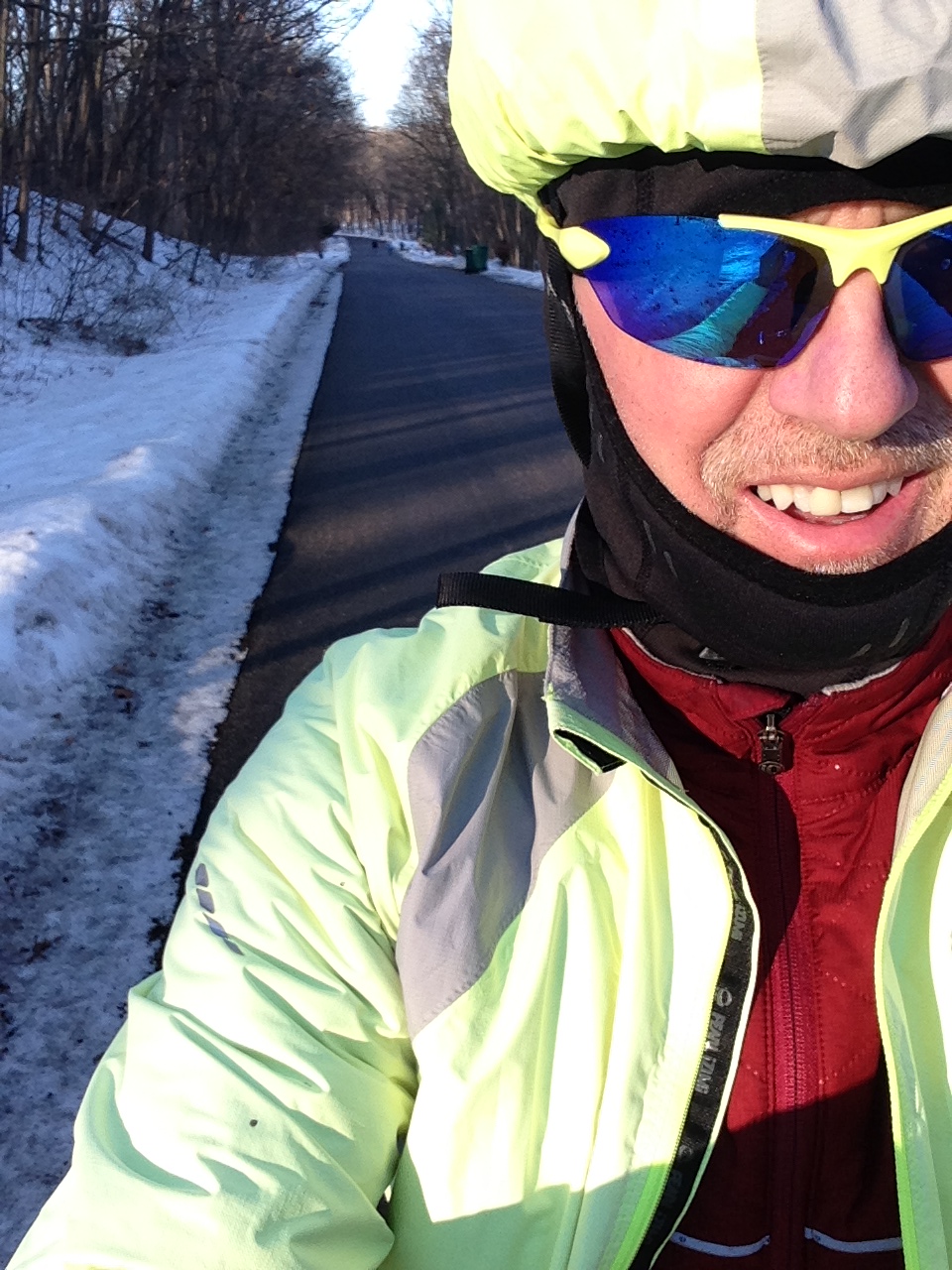
Dork alert. But hey, I don't care. It was cold outside. But good for riding!

Dork alert. But hey, I don’t care. It was cold outside. But good for riding!

In winter you map out a fitness plan and hope the weather will allow it to happen. If you plan a run and the streets get too slushy, head to the gym. If you plan a road ride and temperatures don’t quite climb to what the weatherperson promises, you grab the mountain bike.

Which is how this winter fitness zealot wound up doing a 15-mile ride on a 14 degree day in which the sun was shining but the ice was not completely melting.

You know the conditions if you live up north. The roads look okay, but shade can make things tricky on the corners and in the valleys. Black ice can take you down faster than a UFC kick to the head.

Fat Tire Trust

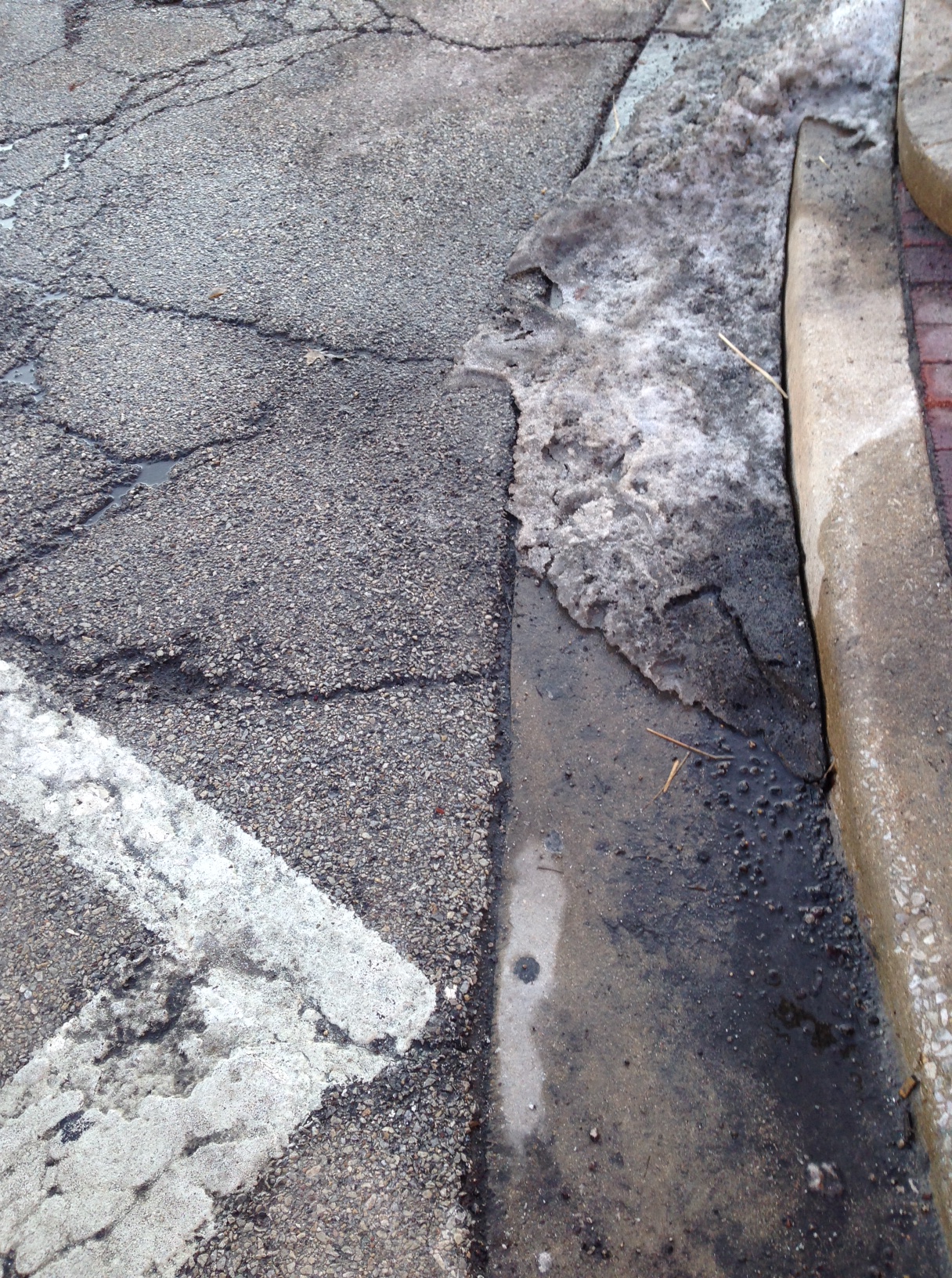
Watch out for the hidden ice on corners.

Watch out for the hidden ice on corners.

On fat tires you can count on a little more stability. If you’re wise, that is. Even mountain bike tires will wax out on ice covered with water. In January, you can count on those types of conditions.

So you stick to the roads that are least covered with visible ice and stay away from the curbs where dirty snow and ice still congregate.

Knobby Tire Pace

The reason you go out on a mountain bike is the quality of training you can get. Rolling down streets on knobby tires is a good workout. You may not impress anyone on Strava with your pace, but who cares. Bundle up, break out the balaclava and sweat it out underneath a couple of technical layers. That’s the ticket to winter fitness.

Potholes and Pasty Streets

There are plenty of reasons not to ride the road bike in winter. Salt flies up from the road into your gears and cables, for one thing. A few winters ago I also wound up pedaling through some kind of cranberry or beet slurry on the road that was the consistency of slick soap. It got through up into the hubs and coated the points where the cables enter the bike frame. That’s not good for a road bike, at all.

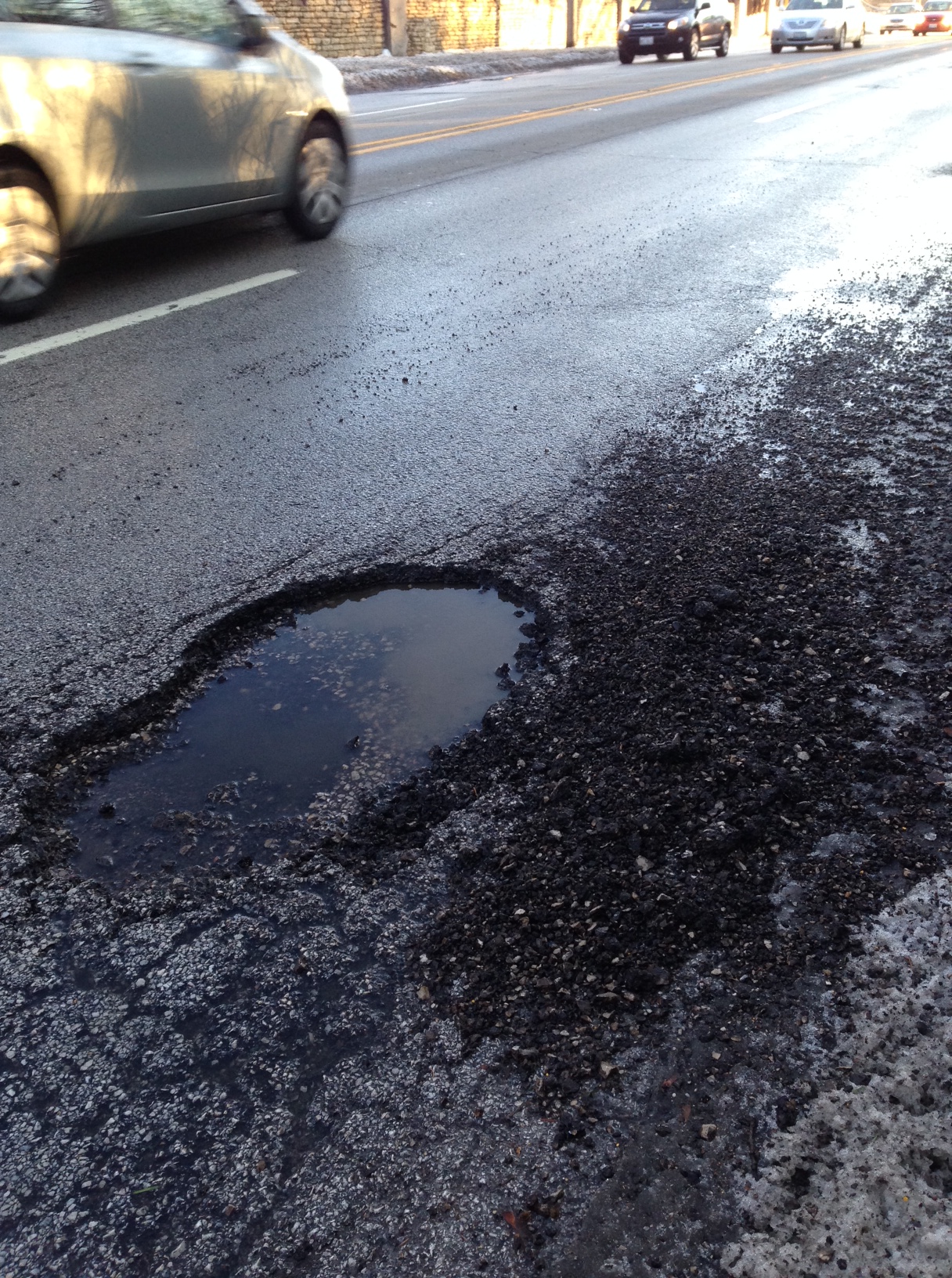
This four foot pothole is almost epic in scale. Don't fall in!

This four foot pothole is almost epic in scale. Don’t fall in!

Potholes can also cause pinch flats on a road bike. Even the smallest potholes are a threat, but the bigger ones are a clear danger. Recently I found a 4-foot pothole on the backroad I take to avoid traffic on the main highway. It was about 4 inches deep at the lowest point, and I could not help thinking how bad it would be to be riding along and dip into that thing. Might not be heard from again.

Hills and heart rate

The ride averaged 15 mph which isn’t bad for a mountain bike, especially on the hilly route I chose. But that’s the point. Working hills in January should be a high priority for any cyclist or runner. This time of year you don’t care how fast you go, just that it’s hard, raises your heart rate and strengthens your legs, especially the quads and hamstrings.

So that was the goal, and riding around a crisp winter morning was its own reward. All good in the land of Winter Fitness. Now I just need to do it some more. A lot more.

See you out there.

WeRunandRideLogo

Posted in Christopher Cudworth, We Run and Ride Every Day | Tagged , , , , , , , , , , , , | Leave a comment

We used to play Nigger Under the Woodpile at the pool

By Christopher Cudworth

Getting back in the pool after years away is a sensory immersion.

Getting back in the pool after years away is a sensory immersion.

The back of my hands smell like it. The pool. Like chlorine. I swam today the best I could, without treading too much water.

Payed attention to the way my arms cut past my ears. The hands, gripping water and letting it go. And the breathing. Don’t forget to breathe when you swim, people. But when all else fails, know how to tread water.

The hardest part for me is getting the breathing down. The swim strokes feel natural enough because I started swimming as a kid and swam with the Swim Club at Meadia Heights Pool south of Lancaster, Pennsylvania. We drove around to other pools in the area for swim meets.

Getting there

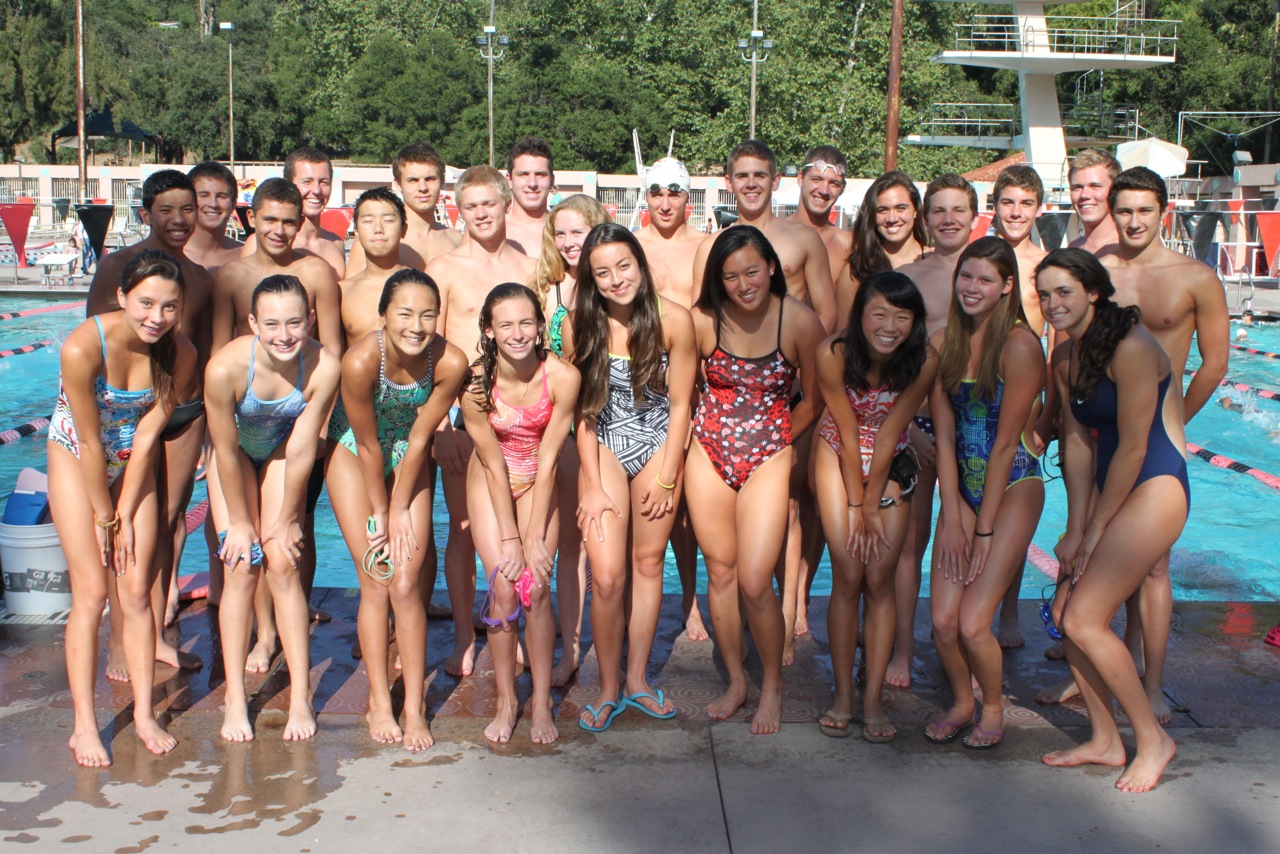
Swim Clubs. All skin and chlorine.

Swim Clubs. All skin and chlorine.

I can remember the hot feeling in my face when a seventh grade girl sat on my lap the whole way to one of the meets. There were six of us jammed together in our swim suits in the back of some big old Buick. The girls with their summer hair falling over their faces giggled and shot glances at each other while the boys in their skimpy Speedos sat on the bottom row stiff and nervous. We were younger, these were older girls. Some even had breasts. Their warm thighs touched our warm thighs.

When we piled out at the pool it was wise for us to grab our towels for the walk to the gap in the chain link fence where the pool entrance awaited us. We were 4th or 5th grade boys. Surely the girls knew we suffered under their weight, yet we would not trade it for the world. That’s how it is with all relationships. A burden we welcome. Without the weight we feel alone.

Competitive Swimming

Then we plunged into the pool and tried to become weightless. That’s what you do when you go swimming. Float forward as fast as you can. For us boys with skinny bodies the floating required constant effort. Our strokes were frantic and full at the same time. Arm over arm over arm. Spray and kick and breathe and spit. Finish the 50 yards and try to stop breathing manically at the edge of the pool. Who touched first? Did I win?

We learned flip turns. Backstroke. Breast stroke (hee hee, we were 5th graders) and even butterfly. That was a tough one.

Moving on

Summers came and went. We grew older and for some reason Swim Club dissipated. Some adult probably lost interest. So we seldom raced anymore.

Yet we had all this youthful energy, and all these competitive instincts inside us. So we used the deep end of the pool to play a politically-incorrect game  called Nigger Under the Woodpile. There were no black kids at our pool, so no one felt nervous about the name of the game.

The Rules

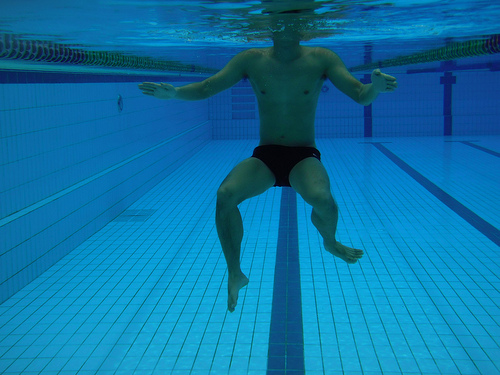
Treading water.

Treading water.

We’d start with one swimmer treading water by the rope at the point where the deep end of the pool sloped up to the 6 foot deep area. Then we’d all try to dive into the deep end and swim past the rope before getting caught. We’d dive all the way to the bottom of the deep end, 10-12 feet down where our ears hurt from the pressure, and try to swim low along the concrete, touching bottom as we went, to slip under the rope before the person waiting by the rope could catch us.

In other words, those of us trying to get past the swimmer treading water were the niggers. At that age I could never figure out if that was meant to be an insult or not. The object of the game was to be the last one caught. It seemed to me that was something of an honor. Yet there was that word. Nigger.

Nigger politics

The word “nigger” is still a bit of choice cultural invective. Sure, it’s true that many black comedians use the word in defiant glee. And justifiably so. Taking ownership of a word like that, which implies some sort of racial inferiority, and spitting it back out like pool water is the right thing to do. Own it, don’t groan it.

The 1960s

Of course it was 1965 back when us kids used the word nigger in our swimming game.

It did not occur to us why there were no black children at our country club swimming pool, and our main goal in life was to get the darkest tan we could in the summer months. Our skin turned brown and tan lines were crisp as lines of chocolate on our bodies. The white skin of our butts resembled the Coppertone Girl. Our main goal was to be tan and happy.

But in truth, the game Nigger Under the Woodpile was hard. If you were the person on the rope, catching that first swimmer was a Major Deal. Without help you could go several rounds standing on the rope, treading water while a raucous line of 15-20 kids made fun of you from the edge of the pool. You’d feel rage, then fear and finally determination trying to tread water and not get tired. Then they’d dive in again and if you were lucky, finally some tired swimmer would get caught, and there’d finally be the helper you need, and that would make the game slightly easier. Soon another would get caught, and another. Then there’d be 10, then 12, then 15 kids all waiting to catch the next nigger trying to get under the woodpile.

Tables turned

Or was it the other way around? Who really was the nigger? Was it the kids trying to get past the rope or the person standing on the pool rope when the lifeguards would yell at us if we were too tired from still trying to catch the next swimmer and stood on the rope to cheat.

I used to get confused about the whole nigger thing. But I did not dare try to figure that out or ask someone what the game really meant. All I knew was that the word Nigger was not a good word. I knew not to use that word when playing with my black friends at the school grounds in downtown Lancaster where my brother played his baseball games. I liked those kids. We had fun together, playing tag and throwing baseballs around. Race didn’t matter.

Awareness

Were race riots properly labelled?

Were they properly called race riots?

But race was an issue, I knew. I watched lots of TV in the 1960s and race riots were some of the lead stories. Something in me felt compelled to listen and learn. We talked about it some in school. It all added up to social awareness. Things were clearly changing in the world, but it wouldn’t come easily. Society was treading water between surges of progress.

Already we’d lost John F. Kennedy and Bobby Kennedy, both shot by someone the authorities seemed to want to hide from us. My young mind understood that the Kennedy legacy had stood for a brand of justice worth pursuing, yet some people hated it. It struck a deep chord with me that someone hated them for trying to do the right thing and make society a better place for all to live. It made me suspicious about the world to think that conspiracies could be afoot, and that guns could accomplish so much harm. It also occurred to me for the first time that people could be aggressive in hiding the truth if they felt they had to. I saw that even among my friends. Truth was a harsh divider.

Dr. Martin Luther King, Jr. 

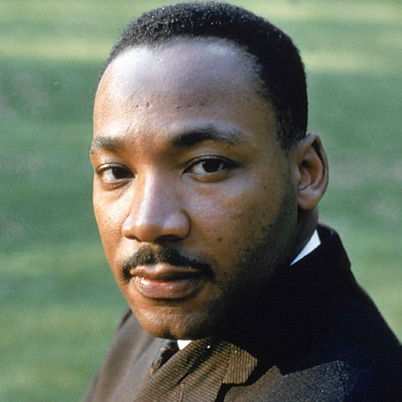
The man who saw far beyond black and white. Dr. Martin Luther King, Jr.

The man who saw far beyond black and white. Dr. Martin Luther King, Jr.

Later a conspiratorial fate would strike Martin Luther King, Jr. It made me angry to think that someone thought it was right to shoot another person because they did not agree with what they had to say, or because they were black. What did that even mean?

It would not be until later in life that I would come to understand anything about what Dr. Martin Luther King, Jr. was actually about. What I thought I knew back then was that he was fighting for equal rights for black people. It turns out what he was really fighting for was equal rights for all people. He perceptively realized that prejudice was in fact a burden on everyone, both the perpetrators and the oppressed.

“I have decided to stick with love,” he said, “Hate is too great a burden to bear.”

Out of darkness

How brilliant, I thought. People don’t know how much work being prejudiced and hateful really is. It’s like being that person on the rope in the swimming pool, waiting for everyone else to come at you and you’re feeling all alone and very tired. At that point it doesn’t matter who the nigger is. Hate makes us all niggers. Love removes that stigma. “Darkness cannot drive out darkness,” King also said, “Hate cannot drive out hate. Only love can do that.”

Liberal faith

It all made sense to me perhaps because I was a churchgoing kid. It also made sense because my mother was a school teacher. She consistently told me to treat everyone well. Later in life she would become a Unitarian, and I used to kid her about that by reciting a joke that went like this: “What do you get when you cross a Unitarian with a Klu Klux Klan member? Someone who burns a question mark in your lawn.”

She’d laugh, but she took her liberal faith seriously. As do I. People who knew her loved her intellectual side. They also knew that she loved friendship and equality. She taught me that at the heart of all faith is respect, then trust, and love. You can’t have one without the other, and it applies to all people.

Devoutness

When she died in 2005, I organized her memorial service at the Unitarian Congregation she attended. Some friends commented afterward that it was the most devout such event they ever attended. That made me happy, because it seems that liberal faith is so often criticized as being inferior to the more conservative brand. It’s simply not true, unless you value social dogma more important than considerate living.

Dr. Martin Luther King, Jr. captures the challenge of that balance with this quote: “Nothing in this world is more dangerous that sincere ignorance and conscientious stupidity.” Which aligns with a quote from noted humorist Mark Twain, who once said, “All you need is ignorance and confidence, and success is sure.”

Costs

But what cost do we pay for ignorant success? That is the principle upon which oppression wrongly moves, and through which prejudice gains the dark wings of power.

When I grew old enough to wrestle with theology and actually read some of the speeches made by Dr. Martin Luther King, Jr., it helped me realize that here was a man with far greater insight than me, who understood suffering and inequality in ways that I perhaps never could, yet who advocated peaceful resistance to even the most brutal kinds of repression, prejudice and injustice.

Sure, Reverend King had flaws. He succumbed to temptation here and there. That’s why we have the Lord’s Prayer. To remind us that we are all flawed people, and that forgiveness is something we must work for, and offer equally.

Innocence lost and found

I think back to the “innocent” days of playing Nigger Under the Woodpile in our country club pool and the bright, sunny afternoons we spent tanning our skin, eating mustard pretzels and drinking Coca-Cola. Some of us recognized there were things wrong with the world, but what could we really do about that? We were just a bunch of skinny kids in a swimming pool. Or were we?

It that pool had been racially integrated, we might have more readily learned more about the people a large portion of American society in that era still called niggers. We would certainly not have continued playing “nigger in the woodpile,” because we’d have had black friends all around us. Fortunately, we’re getting there. We’re not there yet, but the “pool” of America is becoming more integrated. That’s where society has made the most progress.

The next generation of adults seems like it finally sees race less as a factor in friendships and culture. In fact it’s the opposite. It’s like you’re not really grown up unless you have diversity in your friend network. What a great thing. What an absolutely overdue insight.

I Have A Dream

I can’t speak for him, but it seems like Dr. Martin Luther King, Jr. would have loved that type of society, where people are seeking insight rather than exclusivity when it comes to race. His great speech “I Have a Dream” is worth a watch because it calls us all to a better world. We have a black President of the United States. Yet there are so many issues beyond that fact that remain to be addressed.

Learning how to think

It’s all part of an education we all need. This is what Dr. Martin Luther King, Jr. had to say about learning: “The function of education is to think intensively and think critically. Intelligence plus character––that is the goal of true education.”

It has taken time and perhaps a different path than even Dr. Martin Luther King, Jr. might have imagined, but America may be coming around to the point where racial equality is the norm, not the exception. It is a rather sad that the party of Abraham Lincoln that helped end slavery in America now seems obsessed with voter suppression and other closeted attempts at racism, but we’ll see how that washes out in the end. 

All kinds of diversity

It struck me one day while listening to a series of black musicians on Spotify that the brilliance of their music defies categories. It also taught me that I’m still treading water in terms of understanding all that blacks and people of other color have had to face in a society that has too long leveraged social imbalance as a means to gain (and maintain) social privilege and power. I’ve always felt there is some shared constitution in discrimination with creative people, but that connection has yet to be fleshed out, shall we say.

The day known as Martin Luther King Day is Monday, January 20. I’m going to try to do something other than tread philosophical water in the days leading up to the holiday. The woodpile is still there, you see. We still need to cross it to think and work, to earn our keep––and freedom.

It’s just time we called it something different, to stop living in separate worlds as if that gives us greater insight. It doesn’t. And it can’t. 

Swim practice

These are the things I thought about today while I swam. I haven’t done the sport in years, and it’s hard to make progress. That’s what our sports and our memories can teach us. How to make progress. WeRunandRideLogo

Posted in Christopher Cudworth, We Run and Ride Every Day | Tagged , , , , , , , , , , , , , , , , , , , , , , | 2 Comments

Paying attention to the Three A’s of Safety while running and riding

By Christopher Cudworth

Video clipI recently got slammed by Friends on Facebook for posting a short video of a run along a freeway bustling with traffic. The morning was cold and wet with remnants of snow melt whooshing under the tires of passing cars and trucks.

The road shoulder was a full 8 feet wide where I ran, and in practiced fashion I traipsed along the far margins where the ice began and the asphalt shoulder disappeared under a sagging line of blackened ice and snow. And I ran with traffic.

That was what bothered my running friends. “Don’t make me come over there and slap you!” said one post.

Another posted a link to a video about running safety.

Bad examples

I get the legitimate criticism, and nothing rankles me more than seeing runners and riders doing stupid things on the roads. On the way to church last Sunday I witnessed a pair of runners (a guy and a gal) cruising along the road side by side, heading into traffic.

They should have lined up single file. Instead here was Joe Blow, a full six feet into the lane and not budging. I shook my head. That makes a bad name for runners.

Long road behind you

By my wild guess I’ve run about 40,000 miles in my career. That’s about 5333 hours on the roadsides. Not a ton by some measures, but it is just about twice around the world.

Now I’ve cycled that much as well, averaging 3000-4000 miles per year for 10 years. I’m not saying that makes me wiser or impervious to accidents. But it does speak to some experience in terms of judgement about what is safe or not when running and riding on the roads.

It comes down to this. There are only suggestions. There are no hard, fast rules. But I do live by some principles that are the accumulation of common sense and roadside experience.

First : A Reality check

Consider these not-so-funny facts about the differences between running and riding. Runners should typically proceed against traffic. That’s a given. You can see what is coming your way. Yet cyclists should not dream of riding against traffic. For one thing, it’s against the law.

The reality check here is that we’re given opposite advice on what to do while running and riding. So what’s the truth about the odds in safety while running and riding? It’s yin and yang.

Alternate truths

Running and riding have very different safety rules, starting with whether to go with or against traffic. Yin and yang.

Running and riding have very different safety rules, starting with whether to go with or against traffic. Yin and yang.

Runners are slower than cyclists. Yet the odds of being struck from behind when running with traffic are really no greater for runners than they are for cyclists riding in the same direction. We’re taught to think we have better vision and anticipation by running against traffic, and that the odds of being struck from behind as a runner are greater than those of a cyclist, but those “facts” are contradicted by reality. The odds are no greater in either case. That’s one of the weird tarsnakes of running and riding. They are opposites in many ways in terms of safety recommendations.

So you must use your judgement rather than proceed on false pretense of safety. Instead, here are my guidelines (like the Pirate’s Code) for safety.

The Three A’s of Safety are broken into categories for running and riding; Awareness, Attentiveness and Adaptation. They have served me well in 40+ years of running and riding.

Awareness: Be Flexible On the Run

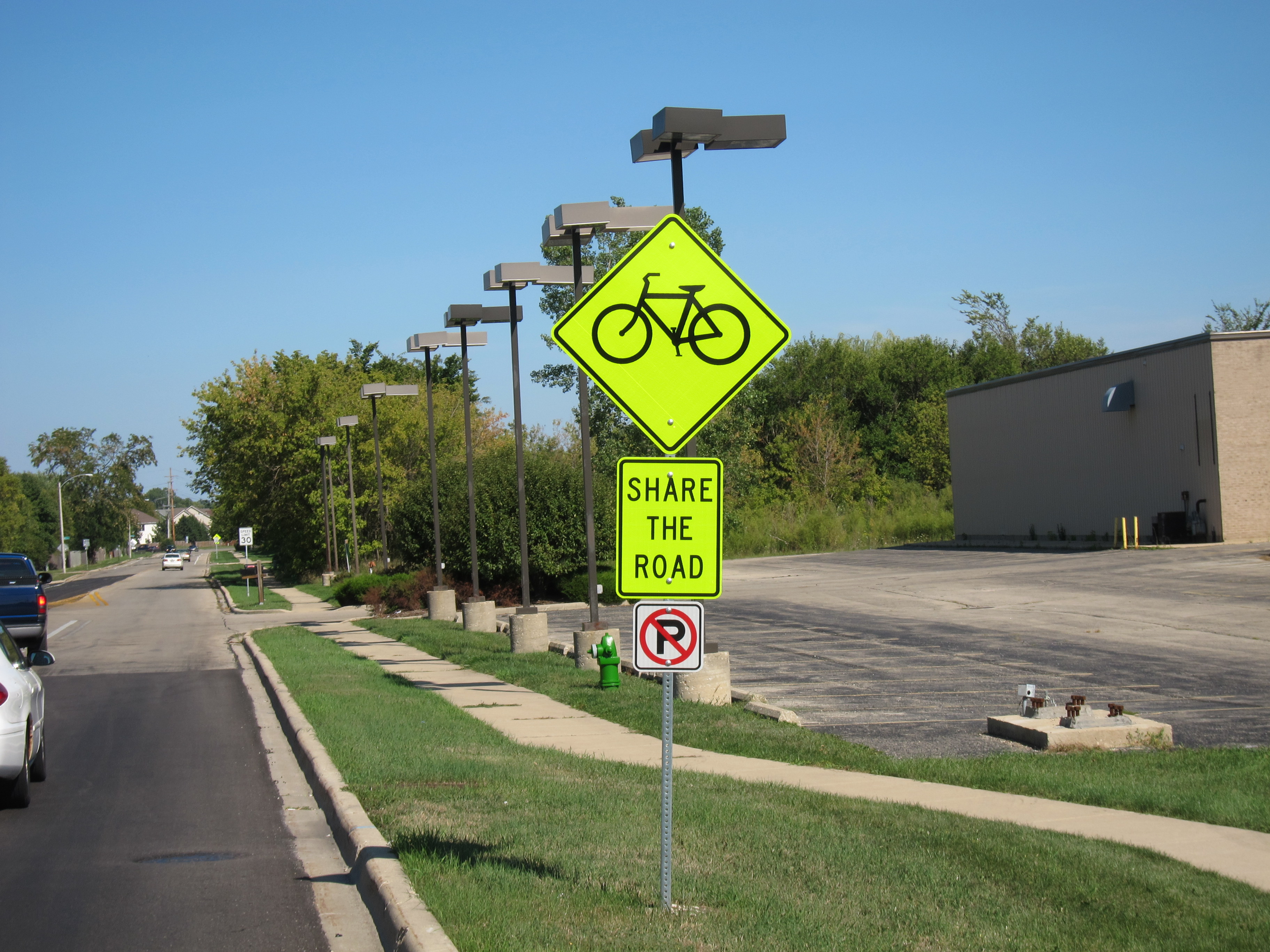
One can only hope drivers take the sign literally

One can only hope drivers take the sign literally

Cycling requires particular attentiveness to traffic conditions. The rules for road sharing may require motorists to give you three feet of space when passing but that rule is consistently broken and frankly, impossible to enforce. So you can’t assume the kindness and consideration of others when cycling.

Even bike lanes are not completely safe. Look at this video of a cyclist ticketed for riding outside the bike lanes in New York. Turns out the bike lanes were more dangerous than the regular street.

What you can do is communicate consistently if you’re in a group, or constantly check for safety behind you when riding alone. On rural roads I do a “back check” every time I hear approaching cars if there is no road shoulder. I also ride on the one-foot shoulder outside the white line. I do this consistently and it makes my riding companions wonder about me at times. But it’s something that has served me well and my bike-handling skills have proven sufficient to maintain that practice. I just don’t like to assume that people are going to give me the three feet required.

Attentiveness: Choose Your Routes Wisely

The edge of the road is too often a battle zone for space.

The edge of the road is too often a battle zone for space.

The morning I was running on the busy road shoulder in wet conditions was one of hundreds of times I have covered that stretch in all sorts of conditions. The road shoulder is not just sufficient, it is expansive, with more than 12 total feet from white line to another 2 feet of soft dirt and gravel. Lots of cigarette butts too. Nothing’s perfect.

When riding it is important to know traffic volumes and patterns. The simple practice of avoiding busy roads at peak traffic times is common sense. The same roads an hour later can be fine for riding.

Attentiveness: Adjust for Groups, and Be a Leader

The habits you develop for solo running and riding may not be practical or advisable when running or riding with a group.

Groups tend to be amoeba-like as they proceed down the road, expanding and contracting as people adjust to pace and the draft. That’s why it is important to set the tone by communicating clearly all anticipated traffic situations. Even if you turn out to be wrong about an approaching vehicle because it turns behind you, your companions are more alert as a result. Of course you should not “Cry Wolf” all the time, but that would be a rare thing anyway.

Adaptation: Signal and Wave

It is a simple rule. Be ready to adapt at all times. I am the first to leap off the road and run on the crappy shoulder when conditions call for it. And as a cyclist, I will pull over and simply stand still if traffic suddenly gets congested. This is true even at rural intersections.

When running against traffic it is more important to separate hazards. If you look ahead and see the road shoulder narrowing or worse, disappearing altogether, you must plan to avoid being on the same section of the road with approaching traffic.

Adaptation: Managing Your Pace

The same goes for pace. There are places where it is not wise to run fast, but to run slow and keep your eyes open or checking over your shoulder is the top priority.

As a runner I’ve long developed the habit of waving cars through even at quiet suburban intersections. I’d rather err on the side of politeness than rush through an intersection and have a confrontation. As a result, I often get waved through anyway. Drivers just want to be acknowledged. If you keep your head down and bull past them without a nod they naturally get pissed off. Or worse yet, they may not see you.

Adaptation: Slowing and Stopping as a Cyclist

As a cyclist you owe it to yourself to slow for Stop signs. Yes, the law says come to a full stop. But if you know your streets and there are no cars, it is common practice to slow, look all directions and roll through. Don’t lie about it. We all do it.

But if there are cars, by law you must stop. I make a practice of slowing, standing up in the pedals and looking right at the drivers. That is often enough to start the communications and many times they are happy to let a cyclist roll through ahead of them.

Taking the opposite approach of assuming drivers will stop for you is downright obnoxious. Don’t do it.

Adaptation: Pay attention to Time of Day

As sun and lighting conditions change, shadows obscure colors and even shapes.

As sun and lighting conditions change, shadows obscure colors and even shapes.

The early morning hours are the best time to run and ride because traffic tends to be less heavy. Yet you must realize that many drivers are just pulling themselves together as they travel to work, and aren’t yet alert to road conditions, traffic, or those of us who run and ride.

That’s another tarsnake of running and riding reality. Your favorite time to ride or run may in fact be the worst time of all to be on the roads. People just aren’t awake yet behind the wheel. Lighting conditions can change quickly too. Early morning sunrise can blind drivers, particularly if conditions are cool or freezing and frost gets struck by sunlight on the windshield.

You may feel as if you are highly visible in your day-glo yellow jacket, but when the sun turns you into a dark blob you may mix into the landscape and never be seen. Pay attention to time of day when you’re out running and riding, and always assume that drivers cannot see you.

And remember: Shit Happens

Bike wobble took me down.

Bike wobble took me down.

The only accident I’ve had while riding turned out to be the result of bike wobble. That’s where the harmonics of your wheels and frame get into a weird timing and the whole bike starts to shake. It happens most frequently on downhills and can be set off by rough road or mere speed. I crashed and broke a collarbone but was fortunate and smart enough to get my bike off the road to avoid a tumbling roll on asphalt coming out of a 40mph downhill.

I also had a close call on a suburban bike trail that crosses a series of roads. One drop down to a street came up quickly and I was going too fast for that section and a car burst past at the very moment I came to a screeching halt, full brakes and feet down. That was lucky in some respects.

I almost got hit by a flying Volkswagen once while running. Standing on a busy street corner, I was wiping my eyes with a shirt when two cars crashed into each other at the intersection. My instincts rapidly took over and I dove, shoving an older man down some concrete steps as the car came to rest right where we’d been standing.

He got up and got into a car right away. His ride had arrived. I stood there stunned for a moment, then ran across a bridge wondering what the hell had just happened. Halfway across the bridge a Death Shiver came over me and I stopped in my tracks in shock and disbelief at what just happened.

So there’s something in me that realizes that anything can happen at any moment. You do your best to use your common sense, and really, don’t live by rules that are too hard and fast. It’s all about Attentiveness, Awareness and Adaptation. Those are the three A’s of safety.

WeRunandRideLogo

Posted in Christopher Cudworth, Tarsnakes, We Run and Ride Every Day | Tagged , , , , , , , , , , , , , , , , , , , , , , , , , , | Leave a comment

Cruise Control and what it means to make an honest effort

I have never been one for use of a lot of Cruise Control in any vehicle. It always felt like cheating. Perhaps something in my long career or running and riding makes it feel like that. You come to think you should always have to use some sort of effort to keep going so fast. Otherwise it’s cheating.

We build up our conscience on funny things at times. There are all kinds of things that feel like cheating in this world. Spellcheck. Microwave ovens. Remote controls for the TV. Deep down we rather wonder if we’re cheating.

Cruise ControlBy Christopher Cudworth

Perhaps you’ve had the feeling after a really long bike ride. You get in the car to drive somewhere that day and your mind goes, “Wait, this is too easy.”

After riding up tough inclines and fighting through wind for 20 miles on a series of straight roads on a bike it can definitely feel like cheating to get in a car and drive somewhere.

Then you realize: The rest of the world thinks this is absolutely normal. Cheating is normal.

Truly, the world is based on various systems of cheating, but we call it convenience. Honest effort seems to fall far down on the list of things people value most. Finding a cheaper, easier way to get what you want is the Name of the Game.

Some turn cheating into an art form. Insider trading. Legal loopholes. Forgery. Nigerian bank accounts. Televangelism for money. It can be difficult to tell the difference between cheating and being savvy.

Impropriety

It can be difficult to tell what constitutes cheating. The world is not all black and white.

It can be difficult to tell what constitutes cheating. The world is not all black and white.

The art of cheating turns into a form of privilege, at some levels. Then it becomes the attitude of “I’ve got mine” in which doing anything possible to protect what you’ve “earned” also becomes the norm. Then you find voter suppression, prejudice and political favors at work. It’s all rather sinister how cheating can become a worldview.

That’s especially true when the cheating gets put on Cruise Control. Then the idea of honest effort seems quaint, even foolish. It can begin to make you wonder if everything in the world is a fixed deal.

Honesty afoot

Going somewhere on your own power is the best measure of honesty.

Going somewhere on your own power is the best measure of honesty.

That is why it is so important that so many people find it valuable to get out there in the world and move around under their own power. It really is important that we don’t all fall into cruise control mode when we’re traveling through life.

The great religions of the world warn us against the idea that easy living is always the best path. The Bible warns against the many temptations of ease to which we can succumb, and sins that fall from it. The most obvious is the pursuit of wealth without conscience. Jesus said, and I paraphrase, “It is easier for a camel to pass through the eye of a needle than for a wealthy man to enter the Kingdom of God.”

Notice the slant to the present, for the Kingdom of God can refer to both the present and the eternal. Finding your way there takes work, you see. It’s not automatic. You don’t get there on Cruise Control.

Goodness takes patience. Perseverance. Sacrifice. Kindness. Fortitude. Love. Kindness. Charity. Simplicity. Hope. Sorrow. None of these things are easy. Many don’t come naturally.

We have to think in order to feel. Yes, you heard that right. God doesn’t do all the work. You are required to do most of it for yourself. And choose wisely.

Forgiveness

Forgiveness can be as simple as recognizing that others are on the same difficult path as you might be.

Forgiveness can be as simple as recognizing that others are on the same difficult path as you might be.

Of course there are times when putting it (your life or otherwise) on Cruise Control is not cheating. Last evening on the highway between Rock Island and Batavia the night was dark and the roads were clear. The wind was at our backs for the most part as Interstate 88 slanted northeast and the wind blew from the southwest. It made sense to put on Cruise Control and flow with the traffic.

My Subaru gauges gas mileage estimates as you go. The numbers flickered on the digital readout in front of me, ranging from 17.8 to 38.6. Mostly they fell into the 23-25 mpg range. That’s about what the car is estimated to get in day-to-day driving.

Unimpressive in a way, in terms of today’s vehicles and gas mileage. But a Subaru with 4-Wheel drive is the standard for getting around in all conditions, especially in snow. So there’s a tradeoff in performance you see.

Tradeoffs

We’re all wired that way, to some degree. Our attributes as runners and riders and swimmers all contribute to our success. But somewhere along the way we all must compromise. There’s the “fast twitch/slow twitch” reality that dictates our sprint or distance capabilities. There are ectomorphs, endomorphs and mesomorphs.

And then there is cross-training.

Stronger swimmers with big shoulders have to carry those shoulders all those miles running in a triathlon.

We run and ride and swim to test ourselves, and our honesty.

We run and ride and swim to test ourselves, and our honesty.

A runner with svelte legs cannot power a bike as he or she might like.

A cyclist in full fitness is a strange creature, all legs and thin arms.

Unless they’re a sprinter. Then those powerful muscles must sit and wait until the closing 5K of a long stage ride or a criterium and then sprint for all they’re worth. In between, there is Cruise Control.

Keep the pace sane. Save energy in the draft or the wake of another. Cruise and keep calm. Study the dials in your mind that tell you how fast to go.

So it isn’t always cheating to go on Cruise Control.

You can learn a lot about the nature of honest effort by actually going out there and putting your body and mind through the paces. It’s a great way to grasp the real fiber of life. And hell, you might even get into heaven if you get thin enough to fit through the eye of a needle.

If you run or ride or swim, next time you click on the Cruise Control on your vehicle, and take your foot off the gas pedal, you can sit back and truly appreciate the conveniences of life.

That’s not a bad thing. Not a bad thing at all. Just remember to appreciate it. For tomorrow is another day.

WeRunandRideLogo

Posted in Christopher Cudworth, Mechanical Genius, We Run and Ride Every Day | Tagged , , , , , , , , , , , , , , , , , , , , , , , , , , , , , , , , | Leave a comment

Getting in tune with the straight and narrow

By Christopher Cudworth

To be decent at all, playing guitar takes practice just like running, riding or swimming

To be decent at all, playing guitar takes practice just like running, riding or swimming

In the latter years of high school some friends and I ventured into the world of guitar-playing. We almost, but not quite, formed a band. Our efforts were dissolute by dint of the fact that none of us could actually play our instruments all that well.

Playing in public

But in a fit of determination a couple of us volunteered to play a few songs during our annual Key Club banquet. It started off okay. I sang a Cat Stevens song in a barely audible voice while my partner strummed away beside me. We got polite applause and no harm was done.

Then came our rendition of Stairway to Heaven. My friend was determined to show off his picking and got so absorbed in the process that he rather forgot where he was. Entirely. That meant I did not know when to come in with the basic chord stuff, and the rest, from there, was a train wreck.

I never bothered singing after the first line. It was enough trying to keep up with my friend who suddenly, out of embarrassment, began playing faster and faster. It felt like that section of a race where you now you’ve gone out too fast and you are about to suffer severe oxygen debt.

Then it ended, mercifully, before anyone got hurt and before I threw up from anxiety and the strange feeling that my tongue had escaped into my nose. We hurriedly packed up our instruments and left the room to what passed for applause. But really our classmates were trying to wave us out of the room.

Bess with Golden Hair

Getting out of tune can be discouraging. Sometimes a word of encouragement is need to get back in tune.

Getting out of tune can be discouraging. Sometimes a word of encouragement is need to get back in tune.

Later a beautiful gal named Bess with shiny golden hair and an amazing voice in choir tried to console me. It was very sweet of her, but the shame was so deep I could barely hear her voice. Basically it came down to her saying “Nice try” and that meant a lot.

“Nice try” is not as good as “Great job.” But we all know that not everything in life can turn out great. The important thing is that we learn from the experience. And try again.

If we run a race and miss our PR by 25 seconds, we should tell ourselves, “Nice Try.”

Or if we ride with the group for 68 miles out of 70 and get dropped in the last sprint or surge, we should tell ourselves, “Nice Try.”

If you’re starting out to swim like I am, and the first few times at the pool are a struggle, you can still say, “Nice Try.”

Because it all adds up. It really does. Our cumulative desires to succeed really do matter.

Back in the music

As for my guitar playing, I pretty much put the instrument down and did not pick it up again for three full decades.

But then I attended a party where someone handed me a guitar and asked, “Do you play?” I could only recall the D and G chords. So I said no.

Guitar Hole

Strum away when no one’s listening and one day you’ll be ready for the stage, or the stage race, or whatever public venue you choice for your ventures.

But something clicked in me after that. Then my kids learned cello and violin and wanted a guitar too. So we purchased an Ibanez for $300 and it didn’t get used the touch. So I bought a Beatles and an Eagles songbook and taught myself to play again.

A new calling of sorts

Then the Praise Band at my church needed a stand-in rhythm guitarist. It was scary, and many of the chords were unfamiliar, but the forced reason to play sent me home each week determined to get better.

The parallels between playing music and doing endurance sports are, to me, surprisingly real. You improve by repetition and by trying new things. You add new skills to your repertoire and then come moments of breakthrough when you surprise yourself with a small or large triumph.

As the dude from a local hippy shop told me about his love of guitar, “I’m not a guitarist, I just play songs.” And that’s me too. I’ve been playing for 8 years now and have gotten better in some respects, but I will never, ever be great at guitar. I don’t think in music, so I don’t easily recall the notes. Plus, the ends of my fingers are thick. It’s hard getting in tune with the straight and narrow bars of the fret.

Lessons 

Even finely tuned athletes can get out of sync. Then it's hard to recover the form you once had. But we all have to try.

Even finely tuned athletes can get out of sync. Then it’s hard to recover the form you once had. But we all have to try.

The lesson I took from a trained classical guitarist was full of all the stuff I hate. Numbers, for example. Music and numbers go together you see. Numbers hate me. They really do.

But I hope to persist in playing because it is so enjoyable and stress-relieving to play music even for yourself. When given the opportunity to play in a band, the feeling of harmony and rhythm is so attractive it is like a peak experience in athletics. A Sweet Spot In Time.

There is one additional challenge now in the middle finger on my left hand that needed an operation due to an infection a couple months ago. The rehabilitation is going slow. Finally I can play a couple chords but the process is not easy. I have to think too hard to make it work, and I already had to think too much to play guitar.

Who would think a tiny injury like that could have such impact on your life? I could not effectively run or train for at least four weeks after the surgery. There was no time due to infusions and therapy and keeping up with work. Plus the finger hurt like hell at times, and putting on a glove was impossible.

Getting back in tune

But again, it’s all taught me patience and persistence. That’s what it takes to be good at anything. Holds true whether you run, ride or swim, or all three.

The desire to do these things is all part of living a full life. A few months back a friend from high school that I had not seen in decades passed away from lung cancer. His trade was guitar-making. At one point I tracked him down to call and tell him I wanted to purchase one of his instruments. He never called back. He never called anyone back, as I learned at his funeral.

At the wake there were several of his instruments lined up as we moved toward the back room of the funeral parlor. I recalled how he and I used to ride our bikes all around that little town where we lived. Deep into the night we rode, him on a yellow Schwinn and me on a black Huffy 3-speed. We’d swerve and bank on the little streets like bike racers would do. We shared that love of movement, flickering in and out of the streetlights and howling at the moon.

Different keys

He went on to become a pole vaulter in high school. I became a distance runner. We grew apart and then he moved away, never to be seen again.

I strummed one of his guitars and it made the interesting sound of an instrument not quite in tune.

All of life is like that. It requires attention to the notes and the tuning to feel right. No matter what we do, we’re all constantly getting in tune with the straight and narrow, and it takes a lot of practice. Sometimes we excel. Sometimes we just hear the words “Nice Try.”

But it’s all worth it. It really is.

Posted in Christopher Cudworth, We Run and Ride Every Day | Tagged , , , , , , , , , , , , , , | Leave a comment

Winter riding is ha ha hazardous for the moment

By Christopher Cudworth

This winter in Illinois is a tough one as far as riding goes. My mountain bike needs a tuneup, but I’d still have gone out a couple times by now if weather had allowed.

Yes, my Wimp Factor may be winning the day. Up in Decorah, Iowa where I went to school they ride year round no matter the temperature. Their fat-tire bikes handle snow-packed backroads with ease, I hear tell.

They have a great system with the roads up there. They don’t really shovel them so much as brush off the surface snow and pack down the rest. I put in plenty of running miles on those hilly backroads in the depth of cold, cold winters. So I know. The footing on packed snow is actually pretty good. Consistency can vary, but 10-mile runs on packed snow roads were a common currency of winter training.

1558492_655395974503697_1486385283_nA Facebook friend who lives in Decorah and works at Luther College, my alma mater, posted photos of the Fat Tire bunch getting ready to ride last week.

They put in 40-mile rides in frigid temps with no problem because half of them are Norwegian, and we all know Norwegians cannot freeze not matter how long you keep them out in the cold. That’s why they’re always smiling. Not really. Their faces are frozen that way.

I’m not Norwegian even though I attended Luther College. I’m Scottish, which means I thrive in nasty wet weather that makes others cringe. I’ve ridden my bike in rainstorms so heavy I almost wound up naked by the time I got home.

slide_331920_3300156_freeBut riding in the cold requires at least marginally safe road conditions, and we have not had that here in Illinois. Cars can’t even stop at intersections. So it’s not my riding that I am concerned about around here. It’s the drivers. It would be easy to get killed by someone sliding through an intersection or off the road right now.

Which likely explains why so many bikes are either stuck in dry basements or garages, or else left outside to suffer in the cold, snowy weather. We’re all waiting for a break here. The temps will reach 35 this weekend. Just right for a ride. If the roads will let me.


Posted in Christopher Cudworth, We Run and Ride Every Day | Tagged , , , , , , , , , , , , | Leave a comment

Run, it’s cheaper than therapy, and you can beat the Blue Meanies

By Christopher Cudworth

The Blue Meanie

The Blue Meanie. We’ll get to him shortly.

As a nail-biting and moody kid from the get-go, I can relate to anyone and everyone who deals with anxiety and depression. Having a physical release can be vital to those who experience the very real challenges of daily anxiety and depression.

This video titled “I Had a Black Dog, His Name Was Depression,” has been released by the World Health Organization. It characterizes in a metaphorical way the emotional strain of dealing with depression. The video provides some practical suggestions on how to cope with long term depression. And understand that anxiety and depression are like two sides of the same coin. They feed upon one another. If you experience those symptoms, you know what we mean.

How exercise helps

The Mayo Clinic and many other health organizations have documented the benefits of exercise in helping people who experience depression and anxiety.

If you are a person who runs or rides or swims, you know the feeling of health and well-being that comes from a good workout. Self esteem is raised. Stress is reduced. But for those in the world who combat depression and anxiety, those workouts perform the vital function of simply bringing the mind and body back to a normal stasis. That’s what it’s like having depression and anxiety. It’s a lot of extra work at times just to feel normal.

blue-meanies_picYou should be aware that everyone experiences depression at times. Anxiety too. Both are a normal part of life for most people. But there are millions of people who are hard-wired through brain chemistry to experience those emotions every day. Think of that. Every day.

Terminology sucks

You can call it mental illness, but be careful with the stigma you attach to that term. Many of the world’s greatest minds have been subject to depression. Winston Churchill may have been the first to call it the Black Dog. His brilliance and determination were perhaps forged in part by his lifelong struggles through depression.

Musician John Lennon also knew the heartache of depression. Yet his songs and his examples of great simplicity in the world (Give Peace A Chance, All You Need is Love) have helped millions understand the world in vital ways.

So it may not be so much a mental illness as it is a form of mental insight. People with depression have a great deal to offer us. But they also have a great deal to deal with. That is the ultimate tarsnake of existence.

Blue Meanies

Which brings us to a Lennon-inspired way of looking at depression and anxiety that was processed through the music of the Beatles. We’re talking about the movie Yellow Submarine and dealing with the dreaded Blue Meanies.

Blue_meaniesIf you have never watched the film, the plot line involves dimension of time and space. The Beatles pass through a time portal and find themselves (pun intended) in the roles of Sgt. Pepper’s Lonely Heart Clubs Band in a different time era, with eerily familiar dimensions.

Power and tenderness

The dreamlike quality of Yellow Submarine makes it a particularly powerful way in which to communicate timeless struggles. We find a world in which a fascist segment of society of Blue Meanies begins to strike the world at its tenderest points. Snapping Turks and Giant Apple Boppers descend on the innocent citizens, rendering them Blue and frozen in time.

beay_azu_Into this fray enter the laconically desirable Beatles; John, Paul, George and Ringo. They pass through artfully wacky worlds including a Sea of Holes, in which Ringo discovers he’s got “A hole in me pocket.”

The movie recalls the great struggles of European wars including Nazi Germany. There is even a vicious giant Blue Glove that soars around the landscape pounding people to smithereens and doing the dirty work of the head Blue Meanie, whose relationship with the glove is disturbingly intimate.

In the end the Beatles triumph through music and love and laughter. But they have to run for their lives to survive.

Run for your life

The lesson here is that the Blue Meanies are real at both the personal and global level. The world can be a depressing place at times. If you have depression on top of that, every day can suck, and royally. There is even a character in the movie Yellow Submarine that walks around with its trumpet like nose sucking things out of existence. It’s a straightforward joke that anticipates a term that developed over the years: “Life sucks, and then you die.”

Well, it’s not that bad all the time, or is it?

blueok01Let’s be frank: Depression is emotional pain whether it is forced upon your or whether it comes from within. You can literally feel depression as if it were a physical object pressing in on you.

Then you encounter the Blue Meanies of the world. Those people who not only oppress you, but seem to enjoy doing it. They may or may not be depressed themselves, but they feed on the power rush they get from dominating others.

They are psychopaths and sociopaths, or sometimes just a mean or insensitive boss. The distinctions aren’t always clear in those categories. There are far more psychopaths in this world than we care to admit.  Folks, the Blue Meanies are real. So what do we do about it?

Run to the Light

We do as the Beatles did in Yellow Submarine. We run for our lives. We run to the light. We ride and we swim and we make life better by controlling our brain chemistry and getting out into the open where life does not feel so oppressive.

You know it’s true. Running and riding and swimming really is cheaper than therapy. But don’t think that therapy is not valuable for many people. It is. A good therapist can help you understand your emotions and feelings, even your past.
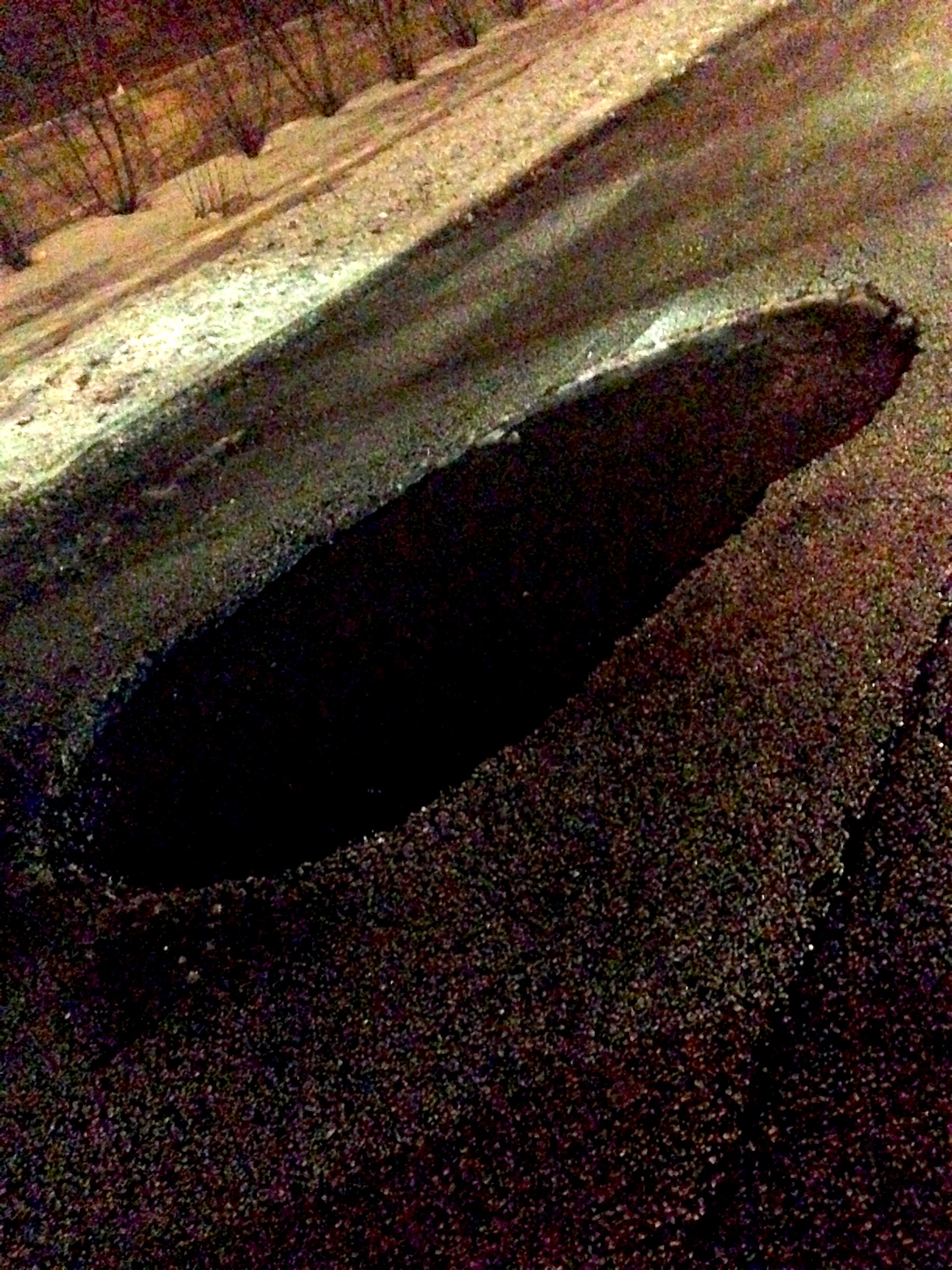
And there are valuable prescription drugs to put “air in your tires” on a daily basis. You can relate, right? Trying to ride 40 miles with low pressure in your tires is much harder than rolling along with 120 psi inside your skinnies.

So get out there and know you’re doing the right thing. We’ve just passed by the  Most Depressing Day of the Year on Monday, January 6. So you’ve made it this far. Let’s all fight the Blue Meanies together. And go out with a song, written and sung by George Harrison.

IT’S ALL TOO MUCH!

All You Need Is Love

All You Need Is Love. Remember that!

WeRunandRideLogo

Posted in Christopher Cudworth, Tarsnakes, We Run and Ride Every Day | Tagged , , , , , , , , , , , , , , , , , , , , , , , | Leave a comment