Everything that happens in cycling in 30 seconds

Posted in Uncategorized | 2 Comments

A few things off the top of my head about running, riding and swimming

By Christopher Cudworth

A bald head can be a benefit, you know.

A bald head can be a benefit, you know.

I knew at a relatively early age that I would someday be going bald. Family history assured me of that. 

Armed with that information, it is not nearly so traumatic to lose your hair. In fact you never really slow down to worry about it. Not if you have the least bit of a mature mind. 

My head is not perfect. But it’s passable. Some days I see guys with perfectly shaved heads that look so good I’m a little envious. It’s kind of like skull porn. You wish your head had that sheen, that shine, that macho gleam that says, “Look at me. My head rocks.” 

Benefits of baldness

Yet lacking that perfection, there are plenty of benefits to being bald beyond looking like a total mannikin man type. 

For one thing, you never have bad hair days. Take off your bike helmet and there’s no flying hair looks going on. There may be a few creases in your skin, or  red lines running the length of your head from front to back. Those generally fade in minutes. Bad hair, it sticks up and sticks around till you can get to the shower and fix things. 

Having no hair on the top of my head the last few decades has made me wonder if having all that hair when I was younger actually slowed me down a bit. My hair was so thick that even when it was down to my shoulders it did not want to be pulled into a ponytail or anything like that. But I had so much

The long locks of Sanya Richards-Ross trail behind her in the sprints.

The long locks of Sanya Richards-Ross trail behind her in the sprints.

at some points that I wonder if the drag while running was significant. As documented in this Slate.com article on Sanya Richards-Ross, apparently there is some degree of resistance

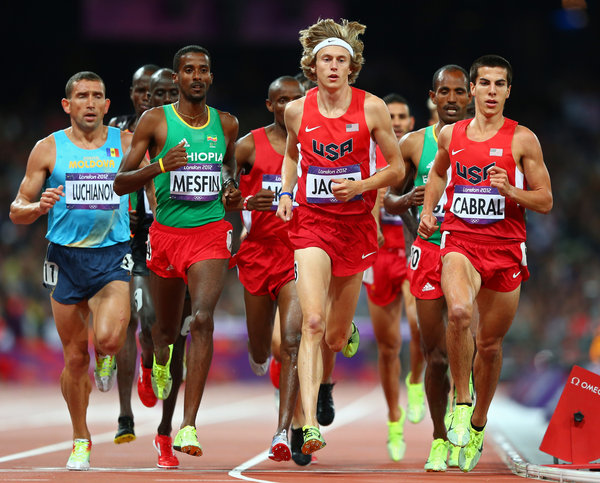
I see photos of that steeplechaser Evan

Jager with his floppy hair and recall what

American Steeplechaser Evan Jager sports long locks too.

American Steeplechaser Evan Jager sports long locks too.

it felt like to run with a head of hair flying back from my head. Not sure I miss that at all. 

A slick bean in the pool

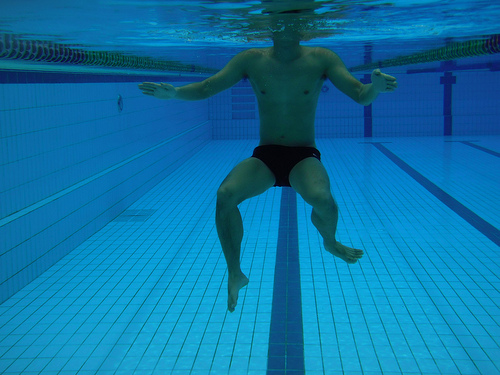
Certainly now that I’m learning to swim again, there are benefits to being bald, and beautiful. (I couldn’t resist.) No swim cap necessary. Drip dry skull. Goggles go on smooth and come off easy. 

Following workouts a bald head is low maintenance. With a full head of hair that used to freeze on the way from the gym to the college union after winter workouts, it was always a bit strange to reach back and feel like your hair was a creation on the order of Syndrome from The Incredibles movie. Frozen stiff. 

Sensory deprivations

There have been days when I wished the woman in my life could run her hands through my hair. That happened first when I was in 8th grade. The older sister of the girl I was liking at the time took a fascination with my hair and began running her fingers through it. I sat there aghast that her hot older sister was touching my hair. Would it make her jealous? Mad at me? 

In fact it was the opposite. Suddenly all the women sitting on the porch were focused on my hair. I had no freaking idea what to do but just sit there, flushed and a little afraidthat this group of cheerleaders was paying attention to me. Me, the skinny kid from up the hill. With hair. That someone liked. 

Women always seem to be playing with each other's hair.

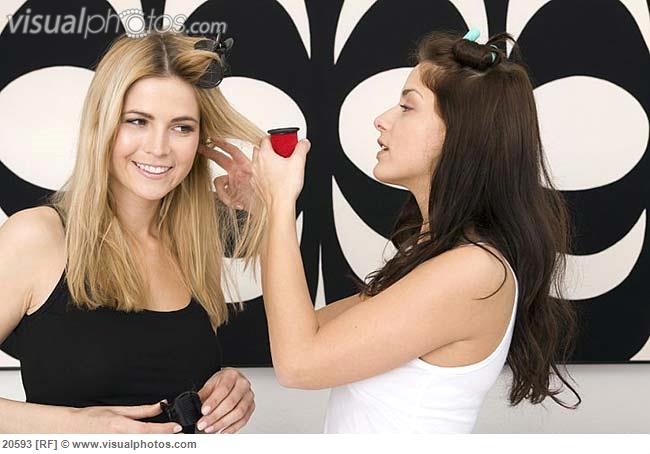
Women always seem to be playing with each other’s hair.

Of course guys at that age do not recognize how tactile women really are. Women tend to appreciate things like hair on its own merit. I see young women touching and playing with the hair of their friends  all the time. Makes sense. It is a wonderful sensation to have someone play with your hair. You could probably do an entire scientific study on the subject, but funding for that might be hard to get these days. The Tea Party in America thinks the deficit is hairy enough without investing in such findings. 

Big hairy deals

What an athlete! Miley Cyrus got out of her underwear so quick they should make it an Olympic sport.

What an athlete! Miley Cyrus got out of her underwear so quick they should make it an Olympic sport.

But what if we found out that stroking each other’s hair made us smarter as a nation. Hair stroking could result in a competitive advantage on the global scale, launching America back into thought leadership on all sorts of topics, such as why Bruce Jenner looks like he just saw a ghost and how Miley Cyrus got out of that underwear so quick in her video for Wrecking Ball. 

Jessica Alba sports some really nice hair. In some countries, that's enough to get you dragged off and beaten if you're a woman. If you're a man, however, hair is God's gift to manliness. Go figure.

Jessica Alba sports some really nice hair. In some countries, that’s enough to get you dragged off and beaten if you’re a woman. If you’re a man, however, hair is God’s gift to manliness. Go figure.

Oh, wait. We already lead the world in categories like that, which is why so many people love America.  We’re infinitely entertaining.

That is also why people with bombs and radically conservative worldviews want to blow us off the face of the map. In their eyes, we’re the hair on the globe that should be shaved off. In their eyes, it’s that simple. 

They did hurt us big time back on 9/11. Following the terrorist attacks America seized up like a spasmatic sphincter during a marathon on a hot day. We could barely hold our **** together. It has taken us a while to get back on track. 

Hairy Deficits

Did you know that the American deficit is shrinking? The bald truth is that despite claims by the rather boisterous cabal of fearmongers opposed to the current POTUS, the deficit has dropped from 10 percent of GDP in 2009 to about 4 percent of GDP in 2013.

Yet Obama-haters are still yelling the President as if is hair’s on fire for refusing to cooperate with them. The truth is he fixed the country, for the most part, during a time when everything was busted up from top to bottom. To put it in athletic parlance, in 2008 America was a bike with flat tires, a busted chain, no brakes and bar tape laced with glass. Yet Obama got that bike fixed by putting money into repairs and then demanding that people ride with more common sense than running intersections and waving at the poor people alongside the road. 

It hasn’t come easy

President Obama shows a little grey. Yet he keeps fit and that's what counts.

President Obama shows a little grey. Yet he keeps fit and that’s what counts.

Fighting political battles like that is enough to make you lose your hair, if you still have it, or go grey, as Obama is certainly doing. Let’s face it, Barack is at the age where hair goes grey whether you’re President or not. 

That’s the strange thing about all this hair stuff. I lost most of my hair before it got grey, and now that it’s grey I mow it all off every few weeks with a set of electronic clippers. I haven’t been to the local tonsorial parlor for a decade or more. That means I’ve saved about $2400 in haircuts over the last 10 years. 

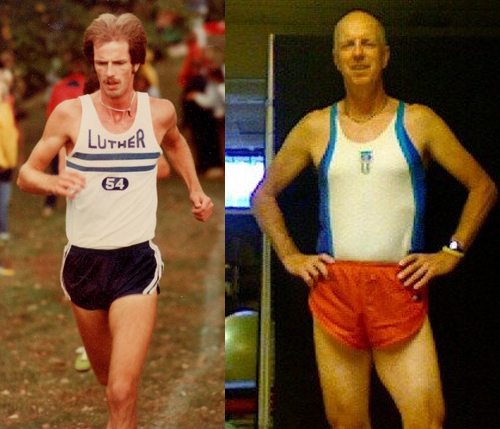
1979 and 2013. A lot less hair. But better for it?

1979 and 2013. A lot less hair. But better for it?

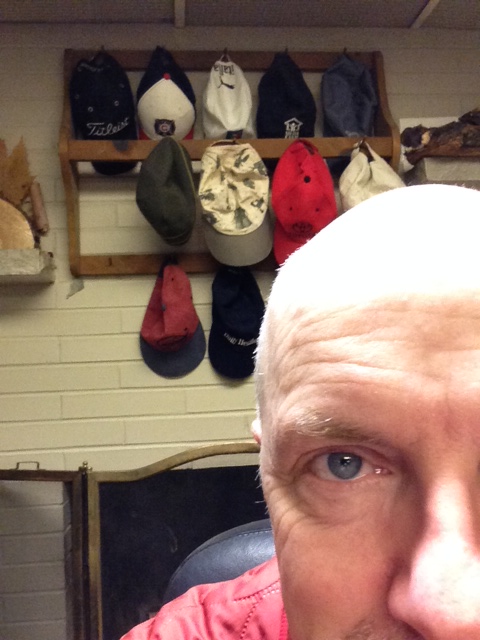
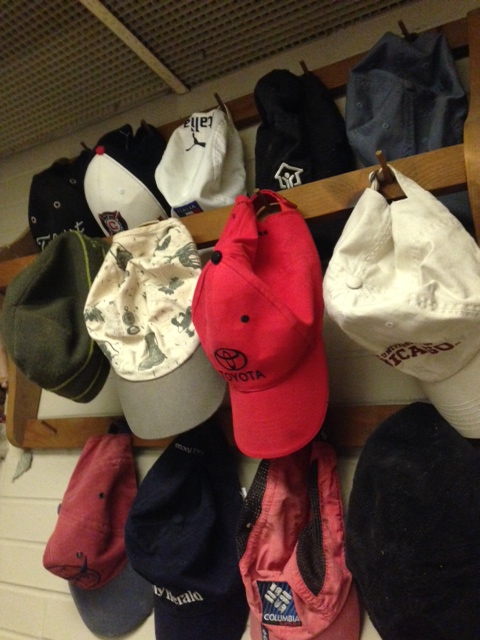
Sure I have to make sure my head stays covered on really cold days. It’s not really functional to wear one of those ear warmer things either when the top of your head is exposed. But I’ve made sure to make hat-wearing something of an art. There are dozens of hats flitting around my house. I have several inventive ways to hang them, turning the hats into decorative pieces over my downstairs fireplace, for example. It’s an art form that changes with activity and the season. 

Just a sampling of my hat collection.

Just a sampling of my hat collection.

In fact I think I’ll add my bike helmet to the rotating hat collection at some point. You’ve got to trust care of your head to hats and helmets when there’s not a layer of hair to protect your noggin.

Scrapes and bumps

And oh man, that can be bad. Even with a hat on it’s a bear to scrape your head on a house beam while cleaning out the attic, or to strike your scalp on the edge of a cabinet. The bleeding can be wicked. Sometimes you don’t realize it and people jump back in fear, proclaiming, “What did you do to your head?”

Gorbachev. That's how I look after an encounter with a garage door.

Gorbachev. That’s how I look after an encounter with a garage door.

I can’t blame them. The merest scuff of the scalp can produce major bleeding. Then the scar lasts a couple of weeks so that you look like Gorbachev. 

Brain wobble

I have not been so unfortunate as to crash my bike and hit my head so that it bleeds. In fact I hauled my bike to the ditch during bike wobble a couple of years back and likely saved my head from possible damage on the rough asphalt that caused the bike to vibrate from the ground up. Instead all I got was a busted collarbone, and that only required surgery. Lying on the ground that day I literally said a prayer of thanks to God that my head was okay. Brain injury is a difficult injury to overcome. A collarbone can heal, but it’s tougher to fix a brain that has been rattled. Just ask any NFL or NHL player. Our brains are not so tough as we think sometimes. 

Gratitude 

Before going grey and bald, this photo was taken by a good friend Karen Woodburn.

Before going grey and bald, this photo was taken by a good friend Karen Woodburn.

So that’s why I don’t argue for lack of hair. Set aside the jokes that my bare skull is the Solar Plate for a Sex Machine, or that a bald head is the sign of a mind so active it pushes the hair out of your head. All those things are true of course, but mostly I’m grateful to be who I am, bald head and all. 

I can run, and ride, and swim. That’s plenty to be grateful for. And there’s no hair on my head to come between my love for those things. Those of us with no hair go naked into the world, you might say. And we love it. 

WeRunandRideLogo


Posted in Christopher Cudworth, We Run and Ride Every Day | Tagged , , , , , , , , , , , , , , , , , , , , , , , , , , , | Leave a comment

It’s never too early or too late to start something new

By Christopher Cudworth

530There is much to love and hate about committees. They build consensus. But they take time. They bring new ideas to light. But they can bury initiative.

Still, as a necessary evil in this world, committees are the key to much that gets done, and at the highest level.

Which is why, when asked several years ago to serve on the large committee that would survey the community and recommend a plan for the new Batavia High School addition, it was a welcome opportunity to serve.

Foundations

The committee attracted more than 70 community members who broke into groups to discuss the needs of the high school, its curriculum and extra-curricular activities. The committee was led by an associate whose son I had coached in soccer. The task of leading a committee effort that large was daunting, but Eric Camplin was up to the task.

We met every week for several months. One could feel both the energy and tension in the process of deciding what to recommend. Slowly a vision emerged. There would be a new theater, because the Cafetorium left everything to be desired in terms of performances in music, theater and school functions.

Early MorningBig Picture

There would be new classrooms and a new floor plan. And there would be a field house with an indoor track, additional practice courts and room for a thousand other activities.

The field house was prized by many in the community as a link to success in athletes. So many sports require indoor practice facilities, from baseball to football, track and field and cheerleading.

All that construction would cost money and take a good solid year to complete. But the $75M referendum went through and the committee rejoiced that the Batavia Facilities Commission had done its work and come up with a plan that served as the foundation for the recommendation made by the school board for approval by the community.

Home alone

But here’s a funny little fact about the work of that committee. When the final meeting was done, the report had to be written by someone. No one really stepped forward, but I failed to step backward and suddenly, there I was with a pile of notes and a weekend to complete the report.

When I got home I said out loud, “This can’t be how this happens.”

But it was. And it was a pleasure to condense all those findings down into 10-page document. Writing can be as pleasurable as doing a puzzle, and that’s how it felt.

Tom and FredRevelations

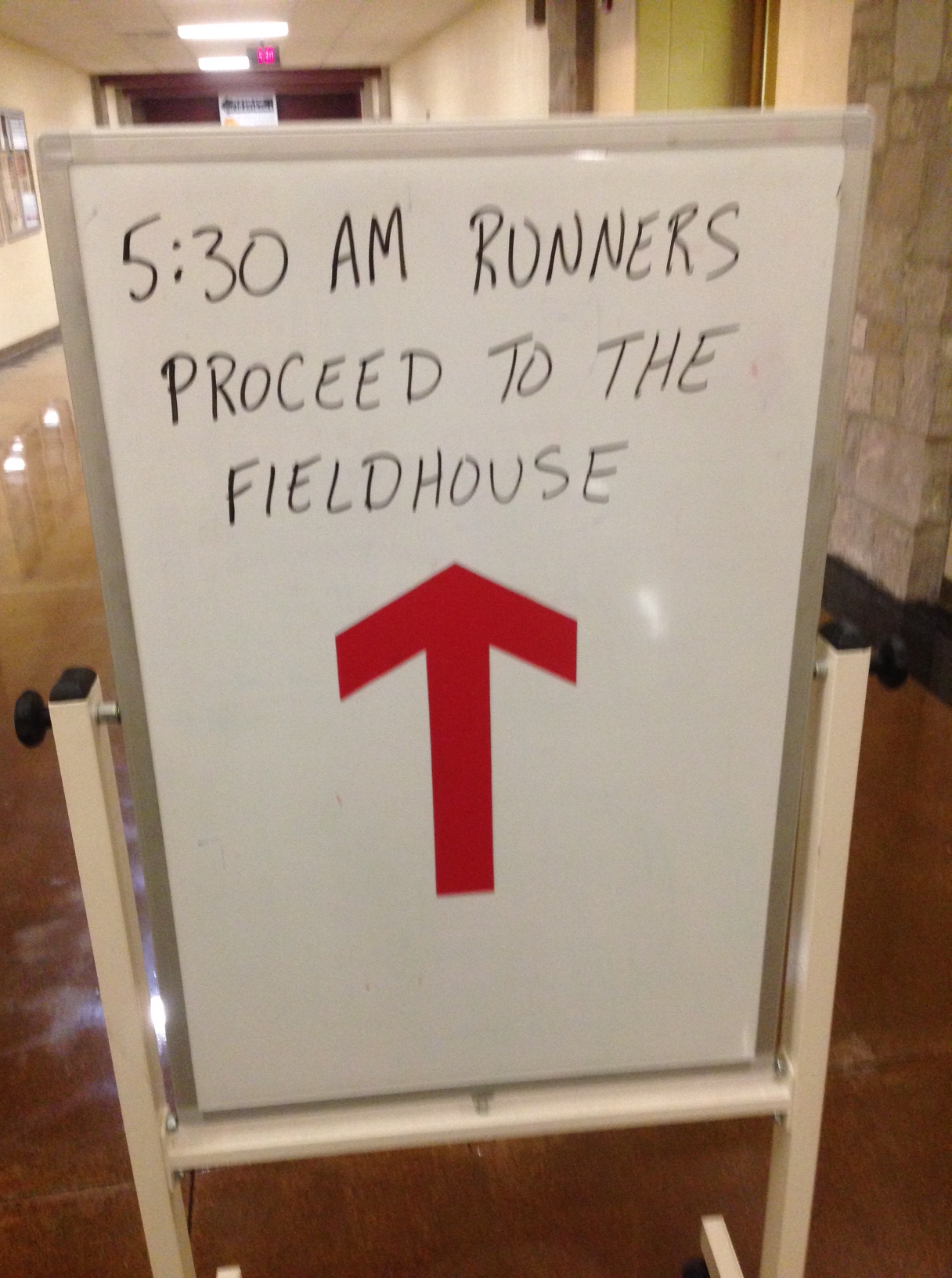
So you can imagine the pleasure it brought to rise at 5:15 this very morning and head over to that field house for the chance to use the indoor track. The behind-the-scenes work of chatting with my friend and head football and track coach Dennis Piron (his football team won the 2013 Illinois state championship) was done. So were the phone conversations and emails with Tom Spadafora, President of the Fox River Trail Runners, a highly successful running club that now directs major races in the area such as the Fox Valley Marathon and Half Marathon.

Those two guys know how to get things done, and my role in getting the early morning run program going was through.

Stepping up

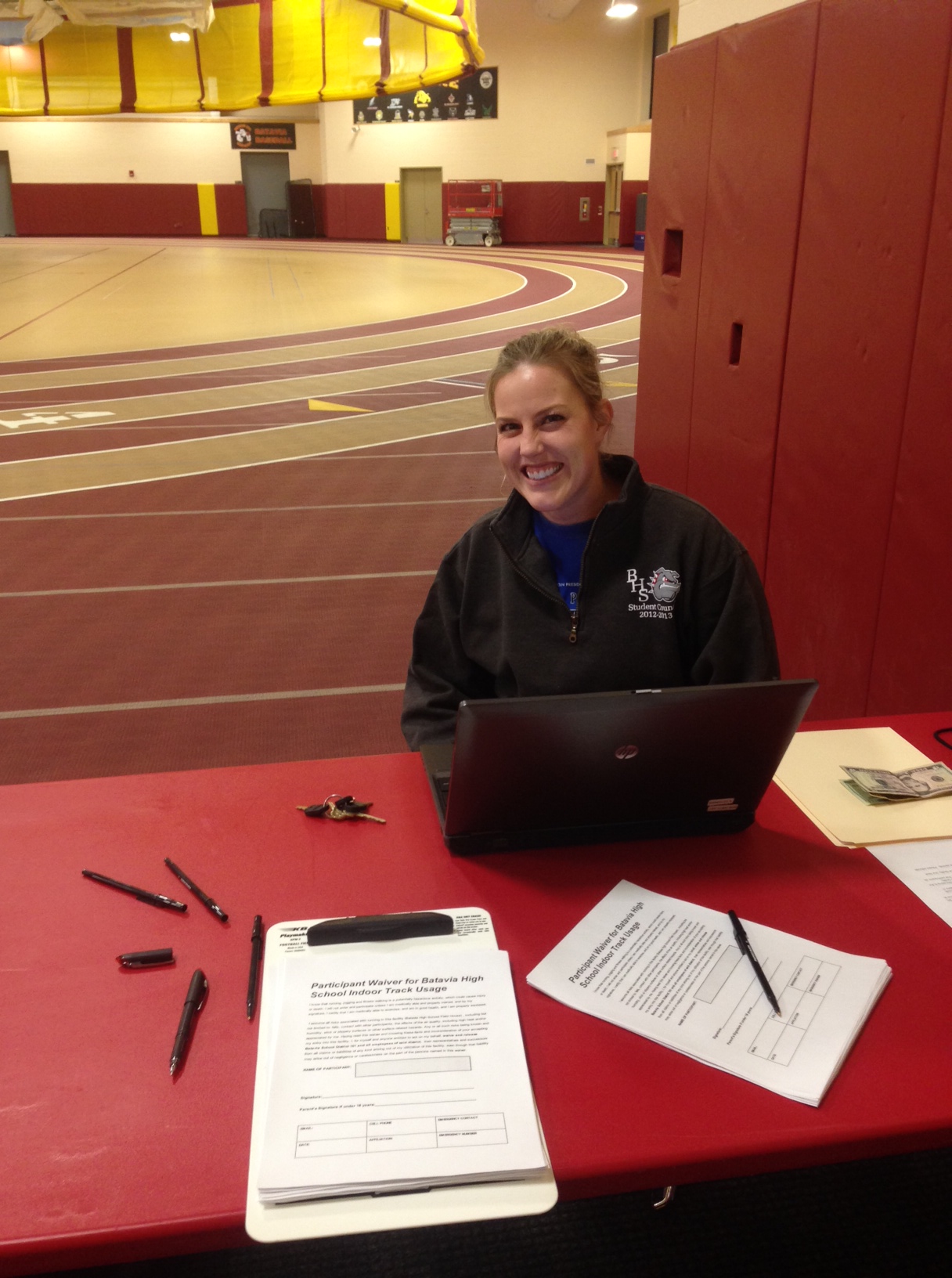
The school took over from there, and an instructor named Ms. Ryersky volunteered to check in the runners each morning for the next two months. Her smiling face looked too cheery and fresh for such an early hour, but she informed us, “I got up at 3:45 this morning. Because I’m a girl.”

“What do you mean?” someone asked.

Ryersky“I had to put my makeup on,” she cheerily responded. The mostly middle-aged guys standing around shook our heads. How easy our lives really are…

Getting into it

It felt weird and good to be out on that track. The surface is a highly grippy, textural sort of surface. The air was cool and the 200 meter track is a perfectly balanced mix of curve and straight.

First person on the track was a 3:07 marathoner named Marlena. Her efficient stride is a wonder to behold. Also her calves would be the envy of any woman–or man for that matter–on this earth.

The rest of us popped into the outside lanes to warm up and see what our bodies would give us at that hour.

I felt good. Really good in fact. Yet I decided not to worry about how far I was going. Just do 30:00 and see how the calves responded to indoor running.

WeRunandRideLogoNature called at 22:00 so I broke for the bathrooms. When I emerged the duo of Tom Spadafora and Fred Spizzoli were clipping along in some sort of interval training. So I jumped in.

Running tempo in the company of others is one of the great joys of training. We moved at a good clip, estimated at 7:00 per mile pace or so. It’s hard at first to tell pace when you’re on an indoor track, running in the outside lanes, and moving along in the company of others.

It didn’t matter. We were running faster together than we might on our own. The laps clipped by. So did the minutes. Obviously this was a mile interval, I realized. My body felt smooth, and I wondered how I’d feel once this winter weight was gone. Again. Somehow I need to break that cycle. Gaining 5-8 pounds every winter is not a good plan. Perhaps this morning running was the start of a better me in winter.

Open lanes

Getting up early can be a bear. But it's worth it when you get there.

Getting up early can be a bear. But it’s worth it when you get there.

The option to run on Tuesday and Thursday mornings is open to everyone who wants to join the fun. That’s as it should be, and a reflection of the original committee that brought about that wonderful facility.

But it still strikes me as funny that something so grand can come down to someone with a keyboard, a pile of notes and a weekend to pump out the facts.

Much of the world works the same way, however. Just ask anyone who runs, or rides, or swims. Sometimes you just put one foot in front of the other and see what happens. It’s never too early or late to start something new.

If you’re in the area, the field house opens at 5:30 a.m to 6:30 a.m. Park in the lot at the far west of the Main Street entrance. Costs are $15 for all sessions through the end of March. 

We'd like to profile you or your group.

We’d like to profile you or your group.

Want to be profiled in We Run and Ride? We’re starting a weekly feature and would love to hear your story whether you’re here in North America or around the world! Write cudworthfix@gmail.com if you would like to share your running, riding or swimming history with our readers. 

Posted in Christopher Cudworth, We Run and Ride Every Day | Tagged , , , , , , , , , , , | Leave a comment

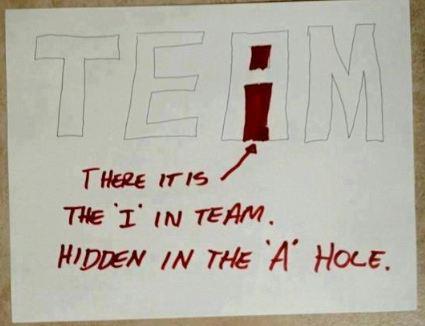
There is no team without an “i” in it

By Christopher Cudworth

16103_10151111924421371_475835148_n

The assumption that acknowledging individual or personal success will always ruin a team effort is wrong.

Three meets into the collegiate cross country season, two of our best runners were sidelined with injuries. One had a sore back that would never heal that year. Another had a black toenail that was so painful every stride was a limp. He was at risk for compensatory injuries yet the weeks of training at 80-90 miles were flying past and we could not afford to let up during a competitive series of meets leading up to conference, then regionals and nationals.

It was supposed to be our best season after four years of college track and cross country. Things weren’t going the way we planned. The group of 5 sub-15:00 high school three-milers that had entered freshman year together had not managed to fulfill their potential with a high placing at the national college meet.

Yet thanks to the leadership of a fellow senior who now ranked #1 in the country based on early season times, and my own improvement from 7th to 2nd man, we had a prayer of doing well. Added to the mix were two talented freshman that were playing important roles on the overall team.

In other words, every team depends on individuals to succeed. There is no excusing that fact or trying to run around it. Emphasizing the importance of the “I” in team does not make someone an asshole, a bad teammate or a poor employee.

Sure, if someone genuinely does not care about other people, they are not going to be pleasant to be around. But neither should you assume that everyone with individual aspirations and the drive to excel is going to make a bad team member.

In running the teamwork happens as much before and after a race as it does during the competition, when individual effort must stand forth or the team will not succeed.

In running the teamwork happens as much before and after a race as it does during the competition, when individual effort must stand forth or the team will not succeed.

During that college cross country season one of my teammates–the guy with the bad toe who had been our #1 runner the season before, came jogging up behind me between half-mile hill repeats and said, with an urgency in his voice: “You have got to be the man this week. You cannot afford to let down. You’re running great, but we need you to keep going.” 

I knew what he meant. The message was clear, but not what you might think. My teammate was not telling me to try to carry the whole team on my shoulders, or worry about anyone else. He wanted me to continue the pursuit of individual success because of the example it set for everyone else on the team. That did not make me an asshole. That made me a leader.

To his considerable credit, that teammate rose to the occasion in that week’s meet. We raced together in the last mile and passed a key opponent in the last 300 yards to claim the invitational victory by only a few points.

It was a lesson I’ve never forgotten. Being pushed to individual success and recognizing your responsibility for the “i” in team is something you should never forget. Managers or coaches who squelch recognition of individual success for fear that it will somehow demotivate other team members are doing the team no favors.

When competing in a team time trial in cycling, or even participating in a pace line during a weekend group ride, the team or group is ultimately dependent on the quality of individual efforts and the commitment to repeat them. If you ride along thinking the pace makes itself because you are part of a team, the group as a whole will fail. Individuals do count.

Team trophies always come from superior individual effort. There is always an "i" in team. Why pretend otherwise?

Team trophies always come from superior individual effort. There is always an “i” in team. Why pretend otherwise?

And people aren’t stupid. They know who is best at their sport or their job. They also like being recognized if they are the best at what they do. Forcing a team to operate as if it gains nothing from individual efforts is insane. If you want to see people turn into real assholes, watch what they do when you’ve squashed any hopes of individual success. That’s when the real backbiting begins.

No “i” in team? Get real. 

You can claim there is no “i” in team all you want. You can also venture the opinion that people who take the lead and speak to that fact are assholes. But there is never a moment when a great team does not depend on the success of the individuals within it.

People who accuse athletes and businesspeople of selfishness when it comes to individual success have no idea what real teamwork really means. Real teamwork comes from wanting to excel as much as the person next to you. For individuals to produce quality effort, thinking and performance requires not discouragement, but encouragement. Telling someone they’re an asshole for trying their best and challenging others to do so is not a form of encouragement.

Team totalitarians

Quite frequently the people who claim to motivate others by dunning them into a submissive team mentality are actually totalitarians. They may be lacking in personal security and their actual motivation may be fear, jealousy or simple incomprehension of the overall goals of excellence. People who are afraid of real leadership and who can’t keep up with their own obligations, or who are passive/aggressive control freaks afraid for their own position in life are generally the ones who typically call real leaders assholes.  You can look it up. 

Working together as one

Yes, working together in sports, business and society is important. And yes, in many circumstances we need to keep our egos in check in order to avoid threatening others or being too dominating in our meetings or workouts.

Those are simply qualities we need to develop as functioning members of culture and society. They do not define the entire notion of a team, and what it means to succeed.

Selfish and unselfish

Perhaps you have been called selfish when in fact your real motivations are completely focused the benefit of a group. Then you know how dangerous groupthink can be. It is always important for individuals to be able to discuss and demonstrate their individual motivations, particularly when they hold the potential to benefit the entire group.

Because at the same time, you’ll often hear it said that the success of so many organizations depends on a very few individuals, without whose work the entire enterprise would fail. Well guess what? Those people are the real “i” in team. They are the ones who step it up when the game or the race is on the line. You can count on them. Look to them. Trust them. Respect them as individuals because they understand the real role of the “i” in team. And that’s the get things done.

People who call those people assholes is wrong. AllWeRunandRideLogo wrong.

Posted in Christopher Cudworth, We Run and Ride Every Day | Tagged , , , , , , , , , , , , , , , , , , , | Leave a comment

What gets you up and training at 6:00 a.m. or earlier?

By Christopher Cudworth 

It's too easy to roll over in bed if you face a mess of gear organization when you get up early to run, ride or swim

It’s too easy to roll over in bed if you face a mess of gear organization when you get up early to run, ride or swim

I feel fortunate to have always been an early riser. Between my penchant for studying birds, which is best done in the early hours of day, and my love of running and riding, getting up before 6:00 a.m (Fitz and the Tantrums has a different problem) has never been a problem.

But I’ve met my match in terms of early rising. The woman I date gets up at 4:30 a few times each week to swim. She’s a good swimmer, so that helps. Learning to swim as I am currently doing does not provide so much incentive. Slowly I’m learning to love the pool as much as the bike and the road. It balances you. Strengthens your shoulders and back. Swimming is a good thing. The shock of potentially cold water in an early morning swim? Not so sweet.

Training partner Sue (right) always seems to have her gear organized. I'm working on it.

Training partner Sue (right) always seems to have her gear organized. I’m working on it.

I’m so impressed with how my gal friend does not let things like this seem to bother her. Come Saturday morning we meet up for runs and sure, the wind may be blowing cold like hell has frozen over and Satan’s got nothing else to do, yet we take off running in the early dawn and even find ways to laugh about how sucky the weather can be.

Prep

It helps that’s she’s organized. Getting out the door to run or ride early in the morning takes prep. Because if you don’t put your clothes out the night before, the possibility that you will not find a key gear component is very real. Precious minutes pass by. Then you are forced to compromise on the distance you planned to run in order to get showered and out the door to work on time.

Thankful for gear that is bright, and shows up even among the clutter. Ugh, the clutter!

Thankful for gear that is bright, and shows up even among the clutter. Ugh, the clutter!

The gear problem in the early morning is even worse with cycling. For one thing, half the clothing I wear is black or some combination of black and other colors. It  all mixes together in the drawer if you don’t sort it out ahead of time. Finding black arm warmers in the dark at dawn is ridiculous hard. To make matters worse, they cling to everything else in the drawer. Don’t go there. Find ways to organize your gear and be disciplined about it. It’s a constant struggle for me, but I’m making it work.

Organizational commitment

It truly is important to make organization your priority before climbing into bed. That means you need to have a firm training plan in mind before resting your brain with sleep.

If you do that motivation will be in place well before your smartphone makes that annoying noise, whatever it is you choose, at 5:45 a.m. when the light looks tired outside and you feel so tired inside.

So here’s the phrase you need to keep in mind: Training is hard. You don’t need to make it harder by putting off for tomorrow what you can do to prepare today. Organization commitment is the key to your success. 

That’s one of the tarsnakes of running, riding and swimming. We do these activities for fun, but in order to get better at them we need to be disciplined, organized and committed to the task.

When 6:00 a.m. comes around

Because when 6:00 comes around and you need to get out the door, your motivation will be affirmed when the clothes and gear seem to fly on your body  with little effort. Once you’re out the door and moving, you can adapt or adopt your training to what the day presents. Need an extra layer under the jacket? That’s something you should put out as well the night before, just in case.

There are always surprises, but checking the weather the night before you go to bed is so easy now. Smart apps can tell you everything right through your smartphone. No need to wait around for 10:23 for a weatherperson who spends more time on the snow in Cleveland than the conditions in your hometown.

You want to get out there and run. Or ride. Or head to the pool and swim.

So take the pressure off yourself at 6:00 a.m. Get organized and be a better athlete. It’s that simple.

WeRunandRideLogo

Posted in Christopher Cudworth, Tarsnakes, We Run and Ride Every Day | Tagged , , , , , , , , , , , , , , , , , | Leave a comment

A quick ride through the Art of the Bicycle exhibit at the Museum of Science and Industry

Contrasting the old and new came down to this comparison between a 2013 Cervelo and bikes from the 1800s

Contrasting the old and new came down to this comparison between a 2013 Cervelo and bikes from the 1800s

It didn’t take long to whip through the Art of the Bicycle exhibit now appearing at the Museum of Science and Industry, Chicago. The exhibit is not that large, which was rather a disappointment. On the other hand, the corridor dedicated to the Art of the Bicycle made it possible for me to see it all in 20 minute, including the 10 minutes I stayed past closing time to at least read a couple of the wheel-shaped signs describing the bikes on display.

I arrived at 3:45 in the afternoon after an exploratory visit with the Lutheran School of Theology in Chicago. The Hyde Park neighborhood is very familiar to me, as my son attended University of Chicago and works there now. It was a little like going back home, in other words, traipsing around the crowded campus at UC with its street parking and gentrified neighborhoods.

The gloss and design of bikes from the recent past is a pleasure to behold.

The gloss and design of bikes from the recent past is a pleasure to behold.

When the visit was over with LSTC, I headed over to MSI thinking the museum would not close until 5:00 p.m. Silly me.

MUSEUM HOURS 9-4:00 PM the sign said at the gate to the parking garage.

And let’s talk for a moment about parking at MSI. It costs $20 whether you stay 10 minutes or the whole, entire day.

Which came as a shock when leaving. Yet it felt like even more of a shock compared to the $18 you pay for entrance to the museum.

So let’s get this straight. Parking in the garage at MSI has MORE VALUE than anything you’re going to see inside? Let me tell you something folks. The signs are pretty in purple and orange. But they don’t really hold your attention other than helping you find your car.

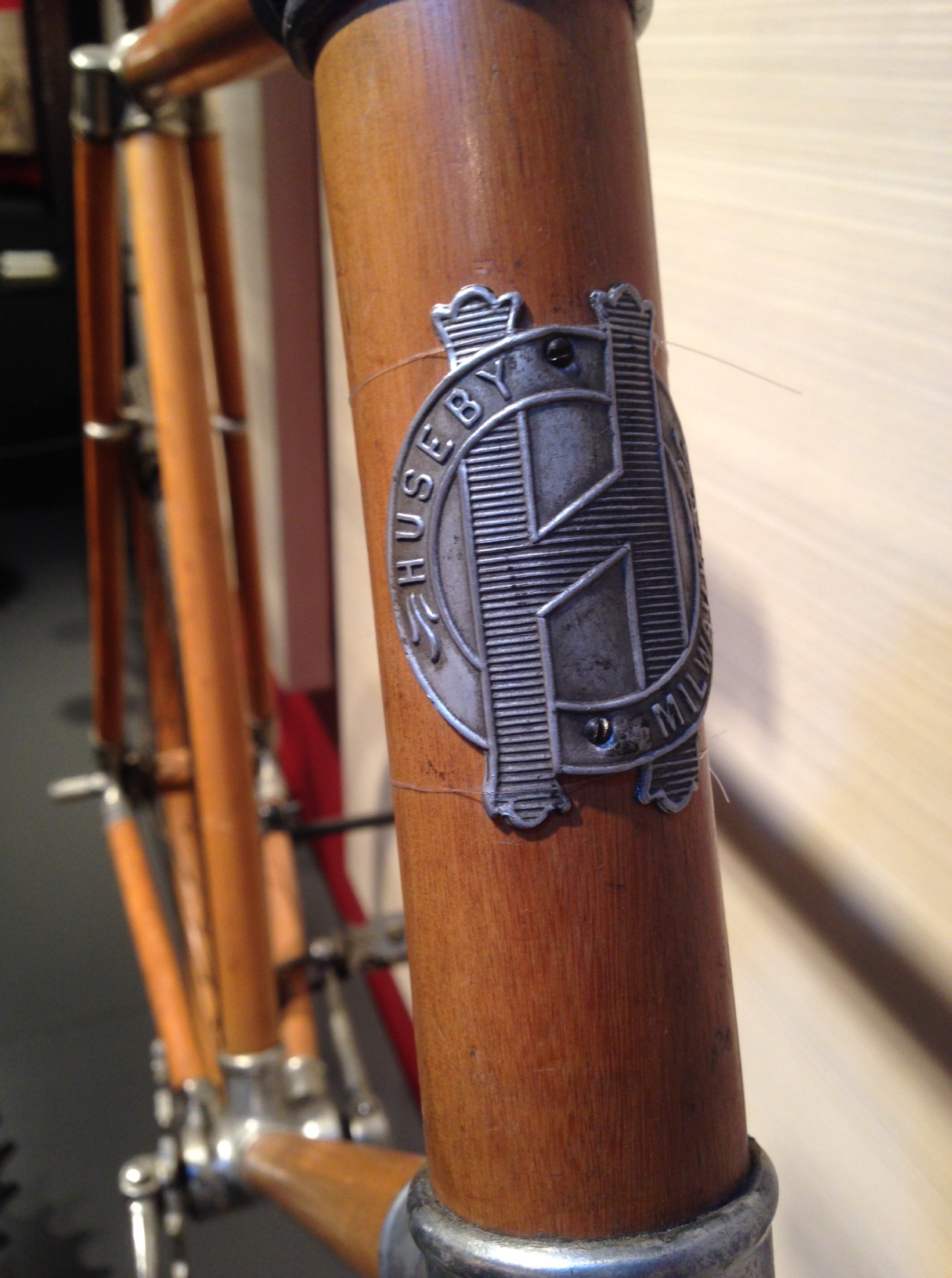
Nameplates of old have allure and collector's value.

Nameplates of old have allure and collector’s value.

That meant the takeaway from my visit to MSI was a bit of a downer. With only 10 minutes to officially tour the museum (who closes at 4:00? who, really?) and a stolen 10 minutes tacked on with no one chasing me out of there, I spent $38.00. Can you imagine taking a family of six to see the MSI? I think kid’s tickets were $15 or so. So That’s nearly $100 for a single day with parking. Then there’s lunch and any special exhibits you want to see.

For that kind of money I want to see every fucking bike in the universe. I want to see paintings of people on bikes, and giant photos of Tour de France riders humping up the Alpe du Huez.

Give me a recording of Queen’s “Bicycle Race” and throw in “Fat Bottomed Girls” just for the hell of it.

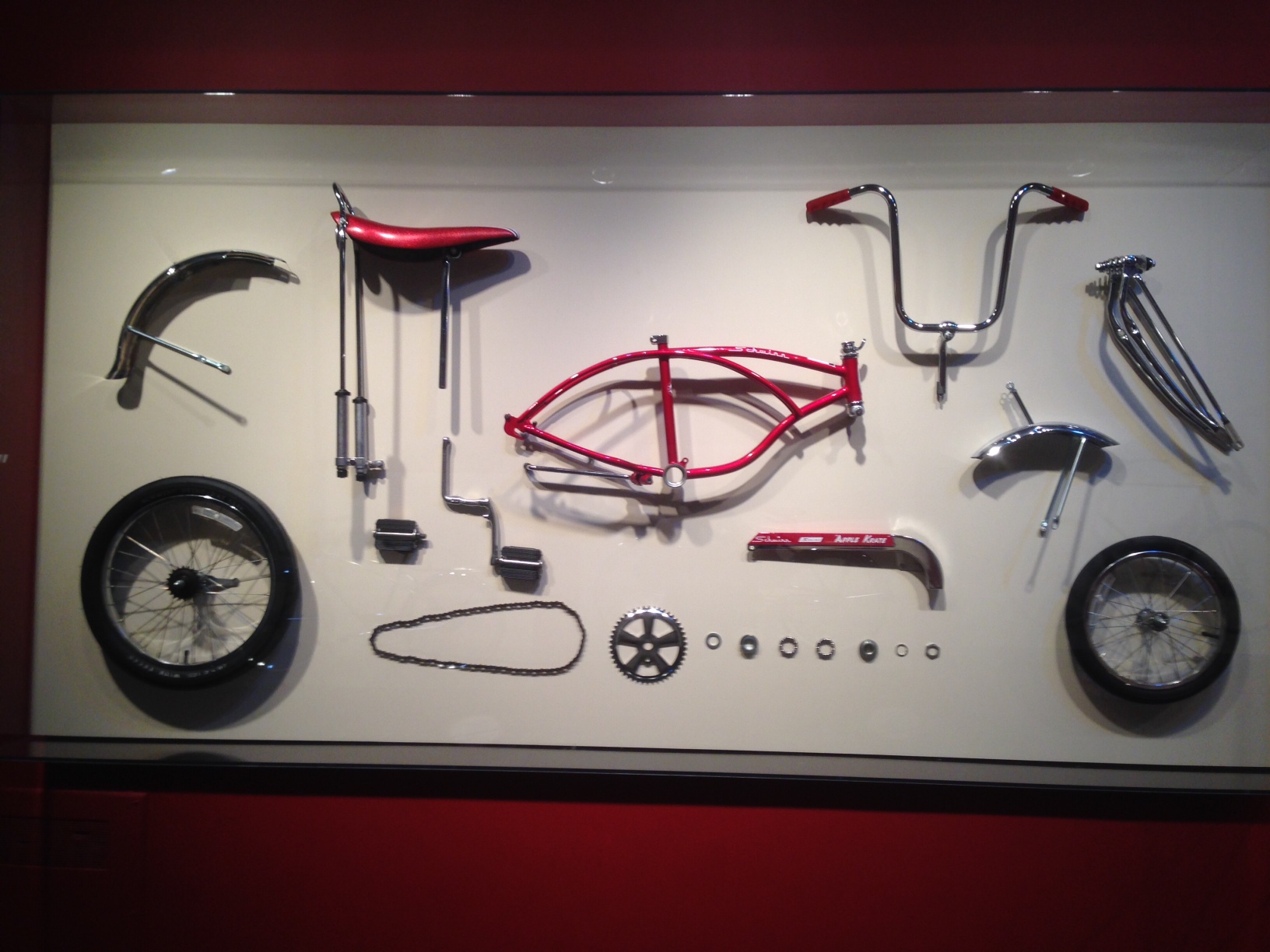
This display of a bike disassembled brings back nightmare days of the 1960s trying to put my bike back together with the mechanical ability of 2 on a scale of 10.

This display of a bike disassembled brings back nightmare days of the 1960s trying to put my bike back together with the mechanical ability of 2 on a scale of 10.

I know I’m getting carried away here with complaint about costs and scale of entertainment. I know that museums are struggling to make ends meet in the face of rising costs. It’s hard to find exhibits that bring fannies through the door. Then there’s the cost of marketing, promotions and public relations. A jaded media sometimes hardly pays attention, and the media market is so fragmented you hardly know how to reach your customers.

The Art of the Bicycle is elegantly posed and pretty. My eyes were opened to the strange forms of cycling that we’ve embraced since the 1800s. I would recommend a visit to the show if you have an interest in the structure, appearance and history of the bicycle. I love bikes.

Cyclists of a certain age may have flashbacks looking at the many bicycle seats on display. This old Schwinn seat saw plenty of ass time in its day.

Cyclists of a certain age may have flashbacks looking at the many bicycle seats on display. This old Schwinn seat saw plenty of ass time in its day.

I just wish there had been MORE for the MONEY and possibly MORE TIME to visit the exhibit and take it all in.

My fault on the time. I’ll take that hit. But if I could give any advice to the Museum of Science and Industry and all the other museums that will take this show inside their doors, it’s this. We cyclists have a saying about things that are difficult in life. “When you’re wrestling with a gorilla, you don’t quit when you get tired. You quit when the gorilla gets tired.”

Because while we know you museums out there are struggling to make ends meet, aren’t we all? The people coming through you doors have budgets just as tight as you. So don’t short shrift us on effort and value when it comes to exhibits like this. The idea was great. The execution is clean and interesting. But it’s kind of like you take us on the first two laps of a road race and pull out. Exhibitus Interruptus as it were.

It was pretty. But it was pretty light.

WeRunandRideLogo

Posted in Christopher Cudworth, Mechanical Genius, We Run and Ride Every Day | Tagged , , , , , , , , , , , , , , , , , | Leave a comment

Ah, honey honey

by Christopher Cudworth

A while back I wrote about sugar and how pervasive it is.

Honey Jar Big TimeYou can’t say the same thing about honey, because honey is largely a dietary choice, not an unavoidable consequence of eating the foods we buy at the supermarket. Many of these foods are literally stuffed with sugar. Of course the packaging doesn’t say things like, “STUFFED WITH SUGAR” because sugar is considered nothing of a negative. It makes us fat, lethargic and stupid in some cases.

But honey? It usually gets a mention as a positive. “CONTAINS REAL HONEY!” or “HONEY EAT THIS!” Oh wait, that’s what wives say to husbands about leftover meatloaf coated with ketchup that looks like dried blood on top. Then the wives go out with their girlfriends to share some Mommy Juice among friends.

Benefits of Honey to those who run, ride and swim

But we digress. We were talking about honey and its supposed benefits, Especially to Real Athletes like You and Me. We Run and We Ride, and we Swim sometimes too. So we’re always looking for ways to Eat Right, Gain More Energy and Build More Endurance.

bee-photoSo bees are our buddies. They buzz around all day with limitless energy, collecting nectar, and by accident–pollen from plants–and head back to the hive to make that magic stuff we like to call honey.

Some people like to claim that honey and bee pollen does all sorts of miraculous things for your body. But it’s not really bee pollen. It is actually flower pollen collected on the legs of bees as they go around collecting nectar. Then those little bee buggers add some spit to it and that makes it bee pollen. Bee nuggets. That’s more accurate. 

Beekeepers actually collect bee pollen by placing signs at the openings of bee colonies that say “PLEASE DEPOSIT POLLEN HERE.” Okay, that’s not true. I made that up. 

But this video shows how pollen traps actually work. Pretty ingenious. The bees seem to like going through those little holes. I think it gives them beegasms.

Even the cautiously medical folks at WebMD are forced to recognize the many claims about bee pollen, stating: “Bee pollen is also recommended by some herbalists to enhance athletic performance, reduce side effects of chemotherapy, and improve allergies and asthma.”

Good old WebMD. They lure you in with all those scary questions about what disease or condition you might have, then tell you as little as possible, except for the drugs ads that pay for the whole thing. And that’s our entire health care system in a nutshell. Or maybe it’s a beehive.

In any case, we’re still trying to figure out whether honey is any better for you than brown sugar or those oatmeal packets that look like Space Food from the 1960s.

Honey Fanatics and Egyptians

Honey Jar CloseYou need to visit the Honey Fanatic if you want to see what true honey devotees say about their favorite “natural” product. It all starts out like this: Honey is amazing and has remarkable powers. This golden liquid predates sugar by thousands of years.  Not only does it taste good, but honey also offers incredible antiseptic, antioxidant and cleansing properties. The medicinal properties of honey are expansive – it is effective for burns, soothing pain, for digestion, for wound care, and the list goes on and on.” 

Okay, half those claims are half true. From what I’ve read, honey does have some vitamins and some cleansing properties. It might in fact work very well in treating cycling road rash because honey possesses anti-bacterial qualities that make it ideal to treat open wounds. Even the Egyptians did this when they crashed off their Cervelos, or maybe it was their chariots. Same effect. Road rash hurts. It oozes. Needs a coating sometimes to help it scab over. Whereupon you pick at it and start all over again. That’s why those Egyptians make those funny arm movements in their hieroglyphics. Their fighting off the sting from road rash after falling off their chariots.

The bees know best

Here’s a description from WebMD on why and how honey gets its unique wound-treating properties.

“When bees collect nectar, they carry it back to the hive and regurgitate it into the cells of the honeycomb. Then, with they beat their wings and air dry the water content from the nectar. Enzymes in their saliva change the nectar’s sucrose into fructose and glucose, which then binds the remaining water, leaving a percentage between 17 or 18 percent. This process creates an inhospitable substrate where bacteria can’t survive. This mixture also is composed of hydrogen peroxide that’s made from the enzyme glucose oxidase. Hydrogen peroxide kills bacteria such as e.coli, the ulcer causing bacteria, heliobacter pylori and even staphyloccus. Not many antiseptics can make that same claim.”

Holy Pharoah’s Ghost! Who would have thought that bees knew how to kill bacteria?

Qualities unknown

Honey Jar CoseNot being a truly medical type, I tend to fall more into the category of someone who likes honey because it sweetens things up and tastes good.

The Honey Fanatic makes a nod to this too, stating:  “Honey is also delicious and comes in so many different aromas and flavors. It is prized for its culinary contribution, and it is also quite nutritious.”

Bee real

We all know people are always looking for a magic elixir to make them better athletes and replace sugar in their diets. But one beekeeper I met, who truly loved his product,  took a more realistic stance: “As far as I’m concerned, honey is really just a form of glorified sugar.”

Probably the truth is somewhere in between. But I’m a Sugar Freak and eat a lot of honey. On cereal. In tea. On toast. So if you’re going to tell me it does me good, I’m all ears. To be sure, I do not have allergies, and have decent endurance, and honey might be partly responsible. That would bee good.

Quantities unimagined

Recently my daughter received a huge jar or raw honey from her boyfriend’s family. “A jar like that lasts us a year,” they told her.

She laughed, because having a Sweet Tooth like me, she goes through honey too. “This will last us half a year at most,” she chuckled. “Seriously, we eat it on everything.”

Honey Jar FarThey gasped, but the next day her boyfriend was over and my daughter spread honey over some peanut butter on an English Muffin. “What are you doing?” he asked. “Honey over peanut butter?”

“It tastes great!” she told him.

Documentaries

Of course all that honey talk got her thinking, about bees, and she watched documentaries until 4:00 in the morning about how bees are struggling to survive in the face of seemingly unseen pesticide poisoning. Colony Collapse Disorder is devastating commercial bee pollinators worldwide. No one wants to take the blame, especially companies like Monsanto that seem to want to control everything in nature and then take the blame for nothing. They always say things like “the science isn’t proven” when bees dies off or Monarch butterflies literally disappear from their normal lifecyles.  But Monsanto marches on with its supposedly beneficial sciences without looking at the wake it leaves in our natural history. The company is natural like a tornado is natural. It wipes things out and leaves a wide swath.

Bittersweet 

That’s why honey in some ways tastes bittersweet to me these days. If bees are wiped out as a result of rampant pesticide use around the globe, who will pollinate our crops and plants? In China they actually had to hire (or require) human beings to hand-pollinate some valuable flowering trees. Is that where we’re headed? Are we human beings the worker bees when no bees are left to perform on natural terms? Our survival may some day depend on it. Then we’d have very little time to run and ride. We’d be out with tiny spoons pollinated April trees in April rather than running that half marathon or marathon we dreamed of going. Honey teaches us that perhaps we take too many things for granted.

Savory treats

WeRunandRideLogoSometimes motivation for change and preservation comes from the pleasures we seek. There’s a moral to the story of how honey is made, how we eat it, and what it potentially does for our bodies, naturally.

Which means, if you’re really smart you’ll go make a peanut butter and honey sandwich on whole wheat bread. Then let it sit a while. Something in the chemistry of the peanut butter and the honey makes it crystallize in the bread. Then you get little sugary crunches in your bread. It’s like crack cocaine.

It all comes down to this. There’s nothing like a little honey to make life sweeter. Honey makes a prominent appearance 2:42 into this video from 9 1/2 weeks starring Kim Basinger and Mickey Rourke. From the looks of things nowadays, Mickey should have eaten some of that honey for health reasons rather than squirting it all over naughty little Kim.

There’s a moral there. There really is.

Posted in Christopher Cudworth, We Run and Ride Every Day | Tagged , , , , , , , , , , , , , | Leave a comment

Running through the benefits of a “gap year”

I was 22 years old when the President of my employer at the time walked into my office and said, “We’re moving all our marketing functions from Chicago to Philadelphia. We’ll pay for your move and give you a raise.” It was a directive, not a choice.

So I moved to Philly. But six months into the new arrangement the marketing department was floundering. On the way into work one day the lead salesperson turned to me and said, “What are you guys doing? The sales team doesn’t have anything we need to make things happen.” The Vice President of Marketing was not focused on the right things.

The entire marketing department was let go. The President of the Philly office handed over a severance check and shook my hand. “Thanks for moving out here,” he told me. “Sorry things didn’t work out.”

Wandering off

The lonely stretches of beach on Assateague Island were a perfect start to a "gap year"

The lonely stretches of beach on Assateague Island were a perfect start to a “gap year”

It was almost May and since I couldn’t pull up stakes that very minute I decided to take a little trip down the East Coast to Assateague Island to hang out by the sea and think.

I met some girls and went skinny-dipping in the cold surf. But the abiding feeling was one of disappointment and disillusionment. What had I done wrong? I’d followed orders and moved all the way out there, and then what? The future was blank.

The “Gap Year”

So I decided to take some time, consider my future, and take what these days is called a “gap year.” Many college students choose to take a year between their senior year in high school and their freshman year in college to go abroad or dive into some project that enhances their worldview and try to get their shit together between academic ventures.

The year as an admissions counselor was a blur of driving long miles

The year as an admissions counselor was a blur of driving long miles

My own college career had been a headlong trip of 4 straight academic years and 12 competitive seasons of cross country, indoor track and outdoor track.

Then I went straight to work as a college admissions counselor. The job required 1500 miles a week of driving across the state of Illinois and inner city Chicago.

On top of all that I’d ended a two-year relationship with a college girlfriend when I took the job with the investment firm in another state. Things had happened fast, in other words, and my young mind was struggling to grasp what it all meant.

Literary journeys

I was trying to figure out the world on a lot of fronts. In the early stages of working for the investment firm I commuted into Chicago on the Metra rail system. That gave me an hour each day to read and write. I plowed through Kerouac’s On the Road, immersed myself in the raw worlds of John Irving’s Hotel New Hampshire and The World According to Garp. Then came inevitable encounter with The Fountainhead by Ayn Rand. The storyline was compelling, focused on an uncompromising architect who refuses to give up his principles and learns that the world is unforgiving in return.

The Teachings of Don Juan explored the metaphysical idea that we create our own limits

The Teachings of Don Juan explored the metaphysical idea that we create our own limits

Then came a series of strange wild books by Carlos Castenada, The Teachings of Don Juan, and so on. Those books focused on the magical yet difficult relationship between a sorcerer philosopher and his naïve protégé. Castenada’s quotes resonated with my young mind: “We either make ourselves miserable, or we make ourselves strong. The amount of work is the same.”

Winging it

The practical thing to do when I moved back from Philadelphia would have been to find a job and start working again full time. But the warm Chicago summer made me so happy to be alive that I kept doing freelance work while writing and doing design. I did not make much money but the severance from the investment firm kept me going that year.

And I started training like a madman. My “gap year” transformed into an effort to become the absolute best runner I could be. The way I figured it, this was my one chance in life to do my best. The right age. The right circumstance.

Foundations and inspirations

I’d already planted some of the seeds of transformation back in Philly by training and competing with a club called Runner’s Edge. We ran easy 20-milers on weekends, no faster than 7:30 to 8:00 a mile. That pace was much slower than the 6:00 per mile distance runs we’d do back at Luther College, and it worked wonders. The solid base training paid dividends. I’d broken 32:00 for 10K the first time and we did our speedwork on the track at Villanova where world class runners like Sydnee Maree and Don Paige could be found preparing for national and world competitions. So I was inspired. Running was exploding as a sport, and the marathon world came alive with the likes of Alberto Salazar and others. So role models were plentiful. The 1984 Olympics were coming up in Los Angeles. And I kept on running.

Filling the gaps

Taking the starting line with the mind to win is the ultimate test of an individual's resolve

Taking the starting line with the mind to win is the ultimate test of an individual’s resolve

Of course the process of self-exploration is always a combination of self-worth and unfulfilled dreams. But the idea of a gap year was in my veins now, and the results spurred on the effort.

In September that year I raced and won an event called Run For The Money  that led to an offer of sponsorship by a running shoe store. From then on all my shoes and entry fees were free or very inexpensive. I felt like a pro runner at least.

I turned around and won the Oak Park Frank Lloyd Wright 10K, beating 2000 runners with a time of 32:00. It was a transcendent feeling, leading from the mile point on a 55-degree October morning with no wind. The stage was set for the new year.

Making it work

That winter I worked at the running store some to pay some bills as the severance money was just about gone. It had fueled some wild nights in the city chasing girls and allowed me to spend long days writing, painting and swimming in Lake Michigan. In other words, it gave me a chance to be young and free. Like a gap year should.

And I wrote. I purchased a jury-rigged IBM Selectric on which I typed and sold stories to some newspapers as well as a new running magazine based in Chicago. I learned that my endurance at the typewriter was equal to my capacity for training on the roads and track. Those are the kinds of things you want to learn in a gap year as well. Since then I’ve published more than 4000 paid and promotional stories in publications and online media.

Getting Real Results From the Gap Year

That next summer and fall I raced 24 times with the Running Unlimited team and won 12 of those races. The times I ran back then would still win 95% of the Chicago 5K and 10K races held today according to results published in Competitor Magazine. My memories of the gap year are thus not distortions of fact or warped by wishful thinking.  The times I ran that year are absolute: 14:45 5K. 31:10 10K. 24:49 5M. 19:49 4M. 1:10:12 Half marathon and 1:25:25 25K.

The only missing component was the marathon, and that was because I thought the event irrelevant to my goals at the time. I attempted a competitive marathon the following year and ran 15 miles in 1:25 in the Twin-Cities Marathon before pulling out with hypothermia because the temps were in the low 30s and never warmed up. The winds off the lake were cold and I wore only a tee shirt and singlet.  At 6’1” and 140 lbs, my skinny body did not stand a chance in such cold, but it was fun running almost 2/3 of the race in the company of Olympian Don Kardong, who was pacing a crew of 15 runners to 5:30 per mile and a 2:24 marathon.

Marathoning and more

As for marathon experience, I did run 3:00 hours for 26 miles during several training sessions. So I’ve never felt cheated or absent of knowledge about what it’s like to run that far, or that fast. My teammates from the running shop racing team all ran between 2:19 and 2:30 for 26.2. I can only console myself with the idea that I might have eventually run somewhere in that range.

My “gap year” ended with a marriage proposal and the call to competitive running felt complete. I was only 27 when I officially retired as a competitive runner. For the next decade I’d do 2-3 races a year, racing times in the 33:00 range for 10K, and was happy with that. Essentially I’d “closed the gap” on that period of life.

Takeaways

It’s funny what we can learn from a “gap year.” It’s not always what we expect, or even hoped for, at times. Yet if someone asks me if there’s value in a gap year or a sabbatical or any other break from a life track that simply rolls along, I say “Oh, yeah,” because there’s nothing like having the chance to get to know yourself a little better. It’s the best investment on earth.

WeRunandRideLogo

Posted in Christopher Cudworth, We Run and Ride Every Day | Tagged , , , , , , , , , , , , , , , , , | Leave a comment

Saying goodbye to the world’s heaviest bike

By Christopher Cudworth

What may be the world's heaviest bike, donated to Goodwill. Good riddance.

What may be the world’s heaviest bike, donated to Goodwill. Good riddance.

I own too many bikes. In fact I own too many everything.

Which is why the Eddie Bauer bike had to go.

The bike has a funny history. We bought it for my daughter, who never really rode the thing. Then she dutifully took it with her to Augustana College but the hills are so steep no one really rides their bike around campus. So it sat there for two years.

Then when she moved home she left it behind in the dorm. Forgot it was even there. So we called and rescued it with the help of the dorm manager, who using two cranes and a skid steer, moved it into a storage cabinet for safekeeping until we could come pick it up.

Then we moved the bike over to a house where my daughter was going to live the next term. The heavy bike also sat there largely unused.

Field test

Finally she brought it home when she finished college. Last summer she tried my late wife’s Trek Navigator, which weighs 1/3 what the Eddie Bauer weighs, and she liked that. So the EB is no longer useful in our household. It never really was.

I do not blame my daughter for not riding the Eddie Bauer bike. It is quite possibly the heaviest bike ever manufactured for its size. My humble estimate is that it weighed 35-40 lbs. The frame appeared to be made of solid metal. It was blue, shiny and. Heavy.

A solid chunk of blue metal.

A solid chunk of blue metal.

Of course it rolled like a dream downhill. But try riding a solid chunk of metal back uphill and things get real, real fast.

Indestructible

It might make a perfect commuter bike for someone, however. No one could saw that frame from a Stop sign, not without an industrial grade saw and an extension cord an inch thick to feed the power it would take to steal that bike.

And if a bus ever hit you while riding the Eddie Bauer, the bus would likely lose.

Experiments 

I conducted several odd experiments with the Eddie Bauer bike before letting it go.

First I strapped it to the railroad tracks and wouldn’t you know it, even a freight train could not flatten the Eddie Bauer bike. Instead it derailed, exploded and killed 50 people after pushing the bike 438 miles into the hills of West Virginia. But wouldn’t you know it, the authorities brought it back to my house and told me, “Keep this thing away from public places, would you please?”

Next I took the Eddie Bauer bike over to Fermi Lab and clandestinely set it in the path of the Collider beam, but even the power of Quarks and particle physics could not penetrate its steely frame.

Is that the Eddie Bauer bike peeking over the rubble in the background? Yes, over there.

Is that the Eddie Bauer bike peeking over the rubble in the background? Yes, over there.

Finally I took it to the site where Miley Cyrus was filming the video for Wrecking Ball.

Which has gotten more than 508M views thanks to the presence of the Eddie Bauer bike in the background. I’m pretty sure that’s why so many people watched it. To see my amazing bike.

Well, during filming Miley took a sledge hammer to the Eddie Bauer bike frame and it would not budge or even fall apart. That made her even hornier, to the point where she actually shed all over her clothes and rode (yes you heard that right) a giant ball on a chain trying to work off her frustrations. I guess Eddie Bauer really turns her on.

Goodwill 

Having passed the test of a somewhat sturdy implement, I decided to donate the Eddie Bauer bike to Goodwill, where people go to find such objects, and pay only $6.99 on average for the luxury of putting someone’s second-hand tools to good use.

God Bless the Eddie Bauer. I hope it serves someone well. But watch out for the seat if you buy it from the Batavia, IL. Goodwill store because Miley Cyrus twerked on it. She’s a good little mechanic, it seems.

WeRunandRideLogo

Posted in Christopher Cudworth, Mechanical Genius, We Run and Ride Every Day | Tagged , , , , , , , , | Leave a comment

An Illustrated Guide to What Strava Doesn’t Show When You Run and Ride

By Christopher Cudworth

So you tuck your smartphone in your running jacket, pop it into a sleeve holder or mount it to the handlebars of your bike and off you go. With Strava turned on, you’ll know everything you need to know about your effort. How long you ran or ride. How many hills you climbed and total elevation. Average pace per mile and if you purchase the deluxe version Strava can probably measure your sperm or egg count and measure the brain waves in your head to let you know if you’ll someday fall victim to Alzheimer’s.

Yes, Strava and other measurement softwares are amazing. But they can’t tell you everything. And the things they leave out are sometimes the most important information about your run or ride.
SnowFor example, Strava does not measure snowfall. And if you live anywhere north of St. Louis, this year, you’ve been knee deep in snow at times. Which really slows you down. But Strava doesn’t care. You get home and check your pace per mile. With ice clinging to your eyelashes you stare through the haze and see your pace per mile and go, “What? 10:35? I was running at least 9:30s.”

And you might have been. Yet the snow slowed you down. But Strava doesn’t care.

Or puddles. Who likes to run through those in the late winter or early spring? Talk about a cold shower on a hot pace. You either have to run through them Puddlesor around them. Either way they’re going to cost you time in terms of pace per mile. I once ran in a rainstorm so intense the drops were big as golf balls. I’m serious. A hurricane blew up to Illinois from the Gulf Coast and the rain hit and kept on hitting. I gave up trying to run around puddles and just tromped through the ankle deep runoff. That’s called taking your liquid lumps. But does Strava give you credit for winning the war agains water resistance? Not on your life.

When puddles turn to ice, as they often do in late winter or early spring, the skating can be interesting for those who go out running and don’t anticipate the slick conditions. You skid and slide with Icethat crazy feeling between your ears that says “I’m going down!” so you flail your arms and skip your feet like a cartoon character and somehow you stay upright. When you get home, Strava ignores all the theatrics. It blandly notes that you missed your PR on that final segment by 1:30. F You, Strava. You have no idea what it was like out there.

Then there’s dressing for the weather. When the temperatures go below zero you know it’s not safe to go out the door without proper layering to protect your skin from frostbite and your vitals organs from turning solid from the cold. So you dress as thick as the Inuit on the Bering Ice Shelf and head out the door Overdressedfor a run. Along the way you notice that you’re not going that fast. In fact you think you just saw an old lady pushing a shopping cart pass you by when you cut through the grocery store parking lot. Strava gives the lady with the cart credit for beating you on that segment.

Or perhaps you’re more of the cycling type and you use Strava to measure your rides every time you go out the door. It’s nice to have empiric feedback, is it not?

Well, Strava can be a nice feedback mechanism if your road and weather conditions are calm and stable. But try riding on a country road with lots of Tarsnakestarsnakes on a hot summer day. If you crank your pace up into the low 20s you are taking your life into your hands. Tarsnakes grow thick and deep when the weather gets stifling. Put your skinny tire into that murky, twisting slot and you’ll be scrambling to keep it at 90 degrees, and that means vertical, not the temperature.

We know you do it. Go out and ride competitive Strava segments when you know the wind will be at your back. You little cheater. Putz along for 30 miles into the wind. Save your energy until you arrive at the segment starting point and then you hit the proverbial gas with the wind at your back. Because guess Tailwindswhat? Strava don’t know crap about the wind. So the segment in which you normally struggle to ride 22 mph turns out to be an easy-breezey 26.6 mph with the wind at your back. You smugly climb the rankings and whisper a quiet “F-U” to the riders who earned their ranking the hard way. Tough luck, dudes and dudettes. You’re Number 14 now and there’s nothing you can do about it.

Of course 99.9% of the time the wind is not at your back. It is blowing straight into your face, or else it is whipping with such a wicked crosswind that you spit and the spittle lands in the next county. But you tarry along pedaling with Headwindsmad fervor trying to keep your workout in line with your stated objectives. But you get home and the average pace per mile reads 14.6. Now that’s just not fair. Last week you rode the same route and averaged 18.4 mph? How can that be. Strava don’t care. Strava don’t care one bit.   In fact you think you just heard a little Strava voice cynically squeaking from you phone, “Nice try wimp. Better luck next time.”

It’s a rather pathetic game we play, is it not. Trying to beat a software at its own game, which is telling you that you suck? Last summer you rode to that Wet Hillssteep hill in the forest preserve where everyone does repeats. You’re psyched and in shape but when you get there, it’s obvious the previous nights rain has not evaporated from the north side of the hill. When you hit the bottom and try to stand up in the pedals, your back tire spins like a prize wheel at the school carnival. Strava? It gives you no record for the extra revolutions your tires make on every loop.

But there is one way to beat Strava with a stick. I’ve seen it in action. Granted, it was obviously an accident that one rider kept his Strava on while driving home from his ride. But the fact that he clocked 57 mph on a Segment where the top riders did 31.1 mph for 5 miles is pretty Riding in carsobvious that he was enjoying the advantaged of motorized assistance. Even Fabian Cancellara can’t claim to go that fast that long even though some video dude accused him of riding a bike with a motor in it.

The one really great thing about Strava is that it measures your ride and gives you a little map of your route. It’s so fun to look at that map and recall where you’ve ridden or run. But when you get lost, as riders and runners do now and then, you’ve also Mostly Lostgot a record of your stupidity to deal with. Yes, your smartphone has a GPS app in it, and you should never get lost. But honestly who needs those when your sense of direction is so superior to technology. That’s when you’re rides end up looking like a puzzle on Strava. Pretty funny too.

It would be pretty fun to simply ride up one side of a mountain and down the other, and see the elevation map that Strava produces from your effort. If you could find the ride set of hills, you could actually draw yourself a big set of boobs, which might be joyous for guys if they prize that One Big Hilltype of build, or women if they’re thinking of getting implants. Strava boobs are much, much cheaper. And they don’t bounce, slow you down or cause men to ignore your pretty eyes, nice smile and smart quips.

Which brings us to the fact that it can be pretty nice to leave the Strava at home sometimes. Just run and ride naked, without all that worry about how fast you’re going, or why. Lose the Strava. Leave the smartphone back home. In fact leave your clothes by the side of the trail and head out into the prairie with a willing companion and see what feedback you get from nature. You might be Being Nakedpleasantly surprised how good it feels to be free of all that technological stress, segments and all that crap. Let the air blow between your cheeks and try to keep your tender parts from chapping or slapping too much.

And when you get home and someone asks, how far did you run or ride today? Just smile and say, “I don’t know. But it sure felt good.”

Posted in Christopher Cudworth, Tarsnakes, We Run and Ride Every Day | Leave a comment