Should you be afraid of tarsnakes? Oh, yes. And here’s why…

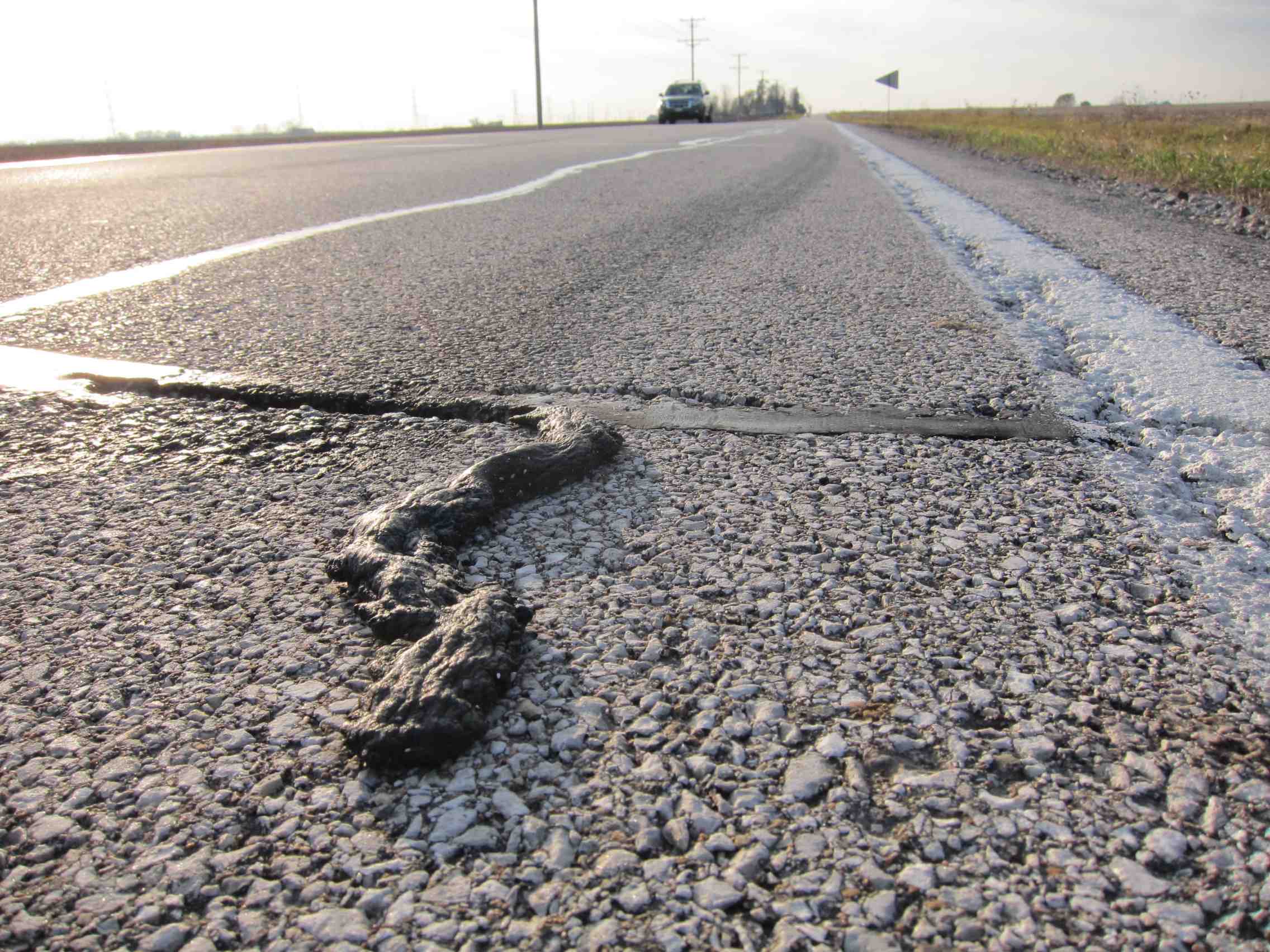
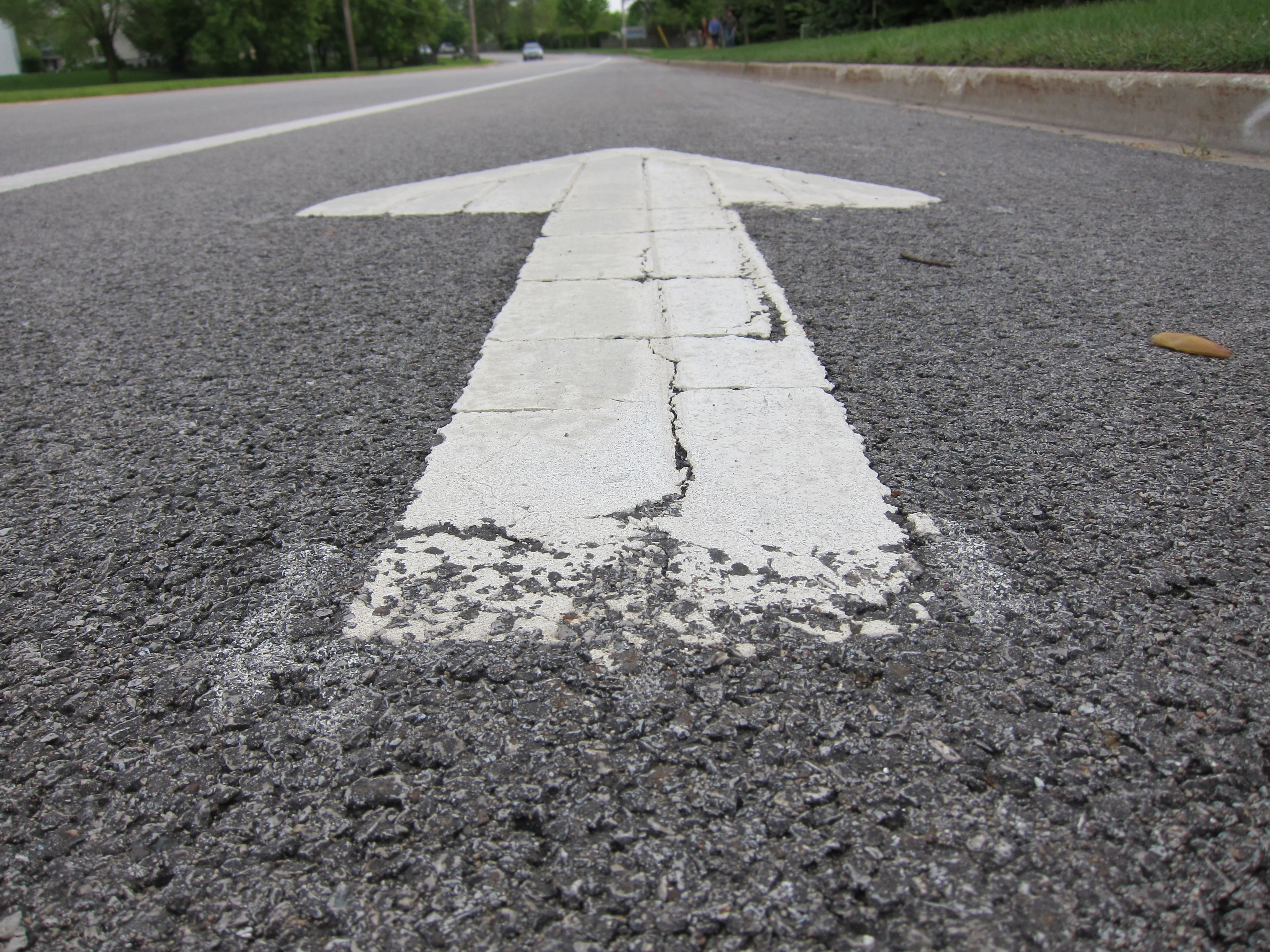
A tarsnake emerges in search of cyclist or runner prey.

By Christopher Cudworth

Seriously. We tried to warn you.

When this blog began in August we introduced you to the danger of tarsnakes, both the literal and allegorical form, that are waiting on the open road to take you down and consume your flesh. Or at least they try to produce some road rash upon which they can feed after you scrape your body off the tarmac and keep riding. Or running. They’re not choosey who they consume, these tarsnakes. Just look at the one in the picture. Coming at you. Click on the pic for a closer look. You can see the vicious expression on its face, such as it is.

Some of you probably thought we were joking. You still blithely ride over tarsnakes thinking nothing will come of the danger, or actually trod on them with your running shoes thinking no ill can come your way.

But look at the bottom of your shoes, people. They’re just covered with tar after a run on a hot summer day. The tarsnakes have it in mind to take you down even if it takes years. They’re patient as pythons and once they have you in their grip, they can squeeze the air out of your bike tires or your expensive Nikes. They’re hungry and evil as leeches, those tarsnakes. And they seem to be on the increase, and the warpath.

Is global warming increasing the tarsnake population? 

So far we’ve all been lucky. Tarsnakes have pretty much been confined to living in the cracks of the road in temperate climates. But as global warming increases the intensity of summer heat and warm periods extend into the fall and even winter, you had better beware. Tarsnakes will begin to breed out of control. Many will be forced to go seeking new territories, and that’s where the encounter between tarsnakes and people could become really dangerous. Even deadly.

Take a look at the photos accompanying this article.  Here is photographic proof that the species of road vipers known as tarsnakes have actually begun to emerge from their dormant road-grade state to make their way up onto the actual road surface where they can cause real trouble. Some roadologists believe we could see an emergence on par with that of the 17-year cicadas, with millions upon millions of tarsnakes dispersing across the highways and byways of America. It is not known whether tarsnakes have the ability to sing as cicadas do, but some have speculated they may know a few Jerry Jeff Walker songs.

An above-grade tar snake seen from the side.

You think speed will save you? Ha ha hah haa hahhh. 

Oh sure, when you’re hammering away on your bike all summer you’ve probably run over a few dormant tarsnakes, letting your tire slip into that tar-filled groove. Even a dormant tarsnake can take you down if you’re not careful. They can wriggle like mad under a bike tire.

The road crews know all about the life history of tarsnakes. After all, they’re the ones who lay down the tar that transforms from a tarsnake larvae (shown in the header) to a living, crawling tarsnake (as pictured in these story images.)

In fact while I was stopped on the road (keeping my distance from the tarsnake of course) to photograph these live images of a tarsnake emerging from its road crack habitat, a red utility pickup truck stopped behind me on the road and waited for me to finish taking the photo.

Then the driver leaned toward the passenger side window and waved me over.

“Watcha doing?” he wanted to know.

“I’m taking a photo of this tarsnake here. We cyclists don’t trust them.”

“You shouldn’t, he agreed.  “Yeah, I used to do that for a living. Make tarsnakes. I’ve got the burns on my legs to prove it. Hey, that one looks pretty lively. Did you get a good picture?”

“Yes, I think so,” I said, showing him the image on the digital camera.

“Damn, that is like a trophy tarsnake almost! You could have that one mounted! With eyes and shit!”

“I thought about that,” I admitted. “But despite the fact that they’re dangerous, I’m still pretty much a catch-and-release guy when it comes to fish and tarsnakes. I guess the PETA people finally got to me.”

“Rrrrrooah Boy,” Big Jim muttered. “Don’t get me started on PETA people or those jerks who honk at us guys holding the SLOW signs during road projects. You know it’s hard work laying down tarsnakes. They don’t always want to stay in the cracks where you put them. You can see where we have to stomp them dead sometimes. I’m sure the PETA people would not approve of that. But what else are you gonna do with 3 feet of writhing tar out on the road. You gotta kill it. That one you just photographed is proof, right there. Those tarsnakes are out to gitcha. Sure enough.”

I thanked Big Jim for the warning.

“Well, nice talking to you to,” Big Jim said, sticking out his large hand to shake. “It’s my belief it is always good to do right by your fellow man.”

And that’s a true story. Big Jim really exists. And he was big. Filled up one whole side of his truck. The other side was filled with dirty hats and what looked like the remnants of lunch. It just might be that Big Jim lives in his truck, driving the roads of America to warn people about the dangers of tarsnakes. Don’t laugh, it could be true.

A few more minutes of sunshine and this 1000 foot creature might have freed itself to take on cars, children or other innocent passersby.

One more look

After Big Jim left I walked cautiously back to take a last look at the tarsnake. My bike lay alongside the ominous creature and I had to creep carefully around its tarry shape to retrieve the Felt 4C and be on my way.

We all should really thank God here in Illinois (or anywhere tarsnakes, exist, which is everywhere…) that a cold spell arrived in late October. Otherwise millions of tarsnakes might have emerged en masse and headed for the subdivisions to terrorize little kids on their bikes, or leap up like rattlesnakes to strike runners and joggers who stray inside the white line. And we don’t want that.

But for now, we’re safe. At least until the snow snakes emerge when winter comes and the snow flies.  Snow snakes are known to confuse the eye with twisting shapes on cold, windy afternoons. On country roads, if it’s not one type of snake, it’s another, I tell ya.

It’s getting as bad as Australia here in the States, with all these poisonous and dangerous creatures everywhere. Tarsnakes and snowsnakes are nothing to be trifled with. But at least you’ve been warned.

Posted in Tarsnakes, We Run and Ride Every Day | Tagged , , , , , , , , , , , , , , , , , , , , , , , | Leave a comment

Is riding or running at a “respectable pace” your worst enemy?

The first year I got my road bike was the best year of training and racing ever.

And that’s not a good thing.

Because in the 8 years since I bought a Felt 4C carbon fiber road bike, I’ve developed some fairly noxious habits that are holding me back, both in terms of enjoying my riding and improving as a cyclist.

It all starts with building form. Then breaking it. 

To be fair, I’m still a better rider than when I started. My form is better, for one thing. No more death grips on the handlebars, and my posture on the bike and pedaling motion are both way more efficient that at the beginning. Those have improved with time.

What has not improved is the willingness to try new things, to take on new workouts and simply ride the bike as fast as one can go.

That first year as a cyclist I tried everything. At least once. And that was smart.

Group rides and runs

Group rides were the first revelation. Having a bike that made it possible to stick with the group rather than fall off in the first 5 miles was such a joy that I jumped into group rides whenever possible. Some were better than others, of course.

Racing was the other instructive tool for learning how to ride a bike. That first year on the Felt “Red Rocket” (a bike magazine named it 2006 Bike of the Year with that nickname) I raced 8 times over the spring and summer months, even into fall.

You can accomplish the same thing as a runner by buying some “fast” shoes that you would not normally wear. Save them for special workouts where you’re going to vary your pace and try near things. Or go barefoot, minimalist. Just pick a way to go faster, for the fun of it. Be a little less ‘respectable’ and a lot more experimental.

Make your own criterium course

Between races I created my own “criterium” course measuring .8M where I could practice maintaining a higher pace and cadence. That was really smart.  It is all right turns and I can see traffic easily on all those turns. So you can really tear around that block. Those half-hour and one-hour solo races were key to learning how to ride at 20mph+ on your own. That’s sort of the dividing line on racing: being able to sustain a certain pace on your own gives you the baseline to sit in with a pack going much faster on average.

So the things I did right that first year of riding and racing were focused on one primary goal: Going more than one speed on the bike.

See, cyclists (and runners too) easily fall into a trap of training at a pace that falls within a certain category. We’ll call it the Respectable Pace. Respectable as in, “I’m not going slow but I’m also not going so fast that I can’t sustain it.”

Among runners, it can be fun to go back to your old high school cross country course and run intervals on the prettiest part of the course. Or, hit the track during the middle of a 5 miler and run one hard, clean mile. Don’t even worry about the pace. Just focus on running faster. You’ll be surprised how much it changes your attitude.

The ‘respectable’ grind

I’ve trained with teams of runners that fix in on a “respectable pace” and do almost all their running at that pace. With our college team it was 6:00 a mile. Everywhere we went, morning, noon or night, we ran 6:00 a mile. And we got fast, but we were also almost burnt out before the end of the season. Our bodies essentially were asked to develop and maintain peak form for 10 solid weeks. That can’t be done.

Cyclists commit a much worse crime by starting out in mid-March with hard rides trying to get into shape. Then the rides get harder and longer in April into early May. Group rides turn into races rather than training sessions. You get back from a 70 miler and look down at your cyclometer and it says, “AVG 22MPH.”

Yes, that’s a respectable pace. But pretty much all you’ve done is hang on for dear life unless you’re one of the leading riders in the group. And then, you probably haven’t been tested that much.

How to vary pace within a workout

Instead, we runners and riders need to remember to vary our pace within every workout week. Instead of going out and running 4-5 miles at the same old 7:30 pace, even a casual runner should pick a section of trail or road and pick it up to 6:45 pace. Get the legs moving. When you stop the 800 meter interval, go back to the respectable pace and see how it feels. Often it’s a little harder, of course. You’ve just gotten a new training effect. Each week you can use one workout to be a little less “respectable” about your running and add in 2, then 3 or 4 surges inside a 4 – 5 mile run. It’s that easy.

Cyclists, stop what you’re doing right now and make a vow to do something, anything other than mash away at 18-20 mph for weeks on end. That’s just stupid.

There are three things you need to do right away to improve your riding.

Learn to use the wind for resistance: Training “into the wind” is a real chance to build strength without worrying about pace. In fact, turn your cyclometer off or at least switch it to cadence so that you can watch that you’re not dialed up into “mashing” territory where your legs are at their maximum limit of wattage. Instead, increase your cadence and work on your bike position. Pick a brisk cadence and keep it there for 3 to 5 miles.

Learn to use the wind for fun: Who says it’s a sin to go really fast with the wind behind you? No one. So next time you get a 30 mph guster behind you on the way home from the tough part of the ride, let ‘er fly. There’s no sensation like building up to 35 miles per hour or faster and immersing yourself in the sense of speed. That’s good for your mind, so that the idea of going fast is not averse. You can also learn to handle the bike and play with your cadence when the chain ring is nearly maxed out. Keep the cadence fast. Pretend you’re in a sprint at the Tour de France. It’s all good.

Take a break from boredom–ride some hills: Instead of looking at hillwork in cycling like it is torture, recognize that riding slow and steady up hills is the absolute best way to build not only your climbing ability, but your hamstrings, lower back and quadriceps–the whole ‘power base’ upon which you depend for cycling speed is made better by riding hills. Riding hills won’t hurt as much as you make yourself believe. In fact after a few times up and over your local hill, you’ll often find you slip into a more efficient pedaling grooves and your pace can actually improve. Of course, sooner or later you slow down from sheer fatigue, but that’s the goal. Ride until you lose efficiency, then call it a day. But remember to come back next week!

Race. It’s that simple. Racing forces you to break out of your ‘respectable’ zone no matter what it is. When you literally can’t control the pace, you are forced to adapt and change, and as a result, find out new things about your cycling. That sudden surge? You handled it. That weird lull in a criterium. That’s you saving energy too. That long push to the finish in a group sprint. Okay, sure, you got left behind in the last 200 meters but your cyclometer showed you topped 30 on the flat. And that’s not just respectable. That’s really respectable.

Interestingly, all the things that make you a better cyclist also tend to make you a better runner. It’s simply about changing your routine every week, month and year.

So instead of being just respectable in the coming year, show yourself some respect and break up your routine.


Posted in We Run and Ride Every Day | Tagged , , , , , , , , , , , , , , , , , , , , , , , , , , , , , , , , | Leave a comment

A maximal take on minimalist running

The adidas Italia. A minimalism throwback.

Let’s talk for a minute about minimalist running.

Because we all want to run as naturally as possible.

The real deal of course, is running barefoot. That puts you in direct contact with the ground with absolute and constructive feedback from your running stride.

The most efficient way for a runner to move is with a midfoot stride, running “over” the ground by transferring your weight with a propulsive push of the foot using the arch and calf to move the body forward.

Yet there are plenty of world class runners who move along just fine using a heel strike.

So who’s right?

The politics of minimalism

It really depends on your ultimate notion of reality, and how you define minimalism.

Minimalist running is equivalent to Libertarianism in politics.

Get rid of the regulations and bureaucracy and you’ll have a more naturally functional society, right?

Note entirely. It’s not that simple. Really, it isn’t.

If the Democratic shoe fits, should you wear it? 

We might admit that today’s highly technical running shoes are more like the Democratic and Republican parties.

Built upon layers of almost bureaucratic consensus that says more is almost always better when it comes to cushioning, motion control and tread function.

Trail shoes take that formula one step further, bolstering shoe construction in classic areas like the heel and arches. Trail shoes are like the Marxist party of running shoes. It’s all about control and padding.

The Minimalist Revolution

Have at it. Is minimalism is here to stay?

The Minimalist Running Revolution says bunk to all that.

And since its onset, the movement has worked hard to build its credibility by enlisting the advice of orthopedic and pediatric doctors who favor a less controlling form of footwear.

The minimalist movement has, in essence, become its own counterculture.

So, we ask: is it run by a pack of hippies, trying to shed their shoes in hopes of getting us all naked in the end? Hardly. The minimalism isn’t even like the Tea Party, created by a bunch of frustrated cranks needy for attention.

Minimalism is more than that, precisely because it is less. And less may be more in this case.

There’s truth in every movement

Minimalist running advocates really are on to something. But it might not be for everyone.

Our presumptions about the benefits of big fat running shoes really are wrong in some  ways. For the last 40 years we’ve been engaged in a giant experiment to find the perfect podiatric solution to the human condition. There have been many big failures along the way. Shoes that promise too much or do too much. I know. I’ve worn such contraptions. I think particularly of an overbuilt shoe that cost $90 and I wore for 2 weeks before giving up on that wad of useless foam and shoelaces.

But we also have to acknowledge that, inmany ways, the shoe business has succeeded in its proposal to improve footwear. You can see it in the increased comfort and lightweight solutions in dress shoes, for example. All dress shoes used to be clunky and uncomfortable to the point that they were only suitable for stamping out dangerous insects.

Now we have Rockports and Eccos and a host of other brands of dress shoes that draw on the lessons we learned from creating more biomechanically efficient running shoes. We should all be thankful for that.

You really can thank Nike and adidas and Reebook and Asics and New Balance and Mizuno and all those other shoe companies for creating the trickle-down technology (it has proven to work in technology, but not in economics…) that has made the world of dress shoes better for everyone. Even women. With the notable exception of stiletto heels. But you don’t wear those to get away from anyone.

Cycling even gets in on the shoe game

The same trickle down effect has occurred in cycling as well, where incredibly light and efficient materials and designs have been transferred from the most expensive down to the cheapest forms of bikes, making the riding experience better for everyone. Even riding shoes and clipless pedals draw on biomechanical principles learned from the design of running shoes.

Caving in?

It is foolish therefore to throw away everything we’ve learned about comfort in performance athletic shoes in favor of running like a cave-type-person.

But it’s hard to deny: The minimalist movement is seductive in theory. Getting back to a more natural way of running is a hopeful effort to produce less injuries, better running experiences and long term health.

So let us analyze the premise. It seems logical that our feet and legs become ingratiated to super-padded running shoes to the point that we lose our natural strength and flexibility.

And it makes sense that human beings evolved for millions of years without big fat shoes to help them chase down meaty prey.

Even the Huarache Indians and Greek marathoners only ran in strappy sandals, right? That’s both functional and sexy, when you think about it. But we digress.

The real question here is this: Do we actually need running shoes or not?

The answer is simple: Yes, we do. But let’s also not forget how we evolved.

Running barefoot is good for you, now and then

At the end of many a long workout, our college team would toss aside our running shoes to do sprints on the grassy infield. Up and down the football field we’d run without shoesto relax our feet and yes, increase the flexibility and strength of our bare, naked feet.

Some of us also competed in races without shoes. That worked fine until you got stepped on by someone with spikes, or the acorns fell thick and fast from the oak trees on the upper campus. That slowed your ass down in a hurry. Most of us ditched the barefoot racing idea as a result. Blood and bruises did most of the talking in that category.

We would also never have supposed to run our 10-milers on gravel roads without shoes. My college roommate and I once even begged our fraternity brothers to let us wear shoes when they stripped us otherwise naked and dropped us 12 miles out of town with a case of beer and said, “Good luck, we’ll see you back at midnight. Ha hah. Have fun.”

We ran back to town in just over an hour’s time and infuriated them by locking our doors before they even got back from the bars.

But we didn’t do that barefoot. We might have been naked, but we were not crazy. The same trip barefoot in the dark might have taken 2 or 3 hours, mincing down the washboard and gravel surface, watching out for broken bottles. To hell with minimalism at that point. Being practical sorts, we also left the beer behind in the ditch to pick up later.

There’s a difference…

…Between losing your shoes on purpose to add strength and flexibility to your running program and forsaking use of regular shoes altogether. Using minimalist shoes and running barefoot have a solid place in any runner’s training program. Consider it weight training and stretching for your feet and legs.

The fact is you can transition to the amount of minimalist running that your body and training program will tolerate. But be cautioned: No amount of theoretical application and desire to get back to basics will help if your body exhibits profound biomechanical issues like flat feet or other functional flaws.

A world class example

World class middle distance runner Sebastian Coe had flat feet. I know this because I met him in person at the podiatrist in the United States he consulted to help him avoid injury. Coe engaged in one of the world’s most sophisticated and yet most training programs for distance running you can imagine.

His father was his coach and the Coes worked for weeks using simple training techniques like bounding, hopping on boxes and strength training. This built a complete athlete. Coe was 5’7″ and 132 lbs. Yet he could leg press 700 lbs.

That’s real strength. Sebastian Coe engaged in a well-rounded training program. Yet he kept getting injured because even his prodigious strength and muscular balance could not compensate for the genetic flaws in his feet.

Remember: In full stride Coe was a work of beauty. He ran 44 seconds for 400 meters and 3:47 in the mile. Not too shabby, right?

Yet the base distance training Coe needed to do for endurance could not be accomplished running on his toes as he did at full speed. Coe actually supinated (foot tilted to the outside) as he used his midfoot to propel himself across the ground at world record speeds.

To compensate for his biomechanical flaws, Seb Coe used orthotics. He didn’t trot around in bare feet to build endurance because he would have been crippled as a result. Coe used good, basic running shoes with corrective orthotics specifically designed to managed his basal pronation and allow his foot to progress through a neutral footplant while training

Minimalists might contend that Coe had it all wrong. It was the shoes and the orthotics that caused him the problems. But they would be wrong. His Olympic medals and world records are proof of that.

The right course, and the original item

The fact is, running shoe technology was developed in collaboration with orthopedic experts, podiatrist and running coaches who knew the intimate facts of running injuries. It took a decade or so to make the absolute connection between running shoe construction and injury prevention.

Among runners who were training and competing in the early 1970s, before the running boom occurred and even before Nike rolled in to change the face of footwear forever, running shoes were indeed somewhat minimalist.

Most modern day runners are unaware that the running flats of the early 1970s were simple canvas affairs with gum rubber souls and just the merest layer of heel. That was it. All you had on your feet to cover the ground was a canvas slipper with a gum rubber sole.

Track and cross country athletes wore these minimalist shoes to train on the cinder track, in cross country, on roads and fields and sandy beaches. It was minimalism at its best, and worst.

Because for some runners those minimalist shoes worked just fine. But others developed shin splints, plantar fascia problems, pulled hamstrings and calf muscles and myriad other injuries brought on by a combination of unrestricted pounding and lack of biomechanical control.

I know. I wore those shoes. And while blessed with generally good biomechanical makeup early in life, and a practiced, efficient running form that still earns compliments to this day, it was tough training in those minimalist shoes.

Don’t get me wrong. On many other days we ran and trained in track spikes, a quite minimalist form of shoe in their early derivations.

Yet the secret to our generally health approach to running was this: Very little of our actual cross country training or running for track was done out on the roads. We ran on grass, doing intervals most days, not long slow distance. Much of what we did was quality, up on our toes. In minimalist shoes.

 The next generation: adidas Italia. 

Then adidas came along with a model called the Italia. These were a slightly more built up running shoe than the black gum rubber souled shoes. But not by much. The white leather Italia had a basically flat sole, no lifted heel. The tread was a repeated texture of starlike patterns, but they were not much good in wet grass, where we often ran.

World class distance runners such as Marty Liquori have written that the Italia might have been the perfect running shoe. Just enough structure to provide protection, but not so much that it constricted your natural stride.

 The next Next generation: adidas Country

Then came the adidas Country. Which, you guessed it, had a much more elevated heel to them. That was the real start of the arms race, because Nike and Bowerman then issued the Cortez and the Waffle Trainer. Each subsequent model incorporated more heel until the late 1970s, when the Nike LDV came out with its huge, fat heel and flared rear sole. That shoe was a freaking monster. Running in LDVs was like plopping a moon pod down on the surface.

For a long time after that, minimalism was dead.

Minimalism is like sex. A part of life. But not all of it. 

Yet here we are in 2012, trying to get back to our roots, as it were, and run (or ride) in shoes that do enough to help us, and less to hurt us.

You’ve no doubt seen the toed-shoes that look like Hobbitwear. Nike alone has thrown plenty of models out there over the years that tried to strip down the modern day running shoe to its essence. Strap it on with what amounts to lycra flesh and get out there. Minimalism is like sex. A part of life. But not all of it.

Good sex is a real joy. It can make you happy, feeling fulfilled. You can even use sex to make babies if you want to. Imagine that!

But sex has its function, and so does minimalism in running shoes. It can make you happy and help you to the path of personal enlightenment. But you can’t promiscuously poke your way to a PR any more than you can train 100 mile weeks in minimalist shoes and expect to get by without hurting yourself eventually. Your vital parts are not necessarily prepared for such rigorous use, shall we say.

Get your mind out of the gutter, for God’s sake. I’m talking about your feet and legs here. What did you think I was suggesting? No one likes to be accused of minimalism down there anyway. Not the guys at least.

Conclusion: Minimalism has its place

Let’s just agree that minimalism is beautiful, in its natural sort of way.

Posted in We Run and Ride Every Day | Tagged , , , , , , , , , , , , , , , , , , , , , , , , , , , , , , , , , , , , | Leave a comment

Have you ever been a Full Commitment runner or rider?

By Christopher Cudworth

On the Red Rocket, Felt 4C

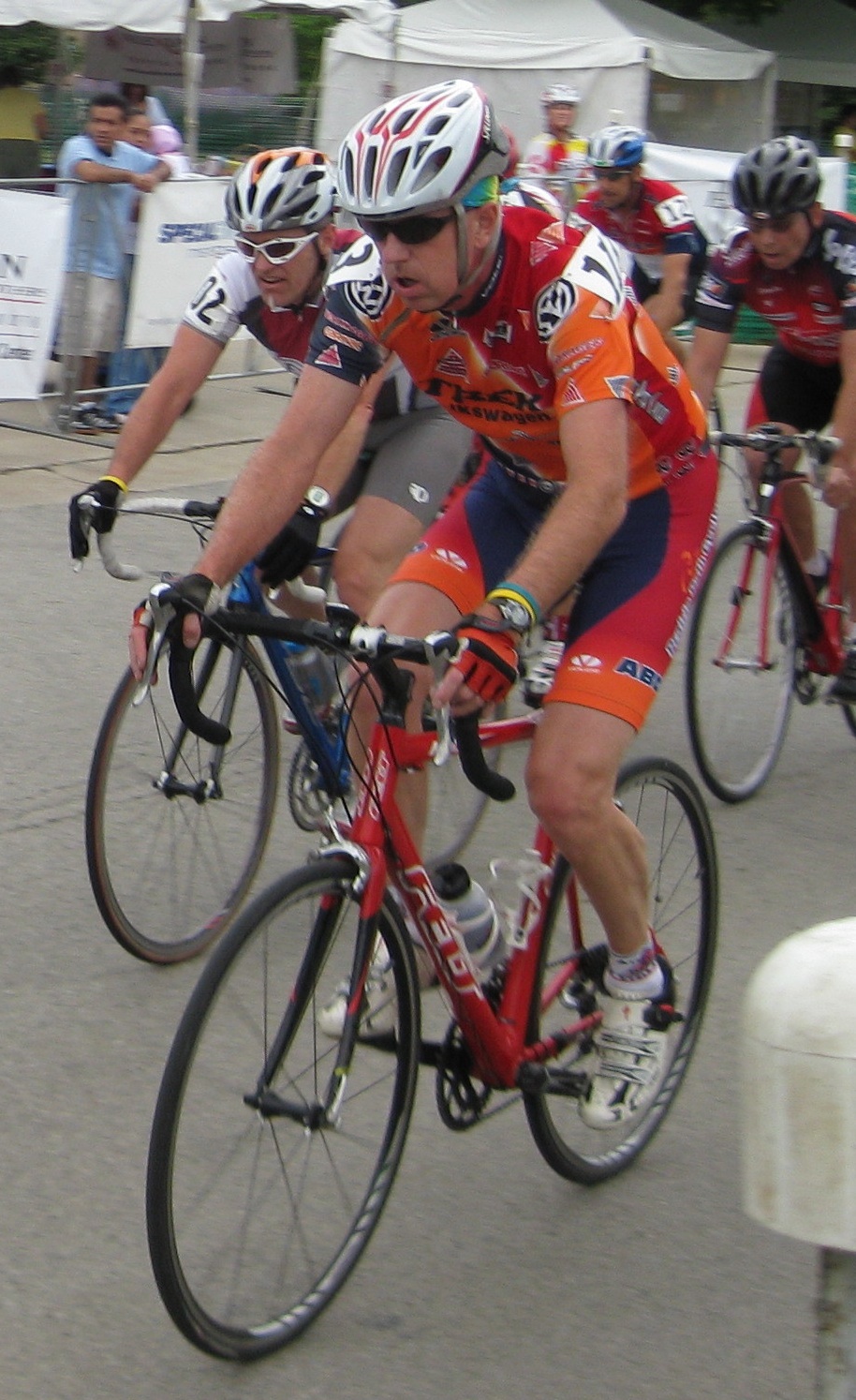
Cud racing in a crit.

You working people think you have it all figured out, making a living and all, and still finding time to run and ride. Well, God Bless You.

Knowing where your next paycheck is coming from is a normal, natural thing to want from life. That’s called security.

But if you really want to know what it’s like to be alive and live on the edge, try running and riding when things aren’t so secure. Become a Full Commitment athlete.

There was a time when runners would partner up like mice in the feed barn to live together, sharing costs of rent and food so they can train and race, full time.

It seems absurd to some. Yet it is still more common than you might think.

Even in today’s economy (or especially…) many a runner or cyclist learns to sleep on borrowed mattresses in strange towns in order to follow the racing circuit around the country.

Here’s a fact:  takes a certain kind of guts to run and race when you’re unemployed or underemployed, chasing a dream of becoming the best you can be at your sport.

As a Full Commitment runner or rider, you quite literally put your life on hold for a while. A month. A year. Or more. Your family and friends question your motives. Only your training partners seem to understand. They see your improvement, watch as you get faster, move up in the pack, prepare for the Big Day.

No menial task

Some athletes trying to make their way in the competitive world either refuse to work or slave away at menial jobs that do not interfere with 100 mile weeks for runners or multiple 100-mile training days for cyclists.

You can’t really focus on much when you’re banging out those kind of miles. Maybe wash some dishes. Work as a janitor. Clerk in the back room of a law firm, where no one asks you questions, because you’re too tired to answer anyway.

Is romance dead?

Or are those romantic days of living for competition and training gone in this new economy—when the risks seem much higher, health insurance is almost required to survive and even menial jobs are hard to find because they’re already taken by people providing for their families?

It used to be almost noble to scrape along the bottom of the barrel of society when you were training for distance running or cycling. Friends might criticize your dumpy apartment, but they could not argue with your 10k PR. And that was acceptable to do for a year or two in your early life. Don’t worry about the future, except for the next big race.

A little bit of $ goes a long way

Athletes lucky enough to land some severance or a bit of family money when a great uncle died could really immerse themselves in training. Twice-daily workouts were commonplace. Then you’d show up for a 10k and there’d be 10 other raggedy looking characters, some in team running gear or sponsored kits, digging at the line to get started.

The conversation in the first miles could be pretty interesting among those full commitment pioneers.

“So, did you eat this week?”

“Yeah, mostly frozen waffles, green peas and Triscuits with cheese. But I feel pretty good. How about you?”

“Awesome. I’m living on Ramen noodles and French Toast. I’m starting to think that’s all I need. What was that first mile, 4:53?”

If that kind of lifestyle doesn’t sound romantic to you, then you simply aren’t cut out for the rigors and sacrifices of the Full Commitment Athlete. Somewhere out there today, there are runners and riders living that lowbrow life, trying to get better at what they like to do.

A true anecdote

One former Division III national champion in cross country took to working as a janitor the year before the Olympic Trials. He trained like a maniac, but never once mentioned to his “superiors” at the building where he did his janitor thing that he was anything special. It wasn’t until he led the first 10 laps of the Trials 5000 meters that some of them recognized his true talents.

That fellow faded to 5th or 6th place in the Trials, missing out on his chance to run in the Olympics.

Another true Full Commitment Athlete. Who got screwed. 

A running club teammate trained almost a full year, working only enough to make ends meet, then ran in the Olympic trials marathon. His time was something like 2:19:20, and the qualifying time was 2:19:11. The Olympic committee would not give him a break.

I was never that good. But as a Full Commitment runner for a year, it was possible to achieve a few goals and close some motivational chapters in the athletic world by winning some choice races, training with runners better than me to try to reach that next level; national class for me. World class for some with whom I ran and raced.

Today’s crop of Full Commitment Athletes

The blogs from the younger cyclists on the pro side of the cycling club in which I ride often talk about the austere conditions in which they train and race. It’s no glamour sport at even the lower pro levels. You bust your butt sometimes, clinging to the front of the race for hours only to get dropped when the person directly in front of you in the peloton has a mechanical and forces you off the road with no choice but to stop, walk your bike around the mess and get back to pedaling. By then the breakaway is 200 meters ahead and there’s no chance of catching them. So you pedal in with dignity, but nothing to show for the long weeks of training, the long drives to the race and the exhausting attempt at staying “in the money.”

Back to reality. Impressing the hiring manager. 

There isn’t even much glory in having turned a chunk of your life over to competitive riding or running. One would think that accomplishing something unique like a sub-31:00 10k might have some value in the work world. Then the hiring manager somehow digs into your interests, asking you about your running and riding with a big smile on their face, and a question: “I like to (run/ride) too, what’s your best (10K)?”

Some tiny fleck of fight or flight flickers through your brain, telling you not to answer that question honestly. Then you think about all those hours training alone, living on little income and even less food, and it wells up inside you that you should take pride in your athletic accomplishments. So you blurt out, “I was a pretty decent runner. My PR was a 2:26 marathon…”

The hiring manager’s expression goes flat. They’ve just spent the last year training like crazy with 65 other people in a Team In Training group and just barely managed to break 4 hours. They were so proud of that accomplishment. Now you’ve made them feel like stale turkey meat. The interview comes to a sudden close.

You don’t get the job. You’ll never know why, for sure. But you do have the sneaking suspicion that your hard-earned marathon time offended the hiring manager somehow.

In the end, the Full Commitment athlete really is better off keeping their mouth shut.

There really is no way to explain on your resume that you took a year off in your mid-20s to train full time and get as good as you could at running or riding.

Corporate hiring managers see that kind of commitment as a character flaw, not a credible reason to hire you. Others think you’re just a braggart for being honest. And that’s pretty ironic.

So even if you won half the races you entered during a year of two of Full Commitment running or riding, best keep that to yourself. The real, sane world out there does not understand. They really can’t understand. Or they won’t try to understand.

They simply refuse to understand that someone could go that nuts and be a Full Commitment athlete, training and racing with no income, no health insurance and no future except the next chance to compete to win.

And it’s too bad. Because Full Commitment people are loyal. They will often work hard for less, and never need cigarette breaks or dawdle too long over lunch. They’ll actually time how long it takes to make a delivery, write a whitepaper or complete some other assignment because deep down inside, the Full Commitment athlete is still a competitor and always will be.

You should hire one sometime. You’ll be pleasantly surprised. And you’ll probably never have to buy them lunch. They’ll be out running or riding instead.

Posted in We Run and Ride Every Day | Leave a comment

When nature calls, we all face a tarsnake of how and where to go

Face it. We all gotta go sometimes in the middle of a run or ride.

We’ve all been there. 3 miles into a 6 mile loop and wham! The urge to go strikes with a vengeance.

It can happen to anyone.  Like the poor woman I encountered crouching behind the thin cover of leafless hedge in late March a few years back. It was too late for either of us to react with any courtesy or dignity. So I diverted my eyes and yelled back as I ran by, “Don’t worry about it! Been there! Done that!”

I’m sure that was a complete comfort to her. Kind words are almost always helpful. Not.

The urge to purge

If you run or ride  enough the urge to go is sooner or later gonna catch up with you. Most often these events seem depressing at the time, yet over the years they can grow to be legends and even funny. For example…

The True Legend of Dumpy the Distance Runner

It happens that sometimes unexpected events become part of one’s personal history. While running with our college cross country team one of the group announced he had to go “really bad.” So he sprinted ahead on the twisting country roads where we trained, hoping to take care of his business before we caught up with him again. But the roads on that loop were quite hilly and it was hard for a runner in front of the group to build much of a gap in ahead of the 6:30 pace we were running.

When we came around the corner of a precipitous turn where a guardrail prevented cars from rolling down a steep embankment, our teammate had positioned himself there with both hands gripping a guard rail, trying his best to relax and let it fly.

He was backlit by the western sun, and as we climbed the hill his entire arse seemed to explode in a violently giant circle bright spray. Obviously he was experiencing more than the usual intestinal distress. The dramatic flare of fireworks that appeared to come out of his butt reduced us all to a howling mass or laughter and tears. Guys literally fell down on the road with glee and amazement. Cries of “Oh My God!” and “Holy Crap!” erupted from our group of runners, many of whom were bent over in laughter so strong they could emit no sound, just fits of snorting and merciless laughter.

The poor guy making the emergency stop was a freshman of course. He had to live with the nickname “Dumpy” for the next four years of his college life. Which was entirely unfair, but circumstances sometimes do make the man. In retrospect, I’m rather surprised the team did not erect some sort of sign at that curve in the road. Something to pass down through the generations of runners who would run that road long after we were graduated and gone. “Site of Dumpy’s Releif” the sign might say. And as a first person witness, I can testify the event was definitely worth commemorating. Wow.

When itching to go, the gals definitely have it worse than guys. 

It is generally much more difficult for women to deal with bathroom issues than men, especially relative to #1.

Yet a female marathoner training who led our women’s team in college thought she had it figured out while joining the men’s team one morning for a 20-mile run. Somewhere around the 10-mile marker she discreetly dropped behind to drop her shorts and urinate in a ditch out of sight from the road. But as luck would have it, she plucked a handful of poison ivy with which to wipe herself from front to back.

The oils of that poison ivy invaded her body inside and out. That poor woman trained all that fall with bandages over her hands. The itching and rash was so bad she had to take medicine to keep her from experiencing breathing problems. Her face and arms broke out first, then her legs and everywhere else. None of us really dared ask what was going on down below.

We did however respect her raw courage in continuing to train with us on long runs every weekend. Her goal was to run and place in one of the early versions of the Chicago Marathon. To her endless credit, she finished 3rd overall still wearing bandages on her hands. Now that’s a tough woman, for sure.

A peak experience

During a training trip to South Dakota, a group of 13 runners ran through the forests to the peak of Harney Peak, an overlook with a clear view for miles around. The round trip running was 13 miles total. There were no bathrooms at the fire tower where the team had stopped for a breather before heading down

Then one of the runners announced he had to go to the bathroom pretty badly.

“I dare you to take a dump off Harney Peak,” one of his teammates challenged. “We’ll hold your arms and you can lean out and let one fly. It’ll drop a thousand feet.”

Astoundingly, he accepted this ribald challenge. Several team members grasped his arms as he leaned back from the fire tower above a cliff and its 1000 foot vertical drop. Straight down. The world’s deepest porta-pottie.

Very few people in the world could relax under those conditions, yet this runner composed himself enough to take what must have been the only dump taken off Harney Peak in history.

That was amazing enough. But something else happened that would live on in the legend of Harney Peak even more. That runner had smartly carried some toilet paper with him for the run, just in case nature called on the 13 mile run, round trip. After he wiped, he tossed the soiled toilet paper out over the cliff. And it went nowhere. The draft was of a precise measure that it kept the crap-stained toilet paper floating right in front of everyone’s eyes. Here they were, on a fire tower overlooking 50 miles of terrain around them, and the toilet paper would not leave. It hung there like a stained white raven in an Edgar Allen Poe tale.

Some visitors had just arrived and were plunking their way up the steps to the top of the tower. Everyone was laughing and several were hanging onto the tower structure to keep from falling off in their mirth.

When the visitors arrived at the top of the tower, the toilet paper was still floating merrily around in the air before them. Surely they could surmise the situation. But perhaps not. There was no ready apparent explanation unless you calculated the insanity of the acts that led to a wad of soiled toilet paper  floating in the breeze, mid-air above South Dakota.

Nature breaks

Most “nature breaks” as Phil Liggett likes to call them while announcing the Tour de France are much humbler and less dramatic, shall we say, than those listed here.

What male hasn’t made the mistake as a cyclist of hitting the Porta Pottie only to forget giving the unit a shake before pulling up the bibs or shorts again? Then you’d better splash a little more water across the front of your team kit or risk revealing that you’ve just partially pissed yourself and are going to try to get back on your bike and dry the heck off before it’s your turn to show up at the starting line.

That’s the only reason this rider hates bibs. They can make a nature break almost impossible to accomplish, especially when on the move. I always try to at least wear a full zip down shirt when riding with bibs so you can at least get the shirt off and get the bibs down without a major projection.

Running in tights can create similar problems. And don’t be a fool and try to pull off your tights without zipping them open. They’ll only get stuck on your shoes and cause you worse problems.

The Catch-22 of hydration and food

We’re all taught to hydrate and (for cycling) eat well when we run or ride. But what goes in, must come out, and the inevitable bad timing events are bound to occur.

If it happens to you, the only thing to do is be inventive in finding the nearest tee or ditch if you can. But try not to use the neighbor’s yard the morning of a race. People don’t take kindly to you peeing on their prized roses, or pooping behind their garage.

It’s far easier and more respectful if you can manage to wait in line at the Porta Johns even if it means crossing your legs or dancing in place.

While out training there is not always a toilet handy when you need it. Again, let’s hear for the ladies who have their work cut out for them in many circumstances. Some women just learn to hold it forever rather than suffer the indignities of public relief.

Men are often not so proud. Not runners. Not cyclists. Most just pick a spot, whip it out and get back into the groove, hoping that no cars come or that no one is peeking out any nearby windows.

The wobbly tarsnake of indecision

Because when nature calls, it really can be a tarsnake of wobbly indecision whether you can hold it until you get home or risk a calamitous accident somewhere further down the road, or holding a guardrail, leaning off a mountain or wiping with poison ivy in a ditch.

Some are choices. Others are necessities. The tarsnake of nature calls us all eventually. In the end, it isn’t really how you go, just that you go that really counts.

Can we get an Amen to that?

Are you bold enough to share your ‘nature calls’ story with We Run and Ride? Leave your comments below. No pun intended. 

Posted in Tarsnakes | Tagged , , , , , , , , , , , | 3 Comments

Is cross country running the purest of all sports?

A girls cross country competitor sails over the ground

By Christopher Cudworth

The air is more than crisp on a late October morning. A chill breeze seems to slide down out of the clear blue sky to the north. It is cross country weather.

140 athletes line up before a backdrop of team and fan busses. There may be 2000 fans in attendance to cheer on their teams. The crowd lines the course before the start, practicing using their aim with their iPhones and digital cameras. Then an  announcer with a handheld loudspeaker makes a call for the athletes to gather.

20 teams in an entire spectrum of colors jumps in place nervously before the gun. A whistle blows. The runners set. The gun goes off.

The crowd erupts in both organized and disorganized cheers. Of course no runner in the bunch can really hear their home crowd at this point. The noise is so loud the dogs all seem to spin on their leashes. The pack of runners flows by, their spikes clacking across a short section driveway. A few of the best runners surge to the front. The others queue with teammates or with competitors. The most important skill of all: finding your pace.

Dude, really. This is supposed to be a pure sport.

In both the women’s and men’s races, the scene is the same. Excitement. Enthusiasm. Mothers and fathers cheering on their children whether they are first or last. Lines of guys without their shirts show up to cheer on the female athletes.

Many in the crowd wait patient and cheer for the runners at the tail end of the pack.

When the last runner passes the final part of the crowd makes its way to the next viewing point. Masses of people lean into the running corridor marked by white lines in the newly green grass. It has been a horridly dry summer. Three months ago the same course looked like a scene from West Texas. One half expected a tumbleweed to come rolling by.

Rains in late summer and early fall finally changed all that, transforming the cross country course to a mixed footing of soft, muddy earth and fast stretches of grass. Runners have been competing on this course in its variegations since 1973. This writer knows well, having been the first to ever win a race on these grounds back in high school.

The sport has changed in some dramatic ways since then. The most positive shift is the participation of thousands of women in the sport. Cross country meets have been transformed by the presence of women runners, whose approach is no less serious, but there is something lighter, more considerate and cheerful now about the mixed crowds of men’s and women’s runners cheering each other on. Call it a sporting grace.

The boys show speed as well.

To a longtime observer, runners really haven’t changed a whole lot in 40 years. Most are thin, but today’s cross country runners do tend to have a more muscular build overall, the product perhaps of weight training. There is plenty of serious competition, yet the intensity in some ways has been dialed back. Cross country teams no longer compete three times a week in duals and triangulars as they did 40 years ago. Most teams today have a 10-12 meet schedule whereas the old schedules called for 15-20 duals meets and 8-10 invitationals. That was a lot of competition, and it toughened runners to repeat races, but it could also result in peaking too early or burning out on the sport.

Why cross country greats really do matter

Great runners continue to come out of the high school ranks, the most recent male star in Illinois was a kid named Lukas Verzbicas, a phenom who nearly broke the state meet course record set by an eventual World Cross Country Champ (America’s only such victor) Craig Virgin, (click to watch Virgin win the 1980 IAAF WCCC title in a thrilling race!) whose 13:50.6 time for 3 miles in the Illinois state meet has been approached but never broken.

I was present to watch Virgin win that race. My eyes were wide in amazement watching Craig Virgin crank out sub 4:40 miles around that cross country course in Peoria, Illinois, where the state championship is still held. It is both remarkable and smart that the course has remained the same. Cross country runners can not only test themselves against their fellow competitors, but against every state meet runner for the last half century. And most significantly, they can test themselves in direct measure against the high school times of the greatest cross country runner the USA has ever known.

Why cross country is the purest sport

Cross country is simple and direct. The runners on each team self-select their spots on the varsity through their own effort and based on their own times. If you can beat someone consistently, you’ll most likely get the chance to run.

The courses vary, but the goal is the same. Fine out who can run 3 miles over the same course as everyone else in a faster time. There are no judges to affect the score. No other events to wait for, as in track and field. No drawing off competitors into 1500, 5000 or 10000 meter races. Cross country is everyone together. Just pure, simple competition.

The crowd is part of the purity

The crowd senses this unity, and becomes a form of unity itself, shouting so loud that only the coaches seems to be able to penetrate the wall of sound.

The coaches therefore typically retreat to clean, quiet sections of the course, calling out splits and target objectives. “Stay together. Get up to that (guy/gal) in front of you. Stay smooth.”

There’s really nothing much you can tell a cross country runner other than to try to relax and run faster. There are no lanes to control the racing, but there are hills. There are also trees and roots and clods of dirt, roads and gravel paths and lumpy hard trails. And that is what makes it so pure. Cross country is not perfection, but it is a somewhat perfect test of endurance and will in running.

Cross country throws the natural elements from wind and rain to snow or sleet at you like a real-life video game. Perhaps more people should try the sport for that reason alone. No need for virtual reality when you’re living it.

All these reasons make cross country the purest of all sports. An exciting reason to appreciate human endeavor.

Footnote: Recently this writer received a phone call from a former competitor. Their teammates had kept in touch and were discussing their best rivalries in high school. Finally they decided to call up their biggest rivals and ask them to come run with them at some local forest preserve, to celebrated the wholehearted competition we’d all once enjoyed, and how much it meant to us to be involved in pure sport and competition. In a future blog, we’ll cover what that event was like, what stories emerged and why the rivalry was so hardfought, and so special. 

Posted in We Run and Ride Every Day | Tagged , , , , , , , , , | Leave a comment

Getting clipped by clipless pedals an inevitable fail for new cyclists

By Monte Wehrkamp

I ran up  – if you can call it that, as I was wearing my road cycling shoes at the time – to a tangled pile of pretty tan legs sticking through a gleaming white bicycle frame; the bike’s rear wheel was still slowly spinning: tick-tick-tick-tick. As I clattered to a stop, I heard a soft groan.

Reaching down, I moved legs one way and the bicycle the other and slowly extracted my wife from her brand new Cannondale Synapse road bike.

“What happened?” I asked.

“I forgot! Damnit!” she responded, her eyes welling up with tears.

I could see then the blood starting to ooze from her scraped knee. And her side was covered with road grit. I reached down, took her hand.

“Do not cry. No crying,” I ordered.

As I pulled her up, the look she shot me was one filled with the kind of meaning and nuance saved especially for spouses. At first, her eyes flashed anger. At me. So at least she wasn’t crying. The next few seconds were defiance. I’ll cry if I damn well want to. Then pain. And a few silent tears welled up.

She rose carefully to her feet. Nothing appeared to be seriously hurt.

“My hip,” she said as she took a step.

Uh oh. She’s tiny, with small bones. Having broken my own hip 15 years ago, my heart skipped a beat. Please don’t be hurt, I thought. She peeled her bike shorts down a little and I looked. There was already the beginning of an angry blue-black-yellow bruise forming. She raised her leg, bent her knee, then twisted her torso a little. Whew, so far, so good. I noticed her elbow then. It had angry, red roadrash on it.

“You want to ride home, or just push it back?” I asked, knowing our day was done.

“Push,” she said, tearing up but not crying. And so ended her first day of road biking – her first day on her new Cannondale – with each of us pushing our bikes home from the culdesac 100 yards from our house.

—–

We started out that day – a bright late summer morning – with Linda in her Pearl Izumi kit, wearing her favorite Sugar Shorts so she could work on her tan. She was also wearing a good deal of apprehension because of, well, pedals.

Remember your first time going clipless? Figuring out how to take off, snap in, then accelerate away? Or coasting up to a stoplight, twisting your heel and snapping out, like Dorothy clicking her heels? And that terrible, helpless feeling, knowing your feet are still locked to your pedals, and the ground is coming up fast?

Yeah. Me too.

We’ve all done it. We’ve all forgotten to clip out and tipped over, gotten up, looked around to see if anyone saw (our pride suffering the most damage). Or missed a clip-in during a take-off and gone for a spill. And then there’s the one when you’ve overridden your abilities, and found yourself in a situation where there’s no time to click out before a fall or crash.

It sucks. It happens. But that’s the price we pay for a fluid, efficient, and powerful pedal stroke. You just can’t climb, accelerate or handle your bike quite as well when you’re on flat pedals. Wish we could, but we can’t.

I also wish you could have seen her. We were in the culdesac, just practicing stops and starts. Linda was doing very well. Braking, slowing, unclipping, putting her foot down, stopping. Perfect! Then moving the clipped-in foot up, pushing down, picking up her ground foot, finding the pedal, pressing down, feeling the click. Good! I stopped riding beside her and watched her repeating the stop and go’s at her own pace. Cycling goddess. Long blonde hair flowing out of her helmet, her strong, lean body sporting pro kit, piloting her 3-day old carbon road bike. I thought, “How freaking cool is th…”

Then it happened.

She’d come to a safe stop, had her foot down, was turning to say something to me, then like a tree being felled by a logger, slowly, then quickly picking up speed, tipped over. Bam!

As we pushed our bikes home, she explained what happened in greater detail. She’d stopped fine. Her left foot was down and she was balanced. Perfectly in control. She decided she wanted to turn the other way and just forgot she couldn’t simply put her clipped-in foot down (like she might have if she’d been riding her old Giant hybrid bike). She just leaned from left to right and only realized as she began to fall that she wasn’t going to get her right foot out in time.

“I’m such an idiot,” Dr Linda said, rubbing her sore hip and limping on her aching knee.

But I assured her (as I’m assuring you, dear reader) she’s no idiot. She’s a bike rider now. She experienced her first fall and saw first-hand the rules we cyclists live by, as spelled out by the Universal and Unbreakable Laws of Gravity.  Thankfully, it was gentle, as most crashes go. Regardless, the bruise on her hip grew to a four-inch green-black reminder that it’s best to clip out both feet if one intends to move around much while stationary on

Indoor practice makes perfect.

the bike. And the scrape on her knee took a full month to heal. Her bike is now on the trainer in the living room (next to mine) and is now equipped with new pedals (touring flats on one side, SPD clips on the other — she can practice clipped in her Giro bike shoes while she spins, then as we ease back onto the road, she can gain confidence riding on the flat side with gym shoes).

In retrospect, that day was a pretty big one. Her first blood to the cycling gods. I pray this was her one and only offering.

(Now’s a good time for anyone who’s gone down, thanks to their pedals, to tell their story in the comments section below. As I told Linda both before and after her spill, it happens to everyone at one time or another. Part of the learning process. Let Linda know she’s not alone.)

Posted in Uncategorized | 2 Comments

Does running and riding make you a special person?

You’re special not only when you take flight.

There’s a question for the ages. Does running and riding somehow make you a special person?

That depends on how you define the idea of “special”. So let’s do that. Let’s look at the definition of the word “special” and see how it applies to people who run and ride.

spe·cial

[spesh-uhl]  adjective

1. of a distinct or particular kind or character: a special kind of key.
2. being a particular one; particular, individual, or certain
3. pertaining or peculiar to a particular person, thing, instance,etc.; distinctive; unique: the special features of a plan.
4. having a specific or particular function, purpose, etc.: a special messenger.
5. distinguished or different from what is ordinary or usual: a special occasion; to fix something special.

Nothing in any of those definitions really sticks out as applicable to the nature of a distance runner or cyclist, does it? But let’s have a look.

  1. One could argue that runners and riders are “of a distinct or particular kind of character.”
  2. One could also argue that endurance athletes are also singular, particular or certain in their nature.
  3.  It is possible that runners and riders are ‘distinctive; unique’ but that would presuppose that other activities in which people engage for enjoyment or self-improvement are not.
  4.  The fourth definition of ‘special’ is ‘having a specific or particular function.’ Well, that’s pretty hard to claim, that our running and riding is a particularly functional part of society. We do it for ourselves, and we do it for others. But you could also not run or ride a day in your life and the world would not collapse.
  5. The last definition, ‘distinguished from something ordinary or usual’ probably strikes closest to the nature of why people define themselves as a “runner” or “cyclist.”

Getting fit makes us feel good

We like the unusual ways that running and riding make us feel. Getting fit is both a process and an achievement. But it is not a static condition, either. The minute you quit running or riding, that fitness starts to deplete in some way.

That means we’re getting somewhere in terms of understanding the definitions of ‘special’ as it pertains to our favorite activities. See, we have to admit that in the context of millions of other runners and riders worldwide, the actual activities of cycling and running are not that unique and special. If millions do it, the definitions of ‘special’ in the colloquial sense do not apply.

Running and riding in a philosophical context

Yet there remains something ‘special’ about being a runner or rider. So let’s put our finger on it now. Because you need to know this. Everyone does.

Theologically, many religions around the world define human beings as special. Each person is considered unique in the eyes of whatever God they worship. Some elements of the Christian faith even argue that human beings are specially created.

Humanism also defines people as special. That worldview celebrates the idea that each contribution to the human condition is unique and therefore valuable. Collectively, humanism asserts that people can make a difference in the world.

Science puts human beings into a unique category, but not separate from all other living things on earth. We evolved special characteristics that make us human. We also invented the wheel, which every cyclist would agree is a pretty special and vital attribute of their bike.

Religion, humanism and science all agree that humans are unique and perhaps special in some very important ways. Our conscious minds are capable of abstraction and metaphor, creating literature as well as the practically considerate concepts of mathematics, geography, astrophysics and digital communications. All those things are pretty special.

The nature of our pursuits

So when a person sets out for a 10 mile run, what is special about that? Or when a person completes a century ride and looks back at the road they’ve just traveled, is that a special attribute of being human? Of being an individual? Of considering the world in which we live?

The important aspect of this examination of what makes runners or riders special is this: any activity that creates experiences and impressions that are out of the ordinary or unusual is special.

The pursuit of these activities does not necessarily make us special, as in better or worse than other people. Somewhat ironically, it is our shared appreciation of these individual experiences that make running or riding special. In other words, we essentially share in a special world in which we run or ride. It is a world, or a concept perhaps, created out of the desire to live life fully, and with health and awareness. Measurement, achievement and satisfaction also enter the picture.

Those are special attributes we assign to our respective sports. We see them in the signs people place on their cars when they’ve completed a marathon, a century or other goal. 13.1. 26.2. 10K. 5K. Century. All measures of our personal endeavors. Our special efforts to be human and aware.

That is special enough for anyone, and you can feel special for understanding that.

Keeping it in perspective

Just understand that not everyone holds the same values, or cares that you can run 10k or complete a century. The world does not feel you’re special just because you can do those things. Too many other valorous pursuits exist to make running or riding anything close to superior in nature in comparison to; fighting in a war, saving a life, seeing 800 bird species in a year, or giving birth to a new child.

Better to think of yourself as special before you even begin your run or ride. That self-worth you feel in being alive and an individual already puts you in the category of being special, as in being valued. Our Constitutions and other great documents assert as much in guaranteeing the rights of an individual. So you’re special not only when you take flight, you’re special before that.

But the experiences you get by running and riding can be special. And that is why it is worth being a runner or rider.

Enjoy the special nature of your respective sport. But always keep it in perspective. We can loosely quote the famed runner mantra of Forrest Gump: “Special is what special does.” Because we can just as easily be stupid about our favorite sports as we can be smart about them. It’s best not to forget that.

And be careful out there. Not everyone with whom you share the road thinks you’re so special.

Posted in We Run and Ride Every Day | 1 Comment

Can you add a little adventure to your running and riding?

By Christopher Cudworth

Despite all our best efforts, at times running and riding can get a little stale. We choose the same routes. Run the same pace. Join the same groups or people.

We need a little adventure to break us out of the rut.

Earlier this summer, while planning a move for my daughter out to college in Rock Island, it occurred to me that it would be fun to ride at least part of the way home. The entire trip from the Quad Cities back home would be 120 miles. I didn’t think I was up for all that, although many people are. I am friends with a rider who contested the state record for the trip from Lake Michigan out to the Mississippi and back, some 300 miles total in a day. That’s more than an adventure. That’s a commitment.

An adventure needs to comprise equal elements of fun and spontaneity, challenge and diversity. So I had my daughter drop me off in Dixon, Illinois, about 75 miles from home by calculation of Google Maps, which I printed out because I decided not to use a smartphone for my little adventure.

That meant I nearly missed a turn. But you see, that’s part of an adventure. The sense that you don’t have everything positively, absolutely under your control.

My brother-in-law is a former cyclist who marveled at my willingness to ride back through rural areas without a support plan. Well, I did text my progress to a few people as part of the adventure. Their return texts and ability to follow along on the computer was fun for them as well. An adventure is meant to be shared in some way.

It was fun cruising the back roads. As it turned out the wind was from the east, a rarity in Illinois, and that meant riding into a headwind the whole way. That kept the pace and my cadence honest. The journey could not be hurried, therefore I stopped to eat a Power Bar here, snap a photo there. Keeping a record of your journey also makes it feel like more of an adventure.

Arriving home felt like I’d really done something, and been somewhere. It was fun to ride half way across Illinois, but not engage in some manic attempt that was way out of my personal range. There are days and times for that. But an adventure should also make you feel good about what you did, not regret that you ever did it.

My friends and I also ride to Lake Geneva each year, another trip of about 75 miles. Our wives meet us up with us in a van to bring the bikes home. We swim, drink a few beers with good eats at a bar called Chuck’s and drive back home together.

The cool thing about the Lake Geneva adventure route is there’s a little history there. A map of a course of back roads has been laminated and shared over the years by numerous cyclists. Some of those roads are so obscure you can’t find them on some maps. Others are dodgy and potholed, riddled with tarsnakes or weeds. That makes you ride mindfully, and appreciate the nicely smooth roads you ride for most of the journey. It’s a little like a cyclist’s Lord of the Rings. The eye of Mordor is the heat, humidity, rain or wind you encounter along the way.

If you’re really into adventure cycling, then you might want to check out Adventure Cycling, a company that specializes in, well, you guessed it by now: Cycling adventures.

That’s all well and good if you’ve got the money and time to embark on such journeys. The adventure we’re talking about here is the more practical and personal kind. Adventures you can craft on your own.

Depending on how much running you do, there is certainly a need to add some adventure to your training, because too much of the same kind of running not only puts you in a mental rut, it can harm you physically due to overuse injuries.

That’s why it is good to have a few places to run where you do absolutely anything other than what you can do from home.

In our area of the country, that means forest preserves. My son once told me that as a young kid he thought I was saying ‘forced preserves,’ which is a slightly different subject, but brings up an important point. Even many public parks have a carefully preserved feel about them, a ‘forced’ personal that says “You WILL have fun here.” And when you don’t, because many of our parks are delivered second had as former quarries and farm fields, there’s really very little adventure about them.

So it’s a little more difficult in some ways to create adventures when you are a runner. A cyclist can go all adventure just by doing more miles, or heading out where no one else rides. Unless you’re running a 20-miler, that’s harder to do as a runner.

My trick is finding the backwoods and trails at forest preserves and parks. A restored prairie near our home has 5 miles of grassy trails and you can truly be alone running through the bluestem and goldenrod. The changing of the seasons provides refreshing scenery, but snow cuts you off from those trails, because they are not plowed.

Running adventures can be spontaneous responses to weather, however. When a hurricane came north to Illinois a few years back, I went out running in what started to be a sprinkle, only to have the storm open up with droplets and buckets of rain like I’d never seen. It actually hurt your skin to be hit by those droplets but I kept running and started laughing at the absurdity of it. Small rivers covered the streets, and drivers honked as they passed, laughing and waving at the idiot in the rain. I gave up trying to skirt puddles because there was nowhere to go. That run was a real adventure.

Racing often provides the adventures you need in running. Signing up for distinctive events like a Midnight Madness run as I once did in central Iowa can shift your entire perspective on running. Not only was the race an interesting exercise in consciousness, it got me to realize how much form and pace awareness play a role in your success over 15 miles of running. We finished 5 laps of three miles in very strong heat, even for nightime, then stood under spray hoses to cool off. One cute gal forgot she was wearing a white outfit that quickly became transparent under the spray. And that was quite an adventure for all of us, but particularly for her. She shrugged and said, “What the hell?” It was too late to worry about it. That is an adventurous attitude.

Perhaps that gal provided inspiration for a number of racing opportunities that lend a sense of adventure. You can race in your underwear in Chicago and many other cities. You can even ride naked in events around the world at the World Naked Bike Ride. 

If stripping off your clothes is not your idea of an adventure (and that’s too bad) then combining other activities with you running and riding often provides a sense of adventure. Biking and birding is becoming popular, for example.

If you really want to open up your running blinders, find your local Hash House Harriers group. They’ll get you running and drinking, or is the other way around?

You get the picture. A little adventure is good for all of us in our running and riding. Forget the rules. Find your inner goof. Test your mettle. Get naked. Or dress up and join the zombies. Running and riding doesn’t have to be boring. Just don’t go swimming. We all know that’s a bore.

Posted in We Run and Ride Every Day | Leave a comment

A tribute to a rider named John.

Last evening the guys in our group ride received the sad news that a longtime rider on Saturday and Sunday mornings had passed away suddenly. The causes are not yet known, but it seems he was simply enjoying using his computer to call up music for his wife when  something unexpected happened and caused his sudden death.

His real name is John, but we’ll leave it at that. The news is too fresh and the privacy of this event too important to make public. But this is a tribute just the same. Because John was the type of rider and skier and silent sport athlete we all like to know.

Compared to my partners on the Saturday group ride, I arrived fairly late to the sport of cycling. My two best friends have been riding and competing for 25 years, rising to Category 3 cyclists and maybe better at times.

One of these friends traveled to France together with John and several other talented area cyclists to ride the same stages as the Tour de France. Unfortunately our friend John’s bike was damaged in transit. His derailleur cracked during the first day, a 137-mile ride in 95 degree heat, and he was idled for much of the trip.

He endured such events with a feisty aplomb. John had both a gentle nature and steely resolve, complimented by a sometimes biting sense of humor that you had to watch if you said something assumptive or unaware. He’d engage you with the bright blue eyes, sometimes by pulling up beside you on the bike, and ask the type of question that makes you think about what you just proposed. Really think.

John was one of several attorneys in our group. So there were always incisive if often light-hearted conversations going on. Saturdays were for working off the stress of days spent poring over briefs or engaging in other case trial work. As one of a pair of “creatives,” in the group, we would often retreat to a corner of our little peloton and have mock conversations in legal tones about our latest design or web site project. It was all just part of the fun.

Like any athlete, John encountered his share of injuries, only his came mostly off the bike. He tore up a knee in an encounter with one of his own dogs, if memory serves, resulting in a tumble down some basement steps. He tore his patellar tendon and that required considerable and prolonged rehab.

It also changed his cycling technique. He adopted a high-cadence style that was enormously efficient. To ride next to John was to realize that you were constantly mashing, especially going up hills.

He was not large of frame but his build had that stolid feel of a resolute German. Yet it is almost unanimously agreed that he had very little draft. Both his posture and riding efficiency were such that you had to ride very near his back wheel to get much benefit out of the wind.

Yet he was master of the long, quiet pull. Never did you feel he was showboating on the bike. His time on the front was effective and enduring. His time within the group was often spent quietly checking on other riders, both their mental and physical state. He was a true friend in every regard, in other words.

There were a few times I wound up riding alone with John when other riders had obligations and needed to cut the long route short to attend to family or other issues. To be alone with John on a long country road was to learn what you had in your character. He liked to ride hard and real. No messing about. Get your cadence and your pace down and let’s roll. This was especially true into the wind.

Any cyclist knows that parceling out your strength into a 20 mile trek back into a headwind or a crosswind can reduce you to jelly. And there was one ride where John also needed to get back home before a certain time, so we were not pissing about. Clearly I knew who was the superior rider (him) but I was also determined to prove myself in some way by holding up my end of the deal. Trade pulls. Lead up a hill now and then. Sit tight in the draft and hold your line. These are all things John did well, and thensome. When the ride was nearly done it took all my guts and brains and hope to make it up the last small incline, when John turned to me and said, “Good ride.” It was one of the biggest compliments I’ve ever gotten.

John was also an avid cross country skier who spent the cold part of the year in Illinois and Wisconsin preparing for the Birkie or other events with another lawyer friend in our group. These two men looked to be 35 years old, in prime fitness year round, though they were considerably older. They continued taking risks and getting into crazed sports like cyclocross, and that shows the appetite for adventure and physical tests that filled their days. Their joy and love for fitness was an expression of a deep commitment to appreciation for life.

Which makes it all the sadder to know that we’re saying goodbye to John, the same guy who’d stand there in the cold for hours during the annual New Year’s Day party outside at a friends house. I will forever see him wearing that slightly Euro-looking hat, beer in hand, quaffing and talking quietly to everyone he met. John was not a demonstrative man, or one to waste words or effort.

In other words, he was a magnificent example of the best of humankind. He will be missed.

Posted in Tarsnakes, We Run and Ride Every Day | Tagged , , , , , , , , , , , , , , , , , , , | 1 Comment