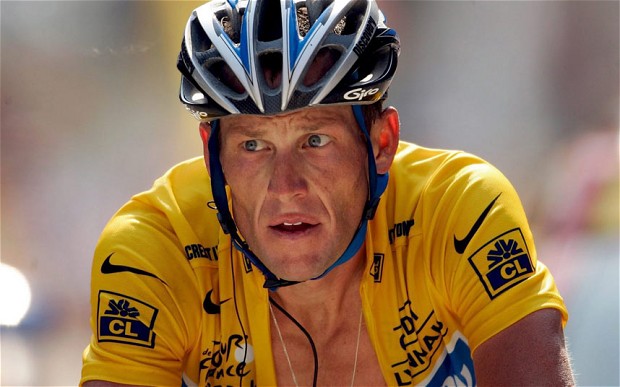
A lasting, longing lament about Lance as liar. And how we see ourselves in him.

By Monte Wehrkamp

I lied. I’m a liar.

I cheated. I skirted rules for my own advantage.

I manipulated. I behaved in ways to get my own way.

I take no pride in these actions and behaviors. In fact, every time I think of various situations where I lied, cheated, and manipulated, I’m ashamed and regretful.

But I’ve also been generous. Helpful. Supportive. Cheerful. Law abiding.

When I am reminded of the times I’ve been a positive influence on my family, friends and community, I am proud and a joyful.

See, this is what being human looks like. This is what I look like. You look like. All of us. Even our heroes. Especially our heroes.

I’m going to go back and remind myself — and this blog’s readers (hi Mom) — of what I said a couple months ago regarding the tarsnake of the yellow LiveStrong wrist band.

Livestrong can be a tarsnake for those who engage in Lance Armstrong’s brand and legacy

1. I don’t personally know Lance. I’ve never met him. What I know of him, I learned from watching him race, and reading his books and reports in the sporting press.

2. I don’t personally know if he cheated or rode clean. Sure, there have been rumors over the years. Positive tests of riders Lance raced against. But I’m just a Category 15 rider with virtually zero inside knowledge of pro cycling in general, and Lance specifically.

3. I don’t wear a yellow wristband for Lance. I wear it for those I know who have, and have had cancer. Those that are sick, healed, and those who have died from this disease. They are (and were) friends and family members.

A lot’s transpired regarding Lance since I originally wrote those words. And a lot of people — and I’m talking tens of thousands — are pounding out their own versions of “F*** You, F*****,” on cycling, sports, and news comment sections and opinion forums all over the internet. Just like how the guy in the gray Durango shouted at me as I rode along in my black and yellow LiveStrong jersey earlier this summer.

There’s been a lot of piling on. A feeding frenzy of indignation, anger and disgust.

But I want to step back a minute. To take a breath now that the USADA report has been read. As well as stories of sponsors dropping Lance, and his stepping down as chairman of LiveStrong. And Tyler Hamilton’s haunting book about professional cycling. What are we left with?

A human being.

We have the cycling champion who broke the rules to get to, and stay on top of, his sport.

And…

We have the cancer patients’ champion who created a charity which helps match patient needs with services; everything from caregivers, support systems, insurance providers, to financial assistance.

We have a man who used his power, influence and wealth to manipulate and intimidate those within his sport to also use performance enhancing drugs, and to silence others who sought to reveal the use of drugs in cycling.

And…

We have a man who used his power, influence and wealth to influence lawmakers, other wealthy individuals, and multinational corporations to join his cause to assist cancer patients and their families.

With Lance, we’re finding an all too similar reflection of our own selves. That like me, he lied. Like me, he cheated. Like me, he manipulated others. Like you, too.

Because the revelations are all so very human, they cut to our own essence. Of our own duality. Of our own shortcomings. So our first reaction is to yell or type, “F*** You, F*****!”

Maybe who we’re really yelling at (or writing to) is ourselves. Perhaps what we’re finally learning is what we’ve always know about Lance — and ourselves — and it’s a pretty tough pill to swallow (see what I did there).

I’m a liar. I’m a cheater. I’m a manipulator. We all are.

But I’m also a helper, holder, supporter, and cheerleader, too. We all are.

We’re human. Lance is human.

So, back to the tarsnake of the yellow wristband. It still serves to remind me of all the people who are battling cancer. But now it’s more than that. For just as it’s hard to get up each day and struggle against this horrible disease, so too is it hard to face our own personal failings. The yellow wristband has also a become, for me, a symbol of my own human nature. Our human nature. Lance’s, too.

In the end, we can only hope to do what’s spiritually and emotionally healthy: to accept, to forgive, to move forward. Sometimes it’s difficult. No, lots of times, it’s difficult. But it’s necessary, and the only way out of the tarsnakes of depression, anger, denial, and resentment.

That’s a whole lot of complex meaning tied up in one yellow wristband, I know. So much easier to be angry and type and shout at Lance and each other. All I’m asking is we stop, think really hard about what it is we’re so mad about and so disappointed in. Then realize, it’s really ourselves and our human nature. So I’m putting on the wristband and reminding myself each day is a series of choices. Maybe yours and mine aren’t lived out on an international stage like Lance’s, but they matter to the people in our lives. And ourselves.

Posted in Tarsnakes, We Run and Ride Every Day | Tagged , , , , , , , , , | Leave a comment

Pro cyclists not only cheat using drugs, they may evade taxes as well

Monte Wehrkamp on our annual trek to Wisconsin

Genius rant by Monte Wehrkamp with commentary and edits by Christopher Cudworth. 

CLC: What follows is a stream on consciousness email from my co-blogger, mountain bike and road bike partner and general all-around curmudgeon genius friend Monte Wehrkamp. This is the kind of thinking we have been sending back and forth to each other by email for years. Well, it’s about time the rest of the world sees what a capable and insightful thinker this guy is, if a bit of a conspiracist. That’s why I love him. His conspiracies actually make sense. None of that “man never landed on the moon shit.” This is picking up clues like Sherlock Holmes and anticipating breaking news. Monte loves cycling. But he hates idiots. 

This piece (originally an email) starts with an excerpt from an article in Cycling News. Keep in mind Monte is an English major and copywriter at a marketing agency. This explains the early part of the article, in which he takes down a cycling writer for having crappy grammar. He’s right. Even a casual reader of cycling magazines and Internet sites finds this kid of crap all the time. Our only guess is that they’re too busy running around to bad hotels to actually spell or grammar check their work.

The article goes on to reveal some of Monte’s compelling insight about cycling and its possible money-laundering scheme, its relationship to drugs and how that may turn out to be the next wave of mea culpas in the sport. 

Take it away, Monte:

FROM CYCLING NEWS: “Many riders and teams use a tax avoidance scheme on their image rights contracts to limit their exposure to tax. Gazzetta claims that Scimone and the riders worked with a company called T&F Sport Management in Monte Carlo to register image right contracts and avoid tax.

“The contracts are apparently not registered with the UCI and the riders pay just six percent tax and then are able to transfer the cash to Switzerland and use it for various activities, including paying Dr. Ferrari for his services.  The Italian police have investigated if this has lead to money laundering.”

http://www.cyclingnews.com/news/gazzetta-reveals-scale-of-doping-and-money-laundering-under-dr-ferrari

First, it’s led, goddammit. The past-tense of to lead is led. Otherwise, you’re describing what I use to weight my fishing hook. Or fill my mechanical pencil. FFS, Cycling News!

Okay. Sorry.

Remember, earlier this year, when there was a dust-up between Leopard SA and the Schlecks? About unpaid salaries? And those were defined as “image rights”?

Well, here’s what image rights are, in practice. A form of payment allowing riders to dodge taxes. It’s an end-around the UCI as well.

I finally learned what that meant today in this article on Cycling News covering the police investigation of Michele Ferrari. Seems that the good doctor would help cyclists  to dope, and also help cover the money tracks of his clients by accepting “Image rights” money laundered by T&F as payment for his, um, advice.

So perhaps Leopard SA was reluctant to help the Schlecks with this arrangement? And that was what the finger pointing and accusations were about? Cancellara was claiming non-payment of “image rights” money as well. (Is it possible Leopard knew the Italian federales were sniffing out the arrangement, so management was insisting their guys take salaries on the up and up, refusing to pay “image rights” so as not to implicate themselves as running a doping team?)

Two other big-name riders came out at the same time and said they had no problems getting their salaries: Horner and Voigt. Perhaps they’re not on the “image rights” program as they weren’t laundering their money or using it in the Ferrari system to get drugs. Both are adament they’re riding clean, and so far, nobody’s ever accused them of doing otherwise.

Which brings us to the fact that Frank (Schleck) has been tied to Ferrari in the past by making financial payments directly to him (Frank claimed it was just for training “advice” — does anyone, anywhere, still believe that Ferrari’s services including mapping out intervals and watt outputs, really?). And then Frank got popped for a masking diuretic at the Tour de France.

Frank’s “poisoning” defense is possible. It’s no secret the Schlecks wanted to ride together, and use their old training methods (whatever those may have been). And Johan Bruyneel (Radio Shack team manager) said no, you’re going to do things my way. And it’s now well-known (especially now that the USADA investigation is out) that Bruyneel was a dope pusher in the past.

Then there’s the allegations of “image rights” non-payment by the Schlecks. So maybe, Bruyneel had the motivation to see Frank got a spiked water bottle (in the recently broadcast 30 for 30 ESPN program on the Seoul 100 meter event, we learned that purposely spiking an athlete’s drink really does happen).

Horner’s defense of Frank at the time was kinda lame: We take drinks from fans all the time. I took probably 20 Cokes from strangers this Tour (every other pro rolled their eyes at that one – riders stopped taking drinks from road-side strangers decades ago). So that didn’t help Frank’s cause much.

Learning this “image rights” arrangement just kinda adds up to more incriminating  circumstances for Frank, now that we know that these payments are used to avoid taxes, and have been linked to Ferrari’s Swiss bank accounts.

And to think, when he was popped (for doping…) Frank wasn’t even close to being in contention. Nor was he doing much to help in the Team Classification either. He was kinda stinking it up out there. Payback, and payoffs, it seems, can literally turn out to be quite a bitch.

But until lately, no one’s had the guts to come out and bitch about it. Perhaps that is about to change as well.


Posted in Tarsnakes, We Run and Ride Every Day | Leave a comment

It’s all about the running and riding gear sometimes. Almost always wish it weren’t.

Getting out to run or ride should be simple. But often it is not. The best intentions to go out for a workout can be lost for lack of a simple item, like a biking glove, or one of your running shoes, buried under a week’s work of wash-needy clothes in the base of a closet.

Unless you’re really organized, these obstacles hold you back.

Because even if you have the best gear in the world for your sport, if you can’t find it when you need it, there’s no use owning it.

So it really is all about the gear sometimes. And we almost always wish it weren’t.

There are times when you can turn out to be thankful to have misplaced your rain jacket when 10 minutes after you wanted to go out for a run but were forced to look around for your rainproof gear, the skies really open up and you realize it turned out to be better after all to wait.

A few times in my cycling career I’ve actually gone OUT INTO THE RAIN. Yes, when it was pouring. If you want to ride badly enough, you suit up, know your shoes are going to be soaked through in minutes and go out and ride. That is also known as getting hardened for the sport. Because if you’re racing in the rain and you’ve never ridden in a downpour, you cannot possibly be prepared to handle wet conditions.

Cycling can be tough in wet conditions, for sure. Even if you are wearing the right gear, there is the condition of the roads to consider. Skinny tires can skid out easily. Fat tires can toss up sticks, grit and oil. Your teeth get grindy as a result. Down south you might even watch out for snakes flying up from your tires.

But that’s all great stuff that happens when you’re already out running and riding. Great stuff. Really.

It’s getting out the door that still remains our greatest challenge. Like right now I’m thinking about getting out for a ride on a Saturday afternoon. But it’s now 3:53 and I have a speaking engagement at 5:30 pm. If everything went absolutely perfect in the next 7 minutes, I could get out for a ride of 45 minutes and pedal hard, just for the kick of it.

I didn’t mean to let it get this late. But there are relatives in town and sometimes you sacrifice your precious workout time to be civil when you won’t see them again in months. That’s called being a grownup.

In actuality, I know where all my gear is. But racing around trying to get ready is just not how I like to go about riding or running these day. I’d go for a 25 minute run, which takes less time, but my hamstrings are very fitful coming off the bike accident, and two days in a row is a bit much to ask of those slabs of brittle meat.

So I’ll walk the dog for exercise and plan on making tomorrow a better workout day. It is also supposed to warm up in Illinois for the next four days.

Keeping perspective when your gear doesn’t fly onto your body is the best way to keep sane. No sense beating yourself up for one missed workout unless you’re keeping some sort of streak going. Of course you’d never let relatives or gear or time or injury stand in your way if this was your 1,113th consecutive day of working out. You’d dig around and find any type of gear you could, then hobble out the door for a mile if that is all you can manage. Mark it down as a workout. Tell yourself you’re tougher and more dedicated than most.

Yes, its all about the gear sometimes, both the wearable and metaphysical type. As in mental gear to get you prepared and keep you prepared.

Almost always wish it weren’t about the gear. Perhaps if we could run and ride naked this would all be so much easier, wouldn’t it?

All you’d have to find is your courage, and perhaps your humility.

Posted in Tarsnakes, We Run and Ride Every Day | Tagged , , , , , , , , , , , , , , , , , , , | Leave a comment

Oh my God. I’m out of breath.

Down the road like a kid.

As kids most of us grew up running and playing, riding our bikes and generally exerting ourselves without the term “training” associated with our activities.

When we got tired, we either stopped or begged others to stop the game while we sat in the grass, catching our breath until another session began.

It was a simple thing, getting out of breath. But it said you were alive. Having fun. Trying your hardest.

By the time you hit 12 years old (and much earlier nowadays) the games get more serious. Coaches stand around watching, or parents. Sometimes that was the worst. Knowing dad or mom were watching from the sidelines put some pressure on you. That never used to happen at practices. Today you see queues of parents hanging out at club or school practices, nervously eyeing the efforts of their Division I, II or III prospect in action.

From middle school on, play turns into something else besides mere fun. Competing in sports is supposed to fun, of course. And a healthy kid playing sports has plenty of fun over the years. Yet it is easy to forget the fun and let the competition define who you are, rather than the other way around. Then getting out of breath is not so much fun. It puts you at risk of not doing your best.

The first time I came back to playing competitive soccer after 1o years of coaching my kids through various age groups, it was a rude shock. I’d kept up my running but that was mostly long, slow distance. Indoor soccer was the opposite. You sprinted from end to end, side to side without stop. Pretty much you ran until you were completely out of breath and then you fell into the player box outside the field, gasping for air and water. Then you went back out and did it again. It took weeks to develop any sort of anaerobic fitness. And by then the season was pretty much over.

I especially recall one night game that started at 11 p.m. We had no subs. Zero. No one to spell you on the field. The game proved fast and furious, and by halftime at that late an hour there was literally nothing left in the tank for any of us. The game was tied at 3 each when a teammate passed me the ball at the top of the box. It was a clear scoring opportunity. But despite the good chances for a goal, it was impossible for me to move the two steps to trap the ball. Not possible. My teammate shrieked at the missed chance, and gave me the chill treatment back on the bench.

At that point I did not care. The game was no fun at that point. I was out of breath.

That sharp, short feeling of exhaustion returned the other day during the slowest run of all. All that fitness built up over the last year and previous years slipped away during the month after my bike crash. It all has to be rebuilt. For running, that means lots more strength work on the quads and tendons supported the knees and hips. Without that work, my 50,000 miles of lifetime running catches up with me, and I get hobbled.

On the bike, the core muscles of my gut and those tender lower back muscles are the challenge. That is going to take some time to get back too.

But when I tried to go faster on the run, that not-good feeling of “out of breath” came suddenly upon my lower trachea. Oh my God, I’m out of breath!

It’s been a long time since I was this out of shape. That’s not to say I’m blaming myself for laziness or anything of the sort. But when you’ve built up a lifetime of expectation and dedication to fitness, getting out of breath is just an unacceptable feeling.

I’ve decided the thing to do about it is to go out and have a little fun. Like a kid. Don’t time the runs or even check the distance. Walk a little if necessary. Stretch the wounded hamstring that is still giving me fits.

And cycling. Earlier this week my friend Monte Wehrkamp and I went on a mountain bike ride down the Fox River Trail and over to the expansive campus of Fermi National Accelerator Laboratory. The roads and trails there are quiet, and we were about to turn home because it was getting to be twilight, when Monte asked about the spot where I wanted to try to find a bird I’ve never seen, a Harris sparrow. Monte is a hunter, not a birder, but he likes being outdoors doing anything. We’ve gone bass fishing together, for example.

I turned to him and said, “You know what? Let’s turn around an go. It’s not dark yet, and this is when the bird is supposed to come out.”

We rode across Fermi and pulled onto the grassy two-track leading to the sparrow hedge behind a big lake. On the way we encountered a well-known birder who had found the bird originally. I asked directions and we pedaled on.

It was growing dark as we stood there listening to dozens of sparrows twitter and chirp. But no Harris sparrow. Above us Canada geese were fighting the same stiff breeze that was keeping the sparrows down in the bushes. It was October, and twilight, and it reminded Monte of many a hunting trip where he put the bow or gun away at dark and sat watching the coyotes or bobcats emerge from the woods. This was shared time in the wild. This was us on bikes out in the wildest place we could find. This was us having fun.

And neither of us was out of breath.

On the ride home we cruised through the dark and took the back streets. “It’s like being a kid again,” he told me.

Yes it was. Indeed it was. And worth every minute.


Posted in We Run and Ride Every Day | Tagged , , , , , , , , , , , | 3 Comments

Did you miss Lance Armstrong’s confession? Here it is.

From the UK Telegraph. Lance Armstrong.

When the USADA doping investigation that has taken down Lance Armstrong first went public with its findings, Armstrong remained defiant, claiming his innocence in never having failed a drug test in all those years of cycling.

That is a mystery, in some respects. But the curtain on that seeming contradiction was pulled back somewhat by what Armstrong said in his own defense:

“I know who won those seven Tours, my teammates know who won those seven Tours, and everyone I competed against knows who won those seven Tours. We all raced together. For three weeks over the same roads, the same mountains, and against all the weather and elements that we had to confront. There were no shortcuts, there was no special treatment. The same courses, the same rules. The toughest event in the world where the strongest man wins. Nobody can ever change that.”

Admirable in its forceful defense of his victories, Armstrong’s statement still stops short of saying he was truly innocent of doping. And that, in the context of all the evidence now emerging in full context of teammates confessing and accepting bans and possible other punishments for their sins, amounts to a confession by Armstrong as well.

He is right in saying he knows who won those seven Tours. No one else could beat him. Not even if they doped as well.

His teammates also know who won those seven Tours. Because many of them had to dope simply to keep up and provide support to Lance Armstrong. Otherwise they were kicked off the team.

His competitors know who won those seven Tours as well. Many of them were convicted of doping as well. The era in which Armstrong was competing was rife with other dopers. Everyone in the peloton knew it, which is why Armstrong goes on to say, “We all raced together.”

In other words, we were all doping. So the playing field, though illegally steeped by doping, was essentially level.

Only Lance was the best doper of them all. And being the eminent controlling personality he is reputed to be, he was able to maintain the ruse against all investigations. In fact, there are hints of evidence that many in the cycling world, at the UCI and other organizations, saw Lance and the excitement he created as a money machine and a vital promoter of cycling as a product. Lance fed the sponsors of all those teams.

Armstrong goes on to chronicle the difficulty of racing the Tour de France. No one questions that aspect of his confession, for sure. Three weeks of racing. Over difficult roads, some narrow, some broad, many windblown and rough. It takes one tough soul to navigate all that and finish first. Lance was the best at it. Truly it is hard to take that away from him. There is a chance that doping isn’t even all that helpful in many respects of racing the Tour de France.

Doping doesn’t keep you from crashing, as we saw in Armstrong’s comeback attempts. He did finish 3rd his first time back. The second time around in his comeback was a total disaster. Armstrong wound up on the deck with a deep cut below his eye. The champion was suddenly vulnerable. But he raced on because, in his own words, he was racing for a different purpose than winning.

One cannot doubt that type of resolve. To ride on when victory is out of reach, especially for a distinct champion like Lance Armstrong, is truly a sign of commitment to some other cause. A perhaps higher cause than personal victory. That is the confusing part of the Armstrong story. His confession continues to elucidate that complexity.

“There were no shortcuts,” he insists. Well, some would say that doping is a shortcut to victory, in some sense. But Armstrong is talking about the fact that he rode all those miles in training to prepare for the Tour. You really can’t fake that. You can’t take a typical Category 1 cyclist who wins races, dope him up and throw him on the Tour course and expect a victory.

Of course talented cyclists continue to come along every year. An exciting new crop of riders like Tejay van Garderen and Peter Sagan, Chris Froome and Matthew Busche (of Armstrong’s own Radio Shack team) have made cycling interesting in a whole new way. The sport is actually more fascinating when more than one cyclist has a chance to win.

Because let’s admit it, last year’s Tour was a workmanlike effort by Team Sky’s Bradley Wiggins. The race fairly failed to inspire. No one could break away from the Team Sky juggernaut, and it became a mechanical slog. Sports fans want drama, and conflict. We’ll see what next year’s Tour brings…

That is not to say it was easy for Wiggins. Far from it. Wiggins still had to protect himself, as did his teammates, from calamity. That is always the risk in stage races like the Tour. Every day is literally a calamity waiting to happen. The Tour a few years ago had some of the craziest, insane crashes ever seen in the race. Johnny Hoogerland wound up thrown through the air and shredded by a barbed wire fence. Yet he rode to the finish with his torn up ass hanging out of his kit and went on to win a stage that year, if memory serves.

Cycling is literally an insane sport in some ways. Racing down mountain descents is the most irrational act in the entire scenario of professional sports. There is no cushion or margin of safety. Lance Armstrong was once forced to ditch the road and ride across a mountain meadow, rejoining the race after cutting off a hairpin turn. No one accused him of taking a shortcut. So he was both literally and rhetorically correct in his statement about the difficulties of his victories.

Facts like those do obscure the supposed advantage of doping, particularly when everyone else does it. The cycling magazine Velo even conducted analysis of the Tour results the last 10 years and it can now be seen that the results have tightened among the leaders. No more 4-minute victories. Yet the cyclists who competed said the peloton was more dangerous to ride because the so-called level playing field meant that more riders were contending for positions at the front, where riding is safest. Ironically, that may be contributing to an increase in crashes. Some riders suggested the race needs to cut down the number of teams entered.

That’s what Armstrong means by saying “there was no special treatment.” Professional bike racers are a badass bunch of elbow-throwing, bike-leaning and curse-word-throwing zealots who don’t take crap from anyone. Armstrong reportedly was the strongest of all patrons, the one rider in the pack who does not tolerate abuse or dissent among the ranks. So we might question, given his 7-year reign, whether that sort of authority does not constitute “special treatment.” But it is special treatment you have to earn.

Armstrong did ride the same courses as everyone else. The same fierce winds off the northern coast. The same rolling hills and flat out pace lines on sprint stages. Then the mountains. Those horrid climbs where the legs beg to stop, and the baked minds of cyclists competing in hundred-degree heat or stunning cold must transcend all messages from the body to quit. Armstrong did it all better than anyone, seven times over.

He is right in calling it the “toughest even in the world, where the strongest man wins.” He was the strongest man among strong men who were all in on the doping game. And that means “all in” as a gambler as well. Everyone who rode with the help of doping was taking a gamble they would not get caught. Yet many did, and served sentences and bans for their transgressions as a result. Armstrong’s own teammates Floyd Landis and Tyler Hamilton tried to come clean when they got caught, and then tried to implicate Armstrong as the head of the culture that favored doping for success. Armstrong attacked those men for their confessions, threatening them or questioning their character. These were very public confessions and accusations being made. And that’s not the way Lance Armstrong is used to playing the game.

So Lance Armstrong is correct in saying of the nature of his Tour victories, “Nobody can ever change that.” What’s done is done. He rode well and he won. He also apparently doped along with the rest of the world and that can’t be changed either.

Armstrong at a Livestrong appearance.

And while most of us missed it, he did confess, in so many words. His confession, like so many mea culpas in sport, politics and religion, fell a little short of direct honesty. But its considerable scope and attribution do not dissolve its confessional nature.

In the end, Lance Armstrong is being honest about his dishonesty. That is likely the most we will get out of this proud man who has done so much for cycling even though he cheated along with the rest of the world.

He has done even more for the challenging plight of cancer patients worldwide the the Lance Armstrong Foundation and Livestrong, the highly active and effective education and assistance organization that delivers key resources and advice to cancer patients and their caregivers. So that is the balance in judgment many are being called to weigh. Which of his achievements is most important?

He has ridden the hard road bringing attention to cancer as a medical and social issue, touching the world of politics and economics as a result. Yet it can be said: men and women like Lance Armstrong in many ways do not live in the same world as the rest of us. They take on great challenges and accept great risks as a result. Sometimes, they fall.

That is clear from the examples of so many other heroes who have proven to be frail in their demonstrable determination. Tiger Woods. Mark McGwire and Sammy Sosa. Bill Clinton and a host of other public personalities in all walks of life. All whose enormous feats and contributions add to our imaginations, but are also doomed at times to fail us.

That is what Lance Armstrong said in his confessional statement. Even in success many are doomed to fail, and the world works in strange and often corrupt ways. That is the ruse we all abide, to believe in some things human or magical.

That is not to say that no one achieves good or exceeds our expectations without cheating, just that it is far more commonplace than we like to think. The chieftains of wealth and corporate success have let us down repeatedly over the decades, bringing on recessions and even a Depression with their excess greed. The entire world is at risk from human activity, pollution and extraction just from the last 100 years.

But Lance Armstrong is right. We all breathe the same air. None of us gets special treatment in the end. It is not so clear whether we all play by the same rules. The last economic recession has proven that may not be the case.

What we can learn from Lance Armstrong’s confession is just as important as what we can learn from his failures and successes as a human being. It is important to read between the lines, examine the character and intent of those we choose to idolize, and not be surprised if we pull back the curtain to find out that the people we lionize as gods are in fact so human it is stunning to behold.

That is why most people missed the Lance Armstrong confession. We want to continue to believe in the gods rather than accept their human nature. That is the human condition. Ever has been. Ever will be.

Posted in We Run and Ride Every Day | Tagged , , , , , , , , , , , , , , , , , , , , , , , , | 1 Comment

The philosophical tarsnake of wearing a yellow Livestrong wristband

Livestrong can be a tarsnake for those who engage in Lance Armstrong’s brand and legacy

8 years ago when I was taking up cycling to compliment my running and weight training, I mentioned to my friend Monte Wehrkamp that I had a bike but wasn’t sure it was good enough to keep up with the group rides to which I was invited.

Having been a rider many years before, he offered me a classic road bike that he no longer used. It turned out to be a little small (56cm) for my long torso, but the gesture always stuck with me as a genuine bit of encouragement.

When he brought over the bike, he was pretty sure he would never be using it or much of his other cycling gear. That meant he delivered a box of stuff, in which two cellophane-wrapped Livestrong bracelets were included.

Being well aware of Lance Armstrong’s cycling career and wins in the Tour de France (he had won 3 or 4 times by then) it was fun to have my own Livestrong bracelet. At the time my mother had begun to show signs of struggling with lymphoma, a blood-borne cancer. And 10 years before I had helped a personal friend through rehabilitation from testicular cancer. I knew how tough it was on his body. Even though he was an All-American 400 meter runner in college, the cancer took such a toll he could barely walk around the block. But we did it together those cool fall nights and he’s since fathered 3 great children and is one of the most successful high school football coaches in the state of Illinois.

I put on the Livestrong bracelet feeling tangentially connected to the cause of fighting cancer. The year was 2005.

That spring my wife began having physical problems and I encouraged her to go to the gynecologist to get checked. They found a small cycst on her ovary and scheduled a laparoscopic surgery to explore and remove the cyst. We weren’t overly concerned because my wife had had two large ovarian cysts removed back when we were dating in the early 80s.

Then the pathology report came back with news that this new cyst was ovarian cancer, Stage IIc, and possibly an aggressive form.

I remember crying the entire drive to work that next day, 30 miles of sobbing, aching fear that was not easily shaken.

But then we found doctors, worked through the HMO and managed her care through the help of friends and members of our church. The chemo was wrenching. Horrific in some ways. Side effects were unpredictable. But we began to learn to keep our antennae up and ward off these surprises. We got good at chemo, and surviving cancer.

My mother was not so lucky. At 80 years old that same year in 2005 she tried to fight off lymphoma only to discover her pancreas had cancer too. She tried one round of chemo and died of a stroke days later.

Obviously that was tough news to take given my wife’s ongoing fight with ovarian cancer. But we achieved a 2-year remission before it came back again.

During those years I built more confidence on the bike and ultimately purchased a carbon fiber Felt 4C road bike in 2006. It was a revelation to get on a really decent road bike. I could stick with the Saturday group rides, and putting in miles for fitness was much more fun.

All the while the yellow Livestrong wristband rode along with me. It has been a small symbol of fortitude through my wife’s cancer treatments in 2005, 2007, 2010, 2011 and 2012. Multiple chemo regimens, surgeries and other lifesaving treatments have ruled our lives. Battling cancer has hurt my career, as companies shy about costs of cancer coverage have found ways to get me off the payroll. One literally fired me the day after I told them my wife had cancer. Another tried to let me go and then cut off my insurance coverage. I researched the law and was able to maintain coverage under Illinois continuance. In case you don’t know, the laws protecting employees for COBRA and other insurance issues don’t reach down to companies with 16 employees or less. It’s a gray area and most of the power and authority rests with the company, not the employee. Livestrong and other cancer-oriented organizations provide legal advice and resources on subjects like that. So it makes no sense to throw out the baby with the bathwater.

For all the crowing and cheering we hear about small companies generating jobs in America, the dark side of the issue is that small companies are running in fear of rising health insurance rates. Some are now blaming Obamacare for the threat of possible higher rates, but the Bush administration did absolutely nothing about the straight-line 12% average rise in health care insurance rates from 2000-2008.

So the Livestrong bracelet on my arm is a symbol of surviving not just cancer with my wife, but also the overall legal and corporate weight of trying to maintain health care protection for families. Sometimes the battle with cancer is as much with the ramifications of the disease as it is with the disease itself. I’ve done a good job for the companies where I’ve worked, earning multiple marketing awards, writing successful nominations to earn the President recognition and finding ways for clients to innovate their marketing and communications strategies. But when companies find themselves under monetary pressure, especially an unknown like insurance costs, even demonstrated performance can go out the door.

Today, October 17, 2012, is the day Lance Armstrong stepped down as Chairman of the Livestrong non-profit formed around his legacy. There are a reputed 80 million Livestrong bracelets in circulation worldwide. You see them everywhere. People have their own reasons for wearing them. It is a symbolic gesture of support for cancer patients; friends and family who suffer through treatments. Some make it. Many still don’t.

One could argue that Lance Armstrong beat the cancer in his body but could not beat back the cancer infecting his sport. In fact, rather than trying to stop use of doping and other drugs to enhance performance, Lance Armstrong apparently became the best at it. Yes, he never officially failed a blood test. Yet anyone who has read anything about him recognizes his obsession over detail, and he simply might have enlisted to best doctors on earth to mask use of performance-enhancing drugs. The fact that he allegedly roped in teammates and even coerced them into using drugs to compete on his teams is simply a sign that he had embraced the cancer of doping rather than resisting it.

Perhaps the competitive spirit that fires Lance Armstrong could not allow him to separate fact from fiction at the time he faced that choice to dope or not. We all know Lance hates to lose. But it would have been impossible, really, for Lance alone to take on the sport of cycling. Remember the sport was still extremely Euro-centric at the time of his ascendance. Even while he competed the French newspapers hated his guts. They only liked him when he came back in 2009, looking a bit older and more vulnerable. But it turns out he may still have been doping then.

Thus a legacy is tarnished. And how many people are now sadly pulling off their yellow Livestrong bracelets to store them in a dresser drawer. Have they become a token of a seemingly happy era when pro cycling seemed on its way to becoming a beacon of hope? The fact that dozens of riders in the peloton rode with yellow Livestrong bracelets was a sign that those riders believed in the bigger cause promoted by Lance Armstrong.

I could swap my yellow Livestrong bracelet for a teal-colored bracelet symbolizing ovarian cancer. But I’ve worn the yellow Livestrong bracelet now for so long that it would seem like giving up a part of myself and neglect the hope and progress we’ve sustained while keeping my wife healthy all these years. There is still hope in our lives.

Cancer is persistent and unsentimental. It does not care if you wear a yellow Livestrong bracelet or not. Cancer is also part of the condition of all living things. Dogs can get cancer. Cats, rats and birds, too.

So rather than throw out the Livestrong bracelet on my wrist, I’m keeping it to remember that people saw and opportunity to show unity over a cause that is vital, and human, and virtuous. As it turned out, my friend Monte wound up getting back on his bike again last year after 20 years away from riding. Got himself a nice Jamis and his riding form came back quickly, losing weight and having fun on the roads again.

We have both been supporters of the Livestrong brand for years.

The fact that the human being who helped drive and invent the symbol of that cause is flawed, and that he committed to an alleged lie that helped make him famous should surprise very few, really. Sports brings out the worst in many people. But now the sport of cycling appears to be fighting back. Few could have predicted that, either.

It is life that brings out the best in people in the end and I will keep wearing my yellow Livestrong bracelet as a result. The brand is still pertinent: And that is to prevail, the ultimate goal of anyone on this earth.

But we know now the ends do not always justify the means. Someone would have to be really yellow to believe that.

← Back

Thank you for your response. ✨

Posted in Tarsnakes | Leave a comment

The tarsnake of pricks on the road who run and ride

A literal prick on the road. Not much nice than the metaphor, is it?

While walking the dog through a park near our house that was in the process of a makeover with new ballfields, playgrounds and turf, we followed the newly paved trail around the perimeter and met up with some interesting artwork on the brand new asphalt.

Some local kid had discovered a discarded can of fluorescent spray paint used for marking the construction site and fashioned, with artistically composed dribbles, repeated images of male genitalia at intervals around the park. A road prick.

We’re all aware that the slang for male genitalia is “prick.” But it also has another meaning, a harsher definition related to being mean toward someone, or mistreating them. Interesting, all these definitions for the word “prick” converge at some point, as evidenced by this online reference.  If you call someone a prick it means they’re being a jerk, selfish or worse.

Fascinatingly, in line with the illustration provided for this article, this is the 15th reference in definition of the word “prick”:

15: to mark (a surface) with pricks or dots in tracing something.

So this is one of those weirdly odd occasions when art really does meet reality. And so we proceed.

Those “road pricks” on the park trail got me thinking about the symbolism of the images, and how many times the metaphor has come true in meeting pricks on the roads over the years. We all encounter “pricks” of various types while running and riding. People who will not even lift their heads or give a wave as they run or ride past us.

For a long time it perplexed me why people seemed so unfriendly. It was an old habit of mine to wave hello even during intense workouts. I don’t know why, it just seemed right. You’re out doing something you love, why be a prick about it?

Runners usually do wave hello if you wave at them. Even the fastest runners can be seen from a long way off, so there’s plenty of time to look up and acknowledge another runner.

Cycling is a little different. For starters, it really is important to keep your eyes on the road to monitor the surface for tarsnakes, road debris and other obstacles. Otherwise you can wind up with road rash, or worse yet, become road kill.

So we can all agree, cyclists absolutely must focus their eyes and minds to monitor traffic closely, lest they be killed or injured by a vehicle. All those are very good reasons to keep your focus and may preclude saying hello to another cyclist when out riding.

On an empty road…

There are also times when two cyclists pass  going opposite directions and the opportunity to at least give a little wave is patent and obvious. Yet some people still refuse to do so. That is called being a prick.

And there are reasons, albeit social in nature, for cyclists to behave that way.

There is a well-defined hierarchy in cycling, far more pronounced and defined than in running. Cyclists fall into clear categories defined by the type of bike they ride (road, mountain or casual, for example) followed by the clothes they wear (full road kit, triathlon gear, basic cycling wear and ‘just out for a ride’) and finally, the subtle marks of form and pace.

All these factors can be assessed at a glance by seasoned cyclists. Some instantly make a judgment in their own eyes and simply refuse to acknowledge anyone outside their category. Is that being a prick to others, or is human nature simply prone to such tribal behaviors?

The competitive hierarchy of cycling almost determines that behavior. The reality is that the faster you are going on the road, the more you need to pay attention to what you are doing. So despite the fact that you’d like the guy or gal on the $7,000 Trek Madone with full team kit (even socks!) to wave at you, they often don’t have the time or attention to do so. Perhaps they’ve earned the right to be pricks, of a sort.

Let’s not forget. There are pricks among runners as well. The best male runners tend to be young and focused. It is not uncommon for these folks to go zipping by you without a word. Their mind is on the next performance. Joggers simply don’t register with them. I admit I was one of those types. A long time ago. Now I wave to create wind resistance so that it is harder for that pregnant mom pushing a stroller while jogging to pass me by. I exaggerate, but you get the picture.

Women rarely seem to be pricks on purpose. I know, they do lack a certain part of the anatomy that some people speculate actually causes prickish behavior in men. And that’s likely accurate.

But it really should be less expected for women to be gregarious and social to strangers while out running, particularly if they are running or riding alone. Safety is a big concern for with women, and justifiably so. A woman in the midst of a workout deserves to focus on herself, and not attract unwanted attention. Street harassment is still a problem for many women, be it visual or verbal. That means women have good reasons to keep to themselves. It is also why so many women elect to run or ride with training partners. Safety and social constructs are part of that picture. Many women simply prefer to run or ride with company. It motivates them, satisfies a social need and provides a sounding board for their goals.

Even so, women in pairs or groups even tend to be on their guard. Many times I’ve ridden up behind a pair of women riding together and asked to join them. Sometimes they do not mind, but sometimes it is clear they would rather be left alone. At all times men should respect the rights of women on the road. If there is any question that you are not really welcome in their company, it is important to go your own way, lest you be the prick in that situation.

The Group Prick Dynamic

Group riders can often come off as pricks as well. A solo rider on a country road who gets overtaken by a fast-moving group of cyclist has almost no chance of catching on if there is no warning they are come. If you are pedaling 20 mph and a group chases you down and passes at 23, the wind in your ears will likely prevent you from catching any sign of their approach. Too often members of that group cast their gaze on the solo rider as if the poor victim sucks for getting caught. In actuality, many know that if it was them and getting caught they would not have any greater chance off staying away.

So do your respective sports a favor, everyone. Don’t be a cycling prick. Don’t be a running prick. Don’t be a road prick of any kind. There are enough other pricks on the road from other sources without us being pricks to each other.

Posted in Tarsnakes | Tagged , , , , , , , , , , , , , , , | 4 Comments

The Sunday Morning Tarsnake: Why race day feels cold and harsh to the running and riding competitor

You’ve spent months preparing. Your next big race is coming up. All the preparations from training to diet to setting out your gear the day before are completed. It’s Saturday night and you are so psyched you almost can’t get to sleep.

Finally you nod off and wake when the alarm goes off at 5:00 a.m.

Oh, God, you think. Is it that time already? Why do I feel so sluggish? Can this be race day, really? Why can’t I feel like I did yesterday, all raring to go and ready to race?

Relax, the Sunday morning blues happen to almost everyone. 

Our brains often resist big commitments. Our minds can’t get a grip on the pain and discomfort to come. Our hearts suddenly yearn for calmer mornings when putting our bodies and reputation on the line weren’t so imminent.

The Sunday Morning Race Day Blues. How do you beat them? 

If you want to be prepared and perky come Sunday morning, you really need to rehearse your state of mind so that fear and trepidation don’t catch up with you on the real race morning.

Sure, you’re used to getting up early to train. But getting up early to race feels different. Why is that?

It’s because the circumstance is defining your mentality, not the other way around.

Sports psychologists spend a lot of time working with elite athletes in golf, swimming, tennis, cycling and running to learn discipline of the mind. Our minds fail us only when the information coming into the mind is inconsistent with our experience. When a golfer gets into a tough situation on the golf course, the ability to envision hitting the next shot well is crucial to overcoming the circumstance in which he or she finds themselves immersed.

See, immersion is exactly what is happening to you on Sunday morning when you wake up feeling underprepared and overwhelmed. That’s why it is so crucial to have tools to work through anxiety and other emotions that hinder your ability to relax, focus and do your best.

Those are the qualities you need to succeed. So those are the qualities you need to have ready when Sunday morning comes.

Are there natural born winners? Do you hate them? 

Some people just seem to breeze through race preparation, rising from bed with a sunny disposition and the will to succeed in a race. Lucky them. Is it simply their good luck to have a brain wired for hard effort? In some cases, that is true.

It is just as likely those sunny souls have methods to control their thoughts. Those might include something as simple as prayer, believe it or not, to take the burden and pressure off their minds. But if you are not the praying type, and don’t want to depend on Providence to help you run a PR, there are more practical ways to get your mind on track.

Practice pays off

If you want to succeed on Sunday morning, that means you want to practice getting ready for your big race so that the sensations associated with rising early and getting out the door on time and in a good state of mind are not so foreign and harsh feeling.

If you have a pre-race routine that includes setting out your equipment then do that the Saturday before your planned race. For runners, that means your racing uniform, shoes and any water or prep you will use for the race.

For cyclists, the system must be more involved, because there is so much to remember. Bike, helmet, gloves, kit, shoes, water bottles, food, arm warmers. The list goes on and on.

But it’s not just about the physical equipment. You should be most focused on how your mind is prepared for race day. So you need to set out your mental equipment where you can see it too.

Objectifying your anxieties

Here’s a nifty trick to help you focus on race day.

The week before you are set to race, write down everything in your head that you want to go right on race day. That means your goal time, splits, and feelings you expect to have when racing. These include feelings of well-being, of confidence and self-fulfillment.

If you are worried about failing somehow, write those feelings down as well. Many people are worried about failing in the eyes of others. You’ve likely talked up your race prep to many people in your life. “I’m running a marathon” sounds good to say in August and September, but when October comes around and Sunday morning dawns dark and windy, all your negative thoughts can overwhelm your aspirations. You immediately doubt yourself. Fear gives you the jitters. Your stomach starts to churn…

But that’s not where you want to be, is it? So don’t get caught by surprise. Spend time leading up to the race anticipating the many factors that can lead to stress. What if the weather is bad, either too hot, too cold or too windy? Are you willing to adjust your pace and end time in order to complete the race. Getting those thoughts down on paper can help you come to grips with the fact that some things really are impossible if conditions are not right.

Yet you want to be flexible as well, able to adjust your mind to overcome adversity in general. It helps to imagine yourself all the way from getting up in the morning, driving to the race, getting your registration and number and stepping or riding to the line.

This helps you eliminate distractions that can crop up on race day. Some friend gets in your face and starts blabbing about how great they feel, and then says something like; “And how are you feeling?”

They might mean well but what they are really doing is throwing their anxieties on you! They’re looking for that one person who will admit they are not feeling well so that the fearful friend will not feel so alone.

Be ready. When you’ve rehearsed what you’re planning to do on race day you can say, with all pleasantness and confidence, “I’ve trained and am getting ready to run the race. So I’m going to focus on that.”

When Sunday comes

Thinking that far into race day; imagining all the preparations and confidence stepping to the line with a flexible and clear mind will help you overcome anxiety.

That way when you rise at 5:00 and feel fearful, you can turn to that firm resolve built up in your mind and tell yourself, “No, this is just a circumstance I am imagining. I am well prepared and am going to do exactly what I’ve practiced and get ready to go.”

So remember, to prepare for Sunday mornings, it always helps to:

  1. Write down your feelings and objectives in advance
  2. Account for everything you need by making a list and rehearsing setup the week before
  3. The week before the race, get up at the exact same time you anticipate rising on race day, and use your preparation process to go out for a workout
  4. During the week leading up to the race, look at your list every day
  5. In the week leading up to your race, be smart about how you talk about your event. Don’t waste precious energy worrying out loud or expanding your “worry sphere” by telling everyone you meet what you’re doing. Keep counsel with a trusted few and avoid those who might be naysayers.
  6. On Saturday night before your Sunday race, focus on the positives you’ve accumulated in training. If you have a training partner, call them or spend time with them to affirm each other in the effort.
  7. Choose a time to get up and fix in your mind that you will not hit the snooze button or sabotage yourself in some other way.
  8. Fix your breakfast while keeping your list handy to go over. Keep anxieties at bay with the confidence you gain from having rehearsed the physical and mental needs of the day.
  9. At the race, keep conversations pleasant and minimal. Focus on what you need to get ready, not by socializing, but by acting on your needs and goals.
  10. Take time to rehearse your mental objectives and revisualizing the work you’ve put in, the successes you’ve had in training and the good feelings you want to experience during the race.

The Sunday Morning Tarsnake does not need to send you off your road to success. Preparation, objectifying your fears and goals and using them to “stay ready” can help Sunday morning be everything you want it to be.


Posted in Tarsnakes | Leave a comment

Surprise! It’s the little muscles that count in running and riding

By Christopher Cudworth

Runners and cyclists tend to think in terms of the big muscles when it comes to performance in their respective sports.

Runners need strong quadriceps (thighs) and decently tuned calf muscles to propel themselves along.

Cyclists also need strong thighs, as well as a well-calibrated set of gluteus maximus muscles to help them up and down hills, connected with hamstrings to pull through a full revolution with clipped-in pedals.

But here’s the truth: runners and cyclists who do not pay attention to the “other” muscles in their bodies are fooling themselves if they think they can improve without paying attention to the “little” muscles that move us along.

All an athlete has to do to learn the importance of “little” muscles is to go through an injury and go through workouts with a physical therapist or personal training to learn how much they are neglecting these little muscles in favor of working, and sometimes overworking, the bigger muscles we feel we most need.

Here are some examples of the “little” muscles your most need and what to do about helping them become stronger.

The muscles around the knee

Knees are such a mix of bone, tendon and muscle that they need balance to function properly. The slightest imbalance can cause chronic injury problems such as chondromalacia (pain under the kneecap) iliotibial band syndrome (pain on the side of the knee) and even torn meniscus (erosion or tearing of the cartilage that serves as cushioning inside the knee).

These conditions are all usually preventable with simple exercises to strengthen the muscular connection points that lead to tendons and support of the knee.

The absolute simplest knee exercise is the one-legged dip. Stand on one foot and raise the other heel and calf perpindicular to the ground. Now lower your body with arms at your side so you aren’t cheating for balance, and bring your opposite knee near to the top of your ankle. That’s it. You’ll be strengthening the little muscles that support the knee. Add some lunges for hamstring strength and side lunges for lateral strength and you’ll see lots of improvement, sometimes within a single day or two.

The gut muscles

We’ve all heard that core strength is important for sports. In running, stomach or core strength can help prevent major problems like side stitches and even stomach upset. It seems strange to say, but the core works like a container for all your guts, both literally and figuratively. The stronger your stomach and rib cage muscles, the less your guts slosh around in there while you’re running. In a marathon, that can make the difference between puking and finishing the race in good shape.

In cycling, it is now known that your core muscles are as important if not more important than your legs in keeping efficient position on the bike and contributing to the overall power output of the cyclist.

The starter solution to core strength is a simple plank position with elbow resting on the ground and hands touching in a vee. Lift up into a plank like you were doing a pushup and hold for 60 seconds. That should be enough to get your gut muscles firing the first few times. Hold longer as you get stronger, and add pushups to lengthen the reach of the core exercise. Crunches and side twists while sitting strengthen and stretch your rib cage muscles.

The back

Gosh it is hard to work those back muscles that always seem to pull at the wrong time. The simplest solution is to lay on your stomach with your arms at your side. Lift your arms in a stiff position so that the points of your shoulder blades touch. Repeat 20-30 times. You’ll feel those muscles start to fire. Then put your arms in a Superman position pointing at 30 degrees away from your head while lying on your stomach. Repeat the lifting position and crunching your shoulder blades together.

Finally, stand against a wall and press your hands against the surface. Simply raise your hands up to full height against the wall for 25-30 repeats. Your back and arms will scream for relief, but you’ll know you’re doing something good for your body.

Lower back strengthening comes from the core work you are doing on your stomach.

Take pride in these “little” muscles and you’ll feel better on every run and every ride. Try it. You won’t regret it.

Posted in Uncategorized | Leave a comment

Revel in personal triumph while realizing you never do it all alone

Only the bike is really alone. The rider depends on others.

Yesterday I took a day to say “Hooray!” that rehabilitation from the bike accident is going well. That is a personal triumph.

But being honest with yourself about any personal triumph means you must place it in its proper context. That means acknowledging the people who helped you get there.

This isn’t easy for some people to do. I think of the workplace and a particular editor at a newspaper where I worked who never, ever praised his writers. His success was entirely dependent on their effort, yet he refused to give them any credit, much less a kind word. If you walked through the editorial department at that time and issued a compliment to a member of the writing staff, they’d flinch.

Complimentary ways

The newspaper industry was originally renowned for its tough stance on quality, and that editor upheld the tradition perhaps in respect for the industry in which he worked. Ultimately he realized, however, that a broken-down staff cannot meet its production deadlines or do good work, and he moderated his ways. He learned to acknowledge the work and contributions of others. It did not compromise the quality of the newspaper, although newspaper people are learning they need to stick together for different reasons.

That would be survival. Former arch rivals in the newspaper industry are now working together. The Chicago Tribune and other larger newspapers now handle the print products for their former competitors. No one’s so worried anymore about stealing scoops or beating competitors to the story. The Internet and 24/7 media took care of all that. Now newspapers are more worried about working together to help each other protect revenue and sustain the business model. There’s a lesson in that for all of us.

Start with one, carry on with the help of many

It’s the same way with our personal goals in running and riding. We all have people who support us, even if it isn’t evident on the surface. The people who attended to me at that Wisconsin campsite following the accident were kind and insightful.

Then my best friend’s wife, a registered nurse, drove me straight from Wisconsin to the emergency room back home. She had worked there and walked me through the registration process and counseling with the ER physician, who delivered the challenging news that surgery was recommended. A thousand things went through my head at that moment, especially the question as to whether I could type while wearing a sling, because my work depended on it. She literally held my hand as the swirling mix of emotions nearly brought the tears on. It all worked out.

My wife and I gave her a token of our appreciation for her help. “Thanks for being Chris’s faux wife,” we wrote on the card. Because my wife at the time was facing a health challenge of her own that day. We all need help at times.

Running into maturity

Having been a runner since the age of 5, when I first timed myself with a stopwatch around the side yard, there have been many times when individual effort is the call of the day. Yet even solo sports like running and riding depend on team work quite a bit. Your teammates drive you to excel through training. Your coaches map out the strategy and workouts. Your friends and relatives show up to cheer you on. Even strangers offering bits of advice or a note of encouragement fill in the gaps.

When all that adds up to a major accomplishment, like qualifying for a national meet or better yet, placing in one like we did as a team in college, you really must look around in wonder at how human beings, social creatures that we are, find ways to work together.

Loving your enemies may be the best way to win

We must also give credit to the people we quantify as our enemies. When Earvin “Magic” Johnson recently appeared on The Daily Show with Jon Stewart, he credited his opponents Larry Bird and the Celtics for driving him and his Lakers team to the greatest heights in basketball. Ultimately Magic and Bird became friends. Sharing lunch at Bird’s house between seasons taught both athletes respect for each other even though, as Magic admitted, “I loved nothing better than kicking Larry Bird’s ass.”

Respect for opponents parallels what Jesus tells us to do in the Bible. “Love your enemies,” we are told. That is the most difficult yet most strict directive in all the Bible. It is also what most people are unable to do, particularly in the realm of religion and politics, or both. If current day Republicans and Democrats found ways to “love their enemies” they might realize that their opponents actually make them better by pointing out their flaws, refining their purpose and forcing compromise that produces better legislation for the nation. But we are nowhere near that mark right now, and too many people vilify their political leaders for loving their enemies. This used to be called bi-partisanship, and great politicians, acting as both legislators and statesmen (and women) helped make the country great.

So it is in our best interests as individuals and as a collective society to acknowledge those who help us, even our enemies.

It’s never to late to say thanks

A few months back I was reading through some material collecting information for an article and stumbled upon a photograph of myself with a competitor from another college. He had kind of a geeky demeanor in those days; thick black glasses and a splay-footed running style. Glancing through the results of the meets in which we competed, I realized he was not just my equal, but defeated me more often than not. It was a revelation–the opposite, you might note, of reveling in one’s own success.

So I looked him up on LinkedIn and wrote a note to him. Told him that I had never realized what a good runner he was, and that our rivalry was actually a fun thing. He agreed, and then related that his biggest triumph was being part of a track team that broke our winning streak of 17 consecutive conference titles. I forgave him this last competitive dig, realizing that my own instincts were not so pure, and thanked him for writing back.

Individually yours

These experiences in work and running and cycling have indeed tempered my personal instincts in many ways. All it takes is one group ride on a road bike to make you realize how dependent you are on the effort of others. Try to ride off the front and you’ll be pulled back within minutes unless you are so strong you can outride the group entirely. But if that is the case, you owe it to your riding partners to put in long pulls and make the overall ride a better experience.

Training partners. Competitors. Co-workers. It all makes for an interesting, subtle mix of motivations and response. But the ultimate truth is that personal triumph is almost never the result of individual effort alone. We depend on the world to make us better at everything we do.

And that’s a good thing.

Posted in We Run and Ride Every Day | Tagged , , , , , , , , , , , , , , | Leave a comment