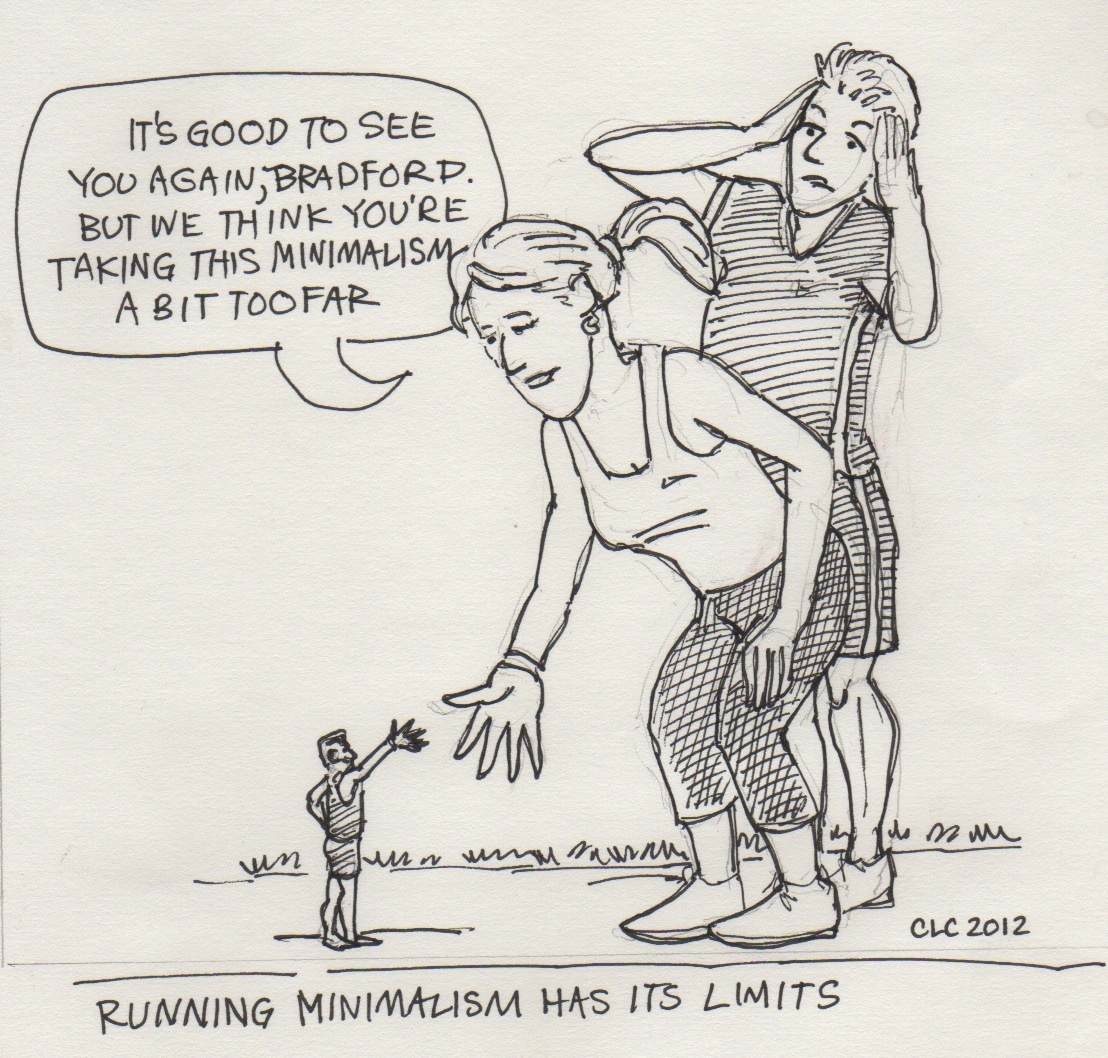
Saturday cartoon: Can minimalism in running go too far?

Posted in Uncategorized | Leave a comment

Forget about running and riding this winter. Polar bears are coming. And they will eat you.

This is a public service announcement. You should probably forget about running and riding for a while. Possibly all winter. Because there’s a really important priority right now in the middle of North America. Apparently we need to protect ourselves from polar bears.

Watch out kid! The polar bears are coming to get us!

You know, polar bears are known to kill and eat people. They will actually hunt you down and chaw on your carcass if they get a chance. And when they do find you, they will bite your skull and you’ll wind up looking like that guy in the Saturday Night Live skit with Headwound Harry.

Fortunately, there are brave hunters protecting us from the potential polar bear onslaught

In the interests of protecting the rest of North America from polar bear attacks, helpful hunters head up to the arctic every year for a chance to kill the King of the Arctic.

Fuzzy wuzzy bear. I just shot you. Now you can’t terrorize Chicago.

They also kill polar bears to feel the white soft fur of the bear once it is dead. One hunter named Fred Bear (no kidding) describes softly stroking the animal he’d just killed: “I walked up to the bear and began to run my hands through his fur.  It was every bit as beautiful as it had seemed from a distance and had a very silky feel to it.  I was surprised at the relative softness that it had as I expected it to be more coarse.”

Not such a good shot

Mr. Bear, otherwise known as Ricardo Longoria, went on to describe how much he admired the polar bear he had just shot through the gut with his bow and arrow after a couple of missed attempts, one of which hit the bear’s back leg.

Other hunters weigh in

A few hunters commenting online about the article did not seem too impressed with Mr. Longoria’s ethics, or his hunting tactics. As one wrote: That is the worst most unethical hunting story I have ever herd (sic). Some rich guy flinging arrows from a longbow at sixty yards or better at a polar bear. Luckily he finaly gets a “good shot” after hitting the bear in the rear leg and missing a couple of times. What a hero. What a JOKE! No wonder bowhunters are targeted by animal rights groups. Pathetic.

Another hunter who goes by the online name of Longbeard still thought Fred Bear did a good job killing his polar bear target, regardless how efficient he was with his bow. Longbeard commented: “Complain all you want on his ‘shot ethics’. the man’s nads still clank when he walks, as they’re most likely made of titanium. I know I don’t have ‘nads enough to do it, nor do a lot of others who post here.”

Doing the bears, and all of us, a favor

Fred Bear seemed to think he was doing the polar bear a huge favor by taking it out of its misery, living in the arctic and all. After all, it’s always cold up there, the ice is shrinking and there’s hardly enough food to go around. So polar bears are pretty much doomed anyway. Why not shoot them and save them the trouble of slowly going extinct?

Yet we must admit that Fred, or Ricardo, seemed to understand the wonder of what he’d just shot: “Its (the polar bear) proportions were massive!  The pads alone were more than fourteen inches long.  Its claws accounted for an additional two inches and were razor sharp.  While turning the bear over I cut one of my hands with its claws.  At this moment I realized that Polar Bear’s really are every bit as dangerous as they are said to be.  I examined its mouth and was surprised to find that one of his canines was missing half of it.  Abe (the guide) examined them and confirmed the bear’s old age.  He thought that the fur might have been was white as it was due to a lack of adequate nutrition.  After skinning and examining the carcass we noticed that this bear had almost no fat on it and was surely suffering from malnutrition.”

Hunters actually trying to prevent polar bear immigration

So really, we should all be grateful there are hunters brave enough to ride around on snow machines up in the arctic, hop off and send the dogs after polar bears and then sneak up on them with a longbow and shoot them through the gut.

Because, as you well know, polar bears are going to become a threat to people like us who like to run and ride in the Lower 48 states. Because if global warming keeps up, polar bears are going to run out of suitably cold territory north of the Arctic Circle and be forced, like Snowy Owls, to head down south to find food come the winter months.

Coming back home

See, polar bears are descendants of other large bears in North America, and it won’t take them but a couple generations of evolutionary inbreeding to get back their brown fur and mix in with the rest of the immigrant population south of the Canadian border. And when they do, polar bears with go after the low-hanging fruit, like us slow humans, just as they do up north with those baby seals they catch and eat for the blubber.

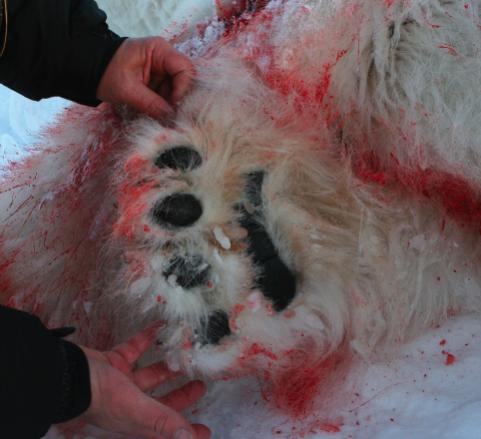
Actual photo of polar bear damage on a human foot. Huarache sandals won’t help.

And guess who’s outside all winter trying to lose blubber down here in America? That’s riiiight. You guessed it: Runners and cyclists like you and me. Slow humans will make easy hunting for expatriated polar bears looking for faux seal meat.

Cougars are already moved in to the City of Chicago

Don’t laugh! There are already mountain lions and gray wolves making their way from out west into the City of Chicago. They’ve moved in to stay. And once a few mountain lions get a foothold down here in Chi-Town there will not be a safe place to run or ride in Lincoln Park.

Be warned! Cougars are already picking off runners and other hapless humans in the hills of California. But that’s just target practice. Wait until they’re jumping off of condos onto the back of Team in Training participants along Cannon Drive. There won’t be a runner or rider who can raise a dime for a non-profit organization once that gets started.

Be careful not to wear spandex in patterns that resemble polar bear prey

If you want to be safe, don’t dress like a seal

Inspired by the success of pioneering predatory species like mountain lions and wolves, it won’t be long before polar bears begin figuring out there’s easy game down south where people are running and riding around in suits and shorts that make them look like seals. Remember, polar bears can also smell prey from miles away. Those two factors do not bode well for exercising humans.

How they’ll get here

A polar bear could easily march its way south from Hudson Bay to the northern tier of Lake Michigan and swim down the western lakeshore to reach Chicago. Then they’ll crawl out near Montrose Harbor and pick off a few joggers before anyone takes much notice.

Rumor has it we humans are good eating, based on reports of cannibalism from many parts of the world. And it turns out that men actually taste better than women. The meat tends to be a little more lean. So at least you gals will have that going for you. If you see a polar bear coming at your Saturday morning running group, hide behind a buffed male hunk. You might save your own life.

Hunters fighting back against polar bears

So while it seems a bit cruel and stupid on the surface to hunt animals like polar bears running wild and free, just trying to survive in the arctic, the hunting community may actually be doing us all a favor because they seem to know something the rest of us don’t.

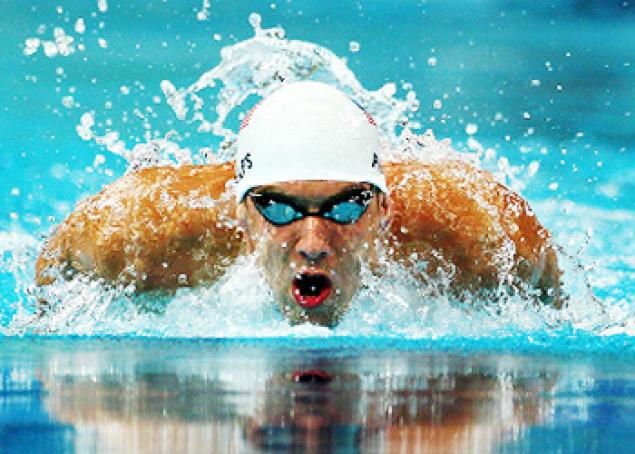
They’re fighting back against a polar bear population that has you in its sights. Polar

Michael Phelps imitating a seal trying to swim away from a polar bear

bears and can swim longer than Michael Phelps and run faster than Usain Bolt. They can even scoot across the ice faster than your average NHL player, although we wouldn’t really know that this year because that stupid hockey league is on strike.

But, if this is an icy winter on Lake Ontario, Lake Erie, Lake Huron or Lake Michigan, the runners and riders of Buffalo, Cleveland, Detroit and Chicago had better be on their toes. Polar bears could be sliding in for Sunday dinner. And you’re on the menu.

They’ll gitchoo

A cool piece of advice

So if you’re out running or riding in the winter this year, and you hear behind you the muffled footfalls of 14″ paws bearing 2″ daggerlike claws shielded inside the fur, you’d best keep up your pace or risk becoming a meal for one of the world’s most dangerous hunters. The polar bear. They’re here. They’re near. And they’re hungry.

And really, they’re not so cute and cuddly as those bears in the Coca-Cola commercials.

Polar bears will pretend to be human to infiltrate and take easy prey

Safety tip: Better carry your longbow while out running or riding

This woman runner was smart and carried her bow with her during a recent run in northern Minnesota. She took down the charging polar bear with one shot. Nice job, Sally!

For now, watch out for polar bears, or else carry a longbow with you when you’re out for a run or a ride. And don’t forget your arrows. Lots of them. A polar bear can be hard to hit when you’re cold and breathing hard.

We close today with an inspiring photo of one woman runner who thought ahead. She carried her compound bow with her on a twilight run near White Bear Lake, Minnesota, and bagged herself a new carpet just in time for Christmas. Now that’s taking care of your holiday shopping the smart way. Nice work, Sally!

Posted in Uncategorized | 8 Comments

What makes a great running loop?

A great running loop ideally has a mix of scenery no matter how long or short it is.

Nearly all runners have them. The trusty running loop.

Depending on your level of commitment in the sport of running, the trusty (or great) running loop can vary from 1 mile to 20. Much of running success depends on consistency. Therefore having a running loop by which to motivate you to get out and run, and also measure your success along the way, is a critical aspect of your training.

Baselines

The needs of people vary greatly. In our neighborhood there is a runner who apparently only does his training on a .7 mile oversized block that I also happen to use for criterium training in cycling. The block circles Memorial Park, an area that used to hold the high school track and football facilities from the 1930s through the 1950. Now it is occupied by three state-of-the-art softball fields and a newly installed asphalt “trail” that circles the park. Frankly that new asphalt trail ruined my grass training loop! But dog walkers and some joggers seem to like it better now.

Our “neighborhood” runner dresses quite eclectically, as running garb goes. On hot days he wears no shirt, but he does wear a reflective orange and bright green vest in all seasons. His running is a shifting jog that hardly qualifies as running, but for many years he has been religious about his training, and I mean that literally. As a Jehovah’s Witness he showed up at our home one day to talk about God. To his surprise he found out I think about those things a little bit in my spare time, but we had a spirited discussion nevertheless. We wave hello now, friends in running and faith. Well, sort of.

Every day he’d circle his trusty running loop in white sneakers that were not quite running shoes. His training has curtailed of late, perhaps due to injury or age. But he was the model of consistency for a long time, appearing so frequently that our dog did not even lift his head in curiosity at the strange looking man “running” by our house.

The next level

Another neighborhood fixture was the gal who ran with her golden retriever. Our street was on her trusty route and the two would come running past early in the day. Her stride was a little long for her frame and I often wished to tell her she could shorten up her cadence and possibly save her body a little stress.  Yet her running was consistent and it was not my business to intrude. Instead I’d wave when we crossed paths at a number of points around town. She must have put in 4-5 miles a day. Every day.

Trusty routes everywhere you go

A trusty running loop in a strange town can help you keep the world in perspective.

Even when you’re out of town running from some hotel it is interesting to discover people out on their runs who clearly run there every day. If you’re staying at a hotel for 3-4 days and take off for a run into some nearby residential area, you’ll often find other runners out at the same time. The runner on their trusty loop often has a far-away look in their eyes, for they are processing yesterday’s events and thinking about today and tomorrow.

That is part of what makes a great running loop. You can run it without thinking, so that you can do the thinking you need to solve your problems, be they practical or creative. It’s always interesting to realize that while you’re in foreign territory, the ground you cover while running may be another runner’s trusty route. It gives you a little comfort to know you’re not alone in the world. You might make your own trusty loop for a few days, so that you don’t get lost and miss an important meeting back at the conference you are attending, or whatever. Trusty loops can be permanent or temporary. But we still need them.

All the makings of a great running loop

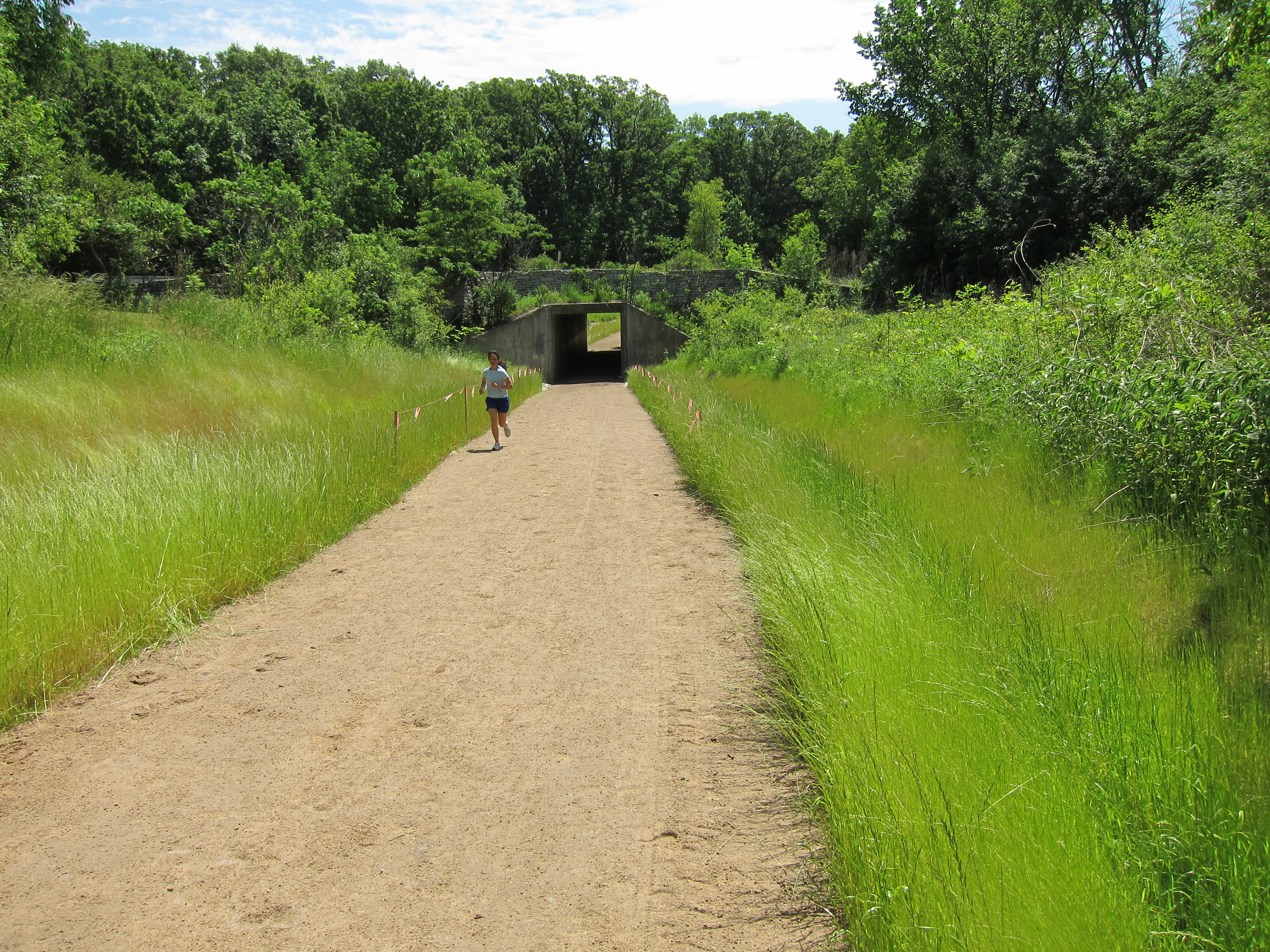
The ideal “great running loop” offers a mix of predictability and variety. My own trusty loop is a simple 3 mile course that can be easily expanded to 4 or 5 miles depending on time available and type of training desired. The route can be run in either direction of course–depending on the wind and weather–and that can be important in Illinois.

Its only drawback as a year-round loop is that is covers part of the Fox River Trail, a system of paths along the Fox River. Last winter proved so warm and snowless that it was passable all year, although the occasional ice patch made things interesting.

When snow and ice preclude the trusty running loop there is another 3-miler out and around the high school that is always clear.

The great thing about the river loop is the variety. As a birder I’m always on the lookout for interesting birds and there are many to be found along that loop, which cuts along a forest preserve and a slow stretch of the Fox where birds really like to congregate. Eastern bluebird, Great-crested flycatcher, Baltimore Oriole, Cedar Waxwing, Blue-gray gnatcatcher, multiple species of warblers in spring and a Great horned owl are just some of the bird species found on the loop.

This 3-miler also offers variety in terrain, sloping down into the river valley and back up the other side at either end of the loop. You can’t escape running hills that way.

It is also populated with plenty of people. Because while I’m a loner sometimes, at other times it is nice to greet other runners and walkers on the path, stop to pet a friendly dog or share the sighting of a bluebird on a bare branch.

Forgiveness

A great running loop should test you sometimes, and at other times be forgiving enough to help you get back in shape. My trusty loop has seen me through rehab of a torn ACL, for example. For weeks I’d walk the loop, which took an hour or more. Then it was possible to add in some slow jogging, then sustained running and finally a complete trip of 3 miles when the knee would allow it.

Recently while coming back from the bike accident that process was repeated. So the trusty running loop has seen both glory, when I raced up part of its stretch on the path to victory in a 10k, and humility when injury or illness or stress required simpler method and goals. Recently I found a new friend on the route who was completing a personal marathon when her plans for NYC were cancelled by Hurricane Sandy. So you never know  who’ll you’ll meet on a great running loop either.

History

A great running loop builds its own history. It sees you through the miles and years. You might share it with a visiting runner friend, for example, which I have done with old college running teammates and visitors from out of town. Most marvel at the scenery and what a great little loop it is. I smile proudly because it is like having a child of which you are most proud.

Big time

When you are training for a marathon or other big race, you need a trusty running loop that can be built upon as you increase your mileage week to week, month to month. That loop should also have water access if you don’t train with a group that provides it, or else carry your own. That of course is an increasing dynamic as modern running technology has made water more portable. Formerly it was crucial to know where the publicly available water stops were, so that you didn’t run dry at 15 miles.

Training groups have also turned former deserts into an oasis of convenience for runnings. All summer long at the start of the Great Western Trail in St. Charles, Illinois, groups of runners meet and depart on training runs ranging from 5 to 20 miles. The group sets out giant water jugs with cups. Literally dozens of runners, equal numbers male and female turn out through the summer months, putting in miles in preparation for races around the country and around the world.

That flat section of trail used to be a railroad bed, so it’s only hills are at the start and over the bridges that cross highways. The actual roads it crosses are few, so one can run while talking and not worry about being mowed down by cars.

There is also shade over about 50% of the length of that trail, a vital savior on hot summer mornings. Its only drawback is that you run out and back, not exactly a thrilling notion when you know the mile marker you’ve just passed has to be passed again on the way home. That is existentialism defined. The irreversibility of time. We all run with Jean Paul Sarte and Albert Camus in some form or another.

All lengths and all times

Great running loops are therefore as diverse as the people who run them. Some become the stuff of local legend such as Pre’s Trail in Oregon, where you are likely to encounter world class distance runners padding the same paths.

In Chicago, the Lincoln Park trail offers a mix of hard surface and gritty cinders, affording a rather classic feel to the varied lengths of running loops available on the north side of the city. That’s where I did most of my training while living at 1764 N. Clark Street, right on Lincoln Park. There were many cold winter afternoons spent traipsing up to Montrose Harbor and back, an 8 mile loop and a staple of daily training. The lake breezes were welcome in summertime, but in winter they could blow waves up and over the breakwall, dashing you with freezing cold lake water. Despite those challenges, it was one of the greatest running loops you could hope for.

If you have a great running loop you’d like to describe, send in a 500 word or less email to cudworthfix@gmail.com. It would be fun to share your great running loops with the rest of the world.

Posted in We Run and Ride Every Day | Tagged , , , , , , , , , , , , | Leave a comment

The allegorical beauty of the short and sweet ride: Part 1

By Christopher Cudworth

The open roads of Illinois

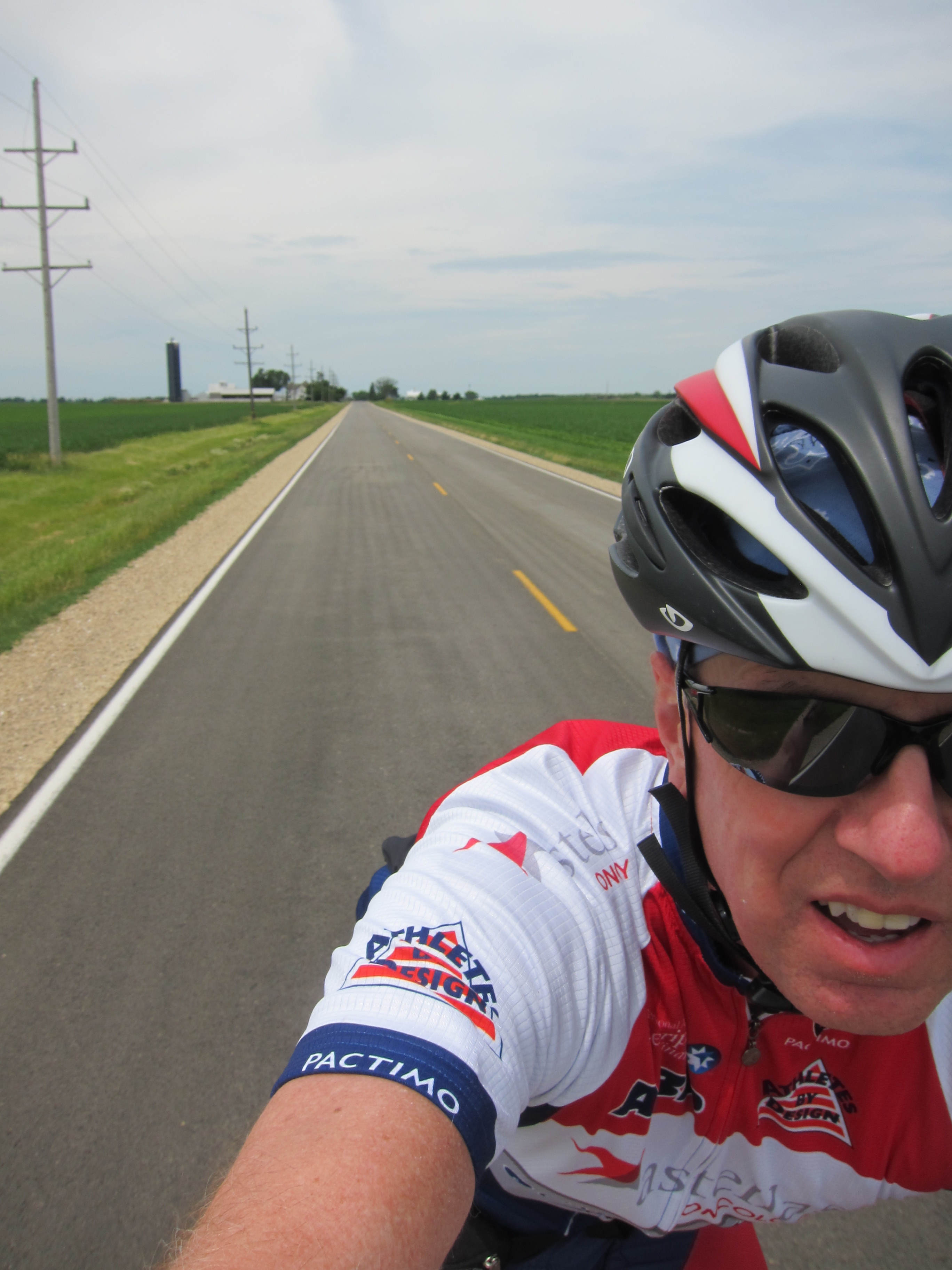
There is a bike route from my house that takes a straight route out of town to a largely flat, well-paved road heading straight west, a great stretch of road for solo or group rides. Even the gravel trucks from the quarry west of Route 47 respect the cyclists. Kudos to them.

The road slides into a patiently smooth downhill, then turns right on a state highway with a wide, clear shoulder. There is a beautiful climb out of a small valley onto one of the many corn plateaus in our region; open expanses of flat land broken only by the occasional gravel-filled prairie kames dumped thousands of years ago by glaciers that formed the northern Illinois landscape.

Up and over

Turning right, the route dips and swerves past a series of lower kames, but if a bit of hill climbing is needed, the route passes a local treasure named Johnson’s Mound Forest Preserve, a lump sticking up from the Illinois landscape. A one-lane blacktop road loops through and over a 150-foot high “mound” covered with deep old woods. It is shady there in summer, green and cool, a welcome respite from the white-hot sun on some days.

Walking the Johnson’s Mound hill

The small road twists along a bottomland that in wet years smells of swampy deliciousness and fresh, rich flowers. Then the road turns abruptly, climbing grades of 10 to 15 degrees broken up by flatter stages where the cyclist can recover. At the top is the steepest pitch, a short, lung and leg bursting bit of road that puts you back in an honest place whether you are fit or fat at the time.

Launching east

Plunging down the south side of the hill, you must be careful not to launch onto the open road again or risk being flattened by traffic. But when you turn left again toward home on a rolling road, the legs inevitably feel strengthened by the climb just completed. It’s like that extra blood needed to make it up the hill sticks around to do some extra work. Then it’s possible to crank it up to 25 miles an hour, slip through the biggest intersection in farm country on Hughes Road and head toward home on a short slope where speeds of 35mph are possible.

The Big Road

Then the road dips and lands you on a major thoroughfare called Fabyan Parkway. Again, the shoulder is ample the entire way so it is not a dangerous road to ride, though cars are moving fast. With luck the first traffic light will read green and one can cycle down another hill at 25-30 mph as long as there is no traffic nudging into the parkway from the country club homes on either side of the road. One learns not to take the intersection for granted, because SUVs and Mercedes often have an impatient urgency to them.

Out of the valley

A series of climbs then follows as you climb out of a small valley where Mill Creek trundles toward the Fox River, crossing under the road. The route zips past Peck Farm Park, where casual cyclists like to ride the 4-mile paved loop around the 150-year-old farm house with its slowly-filling lake.

The Walmart Criterium

Back into town you go, up a final hard climb and toward the giant Walmart complex where a short bit of fun awaits. The street turns right, then left, the right and left again. On quiet days this is an excellent place to practice your bike handling and cornering. One learns to savor and indulge on this smooth outlot road, cranking the pedals to gain speed and cornering with practiced control.

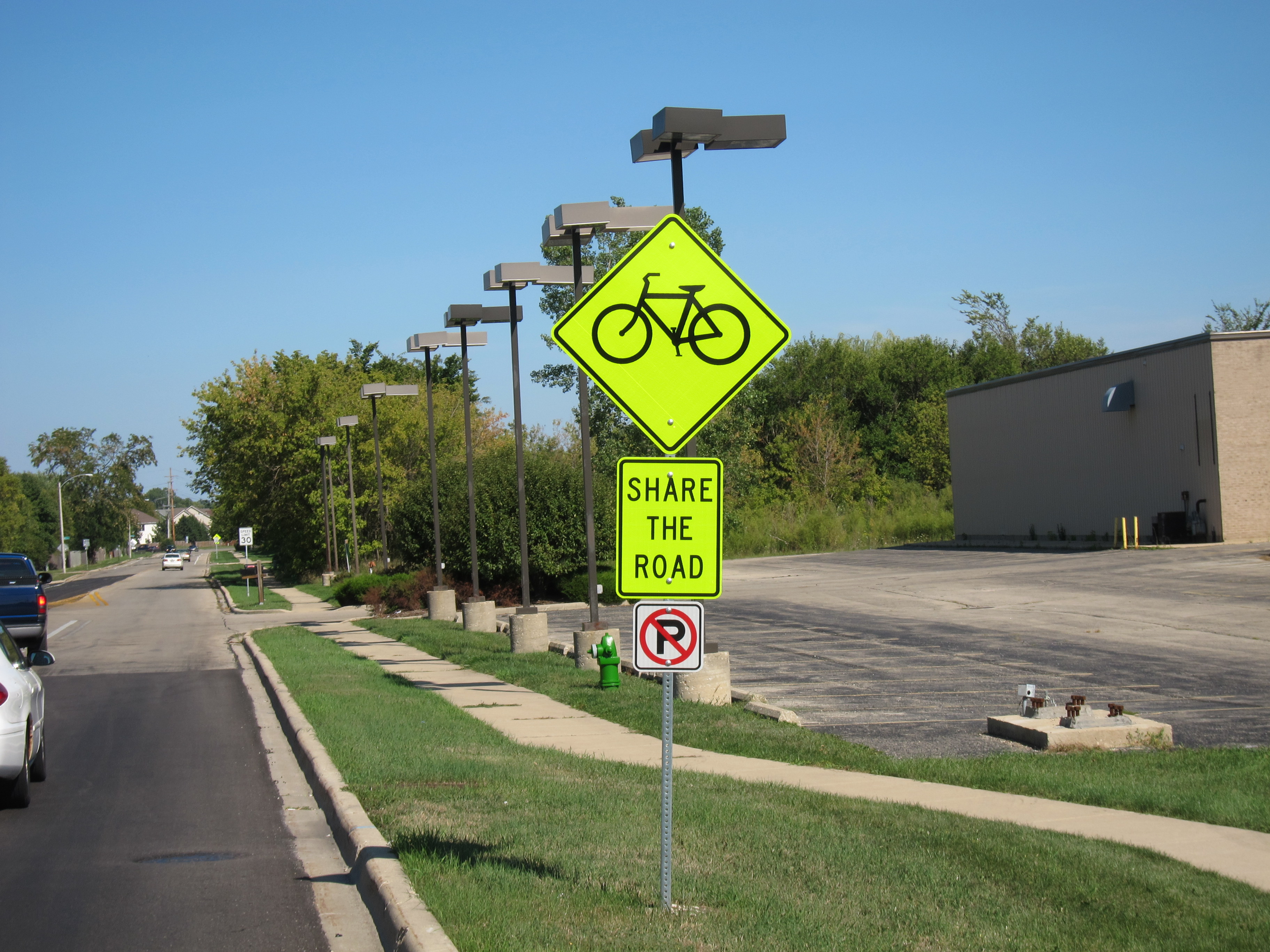
One always hopes drivers take the sign literally

Then up you go again past the Sam’s and across Randall Road, the busiest danged road in the county, the epicenter of commercial enterprise and tax revenue for towns from Aurora to Algonquin. It is rare to find a green light here, so you pause, take the last sip of fluid and serve as a curiosity for drivers in the cars next to you. They sometimes sneak a glance at the odd creature in the bike kit, sweating now or bundled in tights and jacket on cool days.

Breaking the speed limit

Across the road you go and through the stop sign when there’s no sign, because an opportunity lies ahead to break the 25 mph speed limit on the winding road through a subdivision. As traffic design goes, this is the absolute worst road in the area. It was built in compromise with residents who did not want a through street from the movie theater and Randall Road back into town. But it is still used that way out of necessity. Yet the road is too narrow for its purpose, and its winding method of getting around houses is just silly. If a Jeep or God Forbid, a Hummer decides to park in front of one of the houses the entire lane is blocked off for car or bike. And it happens often. So you must anticipate that if you are cycling through, and separate hazards or risk being squished by circumstance.

Racing home or chilling out

The last mile home is uneventful, a time to gather your wits if you’ve ridden hard, or try to save up the mental notes and creative bursts earned during a casual ride.

The route is 20 miles total, a perfect allegory for everything cycling has to offer. Hills, both up and down, smooth roads the entire way, beautiful scenery with deep woods and even restored prairie in sight along the way, and the inevitable Illinois corn and soybean fields you can watch planted, growing and harvested until the ground lay sullen and tilled the winter months.

Reverse course

For variety, all one has to do is reverse the course and all the downhills become uphills. The wind can affect the course most interestingly, throwing headwinds and crosswinds and tailwinds into the mix. Weather too. I once tried to sneak a 20 miler on a February day that started out with a light mist and 60 degrees only to change to a brisk wind and horizontal rain by the 10 mile point. It was all one could to do get home without hypothermia. Forced to stop at the Randall Road traffic light, I stood shivering with the bike, grateful there was only one mile home.

Allegorical ride

The route is an allegory for everything cycling has to offer here in Illinois. One needs that kind of route, to know exactly how long it will take to ride, and to make a challenge on days when you are feeling frisky and fast. My record is just under one hour for the loop, including a trip over Johnson’s Mound. That was a good day.

There have been many other good days on that sweet ride. There have been bad days as well. Another allegory for riding, and for life. You can never tell exactly what you’ll get until you head out the door. And that’s what makes it so exciting to run or ride.

Tomorrow: What makes a great running loop. 

Posted in Uncategorized, We Run and Ride Every Day | Tagged , , , , , , , , , , , , , , | Leave a comment

Warped confessions of a shoe whore and a bike slut

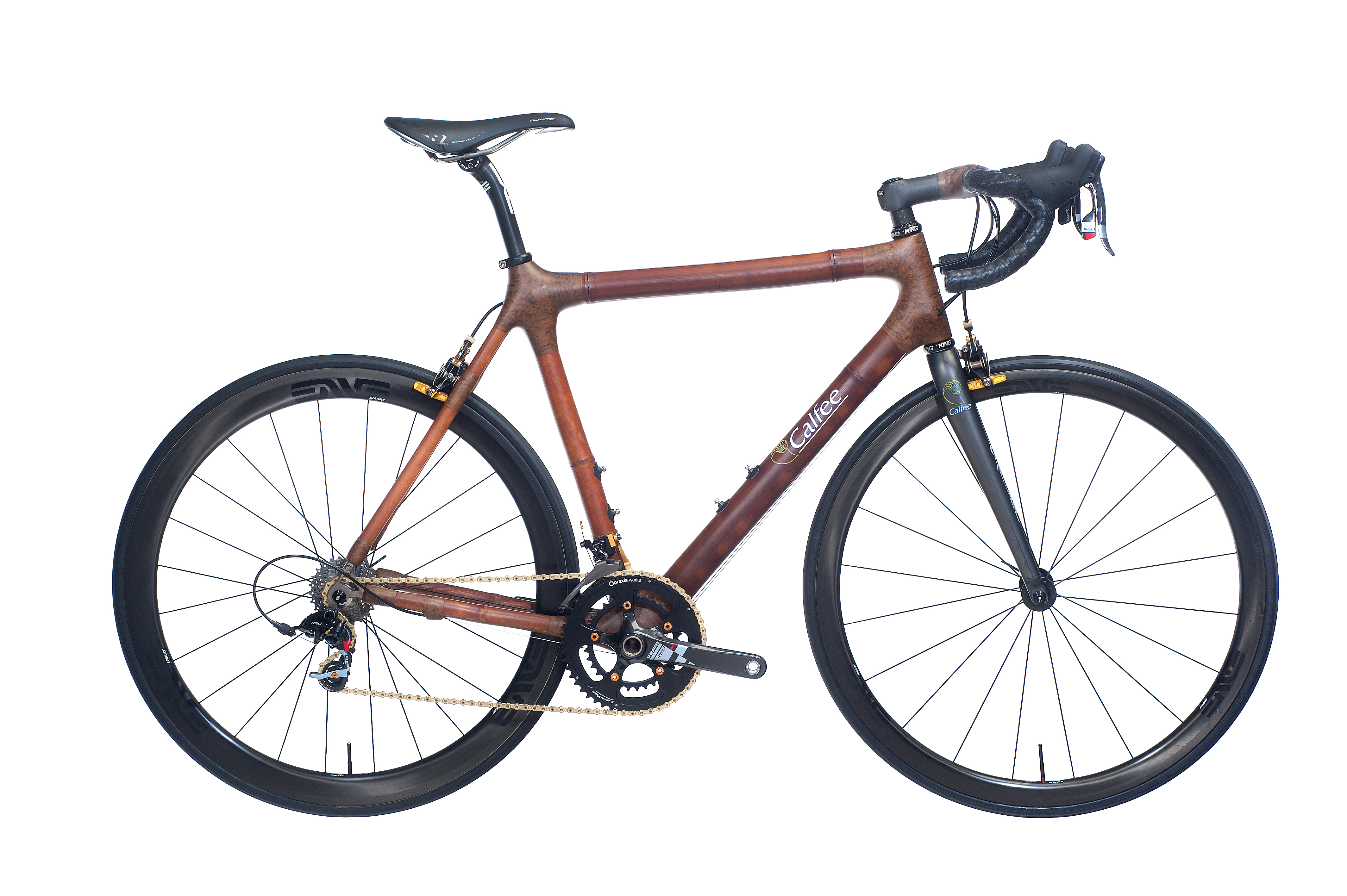
The Calfee Bamboo Road bike. The height of organic bicycle lust.

By Christopher Cudworth

When the annual new bike issues of cycling magazines arrive in the mail, it is hard not to leaf through the pages wistfully imagining yourself riding one of those $7,000 machines. Or take a look at online road bike reviews and just think of it: gliding up the hills on a perfectly balanced Orbea, or passing your group ride on a flashy new Trek Madone.

Same goes for the shoe catalogues that seem to arrive by magic at certain times of the year. Flip open those pages and it’s like you’ve fallen into the fantasy world of a video game, like Wreck It Ralph going rogue (or whatever) in the land of Sugar Rush.

Sensual shoe and bike overload

There has never been a time in history where more brands and styles of bikes and shoes are available to the general public. Even casual riders can now luxuriate on bikes that feature technology that was once cutting-edge just 5 years ago.

And running shoes! You’ve got your minimalism market, and your maximalism shoes, and all points inbetween.

But its the colors and the engineering and the fabric and the textures and the paint jobs and the logos and the sculpted steel, carbon fiber, aluminum, titanium and two colors of rubber on bikes and shoes that are so beyond the former imagination and somewhat beyond reality even, that we must face the facts.

We are living in the age of bike and shoe porn. 

That’s right. All that marketing and editorial flash surrounding the bike and shoe industries has reached the level of pornography. And if it’s not porn, then at least it is propaganda. Or if it’s not propaganda, it must be public relations. Realistically, it is probably none of the above, but the imagination and expectations of cyclists and runners are rather easily excited by technology, it seems, and that can result in product lust bordering on obsession.

Admit it! Your feet lust for a new pair of shoes every time you slide by a running store. And your butt longs to come in contact with the saddle of that Pinarello in the window.

It’s all. So. Exotic. The names of shoes alone can cause some people to break into cold sweat. The Vibram FiveFingers. Reebok Smoothflex. Adidas ClimaCool. It almost doesn’t matter whether these shoes are the best pieces of rubber for your feet or not. Do you get the picture here? What they’re doing to you? You are being seduced. It is easy to see. These shoe companies want to slide their pretty little puppies over yours and own you. Own you!

The same goes for smooth-riding bicycles. You cannot possible look at the $13,200 Pinarello Dogma without collapsing in a fit of bike lust. In fact there is even video online to make you want to want this bike even more than you do right now. Just watch Martyn Ashton freestyle on a Pinarello Dogma road bike, technically designed for winning races like the Tour de France, and you may find yourself collapsed on the floor in a mass of quivering jealousy. This is the best bike porn ever made.

But if you, like me, are more into organic sex with your machine, check out the lines on this Calfee Bamboo bicycle. It’s a road bike. Made from bamboo. To ride this bike would be a dream come true. Someone buy it for me please. Send it in a giant wooden crate. One that says “FRAGILE” on the outside, like that box that held the Leg Lamp in that movie The Christmas Story. Bikes like this deserve to be canonized. Lionized. Everything but Specialized. Although I’d take a Tarmac Elite in bubble wrap pack just as easily.

Go take a cold shower

Now that you’re back from your cold shower and can think logically about your next pair of technically superior running shoes or fastidiously assembled everything-on-it-hotdog of a bike, let’s get to the root of all this shoe whoring and bike lusting. What causes it, and is there a cure?

This is your brain on shoe and bike technology

The psychological roots of a shoe whore are pretty simple. When you’re starting out in running and have only tried on a couple pairs of running shoes, you really can’t understand the plethora of alternatives that await you. But then you get involved in racing, and the search for the perfect racing shoe begins. Then you do some trail running, and get all knobbed up about toe protection and heel strike. Finally you slip into minimalism and get back to the earth running on nothing more than what amounts to a pumpkin pancake microwaved into the shape of your foot. Have at it, you little shoe whore you! You’re in deep, now. It’s like an addiction. People can be addicted to drugs, sex, chocolate or guns. Take your pick. Choose your vice.

Being addicted to running shoes is the best of the lot. So congratulations. You have a health addiction. Even if you are a little whorish about it.

As for bikes, you really can’t afford to indulge too much, now can you. Forget that fact that I own a few bikes myself. There’s the Felt 4C, the Red Rocket. Then there’s the Waterford criterium racing bike my brother-in-law gave me last year, that I’m fixing up for racing with a buddy. My Specialized Rockhopper mountain bike is ready for winter riding. Hidden in the rafters of our garage is my wife’s Schwinn Varsity, circa 1965. It is so heavy there are rumors that is composed entirely of Dark Matter. Also lurking around my garage is the steel framed Trek 400, also a gift from my brother-in-law, Paul Mues, and the bike that got me riding seriously about 15 years ago. It is a classic. Red in color. Not quite light, but not heavy either.

That Trek was the bike that hooked my brother-in-law Paul on riding as well. He was young and impressionable, and I said to him when he bought the bike, “You know, you might want to get some toe clips. I hear they help you ride better.”

That was the beginning of an intense and fruitful relationship between Paul and his bikes. He upgraded to an aluminum frame (sexy silver!) Cannondale road bike, then bought a Trek 4300 Carbon Fiber road bike only to get knocked off by a dog in the first mile he rode on the machine. The frame cracked and Trek gave him a new one. Apparently they understand the power of obsession. Finally Paul bought his Waterford pro racing bike through the club team for which he raced. Add that to his mountain bike and it all starts to add up. My brother-in-law was a bike slut just like me.

Going vertical 

Paul quit riding a few years back and took up sky-diving. It filled his need for speed, apparently. He even got to jump with television news hottie Jackie Bang. Now there’s a named you do not soon forget. But it turns out she’s quite sweet in person. Paul did tell me it was hard not to stare when she showed up in her little skydiving jumpsuit. Naturally.

It was not Jackie Bang but some other adventurous gal that accompanied Paul on a skydive. She got rid of all her clothes and jumped out of the airplane naked, except for her chute and goggles. Paul admitted to me that some strange things happen to the naked female body when hurtling toward earth at 100+ miles an hour, but it was the thought that counted.

Getting into what you get out of your sport

All of this goes to show that there is no such thing as getting “too much” into your sport, whatever it is, so long as you accept that sooner or later you will have to reign it back in somewhat.

When your closet overflows with $100 running shoes that you can’t bear to recycle or throw away because they’re still good to walk around in, or your basement fills up with bikes and bike parts that have little purpose but to fill the visual synapse that you are indeed a cyclist, it might be time to step back and take a little breather. Consider whether you are really in control of your emotions.

Then get rid of the junk and go out and buy some new shoes or a new bike. Because new and different is always better, right? Right?


Posted in Mechanical Genius, We Run and Ride Every Day | Tagged , , , , , , , , , , , , , , | Leave a comment

Monday truth: Nice guys (and gals) do not always finish last

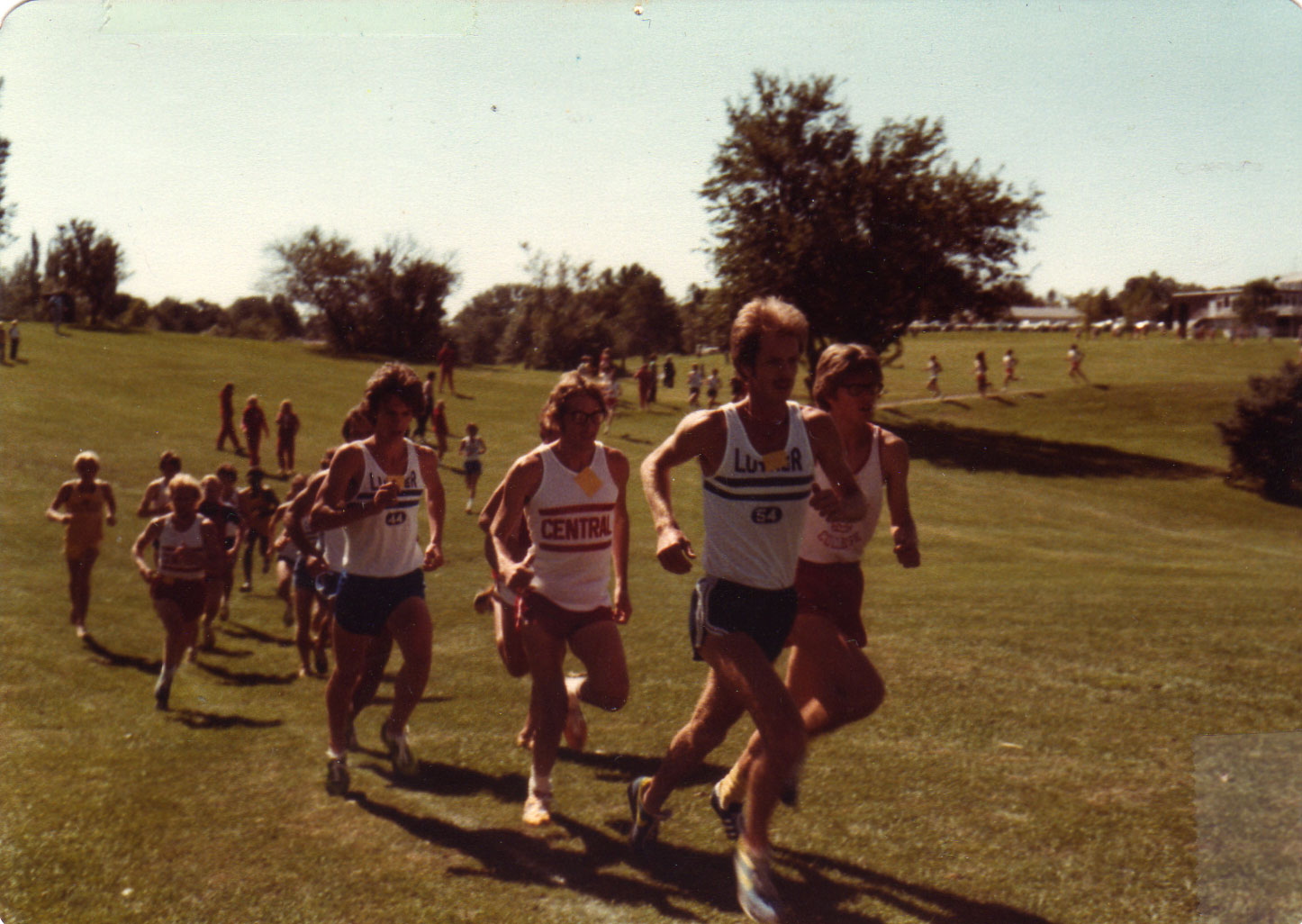
Chris Cudworth in the lead with Central’s Brian Hantsbarger in close contention.

By Christopher Cudworth

Click on photos to enlarge.

While doing research for an article a few months back, I was perusing a booklet of race results from my senior year in college. It had been a magical year in many ways, filled with thrilling races and a 2nd place finish in the National Division III cross country meet.

While looking through the times I’d run and competitors we’d faced, the name Brian Hantsbarger kept cropping up next to mine. We were closely matched as runners, finishing within seconds of each other in the mid 25:00 range for 5 miles over multiple races.

Brian the competitor and Brian the person

Brian wore black horn-rimmed glasses in college, and he even had a bit of a bookish running style, like one of those classic English runners you’d seen in Chariots of Fire. But I clearly recall he was a fierce competitor, one who would not give an inch in the last mile of a race. I particularly recall a long stretch running together on a golf course in Grinnell, Iowa. His team from Central College was having its best year and they were eager to try to knock Luther College off its conference throne. We battled back and forth those last 400 yards and Brian slipped into the chute ahead of me.

I looked up Brian’s name on LinkedIn and found out that he was a partner in an accounting firm out in Iowa, a position he’s held since 1983. His practice focuses on small business and family-owned firms. His LinkedIn profile lists cross country and track as interests, along with Fellowship of Christian Athletes.

When I messaged Brian complimenting him on his competitive focus, this is what he wrote back:

“Chris – we both had more hair back in our college days! I think that you got your facts wrong – I am sure that you beat me more often than I beat you. My high point of my running days was winning the conference track championship my senior year. We had to outscore the mighty Luther in the next to last race – the 5K – to do it. I believe that we finished 3, 4 and 5 in the race. This was after Luther had finished 2nd or 1st in the cross-country DIII championship that previous fall. My running days are over. When I turned 50 I started running again and was able to break 40 minutes in the 10K but then my legs started giving me problems so I had to quit. I probably should start riding a bike instead as I believe you do. Take care, Brian”

Brian was correct. His team had finally defeated Luther after 17 consecutive years of conference track championships. I also competed in that 5K, but was coming off a double in the steeplechase earlier in the meet and was unable to muster enough juice to place in the 5K.

But that’s not the point. The point is that all these years later, the bonds of competitive fury mold into friendship.

A happy rivalry

Chris Cudworth rounding the corner with Ken Englert in a HS cross country event. Notice the Pre pic placed for competitive inspiration.

Not long after I wrote Brian, I received a phone call literally out of the blue. “Is this Chris Cudworth?” the voice on the line asked. “This is Jim Klein. You may not remember me but I ran for Elgin Central in high school. I saw your picture in that profile in the local paper and a bunch of us runners from Elgin got talking about the rivalry we had with St. Charles, and we’d like to get together, even run a little race or something.”

Klein went on to fill me in on the whereabouts and general history of a group of runners from Elgin, all who had been fierce competitors in a back and forth exchange of county and conference championships.

Uncle Rico Syndrome

My curiosity was piqued that another school recalled our meets as something worth remembering. It’s easy, as everyone knows, to glorify those high school or college days, and live in the past. We must all be wary of living too much in the past.

One of the saddest characters in all of moviedom is Uncle Rico in the film

Uncle Rico. Enough said.

Napolean Dynamite. Uncle Rico was the former football player who could not get over the fact that his high school career had ended in ignonimy. He even sets up a video camera to tape himself heaving passes while recollecting (out loud) his lost glory.

Honor and respect

This was not that type of conversation, and it wasn’t about living in the past. Instead, the Elgin runners had collectively recognized that competing well had been a mark of honor and respect. They thought it worth the effort to connect with long lost rivals and learn about their lives in the present.

Rivals you never defeated

One runner from Elgin, Ken Englert, had been a particularly strong individual challenger, and I’m not sure I actually ever beat him in any race. He went on to compete for Eastern Illinois University and ran a 10K in the mid-30:00 range, good by any standards.

Ken and I once raced over 3 miles on his home cross country course and exchanged the lead at least 10 times, never more than a few steps apart. Coming into the home stretch neither of us gave way and crashed into the posts at the finish, crushing the chute as we both fell to the ground. Ken tumbled a foot or so ahead of me, and was declared the winner. That’s home course advantage, I guess.

A few weeks after the call from Jim Klein,  another Elgin runner named Karl Ulrich called to further relate what everyone on his former team was doing. It was interesting to find out the personalities behind the rivalry: Who people really were, and are nowadays.

The serious business of the hard fight

Even competitor at the most serious of levels, that of war and worldwide conflict, ultimately produce respect and even awe between soldiers on opposite sides. The Ken Burns production of The War showed American veterans talking about how tough their Japanese and German combatants really were. In war there is a fierce sadness even in victory.

The past really does matter to the present

The process of reconnection is no doubt replicated many thousands of times among men and women who were once competitors. There is even a website called Career Athletes that helps people who competed in college sports network for jobs, connections and business opportunities.

But sometimes the connections are even more direct. For example, my daughter’s supervisor in the athletic department at Augustana College, Dave Wrath, recognized her name and asked me to make connections because we’d shared competitive careers in both high school and college. Dave ran for Plainfield High School, and I’d competed against his team while at Kaneland and St. Charles High Schools.

By invitation of my daughter Emily Cudworth, I met up with Dave at Augustana College one bright fall day this year, it gave me an opportunity to ask about the crazy course his high school had thrown together for an invitational. “I came around the corner in the lead,” I told him. “And the flags said ‘go straight’ but there was a cattail marsh filled with water between the two flags. What was up with that?”

“It rained,” Dave chuckled.

“No,” I retorted. “I know for a fact I was the first person ever to run through that chunk of marsh,” I laughed.

Dave Wrath, Hall of Famer at Augustana College

Wrath, who was installed into the Augustana Athletic Hall of Fame for his contributions as both and athlete (his cross country team finished 4th in the NCAA D3 national championships) and a consummate sports information professional. During our conversation I had confused the fact that we’d run against each other in college, a faux pas I’ll blame on being really hungry at the moment, and this is a public apology for not recognizing Dave’s achievements in person that day. I’m a dope sometimes.

This is also a public acknowledgement for the mentorship Dave and others at Augustana are providing my daughter in marketing communications/media journalism, photography and sports information at Augustana. It can be amazing sometimes how former competitors can contribute so much to your life in the present.

What goes around often comes out well

Suddenly it becomes evident that the person to whom you did not want to lose might actually be a person you would ultimately most like to know. They make you better somehow in the challenge to win, or the difficulty of accepting a loss.

So it turns out that many of the nicest people in the world are the ones who once tried to kick your ass. Proving once and for all that nice people do not always finish last.

Posted in We Run and Ride Every Day | Tagged , , , , , , , , , , , , , , , , , | Leave a comment

Caffeine is for wussies: How I quit and lived to tell about it

A cup of coffee is a main training staple for many a runner and rider

Those of you who like (or love) coffee seem to be a happy bunch. You can be seen emerging from your local Starbucks or Caribou or local coffee bistro clutching with two hands a cup of whatever favorite flavor you might like as you wander into the world armed with two things: satisfaction and caffeine.

Those of us who do not like the taste of coffee in any form can only pretend we know what a “vanilla spiced latte with caramel” coffee really tastes like. And yes, I made that up, so if it doesn’t really exist, I’m so sorry because, it sounds like something the coffee wizards would make, at least.

Convergent chocolution

Us un-coffee drinkers are sometimes known to imitate the habits of coffee drinkers. For example, there is an amazing drink they serve at a local bistro called Graham’s 318 Geneva, IL. called Frozen Hot Chocolate. It is basically dark chocolate whipped together with a touch of cream and ice (I think) and it is damned good. It stokes my creativity and thought processes like nothing else I’ve ever tasted. That stuff is probably the closest thing I can drink to coffee in its richness of flavor. Laughably, it’s probably full of chocolatized caffeine, so I deceive myself. But it doesn’t harm me the way coffee does (see next section below) so I can drink it. If you are anywhere near Geneva, IL in your lifetime, you must visit Graham’s, for their really great coffee drinks, and their fine sense of humor and chocolate they serve everywhere and every day.

Chocolate and coffee aren’t that far apart in many ways. They both come from different forms of beans. There are also as many varieties and mixes of chocolate as there are of coffee. There is even a certain amount of natural caffeine in chocolate, I am told, although I cannot speak to how much because the label on most chocolate drinks and foods do not list it as an ingredient. You don’t see chocolates that say “uncaffeinated” the way you see labels on tea and coffee. Why this is I do not know. Perhaps the amount of caffeine in chocolate compared to coffee is negligible.

Talk to the prostate, and other parts

Talking to your prostate gland usually will not help. It can be rather sensitive to the subject of caffeine and other stimulants.

I do know that real caffeine has long had a profound and adverse affect on me. It shuts down my prostate gland, a fact learned back in my late 20s when my family physician suggested cutting out caffeine as a way to limit the potential effects of BPE (Benign Prostate Enlargement). It turns out that some men and women are sensitive enough to the effects of caffeine that their soft body tissues react adversely, swelling or getting inflamed when caffeine is introduced into the blood stream.

Ladies too, had best beware of the inner workings of caffeine.

Some women are more prone to yeast infections as a result,  when soft tissues “down there” are beset by stimulants such as caffeine. Then their internal maps look like the illustration shown here, and they deservedly get a little cranky, shall we say.

Cold Turkey

So to deal with the prostate thing years ago, I quit drinking caffeinated beverages of any kind, which for me meant sodas. I drank just 1 caffeinated Coca-Cola a day and it was enough to cause tons of problems. That was more than 20 years ago and I haven’t looked back. Now I will drink No Caffeine Cokes on occasion with a dash of Maker’s Mark whiskey, which frankly seems to cancel out the caffeine in a pinch, an experiment I have performed as several weddings and a couple home-mixed drinks. Alcohol > Caffeine. Remember that formula. And that’s the most math I’ve done in years.

Fortunately I always hated the taste of coffee (it makes me gag) so that was not a vice that needed to be given up.

It took two weeks of living with light migraine-like headaches to wean the body off caffeine. Then, like magic, my body and brain no longer craved it. I was clean. No more caffeine.

I also quit taking antihistamine cold medicines designed to shrink the sinuses. The doctor warned me those would drive my prostate crazy as well. And when I was driving 60 miles a day back and forth to work and developed a chronic case of hemorrhoids, I learned that medicines like Preparation H do no favors to the prostate because they are specifically designed to shrink the soft tissue “down there” as a means to reduce swelling with hemorrhoids. But the ironic result is that the same medicine that can shrink your anus can inflame your prostate. Don’t ask me why. I haven’t had a discussion with either of those body parts to find out why.

No butts about it

For one, your anus simply isn’t very talkative, except during gassy episodes. Then you pretty much don’t want to hear what it has to say, much less deal with the results, since the conversation usually stinks anyway.

And your prostate just sits there mute, boggy and stupid like a security guard at an all-night parking garage, barely able to budge on its chair to let the next guest through the little gate. So don’t expect your prostate to get all philosophical on the subject of caffeine. It has a simple job to do. Let loose some sexual fluid when asked, and open the door to the urethra when demanded. That’s it. It doesn’t like to think about much else.

A serious case of Numb Nuts

Of course every cyclist learns the importance of a good-fitting saddle on the bike, lest the entire prostate or vaginal zone go numb for hours or even days at a time. And more than one dehydrated runner has experienced the dreaded urinary tract contraction that feels like a hot electric wire connected between the navel and exit points. No fun when you can’t even stand up straight.

These are not caffeine-related problems, per se. But they can be exacerbated by too much caffeine in the diet, especially in absence of other intelligent hydration strategies.

I also learned the negative aspects of what caffeine can produce in terms of side stitches, being once addicted to a brand of iced tea from the Turkey Hill convenient store chain in Southeastern Pennsylvania. The level of caffeine in that stuff was so high that my diaphragm nearly exploded inside my chest a couple times. Not a good race prep, that tea. Or any caffeinated or carbonated beverage as far as I’m concerned.

The 1-Step Program–and at least 5 benefits

So in order to avoid the need for conversing with those body parts I have fastidiously avoided caffeine and other stimulants, and have been living healthier and happier as a result.

The benefits of avoiding caffeine are interesting:

1. No post-caffeine crash when the coffee wears off

2. No dependence on caffeine to kick the body and mind into gear

3. No expenditure of $5.00 per day to get a caffeine “fix”

4. Generally less soda ingestion, avoiding high fructose corn syrup, a noted fattener

5. No waiting in long lines for coffee or clutching cups as if it were communion wine

The benefits of avoiding caffeine when running or riding are just as potent: 

1. No reliance on caffeine as a pre-race or pre-training ritual

2. No psychological dependence on caffeine as a mental or physical stimulant

3. No sitting around in coffee bars in sweaty cycling or running gear drinking coffee, which is gross.

Caffeine is for wussies

So while the rest of the world entertains itself with the notion that caffeine is somehow essential to daily function and enhances running and riding with its stimulative properties, I say bunk to all that. Caffeine is for wussies.

Chocolate, on the other hand, is an absolutely indispensable dietary additive, along with red wine and dark beers.

Each has their own ritual or vice

I know, it is unkind to criticize the vices of others while gloating over your own. But that’s how all endurance athletes are, in some way, addicted to their own rituals and vices. It’s part of the dark side of both sports that we all have our secret fuels, some good for us, other not so much good.

So I do not castigate the coffee drinkers of the world. Do what you like.

But if you want to debate my personal intolerance for caffeine, please take it up with my prostate and sphincter, although I’ll warn you. They’re just a little uptight about the subject.

The rest of me is cool with whatever you do. Just don’t ask me to sit around Starbucks waiting for your order to be filled. The prostate tends to get a little impatient after a long ride.

Posted in Tarsnakes | Tagged , , , , , , , , , , , , , | 5 Comments

Saturday Cartoon: Cycling From a Bird’s Perspective

Just a funny for a Saturday. By Christopher Cudworth

Posted in We Run and Ride Every Day | Tagged | Leave a comment

The naked truth of why we run and ride

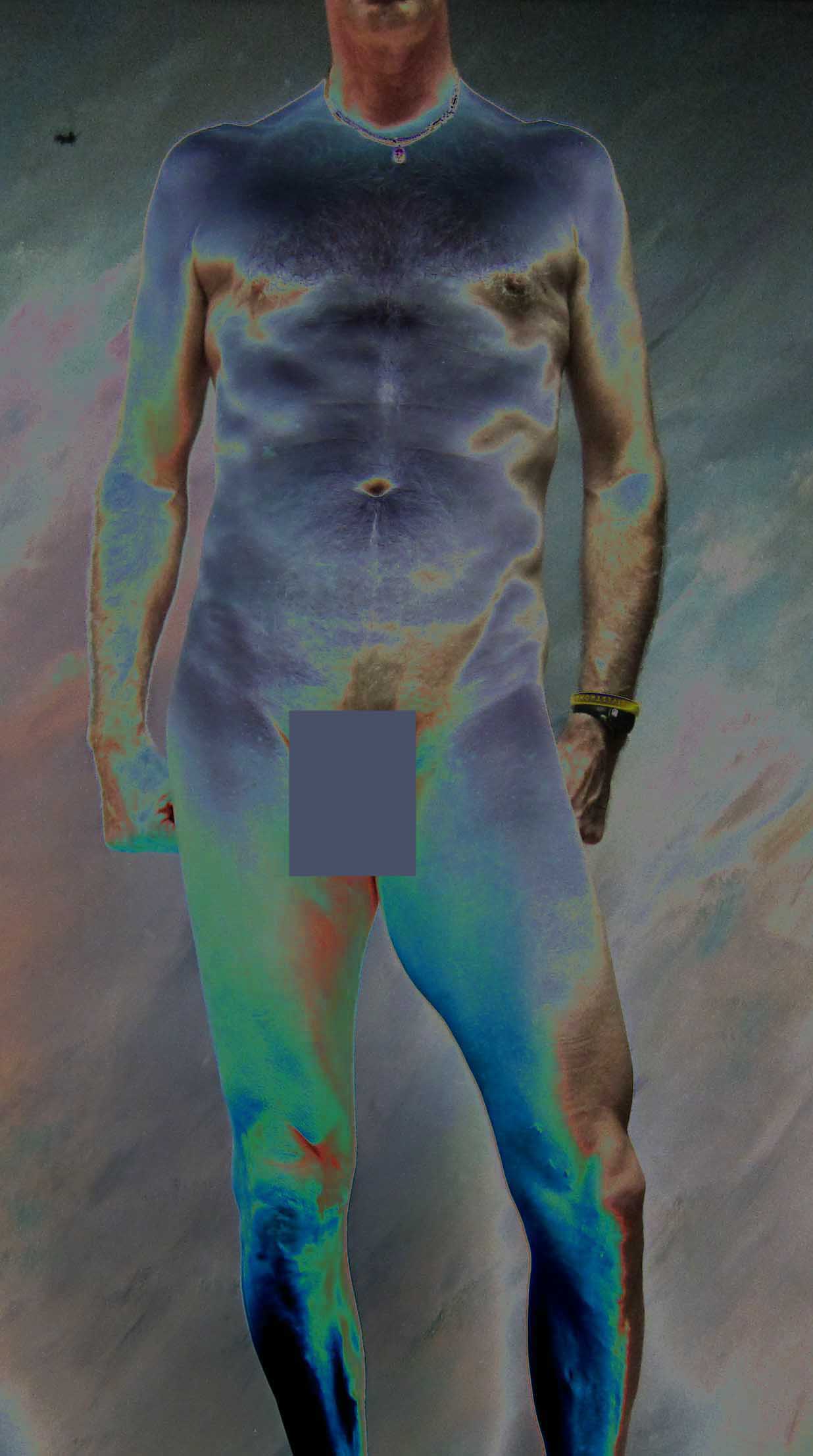
The naked runner or rider should look for signs of the way his or her sport is affecting their build and self esteem.

There is an abundance of glorious finery in terms of clothing and equipment now available to runners and riders. Running and riding gear is more performance oriented, highly fashionable and better tailored than it has ever been.

But let’s face it: the real reason we run and ride is to look better when we’re naked.

With rare exception, what lies underneath all those hi-tech kits and outfits are human bodies with flaws we would rather erase than show to the world. So we work to improve our bodies through running and riding and doing weight work and stretching. All so that we can walk past a mirror with dignity and perhaps even pride in what we’ve accomplished.

Mirror, mirror…

Looking into the mirror is not always a pretty sight even for those who train and race with some regularity. It’s a constant battle to look good (to yourself and others) when you’re naked. Then, there’s nothing to hide. Cellulite. Flabby weights. Big tummy. Skinny calves or flappy arms. It takes a lot of maintenance to get toned up.

What you get is what you see

But here’s some consolation if you don’t exactly look buffed when you’re in the buff. Genetics has a ton to do with the starting point of how you look when you’re naked. Your general bone structure cannot be changed by working out. As a result even your starting point as a weight category and body structure is somewhat fixed. Everyone is familiar no doubt with the terms ectomorph, mesomorph and endomorph. Pretty much those “body brands” are where we all begin in determining the sports we choose and even the type of activities we do within those sports.

Ectomorph, Mesomorph, Endomorph. Deal with it.

Ectomorphs are generally do long distance running and are the “climbers” in cycling. Many Kenyan and other African distance runners are ectomorphs.

Mesomorphs exhibit a middleweight body type. These athletes often can excel in middle distance running events and are typical of “all-around” or General Category cyclists that can win the Tour de France, for example, because their body type allows versatily.

Endomorphs are the sprinters in running and cycling. They can bulk up and go fast, but are also sometimes prone to quicker weight gains.

So the mold or body structure with which you are cast determines in part how the naked part of your athletic makeup is always going to turn out.

There are many examples of people building their bodies up through weight training from ectomorph to near mesomorph size. Those are relatively rare and require enormous determination and even chemical assistance at times to achieve that form of personal evolution.

Normal goals

The normal goal of people running and riding is to build the muscles that contribute to success and enjoyment in the events of their choice. A runner with lean, strong thighs can be proud of their mileage and achievements. When you are in prime condition and walk past a mirror there is no doubt a ping of narcissism (in looking fit) that moves along with your external goals of running faster.

Likewise with cyclists whose upper thighs and quadriceps begin to bulge in mid-summer. Shave those legs and get a tan and you can look absolutely fabulous naked.

Except for those funky bike rider tan lines. That’s pretty comic, really. A naked cyclist looks as if they have been dipped at both ends like a candle into vats of tanning solution. The bare midriff of a cyclist and their upper bodies may also not be that impressive. Cycling really requires very little work in the arm category. World class cyclists tend to look spidery up there. With exception of classics riders such as Tom Boonen and Fabian Cancellara, whose strength is their success on cobbled roads and steep hills, cyclists can be a skinny-assed bunch.

Of course we’ve all ridden with fat cyclists who defy every law of fitness with their big bellies and seemingly over-thick thighs. Those guys and gals may not look like much when naked, but they can motor on the bike. And in the end, that’s what most of us should care about, the physical and health benefits we get from riding.

The Barry Bonds example

Former heavyweight baseball star Barry Bonds has slimmed down by cycling.

Recent there have been some remarkable and high profile examples of athletes and normal people changing their bodies in dramatic ways by converting to aerobic sports once their professional careers are over. Former All-Star baseball player Barry Bonds was once a muscle-bound, possibly steroid-driven pro athlete who weighed more than 200 lbs. during his playing career.  Upon retirement from baseball, Bonds has taken up the sport of cycling and has slimmed down enormously, cycling high in the Rocky Mountains for the fun and joy of riding.

Whether Barry Bonds now looks better naked than he did as a player is something his former teammates or wife may need to answer. We do know one thing, steroids have been known to essentially shrink certain vital aspects of the anatomy. Whether that effect wears off when the drugs are not taken has not been a subject of much public consideration. We do know there are plenty of commercials and online offers for products and processes designed to help in that area. But with no proof that any of them work, it is not an experiment anyone could recommend with any confidence.

The naked challenges for women

Women face pressures men often do not conceive

Of all the creature’s on God’s earth, women face the most changes and challenges in their bodies over the course of a normal lifetime. From the carefree days of girlhood to the onset of puberty, maturity, pregnancy, menopause and plumbing issues forever after, women are the true saints of dealing with body image.

To make matters worse, the images of naked or partially naked women are everywhere in our culture. Men, too, face those issues on an increasing basis, but the pressures are much more forceful upon women than men.

From the time a woman chooses to take up an aerobic sport there are body issues to address. Long distance running and cycling can thin out a woman’s body weight ratio but it can also reduce breast size in some. Those “challenges” as it were, must be faced by women athletes who basically must choose between looking a certain way and accepting that athletic performance makes that choice for them.

It’s not a hard and fast rule that this is true. For many larger-breasted women, or women with more weight in the hips and buttocks only wish they could reduce in those areas, and running and riding are more difficult for them as a result.

One of the tragic realities of modern society is that the body shape of women who match the broader category of male sexual desires tends to be large-chested, slim-waisted and sculpted thighs. Just as intrusive is the fact that even fully clothed women runners and cyclists endure the ogling glares of so many men, and street harassment is still a problem for many women. It is an ironic consequence of a conflicted society with its alternating attitudes of promiscuous media and repressive politics that women are are regularly being stripped naked by the eyes of men.

It’s a bad habit that nakedness is so prevalent and yet so taboo. It’s not practical for many people, men or women, to actually run naked. But the prurient fact that we rather  deny our nakedness under all that garb is what makes us pompously unaware that our foolishness about body images is in full display. Just ask the Emperor whose new clothes covered not a square inch of his body. We’re all naked underneath our clothes. Some of us just deny it more fervently than others.

Realistic body images

Which is why there are concerted efforts to work with people young and old to develop realistic perspectives on body image, health and fitness. The increasing number of girls who run cross country from middle school on is a sign that women are embracing a generally health approach to weight maintenance for health first, but body image as well. This is a lifelong skill that can help women young and old to own their bodies in every respect, keep off unnecessary weight and help lose fat generated following pregnancies and medical interventions.

Enough with the locker room jokes

It is interesting to note that as society has increasingly propagated a visual construct dominated by sexual images in the media and easy accessibility of porn, the locker rooms of America have nearly closed up for business in schools across the country. The ironic consequence is that many kids don’t want to be seen naked, it is reputed, because they might risk ridicule from peers or bullies. Whether this is a conservative issue, brought on by projected fears of a supposed “gay agenda,” or by liberal contentions that body image and bullying are too difficult for teens to handle, is a complex social concern.

But if you take the current trends on physical growth and adult obesity rates, all you would need to do to convince those kids and their parents that it is worth an occasional public shower is to fast forward 10, 20 or 30 years to show them what they will look like if they do not learn to exercise. The Fat Factor in America is frankly running away with its citizens. People (particularly women) are dying faster from heart disease and stroke than any other illness including cancer, diabetes and other diseases. Exercise is also a known medicine for mental health, helping to combat anxiety, depression and even attention deficit disorders. If we were serious about the learning capabilities and overall health of our children, it would perhaps be wise to expand gym class to 1.5 hours and diversify the offerings every day rather than focus on what kids eat or whether they’re afraid to shower in front of each other or not.

When public showering in schools was common practice there seemed to be relatively few problems. For example, mostly what our cross country team did was stand around the hot showers singing songs by the Who and David Bowie. We weren’t really concerned about looking at each other naked.

Of course now that gay rights has opened up the world to gays serving in the military or being un-closeted in high school or the work place, there are some who are protective or fearful of naked young people being together in public showers.

But let’s be honest: A mature society recognizes that showering or being naked around other people does not make someone straight or gay. The beaches of Europe and Brazil are proof enough of that.

Our college cross country team was known for streaking at least two times a season. The pressures of training day after day would build up and suddenly someone would drop off the back of the pack, yank off their shorts and top and come hauling ass past the group, back toward town. As a troupe we’d run naked down Main Street and up through the cafeteria and out the other side. It was good college fun. No harm done.

That same little college developed a tradition of an annual Naked Soccer Game that was finally, permanently banned by administrators when the event drew too much national attention.

But the fact is, being naked while running and riding or playing soccer or beach volleyball can be a whole lot of fun. Within 5 minutes of getting naked, almost no one notices anymore. The world could frankly use a lot less partisanship and a lot more nakedness.

The naked truth of why we run and ride

What matters about the naked truth of why we run or ride is becoming aware of our bodies at a level that is honest and healthy. We can’t all look like Calvin Klein models or those buffed boys outside Abercrombie stores. Those magazine photos featuring women with no physical flaws and impossibly thin waists are just that: Impossible body images.

Better to look in the mirror at the naked person looking back at you and be both motivated and forgiving.  Concentrate on ways to make yourself feel better as well as look better. Mix up your favorite activities of running and riding with weights or yoga or other activities that balance your body’s structure and flexibility.

Then, if you ever find yourself walking onto a nude beach on the south of France you can drop that Speedo or bikini and say, “No butts about it, I’m who I am!

Posted in Uncategorized, We Run and Ride Every Day | Tagged , , , , , , , , , , , , | Leave a comment

It’s not that far to fall

Hitting the bricks can take on a whole new meaning while running and riding.

Running and riding both have their risks.

Cyclists, however, are at greater risk of falling than runners. But that does not preclude those who run from exercising some caution, or at least watching where they step.

Goof or Consequences

The consequences of falling can range from the comic pratfall to a tragic crash or traffic encounter.

But before focusing on the serious side of falling down, let’s have a little laugh at our own foibles, shall we?

Master of the Mulch

For example, two summers ago it was my intention to increase my mileage by 10% a few weeks in a row as a push toward fall fitness and a couple target races. But as the weeks wore on, fatigue set in until one day, feeling very tired and very slow, I was dopily plodding along toward home when I decided to take a shortcut through the local park.

Running straight at a street curb, I failed to lift my lead foot far enough to clear the curb. Thump! The rubber toe of my shoe stubbed on the curb, sending me stumbling forward until a short uphill where the landscaping rose up from the grass. This proved too much for my (admittedly failing) proprioception and I ditched shoulder first into the mulch.

My landing sent sprays of mulch in several directions. People walking their dogs nearby stood in wonderment at the antics they had just witnessed. I rolled over, began chuckling and raised my hands as if in victory. A passing car honked its horn. I was the winner of the Dolt of the Day award. I also want you to know I walked the rest of the way home, legs tired and shoulder sore. But no harm came of the incident.

Recognizing your increasing limits

It did teach me that I may be growing less agile with age. That’s hard for a former steeplechaser to say. I ran one of track & field’s most difficult events at a fairly high level, qualifying for the Division III National Meet 3 consecutive years, managing a PR of 9:20 for the steeplechase. In that race you run 3000 meters, jump 35 intermediate barriers; 4″ X 4″ mind you, and they don’t fall over when you hit them, like regular hurdles, and negotiate the water jump 7 times. The water jump features a pit that is 2.5 feet in depth right below the hurdle, then grows shallower to a zero depth 12 feet away. I was known for being able to jump completely over the water. Having a background as a triple-jumper (40’4″) and high jumper (6’1.5″ both straddle and flop) also helped. So did growing up playing basketball.

So I am no physical dork by tradition. But things still happen while running and riding that aren’t in your control.

Black ice and other joys

For example, while running one December day, I decided to put my steeplechasing skills to work by jumping a low metal chain at the entrance to a forest preserve.

Dumb idea.

The previous day’s snow melt had sent a broad stream of water down the hill.  That water had frozen overnight and turned to black ice. When I hurdled the chain my foot came down on the super slick ice and down I went, hard. Landing on my wrist, I was able to stop the brunt of most of the fall. But my wrist paid a dear price. For weeks it would hardly bend. Nothing was broken but it was massively sore. That soreness persisted for more than 5 years. It was most noticeable playing sports like basketball, but even simple activities such as typing could set off a twinge.

It finally healed, but every day with the sore wrist was a reminder to be smart while out running or riding.

Stupidity can be fun. Sometimes. 

Still, I occasionally still attempt a stupid thing or two. Just last year while running along the bike trail near our home, it dawned on me that I used to jump a small ditch over a stream by the trail. For some crazy reason it seemed to make sense to try it again, even though it had been years since I hurdled that ditch. Picking up speed, I took off from the near side only to realize with horror that the new mowing practices of the forest preserve left a thick margin of grass on the other side. It’s not good to be in mid-air and suddenly realize you can’t see where you are going to land. I’m not some cartoon character that can turn around with the accompaniment of goofy sound effects.

But what happened on the other side of the ditch was pretty goofy. I didn’t just tumble. I collapsed like a bad piece of origami. To make matters worse, some poor woman walking the trail was forced to witness my low-flying debacle. In response, her hands involuntarily covered her face. Fortunately I got up and walked away, or she might have had to go to counseling for shock. I smiled and waved and kept running. Honestly I could think of anything to say to explain myself.

Cycling excitement

Riding presents just as many opportunities for stupidity or frolicsome risk-taking. Just this past weekend I did a somersault while unclipping from the pedals at a full stop. And my co-blogger’s wife learned the hard way that falling over is not that hard to do.

Fortunately, generally, it’s not that far to fall. Even off a bike.

But even if you’re standing still, falling over on a bike can cause you harm. I once rode with a partner on a Saturday and saw him again on Sunday morning only to find him with his arm in a sling. “I fell over trying to tighten my bike shoes,” he groaned. “It’s a broken collarbone.”

Actually, crashing isn’t that much fun

I’ve already written at length about my own frightening bike crash this September due to bike wobble. Never do I wish that experience on anyone. But if it does happen to you, quickly remember to clamp your knees on the top bar and hope that interrupts the evil harmonics that can set your bike into a wild wobble. Then thank me when you save your own life.

Because falling off a bike, you usually don’t have to travel far to hit the ground. There are exceptions to this rule, of course. World class racers and daring cyclist in the Rocky Mountains have been known to fly many feet in the air, no pun intended.

And for most of us the risk of a moving bike crash is in the horizontal speed, but even that’s not the deciding factor in whether you get hurt or not.

Slow moving tragedy

Two summers ago I chanced upon a fellow cyclist who had been felled by a giant white dog that crashed into his wheel while he was cruising through a residential neighborhood at the modest speed of 10 miles an hour. The crash proved tragic. He broke his pelvis and I have never seen a person in more visible pain in my life. Later when I visited him in the hospital to commiserate and let also let him know his bike was safely delivered to his sister, he still seemed stunned by the mere force of gravity.

The answer lies in the fates. And fates can lie to you. 

The fact is you can only be so careful. Fate likes to trip you up sometimes. It thinks that’s funny. So it’s best to laugh along. Or else the fates will do it again.

Be warned. You can also only be just so stupid before something happens by the sheer odds of running or riding all those miles. The once popular bumper sticker that says “Shit Happens” describes this universal principle. I’m living proof of that principle, I’ll admit.

It’s just not that far to fall.

The real secret to life is knowing how to get up when you do fall down. So follow this advice whether you fall down on your run or your ride.

Stand up from the ground and raise your arms, wave to anyone that witnessed your hopefully comic fail, and declare yourself a victor of sorts by yelling, “Perfect 10!”

Gets them every time. You might even hear some applause.

Posted in Tarsnakes | Tagged , , , , , , , , , , , , , , , , , , , , , , , | Leave a comment