Which is the harder sport, running or riding?

Let’s have a little debate here. Which is the harder or more difficult sport, running or riding? The arguments could start with the basics.

Going Solo

1. In running you cannot coast. Every step you take is one of self-propulsion.

Yet in cycling, you always carry with you the burden of 17-20 lbs. of machine. When you go up hills, you must push the bike as well as your own weight.

Which is more difficult? Consider these other factors.

Wind Drag

2. In running, the draft effect if minimal. Sure, it helps to run behind someone when the wind is in your face. That’s only natural. But you’re largely on your own on a windy day.

In cycling, there is a pronounced draft effect of up to 30% when riding behind another cyclist. Yet the wind can also be your enemy from two sides at once when riding in a crosswind. That means you’re not just pedaling against the wind going forward, but there is also a sideways pressure and additional resistance created in a crosswind. A vexing challenge indeed.

Impact

1. The most difficult aspect of running is minimizing the impact of your own weight striking the ground. Premiere distance runners accomplish this with a smooth, “over the ground” stride rather than a thumping heel strike. But the challenge remains that running involves a lot of pounding, which results in fatigue. The jostling of your innards can also lead to profound stomach upset. Never a fun moment in running. Barfing can turn you into a coward, and quick.

2. Cycling would seem to minimize impact in many ways, yet there are still effects of sitting on the bike for hours at a time. Those effects can be magnified when riding on rough roads or worse, the cobblestones of Europe. Fatigue builds up in the hands and shoulders, for example.

Endurance and oxygen intake

1. Breathing is an absolutely critical aspect of efficient running. Learning how to breathe in a manner that delivers the most oxygen to your body is critical to any runner, and at any distance. Whether you are racing 5k or running a marathon, getting enough oxygen into your body can be a challenge. It is one of the facets of running that makes it a most difficult sport.

2. Cyclists seldom need to think about their breathing on the same par with runners, yet bike position and good form dictate how well the cyclist can take in oxygen. There is also a keen relationship between pedaling efficiency and oxygen use. On the flat a rapid cadence can conserve valuable energy while climbing requires good technique or aerobic debt can quickly set in.

Uphill and downhill

1. Climbing hills in running is obviously no treat. The strain on a particular muscle group can result in cramping that slows a runner to a turtle-like pace. I have known several runners who could not climb well, however, that developed an incredible ability to run downhill, making up for lost time, as it were.

Cycling is a sport that categorizes itself by types of riders, and the most specialized are the climbers. Usually slight of build and long in frame, or else equally small and compact, as in many of the Colombian or Spanish climbers, these riders love to tear up hills as if they were on the flat, leaving others dying in their wake.

Yet it is the descenders who are the bravest of all road cyclists, and the difficulty in becoming a good descender is how hard it is to ride in spite of the considerable fears creating by hurtling downhill at speeds ranging form 50-70 mph. If you are a cyclist that has ridden that fast, you know there is little room for error in your bike handling skills.

2. Cyclists must learn how to climb or risk being dropped on

Hitting the Wall or Bonking

1. Runners who “hit the wall” are reduced to a crawl. Depleted of fuel in their bodies, runners who hit the wall can often proceed, but only at a greatly diminished rate. Any runner that has experienced the feeling of hitting the wall and been forced to literally sit down by the side of the road in an anguish of overwhelming fatigue knows how tough the wall can be. No amount of will can help you break through the wall. Only preparation can do that.

2. Cyclists who bonk speak of surreal moments when you are pedaling the bike and literally nothing’s happening. It is as if your legs have no strength at all. You get spacey and devoid of will, pedaling only to stay upright, and even that can be difficult. The rapidity with which your group suddenly rides away from you is astonishing. When you bonk you are on your own, perched atop a silly machine that no longer seems to work.

Pain

1. Developing pain tolerance is a key part of being your best as a runner. If you want to perform your best you must accept and learn to compete while in pain, out of breath and fighting against the effects of lactic acid in your body. Running “through the pain” is therefore one of the hardest aspects of being a runner.

2. Cyclists often talk of the pain they experience while riding because there is no such thing as “good enough” when training or racing. In other words, there is always a way to go a little harder, ratchet up a couple miles an hour or increase the cadence. This almost existential reality dogs the cyclist every mile, an effect compounded when riding with a group of competitive or serious riders whose pace puts you in the red zone even when you are firmly planted in the peloton. The pain one feels in cycling is most humbling because you are in direct and immediate comparison to every other rider around you.

Willpower

1. The worst three letters in a runner’s lexicon are DNF. Did Not Finish. It can be so tempting when things are not going well to give it up, trot to the side of the road or hitch a ride back to the start. Running through those bad days can be tough. But runners also know it is going to take intense willpower to manage the good days as well, to not screw up a good effort by drinking too much or letting your form go lax and getting a side ache. Then there’s the last mile when the entire body screams to stop and you must force yourself to go on. Running is hard because there is no aid, even a tailwind mocks you.

2. Cycling is willpower defined in 3 phases; the will to pedal efficiently at all times, the will to keep pace with fellow riders and the will to go beyond throw your energy into a machine that sometimes seems to fight back when you are trying to sprint, climb a hill or fight a wind. It’s all about the will, or lack of it, that makes a better cyclist.

Culture

1. The culture of running has changed in some interesting ways over the years. The popularity of the marathon has created novel assistance such as pacing groups that guide runners to their goal in a race. To some degree, there is greater tolerance and respect for runners who simply complete a race versus those who win. It is both a charming and forgiving aspect of the sport.

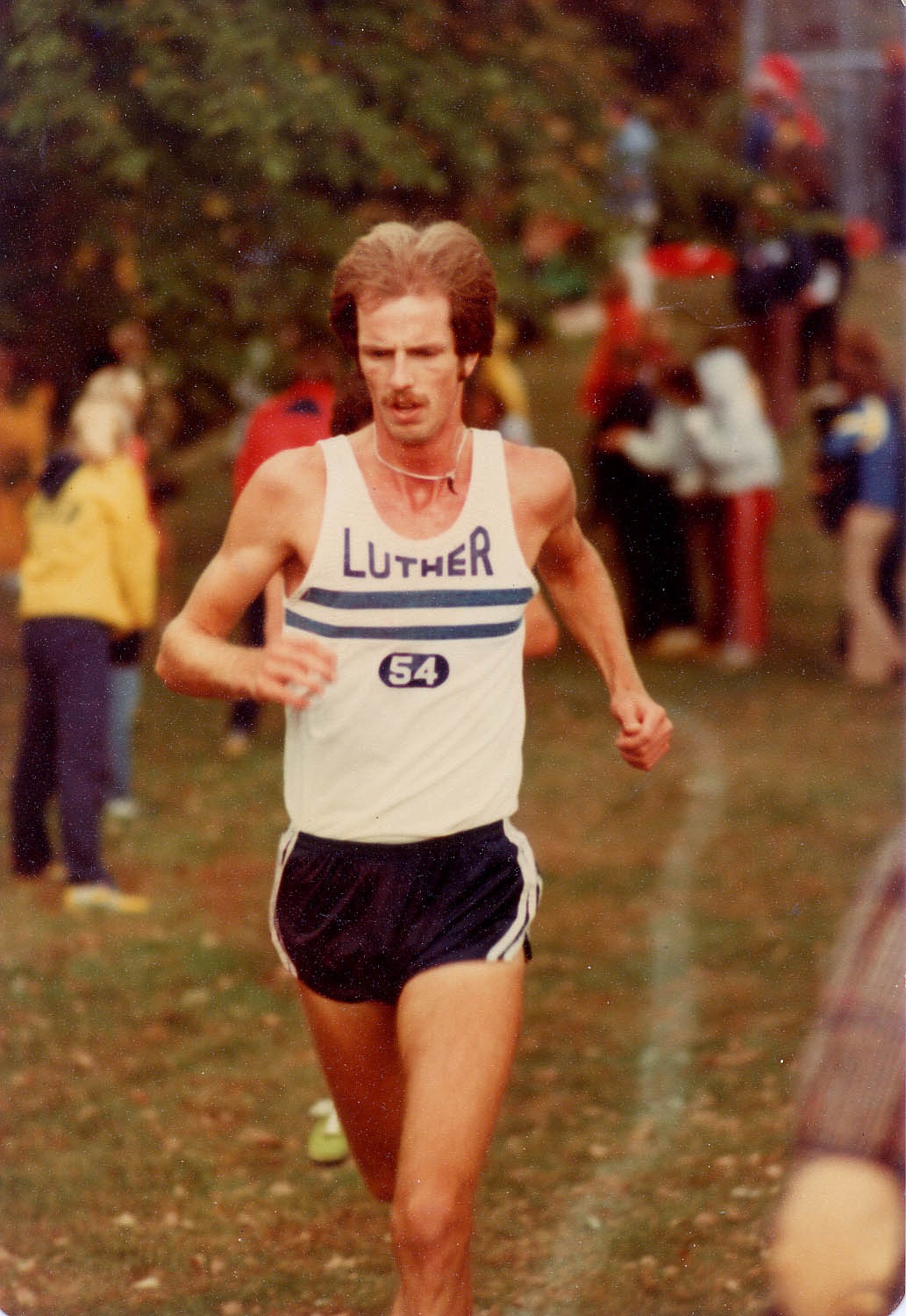
2. The culture of cycling is clearly delineated in the categories of riders. Each level of cyclist has a skill level or age category in which they can compete. There are pro cyclists at a couple levels, World pros and Continental. Then come Category 1, 2 and 3 riders who dominate regional and local races, followed by Category 4 and 5 riders trying to become better cyclists. These categories are at once forgiving and humbling. Because the minute you begin winning races at one level you are called to a higher category where you will get your ass kicked unless you are an exceptional talent like Matthew Busche, now of RadioShack, whose talent enabled him to convert from college cross country runner to world class cyclist and US National Champion. That’s a rare individual that can do that, eclipsing the culture of cycling in many ways that says you must slowly climb the ladders of categories to get to the top.

So what’s you’re take? Is running the harder sport, or is cycling?

Posted in We Run and Ride Every Day | Tagged , , , , , , , , , , , , , , , , , , , , , , , | 1 Comment

Have you made your November Resolutions yet?

By Christopher Cudworth

January 1 is actually a little late to make resolutions if you are planning to make 2013 a better year than 2012. However if you’re not reading this until January, the suggestions below are still highly valuable in helping you make plans for better running and riding in the new year.

Planning and preparation

Resolutions not only take planning, they take preparation. For people who run and ride, the period right after Thanksgiving and before Christmas is the best time to begin planning––and preparing––to run and ride with quality and appreciation in 2013.

Here’s what that quality and appreciation mean to those who run and ride.

Quality: To engage in focused effort each time you run or ride, and that includes focusing on the easy days as quality time on the run or ride.

Appreciation: To be attentive in all that you do. From organizing and maintaining your equipment to using it well as you train. And then being aware when you get out on the training run or ride why you are out there, and how grateful you should be for each step or pedal stroke.

Those two simple guidelines can be the foundation of planning your year. But the specifics of what you want to do are what real “resolutions” are about. Since I can’t speak for you or your goals, that has to be decided by you alone, the following are goals I have set for myself in 2013. Perhaps they can provide a health structure as you set your own goals for the coming year.

Are there specifics?

Notice that these goals are not yet set in specifics in some cases. Some people will tell you that goals can only be achieved if you apply concrete or quantitive values to them. I say bull to that. Goals are meant to improve the quality of your life, and you often cannot put a strict measure of worth on that. Incorporating specifics in the framework of your goals is fine and a good thing to do. But you should also not allow the specific to override the qualitative aspects of your goals, which may be aesthetic as well as achievement-oriented.

2013 GOALS

Strength training: Daily strength training is key to becoming a better runner or cyclist. Doing foundational core, upper body and leg strengthening exercises improves performance and helps prevent injury. Tip: To prepare for 2013, strength training begins now, in 2012. Work out a routine that you know is simple, effective and fulfilling. Look for results in how you feel as well as how you look. Sure, bulging muscles are great. But muscles and joints that work and do not get break down are much more important. In an upcoming blog I will document a strength circuit you can do at home without much equipment.

3 running races. 6 competitive or event rides: Last year–for a variety of very legitimate reasons–was a “down” year in terms of racing for me (only once on the bike, none on the run) and riding (crashed due to bike wobble at The Wright Stuff Century). In 2013, I am selecting some meaningful events in which to participate. My goals are purposefully modest in terms of the number of events in which I will participate. I would rather exceed my goals by choice rather than fall short by circumstance. This is realistic ambition in action.

My specific running/racing goals in 2013 include: Sub 22:00 5k. 6:00 mile on track. Break 50:00 for 10k (which is 20 minutes slower than my PR, but I am also 20+ years older than when it was set).

Riding/racing goals: Finish in Top 10 in one criterium/age group or category race. Complete a Century (never been done).

Being social and networking at races or training groups can greatly expand your opportunities for quality and appreciation in your running and riding.

Weekly emphasis on speed work: Last year I ran and rode at virtually the same pace or rate all year. This resulted in stagnation and mental staleness. There were reasons for these outcomes, but the goal for 2013 is to exaggerate the quality of effort at least once a week while running (hitting the track for intervals) and practicing higher paced riding on a personal criterium course, and also out on the road with group partners. The purpose here is to increase variety while also breaking out of training ruts that lead to “flat” riding and running, stuck in one pace or one mental framework.

Increase my running and riding network: While I do love the club in which I ride for its devotion to all levels of riders, there is nothing like getting out with people you don’t know to broaden your horizons on the bike, or on the run. As a means to increase my running and riding network I plan to jump into a few of the higher quality group rides in the area once a month. I may get dropped but that’s the point. You have to test yourself or you fall into a rut. The goal will be to increase the length of time I can stick with the Tuesday-Thursday rides in which all the quality riders in the area participate. For running, I plan to join the groups that start at the Great Western Trailhead and expand my social network, thereby discovering the races and running opportunities that exist as well.

Encourage and foster your partnerships: Training partners can be key components of success each year. Start now by asking what your running and riding partners are planning for the new year. You may sync up with them on a ride or race, and set a mutual goal. That is great motivation for the new year.

Use winter training to prepare for spring, summer and fall: All of us tend to fall short in this category. Planning to do at least 2 outdoor rides on the mountain bike each week and a couple indoor rides on the road bike, or outdoors if weather allows as last winter did in Illinois, needs to become part of a mental framework, not just happenstance.

Giving back to the sports of running and riding: Each year I serve as a course marshall for several bike races. It is a really gratifying role because you are looking out for the safety of other riders, and you can learn a lot about racing by being up close to the race and on the course to see how bike racers handle their machines and their racing. I also volunteer on a worthwhile “cause” for the NAMI 5K that raises money for mental health services in our area and nationally.

Keep a simple journal or digital record: In the past I have been fastidious about journaling training and racing. Finding the simplest way to do this might involve purchase of a simple, functional notebook if that’s your style, or using your Smartphone to record your workouts for you. The choice is yours. I will opt for a combination of those two, since I used to cheat on the mileage end of things. Ha ha!

Start now

All these goals take preparation in the here and now. Yours probably do as well.

You can start by reaching out to people who can connect you to valued resources (such as good strength training exercises) or inform you on other aspects of your goals and what needs to be done before the year starts.

But in case you need immediate motivation, I suggest you hit the floor and give me 25 pushups RIGHT NOW! 

Ha ha. Just kidding. But you get the point.

November and December really is the time to start your New Year’s Resolutions. Then you can start preparing for a successful year in 2013. But if you’re reading this January 1 and feeling guilty, never mind. There’s always time to make goals. It’s making the time to achieve them that matters most. And have a great 2013.

Posted in We Run and Ride Every Day | Tagged , , , , , , , , , , , | Leave a comment

Running and riding through grief, both real and imagined

Grief can be a long and sometimes lonely road. But that’s the point. The road to recovery awaits those who run and ride.

Mental health experts and grief counselors have long advised that grief is an emotional phenomenon with several stages. The classic and operative model is one proposed by Elizabeth Kubler-Ross that states there are 5 stages of grief. 

Denial: Helps us survive the loss.

Anger: Really feeling and fighting against the loss.

Bargaining: Trying to regain in some way (or somehow) what you’ve lost.

Depression: Withdrawal or great loss settling in your soul.

Acceptance: Ability to move on in life.

Grief is both real and imagined. 

We tend to think of grief in terms of losing a loved one. Yet people can grieve over many circumstances, both real and imagined. That is not a cynical statement. Real grief and imagined grief are one and the same, but with different processes of recovery necessary to return to wholeness.

We may be experiencing a real loss in our lives, such as death of a parent, a child or a friend, and yet grief plays (or even relies) on the imagination of an individual to perceive what has happened in our lives. Our imaginations are necessary tools to help us process our losses.

Stoking imagination 

Running and riding is known, for example, to help many people combat the effects of depression, which may be one of the most difficult stages of grief for many people to handle. Depression manifests itself in many different ways. It is also unique for every person, yet there are patterns or categories upon which we depend to help us understand the mental and physical states we categorize as depression.

For example, depression can create both physical and emotional lethargy. It can cause us to overeat in compensation, taking in comfort food and resulting in weight gains that depress us even further.

Coping strategies

So you can see why the complexity of grief is so crucial to understand. And why having a coping strategy can be critical to emerging from grief with a healthy respect for the loss you’ve experienced, or are experiencing.

Notice that mention of the word “respect.” The most important thing you can do while going through grief is to remember to respect yourself and others. That can be enormously hard to do. Many people experience guilt over the loss of a loved one, especially in tragic circumstances, such as when illness or disease causes death. It is easy to place the blame on ourselves for losses in our lives. But that doesn’t really change the circumstance, or what we have to face. Nor does it genuinely help us understand what is happening in our lives.

Blaming God or other forces

Some people get so angry they even blame God for the loss in their lives. That crisis in faith can be a grieving process all its own. When you feel as if the very pillar of your belief system has let you down, you feel all alone. Abandoned. Lost. Devastated.
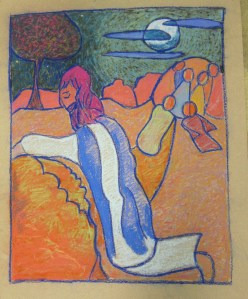
I created this image in collaboration with Sunday School students who drew the outline of a bible story that I enhanced with pastels. Christ praying in the Garden of Gethsemane. By Christopher Cudworth with Gwen Zeiter.

Interestingly the Bible is full of stories about people going through these very same emotions. The pinnacle is the story of Jesus Christ in the Garden of Gethsemane, praying so hard that blood literally oozes from his pores. Now that’s feeling it. Even if you are not a Christian, most people can relate to the idea of fear in the face of death. It is a natural human response. You can grieve your own life before it is taken. You can grieve the life you’ve left behind, or the things you did not do, or say, or believe. Grieve sits waiting for our response to all these emotions. It can be overwhelming.

Imagining the worst, or the best

The imagination can be a terrifying foe or a blessed friend. We feel sometimes that stress and loss are bleeding us dry, emotionally at least. But imagination can also come to the rescue, lifting our spirits and our minds to places where grief does not so easily rule our sensibilities. So how do we get to that better imagination, rather than allowing the worst of our thoughts to own us?

That is where the grief meets an interesting juncture with activities that help us mentally process events in our lives. When grieving, it is most important to get up and take some control in your life. That is when it can be a lifesaver to get out and run or ride.

If you cannot initially bear to run or ride through your grief, then get out and walk for starters. Just move. Once you’ve done that, you might pull down your bike or manage to jog a few blocks. You might be crying as you go, but you must go. That is the path to healthy grieving. If you live in a wheelchair, then wheel yourself around the block. If you’re stuck in bed because you’ve been in an accident, then move any part of your body possible. The morning after the bike accident that broke my clavicle and could well have taken my life, I grabbed my camera and limped a mile down a hill and back, taking photos of anything that captured my attention along the way. I let grief over the injury pour out through movement and creativity. That is active recovery. I could not run or ride, but that first walk was a step back toward doing so.

Simple truths

The most simple truth is that moving our bodies can be a path to recovery from any setback in life. A path for coping. Movement stimulates the mind as well as our body to engage in some type of exercise, in some kind of movement. So if you’ve lost a job, or are working hard to find one, caring for a parent or worrying over the life of a child, get moving. Keep moving. Ride and run your way through grief and you’ll will be headed toward a solution. Creativity and imagination will come into your mind, and help you.

Epiphanies

Perhaps you’ve experienced that moment during a run or ride when thoughts suddenly start entering you mind. Creative thoughts. Problem solving. Solutions! It happens at different times in the effort for everyone, but the ideas do come…

Many times gaining those thoughts is the very reason people love (need?) to run and ride. That feeling of self-discovery goes along with the happy fatigue brought on by genuine effort. To enervate ourselves we must sometimes exhaust ourselves.

That critical element of creativity and imagination is stimulated in our brains when we run or ride. That form of imagination can also be critical to dealing with grief.

Immediate relief

Do not think it trivial. I once worked for a company in Chicago that hired me to open a new sales territory in the suburbs. Their offices were in the John Hancock building, a 1.5 hour commute from my house in the suburbs on a good day, and that’s by train and bus. The plan they laid out was that I was to be trained for two weeks in the Chicago office and then work out of my home in the suburbs while they set up a suburban office in a couple months. Well, that two weeks turned into a month, then three months, and six. All the time, I was commuting downtown. Some days I’d work on sales calls in the suburbs, but in order to process any business or attend meetings meant another trip downtown, which took 3 hours out of my day. It was hard to find time to exercise. Well, depression set in. The train ride became a slog. There seemed to be no relief in sight.

Taking steps 

So I walked from the train station rather than take the bus. My big reward (I say this comically) was walking past the Victoria’s Secret windows in the last block before the Hancock building. I’d wave and laugh a bit bitterly, under my breath, saying “Hi girls!” before heading inside to a job where I knew they’d lied to me.

Having little other time in the day to maintain fitness, I also developed a short strength routine I could do in 10 minutes before getting dressed in the morning. 30 pushups. Lunges. Things like that. Anything I could do to take control of my mind and body before another day commuting.

Frankly I was grieving that aspect of myself that really values quality of life, and time to exercise. I was doing anything I could to maintain and recapture that hope.

The job mercifully ended after 8 months. They’d realized their mistake and inability to set up the suburban office.

Ironically, I was the one left to grieve over the job loss, because it felt like a failure on my part even though they had lied about their promises for the position. So it took months to work through that form of grief as well. There were some long, bitter runs, I will admit, cursing those who’d wronged me. It’s a process, grieving. Sometimes anger is part of that process. But here’s some advice: Good old forgiveness works much better, both for the near and long term. Trust me on that one.

Injured body, injured spirit

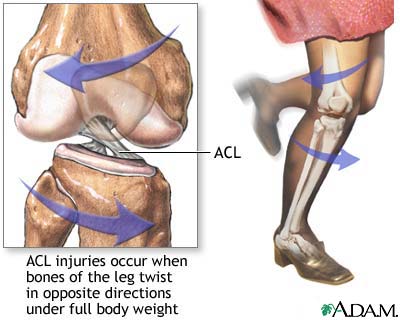
On a completely personal front, I also grieved a few years later when I tore an ACL in my left knee. It was a devastating moment, feeling that knee buckle. Then came weeks of hobbled walking, and months until surgery. Then there was rehab, one painful day at a time.

Gone it seemed were the days of playing indoor soccer, my sport of joy at the time. And basketball. For a long time, ballistic sports were out of the question. Yet soon enough, a year into recovery, I did come back. At first with a brace, but always with daily regimens of strength work that frankly changed my world. Old injuries faded away. New ones were prevented.

I went back to playing soccer for 2 years. Then came another setback, beyond imagination at the time. During an outdoor soccer game on a wet field, a player rammed my knee and the ACL popped again. It apparently happens to approximately 30% of all ACL repairs.

Grieving for Jake

To fix my knee, the orthopedic surgeon had used a cadaver that I called “Jake”. But in the end (no pun intended) the cadaver part did not hold. The better way to do ACL surgery is to cut a part of the patellar tendon and stick that in the knee. Real live parts simply hold up better than dead parts, for the most part. By choosing the cadaver option I likely killed the chances for a long term ACL fix. Now that’s real irony.

I knew it didn’t make sense to go through all that surgery and rehab all over again. So I was grieving from the moment I walked off that field. I cried the whole drive back home that day, sobbing as if an old friend had passed away. In a way, it had. That old friend was me. The younger me that had made the same athletic cuts on countless fields and courts all those years with nary and injury. Well, that old me was clearly gone. The new old me had arrived. Which meant changes.

Accepting reality

I accepted that reality. Because beyond that, anything else was just feeling sorry for myself, and I knew that wasn’t right. Not when the world gives people so many other challenges, and much worse circumstance.

But the grief over that “final injury” to my former self was real, just the same.

The Big Picture looms

It turned out there would be plenty other things to grieve. Larger matters than whether I could play soccer or not.

My mother contracted cancer and died in 2005, the very same year my wife was diagnosed with ovarian cancer and was headed into what is now going on 8 years of treatments.

Linda and Christopher Cudworth with Terri Hemmert of WXRT, circa 1984

She has survived through grit and determination, through countless chemotherapies and surgeries, and I grieve with her for the sacrifices she has had to make to stay alive.

All Things Must Pass

On the ride home from church with my wife this morning, we were listening to our favorite radio station, WXRT Chicago with Terri Hemmert. (That’s her in a picture with us, circa 1984). Each Sunday Terri broadcasts a show called “Breakfast With the Beatles” and this morning the George Harrison song All Things Must Pass was playing as we drove home from church while the morning sunlight turned the road ahead to a silver strip of light.

Harrison began to sing: 

“Sunrise doesn’t last all morning

A cloudburst doesn’t last all day

Seems my love is up, and has left you with no warning

But it’s not always going to be this grey

All things must pass, all things must pass away

Sunset doesn’t last all evening

A mind can blow those clouds away

After this my love is up and must be leaving

But’s it’s not always going to be this way…”

Singing the grief away

Many speculate that George was singing about the breakup of the Beatles, a process that would essentially last the remainder of his life, punctuated by the murder of John Lennon that put a finality to any hopes of a reunion.

But George, just like Paul and Ringo, kept moving through life, recording music. In George’s case he joined with lifetime friend Bob Dylan, new friend Tom Petty, ELO’s Jeff Lynne and popular music hero Roy Orbison along with drummer Jim Keltney to form the Traveling Wilburys.

What an example for all of us. Through creative outlets musicians like George Harrison––and the other Beatles for that matter––each found a way to work through the grief of breaking up the biggest rock band the world has never known. Or perhaps will ever know.

Changing your world a step and pedal at a time

Not many of us have the opportunity to be part of such a world-changing music group. But we are, each of us, part of potentially world-changing sports that can and do bring change and hope to the lives of so many. We can even use our running and riding to help others through fund raising and/or benefit runs and rides (link to Team In Training) that deliver money and services to needful people. Many people healthily and actively process grief in these ways.

The most underrated aspect of running and riding may be that these activities, tied as they are to profound human qualities of discipline, dedication, perseverance and yes, promotion of creativity and imagination, are a movement worthy of respect. Self respect and otherwise.

Moving experiences

The lesson for all of us facing grief is to keep moving. Run while you cry, or stop and cry your heart out if you must.

I remember doing just that about one month before my mother died. I was on a run listening to my iPod when a recording of Elgar’s Nimrod came through the earphones. The music filled my head with such beauty and sadness that I stopped in midstride and knelt on the ground, weeping. I knew what was to come. I just did not want to accept it. My grief possessed me for a moment, but that music, and that run, allowed me to move forward. It was a most moving experience.

I ran forward into the future. Sometimes it’s all you can do. Running and riding can give you the strength to face all kinds of strife. It is at once our refuge and our release.

Commitments

It is perhaps no coincidence that I took up cycling just before my wife contracted ovarian cancer. Two weeks before her diagnosis my friend Monte Wehrkamp gave me a Livestrong bracelet to wear. I never knew it would come to represent the struggle we were about to face, and continue to face each minute of our lives.

It has been a long ride thus far. 20,000 miles since the day we heard the doctor say to my wife and I, “It’s cancer.” I’ve written about the process of dealing with a cancer diagnosis. This article earned the Yahoo! Contributors Network 2008 People’s Media award for best writing of the year.

Running and riding through grief is a prescription for sanity that I can heartily recommend. The pain may come along with you, but the act of moving, of finding creativity and imagination are vital steps that can indeed sustain you through dark and difficult times. That is what running and riding provide, among many things.

See you on the run or ride.

Posted in We Run and Ride Every Day | Tagged , , , , , , , , , , , , , , , , , , , , , , , , | 2 Comments

Saturday Artwork: Watercolor of World Class Runners

As featured artist for the Brazosport Run for the Arts, I produced award-winning posters to promote the race and met many world class runners during the event. The wife of one of these runners commissioned this watercolor (8″ X 11″). For information on artwork or illustrations by Christopher Cudworth contact cudworthfix@gmail.com

Posted in We Run and Ride Every Day | Tagged , , , , , , , , , , , | Leave a comment

Putting Black Friday into a running and riding perspective

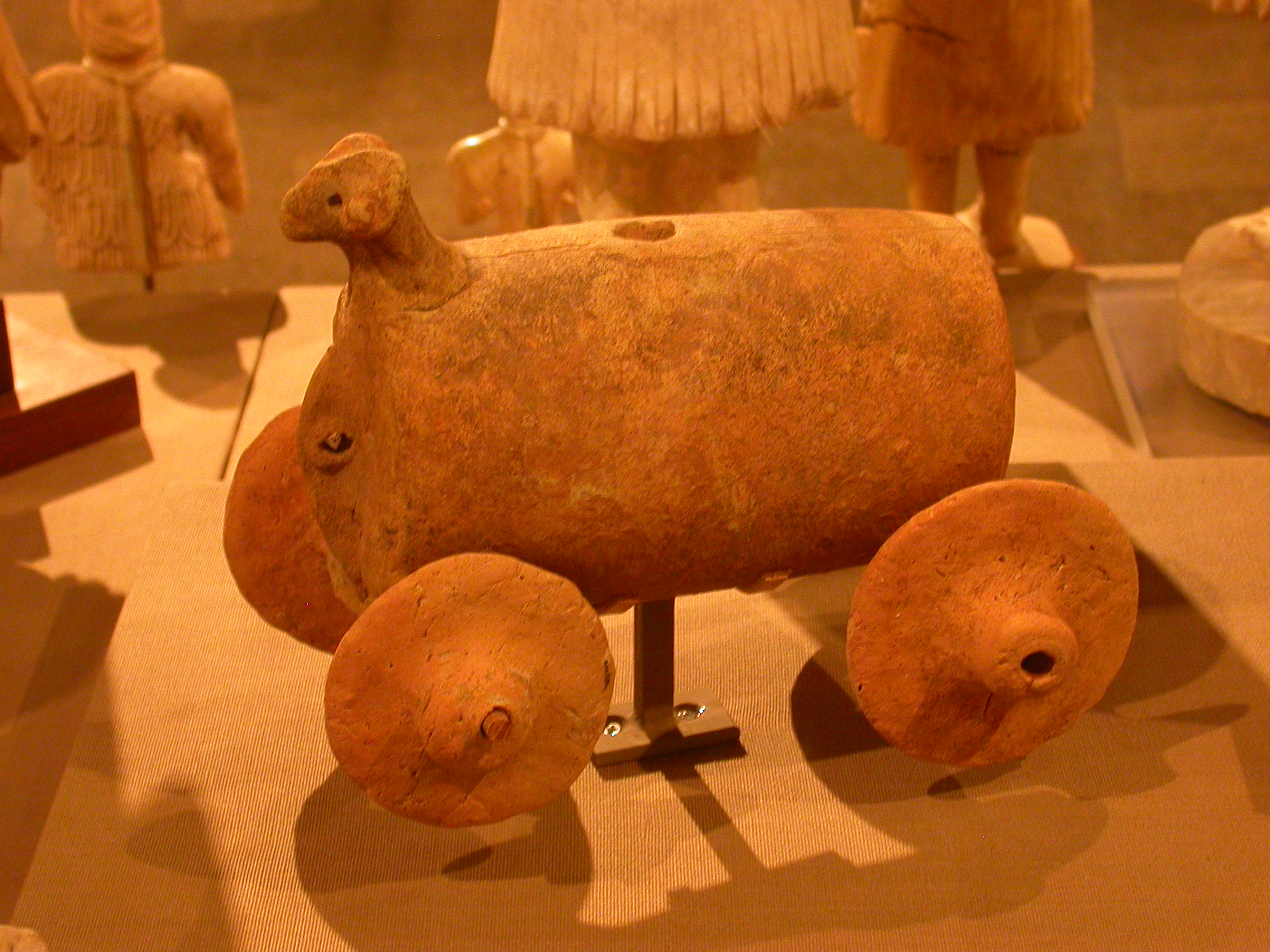
The hottest gift in early Mesopotamia was a fake animal on wheels that you pulled with a length of twine. Shoppers on Black Friday in 2000 B.C. ran over each other to get this toy. Showing that things never really change.

It’s still a bit stunning to me that the major shopping day in America is called Black Friday.

Perhaps it is proof that Americans have really short memories. Do people really not recall that the term Black Friday was originally coined (no pun intended) to describe the horrific date of September 24, 1929 when a market collapse signaled the start of the Great Depression?

Modern times.  

The shoppers I watched charging out of K-Mart during a news clip on Thanksgiving didn’t seem to have irony on their minds at all. They were running, literally, out of the store with items they had purchased the day before official Black Friday sales begin.

None of those people running out the door looked like they had run for any other purpose in their lives for a very long time. Yet here they were, jubilantly sprinting across a storefront threshold with excited expressions on their faces like they’d just won a marathon or something.

It’s an Event

So we must stop to consider that Black Friday really does mean something to people other than a chance to buy things they want, need, or desire to give to other people.

To millions of Americans who wait for the day after Thanksgiving to come around each year, Black Friday is an Event, with a capital “E.”

It takes training

That means that for many people, a whole lot of planning goes into preparing for Black Friday. I hesitate to say they actually train for the event, but they come close.

I’ve witnessed a Black Friday Athlete in training. She plotted for weeks which stores she was going to attack, and when. It was as if she was laying down plans to run a marathon or complete a Century on a bike. She would start at midnight, shop through the morning hours, hit a food station at around 9:00 and then head off for a new set of locations.

The Black Friday mindset: Like a world class athlete

This woman was obsessed, dumping phone calls at work as fast as she could to provide more time to go online and search for places to buy gifts. Her goals were to pick up presents for all her kids and her husband. She also had in mind a few items to pick up for herself. This is called, in Black Friday terms, “rewarding yourself” for the effort. That award might be something the Black Friday shopper knows no one else will think to give them. And heck, if the savings are big enough on the items you find during Black Friday sales, who says it’s so bad to buy yourself a little something for the effort?

Hitting the wall or bonking

Of course, like any marathon or other endurance event, there is always a risk of bonking or hitting the wall. You see those people leaning against the store wall surrounded by bags and boxes. Their posture sags. Their eyes glaze over.

If they’ve lost their kids during the day, they don’t really care that much. There are plenty of other kids to go around. Find some more and take them home. They’ll probably like what you already bought as much as your own kids.

Black Friday can do that to you.

The warmup

That’s why its important to warm up before you start your Black Friday shopping. Spend the weeks leading up to Black Friday putting in shorter shopping stints that raise your heart rate but do not require use of your full VO2 Max. Train only at 80% lest you peak too early. You might even want to just drive around to the best shopping areas and not actually buy anything. It’s still best to know your course on race day.

Give it all you’ve got

Of course, if you’re only just now reading this, it’s a little late to begin training for Black Friday. So like Donald Rumsfeld once said, “You don’t go to war with the army you want. You go to war with the army you have.”

Same goes for any distance race, bicycling competition or Black Friday shopping marathon. If you did not have time to prepare, you’re going to have to pace yourself wisely, don’t go out too fast, save a little energy for the middle of the race and try to kick it in if you have any juice left in the engine at all.

Beware your competition

It will be frightening out there, we want to warn you. Black Friday brings out a brand of competitor you likely do not encounter in your local 10K or marathon. For one thing, they are entirely unfit. Some of them may even be obese, or the size of NFL offensive lineman, and we mean that allegorically. If you do not understand what you are about to face in your first Black Friday competition, we suggest you check out this website: www.peopleofwalmart.com.

What is frightening about these types of competitors is that they find strength and endurance in places well-trained runners and cyclists only wish they had. It really is an aberration of nature to see a person who normally sweats just getting up from their chair traipsing tirelessly around giant stores pushing shopping carts full of presents. Perhaps these people know how to access The Force, just like Luke Skywalker in Star Wars. It really is remarkable.

Yes, to see a full-on, full-sized shopper tearing about a department store is a wonder of nature, like watching former Olympic shot-putter Brian Oldfield run the 400 meters. Understand, Brian was actually very fit in his day. He’s the model for all huge people who exceed natural expectations.

Black Friday Gladiators

These people are fearless, determined and inexhaustible, for the most part. So if you think all the running and riding is going to give you an advantage in Black Friday traffic, think again. Your typical Black Friday competitor is meaner, tougher and more acquisitive than any person you’ll ever encounter at the adidas, Nike or Puma booth at your local running expo when they’re giving way free tee-shirts to the first 100 registrants.

No, Black Friday is way more serious than some little running or cycling expo, where your competition weighs about the same as you and actually has a polite bone in their body. That’s how we sportsman are taught to behave, with a little respect for the competition.

Ancient Mesopotamians line up in front of Pharaoh Mart to buy ancient crap that no one will ever need again.

But those rules go out the freakin’ window on Black Friday. You might as well be running a marathon with a pack of fully-armed gladiators. Or riding your road bike on a highway with those crazed lunatics from Mad Max, the Mel Gibson movies. It’s been that way for millennia. People out shopping are crazy.

Better to chill out. Relax. Go for a run or ride instead. Shopping will still be there come Monday and beyond. 

In fact, I hate to tell you this at so late an hour, but you are much better off forgetting about running out to shop on Black Friday at all. You should kick back on Black Friday, watch the tragic news reports of people who didn’t find what they wanted to buy or just absolutely had to have, and then head out to Shop Local. Spread a little money around in your own community. Support your neighbors and friendly mom and pop stores.

Don’t worry. Sears and JCPenny and Kohl’s and Macy’s will all still be there on Monday. There are 30 shopping days until Christmas. The big box stores will certainly welcome you with open arms well after Black Friday has passed.

Pace yourself. Go for a run or a ride. 

Instead of all the madness, bundle up and go our for a run or a ride in the country. Think through your shopping list, and what it means to buy someone something they really like. If all else fails, buy gift cards. Make a handmade card to go with them. You family and friends will love you for it.

That’s like Black Friday anti-matter. So be brave, and be part of the Dark Energy of the Holiday Season this year.

But watch out for the Black Hole of eggnog. It can put 5 lbs on your cosmic dumper in a heartbeat.

Posted in Tarsnakes, We Run and Ride Every Day | Tagged , , , , , , , , , , , , , , , , , , , , , , , , , , , , | 1 Comment

The tarsnake of being thankful for things that didn’t happen

Running and riding gives us lots to be thankful for. But there’s more to life than that.

Thanksgiving is about saying thanks for everything you have in life. Food. Family. Love. Relationships. Your road bike. A favorite pair of shoes. See, if you run and ride, your perspective gets a little skewed toward your favorite activities. Nothing wrong with that.

We really can all be thankful for the many things our respective sports bring us in terms of hope, health and happiness.

Saying thanks for endurance. Both physical and emotional.

We can also be thankful for the ways running and riding help us cope with the crap we wish we didn’t have to endure. Things like pain. Depression. Anxiety. Stress. Nothing to eat in the refrigerator. It’s all relative, you know.

Of course, as runners and riders, we’ve likely experienced all four of those previously mentioned emotions, pain, depression, anxiety and stress, in a single race. But that’s why we run and ride. Suffering builds character. So you can handle all the crap that goes on in the rest of your life. We can be thankful for the endurance we develop through our chosen sports.

Saying thanks for nothing?

I’m also here to say thanks for a few things did not happen over the years. To be precise. I’m thankful I did not get killed a few times when it could easily have happened.

Such as the time(s) our college cross country team drove home from meets with a case or two of beer in the car. That was stupid. We almost crashed head on into an approaching vehicle once because the driver of our vehicle was drunk. I can still see the crest of the hill where the road disappeared into the sky. Then the driver crossing the center line, and the car hurtling at us from the other direction. I was not close to God at the time, but a prayer of thanks definitely crossed my lips at that moment.

You’d think that would have been lesson enough. Yet again there was a case or two of beer in the car on our drive back from a meet in Racine, Wisconsin to our college town in Iowa. Our driver and teammate was so drunk he could not sign his name on the gas receipt, so I refused to get back into the car at a gas station in Prairie du Chien, Wisconsin. Honestly I was afraid we might plunge off the bridge ahead, into the Mississippi. So I stood outside the car refusing to get back in until someone with more wits about them agreed to drive. I thank goodness for that tiny bit of common sense. And that we made it home alive.

I’m certainly hopeful today’s college kids have more sense. We can be thankful if that is indeed the case. But I’m not so sure.

Fate can be even stranger than stupidity

Sometimes fate is even stranger than stupidity. While standing on a curb during a run, waiting for the light to change in Geneva, Illinois, I was wiping sweat out of my eyes when a loud crash erupted from the intersection. I opened my eyes to see a Volkswagon in mid-air, headed right for me. I dove for cover, grabbing an elderly man in the process, likely saving both his life and mine. Not knowing what else to do, and feeling shock from the incident, I got up and kept running. 400 meters later I stopped when a shiver of fear came over me. I’m certainly thankful to have avoided that flying car.

A knife attack

A few years earlier in Geneva I was running through town when a group of kids hanging out by the downtown theater took a disliking to the color of my shirt, which was orange and black, indicative of the school I attended in another town.

First the bored townies stuck out their legs to try to trip me, then got angry when I spun around to flip them off. Alright. I admit that was probably dumb.

Then it got weirder, and more dangerous. A huge guy wearing flip flops jumped up and came after me.  I trotted just ahead of him until he got tired. But then a car pulled up and he jumped in and the car started to chase me. I cut through the backlot of a grocery store but they had circled the block and had me in their sights. The angry guy jumped out, pulled out a large knife and threw it at me. It skittered across the ground.  I am of course thankful to this day he did not hit me with the knife.

Other airborne objects

Over the 30+ years I have been out on the roads, I have been hit by empty and full water bottles thrown at me from cars while I was running and riding. Most of that was long ago, so I’m thankful people seem to be more tolerant of runners these days. We’re still working on tolerance for cyclists, I’d say.

But I will say I’m thankful that none of the angry drivers who have confronted me on the bike has ever made good on their threats, which have included “twisting me into a pretzel” and “snapping my pencil neck.” Thank God they have all stayed in the car. So far.

Thankful the lone bike crash wasn’t too bad…

I’m really thankful my recent bike accident resulted only in a broken clavicle, now healed, and that I did not tumble across the road like a sausage tossed from a meat truck. Instead I landed hard but safely in a grassy ditch. I’m thankful for all that too.

And that I did not freeze to death in the Twin Cities Marathon…

I was so excited to compete in the Twin Cities Marathon that I did not bring along enough clothes to compensate for a 30-degree temperature at the start, compounded by steady winds off the many lakes in town. While sticking with a group that included Olympian Don Kardong doing 5:30 per mile, it did not occur to me that the growing numbness in my body was a sign of possible hypothermia. A college roommate watching the race pulled me off the course at 16 miles. “You’re done,” he said, noting my thickening tongue and bluish lips. “Your race is over.” I’m thankful he was there.

It all adds up to thankfulness

It’s amazing how many things we have to be thankful for if we stop and think about it. But as illustrated here, sometimes it is the things that don’t happen that make you really thankful you didn’t get hurt or even lose your life.

And since I am alive I’ll say I’m thankful for people like you who read this blog and give feedback.  Happy Thanksgiving, everyone. Hope you get out for a run or a ride today. And if so, that you don’t encounter any turkeys on the road.

Posted in Tarsnakes, We Run and Ride Every Day | Tagged , , , , , , , , , , , , , , , , , , , , , , | Leave a comment

Important safety warning to all who run and ride

By Christopher Cudworth

There is a serious problem facing many of you out there who run and ride. You might not think about it on a daily basis, but you may be at risk of running or riding off the edge of the world.

No matter where you live or how far you run and ride. The edge of the world is near. It’s true.

The illustration in this Flat Earth Society logo explains it all.

The continents of the world are clearly all perched on a disc-like surface. That means you could be riding or running along happily and suddenly plunge off the edge of the world. You could be riding or running along innocently in Chicago, Illinois or Perth, Australia and plunge off the edge of the world before you know it.

How we know the idea of a round earth is all a ruse

It turns out we’ve all been tricked. Those pictures of earth from space that make it look like the earth is round? Turns out it’s all an elaborate hoax, a lens effect, as it were, perpetrated to fool us all into thinking we can circumnavigate the globe.

See, the Flat Earth Society has it all figured out. And then some. It turns out that when sailors years ago noticed ships receding over the horizon they were not disappearing over the curvature of the earth. The astute folks at the Flat Earth Society have proven that the world is full of tricks designed to make us think the earth is round, when in fact it is flat. Take a look at this scientific explanation for why horizon lights disappear and you’ll be convinced once and for all the earth is flat. Then you’ll want to take steps to protect yourself.

What do to if you are about to fall off the earth

Now that we all know the earth is truly flat, it is important to arm ourselves with strategies in case we experience the edge of the world.

Rule #1: Doh! Try to brake or stop before you fall off

If you should take a turn at the end of your block and find yourself flying about to fly off the edge of the world, the first thing to do is to try to put on the brakes if you are riding, or skid to a stop if you are running. I know, these measures seem simple, but they often work quite well and are known to prevent a sudden fall into the abyss.

Rule #2: Grab hold of something if you can.

It seems simple to say, but even at the edge of the world there are plenty of opportunities to save yourself if you suddenly encounter the edge. Try to snag a tree limb or a bunch of grass in your hands. Or ditch your bike and fall to the ground so you can grab a lamppost, a fence pole or anything lodged in in the ground. Better to lose your $5000 Trek Madone than your life. These humble steps may seem desperate, but they just might save your life.

Rule #3: If you live in the United States, your odds are better to survive a near fall off the edge of the earth. Just grab a fat person and hang on

If you are in a crowd or near other people at the edge of the world, look for the heaviest person in the bunch. This should not be difficult in the United States, where obesity rates have shot off the charts, with nearly 2 out of 3 people chronically overweight. That means your odds are pretty good of finding someone heavy enough to hang onto in an Edge of the World Emergency (EWE). Of course, we are at even great risk here in the States if obesity rates continue to rise. That could tip the disc of the earth in such a way that all 300 million Americans go sliding off into space. What a sight that would be!

Rule #4: Flap your arms. Really. It might work. 

It may be depressing at first to realize you’ve actually fallen off the edge of the Flat Earth while running and riding.  But it can never hurt to flap your arms and try to fly. The rules of gravity might be a little different off the edge of the world, or the air might be a little heavier and thicker. If so, please write us here at We Run and Ride. We like to keep our readers informed on such facts.

Science is stupid. Better to trust your instincts. 

See, there are tons of things we’ve gotten wrong in science over the years. According to the experts at the Flat Earth Society, boring old scientists simply make up stuff about a round earth in order to entertain themselves, Take whale songs, for instance. It turns out that whales like to talk to each other by sending songs through the waters of the ocean. But that could never happen if the world was round, you see. The Flat Earth society informs us that whale songs cannot possibly curve or the sound would be distorted or lost, proving that the earth is, indeed, quite flat. The oceans are nothing more than a big bathtub. But it sure makes the literal story of Noah and the Ark and a worldwide flood seem a little more plausible, doesn’t it? We might be onto something here…

But don’t let that slow you down!

Rule #4: What the hell, pick up speed and see how far you can soar off the edge of the world

We only live once, the saying goes. So why hesitate at the chance to find out how really far you can fly once you reach the edge of the world. Instead of slowing down, build up a good rate of speed, running or riding as fast as you can and just fly off the world’s edge. Who knows, you might make the first unassisted moon landing. But aim well, because it’s obvious the moon is nothing more than a giant coin shape in the ether, flat as a pancake like the earth, but twine as shiny.

Rule #5: Before you go running or riding, check your GPS

Global Positioning Satellites must have this all figured out. Because if you can use your iPhone or your Garmin to find the Walmart at the corner of Randall Road and Fabyan Parkway in Batavia, Illinois in time for Black Friday, surely you can find the edge of the world and avoid it. Not that hard. Of course, looking at these People of Walmart photos might make you think the End of the World is coming, but that’s a different subject.

We all know this image is incorrect. The earth is actually flat.

Ooops. That photo from the End of the World site shows a round earth. Apologies to our Flat Earth Friends.

Practical steps to avoid the edge of the world 

Thank God I bought my college-aged daughter that iPhone this year. She goes to school on the other side of Illinois, and that might just be the edge of the world for all I know.

Here are a just a few more suggestions on how to avoid running or riding off the edge of the Flat Earth.

Wear running shoes with a deep tread

Those last few feet can be slippery. Better to sacrifice a little weight for better traction.

Practice your cyclocross and steeplechase moves

If you can bunny hop your bike over barriers and basically learn to turn around in mid-air when need be, those can be handy skills when it comes to stopping at the edge of the world. Runners should participate in steeplechase events whenever possible. At least if you run off the edge of the world, you’ll got in good form and full style. Who knows, you might even negotiate the giant water barrier on the other side.

Never run or ride alone. And watch for disappearing runners or riders. 

And don’t take the lead. Remember, if you are in the lead of a running or riding group, it is far more likely you’ll be the first person to plunge off into eternity. So rather than take that risk, it is better to suck wheel if you are a cyclist, or hide in the group if you are a running. If suddenly you see heads disappearing in front of you, hit the ground hard and fast. Sure, a few more of your running and riding mates may tumble over you on their way to oblivion, but it’s far better than going there yourself.

That’s it. That’s about all the help we can offer you here at We Run and Ride on how to handle the reality of a Flat Earth. Again, if you want to know more, it might be helpful to find a really conservative church in the south, or hang around the back rooms of stodgy old libraries in downtown London. That way you might meet up with members of the Flat Earth Society. You could join them and get in on all the secrets of how and why the earth was formed flat. And what to do about it if you hit the edge.

Image

If all else fails, read this Shel Silverstein book, Where the Sidewalk Ends. It likely has more answers than the Flat Earth Society. And it’s just as funny.

Posted in Uncategorized | Tagged , , , , , , , , , , , , , | 1 Comment

Sweating this one out

By Monte Wehrkamp

Confessions of a sweater.

Monte Wehrkamp on our annual trek to Wisconsin

I have the ability to sweat better, harder, faster and in greater volume than anybody I know. I can sweat at the drop of a hat, then sweat twice as much picking it up. I often joke that I can break a sweat just thinking about working out or riding. And when I do work out or ride, I can soak a t-shirt or jersey so completely in an hour, you can literally wring a cup of water out of it (well, I can; you’d find wringing out my sweat-soaked t-shirt a little gross, I’m guessing). When I step off the elliptical at the gym, it looks like I’ve been running through sprinklers or caught in a downpoor. I have to change clothes just to drive the 12 blocks home.

Too much of a good thing?

Of course, sweating is good. When you’re exerting yourself, sweat glands push water, sodium, potassium and chloride to your skin in an awesome balancing act — keeping you cool and while preventing your internal chemical soup from getting too dense. The problem for me and sweaters like me is remembering to rehydrate regularly. Which I don’t. Several times in the middle of a 3-hour ride, a buddy has asked me a question, and I find I can’t answer. My lips are glued shut with cotton mouth. So if you’re ever riding with me and I don’t answer you right away, I’m not being rude. Just gimme a second while I take a swig from my water bottle. In fact, tell me to take a drink and then ask your question. I’ll sip and listen at the same time.

As the weather turns cold, it’s not rehydration that’s causing me bike anxiety. It’s dampness. Er, wetness. Oh heck, completely soakedness. See, it doesn’t matter if it’s 85 or 25, if I’m riding anything faster than 5 mph, I’m sweating buckets. Way more than you’d think a person needs to, but apparently, my body thinks it needs to.

Ice, ice baby.

My winter riding anxiety isn’t so much about the ice on the road or trail, it’s the ice in my clothes.

Just last winter, I went out on the mountain bike for a frozen-trail spin in the afternoon. While the sun was managing to warm the northern Illinois ground up to a searing 30 degrees, I felt fine. I knew I was sweating profusely as usual, but I tried to moderate my effort, not going into the red or overheating. Everything went well until I began heading for the car parked back at the trailhead. By then, the sun had sunk low, taking the temperature with it. A breeze kicked up a bit, and I began to freeze. First, clammy discomfort. Then prickling pain. Numbness set in next, and by the time I managed to start the car with shaking hands, I was dangerously cold. In fact, my collar, skull cap and cuffs were stiff and crunchy with frozen sweat. My clothing had actually begun to ice up on my body.

No such thing as bad weather, just bad gear.

How many times have I heard that? Growing up in South Dakota, hunting in the Black Hills, I can assure you, plenty.

I can’t tell you how many dollars and hours afield I’ve spent trying to find clothing with the magic combination of warmth, ventilation, and sweat wicking properties. I’m sure there are great thermal base layers and technical outerwear that work for 95% of all outdoorsmen, but I’ve yet to find something that works well for me over the course of an entire day.

Same goes for bike kit. By the time I’m geared up enough to stay warm at 18 mph at 18 degrees (let’s just call it 18-4-18), I’ve also wrapped myself in enough material to hold a couple gallons of water, which in my case, is frozen sweat in a matter of an hour or so.

For runners, it’s a question of route vs. sweat

Many runners work up a health sweat during a long run. But when that sweat makes you chilled on the return trip, it can be pretty dangerous to your internal core temperature if the sweat has you freezing on the outside.

It is therefore vitally important to plan your route accordingly if you are a heavy “sweater” in particular. Generally, the best advice is run into the wind at the start of your run (or ride) so that you are not facing a blasting cold wind on the return trip.

Be advised that at times a wind from behind can be just as dangerous, especially for people susceptible to chilled back muscles. If you know you’re going to be running or riding back with a cold wind, it can be wise to pace a light vest and throw it under or over your existing layers to protect against the effects of wind blowing up your clothes in back.

I’m open to any ideas.

I’m guessing I can’t be the only heavy sweater out in the winter chill, trying to figure out how to make a cold morning run or ride enjoyable, or at least, tolerable. There has to be a few other weekend warriors out there who suffer the winter bike anxiety that comes from freezing up a few times to often.

So please weigh in below…

Are there ways you’ve found to reduce sweating? (No, I don’t think it’s hyperhidrosis — when I’m at work, or at rest, I don’t sweat any more than anyone else. But when my heart-rate is elevated during exercise, grab a bath towel. I’m going to need it.)

Have you found especially effective pre-ride or run rituals? (I’ve heard taking a cold shower before winter exercise sometimes helps.)

Or have you found especially good gear that manages to wick well and keep you warm?

How about diet and/or vitamins or medicine? (Kicking spicy food or caffeine, maybe?)

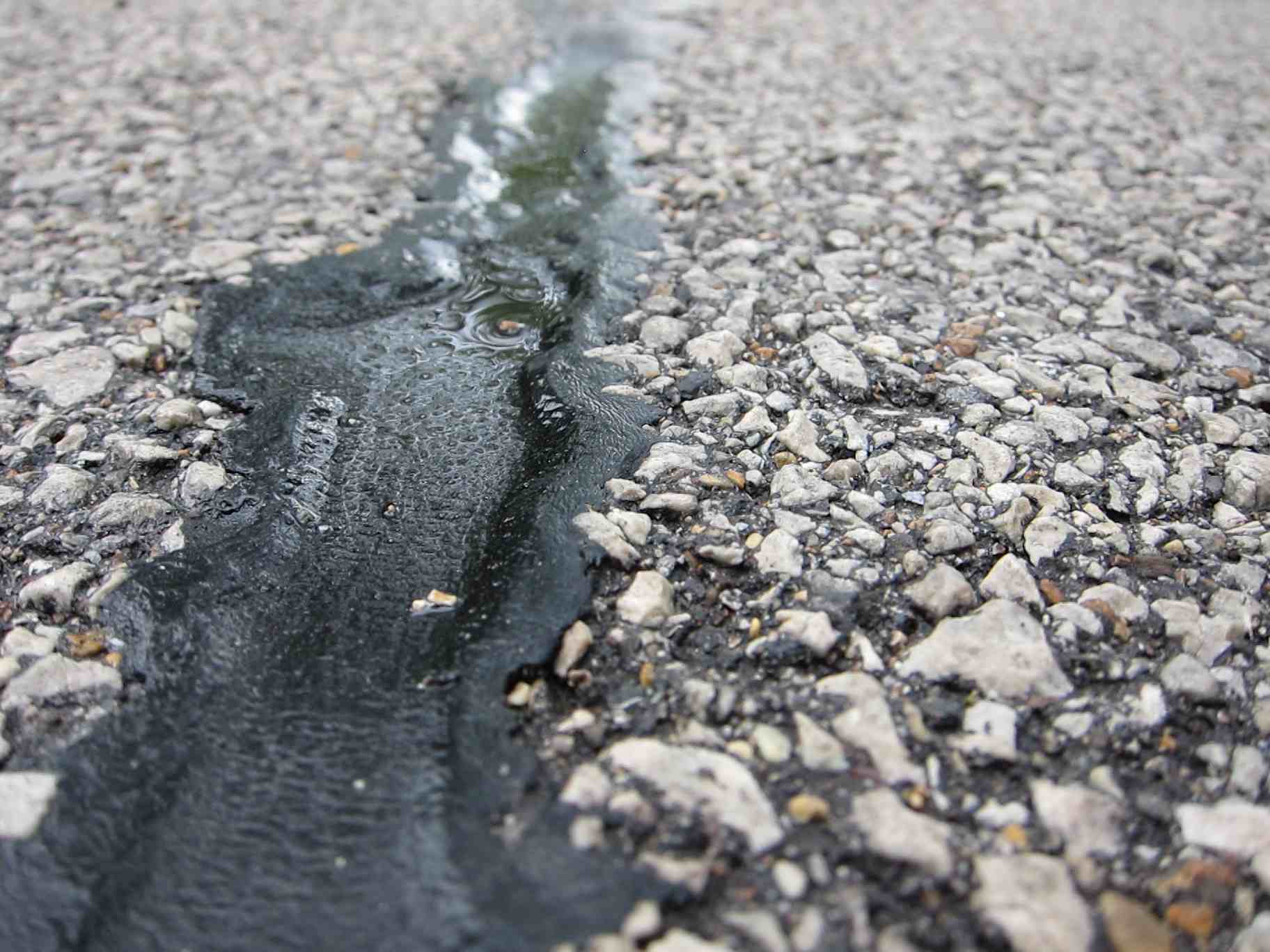
Road features made of tar.

Anything that trips you up or holds you back is a tarsnake.

Is profuse sweating  just one of the tarsnakes of life when you run and ride?

The easy fix is already underway — my bike’s on the trainer in the living room, pointed at the big screen TV. But there are only so many old movies and reruns I can take before I want to go outside for a real ride. I’m just hoping for one that doesn’t end in frost bite or hypothermia.

Posted in Tarsnakes, We Run and Ride Every Day | Tagged , , , , , , , , , , , , , , , , , , , | Leave a comment

It’s Monday. Welcome to the treadmill.

By Christopher Cudworth

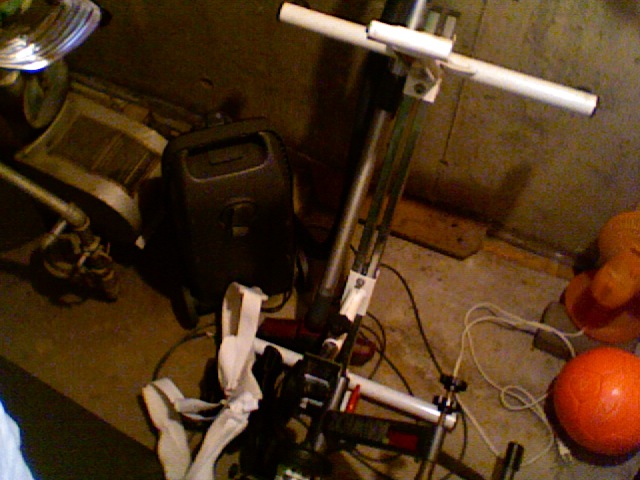
The elliptical trainer lurks.

It’s cold out there

Runners and cyclists facing the cold winter months must make a decision on how to keep up their training. You can train outside, bundling up to fight the elements, which for runners often means waterproof shoes with good tread for traction as well as complementary layers of clothing, gloves and hats.

Better dig out the bike trainers.

For cyclists, winter can be doubly challenging because the effects of cold are exaggerated by the wind chill generated while riding. It can be much harder to keep hands, feet and face warm.

Then there’s the danger of sliding out on ice, or riding on slushy days. Road cycling can become impossible, and the mountain bike is the only alternative. Still, many people do it. Myself included.

Heading indoors

Yet many millions more opt to go indoors with their training, using treadmills and bike trainers to put in miles while the winter winds blow.

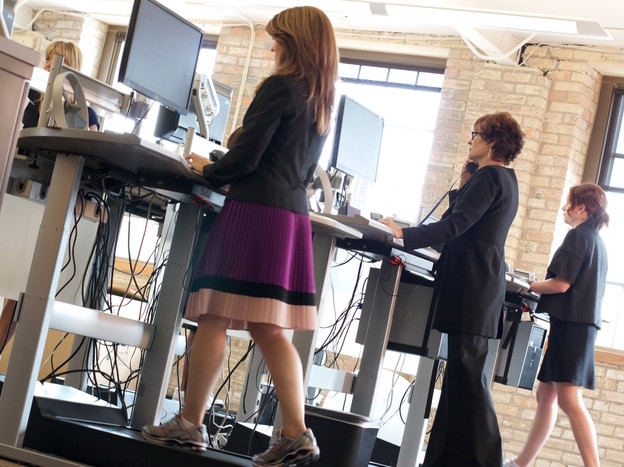
It makes sense. If you can stand it. Even at work.

Going nowhere fast

The treadmills now available to runners are sophisticated enough to make running indoors both practical and even desirable to risking life and limb outdoors. Some runners put in whole marathons on the treadmill.

The symbolism of such an act deserves a moment of contemplation. Just think about that: Running 26 miles without going anywhere. Really, it takes a special sort of discipline to do that.

The whole earth is a treadmill

Or is it just a matter of perspective. After all, I’ve run 50,000 miles in my lifetime, and it hasn’t really taken me anywhere other than up a few mountainsides. That was cool, but I might as well consider that the entire earth is a form of treadmill. It’s spinning round and round beneath my little feet. You can’t really tell that the earth is round when you’re running or riding. In fact, often it seems so flat here in Illinois that you have to play mind games to keep the runs and rides interesting.

Welcome to the treadmill of life

So we’re all on a treadmill whether we like it or not. We’re all pedaling and spinning on a bike trainer of sorts because the world keeps passing under our feet. It’s like the Pink Floyd song says;

“You run and you run to catch up with the sun but it’s sinking, and racing around to come up behind you again…”

Feeling elliptical about indoor training

I guess I congratulate people who can jump on the treadmill or bike trainer and happily put in miles of training to keep the fat away and keep fitness up during the winter months. There’s an elliptical trainer in our basement that has gone largely unused for years in our household.  But this winter may be different. There is cold weather predicted here in the Chicago area, and keeping up fitness might be a challenge at times. Plus the elliptical is a perfect way to maintain the rehabilitation of my shoulder after the bike crash.

I also own a couple bike trainers. And lots of bikes. So there may be no excuse for not saddling up somehow this winter.

Health clubs and other torture chambers

There’s always a health club too. But those places can be difficult to find when darkness falls and you don’t feel like getting out of the house after a long day at work.

The bike club to which I belong offers bike training session on sophisticated training machines that track your watts and mileage and let you compete with other riders. The cost is 10 sessions for $250, and the camaraderie is well documented in the club’s Yahoo group discussions. So perhaps that’s an option as well.

An allegorical fall from grace

Maybe I’m just a little gun shy when it comes to training indoors. Years ago at the local health club I was clipping along on a treadmill, showing off at 6:00 pace with my feet thumping the belt and sweat pouring off my face. At that moment a beautiful young woman

Kerry (Hoskins) Branson, a Playboy and video game model was a member at the club. She’s now a devoted mom and entrepreneur who recently ran for political office. And she’s still a looker. But not the one who distracted me.

showed up at the side of the treadmill and asked, “Are you almost done? I’m signed up at 2:30…”

Distracted by her appearance, I missed a step and plunged to the belt with my shoulder, which struck the back cylinder, and the humming belt shot me off the back of the treadmill into the wall behind. My feet punctured the drywall and I lay there stunned. Then I got up, told the young lady she could have the machine now, and drove home.

Not too far to fall

No longer fit for duty? The hyper fit General David Petraeus fell off the military treadmill through his affair with the equally fit Paul Broadwell.

The symbolism was just too rich. All of life’s a treadmill, you see, and a pretty woman or a handsome man can be a major distraction to the mission at hand.

Just ask General David Petraeus, whose fit little affair with Paula Broadwell seems to have knocked him off his treadmill of success and adulation.

The moral of the story is this: It’s best to be careful no matter where you train. In there. Out there. On the treadmill. Or on the bike trainer. I mean, both can be precarious if you’re not careful.

Posted in Mechanical Genius, We Run and Ride Every Day | Tagged , , , , , , , , , , , , , , , , , , , , , | Leave a comment

Running and riding as a holy place

As regular churchgoers, my wife and I enjoy the tradition and rituals of our faith. We also appreciate the sustaining value of what we learn through fellowship and worship.

But there are weeks when we desire a break from church at times. Then we choose a park or other serene place to visit. One of our favorite places for this ritual is Morton Arboretum, a large park and educational center in Lisle, IL. It isn’t a long drive for us to get there, probably 20 minutes. The Arb as most people call it, offers walking trails through deep woods and open prairies. There are both amazing and subtle things to observe in all seasons. Then we stop back at the center and partake in a little goat cheese/cranberry salad. We call it the Church of the Arboretum.

Finding your own space

Going to a church or temple or mosque is not everyone’s favorite thing. Some people prefer to find spirituality on their own, and some not at all.

My own mother was a Unitarian, a faith that by tradition respects everyone’s belief system. One of the guys with whom I ride is a member of the same Unitarian Church in Geneva, IL, my mother attended. That rider is a devout atheist. And I don’t mean that term as an oxymoron.

Riffing your way to gladness

When we ride together we often discuss spiritual matters, but not in argumentative fashion. My “atheist” friend is one of the most logical thinkers who likes to cut through the bull, but in often humorous fashion. Sometimes we set in riffing on various aspects of religious tradition, making up stories or reacting to those heard on the news. We make a game of it, announcing our ideas as if they were a newscast or a Saturday Night Live skit. The miles roll on as we find the common core of our belief systems. Which is much broader than you might think.

Space to breathe

It is remarkable that by comparison, faith was a relatively rare component of conversation while training with teammates at the Christian institution (Luther College) that I attended in college. We were more likely to talk about the women we liked, parties and coursework than God or Jesus. But we were college kids. What do you expect? God was someone you met in class, analyzed and doubted, for the most part, on the basis that the unexamined faith is not worth having.

It seems that faith sometimes needs space to breathe, and while we are young there is so much happening in our lives that faith gets squished between all that other stuff. It moves around and pops up on occasion like toothpaste in a tube.

What do you think about God?

Then we age a little bit and while life can still be hectic, faith and big questions take on a little more interest and urgency. We let the questions hang out there a bit more. We bring them up with friends during a long run. “What do you think about God?” we might dare ask. Or, “Do you think there really is a God?”

The run or ride then turns into an exploration of sorts. The eyes focus on the road or path ahead. Occasionally you glance over at your friend (or friends) while riding or running along, to see what their faces say about their agreement with your thoughts. We all want to know what people think about our conception of the big picture. It is human nature.

Holy place

Running and riding can be that holy place where you feel open and active enough to ask the big questions, and actually take the time to try to find the answers. Sometimes when things come together and ideas flow in harmony, you can actually be moved spiritually and try to bring back what you’ve learned into the rest of your life.

Transfiguration

It can be difficult to do. Like the disciples who climbed a mountain with Jesus and were witness to his transfiguration, they wanted to stay in that holy place. But Jesus warned them they could not stay. Their duty and calling was to bring that inspiration to others. To deliver the message, as it were, that goodness exists.

And so it goes. We all proselytize to some degree about the many benefits of running and riding. For health. For stress release. But sometime you might want to consider the fact that our time on the road is something of a holy place. We turn regular roads and paths in to holy space. That is how it is meant to be.

Amen to that.

Posted in Uncategorized | Leave a comment