From running to riding, Tom Burridge excels through the ages

By Christopher Cudworth

Kentucky resident Tom Burridge bike racing.

Kentucky resident Tom Burridge bike racing.

It is important to relate the following anecdote shared by Tom Burridge about a recent cycling experience.

“I was entered in a cycling criterium and did not do a proper warmup,” he chuckles. “So the first five miles were awful. I was out of breath and wondering every second whether I’d get dropped. We were flying along and it was still bad at 10 miles. I was just hanging on, trying to keep it together. Finally at 15 miles things started to come together and I actually got to the front and did a few pulls. I actually finished with the sprint at the end.”

Cyclists of all levels can appreciate the truth in that story. All of us who have cycled for years or have taken it up later in life know that cycling can be the most unforgiving of sports. Like they say, “When you’re wrestling a gorilla, you don’t quit when you’re tired. You quit when the gorilla gets tired.”

So the suffering and pain is universal. It occurs at all levels. Even with formerly world class athletes.

A nice pedigree

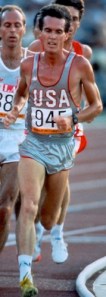
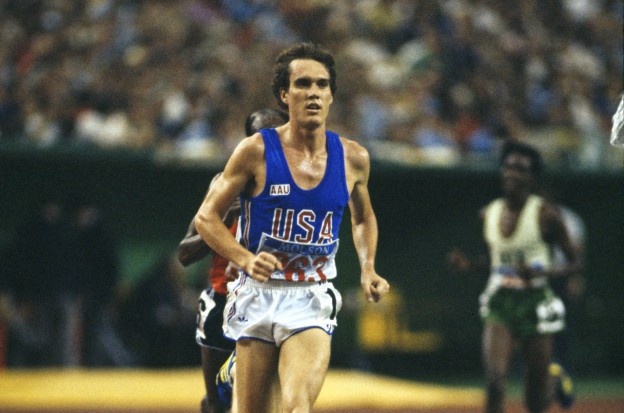
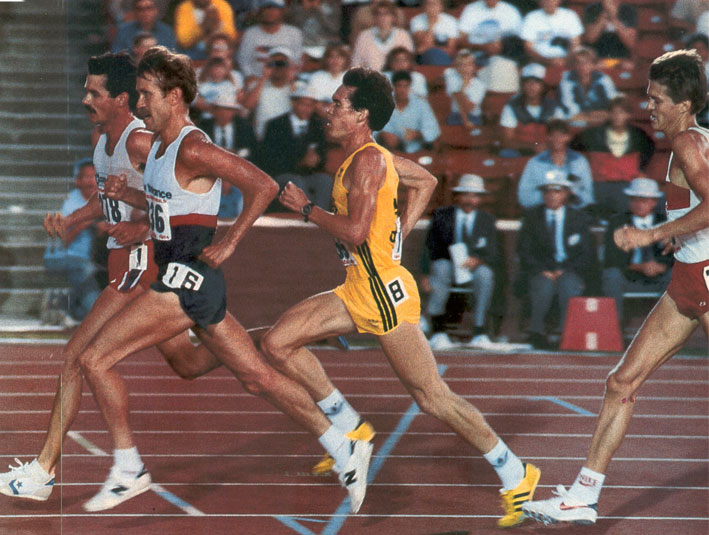
Burridge in his Kentucky days racing world class times on the track.

Burridge in his Kentucky days racing world class times on the track.

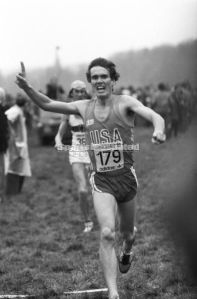
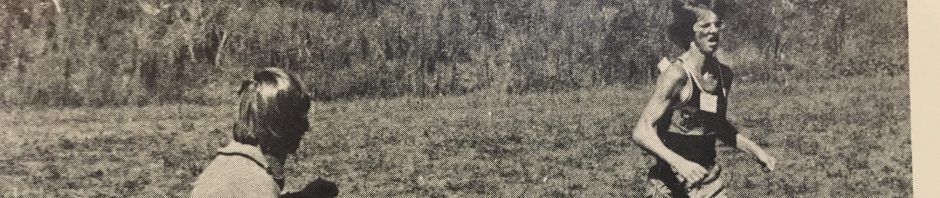
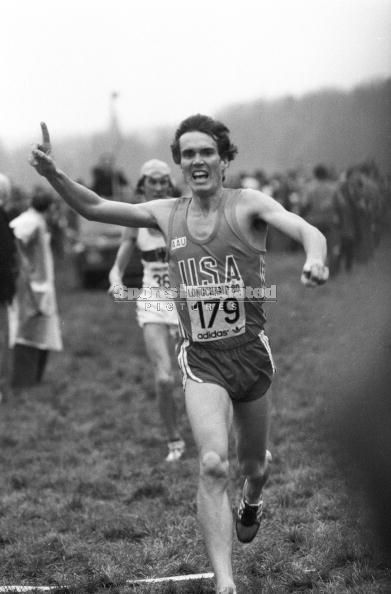
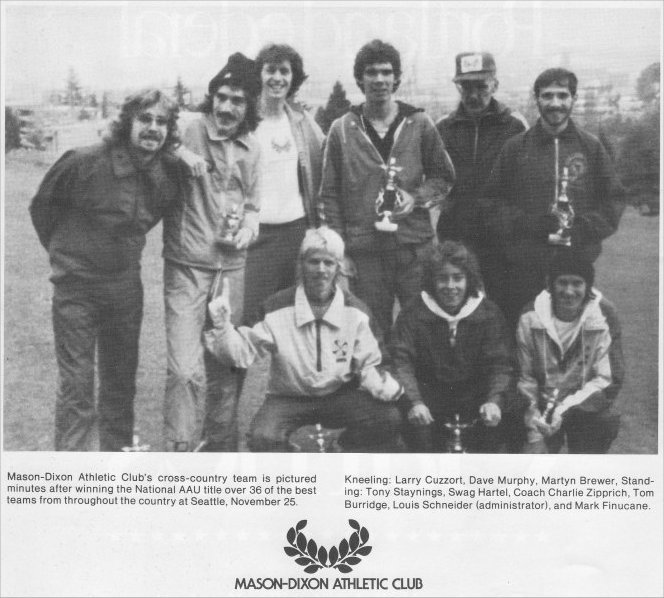
Which is what Tom Burridge once was as a runner. A former American record-holder at the Half-Marathon distance (at 1:04+) Burridge attended the University of Kentucky where he was a 12-time All Southeastern Conference performer in distance events. He was a two-time Division 1 All-America, SEC Champion and 4-time runner up. He set the SEC record for 5000 meters and has a PR of 13:48. Beyond college he ran with the Mason Dixon/Victory Athletic club cross country team that won the national championship twice.

His running PRs are impressive. 3:45 in the 1500. 28:52 10,000 meters. In the one and only marathon he competed his time was 2:18.

Those are formidable stats for any runner. Yet Burridge competed in one of the toughest competitive environments in running history. In high school he followed in the tracks of Craig Virgin who ran the 13:51 3-mile that still stands as the record for the Peoria, Illinois course 40+ years later. You had to run under 14:30 for 3 miles to even get a sniff at an All-State ranking and the Top 25. Burridge did that while running for Batavia High

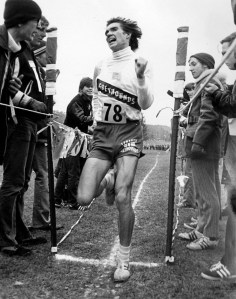
A clipping from winning the team National Cross Country Championship with Mason-Dixon/Victory Athletic Club.

A clipping from winning the team National Cross Country Championship with Mason-Dixon/Victory Athletic Club.

School, the school to which he transferred in his senior year, instantly raising the quality and stakes of every runner in the program at that time.

Against the best

Burridge loved to compete and was not afraid to take on the world’s best when challenged. His race against Frank Shorter in one of the inaugural Chicago Distance Classic 20Ks left him in second place, but Shorter was after all the Olympic champion in the marathon.

The challenge with those times and those types of thrills is that they are not easily replicated as you go through life. The idea of running a 17:00 5K to win the 40 and over division just doesn’t have the same level of excitement as duking it out on the track at sub-4:40 mile pace.

In Business

So Burridge pushed his competitive energies into business where he is now President of TRH South, a middle market private banking operation specializing in raising equity and debt for small and middle market companies.

On a training trip in the mountains where Tom learned to love climbing, the hard way.

On a training trip in the mountains where Tom learned to love climbing, the hard way.

But the call to compete is never really lost in world class athletes. Which is why, a couple years ago, Burridge began to ride his bike. His running was mildly satisfying at the time, but like most distance runners with thousands of miles on their bodies, something about cycling seemed like a great alternative. Less pounding. More speed. It all just fit together.

“At first I was riding this crappy hybrid bike,” he recalls. “And I tried joining group rides with that. But a friend saw me and said ‘You should really get a good bike.”

He now rides a top level Cannondale 6, purchased from a friend known for his mechanical ability and diligent approach to choosing quality bikes.

Getting schooled

The new bike was much better. So Burridge started showing up at group rides. He chose to jump in with the racers rather than the tempo group. “I got dropped the first time at 5 miles. Then 7. Then 20. I worked my way up the pack as time went by. Finally I was with the lead group and trading pulls.”

That drove his curiosity to race, and race he did. But that did not go so well at first either. “I’ve got this mentor that finally told me how to race, tuck in the draft, things like that I did not know going into cycling.”

The training was different from running too. “At first I was going out to do base distance slowly like you’d do in running. But I wasn’t improving. I learned that you have to go out and get your ass kicked to actually improve.”

The cycling culture

As he rose through the local ranks of cyclists in the Louisville area, acceptance was slow. “At first when I asked to ride with one of the better teams in the area they were like, ‘No, you’re not good enough. You should go form your own team. So we did. And we’re all a bunch of misfits, like the Bad News Bears. We have people from South Africa, Cuba, everywhere you know? And we all got better, and we started beating teams with fancy sponsors and stuff. We’re kicking ass now.”

The same team that denied Burridge early on finally asked him to join their club. “I was like, ‘Screw you. You didn’t want me when I was coming up.’ ”

Recently Burridge immersed himself in training in a new way. “I went to Florida with this training camp. We were riding 100 miles a day. After four days I thought I’d be dead. But we went out and I thought to myself, ‘I can do this.”

Commonalities

What the story illustrates is that getting to be a better rider is a struggle for almost everyone who takes up the sport. It hurts in the same way for a former world class distance runner as it does for the guy who is riding simply to lose weight.

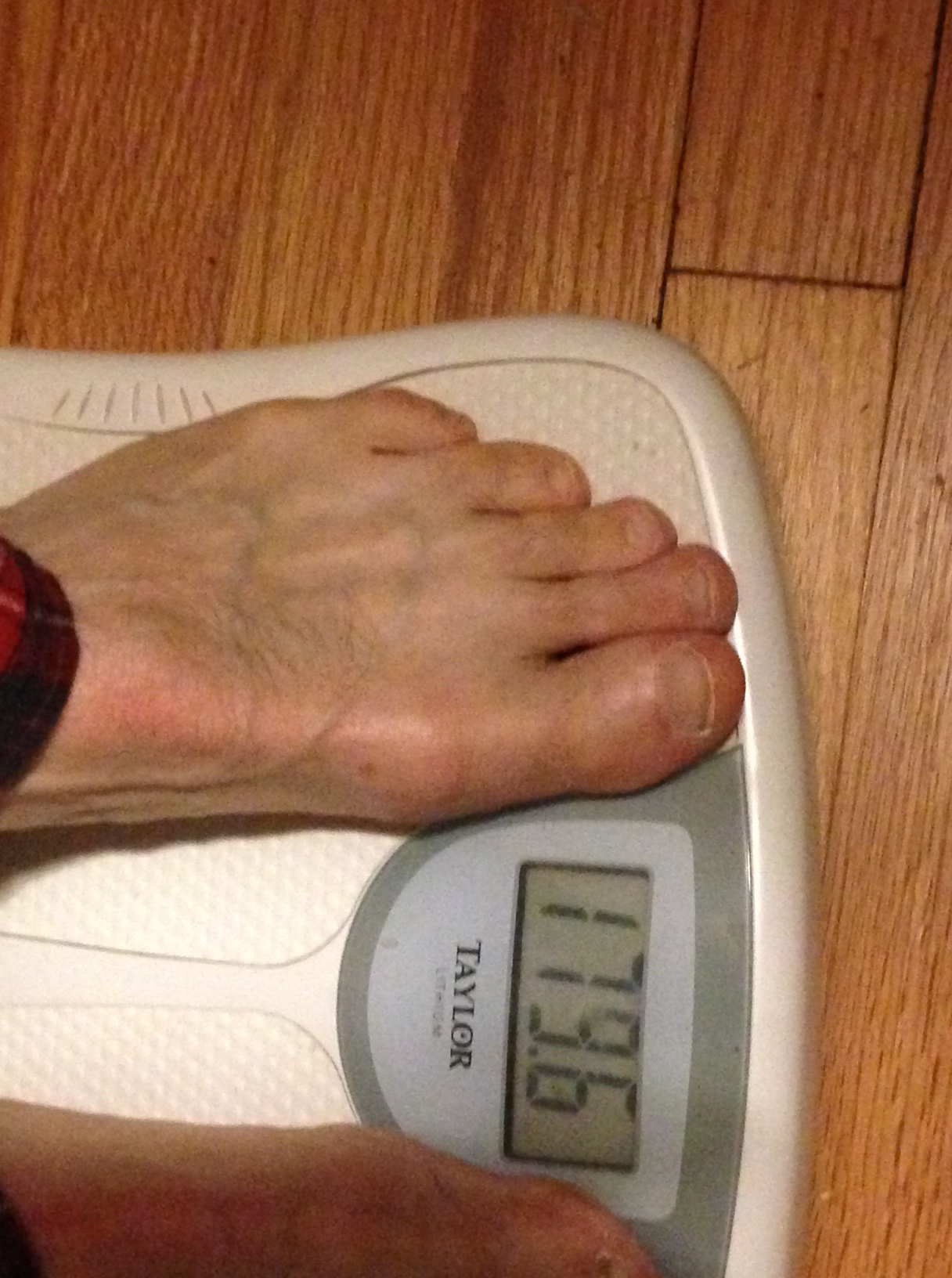
Which, by the way, was also one of the motivations for Burridge. The tall (6’3″)Burridge dropped more than 30 pounds from a frame that got a little large while working in the restaurant industry. He now weighs 178 lbs, and feels awesome on the bike. A great way for an athlete in his late 50s to find new traction.

To that end, the other component of this story is that runners cannot automatically expect to jump on a bicycle and succeed. While the same cardiovascular engine drives both efforts, the muscles necessary to drive a bike forward are very different in composition and use than those used to run fast. The fact that Tom Burridge is succeeding on a bike is therefore not directly attributable to his times as a runner. The more important lesson is the specificity and dedication in training required to succeed at either, or both sports. 

Bookends

It goes without saying that Tom Burridge is a person with exceptional drive at the foundation of his persona. His dual careers in distance running and now cycling read like bookends to a person blessed with considerable endurance ability. The inspiring part is that his re-discovery of those abilities in a new sport is giving new dimension to his general perspective on life. He is racing again, and it feels good and right and natural to bring that love for speed and competition out of retirement.

There’s no guarantee it won’t hurt, or that it won’t test the very fiber of your soul. But when you climb on a bike, strap on your running shoes or pull on those swim goggles for a go at your best, you know you’re alive. You really know you’re alive.

WeRunandRideLogo

Posted in Christopher Cudworth, We Run and Ride Every Day | Tagged , , , , , , , , , , , , , , , , , | 2 Comments

Your training music, is Classic Rock really good for you?

By Christopher Cudworth

220px-Crosby,_Stills,_Nash_&_Young_-_Deja_VuOn the way home from a business appointment yesterday the Chicago Music station known as The Drive began playing an entire side of Crosby, Stills, Nash and Young’s iconic “Deja Vu” album. I owned that LP back in the day. It ultimately disappeared into some roommate’s collection. But thanks to Spotify and other music-sharing Internet sites, it has been possible to keep that music playing in my house and in my head.

The amazing vocal break in the song Carry On is an epiphany in its way. It’s as if the entire era of that music peaked at that moment in 1970. Rock was catching its breath for a moment before heading into the era of the Eagles, Springsteen and the whole post-Beatles outputs of John, Paul, George and Ringo.

Music and media

Unknown-2It was 44 years ago that Deja Vu came out on vinyl. There were no other forms of music media then, other than 8-tracks, which you could not rewind. Then along came cassettes, the first truly portable form of music, and Sony Walkmans. And that’s when the running world first grabbed onto the concept of listening to music while training.

Since then the music media world has moved through a litany of devices to take with you on the run or the ride. You can even swim with music playing in special waterproof devices. I will say that makes sense. People who swim for an hour or more deserve some entertainment.
The Digital Age and Classic Rock

Of course there is almost no limit to the type of music to which you can listen these days while training. With music mix stations such as Pandora, iTunes and others now offering essentially unlimited catalogs, you can mix your own music.

But there’s one category of music that seems dominant in society. And that is Classic Rock.

220px-Beatles_-_Abbey_RoadYou can categorize it any way you want, but Classic Rock constitutes that whole era from the mid-1960s when bands like the Beatles, Cream, Led Zeppelin and CSN&Y led the way, all the way through the early 1980s when Talking Heads, Springsteen and Tom Petty pumped out one great album after another.

We should not be surprised that music is still being played. Sirius XM has channels devoted to Classic Vinyl and Deep Tracks. Even Spectrum hauls out Classic Rock when it fits.

It’s everywhere you go, in fact. The grocery store now plays Springsteen! Who would have thought?

Classic Rock On the Road

f6a3e3f03e432600_178369404.previewAnd there you go, running or riding down the road with Joe Cocker’s song Delta Lady belting through your ear buds. Or Aerosmith. Billy Joel? Van Morrison.

Of course lumped in with those great musical characters are some quasi-classic artists like REO Speedwagon and Styx. Marshall Tucker and Lynyrd Skynrd. The list truly goes on and on. And by the way, if you’re looking for resources on Classic Rock, you can do no better than the “record shop” (it truly is) in my hometown of Batavia, Illinois. Visit Kiss The Sky (link to site). It rocks.

Van Halen? I don’t know. They start to slide off the register for me at some point. As Classic, anyway. We all have our music meters.

Off the Charts

But what do you do with bands such as Head East, whose obnoxious, annoying hit “Never Been Any Reason” took over our college dorm room freshman year? That music just seemed to attract the shallowest crowd. People who liked Head East would stare at you Traffic-John_Barleycorn_Must_Die_(album_cover)with that drunk look in their eyes when you asked if they’d ever heard of Traffic and John Barleycorn Must Die. A Classic album if there ever was one, yet completely missed by the Classic Era party animals to whom music was nothing for than a soundtrack for hard drinking and the vacuous escape from reality.

Soundtrack to Success?

When The Cars came along however, our cross country team adopted that first album as the soundtrack for our season. We played it loud at the starting line of our 30-team invitational. It blared through the biggest speakers we could find. You’re All I’ve Got Tonight. Just What I Needed. Moving In Stereo.

Despite that inspiration we took second to Augustana College, our most hated rivals in the Midwest. They were too much like us. And yet not.

The music did not, it turned out, help us triumph.

Is Classic Rock Good for You?

Those are fun yet strange memories of how music impacts our lives. Yet if indeed Classic Rock is that soundtrack for so many of us, is that a good thing? Is listening to Classic Rock still good for you?

There are so many associations that go along with music. We learned from the film American Graffiti that music can literally define an age. But then we got doused in Grease with its pseudo-50s observations of love and life and things started to get confused. Suddenly it felt like our musical sensibilities were being used to shove sentiment down our throats.

DoobiesAnd so it has continued to this day. Classic Rock is played with a sort of assumption that everyone will automatically love it. Yet I have grown so tired of certain Classic Rock hits that I never want to hear them again. Most of the Doobie Brothers catalog can feel that way. Those songs were played on such heavy rotation in the 70s that they take on a flat dimension upon another hearing. Plus the associations with former girlfriends, bad nights spent drinking Stroh’s beer in some forlorn parking lot or going home alone and depressed to your parent’s house are so strong the music almost seems to pass right through you like some soul-sucking Dementor from Harry Potter.

Not So Classic Moments

Then come the really, really bad memories. The girlfriend who was so jealous she first tried to ruin your running with vicious drinking and sex bouts, and then quit school so you felt guilty. Or that boyfriend who respected you in private but made fun of you in public? Not so good memories.

Then came that awful factory where you worked that summer job with people who had already quit in life. You barely survived all those things. And now the songs that remind you of those days keep coming back on the radio or through some odd Pandora mix. You turn to the music and ask, WTF? Classic Rock is truly one of the tarsnakes in this world. It can be both good and bad for you.

Redemption

But there always seems to be some sort of redemptive quality to Classic Rock. So you almost always forgive it. The song Almost Cut My Hair that played on that Deja Vu listen the other day in my car? It sounded absolutely great on the Harmon Kardon stereo in my Subaru Outback. You can feel David Crosby’s voice shredding the air around him. His perfect pitch and bluesy approach feel genuine to the point that his aural apology to an era is IMG_0221palpable. It takes you back to a time when cutting your hair was actually a sign of giving in to the very ugly social trends we are still fighting today. Aggressively blind conservatism. The military-industrial complex. Unending wars.

Truly Classic Rock fought all that false politik and its associated byproducts; racism, oppression, discrimination. Add to that mix today the continuing battle for women’s equal rights and gay marriage, action on global warming and environmental destruction wrought by bio-engineered crops that kill milkweed and with it, the Monarch butterflies that are an icon of summer itself. Don’t cut your rhetorical hair. The fights aren’t over yet.

Digging Deeper

220px-Bruce_Springsteen_-_The_RiverThen you realize upon a fresh listen that certain songs have so much yet to offer. Have you listened lately to Drive All Night off the Bruce Springsteen album The River? It will tear your heart out. It may remind you of a lost relationship but what the hell? We all lose love at times. Listen to the music. Yes, Bruce wanders all over the phony map at times with lyrics about factories and all, but this is one-t0-one yearning that will make you hug the one you love now.

And so it goes. The music we’ve been carrying with us all these years can carry us now. You put on the right music for a run or a ride and out the door you go.

I’ve even been stopped in my tracks at times while running to listen to a track without the thud of my feet on the ground.

Practically Classic

I don’t listen to music while riding. Too dangerous in my opinion. A rider in our area was so absorbed in his music that he crossed some rural railroad tracks and got crushed by an oncoming train. There’s nothing Classic or Rockin’ about that at all. Our music should sustain us, not kill us.

There’s one other aspect of Classic Rock that must be considered in terms of our emotions and our thinking. If you have ever heard of the Mozart Effect, then you perhaps know that Classical Music, not Classic Rock is better designed for encouraging creative thought processes. Rock, with its incessant beats, infectious licks and suggestive lyrics has the effect of actually over-writing or replacing our thoughts rather than encouraging new ones. So while you might like the supposedly motivational feel of Classic Rock while you run and ride, you may actually, in some ways, be holding yourself back. Think about it.

Keep On Rocking…

it’s a fine line sometimes as to whether Classic Rock is good for you or not. Some of those songs are so powerfully associated with events in our lives you can almost smell the pot, feel the heat of the one you were with and remember those moments like they were yesterday. Whether those memories are good to dredge up or not is a question for the ages.

Psychologists could probably tell us more. It is said that smells are some of the most powerful memory-makers in our lives. But music must come in a close second.

But as we’ve all learned, sometimes coming in second is a real treasured experience. You do your best and if your best isn’t good enough to win, at least you have the memory of your effort, and live to take on another day.

That may be the ultimate value of Classic Rock for all of us. We’ve made it through a lot in life, and plan to keep on trucking. If the music gets you there, it’s hard to argue that it’s not good for you. In some ways.

WeRunandRideLogo

Posted in Christopher Cudworth, We Run and Ride Every Day | Tagged , , , , , , , , , , , , , , , , , , , , , , , , , , , , , , , | Leave a comment

Would you apply for a job to run, ride or swim?

By Christopher Cudworth

You love to run, ride or swim. But would you get a job as a runner or cyclist or swimmer if you applied today?

What follows are job descriptions for what it takes to do each of those respective sports, or all three. See if you have what it takes to qualify for the jobs…

POSITION: RUNNER

photo (8)Qualifications: Must put one foot in front of the other rapidly.

Skills: Ability to sense and maintain pace, keep tempo and perform under conditions of duress, stress and cardiovascular exhaustion. No heavy lifting required unless participating in a Tough Mudder competition.

Requirements: Consistent training must be demonstrated with results measured in interval workouts, long distance runs and races. Commit to compete in marathon, half-marathon, 10K and 5K distance events. Some team participation may be required, including relays. Must exhibit overall positive attitude and avoid sickness or overtraining whenever possible. Maintain membership in USATF until Alberto Salazar gets you kicked out for bumping into one of his runners.

Compensation: Performance-based unless otherwise indicated.

POSITION: CYCLIST

.

.

Qualifications: Must be able to stay upright, pedal fast and use brakes.

Skills: Ability to endure 3-5 hour training rides and races is important. Must have strong lower back and exaggeratedly large thighs or extremely thin frame. Willingness to endure embarrassing tan lines a plus. Should have mastered skills of eating and drinking while moving at a high rate of speed

Requirements: Prefer candidate with ability to pedal at speeds over 20 mph solo for at least two hours. Also adept at riding in draft up to 26-30 mph and 33 mph and above in a sprint. Must ride hills with consistency and exhibit proven shifting ability. Ideal candidates will ride at least one Century per year. Prefer riders with GC range of talents, including climbing, sprinting, long and short sprints, Team Time Trial and Individual Time Trial. Tour de France experience desired, but lesser Tours may be considered. Experience with Performance Enhancing Drugs preferred but not required. At least not publicly.

Compensation: Performance-based unless serving as Domestique.

POSITION: SWIMMER

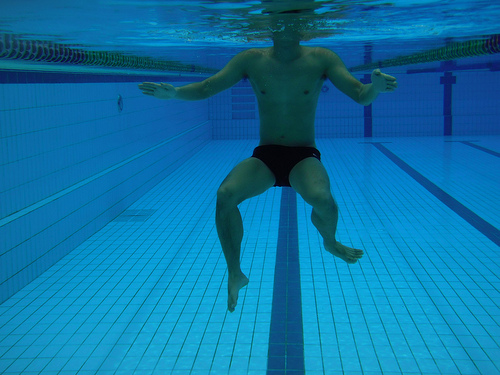
treadwaterQualifications: Traveling from one end of the pool to the other, fast.

Skills: Consistent, productive swim stroke in freestyle. Ability to use other strokes in emergency situations like Open Water Swims required. Or else you’ll die.

Requirements: Ability to swim long hours in the pool staring at the bottom as you put in hourlong training sessions and absorb so much chlorine your are chemically preserved. Hot showers before swimming suggested, but not required.

Compensation: One new set of Speedos or Tri-trunks per year. The rest is up to you.

How about you? Would you apply for any of these jobs, or even work for free as a runner, rider or cyclist?

So many of us do it all for free. And yet we don’t seem to complain about it. We must really like the work.

Some of us even do all three jobs, and for free!!!

It almost turns making an actual living look like the easy part in life.

What a world we live in.

WeRunandRideLogo


Posted in Christopher Cudworth, We Run and Ride Every Day | Tagged , , , , , , , , , , , , , , , , , , | 6 Comments

White ovals take endurance event marketing to a new level

By Christopher Cudworth

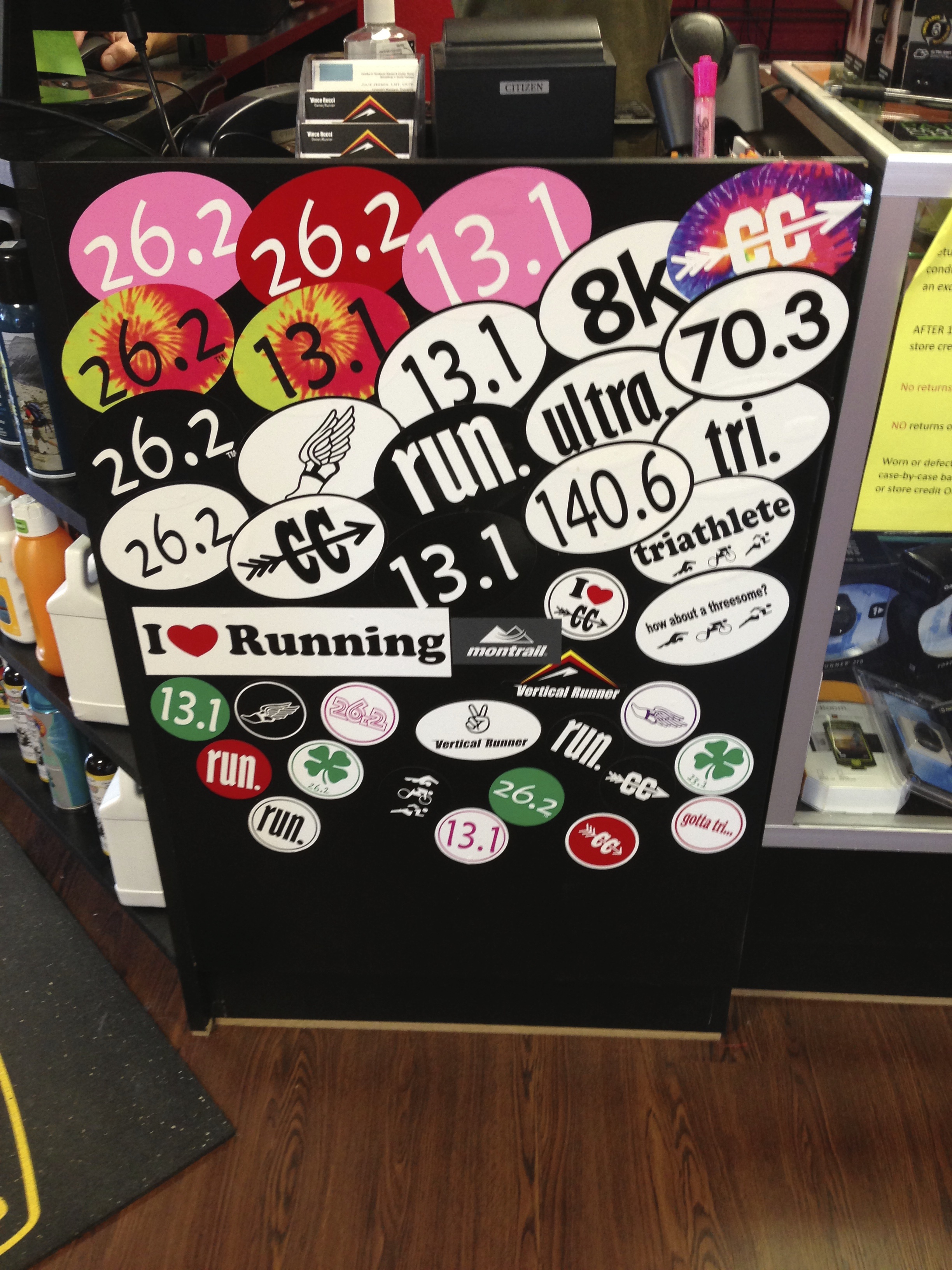
White Ovals and their colorful cousins are popular ways to recognize achievements.

White Ovals and their colorful cousins are popular ways to recognize achievements.

Businessman Jim Varga has a history of innovation with data and product fulfillment. His company Neofill built its reputation creating consumer connections for radio and other industries. The company has earned an A- rating from the Better Business Bureau.

Jim Varga is also a runner, and along the way to the finish line he dreamed up a really nice use of competitor data to provide races a way to recognize participants for their efforts. Varga took the classic “white oval” concept and its “26.2” and “13.1” and “140.6” designations to a new level. His use of variable data enables races to output and send out ovals with the exact results of each competitor’s finish time in any type of event from marathon to half-marathon, triathlon, Ironman or Half-Ironman, Century ride or any event that captures competitor data.

Race marketing

Second Sole

Click to enlarge.

That’s a pretty nice way to say “nice job.” It’s also a good way to extend the brand of an event throughout the year. Plus, sponsors can get additional recognition because the marketing piece that carries the white oval is a great way for companies to build connections with race competitors.

Think about it. While the traditional goody bag is a nice touch at many races, the marketing message for that space in time is dependent on the attention each runner gives to the contents. Varga has shown that there is more to a race than living in the moment. White Oval marketing enables sponsors to drive traffic back to their stores, websites or other commerce connection with a followup message that contains a highly personal––and thus high-value––connection.

Big picture. Direct response. 

The model is somewhat similar to the difference between brand marketing by auto manufacturers and the direct response mailings done by dealer groups across the country to bring customers into the showroom. Because it’s not enough to simply brag up your car or truck on TV or the auto show and hope consumers flock to their local dealership. People need reasons to buy and that’s where direct response often comes in. Agencies such as Aspen Marketing in West Chicago, Illinois conduct massive direct marketing campaigns to drive customer buying decisions.

Jim Varga is a business innovator who also happens to be an avid runner.

Jim Varga is a business innovator who also happens to be an avid runner.

Jim Varga looks at race marketing the same way. His use of variable data to drive customer response is exactly what race sponsors are seeking; a tangible way to build relationships with an otherwise fleeting audience.

A shoe company or retail store can add its logo to a designated white oval. The marketing piece that carries the oval can be custom-designed to offer coupons or any other method of driving business or store traffic. The business that helps race directors market their events is found at WhiteOvalMarketing.com. 

Every competitor counts

Of course Varga doesn’t stop there. If a race does not offer white ovals to participants, runners or riders can actually create their own version online by entering personalized data. And it’s free at White-Oval.com.

The flat-out fact is that White Ovals and their colorful relatives are part of the running and riding dialect these days. People work hard for their finish times and the methods by which Jim Varga delivers that capability to personalize white ovals is unique and special.

The data may be variable, but the message is universal: You matter and so does your achievement!

WeRunandRideLogo


Posted in Christopher Cudworth, We Run and Ride Every Day | Tagged , , , , , , , , , , , , , , , , , , , , , , | 2 Comments

The 7 Deadly Sins of Endurance Training

By Christopher Cudworth

Even moral people split over the challenges of life and sin.

Even moral people split over the challenges of life and sin.

So you think you live a moral life? Well, perhaps you have not taken complete stock of the sins you commit in the name of your favorite endurance sport.

That means your world may be about to change. Because here, in all it’s dreadful, sinful glory, is the list of 7 Deadly Sins of Endurance Sports. 

1. Pool Envy

This one starts the list because it holds the most difficulty for so many people. In fact there are several kinds of pool envy wrapped into one juicy, wet sin. It all starts with how you look in a swimsuit. Satisfied or not? If you are, then you may be full of false pride. But if you’re not, then you might be full of envy looking at others who supposedly look better. Then Pool Envy moves to your actual swim stroke and how fast you are in the pool. Envy over how long you work out, and whether you can manage an Open Water Swim caps it all off. It all falls under the label of Pool Envy, the feeling that nothing you do in the pool is good enough. You know it’s true. You want to look better in your swim gear, and when swimming, wish you could breathe better and that your arms didn’t look like broken windmills as you swam. But most of all, you wish to hell you were faster. Well, be careful, because with Pool Envy you could just get your wish.

2. Training Food Gluttony

One of the ironies of trying to get fit is that the very foods we eat to help fuel our efforts also contain calories that can make us fatter and slow us down. It all gets real when you’ve finished a 70-mile bike ride and then drink and eat enough sports juices and energy bars to equal or exceed the number of calories you burned on the ride. That’s called “defeating the purpose” but it’s very hard to resist when you’ve ridden or run your ass off for several hours and are so hungry and thirsty you started sucking on your sweaty gloves for fluids and chew up the leather seats of your vehicle for protein.

3. Equipment Avarice

Avarice for new equipment is a constant temptation.

Avarice for new equipment is a constant temptation.

Let’s face it. We all want nicer stuff. All the time. When you walk into a bike or running or Tri shop the new equipment almost jumps off the shelves and into your arms. We may not need another set of bibs or a brand new pair of $45 running shorts, yet somehow you find yourself walking out of the store with a shiny bag containing objects of fitness pleasure along with 6 0r 7 other things purchased at the checkout counter. The other source of genuine avarice is out at the races. Everyone sporting $150 new shoes and $6500 bikes seem like they have it so much better than you. Never mind that your shoes cost $135 and your bike costs $5500, and that’s before the $1500 racing wheels you bought online. Among sins, the More Expensive is Better mentality drives equipment avarice. Ever the case shall be.

4. Training Sloth

Those of us who race after we train know that what we put into the sport is how good we’ll perform. That is why the sin of undertraining or overtraining can be so damaging. When we cease to pay attention and/or get so obsessed that we train ourselves into sickness, the Deadly Sin of Training Sloth kicks in along with guilt, feelings of diminished self worth and worst of all. Basically we are trying to compensate for our stupidity while training by racing harder than we know we should. That’s a sin.

5. Wrath On Wheels or On Foot

Even athletes at the top of their sports have challenges with Training Sloth.

Even athletes at the top of their sports have challenges with Training Sloth.

Getting angry can be a great motivator, yet it can also drag you down. How do you know the difference? If you’re angry that you’re not trying hard enough, there’s always room for improvement. But if you tried your hardest and didn’t achieve your goal, it really does no good to be angry about it for very long. Yet people aim their wrath at themselves and everyone else in the world when they fail, and that’s the sin of wrath in action.

6. Pride Unbound

I found a saying written on an envelope the other day. It was lying in the snow and I noticed it while walking the dog. It read: “When you win say little. When you lose, say even less.” That’s good advice because the worse thing we can do is lord our success over others. But the worser thing is to make all kinds of claims about what you COULD have

Pride and lust can take even superheroes down.

Pride and lust can take even superheroes down.

done if ONLY this or that had not gone wrong. No one likes a boaster and no one likes a complainer. Both are symptoms of Pride Unbound.

7. Lust Without Limits

In the John Irving book “Hotel New Hampshire,” one of the lead characters is a wrestler who lives by the motto “You’ve got to get obsessed and stay obsessed.” Good advice if you have unlimited time and resources to train and race. But if you live a normal life where you need to work, your lust for training and racing and love of your sport can be a torment not unlike being sexually obsessed with a lover. So you need to temper your lust for sport and find constructive ways to draw what you need from running, riding and swimming without letting it turn you into a competitive horn dog or nymphomaniac. In fact one of the best ways to measure whether you’re throwing too much of yourself into sports if if you lose all desire for other things. When you don’t feel jazzed about life or your partner, you’ve gotten into a position of Lust Without Limits.

There you are. The Seven Deadly Sins of Endurance Sports. May knowledge of these sins serve you well as you train and race this year. And note that like all things in life, it seems the very things we need to do most turn into sins when exercised in excess. That’s the tarsnake of the 7 Deadly Sins of Training. It’s recognizing your propensities that helps you stay on a better path.

But if you do succumb, remember to forgive yourself or ask forgiveness. Redemption, be it competitive or personal, is one of the sweetest sensations in this world.

WeRunandRideLogo

Posted in Christopher Cudworth, Tarsnakes, We Run and Ride Every Day | Tagged , , , , , , , , , , , , , , , , , , , , , | 2 Comments

Are relationships the most important part of your training and racing?

By Christopher Cudworth

Way back when a book titled The Loneliness of the Long Distance Runner was published, people were beginning to more deeply consider what it meant to engage in a solo activity as profound as running long distances.

Billions of words have been written about the subject since then. But what is the direct consequence of relationships on those who run and ride?

Here are some answers to that question.

Your relationships help determine how you feel about yourself

Relationships are founded on how things "come together"

Relationships are founded on how things “come together”

If the people in your life do not support what you’re doing, then you’re at a disadvantage from the start. Having clear communications and support for your training and racing has  everything do with your inner emotional health. If those channels are out of whack, you need to consider how to manage the relationships in your life and how to balance your love of sport with your love for other people.

If the people in your life begin to resist your running and riding as you increase the time spent on those activities, you need to open that subject up for conversation. And listen.

But understand that there are times when you need to stand up for yourself as well. People can be jealous of your time and selfish toward you as well. Be prepared to discuss your fitness activities in terms of benefits. Obviously it is best if those benefits do not come with automatic or dismissive sacrifice on the part of those who would otherwise support you.

A great relationship, and better yet, the feeling of being loved can help your training and racing in ways you’ve never dreamed. I always think of the lyrics from the song “Don’t Worry Baby” by the Beach Boys as a great example of the support that can help you overcome anxiety and other issues in endurance sports.

Well its been building up inside of me
For oh I don’t know how long
I don’t know why
But I keep thinking
Something’s bound to go wrong

But she looks in my eyes
And makes me realize
And she says “Don’t worry baby”
Don’t worry baby
Don’t worry baby
Everything will turn out alright

Sentimental? Yes. A bit dated? Perhaps. Sexist? Not really. It could work both ways and often does for men and women. The whole message here is that your relationships can make things better.

Relationships are important whether you succeed or fail

People support each other in multiple ways. Encouragement. Congratulations. Commiseration. It all depends on circumstances. And the relationship.

People support each other in multiple ways. Encouragement. Congratulations. Commiseration. It all depends on circumstances. And the relationship.

Having people in your life to keep your head on straight is vitally important. That’s true when you win and when you lose at what you’re doing.

When you achieve a new personal goal it is wonderful to share it with someone significant. But there are dangers with any victory, and the high you get from competing can lead to a low when that goal is no longer out there in front of you. Having stable, loving relationships in your life to fill that void is absolutely important. And wonderful.

The same goes when you fail. It’s dangerous to put all your emotional eggs in the basket of achievement. If you start your first triathlon only to flounder in the swim, it can be devastating. You didn’t even get a chance to ride or run! Your best events!

Or, if you’re killing it in a marathon only to cramp up at 23, walking it in with dire humility, it helps to have someone tell you, “Relax, it happens to all of us at times.”

Cycling is a particularly grueling activity in which you can coast through 60 miles one day and get dropped like a rock the next. That’s when it’s best to retreat and re-gather your will and self esteem with someone who was not out there beating your ass on the bike. Or, if they were, they need to commiserate and share their own experience at getting their ass beat. That’s called support. If you don’t have it, you might be riding with the wrong people.

But it’s a tough world out there. We all know that. We don’t sign up for these sports to be coddled. Taking your lumps and growing through the experience is just as important. Those perspectives are also important to share through relationships. We grow by sharing and building collective wisdom. When you get your ass kicked. Admit it. You’ll be surprised who much people respect you for that.

But then again, relationships sometimes come with tough love

Relationships are funny things. People who know you well see things you might not see yourself. That includes when you need a nudge.

Relationships are funny things. People who know you well see things you might not see yourself. That includes when you need a nudge.

Sometimes relationships are for getting you to face to difficult challenges in life. I once had a running roommate who told me, “You know, you need to stop complaining. Just shut up and run.”

That spring I went on to set all my PRs. It was tough love. And good advice.

We’re good sometimes at deceiving ourselves into thinking we’re doing our best. A good friend or a loved one can often see that. They may be reticent to say anything critical. But if asked, a truly good friend will tell you the truth. You need to try harder. Eat better. Drink more fluids. The list goes on. We all fail in certain categories and the people in our lives who know better can be life savers on all those fronts.

Good relationships look at the long term

When you’re in love and everything is going great, it is still important to look out for relationship warning signs.

Sometimes the goals you set are Once In A Lifetime Opportunities. You may never be this fit, or this young or this ready again. It can happen at any time in your life.

So if the people in your life are dragging you down during that opportune time, share that perspective with them. Let them know that the sacrifices are real. Because the consequences of giving up on a short term dream are also real.

It’s your job to lead that process. If you’re going to train for a marathon or a triathlon or a Century ride, you know that requires time that might go toward other things. Don’t try to hide from that fact. That’s not fair to anyone in your life. One of the nicest things to see at any race is a family waiting for mom or dad or the kids to come in during a race. That’s a good place to be.

Goals matter. Relationships do too. It’s all about communication and finding common ground and support through relationships. We run and ride for a purpose. Be sure you let the people in your life know what that purpose is, and relationships often grow stronger through that level of communication.

WeRunandRideLogo


Posted in Christopher Cudworth, We Run and Ride Every Day | Tagged , , , , , , , , , , , , , | Leave a comment

It is time for Survival of the Hattest

By Christopher Cudworth

Mood hatI’ve always had a lot of hats. It seems like every time I take a hat off my head, another one appears. Not quite Bartholomew Cubbins, mind you, but close.

I have specially designed running hats. Those are really great. They’re washable. When they funk out you just throw them in with the running and riding clothes and they come out of the wash like new.

Don’t dry them, or they shrink. But beyond that they’re low maintenance.

Then there are a dozen or so quasi-running hats that can do in a pinch in case I can’t find any of the real running hats. Those float around the house like otters in a kelp bed. I pick them up and put them on my head as necessary or as the whim hits me.

WorkingSometimes I seem to need a cap on my head to write. Or to paint. Fixing the bathroom plumbing requires a cap to protect my bald head from scrapes and cuts.

I wear stocking caps under my bike helmet in winter. Balaclavas on the worst days. Which this winter was every time I rode. Like, three times. I wimped out. Admit it.

The new Nike stocking cap was a Christmas present from my companion. It matches the sweet Nike running jacket she also bought me. I look very matchey in that getup. Makes me happy.

But the time has come where I need to clear out a few hats. Some are more than 20 years old. One Columbia hat was purchased specifically for a trip to Crow Canyon Archeology NikeCenter and a desert study of Anasazi astronomy. That’s a lot of vowels, I know. But it was an awesome trip. I wore that hat while running up into the mountains near Durango, Colorado. So it has sentimental value. But it is tired and old. It was red when I bought it. Now it’s kind of pink.

Same goes for the Strawberry Fields cap purchased for me by my sister-in-law from the John Lennon collection in New York city. Unfortunately, that hat picked up some oily stains on the front and needs either a wash or to be discarded.

So I’m going to perform a little hat inventory. Those that can be washed, I will. Those that can be tossed or donated to Goodwill or Amvets Hattestwill go.

Because I want to make room for some new hats. I never promised I was going to own less. Only that it was Survival of the Hattest. Evolution rocks, baby.

WeRunandRideLogo

Posted in Christopher Cudworth, We Run and Ride Every Day | Tagged , , , , , , | 1 Comment

Running and riding through anxiety, depression and grief

By Christopher Cudworth

54.ChrisLindaFlowersA year ago on March 26, 2013, my wife died after 8 years of treatment for ovarian cancer. Notice that I do not mention the word “battle” or “fight” or “struggle” in the context of my wife’s death. We worked through everything that happened together. We had many blessings occur along with the difficulties of trying to overcome a disease that overwhelms the treatments for too many people.

There were many difficult times during those 8 years. My wife and I adopted the phrase “It Is What It Is” to describe both the highs and the lows of dealing with each phase of diagnosis and treatment. That phrase, along with the words “A Journey Through Cancer and Caregiving” is the title of a book I’ve written about the experience. I’m working with an agent and will be seeking publishers. In the prologue to the book, I used these words to describe her efforts to survive cancer.

The fact that Linda Cudworth lived 8 years essentially beat the odds. I am really proud of her and grateful for that. She worked hard at it. Another admirable quality is that she also relaxed well when given the opportunity. We lived a lot of great life together as a result of her determination not to let the disease entirely control her existence after diagnosis. If you retain any message from these words, it is this: Cancer may affect you, but it does not need to define you. 

The challenge for any caregiver in the situation I shared is to keep your own mind and life together as you work with your partner through countless chemotherapy treatments, surgeries and side effects. The sense of loss through all of this is palpable at all moments. It might be easy to slide into a “woe is me” mode. We never did that.

Anxiety

Bald nogginOne of the more difficult parts of the journey is the very real grip of anxiety that can make carrying out normal life functions difficult. Work becomes harder. Your judgment can be compromised.

It’s an unfortunate fact. People see fear, loathe weakness and seldom have the time or concern in business to accommodate those compromised by health concerns. It’s an ugly truth with bold and rare exceptions. Kudos to those who do understand. 

If you are predisposed to anxiety as a condition, as I have been all my life (a ‘nail biter’ from an early age…) then coming to grips with how anxiety affects you is vitally important.

Anxiety can undermine your ability to work, to sustain positive relationships and even to breathe correctly. Here is what Daniel Smith wrote in his book Monkey Mind (Simon&Schuster) about the challenges of living with anxiety: “Anxious people breathe too quickly, and from the upper parts of their lungs, increasing the heart rate and throwing off pH balance and resulting in all sorts of unpleasant physiological changes. Learning to breathe more slowly and more deeply is sound advice.”

Except that breathing better may actually involve breathing faster in order to quiet the body enough to breathe slower. That’s where running and riding comes in.

Many were the days when I went outside and literally talked myself into the rhythm of a run or a ride. Leaving the side of a sick spouse and going outside to run or ride can however be a jolt. You start to move and stop. You look around to see if anyone is watching. Then you start again.

Or, you ride slowly and realize after a couple blocks that you’ve completely forgotten to consider the two stop signs you just passed through. Your brain is preoccupied. Anxiety undermines your ability to concentrate, except when you concentrate so completely that all else around you disappears.

Concentration

There are traces of ADHD in all this concentration stuff too. Anxiety has a relationship with ADHD, and it is somewhat ancestral and incestual. The two cannot always be separated. Suffice to say they are not happily complementary either.

Depression

Early MorningAnd then along comes depression, the organic parallel and the flip side to anxiety. They are “opposite sides of the same coin” as one friend who has both anxiety and depression once told me.

Depression runs in our family. It runs in millions of families. Millions and millions of people experience clinical depression in their lives.

Running and riding can help treat all these experiential conditions. Anxiety. ADHD. Depression.

It’s true whether you experience these things episodically or as chronic conditions. Running and riding can help. Endurance activities help manage your body chemistry. They can lift your mood and help you focus by wicking off unnecessary thoughts. Especially negative ones.

Counseling

I went to a counselor at the Living Well Cancer Resource Center in Geneva, Illinois, to help me cope with the psychological and emotional challenges of being a caregiver. I’d already seen my mother through to her death when she was diagnosed with lymphoma and pancreatic cancer the same year my wife was diagnosed with ovarian cancer. Suddenly I was caregiver to my father, a stroke victim. He was emerging from the low function point of his stroke and turning out to be a feisty patient, a special burden during an acute time of grief. All kinds of guilty feelings swirled around.

Transcendence

photo (2)So I’d go out and run those off too. At one point I was running through a forest preserve with headphones on and listening to Edward Elgar’s Nimrod. The performance was so full of gravitas and beauty that I literally fell to my knees in tears. Such are the vagaries and beauties of grief, anxiety and depression. You find yourself living in a world that feels like an entirely different dimension.

Ultimately I was prescribed a mild medication to help with the anxiety component of caregiving. Depression was not absent, but neither was it crippling. I’d learned to recognize the dangers of ruminative thoughts. I’d also learned to turn a few things over to God in prayer. It was amazing what came of that. Answers I could never have dreamed up myself.

PTSD

And so it went. Yet at times the weight was too much to bear. I recall many a Saturday morning group ride when the pace would pick up and I had not the will to follow. I would just slide off the back, feeling wounded inside and unable to care. Feelings of ambivalence are common among those in depressive states.

Truly, I equated those feelings to something like Post-Traumatic Stress Disorder. Called upon to react to stressful situations in training, my body and mind simply shut down or turned off. It was hard to explain to my riding partners. Normally I was a feisty, determined guy. During phases of being a caregiver to a cancer patient, the strength to ride my best simply was not there.

You need to break from those expectations in some way. That’s what I did. If people do not understand what you are going through, and that can happen even with your closest friends, then you need to find other channels. I rode slowly with a pastor friend instead. I rode with other partners who were happy to let me lead, because that’s where I felt most comfortable. It was hard to be pushed by others ahead of me. So they rode along behind and we chatted and I didn’t feel pressed or pushed to keep up. Friend are sometimes people who are just willing to follow you through life. It’s that simple. Thank you, Monte.

Good enough

I make no apologies for any of that. I did my best. Trust me on this: That’s good enough.

In a recent Chicago Tribune article titled Defining Sorrow’s Subtleties by the fine writer Julie Deardorff, it comes to light that even professional psychologists struggle to understand the subtle differences between symptoms of grief and depression.

“In normal grief,” the article states, “people feel sad, unhappy, depressed and have trouble sleeping, features that overlap with major depression and may complicate the diagnosis. But many of the core characteristics of grief and major depression tend to be different. In grief, painful feelings often come in burst, maybe lasting 10 to 20 minutes. Early on, the so-called pangs of grief are pretty frequent, totally unanticipated.”

And here’s the interesting part, the article describes: “They may also be accompanied by positive feelings, such as pride, relief, comfort and even humor. Over time, the painful bursts become less frequent and intense, and are more often triggered by specific thoughts or memories.”

Parallels

photo (4)If you were to use those last two paragraphs to describe the experience of training for running and riding, and racing, they form a quite precise parallel of the feelings we go through in our respective sports.

Could it be that running and riding are quite literally coping functions for dealing with our own mortality? Could the daily grief at knowing this life is temporal and not designed to last be the very driver that makes us all want to move, to lift our spirits and to celebrate life as we know it?

That is a very real sensation to me. It has helped me know that while grieving is important, it is also important to move on in life. I have formed new relationships and started a new company. The loss of a loved one or the grief we feel in other aspects of life is real, yet we must understand that death and loss are part of life and can actually make us better people.

“Though everyone has his or her own way of dealing with grief,” the article “Defining Sorrow’s Subtleties” says, “experts recommend exercise, seeking out family, friends or support groups, and getting involved in new or different activities.”

Sounds like a lot of us are doing the right things to deal with life and grief. The two may be inseparable, but they don’t have to be insufferable. Running and riding helps us cross those bridges every time we come to them.

WeRunandRideLogo

Posted in Christopher Cudworth, We Run and Ride Every Day | Tagged , , , , , , , , , , , , , , , , , , , , , , , | 2 Comments

Bicycling Magazine and the hard road of naiveté

By Christopher Cudworth

Bicycling MagazineThe City of Chicago is a beautiful place to live and train in the summer months. I lived with a running friend and best buddy at 1764 N. Clark, right in the heart of Old Town facing Lincoln Park. From there you could run south along the lakefront or north to Montrose Harbor and back.

We had many wild nights carousing in the city. He was working on his Master’s Degree in exercise physiology and I was basically training full time, working for a running shop out in the burbs and writing and painting like a fiend at all other hours.

Naive purchase

One day when headed out the door for a morning run, a nice-looking young man stopped me at the entrance to our two-flat. He told me he was selling magazines to get through college. So I looked through the selections of magazines and decided to order Bicycling Magazine. My roommate was already a serious cyclist but I was just curious at that point. My bike was a super-heavy Columbia 10-speed with shifters so stiff it took all my strength to use the bottom 5 gears.

But the idea of cycling as cross-training sounded great. So I gave him $20 for Bicycling Magazine and a subscription to Outside Magazine as well. Fancied myself quite the outdoorsman. Wore Patagonia. Owned a tent. Traveled to the Upper Peninsula and listened to coyotes running through the dead leaves in Necedah National Wildlife Refuge.


Scammed

Those magazines never came. The kid was a scammer. My naiveté about such things was profound. As the weeks and months went by it began to gall me that I’d spent $20 on nothing. But there was also nothing I could do about it. Except chalk it up to experience.

We all get scammed sooner or later. The world is full of people phishing the Internet and sending you letters about Nigerian bank accounts and how you can take home a million if you send them $10,000. Or whatever.

It’s true in all sorts of relationships. We give our hearts and time to people we trust and find out they lie or cheat or steal from us. Even with 2000 years of wisdom under our belts and a Bible under our arms, there are still ways for evil to creep into our lives. We screech and cry to God that justice is not served, but God has long warned us that the world is not a perfect place.

Modern Subscriptions

These days my subscription arrives every month for Bicycling Magazine and Runner’s World as well. I ordered both from a neighbor kid who was raising money for his school. This time it was true. I wrote out that order with a trace of wistfulness however. It made me wonder how I might have taken a different course in life had those magazines arrived the way they were promised.

Because while I rode my roommate’s bicycle on an indoor trainer all that winter, I did not take up serious cycling until about 10 years ago. The bikes I owned between that time were not worth writing about. One was a mountain bike by Raleigh called an Assault. The bike shop owner who worked on it one time looked at me and said, “Nice name huh?”

Tarsnakes of perception

That’s how life is sometimes. Full of tarsnakes of perception. The very things we think are doing us a favor sometimes turn out to be deceiving.

But you know what? Even the bad things that happen to us can turn out to be good for us in the long term. That’s called experience. Paying your dues.

It happens across the board. We train or work with people that we think are looking out for our best interests and learn that behind the scenes they do not respect us or wish we’d go away.

Experience.

We place our faith in a coach or a relationship that seems like it is wholesome only to learn that their are ulterior motives at work.

So what do we do to overcome our own naiveté?

We get wiser. We hope. And if that doesn’t work we make changes.

We change schools.

Change churches.

We change spouses. We change our attitudes and learn to accept that we can’t know everything. Decisions that we regret must be incorporated into our collective experience so that next time we face a similar situation we know better. Hopefully. 

Naive hopes

Being naive is technically the act of being hopeful to a faulty degree. Our naive hopes are exactly what people in this world try to exploit. Sometimes they succeed.

That does not mean we should give up hope. We just need to use it more wisely.

Sometimes those lessons cost us $20. Other times we naively enter a race and find ourselves in a world of pain or difficulty.

Our entire lives are founded on hope and effort. We can come to the end and wonder what it is all about.

“Why didn’t I know better?” we ask ourselves.

“If I only knew then what I know now,” we lament. (That’s especially true of men, who figure they might have gotten lucky more often if they knew more about women when they were younger. They only wish.)

Earnings

But the world fortunately and unfortunately does not dispense experience like a vending machine. You have to earn it.

Some seem to be wiser than others from the start. They run the race of life with what seems like such confidence and grace. But there is always a back story. So do not covet or desire what they have. Your own story is enough.

Others stumble and fall and go out too fast or too slow. We wish too hard and work too little. We give our money to people we should not trust and give our hopes too easily to those laugh behind our backs.

But God Bless you.

Do not quit trying. Do not quit training. Do not quit gaining. Do not give up. Do not lose hope. Do not stop trusting. Do not forget to forgive. Do not neglect gratitude. Do not sell yourself short. Do not ignore love, or deny it out of spite. Do not spend without thinking. Do not relinquish your self-respect. Do not let the world get you down. 

The hard road of naiveté can make us all want to quit at times. But we run and ride because the allegory is true:It makes us better at many things in life. We gain experience we could not gain any other way by traveling the road of naiveté. Tarsnakes and all.

And that’s a really, really good thing.

WeRunandRideLogo


Posted in Christopher Cudworth, Tarsnakes, We Run and Ride Every Day | Tagged , , , , , , , , , , , , , | 1 Comment

Honestly, you should never lie about your best times

By Christopher Cudworth

The steeplechase turns out to be a test of honesty.

The steeplechase turns out to be a test of honesty. One of the hurdles in life is to always tell the truth. 

While swimming at the XSport fitness center this past week, I noticed an athlete in the pool who seemed to know what he was doing. His swimming form was smooth and strong. When he stopped after a few laps and I was at the same end of the pool, I complimented him on his swimming.

He told me it had been almost two years since he swam. “I’m a runner,” he said. “So I have to work at this. Running comes easier.”

Next level of conversation

He did look stronger than most runners I know. As it turned out, his event in college was the steeplechase.

I resisted asking him his best time. Most runners don’t like to be pinned down like that right away. It’s a bit abrupt and judgmental to just skip to the raw times without engaging in conversation about why they run, and how they’re doing these days. Context matters in all conversations.

Yet as our conversation deepened he talked about his experience at a Division 1 program. He admitted he was not the top tier athlete at his school, but that he really enjoyed competing there. At that point it seemed fair to ask him his steeple time. And then it happened.

America's best Steeplechaser Evan Jager runs times in the low 8:00 range.

America’s best Steeplechaser Evan Jager runs times in the low 8:00 range.

‘8:17’ he said.

Alarm bells went off in my head. 8:17? That’s world class. That’s Olympic-level running.

So I knew he was lying. Or something like that. I didn’t press him on the fact. But I did blurt, “Wow, that’s a really fast time.”

Today I checked the school record on the University’s website. Best time ever by a steeplechaser at that school? 8:49. Good, but not world class. No athlete at the college he attended has ever come close to running 8:17.

So he’s a Liar. Or something like it.

Holding back for goodness sake

I ran 9:20 for the steeple in a conference track meet where. I held back in order to save some energy for an attempted double at 5000 meters. I had no business trying that double. It was too hard for me.

We lost the meet not because those of us who won events and tried to come back in others ultimately failed, but because our best pole vaulter with the best height in the conference chose to pass all to 15 feet in a selfish shot for the individual title. He no-heighted. We lost a couple points or so. Had he jumped just one height and placed 5th or better, we might have won.

The individual choices we make are sometimes hard to reconcile even in retrospect. My desire to succeed individually was strong that day, yet the call to hold back with the goal of helping the team was a greater motivator. There really is an “I” in team. We get that wrong all the time.

So all these years I’ve had to accept that my steeplechase PR could likely have been 5-10 seconds faster. It felt like I was jogging that day. Indeed, it might have helped going into nationals to have a 9:10 PR rather than a 9:20. A better time might have given me confidence that I could run with the best in the nation, or even made All-American, Division III. But those are excuses. My teammate ran a 9:14 and missed All American by one step. You make the most of the opportunities you are given. And live with that.

True and untrue perceptions

Given these perspectives, it made me wonder what the guy at the pool hoped to gain by lying about his steeplechase time.

I mean, I could legitimately say I once won a competitive steeplechase in the time of 8:46. There is proof, too. At one point that time ranked me Number One in the college ranks in Iowa. But that time was a mistake. Meet officials shot the gun a lap early. I kicked in and won, but the race was a whole lap short. My real time would have been a whole lot slower, as you can surmise.

When that time showed up on the college circuit one week in advance of the Drake Relays, people wondered where this kid from little Luther College got all that speed.

Our small college went to compete each year against schools like Texas, Kentucky, Arkansas and Iowa State. Running against D1 athletes pulled us to faster times. But we weren’t delusional. I wasn’t entered in the steeplechase against Henry Marsh and the other world class runners at Drake because my real times did not justify it. I’d have finished a lap behind, or perhaps a little less.

The test of honesty is the real test of character

Being honest with yourself about your personal records, your work history or your military record is incredibly important. Your baseline self perception is equivalent to your character. Exaggerating your character or creating false images about yourself is living a lie.

Is Congressman Paul Ryan capable of telling the truth? It's hard to tell sometimes.

Is Congressman Paul Ryan capable of telling the truth? It’s hard to tell sometimes.

It catches up with you. Consider the ramifications when Vice-Presidential candidate Paul Ryan lied about his marathon time during the campaign. Here’s how it played out, according to the Huffington Post:

GOP vice presidential candidate Paul Ryan on Tuesday continued to clean up the mess he made last week when he falsely claimed he had completed a marathon in under 3 hours.

“I literally thought that was my time. It was 22 years ago. You forget sorta these things,” Ryan said in an interview with Toledo News Now.

In a radio interview before his Republican National Convention speech last week, which was itself heavily criticized for factual deficiencies and outright fabrications, Ryan claimed that when he was younger he had run a “2 hour and 50-something” marathon.

See, honesty counts. Character counts. Lying about your best running times is in many ways an indication that you cannot deal with empiric truth. Stuff like that bleeds over into politics, business, culture and even your religion. If you can’t tell the truth about something so cut and dried as the times you actually ran in the marathon, half-marathon or triathlon, how can you be trusted with the brand of truth that actually relies on using your judgment to discern the best course of action?

It’s even tougher in cycling, where you might be able to ride 50 miles at an average speed of 18 mph. But jump in the draft of a really great group ride and suddenly your ride that 50 miles at 22 mph thanks to the pulls of those awesome buggers with big legs and big engines. Where is the truth in that circumstance? You rode all that way that fast, but how much was you, and how much was due to your ride partners? That’s one of the tarsnakes of running and riding. It’s best to mention in those circumstances that you were in a group going that fast. Of course Strava ignores all that. Even the empiric data in our world can do our lying for us at times.

Yet in the end it really does matter what we say about how we run and ride. Remember that the next time someone asks for your PR. The true answer is always best.

WeRunandRideLogo


Posted in Christopher Cudworth, Tarsnakes, We Run and Ride Every Day | Tagged , , , , , , , , , , , , , , , , , | 5 Comments