It’s Oscars time. Here are the Academy Awards for the best running and riding movies never made

By Christopher Cudworth

A few years back, I organized and hosted a giant Academy Awards party at the Arcada Theater in St. Charles, Illinois. More than 900 people attended. Catering was provided by Panera Bread. People were excited to be seeing the movie awards on the Big Screen.

One band of happily overdressed women showed up a bit over served. I found them seats but they did not stay there long. I didn’t mind them falling out of their dresses. I just didn’t want them to fall out of the balcony.

I think of those gals every year when the Academy Awards come around. They turned that night into their own brand of party, and that’s a good thing. It is therefore in their spirit that today’s blog post will feature the Best Pictures Never Made About Running and Riding. Life is all about alternate realities, which is what the Academy Awards are all about anyway.

You can use the Comments Section to vote for your choice of the Best Picture Pictures Never Made About Running and Riding.

Bike Wobble

Bike WobbleThis mind-bending thriller begins in a small town in northeast Iowa where a professor of history at tiny Luther College sets out on a trek among the area’s many hills. Not long into the journey his bike develops a strange set of harmonics and the ride becomes an allegory for getting through life’s difficulties. With every new shudder of the bike’s frame on a downhill section of road, we witness flashbacks to traumatic events in the professor’s life. The loss of his daughter to food poisoning. The ensuing fights and drama with his young wife. The divorce. His tragic followup relationships. All are recalled through intense flashbacks as the cyclist tries mightily to keep his actual bike on the road. The shuddering frame of his bicycle and the speed at which he’s moving downhill are all captured from incredibly technical camera angles. The movie ends with the professor pushing his bike up the steep incline of his driveway. He collapses in his garage and then a voice comes out of the kitchen. “How was your ride?”

Run Fast. Die Slowly. 

Run Fast.Die SlowlySet in New York in 2001 during the 9/11 tragedy, this docudrama is based on true events. The life of a woman runner who carried victims of the 9/11 tragedy to safety after the twin towers fell is shown in almost silent gravity. Her curiosity at the crashing planes and burning towers pulled her from a run in southeast Manhattan all the way to the site where chaos, smoke and ultimate tragedy occurred. The contrast between the early phases of her focused run along the East River serve to demonstrate the gap between her desired solitude and the impact of the events unfolding in downtown Manhattan. We see her sprinting across the city through the streets of New York. She arrives seemingly exhausted, sweaty and a bit scared. Suddenly the first tower falls and she is enveloped in dust and nearly choking to death. Yet she finds strength to discover and carry people out of the swirling hell of 9/11. For hours she works, using her fitness to do everything she can to help. Yet finally, she is too exhausted and suddenly too sick to carry on. She leans against a wall of one of the city’s tightly compressed buildings and never awakes. The story then captures the testimonies of actual witnesses including the people she saved that day.

Domestiques

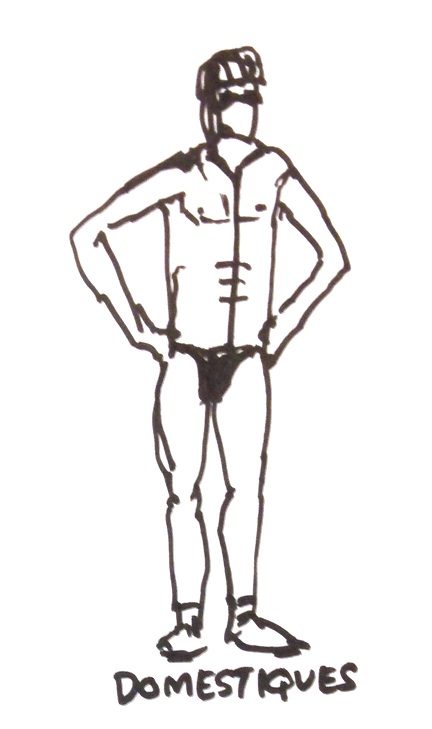
DomestiquesSet in the future, this movie hints at what cycling might become in the future. It also chronicles the looming acceptance of performance-enhancing drugs and what it means to the sports world in general. The story centers on one cyclist and his experimentation with PEDs, the mind-wrenching stress of performing beyond your perceived limits and the entire meaning of what it means to be a “domestique.” The training. The racing. All in preparation for a Tour de France that has been taken over by a secretive conglomerate that calls themselves TDF. The movie implies that the enterprise that ran cycling in the 1990s has set out to “get back” at the punishment doled out, and a barely disguised Lance Armstrong character with a gruff Batman voice is running it all.  The organization raises the stakes and turns the Tour into a massive testament to excess and an almost cruel caricature of the limits of human endurance. Every rider now wears a helmet cam, and rewards are given out for the most spectacular crashes. A death can earn the rider’s team 1 million dollars, but only if it can be determined to be accidental. The viewers vote on that based on helmet-cam evidence. The now-4000 mile tour lasts 5 hellish weeks. Stages top 200 miles and riders spend entire years training for critical roles as scantily-clad domestiques, a process rather pruriently documented with gratuitous massage scenes and ritualistic shaving. The movie centers on the intense struggles faced by one of these domestiques, whose dedication to his teammates is all-consuming, right down to serving the sexual needs of his fellow riders and the lovers who slavishly follow them. Yet it is the relationships outside the race that hint at the potential for real love to save our souls from the role of domestique.

Gotta Love Your Mudder

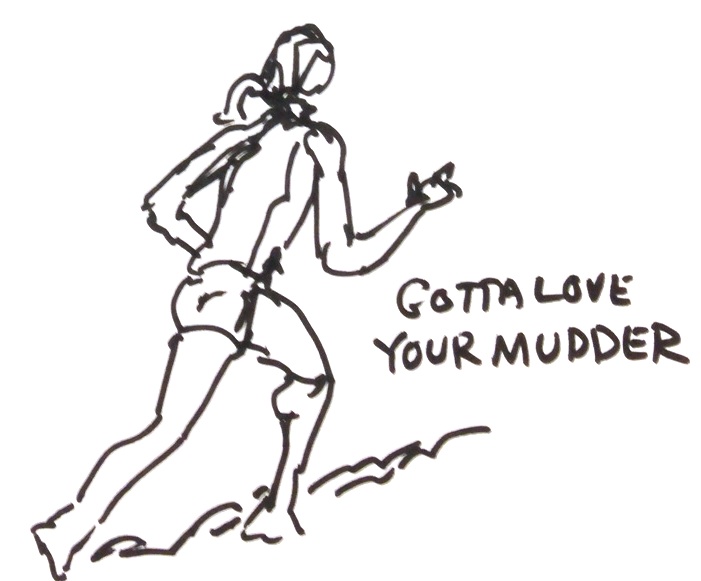
Gotta Love Your MudderThis bittersweet, road-weary comedy travels to the backwoods of small-time extreme races across the country, where cyclocross races and “mudder” running events draw a continually changing and strange cast of characters. A brother and sister from a broken family hit the road together in search of fun and self-discovery. Their ventures take them to extreme locations where the rules are not always clear and even victories feel like losses.  The two struggle to make ends meet with earnings from small-time prize money and working odd jobs across the country. The film shows them training in strange and wonderful environments, from trashy industrial towns to posh resorts where they labor cleaning hotel rooms and stealing food from the all-inclusive smorgasbords. One hilarious scene shows the two retreating to the back of the hotel while carrying mounds of still-fresh food in their arms. They eat until they are oblivious. And without knowing it, they are working back to a reunion with their long-lost mother, whose divorce from their father when they were children was the result of chronic abuse by him and her own resultant drug use. She is running and riding in a process of redemption and self-discovery. Her middle-aged talents for running and riding bring her an underdog’s fame. In truth she is driven by her deep sense of loss and range over losing custody of her children long ago. She speaks little of the past, yet we clips of her memories of her own children as she dreams while running and riding. Both of these life tales converge at a combination running and cyclocross event in the hills of western Pennsylvania where the “mudder” of the two younger champions finds a muck-covered reunion with her long-lost children when they win their respective age categories and meet up while washing the mud off their faces at the end of the day. She sees their faces emerge from the mud and match up with her dreamlike memories.

Tarsnakes Trilogy

Ice SnakesIn a series of one-hour films within a three-hour movie, Tarsnakes uses uninterrupted footage to chronicle 60-minute runs and rides through sections of America that illustrate the challenges faced by the nation, and how to solve them. The first sequence opens with a rider crossing traveling through the rough streets on the South Side of Chicago all the way through the Loop to the parks and big homes of Evanston. Throughout the long scene we see the camera popping down to look at tarsnakes on the road. They seem to symbolize the jarring reality that our streets can take us anywhere, or take us down.  The middle sequence features a runner on a highway in the heartland. We can hear her footsteps and breathing, for the camera follows close behind, almost voyeuristically. The vantage point highlights the dangers women face on their own as inevitably, cars honk and men wave out their windows. The “tarsnake” in this case is clearly the freedom the woman feels, yet the traps of harassment seem to wait around every turn. The final scene of the movies features children riding along with their parents as they run. The parents engage in conversation about their lives and their problems while the children mutter quiet observations to each other about the trees, bugs and flowers they see along the way. the contrasts illustrate the divisions between childhood and adulthood, the ultimate tarsnake in life.

So there you go. Five films that ought to be made about running and riding. Which would you most like to see?

WeRunandRideLogo

Posted in Christopher Cudworth, Tarsnakes, We Run and Ride Every Day | Tagged , , , , , , , , , , , , , , , , , , , | 2 Comments

People who run and ride can be a pretty creative bunch

By Christopher Cudworth

If there’s one thing you learn from all those miles of running and riding, it’s how and when to improvise. Creatively.

Extending Shoe Life

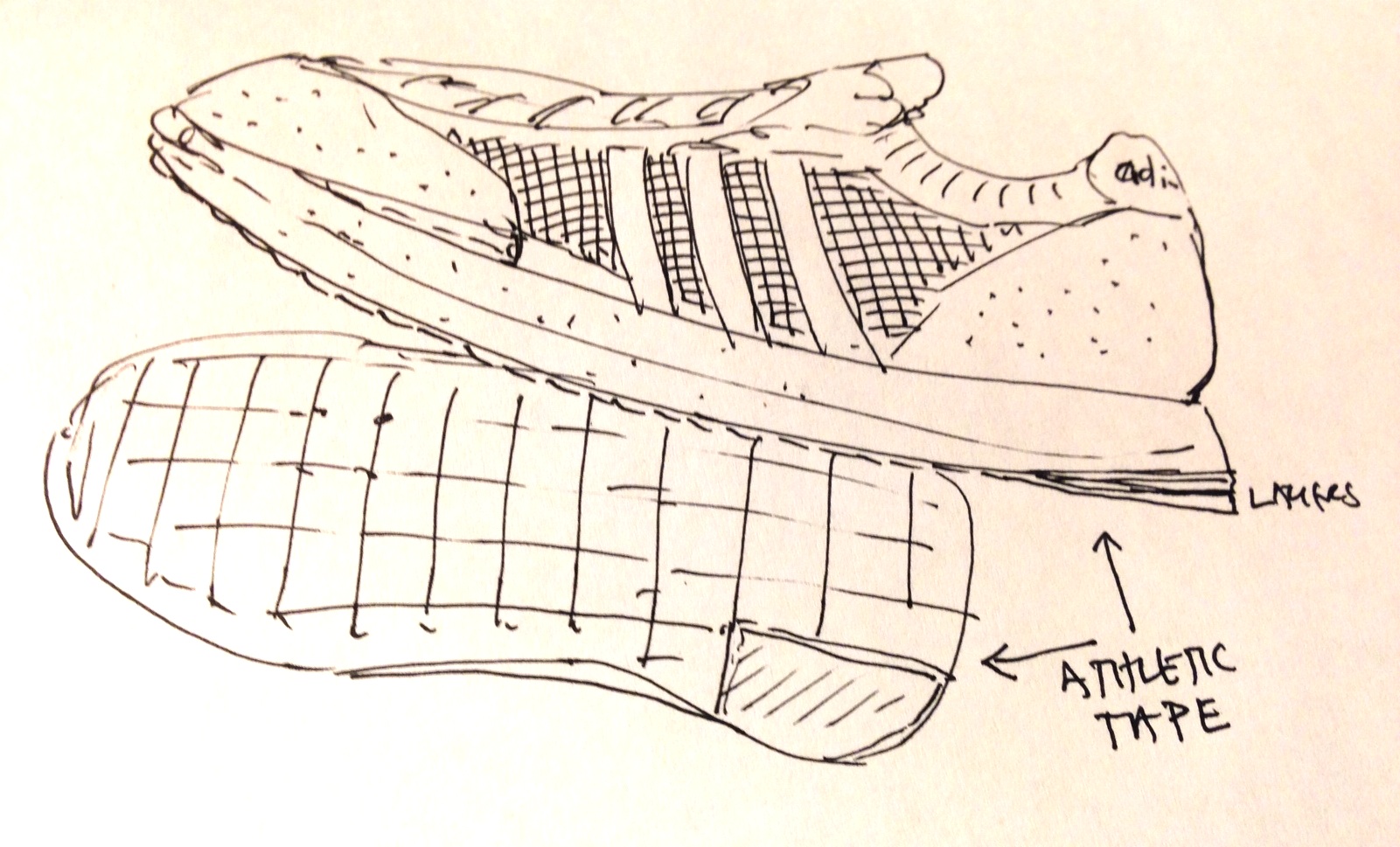
Faced with premature wear on our shoes, we improvised by using athletic tape to keep the heels from wearing down too soon. It worked.

Faced with premature wear on our shoes, we improvised by using athletic tape to keep the heels from wearing down too soon. It worked.

It’s hard to remember exactly who conceived the idea, but in the days of 100 mile weeks and long training seasons, someone in our clan devised a way to keep the heels of our shoes from wearing down too quickly. It was a simple idea that worked great. We all took good old white athletic tape and applied it to the heels of our shoes.

It was better than Shoe Goo, an invention that came along a little later. You could quite precisely control the thickness and breadth of the managed area by peeling specific lengths and sizes of tape and sticking them to the heels of the shoe. It worked brilliantly. We made our shoes last 600-700 miles in those days, and the taping of our shoe heels helped make that possible. Fortunately we also ran much of our mileage on dirt roads and grass, so extending the live of our shoes was not as difficult as running all our miles on asphalt or concrete.

Socks As Gloves

That type of ingenuity is evidence that those of us who run and ride are willing and able to adapt to life’s challenges in ways that others might not appreciated.

Wearing socks as gloves really works and it still recommended as affordable running gear.

Wearing socks as gloves really works and it still recommended as affordable running gear.

There are many other examples of creativity and ingenuity while on the run or on the ride. Some are so basic they barely qualify as ingenious. But the basics are sometimes the best response to need. That qualifies as creativity, because it’s just good enough to exceed the alternative, which is doing nothing at all.

Before running gloves evolved into Gore-Tex wonders with moisture wicking properties, there were no real viable alternatives for training in cold winter weather. So we wore socks on our hands. Usually tube socks. Sometimes two pairs, if the temps were below zero. And it worked. Mittens are still superior to gloves in many conditions. Not sure if socks were superior, but it worked. The practice is still recommended as affordable running gear.

Churches as Water Stops

Thank God for country churches. They've saved us from thirst many times.

Thank God for country churches. They’ve saved us from thirst many times.

While riding 50-80 miles, it is sometimes a fact that you run out of things to drink. My riding buddies happen to know the location of many churches, where there is almost always an available garden hose out on the lawn, or at least a faucet you can access for fresh water. Many times I have personally thanked Jesus for a re-filled water bottle.

All these little innovations add up to making us more flexible in our daily lives. We’re problem solvers with better attitudes because we realize that while life sometimes sucks and throws you challenges you wish weren’t necessary, you can make things happen if you think it through, and then try something new.

Carry that knowledge with you going forward. Your running and riding really are making you a better person. That’s something to be thankful for.

WeRunandRideLogo


Posted in Christopher Cudworth, We Run and Ride Every Day | Tagged , , , , , , , , , , , | Leave a comment

Funny Video: How to be a Road Biker

Um. Better than my video. And pretty funny. But mine was home made. Enjoy this nevertheless.

Posted in Uncategorized | Leave a comment

According to Leviticus, those of us who run and ride are going to hell or die

By Christopher Cudworth

4ad1e6849And here we thought running and riding was all so innocent, even spiritually enlightening. It turns out your favorite activities are actually the root of all evil. It says so right in the Bible. Especially Leviticus, where you find out that the original laws of the Lord warn us against all sorts of things we do in our favorite sports.

Be Thou Not a Hot Mess

Then Moses said to Aaron and his sons Eleazar and Ithamar, “Do not let your hair become unkempt[a] and do not tear your clothes, or you will die and the Lord will be angry with the whole community.

Well, ain’t that nice to learn now? So it turns out that your bad case of Hat Head or Helmet Hair is evil in the sight of the Lord.

And who hasn’t accidentally ripped out the seams of a wet shirt while trying to take it off after a long run or ride? But that’s just the beginning. Leviticus has more to say about your pet hobbies.

Thou Shalt Not Drink Strong Beverages

560949_3524507667658_1984708737_nThen the Lord said to Aaron, “You and your sons are not to drink wine or other fermented drink whenever you go into the tent of meeting, or you will die. This is a lasting ordinance for the generations to come, 10 so that you can distinguish between the holy and the common, between the unclean and the clean…

Well, crap. So much for grabbing a beer in the post-race tent.

And Watch Out for Those Skid Marks

15 The Lord said to Moses and Aaron, “Speak to the Israelites and say to them: ‘When any man has an unusual bodily discharge, such a discharge is unclean. Whether it continues flowing from his body or is blocked, it will make him unclean.

Listen, running and riding is kind of an earthy occupation. We try to avoid sweating, peeing our pants or leaving skid marks in our chamois. But hey, sometimes things happen. You might even head out for a run after hot monkey sex in the morning and find a little sperm on your inseams. But according to Leviticus, you are unfit for human contact after that. For you are Unclean.

We Reiterate: No Hot Monkey Sex For You
Ice Snakes16 “‘When a man has an emission of semen, he must bathe his whole body with water, and he will be unclean till evening. 17 Any clothing or leather that has semen on it must be washed with water, and it will be unclean till evening. 18 When a man has sexual relations with a woman and there is an emission of semen, both of them must bathe with water, and they will be unclean till evening.

So much for rolling out of bed after hot lovemaking and going for a run together in the morning sun. According to Leviticus, you need to part ways, go wash yourself with water and wait it out till nightfall. Doesn’t sound like much fun. And so much for going to work.

Women Take Note: Stop Bleeding Out Your Crotch

19 “‘When a woman has her regular flow of blood, the impurity of her monthly period will last seven days, and anyone who touches her will be unclean till evening.

I remember going to a Porta-Potty at a bike race and staring down into the well where a fresh layer of blood on a feminine product stared back up at me. So I get the ancient shock over womanly menstrual flow. But seven days? That amounts to solitary confinement. But if we’re going to pay attention to Leviticus, ladies, you better prepare yourself to train alone for a week or so. And that’s 12 times a year. At least.

Now You Know: Menstruating is Like a Fatal Disease

20 “‘Anything she lies on during her period will be unclean, and anything she sits on will be unclean. 21 Anyone who touches her bed will be unclean; they must wash their clothes and bathe with water, and they will be unclean till evening. 22 Anyone who touches anything she sits on will be unclean; they must wash their clothes and bathe with water, and they will be unclean till evening. 23 Whether it is the bed or anything she was sitting on, when anyone touches it, they will be unclean till evening.

Who knew that having your period was a crime against humanity? And God Forbid you should let anyone else sit on your bike seat or plop down where you just sat after a 20-miler.

luge_men_singles_slAnd Also: Swimming In the Red Sea is Verbotin

24 “‘If a man has sexual relations with her and her monthly flow touches him, he will be unclean for seven days; any bed he lies on will be unclean.

So much for the notion of being One Flesh in marriage.

So Much For Those Sunday Morning Long Runs or Rides

29 “This is to be a lasting ordinance for you: On the tenth day of the seventh month you must deny yourselves[c] and not do any work—whether native-born or a foreigner residing among you— 30 because on this day atonement will be made for you, to cleanse you. 

Better stay home in bed or risk the wrath of God and neighbors.

 “Goddamnit” and “Christ!” are not acceptable ways to express frustration when you miss your PR by three seconds

12 “‘Do not swear falsely by my name and so profane the name of your God. I am the Lord.

Nuff said. We presume.

Stop gossiping even though that’s the main reason you like to run or ride with others

16 “‘Do not go about spreading slander among your people.”

Gossip is fun. It makes the miles go by smoothly. Leviticus says no. Shut your trap and run or ride.

Stop Riding and Running So Fast

“‘Do not do anything that endangers your neighbor’s life. I am the Lord.”

Closeup Shoe Porn 2Tech Fabrics and Running Shoes are not allowed

“‘Do not wear clothing woven of two kinds of material.”

Well hell, that cuts out just about every type of running and riding gear you can buy these days. In fact the whole reason you buy that stuff is to see how cool the different textures of fabric are when you sew them together.

Stop Screwing Around 
293.mccon.running.dog.11210610 “‘If a man commits adultery with another man’s wife—with the wife of his neighbor—both the adulterer and the adulteress are to be put to death.

That law from Leviticus pretty much cuts out the entire Triathlon community where people enter into illicit relationships because they’re in the process of discovering their true selves through better diet, exercise and raw narcissism. It might just put a damper on sports as a whole in fact, if you put people to death for screwing around. That takes out the entire NBA, most of the NFL and probably all the outfielders and infielders in MLB as well.

People who run and ride like to explore the world with their bodies. It someone happens to get in front of you while you’re doing that, and sex ensues, it’s really not much different than straddling a bike or humping your way up a long hill on foot. Sex is part of the athletic world. Leviticus doesn’t agree, however. So good luck with that.

Now Leviticus is Just Confused

13 “‘If a man has sexual relations with a man as one does with a woman, both of them have done what is detestable. They are to be put to death; their blood will be on their own heads.

See, we’re starting to see that Leviticus can’t even get its facts right. This “law” we’re considering ignores the physical mechanics of the male and female anatomy. A man cannot technically have sexual relations with another man as one does with a woman. Men do not have vaginas. So the entire claim of sin here is a non-starter. And how funny is that when right now so many conservative religious believers use phrases like this from the Bible to ban gay people from having sex or buying things in Arizona. Perhaps we’re beginning to see that it’s actually Leviticus that is sort of screwed up.

What About Respecting Your Fellow Competitors? Loving your enemies?

blue-meanies_pic19 Anyone who injures their neighbor is to be injured in the same manner: 20 fracture for fracture, eye for eye, tooth for tooth. The one who has inflicted the injury must suffer the same injury. 21 Whoever kills an animal must make restitution, but whoever kills a human being is to be put to death. 

Leviticus means well, and these laws we’re talking about here had their time and purpose.  But there was a certain Jewish fellow named Yeshua who came along and used hyperbole and really cool stories to convey spiritual principles. He wasn’t so much into enforcing the letter of the law as much as he was into getting us all to realize that it is the spirit of the law that counts. It doesn’t make things easier, necessarily. But it does not put a noose around your neck, because there’s this little thing called forgiveness at work in the world.

So it’s safe after all to run and ride and sweat and come and even leave some skid marks on your fitness shorts. You won’t go to hell or be put to death for your earthy endeavors. Not even if you mix Pearl Izumi clothes with Nike shoes. No one’s going to stone you or put you to death.

We Run and Ride to see the world in a different way. Thank God we’re not stuck in the Old Ways, or we’d probably all be dead.

WeRunandRideLogo

Posted in Christopher Cudworth, We Run and Ride Every Day | Tagged , , , , , , , , , , , , , , , , , , , , , , , | 3 Comments

Is the controversy between rear and mid foot footstrike in distance running for real?

By Christopher Cudworth

Is there really controversy over the benefits of mid-foot versus rearfoot striking for distance running?

Every decent distance runner knows you need to use a combination of both. You don’t sprint on your heels and the efficiency of running distance races over 5K completely on your forefoot is diminished as you fatigue.

So here’s a hint: Learn how to do both, and use both running methods in every training run you do.

Classic yet modern form

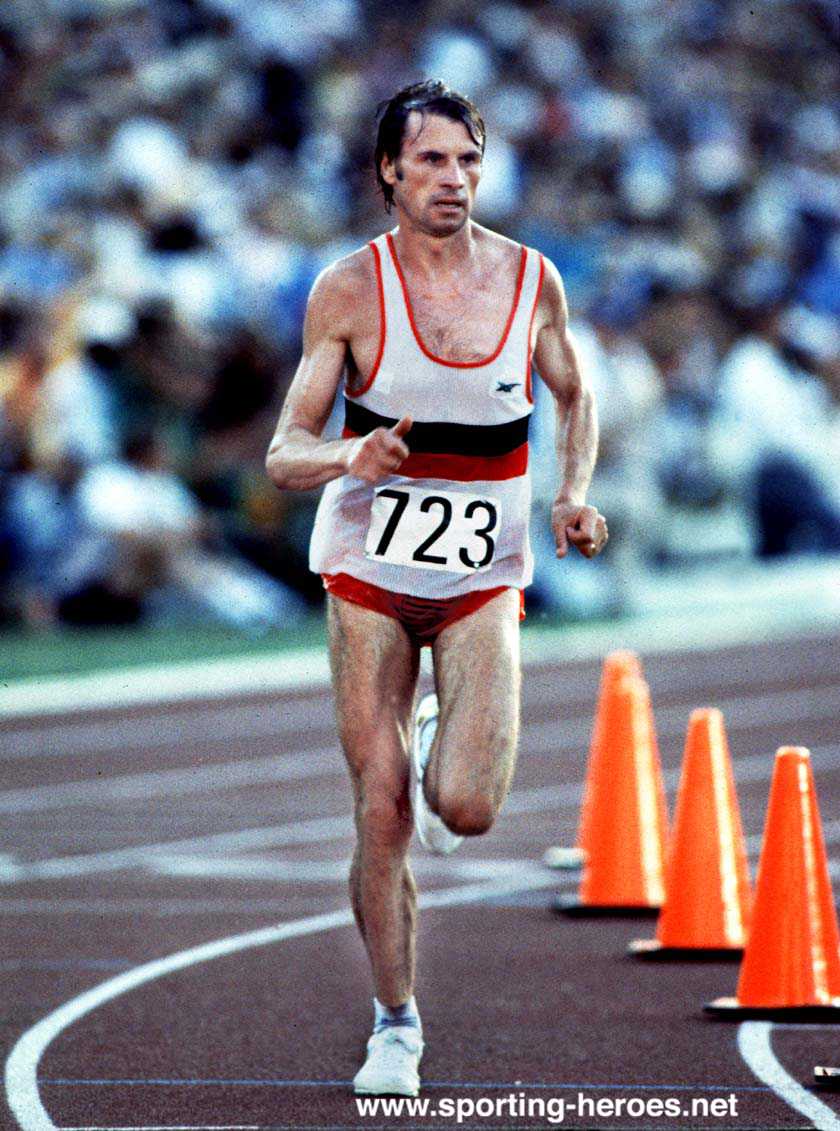
If you want to see the perfect stride in action, consider the running form of 1984 Olympic Marathon and World Cross Country champion Carlos Lopes. This video of Lopes shows his smooth form. Notice how his feet seem to “kiss” the ground rather than strike it either with the heel or the forefoot.

Carlos Lopes finishing a marathon. At this stage, even in fatigue, his form is still efficient and his foot plant balanced.

Carlos Lopes finishing a marathon. At this stage, even in fatigue, his form is still efficient and his foot plant balanced.

This is a runner who knew how to use his feet properly in races ranging from the 5K to the marathon. If you’re struggling over whether to run strictly on the heel or the forefoot, take the example of Carlos Lopes to heart. At 38 years of age he won both the World Cross Country championships and the Olympic Marathon.

It’s all about running “over” the ground whichever foot plant you choose. The greats of course combine the two forms. The efficiency of stride in Carlos Lopes is something few people can really replicate. His form was honed through thousands of training miles and races to boot. At one point he ran the second-fasted 10,000 meters of all time.

Those of us without the physiological or biomechanical gifts of world class  talent must learn how to use both methods depending on pace and conditions. It’s as simple as that.

Adaptation

As a distance runner who has raced 5K in 14:45 or so, and now runs closer to 21:00 in my mid-50s, I have learned to adapt my running form from a clear mid foot strike to a combination during a race and training that enables me to run both long and fast, depending on the distance and pace.

A world class runner in full stride is moving "over" the ground.

A world class runner in full stride is moving “over” the ground.

But let me be honest. For half a year I moved completely forward to a mid-foot strike because I was interested in reducing the pounding my body was taking. For a few months it worked. Then my achilles became sore and the discomfort would not go away.

I have moved back to a combination mid and rear foot strike and for distances up to 8 miles my achilles are fine. Beyond that there is some soreness from fatigue. There is weakness somewhere in my lower leg or foot structure that even my orthotics cannot correct entirely. This may be something I accept or else try to use calf strengthening and weight work to overcome.

Foundations

It’s all about learning the right way to run from the beginning however. I’ve had many years to work on my stride mechanics and still maintain enough flexibility to do speed work on the track at just under 6:00 pace. As time goes by that will likely be reduced and I may find myself a pure rear foot striker.

Our foundations change with training and time.

However, there are still some basics to follow when “training” your body to be able to run with both a forefoot and a heel strike.

1. Practice your forefoot running on a predictable surface.

It is preferable to do faster paced running with a forefoot strike where the surface is level and predictable. That way you can concentrate on the form and not your balance due to road camber, cracks or God Forbid, tarsnakes trying to trip you up.

2. To run faster and use your forefoot for speed, you do not necessarily need to lean forward, but you do need to increase leg turnover.

Take note that the sensation you should feel when using your forefoot to run is not to “grab” or strike the ground. If you are doing that you are overreaching with your forefoot in a way that may actually slow you down. Instead, thinking about what is basically a “paddling” motion in which your forefoot is actually coming back toward the center as you run “over” the surface.

3. Use your forefoot to increase tempo, conduct surges and for a finishing sprint.

Those three situations are when you need to use your forefoot for better speed at efficiency.

4. Your heel strike should also “kiss” the ground.

One of the most common mistakes in running for speed is form that amounts to a jarring or “braking” effect. That can happen with over striding. When your foot strikes the ground with the leg fully straight, you’re essentially “running into” the ground every stride. Ugh. That hurts and it slows you down. Instead, you need to concentrate on moving your legs through like the Road Runner cartoon.

But we can’t all be gazelles.

Need inspiration that speed can come even from an ungainly stride? Watch this video of John Tracy racing Steve Ovett in the 5000 meters. Talk about contrasts! Ovett is a miler running with perfect forefoot speed. Tracy is the consummate “mudlark” as they call him in the video, somewhat staggering forward with the Irish determination. Yet his form gets him where he needs to go. What a lesson and an inspiration for all of us.

But controversy over rear or mid-foot striking? I don’t think so. The only controversy is why you would to want to train yourself to be able to do both, and use them as needed during races and training. WeRunandRideLogo

Posted in Christopher Cudworth, We Run and Ride Every Day | Tagged , , , , , , , | 3 Comments

How is your relationship with time?

By Christopher Cudworth

TimeThose of us who run, ride and swim have an interesting relationship with time. It is the measure of our being in substantially different ways.

First we experience time in hours and days around which we construct our lives. That is time in the sense of cosmology. It measures our being in terms of existence.

Next we experience time in terms of schedules and daily activities. We plan our work and family lives, and map our workouts. That is time as cosmography. It measures our being as part of a construct.

Finally we experience time in terms of performance. We map our goals and try to achieve them. We train and race and hit the buttons of our stopwatch or Smartphone. This is empiric data we crave. This is time as cosmogony. It is how we bring ourselves into being.

We define ourselves for better or worse by constructing theories about what we should be and can be, and that’s where emotion enters the picture along with motivation.

SeikoAll these constructs define our relationship with time. There is a relatively narrow window in which we all operate on all three levels. 80 years of living is simply not that long a time on earth. Not when you consider the earth itself is more than 4 billion years old.

Time cares not whether we exist, you see. Human beings essentially invented the measurement of time in order to give our lives structure and also to imbue some sense of control over the incredible breadth of infinity both before, after and beyond our comprehension.

Then there are those who believe in God, the great infinite being that invented it all.

There are also those who do not believe in gods of any kind.

Yet we are all faced with the difficult yet incomplete notion that time is irreversible. We can’t go back to fix our mistakes. We can’t get back those lost to time and death. We can’t recover lost love any more than we can go back and run the third mile of a 10K with a bit more focus.

ChronoWe’re not trapped, exactly. Yet there is a feeling of destiny in every moment of being if you stop to consider where you are, and why you are there. When we step to the line of a race there is one path in front of us. The Start leads to the Finish. If we are lucky, that happens.

At one point while studying the philosophy of existentialism, I happened upon the concept of the “irreversibility of time.” It shocked me into the moment. Then it shocked me into considering what I was doing with my life. Then it numbed me to the point where frustration crept in.

I actually began complaining about the ugly wrestling match we had with time. Out on our long, lonely runs in the hills of Iowa, it was hard not to run too hard all the time. We kept the pedal pressed to the floor all the time. Our runs of 6, 10 and 15 miles were all done at the same relative pace, between 6:00 and 7:00 per mile.

It was insane. Time became a harsh bother. So I bitched about it. Then I broke from the pack one day and sprinted ahead.

Journal TooIt was depression, I later realized. The first point of my life where the realization that my brain functioned in a manner that was not constructive to my well-being. It could have been seasonal. Or it could have been something else.

It all came to a breaking point when my roommate turned to me and said, “You know what, Cud? What you need to do is shut up and run.”

And that’s what I did. And once freed from the constraints of complaint and the sounds of that fight I was conducting with time in my head, it all fell into place. My PRs at every distance fell like hurdles.

Experiences like these are necessary to help us understand our relationship with time, and what we do with it. Difficulty breeds perseverance. We learn to reckon with time.

Which is what made it all the sweeter to read the words in another book, for another class. The book was titled Ambiguous Adventure. It dealt with the experiences of an expatriated African living in France. His loneliness and disconnectedness haunted him until one day he realized his place was defined not by his notions of home, but by his willingness to experience life in the moment. “The purity of the moment is made from the absence of time,” the book said.

And I believe that. It has made the relationship with time much more easy to accept.

Posted in Christopher Cudworth, We Run and Ride Every Day | 1 Comment

Ice snakes and tarsnakes

By Christopher Cudworth

Ice SnakesFor many years it was hard for me to comprehend the response of people who feared snakes. My wife and children all disliked them intensely, and more than one fall walk on a forest preserve trail turned into a panic when there was a snake sunning itself on the path.

We all deal with fears of one kind or another. When fear turns into a real phobia, it takes quite a bit of concentrated therapy or effort to get past, through or over it. That may never happen. It’s always worth a try.

The first time back on the bike after my bike wobble incident gave me panicky fears. Within 40 miles of riding though, my confidence was back. After all, it was not my lack of bike handling skills that causee–or allowed–me to crash.

My bike handling may in fact have saved me tons of painful trouble. Being able to steer the bike off the road at the critical point when the harmonics in the bike cause a disturbing wobble could well have been the skills that saved me life. Crashing on the asphalt going downhill at 40 mph could have been fatal. Sliding into a grassy ditch after a thump on the shoulder was a lot less risky.

photo-120The risks of fatal injury aren’t quite as real when you’re running as when you’re cycling. There are still risky conditions that can injure or kill you when running. The season from late winter into early spring is one of the worst times of year for running safety. Melting snow that leads to black ice on sidewalks can cause a runner to slip and fall. The link in the previous sentence shows that I’ve written about the subject before. So consider this post a bit of a public service announcement. Be careful out there. It’s black ice season.

Never too careful

Running with my companion on miles of ice-covered trails last Saturday made me realize again how dangerous running can sometimes be. Fortunately you could see the ice patches on the trail well before you reached them. We slowed to a walk and even crawled along the edge of the path to avoid walking on the ice.

You should too. On days when ice is present it simply doesn’t pay to risk a fall. Spraining a wrist or even breaking a bone is quite possible.

Running on ice next to traffic is really risking it. You can easily fall and have your legs run over by an oncoming car. Seriously. Do what we did. Abandon the pace in favor of living to see another day. There is no single workout that is so important you should risk your life or limbs over it.

Every season has its sneaky snakes, it seems. You’ve got your ice snakes in winter and your tarsnakes in summer.

But rather than “getting over your fears” about black ice or tarsnakes, it is much better to prepare you mind for the encounters and avoid situations in which your greatest fears can become reality.

Avoid the horrors

SnowbankIt’s like those scenes in the horror movies when the cute girl is wandering through the dark house alone. Why even go there? Instead you need to avoid the horrors of black ice by looking ahead as you run during seasonal transition. If you see a snow bank and you know the temps were warm the day before, you’ve got to figure there will be ice frozen to the sidewalk or driveway coming up.

Yes, it sounds like common sense. But those of us who have “gone down” as I did once hurdling a gate at a forest preserve entrance only to find out there was black ice on the drive beyond will encourage you to use caution rather than bravado. That little crash cost me months of soreness in my wrist. It was lucky I did not break it.

So be smart during what remains of winter. Don’t let the ice snakes get you.

The tarsnakes of summer are bad enough.

WeRunandRideLogo


Posted in Christopher Cudworth, Tarsnakes, We Run and Ride Every Day | Tagged , , , , , , , , , | 1 Comment

2 hours and ten minutes of running, along with black ice, bad traffic and salt in the eyes

By Christopher Cudworth

The reward for a long and sometimes difficult run was a late breakfast at Daddio's.

The reward for a long and sometimes difficult run was a late breakfast at Daddio’s.

So my companion is a pretty tough Missy who has completed a Half Ironman and can outride and outswim me. She’s a pretty fair runner too, and getting better by the year.

We drove over to the Experience Triathlon Saturday Morning Run Club in Naperville, Illinois because it’s nice to have a little camaraderie to go along with the 19,000 footsteps you typically cover in 11 miles or so. We learned that fact from a fellow club member who held up his pedometer to show us the truth behind our collective shuffling gaits when running 11 miles in the cold.

Not so cold

Of course it wasn’t that cold today. Not by comparison to the last 6 Saturdays, all of which had temperatures below 10 degrees and several weeks below zero at the start.

You find all sorts of adventures in that sort of weather, if you don’t watch out. Fingers can freeze, and private parts too.

So we thought it would be better running today with 11 miles on the docket due to Sue’s plan for running a Half Marathon in April. Or was that March? May? I’m supposed to run it now too. She suggested that.

Suppose I could. Up until this year the last decade of running has been considerably less arduous than training for a half marathon. Some weeks I’d only manage three 3-milers a week, covered at about 9:00 pace.

Back at it

But something clicked a couple years ago and I started running more, again. Last year the opportunity to anchor a Sprint Triathlon Relay came along, and I ran 7:00 pace for 5K. The previous summer I raced a little cross country meet and managed 21:00 for 3 miles as well. So there’s not really a top end going on, but my bottom end isn’t terrible.

And then this winter rolled along and running with Sue is fun so we’ve been increased mileage each week from 7 to 8 to 9 and then 10. Today was supposed to be 11 at 9:00 pace or so. Base-building stuff.

Black Ice

Only there was one problem. The trails heading south of Naperville were slick with intermittent black ice. Really nasty, sloped sections.

Sue had just gotten done with physical therapy following surgery for a torn rotator cuff that was caused by a bike accident last summer. (She was riding with me.) I was leading on my road bike. Her triathlon bike was not suited for the wet bike trail we were on and down she went. Bam. Bad shoulder. We knew it wasn’t good. Then came months of getting by. Then surgery. And all those weeks of PT.

So I wasn’t about to hustle her along when we kept hitting icy patches. Then we turned off the trail and headed into the wilds of suburban Naperville.

I know the town well, having trained there for years. But even the side roads were slick with ice in the gutters. So we minced along and tried to stay out of the way of cars, many of whom were nice enough to move to the center lane to give us room to run.

Runner’s Town

That’s because Naperville is a true runner’s town. North Central College in downtown is one of the leading running schools in the nation. Various track clubs and high school teams use the roads for training year round.

So we weren’t in any real danger, but Sue was not having fun. I could tell that. You get to know a person by how much they say, and when. If they are saying nothing, and staying back a few steps, you know you had better tread carefully up ahead.

It wasn’t Armageddon out there, but it was pretty awful in spots. Big ruts on the the shoulders. Sneaky ice everywhere. Then big traffic surges came our way and when we turned south again on a major side street the traffic was crazy. The road bent east and cars were coming around the sweeping turn like it was a NASCAR competition. We stopped in our tracks, trudged up into the snow and talked as pleasantly as we could about the fact that this could suck way worse than it did at the moment.

Which is a nice way of saying, “Let’s not really talk about it.” People who run together have to know when to complain and when not to complain.

When to complain. And when not.

And here’s a simple rule. You should really only complain about the stuff that doesn’t matter, like how you wish you were running 8:30s instead of 9:00s. Because if you complain about how freaking scary the traffic conditions are and how you wish you were anywhere else in the world but on a road where people don’t care if you live or die, you can turn your brain into something resembling overcooked eggs.

So we ran in a sort of shuffling, half committed fashion until we found a mercifully quiet side street. But memories of the roads we traveled now haunted me. We’d followed my directions heading up to Maple Lane, which is a big four-laner that passes Benedictine University. I was hoping the city would have cleared the sidewalks along that major road. That’s what I was banking on. And for 300 yards my dream came true. Then we hit a pile of pushed up snow and that was it. We were on our own.

Insane world

By mid-Saturday morning traffic in suburbia gets insane. People are not paying attention to the road. You might as well be running loops in one of those wire cages at the circus where they send motorcycles winging around in defiance of gravity. People don’t want to move over when they’re headed to the grocery store or picking up their kids from some inane sports practice at the ungodly hour of 10 a.m., for God’s Sake.

So I’d taken her through the gauntlet unintentionally. That stuff doesn’t scare me typically. I’ve been running for 40+ years of my life, and have seen it all. I’ve run to hell and back, and let me tell you, suburbia on a Saturday is worse than hell for runners and riders. I mean, if people could actually threaten you with their cars in the pool when you’re swimming, they probably would. There’s a lot of pissed off, distracted people in this world with double chins and a damned black heart beneath them.

States of mind

They just learned their sister wants to claim their share of the inheritance before mom and dad even pass away, or they found out the painter can’t come till Tuesday. Their kid just got busted for dope on Friday night or their dog ran off and got worms from that nasty little bitch down the block. Her owner probably has worms too.

So you’re running along and all these people with wicked problems and bad attitudes look out their greasy windshields and figure they’ve got no real reason to tolerate some biped using a chunk of the road for which they paid good goddamn tax dollars to build.

Peace on the side streets

But when you reach the side streets and all that fades away, the world seems to close in and things are okay. You smell the strange quiet odor of someone’s dryer working away at a pile of Saturday clothes. A small dog barks at you from inside a house and you realize the little feller probably hasn’t even had breakfast yet. The house looks sleepy and no one is probably awake.

But the suffering wasn’t through. Not for Sue. With just a mile or two to go something got stuck in her eye. Probably salt from the roads. That’s been a problem. It was like the world did not want to leave us alone.

Totality

So, by the time we got back to Starbucks after 2 hours and 10 minutes of running, we’d covered 12 miles, which is more than I’d run at one time run in at least a decade. Things were creaking but still operable. We smacked gloves together and went inside to change. The world was back to normal. The pissed off, distracted people in their Acuras and beater Buicks did not get us down, or run us down.

I apologized for the route, and Sue said all was good. But for a while there…

I know. I know. Lesson learned.

Let’s do it again. Only better next time.

Then we retreated to a great little downtown Batavia restaurant called Daddio’s and had clean tasting omelets and checked our cell phones to see what the rest of the world was doing. The surface of our iPhones looked a lot like black ice. But neither of us seemed to notice.

WeRunandRideLogo

Posted in Christopher Cudworth, We Run and Ride Every Day | Tagged , , , , | Leave a comment

10 Things You Never Knew About Running, Riding and Swimming

  1. You don’t know it, but at any moment in time you’re always upside down.
These runes don't know it, but they're actually upside down.

These runes don’t know it, but they’re actually upside down.

The earth is just floating out there in space. Why do you think you’re right side up? It’s a farce! Step back 10000 miles from earth and everyone is upside down. So give yourself some credit on those bad days. It’s hard to run upside down. All the blood goes to your head.

2.     The wind really is in your face no matter where you go

Even with a 20 mph wind behind your back while on the bike or on the run, you still have to cut through the air ahead of you, and that’s wind resistance. Everything else is just an illusion.

3.     You probably walked farther in trips to the restroom than you ever imagined

If it is a 25 yard walk to the restroom at your office, you probably walked about 15 -30 miles to relieve yourself over the course of a year. Bet that mileage didn’t make it into your training journal.

On some days, every step you take is a water station. Trouble is, you also breathe out that much.

On some days, every step you take is a water station. Trouble is, you also breathe out that much.

4.     You’re breathing a lot of water when you run or ride.

According to one of those stupid “best answer” sites online, “the warmer it is, the more humidity the air can hold. At room temperature, one cubic meter of air can hold as much as 20 grams of evaporated water.” Some answer, huh?  The moral of that story is that you might as well go swimming some days.

5.     If minimalism is so big in running shoes, why aren’t people lobbying to run and ride naked?

Think about it. All those clothes we wear technically slow us down due to drag. Of course, they also keep us warm, prevent chafing, provide cushioning in critical places, and allow us to carry vital things like water, keys, phones and money. Plus we’d flap around if we ran around naked all the time. So minimalism is not so great whether you’re talking shoes or clothing. They’re made that way for a purpose.

6.     Debates over liberalism and conservatism are almost absent in sports like running and riding. Why is that?

Liberals and conservatives run and ride side by side without knowing it most of the time. It’s only when you slow down enough to talk that all that crap matters. So don’t slow down. If you want to shut someone up because their opinion is stupid, run or ride harder. That will fix them.

Sex is as much about how you imagine yourself as it is about how you look or feel.

Sex is as much about how you imagine yourself as it is about how you look or feel.

7.     Sex is better when you run, ride or swim.

There’s nothing like the honesty of a body that has been tested through effort. If you get fit and feel fit, you feel better about yourself in bed. It’s that simple. Call it one of the extra benefits of training. Muscles and endurance help. But mostly, it’s about how you feel about yourself that counts. Now go hump someone.

8.     Your diet may not be as important as how you eat.

It’s a radical notion, but those of us who run and ride tend to be the types that view food as fuel. But turn that quotient around and start to focus on enjoying what you’re eating and you are much more likely to “eat well” in terms of savoring, appreciating and digesting food properly. The natural byproduct is eating less quantity and more quality. Try it. It works

Sure, you should not run or ride during a tornado. But short of that, get your ass out the door.

Sure, you should not run or ride during a tornado. But short of that, get your ass out the door.

9.     It’s not the weather’s fault

You know that saying, “Every cloud has a silver lining?” Well the truth about clouds is that no matter how thick and dark they are, all you have to do is get above them and everything up there is sunny. It’s true. So you’ve got to put every kind of weather into perspective. Cold, wet, windy, warm. It’s all the same. You’ve got the gear to handle it. Pick the best conditions you can find on any given day and deal with it. Otherwise go to the gym and do an alternate workout. It all counts toward fitness. So stop whining about clouds, would you?

10. The traffic doesn’t hate you.

You may hate the traffic on the roads, but it doesn’t actually hate you. What does hate you sometimes is people inside the traffic. There’s a cure for that by being pleasant, smiling at every vehicle and waving them through at stop signs. It will cost you a lot less pain and time than you think. Being a prick, rolling through 4-way intersections and forming immutable, unmoving packs on the road will make you enemies, for sure. You beget what you give. Remember that.

WeRunandRideLogo

Posted in Christopher Cudworth, We Run and Ride Every Day | Tagged , , , , , , , , , , , , , , , | 2 Comments

The obituary of Chad Kellogg and what it means to truly climb the mountain

By Christopher Cudworth

I never used to read obituaries until the Chicago Tribune called 9 years ago to write a story about the life of my mother Emily Nichols Cudworth. She was a schoolteacher for 30 years and was well-regarded as someone who blended tried-and-true methods like phonics with new curriculum demands.

Learning how the obit process works is just like pulling back the curtain on a stage play. You get to see the information running around in the background. What gets left in. What’s left out.

ChadSummitJoboRinjangNepal20121Which is why it was fascinating to open he obituary section of the Chicago Tribune today and read about a mountain climber named Chad Kellogg. The headline reads, “Elite climber killed on Patagonia mountain.”

The world elite jumped out at me. Chad Kellogg was apparently something else when it came to fast descents up alpine peaks. He holds the record for the fastest ascent-descent on one of the most famous climbs on Mount Rainier in Washington.

You have to be in some kind of great shape to pull off that kind of climbing. The photo published with his obituary shows the solidly built Kellogg running on a woodsy trail. Ferns seem to wave at him as he’s passing. His legs look like well-hewn tree trunks. He looks like a determined man.

Chad KelloggThe obituary is full of praise for the man whose physical gifts were apparently complimented by his will to excel. The Tribune obit quotes his associates on what a fine climber Chad Kellogg really was.

“Chad had unbelievable drive beyond most high-level athletes,” said his friend and fellow climber Gordon Janow. “He was dedicated to the sport and lived to be in the mountains.”

Of course he also died to be in the mountains. The manner of death was random and sudden He died while descending Mount Fitz Roy, a prominent peak in the Patagonia mountains of Argentina. The story states: “The two (climbing partner Jens Holsten) had made it to the summit of the 11,000 foot mountain and were hanging together form a pre-established anchor when a rock fell, striking Mr. Kellogg and killing him instantly.”

There will be no attempts to recover his body. 

212Kellogg lost his wife to a climbing accident three years ago. Lara Bitenieks Kellogg fell from Mount Wake in Alaska’s Denali National Park. His plans had been to spread her ashes on Mount Everest, a climb that eluded his considerable skills on three attempts. His goal was to ascend and descend without use of oxygen.

In fact the remains of many climbers are strewn about the tall peaks of the world. Chad Kellogg joins a strange and unique club of people who died doing what they love best.  His legacy is considerable. “The amount of training, persistence and wherewithal it takes to do what Chad does puts him in a class with 0.01 percent of the climbing population,” said fellow climber Gordon Janow.

That is some pretty thin air at that level. Consider that the climbing population probably constitutes even less of a percent of the general population in the world and there are simply very few people who could match what Chad Kellogg did so well.

It’s easy to make odd little metaphorical parallels between “climbing the mountain” in business or some other endeavor. Actually climbing mountains takes total commitment, and can cost you your life. So it makes sense to turn our attention for a brief moment to someone who actually got out there and did it, so that we don’t use such metaphors so lightly.

We can also use such moments to consider the meaning of our own lives. Kellogg may never have conquered Mt. Everest in the style or speed for which he was known. But that’s not the point. His example of hard work and a vision worth pursuing is the most compelling part of his obituary.

Wherever you find yourself in life; starting out, starting over, starting to believe or starting to retire, know that you do have inside of you whatever it takes to do what you want to do. If this story inspires you to find that purpose and drive in some way, may it stay with you the way it stayed with Chad Kellogg. That would be a good way to live yourWeRunandRideLogo life.

Posted in Christopher Cudworth, We Run and Ride Every Day | Tagged , , , , , , , | 1 Comment