At home in watery world

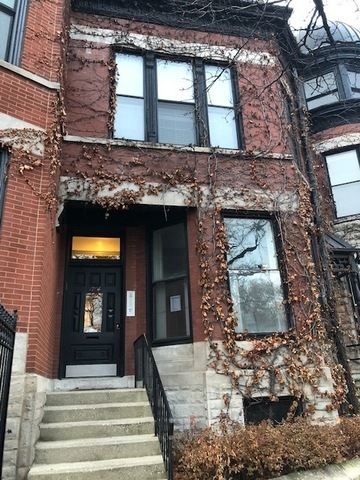
Water feature at my former home

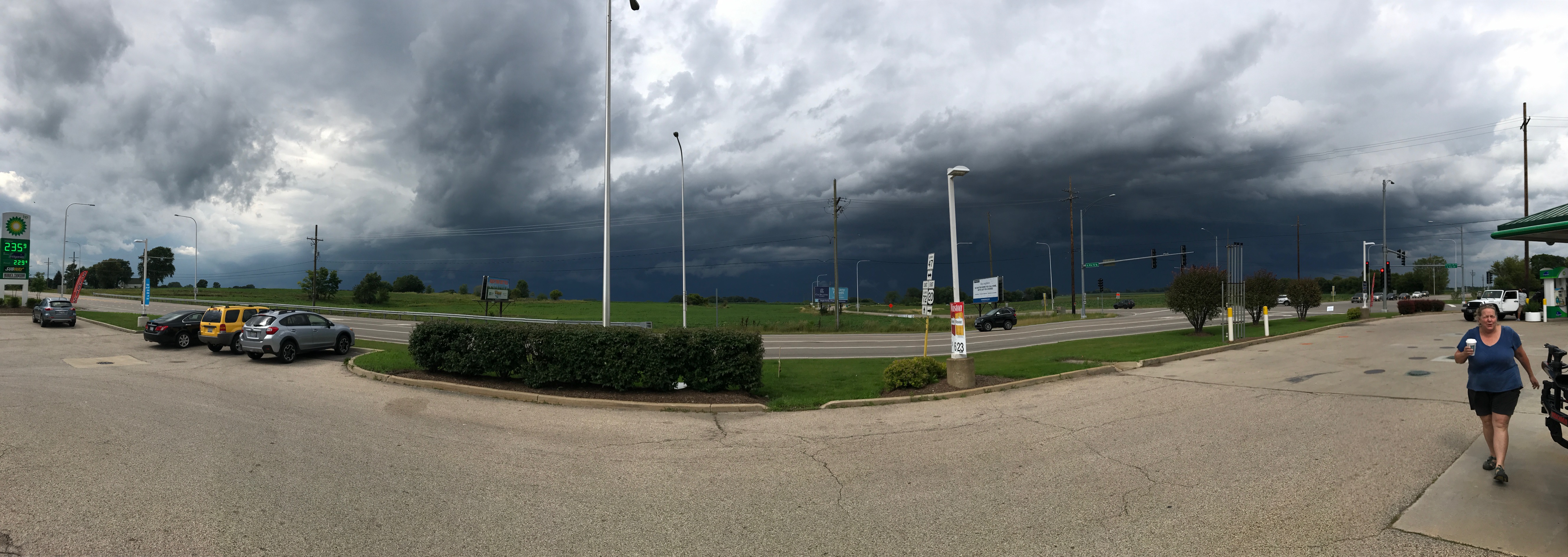
As our relationship grew the first few years, Sue and I began talking about marriage. We’d tested our compatibility in many ways: physical, emotional, and familial. Nothing’s ever perfect, yet we enjoyed each other’s company, found humor in many situations, and trained together almost daily. One of those afternoons we’d pedaled into Fermilab and made a big turn on the west end when a huge storm rose up and hit us flush from the side. The rain was coming at us horizontally, and wind buffeted us sideways on the bike. We rode headlong, getting soaked. When it was done the skies grew calm and we biked back through town to her rented home on Maves Street in Batavia. “Wow,” was all we could say. “That was intense.”

We got caught in the rain another day and parked under a tree as the skies unloaded. There was no lightning or thunder, but the roads were peppered with big drops and runoff streams, so it was safer to wait it out. After we pulled over, I looked at Sue whose eye makeup ran down her face in two long, black streaks. “Oh my God,” I laughed, “you look like Alice Cooper.”
These are the small moments that turn relationships into love. We laughed when I used the word “detritus” to describe the debris on roads after the storm. And on the day that Sue described her pet Wanda doing “cat physics” while considering a leap from one couch to another, I told her how much I appreciated her mind’s workings.

Her architectural training meant we shared artistic sensibilities. She also knew plenty of things I knew nothing about. She’d point out the assembly process as we passed a logistics building under construction. I’d written about precast concrete in my marketing work and we’d compare notes about the relative merits of building construction.

That brought us to discussing what to do with the house I’d owned since 1996. It was built in 1956 with a Wright-style extended roof that kept the house cool in summer and shed snow far from the walls in winter, it had no air conditioning except for the heavy wall units I’d been placing in the windows for over a decade. The old boiler in the basement fueled the radiant heating system, but it was original to the house, and impossible to tell if it would last another year or twenty years.

The biggest drawback in that home was the basement waterproofing system. A company called Everdry installed it before my late wife and I bought the home, but it was insufficient to keep the water at bay when big storms hit. Despite a system of drains installed along the home’s exterior walls, rainwater leaked across the basement floor on three sides of the house. The two sump pumps pushed water out of deep tanks at the north and south end of the west walls, but at times they could hardly keep up. Much of the problem was caused by the underground water table. Once while digging fenceposts on the back property line I discovered a layer of clay two feet down. The holes immediately filled with water once dug. Over time I realized the entire subdivision west of us was built on an underground stream flowing toward the Fox River from a wetland at Fabyan Parkway and Western Avenue. In the late 90s and early 2000s a period of immense flooding pushed the City of Batavia to address that hydrology, and sadly the result was a channelized drainage system where once a healthy farm wetland once existed.

Making matters worse at my home was a chimney crack that somehow allowed water to flow back through heat release piping next to the boiler. To deal with that annoying problem, I’d align loose gutter sections to direct the water pouring out of the galvanized pipe so that it would flow down into the sump tank.

All of this took place in “real-time” when the rains hit. Even our glass block window wells would fill up as the backyard became a lake. Mallard ducks would come perch in our yard when the water piled up. The stone block patio I built was tilted slightly toward the house and water gathered next to the sidewalk after the sand settled. I tried building a French Drain away from the house by wound up missing the mark by about half an inch so it didn’t drain completely.

I began to sense that the water we did push out of the sump pumps was just cycling back through the waterproofing system. That Sisyphean problem pushing me to the edge of tolerance. I’d contacted and met with the Everdry people and kept my $50 annual maintenance fee up to date. When sumps failed they installed a new one. That happened several times. The damned things ran 24 hours a day during the summer season. Even in winter the sound of the sumps going “whurrrrreeeyup” as they pushed water out into the yard was audible.

These problems drove a competitive urge in me to combat the home’s water issues. And once I began, it felt like the Water Spirits were having their day. A leak sprung in the roof over the garage and I got hit on the bald head with a cold spray of water once late spring day while I was taking out the garbage. “That’s it!” I hollered to myself. “I’m fixing this shit.”

Watery competition
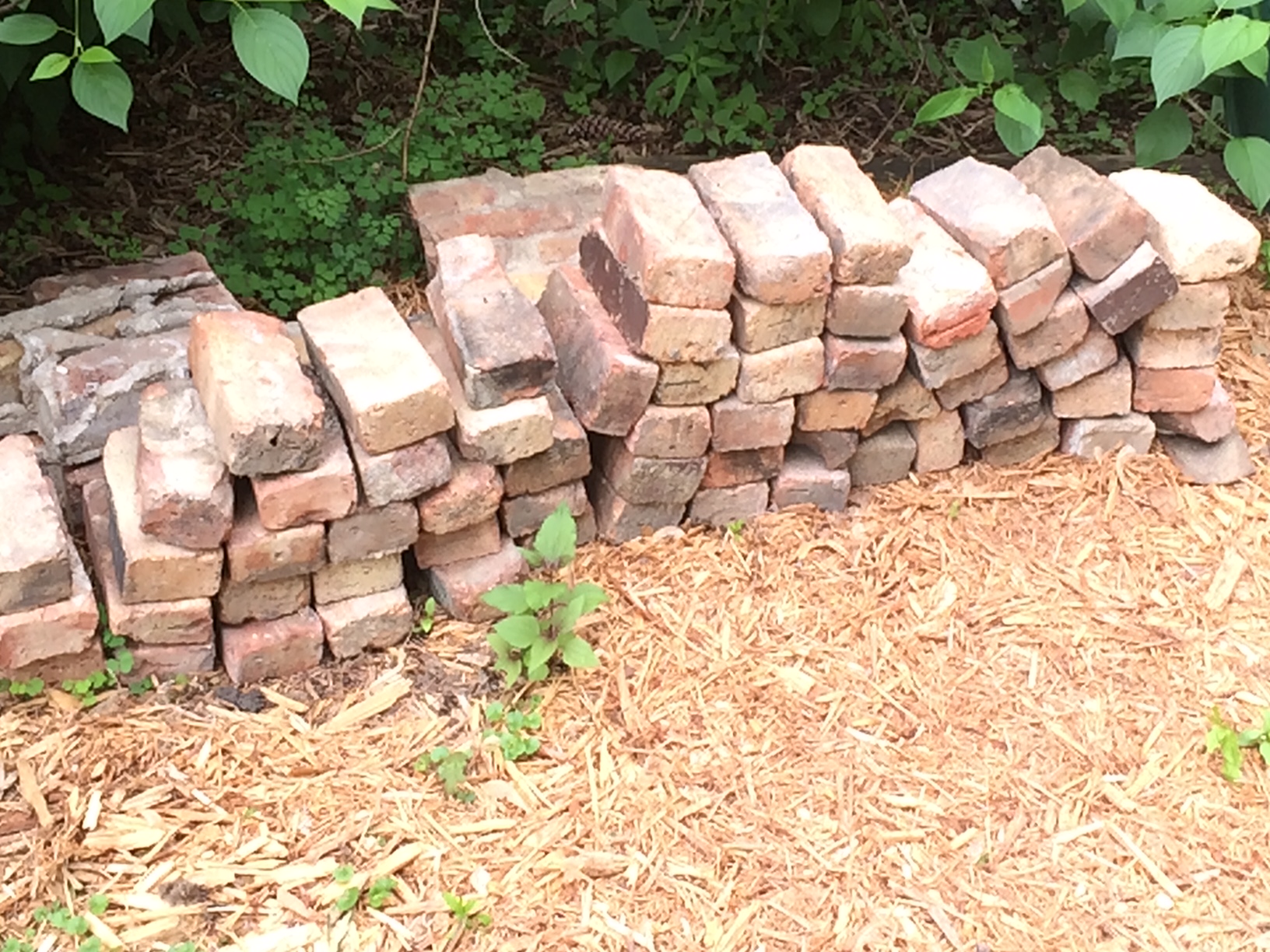
What character!

Eager to create a system where water wasn’t pressing against the house all the time, I dug waters features in two spots behind the house. The first received water from the sump at the Southwest corner. I lined it with bricks from the Old Chicago Stadium that I’d picked up from the guy who bought the whole place and sold it off. They had beautiful character and while I’m no sports sentimentalist, it was kind of cool knowing where they’d come from. Then I noticed a pile of old bricks outside an old building six blocks south of my home. I plotted to pick them up early one morning, but as I was loading them in my Subaru Outback, a man pulled up in a truck and asked, “Do you have permission to take those?”

“No,” I replied. “They looked abandoned.”

“Well, I own that building,” the man replied. “Those are my bricks.”

“Sorry,” I responded. “I’ll put them back.”

“No, at least you were honest with me,” he said. “You can go ahead and take what you have.”

I built a small platform with my brick collection and installed a pump that pushed water through a big clay pot with a hole in the side that I’d commandeered from my late wife’s gardening. It made me happy and the water was clear and clean and deep. The only time it proved dangerous is when a neighbor’s pug dog stumbled into the water and I had to pluck out the fat little pooch paddling around in the pool.

The other water feature was wider, flatter and rimmed with limestone rocks I’d brought back from a trip to Decorah, Iowa. That errand probably caused the rear bearings of the car to wear out before their time, but some risks are worth taking in time. I lined the two-foot-deep hold with flat stones but committed an error by cutting the AT&T internet cable during the excavation. They sent a tech out to fix my cable and sent me a $375 bill for the work, which was extensive, having to dig under the sidewalk and all, but I never paid it.

That water feature accepted the North sump pump’s flowage. And largely, that addition to my waterproofing system helped. My competitive urges to beat the water problems was mostly satisfied.

But then a blockage took place somewhere in the south system and the waterproofing guy came out to inspect it. He stuck some sort of backflush device into the piping system and gave it a big shot of pressure. To both our amazement, a geyser of water shot out of a pipe terminated in the front yard. Formerly the sump system pushed water out into the street, but that was banned a few decades ago, but the old infrastructure still existed. We had a good laugh out of that incident, as the sod blew out several feet from where the pipe ended.

Finally he put in a high-horsepower sump to deal with the South end water issues. I think that pump was 1.5 HP and it shot water out so fast it sounded like a fire hydrant hitting the back garden. Now the water was thirty feet away and to the south side of the house. Even it if didn’t cure the water problems, it felt good to punish whatever water dared enter my home.

All those issues contributed to my decision to ultimately sell the home rather than try to fix it up. The ancient boiler, the need for new roofing insulation, and aging old wallpaper all made it hard for Sue to love the place. We looked at taking some of my money to build a new entrance and fix all the rest, but the countervailing sensibility was that it was still the house where my late wife Linda and I lived for twenty years. My friends told me, “Usually a woman doesn’t want to live in the house of a former wife.”

I left behind a mural featuring bricks and stones, but evidence of the leakage is at lower left.

And I got that. Some of the water problems flushed out any feelings of sentimentality. It was a tough decision to give up that home because I liked the general vibe with the pine three season room and the woodland garden between two maple trees that I’d built up with mulched leaves and soil, rich with ferns and transplanted redbud trees, but having moved many times before in life, I decided that it was a good thing to do.

My children were not big fans of the idea, I’ll admit. The memories tied to that home were strong. Their childhood and young adult years played big on their minds. But they weren’t thinking about the costs of fixing up the place. I was.

And time marches on.

Posted in competition, cycling, cycling the midwest, cycling threats | Tagged , , , , , , , , | Leave a comment

Lessons learned in how to carry on

Following the passing of my late wife in 2013, I remained the principal caregiver for my father, Stewart Cudworth. My mother died in 2005, and despite my father’s condition as a stroke victim, he remained in their home under the direct watch of Olga, his original caregiver, and later Leo, her erstwhile husband, with whom she shared a child named Jessica.

Once I found out that Olga had a daughter, I offered to have her bring the child to live in my father’s house with my father’s approval. When Olga took the job caring for my dad, her daughter was just five years old. My father welcomed them as a family, and Leo visited as often as he could.

Ultimately Olga took another caregiving position. Perhaps it paid a bit more, but I never learned the real reason why. But one day I arrived to find Leo all moved in at the house with Jessica still living there. At first, I protested the change, but Leo showed me paperwork that he’d taken a caregiving course and was prepared to step in and do the job. Having had to find a few caregivers before Olga, I knew how tough that could be. So the opportunity to have Leo take over was in some respects ideal. He knew my father, for one thing. Dad could be a handful, prone to fits of anger at times, and demanding at the least. Leo smiled and informed me with assuredness: “Stew the Boss.” It turned out to be a great decision to keep him on.

That doesn’t mean it went smoothly all the time. Late in his life, my father decided to take a trip out east to visit his sisters. One lived in Upstate New York. Another lived north of Philadelphia. He drew me a map of where he wanted to go, but he had not thought to tell me he was going anywhere until a few days before the planned trip. I asked him, “Dad, do your sisters know you’re coming?”

He looked at me quizzically and replied, “No…”

I called around to all of them. They had no idea he was planning to arrive. His sister Helen quipped, “That’s just like your father. He always assumed he could just show up anywhere he liked.”

Indeed, that habit of my father drove my late wife crazy. Stew would show up at our house on a Saturday morning during his garage sale tours. But Saturdays were my wife’s “holy day” in the garden. She did not like to be interrupted. “A phone call would be nice,” she’d lament. But that was not my father’s style. There’s a part of me that operates the same way, but I’ve reigned in those instincts over the years. My father never did. He liked the impromptu joy of popping in unannounced. It felt like a little celebration of life to him.

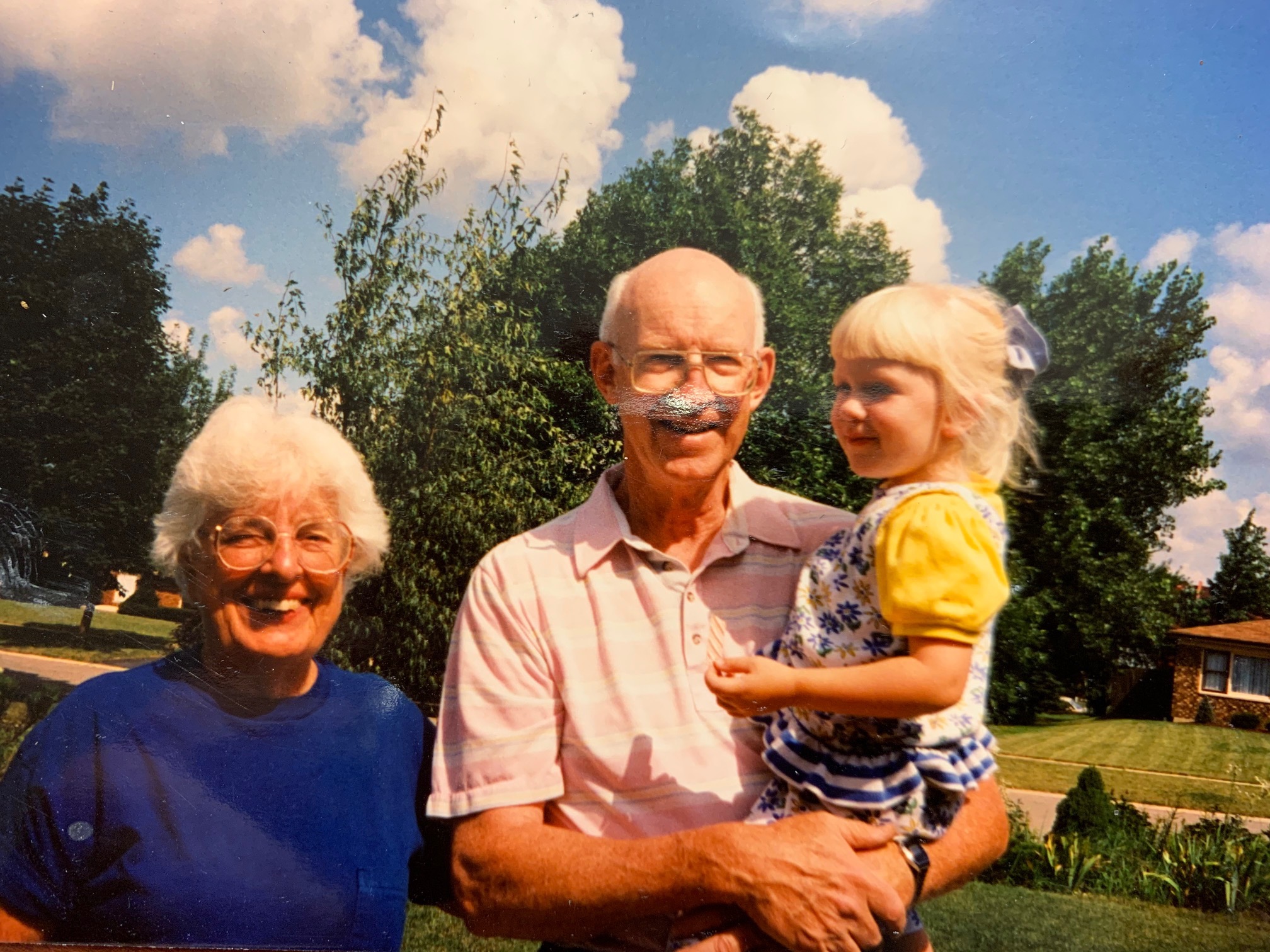
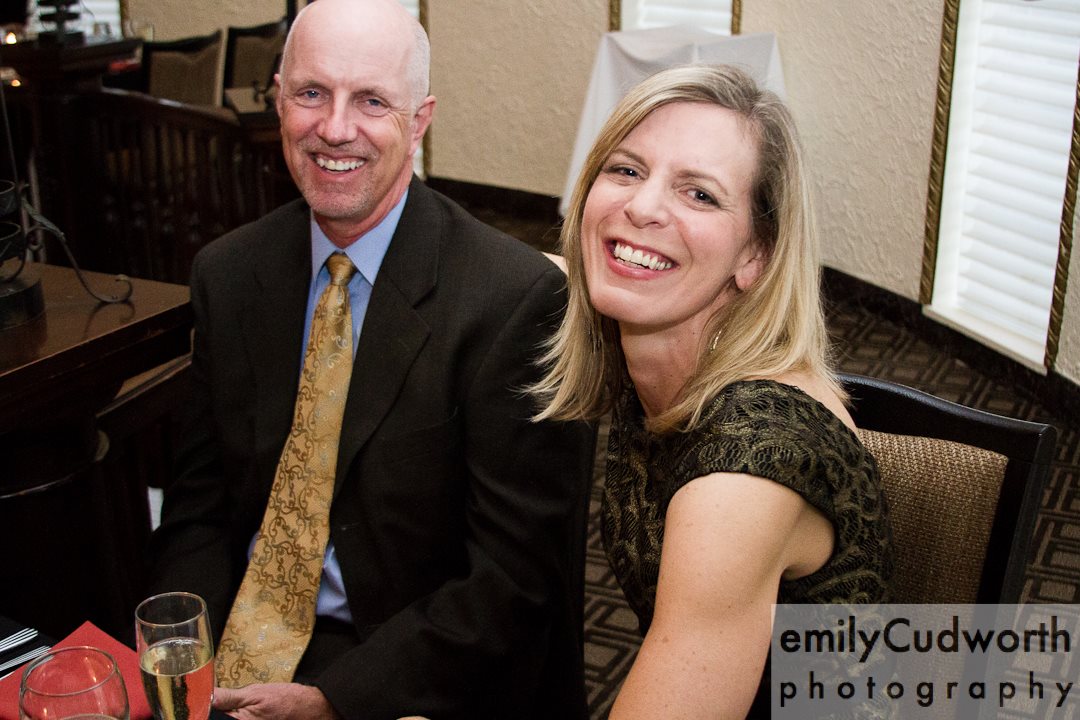
Emily and Stew Cudworth with my daughter Emily

Before his big trip East, I helped Leo and Dad pack up. Off they went on their first stop, Niagara Falls. Leo was wheeling dad around when Stew decided he wanted to visit the Canadian side. That sent Leo into a panic. Originally a citizen of Belarus, Leo had a Green Card as a foreign worker in the United States, but did not carry the card with him on the trip. My father was insistent that they go across to Canada, but Leo rightly feared he would not be able to re-enter the US. My father started screaming and yelling at him to cross over to Canada, so Leo called me on his cell phone. I tried explaining to my father why Leo could not cross into another country. The next thing I heard was the cell phone skittering across the parking lot. My father threw it in a rage. Leo retrieved the phone, with the call still connected, and said, “Mr. Chris, what do I do?”

I told him, “Turn around and come home. You don’t need to deal with that kind of behavior.”

Then things settled down. On their way home, they stopped to visit my younger brother. Leo played guitar by the fire and sang Russian folk songs. Everyone had a nice time, but the larger trip was canceled. My father had also planned to visit a long-lost brother-in-law, Hank, known within the family for his cantankerous ways, but my dad perhaps liked his sarcasm and unbridled spirit.

Forgotten plans

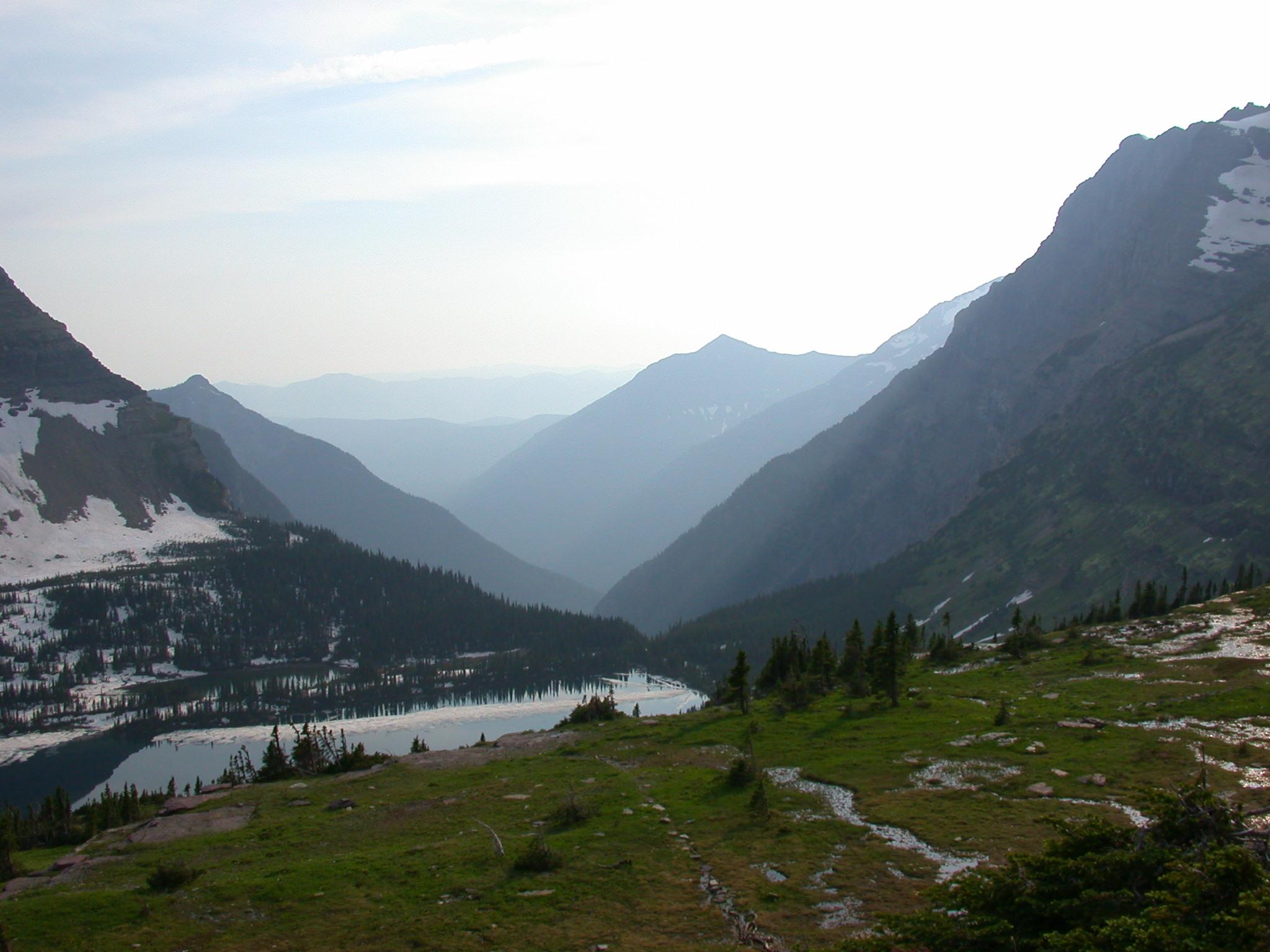
On the other end of the spectrum, my father sometimes assumed that once he’d told you something, it was your job to remember it forever. In late 2003, he mentioned at Christmas that a family reunion might spring up the next year in New York state. My wife and I never heard anything about it until early June of 2004. By then, we’d made plans to take a family trip out to Glacier National Park. Our daughter was headed into middle school, and our son was in high school, so we thought it wise to make a family trip before their lives got too busy.

We spent two weeks on that trip and arrived home on a Sunday evening. My mother and father went to New York and stayed with relatives near the Finger Lakes. That’s where my father collapsed by the bedside with a stroke. It was a bad one. Back in 2000 he’d had bypass surgery due to heart blockages and his atrial fibrillation may have caused a blot clot to invade his brain. He wound up at the Syracuse hospital. However, the medics who treated my father that day told my mother he’d be going to Rochester. She drove to that city only to find out he was in Syracuse.

That Monday morning, she called to inform me that he’d fallen ill and might not even live. I hung up the phone and said to my wife, “Well, my life just changed.” I knew that it would be my responsibility to care for Mom and Dad. I lived closest to them. That was that.

After my father spent weeks in the Syracuse hospital, I arranged to bring him back to Illinois. That was one of the most stressful jobs I’ve ever taken on. I made all the flight arrangements for my mom, my dad, my brother, and I. The doctors told me on the day I arrived, “Well, we think your father can go home later this week…”
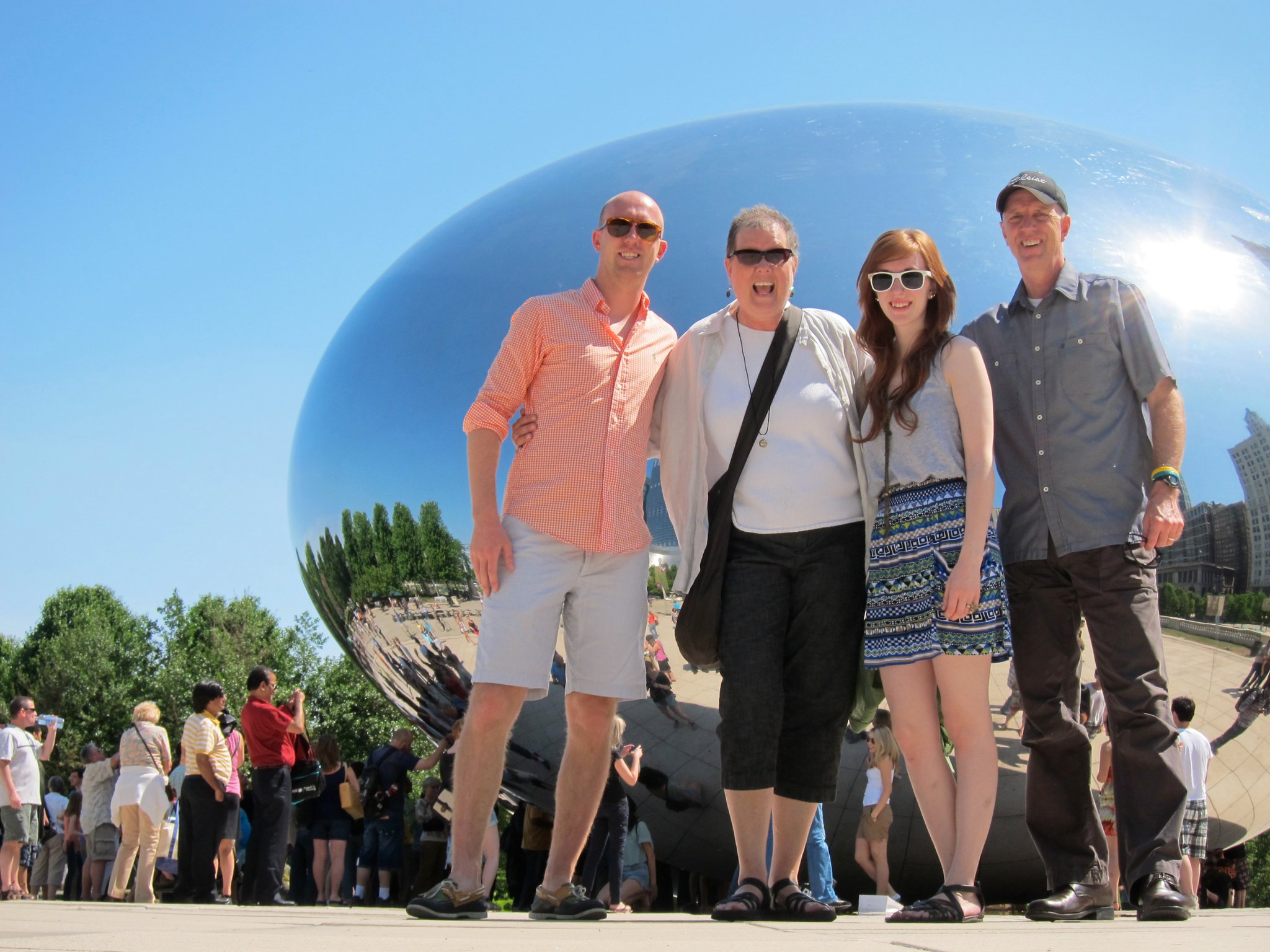
I was all set up to take him home that day, so the doctor’s loose plans made me panic. Nearly fainting from the stress, I leaned forward with a big breath and walked straight through the phalanx of interns to get out in the hallway. Then I told the doctor, “We’re taking him home today. Whatever it takes, let’s get him ready.”

We went home after I demanded that the nurses set up a catheter and bag to get him the whole way back to Chicago. Once there, I plopped my dad in a rusty old van that called itself an ambulance and he went to stay in a long-term care home for months. Over the next year, we moved him through a progression of rehab facilities as he regained some functions but not all. His speech and right side were permanently damaged.

That said, my father gained lucidity back after his stroke. If anything, that clarity of thought was as much a problem as it was a solution. If there was something he wanted to communicate but couldn’t get across due to his speech loss due to apraxia and aphasia, it was my job to ask questions hoping to ascertain his full meaning. It could be exasperating at times. If we couldn’t figure it out together, he sometimes got frustrated and angry, raging “NO NO NO NO!” at full volume.
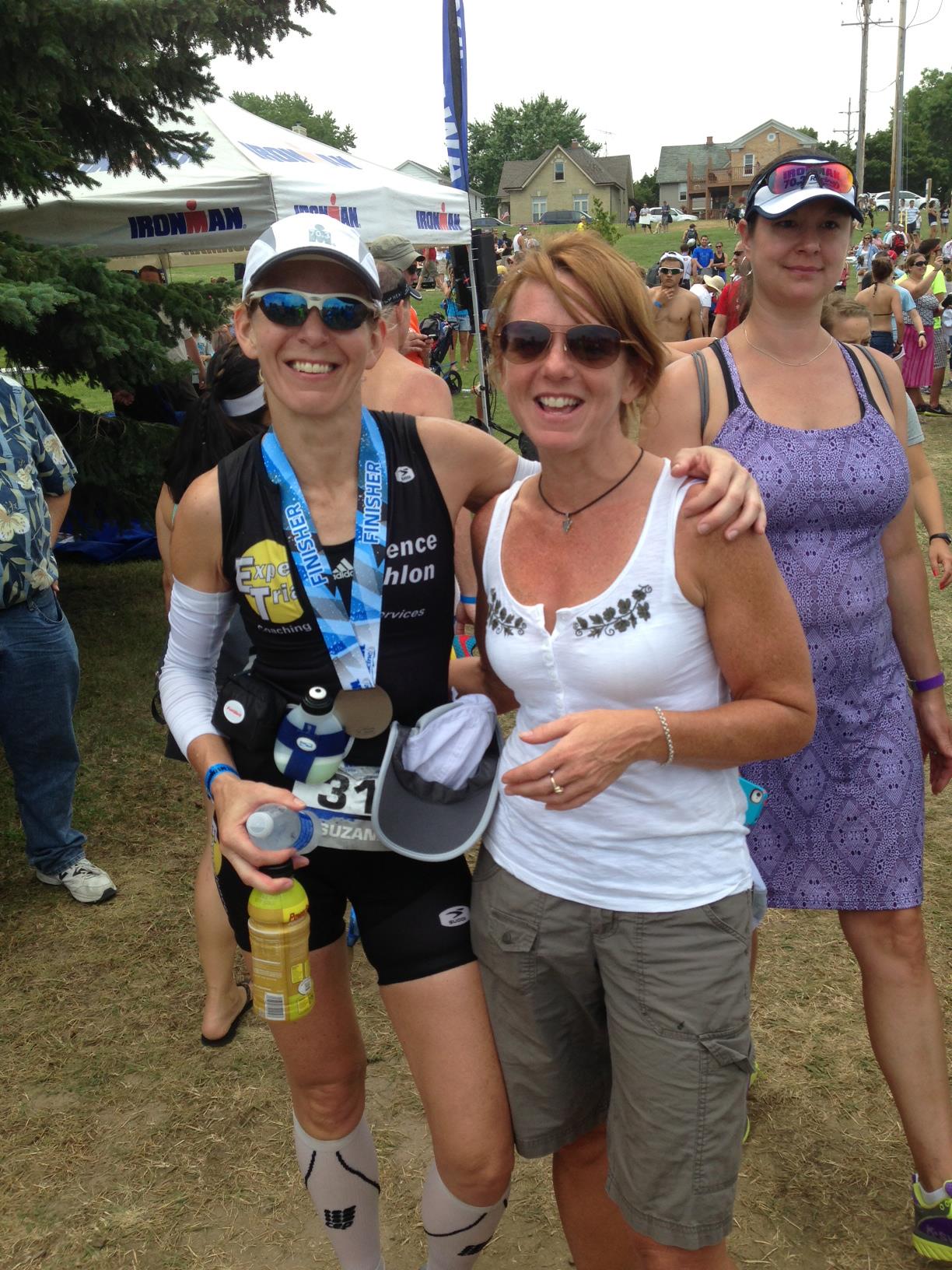
I learned to depart and come back after he’d cooled down. Nine times out of ten we’d finally figure out what he was talking about. He’d write something down using his left hand (he was right-handed before the stroke) but sometimes the message didn’t come out quite right. We roared for ten minutes after he wrote out a word that turned out to say TITS when he was trying to write something else. That was really funny.

A day for Hooters

On another occasion, I met him at the doctor’s office to meet with the physician and review his overall condition. After the appointment, he wheeled himself out in the lobby outside the reception desk while Leo went out to fetch the car. “Well dad, things are looking pretty good right now. What are you and Leo going to do this afternoon?”

Without hesitation, my father arched his eyebrows and smiled at me. Then he broadcast in a loud voice, “Hooters! Hooooters!” They were headed to the Hooters restaurant for lunch.”

My face flushed as all eyes in the reception area were turned on us. But I’d grown a thick skin from caregiving and learned not to care if something seemingly embarrassing happened along the way. In any case, it was fun and helpful that Leo gave my father some “guy time.” They also went fishing, which my father loved, and every Saturday joined his friends at Colonial Restaurant for breakfast.

Living life the best way he could

Stew with family around him at the service for my late wife Linda.

In many ways I grew to respect my father’s determination to live the best way he could despite his stroke-driving limitations. He participated in a program called Revolution Golf that specialized in giving people with disabilities the opportunity to hit golf balls at a range. My dad swung those clubs with verve using his left hand and arm. Given his love for that sport, that was a highlight for him. He’d also gotten an invitation from the club pro at Pottawatomie Golf Course, his favorite nine-hole layout, to ride the cart around that little green gem.

Stew golfing with Revolution Golf

In all, I was his direct caregiver for ten whole years, from 2005 through 2015. During that time my anger toward some of his difficult traits as a father subsided, and disappeared. I thought more about the many things he’d done to direct and change my life in good ways. He was an attentive father in my pursuit of sports, teaching me how to throw a baseball and showing up at many games. His cries of “STAY LOOSE!” weren’t always welcome, but he recognized my native anxiety for what it was, a limiting factor in success. During my early baseball career, I became one of the best pitchers on a team that won the Lancaster New Era baseball tournament. The next year, we’d “graduated” most of that squad and I was the remaining starter on whom the team relied for most of its wins in a rebuilding year. He noticed that I was losing velocity as the games piled up and asked me about my arm. In reality, I now realized that playing wiffleball with a close friend several hours a day wore out my pitching arm. But I never connected those dots until pitching against Local 928 when that same wiffleball friend came to bat and ricocheted a hit off my left shoulder. By then my arm was dead for much of the season. My dad was conciliatory nonetheless. He knew that I’d given my all no matter what.

I’m third from left in the back row. This team won the Lancaster New Era baseball tournament in 1969.

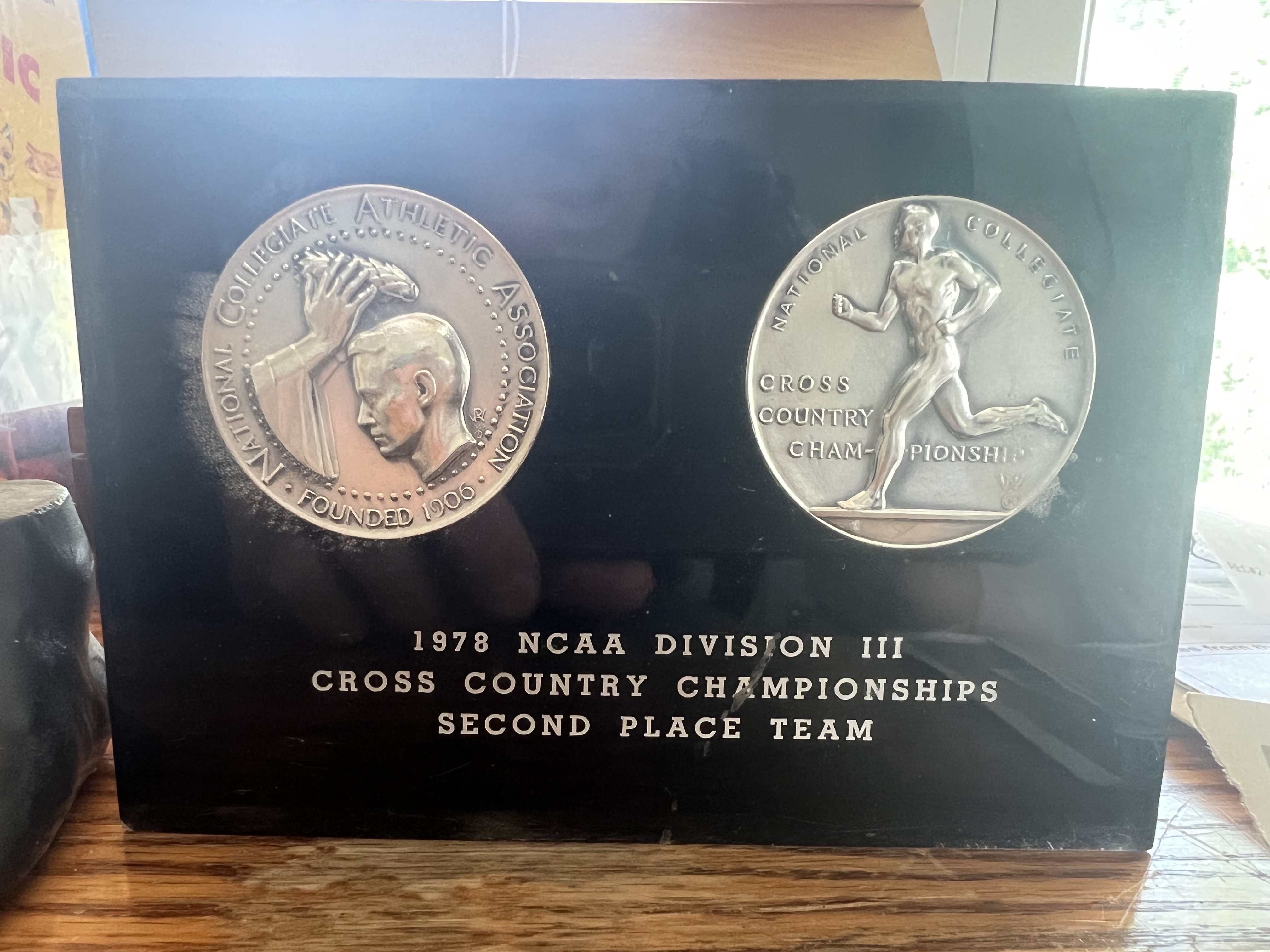
The same held true with his support of my running career. He was the one who pushed me to go out for cross country, and when I had a sore leg in track during my senior year in high school, he fashioned a heel lift in my adidas Tokyo spikes to take pressure off my Achilles. He drove me to colleges like Augustana and Milliken to explore options, and our trip to Luther College was made at his suggestion. “You’ll love the birds up here,” he observed. Dad was there with my mother the day our Luther College cross-country team took second place in the NCAA D3 national championships.

I’ve learned to put that experience into perspective with the overall directives he provided in life.

And yes, for years I bore some emotional scars from physical and verbal abuse he doled out to us when we were kids. That’s probably not unique among kids of that era, whose parents never “spared the rod” lest they “spoil the child.” That’s a misinterpretation of scripture. As noted in the Chicago Tribune, “The phrase “spare the rod, spoil the child” is a modern proverb that’s often used to justify corporal punishment, but it can be applied beyond physical discipline. It means that if a parent doesn’t discipline an unruly child, the child will become spoiled and develop an entitlement. However, the phrase is not biblical and actually comes from the 1600s narrative poem Hudibras by Samuel Butler.”

For better or worse, the attitude that kids needed to be beaten into submission served an entire generation of parents, teachers, and schools applying discipline. Whether it caused more harm than good is a subject for a different day. I received unjust spankings on many fronts. To this day, I distrust certain brands of authority as a result. I will say that some of my competitive drive came from feelings of anger toward things I considered unjust in life. That could mean teasing, exasperation, frustration or cheating. Heck, I quit Cub Scouts because some kid in the Pack cheated in kickball. My father could be exasperating at times. The Bible warns against that.

NIV

Fathers, do not exasperate your children; instead, bring them up in the training and instruction of the Lord.

I ultimately forgave my father the anger that drove his actions. He’d lost his own mother to cancer when he was just seven years old. Then his father experienced clinical depression during the Depression. Stew and his sisters lived with an uncle and spinster aunts on an Upstate New York farm during the school year. His required chores meant less participation in sports. So dad projected some of his desires onto us. I will say that it wasn’t easy to deal with four independent, often difficult sons.

Still, his physical thrashing of my brothers in front of me when I was six years old hurt me deeply. But I’ve let that go. I forgive him because I’m thankful for all the good he did for me and others in life. He cared so deeply about family it wasn’t always possible for him to convey or convince us to do the same. It would have been helpful, for example, to develop a closer relationship with his sisters, my aunts. They were incredible people in their own way. But we’d moved so far away and for so many years that we couldn’t have much relationship with them.

The Manor Pancake House painting hung in that establishment for forty years. I painted this watercolor at 17.

Beyond encouraging me in sports, he spent countless hours framing my paintings for display and sale at local restaurants. Many of these early efforts were crude in execution, but my abilities grew quickly One of those watercolors hung in the Manor Pancake House for forty years before the place was torn down in redevelopment.

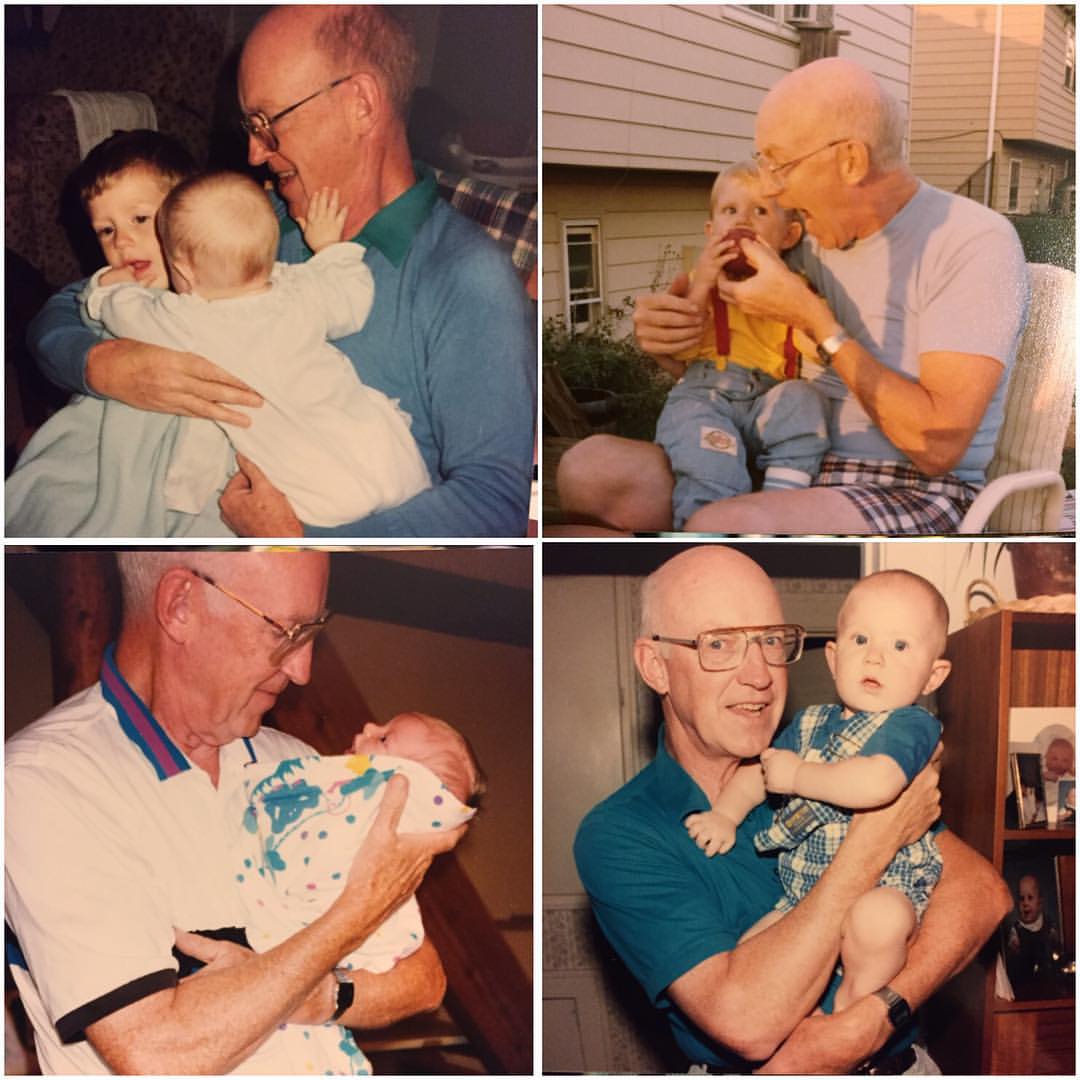
What made me happy in the end is how much he and my mother loved our children Evan and Emily, and all his grandchildren.

After my mother passed away in 2005, my father set a strong example of how to grieve. He showed me how to carry on. My father was happy for me when I met Sue. She “got” him in many ways and loved how my dad once wheeled himself into our kitchen on Thanksgiving Day, pulled himself up on the counter to his full height, and proclaimed to the kitchen full of people, “PIE!”

Stewart Kirby Cudworth, 89, died October 17 in St. Charles, IL. He was the son of Harold and Rena Stewart Cudworth of Virgil, NY. After his mother died, Stewart lived during the school year with his mother’s siblings, Leon, Helen, and Shirley Stewart in Bainbridge, NY, and summered with his father in McGraw, NY. Stewart served in the U. S. Navy during World War II. He held a degree in electrical engineering from Cornell University in Ithaca, NY, class of 1950. During his career, he worked for Sylvania Electric, Seneca Falls, NY; RCA, Lancaster, PA; and Belden Corp. and National Electronics in St. Charles, IL. His consuming love was golf, as an avocation. Stewart married poet Emily Nichols of Bainbridge, who predeceased him. 

Posted in Christopher Cudworth, coaching, competition, cross country, foregiveness, friendship, running | Tagged , , , , , , , , , , , , , , , , | Leave a comment

Building our lives together

Attending a wedding together during the first few months we dated. Four years later, we’d get married too.

During the early phases of our relationship, Sue and I focused on enjoying time together. She’d just taken on a new job, and I was in a state of transition working as a freelance writer for companies like Aquent and Creative Circle. I landed gigs with small companies, but typically, those were just like contract positions. They’d last through a couple of assignments, and the owner would return to their little core of one or two associates who had worked with them for years. Often, their ambition for growth exceeded their appetite for change.

So I worked out of the house. I was familiar with the lifestyle of remote work and home-based employment, because it began early in life. In the 1980s, I spent a couple of summers writing and painting in a two-story Chicago flat while my roommate worked days and nights at Rush hospital getting his Master’s in Exercise Physiology. That left me alone in the apartment overlooking Lincoln Park, where scenes of Chicago life passed by as if on a movie screen. I was writing stories for Illinois Runner magazine and working part-time as a retail manager at Running Unlimited, the Arlington Heights store that sponsored our racing team. Down in Chicago, I was doing occasional projects for my former track and cross country coach Trent Richards, whose company One-On-One Fitness specialized in training corporate executives how to stay in shape.

Staring out that bay window while also working on a novel felt like I was playing hooky from school. I guess I was playing hooky from life in some respects. Yet that experience prepared me for periods out of the so-called “work world” when I was either unemployed or serving as a caregiver. It taught me not to feel bad about myself if I wasn’t employed in a job full-time.

That second floor was my window to the world.

During those two years in the 1980s, I drew self-esteem from all the running and racing I was doing. In 1983 I moved from racing with a team out in Pennsylvania to living and running in Chicago summer. That fall I won several 10K races, beating thousands of people through the streets of Arlington Heights, where I won the Run for the Money 10K in 31:42, and the Frank Lloyd Wright 10K in Oak Park, where a rainy morning with 55-degree temps made the competitive instincts rise and flow.

All that winter I trained in Lincoln Park during one of the coldest periods in Chicago history. Temps dropped far below zero, yet still, I ran through the cold and snow, determined to “prove myself” somehow worthy of whatever vision I had of myself as a runner.

That was also tied to my vision of myself as a writer and artist. Having been unceremoniously dumped from work as a graphic artist for an investment firm, my mind was stinging from that disrespect. I poured myself into alternative pursuits that proved to be a pattern for life to come.

Sue seemed to understand that about me from the start. As we got to know each other, she understood that I’d had prior career success, but she’d also witnessed the weird mistreatment and dismissive policies of the firm where I’d worked when we first met. I owe her so much gratitude as the ups and downs of employment and contract work tested me these past ten years.

She’s had her work challenges at times too. I admired how she endured injustice as her position changed. That inspired me to be resolute rather than dramatic about life’s obstacles. She also did not fixate on my ADHD issues. Instead, she saw my productivity and viewed ADHD as a puzzle to be solved. A patient reminder from her was all I needed to adjust a routine, and it was the more minor things, like loading the dishwasher attentively or making the bed the right way, that helped me grow more consistent habits.

But most of all, we’d fallen in love. The “L” word entered our language along the way. I told her I loved her, and she said she loved me too. It was official: we were in love.

Our daily runs and rides added to those bonds. We made trips to Madison, Wisconsin to ride the hills west of town on hot summer days. She trained for the full Ironman that first year we were together and everything went well until a white Escalade stopped in front of her at the entrance to the Illinois Youth prison west of St. Charles, forcing Sue to lay her bike down and skid to a stop. Her Scott bike frame cracked. We were a month out from her race, and critical training lay ahead.

She borrowed a bike to ride one weekend in Madison and it was a tragic misfit. The bike fit was terrible and we ditched it that day. She was also going through some first-year job stress and the pressures caught up to her one day while we were running a ten-miler in the Herrick Lake Forest Preserve. Sue stopped in tears. At that moment, a teammate from our triathlon club happened to run past. She slowed, turned around and embraced Sue. I stepped away to let them have privacy. There are moments in life when women most appreciate the connection with another woman, and that was one of them.

A coach for our triathlon team came around the corner on her run and immediately stopped to comfort Sue. This was not the first time I’d seen Sue genuinely upset. She has enormous emotional control yet as she put it aptly when we first met, and it was evident that day, “We all have our shit.”

That trailside conference with the coach turned into action. She dated the team’s triathlon coach at the time, made a call on her cell phone to the head coach, and within days, a new bike was ordered and delivered. After she’d departed, I encouraged Sue to jog with me and keep going. We finished that run together.

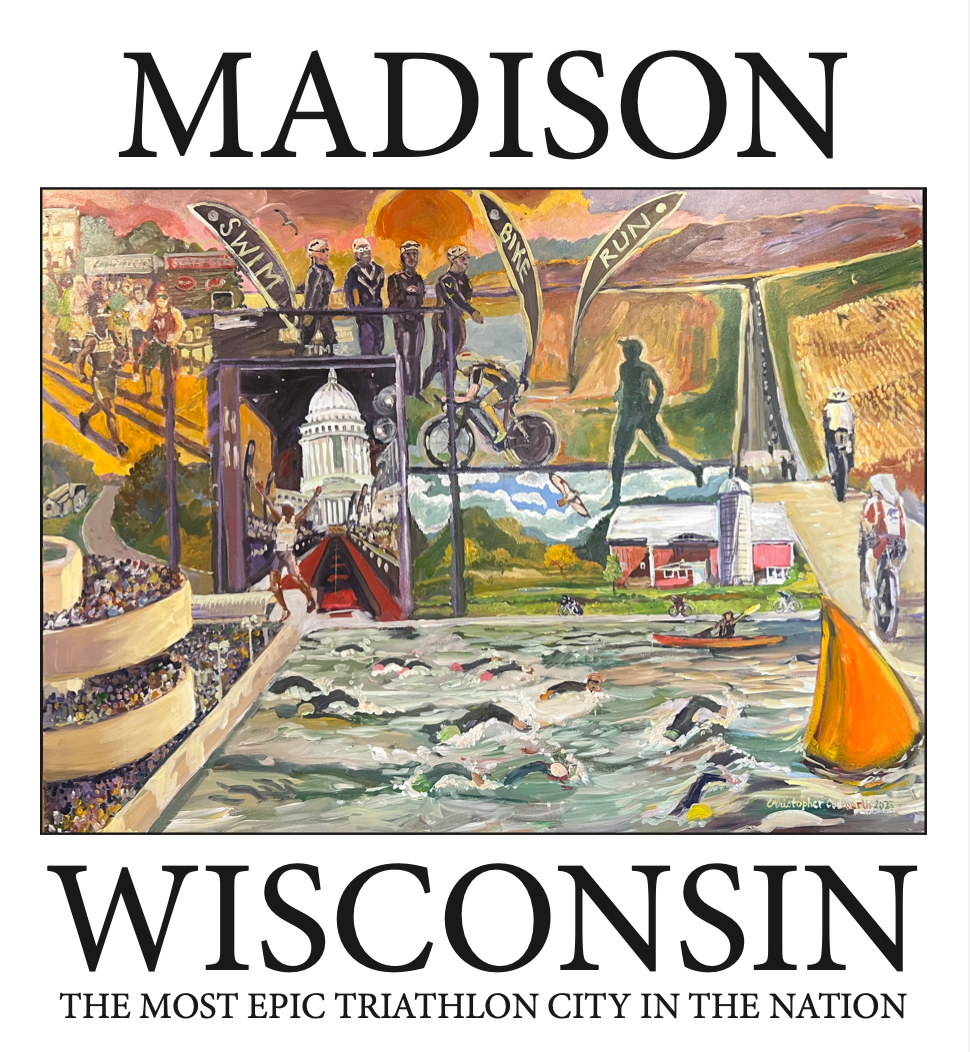
My painting of the Madison Ironman scene.

Sue rode the new Specialized Shiv tri-bike at Ironman Madison and finished the race. The challenges still weren’t over. She’d had asthma issues coming out of the cold water that morning. It took the entire first half of the 112-mile bike ride to clear her lungs. She’d run the marathon distance and was circling the Capitol square when she passed me on the final lap with tears of accomplishment on her face. She called out, “I’m going to be an Ironman!” I burst into tears and ran alongside her a few yards. “You did it, honey!”. It had been a long journey to the end of that race, and we’d done it together in many ways.

In more ways than one, we were building our lives together.

Posted in 10K, adhd, bike accidents, bike crash, Christopher Cudworth, coaching, competition, cycling, cycling the midwest, IRONMAN, marathon, marathon training, racing peak, running, triathlete, triathlon, triathlons | Tagged , , , , , , , , , , , , , , , , , , , , | Leave a comment

Heads up for a summer crash

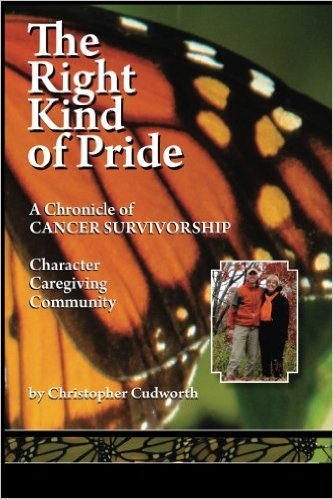
In 2014 I was finishing up the manuscript for the book I was writing about cancer survivorship with my late wife Linda when I went for a bike ride and started thinking about the book cover. Designing book covers isn’t an easy proposition. I tend to make them too busy, so I was riding my bike thinking about how to simplify the design and still communicate the depth of what I was trying to convey with the book The Right Kind of Pride.

A summer storm ripped through our region the night before. There was tree debris on the roads and puddles everywhere. I rode my Felt 4C road bike navigating through the sticks and wet leaves, then turned onto the Virgil Gilman Trail running from downtown Aurora out to Waubonsee Community College. That’s the same trail where in summer of 2013 Sue crashed her bike on one of our first rides together. She slid on her Scott tri-bike, crunched her shoulder on the ground and wound up having to get surgery later than year. The layer of wet leaves on the trail caused her to fall.

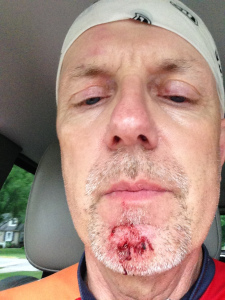
Given the conditions after the storm, I should have been more alert for dangerous trail conditions. Yet I was so preoccupied with the book design I had my head down thinking about it when my Spidey Sense told me to look up and there it was: a downed tree covering the entire trail. Without a moment to stop, I turned sideways and slammed into the tree at 20 mph. My face glanced a tree limb and my back crashed into it in turn. That was a sudden stop. Stunned, I somehow unclipped and tumbled onto the ground in one movement. Lying there I could feel the pain start and I looked up at the hole in the tree canopy to see blue sky. “Why…what the hell?” I said out loud.

I walked a few feet and sprawled out in the grass trying to assess the body damage. A couple came wheeling up behind me. They’d obviously watched me crash into the downed tree. She stepped into the grass, leaning over to speak and asked, “What are you doing?”

Speechless for the moment, I looked up at her through crooked sunglasses and tried to smile. That hurt.

“Because you’re bleeding,” she pointed out, motioning toward her chin, then mine. I touched my jaw and found the blood. I could feel a stinging gash on below my lower lip. “Yeah,” I admitted. “I am.”

“Do you want help?” her partner asked. “Should we call 9-1-1?”

I stood up, leaned over and stood up again. “No, I can ride,” I told them.

They both stared at me, ambled back to their bikes and lifted them over the downed tree. I stared after them, taking stock of the angle of the tree and its busted limbs. I hadn’t busted any of mine, but my back really hurt.

Reaching behind to grab my iPhone, the pain shot around my right side. The phone was bent about 12 degrees on either end from the impact. A few days later when I showed up to exchange it at the AT&T store, the salesperson looked at that phone and exclaimed, “I have never seen an iPhone bent before.”

I dialed my daughter first to let her know I was generally okay. Her voicemail was on so I left a message. Surprisingly, the phone worked for that call. But that was it. The next time I dialed it was to reach Sue, but the call didn’t go through. The phone fizzled and shut down.

Unable to reach anyone in my immediate emergency crew, I decided to ride into Aurora and stop at the house of some friends named Randy and Debby. I’d known them since 1981 because they were roommates with my late wife Linda when they were all young teachers in the West Aurora school district. Since 1985 when I married Linda we’d spent many occasions together including annual New Year’s Eve celebrations, as well as trading dinner dates, even going on camping trips and visiting Frank Lloyd Wright houses from the Midwest to the East. They knew me during my 20s as a competitive runner, and were there for us during all eight years of Linda’s cancer survivorship. If there was anyone I could trust in the world in a moment of crisis, it was them.

My bike wasn’t too messed up from the crash. Just a couple bent brake hoods and putting the chain back on. I rode a bit unsteadily but arrived at their house, rang the familiar door bell and stood there hoping one of them would answer. Debby opened the door and seeing the condition of my face, proclaimed, “What did you do?”

“I hit a tree,” was all I could muster.

“Do you want to come in?”

“Maybe, if you have time, we could go to the Emergency Room?”

“Of course,” she offered, grabbing her purse and sunglasses.

The crash chin

We caught up a bit on the way to the hospital. Earlier that spring we’d all three gone to Mineral Point, Wisconsin together to reflect on their friendship and my marriage to Linda. During that stay we booked a tour at the Taliesin home of Frank Lloyd Wright. No one else showed up for the tour, so it was just us and the docent, who happened to hail from Aurora, Illinois, walking through the home and sitting down in the living room. “Ask me anything you want,” he said. “You paid for the tour. We have all the time in the world.”

I felt like that interlude was a bit of an echo of our long friendship together. They were Linda’s closest friends in many ways. Both of them loved wine as she did, and as teachers they often compared notes about classroom experiences while I sipped my Killian’s beer or Maker’s Mark and Coke, a favorite for Randy too.

Debby sat for while in case I needed a ride home, but I called Sue on her phone and Debby was able to head home. The emergency docs and nurses looked me over and decided to put stitches into my chin. The doctor tried his best to sew the odd knob of skin sticking out of my face back into the flesh around it, but when I got home to clean off the wound I saw he’d done a shitty job. The stitches closed the wound but somehow missed the flesh hook protruding from the wound. I should have gone back and had them do it over but said Fuck It and laid down for the night. Sue ushered me home from the hospital but it was late and she had work in the morning so I laid down on the bed and fell asleep with my dog Chuck out of his cage and snoring on the bed beside me. “What a weird day,” I said out loud.

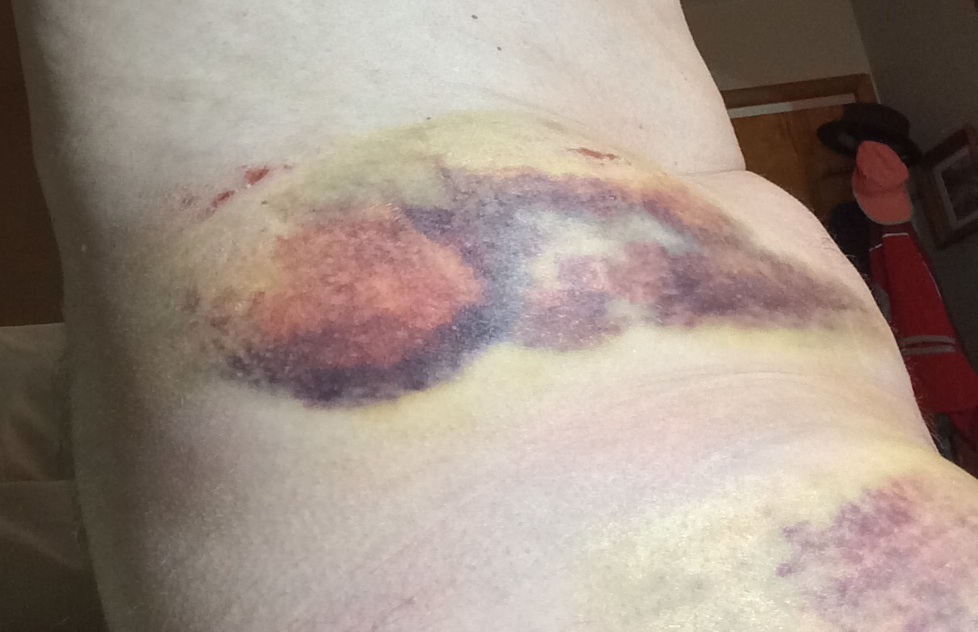
This bruise migrated to some colorful places

The real reason for the crash that morning was my ADHD. Alternately daydreaming and immersing my mind in total focus was a product of that condition. I’d bear marks of that mental mistake for many weeks after the crash.

The impact of my body against the tree caused deep contusions in the back flesh, which turned green, purple, rose-red and many other colors. The massive bruise was nearly a foot across in width and slowly began migrating around my hip and toward my crotch. Soon enough my genitals turned purple as the bruise blood headed wherever it was going and finally dissipated. Yet even that was not the end.

For the entire next year the scar tissue stung and tugged at my back muscles. Finally a chiropractor I visited suggested “scraping” it out with a hard plastic tool. That hurt like hell but it worked. Two years later, but it worked.

That day symbolized so many other incidents in life where my inattention caused me to crash into reality in one way or another. I took some wicked teasing from friends at our Friday night dinner gatherings. Sadly, it wouldn’t be the last time I had to admit to a bike crash over the years. At least once a summer for 6-7 years I had a bump-up of some kind. When it hadn’t happened yet each year, people would ask, “Aren’t you about due for your summer crash?”

I’d say, “Thanks for reminding me,” and have another sip of Jack or Maker’s Mark with Coke. Some habits are hard to break. That includes my habit of engaging in an annual summer crash.

Posted in bike accidents, bike crash, blood on the highway, Christopher Cudworth, cycling | Tagged , , , , , , , , , , , | 1 Comment

A prick of any kind can be bloody costly

During the summer of 2013, I worked as a senior copywriter for a company called Straight North. I’d landed the job that February, and was working a few weeks when my late wife’s health deteriorated quickly. She’d been taking steroids to prevent swelling inside her skull after surgery to tackle cancer in her brain. Since late summer 2012, she’d been having seizures caused by tumors. The neurosurgeon told us he could knock them out. We trusted him. On December 26 we parked ourselves in the hospital. She didn’t have to shave her head because it was already completely bald. They put a circular metal clamp around her skull so that they could keep her completely still and then went after the tumors with proton therapy or something else. I can’t remember.

She spent January in recovery at home and I was with her the entire time. I kept looking for a job and through a friend heard about the copywriting position and interviewed. We were excited that I landed the job after months of caregiving combined with unemployment.

All of that seemed to be working out in terms of timing. But once she stopped taking the steroids it was all over. She couldn’t get off the exam table at the oncologist and we called in the palliative care team.

By late March she passed away, but I had not told anyone at the company much about our situation. I’d been through so many messed up situations with employers who found reason to fire me once they knew my wife had cancer that I refused to let that happen again. But once she died, I had to tell them so that I could take care of all the arrangements. The company had a weird vacation policy of ten days per year to use as either “sick days” or “vacation.” As if that were somehow a benefit.

I took the necessary few days off and returned to work the next Monday. That seems weird, but by that point in life, after all we’d been through, the part of me that was sentimental about life, having already lost my mother back in 2005 and my father-in-law just the previous December when Linda was going through surgeries and chemo, I had no holdover emotion left. In fact, I was a bit relieved.

In some people’s minds, that might be a horrible confession. But when you’ve lived with illness and seen your spouse completely compromised over years of chemotherapy and surgeries and the side effects that come with all that, you don’t wish it on her any longer. Plus, there’s something in me that accepts life as it is. I don’t know what that something is. Sometimes, I’ve felt guilt about not grieving over long periods over the loss of my mother or my wife. Perhaps my father was my model for that when my mother died. He grieved in his way and moved on. What can you do? There’s no way to change anything that happened.

Life rolled on. I drove the brand new Subaru Outback we’d purchased back in February realizing that she’d only gotten to ride in the car a few times. We took it out once to lunch with my stroke-ridden father and a few times to make doctor’s appointments. Other than that, she was confined to home after her brain became too manic from the steroids and she had to quit teaching at the preschool where she loved to work. That part made me sad for her. She loved the children and it quite literally killed her in some respect when that had to stop.

The company Human Resources director was compassionate with me, and the President and directors all told me to take as much time as I needed. With just over a month on the job, I didn’t dare press my luck. I didn’t want to be without a wife or job. I went right back to work. That might not have been the best decision, but I put on a brave face and made it work.

The summer months rolled by but I felt an uneasiness growing as the company was not all that supportive about how we gathered information for the team of copywriters I’d been instructed to hire and train. The websites we created were repeats of a successful model they’d built and the goal was to get them up and running quickly and leave the content in the customer’s hands asap.

Classic to my lack of emotional intelligence or business sense and likely a product of my ADHD, I struggled sometimes creating messaging and turning it around into website copy. So did my staff, and we were also instructed to pump everything through a project management system that wasn’t that efficient. The entire company worked with it for weeks, and it was eventually dumped. Meanwhile, I offered to bring our editing processes in-house rather than pay an outside firm $150,000 a year to check our writing. I’d done some good things and some back.

Then an account executive brought in a new healthcare services client that wanted their website completely re-written. I met with the client and wrote the content from my notes, but they completely hated it.

Perhaps I was a bit distracted at the time. As a widow living at home I’d been doing fall yardwork and during one afternoon cleanup session, I stuck my bare hands into a yard waste bucket and felt a prick in my left middle finger. Instantly I pulled my hand out to find an innocent-looking sliver stuck in the finger. I plucked it out and kept working.

The next morning at work, I noticed a red seam emanating from the sliver spot on my finger. During lunch hour, I visited the Advocate Urgent Care center down the road from work and they told me, “You need to go to a Hand Specialist right away. You could lose that finger.”

I called into work and visited the hand specialist a few miles away. “Hmmm,” he told me again. “We need to get after that or you could lose that finger.”

That’s what I kept hearing. They prescribed antibiotics and that didn’t work. Then came surgery. Sue attended the operation and my hand was wrapped in giant bandages for the ride home. “No riding for a bit,” I chuckled, looking at the cartoonish hand.

I had to flounder around at work to type anything at all, using three fingers rather than all five, pecking away to write each work. I struggled to concentrate too.

The account work kept coming, but the account executive I’d failed on the healthcare client was not happy with my performance. I could sense her dissatisfaction and feel the mood changing toward me at the company. My need for hand bandages wore off, but I needed a port in my arm to do the prescribed home infusion of antibiotics the hand specialist recommended. That required another surgery, and called to mind all the chemotherapies I’d seen my late wife Linda endure.

So I knew how to flush the lines with Heparin and sat for three hours each night letting liquids and drugs leak into my body. Sue would show up sometimes, knock at the door and ask, “Are you still dripping?”

That kept me laughing, but the stress of working all day and infusing for hours was wearing me out mentally. I knew I was doing good work on some fronts, but there were signs that one account exec in particular didn’t like my work. She had the “beautiful yet bitchy” thing going on, and while I was communicative and collaborative with her, in the end I think it was her complaint that did me in at the company.

I’d grown so tired of the infusions by that point, I called Advocate and someone there told me, “Oh, well, we have a solution for that. There’s a syringe we can give you. It only takes ten minutes to do.”

I was furious, but it took care of the last week of infusions. The medicines showed up daily, delivered by a kindly man who asked how it was going each time. Finally he took the medical equipment away and I was free. Or so I thought. “You’ll need hand therapy,” the hand specialist told me.

Once or twice a week I went to an occupational therapy clinic to squeeze pink goo and strengthen my fingers. But first, they immersed my entire hand in a melted wax machine to loosen up the joints. That was my peace every week. I’d sit there with my hand in the warm liquid letting problems fade away. The therapists were sweet ladies who wanted to know all about me. Other patients came and went, some with profound injuries from other occupations. We all talked kindly with each other.

That was such a contrast to the growing dissatisfaction of my place at work. We inherited a job through an associate with the same last name of the client. He’d worked there before, and their website was hundreds if not thousands of pages deep. Our job was to revise content one product at a time. That meant learning what each product did and how it worked, a bed of information our associate already knew, but didn’t want to do the content himself. He’d sold his agency to our company and was a vested partner because of that, so he only did what he wanted to do.

That left me holding the ball along with three other copywriters struggling to learn technical information as fast as we could. That was our daily job. Pretending that we knew as much or more about a client’s products or services was our mission on every website we did. There was no exploratory method in place, although I did propose and try to implement that. As a company owned by venture capitalists, such endeavors were viewed as a “waste of time” and not in keeping with turning a profit as quickly as possible. That meant I was swimming upstream against the tide of internal economics.

We picked up a client that made precast concrete. I visited their manufacturing site with a designer who took photos for the website. Strangely, we were advised the day we arrived that one of their workers had just died in an industrial accident inside the factory. We kept our eyes open during the tour.

The proposed website design from our creative department came out looking industrial and gruff. I warned the design team that their design was too hard, but was told, “that’s not the copywriter’s job.” Never mind that I’d done decades of design work with high-level creative teams before landing at Straight North.

We arrived a week later for the design pitch to meet with the the client’s VP of Marketing. He was a delightfully profane emigrant Englishmen who upon seeing the designs turned to us and said, “What the fuck is this? We’re selling product, not showing them how it’s fucking made!”

And so it went. One odd moment after another.

A supremely strange thing happened to me in late August. I’d pulled into our company parking lot after lunch parked my car well up the hill. While inside working on a writing project, I heard someone say pop into our office space and say, “Does anyone drive a gold Subaru? It just got hit.”

I thought, “What?” Outside I saw a police car and several people gathered around my sure. It turned out that a woman driving down Highland Avenue had a medical incident, passed out behind the wheel and wound up riding in her car partway up the driveway, into our parking lot and smacked into the front end of my car. There was a six-inch dent in the hard plastic bumper. I thought “Damn, a new car too.” But later, when I went out to drive home, the dent was gone. It had popped back out.

Maybe that was an omen of some sort. I’d taken so many hits in life up to that point, I should have known that it’s always possible to be blindsided at any moment.

And in fact, I arrived at work one day and the head of the department called me in and “let me go.” I’d tried but never connected with him as a person. He kept his distance and even when he was out walking at lunch, always alone, would not acknowledge a “hello” if I extended him one. He was a prick, in other words. Just like the prick of the sliver in my finger, he’d turned out to be toxic to my system and everything I tried to do there. While the prick on the finger cost me time and money, that prick at work cost me my job. Surely a few less tragic events in my personal life while working there might have helped me succeed a bit more. I’d seen the death of my wife. The bike crash with my new love. The prick of the finger, and surgery, and infusion, and hand therapy. I’d made it through all of that. If that all had not happened, would things have gone better there? Perhaps not. I still had ADHD.

I had one spectacular moment during that months-long tenure. It happened while giving a talk about content development during one of the company’s Lunch and Learn sessions. I revel in public speaking and when it was over, the head of the VP of Creative, which was sort of an “agency within the agency” whom I served, but did not work for directly, told me, “You’re amazing at this. You should do that for a living.”

And I do. Now. I teach and am working to build a speaking and teaching life. Some lessons take a long time to sink in.

Posted in Christopher Cudworth | Tagged , , , , , , , | Leave a comment

Passing the girlfriend test

Following Sue’s bike accident in July 2013, she was initially not able to swim due to a torn rotator cuff. When the Naperville Sprint Triathlon rolled around in August, she reached out to a Master’s Swim buddy named Lida to handle the first leg of our proposed Sprint Triathlon Relay team. Lida would swim, Sue would bike, and I’d do the run portion.

Triathlon is not a sport for the sleepyheads of the world. We met up at the race that morning before the sun came up. I was a little nervous about racing because I’d taken a few years off from competition during my late wife’s struggles with cancer. For one thing, there wasn’t much time to train. For another, I had enough PTSD from the stress of caregiving for both my wife and stroke-ridden father that any additional stress felt like a huge, unmanageable burden. By the end of summer 2013, I was finally feeling like I could take on some new challenges. Following a summer of running and riding with Sue, I felt decently fit. We signed up as a team and figured to do decently because Lida was a superb swimmer, a former Division 1 competitor. Sue was a strong cyclist, and I was hoping to run 7:00 pace for the 5K. We did earn a win that day!

The swim in a Sprint Triathlon is a short affair, barely 400 meters. In Naperville, the course begins with the large, open water swimming area with a sand bottom. But without room for 400 straight yards of swimming, the course takes a series of bends and turnarounds. Lida tore through that swim in six minutes or so, handed the chip timer to Sue for the bike, and gave a big smile. “So,” she asked. “What do you think about Sue?”

I sensed Lida’s honesty right away, so I told her about my late wife’s long cancer survivorship journey and how I met Sue through FitnessSingles.com. Lida worked as a case manager in healthcare at the time. She absolutely understood my life transitions. We bonded over that, and before Sue returned from the bike course, I’d hopefully passed the girlfriend test.

That day set Lida on a course of her own in triathlon. Until then, she had not ridden a bike, much less run the miles necessary to train for a triathlon. That changed fast. I recall her first early rides on the bike. She was unsure about longer rides and was not all that efficient initially. Again, that changed fast. Her Division 1 “engine” quickly converted to endurance and speed on the bike. She bought a tri-bike and joined us on training rides of 60-70 miles in Illinois and Wisconsin. Lida and Sue maintained their girlfriend relationship through it all, and Lida soon completed her first full Ironman. Last year she competed in the World Triathlon Championships in Finland.

It’s easy to take for granted the impressions people make on your life. I’ll confess to some jealousy as Lida tore through the layers of triathlon on her way to winning age-group awards and finishing a full Ironman. I took it much more slowly, doing a few duathlons first, then some Sprint triathlons before tackling an Olympic distance tri in Pleasant Prairie. The swim section and Open Water fears held me back. Lida had none of those fears given her swim skills.

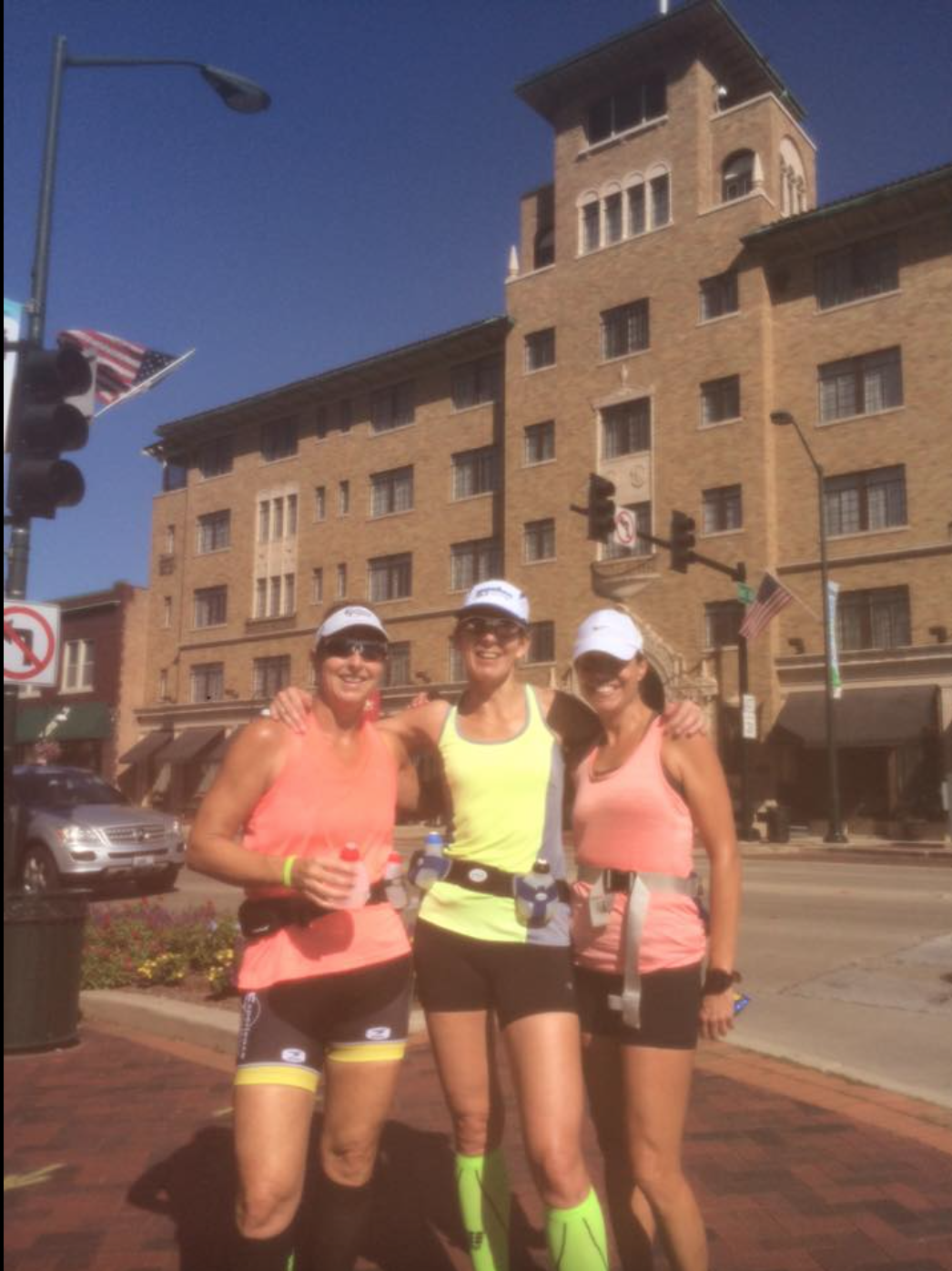
Lida, Sue and another girlfriend at the 10-mile mark of a 20-mile run.

The run was harder for Lida, but she became a steady, solid athlete there too. And then, a charming thing took place along the way. Her daughter Stephanie joined her mom in the sport of triathlon, and became an Ironman finisher as well. Their entire family is athletic. One of their sons played football at Illinois State and Lida’s husband John was a basketball guard on a Division III National Championship team at North Park.

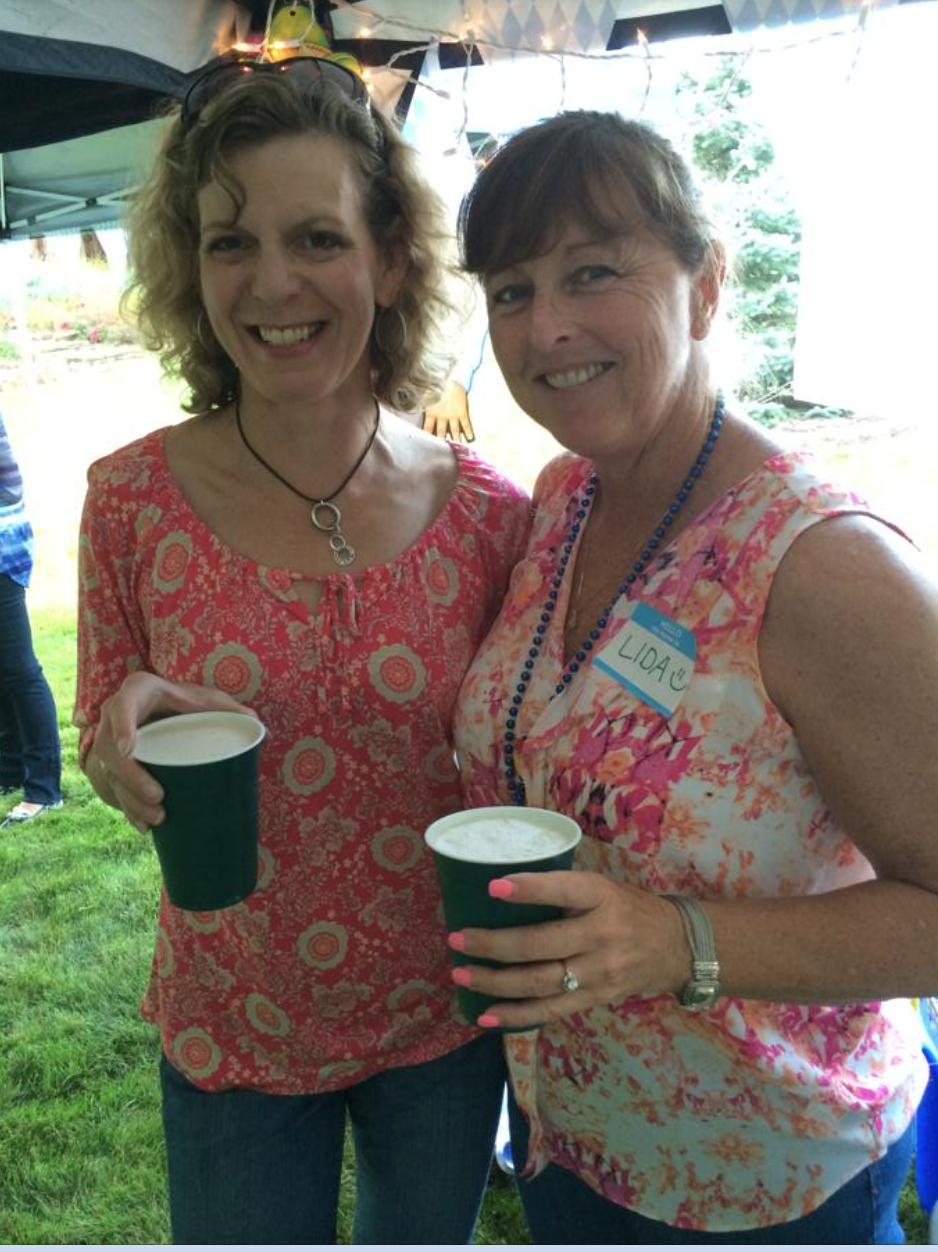
Every year the family held a big backyard Oktoberfest event that Sue and I attended. Dozens of people showed up from near and far. Somehow a group of Swedes or Germans (I can’t remember which) that knew the family showed up to keep the Beer Garden busy. Typically, we’d find fair fall weather that tipped into the cool evening where we’d gather in lawn chairs around small bonfires to keep our feet warm. I snapped this photo of Sue and Lida one sunny September afternoon.

I relate all this to express the importance of friends in life. While we all love competing, having people you can trust in life is important. We’re grateful for people like Lida, a person who can tell it straight. I think I can still pass the Girlfriend Test, but maybe I’ll ask her next time.

Posted in alcohol, bike accidents, bike crash, Christopher Cudworth, competition, friendship, IRONMAN, running, training, tri-bikes, triathlete, triathlon | Tagged , , , , , , , , , , , , , , | Leave a comment

What else was I gonna do?

Over the eleven years since my late wife died and I met and married my wife Suzanne, I’ve given much thought to that choice to date so soon after the loss of a spouse. My answer to that question comes down to a simple statement: “What else was I gonna do?”

I was fifty-five years (or so) old when Linda passed away. Up to that point in time, I’d been through so many transitions in life it is hard to relate them all. Our first family move from one state to another happened when I was five, a change that meant making all new friends, even though I can recall only one definite friend back in Seneca Falls, a kid named Jimmy Morris who taught me how to run without holding my arms close to my sides. That’s how I ran because I was so shy.

We lived in Lancaster for seven years, during which time I worked hard to gain popularity and become one of the best in sports. Then our family moved again, 750 west to Illinois, when I was twelve.

That meant making all new friends in the little town of Elburn, turning into a teenager, navigating a new middle school, and then entering high school where my running career began. I rose to the top of the cross-country team as a sophomore and was elected Class President. Then our family moved again, this time just twelve miles east to St. Charles at a school where I’d compete against my former teammates out at Kaneland.

I protested these family moves in some ways, even suggesting that I stay behind in Pennsylvania to live with my best friend David. We were close friends at the time, but I believe we’d have grown apart in high school as he became conservative, and I definitely developed a more liberal worldview. We met up once years later but having divorced his first wife and family, he seemed to want nothing to do with anything in his past life.

Demands for change

The life transitions and demands for change continued through college and young adulthood. I fell in love at first sight and thought I’d found a woman to marry in the last year of college but she eventually dumped me and married someone else, so I spent a year getting over her and made up my mind to move on. What else was I gonna do?

I dated an older woman for most of a year. She taught me quite a bit about life that I didn’t know before. After confessing to some mistake I’d made, she calmly advised me, “You know, it’s not the mistakes you make that matter. It’s all in the recovery.” Those words stuck with me through the years because fucking up is a big part of life. You might as well have a good attitude about fixing things if you can.

I look back at the chronology of dating life in my early 20s and realize that while there were periods when I was alone and feeling awful about my prospects, those passages didn’t last all that long. Despite my rampant lack of self-confidence, I found my way into the arms of a few great women along the way. At the same time, I grew as a runner and got about as good as I was ever gonna be. Eventually, I decided it was time to give up the competitive running gig by asking the most profound question I could ask of myself, which was familiar yet with a new meaning. “What else am I gonna do?”

A different lens

Life adopts a different lens once one gets married and has children. That answered my question in absolute ways. “What else was I gonna do?” Be the best father that I could.

I loved the role of Dad but the role of Breadwinner was often a tough one for me. Perhaps I didn’t care enough about money to earn enough. Not as much as I should have. Yet I worked hard and pushed for new roles. Bit by bit I crept up the corporate ladder. From sales to promotions. From promotions to marketing. At one point I even earned the title Chief Marketing Officer. Then my wife got sick again and the role ended. Talk about eclipsed destiny. But who knows?

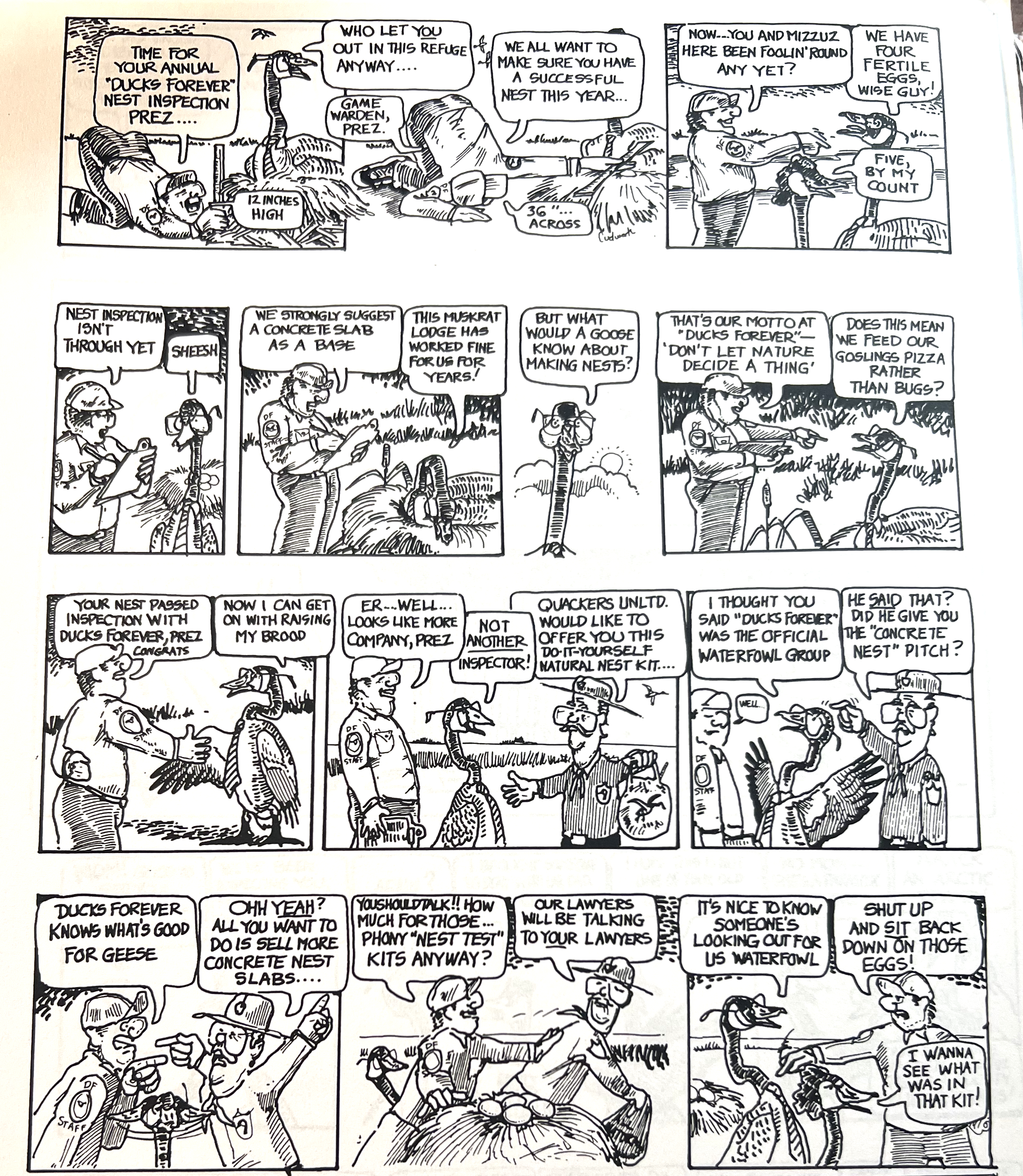
Meanwhile, my instincts focused on doing “the work” of writing and art. Those endeavors were often profitable as I created posters that sold by the dozens and published articles in local and regional newspapers and magazines. I shopped a cartoon called Prez to newspaper distribution agencies but they deemed my strip “too narrow in scope” and not executed well enough to justify syndication. I still laugh at my own comics but realize that the typical reader prefers the simplest humor possible. With rare exceptions such as Doonesbury, it’s all about limiting the words people have to read in order to get to the punch line. I did fiddle with an alternative called EGGS in that vein that had potential, but was so disappointed at the Prez failure I never mounted another charge in the cartoon world.

The point here is that I’ve tried my damndest to compete at every scale possible. There were successes along the way. The Everyone’s A Loon of Some Sort poster I created in 1988 sold quite a few copies up north in Wisconsin. I issued a limited edition print of bison on the western slopes that enjoyed some success, but my mistake in choosing a matte finish paper over a gloss stock ruined the sexiness of the original painting.

During the late 90s, I placed an illustrated essay published on the back page of Runner’s World. That was a dream come true. The success of that article led to an inquiry from a race director in Texas who hired me to contribute originals as prizes for raffle winners. I turned two of those illustrations into a poster that earned a Top Five place in the Runner’s World Cream of the Crop Award. That felt like a touch of fame as I sold hundreds of those posters and signed them like a celebrity at the Brazosport Run for the Arts in Lake Jackson, Texas. The next year I produced watercolors of male and female Texas runners that proved just as popular. Then the race folded and my run of fame came to an end. I enjoyed it while it lasted. What else was I gonna do?

After that, I got poster fever and secured corporate sponsorship for Day Game and Night Game baseball posters for the Kane County Cougars. I painted the originals live at the games, and the project earned $10,000 in sponsorship, of which $4K was spent on printing. I could have done them much cheaper and earned more money, but the mistake I’d made with my limited edition bison print drove me to find the glossiest paper and most high-quality printer. The yin and yang of the art business is tricky.

The ADHD bounce

I bounced in and out of full-time jobs during the 90s due to my ADHD but put programs and creative campaigns together that far exceeded the company’s appreciation of my work. Perhaps I wasn’t the best at self-promotion or just didn’t want to suck up to egotistical publishers and Presidents. Thus I was disposable when it came time to position the company for sale for profit. Even my first job out of college as an admissions counselor was a risky endeavor recruiting students during a time of great transition for the institution I attended. I drove 15,000 miles across the state of Illinois recruiting kids from deeply rural towns to the deepest inner city, hitting my quota of 70 new students by the end of the year, but the Director of Admissions thought I “didn’t have me head in the game.” That hit a sour note with me, so I took a job back in Chicago with a financial firm whose CEO commissioned paintings from me. He wanted an artist on staff to handle marketing. I took the job. What else was I gonna do?

By the early 2000s, I landed a job as an editorial writer for the Daily Herald. My kids were in elementary school and I pushed to move our family from White Bread Geneva to the more ethnically diverse town of Batavia. That proved to be a good move, and we lived in that home for twenty years before Linda passed away from ovarian cancer after my son graduated from college and my daughter was finishing up her schooling too.

I kept that house a few years, but once Sue and I decided to get married, we decided to sell that place and get our own home together. My women friends told me “Not many women want to move into the home of a late wife.”

Cleaning out that house after 28 years of life together was the hardest thing I’d ever done. It was emotionally and physically exhausting. After weeks of tossing boxes of old schoolwork and sorting through stained baby clothes that no one would ever use again, I lost all signs of sentiment and went whole hog into death cleaning. It nearly killed me. My daughter was mad at me for selling. My son wondered what it all meant, but at some point that work needed to be done so I did it. What else was aI gonna do? Going through all of Linda’s childhood collections, the David Cassidy magazine collection, the school notebooks scrawled with pot leaves drawn on the cover, old photos of her ex-boyfriend in all his rabid 70s phases. That was cathartic in many ways. Over many years of marriage she’d collected more than fifty baskets, tons of garden supplies, two full Christmas closets and a kitchen stuffed with grape symbols this and thats. I surveyed the kinds and saved a few keepsakes, but the rest went somewhere in the world. Where, I’ll never know. But it’s where we all go when we vanish into time.

Death cleaning

I left behind a mural on the basement walls of our former home

I was aware of all these demands for change long before I had to execute them. In the weeks following Linda’s passing, I found friends who could use her clothing. We had a solemn yet loving gathering to share her jewelry with her closest friends too. All this pushed me through a transition that I never imagined when we’d met way back in 1981. She was a healthy woman who took good care of herself. Perhaps too good. Research shows that the talc found in baby powder and other products may cause ovarian cancer. But there are many possible causes. STDs. Environmental toxins. Plain old human hormone excesses. If I hadn’t chased her to the gynecologist to get her heavy menstruation cycles checked she might not have lived a year. Instead, the cancer was discovered and she lived eight years. I worked hard to keep her spirits up and her body alive. What else was I gonna do? Ovarian cancer is a known killer. The typical life expectancy is five years at best.

Back when she was diagnosed in 2005 my former track coach Trent Richards called me up to say, “You’ll be good. Your whole life was a preparation for this.” He was right. As I’ve just shown, I’d been through enough difficulties to know that you have to keep moving. What else are you gonna do?

Having courage\

In the driveway of my former home, a selfie during a time in life when much courage was required and cycling helped

What I learned from a life lived “on the run” and “on the move” is to have courage in the face of change. Perhaps that’s something my kids didn’t expect from me, to move on quickly from the loss of their mom and start a new life with another woman. Yet we all have our own brand of courage and it’s not always possible to explain our deepest experiences and motivations to others. I’ve been driven in the past by many different emotions. Anger. Fear. Determination. Vengeance. Faith. Trust. Love. Sometimes these seemingly oppositional thoughts and drives reside closer together in our minds than we might think, or care to admit.

I also learned that waiting to act doesn’t often make things better or easier. As a high school sophomore, I once stood at the outskirts of the high jump pit, staring at the bar set at 5’8″. I’d only cleared that height once before, and the bar was bent a bit when I did it, so I badly wanted a legitimate clearance of that standard. For minutes I rocked back and forth trying to work up the courage to take the jump. I’d seen other jumpers run toward the pit only to veer away and try again, only to fail. Finally, after ten minutes, an older track athlete on our team called out, “Cudworth, are you gonna take a jump or not? We’re waiting.”

Technically, the rules say you must jump within two minutes of being called. I’d wasted eight more minutes and only gotten more nervous as a result. Finally, I tipped my head back to the sky and something cleared within me. For some reason, I’d lost the fear at that moment. I tipped my head down, ran in a straight line to the pit, kicked with my right leg (I was a straddle jumper at the time) and rolled my other leg over the bar. A clearance.

Crawling out of the pit, I shook my fist a little. The older jumper got up from the ground to slap my hand. “About fucking time,” he blurted.

Yes, I admitted to myself. It was about fucking time.

Posted in adhd, aging, anxiety, Christopher Cudworth, college, competition, cross country, mental health, mental illness | Tagged , , , , , , , , , , , , , , , , , , , , , , | Leave a comment

Life in context

Sue and I rode together consistently in the summer of 2013. I recall it as a warm year, and every time she showed up in her little black cycling shorts and sleeveless kit jersey, I admired her arms and overall fitness. Given my situation, coming off eight years of cancer caregiving with my late wife, and dating soon after she passed away, Sue was sensitive to whether I felt comfortable dating one person so steadily. But I loved our evening meals together. She’d get done coaching swim sessions and stop by my house for dinner. One night I made salmon, some green beans and a salad complete with strawberry slices and raspberry vinaigrette dressing. At the end of the meal, I noticed the strawberries left on her plate. “Yeah,” she told me. “I’m not a fan of fruit in salads.”

It’s often small things of that nature that help people get to know each other better.

As our relationship progressed, I got to know her kids better. She met my daughter but my son was living in New York while working in Admissions for the University of Chicago. It was July of 2013, and my late wife passed away in late March. Not long after she died, my son suggested I should “take a trip” somewhere. I had some money from her teacher’s retirement, but not a ton. She’d worked ten years in the public school system and stocked up enough to pay for her funeral expenses, but that adds up quickly. A couple phone calls is all it takes to blow through $10-$20,000 even with cremation. I too well recall walking out of the funeral home with my late wife’s ashes under my arm, and said out loud, “I’m carrying my wife.”

That’s how weird it is to become a widow. One minute someone’s alive, the next minute you’re carrying them around in a canister. I’d already taken my mother’s ashes around before my wife’s passing. Eventually, many years later, I’d also carry my dad in a can. My parent’s ashes are buried in two cemetery plots in upstate New York where my father planned for them to be together. My eldest brother secured the two grave sites with a local cemetery in Afton, New York, near where my dad was born.

My late wife’s ashes are buried with a headstone next to her father’s grave in the St. Paul Lutheran church cemetery in Addison. Her dad had died in 2012, just the December before Linda succumbed after eight years of cancer treatment. It made sense for her to be with her family in the graveyard run by the church where she grew up and attended elementary school. Her headstone reads, “She loved God, Family, and Flowers.” I learned the hard way that grave markers are expensive as hell. Ultimately, I ordered her beautiful dark granite headstone online. It was delivered to a local installer who placed it according to regulations.

All of that business changed something inside of me. While I grieved my late wife, I wasn’t incapacitated by the loss. Having sat by bedsides and watched people die, I grew to see death as inevitable among the people I loved. There’s a freedom that comes with those experiences.

Perhaps that numbed me a bit to how others dealt with my late wife’s passing. I’m speaking specifically of my children, who were essentially adults by the time she died, but that doesn’t change the fact that they’ve lost their mother. Linda was a deep presence in many respects. She lived fully and with much love for others. My kid’s friends adored her welcoming ways.

Yet there was a side to her that she kept hidden most of her life. Those early “party years” from 15-20 years old with a guy she’d almost married were not a point of pride with her. The counterculture lifestyle she’d adopted was not uncommon in the 1970s, but it all ended badly in more ways than one. Once she left that world behind she kept a few friends but everything else about her move from conflicted teenager to adult was absolute. Her abusive former boyfriend who stood her up on a wedding persisted in contacting her but she fended him off. She dug into college, graduated summa cum laude from Northern Illinois University and began teaching high school students at West Aurora. That’s when I met her in 1981.

During one of our first dates, she told me, “You don’t want to know me. I’m not a good person.”

I said, “No, I think you’re a really good person. And we should go out again.”

I’d come off a deep love that sputtered out a year beyond college, then jumped into a spring-through-summer frolic with a woman ten years older than me. There were work romances as well, but my overall confidence was weak when it came to dating because I remained naive in so many aspects of guy-girl relationships. That fall, I drank all afternoon with friends and then met Linda at 2:00 a.m. at a local bar. We dated for four years and got married in 1985. We were together for twenty years before her cancer diagnosis. I view our relationship as a whole lifetime spent together.

A lifetime ahead

But I realized quickly after her passing that there was still a lifetime ahead of me, and I got going on that front. Perhaps being a distance runner and endurance athlete had something to do with my quick transition to a post-grief state of mind. Or maybe it was my writing because I’d processed what we went through every step of the way. In any case, I was reconciled to the truth of the circumstance. There was nothing I could do to change the losses I’d seen. Something in me recognized that it was better to make peace with it and move on.

I know that’s not how many others feel about the loss of their parents or a spouse. I’ve met many people who never get over it or who can’t move past the death of a spouse or someone else they love. That leaves people in perpetual conflict between what once was and what could have been. A year after my wife’s passing, well into my relationship with Sue, a close friend of my late wife turned to me and said, “Did I ever tell you that Linda said she knew you’d date if she passed away? She knew you’d want to be with someone.” That put my life and the decision to date again in context.

Not alone

Our family on a Chicago visit the year before Linda passed away in 2013

The problem with that conciliatory approach to grief is that it wasn’t much comfort to my kids. I visited my son in New York that summer and told him, too soon I now recognize, that I’d met someone I really liked in Sue. Evan was in deep pain over his mother’s loss. On top of that, her was immersed in a New York scene where drugs and booze owned the night, and sometimes much of the day. Yet we had a fun time in the Big City. We toured the city on bikes, had dinner at an outdoor cafe, visited the 9/11 Memorial in apt silence, and had ice cream in a sweet little park in the summer sunshine. Then he took me on a shopping trip to the Soho District to buy me something to wear to an evening party other than cargo shorts and the tight Under Armor I’d worn that day around town. He picked out a trim blue plaid shirt, some sharp grey shorts with tiny blue flecks in them, and the right belt. I added some stylish blue leather shoes. He chuckled when he saw what I chose. “That’s right. You got it, dad.”

We arrived at the party and his friend Stina looked me over and said, “I like your dad’s outfit!” Evan laughed his approval.

Later that evening, it was time for him to leave me at home and go out for the actual party. I sat home in his apartment with some dinner, watching a movie about a master chef making sushi. I realized that while we’d always been communicative and close, he had another life to which I was not entirely privy. It would be several years before I learned the truth about the pain he was going through and the drugs he was using to cover his grief. His courage in wrenching himself out of that world and into sobriety has inspired me to cut down on my own drinking.

A daughter’s journey

Linda and Emily. Like mother, like daughter.

That summer my daughter was living at home after finishing up college at Augustana. That last weekend produced an insane event on the way home as a huge storm came through the Quad Cities to cross Northern Illinois just as we set off for home. Dust tornados rose all around us, blocking our view of the road. Her phone was dying as she drove our Chevy Impala and I trundled along in the U-Haul van carrying all her college stuff. The lighting ripping through the massive storm clouds behind us shone red due to the dust. The world looked like the Apocalypse was in full swing. All I wanted to do was get her home safely. She’d been through rough years going to community college while her mother was sick with cancer, then transferred to Augie only to find that the social structure and cliques were considerable, rife as they were with stuck-up “Naperville Girls” and jocks, which was never Emily’s thing.

She made the best of it and, during the previous summer, worked at the public radio station, completing her communications studies. Back in Batavia, Linda and I could listen to her read the news live on the air. We visited her at Augie a few times, including a trip where we drove upriver to LeClaire, Iowa, where the American Pickers had a shop we’d all seen on TV. On a walk by the Mississippi, I snapped a few photos of mother and daughter walking along the river. Admittedly I’d begun to wonder by then how many more years such a thing might be possible. By then, Linda was completely bald and wore a bright blonde wig. Her face was always puffy from the chemo and beneath her clothes, I knew her body was wracked and ravaged by multiple surgeries. She stayed strong through it all.

That was my challenge through those years: determining what to share with my children and what to keep to myself. Evan once told me, “Dad, just tell us the truth.” That’s what I tried to do when it was appropriate. Perhaps the problem with my fatherhood after Linda passed away was that I kept telling the truth after I’d met Sue and was determined to move on in life. I had put everything into a context that suited my nature well. Perhaps that’s the best any of us can do. In retrospect, it was the best I could do. If it wasn’t good enough in some ways, I’ve tried to make it up in other ways.

Posted in aging, alcohol, anxiety, Christopher Cudworth, Depression, fear, foregiveness, healthy aging, life and death, love, triathlete | Tagged , , , , , , , , , , | Leave a comment

Riding and romance

After watching Sue compete in Ironman Racine in July of 2013, I spent more time with her riding and running. It was enervating to have a new companion, but then tragedy came along. On a warm Saturday or Sunday morning following a previous night’s long rain, I led her on a ride that included the Virgil Gilman Trail. That asphalt path leads from downtown Aurora out to Sugar Grove. It passes first through urban neighborhoods and then follows a former railroad bed out to a forest preserve called Bliss Woods. As we approached the deepest part of the woods, the trail was still wet from the previous night’s rain. I tore along ahead of her on my road bike still trying to impress her with my riding ability. She followed behind on her Scott tri-bike, but the conditions were less than ideal for that proposition.

We came to a turn and her front wheel caught wet vegetation and down she went. I heard her exclaim “Oh!” behind me and glanced back to see her bike go out from beneath her on a curving downhill trail section. Hitting the brakes, I unclipped and walked back awkwardly on my bike cleats to check on her.

She sat on the ground in partial shock. We hardly knew each other yet and it’s hard to read how badly someone is hurt when you’ve only been out a few times together. Concerned that she was not moving, I crouched and sat down next to her on the trail. Looking to console her, I reached behind her back to put an arm behind her and felt something gooey and sticky on her lower back. Yanking my hand back, I saw a pale yellow substance covering my fingers.

“What’s that?” I asked her, holding my hand out in front of us. “Oh, darn,” she blurted. “That was a good banana.” The skidding crash had pureed the banana she’d carried in the back of her jersey pocket. I was relieved in some respects. That first feel of goo made me think she’d opened up a gash on her back.

She sat there holding one arm with the other. “My shoulder hurts,” she said. We got her back on her feet, and then called for help, heading straight to Urgent Care with our bikes stashed in the back of my Subaru.

We walked into the care center and I sat down in the chairs next to the counter. Eight years of caregiving for my late wife Linda had taught me to wait for the registration stuff to get through and then try to be supportive. Sue walked to the counter and they asked her name. “Linda,” she stated. Then she spun around and told me, “I forgot to tell you. That’s my real first name.”

Huh, I thought to myself, “Same first name as my late wife.” I sat there pondering that as she filled out the paperwork. Sure enough, it read: “Linda Suzanne Astra.” She sat down next to me to finishing out the forms. “Are you weirded out?” she asked? “No,” I smiled. “All good.”

She still goes by the name Suzanne to this day, but our legal information bears the name Linda. But when we got married years later, it didn’t make sense to change her name to Linda Cudworth. Nor did it make sense to change her name to Suzanne Cudworth, as my brothers are both married to women named Suzanne or Sue. That would make for even more confusion in this world.

I cared not that the name Astra was her last name from a previous marriage. I liked her name as it was.

Alas, she’d torn her rotator cuff in the fall that day. Later that year, in November, she had the torn rotator cuff surgically repaired. After the operation, she wore a big shoulder support cushion under her coat. We attended the Illinois state championship football game on a chilly afternoon to watch her son’s team win a state championship. It was an an up-and-down-and-up-again year for all of us.

As we sat together in the stands I put my arm around her to keep her warm and felt the first surges of love between us. A little riding can lead to a lot of romance. Even if there are a few falls along the way.

Posted in bike accidents, bike crash, Christopher Cudworth, cycling, cycling the midwest, cycling threats | Tagged , , , , , , , , , , , | Leave a comment

Racing in Racine

Sue with her sister Julie at the Racine Half-Ironman in 2013.

A few weeks into our dating, Sue was scheduled to do the Half-Ironman 70.3 race in Racine, Wisconsin. Having just gotten to know her by that point, and eager to deepen our relationship, I decided to drive up early Saturday morning. It’s a two-hour drive from Batavia to Racine, so I left at 4:30 a.m. to make it on time for the 7:00 a.m. start that morning.

My familiarity with the triathlon scene was partial at best. At fifty-five years old, I’d never done a triathlon or duathlon at that point in my life other than a team event in Geneva where I did the running and handed off to a cyclist.

The only triathlon I’d seen, but had watched several times, was the small race held in Batavia. That event was conducted by Experience Triathlon, the club to which Sue belonged. It consisted of a short swim in the Quarry Pool where contestants passed through water so shallow they’d stand up and run. The bike course looped west of town on a fifteen mile route and the run circled around downtown Batavia. I showed up each year to watch the race out of curiosity. While I’d flirted with trying triathlon in the early 2000s before tearing my ACL, I never followed through.

Yet by 2012 I’d raced my bike plenty in criterium events, and already had the running part down thanks to forty years of competitive racing. The thing that kept me away from triathlons was the swimming. Again, back in 2003, I signed up for swim lessons thinking about doing triathlons, but the torn ACL put an end to that too.

None of that prepared me for the scale of the Ironman triathlon at Racine. The number of competitors! Thousands. The setup. The logistics. The scope and scale. Ironman does not mess around.

Sue had given me a description of her sister Julie whom I was going to meet for the first time. I drove up through Illinois and southern Wisconsin in the dark and parked the car on the back streets of Racine, trotted down to the start area, or where I thought it was, and wandered around a bit worried that I’d gotten there too late.

“Julie has red hair,” Sue told me. “You won’t be able to miss her.”

And sure enough, I was standing on the street next to the huge Racine beach and Julie came walking up the avenue. “Hi,” she offered. “Are you Chris?”

Learning the ropes

I quickly learned that the start was another half-mile up the beach. Sue had already gone up to the Swim Start. “We can catch her out here,” she said, pointing to the Swim Out arch across the beach.

Teammates from Experience Triathlon were gathered near the swim start and I half-attempted to introduce myself. The head coach gave me a half-nod of acknowledgement and the other guys sort of said their “heys” with that distracted tone people get when there’s an event about to start.

I looked out at the lake in wonder. I loved “swimming” in the sense of playing in the waves. Down at my sister-in-law’s house in Wilmette, our family went to the beach one August day when the waves were crashing onshore at six feet tall. We caroused and body-surfed for an hour or two. On the way home that day I could feel the waves in my blood, the sensation of rolling and tumbling connected to the Lake Michigan we’d just left.

Sue with her trademark white compression socks during the Ironman Racine race in 2013

That’s not what you want when swimming for a triathlon. Any degree of chop is an annoyance at best. Waves can fill a swimmer’s mouth with water and make “sighting” an absolute chore. Fortunately, the lake on the morning of Sue’s race was fairly calm. The water temps were in the mid-sixties, a tolerable range for swimming a mile in open water.

We saw Sue climb out of the water and I gave her a big cheer, drawing a smile from her as she pulled off the swim cap and goggles. Then she took a long jog to the transition area. Again, I had no idea about the scale of a typical Ironman 70.3. Bikes upon bikes on racks. I’d never seen anything like it. We watched her strip off the wetsuit and trot the bike out for the 56-mile ride, and Julie said, “We can chill at the ET tent.”

So we parked ourselves in the shade of some oak trees while Julie pulled out a book to read. But we started talking and a fascinating truth emerged. She’d been through some stuff much like my late wife and emerged healthy and strong enough to do triathlons too. Hearing her story and sharing the journey I’d been on with my late wife made me feel a bond with her. We even talked faith a little bit, and previous relationships. Julie had gone through some serious stuff in life just like Sue with her divorce. Already in my relationship with Sue, she’d wisely stated, “We all have our shit to deal with.”

The bike took just under three hours for Sue to complete. Watching her roll out on her Scott tri-bike had made me cheer like a fool. After she was gone, I thought to myself, “I hope I didn’t sound like an idiot.”

Then came the Bike In. As the day had warmed, I watched one triathlete after another trek north on the path along the lakefront. It was going to be a hot 13.1 miles for everyone.

I chatted more with some ET people and got to know some of the other coaches and prime personalities. I think word got around that I was Sue’s “new boyfriend” and people were curious about that. For all its big-time logistics, triathlon is a little world of its own. For better or worse, it serves as a “transition zone” for many people in life. Some get into it for the sport’s sake, enjoying the training and racing for the thrill of it. Others seem to join in as an escape of sorts. Triathlon is a place to work off––or through––some of life’s disappointing aspects. It often serves as an antidote to early or mid-life malaise. Bodies go through changes due to all that training. As a result, so does the mind. That can lead to breaches in relationships and marriages. As people find a new “self” there is a temptation to leave the old one behind. Plus, being around all that fit or visible flesh brings on temptations of lust and adventure. More than one affair has begun in the pool, on long runs or bikes, and interests flow along with sweat. The clingy outfits don’t hide much.

I didn’t know any of this before entering the triathlon world. I only half-entered it as it was. Even as the next few years unfolded, I didn’t fully sign up to be coached, but did join Sue and company on training rides and runs with the Experience Triathlon crew. Some of the rules of membership I found non-sensical. “You can’t come on a paid training ride,” I was told at one point by the head coach. As a longtime endurance athlete, I found that a bit comical. What negative affect could a single rider have on a group of 20-plus cyclists, all of whom ride in aero without drafting according to triathlon regulations? I wasn’t asking to be coached or given any advice. Dumb.

But I could see that the group was passionately supportive of each other. That I liked. When Sue came trotting down the hill on the first run loop at Racine, the ET folks were screaming and she flashed a smile despite the sun bearing down on her back. “Go Sue, go!” I yelled, trying not to sound too desperately eager to be “her man.”

The support shown by ET coaches was a great aspect of the team. Here “Chilly Pepper” urges Sue on.

At the finish the crowd lined the course and I’ll admit to relief upon seeing her white knee-high socks come up the path. No matter how you approach triathlon, that last half-mile is a relief for sure. After she finished I walked back to the ET tent where she flopped on the ground with a water bottle in one hand. “How you doing?” someone asked. “Great, now,” she chuckled.

We gathered up all her gear and headed for my car. Her sister would head home to Woodstock and I was driving Sue back to Batavia. “Let’s stop at this gas station and I’ll clean up,” she told me. I sat in the car with the AC on as she carried her tri-bag into the station and did a sink washup. She came back out in the same short white shorts she’d worn in the photo that appeared on FitnessSingles. I was impressed. A low-maintenance woman. She sat back in the car and I could see that the sunburn from the longer bike shorts stopped at mid-thigh. Her shoulders were a bit red too. She plopped into the passenger seat of my Subaru. Then we pulled up to a McDonalds for a cheeseburger and vanilla shake, her fave post-race indulgence. After that she smiled at me and said, “Come on, let’s go home.”

About halfway home, she was getting tired and leaned against the window. A sigh of half sleep emerged from her and I drove along with music playing quietly on the radio. The sun shone down the length of her smooth thighs and flickered across the curls of her hair. “This is good,” I thought to myself. “This is very good.”

Posted in 13.1, Christopher Cudworth, coaching, competition, cycling, IRONMAN, tri-bikes, triathlete, triathlon, triathlons, we run and ride | Tagged , , , , , , , , , , , , , , , , , , | 2 Comments