
 I’ve waited a few days to think through the meaning of the death and injuries among a group of cyclists in Michigan. By now social media has essentially had its say and will go back to looking for the next emotive tragedy. That’s generally the way of the world these days.
But let’s pause to think about his. The recent incident can teach us something more about incidents like the driver plowing into a group of cyclists in Michigan.
The problem breaks down into four essential categories among both drivers and cyclists. These four categories of people on the road are:
- Erratic: People too ignorant, confused, emotionally disturbed or incompetent to frequent their place on the road.
- Unintentional: People either distracted, inattentive, detached, inconsiderate or temporarily incapacitated during their time on the road.
- Intentional: People in full control but whose perception of their place on the road has been preoccupied through notions of entitlement, power, competitiveness or ownership to the point where they think they are above the law.
- Responsible: People in full consideration of their role on the road, who respect the law and who acknowledge the rights of others to use the road as law and etiquette permits.
And there you have it. A simple categorization of people in cars and on bikes.
Erratic by nature
There is something of an algorithm to all this. Erratic drivers and erratic cyclists are clearly a danger to others and to themselves. Whether you’re on a car of a bike and see someone driving erratically, it almost seems beyond belief. “How did they even get their license?” you want to ask.
Erratic behavior is simply part of the human spectrum. The best thing to do in any circumstance, by bike or by car, is to report erratic behavior for the safety of society. Call the police and give a location. Put them on alert if you see a drunk driver or even a cyclist who seems to be riding in an unconscious way.
Dealing with the erratic side of human nature
We’ve all seen people riding their bikes on busy highways where there is no significant shoulder and they don’t really belong. The fact of the matter is that the law still protects them. Drivers in most states are still required by law to give cyclists a full three feet of margin when passing, and this may require a separation of hazards. It is also advisable to make a call to the police if you see cyclists who are riding in erratic or dangerous ways.
By contrast, when someone is driving erratically or aggressively, they should be immediately reported to the police with no exception.
Unintentional dangers
Whether cycling or driving, all of us eventually make mistakes on the road. Blind spots on vehicles can make it difficult to see around the corner or even directly in front of a car or truck at times. While on a bike, it is difficult to check in all four directions in traffic or even when stopped. Sometimes people become inattentive and make poor choices. Driving requires plenty of attention to rule our risk factors such as these.
There are also factors such as texting and driving that are proven to contribute to dangerous driving situations. These are technically “unintentional” driving mistakes, yet they are some of the most serious risks on the road. And no cyclist should be texting and riding. Ever.
Of course, many cyclists unintentionally impede drivers. But here’s the problem: Even cyclists who are obeying the law, riding single file or even in twos where it is legal to do so are perceived by some drivers to be intentionally blocking traffic. This is a problem of perception, not rights. Yes, there are times when cyclists unintentionally
This is a problem of perception, not rights. Yes, there are times when cyclists unintentionally swerve due to wind or inattention. Drivers do need to be cautious about this when approaching a single or group of cyclists. Even a crack in the road or a tarsnake can cause a cyclist to temporarily lose control of their bike.
But when the driver unintentionally swerves or even stops suddenly in the path of a cyclist, mayhem can ensue. And when a driver either erratically or unintentionally plows into a solo cyclist or a group of cyclists, people can injured badly, and even die. We’re still trying to ascertain the nature of the case in the Michigan accident. Was it erratic, unintentional or intentional? That is perhaps for the courts to decide.
Dealing with the potential for unintentional accidents
The most important rule for cyclists on the road is to make sure that motorists see and notice them. If a cyclist is not sure if a driver is aware of their presence, it is wise to wave arms and call out reasonable directions. Even a friendly “HELLO!” with the wave of an arm can avert unintentional accidents.
Drivers can alert cyclists who seem to be drifting or inattentive by giving a short beep on the horn of the car. It’s not always necessary, but sometimes individuals from small groups of riders will drift too far out in a lane for their own safety. Patience is key because there are a lot of things a cyclist has to abide, such as road conditions, deep cracks, glass or other objects that may make them temporarily, unintentionally become an obstacle.
Intentional confrontations
Angry drivers
The ugly side of all this is intentional confrontations between drivers and cyclists. This happens when either party is acting dominant on the roads. The danger begins when one party feels inconvenienced or threatened by the presence or actions of the other.
Some drivers intentionally buzz cyclists. Others honk long and noisily when approaching from behind. Some will even swerve in front of a group in an act of aggression. And in the worst case scenario, really angry drivers will intentionally use their vehicles to intimidate or actually strike cyclists. Still others will stop, get out of their vehicles and attempt to start a fight or accost riders.
This is better known as road rage, and it is the worst degree of intentional confrontation.
Arrogant cyclists
By contrast, bands of cyclists can be intentionally ignorant on the roads as well. This is true among some elite cycling groups whose weekly rides get competitive or build to large numbers. When this happens, cyclists are no longer thinking about the rules or the road in many cases. They roll through stop signs even when other traffic is present, or spread out across the entire length of the lane, thus making it impossible for any vehicles to get by.
Even the presence of multiple cyclists in sponsored or organized rides has been perceived as a threat to the community order and laws of the road. Some popular cycling counties in Southwest Wisconsin have considered banning organized rides for these reasons. The aggrieved residents have been observed stalking riders with video to document abuse of the law.
Dealing with intentional confrontations on the road
When it comes to confrontations between drivers and cyclists, the clear advantage in aggression and power goes to the person driving a car. The weight and speed of a 2,000 lb. vehicle can easily smash a 17 lb. bike and it’s 170 lb. rider. That’s no contest.
But that’s the point as well. It is a pretty pathetic character who feels their rights are threatened by the temporary inconvenience of having to share the road with a cyclist or group of cyclists.
Largely this is a cultural issue. It is a classic clash between perceptions and rights. Cyclists, whether they are adorned in multicolored kits or pedaling along with baggy shorts and a basket on the front of their bike are doing something far different than any person in a car.
And if that person in a car, van or truck happens to be in a hurry or has emotional issues going on about respecting others or feeling self-respect, the cultural impasse becomes greater every inch of the road they are asked to share.
Likewise, we must address the sometimes intentional ways that groups of cyclists can take over a road. When intentionally preoccupied, cyclists can be terrible about obeying stop signs or riding with road etiquette in acceptable sized groups.
So the mutual burden on society is to promote the idea that roads were built for good intentions, not bad. It’s that simple.
Which brings us to the last group of people, the Responsible members of society.
Responsible Drivers and Cyclists
Let’s get something clear and out on the table right now. Responsible drivers don’t always drive by the letter of the law. There are almost no drivers on our local interstate corridor who obey the 65mph speed limit. Local and regional etiquette dictates how the law is interpreted, and police patrol the highway knowing they cannot possibly pull everyone over who is breaking the law.
The same goes for responsible cycling. Many riders do not come to a full stop at unoccupied stop signs because it is frankly much safer to stay in your pedals, slow a bit, check for traffic and roll on through. This even saves time for drivers as well, who don’t have to wait for a cyclist at a full stop to accelerate all over again. Responsible people communicate via hand signals and responsible cyclists know that an intersection with four cars is not the place where you should expect to be automatically first in line. That’s where you unclip for sure.
The world works fine, and Libertarians, in particular,will agree that too many laws and too much attention to them can be an infringement on reasonable liberties. At least that’s one thing most of us will abide in the Libertarian philosophy. Responsible people know that interpretation of the law as it pertains to specific situations is always part of the picture. Definition of these norms is why we have courts in the first place.
Encouraging responsible driving and cycling
It should be the goal of society to focus on this collaborative approach to citizenship. Getting people who are unintentionally dangerous to pay better attention is the first goal. Getting people who are intentionally dangerous to moderate their emotions is the second goal. And getting everyone to take responsibility for their own place on the road is the ultimate goal.
As for the erratic drivers and cyclists in this world, evolution may weed some of them out on its own accord. But in the meantime, let’s all look out for these types and report them when possible. It will make the world a better place.
And by the way, all these principles of erratic, unintentional, intentional and responsible brands of citizens can be applied to our gun laws in America as well. Think about it.
SEEK JUSTICE. SHOW RESPECT. LOVE LIFE.
 Endurance sports are widely measured in empiric ways. You have personal records at a specific distance or type of event. But these numbers by themselves do not measure every type of success you can achieve. In fact, numbers can actually be deceiving.
 The first year I bought a real racing bike ten years ago, I raced in a series of criteriums from June through September. The lessons learned were many. How to ride in a hurtling pack. How to turn without braking. How to draft within inches of the wheel ahead of you. And how to get dropped.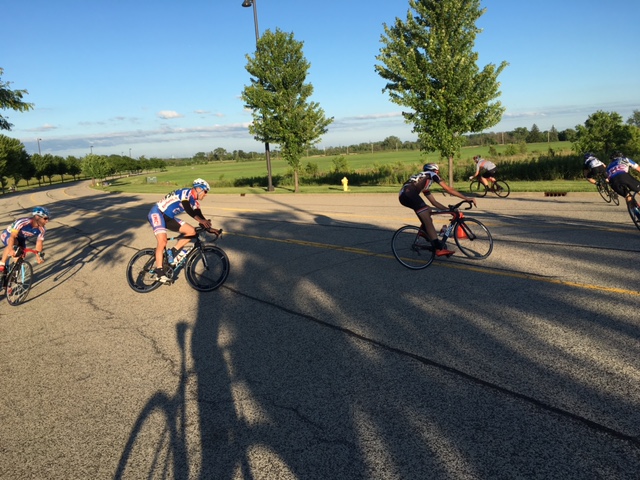



 That’s what my fiance Sue Astra was advising another of her swimming students to do. The gal had recently trouble in the opening yards of the swim segment in her first triathlon of the season. “Next time, go out slower than you normally would to start,” she told her. “And find some space to the side if you can. Get some rhythm going and your breathing will come along better.”

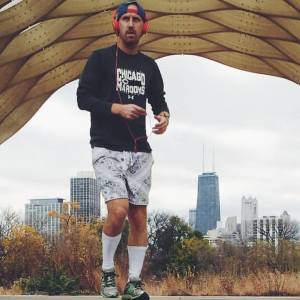
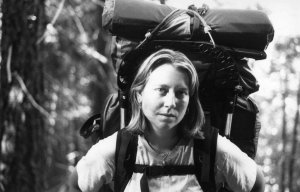
 Our week in Tampa was wonderful, capped by that wonderful run yesterday morning on the Starkey Wilderness Trail. When we got back to the parking lot we heard the chatter and laughter of a running group echoing beneath the steel shelter next to the bathrooms.
 It proves that so many of us operate in time-out-of-mind fashion. We place ourselves somewhere and make it work. Yet we still long for other places, better races and friendlier faces.
 When one of those aggressive Sunshine State lawyers gets done with your case you can live high on the hog the rest of your life. Buy yourself that new Specialized Shiv. Invest in several pairs of Saucony ISO Triumphs as a symbol of your newly earned decadence and buy some Speedo swim goggles with miniature windshield wipers on them if you like.
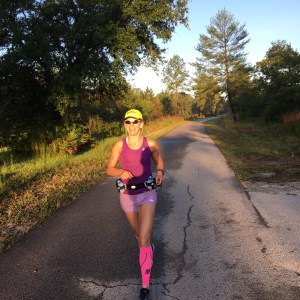
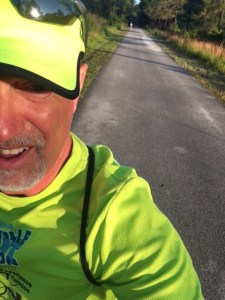 Sue had a scheduled 1-hour run, but I had run an hour in the heat yesterday and wanted to birdwatch as well. So I packed my binoculars in a backpack and jogged with her for two miles into the woods. While she continued running toward the sun, I slowed to walk and jogged as opportunities to see and hear birds or other creatures came along.
 and a white-tailed kite flew overhead. The small birds got active too. White-eyed vireos and tufted titmouse.
 world have called me, and I come listen. I’m no longer rabid about it like I once was, but I still love seeing and hearing birds in different environments. I take just as much joy observing a white-eyed vireo singing in the Spanish moss as I do when watching the same species, with a slightly different song inflection, singing in the berry bushes of Illinois. It gives me context to feel these subtle differences, to know I’m in a unique and wild place.
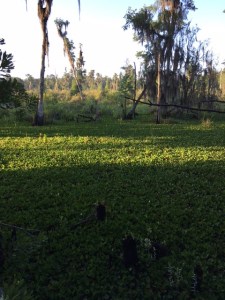 along listening to the croaking creaking cricketing calls of Virginia rails singing from the black water swamps on both sides of the trail.
 bending down into Dogland to get some doghugs.
 It’s a 2.5 hour flight from Chicago to Tampa. Far shorter than the drive through Kentucky and all parts in between. My fiance and her family drove the distance. I waited until Wednesday to fly. That’s called the Rosie Ruiz. Look it up.
 The Hulkster can relax. He fits right in with Surf Life clutter that includes the worst commercial zoning practices invented by the human race. Drive any main strip in Florida and you’ll find what amounts to a low-slung apocalypse of retail and service businesses. The mind grows easily confused in such circumstances. Drive-through liposuction centers give way to Adult Bookstores selling crab cakes and fireworks. It’s all an ugly mix of human enterprise framed by an angry background of thunderheads in the distance.
 On the drive back to our rental house I tried to pick our the real Florida peeking out between the retail chaos the state seems to adore. There were lines of palm trees and pine plantations. A Parula warbler sang from the tree next to our pools. Fish crows and boat-tailed grackles argued over palm fruits. And come evening we drove to Green Key Preserve to watch the sun set. Beneath the boardwalk, a herd of crabs was wandering over the mangrove and palm little. A Tricolored heron fished near shore. The sun sank in its westerly way and we all smacked n0-see-ums until it was time to go home.
 Perhaps that is why so many people feel at home in Florida. Surrounded by ocean on all side but one, Florida is a geological anomaly, flat and not very high above sea level. The Everglades used to be one wide, shallow river delivering rains froms interior to the sea. Hurricanes occasionally rip across the state leveling trees and houses alike. It seems as if nature is perpetually trying to cleanse the state.
 There’s one fact about the anole this description does not address specifically. Anoles are cold-blooded. That means they love hot weather, bask in the sun for energy and thrive on days when people who run and ride are forced inside to avoid sweating to death. It’s fascinating to realize how opposite the anole is from a human being. We assume that we own and rule this place called Florida. Yet we can swim and run and ride and never be as well-adapted, agile and evolved as a simply little green anole.
 Most of us in this world do not work like that. The results of our labors are typically deferred somehow. In the field of marketing where I work, you can sometimes wait weeks for your work to appear on a new website, or for results to come in from your A/B email testing.
 Yet there’s one place in this world where people really do live in the moment. When we run, ride or swim, there is a direct connection with the world. We can feel our footsteps. Hear our breathing. Witness the roll of tires on road. Feel the water.
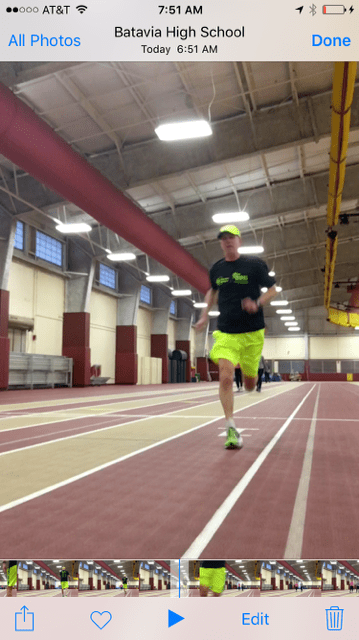 When the event is done and you wind down from the pressing fatigue and breathlessness of hard effort, your mind takes on a different chemical makeup. This is true in both training and racing. Our minds crave this kind of engagement. It strokes away depression and anxiety even while it challenges our ability to tolerate physical and even emotional pain. This is the yin and yang of everyday existence, compressed. This is your moment.
 At the age of ten years old, I was determined to learn the art of spinning a basketball on my finger. My hero was Pistol Pete Maravich and I wanted to do everything he could do. So I spent a few hours experimenting how to get the ball up and spinning. At first, it would teeter and fall off right away. But within a couple hours, there was progress.


 We Run and Ride