The real Florida shines through

Yesterday’s blog was a bit of a complaint about the crazed zoning here in Florida. So we took the antidote today by going for a run in Starkey Wilderness Park east of New Port Richey.

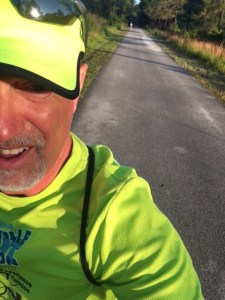
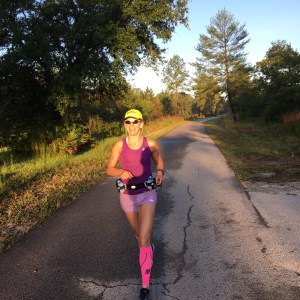
RunSue had a scheduled 1-hour run, but I had run an hour in the heat yesterday and wanted to birdwatch as well. So I packed my binoculars in a backpack and jogged with her for two miles into the woods. While she continued running toward the sun, I slowed to walk and jogged as opportunities to see and hear birds or other creatures came along.

As if on cue, an armadillo popped out of the scrub and sat there looking me in his (or her) armadillo way. But the photo opp was not that inspiring because he was huddled next to a set of gas lines that otherwise would have gone unnoticed.

Sue disappeared up the trail into the rising sun. The woods are beautifully Floridian in Starkey Wilderness, tall pines with low slung palms on the forest floor. The croaking calls of limpkins emerged from the wetlands along the forest floor. Frogs called from the palms Sue Runningand a white-tailed kite flew overhead. The small birds got active too. White-eyed vireos and tufted titmouse.

Meanwhile, the trail got busy with runners and cyclists galore. The trail is flat like most of Florida, but the trail is smooth. Triathletes and road cyclists along hummed along through the woods. I picked up jogging again and reached two miles out. That’s where I decided to wait for Sue to come back.

Exactly why I need these natural connections I have never known. But from the time I was a child the woods and waters of this Sunrise woodsworld have called me, and I come listen. I’m no longer rabid about it like I once was, but I still love seeing and hearing birds in different environments. I take just as much joy observing a white-eyed vireo singing in the Spanish moss as I do when watching the same species, with a slightly different song inflection, singing in the berry bushes of Illinois. It gives me context to feel these subtle differences, to know I’m in a unique and wild place.

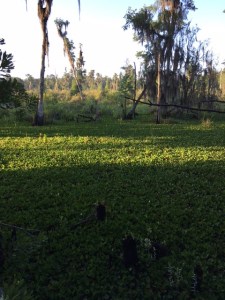
The combination run and bird hike was about my speed. My small set of Vortex binoculars was easy enough to carry inside by backpack buffered by a shirt in the event that mosquitoes were a problem. But it shocked me there were no mosquitoes at all. No insects in fact, were a problem. I could walk wetlandsalong listening to the croaking creaking cricketing calls of Virginia rails singing from the black water swamps on both sides of the trail.

Sue arrived back in good stead, accompanied by a pack of chatty runners. We let them pass us by and trotted the last two miles back to the parking lot. But we both really needed a bathroom and I ran ahead because I really, really needed a bathroom.

And once we’d both taken care of that business, we went to find our car on the mile-long loop around the park edge. There we met a woman with her American bulldogs and a pair of Pomeranians. They gave us a nice greeting, and the dogs were so well-behaved I could not resist Dogsbending down into Dogland to get some doghugs.

Often you go for one experience and wind up with a bonus of some sort. That’s what I’ve always loved about running and riding. Getting out into the wilderness for a run is just the best.

And the day was just beginning.

WRARShirtGraphic

Posted in Uncategorized | Tagged , , | Leave a comment

The long unwinding road

Florida RoadIt’s a 2.5 hour flight from Chicago to Tampa. Far shorter than the drive through Kentucky and all parts in between. My fiance and her family drove the distance. I waited until Wednesday to fly. That’s called the Rosie Ruiz. Look it up.

It rained so hard and the lightning was so perilous the airport closed down the tarmac where incoming were forced to sit lonely and forlorn until our baggage could be rescued from the guts of the aircraft.

Such are the vagaries of the Sunshine State, where promises of eternal sunshine are often met with vicious rains that rise in a constant cycle of humidity and sun. The process will only stop when Atlantic Ocean and the Gulf of Mexico decide the gig’s up and cover the state with rising seawater. Already the Mayor of Miami is in a state of panic about that pending event, and Tampa can’t be too comfortable either.

Until then, Florida seems uncomfortably content to serve as the main haven for millions of retirees and the likes of former pro wrestling star Hulk Hogan, who strolls around Clearwater on hot days hoping no one is looking for a fake fight anymore.

Hulk Hogan CloseupThe Hulkster can relax. He fits right in with Surf Life clutter that includes the worst commercial zoning practices invented by the human race. Drive any main strip in Florida and you’ll find what amounts to a low-slung apocalypse of retail and service businesses. The mind grows easily confused in such circumstances. Drive-through liposuction centers give way to Adult Bookstores selling crab cakes and fireworks. It’s all an ugly mix of human enterprise framed by an angry background of thunderheads in the distance.

With all that crazed commerce going on, you simply don’t go running or riding along the commercial strips. Fortunately, there is a long, straight strip of bike trail east of Tampa-St. Petersberg. Cyclists and runners alike funnel themselves onto this safe passage that runs 50 miles up to some other Florida city along the state highway. It is the long unwinding road of which Paul McCartney never sings because it is not so much romantic as it is practical and safe. And those are its virtues. A straight, long vacation from reality. Sometimes we take our joys where we can find them.

Sure, there are bike lanes along some of the main roads. Most glimmer with broken glass and torn up soda cans. So you ride at your own risk.

Middle of the road

Wanting to avoid such detritus and disturbance during our fartlek run, my fiance Sue and I decided to seek refuge on a middle school track in New Port Richey. We walked in the back gate after her sister dropped us off and found a gym class starting a soccer game. Two teachers gave us the evil eye and we asked politely: “Is it okay if we run?”

“You need to check in at the office,” they both told us.

We walked between the concrete brick wall and found a janitor who ushered us to the office. The woman behind the desk looked at us incredulously. “How did you get on campus?” she demanded to know.

“We walked in by the track,” we admitted.

This fact appeared to astound her. “No one is allowed on campus when school is in session,” she said in a statement of breathless fury. “You need to go out the front door,” she pointed.

So we left as instructed, and jogged a mile over to the rec center where her sister was doing a weight workout. We dumped our stuff inside and did a fartlek workout on the half mile loop around the building. It turned out to be a quite charming way to spend an hour.

Back to the future

Sisters at Sunset.jpgOn the drive back to our rental house I tried to pick our the real Florida peeking out between the retail chaos the state seems to adore. There were lines of palm trees and pine plantations. A Parula warbler sang from the tree next to our pools. Fish crows and boat-tailed grackles argued over palm fruits. And come evening we drove to Green Key Preserve to watch the sun set. Beneath the boardwalk, a herd of crabs was wandering over the mangrove and palm little. A Tricolored heron fished near shore. The sun sank in its westerly way and we all smacked n0-see-ums until it was time to go home.

On the path back along the boardwalk a pair of young women approached. One wore a cat costume and the other, only body paint over her tiny breasts. The girls appeared to be just past legal age for such costumes, whatever that might be. Florida is full of such surprises.

And why not?The female mannequins at the Clearwater surf shop had breasts the size of watermelons. Whether this was an ad for the swimsuit that adorned them or the breast enhancement required to achieve such proportions was never explained. Half the state at any moment in time is basically naked except for strips of thin material covering genitals, nipples and nuts. The human buttock is now legal for full display and really, why not? The ocean is eternally patient and cares not what we wear while wading in its salty murk. The human bloodstream is similar in salt content to that of the Gulf. If you go for a run and work up a salty sweat, the trip into the equally salty water is not even a transition. You trade sweat for saltwater in Florida, and all is good.

Natural states

AnolePerhaps that is why so many people feel at home in Florida. Surrounded by ocean on all side but one, Florida is a geological anomaly, flat and not very high above sea level. The Everglades used to be one wide, shallow river delivering rains froms interior to the sea. Hurricanes occasionally rip across the state leveling trees and houses alike. It seems as if nature is perpetually trying to cleanse the state.

Yet there are those who belong here. Who live here. Who evolved here in concert with wave and wind and weather. Sit still and you’ll be greeted by a species of lizard called the green anole, which are native to the Florida landscape, and give it character. Here’s how Floridiannature.com describes the Green Anole–

“The green anole is by far the most common anole in the state of Florida. Sometimes called chameleons, these anoles change from green to brown to blend into the environment. Although the green anole is the only anole species native to the U.S., several other species have been introduced in Florida and are expanding their ranges northward. Green Anoles are generally arboreal (living in trees) but can be found almost anywhere. Anoles are commonly found in suburban or even urban areas and can often be seen perched on fences and rooftops. Green Anoles are active by day in warm weather and often bask in vegetation, occasionally charging away from a basking spot to grab and inset or chase off a rival anole. During cool weather anoles are often found hiding under tree bark, shingles, or in rotten logs. Sometimes many anoles can be found taking refuge in one spot. Green Anoles eat a wide variety of insects, spiders, and other invertebrates. 

Florida SkyThere’s one fact about the anole this description does not address specifically. Anoles are cold-blooded. That means they love hot weather, bask in the sun for energy and thrive on days when people who run and ride are forced inside to avoid sweating to death. It’s fascinating to realize how opposite the anole is from a human being. We assume that we own and rule this place called Florida. Yet we can swim and run and ride and never be as well-adapted, agile and evolved as a simply little green anole.

That should make you think. And if it doesn’t, go out and sit in the Florida sun a little longer. Then consider who really owsn the place. The answer is hot and surreal.


Posted in Uncategorized | 1 Comment

This is your moment

Yesterday while having dental work done, it occurred to me how few people in this world actually live and work in the moment.

So let me describe the scene yesterday. The dentist I visit is a wonderful Muslim woman with great taste in music. She has her iPhone playlist going all the time and it might as well be my playlist. Every single song I’ve heard on Sirius XM The Loft, or The Spectrum or some other recent source. She is facile and communicative.

Her dental assistant was standing in for another woman who is pregnant and about to deliver. So the two of them collaborated over me, discussing tools and methods. There was genuine learning and cooperation being exchanged. They were fascinated by a new tool that was used to set the composite in new crown. The light tool had a couple new features on it. It was interesting to hear them work through that process.

It took two hours to complete the work. Some dental work by a prior dentist had broken off down by the gum line. They cleaned all that up and went through the work to create a new bite and fashion a new tooth.

They were working in the moment. And I admired their work.

The world we live in

IMG_0713Most of us in this world do not work like that. The results of our labors are typically deferred somehow. In the field of marketing where I work, you can sometimes wait weeks for your work to appear on a new website, or for results to come in from your A/B email testing.

At other times, the effects are more immediate. Sometimes I get to be on-site in marketing or public relations efforts where you see and meet customers. It’s a valuable experience.

Yet so many of us work in this virtual world where the people with whom we’re trying to connect are remote or distant. Even our social lives are tests of connection. Facebook. Twitter. Instagram. On and on. You see the pain of this disconnect when people post pleading messages on their Facebook pages. You’ve likely seen them…”This is a test to see who reads my posts?” they typically begin…

Living in the moment

LegsYet there’s one place in this world where people really do live in the moment. When we run, ride or swim, there is a direct connection with the world. We can feel our footsteps. Hear our breathing. Witness the roll of tires on road. Feel the water.

Yet there are also times when I’ll be riding along on my bike at 20 mph and look up to watch what feels like a dream. It’s hard to collect even a moment’s tangible connection in those moments. Perhaps that’s a good thing. Or perhaps not.

That is the challenge. The irreversibility of time is a reality. It’s an existential truth. Our minds still float around this world inside our heads. We live and breathe and die this way. So the fact of our activities in endurance sports is an important connection It’s a sign that we are both engaging with the world in real time and at the same time, creating living memories. The verbal exchanges we have with our partners or friends during this process is vital to our sense of meaning. Yet so is not talking. We revel in the rap of footsteps as we run. The whirr of tires on

So the fact of our activities in endurance sports is an important connection. It’s a sign that we are both engaging with the world in real time and at the same time, creating living memories. The verbal exchanges we have with our partners or friends during this process is vital to our sense of meaning. Yet so is not talking. We revel in the rap of footsteps as we run. The whirr of tires on tarmac, and the temporary shiver of fear when crossing tarsnakes on a hot day. The roar of bubbles in our ears and the exhalation of even more bubbles as we breathe. These are your moments.

Higher awareness

And when you compete, these sensations are enhanced and heightened. This is the day for which you’ve trained. The world around you becomes a fauvism of things you’ll pass and people you see. Friends break through with cheering voices. Your Sherpa with your bag of gear meets and cheers you along the way. This is your moment.

CHRIS Running Intervals 1When the event is done and you wind down from the pressing fatigue and breathlessness of hard effort, your mind takes on a different chemical makeup. This is true in both training and racing. Our minds crave this kind of engagement. It strokes away depression and anxiety even while it challenges our ability to tolerate physical and even emotional pain. This is the yin and yang of everyday existence, compressed. This is your moment.

And when you achieve your goal, there is no better satisfaction than finishing. Even when you miss your goal, you have gone out and tried. And that’s a might better than those who never do.

So we seek these experiences because they are real. And despite all the fakery alive in the world today, and false people telling you they have your back over this or that political cause, there is no substitute for going out there and finding out what feels real on your own. This is your moment. Live it well.

WRARShirtGraphic

Posted in competition, PEAK EXPERIENCES, Uncategorized | Tagged , , , , , , , , , , | Leave a comment

Sometimes it’s as simple as knowing what you want

lauren-jackson-lauren-jackson-spinning-a-basketball-1At the age of ten years old, I was determined to learn the art of spinning a basketball on my finger. My hero was Pistol Pete Maravich and I wanted to do everything he could do. So I spent a few hours experimenting how to get the ball up and spinning. At first, it would teeter and fall off right away. But within a couple hours, there was progress.

My fingertip was sore from all that practice. But the next day I tried again. And the next. On the fourth day the ball was staying up there as long as it was spinning rapidly enough. Then it would slow and fall off.

The next skill to learn was how to keep the ball spinning. That took additional practice. After about a week it was possible to keep the ball spinning for as long as I liked.

People marveled at the trick. Most had only seen it on the Harlem Globetrotters broadcasts on ABC’s Wide World of Sports. Granted, spinning a basketball on your finger isn’t really that useful a trick. It doesn’t help you play better basketball. But it does show a certain familiarity with the feel for the basketball.

That two-week period was a critical learning insight for me. Spinning the basketball on my finger was something I really wanted to do. I’d set my mind to doing it and worked on my own to accomplish it.

That type of persistence is critical in all aspects of life. When running entered my life in seventh grade I was able to run two miles in 12:00 on a cinder track. But that was done on sheer will and basic talent. I wanted to do it, but did not do any preparation other than tying on my Red Ball Jets.

By 8th grade in track, the lessons came harder. Other runners with as much talent could beat me. The improvement from training to keep up did not come easy. I can specifically recall a taut battle with a tough kid from a city school. The harder I ran, the harder he fought back.

Freshman year, I went out for cross country and learned how much I loved to run and compete. Doing well in running was something that I really, really wanted. The guys with whom I ran seemed to feel the same way. We had a coach that encouraged us all, and life in that realm was pretty simple. We set goals and worked to reach them. We won the sophomore conference meet and the future beckoned. We wanted to win the Varsity Conference meet the next year, and we did it.

No matter when your running career starts, in your teens in your 40s or 50s, you’ll encounter moments like these. Sometimes goals fall into your lap and sometimes they seem to just appear from the back of your head. Somehow a thought comes to you and you say to yourself, “I want to do that.”

It might be a 5K or it might be an Ironman. Obviously, those are two very different ventures. But the process of deciding that you want to do something is surprisingly simple. It becomes part of your personality. You want it. You work for it. You get advice on how to do things better. Perhaps you even hire a coach. Because you want this thing. You want to make it happen.

Understand that it’s also easy to overcomplicate the process. It’s possible to get too much advice or get so used to getting advice that you cease thinking for yourself. That idea of “wanting” something suddenly seems far away. Don’t worry. We’ve all been there. It’s inevitable. It’s part of being an athlete.

During my college years, I got confused in the head about running. These days I know the reasons why. We actually were training too fast and hard during the winter months. But peer pressure was such that my complaints (a mistake, grant you) got me nothing but criticism. So my roommate wisely told me, “Cud, you just need to shut up and run.”

And it worked. That advice simplified things enough that my painful autumn turned into a productive spring. I was able to determine what I wanted by eliminating all the complaint about… what I did not want. I found a group within our group with which to train and blocked out the rest. I knew what I wanted then.

For these reasons, we should not be surprised sometimes even top level athletes don’t seem all that literate about their achievements. The focus necessary to achieve success in sports is all-consuming. Putting that process into words is often impossible.

When you see an exhausted rider at the end of a mountain stage at the Tour de France, and a microphone is shoved into their face after 120 miles of all-out riding and climbing that would kill the average person, it should not be a surprise they don’t have much to say.

They’ve already said a ton in what they’ve just done. They wanted it. They wanted to ride the Tour so badly they trained 10,000 miles to prepare for the 2000 miles they’re engaged in riding. They want it despite cold winter rides and crashes in races that don’t seem to matter in the bowels of the Spring Classics. Yet they get up and ride again, often with road rash and blood on their bodies. Because they want it. Like no one else you’ll likely ever meet.

Yes, the same applies to running and swimming and triathlon racing too. All those athletes––and you too, work hard to do what they do. And sometimes success is as simple as knowing what you want. That’s what gets you out the door. And that’s what gets you to the finish line.

Go for it.

WRARShirtGraphic


Posted in Uncategorized | Tagged , , | 2 Comments

Some choice cycling opportunities


Sunny

Sunny one so true.

I was all set to race in a criterium this weekend. But during the week, for some inexplicable reason, the index finger knuckle on my left hand began to hurt. By Thursday, it was really sore and a red streak began creeping down my the back of my hand. I woke up on Saturday morning with a hot feeling on the back of my hand. I sat on the edge of the bed and gave a long, low growl. I’ve been through mysterious hand problems before. The last one did not go well.


Those of you that have read this blog going back three years know that I picked up a sliver in my left middle finger that turned into major problems. Some sort of infection started and it was threatening to go deep into the knuckle. The hand doctor tried to treat it with oral antibiotics but that did not work. The finger got worse. It swelled. The doctor told me not to panic. Not yet, anyway. “I’ve seen them as big as a sausage,” he assured me. “So you’ve got time.” How comforting.

Then he recommended surgery. I said, “What?”

But that was the conservative measure he recommended to protect the finger. “You could lose the digit,” he intoned.

So surgery it was. They cut open a deep slash and poured antibiotics into the cut, dug around inside the knuckle (I was under anesthesia) and tried to clean it out. I was half expecting them to find some critter in there, such as a mechanical bug planted there by The Agents in The Matrix. That’s how weird the whole thing felt.

Instead, they sewed my finger back together and sent me to “hand therapy.” The primary benefit of that treatment was getting to dip my entire hand during every visit into a vat of liquefied paraffin. That, my friends, is heaven on earth.

Taking no chances

So this time around I was being cautious and a bit anxious about the whole hand situation. I booked a late Saturday afternoon appointment at the Immediate Care Center and was seen by a nurse practitioner took my blood pressure. She asked if I had a conditional phobia in which some people fear having their blood pressure checked. I told her that I had never heard of that. I actually love the feeling of that squeezy thing around your arm. It’s like a targeted hug. This time, it read: 107/58. Not bad for the moment.

Earlier that week at the dentist they’d taken my blood pressure and it read 140/100 or something like that. “Are you stressing about something?” she asked.

“Why yes,” I told her. “We’re finishing the sale of my father’s house. There are lots of unfinished financial things to still work out.”


IMG_4559

Rule Brittanica. Or something like that.

So perhaps my system was weakened by stress and also by having to go into the crawlspace under my father’s house for a final cleaning of the detritus lying around under there. That meant I also had to dig out the Encyclopedia Brittanica volumes holding down the insulation under the living room. They were dusty and moldy and I might perhaps have been bitten by the same spider that got Peter Parker, aka Spiderman. My hand was certainly looked irradiated by Saturday afternoon. It hurt like I’d been bitten, too.


As it turns out, I have cellulitis. It’s nothing to joke around about. I’m taking my meds as prescribed. It’s getting better. But I’m going to take every last one of those pills.

Enjoyment by degrees

But given all that activity, racing on Saturday was out of the question. Because I was also busy watching my fiance’s daughter graduate from Elmhurst College. It was a really nice ceremony for one of the most diverse student populations I’ve seen in a long time. That made me feel good about the fact that some colleges really seem to get it. They’re working to integrate with the world and it’s not just your football team that matters. Plus the weather was mild and not too windy or sunny. So we didn’t burn, freeze or blow away like other graduations I’ve attended.


Sue and Family

Joined Boone, Sue, Chris, Sarah and Stephanie for Sarah’s graduation from Elmhurst.

Then fiance Sue and her clan took off for Florida to see her parents and share some family time. I’ll be flying down to meet them and am looking forward to that. But by Saturday night, I was sort of cashed.


Cycling choices

Then came Sunday morning, and the racing started at 9:00 a.m. But the wind was howling from the west, and driving 25 miles to go race in the wind sounded like a whole lot of not fun. Then at 7:00 I got a text from one of my two best riding buddies. That set in motion the first cycling choice of the weekend.

Instead of our normal 50-mile route we said “screw it” to riding straight into the teeth of the west wind which was gusting up to 25 mph. We rode straight north instead, all the way up to Algonquin, a city on the Fox River deep down a valley road. I was so happy and relaxed riding with those guys. We pedaled south through Carpentersville, Dundee, Elgin and South Elgin. Then we came to the wonderfully engineered new bridge at Red Gate Road and made our way through a neighborhood of million dollar homes where Brian Wilson of the Beach Boys once lived and had a recording studio.

All told we rode 51 glorious miles on a warm yet windy day.

Clean living


Beer

Normally not an IPA fan. But raised a glass. Or two.

After the ride we changed and I took an outdoor shower in the wooden and tile facility they installed outside the house. None of his kids were home that day and even when his wife strolled through the yard shooting poison ivy with herbicide and caught a glimpse of my naked butt I did not care. She is a nurse and has seen more naked butts than she ever cares to admit.

Plus she once had to strip me naked the night after I crashed my bike during the Wright Stuff ride. That all happened during a camping weekend and I was chock full of Vicodin to quell the broken collarbone and needed considerable help getting out of my clothes. I was high as a kite and still in a state of half shock from the accident. Or so they tell me. It was all a half-painful soggy memory of a weekend.

So this time I smiled and waved as she walked by and returned to the patio to drink four IPAs out of the keg my friend keeps tapped. Over the course of an hour or two, we lazily shot the bull while I played with his dog. Then my friend that owns the house smiled and said, “I haven’t done this on a weekend in a long time.” He is one of the hardest-working people I know. A highly skilled lawyer who loves projects around the house as well. So it was nice to see him slow down and chill out.

And that was day one of the cycling choices.

Sunday to Monday

I set my alarm to go race the next morning, Memorial Day. And with all good intentions on Sunday night, I cleaned every square inch of my car with the vaccum and Windex. I placed the bike in the back and loaded up my helmet, shoes and bike pump. All was ready to go for the next morning’s trip to the Criterium.

When I awoke at 6 a.m. the air outside was absolutely still. As I lay there listening to the birds a text came over the phone. “No wind. Any riders?” my friend posted.

For a few minutes, I felt an all-too-familiar guilt as I weighted skipping the crit. But something in me sensed the ride with those guys was more important than the Criterium. I’m racing a duathlon in a couple weeks anyway.


Fletcher

While drinking beer with my riding buds, I tired out Fletcher the dog by throwing his chew toy and a tennis ball. That was his criterium for the weekend.

Today was even more beautiful riding than yesterday. We rode our normal route backward and that was pleasant, like living in an alternate universe. It all made me glad for the cycling choices I’d made. Over the last week, I’ve ridden more than 200 miles and it’s starting to feel really good on the bike. My weight dropped five pounds and there was just one thing left to do to set the summer cycling season on its course.


I came home and shaved my legs. My buddies had laughed and warned me that I had better not go racing any crits with legs as hairy as mine. “You’ll scare people,” they insisted. See, no one trusts a guy racing with hairy legs. They just might be a cycling rube with no experience, and thus a danger to the peloton.

That sums up the funny nature of some cycling opportunities. So many aspects of perception go into this sport.

In any case, this was a great weekend to kick off the summer riding season. The days are still getting longer. So are the rides. We’ll see you on the roads. And pretty soon, at the races.

WRARShirtGraphic


Posted in Uncategorized | Tagged , , , | Leave a comment

10 unconventional takes on running

Chris running Intervals 2I was a runner before Runner’s World existed. We welcomed the magazine, which long ago joined the likes of Track&Field News, the “Bible of the Sport”, which offered no training tips or advice. Runner’s World rushed into that niche along with early coverage of road races and even publication of local results.

As the sport has grown and embraced an incredible number of women runners, it has also forced magazines like Runner’s World into something of a recycling mode. There is always a need to advise new runners, yet it is also important to educate long-standing veterans. What advice can you possibly give them that they have not already heard, ten times over?

Echo chambers

The other challenge in this long cycle of information is that fact that almost all of the advice you have ever gotten from publications like Runner’s World is sooner or later contradicted. That’s true about carbohydrates, once the binge food of the running community. Same goes for hydration. It’s now known you can have too much water in your system. And running shoes. How many times are we going to go around about that?

One could argue that Runner’s World, like any general advice or news magazine, is designed more as an echo chamber than any sort of groundbreaking news outlet. Running publications have the same problem as Time magazine, which run editions bearing provocative headlines like, “Is God Dead?” in hopes of selling more issues. But when you read the articles they really offer nothing new. Their purpose is to provoke everyone and offend no one. That’s pretty much the publication game in a nutshell.

The Basics still work

So I thought back to the early advice I got from coaches in the 1970s, and whether it still applies. All of it still does. My coach Richard Born at tiny little Kaneland High School handed out a training guide at the start of the cross country season. I have looked at that advice over the years and it all still makes sense. It told us not to drink fizzy, sugary drinks Coke because they have caffeine and can cause sideaches. It also told us to avoid sulphury foods like eggs before races for the same reason. And forget about eating donuts entirely. Some of this sounds basic, but it was groundbreaking to a bunch of 15-year-olds training every day for the first time in our lives. And speaking of training, the basics in that regard still apply. We ran  a combination of distance, fartlek, long and short speed intervals, and did race rehearsal practice. As a result, we all improved and won the conference meet for the first time ever as a school. Results speak loudly.

Long on experience

Since that time I’ve run more than 50,000 miles and had success well into my 50s as a runner, still winning age group awards and a 10K down near 40:00. So what I’m about to share may not be found in the pages of Runner’s World or their online edition where they throw just about everything that doesn’t fit into the magazine. All these new conventions are a convenient way to cover your bases, but I’m not sure people are really learning anything more for all the additional information. That requires some unconventionality.

So, what I’m about to share may not be found in the pages of Runner’s World or even online. This is unconventional wisdom. But it works. All of these are focused on making you a faster, strong, healthier runner. Just like Runner’s World always promises. But doesn’t always deliver.

10. Slow your ass down on long runs, and then kick at the end

While training with a group of Philadelphia runners in the early 80s, I learned the hard way that the distance training I’d been doing through college was too hard and too fast. Running with a grIMG_6533oup of talented (29:00 to 30:30 in the 10K distance runners) showed how the faster guys get stronger and faster. We ran 20-milers at a slow rate, from 7:30 to 8:30 per mile for 17 miles, and then ran the last three miles at 5:00 – 5:30 pace. Talk about teaching your body how to respond when tired! More runners should do workouts in that structure, and triathletes too. Forget about those stupid brick runs you do. Go long and slow, and then finish hard. Race pace hard. Running slow brick runs at the end of a long bike ride doesn’t really help you either. Better to get off your bike and do two miles all out than plod along until you feel better. That’s just self-congratulatory. It tells you nothing and does even less for your ability to perform in a race.
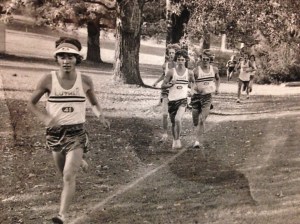
9. There is no substitute for speed on the track, but do it right

You can fool yourself into thinking you’re going to run faster any number of ways. But until you go to a running track and plan a workout in which you run at speeds a minute faster pace than you expect to be racing in competition, you’re not doing the job right. If you race at 7:00 pace, then you need to do your intervals at six-minute pace for 400 meters, and so on. If you plan on racing a 10K,  you will need to do about four miles of training broken into intervals below race pace. If you want to get faster, you need to run faster. And here’s a hard truth: If you can’t run fast enough to do intervals a minute faster per mile than your race pace, then you need to work from the ground up. Start with shorter intervals at the target pace and do them until you can run that fast. Then you can start to improve your tempo and efficiency at longer distances. That may sound like unconventional wisdom, but it’s the God’s Honest Truth.

8. Do strength work two times a week, minimum. 

At any age, strength work is the Magic Injury Preventer. Yes, it can help you get stronger, but the more important benefit is stabilizing weak points that lead to compensatory injuries. Here are the basics: Use the leg press at a gym and do single-leg, isolated presses with your body weight (and above) on one leg. That’s a simple enough formula, right? It helps your hips too, and rehearses the fact that you run on one leg at a time, not both. Then do ab work and some squats. Curls can help your arms, and shoulder presses too. All this can be done at home as well, with two simple 25 lb. barbells. Hold both barbells and do one-legged squats. The benefits are amazing. And cheap. You won’t regret it, and 15 minutes a day works wonders.

7. Age is just a number, but it’s an important one

It’s nice to believe we don’t slow down as we age. But the fact that everyone from world

Bike Lanes Meclass runners to back-of-the-packers sees a steady decline in race times after the age of 40 means you do have to adjust your expectations to some degree. The only exception to this rule is people who don’t start running until the age of 40. Then you might expect improvement for a few years. And then the inevitable starts to happen. You hold your own a year or two, and then it gets tougher and tougher to do workouts you once did, or match the times you once ran or did in triathlon. But don’t beat yourself up about this stuff.

There will be days when you feel young and fresh. You might even exceed a performance or train with vigor for days or weeks. But the secret to not feeling your age is simply not acting it. There’s no reason you can’t train long and hard if you accept the need to recover adequately as well. And if it isn’t fun and does not make you happy, step back and take a look at what you’re doing. Our minds change as we age. We value different things. The same old approach may not be working for you. But there’s always shorter races, or longer if you need and want to slow down and take it all in for the experience. The rules you make are your own to keep.

6. Stop with the Half Marathon and Marathon races all the time

Training for half marathons and marathons only makes you slower. There, I’ve said it. Those of us who raced hard in the 80s, when packs of sub-elite runners often completed 10K in under 32:30, simply did not run half marathons or marathons all the time. To get faster, we raced 5Ks and raced them hard. Then we took what we built from those races and applied it to five miles, then 10k. And once every three months or so, we’d race a 10-miler or possibly a half marathon. Once a year some of us would run a marathon, but that was burning matches. This abiding obsession with super long races, and that’s what halves and marathons actually are, is perhaps good for the running industry, but not all that good for your native speed. The same holds true with triathlons. If you want to get faster at the Half Ironman, then you need to do faster sprint tri’s, and do them hard. Then move up to Olympic, and when you’ve actually improved at that distance, then you can expect to improve on a Half Ironman. Otherwise, you’re fooling yourself. You can’t set PRs by training (or racing) longer and longer and slower and slower.

5. Don’t hydrate yourself to death

While one must respect the need for hydration in distances over 10k, there’s absolutely no reason to grab water or Gatorade or whatever during a 5K. Even a 10K is stretching it if conditions are not warm outside. We all ran plenty of 10Ks under 33:00 without sipping a drop of water during the competition. If the advice on super hydration were so potent, there would be 15-20 runners under 33:00 minutes at 10Ks these days. But that’s not the case. It’s even rare for the winner, hydrated as hell we must suppose, to break the 33 mark.

So here’s the simple advice: If you drink a bit before the race, and not too much, you might have to pee at the start. That’s your cue that you’re ready to go. Running longer than 10K? A few fluid ounces at three and seven miles should do you. If you run a half marathon distance you do need to drink. And drinking during a marathon goes without saying. Every three miles or so. Drink. But don’t hydrate yourself to death. People with flighty stomachs know there’s a tradeoff to that. Just enough to do the job. Anything more is a waste. Yes, this is seemingly unconventional thinking. But the hydration push that started perhaps a decade ago in mags like Runner’s World has ultimately been met by information that says too much hydration is as bad or worse than too little. Between the two runner’s worlds sits reality.

4.  Expect that you’ll always be a “fixer-upper.”
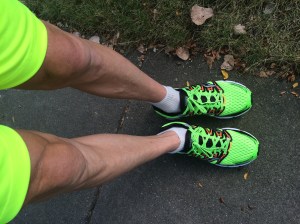
IMG_1850If you’ve ever owned a home or a car, be it new or old, then you know there is no such thing as a house that stays fixed or a car that runs without maintenance. But you can get the impression from all those glossy magazine articles that if you do your strength work and stretching, your body will transform into this Temple of Fitness. But that would be very wrong.

Every athlete on earth is a “fixer upper” from the time they start until the time they retire. You would be shocked to know the level of maintenance world class athletes do to keep their bodies in working order. They are not gods or blessed as you might think. But if you don’t read between the lines of the slick profiles on their achievements, you might come to believe that gal with the sharp abs and razor cut thighs (even perky breasts!) never wakes up sore or lame. Or that the guy with the long legs who looks like Ryan Gosling actually has very flat feet. Their perfect qualities are all an illusion. Don’t believe in perfection. It does not exist. We’re all fixer-uppers. Every one of us.

3. Running shoes are prettier, but not that much better than 40 years ago

Having run in shoes so minimal they barely qualify as shoes, and having worn clompers as thick as bricks, I’ve seen the extremes in running shoes. That’s just shoe companies trying to sell you whatever they can convince you to buy. That’s not to say the technology in today’s shoes is worthless, but the fact that running shoes 40 years ago lasted just as long, if not longer than current models by the same companies should tell you something.

Let’s examine the evidence. You no longer even see shoe companies marketing the idea that you can run 1000 miles in their shoes, do you? That’s because they’ll get sued. Instead, shoes are sold on very short-term benefits like shock absorption during their lifespan, and perhaps some motion control too. That’s about it. Yet for essentially the same or less wear time, we’re now paying 100% more per pair.

Shoe 6For $160, your shoes should last all year, right? Well sadly, that’s not the case. More money does not lead to shoe longevity. As runners in the 70s, we made a science out of making our shoes last longer than any runner today. We used athletic tape on the heels to keep them from wearing down. We alternated shoes quite frequently too. Having two pairs makes complete sense. But with running shoes priced at $160, it’s too expensive for most runners to use this common sense approach to shoes. So we wear out one pair at a time, and you need to replace them every three months or so.

The entire push toward minimalism proved the point that running shoes are actually only about 1/10th of the formula in successful running on any surface. Personally, I think pure minimalism is insane, and I’ve always been light on my feet with a midfoot stride. We raced barefoot in college and quickly learned the returns are far less valuable than the costs. For one thing, it didn’t make us any faster. The truth about running shoes is therefore something much simpler. Shoes are principally there to protect your feet from sharp objects and to shield your feet and legs from shock and wear from hard surfaces.

There can also be some benefit to the construction of the shoe in terms of footstrike and propulsion. But every shoe, regardless of expense and technology, begins to lose these benefits the minute you start to use them. Even the most sophisticated pairs of shoes wear out 300-400 miles into their life. So we’re talking a stopgap solution between new pairs, and nothing more. The souls wear down on the heels or whatever, and then your biomechanical flaws are eventually revealed and escalated. Your old shoes become a worse problem than no shoes at all. So get used to the idea that you have a $600 a year habit. That’s not that much compared to golf and other money-suckers. But we’re all still money suckers when it comes to running shoes.

2. Race doesn’t matter in running

It’s a convenient belief that African runners, especially Kenyans, Ethiopians and Moroccans, to name a few, are superior runners due to genetic advantages. The feats of all these runners are a beautiful, inspiring thing to watch. But there are still runners of all sorts of ethnic and racial backgrounds who can run with these elites. There are cultural drivers to their success, and competition as well. But the human race is still essentially equal when it comes to running. Runners with talent who do the training and are smart will always be able to compete.

1. Gender doesn’t matter in running
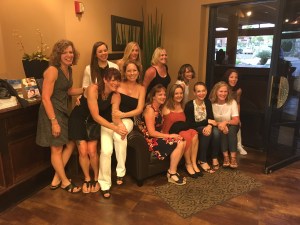
EXPERIENCE TRIATHLON GALS

The gals from Experience Triathlon pose at the end of camp in Arizona.

This is a somewhat different issue than race, and perhaps more important in terms of consideration in the efforts of runners. While women’s records at all distances do not match or exceed most men, it’s not a result of being “the weaker sex” as it was once portrayed. There are many races and millions of examples in which women exceed the efforts of their male counterparts. Only at the extreme elite level do times have any bearing on this measurement of effort. Happily, the sport has evolved to the point where women regularly train and compete with men, and there are few issues of concern about that on either side of the equation. Women are welcomed as equals in the sport, and there are now as many or more women runners and triathletes involved in their respective sports as men. This is a healthy thing, affirming gender equality in the most empirical way.


WRARFrontGraphic


Posted in Uncategorized | Tagged , , , , , , , , , , , , , , , | 1 Comment

Why 10 seconds can mean a lot

Ride StatsDuring a 20-mile ride yesterday I snaked toward the biggest hill in the county through a strong westerly wind. My vow this year is to not worry when the wind is blowing. Stop thinking about speed and concentrate on good pedal stroke. No stomping. No mashing. Smooth round cycles and complete engagement. Ride right through it.
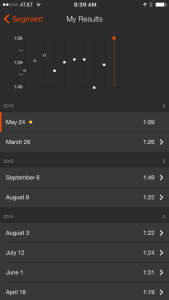
When I got to the long incline leading to a steeper Strava segment that climbs to the top of Town Hall road, the wind was still in my face from the west. So I continued my focus on a good pedal stroke.

Then came the turn, and climbing the steep first 100 yards up the hill. The grade is strong for a bit. Not killer, but keeps you honest. And I rode that section like I’d never ridden it before. Kept the cadence high. Didn’t hem or haw on the steepest section. Every pedal stroke on the bike felt meaningful and engaged.

The last 150 meters constitute a slightly less steep section. Yet it’s easy to fade there if you’ve blown out your legs on the steep section. So I increased my cadence. Kept the circular pedal motion in play.

It was a triumphant little moment. That hill has gassed me so many times in the past. This time, I came over the top healthily winded but not crushed.

Part of this is bike position, and the new bike in general. But much of it is a renewed concentration on pedaling. Like a golfer who makes swing adjustments or a pitcher in the process of changing throwing mechanics, cyclists need to go back to basics sometimes.

I learned about the weakness in my pedal stroke during a bike fit session last winter. The computer showed graphically where my pedal stroke was weakest. I wasn’t engaging the hamstrings.

The same truth came out during one-leg pedaling in Computrainer, which I’d never done before. The fitness tests also emphasized a sustained pedal stroke as a better solution than mashing your way through. Whenever I focused on that, my performance was better sustained and consistent.

Hill StatsWhen I got home yesterday to look at the Strava results from that uphill segment, it showed that I’d beaten my previous best time by 10 full seconds up that hill. That’s not insignificant. That segment showed up perhaps 12 times on the app (though I’ve ridden it many more times). My previous best was 1:22, which I’d managed several times, often while climbing in company with other riders.
So it was not for lack of trying, for but lack of technique and focus that I had never improved on that segment. Granted, the best riders have done that same segmentin 39 seconds. That’s a full 30 seconds faster than my best. They’re all CAT 1 and CAT 2 riders. I’m the 147th best rider on that segment alone.

But if I gain another 10 seconds this year, which I expect to do, I’ll be climbing better and likely racing better as well. And for now, I honestly feel that 10 seconds of new climbing strength is a sign that I’m doing some things very right on the bike. Perhaps you can benefit too, if you take a look at your cycling basics. Stop “pedaling squares” as I was wont to do.

My next project is building my strength against the wind on long, slow inclines. That is my greatest weakness. That and being 20 years older (at least) than most everyone on Strava. But you know what they say: Age is just a number. And I’m at least 10 years younger in my brain right now. 10 seconds really can mean a lot.

WRARShirtGraphic

Posted in Christopher Cudworth, climbing, Uncategorized | Tagged , , , | Leave a comment

Square one is a fine place to be

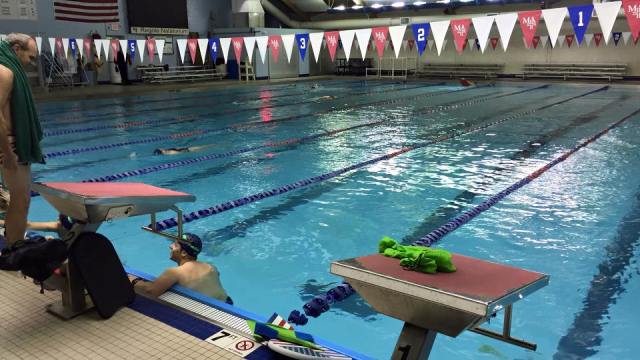
Master's SwimAll of us experience setbacks in training sooner or later. Any number of problems can cause you to miss workouts. That leads to a loss of fitness. Then a drop in performance.

My most recent challenge was a reticence to get to the pool. It started, I am a little ashamed to admit, with the last day of triathlon camp. We had run an hour that morning, then mountain biked 2 hours in the desert hills. Then we drove to a wonderful outdoor pool with the Arizona sun shining brightly. It should have been a welcome end to the camp. There was just one problem. My arms were absolutely cashed from the mountain biking.

My lane buddies had the same problem. We took a vote and stuck with swimming 50-meter repeats. That’s about all we felt like doing. We’d swim two lengths and stand there with our arms at our sides. It got better as we warmed up. But not by much.

That experience brought back all the difficulties and sensations of learning to swim this past year. The sudden fatigue that kept me at 50 meters, then 100 meters. The desperate gasps for air. Before the

Before the camp I was happily (well, mostly) swimming 800 meters non-stop. And that was progress. But it all came crashing down in my head during that swim session in Arizona.

And since I’d gotten back there were a thousand reasons not to make it to the pool. I know it sounds silly. But I also know that you know what I mean. Some aspects of training just go like that. Some don’t like the bike, or the run. Others hate hills, or the track. And those who get indoctrinated to the pool have a hard time getting up for that workout.

As it turned out, a friend of mine named Jim Webb was arriving at the pool yesterday at the same time. Jim is an Energizer Bunny with dedication to boot. He’s a great age-group triathlete. We chatted in our respective lanes and he told me how hard it was for him to get to the pool. “This is the hardest part of my training,” he admitted. “I’m good at making time for the bike and the run. But getting to the pool is hard.”

Still, there he was doing his one-arm drills and doing them well. There’s not an ounce of fat on Jim, and he’s only four years younger than me. That’s an inspiration to do better. Then he switched to hand paddles and got to work on that. We paused for a moment and he grinned that wet pool grin. “I hate drills,” he chuckled. “But I got sloppy in the water last year, and was all over the place. This year I’m working on fundamentals.”

And that’s how you do it folks. You’ve got to go back to basics sometimes. Square one.

For me, that means rebuilding the strength I’d gained in my arms and lats from swimming. I could feel that happening right away in the water. The one good thing about this time around is that I understand form much, much better. I rotated my body well. Paid attention to the elbows coming out of the water properly, and kept my tempo steady and pulls strong.

So I’m not an absolute novice anymore. I can do this. Now I just need to do it more. But Square One is not a bad place to be. There is still time to build back up and make a good go on the Sprints and perhaps an Olympic triathlon this summer. Those are happy little goals for me. The bike and swim will come along too.

Square One. You gotta love it.

TRAIN HARD. COMPETE WELL.

WRARShirtGraphic


Posted in swimming, Uncategorized | Tagged , , | Leave a comment

Follow the groundhog, she said

Sue and MeWe left from Batavia at 5:00 a.m. to run the Rockford 10k.The drive from Batavia takes about an hour. Of course, we did not anticipate that the entire exit ramp to I-39 into Rockford would be closed for repairs. Nor did we figure that the entire the south side of downtown Rockford would be blocked for construction.
So we tried to follow directions from the online traffic app we use, but to little use. The app lady kept telling us to turn down streets where six foot high barriers blocked our way.

And it was 6:20 a.m.  The race started at 7:00.

At one point I spun the car around in a U-turn and spied a literal dirt road through the middle of an abandoned block south. It would take us to the street we wanted to reach. Sue protested, “No honey!” But I had spun the wheel around and was just about to go four-wheeling in my Subaru Outback when a groundhog emerged out of a city drain and trundled across our path. He was a sorry-looking beast with an ass that appeared to drag on the ground. It was pretty clear he’d been run over a few times in his recent history.

“Well, follow the groundhog,” she said.

And that made me laugh. A lot.


As it turned out, we turned the corner two blocks up and parked right next to the registration tent. It was a two-block jog up to the start and we had plenty of time to warm up.

Groundhog Days

That’s when I remembered the race was being staged by a company called Special Events Management. Their CEO is a guy named Hank Zemola. He and I go way back to the 1980s when he was starting his company and I was racing every other week. We’d often see each other and say hello. I don’t know that I ever won a race staged by his company, because they work big, putting on major events including city festivals as well as races. I walked by Hank and gave him a slap on the back. We smiled and said hello. Long acquaintances are always interesting.

At one point I was marketing manager for a big newspaper and culled together some money to sponsor a new cycling event in Elgin, Illinois. Hank’s company staged the race, which featured a road-style course as well as a criterium-based circuit for in-line skating. That was all the rage in the early 2000s. I don’t know what happened since. Perhaps there were so many crashes and so much road rash the sport was banned by Urgent Care centers.

In 2001 when we sponsored that race, I was not yet a serious cyclist but learned quite a bit about the sport. I thought the promotional value of bringing an event of that scale to a city reinventing itself was a nice proposition. Still, as an experiment, I brought my Trek 400 to the race and entered one of the cycling stages. Within four blocks I was dropped from the pack and rode the race alone. That was what you call a true learning experience.

Echoes of speed

It’s funny how so many memories can converge in one place. As I stood on the starting line for the start of the Rockford 10K, a young woman popped up next to me. I’d seen her warming up and turned to Sue and said, “That’s who will win the women’s race.” And I was right. Her name is Madeline Westoff, and she zipped to a 38:00 winning time in the women’s division. She runs for Butler University in Indiana.

The men’s winner in the 10K was a recent graduate of Loyola University in Chicago. Nicholas Miller ran 31:56 to break the course record formerly held by Ryan Giuliani. It was his first real road race after competing in track and cross country in college. I remember that feeling well. I was Nicholas Miller at one point in life, wondering whether my running ability was enough to get me into the Olympic Trials at some point. That was not to be, and the dreams of the sub-elite are often Quixotic. I wish the young man well.

True elite

Following the finish of both the 10k and Half Marathon, I noticed a runner sitting on a picnic table with his manager. The runner was Eliud Too, a Kenyan distance runner that had flown in the previous day to compete in the Half Marathon. He won easily and earned a $500 paycheck. Now he is scheduled to run in other events in North America. I talked with his trainer and manager, who shared the fact that Eliud had previously won the Dublin Marathon. “We called to ask if he could be admitted as an Elite runner, but they told me their field was full. So I said, ‘Well, is it okay if we buy an entry?’ And we didn’t hear back. So we entered, and Eluid won.” Something in me loves a story like that. The seeming underdog pulls out the victory.

Or a groundhog emerges from a city drain to act like an omen in finding your way to the start of the race on time.  Life is full of strange fortunes and reminders of the person we once were, or the places we want to be. When all else fails, follow the groundhog.

As for our races, Sue nearly took third in her age group. I managed third in the Master’s category. The Rockford race course is absolutely beautiful. Flat and smooth. Follows the river up and back. We’ll be back next year for sure.

Like Groundhog Day.

WRARShirtGraphic


Posted in Christopher Cudworth, cycling, marathon, running, Uncategorized | Tagged , , , | 2 Comments

Nike’s claim on Pre in Runner’s World

leading-men-coverI’m going to say it: this month’s Runner’s World article on the relationship between Nike and Pre felt too much like an advertisement to be ultimately inspiring.

Ostensibly authored by Phil Knight, who is the founder of Nike and a man who changed the world of sports marketing in the process, the article holds a few gems about Pre and some honest observations as well. Knight acknowledges that Pre could have, and possibly should have, held off in the closing laps of the 1972 Olympics 5000 meters and settled for a solid Silver Medal. But Pre was having none of that. He ran close to a 4:00 mile trying to win gold and wound up fourth.

Knight was ‘right there’ through many of Pre’s accomplishments. So there is no question Knight has right to claim close association to Pre. Yet he also admits to an almost eclipsed style of relationship with the man. His sales guy Geoff Hollister was the one who actually got along best with Steve Prefontaine. Yet Knight admits to busting Hollister’s balls over compensation at the time, even as he was leveraging Hollister’s relationship with Pre.

Ultimately Hollister was sent on the road with Pre to pump up Nike shoes. Nike made Pre an employee of sorts because the world of amateur athletics and compensation was so disturbingly screwed up at the time. Amateur athletes were being held to ridiculously purist standards by organizations like the AAU. It caused many great athletes to needlessly suffer and jump through hoops just to do the sport they loved and represent America, to boot.

In the mix

I was no world class athlete. But I was right there when Nike broke into the running scene in the 1970s. We all tried on the Nike Corsairs or whatever, and things were changing fast in running shoes. In college, I wore Nike Waffle Trainers and the massive Nike LDVs with their wedged rubber heels. I raced in Nike Elite flats all the way through senior year of college and beyond. They were great shoes. And I adored my Nike Air Edges. Ran all my road PRs in them.

I also raced as a sponsored runner for a store called Running Unlimited that gave us free racing shoes and training shoes in exchange for racing 24 times in a year. I won twelve of those races and still have the singlet from the store. It’s a little tight because I weigh 30 pounds more these days than I did back then. But that singlet still makes me want to race.

Ultimately, I even got married in Nike Pegasus running shoes. I bought Pegasus for all the groomsman too.

So I’m not trying to bash Nike here. But something about that article by Phil Knight smacks too much of commercial interests. Nike is a company determined to dominate wherever they compete for market share. They’ve invested millions (if not billions) in endorsements and yet they’ve had to face down competition from burgeoning upstarts like Under Armor, who beat Nike to the punch on sleek-fitting gear.

But here’s the funny thing. There’s no way Phil Knight can tell his story without emphasis on the commercial aspects of his life’s endeavors. He has reason to be proud of Nike and its associations with great athletes like Pre and Michael Jordan. Knight plainly drew inspiration from Pre, there is no doubt about that. We all did.

I was a big Pre fan too. Modeled my look after the man for some time, including the mustache. I tried to mimic his racing style as well. Sometimes with success, and sometimes not.

Probably I looked more like Lasse Viren in some ways than Pre. At one point there was even a chin beard on my face similar to the Finn. Not a good look. But I also admired greatly the achievements of Frank Shorter, the man they called the Vertical Hyphen. The same could be said of Craig Virgin and Herb Lindsey, Bill Rodgers and Alberto Salazar. All these great runners provided some level of inspiration. Probably too much at times.

Public relations

It is a strange world of vicarious joys and personal attempts at glory that we athletes occupy. And while I respect the seemingly parallel virtues of Pre and Nike, the cynical side of me suspects this article is a little too perfect, too planned, and too PR to be ultimately genuine. It is four full pages of content in a magazine that does not do that many long articles anymore. It makes me wonder if there is a monetary commitment somewhere in this mix. It has been said that 60% or more of the “news” we consume on a daily basis is public relations material submitted or brokered by moneyed interests. I’ve worked in PR. I know how this stuff works sometimes.

To be truthful and draw a parallel to the world of sports, we might call public relations a form of  Editorial Doping.

But in the end, people don’t seem to care if the information they consume is all genuine or not. The Internet has turned the information world inside out in some ways. We’ve also survived the onslaught of good and bad publicity about Lance Armstrong, another Nike athlete, who essentially built a fortune on a combination of good public relations and carefully constructed lies. Yet at the same time, Lance won the Tour de France seven times. You simply can’t do that just because you put some extra blood in a bag, especially when everyone else on the Tour was doping too.

Better source of inspiration

So I guess the Nike and Pre article is fine. It’s an interesting read. But if you want a clean take on Steve Prefontaine, much better to read this article by my favorite running writer Kenny Moore, who was a college teammate of Steve Prefontaine. Moore wrote a biography on Bill Bowerman, the coach who helped Pre become the runner he was.

When the book came out, a friend and former college roommate/teammate of mine with connections to Oregon was visiting the City of Eugene with a running mate who ran for the Ducks back in the day. My friend purchased a signed copy of the Kenny Moore/Bowerman book for me. He knew I needed inspiration about life because we were in the midst of difficult times with my wife’s cancer. The book arrived at my home in a plain brown cardboard shipping envelope. I opened it up and saw the signature inside and just cried. And cried.

We all feel these connections to things past and present. We all draw inspiration in our own way from people like Steve Prefontaine. Some of us like Phil Knight go on to found massive companies like Nike. And some of us put on Nikes and go out for runs with tears in our eyes astonished that people can be so amazing.

Perhaps it’s cynical of me to doubt the genuine motivations for an article like the one in Runner’s World this month. It all has to happen somehow.

There’s just part of me that will always keep a suspicious eye open for the manipulation of the heart for commercial or political reasons. “And at Nike,” Knight observed about the origins of his company, “we were preparing to put our money where our emotions were.”

I guess that’s true of all of us in some way.

WRARShirtGraphic


Posted in Uncategorized | Tagged , , , , | Leave a comment