That triathlon fetish of yours

IMG_3513I used to subscribe to Harper’s Magazine, a publication that has long reveled in social analysis from a literary perspective. With a combination of fascination and incredulity, I read a story about people who develop a sexual fetish for big machinery like cranes and trucks. They try to have sex with these objects of desire. Sometimes it does not end so well.

I guess there are also programs on TV (I have not seen them) in which people reveal their strange addictions. One person eats plastic bags. Lots of plastic bags.

So you can probably feel okay if your love of triathlon gets a bit fetishistic. That lust you feel for your sleek tri-bike may not be exactly normal, but at least you’re not trying to hump it. Well, maybe you are. That’s the typical pose for an aero bike. Like you’re going to mount the front wheel from behind.

Let’s not fool ourselves. There are quite a few sports where fetishism is part of the action. There are definitive homoerotic aspects to pro-wrestling or UFC. I’m not saying that’s a bad thing. It’s just a reality.

IMG_0487Certainly all of women’s sports tend to be sexualized in some way. Women who try to combat that trend tend to find it fruitless in some respects. Those who roll with it find success that is pyrrhic in some ways. No matter how well a woman performs, there seems to come a point where they are judged on their appearance.

That raises the ironic question: Is it bad to be appreciated for your beauty if it is athletic in some way? Then the question of choices is raised. The outfits of top women triathletes are often so spare they are essentially just a colored layer of skin. The statement seems to be, “Deal with it. This is my body.”

It seems to be the accepted model that if you fetishize yourself, that is empowerment. Taking ownership of the display of your body is, after all, a personal choice. But if others fetishize you as an act of possessive lust or control, there is some question as to whether that is a positive.

That’s what makes it so tough to know in this world where the lines of control begin and where they end. Certainly there is not a woman alive that would wear her triathlon skinsuit to a business meeting. Yet in a competitive environment,there is no more powerful appearing creature on earth than a fit, determined woman.

IMG_3532.jpgFor men, it can be just as confusing, but for entirely different reasons. The typical male might crave desirability, yet blatant attempts to gain that attention are often frowned upon or considered a bit weird. A few years back, the world’s top sprinters began wearing tight lycra running kits. Yet in slow motion replays the distraction of watching their junk fly around was just too much to bear. Since then, the kits have evolved to offer a bit more control.

Despite these difficulties, the sports in which we engage and the fetishes we display are ultimately good for society as a whole. Way back in ancient Greece and Rome, athletes performed in the nude. Athleticism was celebrated and yes, even fetishized. We find evidence of that in the art on clay bowls that have lasted through the centuries.

There were probably people back then that tried to have sex with the columns of the Parthenon and a few that tried to hump a few chariots. There is no real accounting for the fetishes of the human race, or how they are manifested. The best we can do is find that middle ground where sex mixes with exercise and we all agree to cheer on the participants. Because that is the best fetish of all. Attend any Ironman event and you’ll witness the fetishizing of endeavor and fatigue. It’s like one giant humpfest with exhaustion. And what a machine it is.

GIVE FULLY. TRAIN HARD. COMPETE WELL.

WRARFrontGraphic


Posted in Uncategorized | Tagged , , , , , | 2 Comments

That Fool On the Hill is us. And that’s a good thing

End is NearAside from the image of the man holding a sign that says “The End is Near,” there is perhaps no more cliche depiction than the wise old man on the top of the mountain to whom everyone goes to learn the meaning of life.

We assume there is some sort of paradigm at work there. Surely the man who retreats from civilisation knows something the rest of us do not?

But what if our supposed wise men aren’t so wise. Perhaps they simply don’t know how to deal with change. What if the tried and true wisdom of “Know Thyself” works just as well when shared by the busy working mom next door…

The Beatles once tried to find the wisdom by visiting a wise man in India. It turned out the guy was porking women just like any other dirty old man in downtown London. The experience of the retreat in India led to a few great songs from the White Album (Dear Prudence, for example) in music that emerged from their “joint” experience.

Yet John Lennon wrote the song Sexy Sadie to document the disappointment he felt in having been deceived into thinking the supposedly wise Maharishi knew something more than the rest of the world. The lyrics dripped bitterness as the syllables of Maharishi were replaced by the contemptuous nickname”Sexy Sadie,” seducer of minds…

Sexy Sadie you’ll get yours yet
However big you think you are
However big
You think you are
Sexy Sadie ooh you’ll get yours yet.

We gave her everything we
Owned just to sit at her table
Just a smile would lighten everything
Sexy Sadie she’s the
Latest and the greatest of them all.

The point here is that we must all be careful about who we worship, and how. Next in the Beatles line of wise men placed under the microscope was Paul McCartney’s Fool On the Hill, an attempt at reconciling wisdom in an enigmatic figure.

Day after day alone on the hill,
The man with the foolish grin is keeping perfectly still,
But nobody wants to know him,
They can see that he’s just a fool,
And he never gives an answer,
But the fool on the hill
Sees the sun going down,
And the eyes in his head,
See the world spinning around.

The question those of us who run and ride need to ask is whether doing repeat hills, up and down, up and down, actually adds wisdom to our existence. The difficult part of that question rests in the myth of Sisyphus, in which a man is destined for all eternity to roll a rock up a hill, only to have it roll back down again.

The point might be that so much human endeavor is pointless. Or it might be that the gods we trust for wisdom are in fact cruel bastards who enjoy watching human beings suffer for their efforts.

The truth lies somewhere in between. Perhaps someone less constrained to eternal toil can actually find the work of climbing a hill quite satisfying. The fact that we don’t always have a smirking wise man at the top to tell us the meaning of life is no great loss. We can enjoy the process and think through the rest of our problems in the process. That’s not a bad thing. We are our own Fool on the Hill. Suddenly the lyrics of Paul McCartney take on a while new meaning when we think of ourselves in that context of gaining wisdom from our efforts in climbing hills while running or on the bike:

Well on his way his head in a cloud,
The man of a thousand voices talking perfectly loud
But nobody ever hears him,
Or the sound he appears to make,
And he never seems to notice,
But the fool on the hill
Nobody seems to like him
They can tell what he wants to do.
And he never shows his feelings,
But the fool on the hill

Now go do some hill work. It will do you some good. That’s the wisdom for today.

TRAIN HARD. COMPETE WELL.

WRARShirtGraphic

Posted in Uncategorized | Tagged , , , | Leave a comment

Torn between two lovers…

IMG_1122.jpgRelax, it’s not what you think. I’m not having an affair. But my long term relationships with running/riding and birding do come into conflict this time of year. I’ll be out running (as I was this morning) and hear a species of warbler (or five) singing from the canopy or the understory and think, “I should be birding.”

But then I’ll be out birding and a cyclist will go whipping by on the bike path and I’ll feel guilty that I’m not out making use of a beautiful day for training.

A week ago I combined the two by running five miles in Dick Young Forest Preserve on the edge of our town. There weren’t many woodland species active that day, but the open fields and restored prairie held SIX species of sparrows; savannah, song, grasshopper, swamp, white-crowned and white-throated. Bobolinks were singing along with the two species of meadowlarks, Eastern and Western. All were calling from the recently burned fields where fresh new grasses had emerged.

I’ve been birding that area since the early 1980s. The county has expanded the property to more than 1000 acres. That makes it one of the largest contiguous tracts of preserve in the county. At its heart sits the ancient old marsh that is an Illinois Nature Preserve. Thirty years ago it was an open expanse of water. Now it is closing down in size thanks to natural succession.

That saddens me, because I feel like that marsh and I have been through quite a bit together. Not only have I seen dozens of species of birds over time, it has been my emotional refuge on many occasions as well. I hiked it back when the sliver of marsh property was the only preserve land. I shared trails with cattle on the east side, and with hunters perched in blinds on the west side. It took decades for the entire preserve to come to fruition, and when the last farm property on the east side was sold to the county and the barn was torn down, the tenant farmer who worked the land for years would sit in his car with the radio on drinking beer. It could not have been a happy divorce from the place he loved.

The transition from private property to public land has a history that goes well back in time. During the late 1970s and early 1980s, I was part of the Nelson Lake Marsh Bird Survey Team that tracked bird populations in all seasons. That helped establish Illinois Nature Preserve status in alignment with the work of Dick Young, a botanist who identified dozens of species of rare plants on the site. For years before that, the marsh had hosted a peat bog mining operation and was a favored site for duck hunters, who erected blinds and nailed the heads of the species they’d shot to the walls of a small hut where the trail ended and the duck boats were launched.

The place held its magic in all seasons. I recall the presence of fringed gentians blooming just as the frost approached in fall. They grew in patches on the margins of the peat bog where the soil bounced if you jumped on it. And in winter months, I’d walk out on the frozen lake, and once heard the whispering call of a Marsh Wren, normally a summer species, calling from a clog of cold cattails.

IMG_8071Only in the last 15 years did the county install true bike paths that circle and transect the property. Before that, all the paths were out and back affairs. It was a true commitment to hike on out to the point overlooking the west side of the lake. There were no shortcuts. One year while birding I broke through some ice over a spring and wound up with pants frozen up to my crotch. I had to limp/run back to the car in fear of frostbite. The marsh has a way of keeping you honest.

I once noticed a coot flapping close to shore and went over to stick my hand down to see why its leg was trapped. I felt the head of a giant snapping turtle and yanked my arm away. Nature has its rhythms.

Now the lake is filling in with cattails. The drought several years back helped that process because plants invaded the lake bottom and siltation hurries up when that happens. We were all shocked how shallow the lake turned out to be. The secrets below its shining surface were left bare and exposed, with soil cracked and forlorn when the drought took away all the water. It has returned some, but the margins of the cattails have closed in even further. Within 20 years there will be no more lake. It will be another memory of open water just like the site of what was once Lily Lake 15 miles northwest. I watched that marsh fill in and complete its destiny as well as many others in the county. We try to keep these things like jewels and they wind up being buried in the dirt and vegetation.

IMG_8263

So I go for runs around the property now with a wistful heart. It’s like watching a loved one die. The birds still appear in abundance in spring, but not like it used to be. There were days when 15-20 species of ducks would spread across the great expanse of the lake. White pelicans had even began stopping by about a decade ago, sometimes as many as 150 could be found in a single day. But the lake has gotten so shallow and the fish all died off during the drought. The pelicans showed up in small numbers and did not stay this year.

I mountain bike around the property as well. And on days when I’m not fighting the Strava wars I’ll even pedal my road bike through the heart of the restored prairIe on the smooth asphalt path the county installed. It’s a treasure to ride down and hear the kingbirds and sedge wrens chattering in the fields of big bluestem.

Perhaps it is the fate of those with more than one interest to be torn between activities such as birding and running and riding. I try to make good choices, but when the birds aren’t active I invariably find myself thinking, “I should have gone running,” or, “This would have been a good morning for a ride.”

Such is life, I know. Better to be grateful and appreciate the experiences you are having rather than regret those you cannot abide at the moment.

But there is no pretending that time has not passed in some ways. Change has come to the landscape I love, and for better or worse, not all those changes have been good. I run or ride through the marsh property and listen for the familiar sounds of birds I know and seek evidence of the rarities I hope will show.

And another May comes and goes, and the last crane out in November tells you that winter has truly arrived.

So you had better appreciate the next May day you find.

WRARShirtGraphic

GIVE FULLY. LOVE LIFE.

Posted in Uncategorized | Tagged , , , , | Leave a comment

The danger of an unworthy opponent

Our college track team drove five hours to compete in a track meet at Buena Vista college in the far western corner of Iowa. The ride out was boring, to say the least. One of those rides that can sap the will right out of you.

When we got out from the team bus the first thing we noticed was a heavy wind coming out of the northwest. It was gusting to nearly 50 mph at times. A wind such as that is always bad news for a track meet, especially for distance runners, because it makes a section of every lap a struggling misery. For my event, the steeplechase, it made the competition absolutely dangerous.

As the first event of the meet, the steeplechase typically drew a crowd to watch runners go through the water pit. But that was not where the real danger occurred this April day. While warming up I ran the long straightaway into the wind and realized the significant possibility of blowing backward into the 4″ x 4″ barriers.

A steeplechase race is a 3000-meter event with 7 water jumps and 35 total barriers. It takes immense concentration on a good day not to drag your leg a little and clonk your knee on the unforgiving barrier. The headwind made that task that much more difficult.

The tail wind was no bargain either. Normally when you approach a barrier that is the height of an intermediate hurdle (42″ as I recall) there is time to calculate the right takeoff point, and how you want to land. That is something you practice, develop a rhythm and a feel, and count on for consistency.

But a tailwind throws all that off. So when I ran down the backstretch in my warmups and practiced a few barriers, a raw sensation rose up behind my ears as the fear of being blown forward into a barrier became very evident.

As we lined up for the start of the race, I noticed that one of my competitors was actually wearing a pair of work gloves like you might wear to weed the garden or work with a shovel. That day, I thought he was wearing the gloves were for warmth. I was wrong.

The gun sounded and we started running. As we rounded the first turn and encountered the first hurdle, I was astounded to see my competitor throw his hands forward on the barrier and vault over it like a gymnast. It was perfectly legal as long as his feet did not extend past the barrier on either side. But it was highly disconcerting. He did this at every hurdle, against and with the wind.

This method of “hurdling” was particularly effective going into the wind. He could use his arms to propel himself over the barrier like a pole vaulter releasing his pole at the point where his body was completely over the bar. It enabled my competitor to keep up with me. I was hurdling each barrier in traditional fashion, and at one point I blew backward and bumped my tailbone on the solid barrier. It hurt.

So it went for more than 10 minutes of running. The backstretch was just as difficult and dangerous with my traditional hurdling technique. Still, I’d leap out ahead for a few strides and had no trouble negotiating the water jumps because the wind was a crosswind. But against the wind, my barrier-vaulting competitor always caught back up with me because his low slung approach let him stay low and save time somehow. It was supremely frustrating to try and stay ahead of him.

I barely beat the guy, and most of that was because of anger. It didn’t seem fair to adopt such an unorthodox way of keeping up. While I grudgingly admired his ingenuity, I did not consider him a worthy competitor in other respects.

Unconventionality does have its traditions in track & field. That’s how the Fosbury Flop was invented and revolutionized high-jumping. It’s also how the spin move in shotput changed the game entirely. But running with gloves on to try to vault to a steeplechase win? That was a survival technique as much as it was an innovation.

Of course, there’s a lesson in all this. It can be very difficult to compete against an unconventional opponent. It’s often said that basketball teams will “play down” to the level of a lesser  opponent. The same goes for football and baseball and soccer clubs. You can only play a highly skilled match against opponents with equal or greater skills.

That’s why boxers also have to watch out for fighters who are lefty, or who don’t fight by conventional means. Ostensibly that’s why the mythic fighter Rocky Balboa was so tough for Apollo Creed to beat. We all saw how Joe Frazier made it tough for Muhammad Ali to float like a butterfly because Frazier closed down the ring and worked so hard inside Ali was forced to punch it out. There was no room for dancing or for beauty. It was just a fight.

The unruly impact of unconventionality and seemingly unworthy opponents holds true in the world of business and politics as well. Look at the example of Aldi supermarkets. Who would think that an unconventional, understated chain of lowball grocery stores would have a chance out there? But they win by superior pricing and by creating their own brands that compare well to bigger merchandisers without the marketing costs. It’s like they’re vaulting over the price barriers while the other stores are trying to hurdle them in glorious fashion.

The world of politics is also full of vaulters and lowballers who excel at convening the lowest common denominators and the populist vote. People simply love an underdog and they love unconventionality.

Once a groundswell begins for a personality like that it no longer matters whether they look or sound like a total idiot. If they keep up the banter or make a slicker competitor look bad, a certain segment of Americans will rally behind them. It’s our fatal flaw, it seems, and why the world sometimes wants to turn their back on our Ugly American tendencies.

Yet unconventionality can have its costs, and it all comes down to sustainable methods. When the winds of change aren’t blowing so fiercely that they level the playing field for those willing to grunt it out and get ahead with seemingly unconventional methods, that’s when the truly talented take the race back over. The world of track and field is beautiful because of this ultimate efficiency. Examples of truly ugly runners seldom wins the day. The last was perhaps Emil Zatopek, who looked like a trainwreck coming down the track. But he won, mostly because he outworked his competitors, and was tough inside.

So the world has a way of testing unworthy competitors. Sometimes it enjoys the novelty of all that goes on. Surely there were people cheering on my competitor that April day in the high wind. But when we competed again in May during the conference meet, I beat him by 30 seconds. Without the wind to help him, there was no way for him to keep up.

But I learned an important lesson about unconventionality. It can be hard to beat, and even harder to defeat in a popularity contest.

WRARShirtGraphic

Posted in Christopher Cudworth, Uncategorized | Tagged , , , , | 3 Comments

Ever thought about the best fitness investments you ever made?

Bike CheeriosAll of us depend on equipment and coaching to improve performance. In 40+ years of competition, I’ve tried to invest in areas where the returns are greatest. Some of these items were part of a team opportunity or program. Others were choices I made on my own.

If you were to make a similar list, I think you’ll find that your “investments” indicate your commitment and planning along the way. Here is my list of the 10 best fitness investments:

10. First pairs of real running shoes. Granted, my first pair was a set of low-slung gum rubber flats handed out in the Kaneland High School. There was only a centimeter of heel lift and basically no tread after two weeks. But the interesting aspect of these shoes is that they were a throwback “precursor” to all the minimalist designs we have today. I learned to run in those shoes and put probably 600 miles on them in a cross country season. We wore them to train on the asphalt parking lot surrounding the school during January and February as well. Without much support or padding, you learned to run light on your feet.

9. Running shorts with briefs inside. These were invented around the year 1978. I purchased a pair of Sub-4 shorts, which were represented by miler Steve Scott. Training and racing without having to wear a jock or briefs under the shorts was revolutionary. It also gave me a hard-on from the silk briefs the first time I ran in them. But hey, I was twenty years old. A stiff breeze gave you a stiffie.

8. My Specialized mountain bike. So many triathletes and cyclists start out riding a hybrid or mountain bike. Some even do their first races in them. My Specialized Rockhopper was part of a transition to riding more. I still have the bike and it’s still fun to ride. Next came a Trek 400 steel frame road bike that I used until I could not use it anymore. That opened up the roads.

7. Condoms. Getting laid on a regular basis in college was one of the best training and mind health tools imaginable. The confidence a young man gets from being with a woman is perhaps the single most effective training tool…known to man.

6. Counseling. During my late wife’s long and difficult struggles with cancer, I was given the opportunity through the Living Well Cancer Resource Center to get support in counseling. It turned out to be revelatory in many respects. The key thing the counselor said to me was simple: “You seem to be good at forgiving others. How are you at forgiving yourself?” That question opened my mind to things that had long vexed me. Because while I’d achieved a certain number of things in life, there were areas where I failed as well. Of course that’s true. We all fail. But being “given permission” to forgive myself for those failings has made it possible to enjoy my training and racing in this stage of life. And also look back and realized, “You did the best you could. And that wasn’t bad.”

5. Nike Air Edge racing flats. I’ve raved about these shoes before. But these racing flats with the blue swoosh on one side and the red swoosh on the other were incredibly light and the tread was perfect for racing in all conditions. I set all my road PRs in those shoes from 14:47 in the 5K to 31:10 in the 10K and 1:25 in the 25K. Case closed.

4. Running and cycling tights. It’s hard for some people to imagine that tights have not always existed for those who run and ride. In 1977 when our college team wound up racing in the snow at nationals, tights did not exist. We tried nylons and longjohns. Neither worked. So we ran bare-legged. And it was damn cold. Finally, tights came along in the early 1980s. My craziest pair was a set of New Balance tights that were deep blue with vertical pinstripes on them. My fave pair was a set of Tinley tights purchased in 1990. Those were just the right weight to train or race in. The Specialized cycling tights I purchased in 2008 and still use are going strong. However, I no longer run in true tights. They press on my kneecaps and cause irritation in the cartilage underneath. So I wear running pants.

3. Swim coaching. Without the help of a swim coach, there’s no way I would have progressed at all in the pool. If you are serious about learning to swim or improving in the water, there is no substitute for swim coaching. You can get away without run coaching or even cycling help, but not in the water. All swimmers need coaching.

2. The Felt 4C road bike. Purchased in 2007, the Felt 4C opened up the roads. My average MPH instantly got faster and I raced in criteriums, an eye-opening and fun experience. Sadly, the Felt 4C got crunched last fall when I pulled into the garage with the bike still on the roof rack. I put it away and then had a mechanic take a look a month later. “You have an expensive wall ornament now,” he told me. “There are cracks in the frame.” Rest in Peace, Felt 4c.

  1. The Specialized Venge Expert. In all my years of training and racing, there have been very few moments of technology where I have been instantly aware of the value of an investment. This new bike is a joy to ride and makes me want to do that more. That’s all a guy can ask from a bike. A good investment.

That’s the short list. I might add the Nike Oregon Waffle racers that revolutionized our cross country racing in 1976. Or the Nike Waffle Trainers the year before.

Got any great investments at which you were amazed? Share!

WRARShirtGraphic

Posted in Christopher Cudworth, cross country, Uncategorized | Tagged , , , , , , , , , | 2 Comments

What if bikes were named for what really happens out there?

I know. I’ve been so serious lately. Well, life is serious. Except when it isn’t.

So, I got a bit of inspiration for silliness from a recent public relations campaign in Britain. The naming rights to a research vessel were submitted to the public for contributions. In truly British fashion, the public jumped on board with naming the vessel Boaty McBoatface.

boaty-mcboatface-600x377

As reported on gosportimes.com: 

Britain’s National Environment Research Council, sponsored an online poll in April to name the $290 million research ship, which will study issues like climate change.

The suggestion RRS Boaty McBoatface, was proposed by James Hand as a joke but ended up receiving almost 90,000 more than the second place contender, RRS Poppy-Mai (named after a toddler with incurable cancer).

The RRS Sir David Attenborough will be constructed at Merseyside shipbuilding yard Cammell Laird, and is due to enter service in 2019.

Okay, that’s just too perfectly British. Save face, for God’s sake. And for that purpose, there is no better man than Sir David Attenborough. Of course his name should be on the research vessel. Attenborough is the face of British science in this world.

But you have to admit that Boaty McBoatface was damned funny. That means there is plenty of room to re-name other modes of transportation, don’t you think?

Specialized…what? 

Specialized VengeLet us consider the realm of Bicycles. For example, my bike is called the Specialized Venge Expert. It is matte black and has a whippet shape to it. As you all know, this blog occasionally features commentary about the concept I call TARSNAKES. And what better name for a road bicycle than the Specialized Tarsnake!  We already have the Specialized Tarmac, which basically means the same sort of thing as tarsnake. It’s the bike for the street, get it?

Then there is the world of triathlon bikes. Which are patently absurb looking all on their own.

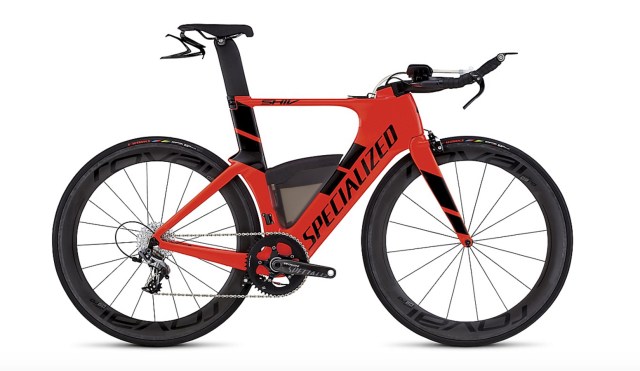
Shiv Hot Pink.jpgThe Specialized Shiv is a popular model of triathlon bike. But honestly, there are some colors of that bike that are nearly comical. In those instances, it deserves a name at the level of Boaty McBoatface. The men’s version in hot day-glo pink (above) would be wonderfully re-named as the Specialized Penis Extension. And you know the women’s version has to be named the Specialized Vag Supreme.

Specialized.Shiv_.S-works.2015

Take a look at that bike above. Bikes have become, in many cases, elaborate and even somewhat absurd in appearance. The only thing missing on this model is a toilet below the seat. But give them time. They’ll get there. The Specialized Shitz is not far behind.

Today’s triathlon bikes are quite similar to Rube Goldberg experiments in which cyclists bend themselves into crouched positions and pedal like mad to see if the whole configuration helps them go faster. The funny part is this: There are days when it works. And days when it doesn’t. See? Rube Goldberg lives!

That is not to say that bikes have not improved. The Specialized Shiv is an amazing testimony to a contraption designed to slice through the air. So perhaps we should just be honest and call it the Specialized Break Wind. I’ll fart to that.

We could be similarly honest with names like the Cannondale Contraption, the Trek Traction DVice and the Pinarello Pinnochio. That last one is because everyone knows that when you spend that much on a bike, you’re going to lie like a wooden boy to prove that you’re actually going faster on it.

We could also go the sensitive route by creating bikes specifically used for fundraising purposes. That’s why the Felt 4U would make a compelling public relations vehicle. The bike would have a panel just for stickers of good causes. After all, you could afford to replace one of those Felt logos with an American Cancer Society sticker on a bike like this.

Felt bikes.jpg

But if we got really honest, we’d be naming bikes for what really happens out there. That would mean the BMC Bonk, the Giant JGD (Just Got Dropped) and the Canyon Dynamic DNF.

Would love to hear your take on what bikes might be called. Granted, Bikey McBikeface may already be taken. So you’ll have to be original. Got any suggestions?

BE ORIGINAL

WRARFrontGraphic


Posted in cycling, Uncategorized | Tagged , , , , , , | 2 Comments

Hard on the streets and Back On My Feet

Jim in his wheelchair.jpg

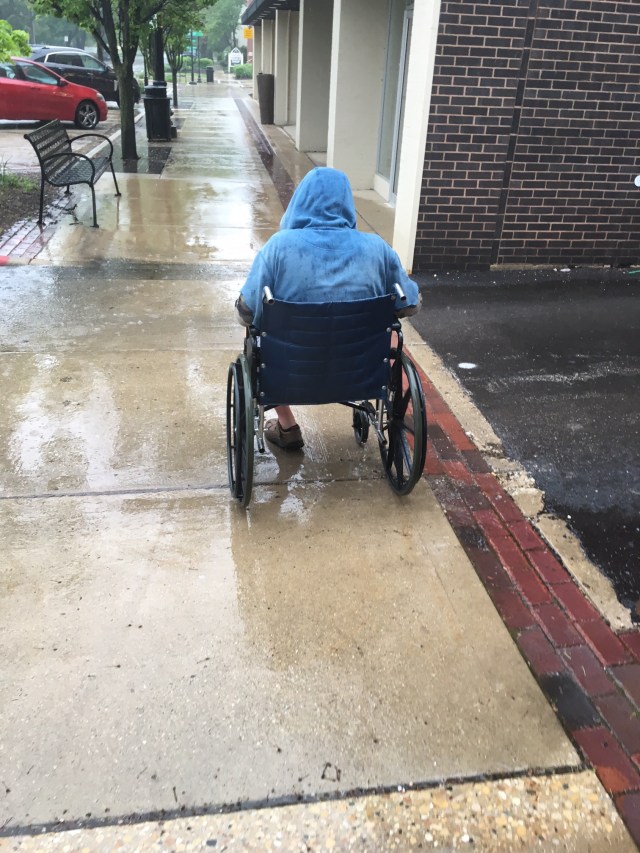
A local homeless man named Jim was given a new wheelchair to replace this one. Read more about his story in today’s We Run and Ride. And please give to Back On My Feet, a charitable organization that uses running to help the homeless in many cities.

I guess you could say this was a serendipitous morning. My encounter with a homeless fellow this morning was something unexpected, but illustrative. My son Evan Paul Cudworth is running the Rite Aid Cleveland Marathon this weekend to raise money for a homeless benefit group called Back On My Feet. Here’s a link to his fundraising page. Evan worked with this organization when he was living in New York City. Please support his run to benefit this worthwhile organization. And read more about the story of Back On My Feet.

A chance meeting

There are many mornings when I choose to get out of my home office to work on client content. There are actually six or seven Starbucks near my home. Each has its particular benefits. I’m not the type to get all possessive of a certain table, or become too much a creature of habit. Part of the benefit of getting out of the home office is the feeling of fresh circumstances.

This morning it was pouring rain, and after dropping my fiance at the train station I pulled up to the Starbucks in town. It was raining so hard that I sat in the car for a while listening to an interview on Sirius radio. The Opie radio show was conducting a fascinating interview with newsman Tom Brokaw, one of those moments when it pays to sit and listen. I laughed when he said that conservatives think him a bleeding heart liberal and liberals consider him a Rightie Wing Nut. Categories don’t work for everyone.

Out on the streets

Then the rain let up a touch and I jogged across State Street to Starbucks in downtown Geneva and ordered my low-fat turkey sandwich with green shaken iced tea. Then I sat down to write.

In the door came a man in a wheelchair. The shoulders of his gray sweatshirt were stained dark from the rain. The front of his shirt was discolored from years of use and the camouflage sleeves of his undershirt gave the impression that he was a veteran hard on his luck and living hard on the streets.

He gave me a smile as he made his way through the restaurant. “Hey,” I said. “How goes it in the chair today?”

His tanned face opened into a smile. “Not bad,” he said.

His name is Jim.

Rough condition

Jim wheeled around to buy himself a coffee. Someone had treated him to a cup. Then he parked his chair in the open space of the cafe. I studied the condition of Jim’s wheelchair. All my years of caring for my late father in a wheelchair had taught me a few things about how and where wheelchairs eventually give out. The arm rests, for example, always take a beating. I noticed that the arms of Jim’s chair were cracked and rough.The chair looked a little wobbly too. It’s always the little irritations that make life in a wheelchair most miserable.

So I asked him, “Could use a new chair?”

He blinked and wheeled closer. “I’ve got one you can have if you like. It was my late father’s chair, and it’s still almost new.”

We agreed to meet outside the Starbucks in 15 minutes. I drove home and brought the newer chair back in my car. When I arrived the rain was coming down hard again. Streams were pouring down the gutters. My new acquaintance was tucked into the alcove of a storefront, sitting out of the rain.

I left the new wheelchair in the back of my car and came over to talk with him until the skies let up.

Lack of feeling

“How’d you lose the leg?” I asked.

“Diabetes,” he responded. “They want to take the other one too. But I told them they can’t have it.” His other foot is turning orange. “I have neuropathy,” he chuckled, stomping his leg to demonstrate the lack of feeling in his foot. “I have a little nephew that likes to jump up and down on my foot because it doesn’t hurt me. He thinks it’s funny.”

We waited out the worst of the rain. I asked him where he lives, and whether he had tried getting a spot in the homeless shelter in a nearby town. “They’re always full,” he told me. “I been up there four times and there’s no room.”

On the road

Geneva bungalow

The little brick bungalow in Geneva had 750 square feet of living space. We were grateful for it always.

“How do you get all the way there?” I asked.

He made a wheeling motion, and laughed. “Just me.” The homeless shelter is 2.5 miles away. I know the distance because the road that leads to the church where the homeless shelter is covered by a Strava segment. I’ve ridden it many times. In fact, I used to live on that street in a little brick bungalow. I’ve run thousands of miles up and down that street. I cannot imagine pushing a wheelchair that distance even once. Not with one leg and a diabetes-damaged foot.

“Do you collect disability?” I asked.

“$700 a month,” he told me. “It’s not enough to live on. I got a choice. I can either live outside and eat, or I can live inside and starve. So I live outside.”

“Where you do you keep your stuff?” I asked.

“In the woods by the train station,” he told me. “I yank a small tree down with a rope, and hang my stuff on the tree. Then when I head out I let the tree snap back up.” He gestured to the sky.

“Does anyone try to steal your stuff?” he asked. “Oh nawww,” he smiled. “But coyotes do. I have to whack them with a stick to keep them away,” he said, making a poking motion with his arm.

Parking spaces

When the rain lets up we started our trek to the home of his aunt and uncle who live three blocks away. “They’re set in their ways,” he informed me. “But they let me use their garage and stuff. We can take the new chair there,” he said.

As we worked our way through town he took pains to cut the tangents the way world-class runners do when trying to cut time on a course. So rather than following the sidewalks, we jaywalked from parking lot to parking lot, cutting across parking spaces in many places. “There’s a lot of crazy drivers out here,” he tells me. “I almost get hit four times a day. They don’t care.”

The curbs present a problem. The inclines of parking lots too. He gets stuck several times, then pauses to sit in the rain in the middle of a parking area for a moment. He looks up at me with crystal blue eyes, a little bloodshot at the corners. “I get tired,” he laughs. The things most of us take for granted present constant obstacles for Jim.

That’s his name: Jim. Jim smokes. He also coughs a little. Then he gathers his strength again and we wheel on toward the home of his relatives.

Friends and family

IMG_8455It turns out Jim and I attended the same high school. He remembers my younger brother, the basketball player. Then he recalls in interesting detail the death of three guys that he’d known from his 1978 class. “They were driving 130 miles per hour on Crane Road,” he mused. “They hit a tree and the car was full of open liquor and all that. One guy told the cops not to look inside.”

The story seems random at first. But it seems also a comment on the passage of time and how many people seem to fly off the handle on hard streets, wasted by tragedies of their own making. Jim does not seem to see his life as a tragedy. In fact, he declines my offer to get him some financial help.

Then we talk about his family out in California. “It’s warmer out there,” I offer. “You wouldn’t have to freeze so much.”He smiles. “We don’t get along that well,” he admits. “And I don’t have the money to get out there.” But that makes me want to help him all that much more. If he got on a train, or a bus, or a plane. And someone was willing to take him in…who knows?

But we’ll see. Such is life. We are both freed and bound by our relationships. The first step in all this was getting Jim the newer chair. At least his life is incrementally easier.

Cold circumstances

There was still one part of Jim’s story of homelessness that was hard for me to reconcile. “How do you make it through the winter nights?” I ask.

“I freeze,” he admits, clutching his own shoulders. “But I have this sleeping bag that’s good down to -81 below. So I wrap myself up in that.”

Down by the tracks. In the woods. All winter long. Homeless yet determined to live by a certain ethic. “I like to make it on my own,” he responds when I asked if I could do some fundraising for him.

Stories and contradictions

There are all sorts of contradictions in the life stories of the homeless people that I’ve met over the years. Their tales often don’t make sense in conventional terms. There is often no A + B = C logic to the sequences leading to their homelessness. With men like Jim, there are clearly profound health issues at work. But for so many homeless people, life is a tarsnake of confusing circumstances. Sometimes there is a form of mental illness involved. Other times all it takes is a major medical problem that can wipe out a family’s savings and net worth. Even the popular singer Jewel lived in her car for a while. Homelessness is seldom the product of just one thing.

"homeless - please help" signBut when you see young people working the hard streets in downtown Chicago or New York or any big city in the world, it can make you cynical. They post or hold up signs scrawled in dried-out Sharpies. These give the elevator pitch of their homelessness. “Need money to take get to Iowa,” they might say. Or, “Homeless and need food. Please give.”

There was a most lovable homeless character in the Amy Schumer movie Trainwreck. Comedian Dave Attell plays the homeless guy who makes comments about Amy’s existence. One morning as she passes by attired in an obviously hot outfit, he calls out: “What’s the matter, did church let out early?”

The homeless I’ve encountered are not without humor. They’re people like you and me. Yet they are different, by circumstance.

Too real for reality

Some of the elevator pitches of the homeless seem too clearly conceived to be true. And indeed, if you dig deep enough, some are carefully constructed lies. But they are all clearly designed to sell survival. We can choose to be suspicious of these stories and methods, yet they are not so different from the most sophisticated advertising campaigns on earth, or the pitch of politicians to earn your votes. It always a message with a slogan a bit of closure. We’re all selling something. Acquisitiveness and survival. One and the same.

 

Evan Running

Evan Cudworth on one of his training jaunts in Chicago. You can support his run in the Rite Aid Cleveland Marathon this weekend by visiting his Back On My Feet fundraising page. 

Here’s how you can genuinely help the homeless…

As noted: I guess you could say this was a serendipitous morning. My encounter with Jim this morning was something unexpected, but illustrative. My son Evan Paul Cudworth is running the Rite Aid Cleveland Marathon this weekend to raise money for a homeless benefit group called Back On My Feet. Here’s a link to his fundraising page. Please give to this worthwhile organization. And read the story of Back On My Feet.

This is a cause all of us who run, ride and swim should support. 

GIVE FULLY. SEEK JUSTICE. LOVE LIFE.
 

WRARShirtGraphic

Posted in Uncategorized | Tagged , , , , , , , , , | 2 Comments

On the subject of cyclists, roads and toilet seats

Me on SpecializedMidway through a climb on one of the favorite local cycling roads I had the pedals moving at a good cadence and was feeling good about this year’s fitness when a red pickup truck flew by in the other direction as a voice called out from inside the cab.

“Faggot!” someone yelled.

I get the culture differences going on here. We all know that certain people don’t like to share the roads with cyclists. The argument typically goes like this: people who drive motorized vehicles are the ones that pay the taxes that fund the roads. Therefore, those who drive cars and trucks have more rights than cyclists, who supposedly don’t pay a dime for the roads.

Only that’s not how reality works. Millions of cyclists also drive cars and pay the same fees and taxes that other people pay. The Rules of the Road very specifically guarantee cyclists the right to use public roads. In fact, drivers of motorized vehicles are in many places legally required to give cyclists a full three feet of space when passing a person riding a bike traveling in the same direction in the same traffic lane.

Many motorists consider cyclists these rules an inconvenience at best and an annoyance as a matter of daily existence. There is also a breed of motorists who view cyclists as an affront to their God-given right to drive on the road without interference. These motorists think like the lead character Todd Rundgren song Emperor of the Highway:

I am the Emperor of the Highway
I wield the Universal Will
One might chance to overlook on my Divineness
Unless I’m sitting in the Imperial Poupe de Ville

Leave it to Todd to cut through the crap. It’s the perceived presumption that cyclists think they’re better than everyone else that pisses off so many motorists. This presumption enrages people who think their personal rights are being infringed by having to actually accommodate cyclists on the road. It’s an affront to their sensibilities in the driving sphere.

Those so offended will use almost any excuse and express their frustration through insults at any cyclist they encounter on the road. They make no distinction. They plainly hate all cyclists, from little old ladies pedaling putz bikes to road cyclists in close-fitting kits.

The angry reactions directed at cyclists can get quickly personal. When angry motorists can’t think of anything intelligent or sufficiently forceful to say, they tend to use insults that are easy to shout, and don’t take too much thinking.

That’s why the word “faggot” as shouted out the window of the red pickup. Clearly the goal was to insult my masculinity somehow. Faggot is a term once-used to describe homosexual men. It was originally meant to be derogatory, but as noted on Dictionary.com: “The terms faggot and fag are both used with disparaging intent and are perceived as highly insulting. However, faggot (but not fag) is sometimes used within the gay community as a positive term of self-reference.”

It’s the same thing with the term “nigger.” When used by black people to discuss black issues, the term nigger takes on entirely different meanings. Nigger can become almost a term of endearment or relationship when used as an inside joke to describe problems common to the black community.

That use of the term “nigger” is almost a reverse parallel to the manner in which the Inuit people have a vocabulary that includes many different terms for snow. It’s all about sharing common experience and its practical applications. When something is seemingly similar but really is not, it can be quite empowering to take hold of that dynamic and own it.

Now that we’re culturally working through new range (and age) of gender identity issues, there is plenty of backlash toward those advocating more rights about gender identity. The Internet is abuzz about companies seeking to accommodate people who are transgender or who claim a gender identity of the so-called opposite sex. To clarify, this is how Gender Identity is defined for cultural purposes:  Gender identity is one’s personal experience of one’s own gender. All societies have a set of gender categories that can serve as the basis of the formation of a person’s social identity in relation to other members of society.

Hundreds of thousands of years of human evolution have produced considerable variation in the bodies and minds of the human race. Yet it seems there are people who still can’t handle the fact that diversity in race and gender have always played a part in that biological history.

To some people, that diversity is a fact to be celebrated. To others, it’s a cause for tribal reaction. In one of its most massively flawed explanations for the diversity of the human race, a story from the Bible about the Tower of Babel insinuates that the many languages that evolved among human beings over the centuries was the direct product of God shattering common language and scattering people over the face of the earth.

From Genesis: “Now the whole world had one language and a common speech. 2 As people moved eastward,[a] they found a plain in Shinar[b] and settled there.

3 They said to each other, “Come, let’s make bricks and bake them thoroughly.” They used brick instead of stone, and tar for mortar. 4 Then they said, “Come, let us build ourselves a city, with a tower that reaches to the heavens, so that we may make a name for ourselves; otherwise we will be scattered over the face of the whole earth.”

This act apparently pissed off God pretty thoroughly. Here’s what God was supposed to have thought and done:

5 But the Lord came down to see the city (Babel) and the tower the people were building.6 The Lord said, “If as one people speaking the same language they have begun to do this, then nothing they plan to do will be impossible for them. 7 Come, let us go down and confuse their language so they will not understand each other.”

8 So the Lord scattered them from there over all the earth, and they stopped building the city. 9 That is why it was called Babel[c]—because there the Lord confused the language of the whole world. From there the Lord scattered them over the face of the whole earth.”

This tale seems to contradict the entire mission of Jesus Christ, which is to unify the peoples of the world under one common faith. Yet Christianity struggles even to agree on the interpretation of the opening chapters of Genesis and whether God literally or metaphorically created the world in seven days.

So people struggle to find a common narrative in all this anti-historical nonsense we’re taught to believe about the world. As a result, some make choices based on the lowest common denominator they can find.

For example, they take the Bible also at its literal word about sexuality. This becomes a common denominator of sorts. And in defense of this archaic worldview, there have many insults invented to describe all those who don’t abide by the same tribal background or behaviors. Each new wave of immigrants to America gets the stiff-arm treatment. Catholics and Protestants for centuries fought over their relative interpretations of the bible. And where the Christian faith does not preside, Muslims have also resorted to tribal responses and slaughter each other with veritable glee to this day.

So the foundations of all this fuss over “gender identity” has deep, tribal roots going back to the dawn of recorded history. People can’t handle the idea that someone outside their “tribe” of heterogamy should have even basic rights such as access to the restroom of their choice.

It goes to show where the real asses of this world can be found. It also explains how people who think of themselves as righteous can actually turn into plain and simple assholes.

If they follow the example of how God acted in the whole Tower of Babel story, it’s no wonder people are such jerks to each other. Go back and read that piece of inane literature about the Tower of Babel again. It’s not even a good folk tale. Seriously: Is almighty God really threatened by the idea that the human race is going to climb up a Tower and get him? And we really must ask this question: does God also hate capitalism, because he seems to genuinely fear human enterprise at its core.

We don’t hear these types of questions coming out of the tribal mouths of cultural and capitalist warriors. Whenever the Bible or some other book contradicts their entire worldview, they just don’t want to hear it. They’d rather drive a curious or considerate soul right off the road than have to slow down to question their own ideas about who owns what.

With God as their original witness, perhaps the road hogs of this world are simply following a really bad example from scripture. They prefer the petty, jealous and possessive God to the God of Grace and love. They turn their God into the Emperor of the Highway, and happily abide by his example both on the road and in the restroom, where no transgender or gender identity cheek shall ever meet the same seat as those who claim to be Emperor of the Toilet as well:


I am the Emperor of the Highway
Strapped with foolish mortals such as these
I need never indicate my intentions
I can stop and go and turn just as I please

SEEK JUSTICE. LIVE FULLY.

WRARFrontGraphic

Posted in Uncategorized | Tagged , , , | 1 Comment

When a coach wants you to fail

IMG_3978Over time I’ve had some good coaches and trainers. When you know the person guiding you, there’s typically an etiquette to the relationship. If something difficult needs to be said, there’s a time and a place. That’s how good coaching works.
But not all coaches and trainers use the same tactics. Some spill it out right then and there. And while it hurts to be told “You suck, Cudworth!” it does get the point across. Harsh, and sometimes effective. But not always.

Safe space

There is plenty of criticism these days of college students complaining that they need a “safe space” in their lives. The backlash to that request is part of the hate speech now directed at millennials for the general perception that the new generation wants things handed to them, and without criticism.

I don’t buy any of that argument. If anything, the many millennials I know are their own worst critics. Their complaints are often a reflection of being hard on themselves already. Have you seen the workload so many high schools pile on these kids? And then, colleges want these same kids to be rife with service or volunteer experience. And it better genuine at that, or they won’t consider you for admission.

Changing dynamics

Competition just to get into colleges is fierce. That’s true both academically and athletically. The days of the diversified three-sport athlete are essentially gone. Poof! The pressures to excel in one sport require athletes to spend literally all year in training for volleyball, basketball, soccer, football or whatever sport is either chosen or assigned by their parents.

And speaking of parents. They can be the problem, not a solution to all this. I’ve spoken with many coaches over the years that have told me, “I would love this job of coaching kids if it weren’t for the parents.” Hovering parents show up at practices and demand answers from coaches. The cycle goes round and round with the kids in the middle.

Pressure points

But the fact of the matter is that parents have to be advocates for their kids in many cases. A parent I know learned the hard way that his high school student tennis player was being left off the team his senior year even though his son had earned his way to second spot on the roster. It turned out that unless the kid took private lessons from the head coach he was basically banned from the team.

So this entire system we’ve created for academics and sports and the workplace is founded on arguably false premises. Companies now have the right to demand “unpaid internships” in which students work like slaves for no pay. “To gain experience,” they’re told. But exactly what experience or impression are they gaining? That their work has no value? That getting compensated for your time is a decidedly precious perk that you don’t really deserve?

Competitive world

Our culture at its best builds wonderful opportunities for competitive testing and growth. But our culture is failing not because we are being too soft on kids, but because the expectations have become so specialized and strained there is often no room for self-discovery or exploration. This has been happening for years to professional athletes who devote their lives to making the NFL or NBA. We push them through school in many cases without a sufficient education. They last a year to three years and make a bunch of money perhaps. Yet a high percentage of them are close to broke when it’s all said and done. This is a cultural failing. And yet our society mimics its dynamics all the way down to Pre-K soccer and football.

How many young athletes do you see playing their “favorite sport” from the age of 5 through the age of 12 and then they’ve just “had enough?” The fun has gone out of it. They’re smart enough to see what comes next. Year-round practices. Expenses their parents have to bear. Games on early Sunday mornings and late at night. It’s no wonder there is burnout among athletes of many types. But the opposite can be just as bad. I once coached an athlete who was participating in four sports at once. He was enrolled in soccer, football, basketball, baseball. His parents told me, “He does best when he’s busy, because he has ADD.” Sheesh.

Some parents do learn the art of balance and are able to positively guide their children through to success. These are the kids who achieve both academically and athletically. When you meet these youth, they are impressive beyond belief. And it’s pretty well accepted that today’s athletes in sports such as basketball and football and volleyball could kick the ass of all those generations before. Strength training is responsible for much of that, and intensive coaching. Yet for all this intensity and success, who is actually measuring the collateral damage?

Kids also cheat and take steroids. That’s how pressure-filled this world can be. They’re just imitating the role models above them. Track and field is apparently still a dirty sport at the top. So was cycling for many years. Who knows if triathletes are drug cheaters too?

Participation

This pressure to achieve is countermanded by a culture that has tried to reward and encourage kids that participation is just as important as winning. And like they say, half of success in life is just showing up.

Yet there’s been big criticism over the last 15 years that kids coming up through the system are rewarded too frequently and earn awards just for showing up. Some people scoff at participation trophies for young kids. They think it makes kids soft. Personally, I have experience as a kid getting cut from a baseball team the first time I tried out. It drove me to better things, and when I made the team, I actually pitched in the semifinal game of a city championship. But not all kids are wired the same. Some will never go out for a competitive sport. Yet the benefits of learning teamwork, how to work on your mistakes and exhibit good sportsmanship are all still cultural values we want to encourage. Right? That’s the entire foundation  of the corporate world, right there. So participation trophies are designed to reward that commitment of time. No harm done.

Finisher medals

And let’s be honest: getting a “finisher’s medal” for completing a race is nothing more than a participation trophy. If we applied the same standard to running a marathon as we do in criticizing a little kid for getting a participation trophy for playing baseball for a season, it would sound like this: “So what if you ran 26 miles! People do it all the time! Millions of people! Every year!” Yet we’ve created that dynamic in sports for big people. And that is somehow different? I think not.

Still, a certain segment of society loves to believe that it’s had a much tougher time getting along in this world than the rest of us. These are the very same people excoriating millennials as somehow soft and inferior. They rip into college kids and young people in the workplace as lazy and too demanding for their age. They bitch about kids wanting to be paid a fair wage for their jobs.

But the fact of the matter is that our economy has refused to raise wages for everyone who participates in the workforce. Wall Street wants its profits, and it’s going to get them. Same with the shareholders. And the corporate executives. By the time it comes to raising the wages of the people who actually do the work, the trickle-down effect has worn off. Petered out. Dried up. Reagan was wrong. All the Bushes too. The cost of living has gone up but across the board in so many occupations, salaries have not gone up. The wealth that formerly sustained the middle class has migrated to a very small segment of society.

Jobs up

In terms of total jobs since 2008, things have gotten better for the American economy. Yet the wage pressures that remain have embittered much of society.

Meanwhile, attempts to create equity in the corporatized system of health insurance we’ve created have resulted in growing pains. The costs of including people formerly excluded from health care are real, and people don’t like paying more into the system as a result. But again, is it Obamacare causing these rate increases, or is it an industry spoiled by its own habitual and grotesque profit-taking that is slamming middle-class Americans?

If you trace this pattern with your finger you will see that the health insurance industry has employed the very same tactics as corporate America in refusing to treat its constituents fairly. Our healthcare system is corporatized in a bureaucratic fashion. The wealth of healthcare is stuck at the top. Companies like Blue Cross and United are not going to budget from their profit-taking. If they don’t like how much money a plan is making, they simply cut the plan and shove people into a different one. That’s not Obamacare at work. That’s greed.

Divide and conquer

That dynamic has pitted everyday working Americans against each other, and that’s where the money lords like things to be. It’s true in the investment and financial world, where we’re being told that banks are “too big to fail.” And, when given taxpayer money to bail them out of the crisis they created, many banks doled out big cash bonuses or held parties to reward their fat cat employees. Talk about participation medals…

And to think that people have the gall to criticize a bunch of desperate recent college grads as acting too privileged.  So there’s another meme to which we should all pay attention. It’s the basic phrase that we should not criticize until we’ve walked a mile in another person’s shoes. 

You’re the coach

Imagine if you were actually coaching some of this younger generation. What would you tell them to help them succeed? Would you personally look them in the eye and tell them they’re spoiled and lacking motivation? Would you insist that you’ve had a much harder life than them so far? Would you tell them they don’t deserve to be paid a reasonable wage for going to work?

I have kids who are millennials. I have friends who have kids that are millennials. I do not know a single one that is lazy or unmotivated. I do know they bear the burden of college loans at levels our generation could not comprehend. They bought into the system as they were told or encouraged to do. And the system does not care about them. So they complain a little. Just like older people complaining about the costs of healthcare. We’re all trying to figure out what it means. And the answer is simple: we have to fight back, and do it together.

Bad coaching


Society is acting like a snotty trainer or coach who secretly despises his athletes. His own failings drive him to show contempt for those trying to better themselves any way they can. And rather than keep those opinions to himself, the bitterness and bile escape into shrill criticism. These same attitudes have flooded society as a whole, poisoning politics and social discourse. This anger seeks targets, not discussion. It refuses to acknowledge success where it occurs because that is too big a threat to the obvious failings of the people doing the s0-called coaching. The voices of these bad coaches can be heard railing through the waves of talk radio and TV news outlets that have ads to sell and profits to make. They know that anger and complaint sell best. So that’s what they market. And people buy it. And repeat it. And elect candidates who seem to use the same microphone like a bad coach screaming at his athletes to suck it up and come along with him, or you don’t get to play.

It’s almost like working with a coach who wants you to fail because to witness the success of others, especially those you consider inferior, would just be too hard to take. Do you see anyone in today’s politics who embodies those values? If so, you better watch out. A bad coach can really screw things up.

SEEK JUSTICE

WRARShirtGraphic


Posted in Uncategorized | Tagged , , , | 5 Comments

Don’t worry baby

I never qualified to run in the Illinois state track meet. I ran the qualifying time of 4:29 in the mile but placed seventh in the race and only six could go, as I recall.

That same day a guy long jumping for a local school came tearing down the runway and wound up face first in the landing pit. He’d been doing cocaine or amphetamines before the meet and basically wound up fainting in mid-air. It was the strangest thing to witness, some guy hitch-kicking through the air and then going limp as he flopped in the pit, arms and legs akimbo.

The entire scene felt surreal that day, running down that long last straightaway of my senior year in high school. There was a large sign above the finish line ticking away the seconds. I’d run 4:29 in five previous meets. That was the likely result of trying to do too many events in dual meets, and not doing enough raw speed work to cut the two or three seconds that should have come easily. But a typical dual meet included running the two-mile, high-jumping, triple-jumping and running the mile. I was trying to help the team win meets. But it was not the way to truly improve at any single event.

Consolation

Despite my failure to qualify, a crew of us decided to go down and watch the state meet anyway. We could get a tan and cheer on a few of the guys we knew from other schools. That just made me jealous. We piled back in the car and headed north toward home.

On the way back we were driving the long stretch of road on Route 47 when I spied some girls from the high school I’d attended before my father moved our family ten miles east and out of that district. They were all girls I’d hung around with, and I called out as we passed and they waved back.

“You should have mooned them,” someone in our car suggested.

Girls moon.jpg

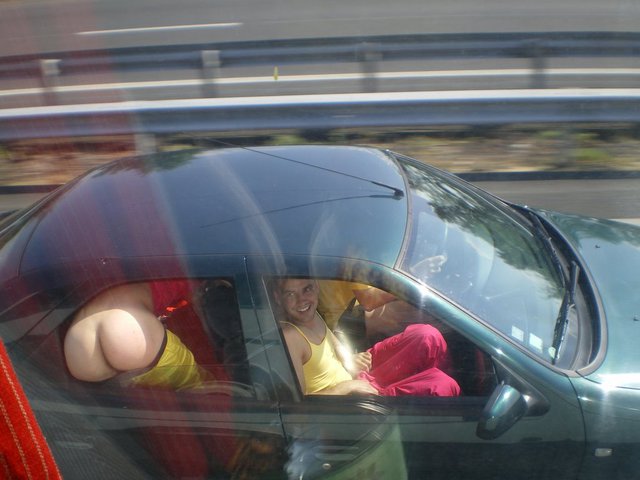
Then their car came roaring past and they beat us to it. There was an ass in one window and several sets of boobs being shown. So we retaliated with a fruit basket or two, and from there it was a back and forth of body parts. We were all laughing uproariously and it was a bunch of childish fun.

But I also noticed a face I liked. So I called up one of the women the next day and asked her for a date. We went to see the movie Shampoo, starring Warren Beatty and Julie Christie. It was a ribald tale of a hairdresser who got laid a lot, and the costs of that lifestyle. After the movie I took her driving in the country. We pulled the car over and we got a little busy in the late spring heat. That felt like quite a bit of consolation after not having qualified for the state meet. I no longer cared how fast I was, or that my former school had just won the team championship at the state meet. Several of my former teammates were individual state champions. Suddenly, I did not care. It’s amazing what women can do (and for) to your head. Even if it’s just one night.

Most of us go to that place of sexual approval in one way or another. Think about the song “Night Moves” by Bob Seger. Both characters in the song are getting what they can. It’s an equal motive.

I was a little too tall
Could’ve used a few pounds
Tight pants points hardly reknown
She was a black haired beauty with big dark eyes
And points all her own sitting way up high
Way up firm and high

Out past the cornfields where the woods got heavy
Out in the back seat of my ’60 Chevy
Workin’ on mysteries without any clues
Workin’ on our night moves
Trying’ to make some front page drive-in news
Workin’ on our night moves in the summertime
In the sweet summertime

Some men get that brand of equality pretty early in life. They understand women. It’s either because they have sisters and see that they’re simply human beings with urges just like men.  But some men just have the natural knack for appreciating that women are people too. They know how to talk and laugh and engage with women by nature.

Of course, not all men are like that. The entire history of sit-coms is basically about that subject. Women have lamented the shortage of good men since the dawn of time. Even Eve had her man troubles with Adam. Dude could not keep his mouth shut. Got them kicked out of a sweet garden in the process. Put the blame on Eve right then and there, in front of God. Well, goddamnit! There’s a lesson people don’t talk about often enough in the Bible.

Keep on keeping on

Still, we somehow find inspiration in each other as partners. That’s true for same-sex couples as well. It’s true with everyone. The vagaries of love require some level of risk.

And when you put your guts out there in some endeavor, it helps to have someone backing you up. I’ve always loved these lyrics from the song “Don’t Worry Baby” by the Beach Boys:

She told me “Baby, when you race today
Just take along my love with you
And if you knew how much I loved you
Baby nothing could go wrong with you”

Oh what she does to me
When she makes love to me
And she says “Don’t worry baby”
Don’t worry baby
Don’t worry baby
Everything will turn out alright

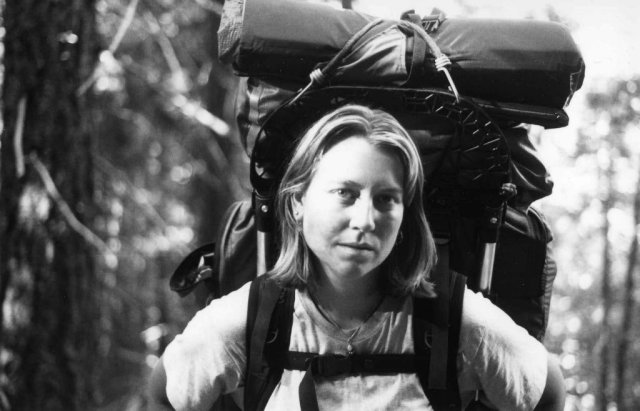
CherylStrayedphoto1In the book Wild by Cheryl Strayed, she comes to the end of her hike up the Pacific Coast Trail and comes to realize that every experience she’s had in life had merit. Even the heroin and the wild sex. “What if it taught me something? What if I wanted to sleep with all those men?

She had discovered the fact that even our mistakes can add up to good. Even bad relationships. They still teach you something.

It simply doesn’t pay to repress all our urges to try things. We don’t learn anything that way. Too many repressed individuals wind up bitter and controlling in their relationships. Then they carry it over to their life and their politics.That’s true for women and men.

Repression is defined as: the action of subduing someone or something by force. Stop and think about that for a moment. How well does it truly work to try to force anyone to do anything? People may do it because they’re forced to comply, but they come to resent you in the end. Bad bosses and bad leaders use force. Good bosses and good leaders encourage and lead by example.

Self-discipline vs. repression

That is not to say we don’t need controls in our lives. Self-discipline is far different from repression. There are so many examples where the Bible is actually referring to self-discipline when people choose to turn it into rules of repressive law. Jesus objected to that approach by the religious leaders of his day. He preferred instead for people to have motivation from their hearts. For certain, Jesus also taught that there are limits of satisfaction that come from indulgent behavior.

This is true even in our sporting endeavors. It’s possible to get carried away in any sport. Running. Cycling. Swimming. Triathlon. Marathon. Ultra-marathon. On it goes. At some point, there are physical and mental limits. Sometimes we don’t even acknowledge the sense of diminished returns we get from the effort and time invested in any pursuit. That’s true in both vocational or avocational circumstances.

Addictions

Me on SpecializedThere are also addictions to all sorts of things in this world. At some point, I recognized a running addiction in myself that required a bit of intervention. I was so captivated by the idea of being competitive well into my late 20s that there were other things in life that could possibly have been neglected. So I backed off. That’s an ironic form of self-discipline, perhaps, but just as real. I probably could have competed well into my 30s, but at some point, what was the point?

Backing off meant that my ego was no longer fed by winning races. But that also meant there was time to dedicate to raising a family. I kept on running for mental health, doing a few races every year when time allowed. It was hard to no longer be the best guy on the starting line. But learning to measure and value myself beyond athletic achievement was important too.

Diversifying

Later in life I took up cycling, because longevity in exercise is important. All those years of running did result in some wear and tear. It’s funny how all this feeds self-image and that baseline desire to prove yourself to the world or your yourself. It probably doesn’t end until the day we die. We’re wired to desire those night moves and the feeling it gives us to be wanted or desired.

And so we run. We ride. We swim. Some of us do all three. But don’t worry baby, everything’s gonna be alright.

SHOW RESPECT.

WRARShirtGraphic

Posted in Uncategorized | Tagged , , , , , , , , | 3 Comments