Racing through time at a walker’s pace

By Christopher Cudworth

Dr. Joe is the ER physician who referred me to the amazing collarbone surgeon at OAD Orthopedics, and Joe sent a text this past Sunday afternoon just before my wife and I were going out for a walk.

His message said: “Going out for 2 hr easy ride. Care to join me?”

Wondering if this was a test of some sort, it was tough to tell whether to text back or make a call. I decided to call.

“Hi,” said Dr. Joe in his inimitably positive voice. “How’s the recovery coming?”

“I’m being cautious,” I told him, as my wife listened. “They have not had me in for physical therapy yet, but that starts next week. In the meantime I’m moving the arm plenty and trying not to lift anything too heavy. I don’t want to be stupid.”

“That’s good,” said Dr. Joe. “Let pain be your guide. You’ll find your limits. By next year you’ll be perfect. You won’t even know you had it done.”

“That’s the goal,” I told him. Then I glanced over at my wife. “When I told Linda I still wanted to get out on the bike this fall, she said, ‘2013 buddy…”

“Ha ha ha!” Dr. Joe agreed. “Yeah, you don’t want to pressure things. Just keep doing what you’re doing.”

It’s always good to hear from a doctor that you’re not goofing things up. But there are some twinges and spikes when you get a collarbone fixed.

So it was walking time again this morning. 4 miles at a modest pace on a riverside loop that follows an old railroad line. I remember when trains used to trundle up and down the tracks, now replaced by mostly smooth pavement, except where willow trees push up bumps and lumps and throw the occasional runner or rider for a loop.

Walking along it was fun to stop to pet a few dogs that looked like mine.

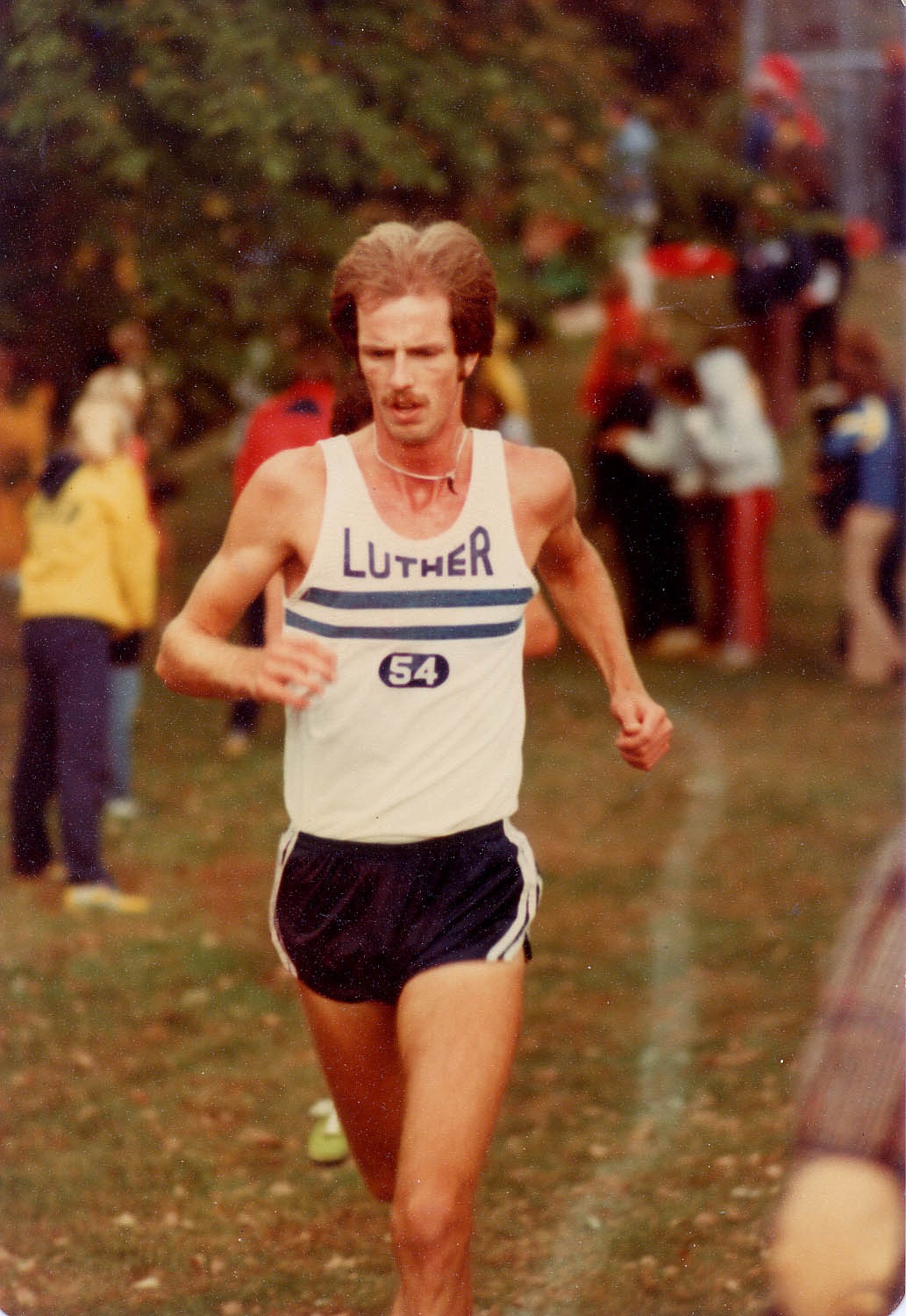
But then I was alone on a long, straight stretch of trail that rose slightly to the north. It struck me that this was the exact spot in a 10K race where I’d finally broken open a few strides of space between myself and the guy in second trying to chase me down on the long incline toward the finish.

The course was 6.2 miles and the last 3 were all slightly uphill. We’d gone through 3 miles in under 15:00 and the stress of that pace was accentuated by the slight rise we were not climbing. It was much in terms of a hill, but you felt it then.

It is strange how different experiences can be in space and time. How one can recall those racing sensations like they were just yesterday. Yet here I was walking along in Columbia hiking shoes with yellow-rumped warblers flitting and chipping everywhere around my head. The height of fall migration for songbirds is upon us.

There were so many autumns where I could not afford to slow down even for a second to look at the migrating birds. Training sessions where competition was so fierce you could not see straight. Races where pausing a second to cast and eye on a bird could cost you the race. Yet I did manage to rubberneck fast enough one time to see a phalarope swimming along the edge of a golf course pond in central Iowa. I still won the race but wanted to go back and get that bird identified more closely to add to my life list. I warmed down in that direction but the bird was gone. You win some, you lose some.

These days the sumacs are in fall color like team pennants waving as you walk by. They don’t care how fast you go, or how slow. They’ll all be laying on the ground in a week or two.

It is best to cheer yourself along at this time of the year anyway, for it is easy to let the seasons pass too quickly. Sure, there are thousands of runners gearing up for their October marathons. Chicago is in one week. I know at least 20 people signed up and ready to go. But even they should take it easy this week. Nothing to add to the mix at this late a date. Taper and compete. That’s the marathon way.

It just proves we’re all actually in a race to slow down and take notice of everything around us. The sumac pennants wave. The birds move through the trees on their way south. I walk north and then head west toward home. My time to run will come again. Just now it is time to mend. And race through time at a walker’s pace.

Posted in We Run and Ride Every Day | Tagged , , , , , , | Leave a comment

When life deals you s***, you still have to smile.

Linda, Chuck and I at Big Rock Forest Preserve.

It can be said that athletes are at greatest risk when they’re not doing much of anything. We’ve all heard stories of pro athletes chopping their thumb tendons while cutting carrots before a game. Or sneezing and causing a back spasm. That happened to former Cub Sammy Sosa, and he was out for a week.

Well, I bent over to pick up my shoes today and bingo! Back twinge so profound I can now hardly stand up or sit to type this blog.

So be it. Just another setback in the recovery from the bike accident. Still can’t run anyway, although I trotted 30 yards the other day to test out my legs. Discovered that the hamstring I bruised so terribly is also not quite right. So that will be fun to rehabilitate too.

Meanwhile I received a text from the emergency room doc from Cadence Health, who is a triathlete and cycling buddy. The text read: Heading out for 2 hrs. Want to come along?

I called him back. “Just kidding,” he told me. Probably testing my commitment to a sound and reasonable rehab. Wants to know I’m not out cycling already, and risking another crash. His surgeon friend did too good a job to go blast it apart on a bright autumn afternoon.

So it was ginger walking for me today, with the wife and dog. We all had fun and got home safely. Except for Chuck. He pooped a little greasy and wound up back in the tub for a cleanup after I gave him a big bath yesterday. He looked betrayed when we hauled him back there with the soap. But that’s life. Sometimes you get your ass kicked, like I did bending over to pick up my shoes. Other times you get your ass washed, like Chuck did for an inefficient dump.

We also encountered something that appeared to be making a shitty face at the lot of us. Funny how the universe can conspire to greet you with an ironic sneer, even on a bright, sunny, September day.

When live deals you shit, you still have to smile.

Posted in Uncategorized | Leave a comment

Excuse me, Sir or Madam. Are you going to wear those running shoes forever?

Forever shoes. That’s how people who buy and wear running shoes for daily wear but are not really runners seem to view their rubbery footwear.

Example: Standing in line one morning behind a woman wearing a pair of near-legacy New Balance running shoes, it struck me that the rubber heel and midfoot area had aged to a decomposed-looking gray-green patina. That is a sign that the rubber in those shoes is far beyond its expiration date.

The sad truth is this: That woman is far from alone. Millions of people seem to think that running shoes simply never wear out. They will wear their running shoes until they literally fall off their feet or turn inside out from the stress of trying to hold up under their bio-mechanical deficiencies. I have seen running shoes so broken down from pronation (collapsed arches) that the inside of the shoe is literally touching the ground. Likewise, there are people who supinate (lean their foot to the outside) so profoundly the fifth metatarsal is scuffing the ground like windsurfer in a full gale.

Not a good strategy for foot or leg health. That holds true whether you run or not. If you are an actual runner and your shoes look like that, you do not deserve to set foot on the pavement or any other running surface. You are too delusional to run.

Sorry, it’s the truth.

The problem of “overwearing” running shoes is common, and found near and far. I once asked my own mother-in-law how long she’d had a pair of running shoes and she told me, “Six years.” And then my own  brother-in-law showed up to a family gathering in a similarly ancient pair of Nikes. His were 8 years old. I quickly reminded them that running shoes are not designed to Last Forever.

Neither of these beloved people in my life are stupid. But many people do like to stretch their luck in life. Otherwise casinos would be out of business.

Here’s the truth about running shoes. After a year or so the rubber begins to degrade. The support slowly (and sometimes quickly) gives out. Pretty soon a person with any sort of bio-mechanical deficiency is essentially walking around in a pair of shoes that actually make their foot and leg problems worse, not better. And people wonder why their bodies hurt?

The trend in purchasing running shoes for casual wear is reportedly on the increase. That trend was documented in the business news in 2012. Yet a current Google search turns up more information about fashion advice on the merits (for better or worse) of wearing running shoes as casual wear. In fact most men’s advice columns warn against wearing running shoes, especially so-called “retired” running shoes for any fashion situation.

For one thing, old running shoes often stink. Guys: women really do not like stinky shoes in any situation, especially in their carefully coiffed apartments. Plus running shoes really do not look as good with jeans as you think they do. Get a decent pair of boots for your jeans. If you must wear running shoes with your shorts, have the common sense to buy some low-cut socks. Otherwise you will look like the character Kip from the movie Napolean Dynamite.

But the women I’ve known who have stinky feet go to great lengths to hide the fact, until it becomes so evident they just cave and admit, “My feet stink.” Which is something most guys never have the class to do. Because usually they don’t notice. And that is far worse than copping to the fact.

Wearing running shoes for casual wear is a favorite thing for seniors. Usually they buy the absolutely hugest pair of running shoes they can find, like those New Balance shoes with nine different layers of rubber between your foot and the ground. Of course seniors who fall off a shoe that high have been known to kill themselves or at least break a hip or leg bone. So it seems the greatest risk to seniors who are purchasing running shoes for casual wear is the sum height of the footwear. Anything over 3″, which is about how thick those NB running shoes actually seem to be, should be avoided for those with crappy balance.

New Balance seems to be one of the favorite brands of running shoe footwear for non-runners to buy and wear around. Something about the design or the name or the look and feel of New Balance shoes appeals to non-runners. Perhaps it is the big N on the side that makes it look a little simpler, and therefore remedial in nature. Maybe New Balance buyers think it will actually teach them to walk again. That’s what New Balance means, right? No more stumbling over curbs or stubbing your toe on furniture.

Some models of New Balance shoes are so huge your foot and toes cannot possibly enact with the chemical or molecular composition of the universe.

And that brings up another point: It may be that New Balance shoes are actually anti-gravity shoes in disguise. No one has actually tested this theory, but absence of evidence is not evidence of absence. Take a close look at those moon boots on Neil Armstrong on the moon. Those shoes he’s wearing look a lot like an early model New Balance. There may actually be a large N on the side, but none of the pictures seems to show that clearly.

Of course there are some people who think the whole lunar landing scene was fake. That does not change the fact that Armstrong might have been the first person to wear true running shoes for casual footwear. It was the 1960s after all. True running shoes were just being invented. No one knew not to mix their sport with their general appearance. It took all the 1970s to figure that out.

Then came the 1980s and absolutely no one knew where to draw the line. I mean, for God’s sake, we elected an actor as President, who turned around and appointed an End Timer in James Watt as Secretary of the Interior. By extrapolation that means at least half the country who favored such policies apparently thought the world was officially coming to an end and it didn’t matter what you wore out in public. That explains the years 1983-1989 pretty well. And the music too. The Big Hair. And shoulder pads in women’s clothing.

I will myself admit that in the 1980s I wore a pair of New Balance training shoes until the soles wore clear through. But my explanation was that I could not help myself. I was obsessed with running like no one you’ve ever seen. 80-mile weeks. 24 races a year. I just kept running and running in those shoes because they fit so well I could not tell they were wearing clean through. Then one day I felt water in my sock and came to a cold stop on the road. I took off my right shoe and looked at the sole and discovered an actual hole in the bottom. “Well, sonofabitch,” I said out loud.

But this is what amounted to sole searching in the 1980s. We all operated at a rather shallow level. After all, we had an actor we called the Great Communicator for a President. And he was followed by a Dana Carvey imitator.

But at least I did not retire those shoes to casual wear or try to make them last another 6 years because the rest of the sole was not worn out. Even I had more sense than that.

But now it’s time to skip ahead 20 years or so, and get real about our current situation. There are still people walking around in the world today who don’t know when to retire a pair of old running shoes. For God’s sake, people! Do you actually think we should return to the 1980s, the most superficial decade in history?

There are still people that superficial, who buy their running shoes at Kohl’s or K-Mart when those products are not even the real thing. The manufacturers all know they can pump out inferior crap and innocent people will buy it at those stores simply because it says NIKE or adidas on the side. That is the power of marketing at work.

I have personally tried those discount store running shoes and they are definitely not the same as buying running shoes at a real running store like Dick Pond or some other local merchant who actually cares what you put on your feet.

Even Dick’s Sporting Goods has the real thing, but you can’t trust ever other major retailer.

Here’s a simple rule if you’re a real runner: Buy your running shoes at a real running store. If you’re a basic consumer who will never run in your shoes, then at least trade them in every couple years. Otherwise you are breaking the Sane People’s Code (SPC) which is to not push your luck. But again, lots of people buy lottery tickets too. Shove them aside at the counter of your local quik mart. They are also delusional.

It’s actually okay to buy running shoes for casual wear. Just give a little consideration why you’re buying them, rather than the fact that they just make your feet look cool. They actually can help you walk and enjoy life if you get them fit to your feet and are actually purchased in mind with the type of walking or standing around you do in life. Let your running shoes help you, even if you never plan to run a step in them.

But always remember; running shoes are not Forever Shoes. Retire them after one year, two at the max. Don’t be cheap, because that’s stupid.

And always remember your casual and especially your “retired” running shoes really do stink. Everyone’s just too polite to tell you.

Posted in We Run and Ride Every Day | Tagged , , , , , , , , , | 2 Comments

If you’re looking for sympathy, you better get crackin’

The clavicle looking like a bank of cirrus clouds

The minute I crashed my bike into a ditch it occurred to me that I’d finally, at last get all the attention I deserved. After all, I’m the most interesting and handsome person in the world. Why shouldn’t everyone pay attention to me?

It’s too bad I wasn’t bleeding out the eyeballs. That usually gets the real sympathy. But lacking that it was sufficient to sit on the side of the road clutching my shoulder with one hand, and rocking back and forth in my dirt-stained cycling kit.

Ah, the wonders of being wounded. I recalled playing Army as a kid, when Amy the neighbor girl would play Nurse and chase my buddy and I around our golf course playground on dreary fall days playing World War II. The sandtraps made great bunkers. You could get shot, fall off the edge and tumble down like a Doughboy into the glorious sand, where Amy would patch you up with neckerchiefs and Band-Aids. It was the life of a soldier we wanted to live, that’s for sure. Amy with her deep green eyes and shiny hair would bend over to hold your wrist and check your pulse while you played dead. She made us really want to go to war.

Of course we knew nothing of the pain and devastation that war really wrought. It just looked romantic from watching jingoistic televisions shows like Combat on the black and white TV. After the day’s battles were done, we’d march home singing that theme song; “Da da da da dahhhh, dahht dah dahhhh, da dahhhhh….” Then mom would make us supper.

Something deep within us wants to be heroes. Amy was smart enough to recognize that need in two boys her age, and she got to hang out with us all day as a result. Once in a while we actually let her get up with our mock M-16s and shoot something. The enemy or whatever. Our guns looked pretty real, right down to the faux textures of the wood and metal on the stock and barrels. They even made loud noises when we shot.

By the time you’re a grownup, it gets a little harder to find excuses for grownup women to fawn over you. So you go do something stupid like crash your bike and then take your trip to the emergency room with EMTs checking your pulse and making sure you’re not going into shock. One of the EMTs in the Wisconsin ambulance hauling my broken body back to the Upland Hills Hospital in Dodgeville, Wisconsin was not so sure they had done their jobs right. She looked over to her EMT mate and said, “I think he should be in a collar brace. We’re going to get in trouble if he’s not in a collar brace.”

Collar bone. Collar brace. What’s the difference? I was strapped in a cart of some sort with ice cooling down my shoulder. The EMT in front of me was busy asking questions about my general health, allergies and whatnot. But the collar brace worrier was concerned about her scores on the scale of care it seemed.

Fortunately we pulled into the Emergency Room before too long and they hauled me off to a quiet room where the Serious Nurses went to work making sure I wasn’t going to kick from shock or anything like that. Then they laid me back on the bed all tied up in straps and IVs or something to wait for the Real Doctor to show up.

He looked like an insurance agent, not a doctor. Just a normal guy in a maroon polo shirt who seemed like he just stepped off the 9th hole to get a hot dog. In the meantime, he’d check out some post-middle-aged nut that crashed his bike and ship him to x-ray for confirmation that the crunching sound coming from the shoulder was indeed a shattered clavicle. It didn’t take a Mechanical Genius or even a Real Doctor to see that. The picture looked like a map of cirrus clouds. Only it was bones. Busted.

And boy, was it. Shattered, I mean.

Once we knew that, there was nothing more to do but crack out the Vicodin and get back to the campsite. My camping crew fanned out and found my bike where it was stored at the American Player’s Theater. They even got the helmet too, which for some inexplicable reason the EMTs left sitting in the ditch.

Back at the campsite a batch of helpful Mother Hens attended to my needs, fixing sandwiches I could eat with one hand and shoving me a Vicodin and stool softener every four hours.

Ahhh, this was the life, I thought to myself. No worries. Sympathy is great.

I mean, sympathy is great in the absence of all other normal human emotions. It’s not normal to crave sympathy, I will admit. But that kid in me who loved to die over and over again in battle, only to be nursed back to life by the neighbor girl Amy still lives within me.

Sleeping in the tent overnight was no picnic, but we weren’t scheduled to head home till the next day and I was pretty sure, given the power of the Vicodin and the fact that the shoulder did not hurt that much, that I could sleep. And it was true. But I still got plenty of sympathy for sleeping with a broken collarbone on an air mattress overnight. People might have even thought I was pretty tough. Fooled them though.

The worst part, as I’ve previously explained, was getting up to pee and shivering so bad I thought I’d crack the other collarbone.

Then we got up, packed camp and drove home. My friend’s wife is a Real Nurse, not just a play nurse like Amy the neighbor girl, so she took me straight the ER at Cadence Health (Central DuPage Hospital), a highly reputable hospital in Winfield, Illinois. Real Nurse Francie even held my hand when the Mean Old ER Dr. Joe, a cycling friend of mine, told me I was screwed. “That will need surgery,” he said. And Dr. Joe knows. He’s a near miracle worker I am told. An ER doctor who can read people’s minds, it is said, and fix things even specialists seem to miss. Perhaps Dr. Joe was a Gypsy or a Medicine Man in another life. Or perhaps he’s both of those in this life. He is, after all, a triathlete who recently finishing a full Ironman. So he fits in some sort of miracle-worker category.

He showed me sympathy too, which was really nice because ER doctors are not required to do that. They see all the stupid things people do to themselves in life and even the best ER doctors are prone to become jaded. But not Dr. Joe. He put a hand on my good shoulder and said, “We’ll get you fixed up.”

That’s all I wanted to hear. Just like faux nurse Amy.

All the sympathy since the surgery has been really great, like basking in a great big attention-getting wet dream, where everyone feels sorry for you walking around in a sling and wants to know what on earth happened to you. Hitting the earth is exactly what happened to me. I even made a divot.

So you get to tell the story over and over again, and young women make that “sorry for you” face they reserve for uninteresting older men who got hurt, while older women make that “you’re a lucky damn fool” face reserved for men who should know better. And guys just go, “Yeah, dude, You’re lucky you didn’t break your freakin’ neck.” Which passes for sympathy among Guys.

So if you’re looking for sympathy, I highly recommend you go out and crash your bike or trip over a root while running. Break something on your body in two and then bask in the pleasure of all the attention you’ll get. It’s a great way not to feel invisible in the world.

But I cannot, unfortunately, guarantee that it will not hurt some, because you just might possibly permanently damage something. Just to earn your status as a pitiful case in the eyes of your peers and strangers. And that’s rather pathetic. But I couldn’t help myself.

But let’s face it. When it comes to getting a little sympathy, some risks are just worth taking.

Posted in Mechanical Genius | Tagged , , , , , , , , , , , , , , , , | Leave a comment

Do hairy legs make me a better man?

Mid-summer form. Saved legs in July. Let’s ride.

Standing on the 8th tee of a golf course on a boiling hot afternoon, I stepped up to address my golf ball with a driver on a long par 5. Everyone else in the foursome had already taken their turn, and no one had hit the fairway. In fact no one seemed to care at that point. It was so hot the sweat was streaming down the backs of everyone in the group. A service cart had come round to our foursome offering cold drinks and towels soaked in ice. The temperature was 94 degrees and the humidity, 80%.

Golf is a weird game, especially when played using carts. In a typical round you cover 18 holes averaging 400 yards (perhaps 7000 yards, or 5+ miles) and you walk perhaps 1/4 of that distance when you’re playing with a cart. No one’s really gong to get fit that way. Yet a round typically takes 4-5 hours to play. A good cyclist can do 80 miles in that time. I always remind my wife of that fact when I’m gone 3 hours on a Saturday morning. “Hey, at least I’m not a golfer. I wouldn’t be home for another hour and a half, and I’d be drunk to boot.”

I grew up with the game of golf, usually carrying my own bag, but have never gotten obsessed with the game to the point where I felt compelled to play it all the time. I’m a casual golfer, who shoots in the high 80s to low 90s. My best score for 18 holes is an even 80 strokes. My handicap is… that I don’t care enough about golf to work to get better.

I’m not embarrassing myself out there but neither am I capable of tearing up the course with my golf scores machismo. There are times when I wish I could. But then I crush another one into the woods and tell myself, “Get real.”

I think other golfers sense that attitude. Which is perhaps why one of the guys in the foursome whom I did not know all that well felt compelled to dig a little deeper about something in my appearance on the golf course.

As I stood over the ball to prepare for my drive, he looked down at my legs and asked: “So, you a cyclist or something?”

I stepped back, knowing the source of his curiosity. It was my shaved legs. In this heat, they were glistening in the sun. That’s what may have set off his Macho-Meter.

“Yes,” I replied.

He gave his chin the requisite Hard Guy nod. Sensing a little competitive dig about my masculinity in his question, I stepped back up to the ball and crushed it down the middle of the fairway. Do not challenge me, I intended the drive to say.

Then I declined to ride on the cart and told them I’d walk to my own ball. “When you guys get back on the short grass, let me know.”

Sure, it was a jerky thing to say. But the implication in asking about my shaved legs with that judgmental tone was just one of those things that ‘real guys’ (and especially real golfers…) can’t seem to resist. Of course, its bullshit.

After all, I didn’t inquire about his fat belly protruding out the middle of his golf shirt, and say something like: “So, you drink a lot of beer?”

After all, that’s a choice he makes, drinking all that beer. And it shows too.

Of course lots of men have fat beer guts and play golf. Some of them play excellent golf. John Daly is the king of good golfers with massive beer guts. In fact there are days out on the golf course when you start to wonder if having a beer gut and looking saggy and out of shape are requirements of the game or a code of some sort? And if having fat beer guts and playing golf are acceptable social behaviors, why should being fit and having shaved legs be considered odd?

I get the fact that having a shaved legs is considered effeminate by some men. Perhaps they would  prefer not to be seen on a golf course with a man who shaves his legs? That seemed to be the point of the comment.

A few holes later the conversation came back around to my shaved legs and the group wanted to know why cyclists do that.

“Tradition,” I told them. “It’s a tradition in cycling. It has some roots in treating injuries and getting massage, but really I think most cyclists shave their legs because the top athletes in the sport do it, and it looks better in some ways to have shaved legs with those aero kits. It also feels better to have shaved legs under the lycra. Overall it’s just more comfortable and efficient.”

A couple of them turned away to make some sort of expression to the trees across the fairway. It was obvious none of these guys would ever dream of shaving their legs.

Yet there I was, shooting decently on the golf course, driving the ball as far as any of them, and putting with the best of them. I shot 85 that day. The best guy in the foursome had an 81, while the other two shot 94 and 101. It was a tough course.

The peanut gallery at home

When I first started shaving my legs 8 years ago my wife jokingly called me “Lady Legs.” She teases me about everything I do, so I didn’t expect any less.

Her brother, by contrast, was a CAT 3 cyclist who shaved his legs for cycling for many years. When he noticed my tan, shaved legs at a family gathering, he smacked me on the side of the thigh with the back of his hand and said: “There’s nothing like riding with shaved legs when you’re fit and its hot outside and a sheen of sweat beads up on your skin. It feels like you’re flying.”

Damn right. He understood. In fact each year he goads me a bit when I’m lazy by April or May and have not shaven my legs by then. “Are you gonna get going this year or what?” he wants to know.

Riding hairy

In 2012 the weather first turned really hot in May and all of my Saturday group was still riding hairy through that month and into April and early May, when in fact the weather cooled for a while.

But then June hit and the temps soared and one day I was out riding solo and looked down and something just didn’t look right. After 40 miles I got home, took out the electric shaver and knocked the hair down to the nubs and then shaved with my Schick until the skin turned smooth and fast-looking. Cycling season was on.

My wife said, “I knew you’d give in sooner or later.”

“Feels good,” I told her. She hates the nubs when I miss a day. Can’t blame her.

Once you’ve ridden with shaved legs it is hard to go back to riding hairy. This summer and in recent years there have been more and more male riders skipping the whole routine. These are good riders too, of all ages, that can ride you off their wheel at 24-26 mph at will. So you feel a bit stupid riding along with your shaved legs when those guys drop you and disappear over the next hill.

When you show up at a criterium and every rider has shaved legs and that carnival feeling of primed athletes fills the atmosphere, you’re almost always glad you’ve got shaved legs. It raises some questions. Is shaving your legs some sort of invisible tattoo? Is it peer pressure? Sure it is. What segment of society doesn’t have peer pressure?

Tattoos

Look around you. So many young men and women seem to be getting permanent tattoos.

They can say all they want that they’re doing it for themselves. That it’s a personal decision. But if it is so personal, and not a product of personal narcissism, why get so many very public tattoos that run down arms and legs, over breasts and genitals?

All tattoos are calculated for some type of impact. Tattoos are the innermost being pasted to the outermost self. They also seem to be some sort of release to help deep inner anxieties and fears. Why else would NBA players plaster themselves with tattoos like ancient warriors? Men have been going into battle for centuries all cut and colored tas a sign of threat against the enemy, to hold themselves together battle. It is superstitious. Supercilious. Superintended. Superfluous. But most of all a tattoo is the signature for a desire for attention.

And so is shaving our legs for cycling.

We cyclists who shave our legs cannot claim to be free from the same sort of narcissism and desire for attention that afflicts the rest of society. Cyclists preen and flex and bulge their way to the starting line. It is part of a ritual. Skintight outfits. Bright colors. Expensive bikes. Sunglasses that cost $250. Road cycling is an elitist sport. It’s expensive. It is frankly a world to itself, which is why so many serious cyclists won’t even look up to say hello as they ride by. They are self-absorbed. “I’m in my own world,” they seem to say. Some of that is concentration. But a chunk of it is accumulated arrogance. Let’s not lie to ourselves. Cycling is a self-absorbed activity in many respects.

Of course some of this is the product of necessity, heightened to a caricature. Those skintight suits are required to avoid wind drag. The shaved legs don’t help much there, but it would seem to make sense that it helps a little. Together the skintight suits and shaved legs do give the overall impression of speed and smoothness. So it is a calculated attempt to create a mindset that suits the sport. Shaved legs. Fast times.

Riding in bas releif

The better cyclists, both men and women, are souls hardened by hours of efforts on the bike. While I’ve been a runner all my life and have suffered plenty of pain and discomfort in competition and training, it feels like I suffer more on the bike. There’s something about being locked to that machine, dragging it up the hill pedal by pedal stroke, that humbles you right to the core, and carves those memories into your mind like a bas relief.

Given that tradition of suffering, it is somewhat ironic that male cyclists should engage in something so tender and intimate as shaving their legs before going out to kill themselves. Well, we’re contradictory people. The sport itself is full of contradictions. We ride in groups but want to beat each other in a sprint. We charge uphills until our legs fail, then charge down the other side pedaling twice as hard just to see the cyclometer read 50. Nuts, it is. Cycling is nuts.

Cyclists are like Seinfeld’s Kramer, who went Commando with the happy cry…. “I’m out there Jerreeeee….And I’m Lovin’ It!”

Other shavers

If we’re talking machismo and body shaving, why are swimmers and more importantly, those fake pro wrestlers castigated for shaving their bodies? Those big, muscular, shaved and oiled wrestlers go bonkers on each other with the crowd cheering bloodlust. No one questions the fact that they shave their legs. And arms. And chest. And who knows what else? Are people just scared to ask the question, or is the homoeroticism of their appearance and outfits too confusing for the average Pro Wrestling fan? Now that’s a question worth asking, to find out some honest reasons for interest in the “sport,” which really isn’t a sport at all. You catch the drift?

By contrast, everything’s real about cycling. Well, except the doping, and the cheating and even paying other racers to let you win. That’s the soap opera side of the sport. A topic for another day.

For now all we can say is that it’s clear from the prevalence of the practice that shaved legs do not make anyone a lesser man. As for whether shaving your legs make you a better man (or woman) depends on how fast you can ride your bike.

It seems there’s only one person who can determine all these questions for you. And that’s you.

Posted in Mechanical Genius | Tagged , , , , , , | Leave a comment

The miraculous power of healing

Healing is a miraculous and beautiful process

Think of the worst accident or injury you’ve had in life, and you may be inclined to dwell on the incident itself. Perhaps you crashed your bike. Tripped or slid on ice and broke a wrist while running. Or maybe you’ve been in a car accident that hurt you physically and emotionally.

All accidents are difficult to bear. They make us regret our actions, our circumstances and our bad luck.

But once the shock is over, the healing begins. Or so it should be. We must recognize that for many people, the healing process can never be fully accomplished, at least in the practical sense. When people lose limbs or practical functions such as one of the senses like sight or hearing, healing must take place in a different way. People work back to a point where they can deal with life.

We think of soldiers coming home from wars in Iraq and Afghanistan and our compassion for the wounds and trauma they suffer through battles and terrorism and our hearts and minds should be filled with compassion and gratitude for what they have suffered in our name. There should be no politics over issues such as these. Their healing and aid, whatever form it must take, should be our nation’s top priority.

Where healing begins

Where healing begins for many of us is in the head. We start to think about what we need to feel better. With luck and blessings there may be people there to guide us. But lacking that, the body and mind retain the miraculous power to heal. The physical changes alone that seal cuts and ease bruises are beyond comprehension in many ways. Evolution has provided the body with all the chemicals and processes the body needs to heal many wounds. Some would say God does the work of healing, not evolution. But whatever combination of beliefs you choose to apply, the fact remains that our bodies can do marvelous things to repair broken parts and heal everything from skin to bone to muscle.

Your body’s responses

When you’re really broken, as after a crash on your bike, there is soreness and stiffness that comes from swelling in response to the trauma. What a miraculous gift right there! The body stiffens and prevents you from doing things that might stretch or further traumatize your broken parts. Muscles naturally tense and even spasm through swelling so that you can’t stretch or degrade your situation even further. It can take days, weeks and months for the effects of swelling to wear off. We ice and heat the injured areas sometimes to help regain motion, but truly the body is going to proceed at its own pace.

The drugs and manipulations we apply to help healing are simply aids to the natural processes already at work. If surgery is deemed necessary, it is usually designed to enhance the healing process and repair the basic problem. Beyond that, the body must take over the mending and recuperative process.

That can seem to take forever. Our lack of mobility can drive us crazy, test our patience, lament or misfortune. We do need strategies for that.

Dealing with inactivity

It is difficult for people used to running and riding for hours a day to suddenly be rendered immobile by injury or pain. The mind comes to a jolting stop when that happens. The anxious among us can go stir crazy without the daily release of endorphins to lift our spirits and sort out our twisted thoughts. Instead you’re confined to the couch with an ice pack, watching out the window while injury-free runners and cyclists roll past without a care in the world. It can make you feel pretty bitter.

Best to find an activity to occupy your mind. Reading is probably best. It allows you to take in information at your own pace, and without inundation of heavy sounds or visuals that can set off stimulative responses related to the ‘fight or flight’ instincts our minds use to respond to stress. That’s why watching TV or other programming that contains negative or violent imagery may not be best for the healing process.

But then again, if you like watching Mel Gibson chop off heads in the movie Braveheart, (this link is to quotes from the movie, that might satisfy you…) and it serves your competitive instincts while you’re recuperating, that’s your choice. Just be aware of the balance you should try to achieve in your mind as you set about healing your body.

Sometimes even miracles take time

The truth about healing is simple: It takes time, because it requires time. The body’s natural processes work much like the overall pattern of human evolution. The growth or repair of cells is incremental, using the existing fiber of our natural construction to rebuild torn tissues and reconstruct broken bone. The busted clavicle which is now healing in my body has been positioned through surgery for alignment so that it can knit the bone back together. That is why we are required by physicians to wear a sling for a while, to immobilize and protect the healing bone so that the bone cells and fiber can grow back together. We’re like lizards that can re-grow our tails. We get a second chance. All that healing power is built into our miraculous bodies.

On God and our animal heritage

You can say that God designed it that way, but never forget that our animal history is replicated all the way down through the taxonomy of creatures even to the bacterial level. And think about that: our bodies are highly dependent on productive bacteria in our gut to help us break down and process food. Take away those little partners and we all die.

The wife of a friend who was battling cancer died not from the disease, but from the fact that a treatment regimen proved too strong for the bacteria in her gut, and she could no longer process food for nutrition. It cost a life. Basically her system was overstressed in a bad way, but it was the symbiotic relationship between the bacteria needed to turn food into nutrition that was broken.

That illustrates how complex the healing process can be. It also shows the complexities of evolutionary history among living things in this world. We share these types of symbiotic relationships with billions of other forms of life on earth. But rather than making you feel like you are on par with a worm, that knowledge should enervate you with the knowledge that you are truly “connected” to the universe right down to the cellular and elemental level, with all its highly evolved systems of life and healing. And if you see God as creator of all things, then you’re right at home with this knowledge.

Running and riding are forms of active healing

We should consider the context that our training and exercise regimens are essentially a form of “active healing” based on positive stresses to make us healthier by testing our systems and calling them into daily action. This is a basically a form of rehearsal against disease and illnesses caused by inactivity, germs and viruses. We all know that one of the greatest risks a runner or cyclist in heavy training faces is to become overtired and susceptible to viral infection that can lead to cold or flu. In those circumstances we say that ‘our resistance is down’ and that is true. A body wracked by fatigue cannot implement its defenses against germs or viruses. Our blood systems are too busy trying to heal our exhausted muscles and lymphatic systems can’t contain the disease. We’ve basically exhausted our own healing powers. That cycle has flattened many an athlete in training.

Some medical journals have theorized that many forms of cancer are actually based (and even begun) through bacterial or viral infections that set the stage for radical changes in our cellular systems and genetic processes. Some scientists are now focused on that process and how controlling our genetic responses may be key to preventing our curing cancers.

Creating positive stresses

You can begin to see how the positive stresses we apply to our bodies through exercise can indeed make us healthier and guard against disease if managed with complimentary diet and rest cycles that provide the restorative power needed to heal the body after stress. The miraculous power of healing is inherent to most of our bodies. We test these powers daily through workouts, then turn around and encourage the healing to take over and get us ready for another day.

Many people combine recuperative practices such as massage therapy to encourage the body to heal itself. A good massage has miraculous healing powers, but anyone who uses massage frequently knows that it is as important to rehydrate and protect the body after a massage because the muscles release all kinds of the bad stuff we’re trying to cure, such as lactic acids and other waste products that need to be flushed from the body for maximal health.

Massaging the mind

The same process works in the mind. There is now considerable evidence that exercise can be helpful for people with anxiety, depression and other mental health issues. How encouraging to know that there is a natural starting point for dealing with some degrees of mental health. Similar results have been ascertained from practice of yoga, meditation, deep breathing and prayer. All these meditative practices encourage calm, consideration and mindful awareness of our selves, in the present and beyond. The mind also has miraculous natural healing powers. It is simply ours to pursue and discover them.

Viewing your exercise program as a form of healing can put all sorts of challenges into perspective. We are less likely to stress over a down day on the road or bike if we consider that our effort still functioned as a form of daily healing. And if not, we might need to step back and examine our priorities. Even our worst race results, and sometimes our best, must be put in perspective of the lifelong goal of better health and the miraculous power of the body to heal.

With these perspectives in mind, we can encourage others and even evangelize the benefits of our athletic pursuits without projecting our personal goals or desires upon the people we meet. It is simply ours to share the miraculous power of healing with those who might benefit from it. Encouraging others to get out and walk, or ride, or run…and even swim! is one of the best gifts we can give to others. Go and give freely.

Posted in We Run and Ride Every Day | Tagged , , , , , , , , , , , , , , , , , , , , , , , , , , , , , , , , , , , , , , , | Leave a comment

Are we all just road kill on the highway of life?

If you put in any amount of mileage on the roads you will sooner or later encounter road kill. It is seldom a pleasant sight. But here is a highlight reel of some of the most common species of road kill.

Raccoons.

Plenty of those, right? I once saw a grown raccoon running across the road with a full bag of Wonder Bread in its mouth. Talk about making a couple of interesting choices! Crossing the road is dangerous enough for wild animals without lugging a full bag of Wonder Bread along with them. Of course if that raccoon got hit in some Southern states the locals might break out the bread, carve up the meat and have lunch right there on the side of the highway.

Opossums.

These smiley little critters were never meant to live in North America, did you know that? They evolved down in South America and have moseyed their way up to North America on their own. No one even checked their passports. They are the ultimate illegal immigrants, and not even suited for our climate. Their naked ears, designed originally for heat dissipation in the tropics, can’t take the cold and get blackened and frostbitten when they wander out in the sub-freezing weather. And to make matters worse, possums are sloooow. They couldn’t cross the road in a hurry if their life depended on it, and it often does. That is why you often find possums lying dead with a weird smile on their face. It’s as if they were saying, “Ha ha. Guess the joke’s on me.”

Skunks

At least these critters seem to get in the last word when you hit them on the road. They let off a stink that says “Screw You Buddy” that can last for days. We humans might take a lesson from skunks and learn to spray our enemies in protest or as a last statement on how life itself can stink. Think of the office politics! How sweet would that be? Don’t like your co-worker. Just lift your tail and spray them! Companies would have to stock tomato juice in the lunchroom.

Squirrels.

Oh. My. God. Anyone with ADD should appreciate the difficulty of being a squirrel. I know I do. So many choices. So many spins and turns and indecisions on one little stretch of road. Then WHAM! The choice about where to go and when is made for them. One more Frisbee squirrel on the highway. Autumn and spring are the worst times of the year for squirrel kill. In spring the squirrels are horny and stupid, which is kind of redundant. In fall they’re hungry and preoccupied, which is redundant as well. You get the picture. Squirrels have so many tough decisions to make and they really seem to suck at making them. So I do brake for squirrels, which is an oxymoron, because they do not brake for you.

Deer

Deer look so innocent and nice. They are out to kill you.

In the eastern states of the US, deer are just about as common as squirrels. That means they’re getting hit on the highways nearly as often as their smaller, rodent buddies. But hitting a deer with a car is no small deal. They can total your car and cause death and injury.

We might take this all for granted were it not for the fact that deer are a little higher up on the evolutionary intelligence scale compared to squirrels. Take the deer in this picture. She’s actually distracting you with that one cute ear while a badass buck sneak up behind you to take you down. So don’t think they don’t conspire to crash a few cars on the road. Of course we’re fighting back white “deer whistles” and other warning devices. But do you think a deer with evil intent is going to listen to some high-pitched whistle? Get real. Better pay attention to those Deer Crossing signs rather than whistle your way to eternity.

Birds.

Well, what can you say? Anything that flies too low when it has the ability to fly higher is simply not fit for survival. That is why so many birds lay crushed and flattened on the highway. A species of bird known as the red-headed woodpecker even has the bad habit of dropping from their lofty perch in a tree, flying low over the road and then swooping back back up to land on another tree. Now, I got a “D” in 7th grade math, but simple geometry should tell those woodpeckers that if they fly straight across the road rather than dropping down low, they would not get smangulated by cars. Stupid woodpeckers are not the ones who will live to pass on their genes. Let’s teach those woodpeckers how to fly right and save some lives. They’re too pretty to just give up and let them die.

Insects.

Most people I know spend 93.6% of their lives trying to avoid all contact with insects or spiders of any sort, so we won’t likely find much empathy for insects getting hit by cars and run over by tires. More like high-fives. So we see those grasshoppers and gnats and dragonflies splatting windows all summer long, and no one stops to bury them in the dirt. Insects deserve better than to become mere road glue, but is there an insect after life? A Bug Heaven? We’ll have to check in with other religions because maybe insects all come back as squirrels in other lives. That would sort of make sense, wouldn’t it? There’s something else I’ve always wanted to ask as well. Do insects have insex? Leave your comments below.

Butterflies.

Well, boo hoo on this one. It always sucks when a nice-looking butterfly gets blasted by a car or truck. Take your typical Tiger Swallowtail. Beautiful, right? Flying along happy on a sunny summer day, then it happens to get sucked into the vortex of highway traffic and Thwamp! Now it’s a hood ornament. This is simply the commodification of nature at work. Rather than go to all the trouble of catching and killing the butterfly, road kill shortcuts the process by pasting insects straight to the vehicle. Of course the odds really are smaller these days of getting an insect stuck in the grill. There’s almost no such thing as a grill on modern cars. More like a metal belly button. Dying butterflies just bounce off the aerodynamic hood and land behind us on the road where they get turned into temporary tarsnakes. Some of us miss the old days when those massive Buicks and Pontiacs had grills the size of a house. The only place to really learn biology was to check on the front grill on summer vacation. That’s where all the cool butterflies hung out.

Snakes, reptiles and other slow-moving, cold-blooded creatures

This Blanding’s Turtle is a protected species. But not when it hits the road.

People with an inherent fear or dislike of snakes may cheer when they see a dead snake on the road. But snakes really mean you no harm. They just want to get the hell out of your way. Even rattlesnakes give you fair warning when you tread on their turf. Most snakes don’t get even that basic respect when your tire smashes them flat on the road.

And turtles. There is simply no excuse at all for running over a turtle or tortoise with your vehicle. Evolution clearly did not anticipate the creation of giant hulking cars and trucks with metal shells and crushing tires. Cars are like turtles on massive steroids. In 14 billion years of evolution, the automobile just cropped up in the last century or so. So give those slow-moving turtles a break, will ya? Evolution is moving a little fast for their liking these days.

People.

Bet you didn’t see this one coming, did you? But yes, people get turned into road kill every day in America. Runners get slammed by drunk drivers and killed. Distracted drivers collide with runners and cyclists 50,000 cyclists times a year. Between 600 and 800 cyclists actually die on the road from collisions with motorized vehicles. People are road kill.

Runners are also at great risk, especially those who train at night or in adverse weather conditions. And what runners don’t do that? So here’s a cold, hard fact: people can be road kill just like animals.

That’s because we basically are just animals, comprised of the same genetic stuff as apes, with whom we share 98% of our genetic code. Of course there are plenty of people who like to deny our evolutionary history, especially twits convinced that all living things on earth appeared like blips on a TV screen 10,000 years ago. They make all sorts of arguments against the idea that humans have anything in common with other living things. They prefer to say we are specially created by God. But tell that to the cancer researchers using genetic theory to cure one of the world’s worst diseases. Creationism doesn’t help them too much. So why call it science, or give it an ounce of credibility? Creationists want to turn evolutionary theory into road kill. We can only hope the car backs up and runs them over on the anachronistic backlot of public policy.

Theologically, the fact that some of us get turned into road kill might be seen as some sort of proof that God seems to be failing the test of respect for life. Because if humans can accidentally kill other humans, especially those out enjoying a simple run or bike ride, then what moral justice is there really, in the world? It doesn’t add up. Scientists have good information that 99% of all living things that ever existed are now extinct. That means that we really are, essentially, road kill on the highway of life, because God doesn’t seem to care if life persists in one form or another. We all get run over eventually.

Drivers, cyclists and runners too easily forget the responsibilities of sharing the road.

But that is precisely why we are told by the major religions of the world (except those radical ones) to respect life, because are all just a road kill away from oblivion.

That means people driving cars should pay special attention to other people riding their bikes and running on the

road. The idea that driving a vehicle gives you some special gift to “own the road” is absurd. There’s no god in history that would support that opinion.

Public laws passed to protect pedestrians and cyclists on the road are specifically crafted to promote the basic consideration and respect for life. If by chance some of those pedestrians and cyclists on the roads show bad behavior or make mistakes, well, the human condition is not perfect, we all know that. When someone makes a mistake or acts arrogantly while riding a bike or running, that does not bestow upon you the right of martial law to you and your truck or car.

Cool down. Let the moment pass. Take pleasure if you must in the fact that you’ll still get where you’re going faster than those people riding bikes or running. Leave them in your rear view mirror. We get the fact that you think you’re superior because you’re driving a motorized vehicle. We don’t even care if you think you’re better than us. Just don’t run us over. On purpose or by accident.

And while you’re at it, keep an eye out for motorcyclists as well. Yes, we know they’re all crazy, those motorcyclists. But America’s Constitution and its guarantee of rights to liberty and life covers crazies like motorcyclists just like it covers your tank-like Ford Expedition.

Let’s face it. Road kill is never a pretty sight. But it surely needn’t involve human life. You might even try to go easy on the squirrels, raccoons, possums, deer and other critters while you’re at it. They’re just going about their business, trying not to become one of the 99% of all living things that have gone by the wayside.

If that 99% figure sounds familiar, it’s probably because we’ve been hearing it used in other areas of life as well. Which goes to show that some people really do think they own the highway, and don’t care if they run you over on their way to power, politics and personal ambition.

It’s a sad truth.

Posted in We Run and Ride Every Day | Tagged , , , , , , , , , , , , , , , , , , , , , , , , | 1 Comment

Riding the Tour with a busted collarbone

Photo from Dusty Musette. Quote from Red Orbit. Tyler Hamilton in 2003 Tour de France with busted collarbone.

“Riding with the pain of a broken collarbone, veteran American racer Tyler Hamilton won his first ever stage in the Tour de France on Wednesday after a brave solo breakaway effort.”
–Red Orbit website, July 23, 2003

The effort is legendary. Cyclist Tyler Hamilton rode to a Tour de France stage victory on July 23, 2003 with a broken collarbone.

Okay, sounds horrific, doesn’t it? Except I’m here to tell you that having recently broken a collarbone (fractured in two, actually) by crashing at 40 mph, there’s a funny little truth I’d like to reveal to you. Breaking a collarbone really doesn’ t hurt that much.

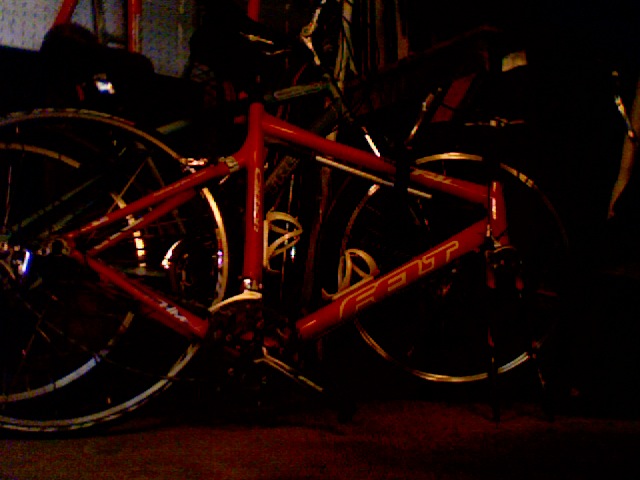
It hurt to hit the ground hard. For sure. But I didn’t black out from the pain. Luckily, and thankfully, I veered my wobbling, harmonically-challenged, gyroscopically disturbed Felt 4C into a grassy ditch. And maybe saved my own life. The worst thing that happened was that I dug up a divot with my shoulder and crunched my left clavicle in the process.

Cyclists do that shit now and then.

I’d made it 20,000 miles without a crash. This was apparently cosmic justice of some sort. I hope it is another 70,000 miles before I crash again, and then I’ll be too old to care.

But sitting there with my right hand holding my left shoulder, a surprising thought came through my head.

“I thought this would hurt worse.”

There was no stabbing pain. No throbbing even. Just a crunchy sound when I moved around. I admit I didn’t like that, but it was not disabling. Just creepy.

What really hurt was the back of my right hamstring. Two days later a giant purple bruise emerged. On the day of the crash, when I tried to crawl out of the ditch to get back up by the roadside to be seen, that muscle really hurt. It felt like my whole hamstring was torn. The back of my leg must have struck the top bar of the bike. When I tried to get up a shooting pain almost doubled me over.

Of course, my back was sort of stiff too, eventually. So the lesson was that crashing at 40 mph is going to cause some damage.

You should know you can also break your collarbone going much slower. I once rode 45 miles with a guy on a Saturday morning and then saw him the next morning at a criterium where we were both were intending to race.

Only my friend now had a broken collarbone, sling and all. I asked, “How did that happen? I just rode with you yesterday and you were fine!”

He said, “I was standing over my bike adjusting my front wheel when I got home. I leaned over too far and my cleats slipped. I landed on my wrist and busted my collarbone.”

So, you can imagine there was not too much trauma for the rest of his body if all he did was tip over from 3 feet over the ground. And I say he could have gotten on the bike that day and raced. If there was enough on the line.

That’s what Tyler Hamilton did back in 2003 in the Tour de France. His team physician slapped a diagonal tape job over the right clavicle and away he rode to not only finish the Tour de France with a broken collarbone, but win a stage along the way.

Now let’s be truthful here: Tyler Hamilton was an athlete with a high pain tolerance, known for his ability to dig deep and climb mountains with the best in the world. Plus, world class cyclists in general have a far higher pain tolerance than most other athletes in the world. So it is both remarkable and unremarkable Hamilton was able to pull off the feat of riding in the world’s toughest bike race with a broken clavicle.

But like I said, it was not the clavicle that hurt me so much after my bike accident.

If Hamilton landed in such a way that the collateral damage was not that bad, it would be possible to strap up the clavicle bone tightly, brace the rest of the body to compensate and get on your bike and ride.

Probably there would be moments where it did really hurt. I certainly cannot say I got back on my bike and tried to ride after the crashola. No one in our camp site would even allow me to get out of my chair without help. So I walked down to the washroom to show that I wasn’t completely disabled.

The next morning after sleeping all night in a tent on an air mattress, I felt stiff and wanted to make sure my body did not lock up completely. The worst part of the night was not sleeping through the pain of a broken clavicle, it was trying to pee in the cold night air outside the tent when I was shivering so bad nothing would come out. My teeth were still chattering so loud when I came back to bed my tent mate asked me, “What the hell were you doing out there?” I probably looked like a skeleton from the Danse Macabre.

The next morning I did get up and walk down a big hill and back at Governor Dodge State Park in Dodgeville, Wisconsin. That’s not exactly riding over the Alps with a bandage over a busted collarbone, but we all have our relative mountains to climb. I also did not have the competitive obligation to race for a team that desperately needed me, or take any more painkillers than necessary to hold off the pain.

Okay, we all know Tyler got busted for doping later in his career. Maybe he was doping back then, too. But doping doesn’t help you ride through difficult situations like a busted collarbone. Not really. That was sheer guts and panache. You can’t take that away from him. But you should know: The clavicle when broken does not give off  much pain all by itself. At least it did not for me.

Yet the visual of Hamilton riding with that sling bandage across his shoulder, shirt open and pained expression on his face should live forever in our minds. It’s a risky, tough thing to do, for sure.

It’s been almost four weeks after the accident since I rode my bike. The Felt 4C still sits in the garage where my buddies pulled it out of my car and parked it in a dark corner. The water bottle full of stale Gatorade is still perched in the cage on the frame. I need to clean that out and probably throw that water bottle away. The mold will be an inch deep inside, and its partner water bottle disappeared somewhere in that grassy ditch where I lay looking at the sky, grasping my collarbone and asking myself, “Now, what would Tyler Hamilton do?”

Not really. I made that part up. What I actually sat there thinking was this:  “What the mother in hell just happened? My bike just freaked out and threw me in a ditch. But thank God I got myself off the road, at least.”

The Tyler Hamilton lie is more romantic. But the truth is more revealing. All you can do in some circumstances is ride and learn, figure out what you’re made of. And once in a while, strap up the old shoulder and ride over the Alps for the hell of it. That’s what we cyclists live for, even if it is only in our own imaginations that we ride through the tarsnake that is pain, for glory.

Posted in Tarsnakes, We Run and Ride Every Day | Tagged , , , , , , , , , | 2 Comments

Is modern dietary training advice a bunch of baloney?

Today I bumped into a longtime friend, Dave Pichik, who as a young man worked for his father’s grocery store, the Blue Goose in St. Charles, Illinois. The store was not part of a chain, but was a family business that to this day has survived the wholesale changes in grocery story marketing wrought by national chains and megastores.

As high-schoolers we’d tear off campus at noon, riding in Sandy Birkinbine’s orange Mustang or whatever it was…down the hill four blocks to the Blue Goose to buy lunch and go crash at the Power Keg, a community center one block away. It was our refuge and our daily habit.

Every afternoon we’d say hi to Dave at the Blue Goose.  He was one of those gregarious community types that seemed to know everyone. In those days, it actually seemed possible that he did. He always kept up on local sports and even read articles about us cross country runners in the local papers. “Hey, you had a nice meet the other day,” he’d tell us if we won. Or, “Sorry you guys ran into a buzzsaw at Dekalb. Guess those guys are kinda tough, huh?”

We’d thank him for the attention because like most small towns in America, St. Charles was nuts for football and sports like cross country didn’t really matter. It also did not seem to matter that the football team was 1-9 and the cross country team was 9-1. Football always ruled the roost. Even losing football.

But our cross country team was working some magic.

I’d moved into the community from the even smaller town of Elburn and Kaneland High School further west, where I’d led the team in points my sophomore year. I’d always thought it was the economy and the gas shortage that forced us to move so that my mother would not have to commute 25 miles round-trip to the school where she taught in St. Charles. But years later I addressed that issue by asking, “Dad, did we move to St. Charles because of the gas shortage?”

He said, “No, we moved because I didn’t want your younger brother (who turned out to be an All-State forward) playing basketball for George Birkett.”

The coach at Kaneland High School ran an annoyingly slow offense called the “Hokey Pokey.” The team had placed second in the Class A tournament my sophomore year, but my dad could not stand the idea of enslaving my younger brother to a system of slowdown basketball.

Dad was probably right about my brother, who turned out to be 6’6″ with a 36″ vertical leap and a beautifully soft left-handed jump shot. He could also run and dunk with the best of them. He went on to play Division I basketball at Kent State University.

When I expressed astonishment that my father would pull up my roots as class president and #1 cross country runner for the benefit of my younger brother, he replied: “Oh, you were a social kid. I knew you’d survive.”

Thank you, dad.

But he was right. The move really was good for me in many ways even though I missed my old classmates and never got to adequately explain the reason why our family moved. I think for a while they thought I didn’t like them. I did finally go to a 20-year reunion to possibly patch things up, and show I cared. Which was true. Only 20 years is a long time to wait to explain yourself.

Fortunately my hyper sociability and tremendous need for approval drove me to make new friends at the new school, including my co-captain buddies Walk and PJ, shown in the photo in this blog.

It’s not evident from this photo whether my friends had the sense to eat better than I did during cross country season. I don’t really recall what they ate when we went to lunch. I only remember that every day we’d head out the door at noon to hit the Blue Goose and this is what I’d bring or buy:

  • One baloney sandwich on white bread.
  • One regular bag of Fritos.
  • One packet of Suzy-Qs.
  • One regular Coke.
  • Perhaps once a week I’d actually have an apple.

How I ran well on that diet I do not know. It has convinced me in retrospect that what you eat the afternoon of a race probably doesn’t matter much if your gut is used to it. Really, that’s the most important thing. For me the regularity of that diet was far more important on race day than its contents. It is likely I might have been a better runner in some ways if I’d eaten better overall, but I seriously doubt it. Most of the time my mother fed us a diverse menu with all sorts of vegetables, meats, milk, bread and cheese. She was used to cooking for four boys and we generally ate like hogs. If anything I should have eaten even more. I weighed 132 lbs at 6’0″ tall in high school.

My previous coach at Kaneland High School was much more concerned about diet. He handed out printouts every fall encouraging us to eat well. But I forgot about all that at the new school, probably to my detriment. The Kaneland code of dietary ethics ruled out soda completely, for one thing, and it certainly would not have recommended Fritos, Suzy-Qs or my daily diet of a baloney sandwich as a pre-race meal, either.

But somehow it actually seemed to work for me. I seldom got side aches or stitches from my lousy diet. We ran well and beat plenty of teams that we had never beaten in our school’s history. I won my share of races and we qualified and won the District Meet for the first time in the school’s history.

Still, though it worked for me, I cannot recommend my training diet to anyone in any earnestness. Better to pay attention to the volumes of dietary experts available now to tell us how to eat to win.

But given my experience, I wonder if some of that advice isn’t the real baloney.

Posted in We Run and Ride Every Day | Leave a comment

Why a forced break from running and riding is actually good for you

Changing with the seasons can put fun back in your training.

Despite the fact that I have run more than 50,000 miles and am quickly catching up to that total in cycling miles, I truly didn’t set out in life to become an endurance athlete.

Growing up I played baseball and loved it. Our team won the city championship in Lancaster, Pennsylvania.

My brothers and I also played soccer. Both of my older brothers were All-County, one a fullback, another a goalie. If our family had stayed out east it’s a pretty sure thing I’d have been a skinny but tough outside back or forward who could run forever. But we moved to the Midwest where the high school had no soccer or baseball team. So I moved into running.

Basketball was a sporting passion that lasted through my senior year in high school. But by that time I was the top runner and year-round training was becoming popular among the best runners in the state. Plus I’d skipped basketball camp that previous summer and figured out early on that was a mistake in terms of hoping for playing time. That is when I became a “full-time” runner and continued that course with year-round training in college cross country, indoor and outdoor track. Post-collegiately, I followed the same pattern for several years before retiring from competitive running.

But those early sports interests stayed part of my year-round training for years and years. Rec softball and baseball. Pickup and league basketball. Then in my forties I played indoor soccer to keep fit all winter and it was a blast. All that sprinting around and running into people was great stress relief.

Two ACL injuries put an end to all that fun, because that type of injury pretty much closed down opportunities to play basketball, tennis or any other sport involving sharp stop and go action. So I’m grateful to run and ride, and enjoy the feel of speed and release of energy in those two sports. But with that singular focus comes the risk of getting stale.

Time for a break…

In all those years there were times when running got stale and tired. Then I’d go back to those other sports. Playing basketball all winter, sometimes for six hours straight in a sweaty high school gym, really is a good way to keep in shape. Plus all that ballistic motion cuts down on the risks of overuse injuries from running in a straight line all the time.

Cycling has its rhythms and obsessions too, of course. The road bike comes out in late February if weather allows and gets ridden through late October or even November in warmer years. When snow flies I generally get the mountain bike out and crap around for an hour or two until it gets too cold to ride. I’ve ridden in some really stupid conditions, to be honest. Snow over the tires. Icy, dark streets. But when you gotta ride, you gotta ride. And when you gotta run, you gotta run.

There were years when I barely missed a day of running. I have run in temperatures as low at -27 degrees and as hot as 104 degrees. That’s a 131 degree temperature swing. All so I can feel fit. You must be careful, however, to not let running or riding completely run your life.

Beware the jaded athlete

It can all start to mix together though when months slide into years, and years slide into decades. One can get lost in the doing and not enjoy the process. And I believe it is always important, if we are going to appreciate life, to enjoy the process. That is the philosophy I preached to my children to encourage them to live in the moment and learn from the things they experience.

Let’s be honest: when you’re riding and running year-round without breaks for other sports it can get a little stale now and then. Suddenly you find yourself finishing rides without remembering what you saw. Or you run the same route 3 times in a week without realizing it.

Here’s a funny thing about that sort of rut. If you don’t break it up yourself with a conscious effort to vary your routine, life has a way of taking care of that on its own.

You get sick. Stub your toe on the bed in the early morning hours. Pick up a calf or a knee injury. Get a series of flat tires that cause you to miss riding a few days in a row. You know, shit happens randomly only it doesn’t feel so random when you actually appreciate the break.

No such thing as an accident?

I have this weird philosophy that there’s really no such thing as an accident in life. I think we make ourselves sick at times to give our minds and bodies a break. Oh, sure, my recent accident on the bike was the product of some uncontrollable forces. I’d never heard of bike wobble and would never wish that experience on myself or anyone else in the world. So it was not some intentional plot to take a break from cycling, or even a subconscious at work trying to get a little time off.

No, those kinds of accidents are what they are. Bad luck. Stupid fate. Shit circumstances.

The difference is in how you respond to a forced break like getting sick or getting injured. If you piss and moan your way through 4 weeks of inactivity, you won’t really be refreshed when you return to your favorite sports. Even if you were in peak form, as I was when the accident happened, you simply must take the position that a break can be a good thing. Otherwise you’ll drive yourself nuts.

Athletes are often surprised how quickly they rebound once they return to training. It may take months to get back peak form but that should happen anyway if you’re applying training principles to your workouts that point toward big events.

Making the most of a forced break

A forced break is a time for introspection. A time to review why and how your running and riding is improving your quality of life. If you need to recalibrate, perhaps spend more time funning around on the mountain bike than pounding away day after day on the road bike, then a forced break might give you time to think it through. Plan some fun. Break up your routine.

A forced break from running and riding really can be good for you. To take a line from Christian faith, there are times when you have to “let things happen” rather than trying to make them happen. Maybe that accident or illness is really trying to tell you something. That it’s time to take a fork in the road rather than sticking that fork in yourself when you’ve overdone it.

Posted in We Run and Ride Every Day | Tagged , , , , , , , , , , , | 2 Comments