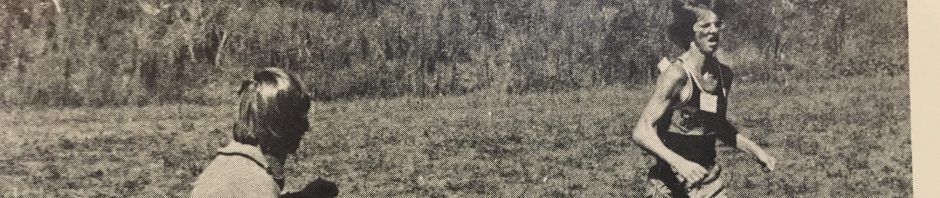
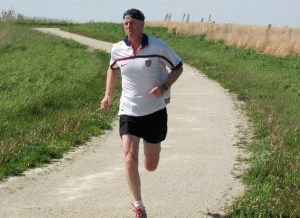
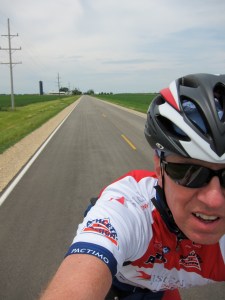
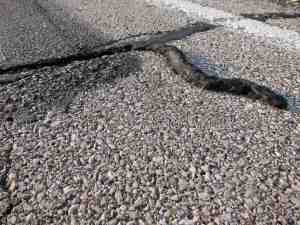
Thought I’d reblog this infographic because it is so interesting! Thanks for reading We Run and Ride!

Posted in Uncategorized | Leave a comment

What tarsnakes are trying to tell those who run and ride

Every time our county repaves a road, it is cause for celebration among those who run and ride. Gone are the dangerous cracks and rubbery tar snakes that take down cyclists and cause runners to roll ankles or experience the dreaded “heel drop” into a pothole.

New roads are like a dream. Cracks are the nightmares. 

A new road. Sans tarsnakes.

A new road. Sans tarsnakes.

For a few months, the new road rides like a dream. Then winter comes. Snow flies (at least it used to here in Illinois…) and cold temperatures, frost heaves and truck traffic combine to stress and strain the road until it starts showing cracks along its edges.

Rhythm of the breakers

The worst phenomenon for cyclists are the 15-foot breakers. You know what they are. Cracks at 15-20 foot intervals that dip about half an inch into the pavement surface causing your tires to make that ‘dunt dunt’ noise as you pile along at 20 miles an hour. A road with cracks like that can literally drive you crazy after 4 or 5 miles or so.

Risk of insanity

Insanity can add up.

Insanity can add up.

I have seen normally sane cyclists reduced to a stop from the constant pounding of a dunt-dunt road. Even found one guy rolling in the ditch in tears, screaming “I can’t take it! I just can’t take it anymore.” His bike wheels were still spinning, but they appeared to have flat sides on four ends of each tire. That’s what dunt-dunt road can do to you. And your bike. So be careful out there.

Horizontalness

They sometimes fix horizontal cracks in the road using tarsnakes, which usually have to be quite thick to fill in the 90-degree cracks. That method works fine to make things smoother for car tires. It does very little to make things smoother for cyclists. The dunt-dunt sound just becomes a little squishier and dull. More like duhnt-duhnt.

Tarsnake hypnosis

An above-grade tar snake seen from the side.

An above-grade tar snake seen from the side.

Along the road edges the tarsnakes ultimately become thick and intertwined. It’s almost like they are planning some sort of conspiracy to confuse your feet or your bike tires and take you down, once and for all. If you make the mistake of staring straight down while riding at 20 perhaps miles per hour, tarsnakes can literally hypnotize you.

Your mind goes numb, unable to process the abstract rhythms. Sooner or later you just veer off into a bean field or down an embankment, crashing happily to be ride of the dizzy, sick feeling.  You try to consider where you are and suddenly realize, while looking up at the sky, that those contrails begin to look a lot like the white tarsnakes criss-crossing the great blue expanse. Then you realize: perhaps it really is all part of a giant government conspiracy.

Holding it together

Wet with anticipation. Tarsnakes hold the world together.

Wet with anticipation. Tarsnakes hold the world together.

The real significance of tarsnakes is that they are the bandages holding together the temporal world of the roads we run and ride. To everything there really is a season, because that beautiful black asphalt you ride  is eventually doomed, just like the rest of creation, to some form of crackling decay. None of us gets out alive. Not even Donald Trump, with that big yellow tarsnake of a combover flopped over his noggin. It’s all just a ruse.

Makeovers and do-overs okay. No comb overs allowed. 

So it really is the time we have together that matters. Tarsnakes are trying to tell us that. Don’t take the good roads for granted and don’t blame the older roads for their dunt-dunt or duhnt-duhnt problems. We’re all built the same. We all get makeovers and d0-overs and still we fight the drag of time and purpose. But please, don’t resort to the combover. It really confuses things in time and space. Not right.

Tarsnakes will guide you

The cosmos reaches out to you. One way or another.

The cosmos reaches out to you. One Way or another.

Which means that you really must celebrate those moments when you are out running or riding on a perfect road when the weather is fine and the rolling is easy. The tarsnakes can wait, and when you rejoin them on a less maintained road, the tarsnakes will guide you along the way. They really make good company if you let them, like one long companion along the way. The cosmos is reaching out to you. One Way or another.

We can thank these signs for the reminder to seize the day. So “Carpe diem” which means, enjoy the new black road. It doesn’t last forever.

Posted in Tarsnakes | Tagged , , , , , , , , , , | 1 Comment

Rachel Johnson is a runner, Nordic skier and Ultimate player who knows how to chill

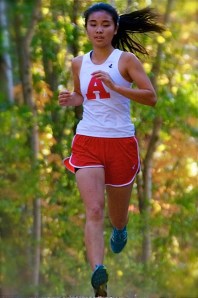
Rachel Johnson competing in Minnesota cross country

Rachel Johnson competing in Minnesota cross country

18-year-old Rachel Johnson exemplifies the growing diversity of interests among female athletes in America. In fall she’s a runner competing for Robbinsdale high school in Minnesota high school cross country. From November through February she hits the snow with the Nordic cross country ski team and from spring through summer she’s involved in a club sport that participants call Ultimate. This is a disc/Frisbee sport that abides by the general rules of football, only with a flying disc as the ball.

High effort but “no sweat”

While she keeps busy in aerobic sports year round, Rachel takes a rather chill attitude into each season. When asked how many miles her cross-country team does in training, she really wasn’t sure. “I don’t know. We do hard days and easy days, intervals and stuff. It’s a 6 day-per-week program pretty much. And we go to meets.”

She particularly appreciates the social side of sports like cross-country. “The atmosphere at meets is really fun. It’s exciting with all the other teams, and you can meet people from other schools when you’re not running.”

Nordic-styles

The same can be said when it comes to training and competing in Nordic skiing. “There are 30-40 girls out for the team. Even middle-schoolers come out to practice. “My favorite part is a trip we make to Giant’s Ridge in Biwabik (MN). We ski 20-30 hours in practice, then play games on skis at night. Sometimes we hit trees and stuff but it’s all kind of fun,” she laughs.

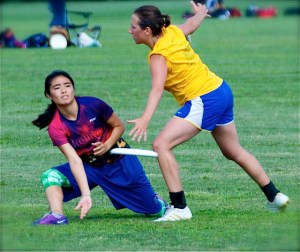
A 2-time All State competitor in Ultimate, Rachel Johnson uses her running fitness to compete in the sport

A 2-time All State competitor in Ultimate, Rachel Johnson uses her running fitness to compete in the sport

Ultimate fun

Her third sport on the annual calendar is the highly aerobic sport of Ultimate, a fast-growing sport in which players basically play a modified form of football using a flying disc. Players must keep a pivot foot in place when making a pass, but there is plenty of running to get into open positions, make plays and ultimately score points in the end zone. Rachel Johnson was actually All-State for two years in a row in Minnesota. So while she’s chill as a person, she’s also a competitive and highly skilled athlete.

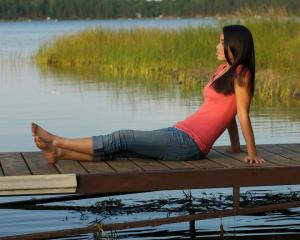
Rachel Johnson knows how to chill. Photos by Dan Johnson.

Rachel Johnson knows how to chill. Photos by Dan Johnson.

When asked about the rigors of Ultimate, she laughs. “The girls don’t have too many injuries, although there’s an occasional concussion,” Rachel says. “The boys have a few more injuries. They play a little rougher.”

Moving on

With all that running, skiing and Ultimate competition in a year, does Rachel ever get sick of the constant movement? “Once in a while, with cross country you just get tired of running, doing intervals after school and then going home to do homework. It can be so exhausting.”

Rachel says the social component of sports is one of the most important benefits of participation.

Rachel says the social component of sports is one of the most important benefits of participation.

If that pace of activity sounds a lot like the typical schedule of an American woman with a family and a job to manage, perhaps she is a symbol for many people facing similarly busy schedules?  If so, take not. Rachel has made several decisions to help her avoid burnout. “I took my junior year off from cross country,” she admits. “It was just too much for a while. And I’m thinking of switching out Ultimate this spring for track, to give that a try.”

All in the family

That open-ended approach to sport seems to be the product of a family that is both active and well-adjusted. Her father Dan Johnson was a competitive cross country runner for Luther College who picked up cross country skiing with some seriousness after college and also ran a marathon in the mid-2:20s. Yet Dan has not tried to create a version of

Dan Johnson, center in blue tee, leads a trail race in Minnesota

Dan Johnson, center in blue tee, leads a trail race in Minnesota

Mini-Me in his daughter. In fact it was Rachel’s idea to go out for Nordic, not a suggestion by her father. “A bunch of my cross country friends were going to do it and they convinced me to give it a try.”

Nordic skiing is considered one of the toughest purely aerobic sports in the world. Skiers often have very high oxygen uptake, and the sport provides a supreme training base for running or Ultimate. There is also a dualistic nature to Nordic skiing in that competitors must do both traditional classic and skate skiing styles, earning a composite time as a full indication of their skill and conditioning.

On the move year round

It all works out well for Rachel, who obviously enjoys the feeling of being on the go, whether it’s crunching through leaves in the fall, gliding across snow in winter or cleating through fields of grass all spring and summer long. She’s a multisport athlete––without being confined by the definition of what that might mean to others. That’s a great role model for all of us who run, ride, ski or go Ultimate.

WeRunandRideLogo

Posted in We Run and Ride Every Day | Tagged , , , , , , , , , , , , , , , , , , , | Leave a comment

The primitive art form of the country road where you run and ride

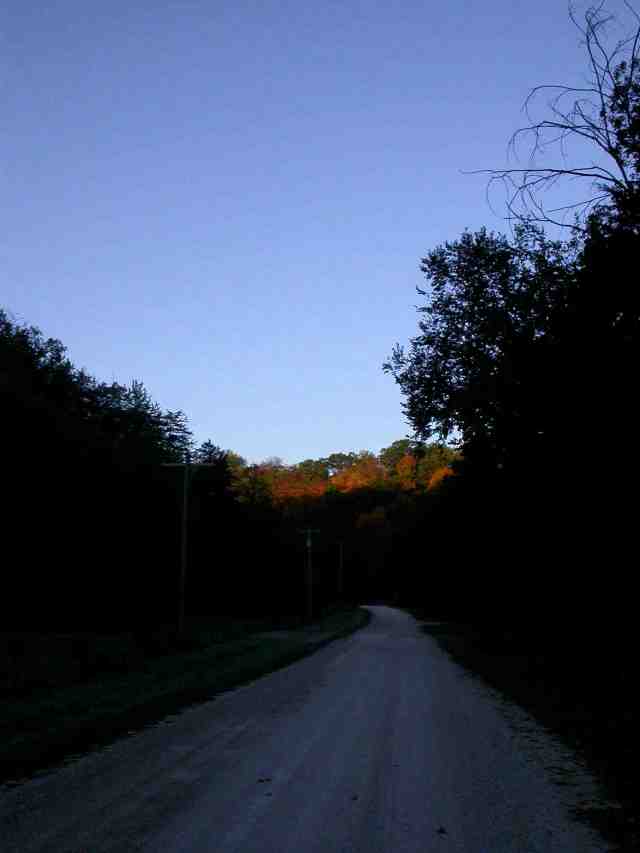
Country roads like this are not unique to America, but they are a primitive art form in our country, especially to those who run and ride.

Country roads like this are not unique to America, but they are a primitive art form in our country, especially to those who run and ride.

By Christopher Cudworth

Friday afternoon on the bike I did not want to take any of my traditional routes. So I wound my way up the spine of Kane County and came to a country road that looked much like the one pictured above. (That is in Iowa, by the way.)

The road was dirt. Gravel covered dirt. Recently softened by rain and smoothed over by a road grader. So there were hardened tracks in the road surface, but also deep pockets of soft, sandy material.

My road bike was twitchy on the country road. I knew it would be. Usually there is a washboard pattern in the road I rode last Friday. On a road bike that means a butt-shaking, teeth-chattering ride that makes you grateful when you reach the asphalt again.

But that’s the point of riding or running a country road. “Got to get back to the land…set my soul free…” (to quote CSN.)

It takes a bit more pressure on the pedals and a firmer grip on the handlebars to ride a good, dirty country road. That’s true whether you’re on a road bike or a mountain bike. Fat tires are no guarantee that you won’t hit the dirt on a country road. All it takes is hitting the edge of a tire groove a little too fast and suddenly you’re in Swerveville.

It keeps you honest, in other words.

I’ve ridden and run the country road in the picture above probably 100 times in my career. It sits about 3 miles into a key loop that we often trained on in college. That road never looked the same way twice. The surface was always changing due to weather, precipitation and farm traffic. It led from a heavily trafficked Highway 52 north of Decorah, Iowa into the valley of the Upper Oneota River, a national wild and scenic river, ringed by 75-foot limestone chimney bluffs and thick stands of dark cedar.

The area around Decorah is full of such country roads. Cyclists on mountain bikes and cyclocross bikes ride them all winter, cruising down the snow-packed surfaces at risk of biting it at any moment. The distance runners from Luther College also do their miles on these country roads, which provide pretty good training conditions year round.

I’ve lived in the city and know how thrilling it can be to train among the skyscrapers along Michigan Avenue in Chicago. I’ve run in San Antonio, trotting down the Riverwalk at 6:00 to meet up with other runners staying out of the sun. I’ve cycled and run through Madison, Wisconsin, and raced the streets of Miami in January with thousands of other runners.

But for sheer benefit I’ll take a country road like the one above any day, with the sun just hitting the ridge tops and the air still cooled by the night in the valleys and canyons on either side.

There is a fine art to country roads because they are always changing, like great art always does.

Think about the art of what you do next time you run or ride down a country road. It’s worth capturing in that camera in your mind.

WeRunandRideLogo

Posted in We Run and Ride Every Day | Tagged , , , , , , | Leave a comment

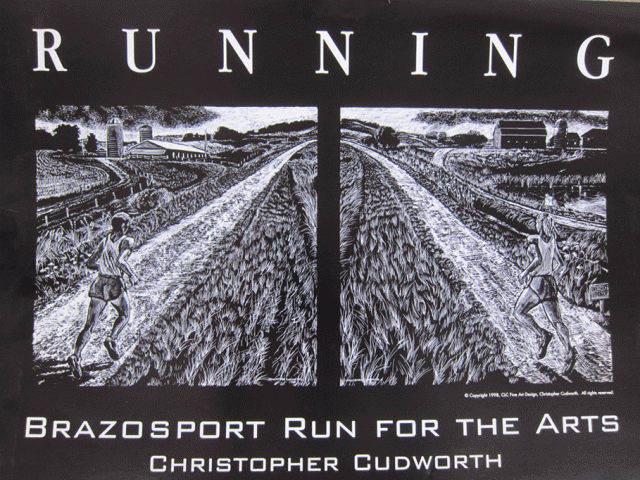
Saturday Art: RUNNING poster by Christopher Cudworth

This poster by Christopher Cudworth earned the Runner's World Cream of the Crop award for top 5 running art posters in the nation.

This poster by Christopher Cudworth earned the Runner’s World Cream of the Crop award for top 5 running art posters in the nation. You can your poster at the link provided below.

You can order this poster at my Etsy site. https://www.etsy.com/listing/117535102/running-poster

Cost: $15.00 plus $2.00 shipping in United States. $3.00 overseas. 

This print is beautifully produced on gloss black paper. The original scratchboards were produced by Christopher Cudworth and this poster earned the Runner’s World Cream of the Crop Award for Top 5 running art posters in the country.

Posted in We Run and Ride Every Day | Tagged , , , , , , | 2 Comments

In sleep we trust to help us run and ride

A few days ago we considered the tarsnake of the common cold and how to avoid it.

Sometimes getting good sleep means tiring ourselves out enough to overcome the distractions of the world

Sometimes getting good sleep means tiring ourselves enough to overcome the distractions of the world. Click to view.

The subject of sleep was purposely left out of that article. It is obvious that waking rest is an important component in effective training, and to avoid overtraining that can lead to illness.

How sleep computes

Sleep lets your body recover and protects your immune system by restoring every system in your body to a normalized starting point. Sleep is a little like a computer software that checks your operating system, eliminates bad files and optimizes your hard drive. You need to run that software every night to keep your hard drive, OS and programs in working order.

Lack of sleep can be torture

Anyone who has ever struggled with insomnia or sleep deprivation knows it can be torture. In fact forced sleep deprivation is literally used as a form of torture to weaken a human being and create a desperate mental state. No fun.

Keeping sleep in balance

One of the known effects of mental health challenges such as depression is a strong desire to sleep. The human mind seeks to escape emotional pain just as the body has warning signals against physical pain that make you want to quit whatever it is that you are doing to produce that pain. People suffering from depression will often sleep for long periods of time. Yet the ironic twist is that people experiencing depression can also find themselves experiencing broken sleep patterns. The mind almost turns itself inside out, upsetting the natural levels brain chemistry that helps us all get to sleep. Getting normal amounts of sleep when you are depressed can be quite a challenge from either end of the spectrum. Interestingly, sleep is chemically linked to depression through a relationship of serotonin in the body. A Medical News Today article on the subject puts it this way: “Serotonin plays an important part in the regulation of learning, mood, sleep and vasoconstriction (constriction of blood vessels). Experts say serotonin also might have a role in anxietymigraine, vomiting and appetite.”

So you see, the need for good sleep and the steps we need to take to get there are often intimately linked.

Exercise as a tool, and a challenge

Regular exercise can be a naturally helpful tool for getting good sleep. If you tire yourself out by running and riding to fall asleep naturally, then you have achieved a good balance.

But if you are losing sleep for any reason and keep trying to exercise, your body and mind can run into trouble. You’ll get overtired, then your immune system breaks down. Sooner or later you’ll get sick with a cold or other viral or bacterial ailment.

It takes preparation

We all know getting good sleep is an important thing. Yet some people take good sleep for granted. We’ve all heard people who happily chirp, “I never have troubles going to sleep.”

Lucky for them. Because people whose sleep habits do get interrupted can face enormous difficulties in living a normal life, much less training hard to run and ride and improve performance.

Gaming the system, versus knowing yourself

Taking sleep aids is a mixed bag, of course. Dependency can become a significant issue if the drug of choice is so strong that it replaces your natural ability to fall asleep.

Which means it can pay to get to know your sleep habits, and not take them for granted.

If you’ve ever fallen asleep on the couch in the afternoon after a hard run or ride, you know that sometimes when you try to go to bed later on, your mind and body are not ready again. The signals that turn on your ability to sleep have already been fired, and your brain is alert and restless.

Sometimes a late night (healthy) snack can relax you and help you get to sleep, or reading. Sleep experts do not seem to recommend watching TV, since that is a stimulating experience, but frankly, the experts are not always right. It seems to work for some people.

Sexual tension and other mental states can also lead some people to sleeplessness. In the absence of consensual sex a session of masturbation relaxes some people enough to get to sleep. But be judicious. At times, all that a tired body needs to put it over the edge to a risky level of fatigue is one more level of stimulation.

The primary goal is taking your mind off getting to sleep so that you naturally grow tired or sleepy and can let down enough to achieve Dreamland.

Be patient with yourself 

It is important to know a few things about your own body’s need for sleep. Being patiently aware of when and how you best fall asleep is a healthy practice. There is likely a window of time in the evening when your mind is best ready to shut down, and your body too. It varies. For one person that magical hour might be 9:00 p.m., while another might not be ready to sleep until 11:00 p.m.––about the time you realize the guests on Letterman and Leno are just another pair of Hollywood stars pumping their next project. Those vapid words can convince just about anyone to doze off.

America asleep 

Getting good sleep is a major issue for millions of America,  and if you are genuinely having troubles do not take it lightly. You might want to start by researching your sleep issues at the Sleep Foundation.

Sleep for the runner or cyclist 

This is you on exercise.

This is you on exercise.

To put it plain and simple, running and riding can be used like a natural prescription to getting good sleep. Our bodies and minds really do crave physical activity once we have built a foundation for fitness. The goal, of course, is to learn to sleep like a baby.

Of course, well-trained athletes can actually have problems getting to sleep if they miss a workout or are tapering their training in preparation for a race. Generally a little less sleep the night before a competition will not affect you. It is the night before the night of a race that is most important, and the few days leading up to a competition.

Being aware of that cycle and getting good rest leading up to a race is crucial in the event you become too excited to sleep much the night before a race. Nothing to worry about. There will be plenty of time to sleep after you’ve set a PR!

Protect your schedule

Getting good sleep and maintaining it throughout your training and racing cycle is really a question of establishing trust in yourself and your daily routine. It does pay to be a little protective of your schedule and realize that even small variances in routine can produce sleep shortages that lead to trouble. Of course it can be just as difficult turning down great sex, for example, in favor of getting good sleep. So you sometimes have to take a risk or two. But the athlete in training invests so much other time in workouts and diet and immune system protection that it makes little sense to compromise your rest by staying up too late when your system is on a razor sharp line for a competition.

That’s why the Old School trainers used to counsel boxers not to have sex. Sure, they thought it drained the machismo somehow, or took the edge off aggression. Whatever. The real point is that staying up late and losing sleep for any reason is the real risk to the athlete in training. Or the person working a tough job. Or the parent caring for children day after day. We all need good sleep to be our best.

In sleep we trust, and that means trusting ourselves to sleep.

Posted in We Run and Ride Every Day | Tagged , , , , , , , , , , , , , , , | Leave a comment

Welcome to the Church of We Run and Ride

Welcome to the Church of We Run and Ride. 

What follows is a sermon of sorts. And if you know anything about good sermons, the content usually gives you a little history and purpose of the topic, some information on what is true, and a call to action to go out in the world and make it happen for you and others.

The Devil and Angel within all of us

The runner and rider within you is in constant conflict. If you love running more than any other type of fitness activity, you probably may not be able to find enough time in your life to ride as well.

Whether you are male or female, this is how the devil looks at times.

No matter what gender you might be, this is how the devil of tricky choices can look and sound at times.

The rider in you may feel similar about your running. When you are putting in two 70-milers on a weekend and trying to squeeze in 3 more rides a week between work and family, you’re not going to have a bunch of extra energy to go out and run a 10k.

The conflict between running and riding can breed all sorts of tension within you. It’s like that cartoon where there’s an angel on one shoulder and a devil on the other. The innocent little angel is saying, “You don’t have a lot of time. Let’s go for a run today.”

Meanwhile the devil on your other shoulder whispers, in a sinister voice, ‘How often do you get a 50 degree in winter. Get out there on your bike and hurt yourself. Otherwise you’ll be fat by Christmas.”

Oh, the choices can be difficult, we know. How does a multisport athlete make good choice?

Spiritual training

Religions around the world have tried to answer questions like this for years. And the sick thing is that many religions simply don’t know what they’re talking about when it comes to practical matters like how to balance your training schedule. It’s not like Jesus gave the Sermon on the Mount to tell you to do more hillwork. And gurus like Mahatma Ghandi did not spend a lot of time putting in base miles in their sandals. They were walking miles to deliver the truth, not get in shape for their next half-marathon. It is a rare thing indeed for our holy, wise, spiritual or political leaders to have a high VO2 max because they exercise for the love of it. Martin Luther liked his beer and Martin Luther King, Jr. reportedly had a taste for the ladies. About the only serious exerciser among the holy set might be the Holy Spirit, who seems able to really get around.

So the fact remains: the sins of the flesh are just as great a temptation for the holy highbrows as us high mileage types. It is up to us to become our own role models for balance and respect for the holy temple of our bodies.

Glimpse of nirvana

We’re all in this together of course. Those of us who run and ride are simply trying to break through the temporal world for that little piece of nirvana that lies beyond, a glimpse at enlightenment. If we happen to raise a bunch of money for the sick or poor along the way, that just brings us closer to whatever God we worship, or to secular satisfaction if we don’t.

The dilemma remains: we still face the choice of how much time to put into each activity.

Gratitude as a training tenet

Here’s a good starting point. You should be grateful for being able to run and ride at all. Because you need to remember that people with physical disabilities have to work extra hard to enjoy their respective sports. If most of us were put into the position of having to do all that extra work to get ready to work out we’d say screw it. Which is why the heightened respect for athletes with disabilities is long overdue. Because, as it turns out, these athletes really aren’t “disabled” as they have enabled themselves with far more focus than many of the rest of us.

And think about it: there’s a moral lesson in the fact that wheelchair races combine the two sports of running and riding. The choice is made sometimes. Just go with it. Stop thinking so much.

How hard is it, really, for you to run and ride? 

Recently there have been a number of disabled cyclists who have made their mark on the world, showing that the lack of an arm or leg is no reason not to ride. Illinois cyclist Joe Berenyi is a CAT 3 rider on his own merit who went to London and earned a couple medals in the Olympics. I’ve raced against Joe and seen first hand what a good bike handler and rider he really is. It makes me appreciate that whining about my bike fit or some other stupid problem is merely making excuses for a lack of gratitude and appreciation for the act of riding.

So before you turn your daily decision into a conundrum that vexes your brain, try simplifying the thought process. The Who once wrote a song called Another Tricky Day. The lyrics go like this in paraphrase:

You can’t always get it
When you really want it
You can’t always get it at all
Just because there’s space
In your life it’s a waste
To spend your time why don’t you wait for the call…

(You better get used to it…)

…This is no social crisis
Just another tricky day for you

Start by stopping waste of time

What The Who are trying to tell you is that you are probably wasting your time on a lot of activities that take away from your running and riding if you really get down to it. 4 hours of TV a night? Plenty of time to go downstairs and hit the indoor trainer for a while or go out for a 1/2 hour run in there. And if you really are time-pressed because of work or other obligations then you simply have to take what life gives you and not whine about it. That only makes things worse.

We create our own social crises by complicating our lives in ways that make time for both running and riding more difficult to accommodate. Our priorities often get overwhelmed by false comforts and slovenly habits. Replace those with constructive use of time and suddenly you find yourself able to go running and riding more.

The choices become easier to make when you’ve made adequate time and rid yourself of compensatory behaviors that give you a sense of relaxation but may not be as relaxing as you think in the long run. Stress can come from lack of involvement and accomplishment just like it can stem from pressure and over involvement. Recognizing this balance in your life is the secret to happiness and better choices about when you run and ride, and choose to do so.

But remember: this is not to encourage you to get carried away.

Is obsession the answer?

In one of John Irving’s novels, “The Hotel New Hampshire,” a wrestler dealing with struggles in life realizes it’s all about focus. “You’ve got to get obsessed and stay obsessed,” the character says.

Well, obsession has its drawbacks. For one thing, obsession can take over your whole life. That’s not really the goal for most of us who run and ride. The goal is to achieve a healthy balance that helps us reduce stress, promote better health and weight management while allowing us to participate in fun activities and events, socialize and even brag at the water cooler once in a while. Frankly much more than that is deluding ourselves into thinking that our running and riding is much more than that.

But all those competing goals can still make for pretty tricky day, because as The Who warns us, being too busy and having too many priorities can produce a social crisis in our souls. Also remember that riding can be a real salvation to the marathoner who picks up an injury during training, and that running along with weight training can keep the cyclist from developing critical lower back and knee weaknesses, not to mention stronger bones.

Let balance enter your life

So what’s the answer? To find balance, we need to listen to both the devil and the angel within. That’s basically the premise of the symbol for yin and yang. We really are in constant tension with the dark and light side of our souls. The drive to run and ride may be darkly selfish in some ways, but the returns on investment in health and stress relief bring a sort of light into our lives.

It is now known that too much cycling can actually thin out your bones, while too much pounding from running can cause stress fractures, osteoarthritis and other injuries. So balance is critical and the aerobic benefits of both sports are complimentary.

So do yourself a favor. Print out this blog and cut out this symbol for yin and yang.

BALANCE IS THE KEY TO ALL TRAINING

BALANCE IS THE KEY TO ALL TRAINING

Post it on your refrigerator and as you pass each day say out the word out loud: “Balance.” You’ll find your decisions about whether to run or ride that day get easier when you have that goal in mind.

AMEN!

WeRunandRideLogo

Posted in Uncategorized | Tagged , , , , , , , , , , , , , , , , , , | 1 Comment

How do you feel about your bike? Really…

By Christopher Cudworth

The Felt 4C Red Rocket has been a faithful training partner. Really.

The Felt 4C Red Rocket has been a faithful training partner. Really.

It’s a question we should all ask ourselves now and then. How do you feel about your bike? Really…

Many who ride might not feel touchy-feely all-emotionally about their bike (or bikes) and yet if pressed they would have to admit they really do have feelings about the machine (or machines) they ride.

But let’s stick with the singular for a moment, assuming that nearly everyone who rides probably has at least two bikes they ride. A road bike and a mountain bike, perhaps. Or a cyclocross war machine designed to roll over sand and other human bodies if necessary.

It happens, you know.

That unspoken devotion

Devotion to our bikes is often an unspoken thing, of course. You don’t roll up to your Saturday morning group ride and say out loud, “I love my bike.” People would stare.

And yet someone else might nod and take note of your machine and say, with some degree of admiration. “Nice bike.” And that’s enough. Said.

Beauty in a Waterford steel frame bike

One of the riders I know has a beautifully maintained Waterford steel frame road bike. It has a paint job that would make anyone smile. Red to flame yellow to blue. To ride this bike when you were a kid would have been fab. But to keep it rolling smoothly after 30+ years on the road is on the order of fabulous. He is a great mechanic, for starters, who replaced only the front fork to adjust for modern headsets. There have been parts replaced along the way of course. Cranks. Gaskets. Hubs. Wheels. But the bike, per se, is the frame. That is what we ride.

Last year I was given a Waterford by my brother-in-law. It hangs in the garage as yet because I do not want to mess with it until it has been determined with absolute certainty what should be touched and what should not. The frame is a 56″ cm and I typically ride a 58, yet my bike-wrench CAT-3 neighbor down the street who is 6’3″ and a much better rider than I rides a 56 and tells me most cyclists ride a frame that is too large for them.

“It’s all in the setup,” he insists.

And yet the Waterford has a couple issues that need resolution before it is truly ridable. The bike is designed for criterium racing. It is sharp and snappy and feels like it is connected to your body when you hop on and go. But that’s the point. The bike is so well tuned with its metal frame that unless you are fitted well to the machine at all points, it feels like you are running on shoes that don’t fit.

So it needs a new stem, but that requires a new front fork to accommodate the headset that would allow a new stem, to adjust for body length and reach. And so it goes.

So the Waterford remains a project of love and respect. The day will come when I go out and ride it, but not until it gets the full attention it deserves. My Waterford-riding mechanically-gifted friend has promised to guide me to Nirvana on that bike. Can’t wait.

Those carbon fiber feelings

In the meantime, I ride the Felt 4C carbon fiber framed road bike purchased 7 years ago. It has served me well. We’ve done over 20,000 miles together, including a couple crazy rides I should never have attempted. That day in 96 degree heat. That morning I went out into a driving rainstorm. A few races where it was only the bike that kept me in the running. Well, not exactly. I had to pedal, but I felt more like I was hanging onto the bike than riding it.

So my feelings toward the Felt 4C are genuine and real. We have shared lonesome miles trying to build fitness and worked together through the types of thoughts and emotions that drive us all to distraction. My bike thinks just like I do, you see. I know this to be true because when we both experienced that bike wobble back in September the Felt 4C did not want to crash on the road any more than I did. So we worked together to make it to the ditch even though the vibrations of the universe were working against us. Now that’s a bike you can trust. I hope. At least I think that’s how it all happened.

When the Felt 4C came out on the market, it was named Bike of the Year by some biking magazine for its combination of decent components (Shimano Ultegra and Dura Ace mix) and its generally light frame and construction. They called the bike The Red Rocket.

Bike lusts and other trusts

Well, there are plenty better bikes on the road, of course. I once rode next to an Orbea that seem to drive itself. The rider took both hands off the handlebar and pedaled happily along as he changed shirts, adjusted his water bottles and generally did whatever he felt like doing while the bike did its work. That bike was so stable and so smooth and so quiet that you got the impression, truly, that it afforded the rider an extra 2mph in saved effort.

Probably true.

Whereas the Specialized ridden by another buddy always sounds so loud that it seems like it is going to fall apart. The impression if false, of course. It is just the style of rear hub on th bike that makes noise whenever the rider stops pedaling. But impressions do count. Still, he rides away from me at will. So he feels pretty good about his bike, obviously.

Whenever new bikes are featured in the bike magazines, it is fun to leaf through and imagine how you might feel riding a $12,000 Pinarello Dogma, or other some such machine.

Multiplicity

But in the end, one usually feels pretty good about the bike you do ride, because the options are to trade up or trade off, and many riders do. Some have 4 or 5 road bikes they switch depending on conditions. Yet most riders stick with the bike they brung to the dance. They show up week after week, perhaps concerned about that creaking noise in the lower gasket or the way the chain seems to be slipping even though it is new.

The frame beneath is what gets us from here to there, and all points in-between. That’s how you feel about your bike, no matter who you are. It’s an all points in-between thing we all have with our machines. It’s the reason we ride. The space we traverse. The machine we grow to trust and depend upon. Really.

Posted in Mechanical Genius, We Run and Ride Every Day | Tagged , , , , , , , , , , , , , , | Leave a comment

Dealing with the tarsnake of the common cold is always a gamble

Training through a common cold is always a gamble because it is a tarsnake that can take you down even longer if you make the wrong choices.

Training through a common cold is always a gamble because it is a tarsnake that can take you down even longer if you make the wrong choices.

By Christopher Cudworth

Through some very hard-won experience, I consider myself an expert on the common cold.

A cold history

As a committed athlete since elementary school days, and an endurance athlete since middle school, there have been countless encounters with the condition we call the common cold. It is never fun or easy to be sick, especially if you are in deep training or preparing for a big race.

Know your enemy

The most constructive thing you can do to deal with the onset of a common cold is to identify the severity of the cold if you can, from the start. You can do this by learning what forms of potential symptoms indicate the greatest danger, and what you can do to ward off a cold before it actually takes hold.

Wait a minute…

Whether you’re a cyclist or a runner, the first thing to do when encountering symptoms of a cold coming on is to hold off on your training plans for at least a day. You will not lose much in terms of fitness if you use prudence. But you stand to lose tons of time if you stubbornly rush ahead with your training schedule when a cold is in its early stages.

Here are your common cold caution signs:

Any grade of sore throat

Do not continue hard training when you feel any level of tightness in your throat, dryness at the back of your palate or see small “drainage” dots at the back of your mouth. Use a flashlight and peer into the back of your mouth to check for signs of strep, as well, which can manifest as white dots in the red lining of your throat. All these are signs that your body has begun to fight an infection from a virus.

To reiterate, if your throat is tight at any level, you should back off immediately because the body is at a tipping point. The reason your throat is tight is that the mucus membranes of your nose and throat are literally being injured and inflamed in your body’s fight against the virus. That inflammation is both a symptom and a cause of future problems.

Irritability or distracting fatigue

When you’re planning to go out and run or ride and the motivation simply isn’t there, the reason may be you are overtrained.

Fatigue is the reason for the resultant irritability, but the onset of a cold can heighten feelings of fatigue, resulting in impatience with your associates or work, lack of ability to concentrate, even a depressed emotional state can result from being overtired. That is when you are at greatest risk of getting a cold.

Sudden tingling in the nose, and sneezing

The cold virus can also come from nowhere, showing up as a sudden tingling in the sinuses or sudden sneezing. Like all cold symptoms, these issues can be imitated by allergies as well, so it can be difficult to discern, particularly in the summer months, exactly what is happening. Generally allergy sufferers know when their worst points of risk are during a season, and the symptoms are prolonged and consistent, while a cold “comes on” suddenly.

Hunger for sweets or other dietary treats

In the movie Men In Black a giant “bug” from outer space crashes his flying saucer into a rural field, takes over the body of a farmer named Edgar and goes inside the farmhouse to demand that the farmer’s wife to give him a jar of sugar water. She pours a little in a cup and stirs it. The giant bug in the “Edgar suit” grunts and says, “More…” Then he drinks down the sugar water in one big disgusting gulp.

This may be how you feel when a cold is coming on. The common cold makes you hunger for sweet things, but you must resist. Colds, like cancer and other diseases, seem to thrive on foods that provide quick energy. Especially sugar. The common cold is just like the big bug in the Edgar suit. It can take over your body and make you feel thick and stuffed up for days.

Headaches, fever and slow motion

Endurance athletes are at constant risk of getting overtired and sick because we consistently and sometimes radically push our bodies to the limit. Without adequate recovery, our bodies almost seem to seek out reasons to take a break. The common cold is one such method of bodily revenge. First you might feel a headache. Then a sodden feeling from head to toe. Achiness. Then sniffles. Sometimes you develop a raspy voice and a low-grade or intense fever. Your nose starts to run. Your throat thickens and you might even get a case of the runs. Then you know it’s too late. You’ve got a cold. But I still recommend hitting your cold with zinc…

What to do in the early stages

If you are smart enough to pay attention to the “early signs” rather than waiting until everything tips toward a full-blown cold, there are steps you can take to ward off the worst of the effects.

For example, I am an inveterate use of zinc tablets and lozenges. Apparently the chemicals in zinc are effective in combatting the cold virus. That is why it is best to keep zinc or echinacea (some believe it can boost immune systems) in some form around the house at all times during your training seasons.

Most zinc lozenges require that you suck them like a LifeSaver, allowing the zinc to penetrate the mucus membranes and get into your system. All I can tell you is that it works. In the last 15 years or so the use of zinc has warded off countless colds. How do I know that? Because I’ve had far less colds than the previous 15 years before I used zinc treatments like Cold-Eaze or zinc tablets. I’ve learned to use and trust them, and am better off for their preventative benefits.

Hyper about cold prevention

Because I hate colds so much, I am absolutely hyper about fighting them off before they take hold.

This is compounded by the fact that I cannot resort to typical cold treatments like antihistamine-based cold medicines that shrink the sinuses, etc. I learned years ago that these medicines also cause problems with the prostate. It’s all clearly labelled on the bottle, “Do not use if you experience difficulty in urination due to enlargement of the prostate.” Many cold medicines contain this warning. The antihistamines can literally inflame the prostate of men, causing a problem you don’t need to have when you’re already getting sick. For this same reason I never drink caffeine, not in coffee (which I hate anyway) or soda, and don’t miss the stimulant one bit.

And guess what? Ever since I quit taking standard cold medicines, I’ve had far fewer colds and the few that I have experienced are shorter and less intense that when I used sinus medications and other intense treatments for cold symptoms.

Cold medicines don’t cure anything than symptoms

Cold medicines are highly overrated in treating the common cold. They may make you temporarily feel better during the cold or help you get through the workday or sleep through the night. All those things are fine, in small doses. But do not think that cold medicines actually do much to shorten the length of the cold, or do anything especially helpful to cure it. That’s just not true.

It is possible that taking zinc or echinacea during your cold may help shorten its duration, however. That’s worth a try.

Far better to learn the signs of a cold and attack them with preventative measures like zinc, rest, lots of water, Vitamin C, warm showers, hot tea with honey, chicken soup and other measures that don’t slam your sinuses, your prostate or your other tender parts, wherever they may be. (Hi gals).

The tarsnake of the common cold

If you do catch a cold, here’s the typical pattern of what you’ll experience.

  • 2-3 days of sore throat, achiness, possible fever, and fatigue
  • 3-5 days of nasal congestion and runny nose
  • 3-5 days of bronchial congestion and coughing, with possible continued nasal drainage
  • 4-5 days of residual coughing, sometimes intense
  • 2-3 days of coughing and clearing phlegm

In summary, that’s about 21 days or 3 weeks of dealing with cold symptoms as a median for the common cold. Some colds only last a few days, if your general resistance is up. Others can linger for months, with dry coughing carrying on for weeks and weeks.

So the tarsnake of dealing with the common cold is this: Either you can back off training a few days and fix the cold, or risk losing weeks of quality training because you’re too sick to handle much else.

Catch-22s

The common cold is a tarsnake of decision-making, for sure. Having once raced a half-marathon during the thick throes of a common cold, I do not recommend that approach to anyone. It was 13.1 miles of snot-blowing, coughing and wiping my raw nose with an equally raw wrist. Yet I managed to place in the top 10 with a time of 1:10: 35. To this day I wonder if I’d have gone any faster without being sick. Somewhere along the way I read that the common cold takes away about 10% of your running efficiency, depending on its severity. We all live with such questions, and what to consider a good option when facing the common cold.

Some athletes slug right through the fatigue and illness figuring they’re going to be sick anyway and don’t want to give up the training they feel they need to meet their goals. That approach is brave, for sure, but can also be stupid.

Mother’s knows best?

I once tried to “train through” a wicked cold and wound up with migraine headaches so severe they incapacitated me for days at a time. Then the medicine I took (Tylenol with codeine) to treat the headaches was so strong my whole left arm went numb and I wound up in the emergency room. The technicians there worried about my developing pneumonia as well, so they did a body scan and found what looked like a gas bubble under my left lung. So they told me to take it easy and go home and rest.

That night, not wanting to be left out of the social action, I went dancing with my brothers and some girls we knew at a club called Mother’s on Division Street in Chicago. I opted to drink that cold to death. Strangely enough, it seemed to work.

Baselines

If you haven’t gathered the truth from that anecdote, I was one of those athletes that did not always have good sense about balancing training and rest. At the time of that wicked cold I was running 80-90 miles a week, weighed 14o lbs. on a 6 foot 1 inch frame and got a cold about every three months on schedule. My baseline body makeup was so thin and on the edge it was inevitable that I would get sick now and then. What would I do to change that approach? Likely replace some of the longer junk miles with strength training that could possibly bulk up my system and create a stronger baseline.

Special risks for cyclists and endurance athletes

Riding with a common cold can be especially dangerous for cyclists. The conditions faced by serious riders can range from intense cold to intense heat, both of which place maximum stress on the body. That is why cyclists in events such as the Tour de France are so much at risk for bronchial infections and colds. It’s not that the conditions themselves cause the cold so much as the lowered resistance from stressing the body through extreme conditions makes it much more possible for cold infections and fever to take hold. If you are a cyclist facing down a possible cold, it hardly needs be said that going out and killing yourself on the bike can put you at risk of being out of action for weeks. Better to err on the side of caution and live to train another day.

Rules made to be broken? 

I once did a nearly 4-hour training run in 43-degree temperatures and rain. We trotted along at 7:30 to 8:00 pace for more than 26 miles and were never cold, but when I got home that warm shower sure felt good. Then the fatigue hit me and I slept from 2:00 in the afternoon to well past 3:00 in the morning before waking up ravenous for food.

Yet through all that stress I did not get sick or catch a cold. So the rules of training are meant to be broken. You just have to stay wise

Now when I try to share my cold-earned wisdom with my own children, they turn their heads and laugh. What does a fuddy-duddy old dad know about living the night life, after all?

Oh, if they only knew. If they only knew.

WeRunandRideLogo

If you have a 6 mile run planned, for example, far better to go slow and do 3 at this point, listening to your body the entire way. Or if you are scheduled for a 50-mile ride that you know will press your fitness, it is best to

Posted in Tarsnakes, We Run and Ride Every Day | Tagged , , , , , , , , , , , , , , , , , , , | Leave a comment

Kerri Hoskins Branson runs to meet challenges

558611_4624661453503_1797573990_n

Kerri Hoskins Branson with her husband Scott.

Kerri Hoskins Branson is a woman who makes her mind up about things, and does them.

That does not mean she always plans her goals or achievements far in advance. In fact some of her keenest achievements have been accomplished not because she was checking off experiences on her personal bucket list, but instead, Branson responds to challenges with an enthusiasm that raises the classic question of whether circumstances make the woman, or the other way around?

“A marathon? How far is that?”

Take Kerri Branson’s first time at running a marathon: “A bunch of my friends were out having drinks and asked me to join them. When I got there, they told me, ‘we’re running the New York City Marathon. Want to join us?’ ”

At the time Kerri Branson was already accomplished in karate and working as a personal trainer. So she knew how to get fit. But the most she’d ever run in her life was about a mile. “So I asked my friends, ‘A marathon? How far is that?’ They replied, ’26.2.’ Then I came back with ‘Sure, why not?”

Getting ready to run

The race was 5 months away, so Branson went online and read all she could about how to train for a marathon. Then she started running. In the meantime, her main training partner had to quit with a broken bone in her foot. Branson kept going but chose to enter the Twin Cities Marathon near her former hometown instead of running New York.

Despite the northerly location of the event, race day temperatures soared into the mid-80s, forcing almost everyone to back off their pace by 30%. “It was great though, “Branson says. “Fans were pelting us with water and cheering us on.

Branson’s mother still lives in the Twin Cities area and waited at the 20-mile point to cheer Kerri on, but the heat of the day had put her daughter and everyone else in the race behind their projected pace. “When I finally reached 20 miles,” Kerri smiles, “my mom came running out with tears all over her face, hugging me before I ran on to the finish. That was pretty special…”

On to Chicago

ChicagoMarathon

Kerri Branson shows how it’s done, having fun across the line at a hot Chicago Marathon in 2010.

Her next marathon was Chicago 2010. Race day again arrived with temperatures in the 80s. This time Kerri ran with a training partner who kept her spirits up by throwing water at her during the race and cheering her on. “The first part of the race was fine, but as the heat got bad, we dropped off our target pace and walked to cool off. At one point I stopped sweating and that’s never a good sign.”

Switching gears

A back problem that flares up during high mileage training has convinced Branson to point her running efforts toward adventure races and other events that aren’t so long and time consuming, because while running remains a joy, Kerri Branson also has her sights set on exciting new challenges in other phases of life.

Springboards

Raised in a family of 7 kids with one brother and six sisters, Kerri Hoskins Branson learned early how to get along and be tough in life. “My stepfather was a Vietnam Vet who suffered from PTSD, the whole thing,” she relates. “We never had a lot of money and we moved around a lot. But one thing that my mother taught us was not just to manage yourself, but also be creative. My mom didn’t especially coddle us. She was just too busy. But she did teach us that ideas and creativity do matter.”

Processing adversity

The Branson Family with friends and business associates Laura and Sean Reavis.

The Branson Family with friends and business associates Laura and Sean Reavis.

Overcoming adversity and accepting that people handle it in different ways has become a potent theme in the life of Kerri Branson. Her two sons were born with a severe form of cerebral palsy. They spent the first 2 months of their lives in the ICU. “My husband Scott and I quickly learned that we process adversity in different ways. I needed to be there every second, educating myself on what their needs were, and how to handle things. I knew that was going to be an important job going forward,” Branson says.

Her husband Scott was at first understandably anxious seeing his sons linked to all sorts of life support systems. But as time went by Kerri and Scott worked out their roles and each has learned to play to their own strengths in raising two sons that cannot speak and require considerable, round-the-clock care.

The family also makes an annual trip to Florida to get hyperbaric oxygen therapy for their sons. “The oxygen presses inflamed areas of the brain where it would not normally go,” Kerri says, pushing her hands to her own head, imagining how it must feel. “But when we were well into treatments we had a frightening incident, because Zachary had a seizure. His body decided it had enough oxygen and he stopped breathing. I was trapped inside the hyperbaric chamber alone with him because it takes 6 minutes to get you out of there. So I started doing mouth to mouth, and it saved his life. When we came out everything was fine.” Kerri and Scott have four children and live an active lifestyle that keeps them all on the go.

Kerri Branson seems to embrace her entire life that way, going from challenges she must face, to challenges she chooses to face. “If someone tells me I can’t do something, I love to prove them wrong.”

Last year Kerri Branson even took on the challenge of running for political office. As a resident of Batavia, IL, she did not win in the race for a county board seat, but learned much about the art––and some of the ugliness––in politics along the way. She winces when she admits, “The other side resorted to some tactics that were supposed to intimidate me,” she grins. “It didn’t work. But I learned a lot.”

Getting a kick out of life

Kerri Branson rehearses for her role as Sonya Blade in Mortal Kombat

Kerri Branson rehearses for her role as Sonya Blade in Mortal Kombat

Kerri Branson is not much intimidated by anything it turns out. Her early career included modeling for Playboy and she combined that notoriety with her background in karate to become the acting and body model for the virtual character Sonya Blade in the video game Mortal Kombat. She still has many fans that follow her career and Like her on the Facebook page for her business ventures. “I love my Mortal Kombat fans,” she says. “All that brought me out of my shell.”

The Big Picture

Recently Kerri closed down her personal training business to focus her efforts on a venture that capitalizes her long term interest in the arts and serving others. Kerri and

Kevin Kuster and Kerry Hoskins Branson stand in the Creator Gallery space being prepared for opening in late 2012

Kevin Kuster and Kerry Hoskins Branson stand in the Creator Gallery space being prepared for opening in late 2012

her associates are launching an arts and events space called Creator Gallery. The gallery will feature Kerri Branson’s paintings as well as the work of one of her partners, photographer Kevin Kuster and selected other artists.

Kerri and Kevin met 20 years ago at Playboy Enterprises when Kerri was modeling, doing production work and hair/makeup for photo shoots. Kevin left Playboy last year after 20 years as Senior Photo Editor. He is currently one of the top editors for the mobile application Instagram.

Artistic talents emerge

Kerri Hoskins Branson paints images that are arresting and real, yet hew to an abstract idea.

Kerri Hoskins Branson paints images that are arresting and real, yet hew to an abstract idea.

Remarkably, Kerri Branson only began painting in 2012, but she comes from a family where her grandfather  was a professional painter and her mother paints as well. Kerri takes a fresh and direct approach to painting, depicting animals and natural abstractions that stem from organic close-ups. She approaches her painting with the same fearless attitude that has driven her modeling career, personal training, being a mother and running marathons.

The business model

Creator Gallery is being backed by friends and business associates Laura and Sean Reavis of Nebraska. Sean and Laura are involved in several already successful ventures. They are ownership partners in a minor league hockey team and also own a manufacturing company. Laura is a writer and has published a children’s book. She also has a talent for interior design and works part-time as a hospital chaplain near their home in Nebraska. In his full time job, Sean is a Senior VP with BP.

The business plan is to create a space that is not only an art gallery also serves as a site for weddings, receptions, parties, arts education and other inventive events. The distinctive design of the gallery is a collaboration borne from design contributions by each of the partners, including interior designer Rebecca Ersfeld, Kerri’s mother.

The gallery space under construction is built with recovered wood such as these beams hewn from telephone poles.

The gallery space under construction is built with recovered wood such as these beams hewn from telephone poles.

Entering the gallery space, one encounters giant faux barn doors facing the front, while the bathrooms feature wood beams hewn by masterful carpenter Mark Fowler who created the beams out of telephone pole wood to create a rugged yet elegant space in the bathroom stalls where Kerri Branson installed the slate tile. The entire Creator Gallery team is installing high-quality imitation wood flooring throughout the gallery space. Materials were purchased right next door to the gallery at Douglas Tile.

Picture this

The photography component of the business will include a include fine art portraiture, weddings and pets, while also working with area school districts in sports photography, graduation, drama and other events for students and families. Scott Branson, a teacher and coach in 3 sports (as well as half-marathoner) will be involved in the PR end of the business working with school districts and sporting events in area communities. .

A special mission

Creator Gallery will also reach out to special needs families who do not otherwise typically seek professional photography because of the difficulty and expense in balancing medical bills with other needs. Creator Gallery will essentially be tithing this work to the benefit of these families.

While a beauty and an athlete, Kerri Hoskins Branson's grit, faith and devotion to family are some of her strongest traits.

While a beauty and an athlete, Kerri Hoskins Branson’s grit, faith and devotion to family are some of her strongest traits.

It’s already been a fantastic journey for Kerri Branson from engaging young model to Mortal Kombat warrior to personal trainer, mother and now marathoner and artist. The faith she has shown in diving into each new endeavor is reflected in the name Creator Gallery.

Kerri Branson is one of those people who seems to gain confidence by trying new things. That doesn’t mean she does not experience fear like the rest of us, but her inspiring example is in how she processes those fears and challenges to make the best out of life for everyone she meets.

Information on Creator Gallery:

  • 1057 W. Orchard Rd. North Aurora, Illinois 60542
Phone (630) 229-0828
Email kerri@creatorgallery.com
Website http://CreatorGallery.com

WeRunandRideLogo

Posted in We Run and Ride Every Day | Tagged , , , , , , , , , , , , , , , , , , , , , , , , , , , , , , , , , , , , , , , , , , | Leave a comment