Enjoying a bloom of fitness

By Christopher Cudworth

Every bloom has significance.

Every bloom has significance.

Athletic fitness, like the bloom of a brilliant flower, often lasts a few days, or at best a few weeks, before the peak fitness must fade.

The rhythm of blooms

Our bodies, like annual or even perennial flowers, are simply not designed to be in the height of competitive fitness at all times. The human body works on natural cycles of high energies, followed by rest.

It happens at work. And at play. We learn what it means to be in full bloom. And in faded glory. Sometimes both at once.

Recently at a party a friend came up and was talking about having to switch to working the night shift. His eyes grew wide as he described the strange difficulties of tricking his body and brain into being up all night. He was frankly a little pissed that it was necessary at all. Having worked for the same company 23 years, it seemed like some seniority should have come into play. But there are hardly any rules any more. The fact that capital now controls labor so strongly has changed the rules across many fronts. So he’s the one that has to adapt. But you could see the bloom wearing off his exterior self. He rubbed his hair back. Dropped his chin and sighed. We all empathized.

Protecting the bloom of vitality 
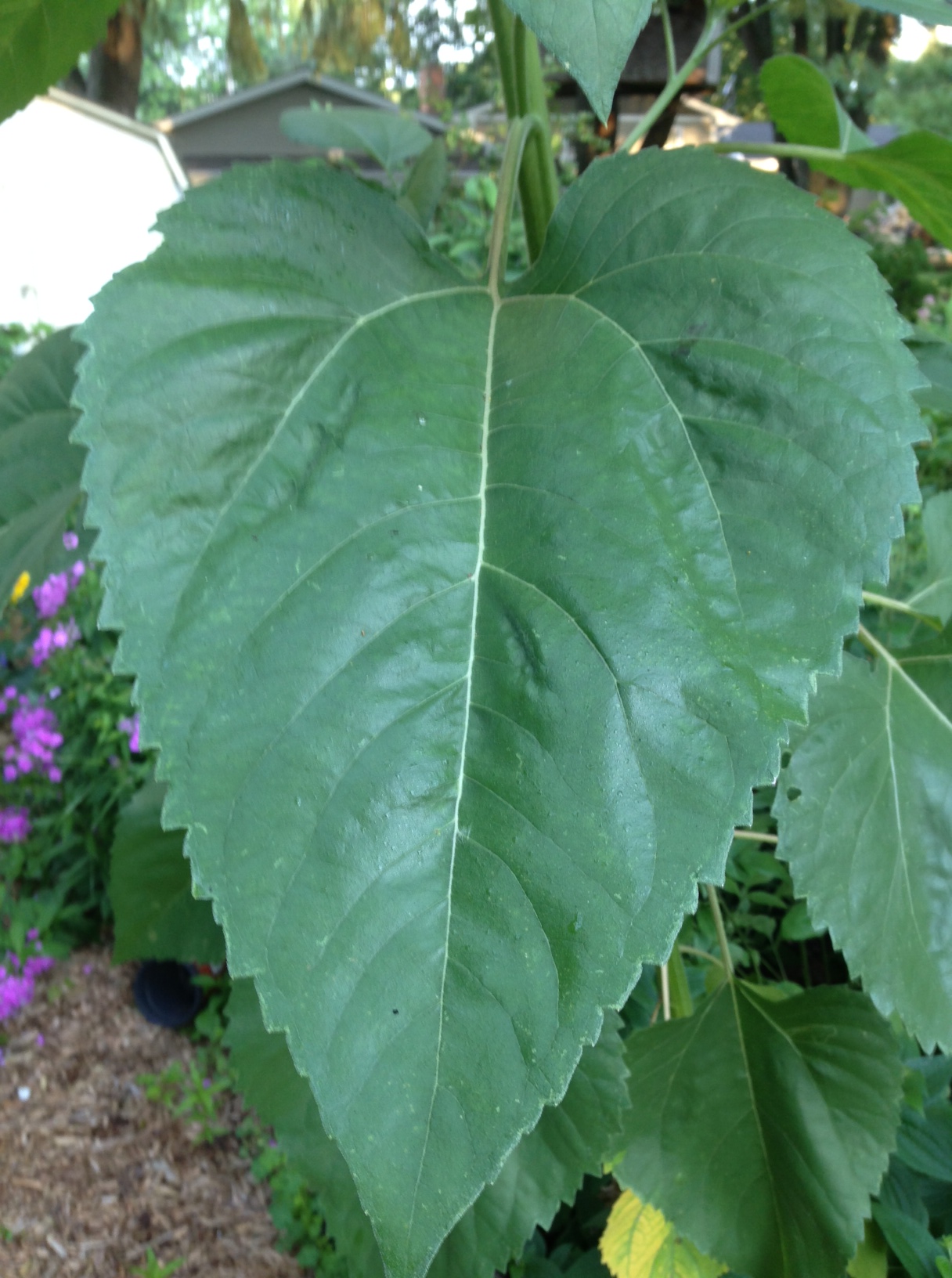
You can't leaf your bloom of vitality to chance.

You can’t leaf your bloom of vitality to chance.

In Europe workers have far more vacation typically than their American counterparts. Having a month or even 6 weeks off is not uncommon. The restorative power of that type of time off is tremendous, of course.

Those of us who run and ride and swim know that having time like that to train is pretty much a luxury. That is why I’m so glad to have done a bit of a social experiment back in the 1980s at the peak of my competitive running career.

After having moved to Philadelphia for a job and then having the whole department axed because the VP of Marketing wasn’t really doing his job, I felt lost and a bit insecure. So I came back to Chicago to work out my frustrations by running.

In 1984 I raced 24 times and won 11 of those races. In many others I placed high or set PRs for distances ranging from 5K to Half Marathon. It was quite a way to regain some needed self esteem after the shock of a job loss. But even that drive didn’t last forever.

Facing fitness bloom

By November that year the bloom quickly wilted. It only took one extra race to know that my fitness flower was finished. The first two miles at 5:00 felt strained, then came a 5:30, and a 6:00 mile and pretty soon I was jogging slowly, feeling stale and tired as a piece of wet bread. Finally I walked off the course at 33:00 with a half mile to go. The season was over, I knew.

While it lasted however it was a charming thing to feel. There were weeks of 2-a-day workouts and long, solo runs on the lakefront of Chicago dodging girls in bikinis between Oak Street Beach and Montrose Harbor. Almost every day I’d run up and back those 8 miles, clipping along on the cinder paths of Lincoln Park and breathing deep the breeze by Lake Michigan. Getting faster by the week. I knew even while I was doing it that my efforts were a temporary, ethereal effort at enjoying the bloom. And I loved it.

Practical woes

Sure, I could have been working too. I know that now. But at the time it felt right to try to dedicate myself completely to the effort. It earned me a running contract with a shoe store. Our team had fun racing almost every week. It was a dose of unreality, for sure. But it was a fun dose. I lived on severance pay and worked at the running shoe store.

Would I recommend that strategy to anyone? Not really. Companies aren’t fond of career gaps on your resume. Yet when I think about opportunities in life, that was the one time when I could run my very best, and I’ll never have to question whether I could have gotten any better at distance running. I know the answer to that one. Ran my hardest.

Practical solutions

There’s a value to that, knowing you’ve done your best at something, even if it has little apparent value on the open market. I do recall being invited to interview with the advertising agency Leo Burnett because they wanted me for their racing team. But times were lean at ad agencies in the early 1980s, so even though the employees who ran thought it a great idea to hire me, that was not enough to get in the door, and I never got to show what I could actually do in terms of copywriting. Rather odd, in a way.


photo (8) sb10067340d-001Still, the idea was tantalizing. Who knows where life might have led had that happened? Your flower of fitness sometimes attracts more than one kind of bee.

When mentioning that period to my mother years later, I lamented that I might have wasted time or opportunity doing all that running. “Nope,” she corrected me. “I liked you then. You had energy and focus.”

It was true. Perhaps I didn’t even push it hard enough? You never know. That’s the bloom and fade of risk-taking. Sometimes you simply don’t know whether to quit or push on.

Stop and smell the roses?

The sage advice is always to stop and smell the roses in life, lest it pass you buy.

But the facts are more complex: those roses may appear at different times in life.

Your sole bloom may not be in your 20s or 30s or even your 40s. People everywhere are defining what it means to be any age. By chance or by force in many cases, people are moving into different careers at different stages of life. Some start new businesses or switch careers. Others switch sports, from running to cycling, or from cycling to swimming. Many now combine all three, challenging themselves in ways they never dreamed. They are pursuing the bloom of life without apology.

We really are the flowers we imagine in our own minds.  So the advice on that front is simple: Enjoy the bloom wherever you find it, and don’t be afraid to go out and create your own.

The garden of running and riding

Recently I’ve become a gardener due to the fact that I inherited a garden on the passing of my wife. And while that sole fact has been a point of remembrance, it is also one of renewal. Because a garden is not a fixed object, but always a work in progress. It so resembles the bloom of running and riding or swimming in fact, that those activities go together really well. There is nothing so rewarding as pushing yourself hard, into a bath of sweat and coming home to rinse off your head with a hose and start weeding and plucking and pushing mulch around. Talk about the perfect cooldown!

As it is said in the book Candide, “We must cultivate our garden.”

Want a tee shirt?

We Run and Ride. It’s a movement.

Posted in We Run and Ride Every Day | Tagged , , , , , , , , , , , , , , , , , , , , | Leave a comment

You’ll be glad to know that the pain really matters

Pain tolerance and the dentist chair

A visit to the dentist sends some people into trepidation over pain.

A visit to the dentist sends some people into trepidation over pain.

Sitting in the dentist chair with heavy lead vest draped on my chest and a dental assistant prepping the x-ray machine for another set of images, I thought back to the many other trips to the dentist during my lifetime.

Some of them went smoothly, like the time I cracked a molar on a nut and the dentist to whom I was sent because my regular dentist was out of town proceeded to remove the tooth shards and pop a crown in like it was no harder than making a chicken sandwich. He was a brilliant dentist, and I went home ebullient that my shattered tooth was now permanently fixed. It was a like a miracle in my mind because it did not hurt a bit.

That’s what we want from the dentist, things fixed without pain. I walked out astounded someone could be so proficient in dentistry. His hands had worked miracles.

Losing and regaining a busted toofer

Then there was the time a front tooth got knocked out in baseball practice. With the afternoon light fading fast my coach yelled at me to take “one more grounder” at third base and tossed the ball into the air to hit it in my direction. But rather than a grounder the baseball flew through the air as a hard line drive and struck me flush in the mouth. Blood poured out in thick red spurts. My tooth hung by a nerve and the coach somehow reached my house by phone so that my dad could come pick me up.

I held the tooth up with my right hand and we traveled that way 10 miles from our home in Elburn to a dentist in Geneva, who stuck the tooth back in my head. It wasn’t the dentist’s fault that time that the tooth hurt.

Numbed up and ready to go

Fear of the unknown is part of the challenge of facing pain.

Fear of the unknown is part of the challenge of facing pain.

As kids we’re told it’s a big deal to come home from the dentist with no cavities. You can’t realize the importance of dental health until something really goes wrong. Then it’s time to have your tooth ground out or worse, a root canal.

That shit really hurts.

Even when you’re all numbed up with Novacaine and you can’t feel a thing on one side of your head, there’s a kind of emotional trauma knowing that there actually is pain going on in your head. You just can’t feel it because the medicine is masking the nerve reactions.

Recently a pretty good dentist did some work on a lower molar and the cavity underneath the old filling had come pretty close to the nerve. She numbed me up, then numbed me up a bit more when my body jumped as she skirted the area next to the nerve. I was jumpy and nervous because no one likes dental pain. But it got me thinking…

Pain tolerance

Life can be difficult when you are in the grip of pain.

Life can be difficult when you are in the grip of pain.

Was all the pain tolerance developed over the years or running and riding any use in a dental situation? The two types of pain are quite different. One is self induced, while the other is unpredictable and as a result, scary as hell.

As young (or new) runners or cyclists we all tend to be pretty frightened of the pain factor in endurance sports. Marathoners and half marathoners spend months training in order to delay the pain of exhaustion as long as they can. With luck and good training in the marathon you can make it through 20 miles or beyond before real discomfort or The Wall (if you’re unlucky) hits you hard.

Yet we’ve found that with proper training you can avoid such desperate situations as The Wall or Bonking On the Bike.

Sustained pain

There have been cycling rides where the pain started in the first 5 minutes and lasted for 3 solid hours of riding. Finishing in 3 hours flat at a rate of 20mph you feel pride in having fended off or ridden along with pain for that long. You wonder how you do it. Or, as my daughter is fond of saying, “Why do you do that shit?”

It can be hard to explain to those who regularly avoid pain of any kind. Why do you go out and run till you puke, or until your legs give way in fatigue and your lungs heave with effort?

You do it because it feels good not to be a wimp. That’s the best explanation there is, quite frankly. Yet it’s a tarsnake of sorts. You pursue pleasure through sustained pain? How f’d up is that? Well, a lot of people embrace that philosophy. So either we’re all fucked up or else we’re really on to something…

Pain by degrees

Triathletes specialize in facing three different kinds of pain.

Triathletes specialize in facing three different kinds of pain.

Pain defines us for better or worse. When I watch triathletes emerge from the swim and trot to their bikes, then hang up their bikes and transition to the run, it is impossible not to think, “What kind of sadist thought this up? Was it really a bar bet that started the Ironman Triathlon?”

It’s like triathletes aren’t satisfied with just one kind of pain. They have to explore three different kinds; swimming until their arms ache, cycling until their legs turn to jelly and then pounding out a half or full marathon while trying to eat at the same time. It’s insane. But they love it, clearly, or thousands of people would not line up on Sunday mornings dressed like seals to participate.

Marathoning and other 

I was not really “marathoner” per se during my peak competitive career, that period when you set all your PRs and if you’re lucky, win a few races outright.

I simply liked racing shorter distances too much. 5K. 10K. 10M. Even the occasional half. But I ran several marathons and trained the distance several times in practice. Here’s what I can tell you about running 26.2 miles. It hurts sooner or later. Sometimes a lot. Your only goal is to survive sometimes.

But what’s it worth? Does suffering in sports make you better able to suffer in life?

Here’s what I can tell you about that.

Painful lessons in life

Who would think that a simple bike could both cause and save you from pain?

Who would think that a simple bike could both cause and save you from pain?

When my wife was diagnosed with ovarian cancer and my mother turned out to have pancreatic cancer and died the same year, there was plenty of pain to go around in life. But here’s the truth: I knew how to get through it. You set short term goals to help take the next step. You have come to realize that even profound pain is usually temporary. You can survive if you are patient and perseverant. Just like the bible says.

I made it through the first few months with my wife getting sick from chemo and my mother fading fast, when one day I got a call from my former high school coach cross country and track coach who heard about my situation. We talked a bit and then he sagely said, “Chris, your whole life has been a preparation for this.”

He wisely meant to say that all the pain does matter. It counts toward our emotional salvation. You even appreciate your own vulnerabilities better. You know how to accept and handle humbling situations. And when small victories come around, or even large ones, you know how to celebrate with dignity and respect.

That’s what the pain can teach you, because once felt, you know it can always come back. And that is an invitingly humble, profound fact. The pain matters. It really does teach you things.

WeRunandRideLogo

Posted in Tarsnakes, We Run and Ride Every Day | Tagged , , , , , , | Leave a comment

Your sock drawer may be key to success in life

By Christopher Cudworth

A sock drawer when poorly maintained can cause you all sorts of problems in life.

A sock drawer when poorly maintained can cause you all sorts of problems in life.

Many years back there was a Thorlo sock campaign in which people ran marathons in their Thorlo socks as a means to prove the quality of the Thorlo brand.

Thorlos really are a superior sock. The thickest socks in their brand simply don’t wear out until the elastic up top gives out or else the dog chews a hole in the ball of the foot.

Beyond that, Thorlos almost cannot be killed or destroyed by normal wear and tear.

I myself have Thorlos that are more than 10 years old. They’re a bit thinner as you’d expect, and show some sport sock string hanging off the ankles, but they can still be worn.

Amortizing Thorlos

Sure, they seem expensive when you buy them. But when you amortize the $14.00 you pay for Thorlos over a lifetime of 600 runs, it comes to $0.07 per run. That’s a pretty good deal.

But it’s not comfort that keeps most socks from performing their best in the life of a runner or rider. It is organization that counts.

Organizing your sock drawer is vital if you hope to be a successful runner or rider. When you arise at 5:00 a.m. and have to search through your sock drawer to find a pair that matches, precious time is wasted. You may get out the door 10 minutes later than you would if you have folded two socks together and been ready to run come morning. If you’re running 5 days a week that 10 minutes per day can add up 50:00 per week. The typically time-crushed athlete who works a job cannot afford to give up that training time. Not if he or she wants to succeed in the long run.

Organization doesn’t stink

That means an organized sock drawer can be one of the foundations for better performance. Laugh if you want. Make jokes about the fact your training stinks as much as your socks. If you’re going to change what you’re doing now and improve your odds for better performance, start with your sock drawer

One touch of organization tends to set off another. You might organize your running shorts drawer next.

God forbid a cyclist should have his or her gear organized. There is so much equipment to count up on cycling you had better not be disorganized or it can take an hour to get out the door.

Organization tarsnakes

Of course organization is a tarsnake of sorts. In order to be organized you have to take the time to organize, of course. That seems counterintuitive to some. The world is filled with busy workingpeople who claim their messy desk is actually a valid indicator of their true productivity.

That’s a hard argument to make, and be true. I cite the example of a TV critic that wrote for the newspaper where I once worked. His desk was a mountain of tapes, DVDs and press releases heaped higher than your head. Rumor has it there was a few Beta tapes of films from the mid-80s lurking deep in the pile.

It is hard to argue that is the most efficient way to fly. That’s rather like conducting security checks in the parking lots.

Organization as an aphrodisiac

But I do recall a time in my early 20s when I was trying to impress a woman visiting my apartment that I had my shit together. I made a point to fold my running socks and place them neatly in the top drawer where she could see them. Sure enough, she noticed the drawer left open carefully and commented, “You fold your socks?”

It is a very attractive trait, folding your socks. Habits like that cut through evolutionary and human history and are an intense aphrodisiac to women, especially those who hate dirty socks in the hallway, or hate hearing you complain about not being able to find a matching pair when you’re digging around at 5:30 in the morning, cussing like an evil circus clown and keeping them awake when they could be sleeping an extra half hour.

That type of scene is proof that organizing your sock drawer not only increases your productivity and athletic efficiency, it could damn well save your life. Do not, and I repeat, do not deprive any woman (or any partner) of an extra half hour of sleep when you can avoid it.

In fact, that is Partner Lesson 101 for you dopes out there who think your morning workout and the socks you wear are more important than the health and beauty rest of your significant other. If you believe that, you are naïve and sadly mistaken.

The Inquisition socks it to a poor soul

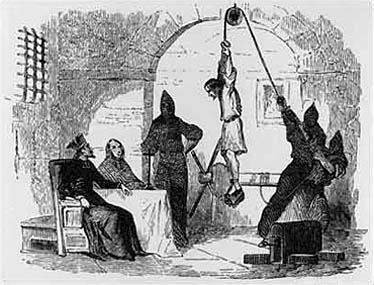
Inquisitors torture an innocent subject. It is rumored his sock drawer was completely disorganized, a heresy under Catholic Orthodoxy.

Inquisitors torture an innocent subject. It is rumored his sock drawer was completely disorganized, a heresy under Catholic Orthodoxy.

But if you organize your sock drawer, you will be forgiven. Sometimes that can be a lifesaver.

There is a legend that tells of a man condemned to death for heresy of one sort or another during the Inquisition. Rumor has it the blasphemy was a smelly, disorganized sock drawer. A sign of sloth and disrespect for God.

Yet when the Catholic Storm Troopers showed up to cart him off for torture by stuffing small bits of fabric down his mouth until he choked to death, the leader of the group sent to capture the man went to grab a stocking out of the drawer to begin the torture and noticed that the stockings were all neatly folded and lined up by sheen and color.

“This man cannot be condemned,” the Grand Inquisitor opined. “His sock drawer is immaculate! That is a sign of pure character. In fact, we’re lucky he wasn’t already up and running this morning!”

Then the Grand Inquisitor turned to the accused and asked, “By the way, why aren’t you already up and running this morning? Your socks are perfectly organized. Share with us your excuse!”

To which the accused gave the dumbest answer in the history of mankind. “It’s a rest day from running,” he said. “I was sort of thinking of lying in bed to masturbate instead.”

“Take him away!” the Grand Inquisitor said. Then they took his neatly folded stockings and stuffed them down his throat until his chest bulged with the mass of Tyson Gay, Lance Armstrong and the rest of those VO2 max sinners who do performance drugs and don’t even keep their sock drawers straight.

WeRunandRideLogo

Posted in Tarsnakes, We Run and Ride Every Day | Tagged , , , , , , , , , , , , , , , , , , , | Leave a comment

Time out of mind in the triathlon

By Christopher Cudworth

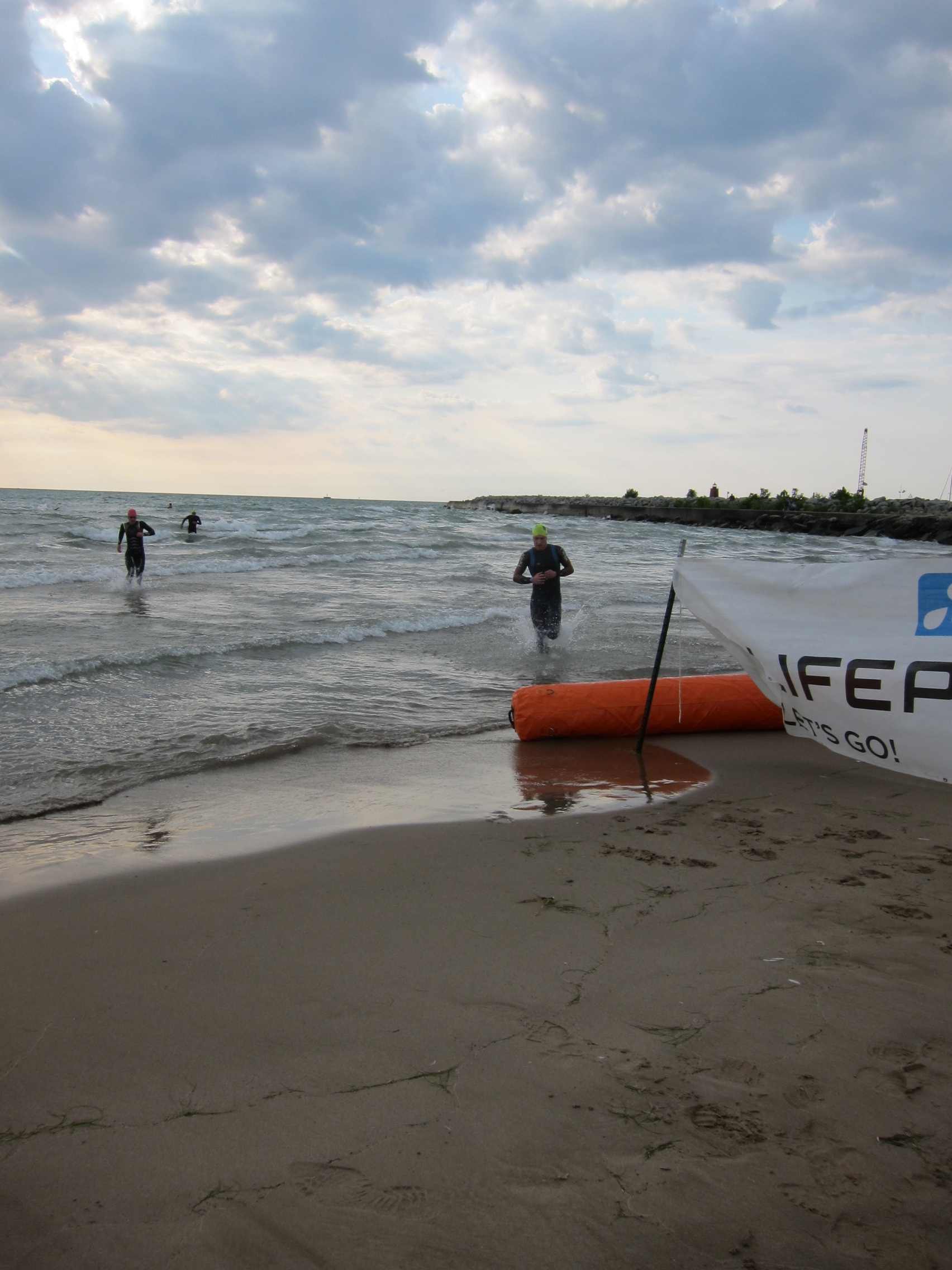
The beach in Racine, Wisconsin prior to the Ironman 70.3

The beach in Racine, Wisconsin prior to the Ironman 70.3. Click photo for larger view. 

The beach in Racine, Wisconsin must be shockingly cold in wintertime. There is nothing stopping the winds from the northeast with 300 miles of cold and sullen lake to put a murderous chill in the wind.

But in July the sun comes up to warm the day, and happy chop ripples the surface and dumps mumbling waves on the shore. It is a peaceful scene to those standing on the deep sand looking out to the water. Waves are nothing to those standing safely on shore.

It’s different when you plan to go out and swim in them. All that wave action near the shore on the lake can be unpredictable, even terrifying if it is your first time competing in a triathlon. You stand near shore and realize there is a mile of open water to cover from the lighthouse down to the breakwater, and it suddenly strikes you that despite the chirping sound of families splashing in the shallows near shore, the lake is not that friendly a place. It is something else. Reality perhaps.

Swim or sink

A seemingly calm lake still holds perils.

A seemingly calm lake still holds perils. Click photo for larger view. 

The idea of stuffing your head under the next wave and embarking on a 1.2 mile swim can bring on actual waves of nausea and wide-eyed fear. But if you’re lucky, some other competitor will sense your trepidation, pat you on the shoulder and say, “You can do it.”

But there are no guarantees. Open water swimming is nothing if not unpredictable. When you’re running a marathon you might fall down from exhaustion or sit on the curb to recover when the wall hits. But if you sink in an open water swim, you lose in more than one way.

That is why a line of life rescue workers and volunteers sits in the lake about 200 yards off shore. It is there, where the lake bottom starts to slope toward an eventual abyss of several hundred feet, that is the defining line between innocent paddling and serious swimming. It is a cultural shelf, of sorts, for to swim in open water requires both practice and some healthy brainwashing. Otherwise no one would do it.

Open water

Usually there is some sort of open water practice for every triathlete getting ready for a race like the Racine 70.3 Half Ironman. It’s part of the initiation as a triathlete. It makes you realize just how many people have real courage, when it comes down to it.

Which means the bulk of competitors (both literally and figuratively) on the morning of the Racine Half Ironman make it through the swim and the extra 15-30 minutes required to finish on a day when the lake seems to want the upper hand, sloshing water into the mouths of all those who dare, by habit or by chance, to breath on the left side, where the waves break over you.

Evolution of purpose

Pro triathletes pop up from the surf like liquid cyborgs

Pro triathletes pop up from the surf like liquid cyborgs. Click photo for larger view. 

Spectators stand near the transition zone where a subtle selection is occurring. A very few athletes emerge from the lake and then grab their bikes and walk off the course. The $225 entry fee no longer matters. Nor do months of preparation. If the body and mind aren’t willing on the day of the race, there is nothing you can do about it. None of the many forces of the cosmos can compel you to continue. Nor God. Nor family.

It’s a fact. Circumstance can be cruel. It is nature’s way, the process of elimination in a triathlon. Natural selection of a metaphysical order. A choice is made, and an opportunity lost. The triathlete necessasrily evolves or devolves in the moment. All that can be passed along to the next “generation of self” is that thing we call experience. Or failure. Often they are one and the same. Most triathlons contain a healthy dose of both, it seems. That is the challenge.

Natural selection

The race is for the strong, and so many! The first athletes out of the surf after 30:00 or so of swimming are the buff pros. They crawl up from the whooshing waves as if they were formed from powers of the surf and water itself. Dripping and stripping as they go, they tug wetsuit draw strings like land-based ripcords as they sprint over the sand and cross under a big inflatable marking the Swim Out section of the course.

Following the pros are competitors in the age groups, starting with the oldest, who will need the most time to complete the race. You are shocked in some ways to see people who do not look anything like real athletes crawling out of the water, because some are actually overweight and others have no muscle definition other than the body parts that shake and flex as their bare feet cover the sandy ground.

First metamorphosis

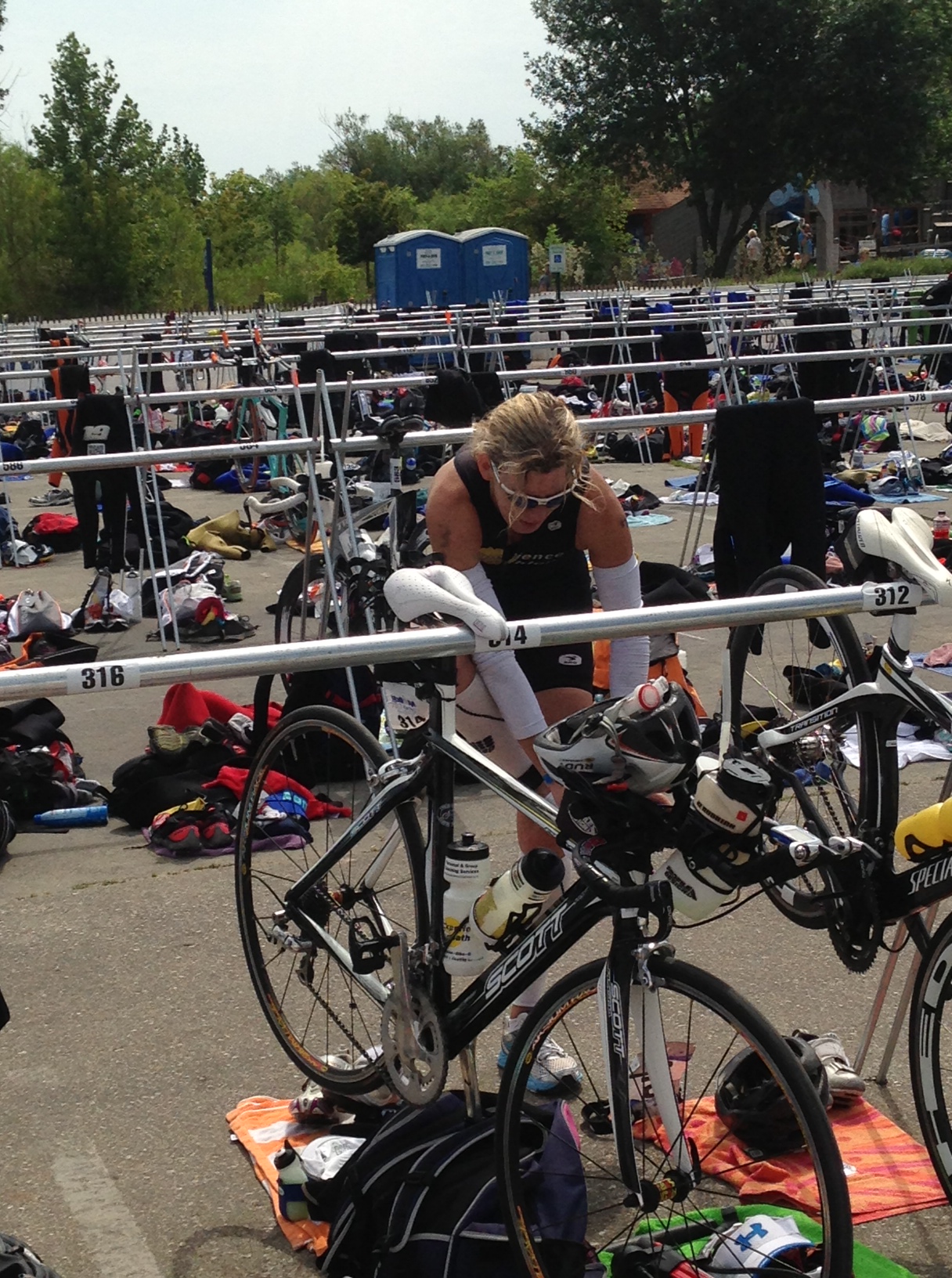
Competitor Susan Astra of Batavia, Illinois works through the transition zone

Competitor Susan Astra of Batavia, Illinois works through the transition zone. click photo for larger view. 

The bike zone is raided by competitors after the swim. They all look like they’re stealing their own bikes, hustling to assemble their gear and put it on. Before it’s all over at least 2 million dollars worth of expensive tri-bikes and retrofitted road bikes are surreptitiously absconded from the transition zone. The competitors seem to sneak out of the transition zone and try to clip into their pedals below an uphill section of the course, which responds like a slap in the face. “This is not going to be easy,” the hill seems to say. “I won’t let it be.”

From the massive bike field the competitors continue to emerge like plovers out of a deep field. Or, they are mimicking the metamorphosis from caterpillars in wetsuits into cycling butterflies on brightly colored bikes. One spectator stands by the zone where the cyclists are emerging. Her eyes are bright with lust for a new bike of her own. “It’s like a candy store,” she enthuses.

One triathlete who is not competing this day decides a chili cheese dog is a good breakfast

One triathlete who is not competing this day decides a chili cheese dog is a good breakfast

By the time the cyclists return from 56 miles of riding, spectators have downed late breakfasts or an early lunch and have settled in to sit in the sun and wait for the chance to cheer on their favored participants. Some express guilt lounging around during the wait. Others think ahead to their own competitions, including a few future full Ironman participants. These people take measure of the sensations, wondering perhaps who will be tending to their efforts on that day, much longer, and filled with pain.

Spectator perspectives

A young mother awaits for "dad" to come by in the first lap of the 13.1 mile run

A young mother awaits for “dad” to come by in the first lap of the 13.1 mile run

There are families everywhere. As his father approaches on the bike, a little child responds to the call for “more cowbell” by shaking his bell with a Cheerio-caked fist. Young parents corral their kids and wait for their spouse or partner to come by. The little children get high- fives as their parent (or both parents!) head out for 13 miles of running.

It’s a process of support we spectators offer. You need to move around to see the race, or at least portions of it. A community forms at every stop, asking who everyone else is cheering for. So you share that moment, and learn how long the participant has trained, and why they’re there.

Time out of mind

But it turns out there is no “there” there. The triathlon is both a highly visible and invisible event. The person for whom you’re rooting exists in another dimension for those six hours away; swimming, running and riding. You can’t really share in what they’re actually doing out there, other than by cheering or slapping a hand.

Sue Astra takes off on the run leg

Sue Astra takes off on the run leg. click photo for larger view. 

It can get a little lonely as a participant, so the cheers do help. But progress can be incremental. Every footstrike counts in your favor. But the doubts work otherwise. You drift between two worlds, the tangible and the intangible. Those who know the sport recognize this. They see themselves in other competitors. Time out of mind.

Transience of the triathlon

It can make you wonder why anyone does it, if it is so transient. But that is the point. In fact it seems the entire point of a triathlon. You own the parts you remember and enjoy, and try to forget the parts that hurt or caused you fear.

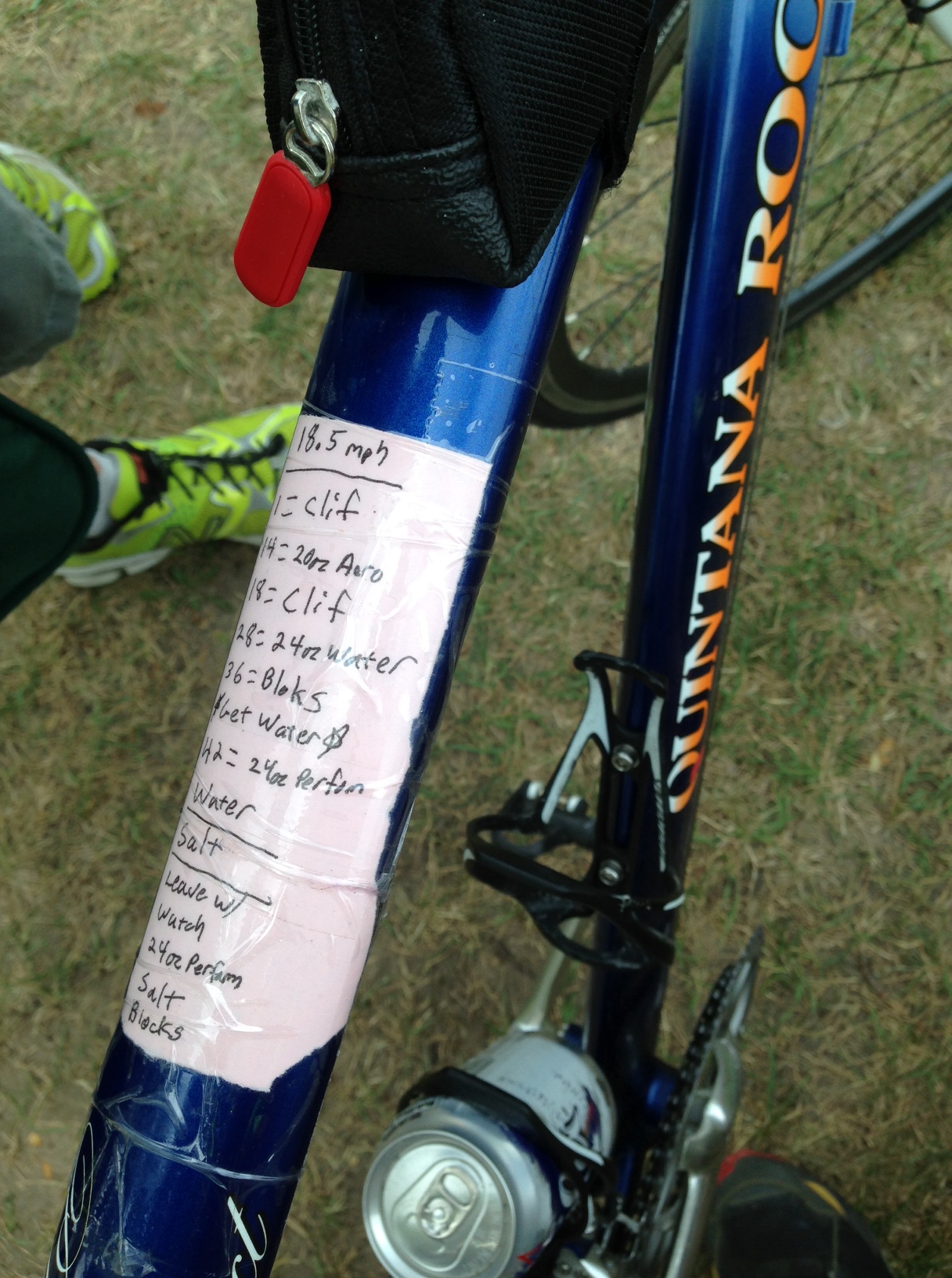
Coaching can help. The triathlon teams that bring participants to races provide support photoand guidance before and during the race. In Racine a team from Experience Triathlon had 10 or so participants. Each had their goals mapped out, even to the nutrition schedule mounted on a bike top bar. Joe LoPresto of Experience Triathlon works with athletes of all abilities and speeds, from elite to beginner. Each is on that most personal journey of what it means to try your hardest at something.

Takes a team

The triathlon as an event may be transient against the broader spectrum of the elements it traverses, but inside your head it lets you know you’re alive and not stuck in time. You may struggle and falter, or you may fly and transcend, as liberated as the gulls above the surf, where waves will roll up again and again, on the morrow. The race will be said and done, and the clouds will cover the sun.

But those who have been able to claim the day for their own will have owned something precious in concert with all of nature. And with human nature. The triathlon exists in the space between.

WeRunandRideLogo

Posted in We Run and Ride Every Day | Tagged , , , , , , , , , , , , | Leave a comment

Chain reactions

By Christopher Cudworth

Chain reactions

It's always best to keep your chain in shape, not let it rust.

It’s always best to keep your chain in shape, not let it rust.

Cyclists know there is no more important component on the bike than the bike chain. Along with the crankset it is the primary device that propels you. A rusted chain slows you down. A busted chain equals no progress.

I’m here to argue that the human back is equivalent to the bike chain. Sure, your legs do the actual running, but they are somewhat more equivalent to the wheels of the bike. They make contact with the ground. But your spine is what lets you stand up, connects the head to the legs, and thus operates like a metaphysical bike chain. Or is it the other way around?

Important chain

Just above your legs, after all, is your spine. Which if you think about it looks a bit similar in construction to a bike chain. All those vertebrae interlocked in a single “chain.” In fact it’s the most important set of bones in your body. Without the spine you are an amoeba. And we all know that a set of sensitive fibers runs down the spine to carry signals all over the rest of the body. It’s called the nervous system. One giant chain reaction within our bodies. And it’s pretty important.

If you don’t believe the human body and especially the spine is a bit like a bike chain, check out these bike chain sculptures by Young-Deok Seo

The Chain Principle

Your bike chain and your back may not work exactly alike. For one thing, your vertebrae don’t rotate up and down your body like a bike chain. But wouldn’t that be cool? You could add lube to your back and replace links or even the whole spine if you needed. And here’s a hint: you need to do upkeep on your spine and back just like you need to keep an eye out for wear on your bike chain.

For a few weeks earlier this summer I was doing core work and strength work and everything started to come together not only on the bike, but in running as well. Strength is your best friend in either endeavor. One can only imagine how valuable back strength is to a swimmer. Keeping the muscles around your spine and lower back in shape can make all the difference in the world to an athlete. Just ask any chiropractor.

But for me recently things got busy and the strength work fell by the wayside for a week or two. Bad boy. Things deconstruct when you ignore the basics.

Chain links

Yet last night was a warm night in Illinois and it occurred to me to run on the track for the first time in quite a long while.

The typical surroundings at most schoolyards and tracks across America are chain link fences.

The typical surroundings at most schoolyards and tracks across America are chain link fences.

Problem is, you have to climb a 6-foot chain link fence to get onto the track near my home. It’s like that everywhere these days. High school sports facilities are pretty much off limits to anyone that isn’t between the ages of 14-18. Locks block your way.

If you want to run on the track you must take your life into your hands and climb over the 6-foot fence and jump down the other side.

That’s not really a good idea for anyone over the age of 40. Typically after age 40, your body just doesn’t engage in that many leaping and landing activities. Back when I was playing 4 hours of hoops every Sunday evening, and still jumping pretty well, a jump down from a fence was not that big a deal.

But as the years go by, and you jump a bit less thanks to the fact that you live a pretty horizontal life while running or riding, your body and brain aren’t as keen for the proprioceptive leap from a 6 foot or even 8-foot fence. Yikes.

Results

But I made it over the fence in one piece.

The track workout pretty much went fine once I got out there and warmed up. Doing a 4 X 400 workout is a strange sensation when you haven’t run that fast very often. I managed a set of four 90-second intervals, or 6:00 mile pace. The first one felt dorky. The second was better. The third got a little slower and the fourth was fun because it was possible to sprint the last 50 yards. Such as my sprint is these days.

Then I warmed down and had to get back out of the track somehow. So I chose an exit toward the right field side of the baseball field where the fence is covered with a yellow corrugated plastic cover. In my fatigued state I did not trust my climbing abilities, and had no interest in stripping a nut by slipping on top of the chain link fence. So I took the round way over, and out.

Stripped chain

That maneuver made me recall one night at the football game in high school. A bunch of girls were trying to sneak over the chain link fence when no one was looking to avoid paying the entrance fee to the game. On the way over, one of the girls caught her jeans on the chain link and tried to jump to the ground. In an instant her jeans were ripped right off her body. She stood there naked from the waist down as the entire top row of the football stands stared gape-jawed at the attractive young woman with no clothes on. A round of applause broke out, and some wolf-whistles too. Her friends gathered round her and attempted to put her jeans back on her body. But they were ruined. So they threw a sweater around her waist and off they all went.

When you’re busy making other plans

"Life is what happens to you while you're busy making other plans."

“Life is what happens to you while you’re busy making other plans.”

Most of life is a chain reaction like that. You set out to do one thing only to set off a sequence of other events over which you seem to have little control. As John Lennon once put it, “Life is what happens to you when you’re busy making other plans.”

Whether it’s a busted bike chain that strands you 10 miles out of town, or a back that tightens up during a run, things just go wrong sometimes.

Chain of fools

Which is why it is not surprising that my back is full of twinges today. Short, sharp pains keep reminding me to maintain good posture. So the question is this: Was it the speed workout that caused my “spine chain” to tighten up, or was it jumping the fence. Was that foolish?

I’m actually thinking it was foolish, along with the dearth of core work the last couple weeks. It’s all a chain reaction. A reminder that it’s the little things that add up to a functioning whole.

Chain reactions, indeed.

WeRunandRideLogo

Posted in Uncategorized | Tagged , , , , , , , , , , , , , , , , , , | Leave a comment

21 Days of Tour de France makes a habit, then withdrawal

By Monte Wehrkamp

It can be a devil of a time getting over your Tour de France viewing habits

It can be a devil of a time getting over your Tour de France viewing habits

I turned on the TV this morning and turned to NBC Sports Channel. Maybe, just maybe, there’d be a Tour de France recap – a special – with interviews and highlights. Maybe Paul Sherwin and Phil Liggett would be back just one more morning, starting my day with the pageantry and color of another morning filled with the Tour de France. Just a little more. Please.

But no.

Instead, NBC Sports was running their old standby Best Ever series. Best ever football player, or baseball first baseman, or whatever it is that lets talking sports heads argue with each other in louder-than-necessary voices.

Tour withdrawal

It’s time I face it. Again. Still. I’m in Tour de France withdrawal. Like I was last year. And the year before that. And the year…

They say it takes three weeks — 21 days — for something to become a habit. (They being more than a few expert studies I found just now on the interwebs.) Which is exactly how long the Tour de France lasts.

Every morning in July I get up, make coffee, feed five furkids, and start breakfast for the humans of the house. Keeping me company are the sights and sounds of the Tour, this year on a new, room-dominating, high-def, big-screen TV. Sometime mid-way through the live coverage, I turn off the TV and head off to work, only to pick up the stage later in the evening after I get home and gone on my own post-work ride. The Tour de France bookends of my day. Frames it. Begins and completes it.

Hoped against hope

So I hoped against hope that maybe there’d be just one more day of coverage this morning. Perhaps Tour officials would find it in their hearts to give Van Garderen one more superhuman effort to ride away with a stage win. Let Contador have another chance to see if he and his Saxo teammates could take some time out of Froome and the Sky machine. Maybe Jensie could give us a fairy tale ending and make his famous Shut-Up-Legs solo breakaway stick just one more time on this, his last Tour.

But no.

The Tour’s over (and out)

It’s over, this year’s Tour, just when I’m completely addicted to my new, old habit.

Disappointed but not surprised, I switched over to WGN Morning News. How I wished, just to ease my pain, they would’ve let Phil and Paul guest-host the show.

PAUL: And here we have our shot from the weather copter, Phil.

PHIL: Yes indeed; we’ve got a great look now at what both tourists and locals call “the Bean.”

PAUL: Cloud Gate, I believe it’s actually called.

The Bean, or Cloud Gate as it is really called, brings Chicagoans entertainment in Millennium Park

The Bean, or Cloud Gate as it is really called, brings Chicagoans entertainment in Millennium Park

PHIL: It is! Created by British artist Anish Kapoor, it’s the centerpiece Chicago’s of Millennium Park. You can see already this morning people enjoying the distorted reflections in the polished surface.

PAUL: Yes, and with that we turn our attention to the weather, which will offer a small break to the heavy humidity and oppressive heat we’ve suffered of late.

PHIL: More thunderstorms popping up this afternoon, Paul, so do try, everyone, to get in your afternoon rides early today or risk some wet and slippery conditions.

But no.

Not quite the same effect

No more Phil. Or Paul. Or Bobke or screaming fans getting far too close to the riders for comfort. No more sitting on the edge of the couch wondering if Tejay can pull off a heroic finish. Or grumbling at the steep decline of old favorites like Cadel and Andy. Cheering on new favorites like Quintana and Sagan. Back to reality. Life without the Tour, just as it had become a habit.

However, there is one tiny bright side.

American Hair of the Dog

The USA Pro Tour Challenge starts in just 29 days. Which is more than enough time to return me back to my regularly scheduled life.

WeRunandRideLogo

Posted in Uncategorized | Tagged , , , , , , , , , , , , , , , , , , , , , , , , , , , | Leave a comment

Ever been really lost on the run or ride? Or in life?

By Christopher Cudworth

If you’re a runner or a cyclist, or even a swimmer who gets out into open water, you have likely experienced the awful feeling of getting lost.

Out in the woods

A section of the hill at Johnson's Mound in summertime.

Off the beaten path, the woods can get scary. You can even get lost if you’re not careful.

It doesn’t happen that often for most of us. We run and ride familiar routes where getting lost is not a possibility. But when you’re in a strange new place, or you wander off your traditional routes on a backroad it isn’t that hard to wind up lost. And alone. And wondering how the hell to get back home.

On vacation in northern Wisconsin one summer I took off for a morning run in a National Forest near Eagle River. The morning was cool and the sky was grey and flat. There were logging and ATV trails that made for great running as long as you didn’t slow down. Then the deerflies would get you. Huge clouds of deerflies flipping around your noggin. They could drive you crazy.

It was fun running on the upsy-downsy ATV trails through woods thick with tamarack and birch trees. Maple hardwords were the climax forest in the area, along with leftover stands of white pines. Breeding warblers sang in the trees and pine squirrels shot across the trail. Fawns and their mothers were everywhere, and at twilight treefrogs sang from their perches. You can run forever it seems, when nature welcomes you.

Just a few miles more 

But it can also be deceiving out there. So when I took a new trail and set off to add a couple miles to the 4 mile loop I usually ran, it should have occurred to me to mark the trail back somehow.

Deeper into the woods I ran. The canopy closed over the trail and the trail cut through a hemlock woods that was silent and dark. Then the trail dropped into an area that was heavily logged. The shards of fallen trees were everywhere, and the deerflies were thick. To get away from them took a combination of serious swatting, running and a change of habitat.

Having killed a few deerflies with my hand, I stopped running for a moment and realized suddenly that I had no idea where I was. The sky was no help at all. You could not tell north from south because the sun was absent behind the flat grey skies. There were no clues other than moss on the north side of trees to tell you want direction was what. I tried to call up all my supposed knowledge of nature from years of birding, but that wasn’t much help. I’m not one of those survival type nature lovers. Couldn’t tell you what bark to use for sunscreen or anything like that. All I know is not to wipe your ass with poison ivy. Usually that’s good enough knowledge for a run in the woods.

Glancing at my watch, I noted that I’d already run about 4 miles given the usual 8:00 pace on an easy run. I tried circling back the way I came and found a confounding array of trail options. The main trail was constructed like a feather with a bunch of barb trails angling off into the woods.

Bad omens and bearing up

Some people believe even greater mysteries lurk in the woods.

Some people believe even greater mysteries lurk in the woods.

A band of ravens flew through the woods, low and smooth as they went. The last bird uttered that wild croak they use when hunting. I felt very alone.

There are bears in the Wisconsin woods. Wolves even, in places. Here was I, a skinny runner with nothing but my flimsy running shorts, a tee-shirt and a bandanna. Come and get me wildlife. I’m not much to eat but I might taste sweet.

Out west the mountain lions have on occasion learned to pounce on runners, which act a lot like stupid prey. We all run with eyes forward, in that dull human way, without looking around that much. It’s not that hard for a mountain lion to swing around behind, jump off a rock and put a couple incisors through the skull. Then have lunch.

But none of those thoughts really occurred because I’ve been running so long and love the woods so much that I know there’s always a way out. If nothing else, you run in one direction until you hit a road. Even many of our national forests are so compromised by civilization that you’ll hit a road sooner or later if you run slow and keep moving.

Difference between riding and running it out

I’ve gotten lost on the mountain bike in those same woods. But on a bike you have a friend of sorts along with you. It’s easier to keep pedaling than to keep moving. Usually. Plus you’re likely carrying water.

As a runner, you simply must perambulate more carefully. Being thoroughly lost in those Wisconsin woods on foot, I decided to use a system of right turns at a specific angle if possible, trying to use the approximate tangent of my earlier running path (as best I could recall) to bring me back to some familiar spot on the trail. But it took a while. I was now a full hour into the run. That particular summer my longest runs were 45:00.

It honestly took another 40:00 to find a trail that I knew would lead out of the woods. Stopping for a moment, I bent over and said a little prayer of thanks as is appropriate in that situation. But I didn’t thank God for saving me. I thanked God for not letting me die out there. There’s a difference. Because it did require my own action. I wasn’t carried out on the wings of ravens or dragged to safety by a band of friendly wolves. Instead I believed in my own volition. Even God will tell you that it takes two. Heck, even God needs a Trinity by most reports.

Later I was able to piece together where I’d run, and how I’d gotten lost. It came down to a trail where ferns hung over the entrance. On the way through they did not look like much. But coming back they obscured the trail entirely. That’s how I missed it. The flat grey sky did not help at all. That should have been a possible factor in whether I tried those extra miles. Be sensitive to the conditions.

Lost and found

My wife had been worried, but she also knew that I always found my way out of the woods somehow, both literally and figuratively. But that didn’t stop her and quite a few others at the cabin resort from asking whether I wanted help getting back when I got up to go to our cottage for a beer.

New ways not to get lost 

Compared to running, getting lost on the bike really is a different experience. And nowadays you can usually glance at your iPhone and get back on track in a heartbeat. That’s true while running too. Perhaps GPS has taken away the thrill of getting lost?

Thinking about getting lost

Directions turn up in funny places sometimes.

Directions turn up in funny places sometimes.

There’s an allegory there because it’s just as easy to get lost in other ways in life as well. That feeling of being socially or economically or relationally adrift can make you feel as lost as if you were running through the woods. You look for familiar markers. Go back to church. Or school. Or find old friends or new to help you get re-oriented.

Then one day, if you’re lucky or smart of persistent, the woods of malaise open up and everything suddenly gets clear. You no longer feel lost, and you’re not.

Getting out of the woods

If you’re ever lost–whether out on the road or “just” in your head, it pays to take a moment and try to gain a sense of where you’ve been, where you’re really going and how you’re going to get there.

It’s best if the sun’s out in some fashion, of course. At least you have a prayer when there’s light. But even under dark clouds or dark of night there are ways to find your way out of the woods, so to speak.

The first action of course is to “take stock.” How is your general energy? Your hydration? Your will to return to sanity and salvation.

  1. Be patient. It’s important to take stock whether you’re out on an extended run or ride or embedded in a job search. It’s always important to measure your energy level. Sometimes it is far better to “slow down and walk” while you gather your wits rather than burn up vital stores of mental or physical energy trying to prove to yourself that you can keep going.
  2. Calm yourself. The British World War II saying “Keep Calm and Carry On” was designed to encourage courage in the face of falling bombs and firestorms. But it shows that you can survive a lot more than you think, including being lost.
  3. Pace yourself. It doesn’t help to hurry a job search any more than it helps to run faster when you’re lost in the woods. When you’re trying to find your way home or get employed you’re not trying to set any records.
  4. Believe. If you open up your mind to the world around you, the answers often come walking right up to your feet. So rather than shutting down your entire belief system when things get tough of you get lost, remember that you somehow got to where you are right now. It only stands to logic that you can get back if you believe it possible.

A little help

Of course there’s more than one way to be lost, or be found.

Always keep your head about you whether you are running, riding or swimming.

Always keep your head about you whether you are running, riding or swimming.

I think about another day up at the northwoods cabin when I’d already run a long way that morning and decided to swim out to a floating dock. About halfway out to the dock my arms grew tired and my legs were too. A shock of fright ran through me and I wondered if the strength to continue swimming was really still there. Drowning on vacation? What a horrid way to go.

At that very moment I heard a snuffle in the water beside me. A dog  had followed me out from shore. His nose was dipping below the surface with every paw stroke. It was clear that he also was tired. Possibly too tired to make it to the floating dock. His eyes were wide in panic.

Seeing that dog reminded me that there is always more energy if you really need it. So I reached under the dog and put an arm under the keel of his chest. He was buoyant but you could feel the weight of his body, the fur wet now, and heavy. Together we paddled our way to the dock. He knew his way around to the ladder so I followed him there and helped him clamber up to the astroturf platform. His wet tail dripped a stream of water down on my head.

 Safe at last

Climbing up alongside the dog I flopped down on the deck beside him, arms tired but with a body full of adrenaline from helping the dog. I lay in the hot sun and the dog gave one of those wet shakes that sends water everywhere. Then he stuck his cold wet nose under my nose and let loose a wet snort. He laid his wet body down next to mine and for a few minutes we hung out there together in the middle of a lake with the sun beating down on our bodies.

Once we’d recovered, the dog and I swam back to the shore. Neither of us seemed tired or worried. Something about our shared experience seemed to imbue strength. Once on shore, I gave him a pat and he ran off to do whatever dogs do on a hot afternoon in July. Sleep, mostly.

But the dog also reminded me that sometimes the surest way to get over your own fears, and focus on needs other than your own, is to realize there are others who might need help even more than you. Sometimes when we seem most lost, all it takes is another soul to remind us that we can be found again. Rescued. Saved. Get out of the woods or the water on our own two–or four–feet.

Helping others feel less lost

Want to help someone feel less lost? Sometimes that help is nothing more than a pat on a back during an interval workout or someone pulling you back into the group during a long, windy ride.

At those moments a song by Coldplay comes to mind. “Just because I’m losing…doesn’t mean I’m lost…”

It’s a good refrain to keep in mind whenever you, or someone you know, feels lost. Like the Prodigal Son or the Prodigal Daughter, it feels great to be found. Kinda like you feel alive again.

WeRunandRideLogo

Posted in We Run and Ride Every Day | Tagged , , , , , , , , , , , , , , , , , , , , , | Leave a comment

Running, riding and the fine art of creatively bitching up a storm.

By Christopher Cudworth

Not every run and ride is a soul-lifting testament to the joys of running and riding. Some days just feel like crap physically, and other days your mind just isn’t into it. It seems sometimes that no matter what psychological tricks you employ, your brain and body simply refuse to cooperate.

So you bitch about it.

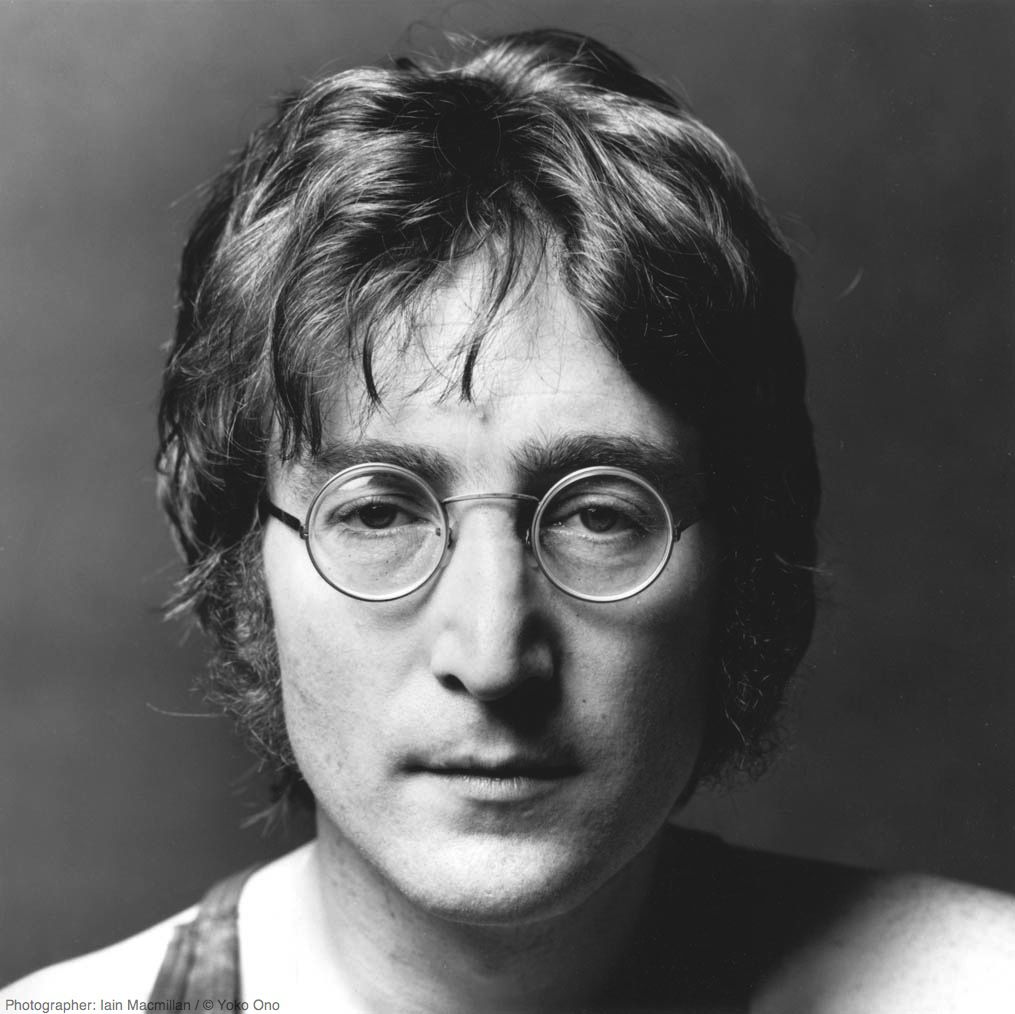
John Lennon knew how to bitch creatively. Some people claim he married one. He and Yoko transcended all that.

John Lennon knew how to bitch creatively. Some people claim he married one. He and Yoko transcended all that.

Some people think the worst thing you can do for your feeling-like-crap condition is to complain. Negative talk, they say, fuels more negative feelings. Bad energy. Instant Karma. Gonna get you.

But a few of us recognize that a really good, creative rant can go a long way toward killing off negative feelings. Even John Lennon said that a good bout of depression can generate all sorts of creative energy. He should know. He called himself “insane” at some level, yet also a creative genius. And his productivity, when he wasn’t drinking manically with Harry Nilsson, was notably high. No pun intended.

Be careful with  all-positive pricks

So we must first address the philosophies of all those positive thinker types who make millions of dollars blabbing at mouth-breather audiences determined to make themselves into better people.

But here’s the basic fact: When you fill a stadium full of people and give microphones to the likes of the ultimate chimera of Colin Powell or God Forbid, a Donald Trump, then everything that comes out of their mouths will seem like Gospel Truth when actually they’re all pretty much full of shit.

Sheer positivists don’t know anything more than you or I do. But they’re good at pretending they do. Because when you dig deeper it seems that half of them are proven hypocrites at some level. So you have to choose your so-called heroes very carefully, lest you be led down the garden path of deception.

Sure, actual positive thinking has value, but actual gig stadium level pep talks is more about branding and momentum than truly sage advice.

It’s better to learn the fine art of creatively bitching.

When you’re out on your own with a gang of fellow cyclists and runners, feeling pain from head to toe and grinding through a headwind, something within you wells up, and before you know it, the words come out of your mouth and throw a shock wave through the group.

You’ve begun to bitch up a storm.

“Can’t you hold your line?”

“Why are you half-wheeling me?”

“Do you have to run a half step ahead the whole way?”

F

Feeling like shit? If you’re going to bitch about it, be creative.

“I feel like shit. Let’s slow down.”

“Wasn’t this supposed to be an easy day?”

Bitch. Bitch. Bitch. It’s the only thing that feels good to do at the moment. Everything else feels like crap. Some strange synapse in your brain decides on its own that everyone else should be unhappy too.

Chronic bitching

If you get in a habit of chronic, unending bitching, an intervention may be necessary.

Sometimes a friend finally intervenes. A teammate once told me, “You know what, Cud? You need to just shut up and run.”

And I took that advice. It was quite liberating actually. That winter I ran like a madman, setting my 2M PR by 15 seconds and  indoor mile time by 8 full seconds. When spring hit my steeple and 5K times also dropped by over 10 seconds.

It also helped perhaps that I’d met a girl. That cures a lot of bitchy ills fast.

Overtraining leads to bitching 

Yet in the tarsnake world of endurance training there was also some truth to my bitching. Our entire distance squad tended to train too hard, too fast every winter. When we should have been doing smart, slow basework, we were blasting around the backroads of Northeast Iowa at sub-7:00 and often sub-6:00 distance runs. As a result, later in the spring we never fully peaked. Our distance base was worn thin. Something was missing in our muscles.

The same thing often happens in cycling. All it takes is one obsessive nard who’s spent all winter on the trainer to mess up the early season training for everyone. They come out to the March and April rides rarin’ to go. They’ve done 250 miles a week in the lonely confines of their basement and they’re looking for someone to crush. Everyone in the group knows it’s too early to be going so fast every ride but the collective machismo prevents anyone from saying anything. If you do, people accuse you of bitching.

That’s the tarsnake of bitching. Everyone wants to do it, but the first one who speaks, loses road cred.

There’s a better way than killing yourself and bitching about it

One of my talented teammates in distance running decided to actually do something about our annual ritual of overtraining. As a 14:35 5K man, fierce competitor and leader of the team, he pulled me aside and said, “You and I are not going to fall into that overtraining trap this year. We’re going to run for 6 weeks, long and slow, even if we have to do it alone.”

There was no bitching between us. Just long slow runs in the purple twilight of winter, up and down hills, traveling through the Looking Glass of basebuilding. When other teammates bitched that we weren’t “training with the team” we kept our cool and kept to the plan. Long and slow. We emerged out the rabbit hole of winter in fine running shape. He won two out of three distance events at the conference meet. I won the conference steeple and advanced to nationals with a PR.

By not overtraining, we turned out to have a bitching good spring.

Bitching as fine art

We tend to bitch when the pressures of life sneak into our brains, or the circumstances feel out of control.

It’s like we’re saying:  “I feel like shit and I just want you all to know that.”

But you don’t have to be so pathetically pedantic about it. You can turn bitching into a fine art if you try.

So if you’re going to bitch, do it well.

Throw in some sense of humor or start up a discussion to make fun of your state of mind.

Try a few one-liners for starters:

“I feel so shitty even the flies are staying away.”

“If I felt any more like crap you’d need a poop bag to carry me home.”

“I’m riding (or running) so slow even Stephen Hawking couldn’t find me in the universe.”

 “God helps those who help themselves. But what if you don’t give a shit?

You get the picture. Bitch it up with some finesse and flair. You may find your fellow runners and riders having some sympathy and joining the fray. Because here’s one of the universal laws of the universe. When it comes to bitching, two wrongs can make a right. Bitching loves company, especially creative company.

Was the original yin and yang actually a tarsnake?

Was the original yin and yang actually a tarsnake?

Like yin and yang the act of bitching create a magical balance between bitching as complaint and bitching as a release from suffering.

It sometimes takes a double-down negative approach to change your mindset. If you can laugh at what you’re bitching about, you might actually relax enough to run or ride better. And if you still don’t recover and either get left behind or dropped, at least you’ve left a humorous impression on your training partners that will earn you forgiveness later and keep you shielded from a reputation as a sonofabitch who does nothing but complain.

If it all comes undone despite a good, artful bitch session, you simply have to eat crow, fall back and plan for another day. Have a good, solid sulk as your training partners recede into the distance. And say; “So, it’s another day.”

Everyone has bad days, and everyone sooner or later bitches about it. But if you want to make life a little better, remember that in the end it’s not how much you complain, but how well you do it that matters. 

WeRunandRideLogo

Posted in We Run and Ride Every Day | Tagged , , , , , , | 1 Comment

The tarsnake of no helmets on little kids

By Monte Wehrkamp

Tarsnakes come in many forms, as we now know. My fellow blogger Monte Wehrkamp noticed that the tarsnake of no helmets on little kids in biking contraptions is getting all too common.  
Out and about this weekend, as summer finally hits us square in the sunglasses and flip-flops, I noticed while I was both on bike and in car, a huge increase in cycle-drawn baby carriages. Burleys, Croozers, In-Steps and other brands. Up front, on the bike, is Mom or Dad, usually on a department store hybrid, wearing sneakers and shorts, and almost universally sans helmet. In back, there’s a toddler (or two), and not once this weekend did I see one in a helmet. And I saw dozens.
All it takes is one small fall without a helmet and your child's life could be adversely affected.

All it takes is one small fall without a helmet and your child’s life could be adversely affected.

Oh, sure. You’ve got your reasons for not putting a helmet on your child…

I’m a good/safe/experienced rider. People, I don’t care if Jens Voigt is the rider pulling my child in a trailer. If my kid is in one’a those contraptions, s/he’s wearing a helmet; so should yours.
But I’m going slow. So? Your kid’s noggin is about the same consistency as an over-ripe cantaloupe till s/he is a teenager. It doesn’t take much of an impact to do life-altering or –ending damage.
But, s/he is protected by the trailer. Yeah? One made of plastic, some aluminum tubes, and tent fabric. Guess what? Your kid’s head is on the exact same level with every car bumper, fire hydrant, stump, fence post, garbage can, bike wheel, and curb in the city. The only thing between that precious skull and a Buick’s license plate is some screen-mesh material. The only thing stopping the front wheel or the steel pedal of the bike piloted by the inexperienced rider behind you is a piece of nylon cloth.
S/he won’t wear a helmet. Know what? They make helmets so cool, your kid will beg to wear one. Unicorns, frogs, puppies, kitties, you name it, helmet manufacturers build it. There’s sure to be one your child will think is so fun they’ll even want to wear it to bed.
Look, I know you’re out for a quick ride, something fun for you and the kid(s). What I I want is for it to stay fun. I don’t want you in an ER room, praying to God your child survives — that your fun summer day turned into the worst hours of your life. Mom and Dad, I want you to take hundreds more bike rides with your kids, up through training wheels and someday, a first big-kid’s bike, not blaming yourselves the rest of your lives for taking a ride around the neighborhood without helmets.
Mom and Dad, you can decide whether or not you ride wearing a helmet. You’re adults, you have freedom of choice, and have the information available to make your own decisions. Your child isn’t/doesn’t — s/he depends on you to use your best judgment and do all in your power to protect him/her.
Bike crashes happen fast, out of nowhere, and usually, beyond your control. Just like life. But there are precautions. I’m hoping the one you take is purple with floppy puppy dog ears and whiskers, and it makes your child laugh as you buckle it on before s/he climbs into the trailer.
WeRunandRideLogo
Posted in Tarsnakes, We Run and Ride Every Day | Tagged , , , , , , , , , | Leave a comment

One good run or ride can make a summer

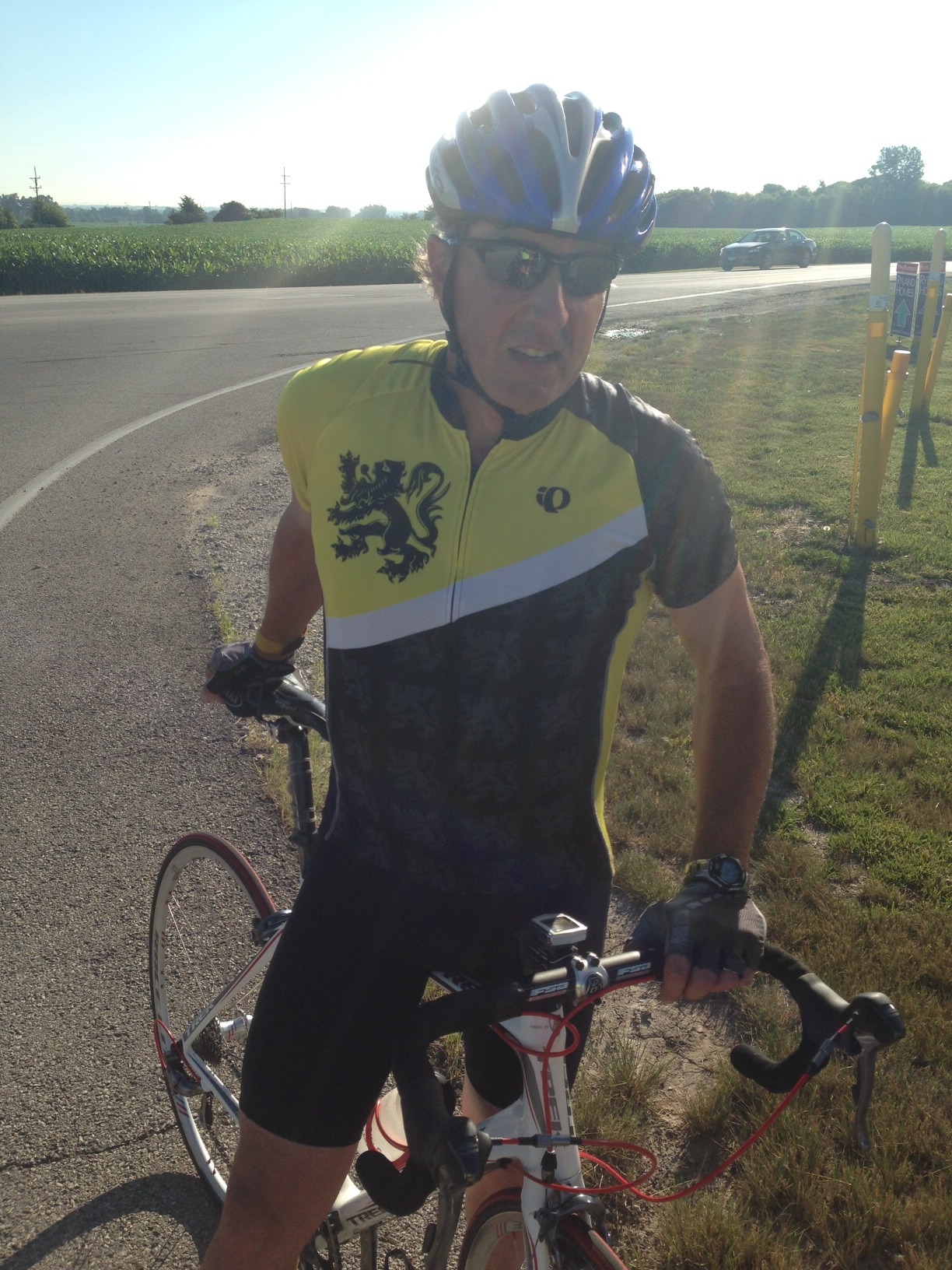
JackBy Christopher Cudworth

We left at 6:00 in the morning, taking back roads from St. Charles, Illinois to Fontana, Wisconsin on back roads. The route itself was conceived years ago by someone trying to avoid the growing traffic risks and has literally been handed down in the form of a laminated map you can borrow if you want to follow tradition.

The guys in my riding group know the route by heart. For the most part. Once in a while we forget a turn and wind up circling around a neighborhood in McHenry County. But that’s alright too. We usually stop them. Give the guy who called the wrong turn a bunch of shit and get back on course.

Down to three for now

This year there were three of us that started, and one that turned back for reasons of Saturday obligation. We’re always cool with that. Been there myself. The turnbacker usually rides about 35 miles and swings around some lonesome road on their own. That can be a peaceful thing as well.

The last 30 miles are the prettiest of the route going north however. The roads pick up some undulation. You realize you are riding over long lost glacial workings that increase as you enter Wisconsin itself.


Where bad roads are good fun

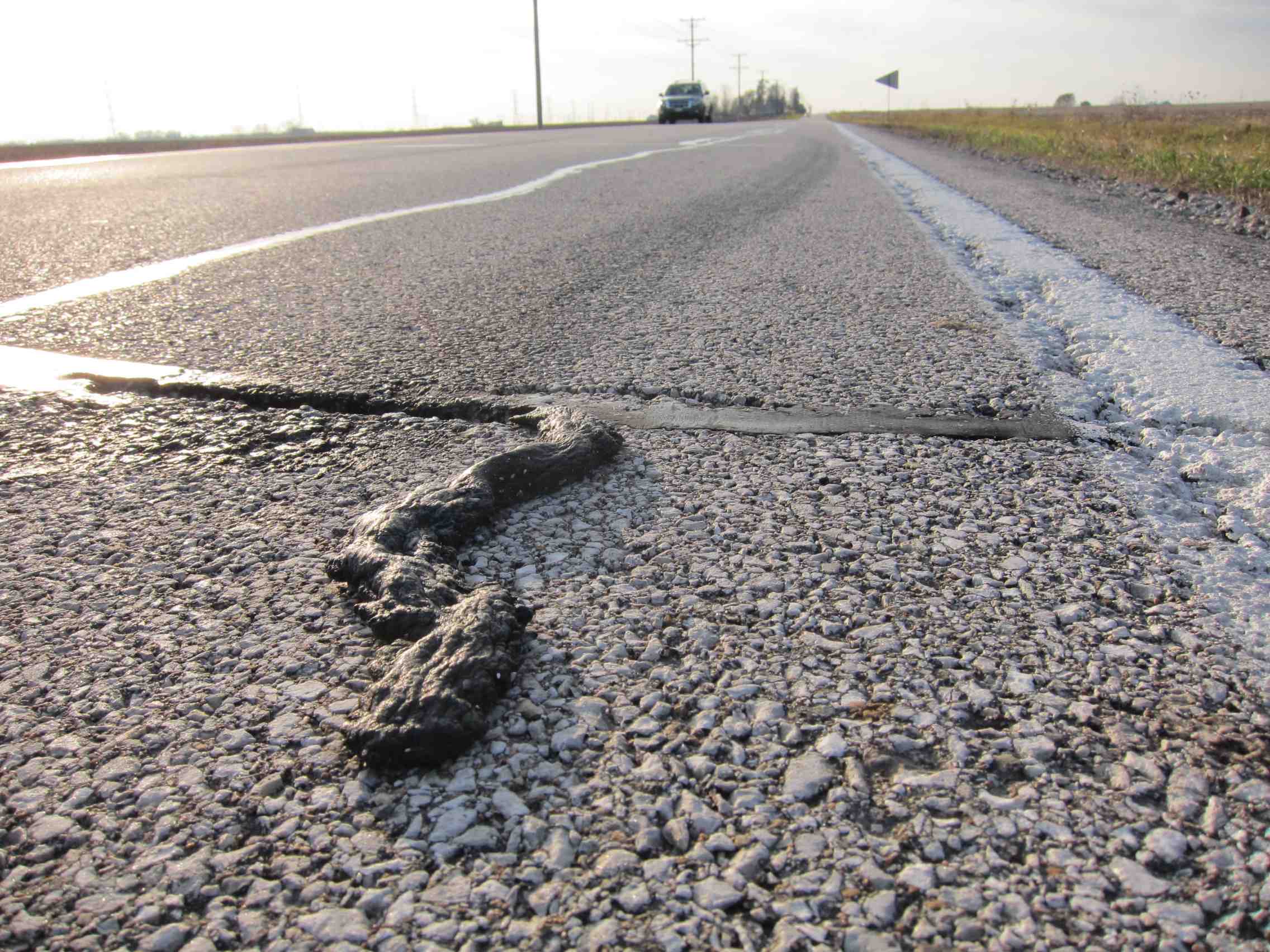
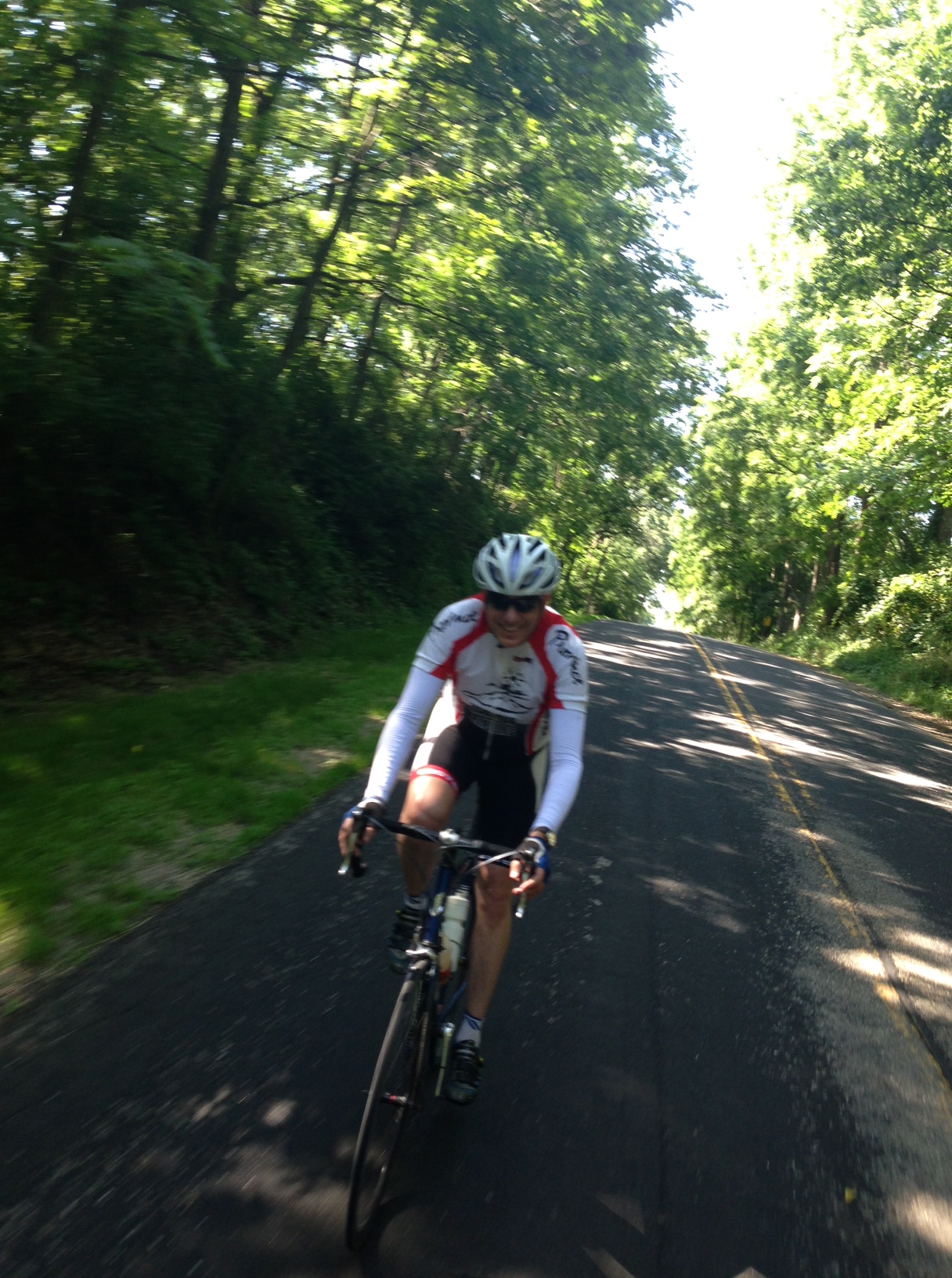
GregSome of the back roads we choose to use are pricelessly bad. Patchworks of concrete and asphalt and concrete with asphalt slapped on top of it and on and on we go.

But there are beautifully shaded sections where the riding is so smooth you don’t even know you’re pedaling. Conversation usually goes quiet on those roads. Some years we’re averaging 20 miles an hour for the 65 miles. Other years it’s more like 18, like this year.

Fontana sunshine

The reward is riding into Fontana, the lake town where the beach awaits. Sunshine on the water and sailboats in the distance. Tanned bodies of women young and old, and guys flexing their weightwork arms.

Many cyclists show up in Fontana on a Saturday. We all look a bit like circus travelers wandering in an out of Chuck’s bar for drinks and food.

Usually people in the bar are fellow visitors from Illinois. When they ask where you’re from, or vice versa, the incredulity starts. “Hell, you rode here? From St. Charles. The hell’s wrong with you?”

To which we smile, explain that road bikes make it easy to cover distance and then take our beers to the table. A little information’s always enough. Leave them guessing about you.

Chuck’s

The food and beer at Chuck’s is always good, especially after lolling around the lake for a half hour letting the ride slide out of your legs. Then you park your carcass on a towel and watch the rest of the world having fun. Beach bunnies carouse. Big jock athletes throw footballs in the semi-surf. Jet skis 150 yards off shore zip around spitting that ridiculous spout of water from the back. Entirely different worlds.

You exist in your own little cycling void. Apart from the world, in a way. And yet such a part of the world you cherish. You stare at your shaved legs in the sun, wondering if they’re getting burned. Later you learn it’s the tops of you feet. And one side of your body. Which goes along with the weird tan lines cyclists have anyway. If you showed up naked in public the police would haul you off for indecency and insanity.

“Look!” the arresting officer would say. “No sane, responsible citizen would have tan lines like that.”

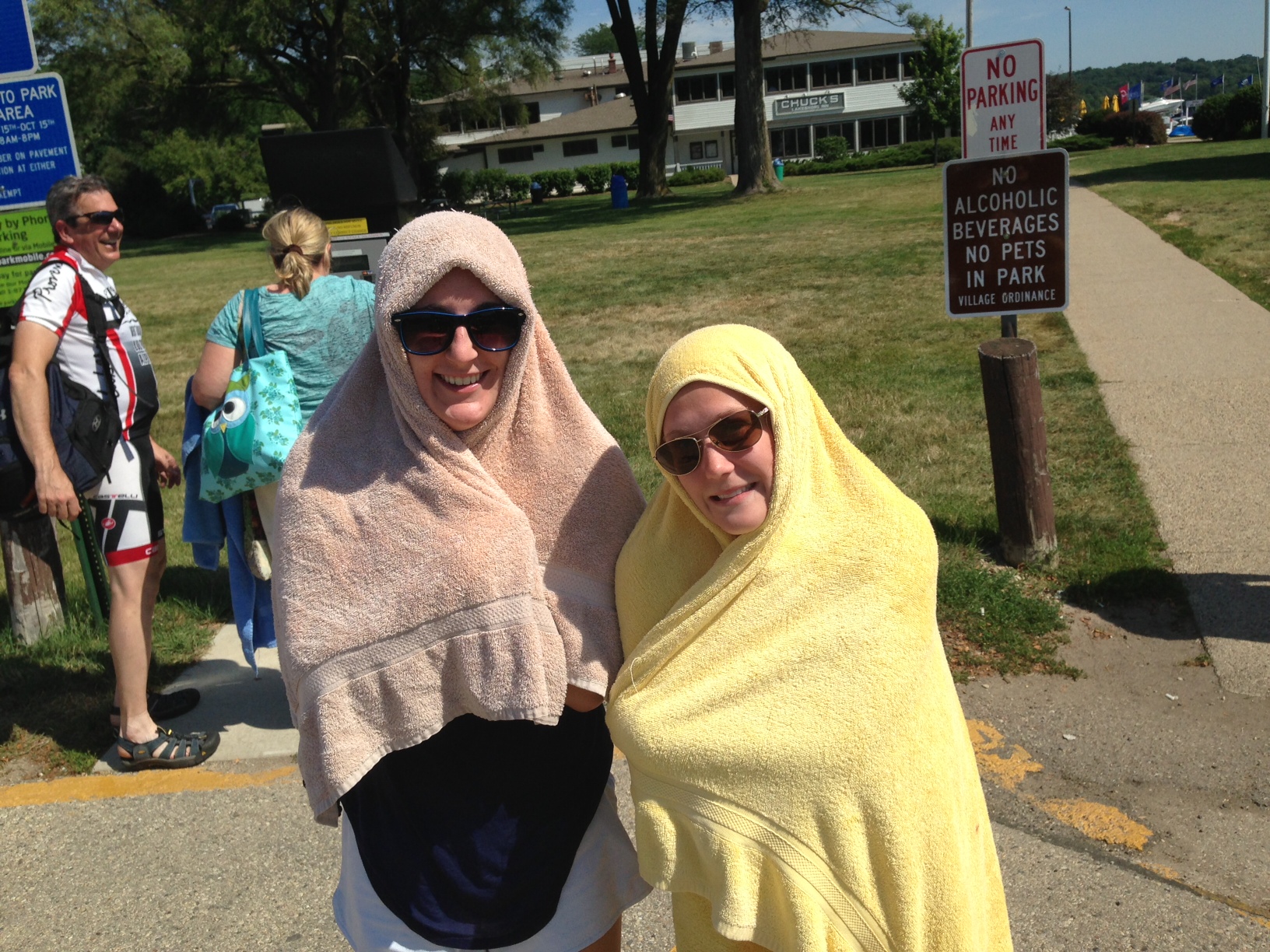
TowelsBut then you encounter a pair of girls cowering under their beach towels as if they were Taliban chicks. And you figure everyone’s a little nuts at some time. And you all have a laugh and figure the sun has something to do with all this. Just ask the egyptians. They all walked and acted a little fun. And their god was the sun.

Posted in We Run and Ride Every Day | Tagged , , , , , , , , , , | Leave a comment