Homelessness can be cured, but fixing selfishness comes first

Back in 2015 after my father died, I was tasked with cleaning out the home where he lived for forty years. There wasn’t all that much to keep. We sledgehammered several old computer desks and donated or dispensed with furniture that no one needed or wanted. There was one thing left that needed to go to a good home.

His wheelchair.

That week I happened to meet a homeless man named James in a nearby town. He traveled about in a broken down wheelchair whose seat and creaky wheels were falling apart. I offered him my father’s chair and we agreed to meet later that day so that I could give it to him. Of course, the skies opened up the minute James took possession of his new chair and I watched him wheel up the street in a downpour. I did a painting of that moment that is currently being exhibited in a Batavia Fine Arts Center exhibition titled Portraiture at Batavia High School with an open house on March 13, 6:30-8 pm.

In all my encounters with James, he’s always been grateful in that pragmatic way the terminally homeless need to be. Money might mean a given problem is solved, but so many still awaited. He’d told me a number of things about his near-term issues. The homeless shelters didn’t want him to smoke. There were a few other rules he found offensive as well. That’s the challenge for so many homeless people. They are quite frequently square pegs trying to fit in round holes. Or vice versa. Without someone to help them overcome hurdles such as these, those realities become permanent problems. It might be called self-fulfilling tough luck.

Losing independence

James has additional problems that make his life difficult. The day that I gave him the wheelchair, James hoisted himself over and tried it out. There are no guarantees that a given chair is the right style for a person’s needs. When I first met him, James had only one leg due to complications of diabetes. Obviously that physical challenge made it difficult for James to find work, even if he tried.

Yesterday when I met James he was resolute as usual. But I noticed a profound change. He’s lost another leg to diabetes complications. “And they want my right arm too,” he lamented as we talked. “They’re taking me apart piece by piece.”

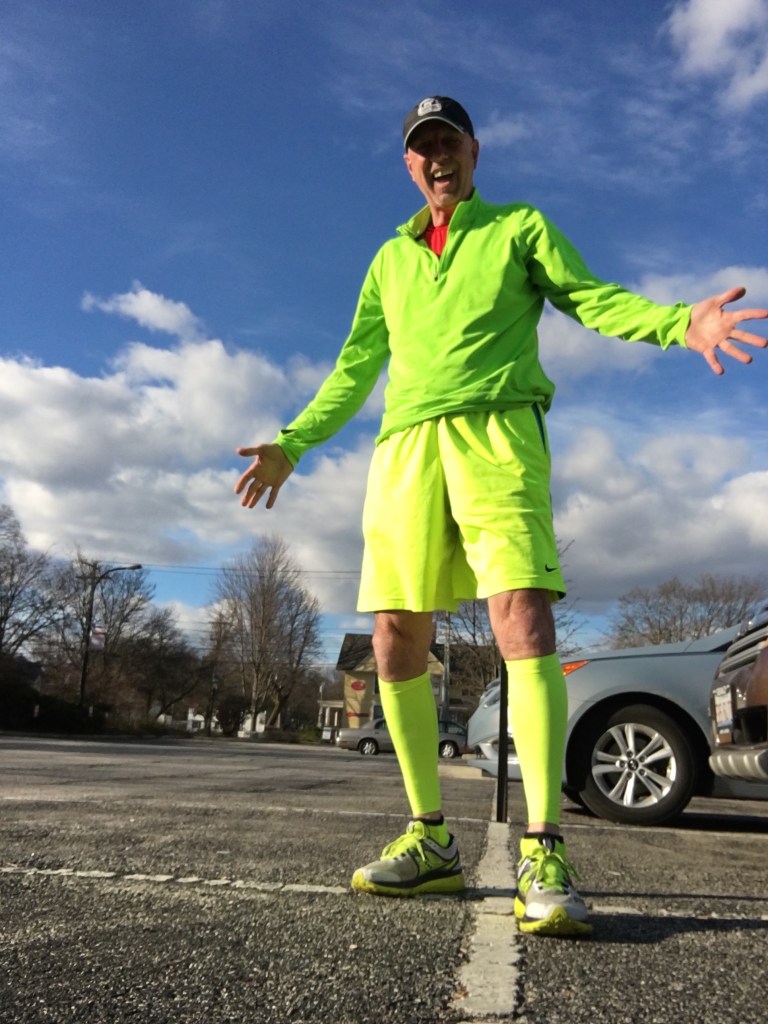
Earlier that day I’d gone for a run of seven miles. I didn’t feel shamed by having two legs to do so, but hearing what the loss of yet another limb has done to James turned the bright sunshine into a harsh glare of reality.

Money alone is not the solution

A couple years ago someone in town held an online fund raiser for James, using his name and image to raise cash. Then they denied James the money because the fund raiser in question wanted to dictate how he should use it. “It’s my name,” he said defiantly at the time. “I should decide how to use that money.”

It’s an uphill battle for James living on the streets. Used by permission.

James is perceptive in a raw way. He gets to encounter human nature across a spectrum of beliefs and personalities, some of them good, others not so much. It seemed he did not care for the bossy manner of his ostensibly charitable benefactor. Admittedly, that may be a problem for James on a number of fronts. His distaste for authority may be the root cause of his problems.

Perhaps we can all empathize with that. We all have issues with certain types of authority in this world. For James, life is tough enough without dealing with the sometimes judgmental attitudes of those who frown on those living on the streets. That said, I do see many people extending kindness to James. The world is not without care or hope.

But James now sleeps in his wheelchair because it’s no longer possible to get in and out of his chair. He used to be able to crawl into a tent where he made himself a home in a woods by the river, fending off coyotes trying to steal his meals. He’s reliant on a small government check of some sort to buy food and stay alive because his local relatives seemingly can’t take him in. They are elderly and possibly dispossessed of the idea of taking him in over age-old arguments. That was the sense I gained from talking with James a few years back. The world isn’t all that good at solving the problems of people like James, and neither is he. Sometimes it takes help.

A Safe Haven

Which is why I recently took a trip to Chicago to visit a facility called A Safe Haven. It is the brainchild of two exceptional people, Neli Vazquez Rowland and Brian Rowland, who through their professional lives possess the financial acumen to figure out how to create a sustainable way to help homeless people. The premise is to help people build a foundation from which to reclaim their lives from tough luck of all sorts.

I encourage you to click through and read about this intelligent response to homelessness. It is a model that transcends political excuses by taking the real challenges seriously, including giving people a place to live as they rebuild their lives through work and therapy. A Safe Haven helps people overcome addictions, criminal records or financial challenges, if those are issues, and they can frequently be found within the homeless population.

Homelessness is a real and critical problem in America. Some cities have no idea how to approach the issue. Neli and Brian made a decision years ago to focus their attention on the problem to prove that homelessness is indeed curable, but only if done in an economically viable and sustainable way.

To Donate to A Safe Haven

Changing minds

A Safe Haven facilities.

Their biggest challenge, it seems, is getting politicians to admit that homelessness is a problem that can and should be cured. A Safe Haven is a proven model of success in Chicago. That process can be replicated all over America if the nation has the compassion and common sense to put down the political banners and recognize that curing homeless is actually an investment, not a cost to society. There are many people that have come out of homelessness to build businesses, lead healthy, successful lives and contribute to society. Homelessness is not necessarily a permanent condition.

But it takes belief and action to make that happen. Generations of politicians and economic leaders have chosen instead to throw blame around and point fingers rather than listen earnestly to the guidance and insights of people like Neli and Brian.

Selfishness the biggest barrier

Oil and Water. Painting by Christopher Cudworth

We’re living in one of the most selfish periods in all of American history. Too many American citizens have elected to take the “I’ve got mine” approach to claiming their own healthcare, economic and employment as some sort of divinely prescribed “right” and are content to let others suffer whatever fate they encounter. That attitude is a Darwinian version of the Judeo-Christian ethic that Jesus came specifically to ablate. By tradition it was long believed that people suffering disease or other misfortune must have done something wrong in God’s eyes to deserve their fate. That tradition was wrong.

It is far past time to dispense with such age-old attitudes toward the less fortunate. Many homeless people can attest to the fact that they were just one medical emergency or job loss away from the crisis that hit them.

But it is cynical to say “There but for the grace of God, go I…”

It is far better to say “If there is a God, I should do something about the problems I see.”

It’s all part of a bigger picture that the human race needs to embrace for its own sustainability. The selfishness of ideologies that deny other human beings dignity, that relegate people to discrimination according to race, or gender, or sexual orientation…all these bad habits have anachronistic roots that should be dug up and tossed on the heap of prejudice, hate and bigotry.

And while we’re at it, we might even find the will the protect the planet itself from selfish interests denying that people are the cause of pollution, habitat destruction and climate change that could one day render much of the world’s population homeless. Otherwise, we could all end without a safe place to live. At some point we have to stop and say, “It does not make sense to be so selfish if it makes us all suffer in some way.”
Posted in running | Tagged , , , , , , , | 1 Comment

Early morning pool brain

“You’re too snuggly,” my wife admitted at 4:45 this morning when her cellphone alarm began beeping a third time.

Guilty as charged. I had my arm over her warm body under the covers. The sweet smell of her hair in my face. What’s the rush to get out of bed?

It’s Friday Swim Day, that’s why. Agreed upon the night before. No missing out. Just keep swimming.

I took the garbage and recycling bins out to the curb. Brought in the morning paper. Slathered some Nutella on a slice of cinnamon raisin bread. Filled a Camelback bottle with water. Off we go in a cold car on a dark March morning.

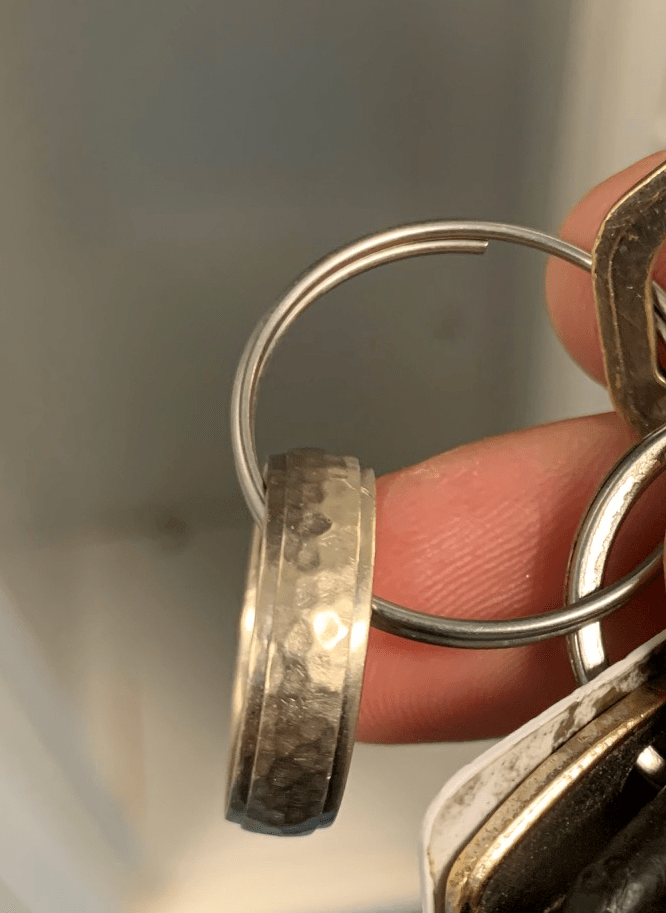
At the locker I remove my wedding ring and slide it onto the key chain so it won’t get lost. Off come the clothes. Pants first and then swimming suit on. Keep the shoulders and back warm a few more precious seconds. It’s so early.

Hear a song over the sound system that recalls a college girlfriend. I glance at the wedding ring on the keychain. Recall that girl wanted a full carat diamond ring or she wouldn’t marry me. That’s what she said. I moved on.

Out on the pool deck the wait for a lane ensues. Some people are nice and share. Others go back and forth ignoring pool etiquette.

At the far end of the pool, a young man with one leg climbs out of Lane Two. I catch his eye and he winks back to say “Lane Open.” I walk down and shake his hand. He picks up his blade prosthetic and I ask, “Are you a triathlete?”

He smiles. “Yes I am,” he replies. “And hey,” he tells me. “If you ever need to share a lane come to me.” We exchange names. Another quick handshake. Then into the pool I go.

500 yards go by. I don’t usually warm up that far. But my goal is swimming 2000 yards, a bit more than usual. So I do a longer first section of the workout so that my brain doesn’t make up reasons not to go the full distance.

The swimmer in the lane next to me is smooth and strong. His arms barely ripple the water as he rips along at what must be 1:30 pace for the 100. Later in the locker room a swim buddy and I discuss the guy. How remarkable it is that people can seems so effortless in the water.

I worked on my catch and stroke efficiency during alternating sets of 100s and 50s. I kept my head down in the water and noticed the reduced drag right away. Every little thing counts in the water.

The Garmin kept cheating me out of 25 yards on the 100s. I had to keep adding laps to reach the goal of 2000 yards for the day. The arms tire a bit, so I kick more. Early morning pool brain can’t keep me from finishing the workout. My wife climbs out of the pool three lanes down. She’s no doubt swum more laps than me already. I call out to her, “I’m not quite done yet.” She looks cute in her suit. I can’t help it. I love women in swimsuits.

Back to business. The watch reads 1925. I swim the last 100 and push myself up and out of the pool. My chest and arms feel strong. What an awesome sensation.

It’s a great way to start the day. I’ve overcome Early Morning Pool Brain, and it’s worth it. Even if it does mean giving up a little snuggling.

Posted in swimming | Tagged , , , , , | Leave a comment

Free at last and happy in the bright sunshine

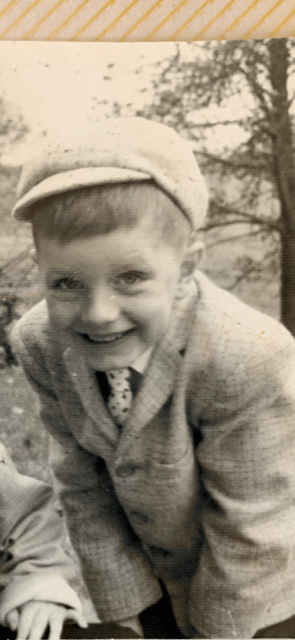
Age six and rocking the happy cap.

For most of us, the early years of life were spent in classrooms looking out at the bright sunshine when spring came around. Those precious minutes of recess were never enough to satisfy anyone. Coming back inside with a fine sheen of sweat on our foreheads, we’d try to settle down but a glimpse out the class window was a harsh reminder: “You’re stuck here until they let you go.”

Occasionally, there would be a break in that routine for a school field trip. Yet even these were regimented tours, shuttled on and off buses after a visit to some historical site or other stuffy educational experience.

But when I was a sophomore in high school and got braces on my teeth, I welcomed those days when one parent or another would pick me up from school to make a trip to the orthodontist. It was an odd sensation to be riding about during the school day. It felt a touch illegal even though my brief truancy was approved by the school nurse, or whoever.

It was ten miles one-way to visit the orthodontist, and ten miles back. The appointments never lasted long once the braces were installed. My mouth was filled with contraptions though. Sometimes the orthodontist had to jimmy and yank things into place. At one point he installed a thick black button on one of my eye teeth. It had a hook installed in the middle much like the L-shaped buttons on a set of tall boots. That held a rubber band that stretched back to a stubborn molar that served as an anchor. It was quite the operation to move my teeth into proper position. It took two full years.

Following every appointment, my teeth would already start to hurt by the time we got back to school. But I bore that pain as a worthwhile reward to be free of school constraints for that hour or two out of class. All of life seemed like a tradeoff. I was neither a completely good or bad student. I was both. I’d get A’s in the subjects I liked but struggle to get D’s in stultifying subjects such as algebra. It was the most offensive form of math I could imagine at the time, and for all time. I got a B in geometry and a D in algebra. I still say fuck algebra.

Age 15 and a mouthful of braces.

That hot and cold attitude toward school meant there was always some form of stress nagging at my conscience. Either I’d blown off some assignment or failed to do the homework. Or else the topic of study escaped me completely. Such was the case with government, a junior-year debacle taught by a creepy teacher that had an affair and married one of his students. What could that ass teach any of us?

I now know that some of my distraction was the result of what I call ‘artistic ADD.’ Perhaps I sit somewhere on that spectrum as evidenced in many other challenges in life. My focus is incredible for creative projects but repetitive ventures test my concentration. But I’ve learned to cope quite well.

But part of my love for ‘playing hookey’ from school came from that relief from the pressures of school. I knew that they had not gone away. They were only deferred for a while.

I think about that schoolboy sense of relief these days. I well recall that feeling of being out of the classroom during the daytime when my fellow students were sitting back in that stuffy high school. It was a brief glimpse of what freedom might feel like in the future. For the last year I’ve worked for myself on remote contract and it allows a certain amount of freedom.

That said, I’m highly disciplined about getting work done well before it is due. And if there are tough aspects of learning about a subject to write about it, I’ve learned to do that digging well in advance. Now it’s a reward to don my workout clothes and get out during the noon hour or any other time I choose to go out and run, ride or swim.

Not everyone’s cut out for that type of self-discipline. Working from home or out of a coffee shop with good wi-fi does take focus. And I’ve got that. In many ways it’s a hard-earned sense of freedom. But life isn’t easy or it would be boring. Just like those classes I loved to skip back in school.

Posted in aging, anxiety, Christopher Cudworth, competition, cross country, cycling, riding, running | Tagged , , , , , , | Leave a comment

There is still some Wonder Left

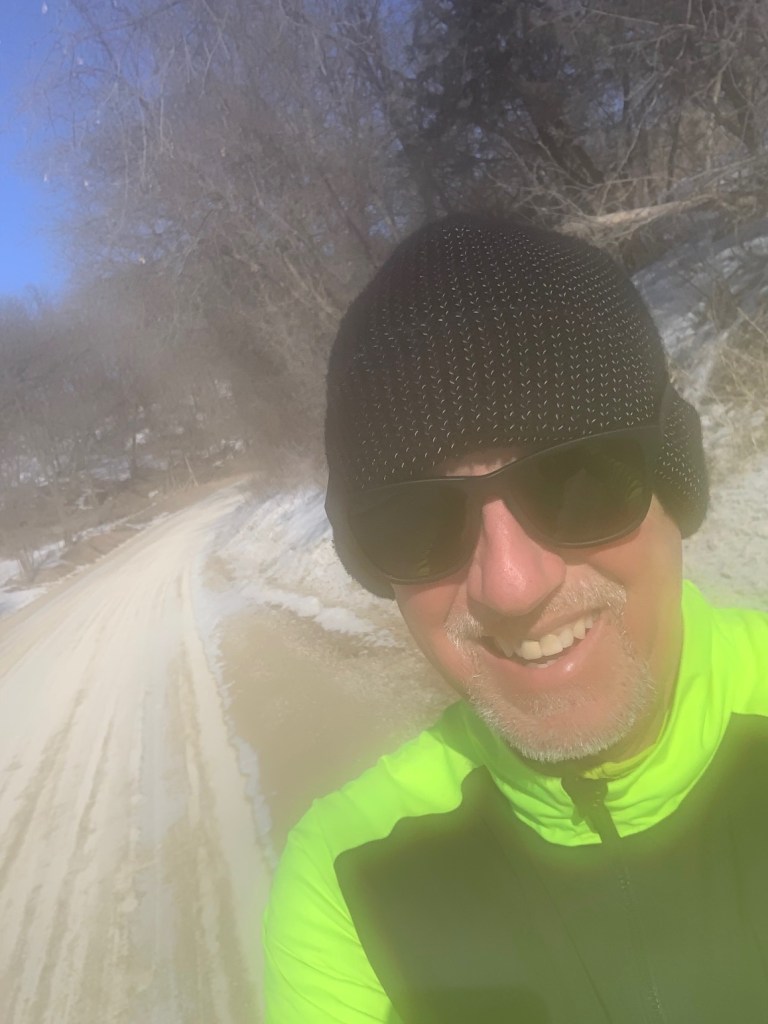
So cold out my camera lens fogged over as I ran WonderLeft

One of the most difficult tasks in life is sustaining a sense of wonder about the world and daily experiences. So much of our existence is taken up by routine and obligations that finding a thrill can be tough as the years go by.

Even the places we love can fall prey to familiarity and equivocation. That is all the more problematic among those that have traveled between the dark goalposts of anxiety and depression. It’s easy to cease taking risks to run to either end of that field? So we stay in the middle.

Road Trip

But that’s all the more reason why it pays to take a road trip now and then. Bust out of the routine. Dare the skies to confine your spirits. Which is how I wound up standing in front of the Luther College fieldhouse during a two-day junket to pick up some new antique windows for my art, share a proof of my new book with the co-author, watch a track and field meet with some former teammates, and immerse myself in a trip back in time by running a route our cross country and track teams called Wonder Left.

The route was named for a sign that once stood out on Route 52 at Meadowlark Lane. It read WONDER CAVE and pointed to a local attraction that is apparently not on the tourist docket anymore, because the sign is gone.

The running course we called Wonder Left

Yet the route we ran so many times is still there. It is just as challenging as it always was. The first two miles are an uphill climb from the Oneota Valley floor to highway 52. The last 800 meters increase in grade from 3% to near 9%, and the road itself curves so that you can see the painful trouble to come. “Look what you get to do!”

Inclinations

At the top I paused to catch my breath and turned around to look at the incline. “Damn,” I whispered to myself. We used to tear up that hill at 6:00 pace, each of us racing to keep position in the pack of 20+ runners cruising together for the first three miles. It was insane in many ways, but it’s how we rolled.

I chose to run into the cold northwest because at the start, the harsh chill was blocked by the hills. My legs felt fine until that steep section when the heart rate shot past 170 bpm. Then the road opens up for a mile and there is nothing left to block the wind. It whipped across my face in a vortex that forced me to warm the cheeks with alternating hands. Finally the turn to Meadowlark lane arrived. I glanced right to check once more if the Wonder Cave sign is there. But it is not.

Orientation

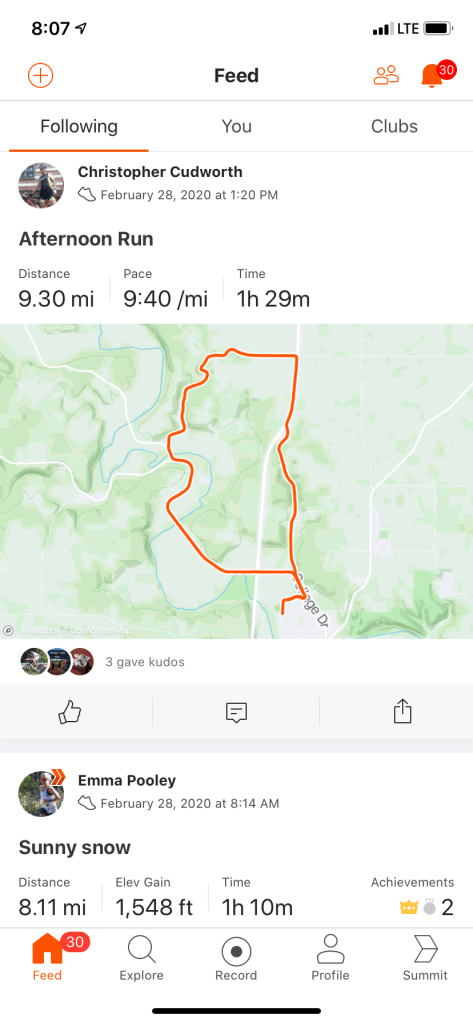
I’d always thought the route was mostly East-West, but it is not. The Strava map shows that once you turn left it dips down toward the river a bit and then it’s a long, winding course through steep hills. The roads in winter are often caked with compressed snow that sometimes turns to ice. Whole packs of fat tire bike riders now love to ride from downtown Decorah up to Bluffton and back on those backroads. We runners learned how to cope with icy roads by running on the road edge in fresh snow. Or lacking that option we skated along in the worst sections trying to keep our balance. But I never fell, nor do I recall anyone else going down for the count.

The landscape around Decorah, Iowa is part of the Driftless Region rife with hills and forests.

Those dirt roads dip up and down through the backwoods around Decorah, passing farms and flocks of wild turkeys grazing in the cornfields. The scenery is so gorgeous it is always tempting to stop and take it in. So I did.

Starting up again, I could hear my soft footsteps padding along on the dirt and gravel road. Then I let the pace pick up, dropping briefly below 8:00 per mile. I was running without hindrance despite a nagging knee injury that had been bugging me for the last two months. The only thing that hurt during those middle miles was the scrape on the arch of my right foot where two days before, I’d stepped on one of the bones our dog chews. She’d left it on the stairs and I walked down last week and took the sharp blow in the heart of the fascia.

Running to extremes

On I went until the shadows dissipated and the road opened up into bright sunshine. A sweet russet-colored retriever greeted me with loud barks at the final turn out of the woodlands. I called out to the dog in a friendly voice and he dropped his head and walked in circles. Not all farm dogs are so accommodating. That’s a lesson learned many times and long ago.

Turning onto Pole Line Road I tried to recall how many miles I still had left to run. Before the start I’d texted my wife and told her that I always thought the route was 9.3 miles. That’s what I’d always written in my running journals, except when we cut across the intramural field, which shortened the loop to 9.0 miles. Many times we covered the distance in 54:00.

There were also many days it was far colder than my recent run as well. A teammate once forgot to wear nylon shorts on a -14 below day…and was forced to hold his own crank in a warm hand the last four miles to keep from getting frostbite down there. Yet I’ve also run that loop on days so hot and thick the mosquitoes could barely fly through the morning mist. It is a course for all seasons, Wonder Left. A run that has piqued my sense of wonder many times over the years.

As I entered the last mile my hips began to tighten. I knew it would happen eventually. That part of my body has a general weakness made worse by age and sitting too long at the desk, perhaps a combination of all three. So I stopped to stretch and get back into a rolling stride. Then the road climbed the last hill up to the college campus. It hurt to keep going, but it was nothing that I had not experienced before. Pain is confined to no era.

Honest efforts

Trotting down the road to the fieldhouse, I watched with curiosity as my Garmin ticked off the last couple tenths of a mile. Standing in the circle drive I looked down to see that the route was exactly 9.3 miles.

That confirmed a whole bunch of beliefs about my life, especially that I’d been honest with myself about distances all those years ago. After all, what good would it ever do to deceive ourselves about how far we run?

Age-old rituals

Then it was time for a shower in the same classic locker room where I’d stood naked with my teammates so many days all those years ago. All we ever hoped in the wake of those runs was that the water would get warm while we stood chatting about the workout or the day’s events. That showering together thing never bothered any of us. It was part of the honesty of effort, training and adapting to whatever circumstance life threw at you. I understand that age-old ritual is no longer part of athletic life. The coaches at Luther tell me the kids no longer shower together. Perhaps they are too afraid of being seen naked, or some other learned assumption that took over culture.

A pinch of reality

I will admit that a teammate once pinched me on the ass during a shower and I was a bit surprised. Commenting later to a friend about the incident, he calmly said, “Well, maybe he’s gay.” Even during the 1970s when prevailing opinions were quite different, I never believed that being gay was a crime, or even a lifestyle. It was just something you were, and are. It’s all part of being honest with ourselves. All it takes is a pinch of reality to realize that life is far more complex than we typically imagine. But also far more simple.

As for my recent Wonder Left journey, it was good to run that loop again and find out through satellite date that the distance we claimed in our running journals was truly accurate. Of course it also brought back many memories of hard efforts and striving to become a better runner––but hopefully better person in the process as well. So it does help to realize you weren’t lying to yourself about the distances covered and the honesty of that effort. That’s a sense of wonder unto itself, and it’s always good to know there’s still some Wonder Left.

Posted in aging, anxiety, Christopher Cudworth, competition, Depression, running, sex | Tagged , , , , , , , , , , | Leave a comment

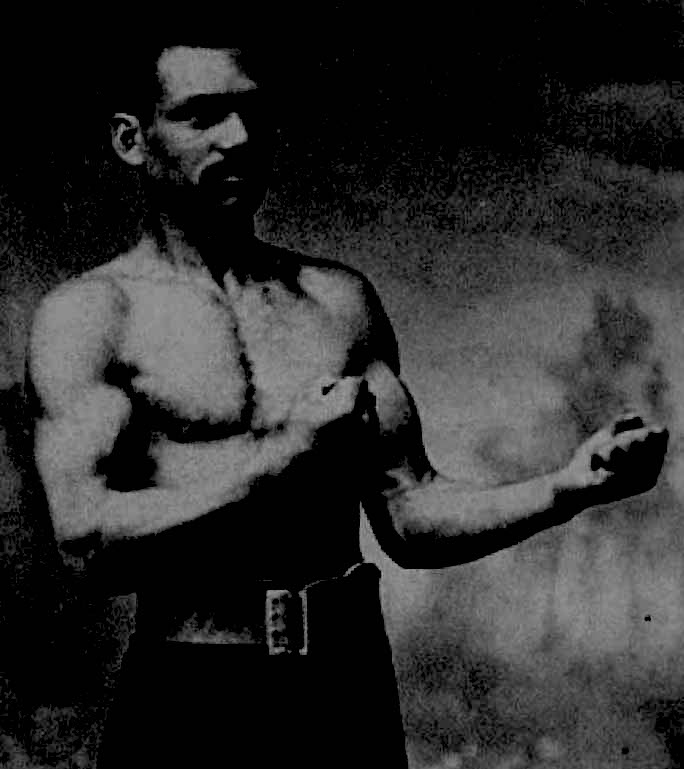
80 pushups in the morning and 80 pushups before bed is how an 88-year young man I just met stays in shape these days

While changing after swimming at the fitness center I looked over at a gent sitting on the bench near me and asked, “How’s your day going?”

He stood up, looked me right in the eye and said, “Pretty well, and you?”

I asked if he’d been lifting weights that day. He stood up even taller and said, “No, I get up every morning and do 80 pushups.” He demonstrated that motion with his arms. “Then at night, I do 80 more before going to bed.”

“What sports did you do when you were growing up?” I asked.

He set his jaw and replied. “I was a boxer.”

Then he explained that when he was young, he couldn’t find many kids around his neighborhood to box. “The only guys I could find weighed two hundred pounds. And when they hit me, I fell down.”

“How much did you weigh back then?” I inquired. “126,” he chuckled. “I weigh about 150 now,” and he patted his body.

A young man in a red letter jacket from the local high school overheard our conversation and told us that he’d been boxing before taking up mixed-martial arts. “I don’t like that stuff where they kick each other and wrastle each other to the ground,” he replied to the young man.

He was born in 1932, one of more than a dozen children raised by his parents. “We lost a couple along the way too.”

His father was a carpenter who also excelled in fixing electrical problems and other trades. “But he couldn’t get a job with the union because he was black,” my new friend said. “He was a tough father though. If we got in trouble he pulled out a switch with the leaves taken off and whipped us without any of our clothes on. I’d have welts this high on my body.” He held his fingers a quarter inch apart.

By the time he’d reached his teens, he followed in his brother’s footsteps by building a shoeshine box and shining shoes in downtown Aurora, Illinois. Then he landed in the military along with four of his other brothers, “But I didn’t see no war,” he related. Apparently his service did not lead him into action during World War II.

Back home he landed a job with a big manufacturing company where he worked for many decades. Then he transferred to another company and worked there another twenty years. Most recently he worked for a bank doing the hedge and maintenance work around the downtown facilities. “But they let me go a couple weeks ago,” he said with a touch of remorse. “They hired a contractor to do all that. I’ll miss it through.”

His name is Eugene D, an abbreviation because I didn’t ask to use his last name. I observed that he’d probably seen a lot of change during his life. “Well, the important part is that I wife and I read the Bible every day.”

“Do you have a favorite book in the Bible?” I asked.

“I like them all. They’re all good,” he smiled. Then we shook hands and I thanked him for taking the time to talk to me. “I like to come here, meet the people, and take a nice shower,” he told me.

“Well, Eugene, I’m really glad I met you.” Then I crouched a little and faked some boxing moves. He laughed at me. Oh, the things he probably could teach me about the Sweet Science. And life in general.

Posted in boxing | Tagged , , , , | Leave a comment

Ego interferes with common sense when it comes to something as basic as warming up.

I have advice for anyone training for anything. Go easy on yourself for those first two or three miles or the first ten minutes.

At any age, the body and mind need time to warm up. But in our data-obsessed fitness world, it is easy to feel pressure to go out the door for a run or ride, or entry into the water with that feeling “I’m going too slow.”

The pressure comes from lumping all our training under one category. We might finish a run and look at the average time and say, “That was slower than yesterday.”

Well, perhaps the first two miles were really slow because you lifted weights the day before, or are recovering from some other workout. But once you got moving, the pace dropped dramatically and you actually ran quite fast the third and fourth mile, then finished with a slow cool down. That’s a good workout in many respects.

The tendency to go hard from the get-go is even worse in cycling. We take a look at the MPH indicator on our devices and go, “I’m only going 16…” as if that were a sin. But again, our bodies need to warm up before we can process oxygen effectively. Heart rates that spike right away don’t allow blood flow to catch up with respiratory needs. We might even hit the Red Zone before the ride even gets started.

So it’s all about the warmup. That’s even more vital in the swimming pool or open water. When you dive into water colder than your body temperature, which had better be the case on most occasions, it takes a few moments and often a few laps for the muscles beneath your skin to adapt.

It is in the pool more than any other place that I beat myself up over the “average pace” that I’m swimming. During a typical workout I’ll swim 300-400 yards in warmup, then begin a set of intervals in sets of 50s, 100s and 200s. My warmup pace is around 2:00 per hundred. But when I’m swimming the 50s it drops to 1:40 per 100 on average and around 1:48 for the 100s. I’m not fast by comparison to more experienced swimmers yet those averages represent a long process of years building up to that swim stamina and better form. There’s always work to do in both arenas. But the pressure to show that final average time on my watch is an ego issue, not an expression of reality.

I include my warmup in the total swim time for reasons of ego. It makes the average pace per lap a bit slower, but I selfishly don’t want to give away even 25 yards of total swimming. I’m selfish and vain that way.

It wasn’t always like this. During my peak years while training with teammates we trotted around during warmup at whatever pace we felt like doing that day. It gave us time to talk and work off nervous energy before a hard workout. Then we’d get down to the real work of suffering through runs at the prescribed pace of the day. My workout journal would show something like, “3 mile WU, 4 X 1M at 4:55, 2M CD.” That was a nine mile workout all told, but the part that really counted was the fast-paced mile intervals at the heart of it. The rest of it was for preparation and recovery.

I also tend to train differently on the bike when I’m alone than when riding with others. Perhaps you’ve been dragged into a group ride that goes out too fast, then breaks into pieces as people peel off the back. That’s because the early pace was too hard. I have to say this is a far worse “problem” among triathletes than any other group of cyclists. The lack of need to stay in the draft of other riders makes for a “every rider for themselves” mentality and the typical tri-ride winds up in fractured batches of athletes rather than a function group ride.

Road cyclists are supposed to know better, but competitive group rides are merciless affairs. Typically you know that going into the encounter and warm up before the group takes off. But a great group ride is one in which people take turns pulling and riders can recover in the draft zone. The miles can really roll along with that brand of riding.

From the accounts that I’ve read and the anecdotes I’ve heard, the pro cyclists do ride hard and fast. But they warm up first. Because they’re pros.

So the lesson in this for all of us is simple: What part about “you need to warm up first before going hard” do we not understand?

The answer is that we do understand the importance of warming up, we just ignore it out of vanity, ego or bad habit. Or just tap the Split Timer on your device. It’s a wonderful invention.

My advice is to “let it go.” Let go of the pressure to concern yourself with average time even if your Strava reputation suffers a bit. Trust your Garmin but don’t be a slave to it. Or take the radical step of timing yourself during the warmup, clock out when it’s finished and clock back in when you’re warmed up and ready to go. It’s amazing what happens when we’re honest enough with ourselves to realize how much ego interferes with common sense when it comes to something as basic as warming up.

Posted in cycling, running | Tagged , , , , , , , , , | 1 Comment

Running and riding to the rescue

This is a story of a perhaps massively misunderstood situation involved pet dogs.

There aren’t many situations in life where the ability to run fast is all that handy. Most of the 50,000 miles I’ve run or the equal number of miles I’ve ridden have not served any purpose other than my own vision of personal development.

But this past weekend, I was finished filling the bird feeders when a massive howl erupted from behind the line of houses in our cul-de-sac. There were barks and snarling, growls and screams mixed in. One seemed to feed the other and I dropped the bird feed and sprinted in the direction of the noise. Leaping over the neighbor’s dead garden plants, I landed in a sprint and scanned the open field behind their house with my eyes.

A large German shepherd was walking away from a man crouched next to his dog. I know the man and his dog, who live in a house nearby. I also knew the German shepherd because I’ve seen it wandering free the last few months. It had once followed me while walking our dog Lucy.

I also knew there was a German shepherd loose in our area because someone had placed a Lost Dog poster on a light pole at the end of our block. Thus it made sense that a shepherd might turn up in our neighborhood.

The big shepherd wandered off as I approached. It had its head down and seemed a little scared as well. But my first priority was checking my neighbor’s condition. His hand bore two large, bleeding bite marks. I stood near as his now anxious dog eyed me. It was the smaller and calmer pit bull in a pair that my neighbor owned. It had broken its leash in the fray, and had a little blood on its face.

It turns out my neighbor has an eye condition that doesn’t allow him to see that well. He’s tried to shoo the big shepherd but it approached closely and things erupted around him. So I got him back to his house and returned home to tell my wife about the incident, then called 9-1-1.

The police came out but wanted to talk to the victim, not me. I still filled the officer in on the frequent presence of the shepherd, how I’d seen it 10-15 times and noticed that it often had the same routine, disappearing to the south behind a big white farm house.

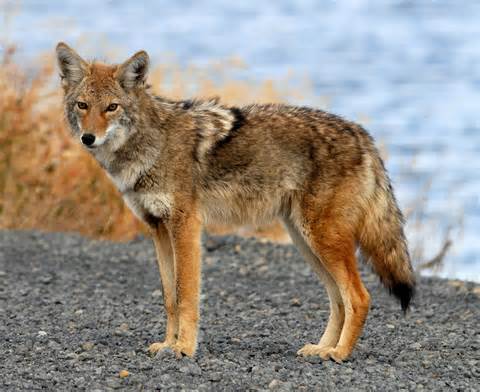
The officer listened politely and then took down my neighbor’s information. Half and hour later we started receiving texts from other families in the neighborhood sounding the alarm about a coyote attack on a dog.

That disturbed me, because I had followed the shepherd a bit after that altercation while talking on the phone with the family that had posted the Lost Dog poster. We compared notes and realized that this was a completely different German shepherd than their lost pup. This one was golden brown on its haunches and large, probably 200 lbs. while their dog was all black and 150.

So I called the police and was pushed through to the officer. We had a calm conversation about the description of the dog and I made it clear that while we frequently have coyotes in our neighborhood this was clearly a large German shepherd wearing a blue collar and tags around its neck. When I called out to the dog it gave a series of friendly barks and raised its tail. Not an aggressive demeanor at all. But it still trotted off west when I attempted to approach the animal.

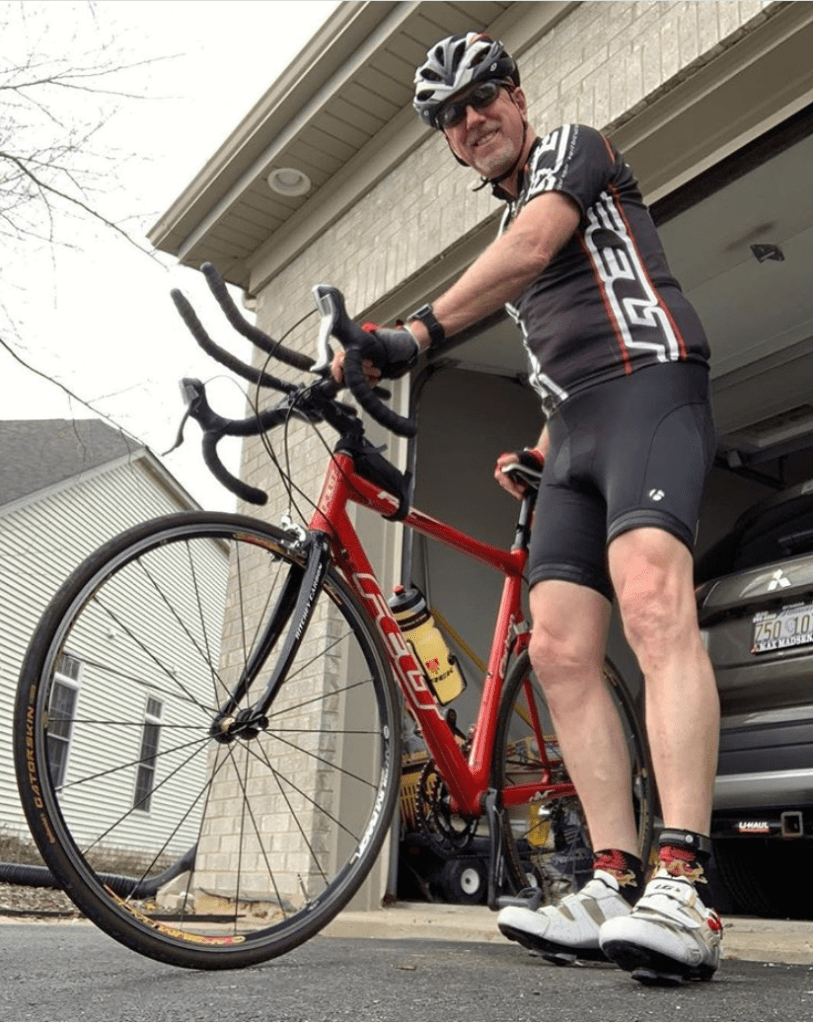
A half hour later I took my Specialized bike on a ride west from our house. I was eight miles into the wind when my cell phone rang. It was the police officer. “We found the dog,” he told me. A shot of worry ran through me because dogs that bite often have to be put down. But the officer gave no such indication, but his next request renewed my concern. “Can you ride back and identify the dog?”

I rode at a 20mph average thanks to a tailwind. Arriving at the victim’s house, I spoke with the officer and answered his questions. But only after he’d shared a long story about his wealthy triathlon buddy who owns a $23,000 bike.

So we’d bonded a bit through the morning’s activities and traveled over to the white farm house visible a half mile away. It turns out the dog was in the yard as the officer drove by. He met with the owners and described the incident. They insisted that their dog never wandered off their property.

“But I told them not to lie to me,” the officer said. “So I’d appreciate if you’d come over and provide some eyewitness testimony about how often you’ve seen the dog.”

I pedaled over and was surprised to see my neighbor with the dog bite standing in the yard with his hand bandaged and his other hand petting the nape of the big German shepherd. My neighbor was chatting amicably with the owners and with that scene came a little relief.

The owners finally admitted that their dog liked going to the house next door and even crossed the busy road in front of their home. That struck me as a bit irresponsible all on its own.

Once the woman owner started talking the whole truth spilled out and my testimony was not necessary to document the fact that their dog was roaming all over the place. One really can’t blame them. Their home backs up to 150 acres of active farmland and the area north of them is all mowed park district property bordering a wetland and swamp. The coyotes love cruising the area in search of rabbits and other prey, and more than once I’ve done a double-take in the early dawn trying to determine which brand of canine was passing by while I walked our dog.

As it turned out, the couple received a $50 fine and a stern warning that Animal Control would get involved if their dog kept running around off-leash. As for the victim, I think he realized that he didn’t even specifically know which dog had bitten him, the German shepherd or his own frightened pup. The whole situation was unfortunate, scary and difficult for all involved.

So I’m not sure the incident had a happy ending so much as it served to illustrate the importance and value of civic responsibility on all fronts. It certainly true that dogs will be dogs, as any visit to the dog park will prove. It is people that are responsible for the ultimate safety and behavior of their dogs, with no exceptions.

I’m just glad I didn’t pull a hamstring or sprain an ankle in that wild sprint to see what the howling was about. Trust me, you don’t want to hear that sound anytime soon. That “red-in-tooth-and-claw” world is what civilization is supposed to moderate. But when it doesn’t, a run or ride to the rescue never hurts.

Posted in cycling, running | Tagged , , , , , , , , , | Leave a comment

Old School is New School. Never forget it.

This morning on the way to drop off our dog at daycare, I drove past the building that was the only high school in town back when I was a student in St. Charles, Illinois. By the time I was a senior I’d figured out that becoming a full-time runner was the best course of action after years of being a three sport athlete. I could barely keep my grades up in subjects I hated anyway (Algebra and Economics come to mind) so the time away from playing basketball as a winter sport was critical to my eventual graduation.

Yet being a full-time runner still meant participation in indoor track. That started up in January. Lacking a facility in which to train, our scraggly group of distance runners ran workouts in the halls of the school. There we’d go, sprinting past rows of lockers and squeezing through double doors that could swing shut behind you if given a nudge.

The practice of running in the hallways was both difficult and dangerous. We’d run the entire length of the high school down the dusty hallways, clamor down two sets of stairs, tear back to the front of the school in a downstairs hallway and clamber back up two flights of stairs to finish. There we’d stand, heaving and cursing under our breath until the coach said, “Okay, next interval.”

The entire distance was probably 600 yards. That meant doing mile intervals required multiple laps. Our worn-soled shoes would be coated with dust from the day’s activities with hundreds of students shuffling around the hallways. Often by the time our track practice started, the janitors had their mops or dust brooms out and were walking the hallways with the detritus of paper, pens and soda bottle tabs gathering under the bristles as we came churning past.

It was insanity.

Photo from freshman year cross country with distance running teammates. (second from left at top)

But the conditions out at the high school I attended during my freshman and sophomore year were not much better. That school was perched on an open plain amongst thousands of acres of cornfields. The winds blew unimpeded in that landscape. In January and February the entire scene was cold, flat, dank and featureless. Years later in college, I’d study existentialism and learn about the irreversibility of time. I immediately recognized that concept from those intervals run in the cornfields around Kaneland High School.

We’d gather on the east end of the school to begin our distance workouts genuinely fearing the moment on every lap when we’d turn the southeast corner and face that freezing blast of odorless air blowing all the way from the arctic. The length of one lap was about 600 yards, a distance that all middle and long-distance runners grow to hate because it’s longer than a 440, which is enough suffering for anyone, yet shorter than an 880, the distance runner’s excuse to slow down just a little.

So we’d torture ourselves trying to go faster than we knew how on that gritty parking lot surface circling the high school. None of us was any sort of fit in any substantial way those first couple weeks. I’d turn out for track practice the week following the end of basketball season. Despite playing hours on the court for practice, that brand of fitness was not much use in the open air.

Those first few days of intervals the lungs would burn and thigh muscles cringed with lactic acid. The kids that had turned out for track two weeks earlier because they weren’t wrestlers or basketball players recognized the suffering on our faces and saw the opportunity to put the hurt on us even worse.

Track and field is the most merciless sport on earth when it comes to incremental advantages. Perhaps boxing is worse, as the graze of a powerful punch can still tear your face apart. And yes, swimming is a unique brand of liquid torture. Cycling is just plain stupid with the pain that builds up before you crack. But getting the crap kicked out of you in the open air on a cold February day is one of the most humbling experiences a human being can endure.

Within a week or two the differences between the headstarters and us latecomers would narrow and the lungs would start to come around. Two weeks later it was time to exact revenge for the hurt the early leaders put on those of us coming out for track after winter sports. From there, it was all about pride and persistence. Pedal to the mettle.

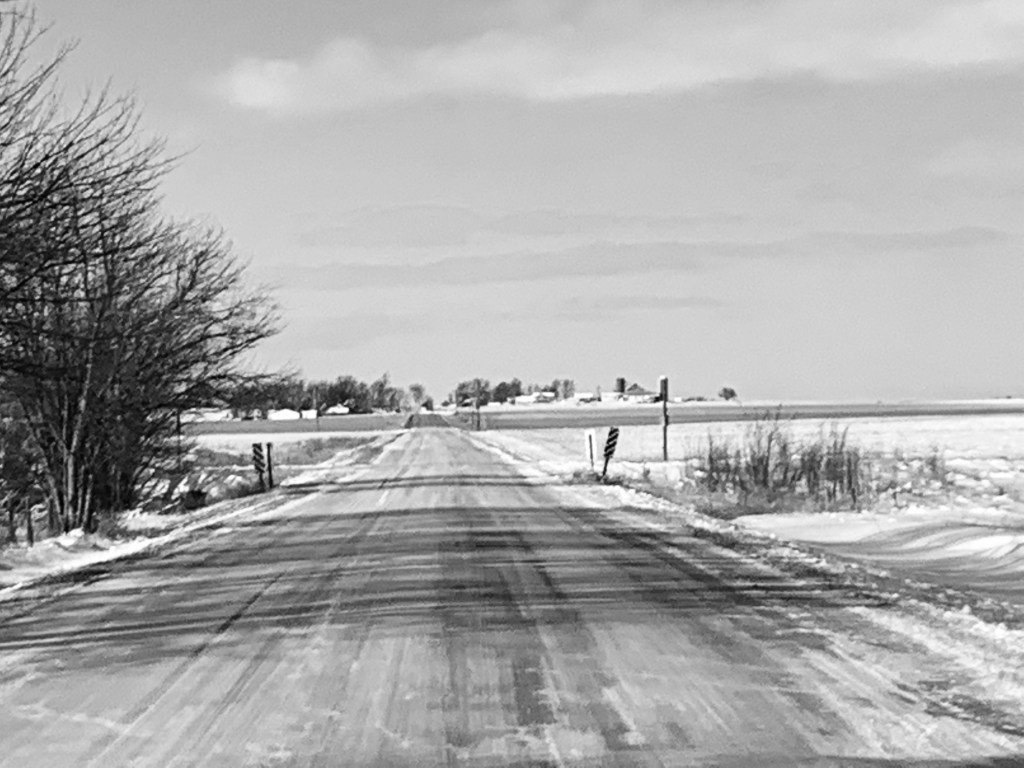
A recent scene of the roads out by Kaneland High School in the cornfields of Illinois.

Sometime in late March, the snows would recede and the cinder track would dry out. Then it was time for Old School Suffering in the confined world of the 440 yard oval. Coaches would bark out split times for all the different squads of runners. The true sprinters did their tight little workouts on the far end of the track. The 440 and 880 guys ran so many 300s and at such a fast pace they puked. The rest of us distance guys ran 440s and 880s until the snot flew out our noses.

It wasn’t pretty. Not a lick of it. But come April there would be hardened bodies and minds circling that track. If the rains held off and the track was prepared properly, the joy of running on a flat cinder surface was quite satisfying. We plugged those long spikes into our shoes and tried not to get clawed by our competitors.

Then it was all about trying to concentrate, strategize, improve and commit. There’s really nothing else like it in the world. Running is the lone sport for the ages.

In that respect all suffering is Old School Suffering. The kids circling all-weather tracks and running indoors on 200 meter tracks have it much better when it comes to training and racing conditions. But it still hurts in the same old way. God does it hurt.

Old School is New School. Never forget it.

Posted in 400 workouts, competition, running, track and field, training | Tagged , , , , , , , | Leave a comment

The thoughts that bubble up in your mind

I’ll probably never be an Instagram star because my brain doesn’t work through algorithms or abide in the Principles of the One-Trick Pony. That is, my mind is too random and perhaps too creatively obsessed to attract the types of followers that love consistency and central messaging. Plus I don’t have cleavage.

As for this blog, I produce it not for fame, but for therapy. It releases the bubbles of thought, anxiety and hope that rise from the depths of my mind to reach the surface of existence. Sometimes I gain followers because those bubbles resonate. Other times I lose followers because they make people foam at the mouth.

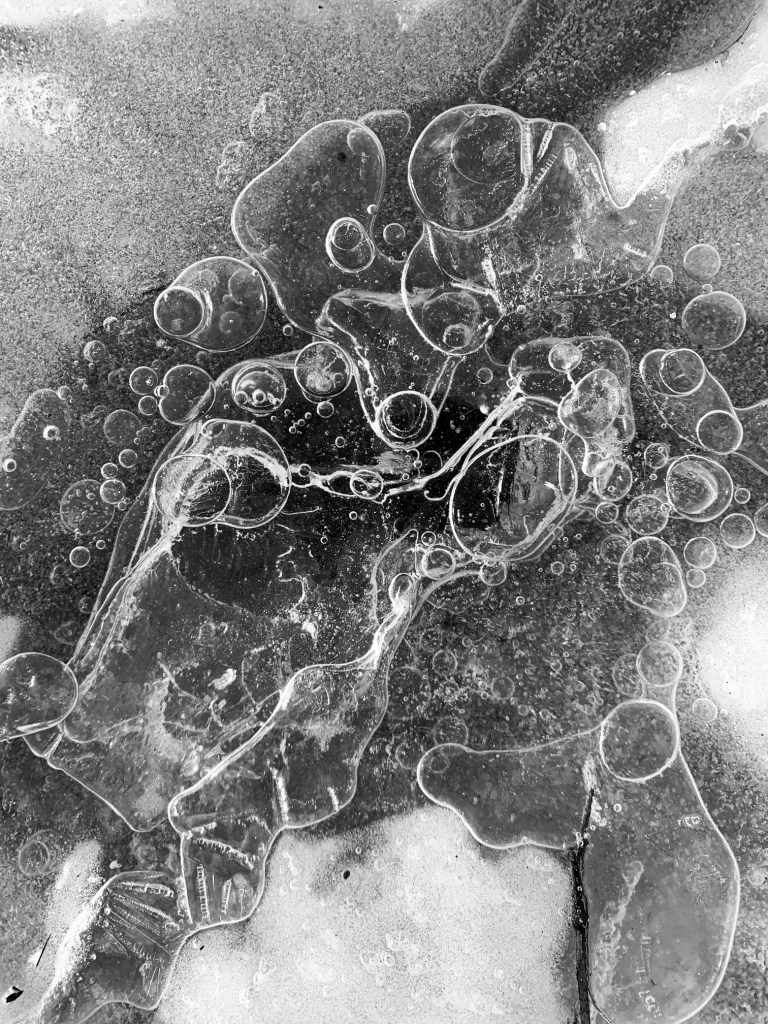
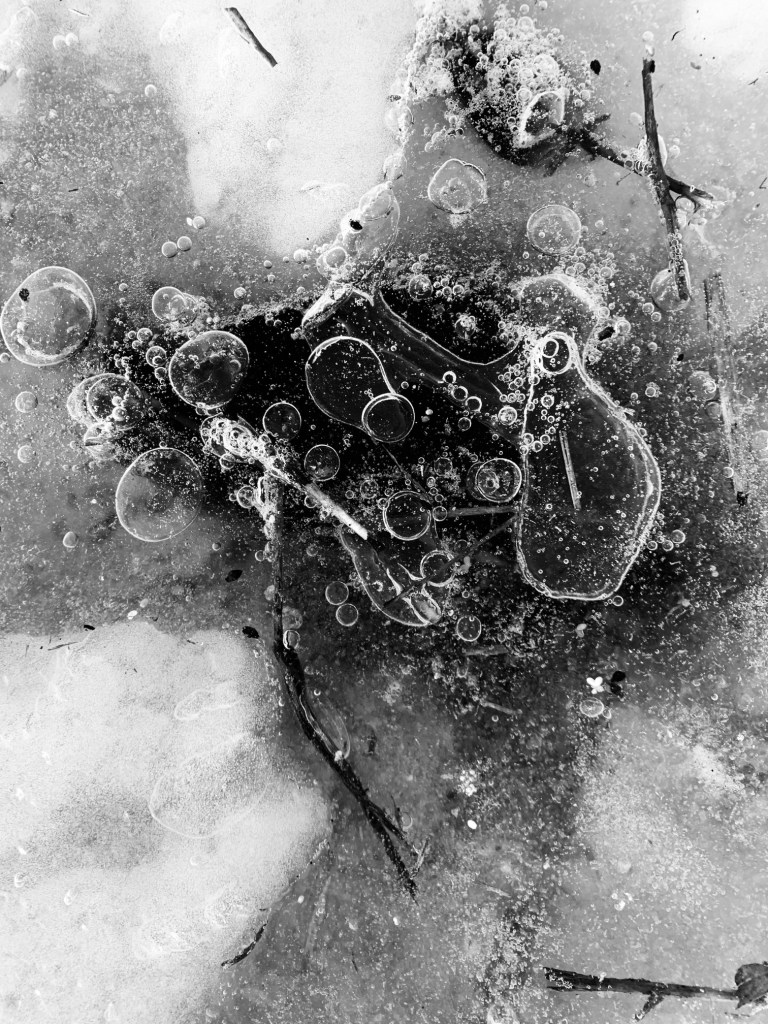
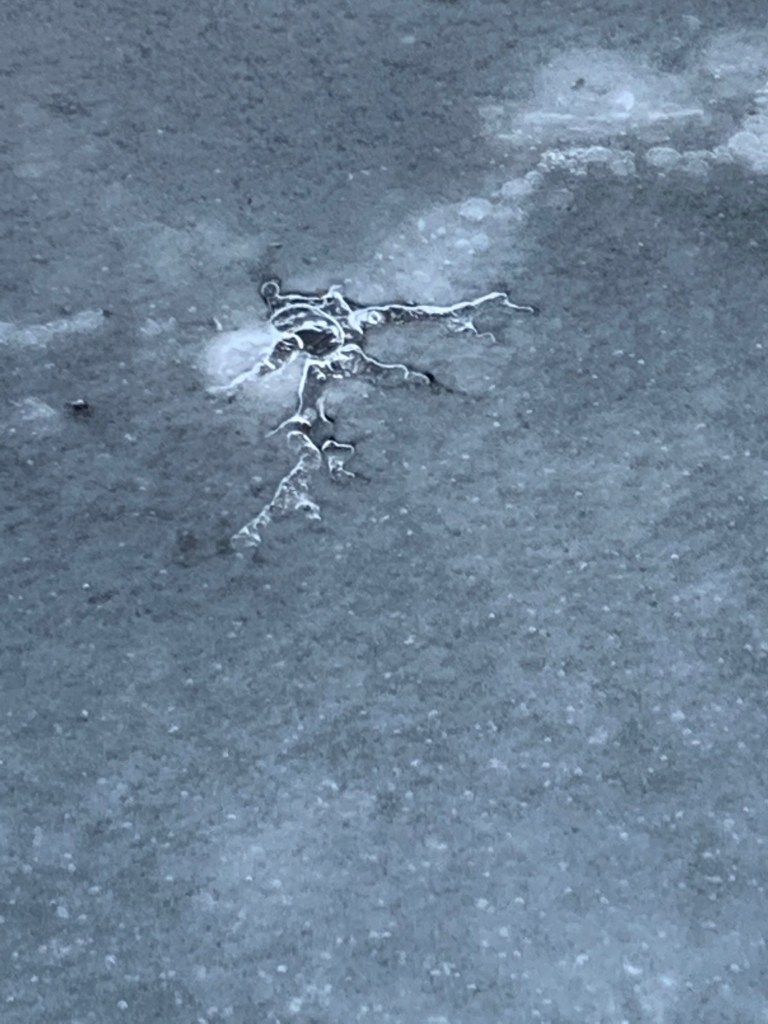
I took the photos for this blog on a wetland out behind our house. I was wandering around the ice covered surface with our dog, and grew fascinated with the plasticine patterns visible under my feet. In a few short weeks the ice will be melted away and the voices of chorus frogs will burst forth as the first fifty-degree days in March arrive. But for now, the world of the wetland is all sullen bubbles trapped beneath the frozen water.

The other realm of bubbles consuming my brain is the swimming pool. Perhaps you’ve not thought about the bubbles you make while swimming in a pool, but there are millions of them. Turning the head side to side every stroke, we release CO2 and take in oxygen with every stroke. Sometimes we’ll go two or three strokes in a row, head just below the surface, no bubbles to be seen. It even works that way while running or riding. Periods of bubbling presence followed by silent movement. We breathe.

Recently I heard a Sirius radio host interview an author who began talking about the meaning of life. To my surprise, he used a bubble as an example of how life does not necessarily have meaning, on its own. He suggested it has value instead.

Think back to those days creating soap bubbles in the summer sun. If you’ve ever used a really big wand, you grow to understand the delicate nature of surface tension at work. Slowly moving your arm, the bubble inflates with air, takes on delicate colors and then floats away on the free will of the universe. Like a dream. Then it pops and is gone. We are all alone again.

Such is life, is it not? I recall being a young man with a crush on a girl in our neighborhood. I liked her hair and smile, her brown eyes and the way she moved. I was smitten. Then some rough boys from another town made her acquaintance and started showing up on her porch. I overhead one of them talking about her. “She’s got such a bubble butt,” he murmured. “How would you like to grab that?”

I felt protective of her, but powerless to do much about it. So much of life is like that. Some coarse event comes along to burst our bubble and the only thing we can do is watch it burst. The hopeful among us go out and create more.

And have you ever had someone turn to you and say, “I hate to burst your bubble, but…” That’s typically not a fun moment. Well in my case, I now have a bubble butt of own. So fuck all that. Here’s to convergent evolution and showing your ass to the world in protest.

Putting it out there

My mind creates bubbles without really trying. I’ve often been accused of oversharing on social media, and that’s the cause. I can’t stop thinking about everything I see.

Then there is so much injustice and abuse and disgust toward the creative in this world, that putting it out there seems like an act of defiance. So I put ideas and bubbles out there and see who views the world the same way or differently. I’ve even taken a look at tar bubbles that way.

Social bubbles

That’s what we’re all doing on social media. Sending out bubbles and sometimes popping them. Laughing at the way we look through them. At the same time, we are trapped in a bubble of our own making.

Algorithms will do that. We can’t always discern where our information is coming from, or where it goes. So it is best to pop your bubble now and then. Get outside the flubbering void of your own existence and dip your wand in the soapy world beyond. It’s not always pretty, but it is often interesting.

Or you can just stare down at your feet. Those bubbles may be calling you home.

Posted in aging, Christopher Cudworth, swimming | Tagged , , , , , , , , , , , , , , | Leave a comment

Leaving tracks

Walking our dog in the morning is like being back in field biology class looking for signs of wildlife everywhere. On a typical morning we’ll cross the tracks of numerous animals left in the snow. There are coyote and fox tracks, cottontail rabbits, squirrels, voles and deer mice, juncos, tree sparrows and cardinals, or the large padding feet of Canada geese. Also the occasional opossum trail. Always ponderous, thick and slow.

All are identifiable. But this morning I had a funny experience in finding my own tracks in the snow. The day before, I’d started my five mile down the asphalt path that passes behind our house. The snow was fresh on one side of the path so I enjoyed padding down the soft surface on the way out to the road.

Going way back to my first years in running, I read an article in Sports Illustrated about the proper way to run. It talked about pointing your toes forward rather than running splay-footed. Some people are built that way by nature and can’t point their toes for the life of them. But not me. I took that straight and narrow advice to heart. Even with a slight bow in my lower legs, I run with feet pointed straight ahead. You can see proof of that in the photo above. That tactic has carried me many miles. At least 50,000 or more.

Most days I travel with a mid-foot stride. But once in a while I let heel-strike take over. I consider that a luxury on most runs.

It was interesting to encounter my own human tracks among the dog prints and other critters we normally see on our daily walks. Lucy sniffs all of them. Her nose picks up scents that we humans never know. She’ll follow rabbit tracks into the brush if I let her. Or she’ll stop transfixed by the recent urine stain left on a snow clump by either another dog or coyote. She’ll even sniff the footprints we’ve left from the day before. I imagine she’s saying, “Huh, this smells familiar.”

Sometimes the footprints we leave last for weeks. A month ago the snow compacted easily, then it rained a bit on top of everything. Our footprints were outlined in icy relief. They became treacherous as the snow around them was scraped away. Then it began to melt. I found one of my ice sculpture footprints sitting all alone on the trail. I’d watched it change forms from the day I made it. It served as the grave marker of days gone by. All so ephemeral. Like life itself.

So I keep on running.

Posted in running, trail running | Tagged , , , , , , | Leave a comment