I’ll only know on a Field of Dreams someday

I was twelve years old when our family moved from Pennsylvania to Illinois. That life back in Lancaster was left behind in more than one way.

I’d grown up playing all kinds of sports with my brothers. One of the games we played and loved was baseball. I was a good pitcher, and at eleven years old in 1969, took over the mound during the critical second game of the Lancaster New Era Tournament and held the lead for four innings to win 8-6. We won the entire thing the next game.

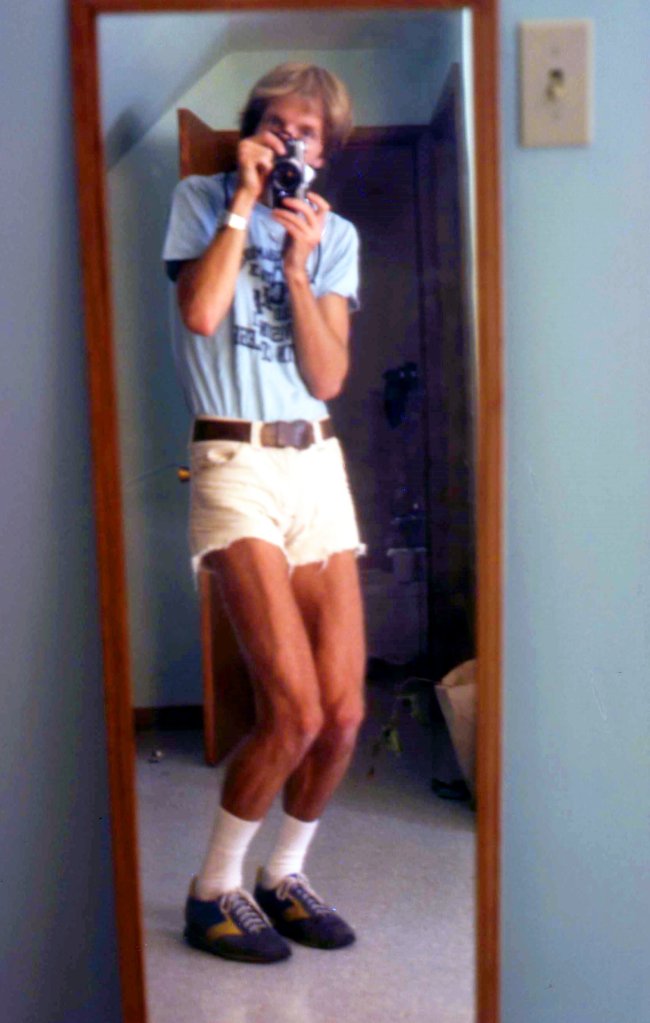
Posing for a photo in a Polaroid my father took in 1972

Pitching was one of my favorite things to do in the whole world. I loved being in on the action every play. I could throw hard, having grown up challenged by my older brothers to do so. And had we stayed in Pennsylvania, I likely would have continued playing baseball for the high school team. But once we moved, that was not to be.

As it was, we moved out to Elburn, Illinois, a town of only 750 people at the time. I signed up for the twelve-and-under local baseball program and threw a perfect game against kids who recoiled from the speed of my pitches. The mound was just thirty feet from the plate, as I recall. Those kids never had a chance, and I didn’t give them one. I was merciless as a baseball pitcher and most other competitive sports as well. It was a product of environment and temperament for me. It was how I survived. Felt good about myself. And proved myself to others.

But that focus was threatening in such a little league. Not knowing what to do with this weird kid with the fireball arm, the local baseball magistrates told my dad there was no place for me to play. There was no Pony League team for 13-15 year olds. “All we have is American Legion ball,” I heard one of them tell my dad. My father looked over at me and replied, “I think he can play at that level.”

Legion ball
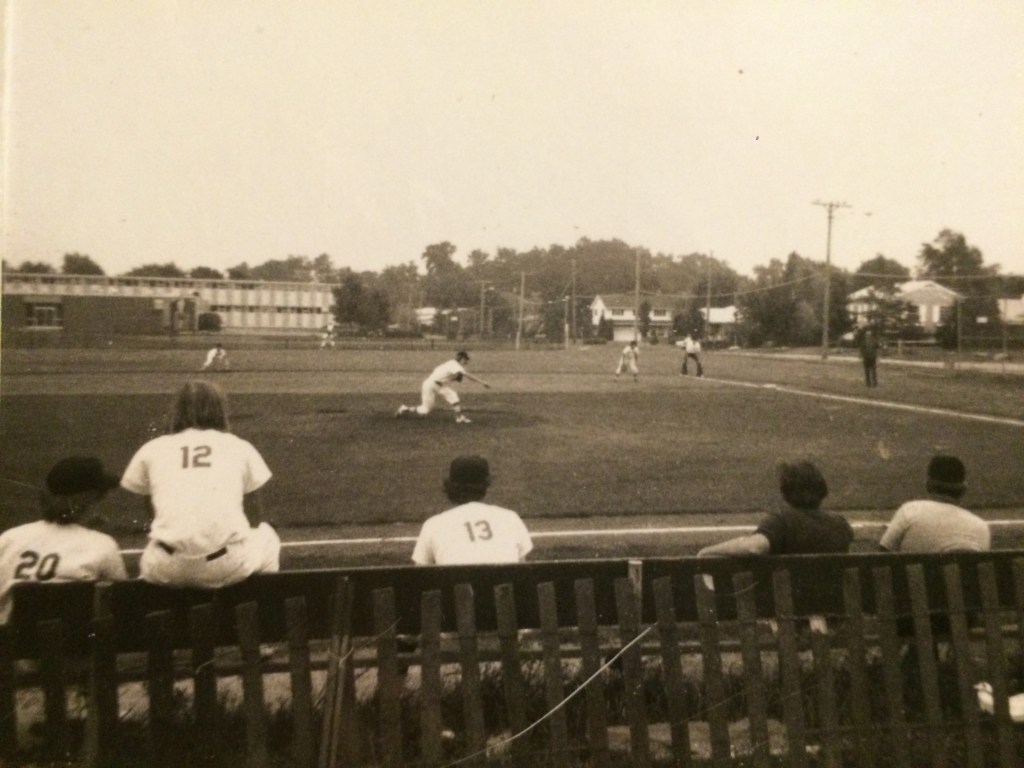
Pitching for the Blue Goose in summer of 1973

And that’s what happened. I turned thirteen years old that summer while playing for a club team in Elburn comprised of kids much older than me.

The pitching ace was a guy named Dale Garman. I’d later play ball with his younger brother Mike on the Elburn team. We barnstormed around the western suburbs and country towns playing baseball against other teams. It really was a scene out of Field of Dreams, and baseball remained a big part of my summer life.

In those days, there were no fall leagues or spring leagues. You signed up for summer baseball, played a schedule of games and if you were lucky, made an All-Star team to compete against some of the better players in other leagues. I pitched in that game only because my coach out in Elburn, Trent Richards, told the regional All Star coach, “Pick that guy. He’s skinny but he’s a great pitcher.”

No soccer. No baseball.

The other sport I likely would have played had we stayed in Pennsylvania was soccer. I could run forever, was scrappy and quick and my brothers had both played in high school. But the high school out in Illinois had neither a soccer program or a baseball team. Which is how I wound up going out for cross country. From there, running became a massive part of my life.
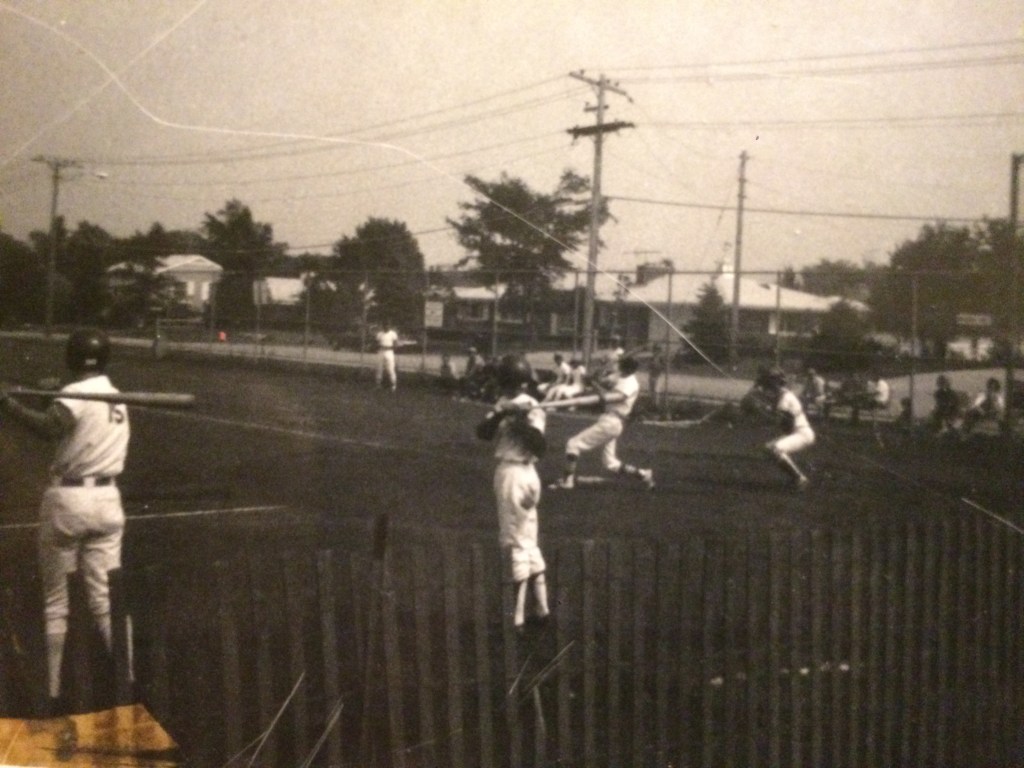
At the plate for the Blue Goose in 1973

I still played summer baseball once we moved to a new town during my sophomore year in high school. I pitched to a 7-1 record that summer for the Blue Goose, a team sponsored by a local supermarket. The other pitcher, a guy named Corky Nichols, also racked up a 7-1 record and went on to star for the St. Charles baseball team.

By quirk of fate, the cross country and track coach at my new high school, Trent Richards, was my former baseball coach out in Elburn. He was the one that sold me onto the roster of the All-Star team. But he wanted me out for cross country and track more than baseball. So that choice was not really on the table by then.

Still, I inquired with the baseball coach that winter as to whether I’d be welcome on the team. Recently I found one of my personal journals that contained an entry in which I was weighing the decision on whether to run track or play baseball. I even asked both coaches if I could do both. The baseball coach talked with Trent, who was open to the idea.
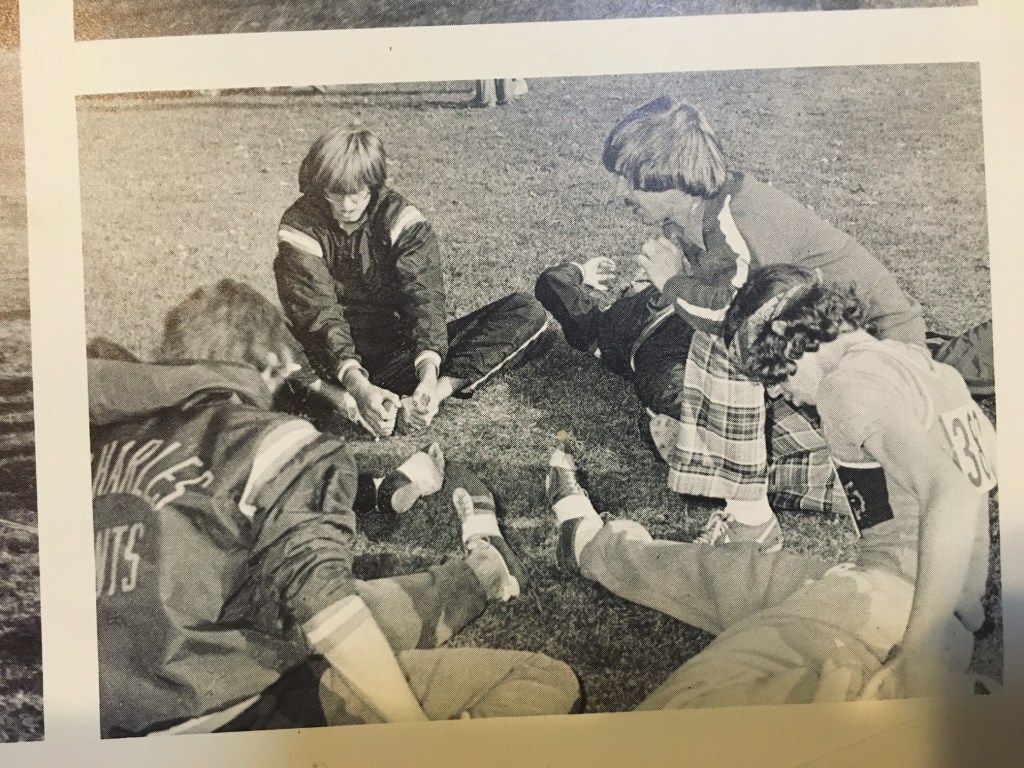
My former baseball coach Trent Richards later coached me in cross country and track at St. Charles HS.

But my grades were weak and the high school knew that I’d be crushed by all that back-and-forth. So the parallel life of baseball and track never really came about.

Sometimes I’ve wondered what life might have been like if running had not taken over. Of course I have no regrets. I was a decent runner who won races, helped led several teams to titles of one kind or another through high school and college, and had a productive post-collegiate racing career winning road races now and then. It was hard work and it formed my entire worldview. I’m still a runner to this day. Perhaps I’d have even gravitated to that sport had we stayed back east. One never knows.

Yet now and then I’ll pick up a baseball and wonder, “How good could I have been?”

Perhaps I’ll only know on a Field of Dreams someday.
Posted in Christopher Cudworth, competition, cross country, running, training | Tagged , , , , , | Leave a comment

Living between two worlds

Yesterday I wrote about what it’s like when two apparently divergent worlds collide. My relationship with an older woman ultimately dissolved when our interests simply did not meld.

Yet I’ve also been caught between two worlds as well. As a fifteen-year-old kid I was the sophomore class president and top cross country runner at a tiny high school in the cornfields of Illinois. My father made the decision (or the decision was made for him) to move our family east ten miles to a larger town.

The reasons behind that move are not so important to this recollection. What mattered more was that we moved during late February or the month of March, right in the middle of the school year. From that point until the end of the year, I was hauled back and forth between school and basketball and track practices by a bevy of coaches who all happened to live near my new house in St. Charles.

Home and Away

That period was a weird existence. Rather than going home each night to our big house in Elburn a few miles east of old high school, I rode home thirteen miles east to a small split-level house in a modest St. Charles neighborhood. No more hanging with my friends at night after school. I’d also arrive before they got there in the morning and leave well after their parents had picked them up from school.

I lived in those netherlands for nearly four months.

Keeping on

I well recall trying to keep some sense of normalcy going during that netherland period. We’d arrive at that cornfield high school around 6:30 a.m., and I didn’t have the will to study, so I’d go to the locker room, change into track stuff and go practice the long jump or high jump. I was good enough to place in those two events at that level, going 5’10” at one point and 19’6″ in the long jump, but that was a split in purposes too. By trade I was a distance runner, not a jumper. I ran a 4:42 mile that spring.

But somehow rather than run more laps around the track it felt good to run down the runway and jump into that sand pit. I think it was a release of stress at being caught in a weird period of life. Without a measuring tool to check the length of my jumps, it was only possible to estimate how far I’d gone.

I’d back up on the runway, rock on my heel, take off running down the asphalt strip and jump as long and as hard as I could. My feet would strike the sand in a rush of noise. I’d brush off my hands and stand their looking at the distance between the board and the pit. Then I’d rake it back smooth and try all over again.

What an allegory for life it was.

Posted in running | Tagged , , | Leave a comment

When one world runs into another

Coming out of college I worked for a year in admissions, then took a job as a graphic artist in marketing with an investment company. That move back to Chicago broke off the relationship with the woman with whom I’d fallen in love in college. But she was keen to marry far sooner anyway. I wasn’t ready for that.

In fact I sat in the company cafeteria explaining that breakup to a woman who was twenty-seven years old at the time. Her bright red hair and flashy red lipstick gave her an urban diffidence that a twenty-two year old like me did not know how to handle. Then she regaled me with a tale about how she liked to crawl under the breakfast table and give her man a real treat to start the day. That was when I began to realize there was an entirely new way of looking at the world. Older women seemed to know about it.

She told me without apology that I was far too young to be engaged to that college girlfriend, especially one that demanded no less than a carat diamond ring for the engagement. “You’re better off without her,” my female advisor admonished.

Meetups

The following year when I was turning twenty-three years old, I met a woman who was thirty-three. We talked at a bar and it turned out the she knew a close friend of mine. That kept the conversation going and I pushed for a date.

It wasn’t until a week later that I learned her real age. At first glance, that gap of ten years seemed significant. But the seasons were turning from spring to summer and everything seemed possible. So we started dating. And we had fun.

I was just in the process of moving from my parents home to a coach house apartment where my former track coach had lived. When the place opened up I was eager to move out and start on a new track in adult life. That little coach house became a party center for my extended group of friends. Some of them just came to drink, smoke pot and carouse. Others wound up screwing on my couch. It was all part of twenty-something life.

Wardrobe fixes

Meanwhile that older woman and I were getting together more often. Yet I turned up for a date one night and she looked me up and down and said, “You think I’m going out with you in that?” I was wearing the classic runner getup of the day. A County Seat plaid country shirt with pearlescent buttons, a set of scruffy corduroys and some well-worn running shoes.

“Here’s what you need to do,” she advised me. “Go to Marshalls. Buy yourself a nice set of khakis and a blue pinstripe shirt. And some real goddamn shoes. Then come back another night.”

That might have seemed harsh, but even at the time, I did not blame her. Runners were a sorry-looking bunch as a rule in the 1980s. Most of us were so thin our cheeks resembled hollowed out cereal bowls. And those old running shoes we wore around? We saw them as running chic but they were instead ugly as hell, awkward and heinous.

Admittedly, I’d already been taught a few fashion no-nos by that college girlfriend. So I realized there was probably plenty still to learn, especially from a far more experienced older woman.

So I went shopping.

The running thing

Up until that point in time my life was defined by experiences in running. All my social life centered around running and runners. I assumed that dedication to the sport might somehow, someday impress women. So I invited her to watch my best friend and I work out.

To her credit, that woman parked herself on the aluminum high school bleachers at the track one night while my best friend and I ran a set of twelve sub-65 second 400 intervals. I’d glance up now and then wondering what she thought. After our training session her first observation told me how she viewed the world. “I liked that both of your legs were in perfect sync. That looked really cool.”

She didn’t look at this running thing as some measure of character as I did. She viewed it as one more facet of this world to be analyzed for its value based on perspectives other than those I wished her to see. It is the best thing in the world for a young man to learn that a woman has a mind of her own, and the right to use it.

Working it out

That type of lesson came around more than once during our time together. I showed up unannounced at her place one day and found her immersed in the restoration of an antique chair. It looked only like an old chair to me, but she recognized its unique qualities. In fact she worked as a home remodeler, fixing up fancy apartments using amazing finds like that in the Gold Coast neighborhood of Chicago. She made close to $100K working only six months of the year.

That first summer I knew her, she decided to take a work break to drive around the country in the green Volkswagen van that she owned. She invited me to come along but the concept of ditching work to drive around the country and get high in a Volkswagen was foreign to me at that moment.

Her van only broke down once during her trip. It surprised me that she called from a pay phone sounding a little worried but not scared. No one’s perfect, I thought. But she seemed so far away it was hard to imagine her ever coming back.

Home and away

When she did return we used the rest of the summer to get high, and fairly often. That woman was a pot connoisseur with a collection of pipes and bowls and bongs as well as connections to import weed from far-flung places.

I didn’t mind getting high now and then, but it was also a year when I was starting to make big progress on the running circuit. My 10K time dropped closer to 32:00 with each race. With an efficient cardiovascular system like that, it took only a few puffs on a joint or a deep draft on a bong to render me half a world away from home.

Our worlds seemed distant in other ways as well. She didn’t know much about rock music, which surprised me on many fronts. Yet she somehow latched onto the song Tale of Brave Ulysses by the group Cream and especially liked these lyrics:

And you see a girl’s brown body
Dancing through the turquoise
And her footprints make you follow
Where the sky loves the sea
And when your fingers find her
She drowns you in her body
Carving deep blue ripples
In the tissues of your mind

It’s a pretty intense song I suppose, especially when you’re high as a fucking kite. That “carving deep blue ripples in the tissues of your mind” lyric when breathed through headphones heightened by waves of hardcore THC ripping through your brain is nothing to sneeze at. So we got high, had sex now and then and tried to figure out if we were long-term compatible.

Then one night we ate ice cream on a park bench after smoking a bowl of pot. I was so out of it there was no guarantee I could even walk home. I looked across the parking lot and it felt like the world I knew was a thousand miles away. Some people smoke pot to get in touch with themselves. For me, it felt like the exact opposite.

At 7 Eleven

So it became clear that she lived in an alternate universe from mine. There were hints that I never really scratched the surface of that world. Bumping into her chest with my elbow one afternoon at the 7-Eleven, she reacted not with a jolt, but with a smile.

The attraction was there alright, but so were the reversely magnetic effects of age, experience and habits. I never heard from her again after we broke off the relationship, for some reason I have no photos of her at all.

It was the first time I truly realized that one world can run into another and never truly meld together.

Posted in 400 workouts, aging is not for the weak of heart, running | Tagged , , , , , , | Leave a comment

The Yellow Brick Road isn’t the only path to salvation

You might recall that in the Wizard of Oz movie, a confused Dorothy stands in shock at one point and blurts out a classic piece of dialogue that goes something like this: “My, people come and go so quickly around here!”

That’s how the snows have been here in Illinois this week. We got four inches of accumulation that looked like it would stick around forever. But once the April sun popped out the clouds and swung over the land, the snow disappeared like magic.

Today it snowed another three inches. And again, green grass is already peeping through the sagging snow layer. Spring will be back in full force by this afternoon, I’m sure.

Is God really in control?

We look for meaning in all this change and sometimes we’re stumped. Some credit the seasons and weather to God, depicted that deity as both a control freak and a whimsical destroyer. Really bad weather events are branded “acts of God” even by the insurance and government agencies doling out billions of dollars to compensate those caught in the path of destruction. Perhaps they should consider billing the religious organizations collecting billions in the name of God. Ask them to step up and pay down the disaster bills if God is being such a jerk about all of this?

A world of Dorothys

We’re really no more sophisticated in our regard for natural events than the innocent Dorothy who upon stopping to pick an apple from a branch along the Yellow Brick Road gets scolded by a grumpy old tree. Something in me always hated that damn tree almost as much as I feared the Flying Monkeys.

That horrid old forest in the Land of Oz was not a nice place to be for young Dorothy, and that’s the allegory that applies to all of us in this world. We’re a world of Dorothys in a largely confusing place.

Fortunately, most of us don’t get swept into another world through our dreams. But that doesn’t mean the dream world avoids us entirely.

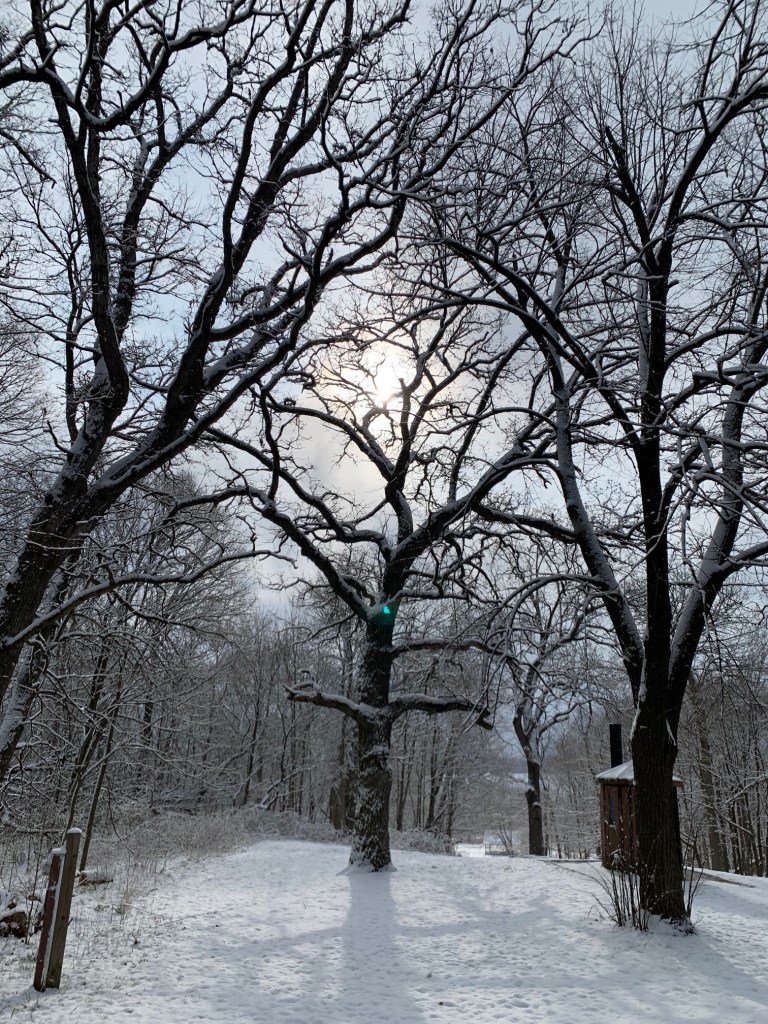
As for me, I truly love old trees. They seem to dream in place at times, and if you stand among them with a mind open to the breeze coursing through their limbs, it almost sounds like a language we’re supposed to understand. For that reason I regularly embrace the company of trees on the many runs, rides and walks through the woods. I am a tree hugger by many measures of the word. Those are aren’t, I don’t really trust. They tend to know only the language of selfish experience.

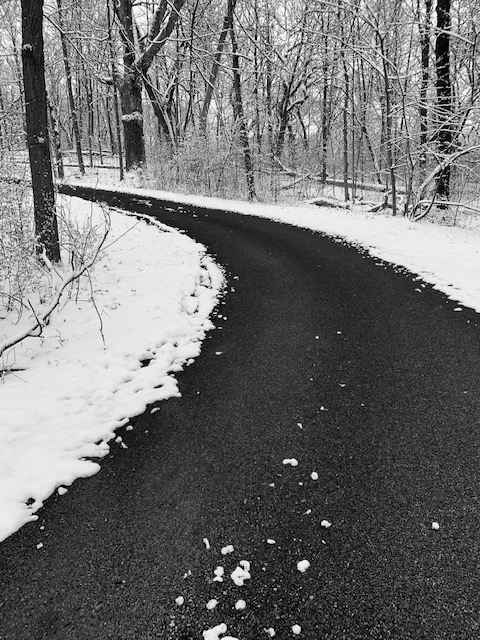
I also like a dark path through a deep and wintry forest. Yet when that dark path is surrounded by the green leaves of spring and summer, I like it just as well. It is spiritually healing to run through a forest in any season. You can feel the movement as if you were a part of the breeze itself. You can look down and find treasures below your feet and look up and wonder at the pattern of clouds between the branches.

It is also a glory to traverse a forest path covered by dead leaves or worn through to the dirt. Those are also paths to enlightenment. Once the snows melted the other day, I went for a run on a forest path and found a patch of Dutchman’s Breeches blooming as if the snow had never fallen at all. Whether the insurance companies and government agencies want to admit it or not, those flowers are just as likely an act of God as the houses torn asunder by tornadoes or flooding.

In truth, it’s not really necessary to credit any of this to God at all. Nature has its motives and is randomly happy to carry them out with abandon. I’m not one to constrain my worldview and force the will of nature through a God strainer. If anything, I see things the other way around. I think God is happy to sit back and watch it all happen, then study how people respond to creation. Those that respect it earn respect in return. To me, that is grace appreciated.

In other words, I don’t think God really cares whether we travel a yellow brick road or wander a dirt path in the woods. There are people who will tell you that the yellow brick road is the only path to salvation, but I don’t think that’s true. I bet you know a few people that agree, and perhaps you do too.

Find your own path. It’s a much more enjoyable way to live.

Posted in riding, running | Tagged , , , , , , , , , | Leave a comment

Being respectful and sensible on the running and cycling trail during this Stay-At-Home, mask-wearing, Coronavirus debacle

I’ve been using the recreational paths installed on former railroad beds in our part of the country since 1982. That’s a long time ago and a ton of miles covered on these linear parks.

So I know a few things about trail etiquette. There have been few close calls in terms of possible collisions. On the whole, I’ve always leaned toward safety over speed. But sometimes people do unexpected things while out on those trails. You always have to be alert.

There are new rules of etiquette in place during the pandemic. Principally, these involve adequate social distancing. Staying six feet apart is the basic construct. Yet with moving traffic and the volatility of the Coronavirus strain that leads to Covid-19, there is risk of infecting others or being infected if that stuff gets floating around in the air.

I’ve seen some people walking with masks on. Even a few people riding bikes with masks on. But I’ve yet to see a runner wearing a mask. I think there are good reasons for that. Breathing through a mask of any sort while running is quite difficult. Condensation builds up quickly. Oxygen exchange is impinged. So is release of CO2, the inevitable product of breathing.

No mask

So I don’t wear a mask while running. If I’m running during period when there are lots of people on the trail, I go well around them to avoid them.

Some studies have shown that runners and cyclists are at risk of spreading or contracting the disease if they exercise too close together. The draft created while moving can actually carry airborne virus droplets or particles. That’s why races and large group events need to be canceled and postposed. Until this pandemic is under control through proven medical treatments or a vaccine, the potential spread of the virus in public place is simply too great to bring big groups of people together.

Yet out on the public trails, there is plenty of time to anticipate and respond to social distancing etiquette. If I’m cycling and approach a clog of people at some point on the trail, I wait for them to sort it out and disperse. If necessary, I’ll even unclip and stand back until a group breaks up. It doesn’t happen that often, and I don’t let it bother me.

Don’t be a jerk

Hopefully there are not still aggressive cyclists and runners so obsessed with their personal objectives they refuse to abide in simply courtesy and social distancing measures. I’ve known and have seen plenty of cyclists who act impatiently on the trail or ride far too fast in areas where groups of people tend to congregate. To those cyclists I say “Skip the trail” now and in the future. If you’re capable of going 20mph+ (as I am) on a typical ride a busy trail is no place to force yourself upon the world.

That’s particularly true now that so many casual trail users are out trying to get exercise. I’ve seen far more people out on the public pathways than at any other time in the past forty years. The pandemic has families out walking together. That’s fair and reasonable use of public trails. Most pay attention to keeping their distance.

Just yesterday I was running an unpaved forest preserve path when a family walking together came over the hill. Their two young children stepped aside on the narrow footpath and I actually traipsed through the weeds a little to give them fair margin as well. That’s how most people are responding to all this. They’re considerate of each other.

Read situations

It comes down to reading the situation wherever you go. Unless tested, none of us knows if we’re a carrier of this virus. Even without symptoms, we can spread it around and not know it. If you’re more comfortable exercising with a mask on, that’s all well and good. Those of us that aren’t wearing masks need to respect the space of others more than we usually might. That means accommodating more than six feet if we can, and being patient in every circumstance. That’s basic human respect.

I’ve been a runner close to fifty years and a cyclist nearly twenty. I’ve lived through my share of bad colds and flus during all those years. Brought a few of them on from overtraining and I’m sure picked up plenty of germs from locker rooms and public fountains. So I’m no germophobe, but neither do I think it’s fine to be a germajerk.

Going to the grocery store and other places, I’m largely wearing a mask. While out running and riding, I’m taking a pass on the mask while being extra cautious to give people safe space. That’s being respectful and sensible at the same time.

And when the pools open back up, there’s no way I’m swimming with a mask. That’s where I’m really drawing the line.

Posted in running | Tagged , , , , , , , | 2 Comments

On April and track and field

Ever since 1970, when I was an immensely skinny 8th-grader competing in track and field for the first time, April has been a vexation on my body and my soul.

I too-well recall stripping off sweatpants to stand shivering in the cold on a cinder track exposed to the northwest winds tearing across Illinois. When the gun went off, my body raced into action, almost without me. We ran two crunching laps with bare limbs flying. There was jostling and swearing on the turns, as young runners barely able to hold themselves steady in the wind tried to stay as close to the curb as possible.

When it was all done, I’d placed second to some angrily pale white kid from Simmons Junior High in Aurora. I was angry to have lost, but eager to get warm again. So I pulled my sweats back on and went for a stiff-legged jog around the track. April, I thought to myself. This sucks.

There would be many more April track meets to come. All through high school we’d train in February and March, run a few indoor meets in stale air and then show up for outdoor track just as the last snow melted off the football field to leave cold, dark puddles on the cinders.

Sometimes during school hours it would snow during the day. We’d stare out the classroom windows at thick sheets of fat April snowflakes coming down and worry about that afternoon’s workout or meet, which surely would freeze our legs.

Wind-addled

But it was the wind that always made April the worst month to compete in track and field. Most April track meets were spent hiding from the wind inside thick nylon sweatsuits that fit no body in the universe.

We’d huddle behind gym bags out on an open field while our teammates competed. Even the voice of the stadium announcer would flagellate in the April breeze. Finally the last call for the mile run would be announced toward the end of the meet. A few of us that had already run the two-mile hours before would get up and run around a little, then toe the line with less-than-enthusiastic looks on our faces. The pistol would crack in the gathering gloom. Then we’d find some withered strain of determination within ourselves to actually start caring about what we were in the act of doing. That’s what distance runners do: suffer for reasons unknown even to their own minds.

Refugees

These April memories are piled on top of one another. I still remember lying on the football field of some godforsaken high school track looking up at a sky washed clean by a 30 mph gale. At that moment I wished I could be anywhere but at a track meet. A jet plane then appeared with a stream of vapors tracing its path. All I could think was “I want to be on that plane.”

Of course that didn’t happen. An hour or so later I stripped down yet again to a pair of nylon shorts and baggy singlet. We lined up for the mile like a band of refugees waiting to cross the border and took off when the gun shot. And for once, it wasn’t that bad out there. My daydreaming about the jet had relaxed me. As the race proceeded and my body warmed to the task, it occurred to me that the leader was just a few yards ahead. I waited until the last lap and pulled even. He looked haggard and sick of it all. So I left him behind. What an unlikely outcome, I thought to myself. I just won the stupid thing.

April’s wet retort

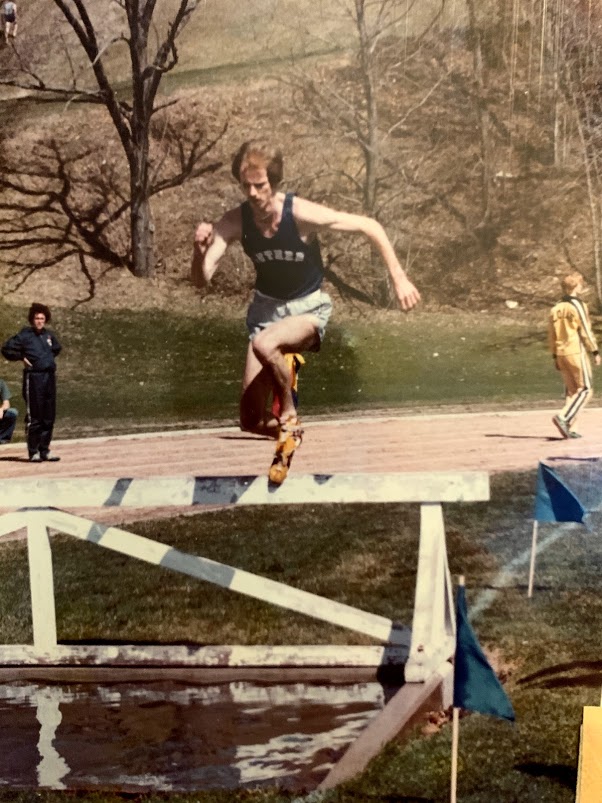
I ran steeplechase in college, an event that added yet another cold element of misery and mystery to the April experience. For seven laps we’d circle the track to leap off the barrier and try to catch as little water as possible in the water pit. But sometimes a splash would shoot up your shorts and hit you square in the testicles. But it was even colder when they had to chip the ice off the pit in early April.

Fickle month

Yet April could just as easily turn into a cruel, hot beast as well. I well recall a college 5000 meter race that began in temps soaring into the mid-80s. One by one my teammates dropped out to gather on the near turn. They stood and cheered as a few of us continued racing. I laughed out loud at the rogue’s gallery of grinning quitters wishing us well. They stood with arms crossed and gave little finger waves as we trundled past.

Today is April 14. As iI look out the window of my home office there is snow coming down from the sky. Ten minutes ago it was sunny. Ten minutes before that it was snowing again. Just now it turned sunny again. The landscaping crew from next door is rubbing their hands together to keep warm.

This morning as I walked the dog, I glanced down at a clump of fresh new grass covered by frost on one side of the clump. “Well that about says it all,” I laughed to myself. “It’s April for sure.”

Posted in track and field | Tagged , , , , , | 1 Comment

Lance Armstrong an icon taking on a new, older look

Yes, by the looks of things on his Instagram account, even Lance Armstrong is aging. For that admission of sorts, I am proud of him.

It took him years to confess that he’d been doping all along during his string of seven consecutive Tour de France victories. He’d risen so high in the sporting ranks an entire industry flourished as a result of his accomplishments. It eventually emerged that the entire cycling world itself was corrupt at its core. But Lance was its figurehead. And it’s starting to show.

The face of change

Now that figurehead is wrinkling and weatherworn. Lance has long since opened up about his transgression. Some will never forgive him for cheating and making the lives of those that sought to hold him to account a living hell. It was certainly not an admirable trait, to aggressively crush those who simply sought to tell the truth.

The truth from Lance only rolled out of Armstrong grudgingly, bits at a time. That interview with Oprah Winfrey years ago was one of the most awkward, orchestrated confessions of all time.

Exile

For a while after the Big Lie was exposed, we heard little from Lance Armstrong. There were rumors that he was hurting financially. But Lance is a smart guy and made smart investments along the way, and he has made a successful journey back from Tour de France hell. Last year he even made it onto the Tour broadcast.

My wife and I listened to his daily podcasts during the Tour the last two years. His loyal friend George Hincapie makes frequent guest appearances, and former coach Johan Bruyneel as well. Despite the scandal associated with the Lance Armstrong years, the insight and experience of these great cyclists still offer the best insights into the escapades of current cyclists in great races.

A wise visage

But what I most admire about Lance Armstrong right now is that he appears willing to move past middle age without pulling his face into a state of permanent denial through plastic surgery cocoon in which his face gets tightened up and his neck wattle removed. Perhaps Lance is honest enough with himself that he feels no need to hide the effects that riding in all kinds of weather can have on our visage.

We all wish ageism wasn’t a thing. Discrimination toward people with aging faces is a reality that vexes those who have plenty more to give the world. Social pressures and prejudice are hard things to fight in this world. Which is why examples such as Lance Armstrong are important to the rest of us.

Honesty and character

Originally it was the Lance Armstrong honesty about his cancer journey that inspired so many to abide in the Livestrong ethic that it’s better than okay to show vulnerability in the face of life-threatening disease. A philosophy of that order can be found in the book I wrote about the journey through cancer survivorship with my late wife. The book is titled The Right Kind of Pride: Character, Caregiving and Community. Through essays about that journey, I make the point that being willing to be vulnerable is the face of authenticity. People are drawn to that because it shows character. That leads to caregiving and community.

Thus in my mind Lance is showing leadership in showing his “true face” as he ages. It gives a whole new meaning to the brand Livestrong even though he’s no longer the face of the organization.

Posted in cycling | Tagged , , , , , , , , | 1 Comment

If the kit still fits, you must not quit it

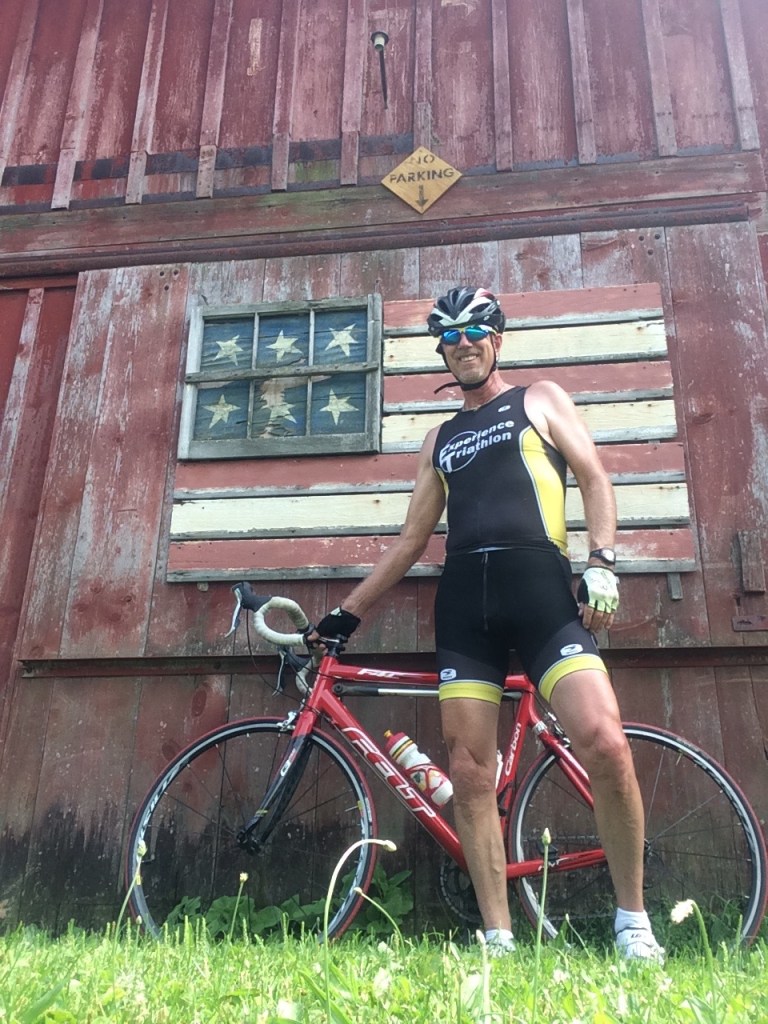
Back when I bought the Felt 4C road bike that got me into serious cycling, I could not resist the kit sold on the Felt Cycling website. It was a Hincapie brand jersey and a set of bibs that finally were finally stretched out beyond recovery and worn through in the seat. Regretfully, I tossed them in the go-away-clothes bin a few years back.

As for my Felt jersey, it remains in great condition and still fits after thirteen years of riding. My weight is slightly higher than when I first started riding but not terribly so. My lowest weight the last thirteen years was 163 lbs. the year that I rode nearly 4000 miles. I’m at 180 these days and have dropped winter weight quickly the last month and expect to be riding at between 170-175 lbs. But if the kit still fits, you must not quit it!

Do you have a favorite cycling jersey/kit that love to wear? Send your pix and why you love your favorite kit to cudworthfix@gmail.com and we can share them on WeRunandRide.com.

Posted in cycling | Tagged , , , , | Leave a comment

Lessons on Coronavirus from a Starbucks run

After delivering our pup to doggy daycare this morning, I stopped at the Starbucks a mile away and found it was closed. I was open earlier this week when I picked up drinks to bring back home for my wife and I.

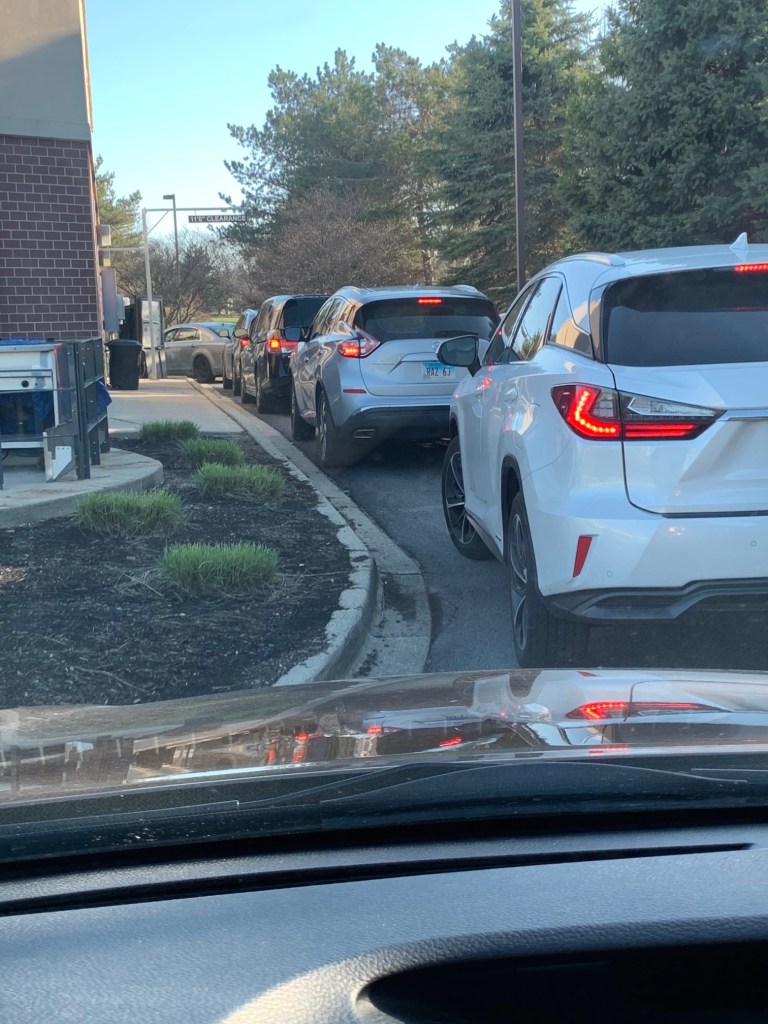
Today I had three orders to fill as her daughter is also working from home. So I drove south to the next Starbucks and found the line reaching back out the drive and up the street. No problem. Not in a hurry or desperate for coffee. I don’t even drink it. Chai tea is my thing, along with other forms of tea. I drink them when I write at Starbucks. I have them as refreshments after workouts. We’ve even used Starbucks restrooms to change after workouts. That’s how I got started visiting Starbucks in the first place.

Waiting in line to order, we came around the corner to find a small sign stating that new hours were going into effect. The last order of the day would be taken at 2:45 p.m. I sat there thinking about that. Why would Starbucks turn down business? The lines are long all day? I was about to find out that answer to that question.

Pulling up to pay for the order, I held my phone up and commented to the server (wearing a mask) that I had an earned free drink to use. He rang up the amount and I commented to him, “The St. Charles store just closed today. And so did the North Aurora location. Are you guys slammed?”

He spun around and said, “Yes.”

Admiring baristas

Behind him one could see the normal hub of activity behind the coffee bar. Now I’d like to make mention that I’ve always admired how Starbucks workers handle the pace of their jobs. I’ve complimented many an employee on their speed, their cheer and efficiency. They call out greetings to customers who enter the store. Even the mobile orders get filled somehow between the counter traffic and drive-through. All while keeping the orders straight and the ingredients balanced. I couldn’t do it. My mind does not work well in circumstances like that.

When the occasion has arisen, I’ve spoken with store managers to offer words of appreciation about these things. One store manager explained that her relatively small location was one of the top volume stores in the entire area. That happens to be our most local Starbucks. And right now it is closed. That still seemed like an anomaly to me. But that’s because I still did not understand what’s been happening out there in the world due to the impact of Coronavirus.

The Starbucks store associate also shared that the reason so many Starbucks are closed currently is the lack of staff to work them. Here I was thinking the store closings were designed to protect profits for the company. I thought they were shutting down locations that weren’t driving enough traffic due to restaurant restrictions in Illinois.

Starbucks options

It turns out the reasons stores are closing is that Starbucks associates were given an option whether to come to work or stay home and get paid. Many of them have taken the safer option. If true, that says quite a bit about the Starbucks company and that it genuinely cares about the health of its associates. For that I congratulate them.

It doesn’t entirely surprise me. From I’ve been told, and what I’ve observed, is that Starbucks treats their employees decently. Their associates get benefits such as health insurance, for one thing. Granted, working at Starbucks is not for everyone. Some people hate franchise and chain coffee stores as a whole. They prefer local coffee shops as a rule. I frequent those as well. A writer loves to have options on where to go.

The fact that Starbucks cares enough about its associate to allow its business model to cave in a bit and fold back the principle of being on every possible corner suggests there are responsible corporate citizens out there in the world. You can hate on Starbucks for a thousand reasons if you like; for its pricey offerings, its clone-like coffee shops, it’s whatever you don’t like. But if the offer to protect its employees is true, there is nothing to hate about that.

Obviously many employees took the option to stay home rather than risk being on the frontlines of customer interactions where exposure to the virus is almost guaranteed. This highly infectious thing we’re all trying to avoid floats in the air and lives on stainless steel for a couple hours. It is the bad dream from which America and the world wish would end. But to do that, we all actually have to wake up.

Wakeup call

The fact of the matter is that there are still millions of people that prefer to live in the dream world that this massive debacle we’re all facing was not the fault of the President of the United States. They claim that no one could have seen this coming. And that’s a lie. He was warned loud and clear by none other than Peter Navarro, the man in charge of trade relations in this country. And there were many more.

Yet Trump acted like a selfish pig sitting there making up his mind about what to order at Starbucks as if there weren’t a care in the world or people waiting on his decision. So concerned was this narcissist with his own re-election he chose for two months to deny that Covid-19 would pose any threat to Americans. Now he’s telling the world that getting through this pandemic with only 200,000 deaths would be a success.

If Trump had his way all those Starbucks employees would be forced to go to work to prove on his behalf that nothing was wrong. “Go back to normal,” he keeps saying. “Fill up the churches on Easter,” he suggested. “This will all blow over,” he tried to say from the start.

I don’t blame those Starbucks employees from staying home from work. Their jobs are appreciated but not necessarily essential in terms of daily survival. People can live without expensive coffee and boutique breakfast sandwiches. We all get that. Some of our daily choices are definitely an extravagance of convenience, we’re learning now.

But lying to the American people was an extravagance on the part of Trump the nation could ill afford. The President lied to protect his own political interests, and that is all. He wanted to pretend the economy was safe from a pandemic when it was not. His obfuscation was a crime against all of humanity. Of that we are all now well aware.

His supporters still take to social media to trumpet his triumphal accomplishments during this pandemic. But their assertions all depend upon lies. In fact, objecting to criticism of Trump has always been an issue of defending the indefensible. His impeachment failed only because Senators broke their oath to defend the Constitution of the United States. Now America is forced to live with sickness of body, soul and spirit.

So I hardly found it ironic that when I got home from Starbucks this morning, the beverage carrier holding drinks for both my wife and stepdaughter had tipped and my wife’s coffee had drained out of the lid and down through the seat. The guy tailgating me down a country road had distracted me from noticing when the carrier tilted after I turned a corner going 45 in a 40 mph speed zone.

When I got home, I offered to go back out and get more drinks Starbucks but my wife had made her own with a coffeemaker we have at home. That about sums up the current state of things in America. The whole country is on tilt, and some days it just doesn’t pay to go out.

Posted in running | Tagged , , , , , , , , , , | 1 Comment

The only thing you need for joy is sweat

There was plenty to learn when I took up cycling just under two decades ago. While I’d already spent three decades learning how to run and ran thousands of miles over the years, cycling was completely different. I needed to learn how to ride in a group. How to navigate traffic safely. How to dress for multiple weather conditions. How to shave my legs to fit into the culture.

As that experience built up, I rode longer and harder. Sometimes I got dropped at inopportune times. But sometimes the legs would be good and I’d even help lead the day. But overall, cycling is one of the most humbling sports in which one can engage. Anyone that tells you cycling is ‘no sweat’ hasn’t tried to hang on with a group going 20 mph against a stiff westerly wind on an eighty-degree day. You may not feel the sweat as it blows off your body. But it’s there.

The cycling habit changed in interesting ways once I started doing triathlons. Riding with fellow triathletes, I learned there really is no consistent drafting. Most try to avoid it. Thus there’s no real group mentality. Every ride is a personal venture at staying in sight of someone else. I have ridden lots of miles in the draft of my wife’s bike, however, because we still want to ride together. Finally I put some aero bars on my bike last year and resolved the 20% more wind I was fighting all the while.

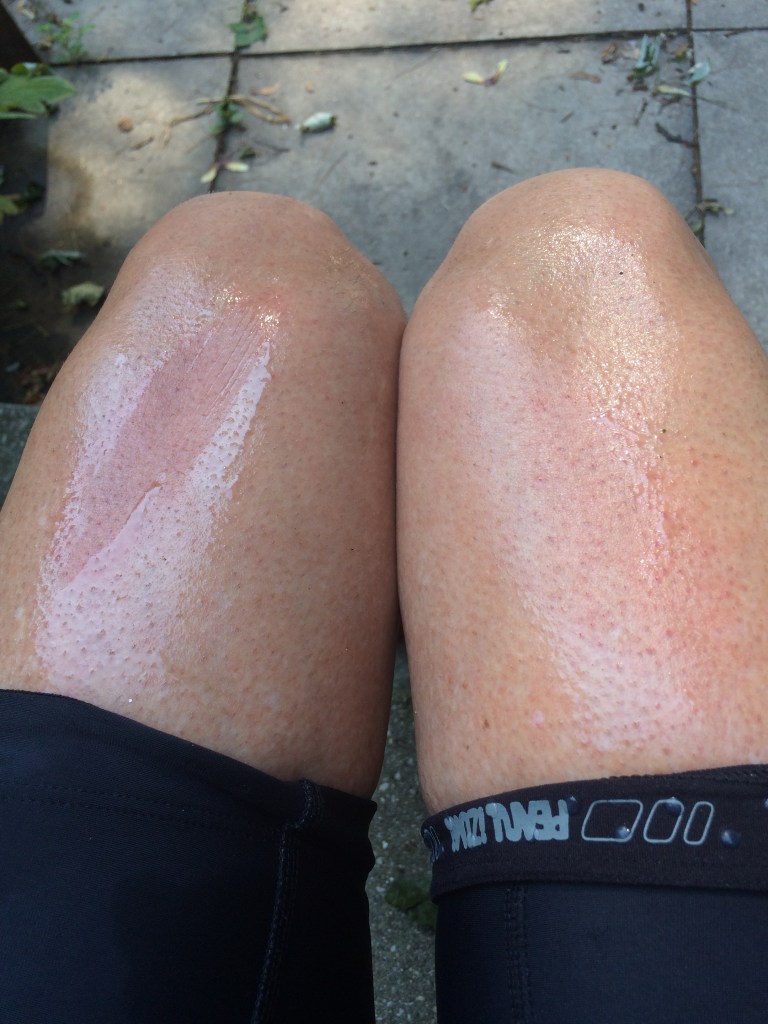
But the one common thing I’ve always liked about cycling is the shining skin that results from a hard effort on a warm day. The only thing you really need for joy is sweat. It strains out the bad emotions and if it doesn’t, it reflects the anger you feel at not riding as well as you’d like. And that’s motivation.

Sweat is essentially the nectar of eternal youth. Yet it also stains the body and dries into a salty, dry brine that flicks into your eyes if you don’t wipe it off. In other words, you know you’ve done something when sweat comes and goes. And that’s all you need to experience joy. Some sweat. Go out there and get it.

Posted in cycling, triathlete, triathlon, triathlons | Tagged , , , , , , | Leave a comment