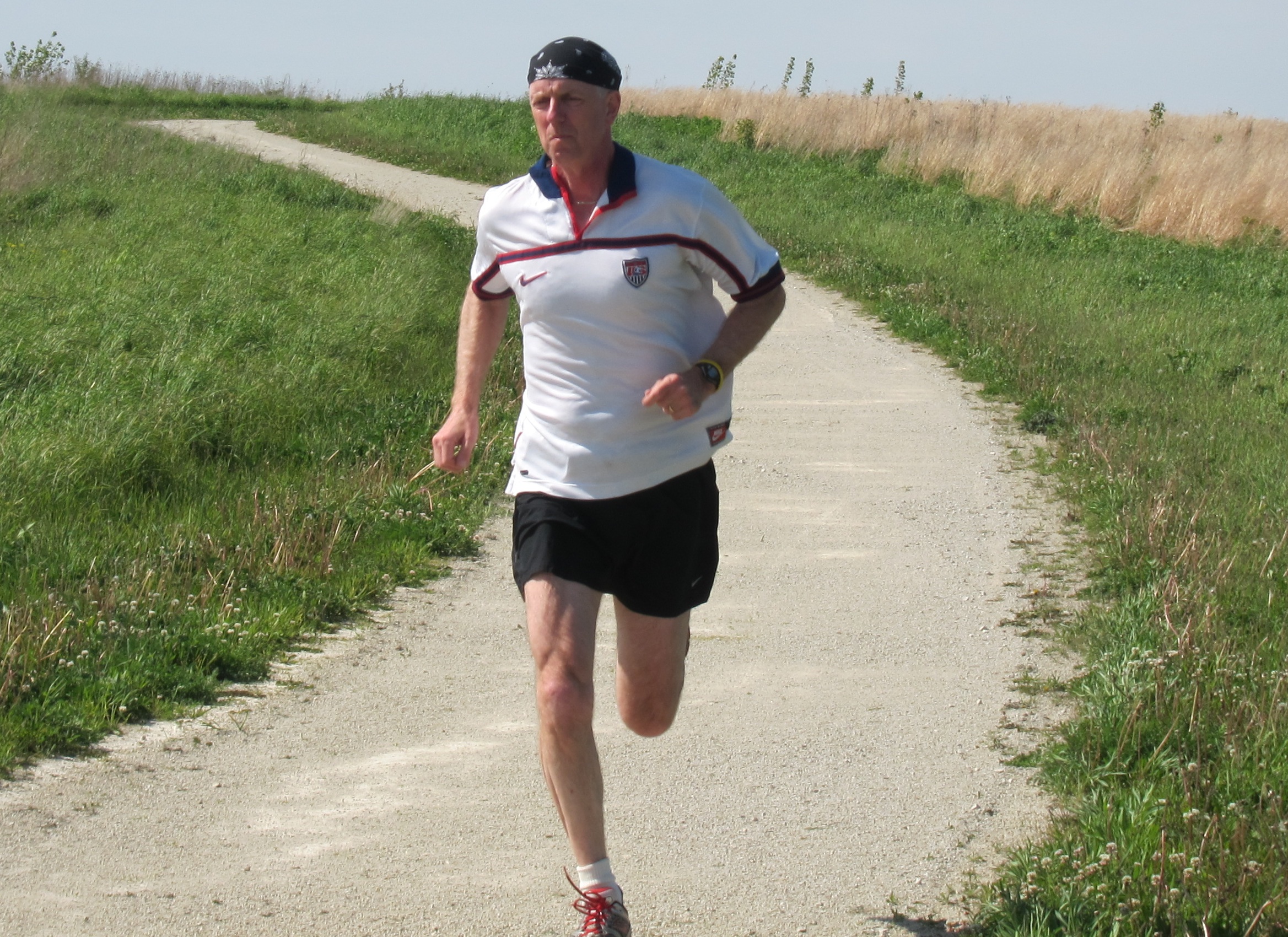
We run and ride and swim. And then we drink. Sometimes too much.

By Christopher Cudworth

High school buddies. Lessons learned.

High school buddies. Lessons learned.

In the summer before starting college the group of guys that ran together and hung together began plotting a major league blowout party for an end-of-summer sendoff.

We all got blotto. Drunk. Falling down stupefied. And maybe a little high in spots. Although I didn’t smoke dope yet. But someone did. I recall that much.

The party lasted all night and well into the next morning. Two days later most of us headed off for college and our changing lives.

Rite of passage

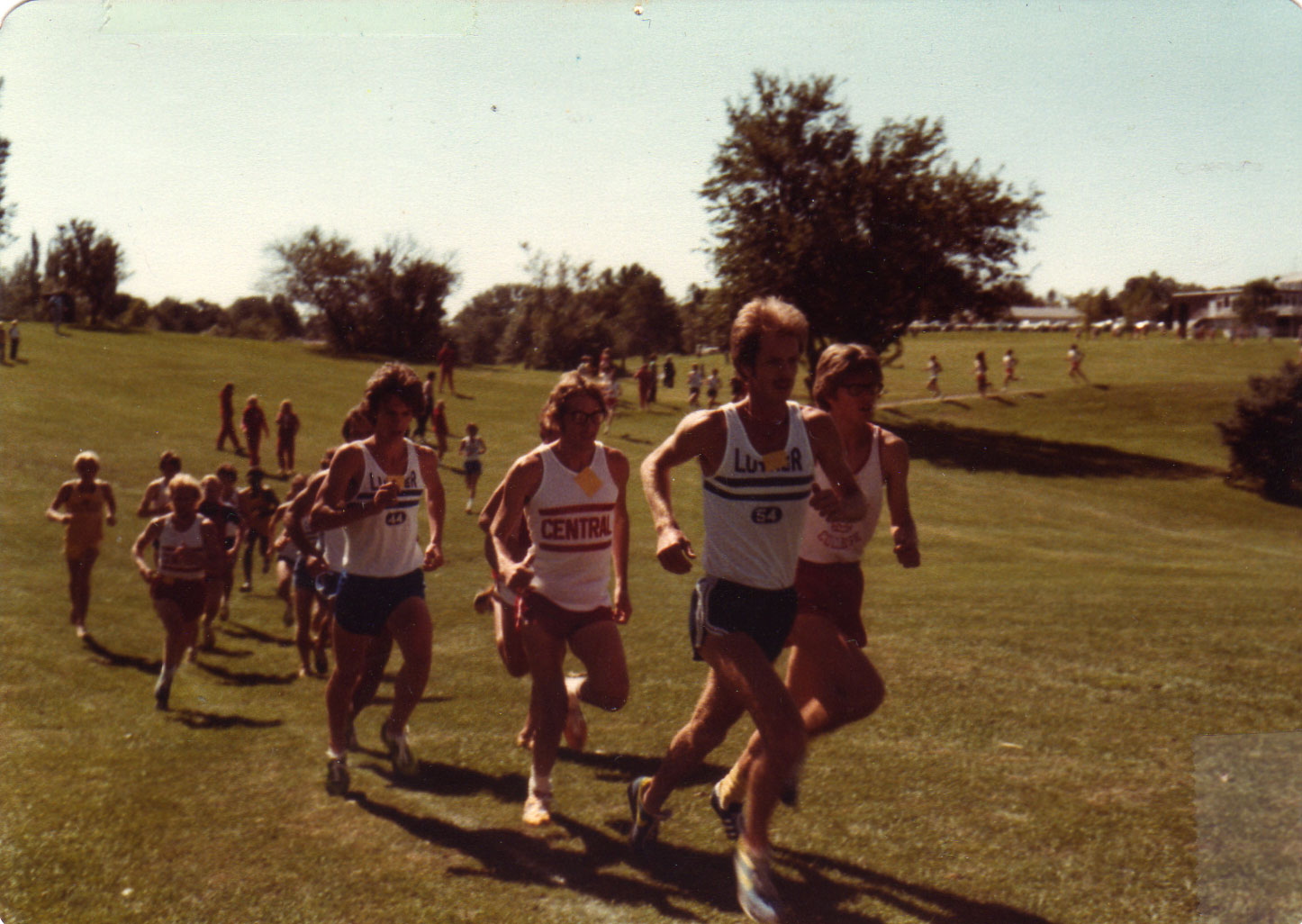
The day after I arrived on campus was a nervous affair. The 35 members of the college cross country team were gathered a week before school started to begin practice. The entire team took off on its first practice run and the pace soon ramped up to 6:00 per mile. We tore through unfamiliar streets and trails for most of us freshman, who clung to the middle of the pack as best we could. A couple even dared slipping to the front where sophomores, juniors and seniors aggressively jockeyed for position.

It was intense, requiring an almost race-level performance on my own part to keep up. The summer had not been that heavy on training, so it was raw ability and determination that largely carried me along.

Climbing into pain

The road behind these bluffs was the scene of a first-ever college training run.

The road behind these bluffs was the scene of a first-ever college training run.

Up and over the hills at Palisades park we climbed where the vertical space we climbed reached 250 feet. I recall being at the edge of absolute exhaustion while cresting that hill .

Then we descended furiously, leaning into turns on cambered roads. The race back to campus was on. No one was giving an inch. This was territoriality and male machismo and self-image and team position and social status and sheer guts and glory all in one 8 mile run. It hurt. And it felt good at the same time.

It was one of the harder runs I had ever done to that point in my career, 8 hilly miles at 6:00 pace surrounded by runners superior to me in speed and maturity. It was an induction to college running that would never be forgotten. The next day was more of the same. And the next. We improved in fitness and started to race in earnest. But that first run was a test of resolve. Had I failed, it all might have turned out different. Lost confidence is hard to restore.

No sweat

When finished, the group surveyed who had survived and who had not. Standing in front of the fieldhouse, I felt a surge of triumph at having come through the crisis of pace and nerves. Suddenly a junior walked up to me and said aloud to everyone, “Look at this guy. He’s not even sweating. It was easy for him!”

I did not know it at first, but getting called out like that was something of a dangerous thing in terms of reputation. A crop of five freshman who had all broken 15:00 for 3 miles in high school cross country brought high expectations to the team, and everyone in the upper classes was fearing for their spots in the Top 7, and with good reason. All 5 of us ran varsity at times that season. Four years later that core of runners would place 2nd in the national Division III cross country meet.

But it was not exactly no sweat along the way. The journey between all that would be fierce. In those moments following the first run of a college career, all that effort and achievement could only be imagined. But I wondered why, indeed, I was not sweating like the rest of the team. It was hot and I normally sweated plenty.

Last call for alcohol 

No sweat is no good.

No sweat is no good.

It was the alcohol from two days before that was still impacting my body. In truth I was still dehydrated from all the drinking we’d done at that blowout back home. I didn’t know that at the time, and wouldn’t figure it out until years later, but I’m lucky that a lack of sweat was all that came of the stupidity.

One might have learned from such an experience that drinking and running don’t mix that well. Yet the culture of running at the time, and to this day perhaps, was to run hard and drink hard.


The culture (and fun) of drinking

But we kept running, and we kept drinking hard. A couple years after college a buddy and I traveled to La Crosse, Wisconsin for a half marathon and the party following it was insane. Naked people wandered around the house all night and most of us woke up in a stupor on the floor, half covered and half alive.

Then we all got up and ran 10 miles hard, half hungover and still tired from the half-marathon race we’d done the day before. Yet the group trundled along at 6:30 pace until one of the best runners in the group stopped suddenly to spit on the road and glanced down to see that his loogee was actually purple. “Oh my God!” he shrieked in humorous half horror. “Did that come out of me?”

We distance athletes are fond of extremes and a purple loogee is about as extreme as it gets. All in good fun.

Other venues

Years after my competitive career had cooled I was the featured artist for a race in Texas where world class runners flew in from all over the world. The night after the race the American distance runners all got drunk and half of them siphoned off to screw the night away, men and women on the road, in lonely hotels, fit and horny. Then add alcohol. What did you think was going to happen?

The Kenyan runners, by comparison, settled quietly into their rooms and woke early in the morning to do a 10-miler together in the soft light of a Texas dawn. The contrast in habits between the American road-racing-circuit runners and the Kenyans was pronounced. It was easy perhaps to see why the Kenyans won the day before.

One must be careful however not to slice the bread too broadly on the issue. People of every race and nationality abuse drugs and alcohol. The point here instead is that it truly is possible to choose a different course. One can compete hard and enjoy a few drinks and not let it own the process entirely. We all like to work hard and play hard sometimes. Our habits do start early however.

Habituation

All through college the runners on our team and other schools ( we learned) tended to engage in binge drinking at least. But the truth is, several teammates went on to deal with real cases of alcoholism, and one actually died from it.

At one point a teammate turned to me and asked, point blank: “Do you think I’m an alcoholic?”

I answered, “On weekends, yes.”

He later required an intervention to stop his drinking. When stress hit him he simply drank too much and it became a habit. So it turned out that the pattern of drinking in response to the stress of running was, in fact, a rehearsal for later realities.

Another college runner finished 26th in nationals his freshman year and then got hooked on pot (yes, that can happen) and never ran in the Top 7 again. There’s something that goes on in the brain when substances take over. It can’t be balanced, really, with the discipline of pure performance. That’s the tarsnake of drugs and endurance sports.

“Help me find my car”

College racing occasionally meant partying on with the opposite team.

College racing occasionally meant partying on with the opposite team.

Another college runner asked us several times to go running around town on Sunday mornings to help him find his car. “I can’t remember where I left it,” he’d say, and at the time we all found that funny. But deep down, not really. We could see in his face what alcohol abuse was doing to his esteem and self-confidence. And indeed, he died later in life from drinking too much. That’s not funny. But it happens.

Athletes don’t differ from the general population in terms of their ability to use drugs. A certain segment of the populace is always going to have a tough time managing substance use. The trick is to see it coming.

Rookie mistakes can cost you

At the end of my college freshman season we won the conference meet and I placed 9th overall. Then we held a big cross country party. Girls liked to come to the event because it was known as a crazy time where bunches of skinny, funny guys got drunk and danced wildly until they either fell down or collapsed from exhaustion.

But I drank too hard and too fast that day. The 90 proof punch we’d made got into my bloodstream and pretty soon I was leaning over to kiss a girl and missed entirely, kissing the thermostat instead. Don’t lie to me. You’ve been there too.

They had to haul me home by my feet and arms and throw me in bed. The drunken state was a harsh and painful fog. All night long I lay there writhing from the alcohol, and likely was in a state of alcohol poisoning at one point. My liver could have failed. It happens.

40 years on

It’s not something to be proud of. I could have died. Easily. Kids still do it all the time.

As time went by the propensity to get drunk rapidly grew less and less appealing. I learned how to drink responsibly.

You look back, and you wish you could hand along that valuable perspective to others so they don’t have to go through it the hard way. Turning life into a hangover is not the way to succeed at anything. Not in the long run.

And the truth is, it seems that nothing has really changed in 40 years of the college experience. The entire picture we seem to get about the college experience these days is one constant party. Accurate or not, that’s the vision pumped out in the movies, the media and on Facebook. It is somewhat self-perpetuating as a result. Colleges are desperate to change that culture, and can’t in many cases.

I recall going back for a 10-year reunion and meeting a brilliant, funny young man on the cross country team. His presence was wonderful, and his humor engaging and insightful. As the day wore on the group of alumni and current runners joined for a party and it was hard to witness that young man devolve into a drunken mess. His joy and verve went away. I recognized myself in that young man, and wanted to literally yank his soul right out of his body. Fortunately he righted himself and it was only one of a billion instances of college binge drinking, but it’s the stuff of parental nightmares. Innocence drowned, as it were, in alcohol.

Booze bruises

It’s not alcohol marketing that is at fault. It’s our lack of perspective in society as to what constitutes a real rite of passage.

Here’s the deal: If there is not enough substantive stimulation from our priorities, we invent ways to test ourselves with risky behavior. The whole genre of “teens get drunk” movies is all about that. I love the movie Superbad because it is so funny and true. Trying to find ourselves is hard, terrifying work, and alcohol feels like a shortcut, but it’s not. It’s actually the longest way around to finding out who you really are.

Sure, some forms of drinking really are harmless. The risk-taking forms are not. The hard part is that people can’t really identify where the risks lie. Some are short term risks, like drinking and driving. Others are long term risks, like a predisposition to alcoholis. Genetic and relentless, alcoholism cares not if you survive or not.

Double risk-takers
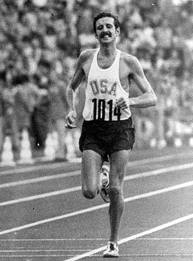
Olympian Frank Shorter was known to enjoy a few cool ones. And he did okay for himself. It can be done.

Olympian Frank Shorter was known to enjoy a few cool ones. And he did okay for himself. It can be done.

Even people engaged in seemingly constructive self discovery like competitive distance running or any other sport are just as susceptible to the deception of self medication. Those of us who are double risk-takers need to recognize the deep need for challenge and stimulation. If you don’t run and ride, and then drink, you might smoke instead, and then drink too. I’ve known many runners who start smoking when they quit training. It’s hard-wiring.

But many runners and cyclists and triathletes do know how to compete and still drink sensibly.

Knowing how to drink well, not hard

This is not some preachy harsh warning to teens or adults to avoid drinking. I actually think we all need to learn how to drink, and drink well. The sad thing is there is no warning system to let you know when you’ve really been over-served. The only demarcation point is a hangover. Then you know you f’d up. It hurts. You swear you’ll never do it again. But the fact is, that’s a little too late.

Fitness hangovers
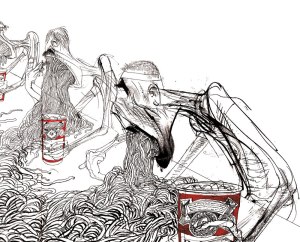
Art by Ralph Steadman.

Art by Ralph Steadman.

And honestly, we can say the same thing about marathons and Century rides and most certainly the Ironman. All these pursuits involve a certain amount of indulgence and risk-taking. We consider them positives because in many ways they enhance our life experience, refine or motivations and make us healthier both in the heart and mind. Yet people who don’t do these things consider those who do a bit crazy and overwrought. So it’s a matter of perspective and insight.

That famous abuser of drugs Hunter S. Thompson once covered the Honolulu Marathon and saw himself in the trudging obsession with endorphins. He knew a drug when he saw one, and laughably ridiculed the sport for its carb0-loaded-mileage-invested passion for mileage and pain.

Yet he admired greatly the best of the lot. Here is what he wrote:

We are talking about two distinct groups here, two entirely different marathons. The Racers would all be finished and half drunk by 8 in the morning, or just about the time that the pack was pouring through the halfway point. They run smoothly, almost silently, with a fine-tuned stride. No wasted energy, no fighting the street or bouncing along like a jogger. These people flow, and they flow very fast. Watching the Racers race is like watching Kobe Bryant in the open court or Michael Vick turning the corner. Each one of them is literally one in a billion. A racer in full stride is an elegant thing to see.

Drunk on marathoning

We run to drink and drink to run. The substance that goes down our throats may be Gatorade one minute and White Rascal the next. The difference is so subtle in our engagement that the line between addiction and connection is hard to discern. The marathon and any distance event for that matter, especially the Tour de France, is immersion into the soul of a drunken obsession with hard effort.

So it doesn’t do to simply preach. Not if you admit what really happens to your body in endurance events. It’s a chemical exercise in which you dance with destruction. Then you have an exercise hangover the next day. It hurts. You swear you’ll never do it again.

But you do. Because living well simply demands that we test ourselves.

So we drink too much and we run and ride too much at times. Sometimes we wind up naked on the floor at a party with a bunch of other runners and we stand up and look around and go, “Damn, that was fun.”

Hooked on drugs

It’s all a drug. Every second of life is a drug we drink with varying degrees of common sense, or lack of it.

We run and ride and swim, and many of us drink afterward. The hard part is not letting the drinks rule the things we do to get there.

It all comes down to this simple philosophy: As a habit and matter of practice, teach yourself to drink sensibly, of life and ale, and live to run and ride another day.

It’s that simple. Except it isn’t.

WeRunandRideLogo

Posted in Tarsnakes, We Run and Ride Every Day | Tagged , , , , , , , , , , , , , , , , , , , , , , , , , , , | Leave a comment

August Answers

August Answers

By Christopher Cudworth

There’s an audio joke that involves chirping crickets. Often it implies that the person who has been asked a question does not know the answer. Instead we hear “silence” or the sound of chirping crickets, as if no one were home or able to answer the question.

Another derivation of the same chirping cricket joke involves the stupidity of the person actually asking the question. In other words, the question was so dumb that it doesn’t deserve an answer. Hence, chirping crickets.

What crickets know

FieldcricketIf you walk out the door in August and listen carefully, chirping crickets are everywhere. This is the height of cricket breeding season, you see, and crickets are chirping because they are protecting their territories. In truth they sing because that’s the way they avoid fights in which they bite each other’s heads off.

So the sound of chirping crickets is really an answer that precedes all questions. They sing to avoid killing each other, and then sing until the first frost, and then know no more.

Crickets in Jeopardy

But if the answer this time of year is crickets every time you step out the door, then the response should function just like the TV game show Jeopardy.

What is August?

You now know the answer. August is answers that precede the question. August is the end of summer and the beginning of fall. August is the bridge between being and knowing. It is the tarsnake of seasons.

JackAugust is runners and cyclists squeezing in hard bits of training in preparation for the fall racing season. August is exhaustion and enervation. August is preparation and consternation. August is love in the heat under a rising moon, and mists in the deep valleys that tell you autumn is coming.

August Wanderers

August is birds unleashed from breeding season to become wanderers that actually head north before heading south for fall. We find scissor-tailed flycatchers fluttering around Illinois because they left their southern domains and there is not yet any hurry to go anywhere. Insects are abundant. The first frost is weeks away. August is a haven for the restless spirit.

August Changes

August is almost over as these words are being written, and that means Labor Day, the traditional transition from summer to fall. No more white belts, as if anyone wears those anymore. Or white slacks, which also seem a rarity. Don’t even talk about seersuckers

August is about letting it out and then reigning it back in. We drink a little too much on weekends and crawl into work sucking coffee down to make it through the day.

imagesAugust is one last summer getaway to the lake cabin where the evenings genuinely do feel cooler. It is also sitting in traffic with the rest of the world on your way home on a Sunday with music blaring. It drowns out the sounds of crickets in the roadside ditches because in truth we don’t really want to hear those answers that precede the questions.

August is Serenity and Inevitability

August is, and always will be, the confrontation between being and knowing.

The crickets know that.


WeRunandRideLogo


Posted in Tarsnakes, We Run and Ride Every Day | Tagged , , , , , , , , , , , , , , , , | Leave a comment

Let’s hear it for volunteers, without whom our races would not happen

By Christopher Cudworth

photo (1)They get up even earlier than you do on race day. They attend a pre-race meeting where the police give them instructions on how to protect the intersections to which they are assigned. They drive, bike or walk out to a lonely corner and wait in the early morning light, sometimes in the chill or rain or wind, with no one there to encourage them.

Sometimes they wear race or volunteer tee shirts. That is their reward for volunteering. For making the race a safer place. For standing on their feet for two or three hours, or handing out water or sports drinks and getting sloshed with same.

Volunteers make races happen

photo (3)At a recent half-marathon in Batavia, photo (4)Illinois, volunteers were everywhere. With 1400 runners to serve on the course, the directions were crucial to make sure every competitor had a good experience.

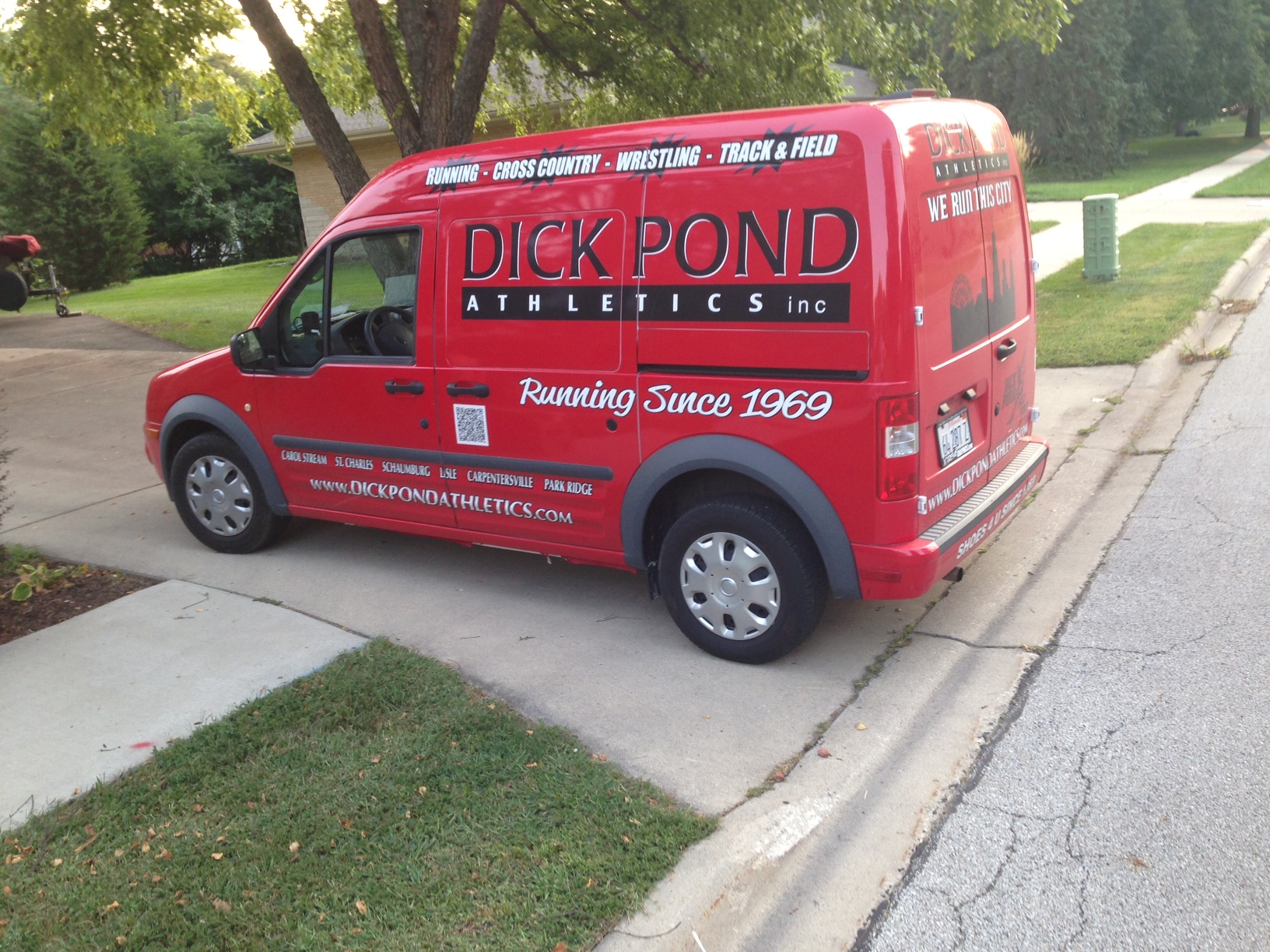
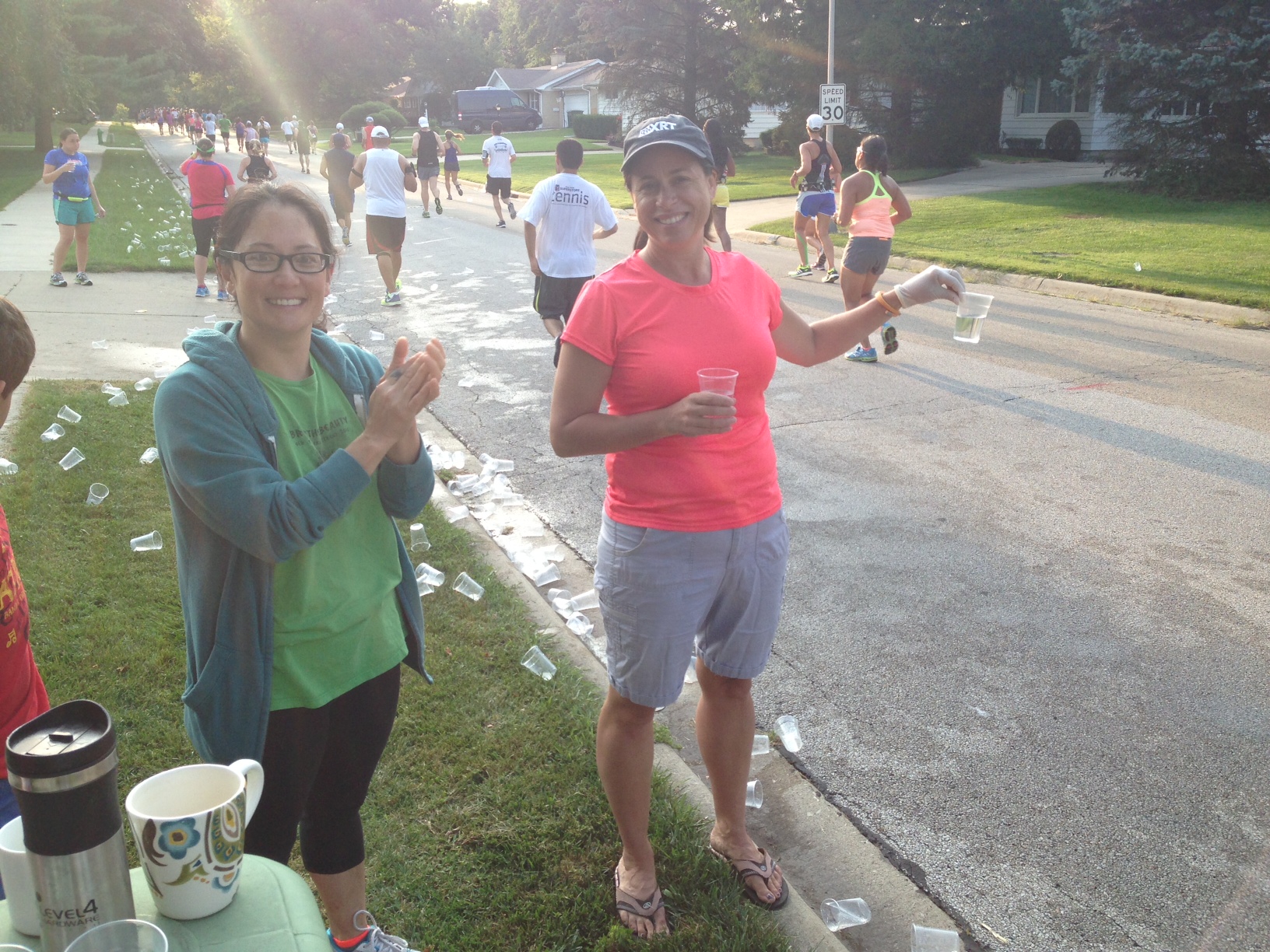
At a water station the truck from Dick Pond Athletics was parked in a neighborhood driveway filled with giant plastic jugs of water for the aid station. As runners streamed past at the 4-mile mark, volunteers called out “Pond Water! Get your Pond Water!”

One runner stopped in his tracks to ask: “Pond Water? Oh, I get it!” And kept running.

photo (8)The inside joke was one of many fun interchanges between competitors and volunteers. At the same aid station one runner carried his water cup with him looking for a trash can. “I can’t bring myself to litter!” he said, staring down at the array of emptied cups laying on the grass and street. “We’ll pick it up!” a volunteer called after him.

And so it goes. Wherever there’s a race to photobe run, be it marathon, half marathon, 10K, 5K or any type of triathlon or duathlon, volunteers are what make it happen.

There would be no races without the volunteers. Or the fees would be so high that participation would be impossible. Already the races you enjoy pay fair but sometimes expensive fees for police and photo (7) emergency services. Paying people to stand on corners directing traffic at every corner would be prohibitive.

Every last volunteer counts

So the job of a volunteer is crucial right down to the last person on the course. You will photo (9)see people of all ages volunteers. Kids handing out water. Seniors holding up flags for criterium racing so that cyclists don’t veer off course. The list goes on.

It isn’t all pretty when you volunteer for a race. Sometimes you find out the ugly secrets of course management. That it takes a little bravado to stop drivers who think they deserve the privilege of getting through or onto the race course. “Please wait,” you tell them. But the driver grumbles and eeks up to your barrier or sticks a fender into the intersection. People can be jerks.

Logistics fail. Sometimes water stations run out of water. Timing clocks falter. Splits get forgotten. Runners veer off course or worse yet, cheat and veer back on. We’re talking about the human condition at its extremes.

Giving thanks for volunteers

photo (6)Yet the rewards of volunteering can be great. Many runners audibly thank volunteers for working. Others appreciate the shouted encouragement or wave and smile when you yell, “Looking good!”

They know you’re lying, but they don’t care. It’s one human being helping another.

That’s what volunteering to work a race is all about. So whether you run or ride or swim, or all three, don’t forget to volunteer each year. The 4th Estate of competition is people who give back to their sports. You get a lot more from the experience than the time you put in.

WeRunandRideLogo

Posted in We Run and Ride Every Day | Tagged , , , , , , , , , , , , , , , , | Leave a comment

You never dream it could happen to you

By Christopher Cudworth

Our dreams are hard to decipher at times.

Our dreams are hard to decipher at times.

It doesn’t always pay to try to relate dreams to others. It seems you can never fully capture the weirdness and reality of a dream when you describe it to someone else in conversation.

Yet sometimes the impact of our dreams is so powerful we feel the need to relate the experience in waking life. “I just remembered,” you tell a friend, “I had this weird dream last night…” And then you describe it. And your friend sits there looking at you like you have a third eye, until you realize just how nonsensical the dream really sounds and you go, “Oh, never mind. It was too weird anyway.”

Biblical dreams

Ancient Kings oft asked the meaning of dreams.

Ancient Kings oft asked the meaning of dreams.

Yet throughout history dreams have formed the plotline for many a major decision in kingdoms and politics. For example, the Bible relates instances where kings struggled to interpret their own dreams, only to find out their dreams were a portent of very bad things to come. In the book of Daniel a great king is vexed by a strange dream…

2 In the second year of his reign, Nebuchadnezzar had dreams; his mind was troubled and he could not sleep. 2 So the king summoned the magicians, enchanters, sorcerers and astrologers[a] to tell him what he had dreamed. When they came in and stood before the king, 3 he said to them, “I have had a dream that troubles me and I want to know what it means.[b]”

As it turns out, the king found out through his dream that things were not going to turn out that well for him. So perhaps in some respect dreams are sometimes better left alone, particularly if they predict your own end.

The Devil’s work?

Or not? The wife of Pilate had a dream too, and she tried without success to warn her husband to leave that Jewish guy alone. The Bible doesn’t tell us what happens to Pilate after he washes his hands and seals the fate of Jesus––to quote that Stones song––Sympathy for the Devil––but we do know that many people would love to tell rulers and bureaucrats to go to hell. So perhaps his fate is implied.

Run away, run away!

Our dreams often fix us in one place, unable to run away.

Our dreams often fix us in one place, unable to run away.

It seems we’ve all had those dreams where we’re trying to run away from something awful only to find ourselves mired in some sort of heavy gravity, unable to move, much less run. If we’re lucky, we wake up before we get eaten or die. But isn’t it frustrating when you can’t run away from your problems? Maybe that’s why some of us run and ride in the first place. To escape the negative gravity of our dreams.

Crashing into dreamland

Last night I had a dream in which I was riding my bike and crashed––out of nowhere. It happened fast, and when I woke up I had nothing but but a bony stub for a left arm. The stump wasn’t bloody or mangled. In fact the bone sticking out was thick and white, not anatomically correct at all.

A great sadness at this event came over me and I immediately tried hard to figure out what it would mean to not have a hand or a left arm. What would it mean to my career and daily functions?

Processing dreams

As a writer it hurt me to think that I would not be able to type any more. What would my career be like now? I said out loud to someone in the dream that at least I still had my right arm.

My brain might have been processing many things through this dream. The fact that I was cycling through a childhood neighborhood on my current carbon fiber bike might represent some twist of the subconscious mind. But the crash itself did not seem to be the purpose of the dream. It was dealing with the difficulty of having no arm that was the “theme” of the dream.

That made me curious what it all meant. So I decided to search the web and look up what dreams about losing an arm might mean. What I found was certainly interesting about losing an..

Arm

Wounded in a dream.

Wounded in a dream.

To see your arms as the emphasis in your dream indicates your nurturance side and your ability to reach out and care for people. Alternatively, it may represent the struggles and challenges in your life. Consider the pun “arm yourself” which implies that you need to protect yourself, be more aggressive and take a firmer stance on things or  the pun “up in arms”, representing anger and your readiness to argue.

To dream that your arm has been injured, signifies your inability to care for yourself or your helplessness in reaching out to others. You may have been feeling limited and restricted in terms of your freedom or activities.  The right arm signifies your outgoing nature and is associated with masculine energy, while your left arm signifies your supportive or nurturing nature and is associated with feminine qualities. Losing either arm may suggest that you are failing to recognize its respective characteristics. 

To dream that you rip someone else’s arms out, indicates that you are extremely upset with something that this person has done, but you have not been able to fully express your anger.  Because you tend to keep your emotions inside, it is finding expression in your dreams in a violent way. 

Left Over 

Okay, so I know now why I was dreaming about losing an arm, especially a left arm, which according to dream translation has much to do with our nurturing side.

My children and I continue to wrestle with the loss of their mother to cancer last March. I’ve recently been feeling at a loss as to how to guide them in how to feel about now and the future. And so I dream… “To dream that your arm has been injured, signifies your inability to care for yourself or your helplessness in reaching out to others.”

Riding through the subconscious

The remaining question is how the whole cycling accident enters into the picture. Why was I riding my bike in this dream when I lost my arm and gained a bony stump?

Well, the answer there may not be so mysterious.

Just last September I hit the ditch across from the American Player's Theater.

Just last September I hit the ditch across from the American Player’s Theater.

In one week I’m returning to participate in a Century ride where last year during Labor Day weekend I experienced bike wobble at 40 mph and crashed into a ditch in front of the American Player’s Theater near Spring Green Wisconsin.

My whole world turned very weird for 10 seconds, like a bad dream you might say. I made it to the grassy ditch and after that the bike flipped out from under me and I went sliding under a cable (thank God) that might otherwise have decapitated me. Lucky fellow.

Busted dreams

I wound up with a busted left collarbone and a terrifically strained right hamstring. It took a few weeks to recover, but I was back on the bike before October was over.

Smart or not, that’s how we cyclists and runners roll. Active rehabilitation. A close friend has also been going through active rehab necessitated by a sliding crash of her tri-bike on a curved and downhill section of a bike path through the woods.

Now you know why us roadies like to avoid the bike paths. All it takes is some slick vegetation and you’re out of commission. Or glass. Or a hyper dog. The hazards are many. Not that we’re all that much safer out on the bike roads or the urban streets. Cyclists can get busted up a thousand ways.

Good grief and dream on

You never dream it will happen to you. Except, sometimes you do dream it will happen to you. And then you’re left to figure out what it all means. In my case the meaning is clear. The ride through grief for my children and I is not through. It is a long journey, sometimes never complete. But I’d give my left arm to help them.

WeRunandRideLogo

Posted in We Run and Ride Every Day | Tagged , , , , , , , , , , , , , , , , , | Leave a comment

Training hard when you run and ride? Not in comparison to a crappy summer job.

By Monte Wehrkamp in response to a shared post by Christopher Cudworth
Today’s article begins with an hilarious post from a blogger at the site: It’sAlwaysSunnyRunning.com. I read her posts regularly and this one was particularly funny and true, about how tired you can get from training. So tired you don’t want to do anything else in life.
So I shared the post with my blog-o-matic buddy Monte Wehrkamp, with whom I vet so many ideas, and his response was so entertaining it deserves (again, he’s done this repeatedly over the last year) to be shared so you can enjoy it to.
After you read the AlwaysSunny piece, http://sunnyrunning.com/2013/08/20/signs-you-are-really-fucking-tired-from-training/ you can better understand his response…
The tarsnake of sports training is that you're working hard for basically no reason other than to make yourself feel good. Go figure.

The tarsnake of sports training is that you’re working hard for basically no reason other than to make yourself feel good. Go figure.

Those of us who were never wealthy enough to avoid hard labor and crappy jobs over the summer months, or even during actual college, got to enjoy such adventures as working in paint factories, driving and loading trucks and serving as janitors in the sweaty backrooms of office buildings.

By contrast, the tarsnake of sports training is that you’re working hard for basically no reason other than to make yourself feel good. Go figure.
But remember, it all builds character and makes you a better person in the long run. Yeah, right.
SPORTS VERSUS WORK
I can honestly say that I’ve never trained that hard for sports. Ever.
I have felt all those things from the first week on the job working construction 12 hours a day. You go to school all year, come home, call to see when you can start, they say, “Tomorrow! 5:30 sharp.” So you find your workboots, old jeans, torn up t-shirt and hardhat, pack a lunch, fill your Gott thermos, and try to sleep. That first day, you sledge hammer out a 20 foot section of sidewalk, load it by hand into the flatbed, dump the load, load a ground whacker into the truck, drive back, level the base, compact it, relevel, then drive to the quarry, load up a ton of gravel, drive back, dump it, shovel it into the sidewalk base and relevel and compact it. Whew. Lunch. Now time to go to the yard and pick up concrete forms and stakes. Shit. Forgot the leveling strings. And the level. Back. String off the sidewalk, drive the stakes, nail up the forms. Call in the foreman who checks your work. You get a drink of water and rest in the shade, crotch raw from sweat. He barks some changes, which you do as the cement truck is called in. Then you and the boss shovel five tons of mud into the sidewalk and level and dress as fast as you can. Whew. First day done.
Go home. Lie on the floor in the cool basement. Fall asleep in sweaty, grimy clothes, boots still on. Wake up, it’s almost light. Go upstairs, can’t hardly move, so sore and sunburned. Make lunch. Fill thermos. Drive to the yard. Repeat.
By week two, the soreness starts to go away, hands toughen, skin starts to brown (can’t use sunscreen, gets too covered in grime). By the end of each college summer, I was brown as an Indian, tough as nails, lean and ready for school to start so I could rest.
Running Riding and Building Shit. Swimming don’t count as it ain’t a sport but merely a means of preventing drowning.
TAKING A DUMP, TRUCK-wise
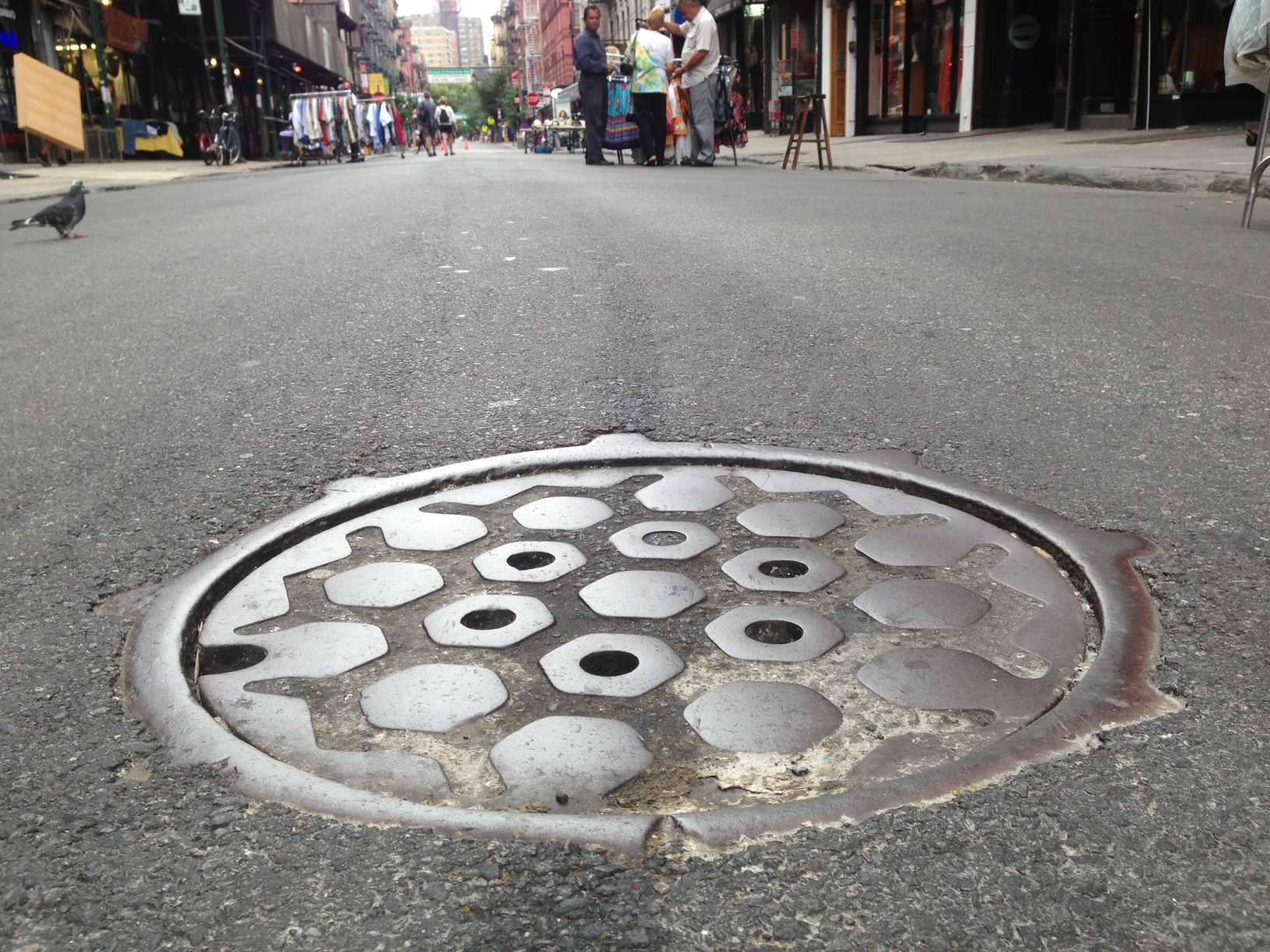
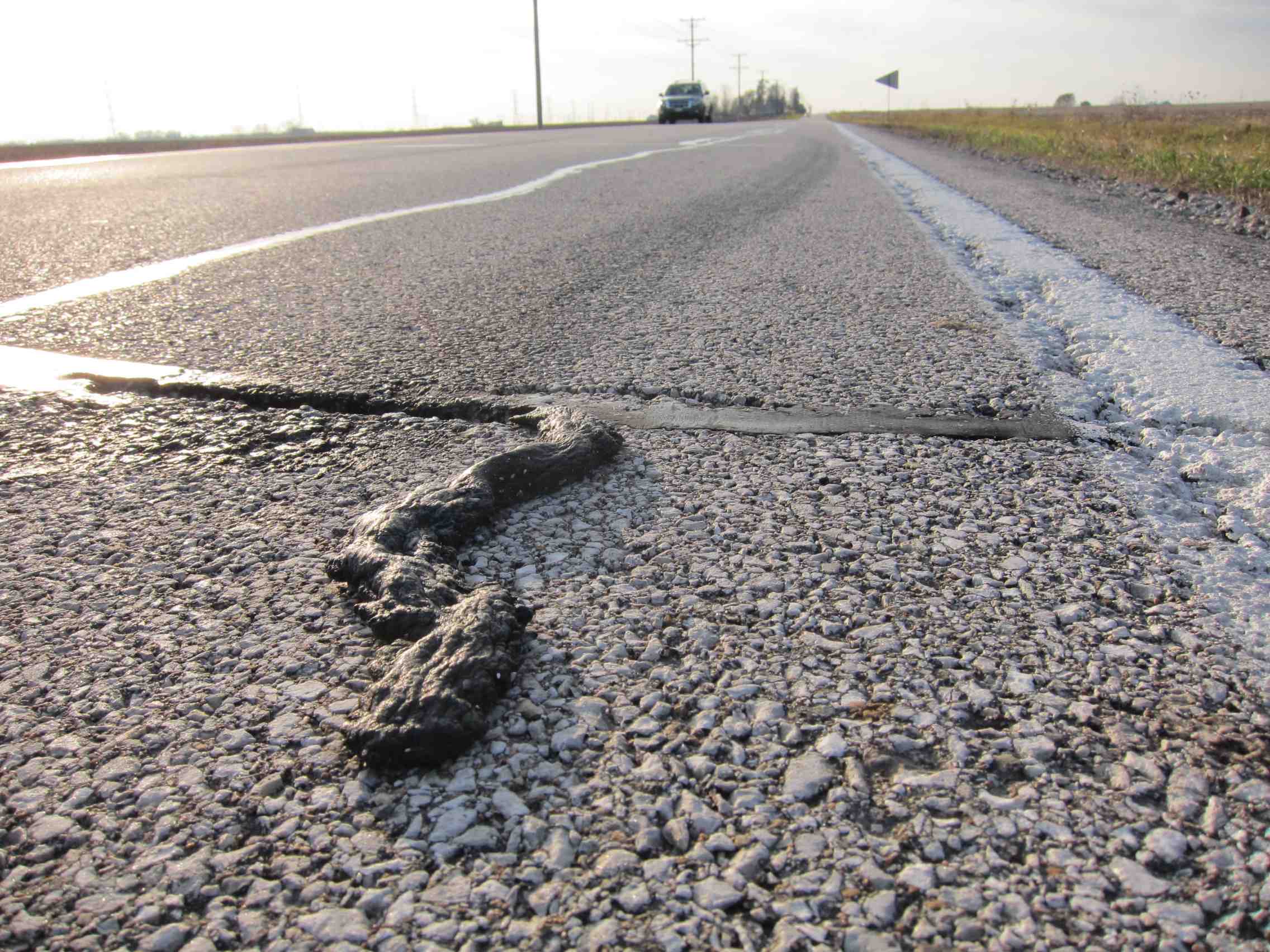
Be it tarsnakes, clay or quicksand, you never know what might trip you up on a run.

Be it tarsnakes, clay or quicksand, you never know what might trip you up on a run.

12 hours a day in a dump truck was bad, too. Had to drive through the highway scales every time. Hour up to the plant, hour back to town. Rapid City to Spearfish and back. At the mix plant, you pull under a giant chute – a funnel — filled with fresh asphalt, about 400 degrees. It’s summer, already 90+ so when you climb up the stairs to the chute, the air by your head is easily 200 F. You pull the chain. One one-thousand. Two-one thousand. Three one-thousand. Stop! Climb down, pull ahead and center your dump box. Climb up. One, two, three, stop! Climb down, pull ahead another four feet, climb up, repeat. Then you pull out of the line as there are other trucks behind you waiting to fill up. Climb up into your dump bed as the company you work for can’t afford automatic rolling and unfurling tarps. You have to do it manually. So you swing a leg over the side, set your foot in the hot, oily, shifting mess, get your balance, then walk to the front of the bed, quickly unrolling the tarp as you walk backwards. Whew. Do it in a minute or less or the heat will burn your feet through your boots, and never, ever wear steel toed boots. Steel heats red hot and will burn you badly. And don’t ever, ever fall. You will be covered in asphalt hundreds of degrees hot, and it will stick to you. Burning, as you pick it off. You will be in the ER, should that ever happen.

Jump down, run around the perimeter of the truck, pulling down bungies to secure the tarp. Hop in the cab. The guys are waiting.
The key is be smooth. Don’t rush. Do everything perfect, and do it once. Get into a flow. Don’t over fill, or this…
You get halfway back to town, tooling down I 90 with no AC, no power steering (even though the truck plus load is about 28 tons), no radio. Time to pull into the state weigh station and get in line with all the semis. It’s important now that you didn’t overload your truck. And didn’t overload one section of the truck. For instance, have too much weight over your front wheels, versus your drivers (rear eight wheels). A couple times, I had too much weight forward. The red light goes off. The speaker near your head says: Two tons too heavy in front. Pull around.
Hot streets

Hot streets. Dump trucks. Summer jobs. It’s all harsh.

You pull around. You un-bungie the dump bed. Climb in, roll up the tarp. While you’re still standing in the devil’s shit, you grab your shovel and you shovel, as fast as you can, as your feet and legs are starting to burn. Gotta move two tons of asphalt from the front of the truck to the back. There’s a technique of shoveling where you flick and drop the shovel head in one move. The entire 10 lb shovelful will leave as one unit, like a ball, and land right where you want it. You don’t want it spread all over. So hundred, two hundred, three hundred scoops. Get down and cool your feet. Back up, keep counting shovels, calculating two tons. Roll and bungie the tarp. Get back in line with the trucks, pull on the scales, and hope you spread your load right, or you’ll shovel again. Tick tock. Tick tock. The boss is waiting. The crew is waiting. Time is money.

Then there was the time, full throttle (it was always gas pedal mashed on the highway) when the front left tire blew. No power steering, remember. 70 mph x 28 tons of force mashing down on a wheel rim, trying to tear the wheel from my hands and flip the truck into the median. I held on, it lifted me out of the seat. Slowly eased it over to the side of the road. Got out, sat down shaking in the shadow of the truck as cars whipped by on the interstate. Starting shaking. Ice cold. Threw up.
Trucker stopped, picked me up, gave me a ride back to a truck stop (no cell phones back then). Pretty impressive piece of driving, he said. I nodded. Good thing for power steering, huh, he said.
Doesn’t have it, I managed to say.
He looked at me sideways. Shook his head. Fuck me.
WeRunandRideLogo
Posted in Mechanical Genius, Tarsnakes, We Run and Ride Every Day | Tagged , , , , , , , , , , , , , , , , , , | Leave a comment

Nighthawks

Nighthawks

by Christopher Cudworth

common_nighthawk_kimtaylorThere really is a bird called a nighthawk. They are in the same family of birds as whip-poor-wills, marked with exceptionally cryptic coloration so that when they sit still on a branch or on the ground, you can hardly see them.

But when nighthawks fly overhead, you can hardly miss them. On summer evenings before dusk they appear over the treetops, flapping with a distinctively rapid beat of the wings, and calling loudly with a hoarse “peeennt.”

In our area of Illinois nighthawks were once common on summer nights. While out running through the neighborhoods near home you’d hear them calling well into the night, flying through the yellow glow of streetlights where moths and insects fluttered about.

As the nighthawk goes, so go I

My high school and college runs are almost inseparably linked to the sounds of nighthawks. It would be hot all day, even oppressively so, and running at night was the only thing that made sense. Coming home from some crummy summer job meant collapsing on the couch for an hour or two and avoiding dinner so that you could get out and run 6-8 miles, building a summer base for the fall cross country or road racing season. Always the nighthawks were there, buzzing amicably as they flew.

But no more. There are hardly any nighthawks left anymore in Illinois or other parts of the country. They’ve disappeared.

Flying away

Changes in industrial and office building construction may be responsible for the loss of breeding nighthawk populations in Illinois. Formerly the flat roofs of factories were coated with tar and covered with pebbles. That was a perfect environment for nighthawks to breed. No one bothered them up there, and their eggs were well camouflaged against the pebbles. It may be that new construction techniques, especially roofs no longer covered with gravel, are changing the breeding dynamics of nighthawks for the worse.

Or, there may be something even worse taking place. A National Wildlife Federation article published in 2009 notes that insect-eating birds of many types, but especially those that fly through the air to feed, are on a sharp decline in population terms.

It can’t be said that scientists know exactly why. Birds like swallows, swifts, martins and flycatchers are also showing population declines.

All these species that rely on flying insects for food are disappearing. Some scientists are studying whether climate change could be causing drops in critical food supplies. Breeding cycles of insects are closely timed with temperature changes and annual climate cycles. If something gets mixed up in those climate signals, bugs may not be successful breeders, and that impacts the birds.

Birds are what they eat

We don’t even have that accurate a view of what these birds eat on a daily basis. For example, it was long proposed that purple martins eat mosquitoes. Yet it turns out that a significant portion of their diet comes from much larger insects, especially big, fat dragonflies. But if communities spray local wetlands for mosquitoes, there may be enough impact on the mosquitoes that birds do eat to either cause interruption in feeding patterns or pass along the insecticides through the food chain.

It has been irrevocably demonstrated in species like bald eagles and peregrine falcons that birds at the top of the food chain can accumulate radical levels of deadly insecticides in their bodies. That can ruin the solidity of eggshells and cause nesting failure. With enough concentration, insecticides can easily kill a bird outright, as was the case when flocks of red-winged blackbirds literally fell from the skies in recent years. Agricultural administrators admit the birds were poisoned on purpose.

Chemical romance

common-nighthawkSo the truth about nighthawks and why they are actually absent from the skies is not well known. Our lawns and crops are laced with herbicides and pesticides routinely distributed, often without clear regulation on safe doses for the environment. Those chemicals leach into the ground and indiscriminately kill so-called “good insects” as well as bad. Our obsession with creating a so-called prettier environment, devoid of weeds and biting insects, may be killing us all. That’s a tarsnake of environmental irony. We love recreating our world in our own image, do we not? Some people thinks the Bible itself tells us to do so. Call some place Paradise, kiss it goodbye…

Hands-on experience

For years my wife “ranched” monarch butterflies, plucking tiny eggs off the leaves of milkweeds in our yard to give them a head start munching on leaves inside an aquarium. The caterpillars would eat their way into larval fatness and then form their chrysalis and hatch 10-12 days later.

Most summers there would be monarchs fluttering about our garden, but in the last 5 years the population that migrated through our area entirely disappeared. I have seen exactly one monarch on our milkweed this summer. The tattered, pale insect fluttered about but did not engage in any egg laying. The monarchs are gone.

“Trust US”

Giant chemical companies keep insisting their products are safe for the environment and in some cases, even good for our health.

The absence of monarchs from the garden and nighthawks from the skies may be telling an entirely different story. We know empirically that insecticides kill insects. That’s why they were designed. And by proxy, insecticides also can kill or harm other species of animals, including human beings. The incidence of cancer and autism and many other seemingly silent but deadly effects on human beings continues to grow. Do we have the will to ask the hard questions and demand answers from companies like Monsanto and others who appear to be willing and determined to put profit before human health at any cost?

Sometimes even the empirical evidence we have is not enough to bring about change. Too many people know too little about the environment to understand what it means to ‘lose’ a species like nighthawks from the skies. And then there are the legal protective forces that lawyer up whenever the credibility of their brand and reputation is challenged. It will not surprise me one bit to hear from a Monsanto lawyer about this article. It’s happened before. They’re like a giant fungus, with feelers everywhere. So how do we protect ourselves from them? That is the anxiety of the modern age. And every age. 

We’re all nighthawks

hopper.nighthawksWe all know the tenuousness of life can be a strain for us all. Take, for example, the painting “Nighthawks” by Edward Hopper. The wan light of the diner casts a harsh pall on the people inside. Life itself seems washed out. The diners have so little warmth between them. You can imagine the lack of conversation, or hushed tones. The clink of dishes and a patent sigh from the fellow finishing his coffee before he gets up to walk outside.

And though this painting is set in a different time, before the era when runners and cyclists occupied the streets in numbers significant enough to recognize, one can still imagine that short shock of disturbance when one of the patrons heads out the door and nearly gets knocked down by a runner coursing down the sidewalk on a near-midnight run.

Above the city a plaintive call can be heard. The sound of a lone nighthawk going about its business of eating on the fly. We are all nighthawks, it seems. On the run from things we cannot see, can hardly know, and wondering what it all means in the end.

WeRunandRideLogo

Posted in Tarsnakes, We Run and Ride Every Day | Tagged , , , , , , , , , , , , , , , , , , , , , , , , , , | 5 Comments

50 Fun and Insightful Things I Learned While Running and Riding in New York City

By Christopher Cudworth

photo (1)#50. Citi Bikes are not fast, but they are fun.

#49. Renting a Citi Bike costs $9.00 for 24 hours, but you can buy a season pass for $70 and save a bunch of money.

#48. There are more Schwinn bikes per city acre in New York City than any other place I’ve ever seen the country. Or so it seems.

#47. Bike Fossils are common on the streets of New York, which says that some people give up, move out and leave their frames and bent wheels behind.

#46. The woman with the unidentified accent who happily shook her fists and said “Go, Go!” at the end of my run looked pleased that I smiled and called back, “Yeah baby!”

#45. The man sitting on a step on Delancey Street who spoke what sounded like Polish and pointed at me with a big smile on his face because I looked him the eye said something with an inflection that seemed like it meant, “I think you’re nuts, but if you’re happy so am I.”

#44. Wall Street actually has the type of stones that in Europe would be called pave and would be fun to cycle across if a race were held in that district. Instead what I saw were barriers all around the main buildings to keep people from driving car bombs into the front. What is wrong with this picture?

#43. Running and biking path up the East River is really great from the Williamsburg Bridge to the United Nations building until you take a wrong fork and wind up in a fenced-in cul de sac because it’s rather like you’ve just been put in prison for thinking about getting near the place.

#42. Walking is as good as running in New York, and you pretty much need to do a lot of it to seen anything.

#41. Seeing Jersey Boys was a good brain workout but the actors and actresses must be in pretty damn good shape for that production.

#40. Prayers go out to the actor (Daniel Curry) whose leg got crushed by an elevator during the production of Spider Man, because that snakebit play can’t seem to buy a break but that gives whole new meaning to the old saying “break a leg.”

#39. Women runners own New York City. Especially New York City Running Mama.

#38. Women runners now have fashions that fit their needs, but the cool part is that fashion seems heightened as a rule in NYC.

#37. Passing cyclists while running over New York City’s bridges did not make me feel special or better than anyone. Instead it made you appreciate that people have different goals, needs and brains, and that’s a good thing.

photo (5)#36. It may be true that only the strong survive in New York City, but that means there are more than 8 million strong people in the metropolis. Some of them survive more colorfully than others, that’s all.

#35. Bikes are neither an indication of wealth, a sign or poverty, a commentary on social position or fitness, nor a commodity or necessity in NYC. They just are.

#34. I admit it now. I never “got” what the New York City Marathon was about until I ran under the Brooklyn Bridge after a glimpse of the Verrazano Bridge moments before and went, “Aha. Now I see why it’s so special.” It actually GOES somewhere.

#33. Running in Central Park is not what I expected at all; flat and uninteresting. The pictures on TV never really capture its topography, which makes you realize they must have flattened the rest of Manhattan and it’s rocky terrain

#32. Runners in New York, as a general rule, do not seem to feel the need to  “show off” like they do in other cities by jogging on corners and making a spectacle of themselves.

#31. I literally almost got killed not paying attention on a running trail because it was early in the morning and I shifted left to get onto a path and a black SUV tearing through the parking lot almost ran me down. And that’s New York too.

#30. It’s a tie between the significance of graffiti and tattoos.

#29. A sunrise in New York is free, until you do the accounting of living there.

Dining at Walter's for brunch.

Dining at Walter’s for brunch.

$28. Prices for lunch and dinner were surprisingly reasonable, and the food was excellent everywhere we went. So you’ve got to work out to live and eat in NYC or you’ll get fat.

#27. Living on the 5th floor of a walkup apartment, as my son does, is a pretty damn good way to keep fit.

#26. The Empire State Building is still one of the coolest buildings in the world, and even thought I did not run far enough to actually touch it, it touched me.

#25. New York is a city of relationships, both personal and communal. People were great everywhere I went, and coming home on a Saturday night there were many couples with their heads on each other’s shoulders, buying time in each other’s hearts.

photo (10)#24. The New York City Subway may be the best tool for running diversity ever invented, because you can guiltlessly zip from borough to borough for new running routes and not drive a car around to get there. The air conditioning was working on every train I rode.

#23. I saw at least 50 pretty superb looking cyclists in full racing kits but wondered what routes they ride to get consistent, high-paced mileage without stopping at lights all the time. Remains to be learned. Meanwhile, there were plenty of stylish people riding normal bikes who seemed to be having just as much fun.

#22. Hipsters on single speed bikes were not rare, but not as common as I thought they’d be.

#21. The cyclist I saw delivering Dominos Pizza in a big carrying bag really looked uncomfortable. Riding through vehicle traffic with a big pizza box on your lap is a formula for disaster of one kind or another. A pepperoni slick was not out of the question.

photo (3)#20. Owning a bike in New York apparently does come with the risk of it being stolen. So crappy bikes are popular. Sturdy ones too.

#19. There weren’t as many potholes as I thought there would be. But when I tried to buy a Yankees cap, the smallest size in all the stores was 7 3/4. Do New Yorkers have naturally big heads or something?

#18. Walking down 5th Avenue brought back all kinds of memories of the first 5th Avenue mile when Sidney Maree ran a 3:47 and beat all those world class milers back in 1981, or whatever.

#17. I want to get in shape again and run the 5th Avenue Mile.

#16. The 9/11 Memorial is profoundly, exceptionally conceived and a must-see when you visit New York. Give some money and walk through the lines, it’s worth it. You’ll never photo (2)run off at the mouth about that event in history again.

#15. Someday I’d like to bike a reported loop of 60 miles around the perimeter of New York City. That would feel like you’ve really done something special.

#14. I saw no New York Road Runner’s Club shirts on anyone. Anywhere. Why is that?

#13. It must be pretty freaky to come straight from Kenya and run or win a race in New York City. To quote Stevie Wonder: ”Just like I pictured it. Skyscrapers, and everything…”

#12. Flying in over the south side of the city where the estuaries were at low tide, the birder and nature lover in me had to admit, “This city does not belong here. Nature wants it back.” Which makes you wonder what will happen when global warming hits for real. Sandy proved the point. The subways were flooded.

#11. I could never race up the Empire State Building or any other “race” up all those steps. After a few stories it would remind me too much of being a janitor during college. Then I’d quit, find a mop and lie down with my head on it.

#10. If David Letterman or any other famous person goes for a run around NYC, do people leave them the hell alone?

2010-09-30-JOHNLENNONNYC#9. John Lennon once lived in New York City and reportedly loved it, because people knew enough to give him space for the most part. But the idiot who killed Lennon should never know peace. He doesn’t deserve it. I want to someday run past the place where Lennon lived and Imagine him walking the streets.

#8. My son picked out clothes for me at a store called TOPMAN where I selected shoes that were designed strictly for appearance, not for running. And that’s the point sometimes, in New York City. Fashion statements.

#7. I would like to be a peregrine falcon in New York City, because there’s plenty of meaty pigeons to be eaten. And flying between the buildings would feel pretty cool.

#6. One can’t help wonder who you’d meet if you lived in New York City, and sat in a Starbucks or local coffee house writing your heart out when in walks a person you might photo (13)want to meet. Or it could happen on the street. On the run. On a bike. But something similar happened to me recently in a different way. So I don’t need to imagine, entirely. But I do wish it for you. Or anyone you know. May that silhouette coming in the door turn into something real for you. Or a friend. Love in New York City and beyond.

#5. I love that Sonny Rollins the saxophonist taught himself how to play while rehearsing on the Williamsburg bridge. Happened to read that in Men’s Journal while I was in New York.

#4. Ideally, I think you’d have about 4 bikes to ride around New York. A road bike for speed. A mountain bike for trails. A beater bike for dining and drinking. A single speed for hipster cred, preferably with orange wheels and a green frame.

#3. If there’s anything I’ve forgotten about running or riding in New York City, I apologize. But I reason that I actually don’t know much about the city in 3 days. Of course! And you really do forget more than you recall on such trips. Which is why I often get down to street level to make contact with the world…

photo (7)#2. I love the street level view of any city in the world, but street level photos in New York City seem to mean a little more. Which is why I get down low and try to run across the right view.

#1. All my expectations of New York City were debunked, and all my expectations of New York City were fulfilled. That’s why you go to New York City. To have your expectations shifted. On the run and on the ride. And all points in between.

WeRunandRideLogo

Posted in We Run and Ride Every Day | Tagged , , , , , , , , , , , , , , , , , , , , , , , , | Leave a comment

Forgiveness on the streets of New York City

Can we have some applause here?

An occasional smile can be forgiven in NYC

By Christopher Cudworth

The last time I was in New York City was at the tender age of 21, but the purpose was not so tender.

My job was to lug 140 lbs. of audio visual equipment up from Philadelphia by train to set up for a presentation at the Chemical Bank building to be given that day by the late Robert Van Kampen, the brains and drive behind the Van Kampen Investments firm he later sold for about $400M to Xerox. Mr. Van Kampen passed away years ago from a condition that hardens the muscles in your body, including your heart, until you die. Which always struck me as a rather ironic event to happen to a devout Christian like Mr. Van Kampen.

But back in 1981 Mr. Van Kampen was at the height of his creative financial powers, and while I am not entirely sure what the mission was that day at Chemical Bank in  New York, I believe it was successful. Mr. Van Kampen was successful at many things in life.

I thought about Mr. Van Kampen while strolling past the Manhattan offices of BNY Mellon, where my son Evan Cudworth pointed out that the firm now manages something like 43 trillion dollars in assets. Mind boggling wealth is just part of the everyday scene in NYC. 

Then my son shared that the middle class in New York City begins at an income of about $274,000. Facts like that can make you wonder what you’re doing there at all. But they should not slow you down. We all have a right to experience what New York City has to offer.  

OWS and 9/11

My son and I also walked by the stone park where Occupy Wall Street set up shop a few years back to protest the actions of bankers and the effects of their fiscal dalliances on the rest of us. It seems that the banksters felt free to run up a few debts and pass along the pain to the taxpayers to bail them out. OWS had problems with that and other exploitative issues, if you recall. But protest is one of the most difficult things in the world to sustain, and the plaza was now empty with the exception of a few folks with cardboard signs with messages scrawled with Sharpie markers. Whether OWS had an impact we will never really know.

But what we do know is that another form of protestor objecting to the actions of financial and political forces in the United States turned two giant skyscrapers into another form of plaza just a few blocks away. Which is why the 9/11 Memorial is now necessary to commemorate the day that Osama bin Laden ordered his minions to fly airplanes into the World Trade Center in the financial district of Manhattan.

A perfect tribute to something lost

The 9/11 memorial is a perfection of sorts. The water flowing into an abyss that follows the footprint of the former World Trade Center is a living testament to the lives that were taken that day. As the water in the lower pool drops down the granite walls into a space where you cannot see the bottom, your heart sinks a little with it. Yet the constant flow of falling water on all sides of the two square chasms soothes your soul.

The memorial reminds one not only of the 9/11 terrorist attacks, but of the personal, sinking feeling we can all get in the aftermath of tragedy, and from everyday life. And in that way, the 9/11 memorial is as touching and profound as the Washington, D.C. Vietnam Memorial with its black face cut from the landscape. It is understated, and all the more powerful as a result.

A single rose says so much.

A single rose says so much.

Of course some people are more blessed than others to avoid that black granite feeling and emotions pouring down into the pit of our souls. But there is one serious truth at work in the 9/11 Memorial, because concerns over conspiracy theories are at least temporarily washed away in those moments. All those lives were sucked out of the soul of New York City, which in truth is a really grand and forgiving place if you try at all to bridge the gap between its massive infrastructure to the humanity moving through those spaces.

As we prepared to leave, there was one white rose placed in the name of one of the victims of 9/11. The simple flower calls to mind the need to investigate the pain caused by the event, but also the need to move on. If facts ever do emerge that point to any truth of conspiracy, then our whole nation must be held to account. But we shall see what unfurls, however innocently or not.

Other Messages From New York

Forgive the negative people

Forgive the negative people

The next morning while running across the Williamsburg bridge there was a small bit of graffiti scrawled on the running path. It said: “Forgive the negative people, they learned to (sic) many lies.”

Mixed Messages

“Okay,” I thought, while stopping on my morning run to regard the message, “that’s a whole cycle of thoughts packed into one bit of graffiti.”

Because what does it mean?

If you’re negative, then you’ve learned too many lies? What, the truth can’t do the same thing?

That’s seems to be the whole argument on the World Trade Center bombings. Have we actually gotten to the truth on those events or not? (or JFK, the NSA, or MLK…the list goes on…)

And if we do not have the truth, then what lies have we learned, and accepted? Then, what forgiveness do we need if that is indeed the case? Are we going along with a massive narrative that is not good for us?

Another bridge to truth

A little further up the bike path another writer stopped to express his thoughts. His words read:

And I bike.

And I bike.

“And I bike. Bike so I can understand cuz I understand better when I feel the wind, the sun, the moon. And I know there’s a destination waiting for me abut at this moment I have no destination. And I like it. I like the unknown future, cuz I can feel the present. Feel it with my whole body. So I bike and I observe. And only then. I don’t observ my brain by my heart. In the present. It comes to me, the clarity of the moment. 

So I keep biking to make sure I’m right. And then I don’t bike any more. I just am with my whole body and soul. I just know and I want to scream so everybody could hear me, or maybe I want to hear myself so I could always remember…So I bike. Love. (heart sign)”

It must have taken him some time to write all that down on the path, so he or she had obviously been thinking about it. But true profundity is hard. You have to begin somehow with the basics.

Raising Questions

We can try to grasp what the cyclist who wrote those words is saying, yet they seems to as many questions as answers given.

The first question a cyclist like me wants to ask it this: “Okay, what kind of bike do you like to ride?”

I know, it shouldn’t matter, yet bikes in New York City seem to answer a whole lot of questions, all on their own.

BikeevolutionThere is bike diversity, you see. You have people riding every conceivable type of bike. There are plenty of classy old Schwinns tooling around, of course. They are steel, sturdy and not as theft-worthy. Old bikes are a fine art form, although some seemed to have evolved into abstractions, and left to the elements and activities of New York, they become unridable, unwanted and cast off. Just like some of the people of New York. It’s a common phenomenon. The power of evolution, actually.

There are also slick Colnagos and Pinarellos, as well as people outfitted in full-on cycling kits and people in short shorts, low cut blouses

Running and riding over the Williamsburg bridge.

Running and riding over the Williamsburg bridge.

and tattoos. All ride essentially the same route up and over the Williamsburg bridge toward the New York City skyline and the Empire State Building, anchor of everything New York as far as I’m concerned, as it still juts up proudly from the beauty of Uptown Manhattan.

So you can analyze all you want, but in the end you need to let the bikes people choose to ride answer some questions for you.

The bikes people ride define not who they are, of course, but what they are doing, and why. In the moment. That’s all you can really ask, and expect to get an answer.There’s a lot of city here, you see, and 9 million people minding their own business.

But it is certainly not an unfriendly place as I once imagined. Not by a long stretch.

New York State of mind

Didn’t you imagine it too? That New Yorkers were somehow gruff, confrontational and off-putting. It’s all wrong.

Into this great flow my son has gone to grow. From a small town in Illinois he matriculated through the University of Chicago and now works and lives in New York City. Where he’s always wanted to go. And live.

The path to existence in New York City has had as big an arc as you can imagine for him. The last year for our family was like crossing a Williamsburg bridge built on steroids, with a massive hump of uphill climbing and a bit of difficulty putting the brakes on as things came to a conclusion with my wife’s passing from ovarian cancer.

Running downhill is not easy

You do know that running downhill can be just as difficult and painful as running uphill, do you not? If you don’t, then you haven’t done it with sufficient speed or need. But your thighs and knees can begin to ache, and you just want to lay down for a minute and gather yourself before continuing. And sometimes you do, and it’s hard to get back up and run knowing that the horrid downhill pain still awaits.

I’ve done that run a few times over the years. The Downhill Blues. It’s supposed to be easier, given you’re not climbing any more. But it’s not easier. It’s harder precisely because everyone else thinks it should be easier, made worse by the fact that others might go running past looking as if their actually enjoying themselves running down the back side of a bridge across a big river toward home, whatever you call that.

Citi and New York City Bikes

So my son and I took a ride over that bridge together here in New York City. We rented Citi Bikes which are built for Everyman and Everywoman. They’re neither fast or slow or heavy or light. They just are. With that kind of transportation under your butt, and in a pretty blue color, the road and path and streets and bridges all look inviting. You don’t need a helmet. You don’t need cycling shoes. It’s just you and your butt and legs moving along.

We crossed over into Williamsburg to visit Hipsterland. Had margaritas and tacos at Cafe de la Esquina and then rode home to a nap.

This was New York. Neither Sinatra or Bill Joel sang about any of this stuff, because it is ours, and ours alone. It’s a city that’s about minding your own business and having enough heart to mind someone else’s as well, when the occasion occurs. And that’s pretty often.

Colorful tarsnakes.

Colorful tarsnakes.

On the path across the Williamsburg Bridge I noticed something with subtle significance. It was a set of colorful tarsnakes laced across half the length of the entire bridge. And I thought: “That’s New York in a snippet. Color tarsnakes of existence.”

A Sense of Belonging

I’m glad he’s here. He’s a great son and a good man. I hope he continues to find friendship and love and himself. This big improvisational city is brimming with wealth and dreams, but you have to define that on your own terms. Some people write it on the bike path. Others write it on the sky.

We wrote our connections in the moments we looked into each other’s eyes. New York, New York.

Posted in Tarsnakes, We Run and Ride Every Day | Tagged , , , , , , , , | Leave a comment

Remembering to eat healthy, or not

By Christopher Cudworth

Those of us who run and ride or do triathlons know that eating healthy is important to good training and performance. That’s what we like to tell ourselves anyway.

So we make healthy eating choices whenever we can. And buy food that fuels our bodies and feeds our minds.

Then we leave the food we have so carefully chosen in the refrigerator for days, weeks, even months where it rots and stinks and festers until we numbly grow aware of its presence, stare at the box or bag that now registers in our present conscience and think, sometimes aloud, “Hey, that’s my food. I better throw it away.”

Remembering to eat healthy, or not

BlueberriesWe’ve all done it. Those blueberries in the company fridge? They look okay but in reality if you open the lid on the plastic box in which they’re encased and actually take a look, you will notice they are actually now petrified blueberries, suitable for display in a museum.

And oh, that chicken you bought separate to put on your over-lettuced salad? Well, it’s been there 5 weeks now. Suddenly you notice that the chicken, though long dead and cooked and tossed in a plastic tray, has begun to look like it is ready to move again. Zombie Chicken. Throw it away too.

Not so perfectly good food

tacoThat taco you bought from Chipotle last week? Wrapped in foil? Toss it, brothers and sisters.

And look at the grease seeping through the brown bag with the Buffalo Chicken Wrap lurking inside! Those grease spots are from the French fries you did not order but which once filled the entire bag. That’s what you get for ordering a simple sandwich from Frankie’s Deli where the Big Guys Who Work Construction all eat. They don’t care about healthy food. Not if those fries are any indication. But at least you threw them all away, or most of them. After all, you cannot entirely avoid French fries if they are within 15 feet of your mouth. You may have a marathon or Ironman to do in two days and have spent months preparing for the event. Who cares? These are French Fries we’re talking about!

FrenchfriesHealthy food hell is French Fries

When someone drops French fries in front of you there is no way to resist. The hell with all those 20-milers and painful “bricks” you’ve completed. These are French Fries we’re talking about people! It won’t hurt to eat just a couple. Or a few. Or a handful. And well, the bag’s almost empty, might as well finish it up.

Expiration dates

So we try for the most part to eat healthy. Then life and poor memory comes along to confuse your health-oriented ego. You forget things in the fridge. Eat things that are perhaps past their expiration date. But most “real” food doesn’t have printed expiration dates.You have to make your own judgments. Like bananas. You can tell when they’re shot by the spots. And apples. Wrinkles give them away. Peaches. Don’t touch ’em if they squish. Raspberries and strawberries? That fuzz is a big giveaway. Toss them in the trash.

Paying the price

Hopefully you never have to pay the ultimate price of trying to eat healthy when the food is too old. Food poisoning is no fun. I can personally attest to that. You may not trust me for any other advice on running, riding or triathlons, but you can trust me on one thing. Barfing 27 times in one night and losing 7 pounds when you only weighed 140lbs at the time on a six-foot frame is absolutely no fun.

Tossing your cookies is hard

Go easy on your conscience and accept that once in a while you’re going to forget to eat the food you put in the fridge for another day. That day has come and gone folks. Time to accept facts and move on, lest you eat something bad and have to move something else a little quicker than you like. As in the full trots. Heaving till you’re dry. Tossing your cookies.

But have you actually ever really tried to throw out a bag of cookies? It’s really hard. We have more bags of stale cookies in our cupboards than Fort Knox has gold. I’m pretty sure a couple of those bags have moved with me ever since I was a kid growing up in Eastern Pennsylvania 40 years ago. They didn’t print expiration dates back then. That’s how I know. But some night when I’m really hungry and should know better I’ll reach in that bag and pull out a Ginger Snap that should be in the Smithsonian and actually eat it, perhaps by dunking it in a glass of Ginger Ale to give it that little zingy taste of carbonation that goes so well with the ginger. Don’t knock it till you’ve tried it, and stale Ginger Snaps are great for dunking.

Pressure drop

You’re trying to eat healthy and it’s hard to remember that all on its own. Don’t put too much pressure on your brain by trying to remember if that crap in the fridge is yours or someone else’s to dispose. Give it two more days and give it the heave-ho, lest you heave and ho some other way that you would rather avoid.WeRunandRideLogo

Posted in Uncategorized | Tagged , , , , , , , , , , , , , , , , , | Leave a comment

Not going nowhere

By Christopher Cudworth

For SA

When the streets are empty going Nowhere is a beautiful thing.

When the streets are empty going Nowhere is a beautiful thing.

One simply must love a double negative. The phrase “I’m not going nowhere” for example, actually means the opposite of what we normally intend it to say.

Because if you’re not going nowhere, you’re going somewhere.

Which perfectly describes what all of us do when we run and ride. And swim. Eeks.

When you head out the door on your favorite 5-mile running loop, you’ve been there before. So you’re not going nowhere. You’re going somewhere.

But because you’re not changing destinations, you technically are going nowhere. From a Google Maps sort of perspective.

30,000 foot view

Zap yourself up to 30,000 feet like you can on Google and every run and ride we do is someplace rather nowhere. We cycle and run and swim around in little circles every day. Which is nowhere.

Making all his Nowhere plans for nobody.

Making all his Nowhere plans for nobody.

John Lennon had it right again when he sang: “He’s a real Nowhere Man, living in his Nowhere Land, making all his Nowhere plans for Nobody.”

Around and around. Getting nowhere it seems. But while Lennon’s song seems to be critical of Nowhere Man, there is a positive side to going Nowhere.

Because that somewhere is a salvation of sorts. Because those who do not run or ride or swim (eeeks) are not getting the same benefits in health and mental exercise. They’re the ones who are technically going nowhere.

Going Nowhere slowly. It’s all good.

I see people who walk every day and they deserve credit too. It’s not all about speed, but motion. Going nowhere constructively is a healthy thing for all of us.

Even if we take the same route every day, as some are wont to do, there is a fine art to our nowhere wanderings. Not going nowhere is such a beautiful thing that way.

Our little journeys give us release. From stress. From worry. From sitting home doing nothing and really getting nowhere. That’s the happy tarsnake of going to the trouble of working out. We may be going nowhere, but we’re getting somewhere.

Labels for Nowhere

Then there are goals beyond getting nowhere constructively. 5K. 10K. Half marathon. Marathon. Ultra Marathon. Sprint Tri. Olympic Tri. Half Marathon 70.3. Ironman. The list goes on and on.

Sue Astra (left) Nowhere Man Chris (center) and Lida Kuehn (right) winners of the team Sprint Tri in Naperville.

Sue Astra (left) Nowhere Man Chris (center) and Lida Kuehn (right) winners of the team Sprint Tri in Naperville.

Recently a friend swam a 5K race in a lake in midstate Illinois and placed high. The next day she led off the swimming leg of a sprint tri. Her team won. Technically she didn’t “get” anywhere, but the nowhere she got sure felt good. Way to go Lida!

Going nowhere fast

The best nowhere I’ve ever gotten was a 10K on a 55 degree morning in Oak Park, Illinois. From the moment the gun went off starting the race I knew I was going to win. I’d worked it all out in my head and was fit as could be. I raced through the streets with the effort fully imagined, but all new. There were puddles reflecting the Frank Lloyd Wright architecture for which the race was named. I moved across this world of dual imagery as if it were everywhere I wanted to be. Crossing the line first was definitely as nowhere as one could ever want.

Imagining Nowhere. What do you want it to be?

It’s our memories and imaginations, you see, that make not going nowhere so beautiful. Memories of past runs and rides, and imaginations of what it will be like to move again across the landscape of the nowheres that mean so much to each of us.

We’re not going nowhere together, you and I. And it feels nice.

WeRunandRideLogo


Posted in Tarsnakes, We Run and Ride Every Day | Tagged , , , , , , , , , , , , , , , , , , , , , , , , | Leave a comment