
Sometimes lemonade makes itself

A crate of lemons looks green under the fluorescent lights of our local Woodman’s grocery store.

You likely know that old phrase, “When someone gives you lemons, make lemonade…” The term “lemon” has a history of being used to describe something less than desirable. As in, “That car was a real lemon.”

I looked up the etymology of the term “lemon” to convey something negative and found several references on law firm websites. One described it this way:

Lemons are healthy fruits, rich in vitamin C and other nutrients, used in a myriad of wonderful products, from lemonade and lemon meringue pie to cleaning agents. So, why do we call bad cars lemons?

The Online Etymology Dictionary indicates that there are several possible origins for ‘lemon’ being used to refer to an inferior product. One possibility is that it came from early 20th century American slang, where a ‘lemon’ referred to “a person who is a loser, a simpleton,” as a lemon. Another possibility is that the term originated from British pool hall slang, where a ‘lemon game’ was a game played by a hustler. It seems most likely that that the use of a ‘lemon’ as a bad car came from another British slang term from the early 1900’s in which “to hand someone a lemon” was “to pass off a sub-standard article as a good one.” (Online Etymology Dictionary).

Regardless of the where they came from, the terms ‘lemon’ and ‘lemon laws‘ are now common in our modern vocabulary, and codified in our laws. In the context of and vehicles, most everyone agrees that buying a lemon new car, does leave one with a sour feeling.

Thinking back, I can recall a few sets of running shoes that were real lemons. The worst pair I ever had was a set of Converse shoes that I won in a road race in Pennsylvania. They took months to arrive after I won them for placing in a race. When they arrived, I tried them on and felt an instant disappointment. The soles were hard. The fit was clunky and awful. I took them outside and could not run in them. Those shoes were so bad that I didn’t even keep them to wear around the house or for yard work. They were total lemons. Converse doesn’t seem to make running shoes any more. If they do, I haven’t heard of them for years. Perhaps they have a whole line of lemons.

I don’t have much good to say about a set of Etonic Streetfighters that I bought heading in my senior year in college. They were flat, heavy, and unresponsive. Etonic went back to making golf shoes, I think.

Nor was I fond of a pair of Nike Air racing flats that I invested in during my peak racing years. The full-air insole blistered my feet so bad I never wore them again. Why take the risk?

And so it goes. We all meet our share of lemons along the way.

Decidedly not lemons. These Brooks Adrenalines are my second pair.

Any time you buy a set of new shoes, there’s typically a period at the start of wearing them when they don’t yet feel right. That happened with a new set of Brooks Adrenaline that I purchased in November. My feet felt numb the first few runs. I wrote the company through their social media account and they communicated right back. “If your shoes don’t work out, we have a generous replacement policy.”

Wow! I thought. That’s classy. Yet that treatment convinced me to keep the shoes a week or so more. Sure enough, they started to feel great. My wife even bought a pair next. So you see? Treating customers with respect pays dividends.

Nike Pegasus Shield. Waterproof and cushioned as heck. They took some getting used to.

The same trial period took place with a set of Nike Pegasus Shield running shoes that I purchased a month ago through Amazon. I had some Discover Card rewards to use and purchased the shoes as an alternate set of trainers for the winter months. Those first few runs in those shoes were awkward and stiff. The foot counter bit into my ankle bones, so I laced them back a notch and ran like that until they were broken in. Now they’re comfortable. I ran six miles in them yesterday and the Lemon Effect is gone. I’m happy with them.

Sometimes lemonade makes itself. You just have to give it time.

Posted in running | Tagged , , , , , , , , , , | Leave a comment

Reflecting on 2020 and peering into 2021

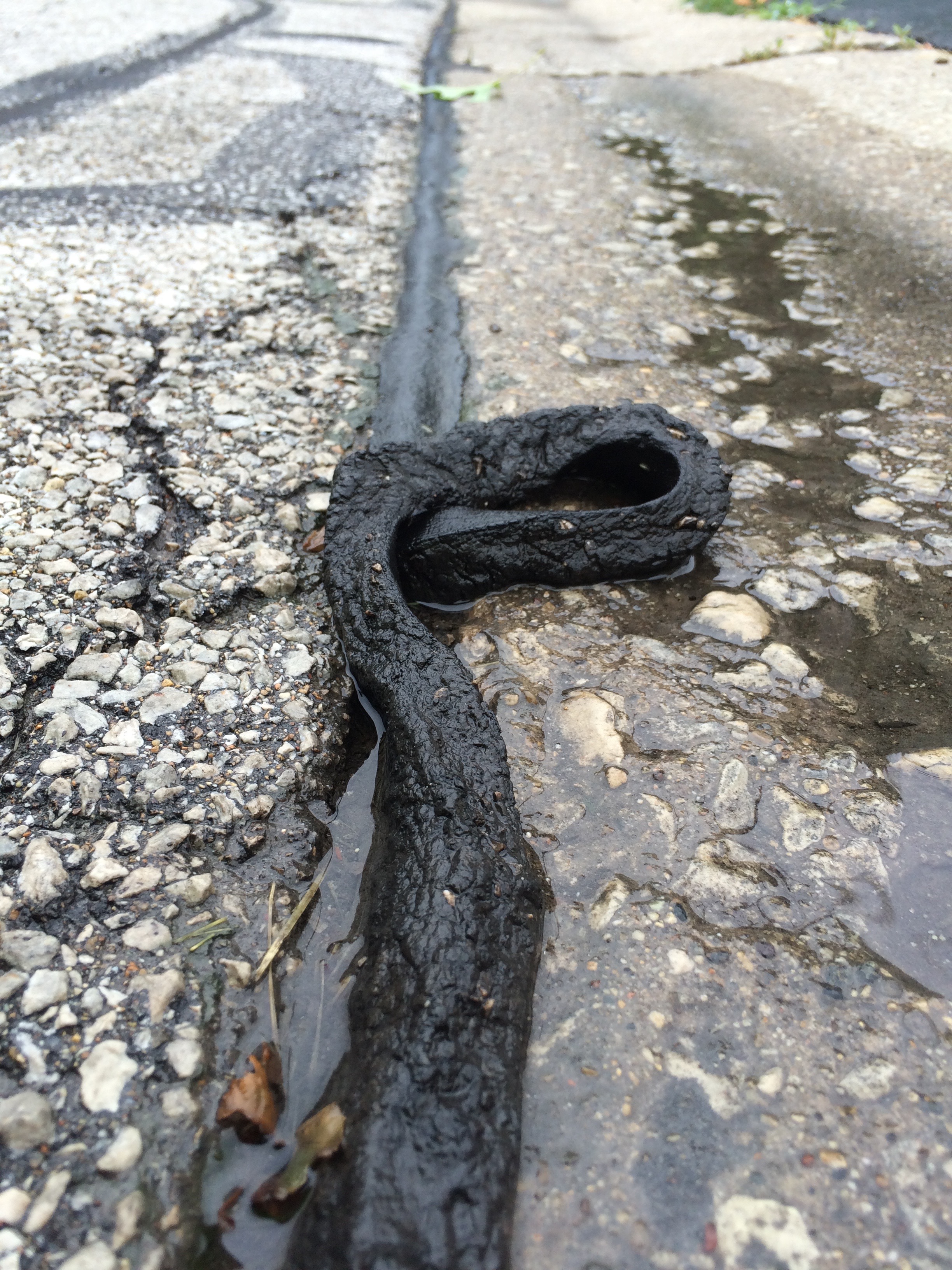
The sheen of a wet road in autumn.

If you read this blog, you know my politics. By every measure of American virtue–– be it traditional, progressive, conservative, or whatever–– 2020 was a red-letter shitshow.

No one got what they wanted, which was freedom from the impact of the pandemic. What we got instead was a long, drawn-out battle with a lack of truth and an invisible scourge that is still killing people right and left. But there’s hope. If we look ahead…

Through all that, most of us tried to achieve some sort of stasis. I refuse to call it normalcy because I’ve come to realize that what we once perceived as normalcy never existed. There are factions and undercurrents of American ugliness dating back four hundred years, and they refuse to go away, or grow a conscience. Released from their constraints, the forces of corrupt religion and vigilante anger bubbled up from the muck in a toxic foam of perceived disenfranchisement that clogged society’s surface and blocked out hope of reflecting on the meaning of it all.

The best we can do when peering back on 2020 and forward into 2021 is to wipe away that foam and get a glimpse of the reflection staring back at us. Then it becomes personal. Who do we see there? Is it the same person? Or has that person in the reflection somehow changed?

It is not vanity to ask such questions. It is practical. It is survival. It is performance-driven. When we’re out running or riding and pass a long row of windows in which we can see our reflection, that is an opportunity to check running form or position on the bike. The same holds true for swimming. If you can get someone to dip a camera below the surface to record your swim stroke, there are all sorts of things to learn. Arm position. Body posture in the water. Reflections and images tell us much about ourselves, inside and out.

As you reflect on all that we’ve gone through in 2020, take an honest look at yourself in the mirror and ask, “What do I want from this coming year?”

All of us need to put our ideas and plans forms that have meaning to us. Then we can figure out how to get there, and do it well.

Resolutions, on their own, aren’t often the answer. Instead, a bit of reflection helps build a bigger picture. What did I do right last year? What things went wrong? What took place that made me change plans? What can I control? Where did I follow through? Persevere? Find satisfaction? Build resolve. Pursue happiness. Find love.

From Chris and Sue! We wish you a Happy New Year! Sue is a Zoot Ambassador this year! Fun!

All these things contribute to the whole you. Think about your 2021 as an opportunity to pursue that. The whole you is what matters. The athlete can drive it or come along for the ride. But the whole you is what counts. That’s what we should look for in our reflections.

So reflect. Then you can peer into 2021 with the foam of the past wiped away. You may be surprised what you see staring back at you. Look for the person you like, and appreciate. Look for that someone in you that you like to be with, and others too. Embrace that person. It will reflect well on you.

And may 2021 be good to you, and for you.

HERE ARE MY REFLECTIONS ON ACCOMPLISHMENTS IN 2020

  1. Completed writing two books and submitted to an agent for “traditional” publication.
  2. Competed/finished three triathlons; two Olympic distance and first-ever Half Ironman
  3. Paced my wife to her best half marathon in ten years, under two hours
  4. Stayed healthy despite the pandemic by wearing a mask, social distancing and using common sense in public interactions
  5. Voted for Joe Biden and Kamala Harris, and they won. Bigly.

REFLECTIONS ON PLANNED ACCOMPLISHMENTS IN 2021

  1. Launching a Patreon site featuring content on nature, art and writing
  2. Competing in two Olympic-distance and one Half-Ironman races
  3. Getting my two books published and promoting them
  4. Continue to increase income and focus on active retirement strategy 5-7 years out
  5. Build mindfulness into daily routine

Posted in coronavirus, covid-19, cycling, mental health, triathlon, triathlons | Tagged , , , , , , , , , , , | Leave a comment

The dreams we have should never be so common they aren’t special anymore.

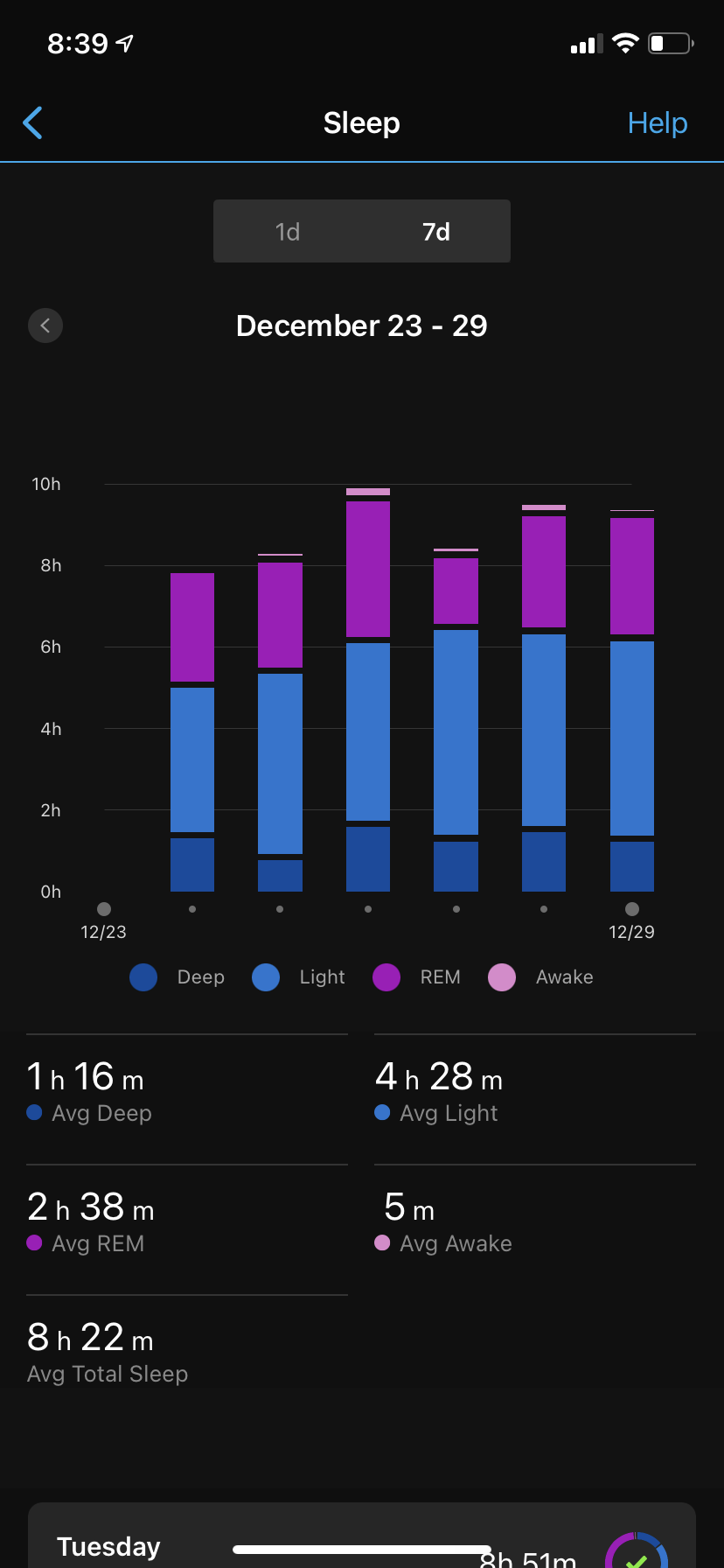
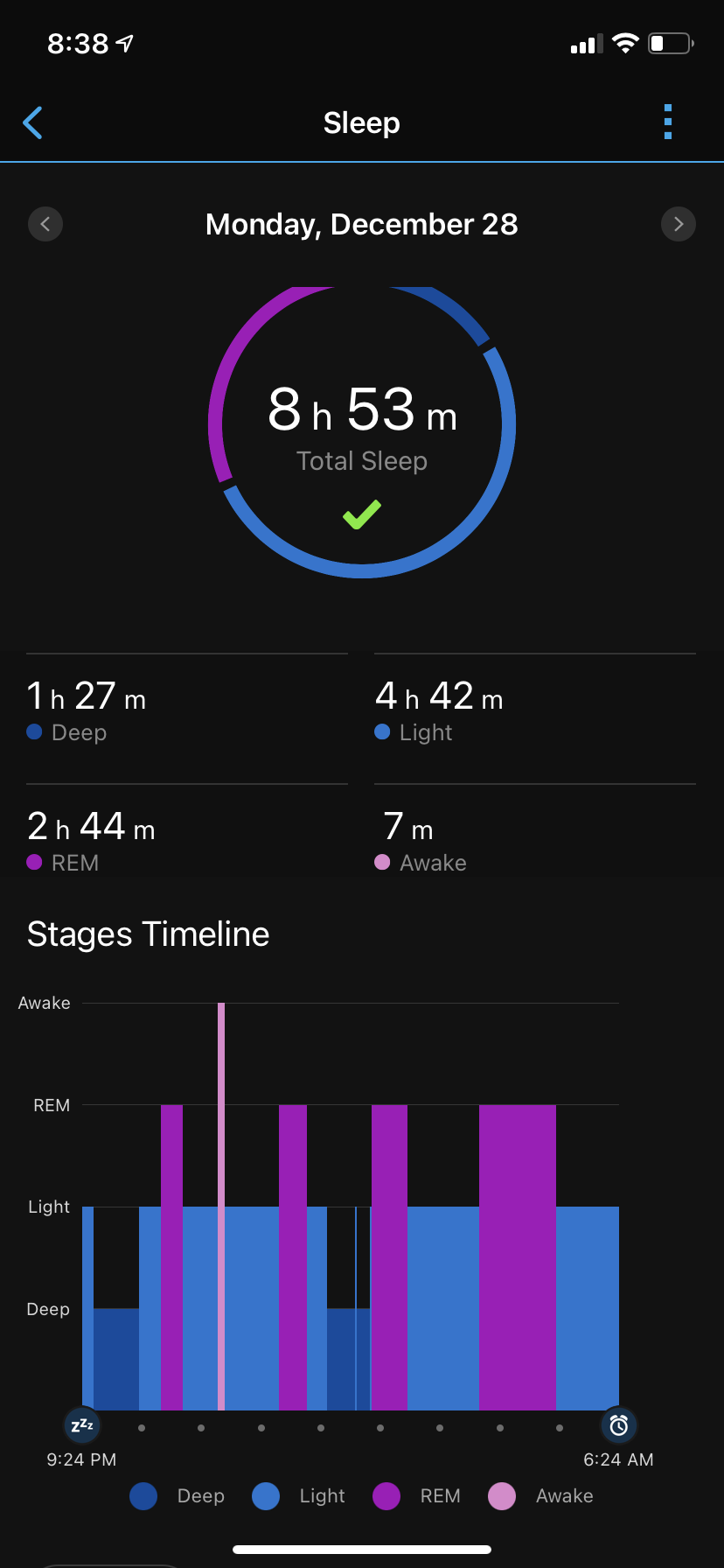
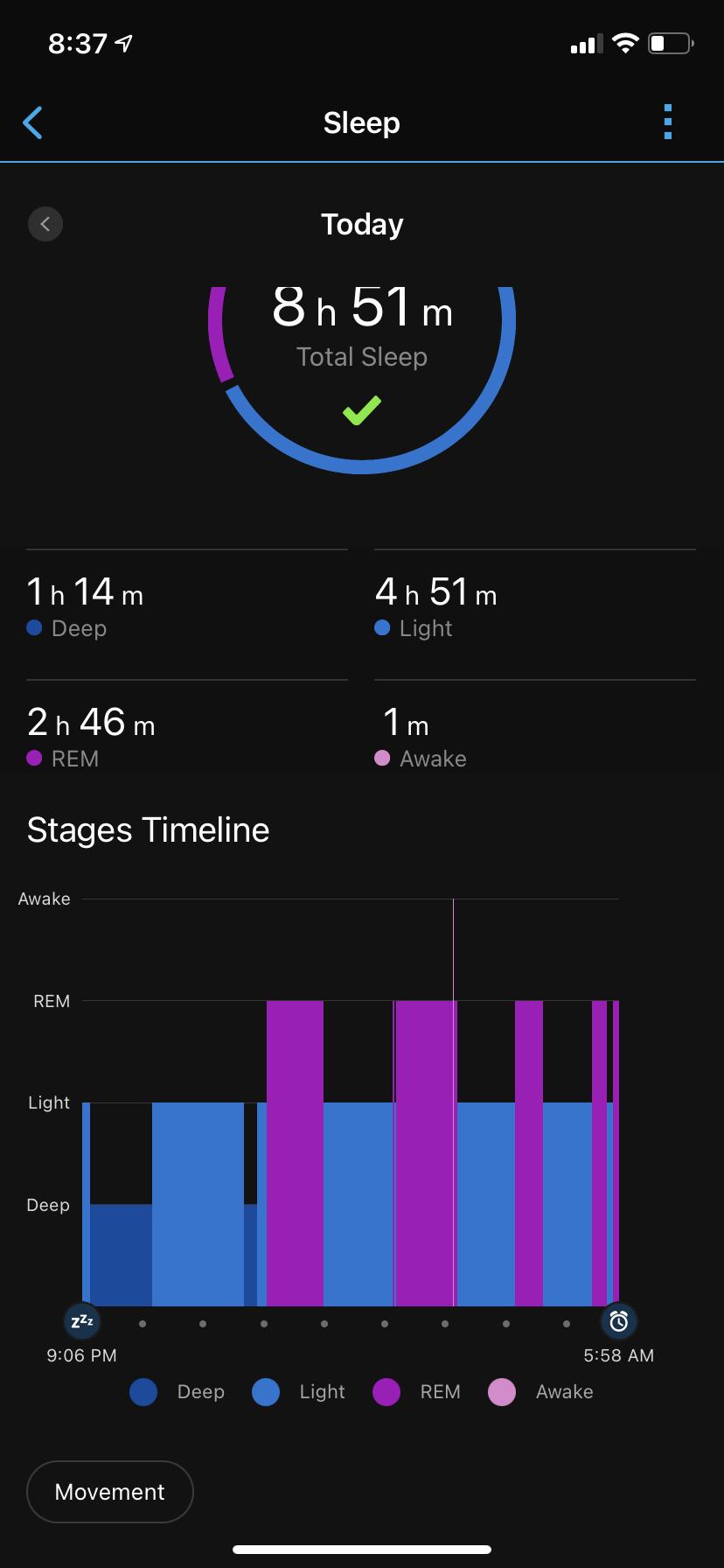
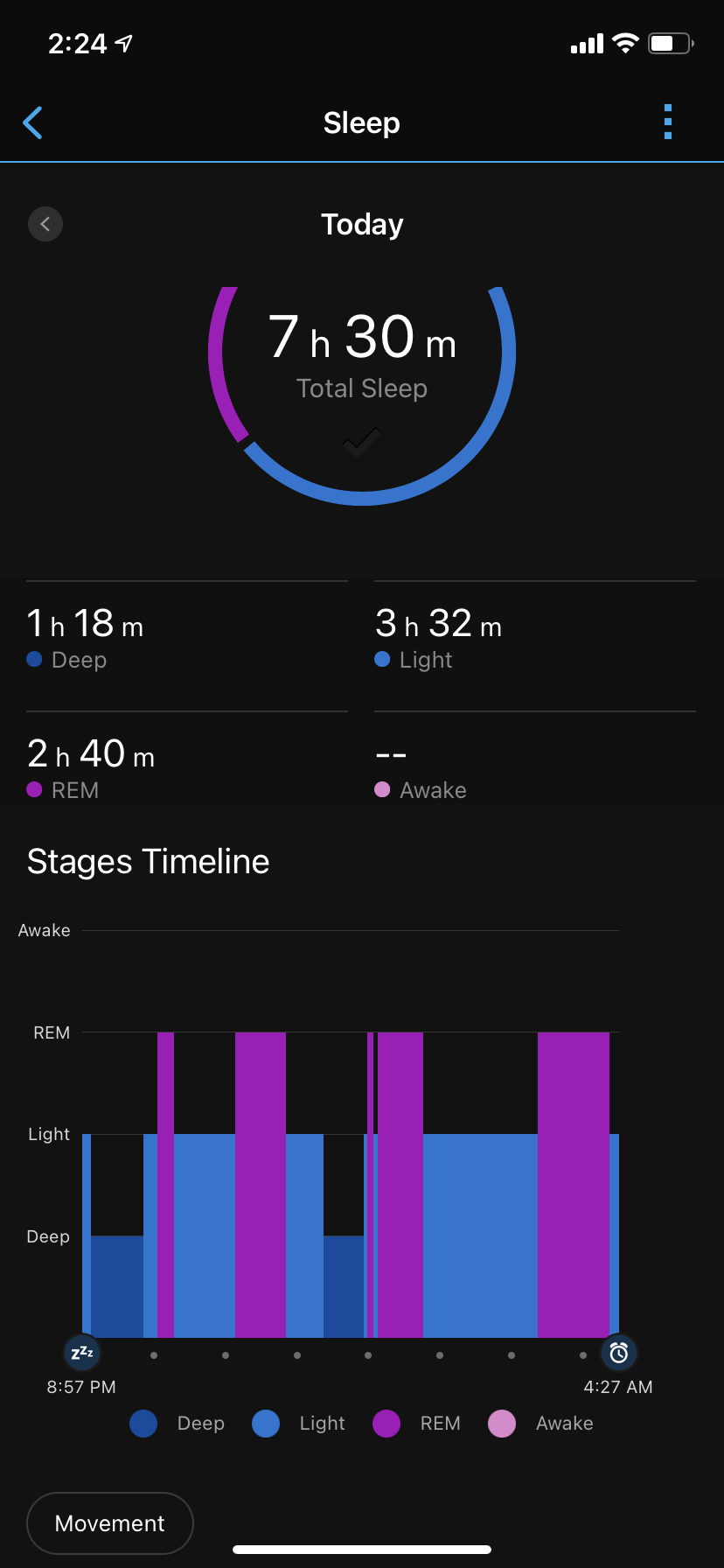
I’ve mentioned that my Garmin Fenix sports watch tracks my sleep as well as the miles I swim, ride and run. Every morning I can wake to see how much Deep Sleep, Light Sleep, and REM Sleep I’ve managed overnight. The little charts it provides are fascinating. Along with nightly sleep charts, there are weekly summaries.

These are fascinating in showing how the mind works while it is ostensibly at rest.

Those dark blue segments at the bottom are Deep Sleep. For me they tend to happen early in the night.

Then I have a shot of light sleep followed by REM, the period of sleep during which the mind opens up to dreams.

I dream quite vividly and often remember significant aspects of those dreams. Some dreams are repetitive. I have ‘related’ dreams from month to month or year to year. Psychology Today explains that recurring dreams are the mind’s way of working out a problem:

“In general, recurring dreams indicate the presence of an unresolved and persistent conflict in an individual’s life, and the theme or Central Image of the dream provides a stage for this conflict to play out. The cessation of a recurrent dream may indicate that the conflict has been successfully resolved.”

One of my recurrent dreams has a fascinating element. I’m back living in one of the homes I once owned, but there is a secret passageway underground that leads to an entire wing of the house out back. This set of rooms is often in a shambles, dusty and disorderly. But there’s some potentially interesting stuff out there if I sift through it.

Processing grief through dreams

I’ve also had dreams in which my late wife is alive again. In one of those dreams she died and then came back to life again. She’d been taken to the morgue but rose up and headed back out into the world again.

By then––in compressed dream fashion–– I’d started a new life and did not know how to deal with her presence. I’d meet her at dances and such. In a similar dream she’s dating another man in my stead. There’s always a feeling of obligation and unresolved issues with these dreams. I’ve concluded that these ‘dream feelings’ are my mind’s way of reminding me to keep my wife’s memory alive with my children. There is some guilt associated with that, because losing a spouse is impactful far beyond what one mind can adequately process. There are always second-guesses about what’s right or wrong to do in life beyond that relationship. I’m sure the same feelings apply to divorce or other losses in life.

Special places

The most vivid dream I’ve ever had centered around a visit to a farm in the hills of Decorah, Iowa. I stole past the farmer’s property to avoid the large dog that patrolled the pastures. The woods at the far end opened up to a massive valley with steep cliffs and a mysterious air. I loved that place so much that I never wanted to leave.

Yet when I came back, I met up with the farmer. His animals were wary of me like any farm animal would be, but I was allowed to roam the barns with all their ancient and good-smelling ardor. The imagery in that dream was so strong that I woke up the next day insisting that it must be a real place. But it wasn’t. It was just a place my mind wanted to be real.

The experience of that dream was so intense that it made me feel like there were two worlds within my head. A dichotomy. Or schizophrenia.

These days, when I look at the maps of REM sleep each night on the dream charts, it fascinates me to think that those are the periods when my mind is engaged in free association. It goes other places. Does other things. With or without me, it goes there.

There are no limits to dreams. No rules to abide. That can be frightening as well as thrilling. Nightmares are awful.

REM

The dream chart at right shows the purple REM periods slightly growing as the night went on. I recall those long dreams as pleasant. One can be grateful for that.

I’ve been known to fly in dreams. The site DreamMoods describes some aspects of dream flying:

Flying represents control:

If you are flying with ease and are enjoying the scene and landscape below, then it suggests that you are in charge and on top of a situation. You have risen above something. Flying dreams and the ability to control your flight is representative of your own personal sense of power.

Flying represents a new perspective:

When you are flying, you have the ability to look down and get a wider perspective of things. As a result, your flying dream is telling you to look at the broader picture. From your higher vantage point, you can gain a new and different perspective on things. 

I’ve had dreams where an implement was used to fly, such as a disc under my feet. Other times I can think myself up into the air. No one else around me can control their body in the air like that. I concentrate and begin to rise into the air. It’s a wonderful feeling, miraculous even, flying around above everyone else. Yet in the dream, a part of me sometimes worries that I’ll lose the ability by thinking too much about the ability to fly. That about describes my whole life.

Sex and dreams

I’ve also heard that dreaming about flying is the sleeping mind’s way to think about sex. Certainly there have been a few outright sexual dreams over the years. That’s actually really fun. Waking up from one of those dreams is a wild sensation. Sometimes we dream about having sex with people we know, even our co-workers. When that happens, work the next day feels rather awkward.

The famous Wet Dream is the climax of sexual dreaming. I’m glad to say that’s only happened once in my life. I woke up so shocked and surprised I just started laughing. What else can you do in that circumstance?

A marathon dream

My favorite dream of all time was the night in which I dreamed that I was running a marathon. From the starting gun I felt great. The sensation of running was easy and fluid. Unlike many dreams over the years in which running was difficult or impossible, I ran and ran until the finish line was crossed in 2:22. I’d run a personal best in my dreams!

I was elated when I woke up the next morning. Then I realized I was “only dreaming” and lay there disappointed for a moment. But the joy of that dream experience was so full and real I was grateful that my mind had opened up like that and allowed me to run my best.

In real life, I’ve had a few experiences like that when everything comes together. Those are moments when life itself feels like a dream. It can’t happen every day, but perhaps that’s for the best.

The dreams we have should never be so common they aren’t special anymore.

Posted in mental health, PEAK EXPERIENCES, racing peak, we run and ride | Tagged , , , , , , | Leave a comment

Life is a long letter being written one day at a time

Some items that survive the years of our existence say so much about us. I just found a letter home to my parents and brother during my college years that captures a specific moment in time.

The letter was written seven weeks into my senior year in college, the season in which our cross country team would go on to place second in the NCAA Division III championships.

But I’d just come off a scary bit of Achilles tendon soreness that afflicted our entire team. The workout that injured us was a set of intervals run on a cambered rural road. The next day, my Achilles was immediately stiff and sore. That led to a debacle with a campus doctor who overprescribed a powerful steroid that doctors at the Mayo Clinic immediately halted when the entire team drove up for treatment.

I recovered well enough to run as our first man in a dual meet the next week. Following that, we were headed to an invitational at Carthage College in Kenosha on October 21, where I placed 15th overall.

So life had its challenges, but things were going relatively well when I wrote this letter home. I was also in love with a girl I’d met at an RA retreat that fall. It was love at first sight for me, and we were inseparable that fall. We spent time on a Sunday afternoon hiking with some friends in the glorious fall hills around Luther College in Decorah, Iowa. The letter home was indeed a bit random, but purposeful in describing a hectic life…

A letter home in 1978.

The letter reads:

“It is Sunday night and I am too tired to do much–the best time for a random thought letter. It was Homecoming here––my sleeping hours were rather odd.

Thank you for the letter Greg, it sparked me to hear you’re doing well. Special messages for Greg are that I positively (from 15 yards) identified a Townsend’s Solitaire. Thought it was a mockingbird. Then a shrike. It was with a pile of robins, that threw me too. It had no facial pattern, just an eye ring around a dark eye, and yellow-sienna wing patches. It sat almost upright. I have also spied several good pairs of pileateds.

It is just now the time of season when the scenery shifts from brilliant to raw, from exciting to somber. Our trees have managed perfunctory flashes of color but cannot get their sequence down from maple to oak to elm. Jenny, Bob and Kirsten and I went for a long hike into the recesses of Decorah’s southern bluff country. Jenny was so pretty, dark hair aganst the warm autumn colors. Bob and Kirsten enjoyed our company. I ooohed them watching hawks, chasing deer and picking out owls. We all sat on a bluff so high that we could see the towers on campus and beyond (4 miles away).

It was grey and overcast but the day was pleasingly cool.

I was tired on Sunday night because we were running more than 80 miles per week all season. Two weeks earlier I’d totaled 99 miles, but didn’t want to go out and run that extra mile just to say I’d done 100.

The date was October 15 when I wrote that letter home.

In truth I’d tried to break up with Jenny the day before. She was pushing me for commitments far greater than I understood at the time, and frankly playing me against other guys that she knew.

My focus was entirely on running the best I could during that one time in life when the opportunity presented itself. It was hard enough staying healthy during those intense weeks of training and racing. That’s what scared me about the Achilles injury. I’d been running second man all season after being fifth-to-seventh man the first three years of college. My time had come. I didn’t want to blow it. The second page of my letter communicated that concern.

My Achilles is somewhat, actually much better now. The shoes* have been a life saver Another 80+ mile week. I have to get rest to remain healthy. I’m being cautious. By the way, we’ll see you next weekend for the run! The other boys are returning to health also.

My parents were coming up to watch us race in Carthage.

My roommate Dani Fjelstad (left) girlfriend Jennifer, myself and team supporter Brad Stene.

I concluded the letter writing about a project that symbolizes much of my other commitments in life.

I designed a letterhead to be used on a letter for the National Wildlife Federation from my Anthro professor who is working to preserve the acreage adjacent to Effigy Mounds National Monument. It has been recently purchased by an asshole landowner who will clearcut it if not stopped. The land maintains the only two extant nests of the red-shouldered hawk in the northeast part of Iowa. That out to help save it!

I’m too tired to write much more! Pooee! Love to you all. Christopher

I’m grateful for those experiences. All of them. While that girlfriend and I went separate ways a year or so after college, that was all for the better. All relationships go into building a life. Twenty-five years later I learned that the daughter of my friends Bob and Kirsten became buddies with a girl at Norwegian camp in Minnesota that turned out to be the daughter of Jennifer, my college girlfriend. Small world.

Those friends Bob and Kirsten from college have remained two of the closest friends I have in my life. After college, my late wife and I shared many experiences with them from camping trips to getting married, having and raising kids, exchanging godchildren, going through my wife’s cancer, and figuring out what it means to age as gracefully as we can.

They’re close friends with my wife Sue and I now. We all Zoom together during the pandemic, getting together with other friends on Friday nights. The laughs and joys, challenges and concerns continue. They still think (and know) that I’m nuts.

Life is a long letter being written one day at a time.

This blog is part of a book I’m composing titled COMPETITION’S SON, a biography of life’s experiences and the impact of competition on all facets of our existence.

*Brooks Varus Wedge. They were one of the first models of running shoes designed to compensate for pronation.

Posted in aging, coronavirus, covid-19, cross country, healthy aging, healthy senior | Tagged , , , , , , , | Leave a comment

Some bright ideas about breathing and Breathe Right strips

Wearing the Breathe Right strips just feels good!

The other night when talking with my wife just before nodding off to sleep, I made some comment about not lying on my back to avoid snoring. She kindly informed me that despite my precautions, I still snore some when sleeping.

“Hmmm,” that made me think. “That’s not good.”

She tells me that it doesn’t bother her because normally she’s asleep. Once in a while she’ll nudge me over and I stop snoring.

Snoring is annoying as heck to other people trying to sleep. It can also indicate health problems. Sleep apnea is one of those issues. The link to information on Mayo Clinic notes the types of this conditions and it symptoms. A few people I know deal with this problem. Some have machines to regulate their overnight breathing.

Most mornings I wake up rested. I use my Garmin Fenix watch to check my sleep data now and then. It shows what type of sleep I’m getting. I note the data but do not obsess about it. So much about getting to sleep and staying asleep is psychological as well as physical.

Yet I don’t want my wife to have to deal with snoring. If it keeps her awake at all, or ever, it’s a problem I’d prefer to address.

I recalled that she purchased a package of Breathe Right nasal strips a while back. She wore them to run once in a while. I tried one on yesterday morning and felt an immediate clarity while breathing through my nose. The air passages opened up more. The strips work by lifting the tissues apart inside your nose. I walked the dog while wearing the Breathe Right and kept it on all morning. I liked it. I was addicted to breathing better right away.

Last night I wore the strips while sleeping. In the morning, I asked Sue if she noticed me snoring. She didn’t. That doesn’t mean it didn’t happen. It just means she didn’t hear me.

I’m going to keep wearing those strips and check the quality of my sleep on the Garmin data. I’ll be interested to see if there are any changes. Last night’s readout showed the breakdown between Deep Sleep, Light Sleep and REM. I’ll have to analyze the value of each and track them a bit using Breathe Right strips to see if having more air coming through my nasal passages helps sleep quality. I’ve never studied that much, but this article is likely to pique your curiosity. I have a ton of dreams and REM sleep is when they happen. You can see the stages in the data graph below.

Benefits of nasal strip use

Sleep measurements through my Garmin. It will be interesting to see if there are any changes in sleep type or quality when wearing Breathe Right strips.

The other curiosity I have is about wearing Breathe Right strips while swimming. I’ve learned to breathe out through my nose and breathe in using my mouth. Could the strips stay on my face and help that sport?

I also recall that for a while, many world-class runners wore Breathe Rights to compete. That fad might have worn off. In any case, this Chicago Tribune article sums up the alternate uses. I noticed a pro football player sporting a strip across his nose in the Vikings vs. Saint game yesterday. I get it.

Reducing snoring

One of the most common benefits associated with nasal strips is snoring reduction. Because the air passages remain open during sleep, the user is far less likely to experience the level of nasal blockage that triggers snoring or sleep apnea. Another benefit is increased airflow during physical activity. Many athletes wear nasal strips during competition because they improve breathing efficiency. Allergy sufferers may also benefit from nasal strips because the strips keep their irritated or swollen nasal passages from closing up completely.

I’ll admit that during the morning hours, often while driving my dog to day care or the park at 8:30, there’s a fair amount of nasal congestion that needs to be cleared. Years ago while living in a small house with vents close to our bed, my sinuses dried out and there were headaches all the time. Most of us deal with nasal issues of one kind or another. When I wear the Breathe Rights the band of flesh across my nose is expanded. It’s a remarkable technology.

The other aspect I plan to explore is breathwork, the practice of using breathing techniques for better health, mindfulness and more. I just wrote content for a virtual Breathing Festival taking place in the New Year. That might be interesting to try as well.

I’m addicted to breathing. Actually, we all are. Without it, we’d die. But there’s a whole range of benefits to explore in better breathing before that ever happens.

Posted in swimming, training, triathlon, triathlons, We Run and Ride Every Day | Tagged , , , , , | Leave a comment

Happy Holidays. Merry Christmas. Happy New Year!

Art by Christopher Cudworth. Happy Holidays from We Run and Ride!
Thank you for reading my blog.
It is most appreciated.

This marks the eighth year for this blog. I write it for many reasons. But mostly I write it for the feeling of connection and expression that comes from “Original thoughts on running and riding.”

I have some fun plans for the New Year. In the meantime, enjoy the holidays however you do or don’t celebrate.

See you at the pool, on the bike or running down the road.

Christopher Cudworth

Posted in Christopher Cudworth, we run and ride | Tagged , , | 1 Comment

Picture this, a life in pixels

We live in the digital age that makes it easier than ever to capture and share images. Recently some friends began converting slide photos taken during our college years into digital images. We didn’t take or share that many photos back then. It was too much hassle taking film, slides or photos to be processed.

The advent of One Hour Photo booths improved the process somewhat. Getting your photos back in an hour made it less painful and took less patience than dropping film off and coming back five days to a week later. That seems hard to imagine these days.

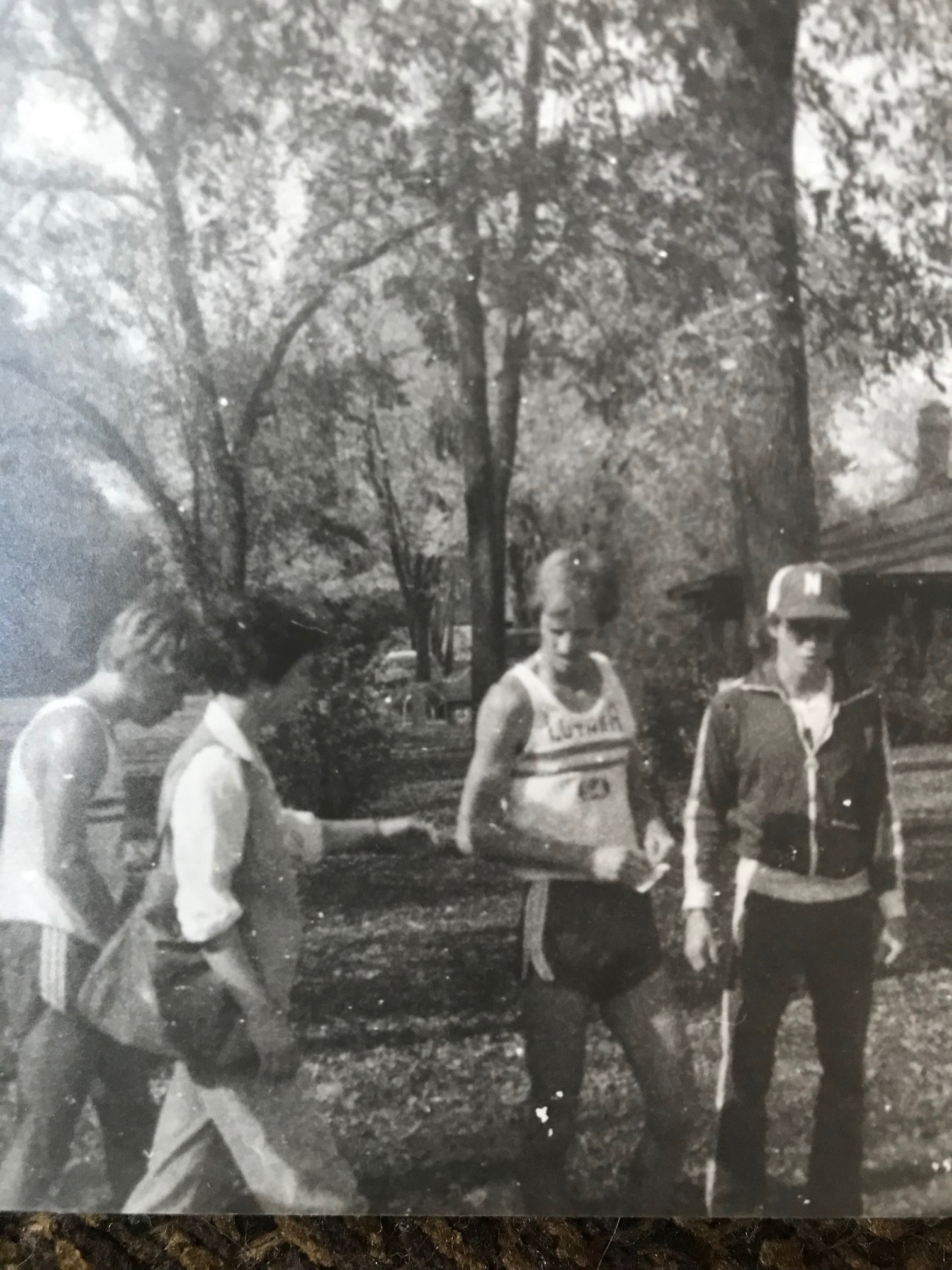
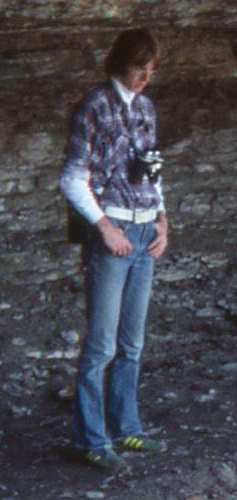
Those changes make the image at left all the more interesting for me to consider. This is an excerpt from a photo taken in 1976 on a class nature trip. I was standing under the watery shelf of a high bluff above the Mississippi River at a park called Pike’s Peak.

That white belt came with me to Luther College in the fall of 1975. I don’t recall that blue plaid shirt, but I wore a ton of those over the years. Those jeans look like a hundred pairs I’ve worn. Those adidas shoes? They were SL 76s, green with yellow stripes. That tells me this photo was taken during sophomore year in college.

I wore that white turtleneck to race cross country on cold days. I also wore that thick head of hair all the time. Those wire-rimmed glasses were not my friend in many ways. They were certainly no girl magnet. My lenses were thick. I surely could have used a pair of contact lenses to avoid having to push those glasses up on my nose during training and races.

We made do in times less sophisticated than today. I see the tip of my pelvis in this photo and that tip of my head lost in thought and gone to other places than I was at that moment in time. Dreamer. You know you are a dreamer. Can you put your hand in your head, Oh NO! That deep absorption is both the blessing and the curse of my life’s existence.

I wasn’t alone in that journey through geekhood, of course. We runners had our share of cool in terms of pushing ourselves to performances, yet we also wrestled with self-image, confidence and self-esteem on other fronts. We were racing against the forces of life itself across a spectrum of purposes. The lessons learned along the way are what we count upon today, in so many ways.

So much of life is granular. The great artist Paul Klee anticipated all this granularity. His paintings seem to be composed of tiny cells of light that make up our perception.

Art by Paul Klee.

This re-formative process takes place each time images from our past are called into the present. They come to us through light and space. Our sudden recollection and recognition of a moment in time can be shocking. What was I thinking? Who was I then? Am I different now?

Our bodies change as life rolls on. So do our minds. All these experiences shimmer in and out of minds while some fade entirely. A memory shared by a friend, visual or otherwise, can jar them back into cognizance. This happens at every age. A thirty-year- old hearing a story about an elementary school antic has the same force as a seventy-year-old recalling events from their fortieth birthday. We’re all stuck in time in some way, you see. Then it spits us back out the other side. That is mortality. It is a picture inside a picture. A layer over a layer. A billion pixels of existence that fall in and out of focus.

As an endurance athlete I’ll often be rolling along on a highway side on my bicycle, running along a country road in the sun or plying my way through the pool when reality locks into place and I realize where I am at that instant. My brain takes a snapshot that stores the look and feel of that moment in my memory. This happens more often than I care to admit. I wonder why.

If there is an afterlife, will we also have this giant catalogue of moments to shuffle through? The Snapfish Book of Life? Is that what awaits us in eternity? Through the flow of time? Is that what we’ve waited for? It’s like the film store at the local pharmacy. We’ll just have to wait and see what develops. Picture this. A life in pixels.

Painting by Christopher Cudworth
Posted in aging, aging is not for the weak of heart, Christopher Cudworth, college, competition, PEAK EXPERIENCES, triathlete | Tagged , , , , , , , , , | Leave a comment

Accepting limitations is sometimes the best strategy

On Wednesday morning I woke up feeling the tingle of a cold forming in my throat and sinuses. I’d run thirteen miles on Sunday, took a rest day, ran five miles on Tuesday, and felt a bit tired that afternoon.

I didn’t quite pay attention to the Day-After-The-Day Lag Rule that says you need to take two full rest days after a hard training or racing effort. While I didn’t go “all-out” while pacing my wife to her two-hour half-marathon, it was a significant enough effort to carry over for a few days.

The strange part in this story, and one I’m still trying to figure out, is why I felt completely jazzed after that thirteen miler. I wasn’t tired at all. In fact I took our dog out to the Bark Park and ran around a bit with her. My energy was high as heck. 7

There was a time that I’d have doubled up on that kind of workout effort and gone out running again in the afternoon. I recall a day while training with the Runner’s Edge team in Pennsylvania that we did a full 20-miler on a Sunday morning. I felt so good all day that I drove my car from Paoli over to the park at Valley Forge and ran another six miles.

These days, I don’t typically double up workouts unless it’s a run and a swim, or a bike and a run, or a run and a bike, or a bike and a swim. LOL. Is that all the possible multisport combos?

Triathletes can do that type of training load because it’s not using the same muscle groups. But I’ve also learned that age determines a few things about recovery times as well. Even if the body recovers well enough from a workout, the mind isn’t always ready to give it a go. Among men, that is sometimes the product of lower testosterone levels. It’s a physical fact––and thus emotional––that many men don’t have the urge or drive to compete or train that we once did.

Some of that testosterone lag can be overcome with discipline. Setting up a program and sticking with it is why many triathletes like the sport. It delivers structure and motivation to their lives.

But the rules of effort vs recovery still apply, and when you’re genuinely tired, or feeling like a cold is coming on, it often pays to accept limitations when fatigue of one kind or another catches up with you.

That’s called taking the “long view” in training and racing. “Live to fight another day…” is an alternate way of framing it.

“See you back out there” is the best explanation I have for taking it easy rather than pushing myself into the ditch of overtraining or illness. Others call it “experience,” yet some might brand me a wimp for not “fighting through” the days when things feel stale.

All I can say is that I’ve already done that in life. My appetites have changed. So might yours if you would like to live a full life, keep active and enjoy what you’re doing for as long as you live. It’s really that simple. Accepting limitations is sometimes the best strategy.

Posted in aging, aging is not for the weak of heart, healthy aging, healthy senior, injury | Tagged , , , , , , | Leave a comment

I’ve done a lotta drugs in my lifetime, but it’s not what you think

Ever stopped to think about how many drugs you’ve taken in your life? Recently I took a slew of unneeded drugs to the police station to drop them off in the drug container. They give you a plastic bag in which you pour the pills, then slip them into the tray and that’s that. They’re gone forever.

It’s not good to dump drugs down the drain or to toss them out anywhere else. The chemicals in them seep into the water system one way or another. We’ll all grow third eyes if everyone does that.

At a young age I could not swallow pills. My mother had to bury them in food or help me choke them down with honey or some other substance. Along with a shy bladder and a bit of anal retention related to bathroom issues that lasted all the way into college out of shyness and anxiety, the pill-swallowing problem was finally conquered out of necessity.

After college I partied so hard while running 60-80 miles per week that my body rebelled. I developed migraine headaches that were also probably hormone-driven. That resulted in a Tylenol with Codeine prescription so powerful my arm went numb.

That taught me how powerful prescription drugs can be. I was already familiar with the inebriating power of alcohol and marijuana from my partying days. Somehow it still stunned me that pain-killing drugs could also mess with my body and mind.

In my late twenties I developed a painful prostate infection that required painkillers as well. In the process of dealing with those prostate issues, I learned that my body was highly sensitive to drugs like caffeine or antihistamines. That walnut gland seized up whenever I absorbed stimulants into my body. The doctor told me, “Cut out the caffeine, and try to have frequent sex.” I asked for a prescription for that. The doctor wrote one out but warned, “If that doesn’t convince your wife, take care of yourself.” Doctor’s orders.

In my opinion, sex is a drug all unto itself. In those teens and twenties, the difference in brain function between a man that has not had sex and one that has just ejaculated is the difference between the sun and moon. Sometimes I was so horny my brain would not even function. The creative process could not take place with that much sex on the brain. I learned to deal with that one way or another. It helped the prostate along the way.

During my late wife’s eight years of cancer treatment I learned to organize and dispense all types of drugs for her. There were painkillers and blood thinners, drugs for infection prevention and drugs to stimulate red blood cell production. One drug gave her an allergic reaction so bad I thought she was going to die. When she had a nervous breakdown after her first recurrence, I guided her to the psychiatrist office to advocate for an anxiety medicine. The amount of extra or unused drugs that accumulated after all those years filled two gallon bags full of pills that the hospice nurses hauled away.

During those years, I grew expert at administering different types of drugs to her through infusion and injection. That skill came in handy the year after she passed away when one of my fingers developed a danger infection in my finger from a sliver that pierced my skin during yard work. The germs sank into the finger so deeply they almost penetrated the bone.

The hand doctor first prescribed antibiotics. But when that didn’t conquer the infection, he operated to open the middle digit of my left hand and flush it with powerful antibiotics. Then they sent me home with a bunch of poles and tubes and told me to self-infuse the drugs that arrived daily in bags delivered by a medical supplier. The infusion process took three hours to complete. I complained about that after a couple of weeks and they told me, “Oh, we have something you can do in ten minutes.”

I replied, “You have to be fucking kidding me.” The nurse on the line was not amused.

I’m a reasonably healthy guy overall, but during my wife’s chemo I took Lorazepam to fight the stress and anxiety of caregiving. I was also caregiver to my father, a stroke victim who was required to take a litany of drugs to sustain his health. These had to be arranged in trays for daily consumption. When I arrived one day, my father had the pills spread out over the table and was picking out the ones he thought he should take. I immediately called a local pharmacy and begged them to place his medicines in self-contained packets that he could ingest on his own. His live-in caregiver appreciated that. But it only lasted a few months until his insurance company demanded that we order all his prescription medicines by mail. They would not arrive in packets. We were back to square one. Fuck insurance companies. Fuck them.

Clearly drugs are not something you should mess around with on your own. During my battle with a tooth infection two summers ago, I took so much Ibuprofen my kidneys started to ache. That’s never a good sign. Nor is pain in your liver, or a palpitation of the heart or sudden loss of vision due to drugs. One can even lose the sense of hearing or taste if drugs are taken incorrectly. The disclaimers at the end of those drug commercials are enough to scare you to death, all on their own.

My favorite drug remains exercise. You can take it in any dose that you like. It cures many ills and prevents a few more. It doesn’t require you to swallow anything but a bit of hydration. All it takes is a little nutrition and some spit to get it down. Granted, exercise doesn’t come in a bottle or a jar. You can’t rub it on your skin like a salve or snort it like a line of coke. It’s still a powerful drug of sorts. I’ve taken a lotta drugs in my lifetime. With luck, I don’t plan to stop anytime soon.

Posted in healthy aging, healthy senior | Tagged , , , , , , | 1 Comment

An unexpected climb on the Great Western Trail

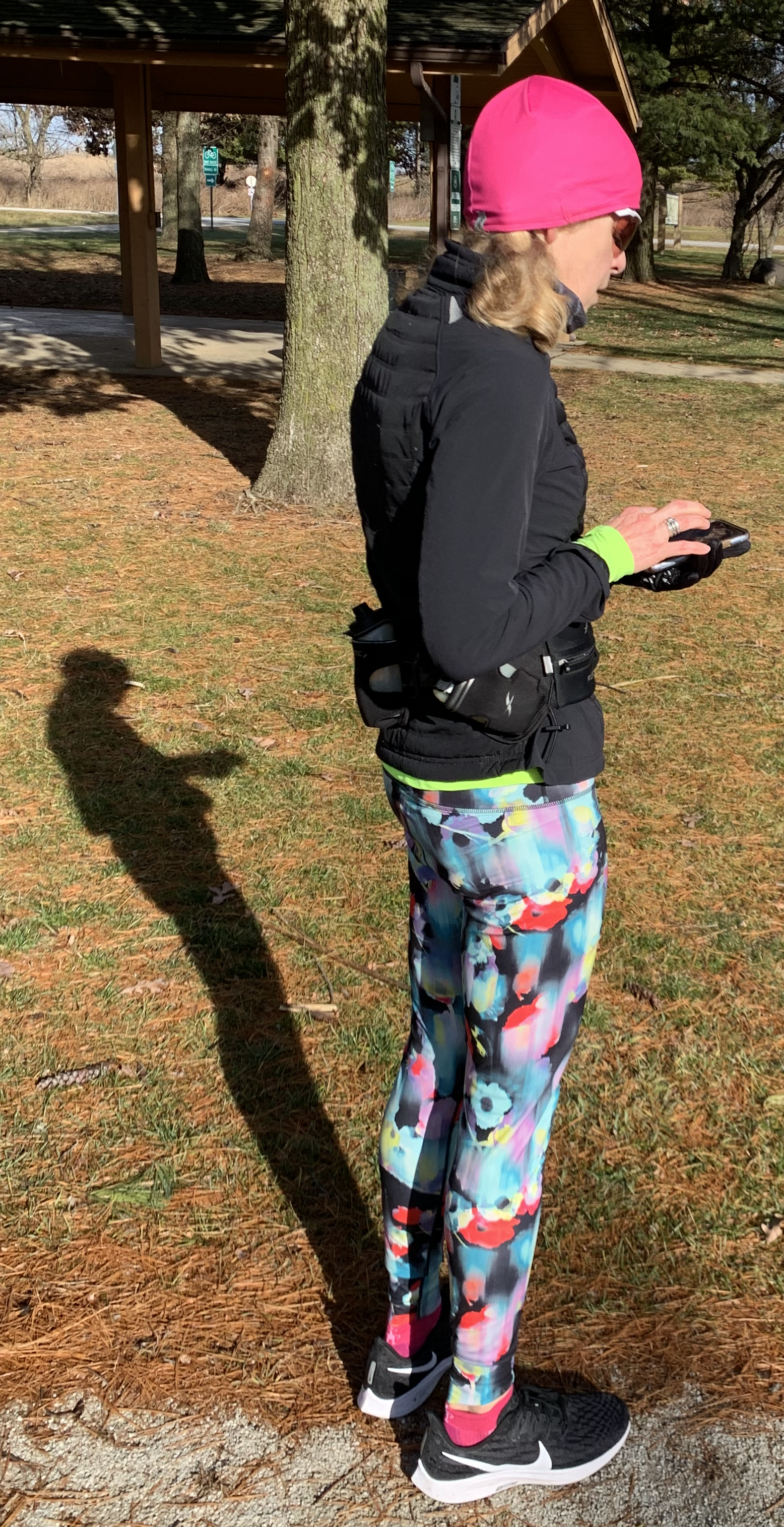
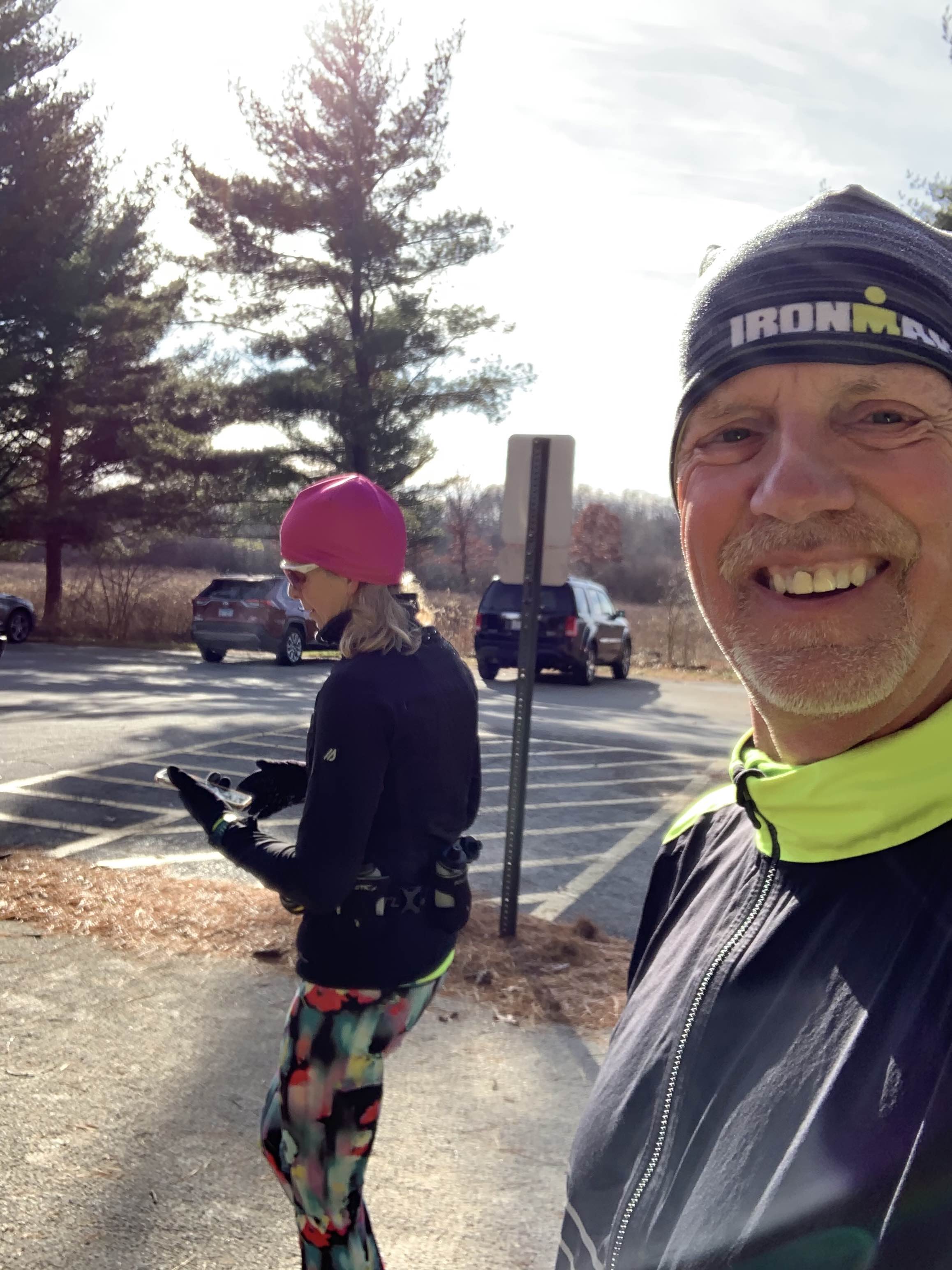
Checking her watch and taking a pic to send to her coach Steve Brandes after a 2:00:00 half marathon effort.

Having lived in the Fox Valley region of Illinois for many years, I vividly recall fast-moving freight trains from the Great Western line crossing the bridge over the Fox River through downtown St. Charles. Those trains would sometimes veer off to deliver goods to the lumberyards and factories on the west side. More often they rolled on going back and forth from Chicago. Many times those trains were piled high with coal.

The Great Western railroad company ceased operation in the early 1980s. At that time, a progressive (yet Republican) politician named Philip Elfstrom was busy converting railroad beds to public trails. Hence the Great Western Trail was born.

The crushed gravel trail starts at the Leroy Oakes forest preserve on the west side of St. Charles. The trailhead adjoins with the Horlock Hill Prairie where in 1973 I worked with other high school students to start a restoration project that now covers several acres rich with prairie plants including cream and blue wild indigo, butterfly weed, cardinal flower, big bluestem, prairie dock, compass plant and many more species of native plants.

Next to the trail sits a boulder bearing a plaque honoring Bob Horlock, the biology teacher who started the restoration project next to a native prairie remnant. I always say “Hi Bob” when I run past the boulder during workouts. We were birding buddies as well, and I’d seen him at a local forest preserve the morning that he passed away in 1993. He died while conducting a prairie burn at Garfield Farm a few miles west of town.

So my roots run deep with the Great Western Trail, but the nice thing about the trail is that it varies by season and passes through a variety of habitats during the year. In winter it feels spare and barren by contrast with summer’s thick greenery and the tunnel of trees overarching the former railroad bed. But even in winter, the long line of trees on both sides of the former railroad bed offer shelter from the wind. Along the way a few worn-out telephone poles sit forlornly in the scrub woods, ashen reminders of the days when roaring trains passed through they parts.

Thousands of runners and cyclists now use the trail each year. Local running clubs host races and organize training runs in preparation for races like the Chicago Marathon. On a typical Saturday morning all spring, summer and fall, there will be large orange containers perched on chairs by the side of the trail to serve up hydration for athletes doing workouts of ten or twenty miles.

The trail offers miles of mostly uninterrupted running, crossing only a few roads at the surface level. All others are traversed on arched bridges. So the ability to just dial in an run is one of the reasons why runners and bikers like the GWT. The trail is firm but cushiony in its crushed gravel way. My wife and I ran our time-trial half marathon on the Great Western this past Saturday.

We started the day by doing a warmup half-mile to clear our digestive systems and get that last-minute stuff out of the way. Then we punched the buttons on our watches and headed down the slight hill leading away from the trailhead. While warming up, I noticed that I’d forgotten to charge my Garmin Fenix the night before. It was down to 4% battery and indeed, it conked out at three miles. To cover our effort, I took the case off my iPhone to reduce bulk, started the Strava app and stuck the phone in my hip pocket so that I could check pace now and then.

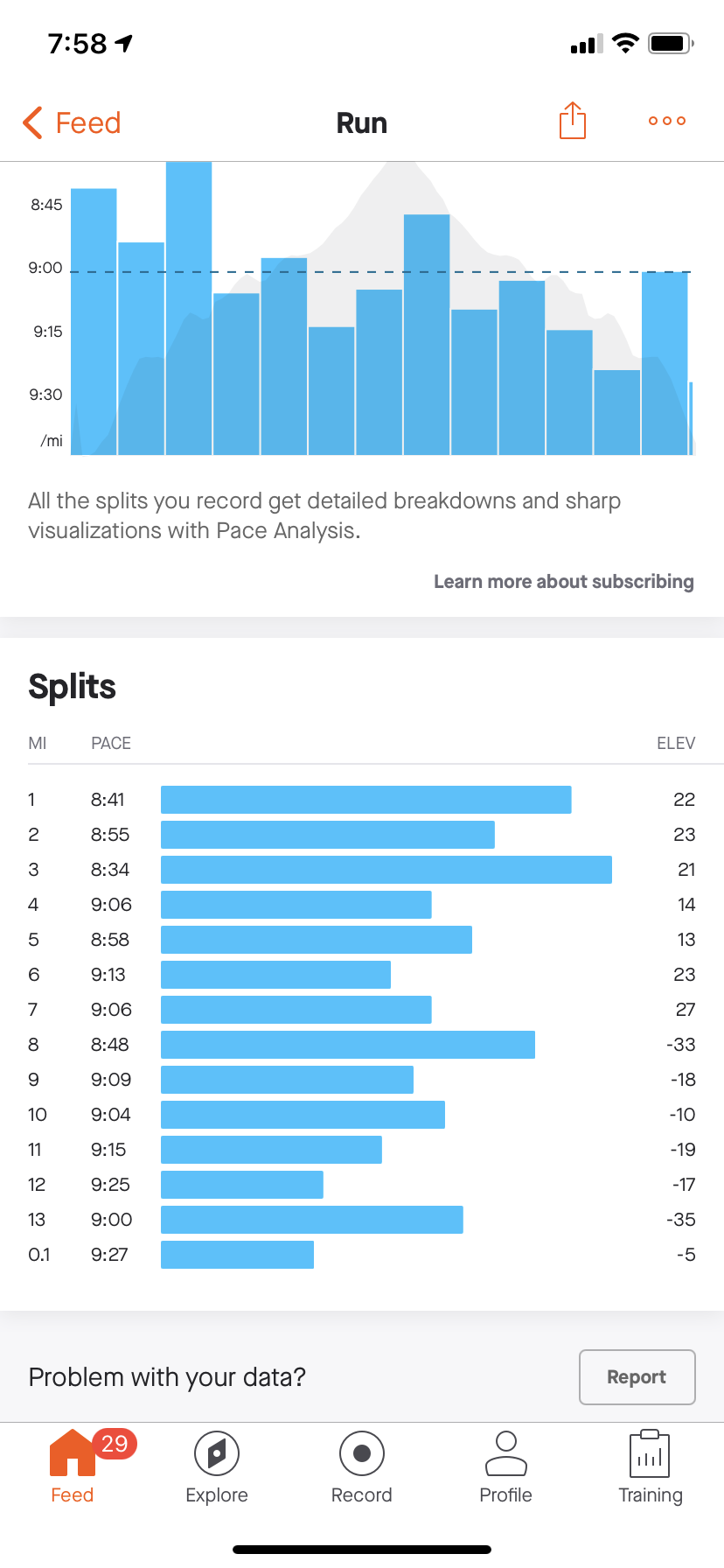
We clicked off the early miles with Sue calling out the pace per mile, averaging 9:15. That was spot on. The only problem we faced along the way was the frosty condition of the wooden bridges crossing roads and streams. The footing was treacherous. We had to slow down to a shuffle and sometimes even walk gingerly on the incline of the arched bridges. That cost us between five and twenty seconds each time.

We got back into our rhythm and cruised west to the four-mile point where the trail crosses Brown Road. Then asphalt surface takes over for the next three miles. The new footing felt good and we dropped the pace a bit.

What stunned us was the sensation we noticed upon turning around at the seven mile point. Suddenly it felt like we were flying. “This feels like it’s downhill,” Sue turned to me and said. “I agree,” I told her. “Kind of surprising.”

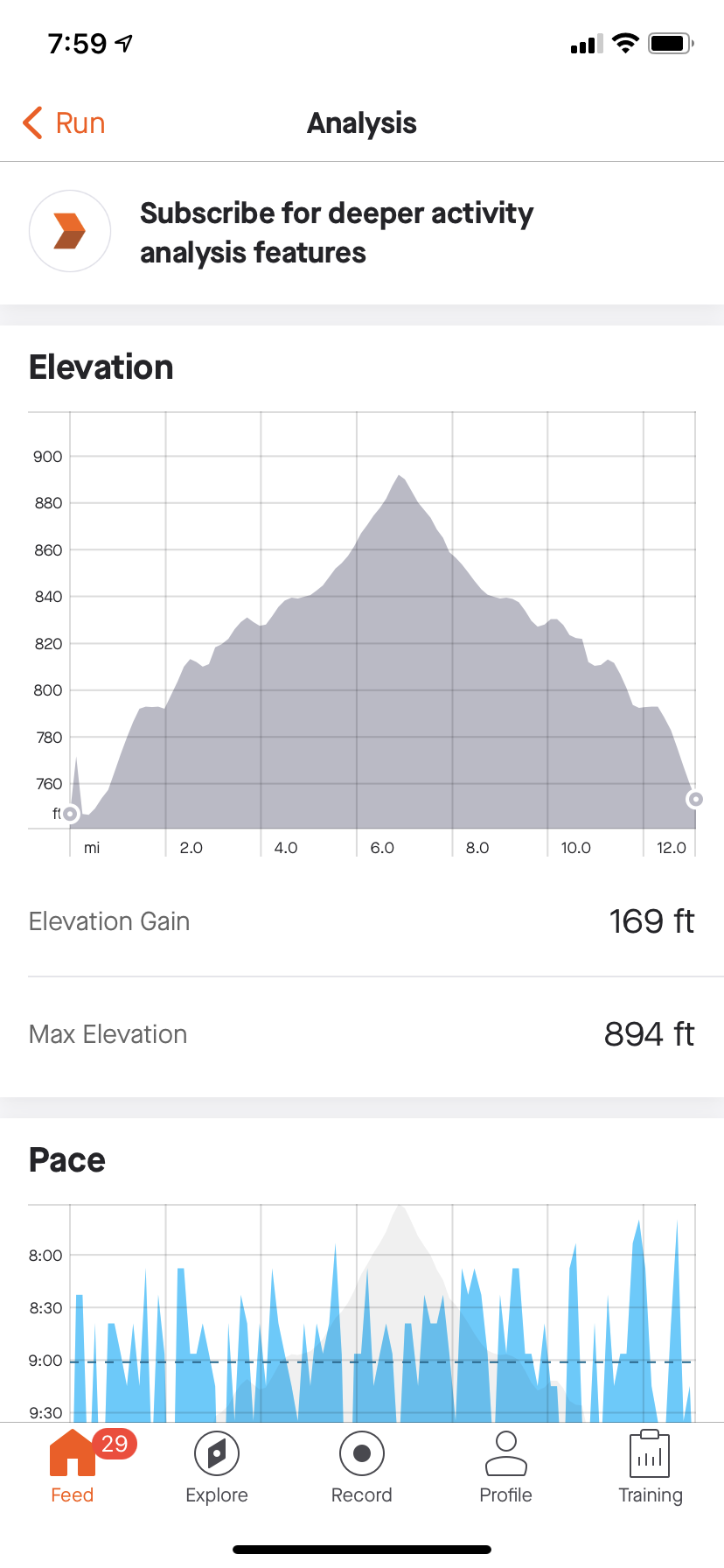
Indeed, when we finished the run and checked the data on our respective apps, the route showed that we’d run from a low point of about 720 feet at the start up to a high point of 880 feet. That 160 foot rise in elevation was not readily discernable on the way out. You just don’t realize you’re climbing.

On the way back, we caught up and passed a group of runners we knew. They were chatting as we swung by them but I blurted, as cheerily as I could, “We’re doing a time trial. Can’t stop to talk.”

Sue was moving well. Our breathing and strides are often in sync. We both have a 34″ inseam, but my torso is much taller. I’m 6’1.5″ and she’s 5’9.5″ These days, she’s shortened her stride and runs with a revised cadence that is a little quicker than mine. My concentration during the half-marathon trial was on keeping a midfoot stride going since that tends to let me control how I use my hips. They tighten up less that way.

We crossed the frosted-over bridges on the way back and ran on the side where the frost was thinner. Still, Sue is more cautious than I. Admittedly, I snarked at her a bit coming off one of the last of the arched spans. I was worried about losing time and wanted her to succeed, you see…”I didn’t want to fall,” she explained.

It turned out that my Strava was not in sync with her Garmin in terms of distance or pace. But for her records we trusted her data, not mine. To suit my curiosity, I still pulled out my phone toward the end of the run and watched the last mile tick down as the time ticked up. According to my Strava, we ran 1:59:17 for the 13.1 mile distance on the out and back course. As far as I’m concerned, Sue broke the two-hour barrier she hoped to achieve.

Her Garmin watch told a slightly different story. We wound up running a little farther and finished at 2:01 for the half-marathon distance. Take out the slow parts over the frosty bridges and she hit her goal. Overall, she was quite pleased with the effort. It was hard for her those last three miles. I had to be kind of a pushy partner to keep her on pace, but we made it work, even when we had to finish slightly uphill in the last 200 meters.

After finishing the 13.1, we walked back up the hill t the trailhead holding hands. We exchanged kisses in celebration (and relief, she admitted) for the fun run in the chilly air. In a year in which so few races took place, we made up for it with her best half-marathon time in ten years.

Someone noticed our run on Facebook asked which race we ran. I replied, “It was the Christopher Cudworth Invitational. A very exclusive race. You have to sleep with the race director to get in.”

Our little event was a great way to head in the New Year. Sue will be representing Team Zoot in 2021. Her Christmas present is her first offical Zoot kit for the coming year. We’re hoping for more opportunities to compete and have a calendar of races mapped out. Nothing beats pushing yourself with a goal, and we’re looking forward to that.

The takeaway yesterday was that even when you think you know a running trail really well, it can offer up surprise after many years. I never knew that the trail going west rose nearly 200 feet over seven miles. Now I do, and it makes me wonder what other secrets lie ahead.

Posted in 13.1, half marathon | Tagged , , , , , , , | Leave a comment