The emotions following a hard race are often a mixture of joy and relief. You’re invited to share some of yours.
The desire to compete in races comes from many different places within us. For some, it is a test of resolve. For others, a raw test of fitness. But it’s always about proving oneself in the face of difficulty.
You’re perhaps familiar with the 2 Timothy 7 passage that reads, “I have fought the good fight, I have finished the race, I have kept the faith.” That applies not just to running or riding or swimming, but to life itself. Our races teach us lessons that carry over to other experiences.
You’re invited to share some particularly significant races in your life. I know several stand out for me. Races that stood as rites of passage, first time achievements, new personal bests, victories and losses. All have their meaning. Their combination of joy, or relief. I feel blessed in having experienced all those along the way and blessed to continue on that path in my current life.
Katherine Switzer in one of her most memorable races, the Boston Marathon.
I’d love if you shared an experience of your own that stands out in your mind. A moment or race when that mixture of joy and relief washes over you after a hard race. The pain over those last miles. The realization that you’re going to get it done within the race. Some of these moments are simple, but they’re real. A feeling in your head that says, “I did it.” The fulfillment of Nike’s slogan, “Just Do It.”
These recollections don’t have to be long. You can post them in the comments below, or send them to me privately to cudworthfix@gmail.com if you’d prefer to be anonymous. I’d like to hear about your achievements and your emotions, your goals and even your disappointments if they taught a lesson along the way. Feel free to share a photo or two. These can be long-ago or quite recent experiences. Let’s share and inspire. We need some of that going into the New Year.
Perhaps you’ve never stopped to think about the times in life when you’ve fallen in love. There are many kinds of love. There is loving another person, of course. You can also love a hobby, a sport, or a passion of some kind. Your pets. Your family. Love is universal.
So it’s likely that everyone reading this has been in love with something or another during their lifetime.
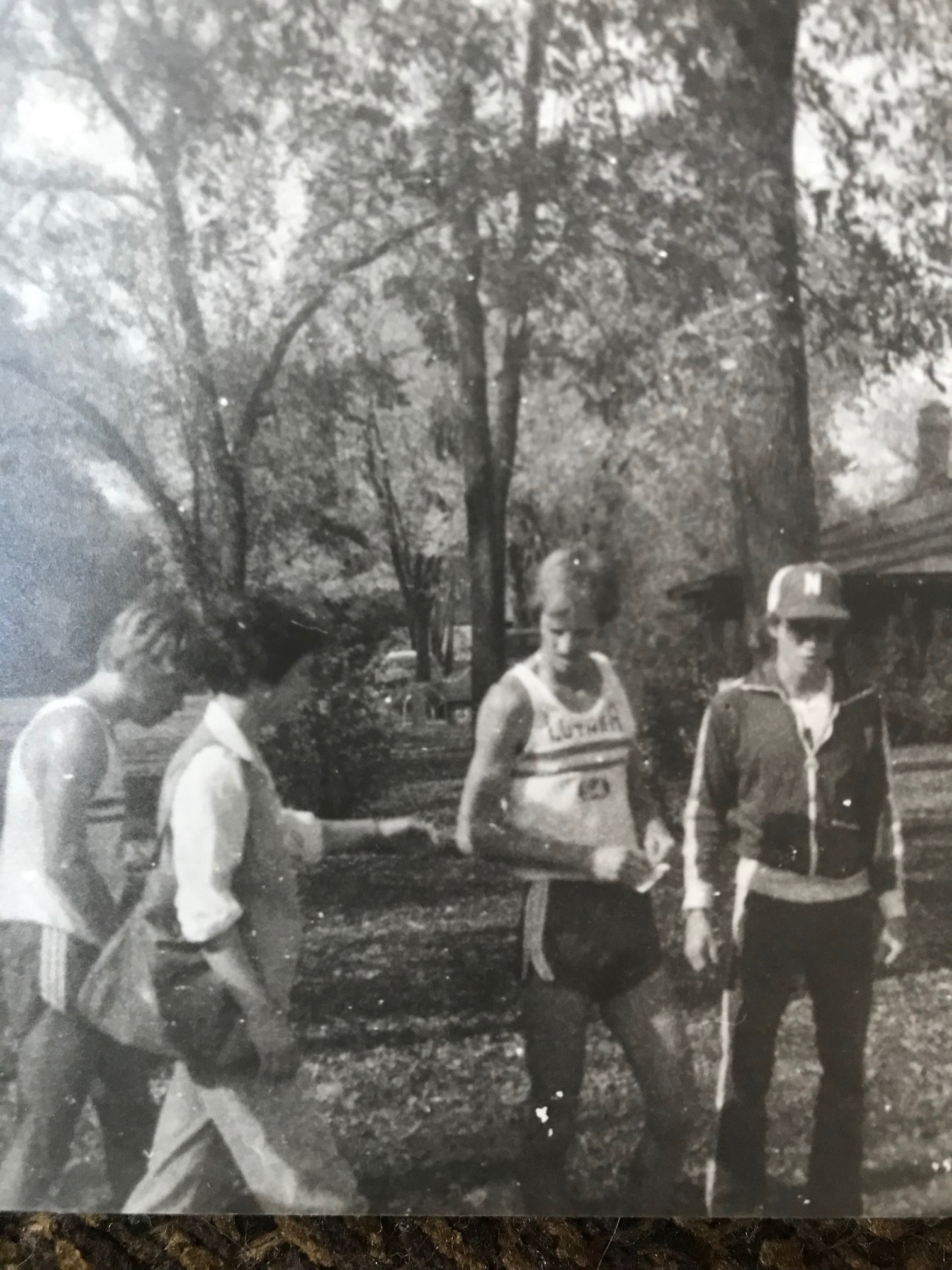
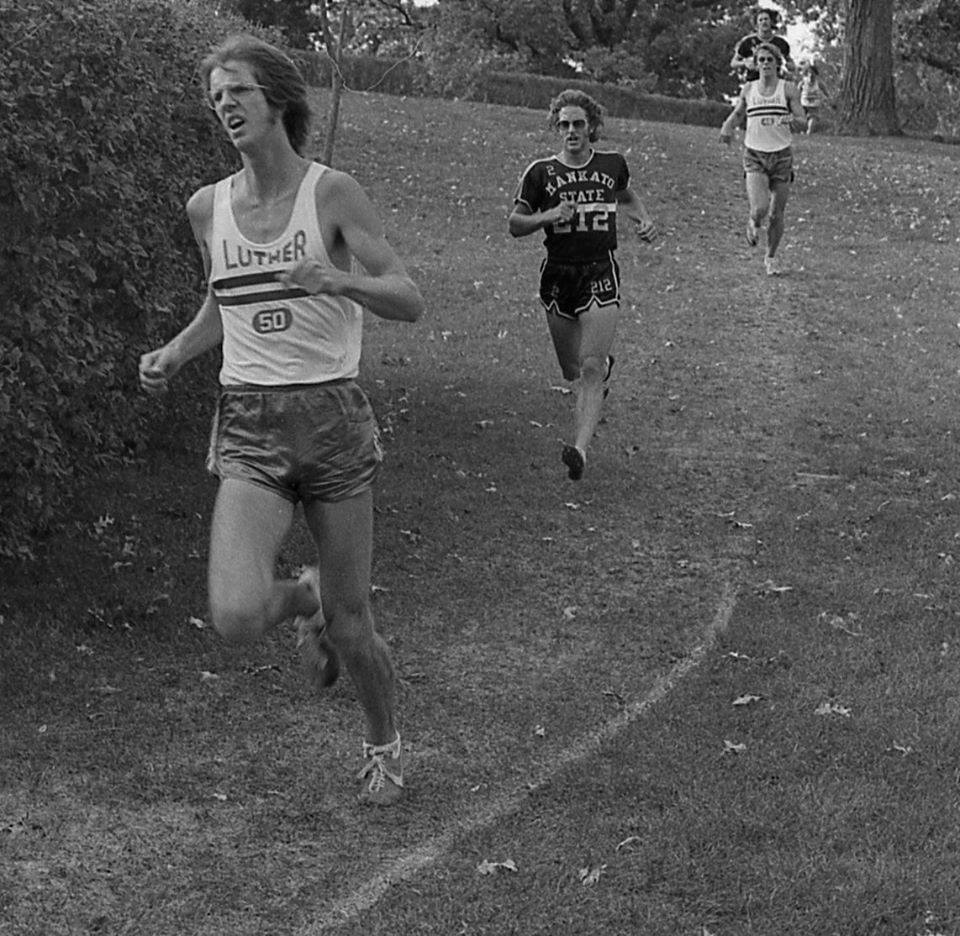
Competing with a former teammate Bill Sanders in the Kaneland Invitational, 1974.
I can say that I fell in love with running at a fairly early age. My father nudged me into cross country as a freshman in high school, but even before that, I loved the sensation of running more than any other aspect of sports. Even as a ten-year-old baseball player I relished running from home plate around the light pole in center field and back. Same goes for running the bases. Run, run, run. I was a Forrest Gump kind of kid, I’ll admit. Not always the brightest bulb in the socket, in some ways. On many fronts I was critically naive.
But boy, I liked to run. That much I knew how to do. It wasn’t always that way. As a five-year-old child, I had a friend named Jimmy Morris who lived up the hill from our house in Seneca Falls, New York. One day we were playing and decided to run over to my house. He tore off ahead of me down the hill and I chased after him. Then he stopped and asked, “What are you doing?”
I was running with my arms at my side. I’m not sure why, other than I was shy or something like that. He told me, “Look, run like this!” while pumping his arms. So I followed his example.
A year after that we’d moved to Pennsylvania and our house had a side yard that had once been a tennis court. Somewhere I found a watch that I could use and stood out there on the lawn waiting for the second hand to hit the 12. Then I took off running the perimeter of that lawn. I did it again and again, trying to get faster each time.
Chasing the girls
In grade school I loved running around the playground. We played tag sometimes, and I remember a sweet girl with brown hair and a cowlick on her forehead named Cindy DeMora. She was as fast as me. That stunned me because I’d been taught that boys were faster than girls. I remember chasing all those girls. Betsy Hastings. Kimberly Tracy. Lisa Helsel. The boys in our class…all kept lists of the Top Ten girls we liked. Sometimes I felt like I was in love with some of them.
By junior high our participation in sports was all about trying to impress the girls in our class. In seventh grade we even gave $.99 rings to girls if they were up for “going steady” with us.
Then came high school, and my running became a keen part of personal identity. Having made the Varsity as a freshman, I hoped that girls would find me more impressive somehow. But at six foot tall and 125 lbs, those hopes were a bit vainglorious. Yet I do recall a certain cheerleader snatching me up during a dance in the cafeteria. I went home that night dizzy and dazed from that sudden burst of attention and affection.
It felt like I was in love.
Love is serious business
Ready, Set, Go!
Then came college and dating became a semi-serious business. I didn’t realize even at that age that some women viewed the dating process as a marriage qualifier. We were too busy running dozens of miles and trying to look decently macho and presentable in 70s fashion at the bars. The other factor is that running was just gaining in popularity at the time. The first women runners joined the squad in my freshman year in college. Their numbers increased as the years progressed. But our worlds still seemed separate.
I finally, truly fell in love heading into senior year in college. I was in deeply in love with running at the same time. I lived it, breathed it, and devoted hour upon hour to running. I enjoyed some success at last on both fronts. Love and love.
Then that relationship broke off after college because she was playing for keeps and I wasn’t ready for that.
So I went back to running in a serious way. Had more success. Then I fell in love again. Married. Had two wonderful children. Lived twenty-eight years together. Then lost her to cancer.
But I kept on running. It kept me sane through it all. I still loved running.
Remarried
Now I’m remarried. Found genuine love again. We run together. Ride together. Swim together. For those who’ve loved and lost, I say to you: Don’t give up. If you’ve ever been in love before, with anything or anyone, don’t give up.
There is love in the world if you keep on looking for it. It may be pursuing what you love, getting out in the mountains or walking by a river to watch it flow. Love is there.
The way I look at it, I’ve helped propel the world in its rotation with my own little feet. Like gerbils on a wheel, we run and run while the world squeaks away around us. What goes around, comes around.
Now go out there and love it up, with all you’ve got.
Through years of competition and many sports injuries, it pays to keep on smiling.
At the age of five years old, I was in the backyard of another kid that would become my best friend through the age of twelve. Our mothers were in the front yard talking about how we might get along when my new potential friend swung a golf club and cracked me in the skull so hard I nearly blacked out.
I still recall the dull ringing sensation of that possible concussion. A lump grew on the side of my head and we headed home with an ice bag clamped to my skull.
That was the first of many such incidents over the years. As an athletic kid with two older brothers I was always trying to keep up and prove myself on any field of competition. It quite often resulted dramatic injuries.
During years of elementary school recess, I ran into the swingset metal poles so often that my mother finally told the school, “You only have to call me if he’s knocked out.” I’d be chasing after some kickball headed over the swingset and KONG! hit my head on the metal pole again. A lump would rise on my forehead like a cartoon and off to the school nurse I’d go.
Playing catcher in softball in fourth grade, I saw a fly ball pop up from home plate and ran toward the pitcher’s mound to catch it. The pitcher came running toward the ball and his buck teeth gouged into my cheek below the eye. That cut was so deep it required stitches and I had a black eye for weeks. But I still caught the ball.
That same year I was chasing down a fly ball in kickball when a heavy set kid named Jim ran across my path and I crammed into him at full tilt. He bit a hole straight through his tongue. It didn’t heal properly and he reminded me by sticking a pencil through the bottom of his tongue to show me where the hole still was. I wasn’t the one injured in that incident, at least not physically. Yet it scarred me for years.
While playing pickup football in the side yard of another friend, his older brother tried to stop me from scoring a runback touchdown and wound up shoving me into a rough concrete ditch. My head clonked on the cement and I was knocked out completely. I woke up quickly but my head hurt like never before. Plus I was seeing double. Angry and stubborn, I insisted on walking home alone but had to cross Route 222, a busy road south of Lancaster, Pennsylvania. I took a chance and ran across but approaching cars looked like two or three at once. I wound up at the doctor’s office for stitches that day, and several day’s of rest.
When I started playing organized sports and the risks of not performing grew higher, I had to put fear of injury out of my mind. That was tough during sliding practice in baseball, where the raw bruise on the back of my leg and butt grew worse at every attempt until I learned (the hard way) how to slide smoothly and stand right up at the bag. There are few more difficult lessons I ever learned in sports than how to slide in baseball.
I was thinking about all this rough and tumble stuff because last Saturday I rode my mountain bike for twenty miles and wound up wiping out on a slick downhill section where the road turns and I came into it a little hot. But knobby tires slid out from beneath me and I went into a decent slide while striking my right butt cheek on the road. Getting up, I was a bit embarrassed but not too badly hurt. Thankfully the approaching car was no closer and I didn’t smack into his front end. He drove by without a word but the woman in the car behind him rolled down her window and yelled, “Are you okay?”
“Yeah,” I muttered. “Just a stupid mistake. I came into the turn a little hard.”
“Well,” she said in reply. “You’re braver than me. I wouldn’t go out in this stuff.”
I’ve cracked up on my bike a number of times. Once by not watching the trail ahead and I rode headlong into a fallen tree. Another happened because of bike wobble while tearing down a long hill at 40MPH in Wisconsin. Another took place when I tried riding a road bike perpendicular from the grass into a curb. I didn’t see a gap and flew head over heels above the handlebars. Landed on my helmet. Got up and rode home. Part of life.
Even on the run, I’ve stumbled and fallen a few times. Jumping a chain across a forest preserve driveway years ago, I landed on one foot and wiped out on the black ice. I went down hard, injuring my wrist. It hurt for months. Back in the 80s while training on a golf course, it grew dark outside and I ran smack into a rope across the fairway.
None of this is because I’m uncoordinated or a bad athlete. It’s because I don’t inherently dwell on limits and frankly, sometimes shit just happens in sports. If you play enough of them, it’s part of the price of participation.
That water on the knee injury during basketball in 8th grade resulted from a guy who ran with his head down and crashed into my leg coming up during a full court running drill. The doctor used an 8-inch needle to suck the black blood out of my knee, but I didn’t faint. No sir. I was so mad I stared at that needle and cursed that kid for taking me out of hoops for two weeks. I was a starter and didn’t want to lose my position.
And that’s how it goes in all of life. We get this physical, emotional and situational injuries and keep on trucking. I’ve torn ACLs (twice) and an MCL, had bone chips in my elbow and crashed so hard into a tree on my bike that the purple bruises took weeks to heal and finally migrated around my belly to turn my nuts and crank a surly liver color.
Yes, I love sports. Always have. Always will. My repaired front tooth is from a baseball accident when a line drive that was supposed to be a grounder in practice hit me in the mouth in 1971. Every time I smile there’s a reminder of the cost of having fun.
Do you have certain training distances that make you feel like you’ve really “done something?” I have a few. Running at least three miles, for example. Riding at least an hour. For swimming, it is going at least 1600 meters, a mile, in other words.
This morning I needed to challenge myself to go a bit farther than a mile. I’ve been known to wimp out after 1000 meters because I get a little bored or distracted. The other day I got involved talking with a guy one lane over and wasted so much time I only finished 1000 meters. Not good.
So I put my head down and got to it this morning. No backing off.
To make that happen, I swam 200 meter intervals right from the outset. None of this wall-hugging bullshit where I sit there too long catching my breath or thinking about whatever comes to mind. “You can think in the water,” I told myself today.
Mind in other places
And so it went. The only time I took a break was saying hello to a fellow triathlete with a Lake Placid 70.3 cap on. He told me the race was great. I told him I’d grown up in Upstate New York. He said he went to school in Ithaca, at Cornell University. I told him that I studied at the Laboratory of Ornithology and shared that that I’d grown up at the other end of Cayuga Lake in Seneca Falls. He explained that no one is encouraged to swim in the lake anymore. I looked that up and it appears there are algal blooms causing the lake to be toxic these days. Like so many other places in this country, the phosphorus from agricultural and residential rain runoff is turning lakes like Cayuga into breeding grounds for algae that can kill you, your dog and anyone else who enters the water. I grew up swimming in that lake. I guess no one goes in the water much these days. This is what a toxic algae bloom looks like. Who wants to swim in that?
Algae bloom in Cayuga Lake
So I had that to think about during the next 500 meters of swimming.
Shifting gears
Then I shifted from 200s to 100s for a few laps. With 200 to go, I shortened the intervals to 25 yards and hit them as hard as possible. Go fast when you’re feeling tired. That’s the way to teach the body to respond in races.
I did that in the best swim I had this past summer, down in Muncie. I closed the second half of the mile swim two full minutes faster than the way out.
So the goal of swimming a bit longer and finishing a bit faster was the answer to “Why 2K today.”
When it was all done it did get me thinking about the fact that Y2K (the year 2000) was so many years ago. You might recall that the world was afraid of what might happen that New Year. Computer programmers spent hours converting poorly completed code so that entire systems would remain running rather than shut down because there were not enough 0s and Is to go around. Or something like that.
The other part of the world swore that Jesus was gonna back and trash the place.
Twenty years later, we’re afflicted with threats of insurrection and the sickening truths of religious complicity with a godless demagogue, a pandemic of biblical proportions and a year called 2020 when no one could seem to see shit when it came to solutions.
Want a visual take on 2020 in hindsight? No matter how you look at it. America fucked up.
Google goggles
That is in part why I took off my older swim goggles halfway through the workout and broke out the new ones in my bag. The anti-fog juice wasn’t helping those old Nike goggles anymore. They clouded up every two laps to the point that I almost hit my head on the wall. That would be a terrible way to end a workout, bleeding all over the pool from a laceration on my naked skull. I’m thin-skinned about such things.
With the new goggles firmly on my face, I felt like a new man in the water and could see ahead of myself the entire length of the pool. That answered the question “Why 2K?” Because it’s there. I could actually see it.
Going farther than you think you can is always a good answer to why you do anything in this world.
Perhaps it’s time we uncorked a few truths about love and joy and loneliness and sex and sex and sex and sex.
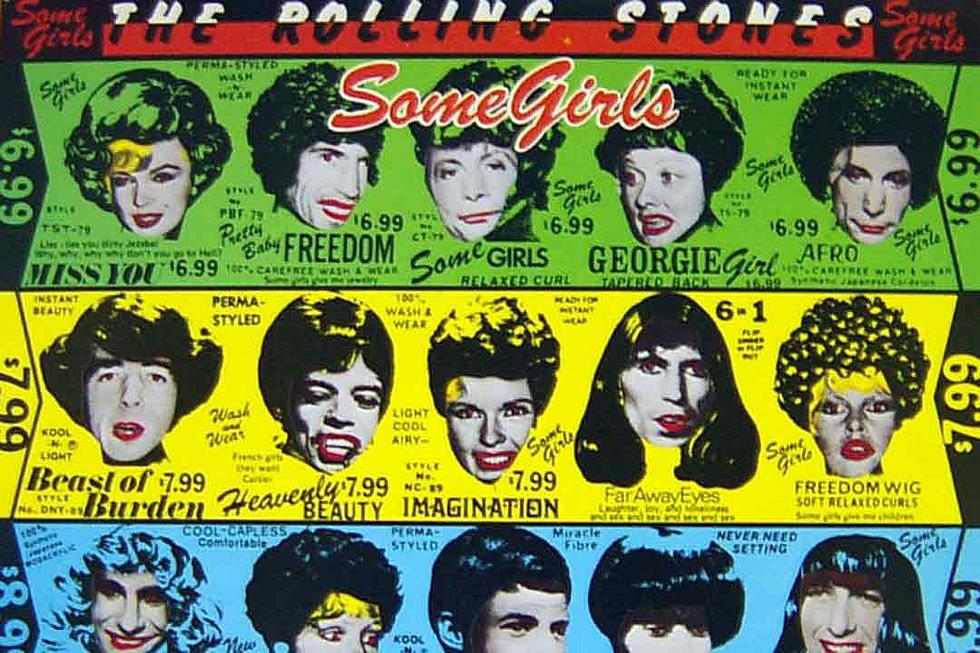
If you know the Rolling Stones song Shattered, you’ll recognize the headline of this blog today. That album came out the summer between my junior and senior year in college. I’d sing parts of that song as we ran mile after mile in the autumn heat in pre-season cross country practices.
Love and hope and sex and dreams Are still surviving on the street Look at me, I’m in tatters!
That summer I’d cut off the super-long hair that I’d worn all junior year. Then I shaved my Lasse Viren beard and got fitted for contact lenses. When I showed up at our fraternity party that first week of school, no one knew me.
I’d also broken off a somewhat toxic relationship from the previous year and had used that summer to reinvent myself. Upon return to an RA Retreat late that summer, I’d fallen in love at first sight with a woman. It was a period of personal transformation not uncommon to many people going through their college years.
Yet as dramatic as those events all seem in retrospect, I have also thought what it must be like to experience even more dramatic personal changes, such as acknowledging that you are gay.
Coming out
My son came out during his freshman year in college. I recall making a drive downtown with him to the University of Chicago late that fall. He told me that he felt like there was an anvil of pressure on his chest. Yet he wasn’t quite ready to talk about whatever was going on in his mind, and his life.
At the same time, his mother was going through intense chemotherapy treatments for the ovarian cancer that struck her in 2005. Our entire family was experiencing immense changes in real time.
But Evan did come out to us at a family dinner that winter. His mother was surprised. In the moment, she had difficulty processing what our son was saying. She turned to my daughter Emily at one point and said, “What do you think about this?”
To which Emily replied, “I think we both like good-looking guys.”
That night I called our neighbor and friend Bob, a quietly gay man who took care of his aging parents who lived in the house next door to us. Upon my call, he rushed over to our house and showed up with a look of great concern on his face. When I told him that Evan had come out to us, and I wanted some advice, he looked at me seriously and said, “Oh, I was worried Linda was sick again. I thought it was something serious.”
I love the transcendence of his counsel in that moment. Years before I’d noticed when shutting down the family computer in our kitchen that my son had visited a gay Internet site and left a tab open. I talked with my brother that day and told him, “I think Evan might be gay.”
“If he is, he is,” my brother told me. He meant that in a good and accepting way. I replied, “I know. It’s all good. I just want him to be happy in life. That’s all.”
His mom felt the same way, but perhaps it didn’t come out exactly that way when she told him, “I just don’t want you to get hurt.” That’s a mother’s natural reaction, protecting her child. Without much knowledge from our experience what it means to be gay, it was her way of inquiring how he felt.
Prior history
My son Evan on a beach somewhere “Levantating” as only he can.
One of her closest friends in grade school came out as a gay man years later. We met him at a reunion for that school and talked all night. He was engaging, funny and smart in ways that my wife adored. That night, we talked about that friend of hers and how hard it must have been to be raised in a radically conservative Christian congregation when you sense that you are gay.
Recently I’ve read accounts by several gay people, including Anderson Cooper, stating that they knew by the age of six or seven years old that they were “different” in some way. My daughter, the keeper of family history, transferred a number of videos from their youth onto CD from VHS tapes. While watching those videos she noticed that even at an early age, my son operated on a couple different planes of awareness. You could see that in his attention and expressions.
He was always aware, and self-aware. He started talking at six months old, saying his first word, “Bird” upon seeing a sparrow on the gutter of the house next door. My late father once said that he’d never seen a child so observant at such an early age.
As he grew up, there was a keenly social side of my son. He loved parties and social events. He was also diverse in his interests. During his high school years, he played soccer and ran track his freshman and sophomore years. He had talent, running a 2:02 800 meters at fifteen years old. Yet somewhere after his sophomore year, he turned to me and said, “Dad, when I’m doing track, I’m 25% happy. When I’m doing drama, I’m 100% happy.”
“Then the decision’s made,” I replied.
Drama and theater
He moved further into acting and directing plays, including serious drama, Black Box Theater, musicals and Shakespeare. That journey continued through his college years where he led a production of “Midsummer Night’s Dream” held outdoors in the round on the college campus. His directing brought out all-new layers of humor in the play that I’d never seen.
But it was his performance as Mercutio during his senior year in high school that was a “coming out” of sorts that I’ll never forget. He’d auditioned for the lead role but someone else got the part. Thus he threw himself into the role, a curious and mischievous part that Sparknotes describes this way:
“With a lightning-quick wit and a clever mind, Mercutio is a scene stealer and one of the most memorable characters in all of Shakespeare’s works. Though he constantly puns, jokes, and teases—sometimes in fun, sometimes with bitterness—Mercutio is not a mere jester or prankster. With his wild words, Mercutio punctures the romantic sentiments and blind self-love that exist within the play. He mocks Romeo’s self-indulgence just as he ridicules Tybalt’s hauteur and adherence to fashion. The critic Stephen Greenblatt describes Mercutio as a force within the play that functions to deflate the possibility of romantic love and the power of tragic fate. Unlike the other characters who blame their deaths on fate, Mercutio dies cursing all Montagues and Capulets. Mercutio believes that specific people are responsible for his death rather than some external impersonal force.”
That rather aptly describes the plight of a still-closeted gay man in high school society, does it not? I was not naive to my son’s interests and orientation all that time, but I respected his choices and his needs. He most definitely ran his own life, but felt it necessary to live with the specter of repression through those scholastic years. Because coming out was still not that well accepted in those years.
Bold performance
Yet his fine performance of Mercutio tossed all that repression around like a ragdoll. Using a knotted rope as a “sword” during the production, he whipped it between his legs like a giant twisting cock. The audience both reeled and roared. Evan plowed across the stage with abandon, because if he was going to go out without the lead role, he was going to leave a mark on the memories of all those watching the play. That’s what Mercutio is supposed to do. In many ways, I think it’s what gay people in many walks of life are supposed to do.
All of life is a competition like that. For centuries, gay men and women have been cast in societal roles that force them to hide their true character. Gay athletes only recently started to “come out,” and the first pioneers in that endeavor suffered castigation. Gay military still have to play strange games within the ranks and all the way up to the Commander-in-Chief. Gay musicians are more readily accepted because they are part of an embracing arts community. Yet artists like Ricky Martin and others were advised to protect their heterosexual images in order to make more money.
Thankfully, the next generation in this world, our Millennials, don’t seem to give two fucks if someone is gay or not. That’s why I’ve been thinking about the lyrics from the Stones song Shattered lately.
“Laughter joy and loneliness and sex and sex and sex and sex and look at me! I’m in tatters! I’ve been shattered.”
To compare those lyrics with interpretation of the Second Amendment is quite instructive. People too easily forget the first part of the phrasing “A well-regulated militia, being necessary for the security of a free state…” in order to emphasis the second, “The right to bear arms shall not be infringed.”
It is salacious to emphasize a desired prejudice to deny the more responsible and rational qualifying phrase. That’s how society gets shattered.
Shattered…shedoobie
No one deserves to be shattered for their sexual orientation, their transgender physicality or their gender fluidity. Because like the song lyrics intimate in their sarcastic repetition, it’s not all about sex and sex and sexand sex. But the people who fear the sex part of homosexuality and find it abhorrent make it all about that. They love to use the taboo to distract from the humanity of gender and sexual orientation. The laughter, joy and loneliness part. It matters too.
So here’s the truth about all sexual orientation: Life is also about companionship, love, respect, trust and acceptance.
One might note that those are all quite Christian values, yet a significant segment of the Christian world clings to just a few Bible verses to paint homosexuality as a sin. That legalistic take on scripture is rife with anachronism, ignorance and prejudice. I’ve known so many gay Christian people who love their God I’ve lost count. So many of them carry out the virtues of scripture better than their dismissively bigoted counterparts it is perversely comic to suggest that the “holier than thou” crowd is worth its weight in yeast or dough.
Love is all you need
I love my son and I love all those who love him. I understand. There have been times in my life when I’ve looked at another man and thought to myself, “He’s handsome, and funny, and smart, and if I were gay, he’d be the one.” It’s not a far leap for me to realize that sexual orientation is just that, a desire for people of the same gender. There’s no sin in that, as far as I’m concerned.
This blog is a bit long because there’s a ton to say about this matter. As our country reels from attacks on its institutions and the Constitution, I think about all the social and civil progress our nation is trying to make and why so many people fight back against it.
It is because, secretly, they are the people that are most afraid in this world. But they’re not alone. Even the people who wrote the words in the Bible were afraid in many ways. Yet so were the religious authorities who threatened and conspired against Jesus. They were afraid of him. So they reacted with controlling words and violence. They conspired with political leaders to do their vicious bidding. For thousands of years after those actions, Christian leaders adopted the same legalistic practices once they got control and imparted the same sort of vicious repression to which Jesus so objected.
This is what happens in the world when people who are afraid of others are allowed to take control of society. For two thousand years the bravest people in the world are those that have stood up against these fears that get turned into violence through religion, politics and selfish desires.
Sins of Scripture
As Bishop John Shelby Spong wrote in his book The Sins of Scripture, even the Apostle Paul was a deeply repressed man struggling with instincts he both refused and denied in himself.
Spong wrote: “Yes, I am convinced that Paul of Tarsus was a gay man, deeply repressed, self-loathing, rigid in denial, bound by the law that he hoped could keep this thing, that he judged to be so unacceptable, totally under control, a control so profound that even Paul did not have to face this fact about himself. But repression kills. It kills the repressed one and sometimes the defensive anger found in the repressed one also kills those who challenge, threaten or live out the thing that this repressed person so deeply fears.”
I think you can ascertain that there are other people in this world who are engaged in deep states of denial about themselves and others. As a result, people are suffering and dying because despots of that kind would rather punish others he considers weaker than himself than admit some sort of weakness.
Yet it is those precisely those supposedly “weak” or “inferior” people that are some of the strongest human beings. That’s what Jesus promised, “The meek shall inherit the earth.” Wise words all around. Glad Jesus could come out with them.
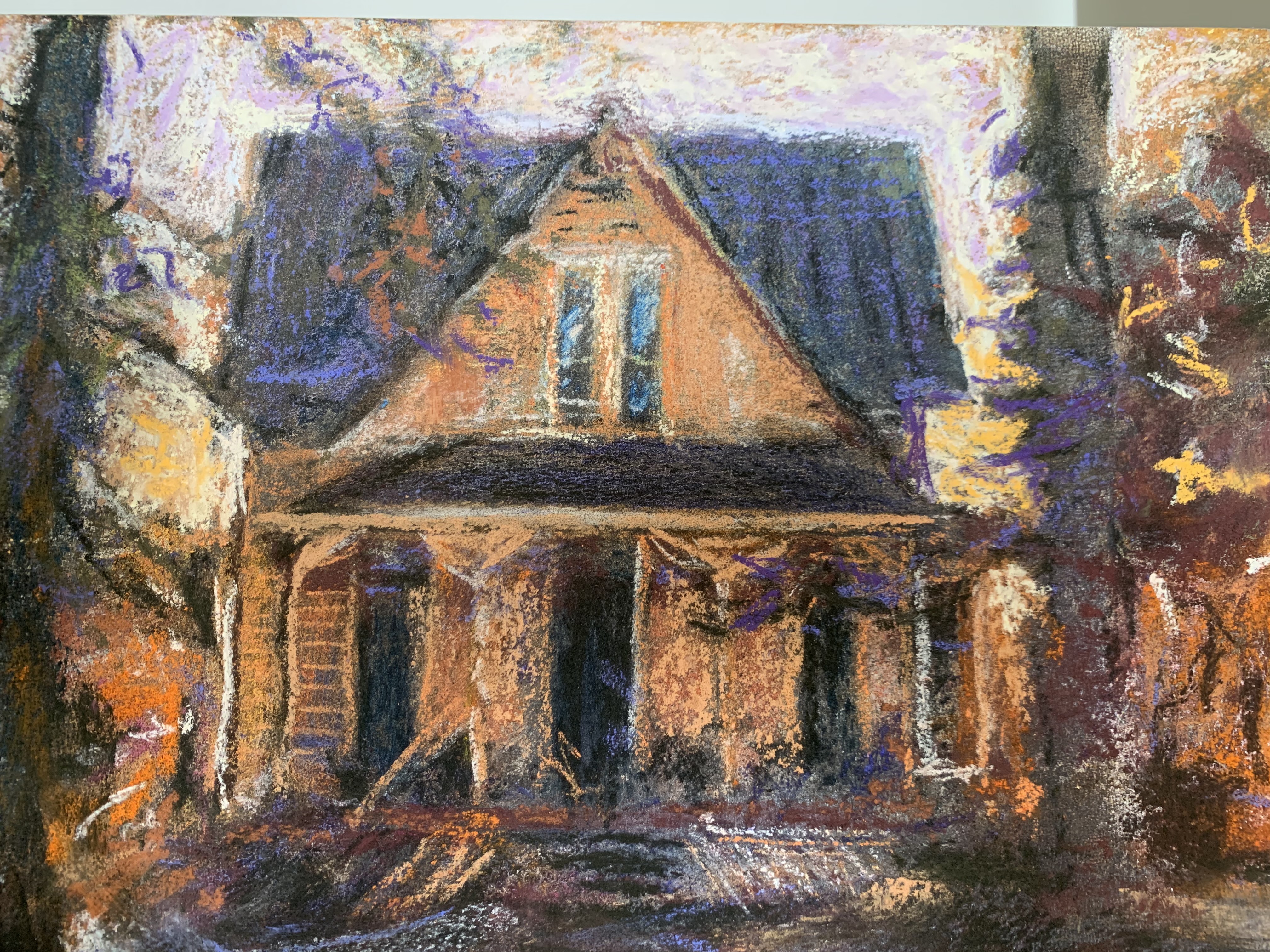
There’s an old house that sits on one of the most popular running routes that our college team used north of Decorah, Iowa. That house was not in great shape even back then. These days it is close to collapse. On a trip to Northeast Iowa two years ago I took photos and did a pastel drawing of the place.
Pastel by Christopher Cudworth
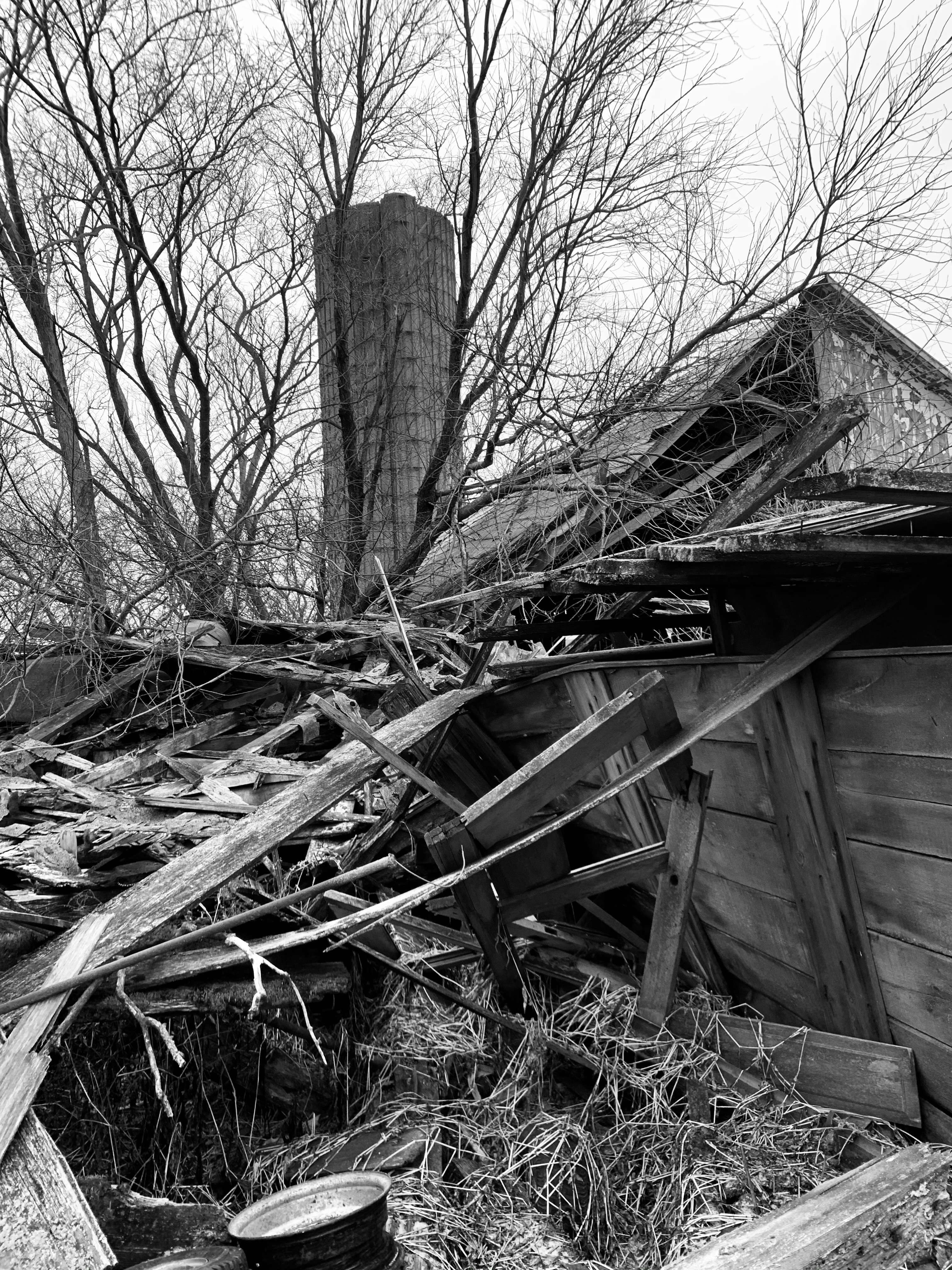
Back home in Illinois, I frequently pass abandoned homes and farms while driving on country roads on bird trips. Those old joints all seem to have a story to tell. Mostly it is one of inevitable neglect because whatever enterprise or income once sustained the place no longer lasted. Then the residents or tenants moved out and the slow process of decay and collapse begins. There is a haunting quality to that knowledge, no doubt.
Usually the aging process starts with paint flaking off the sides of a house or barn. That’s usually the first sign that a homeowner is struggling. They either can’t afford to paint the place or no longer care.
When the shingles start sloughing off, that’s the point of no return. In comes the rain and other elements. Then the place starts falling apart from the inside out. Gutters sag and fall off. Glass windows are long gone. Vandals or wildlife invade. The place is no longer fit for civilized living. So it sits there.
Recently I stopped on a drive to cautiously inspect an aging barn with an old Chevy parked inside. There back windshield still bore stickers featuring the Coyote and Roadrunners. The license plate was gone. That car was going nowhere fast.
An old barn south of Dekalb, Illinois. Photo by Christopher Cudworth
I’m not alone in being fascinated by these old places. There are groups all over Facebook sharing photos of abandoned homes and places. Some people view them the home of ghosts. Others poke around inside to see what evidence of occupancy still resides there.
I tend to stay out of the interiors. No Trespassing signs far out in the country may not seem to hold much authority, but someone posted them there. In this day and age, it’s not wise to test someone’s patience or their notion of propriety. Nor do should we seek to test their claim to property or the range of their shotgun, if that’s what moves them.
Sometimes while pedaling by on my bike I’ll stop quickly and take a set of photos because it captures a moment in time. There’s a certain amount of sentiment that goes along with looking at abandoned old homes and farms. Some of us recall the time when farms such as these had cattle or milking cows out in the fields, and there are still a few working farms with cattle and hogs here in northern Illinois. Passing by those barns in summer is a real olfactory treat when the wind is blowing right at you on the bike or run. Then you know you’re really alive.
Some of that sense of connection draws from my own experience. While I did not grow up on a farm, I visited both farms on which my parents grew up. I shoveled manure into the troughs, let a calf suckle on my fingers so hard it scared me, and rode on the tractor with my wild uncle as he roared the thing down the two-track toward the Susquehanna River. That farm is long gone now.
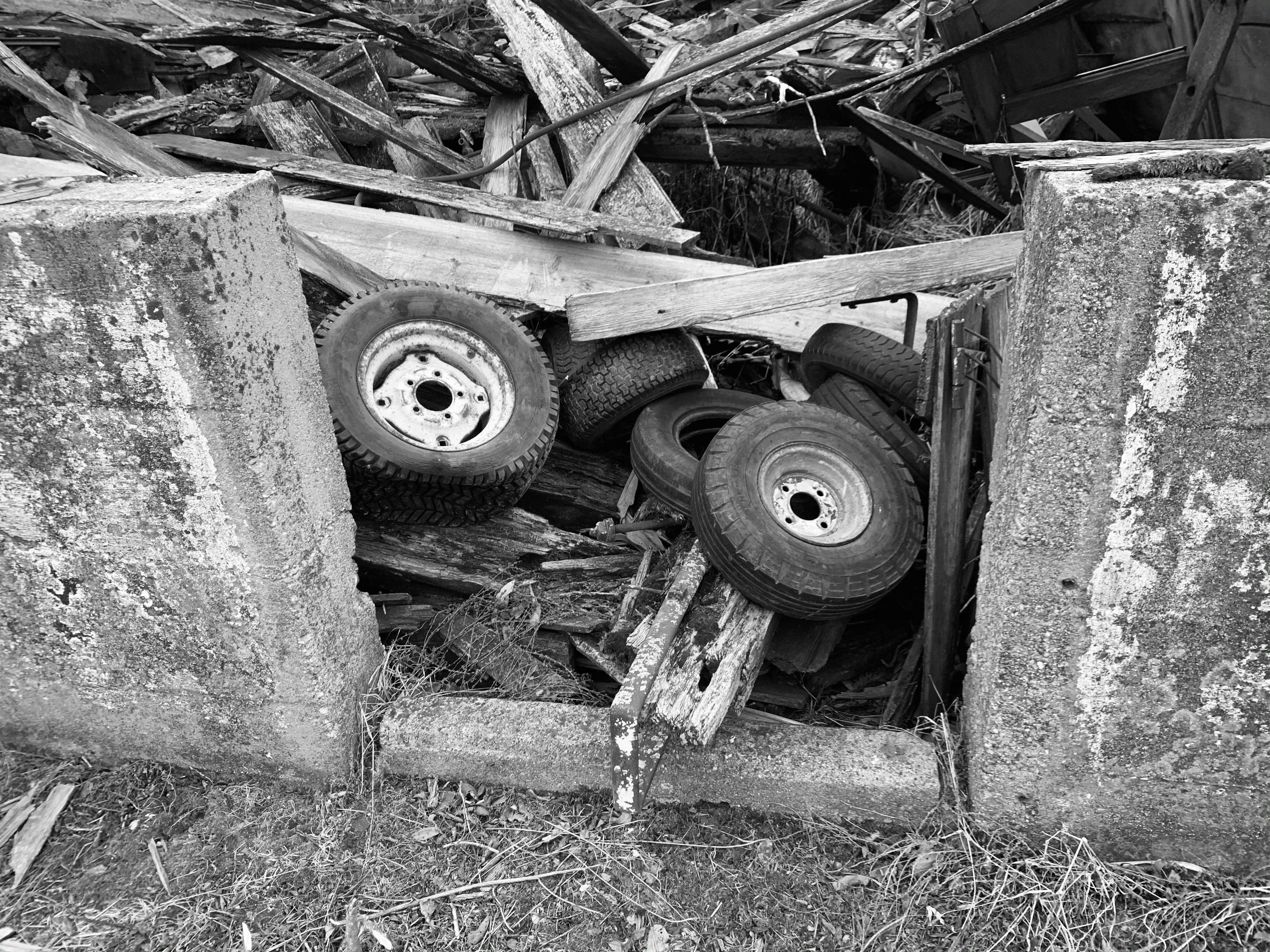
Farm implements crumble too.
That fascinating realm between the quick and the dead is what moves us to be curious about old, abandoned place. Looking at the crumpled remains of a former farm property is like conducting a crime investigation into past lives and agricultural ventures that takes us back decades. It’s as if the remains of these places hold some secret we’re supposed to know. They are the wheelhouse of regrets that are not our own, yet they do allow a touch of remorse to reach us. We need that bit of sadness to shove us along sometimes, and remind us to take our own notions of home, and life, a bit more appreciatively.
At the swimming pool this morning I’d completed 500 yards when a fellow in the next lane over had a question about the substance I’d used on my goggles to keep them fog free. That led to a discussion of swimming in general, and he launched into his life story.
I’d commented that he seemed pretty fast when I was swimming next to him one lane over. Turns out he swam in high school “back in the day,” as he chuckled and smiled. He’s seventy-five years old, he told me.
“When I was a sophomore, I went out for swimming and was one of the last guys on the team. Plus I was a pudge due to some allergic reactions to the chlorine in the pool. But when I was a junior I figured out that I was snapping my head up on every stroke. So I quit that and put my head down into the water and started winning races.”
He continued, “By the time I was a senior, I was the best man on the team. Because I wanted it,” he grinned, pointing at his head. “The coach wrote in my yearbook, “He’s proof that if you try hard enough, anything is possible.”
He served time in the military on an aircraft carrier. “We were out to sea once and the waves were so big they were breaking over the flight deck, eight-five feet up,” he marveled. “The destroyer behind us spent more time underwater than out,” as he demonstrated by whooshing his hand over and under the surface of the pool.
“Some guy got drunk once and took a dare to jump off the ship,” he related. “Fortunately, someone saw him and the destroyer following us picked him up.”
He recalled that during time on base in San Diego, there was a swim competition but he did not sign up. That morning, his squad commander called him out of bed, “Come on, you’ve got to represent us!” he instructed him.
“I won six events; freestyle, backstroke, breast stroke and everything. But when the meet was over, the Officers noticed that I hadn’t signed up. So I didn’t get credit for any of it.”
“My squad leader felt bad about that, so he signed me up for a regional meet between bases and I decided to get in shape. I only had three hours of duty at the time so I swam and lifted weights. Then I met some Navy Seals who swam three miles up from their base and ran back. I started doing that with them and when I was done, I had a 44″ chest and a 33″ inch waist.” He drew a clear triangle with his hands. “I was shaped like that.”
A life in science
Out of the military, he worked in scientific fields including a stint at a laboratory doing molecular research. “One day, they put two pipes together and shot some energy through them but the compression didn’t work. So they had us line up twenty-five guys deep and each of us had to do 25 seconds of work before we had to get out of there because of the radiation. Those 25 seconds changed my life…” he said, his voice trailing off. “My life was never the same.
That exposure to radiation caused thyroid problems that lasted for decades. Later in life, he visited a doctor about some memory issues as well. When relating his experiences the doctor immediately tied together that radiation exposure with how the swimmer’s mind did not work in some specific functions.”
These days, he’s still swimming because it feels good. Following a series of laps at a decent pace, he upended his body in the pool doing handstands for “flexibility,” he informed me. “And for the lungs.”
Between my laps he offered instruction on the difference between short-distance swimming form and a long-distance or open-water swim stroke. He had me hold up my hand and showed how to position the thumb so that it was on a parallel with the rest of my palm and fingers. We talked about pulling all the way through past the hips and getting the proper rotation and breathing practice together. “And keep your head in the water,” he suggested, pointing to the place on his forehead where the water should flow.
After watching me swim a couple laps he said, “You’re doing pretty well!” I thanked him for that.
We thanked each other for the conversation. “You’re a good man,” I told him. “I like you.”
“So are you,” he replied. Then he climbed out in his black swimming suit and vest and disappeared into the locker room. I finished the rest of my workout thinking about all that he’d told me, up to my neck in another swimmer’s life story.
During my long running career I saw plenty of meets and races where competition was fierce. For the most part, I witnessed good sportsmanship. But two days stand out in which bad sportsmanship took the day.
Following a conference cross country meet my senior year in college, a runner from another team won the individual title. On accepting the award, he felt moved to give a speech and said some bad things about our team. He was apparently bitter about the fact that we’d won the team title several years in a row. His speech was so offensive our coach was disgusted.
That said, we still invited him to travel and dine with us at the national meet later three weeks later.
Shattered dreams
The following spring, our track team was engaged in a highly competitive meet to try to win a seventeenth consecutive title. The college challenging us had improved its program in many ways, and that distance runner who made the bad speech the previous fall was one of many good runners that made them a contender for the first time in many years.
Our team’s best distance runners decided to double and even triple up in events to help our team win the conference titled again.
But the low point of the meet came early when one of our 400-meter hurdlers, an All-American no less, was coming down the home stretch in the lead. He’d been forced to train in the pool all spring to get in shape for competition. That meant his first and only race of the season would be the 400-hurdle race at conference where he also hoped to gain a national qualifying time. Approaching the last hurdle, he looked strong but as he landed with his lead leg a loud CRACK resounded across the field and he crumpled to the track in pain. He’d shattered his leg.
The opposing team erupted in cheers. They were yelling mocking insults at our runner sprawled on the track. Fights nearly broke out on the infield. From there, the meet took on a far more dire atmosphere. The anger was palpable and we all ran our hardest to try to defend our title. But in the end, we lost by a couple points.
We found it hard to believe that anyone could think or act like that. But I think back to that day now and then and recognize the same nasty instincts in the likes of people who dominate so much of society today. They believe the only way to “win” is to mock and intimidate. They think it’s fine to breach social etiquette if it serves their purposes. They look to ugly heroes as role models, and model that behavior in social, political, religious and civic situations.
I saw the likes of those people storming the Capitol building two days ago. They are sore losers but they were also sore winners. They call up old wounds to justify their hate and invent new wounds and excuses every time they face their own failure of conscience and cognizance. They carry Confederate flags into the Capitol and wonder why anyone should question their actions. They are losers of the worst kind, the type of people who view good citizenship as an inconvenience to their selfish purposes.
That are not in any way a brand of “good people” as Donald Trump suggested. Not when they behave like they did in the insurrection. They claim to be Christians and Patriots, but act nothing like either of those things.
People are now asking “What are we doing to do with all these people who think like this in America?”
Bully pulpits of many kinds
The only way that makes sense is to stand up the bullies and show them the meaning of their mistakes. I was once followed to my vehicle by the opposing coach of a soccer team that had harangued and cheated its way to a victory. Their fans spent the game screaming angry accusations and criticism at our kids. The referee turned out to be the older brother of their goalie, and the coaches on their side crossed the center line to walk up and down our side of the field. All while accusing us of being the bad sports that day .
Following the game, I hurriedly ushered my family back the car for safety only to turn around and find one of the opposing team’s assistant coaches standing right behind me. He commenced yelling about how I was the cheater and a bad sport. I stood there quietly while he yelled, then gave a glance inside my car at my wife and kids staring out at us both and said, quite sternly, “You know how wrong you are right now.”
Something in him snapped. He stepped back and away from me. Then he looked at my family inside the car and said, “You’re right, I’m sorry.” Then he left.
Over the five four years, I’ve experienced dozens of encounters similar in nature with Trump supporters accosting me through social media and even in person. And like that day when the angry coach stood nearly spitting in my face as he angrily accused me of all sorts of evil that wasn’t true, I haven’t backed down.
Nor should I.
One thing is clear. To clean up the conscience of this nation, we’re going to have to stand face to face with Trump supporters as they shout and rage and accuse rational people of all kinds of conspiratorial things. They feel righteous anger in the moment, and feel justified in having been told they are the on the right side of history.
And like that track team that cheered when our hurdler shattered his leg in six place, we’re going to have to endure some awful taunts and perverse dramatics along the way. There may be seeming victories as voting swings Red and Blue, and triumphal winners may forget their pleas for “healing” and “unity” in the wake of the sedition that just took place. That’s how bullies and liars and bad sports behave. We will have to continue to face them down. Stand strong in the face of vitriolic spittle. Calmly point out wrongful behavior from storming the Capitol to claiming election fraud where there is none.
These boots work great. But they’re not broken in.
Yesterday afternoon at 4:15 I stood up from working at my desk and felt a hot twinge in my right Achilles tendon. It was about a “4” on the pain scale. I walked it off and went to get dressed in running gear.
Twenty strides into the run the Achilles twinged all over again. I stopped. This time the pain registered about a “6.” I thought, “Okay, time to go back home.”
I took our dog Lucy for a walk to see how the Achilles would respond to easy movement. Twice during the walk, the ankle area seized with pain, stopping me literally in my tracks. “Okay,” I said out loud. “That was about a ‘7’ “. My dog just looked at me.
The snow wasn’t deep where we were walking, but now I was nervous about moving around on anything but stable ground. We navigated a snowy field where Lucy got her business done. Then we walked home again.
Back home I decided to strip down and climb into a hot whirlpool bath. The jets ran on my ankle and that felt good. Yet when I changed positions or the tip of my toes pressed against the tub side, I could feel the hot tingle around the Achilles. “3, 3, 3…” I muttered.
Digging around with my fingers, I tried sensing the source and location of the injury. By the time I got out of the tub it was worrying me quite a bit. Unpredictable injuries like that can turn into big problems. I’ve known a few people that have torn their Achilles tendon. It’s not small deal. Surgery. Months of recovery.
During the evening I walked around gingerly and the tendon flared a few more times hitting an ‘8’ one time. I took a few Advil because Ibuprofen works for me.
We sat down to watch the Senate vote on Joe Biden’s certification. I lay there gently flexing my ankle now and then. A glass of whisky helped some.
As I climbed into bed the tendon continued pulsing now and then. During the night a low pain at a “2” woke me up a few times. However, it was what I’d call a “healing pain,” the kind that comes on gently, peaks and dissipates. As the night went on, the pain reduced to a short throb.
By this morning, I was walking around pain-free. What I surmised is that wearing a pair of shin-high hiking boots around for a couple days put my Achilles through some adverse paces. I like the boots for tromping around on snowy days, but they are clunky and tight around the ankle. Taking them off yesterday, I had to struggle to pull them off. That might have strained the Achilles.
The leftover pain resolved itself to the outside of my right ankle overnight. That told me where the trouble is. I’ll have to think twice about wearing that set of boots.
Scares like this certainly make us appreciate being in a healthy state. The fear of having a chronic or profound Achilles program humbled me. There is no way that I could have seen that problem coming, but I’m grateful that today my ankle seems to be better. I guess I’m lucky to have given that Achilles heel problem the boot, so to speak.
Yesterday while out birding on a country road west of our home, I turned the corner where the asphalt surface turns to gravel and spied a pile of Canada geese scattered in the snow. Some hunter must have exceeded the bag limit on geese for the day and was afraid of being caught in possession of too many waterfowl by the game warden, so they dumped their illegal harvest and left it for the coyotes to consume.
Killing geese that way qualifies as “poaching,” which is against the law, so I contacted the Illinois Department of Natural Resources and reported the incident for investigation.
A dead skein of Canada geese by the roadside in central Kane County, Illinois.
The reason why I recount this incident on a blog about running, riding and swimming is that I strongly believe that laws matter, and that extends to every facet of society.
For starters, hunting laws matter because wildlife is otherwise susceptible to overharvesting. Just over one hundred years ago, Americans wiped out a species of bird called the Passenger Pigeon. Market hunters killed off of billions of birds in a span of just forty or so years. That’s proof that even with laws in place to protect natural resources, people are often too greedy, ignorant, selfish and dumb to care about them.
I witness the same kind of self-centered behavior every day on the roads where I run and ride. Out of every ten cars that pass by, there’s always one driver that refuses to move over. Illinois law says that motorists must allow three feet of distance between a vehicle and a bike rider. But people suck at separating hazards or respecting the rights of cyclists on the road. More typically they pick up speed to beat the approaching vehicle to the spot where I’m riding and misjudge horribly. That means their speeding car or truck is now forced to squeeze between the approaching vehicle and me. Rather than strike the approaching car, they swerve in my direction…
Purposely or not, they’ve just broken the law. In essence, they’re “poaching” my position on the road.
Even worse, some drivers clearly intend to intimidate cyclists, roaring their engines and passing close while honking their horns. I’ve seen it way too many times for anyone to insist, “Well, that probably doesn’t happen that often.” Yes, it does.
Aggressive, selfish drivers are all over the roads. An article on DrivingSchool.net documents road rage frequency and its effects on even innocent people. Significantly, it also shares this bit of compelling information:
During a recent poll conducted by AAA, half of drivers who shared road rage stories admitted to engaging in aggressive behavior in response. This type of active engagement leads to more accidents, and sadly more deaths. Both AAA and NHTSA warn drivers to avoid giving in to the temptation to seek revenge or intimidate aggressive drivers. This kind of behavior often escalates a minor incident into dangerous combative driving, which can put even more drivers at risk.
On a daily basis, I’ve seen these instincts between the white lines. People come to think they own the road, and every turn at the wheel is another chance to express their disapproval toward the world. Anyone who challenges them or interrupts their notion of ownership is fair game for a show of force. Of power. Of self-perceived privilege.
In other words, rage begets rage. Selfishness begets selfishness. We see it all the time. It’s the only real trickle-down effect that has ever legitimately taken hold in America. That’s a sad fact. When selfish lawlessness and rage are displayed and approved on a consistent basis, it has definite effects on the psychology of a society. People begin to feel their nativist aggression and domination is acceptable. Their vigilante instincts emerge. They either ignore the law or seek to take it into their own hands. We see these outcomes in police discrimination and brutality, gun violence and mass shootings, and political scorched earth campaigns.
Then it becomes part of the mass psychology and tribal instincts to defend such egregious behavior. Those who resist it are gaslighted at crazy for not going along.
But we should recognize selfishness for what it is. It is fear.
Principled hunters? Hardly. More like Poachers by Trade.
Selfish instincts encourage people to flaunt the law because deep down inside, they fear being told what to do or having to be accountable to anyone else. That’s why unethical goose hunters feel justified in blasting away even when their bag limit has been achieved. It’s why some people try to prove their worth by killing off things of beauty as a display of personal power or prowess. They fear being seen as something less than in control or powerful.
This is the sickness of mind that took over America these last four years. People come to think the law no longer applies to them and seek out a tribe that affirms those instincts no matter the cost.
But there is a cost.
I’ve interviewed state police conservation officers who shared harrowing stories of what they find out in the field; bloody massacres and poaching and outright lawlessness and abuse of nature––and the people who visit it. Officers told me it is hard to process what they’ve seen during their jobs once they come home at night. Some things are so horrific they can’t be unseen.
I’m sure the same thing can be said for emergency medical technicians who visit the scene of an accident when cyclists or runners are struck and killed by vehicles. The trauma on the soul is real.
Right now there are first responders all over the country dealing with people sick from Covid-19. In California, EMTs are being told to determine which clients are deemed healthy enough to save. The rest may be left at home to die.
These are tough choices being forced on people trying to do the right thing and take care of fellow Americans of all races, backgrounds and circumstances. Nearly 350,000 people have died during this pandemic, and the lack of a planned response from the President and the federal government under his administration is responsible for a majority of those deaths.
We know why this is the case. The President was so busy trying to poach votes and lay claim to America as his own turf back in February that he refused to concern himself with the lives of everyday Americans. He was so busy blasting away at his opponents and engaging in political road rage that he cared nothing about the carnage he was creating along the way.
The selfish, greedy instincts of this president have finally caught up with him, but he’s still sitting in his blind or bunker or whatever you want to call it, blasting away like there’s no tomorrow. But there is a tomorrow, and he’s not going to rule it any longer. His plans have backfired. Even his loyal aides lay scattered across the ground like gun fodder. It has been a historical testament to the costs of poaching, road rage and political consequences in which we’ve all either been witnesses and participants.
How you view it all depends which side of the road you’re on.