A personal testimonial for FitnessSingles.com

Readers of this blog know a bit about my personal history. More than they’d sometimes like to know perhaps. That’s a blog for you.

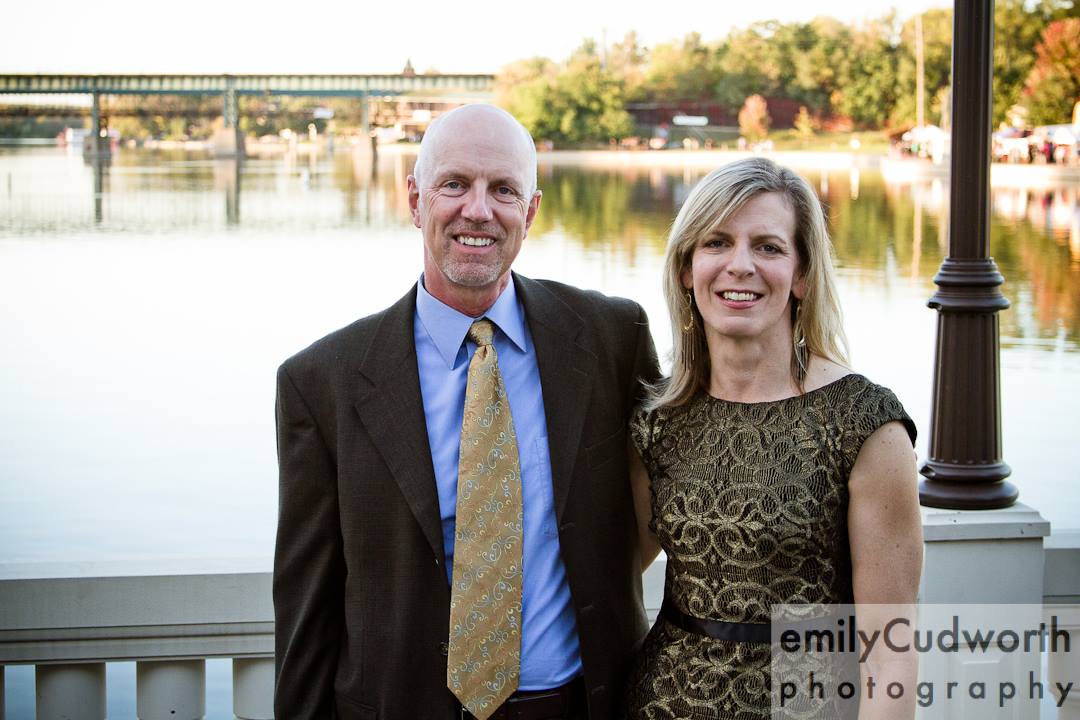
But I just finished writing a testimonial to FitnessSingles.com where I met my girlfriend Sue. I tried to be honest as I could in the testimonial. There’s nothing phony about wanting companionship. There’s nothing phony about dating this woman either. She’s a person of good conscience, humor and compassion. She’s also tough, funny and sings to herself to create happy thoughts.

It was hard at first figuring out what it meant to be dating someone consistently after the eight years of challenges with my late wife’s ovarian cancer. Fortunately my amazing children and family have been there through everything. They support me now in this new phase of life. It’s been hard for all of us in different ways. Hard even for Sue to date a man whose friends all knew my late wife. But it’s all working for good. This is not about replacing someone. It’s about living life to the fullest. It’s something in which I believe quite strongly and relate this journey in my book, The Right Kind of Pride. I hope you’ll pick up a copy on Amazon.com and give it a read. It contains my heart and soul.

So here’s the testimonial for the dating site where Sue and I met.

Hello folks: It’s been a while but I promised a testimonial for FitnessSingles.com. Here it is:

As an athlete for more than 40 years, it has always been my fitness networks that brought close friends. Through high school and college running and beyond, my best buddies and women friends came about through sports…

Sue and Chris on golf courseWhich is why I checked into FitnessSingles.com. When I saw the prompt online somewhere, I recall clicking on it and filling out a profile. I’d been doing some dating through eHarmony and had met some nice people. But nobody really clicked.
At first while looking through the matches in the fitnesssingles.com queue, I was like “Whoa, these women are from all over the place.”
But then I noticed there was one gal right in my home town.
She looked fun. Her profile photo showed her standing over her tri-bike. I thought to myself, “Hmmm, it might be nice to have someone to ride with.”
See, it had been a long journey for me the last 8 years. My late wife had gone through multiple treatments for ovarian cancer. She was an active person who ate well and did everything you’d think was possible to avoid something like cancer. So it obviously hurt to lose her.
But as an individual with a strong personal faith, I also recognized that all of us face challenges like this in life. I even wrote a book about the process we went through during all those years in cancer treatment. It’s called The Right Kind of Pride and is available on Amazon.com. It talks about living positively through challenges and also coming to grips with grief and life after the loss of someone you love.
1895_10151795057614313_1156699803_nThat journey taught me much about companionship, and I felt strongly that the better aspects of my nature are found in sharing time with someone else. That is why I started dating a few months after my wife passed away.
And when I met with Sue the first time after corresponding through FitnessSingles, something seemed right about it. Interestingly, she had come through her own challenges in life with a divorce and recent job changes. So we felt like we were on a similar plane.
Our first date was sharing appetizers and wine at a riverside restaurant. We never touched much of the appetizers we were so busy talking and getting to know each other. That led to a second date in which she rode over to my home on her bike. It turned out she lived a mere six blocks away.
She was a good rider. I still tease her that she dropped me on our first ride. We were hammering along at 26 mph and I was not warmed up and not yet in great cycling shape that season. But she waited and we rode the rest of the 30 miles together that first outing.
Funny thing was, she liked to stop for a short food break at a high school 15 miles out of town. It was the same rural high school I had attended my freshman and sophomore year. It was a strange sensation sitting on that lawn with our bikes leaning against a tree as we talked and got to know each other. Life creates some odd circles at times. Again we felt quite a connection. I will also admit to admiring her in a cycling kit. Some sparks started to fly.
919463_10152283914983332_1254601472_oIt has been 18 months since we started dating. We’ve ridden hundreds of miles together. We run quite a bit too. She’s also an excellent swimmer and I’m slowly picking up that sport as well.
Last fall we traveled to Madison, Wisconsin to work as volunteers at the Ironman Wisconsin. That gave her early access to enter the 2015 race and that’s her plan, to do her first Ironman the year she turns 50. She’s already done several Half Ironmans.
We’re both members of Experience Triathlon and the Fox River Trail Runners. These shared experiences form a nice foundation for our relationship.
But there’s much more. We both have kids in their 20s. We both love art and architecture, music, dining out with friends and the occasional movie.
2014-06-27 002 007Fortunately we’re both early risers too. I never mind if she zonks out on my shoulder after a hard day’s training. That’s part of the gig when you’re athletes. Propping each other up when you’re tired or down.
Because it’s never perfect you know. Both of us have problems like everyone else. We talk those out on our runs and rides. She even had a bike accident last year and I accompanied her through surgery and at the hospital. She did the same for me when I picked up a finger infection from a stupid sliver. Life is full of ;unexpected events and changes. It’s a marathon, not a sprint!
But like any endurance event it helps to have someone cheering you on. We’re glad we met through FitnessSingles.com and hope our relationship continues to flourish in the coming years.
Christopher Cudworth
3C Creative Marketing
Posted in Christopher Cudworth, running, swimming, triathlon, We Run and Ride Every Day | Tagged , , , , , , , , , | 1 Comment

Let’s all get Goofy on our bikes this year

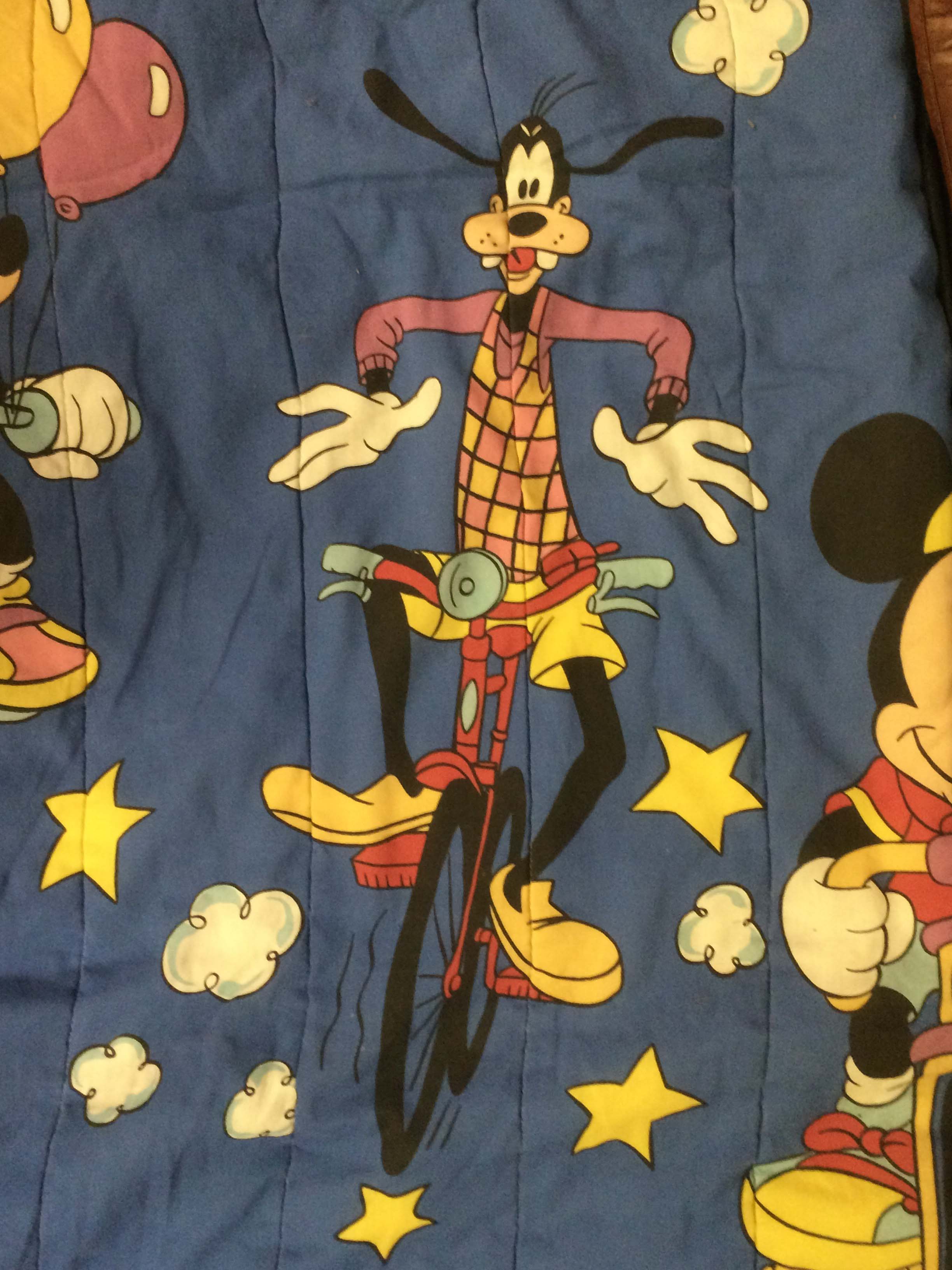
Such form! Such style! And what quads! Goofy looks like he's ready for the Tour this year!

Such form! Such style! And what quads! Goofy looks like he’s ready for the Tour this year!

When my daughter Emily was very young, she developed an affinity for the Disney character Goofy. Of course this infatuation required purchase of many Disney items featuring the image of Goofy. She had a purple sweatshirt with Goofy on the front. Yet when she pulled it out of the drawer it was too much for her to put it on. She’d kneel on the front of the Goofy sweatshirt too embarrassed by the presence of her hero to actually wear the things.

I did not recall that we actually purchased bedspreads featuring Goofy as well. Yet while cleaning out the basement during the holiday break, I pulled a giant bedspread out and was struck by the image that lay there before me. It was a big picture of Goofy on a bike!

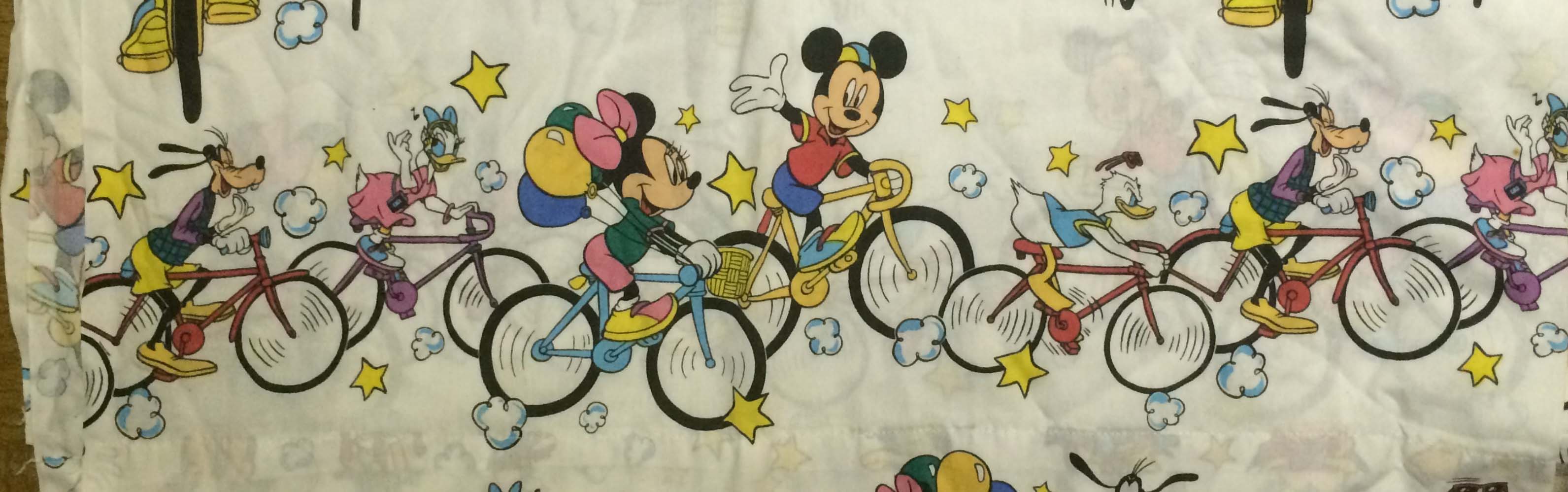
The bedspread also featured Donald Duck and Mickey Mouse riding bikes along with a few other characters. In all those years of tucking her when she was little, it never really occurred to me that her hero would grow up to be me.

DisneyBikeScene2That’s right, I’m Goofy on my bike. What else can explain the bike accident I had last summer in which I ran smack into a downed tree on a straight, clear trail. I easily should have seen that coming. And yet? Too Goofy to notice I guess.

Or that other cycling accident a couple years back in which my bike started to shake and wobble at top speed. That was a real Disney moment. It threw me into a ditch where I lay looking up at the sky in stupified wonder. “Well, that was goofy,” I told myself.

It’s not that I wish similar goofy experiences on my fellow cyclists. It’s that I want you to realize that goofy things really can and do happen.  And when they do, it’s best not to beat yourself up over it. If you can help it, that is.

All it takes is a momentary lack of concentration and you find yourself flying off your bike like a Disney character. Plop. Right in the ditch.

Bono exhibits all the enthusiasm of a Disney character. We wish him a full recovery from injuries suffered in a biking accident.

Bono exhibits all the enthusiasm of a Disney character. We wish him a full recovery from injuries suffered in a biking accident.

Just ask that rock star Bono, whose bicycling accident in New York City is causing him all sorts of physical problems. Apparently Bono (who sounds and looks a bit like a Disney character when you think about it) was traveling pretty fast when he crashed his bike. Recovery from bike accidents can take weeks, months, even years. There’s a chance Bono may never play guitar again.

I know from experience that a moment’s goofiness can cause great pain. But let’s not get too deep into the seriousness before we consider the absolute fun of being goofy. The cartoon embedded below is titled The Big Wash. It features Goofy setting up to wash Delorius the Elephant. This cartoon is one of my all-time favorite Goofy Disney cartoons. There’s a song in here that will leave you singing it 24/7.

The point here is that despite some of life’s more awkward moments, like the incident last night when I tripped in the garage and nearly knocked out a front tooth. Despite such naturally occurring foolishness, it is still worth it to indulge in fun activities like cycling even if they add to the risks we face in life.

Is Minnie wearing Lycra? Does Donald need a bike fit? Can Mickey hold the draft? And why is Goofy riding with one hand?

Is Minnie wearing Lycra? Does Donald need a bike fit? Can Mickey hold the draft? And why is Goofy riding with one hand?

Just take it from Goofy. And me. Life’s serious enough without turning your cycling into a chore or a depressing obligation. Ride hard, but don’t forget to get goofy with it once in a while. It’s worth it.

Choose some new routes before the season gets started. We’re only 60 days away from outdoor riding here in Illinois. Or so we hope. You really do have to be Goofy to go out in 40 mph winds. No doubt about that

WeRunandRideLogo

Posted in Christopher Cudworth, cycling, We Run and Ride Every Day | Tagged , , , , , , , , | 1 Comment

The 11 things that give you confidence are…

By Christopher Cudworth

Starting lineFitness and confidence go hand in hand. When you’re fit and prepared for a race or event, you are naturally more confident. But what does it mean to be confident? How do you get there? What do you do with confidence once you have it?

To understand confidence it is first important to understand that it is not a permanent state of mind. Confidence must be earned in yourself and in the eyes of others. Often those two principles go together.

We earn confidence through several factors.

1. Consistency. Learning to perform with consistency is key to developing and keeping confidence. If you learn through practice to maintain a pace or good form through repetition, it gives you confidence that you can replicate that level of performance in competition.

2. Rehearsal. Getting ready for competition is much like preparing for the lead role in a play. You must learn your “lines” in order to give it your all in terms of performance. That means it is important to “rehearse” everything in your preparation from running, riding and swimming form to how you organize your equipment for daily workouts and races. For cyclists, rehearsing high cadence leads to efficiency. For runners, rehearsing good form leads to better pacing. For swimmers, rehearsing proper stroke eliminates resistance. Then comes applications such as transition zones in triathlons where rehearsal leads to confidence when changing equipment.

3. Measurement. As mentioned, keeping track of your efforts in training and races, even to the point of making graphs of your achievements or mileage totals along the way is an effective confidence-builder. Nothing builds confidence like seeing your progress. Whatever methods you use from Strava or other digital measurement tools to handwritten journals, be sure to be consistent and thorough. It is often the small details that really stand out in building your confidence.

4. Mental notes. Recording your thoughts about your training is an important aspect of building your confidence. But be advised: there is nothing wrong with writing down negative experiences such as bonking on the bike or hitting the wall during a run. Just be sure to place these events in context with your greater efforts to improve. Even the worst negative can be a positive if you learn from it. In fact we need to push ourselves to the limit in some ways to improve. That won’t always breed happy results in the short term, but it can build confidence over the long term if you see improvement in your ability to deal with stress or challenging circumstances.

5. Improvement. Practicing or training your way to improvement is a prime confidence builder. If your fitness shows measurable progress from week to week and month to month, you naturally gain confidence. Look at your improvement from all angles to be sure you are giving yourself credit where credit is due.

6. Overcoming setbacks. Even if a workout does not go as planned, or you come down with a cold or flu from overtraining, you must learn to calculate the effects of a setback and what you need to do to get back on the track to improvement. All athletes face these challenges. Maintaining improvement is a question of not letting minor setbacks turn into major problems. For example, it is better to have the confidence to miss a day or two of training rather than blow through and wind up even sicker. Be wise enough to recognize as well that big jumps in improvement can lend you a false sense of confidence. Always give your body time to recover after hard training or a race. Having confidence to rest during a racing or training season is the athlete’s best tool for long term success.

7. Set Interim goals. It’s great to have a big goal or two to achieve each year in training. But in order to achieve that big goal you need steps along the way to help you build and maintain confidence for the ultimate event. Setting a 10K personal record during a year in which you hope to set a new half-marathon or marathon PR can be a great way to focus your training on increased speed. That confidence can help you to run a faster pace at your target distance.

8. Vary your routine. Yes, it’s nice to have your training program all mapped out for you. That gives you confidence that you are on the right path to success. Many people hire coaches to map out their training in hopes of achieving a goal. Yet too much routine can result in stagnancy and a resultant loss of interest and confidence. There’s nothing that undercuts confidence more than the feeling that you can’t complete your training because it’s simply too boring and unimaginable to go out for another 80-mile ride on the same repetitive course. You’re human. Change it up. Take a small risk and change your routine now and then. It will help your confidence.

9. Kick your own ass. There will be times when you lose interest and lose confidence. No one can make the difference in you better than you. If you’ve been lacking confidence or focus there is nothing better than choosing a training day to go out and kick your own ass during a workout. Set the bar a little higher and run that 10 X 400 workout two seconds faster per workout than you’ve been doing. Hold yourself accountable. Set up the conditions the best way you know how and then go do it. Make no excuses. Kick your own ass.

10. Kick someone else’s ass. Listen, this thing you do? Running? Cycling? Swimming? These are competitive sports. So quit lying to yourself. It feels good to kick someone else’s ass. That doesn’t mean you have to be an asshole about it. But if you’re fit and you take off with the A Group on the weekend ride or the faster group on the run, make no apologies for your fitness and performance. You’ve earned the right to test yourself. Feel no need to brag about it however. Accept with thanks any encouragement or congratulations you receive. Take note of its context. Then record it all for your betterment in the method you choose. Hold that confidence inside you instead of spending or wasting it on others.

11. Don’t jinx it. Let’s face it we’re all a little superstitious when it comes to confidence. We have our rituals and routines when it comes to confidence about our performance in endurance sports. These may involve pre-race meals that are tested for gastric success. We might do a set amount of mileage the night before or during a warmup. All these “inputs” give us confidence that the legs and body are feeling good and ready to go. So don’t mess around with strange diets because you’re out of town and out of context. Don’t let pre-race frivolity crash months of training and preparation. Have courage to say “no” to these things and gather your confidence in all the right ways. You’ll be grateful you didn’t jinx it by going out of your well-trained head.

Just the same, we gain confidence in strange ways sometimes. We enjoy a late night burrito at some small race on our schedule and go faster than we ever imagined the next day. We learn from these small experiences that our confidence sometimes exceeds even our failings. That’s a great place to be, and a great way to live.

In other words, have confidence but not so much that you become an arrogant or uptight athlete who refuse to experience anything interesting in life. Because nothing breeds confidence like having fun now and then.

WeRunandRideLogo

Posted in Christopher Cudworth, cycling, duathlon, half marathon, marathon, marathon santa, running, swimming, triathlon, We Run and Ride Every Day | Tagged , , , , , , , , , , , , , , | Leave a comment

A shared run for the ages

By Christopher Cudworth

Window Snowblock 3I know I write facetiously now and then. I do that because it’s fun to make observations about how weird the world can be.

But right now I feel serious and happy all at once.

This morning was wet and snowy and soggy out on the roads. All the same we drove to Naperville for Saturday Morning Run Club with Experience Triathlon for the simple reason that we both felt like running.

It’s been a good two weeks with the holidays. Despite the business of family and party celebrations there has been time to work out and recharge.

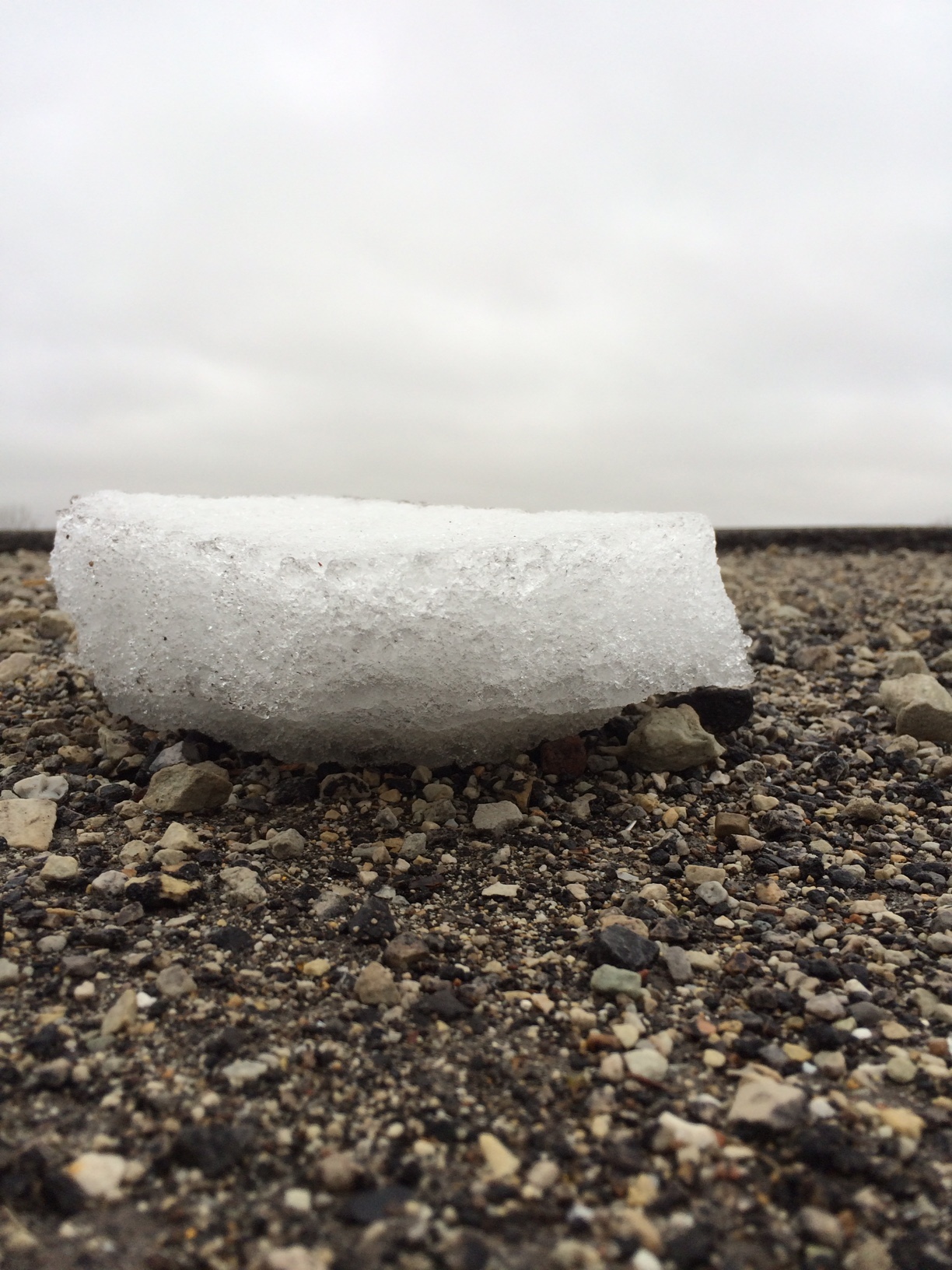
So we laced on our shoes and joined a very few others headed out for runs on a morning where it would have been much easier to stay indoors. The snow was not quite snow and the rain was not quite rain. It struck us on the neck and nose. It spilled over the tops of our shoes. That was part of the fun.

Sue wore her Yak Trax for footing and I used all 40 years of my running experience to wend our way down the riverwalk toward the streets. We climbed that silly hill at the start and found a rhythm despite the inconsistent footing.

I love the feel of snow underfoot actually. It cushions each step. There is a sort of kung fu you must do to keep your feet under you in such conditions. Don’t fight the feel or it gives way and you slip. Just run across the ground and let your feet work their way underneath. There’s enough traction to be had if you don’t overanalyze it.

We rolled onto the river trail and began our journey south toward the Mobil station four miles hence. It was just us and the noise of our shoes. Which was loud. Yet it became standard to the morning and along with our breathing, that was all we needed. We didn’t talk much. Didn’t have to. This was running. Shared.

Window 1For miles we trekked and scooted. My legs felt great from all the weight work we’ve done this week. There was also a set of indoor 400s run at 80 second pace earlier in the week. That kind of running smooths you out. Sue’s stride was better for sure. I could feel her rhythm next to me. Her blue-gray eyes were set ahead somewhere on the trail. Taking in the tracks to and fro. We were busy making our own.

Geese flew overhead and called from the banks of the river as we passed. Their heads went up and the conversation in goose language must be quite the exclamation. It made us laugh for a moment.

At the Mobil station the bathroom was a welcome stop after the previous night out with margaritas and salsa at El Mocajete in Geneva. Great little restaurant. 14 people from our Friday Night Dinner group. We took over the place to some degree. Chatting and dining and welcoming the New Year with fresh conversation. But not too much fun. We were getting up to run the next morning…

After our bathroom break we headed back the way we came and the weather was changing. The raindrops got fatter and the footing got looser. Sue got hit square on the nose and we both laughed about it. She loves and abhors such shocks. Makes life interesting.

I learned the night before that she does not really like me to brush back the hair from her face when she’s talking to someone. I did it as a gesture of affection but in conversation she is focused upon the words being exchanged. No distractions. Same with our running. We share thoughts but don’t drown the runs and rides we share in words. We share the experience instead.

That makes each of our outings a run one for the ages. We give it time so that time gives something back to us. We amuse ourselves watching the high school kids and other running groups share the trail with us. We marvel at how these endurance sports have grown into something men and women share together. It’s all good.

Window 2It is true with our rides as well. There were several summer evenings when the end of our rides coincided with pastel sunsets and a cooling breeze off the fields west of town. “It’s pretty,” she’d say softly as we shared the lane with little traffic to impede us. Amazing the conversations you can have at 20 mph.

It’s not always the conditions or speed that matters when you run or ride. It’s the condition of your mind and the conditioning that comes from running and riding through adversity. It’s the gift of experience and a run or a ride for the ages. No matter what age or gender you are. It’s share and share alike.

WeRunandRideLogo

Posted in Christopher Cudworth, cycling, running, We Run and Ride Every Day | Tagged , , , , | Leave a comment

Greetings and Happy New Year from the gym, where only insane people and those who look like them go nuts working out

Well, it’s 2015 and you’ve probably been to the gym or fitness club already to kick off the New Year. That means you’re basically insane like the rest of us.

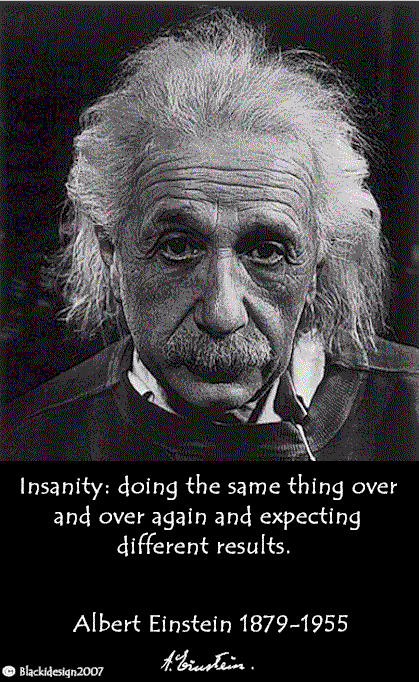
Because we all know the definition of insanity, do we not?

insanityInsanity: doing the same thing over and over again and expecting different results. 

That pretty much describes gym workouts. In fact during research for this article (which involved the intense effort of Googling the work Insanity) we learned there is now officially a brand of workout called INSANITY that offers to give you the results of a year’s worth of workouts in just 60 days. That sounds pretty insane.

Insane routines

It’s funny how we go about it. We all have our “routines” at the gym. We do them with dedication to the manner in which we’ve been taught or learned by watching other people.

Some of us even hire trainers to put us through the paces. Think about it: trainers are people who go to school to learn how to instruct people on how to do insanely difficult things. Over and over.

Of course most of us need this type of instruction because if left to our own devices, we would do insanely stupid stuff rather than insanely smart stuff. Trainers are there to keep us on the smart side of insane. Or possibly they stand just far enough on the smart side of stupid to charge you insane fees. It’s quite difficult to discern the difference on these issues.

Evolution

FLW 1983Growing up as an athlete during a period when it was not really fashionable to use the gym for strength work, learning to be productive in the gym has been a long evolutionary process. These included many adopted exercises that become part of a routine. Some are taught to us by trainers. Others are learned by copying gym rats. Or were they lab rats? No, gym rats. Ah, what’s the difference.

My problem with the gym as a distance runner was always simple. For most of my career I was so frighteningly lean (re: skinny) from running 80-100 miles a week there was no purpose in going to the gym. You cannot build muscle on your body while doing that level of mileage. It bleeds off your frame like vapor from a jet engine.

Now that I’m older and slower, I actually add a little muscle now and then. But a tricky layer of subcutaneous fat hides any hint of a six pack on my belly.

In season

But when I ride and run enough to make that fat go away, my arms and torso naturally thin out and I look like a man out of place at the gym. My Under Armor shirt does not stretch around my biceps like those other insanely beefed up and ripped out guys at the gym curling 70 lbs. per arm. I’m happy to curl 25 lbs and not rip my biceps out of their lean sockets.

So it seems as if my life will always be a perpetual cycle of these insane back and forth swings from lean and fit to slightly fat and stronger-looking.

See, if I’m thin enough to climb hills well on the bike, I look like a tire pump with pipe  cleaners sticking out the sides when I’m at the gym. And if I’m strong enough to add bars on the bench press machine, then I’m heavier overall and can’t run as fast in a 5K or 10k.

UPR TeamGods and goddesses

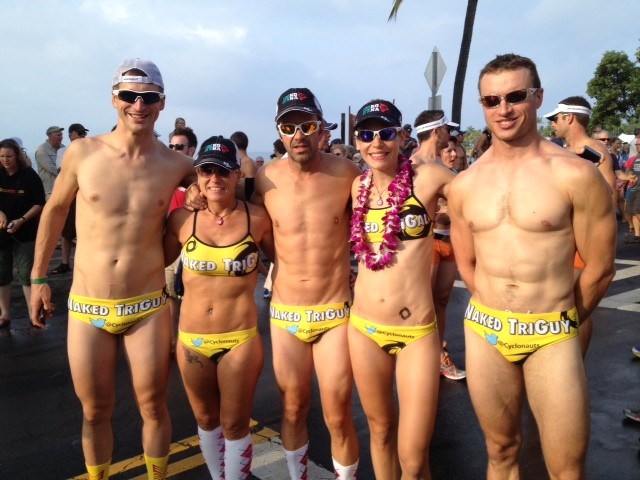
Sure, there are triathletes who swim and bike and run and have these amazingly balanced bodies that look like Greek gods or goddesses. But here’s the thing: it’s a well-documented fact that triathletes really are insane. This is especially true at the Ironman level, where 2.4 miles of swimming, 112 miles of biking and 26.2 miles of running requires even the super elite more than 8 hours of continuous travel to complete.

Basic triathletes require double that amount of time. They start and finish in the dark. In between they typically cook like eggs on a skittle and thank God when the sun goes down. And having attended several triathlons now I can tell you that not all the bodies out there are sculpted and fit. There are fat and thin and awkwardly lopsided people completing these races. They squeeze into their wetsuits for the water and bulge in their trisuits during the bike. Then they do everything they can to move their feet across the finish line that is typically, teasingly, flirted with during the first loop of the triathlon run.

My neighbor does triathlons and he once lost track of where he was in the race and finished one whole running lap early. His time was 30 minutes faster than anyone else in his age group and he was disqualified. But he did not seem to care. “I was happy to be done,” he laughed as he told me the story.

Looking good

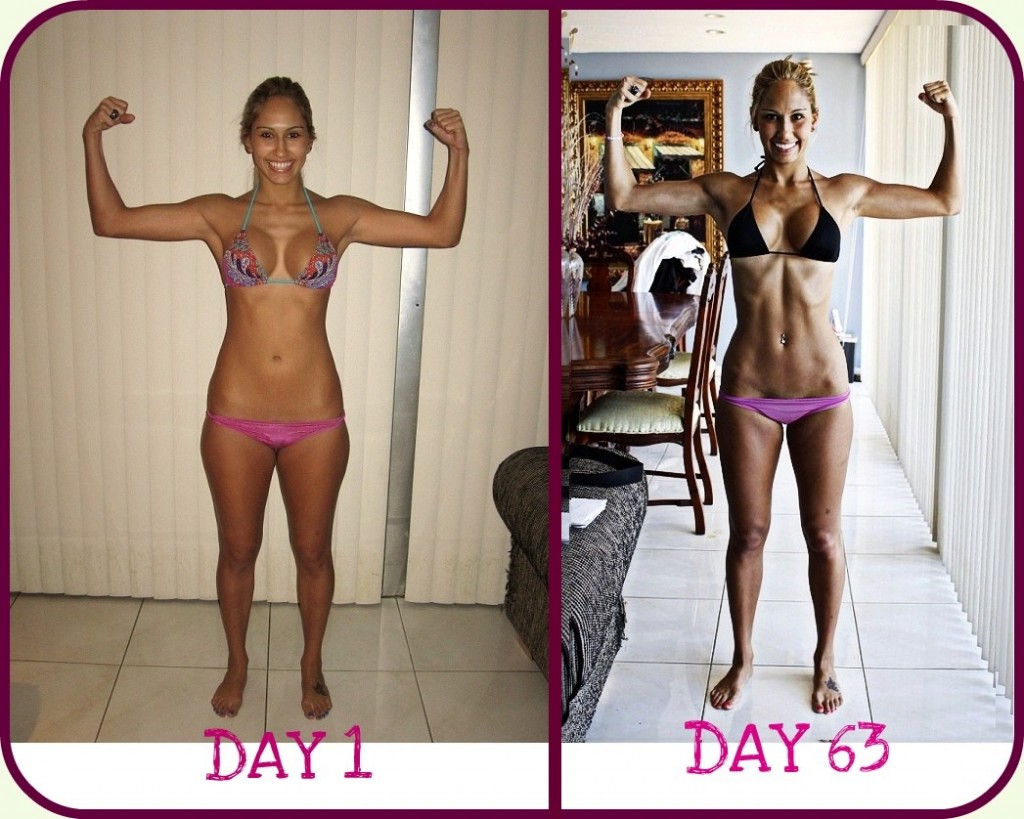
insanity-workout-before-and-after-40It seems as if we’re all doomed in this tarsnake battle of performance versus appearance. Athletes training for peak performance must make sacrifices in order to be best prepared for their endurance events.

People more concerned with appearance can build and sculpt and feed their body with proteins that build muscle. But how useful are those muscles for real athletic performance?

It strikes me that women in particular must deal with this insane engagement of performance versus appearance. A female cross country athlete in high school will often train 50- 60 miles a week. That level of training leads to a very lean physique and can often result in loss of some treasured boobage in order to achieve racing weight. It’s true for women athletes in all sports and at all levels it seems.

Buffed and beefed

Ironman-4309Fortunately the world of sports seems to gaining a measure of sanity about meeting these odd criteria for what constitutes beauty and healthy. But you might not know that from the insane hours (and money!) some people spend at the gym.

It’s all so obvious and yet unspoken. The men want pumped up chests and arms, six-pack abs and a half stubble. Women want a tight ass, cellulite free legs and nicely toned arms. The rest is pretty much the result of genetics and a decent diet. And perhaps a few enhancements. God Bless Us All. Every one of us.

But let’s be real: Going to the gym is all about looking good while doing endurance sports is about doing your best. Getting a body you can be proud of is a happy byproduct of all that work.

Side benefits? 

insanity-fitness-programThe health benefits of strength and cardio work are the quiet benefit of all this insanity. Older folks working out at the gym quickly learn that lifting weights is a literal lifesaver. It helps posture and breathing and weight control. That helps you remain vital and strong and even bolsters your immune system.

While this whole gym fetish is an insane proposition of sorts, you’d almost need to be crazy not to go work out. There’s so much good in this insanity.

So Greetings and Happy New Year from the gym, where only insane people and those who look like them go nuts working out.

WeRunandRideLogo

Posted in Uncategorized | Tagged , , , , , , , , , , , , , , , , | 1 Comment

Why endurance athletes should be the greatest salespeople in the world.

By Christopher Cudworth

If you track the world of business news and thought leadership, you’ve likely heard about the “pain hypothesis” of selling. That is, find your customer’s pain and a way to relieve it, and you’ve got the sale.

By that measure, endurance athletes should know how to be great salespeople, right? We flirt with pain all the time. Sometimes we immerse ourselves into worlds of pain few others can imagine.

shut_up_legs_t_shirts-ra1ce73b7afab478d84dd9af236deda10_va6l9_512There’s just one problem. We also learn to live with pain. A great distance runner once said, and I paraphrase: “You must learn to accept the pain because you can never run through it.” World class cyclist and noted pain freak Jens Voigt famously posted this phrase on his bike frame where he could see it. “SHUT UP LEGS.” That is Jens selling himself on the notion that you should never give in to pain. You can even buy a tee shirt with that phrase. It’s legendary.

Pain freaks

So we’re all pain freaks out there. We ride until we pop. We run until we drop. We swim until our shoulders ache and our legs feel like bands of soggy rubber hanging behind our pathetic torsos. And then we keep going.

Our empathy takes on strange forms. We really respect other people who tolerate pain well. We also might not be afraid of pain as others.

Straight into the pain

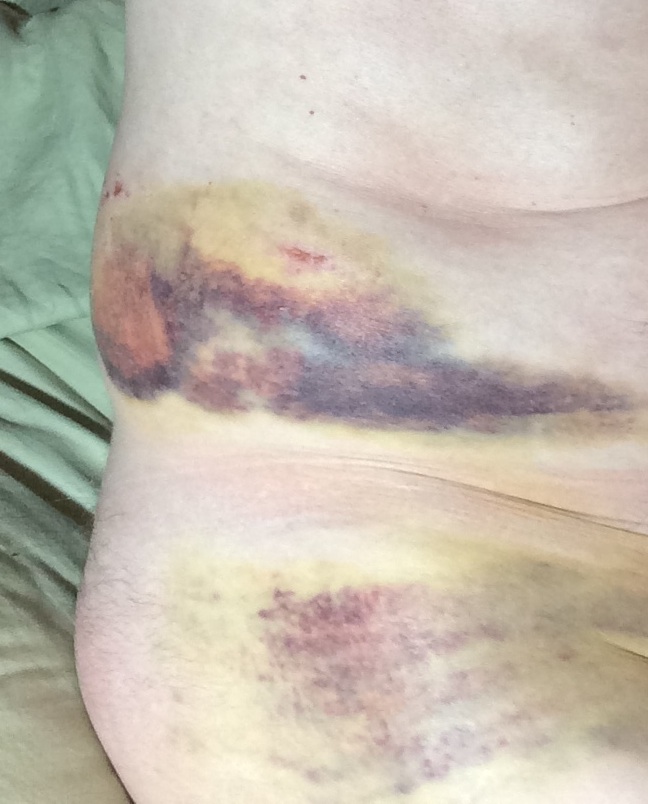
Bruises t00

The pain of our endeavors can leave a mark both physical and mental.

For example, when I lost my wife to cancer last year at the end of March, it seemed like a good idea to attend church for Easter Services that next week. I went to Good Friday services, the height of sorrow in the Christian year. My brother asked me why I chose to attend that service. I told him, “I wanted to wade straight into the pain.”

Those of us who run and ride know there are no shortcuts through the pain. You can try to run or ride around it. You can avoid the hills or stick with the B group on the Saturday morning group ride. But where’s the merit or gain in that? It doesn’t make you a better athlete. Only pain gets you there.

The pain of selling

So imagine yourself sitting in front of a client on a Wednesday morning with a project or product to sell them. You ask all the right questions and discover the source of their “pain.” It turns out their current supplier is slow. They get the billing all wrong and their product quality sucks. Those are pretty clear pain points! So how do you respond?Obviously you solve their problems with better service, cleaner billing and making sure your products meet their needs and specifications.

Then you have to make it happen. A salesperson’s job is never really done with just making the sale. Keeping the client satisfied is also part of the job. Of course we know that can be a real pain at times.

Dichotomies
IMG_8609Our empathy for the pain of others is often dichotomous. That is, by learning to deal with our own pain, we can head down two quite distinct paths when encountering the pain of others.

The first is empathy. That is the ability to identify with the pain of others.

The other is apathy or indifference toward the pain of others. In its extreme expression, these tendencies produce psychopathy or sociopathy. That is, complete disregard or concern for the pain of others. In fact, inflicting pain on others can be a real pleasure for the psychopath or sociopath.

The creatures around and within us

The challenge in endurance sports is that we must cope with our own pain and often disregard the pain of others. Real competitors actually do apply pain to others in an effort to win.

IMG_8607So you can see, this dichotomy presents a real ethical challenge to those employed in sales. It is not uncommon for salespeople to embrace a moral philosophy where the ends justifies the means. We all know “sandbaggers” who hold their sales cards to the very end of a contest and turn them in to win the prize. We all know salespeople who commit ‘territory creep’ in order to win clients that rightly should not be their own. The list goes on and on.

We see it all the time in politics as well, and in religion. Both of those cultural memes are basically large scale attempts at selling a party or a belief system. The stakes are so high that almost anything goes. The result is that we often get a sociopathic brand of leadership because it took so much to win that the ethical candidates and leaders can be forced out in the process.

That’s not good, but it happens all the time. Then the processes that lead to those problems can become institutionalized and fixing the broken systems takes a whole different level of sales based on criticism and if that doesn’t work, revolution.

Grace, race and keeping the faith

So let’s take a look at great leaders who through pain and sacrifice change the world.

Martin Luther was a great salesperson for the biblical principle of grace.

Martin Luther King, Jr. was a great salesperson for equality in race.

20130911cnsbr1564-1024x730-1Now Pope Francis is a great salesperson for rationality in faith.

Who saw these people coming? We depend on great salespeople to change the world.

One of John Lennon’s most interesting statements was that he loved advertising. He was an adept salesperson as well as an inspired thinker. He arrived at that position in life through a great deal of personal pain. There’s a lesson in that.

The balance of pain

Fortunately most of us are capable of managing our empathies in a professional and social manner. We apply them professionally because we care about the excellence of our working lives. We apply them socially because our value systems help us use good judgment and show compassion to others.  This occurs because most of us learn to compartmentalize our competitive natures and our application of pain. It’s one of the tarsnakes of existence that we must learn from our pain. It teaches us by correcting our wrongs. But it also teaches us that by working through the pain we can achieve great things.

The art of selling
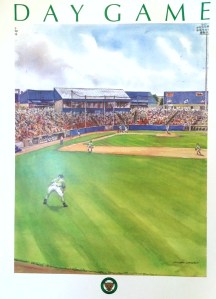
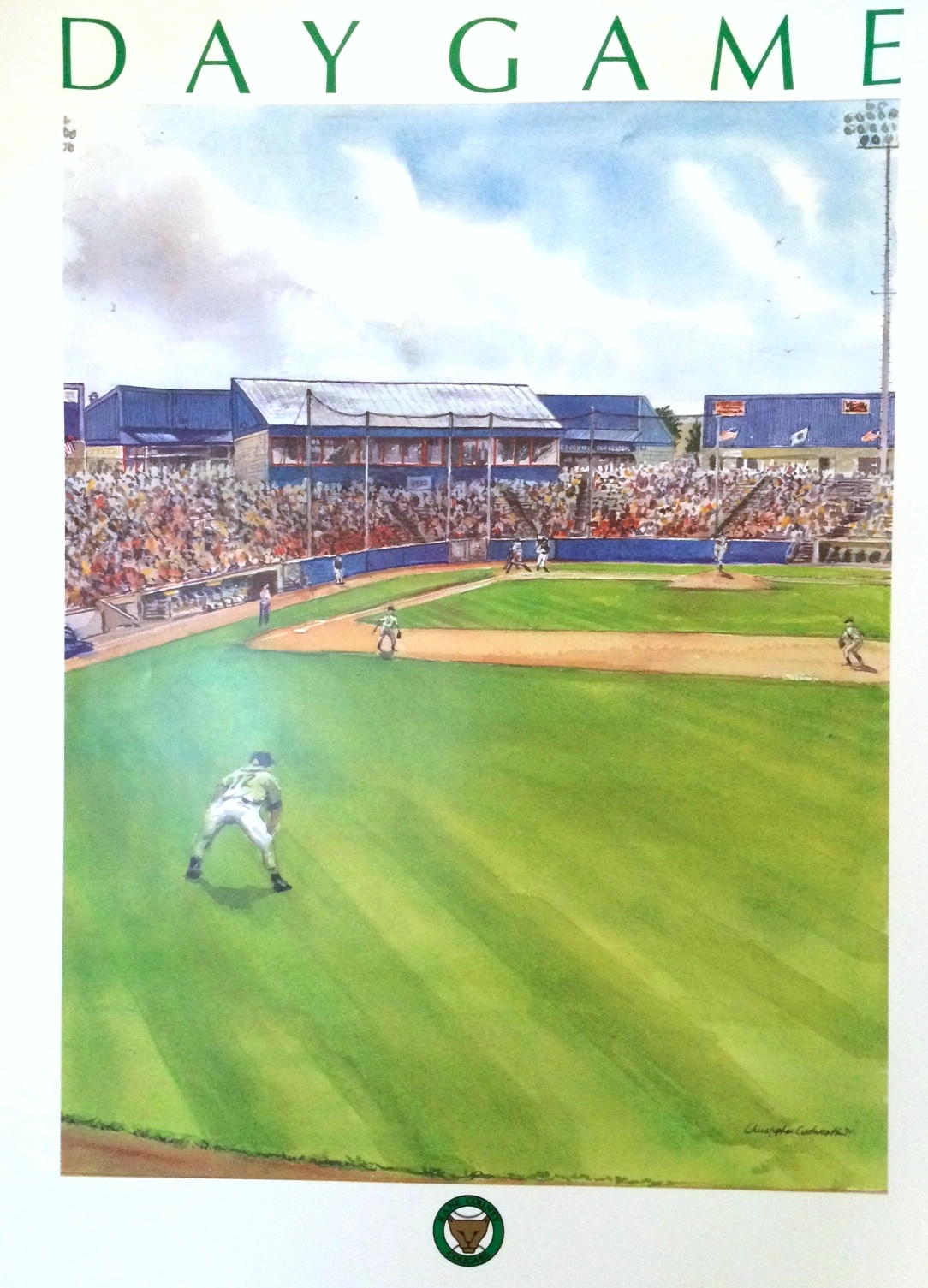
Day Game

One of two baseball posters sold as a promotional set to sponsors.

However it does pay to be tough sometimes in sales. In my art business I once pitched an auto dealership on sponsoring a poster project. The poster featured a view of a minor league baseball field in which the sign of the auto dealership was prominently featured in left field. I showed the original painting and made my pitch. Then I sat silent while the prospective client considered the opportunity.

I had been told in a sales training course that the first person who utters a word in such situations is the “loser” in negotiations. So I kept quiet for four whole minutes. Not a word. Finally the client looked up and asked, “So where would my logo go, on the bottom of the poster?”

And the deal was done. I’d suffered through the seal of silence to get the sale. It helped that I’d already pre-sold the companion poster that featured a view from the right field bleachers looking in toward home plate. We build our success on confidences.

Painful lessons

And in that respect being a salesperson is much like being an endurance athlete. It takes training and discipline. And sometimes it means keeping your mouth shut. No complaints.

That lesson was taught to me in college during a long winter of base training. Every day we went out for 6-10 miles on snowy, dark roads on cold Iowa afternoons. It was a grind in many ways, and I began to complain about it to my teammates. Finally my roommate pulled me aside and said, “Cud, you just need to shut up and run.”

I took that advice to heart. No one likes a complainer. Truth be told, it’s usually a sign that the complainers do not like themselves.

Hidden truths

So the formula for success is often hidden in our experiences. We just need to choose the right methods for survival and then focus on that. Relentlessly.

Author John Irving once wrote a book called The Hotel New Hampshire. One of the main characters was a wrestler whose coach had a cogent piece of advice on how to thrive. “You’ve got to get obsessed and stay obsessed.”

Obsession has its merits in many respects. But so does balance and perspective and drawing from painful lessons learned. It all comes down to understanding pain and how to deal with it. For that reason endurance athletes have a leg up on just about everyone else in the world.

WeRunandRideLogo

Posted in Christopher Cudworth, cycling, duathlon, half marathon, marathon, running, swimming, Tarsnakes, triathlon, We Run and Ride Every Day | Tagged , , , , , , , , , , , , , , , , , , , , , , , , , | Leave a comment

With respect to age

If you’re seventeen and sick of your parents ragging on you about homework and staying out too late, it’s not likely you’ll spend much time worrying about what it will be like when you’re older. Especially much, much older. We all recall how hard it was to watch grandma or grandpa grow old and start to limp, lose eyesight or hearing and even drool on their clothing.

Growing older starts out being an abhorrent notion. But slowly, and with time, it becomes a reality. We all have to deal with it. And we should thank our stars for that.

And yet, growing older (or thinking that way) has its humbling moments. I recall a sitcom moment in which a hot young women played by Nikki Cox is dating an older man until the moment he gets up to grab himself a beer and let’s out a groan as he’s trying to stand up. “Oh my God,” she says. “You just made an Old Man noise.”

Fighting age through plastic surgery is not always the best strategy.

Fighting age through plastic surgery is not always the best strategy.

Of course the actress who played that role later went through plastic surgery to ostensibly enhance her looks and compete in the Hollywood Youth Bowl. The results did not really go well for Nikki Cox. That’s a harsh bit of life imitating art.

We all have to face age in our own way. Women who go through childbirth find their bodies changing. Men who let themselves get fat in their late 20s find it suddenly hard to shed that extra weight into their 30s and 40s. Metabolisms shift or slow down. Workouts don’t produce the same results. Age is an unforgiving competitor.

Retrospective

Those of us who competed in sports early in life find it a bit disturbing to realize those running times at 5K or 10K are forever locked in the stone of time. Sports feel different in every decade of life. We learn and compete in sports in our teens. Some continue

Jens Voigt competed in the Tour de France at the age of 40

Jens Voigt competed in the Tour de France at the age of 40

competing in those sports well into their 20s. By the age of 35 or so, even most pro athletes have to give up their chosen games. Pro cyclists are considered old and worn out by that period in life. Only rare exceptions such as Jens Voigt, Chris Horner and yes, Lance Armstrong have managed to accomplish world class performances late into their 30s and early 40s.

There are always those people who seem extra able to defy age. A few years back while lining up to race in a 50+ criterium I glanced over to see a cyclist named Fabio standing over his bike. His skin was a golden brown, as was his longish hair. The muscles in his thighs were so large the letters on his kit were stretched thin. I thought to myself, “There’s no way I can ride with this guy.”

I held onto the front group for close to 40 minutes before Fabio and another racer that had once competed in the Pan Am Games rode off the front to battle it out the last 10 minutes. About that time I also happened to pop. But not before looking down to see that we had average 26.4 mph during that crit. It was by far the best I have ever ridden in a race. It’s one of the tarsnakes of competition that you can be drawn to your finest performance only to finish far back in the pack.

Which meant that despite my less-than-Fabio appearances, the thrill of competition had pulled me to a performance that seemed unimaginable back on the starting line. It turned out that Fabio had about 5 years of youth on me, so there was that excuse.

Dedication

But really that’s no excuse at all. Because the guy who beat Fabio was actually older than me. And what I learned about his training regiment taught an important lesson. He rode his indoor training all winter, every day. Sometimes he would log three or four hours on the bike.

You’ll find those characters out there in the world. There’s always someone willing to outwork their competitors and their own age. That is not to say we all should do that. But what it does say is that too often we imagine ourselves incapable of continually good performance as we enter our 40s, 50s, 60s or 70s.

Testing ourselves

This summer's first-ever duathlon was also quite a learning experience.

This summer’s first-ever duathlon was also quite a learning experience.

With respect to age it is incumbent upon us to explore and test our capabilities. Otherwise our imaginations shrink and we stop trying to become better with time.

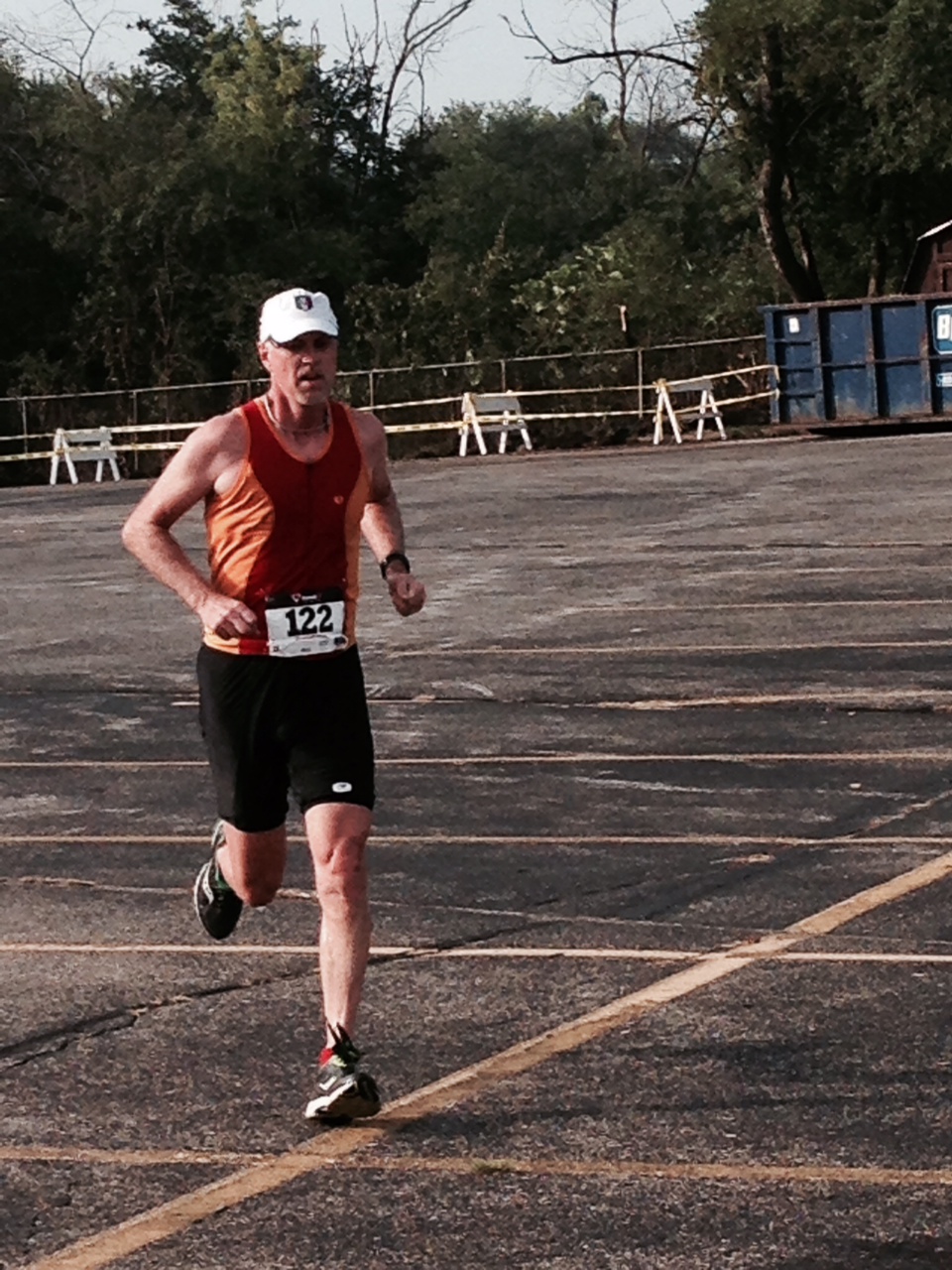
This past autumn I got out to run a couple races. That’s really the first time in many years that I’ve done anything other than training runs. Despite some chronic achilles challenges this past summer that limited my running to 10-12 miles per week, I still managed to run a 45:17 10k. That’s about 14:00 slower than my all-time personal record of 31:10.

Once in a lifetime

That PR was set 30 years ago in the summer of 1984. I was not yet married. Had no kids. Didn’t even have a job, technically, other than competing for a running store and working retail there part time. Just to make ends meet. I trained 60-80 miles per week and did speed training at least twice a week. It was fun. I was young. I knew I’d likely never have the opportunity, the youth and the freedom to do that again.

So it’s a bit forgivable to be 14:00 slower at age 57 than I was at my peak fitness at the age of 24 years old.

Picking up a new sport

It’s a little tougher to know what to think about cycling, a sport I did not take up seriously until 2003. That’s also the year I tore an ACL. At first I considered that injury age-related.

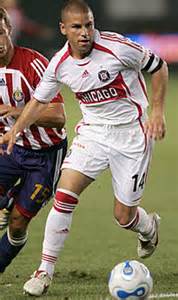
It's not just when we're older that athletes get hurt. World class soccer player Chris Armas tore his ACL just by turning too quickly.

It’s not just when we’re older that athletes get hurt. World class soccer player Chris Armas tore his ACL just by turning too quickly.

But then I watched elite athletes like soccer player Chris Armas go down with an ACL tear in the middle of the field with no one around them. That made me realize that such injuries can happen to anyone.

I rehabbed from my own ACL tear and kept on running. But then I tore it again. That was the last gasp of ballistic sports. At age 47 my decision was to run and ride straight ahead and quit worrying about cuts and turns and swooping layups. In that respect age really had won out. I kept getting hurt in other parts of my body as well.

With respect to age we must all make adaptations but do not necessarily have to give up our favorite pursuits. A lot depends on circumstance. But it also depends on training, commitment and consistency. Those three factors can keep you on the move well into your 80s if you are smart about it.

Here are a few keys on how to stay active as you age:

Strength work: There is no substitute for consistent strength training. Building and maintaining muscle health is the best age-proofing known to science.

Engaged flexibility: Yoga is becoming popular for a reason. Rather than being an easy day stretching your joints, most types of yoga actively engage your muscle groups in a dynamic fashion. The chill-out period following each practice is also good for the brain.

Aerobic exercise: Breathing hard is good for you. It’s that simple. If your body allows you to run and you enjoy it, that’s a great lifetime activity. Many athletes combine running with riding and swimming for alternative forms of aerobic training with less weight-bearing stress. You might say that the best training regimen each week is the components of a triathlon.

That’s your “aging well” formula right there. With respect to age we all need to explore our limits while maintaining the right balance. That’s good advice across an entire spectrum of life activities.

WeRunandRideLogo

Posted in Christopher Cudworth, cycling, duathlon, half marathon, marathon, running, triathlon | Tagged , , , , , , , , , , , , , | 2 Comments

Let’s focus on you for a minute

IMG_8591Running and riding and swimming are all activities that give your life focus.

When you have focus, it gives you structure around which you build your daily activities.

Time becomes valuable as you make choices in what to do each day.

Making choices requires a set of priorities, which are categories of importance in your life.

Categorization helps you be better organized. Often that results in becoming more efficient in all that you do.

Efficiency leads to better productivity. That builds self esteem and confidence.

Other people are naturally drawn to people who exude those qualities.

That can place you in a position of leadership by example.

So you can see how important it is to have ways to build and maintain your physical and mental health. It’s a continual process of focus, structure, time management, making good choices, setting priorities, categorizing for efficiency, generating better productivity and building self esteem and confidence. All that points toward leadership.

Who knew that a simple run, ride or swim could do so much?

You do.

WeRunandRideLogo

Posted in Christopher Cudworth, cycling, duathlon, half marathon, marathon, running, swimming, triathlon, We Run and Ride Every Day | Tagged , , , , , , , , , , | 2 Comments

Running or riding to victory means something new

Here’s my philosophy. Running to victory comes to mean something new as you age, but the idea never gets old.

Be grateful for your efforts and triumphs at any age. Work to improve yourself and your life's goals will become clear. God Bless and Happy Holidays to all.

Be grateful for your efforts and triumphs at any age. Work to improve yourself and your life’s goals will become clear. God Bless and Happy Holidays to all.

Posted in Uncategorized | Tagged , , , , , , | Leave a comment

Be grateful for the things you don’t have to think about when you run, ride or swim

By Christopher Cudworth

Is the desire for donuts an autonomic response?

Is the desire for donuts an autonomic response?

It’s a fact that those of us who run, ride and swim take quite a bit for granted. See, it’s easy to complain about the fact that a workout or race did not go well. Or, you might get worked up that your training was interrupted by an injury.

All these are products of our perception. The fact that you can run, ride or swim at all is something to be grateful about. It is all the product of an evolutionary history that is downright miraculous in its ability to drive the basic biological functions needed to test yourself on the endurance front.

See, your brain has this thing called the hypothalamus that regulates the nervous system. Without that, you could not breathe. Your heart would not beat on its own. Your eyes would not blink. You’d have no reflexes at all. You could not cough, sneeze, swallow or vomit either. I’m sure you’re happy about that last one. It lets you know you finally gave your all in a race or workout.

Beyond the barf reflex things get a lot more subtle but no more colorful. Your digestive system is vital to process food and relies upon a number of functions about which you never have to think. Unless something goes wrong. There’s nothing like barfing and crapping your pants at the same time to slow you down or even bring you to a halt. But it does make you appreciate the fact that most of the time your body functions pretty well.

For some people the craving for carbs such as beer and cinnamon buns seems to rule the mind.

For some people the craving for carbs such as beer and cinnamon buns seems to rule the mind.

Originally we thought about some of this as “natural functions” that included excitory and inhibitory functions that help us to respond to stress or other factors. We now think in terms of a  “sympathetic” nervous system that provides “quick response” and a “parasympathetic” nervous system that is more slow to react. The most notable exception to this rule (for men especially) is sexual arousal and orgasm. Any man that has experienced premature ejaculation knows that it doesn’t matter whether it is a sympathetic or parasympathetic response. The simple fact remains that you came too soon to gain much sympathy from your partner.

The fact that so many of our body functions do not require our thought process to make them work is quite a gift. Imagine if you had to tell yourself to take a breath every time you want to fill your lungs. Or imagine not knowing enough to blink when riding your bike at 25 mph or swimming.

It really helps an athlete to cough when you need to cough. The body says, “Hey that shit is not supposed to be in your throat” and cough! out it comes. You hope.

The point in all this is that you should stop bitching if your training is a little hard on a particular day. Your body could just go on strike someday and shut down the autonomic nervous systems and you’d find yourself up to your neck in trouble and facing the ultimate test in your life. And no, it’s not premature ejaculation.

See, we’re too hard on ourselves about these things. Spend some time on your next run, ride or swim taking inventory on all the things you don’t need to think about in order to perform your workout. It would be enough to make you crazy if your body did not take care of business all by itself.

Of course the ongoing dialogue between brain and body is another matter altogether. There’s nothing autonomic about motivation and pushing yourself to the limit. That all comes from deep inside the gray matter sitting inside your head. But then again, maybe that little voice in your head that says “Slow down! Slow down!” is an autonomic function after all.

WeRunandRideLogo

Posted in Christopher Cudworth, cycling, half marathon, marathon, running, swimming, We Run and Ride Every Day | Tagged , , , | 1 Comment