With respect to age

If you’re seventeen and sick of your parents ragging on you about homework and staying out too late, it’s not likely you’ll spend much time worrying about what it will be like when you’re older. Especially much, much older. We all recall how hard it was to watch grandma or grandpa grow old and start to limp, lose eyesight or hearing and even drool on their clothing.

Growing older starts out being an abhorrent notion. But slowly, and with time, it becomes a reality. We all have to deal with it. And we should thank our stars for that.

And yet, growing older (or thinking that way) has its humbling moments. I recall a sitcom moment in which a hot young women played by Nikki Cox is dating an older man until the moment he gets up to grab himself a beer and let’s out a groan as he’s trying to stand up. “Oh my God,” she says. “You just made an Old Man noise.”

Fighting age through plastic surgery is not always the best strategy.

Fighting age through plastic surgery is not always the best strategy.

Of course the actress who played that role later went through plastic surgery to ostensibly enhance her looks and compete in the Hollywood Youth Bowl. The results did not really go well for Nikki Cox. That’s a harsh bit of life imitating art.

We all have to face age in our own way. Women who go through childbirth find their bodies changing. Men who let themselves get fat in their late 20s find it suddenly hard to shed that extra weight into their 30s and 40s. Metabolisms shift or slow down. Workouts don’t produce the same results. Age is an unforgiving competitor.

Retrospective

Those of us who competed in sports early in life find it a bit disturbing to realize those running times at 5K or 10K are forever locked in the stone of time. Sports feel different in every decade of life. We learn and compete in sports in our teens. Some continue

Jens Voigt competed in the Tour de France at the age of 40

Jens Voigt competed in the Tour de France at the age of 40

competing in those sports well into their 20s. By the age of 35 or so, even most pro athletes have to give up their chosen games. Pro cyclists are considered old and worn out by that period in life. Only rare exceptions such as Jens Voigt, Chris Horner and yes, Lance Armstrong have managed to accomplish world class performances late into their 30s and early 40s.

There are always those people who seem extra able to defy age. A few years back while lining up to race in a 50+ criterium I glanced over to see a cyclist named Fabio standing over his bike. His skin was a golden brown, as was his longish hair. The muscles in his thighs were so large the letters on his kit were stretched thin. I thought to myself, “There’s no way I can ride with this guy.”

I held onto the front group for close to 40 minutes before Fabio and another racer that had once competed in the Pan Am Games rode off the front to battle it out the last 10 minutes. About that time I also happened to pop. But not before looking down to see that we had average 26.4 mph during that crit. It was by far the best I have ever ridden in a race. It’s one of the tarsnakes of competition that you can be drawn to your finest performance only to finish far back in the pack.

Which meant that despite my less-than-Fabio appearances, the thrill of competition had pulled me to a performance that seemed unimaginable back on the starting line. It turned out that Fabio had about 5 years of youth on me, so there was that excuse.

Dedication

But really that’s no excuse at all. Because the guy who beat Fabio was actually older than me. And what I learned about his training regiment taught an important lesson. He rode his indoor training all winter, every day. Sometimes he would log three or four hours on the bike.

You’ll find those characters out there in the world. There’s always someone willing to outwork their competitors and their own age. That is not to say we all should do that. But what it does say is that too often we imagine ourselves incapable of continually good performance as we enter our 40s, 50s, 60s or 70s.

Testing ourselves
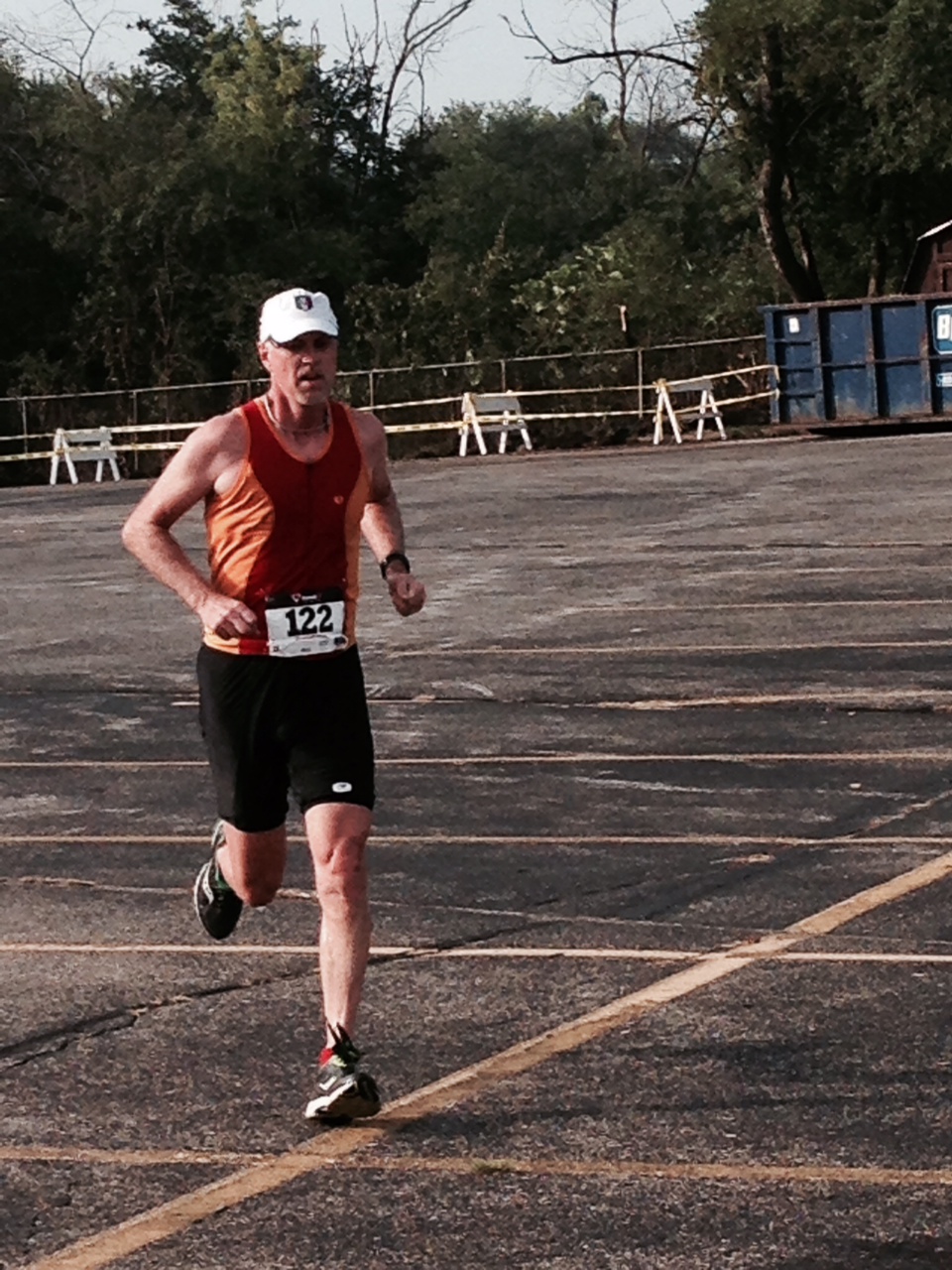
This summer's first-ever duathlon was also quite a learning experience.

This summer’s first-ever duathlon was also quite a learning experience.

With respect to age it is incumbent upon us to explore and test our capabilities. Otherwise our imaginations shrink and we stop trying to become better with time.

This past autumn I got out to run a couple races. That’s really the first time in many years that I’ve done anything other than training runs. Despite some chronic achilles challenges this past summer that limited my running to 10-12 miles per week, I still managed to run a 45:17 10k. That’s about 14:00 slower than my all-time personal record of 31:10.

Once in a lifetime

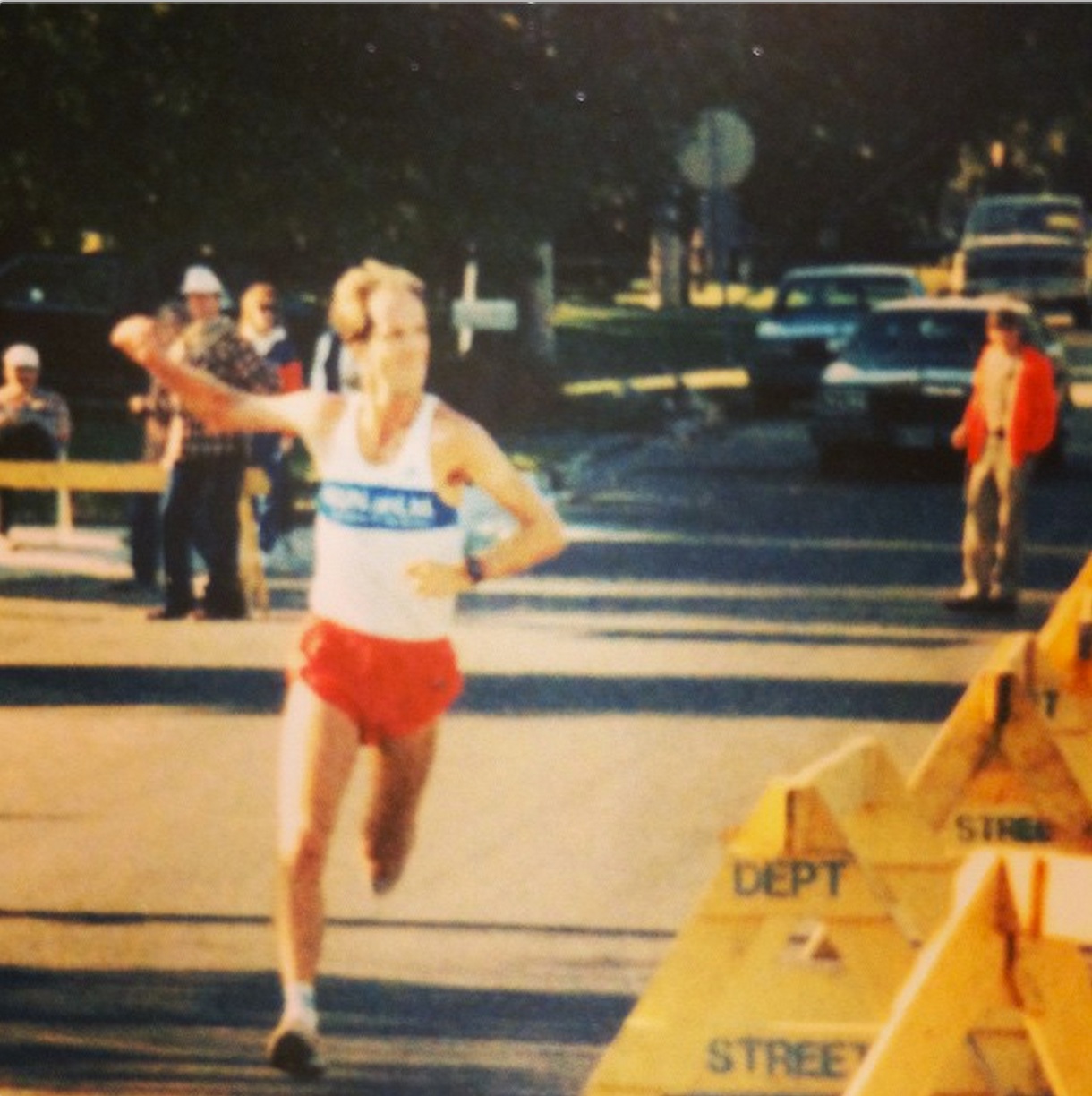
That PR was set 30 years ago in the summer of 1984. I was not yet married. Had no kids. Didn’t even have a job, technically, other than competing for a running store and working retail there part time. Just to make ends meet. I trained 60-80 miles per week and did speed training at least twice a week. It was fun. I was young. I knew I’d likely never have the opportunity, the youth and the freedom to do that again.

So it’s a bit forgivable to be 14:00 slower at age 57 than I was at my peak fitness at the age of 24 years old.

Picking up a new sport

It’s a little tougher to know what to think about cycling, a sport I did not take up seriously until 2003. That’s also the year I tore an ACL. At first I considered that injury age-related.
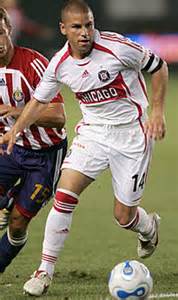
It's not just when we're older that athletes get hurt. World class soccer player Chris Armas tore his ACL just by turning too quickly.

It’s not just when we’re older that athletes get hurt. World class soccer player Chris Armas tore his ACL just by turning too quickly.

But then I watched elite athletes like soccer player Chris Armas go down with an ACL tear in the middle of the field with no one around them. That made me realize that such injuries can happen to anyone.

I rehabbed from my own ACL tear and kept on running. But then I tore it again. That was the last gasp of ballistic sports. At age 47 my decision was to run and ride straight ahead and quit worrying about cuts and turns and swooping layups. In that respect age really had won out. I kept getting hurt in other parts of my body as well.

With respect to age we must all make adaptations but do not necessarily have to give up our favorite pursuits. A lot depends on circumstance. But it also depends on training, commitment and consistency. Those three factors can keep you on the move well into your 80s if you are smart about it.

Here are a few keys on how to stay active as you age:

Strength work: There is no substitute for consistent strength training. Building and maintaining muscle health is the best age-proofing known to science.

Engaged flexibility: Yoga is becoming popular for a reason. Rather than being an easy day stretching your joints, most types of yoga actively engage your muscle groups in a dynamic fashion. The chill-out period following each practice is also good for the brain.

Aerobic exercise: Breathing hard is good for you. It’s that simple. If your body allows you to run and you enjoy it, that’s a great lifetime activity. Many athletes combine running with riding and swimming for alternative forms of aerobic training with less weight-bearing stress. You might say that the best training regimen each week is the components of a triathlon.

That’s your “aging well” formula right there. With respect to age we all need to explore our limits while maintaining the right balance. That’s good advice across an entire spectrum of life activities.

WeRunandRideLogo

Posted in Christopher Cudworth, cycling, duathlon, half marathon, marathon, running, triathlon | Tagged , , , , , , , , , , , , , | 2 Comments

Let’s focus on you for a minute

IMG_8591Running and riding and swimming are all activities that give your life focus.

When you have focus, it gives you structure around which you build your daily activities.

Time becomes valuable as you make choices in what to do each day.

Making choices requires a set of priorities, which are categories of importance in your life.

Categorization helps you be better organized. Often that results in becoming more efficient in all that you do.

Efficiency leads to better productivity. That builds self esteem and confidence.

Other people are naturally drawn to people who exude those qualities.

That can place you in a position of leadership by example.

So you can see how important it is to have ways to build and maintain your physical and mental health. It’s a continual process of focus, structure, time management, making good choices, setting priorities, categorizing for efficiency, generating better productivity and building self esteem and confidence. All that points toward leadership.

Who knew that a simple run, ride or swim could do so much?

You do.

WeRunandRideLogo

Posted in Christopher Cudworth, cycling, duathlon, half marathon, marathon, running, swimming, triathlon, We Run and Ride Every Day | Tagged , , , , , , , , , , | 2 Comments

Running or riding to victory means something new

Here’s my philosophy. Running to victory comes to mean something new as you age, but the idea never gets old.

Be grateful for your efforts and triumphs at any age. Work to improve yourself and your life's goals will become clear. God Bless and Happy Holidays to all.

Be grateful for your efforts and triumphs at any age. Work to improve yourself and your life’s goals will become clear. God Bless and Happy Holidays to all.

Posted in Uncategorized | Tagged , , , , , , | Leave a comment

Be grateful for the things you don’t have to think about when you run, ride or swim

By Christopher Cudworth

Is the desire for donuts an autonomic response?

Is the desire for donuts an autonomic response?

It’s a fact that those of us who run, ride and swim take quite a bit for granted. See, it’s easy to complain about the fact that a workout or race did not go well. Or, you might get worked up that your training was interrupted by an injury.

All these are products of our perception. The fact that you can run, ride or swim at all is something to be grateful about. It is all the product of an evolutionary history that is downright miraculous in its ability to drive the basic biological functions needed to test yourself on the endurance front.

See, your brain has this thing called the hypothalamus that regulates the nervous system. Without that, you could not breathe. Your heart would not beat on its own. Your eyes would not blink. You’d have no reflexes at all. You could not cough, sneeze, swallow or vomit either. I’m sure you’re happy about that last one. It lets you know you finally gave your all in a race or workout.

Beyond the barf reflex things get a lot more subtle but no more colorful. Your digestive system is vital to process food and relies upon a number of functions about which you never have to think. Unless something goes wrong. There’s nothing like barfing and crapping your pants at the same time to slow you down or even bring you to a halt. But it does make you appreciate the fact that most of the time your body functions pretty well.

For some people the craving for carbs such as beer and cinnamon buns seems to rule the mind.

For some people the craving for carbs such as beer and cinnamon buns seems to rule the mind.

Originally we thought about some of this as “natural functions” that included excitory and inhibitory functions that help us to respond to stress or other factors. We now think in terms of a  “sympathetic” nervous system that provides “quick response” and a “parasympathetic” nervous system that is more slow to react. The most notable exception to this rule (for men especially) is sexual arousal and orgasm. Any man that has experienced premature ejaculation knows that it doesn’t matter whether it is a sympathetic or parasympathetic response. The simple fact remains that you came too soon to gain much sympathy from your partner.

The fact that so many of our body functions do not require our thought process to make them work is quite a gift. Imagine if you had to tell yourself to take a breath every time you want to fill your lungs. Or imagine not knowing enough to blink when riding your bike at 25 mph or swimming.

It really helps an athlete to cough when you need to cough. The body says, “Hey that shit is not supposed to be in your throat” and cough! out it comes. You hope.

The point in all this is that you should stop bitching if your training is a little hard on a particular day. Your body could just go on strike someday and shut down the autonomic nervous systems and you’d find yourself up to your neck in trouble and facing the ultimate test in your life. And no, it’s not premature ejaculation.

See, we’re too hard on ourselves about these things. Spend some time on your next run, ride or swim taking inventory on all the things you don’t need to think about in order to perform your workout. It would be enough to make you crazy if your body did not take care of business all by itself.

Of course the ongoing dialogue between brain and body is another matter altogether. There’s nothing autonomic about motivation and pushing yourself to the limit. That all comes from deep inside the gray matter sitting inside your head. But then again, maybe that little voice in your head that says “Slow down! Slow down!” is an autonomic function after all.

WeRunandRideLogo

Posted in Christopher Cudworth, cycling, half marathon, marathon, running, swimming, We Run and Ride Every Day | Tagged , , , | 1 Comment

Running after Pistol Pete Maravich

By Christopher Cudworth

Number 30 Chris Cudworth was usually number 44 in testament to Pistol Pete Maravich, his hero.

Number 30 Chris Cudworth was usually number 44 in testament to Pistol Pete Maravich, his hero.

Last night I spend 90 minute shooting baskets during Family Night at Open Gym. I’ll be sore tomorrow I’m sure. I don’t play much any more.

From a young age I played the game and played well enough to be a starter all the way through my sophomore year, when I moved from one high school to another and took on the role of the lead runner rather than a hoop star.

My younger brother assumed that mantle. He earned All State Honorable Mention. At 6’6″ and a vertical leap of 36″, he went on to play Division I basketball at Kent State University.

It drove him a little nuts that articles about his high school basketball career often confused our two names. Local sportswriters accustomed to covering my running exploits would transpose my name onto his stats. “Chris Cudworth had 36 points and twelve rebounds in a stunning performance against East Aurora…” one article said.

It was a perverse sort of revenge for my own aborted hoops career. My parents never bought me contact lenses and playing with glasses resulted in more smashed lenses than I care to think about. You get gun shy about that after a while. Plus we moved twice during crucial times. Once going into 8th grade and again in the middle of my sophomore year. Starting over in sports is never easy. That’s perhaps why running was a clear choice. You either run fast or you don’t.

Blocking a shot in one of those early Saturday morning JV games nobody, even your girlfriend, came to watch.

Blocking a shot in one of those early Saturday morning JV games nobody, even your girlfriend, came to watch.

But I never gave up playing basketball during my 20s, 30s and 40s. My game actually improved with time. The flashy style of play I’d evolved in testament to my favorite player Pete Maravich grew into contest of creative problem solving. My behind the back passes had more purpose. My shooting only got better with adult strength and time.

One day a former coach walked through the open gym where I was playing and stopped to watch. He walked over after the game and said, “Maybe we made a mistake with you.”

I told him, “No, you didn’t. I was skinny and immature in basketball. I’ve gotten better with age.”

I’d quit my senior year when it was obvious from the first day of practice that missing basketball camp that previous summer to coach a local track club was a mortal sin in the eyes of the coaches.

But age eventually does catch up with you in sports like basketball. The last time I played competitively was 10 years ago. The body forgets all about ballistic sports when all you do is run and ride. So shooting baskets last night was fun, but not an encouragement to go back to the game. Plus my “hops” have softened and ability playing basketball would be more like a chess match. I can still jump up and touch the net halfway up but reaching the rim? Might be tough.

Standing tall as we could in 8th grade basketball.

Standing tall as we could in 8th grade basketball.

There are some fun memories to draw from a runner’s devotion to the game of basketball. I once sank a half point shot with four seconds remaining to win the conference title for our 8th grade team.

Then there are thousands of flashy baskets and no-look passes to satisfy the soul. All those Sunday night games with other guys, bumping and passing and blocking and shooting. It saves the soul.

It was always interesting to transition from cross country shape into basketball shape. Endurance running does not prepare you for sprinting. It can only provide the baseline endurance. That’s why we all did “killer” drills running from the baseline to the free-thrown line and back, to half-court, three quarter quarter and full court. If you were good and quick you could do all that in 30 seconds. Killer drills. They lived up to their name.

For the love of the game

The specifics of so much of my basketball career are mostly forgotten of course. Those memories do however reside in the soul of creativity and desire. I loved the game of basketball for its creativity and speed. I actually only legitimately dunked the ball on a 10 foot basket one time. My hands were too small to palm the ball so I had to jump and get a full basketball’s width above the rim to slam it down. I had a lot of squeegee dunks but that one clean stuff is not something I’ll ever forget. You feel like you’re flying…and that was how I liked to feel on the basketball court. Either sprinting down the floor for a bucket or a pass, there was freedom in that. And a Pistol Pete flair was always fun to add.

Choosing a role model like Pistol Pete Maravich and modeling your game after that hot-shooting, make-the-tough-plays approach does not endear you to some coaches. Perhaps that was my downfall in some respects. But I think not. It’s much more likely that fate had a little something else in mind. And I’m cool with that. No regrets.

There is still the satisfaction in knowing you can swish a bucket. Every shot is a rehearsal of youth in some way. And that’s always a good thing to retain in some form.

WeRunandRideLogo

Posted in Christopher Cudworth, running | Tagged , , , , , | Leave a comment

Handel’s Messiah…For he shall run for ever and ever…

By Christopher Cudworth

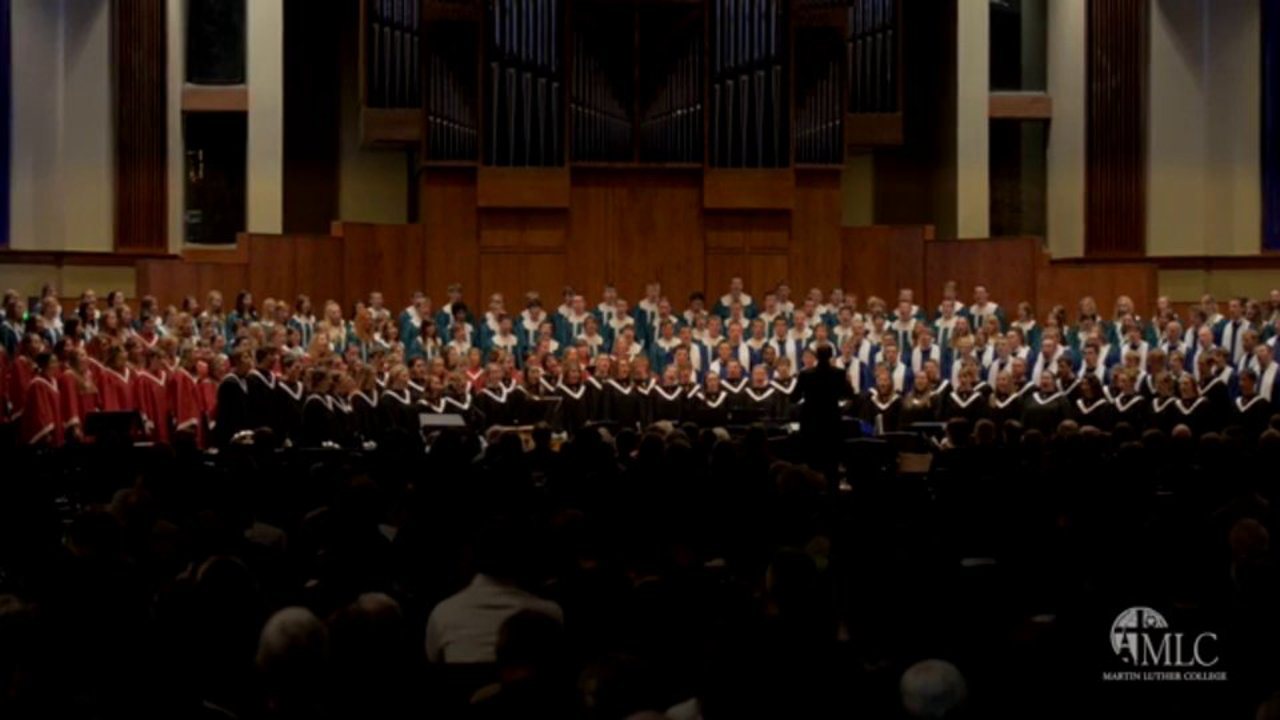
MLCMy alma mater Luther College is a great music school. Each December there was a giant production of Handel’s Messiah held in the gymnasium. Hundreds of students would sign up to participate in the choir. Earning the right to be a soloist was a big deal.

I never participated because Messiah rehearsals began well before the fall cross country season ended. That meant there was never any time or energy (perhaps) to participate in the Messiah. Plus I have always been an average singer at best.

Mini-Messiah

Later in life as participant in an adult choir at church, we produced a mini-Messiah as a Christmas Contata. Then I got a dose of what it’s like to sing that music. It’s hard. It took weeks to get my singing lungs in shape. My diaphragm grew exhausted from all that singing.

During the second performance (yes, we did it twice…) I felt the energy go right out of me toward the end. No longer could I manage those runs. It was only possible to sing a few words. Had there been a personal mic on me the audience would have heard an occasional “Wonderful…” and that would have been it. I had hit the Messiah Wall. Bonked according to musical terms. Finito. DNF. Sitting on the curb with a bottle of water tired.

For he shall run for ever and ever…

The similarities between training for a distance race and training to sing the Messiah were striking. It’s all about the breathing. Through countless rehearsals I felt my singing strength increase. Yet on performance day as we raced through that contata I could feel that I was out of my league.

There’s no shame in that of course. It’s an amazing thing to be part of a choir. One grows to admire those around you. Harmonies and solos and trading song parts are all part of the experience.

It’s much like being part of a running team. Everyone has to do their solo part and at the same time pay attention to how everyone else is doing. Miss a beat or miss a step. It’s much the same.

Coming home

My children are coming home for Christmas and one of the things we’ll do is put on The Messiah CD that my late wife once played during preparations for the holidays. It was her soundtrack for Christmas. All that preparation and cooking and baking and wrapping was done to that music. I feel meager in my preparations by comparison. I still need to go buy a Christmas tree today…

But my family is also reformulating and helps with all this. My sister-in-law and brother-in-law, my mother-in-law and my children and I have all grown closer that past 15 months. My girlfriend Sue now joins our family gatherings and no one feels the need to neglect the memory of my late wife in the process. Life goes on and we’re making the best of it.

It seems so long ago that I last sang in the Messiah. In fact it was probably the early 1990s. time flies when you’re breathing I guess. The trick is to appreciate the wonderful gifts and experiences we encounter along the way. That’s what the Messiah came to call us to do.

Mighty Counselor. Indeed.

Posted in Christopher Cudworth, running, We Run and Ride Every Day | Tagged | Leave a comment

Frosty and friends run a marathon

Frosty Runs a Marathon

Competitors line up for the Frosty Marathon. Illustration by Christopher Cudworth.

Here in Chillytown, USA, there’s an annual tradition that some of you might like your snowpeople to join. It’s called the Frosty Marathon and every year dozens of snowpeople turn out to run the race held on December 24.

It always turns out better if there’s a White Christmas, of course. But if snow doesn’t fall in Chillytown (and there’s worries about that to discuss later) the snowpeople still come from miles away to run 26.2 miles.

Perfect conditions

See, marathoners know there’s no better way to spend a chilly day than covering more than 20 miles in freezing conditions and high winds. It keeps the core temperature down, you know. Fortunately over the years the Frosty Marathon has lost very few competitors to hypothermia. Being made of snow can really help matters in that department.

Heat is the real enemy for runners in the Frosty Marathon. When temps get near to thirty degrees, race organizers have been known to set up windchill machines at the water stops. That’s where snowpeople stop to ice up, of course.

Risks of racing weight

A family of snowman competitors does calisthenics before the start of the race.

A family of snowman competitors does calisthenics before the start of the race.

Some snow runners have been known to intentionally carve off a little excess weight before the big race. Of course there are risks to that strategy when you’re a snowperson. Given that your body structure is designed around one big ball of snow at the bottom, one middle-sized ball of snow in the middle and a smaller sized ball of snow for your head, there’s a certain efficiency to maintaining that structure when you’re a snowperson.

So it happened that when one of the competitors decided to increase speed by cutting off both sides of their lower snowball, the enhanced structure resulted in a full face plant when the integrity of the lower snowball gave out and crumpled into pieces.

Shovel crews were called to the scene and the competitor was allowed to continue, albeit about 18 inches shorter by the time snow medics had done their work. It cost the runner quite a bit of time.

Racing categories

Competitors can get a little excited before the competition.

Competitors can get a little excited before the competition.

As there really aren’t any age groups among snowpeople because year to year all of them melt come spring, racing categories are instead structured around types of snow and general accoutrements.

Wet Snow: Snowpeople built early in the season tend to be formed of wetter snow, and are therefore heavier.

Icey Snow: Snowpeople from variable climates are known to thaw and freeze, resulting in a stiffer, icier structure to their snow bodies.

Thumpity Thump Thump Snow: Snow that falls in cartoons like big fat white drops of ice cream makes really great snowpeople.

Charlie Brown’s Christmas Snow: Even bigger than Thumpity Snow, and makes musical little noises when it hits the ground.

Snowsnake Drifters: These dry-formed snowpeople are known at times to blow apart during really windy conditions, or leave a snowsnake behind them as they race along.

Yup, he's everywhere.

Yup, he’s everywhere.

Frozen Snowpeople: This new category of snowpeople is extremely flexible in their makeup and may in fact result in an entirely new category of snow racers due to the fact that they do not seem to care if their ups are up and their downs are down.

Race organizers face many challenges meeting the needs of all these different kinds of snowpeople. As temperatures rise or fall each year, it can be hard to anticipate the needs of Icey Snowpeople versus the Snowsnake Drifters. Ideally, race organizers like it best when temps start out a just below zero degrees fahrenheit. That way everyone is on an even playing field and fewer snow runners are likely to fall apart or melt.

How they do it

However the heat generated simply by running 26.2 miles is sometimes enough to cause internal temperature changes and force some runners to pull out of the race.

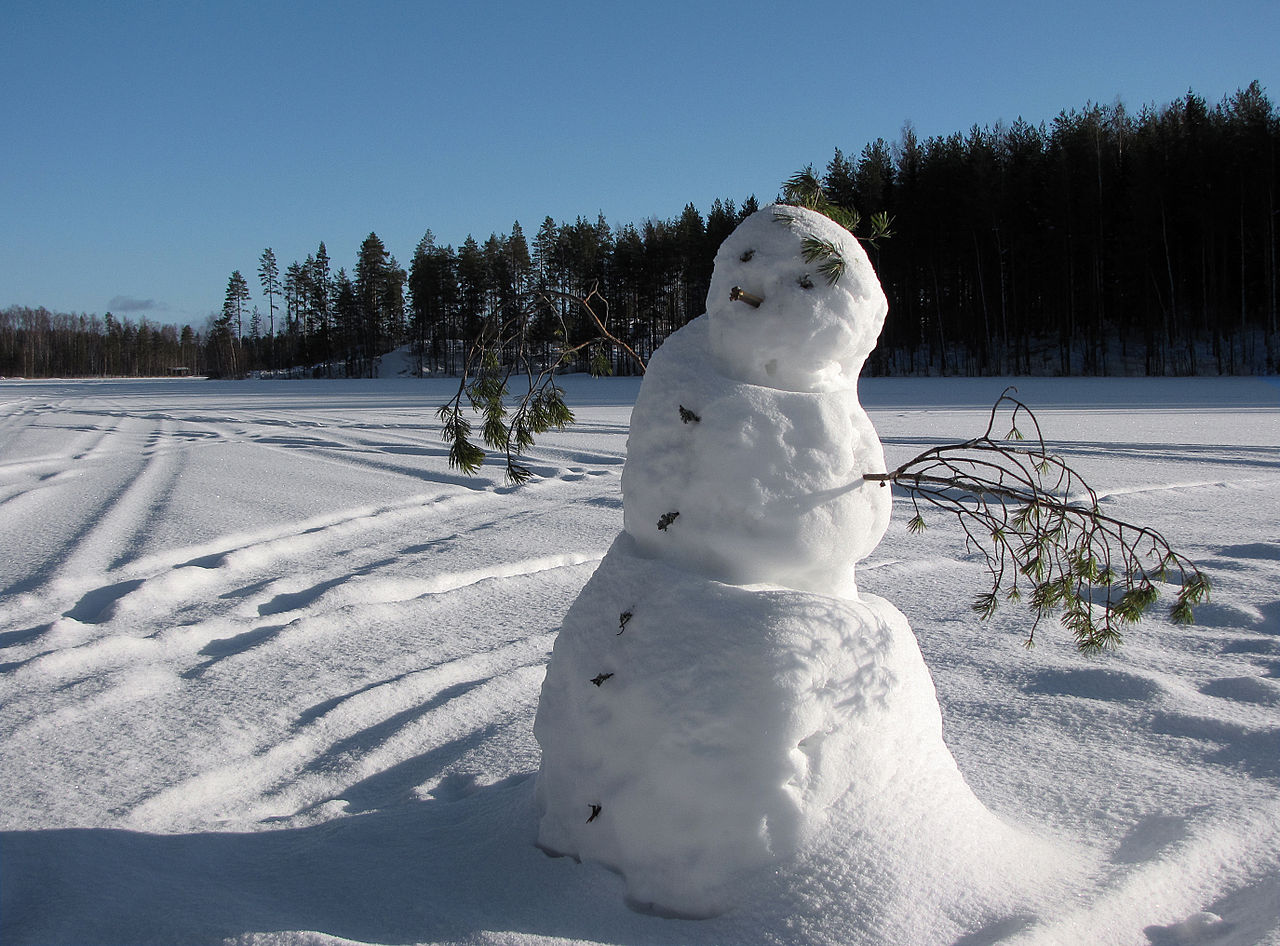
This snowperson built in a remote location does stand the chance of being neglected.

This snowperson built in a remote location does stand the chance of being neglected. That can harm their ability to move.

Many questions have been asked by those unfamiliar with snowperson races as to how the snowpeople actually move across the ground. Scientists have now studied the phenomenon and have ascertained several factors that contribute to snowperson speed and mobility.

It was once thought that an old silk hat was the driving force behind Active Snowman Animation (ASA). It has since been discovered that the energy generated from children or adults who form snowman is directly transferred to snowpeople. That is, love is both the energy and the animation of these competitors.

Helping the needy

Support the Frosty Marathon with your contributions and help this hot mess snowperson get back on the right track.

Support the Frosty Marathon with your contributions and help this hot mess snowperson get back on the right track.

You can see the difference in snowpeople who get neglected or are left neglected in the yard. They tend to melt, slump and even disintegrate into the ground. Some turn to rampant snowperson sex as a compensatory response to this lack of love. They turn into hot snowperson messes with smeared facial coloring and scarves that barely cover their snowy bosoms. These types of snowpeople generally require counseling before safely returning to snow society.

Some even become evil snowpeople who lurk in silence waiting for hapless other snowpersons to wander by. The outcome of these events is seldom happy.

Which is why it is important for you to never neglect your snowperson once it is built. It is a far happier thing to encourage them to go thumpity-thumping around the neighborhood making children happy rather than impaling hapless winter walkers with their sharpened stick arms.

It is far, far better to invite them to participate in a positive event like the Frosty Marathon. That’s a healthier, happier way to celebrate the season. In fact the Frosty Marathon is a fund raiser to assist Neglected Snowpeople across the country.

Party on

There's a great snowpeople party after the race.

There’s a great snowpeople postrace party.

When it’s all said and done there’s a great snowman party following the event. All the food and drink is cold if not completely frozen. But snowpeople don’t mind things like that. There’s nothing like a full glass of ice to chill off an overheated snowperson after completing 26.2 miles. Snowpeople have even been known to sweat, which gives them a healthy, shiny sheen. They’re a little harder to hug that way, but give it a try. Everyone appreciates a bit of encouragement after a physical challenge like a marathon.

In fact the Frosty Marathon has been such a success over the years that organizers are considering a Frosty Triathlon in which competitors skate, ski and run over the frozen landscape.

Let’s all embrace the idea that love can drive the competitive instincts of so many happy snowpeople marathoners. That’s the spirit this season, and global warming be damned.

WeRunandRideLogo

Posted in Christopher Cudworth, half marathon, marathon, We Run and Ride Every Day | Tagged , , , , , , , , , , | Leave a comment

Is running form an ethos that can make all the difference in your results?

Personal trainer and running form coach Kelly Krause practicing what she preaches.

Personal trainer and running form coach Kelly Krause practicing what she preaches.

By Christopher Cudworth

It is 6:00 in the morning at the Batavia (IL) High School indoor track facility. Kelly Krause is dressed in full running gear along with three of her female proteges. All are up early to work on running form with Kelly, who is a certified trainer through the NASM (National Academy of Sports Medicine) and an RRCA (Road Runners Club of America) running coach.

Kelly specializes in coaching running form. One of her athletes is doing timed drills to improve tempo and balance in her running form. She does rapid step drills forward and sideways. The rhythm of her shoes tapping the track surface is a reminder that to run fast, you need to be able to move your feet fast. It’s that simple. And that hard.

Each time the coached athlete moves into another minute-and-a-half-long drill Kelly keeps a close eye on the form and purpose of the drill. She issues words of encouragement and instruction. When the runner finishes the drill, there is no “collapse” or relieved sigh. Instead there is focus along with some sharp breaths of recovery from the effort. There is talk about how the foot strikes are working, and why they make a difference.

True to form

“We’re building strength so that when you go to race, you can hold the proper form over the entire distance,” Kelly reminds her. There is acknowledgement, and more breathing. Then another drill begins.

Later Kelly warms down her three athletes. One has been doing intervals while the other ran a prescribed distance at pace. Their programs are personalized. All three jog together around the track to cool down. 

Light on her feet

Observed from the other side of the oval, it is obvious Kelly Krause practices what she preaches. Her own running stride is buoyant and clean. It actually looks like gravity does not affect her in the same way as most people. 

She also advocates off-track training outside the typical realm of endurance running to build strength for running. One of these is kickboxing which strengthens the core and works the legs and arms in a greater range of motion. “It’s also a great winter workout alternative when the streets outside won’t let you run.”

Earning efficiency

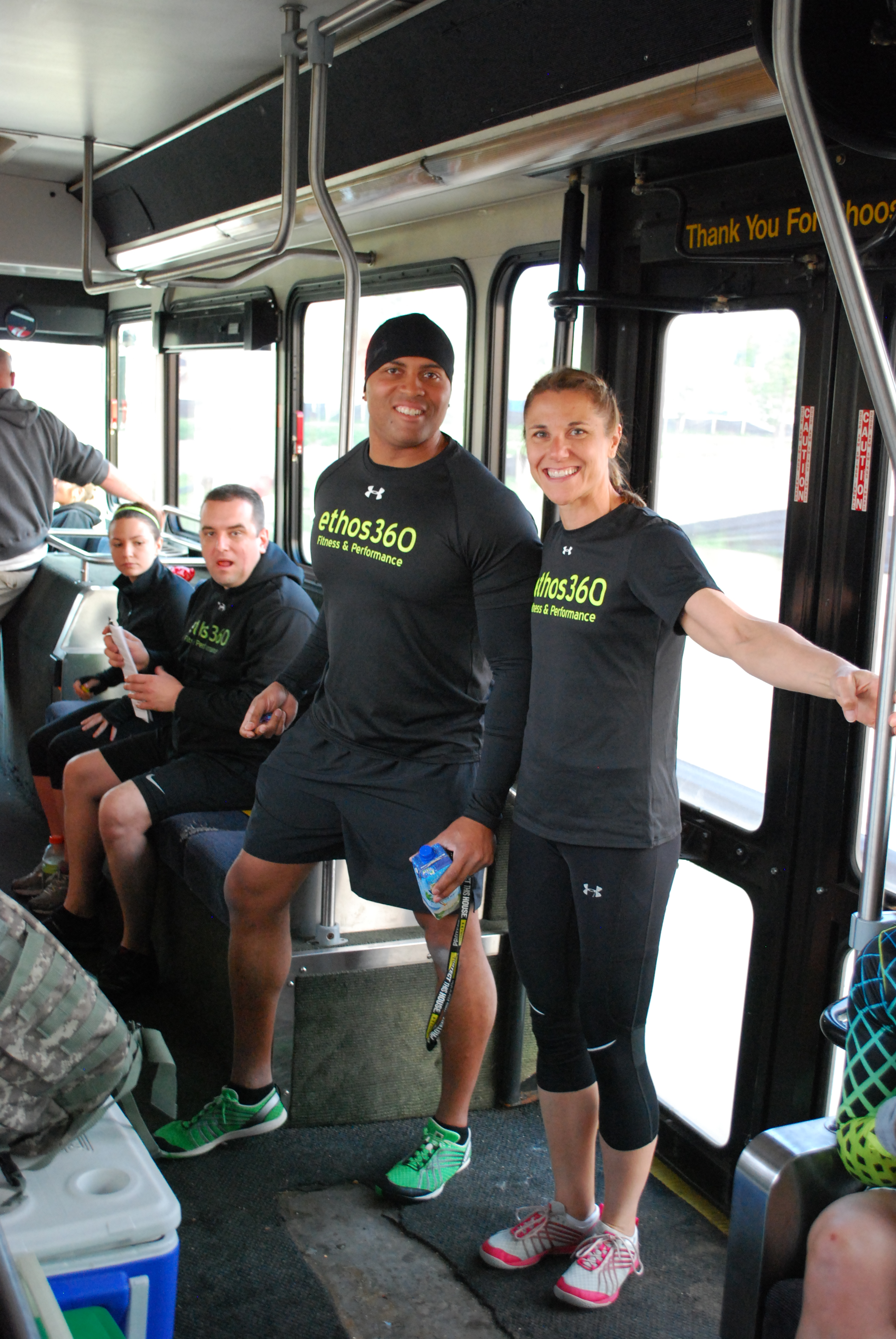
Krause has the body of a runner, lean and strong. She’s earned it. Over the past couple years her work with a company called Ethos360, a fitness training organization based in North Aurora, Illinois, has honed her own approach to fitness, diet and strength training. “It changed my life!” she enthuses.

Interestingly, that’s the same phrase one of her coached athletes uses when asked what she likes about working with Kelly Krause. “She’s changed my life!” the 40+ athlete smiles. There is sweat on her face as she pulls on her sweats. “I didn’t think I could ever do any of this!”

Life imitating art

That’s how it is for so many personal trainers. Life imitates art imitating life. Kelly Krause recently had the opportunity to lead more than 400 athletes through warmups at an event sponsored by Under Armor. “I was awed,” she smiles. “I just didn’t think it would lead to all of this.”

That’s probably not precisely true. Kelly gives off the feeling of a natural born leader, albeit a personable, somewhat self-effacing one. That comes out in her conversation. “I’m not that photogenic,” she says as she trots back a few meters to have her photo taken while running.”

Of course her statement is not true. The running form she so carefully coaches is evident in her own efficient stride. She runs over the ground, not at it. Her strong lean figure is well-aligned. There are no flailing feet. No excessive knee lifts. No overreaching strides.

She’s also smiling. Naturally. That’s one of the components of running so many people forget to embrace. Enthusiasm in movement is what Kelly seems to coach. Moving the right way matters. You’ll be happier if you learn how to move properly, she maintains.

She wants this to be true for more people who run. “Not many runners go through this type of training,” she observes. “They discover the sport and just head out the door. Then they get hurt or have joint problems. My job is to educate people how to avoid that.”

Trigger point therapy

Krause and Ethos360 owner Mike Moore in the way to an event.

Krause and Ethos360 owner Mike Miller in the way to an event.

To compliment her educational approach and help people along the way to better running health, Kelly is also trained in helping people maintain and treat muscle and joint pains. Specifically, Ethos360 focuses on trigger point therapy to help identify, treat and release tendon or joint-specific tension. “It’s all the knots, the aches that hold people back,” she notes. “We focus on better mobility through our education and training techniques.”

Ethos360 is owned and managed by Mike Miller, a personal and group trainer whose business at 1061 West Orchard Road in North Aurora (IL) recently added space that was formerly an art and photography gallery next door. “People love the floors for training,” Kerry observes. “They’re smooth but they look like barn wood. It’s just a nice atmosphere.”

A third trainer on the staff is TJ Booe. All focus on sports performance training for people of all ages; kids, adults and people who simply refuse to act their supposed age.

Reading running form

Kelly Krause was a reading tutor in her prior life. Now her job is reading the running form of those who want to get better at their chosen sport. “Speed will come over time,” she reminds her running students. “It’s about repetition of the right things and building endurance so that you can sustain them over the course of a race. So I teach technique and build confidence in people that they can hold that form over the entire time they are running. You want to be able to cover the distance without a breakdown in form or energy.”

Some of her techniques are literally time-tested. “We do 400 meter repeats as a test,” Krause notes. “That’s how we measure progress over time.”

A running ethos

The difference is in the baseline structure of the running form and how it relates to endurance and sustained effort. That aligns with the name of the business. Ethos: the distinguishing character, sentiment, moral nature, or guiding beliefs of a person, group, or institution.

It’s an interesting notion to consider that good running form can actually be an “ethos” and even part of a runner’s worldview. Many great runners in history have taken running form to be an almost holy writ when engaged at top levels. None other than Bill Rodgers once commented that during one of his victories in the New York Marathon, he had a sense that he should pay attention to form. He even wanted to hold his hands in the correct positions. There was a sense that he wanted to do everything right.

That is indeed an ethos, and once from which more runners, cyclists and swimmers can benefit.

Did you enjoy this content? Please Share it on your social networks. If you want to read more by writer Christopher Cudworth visit his other blogs at TheRightKindofPride.com and TheGenesisFix.com.

WeRunandRideLogo

Posted in Christopher Cudworth, half marathon, marathon, running, triathlon, We Run and Ride Every Day | Tagged , , , , , , , , , | 1 Comment

1984 Olympic Marathon one of the most beautiful runs of all time

If you have never watched the running of Carlos Lopes of Portugal, winner of the 1984 Olympic Marathon title, you owe yourself a treat. Lopes was 37 years old at the time of his Olympic victory. He is one of the smoothest runners of all time, with distance and speed formed through competition at races much shorter, especially 10,000 meters.

There are fleeting glimpses of Alberto Salazar in this footage, who struggled during this hot marathon, perhaps never having recovered from his battle with Dick Beardsley in the Boston Marathon years before.

Irishman John Tracy, the rail-thin man who competed also in the Olympic 10K, is racing alongside Carlos Lopes. So is Toshiheko Seko, the Japanese marathoner who won Boston and heralded a period in which Japan had some of the world’s lead runners.

Rob de Castella, the big marathoner from Australia is cruising along in this video as well. From the front he looks like he lumbers. From the side you see that his feet paw the road efficiently.

But compared to Lopes, he’s still a plodder. Hardly in the history of running has there been a more beautiful stride than that of Carlos Lopes. His feet merely kiss the ground. His stride wastes almost no motion. If you are a marathoner or half-marathoner and want to model your stride after one of the greatest runners in distance history, follow the lead of one Carlos Lopes.

WeRunandRideLogo

Posted in Christopher Cudworth, half marathon, marathon, running | Tagged , , | Leave a comment

On the road with me and Chuck

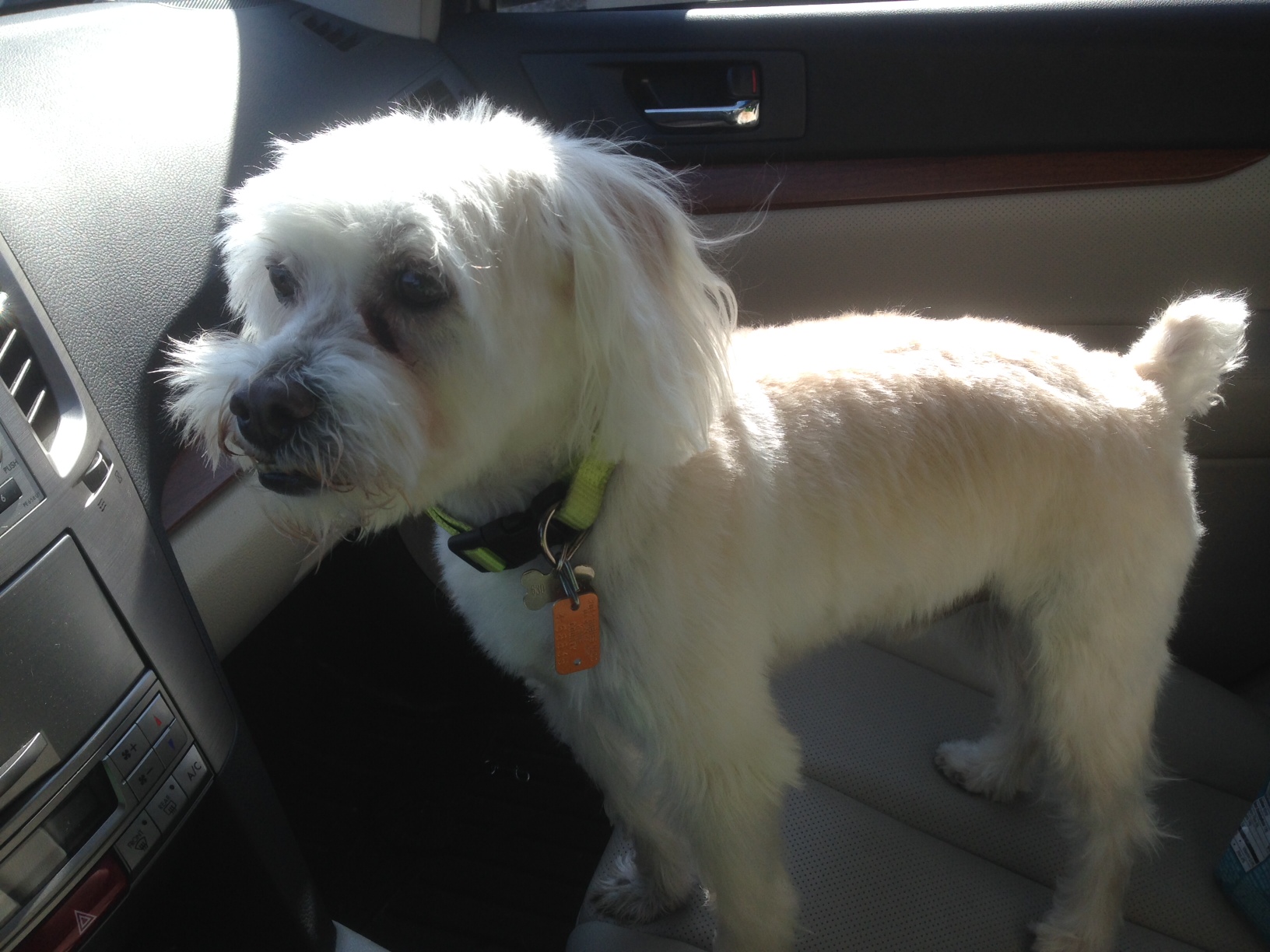
Chuck the Dog is a steady companion. We've covered more than 250 miles in our walks.

Chuck the Dog is a steady companion. We’ve covered more than 250 miles in our walks.

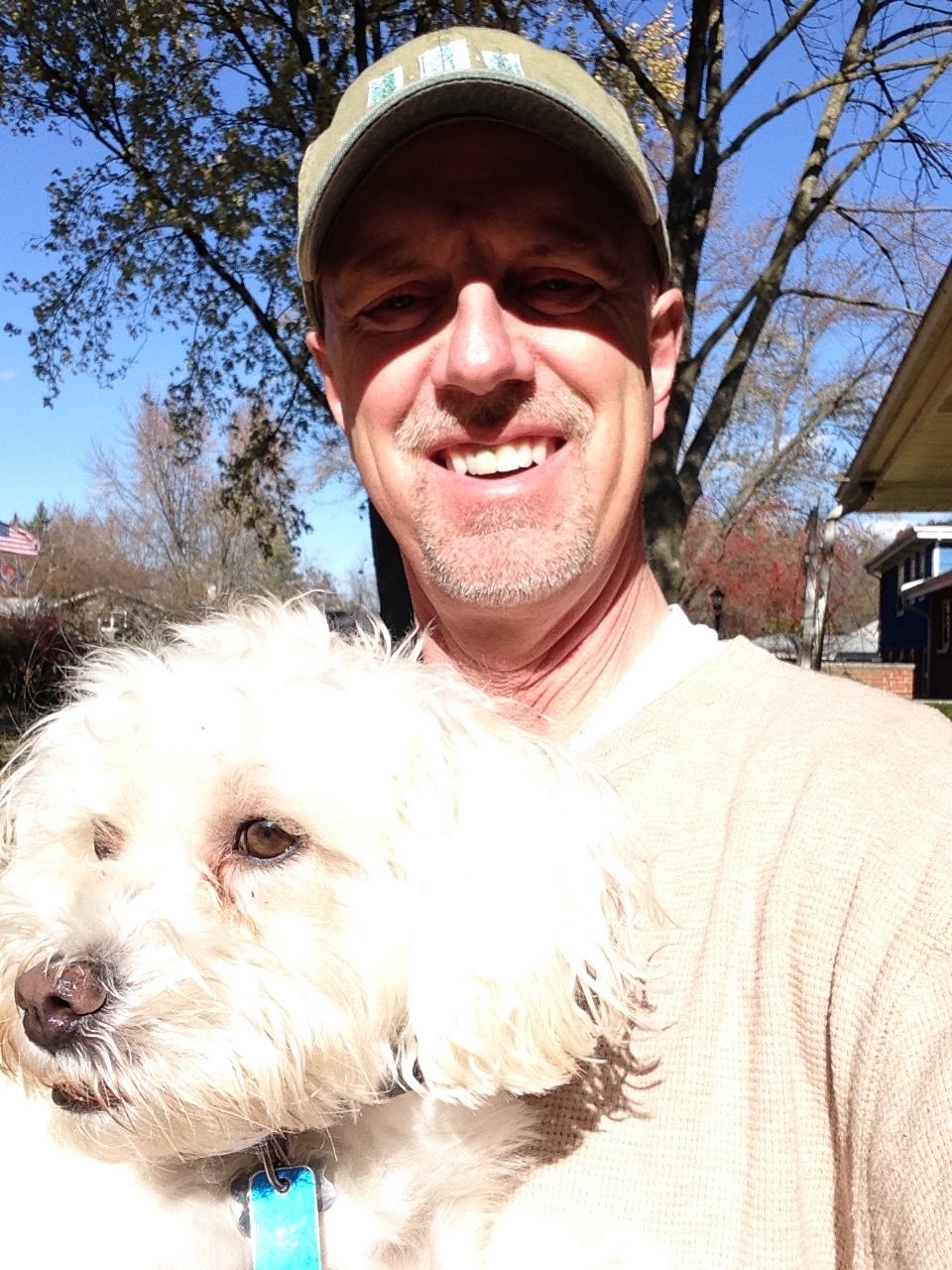
I did the math a while ago and figured out that my dog Chuck and I have covered a lot of ground together. He’s been in our lives for about 5 years now, and I’ve walked him virtually every day since then with rare exception. In fact most days I walk him twice a day, sometimes three times if he looks bored. Or I do.

That’s 1825 days and 3,650 walks, give or take a few. If each of those walks averages 400 meters (a quarter mile) that means we’ve covered somewhere in the neighborhood of 250 miles together.

All of this is passive fitness of course. It’s not like my heart rate goes up much during our walks. But I know for a fact that the walking does Chuck some good. He needs the stimulus for one thing. We can’t leave him outside on his own for a variety of reasons to do with his size and his general anxiety at being alone. There are coyotes eating the occasional pup in our region of the country and Chuck weighs only 18 pounds.

He's a Schnoodle. Part Schnauzer, part Poodle. We think. He's actually a rescue dog from the streets of Chicago where my son and friends found him abandoned at 2 in the morning.

He’s a Schnoodle. Part Schnauzer, part Poodle. We think. He’s actually a rescue dog from the streets of Chicago where my son and friends found him abandoned at 2 in the morning.

That’s fighting weight in his mind of course. He has never met a dog he won’t challenge or at least demand some respect. Recently he’s met a black poodle named Benji that likes to stand up and wrestle with him. It’s pretty much healthy fun and they both get out of breath trying to dominate the doggy conversation and try to hump each other now and then.

There’s also Molly, the show dog pup that looks like she fell out of a Disney movie. Her owner is a flight attendant who knows dogs really well. She laughs that I always seem to be out of poop bags when we meet. “I can’t help it,” I respond. “He always seems to poop twice on the mornings we meet up.”

Chuck gets ready for the Holiday season by cozying up to Nativity scene.

Chuck gets ready for the Holiday season by cozying up to Nativity scene.

I never set out to become a dog owner. There’s a Catch-22 to the responsibility. I really love Chuck but often there are scheduling conflicts that keep me away from the house for long periods during the day. He perches himself on the couch and watches the street all day when I’m away. That’s what my neighbor Mona across the street tells me. She loves Chuck too and has him over for doggy sleepovers once a month. Chuck gets all excited and happy when I say her name. His tail wags and he pulls on the leash. He even acts like a different dog in her presence. When I take him over to her house and he reads my body language as if I’m going to take him home, his ears drop and he slouches. It’s like a vacation for him.

My daughter may someday take Chuck with her now that she’s moving out of the house. She loves Chuck even more than me it seems. Chuck also loves her boyfriend Kyle, who owns dogs and knows how to treat Chuck like a real guy dog, which he likes.

An always curious character.

An always curious character.

I will confess to some guilt when I’m away from the house for long periods. Sometimes I’m even gone overnight. But he pretty much sleeps on the couch all day anyway except for when the postman comes. He hates the postman. Hates. Barks like a Jekyll and Hyde dog out of his mind. The postman just laughs, as does the postlady.

If he does move out it will be a relief not to feel guilt about him being alone for so long. And getting up early to run or ride or swim won’t require an interruption to walk him at 5:30 in the morning in the cold or wet or snow.

He’s also a transition from one life to another in some respects. Chuck loved my late wife too. But he’s fond of all the people in life who come to our house as well. One cannot ascribe too much emotion to all this. He is, after all, just a dog.

Yet when I write those words I know they are not completely true. Our walks together have saved my brain on many a day when times were tough or worrisome. That still happens today.

Chuck demands play time when we get home from walks or I get home from an early morning run.

Chuck demands play time when we get home from walks or I get home from an early morning run.

But through the years and all those miles with Chuck I’ve learned a few things about my own mind. Our time on the road and through the parks and playing with other pups has enriched my understanding of the world. I appreciate that his sniffs are like reading a book. It lets me stop and snap interesting photos with my iPhone and post to Instagram and Facebook. Owning a dog is a studied existence if you let it fill your mind with the appropriate things.

Of course the inappropriate things include leaving his doggy doo behind anytime we walk. He does his business while looking back at me most mornings. Sometimes it’s hard not to laugh. Yet I recall how disgusting it is for a runner to step in dog shit. So I never let that happen unless we’re far out in the woods or fields. Even then I pick it up or kick it into the prairie if we’re out of bags.

This period of life with Chuck has been like a window into a different kind of soul. He’s got a great personality and his greetings at the door every time I come home can break your heart. He loves. He truly loves. And that will never be forgotten.

WeRunandRideLogo

Posted in Christopher Cudworth, cycling, running | Tagged , , , , | 1 Comment