Ask yourself this simple question: “Why am I eating?”

MealI’m like you, I would suppose. I eat too much. Too often. Not the right stuff.

Yet I try, like anyone, to reign it all in.

So in standing over my meal this noon, I looked down at the rice cake, blueberry spread and granola covered with nutty cereal and a bit of honey and asked myself a question that should be asked every day.

“Why am I eating? ”

Okay. Let’s answer that together.

I eat because I’m hungry.

And I’m hungry almost all the time. When I wake up. When I go to bed. When I’m writing. Especially at 10 am. I get hungry then. Eat more at noon. Then a snack at 2:30. Finally, I down something to keep my stomach from growling on the afternoon workout.

I read somewhere that athletes should always feel just a little bit hungry all the time. If you’re sated, you’ve eaten too much.

Well, that’s a tough way to go. Yet I’ve done it, and gotten good results in terms of losing those extra few pounds that creep on during the holiday.

So rather than eat until you’re full all the time, it makes sense to ask the question, “Why am I eating?”

I eat because it makes me feel good. 

I love to eat. Eating is often fun. Food is fun. All kinds of food. Food food foood food foooood.

Okay, so we’ve established that food makes us feel good. But why?

Eating is comforting. Comfort food is an actual term that means we eat to make ourselves feel calmer or to take part in a ritual that gives a sense of well-being.

Yet that eating habit can also put you on edge when you feel guilty for eating comfort food.

All. The.Time.

Then it doesn’t feel so good to be eating when you know you should not. Seems like we almost need an internal alarm or an award system to reward ourselves for indulging just a little, like eating small meals all day (a recommended strategy they say…) versus eating until you get all stuffed and sleepy with comfort food and feel sluggish in every thing you do.

So we have to ask ourselves in those moments the question that will help us determine what type of eating we are doing. Is it just comfort food once in a while? Or are we truly stressed and our eating is a manic attempt to gain control of our brains when there is too much stimulus, or not enough?

Why are we eating? 

What’s good for the goose is good for all the ganders. Because one of the things we all like to do (it seems) is eat together. That’s where you can really get in trouble. With everyone at the table ordering multiple beers and big menu items it is so easy to just “eat along” with the crowd.

My companion has gotten good at eating half her meal and carrying the rest home in a box. That’s a good example of managing your eating and answering both questions: “Why am I eating” and “Why are we eating?”

Social eating is a deceptively difficult situation in which to exhibit personal control.

Or…

You could just shove your face in a dish of food and be done with it.

Because let’s face it, that’s how we sometimes feel when we’ve overeaten. “I’m such a pig,” we say to ourselves. And then we go have an Oreo or two or six to top it off.

Ad-mit it! You’ve easily downed one of those six packs of Oreos that come in the deep blue wrapper. Your mouth gets all Oreo-y and the frosting well, it slides onto your tongue and it’s better than sex. Oreo sex!

We eat because we’re horny

My friend and I used to try to pick up women and if we didn’t get lucky we’d go out and buy containers of Haagen-Daz Rum Raisin ice cream and eat the entire pint. In one sitting.

But we both weighed less than 140 lbs. at six feet tall back then, which probably explains why women were not too interested in us from the get-go.

Yet when we did get lucky those lucky women found out that distance runners can go alllll night long because we were in such good shape. So there’s a wonderful little tradeoff there.

We eat because we’re anxious or depressed

If you’re feeling down or (sort of) better yet, a person with persistent anxiety or depression, eating can become a way of coping with feeling really lousy inside and out.

The warm glow of a slice of apple pie with ice cream can temporarily take away the gnawing grip of chronic anxiety.

Or, you can try to cope with depression by making yourself some mood-lifting tea.

But Citalopram or Xanax might just be a worthwhile addition to your diet. No apologies needed for that people. The answer to why we “eat” those pills is to get back to a normal enough state to even make breakfast, lunch or dinner. That’s one of the tarsnakes of anxiety and depression. They both make life harder and you have to work a bit more just to feel normal some (many?) days.

Or we can go run or ride or swim. Add those to your diet no matter who you are, and the reasons for eating will become a bit less of an issue. Almost guaranteed.

We eat because we’re human

OreosHumans have to eat like everything else on this earth. Fortunately we don’t actually have to hunt our own food these days or 99.9% of the human population would die in a week.

All that would be left is a few tribes in the Central Amazon (not that Amazon…) who live on grubs and tree bark. The rest of us would die and wash down into the Gulf Stream or some other global excuse for a dirty bathtub and then roll up into a giant human flotsam pile on the beaches. 10,000,000 years from now when some other intelligent life form either evolves or descends on earth they will find the piles of our bones and sift through them trying to determine what killed so many supposedly intelligent people.

Then one of them will dig up a tiny shred of blue wrapper with a brown cookie on the cover and turn to their compatriots and say, “Oh look, an Oreo wrapper.”

The whole paleontology team will nod its head and say, “Now it all makes sense. They ran out of Oreos.”

Because that is the ultimate answer to the question “Why am I eating?”

To get to the Oreos.

WeRunandRideLogo

Posted in Christopher Cudworth, cycling, duathlon, half marathon, marathon, marathon santa, running, swimming | Tagged , , , , , | 1 Comment

Lessons on race relations from a sports facility

Tom and FredAs manager of the Norris Sports Complex, it was my responsibility to run a sports facility used for basketball, soccer, volleyball and the run/walk programs held each night for the general public. The rhythms were fairly well established. Between 40 and 100 basketball players arrived each night to sign up and play pickup games. There was a team coordinator who took names and arranged games. The rules were simple: win two games straight and you got to sit out a game.

Runners from all over the region visited the facility to run on the indoor track. We created a detailed sign that outlined how many laps constituted a mile in each lane. Walkers and runners had their own lanes. Usually from 25 to 50 people came to run and walk each night, a welcome way to work out during the cold winter months in Illinois.

Managing crowds of people

That meant there were between 175 to 250 per night coming through the doors of our facility. There were very few problems other than the occasional injury on the basketball court now and then. One night a player tripped and stumbled headlong into the rock-hard soccer boards. It split his scalp open and the blood poured down his body as he sat leaning against the board, stunned but otherwise conscious. A broad red pool formed around his body and play came to a halt. I walked out to check on the guy at the request of the other players and my first instinct on seeing him was, “Oh boy. Here’s my first dead guy.”

But he wasn’t dead. In fact he wanted to get back up and play. I told him that was out of the question. We called emergency and he got to visit the hospital and get stitched up.

We always kept an eye on the heart patients doing their prescribed exercise at Norris. Sometimes if the desk duties were quiet I’d get out and run or walk with people. That built friendships that would last 30 years in some cases. I still see my Norris runners and walkers at races or around town.

Hoop dreams

I got to know the basketball crew pretty well too. Having played in high school and actually improving my game through college, it was fun to join in pickup games on occasion. It helped me get to know the guys and gals who came to play.

Of course they all loved to challenge me in a variety of ways because I ran the place. One night I signed up to play and it happened that one entire team from nearby Elgin consisted of black players. I knew them all well except for one small guard with wire-rimmed glasses. They were careful for some reason to have him guard me when they set up on defense. That was so that I’d have to guard him myself. And when “Doc” as he was known came down the court the first time he put on a hard fake to my right and then soared clear over my left shoulder for a dunk. The place just erupted.

I knew I’d just been had, and the game broke down for minutes with laughter and congratulations at having watched the facility manager just get schooled. From then on I guarded Doc with extreme care and he no longer dunked over me. But the guys on the team kept reminding me with jokes that Doc had gotten the best of me.

Blockouts

6-ft-chain-link-fenceThere were some people in the conservative community of St. Charles who felt there were too many black players allowed at Norris Center. Some would whisper complaints to me. Others even filed requests to close the facility down to people from outside of town. Most of our black players came from nearby Aurora and Elgin.

And then things happened that made the prejudice against black players much worse. A group of three black men organized a theft operation in our locker room. Two posted by the doors while a third armed with bolt cutters made quick work of the locks in the locker room. They made off with wallets and other personal valuables.

That set the community on edge, and there was genuine talk of closing the facility to all but St. Charles residents. I protested on behalf of the many good people using the facility, and for all the right reasons.

Team tactics

In fact I had long been bending the rules to accommodate one black family from Aurora. The father had been a guy I knew from high school, a track star from Aurora. He had a large family of boys and girls who would turn out to be some of the most dominant athletes in the state of Illinois for years to come. But at the time they were tiny children in little shorts and shoes, and dad was teaching them how to run by bringing them to the track. I would charge him the standard admission fee but his many children were allowed to enter the facility for free. I’d meet him at the door one night a week and we’d usher the kids in the door and onto the track.

Once they had grown to high school age it made me feel good to see their names in the newspapers. They were all great kids, leaders in their community and their last name became synonymous with good character and athletic success.

Relapse

But then another burglary took place, and as I did the first time, I called the police department as soon as we detected the illegal activity. The officer that showed up was a friend of mine from high school. He carried a big black night stick and a pistol of course. He pulled me aside and said some things about the population that night at Norris that made me extremely uncomfortable.

These were my customers, clients and friends he was talking about. His commentary about cracking heads was shocking, and his references to other people in the community wanting to “clean up” the facility were not welcome.

Temper temper

whole_milkThen came a fight or two on the court. The timing could not have been worse. Tempers often flare in basketball and most fights wind down very quickly because other players stop them immediately. They don’t want their privileges revoked because a pair of angry jerks can’t control their tempers. Once at another area facility that was primarily used by white players, a local black player known for his temper threatened another player by picking up a chair in retaliation for what he considered a hard foul.

But it happened that one of the guys on the court was a large lineman from a football team. He stepped in front of the guy wielding the chair and said, “Go ahead and hit me. Because it’s the last thing you’ll ever do.”

The chair was dropped and so was the incident. The threatening player was told to leave and not come back. But that was a situational instruction, not a racist decision. Some actions are clearly justified regardless of race.

Shortsighted actions

It’s interesting to me that too often in this world the ugliest attitudes about race come from the more conservative, institutional perspectives that draw from fear. More human differences are resolved through positive association than through discriminatory dictate. Banning black players from a sports facility because of a burglary incident committed by black perpetrators proves nothing. Having a mind big enough to understand that crime and violence are simply an aggressive response to the disenfranchised status of so many people in this world is far more important.

Hard lines

People who are cynical towards people trying to effect genuine change on race issues may think they are forming a necessarily hard line against crime and violence by using race as a determining factor in law enforcement and public policy. But that approach thus far in America has produced nothing more than prisons jammed with young black men. There is no rehabilitation there, nor compassion.

The cop who wanted to come to my facility and “crack heads” did not have compassion on his mind. There was a vendetta in his attitude, a presumption of guilt toward all those he suspected of ill motives. Many of those he suspected seemed to have been black.

Opening doors

Ultimately we prevailed in protecting the facility from shutting its doors to players from other towns. We were all the better for it. We enhanced our methods of checking people at the door so that thieves could no longer get such easy access to the locker rooms. There was never again any need to call the officer who wanted to show up and “crack heads.”

Writ large
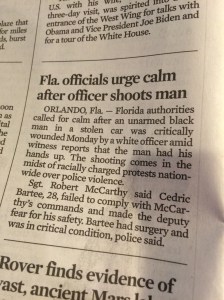
ShootingI’m reminded of all that every time I read about the Ferguson incident with Michael Brown or the Eric Garner case. Now these types of cases are coming to light on what seems like a daily basis. It’s obvious something’s broken in our law enforcement system, and among our law enforcement officials and police there is need for change.

Or perhaps it’s long been that way and we’re finally getting around to dealing with it in some form of honest way. Here in Chicago there is a long history of police abuse including that by Jon Graham Burge. His tale is that of a man with apparently strong convictions formed in military service including the military police. He was ultimately convicted of torturing more than 200 criminal suspects using methods such as throwing people handcuffed to chairs down flights of stairs to force confessions. His methods put innocent people on death row and resulted in lives being taken by the state, leading former Illinois Governor George Ryan (himself a convicted criminal!) to ban the death penalty in Illinois.

When does it become obvious that while many police serve with honor and dedication, there is strong a pattern of institutionalized racism and suspicion for people to assume that even highly trained (and even decorated) officers can be susceptible to the influence of fear and anger through their job experiences? Add in the component of intolerance or racism and you have a formula for abuse.

War on the streets

All these difficulties are only magnified by the war on the streets these officers now face when confronted by the fact that there are military grade weapons and tons of guns owned by regular citizens all over the country.

Yet we never, as a nation, seem to get the fact that the very people commissioned to protect us are under constant siege from the proliferation of guns flooding society through an unregulated militia. 

Bad examples

We need a persistently educational (and unflinching) response to the consistent racial discrimination propagated in America. That is our first requirement as a country to become more civilized.

Memorial Day is really about who is here, who is not, and what we think about that.

This needs to start from the top down, where attitudes toward our President Barack Obama by conservative Congressional leaders and political pundits has set a tone of public disrespect bordering on treason. The rest of America has modeled its attitude around these abominations, including Fox News with its so-called “fair and balanced” approach that is little more than raw conservative ideology and dog-whistle racism gussied up as fact. It has to stop for America to catch its breath and heal from years of angry rhetoric abided and embraced by people who consider themselves innocent of such things while supporting those who do evil, plain and simple.

Wrong versus right

Racism and police brutality is not a case of liberal versus conservative ideology. It is a case of wrong versus right, of chronic abuse versus civil rights guaranteed by our Constitution. That includes freedom from religion as well as freedom of religion. It includes the rights of people of all genders and orientation to participate freely in all the privileges of society. No exceptions.

Wherever we find these discriminations and sniff them out in media messaging, we must run them over with the righteous feet of indignation and in defense of the weak and needy. Let’s face it, we’ve all seen first hand what it means to be mistreated in life. But some people get mistreated every day just because of their appearance, the color of their skin or their religion, their orientation or their simple want (or need) to be different and be themselves.

It’s nuts. But if you’re more concerned with cracking heads and taking names than showing compassion and finding the human connection in all this, then you’re part of the problem, not part of the solution.

WeRunandRideLogo

Posted in Christopher Cudworth, running, We Run and Ride Every Day | Tagged , , , , , , , | 1 Comment

Why I no longer believe in calories, because Megan Fox convinced me that science is a load of crap

“I don’t know how to say this word, so I’m just going to pretend I know how to say it…

Megan Fox

Intergnat savant Megan Fox explains away science with a combination of hand motions and incredulity.

That’s how Intergnat savant Megan Fox begins her “audit” of science exhibits at the world renowned Field Museum of Chicago. Her debunking of various science exhibits includes an incredibly insightful teardown of the theory of how cells combined to form life. Her lecture includes a complex hand motion in which she depicts the motion of someone talking as she speaks the words, “Blah blah blah.”

Well. That shook my world. I’ve never seen someone debunk my college education in biology and rip it to shreds right in front of me with such force and verity. She went on to say that none of the science in the exhibit makes sense to a 3rd grader, a 5th grader or a 30-year old. Well, that about covers it all. I’m convinced she’s right. Science really is a load of crap.

Which is great news for those of us who run and ride. After all, the entire reason most of us run and ride is to counteract the effect of eating too many calories. And since calories were effectively discovered by science, we no longer need to believe in them. That means you can eat all you want from now on and not have to worry about running or riding to keep from getting fat.

Megan Fox is also so sure that no one can prove to her that animals evolved or that any of us has a genetic history that relates to any other creature on earth. This is also really good news, because if what Megan says is true, she just found a cure for disease and cancer too!

Because if what Megan says is true, and evolution is false and the genetics of living things can’t predict or describe how living cells behave and mutate, then cancer and disease are not real either!

Hooray! Germ theory is all wrong! There’s no such thing as the Ebola virus or malaria or West Nile or even cancer! It’s all made up! Science is so wrong about these things. Megan Fox knows better.

Apparently there really are a ton of people in America who think just like Megan Fox, because something like 40% of Americans do not believe in the theory of evolution. They might prefer better science sources like the creation museum in Ken-tuckee! That’s where they have exhibits contending that dinosaurs existed on earth at the same time as human beings. The whole motto of the museum is Prepare to Believe. So that you can walk through cultural institutions like the Field Museum of Chicago and debunk the science with your talking hands and the phrase “blah blah blah.”

Now that I’ve been liberated from my pesky belief in science, I no longer have to worry about training for my races. I can just sit around and believe that I’m going run fast and it will happen. After all, the science behind all that training in which cells and blood and capillaries all work together to deliver oxygen and fuel to our muscles is all false. If we simply believe we’re fast, who needs all that science and all that effort?

Yes, it’s so good to have people like Megan Fox around to explain away all this false knowledge in the world. I can’t wait to go out and run a four-minute mile without science dragging me down or holding me back.

WeRunandRideLogo

Posted in Christopher Cudworth, We Run and Ride Every Day | Tagged , , | Leave a comment

Parallel journeys and new dimensions

Today’s blog on We Run and Ride relates to author Christopher Cudworth’s book The Right Kind of Pride, an inspiration book about his wife’s 8 year journey through ovarian cancer survivorship and the character, caregiving and community that supported them. The book is featured in the December 4th Kane County Chronicle and can also be ordered at Amazon.com. You can also follow the author’s blog at therightkindofpride.com. Today’s blog is not an excerpt but documents the role that running and riding played in their early and lifelong relationship. 

RKOP articleJust over a year out of college I met my late wife Linda Cudworth. She was 22 and I was 23, For the next three years she lived the life of a devoted runner’s girlfriend through training and racing that included sponsorship from a running store called Running Unlimited.

She joined me by bike on 20 mile runs,  carrying a bottle of water tucked into the bike cage for hydration. We traveled to early morning races in cities around the Midwest. She watched me win and lose, and we formed our relationship around these early efforts to prove myself in her eyes.

For the next 28 years of marriage she never argued too much with my running. I’d race now and then and complain I was not as fit as I once was. But she also knew how much I’d trained to get that fit back then. Usually when I griped she said little more than, “You did your best.” She knew me well enough to let it be at that. 

Quirks and needs

Chris 1985The quirks and needs of distance running and cycling often amused her. When preparing for races “back in the day” I was hyper-cautious about protecting my legs from fatigue. That meant no standing around at parties the night before lest my legs feel weary or worn out the next morning. She called it Golden Leg Syndrome and loved to tease me about it.

Years later when I took up cycling more seriously she thought it was funny that our team cycling gear was called a kit. “Are you going to wear your kit?” she’d tease. But I liked the way it looked and ignored her teasing. She ribbed me as well about shaving my legs for cycling. Lady Legs she called them. The whole culture of cycling seemed silly to her. Yet we’d watch the Tour together and invariably she’d pick out the pro team kits she liked and did not like. Astana’s aqua suits made her queasy. One year Katusha’s team kits had a red patch in back. “Baboon butts,” she called them.

Over the years as my running mellowed, she recognized that it still offered certain benefits in our relationship. It was a good way for me to work off stress and come home calmer and more prepared to deal with life’s challenges. Certainly it helped me wick off the stress of caregiving during 8 years of treatment ovarian cancer. More than once through many surgeries and treatments I snuck out of the hospital to go an early morning run in the streets after sleeping most of the night on a cot or foldout couch. At those moments running felt like home. It had a familiar rhythm and constituted a conversation with the self in which the heart taps out its needs.

Running through grief

191217_3620364944030_72168110_oDuring her last years of life there were many moments when I’d pull to a stop while riding and sit there on my bike at a stoplight. And cry. I didn’t want to come home and show her that I was either sad or scared. The path of grief in that way can be long and lonesome. Yet she also took up cycling the best she could. There were tears in her eyes because she had no eyelashes, and her feet were numb from neuropathy. Yet she gave it a go. Nothing fast, but it was fun. 

Being so close to her every day, I had a big headstart on processing grief compared everyone else in her life. Her children and mother and sister and friends were always there when needed, but Linda had a determined habit of showing a positive, cheerful and brave face in her day to day demeanor. “I’m not sick,” she’d always say. 

Most of the time people hardly knew she was dealing with cancer. Even the hospital nurses marveled at her resilience. In that sense she was an athlete of her own. So it was my job to accompany her on that long run of living with cancer. Like most journeys, it had its ups and downs, just like a real road. You climb and descend. You ride into the wind, and with it. You shed some tears and sweat along the way. You keep moving because you must.

On her passing the sobs of my heart turned to aching confessions to God that evolved into thanks and gratitude for her life, well-lived. I was proud of her. We did our best together.

But just as youth vanishes with time and you come to grips with the runner or cyclist you are now versus the athlete you once were, time demands a new comprehension. You move into a new dimension. Life becomes a parallel journey.

New realities

That new reality can be confusing to some, and should you share that new dimension with someone who is not quite ready to receive it, there are definite challenges. We all travel at different paces during life, as slow or fast as we need. We move at the pace that our minds and bodies will allow.

It is so true that people tend to see you in the context they know you best, and rightly so.They also see themselves in the context that enables them to cope with life as as best they can. These are all legitimate and important journeys.

Linda and I once sat out on the patio on a calm summer night and mused what it really meant to go to heaven. “What age would you be?” she asked incredulously. We both came to agree that our spirit should it find a place in what we call heaven would be recognizable in some form we cannot possibly now imagine.

Parallel movement

Think about it. Mountain climbers and marathoners may take the same path, but the reality is that no two participants travels precisely the same. One false step can be trouble. Sometimes we have to stop and just breathe. Breathe. To believe.

Yet these ventures can be parallel as well. You look over at that person striving or struggling and go, “Oh look, they’re just like me.” We take inspiration and hopefully, we give it at times.

Spirit animals

Two Sandhill Cranes FlyingFor those traveling the parallel path, it feels like traveling down a road on a bike when a horse or dog starts running along beside you. It is both thrilling and disorienting. You feel kinship with this other creature, but cannot know its intentions. That is why so many ancient peoples identified with spirit animals. We yearn for company but sometimes do not know what it really means. The symbolism is important however. In this life we are all spirit animals.

Fortunately among fellow human beings we have the ability to communicate that kinship. We find companionship with those who run and ride with us. We don’t always have to know why they are there of how they are encountering the moment, through suffering or joy. We are on parallel journeys and sometimes that is all we really can know. 

Where paths intersect there is community, and where there is community, there is hope. Sometimes those parallel journeys result in real companionship, a journey shared. Each one of our lives has these dimensions, and we cannot always predict what will be revealed. It is up to us to be aware. To stay aware. To be alive. And to take inspiration from those that have gone before, and those we grow to love in the now.

WeRunandRideLogo

Posted in Christopher Cudworth, cycling, half marathon, marathon, running, swimming, triathlon, We Run and Ride Every Day | Tagged , , , , , , , , , | Leave a comment

It takes concentrated effort to combat hunger, especially when it’s real

Food BulkThose of us who run and ride tend to understand hunger in terms of managing how much we eat for fuel and performance. We eat to run and ride and swim, or else we hit the wall, bonk or sink. Yet if we eat more than we need for fuel, or eat the wrong kind of foods (carbs, sugars and certain kinds of fats) it means we slow down and/or gain weight.

So it’s a balance of wanting to eat and then fighting off hunger pangs even when we don’t need to eat. Then there’s comfort eating, or pigging out for stress relief. The whole hunger issue for athletes can be complex.

But take a moment and think about the other side of the coin. There are millions of people in America for whom food security is a real problem. Recently it was documented by Sports Illustrated that there are hundreds of thousands of genuine athletes who are homeless, for example. Homelessness is related to poverty, which has a close relationship with hunger in America.

Hunger games

Cynically, some politicians and commentators view hunger through an ideological lens that says poverty and hunger are the product of an inferior spirit or laziness. Such issues can be very complex, especially when religious or political leaders throw ideology around in any sort of  literal way. For example:  John 6:35 NIV  “Then Jesus declared, “I am the bread of life. Whoever comes to me will never go hungry, and whoever believes in me will never be thirsty.”

If taken literally, that passage makes it sound like all you need to do is pray and Jesus will shovel food your way. But of course that’s not the entire meaning of the passage at all. The “bread of life” is as much about spiritual hunger as it is about material needs.

Material and spiritual hunger

Food Cart TooInstead the bible instructs believers on a consistent basis to regard material hunger as a spiritual mission of great importance. Matthew 25:35-40  “For I was hungry and you gave me something to eat. I was thirsty and you gave me something to drink. I was a stranger and you invited me in. I needed clothes and you clothed me. I was sick and you looked after me. I was in prison and you came to visit me.’ “Then the righteous will answer him, ‘Lord, when did we see you hungry and feed you, or thirsty and give you something to drink…”

And of course Jesus responds that whatever we do for the least among us, especially the hungry, we also do for him.

But it is not the religious alone who help the hungry in America. Nor is it left to politicians  alone to decide who gets fed. There are people whose convictions lead us down a practical and righteous path to save people from hunger on a daily basis. Such is the mission of the Northern Illinois Food Bank, whose staff and a large group of volunteers gathers and distributes food to thousands and thousands of families each year. Here’s why (content from the NIFB website)

“Nearly 600,000 people each year in our 13-county service area rely on Northern Illinois Food Bank and our network of 800 partner food pantries and feeding programs. While in FY14 Northern Illinois Food Bank provided the equivalent of 50 million meals to our hungry neighbors, the sad fact is it’s not nearly enough. According to Feeding America’s Map the Meal Gap study, each year our hungry neighbors are at risk of skipping 70 million meals, simply because they don’t have enough food for three meals per day.”

Making it happen

Food Sign HeaderTo make all that happen takes tons of volunteers and hours of packing and moving food through the organization’s facilities in Geneva, Illinois. It is estimated that to staff the work of the volunteers would take more than 80 full time employees. At an annual salary of $40,000 for such manual labor, the budget of the Northern Illinois Food Bank would need to expand by $3.2M.

While creating jobs might be a great way thing to do, that money would have to come through donations because NIFB is a non-profit organization. And as noted from the incredible need for food in northern Illinois, the money and food donated now goes directly into feeding families in need. Even working families have trouble making ends meet. Often their wages are insufficient to provide food security.

Pitching in

Food Blue HandRecently a group of volunteers from a chapter of BNI (Business Networking International) joined the effort at NIFB headquarters. Our assignment was to move bulk cereal into bags, seal and box them for distribution. 25 BNI members and children formed a team, one of six or so groups working at the NIFB that night.

Within the group we were divided into assignment teams and got our instructions. For two hours the movement and conversation was frenetic and fast-paced as more than 100 boxes of 12 bags each moved through the clean room assembly line. Hair nets and aprons were the dress of the day, and age did not matter. Everyone had an opportunity to pitch in at their skill level.

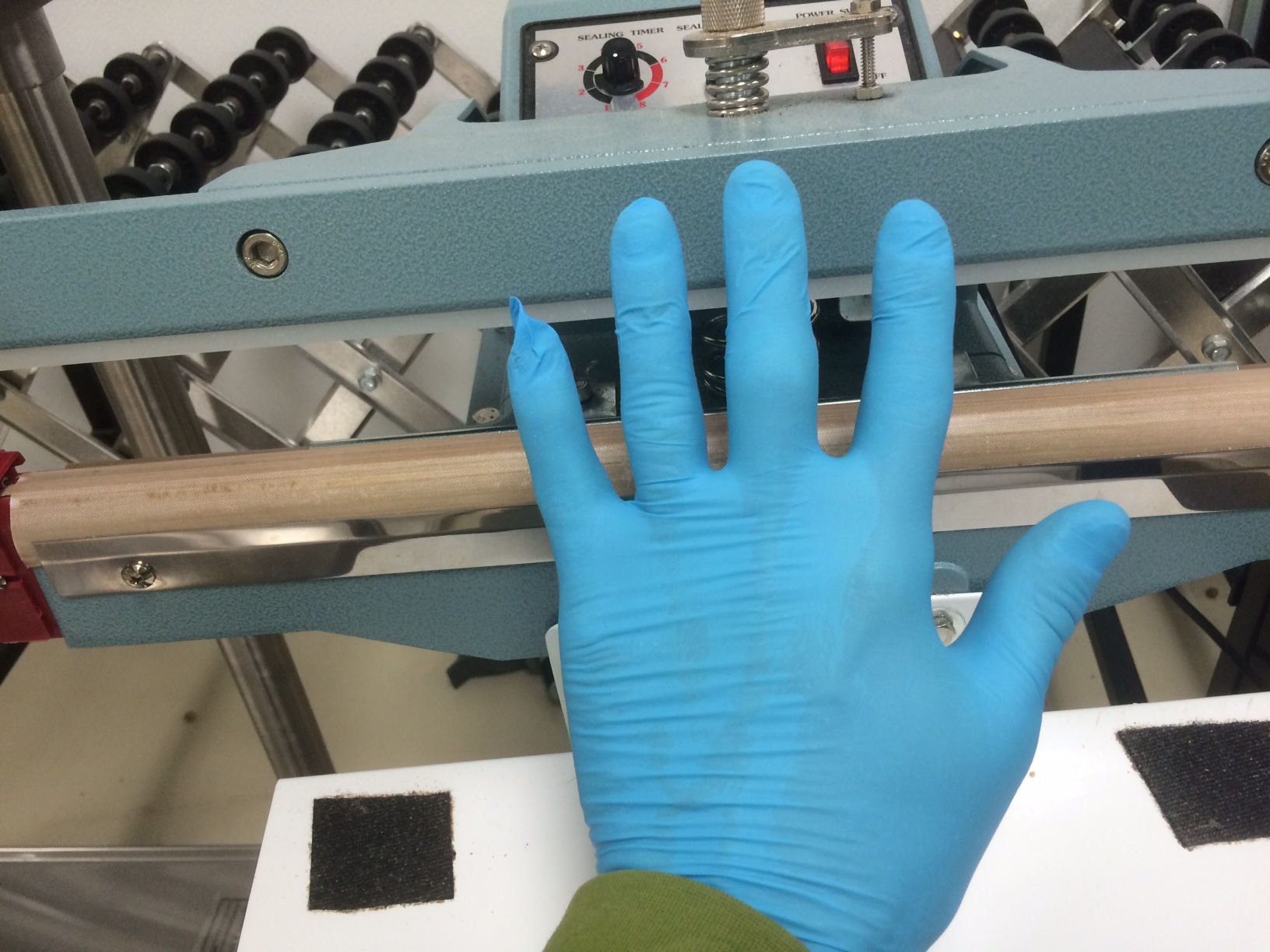
My personal assignment was sealing the bags, a test of dexterity made challenging by the fact that the machines had a tendency to melt right through the plastic if you paused too long in the double-seal process.

Hands on

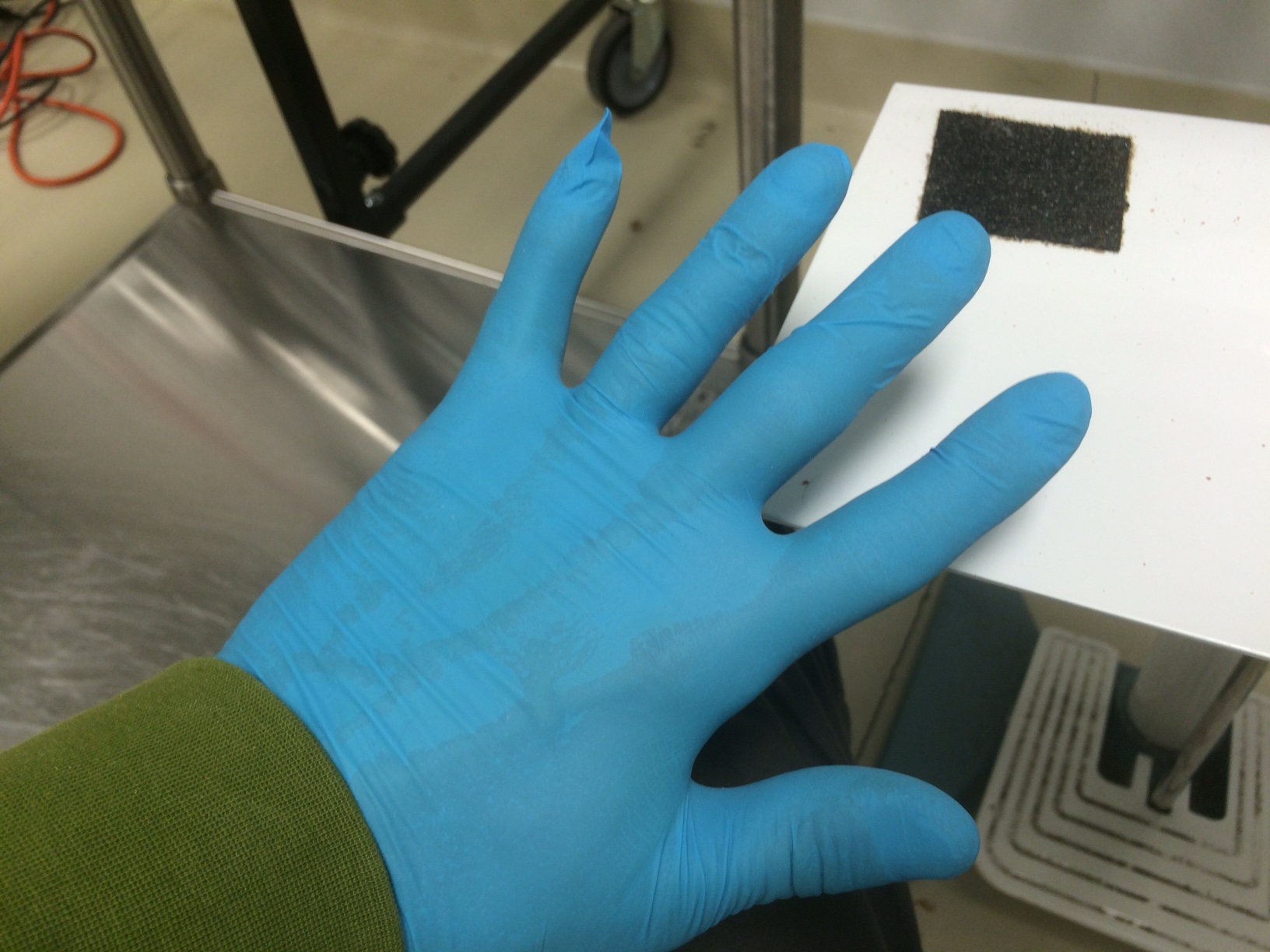
Food Blue GloveIt brought to mind a number of challenging manual labor jobs over the years. It took full concentration to double seal those bags and keep ahead of the new bins of unsealed cereal bags arriving by the minute.

I could not help thinking back to a moment during high school when the vocational school had us take tests to see if we were suited for manufacturing work. There were dozens of little screws and bolts and washers, and I sucked at repetitive work. My coordination is good but my concentration could wander back then. Plus I wondered if there was some intimation of academic failure at work. With a D in Spanish at the time, I was worried the school thought I was an intellectual dolt.

Concentrated effort

Now I’ve learned to dial in and that was the modus operandi for the night. Don’t let distractions take your mind off the task at hand.

Yet I could not help thinking about that food and who would eat it. Granted, it was only Reese’s Puffs cereal. You could make all sorts of judgments about whether that’s the right way to feed the hungry. But then you’d point the finger right back at yourself, because we all have want and need of different types of food. Some of us even munch energy bars made from real stuff that constitutes fake food. So it’s a confusing mess here in America.

There are many types of food handled by hunger missions in America. Nutrition is not cut short if at all possible. Considering how much food is donated and how much money is raised to cover and distribute it, these types of questions aren’t really practical to answer when you’re bagging dozens of bags of Reese’s Puffs. Still, my brain kept working…if there were 500 puffs in each bag, and I packed 200 bags, that makes 100,000 individual Reese’s Puffs out the door and into the hungry mouths of people all over northern Illinois.

I like Reese’s Puffs. I’ll still eat them if I see them again. But we were a little tired of the peanut butter and chocolate smell. By the end of the night, a bit worn out from that marathon of packing puffs, I paused to think that I’d learned a few things about endurance and concentration over the years. Much of that dedication to task was learned through the concerted effort of running and riding. It teaches us to stick with the job until it’s through.

Looking the other way

But of course it will require a lot more concentrated effort to assuage hunger in America. Our nation has a bad habit of looking the other way and even attacking its weakest citizens when it comes to wrestling matches over political power and authority. The Rush Limbaughs of the world consistently set out to confuse real issues with false pretexts. Based on his many assertions that there is no hunger in America, such a man would have us think that everything that besets the hungry in America is a result of their poor nature and character.

Yet that’s not what we find in scripture. Luke 6:20: “Looking at his disciples, (Jesus) said, “Blessed are you who are poor, for yours is the kingdom of God.”

Which means it is all our responsibility to create that kingdom of God here on earth. It is not our job to sit back cynically and mock the poor or find political motivations for their need. It is ours to pitch in and help, and let answers to the spiritual questions be defined by our willingness to first help, and then help again.

WeRunandRideLogo

Posted in Christopher Cudworth, running, We Run and Ride Every Day | Tagged , , , | 3 Comments

Being a pro is never as glamorous as it seems

By Christopher Cudworth

A few years ago it all came together for me. With plenty of time to ride my bike I racked up 4000 miles over the spring, fall and summer months. I was running some too, and my weight dropped to 163 lbs. I was fit and people noticed it. I could ride with people who normally dropped me after a couple hours and it was fun being the rider who did most of the pulls.

There have been several other periods in life where the training and racing schedule came together. In high school and college that was a given. As a participant in cross country and track there were plenty of weeks nearing 100 miles of running.

Semi-pro

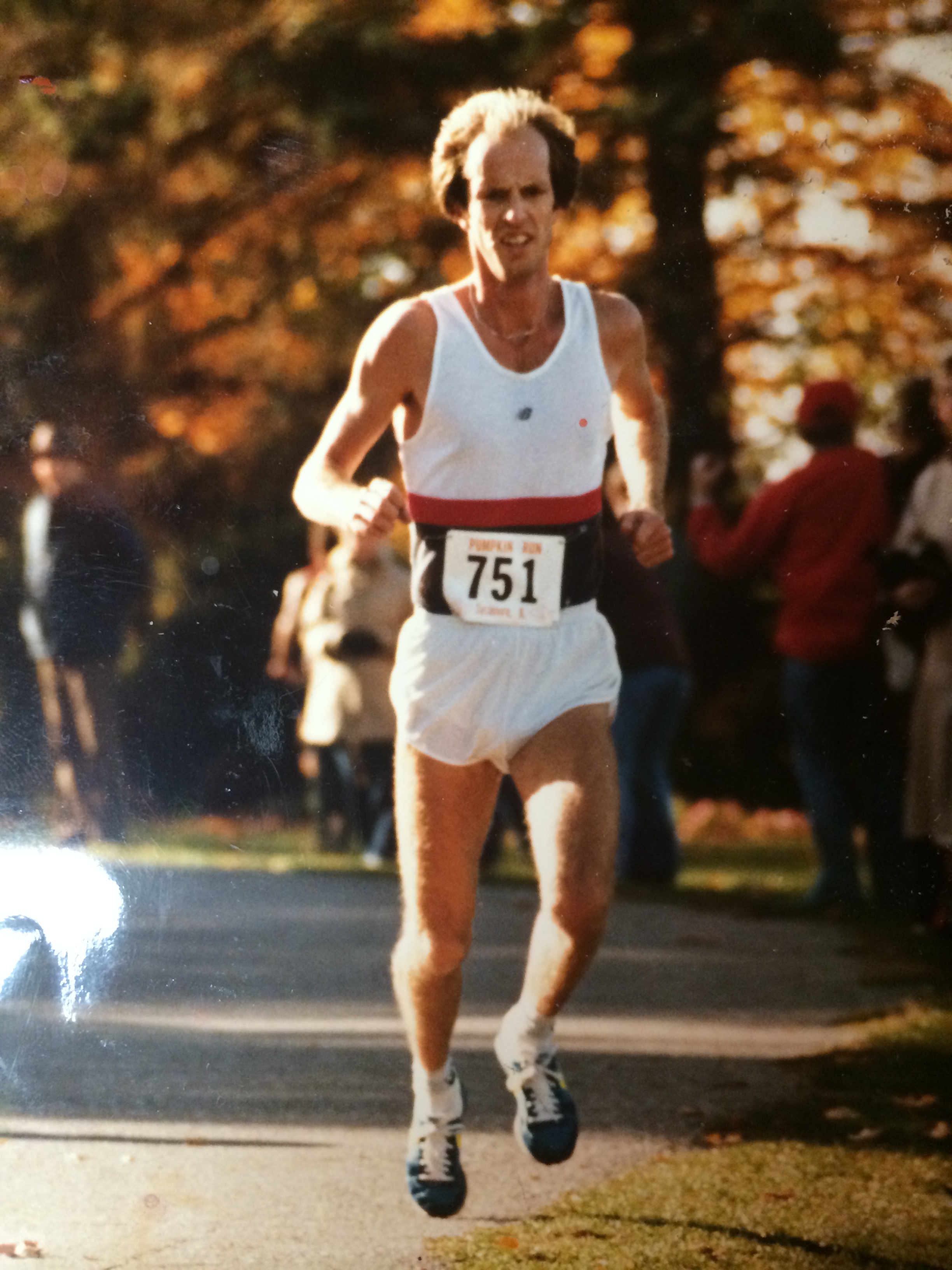
New BalanceAfter college I tried to capitalize on all that training and racing 24 times in one year. There was sponsorship from a running shop to help me along. That included shoes, race fees and travel expenses. It was fun and it was work. Every weekend for months there was a race to run. Sometimes the competition within our team was enough to make the races really hard. We once took the top 9 spots at a 10k race. Which looks good on paper and on the awards stand. Not sure it made many friends for the running shop…

Flirting with the idea of being a pro was always alluring, but in my case, also naive. As I’ve talked with real professional athletes over the years, it has become obvious that being a pro is never as glamorous as it sees.

Professional perspectives

You may recall that when Lance Armstrong announced his comeback, former teammate George Hincapie wondered why Lance would even want to go through all that pain and trouble. Being constantly on the road racing a bike and staying in hotels actually sucks, Hincapie observed. Even the top riders in the sport admit that it’s true.

Yet there’s a pull to that kind of pain and suffering. There’s also a pull to the eternal youth of being a pro. Athletes have a hard time retiring because there’s a sense that nothing they do after their pro career is done will feel the same way. In that respect even being a retired pro is no glamorous deal. Sure, to some extent people idolize you and treat you as something special. Yet when you go home you’re still the guy or gal who stubs their toe and spills coffee on the counter.

It ain’t easy

Being a pro athlete does not necessarily make life easier once you step down from the podium. Lance learned that the hard way on at least three fronts. The adulation he clearly craved was missing. But then came the loss of credibility as well. Finally, the bar from all forms of competition is clearly painful to him.

These patterns hold true even for us mortals. People who build their identity around their professional careers have a hard time giving up the reigns when the time comes to “retire.” That is why some people choose never to do so. Working may not be as glamorous as sticking your toes in the Florida surf for your remaining days, but some people prefer to keep working.

Those of us who were never pro athletes saw those dreams disappear earlier in life. Yet there’s a considerable amount of striving that remains to be done in life. There seems to be a little bit of “pro” desire in all of us. Hence people run marathons and slap that sticker on their car that says 26.2. For those miles your commitment is on full display. Yes, you’ve paid for the privilege but for those miles you are indeed a “pro” in the sense that your training is being applied in a clear athletic endeavor. We’re all pros in that sense. And even that is never as glamorous as it seems from the outside looking in.

WeRunandRideLogo

Posted in Uncategorized | Tagged , , , , , , , , | 1 Comment

Tom Spadafora combines worlds of running, health and business

By Christopher Cudworth

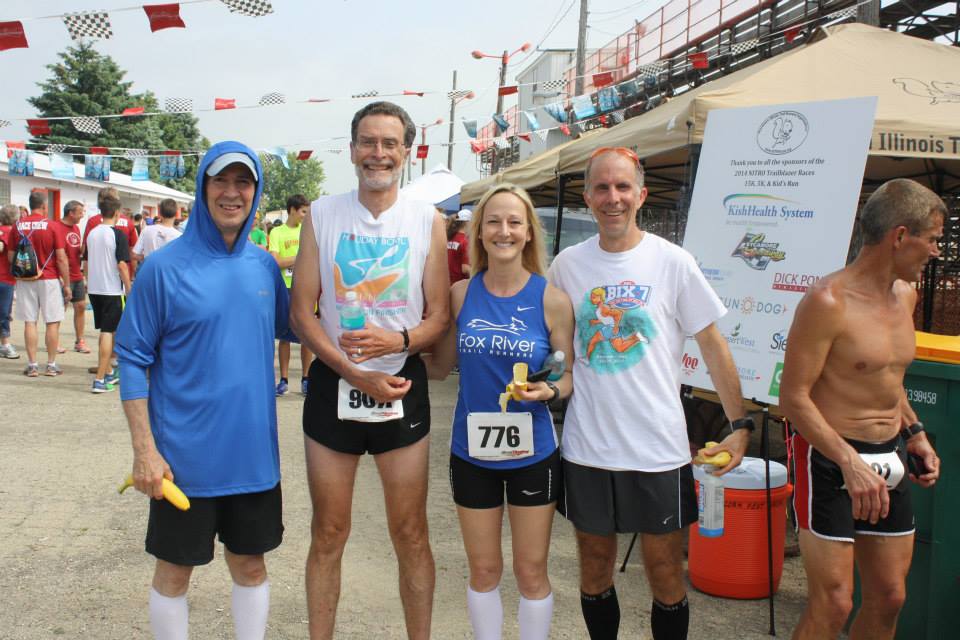
Tom Spadafora is president of the Fox River Trail Runners, a club based in the western suburbs of Chicago.

Tom Spadafora is president of the Fox River Trail Runners, a club based in the western suburbs of Chicago.

As President of the Fox River Trail Runners, a popular Chicago-area running club, Tom Spadafora sees plenty of healthy people in action at the races the organization sponsors in the Chicago area. The club itself has a membership of more 600 runners. Its Thanksgiving day Fox and the Turkey Trot race drew more than 2500 participants in 2014. All that makes Tom a happy man.

But what really makes him happy is helping people who aren’t so far along in the health and wellness process. His business Your Health Vision is in its 6th year of operation. Its mission is counseling people on diet, health and exercise. “There’s obviously a market for education about combatting obesity, finding a better diet and learning how to exercise properly,” Spadafora notes.

He earned his training in a yearlong study class that led to a health-coaching model he now uses in working with clients. “Some want to lose weight. Others want to stop smoking. It’s all about overcoming habits. But I counsel people to work on one increment at a time. That’s how we change behaviors and combat stress.”

Changing directions

As a former operations management director for a major retailer, Spadafora knows a thing or two about “moving the needle” when it comes to human behavior. In fact it was his own soul-searching following a downsizing in his industry that led him to focus his energies on health and wellness, a passion born out by his own commitment to running, but one that also appeals to his sense of compassion for other people. He laughs, “But it started with me. I also decided I was not going to go work for someone else again.”

It all comes down to motivations, he observes. “All my training for this role came through a sales organization,” he explains. “And it turned out that the things that make people better salespeople are really basic. It shouldn’t be surprising that getting people into better health helps them professionally as well as personally. So I took those philosophies of coaching and applied it to the model of health coaching full time.”

Money matters

One of the surprising facets of his health coaching business is that he finds people bringing up their finances as a source of stress. His background in operations enables him to sort through these issues with his clients and get them the resources they need to simplify that component of their lives.

Tom Spadafora

Tom Spadafora (right) poses with fellow Fox River Trail Runners at a summer event.

“Every successful athlete or business person has a coach,” he contends. “They help you understand that you have it within you to improve something in your life. It’s all a matter of getting that motivation up into your brain and out into the world. Then change can occur.”

Some clients want it handed to them. Spadafora calls them to account. “I’m not going to tell you what to do…” he responds. “You’re going to own it.”

Getting psyched

If that sounds similar to the approach of a professional psychologist, so be it. “I ask people to give me one thing to work on that they really want to do. I tell them not to be afraid to shoot for the moon, but we’ll work on it with small steps.”

“It generally takes about 3 months for people to see and understand the progress they’re making,” he says. “That’s a pretty good time frame and you can almost always track the flow by then whether its weight loss or to stop smoking.”

He particularly enjoys seeing people motivated by their progress. “I get so jazzed by people who didn’t know they could reach their goals,” he enthuses. “It’s often the case that people don’t know what they don’t know. You give them those tools and it all makes more sense to them.”

Tom Spadafora is a RRCA (Road Runners Club of America) Certified Running coach. 

No doubt Spadafora solves a few client challenges in his own head before broaching the subject of how to change behaviors. His own running takes him on the road for hours at a time. Last year he also organized an indoor running program in collaboration with a high school so that his club members and clients could have a place to train out of the cold for three days a week. Spadafora is usually there himself, circling the track at 6:00 pace doing intervals with a training partner or two.

It’s all part of the picture for Tom Spadafora, whose company Your Health Vision offers a health handshake with the world.

WeRunandRideLogo

Posted in Christopher Cudworth, We Run and Ride Every Day | Tagged , , , | Leave a comment

Racing toward a slightly different conclusion

By Christopher Cudworth

CopsA few weeks back I posted the photo shown in the featured image with a joking comment that it was good the police had the porta-potties protected. One of my conservative “friends” on Facebook went ballistic. He shot me a terse lecture about respecting the police with a warning that I should thank them for their service, not ridicule them.

As it so happened, I had already done that. I politely stopped during the running of the Naperville Marathon and Half Marathon to thank them for working for the race.

Taking note of the assault rifles hanging on front of their bodies, I also regaled them with a story about the time my family and I had were on an archeoastronomy trip in southwest Colorado. Early on the morning of June 21st, we rose before sunrise and drove through the cool desert night to arrive at Hovenweep National Monument in southeastern Utah. Our goal was to arrive before sunrise and station ourselves at an ancient native American (Anasazi) astronomy site to witness a solstice event that has been taking place for an estimated 1000 years.

Armed and dangerous

We were joined on the trip by a trio of armed federal agents wearing assault rifles over their shoulders. Their presence was deemed necessary because a few weeks before a pair of armed criminals had gunned down a cop in nearby Cortez and escaped into the wilderness near Hovenweep.

As the sun rose a sliver of light shone across a spiral shape carved in the face of a rock. Only once a year does the light reach that petroglyph. It once told the tribes who lived in the area that the time was right for planting. That was back when the desert was perhaps a bit more verdant and growing crops was possible.

Of course I didn’t tell all those details to the police working the Naperville Half Marathon. I simply told them that we appreciated the guards that morning in Hovenweep. The idea that there might be armed criminals roaming the Utah desert was the least romantic notion on our minds at the moment.

I asked my children that morning of the solstice event if they minded the presence of the armed guards. “What guards? What guns?” they asked innocently. That taught me that not everyone has the same sensitivities and sensibilities about guns. But how can we expect children to understand such concepts? Kids don’t necessarily understand what guns can do, or why they’re necessary. But neither do so many adults, who engage with guns at a childish level, believing as fact what they’re told that guns lead to a civil society and protect our freedoms better than rule of law.

Frontal assault

Because… why are assault weapons necessary for cops to carry? That was the point I was trying to make with my ironic post on Facebook about cops protecting the porta-potties. Of course their mission on race day at a marathon site is much broader than that. We all know what happened in Boston a couple years ago.

But then again, we need to keep asking questions about this growing militarization of society and the need for police to use grenades and tanks to do their jobs. That’s what’s happening, people. It’s an arms race and the police believe they are either going to win or die.

Thanking police for their service

Road signsI’ll never state that police presence is not helpful at races. At every race I’ve attended I’ve thanked police for their service. Frankly I get the feeling they sometimes see the frantic stupidity of it all and keep their mouths shut. Police have to look at society a lot differently than those of us who never work in public service. They see the ugly side of human nature every day. Domestic violence. Rape. Murder. Robbery. Car crashes. Vandalism. Heartbreaking cruelties even to animals and children. It’s hard for a policeman not to be a cynic about the very foundations of society. Bigotry. Racism. Protests against social injustice. Campus rape. Drunken driving. Bar fights.

Our police operate in a different universe, and on a daily basis that universe spins around while the rest of us go about our merry business. The police are no different from the characters in the movie Men In Black. The dialogue goes like this between J and K:

“People are smart, they can handle it.” 

“A person is smart. People are dumb, panicky, dangerous animals and you know it.”

Cops are also people. Yet the person who is a cop is also capable of dumb, panicky behavior. I was once leading a 10K in a northwest suburb of Chicago. The police officer driving ahead of me on the course approached an intersection and suddenly hit the brakes. Flying along at 5:00 per mile pace, I could not stop and wound up flopping over the back of the trunk of his car.

Obviously in the moment I was a bit upset. I yelled at him but his real goal was to make sure there was no traffic that was going to plow through the intersection. Ramping back up to speed, I waved and shrugged in thanks.

It was an interesting moment of human interaction. The policeman was doing his job but so was I, in a manner of speaking. (I was sponsored as a runner by a running shop at the time). I still won the race but had to tell the story of how the police car almost cost me the victory. If I’d hit my knee on the bumper, for example…

Not so easy

Nothing about being a police officer is easy. I have friends and associates who work in law enforcement. I also wrote an article about Conservation Police Officers and learned that they are not only responsible for wildlife but are also fully commissioned and trained state troopers. One of the officers interviewed had related that it was highly necessary to compartmentalize what he daily saw in his job and the need to come home and function as a father. The two worlds were dichotomous.

We hear the same thing from soldiers returning from war. The blood, gore and destruction are too much. Add in personal injury and massive disability caused by war injuries and it is almost criminal what we ask our soldiers to do, and we too often treat them like aliens when they come home. It’s an almost impossible split between war and civil society.

So when we blithely throw soldiers into action for political causes that are either ill-defined or unnecessarily aggressive, it should make the nation question why and how we view imperialistic violence as so necessary to achieve our national goals. The same goes for our police officers. Why is America so content to force these people to live with the threat of unnecessarily dangerous weapons?

Working with police 

As a former race director I have worked with multiple cities and numerous police officers. That’s why I stop to thank them for their service.

But the abiding concern I have for police officers is not the nature of their service or even the mistakes they sometimes make. I’m far more concerned that their jobs as civic peacekeepers have been made untenable by the proliferation of weapons in American society. My legitimate question depends not on some liberal agenda. And I am a known and proud liberal and progressive thinker.

Instead my concern focuses on the natively conservative opening line of the Second Amendment, which begins, “A well-regulated militia, being necessary for the security of a free state…”

That makes me think deeply about what many police officers now face on the streets of America. It’s an arms race out there. While the rest of us occupy the streets one day at a time for a merry little run through neighborhoods or cities, the cops are out there literally fighting for control of the property they are commissioned to protect. Now we’re looking at the full militarization of police forces in America. It’s necessary because America has no commitment to live by the first line of the Second Amendment. Conservatives lie when they claim to support the police and then refuse to hold anyone accountable for the crazed and unbridled “militia” now wielding guns at will and at large. We clearly no longer have a well-regulated militia. The NRA is the absolute worst enemy of the police here in America. There, I’ve said it. Now deal with it. Because it’s true.

Shooting up with ammo

There have been more than 400 school shootings since the Newtown massacre. It’s also a lie to say that all these shootings were the premeditated acts of people who are insane from the start. The plain fact is that high-powered weapons make people insane. With the pull of a trigger, an average citizen can unleash hell on people sending them into panic and fear. It’s control that insane people with guns are after. They can’t control their personal lives so they use force to exert some sense of manic control on the world they’ve grown to hate. And it repeats itself over and over again.

In response gun advocates promote the insane idea that average citizens need to get more guns to combat not only criminals with guns, but the government itself. That’s the same as telling a heroin addict they need more drugs to cure their habit. We’re talking about addiction to the idea that war on the streets is the natural course of American history.

Armed with bigotry

Sure, the bigots among us like to blame black people for all the crime, and black on black crime is a problem. But many of those wingnuts shooting up schools and shooting at police on the streets are far from black. Race isn’t the issue with guns in America. Guns are the issue with guns in America.

The police are the people who pay the price on the frontlines. They’re being forced to become soldiers in order to survive the onslaught of insanely liberal gun laws. Yes, you heard me right. Conservatives typically love guns, but the liberalities with which they interpret the Second Amendment by completely ignoring the opening lines of that troublesome bit of law, are responsible for a lot of bullet holes in a whole lot of human flesh.

Irony lost on America?

That’s why it’s important to use irony when pointing out the fact that police are armed to the hilt and commissioned to do an impossible job. That dialogue from the movie Men In Black is absolutely correct. “A person is smart. People are dumb, panicky animals and you know it.” 

That especially applies to people who feel insecure walking around in public without carrying a concealed weapon. It applies to people who think the government is coming to steal their home or property. It applies to people who vote for Republicans on the sole grounds that the GOP is in bed with the NRA, and frankly taking it in every imaginable political orifice as a result.

It’s not that I disrespect cops or their service to America. It’s that I disrespect people who pretend to idolize police officers for their service without any consideration for the real reason their lives and occupations are at risk. Those people are deceiving all of us about the Second Amendment and what it really means to respect the police.

I have readers who love guns and who love to tell me that I’m nuts and anti-American for my so-called “liberal” stance on such things. But the unspoken and ugly truth of the Ferguson incident, the Trayvon Martin shooting and a host of other cop-versus-civilian shootings is based on the whole idea of a kill-or-be-killed mentality underwritten by the gross proliferation of guns in American society. You can play any conservative tune you like to cover it up, but the cops are the ones who really face the music.

WeRunandRideLogo

Posted in Christopher Cudworth, We Run and Ride Every Day | Tagged , , , | Leave a comment

Nothing wrong with a taste of humble pie for Thanksgiving

photo (3)The 18th Annual Fox River Trail Runners Turkey Trot was a cold one followed by delicious hot chocolate. That’s the way a Thanksgiving Turkey Trot should be, of course. With temps in the low 20s at best, and a snow flurry wind blowing from the northwest, there was no real incentive to go fast other than to get finished and get warm.

The race starts in downtown Batavia, Illinois and heads up the Houston Street hill. Basically that’s the biggest available climb in this river town. You run right up the west side of the Fox Valley, and it hurts. At least it hurt me. Without much of a warmup save for jogging to the very cold porta-potties, my chest felt cooked and my legs were suitable for carving if you like your meat rare with a side of lactic acid.

There were plenty of people to run with. More than 2500 to be inexact. The Fox River Trail Runners know how to put on a good race. There were plenty of turkey hats to commemorate the holiday race. A few reindeer and at least one greenish Shrek character made appearances as well.

And like most races it falls to me to wonder how in the heck I used to win these things. My best at four miles was 19:49, just under 5:00 pace. Today I ran steady 7:30s, almost to the minute. Seriously, finishing in exactly 30:00 is kind of a freakish thing to have happen.

Pace of life

The fact that I’m 10:00 slower over four miles than my racing peak is not really disturbing to me, yet it is a bit humbling. All you can say is nothing. If I was two minutes faster or four minutes faster what real difference would it make. The racing experience would not vary one bit. There would be tons of people around to run at the same rate. It’s like you’re just another chunk in the apple pie.

And that’s not such a bad thing. When my girlfriend came cruising in not long after I met her about 400 meters out and we ran in together. Coming back down the Houston Street hill we both put on the brakes.

There’s a lot of nutrition in humble pie, you discover. You’re part of the human race and not worried about any other sort of race; not speed or pace or color or clan. We’re all breathing oxygen and pushing blood around with our hearts. It’s a happy place to be if you give thanks for your health, the opportunity to run and the ability to do so. When it’s the main course, humble pie actually makes a pretty good meal.

WeRunandRideLogo

Posted in Christopher Cudworth, running, We Run and Ride Every Day | Tagged , , , , | Leave a comment

On commitments equal to our obsessions

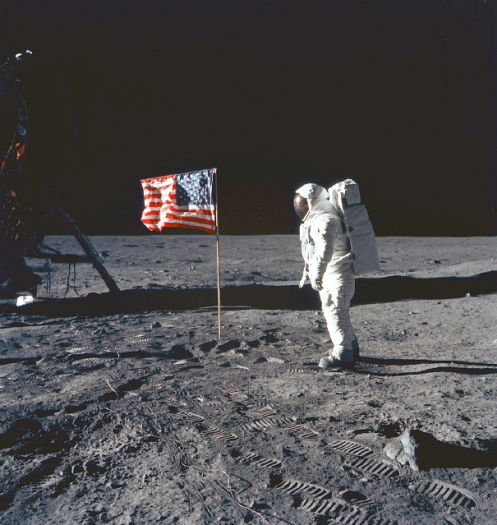
american-flag-on-the-moon

The wind was even blowing on the moon tonight. And it was cold.

The wind is so loud outside it sounds like the trains that pass through nearby Geneva, Illinois every day.

This wind has caused the snow to blow sideways all day. There is a skin of ice on the driveway. The streets are slippery.

There was a time when I would still go out running in such conditions. I was skinny then. Too skinny and determined to let a little wind and bad weather keep me in. Those were different times.

Business kept me busy today, as did the construction of a new website for my business, 3C Creative Marketing. Still a work in progress. But there’s big plans ahead.

Now that I work for myself there should be plenty of time in the day to fit in a workout, right? That’s how it’s supposed to work. You become That Guy who is always at the gym. Always out running in the noon hour on the best of days. Always always always.

Except I don’t actually want to be That Guy. That’s not how it actually works. Conscience toward the needs of clients should and does take over. Workouts get put on the backburner.

It’s not that those of us self-employed types always procrastinate our exercise. It’s that we’ve worked hard to get here. Put up wit uncertainty and wondered aloud (to ourselves) if this s0-called business plan is fully actualized.

But it is. And we do. Work at it. We also know there are commitments equal to our obsessions. So we run and ride and swim when we can.

No real sense beating yourself because you want to be a success in life in more ways than one. Sure the winter wind seems like an excuse. The gym will call tomorrow if it does not let up. This past weekend with 45 degree temps let the running and riding go well. So it is not guilt, but motivation that calls.

Or so we like to tell ourselves. Ah, maybe a little bit of guilt. Let’s admit it.

But not enough to go out in this weather. Time for some ab work and some dinner.

WeRunandRideLogo

Posted in Christopher Cudworth, cycling, running, We Run and Ride Every Day | Tagged , , , | 1 Comment