If a Runner, a Cyclist, a Swimmer and a Triathlete were running for President

Welcome to the Presidential debate hosted by the WTF Network.

Tonight’s debate will feature our four leading candidates are all known for their respective sports. We have a Runner, A Cyclist, a Swimmer and a Triathlete at their respective podiums for tonight’s discussion. Let’s start with the first question. 

IMG_7618WTF: Let’s start with the runner. What ideas do you want to share with our audience about how to improve the country?

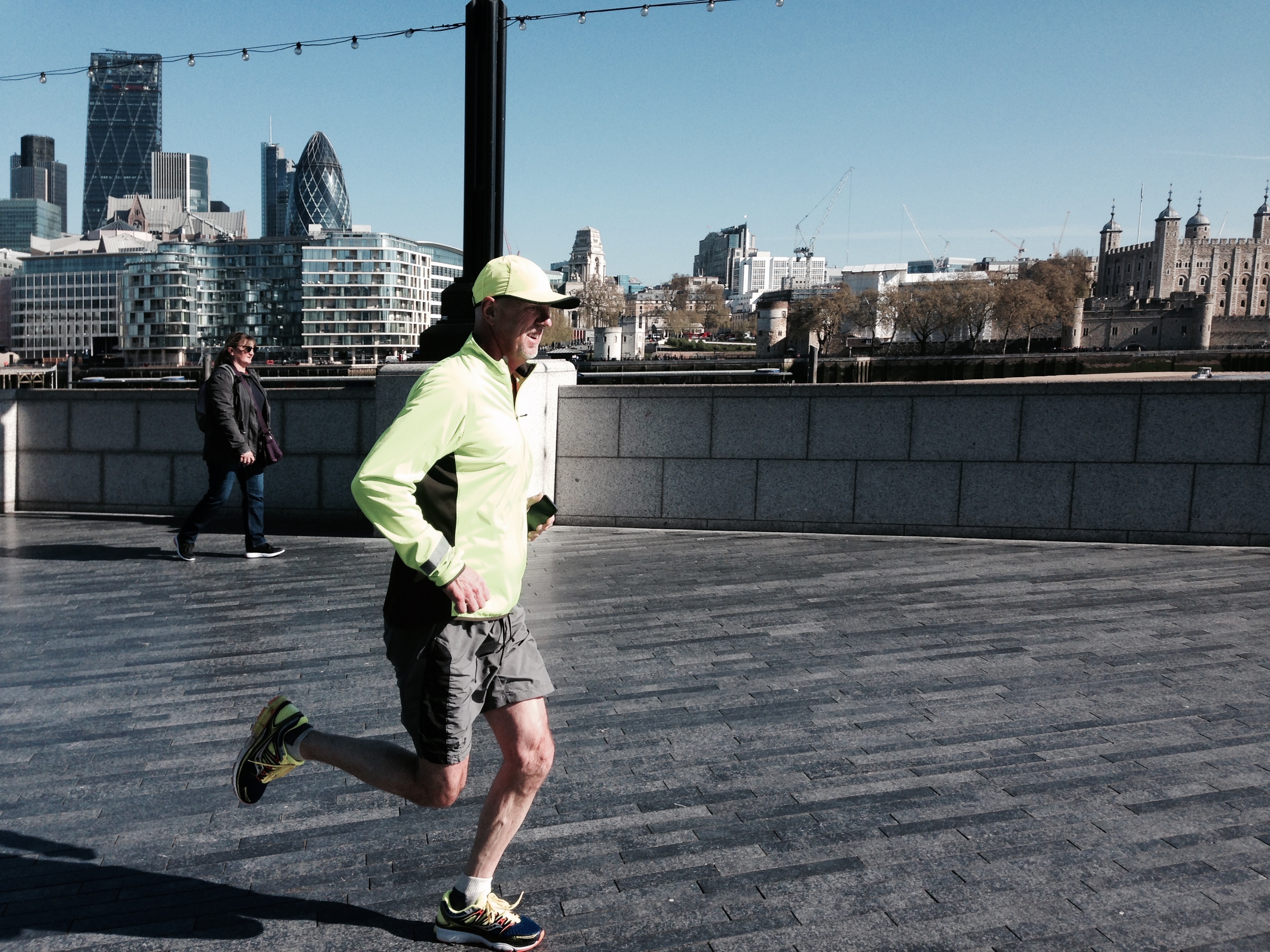
Runner: Thank you for the question. It’s pretty apparent that the biggest problem we face in this country is the lack of equality in terrain. People in Florida are absolutely starving for hills, while folks in West Virginia can hardly step out the door without walking into a mountain or falling down to their death. It’s time we Americans leveled the playing field for all.

WTF: Thank you for that perspective. Cyclist, would you care to weigh in on that subject?

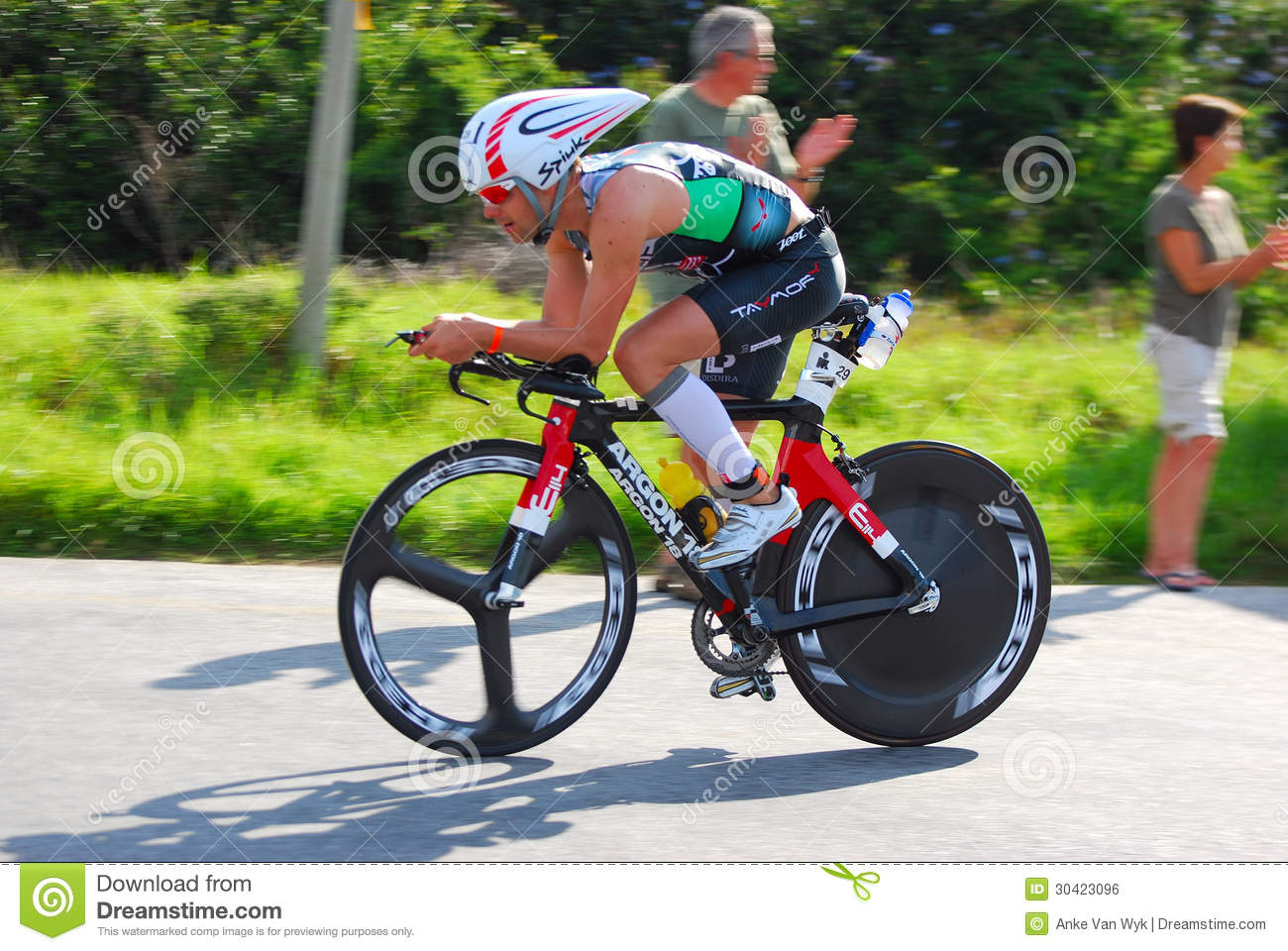
Fat Tire MeCyclist: With all respect to our Marathoner here, the real problem isn’t unlevel terrain, it’s lack of adequate road shoulders. People can climb anywhere they need to go if you give them sufficient room and safety to do so. The Cycling community thinks there should be at least two feet of paved margin outside the white line on every road in America.

WTF: And you, Swimmer. What’s your solution for a better America?

Swim FormSwimmer: Did you ever see that movie starring Burt Lancaster, called The Swimmer? We think that’s a wonderful model for how Americans can come to appreciate the uniqueness of the American experience. If people spent more time in pools and tried different pools, they would meet more types of people, and that would solve a lot of our social differences, and bring about a better understanding of ourselves, as well.

WTF: Finally, let’s go to our Triathlete. How would you propose to make America a better place?

Triathlete: Well, all these ideas are wonderful. But it’s obvious that the triathlon encompasses all their ideas in one neat package, and more. I think it was author John Irving in his book Hotel New Hampshire that said, “You’ve got to get obsessed and stay obsessed” if you’re going to have success in life and contribute in some way to this great nation. No one gets more obsessed than triathletes, and we’re proud of that fact. Did I tell you already we like obsession? We’re a little obsessed with obsession. That’s the name of our ticket.

WTF: Thanks to all our candidates tonight for sharing their views of how to make America and the world a better place. Your opinions are all unique in scope and vision. Best of luck in the upcoming primary election, and may you all have luck in running for office.

Runner: Why Thank You. Totally agree with that sentiment. About running I mean.

Swimmer: Um, I’ll be swimming, thank you.

Cyclist: Let me go on record that running is for wusses! Cycling is the only way to know real pain, and I can share that with you. Obey the Rules!

Triathlete: Of course you’re all falling short of real vision here. I’m not only obsessed with running, but cycling and swimming as well. Americans deserve a right to all three! They’re kind of an obsession with me. Did I tell you that? I’m obsessed with America too.

WTF: Well, thanks to all our candidates, and good night.

werunandridelogo

Posted in cycling, running, swimming, triathlon | Tagged , , , , , , , | Leave a comment

A dog and his bone

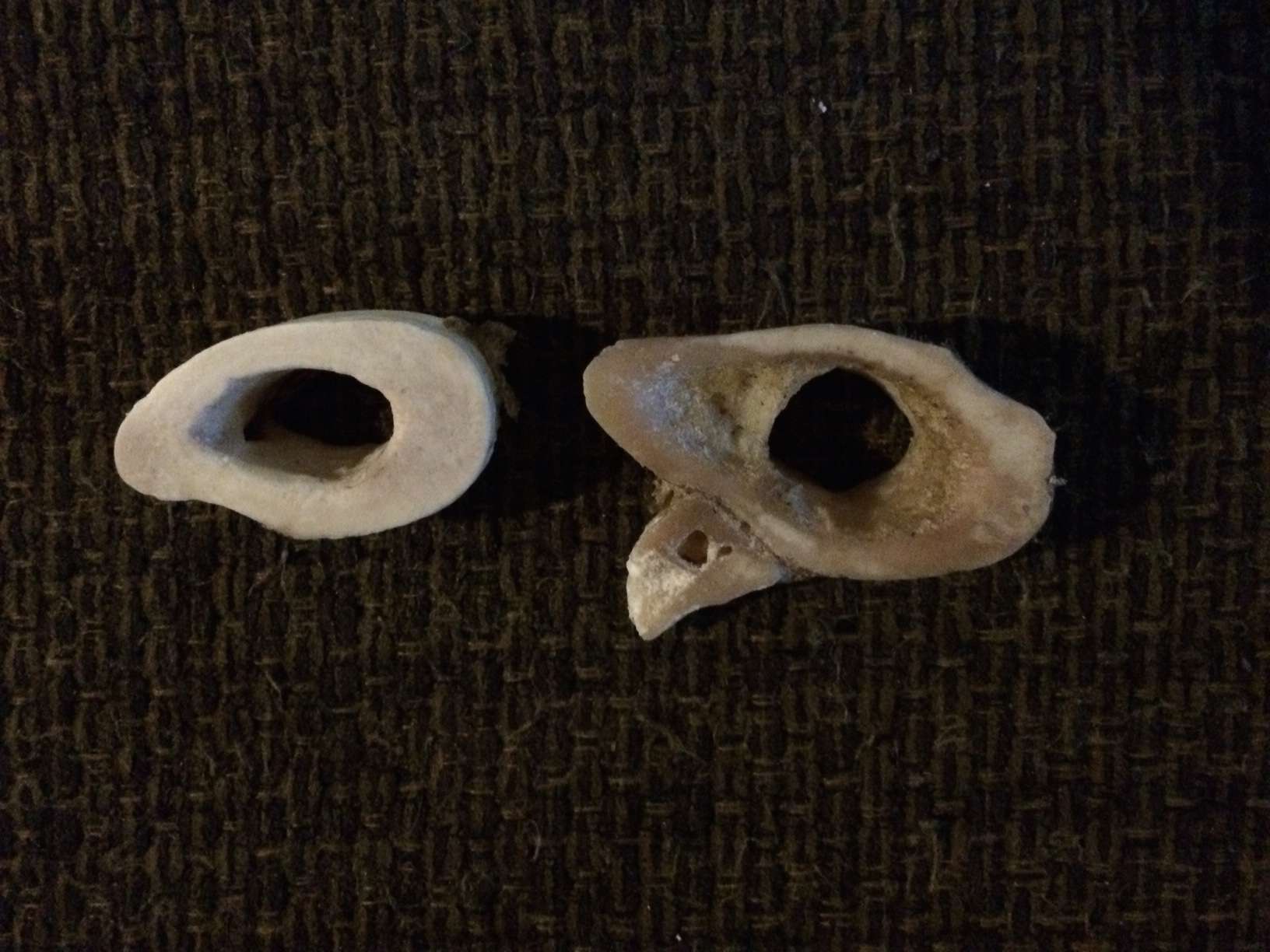
BonesThose of you who are pet owners know that every animal has their favorite habits. They might be toys that last forever. Or for cats, it might be their catnip post.

This morning my dog stood up on the chair across the room and was barking at me about something. Usually, that means I left some plate out from a meal the night before. He smells the food but can’t reach the plate on the chairside table. Then he barks for me to come over. As if that’s my main goal in life. To give him dirty plates.

But this time it was his two favorite bones sitting on the table. I do not remember when I did that, but they probably wound up on the table because I’d stepped on them in bare feet. And that hurts.

So I handed him the two bones and he’s been gnawing away noisily for the last ten minutes. It’s a happy sound when you have a dog. You know they’re working off that doggy energy.

But it made me think, what habit do we humans have that compare to a dog and his bone?

Well, working out came to mind.

When we run or ride or swim, it’s much like chewing on a bone. We give it our full attention. It relieves stress and wicks off excess energy. It makes us want to take a nap afterward.

The only other thing in life that does all those things is sex. And hooray for that.

Like a dog chewing a bone, our running and riding and swimming may not solve the world’s problems, or directly contribute to our 401K plans. But it’s one of those things we do along the way that matter simply because we like it. It becomes part of us and our daily routine.

And when our own bones grow older and start to rattle and creak inside us, we can let that remind us that we’ve done a good job chewing off the fat of life to get to the marrow of who we really are.

Woof.

Runoverthetarsnakes2

Posted in Christopher Cudworth, werunandride | Tagged , , , , , , | Leave a comment

Your place in the parade

IMG_1882I don’t know if you have ever participated in a parade, but I have. It’s both a wonderful and a strange thing to be sitting on a float or marching along next to some display or vehicle decorated for the day.

Facing the public is always interesting. You see so many expectant faces. But you never really know what they are expecting. To be entertained, perhaps. To laugh? If possible, sure. To be awed and inspired? Well, sometimes.

The rather large Swedish Days parade used to go right past our home in Geneva, Illinois. There were 100+ bands, organizations, marching twirlers, cheerleaders and groups of Shriners in their various configurations. Some of these acts were bent on silliness, as the Shriners certainly were in their little cars and on their funny bikes with big wheels. Of course the Shriners also raise money for their pet causes like hospitals. So the silliness, we must suppose, had a purpose.

Never gonna do it without the Fez on

As President of the Batavia Chamber of Commerce years ago, I was given a place of honor at the start of a parade through town the day after Thanksgiving. It was cold outside, so I wore a heavy jacket and showed up on the parade grounds to find my spot. The Executive Director walked up and handed me a number and I walked down the line to find a scooter with a giant golden Shriner’s cap (a Fez) hanging over the top like a massive dewdrop. “You have got to be kidding,” I muttered.

My children laughed and my wife smirked. “Serves you right,” she chuckled. “You should never have signed up for this.”

That ride through downtown was a chagrined waltz with humility.

Previously I’d volunteered to ride on a community float and brought my son along to help toss candy out to the crowd. From high up on the float it was not hard for even a three-year-old child to heave Jolly Ranchers off the porticos where we sat. And then the inevitable happened. My son wound up and whipped some Jolly Ranchers too hard, and it nailed some old lady in the neck. That was the last year they allowed anyone to throw candy in the parade.

Marching on

I’ve also marched in parades. As an athlete in high school, you sometimes get to walk along with your fellow teammates waving to the crowd. It always seemed like such a strange way to glom on to support. “We’re runners,” one of my teammates moaned. “What the hell are we doing here?”

Our coach had purchased special shirts for the Homecoming events, but when washed, those shirts bloused out at the bottom like skirts, and they shrank two sizes to boot. They were awful. But coach made us wear them and we were teased mercilessly. It was bad enough in that era to be out for a supposedly “pussy sport” like cross country, but we took solace in the fact that our cross country team went 9-1 that year while the football team was 1-9.

But we didn’t dare say anything about that, because we knew our place in the parade of fall sports was always to play second fiddle to the football squad. No matter how badly they got their asses kicked, it was the school’s responsibility to root for the football team because it somehow seemed to represent the masculinity of the school itself.

A new look

Such is the logic of all such events and parades. Fortunately, as culture has progressed, the facades of Homecoming Kings and Queens have been transformed by students who get that blind machoism is a bogus ruse. We now see special needs kids and other students whose character is admirable and positive being named to the court. It’s not just a popularity contest anymore, and the nature of the parade is changing as a result.

To be honest, you can’t expect everyone to get the message of any parade. One year our newspaper sponsored a float in a Electric Holiday Parade held after dusk. To keep with the philosophy of the parade, we put some lighted Snowmen in the two back seats of a van and opened the doors so people could see in. That was all it intended to do, have fun with the snowmen. But walking alongside the van as it was driving along, I heard comments that made me laugh. “Look!” one woman said. “They’re trying to tell us to wear our seatbelts!”

Well, okay…I thought. Whatever. If that works for you, then have at it.

Every race is a parade

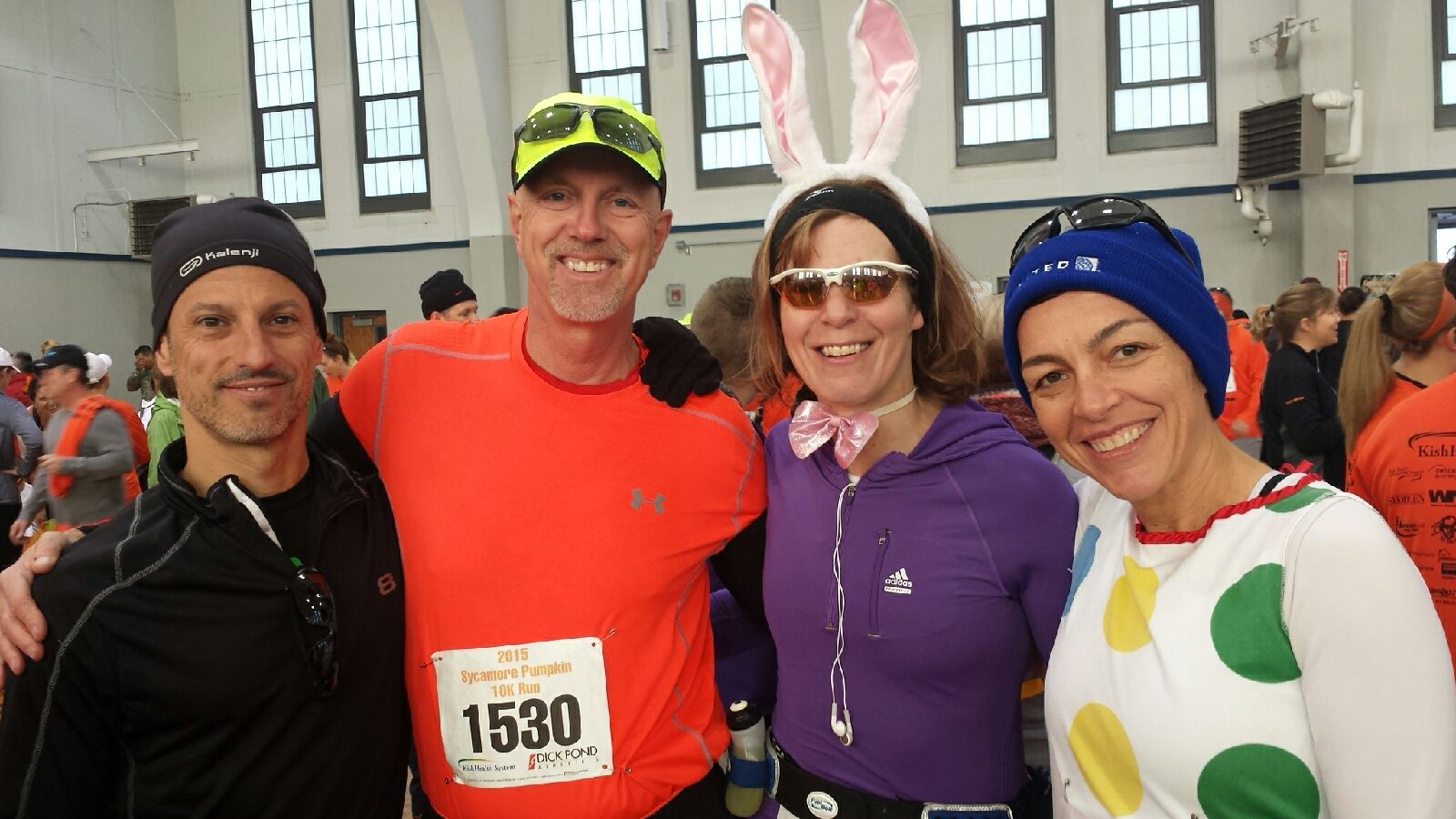
Sal de Traglia, Christopher Cudworth, Suzanne Astra and Anne Elbaor-de Traglia

Sal de Traglia, Christopher Cudworth, Suzanne Astra and Anne Elbaor-de Traglia

All this parade thinking came to my head on the heels of the recent race at the Sycamore Pumpkinfest 10K. Plenty of people came out to see the race, but many of them would also be there to see a parade later that day. With a race like the Pumpkinfest 10k, there’s a fine line between a race and a parade. Plenty of people wore costumes. Even I taped two triangular eyes and a triangular nose to my coral colored race shirt. “Look, I’m a Jack-O-Lantern!” They fell off, but so what?

My companion Sue wore adorable bunny ears and an equally cute bunny tail. Suffice to say that I’d have rather held my own little parade with her once I saw her in that outfit.

And as the race spread out along the road heading south out of Sycamore, we passed blankets spread out on the lawn to protect spaces for parade-watching later. There were families huddled together under blankets and clapping as we passed. It’s always nice to be cheered on even if you’re basically this anonymous drone trundling along with heavy breathing and a cold nose.

When we consider the biggest events on the world stage such as the Tour de France, the world’s most famous cycling race, it is true that they are basically one large parade. The cyclists with all their colorful kits and the peloton rolling through tunnels of insanely manic spectator are a grand spectacle.

The human condition

IMG_2250It teaches you that this wonderfully odd thing we call the human condition cannot be taken too seriously. On top of the silliness of my outfit, I had to pee the entire run, and considered peeling off into the cornfield at one point, to relieve myself. That’s one of the tarsnakes of running and riding and swimming. If you eat well, and hydrate, you’re bound to have the end process conflict with your training or racing at some point. And isn’t that a fun little parade when it happens?

But then I thought there was really no good place to hide. You’d have to go back at least three or four rows to be hidden, and I’ve been in cornfields plenty of times. It’s no fun wading through tall salks of corn.

And everyone would see you going anyway. We wear these bright clothes as if we’re all clowns in a parade, you see. But those same clothes make it very hard to hide in a massively bland cornfield on a bright sunny day. Better to hold it in and keep your place in the parade. So I did.

Finish lines

I finally finished the climb up the last 150 meters of the race and was planning to trot over behind a giant spruce tree to go pee. As I walked toward the tree a buddy from our team finished just behind me and blurted out, “Hey, good run. I gotta hit the Porta Potties… cause I squirted out there.” It made me laugh. At least I didn’t have that problem.

As runners and cyclists and swimmers our bladders and GI tracts love to play games with us, don’t they? It’s absolutely true that on the wrong day, it can be like a mad parade down there, with noise and special effects to boot. It’s one of the tarsnakes of running and riding that the better we eat and hydrate the more likely it is that we’ll run into a poop and pee situation along the way. And isn’t that a happy little parade when it happens?

In fact, some clown pooped all over one of the Porta Pottie seats before the race began. The woman who went into the unit before me came out shaking her head. “You don’t want to use that,” she said. She was right. The clown before her had committed some sort of levitation act and failed. Miserably. Poop all over the seat.

Back in the parade

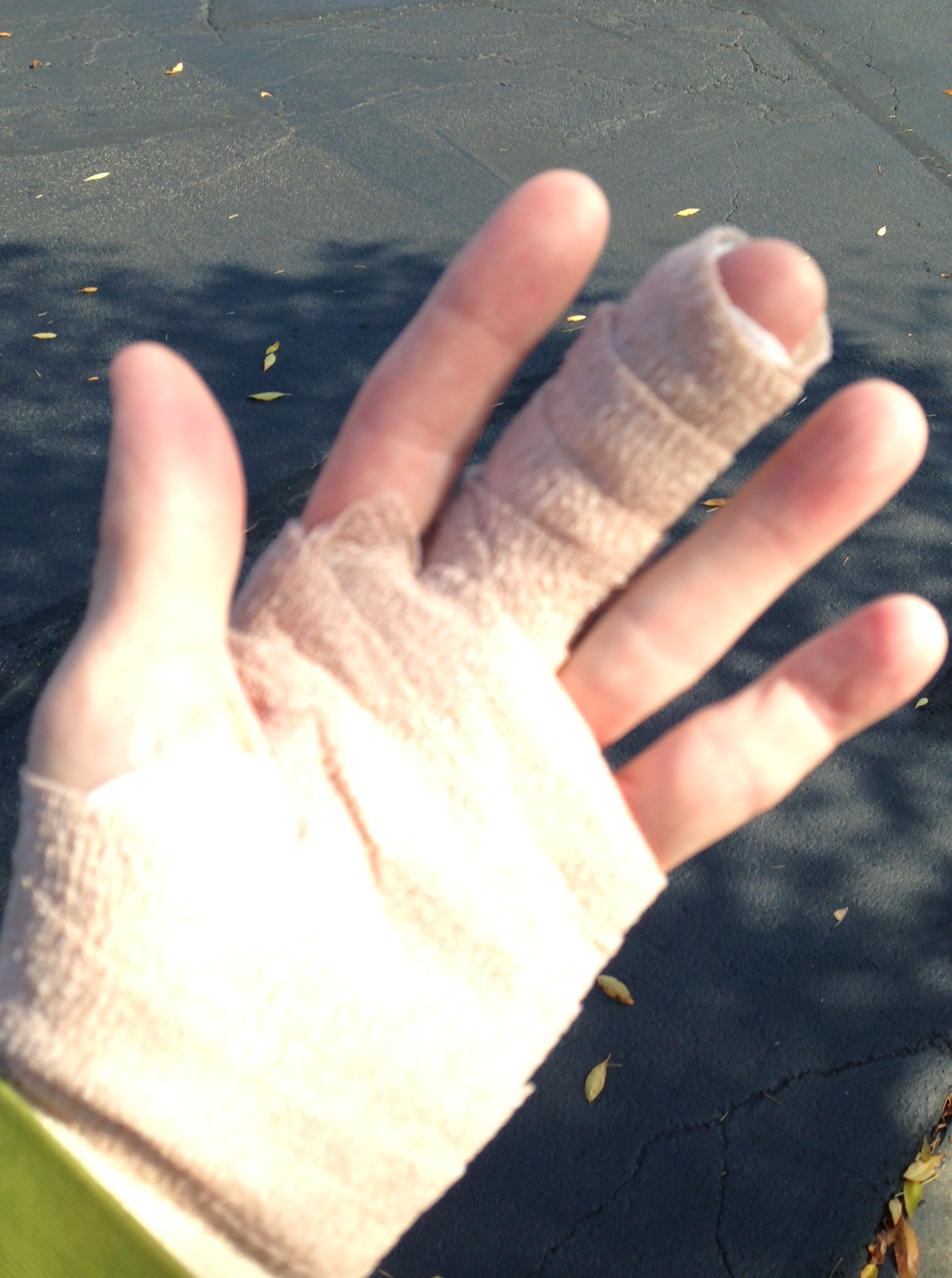
HandDespite the poopy obstacles, I was really happy to be back action and participating in the parade we call a race. A couple years back I was sidelined following a wicked surgery on a finger that had gotten infected from a simple sliver. The finger nearly had to be amputated and I was on a daily antibiotic drip to keep the infection from coming back. My hand was bandaged like some giant Muppet character, so running was out of the question. That made me sad, like one of those clowns with the big black tears coming down from eyes.

So to run and appreciate the feeling of being part of the parade again was a real joy. We all have a space in the parade, and some of us get to wear a Fez now and again. My advice is enjoy it whatever condition you’re in, and let it all hang out. No one will blame you for being a goof. It’s a parade, after all.

With that in mind, we’ll see some of you at the Sno Fun Run in Lake Geneva this winter. Talk about a parade, and madness, and fun! Can’t wait.

Runoverthetarsnakes2

Posted in 10K, cycling, riding, running, tour de france | Tagged , , , , , , , | Leave a comment

What do the numbers say about women’s and men’s running?

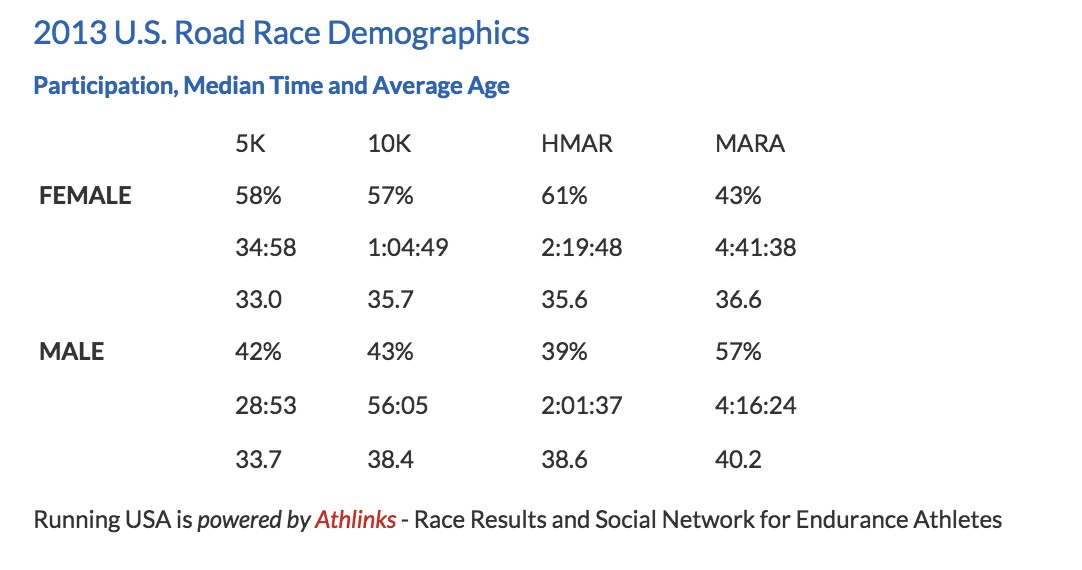
Running timesAdmit it. You like to compare yourself to other runners. These stats from a 2013 RunningUSA study on participation, median time and average age certainly present some numbers for comparison’s sake.

The demographics are interesting. Women dominate participation at the 5K distance, 58% to 42% over men.

At the 10K level, the ratios are about the same with 57% women and 43% men.

At the Half Marathon distance, the numbers skew even further however. 61% women and 39% men.

But at the Marathon distance, the men outnumber the women 57% to 43%.

Number of Runners

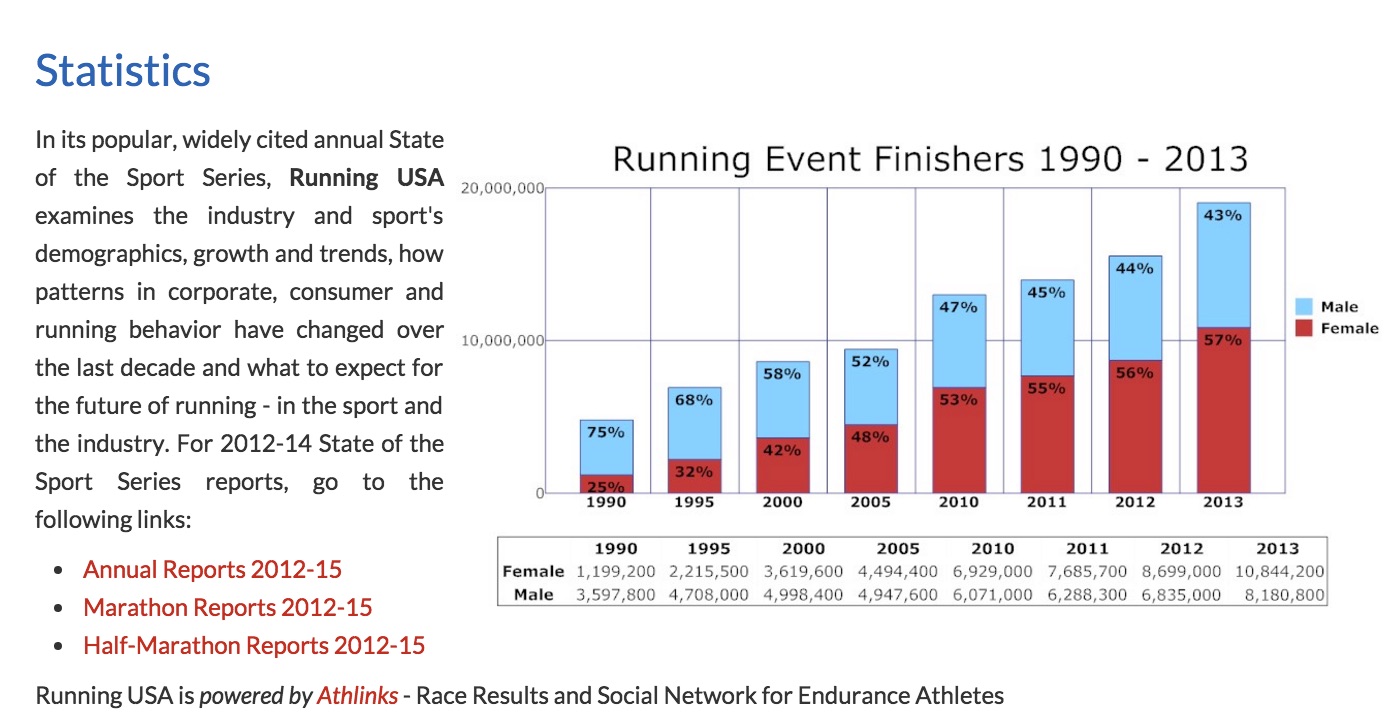
As of 2013, women outnumber men in the sport. That was a big flip in perception when it happened back in 2010.

Interestingly, while women outnumber men in participation, and there are plenty of women who beat men in races, there are still median time differences in each of the typical levels of racing. In the 5K, the media time for women is 34:58 to the men at 28:53. That’s about a 20% difference.

The difference is markedly less at the 10K distance, where the difference between women and men is about 13%, which holds about true at the Half Marathon distance as well.

The gap drops considerably at the marathon level, where men outpace women by only 9% on median.

These numbers represent the general population.

World Class improvement

But how have world marathon times improved among men and women?

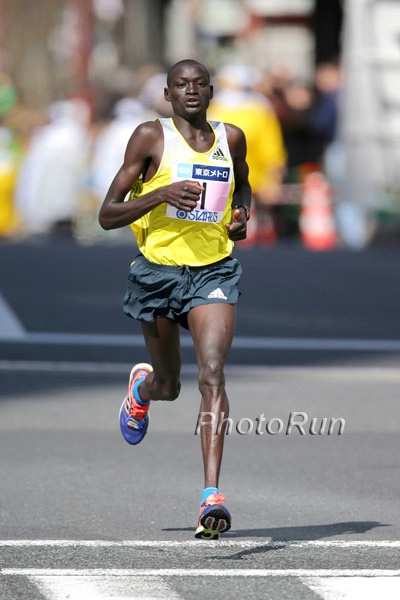
Kimetto_Dennis1-Tokyo13-1In 1908 the world record marathon for men was 3:50. It is now 2:02:57 by Dennis Kimetto. That is a 31% improvement in 107 years.

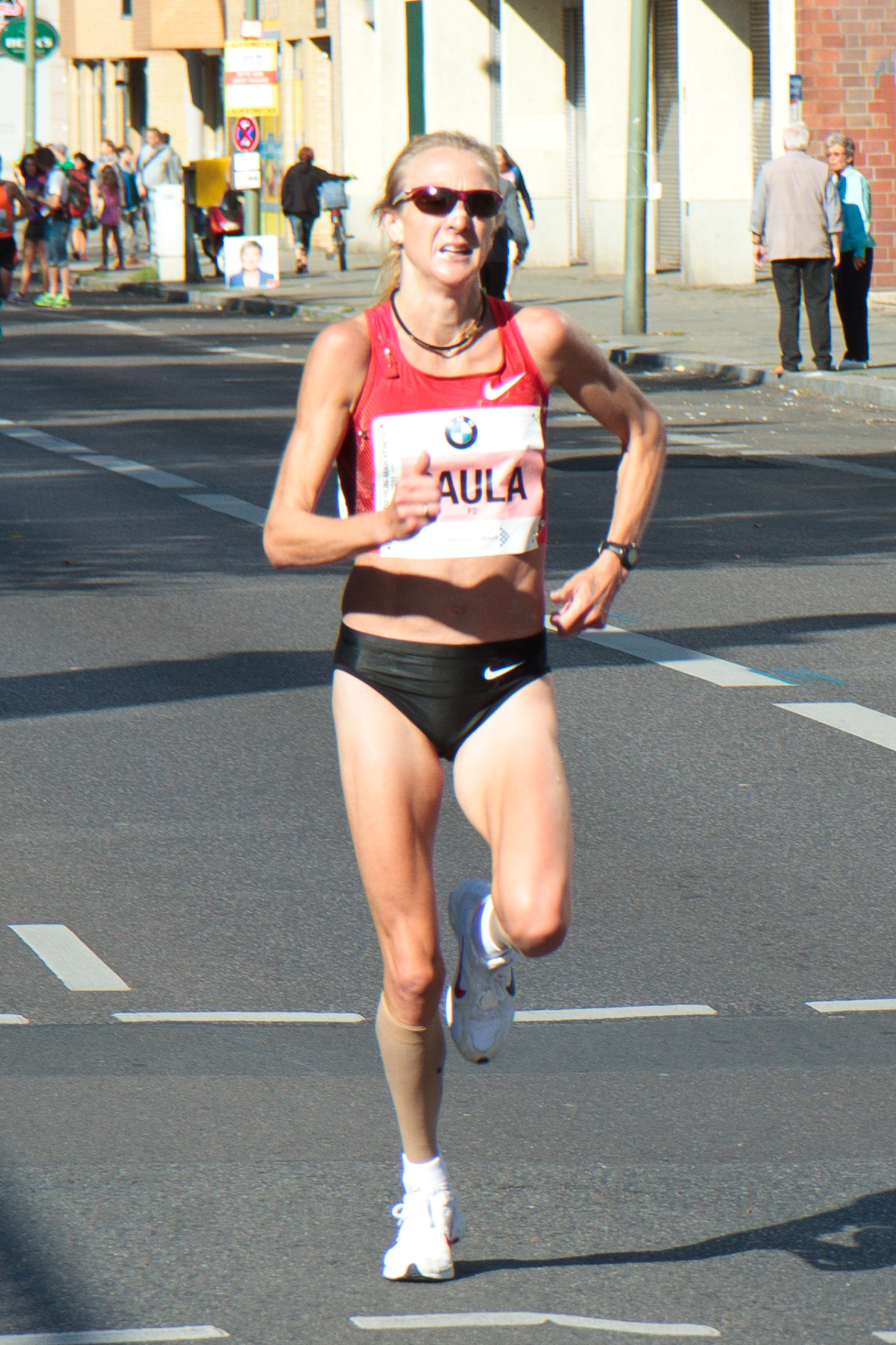
In 1926, the women’s world record marathon was 3:40:22. It is now 2:15:25 by Paula Radcliffe. That is a 39% improvement in 99 years. However far less opportunities were accorded women to participate until the early 1970s, when women were finally allowed into major marathon races.

Only 43 years passed from 1970 when Caroline Walker ran 3:02:53 to 2003 when Radcliffe ran 2:15. That’s a 25% improvement.

By comparison, the men’s world record in 1969/70 was set by Derek Clayton at 2:08:33, which represents a 31% difference in best marathon times between women at the time, and men.

Women have since closed the gap by 20%, and that’s in just 40 years. Now the difference between the men’s world marathon best and the women’s world marathon record is about equivalent at the world class level as it is with the general population.

Closing in 

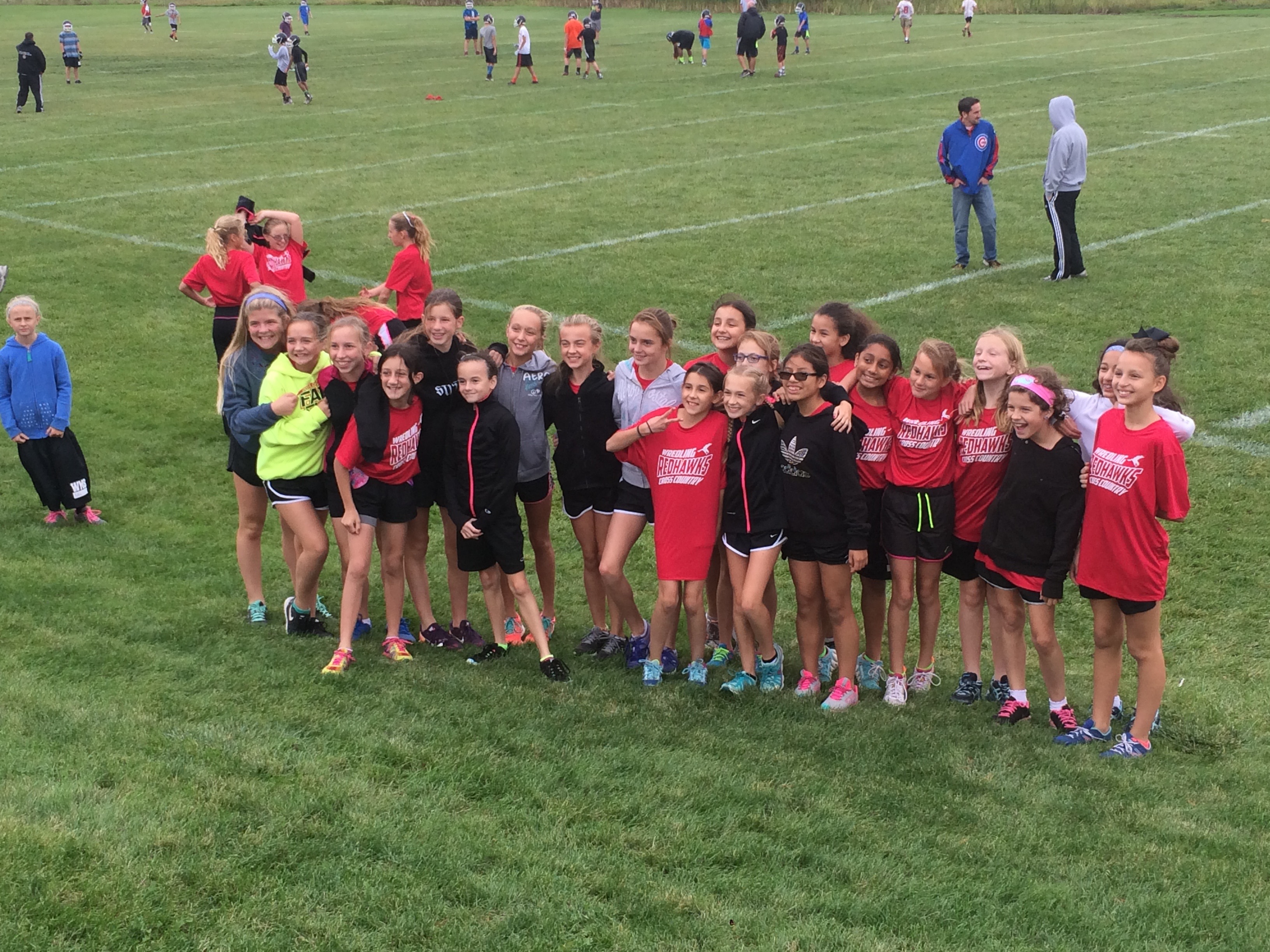
Girls running programs are helping the sport grow by increasing participation at a younger age.

Girls running programs such as this middle school team are helping the sport grow by increasing participation at a younger age.

Women have essentially had a shorter time frame in which to improve their times since the 1970s and 80s when participation was genuinely allowed and encouraged through Title IX and road races opening up to women competitors.

Thanks to those advances in culture, women runners now exceed those of men at all distances but the marathon. Interestingly, the time gap between the general/median population of runners and world class marathoners is both at 10%. The question is whether this time gap will continue to come down, or whether we’re seeing a genuine stall in the overall improvement of women runners?

Continuing improvement

Men’s world-best marathon times have improved two minutes from 2003 to 2014. Women’s times have not improved at all in that time period. Radcliffe’s record has looked out of reach for 10 years.

That has happened before for the men, as well. Interestingly, the last 10-year gap for improvement among was the period between 1935 (Son Kitei, Japan, 2:26) and 1947 when Suh Yun-Buk of Korea ran a disputed 2:25 on a potentially short, point-to-point course.

Then along came Jim Peters of the United Kingdom to drop the world’s best marathon time by five full minutes in 1952. He proceeded to lower the world best to 2:17 in the next three years.

These gaps and drops raise the interesting question whether women will again see a drop in times. Given the increased opportunites and increased participation in women’s runnings, the odds seem favorable to continued improvement.

Paula_Radcliffe_at_the_Berlin_Marathon_2011Currently the women’s world record pace is 5:10 per mile by Radcliffe. The men’s world record pace is just over 4:40 per mile. That’s a 30 second per mile difference.

So while women have closed down the pace gap in a relative short time through increased participation opportunities and a continuing growth in the sport, there is still at least a 10% difference on average between women runners at both the median and world-class levels.

Tera Moody

Tera Moody (center in black outfit) an Olympic Trials women’s marathoner, nearly stole away with the overall race victory at the 2015 Fox Valley Marathon in St. Charles, Illinois.

Interestingly, that difference is hardly evident in most races. Wherever women and men race together, the playing field is essentially, perceptually even. Relatively few men can beat the world’s best women runners.

For example, second place finisher in the Fox Valley Half-Marathon in 2015 was a runner named Tera Moody. She only lost to the first male by 15 seconds.

So the numbers tell an interesting story about men and women runners. But not the whole story. That remains to be written, and it’s why all of us can enjoy our time on the road together.

Source for marathon world bests: Wikipedia

Source for marathon pace charts: http://marathonpacechart.com/
Runoverthetarsnakes2

Posted in 10K, 13.1, 5K, marathon | Tagged , , , , , , , , , , , | Leave a comment

5 Things You Can Learn From My Sycamore Pumpkinfest 10K

CudworthVersusCudworthThere are not many better conditions to run than those presented at the Sycamore Pumpkinfest 10K yesterday. The wind was nearly still. The temps edged into the high 40s and low 50s. The skies were clear and bright. Perfect for racing.

That means there were not many excuses for not doing well. And as planned, I raced in the low 7:00 range for 10K.

That put me in the top 5 in my age group, and I was well-pleased with that. Last year I averaged 7:17 per mile at 45:15. This year, 7:10 pace and 44:27. So I improved by 48 seconds! Yay!

Lesson #1: Weight, weight, don’t tell me

Granted, I’m far behind my best on this course at 32:28. But that was during my peak years of racing, and at the height of youth. Though hardly a fattie, I now weigh between 176 lbs and 180 lbs in a typical week. Back then I weighed 140. That’s 36 more pounds of weight to carry around the course. I could stand to lose 7-10 lbs through a better diet. Eating better is an ideal goal for 2016, because a slightly lighter body reduces risk of injury from bearing weight during training. Carrying even 10 lbs. less weight on both the bike and the run is naturally a better strategy. If you’re already performance thin, congratulations. But if you can stand to lose 5-10 lbs. and have a propensity for eating carbohydrates and sugar like me, that’s a good lesson to learn going into the new year.

Lesson #2: Being smart with training volume pays off

Going into last year’s race, I was injured for months in advance. Fortunately, I lucked into a pair of shoes that enabled me to run pain-free again. But even with my reduced training last year, I was smart about the training I did do. Some weeks I only ran 10 miles, but some of that was speed work. That seems counterintuitive, but the pain in my Achilles was from volume, not speed.

Once that was fixed, the cross-training from cycling served as my aerobic base for running. As a result, I was able to run in the low-7:00 pace range for 10k. That is proof that cross training really does work. Admittedly my legs ached for days after last year’s race, because there were not accustomed to volume running or sustained speed, but that’s the case for most people racing anyway.

#3: Learning your pace matters

Sue RunningGoing into this year’s race, I did a series of training tests to find out where my fitness actually stood. This is critical to anyone’s racing effort. For example, I essentially conducted a 5-mile solo race effort three weeks ago on the flat trails west of town.

On that run, I was able to cover those miles at around 7:17 per per mile, right on pace with last year’s Pumpkinfest 10k effort. That told me my fitness was slightly better, because with ideal conditions on race day, I could anticipate a faster pace.

Leading up to that time trial, I also ran half mile intervals at 6:30-7:00 pace on the track. Often Sue and I would head to the track and run our workouts together, but separately. She was doing Ironman training and I was trying to build speed back up after a year of injuries last year.

This taught me my top end. I also threw in 6:00-pace 400 meter interval sessions (typically 6-8 intervals) to teach my legs a quicker tempo. This also has the effect of lengthening critical leg muscles in the calves and somewhat ironically loosens my Achilles tendon.

Honestly it was also humbling to train at 6:00 pace. I learned that my body was not ready to try to race at that speed. I could last a mile at that pace at best. So dreams of a sub-40 10K were not realistic at this point.

Lesson #4: Sticking with your pace matters

This year I went through the first mile in 6:55. The second in 13:55. The third mile in 20:55. The fourth mile in 27:55. The fifth mile (short) in 35:42 and finished in 44:27. I had a slow last mile, or else the five mile marker is supposed to be somewhere up the road. Everyone had a fast 5-mile split.

But the point is that I found a groove and stuck with it. At just before three miles another runner came up beside me and said, “Come on…” as if to pull me ahead. I quietly told him, IMG_7618“I’m good, man…” and kept on with my pace. That’s because I knew there were two hills in the fourth mile that can kill you. Last year I slowed down quite a bit on those hills.

This year I shortened my stride and ran them steady. Sticking with your pace matters. If by some miracle you feel great in the last mile, you can kick it in. But you don’t want to collapse, and I struggled enough with pace that last mile. So I kept a positively intelligent attitude about pace.

Lesson #5: Performance is relative

I am no longer capable of putting in weeks of 80 miles or more in training. Yet in some ways my body is healthier and stronger than I was back then. For one thing, I was highly susceptible to breaches in immunity that led to vicious colds. So to enjoy productive running these days, I do not push as hard as I once did. That means improving from year to year is done so without turning myself inside out.

Sure, it would be nice to win races again. Dream on!

I was fifth in my age group of 55-59 this weekend. That’s two spots better than last year. I was 78th overall this year, and 68th among men.

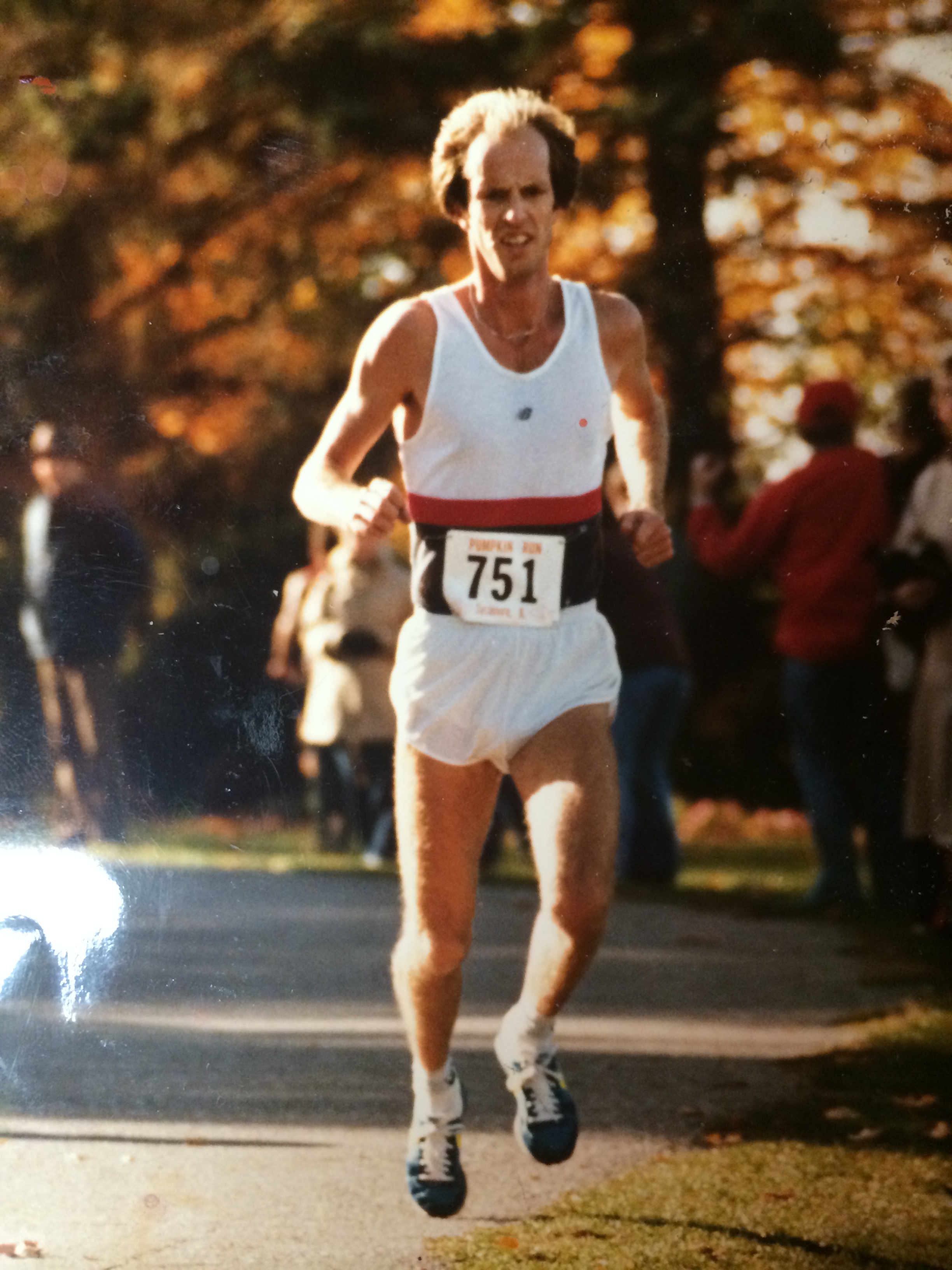
Sure, my time of 32:28 in 1984 (I’m fairly sure that was the time…but I’ll try to look it up just in case…it was under 33:00) would have won this year’s race by two full minutes…and I took second place with that time back then! So there’s always second-guessing we runners do. But there is something going on in the world of running…

Epilogue: Different times

Looking around at all the results from races throughout the summer and this fall, it is my selfish solace to know that my typical 10K times between 31:00 and 32:30 would win all but a few of the races held in the Chicago area. I do not know why the winners these days are slower than they were 25-30 years ago. Perhaps there are so many races it gives more people a chance to win. I guess that’s good. 
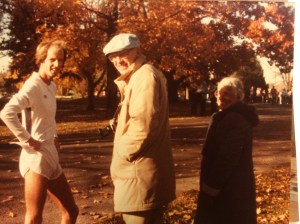
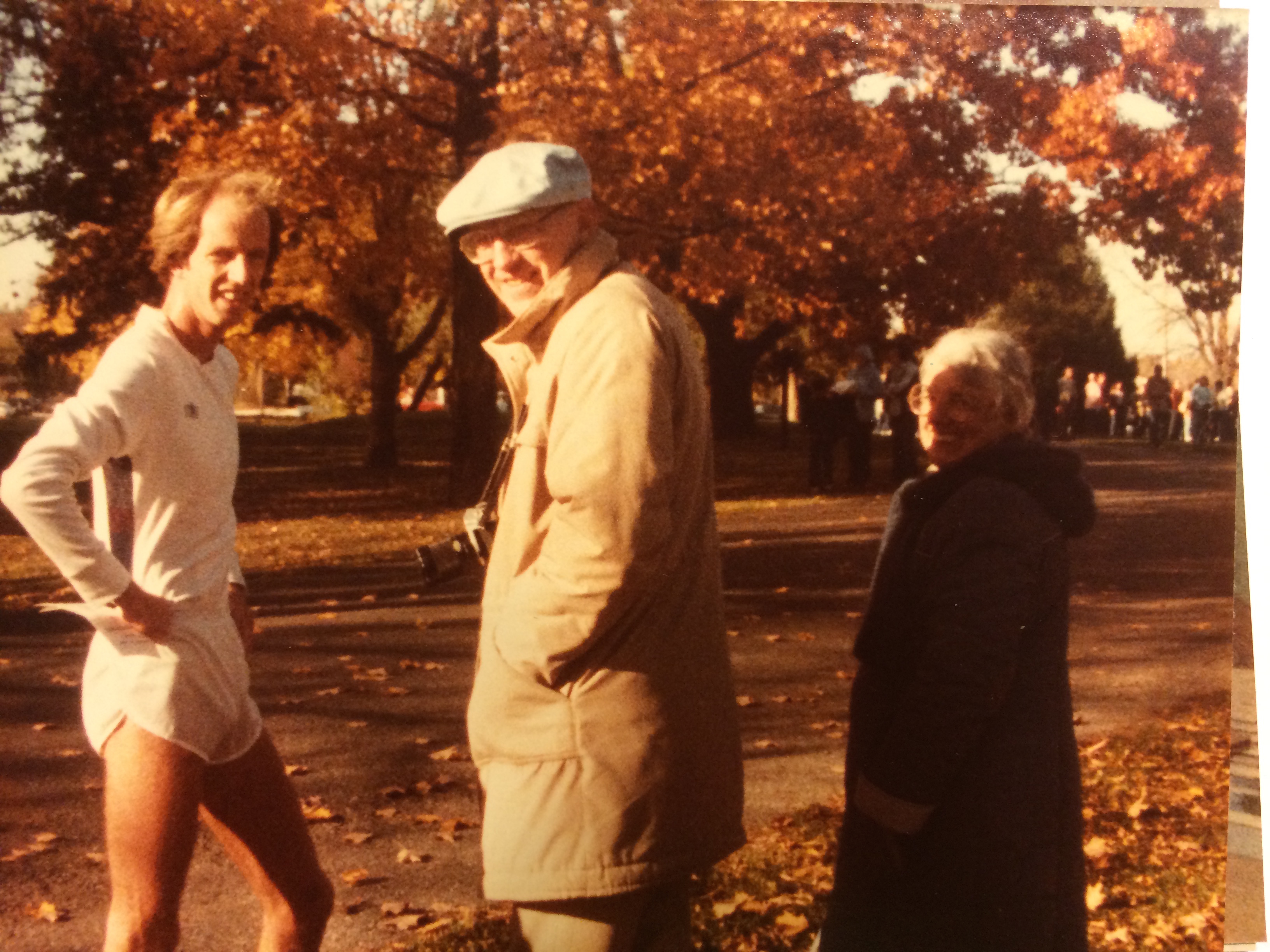
Cudworth with ParentsBut I don’t think that’s it. I raced 18 times in 1983 and 24 times in 1984 while representing the Running Unlimited store team. On typical weekends four or five of us would race together and that led to some intense, competitive times. Often I was 4th or 5th man just on that team, which had several runners under 31:00 for 10k, and two under 2:20 for the marathon.

We don’t see that competitive dynamic at work so much. Dick Pond Athletics has a Fast Track racing team, but more runners seem to be involved in sports such as triathlon and duathlon than ever before. Frankly, the premium in those sports is not on really fast running times, but being able to run relatively fast coming off the bike. If you can run 6:00 pace in multisport competitions, you’re a star at any distance.

Desires and aims

So as noted, performance is relative to desires and aims. In some ways the competitive environment of the 1980s was harsh and unforgiving. Runners had no mercy on one another, and some would not even talk to other runners before races. You were there to kick tail and nothing else mattered. I had many days like that. All I cared about was winning. Which meant that on some days I’d run well and stil not be satisfied. Not even close.

But that was how we rolled. It was true from high school on up through college running and beyond. 5:00 pace was the dividing line. You could either hack it or you lost.

Looking back now I appreciate that burning desire to run well, and am glad I did it to my own best ability. Which made for some fun times. And it was not all serious. We had zillions of laughs in training and there was plenty of good-natured competition along the way as well. And we partied hard when it was all through.

Resurgence

There are many good runners coming up through the high school and college ranks again. The coaches who are guiding them are products of the 1980s, and they know the risks of burnout as well as the processes that lead to performance. In other words, today’s runners really are in good hands. Those old competitive days really did beat the hell out of some people.

So when I’m trundling along in the middle of the pack and see the leaders turning the corner far ahead of me… knowing that at one time I’d be 100s of meters ahead of them, it makes me chuckle to think that I worry so much about such things at all. No one really knows or cares about that stuff in the end. You are what you are.

If running or racing makes you a better person somehow, that’s what really matters. Testing our mettle on the roads helps us face challenges in life. Go out there and run over the tarsnakes. It will do you good.


Runoverthetarsnakes

Posted in Christopher Cudworth | Tagged , , , , , | Leave a comment

It’s time to go fast for @gofast

IMG_2870My Twitter handle @gofast was concocted at a moment’s notice when signing up for social media several years ago. I’ve tweeted something like 6000 times since then. That means I’m quick on the draw, have an overly active mind, take too many pictures and have a preternatural need for recognition. I admit to all of the above. Social media is a preoccupation of mine.

But this morning my preoccupation is with not eating. For health purposes, I have blood work to do, and the appointment is not until 11:00 a.m. So, I’ll be drinking only water until then.

Fasting really isn’t that bad. The last time I fasted was for a colonoscopy at 3:00 in the afternoon. That was rather a long fast from the day before. Plus you drink that crap-clearing stuff that basically turns you into a sea anemone, one big channel from top to bottom with your arms flailing about trying to keep you arse on the toilet.

pachira-aquatica-potted-plant__0121010_PE277826_S4But actually, human beings are physically more like potted plants in a container that is too small. Our veins and arteries curl around inside us like the roots of a tree jammed into too little soil. If we further clog them with too much salt, sugar and fat, problems start to happen.

Some of us are predisposed to clogging of the arteries. We’re wired with a propensity to retain too much cholesterol, or else our circulatory system doesn’t move stuff around well enough. Plaque builds and we’re screwed. Our xylem and phloem gets all clogged up.

For some people, no amount of running, riding and swimming can unclog the system if it gets junked up. That means our diet plays an important part in keeping our blood healthy and clean.

Eating better has all sorts of important effects. So does eating poorly. Years ago when I told my brother that I had not yet had a colonoscopy, he barked: “What, haven’t you ever eaten a Slim Jim?” His point was that both the digestive and circulatory systems are subject to the vagaries of what we eat. There are bits of bad stuff left behind from whatever we eat.

I’ve heard it said that people can’t digest meat, and that 10 pounds of rotting meat is typically stuck to the sides of our intestines. This website begs to differ, warning us that it is vegetable materials, not meat that cause us to fart and rot from the inside out.

mcdonalds-Egg-White-DelightSo it’s pretty difficult to know what to think. There seems to be conflicting science and opinion on every aspect of human diet. For years, I avoided eating eggs as a rule. Now they’re back in vogue, at least the egg whites, and Starbucks and McDonald’s both serve sandwiches with only egg whites in them.

Of course, some people will tell you to look at that sandwich and divide it up into layers. The carbs are your worst enemy.

All I know right now is that I’m fasting and that sandwich photo makes me quite hungry. That’s how McDonalds sells so many products. They’re right there when you need them, cruising around in your cars and wanting to fill your sea anemone gut with something to make the hunger go away. And who the f*** cares if it is good for us or not when it’s 7:34 in the morning and you’re on the way to work? Give. Me. Some. Food. And a Coke for breakfast.

Poor McDonalds. They do what they do really well, which is to make mechanized food taste really good, and to charge you an arm and a leg for a simple slab of chicken on a bun. And it’s true, their food gets ripped for being unhealthy for us. The film Super Size Me by independent filmmaker Michael Spurlock documents what happens when a person chooses to eat only McDonald’s Food for 30 days. He gets fat, and other bad things happen as well. Here’s what the Wikipedia summary said about the effects of his McDonald’s experiment:

Spurlock ate at McDonald’s restaurants three times per day, eating every item on the chain’s menu at least once. Spurlock consumed an average of 20.9 megajoules or 5,000 kcal (the equivalent of 9.26 Big Macs) per day during the experiment. An intake of around 2,500 kcal within a healthy balanced diet is more generally recommended for a man to maintain his weight.[3] As a result, the then-32-year-old Spurlock gained 11.1 kilograms (24 lb), a 13% body mass increase, increased his cholesterol to 230 mg/dL, and experienced mood swings, sexual dysfunction, and fat accumulation in his liver. It took Spurlock fourteen months to lose the weight gained from his experiment using a vegan diet supervised by his then-girlfriend (now ex-wife), a chef who specializes in gourmet vegan dishes.

Well, give his ex-wife credit. The dude must have been pretty messed up from all that fast food. Because it’s not like the old days, where people thought that attaching leaches to their arms would suck the bad humors out of their bodies. Her gourmet vegan dishes must have been pretty good to lure Spurlock away from Big Macs.

white-blood-cell-amungst-redNo matter what we eat, we still have to consider our personal evolution in the process of determining the right diet plan.

We now know that genetics plays a big part in how our blood systems operate. Some people are wired in to retain fat. But that’s not the only reason America has become a nation of fat people. Americans have typically lousy diets and a generally low investment in exercise. That forces our blood to carry around a lot of extra stuff we don’t need. No amount of voodoo or bloodsucking really helps unless you take precautions about what you put into your body, and if you don’t work out, you turn into a blob. It’s simple as that.

But even when you do work out, there are risks in our family history that need to be addressed. For example, I know that my family has had its share of heart disease. My father just passed away 13 years after a massive stroke that whacked his brain and body. Before that, he had a quintuple bypass surgery that lasted five hours.

My father did not run or ride or swim. He played golf and some tennis, but his diet was not the best and he put on some unhealthy fat during his eight years of stressful commuting to work from St. Charles to Skokie, Illinois. Let me tell you, that’s about the worst commute you could ever invent. There are no routes and no roads that go from those two places.

IMG_2250All these risk factor are like a gauntlet in life that we run through on the way to kicking it in after 80 or 90 years if we’re lucky. Sorry to be harsh and blunt, but it’s true. One of the tarsnakes of life is that you can do a lot of good things and still keel over from a congenital heart problem like the famous runner Jim Fixx. 

So if you’re smart, you’ll fast now and then and get a physical from your doctor once in a while. Because even if you’re running 70 miles a week, biking 150 and swimming until you grow gills, you don’t know everything about your body unless you get checked out.

Because no matter how fast you go, you can’t always outrun the gauntlet of preservatives, hidden sugars, bad fats and oversized quantities floating around in the typical American diet. Even if you avoid these baddies, you may have predispositions to higher cholesterol and other tricks up your internal sleeve.

So it’s a double entendre that makes sense. Go fast. It means a lot of things.

werunandridelogo

Posted in aging is not for the weak of heart, Christopher Cudworth, diet | Tagged , , , , , , , , , , | 1 Comment

A place to run through time

IMG_3989Yesterday I ran in Leroy Oakes Forest Preserve, a large park on the west side of St. Charles, Illinois where I went to high school. The preserve is a mix of grassy hills, mature oak woodlands and former farm and residential property now converted into open space for recreation and nature study. It is also the site of the area’s main high school cross country course for several high schools.

In 1973, our cross country team was the first ever to compete at Leroy Oakes. One of our teammates, Kevin Webster, designed the original course. Prior to that, we raced on a series of intersecting loops on the high school campus.

Running at Leroy was a marvelous change. Our course followed a path through the east side of the preserve. There were slight hills and the path was hard dirt, gravel and grassy sections where your spikes made no sound as you ran along.

Originally the course came through that loop and then crossed a 400-meter section of bottomland where remnants of the oxbow banks of Ferson Creek recalled a time when things were very different. Then the course shot up a steep, rutted, tree-root-infested hill. That was a tough climb, and true cross country.

Years later that section of the course was changed, and the newer course turned and made the long climb out from the creek bottom to an arc through tall prairie grass. It was a better course, and made for some epic racing over the years. I watched future Olympian and world-class runner Evan Jagr of Jacobs High School in Algonquin come through that section of the course on his own the year he won an invitational. I turned to some stranger in the crowd and said, “Remember that kid. He’s going to be great someday.”I was never in the category of an Evan Jager in cross country or any other form of running. But I did win a fair number of races on that Leroy Oakes layout.

I also recall the day that my aging jock broke under my shorts with 800 meters to go for a victory. I’d also that day chosen to wear an old pair of silky orange shorts from the legacy equipment room. So at that point there was nothing holding anything in place as I turned the corner for the sprint into the chute. Like a good boy, I ran in holding the seam of my shorts down on my leg. And still won. Chagrined.

So are some fun, and funny memories of racing at Leroy Oakes those 40+ years ago. I’ve run many workouts in that preserve since that time. It was a favorite place to train during my peak running years in my mid-20s. Hill workouts. Long intervals on the open trails.

Watching the preserve grow and change has been fascinating as well. The county has done a fair amount of habitat restoration work, growing a rich prairie on the main hillside, and weeding out garlic mustard and buckthorn in the woods. Henslow’s sparrows, a formerly endangered native species of bird, now breed in the preserve.

I have also run in the preserve for solace, and for hope. One October afternoon when my mother was ill with cancer, I had an iPod music player on me while I ran. That was not my keen habit, but for some reason that day it fit. I put the music on shuffle while running through the preserve, and somewhere along the way a segment of music from Elgar’s Nimrod came on. That particular version of the classic was provided to me by my son Evan Cudworth. It is one of the most moving renditions I’ve ever heard. This video of the Chicago Symphony Orchestra playing the piece is quite special as well. My sister-in-law Diane Mues is a violist for this symphony.

As I ran along and that music rose to a crescendo, I fell to my knees and cried at the blue skies above. I knew that my mother would soon be passing from this earth. She’d seen me run many times at the preserve, and was a great fan of my running in general. It was a good cry, let me tell you that.

In the intervening years, my young family liked to go to Leroy Oakes to walk and play next to the creek and in the woods. I have a photo of my two-year-old son climbing a set of stairs embedded in a dirt hill. To me, it always symbolized the climb of life ahead. I also carried my daughter on my back on many walks in that park.

What a spectrum of life we lead. And, walking with my family through a place where you have competed and trained was always like wading through a pasture of ghosts and recollections. These were overlaid with visions of other runners racing these same trails.

IMG_4038And so it is with some excitement that I’m planning to attend a cross country meet on Saturday at Leroy Oakes Forest Preserve. Thanks to an expansion in property, the preserve has almost doubled in size. Now the cross country teams will race on a big breather of a course laid out on the sweeping perimeter of the preserve. It will be a great place to watch the competition. I ran portions of the loop to feel it out, and learn what it would be like to race those trails on the new course.

The course still sweeps through the woods where I once raced as well. But that’s about the only fragment left of the original course. And that’s okay. In fact, it is better this way. Life moves on and changes. We need to embrace those changes and celebrate the many ways our fellow human beings and new generations encounter this world. We’d first made the change all those years ago, after all. It’s time to welcome yet another vision of what it means to run all out, and see who wins.

That’s what life is all about.

werunandridelogo

Posted in cross country, running | Tagged , | 1 Comment

It’s a Newton world down there

IMG_3979My buddy Monte was sold some Newton running shoes. He tried them out a few times and they were not for him. Now granted, Monte is not by trade a runner. Which makes one wonder why the running store would sell my friend those shoes when they are quite obviously engineered for people deeply involved in the running experience?

Newtons are designed with these crazy lugs in the forefoot. They are also zero drop shoes in the pair I now own (since Monte gave them to me) and that is pretty much a concession to the fact that real runners are trying to get back to the roots of running without so much padding between their feet and the ground. Sort of.

You’re supposed to run “over” the ground while wearing Newtons, and I get that, because I’ve been running more than 40 years and have tried every type of shoe known to the human race. I’ve seen Huarache style shoes with spandex forefoots. I’ve seen Osaga KT-26s with winglike appendages sticking out both sides of the heel. I’ve worn NIKE LDVs so huge it was like running on the fat ridges of razorback hogs.

So I have both an open mind and a cynical heart about innovations that supposedly deliver a better running gait and performance.

Even Newton’s website struggles to explain why their shoes work:

“We can’t fully explain it, there are no adjectives that can do our shoes justice, and we can’t figure out how to draw a sensation diagram. You just have to try them on because they will feel like nothing you have ever worn before.  They will feel like they were made specifically for you. How do we know this? Because we made them specifically for you.”

From the Newton website

From the Newton website

Well, isn’t that sweet? Except my pair was a hand-me-down. So, I fooled you, Newton.

But they aren’t just fooling around at Newton, I’ll admit. They try to put their money where their mouth is. They’re trying to create a tribe of believers. Newton is also the official shoe for Ironman. So there’s that.

Actually the same running store that sold my friend Monte his pair of Newton’s also tried to sell me a set six months ago. I tried them on and turned them down at the time in favor of a repeat pair of Saucony Triumph shoes. I wear orthotics, you see, and was not convinced those Newton lugs under the forefoot were a good combination with my existing control devices.

But the guy at the store wanted none of that. “You won’t need your orthotics if you wear these. They promote a more natural running gait.”

Dude, shut the hell up, I thought to myself.

I called my friend that owns the store and told him there was a Newton zealot in his ranks that seemed to have drunk a little too much of the Hello, Better Kool-Aid. I love enthusiasm as much as anyone. But you have to be careful what you prescribe when you’re just a store employee with a little bit of running experience.

I know. I once worked in a running store called Running Unlimited. At the time, I was being trained to recognize common biomechanical deficiencies such as pronation and supination by a podiatrist whose book I was illustrating. It was just becoming clear to the running community at that time that not all runners are built the same for running. Many of us have problems waiting to happen in the structure of our feet, the bow in our legs, the angle of our hips and the inherent weakness or inflexibility of our joints.

So shoes were starting to be designed with the goal of solving these problems. But you can’t mass produce a shoe that will fit and feel fine to every runner. So more and more styles cropped up, and shoes like the Brooks Beast were invented to help fat guys and people with shitty strides run at all. Just being honest.

But that’s what made the running boom possible. Then it took off in all manner of directions.

Newtonian

Innovation does not always guarantee results, however. Just ask Apple about their version of the Newton. It was visionary, and opened the door to all sorts of other experimentation. But it wasn’t one of their most successful products.

IMG_3978The Newton running shoe company appears to be doing quite fine, however. I see them on the feet of many people in the running community. This is especially true in triathlons, where traditional shoes such as Nike and adidas and Puma are not necessarily accorded such reverence as they are in track and field and cross country, both sports for traditional runners.

By contrast, triathletes have invented their own equipment and abide by their own rules on everything. The cycling world has certainly been impacted by the demand for more “aero” bikes. With running shoes, companies such as Newton and other less traditional brand as Hoka and Mizuno and even Skechers, for God’s Sake, have jumped all over these markets.

Try them out

So I’m more than willing to give these new Newtons a try. I’ve reinvented myself as a runner the last couple years and my mind is always open to new things. So I ran a mile yesterday in the shoes as a short experiment. They didn’t kill me, or kill my feet. I could feel my forefoot stride working with the lugs under the ball of my feet. But I need to study that some more, and talk with my pedorthist, who has gotten me back on the road these last three years.

Not sure that I’ll race in these babies this weekend. I’m only doing one serious 10K this fall and I don’t want to cramp up and curl up in a Dekalb County cornfield during the Sycamore Pumpkinfest 10K.

But perhaps that would be fitting. The Newtons are rather pumpkin-like in color. And if I do curl up from calf cramps from racing in my new Newtons, I would just be acting like the guinea pig I’ve always been with running.

Like I said. I’ve tried just about everything when it comes to running. When you find something that works you typically go with it. But then the running shoe company discontinues or “improves” that model and you are forced to start the search all over again.

But looking down at my feet, I realize all good inventions tend to start by solving a problem from the ground up. Perhaps Newton is onto something. We’ll see.

werunandridelogo

Posted in Uncategorized | Tagged | 2 Comments

Taking back my legs

The hemline of my new shorts is a little higher. And faster. I hope.

The hemline of my new shorts is a little higher. And faster. I hope.

In an effort to put my purchasing level over $200 at our local running store, Dick Pond Athletics, I perused the sale rack and found a pair of running shorts at half off.

They were normally $40 shorts, and the tag bore the information: 3″ inseam.

It’s been a long time since I wore shorts that short. All through the 70s, 80s and 90s I raced in shorts that were technical and, well, short.

But thanks to the Michael Jordan phenomenon of hyper-long basketball shorts that somehow drove the more conservative meme that shorts had to be longer, running shorts extended down the leg until most runners sported shorts more suited for running the barbecue grill than running ten miles.

I suppose I’ve gotten used to the idea that men of a certain age are not supposed to expose their thighs. And then when I took up cycling it became a bit embarrassing to run with shorts any shorter than the length of the cycling shorts, because the tan lines were crisp and obvious. And then the style of cycling shorts also got longer and longer as the years went by. It was a no-win proposition.

This trend is apparently part of an accepted social construct that says flesh is bad on men. Women have not been forced to endure shrinkage in their running attire. But many women do skoot around in skorts, and frankly those little things are somehow sexier than even regular old short shorts. Go figure.

There are many women that prefer a more modest brand of shorts that covers their tush. Not every woman wants to run in gear suited for a Victoria’s Secret model. There are good reasons for that. But you still don’t see women trotting around with shorts that extend almost to their knees. They don’t put up with that sort of shit. And I don’t blame them.

Yet men do. And part of the reason may be that women simply don’t want to look at exposed male thighs. Most of them, anyway. The right man in a pair of shorts can certainly get away with it. And yet, most styles of men’s running and casual shorts are longer, leaving much more to the imagination. Again, women have restraint when looking at men. There’s a guy in our running group whose crank is always flopping around no matter what he wears. The women I know all say, “Make it go away.”
11130329_10153355465999313_956786642998782350_oAnd we all get that. So normally I wear running shorts that bottom out 4″ above my knees. But I admit that I’m conflicted by that. When I run past a window and see those long shorts in the window, I feel like I look slow. Like a jogger, not a racer.

This deeply ingrained vision of myself goes back to the racing outfits I chose in the 80s, when I was actually reasonably fast, usually tanned, and not, I suppose, a middle-aged or senior man just trying to look like I am fast.

But man the world can be harsh. For example, if you run past some high school kids these days in shorts that are too short, they can be a little critical. You might even get a bit of laughter or a catcall. Heck, that happened even in my Old Guy shorts the other day. One has to wonder what one does some days to incite criticism? It may be the simple fact that you’re a handy target for bored kids in their daddy’s car, but it still hurts. I won’t lie. I yell back.

So the risk of being catcalled even more just increased with the purchase of my New New BalanceBalance racing shorts. They’re not super short like my former Nike or New Balance shorts from the 1980s. Those were short. But I was also fast enough to justify them. Perhaps what I’m dealing with nowadays should be called Old Balance, not New Balance. Ha ha.

But I’m actually racing this weekend (in the same race shown at left) and the tan lines from cycling have faded enough by this time in October that I will not look like some sort of pasty Popsicle out there. Of course, if it turns out to be cold like it has in past years, I will not be sporting shorter shorts. I know from experience that is insanity.

So, I’ve tried on the new shorts and looked in the mirror. I don’t think the womenfolk of the world will be too offended by my choice in running fashion. Plus they go with my shoes and hat, and there’s nothing wrong with that. I’m taking back my legs. And I hope they take me faster where I want to go.

WeRunandRideLogo

Posted in running | Tagged , , , , , , , , | 3 Comments

The 10 mile experiment

On Saturday at noon I needed to run. This was the product of trying to figure out a lot of things in life. Not just the present, but the future.

So I tossed on my favorite running gear and took off north toward St. Charles. I knew it was 10 miles or so up and back.

The run was also an experiment of sorts. I’ve been considering the Naperville Half Marathon in November. It would be a good thing to do a longer run before that, and find out what’s actually in the tank in terms of sustainable running.

What I learned is that I’m aerobically very fit. The total run only averaged 8:47 per mile, which is not that fast even for me these days. Yet I ran a 52:00 10K in there somewhere during the first six miles.

Tarsnakes

But what held me back in the last four miles was a feeling of being beat up in the legs and hips. My companion suggested this might be the result of not doing that many long runs in the weeks leading up to Saturday. And yet, last week I ran a 10K on the trail in just over 45:00. Even during that run my hips and legs got tight and tired.

The only antidote that I’ve seen to this problem is not more running. It’s weight work. Lots of weight work. One of the tarsnakes of running is that it is sometimes the preparation you do off the road that makes you good on it.

Our bodies depend on strength to sustain pounding. You can run all you want to accomplish this, and get some nominal effects out of the effort. But you won’t necessarily strengthen your hips and legs that way. In fact what running does sometimes is accentuate your weaknesses and inflexibilities.

As a result, we pick up injuries to the IT band, the knee of the hip. Often there is hamstring tightness involved in all of this. You simply cannot run healthily if your hamstrings are either tight or weak, or both. You will have problems.

Planning ahead

I had already envisioned doing lots of strength work this winter in preparation for better cycling next year. One of the challenges in aging is the fact that muscle mass reduces the more you add years. In order to combat this trend, an athlete must do strength work on a regular basis and go beyond what they have traditionally done as well.

Otherwise, your baseline continues to erode. It gets tougher to run on the roads especially, because all that pounding resonates up the body, causing even further tightness and soreness. If you’re unlucky, you’ll develop a pulled tendon or stress fracture.

Biomechanics

IMG_1352This is especially true if you have biomechanical issues. Most runners do. Some try to combat them with strength training alone, and I get that. One of my doctor friends refuses to get orthotics, but he’s been hurt for a full year and it may be time for him to come to Jesus, so to speak. He’s got the means, and if orthotics bolster his stability and fix his gait, he’s got everything to gain.

However my orthotics give me fits after six miles because my feet get numb. This is a problem because you can’t really run effectively if your feet hurt. So I need to go discuss this with the pedorthist to find a cure.

Wear patterns

I’ve also noticed the left heel of my running shoe is wearing out quicker than my right. That’s been the case all my life, but it does not need to be that way.

What I learned from my ten-mile experiment is simple. I’m not ready to run a half marathon because there are too many weaknesses in my foundation and training to justify a run of that length. If my pace fell off from the low 8:00s I was running early in the 10-miler it was not because I was winded, but because I was struggling with a numbness and shakey feeling down below the hip line.

Perhaps by next spring with a winter of strength work under my belt (literally) I’ll be more confident of running that far. My longest run this year has been 12 miles, and actually that went much better than the 10-mile experiment this past weekend. So there’s a chance that it all might go better, and that it might have been overall stress holding me back this weekend. A couple hours after my 10-mile experiment came the call that my father passed away.

Processing

So it was an interesting mental journey as well during those 10 miles. It helped me process all that had been going on, and that’s far more important than whether I choose to race 13.1 miles in a couple weeks or not.

We’re going to race the Sycamore Pumpkinfest 10K next weekend. I may even loosen up and fashion a costume for the occasion. I know my fitness state pretty well from the 10K trial run I did last week around 45:00. Running much faster than that would depend on the winds and weather anyway, this time of year.

Truly I’m happy to be moving and running relatively injury free. The sport still feels good. That’s what the 10-mile experiment actually told me. To keep moving.

werunandridelogo

Posted in 13.1 | Tagged , , , , | Leave a comment