I’m not proud of the fact that I’ve been biting my nails since I was a little kid. Even as an adult my fingernails are sometimes a ragged mess if I collapse into the nervous habit of chewing on them.
I own a nice pair of nail clippers with both cuticle and nail trimmers. When used diligently, that instrument quells the instinct to gnaw at my nails. But it is particularly while driving that I not-so-idly bite my nails. If there is even a nub or rise where it feels uneven the desire to gnaw it down takes over.
Biting my nails is an anxiety relief mechanism. Most oral fixations are. Smoking. Eating. Even drinking. All compensatory attempts to assuage or gnaw at our feelings.
But now that instructions related to Coronavirus stipulate that we’re not supposed to touch our faces, much less gnaw on our fingertrips, the nail-biters of the world really have to consider the dangers involved in their not-always-secretive habits.
Anxiety cures
The best cure for anxiety, I have found over the years, is definitely exercise. Running in particular has been my go-to workout treatment for dealing with stress, be it perceived or real.
Of course, choosing to compete in a sport creates a stress all its own. That’s the tarsnake of sports as a rule. We’re supposed to have fun with that, not let it stress us out.
Before becoming a full time runner through high school and college, I played competitive baseball and basketball and did well at it. I lived for sports. And beyond that, there was tennis for fun, and soccer.
In my adult years I took up competitive cycling, even racing in criteriums, the ultimate nerve-wracking experience if there ever was one. Winging along at 25mph in a pack of not-so-sane cyclists takes nerve, to say the least.
Now I’m a triathlete, and with that challenge I have had to overcome the fear of open water swimming, a profound symbol for anxiety if there ever was one. Paddling into the blue when you can’t see the bottom can cause panic attacks in even the most calm athletes in the world.
But that’s the issue. A healthy amount of coping strategy is learned through competition in sports. Standing on the starting line of a road race with 3,000 other people milling around you is a keen lesson in knowing how to calm your nerves, or at least funnel them into effort rather than fear.
Stress and life
I have been through plenty of stress in life, particularly during the period when my mother and wife were both diagnosed with cancer, and my father was already a stroke victim. With all those health needs beckoning attention, I learned how not to panic when something went wrong, and it often did.
Thus I know how to recognize stress and how to compartmentalize fears when necessary. It was March 26, 2013 (seven years ago this week) when my wife ultimately passed away from ovarian cancer after eight years of cancer survivorship. We lived through treatments and tests. But the worst was nervously waiting for test results and spending anxious nights and days in the hospital after surgeries when the sound of a fart was greeted with joy by the nurses and doctors because it meant her digestion system was back in working order.
My high school track and cross country coach called me the week after my late wife was first diagnosed with cancer and said, “Your whole life has been a preparation for this.” What he meant is that competition in sports does teach you how to plan and cope with the unexpected. He made me think back to all those challenges, and it served me well when things seemed overwhelming.
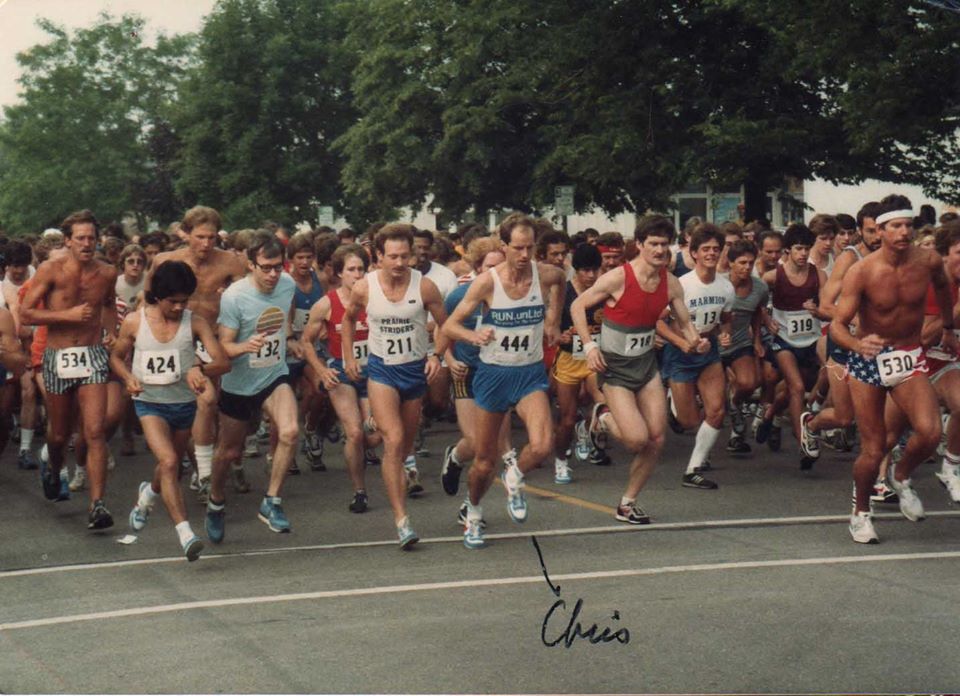
My father took this photo and my mother wrote the word “Chris” on it. I won the 10K race that day in 31:52.
But that’s the issue with anxiety as a rule. It is the sensation that there is something to fear all the time that fuels chronic anxiety. It’s hard to describe to people that aren’t wired that way, but it is quite real.
The irony in all this is that given the anxiety surrounding the Coronavirus pandemic, more of society possibly appreciates what it’s like to live with native anxiety…how it feels to exist with a sense of fear lurking about the mind all the time. If that’s the case, welcome to the life of nail-biters the world over. We’ve been wondering when you’d start to see things our way. And let me assure you, biting your nails can be much more fun than you think. Perhaps you should give it a try.
Or maybe not. It’s a pretty bad time to start a bad habit like biting your nails.
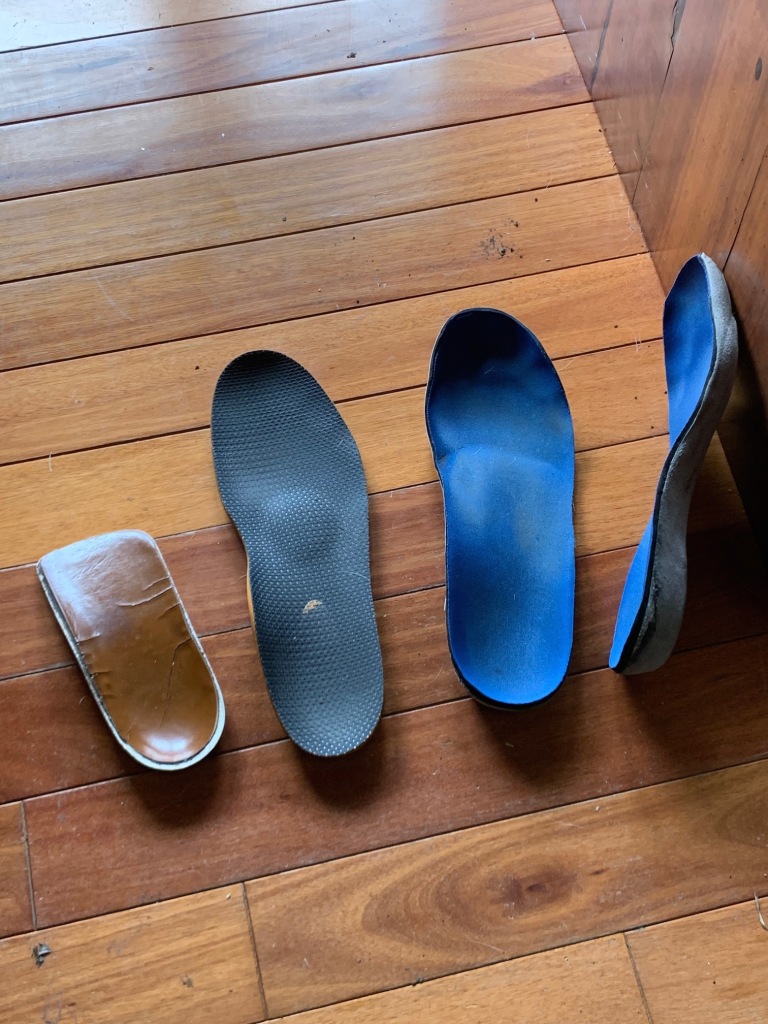
The “dress” orthotics at left were what I’d been wearing after the originally prescribed running orthotics wore out. Then I upgraded to the thicker orthotics at right (top and side view) and now am trying the more moderate inserts at center, provided by Dick Pond Athletics. Cost: $65.
I’ve worn orthotics in my running shoes for a long time. Probably twenty-five years. The first pair was prescribed by a podiatrist with whom I had a working relationship as a graphic designer and produced the cover and illustrations for book about running biomechanics.
But for the first ten years that I knew the guy, there was no need for orthotics in my running life. Then my left knee started to ache with a condition known as chondromalacia, the wearing down of the cartilage under the kneecap. In my case the soreness was caused by rotational stress that was pulling the patella out of alignment resulting in the groove under the knee bone to wear and get inflamed.
It hurt like hell, so the podiatrist fitted me with orthotics and my knee got better. Years later I tore my ACL playing soccer and did some physical therapy that cured the weakness in my knee that probably led to the problems with the kneecap in the first place. But I’ve not been religious about doing those exercises and so the need for orthotics continues to this day.
Racing in heavy orthotics is an act of cross-purposes
Some of this is age, and some of it is weakness. But ten years ago I visited a pedorthist and got some sturdy orthotics that are heavy as heck. They work, but running is relatively clunky compared to the light-footed years in which I wore no orthotics and enjoyed the delights of featherweight racing shoes.
Late last year I noticed a digital podiatry machine at Dick Pond Athletics, the regional shoe store where I buy most of my running stuff. I asked the staff what it did, because I’d seen similar Dr. Scholl machines at drug stores and wondered if they worked. But what really intrigued me was the idea that the prescription wrought from standing on the machine could be used to print 3-D orthotics. They showed me a sample.
Those printed orthotics would cost $165 and I was cool with that and curious about what 3-D printed orthotics would feel like. But the staff person at Dick Pond convinced me to try out a set of orthotics that applied to the specific set of problems and imbalances the machine identified in my feet. “You might not need anything more,” she suggested.
I’ve worn those orthotics around in my regular shoes for months now. They work for day-to-day walking. I’ve also done short runs in them but remained skeptical whether they offered enough general support to keep my knees from hurting or my calves from tightening up.
In some respects that suggests I am addicted to the orthotics I already own. Breaking a habit that has basically worked to protect my legs is not that easy. But when we traveled to Tucson for a triathlon training trip I inadvertently left the “big” orthotics at home. All I had were the “light” orthotics from Dick Pond.
Standing with Sue before our big ride to Gates Pass and back the last day of triathlon camp. I’m likely looking at a bird in the trees, or perhaps wondering if age is catching up with me.
After our first thirty-mile ride a small group of us went out for a run. I slipped the light orthotics into my Brooks Glycerin running shoes and ran along fine. Three miles later I was both relieved and elated at how well those orthotics worked.
So this past Sunday morning I took them for a longer run, a seven-miler up and back on the Fox River Trail. And other than a sharp tweak in my calf at one point as I picked up the pace to 8:00 per mile, I was able to run all seven miles and it felt great.
For one thing, my feel feel lighter. I don’t have a scale to measure the weight difference between the big old orthotics I’ve been using and the sleeker shoe insert, but it might be a pound or so per foot. Over the length of seven miles, that adds up.
So I’m grateful I took the risk and grateful the Dick Pond gal encouraged me to give it all a try. It’s an experiment that seems to be working, and if you have an opportunity to have your feet tested like that, the outcomes are fascinating to see.
While conversing with a teammate from long-ago times at Luther College, I opened up the binder of results from our freshman year in cross country. Those mimeographed sheets are fascinating relics of a different age. But the photograph at the front of the book is also a document of changing times.
Or is it? Recently I was back on campus to watch a track meet and conduct some writing business with a retired Luther professor and the thing that struck me most about the collection of Division III athletes running the 5000 meters is that they looked no different than we did 40+ years ago.
The running shorts on the men for were suitably brief for competition. And among the women, it was booty shorts that could have served as “hot pants” back in the 1970s. The Luther women sported bun huggers, the even briefer version of competition track gear.
Junior year hanging in there.
Many of the men sported fairly long hair. A few tied it up in a man bun atop their heads. That would never have worked for me. My head of hair in college was so thick it would not even bind up in a ponytail. We wore it heavy and full. Mine just reached the shoulders.
Over the four years of college my hair started to thin at the forehead. By the time I graduated the woman I dated called me her “balding babe.” But I was not alone in that department either. The Norwegian and Scandinavian tendency toward bare noggins common to Luther students meant that I was in good company.
I don’t particularly miss all that hair. It would often freeze thick like an ice blanket on the walk up from the fieldhouse to the cafeteria on cold winter nights after a running workout. My hair was so thick it was never really fit for styling all that much. I just grew it, combed it, washed it and dealt with it.
Senior year with a receding hairline.
These days I don’t even use a guard on the electric shaver. I just buzz off the sides of my head and shave the top so there are no fuzzies left. I get rid of the hair on my the back of my ears and in the insides too. It’s all about efficiency these days. My head is what it is. I rarely think about it until moments like these.
Hats are critical to my comfort and health. They keep off the wind and the sun, the rain and the snow. My wife said to me recently, “You wouldn’t be you without a hat now and then.”
Hair today, gone tomorrow. That’s a symbol for so much of life.
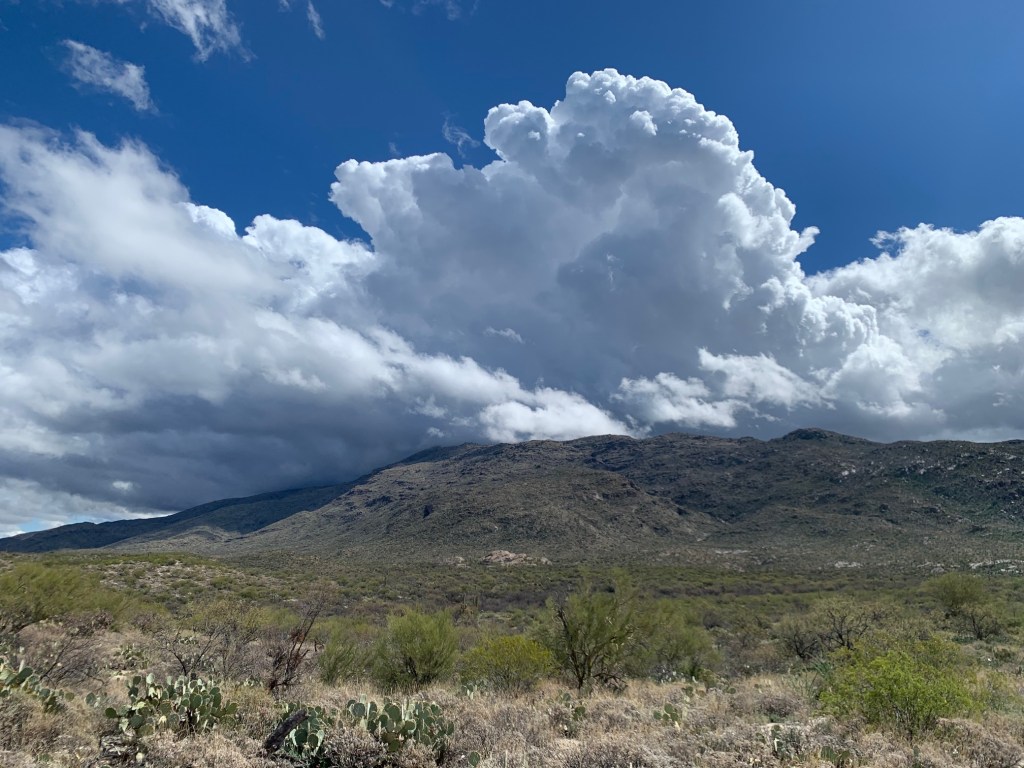
During an eight-mile bike ride through Saguaro National Forest on a triathlon training trip, I watched a black bird with white “windows” in its wings launch from a branch and flap its way down a cactus-lined gulch. It was a species of bird known as Phainopepla. It looks like a black cardinal, and it is unique to the desert southwest.
And it seemed aptly symbolic of the mood in America.
The phainopepla is a desert species of bird.
Whenever I visit Arizona, I can’t help thinking about the ecology and how so much of our romanticized American history is set in this region. Western movies, books and TV shows love to use the desert as a backdrop for human drama. As a result, little about the true beauty of the environment ever really comes through. Western lore focuses on the supposed glory of gunslingers blazing away in shantytowns and saloons, of cowboys driving cattle across the “range” and of Indians succumbing to the combined fury of Manifest Destiny, smallpox and cultural destruction. I’ve yet to hear a truly cogent explanation of how that was all romantic in any way.
The American plague
That decimation of the native American population was the original American plague. Disease and social conflict always go together. Some of that social pressure seemed to land right in our laps as we sat aboard an airplane heading down and then returning home from three days of biking, running and swimming in Tucson, Arizona. We left the very night that the term “social distancing” surged into common usage. At the airport we bore witness to people changing behavior in real time. The procession of travelers passed by with a cordiality seldom seen in today’s society. Everyone seemed to understand that this was a turning point in our present-day culture. But mostly, people were freaked out.
After all, this was a new brand of accountability, driven by this newly invisible threat that selfish actions could lead to death for ourselves, and for others. And that was an unusual burden for people on this continent. Americans are not used to being held responsible for their selfish interests. We’re largely isolated from most of the world’s problems. The last three years of xenophobic American history have only exacerbated those instincts.
Even the patented notion of American exceptionalism has transformed from JFK’s “Ask not what your country can do for you…” to “We own this place, and fuck you if you don’t like it.” We’ve also seen the trickle down effect from a self-praising president to the cult-like Christians praising him as a gift from God. This was conceivable evidence of the most perverse form of religious ardor, and principles be damned.
And then came the plague.
Loners and wanderers
Times of crisis force self-analysis. I kept thinking of the lyrics from the Talking Heads son Life During Wartime.
Transmit the message, to the receiver, Hope for an answer some day I got three passports, a couple of visas, You don’t even know my real name
High on a hillside, the trucks are loading, Everything’s ready to roll I sleep in the daytime, I work in the nighttime, I might not ever get home
Perhaps we were selfish by getting on an airplane that Thursday night. We were certainly not alone. People were traveling despite the warnings of the contagion. Yet some of the information shared by the media implied that healthy people were at no greater risk than a common cold. So let’s be honest about all of this.
These are confusing times, and it has been impossible to get straight and true answers from those most responsible for managing this pandemic. They have lied to protect the reputation and political prospects of the president. Lied to prop up the economy in the face of crippling stock market drops. Lied to insinuate that previous administrations are responsible for this mess. Lied to shout racist threats against China. Lied to brand the virus a “foreign” threat as if that would keep it at bay. Lied to justify the firing of the entire United States agency created to combat this type of crisis. Lied to suggest that the virus was a “hoax” by Democrats to harm the President. Lied to avoid calling it a pandemic in the early stages. Now they’re lying to Americans by proposing to send out $1000 checks while committing billions in corporate welfare to industries that willingly glommed up profits while the getting was good, and now want handouts for bad planning. Trump even lied by refusing to block travel to and from countries where his own profits stood to lose money. This entire Coronavirus response has been an exercise in transactional governance for the benefit of one person only: Donald J. Trump.
Taking a flyer
The day after we returned I listened to a travel expert lamenting the massive hit being taken by the airline industry, and how 750,000 jobs now depended on government support to keep the entire domestic flight dynamic afloat. So the messaging we’re receiving is conflicted. On one hand, it is vital that we all stay home to keep the plague from peaking too suddenly and overwhelming our fecklessly fragmented and profit-obsessed healthcare system. On the other hand, the airlines and bars and restaurants need people to patronize them or people will lose their jobs and millions will go hungry.
Being honest about it
So I’d be intellectually dishonest given the “tell-all” nature of this blog to deny that last Thursday through Sunday, we took our trip and engaged in three days of desert training with a group of twenty other athletes. We shared meal preparation but washed our hands religiously. None of us was coughing, sniffling or showing any symptoms of Coronavirus. And while there is evidence that we can be asymptomatic virus carriers, it was our vow upon returning home to isolate and pay attention to social constructs. That is one of the tarsnakes of our lifestyle. No one is better at restraint and deprivation than a group of endurance athletes. We live that way on a near-daily basis. Self-isolation will be no real problem.
Saguaro National Forest
The training trip itself was a model of social distance and isolation. We rode our bikes far up into the foothills the first day and back down again. The cool winds coming off the range to the north were fresh and far removed from the town resting in the desert basin. Then we ran in the bright sun and swam in an outdoor pool with light rain falling on our heads. And that was Day one.
Mt. Lemmon
The second day we climbed back on our bikes and pedaled twelve miles to the base of Mt. Lemmon. The road curls up through the passes until it emerges on a wide outcrop called Windy Point. That’s where the mortals like us turned around. The gods among us swept all the way out to Summerhaven, which happened to be closed. So no one got their prized oversized cookies. But many of the cyclists who rode that far were cooked by the time they returned to our houses.
Windy Point on the southward facing slope of Mt. Lemmon, fourteen miles into the climb.
My wife caught me two miles into the journey and pedaled on ahead. Her morning indoor rides have armed her legs with endurance that I have not yet built. I knew that would be the case. So I rode alone for the most part, passing the occasional rider and being passed by locals buzzing by with mountain legs as well. The scenery is stunning but in many ways the ride requires a head-down effort during the steepest sections of road. Then we soared back down with our disc brakes whirring, not daring to go so fast as those experienced on such roads. We topped out at 30MPH while other zoomed by at sixty. Behind us, some idiot in a sports car spun out and bounced off two guard rails. The front and back end of his Honda were torn off. He could have killed someone.
Like I said, it is the plague of selfishness that endangers us most of all.
Gates Pass
For the final day we rode the bike trails across the breadth of Tucson and turned toward Gates Pass. The climb is not that long, but the peaks lined with saguaro seem to measure every pedal stroke. The final 400 meters is a steeply pitched section of road that make your legs ache and your lungs churn. That is why we ride. To feel like an inside-out human being. It exposes the raw self and requires honest effort lest one grind to a halt. Perhaps its looks bad to be smiling in times like these, but in truth, that’s the most important thing we can ultimately do for each other. Keep sharing experiences and smiles even if it’s done across the Internet or during a long series of isolated miles.
When we swam in the pool one last time the afternoon sun flickered in the water and our arms grew tired enough to be satisfied and call it a day. A weekend. A trip. But was it selfish of us? All we can see is that we were riding on the cusp of Coronavirus Reality. We flew back home the next morning while washing our hands at every stop along the way. The plane was 3/4 full and everyone avoided rubbing up against the other.
Standing together apart
Now we all stand together by staying apart and wait to see what happens. There are young kids partying half-naked on the beaches in Florida while old folks cower in stuffy retirement homes hoping the virus doesn’t arrive through the front door. These are strange times indeed. So it’s important that we all be honest with others and ourselves as we lurch forward into the Wild West of not knowing what the ever-living fuck comes next.
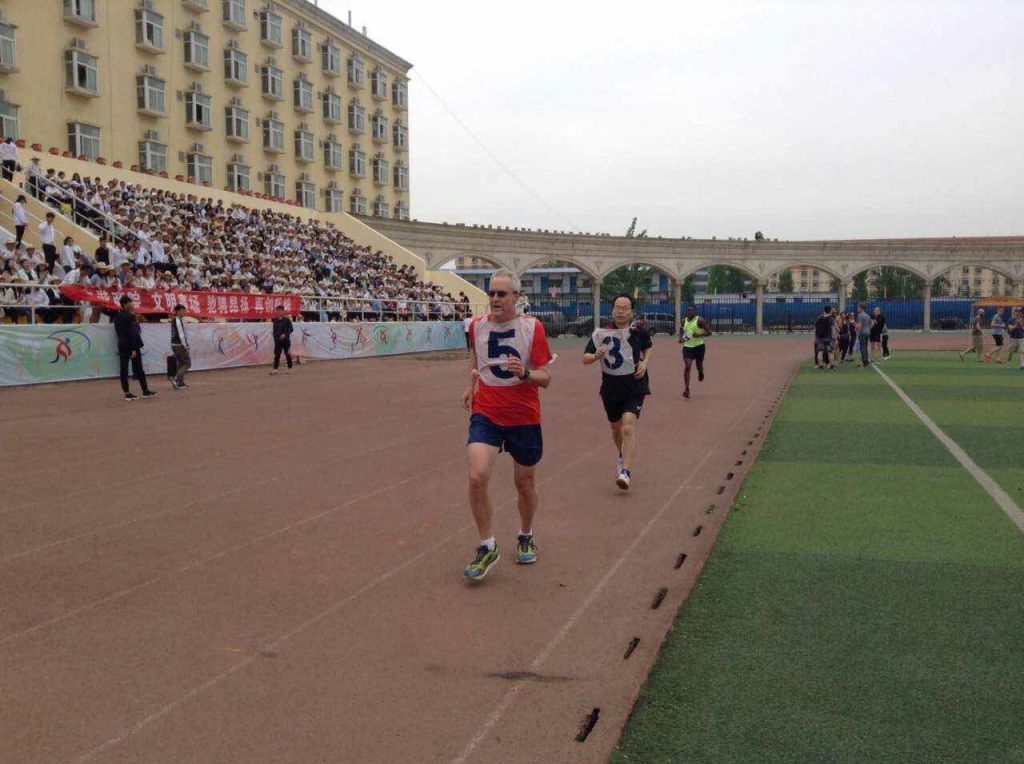
Recently I received an email form a former Luther College teammate that lives in China. Jim Nielsen and I were cross country runners beginning our freshman year. But we also shared a love of table tennis and despite having tired legs from all those miles of training, we often played each other in the Ylvisaker freshman dorm recreation room. Those matches were fun and intense. We even took second in the college doubles tournament. But most of all, we ran miles together in cross country.
Jim Nielsen competing in a race in China.
Jim has continued running and has completed a marathon in every decade of his life since college. He’s training for a race this year in June, but it may be canceled due to the Coronavirus epidemic. But Jim is an eternal optimist, a man of strong personal faith and keeping relationships going as he loves people. He wrote me during the current quarantine period in China:
“Greetings form China! Just signed up for your blog, we run and ride.. Should have been following sooner but I am currently near the end of a 14 day quarantine in China after coming back from the states but through Korea. It is affording me lots of time to read, study, research, watching movies and just enjoy catching up on the past.
I am still running and in fact am training for my last marathon this summer, the Lanzhou Intl Marathon in Lanzhou, Gansu China, in early June. I have run at least 1 marathon every decade since I was 20 so if I can accomplish this it will be my 5th decade since I am 62, as you would know.
Funny thing is when I knew I would be quarantined for 14 days and confined to a hotel room, I thought, oh no, I will lose all I have gained in my serious training to date. The first hotel I was in I was the only one on the 9th floor so I ran back and forth in a 70 meter hallway. I was able to get in a run for 1:37.17 going 182 times up and down the hallway. Then I was moved to a government approved hotel with lots of other people quarantined. I proceeded for 3 days to run at least a 5 k but after the third night the police cameras caught me (there are cameras all over China). I was scolded and told if I continue I will get another 14 days. But with 3 more days to go I will be able to go to my home.
I WILL obey!”
Jim’s photo of a race starting line in China.
Jim was a devoted trainer even in college. His recollections of those years are keen and insightful, often bringing up aspects of our experience that some of us have forgotten. I offered to feature him in this blog, and this is what he wrote back.
“That would be quite flattering as I was at my very best 3 minutes behind your very best while at Luther. It was just so heady for me to be a part of a team with you guys who were clearly national class runners for the three years I ran with you.
I felt my role was best at the national meet when I was literally yelling, cheering you guys on and then watching what seemed to me each of you passing 20 or more guys at the end of the race to get us to second place, beating three teams that beat us in regionals. I will never forget Kent’s (our Coach Kent Finanger) railing on you guys after regionals like I had never heard from him before.
I think the rest of us thought that you guys had already peaked out. And then Duke runs the race of his life leading all the rest of you to do the same. We thought for sure Dani had peaked after a sensational season where he rarely lost and then he comes back with a strong race. As I recall, what did it for us was I think there was only 13-17 seconds between Duke at 24:59 and the rest of you 5 at 25:16. Didn’t you run a 25:12? . Maybe it was a bigger spread but not much more. Of course there was no way any team was going to catch North Central I think almost 100 points ahead of us. I just love recalling the whole thing. It was a highlight of my whole time at Luther!
I did a J-term in California (where I took a gap year during your junior year) planning to run the Mission Bay marathon where Craig Virgin (Illinois stud) won it in his first marathon attempt. I was up to running about 100 miles a week and ran my best 10k in 34:19. But running road races in cross country flats I wore down the bursa sack in my knee and that ended my best hope to qualify. I never got back in that kind of shape.
But of all my marathons there were only 2 where I finished as strong as I started and could say they were fun. And both of those I felt like I was almost walking the first 13. But as you well know, running equal or even negative splits is the best way to run most any race but especially for the marathon. So, my goal is to finish in less than 5 hours which is hardly worth writing about. I am just glad I can still run cause it is so much a part of who I am. I guess credit goes to Kent and his Fitness for Life mantra. I’m a firm believer to this day.
Jim being interviewed after a race in China.
My biggest highlight in running personally was being part of a team of 7 that ran across the united States in 1985 from Boston to Los Angeles covering 3400 miles. We did it in 5 weeks not running on Sundays to speak in churches as we were raising money for a mission. There were three of us of the 7 that ran about 20 miles a day for the 5 weeks. I was in super shape after that but also quite burned out and had a blood sugar problem for awhile almost hypoglycemic.
I asked Jim to respond to a few questions about his running and life in China
What has it been like training in China all these years? Has life changed considerably?
I have been blessed of late to be running with a colleague of mine and we run together maybe once a week. Before I started running with Catherine, a 52 year old women, she had never run more than 5 or 6 miles. Last fall she completed a half-marathon and smoked me. She is really fit and a competitor in the Chinese way of just beating you but not talking about it like we do in America. If she had grown up in America I really believe she would have been a top runner. I love to coach, motivate people to run and just be fit. I have never been an upper body kinda guy but my semi professional soccer son, Jacob, got me doing plank and crunches about 5 years ago and baby, “you should see my 6 pack abs…well maybe 4 pack…lol Its what I like to show all the girls!?!?!? It sure has helped my running though. If only I knew that at Luther.
What is your work in the country?
In 1992-1993 my wife was the primary teacher and I taught part-time oral English and was the primary caretaker of our then 2 year old son. That was a top University in Nanjing, China called Southeast University. In 2013 and until 2017 I taught economics, banking and human resources at a private school called Sias University. It is a tier 3 school which means the lowest level, not like private schools in America. Chinese students take a test called the Gaokao, which is like our ACT or SAT except on steroids. Their life after high school is literally determined by this test. There is so much pressure from parents and society to do well that they hate it, literally!
At my current Tier 1 school, Lanzhou University I teach Listening and Speaking English to top level non-English major freshman students. They take an English reading, writing and listening test when they first come to school and that determines their level. I also teach two sections of Cross-Cultural Communication which is my forte as I worked with an organization for 12 years that researched and specialized in the study of the 24,000 ethnic groups in the world.
How has your life’s philosophy been honed by running? Your faith?
Let me just say that the day I can no longer run I think will be a tough adjustment for me as it is part of who I am. I think even before Kent’s philosophy of Fitness for Life was “preached” to us by him I was already sold. I was almost raised by my half-sister who was a high school PE teacher and tennis champion in the state of Iowa. She had a profound influence on me. I was pretty much gifted as a natural athlete (I don’t say that to boast but most sports came pretty easy to me, except gymnastics and diving) and it is funny but running was my least gifted sport. I played basketball in high school and would have played tennis but my school was the best in the state. I actually was going to play b-ball at Luther and my roommate was Randy Kemp , who either started or was a 6th man by his senior year.
I have to say that running for me is not only physical but also helps the mental, emotional and spiritual aspects of my life. As you know well, there is not anything you cannot work out after a gut busting 10 mile run, or whatever distance. And when those endorphins kick in who needs drugs!! The body produces the best, natural drug. Running, in a way can become addictive but I have also run with guys, as I’m sure you have as well, that have no life apart from running. It’s their life and almost all they have to show for it is running. That’s the bad side. It has become a little obsessive for me at times but then an injury or a slump can get me back to earth real quick.
I love the many ways Jim carried on his running. But in closing he also had some amusing recollections of college days
Jim Nielsen as a Luther College sophomore (upper left in glasses)
Well, I’ve ranted and reminisced enough. I have time since in my quarantine here I’m it total isolation for 4 more days with lots of time. But those times at Luther, I can still recall them all. Sure were special – BFS sessions, streaking on the campus and barring the dining room door as our teammate was running through the other side – remember that? And then Jim Holt and I innocently sitting in the back of Damian’s Lincoln with Steve in the front and being stopped by Wisconsin police who pulled us over for drinking and speeding.
As soon as Steve got out of the car they threw him up against the hood like he was a criminal (he did look pretty scruffy after that carthage meet sophomore year) Turned out to to be one of my best races at 28:14. You should .have heard smooth talking Damian work his way out it! lol
Lots of great memories! Well, thanks for reading.
And thanks for sharing, Jim. Running pulls us all together somehow.
The cold blue depths of a swimming pool can be deceiving.
Yesterday during swim training I paused in the middle of the workout to don fins and do some kick work. After a dozen or so lengths swimming on my back, I stopped to remove the fins and one of them popped off and sank to the bottom of the pool.
I looked down at the fin on the bottom of the pool. It was directly below the 12 FT marker on the pool wall. I reasoned that I could easily dive down and get it. After all, I’d grown up diving to the depths of the Meadia Heights swimming pool. Why shouldn’t I be able to do the same as an adult?
But when I tried, I got no farther than six feet under the water before giving up. Getting twelve feet down seemed impossible. At that point the lifeguard was making her rounds and I asked, “Do you have anything to fetch a fin from the bottom of the pool?”
She looked at me funny. Then she said, “Exhale first, blow out all your air, and let yourself drop down to the bottom. That should work.”
I tried that strategy too. Then I got out of the pool and jumped back in hoping to sink far enough to finish the job. Then I realized. “You dummy. The ROKA swim shorts you’re wearing are keeping you afloat.”
Once those were peeled off, I slipped into the water again, this time determined to dive to the twelve foot depth and get my fin. It sat down there still as a deceased tuna, mocking my inability to reach the bottom.
I got determined, took a deep breath and began swimming with all my might down toward the bottom. At about eight feet down my ears felt like they were starting to implode, and I genuinely wondered if my eardrums might burst. That scared me. But I finally grabbed that damned fin and let myself float back up to the surface just in time, because I was running out of oxygen too. In all, it was not a feeling of triumph, but of relief.
I tossed the swim fin on the side of the pool and looked over at the guard, who gave me a bit of fake applause, clapping her hands close together like a silent seal. I laughed.
Later on I mentioned the incident to a fellow swimmer in the locker room. He related that he’d once dived to fifteen feet in the ocean and thought his head was going to explode. “You have to pop your ears like you do in an airplane,” he said.
That’s sane advice, I responded. But a better plan is never to let another swim fin drop to the bottom of the pool. At least not in the 12 FT depth. If there’s something worse than being six feet under, it’s surely being twelve feet under. I can attest to that.
Back in 2015 after my father died, I was tasked with cleaning out the home where he lived for forty years. There wasn’t all that much to keep. We sledgehammered several old computer desks and donated or dispensed with furniture that no one needed or wanted. There was one thing left that needed to go to a good home.
His wheelchair.
That week I happened to meet a homeless man named James in a nearby town. He traveled about in a broken down wheelchair whose seat and creaky wheels were falling apart. I offered him my father’s chair and we agreed to meet later that day so that I could give it to him. Of course, the skies opened up the minute James took possession of his new chair and I watched him wheel up the street in a downpour. I did a painting of that moment that is currently being exhibited in a Batavia Fine Arts Center exhibition titled Portraiture at Batavia High School with an open house on March 13, 6:30-8 pm.
In all my encounters with James, he’s always been grateful in that pragmatic way the terminally homeless need to be. Money might mean a given problem is solved, but so many still awaited. He’d told me a number of things about his near-term issues. The homeless shelters didn’t want him to smoke. There were a few other rules he found offensive as well. That’s the challenge for so many homeless people. They are quite frequently square pegs trying to fit in round holes. Or vice versa. Without someone to help them overcome hurdles such as these, those realities become permanent problems. It might be called self-fulfilling tough luck.
Losing independence
James has additional problems that make his life difficult. The day that I gave him the wheelchair, James hoisted himself over and tried it out. There are no guarantees that a given chair is the right style for a person’s needs. When I first met him, James had only one leg due to complications of diabetes. Obviously that physical challenge made it difficult for James to find work, even if he tried.
Yesterday when I met James he was resolute as usual. But I noticed a profound change. He’s lost another leg to diabetes complications. “And they want my right arm too,” he lamented as we talked. “They’re taking me apart piece by piece.”
Earlier that day I’d gone for a run of seven miles. I didn’t feel shamed by having two legs to do so, but hearing what the loss of yet another limb has done to James turned the bright sunshine into a harsh glare of reality.
Money alone is not the solution
A couple years ago someone in town held an online fund raiser for James, using his name and image to raise cash. Then they denied James the money because the fund raiser in question wanted to dictate how he should use it. “It’s my name,” he said defiantly at the time. “I should decide how to use that money.”
It’s an uphill battle for James living on the streets. Used by permission.
James is perceptive in a raw way. He gets to encounter human nature across a spectrum of beliefs and personalities, some of them good, others not so much. It seemed he did not care for the bossy manner of his ostensibly charitable benefactor. Admittedly, that may be a problem for James on a number of fronts. His distaste for authority may be the root cause of his problems.
Perhaps we can all empathize with that. We all have issues with certain types of authority in this world. For James, life is tough enough without dealing with the sometimes judgmental attitudes of those who frown on those living on the streets. That said, I do see many people extending kindness to James. The world is not without care or hope.
But James now sleeps in his wheelchair because it’s no longer possible to get in and out of his chair. He used to be able to crawl into a tent where he made himself a home in a woods by the river, fending off coyotes trying to steal his meals. He’s reliant on a small government check of some sort to buy food and stay alive because his local relatives seemingly can’t take him in. They are elderly and possibly dispossessed of the idea of taking him in over age-old arguments. That was the sense I gained from talking with James a few years back. The world isn’t all that good at solving the problems of people like James, and neither is he. Sometimes it takes help.
A Safe Haven
Which is why I recently took a trip to Chicago to visit a facility called A Safe Haven. It is the brainchild of two exceptional people, Neli Vazquez Rowland and Brian Rowland, who through their professional lives possess the financial acumen to figure out how to create a sustainable way to help homeless people. The premise is to help people build a foundation from which to reclaim their lives from tough luck of all sorts.
I encourage you to click through and read about this intelligent response to homelessness. It is a model that transcends political excuses by taking the real challenges seriously, including giving people a place to live as they rebuild their lives through work and therapy. A Safe Haven helps people overcome addictions, criminal records or financial challenges, if those are issues, and they can frequently be found within the homeless population.
Homelessness is a real and critical problem in America. Some cities have no idea how to approach the issue. Neli and Brian made a decision years ago to focus their attention on the problem to prove that homelessness is indeed curable, but only if done in an economically viable and sustainable way.
Their biggest challenge, it seems, is getting politicians to admit that homelessness is a problem that can and should be cured. A Safe Haven is a proven model of success in Chicago. That process can be replicated all over America if the nation has the compassion and common sense to put down the political banners and recognize that curing homeless is actually an investment, not a cost to society. There are many people that have come out of homelessness to build businesses, lead healthy, successful lives and contribute to society. Homelessness is not necessarily a permanent condition.
But it takes belief and action to make that happen. Generations of politicians and economic leaders have chosen instead to throw blame around and point fingers rather than listen earnestly to the guidance and insights of people like Neli and Brian.
Selfishness the biggest barrier
Oil and Water. Painting by Christopher Cudworth
We’re living in one of the most selfish periods in all of American history. Too many American citizens have elected to take the “I’ve got mine” approach to claiming their own healthcare, economic and employment as some sort of divinely prescribed “right” and are content to let others suffer whatever fate they encounter. That attitude is a Darwinian version of the Judeo-Christian ethic that Jesus came specifically to ablate. By tradition it was long believed that people suffering disease or other misfortune must have done something wrong in God’s eyes to deserve their fate. That tradition was wrong.
It is far past time to dispense with such age-old attitudes toward the less fortunate. Many homeless people can attest to the fact that they were just one medical emergency or job loss away from the crisis that hit them.
But it is cynical to say “There but for the grace of God, go I…”
It is far better to say “If there is a God, I should do something about the problems I see.”
It’s all part of a bigger picture that the human race needs to embrace for its own sustainability. The selfishness of ideologies that deny other human beings dignity, that relegate people to discrimination according to race, or gender, or sexual orientation…all these bad habits have anachronistic roots that should be dug up and tossed on the heap of prejudice, hate and bigotry.
And while we’re at it, we might even find the will the protect the planet itself from selfish interests denying that people are the cause of pollution, habitat destruction and climate change that could one day render much of the world’s population homeless. Otherwise, we could all end without a safe place to live. At some point we have to stop and say, “It does not make sense to be so selfish if it makes us all suffer in some way.”
“You’re too snuggly,” my wife admitted at 4:45 this morning when her cellphone alarm began beeping a third time.
Guilty as charged. I had my arm over her warm body under the covers. The sweet smell of her hair in my face. What’s the rush to get out of bed?
It’s Friday Swim Day, that’s why. Agreed upon the night before. No missing out. Just keep swimming.
I took the garbage and recycling bins out to the curb. Brought in the morning paper. Slathered some Nutella on a slice of cinnamon raisin bread. Filled a Camelback bottle with water. Off we go in a cold car on a dark March morning.
At the locker I remove my wedding ring and slide it onto the key chain so it won’t get lost. Off come the clothes. Pants first and then swimming suit on. Keep the shoulders and back warm a few more precious seconds. It’s so early.
Hear a song over the sound system that recalls a college girlfriend. I glance at the wedding ring on the keychain. Recall that girl wanted a full carat diamond ring or she wouldn’t marry me. That’s what she said. I moved on.
Out on the pool deck the wait for a lane ensues. Some people are nice and share. Others go back and forth ignoring pool etiquette.
At the far end of the pool, a young man with one leg climbs out of Lane Two. I catch his eye and he winks back to say “Lane Open.” I walk down and shake his hand. He picks up his blade prosthetic and I ask, “Are you a triathlete?”
He smiles. “Yes I am,” he replies. “And hey,” he tells me. “If you ever need to share a lane come to me.” We exchange names. Another quick handshake. Then into the pool I go.
500 yards go by. I don’t usually warm up that far. But my goal is swimming 2000 yards, a bit more than usual. So I do a longer first section of the workout so that my brain doesn’t make up reasons not to go the full distance.
The swimmer in the lane next to me is smooth and strong. His arms barely ripple the water as he rips along at what must be 1:30 pace for the 100. Later in the locker room a swim buddy and I discuss the guy. How remarkable it is that people can seems so effortless in the water.
I worked on my catch and stroke efficiency during alternating sets of 100s and 50s. I kept my head down in the water and noticed the reduced drag right away. Every little thing counts in the water.
The Garmin kept cheating me out of 25 yards on the 100s. I had to keep adding laps to reach the goal of 2000 yards for the day. The arms tire a bit, so I kick more. Early morning pool brain can’t keep me from finishing the workout. My wife climbs out of the pool three lanes down. She’s no doubt swum more laps than me already. I call out to her, “I’m not quite done yet.” She looks cute in her suit. I can’t help it. I love women in swimsuits.
Back to business. The watch reads 1925. I swim the last 100 and push myself up and out of the pool. My chest and arms feel strong. What an awesome sensation.
It’s a great way to start the day. I’ve overcome Early Morning Pool Brain, and it’s worth it. Even if it does mean giving up a little snuggling.
For most of us, the early years of life were spent in classrooms looking out at the bright sunshine when spring came around. Those precious minutes of recess were never enough to satisfy anyone. Coming back inside with a fine sheen of sweat on our foreheads, we’d try to settle down but a glimpse out the class window was a harsh reminder: “You’re stuck here until they let you go.”
Occasionally, there would be a break in that routine for a school field trip. Yet even these were regimented tours, shuttled on and off buses after a visit to some historical site or other stuffy educational experience.
But when I was a sophomore in high school and got braces on my teeth, I welcomed those days when one parent or another would pick me up from school to make a trip to the orthodontist. It was an odd sensation to be riding about during the school day. It felt a touch illegal even though my brief truancy was approved by the school nurse, or whoever.
It was ten miles one-way to visit the orthodontist, and ten miles back. The appointments never lasted long once the braces were installed. My mouth was filled with contraptions though. Sometimes the orthodontist had to jimmy and yank things into place. At one point he installed a thick black button on one of my eye teeth. It had a hook installed in the middle much like the L-shaped buttons on a set of tall boots. That held a rubber band that stretched back to a stubborn molar that served as an anchor. It was quite the operation to move my teeth into proper position. It took two full years.
Following every appointment, my teeth would already start to hurt by the time we got back to school. But I bore that pain as a worthwhile reward to be free of school constraints for that hour or two out of class. All of life seemed like a tradeoff. I was neither a completely good or bad student. I was both. I’d get A’s in the subjects I liked but struggle to get D’s in stultifying subjects such as algebra. It was the most offensive form of math I could imagine at the time, and for all time. I got a B in geometry and a D in algebra. I still say fuck algebra.
Age 15 and a mouthful of braces.
That hot and cold attitude toward school meant there was always some form of stress nagging at my conscience. Either I’d blown off some assignment or failed to do the homework. Or else the topic of study escaped me completely. Such was the case with government, a junior-year debacle taught by a creepy teacher that had an affair and married one of his students. What could that ass teach any of us?
I now know that some of my distraction was the result of what I call ‘artistic ADD.’ Perhaps I sit somewhere on that spectrum as evidenced in many other challenges in life. My focus is incredible for creative projects but repetitive ventures test my concentration. But I’ve learned to cope quite well.
But part of my love for ‘playing hookey’ from school came from that relief from the pressures of school. I knew that they had not gone away. They were only deferred for a while.
I think about that schoolboy sense of relief these days. I well recall that feeling of being out of the classroom during the daytime when my fellow students were sitting back in that stuffy high school. It was a brief glimpse of what freedom might feel like in the future. For the last year I’ve worked for myself on remote contract and it allows a certain amount of freedom.
That said, I’m highly disciplined about getting work done well before it is due. And if there are tough aspects of learning about a subject to write about it, I’ve learned to do that digging well in advance. Now it’s a reward to don my workout clothes and get out during the noon hour or any other time I choose to go out and run, ride or swim.
Not everyone’s cut out for that type of self-discipline. Working from home or out of a coffee shop with good wi-fi does take focus. And I’ve got that. In many ways it’s a hard-earned sense of freedom. But life isn’t easy or it would be boring. Just like those classes I loved to skip back in school.
So cold out my camera lens fogged over as I ran WonderLeft
One of the most difficult tasks in life is sustaining a sense of wonder about the world and daily experiences. So much of our existence is taken up by routine and obligations that finding a thrill can be tough as the years go by.
Even the places we love can fall prey to familiarity and equivocation. That is all the more problematic among those that have traveled between the dark goalposts of anxiety and depression. It’s easy to cease taking risks to run to either end of that field? So we stay in the middle.
Road Trip
But that’s all the more reason why it pays to take a road trip now and then. Bust out of the routine. Dare the skies to confine your spirits. Which is how I wound up standing in front of the Luther College fieldhouse during a two-day junket to pick up some new antique windows for my art, share a proof of my new book with the co-author, watch a track and field meet with some former teammates, and immerse myself in a trip back in time by running a route our cross country and track teams called Wonder Left.
The route was named for a sign that once stood out on Route 52 at Meadowlark Lane. It read WONDER CAVE and pointed to a local attraction that is apparently not on the tourist docket anymore, because the sign is gone.
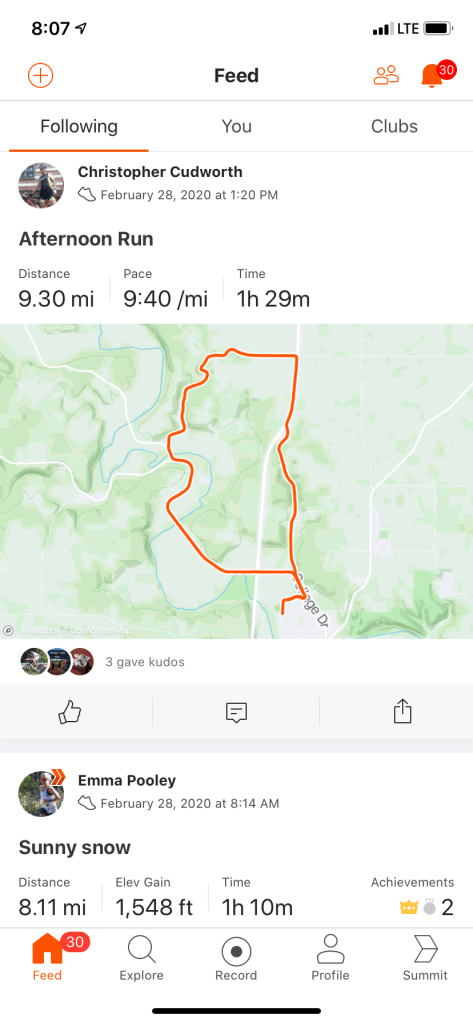
The running course we called Wonder Left
Yet the route we ran so many times is still there. It is just as challenging as it always was. The first two miles are an uphill climb from the Oneota Valley floor to highway 52. The last 800 meters increase in grade from 3% to near 9%, and the road itself curves so that you can see the painful trouble to come. “Look what you get to do!”
Inclinations
At the top I paused to catch my breath and turned around to look at the incline. “Damn,” I whispered to myself. We used to tear up that hill at 6:00 pace, each of us racing to keep position in the pack of 20+ runners cruising together for the first three miles. It was insane in many ways, but it’s how we rolled.
I chose to run into the cold northwest because at the start, the harsh chill was blocked by the hills. My legs felt fine until that steep section when the heart rate shot past 170 bpm. Then the road opens up for a mile and there is nothing left to block the wind. It whipped across my face in a vortex that forced me to warm the cheeks with alternating hands. Finally the turn to Meadowlark lane arrived. I glanced right to check once more if the Wonder Cave sign is there. But it is not.
Orientation
I’d always thought the route was mostly East-West, but it is not. The Strava map shows that once you turn left it dips down toward the river a bit and then it’s a long, winding course through steep hills. The roads in winter are often caked with compressed snow that sometimes turns to ice. Whole packs of fat tire bike riders now love to ride from downtown Decorah up to Bluffton and back on those backroads. We runners learned how to cope with icy roads by running on the road edge in fresh snow. Or lacking that option we skated along in the worst sections trying to keep our balance. But I never fell, nor do I recall anyone else going down for the count.
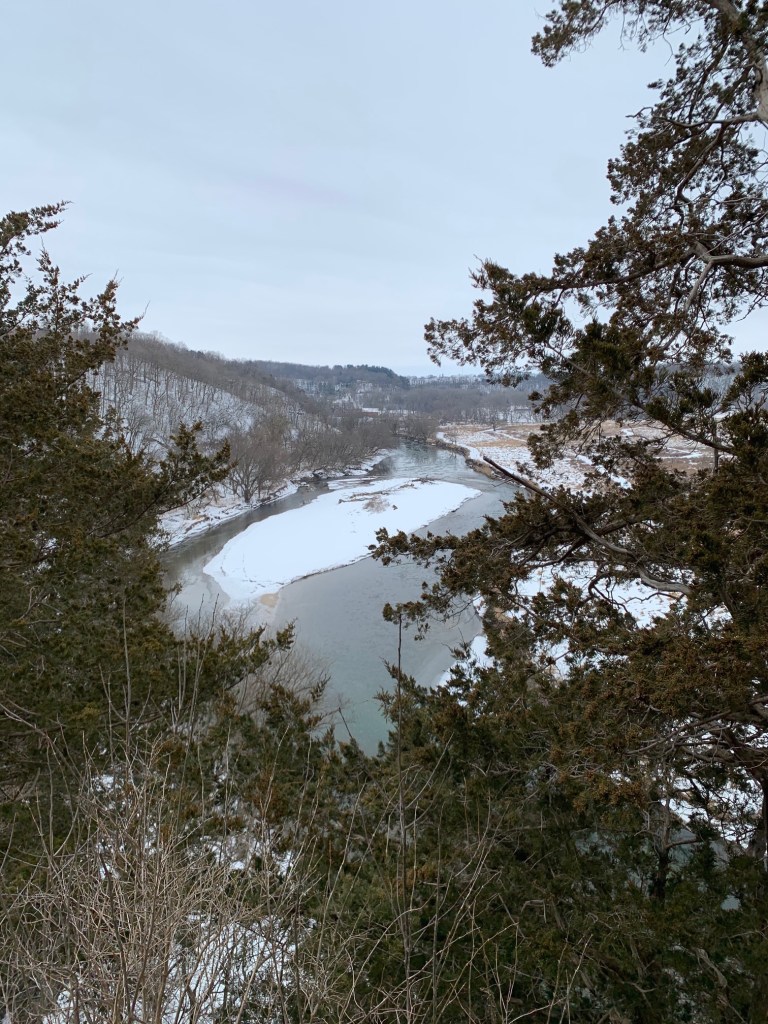
The landscape around Decorah, Iowa is part of the Driftless Region rife with hills and forests.
Those dirt roads dip up and down through the backwoods around Decorah, passing farms and flocks of wild turkeys grazing in the cornfields. The scenery is so gorgeous it is always tempting to stop and take it in. So I did.
Starting up again, I could hear my soft footsteps padding along on the dirt and gravel road. Then I let the pace pick up, dropping briefly below 8:00 per mile. I was running without hindrance despite a nagging knee injury that had been bugging me for the last two months. The only thing that hurt during those middle miles was the scrape on the arch of my right foot where two days before, I’d stepped on one of the bones our dog chews. She’d left it on the stairs and I walked down last week and took the sharp blow in the heart of the fascia.
Running to extremes
On I went until the shadows dissipated and the road opened up into bright sunshine. A sweet russet-colored retriever greeted me with loud barks at the final turn out of the woodlands. I called out to the dog in a friendly voice and he dropped his head and walked in circles. Not all farm dogs are so accommodating. That’s a lesson learned many times and long ago.
Turning onto Pole Line Road I tried to recall how many miles I still had left to run. Before the start I’d texted my wife and told her that I always thought the route was 9.3 miles. That’s what I’d always written in my running journals, except when we cut across the intramural field, which shortened the loop to 9.0 miles. Many times we covered the distance in 54:00.
There were also many days it was far colder than my recent run as well. A teammate once forgot to wear nylon shorts on a -14 below day…and was forced to hold his own crank in a warm hand the last four miles to keep from getting frostbite down there. Yet I’ve also run that loop on days so hot and thick the mosquitoes could barely fly through the morning mist. It is a course for all seasons, Wonder Left. A run that has piqued my sense of wonder many times over the years.
As I entered the last mile my hips began to tighten. I knew it would happen eventually. That part of my body has a general weakness made worse by age and sitting too long at the desk, perhaps a combination of all three. So I stopped to stretch and get back into a rolling stride. Then the road climbed the last hill up to the college campus. It hurt to keep going, but it was nothing that I had not experienced before. Pain is confined to no era.
Honest efforts
Trotting down the road to the fieldhouse, I watched with curiosity as my Garmin ticked off the last couple tenths of a mile. Standing in the circle drive I looked down to see that the route was exactly 9.3 miles.
That confirmed a whole bunch of beliefs about my life, especially that I’d been honest with myself about distances all those years ago. After all, what good would it ever do to deceive ourselves about how far we run?
Age-old rituals
Then it was time for a shower in the same classic locker room where I’d stood naked with my teammates so many days all those years ago. All we ever hoped in the wake of those runs was that the water would get warm while we stood chatting about the workout or the day’s events. That showering together thing never bothered any of us. It was part of the honesty of effort, training and adapting to whatever circumstance life threw at you. I understand that age-old ritual is no longer part of athletic life. The coaches at Luther tell me the kids no longer shower together. Perhaps they are too afraid of being seen naked, or some other learned assumption that took over culture.
A pinch of reality
I will admit that a teammate once pinched me on the ass during a shower and I was a bit surprised. Commenting later to a friend about the incident, he calmly said, “Well, maybe he’s gay.” Even during the 1970s when prevailing opinions were quite different, I never believed that being gay was a crime, or even a lifestyle. It was just something you were, and are. It’s all part of being honest with ourselves. All it takes is a pinch of reality to realize that life is far more complex than we typically imagine. But also far more simple.
As for my recent Wonder Left journey, it was good to run that loop again and find out through satellite date that the distance we claimed in our running journals was truly accurate. Of course it also brought back many memories of hard efforts and striving to become a better runner––but hopefully better person in the process as well. So it does help to realize you weren’t lying to yourself about the distances covered and the honesty of that effort. That’s a sense of wonder unto itself, and it’s always good to know there’s still some Wonder Left.
















 We Run and Ride