Sugar. Ah, honey honey.

I have a sweet tooth.

I know. It’s horrible, right?

It’s embarrassing to confess such a weakness.

Fortunately you don’t have the same problem I do.

Sweets and sugars and hidden sugars in Wheat Thins and other products don’t pull you in.

You even resist sodas with an average 44g of sugar in them, and nearly 200 calories.

You’re so much stronger than me.

snickersStrong people like you never get pudgy around the middle in the winter months. Never bring chocolate or a King Size Snickers Bar with 54 g or sugar with you to work, just in case you get hungry

Your brain doesn’t jangle like an old time phone every time a pack of donuts shows up in the company cafeteria.

212px-Homer_Simpson_2006No Homer Simpson, you. No sugar rush. Sugar crash.

You don’t even sing along with that stupid song  Sugar Sugar by the Archies from the 1960s. Do you?

I knew you didn’t

Because we all know that while sugar is a ready source of energy of a certain type, you must be careful not to consume it in quantities that exceed the number of calories you burn each day through normal activity and exercise. Sugar is the tarsnake of the athlete’s diet. It can help you along or it can make you crash. Big Time.

We all know what happens then. You gain weight. And get fat. Especially around the middle. Or the hips and thighs. Sugar turns to fat faster than fat turns to fat

Sure I have a weakness for sugar and I eat too much of it. My running and riding suffers as a result. It’s like the myth of Sisyphus. I push my sugary butt up the hill and roll back down when it comes to fitness. Butt let’s face it. We run and ride to get rid of the effects of excess sugar.

And I’m glad that’s not the case with you. You control your diet and eat whole foods and veggies instead of food containing stacks of sugar like I do.

So I’m proud of you. And I hope to mimic your good example. Someday maybe I’ll push that Coke can across the counter again and say “No thanks. I’m cutting down on sugar.”

Ah, honey honey. You are my candy girl.

And you’ve got me wanting you.


For more information about how much sugar is in the foods you eat, visit http://sugarstacks.com/


Posted in Tarsnakes, We Run and Ride Every Day | Tagged , , , , , , , , , , , , , , , | Leave a comment

Good design and how it affects your running and riding

By Christopher Cudworth

I’m one of those people that rode the wave of graphic design technology all the way from Rubylith to Adobe Creative Suite. If you don’t know what I mean, here’s a simpler lettraset007version.

Prior to the Mac, everything in design was literally designed by hand. Mapped out with blue pencils. And typesetting was done with PressType, a method of applying letters to graphic layouts that involved using a burnisher to rub every letter into place.

I know. Absolutely primitive. But you haven’t felt pressure in life until you’ve run out of the Capital Letter E at 12 midnight and have to reconstruct a new E using the Capital Letter F and an L. And still have it look good.

Those of us who’ve raced through the 90s and 2000s to arrive at the clean and beautifully driven world of Macs and the Internet can truly appreciate all that’s gone before. And be glad that it’s gone. Forever.

There’s no reason to go back to that shit. None whatsoever.

Which got me thinking about the current state of running and riding, and how the “early days” of both sports compare to what we have and do now.

El Primativo

The early days of running were primitive too. It was just after 1970 that the running shoe market started to wake up and serve the public with something other than adidas and Puma. Nike was invented. Then New Balance got wise. Reebok. ASICs morphed out of Tiger/Onitsuka. Brooks came on the scene. Saucony too.

Now all those brands are essentially legacy businesses fending off new arrivals on the scene in terms of innovation and popularity. Mizuno. Altra. Hell, even Skechers is selling running shoes now.

And the prices. You can’t buy a decent shoe for under $80. Don’t bother trying.

Better design

tron-cycling-skinsuit-8264The reason why shoes are so expensive is they are better designed for running. The ability to choose a running shoe to fit your running style, biomechanics and orthotics was far beyond the comprehension of runners in the early 1970s.

Same goes for running wear. Tech fabrics leave cotton sweats in the dirt.

The only thing one can say about the “old days” is that runners still somehow managed to produce really great times and competition in that legacy gear. Same with great cyclists. And we’ll get to that phenomenon in a minute. But for now, please feel free to lust over the Tron cycling skinsuit above. It’s made for you.

Cycling trickle down

When it comes to cycling, the bikes from the 1970s do not compare well with the machines now available. Even an average cyclist can hop on a $2000 bike that in terms of technology, weight and efficiency is equivalent to bikes ridden in the Tour de France just 7-9 years ago.

Technology is one of the areas where the words “trickle-down” really do apply.

Cycling kits are also highly comfortable and technical, far exceeding gear that was available in the 1960s and 70s.

Cycling trickle up

molteni-wool-cycling-jerseyYet some of the cycling gear that was designed for training and competition is making a legacy comeback. An entire series of wool cycling jerseys in simple designs has come out. Vintage Velos sells them and I predict that your cycling mojo will increase if you purchase any one of them. I prefer this Molteni Arcore cycling jersey from Vintage Velos. It rocks.

Yes, we run and ride in the equivalent of the Adobe Creative Suite in graphic design and publishing. Yet even the finest software for design makes use of staid and popular design icons to illustrate the Crop, Cut and Paste functions by which digital design works.

It’s the same way with running and riding. While running gear and shoes have advanced, and cycling equipment is far more comfortable, you still have to put one foot in front of the other as fast as you can go. And a cyclist must pedal, keep cadence and climb through pain.

Simple principles

It all comes down to simple principles. When the legs are hurting, it doesn’t matter how pretty you look or how expensive your bike may be. You still have to tell your thighs to shut up and your lungs to suck in the oxygen.

Our sports are simply designed that way.  And that’s what I love about them.

WeRunandRideLogo


Posted in We Run and Ride Every Day | Tagged , , , , , , , , , , , , , , , , , , , , , , , , | Leave a comment

How running and riding made me a liberal who circles all the way back around to being a conservative

By Christopher Cudworth

All of us get our political, religious and social views from somewhere. Some are formed in youth with the manner in which our parents raise us. Yet the world is full of people who became conservative after their parents raised them to be liberal. The converse it true. So the old nature vs. nurture debate rages on.

I maintain that the sports of running and riding are by nature a liberal enterprise. For example, the first definition of the word “liberal” goes like this:

Liberal: Not limited to or by established, traditional, orthodox, or authoritarian attitudes, views, or dogmas; free from bigotry.

Running is a liberal enterprise.

Running is a liberal enterprise.

From the moment I started running there was a sense of liberty in every step. Because running and cycling are solo activities, there is a high degree of individualism involved. There is also a call to break free from the constraints of expectations, for example. Conventional or orthodox training methods are designed tested, refined or discarded. The dogma of yesterday becomes the pariah of today. Running and riding are also liberal because the conservative athlete who never takes risks may never reach their potential.

There are traditions in running and riding of course. One glance at the website velominati.com gives hint that there is always a tendency to create an orthodoxy by which others should abide. Yet those who run and ride naturally chafe against the constraints of too many rules. The second definition of “liberal” affirms these tendencies:

Liberal: Favoring proposals for reform, open to new ideas for progress, and tolerant of the ideas and behavior of others; broad-minded.

Those who are intolerant of others in their sport will usually find themselves running and riding alone. Judging others by race or sex or orientation is simply stupid if you run and ride, because it creates blind spots in your own perspective.

Pluse, the beauty of sports is diversity. That leads us to the third definition of liberal:

Liberal: Of, relating to, or characteristic of liberalism.

Liberalism is a worldview that sets forth ideals for tolerance and openness and is characterized in both the acceptance of others and the effort to reach out and help other people. These principles of liberalism hold true in all walks of life, from social to religious to political purposes. Another definition:

Liberal Of, designating, or characteristic of a political party founded on or associated with principles of social and political liberalism, especially in Great Britain, Canada, and the United States.

Politically, liberals tend to believe in social policies that support others and provide a social safety net for the disadvantaged and poor.

Socially, liberals make an effort to be inclusive rather than exclusive. Religiously, liberals embrace practices that invite people into the fold. One of the leading bleeding heart liberals and do-gooders in history is none other than Jesus Christ.

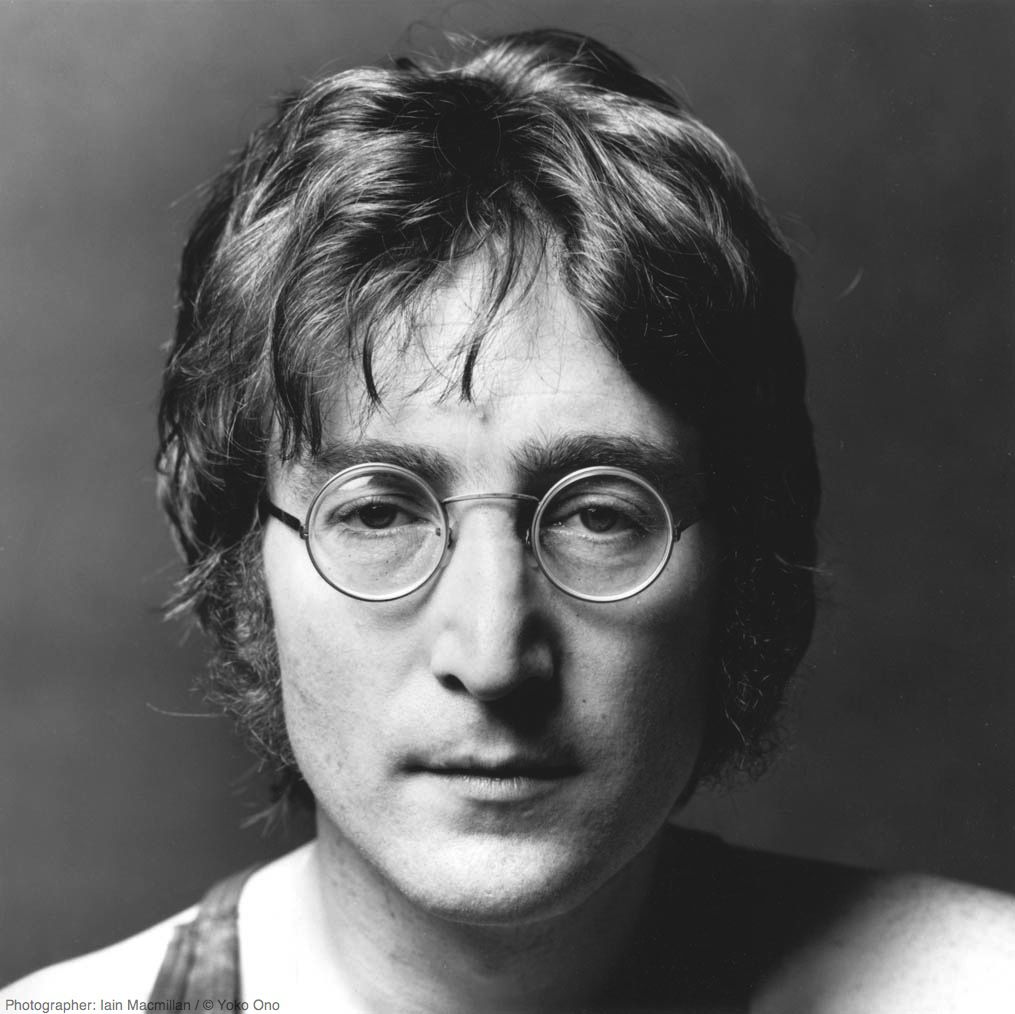
Lennon was a liberal leader who resisted conservative authority through his music and actions.

Lennon was a liberal leader who resisted conservative authority through his music and actions.

Other liberal faith leaders include Mahatma Ghandi, Dr. Martin Luther King, Jr. and the Dalai Lama (a liberal tradition passed along through generations) and John Lennon. All these leaders “ran the race” of liberalism with fervor, setting examples of courage and fully giving of yourself to a cause.

Sound like any people you know who run and ride? Of course it does. Because that is how we run and ride. Liberally, if we can.

We also share our experiences through our rides and runs. We share leads and share drafts. That brings us to additional definitions of the word liberal:

Liberal: Tending to give freely; generous: a liberal benefactor.

Liberal: Generous in amount; ample: a liberal serving of potatoes.

There are some very conservative aspects the running and riding existence. The mileage you do is absolute and highly quantitative. Those are conservative qualities. They are also the limitations we seek to break through. That is no coincidence.

Know that no run or ride is conservatively literal in the sense that it can only be translated in numbers. All the sensory and emotional qualities of running or riding defy strict categorization, which brings us to yet another definition of the word liberal:

Liberal: Not strict or literal; loose or approximate: a liberal translation.

But is running and riding an art or a science? The answer is yes, they fit both categories. Yet even the “traditional” arts and sciences of education are inherently liberal. That is, they are open to inquiry and education is thus a liberal enterprise. Similarly we give ourselves a liberal dose of education every time we run or ride. You are always learning something new. In fact you cannot bank on much of anything as an absolute when you head out the door. It’s just like leaving college. Your real education begins every time you try to use your education, and another definition of the word “liberal” comes to mind:

Liberal: Of, relating to, or based on the traditional arts and sciences of a college or university curriculum: a liberal education.

One other definition of liberal needs to be addressed. That is the moral aspect of running and riding. We hearken back to the movie Personal Best starring Mariel Hemingway as a bisexual heptathlete to find the turning point where the world realized that athletes are not chaste or Victorian in their habits. In fact more than a few athletes are downright licentious, promiscuous and unprincipled in sexual matters.

mag_nb_olyrings_576As evidence it is well-known that the Olympic Village is one giant humpfest. With all that healthy energy flowing around the place, and all those gorgeous bodies at work, who can blame them? Liberal morals suit those who keep their bodies in shape.

All these factors have combined to generate a generally liberal outlook on life. Running and riding has positive effects on the mind that are known to combat afflictions ranging from depression to addiction. Rather than the conservative approach of medically pumping drugs into the system as an antidote, those who run and ride for mental health take the liberal approach of self-medication through exercise.

Liberal doses of enthusiasm

We crow about all this of course, because we’re enthusiastic. Some people find such liberal pronouncements annoying. Hence the conservative Wall Street Journal published a snarky reproach to runners (and by proxy, those who ride as well) in an article titled “Okay, you’re a runner. Get over it.” This is how the writer Chad Stafko characterized runners:

People want attention and crave appreciation. If you’re actually doing something like running—covering ground, staying healthy, almost even having fun—what better way to fulfill the look-at-me desire? The lone runner is a one-person parade. Yay.

It might as well have said, “Okay, you’re a liberal. Get over it.” The sentiments and attitudes of disdain are the same. Anyone enjoying themselves or proclaiming their pending liberation in a public way is going to get hit hard by conservative factions who happen to object to any component of your existence. Forget that the rights of individuals to live as they choose in America has been denied, neglected or persecuted by society.

Resistance to authority and tradition, however justified it may be due to social constraints, is frowned upon by conservatives who hate the thought of change. That is especially true if it affects them in ways that require a change in their way of thinking. Hence the popularity of men like Rush Limbaugh, whose misogyny and racism is thinly disguised but immensely popular among conservative audiences who called themselves “dittoheads” to proclaim a rubber stamp of his disturbingly hateful language. Same goes for the quasi-conservative Bill O’Reilly and the deceptively charming Sean Hannity. All pretend they’re joking around while they go for the liberal jugular.

A liberal turnaround

It has been that way a long while, starting with conservative resistance to Black Power in the 1960s and Women’s Rights. Now we add Gay Rights to the Blacklist of conservative causes. Immigration rights. Social welfare programs. Medicare. Medicaid. Obamacare. The list of conservative hate targets grows wider by the minute it seems.

My liberal instincts and distrust of such an authoritarian, prejudicial approach to life were begun long ago when, as a mere child between the age of 5 and 12 I learned that running was one of the truly rare liberal absolutes in life. That is, it involved equal parts freedom and discipline, but its pursuit was a choice you made. And that made it a liberal enterprise, by definition.

Few Rules. Many Requirements. A liberal discipline. 

You lived and died by your efforts, and it was honest work. The rules were few yet the requirements in effort and concentration were many. You had to have good character and not lie to yourself to succeed in running and riding, and you had to keep track of your achievements knowing that you would be judged solely on what you did tomorrow. You had to learn to trust your teammates yet know that on any given day, they could replace you in line.

 Most of all, you learned that running and riding kept you open to new ideas, new friendships and new alliances. You could talk to God or commune with road or nature in equal quantity. You could share your world with people of different nationalities and learn that competition is healthy, but does not define a person in totality. In fact it is in losing that you sometimes learn the most about yourself. And in sacrifice. Giving yourself over and up for others is a noble enterprise and a liberal absolute.

Does that last part circle all the way back around to conservative principles? Indeed it does. And that is the point of this essay. We are not so far apart, and those who run and ride know that most deeply. With that in mind, we will see you on the roads where tarsnakes try to trip us both up. For there is evil in the world, but that is a subject for another day.

WeRunandRideLogo

Posted in Tarsnakes, We Run and Ride Every Day | 1 Comment

Running and riding through sleep’s dark and silent gate

Are you dreaming of running and riding?

photo (1)Lately I’ve had such weird dreams that I’ve turned to friends and the web to help understand them. On the dream interpretation sites there are zillions of takes about what dreams mean. So I thought I’d share some excerpts drawn from the sites and let you see what you make of them. Because if you run and ride, you’re almost certain to dream about them at some time.

So here goes. What does it mean when you dream about…

Running 

To dream that you are running away from someone, indicates an issue that you are trying to avoid. You are not taking or accepting responsibility for your actions. In particular, if you are running from an attacker or any danger, then it suggests that you are not facing and confronting your fears.

To dream that you are trying to run but cannot make your feet move as fast as you want them to, signifies lack of self-esteem and self-confidence. It may also reflect your actual state of REM paralysis while in the dream state. 

photoTo dream that you are running alone, signifies that you will advance to a higher position and surpass your friends in the race for wealth. Alternatively, you may be running from some situation or from temptation. Or it may also mean that you need to hurry up in making a decision. 

To dream that you are running with others, signifies festive and prosperous times.

And here is information about what it means to dream about riding a bicycle.

Riding a bicycle

To dream that you are riding a bicycle signifies your desires to attain a balance in your life. You need to balance work and pleasure in order to succeed in your current undertakings. If you have difficulties riding the bicycle, then it suggests that you are

The classic geometry of a Schwinn bike.

experiencing anxieties about making it on your own. If you are riding a push bike, then it means that you want to move forward at your own pace and by your own power.

To see a bicycle in your dream indicates that you need to devote time to leisurely pursuits and recreation.

To dream that you are riding tandem in a bicycle suggests that you are more accepting with aspects of yourself or of your partner that you have previously rejected

Start making sense of it

It all sort of seems to make sense, doesn’t it? There must be enough people who have similar dreams to build evidence about what these dreams mean and the psychology of them.

Of course, it could all just be bullshit too.

Which means that if you have a dream about running and riding and want to know what it means, you’re just dreaming to think you can make sense of it.

There’s your Post-Post-Post Modern approach to what dreams really mean.

Another realm

8-devil-guy-crazy-tour-de-france-fans-1All I know is that some of my dreams have been so intense lately it feels like waking up in an alternate universe. Or worse yet, a universe I’d rather escape and can’t.

Which is worse? If you try to run away from your problems in real life, it never works. They chase after you like demons. If you try to run away in a dream, it’s the same story, only the demons actually own you it seems, in dreams.

Perhaps this is all best left alone. Don’t analyze. Just wake up, shake off the dream and go out and run and ride. It’s all a dream anyway, in the end.

Sleep’s Dark and Silent Gate

I’ll leave it to Jackson Browne (one of the most brilliant songwriters to live…) to explain.

See, it’s all about love and life and trying to dream your way out of the past and into the future.

That’s why we run and ride too.

And when we go to sleep, we pass under…

Sleep’s Dark and Silent Gate.

Sometimes I lie awake at night and wonder
Where my life will lead me
Waiting to pass under Sleep’s dark and silent gate
I found my love too late
Running around day after day
Looking for the time to play
While my old friends slipped away
Never should have had to try so hard
To make a love work out, I guess
I don’t know what love has got to do with happiness
But the times when we were happy
Were the times we never tried
Sitting down by the highway
Looking down the road
Waiting for a ride
I don’t know where I’ve been
Wishing I could fly away
Don’t know where I’m going
Wishing I could hide
Oh God this is some shape I’m in
When the only thing that makes me cry
Is the kindness in my baby’s eye
Sometimes I lie awake at night and wonder
Where the years have gone
They have all passed under
Sleep’s dark and silent gate

WeRunandRideLogo


Posted in We Run and Ride Every Day | Tagged , , , , , , , , , , , , , , , , , , , , , , , , , | Leave a comment

Vicarious gleanings for those who run and ride

By Christopher Cudworth

As an active participant in sports all my life, I have never fully fallen into the realm of an armchair participant in sports. I’d much rather play than watch. But there are exceptions.

Anthony scacciaMost recently it was a vicarious thrill to watch our town’s high school football team from Batavia, Illinois win a state championship. Having been friends with the coach for many years, the association was real. My girlfriend’s son is also rostered on the team and has seen playing time all season. So to sit in the stands where the red jerseys were so striking on the sideline, and to watch a young man named Anthony Scaccia carry that team on his 5’7” back for most of the season, that has been a vicarious thrill in many respects.

Team vs. Individual

Being fans of a team vicariously is one thing. Being fans of individual athletes is another. Certainly in individual sports like running and cycling there is potential for all sorts of vicarious pleasure in seeing your favorite athlete succeed. Millions tune into the Tour de France to watch cyclists shoot for personal glory by winning a stage or leading a climb. The overall winner is always celebrated, but truly they get to the General Category victory through guidance of their teammates.

That guidance is anything but easy, because every member of the team is asked to sacrifice for the GC rider. That means their victory is both personal and vicarious. Those who give themselves up to draft for the lead rider and carry bottles and food must satisfy their hunger for victory through the accomplishments of another rider. You swallow your pride and gain pride through a shared sense of accomplishment. Sure, it’s vicarious in some respects, but in a really integrated way.

Giving it up for the team

FroomewigginsSometimes giving it up for the team is a tough assignment. Chris Froome, winner of the 2013 Tour de France was quite obviously stronger than his GC leader the year before, Bradley Wiggins. Yet Froome gave himself over to the Team Sky effort to win the Tour. For the moment, he lived vicariously. When given his own chance, he came through. That’s perhaps the best of both worlds.

Early heroes

Early in my running career my admiration for runners like Frank Shorter, Steve Prefontaine, Craig Virgin, Bill Rodgers and Alberto Salazar was so strong I definitely lived vicariously through their triumphs. When Salazar won his New York City Marathons I stood screaming in front of the television, happy tears streaming down my cheeks.

Salazar_01_0Then Salazar began to struggle as a runner. His performances dropped and his love for racing seemed to go away. I also lived vicariously through Salazar in that way. At the age of 27 life demanded that I turn attention to more pressing matters of family and children. My racing ceased and my local mantle of lead runner quickly passed to other regional types.

Hip to hip with a hero

I recall standing next to Salazar at the start of an event called Race For the Americas in 1984 during my racing peak. It was the summer leading up the Olympics and Alberto was still strong, but struggling. He jumped up and down in place and his lean figure was inspiring. I’d seen him run to victory in the NCAA Division I cross country nationals in 1978, the same year our team finished second in Division III. To cross paths with the man who’d since risen to the rank of America’s top distance runner was definitely a thrill. But this was not vicarious.

The gun went off and I went out with the lead runners at 4:45 mile pace. Then two miles at 9:30. By three miles I was starting to struggle and came through at 4:50, dropping behind the leaders who had actually begun to surge. I saw Alberto one more time as we rounded a wide bend in the Lincoln Park course. “Go Alberto!” I whispered.

But I don’t think he won that day, and I faded to 25:30 for 5 miles. Not a bad time but far from world class. I had my chance and I wasn’t good enough. But it’s better to have tried and fallen short than to never have tried at all.

Sports worship

We admire those who are better than us for many reasons. We wish we could do what they do. That’s the entire foundation of vicarious sports worship in America and beyond. Billions of people wish they could be the best, and live through the exploits of those who are.

Soccer-lgYears after my competitive running career was essentially over and I raced just for fun, I took up the sport of soccer, playing primarily indoors. One day while cutting through the schoolyard on an afternoon jog, I happened upon a group of people playing a pickup game of soccer on a shortened field. I asked to join them and was welcomed. We played for an hour in one of the most difficult workouts I’d had in quite a while.

Both men and women were involved in the game. They were mostly from Russia and worked at Fermi National Accelerator Laboratory in Batavia, Il.

What struck me about their game was the pure love of soccer. I asked them if they liked to watch soccer on TV and one of the best players stared at me for a moment. “There is no good soccer on TV here. We’d rather play than watch anyway.”

That was love of sport devoid of vicariousness. What a great example of a healthy attitude toward sport and exercise, especially in America where 80 percent of the population does not get a recommended level of daily exercise.

Get out there and do it

That’s the point of this essay, roundabout. Because love of sport devoid of vicariousness is precisely what those who run and ride engage in when they head out the door.

So you can worship heroes in some ways, but when it comes down to running or riding, it’s all up to you. And that’s a good thing. The less people depend upon others to feel good about themselves the better. That’s a principle liberals and conservatives can support in the political realm. So it’s nice to know that next time you head out the door to run or ride, you’re actually doing something for your own good, and the good of the country.

There are still millions of people who need to stop living so vicariously and start participating in life rather than sitting on the sidelines letting someone else be their glory.

WeRunandRideLogo


Posted in We Run and Ride Every Day | Tagged , , , , , , , , , | Leave a comment

A runner’s long relationship with football

By Christopher Cudworth

Growing up in the 1960s when the Green Bay Packers were a green and gold apparition of toughness and admiration, it was in my nature to think of football as the pinnacle of athletic prowess. Bart Starr was quarterback of the Packers and Johnny Unitas quarterback of the Baltimore Colts. Things were predictable and sane with football then. The popularity of the NFL was just starting to rise.

Now it is out of control.

I don’t hate football. I just hate how it saturates our culture. It’s unhealthy in many respects. The NFL is one of the greediest organizations in the world, and it promotes itself in ways that block out normal thought.

But through my early associations with the sport and a healthy amount spent playing the game as a youth in countless sandlot renditions of touch, flag and tackle, it is still fun to watch the sport.

Today at 1:00 p.m. or town football team in Batavia plays for the state championship in Illinois. Last time that happened a few years back more than 8,000 people jammed the stands at the University of Illinois, where Batavia lost the title game to Normal High School, a team rife with big farm kids and a tall tight end who gained 10 yards on countless sidelines plays.

This time around Batavia looks even better-positioned to win the game even though they’re playing the only team that beat them this year. Because what are the odds of a non-conference game against your future state title opponent. Payback is delicious?

A good friend of mine, Dennis Piron, is coach of Batavia’s team. I know how many hours he has put in over the years, first as a defense coach and now head coach of a talented group of kids who have played together since middle school.

Dennis is 10 years younger than me, and our association goes back to his late 20s when I began doing marketing for his health club. The marketing worked. His health club thrived. And then he got testicular cancer. I recall walking around the block slowly with him following his surgery. His All-American track star body6 (48.6 400 meters) was wracked with pain from the surgery and fatigue as well. But he kept going through those dark afternoons.

Later we did business together with a developer who purchased his club and wanted to sell it to a hospital group but the deal fell through.

That convinced Dennis to go into teaching in his home town. He also coaches the track team where he has had numerous state champions, both men and women.

His football program is principled and balanced. He does not advocate early experience with tackle football, preferring instead for young kids to play flag football and learn fundamentals. The tough stuff is saved for middle and high school years.

So his team is poised to make the ultimate statement of success. Winning a state championship is no easy feat.

I’ll be sitting in the stands watching his familiar sideline body language and thinking back on how I so wanted to play the game. I’d won a Punt-Pass and Kick competition at the regional level and thought I should go out for quarterback. When freshman year came around my father drove me to the school and pointed me to the cross country locker room. “If you come out, I’ll break your arm. You’re not playing football. You’re a runner.”

My dad was right. I weighed all of 124 lbs at the time. And while tough and wiry, I’d have been crushed under those Kaneland farm boys.

So I became a runner, and football became a strange sidelight in life. Our cross country team went 9-1 while our football team went 0-9. Yet the football team was revered while our cross country team was ridiculed as a “pussy sport.”

Huh, I thought.

That pattern continued through the rest of high school until junior year when again the football team was 0-9 and our cross country team went 9-1, won districts and grabbed the imagination of the school. People turned out to watch us run.

But people still turned out in big numbers to watch the football team lose.

Football and town identities are intertwined, it seems. Win or lose, people support their football teams.

Yet warming up for a cross country meet at a rival high school in Cary, Illinois, we were being led around the course by a runner known for his crazed ways. And when we approached the area where the football team was practicing, he peeled off at a sprint and ran through the team practice yelling KILL KILL KILL!

I have never forgotten that demonstration of civil disobedience in the face of a football culture that reveres the game. That runner was prescient in many ways. Football is a great game. But it also symbolizes the worst of what we are as a nation. Sometimes.

That said, I hope Batavia wins. Because not all of the world’s problems can be solved on a gridiron.


Posted in We Run and Ride Every Day | Tagged , , , , , | Leave a comment

In thanks for running and riding

By Christopher Cudworth

RidingHonestly, I don’t know how I’d have made it through much of life without running, and now riding.

There have been tough days when things aren’t going well and a long run has provided salvation.

In every season there is reason to revel in the act of running and riding.

It is refreshing to run in springtime, the season of renewal.

And so rewarding to ride in summertime, the season of sweat and racing.

Come fall there is peak fitness and a chance to test yourself in full.

Then winter comes and you rebuild.

I am thankful for it all. For the experiences and friends it has brought me, and sustained all these year.

One friend has been a training partner since 1973 when we ran high school cross country and track together. Then college cross cross country and track. We lived together in the city of Chicago and trained in Lincoln Park. Raced side by side in countless road races.

He took up cycling long before me. But I have made up time these last 8 years.

The cycle of friendship continues to grow. You never cease meeting new people when you run and ride. You never grow old to soon, or forget where you came from.

All that is good in this world flows from connection to creation. Running and riding does that for you too.

And so I wish you all a thankful and fruitful Thanksgiving. Your readership is much appreciated, and I always encourage you to share your story if you please.

Happy Thanksgiving All!

Posted in We Run and Ride Every Day | Tagged , , | Leave a comment

Trading places in the operating room and beyond

By Christopher Cudworth

Sue Astra competes in the Ironman Half 70.2 in Racine.

Sue Astra competes in the Ironman Half 70.2 in Racine.

Last summer while riding with my significant gal friend we took a trail through a beautiful section of forest preserve about 10 miles from home. The trail follows a ridge of glacial kame through a woods with a meandering creek.

On a road bike, that trail is safe and easy to ride.

On a tri-bike? Not so much.

Yet I failed to understand that distinction as we headed west through the scenic section of woods. Then the canopy closed over us and the vegetation on the trail was still wet. And slippery. And down she went.

Witness

For some reason I happened to be glancing back to check on her as the front wheel went left and her right shoulder came crashing to the ground. In a second I’d hit the brakes and come to a stop. She rolled over on her side and sat up. Holding her shoulder.

It was obvious she was hurt. Possibly very hurt. And I was hurt at the thought that I might have caused this accident going too fast on a trail with wet junk on the asphalt.

We got up and walked. Gingerly she held her arm. Then we sat back down and nursed the shock of the moment. I had my hand on her back and went to pat her on the butt a bit when I felt the slick wet sensation of what I took to be blood. Fright.

But leaning back to look at her there was no red blood. Just a giant wet patch in the back of her jersey. I reached into the pocket and felt a giant wad of goo in there. When I pulled my hand out it was covered with liquified banana. Seriously, you could not have turned that banana into a more gelatinous form if you had thrown it in the blender.

Showing her the hand, she lamented. “That sucks. That was a good banana too.”

Aftermath

I called me daughter to come haul us home. Bikes in the back. Me with them.

And from there she tried to make the best of it. All summer the strength built back up in her arm but something still didn’t feel right in the shoulder. She ran a few races but by October it became clear the shoulder needed surgery. She met with a triathlon friend who is also an orthopedic surgeon and then got an MRI. It showed a tear of the rotator cuff.

Endurance

Yesterday, she had the surgery. It takes about an hour and a half to do the work. We traveled to the hospital and went through the registration process. That’s when I started feeling a bit queasy. I had not eaten breakfast so the dizziness might have been dehydration or even a reaction to some meds. But no luck. I was getting the flu.

As she lay there in the prep room for surgery the nausea increased and I made several trips to the bathroom in case the Big Event, be it barfing or the other end was about to commence. But it held off and I made it back to the room as the nurses were doing more prep.

“I might have to go home,” I told her. “I’m really sick.”

Well, no one likes to be left alone during surgery. I called her brother and sat back down to hold court until he arrived. But the look in her eyes broke my heart. Again, I’ve been through a few surgeries myself, one just a month ago. And who was there to help me through? You guessed it. She was.

So in essence I owed her my presence. She’s a great person and we both have gone through a few things in life, especially of late. So we try to support each other every way we can. And here I was failing her at a critical moment. The tears came.

Keeping on

She’s a tough, tough gal. Did a 70.2 triathlon this past summer in Racine. I watched her work through those 13 miles of running when it clearly hurt. So this is no wimp woman.

Perhaps you know someone like her. Or a guy who is similarly tough. Yet we’re all human. We need support. It’s not an allegorical proposition. At some point, the going gets tough and we like to have someone there.

So it went. The minutes went by and an hour passed. Her brother arrived just as I was emerging from half and hour of close-eyed concentration bordering on sleep. You want to sleep when you’re sick. Yet the nausea warns you: this may not last long.

By the time she rolled off to surgery things were getting better. I was weak but could make it through. Two hours later her brother and I greeted her in the recovery room. “Now remember,” I told her. “Your body is going to feel like you just finished a tough race.”

She chuckled and smiled. We both knew what that meant. Take it easy. Yet that’s the hardest thing for the toughest people to do. Take it easy.

Just take it easy. And let someone help you.

WeRunandRideLogo

Posted in We Run and Ride Every Day | Tagged , , , , , , , , , , , , , , | Leave a comment

What is your Kryptonite?

By Christopher Cudworth

Ultimate-Man-of-Steel-HD-WallpaperAs a little kid who came into possession of a Superman costume at the age of 7 one Halloween, I learned the very human limitations of my very human body the hard way. Although the costume made me feel super with its bright blue pants and shirt and the Big Red S (with gold glitter) on the front and a red cape to match, it turned out that when I tried to fly, it didn’t work so well.

I liked that suit so much that I told the neighbor girls I really could fly. They challenged me to a test and I took them up on it. So we gathered at a maple tree in the front yard of my house and I climbed into the tree in my Superman costume. And there, determined to prove they were wrong, I poised for a moment and looked straight ahead across the lawn thinking, for a moment, that I would at least glide a few feet to the ground.

superman_kryptonite11_138No such luck. I fell splat on the dirt and somehow bounced to me feet. Stunned but somehow unhurt, I stood fighting back tears as the girls grabbed either arm and led me to the front porch where I tried to catch my breath. Again, I had not flown, but I had not chickened out on the dare either. I guess in some ways that impressed the girls, for they said nothing about my inability to fly. Perhaps they were glad I was not dead.

At that moment in my young life, I realized that the Kryptonite of many a man is pride. A valuable lesson even if it did not feel too super hitting the ground from seven feet in the air.

Growing up to be Superman (not)

My efforts to be a Super runner and cyclist have in some ways been similarly disillusioned. Sure, I had some success along the way. But the fact of the matter is that you have to have the genetic gifts––Super Powers, as it were––if you truly want to be a Super Athlete. 

That means exceptional VO2 max as an endurance athlete. Also great biomechanics. A brain strong and true. And a lot of tough training.

Out of those three, I had a bit of the middle and a lot of the last. So I became as Super as I could be, but was never a Super Athlete in the sense that I won state or national championships, or competed in the Olympics. The closest I came were a few Conference manofsteelchampionships and a berth in the Prairie State Games 5000 meters. When you’re not Superman, you take what you can get. Sometimes you do super, sometimes you just get injured or sick, and fall over.

Everyone who runs and ride has a some form of Kryptonite, the substance of which can be mental, physical or dietary. Whatever it is, your personal brand of Kryptonite is what brings you down, makes you weak or lays you low at the most important moment in your preparation for the Big Event. It is your Fatal Flaw. Your tarsnake. 

piCture pOlish Kryptonite swatch and reviewKnowing your Kryptonite is a matter of identifying its source. For some women, their kryptonite is men. For some men, their kryptonite is women. But attraction of any sort and its obsessive qualities to a person, an event or a hope can be your kryptonite if it absorbs your strength in all the wrong ways.

But on a practice front, here are some of the most dangerous forms of Kryptonite for those who run and ride:

Kryptonite Gut

For weeks and months you train and manage your diet for optimum performance. Your training goes well and your times drop. Your long runs and rides go well and you’re feeling smooth and good going into the race.

Then you travel to the city where you’re going to race and temptation gets the worst of you. You break with your diet routine and on race morning your gut feels like someone stuck a blender in there and beat your intestines to the pulp. Even the Man of Steel couldn’t race well a stomach in that kind of shape. It might be diarrhea or sideaches, but somethings messed up. The moral of this story? If you want to feel super, don’t mess with your diet.

Washed Out Superhero

superkryptTheories about how to properly hydrate during training and racing seem to be changing fast. It turns out you can drink too many fluids. It’s call dilutional hyponatremi, or water intoxication. Those of us who have experienced it can attest to the strange sensation of being “washed out” and how poorly you run or ride as a result. It’s possible to drink too much on a daily basis, and also to drink too much water in advance of an athletic performance. It happens when there is too little sodium in blood, which is why many triathlon coaches and dietitians manage the sodium levels of their athletes. It turns out that drinking too many “rehydration” drinks with sugar and additives actually dissolves the needed components of blood. The Kryptonite you encounter may be in your favorite sports drink.

Kneed by Kryptonite

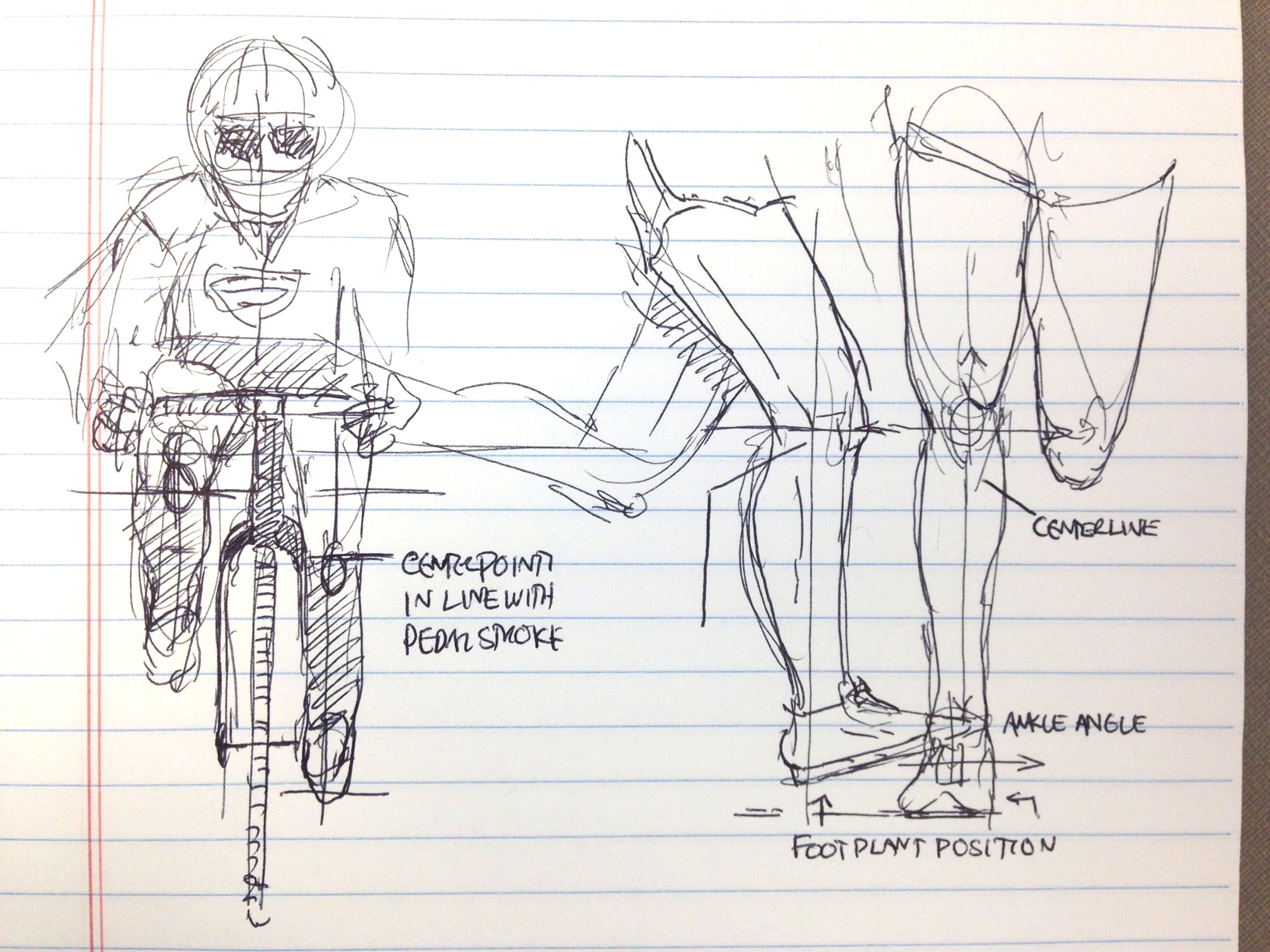
photoBoth cyclists and runners need to protect their knees, and knee health depends on balance and strength. For those who ride, proper position on the bike is crucial, which means a bike fit is vital to be sure your position keeps your knees in position to execute an weight-bearing pedal stroke. For runners, stride and biomechanics are important components of knee protection, along with strength and balance. In both running and riding, it’s all about keeping the knee in proper position and not allowing your lower leg position (pronation and supination) and balance (quadriceps and hamstring strength) to push or pull your knee (and kneecap) out of a neutral position. Your knees are a locus point of force motion. If you don’t manage your knee position along the critical centerpoints either in running or cycling, the rotational torque placed on the joint can cause kneecap pain, grind down cartilage, cause tightness and constriction and literally slow you down through limited range of motion. Knees can be Krytonite.

Kryptonite Kramps (both gut and muscle)

Nothing hurts worse than a sidestitch when you’re training or racing. A bad cramp in your side can bend you full over as if someone jammed a sliver of Kryptonite into your diaphragm. Been there? Done that? Then you know that kramps can kill your effort.

the-land-of-kryptonite-joyce-dickensYou can get side cramps and stomach kramps from a variety of sources. Hot weather can make stomach cramps, but so can extreme racing effort. If you are susceptible to stomach kramps as a rule you need to get to know your dietary foundation really well. For many people milk products cause the stomach to cramp. For others, it is citrus products. Gluten gets the goat of millions.

The needs of runners and cyclists can differ widely when it comes to kramps of the gut. Runners are much more susceptible because of the jarring effect of pounding.

Cyclists far more often experience leg or muscle cramps resulting from poor replacement of nutrients and fluids. When cyclists cramp, it tends to start from the calves up. Many runners will cramp from the hips down, especially the hamstrings and quads. But if you have tight calves as a rule the repetition of running can cause vicious kramps, and that is the kryptonite of many runners past the age of 40 when tendons, fascia and calf muscles grow shorter and less flexible.

The cure for kramps in the gut is knowing your dietary kryptonite and learning how to breathe right, build core strength and avoid sudden jarring motions.

The cure for kramps of the muscular type is balanced hydration and nutrition, focused flexibility and strength for specific muscle groups and avoiding repetitive training or racing, especially at speed, without varied pace and recovery. Cramps are a protective response against overuse.

Kryptonite in back

Nothing stops a runner in his or her tracks faster than back pain. The same goes for cyclists. The cure for most lower back pain is strengthening the core. Back pain is the kryptonite of inflexibility, muscular imbalance and poor biomechanics and posture. That’s true for runners, who need to learn efficient form and strengthen to that goal, and for cyclists, whose kryptonite is bending over the bike for 4-6 hours.

Knowing your Kryponite is the only way to keep moving toward a Super effort. Anything less will lead you green with envy toward those who seem to move through this world without any weakness.

WeRunandRideLogo

Posted in Tarsnakes, We Run and Ride Every Day | Tagged , , , , , , , , , , , , , , , , , , , , , , | Leave a comment

What draws you to run and ride?

By Christopher Cudworth

For those who run…

My career in running started before the whole running boom even got going. When asked to run 12 minutes in a 7th grade fitness test, I ran two miles. Something real and earnest took hold inside me that day.

RUNNERS

What draws you to the sport of running?

By the time I was a freshman in high school in 1971, running drew me in new ways. That first long workout in the August sun flushed out feelings that ran deeper than anything I’d ever felt. All that hyper energy had a home. It flowed out of me with every step. When the running was completed, a calm flowed back into me that assuaged worry and gave me perspective on all my harried thoughts.

It’s gonna be okay, my body told me. It’s gonna be good, my mind responded.

So I ran some more.

Competition

Competition drew even more emotions from my soul. I loved running against other runners. Loved trying to win. When I did win, the memories of the hard work it took to get there were affirmation that putting effort into something you care about can pay off.

When I didn’t win, it was a reminder that there are always people out there who are better on you. On any given day, you can be beaten even if you are the best. That’s an important life lesson, and running drew it more clearly than any other activity.

As I drew close to the finish line in some races, pain was another reminder that humility is a good companion for all those who strive to do their best. College teammates formulated a saying to help us all through the pain. “The pain is temporary,” we whispered to each other in huddles before the race. “Run through it.”

Perhaps there are people who cannot conceive the benefits of learning these lessons. Of knowing that much of the pain in life is, indeed, temporary. They look at runners on the streets and in races wondering why they put themselves through agony. And then claim that it is a joy.

And those who ride…

Whether alone or in groups, cyclists all ride on a thin rim of rubber and an eye on the road ahead.

Whether alone or in groups, cyclists all ride on a thin rim of rubber and an eye on the road ahead.

It goes the same for those of us who ride. People see our “getups” and grimace at that cyclist hunched over the handlebars. Many cannot conceive of the comforts we feel in pedaling our hearts out. Cycling is, of course, a world to itself on wheels. We live in a bubble of air and tool along on a rim of rubber. When we’re standing still in our lycra and helmet and shades, we don’t look or feel natural. Our cleats point our toes in the air. We are ungainly as loons on the ground. But when we fly, it is heaven on wheels.

And for those drawn to pain…

For all the glory of movement, we are also drawn to the pain.

That is because all joy requires some form of agony. It may be quiet suffering or determined persistence. But if you have ever been to a funeral and seen the sorrow transform into joy over the memory and life of the deceased, you know that all of human life is defined by transcendence.

Running is a tool of that process. So is riding. Some days it is literally like being born again. Those first moments out the door may “suck,” to use colloquial parlance. But the return on investment as the body adapts to the struggle and feels good in motion is what draws so many who run and ride to the task.

Sure, there is narcissism involved.  We draw on our narcissistic instincts every time we pass a long window and check our form in the reflection. We draw remarks with our narcissistic posts on social media and mark it in journals. We draw criticism. Scorn, Curiosity. But sometimes envy. “I don’t know how you do it.”

Our effort. Our accomplishments. They are all we are. That’s how we do it.

A long time ago we used to discuss the “Loneliness of the Long Distance Runner.”And cyclists spent their days on claptrap machines with sprouting wires and skinny frames.

Nether of those things is true anymore. That reality has been replaced by a community of people that understands it is okay to be alone, and to ride on the roads with eyes straight ahead.

You draw upon that inspiration of the road ahead every time you head out the door.

Even when the weather is a little sketchy.


Posted in We Run and Ride Every Day | Tagged , , , , , , , , , , , , , , , | Leave a comment