Don’t mess with health care, or it will mess with you

DON’T MESS WITH HEALTH CARE OR IT WILL MESS WITH YOU

By Christopher Cudworth

Watch what you say. Your complaints about health care could come back to haunt you.

Watch what you say. Your complaints about health care could come back to haunt you.

The local hospital system in our area just brought another health care system into the fold with a merger. Big medicine just keeps getting bigger. They tell us they have to merge to survive. Big fish eat little fish. But can you tell who’s eating who anymore?

The little guy can feel lost in the process. You check in, let them work on you and hope you can pay for it somehow. And don’t complain.

You should never complain about hospital mergers and health care insurance coverage. Not if you want to keep all your limbs and organs when you go to the Emergency Room.

Triage

Because imagine, if you sprain your ankle running or bust a collarbone on the weekend group ride, you’re at the mercy of the very system you dared to criticize. Then anything can happen.

You show up at the hospital and the EMTs are all sitting there with digital reading tablets listening as you check in. To hell with HIPPA laws. There’s no such thing as privacy anymore. That’s all a joke.

As the Emergency department checks you in, the EMTs all run a Google check on your name and up pops that Letter to the Editor written a year ago complaining that the cost of health care has gone up and the local hospital is partly to blame.

“Hmmm,” look at this, the EMTs quietly note, pointing to the story as their faces are illuminated by the glow of the tablets. “This guy thinks he knows more about health care than we do.”
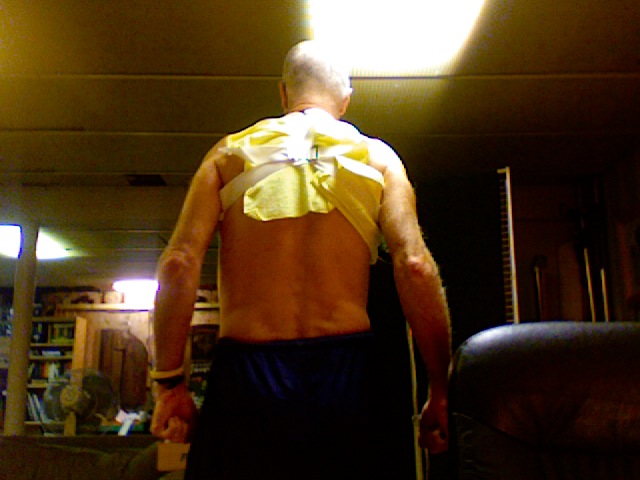
They take you to a lonely back room, drug you with ether and extract your organs for sale to the black market.

They take you to a lonely back room, drug you with ether and extract your organs for sale to the black market.

Surgery and thensome

And before you know it, you’re getting rushed into surgery. Only things are different somehow. Instead of heading into the main hospital, they take you to a back room where the lamps are hung from the steel beams. The room looks suspiciously more like a converted parking deck than an operating room. Then they slosh a little orange medicine on your body and slap a soggy mask coated with ether over your face. The last words you hear are, “Nighty night, buddy.” You dream of chocolate chip ice cream.

Losing a little weight

When you awaken in a recovery room there are smiling nurses waiting for you to rouse. “Oh, you’re back, are you? Let’s get you on the scale.”

Woozy and a little disoriented, you are led by the arm from the cold hospital bed to a scale that looks like it should be on a cattle farm. You wonder if this is medical protocol. They prop you up on the scale and the long needle skinny needle flutters and wobbles over numbers that are so small you can barely read them. Somehow your eyes focus and you notice that you’ve lost 12 lbs from what you weighed the day before.

“Hey, that’s great!” you think. “Now I’ll be an even better climber in cycling than before. And I’ll probably set a PR in the half marathon!”

See, our the priorities of most of us who run and ride are pretty screwed up. But if you let them know you’re fine with the kind of treatment you’re getting, things get really weird.

Checking in. Again. 

“How are you feeling?” the nurse asks.
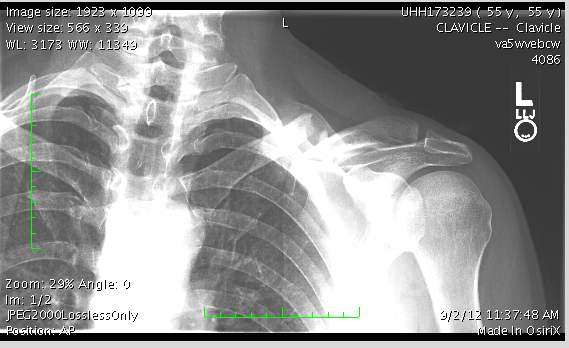
Hmmm. What would it help to remove to make you a lighter cyclist or runner?

Hmmm. What would it help to remove to make you a lighter cyclist or runner?

“Fine,” you tell her. And suddenly another guy clamps an ether mask over your face and you drop like a piece of hot wax from a candle.

Sew ‘er up

2 hours later you wake up again with a pulsing feeling in your midsection. You look down to see a big white bandage across your bare belly and notice it has a big red cross on it. The bandage looks like something from World War II medicine, and the nurse is holding it down with some pressure.

“Sorry. You woke up a little soon. We’ll have you right in a minute.”

Someone pulls out duct tape and you hear that familiar ripping sound as they stretch and strap it around your middle, winding it round and round your midsection until the big white bandage is held firmly in place. You vaguely resemble the Tin Man from the Wizard of Oz. You feel about that weird, too.
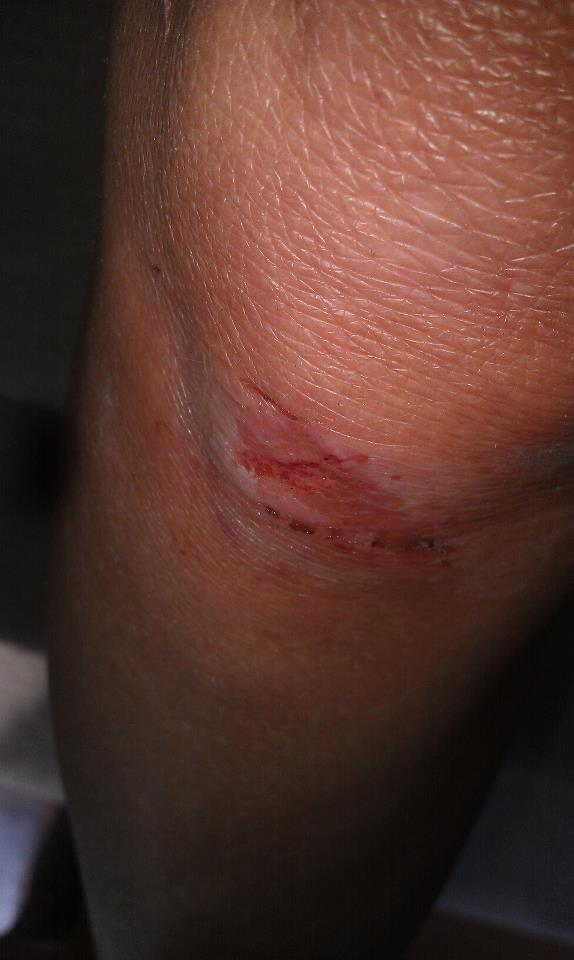
Even the smallest injury could see you mined for organs.

Even the smallest injury could see you mined for organs.

“There you go buddy. You’re ready for discharge,” the nurse chirps. “But let’s weigh you one more time.”

They stand you on the scale and your eyes nearly roll back in your head. But somehow you feel kind of euphoric. Light in the head, you might say. You feel the top of your noggin’ and notice there’s a bandage there too.

“Perfect!” the nurse intones. “You’re down another 8 lbs.!”

“8 lbs.!” you think. “Now I could do Alpe du Huez in half the time it took me on that trip to France last year! At this rate of weight loss I could be a Tour rider with a little more training.”

Discharge

They EMTs arrive and shove you into a wheelchair. Then they wheel you back out to the car in which you arrived and hand you the keys.

You ask if your collarbone or ankle or whatever it was that you came to get fixed is repaired.

“Sure,” the EMT says. “Whatever you want. Quit complaining. You’re lighter now and that’s all that matters, right?”

The back room where they store the extra stuff they take out of you. But at least you lost weight, right?

The back room where they store the extra stuff they take out of you. But at least you lost weight, right?

“True,” you mutter, thinking about all the potential PRs you can set now that you’re about 20 lbs lighter. “I guess it was all worth it.”

The meat wagon of health care

“Of course it was worth it,” the EMT says. “You don’t really need what we took out of you anyway. An organ or two, and a little brain matter. Science will really appreciate it. So will the organ donor community. You’ll be a little sore tomorrow, but don’t forget, you’re back to your college weight. Or something like that!”

You really can’t blame the health care world for looking at us like we’re all a pile of meat. If you saw people traipsing through your pretty hospital every day, tracking in dirt and sloughing their fat selves into your shining elevators, how would you feel? It’s hard for physicians too, especially the gyne and prostate docs. How many years of meat inspection can one person take before you get a little cynical and start to look at the entire populace like it was one long Meat Parade?

It’s all about the green

But now that’ you’re checking out of the Meat Processing Plant known as the local hospital, it’s time to pay the bill. Again, this is no criticism of the hospital or the health care system as a whole. We human beings really are little more than walking mounds of meat when you get right down to it.

And meat is expensive these days. The only thing more expensive per pound than meat is nuts. But we won’t go there. We’re all nuts, you see.

“Hey, thanks!” you mutter as they hand you a long piece of paper with all your medical reports on it.

“How much will all this cost me?” you ask.

“Not too much,” the administrator says with a smile. “The aftermarket on what we took out of your body should just about cover most of your costs,” the EMT says. “But we’ll have to see what your Scottish organs are worth on the world exchange. We’ll price you in the Distance Running and Cycling markets, but the Kenyans are kind of skewing the prices right now on Endurance Athlete Organs. We leave that to our marketing department, for the most part. And speaking of which, did you have a good experience with us today? Lose all the weight you’d like? Here’s a survey to fill out. Just drop it in the box over there when you’re through. We really don’t like this stuff going through the US Mail.”

So you see, the health care system is really about the free market and perceptions, in a way.

And you can complain about Obamacare and the cost of insurance, or the rising price of health care in America, but the System really is looking out for our welfare overall. Where else could you lose 20 lbs. in an afternoon and hardly get billed for the effort?

Those of us who run and ride appreciate service like that. You just need to learn to go with the flow and not mess with health care, or it will mess with you. Trust us on that. Will you?

WeRunandRideLogo

Posted in We Run and Ride Every Day | Tagged , , , , , , , , , , , , , , , , , , , , , , , , , , , | Leave a comment

Okay, Chad Stafko, you write for the Wall Street Journal, Get over it.

By Christopher Cudworth

Hey Chad Stafko. I read that article you wrote for the Wall Street Journal about how runners are supposedly self-glorifying stupes. It is subtitled “Running a marathon is hard enough without also patting yourself on the back every step of the way.”

Talk about the pot calling the kettle black. Chad, in case you did not notice, you wrote your opinion piece for the Wall Street Journal, one of the most self-aggrandizing publications ever conceived and published. It is maintained for one sole purpose: to coddle the financial world in all its glorious inequities and vain pursuits of wealth.

Is the worldview of Wall Street starting to crumble?

Is the worldview of Wall Street starting to crumble?

See, the Wall Street Journal is a media company that seems to pride itself on speaking for business and by proxy, most of America’s interests in economics and finance. In case you’re not lucky enough to actually read the publication you write for (a not uncommon situation among journalists) please allow me to explain to you why some people see right through the Wall Street ruse.

For starters, people who read it think they’re smarter than everyone else. But they’re not. They may be richer than some, and more conservative than others. But they are not smarter. Not by a long shot.

I recently had the opportunity to stand on Wall Street and the first thing you notice about the physical place known as Wall Street is that there the barriers to prevent anyone from driving a car bomb into the buildings where big banks and other financial companies keep their offices. There is only one reason why Wall Street would respond in this way. That’s because there is a general threat of being attacked by people who disagree with what you’re doing. And they’re right about protesting the Wall Street worldview, because it has come close and may still bring on the bankruptcy of America.

But let’s put that on hold for a second.

The media company known as the Wall Street Journal has long defended, often uncritically, the actions of banks who literally steal money from their clients and the public coffers through quasi-legal means that abide by the philosophy “If you can get away with it, then it must not be illegal.”

Erecting towers to celebrate your name and wealth is not narcissistic?

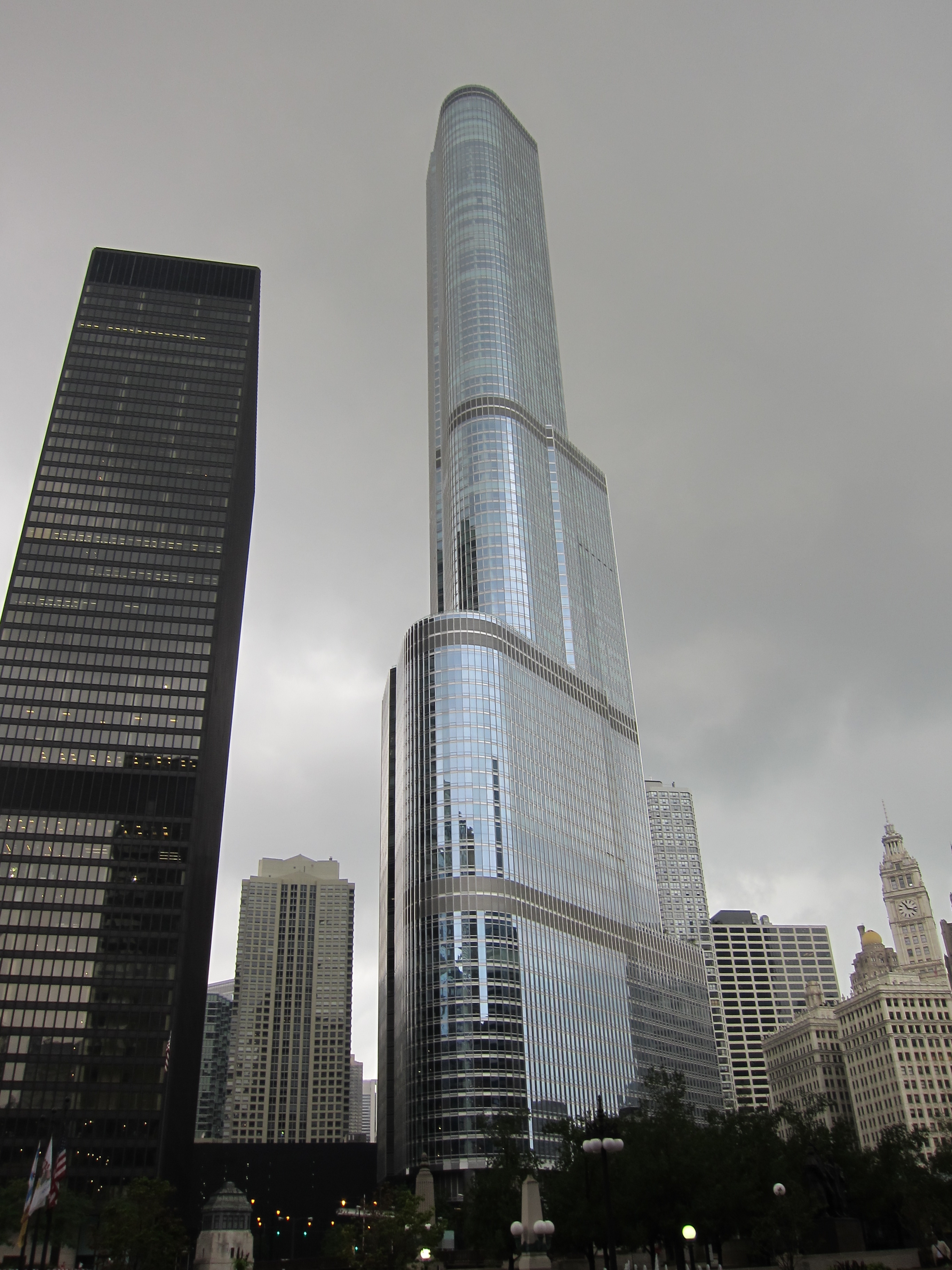
Erecting towers to celebrate your name and wealth is not narcissistic?

If you want to make a Wall Street wizard come in his pants, whisper the word “loophole” into his or her ear. Everything in the financial world is about exploitation of the rules. That’s how the Great Recession came about, you see. The Wall Street crowd exploited the system, but financial karma came back to bite them in the ass

But it won’t stop them from running away with the economy again. Filthy rich people and those who play fast with their money like to see themselves as heroes, you see. They reward themselves with all sorts of material trappings that far exceed the normal narcissisms of people with less money. That’s why you hear about people paying for million dollar toilets in their Wall Street offices. They think their shit doesn’t stink.

Yet they also think they are the ones who make America great. Wait, it’s worse than that. They think they are America. In their eyes, and in the columns of the Wall Street Journal, the rest of us are serfs, dupes and slaves.

But in 2007, the ruse of their greatness came to the brink of collapse. Giant financial firms went into default and bankruptcy. Yet even when threatened with default and criminal prosecution, the Wall Street crowd has refused to change their practices in any significant manner. The four big banks that were bailed out by American money have grown by 30% since 2007. This is the Big Hustle no one talks about. If you were to put a bumper sticker on the vehicles of their success it would say Too Big To Fail, And Nothing You Can Do About It.

People who live in a bubble of arrogance like that need daily affirmation that their approach to life is justified and moral. And that’s right where the Wall Street Journal comes in. It sees life through an exclusively conservative lens that tells it constituents (yes, that is the proper term) that their actions are okay.

The WSJ derides market controls that keep the risky behavior of its constituents in check. It regards protection of our resources and environment as comparatively petty problems in comparison to stroking the backs of those who read the WSJ to confirm their own selfish worldviews.

The worldview of the Wall Street Journal is far more narcissistic than any other worldview on the planet. The values it has come to espouse and support are hollow and devastating to the nation (and the planet) and its best interests. When people question

Tarsnakes

Tarsnakes

those values, they are branded socialist or un-American. But the socialism of Wall Street is corporate welfare. There is no difference. No sustainable separation in philosophy between money returned to people in retirement through savings insurance programs like Social Security and money given upfront to corporations to incentivize their growth. That is the tarsnake of modern economics. You have to invest money back into society somehow. You cannot irrevocably extract it and expect an economy to thrive. Yet that is what Wall Street seems to support. That those who “earn it” should get to keep it even when their ability to do so it both directly and indirectly supported by the society and nation as a whole.

When President Barack Obama said, “You did not build that,” he was referring to the dynamic in full context that says success is always  dependent on the hard work of others, along with the resources you leverage to make yourself successful.

But conservatives used that comment out of context to brand Obama as anti-business. That tactic outlines the morally bankrupt manner in which conservatism has evolved to become a major detraction to the success of America as a nation.

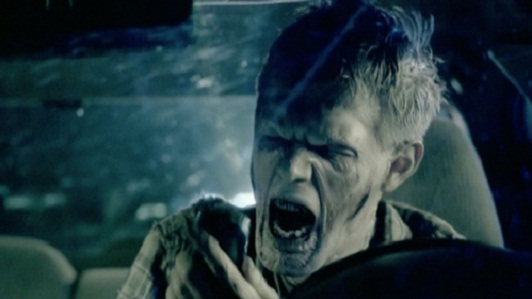
Are Wall Street zombies sucking the brains out of America?

Are Wall Street zombies sucking the brains out of America?

Conservatism as a social movement embraces contradictory aims, espousing personal autonomy while preaching about government control of moral issues. It also runs off at the mouth about individual fiscal responsibility while supporting what amounts to a giant gambling racket on Wall Street. The actions of its constituents cost Americans trillions of dollars. The Presidents the WSJ supports continually invest in war and fail to invest in education. It’s a worldview spiraling downward in a maelstrom of self-absorption.

That is who you write for, Chad Stafko. So you’d best think again before criticizing the running community for being narcissistic. Conservatism is stumbling along like a marathon consisting entirely of brain-dead zombies spouting platitudes like “Let the Market Decide” and “The Job Creators are Holy.”

They’re running after the rest of us to empty our wallets and eat our brains. Maybe that’s why there are so many more runners on the streets. We’re trying to get in shape to stay away from Wall Street Zombies like you, Chad.

WeRunandRideLogo

Posted in Tarsnakes, We Run and Ride Every Day | Leave a comment

Running and Riding back to the Key of C

By Christopher Cudworth

The Ibanez guitar is not my favorite (the Martin my daughter owns is better) but it has served me well as an instrument of mostly personal expression. As one associate put it, “I’m not a guitarist. I play songs.”

Even that humble aspiration of playing songs on the guitar is now weeks or months away thanks to an apparently necessary surgery on the middle finger of my left hand.

Introductions

It all started with a sliver that guided some sort of infectious microbe into the heart of my middle finger and turned the joint septic. First the convenient care center took a look and then a hand surgeon followed by a doctor of infectious diseases. Initial treatment with oral antibiotics failed, and that meant surgery where they knocked me out and laid open the finger like a beached whale.

Infections

The war going on inside my finger was something unimaginable. To further stoke the imagination, I stumbled on this bit of information from a scientific article titled “Can organisms evolve the ability to evolve?” The article proposes that infectious disease organisms are always seeking a leg up, as it were, on our body’s defenses. It’s a subtle game of cat and mouse:

Like all infectious microbes, B. burgdorferi make proteins that appear on their surfaces. To fight off infection, the immune system learns to recognize these proteins, latch onto them, and kill off B. burgdorferi cells. In a counter-move, B. burgdorferi sometimes changes its surface proteins, a feat that requires it to change its very DNA. Luckily, B. burgdorferi bacteria often carry a bunch of unused DNA, called cassettes, that are able to quickly become working DNA, offering instructions for making different surface proteins that are unrecognizable to the infectee’s immune system. Sneaky!

As my finger swelled it became so painful it would not bend. Then the surgeon’s office put splints on it. Now the finger was a numb, sore digit worth little more than a few keystrokes on the QWERTY board. I forced them to set the splint back far enough so I could type.

Infusions

Then came three solid weeks of self-administered antibiotic infusion. 3 hours a night at one point. Lying there on the couch with a drip bag hanging from the metal stand.

The finger became the focus of all my being. The 3-hour infusions required all my time in the evening. The PICC line in my arm prevented me from running or riding my bike. Doctor’s orders were to prevent sweat from building up beneath the clear bandage. “PICC line infections are really serious,” the nurses warned me. “Because they go right near the heart.”

Great, I thought.

Inflections

No longer was I in control of Chris in the Key of C. I could not run or ride, and could barely even type for my work, much less play the guitar for fun.

Yet I knew enough not to get miserable about it. A depressed person is not as likely to heal as well. That is my belief, anyway.

So I sank into the sofa with the remote and the dog by my side whilst watching both the TV and the IV.

Inward reflections

Finally the regimen let up when the infectious disease doctor actually ramped up the medicine to something stronger. That inch-long injection of yellowish fluid went straight into the PICC line. It messed with my innards though, and the doctor told me to be sure to eat probiotics like yogurt to keep a balance of good bacteria with bad.

I lay awake one night listening to my intestines and stomach gurgling as the food got liquefied. Something was definitely out of whack. But you keep on with the regimen because that is what is supposed to heal you.

Intentions

Finally the weeks wore down and the stitches in the finger came out. Then the PICC line. Now the scabs are peeled from my finger but the digit is still stiff, numb and thick. It’s going to take a while to get back to the Key of C. I’m just an ordinary player, but sometimes the extraordinary circumstances of life remind you how good it can be to be ordinary.


WeRunandRideLogo


Posted in We Run and Ride Every Day | Tagged , , , , , , , , , , , , , | Leave a comment

No matter how fast you run or ride, the weather always wins

By Christopher Cudworth On the way to work last Friday morning the voice on the other end of the cell phone call said “Oh my God, what’s going on outside?” I envisioned a traffic accident. Maybe a cat fight. Then she spoke up again. “Oh, it’s hailing.”

Weather keeps you honest. It's like wrestling with God.
Weather keeps you honest. It’s like wrestling with God.

Hail. Not what you want to hear when you’re driving a car. Hail damage can ruin a new car or even total an old one if you really admit the truth. Hail is the hardass version of snow. It usually pours down out of the sky ahead of a rainstorm backed by a cold front. Sometimes hail piles up but other times it bounces off the ground and melts in a minute or two. golfballhailYou hear the term “golf ball sized hail” and find it hard to imagine. Perhaps this video will help, which shows the giant hail that hit Nocona, Texas in 2009. No kidding? That stuff could knock you out. Dent your car deeply. If you were on your bike, there’d be no way to ride the streets with that sized hail littering the road. Even running would be difficult. Hell, walking might be tough.

Oh hell it’s hail

As a course marshal for a cycling race two years ago, I was standing in an intersection during a CAT 3 criterium in a residential neighborhood when a storm blew in. The riders were about 10 minutes into the race and breaks were starting to form when the skies opened up with rain. Water immediately began pouring downhill toward the intersection where I stood.  It washed over my shoes and forced the cyclists to whale their wheels through deep streams. Rooster tails of water flew up behind the rear tires but the racers kept on going. Suddenly a shift of cold wind came along and streaks of hail started to mix with the rain. The hail grew larger and more intense. It bounced loudly off the lid of my baseball cap and even more loudly off the helmets of the riders. Now the streets were rivers and the  hail floated along like debris swept away in a tsunami. The requisite EMT gal in her blue jacket and red shoulder patch came along to chase me off the road. “The race is being stopped,” she told me. “Go somewhere safer.” So I went and stood under a tree. I know. That’s not what you do if there is a storm. But I was so wet I was convinced the lightning could not tell me from an animate clump of dirt. So there I stood under a maple tree listening to the hail rip through the fat leaves. The EMT woman shot me a disgusted look. “You’ll get killed there,” she said. But I didn’t. I was invisible, you see. So wet I did not exist apart from nature.

Hail damagecycling_rain_tdf09

After 5 minutes the storm stopped. Bike riders were pulled over to the side of the course with their expensive rigs held between their legs. They looked like victims of a chain accident on the expressway, perched under trees with their bright kits shining with moisture. Most were picking away grit and leaves from the spokes and sprockets, cables and brakes.

Birds of a feather

As a longtime birder I also could not help notice the resemblance between these cyclists and a flock of birds preening themselves after a spring shower. 20 minutes later the race began again. There was some contention about who should be allowed to start where. A group of four riders had definitely built a lead by that point in the race, 23 minutes into a 40-minute +2 lap event. A race halted is an object of broken beauty. The original momentum and all the cumulative fatigue of the first 23 minutes were now gone. The race organizers attempted to spot the lead riders the same distance they had earned in the first go-round. The rest of the riders stood in a sodden clump at the starting line. In the distance, the dark cloud receding to the south looked smug. It had done its work. My course marshal shift was over however, and I left the race not knowing how it would proceed. The winner that day was the weather.

Velominati Rule #9 Despite the knowledge that the weather will always win, some of us are stubborn and go out to run and ride even on the worst of days. While not a strict believer in everything you find in The Rules on Velominati, Rule #9 holds true. “If you are out riding in bad weather, it means you are a badass. Period.”

It goes on to describe why: “Fair-weather riding is a luxury reserved for Sunday afternoons and wide boulevards. Those who ride in foul weather – be it cold, wet, or inordinately hot – are members of a special club of riders who, on the morning of a big ride, pull back the curtain to check the weather and, upon seeing rain falling from the skies, allow a wry smile to spread across their face. This is a rider who loves the work.”
Running and riding through hail and hell, high water and heat.
The same holds true for runners who “love their work.” Having run during the hurricane rain of 5 or 6 years ago when the drop(lets) were so big they hurt your skin, I can attest to the joys of having enough stupid to run in really bad weather. And having also run in cold as deep at -27 degrees and heat as high as 104 degrees fahrenheit, I love the thought of facing extremes. They build character. They make you feel alive even though they can kill you. They really can. I have run and cycled through hailstorms and taken the mountain bike out on snowy days to beat around and get soaked from the inside out. Then you’re aching for a hot chocolate and a fire. You walk in the door and the Family looks at you like you’re nuts. Even the dog runs and hides.
But you do these things because…04-jacob-wrestling
They make you feel. That’s the important thing. Life without feeling is not worth living. Even if you know the weather will always win, you must engage the invisible and visible beast of weather because it is like wrestling an angel, or God if you must. If you don’t do it, God might not respect you. God might think you’re a weakass not worth his (or her, as it were) time. So dig this: All of creation awaits your response. Your insanity. Your call to challenge the Lord on his own terms. Go fight the weather. Wrestle with the angel of the storm. Get wet. Get cold. Get out there and try to beat the weather. It’s a Holy endeavor.WeRunandRideLogo
Posted in We Run and Ride Every Day | Tagged , , , , , , , , , , , , , , , | Leave a comment

Orange you glad your appetites have grown up, or have they?

By Christopher Cudworth

CircuspeanutsorangeI don’t really like to talk about the Great Marshmallow Peanut Incident of 7 Years Old, but for the sake of journalism the events will be related here.

As a young kid with a Sweet Tooth the size of my head, it was impossible to resist any opportunity to buy and eat candy. Perhaps you can relate?

One summer day I chanced upon an errant dollar or two in change on my parent’s dresser. Two bucks was a Gold Mine in my youth. You could buy a lot of candy with that much money.

The Little Store

In fact there was a Candy Store less than a quarter mile from my house. All I had to do was cross the Death Trap of Route 222 south of Lancaster, Pennsylvania and walk through the driveway of a friend whose parents ran a Venetian blind business and arrive at the small business we called The Little Store.

They had two full counters of candy 4 tiers deep. I’m sure they had bread and other things that human beings should actually eat, but for us kids, the only thing that mattered was The Candy.

On a typical day with a quarter or two in my pocket there would be Smarties or Sweet Tarts, string licorice and Necco Wafers to bring home. The Little Store was a Godsend in terms of Candy Nirvana. Oh yeah, and baseball cards.

The Big Orange Appetite

But for some reason on a weekday in the middle of summer my little Candy Mind decided to go the Extra Mile down to the Fruit Stand where I knew they sold larger bags of candy. The walk to the fruit stand was not exactly safe for a little kid, but for some reason I always knew how to stay out of harm’s way when it came to being on the road alongside cars. That would come in handy as I aged and took up running and riding. But at 7 or 8 years old all I knew was to keep my skinny little butt well outside the white line.

So I walked along the narrow shoulder of Route 222 with my eye on the fruit stand a mile away. It shimmered in the heat. But I knew what awaited me there.

crush-040130Orange Crush

It was hot outside and as I passed the Venetian Blind factory on my right a longing for an Orange Crush came over me because my friend Lynn Wagner always pulled them out of the big yellow case where they kept the soda pop and handed it to me like it was Gold In a Bottle. Which it was, of course.

But like Ulysses, I made it past that temptation and kept walking in my Red Ball Jets onward, past the road that led to the Little Store and on to the Fruit Market.

The Old Mill

The road dipped low as it passed over Mill Creek, a tepid, brown little waterway that tumbled over a tall damn where an old mill once operated. The old mill building still stood with its intricate stonework and aged wood walls. At that age I did not know what mills actually did. All I knew about that mill and its dam was that sunfish congregated by the dozens in the water below. We once caught 50 fish in one morning.

100 yards past the old mill was the Fruit Market. Piled high in the racks were recently harvested cantaloupes brought to market from the fields of farmers in Lancaster County. Fruit flies buzzed about as I walked to the end of the bins where a candy mart lay.

orangepeanuts

Orange Marshmallow Peanuts

I knew what I was there for. The giant bag of Orange Marshmallow Peanuts was calling my name. I picked up the bag, paid at the counter and immediately pulled apart the top of the plastic to grab the sweet orange marshmallow peanuts inside.

One after the other I ate. Some I compressed between my thumbs and ate them like little slabs of salami. Others I bit in half and watched the compressed end ease back into shape. This candy was like sex, only I was too young to know it at the time. It went on like that as I made my way back home. Peanut after marshmallow peanut eased down my gullet in bites and gulps.

Orange insides

And then it started. The queasy feeling at the base of my stomach that told me there was too much sugar and starch and stretchy squeezy marshmallow now resting in the pit of my gut. It suddenly felt very hot outside. Humidity pressed in on my head for the sun had truly risen in the sky and was beating down on the black asphalt of Route 222. On I walked, still gulping peanuts because the appetite was now too intense to abate all on its own.

nopeanutsIt was comic, of course. A dumb kid consumed with a sick feeling from the inside. Half the bag of peanuts was now gone and there was half a mile to walk home. Finally I rolled the end of the bag up in my fist and leaned forward in a faster clip toward home. The summer heat spun around my sweaty head and it took real endurance to make it home. Somehow I kept going despite feeling like I was about to throw up any minute.

It all worked out fine. I went home and curled up on my bed for a couple hours until the horridly sweet taste went out of the back of my throat and the sick feeling in the base of my gut went away. I swore off marshmallow peanuts forever, but polished off the rest of the bag later in the week anyway.

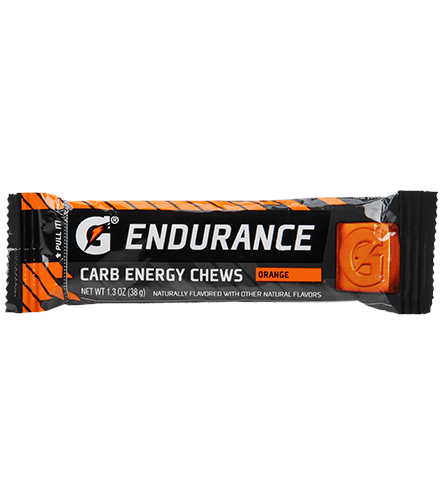
Gatorade endurancechews

Orange you glad you’re grown up? 

The Great Peanut Marshmallow Incident still has significance for me every time I open one of those candy-like sweet athletic booster packages like Gatorade Endurance Carb Energy Chews. The package says “Consume Shortly Before and During Training and Racing” but I will admit to eating a few of them while driving home from work the other night.

That’s the tarsnake of energy sweets.

Who can resist them. They’re squishy and chewy and their texture has a slightly sugar-jellyish tasty treat surface that makes you want to eat one after the other.

Perhaps they’re better for you than Marshmallow Peanuts but who knows? The ingredients as listed are Corn Syrup, Sugar, isomaltulose, carrageenan, citric acid, dextrose, sodium citrate, potassium citrate, natural flavor and a bunch of chemical-sounding names that mean nothing to the average person

All they’re lacking is some marks on the top and the shape of a peanut. Then they’d be perfect, in my opinion. Cause they taste good. In moderation.

WeRunandRideLogo

Posted in Tarsnakes, We Run and Ride Every Day | Tagged , , , , , , , , , , , , , | Leave a comment

Friends can’t all be as cool as those of us who run and ride (ha ha)

By Christopher Cudworth

There is more than One Way to look at what we do.

There is more than One Way to look at what we do.

Among the many friends you make over a lifetime, some share your interests keenly while others regard your activities with a degree of skepticism. Yet they are still friends.

It is particularly true in the fields of distance running and cycling that your social network may not understand your endurance pursuits. But relax, that’s a good thing. We need friends who share our interests in order to share our activities, yet we also need friends who think we’re nuts for doing what we do. It keeps our obsessions in perspective.

Limitless quips

In the work world it is increasingly common to find others who share your workout interests. Some office buddies even hit the gym together or play hoops.

Recently it has been proposed that running is the “new golf” when it comes to corporate bonding. So much for the friendly foot wedge to get your boss or client out of a tough spot in the rough on a par 5.

Yet there are always people who can’t stand the idea of running and riding. “Ugh, running!” you’ll hear them say. “The only place I run is to the fridge for a beer.”

Okay, you tell yourself. I guess I won’t tell them I just broke 40:00 for 10k. It won’t mean much to someone who doesn’t care and can’t possibly know what your PR really means.

When people ask about cycling they often begin with a qualifier such as, “I like to ride my bike too. I just rode up to (insert name of town) and back. I think it was 6 miles, isn’t it?”

You nod and confirm the distance, only to hear them ask. “Have you ever ridden that far?”

“Well,” you admit, knowing what’s about to come next. “I rode 75 miles on Saturday and 45 miles on Sunday this weekend.”

Blank stare for a moment.

“In a day?” they ask? “You rode 75 miles in one day.” Flat voice.

“I do that every weekend, pretty much,” you reply.

More flat voice. “You’re nuts. I don’t drive that far in a weekend.”

Distancing yourself

Yes, these exchanges can be awkward. They can create a strange feeling of distance between you and friends who do not run or ride. But the best thing you can do is offer your interests like an olive branch. Try to remember something they told you about their interests. Perhaps it’s playing in a rock band, in which case you say, “Hey, don’t you guys practice for four hours every weekend with your band? To me, that’s the same thing as my riding. It’s something you enjoy.”

“Yeah,” they’ll usually say. “That is. I love my band. I could play all night.”

“I bet you could,” you smile and say. “I guess we all have something we enjoy.”

“Not me,” your friend might say. “I could never enjoy riding like you do. My ass would hurt too much.”

And it’s best to leave it at that. Because once you start talking about asses the conversation can go in no good directions. Best to let the conversation settle like clouds of dirt in a puddle. They may never understand what you do, but you don’t need them to. Friends are friends for different reasons.

They can’t all be cool like those of us who run and ride.

WeRunandRideLogo


Posted in We Run and Ride Every Day | Tagged , , , , , , , | Leave a comment

Running parallel with tradition of North Central College

By Christopher Cudworth

At times one must accept that personal history is both a direct and parallel consequence of having lived. We all construct narratives around who we are and how we got here. As runners, we create an additional layer of history through the extra effort given to sports.Yet by necessity some of that history is embraced and some of it disregarded, if not discarded altogether.

Running under the radar

These are emotions many of us suppress. It does no real good to lament the past or even wonder what might have been. One small choice that seems inconsequential at the time can change your entire future. But you never know that. It’s like that episode when Homer Simpson goes back in time and steps on a mosquito in the Jurassic Age. When he flips back to the present it’s raining donuts outside, but he doesn’t know it because he’s no smarter for the rate of evolution that has taken place around him. The world’s evolution is no guarantee of our own. It’s like we’re running under the radar. Making it up as we go along.

Inside looks

That is how I felt standing in the hallway of the field house at North Central College in Naperville. I was there to support the woman I’m dating as she ran the inaugural Naperville half marathon. She’d trained well with a pulse rate in the mid-40s and blood pressure at 115/78 or some nice smooth measurement. My own training has been interrupted by the weird joint infection, surgery and recovery. So I was there as the support crew. And all good with that.

It was chilly though, and we stood with hundreds of others inside a long corridor next to the football field, keeping warm on a 32-degree morning.

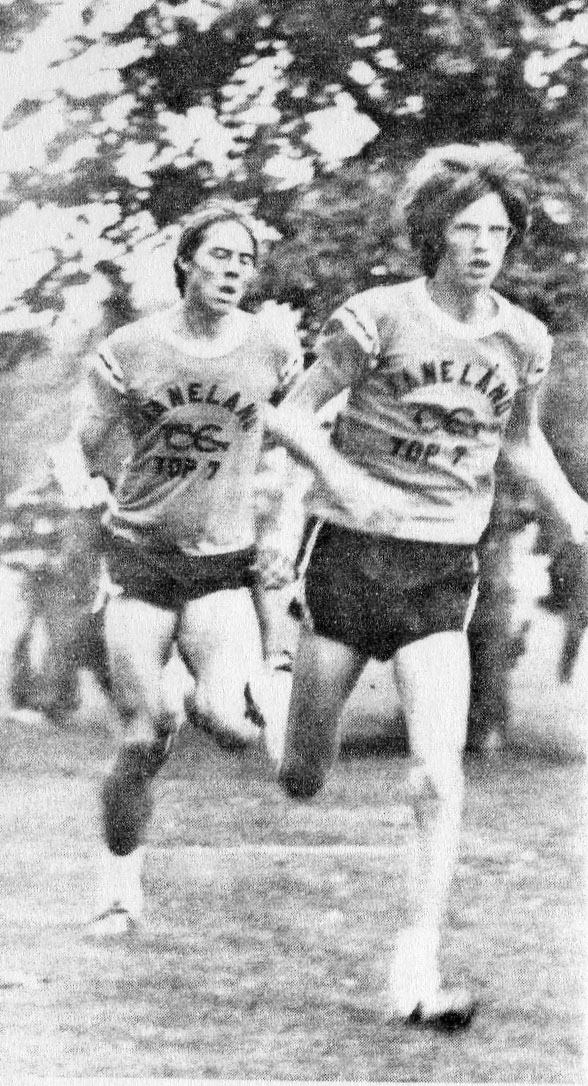
photoAs she drifted over to talk to a friend my attention turned to the photos of North Central Cross Country teams on the wall. It happened that the spot where we were standing aligned with the very era in which I competed for Luther College in cross-country. Our team finished 2nd to North Central College at the national in 1978. For us it was an incredible triumph to finish that well after placing 5th in regionals just a week before. We peaked at the right time, in other words. But for North Central College, winning the national meet that year was yet another example of the quality of the nation’s very best Division III College cross country program. Coach Al Carius was eventually named Coach of the Century in the NCAA for his incredible ability to turn average runners into great ones.

Crossed wires

Al Carius once sent me a recruiting letter. I was the top runner for St. Charles High School. Having not gotten many recruiting letters it made an impression on me. However my other impression of North Central College at the time was not so positive. That year the cross-country regionals had been held on the North Central campus. Feeling the urge to go to the bathroom just before the race, I ran to the field house hoping for a quiet stall. Instead what I encountered was a line of perhaps 20 runners waiting to take a crap or a whiz at a lonesome toilet sitting on an open floor. It seemed barbaric. Hell, it was barbaric.

And I was horrified. There as no way a guy with a shy bladder was going to make anything happen in that circumstance. It stunned me that all those runners were willing to make a go of it in that circumstance. It made me feel weak and strange at the time.

So let’s face it. At that time in the late 1970s North Central College was not the world-class small school it is today. As a 17-year-old runner I could see neither the future of that college or even appreciate the quality of its running program. All I knew is that I didn’t want to take a shit at an open toilet for four straight years.

Sure, it was a naive judgment. But can you blame me at the time? Really? It’s all I knew of the place. At 17, sometimes that how decisions are made.

Parallel lives

So I attended Luther College, and that experience holds many treasured memories. Yet when I looked at that photo of the North Central guys against whom I competed in college and beyond, on the road racing circuit many years following graduation, it is almost like I knew those North Central guys like teammates. In many cases that become literally true. If that seems strange, then you don’t understand the bonds forged by competition, or how similar the programs at small colleges can be. And how lives converge sometimes.

Running into the present

While watching the half marathon that morning a group of current North Central cross-country guys ran up to watch. You could see the quality of their strides and knew they were each capable of jumping into the half marathon that day and winning it.

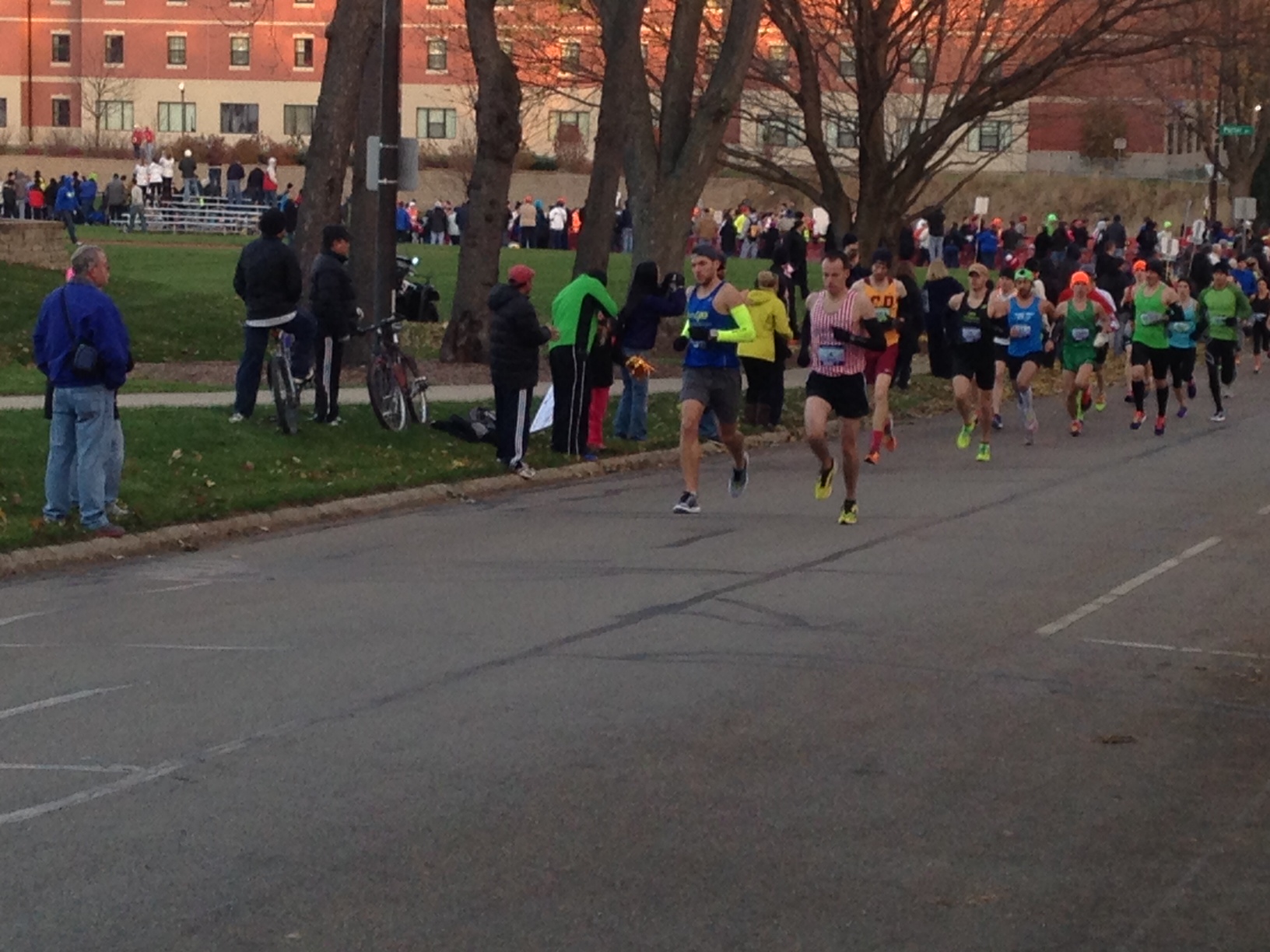
A North Central Track Club member leads out the 2013 Naperville Half Marathon

A North Central Track Club member leads out the 2013 Naperville Half Marathon

Probably easily. The winner ran 1:14 or thereabouts, which is credible, but hardly the work of an elite or sub-elite runner. I can remember running half marathon times in the mid 1:10s and finishing between 10th and 20th many of those races That was the early 1980s when road race competition was at its keenest.

Truth be told, nine out of 10 of those races seemed to be won by former North Central College guys. The program pumped out competitive runners with verve and enthusiasm for running. No matter how fit you were, you knew you were in for a tough race if you saw the vertical red pinstripes on the starting line.

North Central Track Club

For a while I trained with the North Central College Track Club, a group loosely affiliated with the college. We ran intervals on the new all-weather track. I ran my PR 14:45 5K on that track at midnight during an All-Comers meet, and got 14th place because so many other faster runners were prepping for nationals or other competitions that night. That’s North Central College in a nutshell. Competition for competition’s sake. I once watched one of their talented half milers throw on a pair of cutoff blue jean shorts and a set of borrowed spikes run a 1:52 half with no training per se. Crazy talent is a joy to behold. More guys were laughing than cheering at the insanity of it. That is what makes sport such a brilliant part of life. Tradition is always part planning and part inanity. You need both to succeed in life.

The college now has world-class facilities and even an innovative dormitory built around a fitness center. The sleepy little college in what was formerly a sleepy little town of Naperville is an integral part of a community repeatedly recognized as one of the best places to live, work and study in Illinois. There are no more isolated toilets on campus. I can assure you of that.

Cinders and directions

But those of us around in the early days recall when that track was nothing but a ring of cinders. I’d raced in a dual meet on that campus against a Naperville Central High School rival and lost on the second loop around campus when I forgot to go straight instead of run the backstretch again, which added 200 yards to the course. Was it my fault that I lost the race that day, or should someone have been on the course to direct the lead runners on the proper path? Those are the types of questions that vex you in life. What is really your fault, and what is not? Would life have changed in significant ways had I won rather than taken second by two meters to a runner who did not have the sportsmanship to call ahead and yell, “Go straight!”

It’s a dog-eat-dog world. Some of us think it’s fine to sit on an open toilet and take a crap in front of 20 other runners. Others do not. Some of us think it’s a sportsmanlike thing to correct a runner off course even if it means losing the race.

Some of us wonder about these things and mull on the histories that might have been even though it is fruitless, in many respects, to dwell at all on the past.

Tradition revealed

Yet when I returned to the Fieldhouse corridor to warm up a little while waiting for the half-marathon to finish, two women were standing in front of the same pictures I’d noticed earlier. They turned to me and said, “It’s fascinating they have all these photos here. They’ve never taken them down. They go all the way down the hall.”

“Well,” I told them. “I know almost all the guys in this photo right here. And most of them in the photos next to them too. I competed against all of them in college and in road races. It’s nice these photos are here, don’t you think? It’s their tradition…”

They both smiled. “Yes,” they said. “It is.”

“And that coach, Al Carius? He’s still here. And many of the guys in these photos are coaching at high schools all over the Chicago area. They really give back to the sport. That’s part of their tradition too.

Personal connections

I pointed to one runner I knew that had competed against me in high school, then went to North Central College and ran 250 miles a week in training. “He’s the sweetest, most intense guy in the world,” I told them. “He was an All American in cross country. But he has a mental illness, and the signs were there showing even then. Those of us in the running community understood it, and tried to help when we could. It’s interesting that his head is bowed in this picture when everyone else is looking at the camera. Almost symbolic. He’s done his best in life. I see him occasionally.”

You can take that story or a thousand other stories of all the runners who have come through the North Central program over the years. Stories of ascendance. Stories of challenge and triumph. They are all parallel lives.

Because it’s true: We are all running through this life together. You can put on vertical red stripes and call yourself a Cardinal, or wear Luther Blue. We’re really all on one team here on this earth. Running both to get ahead, and to stay in place. And once in a while, we stop to glance at a picture on the wall, and realize that it’s important to capture those moments when time stands still. Marking tradition.

We can admire that in others and even call it part of our own. That’s called unity, or community, as you choose. It runs parallel to our own realities whether we realize it or not sometimes.

WeRunandRideLogo

Posted in We Run and Ride Every Day | Tagged , , , , , , , , , | Leave a comment

How to avoid running or riding over your own self-esteem

By Christopher Cudworth 

Our early athletic pursuits can bring important boosts in self esteem. But there are risks.

Our early athletic pursuits can bring important boosts in self esteem. But there are risks.

As young athletes we grow up eager to impress our coaches, parents and friends. That habit can become addictive if you let it. Impressing others is fun and rewarding in its way, and our culture revels in celebrating the accomplishments of athletes from a very early age.

Self esteem is the method we use to value our own self worth. When we get into the habit of pursuing constant feedback on how we’re doing in sports it becomes a cycle where the athlete is not satisfied unless someone else tells them they have done well.

If that sounds familiar, you’re far from alone.

Self-esteem can be tricky business when it comes to sustaining motivation, especially when it comes to maintaining a sense of self-esteem outside of sports. If we depend too much on sports for our identity and our mission in life, where is the satisfaction in other pursuits?.

The consequences of self-esteem anchored too much in sports can have profound effects on any individual, especially when those forces converge with propensities for perfectionism.

Running away from success

One woman athlete at a Division III college became nationally ranked, taking All-American honors in track and cross country. The harder she trained, the more her goals became an obsession for her. Ultimately she did not feel fulfilled unless some sort of goal or challenge was on the line.

Even as her body thinned to a dangerously low level of body fat, she kept on training. Then one day during a big race she simply didn’t make the turn going past the lap line and ran right through the gate out of the stadium. She’d had enough. Her immense talent was the center of both her personality and self esteem but the burden of being so imbalanced toward that side of her personality had undermined the hope she felt toward the rest of her life. Something had to give.

Her response was that she chose not compete and temporarily dropped out of the sport. It took a couple years for her to return to casual and then competitive running.

Taking a World Class break

Year-round pursuit of sports can lead to burnout and frazzled self-esteem.

Year-round pursuit of sports can lead to burnout and frazzled self-esteem.

Similarly, world-class soccer player Landon Donovan took an extended break from his professional career last year. It was quite a risk to take time off, pursue some other interests and dedicate time to family. Yet soccer like running and riding can become a year-round pursuit. You can lose yourself in the game. But Donovan did come back with self-esteem intact and a new eagerness to play.

In the most confrontational of sports where one-on-one, mano a mano conflict occurs, having strong self-esteem can be a question of survival. Think back to the boxing match in which Roberto Duran threw up his hands in a “No Mas” gesture and you realize that the mistakes he’d made in lavishing himself in glory following the first defeat of Sugar Ray Leonard had dragged Duran’s self esteem away from the streets where he learned his toughness to the gutter where it temporarily washed away. Yet he too regained his self esteem even after his entire home country ostracized him.

Self esteem? No mas. 

Perhaps you’ve felt the same way at times in training or racing. You arrive at the Saturday morning group ride feeling stale and unmotivated. In the back of your mind are thoughts that you would rather be doing something else than chaining yourself to your bike for a 50 mile slog in the draft of people who don’t seem to care whether you hang on or not.

Those are moments when you should take your self esteem into account for a moment. Does it really matter if you make it through the group ride with the bunch one more week? Or should you take a break and fill your soul and self esteem with something else?

Dedicated to what? 

Self esteem is sometimes knowing when it's okay to put some things behind you.

Self esteem is sometimes knowing when it’s okay to put some things behind you.

Yes, training and racing takes dedication. You can’t quit if you don’t want to run and ride like shit. We all know that fact.

But there’s a part of you that needs to be protected through all your dedication and grit. It’s the real you inside the external you that competes and trains so hard. If you’re not careful, the “external you” can run or ride right over the “internal you” at times.

How do you know when to back off? Take a break? Get yourself back in order?

Here is a quick test of self-esteem measures to know whether you’re running yourself over in the process of trying to become the best athlete you can.

1.    Do you feel good about yourself even on days when you can’t run or ride?That’s one of the first measures of self-esteem in any category. A well-balanced person is one whose self-esteem is based on values as much as accomplishments or activities.

2.    Is your personality wrapped up too tightly in your sport? The athletes I’ve most admired in life are those whose athletic pursuits were a choice. Some of the best athletes are people for whom competition is an outlet for creativity and energy, not an input upon which they eternally feed for self-esteem. One national champion distance runner worked as a college janitor for a year before anyone on the staff learned of his other “identity,” and that was only because someone saw him running in the Olympic trials. Now that’s profound yet constructive humility.

3.    Can you share the spotlight? If you find yourself dominating social conversations to regale company with talk of training, racing or results, you might have a little self-esteem issue going on. Learn to listen more and talk less and you’ll likely find your self-esteem growing through the gains of others and the great friends you have.

4.    Are you seeking too much approval? Those of us who grew up with demanding parents can easily get in the habit of seeking approval from authority figures, and being petulant or angry when we don’t get what we want. If you find yourself jealous of other’s accomplishments or beating yourself up because someone is faster than you, makes more money or lives in a bigger house, your fragile self-esteem is at work.

To have the most fulfilling relationships in life, you need to be aware of your sources of self esteem. So take seriously the “relationship” you have with your sport and if you love it very much, treat both the sport and yourself with love, trust and respect, yet remembering that it is not the end of the world when everything doesn’t go your way. That’s part of living and your self-esteem should be able to stand up to the perils of both success and failure. That’s a healthy way to go through life.

WeRunandRideLogo

Posted in We Run and Ride Every Day | Tagged , , , , , , , , , | Leave a comment

An itch can be a real pain

By Christopher Cudworth

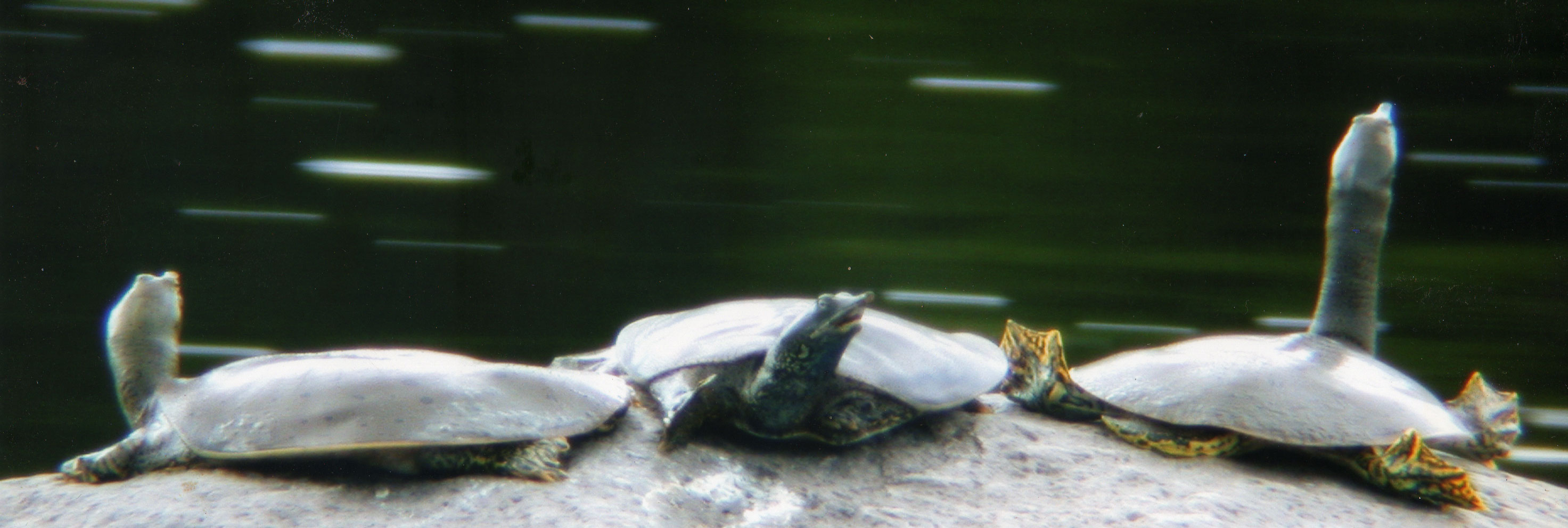
Imagine if you were a turtle and had an itch inside your shell. Good luck scratching that.

Imagine if you were a turtle and had an itch inside your shell. Good luck scratching that.

For all the hi-tech gear now on the market designed to protect the body from cold, wick sweat and heat and compress the muscles for greater performance, there are still moments in training and racing when the unthinkable happens. You get an itch

Itches are among the strangest sensations known to humankind. They can be pressing and painful or they can be ephemeral and unreachable. In either case an itch can be a real pain. Perhaps you know the feeling of an itch that can’t be scratched or won’t go away. You rub and claw but it keeps coming back.

Or, it’s an itch with a history…

Lance and his pants

A e

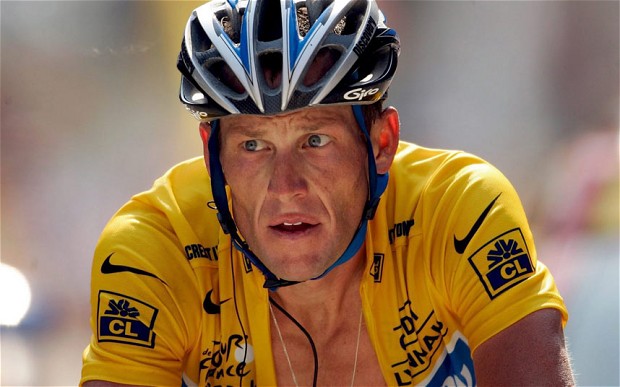
An itchy Lance would scratch his pants.

Cyclist Lance Armstrong (set aside the whole scandal for a moment, this is a story about itches, not drugs) had some kind of itch that seemed to crop up only during time trials. He’d be hammering along and suddenly something in the region of his left buttock and hip joint would start to itch him. He’d be piling along at 35 mph or whatever while reaching back to itch the side of his butt. It happened almost every time he got on his time trial bike. Lance got the itch. Perhaps it was a nerve pinched by the aggressive time trial position. Or perhaps he was signaling to drop a bag of oxygen-infused blood into his water bottle. We may never know.

But at least the itch Lance had was a publicly scratchable itch. Which is far, far better than an itch down “there.” That would have been quite the sight on global TV, the world’s best cyclist (however doped or not) standing up in the saddle to scratch his button hole. How would Phil Liggett and Paul Sherwin have handled that little scene? Talk about itching to win 7 Tours…

Special itches for bastards and bitches

NakedTruthOf course an itchy butt is just one of the many types of itches that can scratch your performance as you run or ride. Men have special itches. So do women. All it takes is a mistake in forgetting to wash your gear and you can wind up itching for a week or more from jock itch or something worse, crotch rot. Those types of itches can be a real pain.

An itch can be something smaller and still drive you nuts. No pun intended.

Every little thing…

All it takes is the itchy, scratching edge of a tag on the back of a shirt to drive you crazy. You slap it and rub it and still the itch comes back. Some people have been known to tear off garments in frustration if the itchiness will not abate. Have you been there? Done that? I know I have. Stopped completely. Turned off my stopwatch and carefully tore away the stupid tag on the back of a singlet because it was itched a spot between my shoulder blades. It simple had to go or I could not keep running.

When an itch is actually a pain

An itch can become a pain. There is actually an unofficial point where an acute itch moves over to a realm where you can no longer tell what it is. When that happens when you’re in motion, it can really throw off your rhythm.

A really severe itch can be distracting enough to undermine your performance in training or racing. Anything itchy in your running shorts can make cause you to repeatedly adjust the shorts and throw off your stride as you strive to contain the itchy sensation.

C’mon, you all know what a pain an itch can be. Just get a cast on your leg for that ankle problem and find out how frustrating it can be to have an itch on your calf that you can’t reach. You’ll jam anything down their to scratch it. Soda straws. Combs. The house cat. Lighter fluid and a match. Please God just stop the itching!

Itches you can’t avoid

CHP-ZombieWorse yet, if you have naturally itchy skin or suffer from allergies, there are situations where you know the itch will not go away any time soon.

On a bike that can mean 3-5 sold hours of solid, itchy misery. If you wear the wrong kit on a hot day, for example, the itch can build up around the fabric breaks and wear your skin into a raw rash or a saddle sore. There’s a fine line between an itch and a wound in many cases.

People sensitive to latex or other materials in their garments have been known to break out in itchy hives. Folding back the latex bands along the thighs and arms may help, but it may not.

Even washing your stuff in the wrong laundry detergent can turn a normally comfortable garment into an itchy torture device. And don’t tumble dry your performance tees or good lycra cycling kits. That can curl the fibers and turn them into what feels like fiberglass. Better to line dry anything that costs over $30.

Inside out itches

runhugThe ultimate itch is the itch that gets inside your body and vexes you outward. A female distance running teammate was once training with the men’s squad when she felt the urge to urinate. She pulled back, dropped her shorts and did her business in the ditch. But then she wiped with poison ivy. Two days later her entire body was covered in itching, oozing rashes. Yet she kept training and placed 3rd in the Chicago marathon in just under 3 hours. She also ran 2:56 in Grandma’s Marathon.

She sure showed determination running with that poison ivy . For weeks she ran with bandaged hands and layers of pink medicine all over her body. But when you have the itch to compete it can even surpass the itch to crawl away somewhere and die.

But it’s a fine line sometimes. A fine line indeed. May you never have the itch to cross it.

WeRunandRideLogo

Posted in We Run and Ride Every Day | Tagged , , , , , , , , , , , , , , | 1 Comment

Do you know why you run and ride?

By Christopher Cudworth

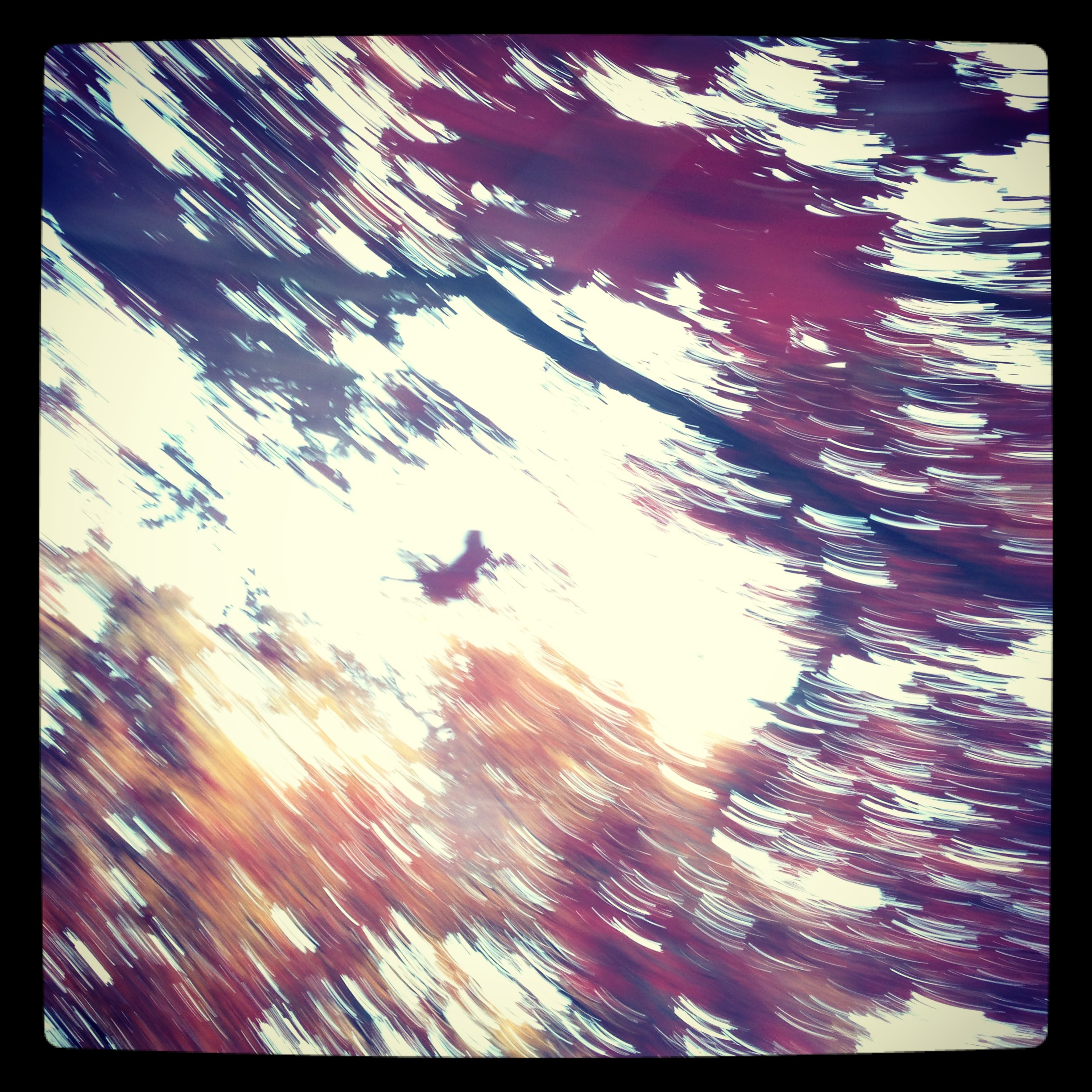
photo (1)

Photo by Christopher Cudworth

If you have not figured it out yet, it is movement that draws you to the road. To the trail. Down hills. Up hills. Through fields. Woods. Dreams. Keep moving.

As you move through the woods on a run or ride, trees meld into a fauvism of color and shapes. You put fixed thoughts behind you. The mind opens up. Sky blue or cloud gray comes down to greet you. You are moving. Alive. Spirited on in your own good way.

You are moving through time. Do you realize it? Time is a fixed object, each moment both an obstacle and a door. That makes it hard to move some days. Easier to escape on others. Then you get on a roll and all your runs and rides meld together. You are a painter with a wide canvas, choosing colors and shapes and brushes as you go. The world paints back, coating you with sweat or rain, snow or sleet, sun or invisible bits of pollen, dust and dirt. You shower off and begin again. A fresh palette.

On the bike on a clear summer day you look down and see the shining skin on your thighs. You are neither male nor female at the time. You are a cyclist. You ride. Not like the wind, but through it. With it. Against it. Beside it. Wind is movement. So are you.

And running. For all those body parts it is your feet that know the earth most intimately. You can lie naked and roll around and never know with the rest of your body what your feet already know. Hard earned knowledge. How to adjust to small hummocks. How to paw at dirt and trail and road for miles on end. Take the pounding and roll with it. Your feet take a lot, and they give back all those miles. You should thank your feet for movement. The rest of you. Moves with them.

You have figured some things out as you run and you ride. How your mind works. What it likes to do on the move. Where thoughts come from. Some arrive like birds, fluttering until you reach up and cup them, turn them around and see how they’re made. Birds. Thoughts.

Our dreams often fix us in one place, unable to run away.

Movement is life.

Other thoughts cover your face like spiderwebs laced with a dark core of worry in the center. You wipe them away and keep running. Shake your hands and arms, or stand up in the saddle and pedal the hill until the worry is tugged away by movement. Solutions emanate from will, and will comes from effort. Sometimes you define it. Sometimes it defines you.

You move from race to race and event to event asking “Why? Why do I do this?” The answers come from the faces of others who join you in that search for tangible thoughts and the will that goes with it. Their faces pull you along. Group rides. Long runs. Track workouts.

Then Coffee shops. Parking lots. Bars and restaurants. These are your peers. Your effort companions. Sometimes the only people you really seem to trust are those that keep moving like you. It seems like they know something too. Something you need to know.

Movement. The running movement. The cycling movement. You can feel it. Some take it to the pool as well. Then the lake as swell. Always there are challenges to keep moving. Moving. Moving.  Do you hear an echo? It is your thoughts and your mind. Reckoning with movement. Giving it a name. Mile. Marathon. Half marathon. 10K. 5K. 25K. Ultramarathon. Triathlon. Sprint triathlon. Olympic. Ironman.

Following movement comes rest. Recovery. Letting your thoughts meld in a different way. You have moved through the day in a hundred ways. Now it is time to rest. And dream about moving some more. Life is a moving experience.

WeRunandRideLogo

Posted in We Run and Ride Every Day | Tagged , , , , , , , , , , , , , , , , , , , , , , , , | Leave a comment