High expectations. Low drama.

Sue In AeroIn the weeks leading up to her Ironman Louisville event, my wife Sue was quite busy with her job. For one thing, she was out of town handling job responsibilities for a week. Then she got back with a day to spare and we rolled on down to Louisville. She performed well in the race despite some challenges from the elements, and we came back home thankful that all her training paid off.

Then she was back out on the job sites for her work for another week. We both know the responsibilities of our jobs and priorities and are grateful for them. When I have late-night meetings for my job, there is never any complaint on her part. In fact, she’s quite supportive and curious about what transpires at the community meetings I attend.

Support systems

It’s very helpful to have a support system like that. When things get super busy or even go awry as they sometimes do in this world, it certainly helps to be able to call a person you trust and talk it through. The same goes when things go well. It feels good to have someone to tell, “Hey I had a great run this morning!” Or a great swim, or ride. The measuring stick of emotions is often how we progress.

I’d describe our relationship as full of ‘high expectations and low drama.’ Sue tends to be a ‘steady customer.’ She’s fairly low drama.
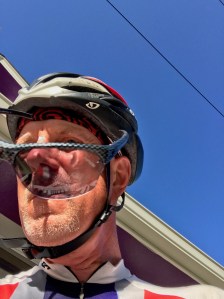
LUW2I’m not exactly “high drama” but there are times when the drama gets going a little bit in my own head. It used to be much worse. But one of the things I find helpful in my own mental construct is to analyze the source and nature of my thoughts. That’s been part of a long developmental process going way back to when I was thirty.  That’s when I first started figuring out the chemistry and behavior of my brain. I knew there were some things that could use ‘fixing,’ and took it upon myself to figure them out. Some were simple, but others took years.

Getting to know your own brain is something I encourage you to do it no matter what age you are. Start by looking at your own journals or your life patterns with some degree of objectivity. Study where your thoughts come from. These patterns may go way, way back. Many of us are fine for the most part, but fall into negative patterns when we encounter people from our past that either had control over us, or not enough. These might be parents or friends or former spouses. If you have to, write all that shit down. Study it. Ask yourself, “Why do I respond to these people the way I do?”

Actualizing

To become fully (or at least mostly) actualized as a positively functioning adult requires work whether we do it ourselves or get some assistance. That help may come from friends, a trusted pastor or a professional therapist. In any case, it’s worth it. You’ve only got this life to life. Why keep fucking it up? Or if you’re already doing well, why not shoot for even more? Find a mentor. An inspiration. Or trust yourself to fall in love, and work to stay there.

It all comes down to learning to trust yourself and your thoughts. That’s what actualizing yourself as a human being really means.

Know that there is a pattern among people that have anxiety (either chronic or temporary) to let certain kinds of thoughts dominate the inner dialogue. Learning to recognize adverse or self-absorbed thought patterns can help enormously in managing states of anxiety and depression. Granted, that alone may not offer a total cure for anxiety. It is just as true for someone with an outsized ego who is subject to self-absorption, the thought pattern that puts your wants in front of others all the time.

In all cases, detecting and managing mental patterns can give one a better sense of control. And you can actualize. To become actual. Authentic to yourself and others. That’s the goal.

Less drama

The first product of actualization is the realization there is a lot less drama in your life. Think about it. When you’re going to interview for a job, it is important to focus on what you can do for the organization in order to impress them.

Thus the fears that reside in the back of your mind need to be compartmentalized. If there are doubts, it is important to write them down. Build perspective. Figure out why they are occurring. Why are these old habits or beliefs of difficult past circumstances vexing you? Are they REALLY YOU? Or are you just allowing them to own you.

In some ways, we need to treat every day as if we were interviewing for the job of living. It’s just like getting a job, and it pays to ask: “What do I want from life? What do I have to offer in return?”

The genius inventor Buckminster Fuller once wrote, about himself: “You do not belong to you. You belong to the universe.” By addressing himself in the form of higher expectations, he reduced the petty dramas we all invent for ourselves.

Conquering fears

That brand of higher expectations can turn you into a better athlete as well. Instead of viewing your competitors as something holding you back, you become “part of their universe” and allow them to pull you along to better performances. Fear is resolved, or even removed from the equation.

Because when you’ve determined a goal and start to feel doubts, typically they revolve around two basic things. Fear of failure. And fear of success. 

Types of fear
Plastic Turtle.pngThose seem like two very different things, but the commonality remains fear. To be afraid to fail means you are actually afraid to try in the event that you might not live up to the expectations of others, or yourself. 

To be afraid to succeed means you’re scared to be held to a new and more difficult standard once you have achieved your goals. How will you live up to them from then on? Can you truly keep up the quality, the effort, the concentration?

To conquer fear of success or fear of failure requires healthy management of expectations. How do you expect to get where you want to go? Have you done the training? Have you replicated the pain and effort of racing in order to understand WHAT TO EXPECT when you face similar feelings in competition?

That is how we prepare ourselves for anything. That’s reason why we rehearse questions in our mind before doing a job interview is to be prepared and anticipate the expectations of the interview. I can tell you that I once failed miserably to answer a question during a job interview, but gathered myself and when the opportunity presented itself later on in the discussion, brought the topic back up, apologized for my earlier choke and gave a very rational answer that made a good impression on them. Just because you failed temporarily does not mean you have lost.

It holds true when giving a speech or doing anything that creates fear inside us. We must learn how to manage our expectations and apply experience to match the need of the day.

High expectations

Those of us with high expectations learn to talk to ourselves in a constructive fashion. As an athlete for many years, I had to learn how to control inner dialogue in advance of competition. Sometimes that process would fail, or my training journal would fill up with apprehensions and doubts in advance of an important race. I can look back at those periods and see clearly where the problems were. At the time though, it all seemed like a wall of impossibilities.

There were also many times when my head was in the right place. I think in particular of an afternoon before a cross country race in high school. I spent the hours leading up to the race reading a transcendental novel called “The Peregrine” about a wayfarer in Scotland who followed falcons to the literal end of the earth. The book was so inspiringly constructed that my mind just relaxed. I had literally no worries going into that important race. I won that day against two runners from a team that had not lost a dual meet in 33 consecutive meets.

It would be wonderful to be that inspired all the time. Some people seem to have that capacity. But who knows if that level of insight is sustainable? Sometimes the brain just needs to shut down. “All done,” the mind says on a Sunday afternoon when the projects just seem too hard to accomplish. Thus a “day of rest” makes a ton of sense too. Time to let the mind relax. Wander. Absorb into dusk. That is not a failure. That is wholesome.

Expectations

Sue at ChurchillBut when my wife walked through the door last night after being away for two non-consecutive weeks, I was grateful to see her, but not to the point of false drama. She visited with her children and got her stuff put away. Finally, I stood next to her in the kitchen after she had changed out of her travel clothes. She had on a pair of jeans that I really love, and she was dining on the salmon I’d grilled while sharing photos from her phone. They were pictures of the projects on which she’d worked so hard. I loved the quiet sense of pride, because she’d sacrificed time all day and night to make it happen.

In a quiet moment I put a hand on her hip and it happened to brush the warm skin of her back. It was so good to have her home. To hear her voice. To see the flash in her eyes when something struck her funny. Then the kitties all came calling. All four of them, two of her own and two from her daughter. They sidled up to her stretching and purring. AS she petted little Bennie, the rescue cat with orange and white coat, she purred back: “Do you know me?” she asked.

The richness of life
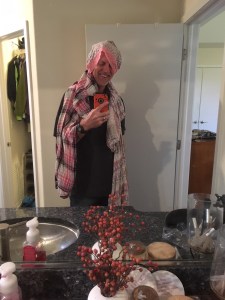
Sorting LaundryLife is so rich at times, and so simple. That’s what makes it good. I’m a silly man at times, and prone to romantic streaks that border on excessive earnestness. She puts up with me in my goofy moods, and I think she actually likes it. While she was out of town, I kidded with her about how much I missed her by throwing some of her laundry over my head and shoulders and sent her a photo. “Nah, I don’t miss you at all,” I jibed.

I’d also sent her video caps of the romantic scenes between Claire and Jamie in the show Outlander. I made sure to capture his amazing pecs and arms for her. there is nothing wrong with a woman appreciating the sight of a handsome man. We can watch the real thing now that she’s back home.

And this morning she woke to hop on her bike on the trainer. It was a chance for her to get back in a bit of homemade rhythm after those two weeks away. We all have a way of grounding ourselves after time spent away in hotel rooms or traveling. She went downstairs for a spin and emerged from the shower later with a wet head of hair. “That felt good,” she told me.

High expectations. Low drama. It works for us.


Posted in Christopher Cudworth, training, tri-bikes, triathlete, triathlon, triathlons, we run and ride, We Run and Ride Every Day, werunandride | Tagged , , | Leave a comment

Is Ironman a religion?

Religion:
1. a personal set or institutionalized system of religious attitudes, beliefs, and practices
2. archaic :scrupulous conformity : conscientiousness
3. a cause, principle, or system of beliefs held to with ardor and faith
Bowed in IM Prayer.pngDon’t panic, triathletes. I’m not about to criticize Ironman as a cult or anything else. It is a brand name, effectively marketed, that many people admire. But it is also something more. And it’s worth thinking about it.
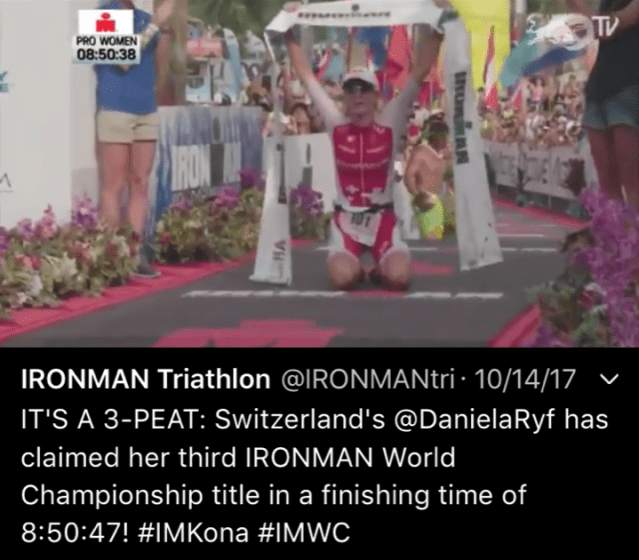
Because even some triathletes don’t care for the monopolistic methods of the Ironman organization. The Wiki describes it this way:
“The World Triathlon Corporation (WTC) is a for-profit corporation, owned by the Chinese conglomerate, Dalian Wanda Group, that organizes, promotes and licenses the Ironman Triathlon, Ironman 70.3, the 5150 series of triathlon races and several cycling, running and multisports events.[1][2] WTC is also the owner of numerous “Ironman” related trademarks used both in connection with Ironman race series and in conjunction with various goods and services.”
Ironman Victor.pngThe corporate expression of a brand is necessarily possessive in this day and age. That’s how organizations survive. They need to defend their turf lest encroachment steal away the power of the brand or wick away customers.
It can happen to the best organized companies in the world, and the most comprehensive industries. As a member of the newspaper industry for 15+ years, I bore witness to the dissolution of revenue segments one by one. First came Jobs revenue, then Real Estate. Other categories followed. Almost overnight, profits vanished. The religion of newspapers as the Keeper of the 4th Estate was damaged.  So no one is immune to competition.
Competition as religion
What an interesting concept it is that while people compete in Ironman races, the Ironman organization is always competing for market share against all sorts of other events and sports. These include traditional marathon and half-marathon running races. There are also non-traditional rites of passage such as Spartan or Tough Mudder events that challenge people to get tired, dirty and honest with themselves.
The sport of triathlon has generally grown over the last 20 years, but like the sport of golf, it may be hitting some stumbling blocks in terms of the expense it takes to enter and sustain participation in the sport. With the cost of “tri-bikes” soaring into the thousands, it can take $5000-$10000 just to look like you’re “in the game.” Let’s not kid ourselves, that’s a big factor in the sport of triathlon. Think how intimidating it is for newbies to show up in transition riding a flat-bar hybrid next to glamorous Shivs and Felts that look like carbon knives to cut through the atmosphere. It takes a bit of self-confidence to work through all that cliquish mystique.
Mistaken identity
But the most fascinating aspect of Ironman as a brand is that while it is a company within the overall sport of triathlon, people often mistake it for the sport itself.
IM cap.jpgThat’s much the same problem as calling all bandages Band-Aids. There is a problem when the brand is confused with the cause or solution such as Kleenex or Xerox. The brand can be weakened in the long run.
More than a brand
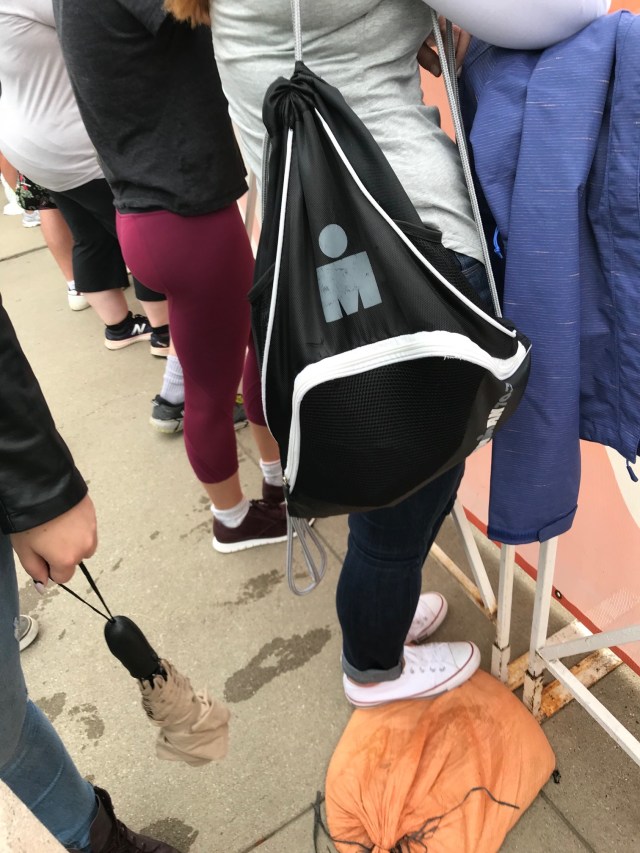
There’s an additional facet to the Ironman brand that is perhaps unique to the world of sports. Ironman may be much more than a mere brand to many people. More than one triathlete bears a tattoo on their body showing some form of the Ironman symbol. That signifies the experience has much deeper meaning than a mere 26.2 or 13.1 race.
We can see why this dedication occurs. When people cross the line for the full distance, there is a rite of passage in which the announcer calls out the name of the participant proclaiming, “You’re an Ironman!” It’s a baptism of sorts, even when experienced multiple times. We might better call it a communion, the mark of commitment and belief in the moment.
BAgAnd that’s where Ironman bears a close resemblance to what we might call a religion. And again, this is not an indictment of said designation. It is merely an observation. In an age when traditional church attendance is on the wane, it is perhaps no coincidence that Ironman races are typically conducted on Sundays. That’s a practical response to Sunday having less traffic, perhaps. But there is also a sense that a Sunday morning is sacrosanct in some other way. Not for all faiths, but for all people?
It is hard to argue with the sense of community at Ironman races. The triathlon village resembles a set of Revival tents, and support crews traipse around the campus with athletes. It all forms a pilgrimage of sorts. And when participants finally plunge into the water for the opening swim, there is a baptism of fear and contrition that goes with it.
So while sitting in church yesterday, only a week out from my own wife’s completion of the Ironman Louisville race, I made up a little checklist of ways that Ironman resembles religion. This is meant not as a conclusion, but as a conversation starter. Because if Ironman begins to take collections during the event to pay for the “services” it provides, it will surely have to file for status as an organized religion.
1. Rituals: Preparing for Ironman with gear and such is a consecration of sorts.
2. Community: Training and participating in Ironman delivers a sense of community.
3. Central Doctrine: The philosophy of becoming a “finisher” is reflected in all aspects.
4. Ceremony: From start to finish, Ironman is a ceremonial sport.
5. Transition: Like being “born again,” only into the next sport.
6. Challenge: Accepting hardship is part of any faith.
7. Day Into Night: The length of the event affords time for consideration.
8. Catharsis/Sacrifice: People bring many motivations to the Ironman table.
9. Diversity: Participation is ethnically, racially and culturally diverse. Worldwide.
10. Humanity: Ironman is an expression of both the power and frailty of humanity.
There you have it. Ironman truly does bear all the marks of a religion. That is neither a criticism or a compliment. Having written on religion for more than 20 years, I have both compliments and criticisms for that world as well. It’s just interesting there are so many parallels. It may explain a world of things going on today, or it may not.
We Run and Ride Logo
Posted in Uncategorized | 1 Comment

There are four sides to every runner

We like to think of ourselves as well-rounded athletes. But actually, we’re really a bunch of squares. You have a front and a back, and two sides. You’re square. I also happen to have the same inseam length as the measurement of my waist: 34″. That seems proof enough that I’m square anyway.

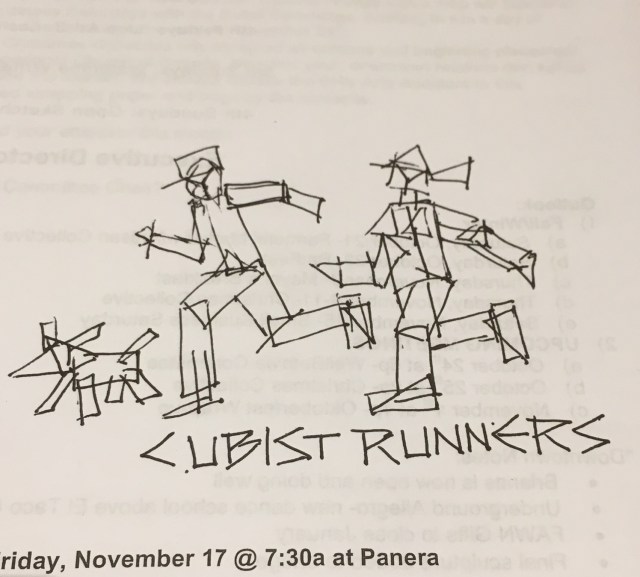
Cubist Runners.jpg

You might be wondering why it matters whether we’re square or rounded. Seems like being square might cause more wind resistance. And to that end, you might notice that big trucks with semi-trailers now put large panels on the back of the truck and between the wheels to act as some sort of windfoil. Apparently those panels play a role in preventing the wind from whirling around underneath and behind the truck. That creates more wind efficiency and that saves fuel.

Trans-America-June-2004-024.jpgSo the same principle must apply to runners and cyclists and swimmers as well. We may be wasting our time down in aero position on the bike. What we really need are a set of winglike structures attached to the side of our body that meet in the back, creating a giant fin like the truck seen above. They’re called Freight Wings, I think.

The same thing would work for flat-bodied runners as well. With four sides to our bodies, we need to re-think how we try to cut through the air. So, rather than running behind a wedge of fellow distance runners, we might need to wear some kind of vest that can be projected out the back when we’re running into the wind. The reverse wind pressure would propel us forward. It works for sailboats. Why not us?

The same strategy would work in swimming. Pull on a vest that forms a sharp ridge on the back and you can swim along like a human shark.

Do you doubt this would work? Then tell that to those big trucks with the fins out the back. There must be some reason truck companies are investing millions of dollars installing freight wings on the back and sides of their trailers. There are four sides to every runner. It’s time to get real about these things.


Posted in running, we run and ride, We Run and Ride Every Day | Tagged , , , , , | 2 Comments

The romance of small ball fitness

Love fest.pngThose of us who run, ride and swim come to realize that while the big muscles that drive us forward are important, it is the little muscles, tendons and connective tissues that keep us together. There must be romance between the big and small muscles for an athlete to stay healthy.


Last night while watching a bike race on TV, then an episode of Outlander, I hauled up the stretchy bands from the downstairs fitness room and spent 40 minutes doing exercises to build back some strength in my knees.

Friday morning I have an MRI appointment, the first step in finding out what caused all the pain and drama last week. But that slowly healed up, and whatever caused it, there are still basics to consider. The knee is weaker than it should be. So it’s time to play “small ball” fitness and build it back up.

Every athlete goes through it sooner or later. Imbalances. Things out of whack. So it’s my turn. Figure out with the doctors if there is something damaged, and get down to the gristle with the physical therapy work I’ve learned in all these years of training.

Trading nipples.png

Small ball fitness on its own may be boring, but not if you’re watching two people trading nipples in Outlander. So there’s a strategy for you. Get a workout while you’re heating up your own brain. What a world we live in.

Posted in Christopher Cudworth, marathon, race pace, riding, running, swimming, Uncategorized | Tagged , , , , , | Leave a comment

Come Halloween Night

HallI clearly recall the feel of the air that Halloween Night of 1972. Wandering with a group of friends through the town of Elburn, Illinois, half looking to get into some kind of trouble.

But not really. None of us were really the trouble-seeking types. There was Lana and Twyla and Paula, maybe Anna and Ellen as well. We were sophomores in high school and that meant trick-or-treating was a bit awkward and young. I still yearned for the candy, but felt weird doing the begging. Still, we hit a few doors just the same, and maybe soaped a car or too, and tossed some toilet paper. The eggs we just dumped on the ground after carrying them for a while.

My closest friends “Roy” and “Eeker” were with us that night. Both played football in those pale white uniforms with the stark black letters. Such a generic American team, that was. By contrast our cross country uniforms were soaked in deep orange and black with white trim on the shoulders. They were just dandy. Which was a cause of concern in some ways. Machismo was a highly valued commodity in that small farm school in the cornfields of northern Illinois. We cross country runners were teased for being part of a “pussy sport.” Of course nothing could have been farther from the truth.

My legs felt positively charged as we walked around town under moonlight broken by clouds. I knew that it would be wise to get home to bed before 9:30 at night. The conference cross country meet would be held the next day.

And I was more excited about that than Halloween, and candy, and the perceived danger that older kids might steal it from our bags. So it was a turning point of sorts from the kind of fun that was granted you and the kind of fun you created on your own. I’d worked hard that season with my teammates. There was something sacred about the work we’d done by training in loops around that pale brick school in the country. We’d forged something out of nothing, and that nothing was ourselves.

It was still tantalizing to walk around the town on Halloween night catching whiffs of the perfume or hairspray wafting off the girls. There were moments when I was tempted to tell them how I felt, that they were pretty, and that I wished we could be more than friends. But so many of those girls had expressed hankerings for ‘other guys’ that that I dared not breach the faith of those yearning confessions. Little did I realize that perhaps those girls might have confessed interest in me if I had had the nerve to inquire.

Which was dumb, and shy, and hardly enterprising. But at the same time I wished that my accomplishments in cross country would ultimately catch their attention and impress them enough, somehow, to help bridge the gap between us.

Which required a lot. Never mind my callow face. My big bunch of hair and skinny arms. The legs that seemed good for one thing, and that was running. Frankly I didn’t know much beyond those inkling bits of potential attractiveness. I did not consider myself handsome by any stretch. Only once had the older sister of a gal my age run her fingers through my hair while saying, “It’s sooo thick,” she opined. I nearly died on the spot.

Bunch running.jpgThe morning after Halloween dawned brusque and cool. But I was still excited. We piled on the bus for the trip to the course and piled back out for warmups. We all felt pride in the exterior uniforms of our orange warmup suits. The orange and black school colors shown like the afterglow of Halloween. But their familiarity as our team kits brought a sense of togetherness and confidence. We knew we were ready.

We won the conference meet that day. The victory, a first in cross country for the little school in the cornfields, tasted better than a giant piece of candy. Because it was earned, not begged. And that, in a nutshell, is what this guy learned in the aftermath of a yearnful Halloween Night.

Posted in cross country, We Run and Ride Every Day | Tagged , , , , | Leave a comment

Some optics from Ironman Louisville

Sue Run Start.pngMy wife completed Ironman Louisville with a one-hour personal record for the full distance. This was her second 140.6. The first was a similarly hilly course in Madison, Wisconsin. So she’s got two under her race belt and learned so much from training and racing this summer with her coach Steve Brandes that her appetite for the distance remains strong. She came through without major incident or injury, and whisked right back into the world of work the next day. Many kudos for that on top of a solid race.
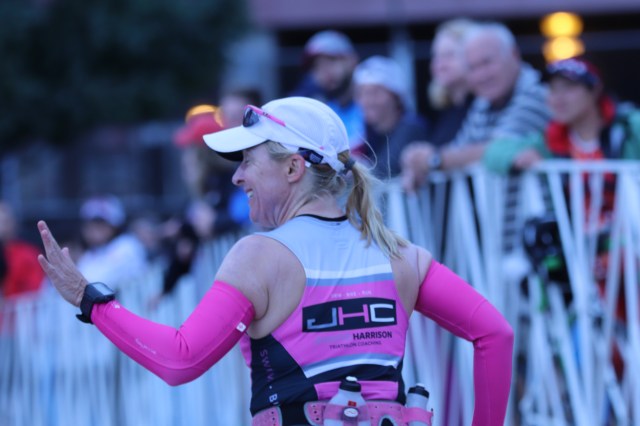
But it was a tough day out there for everyone, with rain adding to the interest along the way. But as Ironman athletes are known to do, my friends all competed with a smile. Now and then.

Max Wave.jpg

Nake Cheerleaders.jpg Temps this past weekend in Louisville dropped from a high of 74 degrees near noon to a the low 50s and a raw west wind for the second half of the 112 mile ride and all of the marathon. The swim in Louisville starts upstream in the Ohio River and turns south, and Sue completed it in 1:05. Her total time for the race was 14:18 with a 6-hour plus bike and nearly six for the marathon. It largely went as planned, but the day did not grant her the desired sub-14. Still a grand day of movement. Jeff Palmer Bike.png
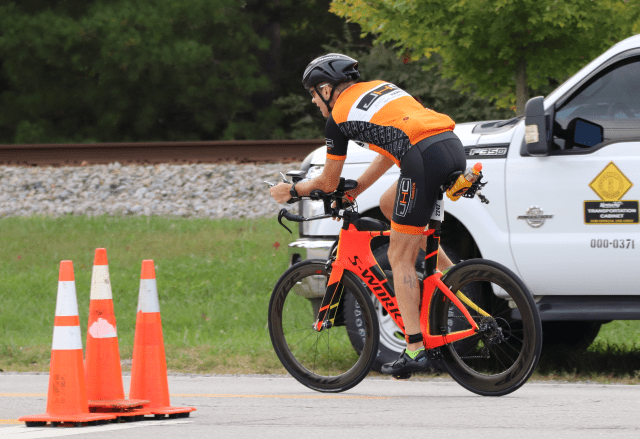
In fact the conditions tested the athletes in many ways, who described riding conditions as “heinous” with gusts pushing riders into each other and making long straightaways a slog. But that’s the deal with Ironman races. The day can change, and you have to change with the day if you want to achieve the finish line.

Max Waving Bike.png

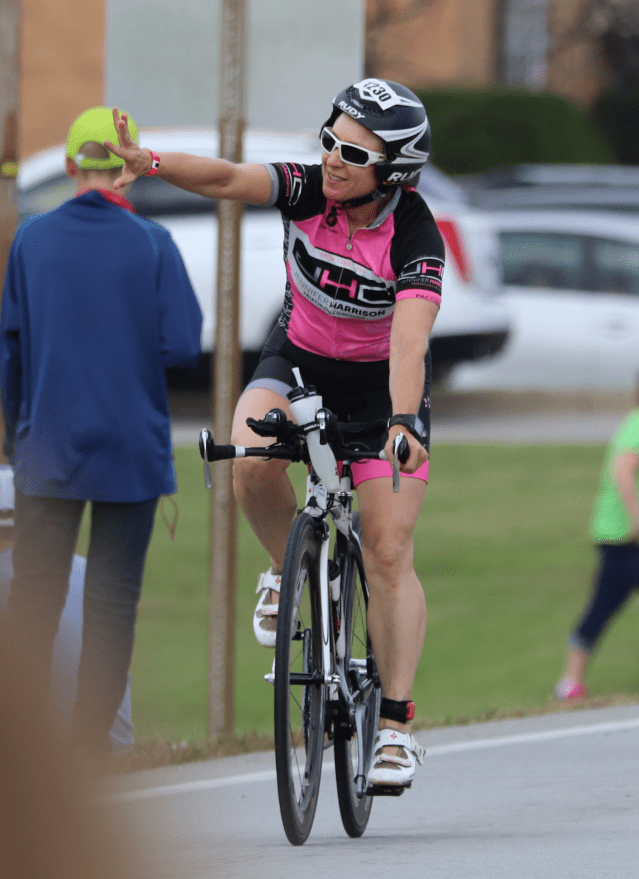
Some triathlon friends of ours also competed. Notably Jeff (orange and black kit in photos) and Maxine Franck-Palmer (pink and black kit) were the husband and wife Ironman pair with whom we traveled to Louisville back in July to ride the course and get a feel for the terrain. Jeff rocked the bike segment near 19 mph before putting together a steady marathon for a 10:58:55. That put him 35th out of 289 in his 45-49 age group. His wife Max finished in 13:35:34. That put her 42nd out of 100 in her age group.

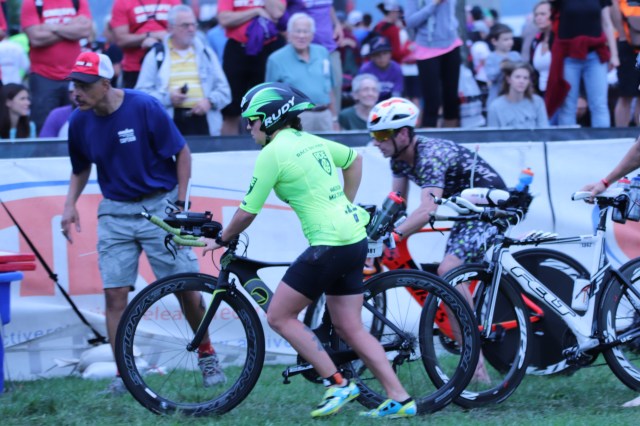
Sue Concentrating.jpgOur young friend Amanda Marek (bright green kit on bike in photos, and black kit running) had a legitimate shot at Kona in mind going into the race. She targeted her finish at 10:30 and hit her goal almost spot on, at 10:31.

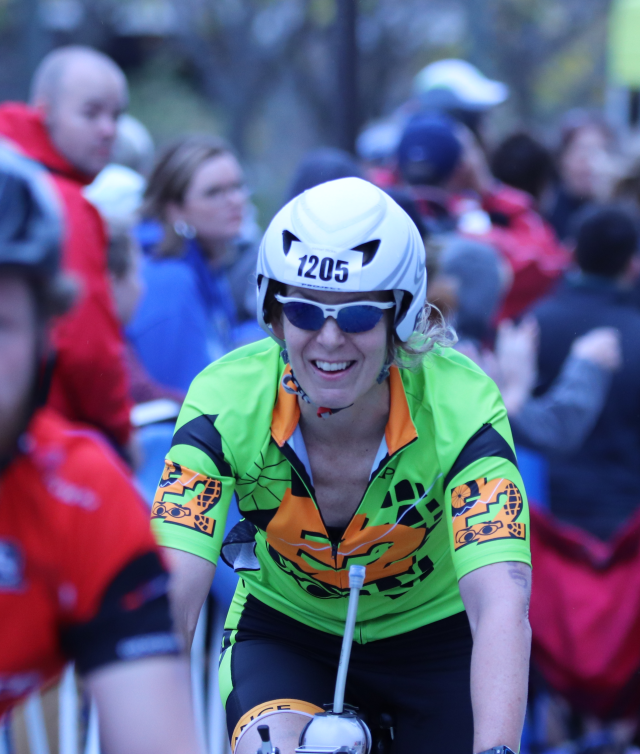
Last year that time would have won her age group in the 25-29 category by ten minutes. This year, thanks to many factors related to races that closed in other places, a few more fast gals showed up. Amanda competed solidly and wound up 5th out of 61 in her age group. She was 26th place overall out of 739 women competitors. She rode a bike of 5:33 (19.9 avg.) and did her marathon in 3:49. A pretty exceptional effort overall.

Sue In Aero.pngThe official Ironman tracking app worked great all day. It was easy, intuitive and even provided a live estimate of course progress in all three disciplines. And a note on that: One can argue all you want that Ironman as a brand is a bit of a monopoly, but sometimes monopolies create good things. That app made the day much easier for this Sherpa and our crew.

Here are a few more photos that capture the day.

Amanda Marek Running.png

Jeff Palmer Closeup.png

Sue Glad to Be Done.png

Amanda Heading out on bike.jpgSue Ride Finish.jpg

Sue Going Away.png


Posted in marathon, training for a marathon, tri-bikes, triathlete, triathlon, we run and ride, We Run and Ride Every Day | Tagged , , , , , | 3 Comments

Louisville Ironman awaits

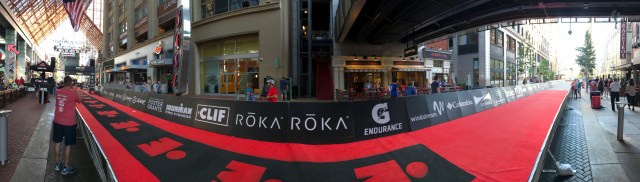
Ironman Louiseville finish line.jpgIf the weather moderates as is predicted here in Louiseville, with only shreds of rain versus sheets of it, the day might be quite good for racing after all.

We arrived on Thursday evening and have had ample time to get Sue registered, change her team affiliation to the right organization, check in her gear and bike and organize all the Special Needs bags. In between,  we squeezed in an hour’s ride on part of the course.

She’s made it through work obligations leading up to this important week. Before that, she made it through four consecutive 100-mile+ weekend training rides and multiple long runs as well. Weekday mornings she’d rise at 4:00 am to do her prescribed training rides, swims and runs. She’s followed the instructions of her coach and learned a ton about the why as well as the how in the process of preparing for her second Ironman.

As we walked through the Ironman Village there were dozens more people like her. Fit women with shining thighs carved by miles of long training. There were hard-looking men as well, and also softer-looking versions of athletes whose journey to Ironman is likely tied to an interesting backstory.

Ironman Pageantry.jpgIt all plays out like an anime cartoon once the day begins at 7:30 in the morning. All those dark figures sleek and concentrated on the task ahead. Then the angular pros take their places at water’s edge and plunge feet first into the Ohio River, starting the day. Then all the competitors will swim upstream for 1300 meters and come swimming back under tall bridges with the current sliding past big yellow buoys. It’s all rather epic. I can see why Sue chose this race.

I’m aching a bit inside at the sight of all these prepared athletes. My left knee is still mightily sore from this past week’s likely cumulative MCL injury. Yesterday I scheduled an MRI two weeks from now. Then it will time to fix things and rehab.  When I hear someone say that a particular athlete is “fast” it sends my pituitary gland into overdrive. A shot of adrenaline gets unleashed, and perhaps a dose of testosterone as well. I’m past my competitive prime by 30 years or

In the interim, being an athlete from the sidelines is tantalizing. When I hear someone remark that a particular athlete is “fast” it sends my pituitary gland into overdrive. A shot of adrenaline gets unleashed, and perhaps a dose of testosterone as well. I’m past my competitive prime by 30 years or more, and admittedly feeling the effects of all those years of hard racing and training. But somehow motivation still courses through my arteries and veins. It goes out bright red and comes back blue and in need of oxygen. This is life, always dependent on the next breath.

So there’s a bit of vicarious desire flowing through me as I consider what the 2400 athletes must feel going into the race tomorrow. To my Sherpa credit, I’ve done some good training with Sue all summer. Shared in some of those hard, hot, windy days that vexed us on long weekend rides and runs. I’ve seen her sweat and smelled the truth of her efforts when she’s headed to the shower.

Sue before Ironman.jpgSo the Sherpa duty has been close and true. Now I look forward to cheering her on during what we hope will be a successful and fulfilling day. She’s done the training. Now it’s time to do the racing. When it’s all said and done, that’s all any of us can do.
Posted in IRONMAN, triathlete, triathlon, triathlons | Tagged , , , , , , , | Leave a comment

Virgin Territory a tale of determination

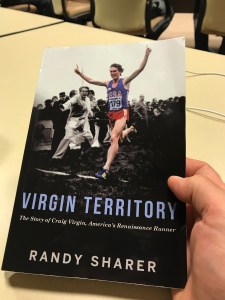
The book Virgin Territory is the new biography of American distance runner Craig Virgin. The book was authored by longtime sportswriter Randy Sharer and is available on Itascabooks.com , at Amazon.com or on Nook Book,

Virgin TerritoryA successful sports biography does several things. First, it gives the reader an honest assessment of the personality and performance of the person in question. Second, it compels the reader to consider the challenges that made the subject of the book unique. And third, it makes you want to turn the page and find out what happens next.

By all these criteria, the book Virgin Territory authored by Randy Sharer is a successful biography of the American distance runner Craig Virgin. The author spent more than six years researching the life of his subject. The two would spend hours on the phone discussing periods of the runner’s career and business venture.

A document of determination

If that seems a laborious way to create a book that covers 300 pages, then credit both Sharer and Virgin with the patience and determination to do it. And that happens to be the focus of the book as well. Sharer captures the source and path of Virgin’s determination, charting his life as a youthful farm kid in Lebanon, Illinois, where childhood struggles included malfunctioning kidneys, giant catheters shoved up his urethra and the ongoing pain and illness that plagued the boy

But these hardships never quelled his inner spirit. “Had I not gone through that experience in my youth with infections and having to learn to monitor my body,” Virgin said, “and then having to learn to disassociate from the pain of medical procedures or the pain when I got really infected, would I have acquired the skills to run through the pain that I did later on in my athletic career? I don’t know.”

Questions and insight of that nature fill the entire book. Virgin was a self-aware athlete from the beginning.  Even when kudos piled up for his exploits in high school and satisfaction with his accomplishments could have taken over, he set his eyes on achievements beyond what most Illinois farm kids could ever imagine.

Unknown territory

But that’s the point of Virgin Territory as well. While self-aware, Craig could not always prepare himself perfectly for the situations he faced as he raced past records set by America’s most famous prodigy, Steve Prefontaine.  Yet Virgin wasted no time in pursuit of running success across a spectrum of endeavors. He excelled in running disciplines including cross country, track, the roads and ultimately, the marathon. He placed second at Boston in a time just over 2:10. That still stands as one of the fastest marathon debuts among male American distance runners. 

Virgin freely admits that his sometimes scattershot approach might not have been the most efficient or effective path to an international running career. He freely admits in the book that he might have done some things differently. Yet he was an athlete trying to peer into the future in many areas. His experiments in converting successful running into business success were groundbreaking and opened doors for many athletes to follow. 

One lap at a time

But the painful truth of Virgin Territory is that the life of a distance runner must be lived one lap at a time. The last great race does not count for scratch the next time an athlete steps up to the starting line. “My major problem,” he admits in a section of the book that covers one of his peak periods of racing, “seems to be that I’m just not willing to compete when the going gets tough over the last 800 meters. No amount of training can help. I just have to be committed to racing over the last fourth of the race and not just the first three-fourths of the race. I just don’t compete hard. This is a problem that only I can face out and conquer. No coach, friend or family can do it for me.”

There is not a distance runner on this earth that has not confronted those thoughts. But the same sort of fears vex people in matters of business, faith and relationships. Can you carry it through to the finish. Get the job done. Ask forgiveness. Show love. And do it all with determination and commitment.

Transformation

Virgin Territory covers the sweet yet often painful transformation of Craig Virgin from small-town superstar to a national and international champion. During a successful career at the University of Illinois, he won multiple Big Ten Championships and earned national titles in cross country and distance events while leading Illinois teams to greater success. 

This experience he quickly leveraged into a post-collegiate competitive career thick with racing at home and overseas. Virgin made progress in fits and starts, including training, sponsorship and coaching with semi-professional programs such as Athletics West, a Nike-funded project. Yet many of Virgin’s greatest accomplishments came while following his own training plans. 

This was where real determination came in. Virgin almost gave himself no opportunities to second-guess himself. Even during periods when he planned to take a rest, Craig frequently accepted invitations to race in everything from local 5-milers to sponsored races that helped pay the bills. As his professional commitments increased and he earned a management contract with a sports marketing agency, Virgin’s ‘down-time’ fell away. He flirted with burnout and suffered the classic signs of too much training and racing as he came down with colds or injuries related to stress and fatigue. This is a key lesson for any prospective or practicing athlete reading the book. Recovery is as important as hard effort. 

Virgin Territory shows how hard it was for Virgin to turn down an athletic challenge or promotional opportunity. The market for paid opportunities was not yet mature. Between sponsorship from adidas and racing for bucks at road races, Virgin’s revenue reached $120,000, a keen salary in the early 1980s.

But Virgin’s promotional bent had a relational cost as well. At some points in his career, his raw competitiveness perhaps rubbed his teammates or competitors the wrong way. But Craig Virgin was uncompromising in his ability to try his hardest at all costs.

Recognition

Some of the world’s leading runners recognized the difficulty of what Virgin was achieving. Running legend Bill Rodgers noted that a World Cross County title “is worth Olympic gold medal status in my mind, but unfortunately, it’s not known in America.”

That simple statement almost captures the entire career of Craig Virgin. Consider that his greatest chance for an Olympic medal in the 10,000 meters was crushed by the 1980 boycott in which the United States stayed home in protest of the Soviet occupation of Afghanistan. Thus it is no small irony that 37 years later, it is the United States entrenched in that same country.

That bitter truth proves that politicians, in general, have a poor appreciation of what athletes actually sacrifice for a chance to ply their skills and training. The end result is not about national politics at all. For proof, even the performance of Jesse Owens in the 1936 Germany Olympics did not dissuade Adolf Hitler from launching the Second World War. But had Owens been denied an opportunity to compete, the world would have been denied an inspiring example of determination and hope.

Olympic mettle

Even without an Olympic medal to his name, the story of Craig Virgin’s transcendence shows his Olympic mettle. Thus Virgin Territory is an inspiring read even for people that have never run a step. Author Randy Sharer painstakingly documents both the triumphs and failures, because one does not seem real without the other.  

But it was a long series phone calls between athlete and author over the years that brought the book to life. Virgin recalled: “We’d talk by cell phone as I was driving around the country, and Randy would read aloud sections of the book and we’d talk about parts of my career. Then I’d share what was going on in my head and my life at the time. I really give him credit for his dedication in all that.”

Stats and figures

The statistics of Virgin’s career don’t lie. The back of the book contains a spreadsheet showing a record of all the races the athlete ran in his career. “Probably I could have raced a little less,” Virgin shared in talking about his career. “But we all did that back then. We raced hard and trained hard. Probably that’s what cost me from the age of twenty-six through thirty when other runners had their best years. I faced a lot of injuries, or got sick from overtraining, and that held me back. By the end, there were still some good races in there, but my body just could not take it anymore.”

Virgin Territory documents some difficult events that came soon after Virgin’s athletic career was over. Some of it wasn’t pretty. But yet again, Craig Virgin fought through the challenge of a overcoming the effects of a life-threatening incident as if he were gutting it out in a long, hard race. 

Perhaps if that incident had resulted in his death as happened with Steve Prefontaine, Craig Virgin might be regarded in mythic terms as well. As it happens, his accomplishments have resulted in honor and kudos later in his life. Recently Virgin was installed at the University of Illinois Athletic Hall of Fame along with the likes of Red Grange.

Mythic figures

The height of that honor truly illustrates the regard that many have for this small-town athlete who went on to world-class performances in every running discipline. Significantly, Virgin’s record on the Detweiler Park Illinois State Cross Country course outside Peoria, Illinois, has yet to be broken nearly 50 years after it was set.

“If that record reaches fifty,” Virgin laughed in considering that notion. “I’m going to rent a party room and a big keg of beer. I never expected it to last that long, and it may go this year. If it does, I’ll be happy for whatever runner does it. Records are made to be broken.”

The book Virgin Territory was a labor of love for both the author Randy Sharer and its subject, Craig Virgin. It took tons of determination to bring the book to market in an age when getting a book published is akin to winning a national championship. But Sharer and Virgin teamed up and did a good job. And most significantly, they did it their way.

By Christopher Cudworth, We Run and Ride. 2017. 

Posted in racing peak, running, Uncategorized | Tagged , , , , , , , , , , , , , , , , , , , | Leave a comment

Assessing the damage

False SmileIn a long and athletic life so far, I’ve had my share of injuries and done some interesting damage to my body. The most recent is a dodgy knee that requires serious medical attention. That’s an injury I’ve been hoping to avoid, but some things are inevitable. With no ACL in that leg, it’s a tricky battle to keep things stable.

But I’ve had injuries that are acute as well as cumulative. So I ran through my memory banks to think of the some of the most profound injuries I’ve sustained or caused during participation in sports.

Busting heads

The first “sports” injury I can recall was being whacked smack in the head by a five-year-old friend swinging a golf club. It knocked me out cold.

But then in elementary school, I was always bruising my noggin’ playing competitive kickball. There was a swingset in left field and it was an automatic homer if the ball flew over the set and landed on the other side. My main mission in life was to prevent anyone else from getting homers because I led the playground with more than 100 over the swingset each school year. The price of my defensive struggle to prevent others from keeping up was ramming into the swingset and getting goose eggs on my forehead at least once a month. My mom got sick of the calls and told the school nurse: “Just put ice on it. He’ll be fine.”

I also got stabbed in the face by the buck teeth of a fellow softball player on the playground. It gave me a huge black eye, my first. But not the last.

And at some point during a pickup football game I was shoved into a concrete ditch by the older brother of a friend. That’s how I picked up a wicked concussion and had to cross a big road on the walk back home while seeing double. The gash required stitches and I got to stay home several days from school.

Organized sports

In middle school a teammate in eighth-grade basketball rammed his head into my knee while doing sprint drills. The knee swelled to triple its size and required treatment. The doctor stuck a six-inch needle inside the kneed to drain off a quart of black and bloody fluid.  I stared at that jar and looked at my father. He shrugged. But it was disgusting. True to form, however, I was back playing ball in a week.

Playing league baseball was always good for injuries. Spike wounds in the ankle never tickled. I also chipped a bone in my elbow trying to steal home one summer day. That put me out of action the entire summer. But it was a line drive to my front teeth at twilight that did permanent damage to my mouth. I have a fake front tooth as a result of that. Some injuries last forever.

Ankle time

My ankles were always strong and I was agile enough to avoid many sprains in high school hoops. In fact the basketball helped me avoid many common running injuries. It also helped make me into a decent steeplechaser.

Indigo ShoesBut eventually the mileage in track or cross country would add up to some sort of overuse problem. I’ve had IT band tightness, chondromalacia of the knee, hamstring pulls, multiple periods of Achilles tendon tightness and calf pulls over the years. There were also groin pulls and back pain from hard or long workouts. I’m slightly bowlegged, which increases the angle of torque on my lower legs. That reverberates back up the body in some ways. But I’ve made it work for a very long time.

Decades of use and abuse

None of those injuries ever stopped me cold. I held up very well through two decades of competition, running the mile in just under 4:20, the 5K in 14:45 and the 10K in 31:10. Not world class times, but respectable, especially this day and age, when 5Ks are typically won in 18:00 and 10Ks in 35:00. As the front cover of the Chicago Tribune section about the Chicago marathon said, “It’s about Community, not Competition.” Those were the headlines in an Advocate Health Care ad. They say as much about the culture of running these days as they do about how much it’s changed from forty years ago.

Being a dad

In my late 20s, along came fatherhood, and running took a back seat to being a dad, and making a living. When I emerged on the other side of 40 after coaching soccer for the kids all those years, I started playing indoor soccer myself. Then it was back to the joys of ankle sprains and groin pulls.

But I was also pulling things while playing basketball in pickup leagues. So I consulted the family doctor to see about getting physical therapy as preventative care, but he said, “Ah, that’s a bunch of fluff.”

And that same year, in keeping with my dire instincts that my body was in need of strength work, I tore my ACL playing indoor soccer. Six months later I had surgery and started the long rehab process. I was determined to return to playing soccer and basketball again. I accomplished that and made it another two years. But on a hot spring day on a wet field, I got tired and a player struck my leg with his knee and the cadaver ACL in my knee gave way.

Fake it to make it

So I’ve been faking it since probably 2013. I’ve been able to run and ride thousands of miles without an ACL. But now that my body is aging a bit, the cocky little rooster of prolonged competition has come home to roost. Cock-A-Fucking Doodle-Do. It’s time to wake up. 

I’ll be crowing if there’s some sort of quick fix, but not holding my breath. It’s likely this is a problem built over years of running without an ACL to stabilize the knee. The medial collateral ligament is just sick of it. And it hurts.

But I largely know how to handle injuries. I’ve had a great career so far and have come back multiple times from painful conditions. It’s harder as you age, but not impossible. Five years ago I went down on the bike in a violent crash caused by bike wobble. That required a surgery to fix, but weeks after it was fixed, I got back on the bike before winter came.

There is a good strategy to all of this. Be persistent to find good doctors. Press them for a plan that is concrete. Granted, no surgery is entirely predictable, nor every treatment a guarantee. That’s what makes this scene from Trainwreck so freaking hilarious. I’ve had a couple physician consultations that were about this weird. I was also prescribed a steroid painkiller by a college doctor that was equivalent to the amount normally given to HORSES. I wandered the campus dazed for three days before a doctor at the Mayo Clinic got a look at the prescription and when WHOA. I mean, WHOAAAA. 

So that ended that.

Without provocation

IMG_0124But I’ve also done some absolutely stupid things on the bike without cause or provocation. Like crashing into a downed tree. That accident resulted in a massive bruise on my lower back, a crushed iPhone and a bloody chin that required stitches. It took two full years for my massage therapist and a chiropractor to break down the scar tissue from that little joyride. It was all due to riding with my head down while thinking. Some call that inattention. I call it experience.

This is only Day Two on Injury Island, and I’ve been in touch with the ortho again and am scheduling an MRI. We’ll take a look at what this MCL is up to, and in my mind, make a decision on how to plan for the next ten years.

Because I don’t want to give up running. There’s really no need. It may require a brace and some PT to put me back on the road, but this guy isn’t done yet. I’m assessing the damage just like an insurance adjuster. Then I’ll claim my destiny back again.


Posted in injury, Uncategorized | Tagged , , , , , | Leave a comment

Becoming a Survivor on Injury Island

Desmond.jpegYesterday I walked right into a reality show. I was out shooting video for a documentary in our town when my knee gave a jolt and bam, I was transported to a place that I never like to go.

Injury Island.

You may be familiar with Injury Island. It’s that location in the universe where time stands still and it’s impossible to get off until you find a cure for what ails you.

I should have known it was coming. Yesterday morning while doing some male grooming I put my Harry’s razor behind my ear to make sure there were no secretly long hairs growing there that had escaped the clippers. This is based on a prior experience in which I discovered with a degree of horror that my habitual manner of buzzing my skull with electric clips somehow missed an entire grove of silvery hairs behind my ear.

This I found out while adjusting my sunglasses on the way home from a ride, and I went, “What the hell?” And the minute I walked in the door that morning I walked straight upstairs and mowed the Back 40. Because unkempt silver hair is not a good look on men. Ever.

Homicide_crime_sceneSo to make sure that I wasn’t walking around with a scene from Apocalypse Now from going on behind my ear, I put the razor back there and gave it a short swipe. And Lordy I cut myself good. The sting was immediate, and blood started to flow. I grabbed some toilet paper and jammed it behind my ear. It’s amazing how bright red blood looks when it is transferred to a bright white sheet of toilet paper. “That came out of me?”

After a dab of Neosporin to coat the wound, I somehow got a bandage on the back of my ear. It looked just like a hearing aid. Necessity demands all sorts of inconveniences in life, especially when you’re about to enter the alternate universe of Injury Island. After all, it wasn’t like I was dying exactly, or the victim of gun violence like the poor soul in the photo above.

Kneedy

Because later that morning while walking around doing the documentary, my knee gave an ugly little yank and the pain along the inside of the left knee was profound. This has been on the horizon some time now. Just two weeks ago I went to the ortho for a diagnosis. Then I visited with the PT specialist, and she basically told me to go home and do knee bends. Here we are in the 21st Century, playing Back to the Future with exercises from the past.

But doing knee bends won’t help me get off Injury Island anytime soon. Like the characters in the television miniseries Lost*, I want to escape and at the same time realize the present gives me an opportunity to fix past mistakes.

So I did a Messenger appointment with my ortho friend and said, “I want a PLAN. Not just suggestions.”

Pain

That means there’s an MRI in the near future. Because this knee actually hurts now. The medial collateral ligament has been popping on me for more than a year now, but this is reality. It’s time to figure out what’s really, really wrong.

The history is there. No ACL in the left knee. I’ve been getting away with it for fifteen years now. But instability adds up to bad things.

False Smile.jpgIn the meantime, I bought a brace that wraps just below the knee. $9.99 on Amazon. That’s allowed me to put a false smile on my face for a few days. Next comes the MRI. Then the Reality of what I’m really facing.

I may be on Injury Island for a while. Always hard to tell. In my long career as an endurance athlete, I’ve been through broken clavicles and plantar fasciitus, sore hamstrings, shin splints and blue balls, to name a few of the conditions one can face on Injury Island.

It’s not a fun place to be. But you have to play the game in order to get off. We all hope it doesn’t turn into Hotel California: “You can check out any time you like…but you can never leave…”

Racing isn’t looking like a probability at the end of October. Not when the knee is so unpredictable. Who wants to race when you can’t tell if your knee will turn into a test of reality?

It can hard to get off Injury Island. Only time will tell.

* From a description of the show Lost: “Moments later, Desmond met Jack Shephard, while training at the same stadium. During their short conversation, Desmond suggested that Jack is running the stadium stairs because of frustration having to do with a woman

Note: but actually, Jack was running off steam from the frustration of having lost a patient on the operating table. Thus life is never quite what it seems. Desmond was projecting his own worries onto another human being. It’s a quite common theme in this world. Or another. 

Posted in Uncategorized | Tagged , , , , , , | Leave a comment