Cryptically speaking, we’re all scarecrows of some sort

Cryptic guy.jpgYesterday morning I fully intended to go to church. I had the check for the offering in my shirt pocket and had worn my favorite pale gray stretch jeans. But the journey north to church included a stop to photograph sparrows at a park in Geneva called Prairie Green. The abundance of birds got in the way of my travels to church.

Sparrow Flight.jpgThis is peak bird migration season. And while sparrows may bore you in concept, in reality they are quite beautiful to see when you know how and where to look. There are fifteen or twenty species that come through our area. Some have plumage that is quite striking. Others are rich in russets, browns and streaks.

That also means they can be hard to see against dense brush. That’s the point. There’s this thing called cryptic coloration in nature, better known as camouflage, that birds and many other creatures have evolved over millions of years.

Plumage, fur and scales have diversified into all sorts of patterns and “kinds” of living things. These adapted traits contribute to their individual and collective survival. Evolution is a remarkably ingenious thing because it functionally prepares creatures to occupy niches not at will, but by design.
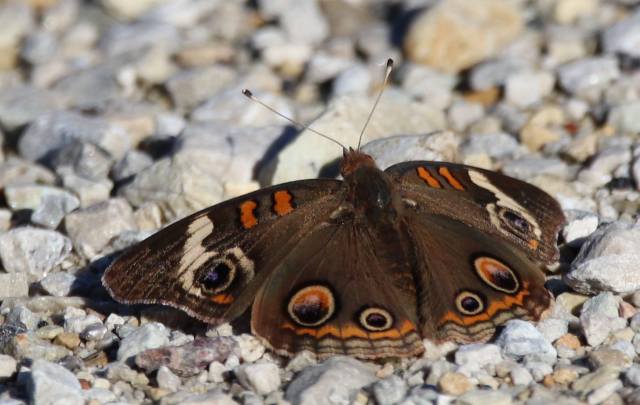
Buckeye.jpgThat is not to say that creation is the product of what religious folks like to call ‘intelligent design.’ The whole thing works just fine without any help from above.

I even say this as a person of faith. I view the Creator as the manifestation of love and wholly real to the spiritual side of human consciousness. I’ve seen evidence enough of that in this world to truly believe. But I don’t think we have to break apart the laws of nature and material reality like they were so many theological croutons to try to prove that God exists as some kind of control freak author of all creation.

Personally, I don’t think God cares all that much if we grant the Almighty that status. God certainly doesn’t care who wins a football game or even a footrace. When people point to the sky and say “Give God the Glory,” I want to ask, “Why would he favor you over all others?” It’s false humility. Case closed.

What God does care about deeply is how well you treat your fellow human beings. And that means win or lose. Wise people know this. That’s why Pope Francis recently said, “All scripture that does not lead to the love of Christ is obsolete.”  In case you don’t discern the cryptic meaning there, he’s speaking directly to the legalists and literalists among us who are such theological tight-asses they behave just like the religious authorities of Jesus’ day. And he called them hypocrites and a ‘brood of vipers’ for their manipulative law mongering and public praying.

And what about all those ‘go along to gain power’ evangelicals who voted for Trump? In the words of Colonel Slade in Scent of a Woman, “Fuck you too!”

They’re the same bunch who can’t conceive that evolution is capable of all this creativity. They also ignore the fact that Jesus taught using highly metaphorical parables based on organic sources drawn directly from nature. Get. A Fucking. Clue. In other words.

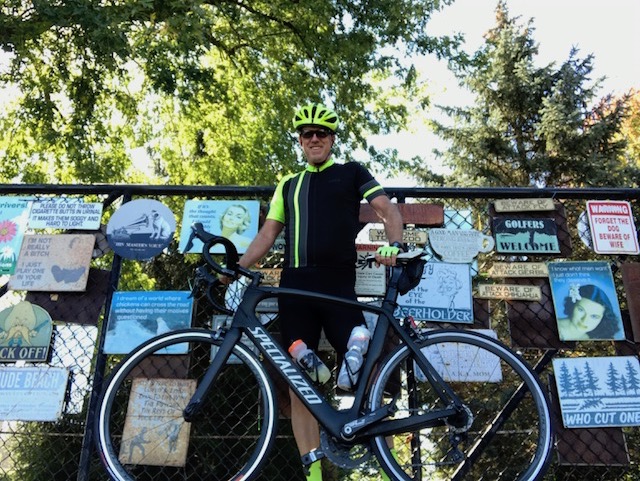
But yesterday I didn’t go to church because after birding, I spun around back home and got dressed for cycling. The wind was not strong and the day was so bright it absolutely demanded that I take the Venge for a spin. So I rode my favorite route of late and wound up circling past the cryptic little farm near my house where there are real flocks of guinea hens roaming around, fat hogs with bellies that touch the ground and even a chrome buffalo sculpture made from car bumpers.

BewareI paused to take a photo in front of a farm gate which is decorated with funny signs. The humor was hilariously dumb, but I thought, “Look at this, I fit right in!” It was like cryptic camouflage for this guy, the main perpetrator of Stupid Dad Jokes and Bad Puns.

Which meant I was very happy to pose by the signs that hid me from the real world for a few moments. It was shady, I felt good on the ride and I felt like I was in the company of kindred liberal spirits. God has a bad sense of humor, why shouldn’t I follow the lead?

Later that afternoon, I was planning to join my daughter and her boyfriend for a trip to a different farm named Kuipers, an apple orchard west of my old high school that sits on a glacial rise in the open fields of Kane County.

I ride by that farm many times over the cycling season. It goes from a cold spring property where the apple trees are bare and spare and a few bad apples, like sinners still hung from the cross, cling to the hard black branches of winter.

Then comes April when hopeful blossoms greet early pollinators, and bees for the most part venture out to gather nectar on warmer days.

Come June the leaves come in full and shroud the tiny apples budding from the blossom points. Then come the hot days of July and August when those fruits turn gold and red and yellow. There is no single tree that sits at the center of the orchard by then. They are all tempting.

Down on the Farm.jpgRiding past all this transition during the year marks the passage of summer days and pending fall.  Indeed, it even calls up memories of early childhood, which seem like past lives to me these days. I am a reincarnation of my younger self in so many ways. So this Polaroid taken yesterday by my daughter feels like it was snapped in 1962, but is so very 2017 at the same time.

It has been hot in Illinois these past few weeks, so nothing resembling a true October chill has come close to us. And no first frost. So I keep riding past the hill where the apple orchard crouches, and it still looks like summer. But now there are thousands of cars coming and going on weekends and pumpkins litter the grounds.

The cars headed to Kuipers roared past me on my way up a country road toward Kaneville. So when I stopped at the intersection in town I asked through an opened window, “Where is everybody going?”

The woman inside the car told me, “Well, we’re going to Kuipers.”

There was no hidden meaning in that.  Not on the surface, anyway. People were driving country roads to Kuiper’s because they were responding to some set of autumnal instincts that even they could probably not explain. Purchasing pumpkins, honey and apples, mostly. It’s what we humans do in October.

That is not all that different from the sparrows I watched in the fields feeding on weed seeds and crickets. That’s what birds do in October on their south.

Swamp Sparrow.jpgBut you know me, I always look for the deeper meaning in everything. So I looked up the word ‘cryptic’ just now, and here is how it is defined:

 

cryp·tic ˈkriptik/
adjective 1. having a meaning that is mysterious or obscure.
Kuipers.jpg
And as I walked through the Kuiper’s store and grounds, I began to think about the long tradition our family has in going there. Then I thought back to the other farms where I’d lived or grown up in my youth. I know what it means to try to get close to the land in some way…anyway possible.
Then I looked at all those people wandering the Kuiper’s farm, and realized the secret meaning of their presence. We are all searching for that present place where actual earthly connections can be found.
Yet we are all too often divided from this early realm by our own food chain, or divested by nature of our transportation, determined as persons by our wage earning power or outright discriminated against by our face, our race, our gender or our orientations.
For there are people who know too well how to exploit those traits, and will do everything possible to keep people from breaking through their cryptic existence to grasp reality.
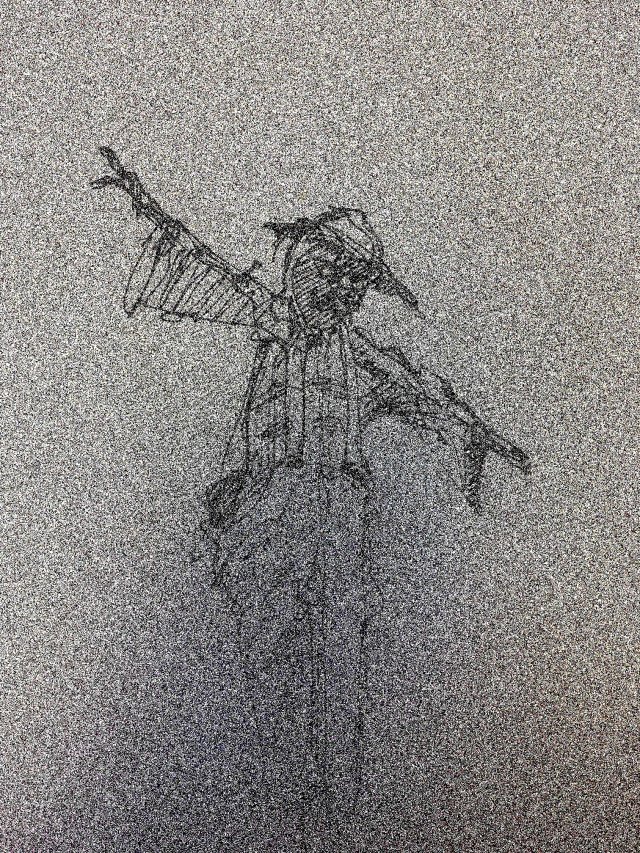
Scarecrowpixels.jpgAnd should farmers think they are all separate or above the seeming confused eating habits of the civilized world, the hard truth remains that they are just as tied to the markets sucking grain out of their fields as the rest of us. And somehow they have been convinced over the years to often vote against their best interests by people who know how to mix a literal God with a mindless free market to create a Scarecrow America that they’re all supposed to worship.
It made me realize that we are all living some sort of cryptic life. Each set of our beliefs and the imaginations that drive us are effectively camouflage for the realities we all face in this world. Which helps explain why a lonesome scarecrow gives us the creeps. They are cryptic reminders of our own frail imaginations and the mortality from which they protect us.
And if you ever hear me calling out
And if you’ve been by paupers crowned
Between the worlds of men and
Make-believe
I can be found.
Lyrics from Scarecrow’s Dream by Dan Fogelberg
Posted in cycling, cycling the midwest | Tagged , , , , , , , | Leave a comment

On roots and transitions

Soil-1-1024x683.jpgThe transition of ownership and management in world of farming is one of the vexing challenges for families that have passed land down from one generation to the next. “The older generation struggles to let go of the reins,” says an article in the October issue of Harper’s Magazine. “To trust their kids to carry on a long and fragile tradition.”

Those of us who don’t make our living directly off the land have our transitions too. Just last year during the first two weeks of October, I was deeply involved in clearing out the home that our family had owned for twenty years. It was not easy work clearing out stuff that no one needed while separating and storing family keepsakes and mementos. It was all the more difficult with the memory of my late wife popping up at every turn of a page or opening of a box.

Uncomfortably numb

riding-twilight-zoneBut it got done the same way it got done when I cleaned out my father’s house earlier that same year. There were dumpsters full of stuff that we’d accumulated over decades of living in those homes.
The weight of all that assessment and the decisions that go with it can be hard to shake. Some days I’d be so tired from cleaning out the house…that a run or ride was the last thing I wanted to do. When the feet are numb and the legs ache, the notion of going out to run and additional five miles just doesn’t seem inviting.

Hitting the bricks

Some days I still did it. That was an unusual form of “brick,” to use the triathlon term that applies to engaging in one workout immediately after another. A typical brick is doing a run right after a bike ride. Just last weekend my wife rode 104 miles and then ran a four-miler when she was done. That brick was hard. But she did it.

During a true “transition” in triathlon we change clothes and gear as we shift from being one type of athlete to another. In fact, that’s the dictionary definition of the word transition: “the process or a period of changing from one state or condition to another.”

Transitions


Next week I happen to be enrolled in a seminar through work that will focus on the subject of transition. The director of the seminar, Dee Cascio, was seeking input from scheduled participants so that she could better gauge what people wanted from the experience. I accepted a request to be interviewed by phone about what we’d like to learn from the seminar.

We talked for half an hour by phone late yesterday. During our conversation we discussed some of the events of my life the past ten years. Going backwards, that included getting re-married and starting a new job this past year. There was also the move into our home last fall after clearing out of my former home during October. Before that there were all the financial decisions to make the whole home purchase work. That came after several years of dating Sue, which led to a marriage proposal in April of last year. But I got overexcited and forgot to give my kids a heads up that I was about to pop the question.

So it’s all been about transitions. Change.

Life has truly been like a triathlon for me. Going from one event to another.

Healthy change

Cypress Knees

Roots and transitions in a Virginia swamp

I’m fairly healthy about dealing with change. Yet once in a while the world seems to shudder to a stop. It’s almost like I get off for a moment, look around and wind up asking, “Where the hell am I?”

Perhaps you’ve had the same sort experience during a long bike ride or a run. We take for granted that we’re humming along and suddenly a weird reality kicks in as we’re passing some benign thing like a cornfield and the brain goes one step further: “Who the hell am I?”

Sometimes the evidence of transition comes from external sources. When my son stayed with us during a transition between his home in Cleveland and his new home in California, he was shocked to find out that Sue and I hire a woman to clean the house. “Who are we?” he asked.

Cleaning house

But with all the time we spend working all day and then working out in morning and evening hours, then buying groceries, paying the bills, keeping up with friends or church or other obligations, the time to clean the house gets scarce. Plus the gal we hire is almost like a relative to Sue.


The fact of the matter is that we all put down roots in different ways. They say the biggest organism in the world is an aspen grove, for it can cover miles with its underground root system. The pretty trees we see aboveground are only a fraction of its total being. It travels by roots.

Roots of a different kind

By contrast, farmers depend on sticking seeds in the ground and tearing the soil up again each year. Yet the bond they feel with the land is strong. They put down roots of a different kind, one might say. These are hard to give up when it comes time to step aside and let the next generation take over.

That is the ultimate transition in life. To recognize mortality, the grandeur and the value of life itself. People can sense the importance of that no matter how they put down roots. Even a rambling fool that has never held a job more than a year, who wanders around on foot or a motorcycle, a beat up old car or a sleek mobile camper with electric to run air conditioning at a national park still finds some sense of those roots somehow.

It’s all about roots and transitions. Everything we do.

Posted in Christopher Cudworth, running | Tagged , , | Leave a comment

Through the land of corn and soy

Sandhills.png

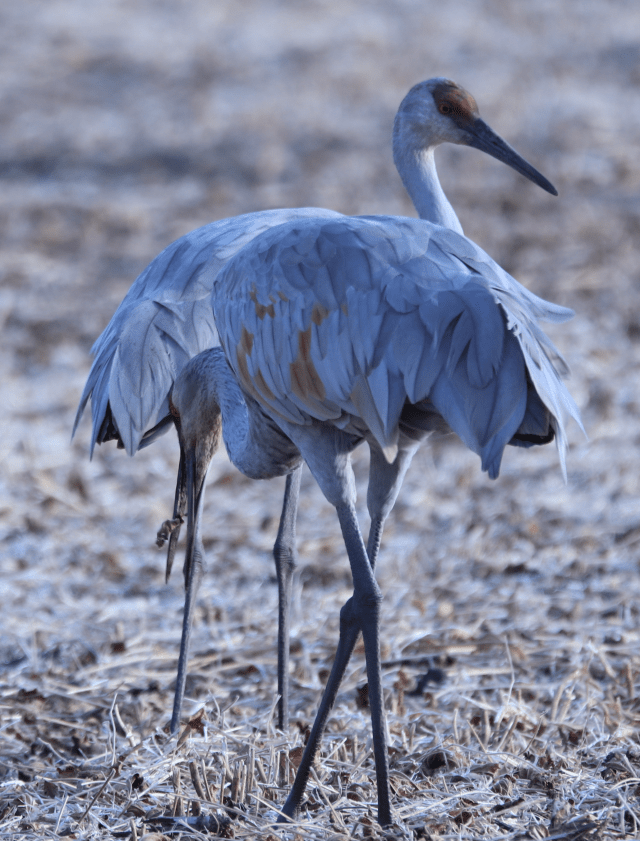
A pair of sandhill cranes feeding on a recently harvested soybean field. Photo 2017 by Christopher Cudworth

Our home sits on the edge of civilization where suburban homes give way to agricultural land. The farm fields extend 120 miles west to the Mississippi River, broken only by towns with a farming history; Dekalb, Dixon and Rock Island.

Right out our back door, we can jump on the two-lane roads that section thousands of acres of corn and soybean fields to the west. Each spring as the winds blow from March into May, we wait for the planting to begin. And come fall, we watch the combines mow down the crops and suck grain into trailers that carry it to giant circular commercial silos. There it is weighed and then carted off to be turned into a host of products upon which the world depends.

We spout all the necessary cliches as the crops rise in height each summer. “Knee high by the 4th of July,” we sputter about the corn in June. But more typically, we welcome the cheerful blue faces of chicory that grows in the disturbed soil along the roadside. Our eyes are so focused on the wheel ahead there is not much time to raise our heads and truly look around.

Engineered landscape

And once you’ve seen one corn or bean field, you’ve truly seen them all. Crops these days (especially corn) are genetically engineered by height and planted with such precision they resemble waves of robot armies from the prequels in Star Wars. The actual corn appears in frighteningly consistent rows about waist-high to a six-foot-tall man. I know, because I’ve stopped to pee a few rows into a cornfield. The silence in there on a hot summer day can be haunting.

It can also make you feel pretty feeble and small while riding a bike or running past those fields once they are stripped bare. The landscape opens up and the Canada geese and cranes sweep in to gorge themselves on wastrel grain.

Corrective measures

Which brings hunters out in the fields with decoys to pop away at Canada geese. There are an estimated 60,000 Canada geese that reside in the Chicago area as permanent residents. That means the hunters are usually bagging their limit, and the golf courses wish they would shoot even more.

I’ve watched these rhythms emerge over the decades since moving to Illinois back in 1970. There were more alfalfa fields back then. That was an attempt to plug nitrogen back into the soil. But soybeans do a great job of that when alternated with corn. So the landscape has shifted to a cash crop that also repairs the rape of the prairie soil that started back in the mid-1800s.

From prairie to soy

That all seems distant now. There is only 1/10 of one percent of natural prairie left in Illinois. Prairie restoration is popular in parks and on some corporate campuses. But compared to the acres under corn and soybeans, there is no contest. That means corn gives way one year to the stubby growth of soy beans the next. It all dominates the landscape.

An article in this month’s Harper’s magazine chronicles the changing face of agriculture and how soybeans have taken over for other cash crops in the last 100 years. “In 1920, there were fewer than a million acres of soybeans planted in the entire United States. But soybean production boomed beginning in the 1930s––surpassing barley production by 1940, cotton in the 1950s, oats in the 1960s, and wheat and hay in the 1970s. This year, the number of acres planted to soybeans is expected to reach 90 million––and almost all of those acres are concentrated in the Midwest and on the Great Plains.”

It all got started when a guy named Henry Ford latched onto the idea of farm crops feeding the industrial complex. Automation lent itself greatly to farming efficiency. Unfortunately it also largely overwhelmed the concept of the family farm. Now technology drives the farming business. The family farmer wherever they exist is little more than a cog in a wheel. The rest is baldly orchestrated industrialized agriculture.

Just another cog in the wheel

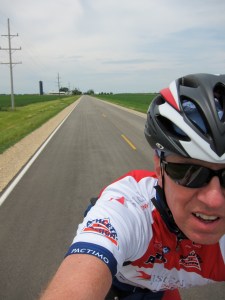
IMG_6488One could say the same thing about every cyclist that pushes thin rubber tires down the road. We fancy ourselves independent of the forces that drive globalization. Who isn’t free when riding a bike? Yet we depend on the asphalt laid down by every township, and curse the cheapo districts that use that rough chip and seal stuff on roadways out in the country. So we stare ahead in hopes the road will smooth out again. In the meantime we bump along on the chip and seal that vibrates down to our very soul.
 

The ride is our planting. The smooth road and pace, our harvest.

We would have to be willfully blind to not notice the shifting face of fields here in Illinois. It isn’t much for scenery, but it is all we’ve got. So it pays to look around a little and make casual note of the shift from corn to beans as it happens.

There are the smaller treats as well. To revel in the glance at small streams coursing through channelized ditches. Then we follow the flight of a kestrel from pole to pole until it tires of the game and launches across the fields to the next fencerow.

Winter falls

Come winter the fields get brushed by snows if we have any at all. Last winter after an early snowfall there was nothing for more than 100 days. The dearth of snow was accompanied by relatively warm weather in January and February. Come March we got blasted with rain storms that swelled the wetlands behind our house. Soon we had wood ducks  waddling up to our bird feeder to dine on the corn we’d dumped by our bird feeder.

Thus the symbiotic yin and yang of wild creatures and human existence continues. And when I see the tall figures of sandhill cranes in the fields, or hear their lonesome calls that hearken back some 60 million years in evolutionary history, the road on which I run or ride does not seem like such a lonesome place.


Posted in Christopher Cudworth, cycling, cycling the midwest, running, we run and ride | Tagged , , , , , , , , , | Leave a comment

Does my knee need Viagra?

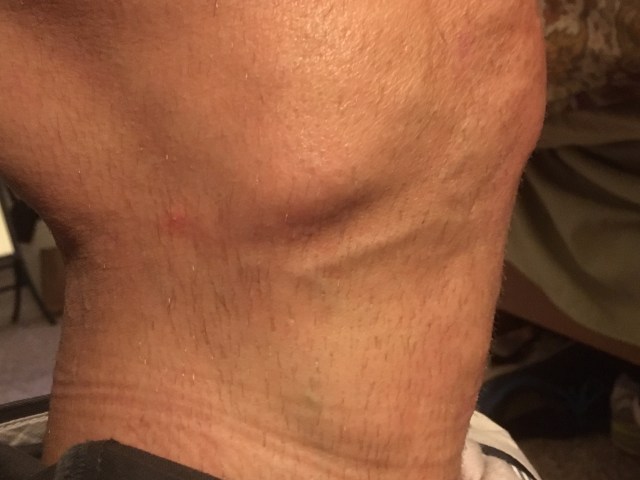
Knee medial.jpgThe medial collateral ligament in my left knee is a bit squishy of late. At some point in every hard run, it protrudes and the knee joint gets wishy-washy for a bit. This has been taking place on an off for a year or so. I went to the ortho that I know, and then a physical therapist to get advice on how to deal with it.
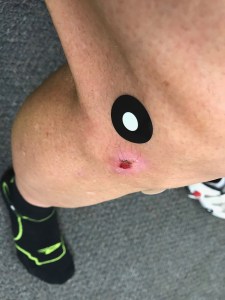
Fit Dots

Spot-on during a bike fit

Like I suspected, it’s the little stuff that counts. I need to hit the balance ball and do the “small ball” stuff that we runners and swimmers and cyclists and triathletes all tend to ignore. Small repetitive motions are needed to build up tensile strength around the knee. I knew this to be the case going into the consultation. I’ve long learned not to self-diagnose. It is too easy to deceive ourselves about the nature of the problem, or head off in some treatment direction that actually makes the problem worse.

Have you been there? Done that? Almost all of us have at some time in our careers. Either we don’t do enough, or we do too much. Thus far, I’ve been doing ‘leg work’ on the weight machine. But as my hard-nosed Russian PT gal pointed out, “It doesn’t do much good to add load if your knee is not stable already.”

There’s a Catch-22 to every imbalance injury. Do nothing and it gets worse. Do too much and the imbalance just magnifies the existing weakness. So I will be playing “small ball” with small, short exercise centered around knee balance the next four weeks.

KNee brace too

The knee needs support sometimes

I may also buy a support brace for the short-term. I’ve considered the fact that I’m sixty years old with more than 50,000 miles of running on my legs. The simple truth is that a few contraptions may be necessary to help me keep rolling.

But of course a brace is like Viagra for the knees. It might be okay to use it now and then when needed. But ultimately you want your knee to be able to sustain the hard-on ability to do the work.

Now that you’ve got that image in your brain, have fun looking at the next male runner going by. But if you see a guy sporting more than a four-hour knee brace, tell him to call the doctor.


Posted in running, Uncategorized | Tagged , , , , | Leave a comment

Even the losers get lucky sometimes

Thomas Earl Petty was born Oct. 20, 1950, in Gainesville, Fla., the first child of Earl and Katherine “Kitty” Petty. Petty had a difficult relationship with his father, and cited a particularly brutal beating he received at age 5 that stayed with him for life.

TomPetty.jpg

Sometimes there are parallels with people in life that do not become evident for years. As I read the LA Times obituary for Tom Petty the above paragraph featuring the words about a difficult relationship with his father jumped out from the page. The pathos that seeped through many of the songs written by Tom Petty had to come from somewhere. You can’t write and sing about pain if you haven’t experienced it. Without direct experience, the sorrow does not feel genuine.

So I can relate to the story of Tom Petty’s difficult relationship with his father. My own dad had an angry streak that could burst forth in sometimes violent ways. It happened most often when his four boys didn’t listen or caused him some sort of angst. Then the fury would come out. I’m not saying that my father’s anger was not sometimes deserved. But it still had its scarring effects.

When I was six years old, my father took a belt to both of my brothers in the kitchen of our Pennsylvania house. The experience of watching my brothers get beaten traumatized me. I now know the effects of that experience affected me for years to come, even decades later. In my late 20s I awoke pounding the pillow with my fist. Then I knew I had to get help and figure out a way to heal. And through faith and counseling and forgiveness, that did come about.

Forgiveness and insight

I learned to forgive my father. His demeanor eventually mellowed, but perhaps the pain never really disappeared in his own life. He’d lost his mother to the side effects from breast cancer surgery when he was only seven years old. That tragic event upended his life, sent him into the care of some spinster aunts and a rough old uncle and left my father with unhealed scars when his own dad was institutionalized for depression during the height of the Depression.

Chris at PlainfieldIt took years to figure all this out because information about my father’s upbringing only trickled in over time. Snatches of conversation with his sisters filled in some of the blanks. But we didn’t live close to my aunts, so our visits were often pinched and brief.
Sometimes the real picture of my father came out in unexpected ways.  I recall the year when my by-then-stroke-ridden father wanted to travel east to visit his sisters. He’d mapped it all out on a piece of paper that he handed to me. I did not know if he’d somehow had contact with them by mail or such, because he could still write a little bit, so I called them to confirm his intended dates of arrival.

“What?” my Aunt Helen replied. “We didn’t know a thing about this. But that’s just like your father. He never warned any of us when he was coming over or wanted to do something.”

Just showing up

Indeed, my dad was always one to show up unannounced at my house on Saturday mornings. He’d be drifting around going to garage sales (long before he had his stroke) and would pop in with a big “HELLO!” . That assumptive nature drove my late wife crazy. “Can’t he just call ahead?” she’d complain.

And, of course, there’s a certain amount of your father that you can’t help absorb, and that is me too. So I had a slight penchant to do the same, but learned quickly that people appreciate a little warning if you plan on dropping in for a visit.

Need for approval

So it was a hot and cold relationship with my own dad, and that powered a need for approval that was a mile wide and quite deep. I sought that approval from mentors and friends and strangers in life. And when I found running in my early teens that proved a source of approval as well.

When I ran well, I felt good about myself. That was true in the moment, and true in the outcomes. In those middle teen years I was the best runner in school, and did fairly well in college. That running persona became a critical part of who I literally was. “Hi, I’m Chris Cudworth. I’m a runner.”

Reality bites

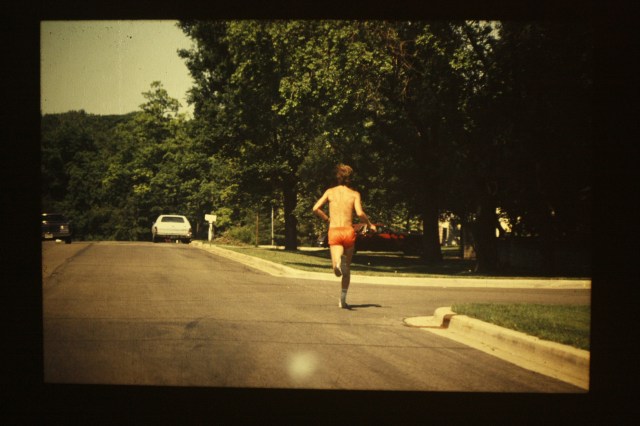
Chris Running 1978Out of college the world at first didn’t seem to care so much that I ran. But then the big running boom came along and prolonged the validity of running as a way of life. So I ran full-time for a couple years trying to become something that I didn’t really have the talent to be, national class, but felt that there was one chance in life to find out how good you really could be. And I did earn the top runner category in the Chicago Area Running Association 20-24 age group, which was no small thing in those days. And over a three-year period, I won plenty of races including 12 out of 24 in a single year. I set all my running PRs and learned where my limits lie. That meant there would be nothing to prove as a runner when I was 40, or 50 or 60.

And when that timeframe was done, I’ll admit it all felt self-indulgent to a degree.

But my own mother disagreed. It was time for some reality bites. “I think you did the right thing,” she told me. “You burned brightly.”

Mom had also consoled me somewhat through the year that it had taken me to heal from a breakup with a college girlfriend that I’d really loved. When I finally told her, “Well, I think I’m finally over her, ” she turned to me and said, “Well, I’m glad you didn’t marry her. She was a bitch anyway.”

I was stunned to hear my mother use that language. “Why didn’t you tell me when I was dating her?”

“Well, you were in love,” she said. “I didn’t want to hurt your feelings.”

Damn something anyway

I’d listened to a lot of Tom Petty and the Heartbreakers in that year it took to get over that girl. The album Damn the Torpedoes had come out around that time and along with Bruce Springsteen’s The River, the alternately heartachey songs and joyfully raised musical middle fingers on those albums helped me learn to adapt to the rest of the world. Honestly, that’s what music is supposed to do.

But to this day, the lyrics to Petty’s song Even the Losers resonate so true.

Two cars parked on the overpass
Rocks hit the water like broken glass
Should have known right then it was too good to last
Life is such a drag when you’re living in the past

Baby even the losers
Get lucky sometimes
Even the losers
Keep a little bit of pride
They get lucky sometimes

It was true. I’ve won some races in life and lost some too. And through it all I kept a little bit of pride and got lucky sometimes.

Thank you, Tom Petty, for giving us all the gift of your insight on pain and love.

You made the world a better place. 

The following passage is an excerpt from the LA Times story on the passing of Tom Petty. Worth a read for its inspirational value. The quote comes from a few weeks ago. I’ve also been listening to Tom’s Sirius XM program for the last year as he plays tunes he particularly likes. His commentary was always so insightful, and real.  

“The thing about the Heartbreakers is: It’s still holy to me,” Petty said. “There’s a holiness there. If that were to go away, I don’t think I would be interested in it, and I don’t think they would be. We’re a real rock ’n’ roll band — always have been. And to us, in the era we came up in, it was a religion in a way. It was more than commerce — it wasn’t about that.

“It was about something much greater: It was about moving people, and changing the world, and I really believed in rock ’n’ roll. I still do. I believed in it in its purest sense, its purest form. And I watched it commit suicide; I watched it really kill itself over money. That was painful, and I saw that coming, a long time before it happened. I wasn’t surprised in the least. I could see what they were doing wrong.

“But I think we still feel we’re on a mission for good. I’m so touched by … this year has been a wonderful year for us,” he said, adding with a laugh, “This has been that big slap on the back we never got. And it’s really felt good.”

Posted in 10K, 13.1, Christopher Cudworth, competition, cross country, running | Tagged , , , , , , , , | Leave a comment

Ironman Duty

Around the world there are people for whom Ironman training is a full-time occupation. Obviously they possess certain gifts of endurance and focus. As athletes we might be a tad envious of them. But truly, despite their triathlon prowess, they have to suffer like the rest of us.

Surely the lure of a glamorous Kona podium finish is supreme motivation. But we mustn’t forget that those who aren’t world class still have legitimate motivations. Even finishing an Ironman is, for some athletes, the height of an athletic career.

The cliche of all cliches about endurance sports goes like this; “Well if it was easy, everyone would do it.”

Crosswinds and headwinds

Which is how we found ourselves out on the open landscape fighting crosswinds all alone on a Sunday in October. Sue’s race is two weeks from and the welcome taper lurks. But there were still 100, then 80, then 60, then 40 and finally 20 last miles to cover. Then a brick to follow. She did it all despite conditions that were far from welcoming.

It all came on the heels of a great little 13-miler on Saturday in which she actually had to slow down to keep on race pace. “I see what he’s done,” she said of her coach’s advice.

That’s the principle behind all intense training. Do it hard enough and the racing will come as part of the progression, a product of having done the hard work before you ever get there.

Interstate training

90 miler

So she and I set out with the wind behind our backs in the Pumpkin Pie Ride, a sponsored cycling venture out in the fields around Ottawa, Illinois. The course crossed Interstate 80 so many times it became a joke. And for a while, we thought there were no hills in central Illinois until we dipped down into a river basin and back up again.

We’ve ridden that event four years or so, and each time the weather conditions have been different. That’s something you’d expect in early October, so it’s no shock. But at least yesterday turned about partly sunny if a little cool at the start.

Through forty miles we rode together, and I was in shock that I felt so good. Saturday had been an on-off pas de deux with the flu. My stepdaughter had it all week and a trace of it reached me in that way only the flu can accomplish. So it was touch and go as to whether I would ride on Sunday at all. You know the drill: a seemingly soggy gut with a slightly head-achey feeling all day.

Cursing the world

Two years prior I had a similar sensation the morning of the Pumpkin Pie Ride and it turned into a merciless slog. My legs were dead and all I wanted was to be done. I’d lost my temper out there a few times and was cursing the entire world. When we finally got home I dropped Sue at her house and drove home eager to get into bed. Then I pushed the button for the garage door opener and pulled into the garage with my Felt bike still on the rooftop carrier.

Not a good day. But I wasn’t thinking about that much, I was so relieved and happy to be feeling good. In fact I was entertaining the idea of riding the whole way with Sue rather than turn back for the 65 mile course.

Communication counts

Well, the way things worked out, I should have at least communicated more. Because I meant to go back but made the mistake of following the wrong set of colored markers. Thus I wound up riding a 25-mile loop on top of the 45-miles we’d already covered. Somewhere along the way I stopped and looked at the map on the phone and went, “Huh, I screwed up.”

But I was riding like a flying SOB catching people, and I wasn’t going to quit now. One group of three guys hung out there like the breakaway from the peloton. I could see them for several miles and deduced they must be going the same pace that I was. So I dialed it up and finally pulled even. Etiquette demands that you communicate at that point. So I had a short chat right before a road turn and then went off the front. I was a peloton of one.

Ironman Duty

Meanwhile Sue was likely doing the same route, only slightly behind me. I’d left before she did from the rest stop, and we were riding essentially the same pace the entire day. So I arrived back at the rest stop a bit miffed that I’d screwed up but proud, at the same time, that my own mental snafu now required that I ride the last 22 miles back to the YMCA in town.

It was a tough, tough ride going east. The winds were S/SE the entire day, and they were strong. My ears roared and the hard riding I’d done the last 25 miles caught up a little bit. Part of me regretted that I had not just stuck with Sue and maybe done the loop with her. But the fact of real Ironman training is that much of it needs to be done alone. Come race day, you’re all you’ve got. That much I do know.

Grub and ride

So she was out there working her own way through the wind for one more loop while I made the return trip to Ottawa thinking about the fact that I was suffering, to some degree, right along with her.  To make sure that I did not run out of energy, I was grubbing through my foodstocks like a raccoon in a dumpster. And it worked. In fact the last three miles reached some relative shelter and I hit the gas going down the super smooth, newly blacktopped road into town.

But back at the finished I looked at Strava and it said, 88.2. So I hit the RESUME button on Strava and rode back out a mile and back to make it an even 90. Longest ride of the summer. See, in my book, I get a 10% AARP discount for a Senior Century.

That ride was hard for me, but Sue was out completing Ironman Duty. She had another 13 miles to do, plus a four-mile brick at the finish. So I hung out with a coaching friend that had ridden Sunday as well. We grabbed a free beer at Tangled Roots, the Ottawa brewery that gave every entrant a couple coupons. Then Sue texted that she was done with the ride. She was feeling a bit testy after 104 miles in the roaring wind. Every Ironman Sherpa knows that there comes a time when a heavily trained Ironman athlete runs out of patience with the process. You simply can’t do all that swimming, riding and running without getting a bit cranky at some point.

“You okay? How’d it go?” I asked via text.

“Fan Fucking Tastic,” she chortled back. Then she headed out for her four mile run. We finished our beers and met her when she came trotting back. Both of us gave a loud cheer. She raised both arms and flipped us the bird with a big grin on her face.

Party on

Then Sue and I gathered up our stuff and drove northeast to Naperville to attend a send-off party for a triathlon friend that qualified for Kona. There were luau trappings and pizza with pepperoni and pineapple on it. One piece was enough for each of us, and I had one Lite beer as well. It was time to get home.

As we pulled into the driveway, Sue was feeling a bit flu-like. I knew the sensations. “You go on inside and get ready for bed,” I told her. “I’ll take care of the bikes and bring in the gear. ”

That the job of the Sherpa when the athlete is tired. Take care of the stuff the Ironman in training is too tired to do. See, Ironman Duty has a lot of different meanings. All of them count.


Posted in IRONMAN, Uncategorized | Tagged , , , , , | 2 Comments

Where Playboy converged with reality

playboylogo.jpgIn the Age of Naked Selfies and hacked celebrity smartphones, it is hard to recall the time when nudity was dispensational, handed out like wafers at a Catholic communion ceremony. For a while, that right was owned by the likes of Playboy and the skin magazines that evolved from it. Penthouse came later. Then Hustler. There were obviously others.

My dad kept his Playboys up on a shelf in his closet. I’d sneak them down and pore through the nude photos. Mostly I wanted to know what women were really about. How did their breasts work underneath those clothes, inside those bras. I was utterly fascinated by all of that.

As a budding artist, I’d take tracing paper and place it over those photos to copy the lines of those women’s bodies. Somehow the act of making those drawings was as great a turn-on for me as looking at the photos on their own. Perhaps it was my way of owning those images, of bringing them into my head.

Then I began to copy the photos in real drawings. Some of these took hours to execute. I’d set the centerfold out on the table and make elaborately detailed pencil drawings of those women. Sometimes I’d have to scramble and put the sketchpad and magazine away if a family member was headed toward my room. I still have a few of those drawings from my early teens. In many ways they were lovingly executed.

I know a woman who modeled for Playboy lingerie editions. It’s a funny thing, but I don’t think about her naked when we meet. She’s smart, funny and behaves like a sister with me. She’s also an extremely talented artist. Her life has been full of challenges that most people can’t imagine, but her having posed nude in her youth has nothing to do with them.

Her modeling career was not that long ago, but things have massively changed since she posed before the Playboy cameras. Now there are women and men who take their own photos and post them on Reddit or other Internet sites. Some of these people have thousands of followers. Some do it for money. Some do it for self-esteem. Some do it because they’re bored, or horny, or drunk, or all of the above.

1960playboy-magazine.jpgSome credit for these freedoms must come from Playboy. One can argue all day about whether the freedom of nude or sexual photos is good for society or for the soul, but let’s face it, things have not really changed that much in the last 60 or even the last 2000 years.

Nakedness and sexual stimulation is chronicled without apology in the bible. In some places it is condemned. In others, it is celebrated. Yet the repressive side of religion says that nudity is only acceptable within the boundaries of marriage, and that sex is reserved for the confines of matrimony. Conservative Christians blame the sexual revolution for the breakdown of marriage as an institution. Others would argue that male discovery of the clitoris is what might save it.

Hugh Hefner came along to challenge all that. But it’s not like he actually invented adultery, sexual promiscuity or the marketing of lust for profit. Yes, he treated women as objects to a degree, and some contend he exploited women as a whole. Those arguments are hard to defend these days as women have either learned or chose to objectify and exploit themselves.

thong bathing suit.jpgI say the process has gone a bit further than that. As this image copped from a Pinterest site illustrates, the sight of buttocks in public is no longer such a shock. They are just buttocks. The clothing women wear now, even athletic wear, is form-fitting and leaves little to the imagination.

But, it’s like this: “Oh look, that woman has an ass. Imagine that.”

Deal with it, in other words. The recent repressive tiffs over the idea of women wearing “yoga pants” in public was based on the idea that men can’t control themselves when confronted by the sight of a shapely woman. Our repressive Vice President Mike Pence will not even allow himself to dine with a woman alone. It doesn’t matter what she’s wearing. It matters that she’s a woman, and somehow he is threatened by his own weakness.

That’s a sickness of the mind. A far healthier mind should be able to deal with women dressing in almost nothing, like they do at the beach, and not lose control of the emotions or succumb to wanton lust. Learning to be discreet and respectful is a sign of maturity. Apparently some men never gain that skill.

MIke PenceAnd that’s a problem, for sure. But as the Mike Pence issue illustrates, it’s not what a woman wears or does not wear that is the problem. It is the repressive need to control male insecurities and fears that religion affirms in men. Even the Genesis story in which Eve leads Adam to temptation is an example of chauvinistic male fears.
By contrast, the honest removal of secrecy and the fear of the taboo from regard of women’s bodies is a healthy thing. It has taken the sexual revolution a while to get there, but the increasingly honest regard for women’s anatomy is a product of breaking down cultural taboos that depend on the dichotomous view that nakedness is naughty and that righteous human beings need to hide from it.

Europe and other nations are far ahead of America in this regard. Our country pumps out titillating imagery, for sure. But in Europe you can actually got to a nude beach and naked bodies are simply not that big a deal. That’s maturity. That’s honesty.

Of course some athletes can get too relaxed about the whole nudity thing. One of the warnings issued by our local bike club about dressing outside the car during criterium weekends is that riders can get tagged for public nudity if the neighbors or the cops see you changing your bike shorts and displaying those white ass cheeks for all to see. The Velominati Rules don’t really cover that issue, do they? Be discreet.

IMG_4123Athletes in endurance sports get used to the sight of the female nipple popping out from a running top or an ass cheek protruding from shorts. So, what! We bear witness to asses and crotches in all sorts of gear. A little camel toe on a gal or an outline of a dick in bike shorts just isn’t a problem as long as it isn’t a chronic and therefore distracting condition.
We’re all just bodies trying to go faster, longer, harder. Wait, that sounds a little sexual doesn’t it? So be it. This whole idea that we have to hide from our own sexuality is absurd. Sex is frankly one of the drivers of the human spirit. Nudity is the natural condition of the human body. And the United States of America is still in the grips of uptight people who deny all that on grounds that they’re small minds are too hard to control.

Now that 99% of the population (even those who won’t admit it) has a naked selfie hiding on their smartphone, it’s time to admit that Hugh Hefner was never really the problem he was made out to be. That problem is prurient curiosity. Hugh Hefner somehow knew that a rabbit was a good symbol for that. And he pulled the rabbit out of the hat.

Playboy has now converged with reality. It is no longer the provocateur it once was. In fact it seems tame in some ways. But along with normalizing sexual orientation and the existence of transgender people, reality has a way of sneaking up even on those who cover their eyes and yell NO NO NO at the top of their lungs.

It never works. But it sure keeps the world from being honest about itself.


Posted in Uncategorized | Tagged , , , , , , , , , , , , , | Leave a comment

Not the retiring type

Unincorporated MeIn the middle of the first mile of a 4.5 mile run the other morning, my body was not exactly cooperating. Everything felt sluggish and slow. In fact I was trundling along at 11:00 per mile pace. Things eventually improved, but not by much. In the meantime, I was wondering to myself, “Will I always do this?”
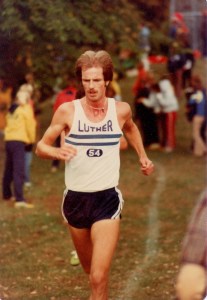
It’s hard to look ahead ten years and know what your body and mind will give you. I do know that my competitive instincts have morphed quite a bit from those days in my early 20s when I could not stand losing to anyone. I still lost at times, but not without putting up the grandest fight that I could.

Working it

Frankly those athletic instincts have transferred over to cultural and civic debates. And sometimes I make enemies or get Unfriended for opinions that are competitive toward lazy thinking and opinions borrowed from false or overly safe spaces. I don’t think I’ll ever retire or withdraw from that type of debate. I’m not the retiring type. I’m writing a book titled Sustainable Faith that follows up on a booked titled The Genesis Fix, A Repair Manual for Faith in the Modern Age. That was published ten years ago in 2007.

Nor will I likely stop working for a living. In 2013 I did take a “break” of sorts from the 8 to 5 world. My late wife had just passed away and several months later, the copywriting gig that I’d landed with an Internet marketing firm was withdrawn. So I launched my own little company and won some more contract work. In some respects, it was much like being “retired” in the sense that I worked from home and did not have to commute, or visit an office every day. Nor did I have to or engage in eight-hour teambuilding exercises that made you want to run from people at any cost.

False and true inspirations

Sorry to be a little cynical, but much of the corporate world is a tryst with inanity. Take a long look at your feed on LinkedIn some day. All those phony damned inspirational quotes and pre-produced memes about teamwork make me want to gag.

Having spent years in competitive athletics and many more years collaborating in the corporate and non-profit world, I know a few things about teamwork. It’s no more complex than getting along with others (which is not always easy) and asking their opinions before making plans. Then you come to a consensus agreement on the right course of action and put things in motion. And if that fails, or people fall down on their end of the bargain, or the committee idea turns out to be just BAD, you goddamned do it yourself so that it gets done. That’s called initiative. I don’t think anyone should have to apologize for that. One should never retire from getting things done.

Individual grades

Because it all still comes down to individual initiative. I recall an afternoon training with cross country teammates in college. We were doing quarter mile hill repeats on a 7% grade in preparation for a hilly meet up at St. Olaf, where the course climbs a big hill on campus. During one of the rest breaks between intervals one of my teammates trotted over to say, “Cud, you really need to be ready for this weekend. I’m hurt and we need you to be the leader.”

His toe was aching from a nagging running injury, you see. He knew that he might not be in top form, and I was running well in the early season, usually second man on the team. Yes, my teammate was putting pressure on me. That’s also what teammates do. Push you when you need a push.

Outcomes

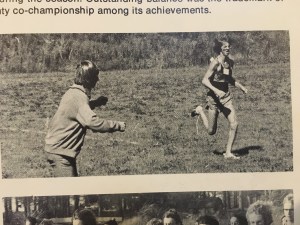
Cudrun

My teammate’s green spike is visible just behind my right thigh. We combined to help conquer.

As it happened, that teammate and I wound up placing sixth and seventh overall in that meet. We teamed up at 3.5 miles and started passing people. With 300 meters to go we spied the third man for the team most likely to compete for the title and my teammate turned to me and said, “Let’s go.”

There was not a question in that moment. We both sprinted past him, one on one side, one the other. Then we closed the gap between us and finished the sprint to the chute. Our team won the invitational.

There is a symbolism to that kind of effort that lasts your whole life. I’m sixty years old, and I’ve long come to realize there are choices in life to be made. One can settle for whatever you see just ahead of you, or you can make up your mind to finish with all you’ve got. This is what I learned during those couple years of ‘semi-retirement’ while recovering from life events that were hard and long. I kept doing the things I love. The writing. The painting. The running and riding. And the loving. My children. My friends. My faith. And I found love again with a woman who respects all of that, and more.

I’m not the retiring type. Never have been. Never will be.

And that is all.

Posted in cross country, running | Tagged , | Leave a comment

Drawing on years of experience

Mountain Runners.jpg

Drawing of mountain runners by Christopher Cudworth

I’ve been a runner basically since I was born. Skinny. Energetic. Can’t sit still. Love to run.

I’ve also always been obsessed with art all my life. Sketching. Painting. Love to draw.

Along the way in life, these two interests converged. I love to draw runners.

Often it is in moments of idle time that an idea comes to mind. Such was the case yesterday during a meeting. I clandestinely drew a pair of runners up in the foothills of a mountain range.

That image draws on experiences of running in the mountains of Colorado during a pre-season cross country training trip. The next year we traveled to Wyoming to train in the Grand Tetons and Yellowstone National Park.

The romance of those trips exceeded the relative comfort. Without altitude acclimation, I well recall training with a thick headache those first couple days in the mountains. We never ran easy either. It was hard hard hard up the hills and hard hard hard down them. That’s how we ran all the time. Even in the mountains.

18 mile journey

At one point we left from Jenny Lake in the Grand Tetons to run up the trail to Lake Solitude. That was 6000 to 9000 feet. Thus it was a 3000 foot climb during a climb of nine miles, and a 3000 foot drop coming down. I don’t know which was harder. I think the latter.

At Jenny Lake, we all paused a bit, stuck our toes in the frighteningly cold water and turned around to run back down.

We had no water to drink the entire way. That’s how we did it back then. And we knew better than to drink from a stream. There were signs that warned of giardia, the microbe that can make you deathly sick, on all the trailheads.

Eighteen miles at altitude with nothing to drink is a pretty rough run. Yet the mountain air carried us through with its clarity. The excitement of running those trails through deep green woods never really faded. Well, actually I cried a little with about two miles to go. My thighs were locked tight and killing me after seven curling miles of descent.

I was so glad to get back to camp that day.

Waiting for you

My wife and I are headed out to Colorado for a long weekend coming up in October after her Ironman. This is a bit like a little honeymoon, so we are not going to do any hard trail running together. That’s not our goal. But I may find an hour to give it a go with a couple friends who live there when she’s finishing up a work project near Denver. The locals always know the best places to run.

It’s also true that the mountains are always waiting for you. Sure, they don’t really care whether you live or die, so you have to be smart and careful out there. But even mountains aren’t eternal. They are either pushed into being by giant tectonic movements or shoved into the sky by deep volcanic forces. Their fate from then on is to weather and crumble and deteriorate. The earth will somehow absorb or replace them.

It is ours to encounter mountains in their present state, and absorb their power for all we’re worth. Then we draw on those experiences to understand humility and wonder in our real lives.


Posted in cross country, running, trail running, triathlete, triathlon, triathlons | Tagged , , , , , , , , , | Leave a comment

Doritos patriotism makes its stand

Two weeks ago while grocery shopping at Woodman’s, the Employee Owned megastore with enough space to land a B-52 in the meat section, I turned the corner after picking up some La Croix water to find an entire aisle stacked near to the ceiling with Doritos and snack chips. The sign at the end of the aisle said, “See you on Sunday.”

Dorito Lane

The allusion was clear. Doritos are the Food of Choice for watching NFL football games. And what does watching football games involve? Mostly sitting on the couch. Eating. Drinking. Yelling at the screen. Watching powerful men mash into each other as if life itself depended on it.

Supposedly, this is America’s Game, a part of its traditions. And as such, the typical NFL game starts with a rendition of the National Anthem. But here’s a dirty little secret about those displays of patriotism. They have been long sponsored by the US Government. 

Brought to you by the military-industrial complex

As documented on ThinkProgress,org, a progressive fact-finding website, “As recently as 2015, the Department of Defense was doling out millions to the NFL for such things as military flyovers, flag unfurlings, emotional color guard ceremonies, enlistment campaigns, and — interestingly enough — national anthem performances. Additionally, according to Vice, the NFL’s policy on players standing for the national anthem also changed in 2009, with athletes “encouraged” thereafter to participate. Prior to that, teams were not given any specific instructions on the matter; some chose to remain in the locker room until after opening ceremonies were completed. (It’s unclear whether the policy change was implemented as a direct result of any Defense Department contracts.)”

All those NFL pregame antics are part of a marketing scheme for the military-industrial complex. In that context, the playing of the National Anthem is no different than a blasting out a commercial for bags of Doritos. The NFL is the most commodified enterprise on earth. What else explains the fact that Super Bowl commercials are more popular to millions of viewers than the game itself?

Doritos Patriotism

doritos-nacho-cheeseWe live in the age of Doritos Patriotism. The entire national dialogue about what matters has been commodified. People can’t tell real food from overprocessed junk any more than they can tell the practice of free speech from jingoistic patriotism. 

But when NFL players “take a knee” during the opening game ceremonies, they are doing something real and honest. They are kneeling in protest of the brand of patriotism manufactured for American consumption with no more thought than plunging a hammy fist into a bag of Doritos.


NFL players are learning the hard way they are part of the consumable goods the league is all too happy to chew up and spit out when their usefulness to a team or a league is expended. Sure, there is wealth to be earned as a pro football player. Potential fame and glory to be gleaned from a stint in the NFL. But appearances are deceiving, and the price of participation can be massive. In fact, three out of four players who make it to the NFL do not profit from the experience. Instead, they wind up broke. The Doritos bag of pro sports is notoriously quick to empty.

 “According to a 2009 Sports Illustrated article, 78% of National Football League (NFL) players are either bankrupt or are under financial stress within two years of retirement and an estimated 60% of National Basketball Association players go bankrupt within five years after leaving their sport.”


Not so fast

So it is absurd that people including the President of the United States are griping about “wealthy” pro football players kneeling during the national anthem in protest over cultural injustice. In fact player gripes may be far more legitimate than surface issues such as criticism of the protest movement started by Colin Kaepernick. When we consider the often ephemeral nature of football wealth and the physical and mental costs of the game to its participants, one could logically draw a line between NFL football and the original definition of indentured servitude:

An indentured servant or indentured labor is an employee (indenturee) within a system of unfree labor who is bound by a contract (indenture) to work for a particular employer for a fixed time period. The employer is often permitted to assign the labor of an indenturee to a third party.

Wow, that sounds a lot like the NFL Draft, where players are marched out like chattel on a slave-trading platform to be ogled by owners, coveted by team managers and tossed into hordes of chortling fans eager for the services of another young stud to push the ball up and down the gridiron.

Then, when the players are assessed by value, they are traded almost without approval from one team to another. That almost exactly mimics the assignment of labor of an indenturee to a third party.

“The consensus view among economic historians and economists is that indentured servitude occurred largely as “an institutional response to a capital market imperfection.”[1]

DoritoSociety further reflects the commodification of NFL players with its fixation on so-called Fantasy Football leagues, in which millions of ‘third-party’ owners trade upon the performance of pro athletes to compete with other “team owners” doing the same thing. The players themselves no longer matter, nor the teams. It’s all about numbers, statistics and the commodification of the NFL to raw impulses anchored in gambling. This is the junk food of the economy, the Doritos of ‘sin tax’ revenue from gambling and Internet-fueling fixes of porn. It’s all very addictive yet fills the American gut with a weird sense of guilt wrought by the bloated feeling that one can never be truly sated. Like bloated diners at a Roman vomitorium, the American populace keeps feeding itself on BaseballFootballHockeyBasketball in a never-ending bag of Sports Doritos that never empties yet never quite satisfies.

See You On Sunday. It is the religion of consumption. More important than family, God and country to some. And that’s why so many people can’t stand the idea of actual football players wrecking their Dorito House of Cards.

Dehumanizing influences

The corruption at the heart of all this is not just racial, it is the dehumanization of entire populations of individuals. That’s why Colin Kaepernick kneeled in the first place, because mistreatment of black Americans in American culture is deeply ingrained. It is bound together with America’s long (yet recent) arc of history that includes slavery, indentured servitude, Jim Crow laws, the KKK, lynchings, workplace discrimination and outright theft of black culture by whites determined to leverage ownership of black contributions for their own profit.

It was fifty years ago…

Tommie SmithThat’s why black track and field athletes Tommy Smith and John Carlos raised their fists in protest while the national anthem played during the Mexico City Olympic Games back in 1968. They were directly protesting an indentured servitude of black athletes to a largely white-dominated culture that did not accord equal rights to black citizens back home. They were pointing out the hypocrisy of a nation that calls itself the bed of freedom when for many who lived there, it was profoundly false.

A lot of Americans seem to want to forget the origins and outcomes of the civil rights movement. They want to go backwards instead of forward. These are the same people who blame President Obama for “dividing the nation” when it was nothing but stubborn racial prejudice that did so.

So when the President of the United States threatens NFL football players by calling them “son of a bitches” in a public threat claiming that they should be fired for their ‘lack of patriotism,’ he fans the flames of  people who either choose to ignore, oppose or generally fear what true equality means in America. Trump is commodifying the NFL protests to make ugly political points with people unwilling to consider the idea that America is far from perfect. It has never been perfect from its inception, but the process of perfecting America often has required protests the likes of which see football players kneeling on the side of the gridiron while the national anthem plays.

Matters of respect

As for Donald Trump’s brand of patriotism, it is colorful perhaps, but fake. Tasty to his base, but poison to the system.

Of course none of this should come as a surprise from the man who once made his living bullying people on his Apprentice Plantation by whipping them into submission with the words, “You’re fired.” That’s about as un-American as you can get. But somehow half of America seems to think that this Dorito president knows something the rest of us don’t.


Posted in track and field, Uncategorized | Leave a comment