Spoken and unspoken words

Riding One.jpgWe headed out into the humid, hot weather on bikes this past Saturday. At 6:45 a.m. the surface of our sunglasses fogged over with moisture. The day was clear but the road ahead looked hazy.

We gathered momentum in any case, and were trekking along at 20 mph when my rear wheel made a strange “THUNK” noise and I rolled to a stop. Broken spoke. Second this summer. Sue spun around after I called out to her, but she still had 96 miles to ride that day. So she rode north and I sat down in the grass to wait for her daughter to come pick me up.

Thank God for cell phones. I tagged my location and she drove right to the spot. “You guys came a long way,” she observed. “It took me twenty minutes to get here.” That’s because we were exactly twenty miles from home.

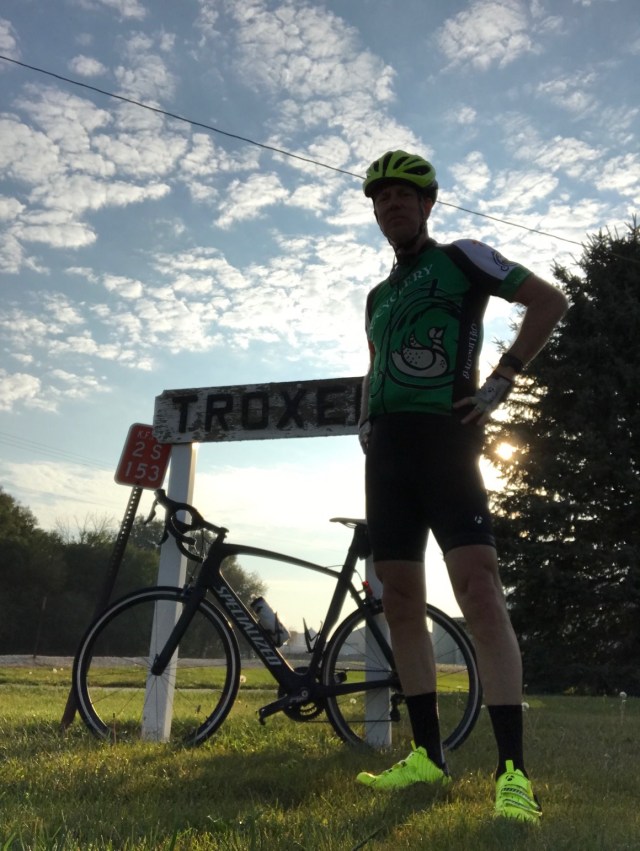
I was disappointed because my plan was to support Sue on a 112 mile ride by joining her for 80 miles. So I sat there in the shade with my bike leaned up against the town sign for Troxel, an unincorporated farm village that forms the juncture of two country roads on the Illinois landscape.

Riding TwoA work crew in that grove of trees was toppling a big old willow while I sat there waiting for the ride home. The saws tore into the trunk with a loud whine and the tree finally cracked and fell.

That is just one of many trees I’ve heard hit the ground over the years. One was a massive oak in a savanna habitat near my home. I was birdwatching on a footpath in a burr oak woodland when a familiar old oak tree that I knew suddenly split at the base. The entire enterprise of bark and wood and limbs lurched over and fell to the ground. The loud rush of wind through the leaves made a weird roar. Then the tree bounced once, and it was over. A field of debris had whooshed out from beneath the canopy, and then the woods were silent again. I stood there considering that tree’s history. At 150-180 years old, it likely sprouted somewhere back before the area was settled. Before farming eliminated the prairie. Before white colonization had even started. It grew through fires when natives burned the grasslands and when lightning cleared them also. It built thick bark from the get-go, and grew tall and wide over more than a 100 years of sunshine, rain, snow and drought.

Now its functional life was over, yet it’s next stage in the journey was still to come. It would slow rot, and holes would show. Ground creatures large and tiny would take over. And after another 50-100 years, that tree would be soil again. A perfect end. And somehow worth emulating.

But for now, I wanted to keep moving.

Spoken words

Back at the bike shop that morning, I discussed the problem of my breaking spokes. The mechanics at the first shop did not have a replacement. But my best friend and mechanic that I contacted by phone that morning had a different warning. “The wheels may be worn out,” he said.

Two seasons? That happens? So I asked for a second opinion with the bike shop where I stopped to check on their spoke supply.

“How much do you ride?” the bike shop wanted to know. “I suppose six thousand miles in two seasons,” I said. They shook their heads resolutely. “It can happen with these higher end bikes,” they agreed. But my wife was having none of that when I texted with her during a break in her ride. “They just want to sell you wheels,” she warned.

Back ordered in black

So I called a different shop and the sales guy there said, “We probably have that spoke here somewhere.” I asked if he could check because I was 15 miles away and did not want to drive over for no reason.

280MM j-spoke in black. Not bladed. He checked as I waited on the phone for three minutes. He came back on and said, “Nope, we don’t have it.”

I was running out of Specialized dealers that carry Fulcrum wheels. There was still one local shop left to check. So I drove three miles upriver to the bike shop named Sammy’s, but it was not yet open. That meant spending a bit of time at the Arcedium coffee shop while the 20 minutes until opening whiled away. Then I called over. The mechanic there quickly checked his stock and said, “Yup. Got it.”

I hauled the whole bike into the store and the mechanic snagged my Specialized Venge without a word. He took a look at the spoke and nodded. His mechanic buddy kept working on the new Colnago he was putting together. Neither said much the entire time. Doesn’t take much talking to wrench bikes. The conversation takes place between the mind and the parts going together.

Apparatus
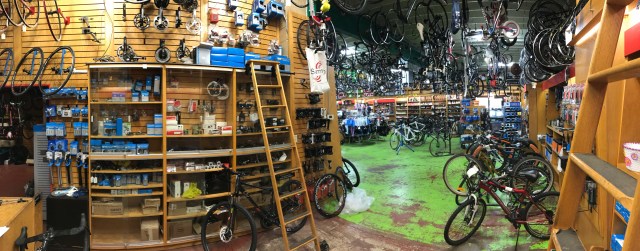
Sammy's bike shop.jpgI tried making some polite conversation that first minute, but the mechanic was completely focused on fixing my wheel. He popped out the old spoke and stuck in the new one. Threw it on the apparatus to true the wheel and worked his way around tightening the spokes. Then he slid the wheel back on the bike and spun it into motion. Perfect.

While I was waiting on the work, another rider with a tri-bike clacked into the shop under a sheen of sweat and an air of eagerness about him. My mechanic walked over to look at his bike, patiently listened to his story about rubbing brakes, and told the guy to set his bike against the wall. This rider was obviously a regular customer who competes for the store team by the looks of his kit. The mechanic nodded and said, “Let me finish this and I’ll get to yours.”

The life of a bike mechanic is full of such interactions.

Same-day service

I was somewhat surprised by the entire scene. Honestly I anticipated leaving my bike to come back the next day if necessary. I do not expect immediate or same-day service under any conditions. Yet it happens with some regularity. It is nothing to take for granted.

I do business with a number of local bikes shops. I try to spread my dollars around. The Bike Rack in St. Charles did a fitting for me recently. Their guy Lance did an excellent job, and my riding this summer has improved as a result. My friend Jack also works at that store. His cycling knowledge is encyclopedic after 40 years of competition and training. But recently he’s been moved by collaborating with the Creative Mobility side of the business, working with the Wounded Warrior Project and Project Mobility, for whom The Bike Rack recently conducted a fund-raising ride.
Riding FourMy point here is simple: bike mechanics aren’t just automatons who wrench your bike and go to sleep sucking on grease-soaked thumbs to dream about the perfect thread of a brake or drive train cable through a frame. They are, just like physician’s assistants or nurses in the medical world, some of the most knowledgeable and concerned people you will ever meet. They are the doctors for your bike. Don’t take them for granted.

Spoken with a tip

So I pulled out $15 from my wallet as the mechanic walked the bike back up to the counter to enter the charges. I slipped him the money and said, “Here, this is for you.”

The actual charge was $27. Yet even with the tip on top of it, that was a bargain for his services, especially on such short notice. But honestly, this has happened on many occasions in my nearly two decades of riding. As a frequently mechanically challenged rider, I am appreciative of those who work hard and can diagnose problems or fix them on the spot.

Kudos to our local bi,e shops at Prairie Path Cycles, Pedal and Spoke and All Spoked Up. Mill Race Cyclery , Spokes, and Performance to name just a few. All of these stores as well as bike shops across the country do so much to make riding a better experience. Sure you can buy stuff cheaper online but I still believe in the value of supporting local bike shops any way that I can. So I paid for a couple pairs of bike shorts, other kit gear and arm sleeves. I buy fuel and food and drink mix at these shops. And of course, I bought my bike through a local dealer who got me a very good value on a top-level ride.

Favors repaid

But now that I think about it, I owe a few other mechanics a few bucks for service. One even restored my Waterford to riding condition. That was no easy task. Another solved my wife’s drivetrain issues. So I’m going to slip by with some unexpected dough for their services. Maybe just slide it to them with a smile, and no real spoken words if you catch my drift. Just a “thanks for your help this summer” and a President on a $20 bill.

It’s worth it because the conversation and relationship you have with your bike is a product of respect shown and received.

Yet there are some spoken words to be said when riding. There’s the “goddamnit!” when something a spoke breaks far from home. But there’s also the “Thank you God” when you’re back out on the road as I was yesterday, riding 30 miles after a five-mile morning run and averaged 18mph despite some difficult winds. All thanks to a bike mechanic who takes his job seriously and did one helluva favor fixing the spoke on short notice.

Unspoken. And spoken. It’s all we really have to say thanks. 
 

Posted in Uncategorized | Tagged , , , , , , , , , , , , , , , , | Leave a comment

How do you view yourself as a runner?

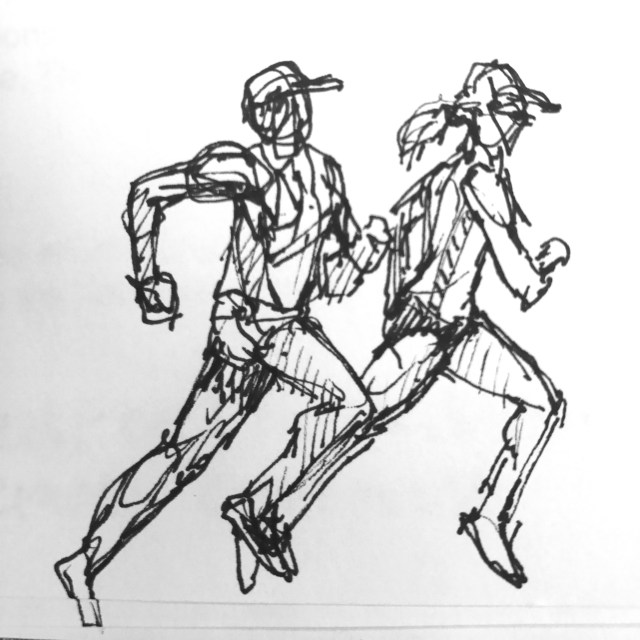
Recently I did a little sketch of a male and female runner together. While drawing it, I was thinking about the runners I know that have the best form, at full speed. As a lifelong artist, I have always enjoyed doing sketches of runners, and can recreate good running form through all phases of the running stride.

Runners.jpg

I envisioned these two runners finishing a race at full stride. Both exhibit a slight forward body lean. Both are using their arms in constructive fashion, bent 90 degrees at the elbow and depending on the relative physique and strength of the runner involved, slightly different arm carriage as the wrist reaches the midline of the body at times.

While I’ve coached some runners over the years on form, I’ve also watched certified run coaches put their proteges through running drills to teach them “better” running form. Sometimes these runners get a little too mechanical in their form. They are taught not to vary it too much from what their coach might consider the “ideal form.”

That’s both good and bad. Sometimes running conditions, especially when competing on hills or trails or roads with a steep camber can require you to adapt your form to conditions that basically throw your form out of whack. There’s nothing wrong with that! You don’t have to hold picture-perfect form when you’re trying to deal with odd conditions or even the elements.

There are times, for example, when it truly pays to cut your stride length down. Cold conditions can require that, especially if you’re caught out there in shorts with a cold wind or chilling rain. Trying to use your full stride in those conditions can result in cramping of calf or hamstring muscles. So you compress your stride, increase the stride rate and go into a speedy shuffle. Make do with what you have.

But you still need to understand the basic mechanics of your ideal stride in order to know what variations are acceptable, or correct.

When you run past a full-length reflection of yourself in a window next to a city sidewalk, do you take that opportunity to glance at your form? You should. Because it’s not vanity. It’s practical feedback.

  • It can be enormously helpful to watch your stride in real time for 25 meters. Study how you plant your feet, what your knee lift is like (or not) and how you carry your arms.
  • Look to see if your arm carriage is “even.” Is one arm coming up higher than the other? That can indicate a leg-length discrepancy (one side longer than the other) or conditions related to hip weakness or imbalance.
  • Also, take the time to find a window you can approach directly while running. Look for indicators in arm carriage. Does one arm swing out from your body? That can be a sign of leg-length differences or hip/pelvis imbalance.

Of course, some of this can be done as well using a smartphone to record your running motion. If you have never seen a video of yourself in motion, it is high time. It’s quite revealing.

The end goal, however, is to build a “vision” of yourself that is both instructive in how to run and confidence-building when you need it most. A runner that knows how to get into the most economical and efficient form when fatigued is a far more confident runner over the long haul.

It’s not vain to study yourself in a reflection or to make a video of yourself running. It’s quite the opposite, because most of the time the first time you see a running video of yourself in motion it is humbling, not some ego trip.

In any case, don’t be shy about it. Learning what you look like in motion can help you run more efficiently, identify quirks that indicate body flaws or running mechanics issues, and help you think all the way through the process of finishing strong.


Posted in running | Tagged , , | 2 Comments

Knowing what’s really “good for you”

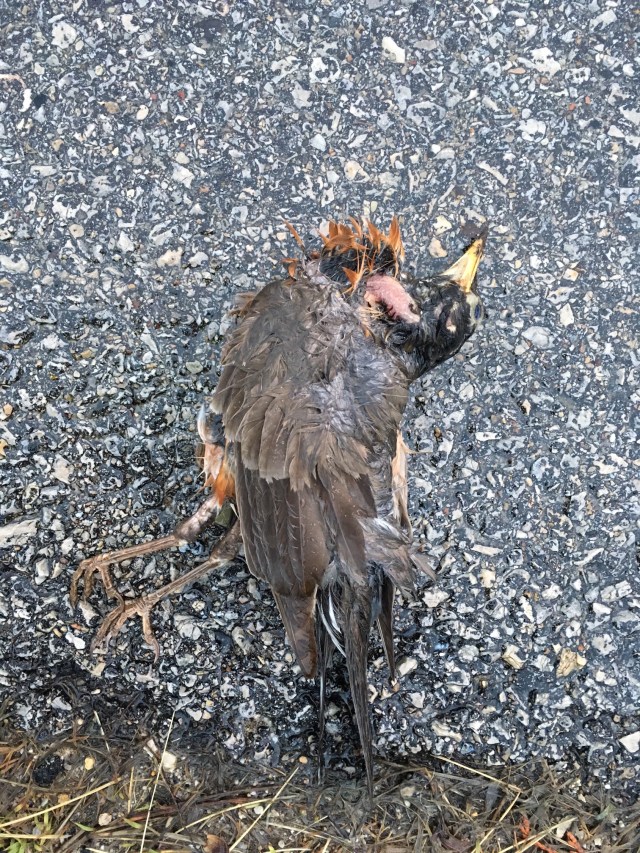
RobinI suppose we all go through a weepy teenage stage of sorts. That period in life when we feel like wounded birds bleeding complaint and laziness from our ears. Then we retreat into music of one type or another, and it takes over our lives. Nothing else matters but hearing the darkest tune we can find. The one that seems to express our hormonal lamentations or lusts.

Teenage angst is not exactly the brand of remorse and dread that adults suffer when the bills are due and the paychecks are short. But that does not mean that teenage thoughts are not legitimate. Nor do they necessarily lack insight.

“Good for you”

Even before my son became a teenager, he shared some potent insights on what he’d already learned about life. At one point, probably ten years old, my son turned to me and said, “Dad, did you ever notice that when people say “Good for you,” they’re usually being condescending?”

Yes, my ten-year-old said that. He’s largely correct. The world is full of patently facetious, largely inattentive people who can barely manage to acknowledge real achievement or engage in meaningful dialogue.

I felt that pattern at fourteen or fifteen years old. The draft of insincerity was all around me. Even amongst your friends, there are little competitions for approval going on. One-upsmanship. Jealousies. Control issues. 

Half-wheeling and one-stepping

FROOME-Christopher001p-630x420In cycling, we call that one-upsmanship half-wheeling, the practice of pushing the pace by riding half a wheel ahead of all others.

In running, we call it one-stepping, the habit of pushing the pace by refusing to run next to someone, but always one step ahead.

Even Chris Froome pulled the ultimate Half Wheel when he sprinted on the final stage to bump out a Green Jersey points competitor in the Vuelta Espana. Stage races have a tradition of not attacking in GC category on the final day, but Froome stole a potential honor from a fellow competitor in the last 100 meters of that race. That was a prick move, if you ask me. He’s hardly a sandbagger, but it seemed petty and small. As if Team Sky had not gotten enough attention. Winning the points jersey might have meant millions to that second place finisher. But Froome snatched it from him, for what reason?

As my son long ago pointed out, stuff like this happens in conversation every day. If someone doesn’t really want to reveal their own insecurity or grant you the favor of a genuine compliment, they are likely to extend faint praise, including that seemingly nice compliment “Good for you.” It’s their way of putting you in your place so they can feel like they’re staying one step ahead of you. This is a socially acceptable way of dismissing someone without going to the effort of actually inquiring about what they’re talking about.

There’s not really much we can do in this world to change that brand of insincerity. After all, people aren’t necessarily trying to be offensive. And these days, it has all taken on a different form. If you bring up a topic in conversation, or share some nice thing that happened to you, someone might is just as likely to smile brightly and blurt, “That’s great!” Then bury their eyes back in their smartphone.

This is the digitized form of the condescending term “Good for you.”

Slights and angers

At the age of fifteen there were also obvious insults and social slights going on all the time. When I was fifteen, if a girl didn’t grant you the time of day even when you were being nice, or turned her head away to talk to a real jerk rather than acknowledge you, the world seemed unjust. Rather than figure out it was just people being jerks, I took all that very personally. It made me angry, and combined with some not-so-good-for-you issues at home, it felt like teenage hell.

Yet over the years, I’ve gathered that being a young woman from the age of about 10 to the age of about, oh, let’s say 27 years old… is pretty much a sucky proposition. Guys can be idiots to each other, but Tina Fey was right: Girls really are mean to each other.

meaniesGuys just used to just pop zits, jerk off and play basketball. But being fifteen as a girl is patently more difficult than being a young man of the same age. The slights and offenses committed by girls toward each equal a Battle Royale of bodies, brains and appropriate accessories.
Beyond the cliches

Perhaps the world is starting to change. Browsing the Cosmo magazines (my stepdaughter has a subscription) that show up at our house each month has been an exercise in realizing that the world pretty much centers around vaginas. Everything else moves out from there. Even my own daughter shared with me recently that her gynecologist is her primary doctor. This is a wise strategy for any woman. For one thing, that’s were 90% of the difficulties in a woman’s life seem to begin. Why not focus medical care where it can have the best effects? That’s good for you.

I’m the one who chased my late wife to a gynecologist when she was experiencing all sorts of menstrual problems. She didn’t want to go. Yet that visit saved her life when ovarian cancer was detected. The two weren’t necessarily related, yet that visit led to eight more years of survival for her. Otherwise she might have died within the year. That’s what happens to 80% of the women diagnosed with ovarian cancer. They catch it too late to treat it.

Beyond taboos

Much of society is trying to move beyond the cliches and taboos of what women’s health is all about. It’s terrifically sad that so many ignorant, selfish and chauvinistic male (and female) politicians still refuse to get the fact that health care is not cookie cutter stuff in comparison between women and men.

It is stunning and sick that we’re still stuck with repressive attitudes and age-old religious cliches governing the American health care system. “Defund Planned Parenthood” is another term for “don’t talk to me about vaginas.” It’s the ugly product of the fact that 40% of America still believes in a literal interpretation of the bible, and that bottles of Viagra are covered under health care, while birth control is not. That’s the real sickness in our society.

Blowing it all away

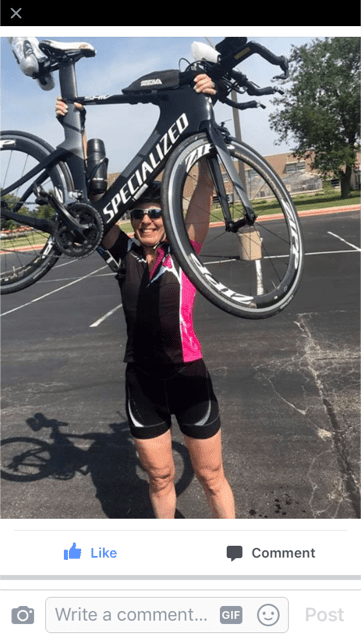
Sue 52But many women have begun to quietly resist such stupidity. Which is why it seems so good to see girls, young women, moms and menopausal gals out running and cycling and swimming. It’s a space they own for themselves. They don’t need a “Good for you” pat on the head from anyone to do what they like to do.
Running, cycling and swimming might be hard at times to do, particularly given the fact that so many women still share an unequal burden of tasks in relationships and marriage. But getting out there and away from obligations wicks away the billions of otherwise painful slights waiting for women at every turn. And every day. They’re blowing it all away.

Beware of Darkness

As for my dark little brain in the teenage years, I got through the summer before my sophomore year listening to the All Things Must Pass album by the former Beatle George Harrison. This morning on the way into work, the song Beware of Darkness came on. I so recall lying with my head between the big stereo speakers in the living room of our giant house in Elburn, Illinois. My parents perhaps should have recognized the near symptoms of depression in me, but maybe not. Teenagers just did that stuff in in the 70s.

But what I now realize is how much the song Beware of Darkness was predictive of a long arc of learning how to cope not just with teenage angst, but depression and anxiety in life. Just this passage is something I’ve seen in so many others. The danger of ruminative thought and how it can take over your mind…

Watch out now, take care
Beware of the thoughts that linger
Winding up inside your head
The hopelessness around you
In the dead of night

Then this stanza, which deals with grief and one’s sense of purpose in life…

Beware of sadness
It can hit you
It can hurt you
Make you sore and what is more
That is not what you are here for

And leave it to George Harrison to put the ugly side of the world’s business into context:

Watch out now, take care
Beware of soft shoe shufflers
Dancing down the sidewalks
As each unconscious sufferer
Wanders aimlessly
Beware of Maya

And finally, Mr. Harrison issues a warning about material greed and political ambition. He closes with a wonderfully abstract image of “Weeping Atlas Cedars” that symbolizes the natural world.

Watch out now, take care
Beware of greedy leaders
They take you where you should not go
While Weeping Atlas Cedars
They just want to grow, grow and grow
Beware of darkness (beware of darkness)

That’s my life in a song that deals with the patent pain of existence. It got me through a long, hot summer along with the other inspiring tracks that only George Harrison could write.

That fall, I ran right out of my teenage angst and into a leadership role on the team. It’s funny how progress can come from what seems like aimless pain.

And you know, that’s really good for you.

Posted in cycling, cycling the midwest, healthy aging, tri-bikes, triathlete, triathlon | Tagged , , , , , , , | Leave a comment

On hazing and being caught up in the moment

CloudsYesterday on one of my other blogs (Genesisfix) I posted a commentary on the case of some Wheaton College football players accused of violently hazing a fellow student. The account published in the Chicago Tribune was harrowing. The football players kidnapped a freshman from his dorm room, strapped him up with duct tape and carried him to a vehicle where they sexually assaulted him while making reference to the Muslim religion. When he resisted, they beat him physically and then dumped him on a dirty softball field with few clothes on in forty-five degree weather. They also stole his cell phone, and then returned with another student they’d abducted. The kidnapped freshman has required surgery to repair to tears to his shoulders.

Close to home

This all happened 10 miles from where I live. It took place at a Christian college that prides itself on a no-drinking, no-smoking, no-anything-but-root beer (apparently sugar is an acceptable vice) white-bread campus in the suburbs of Chicago.

In other words, these were not hillbilly rubes getting crazy in some tossed out section of North America where people have nothing better to do than rape and beat up people they consider different. These football players participate in the nation’s fourth-ranked Division III program in the country.

I know. Just another football scandal. One more bad scene on a college campus. It’s everywhere these days thanks to the rapidity with which media and social media report on violent behavior. Sometimes, the rush to compete for story precedence gets overheated, such as the Rolling Stone magazine University of Virginia rape case story, an article that was ultimately retracted and has led to lawsuits being filed against the publication.

Playing out in the media

So the story of the Wheaton College football players could still turn out to be something different than what has appeared in the media. But the prosecutors in this case took their time digging up details, conducting interviews with victims and witnesses over a period of nearly a year. The incident happened in 2016. So it’s likely much of the story is well corroborated, and will stick. Which means these students may well be punished more severely than the 50 hours of community service and eight-page paper they had to write as dictated by the authorities at Wheaton College. If that sounds a bit soft for the crime, you are likely correct.

Hazing is obviously prohibited at the college, and students take a particular oath at Wheaton, where moral values are a high priority based on the school’s Christian tradition. Despite these strong convictions, these students breached the Code of Conduct and went whole-hog tying up this kid and abusing the heck out of him.

True confessions

So let’s all engage in some confession here. Many of us reading that story have been either perpetrators of hazing or victims thereof. I can personally attest to being on both sides of hazing rituals. In high school cross country we administered team justice for those who were too mouthy or obnoxious by ‘hog-tying’ them with athletic or duct tape. We’d set the appointed day, bring along the supplies and do the deed quickly and with stern warnings about why the act was being conducted. It often involved dropping the shorts of the targeted victim so that their “moon” was exposed. Then we’d leave them and finish the rest of the workout.

Typically this ritual was designed to correct some sort of continuing transgression going on within the squad. Someone constantly being negative, or simply blabbing on for days in some annoying fashion could result in the prescribed treatment.

It happened to only two runners my senior year in the high school program. One we left on the yard of an elementary school and another we tied to a tree in a forest preserve where the cross country workouts were held.

That guy was so incensed and so strong he broke free of the tape within minutes. He ran hard and literally beat us back to the school. We were shocked. And as I recall, that was the last of the hog-tying rituals. Something about that guy’s determination snapped the ritual in two.

The Short Ride and Long Ride

It can take that sort of incident to demonstrate how wrong certain traditions can be. Yet many of us went on to experience hazing rituals in college. I joined a fraternity at Luther and one of the rituals was a quasi-kidnapping routine called the Short Ride and the Long Ride. For the Short Ride, fraternity members would show up at your dorm door, blindfold you without warning, and drive you 10 or 12 miles into the country outside Decorah, Iowa. They’d leave you in your underwear with a 12-pack and dare you to get back home.

But the Short Ride backfired with us when my college roommate and I were dumped by the roadside. We had our running shoes on and knew exactly where we were thanks to our long experience training on Decorah’s roads. So we stashed the 12-pack in the ditch and started running back home. Both of us were fit as hell from doing 80-90 mile weeks. And while we’d already done two workouts that day, we slid into a running grove and were back in the dorm in just over an hour. In fact, we slipped back into our dorm room before the rest of the fraternity boys got back from the bars. They pounded on our door and we laughed at them. “Tough luck, boys,” we yelled back.

When the time came to take us on the Long Ride, my roommate and I got serious. “You are not taking us 20 miles out in the country,” we both answered when they showed up on a Friday night. “We have a meet tomorrow, and it’s an important one. So you will not mess with us.”

And they left us alone. They weren’t happy about it, and some grumbled they’d be back to get us. That never happened.

The rest of the class being hazed was ceremoniously driven into darkness and distraction far from the college campus. I don’t recall how they got back. Some of them got very drunk while others kept their wits and navigated to a farm house to beg a ride back home. Probably farmers around college campuses see all sorts of things over the years.

Leaving it behind

I stuck out membership in that frat for another year. But by the time I was a senior it all seemed too juvenile and mean. The humor had leached from the fraternity anyway. The rituals seemed tired and strained. Perhaps the times were changing. In any case, I was largely glad to be done with the whole thing. We grow up. We move on. If we are healthy…

Those Wheaton College football players will likely regret this mistake in their lives for a very long time. It is hard to find a legitimate way to explain away such stains on our curriculum vitae. Many of us are probably fortunate to have avoided such public shaming. But when you bring it upon yourself, there is a price to pay.

The hazing tradition

In the article I published on my other blog, I make the case that the Christian religion on which Wheaton College bases it tradition has a bit of a “hazing” tradition of its own. The most extreme expressions of the Christian faith have a long history of imposing horrific penalties on those who oppose it. These include acts of genocide on cultures that won’t submit to conversion. The Old Testament rather frankly documents the mass murder of entire peoples right down to scrawling babes.

Is God the ultimate hazer?

That anger and abuse carried through to the implicit philosophy of Manifest Destiny in America, the belief that white European settlers had a God-given right to the lands and resources of the continent. A genocide of Native Americans took place even as black slaves were carted over from Africa to serve as free labor. All were supported by twisted versions of Christian scripture that were used to justify the racist, imperialist approach of cultural domination.

Traces of history

Is there a trace of that history coming through those Wheaton football players who issued threats against Muslim people while carrying out their hazing? It is hard to separate some of this from childish stupidity. That’s the problem with hazing and rape and racist protests. People can too quickly hide or excuse their actions behind a crowd dynamic supported by people who insist “there are bad people on both sides.”

There is no more convenient way to garner devoted, loyal followers than to cover their sins with power. There are rumors that the Skull and Bones Society employs such embarrassing hazing rituals that they can forever hold members to account. Pun intended.

Such secrecy can play out on a broad scale when unleashed on the world. A similar method may be used in the practice of Scientology, where it is rumored the deep secrets of practitioners are held against them if they seek to leave the cult. Ask John Travolta. Tom Cruise. And Beck? That’s depressing.

Rite of passage

It’s all confusing when some sort of rite of passage is common to societies all around the world. Even the normal, everyday gathering of distance runners on a college campus typically involves a bit of teasing that can border on hazing. And who can say that a twenty-mile run in intense heat on a Sunday morning in September is not a punishing ritual in which to engage?

But the line is drawn where people come away with permanent harm. This is true among both the victims and the perpetrators. Those who commit violence are in some ways as viciously scarred as those who are targeted. Those scars and the pain they cause may not be so readily visible. But they are there. Think of the Catholic Church and its Inquisitions. Think of the German people and the Nazis who took over the country. Think of South Africa with apartheid, the Middle East with Islamic fatwa and the United States and the torture and death it imposed upon Iraq.

All of it is a brand of hazing. And as those Wheaton College kids demonstrated, everyone is capable of it when caught up in some false cause that seems so important in the moment.

And all of time, we might remind you, is just a moment.

Posted in Uncategorized | Tagged , , , , , , , , | Leave a comment

Embracing the unincorporated you

Unincorporated Hickory.jpgFall can be such a conflicted season. With the weather changing from warm to cool, there are still hot days in September that fool you into thinking the weather is not really going to change. Just yesterday while starting out on a run, I encountered a woman walking her dog who turned to me and said “It can stay like this all winter and then just turn to spring.”

Sounds nice, doesn’t it? 68 degrees. Dew on the grass. Forever. Perhaps it’s like that down in South Carolina all winter. But probably not.

Here in Illinois we’ll still get six more weeks of pretty decent weather before the dank arrival of November. It’s like the Groundhog Day Reversal.

But that’s fine. By then we’ve been through the shiningly shorter days of October. The leaves have flared brightly and fallen. We crunch through piles of them and the season progresses. We brace ourselves for winter.

Cottonwood leaves.jpgChange is a constant. Yet for some reason we also love to embrace the thought that some things never change. We love small little towns where the storefronts are still occupied with locally owned businesses. We cherish the discovery of a restaurant that seems like it remains locked in time. We have one like that here in Batavia, Illinois. It’s called Daddio’s. It’s a diner that’s a real throwback in time. And damned good food.

While driving around we love those little sections of landscape where the farmers rotate crops and there are no FOR SALE signs on the roadside beckoning developers. We cherish the hollyhocks growing by the mailbox. The farm cat that sits on the stump. The barking dog that will secretly stop and wag its tail if you talk nicely.

These are the places where things don’t change because no one is really trying to change them. These are the unincorporated sections of America.

There is a section of road behind our house that cuts through an unincorporated section of Batavia Township. The Welcome to North Aurora sign marks the end of that town’s grip on the landscape, and immediately the homes on that street go from cookie-cutter to eclectic. Old, low-slung ranches and half updated Colonials. Even a roughly treated former farmhouse being slapped with modern accoutrements. Because it’s unincorporated. People play by different, somewhat looser rules.

Unincorporated 1.jpg

The road itself is some sort of calm black asphalt with no apparent relative roads anywhere in our county. It holds up well under plowing in winter, and isn’t bad for footing even when the snows and ice make other roads slippery. The few driveways that peel off the main road are typically black as well.

Frog 1This past summer though, the road was splattered with the carcasses of frogs run over by passing cars. There was a massive migration of young bullfrogs from the local wetland. They headed out in all directions after a particularly heavy rain and many wound up smangulated on the unincorporated strip of Hickory Lane.
My wife and I were headed out for a run and I mentioned going up Hickory. “Ugh,” she chuckled. “It’s still covered with frogs.”

She was right. From a frog’s standpoint, it looked like crucifixion row leading into the City of Jerusalem after the Romans quelled a Jewish rebellion. But there’s no accounting for the ways and means of evolution. For every frog we spotted on the road, there were likely ten or twenty that made it into some wet ditch. Life is a numbers game. It is also a pre-existing condition.

So the unincorporated area near our home is not without its reminders of mortality and life passing us by. There are days when I run that road and it feels like I’m 80 years old. Then there are days when I feel good and race along at 6:30-7:00 pace and I could be 30 or 40 years old again. Instead I’m somewhere in the middle of all that. Grateful for the good days and respectful of those when I feel creaky, strange or old.

Sometimes I take the unincorporated path back from a bike ride and the smooth surface of Hickory Lane welcomes the thin black tires of my Specialized Venge. There are no tarsnakes on Hickory. No patches of black tar or long strips of rubbery, warmed up goo to make the rider anxious when bike tires sink into the grooves.

Unincorporated MeI’ve gotten to know some of the people along that stretch of road. I’m now “that runner guy” to many. I am happy to play that role. They wave and I wave back. Their dogs give a cautious yip or a bark, but I am no longer the odd threat I once was to the canines protecting their home turf.
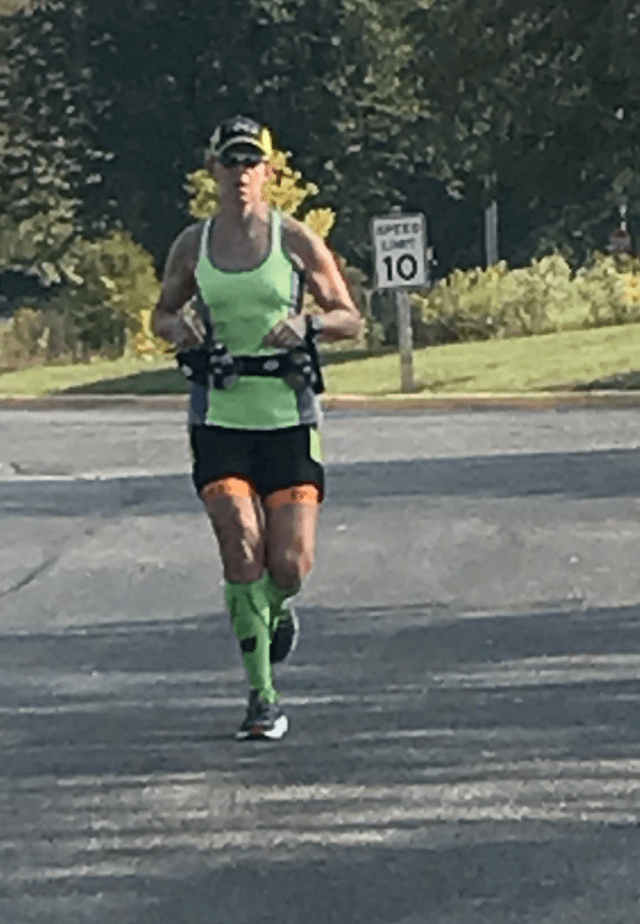
One day there was an actual herd of goats wandering the roadside. They’d gotten out of their cage at a farmhouse somehow, so I yanked up some grass and placed it before their munching mouths. They happily chewed up the grass and nudged me for more. They smelled lightly of hay and dirt, because they’re goats. That’s what goats smell like. They have weird eyes, and I don’t trust them entirely. But that’s the beauty of unincorporated areas.

Down another unincorporated road near home there is a horse farm where I stop sometimes on a run or a ride to yank grass and feed the steeds and fillies. I didn’t used to care one whit about horses. But I visited a barn a few years back and one of the horses in the stalls seemed to adopt me. That big soft muzzle won me over. Now appreciate the look and feel of a nice horse. They are the ultimate unincorporated animal.

These sensations appeal to the unincorporated me. There’s a person in me that was raised on a farm in upstate New York. Who knew the smell of cow manure and did not find it offensive. Who caught frogs with bare hands and marveled at the sight of young barn swallows with yellow mouths begging parents for food.

The unincorporated you is the person who feels alive at such sensations. Who can forget the supposed sophistications of the phone and the news feed. Who watches the sun for a minute as it rises above a bank of gray clouds at dawn.

Embrace the unincorporated you. The one who rides without a bike computer now and then. Who lets the Strava fall away for the day. Who swims without counting laps, and takes a long shower outside if the occasion arises, and stands naked in a prairie when there’s no one else around.

The unincorporated you is alive within. Embrace the feeling, that mildly untamed nature of who you want to be. In control, but not absolutely under control. There’s a freedom of spirit there. Unincorporated.

Posted in Christopher Cudworth, Tarsnakes, triathlete, triathlon, triathlons, werunandride | Tagged , , , , , | Leave a comment

The TriSherpa’s role

Sue Running 3.pngThere are four weeks until my wife’s Ironman in Louisville. Her training is going well. That is not to say it is going easily.
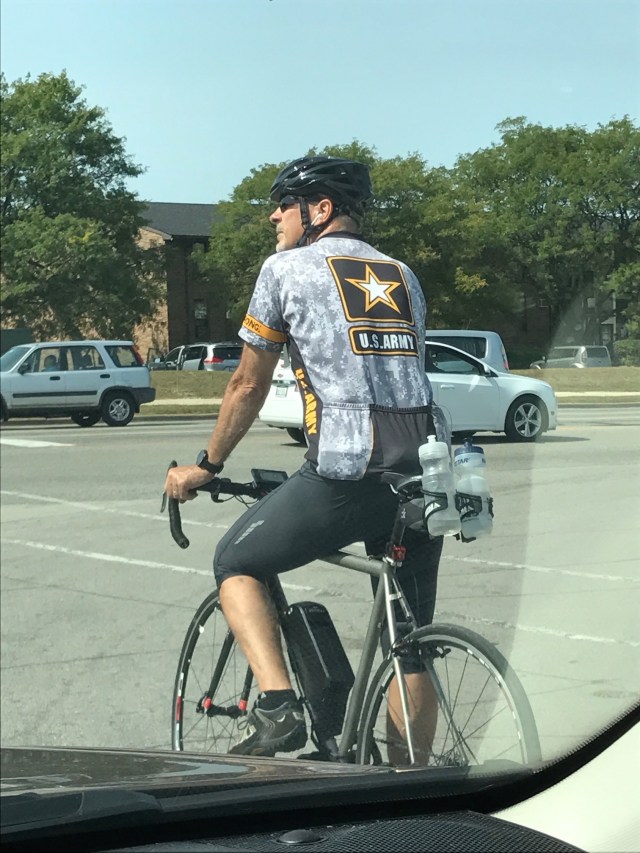
Fifteen miles of running on a mid-September day with temps in the 80s is a sweaty slog. We set up shop out on the Virgil Gilman Trail, a bike and running path that traces an old rail line from Aurora out to Waubonsee Community College. It is happily occupied by dozens of runners, cyclists and recreational walkers on weekends. That means it is safe but not overly occupied. A good training location.

But it is linear, so the plan was to park our vehicles at opposite ends of a five-mile segment and have her run out and back and out again.

I ran east to meet her, but she had a head start as I was filling water bottles and hitting the potty at my end of the bargain. She was 30 minutes into the run coming west and I was 20 minutes into the run going east when we met up on the trail.

Coming off 100

She was also coming off a 100-mile ride the day before. I pedaled 55 or so miles with her on Saturday. She finished off the rest on her own. We were joined on the ride by one of my best friends. That offers good company for the ride because it gets a bit boring doing all that training by yourself. So we trucked the back roads together, a merry little band of three cutting through the crosswinds.

Sue leads most of the way on the rides. It doesn’t really help her to draft on me when the Ironman bans such behavior in competition. So I wheel suck and lightly converse at corners and keep her company when the wind doesn’t blow the words away.

Speedway rendezvous

A few weeks ago one of her wheels blew when a shard of glass sliced her rear tire. We stopped to replace the tube next to the Bob Jo Speedway between Virgil and Sycamore, and set out to ride again.  PFfoooom! It blew again. The tire was damaged and the tube popped right away.

I’d already had a pinch flat that day so we ran out of tubes. So we coordinated a rescue with her son while I rode the 20 miles back to St. Charles to pick up our vehicle. Her son drove out to bring her home and they stopped on the way back to buy new tubes and a tire. Then she finished up the last fifty miles on her own.

Before, during and after

Such are the trials of training for a triathlon. Not everything is going to go as planned. She has a three more 100+ rides to do. I plan to be there with her during significant portions of the rides and the runs. That’s the role of a TriSherpa, to support the racer before, during and after the events.

I actually talked another TriSherpa this summer who is performing TriSherpa duties for his wife in her goal of doing Ironman Wisconsin. The pair hail from Minnesota and were down for a weekend in Wisconsin doing the Madison Open Water Swim and riding the Ironman Course, which has added a brutal ass hill known as Barlow to its retinue of climbs this year. It’s a wise idea to practice and gain some confidence or at least a plan for the hilly course.

“I’ve done Ironman three times,” the TriSherpa told me. “But this is her summer. I asked what she needed most from me and she told me, ‘I need your support so I can do this.’ So I’m not really racing this year. I didn’t want my goals to compete with hers. So I’m training with her and we’re focusing on getting her ready for the Madison Ironman. It’s going pretty well. Not easy for her, but it’s going well.”

Mental space

Later that day we saw them parked in the shade of a pine tree after riding their first loop of the 40-mile loop from Verona out to Mt. Horeb and back around to Cross Plains. That is the head and heart of the Madison Ironman bike course. There are some soul-sucking hills out there. They were heading back out after a fuel break and a chance to mop up some sweat. I gave him a quick nod and he smiled as she sat gazing into the distance, her thoughts occupied on the job ahead.

That is the TriSherpa’s job: giving the athlete the support they need… and the chance to think it through.

But foot rubs help too. 

We’re headed for Louisville in mid-October.


Posted in IRONMAN, triathlete, triathlon, triathlons | Tagged , , , , , , , , | Leave a comment

The cyclist’s lament

Rider.jpgParked at the Wilson Street entrance to Fermi National Accelerator Laboratory, I glanced up to find a cyclist dressed in an Army kit waiting for the light to change. Without stopping him to ask about his connection to the military, I cannot know whether it was his own service that engendered the kit, or one of his progeny.

But I did think that his kit was a good idea. At least a veteran or military person might get respect on the road. That’s all I wish for anyone. Basic respect. To be given, and to be returned.

My own riding habits have grown more cautious as the years have gone by. Certainly, I respect the rights of other cyclists on the road when it is me driving past in a car. I give them three feet of space as our traffic laws demand. I separate hazards ahead on the road if necessary, pausing if it appears that a vehicle coming from the other direction will arrive at the same time I am about to pass the cyclist.

These are common sense actions. But what I see out on the road when cycling is entirely different. I see drivers refusing to separate hazards at all. Instead, they hug the center of the road and speed up as if cutting down the moment of conflict is somehow a better resolution to competition for space on the road.

That’s what it’s all about for some people. They’re competing for space on the road, and they don’t want to lose. Which makes them look at cyclists as interference, an interruption and an affront to their road sensibilities.

This is how our culture has devolved. It’s not about the lack of people attending church or the teaching of evolution in schools. It’s not about being Republican or Democrat or Libertarian. It’s not even about being military or civilian. It’s about people being selfishly competitive to the point where they cannot even bear to expend three seconds of their day pausing to respect another human being on a bicycle.

There are probably other socio-cultural issues that feed the reasons why some people hate cyclists. Perhaps the lycra shorts on our Army friend in the photo above seem offensive to some. After all, we had an entire kerfuffle about the suitability of women wearing yoga pants in public. And those bright-colored kits preferred by cyclists? Some people consider them less than masculine when worn by men.

But those are distractions. For this is the cyclist’s lament: the fact that riding a bike legally on a public road is considered a massive affront to people too impatient and selfishly competitive to slow down, separate hazards and show respect to another human being on this earth.

It’s a sad fact, but the man in the Army kit illustrates the attitude of too many people on the road these days. It’s a war for space out there, and some people are not willing to give an inch. Not on their life.

But maybe yours? That’s not their concern.

Posted in cycling, cycling the midwest, cycling threats, Uncategorized | Tagged , , , | 1 Comment

Life in a fog

Fog.jpgThere is a fog spread across the entire Midwest this morning. It is nothing more than a cloud come to earth. But it has the smell of fog. That wet, specific smell of fog that goes everywhere with you.

I love running in the fog, but not cycling. Runners can step off the road while running against traffic. Not so on a road bike. Even with bright lights on the back of the bike, a really thick fog can put riders in great danger. We won’t do it. No bike riding in a deep fog.

It is the isolation of running in fog that I like so much. Navigating a woodsy trail in a fog in the woods, even better. The world is reduced to what you can see a few feet ahead. It simplifies things. Takes away the open dread of daily life. Back to the womb, as it were, of existence.

We’ve been to triathlons where a fog hung over the lake and had the swim canceled for safety reasons. It’s hard enough to keep track of hundreds of swimmers in the water without having them disappear into a fog or mist. It’s all about specific gravity, if I have the science correct:

Specific gravity is the ratio of the density of a substance to the density of a reference substance; equivalently, it is the ratio of the mass of a substance to the mass of a reference substance for the same given volume. Apparent specific gravity is the ratio of the weight of a volume of the substance to the weight of an equal volume of the reference substance.

Water and fog are thus the same thing. One is simply denser than the other. We even emit a brand of fog from a shallower density as we run. So whether we admit it or not, we live our lives in a fog. If it isn’t present otherwise, we create our own.

This brings up another kind of fog, the metonymic* kind, with which we sometimes deal in life. This is how the phrase “mind in a fog” is described:

Clouding of consciousness, also known as brain fog or mental fog, is a term used in medicine denoting an abnormality in the regulation of the overall level of consciousness that is mild and less severe than a delirium. The sufferer experiences a subjective sensation of mental clouding described as feeling “foggy”.

We all wake to fogginess some days. Fatigue can bring that on. Intense training requires so much of our mental energy the mind retreats into a fog. It is a strange thing to go out for another ten-mile run or fifty-mile bike ride when your brain is still in a fog from the day, the week, the month before. The body goes through the motions and the brain, well, it tries to navigate through the fog.

But sooner or later the fog always lifts. It does not remain. The sun burns off a morning fog. Sometimes it goes away all at once. Or, it can shred and shift and rise in long columns, like memories to which we can no longer cling.

That’s why some people seem to associate fog with evil. What good can come out of seemingly unnatural phenomena? In the age olde town of London, fogs are known to reach epic scale. That’s when slashers and killers and werewolves supposedly move about. From fog comes horror, and from horror, death.

I have never embraced such fears. Fog is a friend to me, a welcome dampening of the hard edges of the world. Even the birds lay low when fog reigns. No morning songs. No fast flight. I move through fog with eyes focused only on the nearest section of road or trail ahead. That is enough for me, an act of trust that the next step is the right one. It is all you need to know, for the moment, and that can be heavenly.

*Metonymy: Metonymy is a figure of speech in which a thing or concept is called not by its own name but rather by the name of something associated in meaning with that thing or concept.

Posted in Uncategorized | Tagged , , , , , | Leave a comment

Losing everything you have

Hurricane damage.png

On the small screen of my iPhone, the Weather Channel app showed an aerial shot of the before and after damage from the hurricane known as Irma. Even at such a small scale, the wreckage of homes and the debris thrown everywhere was obvious. That’s what 125-150 mph winds will do.

Here in Illinois, we’ll likely get the remnants of Irma in the form of a Westward-Ho rainstorm. The drops of rain will be big and the leftover winds may buffet our homes, but there will likely be little damage.

I once went out to run in the remnants of a hurricane that came north from Texas a few years ago. It was like running in a comedy. There were literal rivers of water gushing down the streets. Raindrops as big as ping pong balls splattered on my hat and shirt. People honked their horns and waved at the stupid runner trying to make headway against warm, strong winds and more water than the skies had a right to own.

We have also had tornadoes in our part of the country that destroyed homes with strong winds. Some people lost everything in those storms. Imagine walking up to the cement frame of your basement and finding all of your house gone. All of it. Along with it went those family photos, memories, and keepsakes that can never be replaced. Vanished.

The loss in those situations is not just monetary. A part of life gets ripped away as well. Yet people invariably find that material loss, whether by fire or wind or water or mudslide, is just that. Stuff.

Bike RockI recall a day that I lost nearly everything I valued. Coming off a job in Admissions at my alma mater, I had packed up all my important stuff in my Plymouth Arrow and detoured north to Minneapolis with a plan to visit my girlfriend. She was due back in town from her parent’s place on Saturday, but I arrived on a Friday night and arranged to stay with some friends from college. So I settled down for a night of sleeping on the couch and waited until morning.
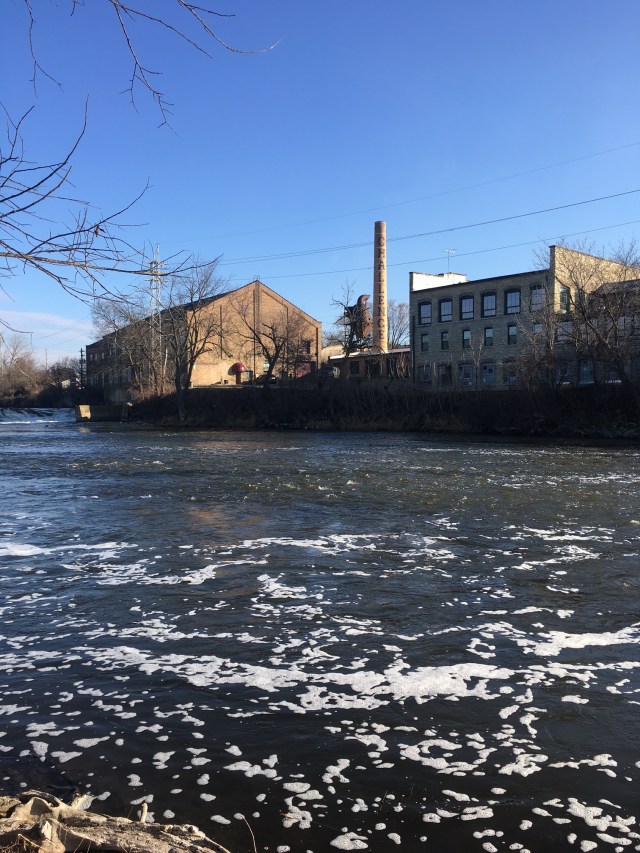
The next morning I rose early and went to out get my shaving kit from the car. All around the vehicle was a wide debris path of my personal belongings. Everything I owned was scattered across the parking lot. There were key things missing as well. I’d been robbed.

The thieves smashed the driver’s side front window and threw open the doors. They must have been like a band of raccoons around a garbage can, picking through things they did not want to find things they could keep or sell.

So I lost the Olympus OM-1 camera that my father and mother had given me for college graduation the year before. Gone. Also missing was the jacket portion of the Frank Shorter running suit (orange with light blue sleeves) for which I’d saved up $90 one summer to buy in advance of my senior year in college cross country and track. That suit felt like the height of luxury after years of training in boxy track pants and old cotton sweats. All I had left was the orange nylon pants, and that’s hardly a consolation.

oil-4

But the thing that I really feared losing was a deerskin art portfolio that my girlfriend’s parents had given me for graduation. I knew that it was expensive. I also knew that they were fairly materialistic people, and losing that gift would not be received well.

Sure enough, my girlfriend was livid with me about that portfolio. She seemed to care more about that damn thing than she did about how I was feeling after having been robbed. That hurt.

Six months later, we’d broken up. She quickly moved on to marry the man she’d met in the Twin Cities. By all reports has led a happy life all these years. So that was all meant to be.

Perhaps it was also meant to be that I learned that day what it was like to lose things of material importance and spiritual importance. Surely it was stupid to leave a car jammed with possessions in a parking lot next to a set of railroads tracks in the urban environs of St. Louis Park, Minnesota. That was naive. Stupid. And unsuspecting.

At that stage in life, I was fearful of many things that don’t really matter, yet ignorantly unafraid of some that do.

It’s like that with so much in life. Getting robbed and at the same time realizing that the woman I loved was likely leaving for greener pastures was clear evidence of how often the security we think we own is an illusion. Millions of people learn that lesson every time a major disaster hits somewhere in America. Life tectonics, I call it.

challenge-riverYet we learn from characters in the Pearl Buck story the Big Wave, how Japanese families choose to settle on the beach again after a monster wave washes away their entire community and with it, entire generations. The reviewer on NPR puts it this way:

“Pearl Buck wrote her children’s book The Big Wave because, she said, during World War II, she saw that many children “were not used to the idea of death. They thought that death comes only to old people. But during the war they learned that death comes also to the young, if we allow it.” And so she wrote a story about how two boys, a fisherman’s son and a farmer’s son, “learned to live in the presence of death, as indeed we all do, young and old.” She wanted to “help other children not be afraid of death, because life is stronger than death. Life goes on and on, whatever happens.” She wanted them to understand that it’s through facing life and its dangers that one learns not only to be brave, but also to appreciate life’s joys.

I think of the young man that I was standing stricken with grief and shock in that parking lot in St. Louis Park, Minnesota. It was hard to imagine such a thing as that robbery was possible. All my stuff was tossed naked into the world. And the losses. I loved that camera. That running suit. That deerskin portfolio. And I loved that woman for as long as she was mine.

But losing things you love is an important lesson in how to appreciate and focus on the things you still have, and can do. Which is why every step I take now as a runner, every pedal stroke as a cyclist and every bend and pull of the arm means something a little different. It’s everything I have, and yet nothing at all.

Zen philosophy teaches that even the most precious possessions are nothing to covet in terms of ownership. The famous example of a zen master treating a crystal goblet as an everyday object is most telling: “I imagine it already broken. Therefore it cannot cause me grief if it goes that path.” Crystal.jpg

“I imagine it already broken. Therefore it cannot cause me grief if it goes that path.”

What an ethereal existence. What a purposeful way to live. I feel lighter just thinking about it. Faster too. Let it go.


Posted in Christopher Cudworth, Uncategorized | Tagged , , , | Leave a comment

Does cycling have its own concussion problem?

cavendish6.jpgWatching the Grand Tours such as the Giro de Italia, the Tour de France or the Vuelta a Espana is an annual ritual for many cycling fans. But it hasn’t been an easy journey in many respects. With performance-enhancing drugs such an issue in cycling, many heroes have succumbed to penalties and even bans from the sport of cycling.

But it’s not just drugs that vex the sport. It’s the crashes too. People simply don’t appreciate how fast pro cyclists can go. But it’s the cyclists who so often pay the price.

Testimony

Taylor Phinney legs.jpegDuring this year’s Tour de France, cyclist Taylor Phinney was featured in a series of video vignettes in which he gave insights from within the race and on the team bus. His laconic personality appealed to a younger audience, but Taylor also had a dark secret to share. He nearly lost his legs to cycling a few years back.
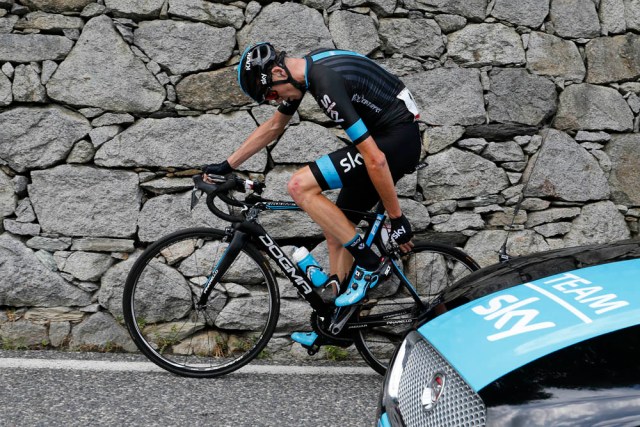
It happened with a high-speed crash. Bones were fractured. Surgeries were required. Yet Phinney crawled his way back to the top level of cycling. To celebrate his return, he led the entire first stage of the Tour before getting caught by the sprinters with several hundred meters to go.

No gifts

Such is the nature of pro cycling. There are no gifts in the sport. Which is why so many riders risk their careers and reputations trying to take what they can by any means.

FROOME-Christopher008pp.jpgThat’s where the sport has some accounting to do. There are so many crashes in major stage races the sport is nearly as causally dangerous as the NFL. This past week during the Vuelta, the peloton compressed on a narrow road bordered on both sides by stone walls. Somewhere in the bunch, a rider got flipped onto his side and broke his pelvis.

The cameras lingered on the fallen rider. His body was twisted in a strange way. But it was the moans he made that rang so familiar to me. I happened upon a cyclist a few years back that had been knocked from his bike by a large dog. The dog ran away, but the cyclist lay on the ground alternately gritting his teeth and screaming in pain. He made the same moans that the Vuelta cyclist did while lying on the ground. I helped him get to the hospital and visited later that week. But it was his voice that day that sticks with me every time I ride, see a dog, and realize it could very well happen to me.

Body slam

Sagan Elbow.jpgA violent crash of some sort happens in every Grand Tour. Sprinter Mark Cavendish got blasted into the barriers by an intentional/unintentional elbow from Peter Sagan. Cavendish was all busted up and Sagan got banned from the Tour the remainder of the race.
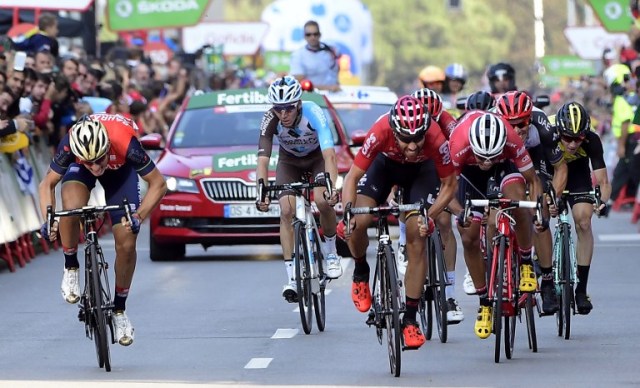
Some thought the penalty too severe. But to cycling’s credit, it tried to draw the line somewhere. Watching the video of Sagan sticking an elbow up sure gave the impression that he was not playing fair. But neither was Cavendish, who tried to squeeze through a space that did not really exist. In essence, Sagan’s suspension was a message to Cavendish as well. Hold your line, fellas, or get knocked out of the race.

Which is probably good. This is cycling’s version of pro football’s ban on spearing opponents with a helmet. That practice was bad in many ways. But now the sport of football has discovered that it is actions like the spear that actually put players engaged in that practice at even greater risk of concussion and CTE. Protecting players in one respect wound up protecting them in others.

Competitive fury

Vuelta.jpgThus at some level, the sport of cycling has to protect the participants from themselves. Competitive fury at the level of world class cycling is hard to contain. Sprinters reportedly “have no fear” and do not think about crashing in the race for the finish line. The rules clearly state that a rider cannot veer off their line. Yet riders still do, engaging in just about anything to cut a competitor’s path to the finish. There are body slams and elbows and harsh words on the way to the finish line.

But like hockey, where fighting was once an accepted part of the game, it may be time for pro cycling to cut down on the greater part of its violence. Yet the hardest part of governance in pro cycling comes, not with the mad rush of sprinters, but with open road crashes. Out there on the roads where wheels touch and riders lose concentration for a moment, they wind up crashing. Sometimes that where real damage can happen as well.

The risks come from all sources. This year’s Vuelta featured some crazy riding by the motorbikes on which cameraman and officials tool through the race like barracuda through schools of cycling fish. Commentators Bob Roll and Paul Sherwen repeatedly complained the bikes were too close to the riders. On a couple occasions, motorbikes tumbled into the barriers creating a logistical mess as dozens of riders came peeling past.

Public life

Vuelta_Crash

A five year old child gets struck while trying to cross the road during a pro bike race

One of the wonders of pro cycling is the fact that the roads are not blocked to the sporting public. Fans can get close to the racers, sometimes too close. The crowds pressing in on climbs sometimes interfere with the racers. A few years back cyclist Alberto Contador threw a hard jab that caught a fan in the face. That was a well-deserved shot to keep the integrity of the race alive.

So the chaos of Grand Tours and other stage races is both part of the race and a big problem always waiting to happen. No one can forget the sight of Johnny Hoogerland flying off his bike after being struck by a motorbike at high speed in the Tour de France. He wound up tangling with barbed wire on a roadside fence, his kit torn and his buttocks bared and scarred by massive bloody wounds.

Too much pressure? 

Some riders have blamed Grand Tour organizers for recruiting too many teams and putting too many riders on small roads. The pressure to stay in the front bunch is so great that riders are forced to fight for every square inch around them. During a 2000+ mile bike race, the odds that something bad is going to happen are too great. No one can concentrate 100% of the time.

One wonders whether the health risks to cyclists has gotten more serious than ever. There have always been crashes in bike races, but is cycling taking its risks seriously enough to cut these risks in any substantial way?

Richie-Porte-crash-updates-Tour-de-France-826551.jpg

The sight of Richie Porte careening across the road to smack into a stone rock face was horrific in the Tour de France. Likewise the sight of that contorted rider with a broken pelvis in the Vuelta this year was hard to take. These are human beings before they are racers. And while we all admire their courage and the ability to “come back” to racing after such violent crashes, it also says something about the world that we all pay witness to such tragedy and call it entertainment.

Concussive reality

Perhaps that’s the human condition. Perhaps the concussions in pro football are part of the price of admission for those involved and those who pay. A few cyclists have actually died from their injuries, but not many. So the sport senses the risks in some respects.

But there have been times when the riders themselves have protested the conditions and even refused to race when the weather or the course or the insanity of the organizers and motorbikes and fans and sponsor demands are just too much to take.

Because it is, after all, supposed to be a sport. And that is all.

Posted in competition, cycling, cycling threats, Uncategorized | Tagged , , , | 1 Comment