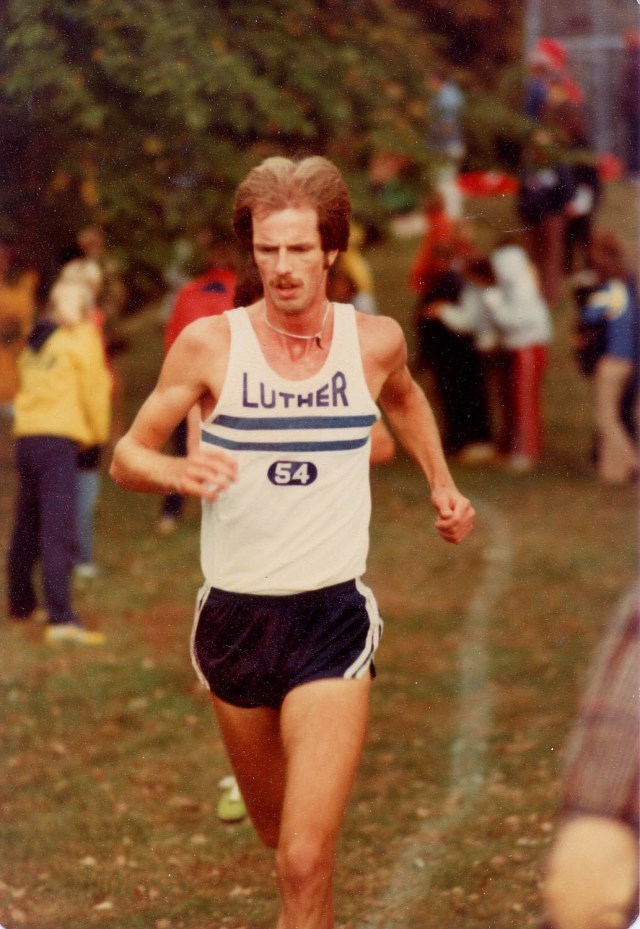
By invitation only: Sweet Season #3

Season heating up

cudrunHaving come off a speedy team performance in a quadrangular meet against Augustana College, University of Northern Iowa and the University of Iowa, in which we lost only to UNI, our squad was fired up going into our own Luther College invitational. Our top runner had just won two races in a row, and there was a good chance he’d also take the solo victory at the Luther Invitational.

It would be held on September 16, and that September the weather been fluctuating between cold mornings and really hot afternoons. The quadrangular meet had been scheduled as a five-mile race, but was shortened to four miles due to extreme heat at the noon start.

Not so hot shoes
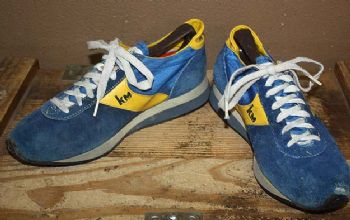
Etonic streetfighter.jpgCross country is always a sport of adaptations I’d purchased some Etonic Streetfighter training flats before leaving home for school, and those shoes were proving to be a mistake doing all the high mileage. They were too wide and too flat, and the rubber felt hard. Plus they blistered me. It was time to dump them. 

That meant the bulk of my running was done in waffle-style trainers from Nike. The company had truly come into its own during the years 1975-1979. Some of their shoe-design experiments were noble and compelling but others made us feel like suckers and guinea pigs. A style of shoe called Nike LDVs were issued in a version so wide and flared that the inside edge of the sole at the heel scraped away at inside of our legs until they were raw. We tried sawing them off but that made it worse. Even the bow-legged among us were not safe. 

Making them last
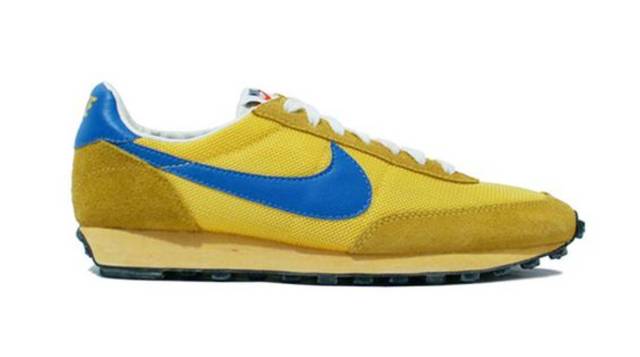
Nike LDV.jpgWe’d all tried to make our shoes last longer by placing layers of athletic tape on the outside edge of the heel to keep it from wearing away. That was actually a quite genius and practical solution. It would prevent the uneven wear from one side to the other if one had a longer leg. It also kept the shoes from wearing down so badly on the heel before one got the full value from the rest of our shoes. We’d sometime get 500-600 miles out of a single pair that way. Then again, that only meant 5-6 weeks of wear. Then it was time for a new pair.

Still, we’d all found the less radical version of the LDV in yellow with a sky blue swoosh to be a perfect shoe for backroads training. For racing, the flats that most of us wore were Nike Waffle Racers, blue with yellow swooshes. As a racing flat, those Elites were more substantial than spikes and could be worn to race across a variety of surfaces, which was often the case in college cross country.

Racing at home
Luther campus.jpg

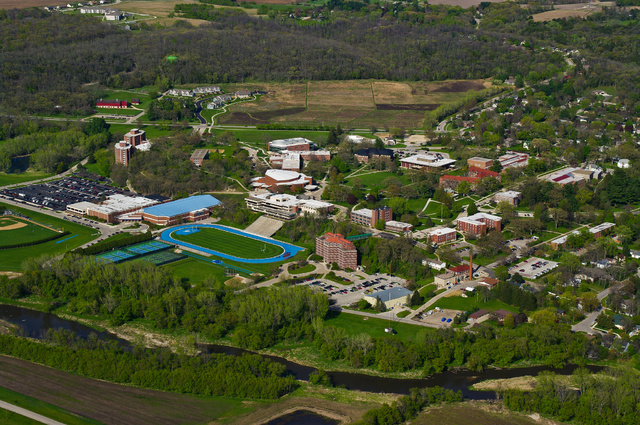
The Luther Campus has filled in since we ran on the upper campus in the 70s

That third week of the season it was time to prep for the home course, which started on the lower campus on a massive athletic field split by baseball diamonds, rugby pitches and even a soccer field, the earliest nod of acceptance for that sport at our little college in Iowa. We’d run hard mile intervals on that flat expanse of grass, dipping down below 4:50 to get ready for race pace. 

The cross country course headed straight from one end to the farthest reaches of the large mowed field. Then it urned right for 400 meters and right again to reach the base of a hill. The course would all be marked by a white line. Generally it was straight unless a cross-eyed facilities named Earl was assigned to lay down the line. Then it would swerve like a giant snake because he literally could not see straight. 

That was the case the morning of the Luther Invitational. We all laughed during warmups as other teams kept coming up to us asking what the deal was with the swerving line. We told them: “Just run straight.”

The right philosophy on running
Tureena.jpg

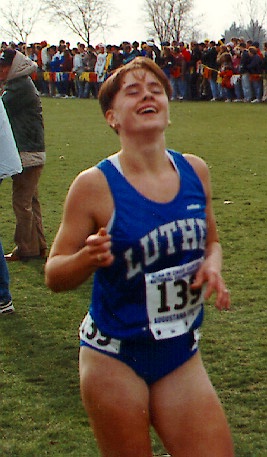
Years later, Luther standout Tureena Johnson would win national championships

Before the gun for the varsity race, there were a series of other races including a high school competition and races for JV, women and Open runners. These were all held in line with the philosophy of our coach who believed that running was for everyone that wanted to participate. By the time we were seniors at Luther, the women’s program that started with just two gals was now thirty in number. Within a few years the program would see Luther women earn individual national championships.

So there was plenty to cheer throughout the morning, but as the day warmed, the guys on the varsity all found a place to hunker down in the shade until our race came around. While we waited, one of our teammates rigged up some huge speakers to a stereo parked in a truck. The music of The Cars was blasting more than 100 decibels as we warmed up. There was lots of slapping of hands and “Let’s Go!’ before the gun went off.

True to form

My roommate Dani Fjelstad again won the meet, his third individual victory in a row, this time going head-to-head against a tough University of Wisconsin-LaCrosse runner named Jim Ingold . I finished as our second man in 20:42 for 11th or 12 place overall, but Luther still finished second to Augustana, our arch rivals for many years.

 On hearing that announcement, I blurted out a loud and disgusted  “Fuck!” and was immediately chagrined that my competitive blasphemy was heard by so many people. So I instantly trotted off to console myself with additional warm down time.

Unintentional break

The loss stung, but we got right back to training. Or most of us did. For reasons of love and distraction I completely forgot about our Sunday morning workout the day after the invitation. Instead my girlfriend and I rented a tent and went camping high on a hill overlooking the road that led out of campus. We stayed up late as the air cooled and  shared a sleeping bag. In the morning, with the calls of crows ringing out above us in the trees, I recall hearing the familiar voices of my teammates passing by on the road below, chatting as usual while they headed out on a Sunday morning run. I watched them through the screen of the tent door and realized that I’d simply lost my head in love with that girl and was now missing a workout.

“Oh no!” I said out loud. “I forgot we had practice this morning.” 

It was too late to try to join them. I was simply smitten with my new girlfriend, and in the scope of things, missing that Sunday practice was no big deal. But there would be new tests to come in our relationship. Even as we grew more in love, there were competitive issues swirling around us and life’s demands waiting down the line. That night in the tent was symbolic of things to come as each of us would be pulled in different directions.

But first, there were practical matters at hand. And when I showed up for breakfast later that morning the guys told me coach was so ticked about the fact that we lost the team title at the invite, he hardly noticed that I wasn’t there for practice. “But he made us run hard this morning,” the guys told me. “So you better put in a good workout.”

I waited until the afternoon heat was fading a bit, and then went on a solo run of nine miles, just like the guys in the morning had done. In keeping with the call to run hard, I ran nine miles at six minutes per mile. And having been fueled up by the affections of the one I loved, every step felt light and purposeful. I flew along with sweat flipping off the blonde ends of my brown hair, a look that was fading as the September light took over. That was the last practice I’d miss that season for any reason. But it was worth it.

Another Saturday
Luther men's cc

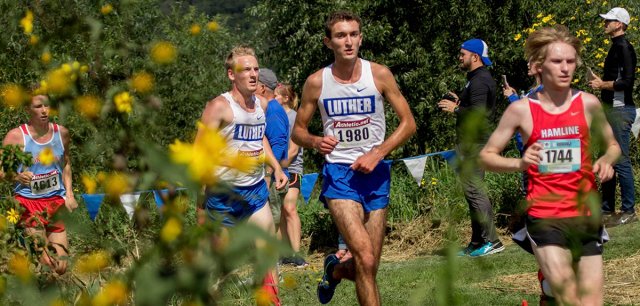
Luther men’s cross country continues to embrace all levels of runners

There was another Saturday coming up fast. We’d be traveling to Grinnell, Iowa for a matchup with our conference rivals from Central College at the Grinnell Invitational. We hated those Central guys, and they pretty much hated us. Our competitive instincts were kicking into high gear. It would be a race to remember.

That’s how every meet felt that sweet season. I was running so well that I relished the chance to compete. At the same time, those old runner’s doubts would creep in now and then. I’d been second man every meet in the season so far, and wondered if my luck or training or something might fade. But every week, arriving home at our room after every meet, my roommate would crack open a victory Michelob and hand it too me with the mist of the beer floating above the lip of the bottle. “Good job,” he’d tell me. “#1 and #2. Way to go!”

It felt as if I was running that well by invitation only from my roommate, who was on an incredible roll and was now ranked nationally for his results. By invitation only, indeed.
 

Posted in running | Tagged , , , , , | Leave a comment

Swim time

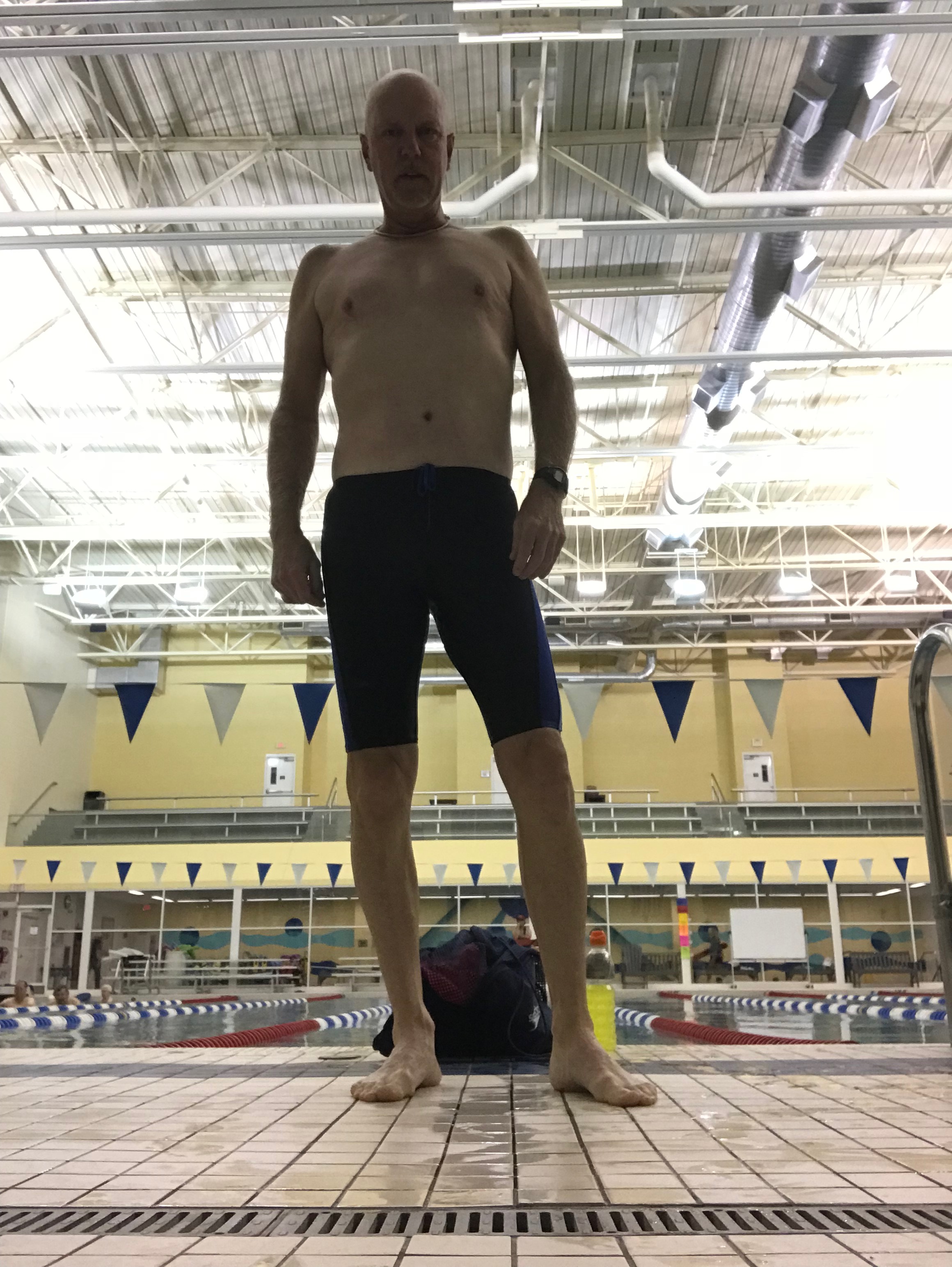
IMG_5697.JPGThere comes a time in every athlete’s life when it does no further good to offer up excuses why things aren’t happening like they should. When I started swimming three or four years ago, I could barely manage a couple laps in a 25 yard pool before grasping the side and waiting for my breath to return.

It seems so foreign now that I struggled so badly at the start. I kept telling myself, “You’ve always been a good athlete. Why can’t you make this work?”

The answer, of course, was that I was doing it all wrong at the start. It took quite a bit of time to 1) learn enough about swim strokes to swim efficiently and 2) build up enough stamina in swim-specific muscles to manage sustained efforts. All that takes time. Swim time.

Other time

Perhaps you’ve struggled that way in one sport or another. We all seem to have our weak spots in multi-sport competitions. Some hate running, or running on the track. Others fear time on the bike with all that traffic, not to mention the hills, and the wind. Bike time can be a killer.

Late learner

Returning to swimming late in life was hard because there was so much for me to learn just to be able to do it at all. The fact that a basic freestyle stroke has so many moving parts was frankly confounding to me at first.

I’ve still got to work more on my catch position. My rotation seems good, and my elbows are coming out of the water high enough about 70% of the time.

And my kick? Sucks. So swim time still means working on some of the basics for me.

Good time

All that said, I arrived at the pool yesterday morning feeling more confident than ever. I swam some warmup laps and put on pool buoy between my legs and hand paddles on my mitts to do some strong pulling.

Then I swam a couple hundred yards and paused by the side of the pool to decide what my actual workout should be. It occurred to me that my near-term goal is to swim a half-mile (800 meters) without feeling stressed. That’s the distance of most Sprint triathlons, and it was time to just do that in the pool and not worry about it.

So I swam all 800 meters at my 1:55 per 100 pace and felt stronger as I went. Which also suggested that swimming a mile should be no problem from now on.

Bigger goal

That’s my bigger goal: to swim a mile without stress with or without a wetsuit. Too many summer races are “iffy” as to whether they will be wetsuit legal and I need to feel confident to swim a mile in open water if conditions are reasonable. As in not insanely choppy or waves over two feet tall.

That half-mile I swam in the pool was swim time that I truly enjoyed. My form felt good and the pull of my arms underwater felt strong and secure. That’s genuine progress from the days when I’d clung to the wall between laps to save myself from drowning.

Swim time is finally here in my life. Now let’s see how much faster I can get, and how much longer I can go. That’s what swim time is all about.

Posted in swimming, triathlete, triathlon, triathlons | Tagged , , , , , , | Leave a comment

Life between the cornstalks

Corn 3.jpgSaturday morning we rode into a stiff west wind following early morning rainstorms. The roads were so wet the rooster-tails of the rider ahead of you made it difficult to see as rainwater coated the lens of our sunglasses.

But it wasn’t unpleasant riding despite the early morning conditions. We traded pulls while heading into the wind coming at us from a 45-degree angle.

Our route took us into open country, out among the cornfields where it seemed there was nothing to abate the wind but the dried, shredded wall of cornstalks waiting to be harvested.

At fifteen miles we turned south and felt the relative tailwind begin to push us along. The average speed lifted immediately. We rode side by side now, talking a bit and keeping an eye and ear out for cars or trucks approaching from behind. Blessedly, there was little real traffic out among the freshly harvested fields of Illinois.

Collectors

Later that day we’d drive out in the country to harvest a few wayward corn stalks to mount on our front porch pillars. We feel no real guilt or get a sense of stealing considering how much corn actually grows in Illinois. The harvest process scatters seed in the flat fields where huge flocks of Canada geese walk among the fallen corn to pick up up seed with their thick black bills. The sight of live geese in the fields always brings a thought of decoys to mind. There are hunters around, but enough to make much of a dent in the regional goose population, whose numbers likely top 50,000 in the Chicago region alone.

Migration

Corn 2.jpgThe geese in Illinois, like so many other states in this country, don’t even migrate any more. They have everything they need to survive cold winters, especially neatly mowed golf courses and corporate campus lawns. In many ways we’ve genetically engineered a perfect goose environment.
We cyclists are just like flocks of geese. We have our formations, for example. And all summer long we’ve ridden through oceans of deep green cornfields.

Perfection

Come late September, the corn turns pale brown and the leaves are left sagging on the stalks. It’s almost frightening how well-engineered a cornfield looks today with the ears all perfectly positioned about four feet up from the ground. Props to the crop engineers.  They’ve done their job over the last 7000 years.

Right now there’s consternation out there among the farmers because the tariffs imposed by the United State on China and other corn-buying nations have created a backlash. The US government is now pouring $50B back into the farm belt to pay farmers for damage caused by messing with the markets. It’s all part of a “get-even” strategy on trade levels, but the people paying the price are those with the most to lose. How bitterly ironic it must seem to Republican farmers to get whacked by the policies of their political kin.

Laid low

The farmers still hauled in their crops. The fields are laid low in swaths so big the landscape seems to have blown clean. I recall visiting the cornfields near Plainfield, Illinois the week after a tornado tore through that town. The funnel stripped a clean path right through the green cornfields. It looked like a cosmic lawnmower had passed through. In town the trees were ravaged, houses and high schools were blown apart, and debris stuck out of walls as if an insane decorator was given a massive budget to spend on a town celebration.

It’s all proof that man can only control nature to a certain degree. The chaos we tend to credit to God. And that’s ironic too.

Owned

Corn 1.jpgThose of us who ride between the cornstalks all summer come to think of those fields as our own. We suffer in the heat blowing off the fields. We sweat and whirr between the corn walls and let those images burn into our minds. We become children of the corn.
Of course the farmers might radically disagree with our coveting of their fields. Many don’t even like us riding on “their” roads much less visiting our pretend ownership of their expensively maintained fields.

More than once we’ve encountered weathered looking men in overalls who pull up and get out of their pickup truck to yell at us for cycling on the country roads near their homes. “I pay taxes,” one of them screamed in my face a few years ago. “Um, so do I,” was all I could muster in the moment. It didn’t seem to occur to him that a bike rider might have a life outside the lycra and the blinkie lights on the back of the bike.

Strangers in a strange land  

Cyclists seem to be perceived as foreigners or strangers in a strange land. All we’re trying to do is ride between the cornstalks, which serve as a wall of sorts during the summer months. But it’s not the wall upon which you can paint graffiti or leave any evidence of your presence. It is a wall designed to pump sugars into seeds. When it’s done, those seeds are herded into combines and pumped into harvest trucks to be hauled to grain silos that stand out from the former prairie soil like the beheaded remains of the Tin Man from Wizard of Oz.

Some people view life between the cornstalks boring. And I’ll admit, there are days when riding gets a bit dull with nothing to look at but the homogenous, genetically-engineered, shining leaves of corn growing in the fields. But back at home, we feed seed to the birds, and there are bits of corn mixed in. The squirrels kick it around and even carry it all the way around the house. We’ll find cornstalks suddenly popping up out of garden beds or from the soft soil beside the drain spout. Corn is nothing more than a glorified form of grass. And there’s plenty of that in the world too.

Corn 4.jpgThis September we let one of those stalks grow in the back yard next to a sunflower that also propagated from a single seed cast off from the bird feeder.

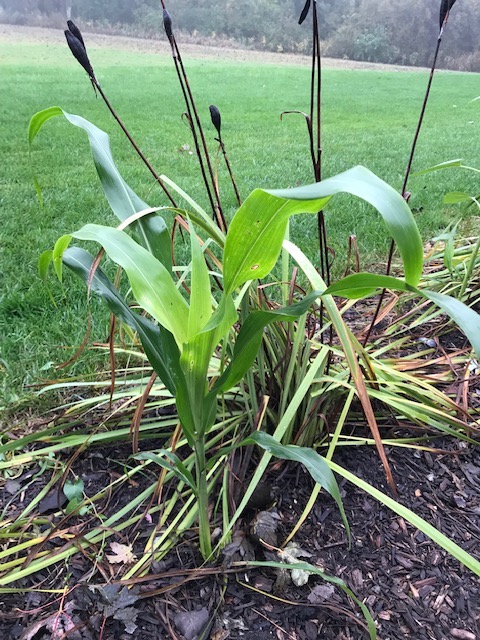
Our lone corn stalk will not reach maturity before the snow flies, but there’s something about letting this exaggerated piece of grass taught to produce seeds for human consumption that has both a domesticated and wild charm about it.

It’s roots (pun intended) go back thousands of years to the region of the world we now know as Mexico. From there it was distributed and diversified across the North American continent until it was eventually shared with European visitors in the 1600s.

The myths of origins surrounding corn are considerably different from the practical reality of its development and domestication as a food and feed crop. Some native Americans tell a story of how a woman descended from the clouds, was fed some deer meat by a pair of hunters, and in gratitude promised them a reward for their generosity. They returned the next year to receive corn, beans and tobacco. Such a deal!

Horned_Lark_maybe_female_3-16-16.jpgNow that the corn and bean fields are being harvested there is little to occupy the fields but the horned larks, Lapland longspurs and snow buntings descend from the north and stay in the cold and snowy fields all winter. They feed on weed seeds and roadside pickings, a truly cold comfort lifestyle for survival. But they do survive and return each year.
It will be too cold and harsh for us to cycle out in the open by then. So we wait for the first turn of sod in spring,  and venture out in the cold wind to course the open roads again. Usually, that happens in March, if we’re lucky, or April, if it’s a long winter.

Then we ride while watching for the first green tips of spring corn plants to emerge. Then we acknowledge the “Knee High by Fourth of July” progress of said crops and gladly eat our sweet corn in late July in August.

By October, we strap  corn stalks to our porch in commemoration of the passing seasons. Death leads to growth. Growth leads to death. That’s life between the cornstalks.


Posted in cycling, cycling the midwest, cycling threats, Uncategorized | Tagged , , , , , , , , | Leave a comment

The question for men of a certain age

Doctors get to ask strange questions and do a number of odd things. Sticking a finger up the bum of a male subject to check out the prostate gland is just one of many medically invasive things doctors need to do in order to check the internal health of their patients.

There are diagnostic tools as well, such as x-rays, MRIs and CAT-Scans to help doctors look inside our bodies when something seems broken, bruised or stressed. Dentists flip on the x-ray machine to check the bone and root health of our teeth. The medical field can even look inside our heads.

brain scan.jpg

I’ve had a brain scan done. Years ago I’d get optical migraines now and then. My  doctor sent me to get a brain scan to make sure there wasn’t anything going on behind optical nerves such as a mass or a tumor. Fortunately, the scan showed nothing except the fact that I do appear to have brains in my head. So that was a good result.

Usually the optical migraines were the result of stress, and possibly a combination of of hormonal issues. The vision in one eye would close down like a black curtain. After a bit, it would abate and go away.

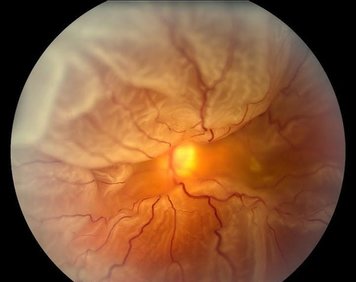
retinal-detachment.jpegAt the mere age of twenty-one I was diagnosed with a retinal detachment in the back of my left eye. The small-town optometrist in Decorah, Iowa sent me to the Gunderson Clinic in LaCrosse, Wisconsin where they hooked me up to a machine the size of a Volkswagen and shot laser beams into my eye to coterize the hole in the retina. It worked, and I never had to have the intrusive surgery where people wind up out of action for weeks. So I tend to trust what doctors and dentists and opthamologists and the like have to say.
Four hour erections

But sometimes, they still catch you off guard. Such was the case with my last doctor’s appointment a full physical exam.

“Do you still get erections?” he asked.

That question wasn’t so much a surprise as it was a point of consideration. For years I’ve seen those Viagra commercials, sometimes in the presence of my daughter, who being of middle school age at the time, would laugh out loud when the commercial said, “Check with your doctor if you have an erection lasting more than four hours.”

“Four hours!” she’d laugh.

As a good father, I’d laugh right along with her, then make jokes about all the interesting and useful things you could do with a four-hour erection. “You could punch the elevator buttons without using your hands,” I jested one time.

“Okay dad, enough,” she insisted.

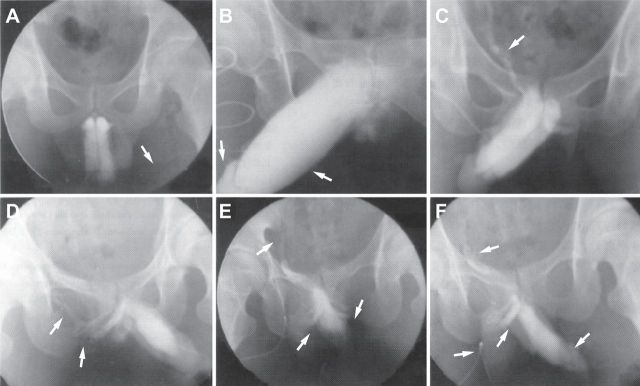
Erection scan.jpgI answered my doctor honestly that to this point in my life, there’s not a problem in that department. Erectile dysfunction, as they call it, has not caught up with me. And by the way, that’s not my junk in the illustration above. But according to slide C it looks like someone could be a Leftie. 

A part of me (yes, that part) believes that staying fit helps in terms of all body functions. Unless there’s a congenital (yes, that was another genital joke) heart problem, generally fit people are better prepared to have sex. Even the Viagra and Cialis people tell potential users to get their heart checked before popping their pills. It doesn’t help to have a four-hour erection if you’re already dead. The coroners would arrive to find the body and say, “Oh, look, we’ve got two stiffs.”

Well past hump day

It’s Friday, what can I say? I’m on a roll.

All I can say as a Man of a Certain Age is that it’s frankly a bit of a relief to not be as manically horny as I used to be. That drive had its purpose somehow during those hormonal years. For one thing, it made for fascinating playground conversations.

I remember hearing how to jerk off from a friend in the sixth grade during recess. Then we all made a pledge to go home and try it out that. The next day we reported back as if we had just completed a book assignment. Our leader was proud. “Yeah, it’s great, isn’t it?”  the Jerkoff Wizard enthused to us. To the six of us, he might as well have been Merlin, for he’d opened our world up to a magic we never imagined.

Relieved

Armed with that information and the sensations it wrought, we all graduated to a male habit that for many millions of people consumes countless hours and untold reams of toilet paper or socks. The guilt that used to be associated with masturbation has been largely relieved of its repressive power by a much healthier attitude: releasing sexual tension can be healthy for both men and women.

Be honest: There were times over the years when it was simply hard to concentrate without letting off some steam. Most of us guys turned to Playboy and Penthouse for sex pics. But these days? In the era of Internet 6.0? With live streaming and the like? I seriously don’t know how young people of any gender manage themselves in what amounts to the Golden Age of Porn. There is literally no limit to content for stimulation. But millennials seem to have their minds together on the subject. It’s just sex. They deal with it and move on to other things. Thus I admire millennials for many reasons.

A real sex education

The one good thing about the availability of online porn is that people no longer have to wonder about what human anatomy looks like. Male, female, transgender? It’s all there. No real biggie. Once you’ve seen a thousand, the mystery wears off.

Porn? Let’s laugh at some cats knocking things off counters instead.

But the question for men of a certain age is whether any of that sex stuff matters if the libido abates or the equipment doesn’t work. There are pills for all of that of course. But when it comes to legislation, it seems that men’s “health” (otherwise known as getting boners) is a big issue while women (can anyone say Sandra Fluke?) have to keep quiet and deal with the business of their lady parts and birth control on their own dime and time.

Big and little problems

The bigger problem these days isn’t the lack of libido in men. It’s the prevalence of insecure men consumed by power over women that is truly vexing society. Some of that fear of women is still driven by the relationship between sex and the power women ultimately have over men.

That makes the visage of dirty old myopic men passing judgement over a woman testifying to a rape incident in the past a truly creepy thing. It also brought to the fore the sight of an obviously conflicted man foaming at the mouth in denial of an attempted rape. If video had existed, it’s likely the old men in that room would still deny it as evidence. Their lust for power is raping justice in America, but they blame those who are trying to hold their ilk accountable for causing a disturbance in their force.

Matt lauer.jpegBecause it’s not the Democrats against whom the judge in question should be raving. It’s the proven and litigated behavior of sexual harassers such as Fox News’ Roger Ailes and Bill O’Reilly that are to blame for the suspicions from the public about power hungry men and boys behaving badly.

Kavanaugh can also blame TV props such Matt Lauer and yes, even Donald Trump for proving that men can be absolute jerks with their self-locking doors and pussy-grabbing habits. Those are the people Brett Kavanaugh should blame for the doubt cast upon his character by rape accusations from Christine Blasey Ford. And Bill Clinton does deserve criticism and public shame for abusing his power for pleasure. But his wife is not the one who did it. She stood by her man and worked toward forgiveness. What a Christian example of fidelity that truly was.

So the nation has been divided into camps that are determined to repress and excuse the truth about ugly male behavior and those who stand by the will to change. The right of women to be respected in society is the new Civil War in America. It’s that clear. And there will be other Civil Wars to come, because prejudice and zealotry and fear all go together, and they don’t give up easily.

No conscience at all

It’s not as if any of those Senate panelists offered any insight on what it’s like to be female and to be abused in society. They stood back from fear of “bad optics” and let a woman do the patented grilling of Ford. Then the men all came forward and fawned as Kavanaugh went rogue in preaching the belief that men can do what they want for two minutes or four hours or engage in a lifetime of bad behavior and women simply have to put up with it. There are no consequences for the permanently assumptive and the jerks who exhibit no conscience at all.

Annnnnd Fuck You, Lindsey Graham.  

The joke used to be “go take a cold shower” when a man got overheated. Shrinkage can go a long way in terms of managing an overwrought libido. But a conscience overwhelmed and shrunken by unresolved issues of control and repression toward women cannot be so easily healed. Let’s not forget that Vice President Mike Pence does not even trust himself to be alone in the presence of a woman other than his wife. No real control over his own conscience? That’s some repressive shit, right there. And it’s rife within the hearts of those who can’t stand the idea that women deserve respect as people, not just objects for male sexual desire and manipulation.

It seems there’s a lot of that going around these days. Men of a certain age seem to be the worst at understanding that. Like athletes living in the past, they long for the “glory days” of having their way without being questioned. If only we had a little blue pill for conscience that would last longer than four hours, America would be in a much better place.


Posted in running, Uncategorized | Tagged , , , , , , , , | Leave a comment

A taste of bittersweet early in the sweet season

This is the second installment of eight blogs about a cross country season forty years ago.

On Thursdays, I will recount a most significant period in life, a senior year in college. That’s when hard work paid off, self-belief took hold and gratifying results took place. All while love entered the picture.

Schedule.jpgBack on campus after the Resident’s Assistant retreat in the hills of Wisconsin, it was time to set up our dorm room. Having a much larger room was one of the perks of being an RA, yet my roommate, also a runner on the cross country team, decided we should each built privacy lofts in the event that we needed them given our pending girlfriend situations.
We scored some lumber somewhere and built our own personal love shacks within the dorm room. He’d also rented a small refrigerator and stocked it with beer and some snacks. All was good to go.

I’ll not share that roommate’s name because this is just my take on the events of that year. But he’d come to campus that fall in supreme shape. He would lead the team for most of the fall until a calf injury slowed him a bit. All I can share is that being in his presence that fall was akin to absorbing a new sort of energy. We began training together on most morning runs, all done at a pace under 6:00 per mile. Over the next twelve weeks, we’d rack up 80-100 miles every seven days, and do it all over again.

Hunger

My hunger to do well nearly equaled his that fall. For much of the season, we’d compete as the #1 and #2 runners on the squad. He’d been a dominant and inspiring force on the track in preceding years, but had not paralleled that success thus far in cross country. That would change in the fall of 1978 because he’d logged strong mileage that summer back home in Albert Lea, Minnesota. He arrived tan with blonde streaks in his hair from all that time running under the sun. A Norwegian god.

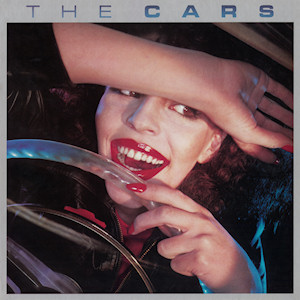
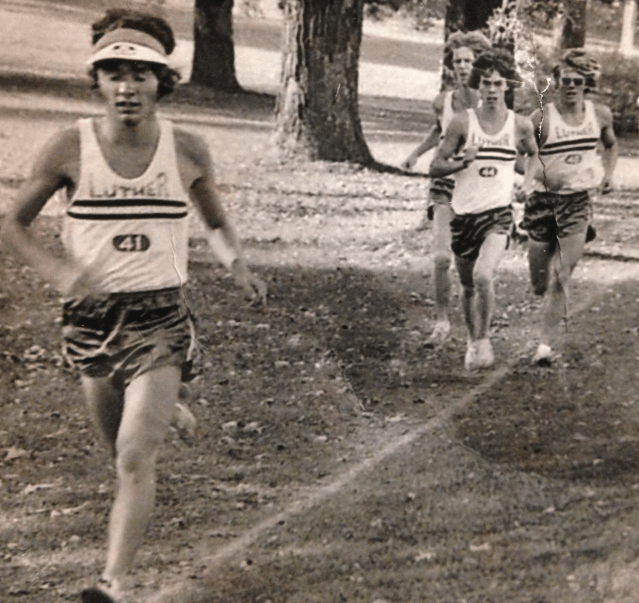
The_Cars_-_The_Cars.jpgThe entire team was geared up that fall. The music we were sharing reflected the energy within the group. The Cars had just come out with their first album, an intense collection of songs (My Best Friend’s Girl, Let the Good Times Roll, and more) and we’d blast out the dorm room windows and even played them loud on a set of oversized speakers that we set up near the starting line of our own invitational that fall. We were all in.

Mr. Blue Sky

elo-out_of_the_blueA few days before heading back to college, I’d holed up in my bedroom with my own stereo system. I was trying to determine what it meant to be entering my senior year in college. So I worked through a number of albums and closed with the entire ELO double disk that concluded with the anthemic Mr. Blue Sky.
Runnin’ down the avenue
See how the sun shines brightly in the city
On the streets where once was pity
Mister blue sky is living here today, hey hey

Then I shut off the stereo, packed up my walnut veneer Radio Shack Optimus 1B speakers, stuck the receiver and turntable in their respective boxes and staged them for delivery back to the college dorm.

Shattered and ready for action

Back at school I unpacked all that and set it up carefully. Then I put on the Rolling Stones new record Some Girls and blasted a song called Shattered, in which Mick Jagger (with whom I share a July 26 birthday) screamed lyrics that felt like a catharsis of sorts:

Laughter, joy, and loneliness and sex and sex and sex and sex
Look at me, I’m in tatters
I’m a shattered

But in my case, having been shattered was a good thing. I’d shattered my lack of self-esteem. Shattered the nagging shell of self-doubt. Shattered the inward-facing image I’d created for myself. And emerged with a will to succeed.

Hawk talisman.png

Talisman

I’d also constructed a little talisman to symbolize the renewed spirit in life that I felt. It also symbolized a commitment to who I would become.

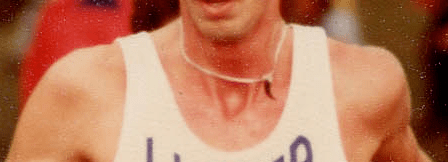
I knew that running during the fall of 1978 would require all of my attention. So I rescued a claw from a red-tailed hawk that I’d found dead in a roadside ditch and asked a local jeweler to mount it in a clasp to be worn on a silver chain around my neck. According to wildlife protection laws, it was highly illegal to have that talisman. But I was trying to break out of a mindset and affirm my deep devotion to nature at the same time.

When my new girlfriend asked what the necklace meant, I explained that while I’d be 100% committed to running that fall, someday I’d get back to my love of nature and become the best painter I could be. That has turned out to be a lifelong journey. That piece of jewelry ultimately disintegrated, but the vow on both fronts has stuck with me.

Forty years on

Now that it’s forty years later,  and when I look back at the visage of the young man that I was, I realize there were some really strong instincts at work. Most importantly, it’s easy to beat yourself up for what you haven’t yet become, or where you might have failed. Those lessons would need to be learned again and again. Finally, I think I get that.

It’s much more difficult and yet so important to develop focus and apply the discipline necessary to make things happen. That previous spring I’d turned a corner on my self- worth and had seen genuine improvement running as a result. I was dropping my times at every distance from the mile to 5000 meters. Now I wanted to transfer that improvement to the sport I really loved, which was cross country.

Bittersweet moments

But like all things in life, the start of my Sweet Season contrasted to what others close to me were experiencing.  My freshman year college roommate, for example, had been one of the best cross country runners on the entire team during our first three years in school. In the fall of 1978, he was deeply hampered by a painful back injury that would not relent all season. While we were all focused on doing our best, it was frustrating to see him struggle to return to the free-flying running style for which he was famous.

That was ironic because as a rule he was was the most flexible among all of us. Yet looking back, I believe it was the whiplike strength of his powerful legs that caused such torque against his otherwise slender frame. He worked hard all season to regain his running form, and nearly made it back during the regional meet. But not quite.

What we also missed from him on the roads was his quick wit. His wry jokes and infectious laughter were a pleasure that broke up those long training runs. Sometimes he was so funny we’d be reduced to pulsing fits of laughter to the point where we could hardly run at all. But most poignantly, he was also a sentimental favorite with our coach because he’d grown up literally across the street in little Decorah, Iowa.

Due to the back injury, he could not train with us much. And what a loss. He’d previously won the conference championship and been a leader every season during the first three years of a cross country program. We’d reached as high as eighth place in the nation thus far. That was a decent result, but it certainly did not match our expectations in a program that had seen seven freshmen arrive in 1975 with sub-15:00 three-mile times to their credit.

Another injury

All my roommates.png

This photo from a 1976 season captures all three of my college roommate/teammates during a meet on Luther’s campus. We’re all hammering for all we’re worth.

My roommate from sophomore and junior years was also hurt going into the season. Somehow one of his big toes had developed pain and it wasn’t going away. He gamely trained and continued performing well, but there were times when he’d be frustrated by how the sore toe limited his pushoff.

Later that year in senior year in track he’d go on to place seventh at nationals in the steeplechase. He also performed a magnificent 10K-Steeple double at our conference track meet. He won the 10K on a Friday night and came back on Saturday to place second behind me in the steeple. That was 13,000 meters of racing in two days, including 3000 of it over 35 barriers and 7 water jumps. Remarkable running for anyone.

Fresh faces

Our solace going into the season despite the injuries was the performance of a couple freshmen runners that were strong enough to run with the seniors from the get-go. Each would place in the Top 7 during our early meets.

So despite our challenges due to injury it was full steam ahead going into the first meet of the season. After the Intersquad meet, we traveled to Augustana College in Rock Island, Illinois for a quadrangular against Augustana, Northeast Missouri, University of Iowa and Luther. It was hot that day and the meet started at noon. The flat course on Arsenal Island felt like it was literally baking in the sun. My roommate won the race and I ran 20:26 to finish somewhere in the top ten. It was a good start to the racing season.

We came home that afternoon, and after we went for a four-mile training run to cap off a 90+ mile week, my roommate cracked open one of the Michelob beers that he kept in the fridge. “Here,” he told me. “Nice job. Second man. Way to go!”

Down and off

Then it was back to a training week and hanging out with my new girlfriend.

That next day while we were walking hand in hand through the college Union, things felt right with the world. I was truly in love with her and running well. What could be better?

There were just a few things to close down. That summer I’d broken up with a gal (by letter) that I’d dated the previous semester. She wasn’t quite convinced it was over and had sewn me a nifty down vest over the summer and delivered it to my dorm room that fall when we got back to campus. I told her politely that I shouldn’t keep the vest. “I’m sorry,” I responded. “I’ve met someone new. We’re done,” I repeated.

“You can keep the vest,” she insisted.

So I was wearing that down vest while walking through the Union when I felt a tug, then another tug. The third tug was much harder and the material at the shoulders of the vest gave way as it ripped completely off my back. My former girlfriend gave a short scream and ran back down the hallway with the shredded jacket flailing in her hand. I was chagrined and freaked out at the same time. I didn’t know whether to laugh or cry in that moment. It wasn’t my plan to hurt someone that badly. But I’d changed over the summer and felt like a fresh start was needed in every phase of my life. During that moment at the beginning of my Sweet Season, the changes I’d made suddenly felt bittersweet.

Then my new girlfriend kissed me. Her green eyes flashed and I realized there are simply some things in life that you can’t change. One of them is the flow of emotions once they’ve found a new channel.

That evening I ran a ten-mile workout with renewed intensity. I was determined not to go backward in any way, shape or form that fall. Every footfall felt like it had a purpose. The dust kicking up from my shoes was symbolic of where I was headed, straight toward the blue skies I imagined were ahead.

Sun is shinin’ in the sky
There ain’t a cloud in sight
It’s stopped rainin’ everybody’s in a play
And don’t you know
It’s a beautiful new day, hey hey

––Mr Blue Sky, ELO


Posted in 10K, Christopher Cudworth, competition, cross country, running | Tagged , , , , , , , , , , , , | Leave a comment

Shedding the shoe condoms

Shoe condoms.jpg

My “old” orthotics no longer have the full insole. But they still work. 

Earlier this week I got up to run and realized that my full-length orthotics were still in a pair of shoes perched in the back of the car my wife drove to early morning swimming. I thought about that for a moment, and decided to improvise.

I’ve worn orthotics in my shoes for more than twenty years. I got my first pair from a podiatrist known for working with the running community. He was essentially a “podiatrist to the stars” because he fit the likes of Sebastian Coe, an Olympic and world champion, and Jim Spivey, one of America’s top distance runners for more than a decade.

Those guys needed orthotics to run as well. Now grant you, in my prime, I was nowhere as fast as Coe or Spivey at any distance. Spivey ran a 13:15 5000 meters back in 1994. My best was 14:45 of so back in 1984. If I recall correctly, he actually won the race in which I ran my PR at an All-Comers meet at North Central College in Naperville. I think he ran 14:01 to win.

That meant I was still a half lap behind when he finished. I actually recall looking across the track to see him zip across the line under the lights. The 5000 had not started until midnight due to the number of competitors in all the events that evening. But despite the late hour, I had accorded myself well enough to stay within a half lap of the winners.

I wasn’t wearing orthotics in those days. My feet were still youthful enough that I did not need the additional support. The shoes I wore that evening were a featherlight pair of Nike Zoom track spikes, white with sky blue swooshes I was obsessed with the weight of my racing shoes in those days. The lighter, the better.

All that shifted over the years as my body changed. My podiatrist in 1993 or so fit me with a set of modestly supportive orthotics. Within weeks the chondromalacia that was plaguing the spot under my left kneecap had resolved itself.

Co-dependency

But then, as my body got used to the benefit of additional support under my feet, I was stuck wearing orthotics all the time. That first pair were built with an insole glued on top of a hard plastic orthopedic support. That insole got really stinky after a while. I didn’t have an alternate pair of dress orthotics to wear in my work shoes. More than once while sitting at my office desk, the odor would waft up in an embarrassing haze.

I wore those orthotics all through the 90s and into the early 2000s. Then I ordered some dress orthotics but badgered the podiatrist to tweak them for my running. They worked well for both purposes for quite a few years. Then my calves started to tighten during runs I complained to a runner I’d met at a trailhead and her friend that was a pedorthist happened to be within earshot. She set me up with the full-length and rather heavy orthotics I’ve been wearing ever since.

They are supportive, but also rather clunky. Every pair of shoes I put them in feels like they weigh a ton. I’ve even put those orthotics in racing flats but the sensation of heaviness is still the same.

Shedding the shoe condoms

Which is why it was somewhat of a pleasure to try running with my “old” orthotics from way back when. I pulled them out of a drawer and slipped them into my running shoes earlier this week and went out for a run.

A few strides out the door I was nervous about how it might go. Changing up your footplant or making major changes in orthotic support can result in muscle tweaks or even full-blown injuries no matter how careful you take it.

But I ran a half mile and things felt good. My feet felt light without the big orthotics, and for the first time in many years I got to feel the responsiveness of the insoles that come with the shoes. It was a strange sensation, almost like “running naked” again. The best analogy I can relate is that it’s like having sex without a condom again after many years of covering up the Willie. But it’s kind of like a condom in reverse. There’s a freedom and a joy in running without the heavy ‘shoe condoms’ in there.

Miles of pleasure

I covered a mile. Then two. It felt good to be “naked!” again. Then I’d run three miles and I was back home. No injury. My Achilles even felt a bit more relaxed without the big orthotics. Were they overcompensating and putting my ankle in a stressed position?

The next day I ran in the old orthotics again. This time I actually did a few pickups, and that felt good. Then I ran the last mile harder, dipping down toward 7:30 pace. No problems.

In fact I’ve convinced myself to give this experiment even more time to work. I’ll continue with yoga and some strength training, because there is still hip weakness and other flaws to manage. But damn it feels good to loosen up and just run a bit without those big orthotics in my shoes. It makes me wonder what it would feel like to lose ten pounds as well. How fast could I get then?

Only time will tell.

Posted in running, track and field, training | Tagged , , , , , , , , , , , | Leave a comment

That’s why they call it a criterium

criterium, or crit, is a bike race held on a short course (usually less than 1 mile), often run on closed-off city center streets. Race length can be determined by a number of laps or total time, in which case the number of remaining laps is calculated as the race progresses.

Bike Racing 2.png

That’s me at back left, behind the guy that would take it out so fast I got left in the dust. 

On Friday morning the 28th of September during work, I decided to see where the Athletes By Design Fall Fling bike races were being held this weekend. To my pleasant surprise, they’d landed a course in a calm little subdivision five miles from my home.

I sent an email to my wife and said, “I’m going to race my bike tomorrow!”

“Sounds good, honey,” came the reply.

Crit racing

When I first purchased a real road bike in 2007 (a Felt 4C carbon fiber road bike) one of the first things I did was enter a number of criterium races in the Chicago area. Back in the early 2000s, as marketing manager for a regional media company, I’d committed sponsorship money to support major bike races in the region. Through those experiences, I came to learn a bit about the sport. On a whim one time, I even entered a race with my Trek 400 series steel road bike to try it out. I got dropped in the first 400 meters.

So I’ve always had a deep respect for real cyclists. My two best friends raced for years before I ever touched a road bike. I’d visit their races and watched a few crits along the way. I also learned the dangers and joys of criteriums. That first year of racing I watched more than a few guys skitter into hay bales and crunch their bikes, or themselves. The basic truth is that crit racing is dangerous. It’s easy to forget that.

Bike Racing 3.png

Perhaps it was the bright greenish-yellow triathlon kit that turned out to be a jinx. 

Over the years I’ve let up a bit on crit racing. Usually, I’d head at least twice a year to the local scratch and handicap races held by the ABD Cycling group at a local industrial park.

Time trialing

Most of my bike racing the last four years has been done in triathlons. That’s quite a bit different than true bike racing. For one thing, there’s no drafting allowed. In crits, you don’t survive a lap if you don’t draft. It’s either hold the wheel of the guy (or gal) ahead or get dropped.

So I’m sitting at the start line yesterday with a fit-looking band of 60+ cyclists that I recognized a few from years past. Cycling is an evergreen sport. Age does not matter much to those who keep at it. Thus I knew the pace would be solid from the get-go despite the laconic instructions being doled out by the race director.

Off to the races

Sure enough, the whistle blew and the Alaskan-sized guy in front of me sped off. I clipped in cleanly enough but in that spare moment a much-older woman rider drifted toward me and the path was cut off to catch the draft of the lead guy or anyone else.

The race composition was basically every guy over the age of 60 and every woman too. So I applauded the presence of a woman that was 75 years old. Yet I should also probably have been alert in case of slower riders, but I wasn’t. Haven’t not raced all year I forgot that sometimes bike races start like that.

So I hustled like hell to get around the first circle and tear into the 300-meter incline toward the first turn. That required some slalom work too. That early delay really cost me.

Bike Racing 1.png

That’s all it takes, the woman to my right slipped in ahead of me and I was out of the draft. 

Heading into the first turn, I swung wide to avoid another cyclist and got out into the ruts at the far side of the road. This crit was held in a standalone suburban development called Mill Creek outside Geneva, Illinois. The roads are in great shape right in the middle. But on the edges, the asphalt was cracked and foreboding. When I hit that zone on the turn, my front wheel jumped from one crack to the other. I skidded into the curb itself and knew I’d be going down.

Drop it like it’s hot

During all those years of crit racing I’d learned lots of fine bike handling skills. This situation was not dire, and a voice in my head told me to just relax and find some grass to land on if possible. That’s what happened. I leaned over at a high rate of speed (more than 20 mph) and performed a sort of glancing slide. I laid ‘er down, in other words.

It didn’t really hurt and I popped right up, stood the bike on its wheels and looked down. The chain was loose. Otherwise, I could have basically kept on riding.

There were also some colorfully shaggy dirt clods stuck in the side of my bike shoe and sticking out of my left brake hood. I plucked those out and started walking back toward the start with my bike. A race marshall called out and said, “Come on back. You get a free lap.”

I knew that. Sort of. But something about going down like that took the joy and anticipation out of the day. I got back on the road but actually let the lead group swing past so I would not interfere with the pace line of six guys as they entered the corner. They were the real racers from that point on. I’d be nothing but a pretender.

So that was that. I pulled over again and told me wife, who was standing near the finish. “Ahhh, I’m done.”

Everyone near the finish was really nice. “Are you sure?” the race director offered. “You can just ride and have fun.”

But it wasn’t fun for me at that point. I go to bike races to race, and while I’ve never won, I’d stuck with the bunch a number of times. But this time I wasn’t really ready to do that in a number of respects.

Specificity

Jumping into a late-season crit after not really racing any crits all summer is not the best game plan. I’m sure there are riders who are capable of that. But not me. 90% of my riding has been between 18-22 mph all summer. Most of these were long haul training rides with occasional sustained speed, but not much surging or real sprint training.

This crit started at 22 mph and was roaring along at 24 mph on the 300-meter uphill. In warmups I rehearsed those surges and could feel the internal engine overheating. It was perhaps a bit insulting to those other seasoned riders to think that I could take my multi-sport cycling and apply it to a crit and hope for success.

As it stood, it was the mental side of the game that tripped me up. To crit race well, you need to anticipate the actions of other riders, especially the slower ones. And stay out of trouble.

Or trouble will find you, as it did me. Fortunately, all that I got for the trouble was a bit of a sore shoulder. Nothing broken. No road rash. No busted bike parts.

Just some dirt clods and a few confessions under the late September sun. “If it was easy,” I told myself, “Everybody could do it.”

And that lesson applies to just about everything. But it’s the true criteria in bike racing. That’s why they call it a criterium.


Posted in competition, cycling, cycling threats, Uncategorized | Tagged , , , , , | Leave a comment

One Sweet Season: Volume One

This will be the first in an installment of eight blogs about a cross country season forty years ago.

Over the next eight Thursdays, I will recount a most significant period in life,  entering a senior year in college.

That’s when hard work paid off, self-belief took hold and gratifying results took place. All while love entered the picture.

A Key Transformation

Chris Running 1978.jpgComing off a year of genuine transformation, I entered the summer of 1978 with a will to change. Arriving home from college, I couldn’t find a summer job at first. We were living way out in the country on a farm property eight miles from the town where I’d attended high school. So the idea of cycling to the golf course or working some other local job wasn’t an option.

1978 faceThat meant I had time to take stock and figure out what came next. One morning I got up and took a long look at myself in the mirror. My hair was long and thick. It framed a set of harrowed cheeks that had been thinned by hundreds of miles of training that spring. That had led to dramatic drops in my racing times from distances ranging from one mile to 5000 meters. But my outward demeanor and appearance had not changed.
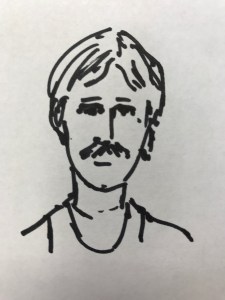
My face was covered with a dark yet thin beard. So I took out shaving cream and dragged a somewhat dull and long-neglected razor over my face to remove all of it but the mustache.

The bearded look had indeed served me well as I vicariously assumed the pale form of a Lasse Viren wannabe during the winter and spring track seasons. I’d trained hard during January and February and dropped my indoor mile times down to 4:20, and my two-mile time to 9:30. Then during the outdoor season, I lowered my 3000 meter steeplechase time to 9:23, which at that moment was a school record. It was later broken by a teammate, but the achievement built confidence in me just the same.

Confidence is almost everything in life to a distance runner. Which is why I stood in front of that mirror as a 20-year old kid assessing my self-image. Those thick glasses on my face were doing me no favors. It was time for a transformation.

Makeover

After shaving the beard, I took out big scissors and sheared off large chunks of thick hair. Of course, it looked awful, and I looked ridiculous. So I grabbed the keys to my parent’s car and drove to the barber shop in town. “I need a haircut,” I told them. That was the understatement of the century.

The barbers seemed to sense my predicament but said little to embarrass me. I’d been to the barber so few times during my college years that when asked to put my head over the sink to have the hair washed, I leaned forward with my face down in the sink rather than backward so that my hair could be washed and rinsed. Again, they corrected me with little comment.

When the haircut was finally complete, I felt liberated from a dark period of my life.

Contact lenses

Luther Runners

That’s me at the far left at Nationals in track and field

The next change that took place was getting rid of the Coke-bottle-thick frameless glasses that made me look like Napolean Dynamite. I’ll admit that probably there were elements of that movie character in my own persona. I was an avid birdwatcher, for example. Not exactly a turn-on to the ladies in the late 1970s.

Well, I didn’t give up that avocation, but I was interested in giving up those glasses. So this time around I literally begged my parents to let me get contact lenses. Fortunately, they were by then feeling grateful that I was likely the first boy in their family to graduate in four straight years. My two older brothers, to their eternal credit, largely put themselves through college on their own money and volition. So this is not an indictment of them. My only point is that it was almost time for my younger brother to enter college, and he looked to be getting a full ride in basketball, and that came true. So my parents felt they could spare $100 to help me out.

Seeing my way clear

1978 makeoverAlso by that time, my folks had made the decision to move our family back into town. Then I landed a job doing janitor work at a building managed by my best friend’s father. So everything seemed to be changing at once. My folks had purchased a home in a newly built subdivision. They occupied that same home for the next thirty+ years.

But for me, the new start actually represented a chance to get back to my old running routes in the towns where I’d built my run career during high school.

It was time for a new look at the world, and it was quite gratifying to put those contact lenses in my eyes and take to the streets without heavy glasses bobbing on my face, or those damned glasses straps pinching up behind my ears.

Close call

During the very first run on which I embarked, I was ecstatically covering a nine-mile route that took me on a rolling stretch of asphalt called Country Club Road. It was a warm June day, and as I wiped sweat from my eyes, the contact lens in my right eye popped out. I didn’t notice it for at least twenty yards, but when I did, a wave of panic shot through me. I turned around and trotted back the twenty yards while trying to calculate how far I’d run since wiping my eye. Then I stopped, bent down to peer at the gravel, and sure enough, found my contact lens sitting in a stretch of well-lit pebbles. Close call.

Now I had to get the thing back in my eye. I was a rookie at that. But I managed to stick it on the surface of my eyeball even in its dry state and keep it there until I arrived home. Not a word was said to my parents, who had warned me that I better not lose them.

Racing away

It took several weeks to get used to those contact lenses. At first, my eyes could only take about 2-3 hours of wearing them. then it was back to glasses. But when July came around I was getter better at wearing those baseline hard contact lenses and could stand them for 5-6 hours.

So my friend and I drove up to Decorah, Iowa to participate in the annual Nordicfest Elvelopet 15k, a 9.3 mile race that covered streets and trails in the hilly environs around town.

I felt like a new man with all that hair chopped off, the beard gone and those glasses removed from my face. All that I recall is putting those contacts in that morning and feeling like a surge of open-faced confidence. The race went well, and following that effort, the feeling of liberation and hope was profound.

Post-race, we all gathered at the home of our cross country coach sat to have some beers (drinking age was 18) and talk about the upcoming season. My eyes had tired out from wearing the contacts so I put the glasses back on. In some respects, that meant my transformation was not complete. Yet deep inside I felt a quiet determination to break free from all that had limited me in the past. My dark days were over.

Turnaround

Weeks later I was scheduled to participate in a retreat for Luther College residence hall managers. The event was to be held at a camp called Bethel Horizons north of Dodgeville, Wisconsin. That meant packing up all my college stuff to deliver it a week early to the campus, then get dropped off back at the retreat.

I clearly recall my father driving me through the Wisconsin hills on the way back up to campus. He’d been the one that suggested Luther would be a good place for me. He knew that I’d love the close access to wild woods and streams in Decorah. We’d also visited the campus at Augustana in Rock Island, Illinois. And while that school accepted me, I’d been placed on academic probation from the get-go. My grades in high school were merely Cs and low Bs, but I took that decision by Augie as a slap in the face.

Luther didn’t look at me that way. So when my dad and I drove into Decorah to visit the Luther campus for the first time that summer day in 1975, we stopped at a cafe in downtown and had lunch together. I could see that he was happy and relaxed in being there. That was a seemingly rare condition for my father in those years. For all our differences and difficulties through my early and teen years, these were moments when we finally relaxed together.

We didn’t even know where the college was located in relation to the main part of Decorah, but my dad smiled and said, “Don’t worry, we’ll ask around.” After that weekend, I pulled my application from Augie and signed up for Luther just a month out from the start of cross country season.

Those first three years at Luther were from 1975-1977, all tough winters and challenging academically I’ll admit. But I’d made it through and the drive back to campus my senior year with my father felt mildly triumphant. Along the way, we admired the sight of purple bergamot (bee balm) blooming in the fields next to bright yellow sunflowers. My dad sensed and appreciated that I’d cleared my head from the year before, and was excited to see me showing self-confidence after years of holding myself back. “Have a good year,” he told me after our trip up to the campus and driving me back to the RA retreat site. Then he set off toward home, and I was all alone.

The August mist

Bald Eagle PaintingDespite some deep insecurities during my first three years in college, I’d done quite a bit to establish myself as a student and athlete. My artwork had progressed in maturity, and my internship at the Cornell University Laboratory of Ornithology had seen me curate their entire collection of bird art while studying raptors in the “hawk barn” in real life. I’d earned a reputation as a person willing to push myself and try new things.

So it wasn’t as if I was emerging from a complete shell or anything like that. I’d also painted four large murals for a nature center in Calmar, Iowa, and held several solo shows of my work, much of which sold and provided needed money for my life on campus. And I’d greatly improved as a runner.

Retreat

Those experiences were why I’d applied and was accepted as a Resident Assistant (RA) on the Luther Campus. That required some preparation and training. So I joined dozens of other RAs at the retreat held in mid-August of 1978.

We met throughout the day for training and discussions. That left early mornings and late afternoons open for my running. I’d been building up to higher mileage through the month of July, concluding with the Elvelopet race in Decorah, and had made it a point to shoot for an 80-mile week during that August week at Bethel Horizons.

bethel-horizons-1-600x378.jpg

The wonderful aspect of that retreat was its location, which bordered a state park called Governor Dodge, a site to which I’d return many times, and over many different seasons, during the ensuing decades.

August provided supreme running conditions. I’d rise at 5:30 and trot silently away from the campsite in one of many directions. Often there would be morning mist obscuring the roads. It invited me with its mystery. As I ran, the mist would grace my skin with a cooling effect. Then the sun would rise and the mist would burn off. I’d arrive back at camp in a sheen of sweat of my body, shower up and be completely relaxed and focused for the day ahead. Then I’d repeat the process in the glowering heat of late afternoon. I was honing my body for the cross country season ahead.

The lure of the August moon

A few days went by like that, with long runs both morning and night, and socializing during the day. During all that interaction, I’d met a woman to whom I had an instant attraction. She seemed to respond in a similar way. Thus I felt competitive toward the attention she was getting from other guys. Thus I found myself tracking her whereabouts during every social break.

By the fourth day, we’d begun to hang around together a bit more. Then as evening fell, we sat together beneath an August moon with other people we’d met during the retreat. Everyone was talking quietly when she eased her body onto the blanket under us and placed her head on my knee to relax. She looked up at me with bright green eyes that reflected the August moon. I fell instantly in love.

Return to campus

From that point forward, we were a couple. Everyone at the retreat recognized what was happening. I spoke to that fact with a series of guy friends as we were walking to dinner one night. “Now, you boys stay away,” I told them. They all laughed and knew what I meant.

Later that week, we returned to campus and I walked into a party being held by the fraternity of which I’d been a member since sophomore year. But things seemed changed. No one seemed to know me. Then a frat buddy walked over and asked who it was that I knew at the party.

“Dave,” I told him. “I’m Cud.”

His eyes flew open and he replied, “Dude, I didn’t even know who you were.”

We both roared.

First practice

The very next day I joined up with my cross country teammates for the first workout of the season together. Most had been on campus for the week that I was stationed out at the RA retreat. That meant the hierarchy of team dynamics was already in play. Runners tend to sort themselves out quickly by pace and competitiveness, and here I’d arrived in the thick of that process. There were a few quality freshmen that were sticking with the seniors through every workout. That day we ran a track workout in late summer heat, and I felt good all the way. The hill running in Wisconsin had done my legs a world of good. Plus I was tan, had those contact lenses and a new girlfriend.

The stage was set for one sweet season.


Posted in Christopher Cudworth, competition, cross country, running | Tagged , , , , , , , , , | Leave a comment

When things are looking up, don’t look down

Looking upI once had a boss who told me, “I like you a lot more when you’re smiling.”

Now, the circumstances surrounding my resting dour face were not exactly common. So let’s set the stage.

I’d just started a job as Chief Marketing Officer for a marketing agency. I earned the position after helping the company land a million dollar account. That was all exciting. It came with a larger salary and a chance to make a real impact helping lead the creative department.

But three weeks into the gig (this was 2007) we learned that ovarian cancer was back in my late wife’s body after nearly two years in remission. She had an emotional breakdown as a result of that shocking news. I didn’t blame her. She’d done the “gold standard” recommended by her doctors and still the cancer came back.

So I walked a daily balance between handling the excitement and challenges of a new job and conducting daily conversations by cell phone with family while trying to manage the health needs of things back home.

Ultimately, it didn’t work out. The job ended after two months, partly the result of my inability to muster full energy for the work at hand. But once I was let go, that allowed me to take care of things directly during a period when the needs back home were profound. And they were.

But we got her through. Then on the very day she was informed of her remission following extensive chemo, surgery and emotional therapy, I landed another job. Wasn’t that interesting timing?

I’m not saying things worked out perfectly in all respects. Going forward, I wasn’t able to paste a smile on my face every day, as my former boss once suggested. But I had kept looking up even when things were truly looking down. That is the yin and yang in all this life on earth.

Persistence pays

Throughout my life to that point, I’d learned that keeping faith is important when faced with challenges. Persistence is sometimes all the salvation we need. I recall a moment during my years in advertising sales when an account that had been lost to a competitor finally called me back to purchase an advertising campaign. “You know, I’ve never met anyone more persistent than you.”

I’d never pressured him. Yet I did make consistent courtesy calls to stay in touch. When the day finally came for him to advertise with us again, he knew where and how to find me. I’d kept looking up even when things were looking down.

Motivation from somewhere

No one really coached me on that. Some of these things we do by nature. Yet coaching can help bring out our better traits.

For example, that boss who encouraged me to smile was suggesting it doesn’t help to be negative about anything. Two weeks before my late wife passed away, her gynecological oncologist phoned me up to talk. “Okay,” he told me, “This is coming to a close now. There’s nothing more we can really do. She’s made it eight years and she’s done a really good job. So be positive. Lie to her if you need to. Make the most of this time.”

Now, some people would be surprised or offended by what that doctor said to me: “Lie to her if you need to.” But he didn’t mean what most people might think upon hearing that advice. It wasn’t about engaging in deceit or being false with a loved one. He was suggesting that while walking the tightrope between life and death, it simply pays not to look down.

Sometimes we do have to “lie” to ourselves when fear threatens to overcome us. We overcome our fears by focusing on the present and the job at hand. Sometimes that means smiling even when things get tough.

That’s all her doctor was telling me.

Lessons learned

Pleasant Prairie 1Some of that desire to be resolute can emerge from your experiences as an endurance athlete. There are few things that test your character and ability to remain positive in the face of suffering than pushing yourself to near physical exhaustion. The lessons learned in those pursuit really do matter in life. You come to understand that you can take a lot more pressure and fatigue than you might ever have imagined.

Then when “real” events in life come along, you have the perspective to look at things more objectively, to assess your options and to compartmentalize those moments of fear and doubt.

That’s why achievements liked finishing an Ironman mean so much to people. Those races are symbolic not only of human spirit, but of persistence in the face of challenges. Many people hope that type of persistence pays off in other aspects of life.

Not an Ironman

I’ll never do a full Ironman. That much I know. My body has too many miles on it already from years of training and competitive distance running to embark on that particular journey. So I don’t really feel the compulsion to become an Ironman. I’ve gotten satisfaction from so many other experiences in life that the lure of trotting down that runway and hearing my name called out is not on my bucket list. I am working toward a series of Olympic distance races in the coming year. That makes me happy. And I love a good Sprint Triathlon. Fun and fast.

Yet I certainly understand that for many people, competing in big time events such as an Ironman is a peak experience of great value. Thus I openly thrill at the efforts of others, which is why I support all those who take on the challenge of doing an Ironman or whatever you choose to pursue from long swims to epic rides to gnarly runs.

We all benefit from seeking new heights of personal experience because that’s where we learn to avoid looking down when things are actually looking up.


Posted in anxiety, Depression, IRONMAN, marathon, marathon training, running, training, TRAINING PEAKS, triathlete, triathlon, triathlons | Tagged , , , , , , , , | Leave a comment

Coming alive on the track

Coming alive.jpg

It was a gray day and this Instagram filter emphasized the fact. And I dressed all gray too. 

Late last week I wrote a blog lamenting how slow I was running in the late September heat. Well, last night I took a turn on the track and it literally felt like I was coming alive again.

Some of you who read this probably hate training on the track. It might symbolize pain and suffering in your run training. Granted, those things are sometimes true. But the reason most of us go to the track is to get faster. Track training offers the empiric feedback you need to know exactly how fast you’re running. So it hurts a little? A price worth paying. There’s simply no fudging it when you’re running repeats of 200, 400, 800 or mile intervals.

That’s exactly what I did. 2 X 200, 2 X 400, 2 X 800 and a full mile. All at 7:00 mile pace (or *nearly so).

That’s not nearly as fast as I once did that workout. Forty years ago the bulk of that workout would have been done at 4:00-mile pace for the intervals up to 400 meters, and a couple 800s at 2:10 to 2:15 pace. Then the mile would be finished off at 4:30 or under. I’m not lying about those times or exaggerating them for effect. That’s what I could do back then. I was young, decently fast and loved running. Probably I’d have turned around and done the ladder in reverse too.

Age adjusted

But everything is relative. So is the age-adjusted sensation of what feels “fast” while running. It’s not the same at 60 years old as it was at 22. But I keep trying. soon enough I plan to be running some of those shorter intervals at 6:00 pace. That’s only 45 second 200s and I’m currently traipsing through at 50-51. All good. Could I run a 37.5 second 200 these days, which is 5:00 pace? Hmmmm. That might be stretching it. But I’ll try.

I’ve got a friend and former teammate Dan Johnson that is nearly my age and just ran a 5:26 mile and a Half-marathon in 1:23, an age-group state record for Minnesota. That’s pretty damned fast. I have no illusions of getting that fast ever again. So kudos to Danny. Carrying the Old Guy Torch with pride.

Smoothing out

As for me, I love the feeling of “smoothing out” as the intervals build up in my legs. The first two 200s admittedly felt a bit cloddish. It takes a few solid laps of faster running to loosen up aging joints. Those warmup laps loosen the muscles and set the tone for the rest of the workout. By the second 800, I was running efficiently. Everything felt like it was back in place. It was like reversing the aging process.

Dialing in

After the second 800, I jogged a lap and started to get my mind in the right place for keeping that 7:00 pace going. It’s easy to talk yourself out of being able to handle a target pace on a longer interval. So I said it out loud: “You can do this. Run smooth.” 

I felt good but also fell a couple seconds behind the first lap. Same with the second lap. Ooops. That meant it was makeup time on lap three.

The pace quickened and my footstrikes felt more purposeful. I even leaned forward a bit to gain speed and hasten my footplant. That third lap went well.

Then it all came down to the final lap. I was breathing harder but not laboriously. My mind touched on the fact that I’m actually recently capable of running a 6:30 mile. Picking up the last lap should not be a problem.

I brought it home in *7:09. A little over the objective but a great starting point for October speed training. Loved the feeling of new shoes on a responsive all-weather track. With my big clunky orthotics in training shoes, it’s not the same as running intervals in featherweight Nike Air Edge racing flats. But I also no longer weight 140 lbs and have 3% body fat. So there are a few compromises one must make.

But it’s all good. It’s all very good. Following the workout, I again said some words out loud. “Good job. It might be hard to race at that pace, but this was a start.”

Then I looked up and noticed that a couple had just walked past me on the track. I laughed while catching up to them on the jog and told them, “You know, a guy has to talk to himself when he’s training alone. The left side of my brain tells the right side how fast to run.”

They laughed and said, “We wondered about that.” Then I walked a couple laps with them to cool down and learned that he’d once played Division I football at Kansas State University. His arms were huge. We talked strength work and aging. “Don’t do the heavy stuff,” he warned me. “We need the medium stuff and high reps.”

Good advice and a good plan for the weight workout I plan to do tomorrow. Weights help speed and keep injuries at bay. It all fits together.

May you find your speed on your own terms as well.

Posted in 400 meter intervals, 400 workouts, running, we run and ride | Tagged , , , | Leave a comment