Some bright ideas about breathing and Breathe Right strips

Wearing the Breathe Right strips just feels good!

The other night when talking with my wife just before nodding off to sleep, I made some comment about not lying on my back to avoid snoring. She kindly informed me that despite my precautions, I still snore some when sleeping.

“Hmmm,” that made me think. “That’s not good.”

She tells me that it doesn’t bother her because normally she’s asleep. Once in a while she’ll nudge me over and I stop snoring.

Snoring is annoying as heck to other people trying to sleep. It can also indicate health problems. Sleep apnea is one of those issues. The link to information on Mayo Clinic notes the types of this conditions and it symptoms. A few people I know deal with this problem. Some have machines to regulate their overnight breathing.

Most mornings I wake up rested. I use my Garmin Fenix watch to check my sleep data now and then. It shows what type of sleep I’m getting. I note the data but do not obsess about it. So much about getting to sleep and staying asleep is psychological as well as physical.

Yet I don’t want my wife to have to deal with snoring. If it keeps her awake at all, or ever, it’s a problem I’d prefer to address.

I recalled that she purchased a package of Breathe Right nasal strips a while back. She wore them to run once in a while. I tried one on yesterday morning and felt an immediate clarity while breathing through my nose. The air passages opened up more. The strips work by lifting the tissues apart inside your nose. I walked the dog while wearing the Breathe Right and kept it on all morning. I liked it. I was addicted to breathing better right away.

Last night I wore the strips while sleeping. In the morning, I asked Sue if she noticed me snoring. She didn’t. That doesn’t mean it didn’t happen. It just means she didn’t hear me.

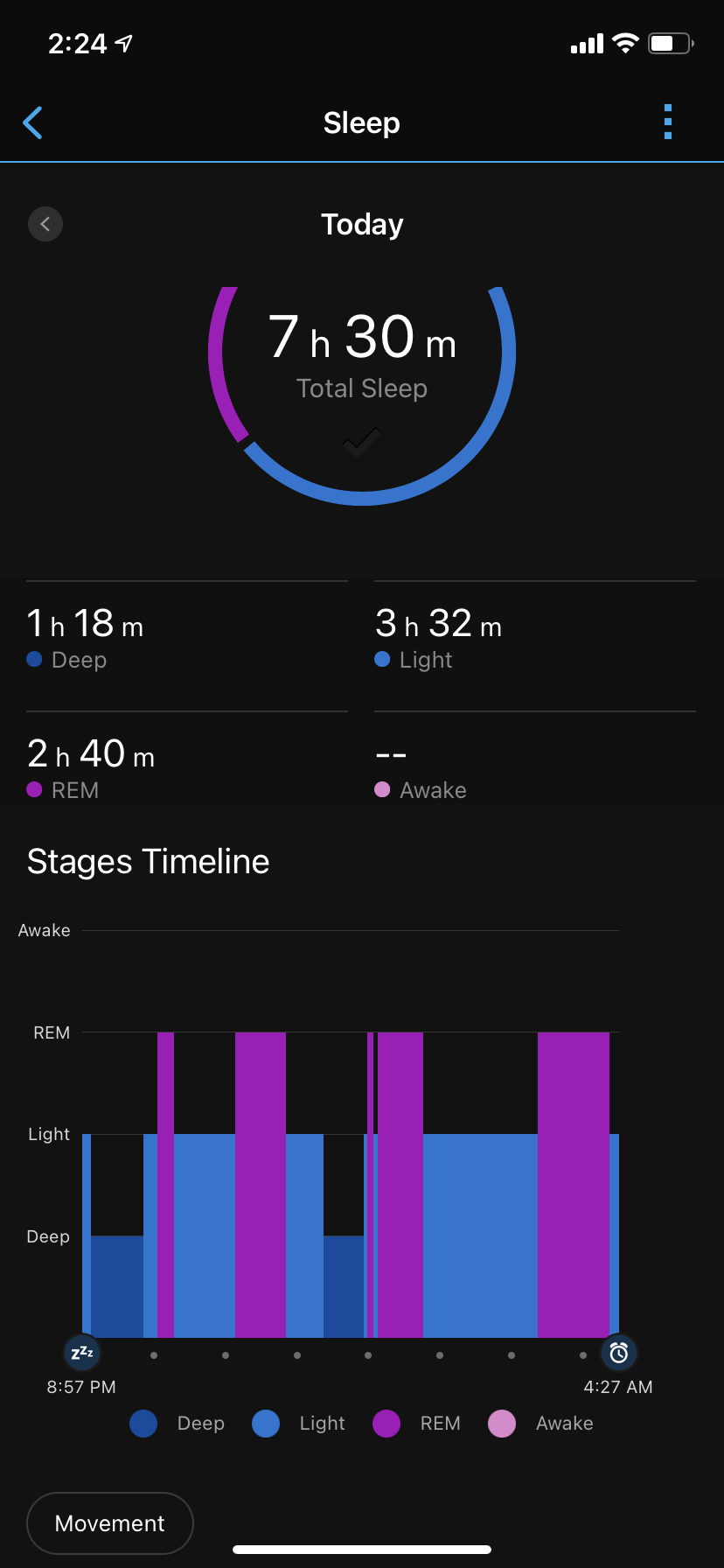
I’m going to keep wearing those strips and check the quality of my sleep on the Garmin data. I’ll be interested to see if there are any changes. Last night’s readout showed the breakdown between Deep Sleep, Light Sleep and REM. I’ll have to analyze the value of each and track them a bit using Breathe Right strips to see if having more air coming through my nasal passages helps sleep quality. I’ve never studied that much, but this article is likely to pique your curiosity. I have a ton of dreams and REM sleep is when they happen. You can see the stages in the data graph below.

Benefits of nasal strip use

Sleep measurements through my Garmin. It will be interesting to see if there are any changes in sleep type or quality when wearing Breathe Right strips.

The other curiosity I have is about wearing Breathe Right strips while swimming. I’ve learned to breathe out through my nose and breathe in using my mouth. Could the strips stay on my face and help that sport?

I also recall that for a while, many world-class runners wore Breathe Rights to compete. That fad might have worn off. In any case, this Chicago Tribune article sums up the alternate uses. I noticed a pro football player sporting a strip across his nose in the Vikings vs. Saint game yesterday. I get it.

Reducing snoring

One of the most common benefits associated with nasal strips is snoring reduction. Because the air passages remain open during sleep, the user is far less likely to experience the level of nasal blockage that triggers snoring or sleep apnea. Another benefit is increased airflow during physical activity. Many athletes wear nasal strips during competition because they improve breathing efficiency. Allergy sufferers may also benefit from nasal strips because the strips keep their irritated or swollen nasal passages from closing up completely.

I’ll admit that during the morning hours, often while driving my dog to day care or the park at 8:30, there’s a fair amount of nasal congestion that needs to be cleared. Years ago while living in a small house with vents close to our bed, my sinuses dried out and there were headaches all the time. Most of us deal with nasal issues of one kind or another. When I wear the Breathe Rights the band of flesh across my nose is expanded. It’s a remarkable technology.

The other aspect I plan to explore is breathwork, the practice of using breathing techniques for better health, mindfulness and more. I just wrote content for a virtual Breathing Festival taking place in the New Year. That might be interesting to try as well.

I’m addicted to breathing. Actually, we all are. Without it, we’d die. But there’s a whole range of benefits to explore in better breathing before that ever happens.

Posted in swimming, training, triathlon, triathlons, We Run and Ride Every Day | Tagged , , , , , | Leave a comment

Happy Holidays. Merry Christmas. Happy New Year!

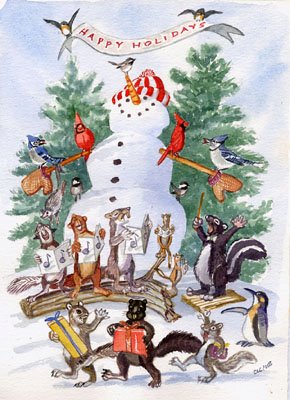
Art by Christopher Cudworth. Happy Holidays from We Run and Ride!
Thank you for reading my blog.
It is most appreciated.

This marks the eighth year for this blog. I write it for many reasons. But mostly I write it for the feeling of connection and expression that comes from “Original thoughts on running and riding.”

I have some fun plans for the New Year. In the meantime, enjoy the holidays however you do or don’t celebrate.

See you at the pool, on the bike or running down the road.

Christopher Cudworth

Posted in Christopher Cudworth, we run and ride | Tagged , , | 1 Comment

Picture this, a life in pixels

We live in the digital age that makes it easier than ever to capture and share images. Recently some friends began converting slide photos taken during our college years into digital images. We didn’t take or share that many photos back then. It was too much hassle taking film, slides or photos to be processed.

The advent of One Hour Photo booths improved the process somewhat. Getting your photos back in an hour made it less painful and took less patience than dropping film off and coming back five days to a week later. That seems hard to imagine these days.

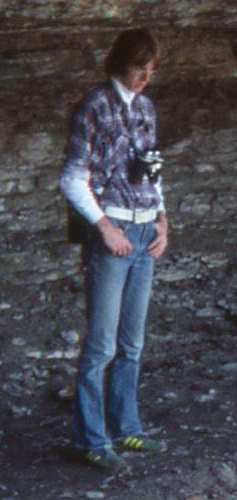
Those changes make the image at left all the more interesting for me to consider. This is an excerpt from a photo taken in 1976 on a class nature trip. I was standing under the watery shelf of a high bluff above the Mississippi River at a park called Pike’s Peak.

That white belt came with me to Luther College in the fall of 1975. I don’t recall that blue plaid shirt, but I wore a ton of those over the years. Those jeans look like a hundred pairs I’ve worn. Those adidas shoes? They were SL 76s, green with yellow stripes. That tells me this photo was taken during sophomore year in college.

I wore that white turtleneck to race cross country on cold days. I also wore that thick head of hair all the time. Those wire-rimmed glasses were not my friend in many ways. They were certainly no girl magnet. My lenses were thick. I surely could have used a pair of contact lenses to avoid having to push those glasses up on my nose during training and races.

We made do in times less sophisticated than today. I see the tip of my pelvis in this photo and that tip of my head lost in thought and gone to other places than I was at that moment in time. Dreamer. You know you are a dreamer. Can you put your hand in your head, Oh NO! That deep absorption is both the blessing and the curse of my life’s existence.

I wasn’t alone in that journey through geekhood, of course. We runners had our share of cool in terms of pushing ourselves to performances, yet we also wrestled with self-image, confidence and self-esteem on other fronts. We were racing against the forces of life itself across a spectrum of purposes. The lessons learned along the way are what we count upon today, in so many ways.

So much of life is granular. The great artist Paul Klee anticipated all this granularity. His paintings seem to be composed of tiny cells of light that make up our perception.

Art by Paul Klee.

This re-formative process takes place each time images from our past are called into the present. They come to us through light and space. Our sudden recollection and recognition of a moment in time can be shocking. What was I thinking? Who was I then? Am I different now?

Our bodies change as life rolls on. So do our minds. All these experiences shimmer in and out of minds while some fade entirely. A memory shared by a friend, visual or otherwise, can jar them back into cognizance. This happens at every age. A thirty-year- old hearing a story about an elementary school antic has the same force as a seventy-year-old recalling events from their fortieth birthday. We’re all stuck in time in some way, you see. Then it spits us back out the other side. That is mortality. It is a picture inside a picture. A layer over a layer. A billion pixels of existence that fall in and out of focus.

As an endurance athlete I’ll often be rolling along on a highway side on my bicycle, running along a country road in the sun or plying my way through the pool when reality locks into place and I realize where I am at that instant. My brain takes a snapshot that stores the look and feel of that moment in my memory. This happens more often than I care to admit. I wonder why.

If there is an afterlife, will we also have this giant catalogue of moments to shuffle through? The Snapfish Book of Life? Is that what awaits us in eternity? Through the flow of time? Is that what we’ve waited for? It’s like the film store at the local pharmacy. We’ll just have to wait and see what develops. Picture this. A life in pixels.

Painting by Christopher Cudworth
Posted in aging, aging is not for the weak of heart, Christopher Cudworth, college, competition, PEAK EXPERIENCES, triathlete | Tagged , , , , , , , , , | Leave a comment

Accepting limitations is sometimes the best strategy

On Wednesday morning I woke up feeling the tingle of a cold forming in my throat and sinuses. I’d run thirteen miles on Sunday, took a rest day, ran five miles on Tuesday, and felt a bit tired that afternoon.

I didn’t quite pay attention to the Day-After-The-Day Lag Rule that says you need to take two full rest days after a hard training or racing effort. While I didn’t go “all-out” while pacing my wife to her two-hour half-marathon, it was a significant enough effort to carry over for a few days.

The strange part in this story, and one I’m still trying to figure out, is why I felt completely jazzed after that thirteen miler. I wasn’t tired at all. In fact I took our dog out to the Bark Park and ran around a bit with her. My energy was high as heck. 7

There was a time that I’d have doubled up on that kind of workout effort and gone out running again in the afternoon. I recall a day while training with the Runner’s Edge team in Pennsylvania that we did a full 20-miler on a Sunday morning. I felt so good all day that I drove my car from Paoli over to the park at Valley Forge and ran another six miles.

These days, I don’t typically double up workouts unless it’s a run and a swim, or a bike and a run, or a run and a bike, or a bike and a swim. LOL. Is that all the possible multisport combos?

Triathletes can do that type of training load because it’s not using the same muscle groups. But I’ve also learned that age determines a few things about recovery times as well. Even if the body recovers well enough from a workout, the mind isn’t always ready to give it a go. Among men, that is sometimes the product of lower testosterone levels. It’s a physical fact––and thus emotional––that many men don’t have the urge or drive to compete or train that we once did.

Some of that testosterone lag can be overcome with discipline. Setting up a program and sticking with it is why many triathletes like the sport. It delivers structure and motivation to their lives.

But the rules of effort vs recovery still apply, and when you’re genuinely tired, or feeling like a cold is coming on, it often pays to accept limitations when fatigue of one kind or another catches up with you.

That’s called taking the “long view” in training and racing. “Live to fight another day…” is an alternate way of framing it.

“See you back out there” is the best explanation I have for taking it easy rather than pushing myself into the ditch of overtraining or illness. Others call it “experience,” yet some might brand me a wimp for not “fighting through” the days when things feel stale.

All I can say is that I’ve already done that in life. My appetites have changed. So might yours if you would like to live a full life, keep active and enjoy what you’re doing for as long as you live. It’s really that simple. Accepting limitations is sometimes the best strategy.

Posted in aging, aging is not for the weak of heart, healthy aging, healthy senior, injury | Tagged , , , , , , | Leave a comment

I’ve done a lotta drugs in my lifetime, but it’s not what you think

Ever stopped to think about how many drugs you’ve taken in your life? Recently I took a slew of unneeded drugs to the police station to drop them off in the drug container. They give you a plastic bag in which you pour the pills, then slip them into the tray and that’s that. They’re gone forever.

It’s not good to dump drugs down the drain or to toss them out anywhere else. The chemicals in them seep into the water system one way or another. We’ll all grow third eyes if everyone does that.

At a young age I could not swallow pills. My mother had to bury them in food or help me choke them down with honey or some other substance. Along with a shy bladder and a bit of anal retention related to bathroom issues that lasted all the way into college out of shyness and anxiety, the pill-swallowing problem was finally conquered out of necessity.

After college I partied so hard while running 60-80 miles per week that my body rebelled. I developed migraine headaches that were also probably hormone-driven. That resulted in a Tylenol with Codeine prescription so powerful my arm went numb.

That taught me how powerful prescription drugs can be. I was already familiar with the inebriating power of alcohol and marijuana from my partying days. Somehow it still stunned me that pain-killing drugs could also mess with my body and mind.

In my late twenties I developed a painful prostate infection that required painkillers as well. In the process of dealing with those prostate issues, I learned that my body was highly sensitive to drugs like caffeine or antihistamines. That walnut gland seized up whenever I absorbed stimulants into my body. The doctor told me, “Cut out the caffeine, and try to have frequent sex.” I asked for a prescription for that. The doctor wrote one out but warned, “If that doesn’t convince your wife, take care of yourself.” Doctor’s orders.

In my opinion, sex is a drug all unto itself. In those teens and twenties, the difference in brain function between a man that has not had sex and one that has just ejaculated is the difference between the sun and moon. Sometimes I was so horny my brain would not even function. The creative process could not take place with that much sex on the brain. I learned to deal with that one way or another. It helped the prostate along the way.

During my late wife’s eight years of cancer treatment I learned to organize and dispense all types of drugs for her. There were painkillers and blood thinners, drugs for infection prevention and drugs to stimulate red blood cell production. One drug gave her an allergic reaction so bad I thought she was going to die. When she had a nervous breakdown after her first recurrence, I guided her to the psychiatrist office to advocate for an anxiety medicine. The amount of extra or unused drugs that accumulated after all those years filled two gallon bags full of pills that the hospice nurses hauled away.

During those years, I grew expert at administering different types of drugs to her through infusion and injection. That skill came in handy the year after she passed away when one of my fingers developed a danger infection in my finger from a sliver that pierced my skin during yard work. The germs sank into the finger so deeply they almost penetrated the bone.

The hand doctor first prescribed antibiotics. But when that didn’t conquer the infection, he operated to open the middle digit of my left hand and flush it with powerful antibiotics. Then they sent me home with a bunch of poles and tubes and told me to self-infuse the drugs that arrived daily in bags delivered by a medical supplier. The infusion process took three hours to complete. I complained about that after a couple of weeks and they told me, “Oh, we have something you can do in ten minutes.”

I replied, “You have to be fucking kidding me.” The nurse on the line was not amused.

I’m a reasonably healthy guy overall, but during my wife’s chemo I took Lorazepam to fight the stress and anxiety of caregiving. I was also caregiver to my father, a stroke victim who was required to take a litany of drugs to sustain his health. These had to be arranged in trays for daily consumption. When I arrived one day, my father had the pills spread out over the table and was picking out the ones he thought he should take. I immediately called a local pharmacy and begged them to place his medicines in self-contained packets that he could ingest on his own. His live-in caregiver appreciated that. But it only lasted a few months until his insurance company demanded that we order all his prescription medicines by mail. They would not arrive in packets. We were back to square one. Fuck insurance companies. Fuck them.

Clearly drugs are not something you should mess around with on your own. During my battle with a tooth infection two summers ago, I took so much Ibuprofen my kidneys started to ache. That’s never a good sign. Nor is pain in your liver, or a palpitation of the heart or sudden loss of vision due to drugs. One can even lose the sense of hearing or taste if drugs are taken incorrectly. The disclaimers at the end of those drug commercials are enough to scare you to death, all on their own.

My favorite drug remains exercise. You can take it in any dose that you like. It cures many ills and prevents a few more. It doesn’t require you to swallow anything but a bit of hydration. All it takes is a little nutrition and some spit to get it down. Granted, exercise doesn’t come in a bottle or a jar. You can’t rub it on your skin like a salve or snort it like a line of coke. It’s still a powerful drug of sorts. I’ve taken a lotta drugs in my lifetime. With luck, I don’t plan to stop anytime soon.

Posted in healthy aging, healthy senior | Tagged , , , , , , | 1 Comment

An unexpected climb on the Great Western Trail

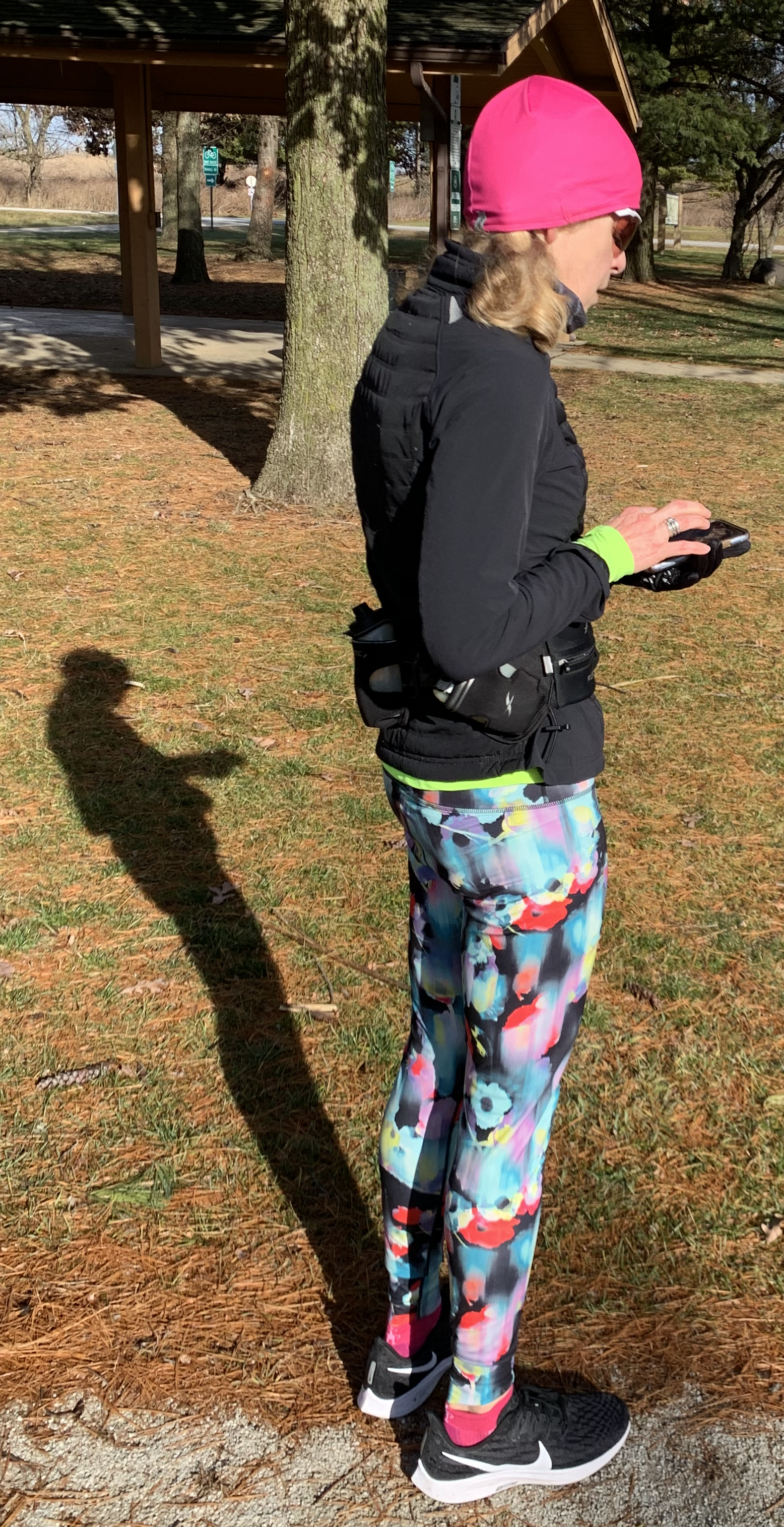
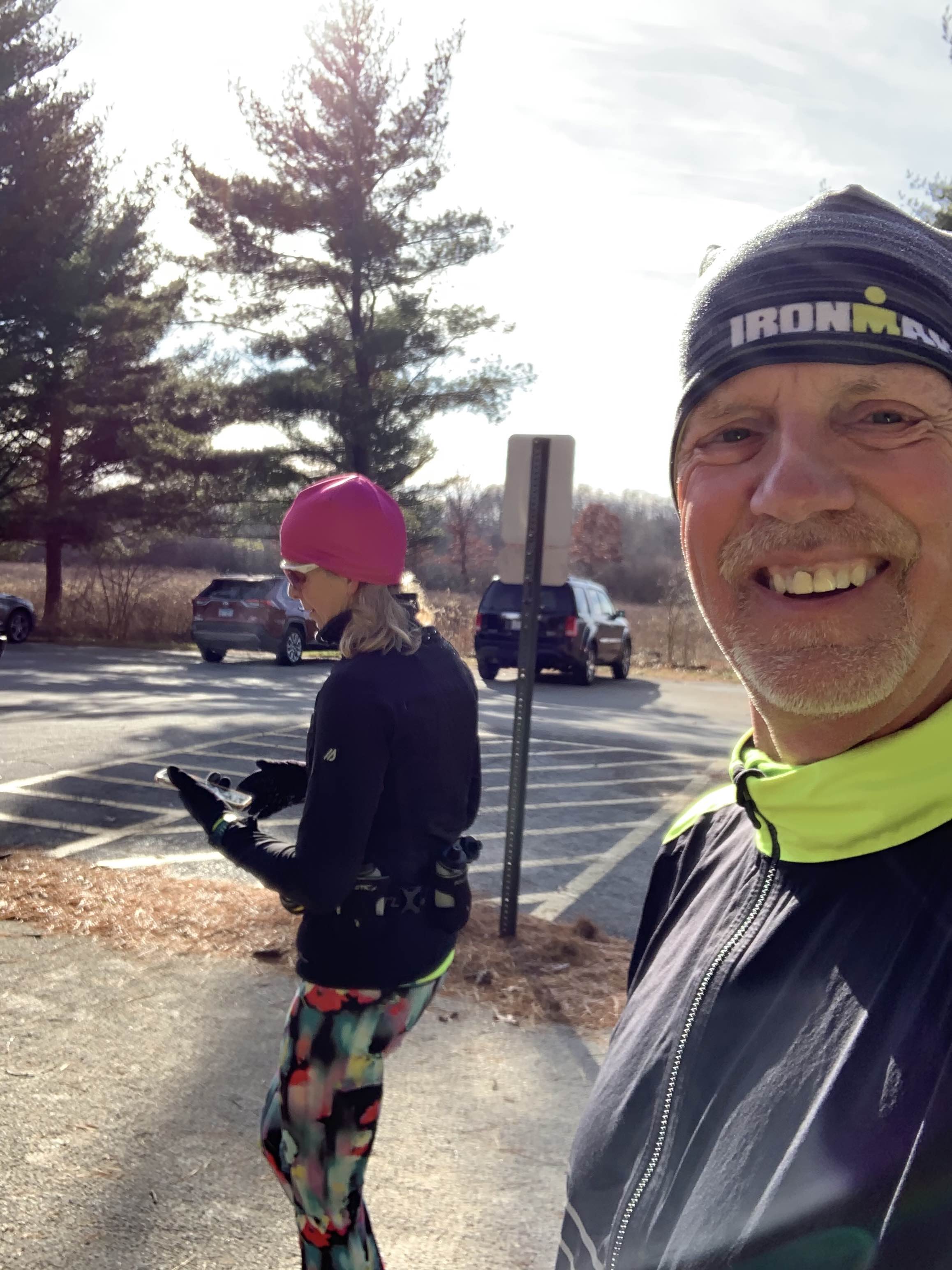
Checking her watch and taking a pic to send to her coach Steve Brandes after a 2:00:00 half marathon effort.

Having lived in the Fox Valley region of Illinois for many years, I vividly recall fast-moving freight trains from the Great Western line crossing the bridge over the Fox River through downtown St. Charles. Those trains would sometimes veer off to deliver goods to the lumberyards and factories on the west side. More often they rolled on going back and forth from Chicago. Many times those trains were piled high with coal.

The Great Western railroad company ceased operation in the early 1980s. At that time, a progressive (yet Republican) politician named Philip Elfstrom was busy converting railroad beds to public trails. Hence the Great Western Trail was born.

The crushed gravel trail starts at the Leroy Oakes forest preserve on the west side of St. Charles. The trailhead adjoins with the Horlock Hill Prairie where in 1973 I worked with other high school students to start a restoration project that now covers several acres rich with prairie plants including cream and blue wild indigo, butterfly weed, cardinal flower, big bluestem, prairie dock, compass plant and many more species of native plants.

Next to the trail sits a boulder bearing a plaque honoring Bob Horlock, the biology teacher who started the restoration project next to a native prairie remnant. I always say “Hi Bob” when I run past the boulder during workouts. We were birding buddies as well, and I’d seen him at a local forest preserve the morning that he passed away in 1993. He died while conducting a prairie burn at Garfield Farm a few miles west of town.

So my roots run deep with the Great Western Trail, but the nice thing about the trail is that it varies by season and passes through a variety of habitats during the year. In winter it feels spare and barren by contrast with summer’s thick greenery and the tunnel of trees overarching the former railroad bed. But even in winter, the long line of trees on both sides of the former railroad bed offer shelter from the wind. Along the way a few worn-out telephone poles sit forlornly in the scrub woods, ashen reminders of the days when roaring trains passed through they parts.

Thousands of runners and cyclists now use the trail each year. Local running clubs host races and organize training runs in preparation for races like the Chicago Marathon. On a typical Saturday morning all spring, summer and fall, there will be large orange containers perched on chairs by the side of the trail to serve up hydration for athletes doing workouts of ten or twenty miles.

The trail offers miles of mostly uninterrupted running, crossing only a few roads at the surface level. All others are traversed on arched bridges. So the ability to just dial in an run is one of the reasons why runners and bikers like the GWT. The trail is firm but cushiony in its crushed gravel way. My wife and I ran our time-trial half marathon on the Great Western this past Saturday.

We started the day by doing a warmup half-mile to clear our digestive systems and get that last-minute stuff out of the way. Then we punched the buttons on our watches and headed down the slight hill leading away from the trailhead. While warming up, I noticed that I’d forgotten to charge my Garmin Fenix the night before. It was down to 4% battery and indeed, it conked out at three miles. To cover our effort, I took the case off my iPhone to reduce bulk, started the Strava app and stuck the phone in my hip pocket so that I could check pace now and then.

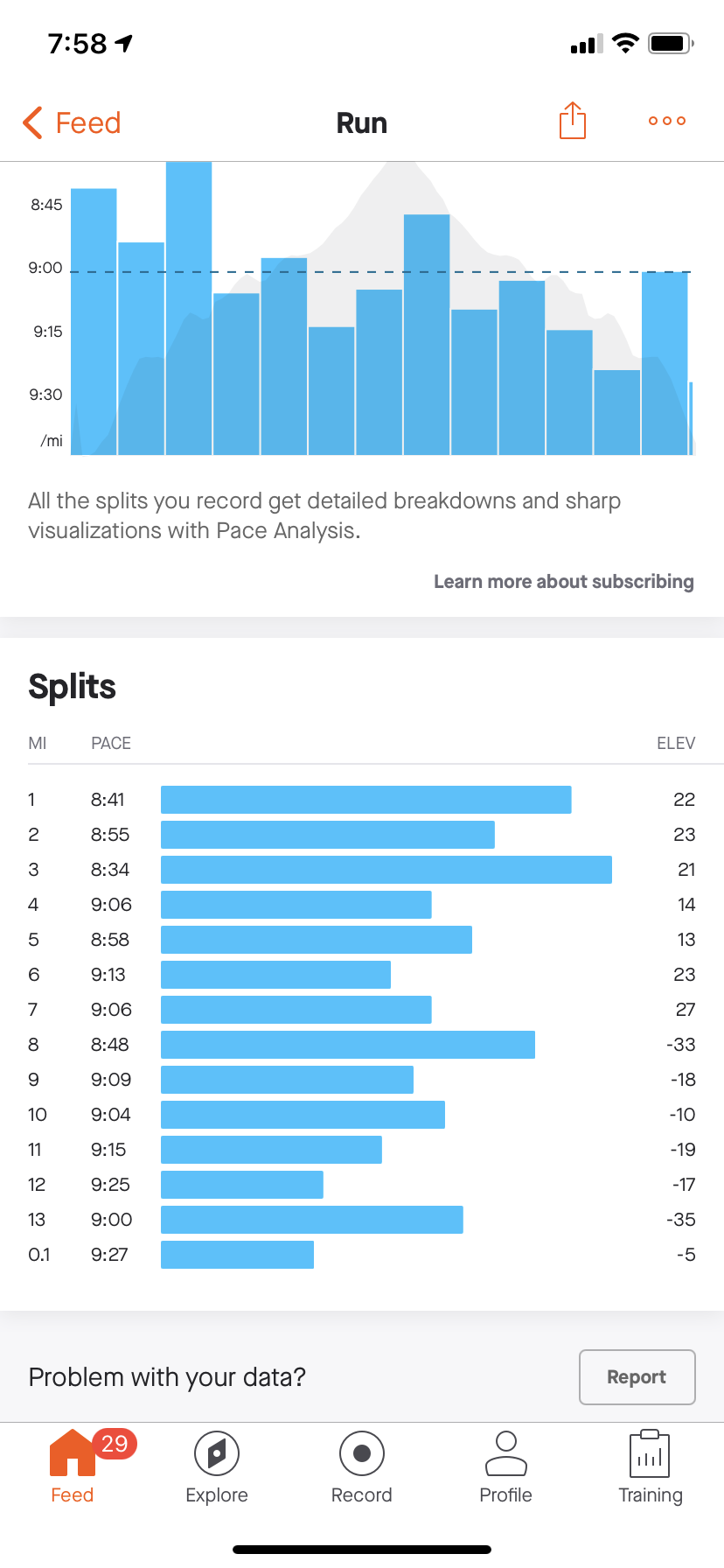
We clicked off the early miles with Sue calling out the pace per mile, averaging 9:15. That was spot on. The only problem we faced along the way was the frosty condition of the wooden bridges crossing roads and streams. The footing was treacherous. We had to slow down to a shuffle and sometimes even walk gingerly on the incline of the arched bridges. That cost us between five and twenty seconds each time.

We got back into our rhythm and cruised west to the four-mile point where the trail crosses Brown Road. Then asphalt surface takes over for the next three miles. The new footing felt good and we dropped the pace a bit.

What stunned us was the sensation we noticed upon turning around at the seven mile point. Suddenly it felt like we were flying. “This feels like it’s downhill,” Sue turned to me and said. “I agree,” I told her. “Kind of surprising.”

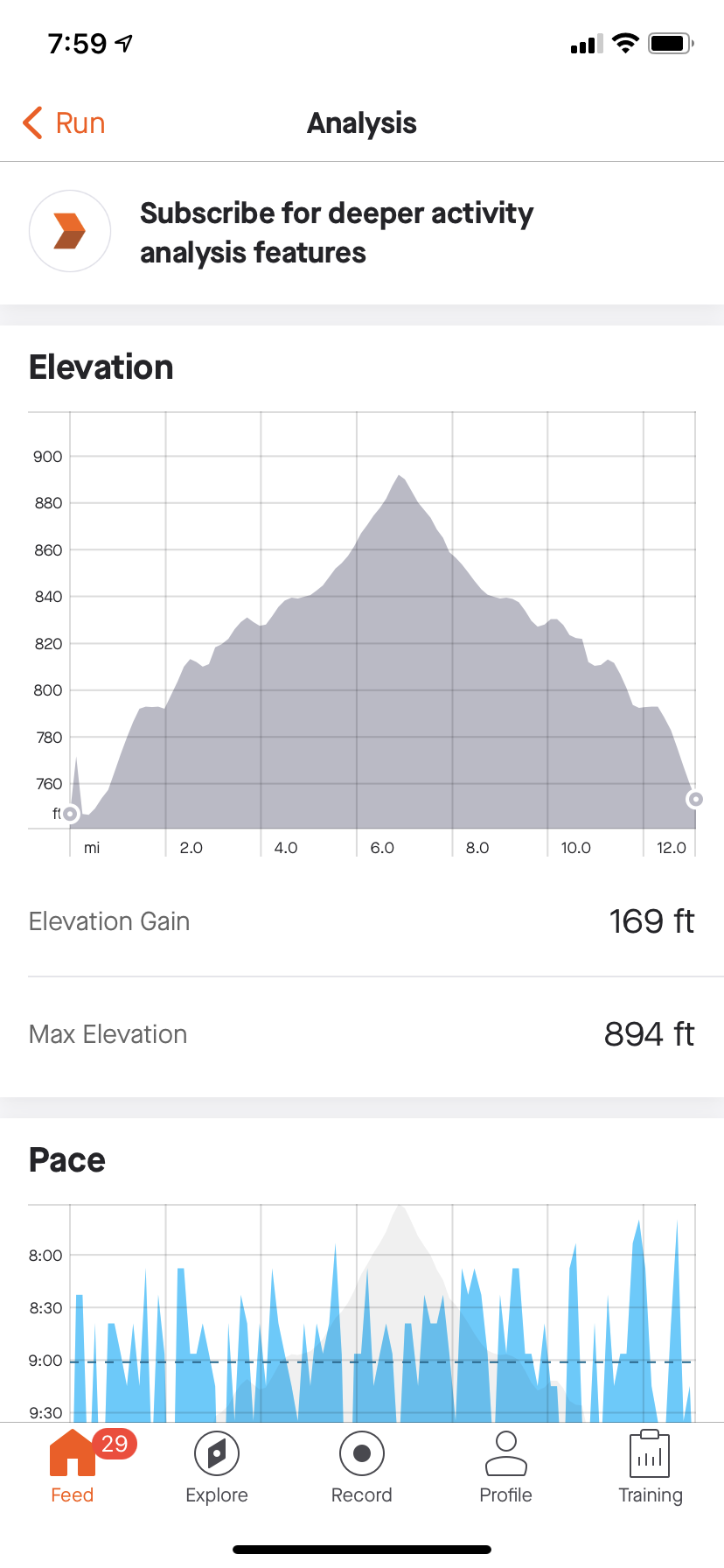
Indeed, when we finished the run and checked the data on our respective apps, the route showed that we’d run from a low point of about 720 feet at the start up to a high point of 880 feet. That 160 foot rise in elevation was not readily discernable on the way out. You just don’t realize you’re climbing.

On the way back, we caught up and passed a group of runners we knew. They were chatting as we swung by them but I blurted, as cheerily as I could, “We’re doing a time trial. Can’t stop to talk.”

Sue was moving well. Our breathing and strides are often in sync. We both have a 34″ inseam, but my torso is much taller. I’m 6’1.5″ and she’s 5’9.5″ These days, she’s shortened her stride and runs with a revised cadence that is a little quicker than mine. My concentration during the half-marathon trial was on keeping a midfoot stride going since that tends to let me control how I use my hips. They tighten up less that way.

We crossed the frosted-over bridges on the way back and ran on the side where the frost was thinner. Still, Sue is more cautious than I. Admittedly, I snarked at her a bit coming off one of the last of the arched spans. I was worried about losing time and wanted her to succeed, you see…”I didn’t want to fall,” she explained.

It turned out that my Strava was not in sync with her Garmin in terms of distance or pace. But for her records we trusted her data, not mine. To suit my curiosity, I still pulled out my phone toward the end of the run and watched the last mile tick down as the time ticked up. According to my Strava, we ran 1:59:17 for the 13.1 mile distance on the out and back course. As far as I’m concerned, Sue broke the two-hour barrier she hoped to achieve.

Her Garmin watch told a slightly different story. We wound up running a little farther and finished at 2:01 for the half-marathon distance. Take out the slow parts over the frosty bridges and she hit her goal. Overall, she was quite pleased with the effort. It was hard for her those last three miles. I had to be kind of a pushy partner to keep her on pace, but we made it work, even when we had to finish slightly uphill in the last 200 meters.

After finishing the 13.1, we walked back up the hill t the trailhead holding hands. We exchanged kisses in celebration (and relief, she admitted) for the fun run in the chilly air. In a year in which so few races took place, we made up for it with her best half-marathon time in ten years.

Someone noticed our run on Facebook asked which race we ran. I replied, “It was the Christopher Cudworth Invitational. A very exclusive race. You have to sleep with the race director to get in.”

Our little event was a great way to head in the New Year. Sue will be representing Team Zoot in 2021. Her Christmas present is her first offical Zoot kit for the coming year. We’re hoping for more opportunities to compete and have a calendar of races mapped out. Nothing beats pushing yourself with a goal, and we’re looking forward to that.

The takeaway yesterday was that even when you think you know a running trail really well, it can offer up surprise after many years. I never knew that the trail going west rose nearly 200 feet over seven miles. Now I do, and it makes me wonder what other secrets lie ahead.

Posted in 13.1, half marathon | Tagged , , , , , , , | Leave a comment

The inevitable product of fuel and flame

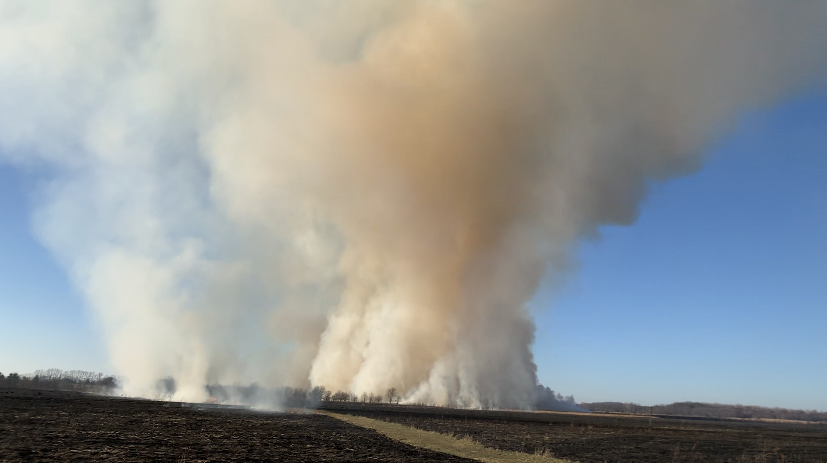
Two days ago I went for a run to Dick Young Forest Preserve for a closeup look at the prairie burn taking place in the western reaches of the property. Flames tore across the ground and smoke rose up in a yellow and white column. The billowing core twisted and spread east across the sky to mix with ellipses of smokey clouds flowing south from another prairie burn fifteen miles to the north.

Look at the trees in the photo above. They are tiny compared to the tornado of smoke columns rising in swirling fury from the prairie.

These cycles of growth and fire fascinate me. The scale of a prairie burn is so interesting to witness and consider. Each tendril of prairie grass or stalk of dried out bluestem contributes to the conflagration. Bits of burnt and ashen plant material rise with the heat and smoke pushing high into the air. The bits of carbon come floating down miles away, black curls wrought by combustion.

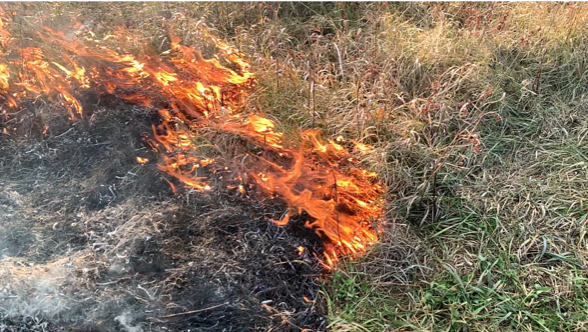
The fire stops when it reaches the green grass of a hiking path.

Imagine what prairie fires must have looked like when they were not conducted in controlled burns. They would have raced wherever the wind took them, tearing down ten-foot-tall walls of dried out grass with twenty-foot-tall walls of flame. You could not outrun them. That is why it is so important for professionals to manage prairie burns these days. The flames can easily get out of control.

These days, fire technicians study the wind and torch grasses in strategic places to conduct prairie burns. That said, the wind shifted during the burn I witnessed and a new strategy had to be adopted. The fire crew burned the prairie from both ends and flames met in a fantastic conflagration at the center. It was such a beautiful thing to witness.

During the early stages of summer, the prairie is where I monitor birds each year. Everything is fresh and green then. Where ashes now sit, bobolinks will fly. Meadowlarks will sing. Milkweed will push up from the soil and welcome monarch butterflies. Cream wild indigo plants lurch upward and butterfly weed crouches like a flowery orange torch among the grasses.

Earth history

All the richness is fueled by roots sunken deep into the soil. That earth was farmed for decades dating back to the mid-1800s. Much of it was scraped off, blown away on winter winds or washed away in rainstorms. Evidence of the loss is clear in the long spine of raised earth marking the old fenceline at the center of the prairie. That line juts 18-25″ above the farmed dirt. It tells the story of many millions of pounds of earth gone somewhere else over time. The original prairie was formed during 10,000 years of geological and botanical change following the Ice Age. It all disappeared in a span of less than fifty years. That is why botanists seek to restore the prairie in this day and age. It is a heritage reclaimed.

So the soil cycle is now running in reverse. Prairie plants are growing and dying again, adding critical nutrients back to the soil as matter decomposes and falls like sediment upon the land. In five hundred or a thousand years the soil itself may rise back up again.

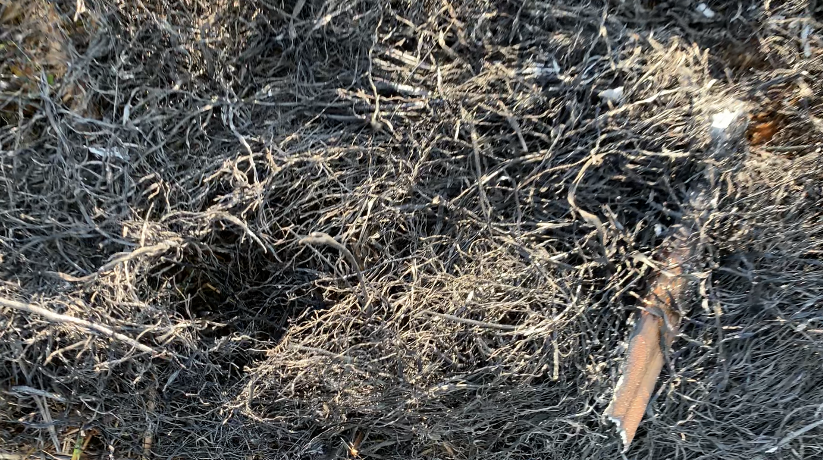
The blackened aftermath of a prairie burn. Nothing but tendrils of carbon and ash.

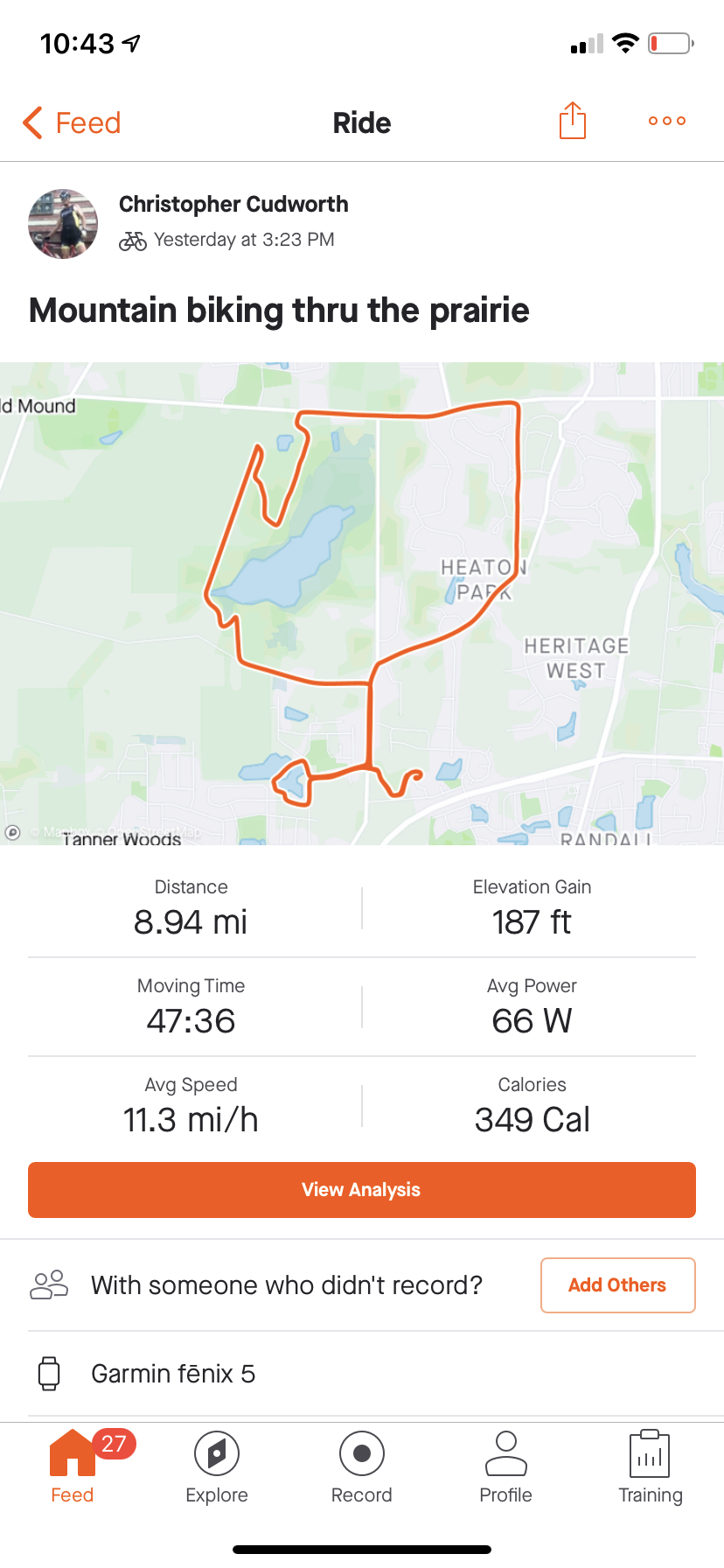
As I ride my bike through the prairie the trail rises up toward the north end of the preserve. There is glacial deposit underneath that rise in the earth. Less than a mile to the west is a spot called Bald Mound that is mined for sand and gravel. Even father west stands a glacial esker sticking up from the ground like a solitary earth pyramid. It stands thirty feet high, left there by a wall of ice a mile thick that once covered Illinois. Those glaciers melted north into Canada and beyond, leaving kettle moraines in southern Wisconsin and scraping off the flat central plains we cover in corn and bean fields to this day.

That ice tradition is melting faster than ever now. The human race is conducting what amounts to an uncontrolled burn all across the earth. Our combustion is heating up the earth’s atmosphere. The result is climate change. Global warming. We can see the effects in the plants that grow and the behavior of birds and animals. They are already beginning to adapt to the changes. Some will survive. Some might not.

When a tree falls in the woods

It is a warm December day as I pedal the mountain bike around the trails and head toward the wall of bur oak trees overlooking the marsh. I’ve been present when one of those giant trees fell to the forest floor. I was standing in the woods when a small crack of noise caught my attention. I turned my head to watch that oak lean and whoosh to the ground, sending leaves and branches flying.

What a sobering gift it was to be present for that moment in time. When a tree falls in the woods, it does make noise. When the prairie burns in the wind, it crackles and smokes. When a man pedals his bike along a trail, the sound of his breath echoes in his own head.

It strikes me that the thoughts that cross our minds are as ephemeral as the grasses growing in the prairie. We consume them at will in the prairie fire that is life, burning through the days as if there is no end to them, and no end in sight.

Burning to live

During my youth, it was common for my friends and I to “burn the candle at both ends,” working all day, running miles in workouts and partying late into the night. Sleep was the green path across which the prairie fire could not leap.

There is no other way to live. I have zero regrets in having burned as brightly as possible in those energetic, hormone-driven years. Perhaps they were not prudent or wise, but they were the inevitable product of fuel and flame, I realize.

If you liked this article, please share!

Posted in aging, aging is not for the weak of heart, cycling, cycling the midwest, death, running | Tagged , , , , , , , | Leave a comment

How is your pandemic experience so far?

A few weeks ago, following a 10-mile run on the Fox River Trail from North Aurora up to Geneva and back, I stopped at a 7-11 to pick up some hydration and food as I’d forgotten to bring anything in the car. Pulling on my mask, I walked through the door and immediately noticed a tall, fairly overweight man in a Trump hat standing with his daughter next to the Slurpee machine.

I eased past them to pick up some iced tea and a slice of prepackaged banana bread, then moved to the counter to pay. The big dude lined up a couple feet behind me with his daughter clutching her Slurpee and sipping on it while they waited behind me.

It was hard not to make a comment about their lack of masks. The early fall rise in Covid-19 infections was all over the news. Yet here stood this guy with his little girl wearing no face protection at all.

Perhaps you’ve seen similar people out in public without masks. Which raises the question: How is your pandemic experience so far?

It’s not hard to draw the straight line from his Trump hat to the choice not to wear a mask while out in public. We all know the nature of those objections. That Covid-19 is a supposed hoax. That wearing a mask is a government intrusion in the lives or private citizens. All of that points back to the fact that Trump himself publicly denied the threat of Covid-19 on many occasions.

In interviews responding to the release of the Bob Woodward taped interviews in which Trump admitted to downplaying the dangers posed by the Coronavirus, the President claimed he was trying to prevent ‘panic’ in the American public by releasing the truth about the potential effects of the disease. The fact remains that Trump lied to the American people by insisting the pandemic would either just go away on its own when the weather got hotter or run its course by some sort of magic to which only he was privy.

Instead, the pandemic has swarmed through the American population, killing hundreds of thousands of people. As it took hold, Trump defied scientists and medical experts trying to contain the virus through protective measures. Now he has tried to claim credit as pharmaceutical companies used research done well before Trump was President to push a vaccine into action.

Back in March of 2020, Trump tossed the federal government’s response into the feckless hands of his son-in-law, Jared Kushner, who cynically tossed it over to the states to handle it on their own. Then he ran off and started a side business grabbing up PPE supplies to parcel out as he wished, especially to whom he wished.

States struggled to find enough PPE supplies to help first responders in overburdened hospitals. All the while, Trump kept insisting that there wasn’t really a problem in America. He spent all his time whining that the “China virus” wasn’t his fault and that Democrats were making too much of the surge in infections. He also cynically claimed that the only reason there were more infections in America was the increase in testing. How that justifies his claim that Democrats were playing the virus for political purposes was never explained. It was a 1:1, logical fact that testing was revealing increased rate of infections.

Stats about the deaths of Americans don’t lie. Which raises the question: How is your pandemic experience so far?

But Trump has never let cause and effect get in the way of his political ambitions, personal greed and narcissistic need to always be right. Those were the reasons he denied the threat of the virus in the first place. He was anxiously aware that a pandemic, if it got out of control, would affect his chances at re-election. The reasons why he so feared losing were financial, legal, emotional and criminal.

Yet despite Trump’s attempt to avoid economic collapse by lying about the Coronavirus, that is exactly what happened. The economy tanked, and that frail claim to authority was the main tool Trump hoped to leverage in his re-election campaign. Trump had greedily claimed credit for the straight line recovery and growth coming off the Obama years. To make his case, Trump eagerly touted stock market numbers as a sign that America’s economy was booming. Then he and the GOP tossed billions in tax cuts to the most wealthy citizens in this country. The middle class? The poor? He doesn’t consider those people worthy of his attention despite what his cult worshippers insist. Now he’s bilking those same people out of millions in contributions after he lost the election. That’s called being a sucker.

Trump’s rabid support was cognitive dissonance considering the massive number of people thrown out of work by the economic collapse caused by the pandemic. State governors imposed Stay-At-Home orders in attempts to corral the effects of the contagious virus. Trump and his Republican minions griped that such orders were too stringent and were harming businesses nationwide. They were correct about the latter, but ignored the true source of those problems, which was Trump’s denial of the threat in the first place.

The Chicago Tribune carried a story today that cited the fact that under Trump, the federal government has ramped up the rate of executions, but for what purpose? Is his base somehow eager for people to die as a sign that Trump is loyal to them, or to satisfy the bloodlust lurking just behind the vigilantism, gun culture and militia mentality of the uncivil population?

Most of us got small pandemic relief checks months ago. Which raises the question: How is your pandemic experience so far?

The bulk of us were left to figure out how to survive Trump’s selfish denials. A Covid relief bill was passed, and unemployment benefits were extended, but those were short-term actions that barely carried people through their breaking point. People living under the poverty level increased dramatically. America was in crisis.

The nation has 25% of the deaths worldwide yet only 3% of the world’s total population. There is no way to portray those numbers as anything other than a massive failure in leadership by the Trump administration.

Yet Trump’s followers, including that big dude behind me in line at 7-11, refused to admit that Trump was in any way at fault. The armed vigilantes who stormed the Michigan state capitol building and spewed spit in the faces of police offers tasked with protecting the government…were there to whine that the governor was being too hard on the citizens of the state by imposing restrictions designed to control the spread of the virus.

Millions of people are trying their best to prevent the spread of Coronavirus. But others don’t seem to care. Which raised the question: How is your pandemic experience so far?

Those of us wearing masks and giving up most of normal life to protect the lives of others found the arguments of Trump’s obviously selfish supporters alarming beyond reason. The anti-masker movement flourished beside Qanon conspiracy theories and calculated attempts by Trump to undermine the upcoming election by compromising the US Postal Service to hinder mail-in balloting.

Trump’s failures and corrupt actions were catching up to him like an Ironman triathlete who cut the course in the swim, drafted during the entire bike segment and refused to take either nutrition or hydration along the course because he considers himself a superman. Indeed, the sight of Trump standing on the balcony of the White House, breathing heavily and walking shakily down the steps is something every endurance athlete recognizes. He’d just run into his own wall of dishonesty and cheating.

Those of us who accept and abid by the state strictures to social distance, wear masks and generally avoid large public gatherings find the Trumpism refusal to help the country reduce infections and deaths beyond disturbing. This morning I heard a physician describe the fact that he had just checked in 36 new Covid-19 patients, four of who went straight to the ICU. Those are someone’s relatives, parents or grandparents. They might well die before the week is out. If so, they’ll join nearly 300,000 Americans that have passed away under Trump’s less-than-honest watch.

The other thing that Trump has ignored is the threat of climate change. That worldwide problem is another danger to the lives of Americans, yet Trump denies that it is real, even engaging in attempts to undermine the ability to pass laws controlling pollution of any kind. Trump is a calculating killer and despot. That’s all there is to it.

We’ve all tried to rationally engage in some kind of normalcy during the pandemic. Which raises the question: How is your pandemic experience so far?

My wife and I admittedly got out to do a couple triathlon events this summer. The precautions put in place by those events during a low ebb in infection rates ensured that people were safe. There were no reported infections from those races.

But we canceled a scheduled race in Florida this coming weekend because we deemed it unsafe and selfish to fly and race during this massive surge in infection rates. The race was canceled anyway, but we’d made our decision well before that.

All of us has had to sacrifice in one way or another during all this madness. Yet the one man who could have made it all better continues down his selfish path of trying to overturn the election he likely lost because his lies about the Covid-19 disease caused such hardship for millions upon millions of Americans. Those who voted for him anyway ignored these facts out of some sense of loyalty to his narcissistic claim to lordship over all.

I found some final pieces of evidence that reveal the vicious nature of the Trump administration and why so many people have died as a result of his actions and inaction. The clippings in this article reveal that Trump and his administration care only about ideology, money and power. The rest of us, in his eyes, can all go to hell.

Which raises the question: How is your pandemic experience so far?

Posted in coronavirus, covid-19 | Tagged , , , , , , , | Leave a comment

I never dreamed that I’d be missing the pool

With all the ups-and-downs, back-and-forths of Covid-19 precautions, it has been difficult to plan workouts at the pool. Currently our facility has an online schedule to grab workout times. It’s a pain in the butt. For a while during the summer when Coronavirus infections were down, you could show up at the pool during off-peak hours and get a lane no problem. Now everything is scheduled and workout blocks are being nabbed a week in advance.

Some of this is my own lack of workout discipline. I don’t really schedule times to work out. I take it as it comes. That is a response to many years of obligatory training and the sense that I was missing out if I didn’t get a workout in. That’s changed with age and my more relaxed approach to fitness.

Still, I managed to improve my swim this past summer, covering one mile in 36:00. That’s a good time for me. I did that on 1-2 swim workouts per week. The minimum that most experts recommend is three workouts a week if you want to improve endurance and speed. So it’s obvious that by putting in a bit more work, I could swim faster.

I do miss the pool. I like the feeling of getting into a groove and doing a set of 10 X 100 without thinking all that much about it. As a confessed user of wetsuit shorts, I enjoy my swim time much more these days. I’ll not apologize for that.

But it’s time to swim on over to the pool website and set aside a couple times and make the commitment. My pectoral muscles are begging for action. My shoulders want the reach and catch. My brain loves the bubbles. My lungs want to chomp on some chlorine.

See you at the pool. I never dreamed I’d be feeling this way.

Posted in swimming | Tagged , , , , , , | Leave a comment

On winter and fading tan lines

During the summer I always put sunscreen on my arms, face, ears, neck and nose. But that’s a rather recent habit. For most of my running career before taking up cycling fifteen years ago, the thought of putting on sunscreen was a non-starter. We just didn’t do it in the Old School Days.

I do recall that a teammate from college went to South Padre Island one spring break. He slathered sunscreen on most of his body but could not reach his back except with the back of his hand. In a rush, he smack the middle of his back with sunscreen and went about the business of teenaged frolic in the sun. That left a big hand print surrounded by sunburn on his lower back.

Family history

My father dealt with skin cancer on his head for the latter years of his life. I don’t recall him wearing hats much during his lifetime, even while golfing. Instead he wore dark shades over his eyeglasses. Thus his bald head was exposed to countless hours of sunlight. The cancer treatment that resulted from his skin exposure was not a pretty sight. The physicians operated and burned away patches from this scalp that his caregiver Leo tended with great kindness.

Thus I don’t take the issue of skin cancer lightly. Yet where my father never wore hats much, I have covered my noggin’ with hats of various kinds most of my life, especially since I began losing my hair during my 20s. There is small hope in that, but no guarantee.

I figure I’ll still get the treat of dealing with some sort of skin cancer up there, or on my face. This summer I had a small nib of squamous cell skin cancer taken off my right arm. I keep a close eye on my skin and noticed a 1/8″ spot that needed checking. Sure enough, it was worth the notice.

As I departed the doctor’s office after the stitches were removed a few weeks later, the physician had the simplest advice of all for me: Stay Pale.

Part of me really wants to do that. Another part of me loves the sight of tan lines during the summer months. I know that’s stupid, but the look of brown legs shining with sweat in the summer sun is something I associate with hard days in the saddle and becoming a Hard Man. Shaved legs, tan lines and a battle-hardened body just go together.

But time and age have different plans anyway. The final weird component of this skin journey is the onset of crepey skin that comes with being in my early 60s. That freaked me out at first. That’s a body change I perhaps should have seen coming, but it came about fast, almost overnight it seemed.

I think we all imagine ourselves traveling toward the grave or cremation without the real effects of age ever catching up with us. I admit that’s probably why I still like tan lines. They speak to the long candle of youth burning slowly and not worrying about skin cancer or time or mortality. But the wax of time is not eternal.

When winter rolls around and the tan lines fade, the leg hair grows out and our bodies are covered by layers of warm clothes, it is much easier to think in terms of common sense. Last Saturday, I bundled up and rode 21 miles in forty degree temps and enjoyed the experience without seeing the skin on my legs shine in the summer sun. There’s a lesson in that. We shouldn’t run and ride for ego’s sake or for vanity, but for health purposes. It’s a little boring that way, but a much better strategy for the long run.

Posted in cycling, cycling the midwest, cycling threats, death, healthy aging, healthy senior, running | Tagged , , , , , , , | Leave a comment