Keeping your distance while going the distance

While setting up transition for the Springfield Olympic distance triathlon this past Saturday, I was greeted by a tall guy parking his bike on the same rail. It was Denny Koonce, a reader of this blog and a solid triathlete. We exchanged hellos and got about our business in the warm summer sun.

Denny took second in the 60-64 age group, so this is a congratulations to him for a nice effort in conditions that grew kind of stifling toward the end. That’s a nice swim time on his part, and he rode nearly 19 mph for the 26 mile out-and-back course, much of it on new chip seal roads. The surface was steady but rough, with a slight breeze into our faces the whole way out. He finished off the day with a good run and did his hometown of Benton, Missouri proud.

Learning experience

I can’t quite say the same thing, mostly because I’m not from Benton, Missouri. But there’s also the part about not swimming, biking or running as well as Denny.

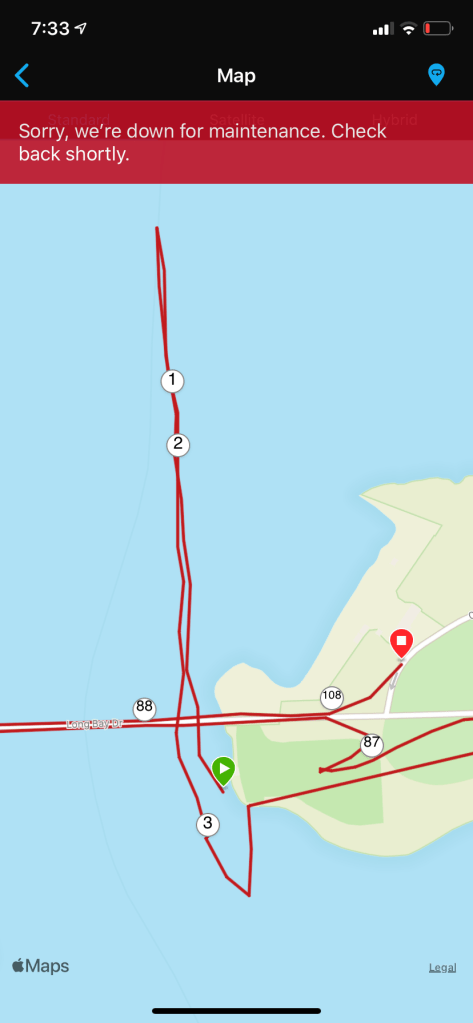
My swim took a massive amount of time. I’m still downloading the course map because poor old Garmin got struck by Ransomware and only now are the results spinning around inside my phone.

But I know from the race results that it took me 38 minutes to go from Point A out to the northern buoy, back under the bridge and out to Point B and in for the Swim out.

There could be a wide number of reasons why that swim was so slow. 1) I’m a slow swimmer. 2) I swam much farther due to wandering along the way. 3) I swam the uphill part of the course.

But I just downloaded the swim tracking with the map and much to my credit, I swam straight as hell. So the fact of the matter is that my lack of swim training (probably four times in the last three months) and sloppy stroke probably cost me. Seeing that I swam straight is actually encouraging to me. The night before the race, I asked Sue what might help my sighting technique and she shared that I should look during the left arm rotation since I breathe on my right. It worked. I felt smooth. And frankly, this was my first competition one-mile swim. So my goal was getting through it efficiently and not blowing up. I’m excited because I know I can do better.
But still, I was stunned to read that time of 37+ minutes on my watch when I climbed out of the water. I thought I was doing pretty well with a time of 15:13 around the north buoy.

The funny part about that part of the experience is that I didn’t hit the Lap marker properly on my watch coming out of the swim. So the Triathlon splits never kicked in and my race showed up as one long swim. Which was kind of apropos, it turns out.

Nothing doing

Because as it turned out, the day did feel like one long swim. Heading out on the bike my legs were a bit soggy feeling. I don’t know why. I don’t kick much in freestyle.

But the instinct to ride in a higher gear than I should proved fatal. I rode out into the wind mashing away. As I came back the wind was favorable and I averaged 20 mph. But when I got off the bike I could not move. My butt muscles were completely locked up. It really hurt. Like, really.

I’ve had forms of that cramping happen in Sprint triathlons too. Clearly I’m doing something wrong in my cycling form during races that causes my upper hamstrings and gluteus maximus to clinch unto madness. So I stood there at T2 thinking about what to do. Was it even worth continuing?

Making contact

The sweat was pouring off my head and I took off the sweat cap and bumped my eye in the process. The contact lens shoved up into my eye and I spent a minute trying to push it below the iris so I could slide it back into place. Then the lens popped out into my hand.

All I had to put it back in was the water in the hydration belt my wife suggested I wear for the run. Gingerly, I poured some fluid out and filled the contact lens. It stung horribly when I put it back in my eye. That’s when I remembered that I’d put some electrolyte powder in each of the bottles. Ouch.

Finally I trundled out of T2. Tossing the belt aside, I decided to use just water out on the run course. But running wasn’t possible at first. So I stood at the eastern edge of the bridge for a minute or two, contemplating the situation.

I had grabbed a cold bottle of water to start the run and stood there drinking it down. So I started walking to see how the butt muscles would feel. Not good. It really hurt. As in, “Can’t really run at all” hurt.

It felt like a giant wasp had bitten me in both ass cheeks. It think I found a model of the wasp in a display about pollinators at a rest stop on the way home. Given the size of this thing, it seems obvious that was what bit me. I’m sure of it now.

I’ve ridden plenty of times this year at an even faster pace for longer than the 26 mile segment of an Olympic Tri. Most recently I did a 40K time trial and average 19.5 mph. So there’s no reason why my butt muscles should lock up during a race except for making bad choices in pedal stroke and gearing. We all make dumb mistakes in this sport at times, but this is a repeated issue. Time to make better decisions.

Moving on

Despite the ass-bitten state of my condition, I decided to do the run because I’d come all that way and there wasn’t likely going to be another chance to do a race this year. It was humbling to be moving so slow, but I’ve experienced so many of these moments in life they no longer daunt me. One foot in front of the other. That’s the way to go.

It took two full miles of shuffling to get feeling back in my ass cheeks. Then I started to run a bit better. By the last three miles I’d dropped down toward nine minutes a mile and was passing people. The butt still hurt, but at least I could move.

My watch still showed a swimmer icon. It was giving me some sort of readout that fluttered around the 3:00 mark. So I used that as a demarcation to sense my general pace and dropped it down to 2:40. Then I kept it there until the last half mile when the course opened up into bright sunshine and the heat whacked me like a thick stick.

I know my body well enough to realize it was time to back off a bit. So I rolled on in the last quarter mile at a sensible pace because I knew there was no chance of placing in my age group by that point.

Still fun

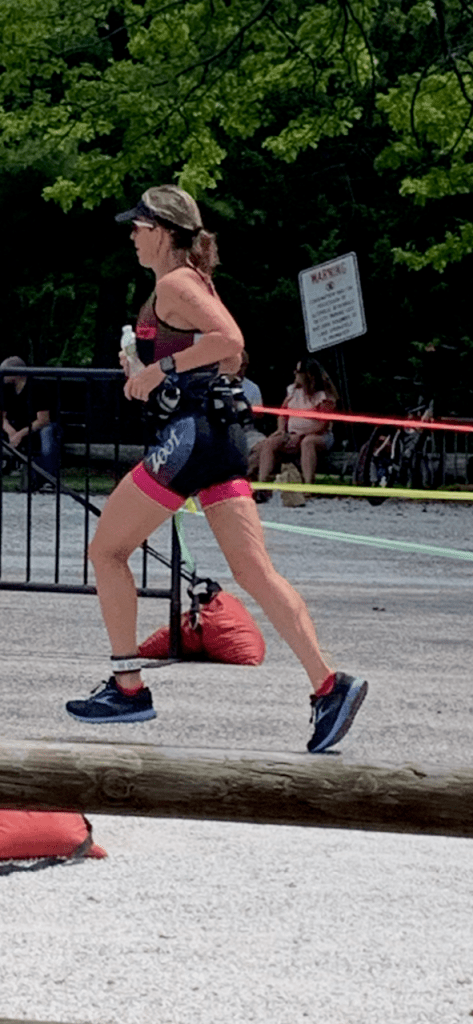
Despite all that back and forth, I still had fun doing the race. That might seem weird to say, but frankly, my only goal was finishing the first time out at the Olympic distance. Last year was a disaster for me with races cancelled due to weather and my own health issues, including an infected tooth that nearly killed me. Literally.
Then 2020 rolled around and the Coronavirus pandemic is crushing the sport of triathlon.

This race was considered dicey by many within the sport. The race director plowed ahead despite strong skepticism from the racing community as well as community, state and national officials.

His pre-race talk was all about being grateful for the opportunity to race and urging us to take responsibility for keeping the course clear of litter. We all social-distanced on every front, wearing masks when we were close to others through registration and meals and the like. It was a successful day by many estimations.

Hometown feel

There were no crowds around the finish line. It all had a hometown feel as people sat far apart and clapped and cheered as competitors came across the finish line. Our friend and dog mama Karah Osterberg took second overall among women behind a pro racer.

My wife rocked her Half Ironman as well. She missed out on racing at Muncie due to Covid cancellations. So this race was perhaps her only opportunity to use her considerable fitness this year. She won her age group, was 12th overall among women and was only fifteen minutes off her best time in conditions that were hot and muggy overall. That’s a great performance, if you ask me.

Looking ahead

It’s hard to tell what else will happen with the sport of triathlon this year or next. One thing seems clear: there is a call for more independence and personal responsibility before, during and after an event. Athletes are being asked to carry their own nutrition and water. With less available volunteers, that’s the direction the sport is headed.

But we can tell you that even with those guidelines in place, this race was a nice experience. Everyone kept their distance, you might say.
Posted in Christopher Cudworth, competition, cycling, half marathon, healthy aging, healthy senior, mental health, racing peak, swimming, triathlete, triathlon, triathlons | Tagged , , , , , , , , | 2 Comments

Gearing up for an Olympic distance triathlon

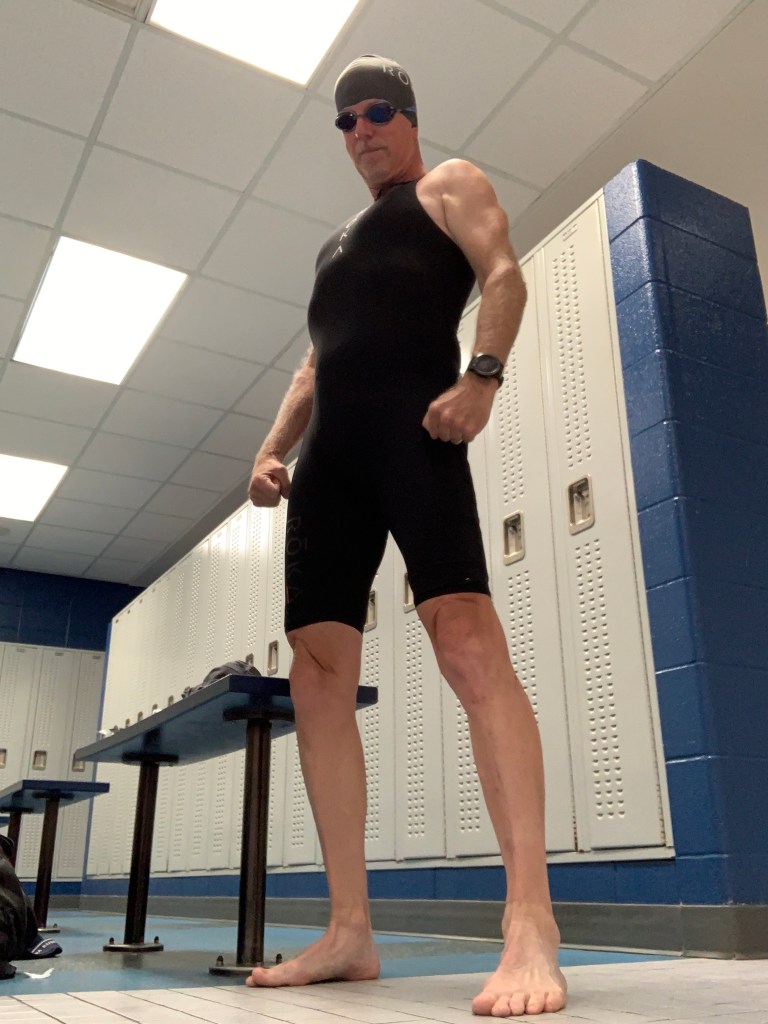
That’s my Avengers pose in my new Roka skinsuit and matching cap for swimming.

Thus far, my triathlon career has consisted of Sprint and Duathlon races. But last year, my goal was to do a pair of Olympic distance races. Weather, injury and illness intervened to keep me from racing at all in 2109.

2020 rolled along and we all know what’s going on with races. Most are cancelled or postponed until who-knows-when. But there is one race on our calendar that is going forward. It’s in Springfield, Illinois this weekend.

The number of competitors has been pared down to reduce transmission risks, and the race start and transition areas will be vastly different than the recent old days. Competitors are urged to self-supply nutrition and water, and not expect normal water stations at all. Bottled water will be available, but then you need to carry it on your own, and not toss bottles by the side of the road. That’s a big penalty.

Which means this race will be a bit like a homespun triathlon or a glorified training experience.

In anticipation of the race, my wife Sue gave me a Roka skinsuit in advance of my birthday this Sunday. I tried it out in the pool on Wednesday and while it’s not as buoyant as the Roka wetsuit shorts I own, or the sleeveless wetsuit I’ve typically worn in races, it is an interesting and sleek piece of gear.
The water temperatures are expected to be 73 degrees this Saturday, so we’ll probably be wetsuit legal. If that’s the case, I’ll wear one. But we’ve done a couple outdoor, open-water swim sessions up in Crystal Lake and I feel ready at last to swim a mile in competition. I’m not fast, swimming along between 1:55 to 2:00 per 100, but what I care about is getting to the Swim out, jumping on the bike and hustling through the run.

Training has gone really well of late. So we’re heading down to Springfield to see how this works and looking to get at least one race going in 2020. The piles of gear on our bed are classically triathlon. Goggles. Bike shoes. Helmets. Body Glide. Shorts. Tops. Nutrition. Sunscreen. You name it. This may be a simple sport in concept, but it takes a lot of gear to get it done.

Posted in PEAK EXPERIENCES, race pace, racing peak, training, triathlete, triathlon, triathlons | Tagged , , , , , , , | 2 Comments

Have you ever been underestimated?

When my son Evan was perhaps ten years old, he turned to me and said, “Dad, have you ever noticed that when people say “Good for you” they are often being condescending?”

Yes, my son understood the meaning of condescension at ten years old. He started talking at six months old and went on to major in English at the University of Chicago. And perceptively, he was correct about the fact that some people use the phrase “Good for you” as a sort of faint praise when secretly they either don’t really admire your achievements or are jealous.

More often than not

While subtle, that type of human dialogue is more common than we might like to think. It’s not always true that people say “Good for you” in a dismissive manner. But take a look around at the nature of communication on social media and it’s clear that people look for any minor advantage they can find. Everyone wants to be the winner.

It is also true that some people forcibly underestimate the ability of others. If you’ve ever worked for a boss with those instincts, it is incredibly frustrating. They project limitations and low expectations on you because they hold close to their own fears and insecurities. Ultimately, they’ll chase you out of their sphere if they feel threatened by the fact that you refuse to abide by their perception of you.

Being underestimated

Those of us in athletics often experience the harsh lessons of being underestimated. If a coach doesn’t think you’re good enough for the team, you might never even get a chance to prove yourself. Even if you do make the team, and the coach views you as a chink in his winning armor, there might be bench time in your future.

Even in raw endurance sports such as running, where the clock is the seeming final determinant of success, teammates can play subtle power games with verbal manipulation. They may want to beat you badly enough to seek to undermine your confidence somehow, which is a brand of active underestimation.

This is especially true for athletes moving up the ranks. A runner who suddenly improves may have been underestimated by teammates and competitors for a while. It takes a bit of confidence to break out of the expectations of those who benefit by keeping you down.

Early counsel

When my children were in elementary school, I counseled them to be smart about their relationships. “Friends are just as likely to try to control you as people who don’t like you.” If that seems harsh, so be it. The truth hurts sometimes, and I would rather my kids understand the challenges of social dynamics than be broadsided by people who claimed to be your friends, yet through selfish or unthinking behavior might cause you pain.

I gave somewhat the same advice to a group of young people that I mentored in the INCubator program at our local high school. Their job was to come up with a product that they could all work together on and learn to market to the world. But I warned that it’s often difficult to embrace the ideas of others, and that conflicts could occur. That advice proved true for them, and what a life lesson it was.

Fractured loyalties

The world is full of people pretending to be loyal even as they maneuver for advantage or to protect their own interests. It is a common tactic for these folks to underestimate others as a means to control them. The tools of this underestimation include gender prejudice, selfish interests, racist beliefs, ageism, political alliances, wealth, and religion. All these viewpoints are used to cast other people as inferior. Yet when the people targeted by their bigotry speak up or resist their impositions, the perpetrators of that prejudice claim to be victims themselves.

In gaslighting fashion, they’ll even calculatedly question the loyalty of those they are trying to control. It’s all a product of forceful underestimation. The sad, sick thing about all this underestimation is that entire factions of society buy into it in one way or another. Then it becomes a cultural belief unto itself. Those outside the sphere of that cultlike underestimation become the “other,” and live with the burden of those demeaning stereotypes. That’s exactly what all the unrest in America is about these days. People of many backgrounds are sick to death of being underestimated.

Breaking free

If you’ve ever been underestimated, you likely realize how much work it takes to break down those perceptions. But in athletics, when you finally run a great race and the coach or teammates that didn’t think much of your abilities are forced to look at you in a new way, there is a great feeling of liberation that takes place.

I follow a Linkedin group called The Female Lead. It’s principal province is to encourage women to buck the underestimation imposed on them in the work world. There are many men commenting on the posts within the group that exemplify the misogyny and male bigotry the group is specifically designed to resist. And they don’t get how blindly ignorant they truly are.

Fortunately, there are many great companies, programs and teams that do the opposite of underestimation. They are encouraging in their culture and eager to guide all others toward success. I just interviewed a female engineer who works as a director in what has largely been a male-dominated industry. She started out as a graphic designer, learned drafting and now runs the show in a large swath of the country. That’s how one blasts through the ceiling of underestimation.

Underestimation=frustration

But even within positive circumstances there are sometimes reasons to be frustrated. Old perceptions and aggressive habits die hard.For example, a running team that adopts a philosophy of overtraining going too hard all the time can turn out to be a toxic environment, and lead to burn out. Yet having the courage to speak up in the face of that culture puts one in a position of keen vulnerability. Admitting that you’re struggling with workouts even when other people are getting sick or hurt is a tough thing to do, because machismo is valued in so many sports. That is frustrating.

Yet that’s as true in the workplace as it is out on the roads. On one hand, it is harsh to be underestimated. On the other hand, it is scary to stand up for sound behavior and ethical balance in the face of an errant work culture. I once backed one of my employees in a dispute over massive overtime hours she was being forced to work on a company project while holding down her real job. The manager above us underestimated the time necessary to launch the new project and my employee was bearing the brunt of his mistake as she completed her day job to go out and work until eleven at night, often on weekends.

So my employee was exhausted, and in tears. So I turned in the forty hours of extra work to be paid to her, and the company reacted by punishing me for submitting those hours to be paid. They’d underestimated my commitment to principles and legality, but I was the one that paid the price. Unfortunately, that’s how life works sometimes.

If you’ve ever been underestimated, you’ll recognize those feelings. They’re not fun. But one thing is important to realize. You’re seldom actually alone in those feelings. And once one person builds the courage to speak up, others will typically join in. Certainly the #metoo movement in America is proving that. So is #blacklivesmatter. And what do we see in response to those movements. Those threatened by the truth of their forceful underestimation are retaliating and trying for force people back into place. People are even dying under the oppressive thumb of forceful underestimation and intimidation. The son of a female judge assigned was just murdered by a man whose hatred for women was used to justify the attack.

The Pre Factor

Injustice is everywhere. Four decades ago, it was athletes being told to be satisfied with amateur status by Olympic and AAU administrators who basked authority and even gained wealth at the expense of those athletes, whom they greatly underestimated. That era of suppression resulted in a revolution of resistance to false and selfish authority. One of those people was Steve Prefontaine, who along with running greats like Frank Shorter began to take matters into their own hands to change athletics from a falsely governed amateur sport to a paid vocation based on personal performance.

The same holds true with the likes of marathon runners such as Katherine Switzer, who defied the limitations and underestimations being placed on her by men to run the Boston Marathon.

The lesson is that it’s always dangerous to underestimate somebody. You never know who you’re facing in this world. Some of us refuse to take that shit anymore. They might call us anarchists or liberals, fake news or Antifa, Feminazis or n*******, but that won’t stop the pushback against fascist control of the streets of America.

Posted in anxiety, Christopher Cudworth, competition, cross country, cycling, marathon, marathon training, mental health, running | Tagged , , , , , , , , | Leave a comment

A minute can last a lifetime

I had a nice conversation yesterday with Craig Virgin, one of America’s greatest distance runners whose 27:29 10K still ranks in the top ten all-time. He was also a three-time Olympian We talked about his book Virgin Territory, which I highly recommend for its candor and insight on what it takes to become and stay a world-class runner.

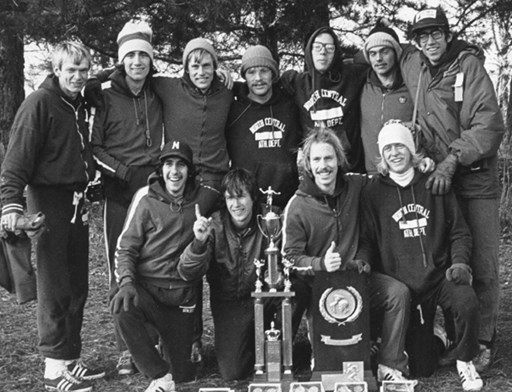
Craig noticed a photo in the blog about the late Dave Bashaw, a former Geneva, Illinois runner who passed away in early July from the Covid-19 infection. The photo showed Dave in the company of his North Central College teammates, and it struck a chord with Craig, as that era in Illinois distance running was both quality and classic in its competitive nature.

That led to us discussing Craig’s motivational speaking and addressing young runners about the opportunities and impact that running provides all who engage in it.

I’ve written many times that I was present the day that Craig Virgin ran the three mile course record in Detweiler Park (Peoria) that stood for four decades. That iconic mark set in 1972 motivated many a runner over the years. It was finally broken by a second or two in 2019.

Timeless advice

That means Craig’s relevancy as a speaker has lasted all these years. It is for a great reason: No one but one runner in forty-plus years has ever beaten his time on that course. Thousands and thousands of kids at every class level and school size have raced in state meets, pushed themselves to the limit and entered that chute having given their best efforts, yet none of them until last year ever ran faster than Craig Virgin that day in the early 1970s. The Lebanon Greyhoud remains a legend.

As we talked, Craig shared some insights about what he tells high school kids about the nature of racing. I hesitate to state them in full because I think they are his to own. But the advice centers around how to concentrate and process your efforts before and during a race. As he demonstrated many times in competition, for Craig there’s a special “secret sauce” of motivation that has genuine value to kids and adults alike. It has to do with how you perceive time, discomfort, pain, and motivation. If you want to know the full story, you’ll have to book him as a speaker.

Success and failure

This much I can tell you. During my own career, in which both failure and success played a big role in education about life, there were moments when I definitely knew that a portion of personal destiny was on the line. Coming through in those moments is what personal legacies are all about. They may not mean a whole bunch to the world, at least not at the level that Craig Virgin attained as a two-time world champion in cross country, but the moments in which you test yourself and succeed most certainly matter to you.

So what I can offer (again) is my favorite saying from the book Ambiguous Adventure by Cheik Hamidou Kane. This phrase is true more for endurance athletes than almost anyone else. Here it is:

The purity of the moment is made from the absence of time.

If that seems counterintuitive, it is purposely so. We may indeed live and die by the clock in this world, but surpassing that truth is exactly the point. There are some efforts in which we engage that actually force time to expand, or at least how we perceive it.

What a gift that is when we come face to face with it, and recognize the moment and its worth. Perhaps you’ve come down toward a finish line and felt the sensation as even discomfort and pain fade away and you become an instrument of training and determination. That is the purity of the moment creating the absence of time.

Let’s all stop a moment to consider the degree of falseness and fecklessness in this world, and realize how exceptionally valuable it is to have achieved the sense of wonder that comes from genuine effort. It helps you see beyond the ticking irreversibility of the clock and surpass the limitations that people often want to place upon you.

That’s why we’re all here. That’s why a minute can last a lifetime.

Posted in 10K, aging, competition, cross country | Tagged , , , , , , , , | Leave a comment

In memory of Dave Bashaw, a sweet and talented guy

A friend of mine from long ago (and still today) sent me the obituary of a fellow runner from a nearby town. His name was Dave Bashaw.

Dave was a talented and determined runner from Geneva High School. I competed with him for a couple years and never won a single race against him. Following high school, he attended a local community college and then ran cross country for North Central College, one of the premiere running schools in the United States.

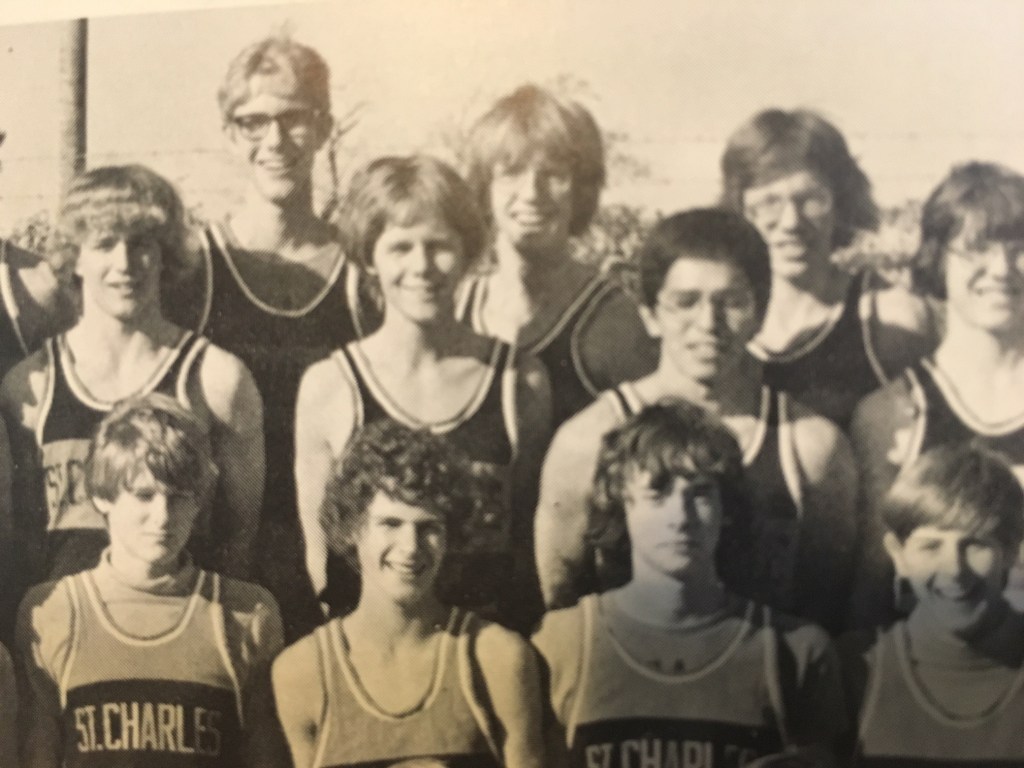
Dave Bashaw is second from right in the second row. His 19th place finish helped the North Central Team win the National DIvision III Cross Country meet.

While at North Central his training regimen became legendary. Reportedly he ran several 250-mile weeks. That’s right: Dave ran 26 or so miles a day. His efforts paid off because he became an All-American in cross country.

I know how hard that is to achieve. My personal best individual place was probably 62nd my senior year in college. As fifth man for a team that placed second in the nation behind North Central College, I was happy to achieve that milestone in a journeyman runner’s career.

But Dave finished in the Top 25 in the country. His stride was unique as his legs weren’t all that long. But he could motor.

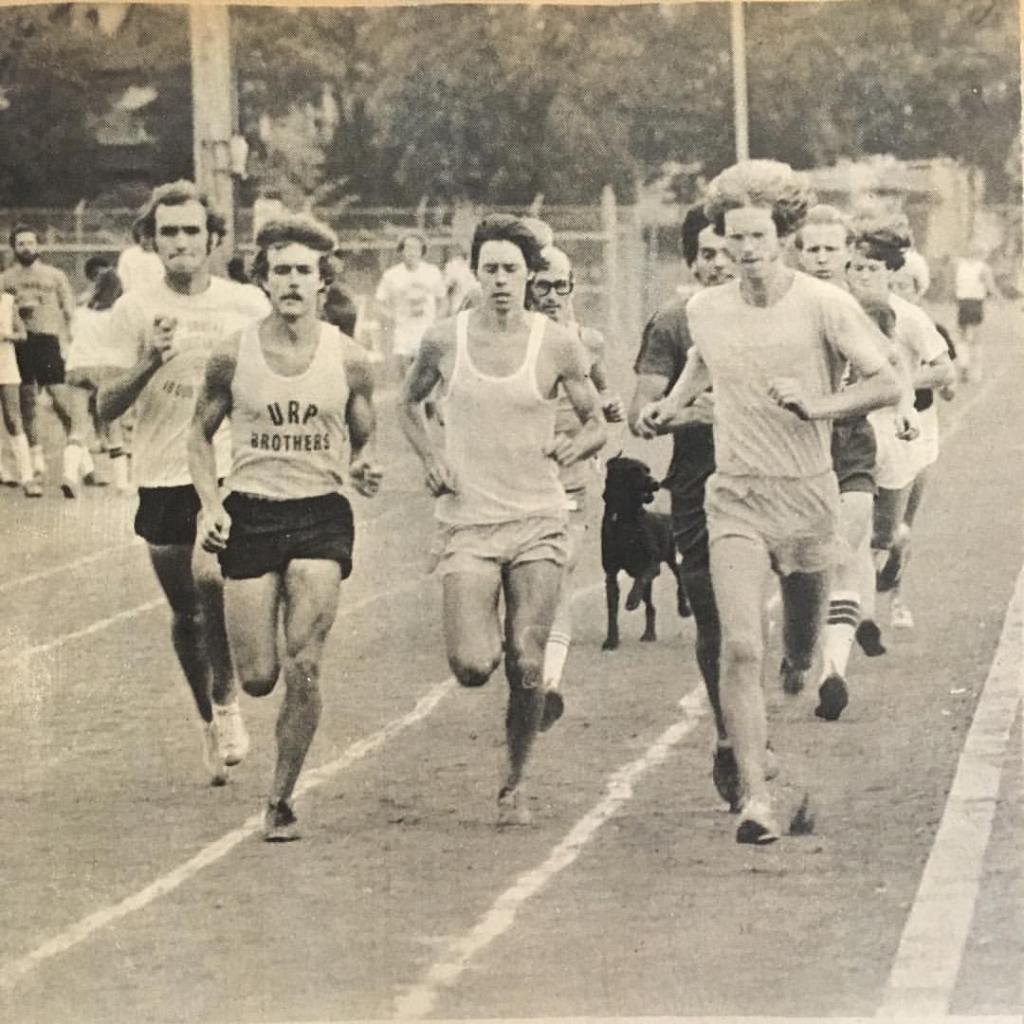
Dave Bashaw is right behind me on the inside lane of a summer track club mile exhibition in the 1970s.

I liked Dave Bashaw and ran with him some in summer track programs as well. The fact of the matter is that he was always up for a run. If you ran with Dave, you learned to listen. Because that dude could talk. His conversation style was an enthusiastic ramble of fast words and thoughts rolling over one another.

We became friends of a sort outside of our running sphere. In the old days of competitive athletics, it wasn’t that common to buddy up with guys from other schools. But by the mid-1970s, and thanks to a local track club run by my late coach Trent Richards, there were friendships that bridged school associations. Two of the more famous guys that trained together in that period were Greg Birk and Tom Burridge, one from St. Charles and one from Batavia. They were so fast and strong I only ran with them a few times. I lacked the confidence to do otherwise.

But I wound up running quite a bit with John Rath of a local town called Burlington as we both ran summer track when I was coaching. Once in a while Dave Bashaw would show up.

But by the time I was a senior in high school it became evident that Dave had a mental illness. He appeared asking for me at my high school while carrying a loaf of Wonder Bread. He told me that he’d just been down at the Fox River bridge trying to feed the foxes. Those were bronze foxes, statues bolted to the bridge abutments.

Casual meetups

Through college I’d bump into him now and then and sometimes he’d seem well enough, but at other times his affect was distracted and difficult to comprehend.

I felt empathy for Dave as it was clear that his mental illness was inherent to his brain chemistry. He received treatments I’m sure, but I never heard much about them.

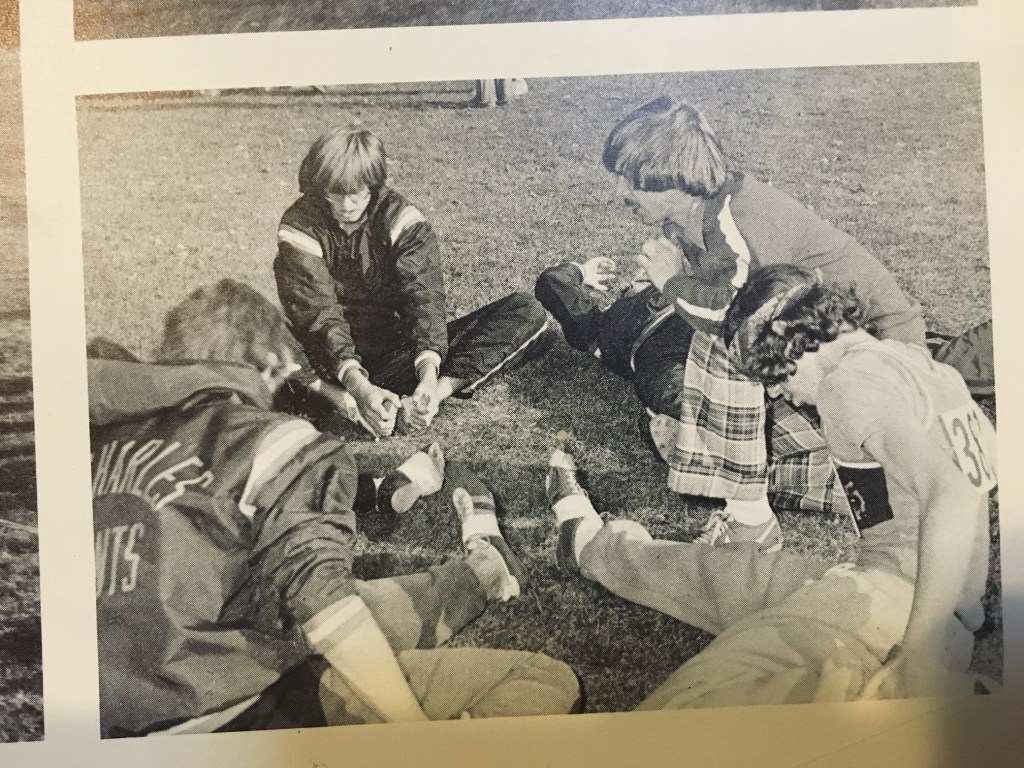
Dave was not the only runner that I knew with degrees of mental illness. There were quite a few in fact. The man over my left shoulder in the track photo above was a major player in the running community for years. But his own version of mental illness caused his ultimate withdrawal from those roles.

To some degree, it is my opinon that we all have some sort of mental illness. With lifelong challenges with anxiety and some form of artistic ADD, I am not immune.

Yet for Dave, it became a major impediment to societal function. Sometimes we’d meet up and have a conversation about events past and present. His focus was always so real and earnest that I cared not if everything he said was connected or made sense.

He gained major weight over time because he loved pizza. He told me that fact every time we met! “I love pizza too much,” he’d say, and laugh, and pat his prodigious belly. I think it was his way of “apologizing” to another runner for getting out of shape.

Dave Bashaw was a sweet soul and a great human being. He passed away from Covid-19 in an assisted living facility. I hope there’s a heaven where Dave can run around in peace, freed from the constrictions of this world and its many expectations.

And I hope there’s a helluvalotta pizza in that heaven.

Posted in Christopher Cudworth, college, competition, cross country, mental health, mental illness, running | Tagged , , , , , | Leave a comment

The smell of asphalt

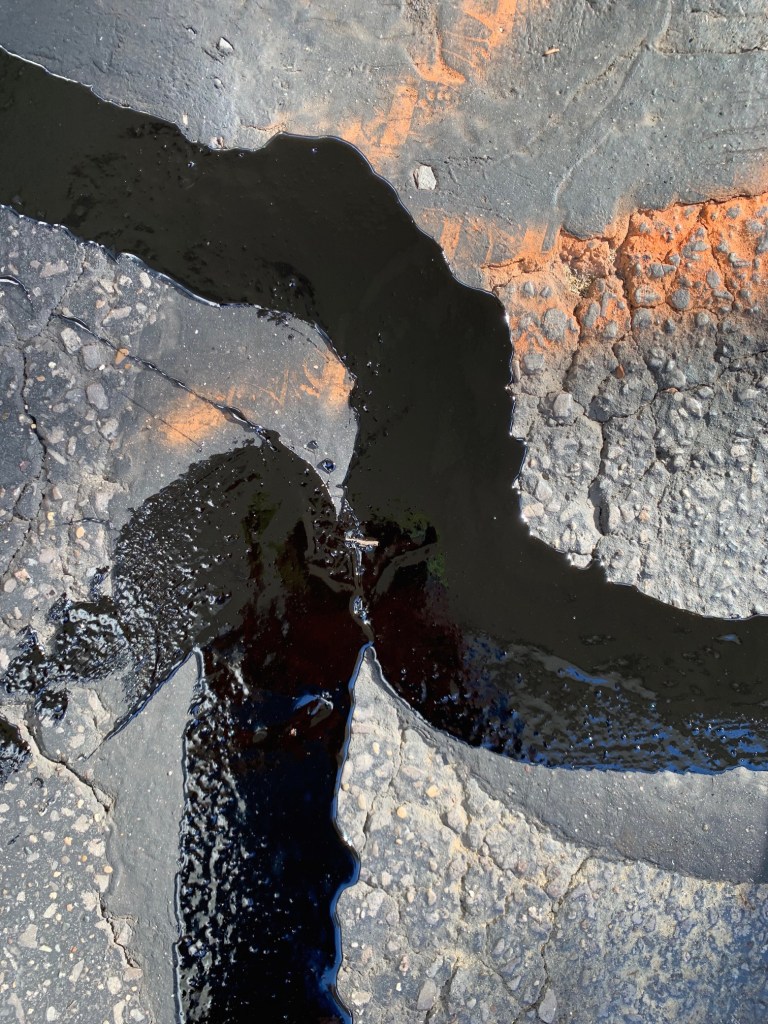
Yesterday while working at home the air inside our house started to smell something like mothballs. I walked around trying to figure out where the smell was coming from. Then my wife told me, “It’s the pavers doing the driveway across the cul-de-sac.”

She was right. Once I identified the odor, it fell into place. But that smell reminded me of another moment in time as a much younger man working from home.

A friend and I lived together in the City of Chicago. Our first apartment was a sub-rental from his girlfriend who was gone for the summer traveling in Greece. I moved back from Pennsylvania and spent the summer doing graphic design and writing for some clients in Chicago.

So between gigs I’d work on a novel that I’d started a couple years before. It was a book titled Admissions about a fictional university at the Wisconsin Dells. It was a highly prophetic book, it turns out. In 1982 I wrote about how the conservative movement in America would begin to take over the AM airwaves with a political push called The Mandate. The main character in the book would run afoul of that movement, and the lessons learned by confronting arch conservatism served as an illustration of a principle I wrote about called Life Tectonics.

Originally I’d written the book longhand on legal pads. During my trips to and from Chicago, commuting to a job in the investment industry, I’d work on the plot and fill yet another legal pad with the dialogue and chapters.

Method actor

But then I purchased a secondhand IBM Selectric typewriter and began the process of transcribing the book to an actual manuscript.

Days were spent sitting at that typewriter with the sounds of Chicago traffic coming through the bay windows of our first-floor apartment. In the morning after a long run, I’d sit down to write and find a fine dust of urban grit on the pages of my book. I’d brush it off the keys and the paper, and set back to writing again.

Then some roofers showed up to work on the building across the street. The smell of that tar was so pungent I had to close the front windows just to breathe. Yet it made me feel like I was really living in the city. It was like inhaling a tarsnake.

The days of summer passed slowly and my running workouts twice a day served as bookends. I competed in 24 races that year with sponsorship from a running store that paid my entry fees and provided shoes for racing and training.

But most of all it taught me to live within my own brain and focus on my work despite everything else going on in the world. Reagan was President, and I despised that. I never cared for his vacuous manner of speaking with all those platitudes. And I really was disgusted by his Secretary of the Interior James Watt, who once coldly stated, “When the last tree falls, Jesus will come.”

My book Admissions was right about where this would all end up, with a nation in the grip of a mandate written by dismissively legalistic forces that for forty years have sought to fracture society in order to take it over. The smell of that asphalt yesterday reminded me that the work of putting thoughts on paper in protest of corrupt thinking is never through.

Recently I transferred that manuscript from old Mac software to a Word document. The book makes more sense than ever. And it is being completed now, because that’s what I do.

Posted in Christopher Cudworth, running | Tagged , , | Leave a comment

The fine art of leaving old friends behind

At age five (left) and today.

As a kid growing up in Pennsylvania from the age of five through twelve, I had the best friend ever. We did everything together. Ran around and played everyday. Learned about girls as we grew older, and joined the same baseball team. Hours were spent sitting on the long, sturdy branches of the giant apple tree in his yard. We’d talk about life and our families.

But then my father moved our family moved to Illinois. Some letters were exchanged between my old friend and I, but it wasn’t easy back then to keep in touch. By the time I got back east even a year later, things were entirely different between us. There were competitive instincts brewing about who was doing better at this thing or that. But one of the subjects caught me completely by surprise.

He asked me, “Do you still jerk off?”

I wasn’t sure how to answer that question right off the cuff.

“Because I don’t. I quit that,” he told me.

Okay, I thought to myself. More power to you. But I was in 8th or 9th grade at the time. What guy didn’t yank it now and then?

Breaking points

We saw each other again at fifteen or sixteen years old when I returned back east for my older brother’s wedding. The distance between us by then was even greater. Plus I made the mistake of choosing to stay for the weekend at the home of a next-door neighbor. Something permanently broke in our relationship from then on.

Twenty years went by. Then I got word that he’d moved to Illinois with his new wife and child. Eager to perhaps rekindle some aspect of our friendship, I made contact and visited his home. He was less than interested.

Perhaps I should have given up at that point. But there’s always been a part of me that treasured those early years and what he’d meant to me.

Of course, there had been difficult moments in our friendship as well. At one point he moved south to live with his dad in Florida after his parent’s divorce. When he returned there was a new aspect to his character, a cynicism that I hadn’t seen before. It emerged in odd ways, especially in the way that he led me on with stories that weren’t true, only to reveal the truth and have a laugh at my gullibility.

Harsh criticism

That harshness was no doubt handed down from his father, who was a stern bugger as I recall. When my friend once climbed to the top of the apple tree and got stuck up there in fear, his father came out of the house and barked dismissive commands at him. Up to that point I knew that his parents were divorced, but did not know why.

As it turned out, my friend got divorced from his first wife as well. I don’t know anything more about that aspect of his life except that he made the decision for reasons of his own. The new wife that I met was charming, intelligent and sweet. It wasn’t my business to figure out his past. I was happy for him in the present.

But the past is a funny thing, and sometimes you don’t recognize profound changes in the moment. I recalled receiving a newspaper clipping from a friend back east who sent it to me during my high school years. It featured my old friend being quoted in the local paper about his political views. I recall being surprised that his views on a certain subject at the time were quite different from mine. That’s when I realized that had I stayed back east, we might well have grown apart as friends anyway.

Fading from view

It happens throughout all our lives. The people we spend time with in certain parts of our lives often fade out of view as time and circumstances change. Even during elementary school, middle school, high school, and college, our friends shift and change. Beyond that period of life, we develop work friendships and relationships. Some of these we leave behind and others we maintain. That’s become easier with the advent of social media.

Yet there is also a burden that comes with that ease of communication. In some ways, the expectation that we’re going to keep friendships going through thick and thin is unrealistic. In no other part of life have we typically behaved in that way. In the past, if people crossed us or changed in ways that don’t make sense to us, we simply moved on. Sometimes with regret, at other times with relief.

That twisted dynamic has grown in complexity as social media has been used to manipulate public opinion. Often we’re quite shocked to find out how our “friends” seem to think, or not. On the other hand, it is sometimes the people with whom we once seemed to disagree that become exceptional friends. There is no predicting the outcome.

Team dynamics

I recall that during our years of training and racing together in high school cross country and track, there was a social order governing our time together. Generally the team leaders dictated the workout dynamics and how things went down. Most of it was happy. Some of it was harsh. If someone got really out of line and was annoying the hell out of the rest of the team, the team leaders stepped in to put a stop to it.

But in the world of social media, we’re largely on our own. We have no “team” to fall back on. When friends post annoying memes and false information, we face a choice. We can comment and risk alienating them from our circle of friends, or we can remain silent.

It is most disturbing to find out that people you considered fairly smart and considerate turn out to be close-minded and possessed of dismissive or prejudiced ideologies. The hot-button issues are everywhere. Gun control. Gay rights. Religious freedom. Economics. The environment. Democrats. Republicans. Conservatives. Liberals. Progressives.

The dog-whistle arguments and labels get ugly from there. That’s when propaganda and dogma enters the picture. And to make things worse, America is essentially a Petri dish of Coronavirus belief and disbelief right now. Yet one fact remains clear: the nation is at risk of economic collapse thanks to presidential inaction and obfuscation. Yet Trump supporters continue down a path of complete and utter denial of the damage being done through this and other actions. Commutations. Obfuscations. Blocking criminal investigations. Corruption lurks around every corner of every day.

And if you don’t understand that, I really don’t want to be your friend anymore.

Old loyalties

So the question from both sides of the equation is profound: Does one keep old friends who adamantly disagree with you, or whom you find suddenly absurd and living in denial of even basic truths?

I know how I feel about the subject, because I’ve watched old friends turn into ghosts for all sorts of reasons. I’ve not been shy to challenge the beliefs of others on social media or anywhere else in life.

During my time at a conservative church whose beliefs align with the evangelical political movement now dominating culture in America, I did not sit quietly when people opposed evolution, pronounced gay people irredeemable sinners, or barked about abortion while opposing access to birth control.

Ultimately we left that church because while the people were nice on the surface, the ideology behind the synod was intolerant and dogmatic to the point of being hateful. Sometimes in life it pays to use your feet, move on, and embrace a more rational and loving worldview. It will take exceptional fortitude in the present and near future to hold to those principles, especially in the face of a regime whose every move points toward tragedy for someone.

Ignorance and confidence

For one, I will not stand down even in the face of religious friends claiming this is all an act of God. As Mark Twain once said, “In politics and religion, most people’s opinions are gotten secondhand, and unexamined.” He’s absolutely correct on that, but he was also correct in saying, “All it takes is ignorance and confidence, and success is sure.”

That describes life on social media, for sure. And if people persist in being ignorantly confident in their treasured opinions, I have no regrets jettisoning them from my orbit. They’re clearly not going to change even when confronted with the facts. In fact they fear them so much they typically exit the picture when presented with them. In either case, it is both a lost cause but not much of a loss. Your life will go on without them. That much I have learned many times over. The fine art of leaving old friends behind is that sometimes it is the right thing to do.

Posted in Uncategorized | Leave a comment

What athletes can teach the world about surviving a pandemic

Yesterday’s news was dominated by the fact that the State of Florida broke the record for the most cases of Coronavirus in a single day. That outcome was the result of hundreds of thousands of people flooding back to beaches and crowding into other public places.

The pent up desire to break from protection measures related to the disease is responsible for much of the pandemic’s spread in Florida. People desperately want to get back to “normal” after a spring and early summer spent in austerity from Shelter At Home orders and a closed down economy.

There is also the move to resist wearing masks, the suggested method by which to prevent such rapid spread of the disease. But a significant segment of the population seems to be convinced that masks are both unnecessary and a symptom of government overreach. Proponents of that attitude refer to people wearing masks as “sheeple,” an insult intended to convey the idea that mask-wearers are unthinking denizens of a socialistic society.

Simple protection

A mask is a simple enough device. It’s a partial face covering to prevent potentially infected droplets of moisture from reaching other people. It’s also a way to help protect said droplets from reaching your own nose and mouth.

Wearing a face mask is not much different than wearing a bike helmet while cycling. The chances of having a crash may be slim, but in the event that you do get in an accident, bike helmets offer a measure of protection. They are not a perfect device in any way, but anyone that has crashed and bonked their head on the ground with a bike helmet on can testify, they do help. They can even save your life.

Athletes quite commonly take other protective measures during training and competition. The application of sun screen is highly recommended to block the harmful rays of the skin. That reduces the risk of skin cancer, a disease that can also kill you.

Healthy competition

When it comes to diet and nutrition, athletes at all levels learn that eating certain foods can help maintain a healthy body weight, prevent problems such as heart disease and diabetes, and fuel the ability to engage in endurance sports that build muscle, strengthen the heart and lungs and reduce ambient stress.

Yet healthy competition also introduces a type of stress that can strengthen the mind for other challenges in life. Competition helps people learn to manage their emotions. That’s a helpful tool in other aspects of life.

Engaging in all these types of preparation and prevention is an integral part of being an athlete in many sports. Even professional golfers in the last ten to fifteen years have transformed their bodies to perform better on the course. They have learned that playing at a higher caliber requires some sacrifice and training to sustain the rigors of a long season.

Refusal to sacrifice

By contrast, it appears that much of America is disgusted with the idea of having to sacrifice anything about their lifestyle in order to enjoy the supposed freedoms of life in this country. Anti-maskers call the obligation of wearing a mask an infringement on their personal freedoms. Meanwhile plain old irresponsible citizens of many ages have been happy to pour into bars and other public places and gorge themselves on the fat of the land without masks or other expressions of concern for the health of others. Unfortunately, that has led to repeated spikes in all kinds of situations; urban, suburban and rural.

The propensity to engage in appetite indulgence is perhaps no surprise in a country known for its massive rate of overconsumption and obesity. The Center for Disease Control reports that “from 1999-2000 through 2017-2018, the prevalence of obesity increased from 30.%” to 42.4%, and the prevalence of severe obesity increased from 4.7% to 9.2%.”

These statistics tell us that there are a significant number of people out there who do not care about their health and who refuse to change their lifestyle to do anything about it. It also happens to be true that the segment of population affected by obesity are also those at greater risk of associated problems such as heart disease, diabetes and even cancer. These are the people at greatest risk of dire consequences from contracting Covid-19. That begs the question: Are the same people that refuse to take care of themselves in terms of body weight the same people protesting that wearing a mask is an infringement on their personal liberties?

Recently an ardent statistical Redditor produced a study that took a look at that potential correlation. And while it is not exact, it is a compelling perspective.

Obesity rates and Trump Approval Ratings

It is colloquially interesting that the percentage of those with obesity in America (40%) matches almost precisely with the average popularity rating of the current President of the United States of America (also 40%) who also happens to be obese, hates to exercise and claims that exertion can shorten one’s lifespan.

It is no mistake that these factors align so closely.

But there’s more. That 40% figure also generally lines up with the number of people in America whose biblically-literal worldview supports belief in creationism, the anti-science, anti-intellectual take on religion that denies fact in favor of ideology.

This isn’t about ‘fat-shaming or religious persecution or even political rivalry. This is about challenging ideas and habit that endanger the lives of others, and holding people accountable for the actions they take, or don’t take, in that regard.

A stubborn mindset

These aren’t precise alignments of course. But they are related indicators of a mindset that could lead one to refuse to wear a mask, or avoid exercise, or gather in crowded bars or on beaches out of stubborn refusal to believe that Coronavirus is a threat, or those who believe that it isn’t even real.

That outlook is a genuine risk to human health. So this is about dealing with reality in good conscience and consideration for others. When the habits or belief systems of people dominating the culture dialect are causing others to get sick and die, we have every right to challenge them.

Wishful thinking

That brings us back to what athletes can teach the world about survival in a pandemic. There is nothing about participating in endurance sports that allows one to persist in the wish that something were true when it isn’t. Every workout is an exercise in profound reality. When an athlete goes out and runs ten miles, no amount of wishful thinking makes them go faster. One either works through the pain to make the gain, or gives up.

The same goes for cycling or swimming. The clock is empiric, and one only improves by putting in the preparation and work to improve.

Sacrifices to be made

That empiric reality includes all the things surrounding the effort as well. There are sacrifices to be made. Early mornings to face. Hot days. Cold, freezing weather. Giving up alcohol or sweets. All to focus on a health approach to performance, and to life.

Those willing to make such sacrifices are not “sheep” in the derogatory sense of the word. They are honest, hard-working people who care enough to take care of themselves. It should also be noted that a community of athletes is often grandly supportive of one another. That’s what being on a “team” is all about. Doing your best and encouraging others is the entire purpose of having a team in the first place.

Even ardent competitors hug after races because they know their rivals push them to go farther and faster. That is the nature of healthy competition.

So much “winning”

But some people claim that denigrating the efforts of those who make sacrifices is the real focus of “winning.” When the President of the United States ridicules a Senator who once suffered through years of torture as a prisoner of war by saying, “I prefer the ones who didn’t get captured,” there is something radically wrong and out of whack with the values system of those who support him. That same President also hid or ignored the fact that Russia has been offering bounties on the lives of our soldiers. He also sold our our Kurdish allies by removing our troops to allow Syrian forces to move in and slaughter them. Clearly he is not on the same “team” as the rest of our military or our allies. Yet he’s our designated Commander In Chief. This is a devastating problem, and it all hearkens back to selfish motivations and blaming others for the problems he creates on his own.

That is the worse kind of team member to have “on your side.” We’ve all dealt with such selfish individuals, who want all the glory yet make none of the required sacrifices. We want nothing more than to be quietly rid of their influence. They ruin the team, poison the locker room atmosphere and drag other people down with them.

And it is that same President who wants America to send its children back to school despite cases of Coronavirus soaring all across the country. His cynical Secretary of Education Betsy DeVos lamely claims that children are less susceptible to the disease. “There’s nothing in the data that suggests that kids being in school is in any way dangerous.” Yet even the data she cited would lead to perhaps 15,000 kids dying, an untold numbers of teachers, staff and administrators being put at risk of contracting the disease.

But what should we expect. Much of her wealth was gained through a company whose business model depends on exploiting people from a top-down perspective in a network-marketing scheme.

Sacrificing lives

In other words, the view of “winning” from the perspective of Trump and DeVos is to have people sacrifice their lives in order to give the appearance that everything is going according to their ideological plans. This is the opposite of winning in every respect of the word. It also encourages people already compromised by lack of concern for their own health to put the lives of others at risk. These are the anti-maskers, the stiff-necked religious zealots and the bloated worshippers of Trump that are literally killing America in every sense of the word.

Ridding the world of pet fantasies

A true patriot learns to sacrifice for the good of the nation. America could learn a few things from athletes in that regard. Giving up pleasures and indulgences and even pet fantasies of how to win is a crucial aspect of being both an athlete and a grownup in this world.

There is a sorry lack of both in America right now. The world recognizes it. Americans are banned from traveling to almost every country in the world because our fat-ass, disease-denying, golfing lard bowl of a President thinks he knows better than the rest of the world how to survive a pandemic.

And we’re losing that fight. Life by life, we’re losing it.

Posted in bike accidents, bike crash, competition, cycling, healthy senior, religious liberty, riding, swimming, training, tri-bikes, triathlete, triathlon, triathlons | Tagged , , , | Leave a comment

Add Chris Johnson to the prolific runner list

Chris Johnson winning a 5k trail/cross country race with 850 entrants, placing 43rd overall and beating all men over 55.

I’ve known the runner in that photo since approximately 1983. That’s when we both were racing consistently on the Chicago area runner’s circuit. On many a weekend in all sorts of seasons, we’d step to the line together and give each other a knowing nod.

Chris has run nearly 80,000 miles in his career, often winning age group categories at distances from the 5K all the way up to the marathon, where his travels often took him out Kansas way.

He’s also an astute observer of nature, and once in a while we’ll cross paths while running or cycling and we’ll stop to share some rare or interesting bird we’ve seen. But Chris also knows plants well, and he’s good at sharing which species are blooming with particular verve in spring and summer.

Vegetation wipes

Recently I wrote a blog on the subject of dealing with gastrointestinal issues while out running. Most of the restrooms on our local trails are closed. So we’ve all been forced to squat and wipe with whatever material is available.

And obviously, if one feels the urge to “go” yet forgets to bring along toilet paper, it helps to know the local flora well enough to avoid wiping with something that can harm your hinterparts, or more.

Chris happens to be quite educated on the plant world. He caught up with me last Saturday during a run and explained that I’d missed a few good options among plants suitable for ass-wiping. Chris ass-ured me these are unisex alternatives.

This is burdock. It has big ass leaves as you can see. Their texture tends to be smooth, for the most part. That avoids the scratchy feeling that can give you the creeps. Plus you can see pretty well whether there are bugs on the leaves, which I’m sure you’d rather avoid.

As Chris noted on the photo above, “Common Burdock, which comes in two nearly identical varieties, is my first choice for body wiping. Slightly astringent and with a pleasant odor it is slightly rough to the touch. Burdock is especially good for wiping dirty and grimy hands.”

Here’s a photo of a single burdock leaf.

A single burdock leaf. Nature’s own toilet paper.

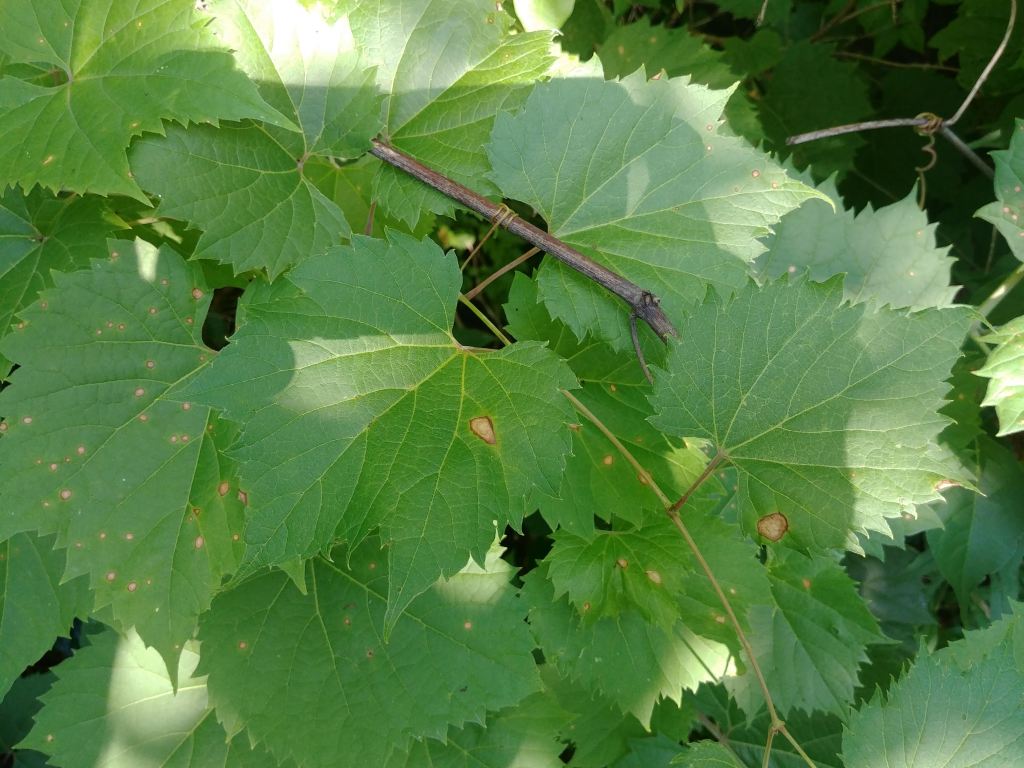
Chris also notes that Wild Grape has beneficial qualities for ass-wiping.

While beautiful in shape, wild grape leaves are also wide enough to avoid behind the back accidents.

Chris notes: Wild Grape leaves, or River Grape as it is known in our area, are a good choice for wiping or wrapping human skin. The grapes themselves have a very large seed and are barely worth the effort to eat. Here’s a closer look at the leaves.

The best thing about wild grape leaves is they are plentiful on the vine and thus easily accessible.

Wild lettuces are also an excellent source of ass wipeage material. Look at the height on that thing! You could toss a salad with that!

It doesn’t look that wild, but lettuce like this does appear in the woods.

Chris explains: “Among the many varieties of wild lettuces in our area Tall White Lettuce is a majestic plant growing up to eight feet tall. Take that Iceberg, Romaine, and Swiss Chard! While the leaves of this plant are bitter to the taste it can be used safely for wiping bloody scrapes, wrapping your onions and wild leeks, or for pit stop clean ups. Plants to be avoided for pit stops include poison ivy, poke weed, and everything in the milkweed family.

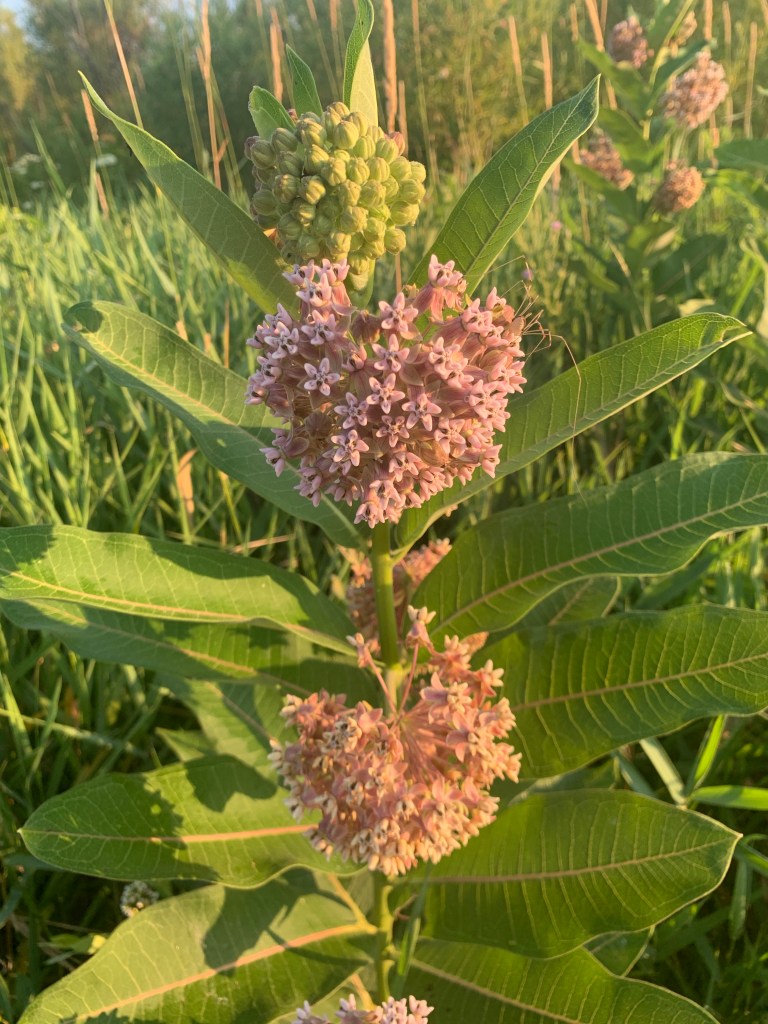
This is a form of milkweed. Monarch butterflies like to lay their eggs on it, so please don’t pluck the leaves and wipe your ass. Plus there is a sticky sap that looks like milk and sticks like Gorilla glue. Be warned.

To that last warning I can testify. Wiping with milkweed leaves a sticky residue on your buttocks. If left untended, that could permanently (not really) seal your butt cheeks together. Best avoid that problem. Here’s another wild lettuce picture to remind you of a much better alternative.

Look at those ridges! Perfect for handling poop of any texture.

So there you have it. An Encyclopedia of Ass-Wiping Plants. Chris even provided the proper Latin names in his emails. If you want those for scientific reference and corroboration, you’ll have to write me a request. I was too lazy to copy and paste them all here.

Yes, Chris Johnson and I have covered some miles and years together. That’s why we’re both so great at sharing information like this for all of you. May you have merry trails ahead of you, but it you have to take a dump, may you find these plants readily available. You’re welcome.

Posted in cross country, running | Tagged , , , , , , , , | Leave a comment

Dancing with the cranes

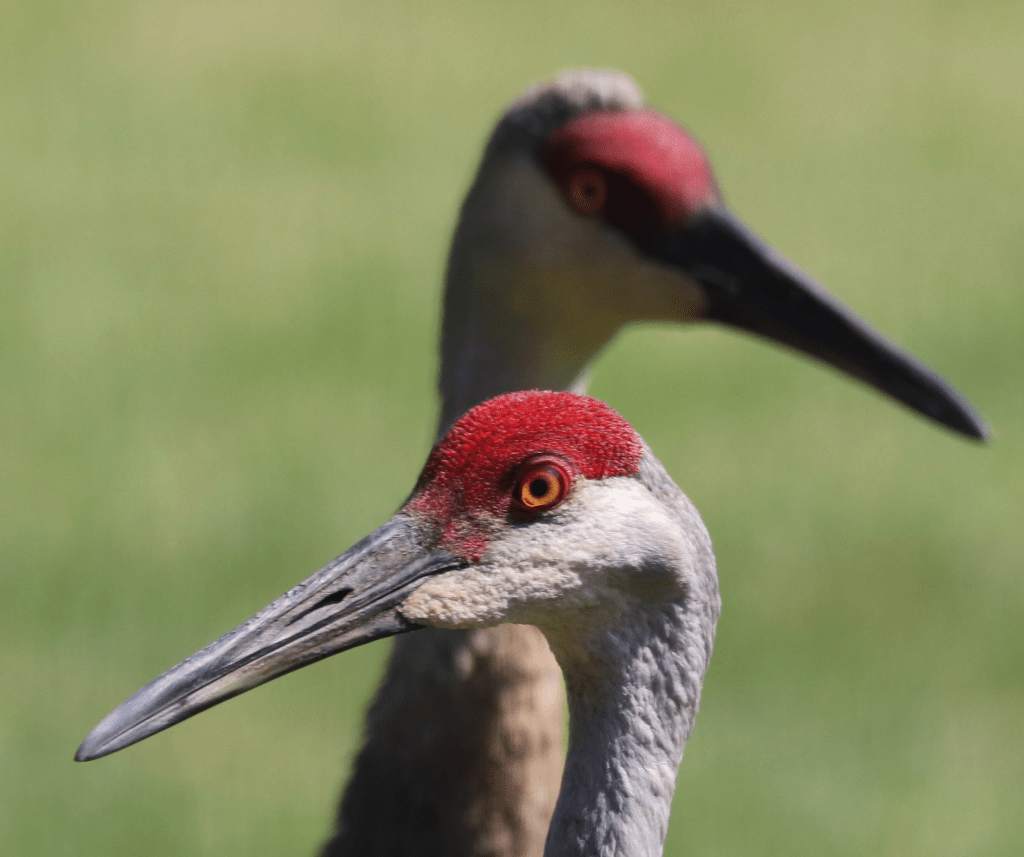
For the last four days a trio of sandhill cranes has been hanging out in our backyard. They are large birds equipped with a bill designed for a multitude of food options. The red on their forehead is distinctive, and within the species we often see gray birds and rust-colored birds.

A sandhill crane showing the distinctive rust colored plumage gained by preening with mud.

The reason for the difference in color within the species is the result of an interesting habit.

As a description accompanying a photo on the StarJournal.com, “A sandhill crane was strutting through a field in the Crescent Flats recently. This is a great example of how drastically these birds can literally change the color of their plumage. The reason for the change in color is that sandhill cranes preen themselves by rubbing mud on their feathers. The mud can be either brown or red but is usually red up here in the north. We have lots of iron rich soils in this region. The feathers soak up the mud’s color just like a sponge and it lasts for a long time. It is believed that the birds do this to camouflage themselves during the nesting season. As the summer goes by, the rusty red color eventually wears off and the bird turns back into it’s normal gray color.

Here’s my own photo showing a closeup of the bird’s rust-colored plumage.

These birds have exceptional eyesight, a product of their evolutionary need to watch for predators and find food. From our backyard, they study us carefully when we move around inside the house. For the most part, they recognize that we are not a threat unless some sudden movement startles them.

As you can see, their heads and necks are not rust-colored, because that long bill used to preen their other feathers cannot turn around and preen the head. Yet that distinctive red patch of feathers on their head is a distinctive field mark.

Like many species of cranes around the world, sandhills spend summers in northern climes and head south to escape snow and ice. Yet many linger on the edge of that climatic differential as long as they can find food.

For now, these birds are happy to nibble on seed at our bird feeder.

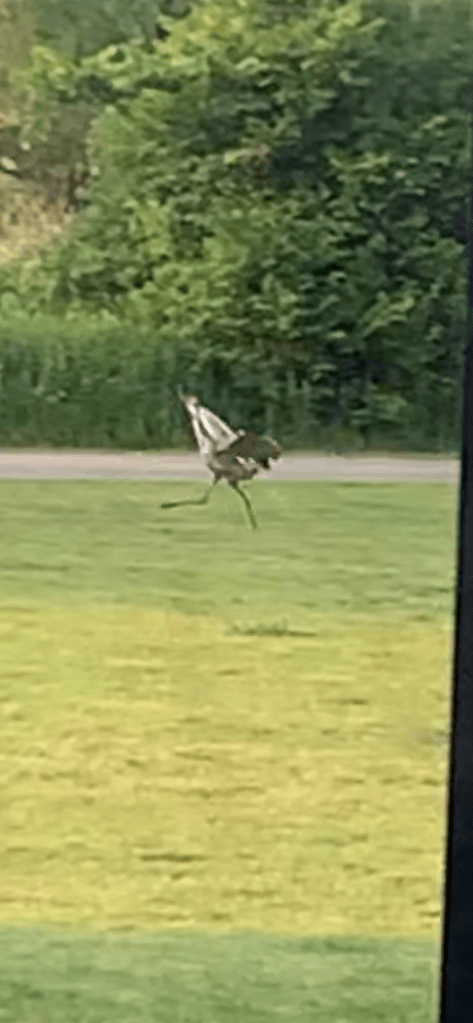
One of the fascinating behaviors of sandhill cranes is their bonding rituals. They will dance around each other in graceful ground flights, raising their wings and chasing across the ground. I captured a short video last night and did a screen capture to show one of the cranes racing across the grass.

Dancing with the cranes

That was an invitation that I could not resist. A little while later, I walked out on the lawn and began flapping my arms, dipping my head and acting like a crane. They did not run away.

My wife stood back at the house watching my displays. She’s as fascinated by these birds as I am. They’re not particularly afraid of human beings, but will move off when a person walks by with a dog. But last night a cyclist came rolling around the path where they stood preening themselves and all they did was trot aside.

All this still feels unusual to me. Forty years ago when I was birding the marshes near the place where I now live, it was a rare sight to find a sandhill crane. There were few breeding pairs in Kane County. Now there are dozens, each raising one or two young a year.

Spring Migration

In spring we hear them migrating north in March. Long ago, that was a rare treat. While out running, I’d hear their calls in the distance and stop to stare at their vee-shaped flocks approaching from the south.

One spring day a massive group of 400 birds came streaming overhead as my brother and I were out in the street playing catch with a baseball. The noise they made as they flew overhead was tremendous. Their calls are a richly guttaral sound forged over ten million years of evolution. To hear that sound is to be in touch with the origins of life itself. To dance with the cranes is a gift indeed.

Fall migration

Come fall, the flocks grow large again as the birds head south for the winter months. Usually it is in early November that they come through Illinois in great numbers. Typically they arrive at mid-day on the strength of some favorable wind. Their calls fall out of the cool, clear autumn sky or get carried across the landscape by brisk winter winds on gray November days. There is an urgency to their voices on those days.

All these natural facts align with my own sense of seasons. We run and ride through winter, spring, summer and fall. We sense the rhythms of time and opportunity. While we may not migrate, we do move with the seasons.

Kinship

It is summer now, and I will keep trying to dance with the cranes. They seem to sense a kinship of some sort, or else think I’m plain nuts trying to dance them into action. At any rate, the effort makes me happy. The cranes don’t seem that offended, even if my wings appear stubby and bare. Perhaps it is my forehead, naked and red with summer sweat, that makes them wonder if I am the real thing.

But don’t you love the hairstyle on this crane? I’m envious.

Migration Marathon, Illustration by Christopher Cudworth
Posted in running, training for a marathon, triathlete, triathlon, triathlons | Tagged , , , , , , | Leave a comment