Life as a semi-sponsored runner

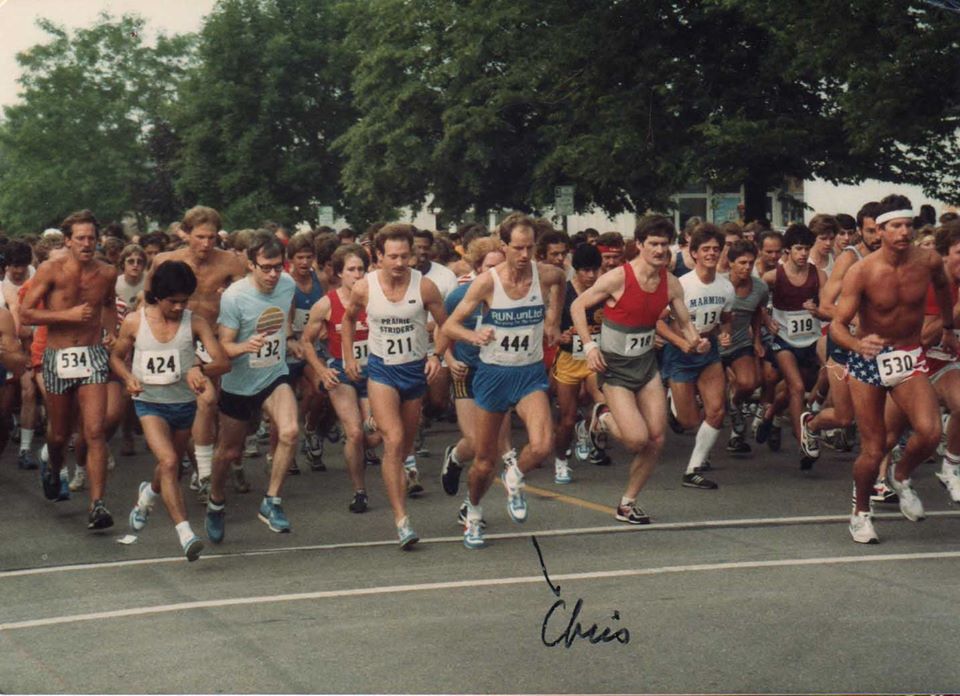
#444 at the start of the Geneva Community Classic 10K that was won in 31:52 on a long course. The record stood for 20 years.

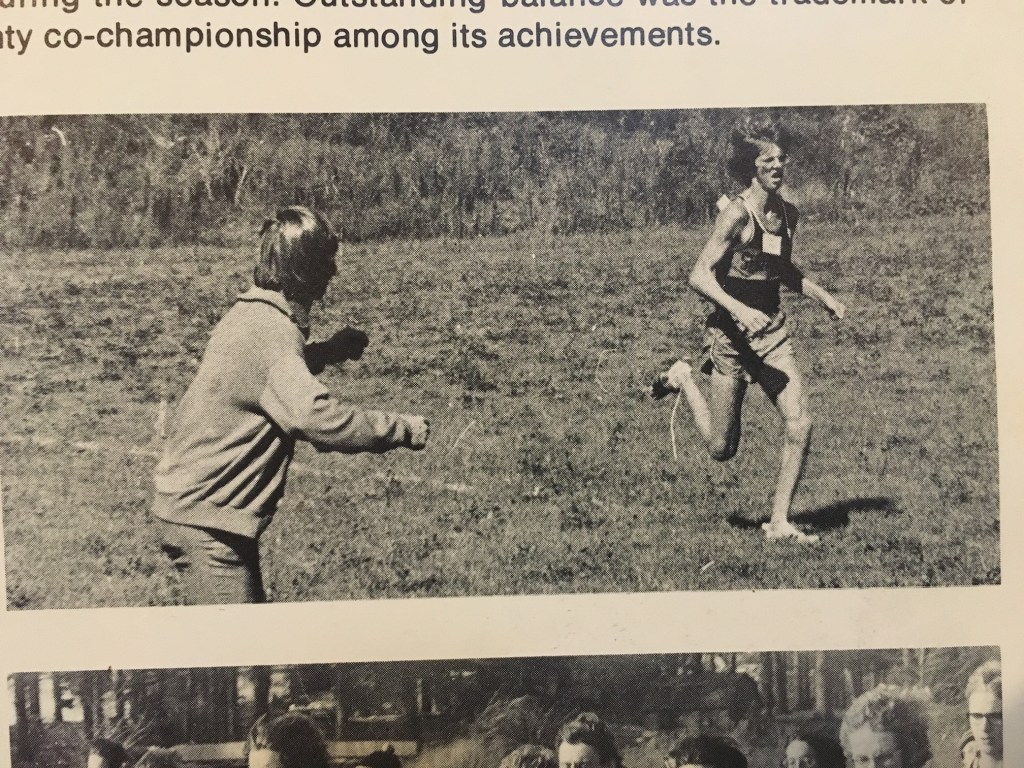
I was never a national class runner. My best times at 5000 meters were about a minute behind those competing at the top levels of Division 1 track and field. My best place at cross country nationals as a senior in college was about 60th place. That helped our team take second place to North Central College and make us Team All-Americans, but that was a group effort, not an individual triumph.

Despite this modest success, many runners of my caliber continued competing well after college. In my case, the times continued to drop in every category of racing; road, track and the rare post-collegiate cross country meet.

The invitation

By the fall of 1983, I was winning a few regional road races and finishing in the top five almost every week. After winning the Run For the Money 10K in Arlington Heights, Illinois, I got a call from the owners of Running Unlimited, a new shop that was looking for promotional opportunities. The owners Frank and Carolyn Gibbard were putting together a racing team to represent the store on the local running scene.

Pre-race concentration

That team consisted of some of Chicago’s mid-to-upper tier distance runners, including the Macnider brothers, John and Jim. There was Bill Friedman, a competitor in his late 30s still running under 15:00 for 5K. Jukka Kallio was a marathoner of Finnish descent who barely missed qualifying for the Olympic Trials with a time over 2:19. Rick Stabeck was one of the most solid performers across many distances as well. Altogether it was a team of 10-12 runners receiving simple incentives such as Nike shoe price reductions, paid entry fees and small travel stipends as we all raced across the Chicago area.

Overload

Sometimes the effect of having us all race in one place was not all that positive. At one race in the Northwest suburbs, we took all top ten places, hogging the awards in several age group categories. I was racing in the 20-24 group and took second at 31:10 to Jim Macnider as I recall.

It was not uncommon at many races in those days to run 5:00 pace for 5K or 10K and not even finish in the Top Ten. The relative depth of sub-elite runners was strong. My personal racing schedule involved running 24 races on behalf of Running Unlimited. I won the Geneva Community Classic 10k, the Frank Lloyd Wright 10K, finished second to Kallio in the River Forest 10k, second at the Sycamore Pumpkinfest 10k, fourth at a highly competitive Melrose Park 10-mile race won by Kevin Higdon, and third at the Deerbrook 25K in 1:24:47 wearing a race number given to me by Bill Rodgers, who decided not to run after I escorted him from the hotel to the race.

That’s a weekend that I should have been running marathon. Leading up to the race weekend, I’d put in a burst of training because I was planning to devote time on Sunday and ran twelve miles in two runs on Thursday, put in another fifteen miles in two runs on Friday and another ten miles “strong” on Saturday. Had I simply tacked on another ten miles at even 6:00 pace that would have produced a 2:25 marathon.

My training journal shows all the miles leading up to the 25K racing in late September, 1984

Running for small glories

Those are not regrets, just observations realized over the years. As a sponsored team, our priorities in racing for the Running Unlimited team were not about racing single races such as a marathon. In fact, relatively few runners planned their racing schedule around such long races in that era. Both our desire and our obligation was more about racing frequently. That also meant more opportunities to wear the team warmup kits, and produce good performances that reflected well on the store. That year I led the CARA 20-24 age group in points.

The year before the Running Unlimited commitment, I’d raced for a team in Paoli, Pennsylvania called Runner’s Edge. In that region, there were a number of teams hosted by clubs and sponsors. On a typical weekend, there might be 10-15 teams at a five-mile road race, each wearing their kits. That scene was a bit like being back in college again, with real rivalries evolving between those clubs.

Along with racing as a store sponsored club with the requisite team uniforms consisting of singlet, shorts and nylon warmups, we also trained together as a team. Team leader included the Crooke brothers, Rich, Peter and John that ran the Runner’s Edge store. We did track workouts at Villanova University where world-class distance runners such as Don Paige and Sydnee Maree could sometimes be seen working out.
Back in Chicago

That association ended when I moved back to Chicago after the job out east ended. Living in the City with a friend, I dived into the local running scene training with Tom Brunick’s group at the University of lllinois track. Top guys such as Dave Casillas, Jim Whitnah, Jim Terry and others all showed up those nights. We also ran at the Northwestern University track in the shadows of tall buildings in the near north Loop.

But after two years of living the bachelors life in the city and training full-time, it was time to move on from the world of sub-elite running. I got married in 1985 but kept up with the training to some degree. By then, Running Unlimited had disbanded as a racing team and the store was soon sold to an owner that moved it to Palatine.

Approaching fatherhood

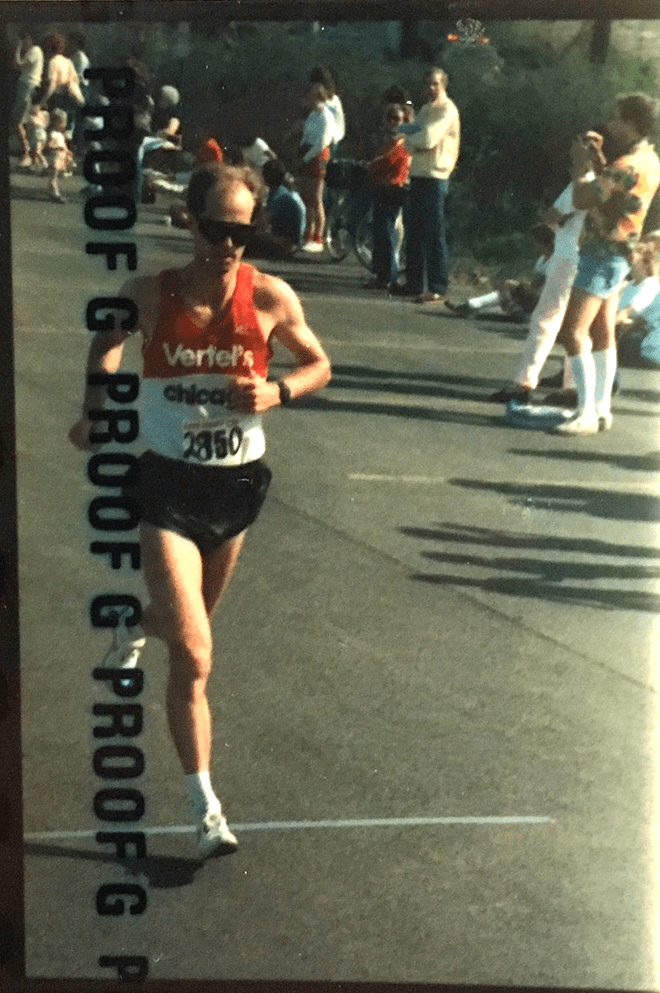
A part of me still clung to the racing lifestyle that year, and having long association with Vertels Chicago, I was invited to race for them. But during early 1985, I was only rounding into shape and the team manager wasn’t too impressed with my fitness. That meant I got a kit shirt for the “B” squad rather than the elite racing singlet with the sleek Nike logo on it.

I still managed some fast times that summer, clocking a 20:14 four-mile to win a twosome race, and ran a big 10-mile race n 54:00 in some south suburb. But I could feel the transition to full fatherhood coming on. My son was born that October 30. It was time to leave those racing teams behind. I was twenty-seven years old and had been competing as a runner since the age of twelve. Those times run in my 20s would remain whatever legacy I could accomplish in this world as a runner.

But I actually knew from one experience exactly where I stood. It was the Race Of the America’s five-miler in which I went out with the world class guys for a mile or two at 4:40 pace, then faded to finish in 25:30 overall. Nothing puts you in your place like an honest finish time. I was always a good team player, but never the sensational type or Olympic qualifier that one might have wished for. And that’s okay. To this day, I still enjoy running and win the occasional age-group award in either road races or triathlons. This year my pace is actually improving after last year was wracked by injury and illness.

Sharing assets

Overall, it was, and has continued to be, a fun ride. Looking back on those years as a semi-sponsored runner, I realize that few people really get to experience the pleasures and pressures of having enough talent to fulfill some obligations of a semi-sponsored runner. The only regret I ever had was having to race a half-marathon when I had a wicked cold and congestion. That was not the most fun experience in the world.

My glimpse into the pressures of sponsorship makes me appreciate the world-class folks I now follow on Instagram. Their pressures are multiplied beyond what most of us can comprehend. Can you imagine being a top-flite runner capable of running under 13:00 in the 5K and having to justify your sponsorship status on the basis of the number of follower you have on Instagram or some other app? That’s a modern dynamic indeed. As a result, some spend more time sharing their assets rather than talking about their accomplishments. That’s especially true for women, where body image…and exposure, is a keen driver of social media.

On the whole, it still comes down to performing under pressure in one way or another. But the cut-and-dried world of running times and weekend warriors seems long gone.


Posted in Uncategorized | Leave a comment

Had Covid-19 hit in 1978, I don’t know what I’d have done

In August of 1978, I was returning as a senior to Luther College as both a Resident Assistant and Captain of the cross country team. That meant the latter part of August was largely spoken for as my schedule called for attending a weeklong RA Retreat at Bethel Horizons north of Dodgeville, Wisconsin. Then it was back to Luther for the start of cross country practice.

But what if Covid-19 had hit the world that summer and college cross country, and even onsite learning at college itself, was canceled? All that training I did to prepare for the fall season would have been for naught. Nor would I have attended the RA Retreat where I fell deeply in love with a woman for the first time in my life.

That would have been a loss in my life. Because in that positive state of mind and fitness, I helped lead the cross country team through many of its 13 meets, even placing as our top man in a dual meet on our own campus. Then we combined to take second place in the NCAA national cross country meet for Division III. I became a Team All-American.

Circa 1976, front and center with the Luther College CC team. And the opposite of social distancing.

But all that could have been erased if a worldwide pandemic had taken hold.

As it stands, it looks like the sport of cross country at the high school and college level will proceed at some level going into the 2020 season. There is enough open space at every cross country meet to allow for social distancing. At least those runners will have some competition this fall. But I empathize with kids at every level of education and sports these days. It was hard enough for me to concentrate on the work at hand in my high school years, and I struggled in subjects like Algebra and Economics. I did better in college, but distance learning might have afforded me too much latitude.

But who knows?

On track for a clash

In this day and age, it looks like college football will be postponed from fall to spring all the way up to the Power 5 Conferences. Last summer I attended a track reunion at my alma mater and there was already consternation about the fact that many football coaches don’t want their athletes participating in spring track. They’d prefer to have their kids come out and grovel around in spring football than diversify their experience by building speed and toughness in track and field. So football and track are on track for a clash in many places. The convergence of both sports in spring spells trouble.

Why such obsessive preoccupation with the one sport of football? Well, such is the perversity of the American work ethic, where singularity of mind is now so highly prized that selfishness has become the lead instinct of the day. The desire to “have” football at all costs is a reflection of a selfish instinct that has taken over American society today. Even Anti-Vice President Mike Pence is begging for student athletes and coaches, staff and trainers to put themselves at risk in order that others be entertained.

His statement that they “deserve the chance to safely get back on the field” ignores the fact that President Trump is leading a country with one of the worst Covid infection and death rates in the entire world. Yet all Pence cares about is his notion that the “Nation” depends on the “gridiron” for normalcy.

When it comes to normalcy, I’ll side with young people running in a pastoral landscape rather than banging into each other on a field constructed for that purpose with tens of thousand of people that never even played the game cheering or criticizing their every move. There’s actually nothing normal at all about football. It is a manufactured reality.

Both sides of the field

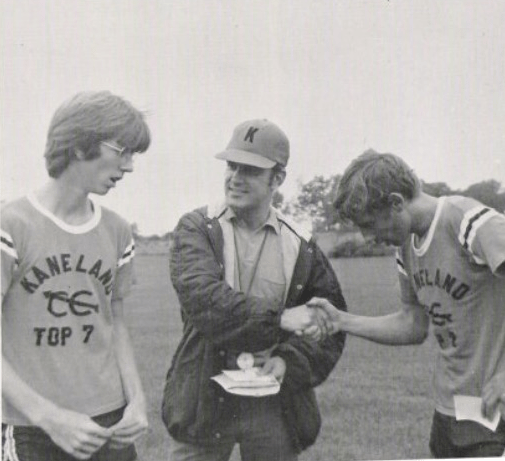
I don’t hate football. Yet even my friend who coaches one of the best programs in Illinois would be first to admit that sports specialization has gotten out of hand. He encourages kids to do both football and track because he is the track coach. But that means he understands that diversity of experience is important to self-development. The football coach at the first high school I attended was also the track coach at Kaneland High School. When I entered as a freshman there was neither a soccer or a baseball program available at the school. Because that football and track coach also happened to be the athletic director. So the more things change, the more they stay the same.

When it all comes down to it, all I wish for student athletes is at some point to experience the thrill of competition. I was blessed in many ways by experiences in years of sports participation, and I played many of them. Baseball, basketball, soccer, track, cross country, and even football, but only in flag tournaments or pickup games.

The only advice anyone can offer kids eager to play the games they love is to keep on practicing. That’s 95% of the sport anyway. That’s where character comes from, but that character is being tested in all new ways these days.

Posted in Christopher Cudworth, college, competition, cross country, running | Tagged , , , , , , | Leave a comment

Seeing a young man off to college

With social occasions delayed due to the Coronavirus pandemic, it was difficult for graduating high school seniors to find the right time to transition toward college or other plans beyond. As a result, the graduation party for a young man that I’ve known since he was born eighteen years ago was held this past weekend. He’s off to the same school as his sister in Holland, Michigan.

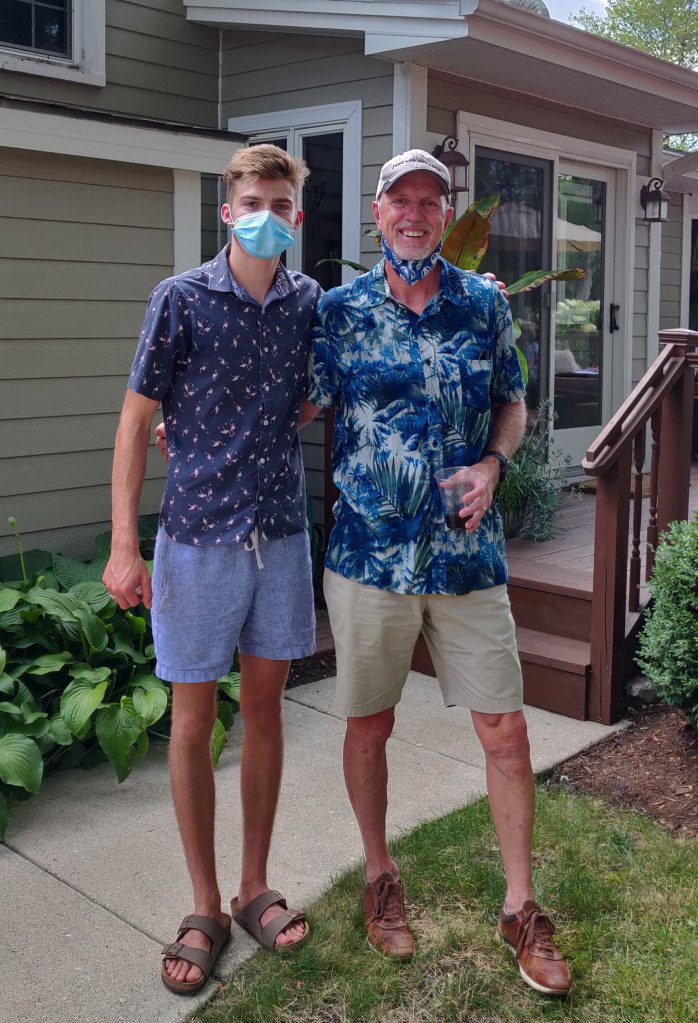
Beau Cunningham and Christopher Cudworth 2020

His name is Beau Cunningham. We were back door neighbors for much of his life. I watched him grow from a baby to toddler to curious elementary school kid. Then he started mowing lawns and got rather good at it, starting his own business before he was about ten years old, if I recall correctly. He ran his old Montgomery Ward riding mower until it couldn’t run anymore. Then I pre-contracted and pre-paid him for a summer of mowing my father’s lawn. That plan helped him pay for an all new mower that he put to work with multiple accounts in the neighborhood.

Occasionally we’d go out riding bikes together. One Sunday afternoon when his folks were busy taking care of some family business downtown, Beau and I rode to a mysterious little spot behind the government center in Geneva. He was eager to share the secret of a strange little crypt that was built by a sect of religious sisters years ago. It was a perfect summer adventure.

Beau and I also shared a love of running. He participated in middle school and high school cross country until his interests broadened and he developed all new contacts and contracts in other businesses. He saved his money to get a truck and life kept rambling on with a cute girlfriend or two along the way.

He’s going to major in business and communications at Hope College. His eagerness for college is clear. What strikes me as different from myself at that age is his greater sense of self-awareness. He’s always been a curious person. We’d often sit and have quiet talks on the back steps of the back porch at our house. Sometimes he’d have concerns to discuss or be trying to understand aspects of family, church or friend life. Other times we’d simply dig in the dirt and make heads out of clay. He also loved to walk our dog Chuck, and was responsible enough to do it.

The neighborhood kids when they were little. Beau is at far right.

I remember babysitting him after surgery to remove his tonsils. His mother approved a light diet of liquids with a cookie as a compliment to his evening. Somehow he negotiated a second cookie, and that’s indicative of his savvy outlook on life.We also played with cars on the carpet that night, smashing them together and making wicked collision noises. He needed to wick off pent-up energy after the surgery, it seemed. Somehow one of his father’s die-cast models wound up involved in the wreckage after Beau pulled it down off the shelf. I think an apology on my part was due the family. But blessedly the nicked up toy car was forgiven.

Standing next to Beau at his party this past weekend I could feel the youthful energy and determination of a young man entering adulthood. I also recalled the amusing day when he was three and he leaned down next to my ear while I was on the ground working on a project for his mother and he whispered, “You have no hair!”

It was true back then, and it’s still true today. That proves the one thing in life that I’d pass along to Beau Cunningham. The more things change in one way in life, the more they seem to stay the same in another. He and I have both experienced our share of shifting circumstances, but found our roots just the same.

I’ve always urged him to keep that in mind in life and things never feel so out of control. If and when they do, I’ve always turned to writing it all down on a sheet of paper to look it over. That always seems to help put things in perspective.

And if that’s not enough, start a blog like this one and process life for all you’re worth. It may be a relatively small audience that one reaches, but the audience of one’s own mind is sometimes the most important connection of all.

Posted in college, competition, cross country, cycling | Tagged , , , , , , | 2 Comments

I figured out why it’s so hard to run, ride or swim in North America

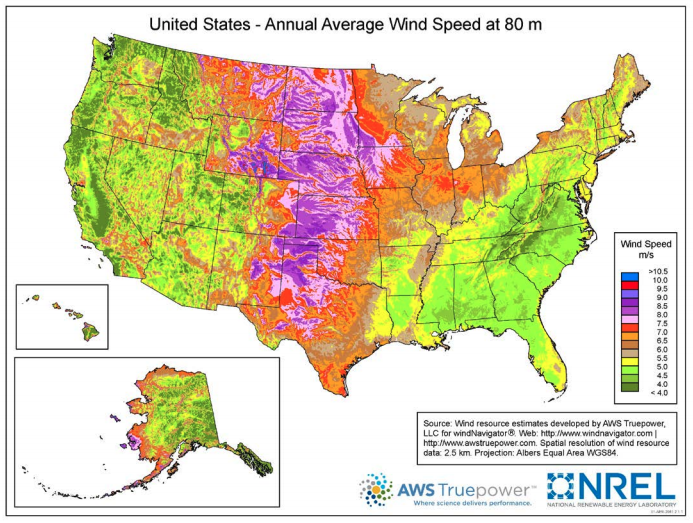
While researching technical information for an engineering client’s website, I found a series of maps that answer a ton of questions I’ve had over the years. For example, why does it always feel like the wind is against me no matter which direction I bike, run or swim?

Here’s a map of North American wind patterns. I think it explains everything in living color.

Have you ever seen such a confusing shitshow in your life? The wind clearly cannot make up its mind, blowing here and there with all its might. Oh sure, there are “trends” but isn’t that small consolation. Have you ever known the wind to follow orders? Tell me with a straight face that you can honestly count on a tailwind on any given day even after you’ve traveled five miles into a stiff headwind.

More than likely, you’ll turn around and run or ride back into a gale just as strong as the one you just fought for half an hour. That’s because the wind is a capricious bastard, On other days an unforgiving bitch. On other day’s it’s a transition mix of toxic whims.

Perhaps this is because the wind literally sucks. That’s right. It doesn’t blow, it sucks. It’s all about high and low pressure systems, it seems. But even in a local scenario, the wind bends like a cheap hockey stick.

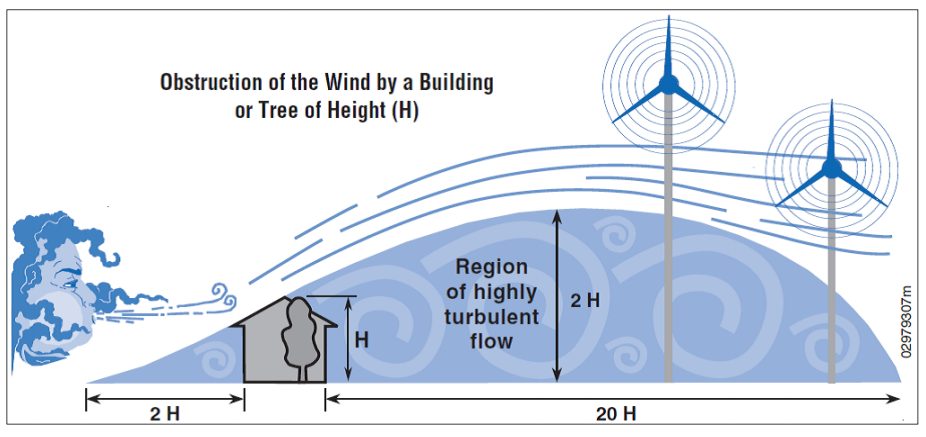
All you have to do to bend the wind is put something in front of it like a hill or a row of corn and it goes whipping around in a furiously compensatory fashion. We can feel this effect whenever a big truck goes blowing past us and the wind is sucked clean out of its path. If you are unlucky enough to be riding or running in a crosswind when one of those big trucks motors past, it is wise to be on your guard. You can get sucked toward the road or wind up clattering down the asphalt.

It’s not much better when you go swimming in open water during high wind conditions. When chop builds up to two or three feet, or the swells come tumbling at you from out of the Big Blue, beware. The wind does not give two shits if you want to go fast in such conditions. It does not even care if you survive or not.

Of course, the wind is radically altered not only by pressure systems, but also regional and local temperatures. The map below of national temps gives you a clue that there is a great big conspiracy afoot in North America. The Southwest is clearly hogging most of the warm air.

Not only is this proof that people in the Southwest are selfish, it also an illustration of what we can call the Dog Turd Phenomenon. Based on the colors clearly show in southernmost New Mexico and Arizona, it is clear that dog turds will stink the worst in those states. Fortunately, these are also the places where “dry heat” supposedly reigns. So the theory here is that the stink of dog poo on hot asphalt will be most profuse those first few minutes, but then dissipate quickly as the dessicated dog poo turns to dried out bits of commercial kibble. The rest of the country is left to deal with sticky piles of slippery dog poo that can cause you to slip or fall. And that is why most of North America is so hard to navigate.

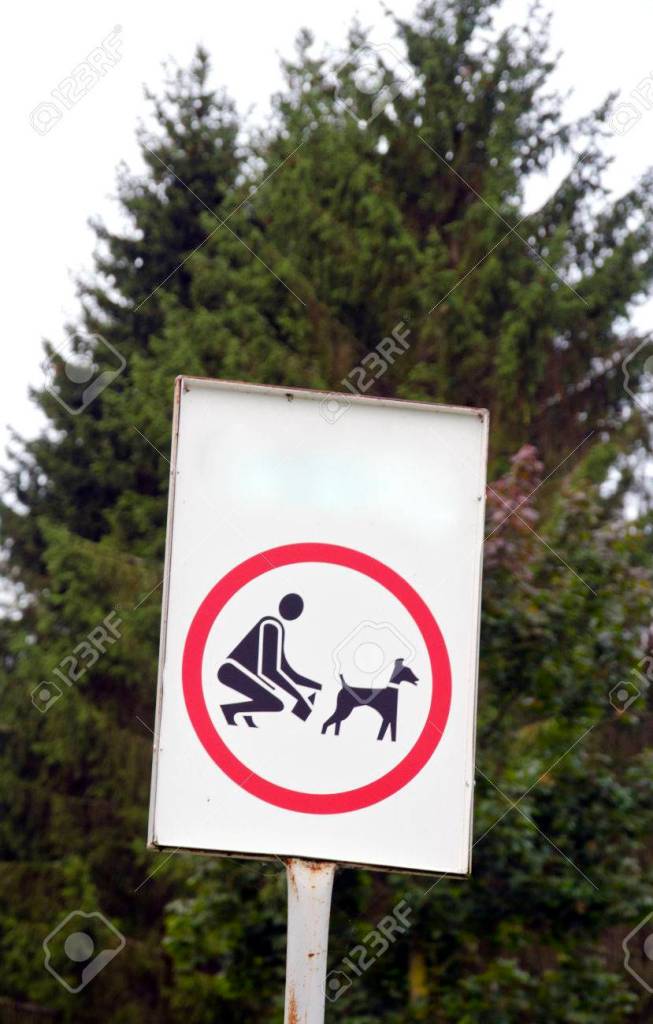
Sign in the park telling dog owners to pick up dog turd after their dogs are done with it

That’s all because there are some people in the population that think being asked to pick up their dog’s shit is an infringement on their liberties. They consider it a breach of their constitutional and even their religious rights to be “forced” to bend over and pick up their dog’s crap off the sidewalk or the lawn. So they leave it there as a sign of protest that their personal “freedom” comes before the needs of all other people in society.

This is a particular problem in Southern States like Tennessee, where people also seem to have no respect for dogs in general.

But when it comes to big piles of poo lying around forever because it never dries out in the heat, the worst part of the country is poor old Alaska! There’s hardly any dark areas in that state at all. That means dog poo or moose poo or caribou dung will hang around for decades and even centuries if left out in the open. If you don’t believe me, consider the problems they have on top of Mt. Everest. , where 8000 lbs of human waste were left on the mountain in 2019 alone. This appears to be proof that many who climb that peak are some of the shittiest people in the world.

And Alaska has been around just as long as Mt. Everest. Which means there are probably even mastodon turds lying around in the muskeg if you care to walk around and look. But be careful, if you notice fresh grizzly bear poo it is best to hope there is a decent sized tree nearby. The bears up there are sensitive about these things, and people who get close to bear poop are know to get mauled because the bears are clearly embarrassed about the stench of their prodigious poo. They also don’t like to admit there are so many berry seeds. The bears have a reputation to protect as giant predators. Eating berries is bad for the Bear Brand, you know.

There are other reasons it is hard to run, ride or swim in Alaska. For one thing, if no one has ever told you, it’s really hard to swim in a frozen lake. That used to be a big problem for Alaskan triathletes. But now that global warming has swept up the continent thanks to the dog turd policymaking of politicians denying climate change in the Lower 48, we’ll all soon be able to swim across Alaska by jumping from lake to river to lake again. And won’t that be swell?

All told, I hope this helps you understand why it’s so hard to run, bike and swim in North America. We live in the midst of a giant conspiracy to make it more difficult to train and race in a country so confused by its own wind and temperature conditions that we’ve been reduced to studying dog turds to make sense of it all.

That also happens to explain why there is a massive dog turd now rotting in the White House. The weather can be blamed for that problem too, because when it comes to elections, it’s all about which way the political winds blow. Or do they suck? Apparently so.

Posted in Christopher Cudworth, cycling, cycling the midwest, religious liberty, swimming, triathlete, triathlon, triathlons | Tagged , , , , , , | Leave a comment

With dogs and cats the gratitude goes both ways

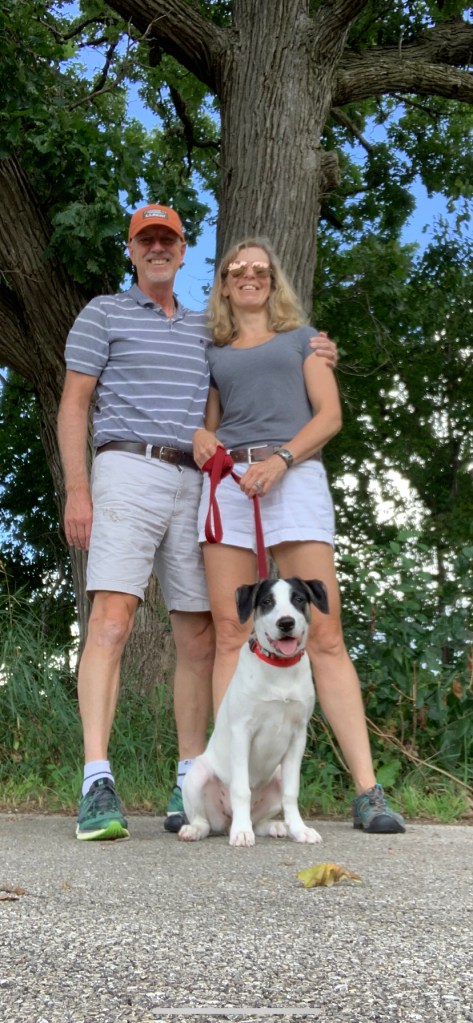
Our dog Lucy is just over a year old. She’s a mix of pit, boxer, border collie and beagle.

Just over a year ago we adopted a rescue dog that had been abandoned on a roadside in Tennessee with a broken leg. She was gathered up by Safe Haven, a Chicago area dog adoption organization and fostered by our friend Karah Osterberg.

The leg required an operation to place in a rod for support. The surgery scar is somewhat raised and she licks at it because there appears to be some scar tissue putting pressure on the joint just below the patellar tendon.

That’s right, much of a dog’s anatomy has parallels in the human body. It’s easy to forget that they have tendons and muscles just like us. These can turn into areas of tension or result in compensatory habits if left to become imbalances. In that respect, dogs are much like human beings as well.

Dog massage

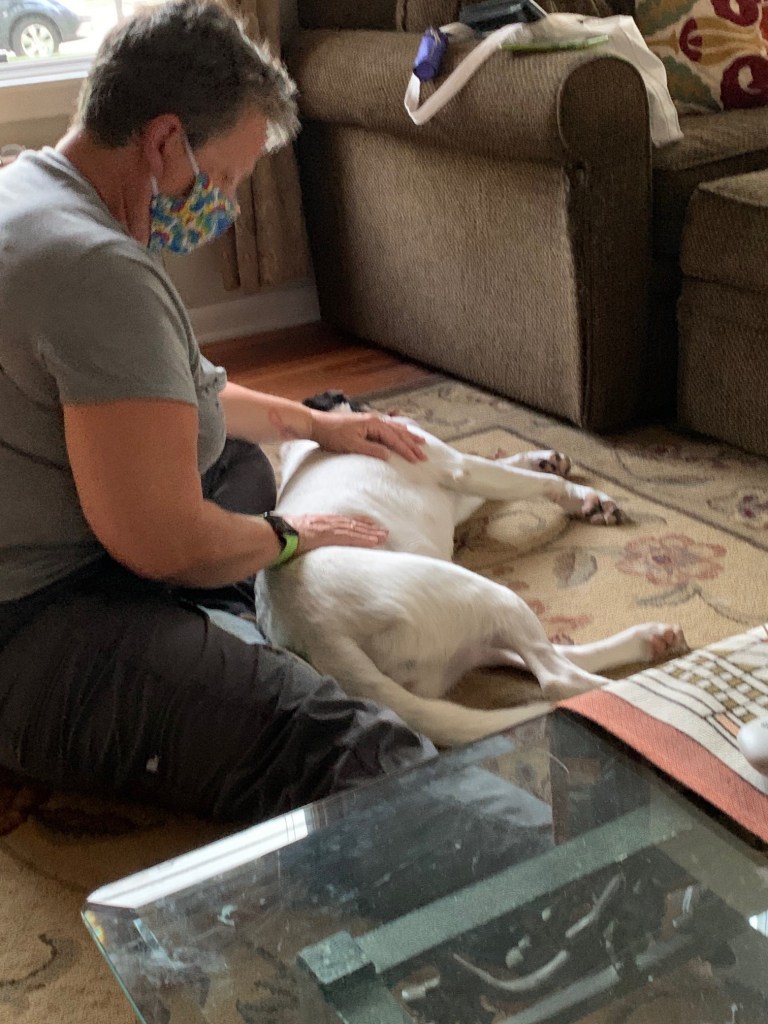
That is why we called on a specialist in dog massage to give Lucy some attention where she needed it. That leg scar has caused her some trouble over the last year. At one point she licked it so much the flesh opened up and a small staph infection occurred. That required antibiotics to cure.

We all know what it’s like to have an injury that won’t heal.

Runners develop overuse injuries that can last for months, even years. Sore achilles. Stress fractures. Knee pain. Shin splints.

Cyclists similarly can develop problems with the hip joint or knees from pedaling with the wrong angle or pressure on the bike.

Swimmers are famous for shoulder problems due to repetitive stress injuries.

And triathletes can develop problems from all three sports! That’s a doggone shame when that happens.

So for Lucy’s sake, we’re looking to reduce that irritation under the skin where the scar tissue is impinging on the joint function. The dog massage therapist first relaxed her without pressure and gently built trust with our pup by petting and rubbing her body and face. Then she calmly worked on the larger muscle groups, working blood flow into the depth of the muscle as our dog laid down her head and began to relax into that zone where the massage offers the most benefit.

I hope you’ve been there too. If you’ve never been to a sports massage therapist, it is highly recommended not just for injury treatment or prevention, but to experience letting go of control.

Lucy relaxed into her massage session.

That’s tough for some people, and dogs, to do. Allowing someone to take control of your body without tensing up at first takes some practice. Many people have sensitive areas of their body even outside the erogenous zones, which professional massage therapists avoid anyway. Learning to relax when a touch to the lower body causes you to cringe is part of the collaborative experience.

On occasion, Lucy would raise her head to look at Sue sitting on the floor next to her while the massage therapist applied gentle pressure and taught us the art of supporting joints and limbs while applying massage. Then we learned how to apply mini-massage techniques to the sensitive area around her scar. That involved light grasping of the skin to loosen fascia and bring blood flow to the area.

Addressing trauma

A few years ago following an unfortunate incident on my bike, my lower back developed serious scar tissue after a collision. It hurt like a bit of fire inside the body and did not dissipate on its own. So when I visited a chiropractor she suggested using a scraper to apply pressure on the affected tissue and break it up. It hurt like heck, but it worked. The trauma was reduced considerably.

That’s true for much physical therapy as well. We all tighten up with age and hard work and often it takes compensatory strengthening to build balance back in the body.

This morning Lucy came bounding up the stairs as usual after coming out of her crate. We fed and walked her, then I started trotting with her on the bike path behind our house. We ran a quarter mile together with Lucy running easily beside me. We’re building that kind of trust too. It’s a wonderful feeling to have a companion like that who enjoys the feeling of movement as well.

Luke Skybarker (left) and Chuck (right)

I’ve always massaged Lucy since we got her. I think about the trauma she went through as a puppy. Those harsh experiences can have lifelong effects if they aren’t addressed with love and attention. I’ve worked through my own share of issues over these many years, and have particular compassion for this dog and the Schnoodle mixed-breed pup that my son rescued off the streets of Chicago twelve years ago. That dog’s name is Chuck, and he still lives with my daughter nearby. I saw him recently on a visit. His energy is still good and I rubbed his little leg muscles as I always used to do.

This year, my son out in Venice, California also adopted a Corgi-Chihuahua mix named Luke Skybarker. He’s the rescue papa to two of the sweetest dogs in the world.

To complete the picture, Sue and I also have a rescue cat named Bennie, an orange and white kitty who was a stray that crawled up in a car engine for warmth and got burnt along with a broken leg when the engine was started. Our vet friend Jeff Palmer treated the cat and my wife saw his photo on Facebook and he’s been with us now for five years. All of these creatures make our lives better. The gratitude goes both ways in this world if you let it.

But we all have different energies and approaches to life. It can take a little patience and forgiveness on all our parts to heal our souls and come together. Rub it out, people. Rub it out.

Posted in bike crash, Christopher Cudworth, cycling, running | Tagged , , , , , , , | Leave a comment

If you want better workouts, warm up like the pros do

Over the past few months I’ve conducted an unintentional experiment with which you may be familiar, but don’t always abide.

It’s called doing a legitimate warmup.

On runs, this means taking the first two miles no faster than your body wants to go. As I’ve aged that pace means running 10:00 per mile on average. Frankly, I don’t think my body will allow me to run any quicker those first 3,520 yards or 10,560 feet. It simply won’t do it.

So go slow, and let it flow.

Running slowly at first is a really beneficial thing to do. It allows the body to produce additional blood flow, pushes oxygenated blood out to vital muscle groups and enables the heart to adapt to an increase in beats per minute. Lacking a decent warmup, the body reacts in adverse fashion. The rest of the workout can be compromised.

After two miles of slower running, it seems like miracles begin to happen. On the way back today after two miles of running at 10:00 pace I ran successive miles of 8:30, 7:55 and 8:03. And it all felt effortless.

What goes around…

The same principles apply to cycling and swimming. Last weekend we rode thirty miles with friends at just over 15 miles per hour into a north wind. Nothing about that riding was hard. By the time we turned around our bodies were well tuned to faster pedaling and when I split off from my wife, who was doing eighty miles to my sixty, I rode back averaging 20 mph through the northerly crosswinds. That felt effortless too.

But warming up is most important in the sport I have done the least. That is swimming. Being patient enough to warm up properly in the pool or open water is absolutely vital to success. For me, it’s the difference between feeling crushed in the water or having a positive experience.

The reason I share all this “news” about warming up is that there is a temptation for all of us athletes to go too hard, all the time. I once trained with a guy who went out the door running at six minutes per mile. He always had injuries and could never figure out why.

Watch it now

These days the pressure partner is our watch. Getting done with a workout and finding our pace per mile was slower than we wished is the constant bummer of this data-driven world. I spoke with a well-known triathlon coach recently who mentioned that she’d ditched her Garmin for most running workouts. “It’s too much,” she observed, holding up her regular watch for proof that running sans data device is good for you.

I did the same for an entire year on the bike. Never even put a computer on the headset. Just rode whatever pace I felt like doing and in group rides committed to pulls mostly on feel. Did I make a few mistakes? Sure. But the self-awareness gained from riding without the persistent pressure to drive myself was healthy.

Not every workout is a race

I know there are theories that riding with a power meter is the answer to understanding actual output and endurance. I’ve never had one, so I don’t know. What I do know is that the few cycling and running pros with whom I’ve trained or consulted do not go blasting out the door like a race just started. They warm up, often for long periods, before doing any type of quality work. That’s what pros do.

If you want proof, take a look at the cyclists on their bikes before a time trial in a major race. They spin and spin and spin until their muscles are thoroughly enervated.

When I ran with a group of national class distance guys out east in the Philadelphia area, they started out long runs of 15-20 miles pretty much jogging. Then they finished off the run with a string of three sub-five-minute miles.

Building toward speed

That’s how the pros do it. They build toward speed, but don’t rush it. We can all do a better job of that. And if you’re average pace on a six mile run seems slow because you’re only jogging to warm up, tell your average pace to go fuck itself. You’re in this for quality, not the wham-bam-thank-you-ma’am temporary thrill of a Strava Kudo.

The pros know you don’t have to go hard all the time.

Posted in 400 meter intervals, 400 workouts, aging, aging is not for the weak of heart, Christopher Cudworth, competition, cycling, running | Tagged , , , , | Leave a comment

An August afternoon with bikinis, sunshine and running

My friends Rob Walker, Paul Morlock and myself in August of 1974.

During the summer of 1974, anticipation for the fall cross country season was high. We’d done well the previous year in both the conference and district meet, and a core of seniors was returning to make it a fun and productive season.

But first there was August training to do. Those first two weeks of running were stultifying in the summer heat. I can also well recall the feel of a pair of dew-soaked adidas Italia running shoes on my feet. So the first two weeks of training passed and thanks to some guest appearances by runners from other schools at our practices, I was feeling strong going into the season.

In the swim

A few days before the actual start of school, my friend and teammate Rob Walker received a call from his cousin Anna, a gal that I had known before transferring from little Kaneland High School in the cornfields to St. Charles, a bit larger school on the outskirts of the Chicago suburbs. I always liked Anna. We were in confirmation class together in 8th grade. And even after my transfer to another school, we saw her annually at Christmas when the Walkers invited our family along with all their cousins over for Christmas Eve.

Seeking a little late summer fun before school started, Anna asked us to come out and swim at her pool that day. The invitation was too grand to resist. But neither Rob or I had a car that day, as our parents were working and our siblings were using the spare vehicles. So Rob said, “Let’s run out to Anna’s.” That was easily an eight-mile trip one way. But we set out with our goal in mind and arrived bathed in sweat and carrying our swimsuits in our hands. Then we dove into the bright, sparkling pool overlooking some cornfields in a hilly countryside.

Anna had invited a friend as well. I knew her well, as we’d been classmates out at Kaneland. She was one of those women that guys had teased for being flat-chested her freshman and sophomore year. But she’d since gained a healthy degree of revenge, since that was no longer the case. She was tan and lovely to boot, with sun-streaked hair and a bikini, like the imagined object of a Beach Boys song. And it was 1974, with swimsuits doing only what they needed to do.

So Rob and I sat playing cards with Anna and her friend all afternoon in the sunshine. We probably drank Cokes or somesuch, which was not an ideal training menu, but this was teenage stuff and we weren’t pounding beers, so what the hell? As the afternoon waned, Rob and I accepted a ride back to town from his aunt and arrived for cross country practice relaxed and mildly sunburned. The girls had been so pretty and fun it seemed like the day lasted forever.

A workout without pain

With eight miles in our legs in a run added to an early morning workout with the team, Rob and I worried that we’d be too exhausted to run well that evening. Instead we both ran like we were living in a dream.

See, there comes a point where a runner’s body falls into a groove that does not care any longer how far it is asked to go, or how fast. My body and mind were so calm from a day spent in the good company of the two girls that nothing bothered me at all. And I will never apologize for that. Rob and I exchanged high-fives after the workout and laughed that we’d never felt better before.

Years later I’ll see the sunlight in my wife’s hair or the tan on her legs and think, “Women are just great.” Together we rode a long workout on Saturday (Sue–80, Chris–60) and ran six miles together in the sunshine on Sunday morning. It’s true that we can’t be teenagers forever, nor would we likely want to be, but the summer sun and sweat and the feeling of companionship never needs to fade. And frankly, my wife looks great in her bikini. In fact, I’m buying her another for her August birthday.

And life goes on.

Posted in Christopher Cudworth, cross country, swimming | Tagged , , , , , , | 1 Comment

Turning too fast and all that garbage

A few years back when I was first putting in big miles on my road bike, I came to a turn at the juncture of two semi-rural roads. It had rained slightly that morning. When I leaned into the right turn and tapped the brakes, the rear wheel of my bike started to come around to my left. I was about to lose it at a bad time. There was a vehicle approaching in the opposite lane from where I was making the turn.

Fortunately, the rear tire grabbed a spot of dry cement and I got control of the bike and kept rolling. But that moment came to mind when I was cycling yesterday and stopped to take a photo of the garbage truck that had tipped over while making an angled left turn.

That must have been one strange moment for the driver of that truck. He must have bounced around in that cab even with a seat belt on. And…Who knows how they’ll scoop up all that stinky garbage? Will they load the truck back up first, then pull it back on its wheels? Or will they empty the whole load to avoid the peril of shifting loads?

I couldn’t stick around to observe their choices. But seeing the scene of that accident did make me think of my own experience driving commercial trucks. I worked one summer as a delivery driver for a U-Haul distribution center in the Chicago suburbs. Using classic paper maps, I’d drive all over the region in vans and box trucks bringing trailer hitches and other goods to gas stations and other customers. I was nineteen years old and not possessed of the greatest attention span.

One day the back of the truck was filled with refrigerator cartons. Those get heavy when stacked one on top of the other. I was driving through Roselle, Illinois on Roselle Road at Route 19, one of the busiest intersections in the area, when the stoplight turned red in front of me.

Mapping out trouble

Admittedly, I’d glanced down at the map in my lap while tapping the brakes before the intersection. But it had rained that morning after a few dry weeks and the asphalt had a slick layer of summer oil on the surface.

When I pumped the brakes harder the truck refused to stop. It started skidding toward the intersection. Then the back end swung around so that I traveled backward through the intersection. Keeping a cool head, I steered in the direction of the skid and wound up bringing the front end around in perfect harmony with the slide. One of the best driving stunts I’ve ever done, thank you.

It took the entire intersection to accomplish that spinning slide, but the truck and I rolled on our way. I gave a little “Whoop!” as I tapped the accelerator again and continued on my merry way.

Death shiver

But a half mile down the road I had what I call a Death Shiver. In the moments when the slide began, I’d reacted swiftly and kept a crash from happening. Fortunately there was no traffic in the intersection at the time. Yet it suddenly dawned on me how dangerous the situation had been.

I pulled the truck over and sat there a few minutes, gathering my wits. It took a few minutes. Then I took a long sip of a cold Coke, sat up straight and vowed to pay better attention on the road.

So I feel empathy with that truck driver who dumped his garbage load on the roadside yesterday. That stuff happens fast, and it really stinks when it happens.

Pun intended.

Posted in bike crash, bike wobble, cycling, cycling the midwest, cycling threats, death | Tagged , , , , , | 2 Comments

Summer running, or not

After freshman year in high school cross country, I was set to begin training the summer before sophomore year when a big fat catcher from another baseball team dove on top of me when the third base coach sent me toward the plate in an attempt to steal home.

I actually scored the run, but it came with a cost. That giant lardass catcher came down on me with a thump that fractured my elbow. I still remember his sweaty face inside that mask as he laid on top of me grunting to get back up. “Safe!” the umpire yelled. “Get off of me!” I grunted.

I went back to the bench clutching my left arm. When the inning was over, I walked back out to the mound to pitch. I’d carried my glove in the right hand and when our catcher tossed a baseball to I had to shove the glove on my left hand quick. It hurt to move the arm. Then I tried to raise my arms overhead in a windup and nearly fell over backwards from the shot of pain going from elbow to brain.

Nothing doing

That busted elbow meant wearing a cast for the rest of the summer months. I wrote my Kaneland cross country coach Richard Born and told him that I wouldn’t be able to put in many miles. He wrote an encouraging note back that said something like, “Hang in there. We’ll see you in the fall.”

I do recall going out for a summer run that year before the baseball injury occurred. I trotted out of town in Elburn and turned on Keslinger Road to reach a gravel strip called Francis Road. About a mile into that lane I was surrounded by a large pack of loudly barking farm dogs. Not knowing what else to do, I walked along swinging my arms and yelling at the damn dogs. There were no leash laws back in those days.

About a half mile up the road they finally began to let me go on my way. That was one of my lone runs that summer. But every morning I’d get up at 5:30 a.m. to deliver newspapers on a three-mile route. I’d ride a Huffy three-speed bike as fast as I could go while carrying that big newspaper bag filled with the Chicago Tribune, Chicago Sun-Times and the Daily News. That “training” kept me in a semblance of shape along with walking around town with friends all the time.

Finding excuses

I suppose I could have run some more that summer. I did play tennis with my mother on occasion down at the community college courts. The cast on my arm only wrapped around half of the forearm. Back in those days, the cast interior was some sort of soft meshy stuff that got pretty stinky as the weeks wore on. I was super glad to take that thing off. By then it was August again and time to start up cross country season.

Summer running was tough in those days because there were no teammates in the town where I lived. Our school district had the largest geographical territory in the entire state of Illinois. I didn’t drive yet and none of us could really get together. So it was either train alone or don’t run at all. So in some respects, that broken arm provided a good excuse to not go out in the heat of summer. Finding excuses is something I’ve often been good at. It would be a few more years before I took summer running seriously, well into college.

Results, just the same

Despite my lack of summer running those first years in high school, I wound up tied for the most varsity points scored my sophomore year. Our top runner had some back problems, limiting him some races, but we ran so many meets back in those days it was competing in roller derby. There as always another chance to run again. Illinois cross country was structured that way. By the time the end of the season rolled around, many of us were gassed from running so many races. But what the hell. It was fun.

My lack of summer running was an inauspicious way to begin a long running career. Yet several of my teammates managed to run 500 miles that summer. A couple even ran 1000 miles. I’m going to admit here and now that I had nowhere near the discipline to make that happen. Yet somehow every year I managed to lead the team. It was a combination of raw determination and a harshly competitive spirit. Perhaps a bit of natural talent was involved. But mostly I did not like to lose.

Missed potential

Perhaps there was some missed potential along the way as well. By the time senior year rolled around, I was running for a different school that landed in the most competitive sectional in the state with schools like York and other powerhouses. I missed going downstate by a couple places. It was disappointing of coruse. But that’s life.

I’ve wondered at times if more summer running might have gotten me there. But I sincerely doubt it. I was running sub-15:00 three mile races and still losing to guys that were just as good as me, and often better. There were simply a lot of good runners, and quite a few great ones. I fell somewhere in between I suppose.

Yet when I see kids running together in groups a part of me always says, “That’s good. Keep it up.” Because you don’t want to leave any potential on the table. You only get one shot at these things in life. Might as well make the most of it.

Posted in cross country, running | Tagged , , , , | Leave a comment

Fools in the pool

Our fitness center at the Fox Valley Park District has been working hard to provide opportunities for people to return to their facilities for training.

The pool was one of the biggest challenges because the health precautions necessary to prevent the spread of Covid-19 are fairly prodigious.

The pool finally opened a few weeks back. It was odd to visit the facility and find people washing down every square inch of the pool deck between sessions. But here’s the thing: that pool was already well tended by the maintenance team. Even before the Covid crisis, I admired the cleanliness of the facility and often complimented those who performed that work.

Chemical universe

In fact, one morning while swimming a year ago I noticed the strong scent of bleach passing over the water. I made mention to the staff that the chemical smell was strong. “This whole pool is a chemical experiment though, isn’t it?”

The pool maintenance manager nodded. “Yes it is.”

That said, it is still important to take the extra measures necessary to wipe out traces of Coronavirus at the pool. So they’re even more aggressive in the daily plan.

Appreciation

Hopefully, that is appreciated by those who use the pool. But when it opened again, and lap swimming became available through the FVPD website, some people went in and locked up all times, then didn’t show up to swim.

That left many of us unable to get a lane. There were clearly lanes sitting open every day. We kept hearing from friends that four or five lanes a day sat idle. That wasn’t the fault of the park district. That was the fault of selfish, fearful people being hogs about their own instincts.

Fear and Selfishness

Such are the effects of fear and selfishness on the human psyche. These two vexing instincts are rampant in American culture right now. On one hand, many people are afraid of catching a potentially deadly disease while others consider the pandemic a conspiracy to take down the president. Thus we have people protecting public health by wearing masks while others are screaming that it violates their personal rights. Presumably this is because they fear that the government will take over their lives if they abide by some simple public health considerations.

Fear. And selfishness. It is sometimes impossible to separate the two. One is the motivating factor and the other a reactive symptom of poor conscience and conflicted ideology.

Fear. And selfishness. The cure for the former is education. Learn the source of your fears they often dissipate. But when people resist all information about the cause of their fear it only magnifies. It is further fed by conspiracy and false blame.

That’s when the latter instinct kicks in. In response to fear, people often engage in selfish behavior. That was what drove the shortage of toilet paper when the Trump Virus (thanks to his feckless denial of its presence) first swept over America. Fear drives millions of people to buy guns with the expectation that they have to defend themselves from other people with guns. Or, they imagine those fears into place based on issues of race or distrust of the government. The tautology of fear and selfishness is a pandemic all its own.

As we’re seeing on a daily basis, that selfish response to fear becomes an almost autonomic reflex. The psychology of “I’ve got mine and you can’t take it away” is the result of both fear and selfishness. The same mentality drives much of our economic policy in America. The wealthy are some of the most fearful people you will ever meet. Their money is a source of insulation against the raw realities of the world.

That same rancid ideology of fear and selfishness drives the Make America Great Again slogan that is nothing more than a dog-whistle signal to Americans whose fears over race and civil rights for black people, gays and women have never really abated in this country. And MAGA wants to drag the country back to a time when that fear and selfishness was acceptable and the dominating premise of citizenship. It’s a sickness all its own as well.

Empty lanes

Swimming pools are a collective exercise in public cooperation. Some people don’t get the concept.

Those empty lanes at the pool were a testament to people fearing they wouldn’t get a chance to swim. So they grabbed up reservations in a selfish reaction to the one of the most minimal forms of government possible. Their perception of the public pool is plain enough to see: they think their membership means they literally own it, and their needs come first.

That’s how many people view the entire nation, as their personal property. No sharing it with foreigners or people different from them. The psychology of “I’ve got mine…” and “We don’t need your kind around here…” go hand in hand. Fear. And selfishness. Prejudice. And false patriotism.

The park district has now wisely changed its policies because people were selfishly abusing them. I say thank you to all involved, because life in America right now is a conflicted mess of fear and selfishness. The nation is drowning in both of them.

Posted in swimming | Tagged , , , , , , | 2 Comments