We try to make the most of our long summer days when the sun rises early. Several times this summer I walked into our backyard at 4:30 a.m. when the sky was just starting to brighten in the east. It still astounds me that we meet the sun each morning not because it is literally rising above us, but because the earth is spinning around so that its curvature swings us toward the star we call the sun. We’re all on this massive ride we call days and night.
A few nights this summer I rode until the sun went down in the west. I love coming home in the cooling hours of twilight. The sweat recedes and the breeze across shaved legs gives a sense of speed.
The months travel by and August rolls around. Those hot afternoons demand a ton of hydration. This year the drought in Illinois made it seem even thirstier out there. The cornfields have begun to turn brown as September barely begins. Farmers will be able to harvest early this year.
Yet every cyclist in the northern hemisphere knows what September means to them. Shorter days. Less evening sunlight. In a typical year, that means less mileage as the evening hours compress the available time to ride.
In time of the pandemic and working from home, there are opportunities to ‘work around’ the typical fall restrictions on riding time. We also have a delayed Tour de France to watch. So it feels a bit like July around the house.
This year’s Tour is more interesting than ever. Several strong teams are competing this time around. Rather than one squad dominating the entire peloton, there are competitive strategies at work. Perhaps it will actually be fun and inspiring this year rather than watching the dismantling by Ineos or Sky or whatever. Of course, it was fun to watch Julian Alaphilippe hang onto the yellow jersey for so long last year. I still believe he would have caught back onto Egan Bernal had the stage not been cut short by a hailstorm and some sort of mudslide.
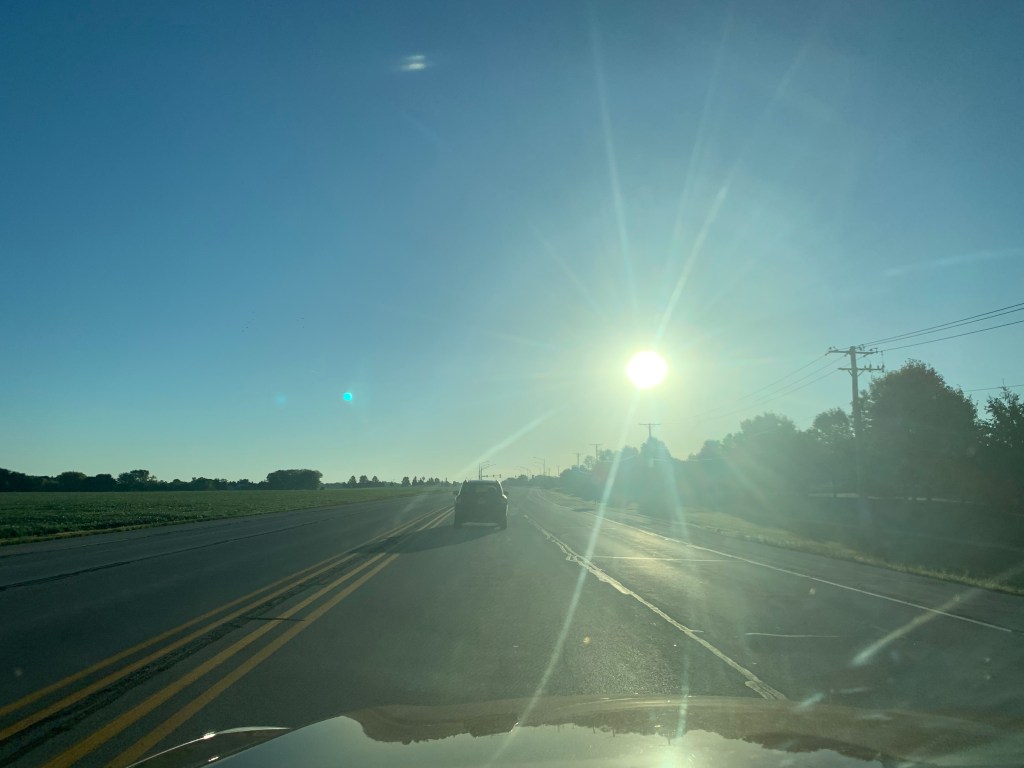
So it’s not “business as usual” anywhere in the world. But the big wheels keep turning. This morning as I drove our pup to Doggie Daycare, I noticed that the sun was coming up south of Orchard Road as I headed east. By point of reference, our star has moved down the eastern horizon from its most northerly point in late June.
That means we’ll get progressively less sunlight all the way through the winter solstice into the deep, dark nights of December. Through it all, the ‘lesser light’ of the moon reminds us that the sun is always there, somewhere. This morning a bright full moon was still sailing high in the western sky as I walked our dog in the early dawn.
All in all, this ‘following the sun’ thing is both eternal and ephemeral at the same time. That rock band of dark philosophy, PInk Floyd, sang it best:
But you run and you run to catch up with the sun and it’s sinking
And racing around, to come up behind you again
The sun is the same in a relative way but you’re older,
And shorter of breath, and one day closer to death…
Okay, that’s fucking depressing, I’ll admit. Yet that’s Pink Floyd for you. My actual point here is not that we’re all slowly dying. It’s that living is a matter of appreciating these daylight hours the best way we can. In contraposition to the existential portent of those Pink Floyd lyrics, those of us who run and ride defy that angular descent into death. If we’re lucky, as I have been, we even keep some semblance of fitness about us.
Just don’t take that for granted. Count your blessings, I mean to say, if you have health on your side. Not everyone is so lucky. And if you’ve seen folks go through terminal illness, as I have, you’ll doubly appreciated whatever momentum you can sustain.
Then you can take similar inspiration from your own ‘moments in the sun.’ Celebrate what you do each day in your own mind, if nowhere else. These days are worth our attention. Let’s make the most of them, no matter how short or long they are. Follow the sun. It’s worth it.
At nearly forty miles of our weekend ride, my wife and I were heading west on a section of Route 64 to reach County Line Road and head south. There was a northwest wind, so we were tacking against it as we traveled on a 15-foot wide road shoulder.
We’d covered the half-mile segment and were nearing our spot to turn when I glanced down at the radar reading on my Garmin device to see if there were any cars approaching. I still took a quick look back before calling out to Sue that we would have to wait.
At that precise moment she swerved a bit to avoid something on the asphalt and slowed at the same time. I caught that movement in my peripheral vision and instinctively whipped my wheel out of the way of her back wheel. We were moving at fifteen miles an hour, so there wasn’t much time to react any other way. That quick action sent me wobbling back to the right, toward the ditch. But at least I’d avoided colliding with her wheel.
Typically we ride with Sue in front and me behind because her triathlon training doesn’t really benefit from her drafting on me, especially in aero position on the bike. This year we’ve covered about 1500 miles together without incident. Sometimes I ride close on her wheel and at other times sit back and think through the miles. My main priority in all those miles is to avoid touching her wheel.
Still, it is probably inevitable that once a year we have a close call. Last weekend was that moment.
Yes, mistakes happen. As I careened toward the grass after avoiding a collision with her, I took instant notice that there was a traffic sign to my right. In all my years of sports and more recently, bike handling in criteriums, I’ve learned to read situations of that nature and avoid the worst outcome. In this case, it would be striking a 4″ pole of the sign with my head or body.
That didn’t happen. Instead I veered around the pole as the front wheel plunged down the grassy bank. I flipped completely over the front and nailed a landing by rolling with the momentum in a somersault (For the Benefit of Mr. Kite) to wind up on my hands and knees.
Water bottles were scattered in the process. So were my phone, the contents of the top tube took carrier, and sunglasses too. I was relieved those were okay. They are brand new and I already broke one pair this summer by slipping on the incline of my driveway while wearing cycling cleats.
Surveying the damage
Sue stopped and spun around when she heard me land. The flip on my part wasn’t her fault. As all cyclists know, I should have been watching ahead of me as we approached our turn, not looking behind. Sometimes we act against our better senses.
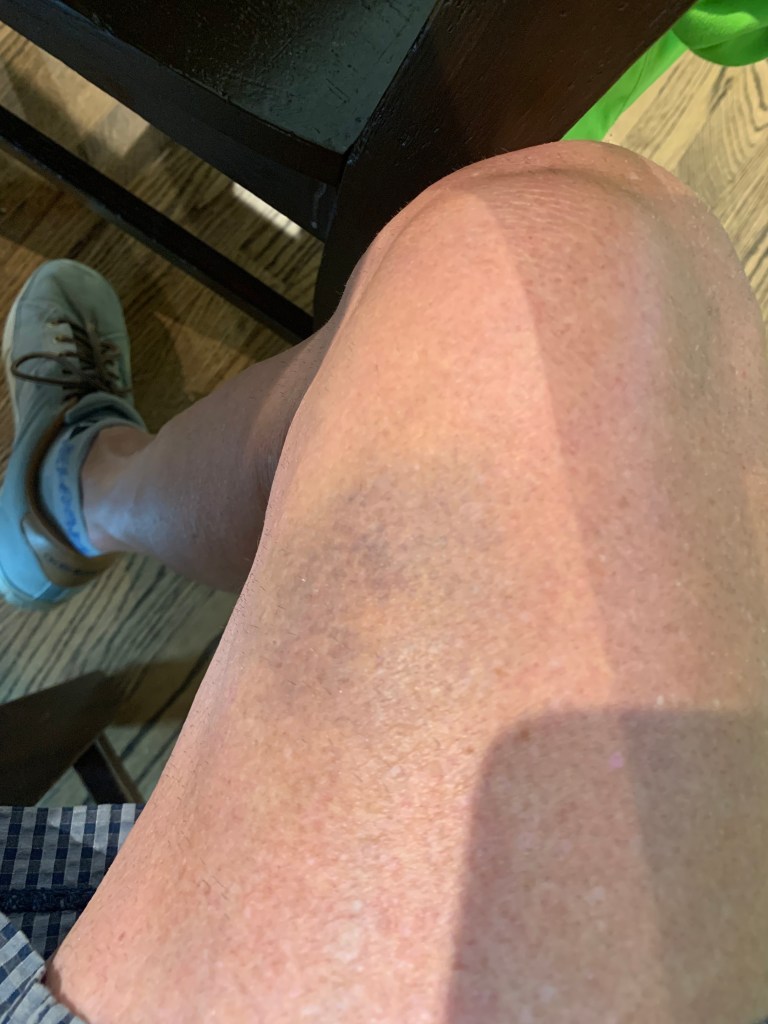
Standing up, I could sense my neck was strained from landing high on my shoulders on the grassy incline. I also knew the soreness would increase. The next day my body was stiff and tight. There was a bruise on my upper thigh. It was turning purple in the nearly exact place that I injured that leg during a higher speed fall due to bike wobble way back in 2012. I was going forty miles an hour that day, and through all that panick of speed and the inevitable crash, it was hard-earned athletic instincts and fast awareness that enabled me to yank my feet out of the clips. The bike frame struck me on the same part of my thigh just above the knee. Funny how those things happen.
Such are the various and strange injuries of life. Beyond the physical bruising we take, this recent incident makes me realize that we likely carry around repeat injuries of other types, emotional wounds where we’ve been struck before. These occur either through bad luck or repetitive instinct. Sometimes it is easier to take the hit where we know we can bear it. Let the bruise heal with time. Get back to what we were doing.
We can learn something from these visible and invisible bruises. They warn us that bad habits, inattention or selfish preoccupation often lead to bruising outcomes.
As the purple (or other colors) fade away, consider the possibility that there is a little thing inside you that even wants to be hurt, a cry for attention or a painful desire to be noticed. In the rush of life, it’s hard to slow down and recognize these needs. So we stub our toe on the bed frame or knick ourselves while carving vegetables with a knife. These amount to small cries for help, for our pain to be recognized, and a desire to be comforted.
These are hard truths to admit sometimes, but the little hurts can add up to big knowledge if you take the time to study them.
I read a nice blog by a fellow fitness writer today. She does such a nice job of summarizing the problems associated with eating too much sugar, and what to do about it.
She noticed a trend toward a desire for more sugar in her own eating habits. Those instincts were perhaps kicked into gear by the “hook” that sugar seems to set in our brains. It’s a hyperdrive sort of sensation that says you can’t get enough. I’d add in that eating too much sugar is a real mood destroyer. So many reason to cut down on this stuff.
But you can, if you take steps. So here goes, a highly honest take on Sugar Detox thanks to FitAmbitiousBlonde:
I have been finding myself increasingly craving sugar throughout my days as of late. This is more than a little odd for me because I am DEFINITELY Team Salt. I have, for as long as I can remember, craved salt. I normally always reach for the chips in the pantry over the cookies and can eat pickles by the jar full! I attribute this mostly to the fact that I have naturally low blood pressure. Like it is not unusual for me to measure in around the 100/45ish range. That is just how my body has always been.
Recently though, I have been finding myself more drawn to the sweets rather than the chips and pretzels. My cookie and candy intake has noticeably increased over the past couple of months where it was almost non-existent before. I have taken my blood pressure a few times now (we have one of…
I read a nice blog by a fellow fitness writer today. She does such a nice job of summarizing the problems associated with eating too much sugar, and what to do about it.
She noticed a trend toward a desire for more sugar in her own eating habits. Those instincts were perhaps kicked into gear by the “hook” that sugar seems to set in our brains. It’s a hyperdrive sort of sensation that says you can’t get enough. I’d add in that eating too much sugar is a real mood destroyer. So many reason to cut down on this stuff.
But you can, if you take steps. So here goes, a highly honest take on Sugar Detox thanks to FitAmbitiousBlonde:
My Garmin watch went to sleep this morning when I woke up. I forgot to charge it after a few days of use. It has a great battery but even those eventually run out of energy.
The telltale tan line of a chronic watch-wearer
That left me with a naked wrist, as even the old Timex with which I used to time runs and rides is dead and blank.
I stuck my iPhone into a hip pouch and ran 7.25 miles on a familiar loop from North Aurora up to Batavia and back. Lacking the habitual pace readings from the Garmin, I was left to run on feel and see how it all turned out.
It was hot and humid. I ran up to the McDonald’s, got a drink and took a pee, then ran back down the east side of the river trail with all its hills and woodland windings.
It’s a healthy thing to run now and then without the clock guiding every step of your pace. I still tracked the run on Strava, to know how it all turned out. But’s it’s nice to not worry for once whether I was running 8:30 or 9:00 on a hot, dry morning in August. Just run.
I don’t know exactly how many miles I’ve covered in a lifetime of running, or cycling. Or swimming, for that matter. While I’ve kept journals over the years, even those mileage chronicles are typically guesstimates. I will say that I tested out a favorite running course from many years back and my call on mileage turned out to be quite accurate. That made me feel good.
Those miles. When we’re done each day, we check it out, give it a smile or a frown, and keep moving on. What comes next? Only time will tell.
There is no kind of dishonesty into which otherwise good people more easily and frequently fall than that of defrauding the government. ––Benjamin Franklin
To set the table about a discussion of dishonesty and the exhaustion it causes: Those of us who run, ride and swim have all done insane workouts and participated in crazy race conditions. In my case, that winter session of 28 X 400 meters repeats (80 sec. each) on a rural road in the middle of winter comes to mind. So does the 15-mile Midnight Madness Race that started and ended in the dark of night.
I’ve ridden bikes until there was nothing left in the tank. Been bonked beaten up by lactic acid. The only thing left to do is pedal home at whatever rate you can manage. There’s a form of honesty in that. Let’s not forget either… those exhaustingly windy days where the sheer wear and tear of air roaring past your ears makes you want to stop and scream. Been there, done that too.
Admittedly I have far less experience suffering in the pool or open water. But swimming is plenty exhausting in any situation, especially when you’re just starting out. Here’s a fact: All these experiences teach us patience in this world, and how to deal with frustration and develop perseverance.
The exhaustion of dishonesty
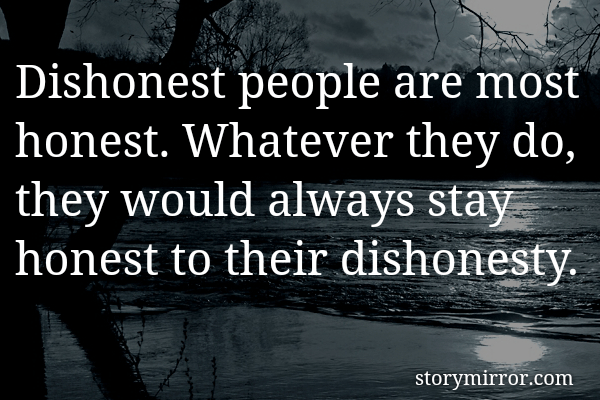
But nothing on earth is more exhausting than dealing with dishonest people. I was quite stunned in thinking about this topic to go online and Google the subject of dealing with dishonest people. I found an entire menu of artfully crafted memes describing the pain that dishonesty causes in this world.
I’ll share just one because it describes the current atmosphere of public and political discourse these days. It describes the cognitive dissonance required to maintain a permanent seal of dishonesty.
This describes many types of ideology, but for illustration’s sake, let’s consider the cause of one particularly dishonest type of worldview. That is the outlook of creationism, the idea that the Bible in its literal form is superior to science on theories about the origins of the universe. This is belief system is held by 35% plus of people in America, and it explains much of the reason that a parallel proportion of people in this country embrace political dishonesty as well. They are willingly and aggressively deceived by the desire to own the narrative for themselves.
The problem with creationism is that it begins with a premise of bad theology. That is, the act of defending God by writ of some highly limited interpretation of scripture. But if God is real and all-knowing, and scripture is God-breathed, then creationism is an absolute insult to the deity it professes to defend. Why does God need defending? Only for purposes of human control.
To also brand bad theology a “science” is beyond absurd. There is no practical use for creationism other than as a denial of actual science. That’s literally all it does. The creationist worldview is an apologetic that not only lies about the material origin of all things living and dead, it steadfastly steals and cherry-picks snippets from actual science pose as a scientific-sounding theory. No aspect of creationism can be tested or proven by any standard of applied scientific method, because it call comes back to “God did it.” No one can test that claim. Yet this brand of tautology is what people seek to impose upon the world in place of practical fields of study ranging from biology to geology, paleontology to physics, and from medicine to technology. Creationism aggressively denies all these fields of human knowlege as dishonestly human attempts to deny the truth of the Bible as the absolute authority on all things in existence, and how they work. This is the lie and damage caused by bad theology. It doesn’t end there.
Bumper stickers are frequently the weapon of dishonest propaganda.
The final, and most exhausting claim of all, is that challenging these errant claims of bad theology beliefs is an infringement on the “religious freedom” of those who espouse them and try to impose them on others through public policy.
That effort is exacerbated by the application of biblical literalism to a mountain of other social issues such as women’s rights, gay rights, racial equality, environmental conservation and regulation of financial interests according to law. These are the bulwarks of America’s culture wars, and religious zealots have formed political alliances to assist them in imposing their beliefs, and by proxy, dominate the nation. We can throw in the irony of gun control and the conflated issue of abortion (while at the same time banning birth control, go figure…) and the exhausting paradox of dishonest theology is a plague without end.
The realm of dishonest public discourse includes the politically diseased ideology that America was founded as a Christian nation. That’s a claim made by religious zealots seeking to impose the bad theology of biblical literalism on history, ignoring the fact that it is literally corrupted Bible verses that justified slavery, approved genocide of Native Americans, founded Manifest Destiny and to this day fuel racist, militant militias marching on American streets today. Nothing sets evil loose on the world like corrupted religion unleashed.
Hitler’s Pet Project
On a worldwide scale, bad theology plays a deadly game of chicken with the truth. It has long made accusations that the theory of evolution was responsible for the Holocaust, conveniently forgetting that Adolf Hitler clearly stated, in defense of killing six million Jews and other targets of his hate, that “We are not doing anything that Christians have not been doing for 1500 years.”
Yet despite this actual history of religion’s damage to democracy and human equality as a cause, it loves to project its supposed values as absolute principles favored by the Founding Fathers. These were the same people who wrote the Separation Clause to avoid the ugly specter of theocracy taking over the Republic.
Exhausting world
Commuters, a painting by Christopher Cudworth
Yes, it is exhausting work fighting the gaslighting of the world by people who are dishonest in their religious worldview and eager to use it in leveraging votes and influence. They deny the true sources of evil in order to gain power for their own tribal instincts.
That has made me realize that we are running a race that cannot be completed. We are engaged in a battle that cannot be won. Instead, we are like characters in the play No Exit by Jean Paul Sartre, locked in a room for eternity without a door for escape. At any time, two people in the room hate and conspire against the other one. Quite sadly, that is the latter-day truth of “Hell is other people.” It surely feels like that these days.
Fallen worlds
If what the Book of Genesis says is true, the “world” is a fallen place not because Adam and Eve succumbed to temptation, but because a legalistic Serpent acting out the role of a religious advisor took control of their destinies and convinced them they would never die if they bought into the promise that the Serpent knew what was good for them. Does that sound vaguely familiar to anyone?
We are left, as a result, with a lifelong effort to outstrip and outrace evil in a “fallen world” created by those who least abide in the principles that provide salvation from that fate. This is a struggle to the end of time, whatever that means.
What that really means is that the existentialism that we studied in college was right all along. The “irreversibility of time” is a fact of our existence. We can’t go back to fix our mistakes. Nor can we predict the future, as apocalyptic Bible-beaters love to claim. They’ve taken to applying the bad theology of reverse literalism; the Book of Revelations, Daniel and other cryptic literature, to invent from whole cloth a false belief in the Rapture to force a fatalistic worldview on all of reality. This is the worst kind of bad theology because it erases hope, replacing it with a literalistic notion that the “new world” to come is a physical place. It is not. The “new world” is instead realized following the principles of God to produce an entirely new reality based on the belief that love drives out evil. That is what cures the selfish greed of worldliness.
The book Unholy by Sarah Posner examines the influence of religious belief on American politics.
Schemes and dreams
But people get rich off turning religious beliefs into wealth-generating schemes. Televangelists tell people to send money to their ministries before even feeding themselves. That’s how dishonest people operate. They claim their selfish purposes are those of God, or the Market, or some pro football team. People cheat to win.
So much winning based on so much dishonesty. It draws in so many radically conflicted, confused believers who “stay honest to their dishonesty.” Then they force or coerce other people to abide with corrupt interests through force of their power or position in society. Jesus branded these types a “brood of vipers” and “hypocrites” for their sins of power. The worst among us spit in the face of that call to repentance.
Exhausting times
That will to flaunt power and claim glory explains the times we’re in, and why it is so exhausting to be alive these days. As mentioned, it wasn’t much different two thousand years ago when Jesus challenged the legalistic, tradition-wrought system of religious authority that he saw corrupting and abusing people, especially the meek, the needy and those struggling for hope in this world.
But the dishonest never care about that population or the state of the world around them. That is true even when people who rank among the most needy are caught in those circumstances. They are manipulated by promises from the wealthy and powerful that they can get one rung above the people they hate by stomping on the people one run down on the ladder of social status. They’ll even follow the leader to their death in the “cheat to win” philosophy. All wars are based on that psychology.
That’s not what Jesus or America has ever been about. It’s quite the opposite really. Both the Bible and the Constitution speak to a world of equality if we take the time to read the symbolic merit of the words contained within.
Lazy minds
Dishonest people never take the time to figure all that out, and they seldom take “no” for an answer. They have lazy minds and look for a quick fix. As a result, they’re always busying themselves worshipping Golden Idols and demanding their own set of Kings and Queens to rule over them. As the Bible shares, God often grants them those wishes whether it is good for them or not. That typically leads to utter ruin. Among this brand of believers and followers, few actually embrace or welcome the true spiritual growth that comes through accepting equality in the world. They would rather try to win than humbly accept their neighbors.
We see it in the workplace too, where fearful people twist the truth and manipulate or seek power over others to suit their own needs. We see it in families as well, when sibling rivalries and other needless conflicts result in estrangement. It happens every day. Most typically it is the result of one sort of dishonesty or another.
It is truly exhausting to realize all this. But you are not alone in wondering why and how it all happens. That is why it is more important than ever to stay the course. “I have fought the good fight, I have finished the race, I have kept the faith,” (1 Timothy 4:7). If we learn anything from our running, riding, and swimming, it is that nothing worth gaining comes easily.
Be honest
First and foremost, be honest with yourself in all respects, whenever you can. Second of all, seek out people who are also honest. Be eagerly cautious with what you consume in both volume and source, and test the truth of it. Be courageous when you sense the truth is threatened, and seek help when evil or difficulty surrounds you. That is where the meaning of true faith emerges. If there is a Kingdom of God, it resides therein.
You know all this from experience. You’ve chosen to go through hardships willingly, and endured unwilling situations the best you can. Character emerges through the passage of time and instinct. Learn to trust yourself and respect, progress and love will follow, like a shadow of your soul.
The purity of the moment is made through the absence of time–Cheik Hamidou Kane, Ambiguous Adventure
This morning my wife let our dog Lucy out the door to greet me at the moment when two squirrels ran out from beneath the line of cedar trees next to our lawn. Lucy gave chase to one of the squirrels that raced toward a maple tree near the cul de sac. Then it bounced off that tree and headed toward another. Our pup was right on its tail, and I have no idea what the dog would have done had she caught the squirrel. We don’t encourage such encounters. Most of the time she’s on the leash and we make her sit when she spies a squirrel or rabbit. That happens quite a bit in our neighborhood. Frankly, it happens everywhere. Squirrels are a universal problem of distraction.
After her little squirrel chase, Lucy circled the tree making sure the critter was not coming back down. She was full of pride, it seemed, at having made the squirrel run so fast.
The ‘dog and squirrel’ dynamic has come to symbolize human distraction as well. Everyone is subject to distraction of one type or another. The song in this video is about one of the most famous distractions of all, captured in distinctively misogynistic style by a group called the O’Kaysons in the 1960s.
I’ll completely admit that like many men, the sight of an attractive woman distracts me. I still get distracted when my wife walks through the kitchen with her tan legs in white shorts, her strong arms in a sleeveless shirt and her hair flowing in its summer freedom. That’s a healthy distraction, I’d say.
Of course, distraction takes on many forms. These days social media is a huge source of distraction for many people. This morning an ad for the app Calm appeared in my Instagram feed. The ad warned that scrolling through social media feeds and platforms is not the path to serenity. Instead, it is likely such behavior leads to increased anxiety, especially in this period of political conflict and upheaval.
Those of us that run, ride and swim seek to find solace in motion. But one of the things that often happens during those activities is that our brains get stimulated in creative ways. Some use that time for problem-solving because nothing feels better than coming home with a mind relieved by a fresh insight on the circumstances or challenges at hand. We always hope for that.
Walking offers the same opportunity to move out of a distracted, stress-filled space into a mind-state where perspective can be gained. Others enjoy golf as a distraction, but some say the sport is simply a “good walk spoiled” and riding a golf cart takes away the physical benefits of that aspect of the sport. That said, our President is so lazy he even drives his golf carts on the greens.
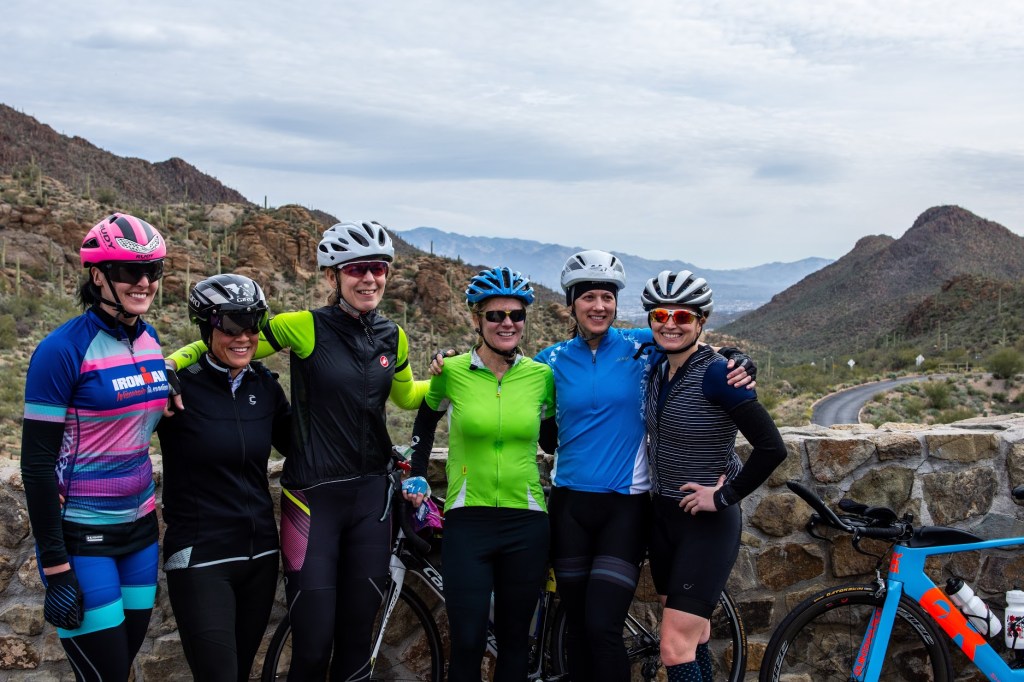
A pre-Covid ride in the mountains of Arizona.
Healthy people tend to appreciate etiquette of many varieties, because respecting others is a great sign of compatibility and collaboration. For those who run, ride and swim, it is sharing that experience of exertion that makes us feel better about the world. Sadly, the isolation caused by the pandemic has raised the sense of anxiety and confined spaces during 2020. People are eagerly finding ways to safely engage and get back out there in the world. Together.
What the world has learned through all this madness is what it’s like for people whose brains are endemically affected by anxiety. There is also a known relationship between symptoms of anxiety and conditions such as attention-deficit disorder. While these are separate conditions, they often vex people in both ways.
That’s a wicked cycle when anxiety leads to distraction and distraction leads to anxiety. The human mind goes round in circles from losing focus to feelings of fear and dread when events or obligations are forgotten or messed up. Those who experience that cycle of active rumination have to work hard to gain a steady functional state.
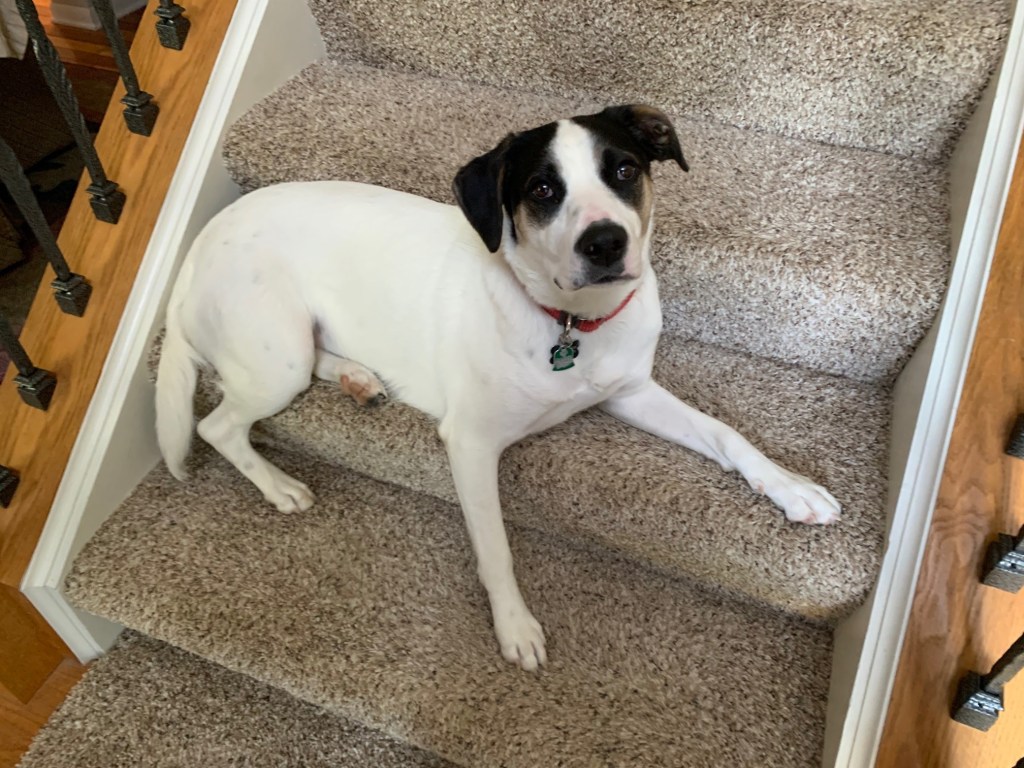
Our dog Lucy was found as a puppy with a broken leg in Tennessee. She was rescued by Safe Haven.
Picture a dog that was born into in less-than-perfect circumstances as a puppy. Perhaps they were originally anxious, then experienced abuse at the hands of some human owner. For the rest of their lives, that upbringing affects their behavior. Their fears are both instinctual and learned. It may take years to build trust in that creature.
Then along comes a twitchy little squirrel running across the path. The fight-or-flight instincts of the dog combine with the will to chase. Off goes the dog with the owner hollering to stop. But it feels so good for the dog to release that pent-up anxiety they refuse to halt until that squirrel is up that tree. Certainly we recognize the importance of teaching a dog not to race off after squirrels. That instinct puts their lives at risk if they run into traffic.
Traffic also symbolizes the threats we face during our lives. When crisis comes along, distraction is one of the first places people seek to hide. They might retreat into watching TV or worse, resort to self-medicating. Some people even pour themselves into too much exercise as an escape from stress, anxiety and its flip-side, depression.
These are all normal human reactions to abnormal circumstances. Facing life is difficult enough without getting hit by some major tragedy or obstacle. When health, financial, or work challenges impact our lives, it is the squirrel of distraction that often seems most inviting.
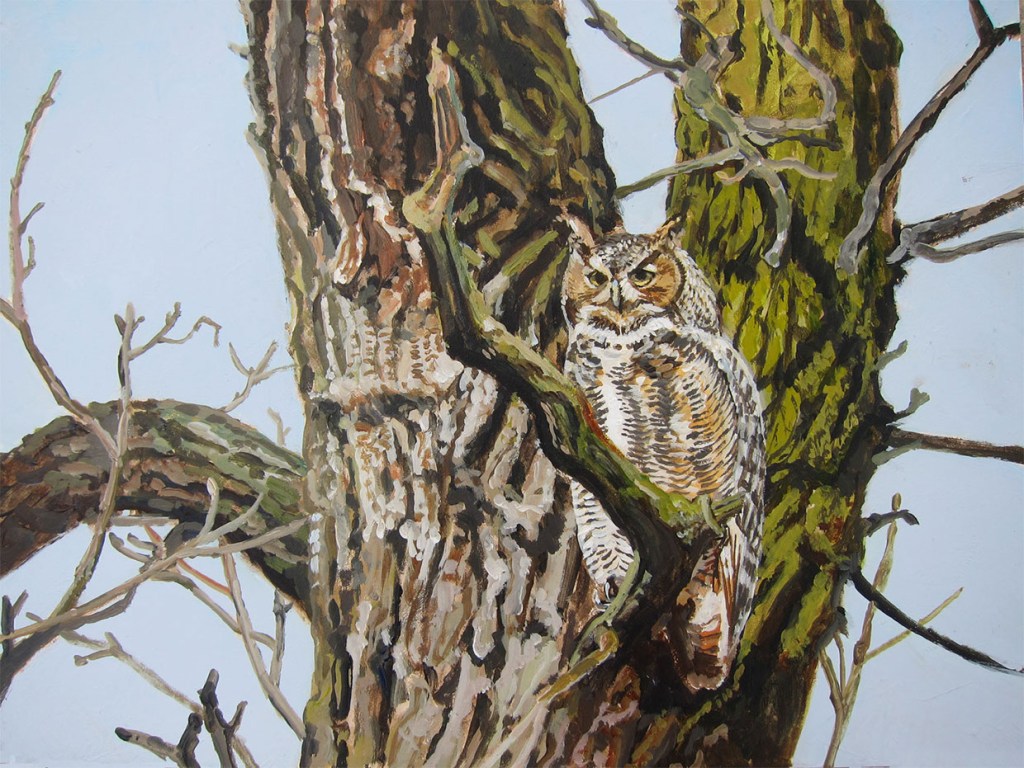
Painting of a great horned owl by Christopher Cudworth
As a creative person I’ve always had a number of outlets for personal expression. My writing, painting and love of the outdoors is always a source of solace and perspective. The same goes for the running, riding, and swimming. Yet I’ve long recognized that there are times when even these joys must be set aside to buckle down and write out that list of problems to be solved. It pays to pay attention in the long run.
This blog and others that I write are a form of therapy for me. All my life I’ve wrestled with creative distraction, and this is one way that I wick off creative energy to get to the task at hand. My need to express thoughts is perhaps a bit compulsive. Often I make mistakes. Creative ADD is like that. So is anxiety.
I’ve been blogging almost daily since 2012, and I have helped others find their way to writing as a result. Along the way I’ve exposed my flaws and celebrated experiences. Interviewed interesting and inspiring people. Covered issues of the day. My readers are most appreciated.
I’ve also frustrated relatives and friends because I’m an immensely flawed individual. For that all one can do is ask forgiveness. The squirrels are real for me, so I chase them daily, then try to move on with life.
The Great Western Trail is a former railroad bed running from St. Charles, Illinois out to the town of Sycamore, seventeen miles away. For much of the trail from St. Charles to Lily Lake, there is ample shade at all times of the day to keep runners and cyclists, walkers and wanderers from baking in the sun. That doesn’t mean the trail doesn’t dry out during the summer. Lacking rain for the last few weeks, the GWT is a dusty trail indeed.
This Sunday we ran four miles out to Brown Road and turned around to come back home. On the way, I glanced down to notice that both sets of our running shoes were covered in the dry dust formed of crushed limestone and a base of claylike dirt.
Active rail line
I well recall when the trail we now traverse by foot and bike was an active rail line. Trains rumbled through town by crossing a tall bridge spanning the Fox River and continued west at a fast pace through the cornfields heading west to Iowa. Back in town, a set of spurs once served thriving manufacturing plants upon which the city’s population depended for employment. Those rail spurs leading to those old industrial buildings are torn up now. Progress left them all behind.
But the railroad bed west of town serves hundreds of people every day. Local marathon clubs and the running groups sponsored by the Dick Pond running store also train on the trail. Groups of high school runners gathered in groups of ten this summer to train for their possible fall cross country season.
For the last forty years, I’ve been running on that trail. It was establisehed when a county chairman by the name of Phil Elfstrom first adapted the rails-to-trails philosophy in our area. During that same era, the county snatched up miles of riverside railroad beds as well. That work led to a trail system covering thirty miles south to north, even crossing county lines.
The cost of vision
We’re grateful for these trails, yet they eventually cost Phil Elfstrom his job. His aggressive attempts to purchase river’s edge property pitted him against some wealthier private property owners north of St. Charles and he was eventually ousted from his position leading the county board and forest preserve districts. Like Winston Churchill, he’d done a ton of good in his public life. But ingratitude and selfishness ultimately brought him down. Those standards applied to all parties involved.
The Oregon Trail
Just west of St. Charles there is a small forest preserve where a broad rut from the former Oregon Trail is visible in the earth. So many wagons crossed through the region on their way west that they wore a three-foot deep and thirty-foot wide groove in the earth. Over the last thirty years a grove of trees has invaded that historic rut, and it’s barely visible any more. I think that’s a helluva shame. To me that rut is an important reminder of a time when trains didn’t even cross the nation. People had to hit the dusty trail if they wanted to get anywhere. There is something valuable in the both the pride and humility of those ventures.
Historical perspective
America is such a young nation we can hardly afford to forget its history. The country as a whole is not much more than two hundred years old. Yet the truth of its formation is so shrouded in popular myths about nobility and ideals that our country is now embroiled in a war of self-deception. Some seek to ignore and dismiss the truth of slavery and the genocide of Native Americans while claiming the spirit of democracy was at work the whole time. But I’ve come to the conclusion that much of America’s history is like that remnant of the Oregon Trail. It is obscured by the aggressive trees of selfish tradition. At the same time, our history is symbolized by the spurious scourge of the Dust Bowl era when lies about agricultural speculation on the Great Plains led to a nation choking on the dust of its own fortunes. Such are the times again.
Thus I find it ironic that people now run and ride where railroad trains once ruled. All of us are reclaiming a sense of space, and yet we are also called to consider our place in this world. The dust we kick up floats through the air for a bit and settles back down. We make our mark, breathe the air, and move on. It’s best that we consider that brevity and its “dust to dust” reminders, then consider what it is we’re doing for the next generation besides moving down a dusty trail.
I picked up the oddest little “injury” this weekend during our trip to Florida. There’s a ligament on the back of my leg that lays flat on the Achilles and kind of wraps around that major tendon. It is sore, but only slightly tight. I can run with it, and cycle with it, so it’s hard to tell how much to push it.
The best thing to do in these situations is work incrementally with an injury of this nature. It emanated from either of two places. Either I tweaked something by twisting that leg during golf, or I inflamed it while pushing with my lower while kayaking.
But I’ve learned that you can’t mess around even with an ancillary injury. Typically traveling ‘owies’ such as this respond to rest. But active rest is a key indicator of the total picture. So you have to try short runs and then add a mile or two each day to see how it holds up.
A few years back I suddenly came down with really sore Achilles tendons on both legs. That turned out to be caused by the way the heel counter of my Saucony Glide shoes impinged on that tendon. As soon as I abandoned that model of shoe, the problems went away. Almost overnight. I raced that same weekend.
Life is full of mystery ailments and tweaks that cause us problems. But almost all of them have an identifiable cause and ultimately, a rational cure.
It’s all a question of tweaking your training so that you don’t make it worse. We’ll see how this goes. Until then, may the Tweaks Be With You, not against you.
As the son of an avid golfer, I’ve had golf clubs in my hands since the age of three. That never made me a Tiger Woods. But I can play the game respectably.
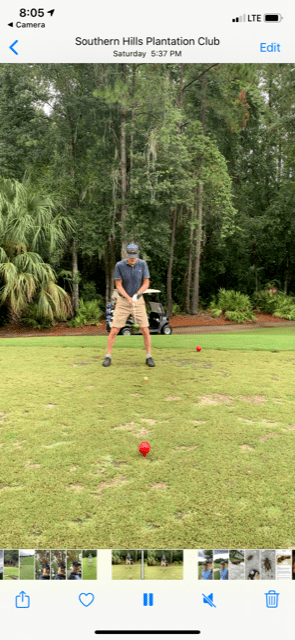
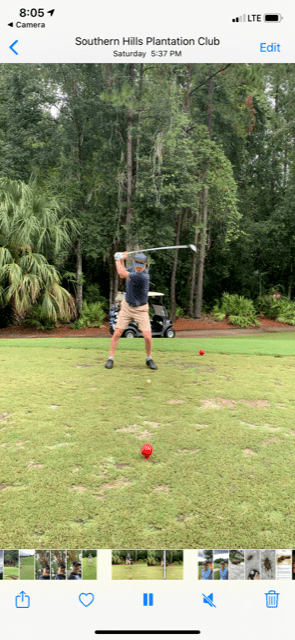
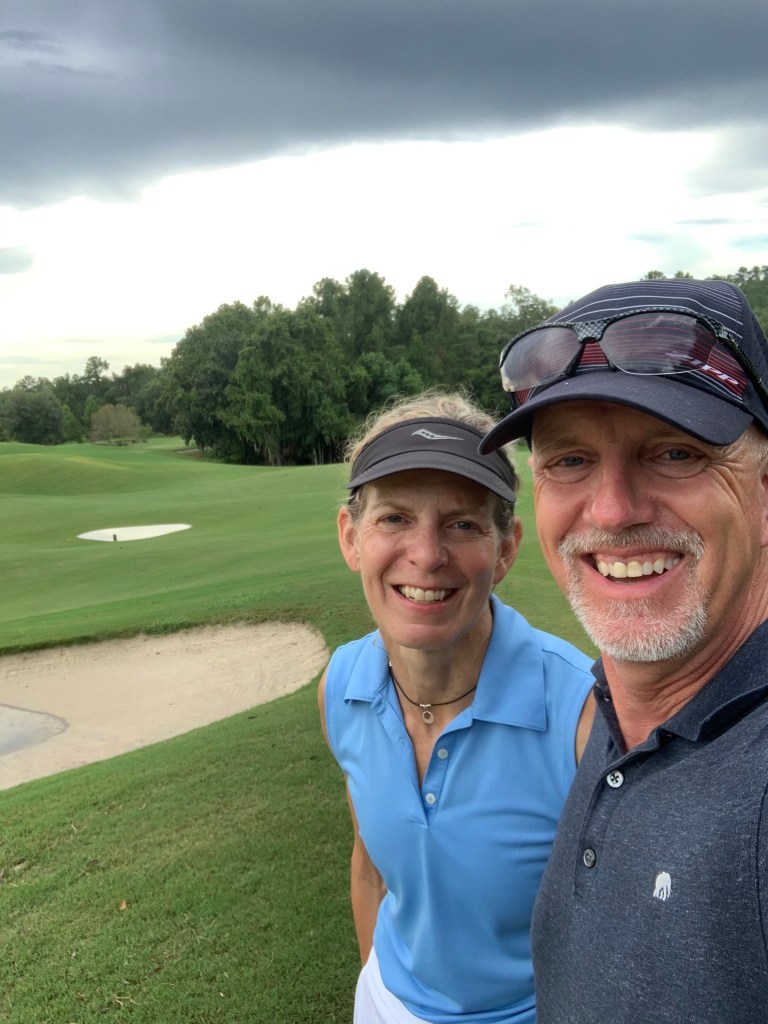
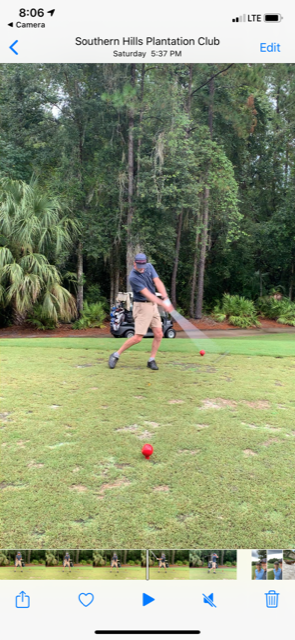
These days the technology in golf clubs actually makes it a bit easier to hit good shots. This past weekend while playing golf with my wife at Southern Hills Plantation Club in Florida, I hit all nine fairways with the rented Callaway driver. There were also metal three and five irons in the bag. Those made it simpler to hit out of the rough. I wound up with five pars and four bogeys in nine holes.
Like I said, that’s respectable golf, but not great. The previous day I played eighteen holes with my brother-in-law and my wife’s sister’s significant other. It was hot as heck outside, but the sweat wicked away as we drove around the hilly course on golf carts. I had a couple snowmen along the way, but overall my touch was decent and putting was solid. I probably shot 85 or so.
The putter in the bag was a Star Wars looking thing with two wings sticking off the back. It was extremely balanced and delivered a true feel of confidence. I was making consistent putts under four to six feet. That’s always a good feeling.
Changing times
The interesting part of the game on the greens is that rules have changed due in part to the game of golf looking to increase playing pace. So it is no longer required to take the pin out of the cup while putting. At first that’s a funny feeling for a guy who did a bit of caddying as a kid. The ritual of yanking the stick out while tending the pin is ingrained quite deeply. But the time it takes to do all that holds everyone up.
These days the stick stays in the cup if you want it there. Studies have shown that the practice actually improves the odds of making a putt. It must stop the faster putts from sailing over the hole. But then again, there’s the ricochet effect. There’s always a price to pay for too much aggression on the golf course.
The other reason the stick stays in the cup these days is to reduce the risk of spreading Coronavirus. Course instructions also encouraged less high-fives and other potentially risky sporting rituals. But as I was playing golf with my wife, those worries were greatly reduced. We both just got tested for Covid-19 and turned up negative.
Birthday blues
After four holes with the crew the second day, the Birthday Boy among us needed to return to the clubhouse. His buddies had plied him with drinks and shots before we departed, and he’d already played eighteen holes in a morning round. That left Sue and I to play alone for five holes.
It was quiet and serene on the course that afternoon. The storms that delayed our round initially had produced a ton of rain, but the course absorbed it for the most part. Still, we drove our carts in the rough most of the holes.
Sue loves to golf. We don’t get to do much of it. Most of our leisure time is consumed with running, cycling and swimming. Yet one of our first weekend trips together included a round of golf at a sweet little club near Dixon, Illinois. She was cute in her white golf skirt and black shirt. This past weekend she wore a blue top that made me want to hug her after every shot.
My father would have appreciated my wife’s enjoyment of the game. He adored playing golf and encouraged all his boys to develop a good swing. My mother and father played golf together on a regular basis. Late in life my mother scored a hole-in-one at the fourth hole on Pottawatomie Golf Club in St. Charles. That was their home turf, and I’ve played that course many times. The hole on which she scored the hole-in-one is a snug par three along the Fox River. From the women’s tee it is probably 130 yards. The club pro gave her a mini-trophy with a golf ball perched in the cup. She prized that little award, and loved to tease my father that she was the only one between them that ever scored a hole-in-one. The next year she passed away from cancer at the age of eighty years old.
Running amok
There were years during college when I seldom played golf at all. But that didn’t mean I never set foot on a golf course. Back then, many cross country races were held on golf courses. It seems that practice has largely vanished. Probably the members these days frown on the idea of anyone tearing up the prized fairways. I get that. But it was thrilling to put on spikes and race down smooth turf in the company of other good runners.
I also trained quite a bit on golf courses. Again, that is frowned upon in this day and age. Too much liability, or so the saying goes. Running on a golf course will get you booted off in most places.
That doesn’t mean I’ll never do it. Once in a while I’ll skirt the edge of some local course and think back on both the golfing and running I’ve done in those places over the years. In the past ten years however, some of those golf courses have closed up shop. Even before the Bush-era recession caused economic contraction, the golf industry recognized that there was a surplus of courses. The sport was overbuilt, and golf courses and even some country clubs were closing. When the overall participation in golf dropped by some 5 million players after the recession, even more courses closed.
State of Golf in America
There are still about 1.5M acres of land used as golf courses in America. That’s equivalent to the State of Rhode Island. So there is a State of Golf in this country. About 10% of the population, or 25M people typically play golf in a given year.
I know these statistics because I’ve written a book titled Nature Is My Country Club. It examines the land-use practices of golf courses, and how organizations like Audubon International are encouraging the golf industry to naturalize their landscapes with native plantings, wetland conservation and use of less pesticides. That makes me feel better about playing golf. Because whether nature purists (like me) care to admit it or not, a considerable amount of wildlife likes to hang out on golf courses. During our round last weekend, we saw wild turkey, sandhill cranes, black-bellied tree ducks, gallinules, grebes, little blue heron, great blue heron, common egret, black vulture, bluebirds and many other species. There were alligators in the ponds too, and turtles.
I used to point that stuff out when I was a caddy, but it was seldom appreciated by the golfers I accompanied while carrying their bag. Most people on the golf course, it seems, are there for one reason, to play the game. The course itself is a piece of fiction, a place to be conquered. And golf courses are indeed a manufactured landscape. There is nothing essentially natural about acres of closely mowed turf grass, and it used to be sustained with tons of toxic pesticides and herbicides. Some of those practices are changing, but not completely.
But it sure is beautiful in its homogenous way, a shadescaped glory fantasyland where golf carts sail like ships on a green sea.
Sailing there with my honey was a lot of fun. She started hitting great shots as the round went by, landing some on the green from some distance. She even picked one out of the fairway trap with what I called the “magic” club in her bag.