50 Years of Running: Wonder Left

After the 800-mile season in cross country in the fall of ’78, it felt good to back off running twice-a-day. But then I sprained an ankle playing pickup basketball. So I was out of action completely for four days. I could feel that odd sensation of being past-peak condition as a runner when it’s best to rest, combined with the weird anxiety of not training every day following all that intense running.

The relationship front got strange all over again. I wrote in my journal, “Don’t surround yourself with yourself. Is she doing that? She let’s me at her. I can’t hold on sometimes. She’s scared me, told me away too often.”

Then we had another flareup. “(She) and I had a terrific fight, but I really love her the way she is. Hope we make it through Christmas break.”

The fact of the matter is that we were clearly involved in the relationship for different reasons. Her objective was finding a lifelong partner and moving into life right after college. My objective was finding myself after a few years of drifting self-doubt. Those are two quite different places to be. She’d lost weight and looked her finest going into that junior year in college. I was hyper-lean from all that running and entirely focused on using that last year at Luther to do the best I could, possibly even making All-American in the steeplechase. I was already a team All-American, why not shoot bigger? In any case, she and I were in different places on the maturity scale.

Christmas break

A few days before heading home for break, I sold a few hundred dollars worth of paintings at a show held in Preus library. Then I caught a ride back to St. Charles after we made up from our fight. We planned a meetup at her folk’s place.

On the night I was scheduled to drive up to her house, it was freezing cold and the ground was covered in deep snow. I pulled on my coat and went out to the garage. When I bent down to whip open the garage door, something snapped in the middle of my back. I stood upright in pain from a spasm right below the right shoulder blade. It hurt so bad I could barely breathe. Still, I climbed into the car and drove the thirty miles north to her house. That night, I limited my movement to keep the back spasm from cramping. It was awkward as heck trying to concentrate on the subtleties of parental conversation Taking a deep breath, or laughing, God Forbid, sent shocks of pain through my body.

Obviously, having only dated her a few months, I was still in the “test phase” of boyfriendhood. Her folks were kind in many ways, but there was always a sense that I might not be their first choice in background or career for their daughter. Honestly, they were right about that. Being married to an artist and writer is no great bargain. That fall at Luther my girlfriend and I were in conversation with a well-known staff couple with similar backgrounds. She worked in the business office, and he was an artist. Without any real provocation, the woman rolled her eyes and warned my girlfriend, “Omigod, don’t marry an artist.” Her artist husband gave a nervous shrug.

I sat at her place that Christmas break with all these conflicting thoughts in my mind. My back was in a compromised physical condition so distracting that it took all my concentration just to talk, much less impress her parents with my sense of humor and whatever else I had to offer. As we gathered to exchange gifts I half-wished to just get in the car and drive home. But Christmas was a big celebration at their house, and I stayed through dinner to open a few gifts. They gave me a deerskin art portfolio. That made me feel better about my artistic endeavors. Perhaps they believed in me after all?

As the hour got late, her folks went to the living room to watch TV. She and I went downstairs to fool around, and even in my stiffened state (I’m talking about my back…you dirty bastards) we made a nice evening of it.

Compromised vision

It got quite late and my hard contact lenses were now so dry I could barely keep them in my eyes the pain was so bad. I took them out for a break and to my surprise, I could see clearly without them. Apparently, the constriction of the eyes after all those hours of wearing the contacts corrected my vision. I climbed into the cold car after a kiss goodnight and drove home with my back spasm still making me sit erect in the seat.

The next morning, my bad vision was back to “normal.” That little period of good vision in the wake of contact lens fatigue was a little miracle.

At home without her, my thoughts turned to the indoor track season ahead. I wrote: “You’ve got to balance out flexibility with running to prevent these unneeded injuries,” On December 29 I noted. “The spasm really hurts!” First it got better for a couple days, then I reinjured it on December 31, and resignedly commented, “Well, I’ve got to get this back healthy again. I’m getting too soft and out of shape. It’s time to begin rolling again.”

The holiday season and our recent fights still had me tense. “(She) seems like she’s playing games although she probably isn’t. I’m always suspicious. We need to do some fun stuff together.”
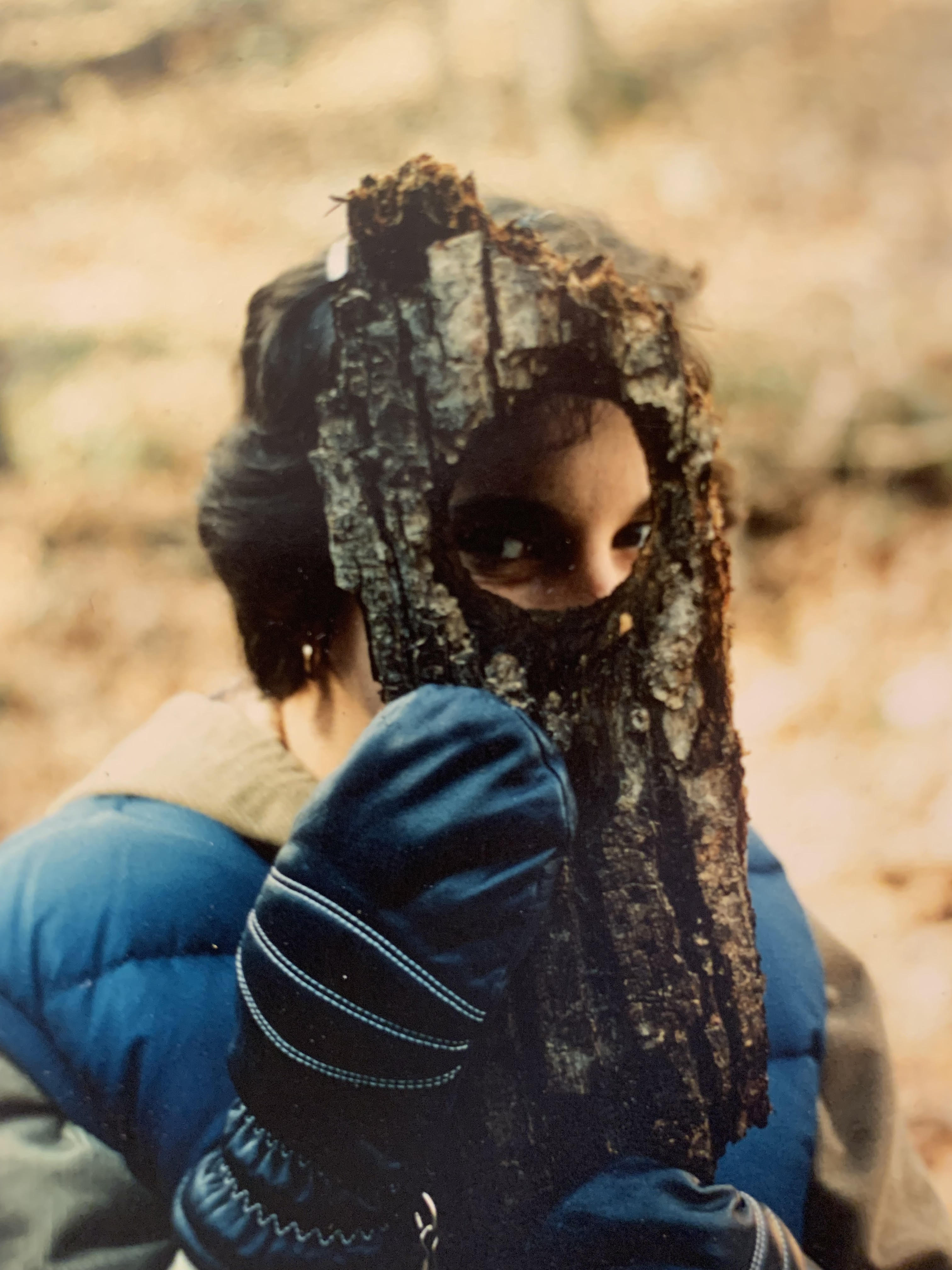
The fact of that relationship is that my girlfriend was a “type” that my brothers and I all dated at some point. They all looked alike. Dark hair. Green eyes. They all had a domineering personality, perhaps a little bitchy in some ways. But man, I loved her. The intensity of feeling I had for her was all-consuming. We shared our worlds the best we could. Certainly, I have no regrets.

But I think there was some aspect of those women that my brothers and each needed to experience. Perhaps it was the “anti-Mom” type that we saw in them. What else explains the striking similarity?

Back to running

I only managed 53 total miles of running that December. To get back on track, I mapped out a January plan with increasing mileage. But the weather dipped to -20 degrees below zero. I still ran six miles that day in 39 minutes. “Beautiful, quiet, snowfall,” I wrote.

As the team returned to running together, my roommate Dani Fjelstad pulled me aside one day and said, “This running six minutes per mile every day is crazy,” he observed. “Let’s you and I build a base the right way. We’ll do LSD (Long, Slow, Distance) together.”

I planned out the month with 30 miles, 50 miles, and two weeks of 65 miles in January. My January Term project was just drawing all day, so there was little stress involved, for once. The cold winter weather in Decorah was hard, yet beautiful. The snow-packed white roads that we covered on dark afternoons guided us for miles and miles. My favorite was a route called Wonder Left, a 9.3 mile loop through the back hills of farm country northwest of the Luther Campus. I could feel the fitness returning, and soon enough we’d be racing again.
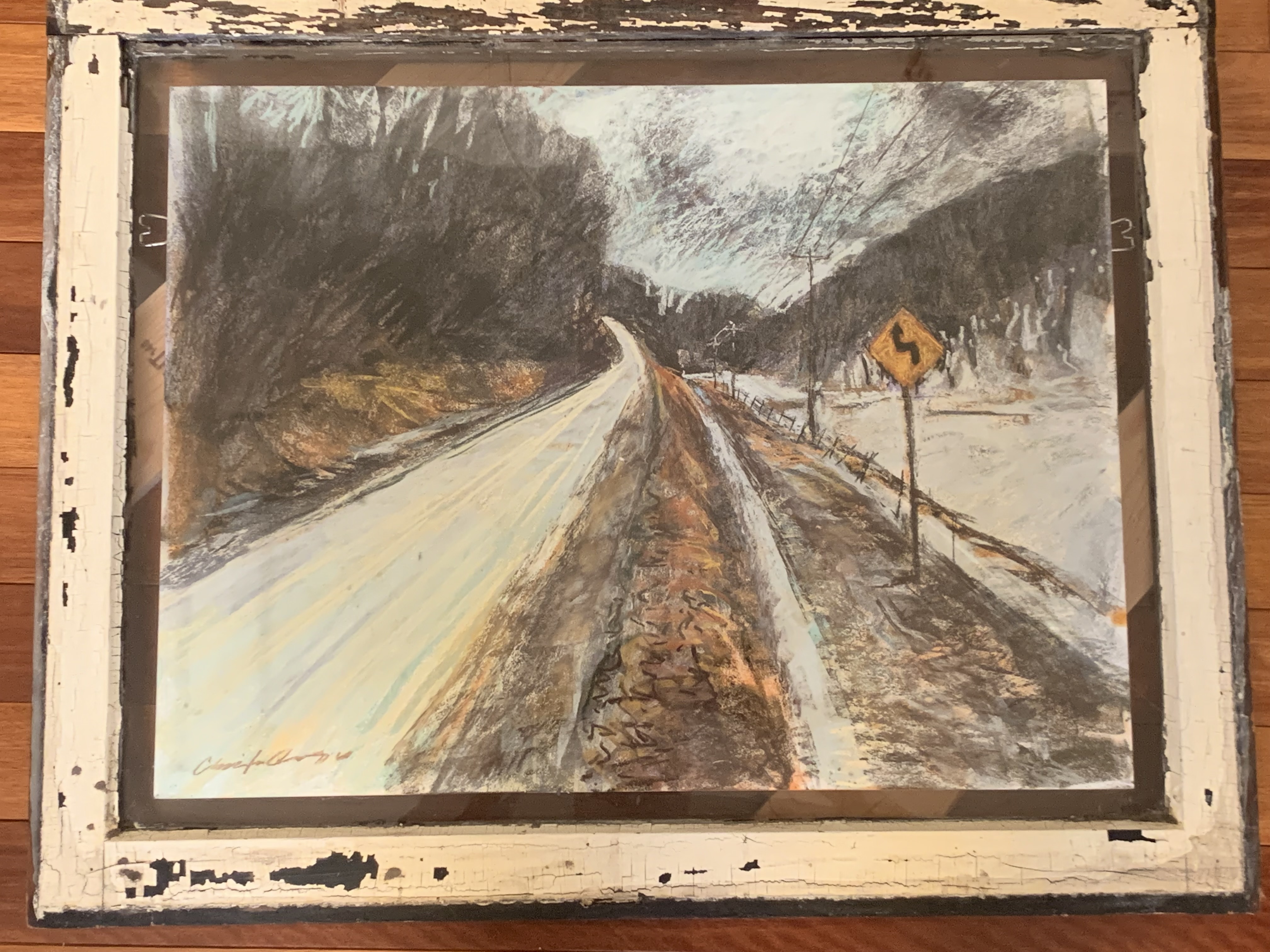
My pastel painting (2020) of Wonder Left, one of the routes we loved to run at Luther College.

Posted in Christopher Cudworth, college, competition, cross country, running, track and field, training | Tagged , , , , , , , , | Leave a comment

50 Years of Running: Alternative Realities

The circumstances by which I wound up running for Luther College were serendipitous. By the end of senior year in high school, I’d applied and was accepted to Augustana College in Rock Island. During my visit out there, I ran with the guys and got a taste of the difference between high school and college running. But there wasn’t much. Running is running. You go out with the guys, try to keep up, and do your best.

Augustana College

The reasons we compete for one school or another are not always definitive.

But my grades weren’t stellar in high school, and Augustana accepted my application with a caveat that I’d be on academic probation for that first term of college. That turned me off. My native resistance to authority and naturally competitive mink-like character was exacerbated by life with a sometimes exasperating father who was frustrated by the fact that some of his sons struggled with grades just like he did at Cornell University.

But I’ve figured all that out over many decades, and I’ve come to realize that ADHD runs in our family, along with anxiety and some depressive tendencies. Oh, that someone could have helped me recognize that much earlier in life. It all made decision-making that much harder.

In 1975, I was a ship adrift when my friend Paul Morlock announced that he’d be attending Luther College. I visited the campus that summer with my father and fell in love with the place. Back home, we canceled the Augustana application and they didn’t seem to mind. They even sent my $100 application fee back. The very next year, a teammate and close friend of mine from St. Charles HS also applied to Augie, then changed his mind to attend Luther as well. They did not refund his $100 application fee.

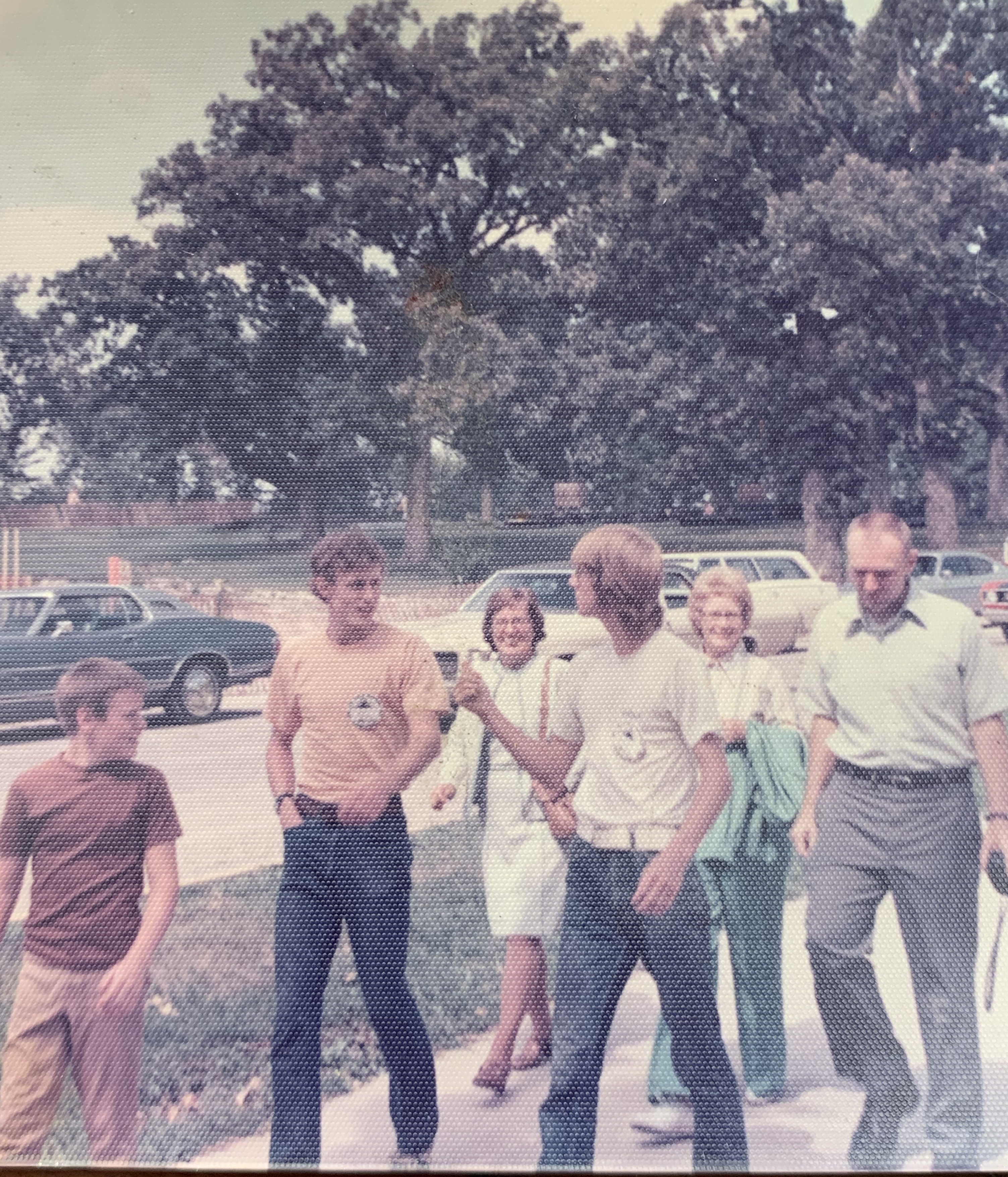
Walking on Luther’s campus as freshman with Paul Morlock, my classmate and friend from St. Charles High School. He was the one that found and enrolled at Luther. I followed suit in July the summer before our freshman year.

I’ve considered what it might have been like to attend Augie because I got to know many of the runners there over the years. I ran against many of them during high school, including Chuck Christensen of Dekalb and Dave Scott from Fremd. Thanks to our competitive connections over those four years, a few Augie runners even showed up at Luther to hang out and go drinking. Small Christian colleges with decent running traditions tend to attract the same kind of people. So while we were clearly rivals, we also understood that as programs and individuals we really weren’t that different.

Plus the Augustana coach Paul Olson was a Luther graduate. I liked Olson when I met him first in the spring of 1975, and his Augustana program turned out many fine runners; Dan Copper, John Hammermeister, and many others.

He and Kent Finanger ran similar cross country programs, and Olson coached track at Augustana with his wild-maned Fred Whiteside as an assistant coach. But there was one aspect of Olson that I did not appreciate until I heard him speak at a Luther track reunion two years ago. His eloquence and breadth of thought impressed me deeply. He would have been a great English professor and possible mentor to me if I’d attended Augustana. That could have been life-changing as well.

I have a close friend that wasn’t a runner who attended Augie. I consider him one of the most insightful and best-educated people I know. He majored in English at Augustana and also has a wonderful grasp of history, religion, and many other subjects. I did well enough in college with a 3.1 GPA, and Luther took a much more relaxed attitude toward my 24 ACT score (the school’s average) and said, “Your many activities indicate you’ll do well in college.” Talk about a sense of approval…

My point here is that I might have thrived at Augustana as well as Luther College. My own daughter elected to attend Augie after earning her Associate degree in photography and communications from College of Dupage. Unfortunately, she was going to school during a period when my wife was going through intense treatment for ovarian cancer. Then, my daughter’s credits did not transfer directly to Augustana as promised. Her experience, as a result, was less than ideal. But I still hold the college in high esteem.

North Central

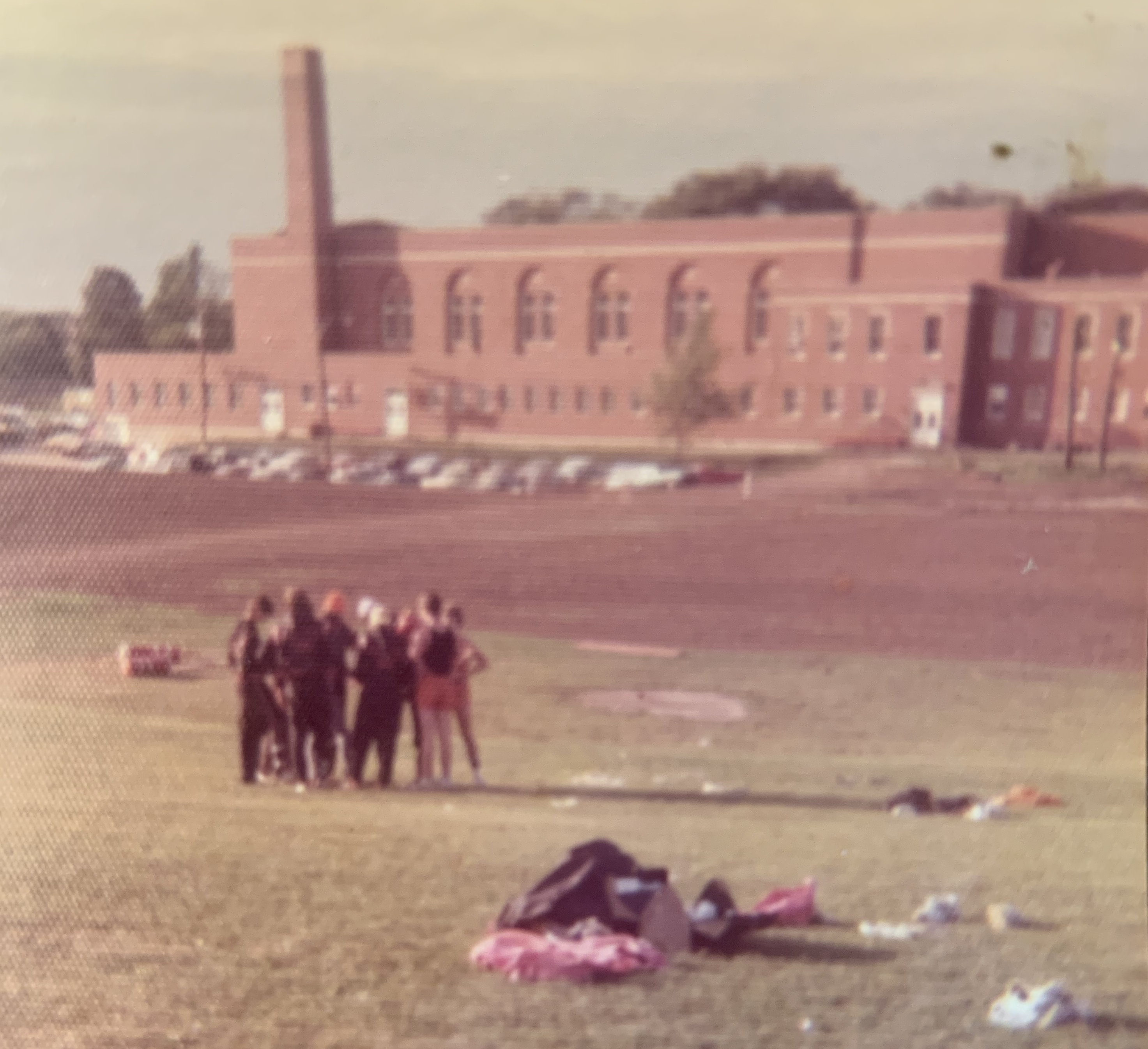
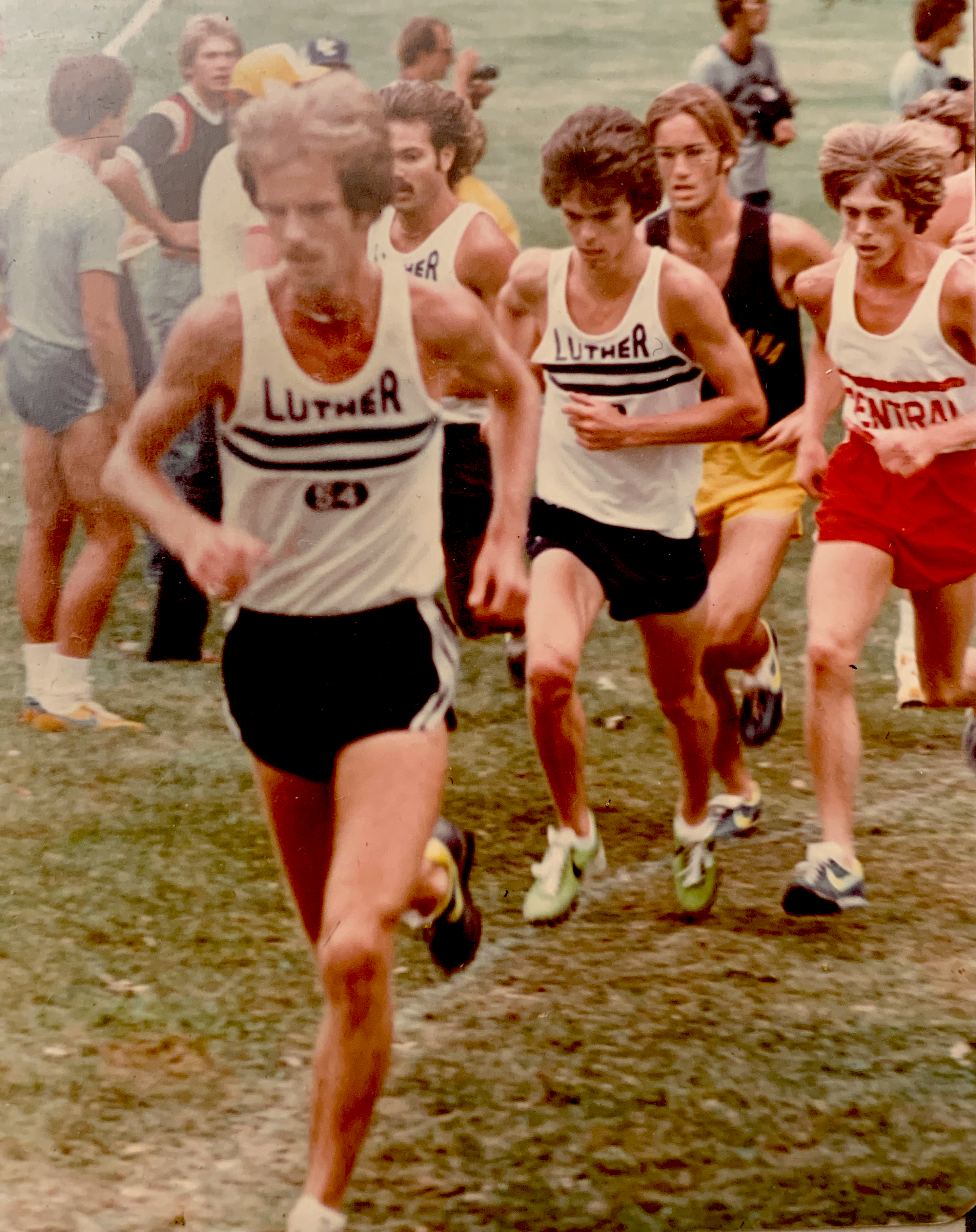
My St. Charles team gathering before a dual meet with Naperville Central on the campus of North Central College (’75) Things were quite a bit different back then.

There were a few other possible college choices as well. Most notably, I received a recruiting letter from Coach Al Carius at North Central College during my junior year in high school. Sadly, my impression of the school was not based on knowledge of the running program, but on a judgment of their facilities. That same year at Districts, I’d tried to visit the bathroom in the fieldhouse only to find a long line waiting for a lone toilet in the middle of the room. I swore to myself at that moment, “I am never going to attend this school.”

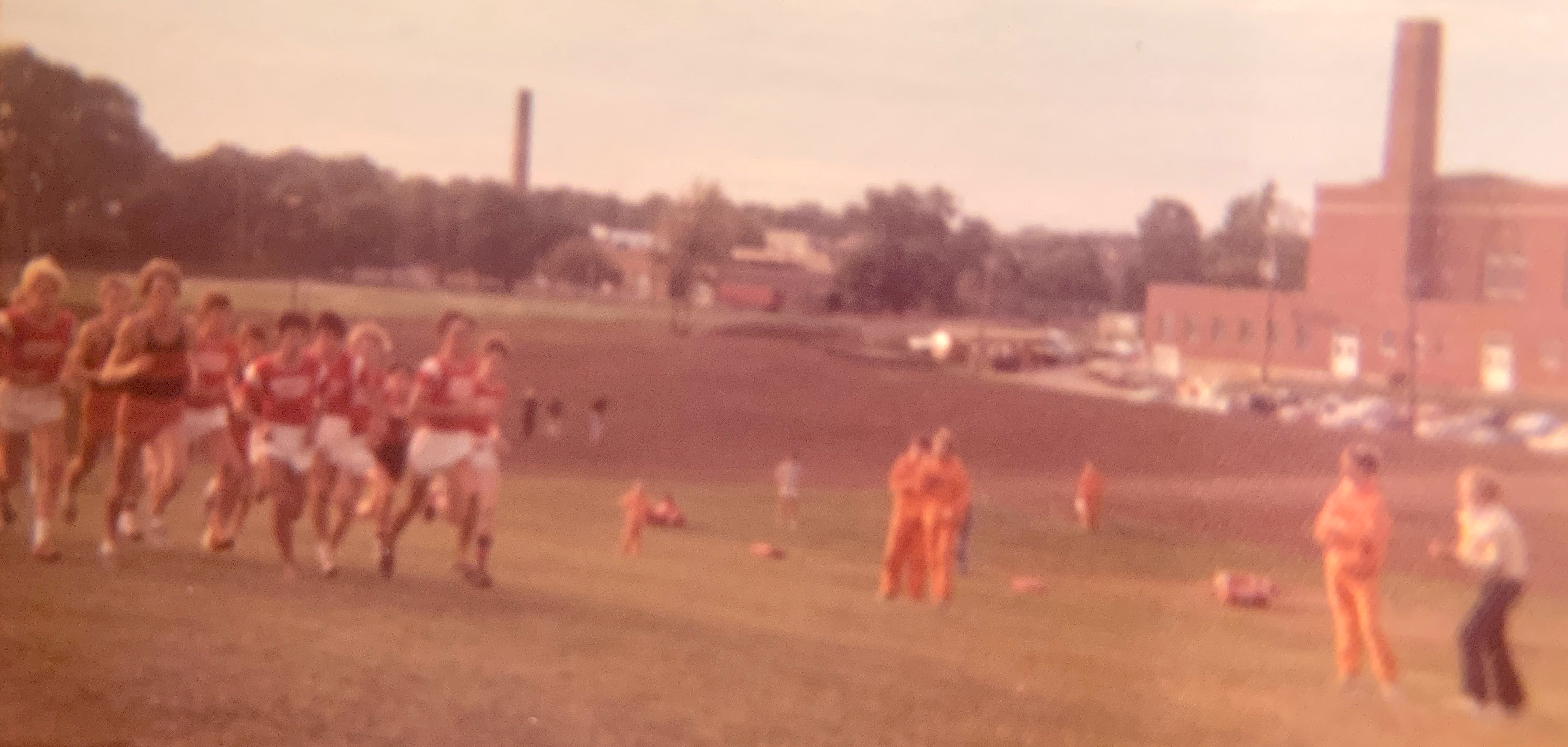
Leading out the race against Naperville Central at NCC.

These days, North Central has some of the finest facilities in all the nation. The school has hosted national championships for indoor and outdoor track, and Al Carius was named the Coach of the Century for his success at the Division III level.

A few years after graduating from Luther, I wrote an article about North Central and Al Carius for the Illinois Runner, a monthly newspaper published by Rich Elliott, whom I’d gotten to know through the road racing circuit. I wrote for the paper on a regular basis, and even designed the logo.

Having learned far more about Carius over the years than I originally knew, I was excited to visit the program and go for a run with the crop of athletes he was coaching in 1984. The banter and teasing during the run was so familiar. One of the less-speedy guys on the team was leading the pack that day, and the better guys were making light of the situation. It felt like I knew everyone and was a member of the team. I realized that I could have fit right in with the North Central program too. I might have struggled to make the Top Seven all four years, but by the time I was a senior at Luther, I was running times equal to their fourth through seventh men. So who knows? That’s an alternative reality consideration as well.

I did set my 5000 PR at an All-Comer’s meet on North Central’s excellent all-weather track in 1984. Jim Spivey won the event that night in around 14:00 flat. I finished at 14:47. The race was held at midnight due to the number of competitors that showed up for the meet. It took hours to run heats of events like the 400 and 800. But I sat there waiting for a chance to run because I knew that I was fit and wanted to run against some of the best area competitors. I was probably around 10th-14th place, but I didn’t care. I’d run a PR that night. That was all that mattered.

That same summer, I showed up at the qualifying meet for the Illinois Prairie State Games. Anxious and eager to make the team, I poked around with the organizers and the coaches scheduled to run the team; Al Carius and Joe Newton of York. Both were known for their powerful motivational abilities, but with somewhat different styles. In any case, I think they found my nervous questions to be a bit revealing about my personality and perspectives. So perhaps it would have been helpful during college to have the likes of Al Carius to cut through my anxieties and build self-esteem. He did it for many runners over the years.

Out East

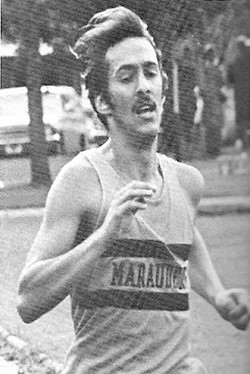
Jeff Bradley of Millersville circa 1973.

We’re all pulled and pushed by forces we don’t always recognize in life. During college at Luther, my brother Jim wrote me a letter wishing that he’d talked to the coaches at Millersville, the college he attended. Jim was friends with Jeff Bradley, one of the best runners to emerge from that D3 school. After moving to Paoli, Pa., after college, we raced in a ten-miler that he won. I ran 54:00 on an immensely hilly Lancaster Country course where Millersville runners such as Alan Treffinger also competed. whom I competed against in national cross country meets.

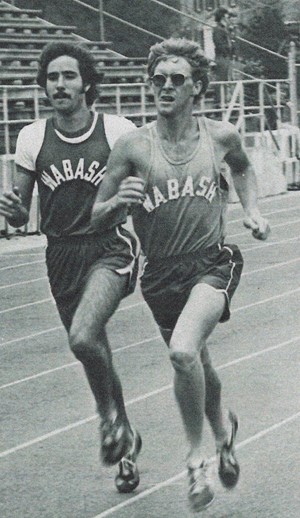
Recently, I had conversations with a former St. Charles runner Greg Birk, who half-jokingly asked me, “Why didn’t I try to get you to come to Wabash?” Birk was recently installed in the athletic Hall of Fame at that school. His career in marathons is prodigious, competing all over the world. But frankly, I was a bit intimidated by Greg as well as his training buddy Tom Burridge, the Batavia sensation who went to the University of Kentucky and ran a 13:45 track 5K and went on to set the American record in the half marathon.

Greg Birk, Wabash.

And that’s where my pontification about alternative realities comes to an abrupt halt. The program at Kentucky was rife with Illinois runners such as Craig Young and Ron Ackerman, my former teammate at Kaneland High school. I watched Ron run the first leg of a 4 X 1-mile relay at Drake. He handed off at 4:01. I will never claim that I could have run for a program like Kentucky.

I guess I feel justified in asking “what might have been” considering the move that I was somewhat forced to make in the middle of my high school career when my family moved from Elburn to St. Charles.

Posted in Christopher Cudworth, college, competition, cross country, track and field, training | Tagged , , , , , , , | 1 Comment

50 Years of Running: How the Big Boys Do It

Following our second-place finish at Division III nationals, Coach Kent Finanger suggested we all travel to Madison to watch the Division 1 national meet in Wisconsin. Even with classes going on and the need to catch up, a bunch of us piled into cars for the two-hour drive to Yahara Hills, a golf course on the southeast side of Madtown.

It snowed during the weekend, so the course was covered with a modest layer of white stuff. It wasn’t deep, but it made footing a challenge. Those conditions reminded us of the national meet we ran in Cleveland in 1976, when inches of snow fell and the cold winds were fierce. That was not a fun day.

Still high from our accomplishment that Saturday, we came to Madison hoping to see a great race among the college elites. A runner from Oregon named Alberto Salazar was making his first impressions on the world stage by 1978. His teammate Rudy Chapa was also running well that season. Yet they faced a stiff challenge from a Washington State runner named Henry Rono and a tough UTEP team.

James Munyala (at right) Michael Musyoki with Thom Hunt behind them. Dan Henderson, Alberto Salazar, Bruce Bickford (I think) Rudy Chapa, Marc Hunter (Cleveland) Henry Rono. Who else can people identify from this Sports Illustrated photo from 1978?

As it turned out, that head-to-head battle between Rono and Salazar did not take place at Yahara Hills. The cold weather and snow was not to Rono’s liking. He faded back in the pack after the first mile or so. The top ten finishers in the race still ran in the mid 29s for 10K.

Anyone that followed cross country and track-and-field from that era recognizes the names of the Top Ten runners (and their schools) in Madison that day. The University of Texas-El Paso (UTEP) was a dominant force, winning the title over Oregon and others. UTEP and Washington were both known for recruiting African runners to build their teams. That practice provided great competitive and educational opportunities for those men, while making American cross country and track fields stronger thanks to the competition levels created by world-class runners in the States.

For all the battles between the Big Boys of NCAA Division 1, there was one exceptional standout that no one predicted to show up in the Top Ten. That was Dan Henderson, the Division III runner that had won the race just two days before. The NCAA stipulated that any D3 runner in the Top 5 at their national meet would be allowed to compete in the Division 1 race.

That wasn’t an easy proposition for any D3 runner, but quite a few tried it out over the years. The fact that Henderson raced to a Top 10 finish is fascinating. We cheered and roared as he strode along in his Wheaton College jersey with bright orange matching cap. You can see his face and hat over the right shoulder of Alberto Salazar.

Henderson bested the likes of D1 elite such as James Munyala of UTEP, Thom Graves of Auburn, future Olympian Jim Spivey of Indiana, Rodolpho Gomez of UTEP, Bruce Bickford of Northeastern U, Randy Jackson of Wisconsin, and Mark Nenow of Kentucky.

A fascinating summary of D3 athletes competing at the D1 invitational resides on the Pomona-Pitzer website. I’m copying and pasting it here because it ends with the fascinating statement that D3 athletes no longer received invitations to compete at the D1 level after 1991.

Division III runners at the Division I meet

At the start of NCAA Divisions (I, II, and III) in 1973, the individual winners of the NCAA III and NCAA II (plus a few additional runners in the early years) were invited to compete in the NCAA I meet on Monday – just two days after winning their own division meet on Saturday.

The NCAA Cross Handbook carried this text:

“It has been established for the 1973 Cross Country Championships that the first five finishers in Divisions II and III will be allowed to compete in the Division I Championships.

In 1974 and in subsequent years, the numbers shall be six from Division II and four from Division III. The individual finishers will be able to earn medals, but their finishes won’t be counted in team point totals.”

This made for some very difficult racing challenges. For example, former SUNY Cortland coaching legend Jack Daniels relates: “We drove to nationals when Marybeth won (in 1989 at Rock Island, Illinois) and drove home all night after the race, arriving at 8AM on that Sunday morning.  She got some new clothes and we drove to Annapolis for the Monday DI race.  I doubt she was well rested for that one.”

Likewise, Haverford star Seamus McElligott won the D3 meet in 1990 in 24:46 (8k) in Grinnell, Iowa. Less than 48 hours later he earned All-American honors in the D1 meet in Knoxville, Tennessee. McElligott, the D3 runner-up in 1989, traveled with legendary Haverford coach Tom Donnelly through Chicago to Knoxville, where he clocked 30:13 (10k) to finish 35th and nabbed the final All-American spot –even defeating D2 Champ Doug Hanson (North Dakota State) by one second and two places. McElligott was the final D3 runner to accomplish the feat. His remaining career included making a U.S. team to World XC in 1996 and competing in the 1992 Olympic Trials in the 10,000m. He died in 1998 at the age of 29. (Thanks to Dave Devine for this story and details)

From 1982-1990, the invitation to run in the Division I meet was then limited to only the Division III champion, and then invitations stopped completely before the 1991 season. Division III coaches recall that the Division I coaches weren’t happy with lower-division runners taking All American spots from Division I runners.

Men       NCAA Division III Runner                     Result at Division I Meet

1973       5. Fernando Suarez, SUNY Oswego       105th at Washington St. U. (6M), 30:22.8

               2. Glenn Behnke, North Central              112th, 30:26.2

               4. Francis Verdoliva, SUNY Oswego      114th, 30:27.4

1974       1. David Moller, Rochester                     19th at Indiana Univ. (6M), 30:27

               3. David Teague, Hamline                       74th, 31:19

1975       2. Joel Jamison, Occidental                     31st at Penn State Univ. (6M), 29:34

               4. Bruce Fischer, North Central              171st, 30:52.9

               3. Peter Kummant, Case Western           213th, 31:23.8

1976       2. Bob Hodge, Lowell                              22nd at North Texas State (6M), 29:11

               1. Dale Kramer, Carleton                         70th, 29:49

               4. Frank Richardson, MIT                      140th, 30:20

1977       1. Dale Kramer, Carleton                         46th at Washington State Univ. (10k), 30:08.7

               2. Domenic Finelli, Brandeis                   121st, 30:57.2

1978       1. Dan Henderson, Wheaton                   10th at Univ. of Wisconsin (10k), 29:48.5

               3. Jeff Milliman, North Central               144th, 31:34.6

1979       1. Steve Hunt, UMass-Boston                85th at Lehigh Univ. (10k), 30:49.4

               3. Paul Mausling, Macalester                  92nd, 30:53.2

               4. Jeff Milliman, North Central               147th, 31:31.2

               2. Michael Palmquist, St. Olaf                31:33.6

1980       3. Mark Whalley, Principia                     62nd at Wichita, KS (10k), 30:31.8

               1. Jeff Milliman, North Central               101st, 30:54.3

               2. Paul Mausling, Macalester                  130th, 31:18.1

               4. Clark Cox, Occidental                          148th, 31:27.8

1981       1. Mark Whalley, Principia                     50th at Wichita, KS (10k), 30:20.9

               2. Michael Axinn, Chicago                      74th, 30:40.8

               4. Steve Underwood, Hope                     118th, 31:21.4

1982       1. Nicholas Manciu, St. Thomas             did not run

1983       1. Tony Bluell, North Central                 did not run

1984       1. Mark Beeman, Brandeis                      60th at Penn State Univ. (10k), 30:55.9

1985       1. James White, UMass-Dartmouth       61st at Marquette Univ. (10k), 31:07.93

1986       1. Arnie Schraeder, UWisc-Stevens Point   11th at Univ. of Arizona (10k), 31:14.49

1987       1. Jukka Tammisuo, St. Lawrence           73rd at Univ. of Virginia (10k), 30:42.55

1988       1. David Terronez, Augustana                66th at Iowa State Univ. (10k), 30:42

1989       1. David Terronez, Augustana                56th at US Naval Academy (10k), 31:01.65

1990       1. Seamus McElligott, Haverford            35th at Tennessee (10k), 30:13

Women   NCAA Division III Runner                     Result at Division I Meet

1981       1. Cynthia Sturm, Westfield                    52nd at Wichita, KS (5k), 17:35.2

1982       1. Tori Neubauer, UWisc-La Crosse       50th at Indiana Univ. (5k), 18:02.1

1983       1. Tori Neubauer, UWisc-La Crosse       11th at Lehigh Univ. (5k), 17:01.0

1984       1. Julia Kirtland, Macalester                   25th at Penn State Univ. (5k), 16:59.6

1985       1. Dorcas Denhartog, Middlebury          did not run

1986       1. Lisa Koelfgen, St. Thomas                  did not finish at Univ. of Arizona (5k)

1987       1. Shelley Scherer, Carleton                     59th at Univ. of Virginia (5k), 17:23.33

1988       1. Anna Prineas, Carleton                        21st at Iowa State Univ. (5k), 17:09

1989       1. Marybeth Crawley, SUNY Cortland  77th at US Naval Academy (5k), 18:00.06

1990       1. Victoria Mitchell, SUNY Cortland      did not run

The list does show how difficult it is to run back-to-back elite-level races, especially after a long season. Plus male D3 athletes step up from racing five miles to running 10K. That’s harder than it sounds.

In any case, it was thrilling to be present the day that Dan Henderson represented D3 with such an elite performance. He later led the Olympic Trials 5K race for a few laps. I recall his long, smooth stride as something unique and inspiring.

Luther vs. D1 schools

I certainly have no pretense of doing better than any of these D3 athletes if I had ever raced at the D1 level. The elite D3 guys raced a minute faster than my best five-mile time in college, and D1 athletes on average are at least another 30 seconds to a minute faster than that. But little Luther College did do quite well against bigger schools on many occasions. We always enjoyed running against top-level competition.

A few examples from four years of racing bigger colleges and universities:

We placed third behind Iowa State (43) and the University of South Dakota (73) at the Iowa State Invite in 1976. That day, we beat Central Missouri, Drake University, Western Illinois, UNI, and the University of Nebraska-Omaha.

At Carthage that same season, we defeated the UW-Milwaukee Track Club led by ex-LaCrosse stud Jim Drews, and also beat UW-Stevens Point, and Northwestern. And while we got thumped by the University of Wisconsin-LaCrosse a week later in a meet led by Jim and Joe Hanson, we improved to the level that we beat LaCrosse in the next two years. I loved that Luther-LaCrosse rivalry and had many of my best races against the men in maroon because I respected their program so much.

I also got to race against the LaCrosse boys many times post-collegiately, including a half-marathon in their home city. They threw one helluva party after.

The point here is that while elite runners are something of a unique breed, their talents are not entirely exclusive when it comes to rcing. That’s something I’ve always appreciated about running as a sport. Even if you’re among the sub-elite of the sport, it is still possible to line up with the best and give it your all. Plus, when you’re a spectator watching the elites slug it out, there is an appreciation of what it means to race that fast. Come success or something less, there is a commonality in that knowledge.

Posted in 10K, Christopher Cudworth, college, competition, cross country, running | Tagged , , , , , , , , , , | Leave a comment

50 Years of Running: National Ambitions

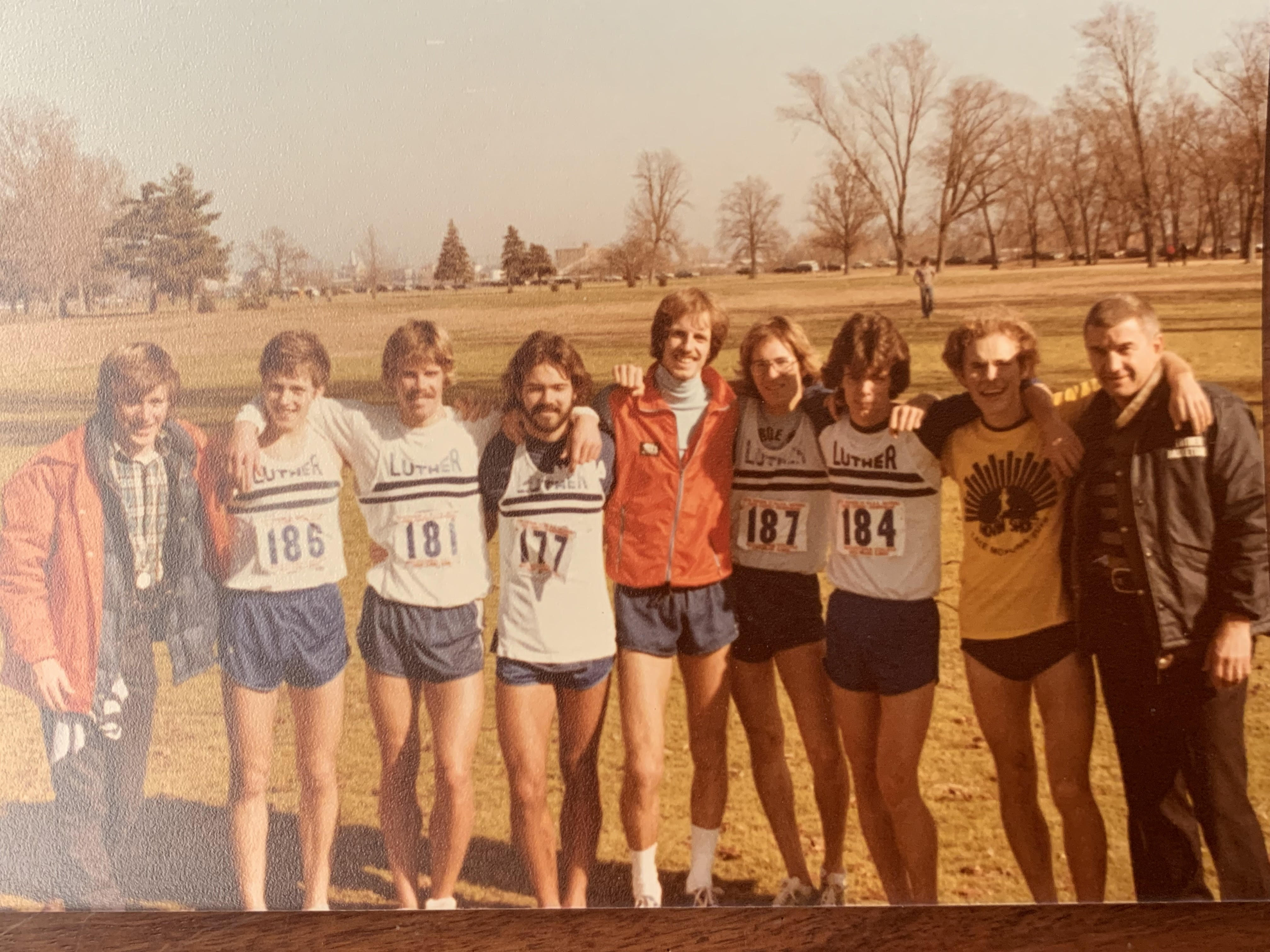
Manager Chuck Kemp, Rob Serres, Dani FJelstad, Steve (Duke) Corson, Chris Cudworth, Tim Smith, Paul Mullen, Joel Redman and Coach Kent Finanger.

The first time our Luther cross country team traveled to the national cross country meet, we flew to Boston, Massachusetts and finished in 20th place with 441 points. North Central College, led by its perennial All-American Bruce Fischer in 4th place, won the meet with 91 points over Occidental in second with 111.

The next two years we finished 13th and 8th, respectively. Our hopes of earning a trophy in 1978 hung on the performance of a pair of freshman, Tim Smith, and Rob Serres, along with seniors Dani Fjelstad, Paul Mullen, Steve Corson, Chris Cudworth, and sophomore Joel Redman.

We’d hoped that our top runner from the previous year, Keith Ellingson, would return to top form by season’s end, but his back injury kept him from running like the Elly that had won our conference meet the year before and led us to eighth at Nationals the previous year.

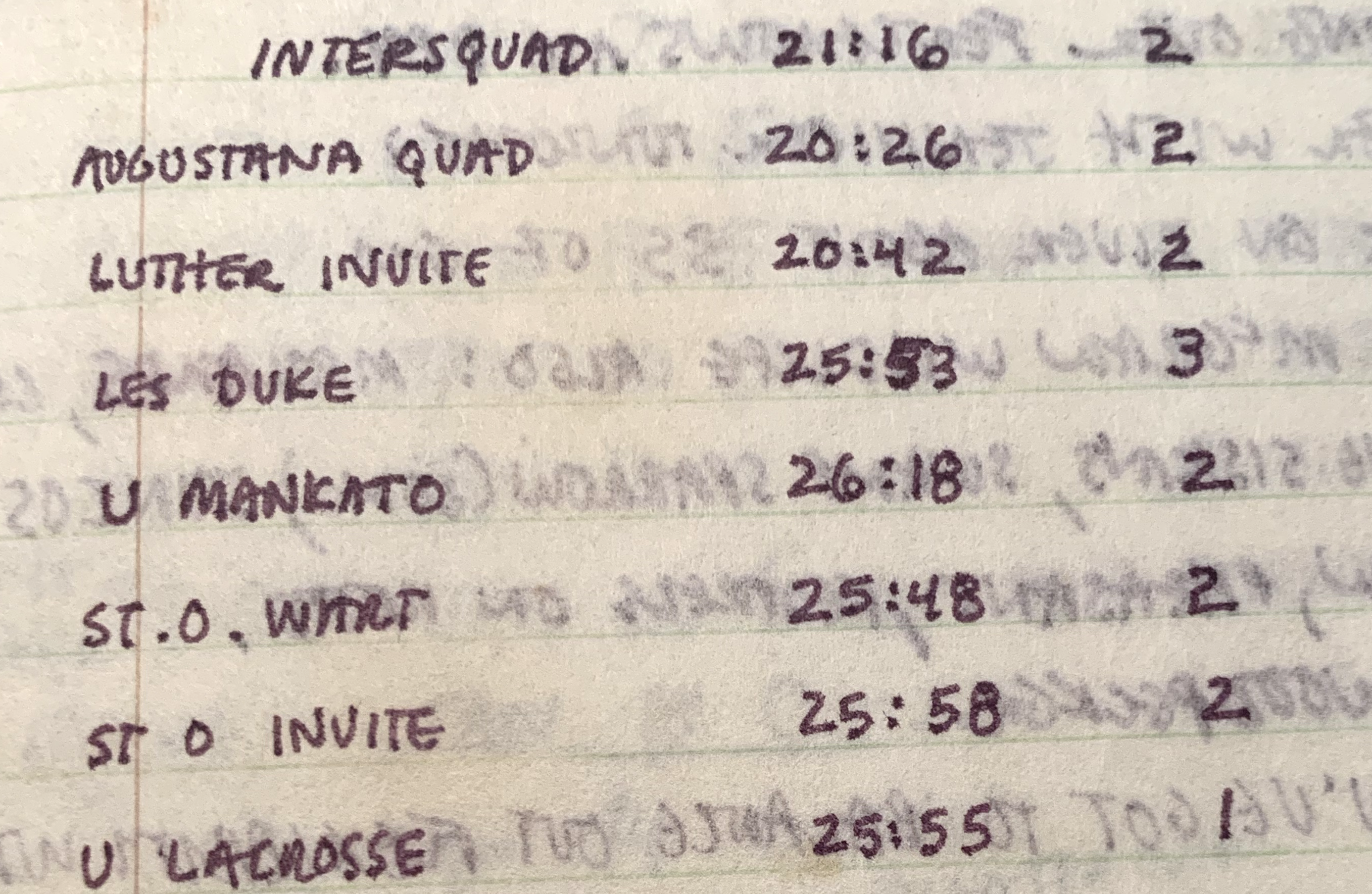
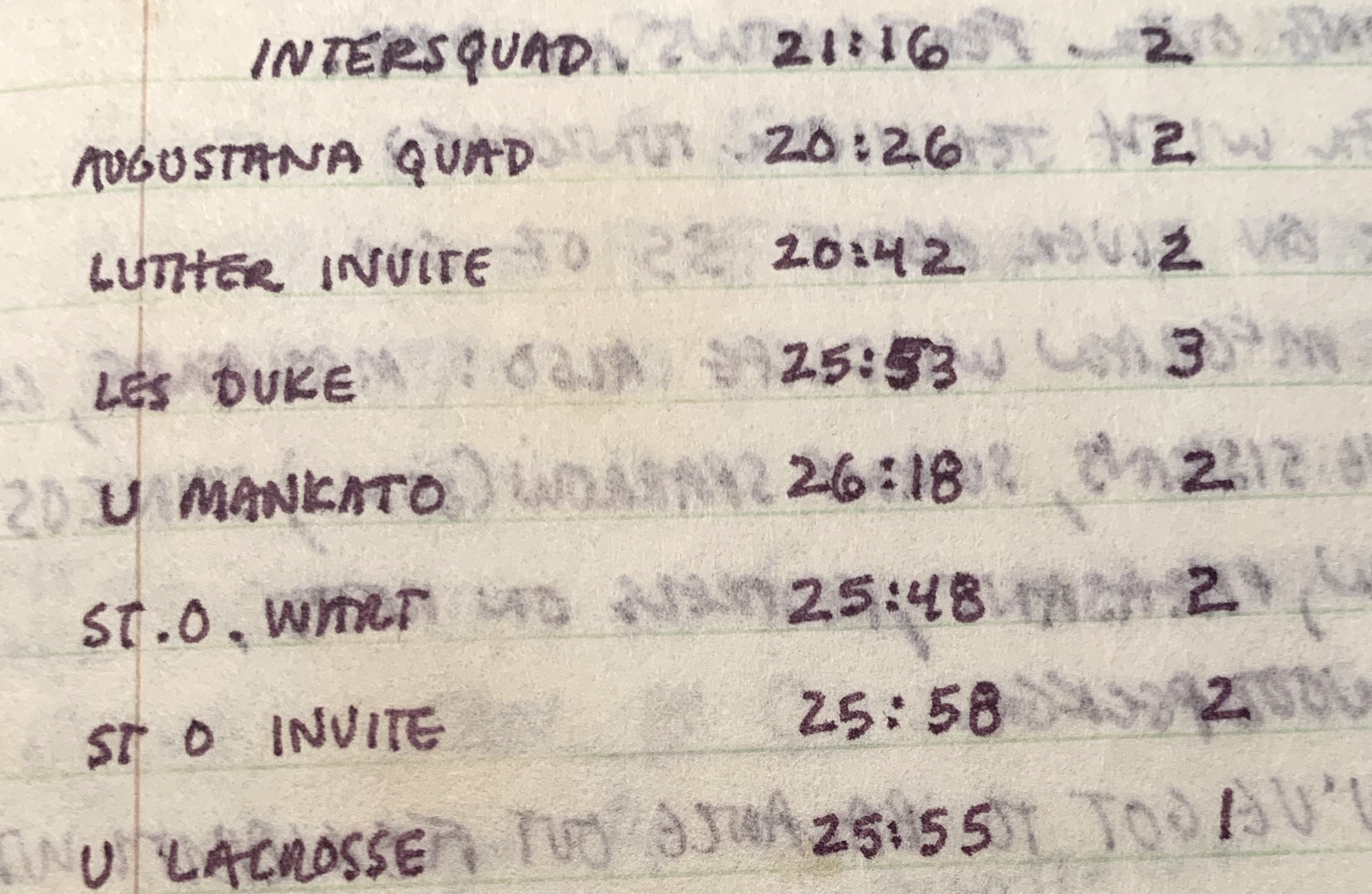
Our performance at Regionals left us in fifth place behind four other Midwestern teams, so we were staring at an uphill battle to improve on that against all the other teams in the nation as well. Earlier in the season, we’d run a four-mile race on the Credit Island Augustana course where the national meet was held, and I’d covered that distance in 20:26 in fifth place overall against UNI, Augustana, and Northeast Missouri. While still rounding into shape in the first meet of the season, our team only had a spread of one minute between us.

The course was flat and fast. That much we knew. There was nothing to do but show up and run as hard and fast as we could.

The night before the race, we were joined at the dinner table by a couple close rivals from Central College. One was their top runner, Jerry Fitzsimmons. After his insulting speech in the wake of his win at the conference meet, we weren’t too keen on his presence, but it proved to be harmless. In fact, it proved to be a bit hilarious.

During the pizza dinner, a couple of pitchers of beer showed up. Apparently, that was not something to which our somewhat quiet competitor was accustomed. That left it to our lead fun-maker Duke Corson to make an impression. He grabbed the pitcher by the handle and chugged down a few large gulps of beer. We all ate hardy and even stopped for a touch of ice cream after the meal.

The weather broke cool and clear after several rainy, cold days in mid-November. By race time at noon on November 18, 1978, the temps outside were fifty degrees under sunny skies. So eager was I to start the race that I actually false-started. The entire field had to pop back into place before the gun went off. Then it was off to the races for sure. Dan Henderson led through the first mile in a reported 4:23 mile. Behind him, Mike Becraft and Jeff Milliman of North Central tried to keep pace. But it was no use. Henderson buzzed to a 23:54 victory while his nearest individual rival was 24:12.

That’s fast stuff for Division III runners. But it was an exceptional talent year and 31 guys finished under the 25:00 mark for 8k. The last All-American slot in 25th place was Jeff Lauber of Tri-State in 24:46. If all of us had been running six miles like the Division 1 distance, those times would have equated to the low 30s for six miles. Not bad.

After washing his pizza down with beer at dinner the night before, Steve Corson led our Luther contingent with a time of 24:59. Dani Fjelstad ran 25:05, Rob Serres 25:08, Tim Smith 25:12, and I finished as our fifth man in 25:16, my best time ever for 8k/five miles to that point in a running career. Only seventeen seconds separated our top five guys at the national meet, yet I was 62nd overall, a full 29 places behind our top finisher Corson. That’s how many guys packed into seventeen seconds.

During the race, I felt that sense of urgency and ran the tightest tangents I possibly could on the looping course. With 200 meters to go, an other-worldly sensation came over me. I somehow knew that I had to pass people and could afford to let no one pass me. I finished tied with Jack Cruse of Glassboro State yet somehow wound up one slot down from him. Tim Smith was tied with Joe Dotson of Rust University in 25:12, yet somehow wound up one slot down from him. Serres wound up tied with two runners as Rogers of Wartburg and a Humboldt State runner, who both ran 25:08 as well, yet Serres was listed below them. Even our sixth and event runners Paul Mullen and Joel Redman had run fast times of 25:22 and 26:01. But the flow of runners was so thick it was impossible to tell how any team had done. The only thing that Kent and our fans saw was that we had finished in a compressed group, one after the other.

In fact, our team had run as a pack through four miles, passing that marker in 20:15. We’d all run faster through that stage of the race than most of us had run in the four-mile race all season. What remained was to “gut it out” the last mile. 17 total seconds was all that separated us at the end.

There was not a second to spare among any of us. I’d never felt such pressure and joy in racing all at once. When it was over, we walked over to our camp, gave tired handshakes, and hung out while scores were being compiled. I threw on my Frank Shorter warmup jacket to keep warm and looked around at the guys. What a season it had been. Now we had to wait for the verdict.

Our fans and parents slapped us on the back. We picked up our gear from our loyal and competent trainer Chuck Kemp, who had seen us through every inch of every meet. We also watched Kent Finanger tally stats on his arns written in marker trying to figure out how the Luther Norse had performed at this penultimate national meet.

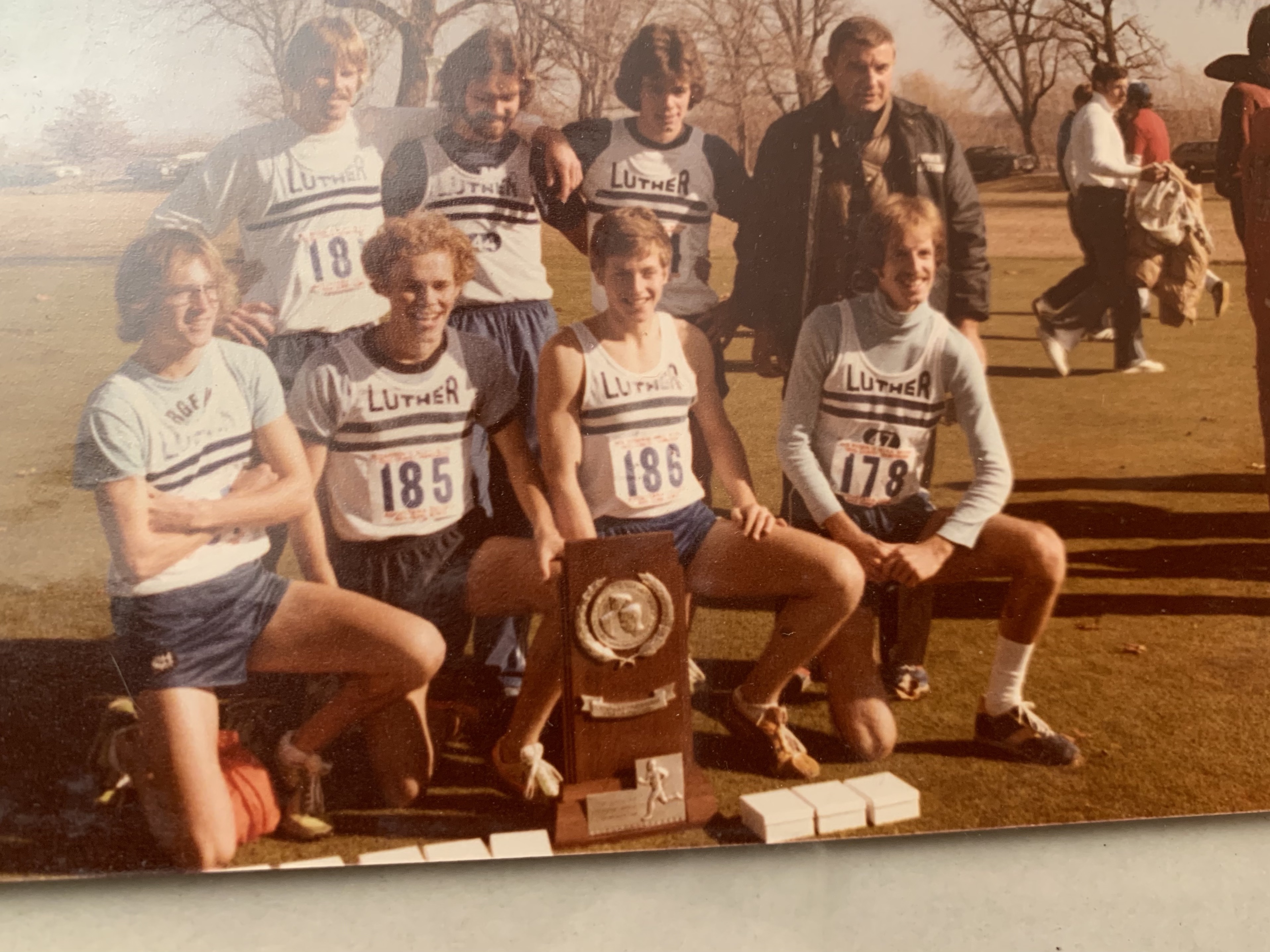
Tim Smith, Joel Redman, Rob Serres, Chris Cudworth (front row) Dani Fjelstad, Steve (Duke) Corson, Paul Mullen, Kent Finanger.

We waited anxiously. What was the result? Kent added up our points in the team category minus the individual runners: Steve, 20, Dani, 24, Rob, 29, Tim, 35, Chris, 42. That totaled 151 points. How would that hold up against the other five teams in our Regional? Had we passed any of them?

Finally, the awards ceremony was called and teams gathered around in bunches waiting to hear how it all worked out. We knew that the winner was obvious. North Central had scored a mere 60 points to win yet another title. What a program!

Then it was time to award the big silver trophy for second place. It was announced: In SECOND PLACE, LUTHER COLLEGE!

We all went nuts. From our squeaky close fifth place at regionals, we’d ascended to second place at nationals. Finally, we’d earned a place as team All-Americans.

The story got even more interesting from there. While we knew the race was close, we had no idea how close it actually was. Behind our 151 points was St. Thomas with 152. Fourth was Humboldt with 158, and fifth was St. Olaf with 209. That meant four out of the top five teams at nationals came from the Midwest Regional. No wonder it had been so tough to advance the previous week! Carleton was the only Midwest team that had an off day in 18th place with 435 points.

We posed for team photos after the awards ceremony. The look on Coach Kent Finanger’s face was priceless, a combination of joy and relief, I’m sure, at having pulled such a close one out. He’d built and rebuilt the team through his recruiting. Earning second place at nationals was a well-deserved reward for such a dedicated coach. His peers certainly respected him. Other coaches know what it means when your team finally comes through. Kent had served as president of the Cross Country Coaches Association the previous two years.

Cudworth, Corson and Mullen leading Jerry Fitzsimmons of Central and Rich Moore of Augie in the Luther Invitational.

Our Central rival Jerry Fitzsimmons did not run well at all that day. He would one day become an All-American runner, but perhaps he was too freaked out from watching us drink beer the night before the race to run well at Rock Island. He managed to come home in 25:42 and 116th place, but that placed him behind all but one of Luther’s top six runners.

The same held true for Matt Haugen of St. Olaf who ran 25:22 after an All-American performance the previous year. The manic pace and two-loop course may not have suited him. But on an afternoon when Dan Henderson lit up the stage, it was either run fast or get left in the cold dust of November.

The truth is that Luther runners did not leave their race at the qualifying meet. We’d taken a risk and run through the race that week to some degree. It could have cost us dearly if we’d failed to advance, but we turned around and peaked on the right day. A seventeen-second spread between 1-5 is some seriously smart running. Coach Finanger noted that we’d bested 20 runners that were ahead of us at Qualifying. That’s how we jumped from fifth at regionals to second at nationals.

In a meet summary written for the Luther College Chips that week, I quoted one of St. Olaf’s runners who talked to us after the meet, “You guys really surprised us. We thought you were done after your finish at Central (Regionals.)”

I wrote in my journal that weekend. “It was extraordinary. We prepared, we planned and held back some. I knew we were better than we had run, and we did. God, thank you for allowing us to do our best. I am beginning to understand.”

Coach Finanger wrote us a long mimeographed message following the race: “This is one of the greatest accomplishments by a team in the History of Luther Athletics. Congratulations to the men who ran and the men who trained as our team all year. Twenty-seven men are members of the 1978 NCAA Division III Second Place Cross Country Team. I tip my hat to each and every one of you because I now know you are the ‘BEST’ in the history of Luther College Cross Country. All season long you have struggled to attain that–all season long with its ups, injuries, illnesses, downs, psychs, races, school courses, roommates, girlfriends, parties, practices, opponents, schedule, workouts, trainers, laundry, meet uniforms…you have always listened, practiced and trained and raced to be the BEST.”

He also wrote: “I have always believed and been taught that it is far better to GIVE than to RECEIVE and I thank with all my heart my Mother and Father, Brother and Sister for developing within me that beginning of a Philosophy of Life and Philosophy of Working with Others. Yesterday we GAVE and that giving was really over four weeks.” Indeed it was. Coach Kent poured his heart into everything we did.

Thinking back, one must take into account the sacrifices and time that a coach puts into every season. It’s not easy guiding a pack of 27 men and 14 women through a college cross country season. Hours are spent mapping workouts, holding team meetings, driving around to monitor the “horses” during long workouts, and then traveling back and forth to meets. All of that requires enormous time and dedication. The only real concession Kent asked was that we let him listen to radio broadcasts of college football on the way back from our Saturday meets. He’d been a top athlete in football and basketball during his own career, and loved the theater of sports as a whole.

On top of all that, Kent taught classes at Luther and raised a family. From a fully adult perspective, I now better understand why he was motivated to kick our asses late in the season when a few of us started talking about ‘burnout’. He didn’t want us to fritter away a legitimate opportunity to achieve something big. Thank God we listened to him and did not waste that chance.

Kent Finanger (right) with his late wife Lucia, son Danny and daughter Sarah. His oldest son Mark ran cross country at Luther and son Philip played baseball and basketball, the other sport Finanger coached. Lucia was the stalwart wife behind Kent. Unfortunately, she passed away from cancer. That was a life circumstance that two of his runners from the 1978 team would also share, as Keith Ellingson and Chris Cudworth both lost wives to ovarian cancer.

The best finish prior to the 1978 season was a Luther team that finished fourth in 1972. That was no small accomplishment either. But on the way back from Rock Island that day in 1978, Kent stopped the lead car, got out on the side of the road, raised his arms in the air, and yelled, “Second in the Nation!” We all joined in.

In an assembly held in the gymnasium a week later, we presented the trophy to the student body, I gave a speech that concluded with, “November 18th was a historic day for Luther College. It may or may not be a long time before a cross country team takes second in the nation, but the special thrill of an unexpected success is the satisfaction I feel and share with you tonight.”

Luther College would win a national cross country championship in 1985. Kudos to that crew of guys who accomplished that win. I’ve gotten to know many of them through reunions and such. They were as crazy as us, and their win was just as “unexpected,” in a way, but not really. The bonds of brother and sisterhood carry us to many places that we do not expect to go.

What I also recall in the wake of the race that day in November of 1978 was walking over to my father and mother. My dad and I had a sometimes tempestuous and confusing relationship, but it was he that directed me into running in the first place. While I hadn’t been a true team leader those first three years at Luther, I stepped up and provided leadership that final season.

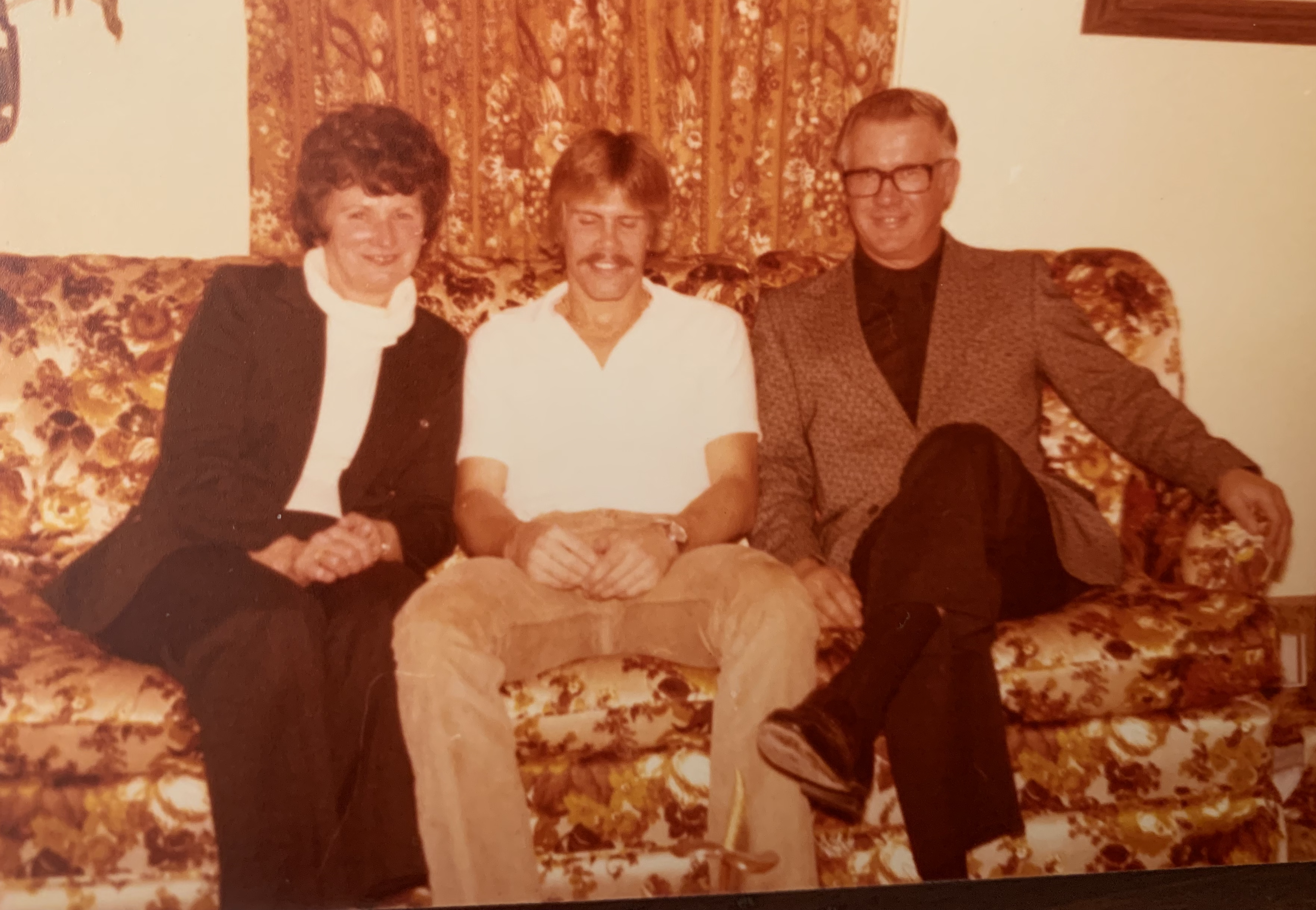
Posing with my folks Emily and Stewart Cuworth in the Finanger home during a celebratory meal with all our parents.

He knew that. So I hugged him and told him something I had not perhaps said in many years. “I love you, dad.” My mother smiled that big smile she always had when she was proud of one of her boys.

It felt good to make them both proud as well.

Dani Fjelstad with his parents. Dani recently retired after a successful accounting and management career.
Paul Mullen with his parents. Successful in business, Paul Mullen now works in Luther College Development.
Steve (Duke) Corson with his parents. Steve later took over his father’s funeral home business.
Keith Ellingson and parents. We lost Keith in 2021 to a series of health issues including Parkinson’s, Lewy-Body Dementia and a heart condition. A year before, Keith was inducted into the Simpson College Hall of Fame after a coaching career in which he led more than 60 track and cross country athletes to All-American status. He was my freshman year roommate.

Posted in 10K, Christopher Cudworth, college, competition, cross country, mental health, running | Tagged , , , , , , , , , , | Leave a comment

50 Years of Running: Performance time

As the last two weeks of cross country season wound down, there was little time for looking backward as all our focus came down to one thing: getting through the Regional Championships to make Nationals. That was our whole goal for the season and the culmination of four years of hard training and racing. The previous year we’d placed eighth in the nation. We thought we could do better.

We’d been through injuries that season with the Achilles tendon debacle. Then we made it through the Conference meet with an 8th straight win. Now it was time to put up or shut up.

After adding up my mileage for the fall, I wrote in my journal: “I have an incredibly skinny face. My body is quite lean, 137 lbs. My whole semester and fall is assessed in two pages. Everything about me is lean. I feel a little mean at times too. Since last November, I have run 2,571 miles. More than ever.”

Earlier, I’d written, “These next two weeks will take some thoughtful dedication. A long list of things will be done, and they should and will be done right. Be calm. Be proud. Be prepared. Be understanding. Be strong. Be yourself.”

While all that was going through my mind, things on the relationship front ran hot and cold. After a 70-mile week leading up to Conference, I wrote, “Hard race. Hills were exhausting. But felt smooth on flats. Warm as heck. Beautiful weather,” and then….”I really love her, but this Jim bastard messes me up a tad. I am feeling strong however. She has been good to me.”

That Jim guy was the bugger back home in Barrington, Illinois who was doing his best to steal her from me. She’d been back to visit her folks a couple times, and each time she returned with hints that her parents favored her dating other men. The Jim guy kept coming up.

I’d met her folks two or three times, and had gotten to see how their family dynamic worked. Her father arrived home from work each night after a commute from the city. He’d go for a slogging run through the neighborhood, then collapse in a Barcalounger chair in the living room with a big drink in his hand. He worked for the Barcalounger company as a VP or something, and it seemed ironic to me at the time that the one thing he enjoyed at home was built by the same company that stressed him out daily. But that was life in the late 1970s. The American Dream.

They lived in a modest two-story Colonial house in a wealthy community out in the far reaches of Chicago’s Northwest suburbs. Her mother was somewhat artistic, so she liked that aspect of me, but she really wanted her daughter to be financially secure in life. On that front, her mother was absolutely right about me. I’ve never become a rich man.

Ironically, her mother had once been enrolled in the same motivational course that my father attended, That meant they actually knew each other before my girlfriend and I met. The motivations to attend that course were sort of odd. My dad had gotten immersed in a network marketing scheme back in the early ’70s that messed with his mind. He never completely freed himself from the approach and language of get-rich-quick schemes and the Zig Ziglar School of Motivation. I never liked that shallow type of motivation. Plus I think Ziglar was full of shit with some of his famous quotes, including this one: “There has never been a statue erected to honor a critic.”

Ziglar’s wrong. Mark Twain was one helluva critic, and there are plenty of statues dedicated to his intellect and wit. Plus, he once said, “All it takes is ignorance and confidence, and success is sure.” These days, I’d call that an indictment of arrogant and corrupt men like Donald Trump, to whom a statue should never be erected. Criticism and cynicism toward men like that have an important role to play in this world. I learned it back then, and I hold it to be self-evident to this day.

I was also especially suspicious of canned motivation after my father blew a bunch of money by sucking up to two corrupt and criminal network marketing schemers. Perhaps that’s why I liked running so much. There were no false premises involved. You either ran hard and succeeded or got left behind. As a noted marathoner, Olympian and great runner Kenny Moore once wrote, “Running is hard, clean, and severe.”

So I could see through some people. Secretly I think my girlfriend’s mother was embarrassed by the fact that she’d attended the same sort of lowbrow course as my father. It was one of those programs where shallow slogans meet high fears. So we didn’t talk about it once the fact was known.

Their family had a chip on its shoulder in other ways. The oldest son had sustained a brain injury somehow. He was susceptible to irrational outbursts at times. I knew him well before dating his sister, and I liked the guy. We’d talked a bunch as we rode up to Luther from the Chicago area in a shared ride common to that era. I understood that due to his occasionally angry behavior, he’d encountered some flack from the college during his years there. The family was not cool with how the institution responded.

Her younger brother, by contrast, was considered the Golden Boy. He was a decent golfer, as I understood it, and fancied himself a good athlete overall. One day while I was visiting the family, he started talking about his basketball prowess and my competitive juices flared. Somehow the conversation turned to my own basketball background and my girlfriend said, “Well, he could beat you in a game of one-on-one.” I accepted that challenge and mopped the court with him 10-1. She was not happy.

There was one sport in which I always accepted a challenge. That was basketball.

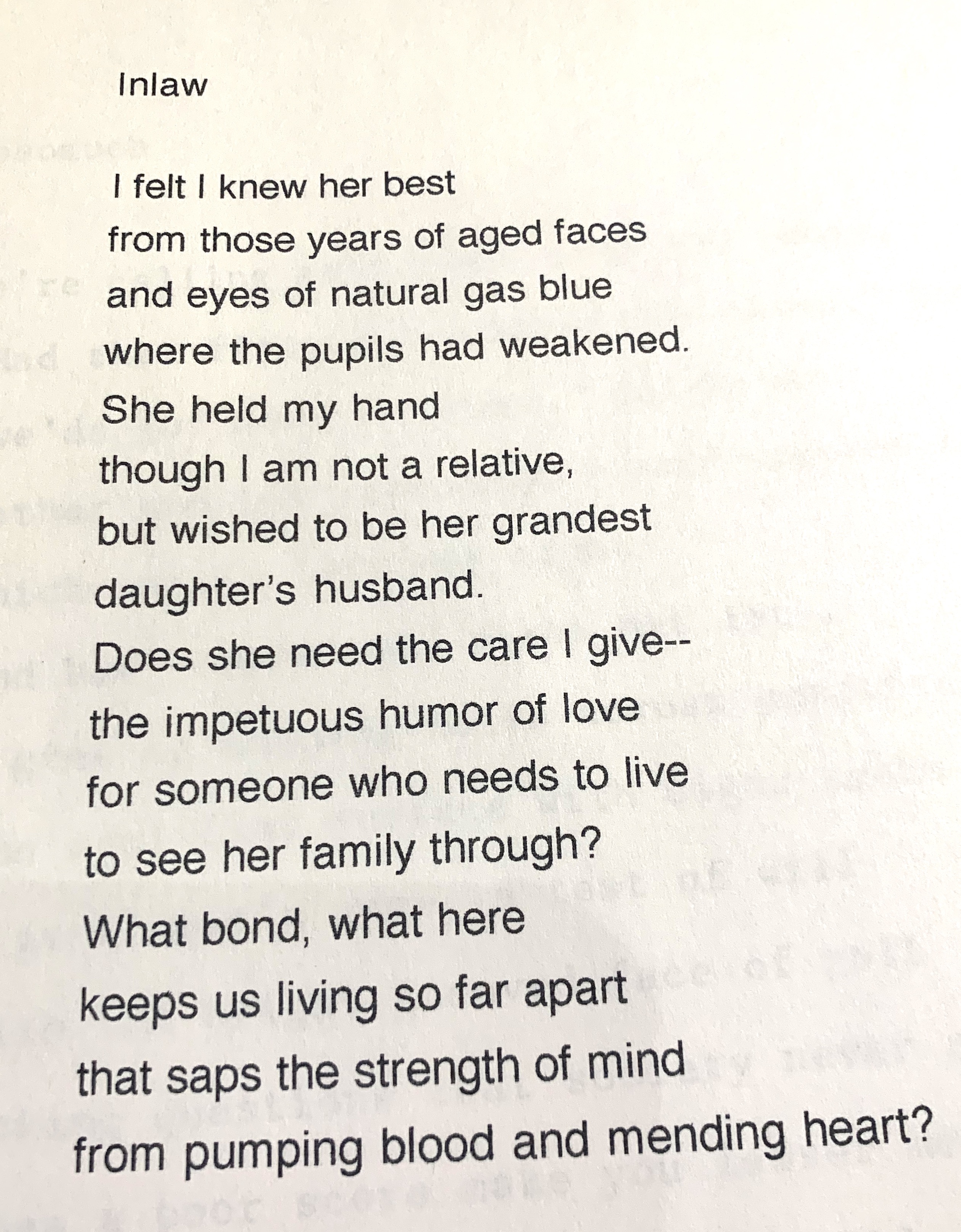
During that same weekend, the family’s grandmother took ill. We all traveled to the hospital. Anxious over her state, the family circled around her bed. I waited for things to settle down and walked over to the bedside on my own. Later on, I wrote a poem about the experience. Clearly I was trying to figure out if I had a place in the family’s future.

All I wanted at the time was to love and be loved. I wasn’t prepared to think five steps into the future, or seriously consider what it might mean to get married. That language was given to me in the context of dating her. My sole and somewhat innocent goal, in retrospect, was to run well for two more weeks of my life. Was that such a crime?

The regional meet was scheduled to be held in Pella, Iowa, the home of Central College, our chief conference rival in cross country and track. The local newspaper coverage set the stage, “Luther harriers to run in Regionals at Pella.”

“Central Head Cross Country Coach Bill Herzog feels the schools to beat will be North Central, Ill., which won in both (illegible) and has never finished below third; St. Olaf, Minn, which will bring last years third and fifth place national runners Mike Palmquist and Matt Haugen; Augustana, Ill., Carleton, Minn., St. Johns, Minn. Nebraska Wesleyan, St. Thomas, Minn and Iowa’s Luther College.

Regionals were held on the Pella Golf and Country Club. The course zigged and zagged up and down the fairways. Having grown up next to a golf course as a kid, I always liked racing on the smooth fairways. But the pace at Pella was super fast. Dan Henderson of Wheaton took individual honors with a speedy 24:28 five-mile time. Kevin and Kurt Roth of St. Thomas, took second and third, and Mike Palmquist of St. Olaf. took fourth. They were all within five seconds of each other in the wake of Henderson’s elite blowout of the entire field.

Zig Zag layouts like this were common when we raced on golf courses. Not so much these days.

Our first Luther runner was Dani Fjelstad in 25:31 for 22nd overall, just behind perennial All-Americans Matt Haugen of St. Olaf, Dan Skarda of North Central, and Mark Malander of St. Thomas. The runners between them and the front pack constituted a who’s who of Division III cross country nationwide. Paul Mausling of Macalester, Jeff Milliman, Steve Jawor and Rich Scott of North Central, and weirdly, Doug Rogers of Wartburg, who hadn’t even placed in the top ten in our conference meet a week earlier. Perhaps he didn’t even run that week due to injury, or else the hills of Dubuque swallowed him whole. In any case, he ran great that day.

Luther freshman Tim Smith, our top guy at conference the week before, was right with Fjelstad at Regionals in 25:35. Steve Corson was right behind at 25:37, Chris Cudworth was fourth man at 25:49 and Rob Serres was fifth man at 25:51. All five scorers finished in the Top 35 in the race, just over fifteen seconds apart.

We ran fairly well, yet we finished in fifth place in the Regional meet. That was the last team to advance to Nationals. The competition was so strong in that race that we barely squeaked through. North Central won with 61 points. St. Olaf was next with 96. St. Thomas took third with 117, and Luther finished fourth with 130.

Augustana, the team scheduled to host the national meet a week later, appeared to have a rough day and finished sixth with 215 points. They’d beaten us at our own Luther invitational earlier in the season, and their runners had not done badly at regional either, with John Isebell in 28th at 25:40 and Duane Peterson in 32nd at 25:43, and Rich Moore wasn’t far behind in 25:46. But the quality of teams in that Midwest Regional was so strong it only took one off-day among a team’s top five to be eliminated.

So the stage was finally set. We’d made it through to Nationals. I got back that weekend and had a mildly celebratory beer with my roommate and teammate Dani Fjelstad. “One more week to go,” we both said.

That night was the first performance of the musical in which my girlfriend played a semi-lead role in Godspell. She had a marvelous voice and loved to dance. The cast worked hard to prepare for the performance. Yet when the curtains lifted and the first singer launched into a solo, she started off-key and it made everyone in the cast struggle to find the right notes. That was shocking, to say the least. Luther’s reputation for music far exceeded even our prowess in sports like cross country and track. I cringed in my seat and waited for the ensemble to dive in and start singing. Fortunately, the show balanced out from there. But my girlfriend was disappointed it started out that way. Just like Jackson Browne once sang, That Girl Could Sing:

She was a friend to me when I needed one
Wasn’t for her, I don’t know what I’d done
She gave me back something that was missing in me
She coulda turned out to be almost anyone
Almost anyone
With the possible exception
Of who I wanted her to be

It goes to show that no matter what activities we do in this world; sports, music, relationships or family, there is always the chance that a small mistake or missed cue will cost us dearly. The trick is tuning out the distractions and maintaining focus when it’s Performance Time.

Posted in Christopher Cudworth, college, competition, mental health, running | Tagged , , , , , , , , , | Leave a comment

50 Years of Running: Take Nothing For Granted

After team members circulated rumors about feeling “burnout,” our coach Kent Finanager turned on the motivational jets. What coach wants to hear their runners bitching and whining their way into failure? The season was already marked by success. But it was the remarkable performance of two freshman that year, Tim Smith and Rob Serres, whose native talent and dedication filled a gap due to the injury-plagued season of Keith Ellingson, our top runner for three years.

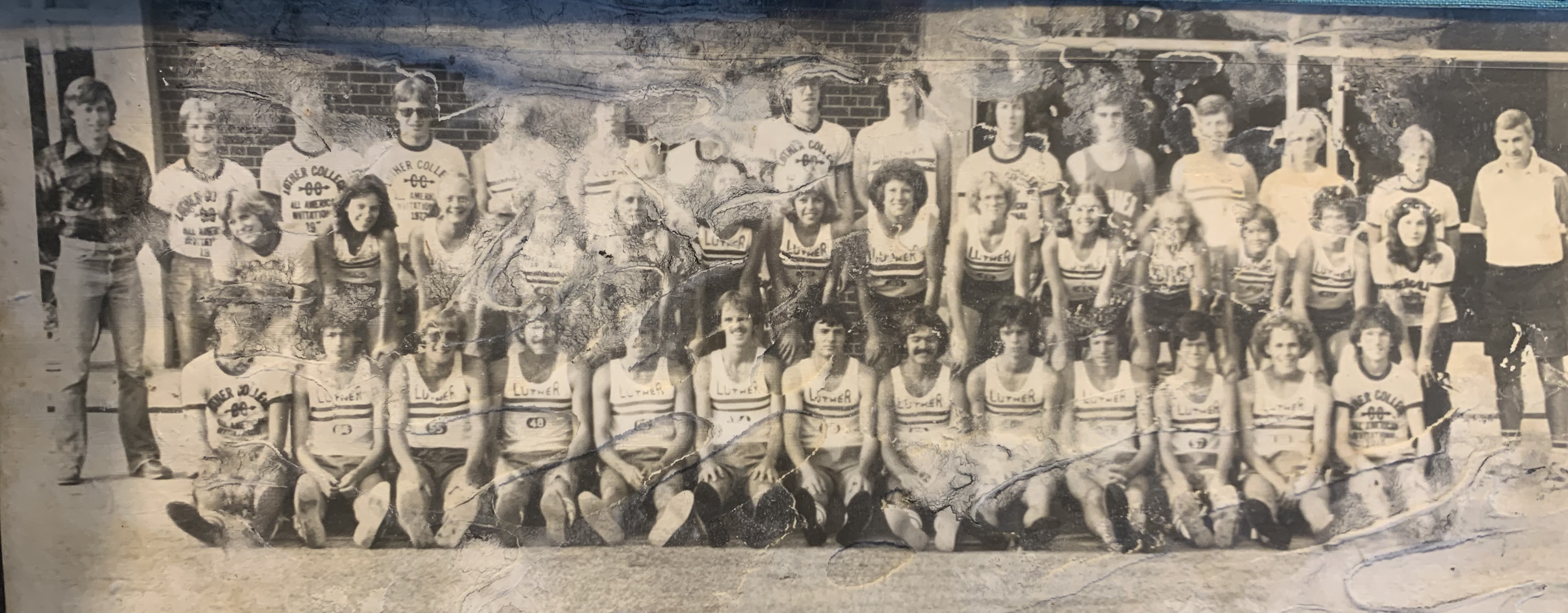
Unfortunately, my team photo from fall of 1978 got damaged in a basement flood, but the size of the team is evident.

Even as Elly started to come back into form with his first sub-27:00 five-mile race at the Carthage Invite, the quality of those two freshman could not be ignored. They were running in the top five every week. Heading into the conference meet their contributions could not be taken for granted.

Smith was a quiet and often introspective distance runner. His presence in the training pack each day was never demonstrative. He demanded no attention. Sometimes he’d slide to the outside of the front group, but mostly he moved within the amorphous group just putting in the mileage. Yet I once looked to the side of the road to find him running along next to us down in a ditch. He was a reserved guy, but also a wryly wise non-conformist.

By contrast, Rob Serres was an ebullient young kid with a strong upper body and a running style more typical of the miler that he was in track. His eyes were always wide and his staccato laughter frequently peppered the training group. He was also an astute observer of human nature. I arrived at practice one morning with a face flushed pink. He stared at me for a moment, pointed at my face and said, “You look like you just had sex!”

I laughed, because it was true. He’d caught me red-faced and post-coital. I’d gotten it on with my girlfriend only minutes before practice that morning, then threw on my shorts and ran straight down to run.

Serres pointed at me again and said, “You did! You just had sex!” he crowed, and the whole team chuckled along. Pretty sure I got a couple back slaps that day as well.

The inspiring truth needs to be said: that 1978 season would not have been so successful without Tim Smith and Rob Serres. While the five captains Corson, Cudworth, Fjelstad, Mullen, and Ellingson represented the core of the team, it was Serres, Smith and sophomore Joel Redman that filled out the team and formed an important glue in our team scores. I’m forever grateful to those guys for their talents. As it turned out, Smith and Serres led Luther to a Top Three nationals performance a year or two later. That makes them the only two cross country runners in Luther College history to have two trophies on their resume. Well done, boys.

With that mix of ages and talent in play, Coach Finanger knew that the chemistry between us was unique, and thus important. When we arrived for practice that Tuesday in late October, the blinds were shuttered in the fieldhouse classroom and a screen was pulled down over the blackboard. We all knew something unusual was happening, but no one was prepared for what came next.

Coach Kent was more animated than usual, and that’s saying quite a bit. He quite typically nudged and prodded us with his favorite saying of “Wow!Fun!Wow!” to celebrate the daily joys of running. He’d often follow up that phrase with a “You can’t beat fun!” and we’d cynically mutter in reply, “Yeah, it’s like a sore dick…” College kids, you know.

But we believed in what he had to tell us despite our snarky college nature. Kent made everyone on the team feel important. Every guy and gal out there deserved that, because everyone put in the same miles of training, albeit at different paces between groups. There are many great small-school cross country programs in the United States, but that Luther Blue was a fun tradition to uphold.

Everyone was paying attention as Kent stalked the front of that room that day with his eyes fixed on all of us. Then he lifted the screen in front of the blackboard to reveal a list of names that many of us had heard before. They were the names of some of the leading cross country coaches in the country. Kent began explaining the reasons why he listed those names on the blackboard.

“I called Ted Haydon, University of Chicago,” he told us. “I said, ‘My boys think they’re burned out. But look at the results!” Finanger turned to us with all his physical and emotional energy poured into what he was about to say. “Coach Haydon says you’re not burned out,” he told us. Then he listed all the wins we’d accomplished thus far that season.

Kent listed the screen a bit further, revealing another name to us. “And I talked to Dan McClimon, University of Wisconsin,” Finanger continued. The Wisconsin Badgers were one of the top cross country programs in the nation. “Dan McClimon says your training looks good. Your results look good. You look ready to succeed,” Kent intoned.

We knew that McClimon knew what he was talking about. The UW Hall of Fame lists his accomplishments on their website:

  • Served UW as head men’s cross country (1971-82) and men’s track (1978-83) coach
  • Three-time (1978, 1981, 1982) NCAA Cross Country Coach-of-the-Year and five-time NCAA District Cross Country Coach-of-the-Year
  • Led the 1982 Badger cross country team to the NCAA title
  • His cross country teams qualified for 11 NCAA Meets in 12 years and registered seven Top-10 finishes
  • Five of his cross country teams won Big Ten team titles
  • Thirty of his student-athletes won Big Ten individual titles (three in cross country, 27 in track)
  • Coached 36 All-Americans (18 in cross country, 18 in track) one national champion (steeplechase star Randy Jackson in 1980)
  • Served as President of the NCAA Cross Country Coaches Association
  • Served as head coach of the U.S. National Team in a meet vs. the Soviet Union in 1982

It shocked us that Finanger would call the head coaches of these well-known programs to discuss our little Division III cross country school. But Kent was well-respected nationwide and served at the national level cross country association as well. He knew what he was talking about. And he wanted to remind us that he did.

His voice rose with enthusiasm and positive fury as he related what even more respected coaches said about our program, and us. I confess that I was shaking in place while sitting my seat. At that point, I wanted to go out the door and run through a wall or two. My eyelids filled with tears as Kent kept up the psychological pressure. He was literally running over the idea that we were ‘burnt out.’

Then our trainer Chuck Kemp pulled out a cardboard box. He handed out tee shirts to everyone on the squad with a big number 8 the size of a football printed on the front. “We’re going for #8 this weekend,” he explained with regard to the conference championship. We wore those shirts for the run that day.

And so it went during the last few weeks of preparation for conference, regionals, and nationals. More motivational talks, often complemented by tee shirts suited to the theme.

And that weekend in Dubuque, on that horribly hilly course at Bunker Hill, we didn’t mess around, taking 7 out of the top ten spots. Tim Smith led the way in second, Paul Mullen ran third, Steve Corson fourth, Dani Fjelstad was sixth, Rob Serres in seventh, Chris Cudworth in eighth, and Joel Redman, our seventh man in ninth place. While I didn’t kill the performance that day, there were only two other runners in the conference that beat me, and it was my highest finish in the race since a ninth place as a freshman. The Luther press release from that meet said it best. “Coach Finanger said, “We’re certainly pleased to win our eighth straight conference title. Our performance was truly a team effort, with our seven runners only 17 seconds apart from each other.”

The only odd part of that meet was the post-race speech given by the individual conference winner Jerry Fitzsimmons. Clearly happy to have beaten the Luther guys for the win, he launched into an embittered talk about our rivalry that made everyone present uncomfortable. We all understood the reasons behind his combative talk, but found it unfortunate that he let loose at an occasion like the awards ceremony. That was no way for a “Runner of the Year” to behave. But part of me could not blame him. It’s tough to bump heads with a seemingly immutable rival, losing season after season.

Fitzsimmons was an exceptional runner and proud of his improvement. I might have made a similar speech if I’d been in his position. But I remember that his talk infuriated Coach Finanger, whose principles of sportsmanship were indeed pure. The only time I saw Kent that mad was during our freshman year when the Mankato coach announced that there were be no mile times given out to the entire squad. Kent believed in achievement, but he also embraced and delivered equality of opportunity to every runner in every program.

Consider his commitment to those principles. Coach Finanger had brought the Luther women’s program from two gals in the fall of 1975 to a full roster of nearly 15 women that fall of 1978. The girls were starting to make an impact in the Midwest, and one of the top women runners, Cheryl Westrum, actually finished third in the Chicago Marathon that fall in 2:57, a sub-7:00 performance.

Those Number 8 tee shirts really had done the trick. No words of burnout were spoken from that point forward. We ran our workouts with renewed focus, but there were immense challenges immediately ahead with the first-ever cross country regionals to be held in Pella, Iowa. Even with a great season behind us, we knew that it would be tough to qualify for the national meet to be held on the course of our keen rivals, Augustana College in Rock Island, Illinois.

Posted in Christopher Cudworth, college, competition, cross country, running | Tagged , , , , , , , , | Leave a comment

50 Years of Running: Petrified into silence

Coming off our narrow 28-29 dual meet win over LaCrosse, our team traveled east across Wisconsin to compete in the Carthage Invitational at Petrifying Springs State Park in Kenosha. We’d always performed well in that meet, and our pack was consistently running with less than a 30-second gap between our first and fifth man. We figured to do well, and planned to win the thing.

The big individual prize at Carthage was winning a watch for placing in the top ten. After a couple down races due to soreness and injury, our top runner Dani Fjelstad battled Doug Diekema from Calvin College for the overall victory. Diekema ran 25:32 and Fjelstad, 25:40. That didn’t surprise me, because I’d once watched Diekema run a solo 9:00 two-mile in a high school dual meet.

Our second man that day, Steve Corson, barely missed out on a watch by placing 11th in 26:14. The Carthage course was an up and down affair with narrow trails that made passing difficult at times. Yet we still managed to “pack up” as our third man Tim Smith ran 26:22 in 13th, Joel Redman 26:24 in 14th, Chris Cudworth, 26:26 in 15tth, and Jeff Dotseth 16th in 26:27. I recall not feeling all that great during the race, with a side stitch slowing me at the halfway point. Perhaps it was the long ride over from Decorah, or something I ate the night before, but I hung in there as our fifth man that day. Perhaps I’d burned off energy as our first man in the Tuesday dual meet, but Carthage was the first time all season that I’d finished below our 3rd man.

Had I run to full potential that day we might well have beaten Northwestern University for the team title. As it was, we had 55 points to their 53. We felt pretty good about competing at a level with a Big Ten team. Granted, a squad like Wisconsin would blow us off the map, but hey, everything is relative. There was also a glimmer of hope a little ways down in our squad. Keith Ellingson ran 26:48 for 26th place on the day. The back injury that had held him back all season was finally beginning to relent. He placed as our seventh man for the first time all season.

On our way back from Carthage the college antics started up again with a beer stop in Mt. Horeb. There was a sick little tradition of drinking in the cars on the way back from Carthage, and the fall of 1978 did not disappoint. Usually, we’d purposely miss a stoplight in some small town along the way so that Coach Kent would get ahead of us. Then we’d load up on beer to drink and talk and sing our way back to campus. Those trips and others like them were stupid as hell, and I’m grateful nothing ever happened. No drunk driving accidents or head-on collisions the country roads of Wisconsin, Minnesota, and Iowa. Those were our swing states on many occasions.

Conference time

Back in Decorah, we gathered for practice that Monday with the Conference meet staring us in the face the next weekend. We’d won the meet three straight years as a team, including a 15-point sweep our freshman year. We knew that Central College was improving quickly, and the course at Bunker Hill Golf Course in Dubuque was not going to do us any favors. We were shooting for our eighth straight victory in the Iowa Intercollegiate Athletic Conference.

That week during a pre-workout meeting, Coach Kent overhead someone on the squad mention that they felt “burnt out” from all the training we’d done thus far. There’s no question that training in a constant tired state has its risks. We’d trained through nearly every meet that season, even doing morning runs on the day of invites and dual meets. A bit of mental fatigue does up toward the end of a season, especially with 13 meets on the schedule.

I’d added up my mileage in the journal that week out of curiosity. The weeks went 70, 80, 91, 82, 90, 99, 85, 82 and 79. That totaled 758 miles, and 84-mile-per-week average.

But hearing some of us bitching about being tired or “burnt out” did not sit well with Kent Finanger. He lectured us on the importance of thinking positively, not turning negative thoughts into reality. He delivered a fiery speech in the fieldhouse classroom where we gathered before workouts. We were all petrified by the seriousness of his tone. He then sent us out for a six-mile run with simple instructions: “No Talking.”

So it was that we ran the Under Phelps-Ice Cave route with none of us saying a word. The only sound was the crunch of our footsteps on the gravel road surface and the noise of our breathing. Occasionally someone might cough a bit, or blow a snot rocket, but mostly, we ran. And said nothing. The absence of talk after running together for four solid years had a dramatic effect. I think we all finally realized why we were together in the first place. To run as well as we could.

Back at the campus we met again in the fieldhouse with Kent. He could be an intimidating man when serious business was afoot. “Good, boys,” he observed upon our return. “Now shower up and we’ll see you tomorrow.”

Posted in Christopher Cudworth, college, competition, running | Tagged , , , , , , , , , | Leave a comment

50 Years of Running: The Achilles Heel

On October 2nd of 1978, our cross country team ran a hill workout in Palisades Park, a bluff reserve on the southeast side of downtown Decorah. That weekend, we were scheduled to race at the St. Olaf Invitational. My former roommate Paul Mullen was in my group, and we talked about the upcoming race. He’d been working through an extremely sore toe during the early season, but was still racing at a high level as our second or third guy. Still, he had his concerns. “Cud,” he said, pulling me aside. “You’re running really great, but we need you to step up this weekend. Fjelstad’s hurt, and we need you to be a leader.”

I assured him that I was ready.

However, the mileage was piling up already that season, as was the daily pace we ran. We typically ran much faster than what Coach Finanger prescribed. Something had to give and after that Palisades hill workout and a set of 50-yard pickups on a cambered road during a ten-mile run, I felt a twinge and then deep soreness in my left Achilles tendon.

I was not alone with that problem. The rest of the top guys were all sore as well. Coach had made a big mistake having us run repeats on that slanted road. We were all paying the price.

Up to that point, I’d been largely healthy the first four weeks. I wasn’t panicked, but I did go to the campus doctor to see if there was some sort of aspirin or something I could take to quell the pain. He wrote out a prescription and gave me a bottle of pills to take. The label said: Butazolidine.
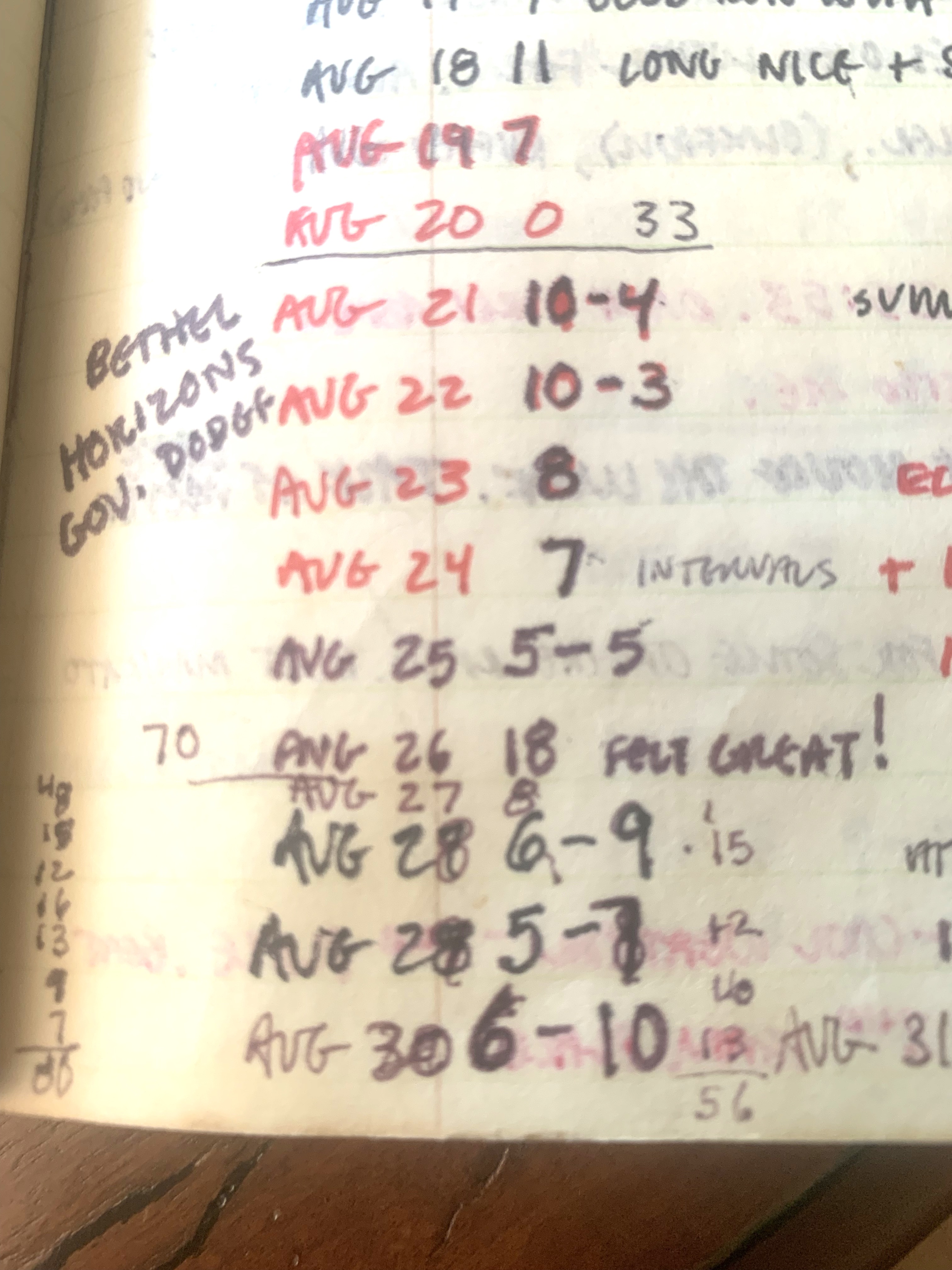
Medicine.net describes its effects this way: Phenylbutazone is prescribed to treat inflammation and pain that results from ankylosing spondylitits, rheumatoid arthritis, gout, and osteoarthritis. Phenylbutazone has been removed from the United States market due to the availability of newer drugs with less adverse effects.

I took one of the pills right away, and within an hour or so I could barely function. My head was dizzy and I had trouble concentrating in class. I skipped the morning run the next day. Then I took another pill as the prescription required, and showed up for practice that afternoon to run six miles in an absolute haze. That’s when Coach Finanger announced that we’d all be making a trip up to the Mayo Clinic in Rochester, Minnesota the next day. Our season was at risk of ending if we didn’t all fix these Achilles problems.

We met with a physician named Dr. Hamlet Peterson, a Luther grad that Kent Finanger knew from his college days. He asked us all some questions. When it came my turn to talk with him I handed him the bottle of pills I’d been taking.

“Who gave you this?” he wanted to know.

“The campus doctor,” I replied. “I’ve been kind of dizzy the last couple days.”

“No wonder,” he told me. “This is how much they give to horses. Stop taking this right away.”

That afternoon, we all stopped at a running store and bought new shoes, a Brooks model called the Varus Wedge. The shoe had a built-in supination insole, and it did seem to help us all get back to running. The Achilles loosened some, and that weekend, I raced to 8th place in the St. Olaf Invitational with Paul Mullen just ahead of me in seventh.

The leg remained sore through the middle of the following week, when it finally started to fully heal up. With no race scheduled on the 15th, we ran 13 miles on an evening run out to Bluffton and back the Thursday before the weekend. That was a good sign.

Two-a-Days

Getting up every day to do those morning runs was an act of pure discipline. My roommate Dani led the way many of those sessions, which we typically did at 6:00 pace. I recall racing through the streets of Decorah one chilly October morning and showering quick at the dorm so that we could grab breakfast and make class together by 8:00 a.m. Those morning runs replaced all the times I’d spent in the dishroom those first three years at Luther College. I was relieved to be done with that drudgery, and free to put in the necessary miles to build greater fitness.

When we sat down to class that morning, our Anthropology instructor Clark Mallam asked Dani and I to stand up. He turned to the class and said, “Do you see these two guys? I saw them flying through Decorah this morning on a workout. How far did you go this morning? he asked.

“Eight miles,” Dani replied.

“They work hard,” Mallam said with some admiration. We often saw him at meets along with many other Luther professors.

But with all the back and forth of training and racing and injury and recovery, I was in no mood for the ongoing gamesmanship with my girlfriend. She was pressing too many buttons about my dedication to her, and on Friday night of October 14th, I put my foot down and told her I was done. We had a grand breakup fight but made up by morning with the requisite makeup sex. There was no meet scheduled that Saturday, so we went for a walk with our friends Bob Snodgrass and Kirsten Rove. It was cool and windy, but the sight of her jet black hair and bright green eyes against the fallen leaves swept me back into her spell.

That Tuesday, we raced against our perennial rivals from the University of Wisconsin-LaCrosse. I’d always run my best races against them in both track and cross country. We’d lost to them in dual meets those first couple seasons at Luther because the Hanson brothers Jim and Joe were too much of a one-two punch. But we’d built up confidence over the years and stood a great chance of winning that dual. I drew up a flier to post around campus to let people know what a great race it might be.

Regrettably, the one guy that was still struggling going into the LaCrosse dual was Keith Ellingson. His sore back refused to heal properly all season. But we continued to hope that his baseline training and natural talent would be allowed to come through by season’s end, because he’d been one of our finest runners all four seasons at Luther. A former conference champion and team leader. And a premier jokester, to say the least.

The course at Luther began on the lower campus with a loop around the giant athletic field at the base of the Oneota Valley. Then it climbed a rough dirt trail to the upper campus, and before I even knew what was happening, I found myself with a lead going into the two laps that would constitute the next four miles of racing.

With a half-mile to go, I finally got passed by a LaCrosse runner, Steve Ostwinkle, who tore ahead to a nine-second victory at 25:46. I finished second in 25:55 on our hilly layout, and Dani Fjelstad took third in 26:04. Bill Fischer and Jay Heldt of LX took 4th and 5th, and Luther’s Rob Serres took 6th. Jeff Miller of LX was seventh, and Steve Corson, Tim Smith, and Joel Redman were 9-11 to seal our 28-29 margin of victory.

That was the first and only time I’d been Luther’s first runner in a varsity cross country dual meet. After four years of racing, that made me feel like I’d actually arrived. It wasn’t a conference championship, grant you, but it didn’t matter to me at the time. My goal was always to be a leader for the team, and it finally happened. My season up to that point was consistent and solid.

Fjelstad always kept a few cold Michelob beers in our dorm room fridge to open when we got back from meets. For several weeks I’d been the second team man behind him in most meets, and we’d clink those beer cans together and take a long sip of celebration. There is no more determined human being on earth than Dani Fjelstad, and it helped to have him as a roommate. I can say the same thing for the two previous years as well. Paul Mullen was also an exceptional guy, and we had many laughs and motivating times together. Plus he put up with my artistic ADHD and all that. God Bless You, Paul.

Thus it hurt that my freshman year roommate Keith Ellingson wasn’t running up to par that senior year that I finally arrived. I would have liked to have raced alongside (or right behind him) when I was finally capable.

We all had our travails and our surges over those four years. And by mid-October 1978, with the season 2/3 over, it was time to get serious about what our prospects were for the final meets of the year. We still had the Carthage Invite to run, and the IIAC Conference meet to complete on the godawful Dubuque course with its horrific hills. There was not a flat spot on that course. Frankly, I dreaded it.

Then we’d face the challenge of qualifying for cross country nationals through the first-ever regional meet. That was new territory for every team in the country, and there was plenty of good competition in the good old Midwest with North Central College, a perennial national champion it seemed, always leading the way.

Posted in 13.1, 400 workouts, Christopher Cudworth, college, competition, cross country, life and death, love, mental health, mental illness, sex | Tagged , , , , , , , , , , , , , , , | Leave a comment

50 Years of Runner: Let’s rock and roll

During the summer of 1978, I finally bought my first Rolling Stones record. I’d always been a Beatles guy, but of course I knew the Stones’ music, and my favorite songs were Tumbling Dice and Happy, on which Keith Richards took the lead vocal. The album Some Girls featured Mick Jagger weaseling his way through the disco hit Miss You. But it was the astoundingly intense song Shattered that I loved the best. I’d hang at the back of our training pack trading lyrics with fellow Luther runner Joel Redman who was just as odd and obsessed as me. We loved the way Mick sang these lyrics…

Laughter, joy, and loneliness and sex and sex and sex and sex
Look at me, I’m in tatters
I’m a shattered
Shattered

Shedoobeeee…

Right behind the Stones on our running album track was brand new music by The Cars, whose song Just What I Needed captured the peripatetic nature of college love:

I don’t mind you comin’ here
And wastin’ all my time
‘Cause when you’re standin’ oh so near
I kinda lose my mind

It’s not the perfume that you wear
It’s not the ribbons in your hair
And I don’t mind you comin’ here
And wastin’ all my time

That music blasted from giant speakers set up near the starting line of the Luther Invitational. It launched us as a pack, but Augie proved even stronger that day.

Leading Luther’s Steve Corson and Paul Mullen next to Central’s Jerry Fitzsimmons at the Luther Invite.

In the third week of the season, capped by a 90-mile training week, I ran four miles the morning of the Grinnell Invitational, then raced the five miles at high noon in 25:53 for fifth overall. My roommate Dani Fjelstad won the race in 25:18, beating Jerry Fitzsimmons of Central College. My former roommate Paul Mullen took third, and I was barely outlasted for fourth by Central’s Brian Hantsbarger.

We were training right through those early season races. We’d run hard all week and show up ready to race whatever opponent we faced. I’d warm up, stand on the line and think, “Let’s rock and roll…”

Leading the pack at Grinnell behind Fjelstad of Luther and Fitzsimmons of Central College.

That Tuesday, September 26, we hosted Mankato State at the Luther course. During the day, the weather turned hot. The Mankato guys arrived from up north where the weather was much cooler when they left. They showed up in Decorah dressed in thick jerseys suited for much colder weather. Those poor guys suffered through that race. Fjelstad and I went 1st and 3rd in our first five-mile race of the season, 26:13 and 26:18. Their guys took second and fifth, but Luther swept the next five places for a 22-39 win. I remember feeling a bit bad for the Mankato team in their sweat-soaked winter jerseys.

That week I clocked in with 99 miles of training and racing. We traveled to Waverly, Iowa that Saturday, September 30, to run against Wartburg and St. Olaf in a triangular. Fjelstad chalked up his fifth straight win in 25:31 and I took third in 25:38 behind perennial St. Olaf All-American Mike Palmquist. I also noted in my journal that I “Beat Haugen”––St. Olaf’s other All-American runner. Paul Mullen finished right behind me in 25:53, and Tim Smith, Steve Corson, and Rob Serres packed up from 25:55 to 26:00. We beat Wartburg 15-50 and St. Olaf 23-35.

Placing in the top five consistently affirmed my confidence and inspired me to reach even greater fitness. We ran hard intervals between all those double-workout, high mileage days and traveled to the St. Olaf Invitational in Minnesota for yet another showdown with our Lutheran school rivals.

I was also growing stronger in love my girlfriend. We had a nice balance in time between her commitment to the Godspell show and my daily running schedule. We cherished time together because we were both busy and brought things for discussion every day.

But a strange thing happened one day coming out of the college union.

We were holding hands leaving the cafeteria and I was leading her through the passing crowd when I felt a hard tug on my hand and spun around to see her throw a cup of orange soda in the face of a track teammate of mine. Shocked and freaked at the same time, I looked at him and asked, “What happened?’

“He grabbed me,” she insisted. I looked at my teammate, who stood 6’3″ and weight a solid 190lbs of football muscle. He looked right in my eyes and I said, “Hey man, no trouble, okay?” The confrontation was compounded by the fact that there were just one-hundred black students attending Luther at that time.

We parted ways peacefully but she was incensed that I had not somehow chastised him. “Well, I didn’t see what happened,” I told her. “It might have been a mistake. I know him…he’s not one to do anything like that.” She was not satisfied by that response, but calmed down by the time we reached the dorm.

oThat weekend, she was flying back in a private place to visit her folks back in Barrington, Illinois. I rode with the team up to St. Olaf and ran a superb race on a hilly course, taking 8th overall behind Jim Ingold of LaCrosse, Mike Shockency of St. Cloud, Matt Haugen of St. Olaf, Paul Mausling of Macalester, Bob Pappas of Carleton, and my teammate Paul Mullen. We both swept around Steve Hahn of LaCrosse in the final straight to run 25:57 and 25:58 respectively. That was one of the finest joint sprints I’ve ever executed. Our final kick gave Luther the win over LaCrosse, 58 points to 60. Fjelstad had a bit of an off day for the first time all season, running 11th in 26:06, while freshman Rob Serres ran 26:10 and Steve Corson 26:20 for our top five. The total spread between our first and fifth man was just 23 seconds. Luther was now running with the elite teams in the Midwest.

A photo taken at the St. Olaf Invitational in the final week of September, 1978.

That weekend was the first two days I’d spend without my girlfriend since coming back from the RA Retreat in August. I went out birdwatching on Sunday morning and found a pair pileated woodpeckers and a merlin (falcon).

I wrote: (She’s) gone for the weekend. I’m a little lonely. I ran well today and have dorm duty, thus no one to share it with. 99 miles this week. I just want to stay healthy and run well. I miss her, although I sort of value the time alone. Her flight back is delayed.”

Something in me began to sense that while she and I were in love, it felt like a game between us. When she was back home in Illinois, she visited some slightly older guy and according to her report, he stripped down to nothing and paraded naked around the room. I couldn’t tell if she was upset by that or trying to make me feel jealous.

Jealousy had already entered our relationship. A few weeks earlier when I was hanging out at a bar on a Friday night with friends, a really cute classmate started up a conversation with me. In walked my girlfriend at that moment. She immediately barged in between us with her eyes flashing in a clear message to the other woman, “Leave my man alone.”

Back and forth it went. One day it felt like we were made to be together. The next day I wondered what she wanted from me. Then one night with some time on my own, I laid back to listen to the Some Girls album and the song Beast of Burden played. The lyrics struck a chord:

I’ll never be your beast of burden
My back is broad but it’s a-hurting
All I want for you to make love to me
I’ll never be your beast of burden
I’ve walked for miles, my feet are hurting
All I want for you to make love to me

Am I hard enough?
Am I rough enough?
Am I rich enough?
I’m not too blind to see

Confident and strong as I was that fall, those were questions to which I did not know the answer, and probably never would.

Posted in Christopher Cudworth, college, competition, cross country, mental health, running, sex | Tagged , , , , , , , | Leave a comment

50 Years of Running: A New Me

My parents both drove back with me to Luther College in the fall of 1978. We took the back roads through southwestern Wisconsin to enjoy the scenery, stopping at times to get out and stretch while gazing at the hazy hills from some high point on a country road. The purple blooms of bee balm coated every hill. The sun was bright and we were all in a good mood. It was quite the change from years previous when everyone in our family seemed to be struggling with one type of mood or another.

I hauled my stuff up to the large dorm room that I’d earned by signing up for a Residents Assistant role that year. That commitment required attendance at an RA Retreat at Bethel Horizons camp north of Dodgeville, Wisconsin, so I had to turn right back around toward Madison to attend that event. I don’t recall if my parents drove me back in that direction, or if I rode with other students to the camp. In any case, I was excited to be heading into the school year with confidence rather than trepidation, as the case had been the year before.

My summer tan was rich and brown, and the sun didn’t let up that week in Wisconsin. I got up well before the rest of the campers to do a set of morning runs. My journal that week recorded several ten-milers through the hills of Governor Dodge State Park. By the time it was over, I put in 80 miles.

Journal entry from August, 1978.

The RA Retreat consisted of a series of meetings to educate us about Luther campus policies and how to interact with our fellow students in a supervisory manner. It wasn’t hard work, mostly conversational groups, and some singing along the way. During the middle of the week, the organizers held a campfire on the side of a valley. The August moon rose large and yellow in the eastern sky. I’d been edging closer to a girl all week in hopes of asking her out when we got back to Luther. Then a group of guys was gathered in the parking lot and one of them mentioned that she was looking good this year. I jumped into the conversation right away. “Yeah,” I agreed. “I’m going to ask her out when we get back to Luther.”

I was protecting my prospects. That night at the campfire I sat down next to her without hesitation. As the conversation softened she spun around to lay on the blanket next to me and placed her head back on my knee to look back up at me. I looked into her eyes and instantly fell in love.

There was no doubt about my feelings from that point forward. It was love at first sight and I fought for her attention the rest of the trip. I didn’t have to fight hard. She was just as interested in me. I liked her jet black hair and exceptionally green eyes. I kept thinking about her during those morning runs, and we rode back to Luther in the same car, holding hands, as I recall, because we’d become an item.

For a guy that was already feeling much better about himself for the first time in years, falling in love made it that much better. She’d be serving as an RA in the Miller dorm and I was in Dieseth, so our commitments and schedules would be similar. Her big goal that fall was preparing for a semi-lead role in the college musical Godspell, while I was focused on helping our cross country team finally meet its full potential.

Unvested interests

There was one more item of business that needed to be handled going into that senior year in college. My girlfriend from the previous year still wanted to continue our relationship. I met up with her on campus and explained that I’d be going in a different direction and that we were definitely no longer together. “Well, I made you this down vest,” she told me, handing it over. “You can still have it.”

“No, I don’t think that’s a good idea,” I told her. “It’s definitely over between us.”

“I get that, but I don’t want it now. You keep it.” I shook my head and walked away with the vest.

A few days later, while walking through the college union, I was holding hands with my new girlfriend while wearing the vest. Suddenly I felt a tug on the vest collar, then a ripping noise as she tore it in two, right off my back.

I felt horrible at how I’d handled that entire relationship. But now that I was really in love, I recognized the difference between what I’d pursued the year before and what was going on in my life at the moment. There was no turning back.

The New Me

Another weird moment came that week at the inaugural fall party for Pi Sigma Omicron, the local fraternity to which I’d belonged the two previous years. Stepping into the party, I wandered around a bit before walking up to some guys I knew and greeting them, said. “Hey dudes.Good to be back, huh?”

They stared at me for a moment. “Do we know you?” one of them asked.

“It’s Cud!” I replied. “I just got rid of the hair, the glasses… and the beard.”

“Fuck, man, you look different!”

And so it went with the New Me. Who could blame them? I’d gone from a guy shrouded in thick hair to a clear-faced dude without glasses. I’d cleaned up my act.

Piling on the miles

The running schedule ramped up quickly. We clicked off an 18-miler on August 26 (Felt Great!, I wrote in the journal) and I put in another 80-mile week. We ran the Intrasquad meet on a hot, muggy day and I finished as our second man in 21:16, a bit slower than I’d run in previous years. “Can’t figure out the slow time,” I wrote.

That first week of September I knocked out 91 miles with two-a-days, then raced a fast four miles at Augustana College. That was the course where the national cross country championships would be held later than fall. Even in the 90+ degree weather (“the hottest day of the year,” I noted) I ran 20:26 as our second man that day. My teammate and roommate Dani Fjelstad won the race that day.

The next week the weather cooled off and we prepared for the Luther College All-American Invitational, our biggest early-season meet. I ran 82 miles with a couple days of taper (seven miles and four miles) and raced to 13th overall in 20:42 behind Fjelstad, who barely beat Jim Ingold of LaCrosse in 20:19 to 20:24.

That meet was bittersweet because we’d begun to realize that one of our ace runners, Keith Ellingson, was genuinely hurt with a stiff and sore back that would not heal. A pair of talented freshmen, Rob Serres, and Tim Smith were stepping up to fill the gap along with our core guys Paul Mullen (also hurt with a sore toe) and Steve Corson. We missed Keith’s presence not just in races, but in practices where he was always a steady leader. He was also one of five team captains that year, and it felt weird not to have him running with us.

Profane reaction

We got beat by Augustana at the Luther Invite that weekend. At the awards ceremony, I blurted a loud “FUCK!” when it was announced that Luther placed second, not first. It was poor sportsmanship but I was so determined to help the team win that year that I lost perspective. In frustration, I ran another five miles that afternoon to polish off the mileage for the week. Later that afternoon, I met my girlfriend to go camping that night on a ridge above the Luther Farm property across the street.

The weather was cool and the night sky was magical. We dozed off in each other’s arms. In the morning, I was lying next to her stroking her cheek in the morning light when I looked out the tent screen to see my teammates passing by on the road below the ridge. “Oh God!” I muttered. “I forgot about practice,” and collapsed into her arms laughing. I was so smitten that I’d forgotten all about our Sunday morning workout. As it turned out, it was a hard workout. Our coach was a bit frustrated by the loss at our own invite. The guys told me he was a bit miffed at my absence too. So I ran the nine-mile workout hard on my own later that morning and topped off that Sunday with a six-miler that night.

In any case, the season was off to a solid start.

Posted in Christopher Cudworth, college, competition, cross country, running | Tagged , , , , , , , , , , | Leave a comment