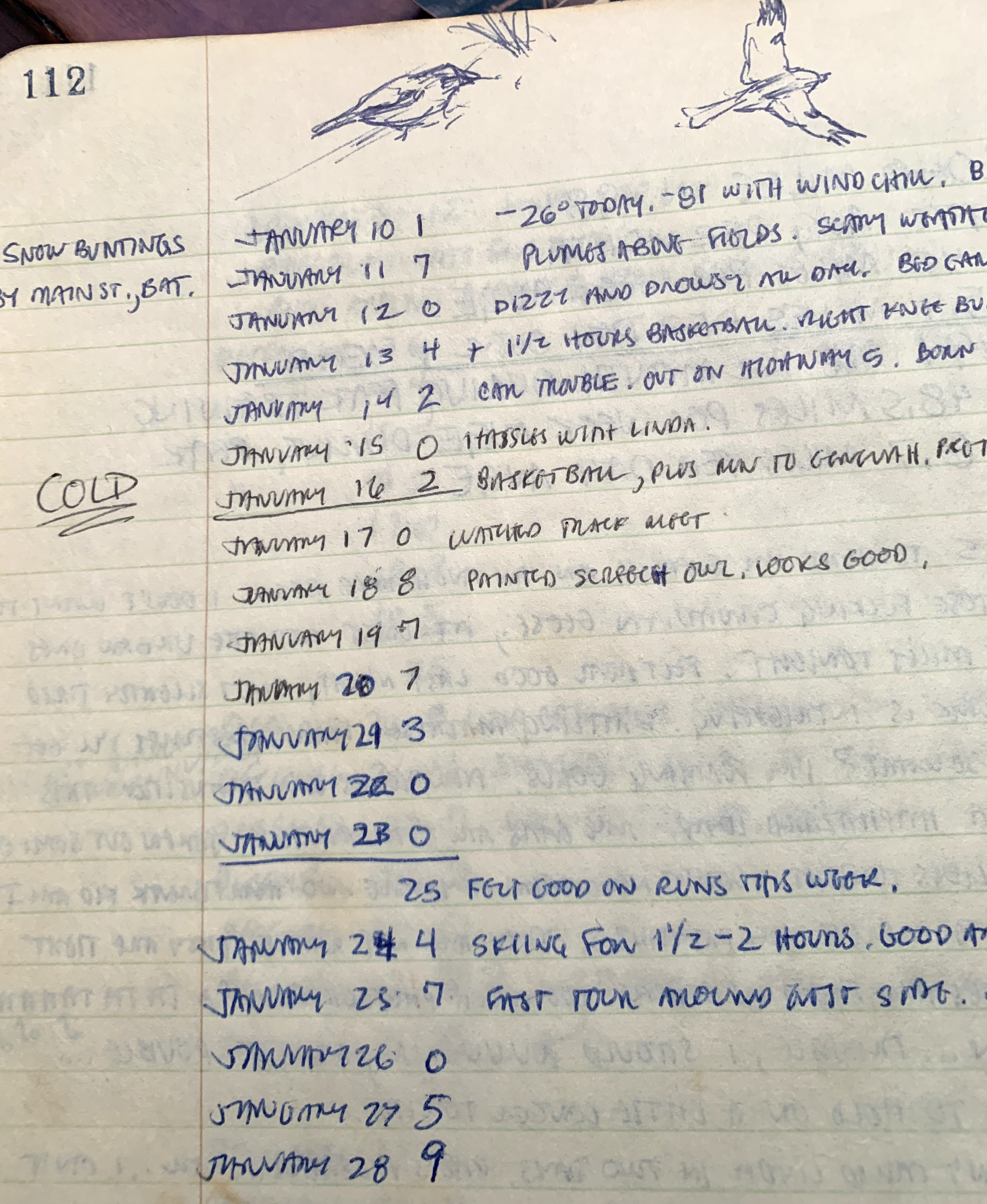
When the temperature hit -26 degrees on January 10 of 1982, I’d already been inside for two or three days, and was getting cabin fever. Even girlfriend company didn’t help. I was stir crazy and needed to get out for a run. I bundled up with everything I owned for winter gear. All that peeked out were my eyes. The wind chill was -81 degrees. I went for a run.
Within a half-mile, my eyelids froze shut. I stopped in a panic, and pressed my gloves against eyelashes trying to melt them down so I could see again. They were frozen with moisture from my breath coming up through the scarf wrapped around my face. “Alright,” I muttered through the layers wrapped around my face. “This was a stupid idea.” I ran back home.
I still wanted to get out of the house, so we started up my car and went for a drive. My Plymouth Arrow was a pretty faithful vehicle even though I’d accidentally crunched the front hood in mid-December by forgetting to put on the parking brake. We’d driven to a Christmas caroling party and I parked the Arrow on a slight downhill in front of the house, but forgot to apply the parking brake. That’s not a good thing with a stick-shift car, because I’d left it in neutral as well.
While we sang inside, the Arrow started rolling, gathering speed as it cruised a full block down the street before veering into a giant oak tree. If it hadn’t struck that tree, it likely would have plowed right through the wall of a house and landed in the living room.
When we came out from the caroling party a half-hour later, I looked everywhere for the car. Then some guy down the street yelled, “Hey, is this your car?”
I stood there aghast. My friends and I walked down to the scene of the accident. “My poor car,” I moaned.
“My poor tree!” the owner lamented. There was a big gouge in the bark where the bumper slammed into the trunk of the tree. Fortunately, it was not severe damage. I gave the guy $20 or something to satisfy his outrage. Then I drove the car away, and we rolled around town that night with the hood sticking up like the arched back of a dolphin. It depressed me to look at it, but my buddies round it hilarious.
I had the front end of the Arrow fixed a few weeks later, but even with the hood crunched, it still ran really well in cold weather. So Linda and I drove out of town to get out of the house and look at the snow-covered landscape. The winds were fierce, and everything looked upended or out of place. Sure enough, right at the corner of Main Street and Randall Road, we spotted a small flock of snow buntings feeding in a road scrape. Outside of town, huge pillars of wind-whipped snow rose in plumes, frozen ghosts rising and disappearing as fast as they formed. The whole scene felt like we’d slipped into an alternate universe.
Hooping it inside
So I gave up running that week and went to play basketball instead. I got banged up because the type of play that week was really rough. All the guys were grumpy and pent up from all the time indoors due to the weather. “Played a game of basketball at Geneva,” I wrote. “Some big jerk who knew bloody well all he had to do to score was push, did. He winged me so I glared at him. “If you can’t take it, get out,” he said. So I did. A little anger welled inside me, but constructively, I returned home unscathed.”
That afternoon, I received yet another letter from my college girlfriend. It was one of a series of intermittent communiques in which she challenged about this or that former relationship issue. She was now married to another man, but clearly felt that I’d let her down in some way. “Whatever-her-name-is-now sent me a letter yesterday,” I observed in my journal. “I sent a reply, short, but anything more I’ll say is going to sound urgent or self-effacing. Familiar scenes are never glamorous upon return. The fuzz wuz rubbed off that peach. Still, she got a rise out of me, I admit.”
World-class, indoors
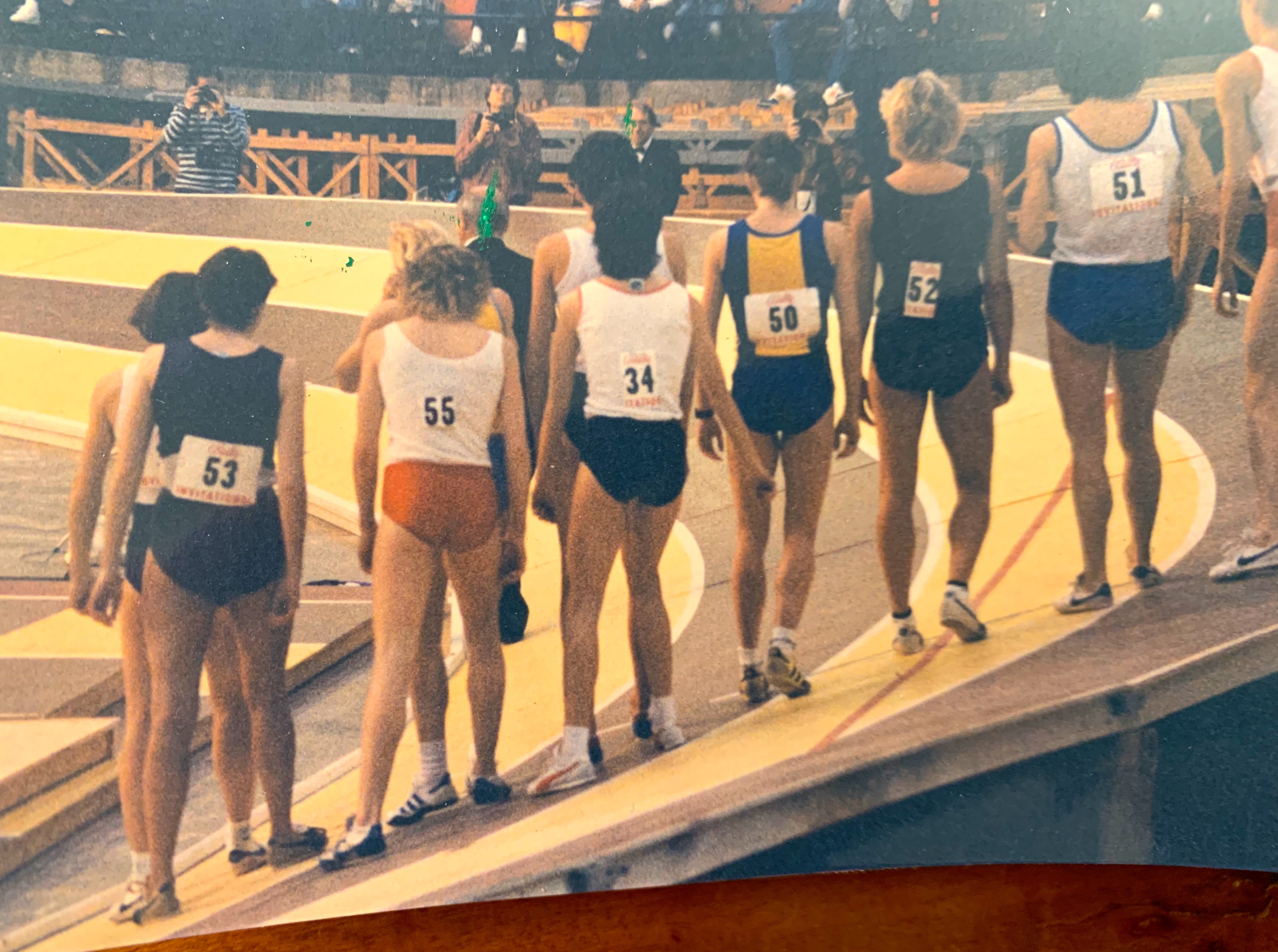
The third week of January I went to a track meet at Chicago Stadium. My father came with me because he was bored as hell staying at home too. The weather was still freezing cold outside, but we humped on down to the city and sat in the stands together. That was fun, because other than a Chicago Bulls game when my dad took us all to watch the 1972 playoffs when the Bulls’ Artis Gilmore and Wilt Chamberlain of the Lakers faced off, my father and I had not done much watching of live pro sports.
The track meet felt like a real pro sporting event. I listed the athletes: “Track meet last night: Nehemiah, Foster, Ashford, Heikkenan, Stintzi, Jackson, Henderson, Maree, Bjorklund, Masback, Cheeseborough, McTeague, Floyd, Carl Lewis, James Robinson.”
I took photos of the meet with my newly purchased Pentax camera. I’d seen many world-class athletes at meets like the Drake Relays, and always loved watching the world’s best compete. Most of all, I loved watching the women run in their bun-hugger shorts. My father noticed my attentiveness to that detail, but said nothing. Like father, like son.
I ran just 100 miles for the month of January, but also did some cross country skiing on days when it wasn’t below zero, so my fitness still improved along with several long sessions of basketball. Typically I’d play for three to four hours. Sometimes I was joined by one or more of my brothers, whoever was in town.
But I kept feeling restless due to a persistent case of cabin fever. I likely had a fit of depression going on as well. So I jumped in my car the last weekend in January and drove to Decorah in an attempt to recover an inspiration of some sort. I’d already been up there for New Years with Linda, but this trip was different. I hung out with people that weren’t necessarily my closest friends, mostly out of a need for some sort of different stimulation. They half-understood, and shared some weed with me, and a few beers. One of those friends was in art classes with me at Luther, however, and she tore into my habit of painting birds. “It’s so provincial,” she sneered. I told her to fuck off.
So I turned around and drove back home. What I actually needed was the road time to shift my brain around and try to look beyond the oppressive darkness and cold of January. “Good ride,” I wrote on returning home. “One bald eagle ten miles north on Wisconsin 35. White head and tail. Got away for the weekend. Stayed with Chuck and Laura (college friends). Eerie Christ figure above Pulpit Rock. Calm Friday night.”
I’d befriended a Luther girl on one of my prior visits, and met up with her out of curiosity at a local pub. But this time around I was less impressed. “Underbite,” I cruelly noted. “Limited conversation.”
I opened the mail and received yet another letter from my former college girlfriend. She was not relenting on whatever issues and failures she still felt about our relationship. It made me wonder what she really wanted from me. I guess she felt the need to prove that she’d been right, about whatever.
Nothing was coming or going my way easily. “Money’s been bugging me all day,” I noted. “Nothing comes in order.” The wildlife art gallery where I showed my work was going under, so that source of extra money was going away. I was still trying to figure out what to buy to assuage my restless mind. “Aquarium? Nike Reflective jacket? Weights? Nautilus? Camera? Bills? Typewriter? Cockatiel? Art Gigantica?”
Like the main characters in the existential novel Candide, it all came down to a single phrase during the winter of my discontent.
“I can only paint to forget,” I wrote, “And run tonight.”
And by the way, I bought the Nike reflective jacket.
By the winter of 1981, I’d completed much of the fictional book Admissions that I’d written on the train while commuting to Chicago. One of the main characters in the book was a professor that invented a concept called Life Tectonics. His theory involved psychological assessments that analyzed how the people and events in life combine to create the person you are.
We writers obviously draw on our own life experiences to create fictional characters and ideas. During the early 1980s, the geological theory of plate tectonics was finally becoming clear in the scientific world. I was fascinated by the way it explained the movement of the continents across the face of the earth, and how mountains form when landmasses collide with each other. That’s where I got the idea for Life Tectonics.
Plate tectonics also explained the workings of seafloor spreading, earthquakes, and volcanism. So it was that the theory of plate tectonics fit perfectly with the theory of evolution in explaining how the world and its living things came to be where they are.
I thought that concept fit perfectly with how human beings evolve and develop as well. We’re all impacted by forces, both seen and unseen, that form and shape us. So I wrote that construct into my book of fiction. But in reality, life tectonics was having its effects on my world even though I didn’t know it. The impinging forces included work, women and wondering how much to run. My art and friendships were also heavy on my mind. All these forces were shoving me around like an island between continents.
Early in our relationship.
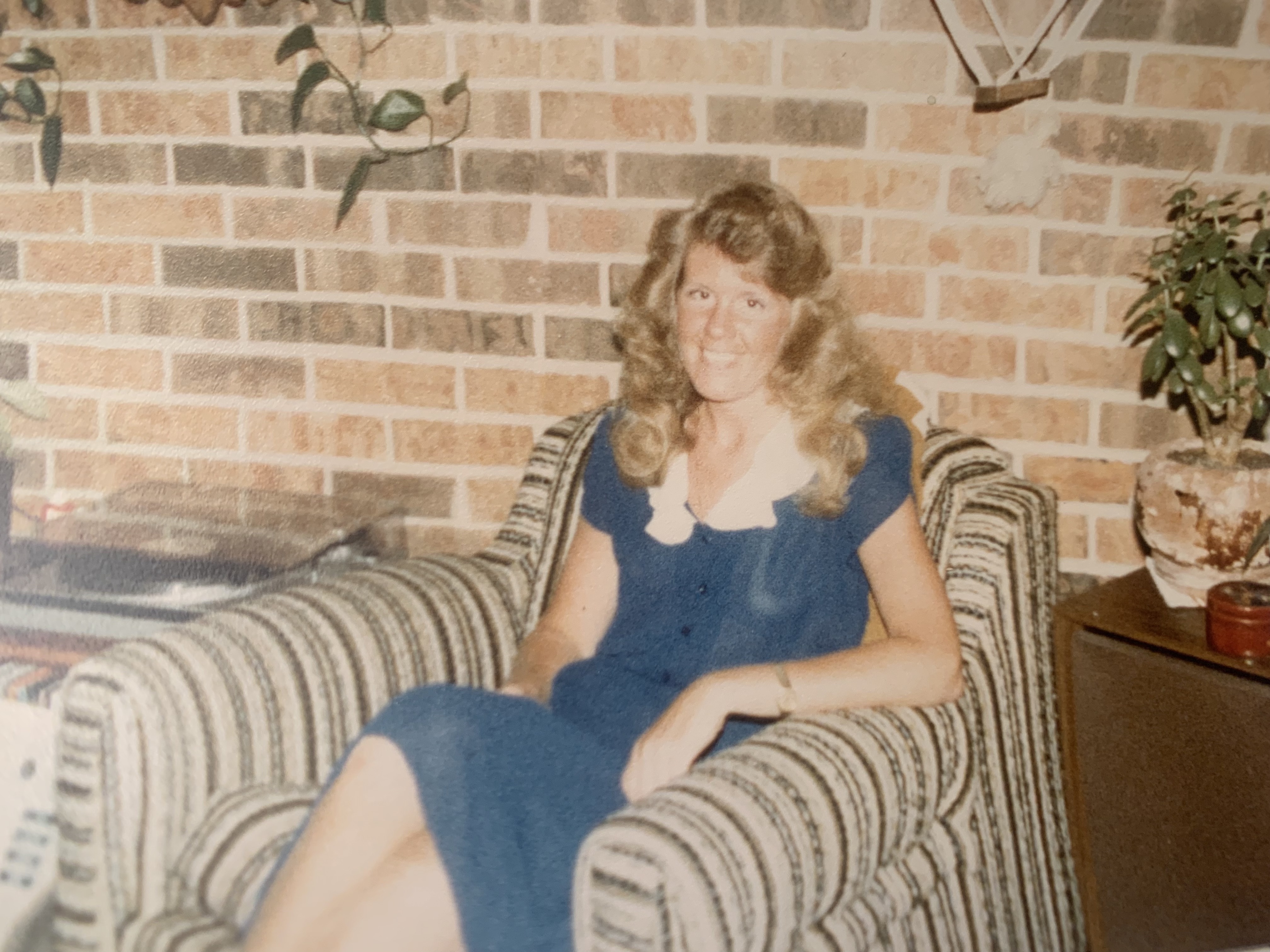
My new relationship with Linda Mues deepened by the week. A best friend took me aside and said, “Cud, don’t blow this. She’s a good one.” Of course, that best friend happened to be the same guy banging my woman friend from work on my living room couch, so I took his counsel with a grain of salt. But by the middle of November, he stopped by to have a few beers and informed me that he’d just purchased a ring for his soon-to-be fiance. I guess in some strange way, he was looking out for me.
He was right, however, because I saw special qualities in Linda. She even went for a couple runs with me with her long blonde hair flying behind her. But having been burned a while back and only recently emerging from a year-long relationship with an older woman, I was still trying to figure out what I wanted in a long-term relationship. But I was forging ahead.. “Called Linda for date tomorrow night,” I wrote. “Threw pride and distracting concerns aside. I figure I have to act without considering every damn other person.” We went for more runs together, and during one four-miler she announced to me, “You know, I probably shouldn’t have had those four glasses of wine before we go running.”
I stopped, laughed, and said, “You drank four glasses of wine? Do you want to turn around?” She replied, “No, let’s keep going. I’m fine.” That’s how I learned that she was one tough cookie.
Merit at Van Kampen
On the work front, I met the new marketing VP hired to run the department out of the Philadelphia office. We began having weekly conversations by phone. He seemed nice enough, in an Eastern intellectualist’s way. I wrote: “Talked with Townsend today. May be a ticket to knowledge.” Little did I know how those conversations would soon affect my life.
Overall, I was struggling to simplify my thoughts somehow. As the relationship with Linda deepened, we shared kisses and stayed together overnight in my little coach house. Yet within me, there was still a restless aspect to my nature. Perhaps I sensed bigger changes to come. I knew that she’d been deeply hurt in a somewhat abusive relationship before she met me. I didn’t want to be the one to hurt her in any other way.
Sideways glances
Plus, truth be told, a sweet young blonde woman at work kept stealing my thoughts. I didn’t consider dating her, exactly. She was just 18, and I was 24. But we talked quite a bit about life and love and relationships. She was smart for her age, in a kind of effusive way.
And she was youthfully compelling as well. During the summer months, she invited me along with her work friends to sit in a park north of the office while they sunbathed. One day she’d changed into short blue shorts and a tight tank top for our noon “picnic.” When we got back from lunch we walked into the office together only to come face-to-face with the firm’s President, Robert Van Kampen, in the lobby. She gave me a wink and a short little wave as she waltzed into the first-floor restroom to change. RVK gave me a stern glance that was equal parts envy and disapproval.
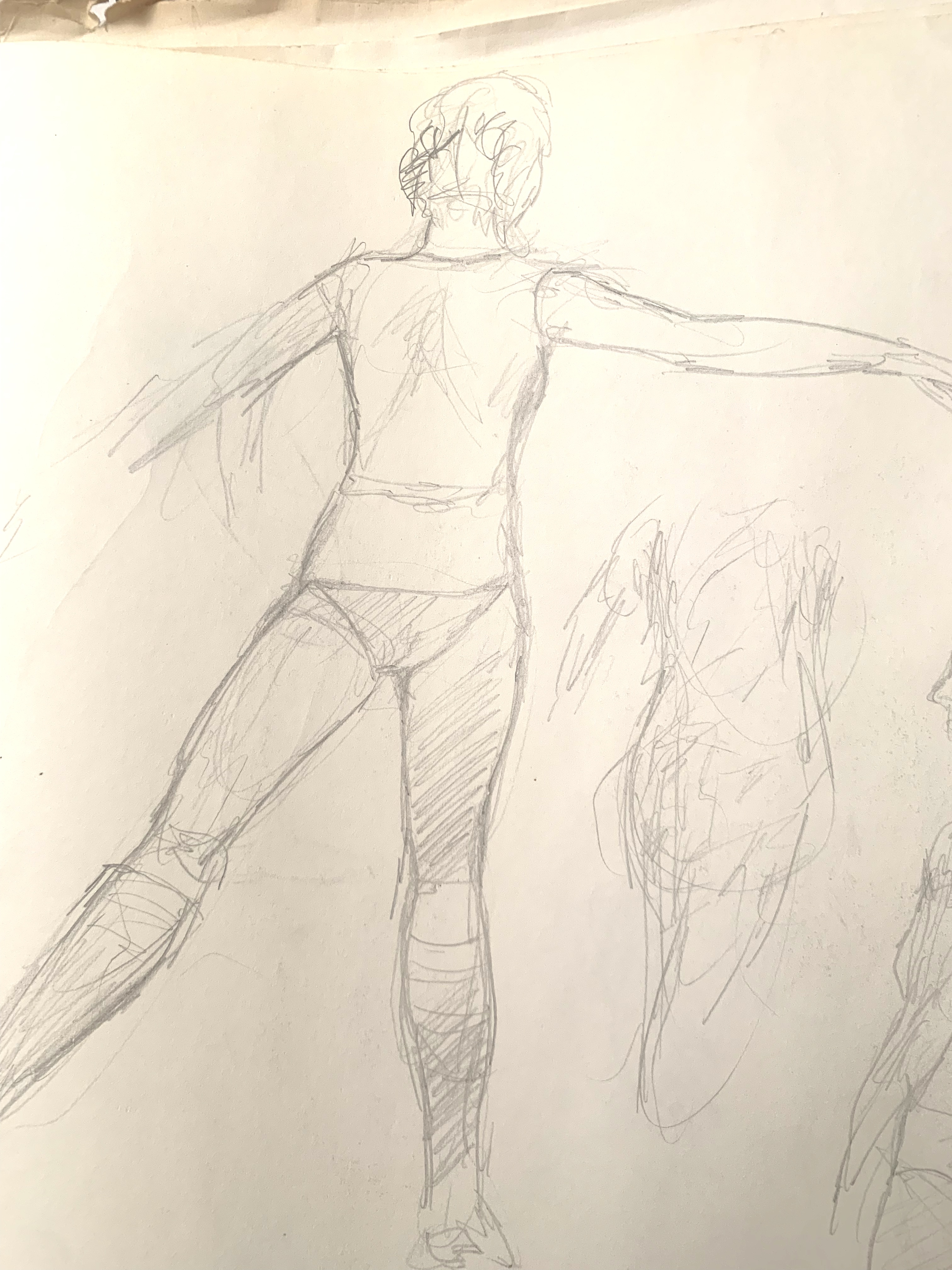
A drawing from the dance studio.
She loved to dance, and the artist in me was eager to capture some of that young form. So she invited me to visit her dance class and do some drawings. So I showed up like some poor-man’s version of Edgar Degas, to do life drawings. The other women in the class did not seem to mind my presence, as she introduced me beforehand. Yet even though I’d spent plenty of hours doing gesture drawings during college, I drew as fast as I could to prove that I was worthy of the task at hand.
She’d also earned a “walk-on role” as a campus hottie in an 80s film Class starring Rob Lowe and Andrew McCarthy, Cliff Robertson, and Jacqueline Bisset. Her job as an “extra” was to jog past the camera in a set of tight-fitting grey shorts and an equally tight sweatshirt offering just the right amount of jiggle for 1980s screen stardom. She did a great job. Such as it was.
My work friend Sue (left) in her 80s movie debut Class.
I visited her house one afternoon to hang out. We sat on the floor while her grandfather was snoring away in the other room. She played the Olivia Newton-John video “Physical,” with all its innuendos, so the tug-and-pull of youth was hard at work between us. Then another work friend showed up and we went outside to goof around in the pool and bounce around on the trampoline. Obviously she enjoyed the attention, and who was to blame her? Not me.
In her young-and-female way, she was making her path in the world. Later that winter, we joined another work friend to attend a downtown Chicago party where a bunch of uptight Reagan youth sat around on couches sporting popped-up polo shirt collars and talking about banal shit that none of us cared about. So we grabbed a dance album and tossed it on the turntable and spun the volume up high. We started dancing and in her tight white pants and black sweater, she seemed to be channeling Brigitte Bardot. She was completely unabashed in that circumstance and we shook our asses and thumbed our noses at those stuffy, stuck-up conservatives with their bitchy attitudes. I was always thankful for that.
We all recognized that there was an ugly brand of selfish conservatism rising up in the United States. That included the workplace, where a Pentecostal brand of religion was felt everywhere. One self-righteous woman middle-aged woman once told me at work, “I don’t have to answer to anyone, because I’m saved.”
Seismic journeys
Even as I got more involved with Linda during the winter months, I ket the avenues open for seismic fun as needed. I figured as long as life tectonics were pushing at me from all sides, I might as well quake and holler a bit.
All the while, I was plugged away running 30-50 mile training weeks. For all that running, I was still burning the candles at both ends. “My ears are always ringing,” I wrote in my journal. “Too much loud music? Wax? Too much sugar? The airplane flight? What is up?”
To close out the year I entered a four-mile road race on a snowy December 26 up in Wayne, a tiny town northeast of St. Charles. We raced two miles out and back with poor footing, and I managed a 22:54 even though I’d felt half-sick on Christmas Day. My best friend talking me into running anyway. He was always talking me into doing crazy things. Life tectonics, you know.
Snow days
Then a big snowstorm hit and my buddies and I got in some really long cross-country skiing days. For New Year’s, Linda and I drove to Decorah to celebrate newlyweds Keith Ellingson and his wife Kristi. We skied along the Upper Iowa River with giant snowflakes falling through a windless grey day. It was romantic and calm, and Keith and Kristi were as sweet to us as could be.
I wrote up a year’s training summary that read, “2040 miles in 1981. 170 avg per month. 5.1 miles per day. 194 avg during peak training. 48.5 miles per week average during peak. 6.7 miles per day.”
Those weren’t big miles. Yet I’d shown racing improvement in 1981 and even placed high or won the day in a couple road races. Looking toward 1982, it was hard to imagine what lay ahead, or what was coming up from behind to push me even farther in the coming year. I’d written about it in my book of fiction, but for me at the time, life tectonics were indeed real.
Somewhere during the middle of November, 1981, I received a call from the father of a woman I’d dated earlier in the month. She’d been sweet, and demure, and I was respectful toward her. So I didn’t automatically think the call was about abusing her somehow.
Instead, I heard him tell me, “Hi there Chris. I’m a travel agent you know, and an avid golfer. I’m traveling to Hawaii at the beginning of December and I plan to play a lot of golf. Would you like to go along?”
I didn’t know what to say at first. I was barely making more than $20,000 a year at that time as a graphic artist in marketing for Van Kampen Merritt. I had perhaps $600 in savings in the bank. How much would a trip to Hawaii even cost, I wondered?
“It will only cost you $300 with the flight, hotel, and everything. You just need to bring some money for some meals. The golf is covered too.”
I’d obviously never been to Hawaii at that point in my life. The biggest trip I’d ever taken was a training camp to Yellowstone and the Grand Tetons with the Luther College cross country team. But Hawaii? It sounded great.
So I accepted the offer. We flew to San Francisco for a short layover and then flew across the Pacific to the island of Oahu. I can still remember looking down at Pearl Harbor on a short holding pattern. The view of the island was sobering. The other reason my elder partner was visiting Hawaii was to attend a 40th-anniversary commemoration of the bombing of the Naval base at Pearl Harbor. He’d served in the Navy in WWII and was in Oahu on the day the Japanese attacked.
We checked into our hotel in Waikiki. Our windows and balcony overlooked the beach. I could see a rainbow slick of suntan oil slick on the water. That was the first hint that Hawaii was not going to be the natural paradise I perhaps expected.
Part of my eagerness to visit such a far-flung island was the chance to find some new birds to add to my lifelist. As I quickly learned, the native species had long been largely wiped out by residential development and agriculture, military bases, marijuana farmers, and golf courses. These diverse interests existed in uncomfortable proximity to each other, each with its own form of protection against intrusion. But the wildlife was shoved side or extirpated.
Most of the birds I found were exotic imports brought to Oahu through human endeavors. These in many cases outcompeted local bird populations. Add in the rats and snakes and other non-native predators and the island of Oahu was nothing more than a massive experiment in reverse evolution.
There were birds from Asia such as the Japanese White Eye, the Indian Mynah, Dyal, and Shama. There were also Brazilian cardinals, Ricebirds, and Strawberry finches. Most of these were escaped cage birds. On the beaches next to the golf course, I spotted a lanky shorebird called a Wandering Tattler, and a golden plover. Other than the feral species and those couple of oceangoing migrants, there was little other wildlife to see on the island of Oahu.
But the streets of Honolulu and Waikiki did have wildlife of its own. The first time my travel agent friend and I walked out of the hotel to get something to eat, we were approached by a stunning young woman of some exotic descent. Her dark brown eyes shone and her lips glimmered above a dress that barely clung to her lithe body. “Suck your d***?” she asked the two of us.
“No, we’re going to have dinner,” I reflexively replied. Then we kept walking. But the sexual invites kept coming. After dinner, we walked back to the hotel at twilight through another gauntlet of comely callgirls. Not that we were interested, but by that time of day we were feeling jet-lagged and just wanted to go to bed.
The next morning I rose early to go for a run toward Diamond Head, the big mountain that famously marks the eastern end of Oahu. The breeze off the ocean was refreshing, and the smell of flowers filled the senses. I trotted up the pathway and wound up running alongside the road. When I got out of town, the ocean started to look tempting for a swim. I ran past the famous “blowhole” where the waves burst up through a lava pipe, and crept down the embankment to go for a swim.
Running wild
The ocean was beautiful, but also a bit intimidating. I had a sheen of sweat on my body by then, so I peeled off my shirt and shorts and was planning to go for a Pacific skinny dip when I heard voices right above me in the bushes. Apparently, I’d crawled along the beach far enough to land under a pulloff by the highway. Seeing people so close, I ducked under some bushes and pulled my clothes and running shoes back on. Then I walked out on the strip of sand and pretended to be nonchalantly looking at the ocean. I don’t think the ruse worked because I’m pretty sure someone saw the sight of my white ass down on the beach. But taking the advice of my elder girlfriend from the previous year, I fobbed it off and reasoned “Hey, it’s all in the recovery.”
After that, I ran a long ways up the road and realized I wasn’t about to circumnavigate the island, so I turned back and returned to the hotel.
Golf attire?
The white cutoffs I wore golfing in Hawaii
That morning, we drove to the first golf course we intended to play. I thought I’d packed a decent pair of shorts, but it turned out that all I had were some tattered white cutoffs. So that’s what I wore golfing along with a collared polo short. My elder friend and golfing partner Warren was a distinguished and accomplished man in life. He was also too kind to complain that my attire was less than classy. But then things got even more awkward. I pulled my golf bag out the car truck and started removing it from the transport bag from the airplane. When the bag slid out of the bag, a giant mouse nest flipped out the top. Apparently, I’d laid the golf bag down during the autumn months and a mice family took up residence inside. When I tipped it back up, the mice could not crawl out of the bag and died inside the forest of club handles. I saw the pile of cotton shavings and mouse carcasses fall out on the tarmac and tried to kick the mess under the car. I’m sure Warren saw that, but again, out of kindness and golf club decorum, he said nothing.
We played golf every day that week. He was a brilliantly composed golfer, a national Master’s Age Group Champion, in fact. He hit the ball straight on his drives, played fairway irons with confidence, chipped with purpose, and putted with the best. I hit the ball inconsistently, and often tired by the end of eighteen holes, but my game steadily improved as the week wore on.
We drove carts on most of the courses. I was thankful for that. The Hawaiian sun beat down on our backs, and my skinny runner’s cap was not much protection as there was so little shade between the few palm trees lining the fairways. Sometimes I trotted between shots rather than ride the cart, and Warren didn’t seem to mind. His own son Larry was an ace long-distance runner that I’d grown to like quite a bit. I think that’s why he trusted me hanging out with his entire family. A visit to their home was always filled with laughter and good food. While I was a bit unrefined, he saw me as a basically good kid and decent company.
The only thing I noticed in playing golf with Warren is that he was a bit resolute about the constant presence of Japanese golfers on every course. Here we were, forty years removed from Pearl Harbor, and the US was reconciled to Japan in diplomatic relations, but having lived through the bombings on the very island where we played golf, I wondered how he felt about the overwhelming number of Japanese tourists. The male golfers invariably played with a female companion, who never lifted a club, but some drove the carts while their men soldiered on.
We toured the Arizona memorial one hot afternoon. The ship itself sits below the surface where it was sunk back in December of 1941. I stood there stunned that a thin rainbow of oil from the ship’s hull was still bubbling to the surface. I felt the stiff irony of Hawaii as a playground for the senses against its history as the place where the United States was forced into war with Japan.
The Arizona memorial
We attended a Pearl Harbor commemorative ceremony high on a hill above Oahu. Warren was mostly silent, and quite solemn during the proceedings. A set of jets zoomed overhead with a roar, and an American flag was raised. The date was December 7, 1981. When the ceremony was over, Warren walked solemnly to our rental car. We both climbed in and he sat in his seat for a moment, staring out the windshield. Then he reached forward with the key, gave the ignition a firm start, and we drove away. Nothing was said on the way back to the hotel. I respected the fact that he might not want to talk about his experiences or his thoughts. My own father was a Navy man, but he didn’t served until 1945 when the war was over. His tour of duty took him to the cities of Hiroshima and Nagasaki, where he took photos of the devastation caused by the nuclear weapons employed to end the war with Japan.
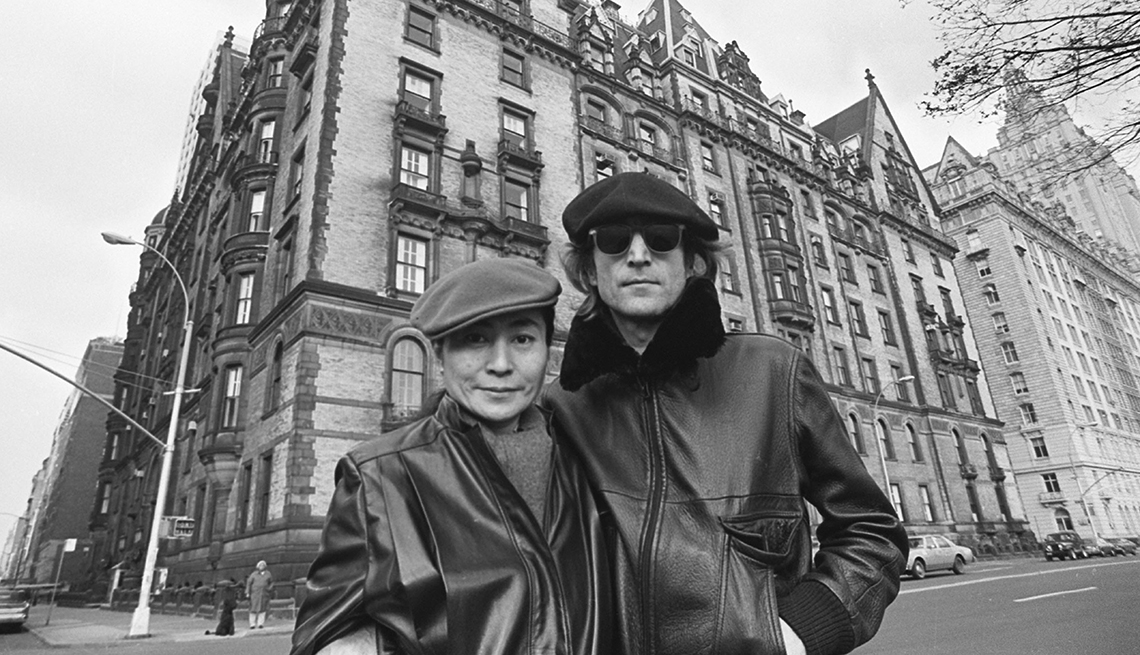
A day later on December 8 I turned on the hotel TV to find news about the first anniversary of the day John Lennon was shot in New York City. While certainly not an event with the portent of Pearl Harbor, it was important to me as a member of the 60s generation. I’d lived through the period when President John F. Kennedy was shot, and his brother Bobby. Dr. Martin Luther King, Jr., and now John Lennon. All essentially liberal advocates who craved social and moral justice even though their own lives were not perfect.
The shock of losing the first Beatle to a murderous gunman was disturbing to say the least. I’d grown up listening to The Beatles. I knew all their songs and lyrics by heart, and especially felt the irony of John Lennon’s composition Happiness is a Warm Gun. He was way ahead of his time in anticipating the fact that Americans especially would come to view their guns as symbols of happiness.
Happiness is a warm gun (bang, bang, shoot, shoot) Happiness is a warm gun, momma (bang, bang, shoot, shoot)
When I hold you in my arms (ooh, oh, yeah) And I feel my finger on your trigger (ooh, oh, yeah) I know nobody can do me no harm (ooh, oh, yeah) Because
Happiness is a warm gun, yes it is (bang, bang, shoot, shoot) Happiness is a warm, yes it is, gun (happiness, bang, bang, shoot, shoot) Well, don’t you know that happiness is a warm gun momma?
I also appreciated what Lennon tried to communicate during his anti-war sit-in where the song Give Peace a Chance indicted war and all the ignorance that contributes to military conflicts. I already understood that conservatives lamented the 1960s as a hopelessly idealistic and politically squanderous era. But you know what? Lennon was right. And when Lennon stuck the refrain War Is Over into his song about Christmas, he was serious as hell that we take too much of our lives for granted, and that war is in fact the opposite of what Christianity and human morality was supposed to represent.
And so this is Christmas For weak and for strong For rich and the poor ones The war is so long And so happy Christmas (war is over) For black and for white (if you want it) For yellow and red ones (war is over) Let’s stop all the fight (now)
So I felt vindicated in mourning the death of Lennon in the wake of a ceremony commemorating the bombing of Pearl Harbor. He had the guts to confront the selfish instincts of the military-industrial complex and the corrupt jingoism of “my country right or wrong.” The people who fought World War II are often called The Greatest Generation. But realistically, they fought the war because they had no choice. The generation ushered in by John Lennon pointed out that there were choices to fighting wars, which is what Give Peace a Chance was all about.
Of course, decades later, America hadn’t learned its lessons, and the US chose to militarily invade Iraq without real justification. In fact, it was all based on lies. No chance was given for peace despite the fact that international inspectors found no evidence of weapons of mass destruction, and none were ever found once the US flattened the country. Thousands of American military personnel died or were maimed in that conflict of choice. All because those tin soldiers Bush and Chenery, each of whom evaded military service on their own, felt it was their right to send other people to fight and die.
Hawaiian adventure
I went for a couple more short runs from the hotel, but a part of me wanted to do a bit more exploring up on the highlands of Oahu. It was too far to run up there, so I had Warren drop me off at a path we identified on the map. We agreed to meet on the other side of the hills in a couple of hours.
The path took me up steep hills where Indian mynahs with their black shiny plumage and bright yellow bills lurked and shirked my presence. It got quieter and hotter the higher I went, but I kept climbing. Using the sun to keep my bearings in relation to the road, I tried to walk parallel to the quiet hum of traffic occasionally coming to me through the trees. Then suddenly the woods opened up and I found myself next to a pasture of sorts. That’s when I realized I’d stumbled on a giant marijuana farm.
I looked around afraid that I’d get caught on private property. There was no sign telling me that I’d left the public trail, but I’d heard enough even back then about pot farmers shooting people dead to know that I had better run, and run fast, to get out of there.
I saw a trail opening on the opposite side of the patch, which stood a few feet high, and I trotted with my birding binoculars banging against my chest. The footing was thick grass, and I tried not to trip. But I started to sweat, and had no water with me, so I concentrated on running as efficiently as possible.
Fortunately, the path did parallel the road fairly well. I kept trotting as the path narrowed and the woods thickened. I feared that it might all close in, and I’d be stuck, and have to retrace my steps all the way back through the pot patch and back down the hill. But then how would I reach Warren? We had no cell phones back in those days.
Hawaii military housing
The trail didn’t stop. But I emerged in a dried-out field. By then, I was tired from running all that way, and decided to walk a while since the dangers of being shot by a pot cabal seemed to have disappeared. But then, I came to a short asphalt driveway. It led downhill and before I knew it, I was walking through a military base of some sort. My saving grace was the tee shirt I wore. It was dark blue with a big, white American eagle on the front. Along with my white cutoffs, I looked pretty patriotic strolling through the base. I walked right down the sidewalk past the gates, giving a nod to the personnel inside, who waved back, and had myself a bit of a chuckle walking across the grass expanse outside the base to find myself at the spot where Warren pulled up in the car. What luck! I thought.
I didn’t tell him what just transpired. “Did you find any birds?” he kindly asked.
“Just some junky ones,” I told him. “The invasive species have taken over. The native birds are all gone.”
We played golf again the next day. And the next. That was five days in a row, and my hands were blistered as I had not thought to bring a golf glove. Plus, I was dog tired and sunburnt from all that time in the sun. We were finishing up a golf round one afternoon when I chipped a shot onto the green and it rolled off the back side and kept rolling and rolling and rolling on the sand beach. I tried catching up with the shot but the ball disappeared into the soft surf, and I just laughed, threw down another ball and chipped back onto the green from the hard sand surface.
I stood there a moment in the calm shade of the palm trees. The course faced west and north from the island, and I struggled to imagine all the ocean that lay beyond.
Ocean lessons
That made me want to have a more intimate encounter with the waters of Hawaii. So Warren dropped me off to go snorkeling in a small bay. The fish were unafraid as I paddled around aimlessly. The bright ripples of sun fluttered all around me. Wearing only a blue Speedo suit and my big mask, I must have looked like a strange bug to anyone watching me from the shore.
I waited for Warren in a beach park. When he arrived, he said that he’d like to hang out by the water a bit himself. “Okay,” I told him. “There’s a body-surfing beach right over there. I can swim while you catch some rays.”
We set out blankets and I trotted my skinny body out to the surf’s edge. The waves looked bigger than I’d seen before, but not so big that I was afraid. I swam out from shore and was immediately caught up by an eight-foot breaker, tossed back against the hard sand and washed up the beach like a waterlogged branch. I lay there gasping, spitting and pulling sand out of my mouth. I could hear Warren laughing from somewhere nearby. “Are you going back out again?”
“Fuck, no,” I replied. “That almost broke my back.” And it was true. The impact nearly knocked the wind out of me. My ribs hurt some too. I was lucky that I didn’t lose both contact lenses when the saltwater bashed into my face. I had a pancake of sand wedged in my ass crack.
Back in the car, after changing out of my Speedo, I turned to Warren and admitted, “I just learned a lesson…”
He pounded his palms on the steering wheel and chortled, “I’ll say…”
A perfect 10
We drove back to the hotel on the last afternoon in town and he took a nap on the big king bed. I turned on the TV to find the movie “10” starring Bo Derek playing. I sat at the foot of the bed watching Julie Andrews cavort with no bra on, and Dudley Moore trying to make time with the likes of the woman that had captivated the world with her naked run up the beach.
I got horny and bored, so I grabbed the money I had left and went downstairs to wander the streets a bit. Not far from the hotel, I found a bar called the Blue Water Cafe. Everyone inside looked beautiful. The waitresses all wore plain white tank tops with no bra underneath. I was absolutely captivated by the whole scene. I ordered a drink, and then another, while sitting at the bar taking in the exoticism of an island watering hole. At that moment, a stunningly beautiful brunette woman sat next to me at the bar and ordered a drink. Empowered by the alcohol I’d already consumed, I struck up a conversation.
Dimly aware that I was in the presence of someone out of my league, about a perfect 10, I asked her what she did for a living. She told me the truth. “I’m a highly-paid female escort,” she explained. “I travel with rich men all over the world.”
“Really…” I said, a bit slack-jawed. “Well, I’m kind of impressed. And I can see why. You really are beautiful.”
“Thank you,” she replied, snapping shut her tiny black purse. Then she left me on my bar seat.
That encounter convinced me to stop drinking and head back to the hotel. What was a guy with $80 left in his pocket going to do to impress any woman on the island of Oahu? Who even knew what the callgirls charged? They were probably out of my league as well. I knew that I needed to save some cash for meals on the way home, so I walked back to the hotel.
Warren and I shared a nice meal together the last night in Waikiki. I ordered seafood. That cost me $40. Almost broke, I was glad to be headed home at last. But Warren was good to his word. The flight and hotel had only cost me $300.
We flew back to a cold and dark Illinois night. My Plymouth Arrow was parked at his house the entire week, so I drove back from Naperville at 5:00 in the morning. I arrived back at my coach house around 6:00, and then remembered that I’d promised my new acquaintance Linda that I’d meet her at a church service that Sunday morning. Fearing that I’d fall sound asleep if I laid down at all, I decided to stay awake and drive to church at 7:30. We met in the narthex where she gave me a hug. “I’m a little drunk or something,” she told me. “I was up all night partying with my friends.”
And there I was again, home free.
We sat together in the back pew, but before the service was halfway through, we both fell sound asleep leaning on each other. We awoke with a jolt when the organ music blared to end the service and people stood up to leave. I looked her in the eyes with raised eyebrows and we both laughed. “Maybe it’s time to go home,” I smiled.
As October days grew shorter the days at work started and ended in darkness. Fortunately, Van Kampen Merritt uprooted from its Chicago office and moved out to a newly constructed building at the corner of Naper Boulevard and I-88. It took only twenty minutes to get there by car, and I was relieved and happy to be done with the train. I produced a painting of the building for the corporate brochure. The building languished after VKM moved out, and was torn down a few years back. It is strange to drive by and see a blank field where that building once stood.
Yet despite the lack of an hour-long commute, it still took considerable discipline to go running at night in the dark. I’d raced one last time on October 17 and felt a complete lack of zip, so I vowed to give that up for the fall. Plus the race was a local affair and the course was so obviously long that everyone complained after the finish.
Party at my place, not
On October 11, we planned a party at my coach house but broke it off and went out dancing in Oak Brook instead. “So we blew off my place and hit “Outlaws,” I wrote. “I had fun. Love to dance. Met Linda Star, a G.A. for Macs (McDonalds.) She danced so free and cool. Might be a bit like me. Big Ol nose. Like mom? Hee hee. Aso a blond, breasted chick from S. Illinois. Nice hair spray, eh?”
The party life was fun, but it had its costs. “Didn’t feel so good this morn. Crawled to phone.”
That day, one of my running buddies and I finally had it out about our differences in training philosophies. “He’s talking no compromise, 6 minute pace or else. It’s just that he starts out, stops, then bango….I like to see my runs as a developing thing, he an explosion of movement. Ran ourselves ragged. We admitted our anger and frustration last night. Told him I won’t be frustrated by him as friend. Friends. By God, by God.”
Honestly, that tug-and-pull dynamic between us lasted for decades. Competitive rivalries that began in high school and lasted through college are like that. Some old hurts or fears refuse to dissipate with time. If anything, they grow larger within a relationship until they are confronted and exposed. Once my children grew old enough to understand relationship advice, I counseled them, “You know, it’s good to have friends. But remember that even your friends will sometimes try to control you.” Watching my kids grow up and navigate the world from grade school through high school and college and beyond, I saw that my advice was true. To their credit, both of them are keen on the emotional intelligence front.
Young lust
In my early 20s, I wasn’t always motivated by the right instincts. I tried one last time to test my relationship with my elder girlfriend. “Stopped to see her. I admit I wanted to f*** her eyes out, but she’s too smart. Knows she can be strong, doesn’t need my pandering lust.”
So we broke it off. I never entirely knew what to do with that sort of love. I had strong feelings for her. She was intelligent, intuitive, and actually kind even with her critical advice. One of the most important things she ever told me lasted a lifetime. “We all make mistakes,” she counseled. “But it’s all in the recovery, how people view you.” There were many more sage bits of caring insights that she provided, including basic instructions on how to treat women better, or a bit rougher––shall we say–– if they liked it that way. What more could one ask from a woman? And more importantly, understanding that not all women are the same. That’s one of the most important things a man needs to learn in life.
Dating and dining scenes
That said, I wasn’t standing still. I called and asked out the Linda that I’d met at Outlaws. That date aborted early when we realized how little we had in common beyond dancing. We both kind of laughed about it. So we drank our wine and left without much fanfare.
That week, I asked out another woman named Linda that I met at the laundromat or somewhere else. That date also ended early when I sat down to dinner at her apartment and her cat swooped around the back of my chair, scratched my face, and bit me in the neck. I reacted with an instinctive swat at the cat and she proclaimed, “Leave! If my cat doesn’t like you, neither do I!’
The social life never slowed down. That week, another friend from Luther College showed up in town to visit my running buddy. They were close friends, but I really liked the guy too. So we sat together in a bar called Rocky & Bullwinkles while our mutual friend worked waiting tables. He was new at the job and had some challenges going on. So we sat there with beers in our hands empathizing about how many tables he had to cover. We had settled our differences after our clash over training techniques, so we both looked forward to hanging out with our chill fellow Luther dude.
But first, he had to finish waiting tables, so we sat there drinking the entire time. And four hours is a long time to sit at a bar and drink. By the time my friend got off work, I was pretty drunk and it was already 11:00 at night. He was all full of fire, however, and demanded that we visit another bar across town. “Let’s go to Scotland Yard,” he proclaimed.
Late-night carousing
We walked across the Fox River bridge and sat at a group of tables facing the classic old bar with its phalanx of shiny glasses hanging above. I loved that place. It had been around a long time, and featured a host of overstuffed chairs on the upper level where people could sit and drink and smoke. So the air always smelled of cigars and cigarettes, but we drank right through the haze on many a night.
After settling at the tables, we ordered another set of drinks. Then another. And so on. At which point, I slowed down and tried to sober up. But the two boys were busy pounding them one after another. In a fit of laughter over some story they’d just told, one of them knocked a glass off the table, shattering it on the floor.
That’s when I spun around and said to the people at the table behind us, “I don’t want to be with them. I want to be with you.” A couple was sitting on one side of the table, and their companion was a tall woman with long blonde hair hanging all the way down her back. She smiled back at me and laughed. “Oh yeah? Who are you?”
That’s how I met the woman to whom I’d get married four years later. Her name was Linda. “Go figure,”I thought to myself. “I keep meeting Lindas.” I immediately liked her shy smile and bright blue eyes. So I tore off a sheet from my checkbook and wrote my number on it. She gave me her number as well. That Sunday night, I called to ask her out on a date. She accepted. I wrote: “Called and asked out Linda Mues. That’s 3 Lindas. Could be interesting.”
On Alberto
That Sunday morning, I watched the New York City Marathon on TV. “Cried watching Alberto Salazar break the world marathon record on TV. He was so strong. So tough. Calloused to the distance, as Dellinger says. Lovely Allison Roe.”
That race inspired me, and I did a couple runs that Sunday. “Ran twice today. Peck Road and back.”As always, I also recorded the birds I’d seen recently. “Rusty blackbirds. Gadwalls Friday at the beaver dam.”
That week, I showed up on the wrong night for my first date with Linda. “What are you doing here?” she asked. “Our date’s tomorrow night.”
“Well, can you still go out tonight?” I asked.
“I have parent-teacher conferences, but we can go out for a bit.” So we did, and the conversation was earnest and warm. I asked her out for another date on Halloween. She dressed up as a cowgirl. I dressed as the god Mercury, replete with dark blue tights, a face covered in silver paint, and a set of actual duck wings attached to my ankles. We went out dancing, but that wasn’t really her thing. Somehow, we set up another date after that. Apparently, she was willing to look past the fact that I wasn’t the actual god Mercury.
Earnest hiking
On the first weekend in November, at her suggestion, we went for a hike at Starved Rock State Park on the Illinois River. It was a calm, warm day for that time of year. We saw common loons on the Illinois river and hiked several miles before sitting down for a picnic on a bluff overlooking a sandstone canyon. She’d made sandwiches with apple-walnut bread, salami, and cheese. They tasted delicious after the long hike.
But toward the end of our hike, she embarrassedly admitted that she’d just gotten her period, and needed to rush back to the car. So we had an earnest finish to our third date. I realized that we had little to hide between us, and quite a bit in common as well. She liked that I was a runner, and did some running herself. We both liked nature and the outdoors. “Totally calm day,” I wrote. “She’s thinking I’m thinking. Watched Goodbye Girl on TV. I’m not perfect. I’m going to be myself.”
And speaking of imperfect. At the same time that I started dating Linda, a young woman from work (only 18!) was drawing my attention in all the ways that make a man weak and full of desire. She was tall and blonde, Swedish by descent, and possessed of a killer body that she was not shy about. “Should I ask her out?” I wondered. Should I call Linda? Does she own my weekend? I don’t want to hurt her. Neither of us need that.”
All these things ran through my head on my daily runs. That’s the only way I’ve ever been able to figure anything out, or be creative, and fight anxiety or depression. Running is how I’ve always kept moving in life. Without running, I don’t think I could ever have made it this far. I’ve run through the darkest of nights and found glimpses of light. That is hope, defined.
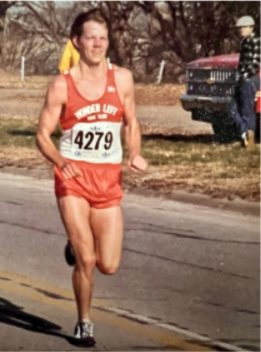
Winning the West Union 10K race in Wonder Left Racing gear.
The running scene in the early 1980s was largely about adapting to the road racing world. During the late 1970s, runners such as Bill Rodgers, Frank Shorter, and Craig Virgin led the American scene while African and European runners racing for colleges in the United States saw opportunities to “go pro” as road races started offering prize money. It still wasn’t easy making a living as pro runner, but thanks to the efforts of Steve Prefontaine, who bucked the Amateur Athletic Union system as a high-profile distance runner, the idea that runners should remain amateurs was quickly falling apart.
That was the world into which our band of college runners graduated. We’d had such fun and done well enough in cross country and track that the guys from Luther College decided to form a racing team. We called it Wonder Left after one of our favorite training routes in Decorah, Iowa.
My pastel painting of a road on the Wonder Left loop (2020)
There wasn’t yet an active club circuit in the Midwest, but there were enough races going on that it seemed like a good idea to team up and race in them. Logistically, I’m not sure anyone thought that completely through. We were spread out across Iowa, Minnesota, Wisconsin, and Illinois. It would take some doing to expect more than a few of us to show up at any given race. But the goal was to keep competing, so a bit of idealism was in order.
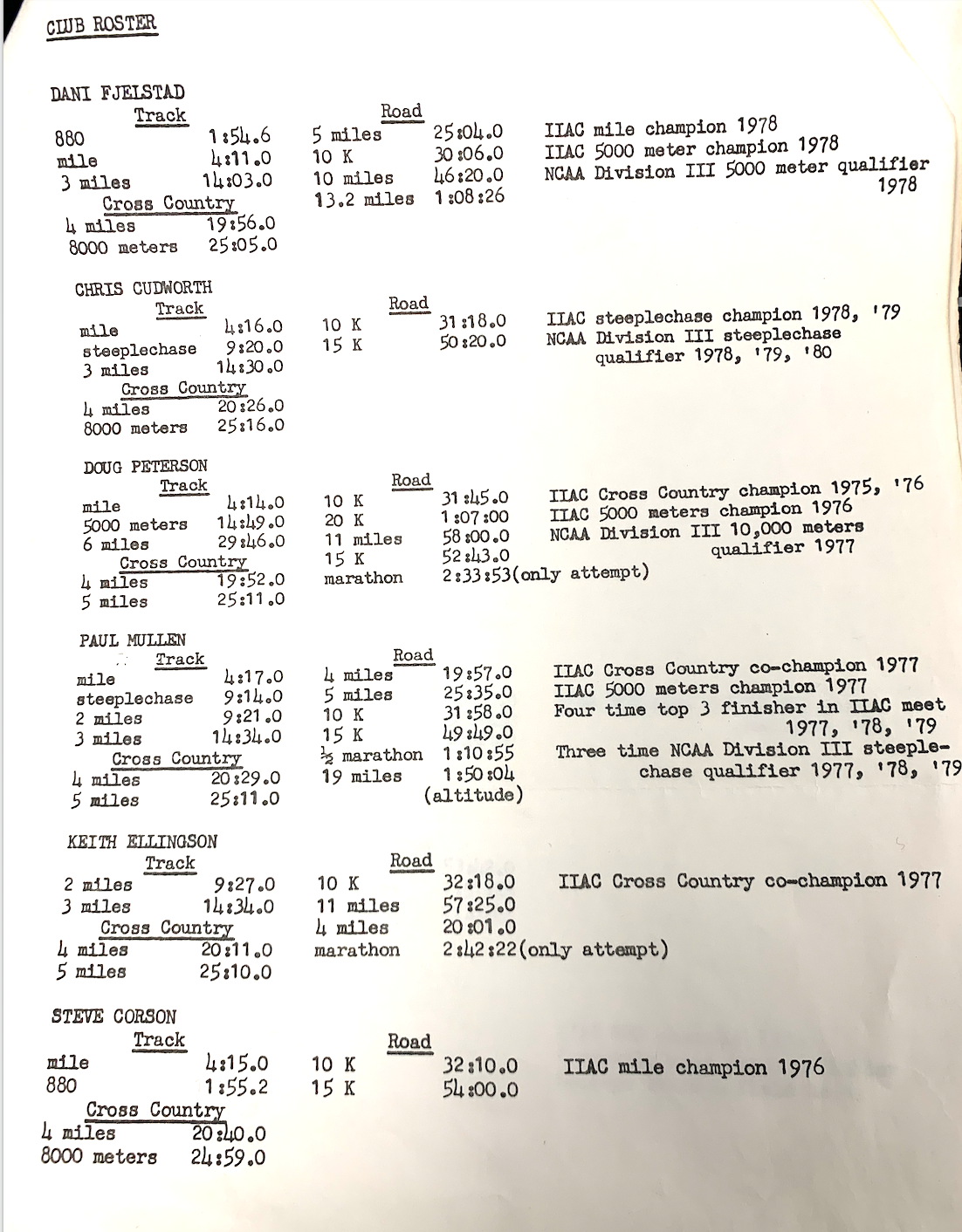
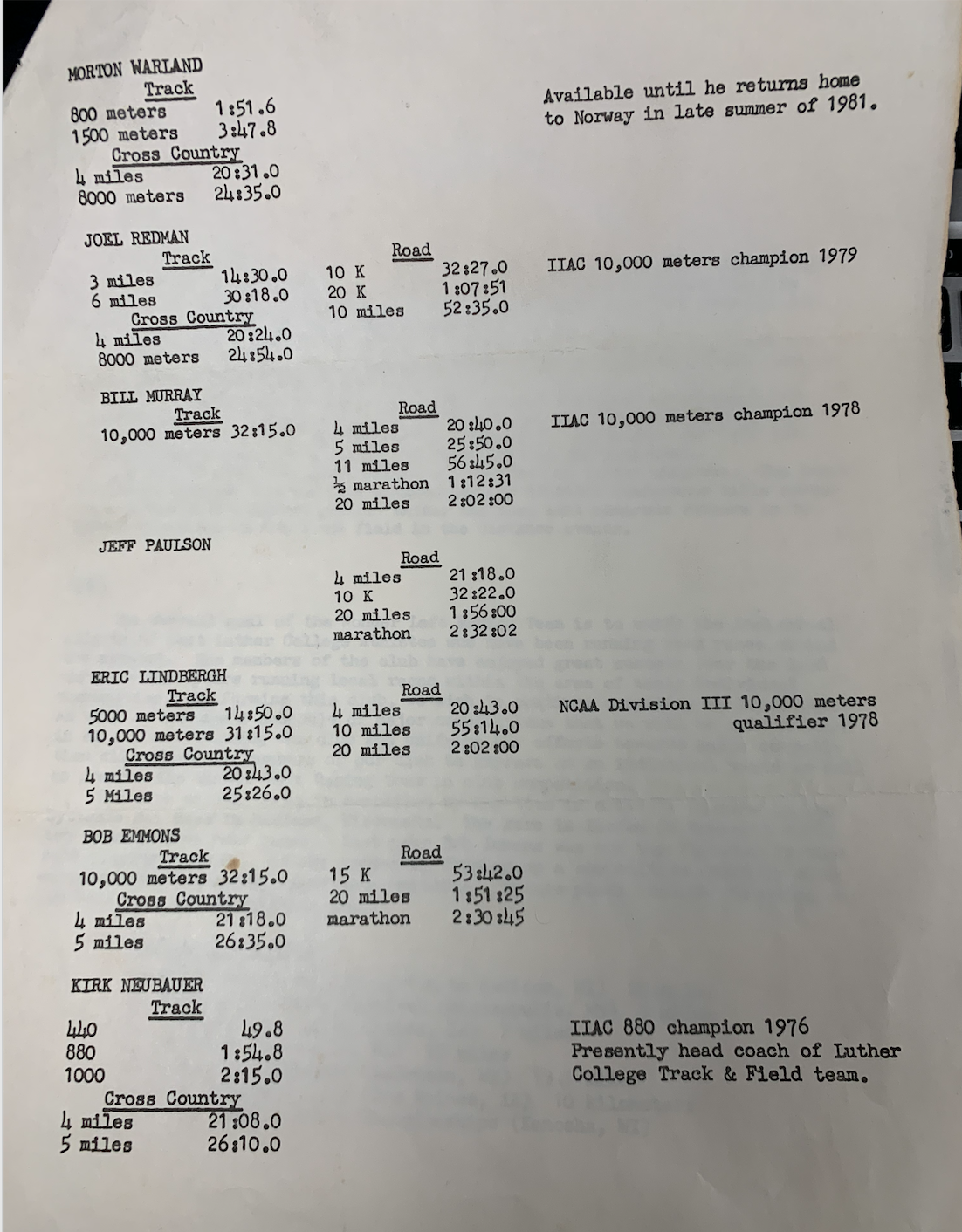
The recruitment sheet described the background and goals of the club. I don’t recall if this was used in attempts to recruit sponsorship or not. Wonder Left was an experiment in progress…
“All the runners on this team have attended Luther College. Luther College is located in Decorah, Iowa and is a member of the Iowa Intercollegiate Athletic Conference (IIAC) and competes within Division III of the National Collegiate Athletic Association. (non-scholarship).
The Luther College Cross Country team has won the last ten straight Intercollegiate Athletic Conference championships. In NCAA competition, Luther has finished in the top ten teams seven of the last ten years. The 1978 team finished second and the 1980 team finished third in the NCAA meet.
Track and field has also brought out the best in Luther athletes. The track and field team has won the Iowa Intercollegiate Athletic Conference title seventeen of the past eighteen years. Luther has also sent numerous runners on to NCAA competition in track and field in the distance events.”
GOAL
“The overall goal of the Wonder Left Racing Team is to unify the individual efforts of past Luther College athletes who have been running road races around the Midwest. The members of the club have enjoyed great success over the last three or four years running local races within their area of their individual communities. By forming this club, we wish to continues competing in local races as well as arrange a schedule of major competitions that we will be able to race in as a club. Forming the club and unifying our efforts towards major competitions will allow the members of our club to improve on an individual basis as well as promote the Wonder Left Racing Team in club competition.
The club wishes to be in operation by May 16 in order to compete in the Syttende Mai race in Madison, Wisconsin. The race is listed in Runner’s World top seventy-five road races. Last year Bob Emmons was our top finisher in that race placing seventh. We are presently drawing up a competitive schedule with certain races receiving major team emphasis. Future plans include directing our own road race in the Decorah area.
Dan Johnson of Minnesota racing in Wonder Left Racing gear. Dan ran a 2:24 marathon and is currently the national record holder in the half marathon for 60-year-old men at 1:23.
TENTATIVE SCHEDULE
Syttende Mai (Stoughton to Madison, WI) 20 miles
Hopkins Raspberry Festival (Minneapolis, MN) 5 miles
Bix Road Race (Quad Cities, IA) 7 miles
Cudahy (Milwaukee, WI) 10 miles
LaCrosse Half Marathon (LaCrosse, WI) 13.1 miles
Iowa Governor’s Cup (Des Moines, IA) 10 kilometers
USTFF Cross Country Championships (Kenosha, WI)
The team ordered orange and white uniforms in the Bill Rodgers (BR) brand. That change from Luther Blue to an all-new color scheme was interesting, because our key conference rivals in college was Wartburg, whose uniforms were orange and black.
But the BR gear was appealing and stood at the forefront of early 80s chic. The Wonder Left team name only made sense to us, but that was part of the mystique.
I ran a series of races wearing the Wonder Left Racing Team gear in 1980 and 81. I won a local road race in West Union, Iowa, took second in a Lake Forest, Illinois 10k, and placed in the top fifty or so in the Chicago Distance Classic in the spring of 1981.
Our plans to convene at the ‘major’ races never really coalesced. But Wonder Left Racing Team members did win a bunch of races during our short-lived status as a road racing club.
World-class Wonder Left racer
The pinnacle of Wonder Left exposure came through the talents of a former Luther runner named Morton Warland. He hailed from Norway and came to Luther for a year of two thanks to Luther’s long connections to Norway. The Norwegian-American museum is located in downtown Decorah, Iowa.
Warland was a top-flight competitor for Luther, running 1:51.6 in the 800 and 3:47.8 in the 1500 meter run. Those times and some competition in Europe earned him a spot in a Dream Mile won by American Steve Scott in 3:47.66, just shy of the world record held by Sebastian Coe at the time, of 3:47.33.
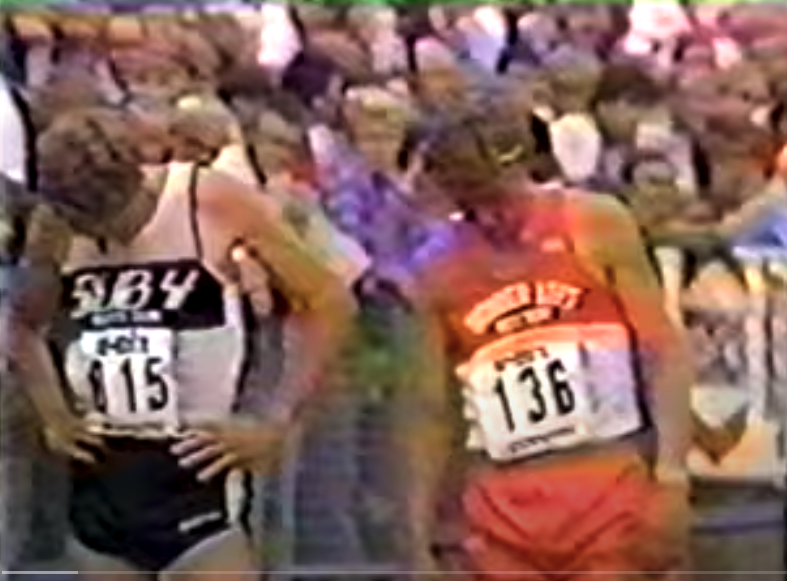
Morton Warland lines up in a Dream Mile with some of the world’s best milers in his Wonder Left Racing gear.
Video of the race shows Warland stoically sporting his Wonder Left Racing Team jersey on the starting line next to the world’s best milers in Craig Masback, John Walker, Ray Flynn, and Scott. The race was fast from the gun, with a first lap of 56 seconds, and it didn’t slow down. Warland finished a bit back from the leaders, but still ran a pretty credible race.
His name in lights and the Wonder Left Bill Rodgers gear on the world stage.
I wore the Wonder Left gear through the fall of 1982 when I landed out in Pennsylvania with a work-related move and joined up with an active club team called Runner’s Edge. But while it lasted, the Wonder Left Racing Team was a candy-coated ideal wrapped in Dreamsicle orange and white. Somewhere there are probably Wonder Left jerseys still hanging in the closets of club members, but perhaps not. It was all so long ago.
It’s fun to look at the list of guys on the team. Many of them went on to run times even faster than those listed. But what this list really signifies is that burst of youth in young men (and women) that know in there is only one time in life when you’re in your twenties, and what are you going to do about it?
We did our best to run our fastest. There’s always some wonder left about whether we could have gone faster, farther, or smarter along the way. That’s the nature of running, and of life.
I had a problem during the summer of 1981. The coach house I was renting became Party Central for my circle friends including my running buddies and a group of co-workers who loved having a place to toke up in peace. And lacking any other concrete plans, I hosted one social gathering after another at the Coach House. I wrote in my journal: “Center of attention at party tonight. Can’t let it go.”
One of my best friends started a lusty romance with a woman from my office that I adored. They took to using my living room couch for dalliances before going their separate ways. I tried to fall asleep as they made it together one room away, but it was tough being objective, because I really liked that girl. Still, they were both happy, and I felt like the keeper of some secret joy in the world. So it was worth it.
Wearing thin
All the hard running I was doing left me with a physique that was desperately thin. I weighed 140lbs at 6′ 1.5″. My body fat percentage was down around 3%. All it took was one tired night to put me over the edge into some sort of cold or flu. This was unknown territory for me. In college, I’d been fastidious about getting rest and seldom came down with a cold. But now that I was out in the real world, where things were less predictable with far more influences coming my way, it was tough to sort it all out and stay healthy.
Plus, I never thought I had allergies of any kind, but in 1981, at the start of August, I came down with what I thought was a “cold.” During high school and college, I had several teammates that suffered during allergy season in the fall. When the ragweed sent out pollen, their nose clogged up and they could barely run. I never considered that I might have a similar problem. That first week of August, my nose and throat closed up with drainage, and running mileage dropped. I sank from a 55-mile week after my fast race at Nordic Fest in late July down to a 29-mile week. Everything in my body felt achy, tired, and awful. A hamstring injury bugged me too. “Need new running shoes probably TRX Trainers again. Hamstring (Left) is a little tight. Be careful. Stretch out, idiot. Too much training when overtired. TOO MUCH BEER! Need a woman.” Yes, the same testosterone that drove me to run so much was also vexing brain. Clearly, I was having a hard time managing my hormones. “Horrible case of blueballs from overwrought afternoon,” I wrote.
I popped a few Contac cold pills to deal with the stuffy nose and jammed some vitamins down my throat trying to beat the”cold” that season. I was gunning to win a race in early August, but things weren’t looking good for that. Over the years, I figured out that I almost always came down with a “cold” in early August. Most likely, I have n allergy to some sort of pollen at that time of the year.
But back in 1981, it could also have been a cold brought on by training and too much. I’d just finished running a series of hard workouts in the company of two former St. Charles runners, Doug Jones, and Vern Francissen. On August 11 I wrote: “Wracked by some cruel disease last week, a cold never the likes before seen since 1972. Totally wasted my mental strength and physical endurance. I made it through OK, but the lesson was hard-learned since I missed the St. Charles race where I figured to run 31:30 (I’d won the year before) or under, and most likely would have. I overtrained or overpartied or just plain had it coming, I don’t know which, but I overdid it. Started with a sore throat, two days. Then 1 day nose wet and throat raspy. Sniffles progressed stiffly until I was downright physically washed out on Friday. Made it through 1/2 mile and quit the race.” That was a major disappointment because my oldest brother was in town visiting my parents. I’d told him how well my running was going, then dropped out of the race he came to watch.
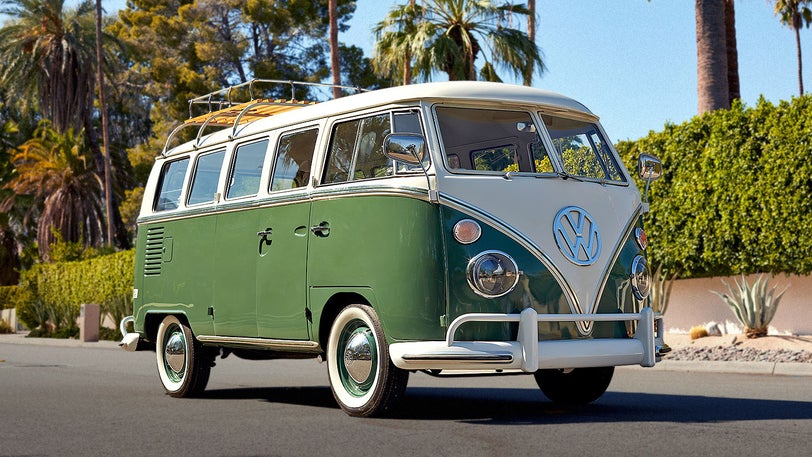
With the cold waning and my erstwhile girlfriend driving around the country in her Volkswagen van, I decided to go out on a date with a woman friend named Alice. She was a nice, wholesome Catholic girl who wasn’t up for my typical shenanigans. At the hint of anything else beyond making out a little during our date, she told me, “I’m a little backwards.” The next day I wrote in my journal. “No, she’s not. She’s sweet. Nice time. Had her home at three. Strange kisses in the kitchen door. Next day in Lake Geneva. I dunno what she thought. All in all, coughed all night on date.”
To think that she put with me through all that coughing proves what a sweet girl she was. I still met up with her younger brother Larry to run now and then. They were sort of a sane influence during the general insanity of that summer.
An august proposition
With August wearing down I felt an urgency to assess my fitness after the hot summer we’d had. I added up the mileage for June, July, and August to determine that I’d been averaging 45-50 miles per week, about 6.2 miles per day. “10km a day, tee hee!” That was a reasonable but not an august amount.”50 miles a week is middle-of-the-road,” I wrote. “Sure you can run. But the times you have done more, running has been a fuller part of life. You get what you put into it. If you want to party, party. If you want to run well, TRAIN, don’t destroy it all through idleness and excuses.”
The third week of August I traveled East to visit my oldest brother in Lancaster, Pennsylvania, the city where I lived from the age of five through twelve. Eager to impress my brother with my burgeoning fitness, I signed up to run a 10km race in Elizabethtown the day after arriving. Tired from the drive, I could only manage a 33:51 on a hilly course.”Little road weary,” I noted.
After returning from Pennsylvania, that next weekend I drove up to Decorah for the wedding of Keith and Kristi Ellingson the first weekend in September The day before the ceremony, I ran in the Luther alumni race and managed 21:45 on the four-mile course. My best friend Greg Andrews beat me. I wasn’t too happy about that, yet I should not have been surprised. He had dusted in a pair of races earlier that year as well. That bothered me because I’d been a better runner in college than he was. Part of me was determined to get so fit that he could not come close to beating me.
Still stinging from the race, I partied late into the night. The only thing I really recall is somehow cramming an entire pool ball into my mouth. To this day, I don’t know how I did that. I was really drunk at the time, and trying to prove to someone that I could be crazy enough to do it.
In later years, I read about the tendencies of young men to engage in risky behavior. The frontal cortex of the male brain used to gauge risk is not fully developed during the late teens and early 20s. But tribal instincts are strong, and many young men consider it a far greater risk to disappoint their peers than to engage in activities that could lead to physical or emotional harm. That explains why so many young guys do stupid things. Add in some native anxiety or depression, a lack of self-esteem, or need for approval, and the formula gets more complex. I had all of that going on. Throw in some alcohol or drugs, and the formula is predictably unpredictable.
Competitive instincts
The party pace hardly slowed down as I slammed out a 77-mile week the second week of September. I eased back to a 45-mile week leading up to a 10K in which I passed three miles in 15:03 only to cramp up with a side stitch. Apparently, I made some comment after the race that sounded like an excuse to my buddies. They didn’t call me for a week after beating me by a minute or so. Our disagreement centered around the fact that for all the partying we did together, I wasn’t fond of drinking beer the night before a race. They gave me incredible grief the Friday night before the race about being too uptight. I gave in and drank a beer, then blamed the sidestitch on the beer. “See?” I commented. “It doesn’t work for me.”
That whole next week, it was Radio Silence from both of them. I was pissed. They were disgusted. So I threw my anxieties into a wild game of backyard football with a bunch of ten-year-old kids. I often threw the football around with them in the backyard behind my house, and that week they challenged me to some kind of ‘run back’ game in which we traded kickoffs and tried to run the ball back for touchdowns. It was three against one, and we had fun and competed for keeps. I’d played so much football growing up that I enjoyed being a kid all over again.”Outcrafted them for the winning TD in half light,” I wrote. “Probably some sore spots tomorrow.”
Marooned in LaCrosse
To cap off September, I joined my buddy John (Jack) Brandli on a trip to LaCrosse, Wisconsin to run a half-marathon. He’d attended the University of Wisconsin-Whitewater and knew all the LaCrosse guys from competing against them in college. I was also familiar with LaCrosse after running against them at Luther. “This race is great…” Brandli told me. “But the party after the race is amazing.” I had no idea what he was actually talking about.
The LaCrosse half-marathon course was a beast consisting of two loops of just over six miles. There was a half-mile-long hill in the third mile that just about stopped me cold the first time around. On the second loop, I ran until my butt locked up right at the top and was almost reduced to walking. Then the downhill began and I gladly descended and raced home to the finish. My time was 1:12:21, my longest race since the Chicago Distance Classic in June, when I’d managed a 1:09 for the 20km distance, and the half marathon up in Whitewater, with 1:16 in high winds.
My sketch of Naked Guy.
The party following the race was indeed beyond anything I’d encountered before. Dozens of people gathered in a downtown LaCrosse house. The first thing I saw upon walking in the door was a guy standing completely naked in the living room. He went by the moniker Naked Guy as his party persona, and he really fit the role. In real life, he was a former UW-LaCrosse athlete and a national class runner that qualified for the Olympic trials marathon. I recognized him because we’d run against each other in college.What I admired at the party was his complete comfort at being naked among both men and women. He had a strong, body and was hung well enough to intrigue any woman that might like to take a look. But here’s the thing; he carried on the conversation just as if he was wearing clothes like the rest of us. Most of the women at the party didn’t even seem to focus on Naked Guy. He stood there with a beer in one hand and a pile of bright, curly blonde hair sticking out from his cap. I remember thinking, “Man, that’s confidence.”
The drinking and partying went well into the night. With the fatigue from running a half-marathon still in my body, it only took a few drinks to get pretty plastered. I wandered around half-alert to the goings-on and by 2:00 a.m. I grew weary and grabbed a blanket off the couch. I used my Frank Shorter gym bag with sweats inside as a pillow. I fell sound asleep with the party still going on. No one cared.
Wakeup calls
At some point in the half-light of morning, I woke up to the sight of a woman stepping over me on the way to the bathroom. I groggily glanced up to see her naked crotch above me as she minced her way over the line of bodies sprawled across the floor. “Well, that’s nice,” I thought to myself. Then I rolled back and fell back to sleep.
Another hour or two passed before voices entered the room and one of them called out, “Who’s going for a run?” It was one of the famous Hanson brothers, either Jim or Joe. He was already in his running gear. For some reason beyond my own understanding, I sat up and said, “I’ll go.”
So did plenty of other guys. Hungover and sleepy, we all wandered outside in our running gear. My legs were tired from the race the day before, but something in me didn’t want to wimp out on the post-party run. We all started running in a pack. The Hanson brothers were in the lead as we jogged down the street. Everyone was laughing and telling stories about the party and the race the day before. Along the way, someone broke into a coughing fit and the whole pack stopped to look as one Hanson brothers stopped and pointed at something on the ground. “Oh my God!” he exclaimed, pointing at a purple blob on the pavement. “Did that come outta me?”
Everyone laughed even harder. Then we ran ten sore and half-drunken miles before gathering back at the house. All the while I kept thinking, “God, I thought Luther guys knew how to party. This is a whole other league.”
Back at home that evening, I thrilled to the fact that I’d improved in the half-marathon. The splits were 5:20 at the mile, 16:26 at three, 21:47 at four, 55:13 at ten, and 66:14 at twelve. I’d been troubled by a slight case of blisters, but hung in there.
“Got a glimpse of what I can be if I continue,” I wrote. And then, quoting a Bruce Springsteen song I scrawled… “Badlands….’I want to find out what I got…” Then concluded, “Keep training, you almost had it.”
The Rails-To-Trails movement in Illinois started in the early 1980s. The most significant development in the Fox Valley where I lived was the conversion of the Great Western railroad tracks to a running and cycling path. Most of the training I’d done since the early 70s when I started running was on athletic fields, in forest preserves, or on the roads. Having a trail dedicated to running was, at that time, a welcome novelty.
A Kane County forest preserve commissioner named Philip Elfstrom embraced the idea of turning railroad beds into recreational paths. His influence was strong enough to make it happen, and the Great Western opened at the entrance to Leroy Oakes Forest Preserve in St. Charles.
The great thing about that trail was the surface and shelter it provided. Most of the trail was crushed limestone with intervals of asphalt. It stretched all the way to Sycamore, seventeen miles west when it was completed. On summer days the archway of junk trees on both sides of the former railroad tracks provided great shade. On winter days, the same trees blocked the wind. We got to know the section of trail from St. Charles out to Wasco and back pretty well, as it was provided a precise 6.2 miles (10K) workout. The mile markers made it possible to record splits with some accuracy, and the company of other runners and cyclists provided safety for all.
A townie tradition
Otherwise, I ran most of my workouts in the cities of St. Charles and Geneva. I’d formerly lived on the east side of St. Charles and ran a seven-mile loop on two of the main boulevard-style streets; East Side Drive in Geneva and Anderson Boulevard on the west. Back in the early 1980s, the rails from the trolley that used to run from Aurora to Elgin were still visible in the asphalt of Anderson Boulevard.
By 1982, that same county commissioner set his eyes on the abandoned railroad and trolley tracks lining the Fox River between Aurora and Elgin. It took a couple years, but the county installed dozens of miles of paved asphalt paths on former railroad beds along the Fox River. These trails gave citizens access to some of the most beautiful scenery in the entire Fox Valley with trails that cross through popular parks such as Fabyan Forest Preserve, Arends FP and Geneva’s Island Park. The loop of trails between St. Charles and North Aurora made it possible to do a 20-mile run on smooth surfaces with few interruptions from car traffic or stop signs.
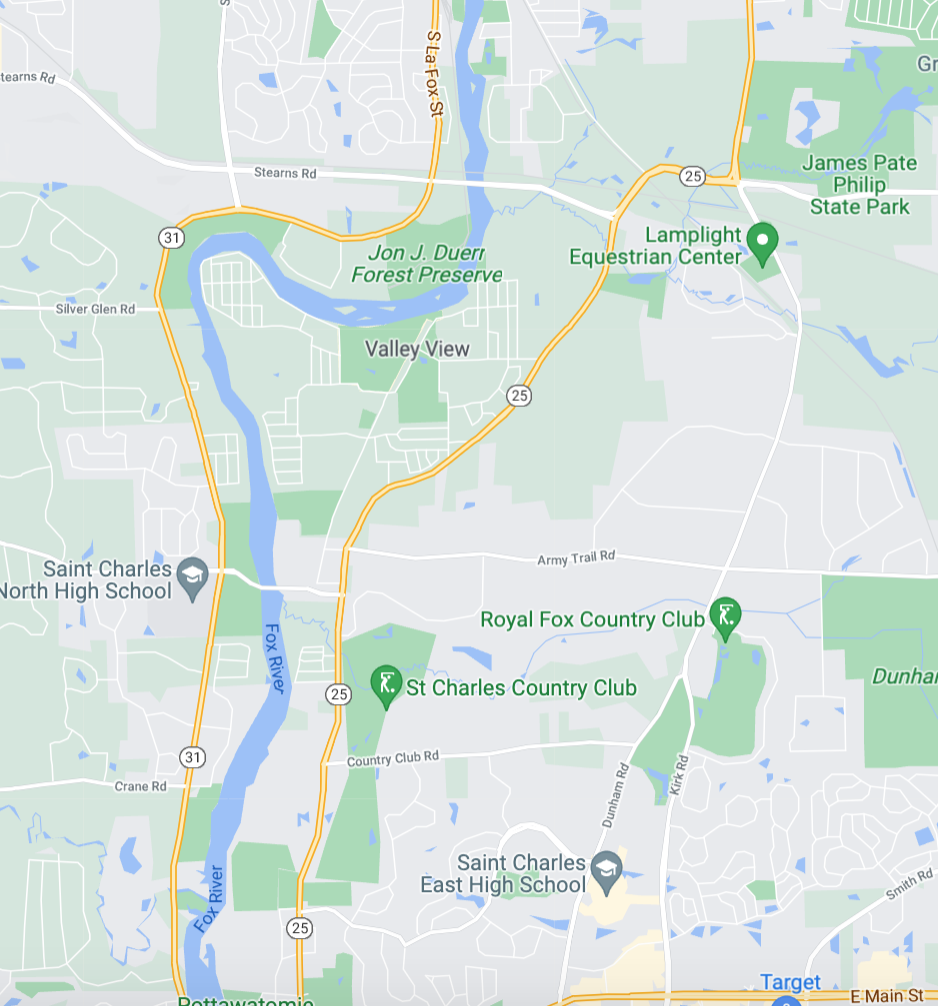
But Elfstrom ran into trouble with a larger plan to condemn property on the west side of the Fox River north of St. Charles. His plan to run trails through the back yards of homeowners along the Fox caused property owners to fight back. The county also bought land east of the Fox in a small community called Valley View. The goal was to create a massive trail and forest preserve complex near the bend in the Fox River near South Elgin.
The county did succeed in setting aside parkland in Jon Duerr FP and Valley but, and a bike path runs up the east side of the Fox River from St. Charles to South Elgin. But the county’s plans to install a path on the west side were defeated mostly because the land grab was perceived as evidence of government overreach. A homeowner named Karen McConnaughay (R)was a particularly adamant opponent. She got elected to the Kane County board and deposed Phil Elfstrom President of both the Kane County Board and Forest Preserves. She’s now an Illinois Senator.
The anti-government messaging was the style of the era in 1981. A hardline conservative and former actor Ronald Reagan was elected President. That political movement ushered in an anti-environmental legacy. For a time, additional efforts to install more trails in Kane County were halted. But the people loved the trail system, and eventually, the system was expanded further.
The political and cultural changes taking place in 1981 drove my political awakening. I read about James Watt, the man named as Reagan’s Secretary of Interior, and realized that he was an enemy of everything I believed in. His archly religious and anti-environmental attitude was summarized in a statement he made: “When the last tree falls, Jesus will come.” From that point forward, I never really trusted conservatism again. My instincts have not been proven wrong.
By that point in life, my interests in wildlife and birds were already well-developed. I was involved in citizen science, conducting bird surveys at Nelson Lake Marsh to help protect it as an Illinois Nature Preserve. The idea that a selfish jerk like James Watt was taking power over our nation’s natural lands made me angry. Watt opened everything up to mining by while covering his religio-political ideology under the umbrella of Christian Dominionism––the idea that the earth and all its resources are put there for human use, without exception. To say that I hated that philosophy is an understatement.
Fighting back
In 1981, I approached a local newspaper and started writing a weekly newspaper column titled Straight Nature. It covered local environmental topics and provided profiles on wildlife and wild spaces. Most weeks, I wrote about local wildlife in educational fashion. But it took every ounce of restraint not to rip the Reagan presidency for the ignorance and greed it imposed upon the nation. They called Reagan the Great Communicator, but I saw him as a Massive Bullshitter. I despised his manner of talking soft and slick in that patronizing style of his, all while setting about the work of busting unions, turning natural resources over to industry, and leveraging the viciously specious theology of conservative religion to impose prejudicial and racist policies in America. His entire “wholesome cowboy” image to me was a farce of massive proportions.
It sickened me to hear some people worship the guy like he was a god. I found it ironic that the same batch of people who claimed to despise the politics of Hollywood liberalism excuse the aggressively dismissive brand of hate-filled ‘reforms’ under Ronald Reagan. While he held supposedly “strong convictions,” and that’s what conservative admired about him, he was also a keenly effective phony at the same time.
His “trickle-down economics” clearly created an excuse to grant the wealthy even more money. Meanwhile, his union-busting, policies of corporate tax-cutting and exporting manufacturing capital overseas introduced the brand of globalism that actively gutted the American labor market while shrinking the middle-class.
To anyone with common sense and brains, it should be apparent that Reagan actually hated the America he claimed to love. His famous statement, “In this present crisis, government is not the solution to our problem; government is the problem,” is one of the most cynically hypocritical statements in all of American history. If Reagan didn’t believe in government, then he did not believe in America. Without government, the nation ceases to exist. And if he didn’t believe in the value of government, why did he run for President in the first place?” That same attitude came back to haunt the nation with Donald Trump’s promises to “drain the swamp.” In turn, he created the most corrupt and vindictive administration in modern history.
But it was Reagan, during his hypocritical reign, that set the stage for decades of conservatives gaslighting the nation by blaming government for the ills that conservatives created through their own bumbling inability to govern. George Bush II played the same Happy Cowboy game as Ronnie-Boy, yet he let our nation be attacked by terrorists on our own soil. His response was to go flailing around the Middle East with our military in an expensive and illegal “war” in Iraq that actually increased rather than defeated terrorism in that region. Bush and Cheney even condoned torture and terrorism on America’s part. That’s a sick legacy for a political party whose leader Dwight D. Eisenhower once warned, “Beware the military-industrial complex.”
That’s why it did not surprise me, in the late 1980s, when Reagan’s brand of selfish, corrupt politics was exposed during the Iran-Contra affair. I was disgusted by Oliver North claiming that he acted with a “higher purpose” while breaking the law and lying to the American people. That captures the essence of conservative arrogance carried forward by the cabal of Republicans and conservatives all the way through to Donald Trump, who led an insurrection against our own country on January 6, 2021. The tradition that Reagan started by claiming to hate government directly led to that act of sedition.
Angry vision
I saw the roots of that gaslighting ugliness for what they represented way back when I was twenty-four years old. It angered me fiercely then, and still angers me to this day. At the time, I poured some of that anger and frustration into my training during summer of 1981. The result was a much faster Christopher Cudworth, and the time had come to test it out in races. I may not have been able to change the world, but at least I was going to show that I had some strong fiber within.
In early July, I drove out to Des Moines to stay with my Luther teammate Paul Mullen to run in the Midnight Madness race in Ames. He was home alone with his baby daughter when I arrived that day. He was in the middle of changing her when the precious little girl let rip with a squirt of poop that shot ten feet across the white carpet. I stared at him a moment and asked, “Does this happen all the time?”
“Never, before this!” he said with eyes wide and arched eyebrows. Then he ran to get supplies to clean up the mess. I secretly vowed to myself at that moment I would never have children of my own. That was a vow that I would not abide.
The next morning, we both rose early to run a three-mile race at an easy rate. He won the run and I cruised home in 17:30 knowing that I’d be running a much longer race later that evening. The Midnight Madness run started at 9:30 in the evening. It was held on a three-mile loop on farm roads near Ames. We’d pass through the lights near the starting line and shoot back out into darkness. I did the entire thing under 6:00 pace but was passed in the final loop by a 15-year-old woman runner named Karlene Erickson. It chagrined me to get beat by a girl, but on the other hand, I was impressed as her lean young figure passed by me in the dark.
On July 25, I traveled back up to Decorah, Iowa, to race the 15k Elvelopet (River Run.) It was always tough for me to crack the Top Five during college. But on July 25, the day before my 24th birthday, I ran a 52:19 to take 2nd overall in a tough race against Luther’s lead runner at the time, Mark Glessner. He was a 30:30 10K guy, so I knew he’d be tought to beat. But I’d run a 4:22 mile in an alumni all-comers meet the Thursday night before the race, so I knew that I was getting fit and fast. During that week, I wrote that I was feeling some sort of ‘low-level sickness, fighting something off. Nutrition? I think not.” I observed: “Effects of long term work in humidity. Felt absolutely strong in the mile tonight. Blew past Evan (Clarrissimeaux, a 4:07 Iowa miler) and Jonesy (Doug, an Illinois State runner and high school All-Stater). Those guys have college running to think about tho. Still, I ran really well. Felt queasy and tired beforehand. 1/2 hour nap.”
Due to the summer heat that year, my mileage wasn’t that high with weeks of 65-40-44-44-50 in the weeks leading up to that race. But I was doing plenty of speed work in thatmix, with lots of 200s and 400s in 32-34 and 63-66. For once, I was not really overtraining.
Still, my lack of heavy miles cost me in the last mile of the Elvelopet against Glessner. My body tightened and tied up over the last of the nine miles. The Elvelopet course featured several steep climbs and loops of narrow trail running. It was a test of agility as well as fitness. During the last mile I tried to sprint as Glessner and I traded leads. He had an issue with his back in which a muscle near his shoulder blade would tighten up, forcing him to pound at it with his fist. When he started pounding on it, I thought I had him beat with a half-mile to go. But to his credit, he fought through it all and bested me in the last 200 meters.
I was proud of the effort. That night, I hung around Decorah flirting with women I knew from Luther. But as I moved around town, some of the people I met did not know that I’d broken off my relationship with my college girlfriend. Several of them asked, “How’s married life?” To which I replied, “No, we broke up.”
Other kinds of happy trails
I’d driven up to Decorah that week with a former Luther teammate and running buddy. For a change, I decided to take a different route by driving through Galena rather than taking the tradition route up I-90 to Madison and across Wisconsin. After two hours in the car, we decided to stop east of Galena and go for a short run to loosen up our legs. We took off running down a steep and long incline on a country road. When we got to the bottom and turned around to look back at where we came, he said “Oh God,”and we both laughed. “Look at that goddamn hill we came down.” The run back up was strenuous and tough. Our feet scratched into the gravel and the climb was steep. But I felt great nonetheless.
I told him how good I felt, and made him swear not to tell anyone that I was so fit before the Elvelopet race. “I promise,” he laughed.
Through a long friendship through high school and college, and into the real world beyond, we trusted each other with secret hopes, our swaying goals, and dreams of one kind or another. That’s the real secret to finding Happy Trails in life. Having someone to share them with. That’s also how you smooth out rough patches along the way.
That’s the interesting thing about running thousands of miles together. Along the way, you learn what to say and what not to say to each other, or the world. That builds trust and shared insight, and can help you through the toughest stages of life even when liars and hypocrites rule.
There’s a great amount of value in that. So while the activity of running seem selfish or non-constructive on the surface, it offers the deep benefit of helping you process everything that goes on in life. In many respects, running is life.
My full-on “runner look” in 1980: corduroys, a graphic tee under a dress shirt, and “casual elite” running shoes. Plus the hair and beard.
All through college, one of the keys to my self-esteem was running. A large chunk of personal identity was wrapped up on the sport and its year-round commitment to training and racing. Like many runners in those days, when I wasn’t running, I was hanging out in running tee shirts, wearing old running shoes with jeans and corduroys, and generally trying to look like a runner all the time.
The problem with all that ‘look like a runner stuff’ is that it wasn’t really a great look. Those old running shoes with the dingy sides and worn-out laces certainly weren’t attractive. Nor were the graphic tee shirts with typically ugly logos printed on the front. Layering dress shirts over printed tee shirts was certainly the worst look ever, but most of us did that too, as if our running “look” was some sort of superhero power.
We felt like it was. The running boom was just beginning to gain real legs in the early 1980s. The Moscow Olympics were a bust for the United States because we pulled out for political reasons, but the LA Olympics were just around the corner in 1984. We had running heroes to adore in th likes of Bill Rodgers and Frank Shorter, Craig Virgin, Alberto Salazar and African athletes such as Henry Rono.
And so, like many running rubes in the early 1980s, I dressed the part of a committed runner, and typically looked like hell.
It didn’t always (or often) impress the women. My friend and I would come home from the bars some nights wondering why women never gave us a second glance. To commiserate, we’d stop at 7-11, usually half-drunk or half-stoned, tp grab a pint of Rum Raisin Haagen Daz ice cream, and down it in one sitting. Then we’d plan the next day’s run.
“See you at 8 a.m. for a ten-miler?” Come Sunday morning, we’d be out there pounding the roads like the night before never happened. Hungover or not, we got in our runs.
Getting lucky
Things went like that for most of the winter in 1980, until I met the 33-year-old woman at a bar who knew nothing about running at all. Her main hobby, it turned out, was smoking prodigious amounts of pot. She had a large collection of Turkish pipes and bongs that she’d garnered by traveling overseas. She also knew where to find gloriously powerful pot.
I’d never smoked pot that much in college. But I learned quickly that my skinny body with its keenly tuned cardiovascular system responded quite strongly to pot as a drug. We sat toking on a one-hitter on a February night when she asked, “Do you want to listen to music?” I said sure. She put an album by Cream on her turntable and the song Tales of Brave Ulysses began to play. We listened, and she turned her head toward me and smiled as these lyrics rolled over us.
And you see a girl’s brown body Dancing through the turquoise And her footprints make you follow Where the sky loves the sea And when your fingers find her She drowns you in her body Carving deep blue ripples In the tissues of your mind
Those eight lines of rock lyrics have deep effects to a pot-laced mind. She dwelled upon those words as if they were scripture for the stoned. We hung together deep into the night found ourselves entwined on the couch. That’s when realized that I was in over my head with this woman in the league of recreational drugs. But I was loving it.
After that, we kept seeing each other. As time went by, the relationship took on a bit more normal rhythm, which was a bit of a relief to me. But one night I showed up for a date and she stood in the doorway looking me up and down, and commented, “You think I’m going out with you when you’re dressed like that?”
I had on my typical rube runner’s outfit with a new shirt that I thought she’d like. I’d dropped by the local mall to shop at the County Seat. I bought a new plaid shirt with pearl buttons and snap-down pockets. I put it on with brown corduroys and completed the outfit with a set of slightly funky Nike shoes with white laces.
“Listen,” she said, placing a hand on my chest for emphasis. “You need to go to Marshall’s, buy yourself a nice blue and white Oxford shirt, and some decent khakis. Then come back, and we can go out to dinner.” I stood there stunned for a moment. “I’m serious,” she said. “You need to learn how to dress.”
I was a bit shaken up by her direct assault on my runner’s look. But when I got home and looked in the mirror, I had to agree. She was right: I looked like a clueless rube. So I did as she suggested, and bought some decent clothes, including a set of dress shoes that looked like they belonged on a human being, not a running store mannequin.
We went out for dinner a few nights later. I was learning what it meant to dress like a grownup rather than a running rube.
Running commentary
That didn’t mean I was giving up my love of running. I was determined to show her why I loved the sport. She was curious enough to come with me to a local track where I met up with a close running buddy. The planned workout was twelve 400-meter intervals with a half-lap jog between. She parked herself up in the bleachers with the sun on her back and lit up a joint as we ran our 400 repeats. I’d trained with the guy for years, and we were in a similar state of fitness, so the workout went smoothly. We cranked off twelve 400s at a pace of 65-68 per lap. Every lap, I’d glance up to see her in the stands, watching us run. After the workout, while walking back to the car and she observed, “Your legs were in perfect synchronization. It was fun to watch.”
“Yes…” I responded her. “That’s natural. We’ve been training together for years.”
Into the fold
That same running buddy hooked up with her roommate a week or two later. We double-dated at a local pizza place, but on the way out of the restaurant, he saw a female friend we both knew from high school and stopped to chat with her in the entryway. The rest of us kept walking to the car, but his date by then was fuming. “I can’t believe he did that to me,” she hissed.
I tried to apologize for him. “We’ve known her a long time,” I pleaded.
“I don’t care,” my girlfriend stated flatly. “That is rude as hell.”
My girlfriend cranked up the engine and started to drive away. “We’re leaving him here,” she growled, glancing over at her roommate.
“No!” I begged. “He’s just like that sometimes. He doesn’t mean anything by it. Please don’t leave him here. He’s one of my best friends.”
“Then you should teach him some manners,” my girlfriend said, and pulled the car over near the restaurant entrance. We parked a distance away to see when he’d come out. At that moment, my buddy poked his head out the restaurant door to look around. “Please,” I said to myself, hoping he would come outside. “Do not go back inside.”
He walked out to the parking lot and stood there, looking around. We pulled the car up close to the curb and he opened the door. “Thanks,” he said cheerily. “I haven’t seen her in a long time.”
The women sat there in silence. I turned around to look at him in the back seat. “Dude,” I said. “That wasn’t polite.”
“Aw, come on!” he laughed. But no one else did. So we drove home with a funky scene going on in the car. But then we smoked some pot in the house, and all seemed to be forgotten. My girlfriend and I stood in the kitchen watching while her roommate and my friend got busy on the long lounge chair outside. My girlfriend just shook her head.
Age differences
Perhaps there really is nothing more self-absorbed in this world than 23-year-old guys. To be sure, my buddies and I proved that on more than one occasion. As I got older, I realized that it would have helped to have a sister in my family to set me straight on how to treat women. My brothers were better around women than I, which I credit to my own native anxiety. But from what I’ve seen, having sisters does help men gain perspective on women. My best friend growing up had three sisters. He was always really relaxed and friendly around girls, and I admired that quality in him.
I’ve talked with many women about dating guys when they’re in their 20s. While the patterns are not absolute, there is a broad dichotomy at work, no pun intended. Either guys are great with women and get it, or they tend to be selfish or self-absorbed. It takes a while to breed that out of a guy in his 20s.
So it was a learning process for me while dating a 33-year-old woman. She didn’t put up with dumb guy shenanigans. She also knew what she wanted and wasn’t all about trying to please me to get it.
Most pointedly, she didn’t give a damn about how obsessed my friends and I were with running. She already had her life in pretty good order, working as an interior decorator. She had eye for antique furniture restoration and many of her jobs involved refurbishing Oak Street apartments in Chicago. In other words, she knew where the money was, and how to make it. We even stayed in those condos on weekends when the owners were out of town. That gave me an entirely different perspective on what city life was about.
Her proficiency in her profession was so strong that she only had to work six months out of the year to make a really good living. The only person I’d met before with that kind of lifestyle was the party-happy carpenter I’d met in Ocracoke during my trip to the Outer Banks earlier in the spring of 1980. It occurred to me that the people who chose such interesting lives without devoting themselves to running knew something that I did not know.
A restless spirit
But true to my nature, I kept running for all that I was worth. Through winter, spring and early summer, I kept increasing my mileage in advance of the racing season. Then she announced a plan to go traveling during the country that summer. She owned a green Volkswagon van and had a month-long itinerary laid out to to drive around the country. “Do you want to come with me?” she asked.
“I have a job…” I replied.
“Suit yourself,” she told me. “Jobs aren’t everything.”
Testing limits
It seemed she was testing the limits of my understanding at every turn. Our physical relationship was interesting because she sure as hell did not want to get pregnant with some 23-year-old guy whose life revolved around running. We used protection at all times. Her preferred birth control method was a diaphragm, a little cup-like device popular in the 1980s. She offered to let me help her put it in, but I declined. “I thought you’d like that,” she suggested. But I was still inhibited in many ways, and despite an active sex life with previous women, the vagina was still something of a mysterious region of a woman’s body. But I hated that diaphragm because it banged against the end of my crank when we had sex. So we switched to condoms eventually.
The other thing I learned was that it is possible to be too gentle with a woman. My vision of sex to that point in life was was largely about gentle touching and feeling, but she liked things a bit rougher, even accidentally. One time at the 7-11, I swung around to ask if she wanted an ice tea and slammed my elbow into her breast. All my life I’d been taught to respect women’s bodies, and still thought of women in a delicate sense, so I apologized for ramming her boob. “Why, I like it,” she told me, and laughed. “You can do that any time.”
As it became known around town that we were dating, I’d bump into friends and associates that were curious about our relationship. “An older woman, huh?” they’d often ask. “Learning some things, are we?” But one day a guy I’d known from track in high school walked over to me in a bar when my girlfriend and I were together. “Her boobs are nice. Too bad she’s got such a big ass,” he growled. Actually, she didn’t have a big ass at all. In today’s terms, her ass was incredible. But according to his 1980s judgment, any women lacking a tiny set of butt cheeks wasn’t worth his time. “Fuck Off,” I told him.
She saw that I was upset and stepped over to ask what the guy had said. “Nothing,” I responded. “Absolutely nothing.” Truth be told, he was a jerk the entire time I’d know him, so I wrote him off. But I also knew that if I’d told her what he’d said, she would not have been bothered by it. She’d have told him to fuck off, too. Probably to his face.
Measuring up
So it was that I tried to understand a woman with a far different level of life experience and expectations than my own. At times, it made me feel foolish to go out for my daily runs while she seemed to exist in a partial zen state. Then again, running was my zen.
One day I stopped by her house during a training run to find her diligently refinishing an antique––yet long abused––chair that she’d found at a garage sale. I asked her what she was doing. She explained why the chair was valuable and showed how to protect the wood while removing the old varnish.
While I was an artist of sorts, and was actively producing work of my own at the time, her efforts seemed so much more grounded and serious than my own. I was mostly impressed with her ability to be a self-sufficient woman in her work and life decisions.
Needs and wants
Yet, there was no doubt she wanted genuine companionship, and possibly a true partner in life. I was nowhere near ready to fulfill that role for her. She probably knew that, but I was fun for a while, so it worked for the both of us.
I recall one manic weekend in which her roommate piled us into her tiny BMW touring car to drive to a concert in southeast Wisconsin. Between the drive up there and the pot in the car and the brews at the concert and the drive back home I was so tired I collapsed to sleep in the back of the car. But she was still going strong. We had different kinds of endurance, it turned out.
While dating her, I did the math and realized that when I turned 33 years old, she’d be 43. When I was 43, she’d be 53. And 53-63, and so on. My mind was too young handle that kind of relational calculus. I did not understand that at some point in life, age is not what matters. What matters is how you connect, and what you value. But we also knew there were differences along those lines as well.
For me, I couldn’t quite get past the pot use. One afternoon we walked to the Colonial Ice Cream shop a half-mile from her home. On the way, we smoked whatever pot she was carrying with her, and I immediately felt the effects. After I bought an ice cream cone and sat down to eat it, the pot took over my entire brain. The walk back to her house felt like it took an eternity, with spins and trails and flashbacks along the way. It was wild and fun, but I was also scared at losing so much control over my mind and body. That type of experience didn’t seem to affect her, or the pot didn’t seem to hit her so hard. But it bothered me. The athlete part of my persona wanted to remain in control in some fashion.
The running game
As the road running season arrived, I plotted out a series of races. On May 3, a bunch of us traveled to Whitewater, Wisconsin to run a half-marathon. We took off fast that day, cranking through the first mile in 5:15. We reached the four mile point in 21:41 and hit the 10K in 33:10 before turning back into a wind gusting to 25 mph. At that point, the lead pack blew apart and it was every runner for himself. I passed ten miles in 56:20 and finished in 1:16. That day, I wrote in my journal, “Very windy last 7 miles. Pretty wasted.”
A week later on May 10 I ran a six-mile race in 32:16. It was a cold, rainy day with temps of thirty-six degrees. On May 17, I raced a 32:38 10K and took sixth overall. My fitness was coming around and real improvement seemed possible after putting in a spring of sometimes solid training.
But the weekends away from my girlfriend allowed us to drift apart. Plus, my notion to skip her planned trip out west put the relationship on hold for the time being. When she returned, we did continue dating, but eventually came to understand that our schedules and lives were headed in different directions. By October, the commitment between us fizzled out. I regretted the breakup, but at least I’d taken a chance and shown some courage in the wake of the recent breakup with my college girlfriend.
That spring, I’d purchased the album Arc of a Diver by Steve Winwood. It featured the song While You See A Chance that seemed to describe my life and relationship that year almost perfectly.
Stand up in a clear blue morning Until you see what can be Alone in a cold day dawning Are you still free? Can you be?…
When some cold tomorrow finds you When some sad old dream reminds you How the endless road unwinds you… While you see a chance, take it Find romance, fake it Because it’s all on you…
Don’t you know by now No one gives you anything? And don’t you wonder how you keep on moving? One more day Your way
When there’s no one left to leave you Even you don’t quite believe you That’s when nothing can deceive you…
While you see a chance, take it Find romance, fake it Because it’s all on you
My journal drawing of a candle burning at both ends, circa April, 1980
As a hormone-driven, partially obsessed early 1980s distance runner in his early 20s, I was constantly seeking partners in crime. One in particular, a best friend you might say, had followed a similar path from the same high school to the same college and was now living back with his parents while doing graduate work in downtown Chicago.
So our running schedules matched up, and we’d go out pounding the miles in the dark and the cold of an Illinois winter. Most of our runs were conducted at 6:00 pace because that’s the only speed my friend liked to run. We’d go out the door and within fifty yards be clipping along at that rate. No warmup. Just step on it and go.
And go and go. He didn’t like predetermined routes, so we’d hammer along making choices as we rolled along. He lived three miles away as the crow flies, and we’d trade running the distance to each other’s place. Sometimes we’d be joined by a third partner in crime. He was a year older than me, and I was a year old than my other friend, so we all had the same manic early-20s energy going on.
We also partied together quite often. That meant plenty of late nights, crazy weekends, and squeezing workouts in between. Both of them were cross country skiers and cyclists as well. But I stuck mostly to the running, other than to join them on wild weekends in southern Wisconsin skiing the trails at Kettle Moraine or Governor Dodge State Park. Our ski sessions often lasted 2-3 hours. One February day after a major snowfall dumped 15″ on Illinois, we started skiing as the sun came out and temps climbed into the low 30s. The snow was still great, so we skied far and wide, covering thirteen miles. Eventually, our layers of clothing got too hot and we stripped to the waist and skied without our shirts on. It wasn’t even cold when I wiped out into a huge drift. I lay there laughing my head off, feeling more alive than ever. Then we just kept on going.
Back home, we brewed up a huge batch of spaghetti and drank beer all night while watching Second City TV on the UHF channel. We were scrambling our brains with constant simulation.
Sleep deprivation
So the candles of youth were burning at both ends. At one point, two of us decided that getting eight hours of sleep a night seemed extravagant. Why not cut that down to six hours a night? That’s enough, right? We reasoned that since we were young and healthy, our bodies would adjust. We kept up the same running schedule on top our our daily commutes and both wound up sick as hell with bad colds in less than two weeks.
That didn’t stop us from burning more candles. When my friend heard about a Stolichnaya vodka night at some bar in Chicago, we drove downtown after arriving home from work and drank and danced until three in the morning. I begged him to go home earlier, but he looked at me with those wild eyes that told me he was not having any of that, so we stayed until the place closed. I was Ralph Steadman to his Hunter S. Thompson. Or so we perhaps imagined ourselves.
We drove back home to the suburbs as the sun threatened to come up. I, for one, was still drunk Iat 4:00 in the morning. I still rose and made it to the 6:30 train for the commute into the city. Never a coffee drinker, I tried drinking Cokes to stay awake all day, but I must have smelled of alcohol in any case. So I kept to myself while working in the small office with three other people. Little was said. They knew I was hungover and just wanted to go home.
Party hearty travelers
With all that energy spilling out into the world, it was inevitable that we’d meet up with some people who shared our manic visions of life. Indeed, we met up with a family in Naperville with a couple sisters and a few brothers, one of whom was a top half-miler named Larry Wood. Somehow I got the idea that I could provide some sort of guidance for the guy. I even dragged him up to visit Luther College in hopes of recruiting him for the team. But he wound up choosing Indiana University because he was initially seen as a Division 1 talent with an 800-meter time in the low 1:50s. But he disliked the D1 atmosphere and later transferred back home to Naperville and North Central College, where he became an All-American in the steeplechase with a time under 9:10, ten seconds faster than I ever ran.
We had fun though, ramming around like a strangely extended family with the eldest sister observing her young male friends with an attitude of bemusement. Half the time our half-assed plans came together, and the rest of the time, they fell apart. We didn’t care. We just kept going.
One afternoon my running buddy announced that we’d be making chili that night for the whole gang. His brother worked at a butcher’s shop in Naperville, and handed him five pounds of ground beef with which to make our chili. The massive pile of meat was dropped off at my folk’s house and he told me, “Here, cook this up.”
I’d never made chili before, so I asked my mom what to do. “You need to brown the beef,” she told me. So I flopped the first giant wad of ground red flesh into a pan and started turning it over and over. That process went on for nearly two hours. Five pounds of ground beef is a helluva lotta meat, I learned. We made a giant pot of chili that lasted for weeks.
I kept training through the month of February when the wind chills dropped to -28F. Out of some sort of sense of dedication, I traveled to race a two-miler in Sterling, and managed to run a 9:48. But I had trouble racing because I’d slammed my shin hard on a tree limb while cross country skiing and it hurt like hell to run.
But when candles needed to be burnt, I was up for the burning. On February 21, I noted in my journal, “Up for 24 hours straight. Intense goings on. Prove it all night, girl there’s nothing else that we can do.”
Work tripping
The company purchased the snow New Zoo Revue as some sort of investment vehicle. I illustrated the characters.
The company flew me out to Philadelphia in June to show some watercolors I was producing for the corporate brochure. I was so tired going into the trip that I got on the wrong flight and wound up in Washington, D.C. The airline was aghast that they’d let that happen, so I was given a ticket and rushed to a flight to Philly right away. I had to call the Philly office and tell them I’d be a little late. That evening, the Philly staff took me out drinking and dropped me back at the hotel wiped out from the alcohol and the traveling. I still got up to go for a run in Fairmount Park the next morning.
Yes indeed. if there were candles to burn, I was going to burn them. Our energies were fueled, as one could imagine, by the music of Bruce Springsteen, the Talking Heads, and the Police. I played albums, made cassette mixtapes, and we ran while singing those songs at the top of our heads.
In early March, I had a strange dream in which the father of my former girlfriend’s new fiance had three eyes, and he told me that she wanted me back by June. That wasn’t going to happen, of course. I was trying like hell to forget her. “God she made me guilty, and gunshy,” I wrote. “Well, no more. Get her out, out!! No more vacant dreams.”
On March 17 I wrote, “I wish I had more time; to run, to anything. I’m not in bad shape, but phase 1 is not long enough. I have been fairly consistent, barring last weekend’s severe craziness. Monday was overheated, crabby. Attitude returning. Shin still hurts; either bruised or splintered. OOCH>”
I was trying to figure out so much of the world at the same time. It even showed up in the artwork I did for the company brochure.
Hustle and muscle
Then I met a much older woman in a downtown St. Charles bar. I’d been working to meet girls for weeks on end, and I’d calling a cute girl named Gail from the health club in hopes of getting a real date, but our schedules never meshed. So I was excited when a 33-year-old woman took me home to her place and we got busy long into the night. “Did the hustle with my thin muscle,” I wrote. “All so fine.”
I was still living with my parents when the new relationship started up, and my mother was not too keen on my sudden disappearances overnight. But weirdly, she also told me that she’d been warming up in her exercise class that week and overhead a conversation between 30s-ish women talking about the men they’d met the night before at a bar. “They said they’d met some cute runner boys,” my mother told me. “And one of them mentioned your name.”
Indeed, I’d talked with a couple other older women that week. Sometimes there was more than one candle burning at the same time. As Neil Young sang at the time, “It is better to burn out than it is to rust…”
Then I got word that an apartment was available for rent. My former track and cross country coach Trent Richards was splitting up with his wife. They were moving out of the coach house where they lived. I jumped on the opportunity and moved all my stuff out of my parent’s house and had a new place to live. It was even closer to the train station. And now that I had a place of my own a sense of freedom kicked in. Or so I’d hoped.
April 8: “Bittersweet new love,” I wrote. “Can’t let my heart go. So strange. Sex slips away. Such control, no control.”And later, “Ahh, I’m so confused. Spending time with her is nice, but I’m hedging my bets. Do I want to be a friend or a lover? I can’t tell. I’m so antsy. Spring calls me and I can’t answer. Maybe God and I have to talk again. Concessions must be made. Her presence controls my life. I’m probably scared.”
For the birds
I retreated into the fields to birdwatch and to try to gain some perspective on everything that was going on. Spring migration had begun, and I found dozens of bird species in the middle of April. My soul felt satisfied at last. The trees were coming into bloom. One morning, she and I lay in bed watching squirrels dine on fresh green shoots of maple buds outside the window. Her companionship felt good, but I knew was not in any way ready for a deep relationship again.
During April, I threw weeks of 40, 58, 43 and 45 miles together on top of all the commuting, the partying, and the new relationship.
On April 13 I drew a candle burning at both ends next to the word “Headaches.” It had been a crazy winter after a manic year of transition and learning experiences. But if I planned to survive and thrive, it was time to figure out what I really wanted from life. In the moment, that seemed immediate enough. Who knew that the answer would require a lifelong journey filled with candles, matches, and smoke in the eyes?
Moving back into your parent’s house after four years of college isn’t most people’s idea of a fun time. But given the timing of my return to Illinois to start a new job in the fall of 1980, I had little choice. So I hauled my stuff home and packed it into the garage and bedroom until I found a place of my own to live. I’d make the best of it, I decided.
Commuting to the city got more difficult as the days got shorter. I’d jump on the train in the light of dawn and return with the skies turned dark. It was tough to get out the door and run in those conditions. A bit of misery set in, and I rued the commuting life. Sometimes, I’d connect with running friends but most of it was done alone.
The benefit of the new job is that I was meeting all sorts of interesting new people in my work for Van Kampen-Merritt. I worked in a corner office with three other people. The 208 S. LaSalle building was once an office headquarters for US Steel in Chicago, a firm for which one of my uncles worked in the 1960s. He and I compared notes when he visited my parents and we figured out that I was working on the same floor and in the same office he’d occupied decades before.
With four people now working in 25-foot office space, we tried to respect each other’s need to concentrate. I’d learned enough about office life from the job in admissions to tone down my daily commentary. And yet, we had quite a few laughs as well. One of the women in that office went on an all-keto diet. I was teasing her about it one day as she was sipping on her coffee and I made some wisecrack about her turning into a piece of meat. She burst out laughing and sprayed coffee across my face and chest. That left an outline of my head and body against the wall. We laughed about that every time she brought coffee back into the room.
Fast times
The company was moving quickly on all fronts, as Robert Van Kampen and his team were busy exploiting opportunities in the financial world by developing unit investment trusts. They’d pull together a package of investment opportunities, bundle them up and sell them to investors nationwide. As wholesalers, the company needed an expanding network of retail distributors for their product, so the Van Kampen team recruited a bunch of go-getters in institutional sales to get their products out the door and into the hands of Americans eager to grow their investment portfolio.
Most of the institutional sales guys were former athletes or graduates from big universities. Their leader Bill Molinari was dating one of Van Kampen’s daughters, and he was a key part of the firm for many years. He’d gather their team in weekly motivational meetings. I was called upon to paint a big tiger on the wall to symbolize a predator and its prey.
I’d had my own foray into animal-instinct iconography, having placed a hawk talon talisman around my neck in college. So I summoned up my taste for the absurd and drew the best tiger I could manage. I also painted a big batch of tiger paws in the same tradition as Clemson, where one of the guys attended college. It was all a bit hokey, but the job those guys were hired to do was difficult, and I knew it. So whatever it took to help them out, I wanted to try. All of them went on straight commission once the company was up and running. It was a tough gig as they got on the phones selling product out there in the investment world. Some of them did quite well by making money in that arena.
I was just a salaried guy riding in and out of the city every day. Grateful to have a job with a future, I tried to figure out where I fit in best. To do that, I talked to as many people as possible during lunch hour. Often I’d share my love of running, as many of the associates had athletic backgrounds as well. But running was still considered something of an outsider’s sport compared to the basketball, football, or baseball careers of mainstream American athletics.
The real education
Just as importantly, I talked with the many women who worked at Van Kampen as well. Some were my age, and we formed friendships outside of work, even partying together on the weekends out in the suburbs. We all had similar backgrounds as many of us attended small Midwest colleges. Several came from DePauw in Indiana.
One of those women loved the fact that I was deep into reading books. She kept asking about the authors and topics. When I wasn’t writing my Admissions novel longhand on the train, I read the works of John Irving and John Updike, Tom Robbins, Hunter S. Thompson, Jack Kerouac, and the magical works of Carlos Castaneda. That last set of books fueled my sense of wonder about the mystical side of religion. One could not tell if the books were written as works of fiction or a record of experiences. I mused about the “crack between the worlds” as I went running at twilight with the red seam of a sunset striking the horizon.
Later in life, I completed a pastel drawing by my daughter Emily Cudworth when she was four years old.
My lunchtime meetups with that woman became a regular occurrence. There was clearly an attraction between us, but she was already engaged, so I kept my distance in terms of asking her out on a date. That didn’t stop me from dwelling in the joy of her clear blue eyes and silken voice. To be honest, I’d grown to love her.
That was a welcome sensation after the relationship drama and demise of love after the two years in which I’d tried so hard to hang onto love only to discover that she’d moved on to another man. On October 31 of 1980, that woman and I officially broke off our relationship. The day after that call, I sat in the cafeteria distractedly trying to read a book while an older woman observed me going through some thoughtful moments. She asked me what was up, and I told her.
“So, how serious was this relationship thing?” she asked me.’
“Well, we were kind of engaged,” I admitted. “Kind of…”
“No you weren’t,” she replied. “You’re too young to be engaged. What are you, 22 or 23?”
“23,” I replied.
Then she invited me over to her table to talk. I put my book down and we talked a while about what getting married really meant. Then she teased, “You haven’t experienced much of the world yet,” she told me.”Have you ever gotten a blow job under the breakfast table?”
I sat back and laughed. “Well, no, not exactly,” I chuckled.
“Then you haven’t lived,” she said with a wink from one of her heavy eyelashes. “You know,” she continued. “I was not always a like this,” she said, shifting her somewhat ample weight around in her chair. “I was hot as hell, and dated tons of men. But at some point, I decided that what men wanted from me wasn’t what I am really about…” she observed, “So I said, ‘fuck it.” Then she shook her thick head of red hair in a show of defiance.
We talked some more about my relationship, and she informed me that she was 27, and not a bit impressed with the atmosphere at Van Kampen, either. “There’s kind of a weird thing going on here with religion and all,” she said more softly. “Just keep your eyes out.”
A Christian covenant
Indeed, I’d already learned that a strain of intensely fundamentalist religion existed at the core of the company. Most of the key leaders were fervently Christian men. Many were also adventuresome in spirit, flying around the Midwest in private planes. Then came a horrific shock. One of the lead guys in the firm by the name of Richard Kessler died when his small plane crashed on a fishing trip flight to Canada. The mood around the office was beyond somber. Kessler was a nice and classy guy, a key leader in his church and community, and his family was devastated by the fateful plane crash.
At the time, I’d been designing a paint job for the airplane owned by Robert Van Kampen. I’d drawn up the colors and even painted them on a model of the aircraft he owned. Up to the point of Kessler’s accident, Bob was excited about the plane project. But when Kessler died, most of the men that owned or flew private planes gave it up. Van Kampen ultimately hired a big turboprop aircraft to fly back and forth between Chicago and Philadelphia, where his partner Jack Merritt ran the eastern wing of the firm. I flew on that plane several times, even sitting in the cockpit as we soared over Cleveland.
Despite the tragedy, the Van Kampen firm forged ahead and grew rapidly. Meanwhile, I kept up my running the best I could while commuting and living at home. Between all that, I joined the local recreation center to work out and meet girls. I even summoned up the courage to ask a few women out on dates.
Then one December night, after a stressful dinner date with a clingy woman that I didn’t really like, I dropped her off and was heading home when I got stopped at the traffic light at Route 25 and 38 in Geneva. That’s when the news came over the radio that John Lennon had been shot and killed in New York City.
Portrait of married musicians John Lennon (1940 – 1980) and Yoko Ono, both in leather jackets and berets, as they pose across the street from the Dakota Apartments, where they lived, New York, New York, November 21, 1980. They were in the process of filming a video for the song ‘Starting Over’ from their album, ‘Double Fantasy.’
I’d grown up listening to the Beatles and had purchased Lennon’s album Double Fantasy that fall. I sat at the light screaming at the radio…”NO NO NO NO!” Tears flowed from my face and I pounded the steering wheel. Finally. someone honked at me from behind and I pulled away from the light and drove home in a state of sunken sorrow.
“Why does the world have to be like this?” I shouted at the night sky after getting out of the car back home. “Why?”