Down a trail gladly

PeaceThe path along the Fox River through Fabyan Forest Preserve may be the most popular section of running trail in all of Kane County. The preserve itself has been named a favorite for years in reader polls by local newspapers and magazines. The property was once the estate of an industrial magnate. It has its own Frank Lloyd Wright home and the remnants of cages where bears and other animals were kept.

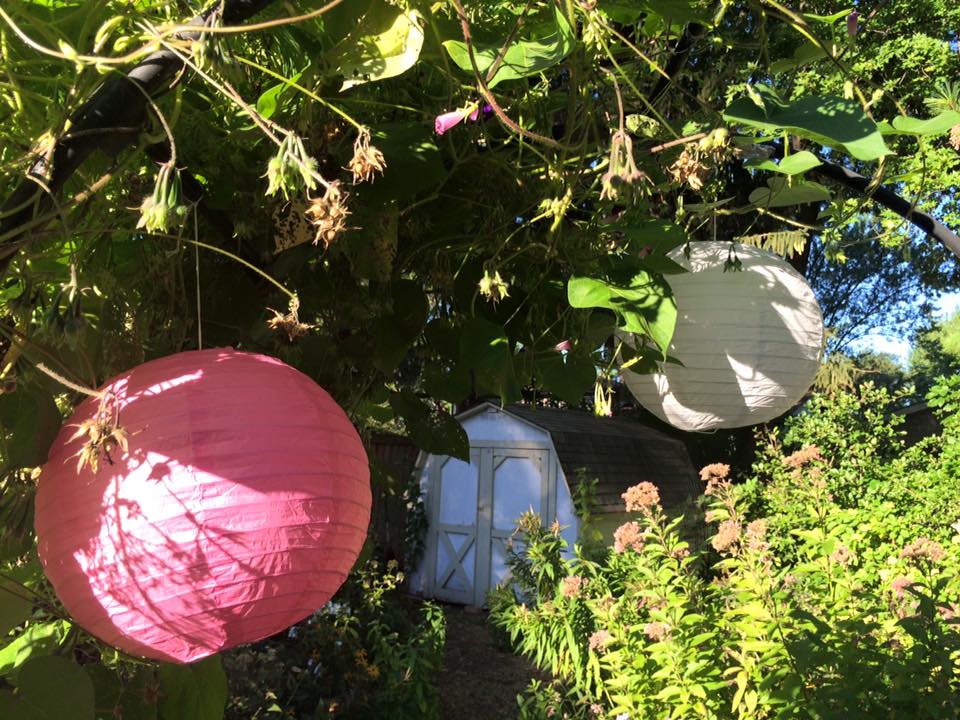
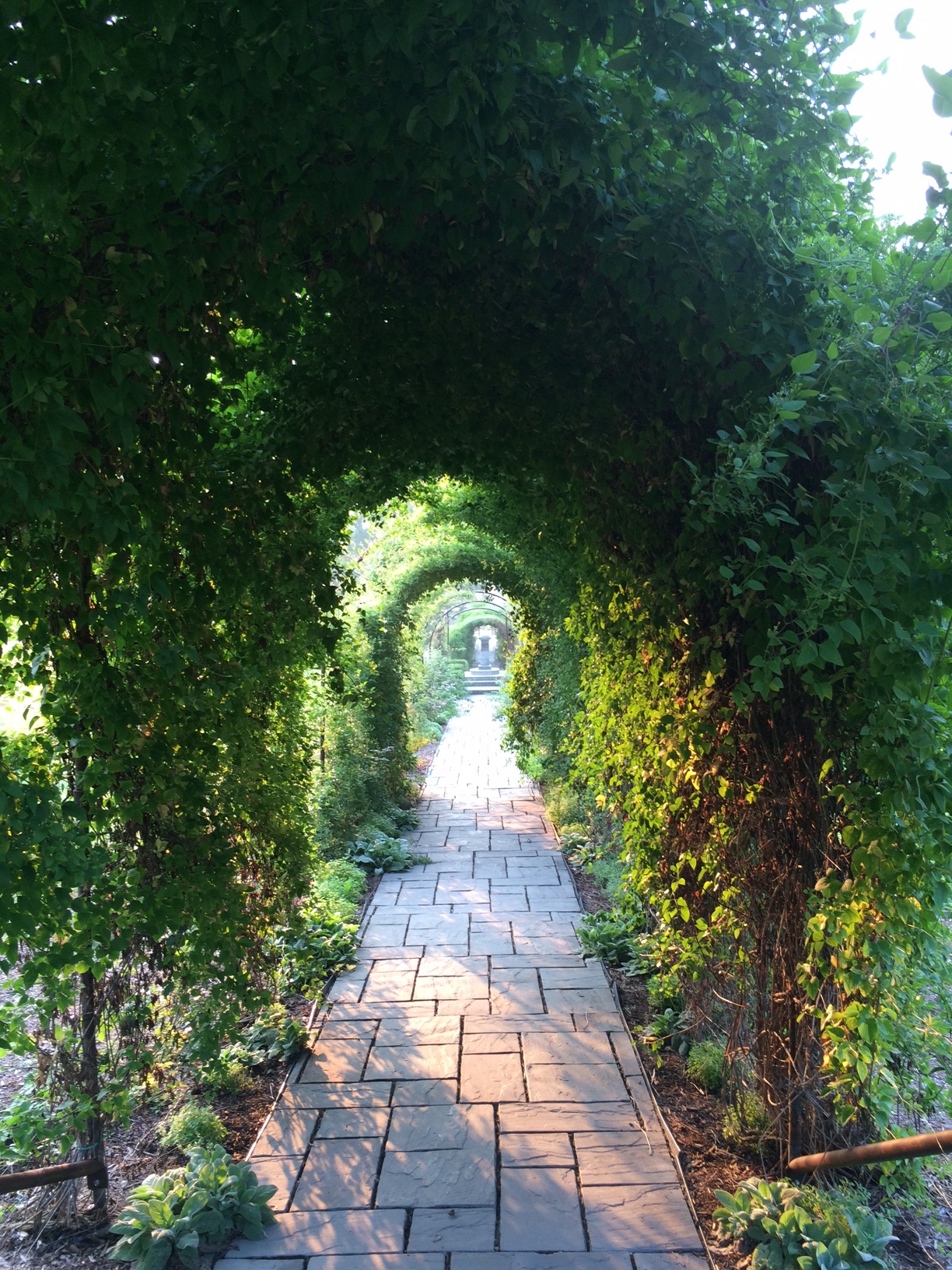
There is a Japanese Garden and the beautiful arbor sidewalk (at left) on the west side of the preserve, through which the Fox passes in its alternately roiling and lazy glory. When the river floods the isthmus section of the park is submersed, leaving behind long trails of river findings like a testament to natural archeology.

So there is plenty to enjoy while running through Fabyan. One morning a band of five bald eagles flapped out from the protection of a white pine, and in winter there are mergansers feeding in the open water when the rest of the river freezes over.

On many days it feels like a peaceful place. Runners and cyclists share the path, which does a huge S-curve over the isthmus to clunk over a metal and wood bridge on the east side. Turning north the trail heads to Geneva through even more dense woods, and a pastoral windmill stands atop a mowed grass hill. The windmill actually operates at times, its huge warms waving vacuously at the passing cyclists and runners.

The trail can get crowded at times, and many races are held that pass through the park. Soon the Fox Valley Marathon and Half Marathon will take place. The Fox River Trail Runners put on the increasingly popular race, which runs north and south along the river trail.

The trails were once a set of rail lines following the river. Trolley trains carried turn-of-the century commuters from town to town. There were plenty of industrial trains as well, headed north to factories in St. Charles like the Howell Furniture Company.

For years after the train lines closed down there were traces of its former existence. But as the pole lines slowly collapsed and fell, and cement mile markers leaned and fell over, there were no longer any signs of the trail’s history as a train track.

But I’ve lived here a long, long time. And just after the trains stopped running I took birding hikes along the cinder beds where the train tracks rusted into place. Weeds choked the lines shut eventually.

Then our county took over the trails and turned them into greenways. In 1982 the first river trail opened, and I was the first runner to lead the Geneva Community Classic 10K down the barely finished path. Two years later I won again in perhaps my best race ever.

So there are many happy memories, and also deep tidings of consideration and care. My late wife in her failing health liked to walk along the trail. Our walks grew shorter and shorter as cancer did its work. During a walk for Living Well Cancer Resource center she could not make it back the mile we’d walked up to Fabyan Park. So she sat down while I ran in my hiking boots back to the car to come get her. It was a desperate and strange run indeed.

But before that there were many health-restoring walks along that river. I teased her often about the time she estimated the size of a beaver we’d seen at 300 lbs. It was a huge animal, but no more than 80 lbs. at the most.

Such are the absent-minded exchanges while traversing such trails. But there are deep thoughts as well. Thinking through life’s challenges is what many of us do while out running or riding. That’s a good thing.

And when life’s transitions bring you to a point where all familiarity is overwhelmed by change, you seek out these places for space to consider what it all means. Sometimes it’s actually possible to think it all through while we’re on the move. But other times you simply must stop for a moment and catch your emotional breath. I know I have.

Ten years ago this November my mother passed away. She was 80 years old. My mom was a great fan of my running. She also loved peaceful places like forest preserves, and growing up she used to take me to a spot by a stone waterfall south of Lancaster, Pennsylvania. We’d sit listening to the peaceful sound of water tumbling over the dam and eat peanut butter and jelly sandwiches by the brown and muddy Mill Creek.

We need these places to catch our breath at all ages, you see. We also need them to help us get out of breath. Because through effort our true and best thoughts are often revealed.

Now I share my time with a running companion named Sue, and we sometimes run in silence together just taking in the beauty of the trail. North from Fabyan to St. Charles and back is about eight miles. We have the river for company as well as each other.

“This reminds me of marathon training,” she recalled a week or so ago. This summer she’s been training for an Ironman that takes place September 13th. Many days we’ve run down that trail gladly in prep for that race.

But a week ago she got stuck in a wicked rainstorm and texted me t0 come pick her up. She stood under the Fabyan Bridge out of the rain and away from the lightning. Climbing into the car, she was shiny and wet like an otter that had just crawled up from the Fox River. “Well, I didn’t get the whole run in, but it went well until the rain,” she laughed.

And that’s how we go down a trail gladly. Through it all, and all for one…as in one more good ride or run.

werunandridelogo

Posted in cycling, running | Tagged , , , | Leave a comment

Early risers who run, ride and swim

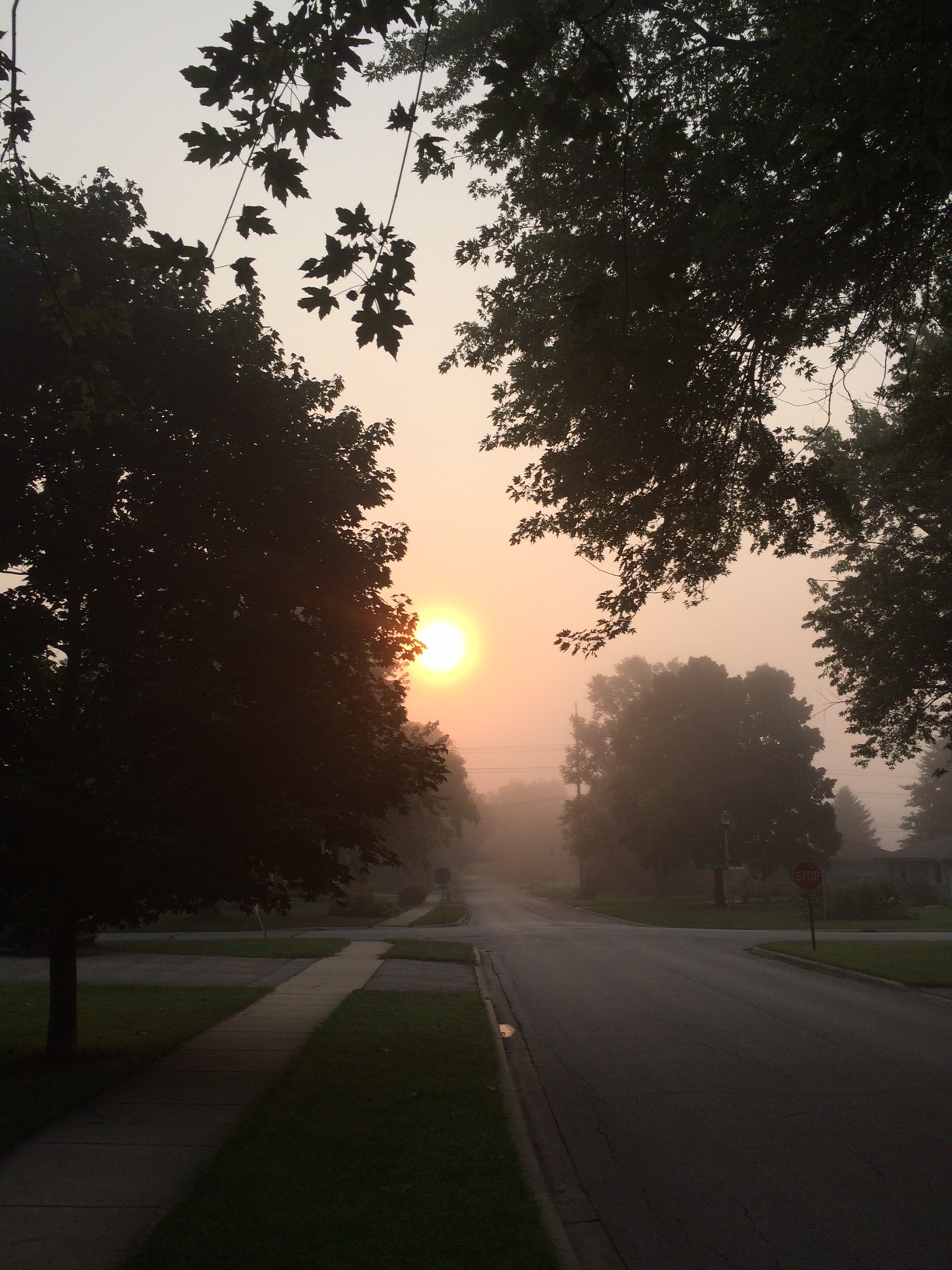
SunriseThis morning while walking the dog I turned the corner and the view down the street was perfectly composed. A rising sun seemed to be following a course through the space between the trees. Of course that’s all an illusion of perspective. Just like stars in a constellation, the space between these objects in our view exists in a flat plane of reality.

But the fact that you’re up at such an hour grants you the right to impose whatever reality you’d like to make for yourself. Early risers see a lot of things the rest of the world ignores. We see early morning creatures slinking home from their nocturnal journeys. We hear birds waking from their naps in the trees. If you rise early enough to hear the bird chorus in its fullness, life itself feels more real and rich.

Those of us that pull on running shoes and put in a few miles before the sun comes up know about these things in an intimate way. When you run alone, there are times when you wish someone else was there to witness these revelations. And yet, it is a gift of heaven here on earth that the world can seem perfectly composed for our appreciation and understanding.

It is my contention that faith itself is dependent on appreciation of this connection. When Jesus teaches about spiritual concepts he frequently uses examples from nature to illustrate his points. In my book The Genesis Fix: A Repair Manual for Faith in the Modern Age, I wrote that understanding the entire bible depends on these roots of organic fundamentalism. It is the symbolism of nature that conveys concepts such as the tree of knowledge, the river of life and the yeast in the dough that teaches us how faith can grow.

So it’s not just a circumstance of life’s rhythms that so many people rise early to run, ride or swim. The difficulty of rising from bed at such an early hour is a gift of strife. God does not promise that we’ll all sail through life without difficulty. It is often the toughest parts of existence that form our character in important ways. These experiences can be revelatory. It’s what we seek in events from 5Ks to Ironmans. The struggle that reveals the human spirit.

I recall a moment during an intense period of training in college when my college roommate Dani Fjelstad got me up from sleep to run an 8-miler before our first class at 8 a.m. Dani is one of the most disciplined people I’ve ever met, and my training with him brought me to a fitness equal to second man on the squad much of the season.

Together we ripped through those eight miles together without a word. Just the sounds of September birds muttering through the yellowing leaves. Our footstrikes kicked up puffs in the dry dirt. Then we rolled back through our quiet college campus to the dormitory, a shower and then a quick breakfast at the Union.

We half-jogged across the campus quad to the old building just in time for our 8 a.m. class in Anthropology.

Our instructor was a brilliant man named Clark Mallam, whose research on the mound builders of northeast Iowa helped led to the establishment of Effigy Mounds National Monument, a sacred space on the bluffs of the Mississippi overlooking Prairie du Chien, Wisconsin. This is where early Americans created mounds in the shape of animals to commemorate the human connection to the earth.

As we walked into Anthropology, Clark winked at us and watched us sit down. Then he turned to the class and said something on this order. “Good morning everyone. I want to share something with you before we begin. As I drove to class this morning I saw two young men out training on the road. Dani and Chris here were getting miles in before today’s classes. How far did you guys run this morning?”

Dani quietly stated, “Eight miles. 6:30 pace.”

Clark gave that remark a moment to sink in. “These guys are up before class every day running like that,” he said. “I know it, because I see them every morning on the way to class. It’s what makes you good, right?”

We both shook our heads yes. And with that he swung into teaching the class. I’ve always thought it significant that an anthropology teacher made that acknowledgment. He knew the sacrifice going on, the dedication it took to rise so early. Later I’d see our Anthropology professor standing on the sidelines during the All American Cross Country Invitational our school hosted on campus.

It is the study of human nature, I believe, that calls us all back to nature. Connecting those dots leads us even deeper into the mystery of existence. You don’t have to read the Bible to find connections to the miraculous cycle of life available to us every day. But if you do, keep an eye open to the metaphorical foundations of scripture. Our words and metaphors playfully and yet significantly interact with all of creation. And there you can find God if you look, and the spirit of evolution as well. I believe there is no conflict between the two.

Sunrise 2Skip the labels for a moment and think to a moment when you’re up early. You might be driving to a swim practice at a local pool, or clipping in for a ride through an early morning mist. You might be running through your neighborhood when a coyote or fox cuts across the street in furtive wanderings. You realize that despite all appearances at times, you are not alone in this world. Nor disconnected. You are neither superior or inferior to the blue jay calling its mates from the trees. You are simply an early riser trying to make the most of the day. And whether it is a call to prayer that you feel moved to engage, or a conference call with colleagues, your mind is opened to an entire universe of possibilities when you are through with your workout.

Early risers really do get the worm. The organic truth of that paradigm is that you understand at some level that worms literally make the earth, and you are not separate from it. You may run across its surface, or ride over the ground as if you were flying like a swallow, or swimming like a fish. These elements are part of you, and you are part of them. That’s your real carbon footprint. From the ashes of time you have come, and to ashes you will go in due time.

But first and first again you will rise and call the day into being. It will answer, and you can converse at will, given enough awareness. Early risers have a head start on that process. You must know that for all the difficulty, grace itself awaits you. Go run. Go ride. Go swim.

But go.

werunandridelogo

Posted in cycling, running | Tagged , , , , , , , , | 4 Comments

Back to school

IMG_1299When the light begins to change in August and kids head back to school, ancient instincts rise within the mind. For those of us that competed in running and the fall sport of cross country, these August days smell and taste of hard effort and tw0-a-day workouts.

It was always confusing to be going “back to school” when cross country always started earlier than the actual school year. There was such freedom in those early practices, running without the burden of classes to hold you back.

Yet the reminders were there. In high school we’d gather in that creaky old locker room and change into our jocks and shorts along with shoes issued by the program. Then we’d head out for a half-hearted stretch on the grass behind the football stadium and go run our asses off for an hour or more.

Down on the football field were the supposed real warriors of the gridiron. They’d be dressed in full pads and grunting through workouts in the heat. At the end of practice they’d pile back into to locker room all sweaty and greased with dirt and we got the hell out of their way.

Joyously we’d pile into the showers after our workouts and sing our way through several rounds of song by The Who, the Doobie Brothers, Chicago or Pink Floyd’s Dark Side of the Moon.

“But you run and you run to catch up with the sun but it’s sinking…and racing around to come up behind you again…the sun is the same in a relative way but you’re older, and shorter of breath, and one day…closer to death…”

Little did we know those songs and that period of music would remain at the forefront of culture for the following four decades. Yesterday at our local Panera Bread I watched a kid that was obviously a freshman or sophomore in high school walk in the door wearing a tee shirt from the 70s group Boston. We still see Led Zeppelin shirts and Jimi Hendrix, The Beatles and Stones.

The more things change

10703754_10152865040451095_3933546903019467610_nAs a result, the kids walking into high schools these days don’t look much different than we did 40 years ago either. That holds true especially for the skinny kids going out for cross country. It’s still the hair flying back, the half-awkward strides and the focus in the eyes that seems to drive these kids along, and always has.

They still tend to come from the bookish end of the spectrum. Last weekend I stopped to pet a dog during the middle of a 12-mile run while my running partners visited the restroom. The dog’s owner started asking about our running, and it turned out his kids ran cross country for the same program I did. “Four of the top five runners are now doctors,” he informed me. “I always appreciated that the cross country team encouraged the kids to pay attention to their grades.”

Making grades

Well, I wish that could be said for everyone in the program over time. I struggled with some subjects in school due to inattention and flat out stubbornness. So the joy of running always seemed to be balanced by the dread of an unfinished homework assignment or a pending test.

At some point I missed a test on the subject of genetics in Advanced Biology because of an afternoon cross country meet. To make up the test, I  had to head out into the hall for a period to take the exam. I knew going in that I did not recall the subject well. My brain did not grasp the Xs and Os of genetics well. I don’t recall if I needed that grade to stay eligible for running but it felt like a lot of pressure at the time. So I fashioned a crib sheet out of notebook paper and brought it out into the hall with me.

Window 1There was just one problem. The biology teacher was actually a birding friend of mine and he knew me pretty well. As I sat there sneaking looks at the crib sheet to get answers for the test, he stood behind me watching the process and no doubt snickered at my awful attempt at academic credibility. “Well, if it isn’t the Furtive Nutscratcher,” he finally intoned over my shoulder. I jumped out of my skin and handed over the crib sheet. “I can’t believe you did that,” he scolded. Then he left me in that raw, empty hallway to suffer in genetic distress over my incapacity to memorize certain types of information.

Schoolyard dreams

But it wasn’t because I did not like to learn. Other subjects I gobbled up ferociously, and reading was absolutely precious to me. Before one cross country meet against an important team, I was immersed in an amazing book called The Peregrine by J.A. Baker. It chronicled the pursuit of those rare raptors by a denizen of the moors and mountains in Great Britain. That book took my mind off the nerves and I went on to run one of the best races of my life.

That was an interesting lesson in the relativity of thought. What was it about the dissociative power of that book enabled my mind to run so freely? As a generally anxious kid I was often so nervous before races it was hard to control my guts. Yet somehow that day I floated into competition both determined and relaxed.

Human nature

CudworthEnglertThat was a lesson so important in life that no amount of actual schooling could ever teach it. It had to be re-learned many times, but that’s the nature of many things about human nature. We’re going Back to School all the time.

That inevitably stokes some memories along the way. It’s easy to beat yourself up for having to re-learn some things in life. But then you see those kids with the Boston and Beatles tee shirts on and you realize that it’s human nature to have to make mistakes and learn from them. You can tell a kid (especially your own) a thousand ways what’s the right thing to do and they’ll still go out and screw it up out of sheer stubborn will. And you have to let them do that. We all go back to school every day.

Yet it’s the light and the smell and the feel of August that makes us recall that we’re all alive and going through life at a pace that, while it often changes, also stays magically the same. We are neither faster or slower than we need to be. We just are. And August tells us that every time it comes around. It’s time to go Back to School.

werunandridelogo

Posted in Christopher Cudworth | Tagged , , | Leave a comment

A successful experiment with the Waterford bike

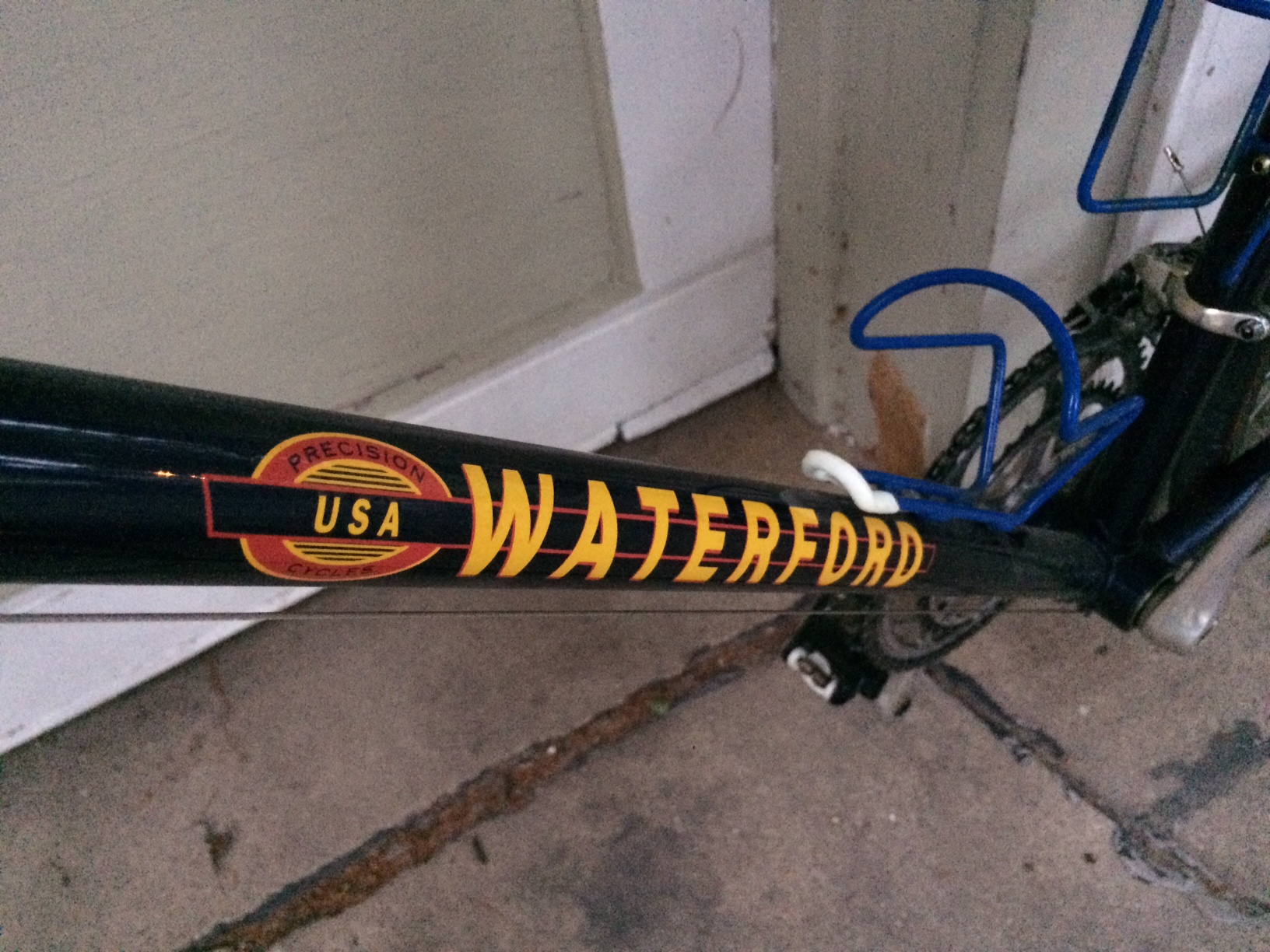
WaterfordA while back I wrote about the difficulty I’ve been having at the competitive level in duathlons and triathlons getting good results in the bike segment. No matter how hard I rode on my Felt 4C, or how I managed to stay in “the drops,” I was still losing two to three minutes to my competitors.

And that did not make me happy.

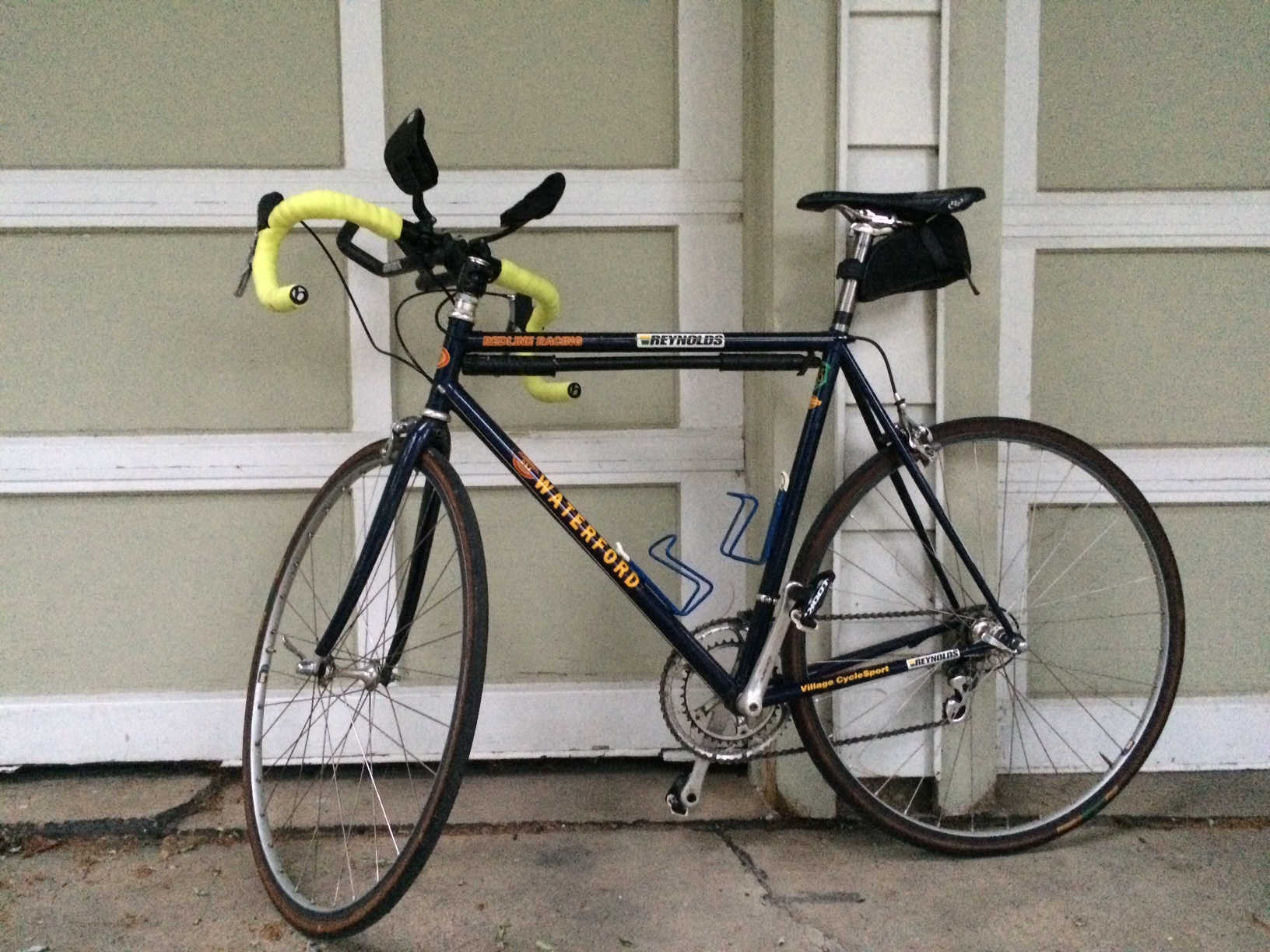
So a couple weeks back something happened that stoked a move to upgrade my cycling situation. My daughter was cleaning out the Toyota Matrix I once owned and found a conversion stem that I’d purchased three years ago to fix the configuration on the Waterford racing bike my brother-in-law had bequeathed to me because he does not ride or race anymore.

Classic bike

It was a wonderful gift, to be sure. But I was a bit frozen on how to use it with respect. Right away there were several offers made for the bike. Real cyclists know that the steel framed Waterford line is beyond classic in feel, control and even speed. My brother-in-law raced that bike to a Category 3 level and rode 40K in under an hour. That’s 24mph if you don’t want to do the math.

So the bike is fast. Heavier than some carbon bikes today, for sure. But this Waterford was the pinnacle of racing machines at one point. Bikes like that never really go out of style.

I’d purchased the conversion stem and it somehow got wedged down in the fold between the seats and back and disappeared. Then life intervened in many ways and I was riding the Felt happily enough.

Test runs

But I’d taken the Waterford up and down the street on many occasions and marvel at how smooth it rides. One of my best friends is a longtime cyclist who knows my brother-in-law and raced against him. My buddy is also a great bike mechanic. So I asked him if he’d be willing to work on the Waterford and turn it into an aero machine for my time trial efforts.

Waterford 2I meant this as a philosophical as well as mechanical question. One does not mess around with a Waterford without giving the issue some thought. But I’d had four years to think it through. What I want to do is race the bike in criteriums and also use it for time trials including those in the middle of triathlons and duathlons.

So for $130 I purchased a nice set of clamp-on triathlon bars that form a triangle off the front of the bike. Jack agreed this was a respectful (and respectable) way to use the Waterford for these purposes. The bars can always be taken off when I want to race in local criteriums. In fact that is a requirement. You can’t race crits with tri-bars on the bike.

I brought along a couple beers as Jack worked on my Felt a couple weeks back, which had a creak in the crank, so to speak, that needed attention. I paid him for that work and he smiled and said, “That’s enough to cover them both.” And I left the Waterford with him to install new bars, the aero setup and some new tape as well.

Returning a week later, it was a treat to see the bike setup.

Getting fit

With some experimentation on the fit I got comfortable in aero and took it out for a ride yesterday afternoon. The wind was blowing hard from the northwest, and I tucked down in aero and noticed right away a different sensation from riding on the hoods or drops on the Felt.

In fact I imagined myself competing in a time trial as they do in the Tour. Stay low. Push a decently big gear. Use the full pedal stroke.

And so it went. And then on the return trip there came a segment where last spring my companion Sue and I hit it hard to see how fast we could travel from Green Road to Bliss on Main Street in Batavia. We averaged a solid 25mph.

Yesterday I did nearly the same pace, missing my best time by only two seconds.

Waterford 3

Results

Aero works. I could feel the clean movement through the air. The classic spokes on the Waterford were whirring like a Ferris Wheel hopped up on coke. I was flying, in other words. I really felt like I was flying.

The bike fit was remarkably good. All that hurt was a spot on my shoulder after I got home and flopped on the couch to pet the dog. That was dumb, but I was so happy and satisfied it just felt good to stop and appreciate the moment. That was the first real thrill I’ve felt on the bike in a while.

So it feels like respect for the legacy of that bike. I’ve upgraded it to fit my needs while not whoring the thing up. The feel of those aero bars is cool as hell. And the fact that I averaged 19mph on a hilly course on a windy day is a good indicator that in race conditions I can average 22, 23 or 25 mph in a time trial. Maybe even faster depending on the course. I literally felt like there were no limits. That big ring delivers lots of power and the shifting is clean and crisp.

I am psyched.

werunandridelogo

Posted in Christopher Cudworth, competition, cycling | Tagged , , , , , , | 4 Comments

On race and running

As a teenager recently graduated from high school, I signed on to coach a summer track club in St. Charles, Illinois. The pay was $500 total for the months of June, July and August. There were 80+ kids in the program, including several athletes that went on to win AAU national championships.

We traveled around the state to compete with teams from Moline, Belvidere, Peoria, Chicago and Aurora. Many of the kids on the teams from these Rust Belt towns were black. We sometimes traveled to inner-city track venues as well.

Yet the novelty for our often blonde, blue eyed kids wore off quickly. Because when it came time to compete on the track, there was one purpose in mind. Run your fastest and see if you can beat the kid in the next lane.

Immersion

Our youngest athletes learned much about their competition over the course of those summers. Inevitably the smallest kids found reasons to play together between events. On many hot afternoons it was all one could do to stay hydrated and get out of the sun at those city tracks.

The coaches for the primarily black teams were always big personalities it seems. They would move around the track keeping kids in check all day, organizing relay teams and keeping an eye on the focus of their best athletes.

As a white kid from the suburbs it was enlightening to see this leadership in progress. What I knew of leadership in the black community was from big-world events in the mid-to-late 1960s. I was in grade school when John Carlos and Tommie Smith raised their hands in black gloves in protest on the Olympic podium. We learned about Martin Luther King, Jr., in school, and we knew that he’d advocated peaceful protest as a means to achieve equality for black people in America. We also knew that he  was assassinated by someone that was afraid of what he had to say. That was my take anyway.

Focus

But those events were a very different thing from witnessing the figure of a black coach running a track program so that kids could compete and improve their lives. You realized there were decisions being made every day that changed the world. It showed that someone cared about every one of those children.

The really fascinating aspect of those summer track meets was the athletes themselves. Being in the company of black children when you’re not accustomed to the culture was enlightening, and the constant creativity, social celebration and engagement stood out for me. Conversations and laughter and sometimes even hard words of criticism or encouragement deepened the sense that something very important was going on. It encouraged me to be more focused in my own coaching.

And it also made me wish I knew these people better.

Roomies

So that when it came time for college it was no big transition for me to room with a black teammate. The mid-1970s were a highly transitional time at Luther College, with perhaps no more than 100 black students on campus. At an Iowa school in the cornfields, you really could not expect much more. It was no doubt a culture shock just to drive the 6.5 hours from Chicago to Decorah, Iowa. So these were courageous people I knew.

At some level I understood the notion of being a stranger in a strange land. I’d been the minority at those city meets and had come to realize that it is the human connections that matter in all situations, not race. So during my track season at Luther I roomed on track trips with a great guy named Ron Bolden who hailed from the deep inner city of Chicago.

I don’t share this to aggrandize myself as some racially astute individual. All I know is that when the door to friendships have been opened, I have walked through. And many days I do my best to open those doors by looking people straight in the eye and greeting them as another human being. That’s what any of us can do, and should.

Walking through doors

To society’s persistent credit, in many places our formerly lily-white suburbs and schools are becoming more racially integrated. Many in these new generations of kids coming through the schools no longer see race among friends. It simply doesn’t matter. Indian. Asian. Black. White. Latino. Friends.

Frankly, it almost always comes down to one or two things that start a friendship. If someone listens to you that is one important aspect of friendship. And if they can make you laugh, they’re you’re friends forever.

Portals

Track and running are simply portals to those key elements of friendship. When you compete with someone on a team, you naturally share thoughts and laughter during training and competition. Race together and race disappears.

When you compete against someone, you also share an experience. Sooner or later you might approach that person and say, “Nice race.” It’s a show of respect. Or perhaps they show that respect to you.

We should all remember that respect is the foundation for all human connections, and sports should teach respect.

Plus everyone seems to love an underdog, and that one lone black athlete in the Tour de France is someone for whom you cannot help but root. And on the day that they make a breakaway, staring tradition right in the eye, you find yourself crying at the joy of someone stretching the boundaries and breaking free from expectations and limitations.

If only this process were not limited by the ugly anchors of politics or religion, the human race might actually have a chance at respect––and love even––for all.

werunandridelogo

Posted in cycling, running | Tagged , , , , , , , , , | Leave a comment

There’s a party going on right here

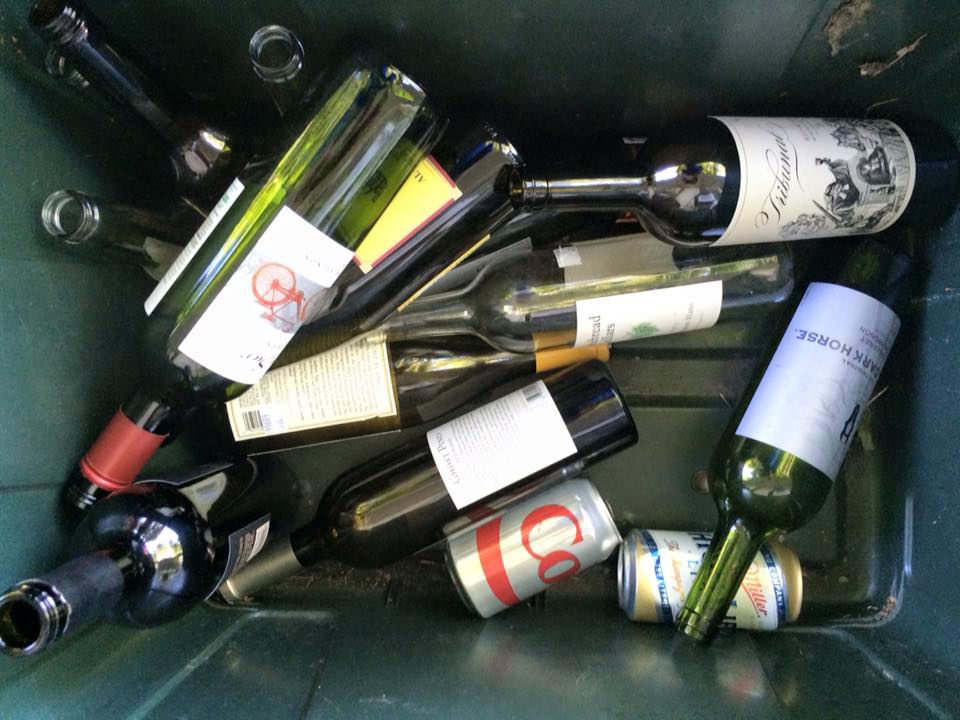
The morning after a party requires a bit of domestic forensic examination. There is a forgotten salad on the counter mixing it up with the microbes of the universe. Large bowls of Flaming Hot Cheetos and Fritos sit uncovered. A bit of Glad Cling Wrap solves that.

11951166_10204932967260195_8359790280938029599_nCans of half-finished Coke and Miller High Life Lite perch on the counter. As a party wears on, the will to finish such things begins to thin. Full cans still sit in the coolers outside. You think to yourself, “Who’s going to drink that now?”

But it will happen.

Perhaps most humorous is the appearance of the Fannie May chocolate sampler on the kitchen counter. Those little brown candy holders look so violated while the few remaining bits of chocolate huddle beneath the wrappers as if they were victims of war trying to escape the inevitable.

So I pick one up and eat it with a chocolaty morning relish, because that’s what party hosts are supposed to do. You browse your way through the carnage and pick up bits of edible things without a trace of guilt. You are the master of your post-party domain.

Good reasons to party

The occasion was the 50th birthday of my companion Sue. Several weeks ago when I mentioned the idea of a party for her birthday her eyes brightened. That was enough

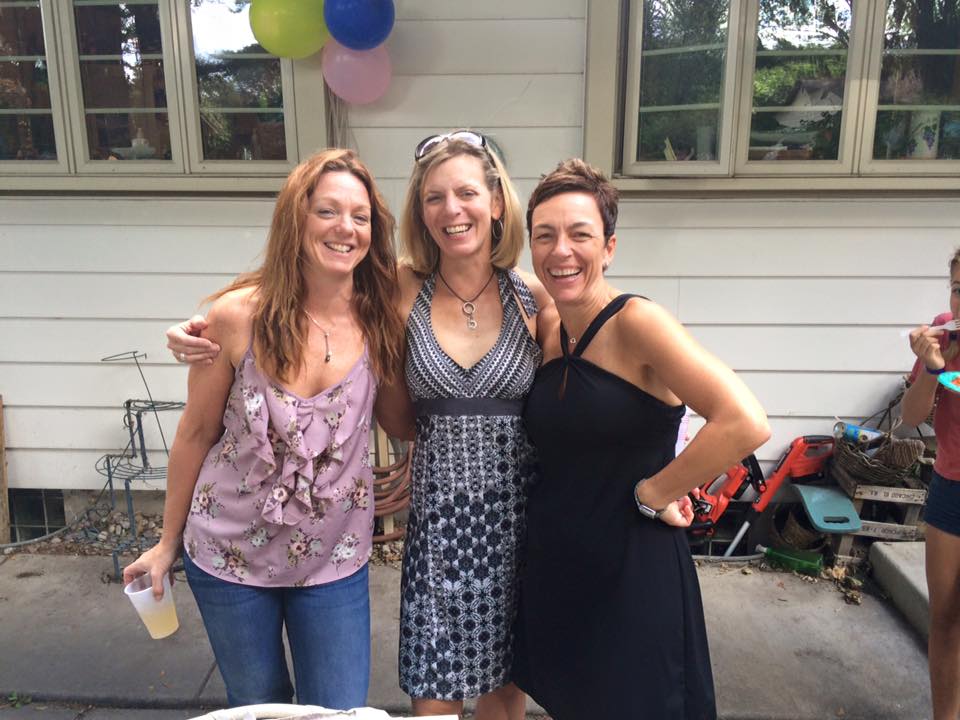
Sue (center) with her sister Julie Dunn (left) and Anne de Traglia. All are triathletes.

Sue (center) with her sister Julie Dunn (left) and Anne de Traglia. All are triathletes.

motivation to make it happen. She’s been in deep training for the Wisconsin Ironman and there have been a few nights when the light was barely showing in her eyes. That’s because her eyes were generally closed after the hour of 9 pm. A half glass of wine and a foot rub will do that when you’re engaged in hard training for an Ironman.

The race is just three weeks away now. So it’s time to taper and get ready.

So the party came on the heels of a pretty big weekend for Sue that included a 17-mile run on Saturday and a 5-hour bike ride on Sunday.

The GirlsA moving party

I ran with her for 11 miles of the 17 on Saturday. She looked comfortable and confident and felt good. She even ran the last two miles in the low-9:00 range, a good sign that her endurance is there. She also had two training buddies join her for the run.

We paused for a mid-run drink and a photo at the northern end of the run in St. Charles. With the Hotel Baker forming a backdrop, it looks like the girls are out for a run in some exotic foreign city. Turns out a party is wherever you make it.

In many respects every run and ride you do is a form of party. Rather than drinking booze and eating Cheetos, you’re downing salty sports drinks and gobbling Gu packs. But it’s a party nonetheless.

Are you going to try to tell me the gals in this picture don’t look like they’re in the middle of a party? It’s just a 17- mile party. And sure it hurts at times. You get tired. But I’ve also been to plenty of other parties where it actually hurts and you get tired. Yet you turn around and brag about it the next day.

Party tents

Unfortunately, I missed the Sunday bike ride entirely. Sue joined up with a group of fellow Ironman athletes for a ride through the dank, misty morning. But the sun broke through at 10 a.m. and the day turned beautiful just like the weatherman said it would.

Cinnamon rollKnowing that there was still a bunch of prep to do for the party, I went to church early and then grabbed a guilty cinnamon roll on the way home. Then it was time to set about final cleanup and organization of the house and yard for the party.

The first thing that had to happen was the disassembly of the white party tent I’d left out in the elements since the 4th of July. See, I like to have at least a couple parties every summer. In summers past I’ve left the pop-up tent outside for weeks and it was fine. But this year the rain pummeled us in July, and that caused big dips in the nylon canvas that put a strain on the seams and from there it just got ugly.

So I took the thing apart one last time and it will go out to the curb for the metal gleaners to pick up and recycle. We’ve had that tent since the mid-1990s. It has lived a long and fruitful life and has seen everything from soccer tournaments to graduations. But it’s useful life is over.

Making things pretty

11889613_10204932967420199_8648756169181518670_nThe rest of the party prep involved yard work and clipping the scraggly parts of the garden back. A few mums got planted and a big heap of phlox was harvested and placed in a vase under the Jose Cuervo umbrella.

These things matter, you see. Parties are all about making quiet little statements of greeting and love. But honestly, they’re also about cleaning the crap up that gathers around all the seams of domestic life. From toilet detritus and dust on the porcelain to sweeping up flecks of dog food that migrate around the kitchen, it’s all about showing that you’re neat enough to care.

Life is one long party

So much of life is like that. One of the toughest things you must learn in taking on the triathlon is how to be organized in transition. Otherwise you’ve got this crazy little party IMG_0932going on every time you return to change from one sport to the other.

By all reports the transition tents for women at the Ironman are a relatively organized affair. Most of the contestants have a plan and get naked only when they need to be. Then they move on and out for the ride or the run.
But many of the men, apparently, are balls out half the time and a major mess at that. “Oh, you haven’t seen anything until you’ve seen a transition tent for men at an Ironman,” my friend Maxine, a leading triathlete and volunteer at the Madison race once told me. “It’s quite a scene.”

Good parties and bad

 So there are good types of parties and also bad.

Of course bad parties can be really good too.

I recall a wild party following a LaCrosse Half Marathon in which most of the men and women at the party wound up wandering around the house drunk and naked or least half-naked and half drunk. That was a bad party that was really, really good. I woke up hung over to witness a comely young lass stepping over my sleeping position. She wore nothing under her oversized tee shirt and all I could think at the moment was some kind of weird pirate thoughts. “Yo ho!” I muttered.

Then we all got up and ran 10 miles nearly as fast as we’d raced the day before. Which for me was 1:10:50 for the half marathon on a hilly-assed course in Wisconsin. And that, my friends, was a party weekend not to forget.

We like to party

11947450_10204932967060190_391518101286961288_nAthletes simply love to party when they get the chance. With all that training and dedication there is nothing like a party to release a little tension. And of course it often doesn’t take much to get a skinny, overtrained athlete drunk. A few glasses of wine or a bunch of beers and away we go.

People used to come to our college cross country party just to watch the skinny crazies go nuts. You never know what might happen. I’m pretty sure some of the anthropology students did some sort of dissertation on that annual event.

Partying with a purpose 

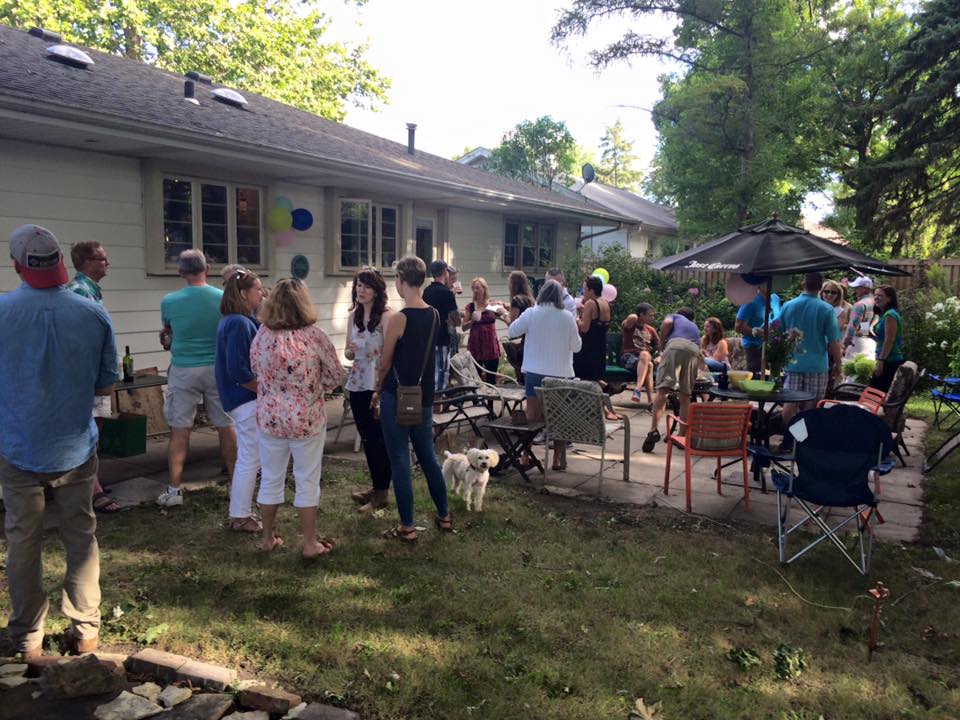
11899770_10204932786895686_7541094398027786076_nOf course the degree to which parties do or do not get out of control are directly related to the purpose for the party. A birthday party for my girlfriend was more about sharing than daring. That made the group of thirty or so friends all the more interesting, because they came from all walks and elements of our lives.

There were triathlon teammates, friends and family. We introduced and shared these associations. Some just shook their heads at tales of the crazy training Sue has done this summer. But most told her that turning 50 was not all that bad. And it’s true.

Party fixings

11225349_10204932966620179_8569137128825084643_nThe beer flowed and the wine poured. Then massive piles of pizza showed up and Portillo’s salads filled the bowls. A fresh breeze kept the mosquitoes at bay and people fairly enjoyed themselves in my happy little yard with a garden formed of care and serendipity. There could be no better use of a Sunday afternoon.

I stood back at one point and smiled. It makes me happy when people get together. And all I could think to myself was one simple thought: “There’s a party going on right here.”

And it was good.

werunandridelogo

Posted in triathlon | Tagged , , , , , , , , , , , , | Leave a comment

It takes courage to go slow sometimes

One of the principal lessons in distance training over the years came in the most unexpected way. I had moved out to the Philadelphia area for work when I was 23 years old, and went looking for a group of running partners in the area. Fortunately there was a shop called The Runner’s Edge about three blocks from my house in Paoli.

The shop had a running team composed of about 20 guys. Women’s running had not yet taken off the way it operates today, but there were a few gals that joined us for occasional training runs.

Feeling my oats

IMG_7618The club had many very good runners. Several had 10K times in the low 29:00 range. My PR at the time was 32:20. Given the disparity in ability, I thought it would be a lot of work to keep up with them.

That first run with the group I started out at 6:30 pace thinking they’d soon pass me by. But when I looked back and saw them far behind, it startled me. “Huh,” my grand little ego thought for a moment. “They must not be as good as they say.”

So I slowed and let them catch up. “What’s up with you?” one of them asked. “Why are you starting out so fast?”

I stammered for an answer. Someone in the group chuckled a little. “Chill out dude. We’ve got 20 miles to run. And at mile 17, we’re going to pick it up to 5:00 pace. If you can still go fast then, have at it.”

Fast results from going slow

So we fell into 8:00 pace and trotted along talking and joking. And when mile 17 came around, the group increased its pace and finished with a time that for many runners would have been a PR for 5K. And that, I learned, is how good runners really trained.

Within a month my PR dropped another 20 seconds in the 10k. And by the next year I had taken a minute off my time at 31:10. All because I had the courage to go slow sometimes.

Modern art

Is going slow a forgotten art? I don’t think so. It’s more likely true these days that runners and cyclists don’t do enough of the other extreme. Fast interval work and hard, criterium-like rides are critical aspects of getting faster. You can’t skip those steps either, or you will never gain in racing speed.

So those are the balancing points of training. One must also still go slowly enough in training to build a deep endurance base. Then you build off that with speed to get faster in racing. It’s that simple.

Tripping along

IMG_7179Yesterday my body demanded that I go slowly because I’m increasing my training volume. So I tripped along at just over 10:00 pace, which I used to consider something less than running. To be honest, I’ve always been something of a running snob about pace. But that was always insecurity, not wisdom. When you’re trying like heck to get faster, especially as a young endurance athlete, it doesn’t seem to make sense to go slowly. What we wind up doing is not good for the body. We do a pace that is “semi-hard” everyday. Not slow enough to build baseline endurance, but not fast enough to get real speed benefits from the workout. That’s a dumb middle ground.

Rolling through time

In cycling that’s almost always what I do. It’s a really bad habit. But when you get home and find your average pace is 17 mph and you consider that too slow because you see others riding at a faster pace on Strava (or whatever) there’s this weird driving force that makes you want to go faster. So this spring I did not use either Strava or a cyclometer. I just rode. If I felt good and went faster, all fine. But if I needed to ride 10 miles into the wind at whatever pace I could manage, I did that too.

Slow ride

Going half fast all the time is a bad habit in all phases of life. I mean, having sex is not a good thing if all you do is jump on and pound away at the same old pace every time you have at it. Seriously, sometimes it’s really good to take it slow. In the words of the group Foghat… Slow ride….take it easy…I’m in the groove, the rhythm is right…Move to music… we can go all night…

There’s a lesson in that.

Getting loopy

Ride In CloseupIt paid to ride the bike at a sane pace while touring last weekend in Wisconsin. My girlfriend’s bike was busted and her loaner didn’t fit, so we were forced to ride the Ironman loop course at a much slower pace than usual. So I did what was best and just took in the scenery. It was enjoyable and we still covered 50 miles of very hilly terrain.

Too often it is a “head-down” approach we take to riding in such beautiful places. So I studied the hills and valleys. Took a look up the road and behind as well. I felt the terrain as we climbed, and trained rather than strained.

Toward the end a rainstorm came over us and we got a little wet. So we put on the brakes before reaching the downhill sections because our bikes would have hurtled ahead without us if we had not done so. I laughed at the water from my girlfriend’s back tire rooster-tailed into my face. It felt good. We were riding at whatever pace we could find. On the flats we went a little faster. And that was that.

Working it out

I told her, “You rode an equivalent to 80 miles in that 50. Without a bike fit you were working much harder than normal.” For a while she wasn’t having fun. But once she realized there was nothing to do about it we all relaxed a little and rode through the gathering summer heat until the rain cooled us off. It was almost like we were standing still and the road was passing under us like one of those movie scenes where the characters are in the car and the road is being projected on a screen behind us.

Stick to the plan

IMG_1165It takes courage to go slow sometimes. So you need to plan it into your schedule and stick by your goals. Ride 50 or 100 miles and don’t try to push it. Let that four-miler be your recovery day. Your legs and body need it. Swim and don’t try to kill yourself. Practice the finer points of your stroke and think about that body rotation and how it propels you through the water.

Going slow is really a matter of getting over yourself. Our precious egos make us think that ramming along is making us better every day, but really, that’s not the case. If you must, turn off the Strava and tune into the day.

Digitized

Forget about segments or kudos. Like so many I fall for that crap on occasion too. On Tuesday or Wednesday night I had a really good run with an average pace of 8:00 per mile. It felt great, but when I looked at Strava and saw all the people I follow had run faster, I was bummed out. Suddenly my 7:30 mile and 24:00 5K in the middle didn’t look so good.

And how stupid is that? It’s also being too chicken to admit that perhaps I’m not the runner I once was. So you see, it takes courage to go slow sometimes. Because it takes courage to appreciate who you really are. And that might not be who you think you are.

werunandridelogo

Posted in Christopher Cudworth, cycling, running, swimming, We Run and Ride Every Day | Tagged , , , , , , , , | Leave a comment

The long running take on tarsnakes

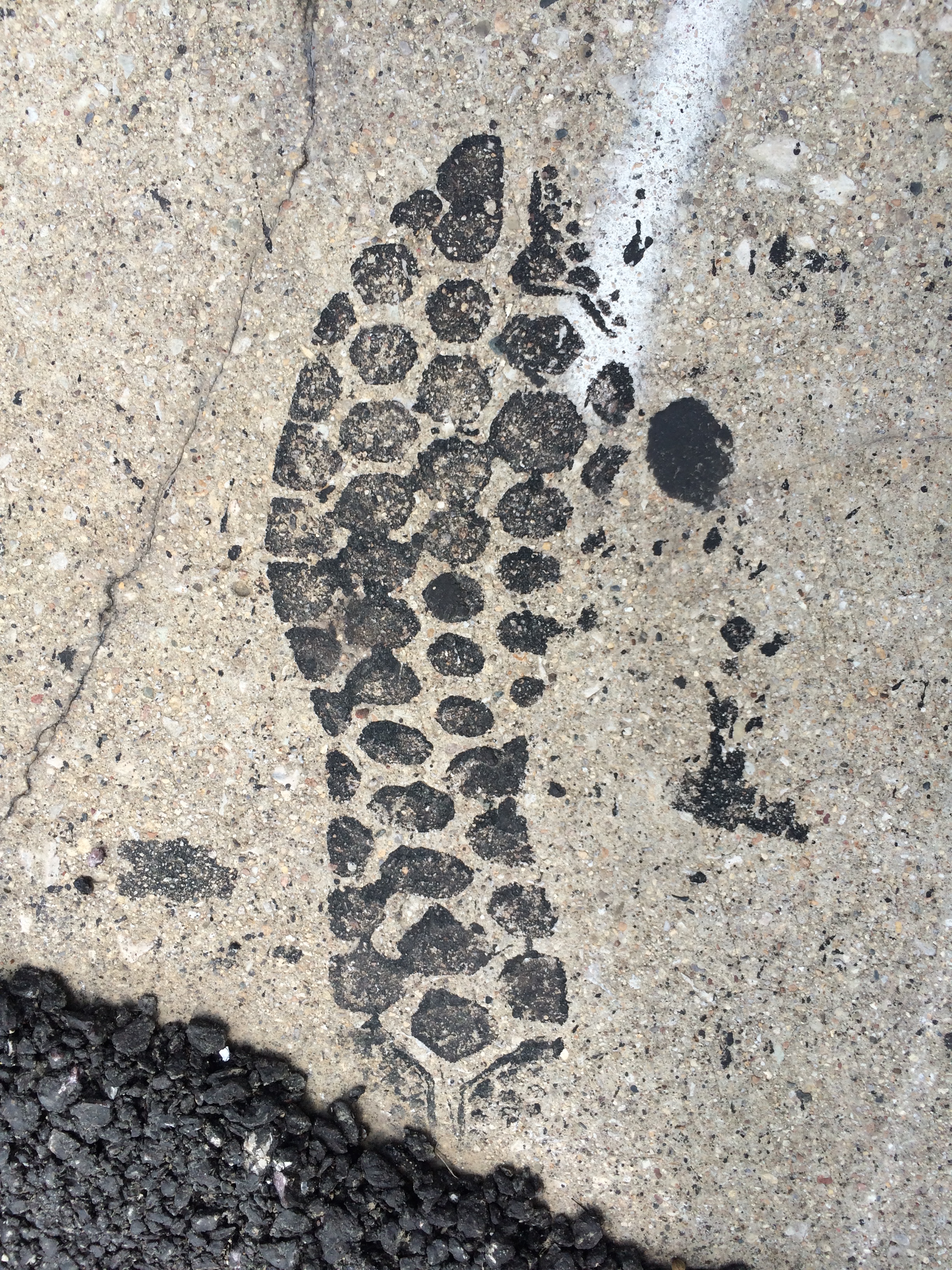
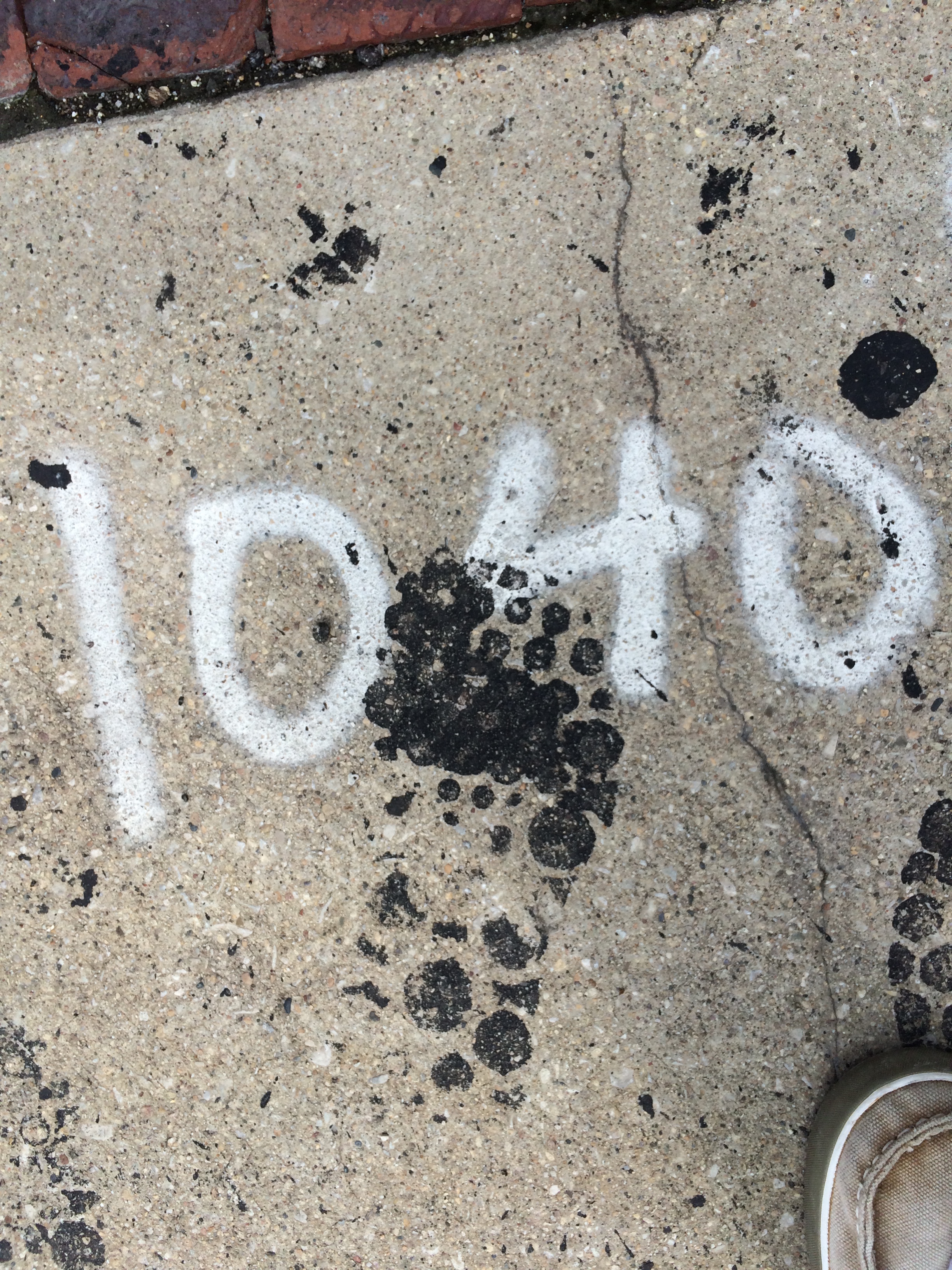
FootprintWalking up to the door of the Starbucks in a neighboring town, I looked down to see a clearly marked footprint on the street. You don’t often see footprints made from tar on many streets. That’s a pretty remarkable fact given how many millions (perhaps billions) of tarsnakes are laid down by road maintenance crew on public roads and streets.

It’s true: You just don’t see many footprints. That means the people doing the work of filling cracks with tar take quite a bit of care about their job, doesn’t it? You’d almost expect to see a million footprints all over the streets because the tar is so sloppy and easy to track arond. All it takes to begin making footprints is a single step into a freshly tarred crack in the road. Then your foot becomes a paintbrush.

IMG_1352So we must give credit to those who do the work of sealing our roads so that they don’t fall apart at the seams. That’s what tarsnakes are for. They hold together the road in places where it cracks apart. Otherwise water seeps through and degrades the road surface even more. In winter ice wedges down between the cracks and expands, further busting up the surface.

That’s why you’ll typically notice more tarsnakes out along the road edges than out in the middle. Toward the edge of the road there is constant pressure from car and truck tires, plus the inevitable flow of water, ice, slush and salt to the side. Add in the pressure of loose gravel and uneven road edges and cracks are inevitable.

Footprint TwoThe constant battle against cracks in the road make maintenance a long running project.

Tarsnakes also make riding along the side of the road an interesting proposition. On hot days, tarsnakes sink down below the road grade when you ride over them. Your bike tire can get stuck in the rut and you wobble for a few moments. Some cyclists even go down in a heap.

Runners can pick up tar on their shoes on really hot days. When actual road construction is going on, newly pressed asphalt can be hot enough to pop your bike tires. Just last week our group ride rolled past a mile-long section of road being resurfaced. The construction worker kindly yelled to us, “Stay off the fresh asphalt. It’s really hot!”

I know that feeling from experience. I once was told to cross the road laterally by a construction worker and within feet my bike tires sank into the fresh surface of the asphalt. You could hear the hissing sound of tar still burning and I worried that my tires would indeed pop. And what a mess that could be. I know a guy that tried running across a newly paved road and tripped. He got burns on his legs.

So I pedaled like crazy to avoid having my tires pop and looked back to see that my tires had made thin impression through the tarmac. Talk about a reverse tarsnake!

Every year the process of creating tarsnakes is the same. Workers armed with tar guns stroll the roads for miles, filling in cracks as they go. They walk along armed with black goo and do their best to follow the variegations of cracks in the road. You can imagine that must get rather tedious at some point.

IMG_1343While watching the Tour de France this year I chuckled when an aerial view of the Tour riders on a country road in northern France showed the peloton crossing over an entire field of tarsnakes covering the road. It made me feel at home to know that the Tour encounters the same road conditions that we do back here in the states.

Tarsnakes are not really noticeable to everyday motorists, so it is only cyclists and runners that really engage with this unnatural phenomenon. They are definitely a product of the human race.

And though it be a rare thing, it is interesting to think about the semi-permanent result of that one fellow stepping in tar as he does his job, leaving a footprint that may last for a decade or more until the street is resurfaced again. I wonder if he ever walks past that footprint with a sort of pride. Like, “That’s me.”

Or maybe its a mark of shame for those who lay tarsnakes to leave a footprint or two behind. There’s really no harm in that, but there are aesthetics to consider, and perhaps the road bosses dock your pay if you stomp around blindly leaving tracks behind.

It makes you think about the impact of human beings in general, and the carbon footprints we generate every day of our lives. They may be invisible for the most part, but the tarsnakes of our existence really do make a mark upon the earth.

werunandridelogo

Posted in Tarsnakes | Tagged , , , , , | Leave a comment

Swimming to a place that no longer exists

imgres-1Recently a fellow from Lancaster County, Pennsylvania contacted me through email.

Greetings, Chris. I did an online search of the Meadia Heights Swim Team and found your article regarding your time on the team.  I live in Lancaster, PA and am in the process of compiling the history of the Lancaster County Summer Swim League that was formed in 1962.  I swam for the Lancaster Country Club from 1977-1988 and our sons swim on the LCC’s team now.  I originally started this project with the intent to compile a complete history of the LCC Swim Team, win-loss records, names of coaches and dual meet scores.  I have spoken to a lot of former swimmers, coaches and parents to piece together the history.  Through my research I have expanded the scope of my project to include the history of the League itself which thrives to this day with 22 active teams.  I would like to include a piece on all of the current teams as well as the teams that were formerly involved with the League but are no longer active such as Brookside, Maple Grove, Meadia Heights, Willow Street, Locust Heights, Eden Manor and others.  Meadia Heights was part of the original league but the team disbanded sometime in the 60’s or early 70’s.

Coincidentally, I lifeguarded at Meadia Heights in high school and then managed the pool during my four years in college.  Sadly, Meadia Heights Golf Club closed the pool several years ago and it sits abandoned today being consumed by the woods that surround it.

I wanted to see if you could recall any details regarding the Swim Team at Meadia Heights, names of coaches and/or meets?  The pool was very long.  Did you swim the full length of the pool or did they place a rope across the middle to mark off 25-yards or a 25-meter mark?  Any information that you could provide would be extremely helpful.

To help this fellow I put him in contact with my brother who still lives in Lancaster County. He recalled one of the coaches was a neighbor of ours that swam at Dartmouth. My brother also recalled his experience swimming for the team. His specialty event was the breast stroke. “I don’t know why I was good at that,” he said with some wonder in his voice. “But I won a lot of races in that event.”

imgres-2For me, swimming in the Meadia Heights pool was an almost daily phenomenon. To get there it was a half mile jog across the practice range of the golf club next to our home at 1725 Willow Street Pike. We spent so much time in that pool it was only natural to get sucked into the vortex of the swim team.

What I most clearly recall was mastering the art of the flip turn. It took a day or two of practicing but when it clicked, it really clicked. I can still see the bright flickers of water and sunlight during those flip turns. The memory is very specific even to which side of the pool I was on. Why that sticks in my mind I do not know.

I also recall the state of frantic breathlessness swimming the 50-yard freestyle. As the fellow who contacted me made note, the pool at Meadia Heights was quite long from end to end. But there were not ropes or lanes that ran that direction. Everything we swam was sideways across the pool.

Competition

We traveled to other pools in the area, but I do not recall but one or two meets. I think I avoided that type of competition at first, or else I had baseball to practice and that came first. The years would have been 1965 to 1969.

imgresMore often we swam just because it felt good to hang out at the pool on a hot summer day. There we many such days. The richness of that experience and that time of life was so fulfilling it has lasted forever.

It is hard for me to conceive that the Meadia Heights pool is no longer in operation. Hard to acknowledge that the bright clear ripples, like inverse tarsnakes on a country road, no longer cast themselves on the bottom of the pool.

Harder still to imagine that abandoned pool lurking there in the woods, dank and deconstructing at whatever pace nature sees fit to use. I also knew the nature of those woods well. I spent hours walking the soft clay paths in my swimsuit, trying to cool off and even stripping bare to feel the touch of the soft air. Those woods are deep and thick, capable of consuming anything that stands still too long.

Truth be told, I have honestly had dreams for years about going to the pool only to find it closed. So my imagination preceded reality. Those dreams represent the inevitable fact of our disconnection from the past. They are like a rehearsal of life and death in so many ways. The things we love and lose. The people and experiences. We are always swimming through places destined to no longer exist. That is time itself. It explains why the concept of time travel is so alluring.

The nature of life

And so it goes with the story of life, that all such places seem destined to fade or change. The farm where my mother grew up was long ago sold and the barn burned down. The house and barn where my father grew up was purchased by the power company up the river. They bulldozed the structures to the ground and built a gravel hill to keep anyone from entering.

All of life is a cemetery of sorts, when you think about it. All our memories are like grave markers of a past we can seldom grasp or revisit. Those grave markers may be happy and pink and floating above their own shadows on the bottom of the pool. But they mark a space and a time and a place just the same.

swimming_poolYet my memories of the Meadia Heights swimming pool do live on in full memory technicolor. I can still feel the cool water greeting my skin for early morning swim lessons, and for years after that as we grew up and played games in the deep end of the pool, or dove for hours off the low and high boards doing jackknifes to soak the pool guards, it was life in the moment that mattered.

Despite the sense of longing and innocence that it recalls, it still feels good to swim to a place that no longer exists. It will always be blue and rippling with the sun beating down. Between swimming sessions we sat on towels eating hard pretzels with bright yellow mustard, and chewed down long braided strings of licorice washed down with ice cold Coca-Cola or Pepsi. Then we went back in the pool and swam, and swam, and swam.

Our childhood demanded it, and it lives on in my mind no matter what else changes or happens in the world.

werunandridelogo

Posted in aging, Christopher Cudworth | Tagged , , , , , , , , | Leave a comment

The sweet music of a summer run

It’s been a bit chaotic the last couple days. My girlfriend’s beautiful little cat Bennie got out of the house and hasn’t come back in. Last night I had him in my hands for a second but he’s a feisty quick little bugger and got away again.

IMG_8604That kind of capped a week in which a lot of things kept slipping away. We had a replacement bike frame for Sue, and then it turned out there was a warranty issue and the bike had to be replaced, not repaired. Things got complicated and it was back and forth on that issue too. It’s close to being resolved but life is not simple. Not in so many ways.

Which meant that last night’s run was a gorgeous break from the complications of everyday existence. Sue was getting a needed massage after her 15 mile run in the heat on Sunday. That meant there was an hour and fifteen minutes or so to use as I liked.

The massage appointment was right next to the headquarters of the DuPage County Forest Preserve District offices. The offices sit right at the juncture of the Danada Farms complex and Herrick Lake Forest Preserve. A trail snakes it’s way from one to the other. That trail called with all its might to me.

It was twilight as the run began. A few other runners and cyclists were out finishing up their workouts as I began. The trail is well known to me since we train there every other week in the summertime.

During May there were warblers of a dozen species singing in the trees. Overbirds call from the forest floor, mocking the human world with a song that says Teacher!Teacher!Teatcher!

Come June the towhees and thrashers launched into song. In July the bobolinks circled above the fields calling in their miraculously unleashed voices.

Ovenbird.

Ovenbird.

By August the birds settle down and the insects take over. From the oaks one could hear thousands of cicadas rising as one in their summer song. I’ve lived through 58 summers on earth and the sound of cicadas never gets old. The cicadas often sing at the Ravinia Music Festival venue when the Chicago Symphony Orchestra plays. It’s a fascinating mix of human genius and natural sound.

One absorbs sound as much as one hears it. That is the case while running along a trail late in a summer day with the sun sinking in the sky. The thrum and hum of cicadas soaks through your skin and becomes one with the blood flowing through your veins. Your heart may be beating faster and you may sense it, but do not hear it. Instead the sound of your shoes on a crushed gravel trail keeps time.

You look at the white surface of the trail disappearing into a hedge or grassy turn ahead. An eternal sequence of rabbits runs along and darts into sections of the restored prairie

Monarch caterpillar life cycle by Emily Cudworth

Monarch caterpillar life cycle by Emily Cudworth

standing like a low wall beside the trail. In that prairie are literally billions of creatures we never see or know. But if you were to peel off the trail during your run and dive into the thick and unforgiving grasses, the insects would surprise you in their number.

Many of them have voices too. Tiny, twitching voices complimented during the day by the insect-like song of the grasshopper or Henslow’s sparrows whose songs are nothing more than low buzzes and short tsi-liks! that somehow carry through the wind. These quiet routines have evolved through hundreds of millions of years.

And still, a parade of ponderous and sometimes pondering human beings pass through this natural encyclopedia barely recognizing that we’re formed of the same genetic stuff that drives the bugs and birds and bees.

IMG_1882The bright color of my shoes starts to glow in the ultraviolet twilight. My slightly tanned legs are a sin against medicine and age, but it makes me feel good to have absorbed some sunlight this summer. Yes, it’s a risk they tell us. But summer is a rite of passage from this life to another no matter what you do. You either choose to live in it or without it.

And I’m flying along for once, as if I were young again. The mile times drop from 8:15 to 8:00 to 7:50. Not super speedy but quick enough for a summer night. The curves in the trail are fun to run. I decide to say nothing to the young mom picking up her child’s detritus from the trail. Her husband lugs along ahead pushing a stroller. Their child is flat on his back and a bit outsized for the stroller. He is kicking his legs like a beetle flipped over on its back. As I pass it is apparent the child is on the autism spectrum. He senses the world in entirely different ways. This kicking of legs is his response to passing under the trees. Perhaps he thinks he is flying. I think the same thing. We’re so much alike.

At the far end of my run the lake waits while I circle the loop after a bathroom stop. Sweat drips off the brim of my hat. Honest sweat. It is humid outside. I stand and pee while chuckling at the fact that there is a small touch of poison ivy rash on my penis. How that Happened I do not know. It may have come from shoelaces laced with oils from that horrid plant. There are a couple spots on my body where the rash popped up. But on my penis? It has itched for three days. Finally I treated it with TechNu, which works every time.

Such is the reach of summer. Sometimes it infuses our souls and other times it only bites and scratches and oils us as if we were a human palette. A patina of mosquito bites on the neck or legs is a reminder of the previous night’s perch on the back porch sipping wine.

Chris check timeOn the return trip I decide to drop the pace another notch and see how the internal motor responds. Easy. Not out of breath at all at 7:30 pace. I know that my body can now produce 6:00 pace on demand. The track sessions have told me that. Knowing there is something in the tank is the height of youth at any age. Admittedly a few gears from the top end of my former range have been lost but the sensation of running fast has not changed. For all I know I am 21 years old again. In fact I’m 58. Is there any real difference when you’re running well and loving it?

Finally toward the end of the run a bit of fatigue sets in. I make a wrong turn as well, and have to backtrack. That’s okay, an excuse to slow for a few seconds and study the dark bushes with the sun fully down. The cicadas are in full throat now. A few katydids start to join the chorus like a rhythm section. They will take over for the cicadas once they retire for the night. Then it’s katydids speaking their own name through the blackness of night.

I turn through the parking lot and pick up the pace again. Only a quarter mile to go on a gravelly path back to the parking lot where I expect to find Sue done with her massage. And indeed, she’s just gotten to the car when I arrive. Sweat soaks through my shirt and I ask permission to job around a little and cool down. She understands.

We drive home with thunderclouds forming on the western horizon. We hope for rain in some ways. Summer delivers overnight and the morning grass shines humbly as sun peeks through the trees. Another day. A summer day. The sweet music of another summer run or ride awaits. You either take in the sweet music of a summer run or you don’t. As for me, I will listen with a full heart whenever I can. And be thankful for that.

werunandridelogo

Posted in aging, aging is not for the weak of heart, Christopher Cudworth, healthy aging, it never gets easier you just go faster | Tagged , , , , , , , , , , , , | Leave a comment