It’s a giant game of chicken on the roads

The recent spate of traffic accidents among our triathlon group continued last Friday night when a motorist suddenly pulled a U-Turn and smacked another of the athletes in training for Ironman Wisconsin.  That was Incident Three in a series of bike accidents in a span of two weeks.

Incident One

Chris Bike standup

The mere sight of a cyclist brings on rage in the minds of some motorists who do not want to Share the Road under any conditions.

With the race just four weeks away, most were expecting one final week of hard training before the taper began. But a week ago last Wednesday a crazed driver of a mini-van gunned her engine to get past a group of seven riders lined up single file to make a left turn. She took out the first three with her bumper, causing two to have serious enough injuries to be treated for concussions and major road rash. Their bikes were trashed. “It would have been a lot worse for the guy behind me,” said one of the riders hit by the vehicle. “But when he came flying over me I used my gymnastics training and flipped him over me. That kept him from hitting the ground right away.”

You heard that right. People were flying through the air because some woman determined that she might have to spend 10 seconds waiting for a group of legally positioned and signaling riders to make a left turn.

As a result of her grievous attack, she was ticketed for six or seven infractions including leaving the scene of an accident. Yes, she actually tried to drive off after hitting the cyclists. Others in the group recorded her license plate and she was apprehended by police minutes later.

Incident Two

Then on the Sunday following such a newsworthy wreck, another driver turned in front of a cyclist in our group, causing her to swerve and skid out. She picked up some nice road rash and a crack near the rear cassette in her carbon fiber frame. The driver of the Hummer H3 admitted, “I didn’t even see you.” Then she asked, “Why do we have to exchange insurance information? I didn’t even hit you.” That’s a case of rampant ignorance.

Then last Friday night a driver made a sudden U-turn right in the middle of the road after passing a cyclist.  That move struck a rider and sent them skidding across the pavement.

Aftermath
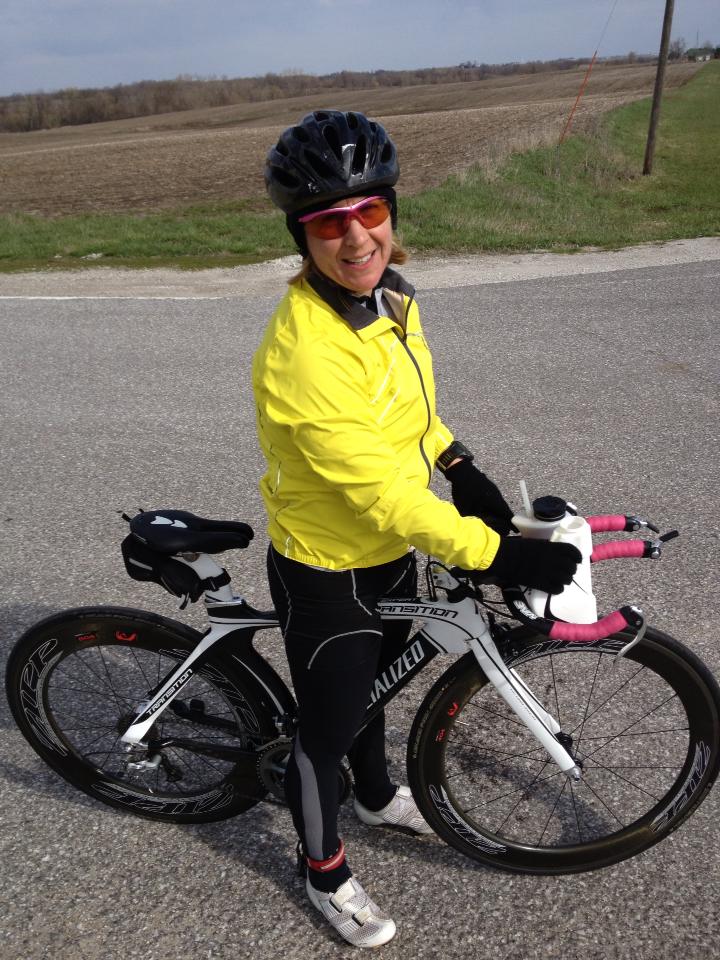
No matter how safely some cyclists ride, and how visible they are on the road, some motorists consider their presence and affront to their personal liberties.

No matter how safely some cyclists ride, and how visible they are on the road, some motorists consider their presence and affront to their personal liberties.

The aftermath of all that carnage meant that several of these riders showed up on borrowed bikes to ride the “loop” of the Ironman Wisconsin course this past weekend.

The rider struck by the impatient woman was still sore a week later and his road rash was oozing enough to stick his skin to his shorts. He made it one time around “the loop” and thought better of continuing.

The bike my girlfriend borrowed to get in a couple loops of training on the course turned out to be too long for her to ride with any efficiency. She rode a loop and “the stick” back into town.

With just a few weeks left before Ironman, these riders were dealing with the aftermath of having been struck or driven to the ground by careless or aggressive drivers.

The costs

Most made the decision to save themselves for another day. Once the insurance checks come through and replacement bikes can be secured, there’s a week or two of longer riding and then it will be time to taper and continue getting used to a new bike setup.

As for the driver who struck no less than three bikes with her vehicle? “That woman will be looking at replacing more than $20,000 worth of bikes,” one of the riders stated. “And if I can’t get healthy enough to participate in the Ironman, she’s getting a bill for the race fees, the hotel and other expenses as well.”

All of these accidents were the result of different types of motorist infractions. There was aggression and impatience on the part of the woman who struck down three cyclists trying to make a legal and simple left turn on the roadway. She crossed a double yellow line in an attempt to fly past them.

The causes

There was inattention on the part of the woman who turned absentmindedly in front of a cyclist legally riding on her side of the road.

And there was an inadvisable decision to make a sudden U-Turn in the middle of a normal roadway that caused yet another accident with a cyclist.

“I’m scared,” said one of our female club riders on hearing the stories of three accidents in under two weeks.

“Well,” someone joked. “You can’t be a member of the club until you’ve dumped your bike one way or another.”

“I’ve fallen over in my yard,” she offered.

“That counts,” someone replied.

Rules of the Road
Cyclists represent

Cyclists represent “the other” to people who do not share the sport.

At this rate, we’ll certainly take what we can get when it comes to cycling safety. All those motorists on the road who do not care who they hurt certainly don’t want to mind the Rules of the Road.

In fact there almost feels like there’s a mission to drive cyclists off the road altogether. The crazed driver of a Ford Econoline that buzzed our group of four riders a month back was not just careless, he was insanely preoccupied with throwing fear into all of us. His van came within inches of four different cyclists riding in a legal single file line.

We chased him down and got his plate. For several weeks we’ve held it but never made a police report.

The officer that talked to my girlfriend admitted a bit of a disturbing fact from the perspective of the law. “Sometimes if they don’t hit you there’s nothing we can do.”

I thought about those words for days. I thought about the fact that so many issues of the world work like that. I thought about the sick little strain of aggression running through America’s history. I thought about how many times people have formed an ugly group mentality to persecute others. I thought about how comfortable people are with using brute force to take what they think they own.

Manifest Destination

Our

Our “road kill” includes millions of animals as well as people. But we drive on by.

The selfish desire to dominate runs like a bright red vein through America’s history.

Our supposedly proud tradition of claiming the land for white settlers resulted in genocide of native Americans. The nation tricked and cajoled and called in the military to steal and terrorize and dispossess lands that covetous white settlers wanted to occupy.

And when that wasn’t enough control and ownership, the nation brought in slaves and brutalized people some more, claiming them as property while setting up an economic system almost entirely dependent on the enslavement of others. Some happy history that is. It took a Civil War to cause a market adjustment to that perversion of justice.

Even after thousands of lives were given to end slavery, Jim Crow laws kept the tradition of racism going, with thousands more people banned from full citizenship and cruelly ostracized or killed. And to make matters worse, the Christian religion was often invoked to justify the entire operation.

In Wisconsin the Governor is cutting funds for bike trails and support for cyclists, proving their is political support for persecuting cyclists as a social order.

In Wisconsin the Governor is cutting funds for bike trails and support for cyclists, proving their is political support for persecuting cyclists as a social order.

Tribalism still exists

The same ugly tribalism crops up on many fronts. From hating every new wave of immigrants that arrived on our shores throughout our history, to treating women as property and inferiors, America has an ignoble tradition of pushing people out of the way to maintain a selfish and fearful status quo.

It’s a Manifest Destination mentality, and America spreads it around the globe as well.

Look at America’s most recent actions in the Middle East, where the war of choice in Iraq led to the death of hundreds of thousands of Iraqi civilians followed by torture of hundreds more. All this was complimented by the death of thousands of American soldiers and maiming of tens of thousands more. It was all based on a violent merge between a violent ideology and an incident that was ignored by those ostensibly charged to protect us. So to compensate, America violently drove right over a country that had nothing to do with the event on 9/11 just to prove that we truly owned the road.

Even the Wizard of Oz captured the essence of modern day conflict: Stay off the Yellow Brick Road! The Wicked Witch of the West considers it her domain!

Even the Wizard of Oz captured the essence of modern day conflict: Stay off the Yellow Brick Road! The Wicked Witch of the West considers it her domain!

That’s how we roll. America has and likely always will be a nation of Manifest Destination because our notion of American exceptionalism is based on a farcical combination of selfishness, violence and greed.

And please, spare us the timeworn lectures on the high-minded motivations of America getting into World War II to save the world. We got into that war to save our own asses from the road hog actions of the Germans and Japanese who were doing the one unacceptable thing possible on the worldwide stages: Acting like Americans. Yes, the lives given in that effort were indeed noble acts. And FDR was the man for the job, but certainly no saint. Hell, even Winston Churchill got dumped as Prime Minister by the Brits once the job was complete. Even great empires turn into ungrateful, selfish beasts once the threat is gone.

Self hatred and patriotism

The parallels of deep psychological reasons why we hated the Germans and Japanese are so plain they go beyond the obvious. Expansionism? Please, that’s American history in a nutshell. Fascism and cramming ideology down the throats of others? That’s the entire game plan of the West and the Christian assumptions that go with it. Genocide? We’d already done that here at home by slaughtering Indians by the tens of millions.

So, it is a well-known political phenomenon that people fight hardest against the things they most hate about themselves. Sometimes it is deep-seated urges that people want to deny. Other times it is recognizing the selfishness and greed in others that we most despise in ourselves. And enough with playing innocent about all this. Even some cyclists admit they find other cyclists on the roads annoying.

The struggle between dark and light is always going on within us.

The struggle between dark and light is always going on within us.

But there is hope in the dark side of all humanity. Look at the example of St. Paul, the man who persecuted Christians before he converted to the ultimate evangelist.

Or, if you’re not the religious type you can consider that Darth Vader actually reconciled with his own son at some point in that Star Wars Quadrilogy. It’s a true statement that there’s a little Death Star warrior in all of us. It can be difficult to find one’s way back to a more positive force in the universe.

Made worse by domestic policy

What makes it worse here in America is that all of society has now been pitted against each other by an economic siege that has essentially foisted on the nation by the richest Americans who care only to gain even more wealth for themselves. It is left for most of the rest of society to draw their own battle lines and fight it out..either for what’s left, or to regain equity in the nation’s real value.

And as a result of this deep-seated struggle for normalcy and ownership, people do indeed feel it’s their job to protect their share of the roads somehow.

That’s why the war between the white lines between motorists and cyclists seems so present and real. These confrontations between angry drivers… and equally angry cyclists is a textbook example of America’s habit of Manifest Destination. We’ll kill anyone to get where we’re determined to go.

Test cases

As a result, this is a massive test case on how and why the laws really apply on our roads.
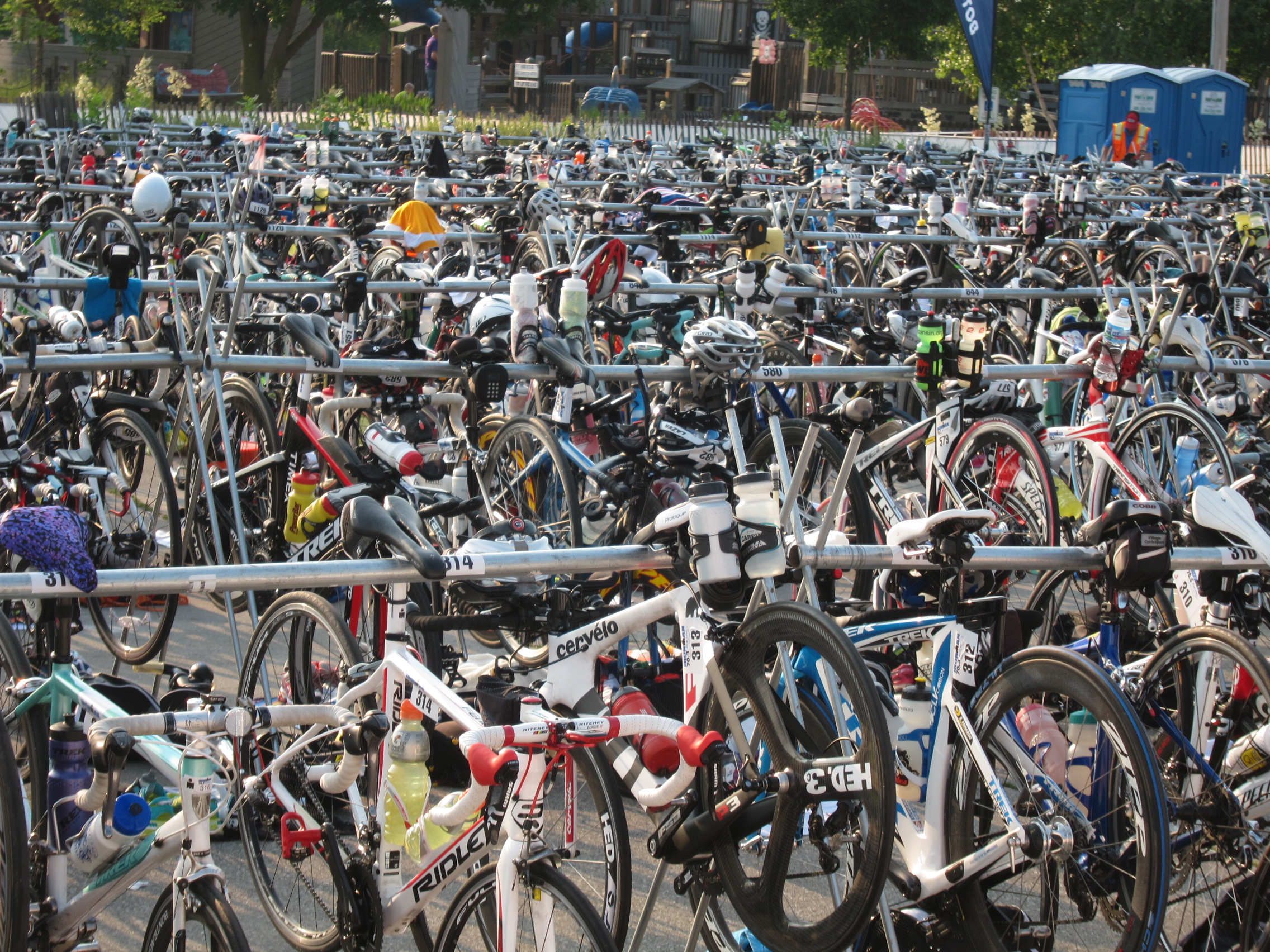
There are millions of cyclists on the roads. And some people hate that.

There are millions of cyclists on the roads. And some people hate that.

Pissed off drivers apparently see all cyclists as lawbreakers. We hear them yell at us to get off the road! and, ride on the sidewalk!

But the law frequently states that riding on the sidewalks (and even some trails) is neither legal or advisable.

Let’s be clear: Ignorant cyclists ride two and three abreast and hog the road. Meanwhile, ignorant motorists aren’t willing to abide by the three-foot law in passing cyclists or to separate hazards and wait for a legitimate opportunity to pass.

So the rules of engagement aren’t even clear. There’s just anger and response because general ignorance rules. This chasm of misunderstanding is widening the divide between cyclists and motorists. Some drivers respond by cutting that chasm on their own, driving too close to cyclists as some kind of warning. It is a deadly game of chicken.

Carnage 

The result of all this ignorant behavior is accidents like those documented above. These have real costs in money, emotion and time to the victims of such negligence or violence. Until you’ve seen a person mangled by a bike accident and witnessed the scars and broken limbs and weeping road rash resulting from driver carelessness or aggression it remains remote to the senses. Motorists either are not thinking about the consequences of such damage to another human being, or worse, they actually relish the idea of harming those they dislike, or simply don’t care.

And yes, there are many instances in which cyclists are “at fault.” People make mistakes on the road or ride in ignorant fashion. That’s where legal action comes in.

IMG_1019As a result, lawyers have entered the fray to pursue compensation for cyclists injured in such accidents. The firm of Zniemer&Zniemer in Chicago posts this information on their website: “Injuries suffered from a bicycle accident can be severe and life-threatening. Injuries may include severed limbs, broken vertebrae, or a fractured skull, in addition to broken collarbones and elbow joint damage, just to name a few.”

Bullies on the information highway

How truly ironic it is that motorists in 3,000 lb. vehicles claim they are being persecuted and harassed by a person on a 20 lb. bike? Those who complain about having to Share the Road are the ones yelling insults out the window of their cars. And when confronted for their bad behavior, they whine about paying taxes for the roads, as if cyclists do not pay taxes of any sort. What, none of us who ride bikes also own cars? That’s absurd. The stupidity of that argument defies all logic.

But that doesn’t stop the haters from embarking on all sorts of angry rants.

Some politicians want to tax bicyclists for the right to use the roads.

Some politicians want to tax bicyclists for the right to use the roads.

As Exhibit A, there are blogs such as the subtly named I Hate Bicyclists. There’s also a Facebook page titled God I Hate Cyclists Using the Road that has more than 2000 likes. Here’s a quote from that one, not coincidentally based in Britain, a nation where attitudes of empire and imperialism also have a sordid history. “Sorry all you road kill lovers out there, we missed the 1400 mark and have now passed 1500. Any thoughts on what we give lover (or hater) number 2000?” 

That’s right: They’re giving out faux prizes (or real road kill) for the act of hating on cyclists. What an enlightened mentality.

Motivation for the haters

So you see it really is the product of a mindset of dominance and violence of one “tribe” of people toward another. Granted there are elements of prick cyclists making it worse for everyone. Yet the mere fact of existing as an entity on the roads is motivation for the haters to move forward with an agenda of aggression toward cyclists. These actions are protected by laws governing free speech, but at some point the hate does convene into action. And who is then responsible?

Even at rest a tri-bike aero frame looks more aggressive.

Is this person Public Enemy Number One? That’s how some prefer to portray cyclists.

It’s rampant and real, and reflects a violent strain of society that pops up in other ways as well. We see it in gun nuts demanding Open Carry so they can threaten anyone they like on the streets. We see it in the brand of narcissistic evangelical Christianity that can’t handle a challenge from anywhere without screaming that rational inquiry is a form of persecution. We see it in people who claim their personal and religious liberty is being impinged by the idea of a pair of same-sex adults getting married.

In sum, it’s the instinct to radical elements of insecurity and fear as a means to claim the middle of the road. And while driver education courses teach people to “separate hazards” those lessons are forgotten in favor a giant came “chicken” in which the object is to see who backs down first.

WeRunandRideLogo

Posted in bike accidents, blood on the highway, cycling, cycling threats, evangelical Christianity, game of chicken, gay marriage, hating cyclists, I hate cyclists, internet trolls, Open Carry, religious liberty, road kill lovers, same sex adults, Share the Road, trolls | Leave a comment

My plan for a better future with 8 arms and legs

Davy-Jones-from-Pirates-of-the-CaribbeanMy new fitness plan is to inject octopus genes into my bloodstream

A recent article published by the University of Chicago suggests that it may be possible to cross my genes with those of an octopus and come out with some really great abilities and effects.

Don’t try to tell me this isn’t possible. The article states: “With a few notable exceptions, the octopus basically has a normal invertebrate genome that’s just been completely rearranged, like it’s been put into a blender and mixed,” said Caroline Albertin, co-lead author and graduate student in Organismal Biology and Anatomy at the University of Chicago. “This leads to genes being placed in new genomic environments with different regulatory elements, and was a completely unexpected finding.”

That means (if my science is correct) you can pick and choose the attributes you want to steal from the octopus and use them in your human genome. In other words, you can become as octopussy as you want.

LegsFor example, the article states: “The octopus genome is enriched in transposons, also known as “jumping genes,” which can rearrange themselves on the genome.” This is great news! I’d love to get me some “jumping genes!” That means I could go back and compete in the steeplechase and never get my feet wet.

Plus, octopuses rock in other ways as well. “Octopuses, along with squids, cuttlefish and nautiluses, are cephalopods—a class of predatory molluscs with an evolutionary history spanning more than 500 million years (long before plants moved onto land). Inhabiting every ocean at almost every depth, they possess unique adaptations such as prehensile arms lined with chemosensory suckers, the ability to regenerate complex limbs, vertebrate-like eyes and a sophisticated camouflage system. With large, highly developed brains, cephalopods are the most intelligent invertebrate and have demonstrated elaborate problem-solving and learning behaviors.”

You can clearly see why I want to become part octopus. It’s not an entirely new concept I know. That creepy Davey Jones dude in the Pirates of the Caribbean had the whole octopus scene down pretty well. But his only priority was sucking people down to the bottom of the ocean to become his death ship slaves. That seems a little mean. I promise I’d be way more positive than that.

OctopusVulgarisFor instance, I could be an awesome massage therapist if I grew about six more arms outfitted with suckers. Think of the work I could do on tired and sore athletes! It would be no problem to massage both IT bands at once. And with those suckers I could pull on tensions in the fascia like no one’s business. Why hasn’t anyone thought of this before?

Yes, being part octopus would be great. It might be tricky if I grew another set of legs, I admit. Some days it’s hard enough to move the ones I already have. But think about the possibilities for a typical 10K or marathon? You could wear out one pair of legs and keep another set fresh and ready for the second half of the race.

Even better, for triathlons you could grow yet another set of legs (six in all) and use one pair for the swim leg, another for cycling and hit the road with a fresh pair of legs for any run distance triathlon you wanted to try.

Spare me any conservative lectures about how this octopus thing is a liberal scheme to take over the world. That’s already happened. you see. Scientists think octopuses may already be aliens in our midst. “The octopus appears to be utterly different from all other Octopus2animals, even other molluscs, with its eight prehensile arms, its large brain and its clever problem-solving capabilities,” said co-senior author Clifton Ragsdale, associate professor in Neurobiology and Organismal Biology and Anatomy at the University of Chicago. “The late British zoologist Martin Wells said the octopus is an alien. In this sense, then, our paper describes the first sequenced genome from an alien.”

“The first whole genome analysis of an octopus reveals unique features that likely played a role in the evolution of traits such as large complex nervous systems and adaptive camouflage,” the article states.

Complex nervous systems and adaptive camouflage could be great use in all walks of life. It might improve your emotional intelligence at work, for example. And if that didn’t work, you could always camouflage yourself to disappear next to the office copier.

Well, I’ll let you know how it all comes out. This is just so exciting I think I just peed myself. Or is that ink? Sometimes it’s hard to tell. Be ready for the new OctoMe. I predict it will catch on, once we get past the idea that genome sequencing is just for suckers.

werunandridelogo

Posted in Christopher Cudworth, running | Tagged , , | 1 Comment

Approaching fitness, training and life like a realist

IMG_8774While my liberal political interests are obvious and well-known, there is a conservative side to my soul that is also revealed on occasion through this blog. I am conservative about the most pragmatic issue of all. I know that someday I will really age. And someday I will die. And I accept that.

Of course we spend a significant part our lives in denial of both those realities. We run, ride and swim because it makes us feel and look healthier. Usually.

Sometimes I see people who overdo it a bit. They get wizened from their efforts, or grow too skinny from training. They look strung out.

Actually I was too skinny in my 20s and early 30s. I could have used some weight work on top of all that running.  Through middle age it has been a balancing act, and I’ve emerged as a relatively healthy senior (if that’s what you insist on calling it) with just a touch of softness around the middle.

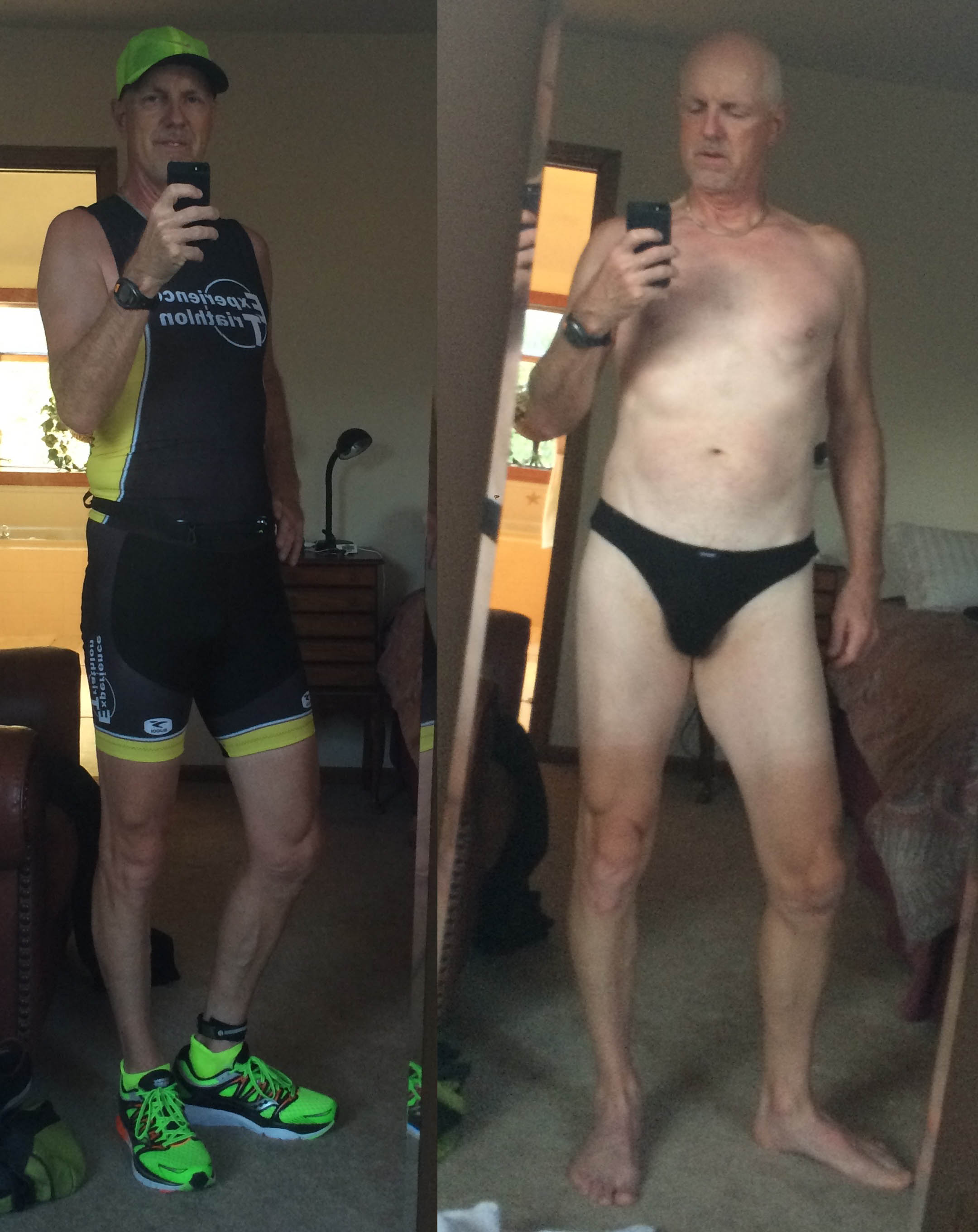
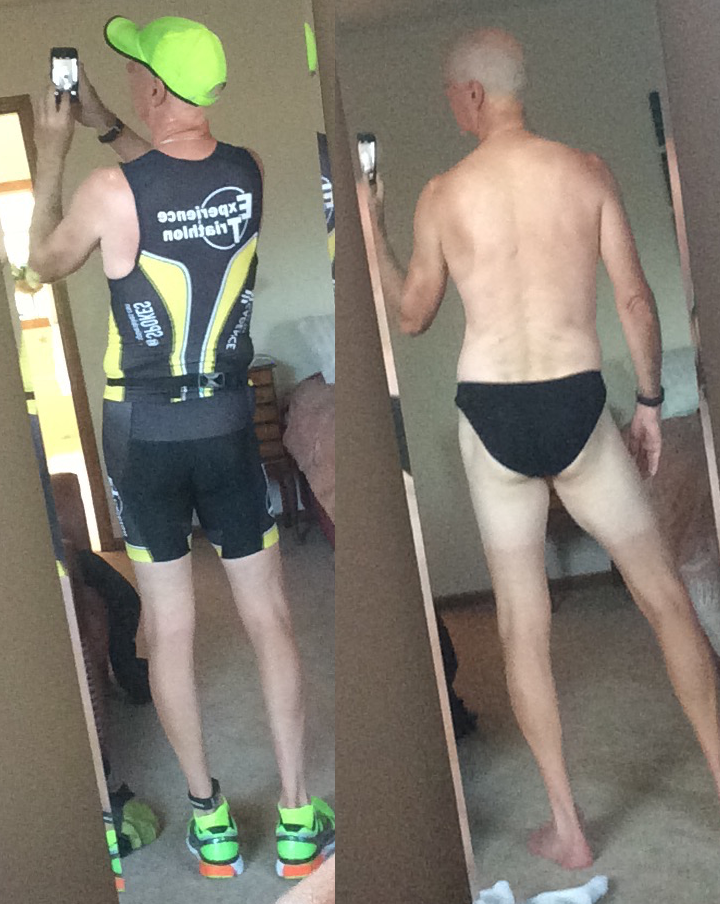
Selfie Front KitI think it pays to be realistic about our bodies. There are many things you can do to make yourself healthier as you age. Frankly I’m happier with my body now in many ways compared to my hyper-skinny youth.

But I’m also caregiver to my father who is almost 90. And I know that sooner or later the human body takes its own path. Aging is not for the weak of heart.

Which is why I’m not afraid to take a hard look in the mirror now and then to gauge what is happening, and why.

Youth does not last forever. Personally I think that’s what’s behind so many of the selfies we see young women taking of themselves and posting to the Internet. There’s nothing like aging to change the fine toned shape of a woman’s body into something else, and I think people sense that. Motherhood also Selfie Back Kitcan do a number on “the girl” and that turns her into a woman.

Real men appreciate this transformation and learn to love a real woman instead of lusting after young girls. There is no greater turn-on in the world than a mature woman that takes care of her body. If you don’t know what that means now, then give yourself a few years. Grow up. Look around you. There is far more to life than the images in a magazine.

There is real activity, for one thing. The sports of swimming, running and triathlon are great for both men and women in terms of body image. They give you some degree of control over how much fat hangs out on your frame, and how your muscles look and perform.

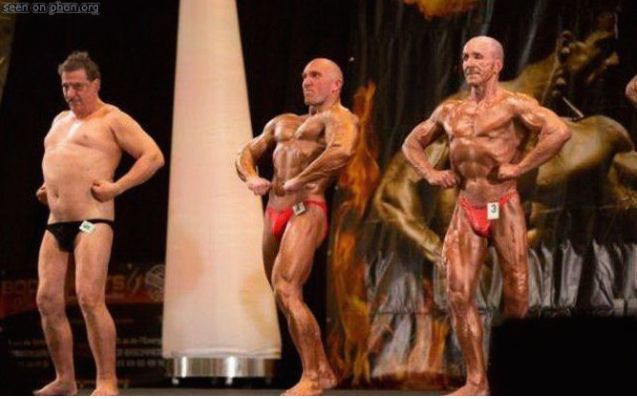
Heavy Guy Getting PumpedNo, we don’t have perfect control over all that. And perception has much to do with how we ultimately conceive and project ourselves on the world. Our vanities sometimes expose our worst attributes.

So it pays to approach fitness, training and life like a realist. There are some things you can change about yourself, and some that are rather fixed. I’ve always wanted more muscular calves, yet some people tell me I’m lucky to have thin legs to run fast.

As you can see from selfie photos shared in this blog (and that’s not me with the bodybuilders, by the way) I’ve also paid attention to Rule #7 on The Rules on Velominati, and been careful to maintain crisp tanlines according to the cyclist’s bible. Or so they claim. They would not approve of my tri-kit tanlines on the shoulders. Tough luck.

Chris Fun Pic TooI’m not afraid to post these photos because I know you’ve all done the same damned thing. Taking pictures of yourself is a natural thing to do. I run past large windows to check my running form as well. Some things about that have changed over the years as well. My stride is shorter now, and that’s on purpose.

But the purpose of this blog is to encourage you to appreciate yourself in the moment. Whatever age you are now, try to enjoy it. Age will come along soon enough and change your body. There’s plenty of time for that.

But you don’t have to take it lying down. That’s what I’m saying. Stand up and look in the mirror. Learn to like what you see. And if you don’t like what you see, work to change it. Seriously, and conservatively, that’s the meaning of life.

werunandridelogo

Posted in aging, aging is not for the weak of heart, competition, cycling, duathlon, half marathon, healthy aging, healthy senior, it never gets easier you just go faster, running, the rules velominati, triathlete, triathlon, We Run and Ride Every Day | 1 Comment

The joy and purpose of new running shoes

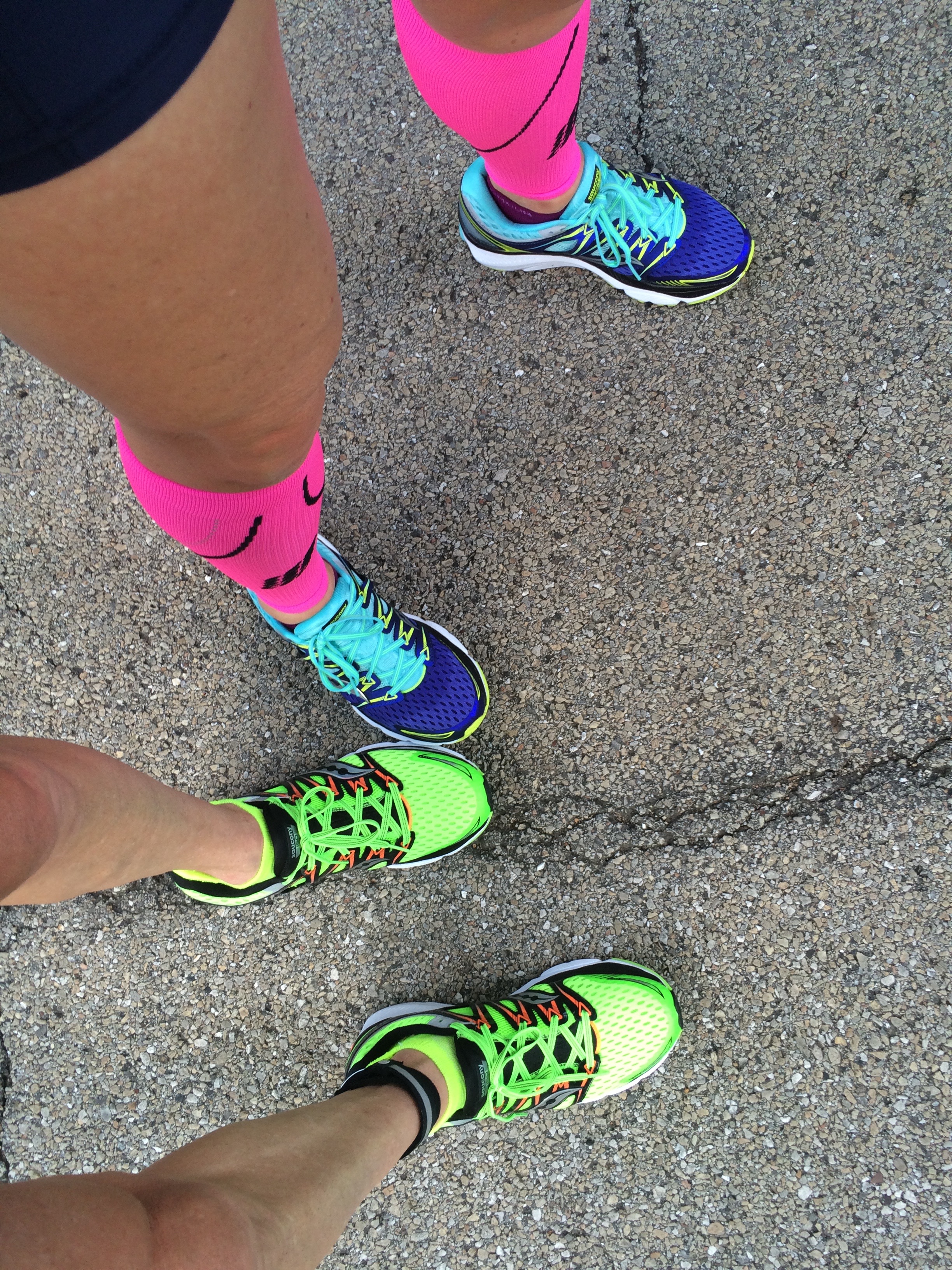
IMG_1882Over the weekend both Sue and I wound up in possession of new Saucony shoes. We both wear the same model and for similar reasons. Our orthotics come from the same pedorthist. We both need minimal drop and enough width to accommodate the orthotic.

Sue’s last pair of Saucony’s were worn out. Totally. She’s put in so much mileage this past few months her shoes were showing wear on both the uppers and the tread.

We were running the trail at Herrick Lake, which is all crushed gravel. Along the way things began to tighten up on Sue in the lower leg and iliotibial band. We stopped to stretch her hamstrings because that, I informed her, is often the cause of considerable duress down low where the feet touch the ground.

If that seems counterintuitive, then you’re not thinking about how your body works. It’s a balancing act you see. When you run the muscles in your legs and hips need to act together to propel you along. Any significantly tight area of those muscle groups will require a compensatory response in another part of the leg or hips. That’s where injuries occur. When a body part is called up to bear more weight or torsion than it is designed to do, it can become strained, weakened or “pulled.”

Tugs and pulls

This imbalance pattern becomes pronounced when your running shoes get worn out. Every biomechanical flaw in your body gets beaten into the sole of your shoes sooner or later. They can lean in one direction as a result, or develop crushed or compromised midsole materials. All these effects are the product of your mileage and how well you manage your stride while covering ground.

Old shoes express your worst flaws, in other words. If you pronate your shoes will sooner or later show signs of that specific biomechanical problem. If you supinate (with the foot slanting outward) that same pattern will also show up in your shoes.

The more you train, the more risk you have in trying to make your shoes last longer than they should. Many years back, we runners took perverse pride in this brand of stupid venture. Making our shoes last was considered an art form. Often we wore shoes well past the 700 or even 1000 mile mark. We taped them together and glued the bottoms of the soles with Shoe Goo to even out spots on the tread where it was worn. One of our favorite tricks in college was to use athletic tape on the heel to keep it from wearing out faster than the rest of the shoe. Don’t knock it. It worked.

Reality check

But there comes a time when you realize that all your hopes and wishes that your shoes still have some wear in them comes to naught.

I noticed during last Saturday’s run that my left hip was getting sore. So was the outside toe of my right foot. Those two might not seem related but they were.

Fortunately I’d already purchased new shoes, but had waited a week to trade them in on a new color scheme of the Saucony ISOs. Actually I love the blue and bright green and orange color on the first two pairs I’d worn. But sometimes you just want a change.

So we traveled to a running store to exchange my shoes. They were originally purchased with a $20 discount coupon that I’d earned by winning my age group in the Batavia Duathlon. So cashing that in on a $150 pair of shoes helped a bit.

Costly attitudes

Why do I buy $150 shoes in the first place? It’s not because I equate spending so much money with getting value. I once had a boss that asked me, “What’s the best kind of running shoe?”

I began to explain the differences in shoes when he interrupted me to say, “No, I mean what’s the most expensive?”

Suffice to say his values and mine are considerably different. And I personally believe stupid pricks like that are what’s causing so much trouble in America today. Grossly consumptive behavior and attitudes responsible for so much abuse of the economy, our resources and our society.

Cures

So I’m not running around in $150 Sauconys to prove anything. I’m running around in them because I got a free pair a few months back and they cured my Achilles tendon problems and worked with my orthotics. So I bought another pair April 1st. They’re worn out from a good summer of running. Pair number three is bright green and even a bit more roomy than the first two pairs. Proving that no two pairs or models of shoes are the exact same.

Meanwhile Sue and I discussed the state and status of her shoes. She had purchased a pair just like mine a few months back and loved them. I’d planned to buy her a new pair for her birthday but we both agreed this time it could not wait. So we got resourceful and found a pair pronto even though they were on order with another running shop.

That’s fair. We both typically shop local and purchase our shoes with planning. But when you’re training for Ironman and a potential injury crops up because your shoes might be suspect, it’s time not to mess around.

So her birthday gift arrived early, and last night we both stepped onto the street in brand new running shoes. It was an experience of joy with a purpose, you might say. New running shoes feel so, so great. Too bad they don’t stay that way forever. But then we might not appreciate how great it is when that time comes around again.

werunandridelogo

Posted in Uncategorized | Tagged , , , , , | Leave a comment

August heat, two-a-days and the start of cross country season

Chris as a freshmanIt’s a humbling realization to think that this fall marks the 40th anniversary of my enrollment in Luther College. As a college freshman at that time, the entire college experience was a mystery. Luther was six hours from home. I’d visited the campus just once in July before the semester began. Everything was last minute, and I was both scared and excited like most freshman.

A couple classmates from St. Charles would also be attending Luther, but the entire cross country experience was going to be something I did on my own.

It had been a great recruiting year for Luther that fall. No less than six entering freshman had run under 15:00 for three miles in high school. And that was just our class. The upperclassmen were a talented group of eclectic runners eager to make the varsity as well.

First test

The first run on which we embarked took off at a fierce clip under six minutes a mile. That would be a theme for the next four years in fact. Almost all our training was done at that pace and under.

The team hung together in clumps as we raced along a rolling 8-mile route called Under Phelps-Palisades-Ice Cave. The roads were gravel and my feet struggled to grab enough traction to keep up. We all had long hair and despite the pace there were jokes and comments flying around as we tripped along at a high rate of speed.

Rite of passage

The first four miles were almost dizzying. Frankly I had not run much the last week. Only a few days before my friends and I had held a massive going-away party involving tons of alcohol, skinny dipping and donuts ingested at four in the morning. To this day I’m not sure the booze was completely out of my system before that first run at Luther.

But there was no quit in me or anyone else. So along with my fear at being dropped and complete lack of knowledge how far we’d gone already, it was hellish going.

Then we turned onto the long road leading up to Palisades Park and the road grade spiked. Everyone went silent. The huff of lungs could be heard, and runners either pulled forward or peeled back. I hung in there with a few other guys and emerged just behind the leaders once we’d crested the hill.

Then came a crazed descent and a race back toward campus. This was a sorting process, survival not of the fittest by that point, but of the most determined for sure.

That last small climb back up the hill to campus almost killed me. But we made our way through the quad and down the hill to the field house and stood around trying to look like we were not tired.

“Look at this guy,” one of the juniors pointed at me. “He’s not even sweating!”

Indeed I was not. But rather than a sign that I was not tired, it likely reflected the strange state of dehydration from the drinking a couple nights before. Still I smiled and laughed and uttered something like, “Yeah, no problem.”

CC teamFake it till you make it

Running is often an alliance of raw effort and lies like that. You never want to give away our weaknesses. Not when a spot on the team is on the line.

Yet there’s also a camaraderie that builds among teammates as the season builds. That run was only the first of two that day. We’d be back for an afternoon workout as well. And then another morning. The stakes would remain high with every effort, but somewhere along the way that bond of survival infuses the entire group. It sooner or later becomes evident who is going to make the team, and lead it.

Cross country across the country

10703754_10152865040451095_3933546903019467610_nThat first fall in college was full of such experiences. It makes me think of all the runners now gathering for two-a-days and a season of competition. There are now middle school cross country teams, high school and college. There are many of us that continue training long into our 30s, 40s, 50s, 60s and beyond. We do it to test ourselves. It’s the smell of the air, the August heat and the start of cross country season that never changes in my mind.

Selfless acts

That first season at Luther our team took 7 out of the top 10 places at the conference meet. I placed 7th man and 9th place overall in the conference meet.

520167_tnThen we flew to Boston and competed at nationals. I’d actually been tied or close in points with a senior named Kirk Neubauer, who had certainly earned the team place and deserved to run at nationals. But in an act of gracious athletic vision, he told me that he was giving up his place to let me run in the national meet. “You have four years ahead of you Cud,” he told me. “You’re going to need that experience.”

Kirk has gone on to become an Admissions officer at Luther. His often selfless service to the college has benefited the institution in many ways. But his act of selflessness in giving up his spot on the nationals team will never be lost on me. It proves there are many aspects of sport that go unrecognized.

In my case it essentially took all four years of running at Luther to pay off Kirk’s selfless investment in the program. As a senior I finished fifth man for the Luther team that took second place to North Central College in the National meet.

Practice makes perfect

Between that first run at Luther and the final cross country season there were hundreds of two-a-day workouts. Many were run in August heat or September mist, October light and the first frosted mornings of November. There really is nothing like it, the sport of cross country.

I always hope that young people entering such endeavors know enough to appreciate all that is transpiring. Building fitness builds character. Building character builds teams. Building teams builds friendships that last a lifetime.

Indeed those guys that entered or were teammates at Luther in 1975 are still friends today. So I encourage all those young men and women lining up for cross country practices to take a good look around. Yes, you’re going to compete with all those runners in the group. But there’s something much greater going on as well. The lessons you learn and the friendships you make through competition become the core of your being.

That’s worth a little sweat in the August heat, and pain under the September sun. Come October the big meets call on you to give your all, and by November you come to realize that there’s a story to every stride and a completeness to the journey. It’s like life itself. It truly is.

werunandridelogo

Posted in Christopher Cudworth, competition | Tagged , , , , , , | 3 Comments

Barely in control of the stupid beast

It used to be that the greatest threat to human beings were large animals. Supposedly we’ve evolved in some way, conquering both nature as a wild place and our own nature as a result.

But it isn’t quite true. In fact last night I dreamed that I was in a farm setting of some sort and a herd of beefalo (that’s a cow and a buffalo hybrid) was set loose and stampeded through the barn.

IMG_1747Perhaps it’s a reaction to two incidents of late where stupid beasts were set loose on the roads of society. Two separate accidents between cyclists and cars this past week in our immediate area resulted in damage to both cyclists and bikes while the stupid beast vehicles rolled off Scott free.

The first incident was the result of a road rage situation. A woman tried to whip around a band of cyclists in our suburbs and struck two of the bikes, totaling one of them.

The second incident involved a woman turning her vehicle directly into the path of an oncoming cyclist. The woman was focusedly searching for the entrance to a Juvenile Detention Center and completely failed to look for oncoming traffic.

Notice that there was intention to both incidents. The first driver of a stupid beast vehicle was madly pursuing her own schedule. The second was driving with intention yet with distraction. As a result, a cyclist had to lay down her bike and take some road rash and a beat up bike frame in the process.

Chris Bike standupYou can argue forever whether cyclists are exhibiting good road habits or not. For some reason in countries that not only accept but promote cycling as transportation and recreation, motorists learn to steer their dumb beasts with a bit more respect for people riding bikes.

But not in America. In this country the dumb beasts are on something of a rampage, with social media fueling some of their anger at having to share the road with people on bikes. Yes, there are some motorists with considerate qualities. But even they can be prone to distraction, texting or reaching back to get the sippy cup for a screaming child. You get the picture.

A vehicle is nothing more than a dumb beast, and it will forever be so. Even if we ultimately design cars and trucks that can avoid accidents on their own, those vehicles will still be dumb beasts. Even a beefalo knows that.

Christopher Cudworth painting flag waiverBut America prides itself on the virtue of dumb beasts. We laud our football players for banging their heads together until they are damaged for life. We send our soldiers off to war and can’t find the money to help them recover from merciless effects when they come home. We prize our dumb beasts for what we claim they deliver; entertainment and freedom to do what the fuck we want while others suffer.

That’s the driving force of conflict between people steering dumb beasts on our roads and cyclists trying to get places or to enjoy a bit of fitness and recreation. Frankly it’s a prime example of evolution in action. There is selective pressure going on in which the dumb beasts are running over and colliding with much more sentient and vulnerable creatures.

And yes, in some cases cyclists are making dumb decisions or being dumb little beast themselves.

But a civilized society is supposed to compensate for its own vulnerabilities. This is especially true where rights are equally bestowed yet the weight of one beast over another is clearly unequal. Such is the state of our current economy in which money policies highly favor the haves over the have-nots. The dumb beasts of wealth care not who they run over on the route to more money. In fact, they rather pride themselves on the ability to turn the entire economy into a dumb beast at their will.

But as a result, all of society suffers (and borrows) and tries everything they can to stay on the road to prosperity. Yet the dumb beasts of untold wealth view them as nothing more than road kill.

Big Lanes for BikesThe conflict between the dumb beasts of motorized transportation and cyclists is symptomatic of this greater conflict between the seeming haves and the have-nots in society, and all its striations.

People driving dumb beasts feel insulated and strong inside their vehicles. They have no reason, it would seem, to accommodate a weaker mode of transport. Especially not one wearing Spandex or weaving down the road carrying a bag of groceries.

Dumb beasts are everywhere, you see. From the top of society down to the rusted Econoline that buzzed us in anger a few weeks ago, stupidity reigns.

We see dumb beasts waving Confederate Flags because, as they say, it’s a sign of their once proud domination over others. And we see dumb beasts wearing hoods and marching for white supremacy because the herd mentality is all they’ve got left. It’s a stampede of idiocy, but it’s their stampede, goddamnit. Just try to stop them. Militias. Gun lobbies. Or selfish bastards trying to tell women how to run their own bodies. Dumb beasts equipped with guns and pricks.

And we see dumb beasts rooting for Donald Trump because he is the dumbest rich beast of all. He seems not to care who he runs over on the way to his own aggrandizement. What a symbol for a selfish society he truly is! His misogyny in hosting beauty pageants while Donald Trump's proposed golf courseridiculing women and taking pride in coining the phrase “You’re fired” is absolutely an expression of everything that is wrong with America today.

We’re a nation of dumb beasts who choose leaders like we choose our cars. We slip inside their worlds and grab hold of a steering wheel and stop thinking for ourselves. If the vehicle can tell us how to get where we’re going, all the better. And if the vehicle plays happy or angry or sad tunes to distract our emotions from reality, that’s just great. And if the vehicle makes us somehow feel superior to others because it looks nice or at least gets us to the next fast food place for a cheeseburger, over to the roadhouse for a drink or up the road on a Tinder mission to get laid, that’s just dandy. Dumb beasts want their shit, and they want it now.

And the dumb beasts shall always rule if that’s all we expect from ourselves.

But if you’re a cyclist, you can’t afford to be such a dumb beast. You have to make smarter choices and in some cases, count on the fact that there are giant dumb beasts all around you. Fortunately the woman victimized in the second incident described above was looking le-tour-de-franceout for the actions of the dumb beast she saw ahead on the road. “They can’t be turning into my lane,” she thought. But they were, and she braked and took evasive action by laying her bike down on the tarmac.

That’s a smart little beast right there. We should all be so smart while riding, lest the dumb beasts kill us all. They’d be all too happy to be free of the obligation to accommodate the rights and freedoms of others. Let the law or the regulations or the signs that say Share the Road be damned. In their minds, this is America, goddamnit. “I shouldn’t have to worry about a goddamned bike,” they say.

Or a goddamned poor person. Or a goddamned old lady. Or a goddamned person of a different color, or religion or sexual orientation.

It’s my goddamned country, the dumb beasts say. Get off the goddamned road.

werunandridelogo

Posted in bike crash, cycling, We Run and Ride Every Day | Tagged , , , , , , , , | Leave a comment

Scarlet Burmeister making things work on a number of fronts

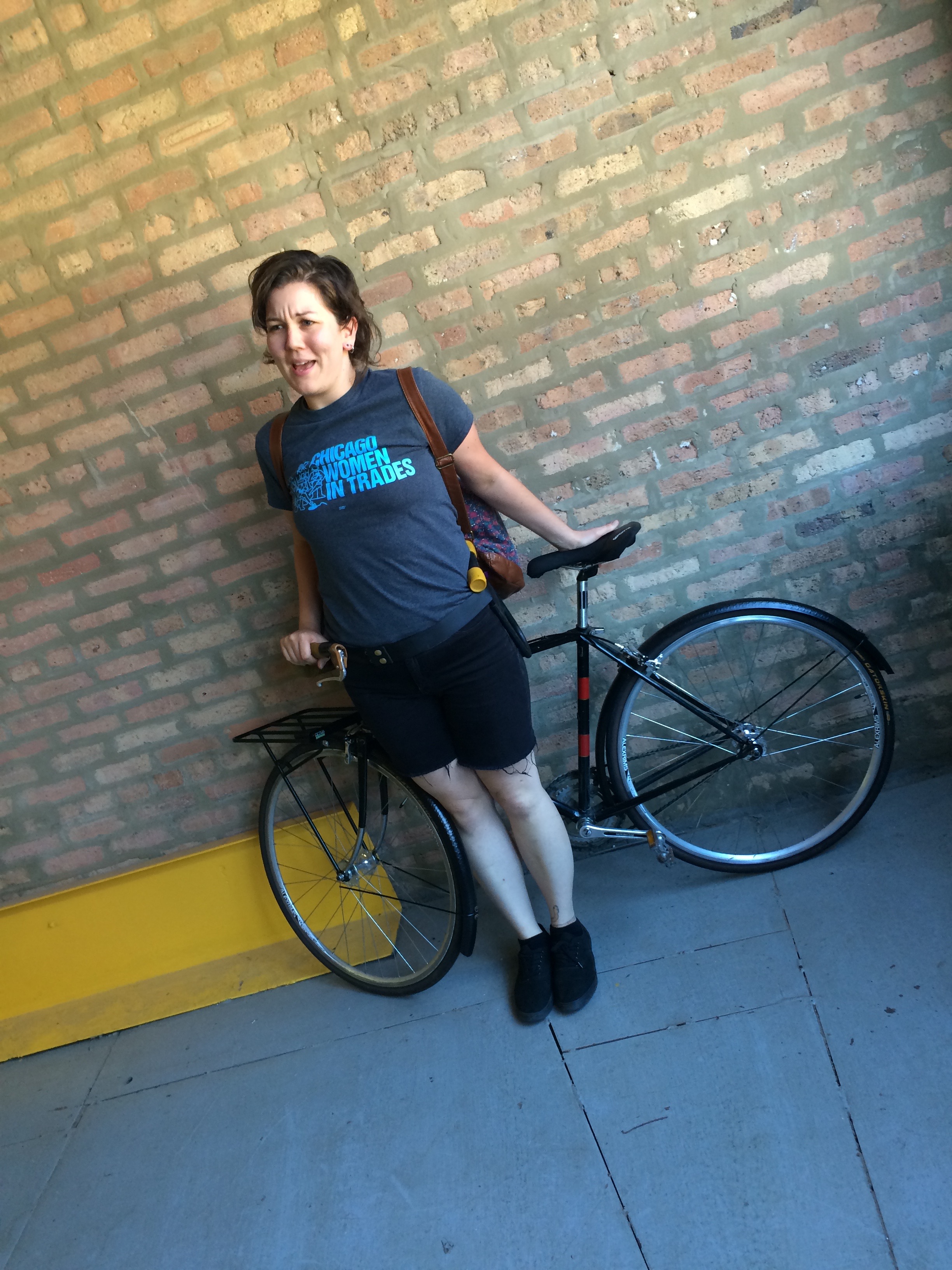
IMG_1678Scarlet Burmeister is both talented and a pragmatist. Her chosen profession as a welder and instructor at Chicago Women in Trades is in many senses a counterculture approach to a career. “Only 3% of the people in the trade segment of manufacturing and construction are women. But it’s a good profession. It’s well-paying. There is ongoing education and benefits. That’s why we work with women to teach them trade skills.”

In particular, Chicago Women In Trades focuses on helping women in need advance their careers. The organization’s website says it best: “Founded by tradeswomen in 1981, Chicago Women in Trades (CWIT) works for women’s economic equity by increasing participation in well-paid, skilled jobs traditionally held by men and by eliminating barriers that prohibit women from entering and succeeding in these fields. We provide support, advocacy, and education to tradeswomen; work to increase training for women and girls to enter nontraditional jobs; provide assistance to employers, unions, and other service providers; document workforce trends; and advocate for policies and practices that support women’s access to and retention in skilled training and jobs.”

IMG_1679Scarlet entered the school in 2014 and found herself talented enough as a welder to begin instructing other students. Her previous career trajectory had included maintenance work in food manufacturing, but found her groove when she researched CWIT and decided she liked the hands-on aspects of the work and the idea that welders were in fair demand.

“Most trades have a career track in training, and apprenticeships are typically a five-year program, and you’re paid while you’re learning. That puts you about two elective classes away from an associate’s degree too. You come out with a trade and no debt.”

The advocacy approach at Chicago Women In Trades helps women from all backgrounds determine how to succeed. “There is more acceptance in manufacturing than in construction,” Burmeister admits.

The organization also helps women organize their lives around a career path that is practical. “We try to work within the limits of people’s lives,” she says. “When you have an unemployed mother training 4-5 days a week, there are obstacles that need to be overcome.” Yet many do. Then it’s a task of helping those same women land jobs that in some cases are considered the sole province of men.

DSC_4921-624x413But skilled labor is appreciated in the manufacturing and construction world. Chicago Women In Trades uniquely bridges the gap of conservative and liberal political interests by supplying opportunities to otherwise disadvantaged women.

Coming to work every day is therefore a great motivator for Scarlet Burmeister. But she is unconventional even in that endeavor. “I ride my bike pretty much all year round,” she notes. “And even though I live in a straight shot up Western Avenue from Women in Trades, I don’t take that street to get here. That would be insane.”

Her experience in dealing with Chicago drivers has taught here a few things about bicycle commuting. “At best they’re often negligent and at worst, they’re aggressive,” she says.

“I think it’s a lack of education about what the rights of bicyclists really are. People drive by yelling at me to get off the road and onto the sidewalk. But they don’t know that’s actually illegal.” She shakes her head at that thought.

She takes side streets for the most part, and rides in all but the worst weather. “Chicago streets are bad enough without slick stuff on the surface,” she laughs. “So if there’s snow on the ground I usually take the bus.”

It is so refreshing to meet a person whose unconventionalities represent the better part of human nature. Scarlet Burmeister is making things work on a number of fronts.

werunandridelogo

Posted in Christopher Cudworth, cycling the midwest | Tagged , , , , , , , | Leave a comment

Is it your engine, your wheels or something else that is slowing you down

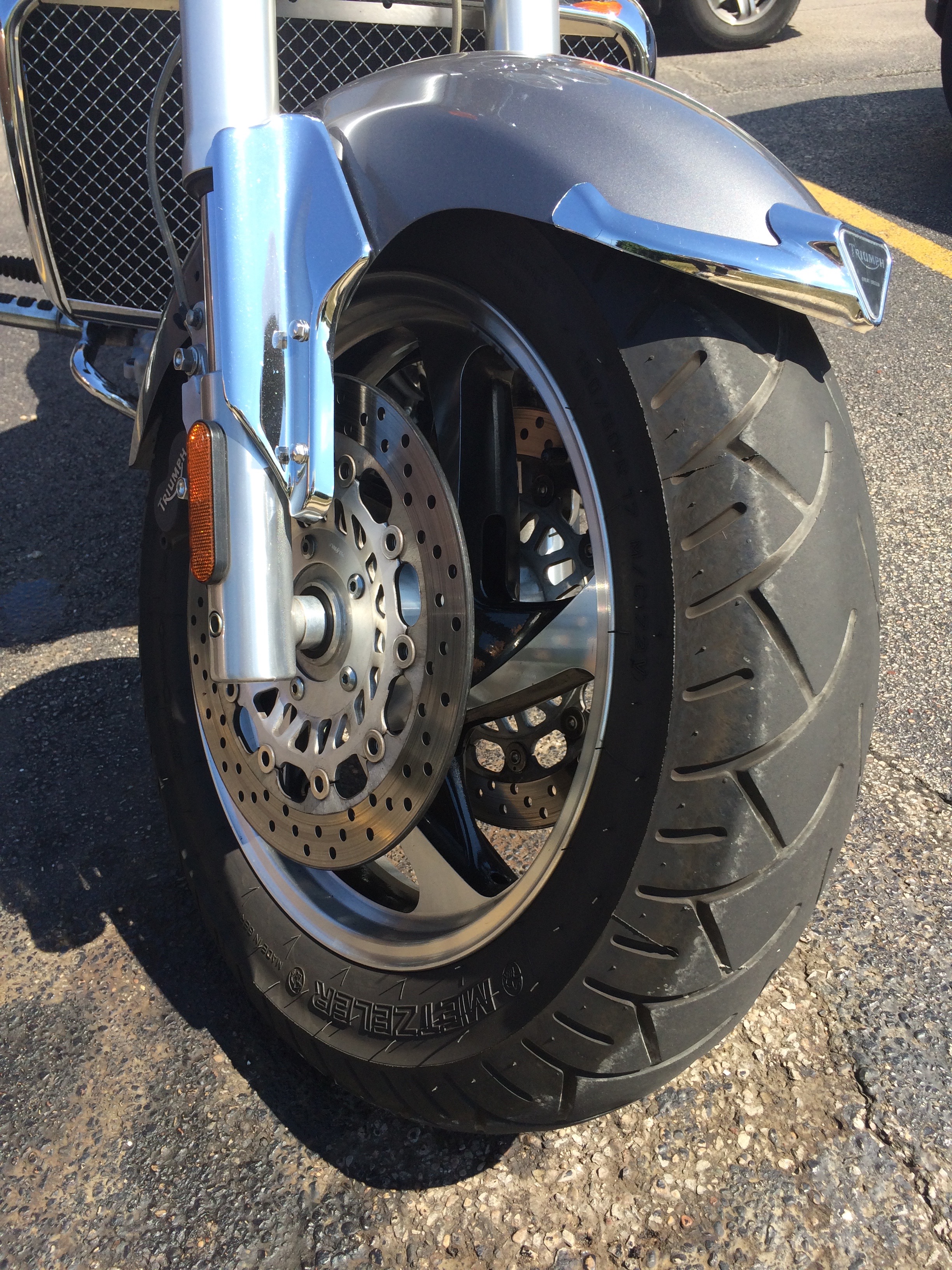
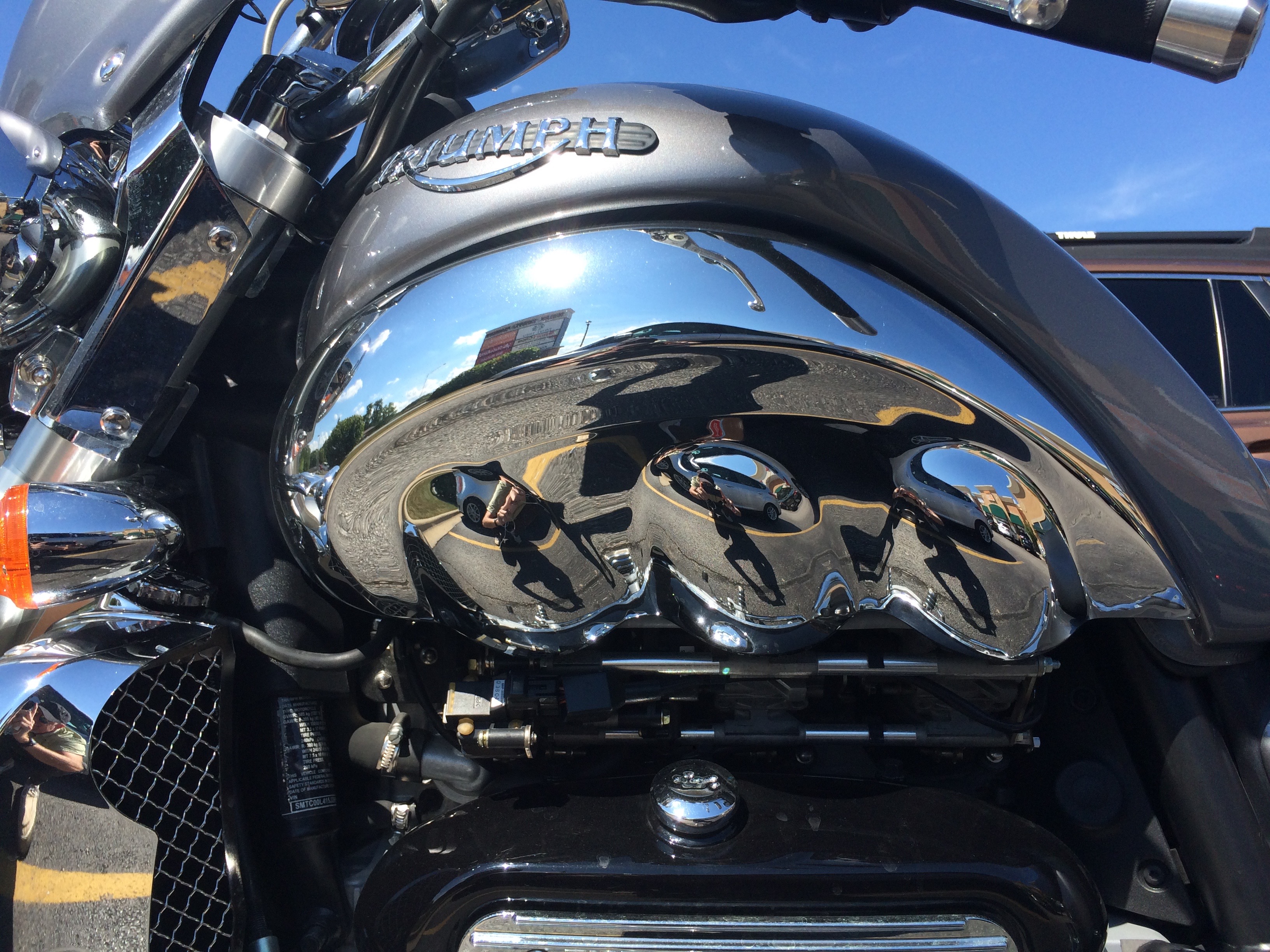
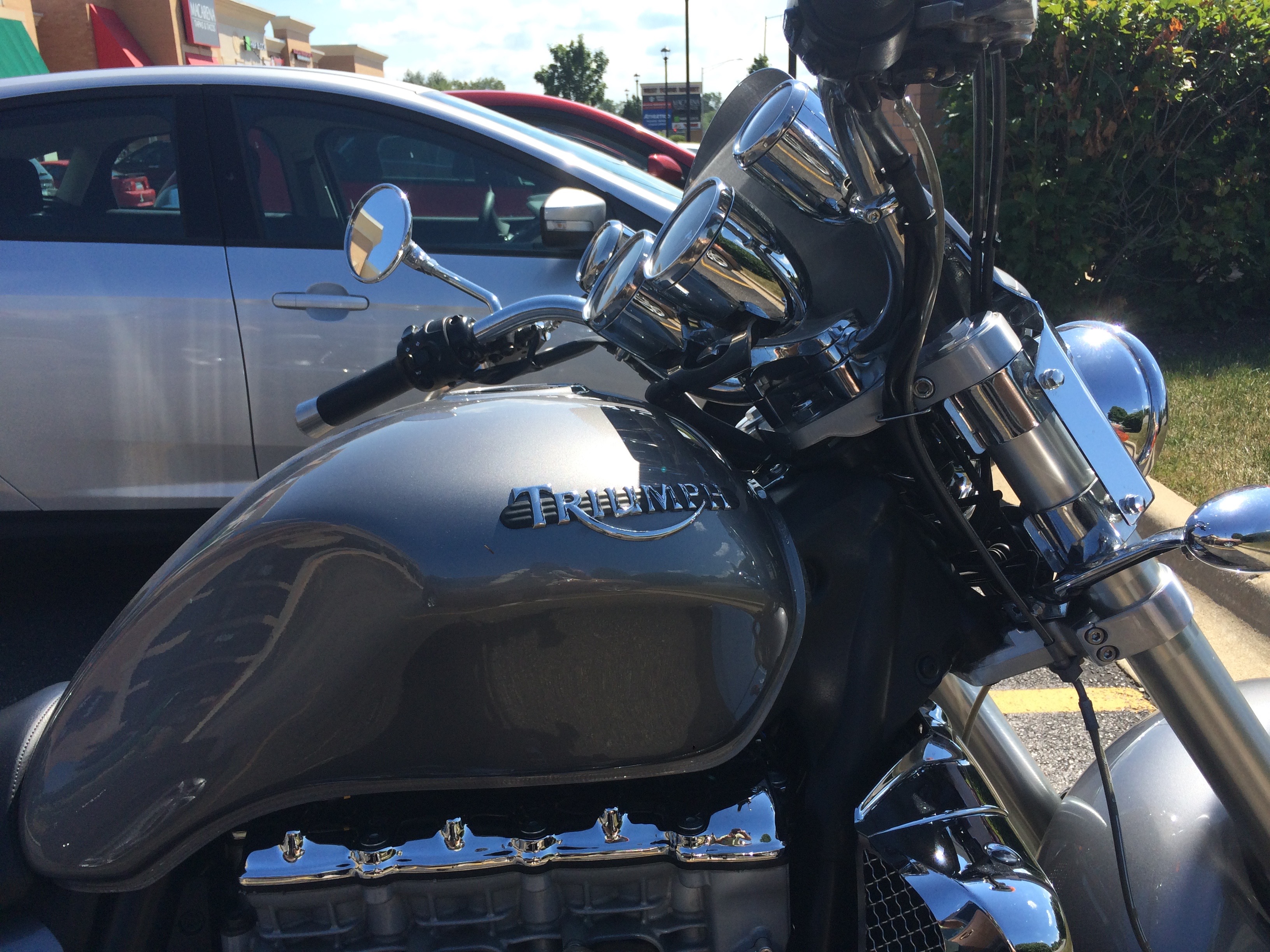
IMG_1747Stepping out of my car at one of my dependable Starbucks locations, I was struck by the stunning shine of a Triumph motorcycle next to my car. The shine was impressive, and so was the structure.

Those of us that do not ride motorized bikes still encounter quite a few motorcycles on the road. Once in a while there almost seems like there is a connection between those who run and ride with those who take their hogs and crotch rockets and tool on down the road. Some motorcyclists will wave if you wave at them. I always make a practice of talking with bikers when we’re at a stop light. They’re almost always nice people, glad to chat and talk about their ride, of course.

IMG_1751Motorcycles are obviously different animals than a road or tri-bike. Of course there are some recent suspicions of what is called “mechanical doping” in which road cyclists have been accused of riding bikes juiced up with internal motors. To this point, nothing has been proven. It all started (it seems) with a video clip of Fabian Cancellara pulling away in some spring classic. Some people simply couldn’t believe his acceleration. One fellow went on the mechanically enhanced warpath with videos like this. 

I have long believed that some people have better engines than others when it comes to endurance events. All men and women are not created equal when it comes to endurance IMG_1749events. If you’re tooling along in a triathlon and a fellow competitor comes past you at 24 mph compared to your humble but earnest 20mph, you wonder what they have that you don’t.

It all comes down to a better engine. That means a lot of things. A better engine means a more efficient heart and circulatory system. A better engine means legs trained for the job, and a set of lungs too. Great athletes are known to sport higher VO2 max rates. They can simply process more oxygen and go farther, faster and harder on the fuel they take in.

The wheels always matter too. To have a set of good wheels in running means you have a good rate of turnover or cadence. In cycling it has more to do with the type of bike you ride. The better the bike, the reasoning goes, the faster you can ride.

But that’s not necessarily true. A great rider on an average bike will beat an average rider on a great bike every time. There’s almost no exception to this rule. When Jens Voigt had a flat in a crucial stage in the Tour de France and could not get a replacement bike due to IMG_1750Tour traffic, he borrowed an undersized bike designed for kids to ride in ceremonial events and still Jens rode back onto the back of the peloton. He felt like crap of course, but he did not have to drop out. Jens had a good engine that could overcome even bad wheels.

I once watched a guy that showed up in jean shorts at an All-Comers track meet borrow a pair of spikes and win the open 800 in 1:53. Those are good wheels in action and a big engine to boot. He threw up after the event because he’d downed a shake or something like that an hour before. It helps to have guts along with a good engine and good wheels.

Recently I’ve been examining the merits of my own engine and the quality of my wheels. My running has come back into respectability through speed work. But my cycling has not IMG_1752gotten credibly faster in 10 years of riding. I recall a ride 10 years ago in which I rode 80 miles at an average of 20mph. It’s been a long time since I did a ride that hard or efficient. But that group with whom I did that ride has broken up. So did the other ride that typically averaged 20mph for 40 miles. I miss that. So does my performance.

But things have come along recently to replace those rides. However a new realization has struck me relative to my wheels. My bike fit is simply not set up for speed. So my wheels are perhaps slowing me down. That became very evident in my average speed of 20 mph in the recent triathlon. I need to go aero to go faster. So my wheels are gonna have to change along with me. More to come on that later.

It really pays to consider the merits of your own engine and wheels at times. This is true especially as you age. A body goes through change with time, and you need to maintain your engine with good diet, strength work and intelligent training.

These principles hold true all the way back into your peak years of course. Premiere athletes do these things for peak performance. It helps to look at your life holistically when IMG_1748you are planning any type of sustained performance.

But regardless of whether you’re in a state of constant improvement or dealing with the inevitable tradeoffs from age, there is still the wonderful purr of your engine working at top rate. That comes when you’ve done your training and tuned up your body, and that’s a triumph. That feeling alone is worth the work. Suddenly you’re no longer asking if it is your engine or your wheels that is slowing you down. Instead you’re sensing what it’s like to tune your engine to its best performance at any age.

Now go out there and growl.

werunandridelogo

Posted in Christopher Cudworth, competition, tri-bikes | Tagged , , , , , , , | Leave a comment

You probably didn’t know you’re an expert in crisis management

When you compete in endurance events, things don’t always go as planned. You can get blisters. Have a flat on the bike. Get kicked in the swim.

Cudworth Racing SycamoreLearning to deal with inevitable mistakes or events that throw off your planning is a critical aspect of being an endurance athlete. The challenges just keep coming. Sideaches. Tight hamstrings. Lungs full of water. You either learn to deal with small crises or you wind up DNF.

Within your control

Going into any endurance race requires some sort of strategy. For some it may be as relaxed as “go out slow and go slower.” Others have firm goals for pace or time in mind. In any case those plans can be interrupted by events or circumstances out of your control.

Even the simple knowledge that your racing efforts will cause you pain can throw off a strategy. Our college cross country team had a saying that applied directly to the inevitable onset of pain. “It’s only temporary.”

Believe it or not, simple crisis management techniques like that can go a long way toward helping you get through known factors that otherwise put you in a state of panic or distraction. Recognizing that pain of the sort produced by hard effort is only a temporary phenomenon is a source of internal control of emotion and focus.

Gaining control

Learning to respond to crisis events outside your control is both a matter of practice and mental preparation. Unpredictable events like sideaches can have immediate effects on pace and strategy. But like many crises, there are many strategies for dealing with sideaches during competition. If you have a pattern of sideaches during races then it is a wise crisis management strategy to know what causes your sideaches and what to do if they come on. That’s called “gaining control” of a situation.

GoofyOnBikeBut let’s say it starts raining during your race on the bike. Immediately you recognize the potential for danger. Streets get slippery and brakes don’t work as well. Corners, in particular become dangerous opportunities for a fall or crash with other cyclists. That means you need to implement an entirely new strategy on the spot. No longer can pace on the bike be your particular concern. Instead you’re now striving to compete “in the moment” by riding as fast or faster than other riders dealing with the same circumstances. You can safely do this by looking ahead on the turns and positioning yourself wide enough to make wide arcs apart from other cyclists doing the same thing. You’ve managed a crisis wisely in that circumstance and can save the task of setting your PR for another day. You’ve gained control over your situation and are dealing with circumstance in an intelligent yet reasonably competitive way.

Caution to the wind

Of course there are some that respond to such situations in a completely different way. The crazier the circumstance, the crazier they get. This aggressive approach to crisis management does work for some people. You can win or achieve better results just by having the guts to manage your crisis with heightened attention and focus. If you’re confident in your abilities during an open water swim and can navigate big waves better than most during your swim, then by all means, go for it! That’s how real competitors succeed.

europcars-thomas-voeckler-of-france-descends-the-col-du-galibier-during-the-ukeurosportyahoocom-1That strategy works for good descenders on the bike as well. If you can tear it up going downhill, then you don’t have a crisis, you have an opportunity. And if you run particularly well in the rain or other adverse conditions, there is no reason to hold back. You push to the limits of your ability, and throw caution to the wind.

Dealing with external circumstances

There are some situations where no amount of aggression or ability will help you overcome the circumstance. When our cross country team showed up for nationals in Cleveland one year, a wet snow fell the night before the race. We scrambled to figure out what to wear in those conditions. Running tights were not yet common on the market, so we tried out nylons. That didn’t work. Then long johns. Too much risk of chafing. In the end, we determined that running in the cold, wet snow would be as difficult for everyone else as it was for us. So we talked tactics instead. We finished 8th, about the spot we’d figured to achieve.

SalazarA couple years later our team went on to take second in the national meet. Then we traveled to Madison, Wisconsin to watch the Division 1 national championships in which Alberto Salazar and Kenyan star Henry Rono were expected to battle it out. Salazar won while wearing prototype white tights along with his Oregon uniform. Henry Rono, wearing what looked like long johns purchased at the Farm & Fleet, jogged through the race and finished dead last. His crisis management strategy obviously did not work.

Weather or not

Weather is probably the foremost source of conditions for which you often need to employ crisis management techniques. A race day that turns out to be much hotter than you expected requires immediate adjustment to the conditions. I once participated in a 10K race in which the start was delayed by the organizers on an already hot day. Within the first few miles the lead group of runners had a discussion and decided that it was far too hot and humid for anyone to have success. So we took a vote and let a guy win. On the way through the race we all stopped at water stations together and had a laugh doing it. The risks of getting heat stroke were simply too great to justify competing in those conditions.

photo (1)But you’re often on your own making those decisions. The better you know your body, the more you’re likely able to calculate the risks. The people that have trained in conditions most similar to race day weather will have the most success. Which makes sense, yet it’s an easy detail to forget during preparations. If you’re competing in an Ironman where it’s likely to get hot during the day, yet do all your cycling and running in the early morning hours to avoid the heat, you’ve put yourself in crisis mode before you begin the race. Suffering in advance by training in difficult conditions will help you avoid unnecessary crises come race day.

Courting crisis and moving on

Of course some events are actually designed to put you into a state of crisis. Tough Mudder and Spartan races are specifically conceived to take you out of your comfort zone. Same goes with certain trail runs like the Western States 100. You sign up knowing your principle goal will be to avoid a crisis.

SteeplechaseThe challenge in some of these races is to avoid being distracted by the misfortunes of others. It’s easy for fear to get a grip you when you see someone else go down in a heap. You’re not being an unfeeling psychopath by focusing on your own race. It is the generally the obligation of the race organizers to deal with other athletes in crisis. There are situations when you should help a fellow athlete in crisis, and that depends largely on your personal values and judgment.

As a steeplechase competitor in college, it was not uncommon to witness runners tripping over barriers or falling headfirst into the water pit. We didn’t stop to help them up. That was part of the deal.

Being smart going in

Honing your instincts through training and listening to your coach going into an event can be crucial to managing crisis situations. For endurance athletes, strategies for nutrition and hydration are absolutely critical to success. Nothing puts you in crisis like running out of fuel. Bonking or hitting the wall are both signs of an athlete beyond the point of preparation.

Running RodgersGood crisis management requires rehearsal on both the physical and mental sides of competition. Confidences comes from having encountered circumstances in training that replicate those found in races or events. Then if you encounter a sideache you know what to do. Or if it rains, you don’t panic. You adjust your strategy and keep moving. Like they say however, “Shit happens.”

Those are the keys to being an expert in crisis management. No one is perfect at the job. Just ask any President of the United States. Things always come up, and unexpected events can happen.

Fortunately the race in which you’re competing is not the end of the world. If you fail at managing a crisis and wind up a DNF, there’s always another day. So relax, you can do this. Sometimes crisis management is simple as keeping perspective on what really matters: having fun and growing as a person.

werunandridelogo

Posted in Christopher Cudworth, competition, We Run and Ride Every Day | Tagged , , , , , , , , , , , , , , , , , | Leave a comment

The dark comedy of cholesterol

It’s amazing what the medical community can find once they stick a needle in your arm and suck a out a little blood. Turns out there’s a lot of pretty radical stuff flowing around our bodies.

white-blood-cell-amungst-redLet’s start with white blood cells. Because given the state of the current social dialogue in America, one has to ask: Do only white people have white blood cells? There are a few guys wearing white sheets who want you to think so.

Of course all human beings have white blood cells. There are red blood cells too. But they aren’t confined to just Red States either. Blood is the ultimate common denominator of humanity. There are subtle differences and blood types as well. But that’s all encompassed in the grand scheme of evolution. We’re all one species with blood so similar we tend to spill it just to prove the point.

More about blood

The list of bloody features goes on. Hemoglobin sounds like something from the world of ebonics, but in actuality it is (according to Medicine.net) “the  protein molecule in red blood cells that carries oxygen from the lungs to the body’s tissues and returns carbon dioxide from the tissues back to the lungs.”

Now that’s some important stuff right there. Your ideal hemoglobin content is between 13.2 and 18.0. Mine is 13.9. Is that low? Should I know more?

“Each globulin chain contains an important central structure called the heme molecule. Embedded within the heme molecule is iron that is vital in transporting oxygen and carbon dioxide in our blood. The iron contained in hemoglobin is also responsible for the red color of blood.”

Iron carries our blood around? Who really knew. And isn’t that ironic somehow?

Talk about art imitating life imitating art…ironic.

Wait, there’s more

By the time I got down to reading about Neutrophils, Lymphocytes, Monocytes and Basophils, my head started getting dizzy. The echo from all those terms sounded like I was wandering around a dark cave inside my body where the stalagmite and stalactites of existence all hung from the inner ceiling or stuck up from the very foundations of my being.

oxygen_hemoglobinIndeed, all that thinking must have sucked the oxygen out of my blood. I recalled telling the nurse that extracted the blood sample that I always fainted when giving blood. “It’s likely a volume issue,” she told me.

Volume? Is my blood turned up too high?

Thankfully my thyroid levels were good. That’s the measure of the output of the gland that helps regulate your metabolism.

I know my metabolism has slowed from when I was a hyper little monkey boy in my twenties. Back then I was so thin you could see right through me from the chest to the back. Big guys at the bar used to hold me up in front of Miller Lite signs to see my heart thumping inside my chest. They’d even place bar bets making me eat beer nuts and then counting how long it took for the food to go from throat to stomach. That’s how skinny I once was.

Blood lines

Now I’m not quite as skinny, and sitting at an age somewhere between middle-aged and dead. But I’m reasonably fit for a man my age, and can still get it up. Which means that my blood volume is good enough to accomplish that without fainting. So I think that nurse was just fucking with me about the whole blood volume thing.

But then came news from the doctor about my bad cholesterol count. It turns out that’s a little high. My family has a history in that category, and the multi-photocopied sheet the doctor gave me says that cholesterol comes from two sources, and: “Your bad cholesterol also has a lot to do with your family history.”

Hornet-vespaI have a theory about that family history thing. I believe my high cholesterol count probably started at about the age of six. That’s how old I was the night a hornet landed on the back of my neck at the dinner table. I felt a tickle and reached behind my head to scratch it and the hornet stung me so hard I let loose a wild howl.

That startled my father who pounded the table, which shook all the glasses and knocked a few over. One brother reached to stop a water glass from falling and instead knocked a glass of milk clear across the table, soaking my mother’s lap, who stood up in a panic and pulled the entire table cloth off, upsetting the casserole dishes, making my father even angrier. The whole family started hitting each other while I sat there bawling about the hornet sting.

Actually none of that happened all at once. I simply compressed a long series of family incidents into one dinner table scene that symbolizes the family history of most people who grew up in the 1960s. It was fucking chaos back then. Hornets were everywhere, for one thing. And you also never knew when your father might haul off and smack you with a butter knife covered with mustard. That really, really did happen to me. So I think that perhaps that incident was the start of the rise of my cholesterol, or maybe that was the start of anxiety and depression. It’s hard to tell some of our afflictions apart at times.

Life

Life became a battle and a trauma growing up with three brothers and two parents who were all trying to figure out their own shit in real time. But some things were simple. We ate what we wanted. And when I turned into a distance runner (it happened overnight, I swear) I continued to naively believe that I could eat anything I wanted, and lots of it, with no ill effects.

Eating habits like that come back to haunt you sooner or later. Your red blood cells get tired as shit carrying all that extra stuff around. Finally a pack of them say “Fuck It” and Hoardingdump off a sticky, smelly load of bad cholesterol at some sudden turn in your arteries. Before you know it, there’s a wall of slime building up inside your veins.

It’s like the house of a hoarder. The bad junk piles up like there’s no tomorrow. Cholesterol is like all that stored shit in your house that seems to mean something in your life but really doesn’t. Who really needs their report cards from third grade? Wouldn’t your life be better off if those embarrassing pictures of you in cut-off shorts from 7th grade did not exist?

Our bodies are cholesterol hoarders. If your particular “family history” shows a propensity to store too much of the bad shit and not enough of the good shit in your blood, your cholesterol goes up.

The joke’s on you

It’s like a dark comedy, you see. If you have a tendency to store bad cholesterol in your body, the jokes on you. Even if you eat well by many measures you can still have high cholesterol.

So then they tell you to make “lifestyle changes.” Eat better. Exercise more.

runnersworld_oct_2009_cover1For example, if you read a typical issue of Runner’s World (or is it Runners’ World, isn’t that better?) the cover will always say the same thing about your diet. “Eat Better. Run Faster!”

And then you open up the cover and it’s always the same advice rearranged for the umpteenth time since 1976 when the first running diet article came out. Seriously, nothing’s changed much in 40 years. Eat less carbs. That’s about it.

That so-called “balanced diet” containing vegetables, meats, some carbohydrates and plenty of fruit you’ve been lectured about? That’s not really safe either. Because here is where the Dark Comedy of Cholesterol really begins. This is what the sheet the doctor gave me said:

FOODS TO AVOID

Meats, Fish: Marbled beef, pork, bacon, sausage and other pork products. Fatty fowl (duck, goose) skin and fat of turkey and chicken; processed meats, luncheon meats (salami, bologna) frankfurters and fast-food hamburgers (they’re loaded with fat) organ meats (kidney, livers) canned fish packed in oil. And you’re not supposed to eat coconuts, either.

Nor should you touch avocados. Potatoes, corn, lima beans, dried peas and beans are out too. What the fuck? I mean seriously! What the fuck? Corn? We’re supposed to avoid corn?

Watch out for nuts

It also tells us to avoid nuts. Well, that could mean a lot of things and have ramifications for both sexes depending on your sexual orientation. That’s kind of sad, because in the scheme of awkward body parts, nuts are pretty funny. We all need a good laugh now and then, but especially if you have high cholesterol and low-hanging nuts. Sometimes that means you’re getting older, fellas. It happens.

mixednuts_nosaltBut it shouldn’t be that hard to avoid the kind of nuts you eat. They’re so expensive no one can afford to actually eat them. It used to be that you could stop at a fast food store and buy a decent-sized packet of Planter’s Peanuts (honey-roasted, thank you) for $.99. Now that same packet has shot up to $1.49 and the number of nuts you get in the packet has shrunk to about 15, total. Try to buy an entire container of nuts and it will cost you $15.99. At prices like that, it might be time to take up smoking because it’s cheaper than dying from high cholesterol.

The gift that keeps on giving

This whole bad cholesterol think really is a dark comedy of surprising magnitude. It turns out the best thing you can do to manage your cholesterol is to exercise, but even that doesn’t really help. So the joke’s on me in this case. I can’t even read the exercise recommendations on my over-photo-copied sheet because the screen behind the text has turned into something like an ominous grey cloud. I think the last part says “Vary your routine.” Yeah, fuck you too. My routine is so varied my blood should be composed of pure gold mixed with frankincense and myrrh.

chicken and egg

It seems like this cholesterol sheet was produced by the companies that manufacture cholesterol-reducing medicines. Their information sheet stacks the odds against you so badly with their indictments of normal dietary practices there seems like no hope for those of us with bad family histories and mustard still sticking to our faces because of that bout with dad and the butter knife.

The sheet concludes this way:

DO WHAT YOU CAN TO HELP YOUR MEDICATIONS WORK. 

“When diet and exercise alone are not enough, several types of cholesterol-lowering medications are available. Remember that medicines need to be taken as directed by your doctor.”

Which is where the Dark Comedy of Cholesterol gets a little scary. There are quite a few doctors on the dole from Big Pharma in this world. The medical and insurance world can’t keep up with good old-fashioned bribery, and so there are doctors who prescribe medications that aren’t even necessary for millions of people. Certainly that’s how certain anti-depressant pills got their own movie deals. The real star of this Dark Comedy of Cholesterol might turn out to be Lipitor, which sounds more like one of Godzilla’s genetically altered lizard enemies than a cholesterol medication.

The creature named Lipitor emerges from the ocean to terrorize the world.

The creature named Lipitor emerges from the ocean to terrorize the world.

Coming to a theater near you! “LIPITOR, CREATURE FROM THE DEEP!”

Actually, I don’t think I should go to the doctor anymore. My imagination tends to run away from me. I’ll just stop eating altogether and see how that affects my blood levels and cholesterol. Sure, I may die in a week or two. But at least my LDLs will be looking good on the next blood test.

werunandridelogo

Posted in Christopher Cudworth, We Run and Ride Every Day | Tagged , , , , , , | Leave a comment