A harvest of reason from the seasons

It was not until my early 20s that I learned that my uncle Kermit Nichols had been a tremendous runner in high school and college. What I knew about him to that point was gleaned from summer visits to the Upstate New York farm where my mother Emily Nichols Cudworth had been raised. The farm was situated on the side of a Catskill hill overlooking the Susquehanna River. Her brother Kermit had taken over the farm from her father, and that’s what I recalled about the place, and him.

Nichols familyIn his farming days, Kermit was a robustly strong man with large biceps and chest muscles that he could flex independently, and thus with humorous rapidity. He’d scoop up my skinny body and toss me on his tractor seat for a ride at high speeds down the flats by the river to send manure flying out of the spreader. I recall staring down at the whirring rubber wheels and thinking, “Death is near.” But Kermit loved things that went fast. He drove his cars too fast and had a couple frightening wrecks, if memory serves.

Once a runner

He may have gotten his love of speed from his own running career. He was well-trained from years of chasing after the cows on the big hill behind the barn. Due to this organic training, Kermit was something or a natural in his day. My mother tells of a moment when she went to watch him in a road race. Kermit was so far in the lead he stopped to talk with his family for a minute or so before running off to victory.

My father grew up right down the road from the Nichols farm. He was raised by aunts and an uncle that took in a family of three sisters and a brother after their mother died from complications of breast cancer, and their father experienced intense emotional instability after losing his Cortland farm and a store through the Depression.

The Stewart farm where my father was raised sat just 200 yards down the road from my mother’s farm. That farm was a more humble affair, yet had its charms as well. Behind the farm sat a deep Susquehanna marsh where the deep voices of bullfrogs tempered the night, and great blue herons came in soaring through the trees.

I recall walking into the Stewart barn to encounter the massive hooves of workhorses that helped Leon Stewart in all his farming duties. The horses regarded me with suspicion but not fear. I dared not get too close.

Two farms. One life. 

Having the wander of these two farms made a deep impression on me. Catching leopard frogs in the water-filled tire tracks on the hillside was a favorite occupation. Nature was so close you could taste it some days. The hills were thick with fossils in the shale. A hillside spring held deep, clear water into which we introduced a chain pickerel from the river. It lived there dining on frogs for an entire year, for when we returned that next summer we could see the fish fifteen feet down, slick and happy.

Working around the farms was a joy and filled me with a sense of being needed. Kermit assigned me to sweep up the manure when the cows came back for milking. I’d take that scoop and work from end to end shoveling manure into the trough with its automated belt that it into the bed where it was gathered for use on the fields.

I’d rise early to do these chores, then wander into the hay loft to tumble among the massive piles of bales. My cousins tell of finding kitten litters in this upper barn, but I never did.

The cats were smart and somewhat careful around people because my uncle was not necessarily fond of them. He scooped one up on the way back from the barn and tossed it onto the roof of the house. Letting forth a chuckle, he then turned and spit tobacco on a hapless grasshopper. The insect was pinned to the ground and I marveled that a man seemed to have such control of this environment, his farm.

No love lost

But farming was not Kermit’s favorite occupation. His back strained at all the milking and chores, and ultimately he made the decision to sell the farm and move into government work. “You should work for the government,” he once told me. “It’s steady work and you build a pension for the rest of your life.” He later moved to Florida as a land assessor and enjoyed a long retirement driving his cars around the flat Florida roads.

The man might seem like a contradiction in terms, but in many ways my uncle’s life made perfect sense. His love of liberty and the freedom of running likely conflicted with his obligatory work on the farm. Going out for runs in the fresh air of dawn is a very different endeavor from ushering cows into stalls for milking. Every.Damned.Day.

I am only speculating on these ideas. But I once asked my uncle why he sold the farm and he was firm about his resolve to do so, for all the reasons shared above. My mother once told me that Kermit named all his cows after ex-girlfriends so that he could kick them going into the stalls. I don’t know whether that’s true or not, but it makes some form of cathartic sense.

My mother loved that farm. I think my father enjoyed certain aspects of his farm upbringing as well. He did lament that at times during his high school career, he was not allowed to pursue sports because of his duties on the farm. That would be a theme that haunted him his whole life. Some of his fervent devotion to his son’s athletic careers may have stemmed from the denial he felt at never having the opportunity to pursue his own sports career.

Father knows best

I now realize there were aspects of projection in some of his urgency. Perhaps if he’d have just come out and told us how lucky we were to participate in sports when he did not have the chance, we might have processed his occasional frustrations with our careers.

At some point, it struck me that things might have been very different in life had my family somehow stayed on the farm. I have no way of telling if I might have been a decent farmer. People speak of loving that life, but I am not sure I was ever cut out to be a farmer.

Just this weekend we visited the farm of a longtime friend whose husband is a leading farmer in Northern Illinois. He was the focus of a surprise birthday party and he took the opportunity to speak to a group of 50 or so people gathered in the barn to celebrate the birthday of his wife as well. He explained that his family has been farming their land for more than 100 years. Now their children are farming as well. I felt a deep respect for his legacy.

Like my uncle Kermit, this man has in some ways moved into the government realm as well. His service to the agriculture industry has included eight years in Washington working with government officials to plan and implement broad spectrum farm policies. His own farm has been incorporated in a county program designed to preserve farmland where the suburbs of Chicago threaten to chew up good agricultural turf. Recently he’s been counseling national interests on a plan to turn Illinois into a better food hub than it already is.

All this speaks to a great mind at work. His ties to the land have never been broken, yet he’s taking a broader look at what that means.

People and the land

We need people like that for sustainability, and intelligent growth. The trouble with farming these days is that its industrialization has created confusing scenarios. Seed companies have patented protected technologies and now refuse to let farmers even keep seed year to year. If you’re caught doing that, these mega-companies are known to sue, even to the point of putting farmers out of business. It’s happened all across the country, with sleuths from agribusiness swooping in to threaten and instill fear in farmers simply trying to make a living.

The cultural shelf
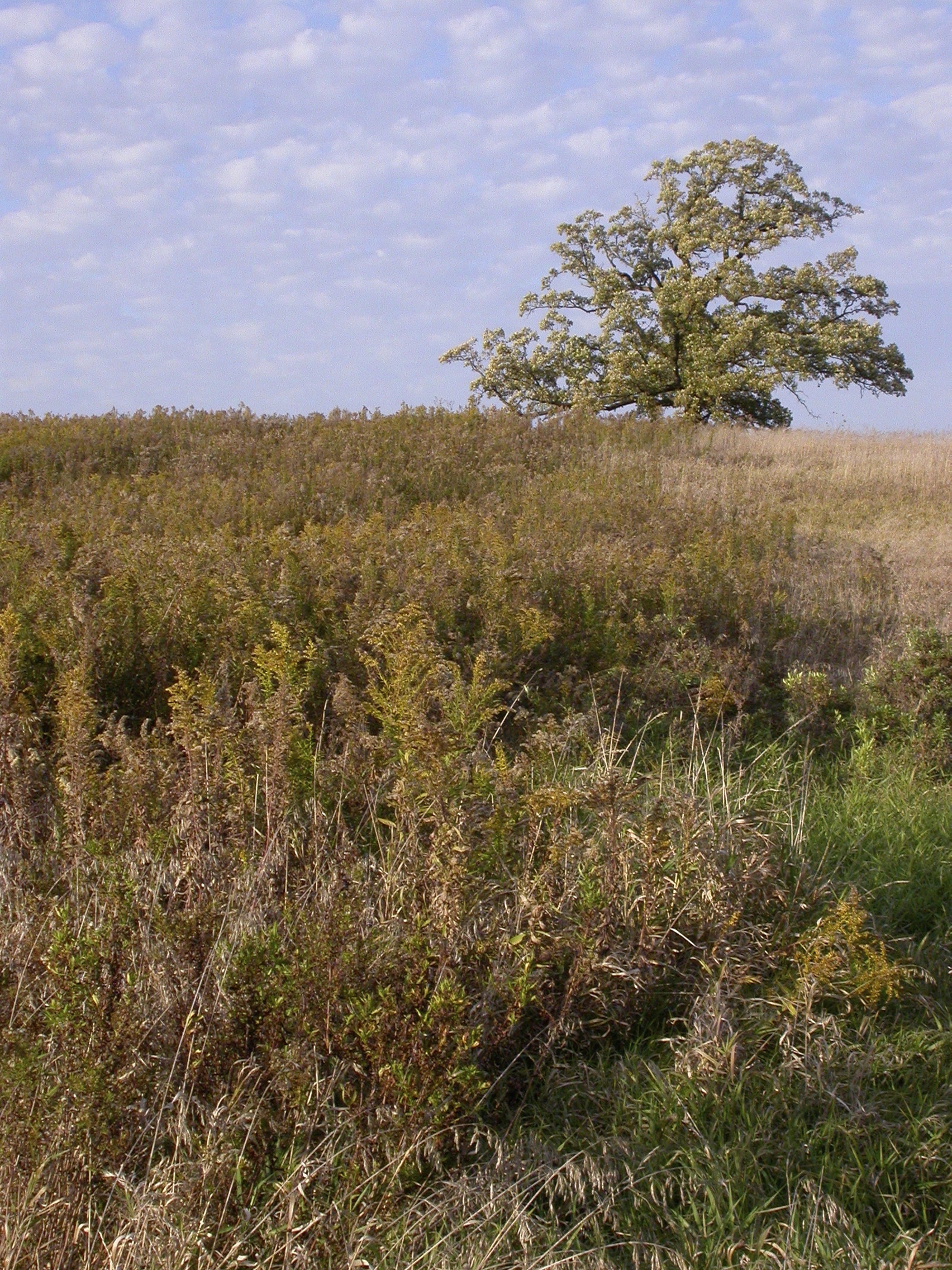
NEL fallThe reason I think about all these things is also simple. I live on the edge of the Chicago suburbs. It takes just two miles riding west to enter a vast complex of farm fields. All summer long I ride among fields of beans and corn. There are hog farms as well, but no so many dairy cattle as there once were.

Having come from farm roots, and growing up in places like Lancaster County, Pennsylvania where the Amish dominate the countryside, I have never been far from the world of farming. Every time I cycle or run past a farm and smell the hay or the manure, it takes me instantly back to the family farms we visited each summer. Even where I went to college in Decorah, Iowa, farms owned the landscape. Our 100-mile weeks took us through and past farms of many types. Cows roamed up and down the limestone hillsides and land that closely resembled my birth roots in Upstate New York.

Legacies

All this rolled through my mind as I considered the legacy of that farming friend and his birthday. His wife was one of the first people I met when we moved from Pennsylvania to Illinois. Their wonderful marriage has produced so much good in the world, including many children and grandchildren.

One grandchild in particular caught my eye at the party . She danced among the grownups while wearing a monarch butterfly costume. Perhaps she and I have something in common. During one of the first years we lived in Elburn, Illinois there was a massive monarch butterfly migration that came through our area. The insects were so numerous my younger brother and I rode our Huffy bikes along the east-west roads collecting dozens of monarch carcasses.

Now the monarch is threatened by farming practices that include a detergent approach to eradicating milkweed, the host plants for monarch caterpillars. Monarch numbers have dropped precipitously as a result of these corporatized attempts to wipe out plants that interfere with industrial agriculture.

There are consequences to all such attempts to manipulate nature. As a result our family has taken to “monarch ranching” the past 10 years or so. This summer my daughter and I raised and released monarchs by growing milkweed in our garden, harvesting the eggs and raising them in the indoor safety of small pens until they go through metamorphosis and hatch into new butterflies.

Freedom with a cost

Monarch scalesIt may perhaps be a cliche to note that “butterflies are free,” but in fact they are not. All of nature is intertwined, and there is no such thing as freedom for any creature here on earth. Some people may refuse to belief it based on religious consternation, but all of us are tied together in an evolutionary venture without guarantees. This especially includes those who farm the land. We all depend on decisions about food production and land conservation. The fact that these decisions are now concentrated in the hands of fewer minds is not necessarily a good thing. A

ll of nature depends on room to experiment with success and failure. That is how evolution works. When we concentrate and eliminate the competitive virtues of this system, we may imagine that we are cutting down risk and increasing production capability. In fact we may be increasing our exposure to crop failure, disease and other afflictions. It certainly works that way with biopharmaceuticals. The stronger the medicine becomes, the more germs adapt to overcome them. We might be breeding our own superkillers and never know it.

Careful what you farm

Nature is an immensely powerful force, and it is principally the hubris of the human race that imagines our position as a separate and superior species to the genetics, competitive history and evolutionary processes that delivered us to this point.

The commitment to farm the land may be one of the noblest of occupations in all mankind. It is a mark of freedom in its way. But it is also a commitment that comes with huge obligations and risk. Farmers know this better than anyone on earth. You can’t really afford to oversell yourself or make too large a bet against the vagaries of the occupation.

For these reasons I’ve never quite understood the largely conservative politics of my farmer friends. Perhaps it has something to do with farm subsidies and the pursuant corporate welfare for the agriculture industry.

But what about the fact that hundreds of thousands of family farms no longer exist for the simple fact that farming is now so industrialized that the costs of operation, market competition and insurance far exceed the ability of a simple family farm to survive? It seems like people are voting against their own interests in the long term.

The very liberal response of our culture has been to raise money for family farmers through concerts such as Farm Aid, which attempt to support those individuals who want to continue their family traditions and be able to farm successfully through this generation and the next. These may be nothing more sentimental notions at work.

But there are signs that society is sick of this brand of existence. Small financial institutions keep cropping up to fulfill the needs of people sick of being denied and neglected by heartless banks and the banksters who run them. That’s not sentimentality. It’s basic human respect.

Humbling thoughts

Is that too humble a request to fulfill? That is a question I’ll never be able to answer for myself in terms of my association with farming, and whether I could have succeeded as a farmer. But I’ll give you an honest answer. I doubt it. I don’t think I’d have liked it any more than my uncle Kermit ultimately did. My mind is too restless and I was always too anxious to deal with being tied to one thing too long.

I know it hurt back in when our family farms were sold. A part of my childhood vanished with them. I have certainly carried those farming associations with me through all those miles covered in farm country. And they are many. Every barn is a point of fascination to my soul. The walls of dry corn we now pass during long autumn bike rides are like chronicles of years gone by.

I believe you can take the boy out of the farm, but you can’t take the farm out of the boy. I’ll freely admit that I’m a hayseed at heart. Some part of me will never be city-sophisticated and I’m frankly grateful for that. In my case, I’ve become an environmentalist and a birder, a painter and a writer about all things natural. Even my theology is anchored in organic fundamentalism. This is the belief, as described in my book The Genesis Fix, A Repair Manual for Faith in the Modern Age, that because Jesus––IMG_7334and the whole Bible for that matter––use parables based on natural symbols. Through earthly examples, we learn the spiritual truths of heaven. We should follow that example and learn about and respect nature first and foremost.

Jesus used many examples from farming to teach us about our responsibilities in the Kingdom of God. His parables about vineyards and harvests, about yeast and mustard seeds all pointed from earth up to heaven.

Farming roots

So our natural theology about sustainable existence should include deep consideration on how we farm and use the land. Over the last 100 years, the human race has tamed the land in ways that amount to exploitative and wasteful practices. Billions of tons of topsoil have flowed from the heartland through the Mississippi basin into the Gulf of Mexico. On the Eastern side of the continent, runoff from farms has polluted the Chesapeake Bay, causing massive damage to fisheries and the entire ecosystem. Over and over the pattern of waste and degradation is repeated. Even the quality and climate of our atmosphere has suffered consequences of waste released into the air. Cars and cow farts all contribute to these problems.

As I’ve ridden through farmland for more than 30,000 miles the last ten years,  I’ve thought about these things. So while I am not a farmer by trade, there is a planting and harvest of intent that still goes on. I don’t buy the idea that one political party owns farming as a cause over the other.

We can turn to a very basic passage from the Bible to explore our various roles in society, and how important it is to consider the importance of balance in all this:

Jesus told us how to think about such things in simple language. Here in the Book of Matthew:

30 Let both grow together until the harvest. At that time I will tell the harvesters: First collect the weeds and tie them in bundles to be burned; then gather the wheat and bring it into my barn.’”

The Parables of the Mustard Seed and the Yeast

31 He told them another parable: “The kingdom of heaven is like a mustard seed, which a man took and planted in his field. 32 Though it is the smallest of all seeds, yet when it grows, it is the largest of garden plants and becomes a tree, so that the birds come and perch in its branches.”

Yes, I think about such things even as I pedal past all these farms on roads that bisect the fields. Every one of us has a role. Even the weeds, you see. Even the weeds you don’t see.

This is the harvest of reason from the seasons. That we should all be more considerate of where our future really lies. Or does not.

werunandridelogo

Posted in cycling, running | Tagged , , , , , , , , , | Leave a comment

Suzy Favor Hamilton and the rush to judgment on mental illness

Suzy HamiltonA recent issue of Sports Illustrated ran an excerpt from the upcoming book by Suzy Favor Hamilton. You may recall she is the former track star that through her own need for excitement began working as a highly paid escort.

The story was shocking at first. But as details emerged about her challenges with mental illness, it all made strangely logical sense. The book outlines how her brother faced similar difficulties with bipolar depression. He engaged in thrill-seeking behavior as well,  and ultimately succumbed to his illness.

Her own story strikes at the heart of women trapped in perceptions. At one point her own breasts became a source of torment. They were large enough to attract male attention even (or especially) when she was in peak running condition. As reported in her book, one of Suzythe coaches at Wisconsin showed a video to his male athletes of her breasts bouncing as she ran. It can be difficult for female athletes to run past the male breast fixation.

Living in this world where her athletic accomplishments were not enough to distract from the objectification of her beauty motivated her to have an $8000 breast reduction surgery.

Between two worlds

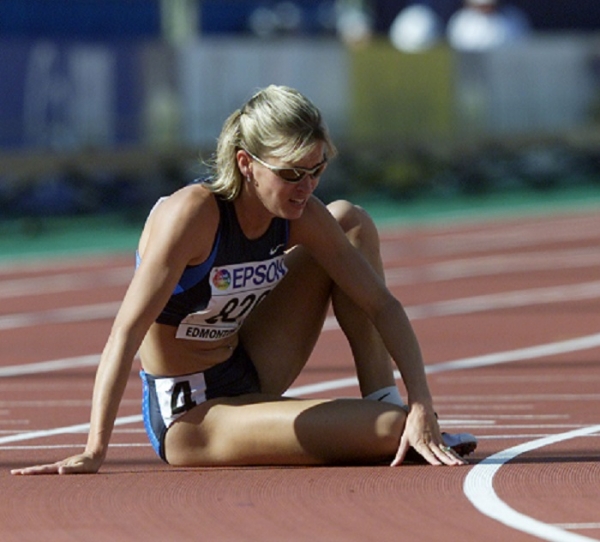
When she finally met a man she loved and married, their relationship took twists and turns that evolved in difficult ways that became exaggerated when Suzy retired from competitive running. She’d made it several times to suzy-favor-hamiltonthe Olympic Games, but the last effort was essentially a commentary on her mental state. She dropped to the ground in a state of collapse.

Throwing herself into the next phase of life, she worked toward a career but found it unsatisfying. Such is the transition for so many world class athletes. The purity of competition can be both a blessing and a curse when compared to the world of business, where a sale or a business deal are supposed to fill the space in which winning a race once sated the mind. But it does not always work. It’s simply not the same rush.

Be like Mike?

And so, like many athletes, Suzy Favor Hamilton went off on a new thrill-seeking mission that led her to become a highly paid escort providing sexual favors to wealthy clients. And as she put it, she’d found her new rush.

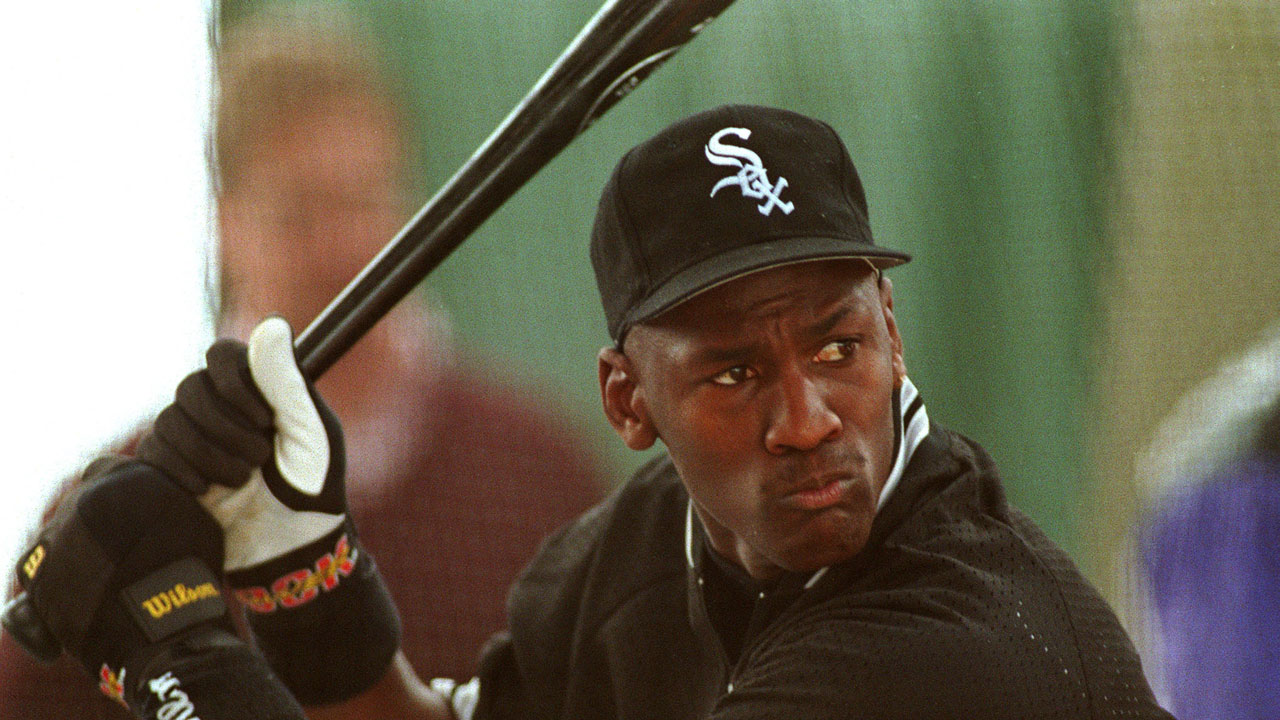
michael-jordan-95But she’s not alone in her pursuits of excitement and new experiences. It’s a pattern of sorts with athletes. Look at Michael Jordan and his baseball career. The death of his father and the pressures of pro basketball pushed him into a mental state where something had to give. So he quit basketball and took up baseball.

Who knows if the man does not also have some emotional baseline of depression, anxiety or other mental illness that has never been revealed? The death of his father was an emotional challenge that even his far-reaching athletic prowess could not serve to obscure. So he returned to something in his roots, a rediscovery. Some criticized him for the decision. Yet when he returned to basketball and own three more NBA championships, the criticism fell away.

 Running into trouble

Apr 1981:  Dick Beardsley (left) of USA and Inge Simonsen (right) of Norway in action during the London Marathon in London, England.  Mandatory Credit: Tony  Duffy/Allsport

Apr 1981: Dick Beardsley (left) of USA and Inge Simonsen (right) of Norway in action during the London Marathon in London, England. Mandatory Credit: Tony Duffy/Allsport

The book Duel in the Sun about the lives of marathon runners Alberto Salazar and Dick Beardsley, documents the mental illness and substance abuse issues of those two runners.

To treat his underlying depression, Salazar ultimately benefitted from using the drug Prozac.

Meanwhile Beardsley struggled to halt his addiction to painkillers stemming from medical treatment for a farm accident. This contrast in needs illustrates the difficulty of diagnosing or even understanding the correct approach for those faced with emotional challenges.

Million to one

Running RodgersMore than 10M people in America experience chronic depression. That means they have to work hard just to get to the emotional baseline of a so-called “normal” state of existence. If you are fortunate enough not to have to deal with mental illness on that order, it can be difficult to imagine why or how it manifests itself in the lives of those who do.

But know this: mental illness produces real emotional pain. It’s as real as a biomechanical deficiency that leads to running or cycling injuries. None of us is perfect. It is important to have compassion.

Often depression is paired with an equally difficult state of function known as anxiety. The twin conditions often trade off roles in the minds of those who are chemically wired to be anxious and by turn of mind, physically and emotionally depressed.

Fortunately for many people, there are now intelligently crafted drugs that can help people manage their emotional baseline and deal with symptoms of anxiety and depression.

Look around you. It is highly likely that some person you know experiences these symptoms every day. They may not talk about it. But they should. Cognitive therapy can be just as vital as drugs for treatment of mental illness.

Living with chronic emotioTriathlete groupnal pain is exhausting. Some people “self-medicate” as a release from the work it takes to achieve basic functions. Maintaining and sustaining relationships at home and work can be next to impossible at times. People then fall into patterns of engagement that are not healthy. Marriages can dissolve. Friendships break up or can be strained to the limit. Work performance can suffer. All these pressures acting together can cause a person to break down, cry out, or behave in unhealthy ways.

Keep an eye out

IMG_2797So before we judge someone like Suzy Favor Hamilton for becoming an escort, we all ought to step back and look at our own lives, and keep an eye out for friends or associates who seem to be struggling.

You won’t have to look far. It may be someone in your running or cycling or triathlon group. Endurance athletes gravitate to these sports because they can help people fight depression and anxiety. It’s clinically proven that exercise can help brain chemistry.

But that does not mean it solves problems. Sometimes the pull toward athletics is so strong it becomes its own drug. Then, when a big event is over, the withdrawal begins. Training ebbs and the rush toward a goal is over. What does life have to offer then?

We’ve all been there

Going back to daily life can feel mundane. We all know that feeling. In some manner, we’ve all been there. So have you, most likely. The push toward completing a marathon or brainqualifying for Boston or Kona or some other big goal is a life force unto itself.

But I think about the former wife of a friend. It was not until recently through conversation during a long bike ride that I learned she had profound anxiety. None of us ever knew. But my friend explained that she once wound up in the hospital due to anxiety attacks centered around their negotiation for a mortgage. Ultimately the marriage did break up, and it can never be known what portion of that outcome could be attributed to anxiety, or something else. But back then the drugs for anxiety were blunt and forceful, and it was not so practical to treat anxiety as it is today. Today she might have been able to better manage her anxiety, and both of them might have been able to work through their relationship challenges.

Big time problems

Mental illness is no imaginary thing. It is not choosy either. Men such as Winston Churchill fought through depression. He called it the Black Dog.

IMG_7141So mental illness does not equate to lack of intelligence or emotional strength. Instead, it refers to the brain chemistry that causes people to wrestle hard just to start the day.

Depression can steal sleep as well, leading to a wicked cycle of exhaustion, fear and insomnia that can take people down a devastatingly difficult road.

It is best to get help for these challenges.

NAMI is there to help

In a week or so our local NAMI chapter is hosting a 5K to raise money for the National Alliance for Mental Illness. If you’ve never heard of NAMI, you should look it up. The organization provides vital mental health services and referrals for the families of those with mental illness. Much of its funding comes from contributions, and our local 5K does a great job of outreach and raising money for this local chapter. NAMI provides services to millions of people. And it’s worth it.

FOX_3558.psd

Perhaps, if Suzy Favor Hamilton had an opportunity to meet and talk with a NAMI chapter, she might not have run off to Vegas on a thrill-seeking mission. But like the lead character in the movie Wild said about her own journey, and I paraphrase, “What if all this was supposed to happen the way it did?”

In other words, do not be quick to rush to judgment. The vagaries of our lives teach us things we might not otherwise learn any other way.

werunandridelogo

Posted in cycling, mental health, running, triathlon | Tagged , , , , , , , | 2 Comments

Porta Pottie politics

IMG_3086At last weekend’s Fox Valley Marathon, the lines of Porta Potties were prodigious. There’s no way any runner was caught short or had to wait in line for very long before the race. The organizers had also thoughtfully placed them in two locations near the start so that there was not a confused mass of people trying to figure out the lines.

Once the gun had gone off and all the pace groups had departed, nature finally called and I walked over to the phalanx of potties waiting for this non-participant. Even if I had needed to go before the race, I likely would have held it if at all possible. There’s an etiquette there, you see. Spectators should give way to competitors unless it’s pretty urgent.

When I stepped into the pottie it was per the usual scene. A few dribs of pee were perched on the toilet seat. I’m not some germophobe, but it always amazes me that some men, and I assume in large part they are men standing up to pee, cannot use either the provided urinal or sit down to avoid peeing all over the seat.

Yet at every race it seems there are slobs who somehow cannot bring themselves to show that mere basic of Porta Pottie etiquette. Just don’t pee the seat, guys. Don’t do it.

I’ve had discussions with women about using Porta Potties at races and there are perchers and hoverers. Some line the seat with toilet paper or else wipe it down. Some refuse to sit at all, hovering above the toilet seat somehow like a Porta Pottie angel.

One cannot blame them. So many people, and especially men, are particularly piggie about their use of publicly provided Porta Potties. They piss where they please, it seems.

And then I looked down in the toilet and saw a water bottle tossed into the latrine with the piles of excrement and toilet paper. And I said, “What kind of shitty human being does that?”

IMG_3085Everyone knows, or at least they should by now after years of Porta Pottie use, that throwing garbage of any sort into the waste area can mess up the system of cleaning them out. Yet there are people who simply don’t care. In fact they go beyond simply not caring and throw whatever they like in there.

The thought process here is not some isolated group of individuals out there who don’t know how to poop. It’s a sign of a portion of society that eminently does not care what happens to others, or how other people are treated. Because they’re not stopping to think that some person cleaning out that Porta Pottie has to somehow extricate the bottle or other item of trash they’ve tossed into the latrine.

Now the Porta Pottie people are probably smarter than that. They’ve no doubt gotten quite used to the piggie habits of certain runners, cyclists and triathletes who don’t give a shit how they treat the world. You’d think, in a sport where individual character is so often put to the test, that the average quotient of human standards of behavior would be a little higher.

But apparently not. Absolutely anyone that wants to participate in these activities can pay and show up for a race. And they can walk into that Porta Pottie and do whatever business they see fit in the style they choose to do it.

I’ve walked into Porta-Potties before and walked right back out because it was too disgusting to use. People and their asses must have a really strange relationship at times. I don’t know how they manage to shoot their business so high, or accomplish the performance art in some Porta Potties. Same goes with public restrooms. I know the drama Breaking Bad pointed out the extremes to which the human character can be stretched, but seriously, if there were camera posted in Porta Potties we might have the most viral video ever. If people could stomach it.

Because the human character is truly revealed in this most basic of activities that all human beings must partake.

If it were at all practical, I would advocate a separate group of Porta Potties for women only. Of course that means we men who care about such things would be forced to accept that men might care even less if they were only concerned about pooping and peeing ahead of other men. I rather believe that it is only the sight of women going into Porta Potties that makes some men behave at all.

Barely that. It’s the opposite of the “I’ve got mine” mentality that is vexing so much of politics today. It’s the anally driven expression of selfishness that makes a person leave a piss-driven or excrementally insane mess in a Porta Pottie. Or throwing garbage in there when it is well-known that causes difficulty for the business and people who cleaned these conveniences for us. It’s the idea that “My shit doesn’t smell” or “People can just deal with my shit” that is causing so much grief in this world.

It’s inconsiderate, in other words. Which begs us to ask the question: “What kind of human being cares so little about others and so much about themselves that they cannot carry a plastic bottle to the clearly marked recycling bins that were everywhere around the marathon site?”

In that answer we find the problem with so much of society. Either there are people so self-unaware they do not even consider it a problem to behave so badly, or they are very well aware of their bad Porta Pottie habits on every front and think it’s the responsibility of others in the world to deal with their shit.

The first option is bad enough. The second is what drags down entire societies. Porta Pottie politics have a lot to say about where this world may be headed.

Posted in cycling, running, swimming, triathlon | Tagged , | 1 Comment

Come along with Christopher Cudworth on a nature run!

werunandridelogo

Posted in Christopher Cudworth, running, trail running | Tagged , , , , , , , , | 1 Comment

It’s a long way to Boston any way you run

Russ Bauch competes in the Fox Valley Marathon.

Russ Bauch competes in the Fox Valley Marathon.

So my friend Russ Bauch was running the Fox Valley Marathon in an attempt to qualify for Boston. He missed by only 30 seconds, due primarily to some cramping in his legs in the final two miles of the race. Still he averaged 7:45 for the 26.3 mile distance.

You read that right. Either the course was long or he did not run the tangents correctly. But given that the course has no real curves and goes pretty much straight down and back the bike trails along the Fox river, I’m going to give him the benefit of the doubt and say that perhaps the course is .1 too long.

I’ve seen it before.  We’ve all seen it before. There’s no way you can truly measure a marathon course perfectly and accurately.

I mean, think of the logistics involved in measuring a 26.2 mile course. You can do it by bike. You can haul along a GPS. You can walk it with a wheel. Probably each time you do it, the course distance will come out a little different. It all depends on the angles you choose from point to point. Over a 26-mile distance, it would be pretty easy to miss .1 mile. Knowing the organizers at the Fox River Trail Runners as I do, however, it is very likely the course itself is accurate to the best standards available. They are one of the best running groups in the Midwest and perhaps the country, and this race has grown as a result, because it is so well run. Pun intended.

Long time coming

Having won a few 10K races that were definitely long, I can testify how discomfiting it can be to run a race course that is longer than the prescribed distance. During a streak of races where I was averaging well below 32:00 for the 10k distance, along came a charity run where the prizes were tempting, so I entered.

CudworthVersusCudworthBy the time I’d raced 33:00 I knew the race was mismeasured. Then came 35:00. And finally 37:00 passed. I won the damn thing in 38:25 or some crazy time. Everyone that came across the line was moaning and complaining about the long course. Perhaps because it was a charity run, the race organizers were trying to give everyone a good value for their entry fee. But given the time-obsessed nature of most runners, all would probably have preferred the course be a little short. “Yeah, some people think it was not the full distance,” you can hear runners repeat to one another. “But you know my training’s been going really well, so I’m not going to write it off that I almost got a PR.”

Sure, sure. We know how all you people think. It’s the same thing with cyclists riding with the wind at their back. On you go for 20 miles at 20mph+, thinking all the while you’re in such great form. Only when you turn around and come crawling back those 20 miles at 14mph does reality hit home. Then you turn off your Strava and try to find a shortcut. Reality sucks and it blows.

Long traditions

But there are situations where reality becomes twisted into tradition. Even races with long histories can turn out to be too long. One local 10k that I won two or three times was finally measured by an area high school coach who noticed this his times were longer than any other race he’d done. He measured that course by walking with a wheel not once, but twice. It measured more than 200 meters long both times.

That’s at least 37.5 seconds at 5:00 mile pace.

It all comes down to this plain fact: we should not expect perfection on our race course measurements. And while we’d love to think that a sanctioned and certified road race is accurately measured, there simply are no guarantees. Much depends on how you run the course when you finally have the opportunity. An accurately measured course will definitely run a bit longer if you do not run the tangents, for example.

Long miles

Russ at the finish line. His watched measured the race at 26.3 miles.

Russ at the finish line. His watched measured the race at 26.3 miles.

It makes sense. Running in the second lane of a track meet, for example, or the third or fourth lane, adds distance per lap. Even in a mile competition, some competitors run a longer distance than others. It’s the dynamic of a race that people have to accept. Even the winner in most races likely runs more than a mile. Simple geometry tells us that the 400 meter distance is measured along the inside rail of the track. Put yourself out a foot or two out from that and you’ve run more than a mile. Yes it sucks, but that’s how the world of running works.

Marathon mashups

This is not to torment my friend Russ about his missing Boston by only 30 seconds. I once had a friend on our sponsored running team that ran 2:19:20 for the marathon. He missed qualifying for the Olympic Trials by 20 seconds. The Olympic Committee would not cut him a break. Even if he could somehow prove the course he ran was too long, it doesn’t matter. You can’t mashup a marathon.

Efe

Women’s winner Tera Moody in the black outfit nearly won the overall half marathon race.

All this time and distance does illustrate how subtle our sports can be. The men’s winner of the half marathon yesterday ran 1:17:05. The women’s winner was Tera Moody, an Olympic Trials competitor, and she was just 15 seconds behind the overall male leader. What an interesting headline that would have made! “Woman Wins Overall Half Marathon title!”

And had she run her PR for the distance she would have won the overall race by five minutes. She’s a 1:12 half marathoner and a 2:30 marathoner. Tera was running in her hometown of St. Charles, Illinois, where she represented St. Charles East and won two state mile titles. Suffice to say she’s covered a lot of ground over the years.

We all run our own race

It’s tempting to consider how much difference there might be between the distances run by all those competitors in the race. Some might actually run shorter than the 26.2 mile distance if they somehow (by chance, or intelligence) take a shorter route through tangents than those who measured the course.

And there are some who, no thanks to race meanderings for water stations and porta potties, that probably run 26.4 miles, or even more, as we weave or wander our way through the course.

It is what it is

None of this is fair, or unfair. It just is what it is. There is no way to control all the variables in a given race or any race. It’s a funny comparison, but you have to consider that the sport of golf is even crazier when it comes to distance played. One player might hit the ball a total of 430 yards and get a score of four for a par. Yet another might scattershot their way across the fairway and hole out from 40 yards and get the same score. Is that fair? You be the judge. It is what it is.

Even on a point-t0-point course such as the Boston Marathon, some runners take a longer course than others. There are water stations to consider, and potty breaks too. All potentially add distance. You may recall that Rosie Ruiz figured out a way to cheat the distance at Boston. But she got caught. And shamed. There are no shortcuts to glory unless the course itself is short. And really, you don’t want that.

Consolation

The cheer crew for Russ met him at 5 miles, 12 miles, 17 miles and 22 miles.

The cheer crew for Russ met him at 5 miles, 12 miles, 17 miles and 22 miles.

But my friend Russ can take some consolation that he came darn close to his goal of qualifying for Boston. Standing with a group of friends he quietly muttered, “26 miles is damn long way to run.”

Indeed it is. And the distance is the arbitrary product of a legend from long ago, about this Greek warrior and all, who possibly ran to his own demise bringing news of a military triumph back home to his people.

We’re all are own warriors when it comes to the marathon. And we don’t always bring news of victory or success home. Heck, we don’t even run the same distance, if you stop to think about it. But what you carry around inside you after any race, and especially a marathon, is the knowledge that you set a course and did it. It’s a long way to Boston any way you run. So congrats for doing it. All of you.

werunandridelogo

Posted in cycling, marathon, running | Tagged , , , , , | 6 Comments

“Christopher Cudworth, You’re NOT an Ironman!”

IMG_1075As I anxiously waited for my girlfriend Sue to finish her long day’s journey into night to accomplish the goal of finishing her first-ever Ironman, I stood near the finish line listening to the famous announcer proclaim to each finishing participant….

” (INSERT NAME HERE) YOU’RE AN IRONMAN!”

Over and over the sweet refrain echoed across the Capitol plaza in Madison, Wisconsin.

And then a strange thing happened. The announcer called out my name over the loudspeaker with these words…

“CHRISTOPHER CUDWORTH, YOU’RE NOT AN IRONMAN.”

Shocked and in a state of disbelief, I turned to look at the stage but could not see where the announcer stood. I looked around to see if anyone recognized me, but of course, they did not. A small wave of tittering laughter swept over the crowd. And then the announcer came over the loudspeaker again.

“GET YOUR ASS IN GEAR, CHRISTOPHER…”

Chris check timeOkay, this isn’t fair, I thought to myself. How does one possibly respond to a world famous Ironman announcer who has the benefit of 160 decibels at his disposal?

So I turned to the crowd standing near me and told them, “Hey, I’m just learning to swim again…”

“That’s you?” someone asked.

“Yeah, that’s me, I admitted. “Actually I’m here as a sherpa for my girlfriend Sue. She’s about to finish, but she had a rough day. Someone swam over her and she took in a bunch of water in her lungs.”

“Oh, that’s terrible,” said a sympathetic grandmother clutching a sleeping child. “Is she okay?”

“She seemed good on the bike coming in,” I offered. “And she ran pretty well through six miles. It’s all gone pretty well, considering.”

“So why is this Ironman announcer picking on you?” the young mother with the gaggle of children standing around their grandmother asked. “What did you do to attract his attention?”

Chris Bike standup“I don’t know exactly,” I replied. ” I can’t say that I actually consider it a calling. I was thinking of enrolling in seminary school instead. But he kind of sounds like the Voice of God. So now I’m confused.”

“Well, he seems to think you should,” the young woman replied.

“Yeaahhh, I get that,” I said with a chuckle. “He’s not alone. I’ve been asked all year while training with my girlfriend if I’m going to do Ironman too. It’s a question I hear quite a bit.”

Athletes kept streaming into the chute. As I watched them finish and heard their names called out over the loudspeaker, it gave me time to ponder what all this Ironman thing really means. I mean, 140.2 miles of competition is no small undertaking. I’ve watched two Ironman competitions live now, and several Half Ironman races as well. It’s a matter of pride, it seems, to finish, and finish well.

I’ve also trained side by side with Ironman athletes through the heat and drain of summer. I’ve seen them overcome obstacles ranging from injured knees to crushed and ruined bikes in several incidents in which motorists either accidentally or willfully ran them down.

We’ve run together too, and I’ve witnessed the combined effort of long runs, long bike rides and perpetual swimming workouts wear an athlete down. They get grumpy and tone deaf to all but the most important of activities. They can only take so much after all.

Chris thumbs upAnd having once trained 100-mile weeks for competitive running, I know what fatigue feels like. It walks around with you. It rules your life. Yet you suit up and go out for another run because that’s what it takes to succeed.

And a few summers back I rode so many miles in the heat my weight dropped to 163 lbs. I actually developed heat injury that was so persistent I could no longer ride during certain times of day, lest I develop the shivers and have to stop and catch my breath.

Now that I’m in swim training with a winter of indoor pool workouts to consider, the notion of being able to swim a mile or two in open water is enticing. I like the idea. But I also know that it won’t come easy. Just like the running and the riding, it all has a cost of one sort or another. At least I know the chlorine won’t ruin my hair.

But  the announcer (as I imagined him) was right. I might never be an Ironman. And that’s okay with me. Given my lifetime of competition and well-considered efforts from the past, I might just be satisfied with a Half-Ironman at most.
There’s no crime in that. But just as I was thinking all that through, and was about to walk out and greet my girlfriend on the Capitol Plaza, the announcer had one more thing to tell IMG_2906me.

“CHRISTOPHER CUDWORTH, DON’T BE A WUSS!”

I walked out of the finish zone and gave that some consideration. If there’s one thing I know about myself, it is that I’m not a wuss. So the announcer can have his fun at my expense. I know from whence I came, and believe that wherever I plan to go is the right path for me. Ironman or not, I can be satisfied with life.

werunandridelogo

Posted in IRONMAN | Tagged , , , , , , , , , , | 1 Comment

Cross country is liberal. Track is conservative. Both are great.

Sue RunningThere are many “disciplines” in running. These include cross-country, track, road, trail, fell, marathon, ultra-marathon and just plain insane. But the two sports in which many runners get their start are in cross country and track.

Cross-country running is now offered to runners as young as five years old. Locally, our Accelerators running club holds summer cross country meets to encourage youth running. These low-key meets are held in a park where the grass gets trampled down by dozens of small feet. The sport continues into middle school, where kids now have organized programs for boys and girls. By high school the sport of cross-country is held with state finals finishing up in November.

Cross-country is a liberalized form of running. It takes place in all kinds of environments and locations, and these often vary by the week. A three-mile course may be flat or hilly. It 4eb059ceb92a4.preview-1024may take place in a park or on school grounds. Some courses cut through woods and even traverse small streams. The beauty of the sport is its textures.

40 years ago, there were many cross-country races held on golf courses. But as the sport of golf has gentrified in its conduct, and become much more protective of its literal turf, there seem to be fewer races held on fairways. It was a great tradition to run on golf courses. The grass was cut smooth and the environment was well-groomed. You could often see the runners across several fairways and fans could trot back and forth to different vantage points. if you didn’t feel like running after the runners, you could always yell across the course.

But then more conservative interests took hold, and many golf courses closed access to runners year round. Liability is one reason given for the ban on runners. Our litigious society produced a fear of being sued for any accidents that might occur to runners at all times of the year. That meant cross country as a sport was chased off golf courses too. Too much wear and tear on the carefully coiffed turf, one must suppose.

CraigVirgin2At the national and international level, cross-country running takes on the feel of countrified track racing It takes place on dirt or grass, but often the courses are manicured in a way that encourages track-style racing rather than agility and dealing with the environment.

That takes some of the fun and liberality out of the sport. I once raced on a course that had never been used before. Part of the course took the runners straight through a cattail wetland. As I approached that point of the course in the lead, I followed the direction of the flags and sprinted right over the muck and vegetation.

No such adventures occur in track and field unless you’re a steeplechaser. Then you might get your feet wet too. Most everything about track is conducted in a highly controlled environment. The eight competition lanes and hand-off zones are cleanly marked. There are even small numbers indicated which race starts where, and how long it is. 200. 400. 800.

ScottEverything is measured in track. The number of laps determines the distance. Unlike cross country or road racing where runners must choose their line and run the tangents, track reduces those choices to cutting in during waterfall starts.

There are tons of rules in track as well. The field events are nothing but rules and how to measure results. It’s all done by inches and adds up to feet or meters.

Track and field is teaching to the test. Cross country is learning through formative and collaborative means. Runners that excelled in all these sports, such as America’s Craig Virgin, should be admired for the ability to transfer their running talent to all surfaces and situations. In fact, more than 40 years after he set the cross country record on a course in Peoria, Illinois, the record still stands. I know that I’ve written many times about Craig, but other than Frank Shorter and a couple others, few have done so well across so many running disciplines from cross country to track to road. Not every runner can do that.

But it is all still running. One can equally love the liberal sport of cross country and appreciate the conservative beauty of track. One measures the absolute spirit of the competitors. The other measures their absolute performance.

In some way that’s proof that the two sides of a competitive nature can always get along. You may enjoy one more than the other, but you can certainly appreciate why they both exist.

To make you better. As a runner, and as a person.

werunandridelogo

Posted in cross country, track and field | Tagged , , , , , | Leave a comment

Beware the lair of a crappy chair

IMG_3012Those of us who work, and we can presume that means all of you that are not independently rich or retired, need to understand an important tenet of existence.

You must avoid the lair of crappy chairs. 

They’re everywhere, you see. A crappy chair is any piece of furniture that becomes uncomfortable in a matter of minutes. The theory of ergonomics covers this important area of human existence and is defined as follows: the study of people’s efficiency in their working environment.

Another website describing the theory of Ergonomics says this about it: “Ergonomics derives from two Greek words: ergon, meaning work, and nomoi, meaning natural laws, to create a word that means the science of work and a person’s relationship to that work.” 

Ergo, don’t be stupid. Avoid crappy chairs. It’s that simple.

But one has to wonder if the next theory to be tried by a certain political party is trickle-down ergonomics. Because you know, everything trickles down and sooner or later it will have to hit our chairs.

Priorities

It’s a plain fact: Next to beds, the chairs we use are the most important pieces of furniture in the world. When it comes to comfort and protecting the health of our often delicate physiques, chairs are paramount to health.

Office space

Perhaps you’ve worked in an office where the chairs aren’t comfortable. If that chair happens to be your office chair, the hours when you work can be equivalent to spending time in some medieval torture rack. Your back can become inflamed with sciatica or some other ailment that affects your workout schedule and a wicked cycle begins. You miss a few strength training sessions and suddenly something else gets out of whack.

TarsnakesSo you must beware the lair of the crappy chair. It is one of the tarsnakes of athletic existence. A crappy chair can take you down faster than riding 100 miles on a bike. Although your bike seat can be just as bad if it is not suited to your butt bones, and position on the bike is critical.

Car seats

The car seat can be an even worse enemy, you know. Some auto manufacturers actually seem to care about the fact that people will spend hundreds of hours sitting in their car seats and design lumbar support and adjustability into the seats of their vehicles. Even the simplest bit of concession to this fact can be helpful. One of the Subaru’s I once owned had a simple bar in the seat you could flip forward to provide lower back support. It helped tremendously.

But the next Subaru we owned was an Impreza wagon. For some reason there was no lumbar support bar in the seat. When I inherited that car in our family structure because my late wife got the new Chevy Impala, I wound up commuting 60 miles round trip in that car. My lower back got so bad that it was impossible to get out of the car by normal means one morning. I was forced to literally lift my left leg out the door and hobble into the building.

Lower back issues

7e8f7__782468-9f8b3344-8e1c-11e3-836d-02ea2adb9f0aUgh. The lair of a crappy chair had done me in. So I bought a lumbar pillow that helped a bit, but then it felt like my ass was sinking even further down into the seat. Truly I loved that little car for everything else it offered. We went on family vacations to the north woods in our little green Impreza. But when my son was driving it home one morning after a post-drama production play party, there was frost on the window that blinded him to an intersection. He slammed into the rear wheel of a Toyota van and totalled the Impreza.

The airbag went off and the car was filled with that weird white dust that usually indicates you will never see that vehicle again once it goes into the insurance void that absorbs all such cars. Of course some of those vehicles pop out the other end of a process very few of us know about, in which they are repaired and then sold to Mexican druglords as a means to raise money to buy weapons for white supremacist militias who hate the government. I know it all sounds very confusing but that’s how the world typically works so deal with it.

So perhaps our little green Impreza is still out there on the road somewhere, camouflaged and armed to the teeth. But I pity whoever drives the thing, because that really was a crappy car seat. It nearly killed my back.

Now I drive an Outback that has so many seat adjustments you there is no excuse for being uncomfortable.

We should know better

Bunny earsAs athletes we should know better and not put up with crappy chairs or killer car seats. But in that ironic twist of fate we call character, we often put up with loads of personal pain others will not tolerate. Rather than complain or demand a better chair, we try to will our crappy chairs and bad car seats into submission. Determined to win this test of character, we sit harder on our hard seats and wriggle our sore backs into unforgiving chairs as if there were a reward in heaven for doing so.

For months I wrote at the kitchen counter and sat in tall chairs from Pier One Imports. They are made from metal and have a modest cushion on which the butt perches. Those chairs are designed for sitting at a counter drinking wine and noshing on cheese and crackers. Somehow I tried to make them into a comfortable place to write. My back and hips complained and grew tighter as the weeks went by, but I would not listen.

Treatment

That’s just stupid. But we all seem to do it. My gal pal Sue had a sore back last night because she worked at home for a day following her Ironman. By evening her back hurt like crazy. There were knots in her muscles and tightness in that zone leading from her back to her butt. So she laid down with a couple cats keeping watch as I massaged her back and pushed my thumbs into the sore spots. This morning she was fine.

IMG_0124We should all do ourselves a favor and become more aware of the lair of a crappy chair. Seriously, there’s no reason why you have to sit on that shit. Move your ass to something more comfortable and healthier for your back, your butt and your hips.

If it’s just a few minutes or you’re out for dinner, sometimes the lair of a crappy chair is unavoidable. But take your long term sitting seriously. Consider it part of your training routine, because if you don’t, you’re training routine will have to be seriously considered when you can’t do it.

Beware the lair of a crappy chair.

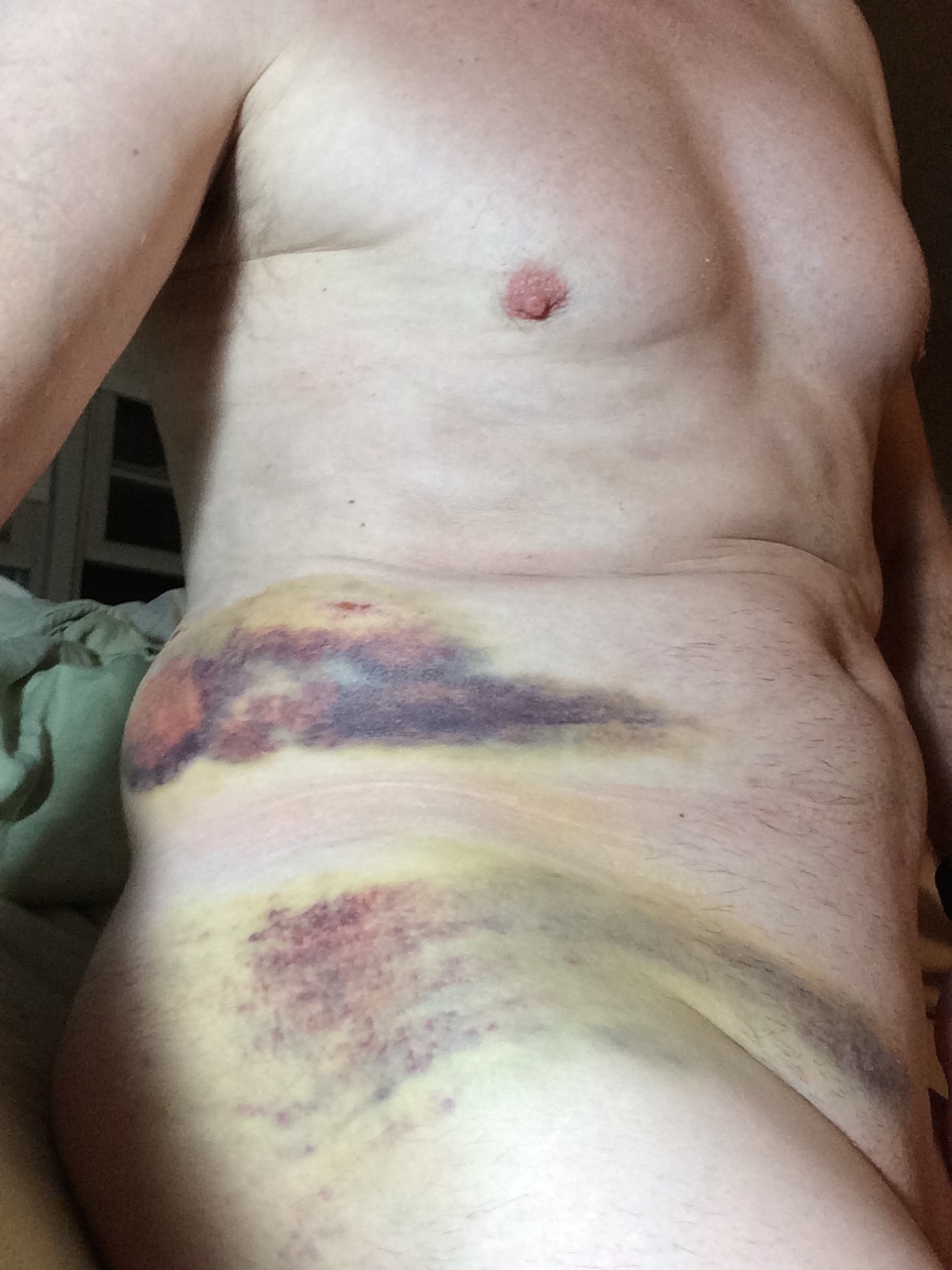
*note: those bruises in the photo above are not from sitting in a crappy chair. But they could be. Ha ha. 

werunandridelogo

Posted in Uncategorized | Tagged , , , , , , , , , , , | Leave a comment

When the Other Man is an Ironman

IMG_2802With the race the size of an Ironman––and there are no small Ironman races––athletes have a ton of gear to organize. Much of that gear is stored in bags and deposited with race organizers at designated rooms or zones so that it can be carted off to the proper location for use during the race.

Another round of gear has to be schlepped around by the athlete, especially wetsuits, which serve as a form of baptismal attire when all the athletes gather at the lake or river or reservoir or ocean to swim 2.4 miles together.

IMG_2853But once the wetsuits are stripped or shed, the real logistical program begins. During the cycling segment there is nutrition to cart and liquids to be sucked from sloppy straws sticking up from the bike.

Truly, the most expensive triathlon bike in the world is nothing more than an elongated high chair in which the athletes perch for five to seven hours trying to eat and drink enough to sustain themselves for the duration of the 112 mile bike ride. Everything gets all cloggy and crumply and sticky by the end. All that separates a typical triathlete on their $5000 bike and a hungry tw0-year-old in a high chair is a tray of half-chewed Cheerios. And don’t be too sure about that either.

Aid stations

Then comes the run, where aid stations serve the purpose of providing fuel for the fire burning within the athlete. And that’s literally what’s happening. The nutritional fuel that goes into the body gets burned off like cordwood, emerging as sweat and steam. We are all carbon machines inside and out, fueled by sugars and proteins and water and salt. So that’s what’s on the menu for any athlete finishing an Ironman triathlon.

IMG_2870Then there are all the support structures necessary to do the race. Before getting to the starting line, all those bikes and gear and nutrition and extra shirts and sunscreen and chamois lube must be get schlepped from place to place. And that, my friends, is where Ironman sherpas come in.

Ironman Sherpas

You all know what real sherpas do, right? A sherpa by definition is a very specific sort of helper, defined as “a member of a Himalayan people living on the borders of Nepal and Tibet, renowned for their skill in mountaineering.” And many are amazing people. So by no means do we mean to demean their skills by comparison to some first-world ideal that has nothing to do with climbing above 20,000 feet.

The word “sherpa” does have some contextual relationship when used to describe people schlepping gear around for Ironman triathletes. After all, the Ironman is all IMG_2776about creating peak experiences. That a parallel exists in the symbolic virtue of “climbing mountains” of our own creation is no coincidence. Ironman sherpas, like real sherpas in the Himalyan mountains, work alongside triathletes to help them have a better experience.

Here and there

In either case, it can be rather amusing to think of all those people trekking to mountains the size of Everest in the Himalayas, paying tens of thousands of dollars for the chance to climb and stand atop the tallest mountain in the world. And yet the Sherpas see it as their line of work. Another day at the office. They live there. To them, one mountain is as good as the other. It’s both a paycheck and a way of life.

Logistics and statistics

IMG_2878It can be the same way with the Ironman, where “sherpas” tasked or volunteering to support their athletes take up residence for a long day of logistics. There’s the raw fact of getting bikes and gear from one place to another. There’s also the goal of getting enough places to actually cheer on your athlete, sometimes two.

Late in the day there’s the anxious hope that your athlete will make it all the way to the end and hear their name called over the loudspeaker, “You’re an Ironman!”

It doesn’t always happen. About 20% of the people in any given race do not make the cutoff times in the swim, the bike or the run. So finishing an Ironman is no given. Nor is having the experience you even hoped to have. But it is this challenge of adversity that makes people pay hundreds of dollars for the right to participate in an Ironman race.

Noble enough

Pre-Ride PartnersIt’s a noble enough goal that requires tons of training and dedication and time. Some sherpas actually do much of the training alongside their athletes. Couples even do Ironman races together.

They all need sherpas of some sort or another, or they simply become their own sherpa, schlepping stuff where it needs to go and trying to stay calm and casual about it all. That’s not easy, but people do it. It’s all about organization for the sake of endurance.

Support crews

The athletes have their plate full for the day, swimming 2.4 miles, riding 112 and running 26.2. Any one of those endeavors IMG_2885would be worthy of a sticker on the back bumper of a car. But combined, they make that special category of Ironman status, worthy of a tattoo on the leg or the burning desire for achievement in the heart. And so it goes.

Sherpas form into support crews sporting tee shirts and signs of support. They stand on often crowded sidelines with other focused support crew members. One sherpa at Ironman Wisconsin had her hands full beyond the duty of supporting her Ironman in action. “It must be something to have a child with you all day,” someone said to her as she coddled a two-year-old on her chest.

“Try six,” she stated flatly, waving her hand at the band of kids crawling in and out of the metal barriers. It is truly a question for the ages who had the tougher assignment, the husband doing 140.2 or the wife ushering six children through a very long day.

Long days

So it is not for one sherpa to imagine they have it harder than the others. It is hard for all to make it through the long day, which typically starts at four a.m. and may last until the cutoff at midnight that same day.

IMG_2897If a sherpa is lucky they will find respite from standing on their feet waiting for the athlete to come by. There are tracking apps to help that process, but even these can produce frustration and anxiety given their propensity to slow with all that Ironman tracking clogging the data channels.

And the glimpse of an athlete along the way does not always tell you much. “How’s it going?” can be taken so many ways.

What. in the long run? Okay. But right now? It hurts!

Glimpses and grub

So sherpas are left with fleeting impressions and perhaps the occasional kiss or hug along the way. But you don’t want to slow them down, so you take what you can get.

If all goes well between sightings, a well-organized sherpa can grab a meal or even a workout between duties on the road. With Ironman athletes out of reach for hours at a timeIMG_2906, it makes sense to go run a few miles on your own, then take  a shower and grab a good meal…likely one of three during the long day of an Ironman or Half Ironman.

A few drinks can help as well. If there’s a bar handy there’s nothing like a cold beer or glass of wine when the day begins to wind down. Elite athletes finished up by late afternoon, but the majority ease into the evening hours running, plodding or walking their way through the marathon leg to the finish. The swim leg can seem comically distant by this time of day. Memories of the cannon going off and the mass start with people flailing through the crazed start can feel like a long lost dream by six o’clock in the afternoon when the sun in a September sky starts to cast long shadows.

Achieving the goal

It’s enough to make a sherpa wistful. All that preparation and all those long training days either apart or together. It’s enough to either make a relationship stronger or tear it apart IMG_2928at the seams. Sherpas need to be sensitive and wise to this fact. There are often times when neglect creeps in with the fatigue an athlete imposes on their body. The long stare into the abyss of training long miles sooner or later must take over the personality of the athlete. Like oxygen deprivation on the slopes of Mt. Everest, fatigue saps the will and can bring on lack of hope.

During those training phases, it can be the duty of the sherpa to carry the weight of the relationship all on their own. It may be the most important burden they carry all year. A sherpa may need to step in and restore hope with an encouraging word or small acts of self-sacrifice.

Crazy or not

It can all seem crazy at times. Why all this energy for a seemingly indulgent
IMG_2797attempt at glory? Why succumb to the power of the Ironman branding at all?

The answer is simple: If there weren’t an Ironman challenge already out there, human beings would invent something else. It all happens because people need peak experiences. They seek these rites of passage to escape from the mundane, day-to-day existence as well as the emotional pain of mortality. Better to damn near kill yourself doing something hard than to lie down quietly and slowly die over a lifetime.

Sometimes those hyperbolic paradigms are literally true. One sherpa at Ironman Wisconsin shared that her husband had been doing a marathon when he experienced cardiac arrest and later flatlined. That was just two years ago. “So now he’s here,” she said with a trace of wonder in her voice.

Life and death

Fortunately or unfortunately, it is the nature of this search for meaning and intensity that IMG_2856sometimes pulls people apart. The Ironman can be a wedge as well as a glue in many relationships.

But it can and does also pull people together. The abiding feeling one gets out there on an Ironman course in a town packed with cheering fans is one of community.

Perhaps the Ironman in some strange way is filling a need that people around the world want to feel. Toss out the rampant stupidity of so much religion and politics, along with the terrorism and tribalism that continually vex the human race and this earth, and what you have left is people of all races, colors, genders and orientations doing something that constitutes a wonderfully flawed commonality. Even if the Ironman is in some ways a stupid thing to do, it is a really good kind of stupid to experience.

An answer, if not “the” answer

Ironman may not hold the answer to the world’s perpetual geopolitical conflicts or its massive socioeconomic problems. But it is an investment of spirit in something that feels IMG_2827like it matters even if it ultimately doesn’t.

Yes, there is a massive amount of consumerism on display in all the shiny bikes and spandex kits. Yes, the narcissism sometimes runs so deep you get a feeling there’s a tsunami of selfishness at work in the world.

But then you see a child with his mom or dad cheering for their partner and you think to yourself, “Okay, this is not such a bad thing.”

Then you see a heavyweight guy or gal grinding up a long hill wth every pedal stroke a profound effort, and wonder to yourself, “How do they do that?”

The best and the worst are equals

The same thing goes when you do see a magnificently fit athlete ripping by on the bike. It is clear there needs to IMG_2813be a stage for every level of accomplishment. You can appreciate both the fat guy with the fat tires plugging up a hill as well as the svelte female in her skintight outfit and shiny calves and not lose sight of what really matters. We’re all in this together.

Just remember this for your own sake: there’s no escaping the fact that communication is important going into an Ironman year. Both athlete and sherpa need to know what’s coming––or at least be committed to the idea of what might come about along the way. You simply must agree to work together on it.

When the Other Man is An Ironman® (and I’m writing a book about that) all sorts of emotions enter the picture, from jealousy to frustration with this “other” person in your life. You will still have financial and work challenges to address. You might crash your bike or cut your knee in gardening accident. All kinds of stuff can happen that you might not expect. That’s life. It’s a rockpile, and it isn’t going to change.

That’s why it is the duty of both sherpa and athlete to climb those rockpiles together. It is over those obstacles one must climb to reach the top of any mountain.

Please share this post with your triathlon friends and community!

werunandridelogo

Posted in Christopher Cudworth, When the other man is an Ironman | Tagged , , , , , , , , , , , | Leave a comment

Answer to the creepy question “Who’s following me?”

One of the keen realizations one should have as a male athlete is that we seldom have to worry about who’s following us on the roads or trails. The risks to men while out training are far smaller than those faced by women, who must be more concerned about sexual assault.

A participant holds up a sign during the Slut Walk demonstration in Philadelphia, on Saturday, Aug. 6, 2011. Organizers of the walks aim to raise awareness for womenís issues including the fact that no woman asks to be raped because of her style of dress. (AP Photo/Joseph Kaczmarek)

Fear of assault is obviously not limited to women who run. Statistics on sexual assault on college campuses, for example, present a sobering picture. One in four college women report surviving rape or attempted rape at some point in their lifetime.

A world of targets no longer

Those are discouraging facts. Yet we don’t want to discourage women from pursuing such healthy interests as running, riding or swimming either, especially on grounds that it is a threat due to greater risk of sexual assault.

The response to such statistics can often be seen on the trails. Many women train with partners, be they male or female. The great equivalency that has emerged from long, steady increase in the number of women runners is that gender barriers between men and women training together as athletes has fallen away. In fact, it no longer exists at the practical level of track workouts or long training runs. Women run right alongside men and there are almost no concerns over who is running faster than who.

So the threat to women either in terms of casual harassment from within these sports is at least partially reduced. Perhaps not eliminated entirely, but reduced. Men and women now sweat and train together, and sexual tension or gender awkwardness is not the problem it once was. Equality stems from shared experiences.

Cultures of dominance

4340578092_68e88e6765_zIt is where women are isolated from these supportive environments, or where they confronted by groups aggressively embracing dominance that problems arise. Thus where college fraternities develop cultures where women are viewed as objects of conquest or worse, as disposable forms of entertainment, that rape and sexual abuse become perceived as acceptable or expected expressions of manhood.

Troubling as those trends seem, the greater culture in America has threads of these mindsets running through it as well. We can only imagine the workings of the disturbed male mind at work, who calculates or stalks an attack on a female runner. But it happens too often to ignore or write off as an inevitable product of the male psyche and sexual aggression.

Reasons why

The presumptive, controlling and aggressive nature of rape has been analyzed from both a sexual and criminal perspective. It is difficult to separate the two, but it is critical not to dignify the violence of rape with the excuse that it is merely sexual desire gone out of control. Even in the context of a relationship, rape is always a violation and a form of violence.

Cynical statements such as “You can’t rape your wife” do an injustice to all women. Then there’s the old joke that says “Do you know the difference between rape and rapture? Salesmanship.” Just as bad.

Fortunately, through hard work and advocacy on behalf of women’s rights, those attitudes are being pushed back by a culture that is growing in maturity toward the rights and perception of women. Yet American culture remains highly sexualized, and women are still struggling to own their own bodies and not be victimized by stares, lust or the controlling instincts of men. And avoiding rape.

Harassed and sick of it

Natural History.

Sexual harassment laws are deemed by some as too politically correct and restrictive in the workplace and beyond. But talk to any women (or men, for that matter) that have experienced sexual harassment and you will learn that it is a damaging, distracting force in your life. And it still goes on.

The harsh reality is that these primeval attitudes about what constitutes fair and reasonable behavior are not only extant in business and society, they are also canonized in some wings of politics, where control of women’s bodies and reproductive rights are still considered the province of men. These anachronistic tendencies, often to the point of misogyny, closely parallel the approach of rapists who force themselves over the rights of women to control their own bodies. We could legitimately argue that the former even leads to the latter.

Biblical references

The ugly truth is that this aspect of patriarchal control, ownership and exploitation of women hearkens all the way back to the bible. And for evidence let’s start with the ostensibly Virgin Mary.

Patriarchal societies treated women as property and were threatened by the notion of a sexually mature and active female. That is why the mother of Jesus is depicted as a Virgin, to uphold the dualistic idea that no man ever touched her, and that God the Father through the Holy Spirit was the parent of her child. Talk about layers of jealous fear!

sperm_raceAncient Judeo-Christian authors had no problem projecting their jealous views of womanhood on the mother of Christ. But there are questions to be answered in this process. Was Jesus later profaned by the fact that his mother had children through the womb that bore him, and through normal sexual means? And did her womb, having received semen from a man, become a place of defiled grace?

One could excuse all the Virgin talk by claiming that it didn’t matter what happened inside Mary’s vagina after she gave birth to Jesus. But that’s just a convenient rationalization of the patent jealousy and fear. The made-up story about Joseph almost disowning Mary thanks to pregnant state is just another assuagement of patriarchal guilt.

Rank and file

This false brand of reverence actually does damage to our perception of women. If giving birth to a child through sexual means is considered beneath the dignity of a woman, what message are we sending to women throughout history about their value and role in culture? The corresponding fear of menstruation expressed in early scripture also isolates women as unclean creatures. These false standards create unnecessary taboos.

And these taboos have a violent nature to them as well. Some men can’t handle the richness and symbolic virtue of women and the female body. In some dark way the breaking of that taboo becomes an obsession. Sexual impulses may drive it, but it is ultimately an angry fear of having to respect a woman that drives so many men to rape. Consent is the obstacle to which rapists do not want to submit themselves.

Strange games and repressed desires

I once met a man who insisted that he would never allow himself to come inside a woman because he believed it gave her power over him. He’s probably right, to some degree. But that’s precisely the point. All meaningful sexual relations require some level of submission to the will and care of that other person. Rapists somehow can’t negotiate that brand of submission. As a result they ultimately choose to force themselves on their subjects, without consent.

Prison rape is another example of that force of will. Any sexual or physical dominance of another individual is a sign that there is both lack of respect along with an operative fear of rejection in the mind of the individual committing the rape. They predictably have little self-respect to offer, and thus offer none of it to others.

Bleed over

IMG_1357It is not just women who suffer the consequences from lack of self-control and self-respect, especially linked to sex and sexual identity. The correspondent fear of homosexuality among so many people in society is driven by fears as well. Even the intimation that some aspect of behavior is “gay,” is enough to offend some, or give them reason to lash out in verbal or violent ways.

The idea that someone can be “made gay” through an encounter with a gay person is just one of many such fears, for it has long been promoted that being gay is somehow a sign of lack of strength or self-respect. Neither is true, of course, but that’s how fear and projection work in tandem.

Codified fears

We should understand that the Bible codifies such fears in stories such as Sodom and Gomorrah. In that passage we learn that Lot defends comes to the defense of two men rescued from the streets after dark and brought inside his house. He protects them from a madding crowd that wants to “know” them in the streets. In other words, the men might be subjected to abuse including gang rape.
IMG_6923This scene is often depicted as a sign that homosexual activity is a sin. But in truth, the threat to the two men is not in fact homosexual by nature, but indicates instead the very real violence being aimed toward a stranger in the community. Proving this point, Lot offers up his own daughters who “have not been with another man” as an attempt to draw off the violent, selfish temper of the crowd. If the crowd was only interested in having gay sex, why would Lot offer them his young daughters?

Instead the story is about the sins of control and violence, not homosexuality. It is also about rape, but not by a specific gender of another. So we see that rape and sick desire for control and abuse of others is a sign of morally compromised individuals and a disturbed society.

Tradition gone awry

Yet people have been taught so forcefully through use of this story from the bible that homosexuality and rape go together, they cannot conceive of loving homosexual relationships. As a result, they also cannot conceive of gay marriage as a responsible way for gay people to live together and fulfill roles in a functional society.

Do you see how culture becomes twisted by these patterns and trends in thinking? The seemingly diametric presentation of the (temporarily) innocent Virgin Mary juxtaposed with the ostensibly horrific behavior of the crowds at Sodom are actually far more closely related that many might think. Our taboos become confused by these presentations of extremes. As a result, normal human functions such as having sex between two consenting individuals can be turned into ugly notions that drive deep fears into the minds and hearts of individuals.

Spectrums

400px-Moreau_Monkeys_cropWe wind up with strange expressions of these taboos, such as pornography becoming one of the most popular forms of entertainment in the Bible Belt. That’s one end of the spectrum.

At the other end we wind up with men fearing women so much they can only think to rape them in order to gain control or have some way to process the taboos we’ve created and imposed through our traditions.

And yet another layer of confused ideology is that those who profess a literal interpretation of the Bible fear that belief in science or evolution will result in animal behaviors. There is absolutely no proof of such contentions. In fact the opposite is true. Science and knowledge of biological, social and cultural interactions all contribute to a more civil, better-functioning society because they reduce our fears. Meanwhile, anachronistic religion and a patriarchal worldview play on fears of emasculation, immorality and loss of control.

Surprise, surprise

So the answer to the creepy question of “Who’s following me?” turns out to be one of a surprising nature. The creepiest aspects of society are hidden in traditions that serve up the taboo as norms for a healthy society. These taboos turn normal inside out.

That’s how men come to think of rape as a viable or acceptable form of behavior. Their minds are preoccupied by the will to dominate the feminine ideal or their own repressed urges. Anything that is mysterious, vulnerable or unavailable to them becomes something to abuse and kill. We see the same sick mindset at work in people who abuse or torture animals.

No surprises

So it turns out these creepy attitudes follow all of us, and everywhere. They are woven even through our politics.

Chuck with LambsThe only way to stop the pattern is to confront those following us around while spouting creepy anachronisms and engaging in sexual harassment or rape. We need to turn and face the anachronistic fears and beliefs that drive them.

We could start by demanding that college men learn what respect for women really means. Every college freshman should be required to take a course in civics, social ethics and sexual politics. No excuses. And if fraternity and sororities continue to be a wellspring for bad behavior, ban them. They’re unnecessary and in some ways anachronistically based as well.

SwimmersThen segue into talk about why women are really out exercising, and why their outfits are not an invitation to sexual advances.

Then confront the failure of society to grasp that homosexuals and all intergrades of orientation and gender identification are a natural part of human evolution. This idea that the bible should dictate what constitutes normality in modern culture is outdated, timeworn and twisted.

Not the final authority

The bible, it turns out, is not our best or final authority on these issues. Not if left to its literal devices, where it can literally become the creepiest book around. If we abided by some of the creepier laws laid out in the bible we’d still have slavery, among many other things to worry about.

VTa8lAdmittedly, these misappropriated messages of bible are difficult to contravene. Its’ seemingly wholesome––yet ultimately creepy––literal messaging is woven through the culture of the world in so many ways it can be difficult to root them out.

That’s because many of the patriarchal, violent messages still have mass appeal to millions around the world. Just look at the violent world of the NFL, where men are often destroying their very minds and bodies for millions of dollars while scantily clad women dance around on the sidelines for almost no pay at all. It’s a sickness of the mind, yet the NFL is one of the most popular sports leagues in the world.

Real faith in humankind

Fortunately, Pope Francis is trying to lead the Catholic faith toward a more enlightened worldview. But his conservatives opponents within the church and those with political motives that benefit from protecting the patriarchal worldview of a male-dominated society are trying to undermine the good work he is doing.

The ultimately creepy answer to the question “Who’s following me?” can be found hiding in plain sight. It’s all those people who want to rape your rights based on a fearfully founded worldview rooted in biblical literalism and the taboos of ancient times.

And that’s the creepiest notion of all.

WeRunandRideLogo

Posted in running | Tagged , , , , , , , , , , , , , , | Leave a comment