Past imperfect

The imperfect is a verb form, found in various languages, which combines past tense (reference to a past time) and imperfective aspect (reference to a continuing or repeated event or state). It can therefore have meanings similar to the English “was walking” or “used to walk.” It contrasts with preterite forms, which refer to a single completed event in the past.

IMG_9994.JPGMy dad passed away in October last year. It took a couple months for his caregivers to move out to a new apartment. A Realtor friend (of my brother) came by to look at the house and make recommendations on how to prep it for sale.

Yesterday was spent delving through my father’s house and moving things out to a dumpster. It is the job of his four sons to empty the home in which he lived for 35 years.

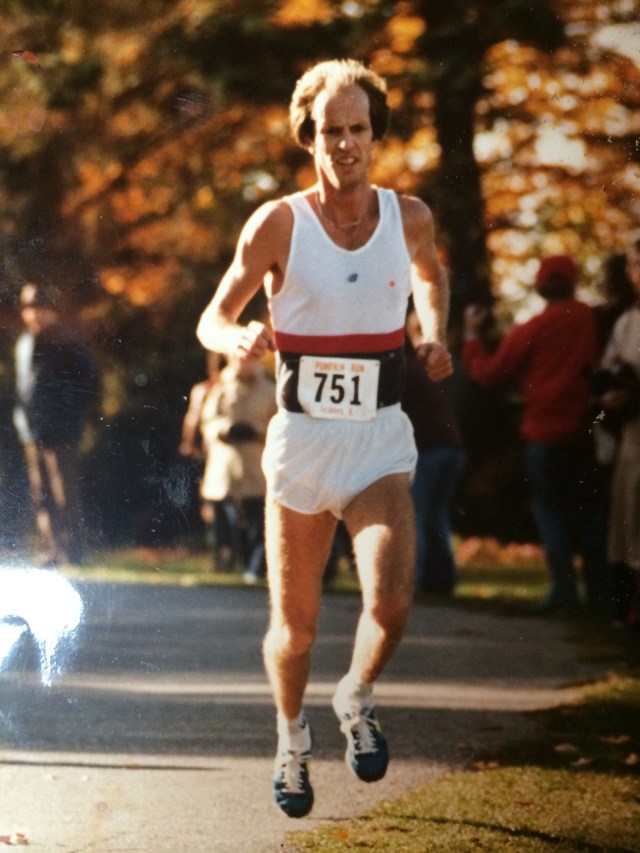
We moved there in 1978, the summer before my senior year in college. That summer I trained a solid but not crazy schedule, averaging perhaps 35-40 miles per week. The house rests on the long incline of a hill where my brothers and I used to birdwatch on fallow farm fields where gray partridge and pheasants were abundant. I’d finish my runs with hillwork that would prove critical in the season ahead.

Since those years, the entire area around our house has filled in subdivisions. But back then our house was perched out in the open. The long and winding road back to the house could be a long trek on a hot day.

Life seemed like it was changing fast with the move to that house and the pending spectre of my senior year in college. I’d had a great track season the year before, setting PRs at all distances from the mile to the 5000 meters.

But I’d done so with a physical look that was part Lasse Viren and part Napolean Dynamite. I recall looking in the mirror that summer of 1978 and thinking it was time to cut off the long hair and shave the thin beard occupying my chin.

Luther CC 1976So I took shears to my head and cut off large locks of thick hair. It looked like hell. That meant a trip to the barber shop was in order. They fixed what I had wrought. Pretty sure they had a good, long laugh that day when I left.

Then I pulled out a Bic razor and lathered up my face. Left the mustache (because it was 1978) and got clean-shaven.

When I went back to school that fall, tanned and fit and wearing contact lenses and normal hair, no one at the first frat party even knew me. But I fell in love with a girl and that was the formula for happy running. I leapt from 7th to second man for most of the season that fall. Our team placed Second in the Division III National Cross Country Championship.

So the associations with that house where my father lived are not all bad. But they were largely replaced by the last 15 years of so when my father lived with the effects of a debilitating stroke. He needed a wheelchair to get around, and his loss of speech robbed us of family history that could never be recovered.

Mouse.jpgHis junk habits were not horrible, but he was incapable of throwing away anything mechanical. Which meant his house was cluttered (but not jammed) with stuff that needed to be thrown out. I turned my Sentiment Meter down to about 2 on the scale of 10. We tossed heaps of useless stuff into a three-yard dumpster.

I kept a few things. Some t-squares and rulers for my art. A cool old cigar box from the 1950s. Obviously all the family photos and archives. We’ve carefully stored all those.

At one point I looked into a jar and found a mouse long dead in a jar of some chemical. My dad was always fixing golf clubs and puttering in his garage. The mouse and a bunch of flies had met their demise at the bottom of the jar. It looked like an archeology exhibit, like those amazingly excavated fossil skeletons in the London Museum of Natural History that we visited last April. Or, it looked like the remnants of some creature pulled from the La Brea tar pits. All ribs and spine. Not a nice way to go, yet a story told in bold releif.

All of life is lived like this, in the past imperfect. Until we no longer live. Then our past is left to someone else to interpret.

We discussed our own collective habits, my brother and I. He’s always been an organized person. But this house cleanout motivated him even more.

I’ve been perpetually tossing stuff ever since my wife passed away three years ago this March 26. She turned to me in the last month before she died and said, “Chris, I’m sorry about all the junk.” At that time, I did not know what she meant. We simply had a lot of, stuff.

But it’s okay. If we’re smart, we whittle down our existence to the point where we are comfortable with what we own. And let that be that. Then the things we do choose to bring into our lives, we know are either valuable or temporary.

It’s best to re-use, recycle or re-purpose. Yet there are times when things just need to be cleared out, and the story closed. Life is lived in chapters, but you don’t need to keep every book around just because it was printed.

LOVE LIFE.

WRARFrontGraphic


Posted in Uncategorized | Tagged , , , , , , | 2 Comments

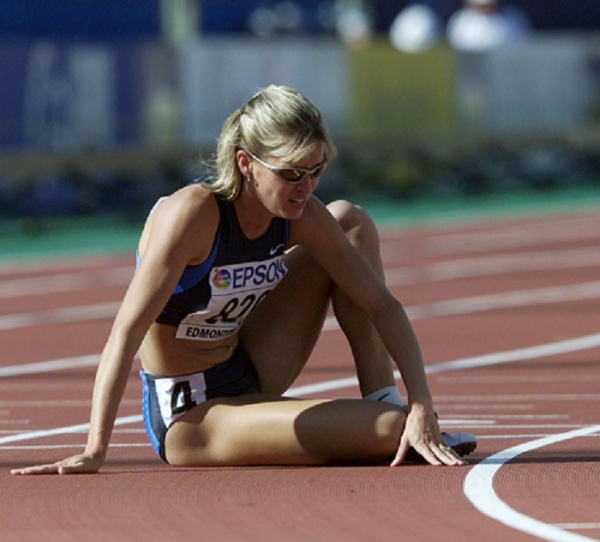
The pain of a DNF

suzy-favor-hamilton

With all the training and preparation one does for a race, the most painful part of any racing experience is a DNF. Did Not Finish, is one translation.

Did Not Finish means something went wrong. There is perhaps no greater frustration in endurance sports.

I recall seeing swimmers at the Racine Half Ironman emerge from the sixty-degree water shivering and stiff, lucky to have completed even that stage. They wandered off in their wetsuits to get warmed up in the medical tent. One woman’s lips were blue.

These DNFers had to fetch their bikes later. Gingerly they walked out of the transition area alone and with heads down. All their preciously laid-out triathlon stuff was stuffed back into their bag. There would be no riding or running that day. No Half Ironman Kudos For You!

My own experience with a DNF in the marathon came on a cold day in Minneapolis-St.Paul. The weather for the Twin Cities Marathon was thirty degrees with a brisk wind. I wore only a tee shirt in those conditions and at sixteen miles, my tongue swelled with hypothermia and my lips were indeed blue. A college roommate watching the race pulled me off the course. “You’re done,” he told me.

By contrast, I also DNFed in hot conditions at the Prairie State Games, an Olympic-style competition in Illinois. Temps were in the 80s and humidity, 80%. The air inside the University of Illinois stadium was thick. I ran two miles in 9:30 during the 5000 meters and started to weave on the track. I was fit enough for that pace but not in those conditions. Or perhaps I just ingested too much caffeine in the free Cokes in the cafeteria leading up to the race. In any case, a side stitch and dizziness whacked me good. I wound up in a wheelbarrow filled with ice.

Usually, there’s some aspect of preparation or the lack thereof that leads to a DNF. The wrong diet or a gap in training can throw off your competitive efforts.

Athletes long into a competitive season are most at risk for DNFs. When your racing peak begins to thin, the body rebels. One fall I’d raced seven out of eight weekends in a row and had won several of those races. Week after week I hit the streets to compete in 10ks, 5Ks, half marathons and finally a 25K. I was so fit the racing felt great. All the way through October it lasted.

But then came November. And even though I knew my racing should have been through for the fall, I accepted an invite to a top-flight new 10k race in Rosemont, Illinois. There would be world class runners there, including a guy named Mark Nenow, who would go on to set the 10K road race record in the low 27s.

I did not imagine that I could keep up with those types of runners, but the pace was promising to be fast. So I signed up and went through the first mile in sub-5:00 fashion. And then the bottom fell out. Spectacularly, you might say. The next four miles were a frightful slog. It felt like there was jelly in my quads. I kept going and made it to the entrance to the tunnel where the race finished inside a convention center. Then I pulled off the course and walked, sore and exhausted, to my car. I did not want to end the season with a 39:00 10k. There had been too many triumphs to mar the mind with that kind of effort.

I took that lesson to the bank, for sure. You need to know when your racing season is over. In that respect, there is no shame in a DNF. There are simply days and times when it is not your day or  your time to keep on going. Live to train and race another day. That’s the motto.

Do you have a DNF to share? Write about it in the comments below. We’ve all been there. Get it off your chest. It’s a catharsis!

TRAIN HARD. COMPETE WELL.

WRARShirtGraphic

Posted in racing peak, Uncategorized | Tagged , , , , | Leave a comment

What right to a satellite?

satelliteYesterday, at the end of a four-mile run, I clicked the Strava app to shift the measurement from RIDE to RUN, and waited while my phone processed the information. At that moment it struck me: What right do I have to use a satellite? 

My father once stood over his pile of sons lounging in the living room and asked, “Have you ever seen a miracle?” We were watching a Muhammed Ali fight on TV. The images came around the world by satellite. But all we wanted to do is watch The Greatest float like a butterfly and sting like a bee. We didn’t want lectures from our dad about how satellites worked, or why it was a miracle that we could see this fight from halfway around the world.

Witnessing life in (relative) real time is a miracle to which we’ve all grown long accustomed. Yet the phenomenon of satellite communications is not all that old. The 1960s were just 50 years ago.

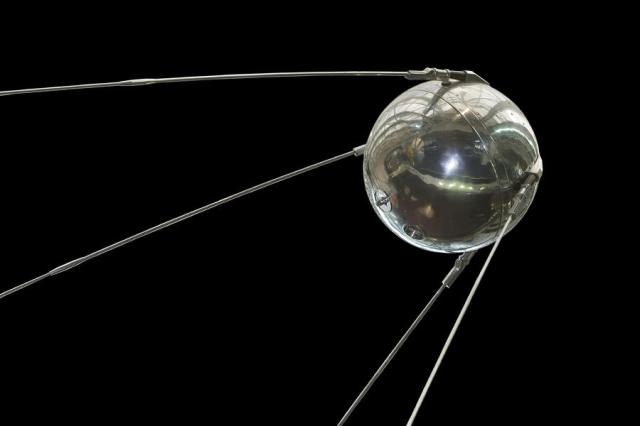
The Space Race was what drove it all, and competition for communications advantage and the ability to rule over the earth put the world’s powers into hyperdrive. The United States and Soviet Union put some of their best minds to work, and Sputnik at first kicked our ass.

sputnik-the-first-satellite-placed-mark-thiessenThe account of Sputnik (Russian for “satellite”) is a fascinating read from History.com: “Sputnik had a diameter of 22 inches and weighed 184 pounds and circled Earth once every hour and 36 minutes. Traveling at 18,000 miles an hour, its elliptical orbit had an apogee (farthest point from Earth) of 584 miles and a perigee (nearest point) of 143 miles. Visible with binoculars before sunrise or after sunset, Sputnik transmitted radio signals back to Earth strong enough to be picked up by amateur radio operators. Those in the United States with access to such equipment tuned in and listened in awe as the beeping Soviet spacecraft passed over America several times a day. In January 1958, Sputnik’s orbit deteriorated, as expected, and the spacecraft burned up in the atmosphere.”

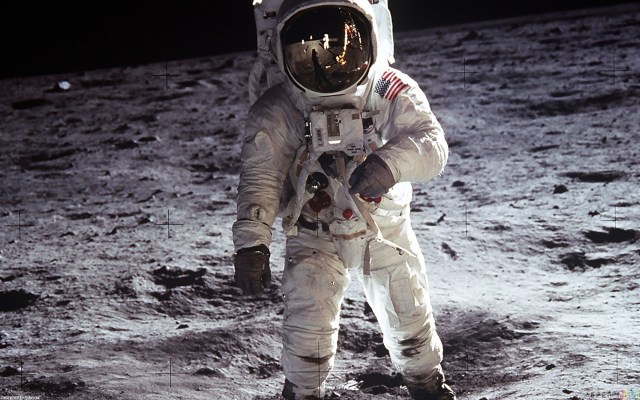
In case you’ve forgotten or never knew, the Soviets kept on kicking America’s ass for some time after that. “The Soviet space program went on to achieve a series of other space firsts in the late 1950s and early 1960s: first man in space, first woman, first three men, first space walk, first spacecraft to impact the moon, first to orbit the moon, first to impact Venus, and first craft to soft-land on the moon. However, the United States took a giant leap ahead in the space race in the late ’60s with the Apollo lunar-landing program, which successfully landed two Apollo 11 astronauts on the surface of the moon in July 1969.”

Of course, some delusional American nutniks (as many as 20% according to some sources) still believe that man never walked on the moon. They think it was an event staged by NASA to deceive people.

man_on_the_moon_1920x1200

People tweeted upon astronaut Neil Armstrong’s life and death: “So yesterday was the 40th anniversary of Neil Armstrong landed onto the moon on a fake set in a movie studio #letsbehonest #conspiracy #hoax— TheRealThomasfy”

RIP Neil Armstrong! You didn’t really land on the moon, but it’s all good. Your story is still apart of our history.— Mr. Ayy Shorrr

It’s fascinating that such people can use the amazing technology driving their ability to tweet and still not believe that human space flight is possible. Human beings have been orbiting the earth for decades now, circling the 22,000 miles around the earth in what, an hour or so? At that speed, it would take just five hours to reach the moon. Nothing to it really.

Instead, people fix their brains on the impossibility of such a simple reality. And by proxy, they distrust the government to tell the truth about these abilities. It’s a disease of the mind, very sad for humankind, and the source of many modern problems, especially political. Because if you can’t make sense of basic activities like that, and can’t comprehend the miracles of human invention happening around us every day, then you live in a fantasy world of mixed up beliefs and values.

And hence my consternation at my own right to a satellite. At least, I have the humility to trust that billions of dollars have gone into my ability to run four miles and have it be tracked and delivered to me via cell phone. I do not think, “Of course, I deserve it.” I think, “Am I really worth it?”

votingbooth121311

I’m going to vote for the candidate of my choice today. Millions of other people will do the same here in Illinois. And approximately 6-20% of them don’t believe that human beings have ever walked on the moon.

Which raises the question: Are they capable of making good choices given their worldview? Upon what judgments are they making a choice for President of the United States?

The results of these political activities will be sent around the world by satellite and consumed with concern by billions of people around the planet. Because the United States is a world power, and our choice of leaders has great effect on the lives of all those who live on this earth. From military strength to protecting the planet from the devastating effects of climate change (which also has its share of delusional deniers) it is critical we choose people who at least accept the complexity of these problems rather than acting like schoolyard bullies who care about nothing but the right to own guns and use them.

Because we all know that people with stunted ideology hate those who promote liberalities. That how men like John F. Kennedy wound up dead. And Martin Luther King, Jr. And Bobby Kennedy. And John Lennon. Even conservative icon Ronald Reagan got plugged by a bullet. Bullets are nothing more than murderous little satellites. Some people seem to believe in them far more than they believe in floating through space with an eye toward the future. Rather than shoot for the moon, they’d rather protect the right to shoot at their neighbor anytime they wish.

Thinking back to the 1960s when John F. Kennedy was President of the United States, he made a pitch to Congress to fund an accelerated space program. As documented on History.com:

“In a speech before Congress on May 25, JFK linked the need for a space program with the political and economic battle between democracy and communism. He urged Congress to mobilize financial resources to speed up the pace of the space program’s progress, insisting that America should go into space because whatever mankind must undertake, free men must fully share.

Kennedy’s vision did not become a reality until six years after his assassination. On July 20, 1969, then-President Richard Nixon watched with the world while Apollo 11 commander Neil Armstrong became the first human to walk on the moon. Just after Armstrong planted the American flag on the moon, President Nixon contacted Armstrong via phone to congratulate him on behalf of all Americans saying I just can’t tell you how proud we are.”

fake-moon-landing-set

But some people sat in their homes during all that history being made and just could not bring themselves to believe in it. Some of those same people are still walking around today, attending rallies for men wanting to build walls around our borders rather than exploring space and voting for who-knows-what other small-minded priorities they hold dear to their hearts.

We’ve landed probes on Mars. We’ve sent space missions out past Saturn and Jupiter. We can track the very source and age of light in the universe. Yet people think human beings have never walked on the moon. These are stupid people. Yet they still have the right to vote just like any other.Democracy isn’t just a messy process. It lets the shit mix in with the cake batter. But that’s the deal. Take it or leave it. It’s just a painful reality knowing their judgments could determine the fate of the human race.

It’s a stunning fact that the lesson some people derive from satellites, moon landings and space missions… is that the most they can draw from these events is that the government can’t be trusted.

Sometimes it’s their religion that drives them to these beliefs. Christians and Muslims and all sorts of versions of anachronistic faith should be held responsible for preaching stupidity to people from the pulpit and on the streets. Unlike many who insist that it’s not right to question religious beliefs, I believe it is the most important responsibility in the world. And if those beliefs add up to stupidity, then call them out. Especially those rife with hypocrisy.

Crawfish

Because scriptural literalism is what’s holding the human race back from progress. It is a cognitive dissonance that poisons human relations in all faiths.

So I’ll share a reality that these backward dolts will love to hear. Because recently, when the United States and Russia began sharing technology including satellites, American scientists were stunned to learn that the Russian instruments and ability to see the earth from space was far advanced over our own capabilities. That’s right, the Russians were still kicking our ass 50 years later.

So go on ahead believing that man never walked on the moon. That’s a great way to fall even further behind our global competitors on every front that matters. It’s a shame sometimes that the one thing satellites can’t track is sheer stupidity, because America seems to be leading the world in that category these days.

SEEK JUSTICE. COMPETE WELL.

WRARFrontGraphic


Posted in Uncategorized | Tagged , , , , | 1 Comment

And then the wind kicked up

New BalanceWhitewater, Wisconsin is in the southeast corner of the state. It’s about an hour and a half drive from the Chicago area, and a friend once attended college there.

So we drove up the night before and avoided drinking for once. That was hard to do at that age, because Friday and Saturday nights were generally reserved for drinking when we weren’t racing. That’s life in your 20s.

It was April. Race morning broke clear and sunny. The gun went off and we raced along at sub-5:30 pace expecting (hoping, dreaming) to complete at sub-1:12 half marathon. At the halfway point we were right on time. We turned around, and then the wind kicked up.

Or so it seemed. We’d failed to recognize the wind that had built up behind us as the sun rose in the sky. We were sailing along on pace because it was helping us along. And like all athletes, we were all too willing to deceive ourselves with the wind at our backs.

It turned out this was not just a little wind. This was a wind as big as the sky. The hair I had on my head at the time stood straight back. The big race numbers pinned to our shirts were both flapping and flattened on our stomachs. Gusts hit us from the front and side like giant invisible brooms. It was hard to keep balance on the road. We careened, and then our group broke up like a flock of wayward birds.

That left us each to fend four ourselves against the wind.That gets comic at times. There is a strong little voice in your head that starts to bark bad thoughts. “This does not matter,” it says. But then you think of all that training and find a way to keep going.

We didn’t stop. At one point a friend recalls laughing out loud at the absurdity of running in that kind of wind. Yet the persistent wind swept that laughter away as well. It was like running in a sound chamber. The wind stole the voice and even your footfalls on the road. One moves through a strange void of light and buffeting air.

The finish line took forever to reach. I lurched home the last quarter mile through town grateful just to be completing such a trial. My time was 1:16 and change. It felt like three hours.

In good Wisconsin style, there was beer served after the finish line. Normally I did not drink so soon after a race. But that day, I did not care. Nor did it matter what brand of brew it was. The goal was to drink away that feeling of fighting the wind. Because the wind had won. So I raised a can of Miller Lite or somesuch and watched for my buddies to come trundling home. Perhaps one of that had beaten me that day. I don’t recall. God love ’em for their effort.

It wasn’t the windiest day on which I’d ever run, but it was close. The trophy for Windiest Day goes to a training run in college when sustained winds reached 60 mph. We had to line up like ducklings just to get back home on a 12-miler. That was a living hell. But we laughed about that too.

The wind always wins, you see. There is no defeating it. Even on a calm day on your bike, or running intervals on the track, wind resistance is always there. Without it, you’d die of course. Oxygen is the element that gives us life. So it’s a tradeoff. When nature dishes it up the air we breathe in a fashion that is a little too hard for our liking as cyclists or runners, it is a solid reminder that nature can kick our ass anytime or anyway it likes.

It’s a fact of life.  We all think we matter in the long run. But we really don’t. Nature cares not about the difference between the quick and the dead. The wind goes searching for both. How will it find you today?

LOVE LIFE. TRAIN HARD. COMPETE WELL.

Do you have a story of a windiest day? Share in the Comments section below…

Posted in running, Uncategorized | Tagged , | 1 Comment

That day you stop counting laps

A longtime friend and fellow runner named Jeff Wheaton posted a photo of himself from the pool yesterday. He’s been rehabilitating from a foot injury and finally has permission to get back to Jeff Wheatonexercise. He went out and swam 40 laps. First time.

He wrote: “3 months to the date of my surgery, I shed the boot and swam 40 laps! Thankful for progress and all the people who have helped me from my surgery until now, starting with my surgeon, Dr. Tanawat. Thank you! ; )”

Jeff’s always been a good athlete. He ran a 10k around 30:30. So, no slouch. He also went to Wheaton College. So he’s a Wheaton Wheaton. He works in ministry in Burma.

But it was his example in the pool this week that inspired me to get in there and stop making up reasons why I can’t swim longer than 400 meters.

And it worked. I put in an 800 with no problem. And next week I plan to swim even longer. So it’s official. I can swim.

I’ll mark this down as the day I stopped counting laps. Swam by minutes and I know what pace I’m swimming, so it all added up to a great experience in the pool. Let the body do the work and didn’t grind down my brain trying to keep track of laps. I can imagine myself doing a mile or even two-mile open water swim someday. It’s take time, but like anything, it also takes a while for the imagination to keep up with the work. Or perhaps it’s the other way around.

LegsOf course, the flip side is that I’ll keep counting laps as I work on my speed and pace now. But it gives you the confidence to swim faster when you know you can actually swim longer.

And by contrast, it gives you the confidence to swim longer when you know you can go faster. Two sides of a swimming coin. To go farther, you just go a little slower and spread out the effort. Feel the flow. It sounds so basic but you have to build the foundations through persistence to make even the basics possible. For some it’s tough to do the swim. For others, the bike is a vexation. And for many, it’s the run that is the killer.

I’ve come into the sport of triathlon in reverse. As a competitive runner I ran on teams in middle school, high school, college and post-collegiately for running shops. Then I took up cycling in the early 2000s, and was taking my first swim lesson in 2003 when I tore my ACL playing soccer. That squelched the triathlon plans. Rehab.

Then in 2007 I bought a real road bike and got into criterium racing. So the pieces were coming together. There were many days that bike was a rolling salvation from the caregiving necessary for my wife, who passed away from ovarian cancer in March 2013.

When I met my companion Sue, we went cycling on our second date. From there we’ve done many runs together, and have ridden thousand of miles here in Illinois and in the hills of Wisconsin. Now I’m finally able to swim well enough that I will consider joining the Masters program that swims at 5:30 am. Or maybe not. Ha ha. Early mornings. Cold water. Um, maybe.

Honestly, it is getting to the point where swimming is actually enjoyable for me. I plan to check in with my coaches (Sue mostly) to make sure I’m doing things right. But that first leg of an Olympic or even a Half Ironman looks extremely “do-able” now. That was the goal all along. Can’t beat that. //////// 🙂

And Jeff Wheaton, if you read this…God Bless you and your work in this world.

TRAIN HARD.

WRARFrontGraphic

Posted in swimming, Uncategorized | Tagged , , , , , | 1 Comment

The question of orthotics

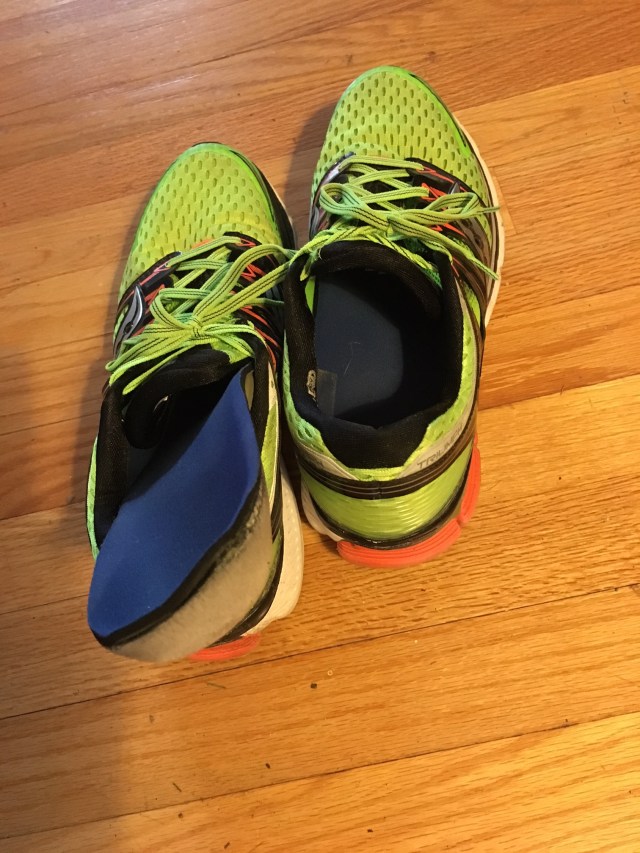
OrthoticsA few years back when I first signed on to get orthotics, a friend wondered teasingly if I’d replied to one of those ads for penis enlargement.

“You’re getting orthodicks?” he chuckled.

Actually, I made that up. But it illustrates the point that orthotics are still a bone of contention in many quarters.

The jury is still out. Some people swear by them. “Can’t run or ride without them,” they say.

Yet some physicians seem to think they’re some sort of snake oil. They give them no more credibility than fancy-sounding drugs for penis enlargement.

All I know is that I’ve experienced success wearing orthotics. They have helped me manage biomechanical deficiencies that even strength training have not entirely corrected. Yet I also cured my chondromalacia (eroding cartilage under the kneecap) through quad-strengthening exercises learned in PT during rehab from an ACL repair surgery.

So I believe in both.

And a friend recently went through physical therapy for a foot problem that for nearly a year had stopped her from running.  She was frustrated, sad and a bit angry about it all.

But she did the work. Followed her PT treatment orders. Now she’s back running 12-milers again. The problem was a tendon or ligament in her foot that was restricting her ankle movement. The PT people loosened that up and strengthened her “flabby” foot so that she’s back running on a strong foundation.

And that intrigues me. And makes me feel a little guilty. That’s one of the tarsnakes of endurance sports. Where do you go for the best treatment for your particular injury?

Because I got orthotics way back in the 90s and have worn them ever since in my shoes. My first pair was prescribed by Dr. John Durkin, whose patients included Sebastian Coe, who set world records and won Olympic medals wearing orthotics. Coe wore them because his feet were essentially flat. It wasn’t because Coe wasn’t strong. He could leg press 700 lbs with his 5’8″ frame. But his feet were whacked.

Durkin also treated many other world class athletes. So I don’t think orthotics are snake oil or the product of medical quackery at all. I wear them daily as prescribed by my pedorthist.  Same goes for a podiatrist or a chiropractor who prescribes sport orthotics, and knows what they’re doing. It can work for you. But be sure to check around to see if one of these specialists actually knows how to work with athletes. That is crucial.

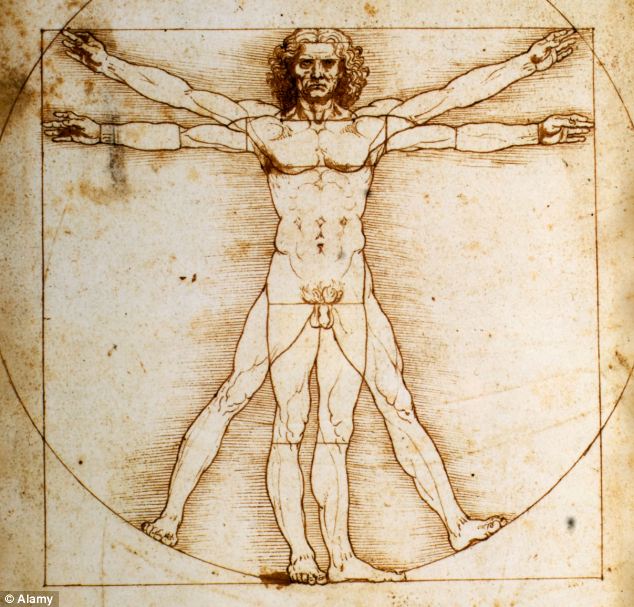
Da vinci ideal manOrthotics essentially correct foot and leg problems by building support into the insole that our feet do not naturally provide. This can occur through congenital (get the penis joke from earlier?) deficiencies or through degraded foot structure due to wear and tear, or weakness. While the beauty of the human body is considerable, as evidenced in proportion by Leonardo da Vinci’s drawing the ideal man, we all have flaws in our structure. When these flaws are aggravated by running thousands of miles on hard roads, problems tend to crop up in injuries. I don’t buy for a minute that minimalism is the better treatment for wear and tear on the roads. Perhaps if we ran all our miles on dirt or grass, maybe. But 10 miles on asphalt in bare feet or something slightly more? You can have it.

So there needs to be a balance, you might say, in how we fix our body mechanics. Physical therapy attempts to correct these problems through stretching, strength restoration and biomechanical rehearsal.

Orthotics, by contrast, attempt to create a neutral foot position that puts you back into an ideal position for running. I’m a believer in a combination of these two treatments.

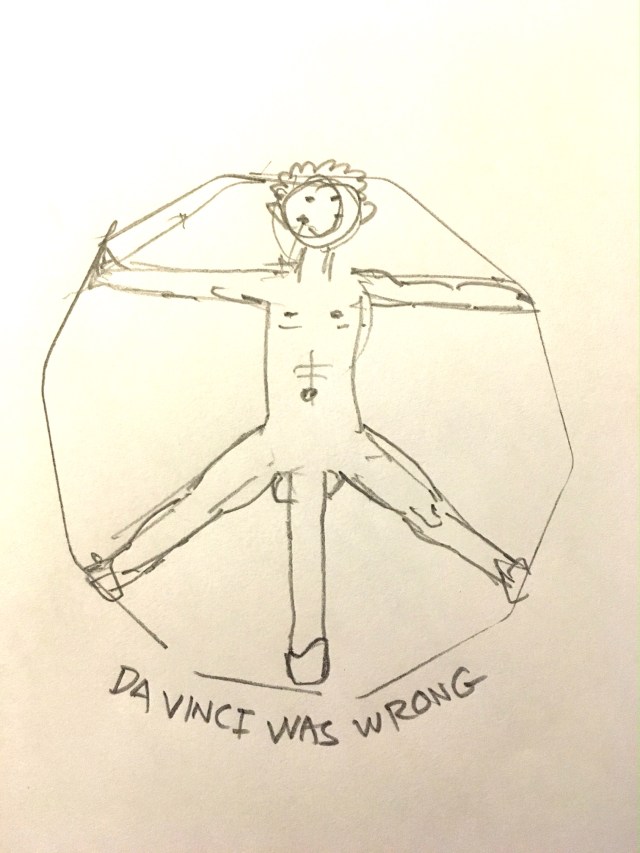
As for the penis enlargement industry, which is related to but slightly different than the “male enhancement” business, we can be relatively sure none of that stuff works or else the entire male population would be walking around with what looks like a third leg hanging down between the other two. Because when it comes to the modern interpretation of what makes a man the Ideal Man, times have apparently changed. Modern society has grossly exaggerated the notion of what makes the ideal woman or the ideal man, and there is no orthotic for that. It’s almost like the world is saying, “Da Vinci was wrong.”

Davinci was wrongBecause once you begin comparing dick sizes, there is no stopping the insanity. The recent “small hands” debate between Marco Rubio and Donald Trump featured two candidates for the Republican nomination for President of the United States arguing about their dick sizes in public. Which goes to show that selling snake oil sometimes works better than dealing with reality. But the facts are simple in their case. Both have proven themselves to be real dicks in full view of the public. And there is no orthotic for that.

TRAIN HARD. See what I did there? 

WRARShirtGraphic


Posted in Christopher Cudworth, Uncategorized | Tagged , , , , , | 2 Comments

Breakfast by bike at Daddio’s

Me on SpecializedYesterday I used up the last of the milk in the gallon jug from Trader Joes. Never got by the grocery store with business things to do, and woke up this morning knowing there was no moo-moo for the cereal.

It has been warm the last few days. This morning the air smelled fresh and wormy. The earth is emitting its spring smells, and that is one of my favorite things in the world.

All was moist, but it wasn’t going to rain, so I decided to jump on the Specialized Rockhopper and pedal down to the Walgreen’s store in downtown Batavia. It’s only a mile away.
SpecializedSo that was like my morning commute. Because I work a combination of places during the day. Sometimes with tight deadlines, I jump right into writing at the desk set up on the north side of my living room. From there I have views out huge windows in front and back of the house. My bird feeders are out the back window. Or should I say squirrel feeders. Who cares? I like the critters.

On days when my girlfriend needs rides to the train, I drop her off and hit one of the Starbucks in downtown Geneva and St. Charles. There’s also one near my health club, so when I swim or lift from there, that’s a good place to stage before or after. All have their attributes. Some have favorite tables. Others have nice views. But all have good, fast Wi-Fi, and no hassles about it. And to the credit of the Starbucks franchise, all their people are always pleasant and well-trained. I say that without exception. It was true over in London too.

Me with ConeBut this morning my obligations were a bit lighter, so I pedaled my bike downtown and arrived to find the Walgreen’s store closed. Too early, it was.

So I looked next door at Daddio’s. It’s a diner right with all the Right Stuff. The decor is Americana from the 50s and 60s and 70s. Rock album covers. Kitschy Disney and Looney Toons characters. All authentic stuff, including this giant foam fake ice cream cone. Fake is real cool.

At Daddio’s they make a wicked good breakfast. And dinner too. I don’t care what you order. It’s good. The people who run the place are so down to earth and real it makes you want to cry. On some days, the place is hopping and there is a wait for tables. But you know these are local business people who make their living serving great food to others. And it’s worth the wait.

So it was only ten to 7:00 a.m., and I still did not have milk to take home and have cereal. I’d made an omelette for dinner two nights ago and my body has a limit on omelettes per week. Then it hit me that Sue would be heading home from swim at the Marmion pool. So I called her and sure enough, she was in the car coming through downtown Batavia. So I talked her into joining me. And we had a delicious little breakfast together. Just like real life. Only better.

Her hair was wet from swimming. When it starts to dry, she gets these two curls that hang down on her forehead. I really like those curls, because they’re her, without adornment. She muttered as she drank her coffee. “It’s funny. I can go swim and still not be totally Mountain bikeawake. I’m just now waking up with this coffee.” And it was true. She was coming out of that early morning fog that only athletes now how to operate within.

I know the feeling, because I’ve ridden 10 miles into a bike ride and not had a sentient thought go through my brain. I’ve even run four or five miles before popping awake and joining the conversation. And I’m a morning person! But you still need the time to become fully functional.

Breakfast by bike at Daddio’s was fun. Now that the seasons are changing, I also will commute by bike to my gallery at Water Street Studios. My carbon footprint is relatively low other than the electricity used to run this Mac.

I am fueled by dark chocolate and ideas. Many of which I get while out on the bike, or on the run, or now in the pool. I can finally swim well enough to let my mind drift a little.

It would be wonderful if all of life worked like this. Maybe I’ll do that. Make it work.

LOVE LIFE. BE ORIGINAL.

WRARShirtGraphic


Posted in cycling, Uncategorized | Tagged , , , | 2 Comments

My girlfriend, the swim coach


IMG_1993

Sue (left) with her best swimming buddy and training partner Lida. Both of them completed Ironman Wisconsin this past fall. This photo is from MOWS, Madison Open Water Swim. 

There are a lot of things I love about my girlfriend Sue. We share a ton of interests. Even beyond the running, riding and swimming, we love the arts, live theater and watching John Oliver.


But there’s also a thing I admire about her specifically. She’s a very good swim coach. I’ve seen her in action. Working with swimmers takes focus and patience. Learning to swim, as I have done this past year, is a difficult endeavor. You start out so slow and out of breath. The stroke seems impossible to sustain.


IMG_2577

Sue with good friends and fellow Experience Triathlon members Jada and Suzi. 

Here’s the funny thing. She hasn’t been MY swim coach, per se. I decided that the best way to learn to swim was to get instruction from a gal at the club where I swim. Being the student of your bestie has its upsides, perhaps. But I did not want to explore the potential downsides.


Getting through the frustrations of learning or re-learning swimming (which was my case) requires a nudge now and then. It helps to have that objective voice to say “You can do this. Here, focus on this…”

As the process grew in my instruction with a coach named Whitney there came breakthroughs that I’d share and check with Sue. She put up with my overly enthusiastic musings about finishing a 100, then a 200. Then the workouts grew.

So it’s interesting to see her coach other athletes, and hear about their struggles and triumphs too. Many of her students I know at least casually. Some I get to know strictly from our conversations. Her descriptive abilities in relating how they got through a particularly difficult aspect of swimming actually help me learn as well.

But it’s her presence on the pool deck that I most admire. She has a wonderful ability to spot what needs to be fixed or improved in a swimmer’s stroke. Her ability to communicate these things has helped many a beginning swimmer gain confidence. She has also helped a number of serious triathletes improve their endurance and speed in the water.  She coaches for Experience Triathlon doing Swim 101, Masters Swimming and video analysis.

IMG_0924It makes me think back to that day in Governor Dodge State Park. It was early in our relationship. We were floating around in the water together, just swimming around like kids. She asked me to swim a little ways to show what I could do. “You’re not terrible,” she said, or something on that order. I found that encouraging.

Then she swam a bit on her own and I was mesmerized. She was like a seal in the water. It made me want to hug her. And I did. Our bodies bumped together under the water and we kissed. Then we both swam some more, enjoying the cool water after a long bike ride in the heat earlier that day.

The summer sun was on that angle where everything looks joyous and restful. There was no one left on the beach. Just us and the call of evening birds in the pines. We were learning how to swim together.

LOVE LIFE.

WRARShirtGraphic


Posted in swimming, Uncategorized | Tagged , , , | 2 Comments

The question of emotional intelligence

Having rightly been accused of lacking emotional intelligence at times, I took a quiz at Lifescript.com to see how I fared. The results were spot on.

Emotional Intelligence.jpg

As an athlete for many years, I recognize the value of emotional intelligence in both training and competition. And like many athletes, there have been times when my shortfalls in emotional intelligence have harmed me, while in other ways I’ve succeeded due to personality traits that include leadership, risk-taking and passion.

On many occasions in my work life, I’ve been told that people admire the ability to keep a cool head under pressure. “You’re unflappable,” a co-worker once said. At one point a company of 800 people chose me to be the lead public relations contact in an emergency management plan. That was all fine and good until I pointed out the fact that I lived an hour away from the main office. Then they went, “Oh yeah. Maybe that wouldn’t work.”

In sales, there were many moments where keeping a cool head was important to pitch or close a deal. While marketing my own paintings for a poster project in collaboration with a semi-pro baseball team, I first sold a law firm looking for regional exposure. Then I pitched an auto dealership. Their sign was on the left field wall and thus appeared in the painting, but I was asking $3500 in sponsorship for the poster project. I made my pitch and shut up. There’s a rule in sales that says the first one who talks, loses. So I sat. And sat. And I waited. Minutes went by. Then the client asked, “Where would my logo go, here on the bottom?” And that was that. Keep cool. Get the sale.

Emotional competition

There’s a certain amount of that “keep cool” vital in competition as well. Before the race, with competitors milling around, keeping a calm yet determined face is part of the psychology.

Swimmers often wind up sitting in the same room together before going out on the deck. That can be nerve-wracking. It takes confidence to win that quiet battle and go do your best.

Like all athletes, I have at times failed the emotional intelligence game in sports. Having confidence going into big events is key. If there’s a gap in your training or some other nagging fear grips you, the poison of doubt can creep in. And when faced with the challenge from competitors in that mindset, you either crack or resign yourself to a performance below that which you are capable. Been there. Done that.

By contrast, having the emotional intelligence to assess your true fitness and even to some degree deceive yourself through training, brings you into a state of relative fearlessness that can bring handsome rewards. That’s where the supposed control earned through emotional intelligence isn’t everything it’s cracked up to be. Athletes simply need to be risk takers at times. That’s not necessarily an emotionally healthy state of being. Athletes also need to be passionate, at times to the point of obsession. Those aren’t necessarily emotionally healthy periods in life. As the wrestling coach in the John Irving book Hotel New Hampshire once said, “You’ve got to get obsessed, and stay obsessed.”  Which is true, but that has nothing to do with emotional intelligence.

Because getting crazy dedicated can be a good way to achieve your goals. I don’t regret for one minute taking a year of two of my life to run as hard as I could and succeed. Not letting anyone stop you is a liberating feeling. Not letting your own fears stop you is just as important. But again, that’s not emotional intelligence at work.

Emotional justice

See, the difference here on emotional intelligence in athletes is learning to identify opportunities versus refusing to accept challenges. If you’re scared to do or try something, then it might feel emotionally intelligent not to take that risk. Why take the chance of blowing everything you’ve earned?

But then again, if you never speak up in a meeting because you don’t want to offend someone, or never speak up at all, that isn’t emotional intelligence either. That’s just fear.

Justice Clarence Thomas has spent years as a Supreme Court Justice and for a decade or so never said a thing or asked a question. That silence has raised the issue whether he is even qualified to serve in that role. Justice requires inquiry, after all. By contrast, Justice Antonin Scalia was an activist in his role, often barking out opinions and writing dismissive missives through his dissents. He believed passionately in originalism, the idea that only an interpretation of the Constitution as it was first written would produce justice. Was he intelligent, emotionally intelligent, or just an anachronistic asshole? Hard to tell.

Emotional leaders

We see similar breadths of difference in how athletes go about their work. The austere and seemingly aloof Frank Shorter competed against his rival Bill Rodgers, a goofy “people’s champion,” for years in the marathon. Probably Frank was the more emotionally intelligent competitor. Yet people loved Rodgers because his lack of emotional intelligence made him seem like the rest of us. People love the underdog. That’s why the movie Eddie the Eagle is so popular.

So this thing we call “emotional intelligence” is not some cut and dried formula for personal success. In fact, we have to be careful how much we ascribe to this aspect of personal brand. The world needs people willing to speak out against injustice. The world’s greatest figures in history all did that. Some did so with great emotional intelligence. Ghandi comes to mind. Martin Luther King, Jr., with his call for peaceful protest. There was some of the greatest emotional intelligence ever expressed. And Nelson Mandela. In the face of class and racial persecutions, these people showed enormous emotional intelligence.

Yet they did not shut up. Their voices were not silenced by fear. They were unpopular even to the point of incarceration and death.

Emotional inspiration

When you see a person cross the line in a triathlon, especially an Ironman, it is natural to admire their effort. It is also natural to question their sanity a bit. Some of us are willing to explore that world in order to know ourselves better. We’re willing to fight as well the temptation to quit when it makes all the sense in the world to do so.

We’re also willing to take that brand of determination and apply it to the world at large. You can be called a lot of things for doing so. A certain fellow named Jesus was branded a blasphemer for challenging the authorities of his day. They had their rules and they wanted to enforce them. They conservatively wanted to preserve order in the society they controlled. They did not want change. Yet they were pinnacles of what most people (present and past) would likely brand emotional intelligence.

Yet they were, in the end, quite wrong about the world.

Emotional zealots

There have been many other prophets in history, people willing to call forceful alliances to account, and to confront those determined to dictate the emotional intelligence of a community, a country, or the world. The paragon of corrupted emotional intelligence in history was none other than Adolf Hitler. Fascism is defined as “a form of radical authoritarian nationalism that came to prominence in early 20th-century Europe.” It worked because it appealed to the emotional side of the national personality. It essentially manipulated emotional intelligence into a singular motive using nationalistic fervor to replace normal moral standards. It made people turn away from their conscience in favor of worshipping the idea that they were a superior race, or people. It made people willing to support rampant anti-Semitism, and to torture and kill anyone deemed inferior. The Hitler movement made people willing to ignore that gas chambers were a crime against all humanity.

Emotional heroes

There’s a movie out right now about Jesse Owens, the athlete whose performance in the 1936 Olympics defied all of Hitler’s claims to racial superiority. There’s a supreme lesson in that. Unfortunately, it could not prevent World War. But that athletic performance stood in defiance against Hitler, and came to symbolize all the millions of people who would resist and give their lives to fighting the emotionally forceful man whose hatred drove his ideology.

But let’s be honest about something. That brand of emotional corruptions still exists in this world. Instead of emotional intelligence, it takes emotional courage, and risk of reputation self to stand up to the pillars of oligarchy, emotional manipulation and worship of wealth that seek to control and vex this world.

Emotional guts

I for one am willing to take that risk. I believe that’s what makes the Kingdom of God real here on earth. Too many Christians and the population at large refuse to recognize that connection. They’re more concerned with siding with leaders who seek to own and dictate the rules, as the Pharisees tried to do against Jesus, than they are with genuine moral and civil justice in this world.

We see it every day in people whose money is more important to them than the well-being of the world and its people. They bark: “Don’t use my tax dollars for the poor! All they want is handouts.” And from a strictly material perspective, this manner of thinking is understandable. People whose livelihoods are hard-earned often do not feel the call to extend mercy to others. They attribute their own success as a sign of equality for everyone, even when that equality, through prejudice or through expression of law, clearly does not exist.

The values of equality, liberty and opportunity are built into the United States Constitution. These are human values, however, not dictated by any particular faith. Nor does one need to have a particular faith to abide by them. That is the true emotional intelligence of the American proposition. It has a moral but not a strictly religious foundation. Too few Americans get that. Too many ascribe the emotional intelligence of the American proposition to Christianity, or to the free market, to capitalism or the NFL, for God’s Sake. They confuse their interests with their country.

Emotional concerns

The ultimate form of emotional intelligence and the foundation of the American proposition is to care, and to care about equality. In spite of yourself or your position in this world, you must continue to care about the welfare of others. Even those who are seemingly far different from you. Care. Even your enemies or competitors. Care. Often they turn out, upon full inspection or dissolution of differences, to be your ultimate allies.

In athletics, be coachable but ask to know the reasons why you’re being told to do something. If it doesn’t feel right, there may be a reason. Sometimes it takes emotional intelligence not to go along with the extremes of absorption the world can present. Always be willing to try, and take risks. But also be willing to question, and justify.

But most of all, don’t turn away. Care enough to engage.

Do yourself a favor today and visit a site called biblegateway.com. Enter the word “turned away” into the search category and see the many results you will get. Study them all, and you’ll come to realize that caring is the true call for all the human race.

But we’ll close today’s blog with a famous passage from Mark 10. It shows how difficult it can be to relinquish your supposed “emotional intelligence,” and all your material success and the position that goes with it, through the call to care. This lone passage explains almost everything wrong with America today. And it’s true whether you are religious or not.

The Rich and the Kingdom of God

17 As Jesus started on his way, a man ran up to him and fell on his knees before him. “Good teacher,” he asked, “what must I do to inherit eternal life?”

18 “Why do you call me good?” Jesus answered. “No one is good—except God alone. 19 You know the commandments: ‘You shall not murder, you shall not commit adultery, you shall not steal, you shall not give false testimony, you shall not defraud, honor your father and mother.’[d]

20 “Teacher,” he declared, “all these I have kept since I was a boy.”

21 Jesus looked at him and loved him. “One thing you lack,” he said. “Go, sell everything you have and give to the poor, and you will have treasure in heaven. Then come, follow me.”

22 At this the man’s face fell. He went away sad, because he had great wealth.

23 Jesus looked around and said to his disciples, “How hard it is for the rich to enter the kingdom of God!”


SEEK JUSTICE
WRARShirtGraphic

Posted in Uncategorized | Tagged , , , , | 3 Comments

11 triathlon “things” we all know about

It’s a bit of a lifestyle, this triathlon “thing.” And even though I can’t call myself a true triathTRI SWIMMERlete yet (…yet) I’ve done some duathlons and added the swimming to the point that my first Sprint is under my belt.

Because it’s really all about the training most of the time. Triathlon also requires a lot of transitions. From work clothes to workout clothes and back again. So here are 11 triathlon “things” that one discovers along the way.

  1. The smell of chlorine while you’re eating. It happens. Even if you whip through the shower after a swim session, the chlorine often hugs your skin. And while you’re downing a bowl of raspberries and strawberries, that rich smell of chlorine finds your nose again.
  2. That weird feeling of driving a car after you’ve biked 80 miles. It’s. So. Easy. People who don’t ride bikes long distances take driving a car for granted. Once you’ve begun the real training miles, the car feels like cheating to get somewhere.
  3. Those bags of equipment in your trunk or SUV. Your gear makes a rotating journey in and out of your vehicle. And there’s nothing like the feel of a freezingly damp swimsuit left in a vehicle overnight and you need to wear it for your next swim session. Talk about a cold dose of reality.
  4. Your collections of things to rub on your body. From chamois lube to sunscreen, wetsuit glide to good old body lotion, the triathlon world is one long effort to keep skin lubricated, safe and unblistered.
  5. That cabinet with all your fuel junk. Every triathlete eventually turns over an entire cupboard in their kitchen or somewhere in the house to house all the necessary Clif Bars, NUUN tablets or fuel packs of choice. Don’t worry, it’s a necessary practice of hoarding, not an indication of impending OCD.
  6. Water bottles out the yin-yang. You know it’s true. It’s matching the tops to the right bottle that matters. That really is an OCD thing at some point. So it’s best to accept that if the top fits, let it TRI GUY.jpgride. And don’t forget the collection
    of bottles left in your car. Those need to be washed. Pronto.
  7. So many bikes. If it’s not your bike that you’re piling into the back end of your car or lashing onto your vehicle, then it’s someone else’s bike as well. Bikes and bike and bikes and bikes. So many bikes. And though we try, we can’t ride them everywhere.
  8. Perpetual cycles of running shoes. Big training miles require big shoe transitions. You’re either wearing down your last pair or breaking in a new set. Most of us have more than one pair of shoes, and that’s a wise idea. Then there are the shoes we don’t quite get around to recycling or giving away. They hang around for gardening or trekking to Trader Joes. “Hello,” you say to those pairs of expatriated footwear lurking in the front hall closet. “I remember you. Let’s go run an errand.”
  9.  Your triathlon friends. Generally, these are a collection of happily flawed people trying to make the best of “things”… ranging from their competitive efforts to their personal relationships. Triathletes (like anyone) are prone to say or do some stupid things along the way. Relationships are a big part of this supposedly solo sport. And that means participating in triathlon often consists of a long string of apologies for whatever shortcomings you find out about yourself or others along the way. But in one of life’s contradictory truths, that only makes you a stronger, better person in the end.
  10. A social media feed of everything “tri.” Let’s admit it up front. Everyone in TRI TREATMENT.pngtriathlon wants “that body” with the sculpted abs, the perfect shoulders, legs of steel, perfect (blue/brown/green/gray) eyes and hair that looks like it fixes itself. Our social media feeds seem to suck that stuff up like a triathlon Black Hole. We only hope it emerges through us on the other side.
  11. A very intimate relationship with the bathroom. Taking care of “business” is one of the most important aspects of perpetual training. Getting that good dump to unload before a swim, a bike or a run is vital. And having to pee can be at least half as bad. So the toilet is a close friend, yet any toilet will do in a pinch. So to speak. Then there is the personal hygiene, ladyscaping and manscaping that must go on, lest something protrude or rub or appear unkempt should the inevitable nakedness occur somewhere along the way.

And there you go. 11 triathlon things we all know about. And are largely better off for knowing them.

TRAIN HARD • COMPETE WELL.

WRARShirtGraphic

Posted in Uncategorized | Tagged , , , , , , , | Leave a comment