Learning things about ourselves

Sue thinking.png

The nurses responsible for instructions on how to handle things after my meniscus surgery were both honest and cautious about the conditions I might face coming off the procedure. “You might need crutches,” one nurse told me. “When you go down the stairs, you bump down on your butt,” another advised.

“On the other hand, you might be just fine,” another nurse advised. “It just depends.”

Crutch free

Well, crutches are not necessary. I walked out of the surgery center a little wobbly from the anesthesia, but other than that, life after surgery is a cakewalk.

In fact, I slept quite well with the leg elevated. No pain all night. The hydrocodone is working, but I don’t want to use it any longer than needed. Back when I had surgery for the ACL tear, it was Vicodin for a couple days and that was that. The clavicle repair, same thing. It’s not good to let the drugs wear off and feel a spike of pain, but neither is it good to carry the drugs on too long. We all know the opioid thing is a danger.

Let’s get up!

This morning, Sue rose early to head to the indoor track for a workout. She was checking with me on a few things before she left and finally said, “Do you want to come with me? Because you seem too awake to stay in bed.”

She was right about that. I did feel rested. So I got some workout clothes over the knee bandage and we piled into the car. She drove the Subaru, because technically I’m ‘on drugs’ and not allowed to drive.

On track

I wasn’t sure what to expect as I started in walking. So I took it easy a couple laps. Then a couple laps more. Sue was warmed up by the time I’d walked for fifteen minutes and I didn’t want to push my luck, so I settled into my coaching role.

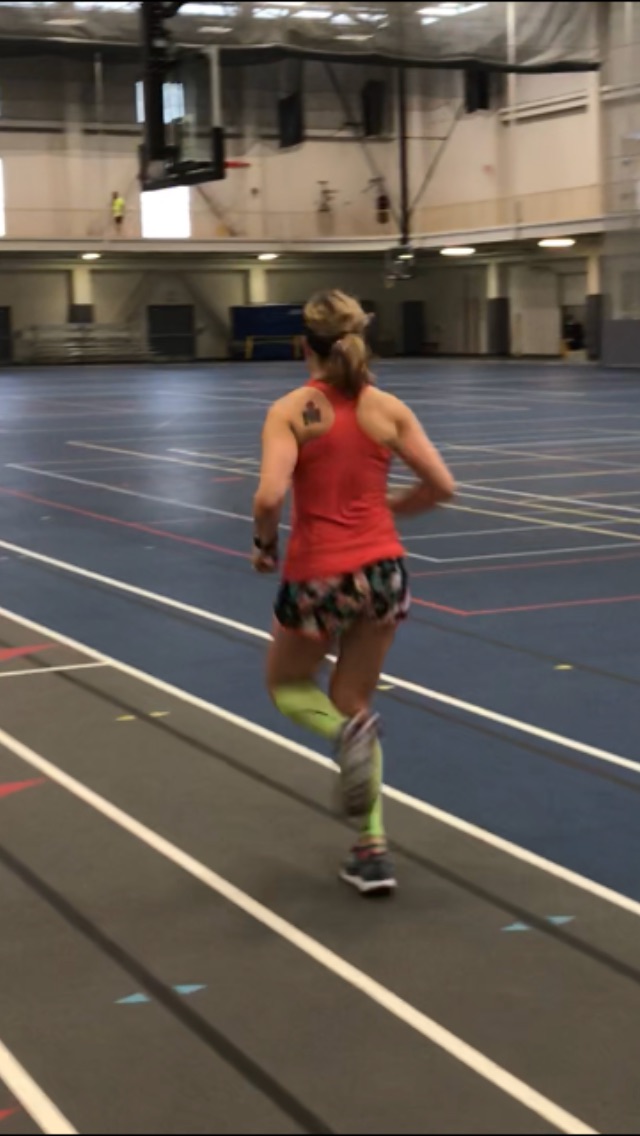
She was getting ready for a workout that was likely to be tough for her. After my walking, I stationed myself at the starting line and coached her from there. She nailed every interval along the way. It was cool to watch her go about the business of building her confidence with that workout. Between intervals of 800 meters, we talked about the sensations she was feeling.

Closing kick

Sue Running.jpg

And when the last lap of the last interval came around, she dug in and ran the last lap 2.5 seconds faster than the previous four. I was really proud of her.

I was also grateful to be there walking at the pace I can manage in recovery. Nothing bad about that at all. The same surgeon has fixed both my clavicle and my meniscus. He also repaired Sue’s rotator cuff the first year I met her.

Sometimes that’s the price of being an athlete. But I think one of the rewards this time around was being an observer as my wife dug in and learned some things about herself she really wants to know. In some ways that’s the question that we’re always asking ourselves. Can I do this?

And the answer is, “Yes.”

See you back on the road in a few weeks.


Posted in running, track and field | Tagged , , | Leave a comment

Surgery day and healthy outlets

IMG_0682.jpgAs an athlete most of my life, there have been plenty of times when the doctors had to repair some part of my body. Even on the playground as a kid, I was so active and aggressive in sports there were injuries every other week. I was so competitive at kickball I was always running into the swingsets in centerfield. I’d get these big gooseheads on my forehead and the school nurse would call my mother to let her know I’d done it again. After so many times, she grew jaded. “Just put some ice on it.”

Baseball been berry berry bad to me

There were baseball injuries. A spike into my ankle left me hobbling home a mile from practice, bleeding down into my sock from the puncture wound. A chipped bone in my elbow came from stealing home and getting crushed under the body of a fat catcher. A front tooth got knocked out of place by a line drive at twilight during practice. That required dental surgery to put the tooth back in with a post. I have a fake tooth to this day.

Basketball Jones

There were some basketball injuries too. In eighth grade practice, we were doing “killer drills” in the gym during practice and a dorky teammate came stumbling into my knee and it hyperextended. I was lucky it didn’t tear the ACL way back in 1970. Surgery for that was brutal back then. But the knee did swell up like a balloon. The doctor used a six-inch needle to suck out the black blood coagulating around the joint. It filled a two-pint bag quite easily.

But I recovered from that incident and wound up sinking a half-court shot with a second remaining on the clock to help our team win the conference. That endowed me with hugs and kisses from admiring girls, and so much attention I nearly recoiled in my own body. But damn, that was a nice shot I hit.

Part of the game

So the injuries were part of the game, but it was worth it because much of the fun in life comes from competing at one thing or another. A few years ago I saw my college cross country coach at a reunion. He was bent sideways in discomfort from a back injury. He had been All-American in football and basketball,. When I asked him if he was okay that day, he turned to me and smiled, “I wouldn’t change a thing.”

Changes

But sports injuries do change us. Some hurts are temporary but still require a bit of recovery. Others are more permanent or require surgery to repair the damage we’ve caused our bodies.

I was feeling pain on the base of my pelvis back in the early 2000s. So I asked my doctor if I could go to physical therapy. He denied me that opportunity due to the HMO. A few months later I tore the ACL in my left knee. I waited six months, then had surgery using cadaver part to make the repair. Then I did months of rehab and got back to all the activities I loved. But then the ACL repair tore again in an outdoor soccer game.

Bad choices

A couple years ago I did something stupid during a snowy race and tore a bit of meniscus in the same knee that doesn’t have an ACL. It hasn’t hurt until this year, so I avoided having surgery even though it would jut out at times. But now it has to be fixed.

So this afternoon the ortho surgeon will poke into my knee with his scope and nip the torn meniscus. Just another day at the office for him. Just another life-changing surgery for me. It will take a couple weeks to rehab, but I plan to be active with that.

Back to normal

And likely I’ll get back to “normal,” whatever that means as we age. I know plenty of people who have had to really cut back due to wear and tear. I’ve been fairly smart and lucky in some ways. That bike crash at forty miles an hour in 2012 could have cost me my life. All in all, I’ve been fortunate. Not that many running injuries over the years.

Emotional pain

However, there are other damages we face in life as well. The emotional hurts sometimes linger as long as physical damage. Our daily challenges include pain from deception by people we trusted. Sometimes our reactions can be as damaging as the situations to which we respond. With anger or revenge. The echoes of other hurts haunt us. We want payback. Retribution. Satisfaction.

Healthy outlets

Actually, sports are a healthy outlet for such competitive urges. We can fight to win all we want in sports, and it’s just a game. I think about these things on surgery day and realize how much has actually been gained by being part of the athletic world. As my old coach once told me during a time of crisis, “Your whole life has been a preparation for this.”

Sage words and a strong reminder of why we choose to fix things when they go wrong, and study our lot rather than just letting things fall apart. Because that leads to making excuses the rest of our lives why we quit trying. And that’s something surgery can’t fix.

Better to fix things the best you can and move on. You can’t win at everything, because sometimes those victories have a greater cost in the long run.

Posted in bike accidents, bike crash, bike wobble, Christopher Cudworth, cross country, healthy aging | Tagged , , , | Leave a comment

The solace of lonesome places


Solace of Open Spaces.png

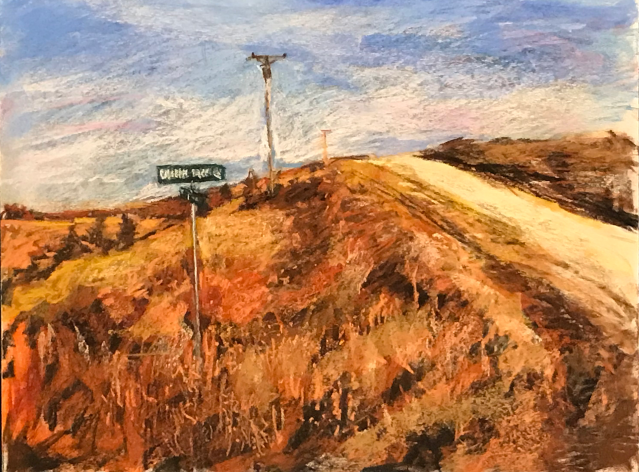
Pastel by Christopher Cudworth, 2018

One of the things I like best about running and riding is the solace of lonesome places. Last night during my ride in rather windy conditions, I found myself in need of a roadside break to adjust some things and just by chance, the wind let up a bit where I was standing. The landscape even grew silent as the hum of cars on I-88 to the south abated.


For all the thrum and thrall of cycling, the wind in your ears and the whirr of the road below you, it is important at times to stop out there and pause in some lonesome place to just look around. Even if it is just to appreciate the fact that you’re out there, and even if there are no great thoughts swirling around your head, or ideas, just stop and look at the clouds, or the pending sunset, and just take it in. The solace of lonesome places is quite healing.

Back when I ran 15-20 miles at a time (I no longer do) there was a strange independence in finding yourself alone on two feet out where the roads narrow and the red-winged blackbirds sit on wires waiting for the chance to nail you on the head. Perhaps a red-tailed hawk or kestrel would flap ahead and land impatiently on pole after pole, hoping you did not come any further.

But when that company even disappeared there would only be nothing but a long line of fence posts stretching out into a field.  Each had their company of desperate weeds clustered around the base where the land-hungry farmers could not reach with the plow. I always saw this as a small show of peace in an otherwise acquisitive world.

I’d go running mile after mile in environs such as these. My little Timex or Casio watch was a loyal companion as the miles passed underfoot. With an uncanny sense of pace, I knew just how far I’d gone, and how far there was to go. Nothing more was necessary. I didn’t even carry water or food. I just ran until I could not run any longer.

Back at home with a tired body and restful mind, there was time to think back on the run. Often a single image from the day would stand out in my mind. It might be the turn of a creek or the presence of an old road sign at an intersection of country lanes. These days, I get the same imagery in my head after long rides. It’s funny how you can ride 80 long miles and come home with snapshot of the day in your mind.

But that is the solace of open spaces. It gives our minds something to dwell upon. For all the oxygen we inhale and the carbon dioxide we breathe out, we are also exchanging mix of thoughts and visions with the world. And that is what sustains us. The solace of lonesome places is the life’s breath of the mind.

Posted in Uncategorized | Tagged , , , , , , | Leave a comment

When Quora asked, “What are your deepest thoughts you have been thinking about life?”

The website Quora is a forum where people respond to questions from others. Some of the questions are phrased rather oddly, often with poor English, but some of that is contextual because the queries can come from all over the world where English may not be the primary language. 

This morning I answered a question about “What are your deepest thoughts” and used a running analogy to answer. Thought you might enjoy and perhaps be moved to ask yourself that question or respond here with what your deeper thoughts are these days. The comments section below is always open, and you can click through from email to get there. I’d love to hear what “deep thoughts” you have about life. 

IMG_2770Here’s what I wrote:

I am sixty years old. I’ve witnessed a number of people that were quite close to me die over the last 10 years. These include a wife, a father and mother, a father-in-law and a longtime running coach and friend who was a deep influence on my life.

Seeing death so closely has changed me in a way that can be described as calming. While death used to be such a mystery, and I knew very few people who died when I was still young, it is now part of my life in the sense that I carry along the intimate knowledge that it will someday happen to me.

Whether that comes tomorrow or perhaps 20–25 years from now, it has challenged me to think about what I have accomplished in life and what it means. And having done many things that were successful, but also many things that have failed, I now regard them with an almost equal status.

That sounds strange to say, because we’re often told that only winning counts. And while winning feels great, which I know from having won running races with more than three thousand people in them, I also have gained quite a bit from competing and “losing.”

For example, I once ran a race that was delayed for the start until midnight. It was just a bunch of us diehard runners lined up in the cool of night. The gun went off and I raced along for 5000 meters at what started out as 4:40 mile pace. I ran a personal best of 14:45 for the 5K distance that race, yet I finished in 14th place.

Should I have gone home disappointed that I did not “win” when actually, I did my best? Because by contrast two months later I put undue pressure on myself during a statewide competition by thinking I had to win to succeed. I wound up falling from a sure third place bronze medal position to sitting in a wheelbarrow full of ice because I overheated.

See, that’s an allegory for life right there. So many of us overheat from the personal dramas that we create in our heads. What was better, soaring along doing my best or pushing false expectations into my brain that caused a burnout?

As I watched people close to me die I realized that more than the statement “life is precious” or “seize the day” is acknowledging that “trying your best” should also include a clear recognition of what that really means. Because truly winning at life is a matter not just “winning” in the traditional sense but also to know where your contributions matter the most.

When my late wife was diagnosed with cancer, that coach friend of mine called me up and said, “Your whole life has been a preparation for this.” And by that he meant that it would take all the guts and persistence I had to stand by her side and face life’s pressures one after the other.

That’s what I’ve learned at sixty years old. And it never, ever stops. Until you die.

So that’s what I think about daily. How to know where my contributions matter most. That can be personal, fiscal, social, religious and political. Take your pick. We’re multifaceted human beings. Both material and spiritual, I believe, and one does not deny the other.

Posted in running | Tagged , , , , , , , | Leave a comment

Past perfect weather predictions

Dark Eyed Junco.png

One of the holdovers from winter is the Dark Eyed Junco, otherwise known as a “Snowbird”  They depart in early April for breeding in northern climes. 

During brilliant fall weather in the college October cross country season, I used to joke with teammates by saying, “We won’t have weather like this till April 10!”

Winters back then tended to be dark, cold and unrelenting. After November’s dank resignation, the months of December, January and February frequently offered bitter cold with only an occasional thaw.

Cold miles

That made training outside a tough enterprise. The roads were often snowy. The sun went down at 4:30. We’d head out at twilight and run 8-10 mile loops outside Decorah, Iowa. As we headed out of town, the stars would turn bright in the sky or the low clouds of winter would seem to seal cold air into the purple-hewed landscape around us. We’d run together in packs of 20 guys and loop back to campus under the orange glow of streetlights. For ninety days during those cold winters, this would be our routine.

The month of March did not ofter much better conditions. Northeast Iowa sits on the edge of the Great Plains where winds from the cold reaches of Canada arrive unimpeded. Typically it was a rare day in March when temperatures topped fifty degrees. On those occasions, we’d leave our sweats in our lockers and head out in shorts to train. Then we’d come back to campus with flesh chilled from the wind and go hooting and hollering around the track in hopes that real spring would arrive soon.

April 10

So the prospect of April 10th was a long wait over all those winter miles. The date was mostly symbolic, as I recall. One could not count on early April for warm weather any more than month of March. We once arrived at Augustana College in Rock Island for a track meet, and one of their runners wryly informed me that the steeplechase pit had still been frozen over with ice that very morning. The first time jumping through that water was a rude shock. That was the week of April 10th.

But tomorrow is April 10th, and it looks like temps are indeed moderating. Here in Illinois the weather is predicted to moderate big time by the end of the week.  We are expecting temperatures in the low 70s by Friday.

Signs of spring

That will send the chorus frogs behind our house into an absolute breeding frenzy. And I’d normally  put on my running or cycling shorts and let the bare legs out when the weather changes. But I’ll be in recuperative mode from the meniscus tear surgery scheduled on Thursday.

So I’ll probably take a chair out back of the house on Friday, park it in the sun and prop up my foot while the pain medications do their work. That will be the program for a couple days, along with some gentle walking.

Good old April 10. I’ve experienced sixty of them in my lifetime, and I try not to take any of them for granted. The date still stands as my past perfect weather prediction each spring. A glimmer of hope in an otherwise cold world.

Here’s hoping you feel it too.


Posted in cross country, cycling, track and field, We Run and Ride Every Day | Tagged , , , , | Leave a comment

Self-surgery is the American thing to do

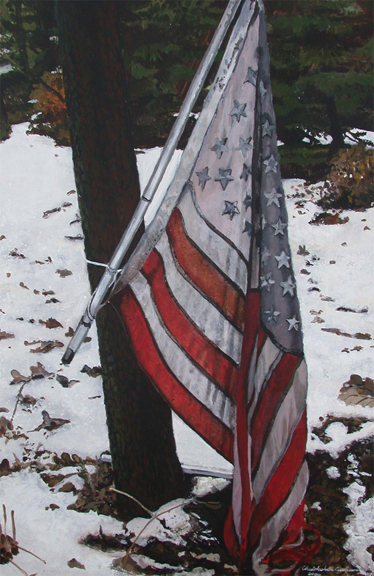
Flag Waiver.jpgNext Thursday afternoon, I’m going to cut into the skin of my left knee, insert a leftover bit of fiber optic cable from the TV downstairs and do arthroscopic surgery on my own knee.

I figure I can cut out the offending piece of torn meniscus in about a half hour and be on my way.

See, I’m getting into the spirit of people who think that depending on our health care system for actual health care is only for pussies and government leeches. That’s why I’m hopping on the “do-it-yourself” bandwagon.

So I’ve watched this creepy video of a meniscus surgery a few times and have learned how to perform meniscus repair surgery. If this geek can do it, so can I. Shouldn’t be a problem from here.

I’ve even got a half bottle of whiskey purchased on vacation to set me up good for surgery. I’ll pour some down my gullet and the other part over the knee to sterilize the area. Then I’ll dig in and fix this meniscus thing myself.

And if that goes well enough, I’ll do an ACL repair as well. See, I stored a chunk of tendon from the leg of lamb we had for Easter Dinner last Sunday. I put it in the freezer so it’s still fresh. And seeing that I’m already a little liberal lamb, there shouldn’t be a problem with tissue rejection.

Documentation

Best of all, I’m going to use my iPhone to make a video of the procedure. Then I’ll send it to Speaker of the House Paul Ryan. He loves self-reliance, you see. There’s nothing more self-reliant than cutting into your own flesh with a dull kitchen knife to prove your devotion to God and Country.


Hopefully, the blood spurting from my veins and arteries won’t spatter the iPhone. I hear those devices don’t run too well if they’re covered in corpuscles and plasma. But don’t worry, I’ve heard Apple is testing a blood-proof smartphone by handing them out during school shootings. Talk about mass marketing.

So I think self-surgery is a bloody good idea! From all indications, it’s the American thing to do. Perhaps I’ll even bleed out Red, White and Blue.


Posted in Christopher Cudworth, Uncategorized | Tagged , , , , | Leave a comment

Infectious ideas

Back in the fall of 2013, I picked up a sliver in my middle finger while doing work in my back yard. It didn’t seem like anything to worry about in the moment. I’d had many slivers in my lifetime. All of them worked themselves out if I plucked them with tweezers.

But that sliver was different. It carried some nasty type of bacteria from the water in which the yard waste had been sitting. The resultant infection nearly sunk into the bone of my hand. Had I let it go, it might well have meant removal of the finger.

So I learned a lesson. The next time I had an infection, in 2016, it was cellulitis in my hand from a nip by our cat. This time it spread across my the back of my hand, but I was ready and went straight to the urgent care center and then a hand specialist.

But the resultant prescription of antibiotics killed off my good gut bacteria. That led to a scary condition with a bacterial gut infection caused by C.diff . Here’s how WebMD describes it:

You take antibiotics to knock out a bacterial infection. But for some people, these drugs can trigger a potentially life-threatening infection caused by a type of bacteria called clostridium difficile, or C. diff. It can cause colitis, a serious inflammation of the colon.

How Do You Get It?

C. diff bacteria actually exists all around us. It’s in the air, water, soil, and in the feces of humans and animals. Many people have the bacteria in their intestines and never have any symptoms.

The bacteria is often spread in health care facilities, like hospitals or nursing homes, where workers are more likely to come into contact with it, and then with patients or residents.

You can also become infected if you touch clothing, sheets, or other surfaces that have come in contact with feces and then touch your mouth or nose.

IMG_2764.jpg

Image by Christopher Cudworth

It’s not a comfortable feeling at all knowing you’re “contagious” from anything. While listening to some sex talk radio the other day hosted by comedienne Nikki Glaser, one of her co-hosts shared what it was like to live with the herpes virus. One of his prospective girlfriends, upon learning of his condition, wryly noted, “Well, that’s not ideal.”

Nightmare bacteria

Whether viral or bacterial, infections can really bring you down. I once slid for a basketball on a gym floor and the resulting floor burn got infected. That spread to the lymph nodes near my crotch and it took antibiotics to knock it out.

But things are apparently getting much worse when it comes to the power of infections in the human body. Yet in an article about “nightmare bacteria” infections, a recent piece on Illinois Patch warns that things are getting much worse out there. Bacteria have evolved resistance to every known drug. That can spell death to those who contract it.

“The bacteria are known as carbapenem-resistant Enterobacteriaceae, or CRE, and can cause pneumonia as well as infections of the bloodstream and urinary tract. The CDC said an alarming 50 percent of those infected with CRE typically die.

Antibiotic-resistant infections are more widespread than just those attributed to CRE. About two million Americans get infections from antibiotic-resistant bacteria each year and 23,000 die, according to Dr. Anne Schuchat, principal deputy director of the U.S. Centers for Disease Control and Prevention.”

Prepping for surgery

I just had my pre-operational appointment at the doctor. He walked me through the things I should consider going into surgery. One, don’t get sick beforehand. Two, be sure to clear out your lungs after anesthesia and avoid pneumonia.

Having been knocked out a couple times for surgeries on my ACL and my clavicle, both the result of sports injuries, I still feel confident going into surgery for the meniscus tear that things will turn out fine. But I’ll be cautious in every respect.

No guarantees

Because there’s always a risk for blood clots after surgery too. A friend of mine died from a blood clot after hip replacement surgery. So nothing’s guaranteed.

I don’t tend to run around in fear about bacteria or dying. But I sure do respect the dangers. I’ve seen firsthand (pun intended) what infection can do to your body. My advice is never to take anything for granted. It is far better to be cautious and apply Neosporin and even get checked by a doctor if you have suspicions of any type of infection with your body.

That’s not being a hypochondriac. That’s being smart. As endurance athletes we can pick up all kinds of bumps, scrapes and skin rashes along the way. Saddle sores from cycling are no trifling thing. Nor are the afflictions of hemorrhoids or anal fissures. It’s these seemingly niggling problems that can cause us to flounder or worse, suffer conditions that even put our lives in danger.

It all gives new meaning to the term “infectious ideas.” Better safe than sorry.


Posted in we run and ride | Tagged , , , , , | Leave a comment

Rare opportunities in life

IMG_C8617720C3BA-1What rare birds can teach us about all of life’s opportunities

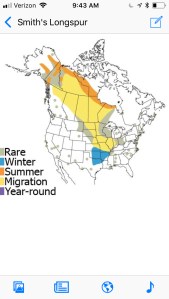
Yesterday through email I learned there was a sighting of a relatively rare bird, a Smith’s Longspur, in the vicinity of our house. We back up to a wetland, so there are plenty of birds around day-to-day. But this bird was on its way north to the far reaches of Canada for summer breeding. It would likely only stay a day or two and then be gone. IMG_863A1547B842-1

For those who don’t go birding it’s a bit difficult to describe why the bird is such a prize to see. Illinois is on the eastern edge of its migratory path. Typically to see this species, birders in Illinois drive into the flat plains of central Illinois where they like open ground. The draw might be leftover farm seed or simply the drifting remnants of last summer’s wild seed stock.

But they like it in open country, and scrubby. It so happens the property that backs up to the wetland behind our house consists of plots prepared for new homes. Those patches of ground have been sitting dormant ever since the recession clobbered the real estate market eight years ago. The owner is a wealthy developer who must still be paying taxes on that land. Not fun for anyone.

Hardscrabble

In the meantime, the topsoil was removed and what remains is hardscrabble clay and a sandy surface. Weeds grow in profusion each summer, but they mow them down by city code to keep the place from looking too awful.

So the environment resembles the gravelly stretches of the far northern tundra. That’s where Smith’s longspurs are headed to breed.

IMG_47AC2982C215-1On a lark

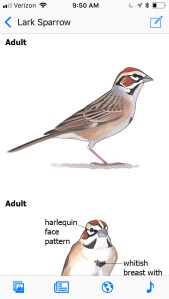
Some astute birder spotted the longspur because last year an interesting bird also showed up on that area of land. That was a Lark sparrow, and they apparently hung around to breed last summer as well. That makes me feel like a dummy when it comes to birding. Here was a beautiful species of bird not 300 yards from my house and I never noticed it there.

A running encounter

I should know better. I run past that development perhaps once a week. It backs up to another subdivision that is already built out. Last night I decided to do a three mile loop and jog past the spot where the birder had identified the Smith’s longspur the day before. I have not run much the last week as my knee awaits surgery for a torn meniscus, but as long as I keep my toes pointed straight ahead the knee does not act up.

So I enjoyed my little run as twilight started to fade to darkness. Then I cut through the ‘undeveloped development’ while counting the plot numbers up from 18 to 26, which is the place where the bird was originally spotted.

Field marks

Stepping off the road, I walked onto the flat clay surface and sure enough, the bird lifted from the ground and flew a bit to the west. I could see the distinctive dark center tail feathers bordered by white. Even in half-darkness, the overall field marks were evident. After forty years of birding, one develops an innate sense of what to look for when a bird lifts off the ground. Where most people see a blur, a birder’s eyes instantly create a frame of reference around its size, relative shape, manner of flight and if possible, the colors that close the deal. It is these field marks that produce an “identification” of a bird.

Follow up

But having seen the longspur at twilight, I didn’t want to disturb it any further. So I trotted the rest of the way home and wrote an email back to the birder friend that had sent me the notice. “I found it. But I’ll check for the Smith’s in the morning,” I told him.

When Sue and I got back this morning from running at the indoor track, I pointed out to her a small line of cars visible across the field. I’d told her about the bird and the fact that I’d head over there after we got home from the workout. On my way to work, I stopped and rolled down the window to talk with one of the birders sitting inside her car. This is how we birders do business. We use our vehicles as portable blinds.

She admitted there was no sign of the bird, a fact I had already gathered because the cars were spread out around the drive circling the property. See, birders have telltale behaviors as well. Typically they cluster together when they find something good. But if it doesn’t show up, people drift apart in hopes of being the lucky one to find it again. This can be both good and bad for the birds being studied. But that’s a topic for a different day.

Better days, and a better place

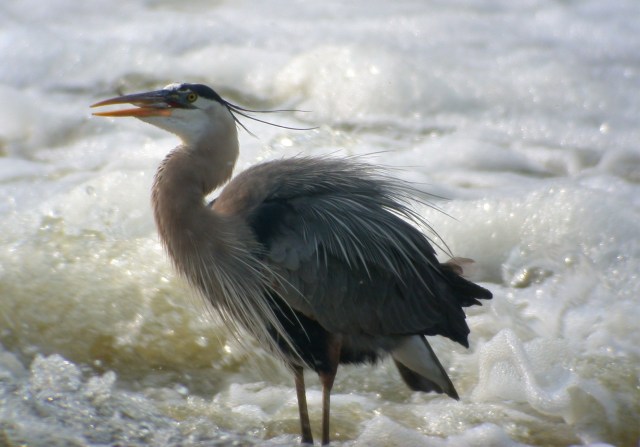
Chris_Cudworth_GBHeron.jpg

Photo by Christopher Cudworth

It would have much nicer for me to have seen the Smith’s longspur in broad daylight. It’s a thrill to see a rarity like that, especially a bird that one has never seen before. That brings the mystery of the world just a bit closer in some way. A sense of wonder returns in that moment. It perhaps sounds pathetic to say, but the basic idea of saying “I’ve just seen something new” is enough to make the world seem a better place.


But it is just as joyous to see familiar things in a new way. Such was the case on the day that I took that photograph of a great blue heron fishing in the aftermath of a dam. Every feather on the bird seems alive, does it not?

PRs

The experience of seeing something new (whether common or rare in nature) is much like setting a PR in endurance sports. There’s the thrill of doing it. Then the joy of sharing it. It brings back your sense of wonder.

Sometimes we have to adjust our notions of what constitutes a “new” accomplishment. As we age, it is no longer possible to break or lifetime records. I could no more run a sub-31:00 10k at the age of 60 than I could expect to flap my arms and fly to the moon. It isn’t physically possible any more. My heart can’t pump the blood that fast. My muscles have changed. I’m heavier. All these factors make it impossible to perform like I once did.

But last spring I ran 6:50 pace for a 5K, and it was thrilling to feel that fitness level despite the fact that my PR is almost six minutes faster for that distance.

Rare opportunities

We all need to look at the opportunity to do something “new” as ‘rare opportunities.’ That is, we can rediscover ourselves through a will to find new ways to enjoy what we’re doing. Just as it is still a thrill to see an entirely new species of bird in the field, it is fun to add up the miles of training and go out to perform the best I can on a given day.

Because when you think about it, life itself is a rare opportunity. You only get one chance at it. Make it a new one every day.

Posted in 5K, running | Tagged , , , , , , , , | Leave a comment

To equal or surpass the Art of Dying

Art of Dying.jpgThere’ll come a time when all of us must leave here
Then nothing Sister Mary can do
Will keep me here with you
As nothing in this life that I’ve been trying
Could equal or surpass the art of dying
Do you believe me? 

 The Art of Dying ––George Harrison

(To read this blog in its full glory, click through from the email to We Run and Ride.)

At the age of fifteen I’d sit with two big stereo speakers on either side of my head and listen to the epic album All Things Must Pass by George Harrison. By that time in his life, George was tired of being a Beatle and his double album served as a release from prison as a second-tier songwriter to Paul McCartney and John Lennon.

A few of the songs on that album had obviously been written while George was still a Beatle. But if the White Album split the group into factions, and Abbey Road served as a swan song for the studio era, the release of Let It Be made clear that the group was in the act of dying of its own inertia. The Beatles were becoming single-entities, discovering life on their own terms. The thing called The Beatles had to die for that to happen.

Breaking up

Beatles.jpegFew could believe that the light and life those guys had brought to the world could  collectively flicker and go out. From Beatlemania to the raucous joy of Hey Jude played live for the world, the Beatles broke all the rules.

But as George pointed out with his album All Things Must Pass, there is nothing in this world that truly lasts forever. Lying there on the living room floor with that album flowing through my brain, I tried to absorb the meaning of those lyrics. Surely I understood the message of Isn’t It a Pity in both its fast and slow versions:

Isn’t it a pity
Isn’t it a shame
How we break each other’s hearts
And cause each other pain
How we take each other’s love
Without thinking anymore
Forgetting to give back
Isn’t it a pity

But even though it felt like it one could die from lost friendships and even lost loves, it did not equate to actual dying.

Feeling loss
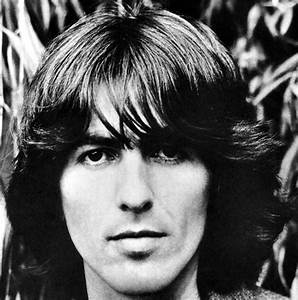
Harrison.jpegWhile we all feel loss in our lives in one form or another, by the time my teenage years were in full swing, I was beginning to more clearly understood what it meant to win or lose.

After all, I was one of the most competitive kids to walk the earth. Whether this was out of fear or desire or insecurity I’ve not fully deciphered. But it was a fact of living that I could not stand to lose.

The ego-boosting desire to win rose like a fever in me while playing sports such as basketball, baseball, soccer, track and cross country.  I did my share of winning in all those sports. But the desire to conquer others didn’t stop out on the fields either. I strove to win in table tennis and foosball and whatever competitive endeavor I could find.

I now realize that all that desire to win was founded on a determined (and perhaps desperate) desire to live life to its fullest. I simply felt most alive when I was winning. And it was also done in defiance to all who doubted me. That is the chiaroscuro of competition. Lights and darks.

Shifting sands 

The desire to win or to avoid losing is interesting in the grand context of life. Because now that I’m old enough to have actually ‘lost’ several people near and important to me, the entire concept of loss has shifted dramatically.

To make the issue of dying even more interesting, I know many people who consider dying a sort of victory over life. They believe that eternal life awaits them after they pass from this one. Their Christian faith provides assurance their spirit will somehow carry on once their earthly body dies. Some even believe they will get an all-new body in heaven. If that is true, we all become recycled beings, renewed only by the process of giving up an earthly existence.

What dying looks like

I’ve sat by the bedside now with both my parents as they died. I’ve also experienced the death of a spouse, and also a father-in-law, and both grandparents on my late wife’s side. Thus death is no longer the grand mystery that it once was. I know what dying looks like.

Cud with Maravich skills

At the age of 13, spinning a basketball on my finger

Other than dying of old age, it seems we all lose someone to tragedy along the way. I had a college track teammate who died when he became severely dehydrated from a spike in temperature due to the effects of a cold and fever that got out of control. That was a tragic, sudden and inexplicable death.

It seems we all lose friends or classmates to events such as traffic accidents, cancer at a young age (or any age), drug use or freak accidents. At a tender age, you suddenly realize it could happen to you. So is life just a competition to avoid such fates? Is it all just about delaying our time of death? Or is it about denying that we die at all?

I knew a woman who lost her husband in her middle 40s. She immediately married the man’s twin brother. He moved into the house and started wearing his brother’s clothes. The entire experience freaked out her children. And for good reason. That was denial personified. There was no grieving. No real acceptance that a death had ever occurred.

And that’s not exactly natural. We should grieve our losses. It is the healthy and respectful way to consider the meaning of that person in our lives, and to renew our own spirits as well. The Art of Dying is not limited to the person who dies.

Not very artful

Sudden calamities are perhaps not considered an artful way to die. But the fact of the matter is that life can be an ugly business. Even the death of Jesus was a harrowing ordeal. Yet that event has been canonized and celebrated by the Christian faith as the most artful death of all.

Pre-determined. Destined to happen. Sacrificial in its nature. Redemptive in its significance.

The Christian faith says that Jesus conquered death and rose from the tomb to walk about the earth once again. The Bible maintains there were witnesses to this event, and proof enough that Christ broke physical laws to artfully demonstrate that having faith in the Lord will provide us all with eternal life.

What comes after

But not everyone is convinced of that reality.  In a cryptic way, the challenge of understanding death and what comes after is what George Harrison wrote about in his song The Art of Dying.

There’ll come a time when all your hopes are fading
When things that seemed so very plain
Become an awful pain
Searching for the truth among the lying
And answered when you’ve learned the art of dying

Serving as both witness and guide (to some extent) to the act of dying in so many people close to me has produced a strange and sometimes disturbing objectivity about death. There are times when I feel a sense of guilt about not being more ravaged by loss of those close to me. But a last breath is just that. It is final. And in that knowledge there is a sense of closure in something I could never understand at the age of 15, or 30, or even 45 years old. It can take a long time to understand the art of dying.

Come again
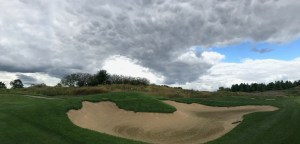
CantignyThen there are pliable notions of what death really signifies. George Harrison seems to suggest a belief in reincarnation. That is the idea that we live multiple lives or get to keep coming back for another try at improving this thing we call life.

It’s a tantalizing idea, and I don’t quite buy it. Yet it dwells so closely in space to the Christian concept of eternal life that I don’t reject the idea either.

There’ll come a time when most of us return here
Brought back by our desire to be
A perfect entity
Living through a million years of crying
Until you’ve realized the art of dying
Do you believe me? 

Let your light shine

After my wife died, one of my daughter’s friends visited our house a month later and experienced a mysterious appearance of three lights in the very living room where my late wife had passed away. Those orbs appeared at exactly the point where head was resting as she passed away.

There are many theories about spirit and energy and the existence of these aspects in dimensions of time and life itself. So I don’t reject that occurrence either. The young woman who saw the red, white and green orbs is an astronomer by training and a scientist with a cold eye for reality. She is not prone to making things up for effect.

What I’m saying here is that most of us begin with the notion that our existence is a form of competition to stay alive in this world. Yet somewhere along the way, it evolves into something else, a competition of sorts to understand reality itself. Victory comes not from conquering life, but from accepting it fully. That is the Art of Dying.

Temporal reality
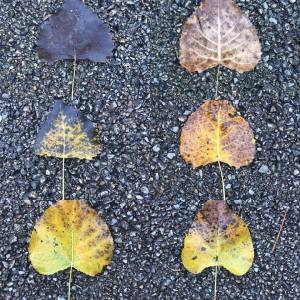
Cottonwood leavesIn that “game of life,” the only losers are those who refuse to seek real awareness and give it a chance to sink in. Our notions of temporal reality may be the limiting factor in that pursuit. That’s when the refrain lyrics from the Art of Dying take on real meaning:

But you’re still with me
But if you want it
Then you must find it
But when you have it
There’ll be no need for it

Perhaps you don’t like to think about dying. Perhaps the idea frightens or depresses you. But that is the opposite of understanding. Living in denial gains you nothing. Living in curious wonder gains you everything. That is the art of living that you gain from learning about the Art of Dying.

Christopher Cudworth is author of the book The Right Kind of Pride: A Chronicle of Character, Caregiving and Community. Available on Amazon.com. 


Posted in competition, cross country, evangelical Christianity, track and field | Tagged , , , , , , , , , , , , , , , , , | Leave a comment

Will that be donuts or doughnuts for you?

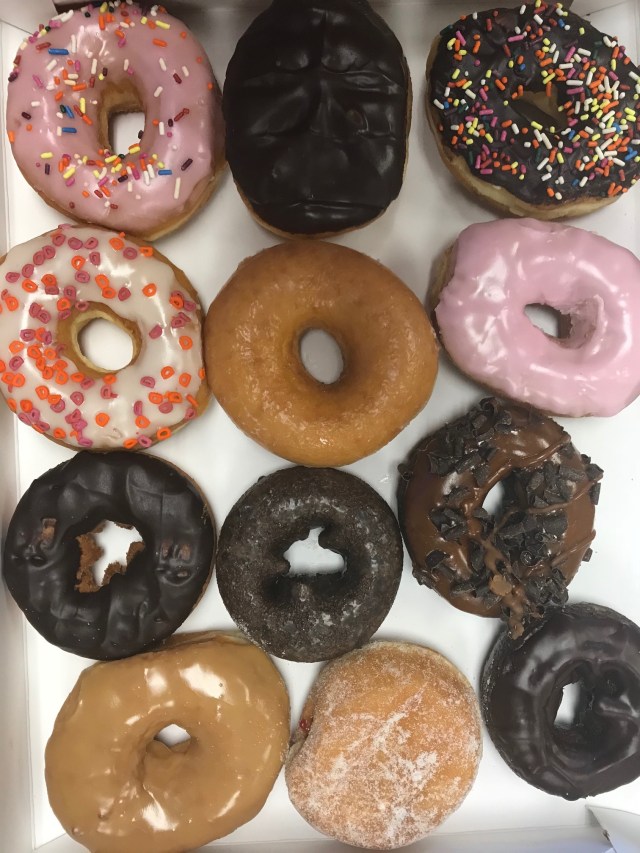
Donuts.jpg

To read this blog in all its glory on WeRunandRide, please click through from email. 

This morning I stopped by Dunkin’ Donuts to buy a dozen tasty treats in celebration of a work anniversary.

At the counter I was asked by the attendant whether I wanted to pick them out myself or let him choose a dozen for me. I was thinking about that even before he said it, and had already determined that asking him to pick out the donuts I chose was really kind of obnoxious. After all, they’re only donuts, not jewelry or a lifelong choice like a tattoo. One does not need to be that fussy about which donuts go into the box. That process has to drive the donut people crazy. He filled the box up with 12 donuts, and I was on my way.

One for the money

ChocodonutI suppose there are people in this world that hate donuts, and for all the right reasons. They’re high in all three bad categories of food: sugar and carbohydrates and fat. The trifecta of pudge.

Despite all these drawbacks, donuts really taste good. Some even offer a textural experience. Applesauce donuts come to mind.

At the office I opened up the box and pulled out a chocolate donut. The rest I left for people to scarf on during the day. My chocolate donut with the chocolate flecks let me nibble away in that fashion reserved only for something nasty good to eat. So I was satisfied.

Shaq says it all

This weekend we watched an episode of Real Sports with Bryant Gumbel. They interviewed Shaquille O’Neal, who shared that he’s a giant booster of Krispy Kreme donuts. He’s both a spokesperson for the company and an investor. Shaq said he only does testimonials for products in which he really believes. Then he shared, with a smile, “The Shaq brand is fun.”

When the interviewer teased Shaq about his penchant for donuts, the Big Man dared him to poke him in the mid-section. “It’s rock hard. Moderation in everything is key,” he replied.

Shaq is 7’1″ and 380 pounds. But it is his business acumen and smarts that seem to be the biggest part of the man’s persona. Yet he’s not afraid of a donut or two. In moderation.

Which is worse? 

DD DonutThe same could probably said for the rest of us. Many who run and ride like to do so because it affords us the luxury of the occasional donut (or doughnut, which somehow seems worse to say) along the way.

The new Trek cycling catalog for 2018 even features a double-page spread featuring a big wall painted with donut images and bikes leaned up against it. The point being: You can afford a donut if you go out and ride eighty miles beforehand.

Not on the daily menu

We all get that excess carbs and sugar clog create fat that clogs the arteries, puts plaque on the brain and can lead to heart disease. Donuts should not be on the daily menu, You know better.

I still laugh when recalling how one of my high school cross country teammates scarfed down a donut right before the race. He had a horrible run as a result, and threw up. Donuts are not ideal pre-race fare. No one is suggesting donuts or doughnuts are even good before a workout. Eat a Larabar instead. Those will digest at least.

But Donuts? Doughn’t go there. 

Droolworthy

But go ahead and drool at the donuts in the photo above. I took that photo myself, and it amounts to a special occasion admission that I ate the one with the chocolate bits stuck to the chocolate frosting. And it was damned good.

Why not enjoy life a little? Or a lot.

Just know the next hill may feel a little harder when you climb it. That is how this all works. There’s a price to pay for every indulgence in this world.


Posted in Christopher Cudworth, competition, healthy aging, we run and ride | Tagged , , , , | Leave a comment