Frog legs

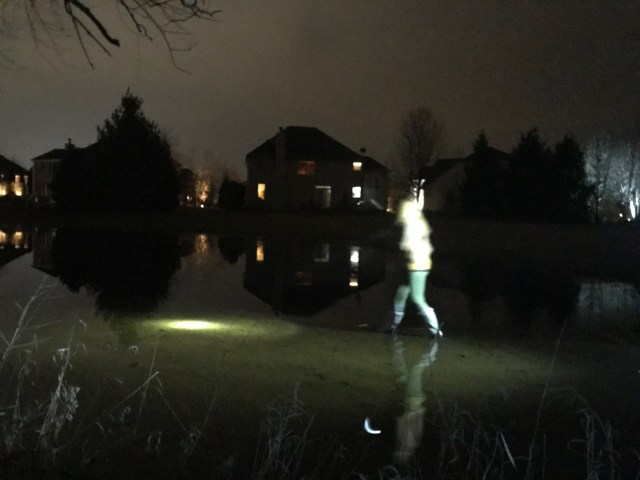
IMG_1503.jpgLast night the spring temperatures moderated here in Illinois. The air was calm and the collective voice of chorus frogs singing in the wetland behind our house could be heard inside even with the windows closed. So we grabbed our flashlights and waded into the wetland to see if we could find a frog and get a photo.

It shouldn’t be hard, but it is. In case you’re not familiar with the call of chorus frogs, when singing together they sound like a single high pitched note. Heard closer, each frog makes a noise like the sound of a finger clicking across the tines of a plastic comb. It has a creaking quality, and even a single frog is quite loud to the ears. It is equivalent to turning the sound up about halfway on your car stereo. These little frogs are loud.

montreal-sept-15-10-western-chorus-frog-for-extra-serie.jpgBut they’re not large. Chorus frogs are not much bigger than the length of your thumbnail. Yet their ability to fill their throat sacks with air and pump out noise is quite well developed. Amphibians have a long and colorful history in the evolution of the world. This wonderful description from ThoughtCo.com gives just a snippet of why amphibians are so significant to understanding our own position in this scenario:

Here’s the strange thing about amphibian evolution: You wouldn’t know it from the small (and rapidly dwindling) population of frogs, toads and salamanders alive today, but for tens of millions of years spanning the late Carboniferous and early Permian periods amphibians were the dominant land animals on earth. Some of these ancient creatures achieved crocodile-like sizes (up to 15 feet long, which may not seem so big today but was positively huge 300 million years ago) and terrorized smaller animals as the “apex predators” of their swampy ecosystems.

Pecking orders

Now, chorus frogs aren’t about to chomp on your foot and suck you down into the watery abyss. But there is a pecking order in this world among all animals. And even chorus frogs have to eat. A site called BioKids.com shares: “Chorus frogs eat a variety of small invertebrates, including ants, flies, beetles, moths, caterpillars, leafhoppers, and spiders. Newly formed froglets feed on smaller prey, including mites, midges, and springtails. Tadpoles are herbivorous, foraging mostly on algae in the water.”
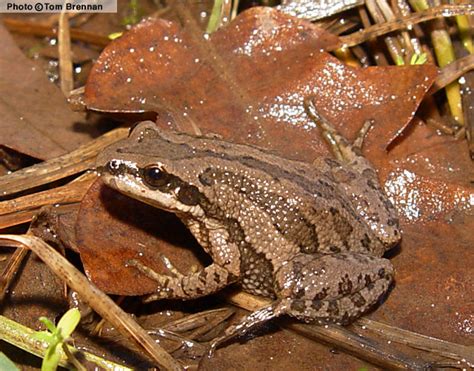
Chorus frog.jpegWhile singing, the last thing on any chorus frog’s mind is eating. They are basically a pack of horny males trying to get a chance to mate. The louder the call, one must suppose, the more inviting to the female. Such is the order of nature down to some of its smallest occupants.

Humans afoot

So we walked out into the wetland behind our house with our flashlights hoping to find  one boldly calling male whose ardor put him in view. Alas, we had no luck. Chorus frogs excel in camouflage (see their cryptic coloring?) despite their loud calls. You can be standing right above them listening to their calls and still it is hard as heck to see them.

I’ve actually had more luck during daylight than at night. A few years back during a Naturalist Certificate class, we paid an April visit to a preserve where chorus frogs were singing in the middle of the morning. They often sing all day and most of the night. And for some reason one of these little guys was perched right on top of a knob of wood singing his little guts out. The tiny throat sack below his froggy chin pulsed with each call. It was fascinating to see and hear.

Earning froggy credits

Way back in college, I enrolled in a field biology class where part of our spring project was to capture no less than six species of frogs. We’d release them after chronicling their ID in the classroom. But there was a very short window of time in which it was possible to even find all six frog species. There were spring peepers and cricket frogs. Leopard and green frogs. Bullfrogs and chorus frogs. And if one was really, really lucky, one might find a wood frog calling. But that was extra credit.

IMG_1498.jpgAt one point, my frog hunt involved wading out into a cold spring where the water was just above forty degrees. I was skinny as a rail back then and possessed of my own set of scrawny frog legs from all the running we were doing in spring track and field. We didn’t have wading boots so the task of entering the water was chilling to say the least. But I was struggling in field biology because the lab work was vexing to my art major brain. So I needed every ounce of credit I could gain. So the frog hunt was on.

Standing out in that cold spring was enlightening. After a bit, the cold wore off and it was just the dank pressure of water on my thighs. Feeling my way across the bottom with my feet, I proceeded slowly toward the sound of some frogs singing in the center of the pond. It wasn’t deep, but it was dark water and smelled vaguely of the history of the entire earth.

We are all formed from water. Descended from amphibians. Borne of the ages. And that afternoon after the frog hunt in the cold spring, I felt cold-blooded during the mile run in which I competed. I couldn’t warm up well no matter how much I tried. Lesson learned: warm-blooded creatures need fat to keep themselves warm. I had none at the time to apply to that purpose.

It took a while in that cold spring to catch a chorus frog. But eventually, I snagged a pale specimen and plopped him into the jar with the holes poked in the lid. I also captured a spring peeper that day. But getting one frog into the jar without allowing the other to hop out was quite a trick while standing hip-deep in water so cold I did not know if my testicles would ever return to normal size again.

Frog assembly

Back at the dorm I already had a small aquarium filled with the other frogs required for the assignment. I assembled partitions to keep them apart. But somehow the leopard frog that I captured earlier that day wriggled its way around its wooden partition and snapped up my chorus frog in its mouth. I quickly jammed a hand in there and picked them both up. The pale legs of the chorus frog were still protruding from the mouth of the leopard frog. So I gave the sides of his mouth a squeeze because I knew the bone structure from having dissected a few leopard frogs over the years. That made the frog release my other specimen and I made better preparations to keep them apart.

Forty years on

So it was with a bit of nostalgia that I crept around the wetland last night in hopes of seeing one of these little buggers singing. I’m grateful to live so close to a wetland like this. I could turn and look at our house where the lights were on and I knew it was warm inside.
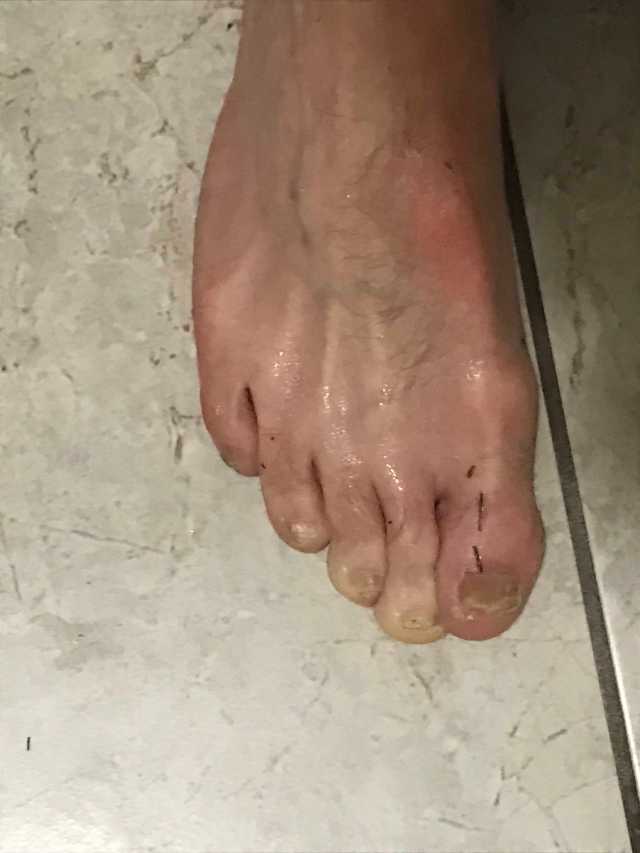
IMG_1511.jpgEventually, my toes really started to feel numb. My daughter and her beau were also out looking, and one hopping frog was spotted. But no photos were captured. So we headed back inside and I took off my old running shoes and my soaked jeans in the garage, then threw the lot into the laundry.

Round two

I have not given up this year’s frog quest. There is still the opportunity to head out there in the daytime. The frogs are singing and won’t stop for at least a week or two, maybe more.

After all, there is breeding to be done and millions of years of evolution to continue, and that’s a challenge these days. The world is not the vast domain of amphibians anymore. The odds against them have increased in many ways. Between water pollution and holes in the ozone, busy roads and drained wetlands, amphibians are struggling to keep their toehold in this world.

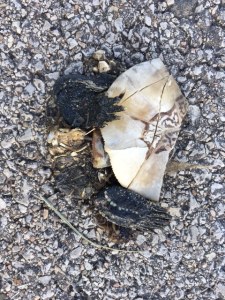
Fate alone can be harsh. Last year our little wetland released a large hatch of green frogs that emigrated in all directions. Their smashed bodies were seen all over the road and frog legs were everywhere. An enterprising flock of gulls could have eaten like kings.

But mostly, such events amount to squander. That is the way of nature. It works hard to evolve something unique and useful such as frog legs and more often than not, tosses all that effort away to extinction. 99% of all the living things that ever existed are now extinct.

Some might argue that’s a good excuse to ignore the effects of human activity in this world. The extinction rate among plants and animals in this world is rising as the human population increases. The competition for food and space and resources is all-consuming. But it is possible that we can consume ourselves to death.

To feel the chill realization of your own frail humanity, I suggest wading into a cold spring wetland. And stand there a while. Listen to the call of frogs echoing to you through millions of years. And realize that all you’re really doing is standing on your own set of frog legs.
 

Posted in Christopher Cudworth, track and field, Uncategorized | Tagged , , | 2 Comments

It’s all about revenge

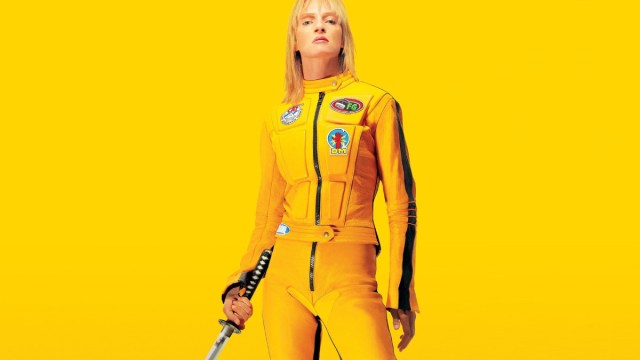
beatrixkiddoFollowing a late meeting last night, it was hard to get to sleep when I got home. So I toggled back and forth between a pair of movies on cable. They were right next to each other on the channels, so it wasn’t hard to do.

The first flick was Kill Bill Vol. 1, a Quentin Tarantino saga that like most of his movies revolves around some form of revenge. In this case the movie starts with a horrific mass slaughter in which a bride named Beatrix Kiddo and her party are shot to death at a wedding in a small Texas church. Gun violence to get the heart of the tale going. It’s the American Way.

The assassination attempt is an act of jealousy executed by a mysterious character named Bill a former lover who is angry with the woman he loves because she has given up her life as a paid assassin to settle down and lead a normal life. So Bill sends a team of assassins to wipe out the entire wedding party.

Comatose and vulnerable

dBcAx_MNqdtlIn her recovery from the murder attempt, the erstwhile bride lies comatose. A chauvinistically sick male attendant sees opportunity in her condition, and uses her for sex. It all serves as coarse symbolism for the manner in which so many men choose to treat women as a sexual and dispensable object. (Stormy Daniels anyone?) But the serial rapist pushes his “luck” too far when he decides to rent the comatose body of his victim out for cash to another craven suitor.

Because that’s when Beatrix begins to emerge from her comatose state. She desperately grasps enough awareness to wake up and bite off the rapists lip and dispatch him in a pool of blood. Snatching a knife from his belt she lies in wait on the floor. Her own legs will not yet work. Get that wicked bit of satire? She can’t just walk away.

To take down her next enemy, she slits his Achilles with the knife and then repeatedly slams his head between a metal door and its frame until he dies. It’s all gruesome stuff, but you really can’t blame the girl. It was gut-level revenge, and they clearly had it coming.

Social networking

uu.jpegThe other movie I watched was The Social Network. That’s the story of Mark Zuckerberg and how he created Facebook. The stunning part of movie was that Facebook as a “thing” only emerged in 2003. It’s only been that long? Well, that was fifteen years ago. Time flies when you’re Friending people.
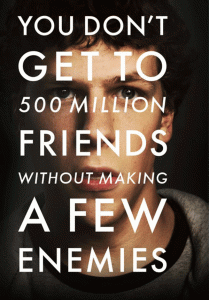
One of the best lines in the movie actually helps explains much about how Facebook recently got in trouble and is being questioned about its loose policies on data scraping. All of this is still a fairly new phenomena. Social networks over the Internet didn’t even exist twenty years ago. The scene shows Zuckerberg’s partner Eduardo Saverin asking for permission to sell advertising on the platform. Mark Zuckerberg isn’t ready for that yet. He tells Saverin:

“We don’t even know what it is yet. We don’t know what it is, we don’t know what it can be, we don’t know what it will be. We know that it’s cool, that is a priceless asset I’m not giving it up. We don’t even know what we have .”

Tales of revenge

large.hXAOowSO1FXWG9t2raPX2GE1cE1xW_OgZoAMaXcxTh0The fascinating thing about these two seemingly unrelated movies is that they both begin and end as tales of revenge. Beatrix Kiddo wants to kill the people who tried to assassinate her. Mark Zuckerberg wants to “kill” anyone who gets in his way. The Winklevoss twins want financial revenge against Zuckerberg for ostensibly stealing their idea from them. Eduardo Saverin wants revenge for being cut out of the deal as Facebook grew into a giant company.

So this all revenge-seeking begs the question in all of us: Have you ever sought revenge in your life? If so, what were your motives?

Running into revenge

I know that I wanted to seek revenge at one stage in my life. As a competitive kid, I never liked to lose. As a sensitive kid whose feelings were easily hurt, I also didn’t like how the world treated me on a number of fronts.

And I’d been psychologically bullied starting in grade school. Some kids were always tormenting others. I remember one kid kicking my band instruments in front of the bus just as it was pulling up to the stop. By the time I reached sixth grade, I started getting into fights to prove how tough I was.

Some of that ‘fighting the whole world’ stuff likely emanated from a cycle of anger within my family. My father thumped all us brothers and was prone to fits of anger. Together all these circumstances led to something like a desire for revenge.

So we all poured energy into sports. It was a great release for energy and also for anger. If we sought revenge on anyone, it was through winning. That’s a most healthy response for the most part. So we played basketball and baseball and soccer. All of us excelled in our way. But for me, it all eventually came down to running. Revenge is sweet when you do it with your own two feet.

Pounding the pillow

Through fifteen years of hard competition starting in middle school and extending through my late twenties, running was the mode I used to dissipate anger and deal with the depression and anxiety that slots into my genetics.

Moon Eclipse TwoYet after all those years, I still woke up in the middle of the night at age 29 pounding the pillow for some unknown reason. So I thought deeply about it, and came to the realization that in my past there was a single moment of fear and anger that drove my desire for revenge on the world. Much of it stemmed from an incident at the tender ago of seven when something in me broke inside at the sight of my brothers being thrashed by my dad for some act sort of insubordination.

Once that realization surfaced, real healing could begin. It certainly did not happen overnight. Getting rid of anger and the desire for revenge against evil forces in this world takes time. Thus the journey of Beatrix Kiddo from a near death experience to exacting sweet revenge and liberation feels familiar in some respects.

Revenge all around

For other people the journey of revenge and proving themselves gets funneled into business, or making money. At least those are largely constructive endeavors. But not always. We’re all witnesses to the antics and rage of a man who wants revenge against anyone that wrongs him. But I’ll admit that I get that. I get the motivation. The inner rage. The sense of being wronged.

But along the way, healthy people ultimately recognize that revenge is not what life is really about. Or at least it shouldn’t be.

The opposite of revenge

For one thing, there is love, which is the opposite of revenge. And forgiveness, the opposite of payback. Most of all there is loving creation and the call to grace.

But sometimes you also have to fight for love in this world. To keep it alive. To foster it  and help it stand up against the forces of evil. These include jealousy, revenge, fear, prejudice and distrust.  Each of these drives so many actions and responses in this world.

And when all else fails, or you’re just too tired to fight any more, it pays just to go to bed and sleep it off. That’s what I did last night after a tough meeting that had my head spinning and kept me awake for a while. I let Beatrix do her thing and watched Zuckerberg snark his way through discussion with the lawyers. And I realized, “Perhaps I can’t solve all this in the moment.”

And the best revenge of all can be going to sleep.

Posted in Christopher Cudworth, competition, mental health, Uncategorized | Leave a comment

Walking wounded

Fit DotsLast fall I should have listened to my instincts and gone ahead with surgery on the torn meniscus in my left knee. It had been popping out some last summer, but when it stopped acting weird going into winter I thought perhaps that surgery wasn’t necessary. When I met with the doctors, they fairly warned me it was a “significant tear.’
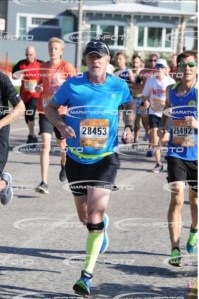
So I was wrong not to get it fixed last December. Now I’m walking around wounded and making plans to have the surgery done as quick as possible. The minute I started back into cycling late this winter, the knee started getting funky.

What caused it? 

The MRI last fall showed the damage. I caused it by hurdling a street cone on a snowy road at the Sno-Fun-Run back in 2015 or so. At the time, I did not know the meniscus was harmed. It felt like a hyperextension of the knee, and that much was true.

But it’s gotten worse by the year, and the meniscus actually sticks out from the knee on some occasions during a run. Then last summer it sort of slid out of place and I spent a day hobbling around. So I kept deceiving myself that I could get along.

Torn about it

GASP 3That’s how it is with injuries. I wasn’t necessarily trying to hide from the fact that I was a member of the Walking Wounded. I’ve been through two (count ’em, two) torn ACL incidents. The first was profound during an indoor soccer match. It was traumatic, sudden and horribly life-changing.
But I had surgery on that knee and replaced the ACL with a cadaver part I called Jake. Two years later I tore it again. Jake died all over again.

From then on, I’ve gotten along fine without an ACL in the left knee. I just don’t play ballistic sports. Running, riding and swimming are all fine and dandy.

Then I had to go get fancy (and stupid) a couple years ago by jumping over that street cone. Now the consequences of that faux-youthful indiscretion have got me by the meniscus. I have run with a knee strap to keep the thing in place, and that works while I’m not out riding 2-3 hours at a time. I had a bike fit last fall to make sure my alignment was good. But some things are just part of the deal.

Bring it on. Maybe not. 

The meniscus is a pad of tissue that cushions the inside of the knee. It’s there to keep bone from rubbing on bone. So I hope that cutting a chunk out won’t turn into arthritis on the inside knobs of my knee. It’s hard enough getting older without bringing things on yourself.

In the meantime, I walk around with a touch of a limp. It usually loosens up during the day, but several times over the last couple years, the knee has buckled a bit and it hurts then. So I try to be smart in all my movements. Life becomes a ginger dance, and I’m not talking about being a redhead.

Present in the moment

Walking gingerly means being present in the moment so that you don’t make things worse by stepping off a curb the wrong way. Some of the worst exaggerations of injuries happen in the most benign of circumstances.

There’s a little pressure on me going into all this. Come late May, my wife and I are going to be in North Carolina at a triathlon camp. We’ll be riding 200+ miles in the hills and that means I need to get some fitness together before then. But having been through injuries before, I believe that after a couple days on crutches, it will actually be good to get out and pedal the knee and the rest of me into shape. Perhaps there will be some physical therapy involved. That would be a good thing.

This afternoon if the weather holds up like it says, I’ll be getting out for a two-hour ride toward twilight. It’s funny how the knee doesn’t hurt while I’m riding, but running the next day is more than tricky. It hurt like hell last Sunday morning. Pain is always trying to tell you something. We just have to learn to listen.

And if we don’t, we get to wander around like the Walking Wounded.


Posted in cycling, cycling the midwest, healthy aging, running, swimming, tri-bikes, triathlete, triathlon, triathlons | Leave a comment

We all shine on

Summer family.jpg

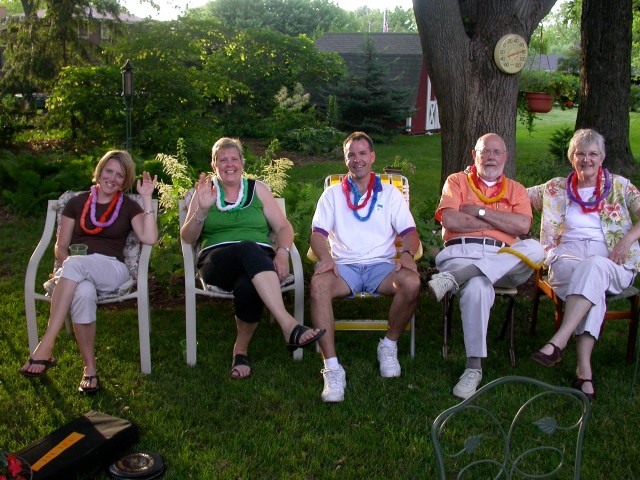
Linda (second from left) during a graduation party with neighbor Heather Cunningham, her brother Paul, father Mel and mother Joan Mues.

It has been five years to the day since the woman to whom I was married for 28 years passed away. On March 26, 2013 she died quietly in the living room of our home where over the last couple weeks our friends and family had gathered to share in the waning moments of her life.

Yesterday afternoon we held a celebration of that life by inviting folks to a restaurant where we shared wine and stories. My daughter Emily brought lots of photos and many people were moved to relate moments or experiences that represented their relationship with Linda Cudworth

Like a phoenix

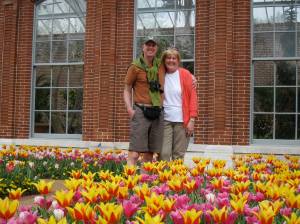
Chris and LindaThose stories were met with smiles and laughter. And there were serious discussions as well. How she’d been so strong through eight long years of cancer treatments. “She battled back from every round, her best friend shared, “Like a phoenix!”
As a firsthand witness to those challenges, I can relate the fear we both felt in that first round of chemotherapy. How she writhed on the couch wishing only to be free from those feelings. The stinging chemicals poured into the human body during chemotherapy mess with your systems and senses. She endured all that to stay alive through multiple treatments and years of trepidation on whether the cancer would return. And it did, unfortunately. Time and again we pushed it back, with a year or so of relative peace between.

She did it to be there for her kids through life’s landmarks of family events and graduations and more. But also to be alive in the moment, and to get back to her joy in gardening and to teach the preschool children she loved. Those were her personal missions of God.

Effects

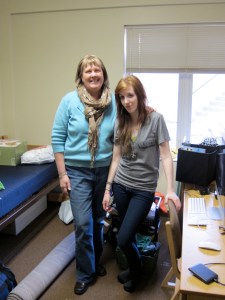
Emily to collegeThose of us who run and ride can appreciate some aspects of dealing with pain to get to a point of joy.

We know what it’s like to live with pain in the moment. We can even understand how its effects and the fatigue that come from hard effort can linger.

But imagine dealing with those difficulties when you don’t choose them. When they are forced on you by whatever odd algorithm the universe allows to introduce cancer in one person and not in the next. It can certainly feel unfair. And that’s the tough part. How to participate in a race where it feels like the only goal is to keep on running. It reminds me of the cycling axiom: “It never gets easier you just go harder.” 

Parallel lives

My freshman college roommate and cross country teammate also lost his wife to ovarian cancer. The likelihood of that has always struck me as odd. His wife was a sweet and lovely woman named Kristi. She had a soft voice and big brown eyes. She was an excellent runner who broke 40:00 for 10k.

When cancer came to her, she went through all those treatments as well. On a couple occasions during visits to Luther College over the years, the two women had quiet conversations about the cancer they both were trying to overcome.

When Kristi lost her brown hair during one of those treatments, it came back curly and gray. But it came back. That is symbolic of how the struggle of cancer can change you. She looked different, but she also looked lovely.

Changes all around

Evan from collegeCancer changes the people around those who are going through the struggle as well. My children kept close tabs on their mom, of course. They wanted to know how she was doing and trusted me to tell them. Yet she was resolute about what she was willing to share when things got tough at times.
When our kids were busy with college or starting out their lives in other ways, she parsed out what she felt they needed to know. “I am doing well,” she’d make me promise to say.

This was true despite all the changes it wrought in her body and mind. The neuropathy in her feet from chemo made it tough for her to walk through the garden. Her numb hands and fingers were just as bad, and one type of chemo drug made the skin of her hands peel away. Yet’s she’d still put on gloves and get out there and dig. When she’d lost her hair the third or fourth time, it refused to come back. Yet she’d be out there in the garden sweating right through the scarf covering her bald head. She was a gamer, you might say.

Racing hearts

That’s how she was from the get-go. She was more of a walker than a runner by habit. But the one time she ran a road race with me, she chose a 10K and trained a few weeks to get in shape. On that base she ran a solid 59:00. Her whole family has a high oxygen uptake. Her brother Paul raced bikes at a CAT 3 level and rode 40K in one hour to help us win a team duathlon at one point. That’s a 24 mph average.

His sister was a goof about the whole ‘take exercise seriously thing.’ I recall one of the first times we ran together. We were trotting along and her long blonde hair was flying behind her. She mentioned that her stomach felt a bit full, and then revealed that she and some friends had just imbibed in quite a bit of wine. My jaw dropped and I laughed at the thought of it.

Golden Leg Syndrome

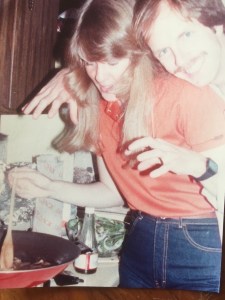
Linda and ChrisSee, Linda often teased me about what she called Golden Leg Syndrome. On the night before races I would seldom agree to go out and party or anything like it. I didn’t want my legs to feel dead from standing around some kitchen for three hours. I’d worked too hard to get into shape to waste it on some social occasion. And that’s the other thing I would not do; drink the night before an important race.
For the most part, she understood all that. She also came to watch me race many times, and more than once I was fortunate enough to win.

Yet the hierarchy of race prizes always bugged her. “They give all these nice things away in the raffle and you win the race and don’t get shit,” she laughed. Which made it even funnier after I won a big race and received Marathon Santa Christmas ornament as the prize. The race was held in August.

Lessons in humility and life

To this day I don’t know if that prize was a mistake or not. But the point was moot. It was a lesson in humility and the fact that life is more about what you’re doing than it is about what you get in return. From that perspective, we evolved a motto during the cancer treatment that was simple and practical: “It is what it is.”

We didn’t ask for more than we should expect, and tried not to complain. Linda’s sole  gripe was that she hated having to be the center of so much attention at times. There was a caregiving group of 80 people that grew up around us to help with rides and meals and other needs. It was all coordinated by one of her best friends and the director of the preschool where she worked. Her name was also Linda, and I joked that during those eight years she acted a second wife to our family. But it wasn’t really a joke. It was true. That woman looked after us like an angel from God.

Celebration of life

Sue with flowers

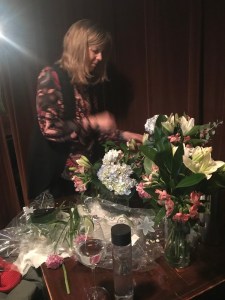
My wife Sue prepares flowers for the event.

Because the true pain of all this was its impact on our children. Yesterday’s celebration of life for their mother was wonderful. And while it doesn’t change the fact that their mom is gone, it does point out that she is present with them through all her friends and even through the woman to whom I am now married.

Everyone gets it. We are family in ways that we don’t even understand sometimes. That was a keen value in my late wife, a love of family. And the fact that that exists in so many ways is a great testament to her influence on so many of us.

And we all shine on.

Posted in Christopher Cudworth, competition, cross country, it never gets easier you just go faster, we run and ride | Tagged , , , | Leave a comment

Cold comfort

IMG_2553Starting a ride at 5:00 pm on a March evening when the temperature is just 48 degrees is a guarantee of one thing. It will get colder as you go. And sure enough, by the time I finished my ride in 1:45, the air had chilled to just 42 degrees and the wind had shifted slightly to the north.
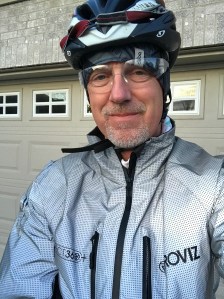
That wasn’t cold enough to generate any real threat to well-being. I had dressed well for the weather with my relatively windproof Proviz360 jacket underpinned by a long sleeve base later and a cycling jersey over that. But toward the end, my arms got cold and my toes too. Fortunately by then I was a mere three miles from home.

Cold comfort and direction

It was sunny and clear throughout the ride. But as the sun sank lower in the sky I was headed directly west on a straight road, and that bright sun became a problem. Vehicles approaching from behind could probably not see me very well on the bike. Even my rear blinking light was little assurance of warning to drivers.

Sure enough, one of them buzzed within inches of me as it blew past. The disturbing thing about that incident is that I was already six inches OFF the actual road riding outside the white line. The driver still nearly struck me. Whoever it was, broke the law.

Three near strikes

That’s the third time this year in fact. Each time I’ve wondered if it was something I’d done to put myself at risk. The lighting conditions were bad yesterday. Yet even in good light one day, a lone driver on a massively open semi-gravel nearly mowed me down.

I do think these close calls were accidental. If they were intentional they are evidence of a truly savage mind behind the wheel. That’s possible of course, but I’m going with the benefit of the doubt that in these instances the drivers just cannot see me.

that means I’ve got to ramp up my visibility game. Or else die.

Mr. Silhouette

The Proviz360 jacket works in any condition other than being silhouetted by the sun. Even the merest glimmer of light makes the jacket light up. But when the sun turns me into a silhouette on the road, I’m at complete risk.

So I can’t ask for sympathy if I’m not doing enough to protect myself. That would be cold comfort indeed, defined as: “quite limited sympathy, consolation, or encouragement.”

No sympathy, and that’s cold comfort

We already know there are many drivers that have very little sympathy for any types of bikes on the road. Some seem ignorant that cycling is not only legal, but there are laws requiring vehicles to give cyclists three feet of clearance in all conditions while passing. Of course, that sometimes means cars would have to slow down and separate hazards while trying to pass with oncoming traffic involved. Some people don’t like to do that. They actually speed up and just try to blow past as quick as possible. Which doubles the danger to all involved.

“The laws don’t apply to me”

It is also clear that many people hate the idea they have to accommodate the laws protecting cyclists. The attitude seems to be that those laws don’t really apply to them. Either they’re in a big hurry to get somewhere or they view the road as their personal property. Thus a cyclist is essentially a ‘trespasser’ on their road.

This seems to hold true across every spectrum of road. From urban streets where cyclists attempt to navigate through a maze of trucks, buses, cars and taxis to suburban thoroughfares and boulevards where everyone is either late or afraid they’re going to be late, cyclists are seen as an infraction against the car culture.

Animated road kill

TurtleOut on country roads, cyclists are regarded with disdain by many drivers, who seem to look at cyclists as an animated form of road kill, one of those necessary evils of driving on public roads. The attitude of road ownership is even more pronounced in semi-rural areas where the farming community faces its share of discrimination as suburban housing reaches into the fields. It all becomes a competitive battle for use of the roads.
It’s never funny when cultural consideration gets flattened by selfish expectations. But then, America is a country that once thought it was fine to keep slaves. it wasn’t that long ago in our nation’s history that was true. Do we really expect that one or two generations is really going to fix that brand of prejudicial ignorance? Or that it doesn’t somehow get pushed into other areas like toothpaste out of a tube?

We’re daily witnesses to the political wishes of those who consider their own aims and fears far more important than the general welfare of the populace. The real Concealed Carry in this country is selfishness. It is the most dangerous weapon in the universe.

Outcomes

So I got home last night with two realizations.

One, I have to light my bike up like a Christmas tree if I really want to be safe. One simply can’t assume that between bad lighting, busy roads, people texting while driving and the general distractions of life that any single driver gives a rats ass about you.

I accept that. It’s cold comfort when you’ve nearly been struck several times. But you can either work to manage that problem, which I plan to do, or die without trying.

Cold comfort realities

It is also true what my buddy told me yesterday about exercising in the cold. He’s a track coach and has produced many state champions. He shared that he keeps in touch with Division 1 track coaches across the country. And one of them told him something that is immensely interesting.

See, track times among athletes in the south and west are generally faster than athletes in the northern states. That’s especially true with sprinters, but it really applies to tracksters of many types. The cold spring weather reduces the ability to produce fast times because athletes can’t perform as well in the cold as they can in warmer temps.

Recruiters of track athletes actually keep tables that adjust the times of runners up north to compare with those who compete in warmer, more southern climes.

Wait till June

Which is cold comfort when you get home after a ride in cold spring temps because you’re pedaling like mad and just not going as fast as you would in June or August.

But there’s a reason for it. The statistics of big time athletes bear it out. And it’s always nice to have excuses for not killing it out there. But it’s even better to have a plan to not get killed out there.

That’s called convergent evolution. It’s life in real time.

Posted in cycling, cycling the midwest, cycling threats | Tagged , , , , , | Leave a comment

Looking forward to a peak experience in the hills of North Carolina

Last Climb Horribly Hilly.jpg

In late May this year, my spouse and I are participating in a triathlon training camp in the hills (mountains?) of North Carolina. It involves a ton of riding over the three or four days of the camp. There will be running and swimming sessions too. What a great way to kick off the season!

There’s only one problem. There aren’t a ton of hills here in Illinois on which to prepare for the trip. Our only real hill-training option is a rise in the Kane County landscape called Campton. That hill is composed of a mound of glacially deposited gravel covered with trees and homes. Cyclists love the fact that a pair of roads peak near the top. Total elevation might be an additional 300 feet, but it’s the best thing we’ve got.

The approach from the east is long and gradual. It starts slow and grows acute toward the end.

The approach from the west is long and steady with a steeper section in the middle. 

The approach from the north is like a condensed version of the east climb. The incline starts slowly and then vanishes where the pavement disappears into the trees. 

The approach from the south is the most difficult. The climb is abrupt from the get-go, with perhaps an 11% grade that levels out to 8% for another 150 yards.

Each of these is a Strava segment, so the efforts can be compared week to week and even year to year.

For variety, the climb from the south can be made longer by swinging down to Route 38 where another long and gradual hill adds a half mile to that approach. This is also a good place to practice tearing downhill at a fast pace. There’s a Strava segment for that section too.

Years ago with a friend, we started the season by doing a couple workouts on the east and south hills doing repetitions. That set the tone for a much better year of riding. I expect to do the same thing this year in advance of the North Carolina trip.

We may also swing up to the Madison, Wisconsin area for a few longer rides in real hills. The Madison Ironman loop is quite hilly and well-known to us. There is a section called Barlow that has 18% grades on it. Try that on a tri-bike and you might wind up walking the whole thing. Bike geometry matters on the steeper climbs.

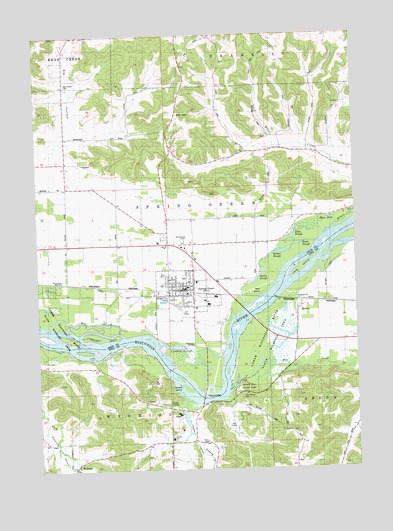
Spring Green Topo map.jpegHealthy hills

The region out by Mt. Horeb,  Dodgeville and Spring Green also has some healthy hills. We’ve ridden the Horribly Hilly ride that starts and finishes in Mt. Horeb. But the ride uses a lottery to gain admission that is too frustrating to abide year after year. It always seems that one or the other of us gets rejected. Then we have to work through the cycling network to find someone who either chickens out each year or can’t ride for other reasons. Then we buy their entry. But it’s hard to plan around that.

In the past, the race has also kept the $10 lottery fee just for applying. Talk about a slap in your cycling face.

Admittedly the ride is fun precisely because it is hard. The finish climbs the southslope of Blue Mound State Park, a glacial rise in the landscape similar to the hill back home in Campton. Only Blue Mound is a lot bigger. The final section comes in stages that take you upwards more than 2000 feet from bottom to top. I made it up that hill without stopping or climbing off the bike. That’s not a huge feat because plenty of people do it. But we take our victories where we can find them. Had the Olympics been hosted in Chicago there was a plan to hold the cycling road race west of Madison, and Blue Mound likely would have figured in that race.

The only trepidation I feel toward the hills of Wisconsin stems from the bike wobble incident of 2012. That’s when I crashed at 40 mph, busted a collarbone and was lucky nothing worse happened.

So for me, the training camp in North Carolina promises to be a challenge and a peak experience. I’ll be riding the Specialized Venge Expert, a more stable and trustworthy steed on the downhills. That could prove to be pretty important. So I’m looking forward to it, but also respect the fact that there could be moments that make Blue Mound feel like a walk in the park.

That’s what peak experiences are all about.

Posted in climbing, cycling | Tagged , , , , | Leave a comment

Emptying the full magazine

IMG_2169There is hardly a day on this earth when I don’t feel like expressing myself in some way. Whether through writing or art, photography or conversation, that’s the thing I live for.
But once in a while, it feels like all the ammunition’s gone. I have an empty magazine.

Those who know this blog will no doubt find my use of a gun reference to describe a state of mind quite ironic. But in this case, an empty magazine is both a good and a bad thing.

More than one time in my life I’ve also found myself shooting blanks. That’s not a sexual reference. Sperm potency was never a problem and I’m thankful for that. I have two grown children to show for that.

Yet as an endurance athlete, I’ve faced many situations in which I’ve “pulled the trigger” and nothing happened. Pumped the accelerator. Nothing. Sometimes our training and racing takes us to a point of emptiness. Hit the wall. Gave up the ghost. Shot the wad. And that was a sexual reference.

When I get tired, the preservation instinct that comes over me is one of ambivalence. I cease caring about the things I usually love. That can include the creative endeavors through which I feel truly alive.

And I hit a point of that stale consciousness this afternoon. The computer screen felt like a wall with scribbles on it. Even the dopamine normally pumped into action by social media just laid there.

Some of this comes from having just completed a project on which I’ve been working for more than a year. Pouring yourself into the writing of a book takes concentration bordering on obsession. But when you’re finished and send it off for review by willing readers, it’s normal to have a bit of a regressive phase.

It’s the opposite of grief, in a way. But just as exhausting in its way. It reminds me of the times when I’ve pushed through an entire competitive season of running. Training to a peak is quite a rush. There are risks involved, and that is true in writing too. Sometimes you get to a point where you realize there are thoughts to be rearranged. So you cut and move things around. Then it sings, and you almost sigh in relief.

That’s how it is with training too. You can map out a plan any way you like, but there are always periods where you have to break with the plan. Catch your breath. Change it up.

And for some reason, I was drawn this afternoon to a place where I used to spend much more time. Our public library is a big place, and the New Books shelf used to be a favorite haunt.

So did the magazine shelf. So I walked back there and perused the covers of magazines to which I once subscribed. Their covers were still familiar. The designs were still much the same.

It made me think of all the revelatory moments had while reading the words inside those magazines. Harper’s. Utne Reader. Even National Wildlife. They shaped me. Challenged me. There was Runner’s World on the shelf too. All that advice. What did I learn?

Today wasn’t the day I wanted to dig back into the magazines. My internal magazine was empty, you see. I was weaponless. Harmless. Content that I’d emptied my magazine for what I consider a very good cause. Which is nothing short of changing the world.

Some people choose to do that with a gun, emptying their magazines in a school, a church, a concert or a campus. That is their manifesto. But it is an uneducated guess fueled by the anger and complicity of all those who secretly share their fears, their prejudices or their sheer love of weaponry. To me, they’re all the same. The line between sanity and madness is as thin as the curved surface of a trigger. All it takes to breach the line is an appetite for self-expression and a touch of disenfranchisement. The result is carnage, intentional or not.

That’s why I’m happy to admit that my magazine is empty. My anger with this world has a healthy outlet. I may hurt people sometimes. That I will admit. But I also know that I’ve healed as well. Encouraged. Even inspired.

And that’s a magazine worth refilling. IMG_2169.JPG


Posted in Uncategorized | Leave a comment

Light thoughts on a dark morning


B Oil and Water Bright.png

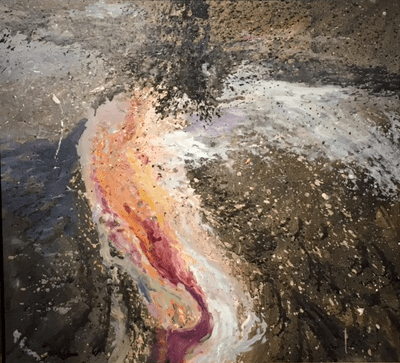
Oil and Water, acrylic by Christopher Cudworth

Gosh, it was dark out this morning at 5:40 when I stepped out the door to run. It was hard getting out of bed knowing it was cold and windy outside. But I gathered up the gear to run outside and tucked the zipper tabs of my Proviz360 jacket into the pockets so they wouldn’t whap-whap-whap on my chest during a three-mile run.


I’ve been doing this running thing so long I almost feel like a hologram out on the road. My conscious thoughts seem to emanate from a hollow space in the brain evolved just to generate light thoughts on a dark morning.

It is often the dark thoughts that rattle around the front of my brain at first. Those are the thoughts that weigh your head down. Force it back on the pillow. It might be hard to describe why they make your mind feel so heavyif you’re not a person who experiences dark thoughts much. But they do.

Typically it takes a half mile to shake free from dark thoughts rattling around the forehead. Whether financial or relational, work-based or political, those dark thoughts cling to the inside of the mind like thought velcro. They make a dull ripping sound when they finally break loose.

Then creativity can enter the front of the brain again. It hangs around outside the front of the brain like someone waiting for a persistent lodger using single-hole potty in a public building. There is brief eye contact when the dark thought emerges. A polite smile perhaps. Then the Dark Thought mutters, “Sorry, I had to deal with some real shit in there.”

And then it goes on its way.

Running with all this going on in the brain might seem a bit distracting. It’s easy to lose sight of the pace in those moments, or feel that it’s important to run at all.

But I know my way around my own brain. So I took a deep breath and let out a low growl while running up the hill on Hickory Lane. The asphalt is black on that road and the sky above was still dark as sin. So I let out another growl to let the world know I was going to move along even if the morning refused to get light anytime soon.


B Oil and Water Dark.png

Oil and Water 2, acrylic by Christopher Cudworth

If this all sounds dramatic, it’s really not. It’s just part of the process for someone that has done this sort of thing so long it seems as familiar as the opening credits of a movie. Dark thoughts move into the distance like the words in a Star Wars introduction. Light thoughts enter in, and May the Force Be With You.


And then, as if on cue, the eastern sky began to lighten on my return trip. Another day alive on this earth. I’d already begun to imagine new ventures to build around my series of book projects. Meanwhile, my feet kept up their tap-tap-tap on the dark asphalt and I actually felt quite fine inside.

Light thoughts on a dark morning. There aren’t many better reasons to do what we do.


Posted in Christopher Cudworth, running | Tagged , , | Leave a comment

The unnatural dilemma that faces us all

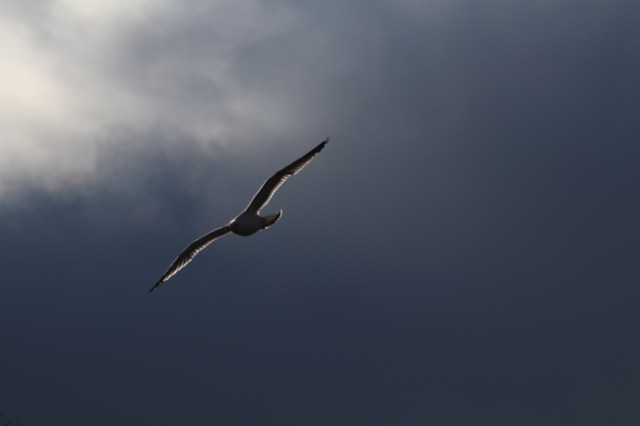
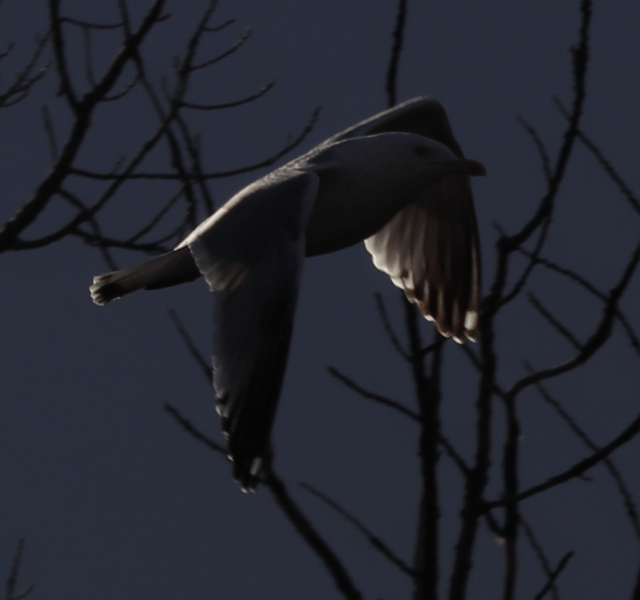
Gull Against Dark Sky.jpgI’m going to admit something to you. I’ve been on what amounts to a forty-year guilt trip. It all started when I was about fourteen years old. That’s when I seriously took up running in track and field and cross country. Much of the training for those sports takes place early in the morning or in the evening. Those also happen to be the best times for birding.
It didn’t get any better when cycling entered the picture, or swimming. Those activities also often require early departures or getting out of the house for pool time.

Gull Darkness.pngBut when spring comes around each year and birds migrate through our area, I feel guilty if I let the spring go by without finding some interesting species somewhere along the way. That means getting out the door by 6:00 am to get on site in time for the dawn chorus, or the departure of ducks from the wetlands.

Yet something’s changed in the last year that is making my unnatural dilemma less conflicting. We moved to a house that backs up to a wetland. There are birds that come to that wetland that I once traveled miles to see. Notable among them are sandhill cranes. These formerly uncommon birds were once an annual treat during their March migration. I recall the first time my brother and I watched a flight of 400 Sandhills heading straight north over our house in St. Charles, Illinois. We heard them first. That’s often the case with sandhill cranes. Their voices carry long distances.

We stood there in awe as the giant silver birds passed over in a long see formation. Then we danced around in street because it was such a treat back in 1973 to see even a couple of these birds. A very few bred in highly protected spots here in Illinois. They were considered rare enough that their nesting sites were closely guarded secrets.

These days, thanks to environmental laws that have improved habitat availability and reduced poisons that harm wildlife species, sandhill cranes have made a successful comeback. They are quite common now even in Illinois.

Which is why two different pairs of the birds have been seen in our backyard. They have even walked up to our bird feeders for breakfast or lunch, depending on their mood.

So my guilt over not seeing any cool spring birds is partly assuaged by the fact that they now come to me. The same holds true with the formerly endangered wood duck, a classy-looking waterfowl that I’d see once or twice a year along the Fox River. Their numbers were quite low forty years ago. Installation of wood duck nesting boxes has helped the species grow in population.

Last year we had fourteen wood ducks marching from the wetland up to our bird feeders to munch on corn. They were wary birds but for some reason felt better about walking to our feeders than flying.

We also have hawks of several species and great horned owls that will sing throughout the night during winter or breeding season. On top of that there are sparrows and even warblers that can be heard singing in our backyard.

On top of our daily wildlife sightings that include coyotes and rabbits and squirrels, I regularly get out for nature hike. This past weekend the walk too me through Nelson Lake Marsh, an Illinois Nature Preserve about a mile from my home. And again, a trip to that property used to require a drive of 6-8 miles. Now I can actually run there, course through the preserve for four to five miles, and run home again. This is my scouting method, and I can often count 20-30 species of birds simply by hearing them and cover all sorts of habitats from wetland to woods to restored prairie. So the diversity is thrilling.

Come late spring the bobolinks return to the fields along with meadowlarks, kingbirds and sedge wrens. From the wetlands come the sewing-machine voices of marsh wrens, and from the woods the plaintive calls of wood pewee, one of several flycatcher species that call the preserve home. 

I’ll trot through and survey the various habitats, then come back out with binoculars on a day when I take a break from running. That doesn’t mean I don’t still feel torn by running on days when the birding would clearly be fantastic.

Out on the bike it’s a different story. Covering so much ground in typically open country, there’s no real time to pause and look at a kestrel on the wire above. The landscape is a fauvism. One’s concentration is often focused on the pavement directly ahead.

Sandhill callingBut as I type this, the calls of forty cranes have come down from the sky above. They are moving on a brisk spring day, headed to whatever breeding grounds they favor, likely to the far north. Their voices are built on 60M years of evolutionary change and development. But perchance they do not sound much different now than they did 10M or 30M years ago.
So all the while this guilt trip over whether I should run or ride or swim or bird is really rather silly. Being able to access the things we love and enjoy in this very brief life we human beings have on earth is really the name of the game. Everything else and all the guilt-fed considerations are really an unnatural dilemma. We’re given this gift of life somehow, and those who treasure it get the most from their experiences. Those who can only snipe at others and blame the world for not giving them what they want will receive exactly the life they deserve. Fat of mind and stupified by their own narrow vision, they will hide in the self-proclaimed glory of their personal worth and never see that the world has much more to offer than what they are so determined to steal from it.

And that is the unnatural dilemma that faces us all.

Posted in Christopher Cudworth, Uncategorized | Leave a comment

Time in the Saddle Alone (TITSA)

IMG_3008Last night I parked the car at the train station so that my wife could drive it home after her commute. That gave me the chance to ride 20+ miles during the hour and a half of good light still available.

Riding north from Geneva, I climbed up to 834 feet above sea level. The view from up there used to be quite dramatic forty years ago. But between urban development and the growth of trees, the City of Chicago 35 miles away is no longer visible.

I rode up those hills steady and smart. Full pedal strokes. No mashing. Used the full pull of the shoe on the cleat.

Up on the flats, the wind was stiff out of the north as I rode west. It pushed me and relented as I went along. There was no need to fight it. My goal was time in the saddle. Trust the legs will gain strength with the hours. Settle yourself on the bike. Ride in a good position.

This is the sane way to get into cycling condition. To find good form, you have to practice it. Time in the saddle is how you get there.

So is time alone in the saddle. It’s far too easy in the early season to get caught up with a group that turns you into mashed potatoes halfway through the ride. There’s time for all that once you have 10-15 rides in you. Then it makes sense to get pulled along, and do some pulls yourself.

Extremes

Before that, the body doesn’t know what to make of the extremes. No pro goes out and does a four-hour ride at max effort to start the season! Why do amateur riders tend to do that to each other? It makes no sense.

Though I’ve ridden now for 15 years, I still know more about running than about cycling. But I know that it never paid off to run at maximum effort all the time. It paid instead to train slow for the bulk of the early season and build a base. Then progressively add intensity over a period of weeks. That’s how you get in shape.

But cyclists often pride themselves on pushing to extremes and not asking any questions. It seems to be part of the unspoken psychology of the sport that one should never inquire about the suspected pace, or worse yet, dare to question or complain whatever goes on with a group. It’s considered better form for some insane reason to hang on until the legs give out and eventually get dropped than to ask, “Hey, what’s the planned pace today?” That’s like a confession of weakness.

I have to say that triathletes can be even worse about this dynamic than traditional cyclists. Once a tri-guy or gal gets down in aero, they might as well be encased in a space suit. They tend enter their own world, and riding in the draft is a foreign concept to many. That’s not true for all of them, but I think you all know what I mean.

Fortunately, there are exceptions.

Sue In AeroBecause that’s not the case with my wife Sue, as we’ve worked out a system of riding together no matter what bike she’s on. I tend to ride in her draft on longer rides because I don’t ride with aero bars and she’s not interested in riding in my draft as a matter of training principles. So we share some of the pulls, but not too much. Many days she’s frankly stronger than me, but there are days when I end up guiding us home as well. Last summer we did rides of three and four and even five hours together. Not every second was perfect, but we also split off sometimes to get some riding in alone. Good partners know how to compromise. I think we do that well.

It’s too bad when cyclists fall into the trap of riding whatever pace their insane buddies choose to hit on any given day. That’s why time in the saddle alone (TITSA) can also be so important to your own fitness and sanity. There’s an honesty and patience that comes with making your own way through the spring winds, over that first season of hills and home on the flats with the wind behind your back. It’s all liberating. And finding your pace and space in the world without the initial pressures of riding with others is a good thing.

So the ride last night was a nice little base-builder that provided a chance to think ahead to when the weather gets warmer and the legs have more juice than they do now. TITSA is the way to go.


Posted in tri-bikes, triathlete, triathlon, triathlons, Uncategorized | Tagged , , , , , | 1 Comment