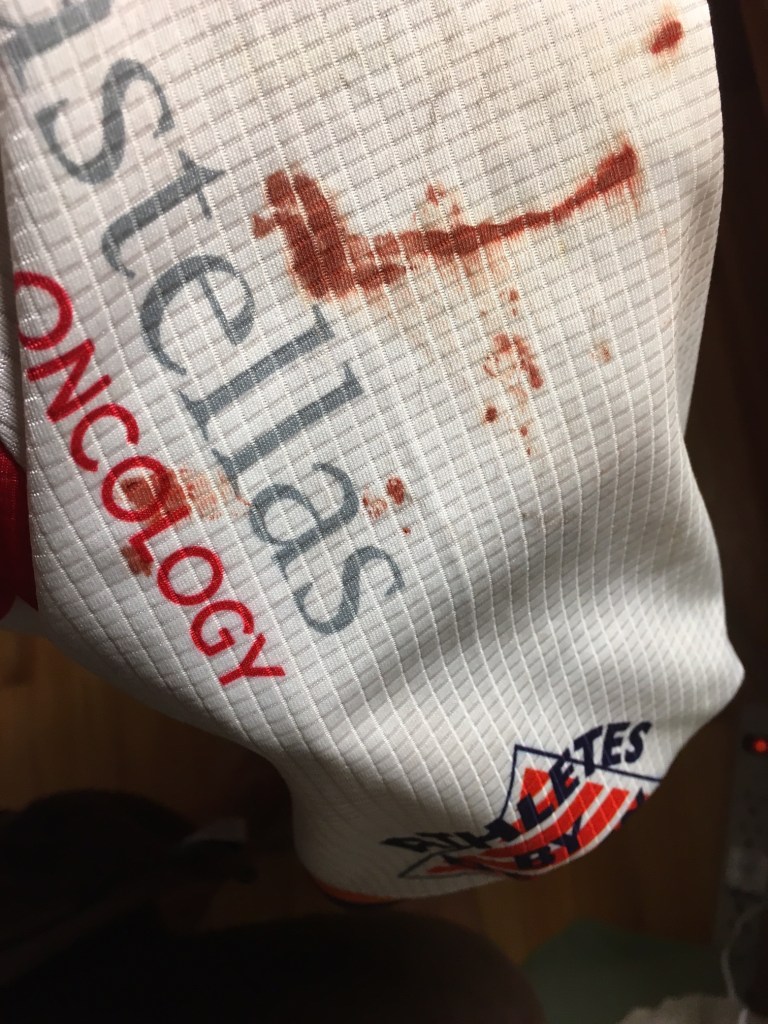
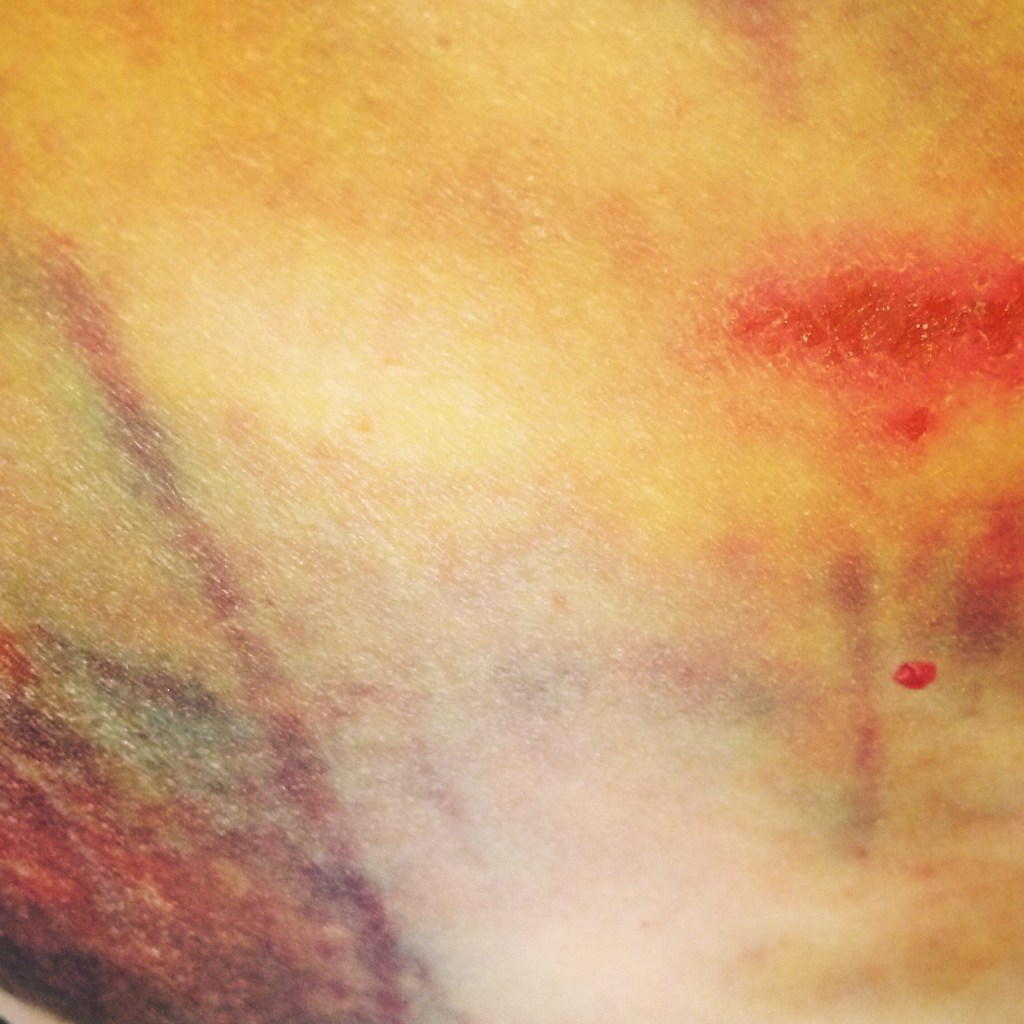
What a wild ride we’re all really on

On a cool, clear weekend west of Madison, Wisconsin, a group of us gathered at Governor Dodge State Park in early September of 2012. Our plan was to camp out, ride the Wright Stuff Century (or thereabouts) and float down the Wisconsin River on inner tubes.

Simple stuff. Midwestern joys.
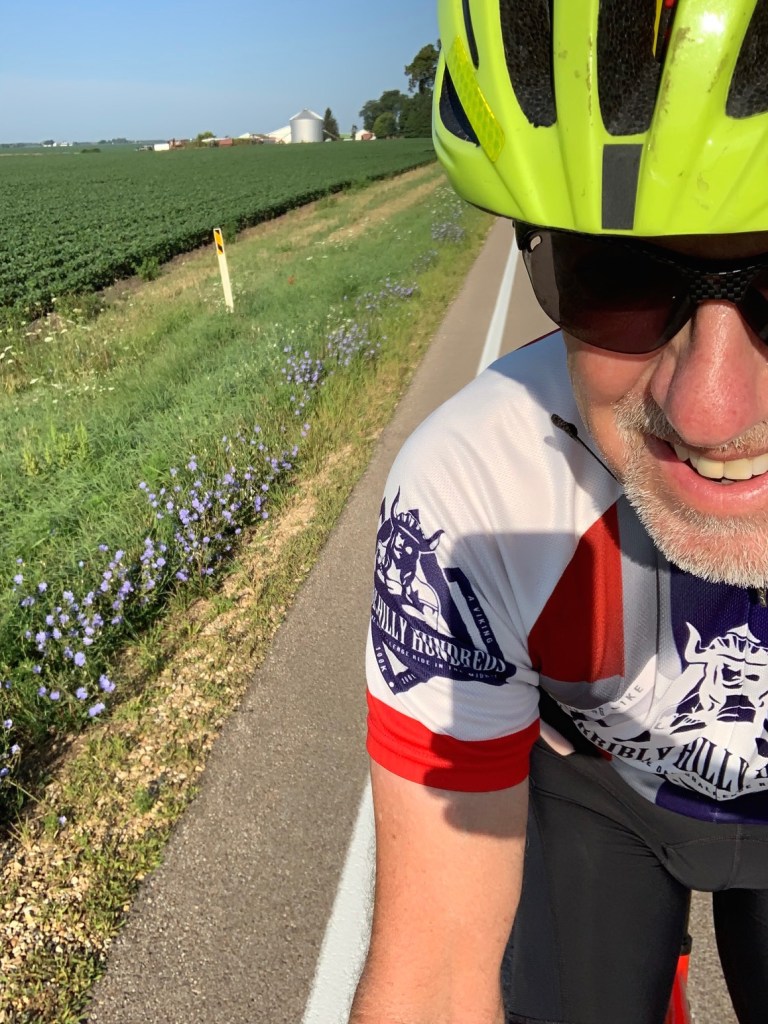
For me, it was a brief escape from caregiving duties back in Illinois. My late wife was in her seventh year of ovarian cancer survivorship. She’d been through so many chemotherapy treatments and operations by then it felt like she was a science experiment.

In many ways, that was true. Treating cancer is not some cookie-cutter regimen. Everyone’s body reacts differently to chemicals being dripped into their bodies. The side effects are enough to kill some people.

In his book “It’s Not About the Bike,” cancer survivor Lance Armstrong tells the story of how he told the doctors, and I paraphrase, “Give me everything you got, doc. You can’t kill me.”

To which the doctor replied, “Oh yes, I can.”

That’s how chemotherapy works. It seeks to kill various kinds of cancer by attacking the most active, aggressive cells in your body. One of the tests used to detect cancer is a radioactive glucose. It is pushed into the body in a PET scan. Then a scanner takes an image of where the glucose is being used most in the body. Basically it shows where cancer is excited by the presence of sugar.

We also tracked my wife’s CA-125 numbers, a test frequently prescribed for women diagnosed with ovarian cancer. When the numbers are low, it indicates cancer is in remission. When those numbers rise, they possibly indicate cancer activity returning in the body. The first time that happened following two years in cancer remission, my wife had an emotional breakdown. She’d done everything they told her to do, and hopes were up that she’d conquered it. Then it came roaring back. She was crushed. It was like she’d been thrown off the bike of her life.

And it came back a year later. And again. And again.

During those eight years we sat through dozens of chemo sessions. We were in and out of hospitals getting tumors removed from her body. I was in and out of work taking care of her. Money was tight. Keeping insurance coverage was tense. We received help from many people over those years.

Under pressure

By September 2012, there were signs that the cancer was never going to quit. She’d developed tremors and seizures that seemed to worsen whenever we went for a walk. All this created tension in our lives and put pressure on our relationship as well. So we agreed that I should go bike riding with friends up in Wisconsin while she spent time with her family back in Illinois.

We started the ride late, almost the last people to head out. But I felt great in the cool morning air and we were soon passing other cyclists.

As we topped the long climb above the American Player’s Theater in the Wisconsin hills near Spring Green, I was feeling really great. Despite the long summer dealing with my wife’s illness, I’d gotten out riding enough while she rested that I was in decent shape and felt ready to cover 60-70 miles even in the steep hills north of Dodgeville.

One of my buddies topped the hill and went tearing after other cyclists headed down the hill toward the Taliesin, the Frank Lloyd Wright property next to the Wisconsin River. I hit the pedals to stay with him, then quickly glanced down at the speed on my cyclometer. It read 45 miles an hour, but the road was getting rougher. So I tapped the brakes…

Shudder to think about it

At that point, my bike began to shudder in uncontrollable fashion. It swerved and wobbled. I tried braking but that only sent the bike into worse vibrations. The entire carbon fiber bike frame was whipping about at a width of six inches or more. That clearly meant trouble.

Looking ahead, I knew that I did not want to go down on the asphalt at that speed. Leaning left, I got the bike to the road edge and the front tire slid down across gravel and hit a lump of dirt. That threw me over the front of the bike as my feet unclipped from the pedals and I flew through the air. I saw a blur of ground and felt the hard thud of my left shoulder striking the earth. My body flipped and skidded sideways down a grassy hillside. I came to rest in a ditch of tall grass and late season wildlflowers.

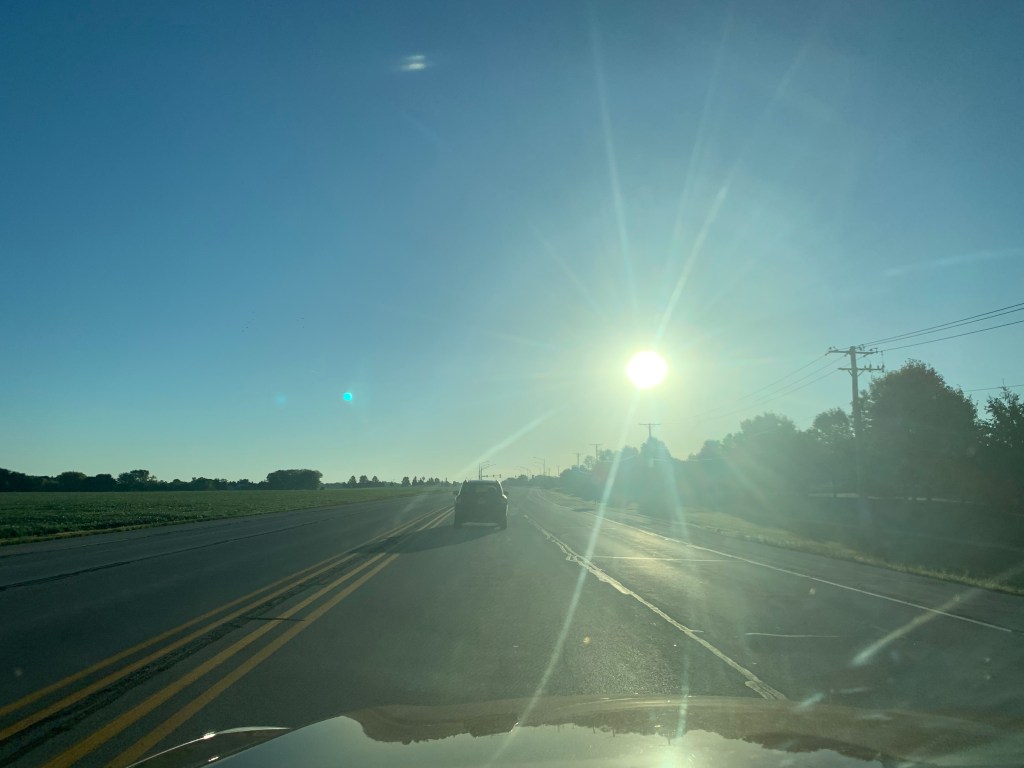
For a moment I lay there trying to figure out what just happened. To my right there was a low cable strung two feet high between a line of concrete posts. Staring at it for a moment, I did the grotesque calculations of what might have happened if I had hit that wire. “You’d be dead,” I said to myself. I closed my eyes for a moment but the sun turned the eyelids red in the morning light.

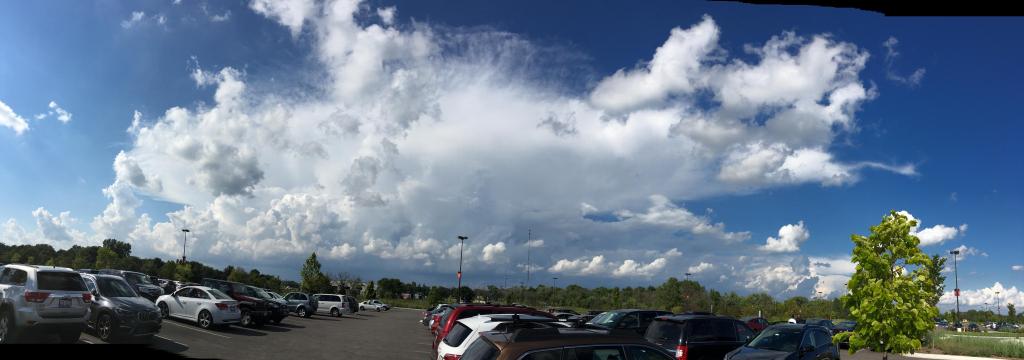
Opening them again, I looked up at the blue sky and, realizing that I was quite alive, said a quick prayer of thanks for that. I moved my right shoulder a little but heard a crunching sound in my left collarbone. Lying back, I sighed and swore out loud. Some prayers are answered in the strangest ways.

Crawling off

It was clear that I had to get out of that ditch and figure out a way to get help. I leaned to my right and discovered that it didn’t hurt the fractured collarbone to move in that direction. What I did feel was a sharp tug in my right inner thigh. Something down there got pulled, I realized. So it took a few minutes to crawl up the bank and sit there, perhaps in shock, wondering if anyone would come along to find me.

Two women stopped their bikes when they saw me. They had started the ride even later than us. Thank God, I thought. One of them walked over and asked, “Did you have bike wobble?”

Looking up at her face, I nodded and said, “Yes,” even though I’d just learned what the term bike wobble even meant.

Body shudders
Back home, my wife was having shudders of her own that day. The seizures she’d been having came on even stronger during her visit with her parents. My daughter watched with worry and a bit of horror as her mother dealt with the tremors. Everyone wanted her to go to the hospital, but she refused.

Up in Wisconsin, I was picked up by ambulance and driven to a small hospital in the hills south of Dodgeville. They fed me Vicodin and tracked down my fellow campers, which was not an easy task given the dodgy cell phone reception in the Wisconsin hills.

It all took place one September eight years ago. The entire scene comes back to me every year when the light takes on that September tone and hits a certain angle.

It strikes me that I could have died that day. It was also somehow the day I realized it was likely that my wife would soon die. She passed away that following March after eight years of being wobbled back and forth by news good and bad.

Such is the nature of life, and what a wild ride we’re all really on.
Posted in bike crash, bike wobble, Christopher Cudworth, cycling, cycling the midwest | Tagged , , , , , | 2 Comments

The Covid Chronicles

I’ve written this blog for eight years now. Its subtitle is Original Thoughts on Running and Riding.” So I’ve tried to do that. I’m not a one-trick pony.

Covered many topics along the way. Always trying to relate what’s going on in this world to running, riding and belatedly, swimming. It took me a long time to get around to swim. It ultimately helped to marry a triathlete.

Despite all these topics and time that I’ve spent producing this blog, over the last eight months, I haven’t really said much about the Coronavirus epidemic. But it’s not that simple a topic to write about.

You know my politics clearly enough. The word that describes me is liberal. Yet I have almost radically conservative views when it comes to honest takes on theology rather than spouting orthodoxy and its pursuant ideology. The Bible is a liberal book. Scripture has liberal foundations. Jesus was a bleeding heart, do-gooder and the original liberal.

It is conservatives and authoritarians that have always used scripture against society to gain control. Yet when they do so, it leads to corruption 100% of the time. The religious authorities that conspired against Jesus were so convinced that they owned the narrative they were blinded to the truth. They conspired politically to frame Jesus as a threat to society.

In the wake of the crucifixion, the Christian religion that emerged from the death of Jesus spread its wings against the winds of power blowing across the Middle East. But ultimately that authority was consolidated through approval and unity with the Roman Empire. That powerful convergence led to centuries of persecution against all those who opposed its authority, leading to holy wars, inquisitions, torture, suppression of science, and even genocide. The principal victims of that ire were the Jews, because they served as a convenient scapegoat for Christians to blame for the death of Jesus even as the Roman Catholic Church exploded with the same brand of authoritarian intolerance as the religious leaders who conspired against Jesus.

The same thing is taking place again right now. The evangelical world at work today is a patent reproduction of the same type of religious authorities that conspired against Jesus and the Christians who gaslighted the world while fueling anti-Semitism, racism and biblically literal prejudice against gay people and anyone else that attracted their fear and ire.

This new cabal has worked for decades to position and install an authoritarian to do their bidding. They found their man in Donald Trump, a cryptic deceiver who is more than willing to exploit their religious authority to his political advantage.

When put to the test of truth, this authoritarian lied and lied again. The most recent expose shows that Donald Trump lied about the threat of the Coronavirus. These deceptions are completely documented in recorded conversations with journalist Bob Woodward. We now know that Donald Trump prized authority and power over the safety and well-being of the people he is entrusted to protect, the citizens of the United States, and the world.

We’ve all tried to adapt and adjust to the measures prescribed by medical experts during the Coronavirus pandemic. We worked through economic shutdowns and engaged in social distancing. We’re wearing masks in public and avoiding major gatherings whenever possible. But think about all this for a moment. While the public tried to do its best to protect itself against this disease, the President of the United States has purposely lied and confused the public on all these issues. That means his selfishness is directly responsible for nearly 200,000 deaths and millions more people infected and possibly permanently affected by this disease.

Also: If he can claim responsibility for the economy, he must also accept responsibility for its destruction under his watch.

It all blew up because this lying bastard Donald Trump is so selfish he cannot bring himself to think about anything else but his own benefit. His fixer Michael Cohen notably remarks that Trump only ran for President as a branding ploy. He didn’t give a damn about actually winning, (this article raised that question in 2011) but the power of his deceptive tactics and aid from corrupt Russian interests were so effective, he won anyway.

The really sick fact of all this is found in Trump’s continuing denial of responsibility for any of it. Those of us fortunate enough to have escaped infection thus far still face a long winter of enclosure with even greater risk of catching the disease. Many more people will die, yet his stupid supporters will refuse to wear masks. His troops will show up to threaten people at the polls, and black people will continue to be slaughtered in the streets while Trump grins and smiles and blames everyone but himself for this mess he’s created.

That’s what I think about the Coronvirus epidemic. It is as biblical a moment in history as anyone can imagine. Yet like the king in scripture who dreamed about a statue with feet fired from clay, he may yet topple into the dust. But even then, conspiracies are afoot to exonerate and pardon him for all the ills he’s brought upon this world.

The most biblical thing that could happen right now is for the terminally narcissistic Donald Trump to contract Covid and have it race through his system so fast that it sucks the life right out of his lungs and runs his ‘life battery’ into the ground. He deserves that to happen for all his lies. His supporters may brand him a martyr for the cause, but in truth, he is the cause of many martyrs giving their safety and their lives in protest of his selfish rule.

This is history, folks. This is the real deal. We’ll see what fate or God or dumb luck has in store for all of us.

And then perhaps we can turn around to consider the threat of climate change, which is all our responsibility.

Posted in We Run and Ride Every Day | Tagged , , , , , | Leave a comment

Summer’s almost over. Do you love autumn?

The cool rains driven by early September storms have come to the Midwest. The dry grasses of August don’t know what to do with all this sudden moisture. Our drought is perhaps broken, but the browns will perhaps persist all the way through fall.

As Jeff Lynne of ELO once wrote in a song titled It’s Over,

Summer came and passed away…hardly seemed to last a day, but it’s over…

That image symbolizes a lost love relationship. But it works both ways. Perhaps we all feel that way as summer fades and we think back on how well we used the warmth and sunshine.

I vow every year to immerse all senses in the glories of summer. But an anxious mind always finds things to think about beyond the green grass and butterflies. It’s a lifelong struggle to live in the moment.

Summer workouts

Still, we did have some great runs in the heat. There is nothing like summer sweat to make you realize you’re alive.

But this summer was odd with it isolation and change. During this Covid crisis and working from home, I only wore a pair of long pants twice between the end of June and the start of September. Surely that is a record of some sorts for me, but what does it matter? I guess it means that in some respects, summer warmth was not wasted.

I do recall that a high school coach once said that if you can make yourself train even through July, the dividends come fall are great. In those days, I barely made good on that promise. But these days, summer represents some of the largest volume of training all year. Funny how things change.

Cycling time

Our cycling trips were not as long as some summers before, and I didn’t manage to do any group rides at all. My longest ride was 73 miles in just over four hours. That’s nearly 18mph, a rate that I’d have been proud to ride even ten years ago when I first got serious on the bike. I was thinking about going all the way to a Century, but something in me said “You know what? 73 miles is still a long way.”

Swim suits me

Then there was open water swimming. We traveled to Crystal Lake and slipped into the water for early morning swims even though that activity was technically banned. Local residents looked the other way as triathletes used a tiny local park for access.

One morning while plying along in my Roka swim shorts I looked up to see a fisherman sitting in his small boat. “How goes the bite?” I asked during a pause in swimming with my head poking up out of the water. “Pretty good,” he replied. From that perspective, it was the first time I ever felt like a true fish.

We also swam out in Arizona in early spring, and again down in Florida this past month. Both pools were so warm that our bodies radiated heat upon standing up out of the water. Such are the extremes of the sport we call swimming.

We’ll swim open water one more time this weekend in an off-the-record triathlon in Madison. One more chance to act like a fish before the water cools for good with autumn’s onset.

Signs of fall

Already there are cottonwood and poplar leaves littering the lawns. There is other detritus as well.

Last night I had to go out and search for my phone in a wet field after losing it while running around and playing rough with our dog Lucy. I went to bed that night without realizing the phone was missing. The next morning we searched the house madly, even sending multiple calls from my wife’s phone to see if we could hear mine vibrating.

A click on the Find My app on the laptop showed me where the phone was. I’d lost it among the grass and fallen leaves. It was covered in water and lurking among some dead sticks and dark leaves. I was grateful to find it. Thank you GPS.

Autumn closing in

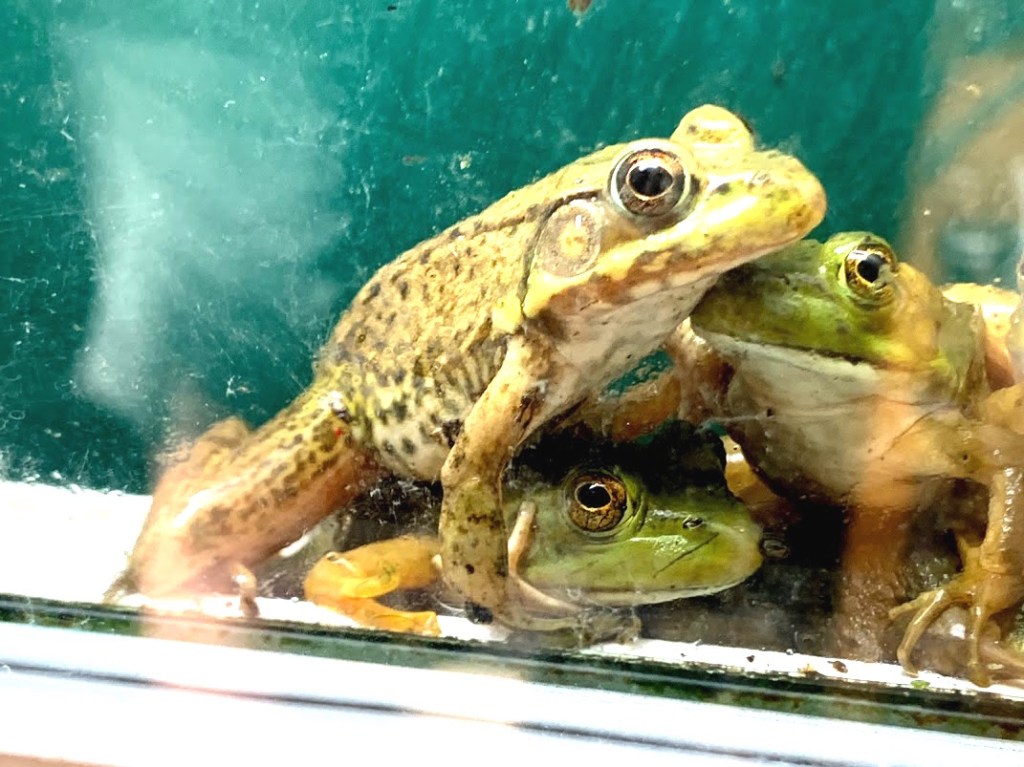
There are still frogs hopping around in the grass in our lawn when I mow. They come up from the wetland to hunt for crickets in the cool shade behind the cedars. Soon they’ll retreat to the wetland when the nights get so cold they have no choice. Their amphibian instincts will send them down into the mud for a long winter’s nap. Hibernation. On some days, I might prefer to join them.

As for me and my kind, we’re typically enervated by the onset of cooler days. Our runs feel easier when the humidity isn’t 85% and the sun doesn’t bake us into submission.

When September arrives, all those years of fall racing spin through my mind. The cross country meets in high school and college. The autumn road races through my early 20s. Getting so fit that you could hardly contain the urge to run. Sometimes I’d run three times a day. Yes, I do love autumn.

These days, those instincts may be tempered a bit by age and metabolism, but they’re still there. The crunch of fall leaves on the trails still beckon. The turn of a hawk on the autumn breeze catches the eye. The call of ducks in the marsh seems to come from some deep place in our conscience. Come November, a spin of sandhill cranes in the sky signals that fall is over as well. It’s happens with a purpose. It is ours to take it in.

Summer’s over. Do you love autumn?

Posted in aging, anxiety, competition, cross country, cycling the midwest, riding, running, swimming, trail running, training, triathlete, triathlon, triathlons, we run and ride | Tagged , , , , , , | 1 Comment

What to do with all this anger in America…

I’ve written that while I was growing up, my brothers called me The Mink. The nickname came from a whipsmart temper and fiercely competitive nature. Over a lifetime of developing maturity and a human nature seasoned by decades of caregiving and workplace collaboration, my tendency to react with spit and fury is largely vanquished.

But a lifetime of lessons learned from that sibling rivalry as well as participation in competitive sports also taught me how to deftly defend against intimidation attempts of many kinds. With America tautly wrapped in a culture war of immense dimensions, one can hardly turn around without bumping into someone angry about something.

The street scene

Anger has spilled into the streets the last three months. Protestors inflamed by a series shootings by police of black unarmed citizens are competing for the right to be heard on issues of civil and racial justice in the face of violence toward people of color. Before that, professional athlete Colin Kaepernick “took a knee” during the National Anthem in protest of police violence toward black citizens nationwide. His actions served as a prophetic litmus test of public attitudes. Yet rather than choosing to recognize the truth behind Kaepernick’s actions, his critics branded him unpatriotic and even blamed him for disrespecting the military, whom the football player never even mentioned. That’s how racial gaslighting works. Paint the racial messengers as dividers rather than acknowledge the specifics of their concerns.

AS a result of such cynical deflection, even angrier people are trashing and looting cities out of rage toward the refusal to admit there is even a problem with racial injustice in America. The Stevie Wonder song “You haven’t done nothin’…” captured that exasperation way back in the 1970s.

We are amazed but not amused
By all the things you say that you’ll do
Though much concerned but not involved
With decisions that are made by you

But we are sick and tired of hearing your song
Tellin’ how you are gonna change right from wrong
‘Cause if you really want to hear our views
You haven’t done nothin’

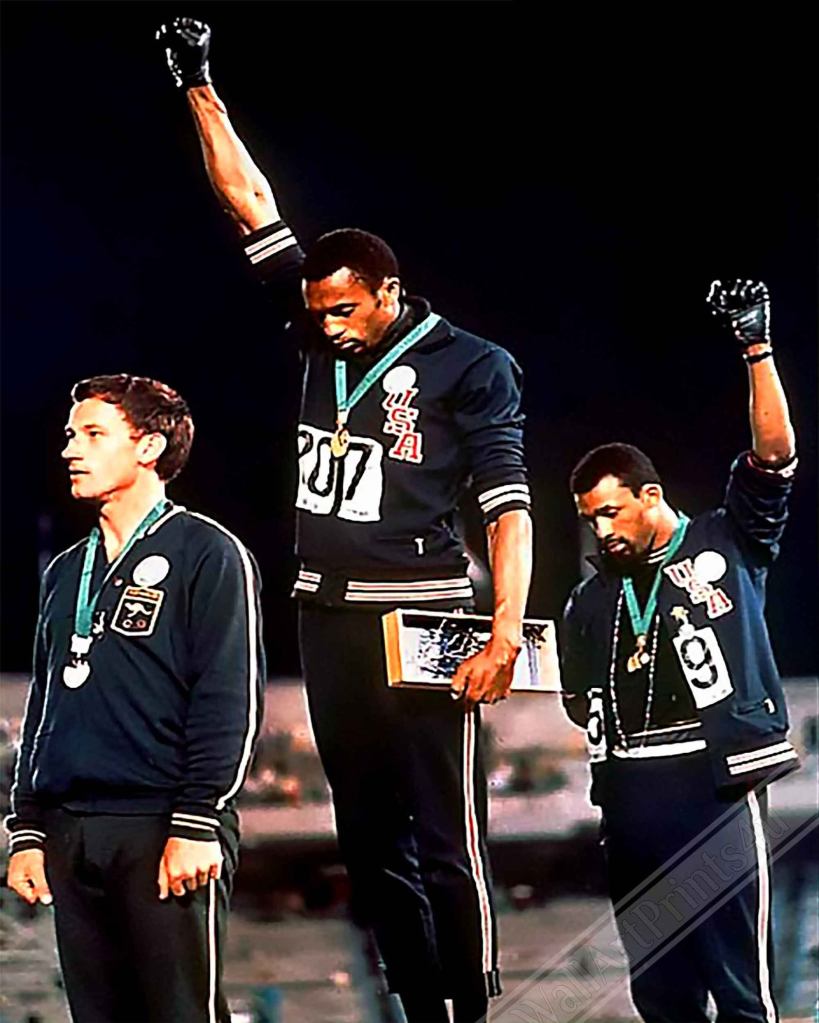
Thinking all the way back to the 1968 Olympics, I recall watching the black, raised fists of Tommy Smith and John Carlos on the podium. That display was a direct expression that America was ignoring something important about its conscience. Here were two accomplished black citizens representing their country, yet back home they were treated as second-class citizens. That’s still the issue in America. But thick-headed people refuse to accept that there’s anything wrong with racial discrimination and the economic and social pain it causes. In fact, there are white supremacist groups still claiming that they want a segregated society.

These ugly forces are creating conflicts with a far more corrupt complexion. Now counter protestors comprised of largely all-white “militia” members are showing up with guns to intimidate crowds while claiming to support for the police and “protect” store owners. Yet even these efforts are intended to distract from addressing the racial injustice behind it all. The same goes for politically blaming Black Lives Matter for being a divisive force in society. It’s just more gaslighting on the part of authoritarians bent on keeping perceived privilege and control in place. That’s why young kids feel vindicated in shooting people dead in the streets of America. That’s why racist mass shooters enter Black churches or mosques and gun people down.

The police in places such as Kenosha even with these vigilante groups, suggesting a corrupt vein of racist leanings within the force itself. What else explains the police allowing a seventeen-year-old kid to wander the streets with a long rifle shooting people in what his lawyers claim as acts of self-defense? More likely selfish defense. Kyle Rittenhouse traveled to Kenosha from Antioch, Illinois of his own accord, then confronted people there while armed, used his weapon to shoot people, and retreated back to his hometown accompanied by his mother, who was also suited up for vigilante activities. All of that activity was premeditated to result in violence. And all these vigilante countermeasures are efforts to deny America’s ugly history of racial injustice.

People just itching for a fight

Just over a year ago, I wrote about an unfortunate confrontation that came about because a man jogging over a bridge in Benton Harbor, Michigan objected to my choice to ride a bike on the same sidewalk. I’d ridden on the sidewalk because my the grating section of the bridge threatened to puncture my road bike tires. But the jogger was so irate that I’d passed him on the sidewalk he shouted obscenities and threatened me with bodily harm. All because I’d neglected to see a sign that said “Walk Bikes on Bridge.” But I wasn’t alone in that action. Plenty of other visitors to that town during a large triathlon even rode their bikes acros that bridge.

But the angry jogger wasn’t through with me. He showed up around the corner of the bank where I was getting cash from an ATM and proceeded to challenge me to a fight. He used all sorts of threats to bait me into a confrontation, including political and social intimations that he’d assumed about me. Yet rather than dissolve into an angry rage, I judiciously thought about the fact that there are cameras everywhere, especially overlooking an ATM machine at a regional bank. Plus in all my years of fending off competitors, I realized there is no claiming honor in a fight if you throw the first punch. Yet I also believe that throwing the first punch is the best strategy if you’re going to fight at all. Instead, I backed him down verbally and went on my way.

Admittedly, I’d made a mistake riding across that sidewalk on the bridge. Out of curiosity, I went back to check and saw that there was a white one-foot sign where the twenty-foot-wide asphalt path converged into the four-foot sidewalk. My concentration was fixed on navigating the bump between the path and the sidewalk, so I missed reading the sign. My mistake. Still, I think that jogger’s reaction was a bit over the top. Something also tells me he was itching for a fight and looking for an excuse to start one. That seems to be the overall mood in America these days.

Aldi lot mistake

That brings me to an encounter I had yesterday while pulling out of an Aldi store parking lot. The long lot drops down a short driveway connecting a series of outlot road. It was late afternoon and there wasn’t much traffic around. But I neglected to look back and to the left before steering down the incline onto the driveway. A vehicle approaching from the left laid on the horn in aggressive fashion, so I hit the brakes as he passed. The driver glared at me and drove on.

As he headed past us in his Countryman Mini, I made note of the American flag shirt he was wearing. We followed him out of the retail complex and turned right toward an intersection about a quarter mile down the road. “You know,” I said to my wife. “From my experience, those guys wearing flag shirts are most prone to road rage.”

“I don’t think so,” she corrected me. “You can’t make generalizations.”

Ahead of us on the road, Mr. Flag Shirt Guy braked and sat at the stop sign even though the road ahead was clear for him to travel on. His turn signal was not on, but I was planning on turn right toward our home. There was a group of young kids on bikes crossing the street to our right. Mr. Flag Guy didn’t budge as we rolled closer in our Subaru. Maybe he hates Subaru drivers, I thought to myelf. He was staring at me in the rear view mirror as we came to a stop. So I did the wrong thing. I gave him a quick flip of the Old Italian hand gesture. I knew it would trigger him, but The Mink in me sometimes comes out in odd ways.

He immediately pulled his car to the right, almost plowing into the kids. Then he parked his car into the middle of that street with its wheels in the crosswalk. My car’s wheels were turned that direction in anticipation of heading home, but I swerved back and kept driving west instead. Looking in the rearview mirror, I saw him climb out of his car, clearly looking for some sort of confrontation. My driving mistake back in the parking lot had pissed him off so much that he felt there was some sort of point to be made. I wasn’t going to stick around and hear him out.

I’ll admit that my own course of action at the stop sign was not all that admirable. I should stayed back even farther, and let the whole thing go. But the behavior of the angry Flag Guy stuff has become so predictable and tiresome it almost seems wrong not to confront it. As a cyclist for 20 years, I’ve dealt with drivers buzzing and honking at us in life-threatening attempts at intimidation. It’s all about some weird sense of road ownership and a selfish desire not to acknowledge the humanity of another person.

Angry eyes

As a runner, I’ve even been chased by an angry guy who threw a knife at me. So I’ve long borne witness to the effects of irrational anger in this world. I’ve learned to temper my own reactions when dealing with people in public, in most cases forgiving mistakes on the spot. That’s a better way to live.

And recently, I wrote about a guy down in Florida paddling his kayak while yelling at a Mexican guy swimming with his kids. All these angry types have the same prepossessive attitude.

Prepossessive: an attitude, belief, or impression formed beforehand : prejudice. 3 : an exclusive concern with one idea or object : preoccupation.

I’ve been in plenty of driving situations where a person in front of me makes a mistake by not looking before they pull onto a street. Sometimes I raise my hands to say, “What’s up with that?” We all do it to some extent. Earlier this week a woman driving while chatting on her cell phone and sipping her coffee nearly ran me down while I was running west of our house on Tanner Road. She made no attempt to pause at the stop sign as she roared out of her subdivision. That made me mad, but I assumed she never saw me in the first place. That’s common when you’re a runner. It’s not that easy to see runners or cyclists in certain traffic situations.

It’s hard to turn the other cheek and let this stuff go every day of your life, especially when prepossessive anger is being shoved down your throat and barked about on Twitter and other social media. Prepossessive anger has been turned into a political movement where the goal is to intimidate the other side and “win at all costs” even when if it means shooting people dead in the streets to make that point.

Small acts of resistance

This is the exact shirt Mr. Flag Shirt Guy was wearing yesterday.

That’s the other reason I wanted nothing to do with Mr. Flag Shirt Guy. Had I gotten out of the car, he could have easily pulled a gun from his hip holster and shot me dead. Even if you’re the initial aggressor, if someone fights back the law says you have a right to shoot them. The militias believe that. The police seem to believe that. Even the President of the United States seems to believe that. He hired America’s military to chase away protestors, lead him across the street and stand there with a Bible upside down in his hand while claiming to stand for all that is great in America.

The message is that no one shall resist his power and might. Yet it is small actss of resistance that serve to confirm the anger of those eager to start a fight these days in America. Hence the hate directed at Colin Kaepernick. At AOC. At Biden. At democracy. A small act of resistance is what got Jacob Blake shot in the back seven times. So you better watch out. This is the reality in America now.

But if this country hopes to regain its conscience, it is vital that the prepossessive anger of the police and all other authoritarians be challenged for what it is: a selfish desire to claim superior motives and hide behind the American flag for protection.

As for Mr. Flag Shirt Guy and all the others flying flags as a political statement in America, the American Legion guidelines for flag display specifically recommend against many current practices employed by so-called patriots. These include:

(d) The flag should never be used as wearing apparel, bedding, or drapery. It should never be festooned, drawn back, nor up, in folds, but always allowed to fall free.

Posted in blood on the highway, running | Tagged , , , , , , | Leave a comment

“Doesn’t running hurt your knees?”

In a lifetime of running the question most often asked by people who don’t run is “Doesn’t running hurt your knees?

Typically they’ll follow up with a story about how trying to run hurt their knees. The logic seems to follow that if running caused their knees to hurt, that must be an inevitable for everyone else that runs.

If their running experience seems to have traumatized them in some way, as in causing them to feel guilty or hate the idea of running at all, typically I’ll empathize and say, “Well, running isn’t for everyone. Walking is one of the best exercises you know. It’s low impact. You get aerobic benefits, and it’s low impact.”

Sometimes people want to know how I’ve happened to avoid knee problems. “You run alot,” they’ll inquire. “Don’t your knees hurt you?”

The short answer is that yes, now and then my knees might hurt a bit. The long answer is that over the years I’ve also torn an ACL (twice) had chondromalacia (injury under the patella) strained the medial collateral ligament upon being hit in the leg by a dog, and banged into this or that athlete playing soccer, basketball, football or some other sport. I’ve also torn a meniscus hurdling a traffic cone (dumb) and had that surgically repaired

The really long answer, and the one that matters most, is that those of us who run for years learn how take care of our knees. I began wearing orthotics in my forties because my feet had weakened and that lack of support caused knee pain due to misalignment of the patella tendon due to biomechanical torque. It cured the problem.

Recently I switched to a less-than-custom shoe insert that works just as well as my prescription orthotics once did. My knees largely feel great day-to-day.

In other words, while my knees have experienced some ballistic trauma over the years, it is basic care that keeps me––and everyone else who runs––moving in the right direction. Strength and lengthening work also work to balance the knee joint, keep the hamstrings from getting too tight and placing healthy stress on major levers such as the Iliotibial band so that they don’t yank things out of place.

It always helps to keep body weight down to a manageable level. The less excess poundage one has on the body, the better it is for the knees. If you run with more than a 30% BMI (Body Mass Index) that’s weight you don’t need. One could argue that healthy knees exist in direct proportion to the top end of one’s recommended BMI. Obesity is not the friend of anyone’s knees.

As one ages, it is beneficial to alternate between running, cycling and swimming. The pounding of running is offset by the spinning of cycling and the water-borne exercise of the pool. Earlier in life, I depended on alternate sports like basketball to prevent injury. If that sounds ironic, it is healthy stress that benefits a younger body. But with an aging body, many joint structures lose pliability and tears can occur in ballistic sports. Even as an enormously active and diverse athlete all my career, by the time I reached the upper 40s the injuries to joints and fascia from playing soccer or basketball were not worth the risk any longer.

Perhaps with an aggressive strength program these problems could be avoided. But probably not forever. Healthy aging means changing some habits to avoid injury.

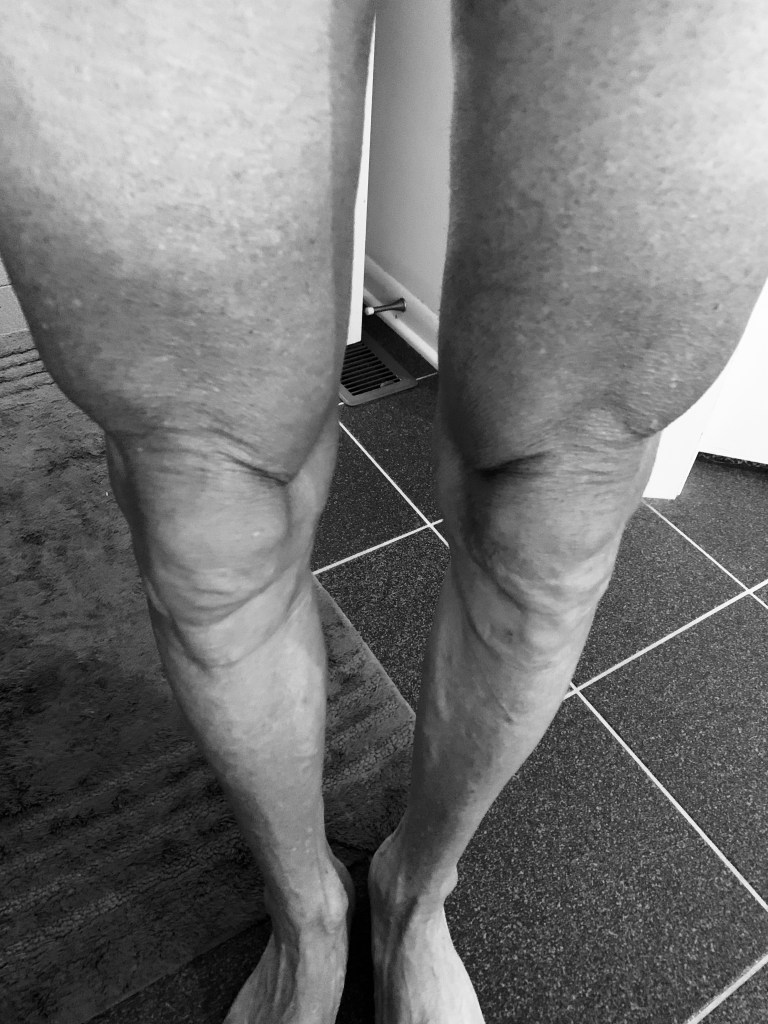
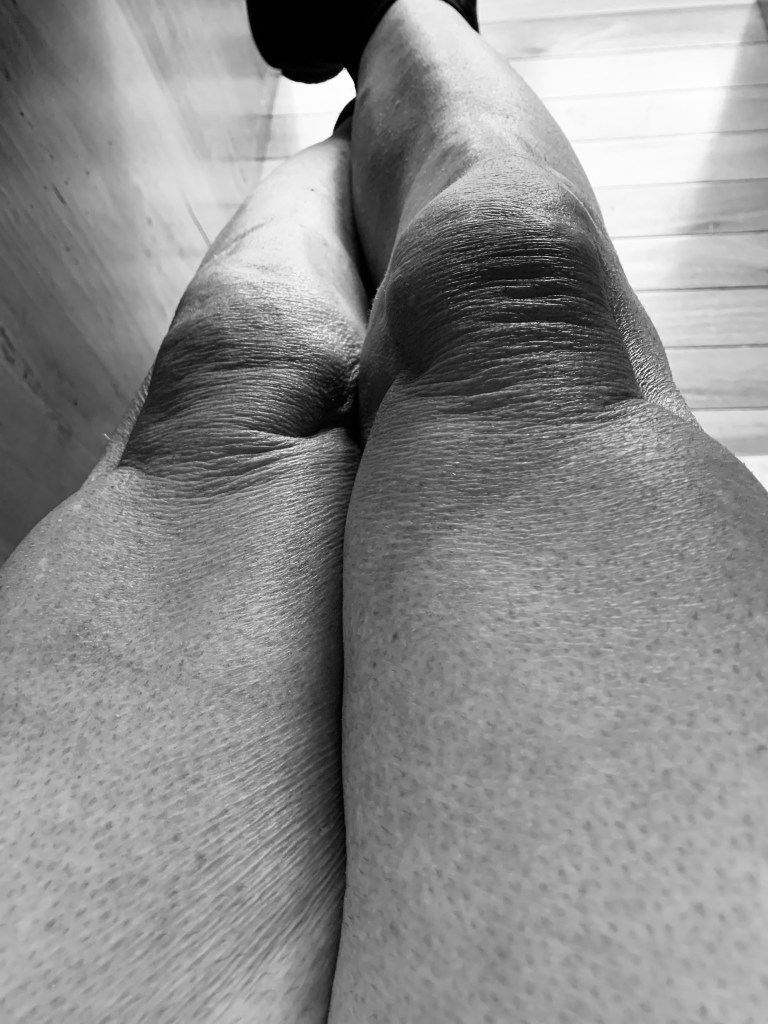
In my case, with slightly bowed legs to contend with all my life, I’m largely fortunate not to have more knee problems. But that good fortune is also the product of smart choices and balanced work. During rehab work from the ACL tear, I learned how much I’d been neglecting major muscle groups to focus on just a few. The result was that an otherwise functional part of my body, the ACL, bore too much strain during a twisting plant. That ligament tore.

If you’re serious about good knees for your whole life, it helps to consult with a good technical fitness expert or a physical therapist. Your family doctor typically does not know enough about joint structure or training to help you much. If you get hurt, they say “rest it.” But that doesn’t help your cause in the future.

Here’s a link to some basic knee exercises for runners. With luck and practice, you too can say to those who ask, “Doesn’t running hurt your knees?”

To which you can reply, “Nope, I take good care of them.”

Posted in injury, running | Tagged , , , , , , , , | 1 Comment

In honor of Keith Ellingson, one of the greatest runners and best guys I know in this world

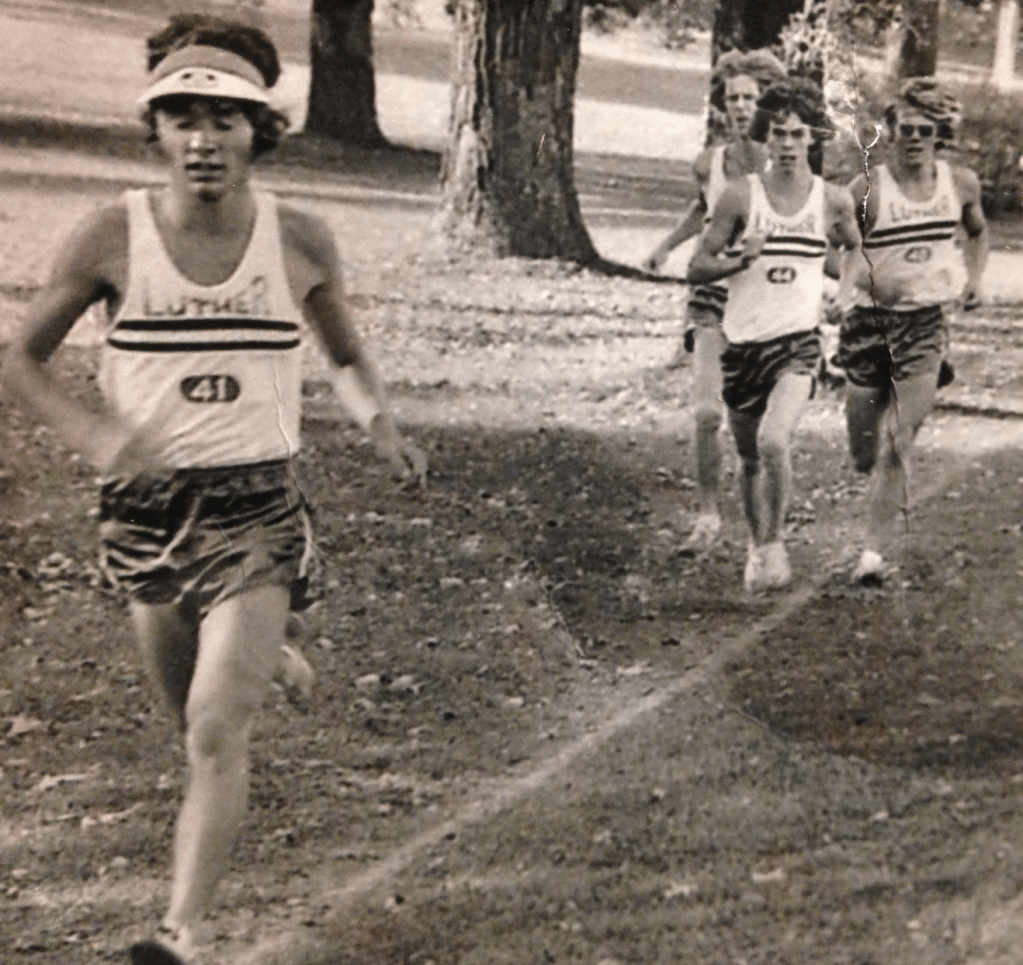
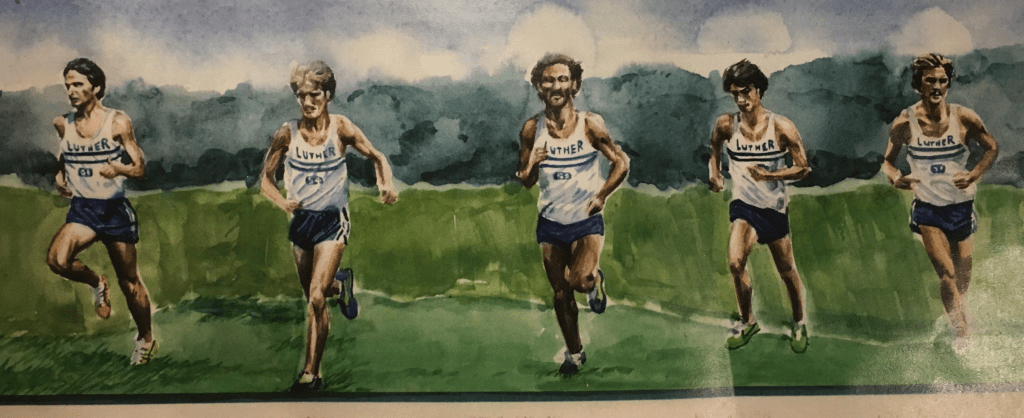
Keith Ellingson (41) leads Paul ullen (front/44) Dani Fjelstad (right) and Chris Cudworth in a Luther dual meet circa 1976. Keith was nicknamed Derby for his large collection of hats. This one was from Florida, I believe.

Converging lives

My freshman year at Luther College was some years ago. I entered college as a marginal student in high school with a high C average thanks to laziness in subjects that I disdained. But Luther saw potential in me beyond the grade point average. Perhaps an ACT that was spot-on with the average score at the college helped. So did my extracurricular activities such as the high school newspaper and prairie restoration project. I was “well-rounded,” they told me.

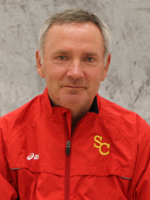
There was one more thing as well. The coach at Luther, Kent Finanger, saw potential in my running. That likely helped me get accepted that July before freshman year after originally enrolling at Augustana. On news of being accepted at Luther, I was quickly assigned to room with a fellow distance runner named Keith Ellingson.

It so happened that Keith lived directly across from Coach Finanger on the west side of Decorah just two blocks from the college campus. So while I was moving six hours away from home to go to college, at least I’d have a local guy to show me around.

College roommates

Our freshman year was more than a deep dive into the competitive world of college running. Luther already had a solid team that had won the conference the previous year, so breaking into the Top 7 would be difficult. Yet in the freshman class alone, there were no less than five guys arriving with sub-15:00 pedigrees for three miles in cross country. Along with Keith and I, there was Paul Mullen, Dani Fjelstad, and Eric Inbody. The next year we’d be joined in cross country by another talented track and cross country man named Steve Corson. He’d played football his freshman year in college but decided to join us crazies in the best sport on earth.

Keith and I both helped lead the team that first fall to a sweep of the Iowa Conference cross country championships. I was our seventh man that day, finishing ninth in the race. Our team swept the top five places for a perfect score of 15 points.

By the time “Elly” was a junior, he won the individual conference title in a tie with my roommate that year, Paul Mullen.

My illustration for coach Kent Finanger of his five “Luther Horses” L to right: Keith Ellingson, Chris Cudworth, Steve (Duke) Corson, Paul Mullen and Dani Fjelstad.

But going into his senior year, something went wrong in Keith’s lower back that limited his training. He struggled with back pain all that fall, yet almost managed to qualify for our nationals team despite limited training. His dedication in the face of all that frustration was admirable. We placed second at nationals that fall after a season of winning invitationals right and left. I was always sad that Keith Ellingson didn’t get to show what he could really do that year. While Dani Fjelstad led the team for much of the season, we would have been that much stronger with Keith at full strength. Plus we missed him in practice many of those days.

The Decorah Flyer

Paul Mullen (l) Keith Ellingson, Chris Cudworth, Doug Peterson, Damian Archibold, circa 1975 or 76. Those are Nike Oregon waffles on our feet.

Keith possessed a stride that made him look like he was flying over the ground. Part of that was his exceptional flexibility. He could sit with legs extended on the ground and put his head to his knees. His whippetlike running form was a joy to behold. But it might have been that leg-strength-to-upper-body difference that gave him back problems.

Following college he married his high school sweetheart Kristi Olson. For years after graduating from Luther, we both worked in Admissions recruiting Luther students. Later on, Keith and I would alternate stints as Class Agent. He led many reunions over the decades, maintaining a heart for Luther College that never wavered.

Hall-of-Fame Coaching career

His career turned back to running and he assumed coaching leadership at Simpson College serving both the men’s and women’s cross country and track programs. He coached national champions such as Danny Bauer and Kip Javrin, a three-time NCAA Division III decathlon champion. A timeless bio on Keith at the Simpson College website describes the high level of success he achieved while coaching in that program. Here’s an excerpt:

In his first term in Indianola, Ellingson led the Simpson track and field and cross country teams to unparalleled success from 1986-2001. During his time, he helped athletes earn 63 All-America certificates and set more than 20 school records.

Ellingson also brought Simpson to prominence on a national stage, guiding the men’s cross country team to a ninth-place finish at the NCAA Division III National Championship in 1986 and the men’s track and field team to a fifth-place finish at the Division III Outdoor Championships in 1988. Simpson scored 35 points in the 1988 meet, which is still the best finish in school history.

After leaving Simpson, Ellingson was the head cross country coach at UW-Stout from 2001-02. He served as the President of the NCAA Cross Country Coaches Association from 1999-2000 and sat on the United States Track Coaches Executive Board from 1999-2001.

Ellingson graduated from Luther College in 1979 and earned his master’s from Western Illinois University in 1985. Keith and his late wife, Kristi, have three daughters: Jessica (26), Catie (23) and Bailey (21). Catie was a standout runner at Simpson, graduating in 2013 as a six-time All-American in cross country and track. 

Years gone by

Over these decades Keith and I would see each other on visits to Decorah and class reunions. Then another convergence took place in our lives, as our wives were simultaneously diagnosed with ovarian cancer. His wife Kristi and my wife Linda would meet quietly whenever we met at college functions. Both women went through multiple rounds of chemotherapy, losing their hair and dealing with side effects too difficult, in some cases, to properly relate. Each kept the faith through cancer survivorship that lasted years. That was a testimony to their strength and resolve to raise their families to adulthood. Eventually the effects of the cancer and treatments led to their passing.

Luther teammates Dani Fjelstad, Steve (Duke) Corson, Paul Mullen, Keith Ellingson, Chris Cudworth

But for Keith, the struggles of life would not relent. Soon after his wife Kristi passed away, Keith developed Parkinson’s, described on the Mayo Clinic website:

Parkinson’s disease is a progressive nervous system disorder that affects movement. Symptoms start gradually, sometimes starting with a barely noticeable tremor in just one hand. Tremors are common, but the disorder also commonly causes stiffness or slowing of movement. In the early stages of Parkinson’s disease, your face may show little or no expression. Your arms may not swing when you walk. Your speech may become soft or slurred. Parkinson’s disease symptoms worsen as your condition progresses over time. Although Parkinson’s disease can’t be cured, medications might significantly improve your symptoms. 

Keith experienced those symptoms and was treated with different sets of drugs. Last summer when we met with teammates for a large Luther track reunion, he was the most animated I’d seen him in several years. The effects of his condition and the medications included softer and slower speech and a muted body affect, but his wry with and often biting sense of humor never really diminished.

Irreverent wit

To illustrate the quickness and irreverence of that mind at work, here’s a somewhat inappropriate story to relate in this day and age. I recall a night that Keith and I went to a dance at a club outside Decorah called Matter’s. He and Kristi had an agreement that they could date while he attended Luther and she attended University of Northern Iowa. They trusted each other. So we hung out drinking beers before deciding it was time to try getting some girls to dance. He approached a lovely gal that we both knew and asked her to dance. She replied, in somewhat dismissive fashion. “No thanksss…”

Keith replied, without pause, “That’s okay, I have to take a shit anyway,” and walked away chuckling. “That won’t help matters much,” I laughed. It was 1975. Dating was such a hit or miss proposition one had to deal with rejection somehow.

To put it mildly, Keith always had a wicked wit. During our long runs his commentary would rise from the moving pack with that distinctive voice of his, typically accented with a staccato laugh. If someone said something unclear or naive, Keith would dice it up like a steak. Many times I wound up laughing so hard at his quips that I could barely run. Once when dealing with a freshman that had trouble describing some incident while running, Keith listened to his perambulations and snarked, “You’re such a thick quinker.”

We were all hard on each other that way. It was part of the competitive life we lived as distance runners. Yet it barely begins to describe how damn funny and smart Keith Ellingson always was. His impish nature came from a love of the ironic and an appreciation for the quirky side of life.

Keith Ellingson with his parents at Coach Kent Finanger’s house after our 2nd Place NCAA D3 CC place.

So I love the guy. That is why it makes me frustrated to share that on top of the Parkinson’s that he has so nobly endured all these years, my longtime friend Keith Ellingson is now dealing with memory loss. His family is caring for him as the effects are profound enough to require his admission to a care facility. Reportedly he is focused on his coaching days at the present moment. Perhaps he’ll make some recovery with treatment. I certainly hope so. But we never know.

(Author’s note: Keith did respond well to treatments and was entirely lucid except for late nights and early stages of the medications.)

Shared lives

Nothing will ever obscure the life we shared together. Through good and bad that first year in cross country, we competed hard, yet as roommates we respected and supported each other. His toenail come off that season from all the training. I remember sitting on the dorm bed as he peeled back the bandage after the surgery to remove the nail and recoiled at the sight of that red flesh glaring at us from where the toenail had been. The next morning, he wrapped it up in gauze and athletic tape, and went back out running the next day.

I do have to laugh at that memory because Keith was known as a bit of a complainer sometimes. It was just part of who he was. For Keith, that form of commentary was a way to put life into perspective. He’d bitch a bit, sometimes quite hilariously, then get to the matter at hand. He was great at almost everything he did, from playing Frisbee golf on the Luther Campus to playing pinball, foosball, or video games at the bar. I seldom beat him any of those. It wasn’t that he openly competed with you. He just did his best and dared you to do better. I think he took that same philosophy into coaching: Be the best you can be.

A Titlelist

By example, he was also one of the best golfers I’ve ever met. In fact he played that sport at Luther College rather than continue his running career in track and field, a sport I don’t think he personally enjoyed that much as a runner compared to cross country.

We played golf together one day on a hilly course in Decorah. Toward the end of the round, he took a long approach shot to an elevated green near the clubhouse. It rolled off the green, bounced down the embankment and came to rest on the gravel cart path facing a stone wall. Rather than take a penalty stroke, he set up to make the shot, concentrated, and hit a wedge that still did not rise high enough to clear the stone wall in front of him. The golf ball ricocheted off the wall and struck him in the forehead, right under the bill of his golf cap.

He looked up at me with those clear blue eyes and laughed his ironic laugh, then said. “Son. Of. A Bitch…” Then he chuckled and chipped the ball right on the green.

Bonds never broken

Keith, I hope someone reads this to you no matter how well you can recall any of this. We talked so many times over the years about running, life and work. We shared bonds that not many people could or want to claim. We met in the passage between youth and adulthood, and now face aging with the strange twists of life swirling around us.

You are a man that has done so much in this world. So much good. Given so much love. Made so many people think, and laugh. The years may have passed, but the memories live forever, even if you can’t recall them. God Bless, my friend.

Love you, my man.

Posted in Christopher Cudworth, college, competition, cross country, running | Tagged , , , , , , , , , , , | 3 Comments

Following the sun

We try to make the most of our long summer days when the sun rises early. Several times this summer I walked into our backyard at 4:30 a.m. when the sky was just starting to brighten in the east. It still astounds me that we meet the sun each morning not because it is literally rising above us, but because the earth is spinning around so that its curvature swings us toward the star we call the sun. We’re all on this massive ride we call days and night.

A few nights this summer I rode until the sun went down in the west. I love coming home in the cooling hours of twilight. The sweat recedes and the breeze across shaved legs gives a sense of speed.

The months travel by and August rolls around. Those hot afternoons demand a ton of hydration. This year the drought in Illinois made it seem even thirstier out there. The cornfields have begun to turn brown as September barely begins. Farmers will be able to harvest early this year.

Yet every cyclist in the northern hemisphere knows what September means to them. Shorter days. Less evening sunlight. In a typical year, that means less mileage as the evening hours compress the available time to ride.

In time of the pandemic and working from home, there are opportunities to ‘work around’ the typical fall restrictions on riding time. We also have a delayed Tour de France to watch. So it feels a bit like July around the house.

This year’s Tour is more interesting than ever. Several strong teams are competing this time around. Rather than one squad dominating the entire peloton, there are competitive strategies at work. Perhaps it will actually be fun and inspiring this year rather than watching the dismantling by Ineos or Sky or whatever. Of course, it was fun to watch Julian Alaphilippe hang onto the yellow jersey for so long last year. I still believe he would have caught back onto Egan Bernal had the stage not been cut short by a hailstorm and some sort of mudslide.

So it’s not “business as usual” anywhere in the world. But the big wheels keep turning. This morning as I drove our pup to Doggie Daycare, I noticed that the sun was coming up south of Orchard Road as I headed east. By point of reference, our star has moved down the eastern horizon from its most northerly point in late June.

That means we’ll get progressively less sunlight all the way through the winter solstice into the deep, dark nights of December. Through it all, the ‘lesser light’ of the moon reminds us that the sun is always there, somewhere. This morning a bright full moon was still sailing high in the western sky as I walked our dog in the early dawn.

All in all, this ‘following the sun’ thing is both eternal and ephemeral at the same time. That rock band of dark philosophy, PInk Floyd, sang it best:

But you run and you run to catch up with the sun and it’s sinking

And racing around, to come up behind you again

The sun is the same in a relative way but you’re older,

And shorter of breath, and one day closer to death…

Okay, that’s fucking depressing, I’ll admit. Yet that’s Pink Floyd for you. My actual point here is not that we’re all slowly dying. It’s that living is a matter of appreciating these daylight hours the best way we can. In contraposition to the existential portent of those Pink Floyd lyrics, those of us who run and ride defy that angular descent into death. If we’re lucky, as I have been, we even keep some semblance of fitness about us.

Just don’t take that for granted. Count your blessings, I mean to say, if you have health on your side. Not everyone is so lucky. And if you’ve seen folks go through terminal illness, as I have, you’ll doubly appreciated whatever momentum you can sustain.

Then you can take similar inspiration from your own ‘moments in the sun.’ Celebrate what you do each day in your own mind, if nowhere else. These days are worth our attention. Let’s make the most of them, no matter how short or long they are. Follow the sun. It’s worth it.

Posted in aging, aging is not for the weak of heart, cycling, cycling the midwest, death, Depression, healthy aging, healthy senior | Tagged , , , , , , , | 1 Comment

The little hurts add up to big knowledge if you take time to study them

At nearly forty miles of our weekend ride, my wife and I were heading west on a section of Route 64 to reach County Line Road and head south. There was a northwest wind, so we were tacking against it as we traveled on a 15-foot wide road shoulder.

We’d covered the half-mile segment and were nearing our spot to turn when I glanced down at the radar reading on my Garmin device to see if there were any cars approaching. I still took a quick look back before calling out to Sue that we would have to wait.

At that precise moment she swerved a bit to avoid something on the asphalt and slowed at the same time. I caught that movement in my peripheral vision and instinctively whipped my wheel out of the way of her back wheel. We were moving at fifteen miles an hour, so there wasn’t much time to react any other way. That quick action sent me wobbling back to the right, toward the ditch. But at least I’d avoided colliding with her wheel.

Typically we ride with Sue in front and me behind because her triathlon training doesn’t really benefit from her drafting on me, especially in aero position on the bike. This year we’ve covered about 1500 miles together without incident. Sometimes I ride close on her wheel and at other times sit back and think through the miles. My main priority in all those miles is to avoid touching her wheel.

Still, it is probably inevitable that once a year we have a close call. Last weekend was that moment.

Yes, mistakes happen. As I careened toward the grass after avoiding a collision with her, I took instant notice that there was a traffic sign to my right. In all my years of sports and more recently, bike handling in criteriums, I’ve learned to read situations of that nature and avoid the worst outcome. In this case, it would be striking a 4″ pole of the sign with my head or body.

That didn’t happen. Instead I veered around the pole as the front wheel plunged down the grassy bank. I flipped completely over the front and nailed a landing by rolling with the momentum in a somersault (For the Benefit of Mr. Kite) to wind up on my hands and knees.

Water bottles were scattered in the process. So were my phone, the contents of the top tube took carrier, and sunglasses too. I was relieved those were okay. They are brand new and I already broke one pair this summer by slipping on the incline of my driveway while wearing cycling cleats.

Surveying the damage

Sue stopped and spun around when she heard me land. The flip on my part wasn’t her fault. As all cyclists know, I should have been watching ahead of me as we approached our turn, not looking behind. Sometimes we act against our better senses.

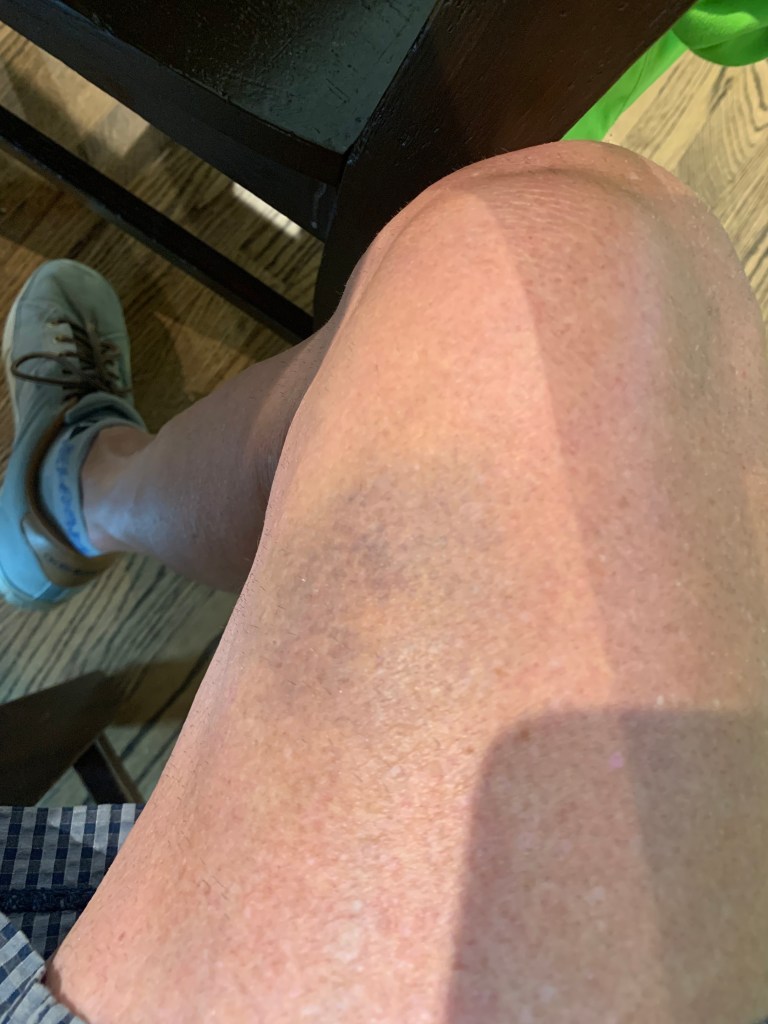
Standing up, I could sense my neck was strained from landing high on my shoulders on the grassy incline. I also knew the soreness would increase. The next day my body was stiff and tight. There was a bruise on my upper thigh. It was turning purple in the nearly exact place that I injured that leg during a higher speed fall due to bike wobble way back in 2012. I was going forty miles an hour that day, and through all that panick of speed and the inevitable crash, it was hard-earned athletic instincts and fast awareness that enabled me to yank my feet out of the clips. The bike frame struck me on the same part of my thigh just above the knee. Funny how those things happen.

Such are the various and strange injuries of life. Beyond the physical bruising we take, this recent incident makes me realize that we likely carry around repeat injuries of other types, emotional wounds where we’ve been struck before. These occur either through bad luck or repetitive instinct. Sometimes it is easier to take the hit where we know we can bear it. Let the bruise heal with time. Get back to what we were doing.

We can learn something from these visible and invisible bruises. They warn us that bad habits, inattention or selfish preoccupation often lead to bruising outcomes.

As the purple (or other colors) fade away, consider the possibility that there is a little thing inside you that even wants to be hurt, a cry for attention or a painful desire to be noticed. In the rush of life, it’s hard to slow down and recognize these needs. So we stub our toe on the bed frame or knick ourselves while carving vegetables with a knife. These amount to small cries for help, for our pain to be recognized, and a desire to be comforted.

These are hard truths to admit sometimes, but the little hurts can add up to big knowledge if you take the time to study them.

Posted in bike crash, bike wobble, blood on the highway, Christopher Cudworth | Tagged , , , , , , , , | 2 Comments

Do I Need a Sugar Detox?

I read a nice blog by a fellow fitness writer today. She does such a nice job of summarizing the problems associated with eating too much sugar, and what to do about it.

She noticed a trend toward a desire for more sugar in her own eating habits. Those instincts were perhaps kicked into gear by the “hook” that sugar seems to set in our brains. It’s a hyperdrive sort of sensation that says you can’t get enough. I’d add in that eating too much sugar is a real mood destroyer. So many reason to cut down on this stuff.

But you can, if you take steps. So here goes, a highly honest take on Sugar Detox thanks to FitAmbitiousBlonde:

Here’s the blog in full.

Do I Need a Sugar Detox?

FitAmbitiousBlonde's avatarLife...Take 2!

I have been finding myself increasingly craving sugar throughout my days as of late. This is more than a little odd for me because I am DEFINITELY Team Salt. I have, for as long as I can remember, craved salt. I normally always reach for the chips in the pantry over the cookies and can eat pickles by the jar full! I attribute this mostly to the fact that I have naturally low blood pressure. Like it is not unusual for me to measure in around the 100/45ish range. That is just how my body has always been.

Recently though, I have been finding myself more drawn to the sweets rather than the chips and pretzels. My cookie and candy intake has noticeably increased over the past couple of months where it was almost non-existent before. I have taken my blood pressure a few times now (we have one of…

View original post 1,435 more words

Posted in Uncategorized | Leave a comment

Is sugar trending in your feed?

I read a nice blog by a fellow fitness writer today. She does such a nice job of summarizing the problems associated with eating too much sugar, and what to do about it.

She noticed a trend toward a desire for more sugar in her own eating habits. Those instincts were perhaps kicked into gear by the “hook” that sugar seems to set in our brains. It’s a hyperdrive sort of sensation that says you can’t get enough. I’d add in that eating too much sugar is a real mood destroyer. So many reason to cut down on this stuff.

But you can, if you take steps. So here goes, a highly honest take on Sugar Detox thanks to FitAmbitiousBlonde:

Posted in Depression, diet | Tagged , , , , | Leave a comment