One of the most inspiring cyclists I barely know

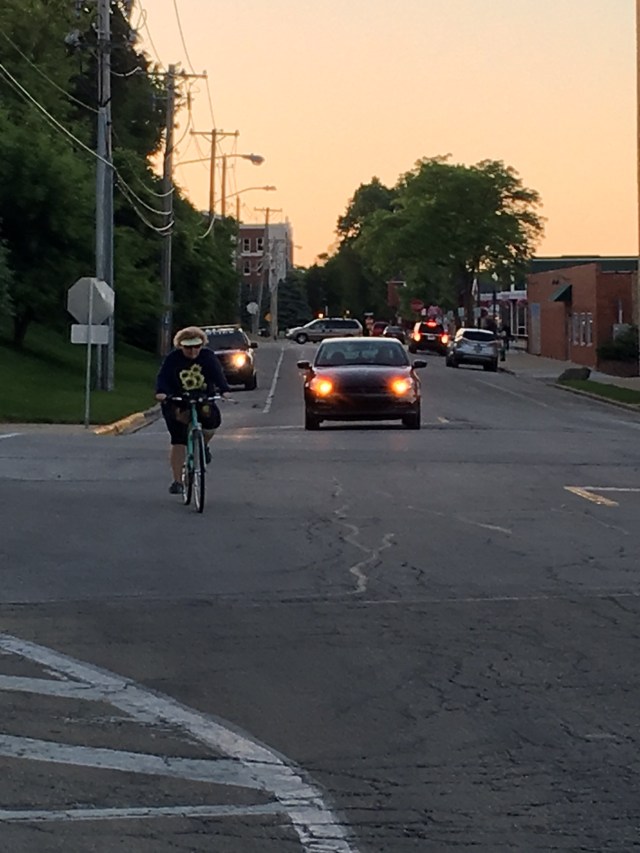
Cyclist One.jpgI started this blog in the fall of 2012. Within a week or two of posting the first piece, I noticed a woman riding up the block where I lived in Batavia at the time. She wore a visor, no helmet, a sweatshirt and some 3/4 length pants. Her bike was a simple mint green affair. She wore no clips on her shoes and pedaled at a steady, even rate.

Over a couple week period I noticed her passing the house several times, then realized she lived a block away.

One day I stepped out on the street and waved. She stopped. We talked. I learned that she rides up to 25 miles a day on that bike.

As the weather changed that fall and got colder, I kept waiting to see how she’d change with the season. But seriously, she kept her routine almost religiously. Down my street she’d go, pedaling with that same efficient method. Not fast. Not slow. She’d just go.

It got colder. She kept riding. Then it got really cold, and I was shocked to see her now pedaling that bike in conditions that would put me into full protective gear. Gloves, shoe covers, the like. She may have had some boots on. She wore an earcover. But she kept on pedaling.

Then the snows came and the streets were covered with slush. But when they melted in a few weeks, there she went again. Tempatures were in the low thirties. The wind was harsh. Yet she pedaled on by in a warmer coat and pants that covered her whole legs.

Cyclist TwoShe told me later that spring that it was a tough winter for riding. You think? “I cut it down to ten miles some days,” she admitted.

Yesterday at twilight when I was walking out of Kiss the Sky Records in downtown Batavia, there she came up the street. No lights on her bike. No helmet either. She’s both unconventional and conservative at the same time. I didn’t bother her as she rode past. Instead snapped these two quiet photos and smiled at her as she rode past. She smiled back.

Sometimes that’s all the inspiration you need.

Posted in cycling, cycling the midwest, Uncategorized | Tagged , , , , , | Leave a comment

A little advice from my Mini-Me

Mini Me CudworthAs fans of the Austin Powers series well know, the character Dr. Evil was very fond of his Mini-Me dressed in a little gray matching outfit. Perhaps it had something to do with his controverted ego and his creepily suppressed sexual desires, whatever those were. It was hard to tell given his association with characters such as Goldmember, whose apparently shiny tool and propensity for eating flakes of his own skin were so distracting it made Dr. Evil seem normal.

goldmemberTrumpmemberWhich could be the game plan for a certain golden-haired politician, if you think about it. We haven’t yet seen him eating his own skin, but perhaps that is what got in the way of his fingers while typing ‘coverage’ so that it came out ‘cofveve.’ You have to admit there’s a striking similarity between The Donald and Goldmember. Think about it.

Yes, these are creepy times in America. It’s almost like we’re all immersed in an Austin Powers movie. Perhaps Chris Christie could play the role of Fat Bastard. Seriously.

600full-courtney-frielBut it’s a fact that every character in the Austin Powers series seems to be grappling with some sort of deep inner conflict, usually sexual. Even Austin Powers lost his Mojo and couldn’t shag anymore. And those Fembots with the machine gun nipples? The NRA would love them. So would Fox News.

My own Mini-Me

So it is with some trepidation that I opened a conversation with my own Mini-Me. This morning when I opened the closet door he was sitting there with a weird smile between his helmet face and his Day-Glo shoes. As you will note, Mini-Me is fluorescent just like me, the Human Highlighter. Only he’s much shorter. There’s very little There…there. But that’s how it is with Mini-Mes.

It doesn’t stop them from having their own opinions. In fact, my Mini-Me has some interesting advice for all of you. Here’s a Listicle of what my Mini-Me has to share with all you cyclists, triathletes, runners and swimmers.

  1. Stop your Frickin’ Worrying. As you can see, Mini-Me doesn’t have much of a brain to get in the way of whatever he’s trying to do. And he wants you to know that the best thing most of you can do is get your head out of the way when it comes to training, racing and recovery. After all, real brains seem to be highly overrated in the endurance world. Take a listen to one of those elite athletes being interviewed after a race. They’re typically not all that smart. “Well, first I swam fast. Then I biked fast. And then, well, I ran fast too.” Apparently it call comes down to being dumb enough to do this shit fast, and do it well. That’s what Mini-Me thinks.
  2. Success is Not About the Sharks With Laser Beams. Sure, having the latest laser sculpted bike is impressive when you’re walking into Transition or waiting to roll on the Saturday group ride. But guess what, no one notices your frickin’ bike once things get into high gear. It’s all about using the fins to get to the finish line fastest. And the same thing goes for runners. Find the shoes that make you go faster, not the ones that look like they will. And you swimmers? The only time anyone sees your wetsuit is when you’re actually out of the water. What matters is  not how you look in the thing, but how strong you are in the water. Get a frickin’ clue.
  3. Give me a Frickin Break here. The worst athlete on earth is the one that is overtrained. When your throat is scratchy and your hair lays flat on your scalp because it’s too tired to frickin’ stand up, that might be a hint that skipping a workout (or two) will do you a helluva lot more good than trying to Shag the Sheep. That’s what happens when you are even too tired to give a fuck, or what you fuck, or WTF? Take a Frickin’ Break now and then. Or wind up a loser.
  4. You Won’t Turn Into Fat Bastard Overnight. Good nutrition is certainly important to better performance. But one bad meal is not going to turn you into that sweaty, greasy, overweight Fat Bastard. Not overnight at least. So if you see a photo of yourself where you look a little heavy, don’t let it grind your gears, baby. Loosen up and rolllll with it. Tomorrow’s another day. That’s Fuel to Burned. Yeah–aehhh Baby!
  5. Somebody Loves You. Behind all that longing to Rule the World, Dr. Evil was actually in search of love from someone, anyone. That’s why he loved his Mini-Me so much. There’s a Mini-You inside you as well. And you have to love them or they won’t love you. Which is confusing, except it’s not. Finding some form of s'[elf love is why we do all this shit. Your Mini-You wants you to know that.

minimeAnd if all that fails, you can simply follow the model of Dr. Evil himself, who sums up his life history and philosophy in this highly compelling quote:

Dr. Evil: The details of my life are quite inconsequential… very well, where do I begin? My father was a relentlessly self-improving boulangerie owner from Belgium with low grade narcolepsy and a penchant for buggery. My mother was a fifteen year old French prostitute named Chloe with webbed feet. My father would womanize, he would drink. He would make outrageous claims like he invented the question mark. Sometimes he would accuse chestnuts of being lazy. The sort of general malaise that only the genius possess and the insane lament. My childhood was typical. Summers in Rangoon, luge lessons. In the spring we’d make meat helmets. When I was insolent I was placed in a burlap bag and beaten with reeds- pretty standard really. At the age of twelve I received my first scribe. At the age of fourteen a Zoroastrian named Vilma ritualistically shaved my testicles. There really is nothing like a shorn scrotum… it’s breathtaking- I highly suggest you try it.

And don’t forget, we all need a Mini-Me.

Posted in tri-bikes, triathlete, triathlon, triathlons | Tagged , , | Leave a comment

What do you want from your summer?

Summer list.jpgThe last morning in May 2017 delivered a sunny day with a fresh northerly breeze. A four-mile run sounded good to me. Just enough time to think things through about the summer.

Because summer starts the first day of June in my mind. If we wait until June 21st, the longest day of the year, it is akin to giving up before the official season even starts. Why wait for a summer mindset until the calendar decides that it’s best to go downhill in terms of daylight? That’s the seasonal solstice, and the problem with that scenario is that it’s also the time when summer begins is kind of where it already starts to end.

That’s a depressing as all fuck fact if you think about it. So I decided to do some summer thinking before the calendar page actually flipped to June. So I came home from the run this morning and mentioned to Sue that it might be good for us to list out some of the plans we both have. As so often happens between us, she was thinking the same thing.

Summer calendar

As you can see from the photo above, there are a ton of things on our summer calendar. This weekend I run in the Race to Market 5K here in downtown Batavia. Then on Sunday we ride in the Udder Century, a 65-miler through cow country in northern Illinois and southern Wisconsin. Sue has a 70.3 race in two weeks in Madison, Wisconsin.

On June 16 we’re going to hit Blues On the Fox in Aurora. We both love live music. The third week in June on the 24th brings a wedding for the son of some of my best friends. And then the 4th of July weekend brings a trip to Kentucky to ride the Ironman course in Louisville that Sue will engage this October.

JULY

Then comes my first triathlon on July 9, the Lake Zurich Olympic. The following weekend on July 15 is the Crystal Lake Open Water Swim. Then on July 20th we’ve going to see Steve Miller Band and Peter Frampton in Aurora as well.

On July 22nd there’s a big Cocktails in the Park party here in downtown Batavia. But I might find another race in which I can run, ride or swim, or all three.

Then I turn 60 years old on July 26, 1957.

AUGUST

The first weekend in August I play host to the Road Runner’s Club of America Certification course at the Vaughn Center in North Aurora, Illinois (Right now the course is full.) But, Finally! I’ll be certified to coach other runners. Last year I was scheduled to attend and got thunderstormed out on my way to Michigan.

On August 13, Sue is doing the Steelhead Half Ironman, so that’s a weekend away. Then she does a Madison One-Day Ironman training camp with her coach. I may or may not head up there with her.

SEPTEMBER

We’ll likely go to Madison on the 10th of September to watch the full Ironman.

OCTOBER

And then in October Sue will do her race in Louisville. That’s a pretty big event.

Of course, none of that includes the daily running, riding or swimming we’ll be doing. We’ll fit that in somehow.

sand_kirchmeier

A sandhill crane sporting interesting tan lines. 

Perhaps we’ll drink some wine, grill some burgers and maybe swat some mosquitoes after this wet spring. It’s all part of summer along with swaths of sunscreen and glimpses of white flesh beside the tan lines. There should be some weird tanlines this summer with all the ins and outs of training and racing and swimming and running and cycling under the sun.

What do you want from summer? Perhaps the best answer I can give is the chance once in a while, to just sit down and read or write and do next to nothing. I think I’ll try to make that happen too.


Posted in Uncategorized | Tagged , , , , , | 2 Comments

Open water. Open minds.

SwimmersFor those of us with a 30-year gap in our swimming resume, the process of building up to a strong, reliable swim stroke is a step-by-step exercise in humility. From those first manic learning laps in the 25-meter pool to the daunting task, the venture into open water swimming would be epic if it weren’t so common and mundane to the entire sport of triathlon.

There are obviously people who approach the sport from an entirely different direction that I did. Swimmers that have never been runners or cyclists have their own thresholds to cross. Some might find the running part a grindingly merciless slog. Others might think cycling on the open roads to be an insane proposition. And granted, riding three hours in the Illinois wind is enough to drive anyone to multisport-level distraction.

Inch by inch

I grew up swimming as a kid so there was this feather of a baseline. to build upon But not really. It all had to be regained. Inch by inch. Turn by turn. Rotate. Catch. Pull. Repeat. It has taken two years not to royally suck at this swimming thing. And I can still barely break 1:50 for 100 meters. But it’s coming.

But a funny thing happens when you take all that pool swimming into the open water. You tend to forget the basics at first. Without the pool bottom to guide the senses, a swimmer in open water too easily falls into some kind of one-dimensional creature in an 180-degree environment.

That turns into an exhausting adventure quite quickly. Then if you suddenly tire in open water because you’re not paying attention to the proper mechanics of swimming, a unique sort of panic takes over. “I’m going to drown,” crosses the mind.

For some the open-water experience turns into a fearfest. In that circumstance much depends on whether you’re wearing a wetsuit or not. With a wetsuit the right thing to do is stop and tread water or flip on the the back. The suit will hold up the body. Which is why most of us trust the wetsuit to get us through the bigger style of open water. From there, it is a matter of developing and keeping an open mind.

Anxiety

There are things to be gained beyond swimming from these experiences. So let’s discuss what it means to have an open mind. In this instance, we’re talking about getting past our fears to enable the body and mind to do what we’ve trained them to do. Then there’s this: fear is a vicious competitor. It loves to take over our conscious mind. It can subvert the unconscious mind just as quickly. Fear is defined as: “an unpleasant emotion caused by the belief that someone or something is dangerous, likely to cause pain, or a threat.”

For these reasons, fear is a motivator frequently used by politicians and religious authorities to get us to do what they want us to do. Coaches sometimes do the same thing. If you want people to go along with your agenda, throw a dose of fear into them. It almost works every time.

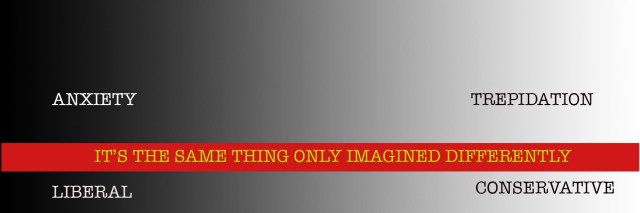
There is a spectrum on which people in fear operate on a scale from anxiety to trepidation. The liberal propensity for anxiety is well-documented. That’s why liberals worry about the environment and social justice. They have this abiding sense that things are going to hell and it might cause current and future generations to suffer. Or worse, it might bring personal suffering close to home. That’s cognizant anxiety.

This is a brand of anxiety with which many of us are born. It is hard-wired into the chemistry of our being. As a result, cognitive therapy can help, but it may not always cure. For that, a bit of medication to adjust the brain chemistry can be critical.

ANXIETYTREPEDIATION.jpg

Trepidation

On the other end of the spectrum we have conservative trepidation. This condition feels like precognition, an assured sense of fear, you might say, to those who possess it. Trepidation is “a feeling of fear or agitation (italics mine) about something that may happen.”

In fact the conservative tendency toward trepidation is to expect that something bad is not only likely to happen, it may be predestined or the product of forces outside our control. That is why the mindset that embraces trepidation is so drawn to apocalyptic religion and the pursuant belief that evil is a living force in this world. It all becomes a self-fulfilling prophesy. To people living inside this worldview, it is inconceivable that others don’t see the same warning signs.

So it is hard to reconcile these imagined and unimagined fears on both ends of the spectrum. One fear tends to be suspicious of another. No one like to admit that it is fear that lurks at the heart of their worldview.

It’s the animal within us that really drives us all.

Fight or flight

Swim ManGenetically, all living things are evolved to respond in either fight or flight mode. But when we try to run away from something we bring upon ourselves, such as choosing to swim in open water, real internal conflicts can arise.

There is a very real parallel between navigating the open waters of daily life and swimming in the open water of a lake or ocean. The more complex an issue becomes, the deeper it seems and the more we struggle to identify the real source of our fears. As a result, some people choose to focus only on the surface of things. That’s the dissociative approach to personal philosophy and sports.  As in: Don’t let reality impinge on your efforts, it will only slow you down.

By contrast the associative approach applies a bit more reason to the situation. A runner or cyclist in ‘association mode’ tries to identify all the signals that systems are ‘go.’ The same goes for swimming.  If you have confidently swum 1000 yards or a mile or two in the pool, there is no reason why you cannot do the same thing in open water. Unless your fears take over.

Imagined fears

It’s the imagination in either case that can cause so much trouble. Whether it is a liberal dose of anxiety or a conservative dose of trepidation that enters the picture, the net result is a brand of fatalistic thinking. If fear catches up with you from above, behind or below, the body freezes up. The breathing grows shallow. Panic wins the day.

So in order to gain confidence and get practiced swimming in open water, I chose to do laps in Crystal Lake yesterday rather than striking out into a longer swim to a pine tree half a mile away. I swam 300 meter intervals back and forth between buoys in water deeper than I could stand. The water was choppy from a wind and that provided an opportunity learn how to sight and breathe.

And there were times when I got out of breath, which meant focusing back on the proper freestyle stroke with sufficient rotation of the body. Nice clean elbows out of the water. Catch and pull. When I did that, I not only swam strong, there was plenty of confidence to go along. My fears were only imagined.

What can be done

What’s the lesson here? That is it neither liberal anxiety or conservative trepidation that should dominate our minds. It is focusing on what can be done that works. Then we move from ‘can do’ mode to ‘do better’ mode. As that happens, better performance becomes possible.

As the rest of the swimmers yesterday came back from the longer route, I stood in shoulder deep water smiling at the fact that none of them looked all that different. And the fear I’d had that the water would be so cold at 65 degrees that I might cramp up and not be able to swim? Not true.  We typically imagine things to be so much worse than they really are. That’s how it is with open water. And that’s how it is with everyday problems.

The only cure is an open mind.


Posted in swimming, Uncategorized | Tagged , | Leave a comment

Hairy’s razors and the bald truth

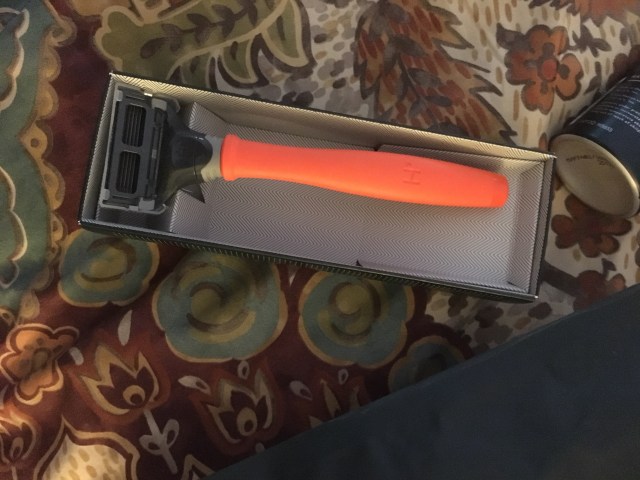
In case you have not heard, Harry’s is a razor company that specializes in making shaving more affordable. It works like this: You buy the handheld razor stem either online or at a store such as Target (the only retailer where I’ve seen them) and then order a monthly set of suitable blades. You can choose a shave plan. On the Harry’s website it looks like this.

ONGOING SHIPMENTS

Keep saving on your blades

Ongoing Shipments

8 BLADES, $1.87 EACH
SUBSCRIBE TO SAVE

You’ll get blades based on how often you shave. Free US shipping always.

Shaving razorThe blades sent by Harry’s typically cost about half as much ($7.99) as a similar three or four pack of blades from companies such as Schick or Gillette. Those blades are so expensive stores such as Walgreen’s and CVS package them in security so heavy you’d think they’re selling plutonium slices.

A package of blades typically costs $15.99 for a four pack from Schick or Gillette. That’s about $3.99 per blade compared to $1.87 from Harry’s or Dollar Shave Club.

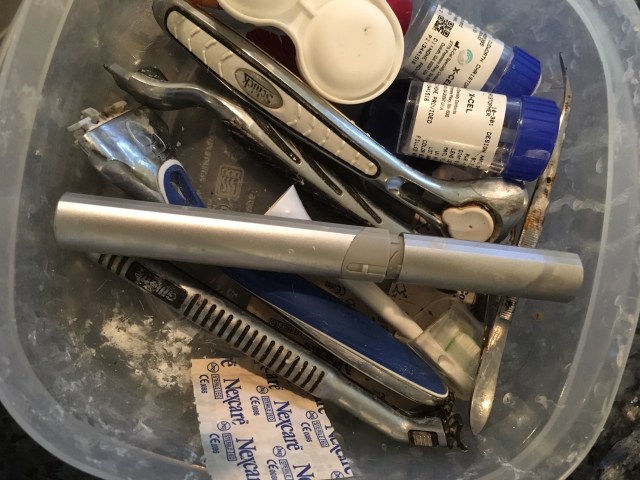
Shaving Graveyard.jpgIf you pay retail prices long enough your mind sort of goes numb.  That’s why I have what amounts to a razor graveyard in my bathroom. It happened like this. Years ago I bought a razor handle for a three-blade razor. I think that was from Gillette. So I went back to the store for a three-pack blade set and those were discontinued or all out of stock. So I mistakenly bought a four-blade pack, and the little neck thingy did not work with the three blade-razor.

That pissed me off so much I bought a Schick four-blade razor handle next time at the store. But then if memory serves I went back to the Walgreen’s and picked up a five-blade pack instead. And that one didn’t fit my four-blade Schick handle.

So now I was really pissed. And instead of buying a four-blade or a five-blade Gillette or Schick Razor pack, I bought a set of three Schick three-blade handles with the razors already on them. And they cost less than the four-blade or the five-blade packs even without the handles.

Shaving face and headI don’t know the perverse logic behind this scheme. It has made me a cynical razor user by every measure. This is compounded by the fact that when I use razors to shave any part of my head other than the top of my scalp, I tend to hack away skin and come out looking like a torture victim from that movie about a Dragon Tattoo.

So I was interested to find a message in my inbox from the woman at Harry’s who followed up on my order. When I filled out the Harry’s Personal Info while making my order, it asked politely if I was a person that shaved my head.

Here’s what Katie from Harry’s wrote back:

Hi there,

My name is Katie, and I’m a member of the Harry’s team. I wanted to reach out and say thanks for supporting Harry’s.

You are important to us, and I am here to personally help you however I can.

You mentioned that you are a head shaver. We care about you, and want to make sure you have the best experience with our products as possible. Our blades are specially designed for your face, and we don’t recommend them for head shaving. If you’re planning on using this product to shave your face, that’s great! Let me know how I can make your shaving experience the best it can be.

If you purchased our razors solely to shave your head and would like a refund for your purchase, I’d be happy to provide that for you as a part of our satisfaction guarantee. We’re working on solutions for head shaving as we speak, and we’ll be sure to let you know when we make a razor for head shaving.

Thanks again for your support, and I hope to speak soon!

All the best,
Katie

Now Katie seems quite sweet. But Harry’s failed to ask a question that I’m not sure they though to think about. And that is, there are many men out there (and Harry’s target’s the male consumer) who shave many other parts of our bodies. That includes our legs, if we’re cyclists.

Call us at 888 212 6855 (10am-6pm ET).
We’re always open at harrys.com or download our app.

So I’m going to write Katie back and perhaps send her a nice photo of my leg-shaving plans from this weekend. I’m sure she’ll appreciate that.


Posted in Uncategorized | Tagged , | 3 Comments

Head for love

Suzanne and ChrisOf all the mysterious forces in the universe, the light side, the dark side, the power of hope and the drag of fear, there is no greater force than love.

But what is love, exactly? Thousands of lines of popular music from the 1920s through the 2000s have inably wrestled with the topic. Wars have been fought over loves won and lost. So what is it? This love thing?

I have this theory that love is what exists outside of everything we can explain through physics and the material sciences. For that reason, I don’t find it difficult to view the Bible in metaphorical terms. What we think about God and life is the ‘special creation’ about which creationists and fundamentalists obsess while trying to twist scripture into something resembling a scientific text. Those who do so are missing the point completely. The Bible is about love. Plain and simple. All the most important messages in the Bible are about the significance of love.

Finding love

Here I will admit that I walked away from much of what I already know about scripture through my late teens and early twenties. The thing that brought me back to the notion of eternal love was that sappy 1970s biopic titled “Jesus of Nazareth” or somesuch. I watched it with my college girlfriend who was studying Judaism at the time with a professor at Luther College named Richard Simon Hanson. 25 years later Professor Hanson would read and review a book I wrote about scripture titled “The Genesis Fix: A Repair Manual for Faith in the Modern Age.” (2007) The book deals with the effects of biblical literalism on politics, culture and the environment. It took me seven years to write, and it accurately predicted everything taking place right now in American culture. The confusion of politics with religion. The neo-Confederacy of a secessionist culture. The takeover of American politics by authoritarians. And the rise of love illiteracy as it is supplanted by people obsessed with money and power over compassion and grace.

Transcendence

So the interest in love as a transcendent force in life started back when I was in college. I fell deeply in love with that gal that I met on an RA retreat in the hills outside Dodgeville, Wisconsin. It was love at first sight that would last a couple years and then melt into time and memory. But we motivated each other and it was wonderful. She was immersed in her performance of a production of Godspell. I was running 100 miles a week as a member of a team that took second place in the national cross country meet. Love floated us up. Love carried us through.

But it was not a love destined for lifelong partnership. And that is the nature of love sometimes. Oftentimes, in fact. The nature of love is that it exists in its own space. It has its place sometimes, but not always forever.

Head for love

For me, the timing of that love was fortuitous. It made me impervious to my own fragmented, distracted and anxious brain. Love supplanted that fearful mind, and I ran to performances in cross country and track about which I had long dreamed, but had not achieved. Love will do that.

There were other kinds of love still to experience. I know there was a strong love for my teammates all through high school and college. Many of those relationships are still intact. Most recently two longtime high school buddies came back to town to attend my wedding to Sue on May 6. Friendship with those guys is surely based on our love for each other.

And also, two of my other high school teammates still live here in the Fox Valley. We still go cycling together. I hold great love for them too. They have all been there for me in some very tough times, and I hope I’ve done the same for them.

Even love can fail

But love also fails at times. It is the human condition to fail each other now and then. No one is perfect. Certainly not me. But that’s when love is truly tested. When we fail each other and forgive, that is true love.

Which brings us nearly full circle to the agape love of the Bible, where forgiveness rests like the beating heart of love inside all of us. If we cannot forgive, we cannot fully love. And if we do not find our way to ask forgiveness, love can be interrupted. That is a stumbling block in life. We fall all over ourselves trying to get it back. It hurts. It causes us to stumble again. We lose hope. Yet we gain knowledge and wisdom from these experiences.

Power of forgiveness

We must also learn to forgive and love ourselves. This is perhaps the most confusing of all principles. I can point to a specific moment when that capacity to forgive myself entered my life. I was in support therapy during my late wife’s long journey through ovarian cancer. The stresses of caregiving both for her and my stroke-ridden father while holding up family responsibilities were profound at times. Add in financial stress and the concussive force of life was too much to handle on occasion. So I met with a counselor from Living Well Cancer Resource Center who said, “You seem to be good at forgiving others. How are you at forgiving yourself?”

Now that seems simple enough. Probably she’s asked that question more than once through all kinds of circumstances. But for me in that moment is was beyond profound. We beat ourselves up emotionally and psychologically because we fall out of love with who we have become. Or we imagine we should be someone else, someone somehow better than this seemingly sorry creature on whom life seems to have exacted so many tolls. Where is the escape hatch? The steam valve. The way back home?

Learning to love yourself

Learning to love yourself despite life’s often conflicting messages is important in many ways. Self-love generally gives us self-confidence and a healthy base of self-esteem. But then we must also deal with factors such as guilt in its many forms.

Early in our lives, we learn the supposed difference between ‘bad’ and ‘good’ behavior. But then we learn that being bad can feel really good at times. That pretty much explains all that partying in college, does it not? And who can forget those first years of masturbation, when guilt washes over the fervent hand, and those moments after when all the world seems accusatory. Yet goddamn, that felt good.

Love and sex

Ultimately mutual sex enters the picture as well. For some people, that comes sooner than later, and that is ‘pun intended.’ And when it comes to early attempts at sex, I’ve looked back on trysts with certain girls and realize that I was unprepared for anything beyond what actually happened at the time. So we must be grateful for those experiences, as Bob Seger once aptly communicated in the song Night Moves:

Out past the cornfields where the woods got heavy
Out in the back seat of my ’60 Chevy
Workin’ on mysteries without any clues
Workin’ on our night moves
Trying’ to make some front page drive-in news
Workin’ on our night moves in the summertime
In the sweet summertime

Yes it can feel sooo good to be bad. Most of us go through life walking this line between learning what feels good and deciding what feels bad. For our bodies. For our conscience. This spectrum is far richer than the simple notion of yin and yang, black and white, darkness or light, or science versus religion. It is the full spectrum of love, yet it raises so much doubt.

Love beyond boundaries

We should now take a moment and think how difficult it is to be someone whose nature and notions of love are questioned at large by society. For millennia those whose sexual orientation and notion of love is focused on the same sex have been ostracized and condemned. Same with those who are transgender by physical nature. Some try to deny people their true nature, or fix some flaw in upbringing or lack of religion as the blame for what is so clinically called homosexuality. That stunted term does little to describe the nuance and breadth of human experience among those who claim their rightful natures.

But the damaging fact is that it is often fearful and ignorant people who too often rule the day with judgments of what constitutes legitimate love. Frequently it is also those whose own emotions are conflicted by repressed desires, or who simply refuse to understand or accept the worlds of love that exist beyond literal interpretations of religion, psychology, or stupidity.

Head for hate

Imagine what it’s like growing up in a world where the love you feel and attractions you have are by definition of culture denied. Where can one go with the deepest feelings one knows? And what is it truly like to be undermined by accusations that all such desires and interests are sinful or wrong?

The impositions of the judgmental are the opposite of love. They also stand outside the clear understanding we’re developing through science that emotional, biological and chemical desires are emphatically genetic and inherent, not concocted by some notion of “lifestyle” or “choice.”Those words are the product of hateful thinking. They are also the ignorant product of a tradition of discriminatory thinking that stems from fear, and nothing else.

Those with a head for love understand differences in other people and accept them. But those with a head for hate grab hold of those false distinctions and act with determination to impose punishment on other people for being “different,” either by loving differently, acting differently or loving without limits. That last one typically scares the life out of most people.

Disturbed minds and the taboo

The level to which this brand of hate can be carried (in contrast to love) is disturbing. The difficult thing to separate is the love for the taboo that drives so many people to indulge in secret passions while accusing others of wrongdoing. The fact that Americans thrive on images of sex and love and danger while banning something as simple as nude beaches illustrates the confused state of repressive guilt that hangs over a nation supposedly liberated from repression.

What we need instead is to foster a head for love that is not discriminatory. With it goes the parallel value of compassion, a prospect sorely missing in the civil war of modern politics that is driven by tribal partisanship. So much hate. So little love. Such stupid decisions based only on money, not on concern for the needy among us, the elderly and all those whose condition in life is somehow judged inferior.

The real debt in this country is the lack of love for others. We need to progress toward respect for love in all its forms. But when many of those who claim that America is a “Christian nation” ardently neglect the all-encompassing power of love, that is difficult. Half the nation is seems is married to legalistic notions associated with a religion of power and authority and politics.

The only real way to make American great again is to dispense with discrimination and develop a greater head for love instead. This is not idealism. This is fact, proven by history, that America is at its greatest when it is at its most compassionate.

That is not where we are today. Not when the Speaker of the House embraces hardline Ayn Rand theories of supposed self-sufficiency anchored in dispassionate demands for cuts to support for the elderly while offering tax cuts to the wealthiest who are already thriving. This is not compassion. This is unloving greed. We’ve lost our way, but not because of too much compassion.

So, I’ll leave you with a quote from a highly flawed yet greatly respected President named John F. Kennedy and another quote from the book of Corinthians. The two go together.

If we cannot end now our differences, at least we can help make the world safe for diversity.

John F. Kennedy

And now these three remain: faith, hope and love. But the greatest of these is love.1 ––Corinthians 1 3:13

Posted in cycling, running, Uncategorized | Tagged , , , , , , , | Leave a comment

Head for nature

Head for Nature.jpg

My stepdaughter gave me this Certified Angus Beef hat from Meatheads, a fast-food place in Illinois. In truth, raising beef in America has some devastating effects on western rangelands. But you’d have to have a head for nature to appreciate that.

This morning Sue and I got up to run five miles together. The rains had struck with ferocity the night before. There were worms all over the road. Crawling worms. Crushed worms. Worms so soaked they seemed stuck on the road.

Even the robins ignore such worms. One would think the roads would be rife with robins gleaning such easy prey, this smorgasbord of wormage. After a few hundred yards of regarding the state of the worms, the mind begins to ignore them. There are so many worms the human mind cannot conceive of their multitude. They outnumber us. So do the ants.

Keeping up with birds. And vice versa

And the birds? Well, they’re just trying to keep up in this world. Hold their niche in the north when they breed and hang out where they can in the winter. It isn’t always an easy gig. Fortunately the earth is still a place of such abundance that the human race has not been able to wipe out every corner or put every species under pressure. Yet we certainly seem to be trying.

I recall a morning in the 1970s when my brothers and I were out birding at 7:00 on a May morning. The trees canopy was literally crawling with warblers eating the larvae that emerge in oak buds. There were so many birds we got giddy from trying to identify them all. Our necks were sore and we were basically AFO’d on birds by the time 8:00 a.m. rolled around. In terms of birding, that was a lot like being fucked hard and put away wet.

Many species of birds have declined in total population numbers since then. Having participated in many annual bird counts since the 1970s, I can testify to the fact that some species have actually rebounded in populations while others, especially grassland species that once thrived in farm meadows, have suffered in recent years.

Daily surveys

Anecdotally, I also conduct daily surveys during my runs and rides. While others might be dwelling on their cadence or their heart rate, I’m often surveying bird calls. When I’m alone, I even talk to birds, imitating their calls with a few whistles. And they often talk back. Screw you if you think that’s weird. Until you’ve whistled a call to an oriole and had them return the exact same whistle in reply, you haven’t lived like I have lived.

And why is that? Because some people consider nature a nuisance more than a keen reality. They don’t have a head for nature. Which means they don’t understand some very critical relationships about how the world operates.

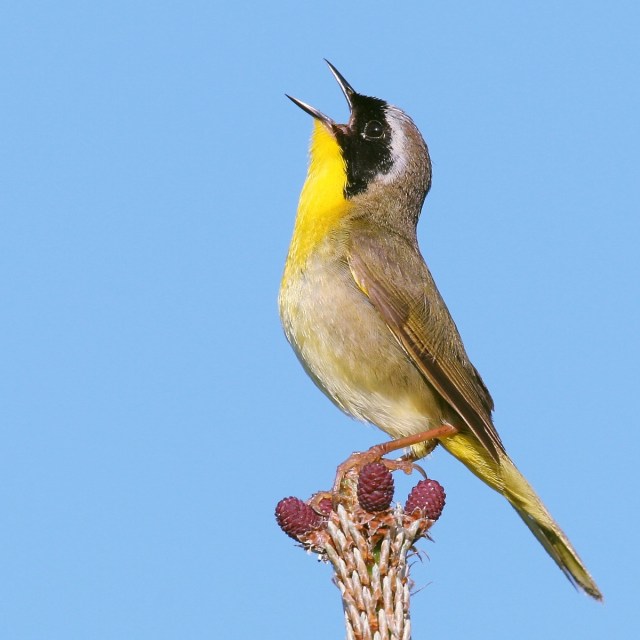
I can tell you the relative health of a forest or about any other habitat on the North American continent just by listening to the bird calls that emanate from the bushes, trees or grasses. And I can do that on the fly, as it were, with the merest twit from a yellowthroat lurking in a wetland or the flat chirps of house sparrows clinging to the spidery ridge of an abandoned factory. These are all signals of habitat quality. You can tell a lot about a natural community by the signal species that occupy it.

Confusing signs

There are many confusing signs these days. Thanks to legislation passed thirty years ago to protect species and reduce the amount of certain devastating pesticides in the environment, species such as the bald eagle, osprey, cormorants, egrets, herons and wood ducks have made effective comebacks. Yet here we stand at a juncture in history where the United States government may choose to eliminate such protections, and what will it do to our national symbol when rivers choke up again from pollution and our coastal areas get degraded because there is reduced enforcement of chemical and industrial regulations. We may be facing a regressive period in history. Going backwards does not make America great again.

Everything seems fine 

But what about all these Canada geese? Aren’t they a sign that nature’s doing alright? Well, Canada geese did not used to spend much time in the lower 48 states. Typically they migrated from the southern coasts to their breeding grounds in the pothole country of central Canada. But now they have learned how to exploit the monotony of the human environment down here in Golf Course Land. Canada geese absolutely adore the homogenous areas of turf grass on golf courses, corporate campuses and city parks. The same goes for starlings, grackles, red-winged blackbirds and robins. All are adept at living in the vicinity of human beings. But that does not mean “everything’s fine.”

Human progress

Because species that seem to interfere with human progress are likely to suffer dire consequences, and the human race is better than ever at killing what it does not care about. Such is the case with monarch butterflies, a formerly multitudinous species that stands at risk of eradication due to multiple layers of human impact on their lifecycle. Their host plants include various forms of milkweed, which tend to propagate in rural places. Some types of milkweed invade crop fields. That makes it a target for agriculturalists who don’t want weeds in their fields of beans or corn.

To fight this problem, they’ve contracted over the last 20 years with giant chemical companies to create herbicides and pesticides that are chemically and genetically engineered to knock out milkweeds and all sorts of insect pests. And it works so well that monarch butterfly populations began to fall, precipitously, over the last 10 years.

Add in the fact that their wintering grounds in Mexico have suffered intrusion by loggers and by shifting weather patterns where heavy, wet snows have fallen in mountainous areas where the insects hang in thick bunches taking advantage of a torpid state and the relative warmth of bundled occupation.

Snapping links

These cycles are at once robust and delicate. They have evolved over millions and even billions of years. But when humans barge in and snap one of the links in monarch migration or their safe haven during the winter, the entire species is at risk of toppling.

Perhaps you never think about these things while you’re out running or riding. But as a person attuned to the sight of milkweed plants along the road, I recognize the potential value of those supposed “weeds.” Yet there are threats beyond our scope of understanding as well. As a family we ranch monarchs by collecting milkweed leaves on which eggs are laid. We bring those leaves inside and let the caterpillars hatch and grow. Then they make their chrysalis and hatch in a couple weeks.

Real rewards

The reward of releasing such butterflies is special, because when you see what happens to monarchs that are parasitized by natural enemies such as wasps, it rents the heart in two. That’s nature’s way as well, and normally monarch populations are robust enough to withstand the predation. But when they are additionally whacked by human intrusion, natural predation can be the tipping point.

Like I said, not all of you possesses a head for nature. But I ask you to simply pay attention to what you do see on the Internet about the effects of everything from lawn chemicals on wetlands (too much phosphorous creates oxygen-choking algae) to the crushing effect of habitat destruction in marginal areas such as the suburbs.

And then I invite you to simply get out into nature without your running shoes or your bike. Go for a walk on a local bike path where the woods are thick. Or hike up into the desert mountains, or along an ocean or lake edge. Give yourself a head for nature whether it is five minutes or five days. You may be surprised how much it talks to you. And it’s okay if you talk back. Nature likes that.

Posted in cycling, running, Uncategorized | Tagged , , , , , | Leave a comment

This thing we call drive

 Drive: 1) urge or force (animals or people) to move in a specified direction,  2) of a fact or feeling) compel (someone) to act in a particular way, especially one that is considered undesirable or inappropriate.

yellowthroatIt’s nice to wake up every morning feeling like we have a reason to live. Perhaps you are lucky enough some mornings to roll over, find a partner under the sheets and have at it. There are few things better than seriously good sex. It resolves some of our drives.
The sex drive is one of the clearest yet most confusing drives on earth. There aren’t any real rules about how it manifests in our lives. At our house, we’ve been watching flocks of mallard ducks hanging around our back yard. At least once a day a pair (or more) of male ducks will start chasing a female duck around. This is how it is with mallards. They’ll gang up on a female. It may not be right in the minds of those with monogamy as their moral foundation, but it has worked for that species for millions of years. Nature has its drives.

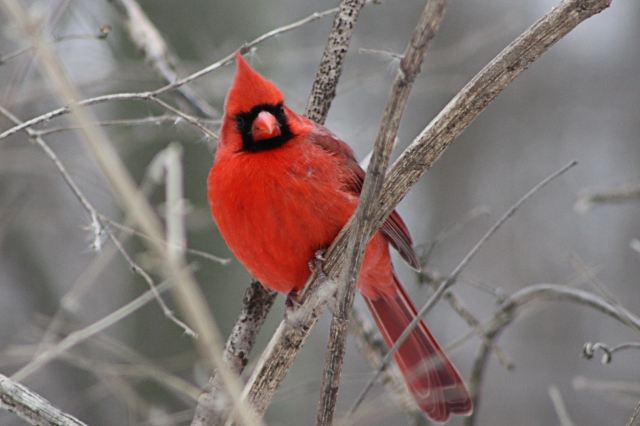
Cardinal for Paint Nature.jpgIt has also been demonstrated that female cardinals willingly entertain additional male cardinal guests, who copulate with her in secret. This is a level of insurance against infertility in the male she’s chosen as her actual mate. The breeding process is a numbers game, plain and simple.
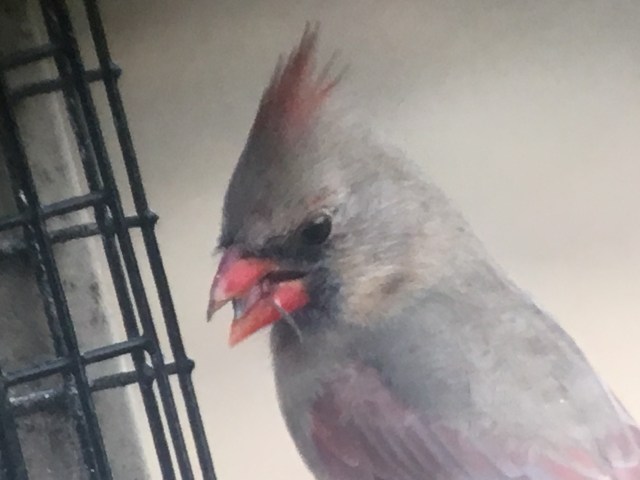
There is a reason for that. The cardinals that nested in a haggard bush in our side yard produced three eggs. Two of those eggs hatched, but both young were snatched by marauding blue jays who likely staked out the nest because it was so exposed. Evolution is a sorely unforgiving teacher.

Driving right and wrong

So we can sentimentalize anything (or everything) we want, but the drives that make us do things can be right and wrong at the same time. As a result, some people live in a perpetual struggle with the seemingly contradictory nature of their drives. For example, a person with deeply religious feelings can also possess a raging sex drive. They can find themselves in serious conflict between a demand for chastity (or even total abstinence) in their faith and the pure lust for human flesh that rules their biology. Toss in a dose of inherent homosexuality and the conflict between drives and the imposed ideology of a literal faith can become an issue of repression. We all know how that typically turns out.

Constructive and destructive behaviors

Instead, many of us try to channel such drives and internal conflicts into what we consider more constructive behaviors. Sports are a frequent receptacle for physically-driven people. Athletics can be a healthy outlet for the energetic appetites of people not matter what age in life they find themselves.

Yet even some of these pursuits can be vexed by ulterior motives. A friend of mine who coaches a majorly successful high school football program plainly states that the reason most boys play the game of football is to get girls. He’s unapologetic about that fact. Of course, the behavior of some athletes as they gain success crosses the line into a sense of entitlement, privilege, even into abuse. That’s when athletes lose control and engage in rape or abuse or domestic violence. The drives that make them successful as competitive athletes are difficult to separate from the drives that make them objectify all aspects of their lives.

The long run

cardinalGetting laid would not seem to be the reason that drives most endurance athletes. Given the fact that endurance sports have massively diversified the last 10 years, that is less the case than ever. In fact, it is likely that many women athletes engage in sports for the feeling of control that it gives them over their own bodies. While they may appreciate how it makes them look in the long run, the immediate, daily benefits are much more practical. With all the impositions of being a woman in this world from makeup to hair and nails and accessories, engaging in something as simple and direct as endurance sports is a genuine source of freedom. In other words, they don’t go out there to be chased around by a bunch of male ducks.

Ultimately the things that drive us are as diverse as the individual things that make us feel happy or sad, motivated to succeed or afraid to fail. These drives cross plenty of boundaries between work and life and family. There is a plenty of transfer between the lot of them. Which is why the sense of accomplishment we develop in endurance sports is healthy in terms of the confidence it gives us. So let’s go back and consider the hardline definition of the word “drive.”

What “drive” means to us

What gets us out the door to train? What makes us willingly suffer through miles of hardship? What makes us rise early, half asleep, to get on the trainer or lift those weights?

I believe it’s simple. It is our drive to feel fully alive.

Yet we must also reconcile the fact that the definition of the word “drive” includes (and concludes) with a negative connotation. 2) of a fact or feeling) compel (someone) to act in a particular way, especially one that is considered undesirable or inappropriate.

And who is the ultimate judge of what is ‘undesirable or inappropriate?” Again, that is something we often have to judge for ourselves. Sometimes that is only learned in retrospect. The lessons carried forward are what give us insight and knowledge about the nature of our drives.

If you’ve ever done one of those training binges where things just don’t stop, where you push and pile on the miles almost without thinking, then you know how drives can turn life itself inside out. I recall a day while living in Pennsylvania in which I joined a band of runners to do a twenty-miler on a Sunday morning. We ran the first seventeen easy and the last three at 5:00-mile pace. It was an insanely good workout, and I should have been satisfied with that.


Chris In White Shorts.jpg

Yes, we did selfies in the late 1970s. 

Yet that afternoon I felt a tingling hum in my legs. It felt like I wanted to run a little more. So I bundled my stuff and drove over to Valley Forge park. When I got there, I met this cute girl with a darling little dog that I stopped to pet.  Then I introduced myself and wound up getting the courage to ask her out. But instead of hanging around getting to know her better,  I took off on that extra run that I felt I had to do. That was the Stupid Drive kicking in.


What the hell was up with that? Twenty miles was not enough that day? Well, the drives were in full force in that period of life. I was absolutely driven to improve my 10K times and nothing would stand between the workouts it took to get there. Constructive. Destructive. Yin and Yang.

That’s how it works when you’re in your twenties and prone to excesses of every kind. Plenty of my friends (and I) were driven to distraction by our hormones, for one thing. More than one close buddy admitted to whacking it five or six times a day even while we averaged 80-100 miles a week. So the source of our energies was hard to separate, pun intended. So it is important to consider that our drives can be both constructive and destructive. This confusing dichotomy is fascinatingly captured in the intense lyrics of the Beck song Sex Drive:

Can’t you hear those cavalry drums
Hijacking your equilibrium
Midnight snacks in the mausoleum
Where the pixilated doctors moan

Carnivores in the Kowloon night
Breathing freon by the candlelight
Coquettes bitch slap you so polite
Till you thank them for the tea and sympathy

I want to defy
The logic of all sex laws

Let the handcuffs slip off your wrists
I’ll let you be my chaperone
At the halfway home
I’m a full-grown man
But I’m not afraid to cry

Driving through life

Cleveland.RockHallI’ve experienced more than a few kinds of drive in life. Been conflicted by the demands of caregiving while failing to take care of myself. Been torn by the desire to parent well yet not try to control their lives. Been aching for time out in nature while sitting in the office trying to make a living. And been wondering what my role as an athlete is these days and whether it is a battle with fitness or with age in which I’m engaged.
In other words, the wrestling match with what drives us never ends. These are the driving questions of all our existence. The fact is that we can only answer these questions for ourselves. Surely there are people who can help, give us perspective and help us understand our drives. We’re all in this together. But in the end, everyone has their hands on the steering wheel of their own destiny, of our own drives.

Hold on loosely, but don’t let go.


Posted in triathlete, triathlon, triathlons, Uncategorized | Tagged , | Leave a comment

What to do when you feel discouraged.

SunriseBy their nature, endurance sports are not easy. That’s because the algorithm is limitless. The fitter you get, the harder you go. So it never really feels like any of this gets easier.

But it can look easier for others. And that’s a discouraging thing when you’re struggling to get faster or go longer. How (and why) do other people seem to make it look so easy?

That’s when you can start to feel discouraged.

To feel discouraged is defined as: “having lost confidence or enthusiasm; disheartened.”

Yet it helps to go a bit deeper than that to understand what discouragement is all about. So consider the root word buried in discouragement. That would be “courage,” which is defined as: the ability to do something that frightens one; strength in the face of pain or grief.”

A friend who is a triathlete, a coach, a Liv cycling ambassador and a massage therapist recently wrote about her experience in doing a 120+ mile bike ride in conditions that were downright nasty. She was alone out there on the bike, and wet and cold. The winds were fierce, so she decided to ride straight into the headwind and get the worst part of the ride over.

It was beyond difficult. She may literally have cried at one point. Sometimes it can be hard to separate the sweat from the tears. But Sarah kept telling herself to focus on the near object. That was turning the pedals. Keep the momentum going.

Perhaps you don’t push yourself that hard. Maybe you just wish your six-mile run would not feel like shit. Well, that’s fair. You have a right to want to not feel shit. But there are no guarantees. If run after run feels like shit, that shit can get discouraging.

Hammer that shit

But you know something? the word “shit” has become a positive in this day and age. If something is “the shit” that’s a bit different than when something is just plain shit. And if you give yourself some credit in the moment of your worst discouragement, you can turn plain old “shit” into “isn’t this the shit?”

For example, I rode with two strong triathlete cyclists this weekend. They were on their tri-bikes and I was on a road bike. So everything was fine while we were humping along protected roads. But out in the open wind, my position on the bike was not ideal for efficiency. Even down in the drops, I’m not as aero as a true triathlete on their bike. If you give away even 5% efficiency in a hard wind, it’s easy to pop.

Which is discouraging, because you know deep down inside your head that moment’s going to come. But for fifteen miles I tucked and drafted and rode down in the drops and made it all the way to the turn north into a crosswind. Then I had to admit that it was either back off or pop completely.

So I waved the second rider ahead and said I’d catch up with them at the Casey’s out in Bumblefuck. There’s always a Casey’s out in Bumblefuck. That’s where Casey’s makes its case to the world.

It fades away

We stopped a few minutes and then headed east with a partial tailwind that sometimes turned into a crosswind. I did not let the earlier discouragement ruin this part of the ride. I even pulled for half a mile.

Then we did a couple long climbs and headed south, into the wind. And before long I was lagging and let them go.

Sure, I got mad at not being able to keep up. Mad is different than discouraged. Discouragement is not a healthy state of mind, but mad turns you irrational. It’s easy to start hating the people with whom you’re riding. But let’s get real. It’s not their fucking fault that they’re fitter than you and able to ride faster. It’s your own problem. It simple does not do you any good to project your problems onto other people. They don’t like it, and frankly, it is far more discouraging to think that someone else holds your fate in their hands.

Greater goals

In other words, you’re free to choose how you respond to a discouraging day. Sarah Farsalas did it by thinking of the greater goal that awaited her. She was focused on an upcoming Half Ironman. And she did great in the race, cranking along for more than 50 miles at 20+ mph. She even ran the half-marathon with a hinchy foot.

Discouragement simply means losing the courage to try. Even if you’re having a bad day and feeling discouraged, it is possible to muster courage and do what you can do in that moment. That’s real courage. Sometimes that’s all it takes to get through a particularly discouraging workout.

Incremental courage

So think about courage as being incremental. Summon what you need. Don’t go for the grandiose or expect that you’ll suddenly catch that group of cyclists up the road that just dropped you. Focus in on that pedal stroke. Get back to that cadence. Pay attention to that running or swimming form. Go back to basics. It is the most encouraging thing in the world sometimes to rest on familiarity even when you’re stressing your body and mind beyond what you think they can take.

What to do when you’re feeling discouraged? Take hold of the courage to try. Pretend that running up that long slow incline is actually running downhill. Play tricks with your mind and do not succumb to the bland reality that you want to quit. Sure you do. We all want to quit at times.

But it’s the not quitting that takes a small dose of courage. You have it in you. You really do.

Posted in Christopher Cudworth, cycling, tri-bikes, triathlete, triathlon, Uncategorized | Tagged , , , | Leave a comment

Second best

PP Clicking InThere are few more pleasurable things than a 5:00 bike ride in mid to late May. Last night the Venge called and I answered. Ten miles into the ride I was warmed up and ready to climb the ‘mountain’ we call Campton. Basically it’s nothing more than a glacial moraine. That’s a fancy way of describing a pile of gravel dumped by the Ice Age 10,000 years ago and since covered over with dirt, trees and houses.

It’s all we’ve got for climbing. Ascending from the south involves a slow gradual hill over half a mile. Then the road turns right up a Strava segment that tops out at 12% grade. But only for about 40 feet. No Alpe du Huez.

And I rode well, but not as fast as last year at this time. On 5/24 I rode that hill a full ten seconds faster than this year.

Then came the descent, and I flew down. Yet I missed the PR on Strava by one second.

So I’m still second best to myself on both the uphill and the downhill. So there’s work to do. It simply isn’t good enough to be second best inside your own head. Can’t have that. I go up an age group this year. There are triathlons to race. Second best won’t do.

Not for a second.


Posted in cycling, cycling the midwest, triathlete, triathlon, triathlons | Tagged , , | 1 Comment