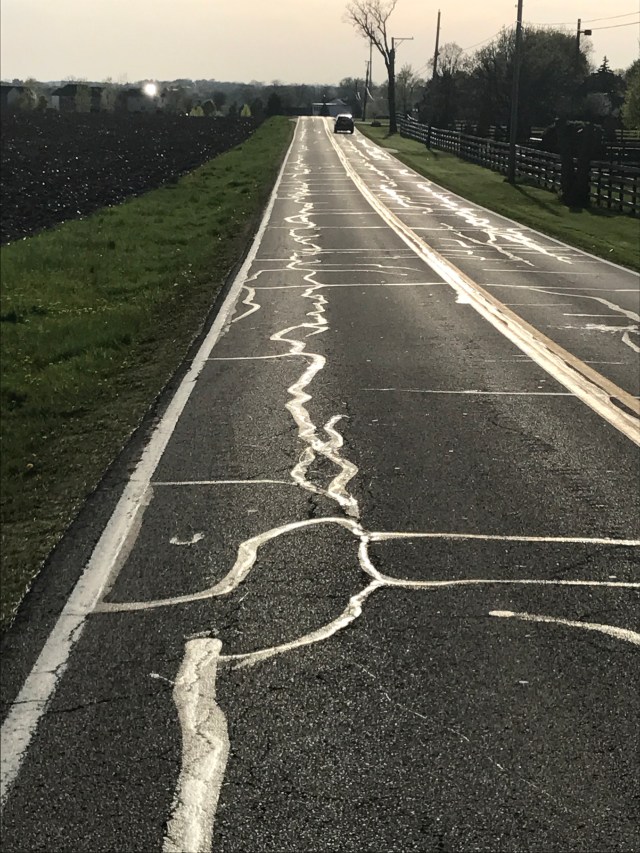
How is your relationship with the wind?

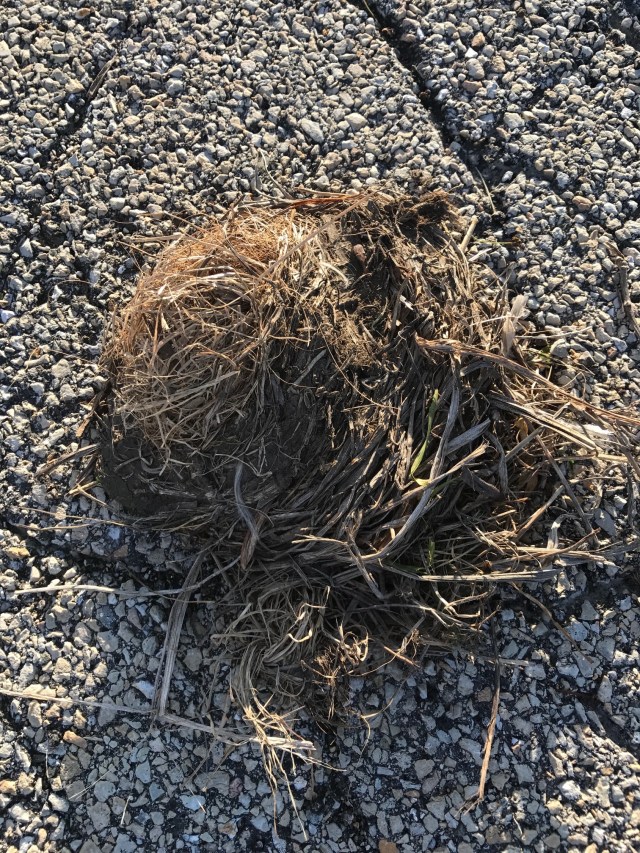
Nest.jpgDuring the Amgen Tour of California the peloton encountered an open plain in the arid land around Sacramento. The race only listed the wind at 6 mph, but any cyclist watching the broadcast could tell that was a lie. Teams at the front formed angled echelons six or seven men deep. This was to protect their GC men or their sprinter of the day.

Behind the lead teams, riders struggled on in a line. There was no time to form an echelon. It was every man for himself.

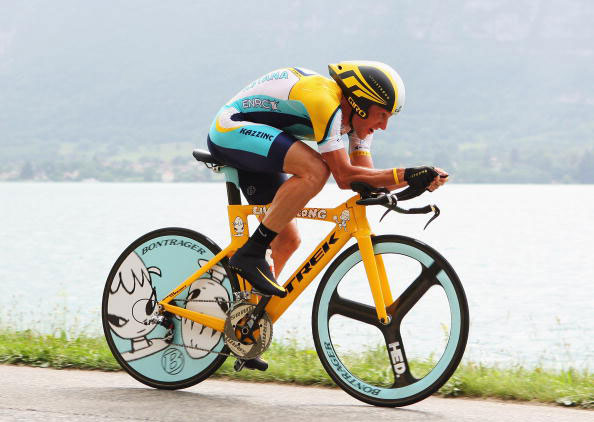
lance-armstrong-yoshimoto-nara-trek-bike

That’s a cruel situation in any race. Of course, triathletes in no-draft races always have to make it on their own. But tri-bikes attempt to compensate for the wind by putting riders down in an aero position. So to cyclists in time trials. And so it goes. Everyone is trying to keep the wind from being their worst enemy.

The wind is a cruel bastard. It is also an unrelenting bitch. Then there are days when it has no gender or personality but swirls and whirls wherever it wants to go. You just have to deal with it.

A tailwind? Forget about it. You rode thirty miles out against the wind? It will shift and make the ride back feel like hell on wheels. That can put you in a mighty bad mood. Turn running or cycling friends into enemies. Dial up the bitching and dial down the friendly banter. Just get through that shit.

The strongest wind in which I’ve run is 60 mph. There were twenty of us out in the open country above Decorah, Iowa. We lined up and ran in a rotation. It was the only way to get back home.  I’ve also competed in a steeplechase race in which the wind was blowing 50 mph. That was perhaps the most difficult race in which I’ve ever participated.

Cleveland.SkylineBut lately, I’ve taken a more zen approach to living with the wind. We have plenty of it here in Illinois. It fills the spaces where the tall prairie used to be. That’s why the wind feels so lonesome at times. It has its laments. It has seen much in its time. Watched 10,000 years of wonderful grass plowed under in a few years. Now the wind scrapes the soil from the surface of the planet. This is its complaint. In winter the snowbanks turn dark brown. In spring the ripples on fluddles under the gray sky look rough as sandpaper. The wind wants to know where its friends have gone.

Then it finds us hopeful and helpless out in the open. The wind strikes us with the aggressive bump of a tribal member protecting its turf. It sends inquiries at us, and threats. It waits to see our reply. Will we respect it or cast yet another insult its way.

It is well-known that the ultimate show of respect is to give credit where it is due. “I hear you,” is the best response to the aggressive nudge of the wind. “I feel your strength.”

But it takes courage to move past these initial greetings. It takes real trust to offer the wind acknowledgment. “I trust you,” is hard to say to a crosswind that vexes your bike or makes your ears hurt from the vortex rushing air. “I want to be with you,” is even harder to say. The wind will not always answer right away. It has learned to distrust false promises. It has been burned too many times. Filled with smoke and fire. Turned into a choking mass of dust that flies from Oklahoma to New York. It has seen your kind before. The promises and the belief that rains will follow the plow. Instead the wind was left alone on the Great Plains. Lonely and desperate as the people living there.

SunriseWhich is why we have so much to atone for. The wind has a long memory. It sees a long way. It tumbles down mountain passes and rises off the face of cold lakes. It strains through wires and the bladed spokes of a bike. It flips loose shoelaces and takes plastic bags for long romps across the haggard fields behind the Costco. It takes down the poorly constructed robin’s nest.

The wind is pissed and it doesn’t like when people don’t think that it matters, or that it’s real. So to have a good relationship with the wind, one must earn it by spending time where the wind learns to respect you back. Only then can you befriend the invisible substance of its mercy. Its resistance is its soul. Don’t push it around without a bit of humility. But don’t be too soft either. The wind hates a patsy.

Over time you’ll come to terms. The wind is not irrational. It is only persistent in the belief that respect is paramount in all things. Show respect, and you may just run and ride like the wind. It is not an easy thing. It never is.

Posted in cycling, Uncategorized | Tagged , , , | 1 Comment

Incremental minds

Eye MezzotintIncremental: denoting a small positive or negative change in a variable quantity or function or; increasing or adding on, especially in a regular series. To improve by increments is to get better in small yet sometimes important ways.

The word increment is fascinating in part because it is so old. It dates from 1375-1425, with roots in late Middle English based on incrē (scere) to grow (see increase) + -mentum -ment.

Now that you’re incrementally smarter about the roots of the word, let’s consider what increments actually mean to you as an endurance athlete. Because it’s rare that people in endurance sports achieve improvement by leaps and bounds. More often improvement comes about increments, which are barely detectable changes in your body and mind that lead to better performance.

That’s why the word ‘incremental’ can be so illuminating for endurance athletes. It’s not just a question of running, cycling or swimming faster. Getting better at a sport is about mental planning for improvement as well as physical effort. Then it comes down to embracing those newfound capabilities, however small or large they may be.

A growing belief in yourself generally happens in increments.

Incremental progress

I recall the first time that I broke 32:00 in the 10k. I’d flirted with the barrier several times. But once I’d run 31:58, it seemed far more possible to take more time off the PR. But the ability to run 20 seconds faster than my previous 10K was hard earned. I set up an incremental training system to achieve that goal. For example, I’d been doing 400 repeats at 68-70 (which is 4:40 per mile pace) and half miles at 2:20-2:25 (which is 4:50 per mile pace). To push my steady state to a faster pace, I dropped my 400 repeat pace by two seconds, doing 8 X 400, then 10 X 400, then 12 X 400 with a half lap jog between.

This incremental change involved two standards: a faster per-lap pace and a bi-weekly increase in total intervals. This took about three months.

This produced an equally incremental change in the 800 repeats, which dropped to 2:15, or 4:30 mile pace. And a month out from the target race I was doing mile repeats in 4:45 to 4:50.

So you can see how incremental training works to increase both speed and endurance.

Next level

But my next goal was to run 31:10 for 10K. That was 5:00 flat pace. And that meant plenty of interval training at 4:30 pace and below to build ease of running at a much faster past. I used the same methods that worked to get below 32:00 pace. Within a year, I’d reached that goal.

The same principles hold true with cycling, and now swimming. Breaking your goals down into increments also has a mental effect. You begin to feel and believe in the progress you want to achieve. And to this end there were races along the way in which I shot for 31:40, then 31:30. Finally, in a race where six other running club teammates were helping with the pace, I ran that target 31:10 10K.

These same methods were recently used in an attempt to break the two-hour marathon. Nike athletes were schooled in precise pacing. They also had the benefit of highly controlled conditions on a relatively flat racing surface and a ‘human wedge’ to create a draft space for the lead runners to move with the least wind resistance. As quoted in a Runner’s World article about the effort, the team responsible for the effort decided to “science the shit” out of the marathon. And it worked. They ran 2:00:25, which is essentially a two-hour marathon. It was only a second slower per mile than the pace necessary to claim 1:59:59.

Metrics help

In endurance training, the increments by which we measure ourselves are typically ‘datametrics’ gathered through devices. These devices can range from a simple chronometer to a heart monitor all the way to power meters built into a bicycle crank.

We can thus measure ourselves by increments unimaginable just 20 years ago. But like all endurance athletes, we must be careful not to become too obsessed with such data as indicators of our true fitness. Athletes must also possess the ability to sense the relative merit of their efforts by natural means. Obviously none of these judgements about ourselves, be they supposedly objective datametrics or native sense of pace, are never 100% accurate. A number of factors such as temperature, precipitation, wind and other training conditions can greatly affect perceptions and performance on any given day.

So the true benefit of incremental training is found when the word is broken back down. You do the ‘incre’ part to measure your efforts toward goals, and the ‘mental’ part is found in trusting that you’ve done the work to hold the pace.

Thus it is truly incre-mental work we’re doing.

Posted in Uncategorized | 1 Comment

Then she said: “Okay, that’s the bad one. Get off now.”

Sue .jpg

Sue and I joined more than 20 triathletes for a half-Ironman prep session before riding. 

We buzzed up to Madison, Wisconsin this weekend for a test ride on the bike course for the Half-Ironman event Sue will be doing this summer. The Half-Ironman course goes south from Madison as compared to the full Ironman course that goes west. But be assured of one thing; there is no shortage of hills to the south.

Which meant the group with which we rode split up within the first ten miles. That was expected. The range of athletes testing the course was quite wide, and it’s generally not the practice of triathletes to draft on long rides anyway.

Sue was feeling good., and we rode together through 25 miles. Then the hills started to take effect on me. Overall, the course offered 2200 feet of climbing. That makes an honest cyclist of you whether you’re male or female, novice or expert. But I know there was trouble in my legs early on. They felt tired the very first climb. Yes, sometimes things improve as you go along and warm up. So I kept up hope. But some days are just not meant to be.

Sunrise.jpg

Sunrise over the woods and lake in Madison, Wisconsin

In my case recent events had cost me some energy. Getting married the previous weekend was a blast, but it legitimately was (in a good way) an emotional and physical drain. At work on Tuesday, I literally closed my eyes while typing and woke up thirty seconds later sitting at my desk in a daze.

But like all dedicated dopes, I had a run scheduled that evening, so I dropped off the car at the train station for Sue and ran home. That run did not go well.

For one thing, I got a little too experimental cutting through a forest preserve on my way back home. Somehow I forgot there was a creek bisecting the preserve, and the recent rains had flooded a field I tried to cross. My shoes got soaked. Then I made the brilliant decision to jump the creek rather than backtrack. So I backed up twenty feet and made a running leap to clear the six foot stream. And wound up on my ass in the water. Even with my beloved Saucony waterproof sweats on, the water came right through.

After that little incident, with heavy shoes and a soggy ass too boot, the run turned into a four mile slog home. Somewhere along the way, it got even worse than that. My legs started to ache and the IT band on both legs tightened. I stopped and walked and stretched. It still meant a long way home.

For three full days after that, my legs ached. Bad. Something more than a tired run took place last week. Perhaps the combination of wedding excitement, alcohol and non-stop dancing at the party conspired to eclipse my energy. Whatever it was, my legs were still quite dead by Saturday. Most likely I’d bonked somehow during that run last week.

So I let Sue buzz on ahead. She had the company of a zippy little rider named Suzy who stood no more than five feet tall and could climb like a fly on a wall. So I kept company with the wind and the birds and followed the signs to keep on the course.

Bar Tape.jpg

Part of the reason I had my head down during the ride was my mesmerizing new bar tape. 

At one point while riding on my own, I put my head down and missed a “straight ahead” sign. That meant I followed the main road on which I was traveling. It got awful quiet about a mile down. I could see no one ahead or behind. So I turned around and found the correct course again. At that moment I was caught by a big group of road cyclists. So I tagged on and kept up in the draft for five miles. Then we hit a big climb and I popped off the back. Even with a full pedaling motion during the climbs it wasn’t there.

Still, I finished all 56 miles about a mile an hour slower on average than Sue. I was pleased with getting in those miles without blowing up along the way. My general fitness is there because we’ve already had a couple good rides already, but the popped run earlier in the week clearly had its cost. Something blew up in my system and there was not enough time to recover.

After the ride we gathered our gear for a trip back to the hotel where the late checkout let us take a shower before heading home. On our way to the hotel, the fuel indicator on Sue’s Outlander began blinking. We’d forgotten to stop for gas even though we’d seen the first indicator light blinking on the way to the ride that morning. But now Sue had a warning:

“Okay,” Sue chimed. “That’s the bad one. Get off the road now.”

So we fumed it into a Mobil station just in time to fill up the tank. And I felt like that was a bit symbolic to my situation on the bike. Riding around on fumes isn’t much fun. It makes you tense and takes your mind off the scenery, for one thing. There were a couple of those hills where my own indicator light was blinking. There wasn’t much fuel in the tank, as it were.

But I made it. There’s something to be said for that every time. Knowing your own indicator light can prevent a total bonk. In fact things got a bit better after 30 miles when we all fueled up at the Sag Wagon. It can sure pay to be patient with yourself on the bike. It’s when you’re driving on fumes in the car that you really have to watch out.

Beware the Bad One. That’s the moral of this story.


Posted in Uncategorized | Leave a comment

For once a good time in the pool

Fresh out of the pool.jpgFollowing my layoff from the pool due to life changes (all good) it has been interesting to return to swimming. This morning was almost revelatory, defined as… “revealing something hitherto unknown.”

How romantic, you might say!

Well, it’s not too hard to find revelation when you’ve been slacking off for a couple months. But let’s confess: we all know it could go a completely different direction in the swimming pool. After time off it’s easy to feel out of shape, poorly prepared and sunken in the struggle with this damned thing we call water. Who invented that stuff anyway?

In the name of dealing with reality, I decided not to coddle myself this morning. That mean leaving the float behind to warm up in the pool. Instead, I just stuck the ankles in the water a couple minutes to let the body get used to the water temps (a mild 82 degrees) and start swimming.

See, the float is a mental and physical crutch for me. It takes all the pressure (and effort) off my lower body to kick. To put it bluntly, it’s cheating. No one ever improves in a sport (or can deal with reality) by cheating. Plus it only sends the message and builds the perception in your head that the only way you can succeed is by cheating.

That mentality was and is still rife in sports like cycling and running. Pretty much the top ten cyclists in every Tour de France for eight or ten years was tossed from the sport at one point for doping. That’s because cycling is really hard. There is just no way around it. So to gain advantage by even 1% or 2% amounts to a lot over 2,000 miles of riding. Last year Chris Froome won the tour with an overall time of 89h 04′ 48″. That’s 5,344 minutes of riding. He won by four minutes.

But you may recall that Chris Froome had a potentially devastating bike mechanical that could not be repaired in the moment. So he literally ran without his bike until he could get a bike with another team cyclist or get to the team. Technically, that was against the rules. Cyclists in the Tour are required to ride every inch of the competition. No running. But he was forgiven for some reason because he wasn’t really trying to cheat, per se. He was trying to overcome the obstacle created by the fact that the Tour is such a traffic cluster fuck there is no way a team vehicle could get him a new bike.

Small decisions can turn into big results

So the world of cheating is a gray area sometimes. But for those of us who aren’t leading the Tour de France, and are simply trying to train and race the proper way, there are still moral or ethical decisions to make. Some of these might seem small. But it is the small decisions, such as avoiding use of float crutches in the pool, that can turn into big results.

It surprised me (the revelation!) what actually happened when I skipped the whole “use the float during warmup thing.” I felt much better in the pool. More comfortable. Without that initial ‘crutch’ there was no regressive sensation when I started to swim without it. I did a set of five 200s at a consistent pace (that was the goal) with some hard 50s (for me, down around 50 seconds) thrown in between. So I’ll admit I’m not yet fast in the water. What was more important is that I had a good time in the pool.

Big picture

This morning after the swim a clean new thought appeared in my head. It was the thought that I most wanted to appear in my head for over a year. “I could swim a mile. All it takes is eight 200s,” my little brain spoke. “And I can do that even without a wet suit.”

It’s funny what can happen in this world when we’re truly honest with ourselves. Why be anything else? The seeming gains ‘earned’ by cheating never stick anyway.

So take your honesty on the road or int the pool with you this week. Accept that what you’re doing is hard, but not so hard that you can’t do it. The confidence gained by addressing reality on its own terms is worth the challenge.

You now it’s true. The reason that I had a good time for once in the pool is that I was perfectly honest about what needed to be done. It’s the only real way to achieve progress.


Posted in swimming, tour de france, Uncategorized | Leave a comment

An All-Comers meet in May at midnight under a full moon

There is a week or two every year that falls in the gap between when college runners complete their track season and the NCAA national meets. For runners that have not yet reached the qualifying mark for nationals, there are All-Comers meets where can compete to make qualifying.

I made it to college nationals three straight years in the steeplechase by qualifying during the regular track season. But waiting those two weeks to run after conference could drain the competitive desire out of you. The spring weather would warm. Often there was a girlfriend tugging on your sleeve to hit the party scene. Keggers in the woods. Making love on a rock ledge over the river. Just the typical lust for life stuff.

An athlete prepping for high-level competition can indulge such things and still succeed. In fact, there is probably no more relaxed and motivated runner than the one who’s feeling loved and desired.

The Edge of Fast

But there is still that need to stay on the edge of fast. Which is why the All-Comers meets are so critical. For those still seeking to make nationals, there is incredible pressure and often just one or two additional chances to make it. I never had to make that happen in college. But a few years after college I showed up at an All-Comers meet held at North Central College in Naperville. The meet was staged on a Friday night. Hundreds of track athletes in every event showed up.


Jim Spivey

Jim Spivey #453 was a world class runner for more than 10 years. 

It also happened to be an Olympic year, so the almost certain lead runner in the 5000 meters that night was a certain top-flight athlete named Jim Spivey, who if I recall correctly was prepping for the 1500 in the Olympic Trials. Of course, another top runner from the Chicago region was one Dan Henderson of Wheaton College. Later that June, Henderson would, in fact, lead the race in the 5000 meter Olympic Trials race.


Long night under a full moon

So the stage was set for a fast Friday night All-Comers meet. I arrived at 4:00 in the afternoon and watched heat after heat in every event. The meet dragged on because there were so many athletes in every event. 8:00 pm passed as a big full moon rose into the night sky. Then 10:00 came along, and we were still just 2/3 through the meet schedule. I’d already gone out to get something to eat and returned. I warmed up once at 9:00 thinking things would move along. But no such luck.

A female friend that had come to watch the meet stuck around for hours, but ultimately went back to her apartment for a while. I thought that would be the last I’d see of her. After all, she was technically only a friend from work.

But she showed back up at 11:00 pm and stuck around for the midnight start of the 5000 meters. There were 25 runners on the line. We jostled around and sorted ourselves out into perceived groups. No one was interested in messing up the prospects of anyone else. This wasn’t about competition as much as it was cooperation. The goal would be to find a group racing at your own target pace and get into the flow. So the feel fo the event was different than your typical race, a bit more like the recent 2-hour marathon attempt by Nike athletes.

The pace went out fairly fast. I came through the mile in 4:40 and felt quite good. Then I came through the two-mile in 9:17. I still felt good. But with a half mile to go I started to feel it. Still, the pace held even and I stuck with my fellow competitors and finished in 14:45 or so. Even though the entire purpose in entering the race was to set a new 5K PR, I was so focused on finishing fast that I forgot to hit my watch until 10 yards past the finish line. I’d slowed the last mile but that was the consequence of going out strong.

A personal record

In any case, it would be the fastest 5K I ever ran, or would ever run again. The weather had been perfect, sixty degrees and no wind. The track at North Central was one of those red Chevron surface that felt like a dream with a pair of Nike Air Zoom spikes on my feet. I remember those spikes so well. They were pure white with a single light cobalt blue swoosh. The soles were grippy but light, and the heel counter was barely a half inch thick. Built for speed. They were given to me by the running store whom I competed on contract that summer doing road races.

The strategy was that track racing builds confidence for competing on the road. Setting a PR at 5000 meters on the track expanded the mental limits of what I could do on the roads. Sure enough, that summer turned out a 14:57 road 5K but I still finished second in the race. That’s how it was during the competitive road running heyday of the mid-1980s. There was none of this winning 5Ks with a time above 16:00 or 17:00 minute as it seems to happen these days. That would have been laughed at in those days.

Rewards

First Full Moon 2015 over ManilaIn the afterglow of that midnight 5K at the All-Comers meet, my female friend came down from the stands to give me a hug, and a kiss! “Nice JOB!” she shouted. I’d finished in 14th place behind to top runner. That might have been Spivey, I don’t recall clearly, but someone ran a 14:01 to tow the entire field to faster times.

Granted, the difference between my own career and that of an athlete like Jim Spivey could not have been more profound. Jim would go on compete in the Olympics three times after having won Illinois high school state championships in the 800 (1:50.2) and finishing second in cross-country with a time of 14:00 for three miles. Not too shabby.

I only aspired to be that fast. But it did not take the thrill out of running a PR at midnight on a Friday night in May all those years ago. Nor did it hurt to get that hug and a kiss from a friend that would later turn into a loving relationship of sorts. Like a Bob Seger or Dan Fogelberg songs, it was one of those “she went her way and I went mine” kind of 20-something things. We all have a history. And thank God for that.

The drive home that night was strange. My body and mind were ramped up from the competition. I rolled down my window and shouted out the window: “5K PR!! Whooooo!” The full moon did not seem to mind. It stared down kindly on my car on the dark road. The moon knows that we all rave at it now and then. It is patient with us in all seasons. Of the year. And in our lives.


Posted in track and field, Uncategorized | Tagged , , , | Leave a comment

Lifetimes to be experienced

malanaphy-springs-735x491

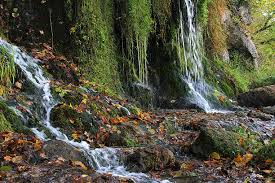
Malanaphy Springs outside Decorah, Iowa is a near magical place.

This time of year is both immersing and bittersweet. This morning I birded a bike path next to the Fox River south of Batavia. There were hundreds of warblers and songbirds in the trees. I stopped to watch a Wood Thrush perched on an open branch. It’s long pink legs and pale bill were clearly lit by the morning sun. It’s speckled breast and russet head and back were perfectly composed. And it sang so beautifully I was transported…

It’s been this way so many spring mornings. Ever since I was twelve years old carrying around a big old pair of Sears 10 X 50 binoculars. They were heavy by comparison to binoculars today. But we didn’t care. My brothers and I would hand them around as we birded together to find new species and revel in others.

But May tends to be a time of many other obligations. As a runner in high school and college, there were always workouts to schedule and do. Often we trained twice a day. That left little time for birding.

Yet I recall a morning in early May during college when the urge to get out and bird was just too strong to resist. The weather had finally warmed up and there were birds migrating by the thousands through the Oneota Valley where Luther College resides. I borrowed a Schwinn bike from a dorm buddy and rose before dawn to ride out into the hills. The Schwinn was a heavy, slow bike but I didn’t know any different back then. Without a car to drive, the bike was my tool to reach into the wilds.

images.jpgThere were no streetlights beyond the campus. I pedaled out Pole Line Road into relative blackness. It was perhaps inadvisable, and spookily silent except for the whirr of tires and the squeak of the chain. My legs were fit but tired from all the track training. But as the ride got going and the binoculars clunked against my chest with every pedal stroke, I knew somehow the morning would be special.

Three miles out of town the road bends to the north and west. An outcrop of mossy limestone juts out toward the road. As I rode past, still a bit asleep due to the rich darkness, the voice of a whip-poor-will exploded right next to me. I was so startled that I jumped, and the bike wobbled, and I almost fell off.

The wild nature of that call jolted me awake. Not long after that the sky began to brighten. The hills turned violet and the dawn chorus of robins and other songbirds began. I pedaled to a park along the Upper Iowa River with a path that leads to a spot called Malanaphy Springs. Before long the trees exploded with activity from migrating birds. Beautiful Blackburnian warblers with fiery orange breasts. Tree-hugging black and white warblers and their near counterparts, the Blackpoll, were common.

For an hour I birded along the river, making slow progress back toward the springs, which poured clear and wonderful out of the hillside. It felt wonderful to be so far out in the quiet and the wilds. So I stripped down to nothing and stood there in the woods with my feet on the moss. I’m sure I’m not the only wandered that has gotten naked by those springs. The hills of Decorah call to the earthy side of everyone.

The chill in that air that morning was cool, and it was heightened by the rush of the freezing cold water that pours out of the hills. So I got dressed again and sat listening to the water pouring over the rocks. The birds came closer as I sat so still. The sense of being one with the world was overwhelming.

It was still only 7:30 a.m. by the time I pedaled back toward the college. Crossing a bridge over the Upper Iowa, I noticed the flickering white wings of a Forster’s tern as it made its way up the river. There were wild turkeys in an open field, and the call of a pileated woodpecker sounded from a dark woods.

I’d gotten what I wanted that morning in Decorah: a real sense of being someplace, and of being myself. And as I sat in class at 8:30 a.m. it was tempting to stand up and tell everyone what the morning had been like. It seemed so much more important than the subject matter at hand. Who would understand?

images-1.jpgBut then again, how with any accuracy or sense of startled wonder could one describe the sound of a whip-poor-will calling from the black hills before dawn? That was just one moment of many so impossible to describe. So I kept quiet. My trip that morning remained a rich secret, an experience gained against all other realities.

By chance that afternoon the distance guys on the track team ran the loop called Wonder Left that traveled past the very hill where the whip-poor-will had sung that morning. It was less than ten hours earlier, but the jolt of that moment seemed as if it were from another lifetime. Perhaps it was.

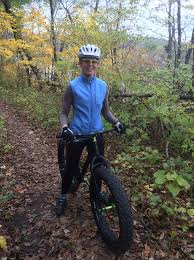
Two years ago I returned to Malanaphy with the woman that I married this past weekend. We rode fat tire bikes out the same road and stopped at the springs. Then we rode around the Wonder Left course and back into Decorach. It was a fall day rather than spring, but the point was still well taken. There are lifetimes to be experienced every day. You just need to get out there.

Posted in cycling, Uncategorized, We Run and Ride Every Day, werunandride | Tagged , , , , | Leave a comment

How to believe in yourself

TarsnakesIt might be nice if we were all born with this insane built-in confidence and the ability to believe in ourselves. But the truth of the matter is that life has a way of kicking us around. When underlying genetic predispositions toward anxiety and depression are factored in, or the outcomes of the parental lottery are less than satisfactory, the process of growing from childhood into an actualized result can be quite the labyrinth, a road filled with tarsnakes, or a downright drag.

So the task of believing in yourself quite often means overcoming adverse circumstances to find what motivates you enough to ignore that stuff and become who you want to be.


The run and ride through life

Those of us who run, ride and swim test the ability to believe in ourselves every day. I well recall several moments in running when I began learning to believe in myself. The first came when I ran a 12:00 two-mile in gym class in 7th grade. That was followed by racing track in the 8th grade, going head-to-head with equally determined runners around the unforgiving oval.

Then as a ninth-grader I made the varsity cross country team. As a sophomore I scored the most points for the team on the season and helped win the first ever conference championship for the school. Those leadership opportunities certainly taught me to believe in myself. As a junior I led the team to a district title, and as a senior barely missed qualifying to go downstate in one of the toughest sections in Illinois. Then came college, and running 5th man on a team that placed second in the nation in NCAA Division III cross country.

Yet through all these experiences, I was often still wracked by fear and self-doubt. When I believed in myself, everything was fine. But when that belief eroded, things got very tough at times. That’s a keen allegory for life.

Beyond school

Without coaches to guide us through with encouragement in life, our experience can seem even more complicated and difficult than during our formative years. Many of us run smack into this reality after college, when people who don’t give two f**** about our precious self-confidence are suddenly in control of our day-to-day existence.

Then there’s the raw interface of the real world outside any sort of known relationships or experiences. I clearly remember that first job working in Admissions for Luther College. I drove all over Illinois by myself recruiting kids for that college back in the state of Iowa. People had never heard of the place and it was my job to convince 18-year-old kids and their parents to split up by 5, 6 or 7 hours.

I covered the City of Chicago too, working urban neighborhoods and city schools where the thought of going out to a tiny Lutheran college in the cornfields of Iowa as a cultural immersion was quite the sell. Yet I had the confidence to just be myself in those situations. Be honest as possible. And despite some deep doubts expressed by my boss, I achieved the 70-student quota by year’s end. Because I believed in myself.

Disillusionment

Cheap motelStill, going from the relative innocence of college to that raw environment of traveling school-to-school felt crazy some days. Those wan gray days driving on long strips of roadway in Illinois seemed to drain away my dreams. Staying in cheap hotels did not help matters either. But we lived by budget rules, and getting through a night by a trainyard where the cars banged together all night certainly toughened me up.

Believing in yourself can be highly relative. Perhaps it even takes more self-confidence to sit on the edge of a lonely bed in a Motel 6 in Decatur than it does to stand before an audience of 600 people and give a speech. Loneliness can drain away belief faster than almost any other emotion.

Existential realities

But truth be told, dealing with other people can be just as difficult. During college philosophy class we read the book No Exit by Jean Paul Sartre. The plot centered on the idea that “hell is other people.” The book proposed the hell was an eternity in which three people are locked in a room together and at any point in time two of the people get along while the other is subject to their distrust, ridicule and scrutiny.

If that sounds spookily similar to the bad atmosphere of some office environments, then so be it. We all know that office politics can create fear and absolutely gut one’s self-esteem. Add in the pressures of cultural prejudice, harassment and discrimination that is so common in the workplace and it becomes a hell all its own.

Situations like those can totally undermine belief in yourself. I once worked a job for a well-known non-profit organization that lasted two hellish years. Every form of evil on earth took place in that closeted little realm. Everything took place from passive-aggressive manipulation to outright discrimination, graft and lying.  Finally and employee took his own life when leadership visited his remote office ‘ranch’ and it was discovered that he was a child molester.

In the face of toxicity

Trying to do a good job in that toxic world came close to undermining belief in myself. But fortunately I’d learned that abiding by principles and truth in the face of such insanity was the real way to survive. People can rip you for many reasons, but hew to the truth. Even if you lose the job, you can live with yourself and look to the next opportunity with a clear conscience.

That type of insight comes from participating in sports where truth is clear and present. For a couple years before taking that job I’d trained and raced with all my might in running and learned that being true to yourself is perhaps the most important function in this entire world.

After college I set out to create self-confidence in all new ways, training diligently through cold winter months to be fit for spring and summer.  That produced a wonderful summer of good performances capped the day that I stepped to the line at the Frank Lloyd Wright 10K on a 55-degree day in October. I absolutely believed in myself by then. From the gun I ran away from the field of 3000 other runners to finish in 32:00 on the streets of Oak Park, Illinois.

The honesty of endurance sports is self-affirming because your success is completely ‘up to you.’ Thus it helps to have done the work beforehand, which can also be confidence-building. Or it should be. So give yourself credit. Those moments in endurance sports when you achieve what you thought was not possible are incredible. Tough workouts that make you want to quit, yet don’t, are real character builders. That’s true in every circumstance in life. That’s why running, cycling and swimming can be so valuable in helping you believe in yourself.

Multiple disciplines

Those who participate in triathlons and cycling as well as running know that confidence must also be built across multiple disciplines. That’s not easy. Even elite triathletes struggle with confidence in one or more sports because few people are equally strong at swimming, cycling and running. Perhaps the perfect triathlete has not yet come along, but some have come close.

Recently we attended a talk at North Central College by world-champion Ironman Triathlete Mirinda Carfre (@Mirindacarfrae). In her third world championship victory, she had fallen far behind the leaders on the bike segment. Entering the run, she was 14 minutes behind the lead woman. Carfrae admitted she’d lost some belief in herself at that point. Yet yer coach Siri Lindley was not buying into that line of thinking. She saw Carfrae only a half mile into the race and shouted,  “You’re in the perfect position!”

“She must be crazy,” Carfrae thought as she seriously had considered pulling over and out of the race. Yet she gahtered herself for the run leg and ran so well her marathon time was third fastest among both men and women. She came back to win the race for a third time.

Belief pays off

That example shows that it surely can pay to believe in yourself even when things aren’t going the greatest. Trust in your training to pull through at key times. It’s almost a question at that point of telling your brain to get out of the way and let the body do the work. Yet at other times, the brain has to take over and will the body to its destination. Hard training teach you to know the difference.

The same principles hold true in work and personal life. Belief in yourself can be tough when things like a marriage or a relationship crumble. The plain truth is that giving yourself to another person is always a risk. Sometimes, just like training or racing, those risks don’t pay off, or erode over time. The same can hold true with families or even political allegiances. Even an entire nation can let you down. In all these circumstances it pays to take stock of your beliefs and consider why you hold them. Find your core beliefs but be ready to consider new truths as well.

As I wrote in my book The Right Kind of Pride, when people face difficult challenges such as life-threatening disease, even their core character can change. So believing in yourself does not always mean stiff-necked denial. Sometimes people of the greatest character learn to change when it is needed most. Think of St. Paul in the Bible, or Buckminster Fuller coming to the realization, after great personal tragedy, “You do not belong to you, you belong to the universe.” It led them to new revelations about their mission in life. They came to believe in themselves, and other greatness, in all new ways.

The key to believing in yourself is always believing in the importance trying in the face of adversity of all kinds. Because even if you fail in one instance, it doesn’t mean you’ve failed completely. In fact more than one failure has proven to be a success of one kind or another in the long run. A bonked bike ride or hitting the wall in a marathon teach you limits, but that also challenges you to overcome, find the possibilities, and swim through waters you never dared to swim before.

Believe in yourself. You can do it.


Posted in marathon santa, marathon training, riding, running, Uncategorized | Leave a comment

Back in the swim (of things)

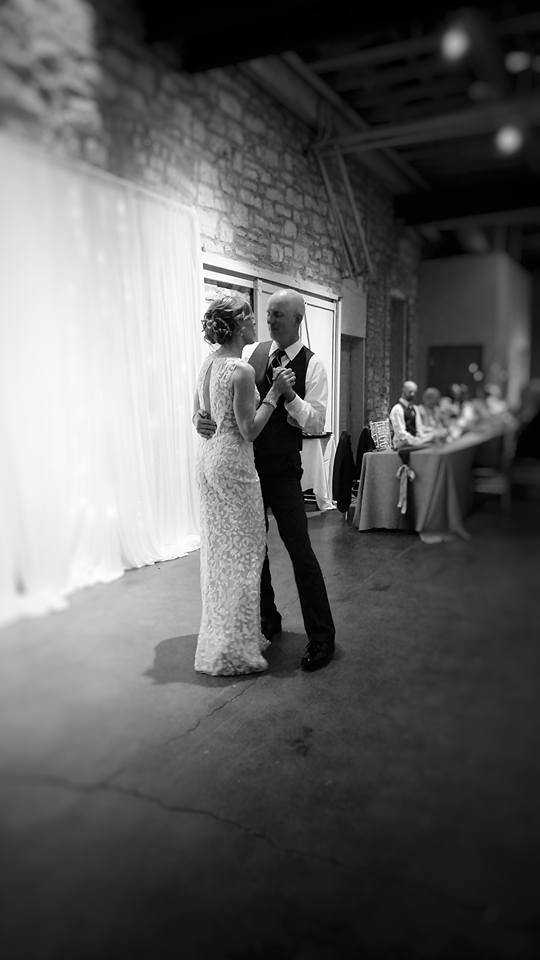
Our wedding day was beyond even our expectations in terms of joy and fun and bonding with family and friends. The day seemed to radiate with love. And I mean that seriously.

Water Street Wedding

Photo by Sarah Van Der Heydn at Water Street Studios, Batavia, Illinois. 

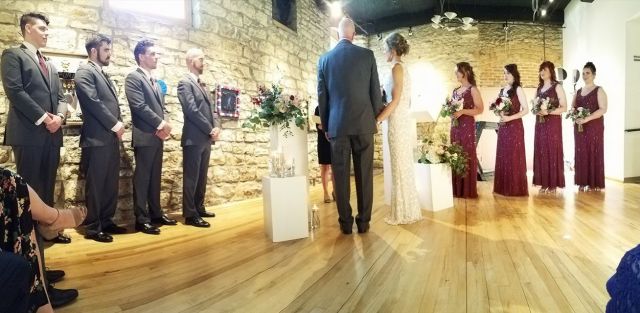
Our children and some boyfriends of Sue’s daughters formed the wedding party. We gathered in the gallery of Water Street Studios, the venue where I am a Resident Artist.

Sue and Chris

Photo by Sarah Van Der Heydn

Then we had a grand party in the “dock” which is a restored industrial space with tall limestone walls and space for nearly a hundred people. And we dined and danced and enjoyed the company of new and longtime friends.

Before all that delightful hubbub on Saturday evening, Sue’s sister organized a Sue and Chris 5K the morning of our wedding day.

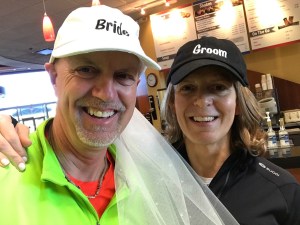
20+ people showed up to run and walk in the fresh morning breeze. Sue wore her Bride cap and I wore my Groom hat and hers even had a veil. So stylish. It was all romantic and joyous as heck. Her sister Julie (far left) even had bibs made up that say Sue and Chris 5K.

SueandChris5K.jpg

Photo by Evan Paul Cudworth

So much fun. Sue was not supposed to sweat according to the hairdresser, but I wound up very sweaty running with my son Evan (arms raised behind) and a few of the other boys. Yes I’m the Human Highlighter. The wedding weekend experience was amazing. But life goes on.

Back in the swim

Swim Marmion.jpg

Photo by Christopher Cudworth

BECAUSE then Monday came. We’re not honeymooning until later in the year. Which meant the alarm went off at 4:30 a.m. and Sue and I rose and drove to Masters Swim together. We could easily have called it off and stayed in bed. But that’s not who she is. That’s not the woman I married. Or why I married her. It’s not who I am either.

Suzanne pointing.jpg

Photo by Evan Paul Cudworth

To be true, she’s been quietly tolerant of my lack of swim time over the last month. Judiciously so. Because triathlon season is approaching fast and she knows that I need more foundation to swim a mile in an Olympic distance race. But she has been steadfast in her promise to respect my own involvement in the sport. Welllll, this I do know for sure: It’s time to get back in the swim.

Team dynamics

Swim Man.jpg

Photo by Christopher Cudworth

It’s simply a fact that there has been a lot going on in my little life. Getting married was huge. So was starting a new job that I really love. It’s great to be part of a team again in the community where I work, and lived for 20 years. It’s been fascinating to feel the joy of that after working for myself a few years. That was all great and somehow necessary given so much that had gone on before. Moving ahead now.

Suzanne and Chris.jpg

Photo by Steve Maier

So I’m back in the swim in work and other areas, and liking the feel of it. So it really felt natural to get back in the water this morning. My latissimus dorsi (or whatever) muscles strained at first, and my arms did tire. Yet the hard-earned swimming form has not entirely disappeared. Working on my catch. Keeping my body level.

Even Sue, who is a swim instructor, noted that she improved her stroke by an increment this morning. “I noticed that I wasn’t pulling all the way through on the side where I had my shoulder work done,” she mentioned once she got home.

All of life is a work in progress. The best we can do at times is get in and swim for all we’re worth. And smile when we get out, soaking wet, to discuss the whole thing with those who join us, or don’t.

So if you’ve been wondering how to get your groove back, jump in. Get back in the swim. You’ll love it.


Posted in swimming, triathlete, triathlon, triathlons | Tagged , , , | 2 Comments

Getting married today


Wedding Day

That’s me alright. A Groom on wedding day.

I know that the headlines to this blog are often intentionally ironic. But this one is literal. I’m getting married today. And so happy to be saying that.

We met four years ago in the summer of 2013. Both of us tapped into a website called FitnessSingles.com the same week. We went for a date and barely touched our food because we talked for two hours. Then a few days later we did our first ride together. She was training for the Ironman Racine 70.3 and was in darn fine shape at that. I had a hard time keeping up on the bike.

She had researched me on Google and found out plenty of things. Yet when we paused during our first bike ride she sat on the grass and smiled, then said, “So, tell me about yourself!” And I wanted to know her so much more.

Wedding groom swap

The requisite Bride and Groom hat swap.

As we spent more time together running and riding, we found that our interests matched up in even more ways. She trained as an architect in college, and knew quite a bit about art, my avocation.

Her name is Suzanne. She goes by her middle name, as I learned the day that I toted her to the urgent care facility that first summer when her tri-bike slipped out from underneath her on a wet morning. That’s how it is with relationships. The full person with whom you’re spending time is revealed in stages. Sometimes by accident.

And then we did some intentionally romantic things together. Stayed at an old time bed and breakfast in Oregon, Illinois. We started to realize that we could spend considerable time together and it still felt fresh.

We were compatible from the get-go on the run and the bike, and within a year I did my first duathlon. Coming off the bike for that third leg she was waiting for me. “Keep going, honey!” she cheered as the shock of fatigue rolled across my face. Then I graduated to triathlon, but the swimming is still hard. But she let’s me find my own way. Be myself. And that’s important too.


Sue and Julie.jpg

Her sister Julie accompanies Sue out for the Sue and Chris 5K on wedding day.

Some of the reasons I love her: 1) she gets me to try new things and 2) she’s an honest woman, and a pragmatist and 3) she has a funny sense of humor at all the right times.


So now we’re getting married. But we did this the right way. We were careful not to use the L word too early in the relationship. She had come off a divorce and I had come off the loss of a wife to cancer. So we each knew that space and time were important. We both have children as well. But as time moved on and we became ever more of a couple, those relationships began to build as well.

I recall the week we finally admitted that we loved each other. We said it quietly, because that’s where true love resides.

We faced some tests over time, learning how to talk about money and support each other when our respective children needed support. Our worlds began to fuse.

IMG_2928On the day she did her full Ironman Triathlon I acted as sherpa for Sue and her sister Julie, lugging bags and moving bikes around Madison as needed. They both finished. Sue came in with a smile on her face. “Well, it wasn’t the day I wanted, but I’m an Ironman!”

One could say that is a great allegory for life. Some things go as planned. Some things don’t. It’s the response under pressure that counts, and learning to support each other. “I want someone to have my back,” she once told me. We’ve even seen each other through surgeries and medical procedures. You know you love a woman, I guess, when she’ll pick you up from a colonoscopy.

When Sue had surgery on her shoulder, I drove her to the hospital and was hanging around when the early signs of the flu started coming on. I struggled against the nausea and thought how bad it was that I was sick hanging around the surgery ward. “I don’t know if I can make it,” I told her.

She started to cry. So I told her I’d be fine and went out in the hallway to gather my breath and get some hot chocolate and Coke. Anything to settle my stomach. Sooner or later I quelled the flu sensation and was there when she emerged from surgery. As promised.


Wedding %K

Our Wedding crew hosted the Sue and Chris 5K. Followed by mimosas and Blood Marys.

You can talk about the importance of all kinds of things in a relationship. The lovemaking. The respect. The show of affection. The attention during conversation. But when it really all comes down the most important aspect of love is commitment. To that person. When they need you. When they want you. When they’re not even sure about you in some respect. Stay committed.


And that’s how I feel about her. And she’s told me that’s how she feels about me. So we’ll exchange vows in front of 90 of our best friends and then dance our asses off for a few hours. We’re getting married today. And I love her. And I know she loves me.

919463_10152283914983332_1254601472_o


Posted in Uncategorized | Tagged , , , , | 5 Comments

Archaeopteryx and me

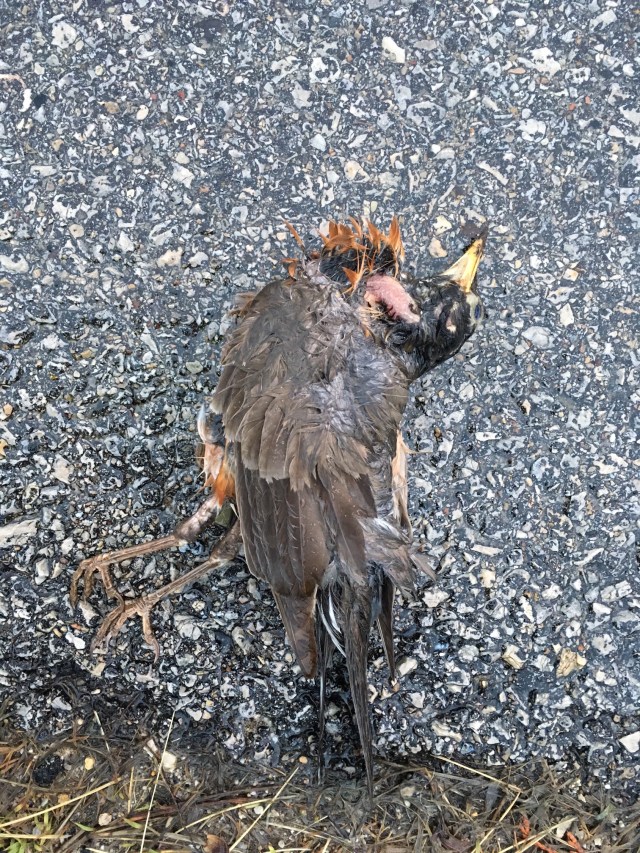
Robin.jpgThis morning during a four-mile run in a driving rain, I hugged the edge of the asphalt by a busy four-lane road. Cars hissed past on the wet surface, and raindrops struck my face with such force it stung. I rounded the big curve of Orchard Road and turned east relieved that the next couple miles would be on a bike path, and not straight into the wind.
Then I rounded the corner with a mile to go and picked up the pace. I felt so good this morning I could have been thirty years younger. So I let the legs have their way and took my brain out of the equation.

But as I rolled along an object appeared on the road ahead. I’m always on the lookout this time of year because migrating birds are often struck by cars. I always stop to examine the odd thrush or owl that takes a road hit.

This one only happened to be a robin. But it was lying there in a classic pose of the dying bird. Head thrown back. Feet lightly curled toward its tail.

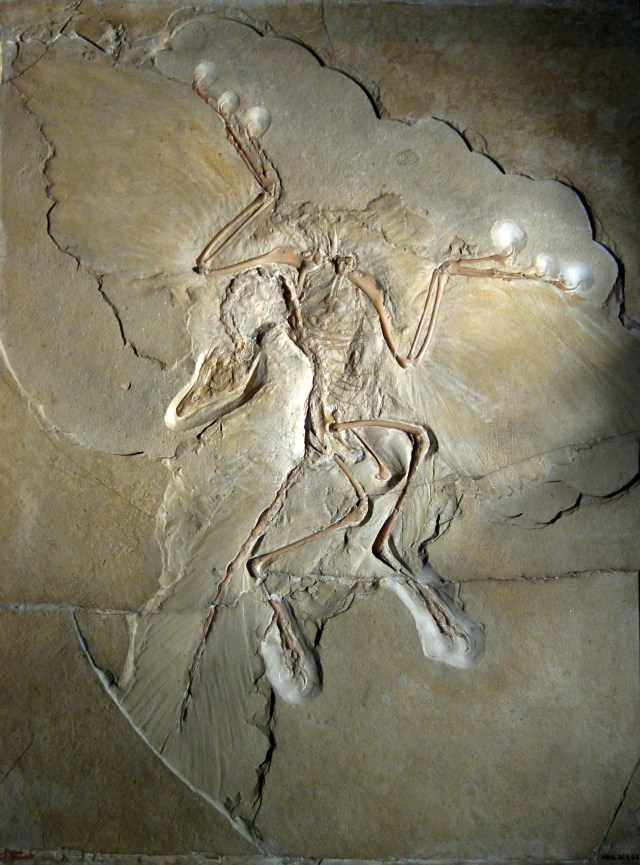
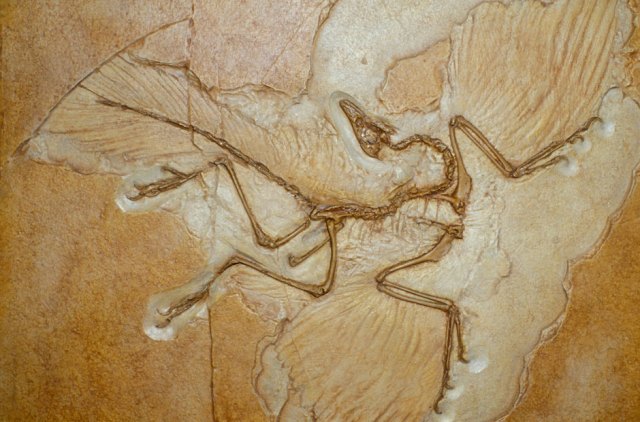
Archaeopteryx_lithographica_(Berlin_specimen).jpgIt is the same pose that fossilized dinosaur birds such as the archaeopteryx show in fossilized form. Recent discoveries of fossilized birds have documented the evolutionary history of early species of feathered dinosaurs. In fact, the lineage of dinosaur and birds may be inseparable. The creatures we call birds are actually extensions of the dinosaur populace.

It so happened that ur family gathered around the TV Sunday night to watch the epic Jurassic Park. That movie makes the case that recovered dinosaur DNA could lead to the regeneration of species such as tyrannosaurus rex. Of course, that isn’t true in real life, but imaginative prospects are real enough to generate an entire series of movies in which reality is placed in suspended animation. We willingly immerse ourselves in the amber of fantasy.

IMG_9983Yet staring down at that dead robin in the rain, I could sense that dinosaur lineage. We are not so separated from the past as we might like to think. Human beings have their ancient descendants too. Our bipedal ancestors wandered out on the savanna by necessity. That method of locomotion freed our hands to carry things, and freed our arms to run in an upright position.

Every person out there running owes a debt to the raw determination of living things that existed 350,000 years ago or 60 million years ago. And even that’s not long by earth’s standards of time. Our evolutionary history is but a drop in the rain bucket of time.

Eye threeOf course, the ripple effect of that drop has now covered the earth with marks of human activity. We cultivate and consume at will. Hungry for property and possessions, the human race invents and destroys with such fervor it can’t even keep up with its own garbage.
The bones we bury in rituals will be our fossil legacy. For it is highly unlikely the human race will last another 300,000 years here on earth. The planet is not inexhaustible but we’re clearly treating it like it is. Those stubborn dopes who don’t believe the earth has limits happen to the principal advocates for the combination of greed and selfish religion. Some even welcome the idea that a New Earth will be born from the ashes of the one we destroy through our habits and our sins. This is known as a self-fulfilling prophecy. Only it is not fulfilling, only selfish.

Not so original sins

Wishful thinking has never cured much in this world. Nor has religion really had much of an effect on the behavior of its most ardent believers. The Bible clearly sucks as a science book and most of the time it doesn’t do all that much to control the appetites of those who consider themselves the most righteous of souls, and who most ardently defend it.

Instead, many who abide by it like to claim that it empowers them somehow. I well recall the race in which a guy that beat me wore some sort of Jesus shirt. He pointed up to the sky when he finished the race in first place, with me trickling in behind. He acted as if God had guided his every step or Jesus was his co-pilot. He imagined somehow that he could earn favor by making a show of his faith. Well, the Book of Matthew looks at that subject differently: “And when you pray, do not be like the hypocrites, for they love to pray standing in the synagogues and on the street corners to be seen by others. Truly I tell you, they have received their reward in full.”

Just rewards
Thus I say bullshit to his claims of providence or the fairer grace of God. As for me, I just felt shitty that morning and didn’t run very well. The next week my time was a full minute faster than the day the Jesus Guy beat me.

He’ll be buried or burned in the end just like me. Our fleshly accomplishments largely mean nothing in the scheme of things. Olympic champions go back to their difficult lives just like the journeyman distance guys. In the end, it’s what we make of the meaning of our efforts, not the other way around.

And what should we actually learn from the running and riding and swimming that we do? Does it embolden us in imagination? Does it help us understand the temporal nature of our existence?

I’ve sat bedside with parents and spouses as they pass from this world. What it has taught me is that our existence is at once shallow and real at the same time. It is quite difficult to penetrate the surface of time, that thin skin of awareness on which we all skim along. But I can say that many of the moments when I have felt most alive in this world is when I have been in full motion.

Archaeopteryx-fossil-001.jpgAnd that makes me think of the archaeopteryx. At one point those dinosaur birds jumped and ran and used their burgeoning wings to lift themselves off the surface of the ground and climb trees or soar down through the branches back to earth. Those feathers put to good use made life much more real, active and interesting. That is the story of life itself, always pushing the limits. Always reaching for something new.

So it is a joyous thing in many respects that a formerly obscure dinosaur bird, once lost to history, should emerge in the form of a fossil for us to consider. How intimate a reality that is. And how important an insight.


The archaeopteryx defies all conventions. It is an archaeological liberality that people who trust both science and imagination grasp as significant. For here is the truth: the direct relatives of the archeopteryx are alive and flying all around us if we consider these realities. A dead robin along the side of the road proves that this is true.

Posted in Uncategorized | Leave a comment