Amanda Leibowitz is a survivor and a thriver

Amanda NIke.jpgIn the age of the Internet and social media, we sometimes meet people more by osmosis and familiarity and through shared stories than by true acquaintance. Yet even with a digital distance between us, there are connections that build.

Such is the case with a young woman named Amanda Leibowitz. We got connected through a chain of associations including one of my longtime friends and high school acquaintances who knows her mother. Plus Amanda has been involved in triathlon and our paths crossed that way as well.

Amanda’s story bears some difficulties few people can imagine. Yet she has forged a strong and determined life from these experiences. By way of introduction, it works best to share some of her own words to describe where’s she’s been and to see where she is going. I’d known her for a year or two through social media when this post popped up in the feed.

Amanda back.jpg

Now, I stand before you, ripping off the Band Aid to bare my skin and my soul.
.
Almost 12 years ago, my world was shattered. Whoever I thought I was, that person had – in an instant – ceased to exist. For a long time, I tried to find all the pieces so I could put the delicate puzzle back together with glue. But some of the pieces were lost, others were too small, and even more just didn’t fit like I remembered.
.
Over a decade was spent searching for ways to occupy those spaces and complete my reconstruction:

– Alcohol dulled the sharp edges 
– Cigarette smoke blurred imperfections
– Food filled the gaps and cracks
– Male attention glossed the exterior
– Achievement prevented close inspection
– Isolation cushioned the environment
.
Here’s the thing, I think we can all agree that these were not the BEST tools to use, but they worked. Or, at least, they worked well enough for me at the time. I was not happy, but at least I knew what to expect and I could handle it. Or so I thought.
.
I looked “put together” but it was all a facade. It wasn’t real. I was delicate. So much so, that a light breeze would send my carefully balanced pieces scattering across the floor and the rebuilding would start again.
.
The problem with putting a vase back together is that when you try to fill it, water seeps through the cracks. Happiness was momentary. Fulfillment was temporary. Confidence was fleeting. 
.
Out of necessity, I changed my methods. I turned to swimming, cycling, and running to try to keep my pieces together. Speed and endurance replaced smoking and drinking. I chased PRs and podiums instead of empty relationships. I may have been able to fortify some of my walls, but, still, I was fragile.
.
When I was presented with the opportunity to try something new — to enter a safe space that welcomed vulnerability and encouraged personal development — to join a community that expected me to be fully engaged — to take responsibility for my health and holistic wellness — I realized that the tools I was looking for were not as elusive as they seemed. They were just in a different box.
.
Finally, instead of putting them back together, I tossed all the broken, cracked, and crumbled pieces in a cauldron, melted them down, and am now creating a whole new me. My body, my soul, and my life are a work of art. I am the sculptor, and I’m proud of my work.
.
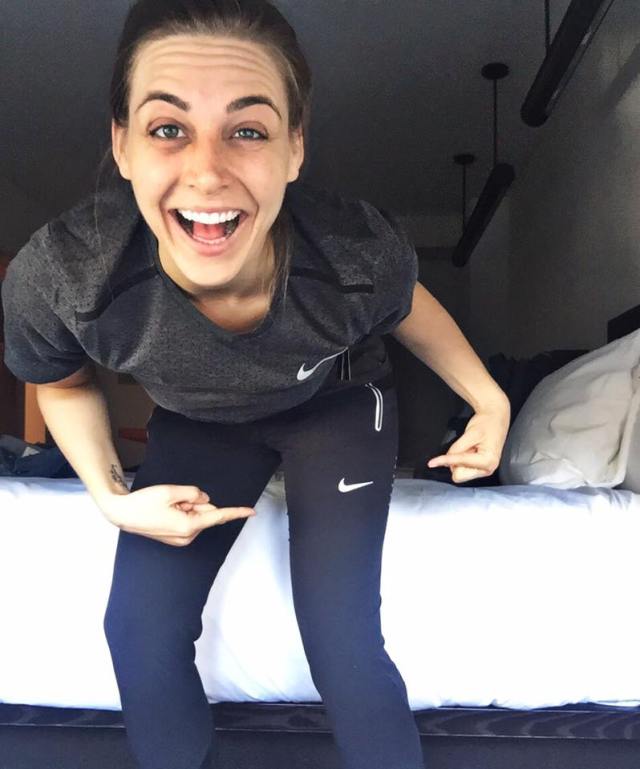
When I saw first saw this picture, I was hit with an immediate, visceral response. My face flushed, my chest tightened, and my eyes welled with tears. For so long, I have seen myself as incomplete – damaged – empty – weak – that I almost couldn’t recognize what I saw. Strength. Power. Serenity. When I looked at this photo, I realized I am whole.
.
I am not a victim of sexual assault. I am a survivor.

Amanda L3.jpg

This visceral nature of a post like that cannot help but change one’s perception of another human being. And that’s a good thing. Behind the smile of this bright young woman is a brand of grit and hope that has emerged in a life focused on helping others achieve their better selves. So I asked Amanda to answer a few questions about where’s she’s been and where she’s going.

Did you grow up doing organized sports? If so, what sports?

Yes, I played a variety of sports throughout my life, but split most of my time between competitive horseback riding, volleyball, and softball. I ended up playing volleyball in college at the University of Nottingham, as well

What are your personal interests beyond fitness? 

I have always loved reading and find great joy in a good book, whether it be for personal development or for fun! I also enjoy cooking. I have many food sensitivities and allergies, so it’s always been fun to come up with creative ways to make delicious meals that are also gluten free, dairy free, and (sometimes) vegan. Traveling and being in nature (hiking, camping, etc.) has always been a passion of mine, and the majority of my travels have been to developing countries to participate in grassroots projects with local communities in Africa and South America. I even worked in the Ural Mountains in Russia for a few months one summer

Have there been work experiences that inform what you do now? 
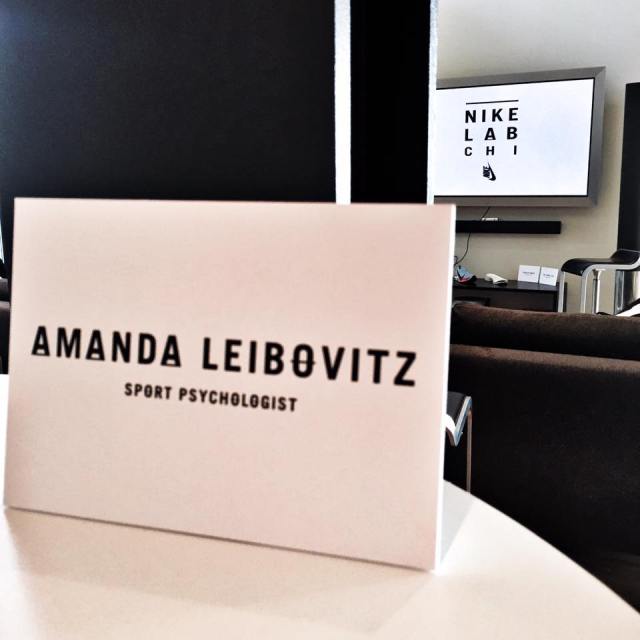
Amanda sport psychologist.jpgHonestly, I think that just about everything I’ve had the opportunity to experience in life up to this point informs what I do now. My work as an endurance coach and sports psychology consultant inform my current role as an online health and wellness coach in that I have a foundation of knowledge regarding nutrition and fitness, which I find to be fascinating and am always searching to learn more! But my world travels and nonprofit work also taught me a great deal! Specifically, I learned to approach new things with curiosity, compassion, humility, and a willingness to learn. I think it’s that mindset that has contributed most to my success with coaching, both in the endurance world and with the clients I serve in my online business.

How would you describe your current occupation? 

Amanda doggoI am an online health and wellness coach and provide one-on-one mentoring and private accountability groups for women and men who want to live happy and healthy, and more fulfilled. I incorporate fitness, nutrition, and support so that my clients are set up for success from the very start, and I work with them individually to teach them use various tools and resources to create habits that help them meet THEIR goals. The end-game is for each and every client to feel empowered and in control of their health so they can lead healthy, happy, and fulfilling lives – in whatever way that means to them! Because we all have different goals, right?!

You have experienced some trauma in life…How does fitness help you cope with the emotional side of your personality

Yes, I have experienced quite a bit of trauma in my life in many forms. More than anything, fitness gives me something in my life I can control. So when I start to feel anxious or depressed or helpless in my current situation or I get triggered by something and my emotions are running high, I can easily go push play on a workout or lace up my shoes and go for a run and by the time I’m done, I’ve ACCOMPLISHED something. And it was MY CHOICE. The cool thing is that we all have this power. We all have the power to choose – so choosing to exercise or cook myself a healthy meal or practice self-care are all things that actually benefit my health, and they are active responses to feeling a certain way. And I actually feel better when I’m done! Rather than drinking and smoking which I’ve done in the past – those were all more “reactive” behaviors. Like, “I’m in pain so I’m going to distract myself by doing this other thing that actually causes more pain long term and I’ll feel like garbage about it in the morning and further compound this shame spiral I’m already on.”

What is the biggest challenge you see for people getting started in training? 

The most common challenges that I’ve seen when people are trying to start a new fitness or nutrition routine is that they don’t know where to start! Even though it’s really exciting to try something new, it can be really overwhelming at the same time. There is SO MUCH information on the internet that it can be really hard to sift through and know what to trust. As a result, often times, people try to do “too much too soon” and don’t set themselves up to have those mini-successes along the way that build confidence as you go. Motivation is a tricky thing – if we set the goal so high that our first experience is failure (or feels like failure), we are way more likely to quit! Another big challenge is a lack of support from family and friends – it can take some time for others to “come around” and a lot of the time, the people we know don’t actually like it when we start to change ourselves for the better. What I’ve seen is that those people who have the support of a community of like-minded folks tend to be more consistent and also have long-lasting success because that need for community and support are being met.

Is triathlon training still a big part of your routine? 
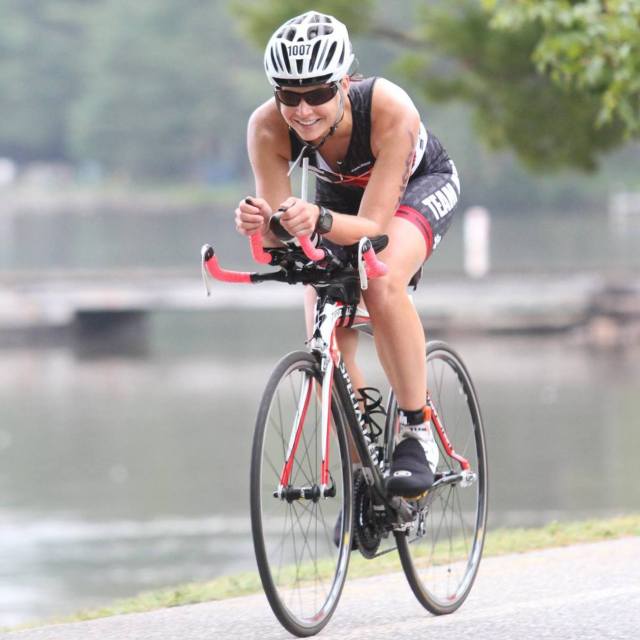
Amanda on bike.jpgNo, I have actually “retired” from triathlon due to a neck injury that makes riding a bike for more than 15 minutes incredibly painful – I decided that the risk of further nerve damage was not worth it and have shifted my focus to running, which is something I truly love and enjoy. As you know, I also had ankle surgery last year and am on the long, slow road to recovery there, but I am enjoying the process and appreciating every step!! My long-term goal is to complete a 100-mile trail ultramarathon, so I’m willing to be patient now to take care of my ankle if it means that goal is a possibility in the future.

What types of injuries or illnesses have you experienced along the way. 

As I mentioned before, I have a herniated disc in my neck at C5-6 that causes nerve pain and numbness down my left arm/hand as well as muscle spasms in my back. I had to have surgery in May 2017 to repair tendons in my ankle and anchor a ligament – the ligament was so loose from old volleyball injuries that my ankle bone was sinking on to my peroneal tendons and fraying them from the middle. On top of that, my body completely freaked out during the 2016 race season and I experienced symptoms of adrenal fatigue for several months.

Who in your life has influenced you toward the fitness and dietary programs you now advocate? 
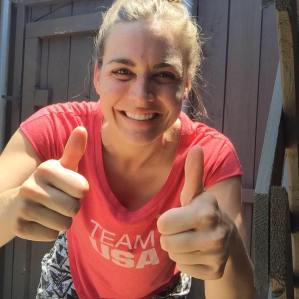
Amanda thumbs uI really learned to appreciate the power of nutrition as fuel AND medicine when my dad was undergoing treatment for cancer. For many years, he followed a macrobiotic diet that had a huge impact on his overall health and also worked to support his body fight his cancer. I truly believe that the changes he made in his nutrition habits allowed him to live so fully while also battling cancer for more than a decade. So I guess a seed had already been planted when my friend’s wife, Jamie Sheppard, approached me about joining her team of wellness coaches. At first, I was a total snob and completely blew her off. I was SO embedded in the triathlon world and though that swim, bike, run was life – I wasn’t yet ready to look at more balanced, sustainable options for ALL people to be able to get the most out of exercise and nutrition. To Jamie’s credit, she invited me to join her several times, and last summer I finally decided to jump in. I had been stuck on the couch for several weeks recovering from surgery and eating all the candy I could get my hands on – I felt gross and was ready to start moving again but my usual activities were not an option. She presented me with a simple plan that included short strength-training workouts I could do from home, the amazing superfood shake I am no obsessed with, and an easy-to-follow meal plan that was REALLY good! And after only one week I was hooked and knew that this was really something special that SO MANY people could benefit from including in their lives. It was like a switch flipped and everything fell into place because it is basically a combination of the best parts of what I wanted to do – something realted to nutrition, physical activity, mental and emotional well-being, and getting to help people and make a real difference in their lives.

What are some of the central principles, but also surprising ones, that people don’t seem to know about diet and fitness? 

Amanda drinkThat’s a really interesting question and I don’t know that there are central principles that people don’t know about, but I do think there are a lot of myths that prevent people from starting or sticking with their new habits.

For example, the idea that “fit” people are always motivated, the assumption that “healthy eating” is restrictive and boring, and the idea that change is linear are all things that can be hugely damaging to someone’s progress. I suppose the one thing I’d really love for people to learn and appreciate is that healthy living is a LIFESTYLE and the little choices matter most. It doesn’t take this huge show of effort to reclaim your health or get more fit – it takes showing up DAILY to do the little things. Get your workout done. Eat well. Be mindful of portion sizes. Make healthier snack choices. These little things DO compound in HUGE results. I think many people want results FAST rather than results that LAST, so if we could all practice a little more patience, persistence, and consistency when it came to our health I think we’d achieve our goals a lot more often!

What advice would you give to some after experiencing a setback? 

Amanda shadesGet back on the horse! Really though, the only time we ever truly “fail” at something is when we quit. Going back to what I said earlier about progress not being linear… We need to learn to accept and embrace those road-bumps as part of the journey. When we can approach these things with a growth mindset, we can become empowered by our struggles rather than defined by them. The other advice I’d have is to lean on the people you have around you for support! Whatever you’re experiencing, you don’t have to do it alone!!

How do you set goals and help others to do the same? 

Goal setting to me is a dynamic process. I think that we should all have those “big picture” goals in mind, but I know that we are more successful when we break those DREAM goals into smaller, achievable stepping stones. It’s really important that we’re able to celebrate successes along the way and also be open to changing the timeline or the plan itself if needed. Long-term goals are just that – LONG-TERM!!

And guess what happens over time? PEOPLE CHANGE!! So why should our goals stay static, too, if they are no longer aligned with our values. It’s not a bad thing when this happens, it’s actually really motivating to release an anchor and hoist up a new sail. The more mindful we can be of what we want to achieve and what we are willing to do to achieve it, the more successful we will be with our goals. But I am constantly evaluating my goals and my progress, and I make a point to do this with my clients as well!

Going strong

Amanda Suit.jpgAmanda Leibowitz is obviously committed to her goals, but also builds some flex into her routine. Recently she posted a progress report on her own fitness with an eye on inspiring others Here’s what it read:

DAY 80 HAS ARRIVED. But it’s not the end of anything, it’s only the beginning. ✌🏻❤️🔥
.
I started this journey back in January with the intention of getting strong. And by STRONG I mean that in the most literal sense — after nearly 15-months of injury, surgery, and physical therapy for my ankle and my neck, I WANTED and NEEDED to build the muscles that would keep my body healthy and pain-free.
.
So — in my head — THIS program was going to be what would launch me back into the endurance world so I could make my #epiccomeback on the road and on the trails. A different functional strength workout every day. Timed nutrition to maximize how I fuel my body. Was it perfect? OH HELL NO. Do I feel healthier and stronger than ever? 100% YES, YES, ALL THE YES.
.
But what are you seeing here? JOY. CONFIDENCE. SELF-LOVE. I’ve found strength and power and magic in self-discovery.
.
Ya see, I’ve defined myself as a SURVIVOR for so long.
🖤 I survived living paycheck to paycheck and working multiple jobs while juggling full-time school and two internships during my masters.
🖤 I survived sexual assault and the weight of hopelessness, helplessness, and worthlessness that filled the space left empty when my identity was stripped away.
🖤 I’ve survived a lifetime of depression and anxiety and the rock bottom feeling of shame and despair when it feels like it’s impossible to go on.
🖤 I survived the stress and pain and heartbreak of watching illness steal the life of someone you love, and the overwhelming sense of grief that colors the world once they’re gone.
.
But what I’ve come to learn is that SURVIVORSHIP is a REACTION. And as I’ve learned more about WHO I AM and taking responsibility for the CHOICES I MAKE about how I live, I’m learning that I am a person of ACTION.
.
I am not what has happened to me. I am what I choose to become. (( Carl Jung ))
.
In the last 80 days, I’ve realized that I don’t have to merely survive, I can thrive. I can SEEK challenges that help me grow and BECOME the woman I am meant to be — inside, outside, and everything between. Today, tomorrow, and every day. 🦋
.
P.S. You’ve got this magic, too. 

You can find Amanda on Facebook at: https://www.facebook.com/amandaleibovitz

You won’t be disappointed in the inspiration you’ll find there.

 

Posted in training for a marathon, triathlete, triathlon, triathlons | Tagged , , , , | Leave a comment

Red light, green light

red-orange-green-traffic-lights.jpgWhen my children were little and there was nothing to do in the house, we’d sometimes play a game called Red Light, Green Light. It was a simple game but one that also required concentration and reaction. One person would stand facing the wall, and call out Green Light! That meant it was time to move. But when Red Light was called, everyone had to stop and hold still. Any sign of movement was grounds to be sent back to the far wall.

Like all games for children, there was a certain amount of gamesmanship always going on, and sibling rivalry for sure. But generally we played fair and everyone got a chance to be the Red Light.

Statues

The funniest part came when someone would be caught standing on one foot and would have to hold themselves in balance. That built some creative tension into the game. It was like a plot booster in a children’s story. It was hard not to laugh either at yourself or the other person when that “statue” problem came about.

This weekend while we were downtown there was a street performer whose entire costume and face were painted silver. His setup bore a sign that said “Make a Contribution and I Move.” There was music playing and he was a pretty darn good dancer.

Silver Guy.jpg

The concept was so simple, and actually functioned opposite the game of Red Light, Green Light. His jar was full of money.

Creative souls

One can only imagine the creativity of that man as a child. Could he ever know that he’d take his childhood fantasies of dancing for other people and turn it into a profession of sorts? And sure, health insurance benefits are not included in his gig, but that’s all the more reason for a public option in this country. Entrepreneurs in America should not be limited in their creativity or productivity by something such as health insurance. Starting a small company is daunting enough without having to play the horrific game of figuring out how to take care of your family’s health without paying more than you earn when working for yourself. We need a public option. And let’s remove the burden of administering health care from all our corporations. It’s the American thing to do.

The United States somehow arrived at the conclusion that the practice of pushing health insurance through a corporate filter is a good idea. The burden that places on American companies is far worse than high tax rates.

Free and fearless

IMG_5354During those years when I trained full time and ran for a running shop, I didn’t even carry health insurance. That was stupid in some respects, but that’s how 20-somethings get by in this world. While young, we make a bet on good health and go with it.
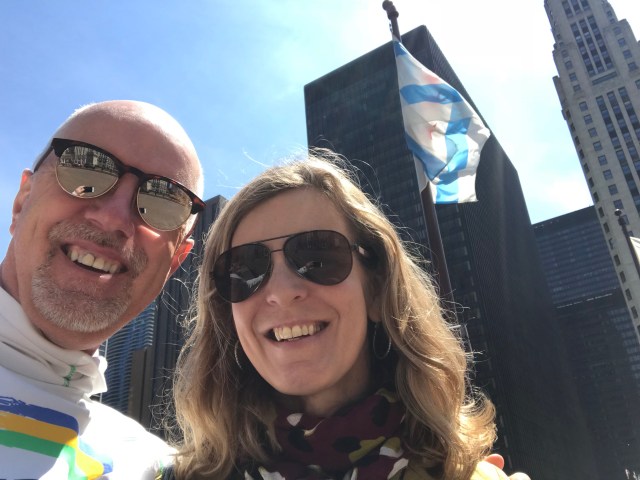
The Affordable Care Act tried to bring 20somethings to the table by penalizing them for not participating in health insurance. Some considered that an impingement on freedom and an unconstitutional demand to participate in a government program. Yet we’re required to have car insurance to drive a vehicle, and that doesn’t seem to bother anyone. So the argument that the ACA was unconstitutional was thrown out by the Supreme Court.

Red Light, Green Light

But those of us that have run our own business on and off play a game of Red Light, Green Light with health insurance. When you leave a company it is possible to continue health insurance through the COBRA act. But it is extremely expensive. When I was let go from a company the day after they learned my wife had cancer, they took legal action to cut me off from unemployment insurance as well. It was all about money for them. That was an ugly scene for sure. And talk about facing a Red Light in life.

Insurance premiums alone cost us $2000 a month. But we had to pay them because to let the insurance go would have ruined us completely. Some of the chemotherapy treatments billed out at $44,000. Of course, the insurance companies never paid out that much. That’s all part of the game. Charge everything ten times what it really costs and get what you can along the way. That’s the American healthcare system in a nutshell.

Pre-existing conditions

The Affordable Care Act had not come along to guarantee people could get insured even with pre-existing conditions. But the real pre-existing condition in the American health insurance industry is the grand mistake we’ve made in pumping health insurance through the corporate portal. It has skewed our entire economy on many fronts. The idea that health insurance is some kind of “benefit” emanates from the transactional structure of our healthcare system. Mostly this is a perversion of the notion that medical treatments and preventative care are a “perk” that only people who work for big companies deserve. Yet that’s the entire philosophy of our current health care system. It’s a sickness of mind.

“Private” health insurance

So I’ve lived the Red Light, Green Light realities of the so-called “privatized” health insurance game. The only thing privatized about our health care system is the fact that everyone privatizes the profits while dumping the costs back on the public across many fronts.

So it’s no wonder some people refuse to play the game. Back when I was young and single and had no responsibilities other than racing every other weekend I could get away with not carrying insurance. But when responsibilities and the literal life of another person is at stake, the game of Red Light, Green Light gets a lot more serious.

That’s why some of us get so angry when we see politicians on television talking dismissively about issues such as health insurance, gun violence or the simple freedom of the press. When you’re a child and playing Red Light, Green Light as if your life depends upon it, you just go back to the wall and start over. When you’re playing games iwth guns and get shot, you fall down dead and get back up again.

But when you’re an adult and have your back against the financial wall with the red glare of reality staring you right in the face, life gets a lot more serious. I know. I’ve been there. It isn’t a fun game to play.

Fortunately, there are some people in this world with compassion for others. We got help many times and in many ways. I am forever grateful for that fact. When the Green Light of compassion shines there is no more wonderful color in this world.

Posted in aging, racing peak, training | Tagged , , , , , , | Leave a comment

Chicago: City of Big Shoulders and sometimes small minds

IMG_2573.JPGYesterday was the first anniversary of my marriage to Suzanne Astra. We celebrated by heading to Chicago to see Hamilton, take in a romantic dinner at the Chicago Athletic Club with a gift certificate we’d been given as a wedding gift, and stayed at the Hyatt overlooking the Wrigley Building and Tribune Tower.

Only Tribune Tower won’t be the home for the Chicago Tribune for very much longer. The newspaper has struggled with revenues the last ten years and a series of ownership changes has led to the divestment of properties associated with the company. That means Tribune Tower is being purchased by a developer. There are plans to plunk the second tallest building in Chicago right next to the still-classic profile of the building that has stood as the pinnacle of journalism in Chicago for decades.

Friends and associates

IMG_2576.JPGI have friends and former newspaper associates who currently work for the Chicago Tribune and its digital companies. Their careers have been jostled and shaken the last two decades as various kneejerk owners took over the reigns of the Trib. A couple of those Big Shoulders zealots nearly drove it into the ground.

These include the super-rich Sam Zell, who hired a bunch of radio expatriates to take over management of the Chicago Tribune and “shake things up.”  They turned the offices of the Chicago Tribune into an adolescent party palace, offending everyone inside and outside the operation in the process. The Tribune survived, but only because the coarse brand of ego-driven management ultimately proved unsustainable.

Tronc-logo.pngThe company stabilized after that debacle. But then along came a bunch of new zipheads that named the company Tronc after “Tribune Online Content.” The childishly lower-case logo with its cheesy late-90s color scheme is reflective of a mindset that says calculated informality combined with a cloying exhale of stale early-2000s air constitute a forward-thinking makeover to carry the company into the future. Good luck with that.
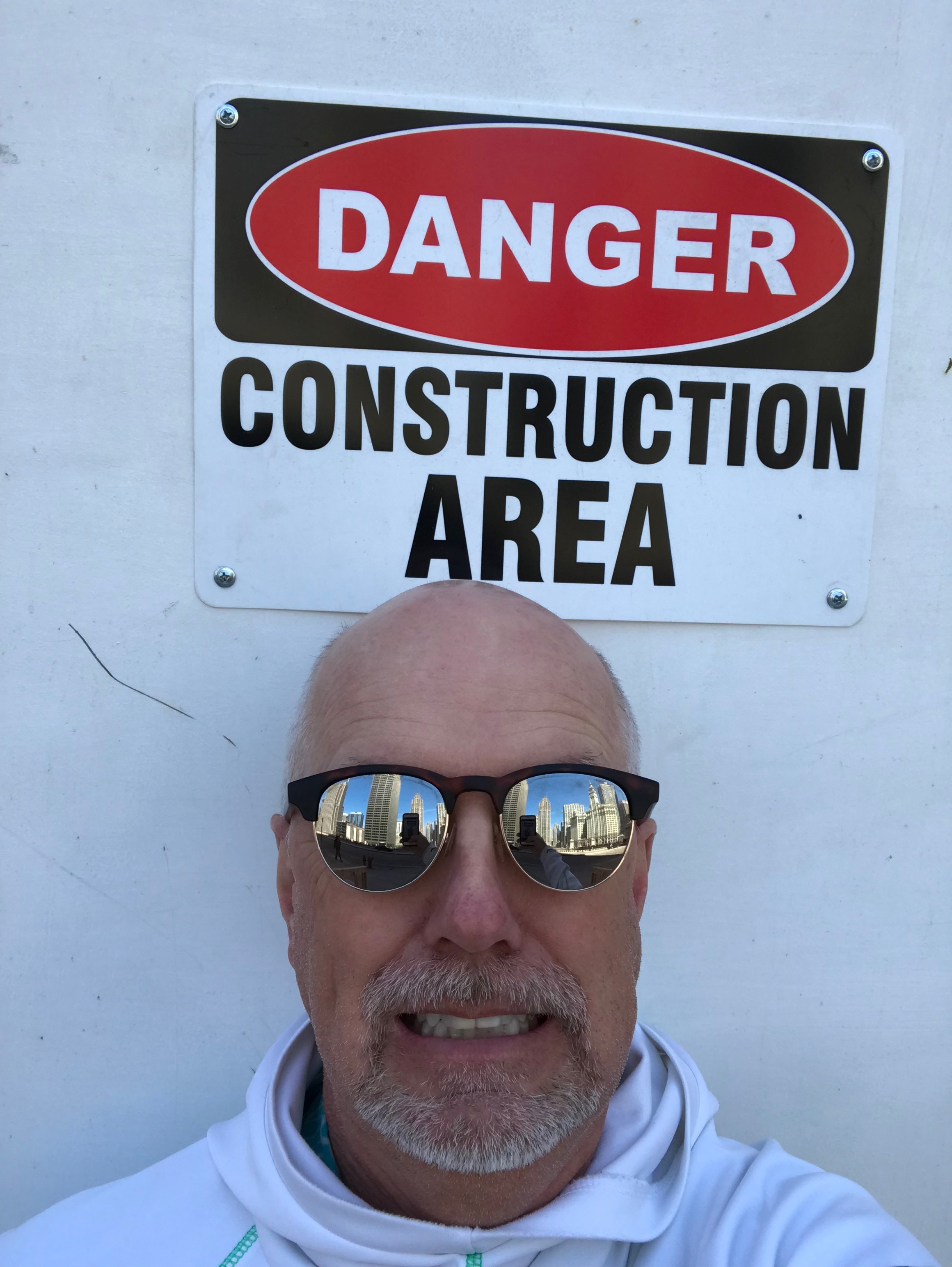
Longtime reader

Those of us who grew up with admiration for the Chicago Tribune found all this idiocy shocking at best. As a kid I delivered the Chicago Tribune. All through high school and beyond I’ve remained a reader and loyal subscriber. I’ve had a couple dozen Letters to the Editor published on topics ranging from environment to religion to politics.

And to that end: Many times I have disagreed with the Tribune’s originally conservative philosophy. But I kept reading the paper out of a sense of cultural responsibility and in being informed. Even as the Trib carried the issuances of dunderheaded columnists such as Dennis Byrne or the petulant ravings of Cal Thomas, the drivel of anachronism and dog-whistle anger couldn’t drive me away.

IMG_2575.JPGI kept subscribing to the Tribune even when I was in the employ of smaller competitive newspapers. When I was hired as an editorial writer for the Daily Herald, the third-largest newspaper in Illinois, it was an opportunity to learn how the editorial voice of a newspaper actually worked. There is nothing like knowing that 300,000 people might read your words to make you think about what those words really mean.

History

All this engagement covered decades of my life. A couple years ago I even pitched the Tribune on a business idea that was reviewed for months with considerable favor before it was declined due to financial pressures to keep their traditional and online sales staff focused on building news holes and propping up online content.

So I’ve been inside the Tribune building several times. The lobby is impressive. The offices are just like every other newspaper where I worked. Desks piled with old editions of the paper for reference and whiteboards in the sales department marked with sales objectives and target accounts. Some things never change.

The Tribune building is perched on a small rise of Michigan Avenue next to the Chicago River. Back when I lived in Chicago in 1983-84, I’d often run from our flat in Lincoln Park down to Michigan Avenue and Grant Park, then come back up the lakefront trail. As a fit and somewhat naive kid of 23 years old, I looked at that journey as putting my stamp on the City of Chicago. I felt like I owned the place.

IMG_2539.JPGAt the same time, the city and its business leaders were daunting in ways that seemed at once opaque and frighteningly transparent. Through connections in running I once wound up in a business meeting to discuss the concept of hosting a mile race down Michigan Avenue. Also attending the meeting was a world class runner named Eamonn Coughlan, the Irish miler and 5000 meter runner who set a world indoor record for the mile and won international championships in the 5000 meters. The meeting was full of people trying to prove themselves the most insightful on the matter of the race and Coughlan watched it all patiently, but I could tell he was frustrated.
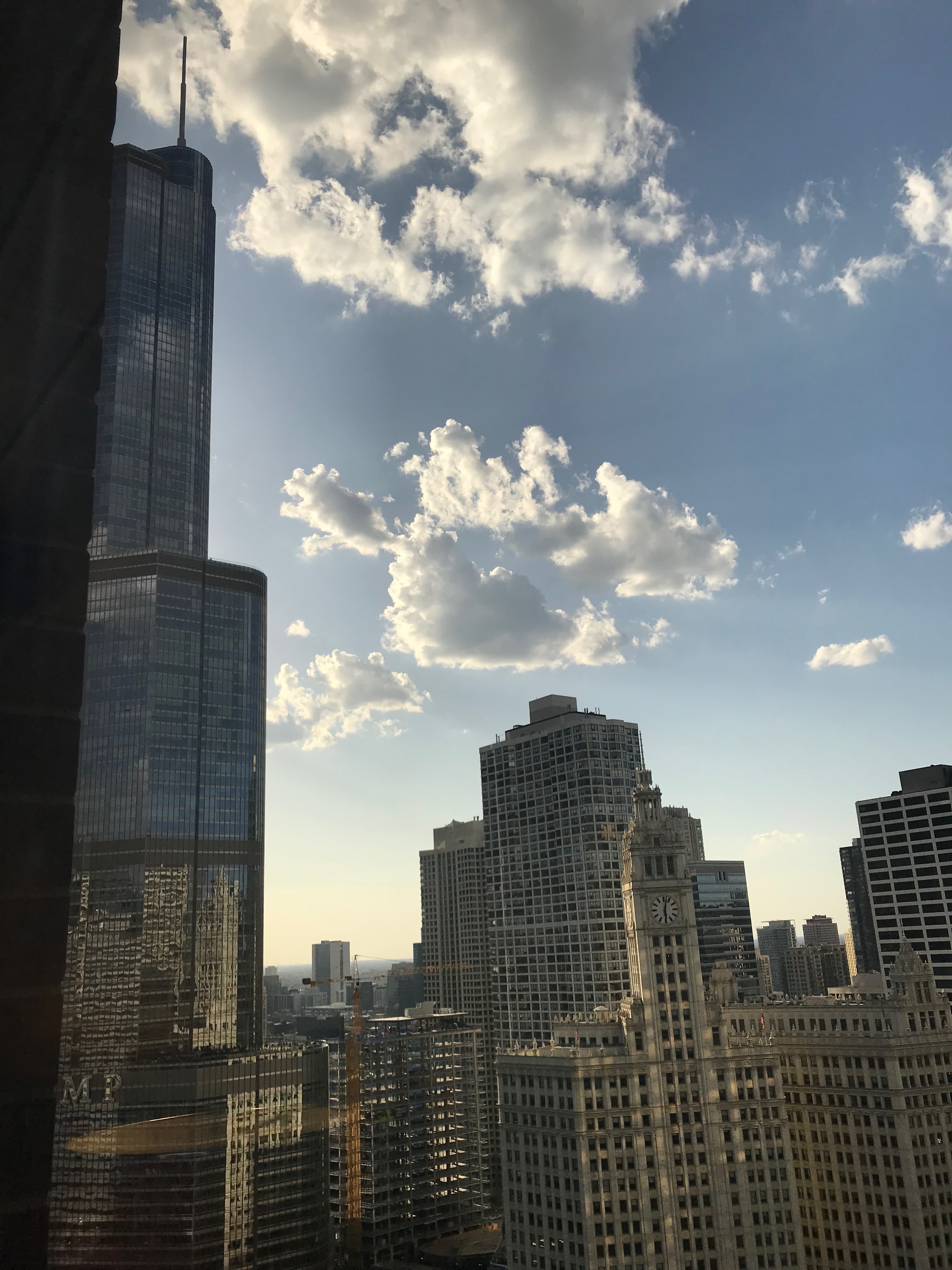
That was one of the many moments over the years when I realized that the people who believed themselves special were in fact desperate for approval. Meanwhile, here was a world class distance runner that would place fourth in the Olympics several times who truly knew what it mean to put it all on the line and “fail” in the eyes of those who considered an Olympic medal to be the only sign of success.

It put my own striving in perspective. From then on, as I ran down the Magnificent Mile I realized that every building along the way, while massive in scale and daunting in terms of the money, management and revenue that sustained it, were still just the product of people who could be just as phony as the men gathered in that room trying to impress the world class distance runner in their presence.

Return to form

IMG_2512.JPGI’m not the runner I once was. But it still felt fun to run the Magnificent Mile yesterday on a sunny Sunday morning in May. It was an anniversary of another kind as well.  It was the first weekend of May in 1983 that I moved back to Chicago from Philadelphia. 35 years ago.

Other than a few new buildings, the street known as the Magnificent Mile still looks pretty much the same. The tulips were arranged with care in planters. The shade still felt cooler than the sun. My reflection in the windows and polished black granite of the buildings still looked like very much like a runner I knew. A lot slower and older, but still a guy trying to make sense of life on the move.

Carved in marble

Then I passed the Tribune Tower and thought about the times I’ve sat in that lobby looking at quotes carved into the marble walls inside the lobby. Each quote speaks to freedom of the press and the importance of truth. There is nothing fake about the fact that such concepts are under siege by political forces that are more impressed with themselves than with the power and importance of the law and the freedoms it protects.

Eamonn Coughlan.jpeg

Eamonn Coughlan, the Irish distance runner. 

I thought back to that meeting in which Eamonn Coughlan sat patiently listening to the blowhards in the room trying to impress each other with their half-baked ideas and half-knowledge of what it takes to put on a race, or to actually run one.

That’s when I realized that despite the supposed sophistication of the men who build tall buildings and occupy them, their urges and intentions can be a base and petty as the dirt and detritus gathered around their foundation. Even a city as large as Chicago is still an illusion of perceptions and the bluster of names written in big letters.

I can admire the success of people who build big cities such as Chicago and yet not fall prey to the idea they are somehow perfected in their nature. The near-ruination of the Chicago Tribune by developer Sam Zell proved to me that people can be exceptional in one field and not grasp a single aspect of a field outside their area of expertise. Seemingly smart people can do really stupid, stupid things.

It is the arrogance of those bearing grandiose assumptions and piles of self-righteousness that so often ruin life for the rest of us. Even people with Big Shoulders can possess really small minds. I’ve seen plenty of proof of that.


Posted in running, Uncategorized | Tagged , , , , , | Leave a comment

Painting your blessings

IMG_2464.JPGI’ve written a few times before about how a three mile run is about the perfect length to enjoy fitness and clear the head. This morning the winds were high and it was cloudy here in Illinois, but the temps were in the low 60s. That makes for some nice running weather. A blessing, you might say.

I was excited to run this morning because it’s been a couple weeks since my meniscus repair knee surgery and I’ve been adding a little mileage each week as I do some cycling, weight work and swimming as well.

Go for it

So this morning I decided to “go for it” and cover a three mile loop that starts at our house, winds through a neighborhood, climbs a small hill on an unincorporated road, circles a drive through a wooded neighborhood and returns by the same loop.

The run also felt good because last night I finished up painting the second giant fiberglass dog sculpture in the Bulldogs Unleashed public art project here in Batavia, Illinois. I’ve put in dozens of hours to complete two 44″ bulldogs for a public project titled Bulldogs Unleashed that raises money for the Batavia Foundation.

IMG_1578 2.JPGThe first dawg was for the high school. It features views of the stadium and some athletes engaged in their sports. The lights on top of the dog symbolize people lost to the program over the years. The theme is titled Lights Over Batavia. I liked painting that bulldog because a friend of mine coaches at the high school and along with some students and faculty, we got to collaborate on the idea.

Cold comfort

There were some cold nights spent in our garage painting because the dogs are so big we could not get them downstairs into the studio space in our basement. That meant the alternative was to paint in the garage.

Finally it warmed up a bit over the last few weeks, and I was grateful for that. I’m pretty good at tolerating a bit of chill after all these years of training in the damp and cold and discomfort. But when you’re trying to concentrate on a subject or paint a straight line, it helps if you’re not feeling like you’re going to freeze.

IMG_2450.JPGEach dog probably took about thirty-forty hours to paint. I did not keep track because it doesn’t matter to me. The end result will help raise funds for some great non-profits in Batavia. The artists get paid for supplies and for their work on the project, but the goal is to leverage the work as a fund raiser. So the hours you put in may not equate to much in terms of pay, but I figured that it still came out between $20-$28 an hour. That’s more than fair.

IMG_2446.JPGIn the past I’ve painted a number of these projects and did them for free. I’d have done these for free as well. But it is nice to be compensated and respected. Many times in my art career that has not been the case. I once participated in an art show in which the patrons were treated to a seven-course meal while the artists were given brown paper sacks with half-stale ham sandwiches and chips for dinner. We had to buy our own drinks.

IMG_2443.JPGSuch are the ways of the world sometimes. I well recall that after I’d won a running race there would often be a big ceremony to give away raffle prizes, but the winner of the race would get some worthless trinket. I never understood that. After all, we paid the same fees as those winning stuff in the raffle! Shouldn’t there have been some sort of return on investment for training hard enough to win? Apparently not. A reverse psychology perhaps. “You won. You already got your reward.”

Hmmmm. So I’ve learned not to take any show of respect in any endeavor granted.

Finish line rewards

But I will say that it is also a relief to have finished the projects and have them come out well. Like all objectives and plans, there were stumbling blocks of design along the way. Artists need to be problem solvers in order to be successful. Painting on a three-dimensional surface presents different challenges than working a flat canvas. One can map out a design and learn along the way that it won’t work. Then you have to call an audible on the spot. It’s like turning the corner in a race and finding out there’s a big head wind. You need to learn to improvise. Even painting is a competition of sorts. You’re competing to overcome challenges.

IMG_2459.JPGOne of the fun aspects of the second dog was creating a little “world” themed around Batavia. It featured buildings and icons. I even included a pair of runners that were based on images of my wife Sue and I. It’s a fun thing to build a little of yourself into a piece like that.
Now that I’m done with the public art projects I have a commission yet to do and will be working on a number of new pieces for my June solo show at Water Street Studios. It will be titled Road Trip. This will be balanced with an increased training emphasis in preparation for the late May training camp we’re attending in North Carolina.

Time is so precious. But it’s a much more rich experience when you have something like art and fitness to focus upon. I feel blessed for that.


Posted in riding, running, triathlon, triathlons | Tagged , , , , | 1 Comment

For the love of God, let’s protect the earth

Please note: Today’s We Run and Ride addresses at some length and depth the theological issues driving cultural conflicts in this era. This reflects, but is not an excerpt, the work of a book I’m writing titled Sustainable Faith. This new work incorporates the writing of Professor Richard Simon Hanson, a scholar of Judaism at Luther College, whose treatise Religion from Earth constitutes a portion of the book. This blog reflects an immediate, fervent and unapologetic plea to consider the real source of ruin and conflict in this world. For some it may hit very close to home. But give it your consideration. It may be one of the most liberating pieces you’ve ever read. And remember, God is love. 

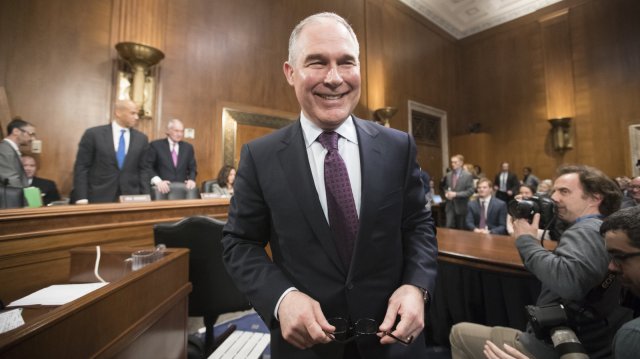
Scott PruittThe Chicago Tribune this week reported that the director of the Environmental Protection Agency, a man named Scott Pruitt, has deemed it necessary to relax air pollution laws as a favor to Wisconsin Governor Scott Walker, whose efforts to bring a company called FoxConn to southeast Wisconsin has prompted the director responsible for clean air and water in America to toss the law aside and grant the right to produce health-compromising smog that will affect the residents up and down the shores of Lake Michigan.

That includes Chicago, which has its hands full to the south as well, where industrial polluters keep dumping toxic chromium into the lake. The Chicago Tribune reported,

“A wastewater treatment system at the plant malfunctioned on the morning of Oct. 25, a problem that wasn’t noticed until the next day. Indiana officials were notified Oct. 27, according to the company’s letter, which is dated Oct. 31 and requested “confidential treatment” of the incident.

Law students at the University of Chicago discovered the letter while tracking pollution violations at U.S. Steel and other factories on the southwest shore of Lake Michigan. The document tops a stack of evidence gathered by attorneys at the university’s Abrams Environmental Law Clinic for a lawsuit they are preparing that will accuse the Pittsburgh-based steel giant of repeatedly violating the federal Clean Water Act since 2011.”

A (formerly) Republican initiative

This is why the Environmental Protection Agency exists. It was established by Republican President Richard M. Nixon back in the early 1970s when air and water pollution were so bad people were literally dying from smog-related illnesses and rivers caught fire in Ohio. Something had to be done. America was sinking in a mire of stench and disease. It was biblical in proportions.

If you’ve never run or cycled in really foul air, or encountered water so thick with pollution that fish have lesions popping out between their scales, then perhaps it might seem fine to “relax” regulations to benefit a big company such as FoxConn. After all, they’ll be bringing jobs and money into the economy, so it’s a wash, right?

Seen it all before

DetritusWe’ve been down this road and it is pretty goddamned ugly and dangerous. When companies are allowed to take shortcuts and gain concessions that favor their polluting ways, the profitability of those actions can surely be enormous. But that’s because there is not a full and true accounting for these costs to human health and the environment. America too often allows industry to privatize the profits and dump the costs of human health on the public. Thus the true costs of maintaining the American economy is based, to some extent, on a massive lie. It is thus no coincidence this same selfish lobby resists a public option for health care.

Industrial pollution causes cancer, lung disease and many other illnesses that affect workers and society at large. These are real costs and real dollars. But they don’t appear on the books of companies dumping all kinds of crap into our air, water and land. And that’s a crime, quite literally. It is criminal to pollute our planet.

The facts hurt

That’s not liberal nonsense. These are the facts that originally drove our nation to clean up its act over the years. The Clean Air Act and Clean Water Act, Superfund cleanup sites, wetland protection and mitigation and conservation laws are all products of an era when conservatives had a conscience, and when the United States of America made a bipartisan commitment to become a healthier, safer place to live.

But those days are gone, for now. The current cabal of conservatives resists environmental protection as if their lives depended on it. Which is the irony of all ironies. They’ll eventually learn that facts can hurt them despite all their selfish and ideological denials.

Getting the outdoors

Bright Kind of GuyBetween my running, cycling and birding, I spend a lot of time outdoors. Over the last forty years, I have lived 14,400 days. I estimate having spent an average of two hours every day doing some sort of outdoor activity. That’s 28,800 hours or 1,200 days, which equals 3.28 full years outside under the sun, in the rain, on cold and hot days. And that’s a conservative estimate, no pun intended.

So I know from direct personal experience the difference between a clean environment and one that smells, has evidence of poisons or chemical spills, or that makes it difficult to breathe. I’ve stood by the Fox River in my former hometown of St. Charles, Illinois and watched as a drainage pipe pumped out suds so deep they would have risen over my head if I’d stepped into them. There was an environmental activist in our area who called himself The Fox. He once dumped sludge gathered from the pipes of a polluter on their own white carpet. Over the years, his message got through.

Polluter In Chief

Thus I think the idea that this zealous, self-righteous dingbat Scott Pruitt has the right to wave his hand and dismiss an obvious source of pollution as “necessary” to the health of the Wisconsin economy is a falsehood and an outright lie.

Even more disturbing is the fact that Scott Pruitt presents himself as a “Christian” man. He’s been raised in the mentality that he is, to quote a recent NPR story, “On fire for God’s work.”  The NPR story lead begins with this statement: “The Sunday before Scott Pruitt’s confirmation hearing to run the Environmental Protection Agency, Pruitt stood on the stage of his hometown church, bowed his head, and prayed.

“I stand on a platform today with a man of God who’s been tapped to serve our nation,” said the Rev. Nick Garland, the senior pastor at First Baptist Church in Broken Arrow, Okla.

“It’s an honor for the kingdom of God to have a man of God who’s going to fill that role,” said Garland. “We wanted to pray for you today, and ask God to bless you.”

Well goddamn, that’s interesting

Pruitt is a lawyer that has spent a chunk of his career actually suing the agency he’s now been assigned to run. You may well have heard how that’s going. He runs the office with a strange combination of secrecy, paranoia and ego. The personal quirks alone are weird. His demands for respect include raising a special flag whenever he’s “in the office.” He also sought to purchase a soundproof booth from which to conduct his business. And on the public dime, he’s also traveled first-class, and somehow his pet employees received massive raises for no additional responsibility. All these are signs of a fearful and potentially corrupt personality. That is what is so disturbing about the supposed “Christian” nature of the man.

But perhaps that pattern of self-aggrandizement should be no surprise. Christianity itself was formed in the wake of a man named Yeshua, a devout Jew. We now know him as by the name of Jesus. But in His day, he challenged the religious authorities who ran the temple to evolve from a religion of literalism and law to a faith based on the love of God.  In the Book of Matthew we find Jesus giving a response to the legalistic zealots he confronted:

Matthew 15:34-40

 34 But when the Pharisees heard that Jesus had silenced the Sadducees, they gathered themselves together. 35One of them, a lawyer, asked Him a question, testing Him, 36“Teacher, which is the great commandment in the Law?” 37And He said to him, “ ‘YOU SHALL LOVE THE LORD YOUR GOD WITH ALL YOUR HEART, AND WITH ALL YOUR SOUL, AND WITH ALL YOUR MIND.’ 38“This is the great and foremost commandment. 39“The second is like it, ‘YOU SHALL LOVE YOUR NEIGHBOR AS YOURSELF.’ 40“On these two commandments depend the whole Law and the Prophets.”–Matthew 15: 34-40

Killers in charge

IMG_2764But the religious authorities thought they knew better than Jesus. They conspired to have him killed. Before they did, Jesus spoke to them about the true nature of His ministry, and predicted, “Raze this temple and I will rebuild it in three days.”

Of course, they took him literally and laughed at him because it took decades to build the temple. But Jesus seldom spoke in literal terms. He even chastised his own disciples for their failure to comprehend the meaning and purpose of his parables. “Are you so dull?” he inquired of them.

Dull disciples and zealots abound

Those same dull disciples and religious authorities are living among us today. Scott Pruitt fits the description. So does the entire religious cabal of the Southern Baptist sect from which Pruitt has arisen. The conservative evangelical community is consistently guilty of the same sordid conspiratorial bullshit that the zealots pulled on Jesus two millennia ago. They branded him the liberal of his time, conspired to ruin his reputation and had him killed when he wouldn’t fall into place with the party line. It’s all so familiar that people can’t see the forest for the trees these days.

St. Paul: zealot on patrol

Even one of the principal sources of Christian scripture in the New Testament began with the persecution of others in the name of religion. That would be St. Paul, the brilliant yet massively flawed proselytizer whose letters captured so much of the Christian spirit. Unfortunately he also kept too much of the arch soul who persecuted Christians before Paul experienced the spiritual epiphany that converted him from rigid Jew to chameleonic Christian advocate.

This excerpt from a website hosted by Franciscan media captures the “conversion” of Paul in all its Hall of Mirrors glory: “But he had acquired a zealot’s hatred of all Jesus stood for, as he began to harass the Church: “…entering house after house and dragging out men and women, he handed them over for imprisonment” (Acts 8:3b). Now he himself was “entered,” possessed, all his energy harnessed to one goal—being a slave of Christ in the ministry of reconciliation, an instrument to help others experience the one Savior.”

You can look at it any way you want. But that’s some pretty fucked up stuff right there. Paul reportedly fought for control of the legacy of Christianity with Jesus’ own brother James. So the battle for the soul of Christ and its expression in this world was a conflicted sibling rivalry right from the start.

Paul’s Legacy of zealotry

Paul’s zealotry is the primary legacy that has carried through to the conservative brand of Christianity that aligns with selective strains of Old Testament discrimination and intolerance advocated by the religious authorities in Jesus’ day. These include discrimination against women, gays and quite frankly, the poor and ill.

WindowsJust like the zealots of old, the latter-day religious bigots still read the Bible as a literal document and a design for discrimination. At times this zealotry has even suited the purposes of modern-era slaveholding and genocide. That was certainly the case in North America where slavery and the massacre of Native Americans were conducted under a banner of racial superiority and Manifest Destiny. Conservative Christians may not like the direct lines of this ancestry but they are so powerfully evident and true it requires a direct and persistent campaign of denial and revisionism to assuage the guilt and prevent such associations from overwhelming the faith that claims such innocence and casts itself as a “light in the darkness.”

Bookends

The best defense is often a strong offense, and thus the religious zealots of today seek powerful allies to advance their agendas, both secret and obvious, in the Information Age. This occurs through transfer of literalism and legalism into theocratic policy. Much of this hinges on a single word, “dominion,” which is ripped from the context of the Old Testament and Genesis to grant human beings claiming providential favor all sorts of selfish rights and aims. It most certainly is used to accord the human race the right to do with the earth whatever it wants. To seal that deal, a few lines from the Book of Revelation are leveraged to seal the deal with a Kiss of Death in claiming that Jesus will someday come back to create a New Heaven and a New Earth. Dominion and Armageddon are the Bookends of appropriative conservative Christian theology.

Look it up

You can research it all you want. I have studied the issues of corrupted Christian theology for more than thirty years. I saw it at work as a member of a highly conservative Missouri Synod Lutheran church. Recently some close friends from that church visited the Ark Encounter museum in Kentucky. They’re dear people to me, but that does not mean they are not dearly mistaken about the origins of the earth, or creation. Millions of people willfully chose to live by these delusions because it provides a convenient explanation for the beginning and end of time. But their limited imagination does not constitute an insightful revelation.

I’ll be blunt. I distrust the shortsightedness of literalistic Christian theology. Its dull and simplistic explanations willfully ignore entire swaths of well-documented human knowledge. It’s cultural approbations in favor of discrimination are harmful and disgusting. They drive prejudice and discrimination, and these lead to wars and death and destruction of the earth. Christianity in this form is a danger unto itself. And that is why I’m almost completed with a non-fiction book titled Sustainable Faith. I want to rescue Christianity, and the world, from the dim-witted, selfish zealots like Scott Pruitt who think they deserve the right to run, and ruin, the very world on which we all depend.

Anti-Christs and Anti-Country

Flag WaiverThe zealous Christian worldview and it approbations are anti-scriptural in every respect. But this approach to “faith” is immensely popular because it is easily consumable. It is foremost a religion of sound bites that include an unhealthy dynamic of dog-whistle fear-mongering and self-righteous confessional language.
Many of our Megachurches have sprouted from institutions such as the Moody Bible Institute that have turned out a brand of religion that offers a supermarket of baptisms, praise bands and a cultlike alternative to traditional Catholicism.

Almost all involve some sort of denial of modernity in favor of anachronism. Most fail to see the Anti-American nature of this worldview even as they spout words of patriotism and post social media memes to “support the troops” as some sign of holy contrition. America’s military is rife with the brand of hyper-zealotry. Yet America’s military is also rife with sexual harassment and only recent has dealt with discrimination against gay and transgender members. But Donald Trump wants to roll all that back. He’s got support from religious zealots to do so. Their discomfort is based on age-old insecurities and prejudices. And thus they contradict the security of our nation on basis of sexual fears. It’s a sickness of mind that does this.

Thus the truth about the religious and political authorities who spout such a corrupted version of scriptural worldview is their qualification as the Anti-Christ. End Times theologians love to point at politicians as signs of the Anti-Christ, but the lessons of Jesus and John the Baptist show us that the harshest danger to religious faith comes from within the institutions claiming the authority of God. These are strong accusations to make, I know. But the evidence is everywhere, and the evangelical fealty to the likes of Donald Trump prove just how far the legions of the Anti-Christ will go to gain power.

Swaybacks

That is why the evangelical vote was so easily swayed to Donald Trump. His Make America Great Again resounded like a call to the New Crusaders and conservative culture warriors eager (like the Old Days) to slay Muslims and turn America into the New Jerusalem. It is no coincidence, therefore, that Donald Trump rushed to make Jerusalem the new capitol of Israel. That is dog-whistle leadership right there. His religious directors have been waiting decades for that move. Trump doesn’t really care. He only wants to do what will earn him popularity and quell his massively perverted and disturbed soul. Or else he’s simply a sociopath. And that possibility exists.

Disturbing alliances

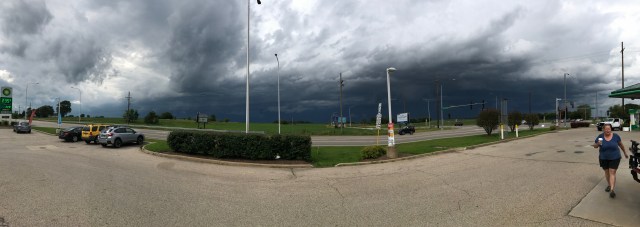
Storm PanoBecause this sociopathy stuff doesn’t stop with religion. It also aligns with a new brand of selfish consumerism that in populist terms has accomplished some intensely wild corruptions of law and legacy here in America. Most prominent is the strange relationship between Christianity and the gun lobby. That alliance has succeeded in convincing millions of so-called Christians that guns are somehow a tool of Christ and God. Guns are designed for one thing: killing. One of the 10 Commandments says: Thou shalt not kill. Thus every Christian gun owner defies their claim of protection from God by taking the matter selfishly into their own hands. Talk about lack of real faith. Talk about putting the “laws of men before the aims of God,” as Jesus once accused the religious authorities of His day. These patterns just repeat themselves over history. And the zealous religious authorities just keep seeking power and approval. But all they truly reap is corruption and death.

To accomplish this massive exercise in hypocrisy, the gun lobby in league with constitutional originalists (the secular side of literalism) has sliced the Second Amendment in half and left the first part to die. All to emphasize the selfish and dismissive claim that “the right to bear arms shall not be infringed.” Never mind the part about the “well-regulated militia.” That’s no longer applicable.

That’s the same corrupt logic that allows zealous Christians to dismiss the outdated laws of Leviticus on one hand yet bring forward their prejudice against gay people on the other. It is cherry-picking values. That is the heart of corruption and hypocrisy. And the neoconservative Christian movement is the locus of hypocrisy.

Self-righteousness

Thus the modern version of conservative Christianity shrouds itself in righteousness but in fact it is the Religion of Self and a Claim to Salvation that is all about ME ME ME.

Do megachurches still do the work of Christ in this world? No doubt. But like those who embrace the philosophy of dominion toward the world yet allow its destruction in the name of profit by corporations, there is a deeply hypocrisy at the heart of Christian ministry that cherry-picks its issues. The same holds true with those who claim to be Pro-Life and anti-abortion yet will not accept the idea that birth control can prevent unwanted pregnancies. The twisted morality of these arguments is the root cause of so much conflict and contradiction. It constitutes the same legalistic hypocrisy of which Jesus accused the religious authorities of his day. The pattern holds true.

How rich it is

The Bible is rife with warnings about the love of money. Yet the selfish barkers of the Prosperity Gospel have the President’s ear, because that’s what he believes and espouses. It’s all about Him, and how rich he thinks he is. But there is no contrition about the fraud and abuse and money-laundering that have positioned that man for public office in terms of money. But lacking the character of a true Christian, the man is a massive deception and all those who support him are whores for the association.

Even his porn star girlfriends know better, but so-called Christians still hold the man up like a hero for the ages, a God-chosen sub-deity. Even George W. Bush preached this brand of providential superiority. “I’m the Decider,” he bragged, and went on to claim, in essence, that he was installed by God, and that God talks to him.

It’s about the green(s)

donald-trump-golf-990x556Thus it’s no surprise to many of us with eyes and ears and discernment to realize that a man like Scott Pruitt and his Commander in Chief feel mighty fine compromising our environment in favor of selfish interests and profits. Trump sees the world as his own golf course. And he drives on the greens.

That’s the same view that religious authorities had about Jerusalem in their day. They also made liberal use of the temple treasury 2000 years ago. Jesus upset that dynamic and knocked over the tables of the money-changers. But that didn’t stop them.

Centuries later the Indulgences paid to the Catholic Church reflected the same greed before Martin Luther came along to challenge that corruption with a call to salvation through grace alone. He borrowed from the better side of St. Paul to do so, proving that no human being is perfect. But you’d never know it from the way some guided by their own sense of self-providence behave. The things they get away with…

Historical corrections

But reality and true spirituality have a way of correcting such false pretenses. Because while the selfish continually grab all they can get in the short term (witness the Republican tax cuts that benefit the rich…) the earth and creation have a long and patient record of fighting back. These equate the temperament of God. Even God, as it is stated in the Bible, felt the need to wipe out nearly the entire human race at one point. It wasn’t a literal worldwide flood, but it was big enough to wipe away a lot of human shit.

Ironically, that much what climate change is predicted to do in the next 100 to 200 years. Our coastlines are under siege from oceanic expansion. America’s military base in Norfolk, Virginia is the largest in the world, and they are in denial about the inevitable inundation of that port.  Onward Christian soldiers, indeed.

Global problems

Billions of people will be displaced eventually by climate change and ocean expansion. Yet the religious zealots of today deny on principle that climate change is real. They call the science predicting these changes “political” because it doesn’t fit their own selfish worldview and the theology that only God can affect what happens to the planet.

That’s pretty much the same attitude people expressed toward all of God’s prophets over the millennia. The world laughed at Noah and his ark. The religious authorities dismissed John the Baptist for calling them “hypocrites” and a “brood of vipers” for their corrupted, selfish practices of religion. If God works in strange ways, it’s only because people are too dumb, stubborn and lazy to see the signs. That’s why modern miracles essentially go unnoticed. Conservative zealots refuse to see the real warnings of God all around them. They’re frequently preoccupied with hiding their own dirty secrets.

Guerrilla tactics

That’s why it was necessary for John to use what we might call ‘guerrilla tactics’ to “make straight the way for the Lord.”   He was the voice of one crying from the wilderness. Mainly that’s because the city was dirty in every sense. We’re headed back in that direction. And perhaps you prefer the smog and burning rivers advocated by the likes of Scott Pruitt and Donald Trump. Perhaps you believe that the God you think you know actually wants us to ignore the call to create the kingdom of God, “on earth as it is in heaven.” That’s the Lord’s Prayer, mind you. It says that the “New Earth and New Heaven” is ours to engender. Jesus will come back in spirit once we accomplish that mission.

But it isn’t going to happen with the dirty players of religious zealotry and political greed in charge. The hypocrites and brood of vipers still wander among us. They pray in public places and make a show of their wealth and position in life. Jesus hated them, and they killed him for it.

Biblical times

So it all sounds so biblical when you think about it. The latter-day zealots are in full engagement bringing about their own version of hell. striking down laws that protect us from cancer and smog and water rife with life-destroying chemicals. Gutting programs that protect the poor and elderly. Killing public education in favor of a religious driven propaganda that defies science and favors ignorance.All because they think God told them this is the right thing to do. They are a band of heinously religious fucks.

I dare you to prove me wrong. I firmly stand with the side of God and Jesus Christ on this issue. The Bible is rife with imagery drawn from creation to convey spiritual concepts. It uses the device of metonymy, “the use of the character of one thing to represent the nature of another.” That is the real significance of creation in scripture. It isn’t about a literal Genesis or a creation in seven days. It isn’t about denying evolution because people can’t stand the idea they have a close genetic relationship with apes. We need to grow up from these pathetically childish depictions of scripture and the effects these worldviews have on our actual existence.

And here’s the ticket out. This is the Deal.

God is love. Love is real. We don’t need to deny our material existence and the health of the earth to experience the love of God and the power of forgiveness in our lives. 

Love stands apart and in synchrony with creation.

But if we ruin the planet in the name of short-term gains and ravenous appetites for stimulation, even the love of God won’t save us. We’ve seen that story before.


Posted in Christopher Cudworth, cycling, evangelical Christianity, religious liberty, same sex adults, we run and ride | Tagged , , , , , , , , | Leave a comment

Moonlighting as a cyclist

Personal moonlight.jpgThis morning’s ride started at 5:45 a.m. The sun was up far enough to provide some light. A bright moon was still perched in the southwestern sky.

We tend to think of the moon as truly “here” only when it is full. Of course that’s an illusion of our limited perspective. The moon is always “there” but sometimes it lurks in shadow 200,000+ miles away.

That realization gives new perspective on the term “moonlighting.” The traditional definition of moonlighting is to work at another occupation other than your main profession. Sometimes we do it for additional income. Other times we hope that some gig we like might turn into a full time job. The best scenario of all happens when moonlighting turns into a profession we love so much it doesn’t even feel like work.

I sort of do both with my writing and art. There is money to be made, but also satisfaction to be gained from doing things I’ve loved to do all my life. This blog does not pay me a thing, for example. But it has gotten me other work on occasion. That’s what you might call an avocation.

But I have to wonder what it must be like to have the talent of a professional bike rider and be strapped to that commercial machine for hours on end, and day-after-day. The seeming glamour of it is surely counteracted by the raw work, pain and risk of the profession. Add in the pressures of doping and team contracts and there is no way that anyone could moonlight as a pro bike rider. It’s an all-or-nothing proposition.

Moonlighting as a runner

I once blended my running with my work life, if you could call it that. As a team member on the Running Unlimited club I wound up working quite a few hours at the shop. As part of the team contract they paid for my races and my shoes. My “job” also included talks and seminars, inspirational meetings and some coaching. I even managed a sports complex for a while for rent money.

After a couple years the couple that ran the shop had to move east because the main breadwinner had accepted a transfer. They tried to sell me the shop, but I showed the numbers to some financial guys and they said it was overvalued.

The shop was sold instead to someone who moved the location a few towns over and made a go of it for many years. Thus my moonlighting days as a runner taught me one important lesson. There is no sure thing in this world unless you are determined to make it happen.

Focus

It all comes down to focus. I see people posting Instagram pictures of themselves on bikes or running or half-clothed or hawking some goods day after day. I admire their dedication. They are one-trick ponies with a personal brand to promote.

By contrast, my Instagram feed is all over the place. One minute I’ll post a photo of myself getting ready to ride and another minute I’ll snap a pic of a piece of discarded toast on the street that looks like a pair of tits was burned into it. I can’t help it. I find shit like that funny.

Personal brand highlighterFeeding the public

If shit like that makes my feed too random for public taste, I get it. People generally like their social feed friendly, predictable and inspirational.

Thus photos of women sharing their hot bodies on Instagram tend to be pretty popular. I can’t really compete with that. Even a decently shaped 60-year-old ass with biker tan lines is no fodder for the Kardashian world.

I suppose I could stake the claim, as I have hashtagged on occasion, of being the #humanhighlighter. I often wear bright or reflective gear. Perhaps that would win me a sponsorship from Proviz360 or some other activewear supplier. But then I couldn’t post images of tits on toast. Where’s the fun in that?

No f’n idea

Perhaps it’s my ADHD that keeps me from abiding that kind of focus. Or maybe I don’t really get how half the world works. All my life I’ve bumped into situations where I think I king of think I know what’s going on only to find out later that I had no fucking idea what was really taking place.  Life can be tough to figure out and moonlighting at shit even within your realm of expertise does not necessarily make it any easier.

One thing I do know is that I could never have truly been a professional runner or a professional cyclist. While I was massively focused for a time on becoming the best runner I could be, there was this thing called raw talent that I did not possess. I knew deep down from the early days of high school competition that I was not truly part of the running elite. It doesn’t take a genius to figure that out. Either you’re faster than other people or you’re not. I did do the best with what I had. Won quite a few races and broke all my PRs after college. Then I mellowed out for a lifetime of fitness training. That was a good decision.

On the bike

Ever since I started cycling fifteen years ago, I’ve seen improvement in efficiency oon the bike, but have not necessarily gotten faster over the years. I’ve never ridden a one-hour 40K, for example, like my brother-in-law once did. And I never will.

Personal brandPart of that is the inevitable effects of age. I am still beating my former times on the occasional Strava segment these days. So one can moonlight at this cycling thing and see improvements despite the depressing progression of crepey skin and less than responsive muscles that are signs of age.
Cycling is both the most forgiving and demanding of sports. It beckons you to do more and punishes you at the same time. One might even call cycling an abusive relationship of sorts. Half the world seems to be engaged in one. Might as well lose weight while you’re at it.

Crits and tris

It’s a commitment that requires some personal branding. I’ll still shave my legs this summer despite the fact that I only competed in one criterium race all last year. Perhaps that will change. I’m up an age group now. So it might be fun to try to win a crit or two. There are still tough 60+ riders. No guarantees of success. Whatever the racing choices on the docket, I’ll still shave because that’s what cyclists do. It feels better to be sleek when doing triathlons than barking around like some hairy tri-dog. I can’t help it. That much has been ingrained in me.

It’s all in how you look at things. We’re all mostly moonlighting at this fitness thing. But that’s the point. Like those times when the full moon isn’t visible, it helps to know it’s still there. Even that sliver of a crescent moon says something. It’s there even when we can’t see it. We take it on faith that the pursuits we choose are worth it even when we can’t see immediate results. They contribute to our well-being in ways that we can’t always see, even in the moonlight.


Posted in aging, aging is not for the weak of heart, Christopher Cudworth, competition, cycling, cycling the midwest, healthy aging, healthy senior, running | Tagged , , , , , , | Leave a comment

Father knows best

Father knows best.jpg

My father Stewart Cudworth (center front) at my late wife’s funeral (2013) joined by (from left to right) my daughter Emily Cudworth, Christopher Cudworth, James Cudworth, Diane Mues, Joan Mues, Evan Cudworth and Paul Mues. 

My father was a complex character. He was prone to some mean and wild fits of anger at times. He was also capable of incredibly sensitive and meaningful insights. In other words, he tried to raise us the best way he knew how.

On that front, he didn’t let any of us boys go out for football or wrestling. One he considered brutish, the other graceless. But he supported us madly in the sports of basketball, baseball, soccer, track and field, cross country and more.

I can say the man was looking out for our best interests in the long term. Yet sometimes in the short term he fell far short in terms of recognizing our core motivations and approach to life. As the father of four willful boys, he did have his hands full.

Depression kid

It was tough for him growing up in many ways. During the height of the Depression when my father Stewart Kirby Cudworth was just seven years old, his mother was being treated for breast cancer. Back then it had to be an awkwardly shrouded secret, and contracting cancer was often a death sentence. Still, she had a double mastectomy. Then she contracted an infection and died.

This set off a chain of events as my grandfather struggled to manage the farm he owned and take care of four children of his own. My father had three lovely sisters; Marion, Helen and Margaret. For a time after my grandmother died, the kids had to fend for themselves in many ways. Then my father lost his farm to the Depression. This and other events did not help his underlying symptoms of depression, the emotional kind.

Thus his kids were shipped off to a farm in Bainbridge, New York to be cared for and raised while my grandfather received institutional treatment for his depression. This may have involved some difficult treatments given the time period. That’s something I may never know. We met him several times in the 1960s, but he died in the winter of 1971, if I recall. My father went for a long, long walk that day.

Emotional costs

In any case, the emotional weight of all those early-life events surely had a profound effect on my father as a boy of seven-to-ten years old. Yet to my father’s credit he adapted to life on that hardscrabble upstate New York farm. His “parents” became two spinster aunts and an Uncle Leon.

That farm sat on the banks of the Susquehanna River. My father learned to hunt and fish and worked hard on the farm. He ran up and down the large hill behind their house tending cows. But when it came time for school and sports, my dad didn’t get much opportunity to participate. There was work to do on the farm.

Tinge of bitterness

This loss of opportunity in his life may have colored his view of our own sports careers. There was always an urgency and a tinge of bitterness behind his desire to see us succeed. That fear of watching your kids fail when you never really had the chance to try many sports on your own is painful.  But perhaps it’s much worse when a dad didn’t succeed at a desired level in his career. That deep sense of loss is responsible for the creation of many an angry sports dad in this world.

My dad just wanted to see us all get the chance to play. I recall a baseball team on which I was one of the younger members and wasn’t getting any playing time. My father called the coach anonymously to suggest (rather fervently) that all the kids get a chance to play. I listened to that phone call from the other room, and felt a bit weird that my dad would go to those lengths to see his kid play.

The next day at practice I heard the head coach complaining that some dad had called to demand that his kid get playing time. “He wouldn’t even tell me who his kid was,” the coach complained.

But of course, that proves the coach never got the concept my father was trying to convey. It’s not about that ‘one kid’ or doing some snarky dad a favor by playing his kid because he complained. It’s about finding ways to get past your own Sports Dad desires to accept that not every kid on the field is going to be a star. Then play them. Teach them. If it’s an instructional league, then instruct.

Success at a young age

The next year I successfully tried out for one of the top competitive teams in the city league. That season we won the prestigious Lancaster New Era tournament, the World Series of kids baseball in that Pennsylvania city. I pitched to an 8-6 victory in the second game of the tournament despite some vocalized misgivings from my own teammates who did not have confidence I could get the job done. But I showed them. That much my father had instilled in me. Play ball and let the results speak for themselves.

Even at that age, I understood the value of gift of whatever talent I possessed. I’d never go on to be a pro baseball pitcher, but that was never the point. In fact, it was those games of catch with my father and brothers in the side yard that were worth so much more. We had fun throwing knuckleballs at each other. My father once tossed a pitch that came in ‘head-high’ until about 15 feet out and then wound up dipping down to my brother’s feet. Now, that’s a knuckleball. Hard to believe. And I know this to be true because I watched my dad throw that ball through the dim light of dusk. It was magic.

Decision time

Somewhere along the way on my path to high school, my father recognized that while I was a tough and scrappy kid, I had no business going out for football despite the fact that I’d won the local Punt, Pass and Kick competition. So my dad shunted me into the cross country locker room and said, “You’re going out for cross country. If you come back out of that locker room, I’ll break your neck. ”

For two seconds I was actually disappointed. But honestly, I’d already assessed the culture of the football program and found it thick and dull. The next year the cross country team went 9-1 and the football team went something like 1-9.

Found destiny

Those first few strides in school-issued running shoes felt great. And after five miles of running that afternoon in the August heat, I was hooked. My father was pleased that I’d found my place. In fact I’m pretty sure he knew it all along.

That didn’t heal some of the earlier wounds carved into me by his fatherly angst. That would take decades of consideration and ultimately, a will of forgiveness to achieve. But the start of my running career was indeed a case of Father Knows Best. For that I have to thank my dad.

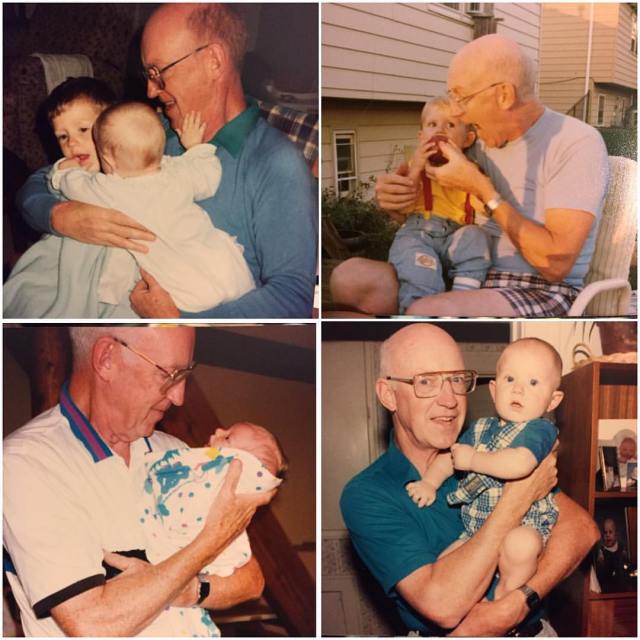
Stew Cudworth.jpgHe passed away a few years ago now. I served as his caregiver for ten+ years after my mom died in 2005. But he lived to see many grandchildren born, both boys and girls. But he definitely doted on the girls who became part of our lives as one after the other granddaughter was born.

It wasn’t always easy taking care of my dad after my mom passed away from cancer.  Our roles as father and son were sometimes reversed. He got no less cantankerous as he aged. Perhaps that was a bit of payback from him having to deal with my own feisty spirit as a kid.

So we had to learn how to communicate even though he could no longer talk after the stroke he suffered in 2003. That’s a long time to relate to your dad without being able to converse. But we managed. Lord knows we managed.

Breaking the ice

I remember the moment when the ice first broke a bit between my father and I after the testy teenage years with all those fights over studies and long hair and music. Our college cross country team had placed second in the nation that fall of 1978 . My father and mother were there to witness it. I’d run well enough to serve as fifth man that day. The feeling of accomplishment was rife within us all.

After hugs and photos with teammates and coach, I walked across the flat ground at the Rock Island Arsenal park where the meet was held. There my father was standing with my mom. He had a big grin on his face. I walked straight over to him and threw my arms around him, probably the first time I’d done that since I was ten years old. We held each other for a moment and I backed up with tears in my eyes and told him, “I love you dad.”

And that was enough. Father knows best.

Posted in road kill lovers | Tagged , , , , , , | Leave a comment

No date with destiny, but a lesson or two worth learning

IMG_3392.jpgIn 1981 the world was going nuts for running. The second phase of the American running boom was in full swing. As an avid runner, I thought (and was sincerely hoping) that it might mean women would find me more attractive.

Somehow that was not entirely the case. The bar scenes were still pretty much about first impressions, and skinny guys in running shoes were not exactly chick magnets. At the time, those of us (guys) who were totally into running saw our running shoe collection as the sexiest thing we could possibly own. It wasn’t.

Truth be told, women see the world in an entirely different way.

Appetites

At the age of 23, I met a woman who was 33. We ignored the generation gap for the sake of our appetites. She accepted that I was deep into running, and I soon learned that she was massively into smoking pot. I was getting more than one runner’s high per week. So we had an interesting dating relationship. A yin and yang of sorts. Opposites often attract.

Her view of my running was objective. My view of her life was experiential.

I weighed all of 140 lbs. My heart rate was just over 40 beats per minute. I could get buzzed on two beers. Thanks to all the training I was doing, most of my days were spent in a state of near fatigue. That did not quell my appetites, which were ravenous on many fronts. It was the dietary fashion of the day to consume massive amounts of carbohydrates. Meals like that would produce a buzz all their own. Add a bit of pot to that formula and life was on a perpetual roll.

Turkish weed

Smoking weed.jpegOne summer evening we walked a mile to a local ice cream shop. On the way back we stopped at a park bench to smoke a bowl of her powerful Turkish weed. I was instantly so high that walking in a straight line was difficult. I’d already run 6 miles that morning and eight miles in the afternoon with some fartlek thrown in. I was so tired. And so goddamn high.
It was glorious, in its way.

One could hardly say that a state of mind like that is bad, but it is in certainly not constructive toward other things in life. And as I sat there, some guilt crept into my brain thinking about a couple college cross country college teammates that had been ruined by smoking too much pot. They lost all motivation. Now I could see why. On that park bench, I had no will to do anything but sit there and watch the trees shimmer in the ultraviolet light of dusk.

My girlfriend sat there watching me as I was mesmerized by a line of crows coursing back to their roost at sunset. They seemed to be on a repeating loop. It felt like all the world’s reality operated that way. The song Tomorrow Never Knows came to mind.

Turn off your mind relax and float downstream
It is not dying, it is not dying

Lay down all thoughts, surrender to the void,
It is shining, it is shining.

Yet you may see the meaning of within
It is being, it is being

I looked over at her sitting on the park bench. Her liquid hazel eyes focused on mine. We seemed so close, yet also as far apart as one could possibly imagine. I was reading a series of books by Carlos Castaneda at the time. The stories worked in a way that you could not tell fact from fiction. That moment felt the same way. What the hell was reality

Watching the wheels go round

Up to that point in time, I thought I knew what reality was. Running was real.

Curious about my running life, my girlfriend came to the track one day while my best friend and I were doing a set of 12 X 400 meters at 60-64 seconds. Following the workout, she waiting for us in the stands. We climbed up to meet her with our track spikes clicking on the aluminum seats.

“Your strides were perfectly synchronized,” she told us. “It was beautiful to watch.”

I’m pretty sure she’d been toking up in the stands. Yet we’d also been immersed in a different dimension and time running on the track. It was truly an unreal feeling.

She was never tempted at all to get into running herself. Her life was a yin and yang of immersion in her work and her joys. She earned $90,000 working six months of the year as an interior designer fixing up condominiums around Oak Street in Chicago. She had it sussed, you might say.

Volkswagon.jpg

The rest of her year she’d pack up her pot and drive around the country in a carefully reconditioned green Volkswagon van. That vehicle remains the hippie transport for now and all time. What is it about that green color? It looks like you could smoke it. 

Let it go

She’d call me long distance from some lonely gas station in the desert or up in the mountains. We’d talk about whatever came to mind. I’d tell her about some race I’d just run and she’d ask, “What else are you doing? Are you painting?”

2_perpetual_motion.jpegThen she’d issue an invitation: “I wish you could skip work and ride around the country with me,” she’d say.

Of course I was tempted. But what about reality? How would I find a job when I got back?

Perpetuity. Not.

In some ways, we were like a perpetual motion machine driven by taps and momentum. But in reality, there is no such thing.

We were watching the wheels go round and round. One drove the other, but to what end?

Lessons learned

Dating that older woman taught me a few harsh lessons in decorum. One evening I showed up dressed in a brand new Western shirt and corduroys. She looked me up and down and said, “You think I’m going out with you in that?”

I was somewhat hurt. I’d made a special trip to the mall to buy the shirt. The corduroys were fairly new.  I thought I looked good. She said: “You need to go to Marshall’s and buy some khaki pants, and a nice blue pin-striped shirt. And some shoes.”

Grownup clothes. I think it might have been the running shoes with the corduroys that killed the look.

Advice from older women

It wasn’t the first time an older woman had given me strong advice and insights into life. At the time, I worked in the city of Chicago at an investment firm. Over lunch breaks, I’d made a conversational friend with a gal named Nancy. She had a pile of dramatically coiffed red hair and wore bright red lipstick to match.

IMG_5354As I shared the tale of my relatively recent breakup with the woman I’d dated in college, she listened closely to the story of our promise ring and the pressure to get married. It didn’t help that my faux-fiance’s less-than-supportive parents held a dim view of my future. To them, it wasn’t good.

Nancy stared across the table at me and flicked her fork in the air after taking a bite of salad. With her mouth still full, she pointed the utensil in my direction and told me, “You’re too young to get married. You haven’t lived enough yet.”

Then she opened up about her own history. She’d once been a much skinnier woman. The game of constantly losing weight to impress men had gotten old with her. “I used to be hot,” she told me with a flirtatious dose of disregard. ” But it’s just not worth it. Most men don’t appreciate you anyway.”

Then raising her fork up in the air as if it were a totem, she told me how she’d once climbed under the breakfast table to give her man oral sex before serving him scrambled eggs. She winked at me with her thick black eyelashes and said, “You have much more life to live,” she smiled.

Runaway

The lessons a young man needs to know about the minds of women are not always so direct. While out on a double date with my best friend and her roommate, we were all exiting the restaurant when my friend stopped to chat with a female high school friend who was just heading into dinner.

Chris In White ShortsThe three of us waited a long time outside in the car until my girlfriend and her roommate had enough waiting. “We’re leaving,” my girlfriend said.

No!” I begged. “He’s just social. He’ll be out in a minute.”

“He’s a jerk,” his date insisted. They put the car in gear to leave. We were driving through the lot when he came out the door looking around sheepishly for our car. They had mercy on him, but not by much. It was stone cold silence toward him on the way home.  But that didn’t stop him from screwing his date on a lawn chair later that evening. Like I said, you can’t always know the mind of a woman.

Precocious

The lesson here is that women appreciate a bit of precociousness in their men, but not when it crosses a line into disrespect. That comes from self-absorption, the true vexation of many a young man.

For me, that self-absorption was poured headlong into running. Young men do need something to absorb their extra energies; physical, sexual or otherwise. A patient woman appreciates that. Until her patience finally wears out.

Chris Running 1978.jpgBecause what else could cause young men to sexually pleasure themselves many times a day, or run workouts so long their bodies are thinned out like carefully shaven pencils? It’s the manic energy of youth that all men must learn to contain and put it to good use down the road. But the real problem in this world is that some men never grow up. That’s why the #metoo movement is necessary. It’s all about teaching the self-absorbed how to show respect, and to stop testing the patience of women who actually want to get things done.

Embers and fire

I recall how the relationship with my pot-smoking older girlfriend actually ended. Some dates with destiny begin with embers and fire, but in the end, they wind up in smoke and mirrors. I recall that I showed up at her door a few weeks after we’d largely called it quits. It was late at night, and I was a bit drunk and horny. I knocked on her door, but that exchange made it clear that things were fully concluded between us.

Some lessons are never forgotten. It is never wise or kind to trifle with the lives of others. You’re either in the game, or you are not. For all the seeming escapism of the pot-fueled lifestyle, that girlfriend had a sound foundation as a person. I was a young man experimenting with who I’d come to be, and she was a woman calculating the costs of her own security.

And in case nobody’s ever told you, it’s all part of a process never ends.


Posted in Christopher Cudworth, competition, cross country, running | Tagged , , , , , , , , , , , , , , , , , , | Leave a comment

Are you ready for some knee porn?

Knee porn 1.pngWhen the orthopedic surgeon showed me photos from my recent meniscus repair surgery, I was a little shocked. The images looked like something you might find on a porn site dedicated to prurient naughty part closeups. Every image was salacious in its detail and quite revealing about the inner workings of the human body. The inside of my knee actually looked quite like a well-known erogenous zone of the female anatomy. And thanks to actual pornography, which is a multibillion dollar industry, there are very few mysteries left in this world.

Sex education

The world is certainly rife with images of nakedness. That’s both a good and bad thing. Getting over taboos about the human body is a healthy way to approach life. Yet the release of hacked celebrity nude photos and invasion of privacy is not so nice. Others discover themselves exposed by a former lover or sexting friend. Such is the digital universe.

Yet there are also zillions of naked selfies that are shared willingly through the Internet by far less famous men and women. This constitutes a massive zone of uncontrolled exposure that has created entirely new industries and markets. There are people who engage in these channels for the affirmation and the thrill. Then there are those who learn to exploit these channels for fame and profit.

Sex and death

I’m not about make any money or get many likes on my Instagram for the naughty-looking pictures of the inside of my knee. Because when you look at the photo below and see the hole where my ACL used to be, the dark void tells a sad story.

And here is it. After my first tear in 2003, the orthopedic surgeon installed a cadaver part to replace the ACL I tore during a soccer match. I named the cadaver part Jake after the anonymous donor, but two years after the ACL repair surgery, the cadaver part gave out as well. Jake died all over again.

Shred of truth

Thus these photos have a strange relationship to sexual pornography. Some people refer to sex acts as“a little death.” (le petit mort. The rush one gets from sexual pleasure can lead to transcendence or can bring on a bout of morbidity. The Little Death comes about as a result of exhausting some part of yourself that can never be recovered.

Sex is the type of peak experience that brings on such philosophical considerations. But in truth we experience the process of death every day of our lives. Even newborn babies are already dying the moment they come into the world. Despite what Republican legislators might have us believe in trying to parse who gets health insurance and who doesn’t, life itself is a pre-existing condition. There is a dark hole at the end awaiting us all.

Knee porn ACLWe try to deny this fact with all sorts of pleasures. That’s how we get fat from eating and drinking stuff that isn’t all that good for us. We bury our sense of mortality with our appetites.
Yet those of us who engage in endurance sports seem to sense that there is transcendence gained from the trials of denial and perseverance. But even this pursuit can be viewed as a pornography of sorts. During one of my intense periods of training years ago, a friend of mine grew exasperated with my single-minded devotion to running. “You know,” he told me, “Self-indulgence is not the path to self-fulfillment.”

I shared what he said to me twenty years later. “I said that to you?” he responded. “I apologize for that.”


My indulgences have had their share of costs in life. There were times when I got carried away. But as the wrestling coach in the book Hotel New Hampshire (John Irving) once said, “You’ve got to get obsessed and stay obsessed.”

And so I have, at times, been over-indulgent. But my knee injury came about not as the result of wear and tear from years of obsession, but from a moment of ebullience and good health when I hurdled a street cone during a race on a snowy day in Southern Wisconsin. It was a stupid mistake to do that, but I got away with two full years after the meniscus was likely torn that day.

Finally the knee did start to hurt. Which led to the visit to the doctor, and the MRI that showed a chunk of meniscus torn inside my knee. That led to surgery and these before and after photos of the excision being performed on a torn meniscus. What a delightful little montage of knee porn.

Knee porn excision.jpg

KNee porn repaired.jpgI find my knee porn images somewhat funny. If these were dick pics or a closeup of some woman’s vagina, this blog would be Rated R and the content considered scandalous. The second image does look quite a bit like a shaved mons venus. But since these images were actually taken inside my knee, they have no scandal value at all. In fact, they mean very little to anyone but me.

Credit where credit is due

Okay, so maybe my knee doesn’t have the same allure as a sex object. But that left knee has helped me triple jumped more than forty feet, long jump nearly twenty, high-jump over six feet and win more than a few steeplechase chase races including two college conference championships.

That left knee has also helped me cover tens of thousands of miles in both running and cycling. So it’s a pretty damn sexy knee to me, both inside and out.

So I’m showing it the respect it deserves, and in the process, perhaps I’m helping you appreciate what you’ve got as well. In the end, pornography is all in the eye of the beholder. In the end, it’s the naked truth of our most earnest pursuits that really matters.


Posted in Christopher Cudworth, cycling, healthy aging, healthy senior, mental health, running, steeplechase | Tagged , , , , , , , , , , | Leave a comment

The not-so-secret “secrets” of setting PRs

img_0996The not-so-secret “secret” of setting PRs is building backward from the race distance itself in terms of time needed to prepare and to establish race “markers” for progress along the way. 

Then one must create fitness using an incrementally-based training program to build from racing shorter distances to the entire race distance, correcting flaws or weaknesses learned from empiric feedback along the way.

But most of all, don’t neglect to challenge yourself beyond your perceived capabilities.  That is the most neglected factor in setting PRs. 


The challenge of setting personal records (PRs) in any event and at any distance is the reason why many of us engage in endurance sports at all. We all thrill to the idea that we’ve just done our best ever time.

Many factors contribute to setting personal records. That’s why one actually has to work backward from the factors affecting the actual event in order to prepare for setting a personal record. A simple “unknown” variable such as strong winds or heavy precipitation on race day can ruin any hope of setting a record.

Boston strong

Witness the recent conditions of the Boston Marathon. The only thing that training helped those runners do is complete the race. Some wisely didn’t waste themselves trying to succeed on a cold, wet, windy day. Others tried and “failed” to run their best race.

So one must begin the plan to set a PR by assessing the odds. Planning a half marathon that is typically held during a really hot or cold season increases the risks. That’s why many runners plot their PR efforts for the Half Marathon or Marathon distances around races with traditionally moderate weather.

Risk factors

There is still risk involved, but it is moderated by confidence gained in the fact that you have a better chance to chase a PR. From there, you can “back date” from the race to the time needed to prepare. For a Half Marathon, a runner who normally trains year-round should expect to invest at least eight weeks of buildup to that distance. For a marathon, it is more like twelve weeks.

Racing into shape

GASP 10For targeting longer races, one should count on racing shorter distances during the buildup. This accomplishes several things.

  1. Tests training against goal–race-pace for distance
  2. Builds concentration and confidence during the training phase
  3. Gives vital feedback on mind/body strength and weakness loops
  4. Gets you used to the competitive or group atmosphere

The Tri-range

All these “tests” are important to racing success. For triathletes training for the Olympic, Half-Ironman distance, it is thus helpful to participate in races below the target distance. For Olympic triathletes, that means doing one or two Sprints to test pace capability in the water/bike/run phases and to practice realtime transitions.

The feedback from shorter races should inform adjustments to training. If the swim needs work, it should be emphasized, and so on.

Pure running and cycling

Pure runners or cyclists will also learn plenty from racing shorter distances. As a 5K to Half-Marathon competitor in my peak years, I literally ‘climbed the ladder’ from shorter to longer as the spring season progressed. Racing 5Ks requires some real speedwork, but early season races will seldom produce 5K PRs anyway. Some runners coming off an indoor track season will be in great shape come April, but many will need that month to prepare for racing late that month and into early May.

Cycling is a completely different animal, because its events are so completely different. Racing criterium events of 40:00 to one hour requires practice. Our local bike club holds weekly criterium events so that riders can race in their Category and get used to racing in tight packs, drafting and cornering. Some early-season heroes will have their sprint muscles in shape by May, but more expect to race hard starting from Memorial Day through the end of September in temperate zones such as Illinois. Further south in the United States, great racing continues well into October and November.

The wide range of cycling needs

SpinThe notion of a “PR” in pure bike racing is so highly dependent on the behavior of the pack that one cannot even measure the results or speed of one race against another without factoring in the speed of the group as a major component of a given average speed for any distance. The “PR” of which most cyclists speak is often reduced to “I was there for the bunch sprint and averaged 24 mph.”
The goal in cycling is to “be there” when the action happens. May cyclists and triathletes have taken to indoor training in order to build a base for outdoor riding come spring.

But even this base training must be structured to cover a range of efforts and encourage the efficiency necessary to stay competitive from start to finish. Come spring, that means long (steady) rides to build basal cardiovascular fitness and metabolism. Interval training and pace lines with superior riders are key to building an endurance foundation. Actual sprint training is critical to developing closing speed, and of course climbing must be included if one has any hope of sticking with the group on any grades of tarmac.

Multisport “PRs”

The same goes to some extent for racing any triathlon. While there are no “hills” in the water, there are sometimes currents or choppy lake conditions for which one must prepare. Bike training should follow the menu in which a pure cyclist must engage, with a mix of long training rides and hard, muscle-building intervals and climbing.

Finally comes the “brick” portion when triathletes feel the grunt and strain of cadence coming off the bike into the run. While many choose to do “brick” runs, I think it is perhaps a “secret” that hard running intervals with short recoveries are better in the long run for triathletes trying to build the capability to run fast on legs tired from a hard bike. The effectiveness of so-called “brick” runs may be overestimated.

Having witnessed hundreds of triathletes do run training over the past five years, I am convinced that 90% of these multisport athletes never run speed workouts hard or fast enough to genuinely test or strain their muscles in preparation for the sensations of racing. Running four mile intervals at “Ironman pace” does absolutely nothing to teach the body how to handle strain beyond the comfort zone. Nor does jumping off the bike and slogging along until the body feels better. One can argue this is a type of “specificity” training, but it may be deceptive and teach a triathlete all the wrong things. Because in practice, how many triathletes truly push themselves on these bricks (or duathletes from run to bike)?

Common themes

Last Climb Horribly HillyThus the “common theme” in failure to set PRs is that athletes simply do not challenge themselves sufficiently along the way. That is the only way to gain confidence and strength in the pursuit of PRs. 

The best way to improve toward setting a PR is to race early, race hard and race relative often. That’s the only way you can get truly honest, empiric feedback on the effectiveness and outcomes of your training.

Let’s face it, if you can’t PR at the 5K distance, how do you expect to run 10 miles longer and still go faster? It all starts from intense focus on the foundations of swimming, cycling and running. That’s why some swim coaches are now recommending triathletes break their training into faster, shorter intervals. That’s the only way to make faster swimmers. By swimming faster. The “longer” endurance phase will come by adding workload incrementally.

Then one should test the arms in an open water swim separate from a multisport event. That is an honest take on the baseline, and many multisport athletes do use open water events in advance of Olympic, Half or Ironman races.

But do triathletes also find a time trial bike race to get down in aero and go all out against a specific distance? Those races exist, and there is no judgement by the pure cycling crowd against a tri-bike showing up for that. Just don’t try to enter a cycling criterium using your tri-bike. It is not designed for that purpose at all, and you will not be allowed to enter.

Incremental PRs add up to full distance accomplishments

Most importantly, everyone who runs should enter shorter races from 5K to 10K and practice their race pace. The focus here should be on “running well.” That is, establish a target pace and practice it with full intention. If your race pace in an Olympic (10K) or Half Ironman (Half-Marathon) is 8:00 per mile, then it is a reasonable early season expectation that you run that 8:00 per mile pace at a distance of five kilometers. Progress toward full-distance fitness will be determined by one’s ability to race that pace for 10K and if possible, a 10-mile race before testing the body in the Half-Marathon distance.

These concepts are true for any athlete of any age. As we grow older, our times may not equate to lifetime records, but our age-group efforts depend just as strongly, and perhaps moreso, on this ‘step-ladder’ approach to racing your way up the rungs to full-distance racing.

Ladder workoutIn that light, one of the most effective training device in all three sports; swimming, cycling and running, is the true “ladder workout” in which one performs intervals from short to long and back down again. All at race pace or below. This replicates both race pace and the challenges of “brick” performance when legs and heart and mind are tired. 

We repeat:

The not-so-secret “secret” of setting PRs is building backward from the race distance itself in terms of time needed to prepare and to establish race “markers” for progress along the way. 

Then one must create fitness using an incrementally-based training program to build from racing shorter distances to the entire race distance, correcting flaws or weaknesses learned from empiric feedback along the way.

But most of all, don’t neglect to challenge yourself beyond your perceived capabilities.  That is the most neglected factor in setting PRs. 

It’s realistic. It’s fact-based. And it’s honest. That’s the only way to set a PR. The rest is just dreaming about it.


Posted in competition, PEAK EXPERIENCES, race pace, racing peak | Tagged , , , | Leave a comment